Do you remember your first masturbatory orgasm? One minute you're just exploring down there and the next, an otherwordly new realm of feeling eclipses your sensory perception and releases explosions of previously unknown delight, a magic new paradigm, a dimension that you didn't know existed. They say a miracle is a shift in perception. The first masturbatory orgasm is a miracle. The ones that follow are the resurrection.
For me, masturbation is the cosmos's way of saying, "You contain God. You contain mystery. You contain the ability to create something beautiful out of nothingness." Many times, following a mediocre sexual experience with a partner, I've thought, Why didn't I just stay home, masturbate, and eat snacks? Even during the best sexual encounters I often need to masturbate in order to reach orgasm. Sometimes the person I'm with can feel a bit excluded. One partner asked if it would help if he left the room. Another said I looked like Houdini trying to escape a water torture cell. One said he physically felt like my vagina was trying to expel his penis as he tried to fuck me while I masturbated.
I know that not everyone is as introverted, dissociated, or locked into the bittersweet grip of an epic fantasy life as I am. But the question still remains: Why, with porn in abundance, sex robots on the horizon, toys that simulate cunnilingus, and a good pair of hands, do we still bother looking for ass outside ourselves? I decided to put the question to a few creative human beings I know.
"I think there's still hella reasons: millennia-old biological urge; fear of loneliness; (good) sex is still better than rubbing one out; cuddling; fear of AI; sex robots probably are boring and uncreative; AI hasn't mastered natural speech so they're probably bad at talking dirty; as much as people hate other people they deep down love or at least need other people and can't be without them," says musician, writer, artist, and sometime-VICE contributor Kool A.D.
"Sex is both a stabilizing and destabilizing force," says comic Jaboukie Young-White. "Pornhub has never made me feel like I needed to deep clean my room in 20 minutes before I could watch it. Masturbation never made me go three years back into my hand's tagged photos. Until AI, VR, or whatever can replicate the nuances outside of the physical experience of sexual intercourse, fuckin' is here to stay."
I get it. No one is an island, even if we think we want to be.
"An analogy could be made to music," says writer Christopher Zeischegg, also known as former porn performer Danny Wylde. "Maybe seeing my favorite band perform my favorite song in a small, club setting is amazing. Especially when I was 15 years old… But right now, the song is stuck in my head, and all I have is YouTube and my iPhone. I still get some enjoyment out of listening to that compressed, digital single streaming online—that's like masturbating for two minutes to a PornHub clip, right? The older I get, the more there needs to be incentive. Otherwise I don't care. I'll jerk off and keep working, or I'll go to sleep, or whatever. It's the same with going out to see a band. The process of getting dressed and showing up for a live show and waiting around in some shitty club is so fucking obnoxious to me these days, so I have to be VERY invested in the outcome."
Shame around masturbation doesn't seem to be what it was when I was first engaging in the practice many moons ago, but I remember my own adolescent confusion around it. At 13, I lost my best friend when she suddenly decided masturbation was disgusting, and she wasn't going to do it anymore (we had both previously admitted to masturbating and experimented with her father's issues of Playboy). A few years later, I met a girl who was cool, sexy, and rode horses. She was very open about the fact that she masturbated, and when she said it, nobody fucked with her. She inspired me to go into the school year with a renewed attitude that I should be proud of my habit.
"I think the absence of judgment is one great thing about porn," says Alissa Nutting, author of the brilliantMade for Love, in which the novel's protagonist flees her tech mogul husband (who uses an orgasm machine and wants to have a chip put in her brain) to go stay with her father (who is in an intimate relationship with a sex doll). "It's hard sometimes to navigate explanation with a partner—like, 'So I actually would never want to do this, but it gets me off,' or, 'I'd only want to do this in these hypothetical circumstances with a brunette of this Myers-Briggs personality type,' or, 'This turns me on if I think about this detective from Law & Order: CI doing it.' It can be nice to just have your weird solo stuff. And maybe there's some or total overlap between your weird solo-stuff and your weird with-another-person stuff, but I don't think there always is. What gets you off alone can be really different."
Writer, artist, and game designer Porpentine Charity Heartscape DMs me something of a numbered koan as a response to my query.
"1) Has anyone ever had sex with another human?
2) People want something outside of their own understanding. To not know what happens next.
3) Sex feels like part of an ongoing eternal galactic convalescence. I like having sex with myself with others. Holding her hand, so I don't get sucked into the black hole. There's no cure for being turned into glass, but there are tender ministrations.
4) Much like the current state of sex robots, I'm hilariously broken and fucking me is a crime against nature."
I, too, can feel like having sex with a partner is like having sex with myself—but with company. Conversely, I've experienced masturbation that has felt more intimate and loving than partnered sex. Looking back, I remember sacrifices I had to make for my beloved masturbation. At sleep-away camp, I would fake an illness so as to be sent to the infirmary for a night: just to have a private place to masturbate. Yet while masturbation can be an effort, relationships can be even more difficult.
"As a cis woman, I've had enough bad fucks that masturbation is not only safer emotionally and physically but it's definitely faster and has a much higher rate of satisfaction," says artist Addie Wagenknecht. "Sex has always been cis male centric. Like when he cums it's done and for cis women it's about the man's needs. So many cis women are having so much bad sex or having complex messy hookups and relationships that sex robots just eliminate men from the equation. We get what we need when we need it without having to think about STDs or if he has stalker mentalities. But why do I fuck men? Where my vagina goes my heart follows. I don't have sex outside of a relationships because of that, so sex in some aspect is intertwined entirely with emotional intimacy for me. I can't easily separate them."
I wonder if it's my heart that still leads me to have sex with other people? It's true that masturbation can sometimes be sad and lonely. Occasionally I'll watch a porn featuring two beautiful people having sex and forget that it's porn, and then I'll remember again and feel melancholy. There's also a loneliness I can experience after a solo orgasm, where I feel extra existentially isolated. This can happen especially if I've engaged in a romantic fantasy and I long for the object of my dreams to still be there after I've come.
Then again, these feelings of sadness and cosmic isolation are by no means relegated to masturbation. Some of the most profound disconnection I've felt from fellow human beings has occurred after just having shitty sex with another person.
"I definitely think our collective conscious/thinking is guided to make us believe that sex is only fun or special when it's with someone else when honestly, most of the time fucking someone else kind of sucks because most people don't know how to communicate about sex or really even pleasure each other (ESPECIALLY when it's a new partner)," says artist Molly Soda."That being said, I think sex with a partner isn't always so much about getting off as much as it is about someone else being there. I think culturally we're expected to get a lot of validation from having sex with someone—you know, you hear people complaining about how they haven't 'gotten laid' in a long time, stuff like that. I think that collectively we sort of feel a lot of pressure to be more sexually active than maybe we even want to be."
Buy So Sad Today: Personal Essays on Amazon , and follow her on Twitter.
Pornography accounts for 10 to 30 percent of the internet, depending on who you ask, and with web access available to more children than ever, it's no wonder they're watching it. In a 2008 study, University of New Hampshire researchers found that 93 percent of boys and 62 percent of girls reported being exposed to porn by the age of 18. And 26.9 percent and 23 percent of them, respectively, had been exposed by age 13.
Research has shown that exposure to sexually aggressive porn may make it nearly six times more likely that young men will perpetuate the aggressive sexual behavior themselves. And in the UK and US, doctors have raised concerns over an increase in young girls seeking labiaplasty due to unrealistic expectations of what their vaginas should look like—potentially fueled by "exposure to idealized images of genital anatomy," the American College of Obstetricians and Gynecologists warned.
Independent porn filmmaker Erika Lust (link NSFW) doesn't think we're talking enough about the ways young people are shaped by porn. Lust began making adult films 13 years ago, after becoming frustrated with the tacky, chauvinistic content of mainstream porn. She entered the industry with the aim of making adult films that focus on story, characters, and the female gaze above all else. She has since made more than 100 titles. She also became a mother, which inspired her latest project, the Porn Conversation, launched in April in collaboration with her husband, Pablo Dobner.
The nonprofit site offers parents and educators resources to help them talk to children about porn, including age-specific guides, starting with one for kids under 11. The site includes tips on how to initiate conversations, the right tone to strike (no shaming or lecturing), and what content parents should cover, such as reminding children that porn is not real sex.
"Porn has grown enormously in the last ten years, because of the internet and the proliferation of porn tubes, which are the biggest part of pornography today," said Lust, referring to free, easily accessible porn sites like PornHub, which now attracts a reported 75 million users daily.
"The content available on these tubes is highly racist, misogynistic, and chauvinistic, and children are going to find it, and look at it, and it's going to influence their perceptions about sexuality and gender roles," she continued. "If parents talk to their children before or during this time of discovery, they can help them think more analytically and critically about the images they're seeing."
"Children should be taught that pornography is entertainment produced for adults," said adult performer Eve Laurence, a mother of two and 13-year veteran of the industry. "It's important that children know that porn is not real and does not depict actual sexual relationships. I frequently encounter individuals that do not know or understand that, especially on social media."
Lust isn't the only one, both within and outside the porn industry, concerned about how erotic content affects adolescents. AMAZE, a series of youth-oriented animated sex-education videos launched last year, includes a lesson on porn that points out how adult entertainment belies reality, like in the duration of the sex it often depicts. And this June, the ad agency Mistress launched Give the Talk, in which adult entertainer Monique Alexander urges parents to talk to their kids about sex "before the porn industry does."
The power of parents to influence their children's perception of sex and sexuality is often underrated. According to the most recent survey by the National Campaign to Prevent Teen and Unplanned Pregnancy, 52 percent of 12- to 15-year-olds said their parents had the most influence in their lives when it came to sex. Parents surveyed, as it happens, thought that their children's friends would have more influence than they did.
"Parents and caregivers have an essential role to play in talking with their children about pornography as part of broader conversations about sex and sexuality," agreed Nicole Cushman, executive director of the sex education organization Answer. "Sites like the Porn Conversation and Give the Talk provide terrific resources to help parents initiate these important conversations." She added that the next step is to increase curriculum tackling pornography in public school sex education programs.
Lux Alptraum, a professional sex educator and consultant, went further: "In the US, we have completely garbage sex education for most people," she said. "It's not holistic. It's not integrating ideas about sex into every portion of our curriculum, and it's not treating sex as part of life. Erika Lust's tool is a partial solution, but the end goal should be a society where we have young people grow up with such a healthy attitude and understanding of sex, that if, or when, they see porn, they are already able to recognize it as a fantasy and not real life sex."
Not everybody is enthusiastic about Lust's site. Dr. Gail Dines, an anti-porn activist and president of Culture Reframed, which calls porn "the public health crisis of the digital age," called it a "PR ploy." Although Dines supports the idea of advising parents on how to teach their children to deal with porn culture, she questioned the comprehensiveness of Lust's site, saying that it did not address issues like porn addiction (the existence of which is hotlycontested itself).
Her own dialogue with her two daughters, Lust said, has been positive. "Right now, they are very interested in feminism and are trying to figure out the difference between what is sexy and what is chauvinistic. It's difficult as a mother to try to tell them about sex positiveness and that being sexy and feeling sexy is okay, but that objectifying women is not okay," said Lust.
In other words, Lust is teaching her own children, aged seven and ten, to think critically, so that if and when they do come across porn, they will be intellectually prepared to judge the kind of images they find for themselves. But she acknowledges that not all parents are willing or able to discuss sex, let alone porn, to such an extent with their children, which is why schools have a responsibility to pick up the slack.
Alptraum, for her part, acknowledged the difficulty of such discussions while summing it up best: "For some people, it's an uncomfortable conversation, but I think the uncomfortable conversations are the most important ones to have."
Vestigios de un pasado imperial, los departamentos y colectividades de ultramar han otorgado a Francia una posición geoestratégica envidiable a lo largo y ancho del planeta. Sin embargo, en el ámbito socioeconómico siguen estando muy lejos de alcanzar los niveles de la metrópoli, su auténtico sostén. Esta situación ha hecho que las manifestaciones de descontento social hayan brotado por varios departamentos en los últimos años; el último ejemplo son los graves disturbios acontecidos en la Guayana.
Hace ya más de medio siglo que Francia dejó de ser un imperio colonial. Durante las décadas de los cincuenta y sesenta, el país galo no tuvo más remedio que aceptar la independencia de sus colonias indochinas, magrebíes y subsaharianas a la vez que ideaba una superestructura política, económica y cultural para asegurarse seguir ejerciendo su influencia poscolonial. Sin embargo, en pleno periodo de descolonización, la metrópoli rehusó desprenderse de múltiples territorios de ultramar esparcidos a lo largo y ancho del planeta, que ha seguido atesorando hasta nuestros días. Bajo la condición de departamentos de ultramar, una denominación que desde el advenimiento de la Cuarta República (1946-1958) sirvió para sustituir nominalmente el estatus colonial, Francia se aseguraba con su retención la presencia en los principales océanos y rutas marítimas del mundo.
Hoy en día, dichos territorios —a los que Napoleón llamaba con desprecio “el confeti del imperio”— se dividen, salvo algunas excepciones, en tres rangos: departamentos y regiones de ultramar (DROM), colectividades de ultramar (COM) y las tierras australes y antárticas francesas (TAAF). Entre todos ellos suman —sin contar con la reivindicación francesa en la Antártida, Tierra Adelia, parte de las TAAF— más de 120.000 kilómetros cuadrados de superficie terrestre —a los que deben añadirse los 552.000 de la metrópoli— y más de once millones de kilómetros cuadrados de zona económica exclusiva, que, además de conceder a la metrópoli el derecho de explotación de las aguas y los recursos que pudiesen ser hallados en el subsuelo, colocan a Francia como la segunda potencia marítima del mundo, solo superada por Estados Unidos.
Territorios de ultramar franceses y zonas económicas exclusivas. Fuente: Cartografía EOM
Comenzando por el continente americano, donde Francia conserva sus excolonias más antiguas, encontramos vestigios del primer imperio colonial francés (1534-1815): Martinica, Guadalupe, San Martín —isla compartida con Países Bajos— y San Bartolomé en el Caribe, la Guayana en América del Sur y San Pedro y Miquelón en el Atlántico norte, a escasos kilómetros de Terranova, perteneciente a Canadá, país que reclama el pequeño archipiélago sampedrino como parte de su soberanía territorial. En el Índico sur, Francia concedió la independencia a Madagascar, pero conservó las vecinas Islas Reunión y Mayotte, esta última a pesar de los reclamos del hoy país independiente Comoras, que la considera parte de su archipiélago. También en este océano Francia posee pequeñas islas inhabitadas que se engloban dentro de los TAAF: Crozet, Kerguelen, San Pablo y Ámsterdam y las llamadas Islas Dispersas —Bassas da India, Isla Europa, Islas Gloriosas y Juan de Nova en el canal de Mozambique y la diminuta Tromelin al este de Madagascar—.
Si rotamos un poco más el globo terráqueo, encontramos que en el Pacífico, en plenos antípodas franceses, Francia posee los territorios de Nueva Caledonia —con un estatus sui generis y que decidirá seguir siendo territorio francés o independizarse en 2018— y Wallis y Futuna —islas que dejaron de ser administradas por Nueva Caledonia en 1961—. También en el Pacífico, Francia cuenta con las 118 islas y atolones que conforman la Polinesia Francesa, con Tahití como centro neurálgico, y un pequeño atolón inhabitado con estatus especial situado a poco más de mil kilómetros de las costas norteamericanas: Clipperton, también conocido como la Isla de la Pasión, que México reivindica como propio.
¿Por qué conservar estos territorios? Es lo que se habrá preguntado algún que otro ciudadano francés, dado el alto coste que supone para la metrópoli mantener sus dependencias de ultramar, estructuralmente deficitarias. Sin embargo, a pesar de que pueden parecer un exótico capricho, destinos paradisiacos para los turistas metropolitanos o simplemente un arrebato de nostalgia imperial, lo cierto es que para descifrar las razones por las que Francia se ha asegurado la tenencia de territorios hemos de considerar sus respectivas posiciones estratégicas y el potencial geopolítico y económico del que Francia ha logrado sacar provecho estas últimas décadas.
Regiones ultraperiféricas de la Unión Europea. Fuente: Wikimedia
Un buen ejemplo de ello lo encontramos al sur del Caribe, en Guayana, un territorio del tamaño de Portugal en el que Francia posee una base militar y que ostenta el rango de DROM y de región ultraperiférica de la Unión Europea. En las proximidades de la localidad de Kourou, a unos sesenta kilómetros al noroeste de la capital, Cayena, se encuentra el Centro Espacial Guayanés, único puerto espacial tanto de Francia como de la Agencia Espacial Europea (ESA, por sus siglas en inglés). Con la independencia argelina en 1962, Francia tuvo que abandonar la incipiente base espacial de Hamaguir, en el desierto del Sáhara, y la alternativa escogida para sustituirla en 1964 no fue fruto de la casualidad.
El puerto guayanés cuenta con una posición geográfica envidiable: un territorio selvático y poco densamente poblado, con espacio suficiente para construir los 700 kilómetros cuadrados que ocupa el complejo, unas condiciones atmosféricas y sísmicas estables, una localización frente al mar que reduce el riesgo de impacto en caso de lanzamiento fallido y, sobre todo, una localización a unos 500 kilómetros al norte del ecuador que facilita tanto el lanzamiento como la puesta de cohetes en órbita. En 1975 Francia decidió compartir este centro con la ESA y cuatro años más tarde se produciría el hito del lanzamiento de Ariane 1, la primera misión europea de la Historia. Desde entonces, las docenas de misiones de la ESA han tenido su base de lanzamiento en Kourou.
Más al norte, las tradicionalmente denominadas Antillas Francesas, unas islas testigos de la esclavitud y la sobreexplotación de tierra que tanto rédito le reportó a la metrópoli en forma de tabaco y sobre todo de caña de azúcar, han servido para proteger los intereses franceses alrededor de uno de los chokepoints más concurridos del mundo: la ruta marítima del canal de Panamá, escoltada por las bases militares de Guadalupe y Martinica. Estas dos dependencias son las únicas del Caribe constituidas como DROM; el resto son COM. El Caribe francés ha servido de escala habitual de aviones y barcos destinados a las islas de la Polinesia —en cuya capital, Papeete, Francia posee otra base militar—, que en la Guerra Fría fueron el lugar elegido para la realización de los polémicos ensayos nucleares franceses. En concreto, en los inhabitados atolones de Mururoa y, en menor medida, Fangataufa Francia realizó hasta 1996 alrededor de 200 ensayos nucleares. A pesar de que las pruebas eran subterráneas, las fugas de gas y las filtraciones han hecho de Mururoa un atolón radiactivo, lo que ha provocado daños irreparables tanto en el ecosistema como en la salud de la población polinesia.
En cuanto a Nueva Caledonia, cabe resaltar que este archipiélago posee, además de una base naval francesa, un cuarto de las reservas mundiales de níquel. Junto con Wallis y Futuna, otorga a Francia una posición estratégica privilegiada en las proximidades de una de las rutas más congestionadas de tráfico marítimo y un área de potencial tensión geopolítica: el sudeste asiático. Por su parte, las posesiones en el suroeste del Índico han sido tradicionalmente utilizadas para garantizar la seguridad de la ruta comercial que bordea el cabo Esperanza, proteger los intereses franceses en el Índico y la Antártida y luchar contra la piratería y la pesca ilegal. Para ello, Francia mantiene bases navales en las islas de Reunión y Mayotte, también DROM. Finalmente, los TAAF dotan a la metrópoli de más de dos millones de kilómetros cuadrados de zona económica exclusiva, de los cuales se sirve, a modo de ejemplo, para la pesca de especies como el atún y para la explotación de recursos energéticos subterráneos —gas y petróleo—, como la llevada a cabo en la diminuta isla de Juan de Nova. Además, estas islas inhabitadas son consideradas santuarios de biodiversidad y en ellas Francia alberga importantes estaciones con proyectos científicos.
La Francia de tercera
Si geoestratégicamente Francia ha apostado de manera decidida por conservar estos territorios en aras de asegurarse su presencia y relevancia a escala planetaria, sus esfuerzos económicos para mantenerlos no siempre se han traducido en resultados ventajosos ni para la metrópoli ni para la población de ultramar. Si bien es cierto que en lo socioeconómico tanto los DROM como las COM suelen estar relativamente avanzados con respecto a su entorno regional, siguen estando varios escalones por debajo de la Francia continental.
En términos de PIB per cápita, solo la lujosa isla de San Bartolomé en el Caribe y San Pedro y Miquelón, considerada un paraíso fiscal, superan a la media francesa. Nueva Caledonia, gracias a la exportación de níquel, también destaca como una colectividad próspera con un PIB per cápita superior al de la mayoría de las regiones francesas. No obstante, salvo estas excepciones, el contraste de la metrópoli con sus territorios de ultramar es todavía muy notorio: los cinco DROM son las regiones más pobres de Francia en términos de PIB per cápita y además, cuentan con las mayores tasas de desempleo: 19,4% en Martinica, 19,6% en Mayotte, 22,3% en Guayana, 23,7% en Guadalupe y 26,8% en Reunión—. Estas cifras doblan con creces la media de la metrópoli (9,7%) y cobran mayor gravedad si atendemos solo al paro juvenil, que sobrepasa el 40% en estos departamentos.
El gran número de desempleados, el envejecimiento generalizado ante una población joven que tiene que ir a buscarse la vida a la metrópoli, las limitaciones de los pequeños territorios en cuanto a recursos y el aislamiento geográfico son algunos de los factores que hacen a estos departamentos y colectividades netamente dependientes del comercio, las inversiones y los subsidios de la metrópoli. No en vano el sector público representa un tercio de los empleos en Reunión y Nueva Caledonia, un 42% en Guadalupe y Martinica y el 90% del PIB de la Guayana francesa. La metrópoli es, con una diferencia abrumadora, el principal cliente y proveedor comercial de sus dependencias, las cuales mantienen un déficit muy elevado con el exterior.
Otros indicadores tampoco son muy halagüeños: la esperanza de vida es, salvo en Martinica, más baja que la media nacional; la mortalidad infantil, mucho más elevada que en el hexágono, y las tasas de criminalidad de los departamentos figuran entre las más elevadas de Francia, con la Guayana a la cabeza. Por si fuera poco, vivir en los DROM es más caro que hacerlo en la metrópoli, a pesar de que los salarios son más bajos. En Martinica, Guadalupe y Guayana los productos básicos cuestan un 12% —un 7% en Mayotte y Reunión— más que en la Francia continental, un porcentaje que sobrepasa el 30% en los productos alimentarios.
Desasosiegos de ultramar
En el ámbito social, la falta de expectativas económicas y los efectos de la crisis que sacudió a la metrópoli han provocado que los episodios de agitación social y conflicto se hayan sucedido en los últimos años en los DROM; el malestar de las capas más desfavorecidas de la población es patente. Ejemplo de ello fueron los graves incidentes que se vivieron en el Caribe francés en 2009: una huelga general que comenzó en el archipiélago de Guadalupe pronto se extendió a la vecina Martinica para protestar contra la carestía del alto precio de los productos básicos y los bajos salarios. La huelga acontecía en un contexto en el que la crisis económica que azotó a Europa hizo que el turismo, principal fuente de ingresos de las islas caribeñas, disminuyera drásticamente, lo que hacía la situación insostenible. Tras un mes de paralización y disturbios que hicieron a la metrópoli enviar refuerzos policiales a las islas, al Gobierno francés no le quedó más remedio que acceder a una subida salarial y satisfacer las principales demandas de la población caribeña.
Una situación similar se vivió tres años más tarde en Saint Denis, capital del departamento de Reunión, donde los disturbios se concentraron varios días en el desfavorecido barrio de Chaudron. La razón, de nuevo, fue el alto coste de vida respecto a los salarios y la situación de precariedad —especialmente virulenta en los jóvenes— en la isla. Tampoco la vecina Mayotte ha estado exenta de conflictos. Esta pequeña isla decidió seguir perteneciendo a Francia en 1976 y en 2011 pasó a ser departamento y región; desde entonces figura como la más pobre. En abril de 2016 una huelga general bajo el lema “Igualdad real” paralizó la isla y provocó disturbios por dos semanas. Como reivindicaciones principales, los mayotenses reclamaban la conciliación de sus derechos laborales con los de la metrópoli, mayores prestaciones sociales y una mejora de las infraestructuras públicas en el ámbito de la energía, la educación y la sanidad, lo que obligó al Ministerio de Ultramar a llegar a un acuerdo con los principales sindicatos, algo que no sirvió para que la agitación social se disipara por completo.
Los 500 Hermanos surgieron para protestar contra la criminalidad en la Guayana. Fuente: La Croix
Los recientes disturbios en la Guayana francesa han vuelto a poner de manifiesto que Francia tiene una asignatura pendiente con su población de ultramar. El 25 de marzo de 2017 se convocó una huelga general espoleada por los sindicatos guayaneses y un grupo de jóvenes encapuchados que se hacían llamar los 500 Hermanos con el fin de reivindicar una inversión masiva del Elíseo. Los manifestantes denunciaban la situación de marginación en la que los mantenía la metrópoli, que según ellos invierte una cantidad desproporcionada de dinero en el centro espacial —cuya actividad genera el 15% del PIB guayanés—, pero poco en sus compatriotas sudamericanos, de los cuales un 44% vive con menos de 500 euros al mes.
En concreto, pedían un refuerzo de la seguridad —la Guayana es de largo el DROM con mayor índice de criminalidad: 42 homicidios, 150 violaciones a menores y más de 2000 robos violentos en 2016—, la construcción de escuelas y centros de educación secundaria ante el crecimiento demográfico, la mejora del sector sanitario —tanto en infraestructuras como en número de personal y medicinas— y la inversión para dinamizar y diversificar la economía guayanesa para hacerla menos dependiente de la metrópoli. Durante los 27 días que duró la huelga, los disturbios recorrieron la Guayana, que quedó completamente aislada: la central espacial fue ocupada —lo que retrasó el lanzamiento de dos satélites europeos— y tanto el aeropuerto como el puerto, bloqueados. Como desenlace, el 21 de abril, dos días antes de que se celebrase la primera vuelta de las elecciones presidenciales, el Gobierno francés accedió a firmar el acuerdo de Guayana, por el que se comprometía a realizar una inversión de tres millardos de euros en las áreas que los sindicatos reclamaban.
Turno para París
Estos sucesos, más que esporádicos o circunstanciales, dan muestras de que un importante sector de la población de ultramar se siente agraviado ante las escasas perspectivas de futuro y la subordinación de sus maniatadas economías a la Francia continental. Las expresiones de hartazgo social, que han ido en aumento en los últimos años, parecen presagiar que, si la gestión por parte del Elíseo no experimenta una mejora sustancial, puede ser la conflictiva tónica con la que Francia tendrá que lidiar en el futuro. Una baza a favor de la metrópoli es que en la actualidad la idea de la independencia, con la excepción de las colectividades de Nueva Caledonia y, en menor medida, la Polinesia, no ha cobrado un extraordinario vigor entre la sociedad de ultramar. No obstante, será un desafío para el nuevo presidente de la república disipar el descontento social y hacer frente a los problemas económicos estructurales de los que estos territorios adolecen.
Las múltiples movilizaciones —en especial la última, que dejó incomunicada a la Guayana— deberían haber servido para que París tome conciencia de lo nocivo que puede ser para sus intereses una escalada de tensión social en sus territorios. En su programa de gobierno, Emmanuel Macron incluyó una apuesta por la educación y la seguridad en los DROM y el incremento de la inversión en aras de incentivar y diversificar sus anquilosadas economías. Estas propuestas fueron muy efectivas a la hora de convencer al electorado: En Marche! ganó la segunda vuelta de las presidenciales en todos los departamentos y colectividades de ultramar. Está por ver si también se traduce en una mejora real de la situación a miles de kilómetros del Elíseo.
Most women have probably heard the stories: Someone says they put on ten pounds in three months after starting the pill; someone else says they dropped a dress size not that long after went off it. Anecdotes about gaining weight while taking birth control are commonplace enough that they’ve largely...More »
One of my favorite television shows, Breaking Bad, has some of the craziest storylines on television. Of course, the life of a high school chemistry teacher turned crystal meth kingpin is the attention-grabber, but one of the side plots was the main character's inoperable lung cancer and how it affected his physical and mental health throughout the series. Walter White fiddled between his two realities of being a cold-hearted drug dealer and a family man struggling to cope with a grim diagnosis.
How accurate was Bryan Cranston's betrayal of someone with cancer? It's hard to say if you've never been diagnosed yourself, for one. But also, there are more than 100 different types of cancer characterized by abnormal cell growth, with a projected 1.6 million new cases in 2017 in the United States alone. The disease attacks the body in different ways and yields a wide range of symptoms. Television and film brings some light to the reality of cancer and how it can be a life-altering disease, but actors' portrayals of people with the diagnosis can be troubling—and sometimes, downright fucked up.
Many of those who've had cancer will tell you it does not have to be a life sentence of intolerable pain or bedridden illness as television or film sometimes shows. Survivors go through a sometimes traumatizing health crisis only to come out stronger, mentally and physically, later down the road. We asked people diagnosed with cancer some of the most egregious stereotypes that they have seen about the disease on television or in movies.
Kaz Foncette, 31, London, UK
I hate the stereotype that baldness means that you're dying. Some people who watch a lot of television don't understand that the chemo kills the fast growing cells, so the hair is actually just collateral. I often get looks when rocking my bald head and it's even worse when I'm in the hospital. People kind of look at me as if I'm being escorted to the pearly gates by death himself.
Another bad stereotype from movies and soap operas is that everyone needs chemotherapy. When speaking to people I meet or know, I don't think they realize that different types of cancers require different types of treatment. Not everyone needs chemo and not everyone is confined to a hospital bed for weeks at a time. On good days (when energy levels are high and I'm not feeling like absolute shit), I go out to restaurants and concerts. I even went to Glastonbury and slept in a tent just before treatment started.
Some people have cancer for years and lead very normal lives if their cancer is deemed stable. TV always seems to relay cancer as being 'end of life,' tucked up in bed, tubes everywhere looking all grey and shit. My make-up always looks amazing and my skin has never looked better.
Yomii Moise, 27, West Palm Beach, FL
There are so many fucked up stereotypes in the media about cancer patients but the one that kills me the most is the stereotype how cancer patients act sickly. They love to have us on TV crying, weak, and vulnerable but that's not always the case. When I walked into my job and told them I had to go on medical leave due to complications with my breast cancer, they expected a crippled, broken down soul but all they got from me were smiles and joy and they couldn't understand why I wasn't as bothered as they were.
Not everyone succumbs to the pain and sorrows of cancer and not everyone has to "look sick" to be sick. A lot of time, cancer patients don't even know they have cancer because they felt fine and doctors see something out of the ordinary in a routine exam. In many cases, people can have breast cancer with basically no symptoms whatsoever. I wish I could tell the writers for television shows and movies that I don't have to show these external symptoms to be sick.
John Taylor, 34, Lebanon, VA
Stereotypes of cancer patients and survivors on television are severely misguided in a lot of ways. Let's start with the rapidly losing weight stereotype. While treatment can make you extremely sick and sometimes frail, not all of us are looking like we are seconds from withering away. In fact, I ate more during treatment than normal and gained 50 pounds.
One stereotype I see a lot on television is that everyone rallies around you and that's what carries you through the process. When I've spoken to a number of patients and survivors, it was quite the opposite. Friends don't know what to think of it a lot of times. It scares them into being a more quiet and reclusive friend rather than a "being constantly at the hospital holding your hand" kind of friend. It can be hard for friends and family. They can be afraid of loss or afraid they are going to say the wrong thing. We all don't luck into hero sitcom friends and often fight alone.
Another stereotype that really bothers me is that people assume that survivors are like magical people. Once you beat cancer you are this superhero and everything is back to normal. When I beat cancer, I was barraged with health issues. The side effects from chemotherapy were so bad that a trip around a mall felt like a full marathon. I got disability payments for a few years because I couldn't go back to work. Superhero, my ass. Life as a recovering cancer patient is not as simple as what television makes it out to be.
Lisa Vento Nielson, 40, Staten Island, NY
I was diagnosed with breast cancer at 39 years old with no family history, no lump, and just no clue. I watched shows and movies that detailed cancer storylines and now I know how much rubbish I was watching. Cancer is not a cookie cutter experience, but most television shows that include it as a plot device do so to kill off a character.
However, there is true beauty in the experience of a cancer patient. The person who bends over backwards to help you when you need it most, the community of people who have been touched by cancer themselves who [support you], and the family and friends who stand together to make sure you never feel alone. But that's just it—no matter the support, you feel alone. You are worried for your children and what would happen to them if you succumb to the disease. You deal with a lot of stupidity from people who think they know what you are going through just because they watched a show or movie about it.
Cancer is a process. You are not a "survivor" until you make it a certain number of years with "no evidence of disease" not just because you finished your surgery and treatment. So many of my well-meaning acquaintances have asked me, "so you are good now, right?" And the answer to that is I hope to be. Cancer is tricky and all too common. I hope someday we eradicate this disease and all of our media consumption can be about what used to be a painful time in our lives.
Jethro Pierre, 20, Wellington, FL
One of the worst media stereotypes that I see on the news are the ones that actually make you believe that cancer is something that can be caught and is contagious. The news shows people with cancer as these sick people in wheelchairs wearing masks, and it just gives the appearance that they're extremely ill and possibly contaminated.
I used to be that person who would give another person in public an extra yard of distance just because I saw they were wearing a mask. I believed that if I got any closer, the chances of me getting what they had rose. In reality, they're just protecting themselves from us due to a weakened immune system from treatment. That plays into what we see on television. There are cancer survivors, like me, that don't appreciate the way the media likes to broadcast us.
Early on in the evolution of humankind, the survival of our species depended on our ability to live in cooperative groups where food, warmth, and safety were easier to come by. Since exclusion from a group often meant death, it was in the best interest of our ancestors to be deeply, intensely afraid of it. That fear was motivating. It encouraged early humans to adapt in ways that allowed them to stay in a clan—and therefore stay alive.
So over the millennia that humans have existed, natural selection has favored those who loathe the feeling of rejection. What we have now is a breed of modern humans that desperately want to be accepted. Sometimes, this is still useful—though we don't necessarily need to live in groups in order to get food and protection, we still thrive in communities, and we need to form bonds with other humans in order to propagate the species, shelter our young, and prepare them for a safe and healthy life.
But other times, our fear of rejection is not useful anymore. It doesn't serve a social purpose to get deeply sad and anxious when someone doesn't answer our emails, or become dejected and worthless when a stranger looks right through us. Yet we do, from time to time. We can't help it.
One major issue with our lasting fear of rejection is this: Nowadays we may have many, many more opportunities to get ostracized than we did thousands of years ago. When our ancestors were developing their fear of rejection, they lived in groups of about 50 to 100 people. Today, the average family is much smaller than that—about three people per family, according to the most recent US Census. But we know lots more people than we did back in the day. The average American knows 600 people.
And that's just accounting for real-life friends. Currently, the average Facebook user is connected with 338 people—I've amassed a slightly-above-average 577 Facebook friends over the ten-plus years that I've had my account, thank you very much. I probably know somewhere in the ballpark of 1,000 people, all of whom I could reach out to if I felt so inclined. On the one hand, that's good news: I know more people, and have the capacity to foster more social connections than ever before. On the other hand, if I did decide to reach out to all the people I know, there's the possibility that every single one of them could ignore me. And, if they did, there's a pretty strong chance I wouldn't like it.
"The average person often interprets things like a delay in getting an email response or a text message [as ostracism], or maybe they don't get a like right away, or something like that," says Kip Williams, a social psychologist who has done extensive research on the causes and impacts of our sensitivity to rejection. "Then they think that people don't like them, or they did something wrong, or that people are excluding them in some way or another."
More From Tonic:
When we are ostracized, even online, we experience some degree of pain. The psychological response to being rejected activates the same brain functionalities that are fired up when we're physically hurt, according to Williams. Some experts believe that humans just "piggybacked" their response to social pain onto the neural parts of the brain that were developed to sense physical pain, Williams says. Others believe that the two types of pain overlap a great deal in our minds, but do not come from the exact same place. Either way, the distress that you experience when you're ostracized is a lot like the distress you experience when you're physically hurt. There's truth in the phrase that says a snub is like a slap in the face.
When we feel this pain, we often react in one of three ways: Either we adapt our behavior to be accepted, lash out in an attempt to get more attention, or shut down completely to avoid further instances of rejection. Each of these behaviors is considered normal in response to ostracism and, generally, would be deemed socially acceptable. But if the rejection that we're reacting to is minor, or if we're misinterpreting something as ostracism and aren't even being rejected at all, these behaviors start to become gauche.
So if you're like me and you hate being left hanging despite a "Read," for instance, you may respond more quickly when you think you're being slighted. Maybe sometimes your boyfriend doesn't text you back fast enough, and you get really angry and upset so you text him 44 consecutive follow-up messages at 11:30 on a Wednesday. But that is not human nature at play. Technically, that is what Williams (and my boyfriend, or any boyfriend I'd ever had, or anyone who is even remotely familiar with my behavior) would call an overreaction, caused by oversensitivity.
"There are people who are rejection-sensitive. They are especially fast to detect ostracism," Williams says. "They're much more likely to view ambiguous events as rejection. And they're more likely to cope ineffectively with it." (I.e. launch into a meltdown when they can't get a text back.)
We're all a little tender when it comes to alienation, but if you overreact, you're behaving outside the norm, Williams says. And that's what people have little patience for. So what does this mean? It seems daunting that I, perhaps, am going to accidentally scare people away forever because I can't stand being ignored. Or that we are all resigned to a life of being Sensitive Sallies who hate being left out. It could take millennia for us to unlearn our sensitivity to ostracism, after all—how can we live in the meantime?
According to Williams, there are a few ways humans can get better at dealing with ostracism, real or perceived. Amazingly, you can take Tylenol or some other kind of over-the-counter painkiller to help ease the anguish; research shows that extended use of these kinds of medicines reduce the sting of rejection, just like it reduces any other pain. Mushrooms and weed would also work for the very same reason, Williams says, though he didn't imply that this was even remotely a good idea.
His more pragmatic solution, which is a little less fun, is to just find ways to cope. "I don't think that we should go about trying to encourage people to take drugs and to do things that will reduce their feelings of pain," he says. "Because it's a useful experience. Pain is useful. Pain is adaptive."
Maybe there's a reason people aren't texting you back. Look for it. That's what your ancestors would have done.
Our cultural definition of sex is very dick-centric. But there’s a lot of ways to have fun that don’t involve sticking it in. By Karley Sciortino This essay was originally written for the current issue of Purple magazine. Main image by Ren Hang. Look, I like being fucked as much as the next guy. But there’s a time and a place for everything. And in my opinion, penetration is a grossly overused resource. I don’t mean that people should have…
En la Jungla. Ocurrió en una pequeña localidad marroquí.Un grupo de hasta 15 niños y adolescentes practicó sexo con el animal sin saber que estaba infectado
"Cristina Narbona sería una magnífica candidata para la alcaldía de Madrid" | "No seré candidato a la Comunidad, rotundamente. Tenemos un magnífico candidato: Ángel Gabilondo" | "Símbolos como el Valle de los Caídos o las calles franquistas tienen que desaparecer"
"It tasted really good," I say, but the chef can see in my eyes that all I want to do is scream and run and scream and run from the half eaten Margherita pizza on my plate. "I try my best," he says, "but it's just too much work for me." As I rush out the door, I glance back briefly and spot him standing in the kitchen, just staring at the floor. I should never have come here.
How bad could a pizza restaurant really be? Well, in July 2017, a judge sentenced the owner of this pizzeria to 18 months probation for repeatedly breaking health regulations. Inspectors found mould, contaminated tuna, expired turkey, filthy chopping boards and a floor covered in grime. When they returned a few weeks later, the owner still hadn't thrown the expired stuff out – it had gone straight back in the fridge. He claimed he had tried to get rid of the festering items, but his neighbours complained about the smell from his bin, so, for reasons only he understands, he decided to put them back in his freezer.
Unsurprisingly, the court didn't take his excuses seriously. If it happened again, the judge warned, the owner would go to jail. Even his defence lawyer recommended he sell his pizza business and do something else, but the man wouldn't listen. He was adamant in court that he wanted to make his pizzeria to work. I thought it would be a good idea to eat at a place an actual judge considered borderline criminal and see if our pizza chef could really turn things around. It can't be that hard to make a half-decent pizza that not topped with rotting meat. Right?
When I arrive at the restaurant on a hot afternoon, the shop's door is shut and there is no sign of life inside. I decide to dial the number on the window; it rings and rings, but eventually a sleepy voice answers.
"Hello?" "Hi, I'm outside your shop and I would like to order a pizza." "This isn't the best time, but, eh, I'll do it. What do you want?" "A medium Margherita." "Ok, it'll be a while though. I'll be there in 10 minutes."
As I wait for him, I debate whether I should tell him that I'm a journalist. He'll be weary of me and any more bad press, but, on the other hand, he's endangered the health of his customers by not taking basic food hygiene seriously. Before I can make up my mind, I spot him running up the street, sweating heavily in the heat. I briefly consider running away, but he reaches me faster than I can think.
Watch: In Search of the World's Best Pizza
All I know about him is that he's a 49-year-old former truck driver who fled Pakistan in the 90s, and is now trying to just get by through selling fast-food the best way he knows how. I notice his hair is a little grey, as he approaches me. "Are you here for the pizza?" he asks hesitantly, as if he's surprised to see an actual customer. I nod reluctantly. "Ok, great," he says with a huge smile. "It'll take a while because you're my first customer today."
He closes the shop door, turns the lights on and heads straight into the kitchen, while I look around. I'm suddenly hit by the strong smell of chicken curry. The restaurant is very small. On the left is a small kitchen with a fridge, and on the right is a sofa with a table and another fridge with fizzy drinks. The wall is decorated with loose wallpaper and a few photos from a trip to India. The floor is clean, which shows he's at least made some effort since the trial. The kitchen, however, is quite messy – there are pots and pans everywhere, scattered between cardboard boxes and a bucket of salt.
The menu consists of about 100 dishes. A selection of €6 to €8 pizzas rest alongside a range of curries, pasta dishes, dumplings and several stir-fries. Underneath a shelf that holds bottles of vodka and wine, hangs a certificate from an online delivery service naming the restaurant one of the best of 2015, which is surprising, to say the least.
The certificate from a local delivery servicing naming the pizzeria one of the best restaurants in the area.
The chef pops out briefly to let me know that the pizza is still a long way from being ready, before disappearing back into the kitchen. I want to use the toilet, but the door is locked. "Blocked, unfortunately," he shouts. When I go to take a drink from the fridge, I find mushrooms, salad and chicken breasts in the bottom drawer. I want to check the expiry date on the chicken, but I'm too worried that he might catch me.
A few moments later, he comes out of the kitchen to join me at a table. He's really nice, but I decide it's time to talk about his recent publicity. I ask him about the stories in the press and whether he had made some improvements. He acts shocked. "What? I was in the newspaper?" he replies. It's hard to tell whether he has genuinely forgotten about the pizzeria's public problems or if he's just trying to fool me. I remind him about the court's verdict. "Oh," he says.
He turns away and looks at his feet. He's no longer smiling. "It's fine now," he tries to assure me. "I've cleaned up. The inspectors came early in the morning, on a very busy day for me, and so I hadn't had time to tidy up. But now everything is good." You can tell from his voice just how badly he wants that to be true and how much this restaurant means to him. When I mention that the restaurant looks clean and ask whether he expects the inspectors to return, he looks me up and down, clearly wondering whether I may be an undercover agent, before laughing. "Cleanliness is like the sea," he eventually says. "You can clean as much as you like, but the dirt will always come back with every wave." I can't help but smile as I imagine him riding out into a sea of grease, battling waves of expired chicken breast and mushrooms.
"I'm a journalist, by the way," I reveal, "and I'm here to test out the pizza." He stares at me in silence for a few moments, then smiles, without really acknowledging what I've said. Suddenly, he runs to the kitchen. "Shit," he shouts. I can smell burning.
The pizza I was served.
A few minutes later, he returns with my order. The topping is only slightly burnt; otherwise, it looks like a pretty standard Margherita. I take a bite as he stands closer to me. "Good?" he asks, and I nod, but truthfully the topping is too salty, the base is soggy and only the crust is cooked through. He smiles and stares for a bit longer – I don't know how long he plans to watch me eat. He looks at his feet and then he notices my camera.
"And you are from a newspaper?" he asks quietly. I put my slice of pizza back on the plate. "Do you write about pizza?" I mumble a faint, non-committal reply. He asks me again what I think about the pizza and I reassure him that it's okay. "I'm getting better," he says. "I've been doing this for three years, and now I have the experience. I used to drive trucks, but I prefer pizza," he taps his stomach laughing. He tells me that he has never received any training. So what does the court decision mean for his future. "What else can I do? I'm going to clean more, and try to my cooking skills," he says. "Enough customers are still coming – I don't need many."
I take several more bites. It's bad, but is it the worst pizza in Germany? Probably not. The door is still open and the humid air mixes with the lingering curry smell. Half of the pizza remains in front of me as I ask to pay. "Did you really enjoy it?" he asks again, as if he himself can't believe anyone would enjoy his oily creation. "Of course," I reply.
"Do you want to take the rest with you?" I know I won't ever eat another bite of this, but I still can't bring myself to say no, so he wraps it in tinfoil and hands it over. As I take a few more pictures before I leave, he asks the unavoidable question: "Are you going to say nice things about me in your article?" I freeze for a moment, before telling him that I'll take his name out of the piece – the only honest reply I can give. He looks at his feet. "So you didn't like it?" The room suddenly feels very warm and small. I manage to mutter a pitiful "No". "I do my best and try and learn something new every day," he says, "but it is just so much work." Then he turns away as I race out of the shop.
"People didn't like my pizza. Some said it had too little salt, others too much – just like you. I don't know what to do anymore."
I feel terrible as I walk back to the train station. He's already had the inspectors and the trial to deal with, he didn't need me turning up too. The least I owe him is some constructive criticism – maybe it will help him fix some of his problems, I think. The next day, I decide to call him.
"Hello?" "Hi, I was at your shop yesterday to test the pizza." "I remember." "I wanted to get in touch again...um…" "Yeah?" "You asked if the pizza tasted good…" "Yeah." "It wasn't that good. I thought it was a bit too salty." "OK, thanks. I'm glad you rang."
He goes on to admit that he, too, wasn't entirely honest. He hardly gets any clients these days, and he hardly makes enough to live on. He's built up debts of almost €10,000 (£9,000). "It's been hard for me," he says. "So damn hard."
He used to deliver packages but it was a "back-breaking job." One day, apparently, he visited a friend who owned his own pizzeria and was immediately attracted to the idea. He took out a loan and opened his own spot. Things started off well, but at some point, the customers dried up.
I ask him why. "People didn't like my pizza," he says. "Some said it had too little salt, others too much – just like you. I don't know what to do anymore." He wants to stop making pizza, but he can't because of his debts. He doesn't know what else he can do other than drive trucks and cook pizza, but he's looking for an alternative.
Before we hang up, he asks me one more question: How can he make his pizza better? "Maybe add some basil and mozzarella," I suggest, "like they do in Italy." Sounds like a good idea, he says. Just before we say our goodbyes, he tells me that his wife is eight months pregnant with their third child. "Life is not all bad," he laughs.
Los que seguís esta página desde que iniciara su andadura hace cuatro años, sabéis que intento no ser muy dado a afirmaciones sensacionalistas y, mucho menos, a señalar a un único título como lo mejor de todo un año, y ahí están las selecciones que hacemos cuando cada periodo de doce meses toca a su fin para demostrarlo. Así pues, supongo que os habrá resultado más que sorprendente el titular que he elegido para esta reseña por cuanto no hay en el signos de interrogación: si de ‘El arte de Charlie Chan Hock Chye’ hemos de hablar, tenemos que hacerlo desde el principio con una clara idea sobrevolando nuestros pensamientos, que estamos ante el MEJOR CÓMIC que vayamos a poder leer en 2017.
De acuerdo, me reservo la acotación “sin lugar a dudas” por aquello de que todavía estamos en Agosto, faltan algo más de cuatro meses para que finalice el año y todavía quedan muchas propuestas por llegarnos de las muchas editoriales que hoy por hoy pueblan nuestro panorama tebeístico. Pero que quede algo claro: mucho tiempo hacía que este redactor no iniciaba una lectura y, cuando sólo llevaba menos de un tercio de la misma, comenzaban a asaltarle enormes sensaciones de asombro y maravilla ante unas páginas que no conocen igual, que se planteaban en firme el ofrecer un rosario sin par de mil soluciones gráficas diferentes y que conseguían, al término de un par de sesiones que se antojaron apasionantes, hacerme creer a pie juntillas que lo que aquí se narra es completamente real.
Y no lo es. Al menos no en su totalidad. Lo que Sonny Liew —justamente galardonado en los recientes Eisner con tres premios entre los que se cuenta, no podía ser de otra manera, el de mejor escritor/ilustrador— plantea en esta magna obra es un recorrido por la historia reciente de Singapur, usando para narrar los convulsos acontecimientos que sacudieron al país asiático en su proceso de separación del Imperio Británico primero y de Malasia sólo dos años después, la figura de un dibujante de cómics ficticio que, comprometido con la situación socio-política de su país, abordará temas de candente actualidad en esas mil soluciones gráficas diferentes de las que hablaba antes.
Insisto, estamos hablando…mejor dicho, Liew “habla”, de un personaje completamente ficticio, y la construcción que hace del mismo a través de las más de 300 páginas de que consta el asombroso volumen publicado de forma conjunta y exquisita por Dib-buks y Amok Ediciones —dejaremos la historia del porqué de esta edición a dos manos para otro día—, es tan realista y concienzuda, que no resulta nada extraño el que creamos, ya mientras avanzamos en la lectura, ya cuando la hemos finalizado, que hemos asistido a la biografía real de un personaje real: no es ya que el dibujante de ‘Creo en Frankie’ se reinvente en las tres o cuatro variadas personalidades gráficas que el ficticio autor desarrolla a lo largo de su ficticia carrera, es que a lo largo del volumen, Liew no escatima esfuerzos en acompañar esta biografía aviñetada de dibujos a lápiz, óleos, bocetos y falsas reproducciones de material publicitario elaborado por su creación.
ESPECTACULAR pues en su aspecto visual —y no he entrado en apuntar a los Osamu Tezuka, Walt Kelly o Harvey Kurtzman que influirán a Charlie Chan durante su carrera y que Liew imita con una efectividad alucinante que va mucho más allá de la mera copia—, y con una estructura que reta de forma permanente al lector a prestar la mayor de las atenciones a todo lo que sucede y a cómo se cuenta ese todo, es en el guión ideado por el artista malayo donde ‘Charlie Chan Hock Chye’ pasa de ser un tebeo sobresaliente a convertirse en una OBRA MAESTRA del noveno arte que, si nada lo impide, se convertirá en uno de esos títulos recordados en décadas venideras como aquellos que supusieron un instante inigualable en la historia del medio.
Porque, al margen de enhebrar una biografía que atrapa e hipnotiza por aquello de que gira en torno a un dibujante de cómics, la lección de historia que Liew organiza empequeñece por su calado y capacidad para generar sumo interés a lo que muchos libros de texto son capaces de suscitar: si bien es cierto que es muy fácil perderse entre tanto nombre, fecha y sigla de partido político, el artista malayo echa mano de la inherente capacidad pedagógica del arte secuencial para poner en valor las ideas clave del retrato histórico que presenta, y el hecho de utilizar tiras cómicas —esas en las que se imita a Walt Kelly— para trasladarnos los juegos de poder en Singapur, o el poner de relieve con un relato de ciencia-ficción la situación del país y cómo se calló a las voces insurgentes, no hace sino potenciar sobremanera la incuestionable grandeza del conjunto.
Con ‘El arte de Charlie Chan Hock Chye’ Sonny Liew ha pasado de ser “ese artista que dibuja bastante bien” a una figura referente del noveno arte a escala mundial. Que hayamos tenido la suerte que este volumen pase por nuestras manos y que haya sido Dib-buks la encargada de hacérnoslo llegar, es tan sólo un valor más que añadir a todo lo anterior y a la nada oculta personalidad de meta-ejercicio sobre el medio que imprime el artista a fuego sobre cada página de su creación. Una que, y me repito, creo que es el cómic del año. Que sí, que estoy muy pesado, que ya sé que os habéis enterado y que vais a salir corriendo a buscarlo en vuestra tienda más cercana…¿verdad? Si es así, ya me contaréis si compartís el enorme aprecio que le tengo a tan mayestático volumen o si, por el contrario, me ha dado un “siroco”. Que lo dudo —lo del “siroco”— pero cosas más raras se han visto…no sé…que me atreva a calificar de tal manera a un tebeo editado a mitad de año por ejemplo, ¿no? Vale,vale, lo dejo antes de que me linchéis…
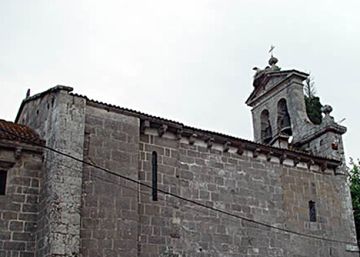
El monasterio de San Salvador de Asma, una de las joyas arquitectónicas de la Ribeira Sacra lucense con más de un siglo de antigüedad, está a la venta. Sus actuales propietarios lo adquirieron hace 18 años, después de que el convento pasara por muchas manos privadas a raíz de la desamortización de Mendizábal, en 1836, por la que se expropiaron tierras y bienes a la iglesia.
MAPA INTERACTIVO | Hai 180 anos, entre xullo e setembro de 1837, George Borrow percorreu Galicia vendendo biblias. Recuperamos a visión do país que recolleu no libro The Bible in Spain, acompañada pola Carta Xeométrica que Domingo Fontán rematara en 1834.
Flos Mariae, el grupo de devotas cristianas que saltó a la fama en 2014, ha dado en los últimos tiempos un inesperado giro hacia lo siniestro. ¿Se trata de una manifestación de influencias conscientes, o de un reventón del subconsciente?
Recordemos el origen-nada-secreto del supergrupo: siete hermanas de la familia Bellido Durán (de un total de dieciséis hermanos) prometieron “a la Virgen María, a Jesús, a Dios” que, si su madre sanaba del tumor maligno que le habían detectado, formarían un conjunto musical para propagar la fe católica. La primera parte de la historia tuvo un final feliz, con una operación de seis horas superada y la consiguiente fundación de Flos Mariae, pero el cáncer regresó poco después y, en septiembre de 2015, tenía lugar el fallecimiento de la madre.
Antes de morir, la que llegase a ser octava componente del combo les pidió a sus hijas que en ningún caso interrumpiesen la transmisión de su mensaje de Amor, y así lo han hecho hasta ahora. Sin embargo, la música que acompaña a sus últimos himnos de coaching espiritual se antoja más apropiada para sonar en un club gótico que en unas convivencias cristianas.
Parece que el punto de inflexión, o de rotura, podría situarse en septiembre de 2016, cuando se cumplía un año del óbito. Hasta entonces letra y música iban más o menos de la mano, como una pareja de enamorados corriendo colina abajo -valgan como ejemplos las canciones de julio y mayo: España, tierra de María, y la pegadiza cual plaga bíblica Los 10 mandamientos-, pero justo en esa fecha la parte instrumental tropieza y todavía no ha parado de rodar. Veámoslo.
Septiembre de 2016: Dame la mano
Estamos seguros de haber escuchado antes el martilleo de lo industrial en esa amalgama de estilos que es la música de Flos Mariae (incluso podríamos forzar una conexión vaporwave, si incluimos en la ecuación el diseño de su página web), pero es en la canción correspondiente al infausto aniversario cuando la combinación con notas sueltas de piano y lalalás de ultratumba las mete directamente en territorio Nine Inch Nails. Ni siquiera importa que la melodía vocal empiece recordando a El africano/Mami, qué será lo que quiere el negro.
Noviembre de 2016: A smile in Christmas
La última canción del año fue un villancico, pero mientras que la letra (en inglés) no deja lugar a dudas sobre su dedicación al Niño Jesús, la música parece más bien dar la bienvenida al bebé de Rosemary. Lo mismo ocurre con la imagen que abre el vídeo, y que luego se repite fugazmente, de las siete hermanas arrodilladas delante del portal: bajo el influjo de esos coros apocalípticos uno ya no tiene claro si el susodicho es de Belén o conduce a una dimensión de dolor. Mención aparte para la cámara temblona del final (3:25), como si verdaderamente el suelo empezara a abrirse bajo sus pies.
Interludio
El 29 de diciembre de 2016 se anunció un retraso de un mes sobre la fecha programada para la publicación del siguiente tema, debido a “un acontecimiento no previsto”. Antes, a mediados del mismo año, las canciones habían pasado de publicarse una vez al mes a salir cada dos meses, “el primer miércoles, para dedicarles más tiempo y daros lo mejor”. Se adivina cierto agotamiento, pero el habitual hermetismo del grupo solo nos permite elucubrar sobre la naturaleza última del mismo.
Febrero de 2017: BLA BLA BLA
En este punto Flos Mariae le han dado ya definitivamente la vuelta al meme del sonido Smiths: sus letras son el parque, su música el cementerio. Claro que tampoco hay que olvidar que los niños son más broncas que los muertos, y esa suerte de Logia Beige que sirve de decorado para el vídeo es testigo de una frase inusualmente agresiva en el discurso del grupo: “Conoces a patéticos con una vida sin sentido”.
Abril de 2017: 70×7
Las palabras que Jesús le dedicó a Pedro conminándolo a perdonar “no hasta siete veces, sino hasta setenta veces siete” resuenan sobre una base de música de feria de las tinieblas, mientras las hermanas completan otra vuelta en su imparable tren de la bruja. El vídeo incluye un susto-salto en toda regla alrededor del minuto 1:40 (cuando la letra dice “hoy te traigo una alegría / que te consolará el corazón”; suponemos que esa es su manera de masajeárnoslo).
Junio de 2017: 15 minutos
Planteábamos en la entradilla dos posibles explicaciones para este descolgarse por los abismos que ha emprendido Flos Mariae. La primera sería tan simple como que conocieran y admirasen esos sonidos, y hubiesen decidido incorporarlos a sus opus, prescindiendo por supuesto de toda la parte lírica que suele ir asociada a ellos. Es un poco lo del camello por el ojo de la aguja, pero oye, quién sabe. Sin embargo, su penúltima vuelta de tuerca apunta más bien a la otra posibilidad, justo en la dirección contraria. Los 15 minutos de los que habla la canción de junio son los 15 minutos en compañía de Jesús Sacramentado, pero a nadie se le puede escapar, salvo quizás a ellas, que la manera en la que está narrado el encuentro se acerca más al Christian Woman de Type O Negative que a la oración original.
Tirando un poco más del mismo hilo: si aceptamos la música oscura, igual que el cine de terror, con todos sus códigos característicos, como una forma inocua de calmar a nuestros demonios, quizás sea posible que un artista que lucha sistemáticamente por reprimirlos acabe llegando por sí solo a las mismas conclusiones estéticas. A lo mejor tanto hablar del Altísimo sin ni siquiera mencionar al Bajísimo ha llevado a Flos Mariae a reinventar la espiral de Trent Reznor, porque por algún lado tenían que explotar.
Agosto de 2017: Héroe
El último vídeo publicado hasta la fecha no solo mantiene el rumbo, sino que además parece fijar el timón introduciendo una nueva cabecera que te hará soñar con Stranger Things homenajeando a Jesús Franco. El homenaje sin embargo va para el patriarca de los Bellido Durán, presente en otro clip de tintes armagedónicos (¡ese ventarrón!) y también en los acrósticos que esconde la letra. Como mensajes ocultos estos resultan algo redundantes, pero ahora no podemos dejar de pensar que quizás haya otros no revelados en los lyric videos anteriores…
La siguiente producción de Flos Mariae saldrá a la luz el miércoles 4 de octubre. Veremos si se adentran en las tumbas o regresan a los columpios, aunque en cualquier caso habrá que esperar a los próximos meses para saber si esto ha sido solo una fase, o de verdad estamos asistiendo a la fundación del pop industrial católico. Como sinceros admiradores de este nuevo y revolucionario estilo, confiamos hondamente en lo segundo. Siempre adelante con la fe.
Pocos intelectuales contemporáneos pueden presumir del impacto que alcanzó Pier Paolo Pasolini (1922-1975). Cuando murió, tras una brutal paliza y atropello, el primer ministro italiano Guilio Andreotti dijo que "se lo ha buscado". Sea cierta o no la sospecha de un asesinato político, personajes poderosos de todo el espectro social sintieron su desaparición como un alivio. Cuatro décadas después, su obra se mantiene más viva que nunca. Incluso intervenciones que suelen considerarse menores nos dan claves sobre conflictos cruciales de nuestro tiempo. Es el caso del reciente 'Vulgar Lengua' (Ediciones El Salmón), que recoge un encuentro de Pasolini con profesores interesados en sus propuestas de reforma.
En los últimos años, se han publicado 'Sobre el deporte' (Contra), 'Nebulosa' (Gallo Nero) y 'Nueva York' (Errata Naturae). Esta última editorial también se encargó del volumen de miscelánea 'Demasiada libertad sexual os convertirá en terroristas'. Parece que cualquier migaja de su legado (una entrevista, un guión inacabado, columnas sobre el Bolonia FC…) dice más sobre nuestros problemas que la mayoría de ensayos publicados anteayer. Los Teatros del Canal programan en mayo de 2018 'Who is me. Pasolini (Poeta de las cenizas)', montaje de Álex Rigola que imagina una charla con el italiano. ¿Por qué este creciente interés en su obra? Seguramente porque sus lectores tienen claro que acertó en tres profecías fundamentales.
Pasolini contra el Estado
1) El consumismo arruinará nuestras vidas
Una de las ideas fundamentales de su discurso es que el capitalismo contemporáneo es más destructor que el fascismo, ya que dispone medios de dominación más potentes. Mussolini tenía la iglesia y el ejército, mientras que Berlusconi dispondría de la televisión. Así lo explicaba en el año de su muerte. "Hoy, el orden social, en mi opinión, ha cambiado de forma revolucionaria en el seno del propio capitalismo. El consumismo es una forma nueva y revolucionaria de capitalismo, porque posee en su interior elementos nuevos que lo revolucionan: la producción de mercancías superfluas a una escala enorme y, por tanto, el descubrimiento de la función hedonista. El descubrimiento de la función hedonista provoca que este capitalismo nuevo, este nuevo orden social, no quiera seguir teniendo pobres, sino personas pudientes que quieran consumir, no quiere buenos ciudadanos, sino buenos consumidores".
Su tesis política, nacida de la observación cotidiana, consiste en que los marginados sociales estaban mucho mejor antes de la llegada de la televisión y el capitalismo de consumo. "En los arrabales romanos, que es el mundo que yo conozco, y que es es el mundo que he retratado en mis novelas de hace diez años, los jóvenes y la gente en general era mucho más feliz que ahora. No sé qué es la felicidad; pero si la felicidad es sonreír, y cantar, y crear con las palabras todos los días un chiste, un chascarrillo, una historieta, entonces eran mucho más felices", apunta en 'Vulgar lengua'.
Pasolini sobre escribir
2) La libertad sexual ha sido falsificada por el capitalismo
Pasolini tuvo que luchar desde joven por su condición de homosexual, una práctica tolerada entre el mundo cultural italiano a cambio de discreción. Su defensa abierta le ganó muchos enemigos. A pesar de todo, protestó cuando las élites fueron abriendo la mano. "Esa libertad sexual por la que yo he peleado tanto, hela aquí, la tenemos a nuestro alrededor, todos los días, es algo espantoso, porque se trata de una falsa tolerancia concedida desde arriba, concedida por ese nuevo modo de producción que quiere que el sexo sea libre porque donde hay libertad sexual hay un consumo mayor. Es así como han nacido los guetos pornográficos en Copenhague", lamenta.
El escritor italiano pensaba que la lucha debía reorientarse. "La tolerancia, la libertad sexual del consumismo, es mucho más avanzada que en mis películas". Odiaba la reducción de los cuerpos a objetos con la etiqueta del precio. "Quiero comenzar de cero, hacer películas donde continúe presente el problema sexual, pero no entendido como pura libertad, porque el consumismo ha adaptado y falsificado esto, sino de una forma más problemática y dramática". Su violenta muerte nos privó de esas películas.
Pasolini sobre el consumo
3) Las alabanzas son una forma de desactivación política
Pasolini fue insultado o ignorado por todos los estamentos sociales, desde la iglesia católica al partido comunista. Incluso tuvo choques con su público natural, los jóvenes contraculturales que formaban el grueso de sus seguidores. Queda claro en su artículo 'Lo que dicen las melenas', de 1973, donde muestra su decepción por la mutación del hippismo en algo parecido al hipsterismo. Cuando veía revueltas estudiantiles como las de 1968, se ponía de manera instintiva de parte de los policías, jóvenes proletarios que carecían de la libertad económica de los cachorros de la clase media (obviamente, era una provocación, no pretendía defender la represión estatal, sino empatizar con aquellos "constreñidos a ser siervos por la pobreza").
En vida, estuvo muy atento a los elogios que -de manera consciente o inconsciente- desactivaban su discurso. "No quiero ser un personaje literario (…) Se llevan a un primer plano de mi obra solo los aspectos secundarios, como el lenguaje o la crueldad que existe en mi verdad. Un modo elegante para no detenerse en cambio la cuestión social, que es para mí, en mi intención de artista, la más importante". Pasolini parece estar describiendo un reciente artículo laudatorio de Antonio Muñoz Molina en Babelia. Allí se destaca su condición de artista lúcido, insobornable y certero, pero se esconde la faceta de hombre práctico, dispuesto a actuar una y otra vez contra el sistema. Por ejemplo, boicoteó el premio literario Strega en 1968, por estar "en manos del arbitrio neocapitalista".
¿Quién haría eso hoy contra el Planeta? También destaca su postura de pedir la suspensión de la televisión hasta que se reorientase en favor del desarrollo humano, en vez de hacia los beneficios. ¿Algún columnista se organizaría por esto ahora? Pasolini odiaba el consumo superfluo, hasta el punto de pedir el plato más sencillo en cada restaurante al que iba. ¿Cuántos intelectuales están dispuestos a renunciar a un cenorrio de la industria? Su obra no es solo algo que admirar, sino propuestas vitales que piden diálogo y continuación.
El grupo municipal del Partido Popular en el Concello de Ferrol ha denunciado en rueda de prensa este lunes que «Jorge Suárez lleva dos años dejando a Ferrol a su suerte, sin servicios, en dos años hemos visto pasar a tres personas por esa concejalía, y la última que se ha incorporado es como si no existiera», en palabras del edil popular Alejandro Padilla, que compareció al lado del concejal José Tomé.
Asegurando que el regidor ferrolano es el «alcalde privatizador», por no haber llevado a cabo las remunicipalizaciones prometidas en campaña, ha criticado el estado de las calles con baches, las hierbas «altísimas» de los parques, los juegos infantiles en malas condiciones o las papeleras rotas y oxidadas. «Hoy Ferrol parece Chernobyl, Kosovo, Detroit o mismo un escenario que bien valdría para rodar una película bélica por su lamentable estado», sentenciaba Padilla.
«Le pedimos que mientras está en la terraza le dé la vuelta a la silla y vea el estado deplorable en el que tiene a Ferrol, y se ponga a trabajar para revertir esta situación», insistía el popular, haciendo hincapié en que el concejal de Servizos, Luis Victoria, no ha sido capaz de dar luz verde al contrato de mantenimiento de viales, de electricidad y de parques y jardines.
Con respecto al contrato de limpieza, Tomé lamentó que «primero iban a mancomunar este servicio, luego dijeron que iban a redactar un pliego, pero al final nada de nada, es una vergüenza», afirmando que «su demagogia no deja de asombrarnos, el que se presentaba como el alcalde remunicipalizador al final privatiza todos los servicios y aún encima nos salen más caros, como los contratos de la electricidad y limpieza».
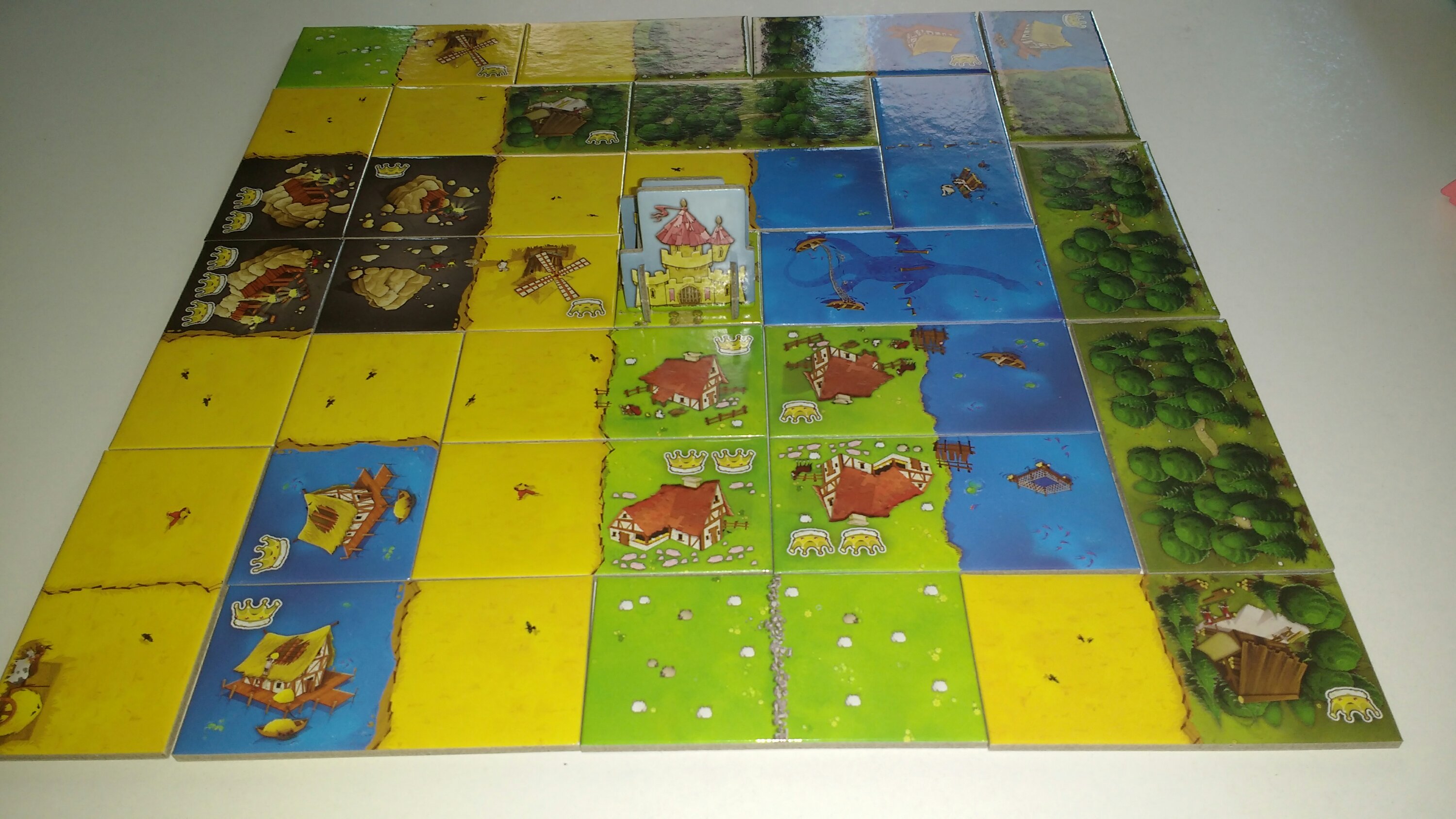
Un reino pequeñito y todo bien ordenado, donde se valora más el pasto y el trigo que el oro y el barro. Es importante no quedarte último, ni dejar nada mal colocado. Un juego se explica en minutos y se juega por horas. Hoy jugamos a Kingdomino.
Nº de jugadores: De 2 a 4
Tiempo de juego: 15 minutos
Autor: Bruno Cathala
Editorial: Blue Orange
Empaquetado: Maravilloso. Todo encaja, todo cabe bien, cada material, cada hueco está hecho a medida. ¡Estos chicos franceses lo hacen todo “trés bien”!
En Kingdomino deberemos conectar las piezas de domino formando un tablero de 5×5 que será nuestro reino.
Cada jugador cogerá un rey (o los dos reyes si juegan únicamente solo 2 jugadores), retiramos las piezas que sobren en función del número de jugadores y cada jugador recibirá el castillo inicial de su color. Ya podemos comenzar a jugar.
Cada turno se sacarán tantas piezas de domino como reyes haya en juego (3 o 4) y las ordenaremos por número de menor a mayor. En la primera ronda el jugador inicial se determinará al azar. Cada jugador, por turnos elegirá una de las piezas de domino pudiendo situarse únicamente un rey por pieza. Una vez elegidas las piezas, se sacará una nueva fila de losetas. Cada jugador coloca la pieza elegida en su terreno y comenzamos una nueva ronda. En este caso el jugador inicial será aquel que colocó en la pieza con un valor más bajo.
Para que una pieza pueda conectarse a otra ya colocada si uno de los terrenos coincide entre las dos losetas. La loseta inicial es un comodín y conecta con todo tipo de terreno. Si una loseta no se puede colocar porque no coincida con ningún terreno o porque superemos la cuadricula de 5×5, se descartará.
Cuando se haya colocado la última ficha de domino se termina la partida. Contaremos puntos según cuantos trozos de terreno tengamos y el número de coronas en cada territorio. El jugador con más puntos será el ganador.
Luego hay reglas opcionales como puntos extra si el castillo está en el centro del territorio o si hemos conseguido colocar todas las piezas.
La verdad es que es un juego muy sencillo, pero dentro de su sencillez guarda maravillas de mecánicas fantásticas.
Vamos a comentar un poco cómo es para dos jugadores. Metiendo la variante del cuadrado de 7×7 así como la de utilizar dos peones de cada color, el juego gana una barbaridad en poder organizar mucho más el tablero, y poder ganar en estrategia, dentro de lo que hay en el juego, así como poder currarte reinos mucho más conseguidos.
El juego es corto, y dentro de ese tiempo te da como para tomar unas 20 pequeñas decisiones, muy sencillitas pero con mucha mala baba, que mejor no fastidiar, no sea que te quedes atascado en una esquina, o se te quede un reino chuchurrío con huecos por todos lados.
El utilizar una mecánica tan conocidísima del dominó, unida a un loseteo lo convierte en un juego ideal para explicar en segundos, y ponernos todos a jugar. No es difícil entender el juego y la verdad es que permite partidas intensas, pero aún así rápidas. Es fácil encadenar dos partidas, aunque es mejor no destrozar las losetas demasiado rápido. Mejor utilizarlo para acabar una buena sesión, o comenzarla. Es un juego fácil de jugar con niños (comprobado).
Con más jugadores es un poco una puja por pelearse con los otros jugadores a ver quién consigue lo mejor en menos tiempo, aunque es difícil quitarle nada a otro, si quieres que tu territorio salga más o menos a derechas.
Poco más. La mecánica de posición de turno es magnífica (y pegada de Yamatai), pero da la sensación de control que no ofrece, por ejemplo, un juego como Cacao o Carcassonne (en los cuales se podría adoptar la mecánica, aunque alargaría un poco el juego).
Opinión de Farko: Pequeño pero matón, un gran juego para todos, con el cual voy disfrutando más en cada partida. Indispensable meter las variantes para dos jugadores, sino, se queda más soso que un arroz sin colorante.
Opinión de Fayzah: Es un juego muy sencillo y rápido. La determinación del orden en cada nuevo turno le da un puntito interesante que hace que la colocación del rey tenga mucha importancia. Además, tiene peones rosas así que… minipunto para el juego!
Back in the early days of the App Store, the most controversial thing we ever had to talk about was whether or not Apple was going to allow fart apps. Since then the ante has been upped substantially, but an upcoming game from Mumbai-based Kierun Studios is in its own universe. Per the developer, "Abortion Simulator will put you right in the middle of the surgery room and let you perform various abortions." Featuring abortions ranging from "a few weeks" to "24+ week complex cases," the reprehensible Abortion Simulator seems on track to be the most controversial "game" the App Store has ever seen.
It seems exceedingly unlikely that Abortion Simulator will be approved by Apple, as the very first entry in the App Store review guidelines includes their definition of "objectionable content": "Apps should not include content that is offensive, insensitive, upsetting, intended to disgust, or in exceptionally poor taste." Regardless of where you stand on the abortion debate, I think everyone would agree that something like this is, at absolute minimum, insensitive and upsetting.
There's more graphic screenshots of the game in our Upcoming Games Forum, and it seems like Kierun's entire schtick is releasing controversial titles. Their previous title, Shower Buddy [Free] caused an incredible stir on our forums, and I have no doubt Abortion Simulator will be any different. It feels like a line has definitely been crossed here and hopefully Apple does the right thing in evaluating whether or not "games" like this have a place on the App Store.
María Meijide redescubriu a súa cidade natal moitas veces, dende o Ensanche adolescente ata a efervescencia cultural de Compostela nos primeiros anos 2000
<p> <img border="0" src="https://www.lavozdegalicia.es/sc/960x/default/2017/08/13/00121502635981539509722/Foto/SG14C8F1_1.jpg" /></p>
<p><ul>
<li><a target="_blank" href="/noticia/santiago/2017/08/14/span-langglagora-estou-bastante-pechada-estou-producindo-pintandospan/0003_201708S14C8991.htm">«Agora estou bastante pechada, estou producindo, pintando»</a></li>
</ul></p>
A petition has been posted on Change.org by a Maryland gamer, Brad Smoley, to try and convince Scandinavian stick furniture powerhouse IKEA that there's a significant-enough market for a dining room table that converts into a gaming table. He writes:
The board gaming community is passionate and fickle about their gaming accessories. They are also a large group with disposable income. There have been many attempts in the community to develop a high-quality table appropriate for both dining and gaming, but few have been affordable enough for the community at large to enjoy.
That is why this petition has been created. IKEA is an industry leader in creating multi-functional furniture at affordable prices. The tabletop gaming community is already a heavy user of IKEA's KALLAX product as it is an efficient way to store and display their gaming collections. An affordable multi-function gaming table designed by IKEA would be an incredible addition to not only IKEA's line up of products, but the board gaming community's list of essential gaming accessories.
I believe the petition just launched within the past 24 hours and has already gathered over 5300 signatures (of the desired 7500). I signed. I'm one of those gamers who covets such a table but could never afford what handmade and small production models go for.
This is not new news, it’s old news. But maybe you haven’t seen it, and it’s so nutty that I feel compelled, with a box of Williams Sonoma Peppermint Chocolate Bark sitting open in front of me, to share this with you.
It’s a Japanese game show where a curtain is whisked open to reveal a room, and the contestants are shown items in that room, such as a shoe or a picture frame, or a table, or a plant, that are highly unlikely to be edible. They are asked to guess if it’s edible or not and then bite it.
Oddly, some of the items turn out to be stunning edible versions of things you would never consider chomping on. The video will give you a chuckle … just don’t take a bite out of anyone sitting next to you. I take no responsibility if your significant other mistakes you for one of the walking dead.
On Reddit, the question was asked, "Why do porn sites have social media sharing buttons?" It's a good question!
The Next Web presented some of the most plausible answers:
“Because while it would be immensely embarrassing for you, it’d still be great advertisement for them,” one commenter says. “Realistically, nearly every blog standard CMS framework comes with them on out of the box these days,” another argues. “Most sites probably just don’t turn them off.”
One user suggests that it’s probably there for people who post porn on Tumblr or Reddit — which makes sense, as they are places for embedding images and videos that offer greater anonymity.
The New York Times link listed above was previously highlighted on Mefi in "This is about volition and autonomy" by Fizz.
--
Ms. Maslany finally won an Emmy last year, for her work in Season 4.
* Also from SDCC:
- Clone Improv. (Here's the full video from Orphan Black panel.)
- Entertainment Weekly'sWomen Who Kick Ass Panel, featuring Tatiana along with Morena Baccarin (Gotham), Melissa Benoist (Supergirl), Nathalie Emmanuel (Game of Thrones), Lucy Lawless (Ash vs Evil Dead), Connie Nielsen (Wonder Woman) and Ming-Na (Marvel's Agents of S.H.I.E.L.D.)
Sam Levine at The New Inquirydescribes how Twitter aggregates user data from various tracking companies and then provides a basic database of 1519 'user segments' to ad creators. Sam used the data to create fictional ads corresponding to these segments. Link to csv included.
Do you remember your first masturbatory orgasm? One minute you're just exploring down there and the next, an otherwordly new realm of feeling eclipses your sensory perception and releases explosions of previously unknown delight, a magic new paradigm, a dimension that you didn't know existed. They say a miracle is a shift in perception. The first masturbatory orgasm is a miracle. The ones that follow are the resurrection.
For me, masturbation is the cosmos's way of saying, "You contain God. You contain mystery. You contain the ability to create something beautiful out of nothingness." Many times, following a mediocre sexual experience with a partner, I've thought, Why didn't I just stay home, masturbate, and eat snacks? Even during the best sexual encounters I often need to masturbate in order to reach orgasm. Sometimes the person I'm with can feel a bit excluded. One partner asked if it would help if he left the room. Another said I looked like Houdini trying to escape a water torture cell. One said he physically felt like my vagina was trying to expel his penis as he tried to fuck me while I masturbated.
I know that not everyone is as introverted, dissociated, or locked into the bittersweet grip of an epic fantasy life as I am. But the question still remains: Why, with porn in abundance, sex robots on the horizon, toys that simulate cunnilingus, and a good pair of hands, do we still bother looking for ass outside ourselves? I decided to put the question to a few creative human beings I know.
"I think there's still hella reasons: millennia-old biological urge; fear of loneliness; (good) sex is still better than rubbing one out; cuddling; fear of AI; sex robots probably are boring and uncreative; AI hasn't mastered natural speech so they're probably bad at talking dirty; as much as people hate other people they deep down love or at least need other people and can't be without them," says musician, writer, artist, and sometime-VICE contributor Kool A.D.
"Sex is both a stabilizing and destabilizing force," says comic Jaboukie Young-White. "Pornhub has never made me feel like I needed to deep clean my room in 20 minutes before I could watch it. Masturbation never made me go three years back into my hand's tagged photos. Until AI, VR, or whatever can replicate the nuances outside of the physical experience of sexual intercourse, fuckin' is here to stay."
I get it. No one is an island, even if we think we want to be.
"An analogy could be made to music," says writer Christopher Zeischegg, also known as former porn performer Danny Wylde. "Maybe seeing my favorite band perform my favorite song in a small, club setting is amazing. Especially when I was 15 years old… But right now, the song is stuck in my head, and all I have is YouTube and my iPhone. I still get some enjoyment out of listening to that compressed, digital single streaming online—that's like masturbating for two minutes to a PornHub clip, right? The older I get, the more there needs to be incentive. Otherwise I don't care. I'll jerk off and keep working, or I'll go to sleep, or whatever. It's the same with going out to see a band. The process of getting dressed and showing up for a live show and waiting around in some shitty club is so fucking obnoxious to me these days, so I have to be VERY invested in the outcome."
Shame around masturbation doesn't seem to be what it was when I was first engaging in the practice many moons ago, but I remember my own adolescent confusion around it. At 13, I lost my best friend when she suddenly decided masturbation was disgusting, and she wasn't going to do it anymore (we had both previously admitted to masturbating and experimented with her father's issues of Playboy). A few years later, I met a girl who was cool, sexy, and rode horses. She was very open about the fact that she masturbated, and when she said it, nobody fucked with her. She inspired me to go into the school year with a renewed attitude that I should be proud of my habit.
"I think the absence of judgment is one great thing about porn," says Alissa Nutting, author of the brilliantMade for Love, in which the novel's protagonist flees her tech mogul husband (who uses an orgasm machine and wants to have a chip put in her brain) to go stay with her father (who is in an intimate relationship with a sex doll). "It's hard sometimes to navigate explanation with a partner—like, 'So I actually would never want to do this, but it gets me off,' or, 'I'd only want to do this in these hypothetical circumstances with a brunette of this Myers-Briggs personality type,' or, 'This turns me on if I think about this detective from Law & Order: CI doing it.' It can be nice to just have your weird solo stuff. And maybe there's some or total overlap between your weird solo-stuff and your weird with-another-person stuff, but I don't think there always is. What gets you off alone can be really different."
Writer, artist, and game designer Porpentine Charity Heartscape DMs me something of a numbered koan as a response to my query.
"1) Has anyone ever had sex with another human?
2) People want something outside of their own understanding. To not know what happens next.
3) Sex feels like part of an ongoing eternal galactic convalescence. I like having sex with myself with others. Holding her hand, so I don't get sucked into the black hole. There's no cure for being turned into glass, but there are tender ministrations.
4) Much like the current state of sex robots, I'm hilariously broken and fucking me is a crime against nature."
I, too, can feel like having sex with a partner is like having sex with myself—but with company. Conversely, I've experienced masturbation that has felt more intimate and loving than partnered sex. Looking back, I remember sacrifices I had to make for my beloved masturbation. At sleep-away camp, I would fake an illness so as to be sent to the infirmary for a night: just to have a private place to masturbate. Yet while masturbation can be an effort, relationships can be even more difficult.
"As a cis woman, I've had enough bad fucks that masturbation is not only safer emotionally and physically but it's definitely faster and has a much higher rate of satisfaction," says artist Addie Wagenknecht. "Sex has always been cis male centric. Like when he cums it's done and for cis women it's about the man's needs. So many cis women are having so much bad sex or having complex messy hookups and relationships that sex robots just eliminate men from the equation. We get what we need when we need it without having to think about STDs or if he has stalker mentalities. But why do I fuck men? Where my vagina goes my heart follows. I don't have sex outside of a relationships because of that, so sex in some aspect is intertwined entirely with emotional intimacy for me. I can't easily separate them."
I wonder if it's my heart that still leads me to have sex with other people? It's true that masturbation can sometimes be sad and lonely. Occasionally I'll watch a porn featuring two beautiful people having sex and forget that it's porn, and then I'll remember again and feel melancholy. There's also a loneliness I can experience after a solo orgasm, where I feel extra existentially isolated. This can happen especially if I've engaged in a romantic fantasy and I long for the object of my dreams to still be there after I've come.
Then again, these feelings of sadness and cosmic isolation are by no means relegated to masturbation. Some of the most profound disconnection I've felt from fellow human beings has occurred after just having shitty sex with another person.
"I definitely think our collective conscious/thinking is guided to make us believe that sex is only fun or special when it's with someone else when honestly, most of the time fucking someone else kind of sucks because most people don't know how to communicate about sex or really even pleasure each other (ESPECIALLY when it's a new partner)," says artist Molly Soda."That being said, I think sex with a partner isn't always so much about getting off as much as it is about someone else being there. I think culturally we're expected to get a lot of validation from having sex with someone—you know, you hear people complaining about how they haven't 'gotten laid' in a long time, stuff like that. I think that collectively we sort of feel a lot of pressure to be more sexually active than maybe we even want to be."
Buy So Sad Today: Personal Essays on Amazon , and follow her on Twitter.
Ahhh, part-time jobs. That sweet cash-in-hand you got from rolling through to your local pub after school to wash plates and steal a bottle of crap vodka for your mate's house party. Getting fired from your waiter job for forgetting a customer wanted their extra spicy wings, extra spicy but not too extra spicy because, they're "allergic to extra, extra spicy'. Learning the hard way, that no matter how much money you may be making, girls can't bring themselves to fancy a guy who holds a sign while dressed as a giant sandwich.
But last time you needed some extra cash, it probably didn't cross your mind that you could've done something a little out of the ordinary – like knitting Superman-themed jumpers for penguins, or applying make up on cows. We spoke to eight people from around the world who are living proof that side jobs don't have to be a complete bore.
Karmen*, 25, Social Worker from Germany, Styled Cows for Photoshoots
Photo courtesy of Karmen.
VICE: How did you end up styling cows in your spare time? Karmen: My sister was already working in the "industry" and she needed some extra help. I thought it would be easy because I grew up on a farm and knew how to handle cows.
How do you make cows more beautiful? We would travel as a team, along with a photographer, to different farms in the region to scout for cow models. When a cow was chosen, based on whatever the beauty criteria was, we would clean it, use flour to touch-up its white spots, trim and brush its tail hairs – just trying to make it prettier. Most shoots were for specialised cow calendars. To be honest, I have no idea what makes a cow beautiful. For me, a cow is just a cow, but there really are people whose job it is to be able tell the difference.
Were you afraid of the cows? No, because I was raised on a farm. But every cow can react differently to people – some kick when they're upset. I've gained a few bruises, but nothing worse than that.
– Nora Kolhoff
Lyn, 60, Receptionist from Australia, Knitted Jumpers for Penguins Affected By Oil Spills
Photo courtesy of Lyn.
VICE: Hi Lyn, so you knitted jumpers for penguins? Lyn: Yes, it all started 17 years ago. I work as the receptionist on the Phillip Island Nature Park in Victoria, Southeastern Australia, and we take sick penguins in for rehabilitation. In 2000, there was a series of really bad oil spills. Just a small dot of oil can go straight through a penguin's waterproof feathers, which allows the freezing cold water to get straight onto their skin. They can drown or die from the cold. They also panic, they don't eat, and if they make it to shore they ingest the toxic oil while trying to clean their feathers with their beaks.
We tried a few other ways to stop the penguins from preening and to keep them warm while they recovered, but there were hundreds of birds. Then one of the vets saw a pattern in a magazine that someone had made up for another breed of water bird. She and her friend adapted that jumper so that it would fit the little penguins.
How many sweaters did you make? I probably made about 300 sweaters. Because it was such a great idea, we didn't have to put the word out very far, before we were inundated with thousands of offers to help. It took years to sort through all the jumpers we received in the post. We haven't had a major oil spill since 2001, but we've kept hold of all the jumpers as we occasionally get a penguin come ashore covered in oil.
How long does it take to make one? I'd spend a couple of evenings after work. It's a two-sided pattern, so I would do one side one evening, the other the next – and then you just sew them together. The more patterns the better; it makes them look very sweet. I've also knitted Superman penguin suits, and loads of football team shirts too. I even did an Elvis one with a high collar and cape; it was so cute.
– Liberty Lawson
Ana, 24, Writer from Serbia, Was a Freelance Sex Coach
Photo courtesy of Ana.
VICE: How did you become a part-time sex coach? Ana: I used to work with a couple of Australian pick-up artists in Belgrade. Together we taught insecure and socially awkward guys how to talk to women. A few weeks ago, they asked me to teach in a sex workshop they were putting on in a "sex dungeon", they had rented in Barcelona. Did you have to have sex with your students? How many coaches were there? No, I didn't. In total, there were four female sex coaches, two BDSM demonstrators and two pick-up artists – all that for just four students. We taught the guys how to be dominant in bed – how to role-play, spank and whip girls in a sexy way. They also took classes in therapeutic and sensual massage therapy, as well as tantric sex. It was very intense but really fun at the same time.
More importantly, the organisers made sure that consent was a key part of the workshop. The students had to ask for consent before every exercise, and they also practiced how to do it in different real life scenarios. We had safe words and signals, but I never had to use my safe word. What were the guys like? They were not the sort of shy guys I was used to working with – they had very good social skills and didn't seem to have any problems seducing women. They just wanted to learn a few tricks that would improve their sex lives.
Tage, 20, Student from Denmark, Worked as a Breakfast Themed Stripper
Photo courtesy of Tage.
VICE: How old were you when you started stripping? Tage: I started working as a stripper for hire when I was 18 – mostly at hen do's, but also at special functions for larger groups of women. I always tried very hard to make it special for the bride-to-be, while making sure everyone else had a good time too.
Your theme was a bit...strange. Ha, yes. In Danish, "Bolle" can mean both a "bread roll" and "to fuck", so my stage name, "Morgenbollefyr" (Morning Fuck Boy or Morning Bread Boy), was a fun double entendre. The idea was to bake breakfast with the women after I stripped, so I'd mostly get booked before noon. Typically, a gig would take an hour, so I could have a booking at 9AM, another at 11AM and then maybe one at 1PM at the very latest. I charged 1200 kroner (£145) an hour.
Did you use props? Yeah, all kinds of stuff. I would lick Nutella and eat fruits off the guests' bodies. Basically, I tried to cross the line a little bit, while still keeping it legal. After we were done baking, I would separate the bride from the rest of the women by taking her into the kitchen, standing behind her and washing her hands while whispering something kinky into her ear. My main goal was to create a calm ambience.
What was the most awkward situation you ever experienced? Were you ever sexually harassed? Yes, I remember it clearly. It was my final gig, and for good reason. When I arrived at this apartment in Copenhagen, there were about seven or eight women all over 50. As soon as I stepped through the door, they demanded I wear an apron and nothing else. I'd just turned 18 and I thought they were kidding, so I laughed it off but they were serious. I had to tell them that it didn't work like that. For the rest of the gig, the mother of the bride-to-be, who was about 70, kept grabbing my arm and asking me to join her in the bathroom. It was the longest hour of my life.
– Alfred Maddox
Maciek Piasecki, 28, VICE Poland Editor, Looked After TV Fortune Tellers
Photo courtesy of Maciek.
VICE: What was your side job? Maciek: You know those TV shows, where people call the studio to have their future read? Well, I had to look after the fortune-tellers. I did everything, from recruiting them to training them to speak on camera, and even making sure they stayed sober during the day. I wasn't sure whether they honestly believed they had a gift or if they were lying for a bit of cash. Most of them seemed like simple people, so I like to think they actually wanted to help others.
How did you end up working there? I was 19 and had just lost my job at a local TV station in Warsaw. I felt like my university degree was getting me nowhere, and I knew I could pursue my dream of being a writer from virtually anywhere, so when I was offered the chance to work for a TV company in Budapest, I jumped at it without fully realising what it would involve.
What were the best and worst parts of the job? The pay was good and I got the chance to live in an amazing city, but the actual job was shitty. Later, the company also got me to work on gameshows that were a complete scam – cheating vulnerable people out of their money. I'm proud to say I was terrible at it, and probably saved a few folks a lot of money. I was so relieved when I got sacked.
– Pawel Maczeweski
Inga*, 23, Student from Germany, Spent Her Free Days Running on Treadmills at Fitness Fairs
Photo courtesy of Inga.
VICE: How long did you have to run for one day? Inga: I was working eight-hour days, sprinting every 10 minutes during the busy periods. As the day wore on, the fair would get less busy, so I didn't have to run as much.
How fast did you have to run? Inga: I was constantly sprinting because customers needed to see how fast the treadmill could go. However, there were some who would only ask me to sprint because they found it funny.
Would you do it again? Definitely. Although running and talking to customers for eight hours a day is exhausting, I did get to meet a lot of great people.
– Nora Kolhoff
Claire*, 21, Student from the UK, Occasionally Works as a Shabari Model
Photo courtesy of Claire.
VICE: What is a Shabari bondage model? Claire: It's a very niche type of Japanese bondage that is quite popular in London's kink scene. The instructor uses me as a prop to teach the special technique to groups of 10 to 30 people at a time. He's a very accomplished professional who does different kinds of bondage, but Shabari is his speciality. It's a very complex art form: not a buy-a-rope-from-Anne-Summers-and-do-it-at-home kind of thing at all. It's a very expensive and time consuming hobby, not to mention very dangerous; you can easily get nerve damage or break a bone if it's not done correctly, so everyone takes it very seriously.
Where does one go for a Shabari bondage class? Every event is held in a private house. Everyone who takes part in the workshops is already part of the kink scene, so the whole thing has a casual feel. The house has a purpose built studio inside that has hooks attached to the ceiling, and padded floor mats in case I fall. Classes can be as long as five hours, and I get paid about £30 an hour, so it's not too bad. I'm never actually hanging for more than 15 minutes at any one time – any longer and you start to get problems with your circulation. But I've been working in classes like this for about a year now. Sometimes, I work a few times a week, other times it can be over a month between gigs.
How did you get into this? I was on a night-out at a club that attracts a large part of the kink crowd. I just started talking to this guy about it. He sounded a little strange at first but I soon realised it was like an artistic pursuit for him, which really appealed to me. I'm definitely into the sexual side too, but it's not like that at all during the demos. The atmosphere at the workshops is quite clinical actually. It's as sexy as going to a knitting class.
– Patrick Heardman
*Name has been changed to protect the subject's identity.