So you want to know how to cook! And you're starting from scratch. (Unless Top Ramen counts?) Your kitchen consists of a college mug, one big bowl that you use for cereal, and a frying pan that's kind of...flaking? The task of stocking a kitchen, let alone cooking in it, seems insurmountable.

We're here to help. In honor of our Dansk Kisco Dinnerware, the starter dinnerware set to rule all starter dinnerware sets (it packs four 4-piece place settings for less than $80!), we've gathered a little rah, rah, rah for you, in the form of twelve basics for your kitchen and table.
But first, the Food52 team rounded up our best, most basic cooking advice. And we're talking basic. Six words basic. Presenting:
(You got us, the last one is eight words—but it's a really good one. And be sure to share your own 6-word advice in the comments!)
Now it's your turn. What would you recommend for the beginner cook to stock in their kitchen? Then tell us your best, most basic cooking advice in six words or less. Go!
El 30 de agosto de 1961, Francisco Franco y su esposa Carmen Polo paseaban por los pasillos del Palacio de Xelmírez, en Santiago de Compostela, entre los mejores exponentes del arte románico. Dos figuras detuvieron su paso en aquella muestra organizada por el Consejo de Europa: Isaac y Abraham, retiradas siglos atrás del Pórtico de la Gloria, obra cumbre del Maestro Mateo y, en ese momento, propiedad de la ciudad. El matrimonio quiso asegurarse la gloria tomando un trozo de ella. Las piezas fueron a parar a la familia del dictador tras un obsequio del ayuntamiento del que no se guarda registro alguno.

Más de medio siglo después, el concello gobernado por la coalición Compostela Aberta ha decidido recuperar las obras. Aprovechando que las dos tallas se encuentran de nuevo expuestas en el Palacio de Xelmírez, a pocos metros de donde se asienta el Pórtico, la concejal Marta Lois presentará en el próximo pleno municipal una moción para poner fin al "expolio" y demandar la devolución de las obras “sustraídas” por los Franco. La iniciativa recoge trasladar el acuerdo, de llegar a aprobarse, a la Xunta de Galicia y al Gobierno español.
El Ayuntamiento prepara además una reclamación por vía judicial para declarar nula la donación realizada en 1961, al no figurar en el consistorio ningún documento que la recoja. “Entendemos que, como bien público que son estas estatuas, no pueden ser donadas a manos privadas”, añaden a El Confidencial. Por el momento, el conselleiro de Cultura, Román Rodríguez, pide al Gobierno local “averiguar qué pasó en su casa”. “Tendrán que ponerse a trabajar para recuperar el patrimonio. Si pasan a dominio público, estamos absolutamente a favor: son dignas de estar en los mejores museos del mundo”, añade.

En la Fundación Francisco Franco, sin embargo, dicen sentirse “sorprendidos” por la petición. “No nos han advertido de nada y no hemos hecho ningún trámite. Sinceramente, me sorprendería mucho que llegue a producirse esa entrega”, reconoce a este diario un portavoz de la fundación, que recuerda que las estatuas fueron “obsequiadas en su momento” y, por tanto, “pertenecen a la familia Franco”.
Cuatro siglos lejos de la CatedralIsaac y Abraham se desprendieron de la obra cumbre del arte románico durante las reformas que sufrió la fachada de la catedral entre los siglos XVI y XVIII. “Según varios expertos, hubo piezas que fueron reubicadas durante los trabajos”, explica Carme Varela, de la Asociación O Sorriso de Daniel que, en los últimos años, trabajó por la recuperación de las estatuas.
Se le perdió la pista a las dos tallas hasta que el historiador Fermín Bouza Brey las localizó en 1933 en el pazo del conde de Ximonde, junto al río Ulla. Bouza Brey identifica las figuras como las obras que el Maestro Mateo había ubicado, originalmente, en ambos extremos de la puerta principal de la basílica. Isaac y Abraham habían sido pétreas acompañantes durante al menos 500 años de las más de doscientas piezas que conforman el Pórtico.

“En ese momento se convence al Concello de Santiago para que las compre”, continúa la experta. Se llega a un acuerdo con el dueño para devolver las esculturas a la ciudad tras el pago de un precio simbólico. El conde, sin embargo, establece una cláusula de 60.000 pesetas para que las obras no sean vendidas o trasladadas de la capital gallega. Isaac y Abraham pasaron a presidir la escalinata del Pazo de Raxoi, sede del ayuntamiento y vecino de la Catedral en la plaza del Obradoiro.
Así, hasta que la Exposición Internacional de Arte Románico de 1961 las cataloga como propiedad de ‘Su Excelencia el Jefe del Estado’. “De un día para otro, las piezas están en su posesión. Ni se sabe cómo aparecieron en sus manos”, lamenta Varela.
El Ayuntamiento reconoce contar tan solo con un acta de 1947, en el que se aprueba en sesión plenaria la compra de las estatuas. Ni siquiera se mencionan en el Registro de Donaciones a Francisco Franco, consultado por este periódico en los archivos de Patrimonio Nacional.
A la sombra en la Casa CornideEl primer destino de las obras, ya en propiedad de los Franco, fue el Pazo de Meirás, también objeto de controversia por la forma en que fue donada a la familia del dictador en plena Guerra Civil y por la restricción a las visitas pese a su condición de Bien de Interés Cultural. Tras adornar el interior de la mansión fueron a parar a la Casa Cornide, en pleno centro de la ciudad de A Coruña.

El edificio es un pazo urbano del siglo XVIII que llegó a servir de palacio consistorial durante parte del siglo XIX. En los años setenta, la Comisión Permanente de la ciudad puso la finca a subasta para que Pedro Barrié de la Maza la adquiriese por 305.000 pesetas. El Conde de Fenosa, empresario y banquero que ideó el ‘obsequio’ del Pazo de Meirás a los Franco, volvió a vestir la capa altruista con la familia y entregó el solar a Carmen Polo.
Hoy, pese a ser una de las joyas arquitectónicas de la ciudad, se encuentra cerrado al público y en ligero estado de abandono. Y allí, cuando no son recuperadas para ser expuestas al público, es donde Isaac y Abraham guardan polvo, aisladas de las obras labradas en granito y mármol por el Maestro Mateo entre 1168 y 1188, mientras Compostela anhela recuperar la Gloria perdida.
Este vídeo es tan insultantemente atroz que…No tenemos palabras. Mejor lo ves.
Si no has intentado robar algo en tu vida es porque probablemente no eres humano. Es parte del crecimiento de un mamífero el hecho de descubrir que si coges algo que te gusta de un supermercado, te lo escondes en el bolsillo y te largas sin pagar, esta cosa pasará a ser tuya, sin que hayas tenido que pasar por ese desagradable trámite monetario. Cuando uno descubre esto, se le abre un mundo de posibilidades en el que todo lo que existe es abarcable. TODO puede ser nuestro.
Desgraciadamente, esta sensación desaparece en el momento en el que alguien se da cuenta de lo que estás haciendo e intenta darte una lección moral. Cuando te dicen que esto está mal y que no vuelvas a hacerlo, como si este mundo no funcionara a base de grandes robos y timos.
En fin, aquí va un compendio de experiencias de robo truncadas; un almanaque de sueños rotos y humillaciones morales contadas en primera persona.

Karen, 31 años, diseñadora gráfica.
VICE: A ver, dices que te pillaron robando una toalla en un chino. ¿Cómo fue la cosa?
Karen: Sí, una toalla marrón de ducha de 18 euros en unos chinos de Tirso de Molina. Que quede claro que fue un caso aislado, yo no me paso la vida robando toallas.
Espera, 18 euros me parece un precio MUY FUERTE para ser de un chino. En un chino no debería haber nada que costara 18 euros.
Claro, 18 euros es muuuuuuuy caro, por eso me piqué. En este chino se flipan.
Lo tuyo fue casi un acto de justicia, ¿no?
Es que no era una toalla suave ni nada, era la típica toalla de mierda y pensé que serían cuatro o cinco euros. Cando vi lo de "18 euros" la quise robar.
Bueno, sigamos con el tema.
Me estaba mudando de piso y necesitaba una toalla. Me pareció cara y la metí en una bolsa que llevaba pero me pilló el niño chino de 8 años que estaba jugando a videojuegos en el mostrador y me obligó a abrir la bolsa que llevaba. Yo con 28, él con 8. Ganó y casi lloro. Desde entonces no he vuelto a entrar a la tienda. A veces le veo al pasar y sigue jugando, pero ya tiene 11 años.
"Me pilló el niño chino de 8 años que estaba jugando a videojuegos en el mostrador y me obligó a abrir la bolsa que llevaba. Yo con 28, él con 8. Ganó y casi lloro"
¿Cómo detectó tu hurto ese niño?
Pues porque había cámaras y yo, cuando intento mangar, me pongo nerviosa y hablo muy alto y cuento cosas absurdas que no vienen a cuento, como para "despistar". Y se nota. Yo creo que hice que el niño dejara el videojuego y mirase las cámaras.
¿Y cómo fue la situación del bolso? ¿Qué te dijo y qué dijiste tú?
Pues yo llevaba una bolsa grande con más cosas de la mudanza y cuando llegué al mostrador le dije que me cobrara un bolígrafo y me dijo "sí, claro... enséñame lo que llevas en la bolsa". Intenté convencerle de que no llevaba nada pero al final me ganó. Abrí el bolso y todo lo digna que pude le devolví la toalla, posándola en el mostrador. Intenté contener los pucheros.
¿Qué dijo el chaval al ver la toalla?
Nada. Era un jodido máster. El niño ese es un máquina, sus padres le dejan solo porque es infalible. El chaval me cobró el boli y siguió jugando, dominaba la situación a tope. Me fui a casa rotísima.
Tengo dos preguntas: 1) Siendo un niño de 8 años, ¿cómo cedes a enseñarle el bolso? Quiero decir, ES UN NIÑO; y 2) Una vez pillada, al ser él un niño, ¿cómo que no te piras y lo dejas ahí solo? Quiero decir, el tipo no es una figura autoritaria.
Es que ese niño no es normal, es muy serio. Está muy seguro de sí mismo, a mí casi me hace llorar.
Quizás no es un niño. Quizás es un señor de 40 años que aparenta como un niño de 8. Jugando a videojuegos para "despistar".
No lo había pensado. Mierda, ¡no era un niño! Me acabas de abrir la mente, acaba de cambiar todo.
No, no puede ser un hombre mayor. Has dicho que otro día pasaste por el lado de la tienda y el cabrón había crecido. Si fuera "un chino con problemas" no seguiría creciendo, tendría como 8 años para siempre.
Es cierto, crece. Pero a lo mejor crece diferente, a lo mejor muere con 80 años aparentando 18, no sé.

Griselda, 25, dependienta del Telepizza.
VICE: ¿Cómo fue la historia?
Griselda: En aquella época robaba bastante, era pobre y se me daba bien, pero el día del cumpleaños del novio la avaricia rompió el saco. Robé unos vaqueros con éxito pero cuando estaba ya en la calle quise acompañar el regalo con algún otro detalle y estuve dando vueltas hasta que encontré algo que me gustó: un jabón fino con perfume a lavanda. En la segunda ronda no fui tan eficaz y llamé la atención. Al salir a la calle un tío con chaqueta roja me siguió y me hizo acompañarle al típico cuartucho en el que te echan un broncazo.
O sea, ¿saliste con los pantalones robados y volviste a entrar para robar un jabón?
Sí, ese fue el estilo que gasté aquel día. Me dio mucha rabia, dejé de confiar en mis habilidades y no robé más en mi vida —también porque lo del juicio fue un tostón y me pusieron una multa de trescientos pavos—. Ese día había quedado para merendar con el novio y le tuve que llamar desde allí para decirle que iba tarde porque me habían pillado, un bochorno penosito.
"Robé con éxito pero cuando estaba ya en la calle volví a entrar a por un jabón fino con perfume a lavanda"
¿Y en el cuartucho qué te dijeron? ¿Devolviste los vaqueros? ¿Los tuviste que pagar?
En el cuartucho un tío con bigote me dio el sermón moralista, que si no me daba vergüenza y todo eso, y vino la policía. Estaba muy poco conforme con el sistema, tuve que pagar los vaqueros y la multa pero los vaqueros no me los dieron, me pareció injusto, ¡ya los había pagado!, eran míos.
Te hicieron pagar los vaqueros y te hicieron marchar sin ellos. Y encima te denunciaron y te cayeron trescientos euros. ¿Dónde fue eso?
En Sevilla.
Claro. ¿Y cómo fue lo del juicio?
Espantoso, lo pasé fatal, llevaron a una dependienta como testigo para decir que me había visto. Yo sabía que era mentira porque todo había sido a horas distintas, ellos no sabían que yo había salido y vuelto a entrar al rato. Su razón tenían, yo no me había portado bien, pero había cosas raras en su discurso.
¿Tanto valía la pena ese jabón? ¿No pudiste haberte quedado con los tejanos y ya está?
No he dejado de hacerme nunca esas preguntas, ¿no podías haberte quedado contenta con los pantalones, tenías que seguir enredando?
La avaricia humana.
La cagué a tope.
El novio se puso contento, ¿no? Eres capaz de robar por él.
Bueno, eso le daba un rollo romántico al tema, en el cuartucho con los vaqueros de hombre diciendo que era el cumpleaños de mi novio y que quería llevarle algo. Le podía haber hecho un dibujo o algo. No se puso muy contento tampoco, era un disgusto.
Al final se quedó sin regalo.
Se quedó sin nada, con verme llegar al rato con la cara de póker.
Se llevó el mejor regalo del mundo: el saber que su pareja es capaz de quebrantar la ley por él. Es un buen regalo.
Fue lo único bonito del asunto, supongo.

Manuela, 26 años, periodista.
VICE: Bueno Manuela, cuéntame tu historia.
Manuela: La verdad es que no recuerdo ni cómo ni por qué, quizá fue con el libro de "Yo Mango" que me ruló la punki de mi clase en tercero de la ESO, pero fui una cleptómana adolescente. Empecé con pequeños hurtos, anillos o pendientes en el H&M, que para mí eran como los caramelos estos que ponen en los bancos: estaban para que los cogieras sin pagar. Poco a poco fui perfeccionando mi técnica: me ponía unos zapatos y salía con ellos dejando los míos en la tienda, me pasaba al probador con una sudadera y salía con dos, cosas así.
Hasta que, un día, decidí llevarme las tijeras de cortar las cutículas de mi madre y le quité el pito a algo así como 20 camisetas de distintas tiendas. No me pitaron al salir, claro, pero me pitaron al entrar a una de ellas. Puede que influyera que todas las putas tiendas fueran del mismo grupo textil (si vas a robar en Inditex, fíchate sus filiales, consejo de experta). Iba con una amiga. Nos metieron en una sala pequeña de esa tienda y descubrieron el pastel. Aquella fue la primera y última vez que monté en coche policial, porque llamaron a la Policía, claro.
"Echo un poco de menos esa sensación de sentir que estoy estafando a una multinacional, porque ese era mi único requisito: que fueran multinacionales"
Nos llevaron a comisaría y nos pidieron el número de nuestros padres para liberarnos porque éramos —bastante— menores. Mi amiga se negó a dárselo. Yo también. Cuando nos amenazaron con pasar la noche en un centro de menores empecé a inventarme que mi padre tenía una enfermedad terminal, que cómo le iba a molestar por esta menudencia, a ver si me soltaban. Al final terminé llamándole. Estaba en la caseta del PC de las fiestas de mi pueblo y condujo hasta Madrid, donde nos habían pillado, para recogernos. Mientras lo esperaba saqué de mi mochila La Eneida, que me la tenía que leer para griego, para ver si eso sí servía como disuasión y podía escaparme. No hubo nada que hacer.
Cuando oí los zapatos de mi padre en la comisaría casi me echo a llorar, o quizá incluso lloré. Me dijo que él no me iba a castigar, que me castigara yo sola, y me dejó de hablar durante cuatro días, lo que fue peor aún que un castigo. Aún me dice que voy a pitar cada vez que salimos de una tienda. Nunca volví a robar, pero echo un poco de menos esa sensación de sentir que estoy estafando a una multinacional, porque ese era mi único requisito: que fueran multinacionales.

María, 33 años, escritora.
VICE: ¿Cómo fue la cosa?
María: Curraba en un sitio en el que odiaba a muerte a un medio jefecillo que había. Vivíamos enfrentados, él siempre intentando hacerme quedar en evidencia, yo haciéndome la chula prepotente y pegándole cortes. En esa época robaba descontroladamente y nunca me pillaban. Un día, en el Corte Inglés, con el bolso lleno de cosas absurdas para una cena con colegas (castañas en almíbar, kéfir de cabra, latas caras, una botella de vino bueno), el segurata se acercó y me humilló allí, en las líneas de caja. Me hizo sacar todo lo del bolso y ponerlo sobre la cinta mientras toda la gente de las cajas me miraba. Cuando alcé la mirada, en la caja contigua estaba el jefecillo odioso comprando con su novia, mirándome estupefacto (pero encantado de la vida, claro). Curiosamente, nunca lo contó en la oficina.

Carlos, 28, informático especialista en sistemas de seguridad.
VICE: Carlos, cuéntame lo del árbol.
Carlos: Desde la primera vez que acudí en 2011, me convertí en fan incondicional del festival Hoteler, un festival de música de Vic. Hice buenas migas con dos hermanas de un pueblo cercano a Vic y durante cada edición me ofrecían un sitio en casa de sus padres donde poder dormir, desayunar y bañarme en una piscina. Contra todo pronóstico, conseguí caerle bien a la madre de las muchachas, por lo que decidí que, al año siguiente, le regalaría algo por su amor desinteresado hacia mí.
VICE: ¿Un árbol?
Sí, como tenía un jardín bien cuidado y un montón de plantas decidí que un arbusto grande sería una buena opción. Así pues, al volver el septiembre siguiente tenía dos misiones claras: rock y planta. A las 19h de la tarde del primer día del festival decidí comprar algunas cervezas en un Carrefour gigante cercano, gastándome todo el dinero que tenía guardado para el festival. Fue en el pasillo de salida, pasadas las cajas, al final del hipermercado, donde recordé lo de la planta. Fue casualidad que justo allí hubiera una fila de macetas de plástico con unos hermosos arbustos dentro, lo bastante grandes como para impresionar a una madre y lo suficientemente transportables como para poder llevarme uno fácilmente. No dudé (nunca hay que dudar en estas situaciones) y me lo llevé.
¿Era muy grande el asunto?
Sí, sí. Era tocho, alto como yo.
¿Cuánto costaba esa planta?
El árbol, técnicamente, no estaba en venta. Era un árbol decorativo. Estaba en el pasillo de la salida, una vez pasadas las cajas. Por eso no me parecía una infracción demasiado grave,
"Al salir, se me aproximó un vigilante de seguridad de unos 40 y largos con pinta amable. Yo pensé que me regañaría por haber escondido latas calientes en la nevera de los congelados"
¿Y llegaste a regalárselo a la madre?
La planta sobrevivió al resto del festival de ese día y la mañana siguiente le entregué el flamante obsequio a la señora. Se emocionó muchísimo y comentó las virtudes del arbusto y lo contenta que estaba. Gol. Amor a tope. De vuelta al festival todo iba genial, algún amigo comentaba mi hazaña y me hacía sentir orgulloso de mi astucia, hasta que conseguí prestados unos cuantos euros para beber más cervezas esa misma tarde. Repetí la operación: entré en el Carrefour, compré unas cervezas y, al salir, se me aproximó un vigilante de seguridad de unos 40 y largos con pinta amable. Yo pensé que me regañaría por haber escondido latas calientes en la nevera de los congelados, pero me preguntó si el día antes había estado en el establecimiento. Mi cerebro captó en el acto de qué iba la cosa y le contesté rápidamente y sin dudar (nunca hay que dudar en estas situaciones) que el día anterior me encontraba en el extranjero de viaje y que era imposible que hubiera estado allí. Puso cara de "Ya, vale" y me pidió que le acompañara. El amigo que iba conmigo empezaba a mirarme con cara de risa/preocupación. Una vez en el puesto de mando del vigilante, el tipo nos mostró la grabación de la cámara de seguridad del pasillo de salida. En él se apreciaba como yo, unas 24 horas antes, miraba furtivamente a mi alrededor y me llevaba la planta sin pudor alguno.
¿Y tú qué dijiste?
Yo mantenía mi tesis, que no era yo. Que yo el día anterior estaba en el extranjero.
¿Ibas vestido igual?
Sí, era evidente que era yo. Al final mi excusa era insostenible. Tampoco sirvió de nada argumentar que la planta se encontraba "fuera de la zona de cajas" o que yo estuviera en estado de "evidente embriaguez". La fechoría estaba clara.
¿Lo tuviste que devolver?
No, por suerte el señor estaba de buenas y me dejó pagar una planta de valor similar en caja —rollo dos euros y medio, la chica de la zona de jardinería me dijo que con eso ya estaba porque no tenían muy claro qué tipo de árbol era el que había robado—, haciéndome prometer que no lo volvería a hacer.
¿Y cómo lo pagaste si no tenías ni un duro?
Mi colega me dejó los dos euros y medio. Al año siguiente mis condiciones económicas mejoraron y pude regalarle, esta vez habiendo pagado, un olivo a la señora que me acogía durante cada edición del festival.
¿La madre se enteró de todo esto?
La mare nunca lo supo.
Joder, estas historias son las que hacen que el mundo valga la pena.
Claro, porque es robar por amor.
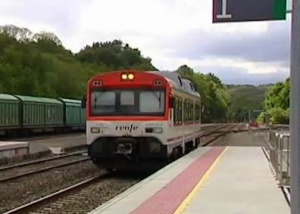
Pocos pasajeros pondrían una reclamación a Renfe por haber viajado sin pagar, pero José María Lorza Rodríguez lo hizo este jueves. Tenía una buena razón para ello. Es habitual de la ruta de tren que une Ferrol (A Coruña) con Ribadeo (Lugo), pero esta vez no pudo comprar el billete con antelación. La falta de interventor, el profesional que se encarga de cobrar a los pasajeros, y de máquina expendedora en la estación le hizo imposible pagar. "Los políticos dicen que esta línea de tren no es rentable para Renfe. Se quejan de que hay déficit, pero ellos acumulan todavía más...", dice a Verne en conversación telefónica.
Este vasco pasa varias temporadas al año en su casa Galicia desde que se jubiló, hace 7 años. Asegura ver a menudo a muchas personas que no pagan el acceso al tren, ya que es habitual que no haya interventor. En el trayecto que agotó su paciencia viajaban con él al menos 30 personas. La Voz de Galicia ha contado su denuncia.
Lorza protesta también por el mal estado de los trenes y sus continuos y prolongados retrasos: "Parte de las máquinas son muy antiguas, tardan en arrancar y tienen que ir más despacio de lo normal, porque se mueven como una cafetera. A veces hay que esperar hasta hora y media de más", relata a Verne sobre esta ruta que la propia Renfe llama "Turismo slow Norte de Galicia".
El perfil de Facebook Pola defensa do ferrocaril Ferrol-Ribadeo registra informaciones publicadas en la prensa gallega sobre el mal funcionamiento de este servicio. También sobre la falta de entendimiento entre los políticos locales para solucionar la situación.
En 2013, Renfe retiraba multitud de rutas en la Galicia rural argmentando falta de pasajeros. "Todos esos viajeros que no pagan no quedan registrados como usuarios del tren. Por eso decidí protestar, para dejar constancia de ello y defender un transporte que está en peligro, aunque usamos más personas de las que se piensan", explica Lorza. Pidió la hoja de reclamaciones nada más apearse del tren, en la estación de Ribadeo.
Un interventor no solo se dedica a cobrar los billetes, "también controla que no se hagan paradas innecesarias y que haya seguridad en el trayecto", recuerda Lorza.
Este trayecto ocurre un máximo de 4 veces al día y, cuando hay retrasos muy grandes, a menudo aparece un autobús o un taxi a recoger a los pasajeros, sin coste alguno para ellos, relata Lorza. "Es un gasto enorme que no ocurriría si se mantuviera la línea en condiciones", dice.
España es uno de los países con más titulados universitarios de la Organización para la Cooperación y el Desarrollo Económicos (OCDE), según el último informe sobre educación de la institución. Un dato que hace las veces de palmadita en la espalda de Íñigo Méndez de Vigo y sus secuaces siempre que no se ponga al lado de otro número: el de desempleados con titulaciones universitarias o el de trabajadores altamente cualificados que curran por sueldos míseros y en condiciones precarias en nuestro país.
O de otro dato, arrojado por el mismo estudio, denominado Education at a Glance 2017: uno de cada tres jóvenes españoles no pasa o no supera la ESO. En 2014, último año que toma como referencia la investigación que acaba de ser publicada, un 35% de jóvenes españoles de entre 25 y 34 años poseía únicamente el título de la Educación Secundaria o ni siquiera la había terminado.
España es uno de los países con más titulados universitarios de la OCDE, pero también lidera el ranking de los países con más gente que no ha acabado o no pasa de la ESO
"Se ha abierto una brecha entre el trabajo cualificado y el no cualificado. Esto es lo característico de la tercera gran revolución industrial, cuyo motor es la utilización de la información y el conocimiento a gran escala dentro del sistema económico, como lo fue para la primera –el surgimiento de la fábrica– la nueva escala de los medios de producción y, para la segunda –el taylorismo, el fordismo y el estajanovismo–, la organización del trabajo", afirma el sociólogo especializado en educación Mariano Fernández Enguita.
¿Las consecuencias de esto? "Así como la primera revolución industrial provocó una gran y nueva división social en torno a la propiedad y la segunda en torno a la autoridad, esta tercera lo está haciendo en torno a la cualificación", dice Enguita.
Si no tienes títulos no existes, pero los títulos no te garantizan nada. Así parece funcionar el juego en España, pero hay a quien, por inmadurez, por sus circunstancias personales o porque no encaja en un modelo educativo basado en memorizar y repetir, decide que no quiere incluso ese título de la ESO. Son los del 35%. Los del "fracaso escolar". Hablamos con algunos de ellos.
VICE: Hola, María. ¿Por qué has decidido dejar el instituto?
María: Porque repetí dos cursos (primero y segundo de la ESO), y en algunas evaluaciones seguía sacando malas notas. Me dijeron que si me quedaban las suficientes asignaturas como para repetir otra vez, no podía seguir en el instituto, me echaban directamente. Así que me adelanté a ello y me fui yo, porque sabía que eso iba a pasar.
¿Cómo te influyó repetir? ¿Contribuyó a que perdieras interés?
Sí, claro. Cuando repetí por primera vez entré en el curso con todas las ganas del mundo, pero cuando repetí por segunda vez lo hice sin ninguna motivación. Mis compañeros tenían dos años menos que yo, pero parecían muchos más. A los tres meses de empezar el curso, era como el infierno levantarme para ir a clase, no quería. Sentía que todo el mundo avanzaba menos yo.
¿Nadie te dijo que al menos lo intentaras? ¿Tu familia, tus amigos...?
Sí, constantemente. Pero era muy complicado porque me tendría que haber quedado solo 1. Con 2 troncales, repites.
¿Notas rechazo por parte de la gente cuando dices que no has terminado la ESO?
Sí. La gente te toma por tonto y asume que por ello no tienes ni idea de nada cuando lo cuentas. Parece que se sorprenden cuando dices algo que consideran que está "a la altura de la gente que sí ha estudiado la ESO".

VICE: Hola, Pablo. Hace unos años decidiste dejar la ESO y ponerte a currar. ¿Por qué?
Pablo: La deje por obligación de mis padres, me dijeron que si no aprobaba, tendía que ponerme a trabajar. Y no aprobé.
Parece una pregunta obvia, pero, ¿eras mal estudiante?
No era mal estudiante, solo que me aburrían algunas clases. De hecho, cuando lo dejé, tenía suspensas matemáticas y lengua y en otras como Ética, Historia o dibujo técnico tenía notas altas.
¿En qué medida consideras que el problema fuiste tú y en qué medida el sistema?
Cuando lo dejé pensaba al 100% que el problema partía sólo de mí, del desinterés y las pocas ganas de abrir un libro. Pero un par de años después, con perspectiva, me di cuenta de que no era el único culpable. Hubo gente que no hizo bien su trabajo, en este caso el trabajo de educar, que es bastante serio. A veces te das cuenta de que los mismos profesores tienen menos interés que tú en que aprendas, y si a eso le sumamos una estructura educativa repetitiva, estricta y con un contenido que poco se puede variar, el resultado puede ser el desinterés de los alumnos.
¿Qué haces ahora?
Estudio y trabajo. Después de unos años trabajando solamente, hice la prueba de acceso para entrar en una Escuela de arte. Allí no suspendía.
¿Cómo crees que dejar la ESO ha influido en tu vida?
Creo que me influyó en enseñarme que puedes perseguir tus verdaderas motivaciones sin escoger el camino convencional. Dejar el instituto me hizo ver que no seguir lo establecido es una opción, y que el esquema educativo está planteado de una manera unilateral.

VICE: Hola, Javier, ¿en qué curras?
Javier: Trabajo como encargado en una empresa online.
¿Crees que no tener la ESO te ha influido de manera negativa?
No me ha influido en nada directamente, porque trabajo nunca me ha faltado y estoy cobrando 1.300 euros. Hay gente con carrera que no cobra ni eso. Más adelante no te lo puedo decir, pero a día de hoy tengo ofertas laborales. Sí que a veces me arrepiento de no tener la ESO, porque podría haber seguido estudiando, pero a la vez pienso que soy muy válido en todo lo que me propongo gracias a la experiencia y al trato con la gente de todos estos años de trabajo.
Cuando oyes el término "fracaso escolar", ¿te sientes identificado?
No. Yo elegí no seguir estudiando.
¿Por qué lo elegiste?
Porque quería ganar dinero y pensaba en otras cosas en vez de estudiar e ir al colegio.
¿Qué le dirías a tu yo de hace 15 años, al que decidió no sacarse la ESO?
Que siguiera estudiando, porque en vez de 1.300 euros podrían haber sido 5.000. Simplemente por eso. Lo demás no lo cambio por nada. Yo he estudiado la vida, que es mucho más importante . Y al final, es lo que nos hace felices.
VICE: Hola, Cristina. ¿Eras mala estudiante y por eso dejaste el instituto?
Cristina: Sí, era mala estudiante. Pero, aparte, me agobiaba porque pasó el tiempo y parecía que ya era tarde para ponerme las pilas. A parte, mi hermana tuvo un problema, y decidí irme con ella.
¿Crees que si el sistema educativo estuviera estructurado y planteado de otra manera no lo habrías dejado?
No creo, la verdad. En mi caso, el problema fue que metí en un circulo de hacer el vago.
Y, ¿qué te decía la peña cuando te planteabas dejarlo?
Que era tonta y que me iba a arrepentir.
¿Y ha sido así?
Sí. De hecho, voy a volver a estudiar.
¿Qué hiciste cuando acabaste y qué haces ahora?
Me puse a currar en hostelería. Ahora hago reformas de casas. Nada de lo que aplico a día de hoy en mi trabajo lo he aprendido estudiando.
La semana pasada fallecía con 91 años Harry Dean Stanton, al que muy recientemente vimos en Twin Peaks clavando, como siempre, su eterno papel de los últimos tiempos: el viejo cascarrabias e irónico encantado de hacerse el tonto con unos chavales que se creen que lo saben todo. Presente en algunas de nuestras películas favoritas, hemos decidido homenajearle recordando algunas de las películas que marcó de forma indeleble con su presencia.
Nuestros Todos a una siempre están incompletos. Por definición. Elegimos un tema y unos cuantos colaboradores apuntan algunos ejemplos de su gusto y afines a lo propuesto. Nunca queremos ser completistas, pero esta vez es imposible: con 91 años, la presencia de Harry Dean Stanton ha adornado muchas más películas de las que puede cubrir un homenaje tan modesto como este. Aún así, nos hemos liado la manta a la cabeza para recordad algunos de sus momentos más gloriosos. Este es el resultado.
Aunque no se le suela tener muy en cuenta, con tanto xenomorfo, tanta Ripley y tanto H. R. Giger, uno de los grandes hallazgos de Alien fue su manera de exponer cómo, en el lejano futuro, todo permanecerá igual que ahora. Es decir, que seguirá habiendo empresas explotadoras, jefes expertos en amargarte la vida y curritos cuyo paladar se ha vuelto insensible a fuerza de devorar marrones. Para representar a estos últimos, nadie mejor que Brett, mecánico de a bordo en la nave Nostromo. Nadie mejor que Harry Dean Stanton para ponerle cara al lado más cutre del futurismo.
Desde su presentación (formando equipo con un Yaphet Kotto también supremo), este señor deja las cosas en su sitio: en lugar de jerga pseudocientífica o épica forzada, el primer diálogo que escuchamos en Alien es una conversación sobre impagos, dietas y disparidad salarial. Por si esto no aclarase lo bastante las cosas, fíjense en qué indumentaria ha elegido Brett para hollar el vacío entre las estrellas. Y luego desmientan (si es que pueden) cómo esa gorra de béisbol y esa camisa hawaiana a medio abotonar representan a quienes no tienen tiempo para pasmarse ante el cosmos infinito, porque están más ocupados preguntándose si la birria que van a cobrar les llegará para pagar la hipoteca. O el alquiler. O, ya puestos, al menos una cogorza en el astropuerto de turno.
“La sanción es la pérdida total de emolumentos”, suelta Ian Holm (que no es sólo un androide asesino, sino también algo peor: un esquirol y un sicario de la empresa) para taparles la boca a Brett y a su compañero cuando estos sugieren que lo mismo eso de descender sobre un planeta dejado de la mano de Dios no es una buena idea. Así pues, la razón última para acabar en las fauces de ese bicho tan devorador como un ERE no es otra que el miedo a que te dejen sin paga. Y el primero en ser devorado es, por supuesto, el que menos cobra y al que menos le importa el negocio. Si por Brett fuese, el eslogan de esta película habría sido “En el espacio, nadie va a defender tus derechos laborales”. Y en la Tierra tampoco: ¿acaso lo dudas? Yago García
Conocí a Harry Dean Stanton hace realmente poco tiempo. Es decir, hace realmente poco tiempo supe quién era, y a qué memorable rostro asociarle por fin el nombre. El Padrino II, La leyenda del indomable, Alien… Hasta que pude identificarlo en el revival de Twin Peaks, él se había limitado a desfilar ante mí anónimo, mientras honraba su sempiterno carácter de secundario y conseguía hacer acopio de todo mi atolondrado cariño.
En el citado revival de Twin Peaks encarnó al noble Carl Rodd, pero ya antes se había asomado al universo de David Lynch -hecho para personas como él, siempre cansadas y extrañas-, en films como Corazón salvaje, Una historia verdadera, la monumental Inland Empire y, sobre todo, Fuego camina conmigo. En esta última, Carl Rodd era tan afable y buen vecino como luego vimos, ofreciéndoles a los agentes del FBI una taza de ‘Good Morning America Coffee’ para que en cierto momento se le ensombreciera el rostro y musitara en afán de epitafio: “Yo sólo quiero quedarme donde estoy“.
Y Harry Dean Stanton se quedó en Twin Peaks lo suficiente para ver cómo el pueblo sucumbía a la vejez pesimista de quienes saben que los jóvenes no conservarán su grandeza. Fue testigo de la kamikaze huida hacia adelante de Richard Horne (Eamon Farren), de la tóxica relación entre Steven y Becky Burnett (Amy Seyfried, interpretando a la hija de Shelly) y, sobre todo, comprendió junto al Agente Cooper (Kyle MacLachlan) que no se puede hacer nada para cambiar el pasado. Que la nostalgia nos envenena. Fue por eso que decidió encogerse de hombros, echar mano de la guitarra, y seguir el consejo que una vez viera garabateado en el coche del agente Desmond: “Let’s rock”. Alberto Corona
Los directores europeos, al rodar en América, casi siempre han dado mayor importancia a sus excelentes secundarios. El alemán Wim Wenders, así, tuvo el valor de hacer protagonista a Harry Dean Stanton en su epopeya de un padre huyendo de un pasado conyugal flamígero. La elección fue brillante: Stanton, sus profundos ojos oscuros, da empaque a un amnésico en una película de carretera heterodoxa y repleta de silencios.
Esta falta de diálogos, tan enojosa para el espectador moderno, es la pieza clave de un discurso de misterio sobre el origen del personaje, sus problemas y estado actual. Una versión masculina, americana, de la seminal El desierto rojo del año 1964. Es, así, un Antonioni camuflado en Texas con un colorido disfraz de colores marcados y fuertemente simbólicos en cada fotograma. El viaje, como es habitual en el cine de Wenders, actúa como un tipo de redención; extraña adaptación metafísica de Easy Rider.
Entre la alienación moderna y la radiografía de la vida luego del maltrato doméstico, el director alemán construyó uno de sus mejores filmes, tan hipster como profundo, pero de indudable y obstinada calidad. Y el eje de todo son esas miradas a la nada de Harry Dean Stanton que dicen más y mejor que cualquier diálogo de folletín. Todas ellas preparan el emocionante monólogo final; la más doliente confesión de un maltratador en el Séptimo Arte. Julio Tovar
La aparición de Harry Dean Stanton en Los Vengadores (2012) es corta y responde al propósito de Joss Whedon de trabajar con el actor.
Piensa un momento en las películas de superhéroes: al ser, de forma general, productos de estudio, sólo tienen escenas que propulsan la narrativa y los diálogos sólo pertenecen a los protagonistas y personas de su entorno. Se salva a la gente, sí, pero esa gente no suele tener voz salvo que sea para gritar o señalar algún peligro.
Por eso, esta conversación de un minuto entre Banner, que aterrizó como Hulk en un almacén, y un guardia de seguridad al que no le sorprende nada es tan especial. El americano medio sólo podía estar interpretado por alguien con ese aspecto y esa voz tan peculiares de Harry Dean Stanton y que no sólo acepte a Banner sino que le ayude permite respirar un poco a la película. La escena, lejos de ser un mero capricho, se ha convertido en una rara avis del género y a día de hoy sigue sin haber nada ni remotamente parecido. Lo que es peor: ahora que Stanton ha desaparecido, no se me ocurre a nadie que transmita al mismo tiempo la presencia y normalidad del actor, de lo que se infiere que el género de superhéroes podrá seguir mostrándonos destrozos y piruetas imposibles, ciudadanos corriendo y políticos hablando a pantallas, pero no a un ciudadano corriente hablando con un superhéroe como si nada. Adrián Álvarez
Como Truffaut había hecho con Fahrenheit 451 unos años antes, Bertrand Tavernier se fue hasta Reino Unido para rodar esta magnífica y visionaria adaptación de una novela distópica, The unsleeping eye de David Compton. En el mundo futuro de La muerte en directo, las enfermedades han sido erradicadas en su mayor parte pero los alimentos frescos escasean, se trafica con migrantes y la pobreza continúa, como deja claro el brillante uso que Tavernier hace de las decadentes calles y muelles de Glasgow, al modo en que Jonathan Glazer la emplearía tiempo después en Under the skin (2014). En esta sociedad donde el afecto y la empatía parecen haber desaparecido por completo, la muerte a la antigua usanza es poco frecuente, se la esconde, y genera a la vez disgusto y fascinación.
Harry Dean Stanton encarna a Vincent Ferriman, un productor de la omnímoda cadena NTV que ha creado el programa Death Watch, que sigue en riguroso y constante directo los últimos días de un enfermo terminal. Para ello se vale del personaje interpretado por Harvey Keitel, un pobre de mí, que en un acuerdo fáustico acepta implantarse unas cámaras en la retina que le permiten filmar todas sus experiencias, a cambio de una buena suma de dinero y del riesgo de quedarse ciego. Su objetivo, el objetivo del nuevo programa, es una mujer, la siempre impresionante Romy Schneider, aquejada según parece de una enfermedad incurable. Su agonía se convierte así en un reality show. Ferriman no tiene demasiados escrúpulos. Keitel le importa solo justo para que siga rodando y Schneider, aún menos. Lo que le importa es el share. Pero este Mefistófeles televisivo está lejos de ser una caricatura. Stanton imprime gravedad a cada mentira que cuenta, vulnerabilidad a cada decisión despreciable que toma. Contradicciones que Harry Dean siempre supo transmitir tan bien. Santi Pagés
Harry Dean Stanton es Bud. Bud trabaja recuperando coches de morosos, pero todo lo que le vemos hacer es conducir un Chevrolet Malibu. Chevrolet Malibu que desintegra a cualquier persona que se le ocurra mirar en el maletero. Eso es todo lo que hace Stanton. Introduce al protagonista en la trama, conduce el Chevrolet Malibu y, al desaparecer el Chevrolet Malibu cuando vaya en su búsqueda un nutrido grupo de esperpénticos personajes conducidos por una subtrama de OVNIs y punk rock, será él quien lo recupere sin llegar a saber nunca ni quién es ni qué relación tiene con el Chevrolet Malibu. Algo que define a la perfección lo que ha sido la carrera de Stanton: la de un tipo tan extraño, tan reconocible y necesario, que bien pudo haber sido un alien, un oficinista aburrido o sólo un tío al que no prestaste la suficiente atención. Exactamente lo mismo que Repo Man. Una de esas extrañezas que hoy en día ya se nos antojan imposibles. Álvaro Arbonés
La entrada [Todos a una] In memoriam Harry Dean Stanton: nuestras escenas favoritas de un secundario eterno aparece primero en Canino.
It should come as little surprise that Reddit, the mega-popular message board and self-declared "front page of the Internet," is now the fourth most popular website in the US, beat only by Google, YouTube, and Facebook. It's become a perfunctory press tour stop for celebrities and politicians, played a critical role in historical political events, and, much to the dismay of the site's top brass, has also turned into a hotbed of hatred and bigotry.
As Reddit's profile and popularity has risen, its management has historically shown a touch-and-go approach to policing certain of its subreddits (member-founded-and-moderated communities, where users gather to discuss anything under the sun)—especially, until recent years, the most toxic among them. In 2011, the site made one of its first major moves to ban a subreddit: /r/jailbait, a community dedicated to exactly what it sounds like. Until that point, /r/jailbait and other controversial subreddits had been allowed to exist under the site's lassiez faire approach to free speech (even then, it was only removed largely after seeing widespread media attention). But the ban was a tacit acknowledgement by Reddit management that overseeing a website of this magnitude brings innate ethical responsibilities.
It wouldn't be until the 2015 introduction of an explicit anti-harassment policy, and the subsequent ban of several of the site's most toxic communities, that Reddit would take a more active role in policing its rampant harassment and hate speech.
Having learned from the imbroglio that followed—and with the site's policy on what constitutes harassment now explicitly defined—Redditors seeking to engage in hate speech began forming or infiltrating less flagrantly antagonistic niche subbreddits, tiptoeing right up to the line of Terms of Service (TOS)-breaking activity.
This tactical shift dovetailed with the website's pivotal role in the 2016 US presidential election. The more internet-savvy elements of Trump's base (and potentially some Russian bots) used the controlled forum format to game the site's popularity algorithms and amplify the bigoted subtext of Trump's platform. As Election Day drew nearer and fear-mongering efforts were redoubled, the more volatile enclaves of certain subreddits—particularly /r/The_Donald, a massive subreddit dedicated to Donald Trump—began engaging in real world doxxing and harassment. By now, Reddit had undeniably become a breeding ground for extremism.
After the election, the company found itself mired in a game of subreddit ban whack-a-mole that treated symptoms but never touched the disease. Whenever a subreddit like /r/pizzagate or /r/altright crossed the TOS line and was shut down, the members of each group would simply disperse to cloned or tangential subreddits and spew their hatred anew. Despite pushback from admins and the non-hateful majority of the user base, the latent issue persists to this day.
As there's nothing worse than heading into your favorite little hyper-specific subreddit only to discover it's been taken over by posters maligning Muslims or commenters degrading women, I've put together a primer on which subreddits are even greater cesspools of white male fragility than the rest of the site, so that you can stay vigilant when venturing in or avoid them altogether.
What is pretends it is: The premiere forum to discuss all things Donald Trump.
What it actually is: The premiere "safe space" on the web that bans any and all users who dare offer anything but total fealty to "God Emperor Trump," as he's known in these parts, let alone dissenting opinions. It's a 24/7 Trump rally that also serves as a "melting pot of frustration and hate." Though its more overt displays of racism, Islamophobia, and calls for extrajudicial murder of political opponents are less common now, one needn't dig too far past its front page to find vestiges of election-era toxicity or concerted group efforts to harass people opposed to Trump (and Ariana Grande).

What it pretends it is: The_Donald, but Canadian.
What it really is: Buncha hosers who're none-to-pleased that they live in a progressive country that doesn't religiously discriminate as much as its southern neighbor. Eschewing the politeness stereotypical of Canadians, this sub's users instead spend their time cheering the deaths of those who had the gall to be feminist (or simply not Islamophobic). So full of Canadian pride is this lot that they wish for its downfall and muse about assassinating Justin Trudeau as remedies for the country's gradual diversification.
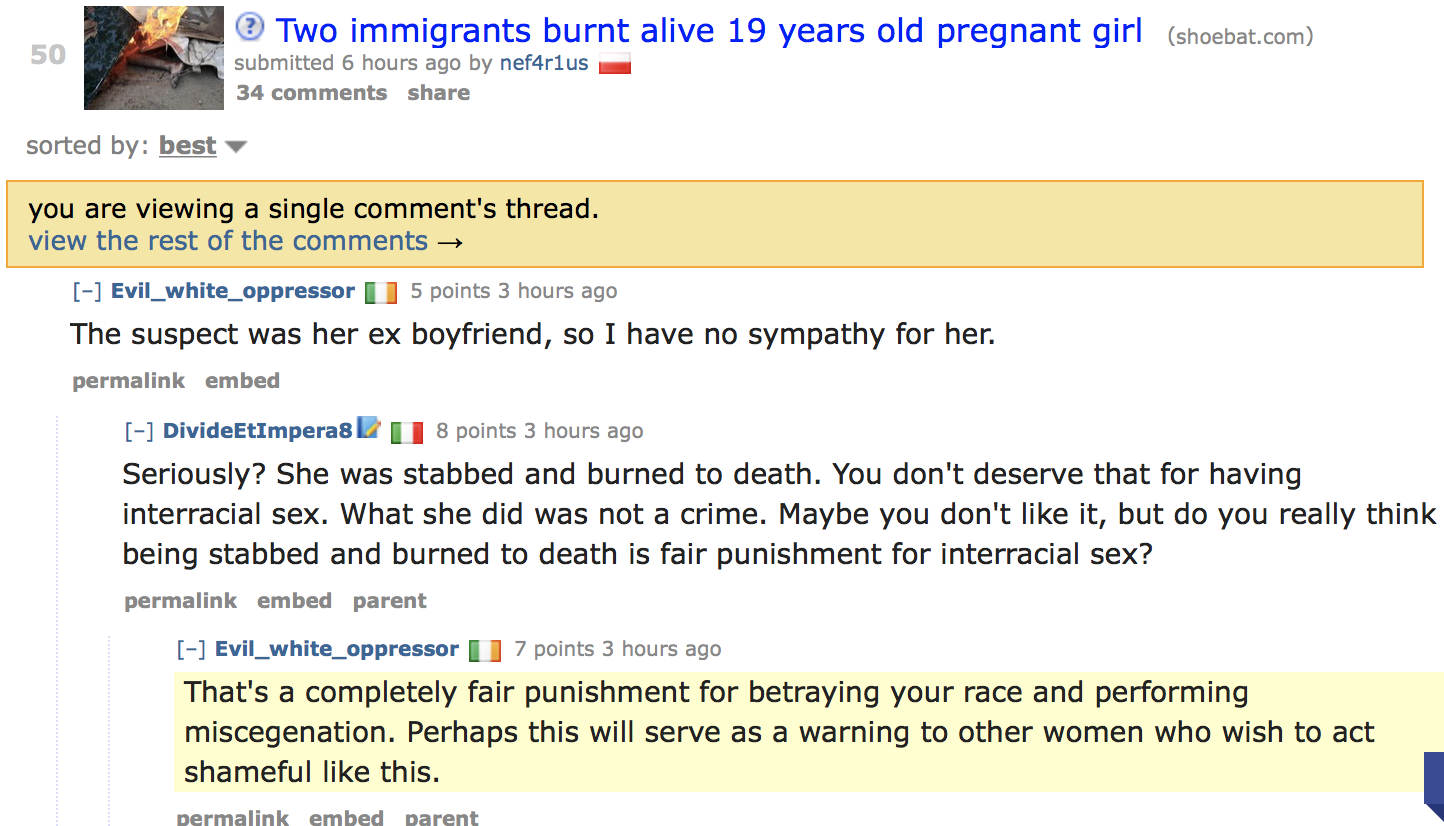
What is pretends it is: A place for people from the continent of Europe to discuss all things European.
What is really is: A sanctuary where all the next-level bigots cast out of /r/Europe can, under the banner of free speech, circle-jerk about all the Muslim immigrants coming to rape and kill their beautiful European women.
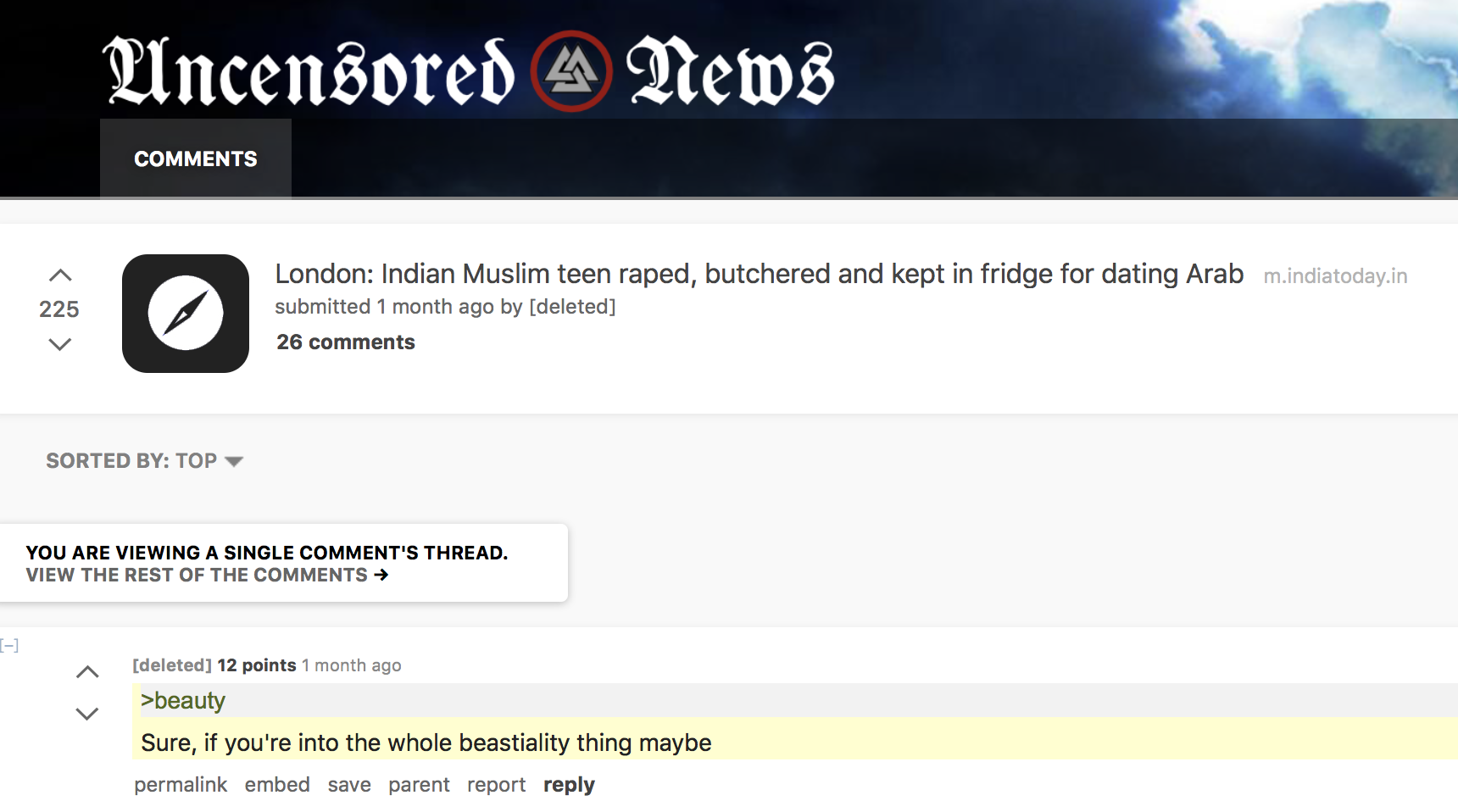
What it pretends it is: The unpleasant truths the (((mainstream media))) doesn't want you to see.
What it really is: Yet another place to bash not just Muslims, but all sorts of brown people. /r/UncensoredNews goes above and beyond merely "tolerating" hate speech: They actively court it. And in no uncertain terms, either: see this text post titled, "Here at uncensored news we love racism, bigotry, misogyny, hatred, xenophobia, transphobia, homo phobia etc."
What it pretends it is: According to the sidebar, "tasteless 'politically incorrect' dark, offensive, & twisted humor of all types is welcome here." Y'know, like dead baby and 9/11 jokes.
What it really is: Painfully unoriginal memes that lean on hackneyed stereotypes about black people, Muslims, women, and the LGBTQ community, usually with less comedic structure than a Laffy Taffy wrapper, and sometimes with no joke pretense at all.

What it pretends it is: Not your daddy's "cringe" subreddit. Here, instead of embarrassing conversation screencaps, you'll find the real cringe, which is… people who advocate for inclusionary, egalitarian, or otherwise progressive stances, apparently.
What it really is: Credit where credit's due, /r/CringeAnarchy wears its shriveled, black heart on its sleeve—or, rather, in its sidebar. It's pretty upfront that the sub is no place for "social justice faggots" or "white knights." The major bee in/r/CringeAnarchy's bonnet are trans people, whose mere existence is nothing short of a personal attack to the sub's denizens. It's a bummer that what was once a pretty good cringe sub has devolved into post like this, this, and this, all from the past month.
What it pretends it is: Top shelf memes too refined and edgy for normies.
What it really is: More racism, largely. To be fair, the sub hasn't yet entirely been overtaken by bigot refugees from shuttered hate subs, but it's getting there. Whereas 4chan and its corresponding subreddits remain chaotic neutral, strictly "for the lulz" (does anyone even say that anymore?), and on high alert for legitimate racist ideologies attempting to infiltrate their party, DankMemes is happy to accept any and all shitposts disparaging a minority, as long as it has the ability to "trigger" non-dickheads.
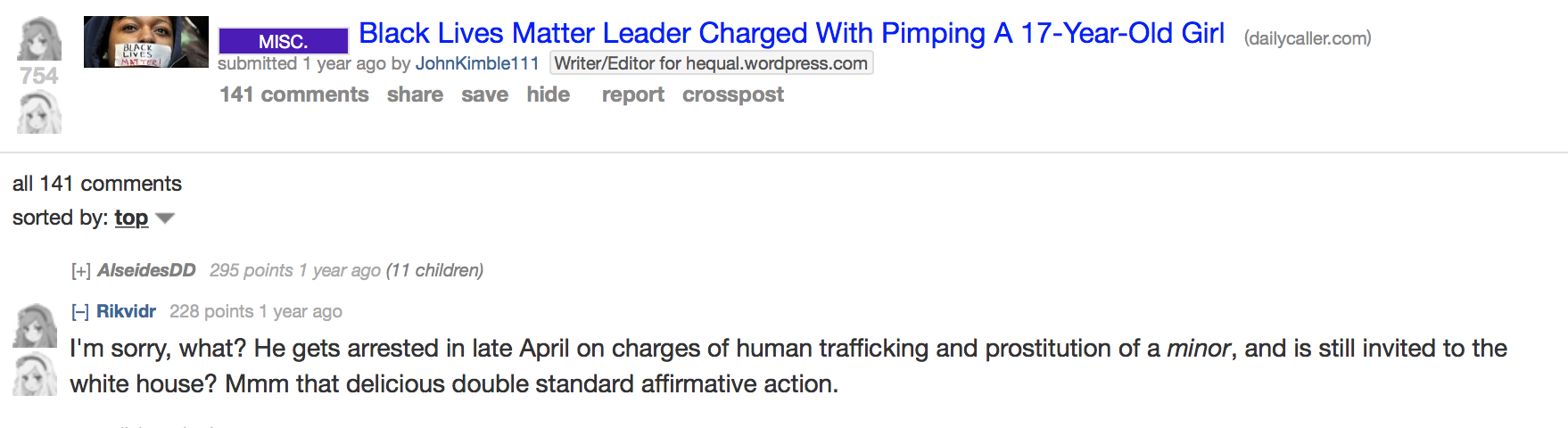
What it pretends it is: A Gaming-oriented subreddit where one can discuss (the lack of) ethics in gaming journalism, named after chief offender Kotaku.com.
What it really is: Another place to shit on the left and propagate racist right-wing rhetoric with verbiage lifted straight from /r/The_Donald and posts that often feature little-to-no discussion of video games. What does defending the Charlottesville Nazi who murdered a woman with his car have to do with review sites being too cozy with game developers? That sounds like the sort of question a cuck libtard would ask.
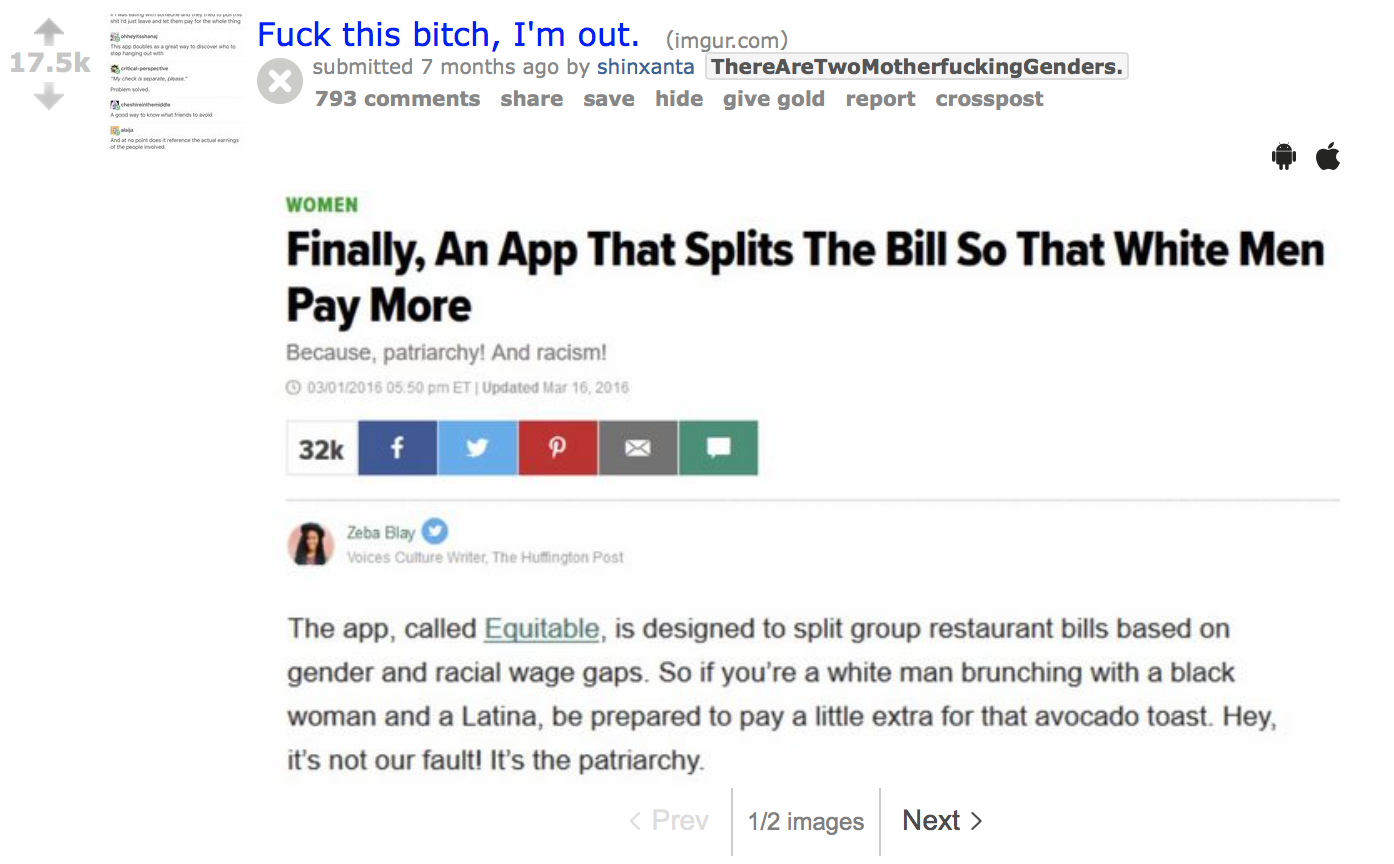
What it pretends it is: Cringey examples of SJWs overreaching, particularly those originating from Tumblr.
What it really is: A less egregious version of /r/KotakuInAction. While the sub does primarily upvote the more insufferable elements of the left, they'll also never pass up an opportunity to tear down a straw(wo)man feminist or proclaim that there are only two genders.
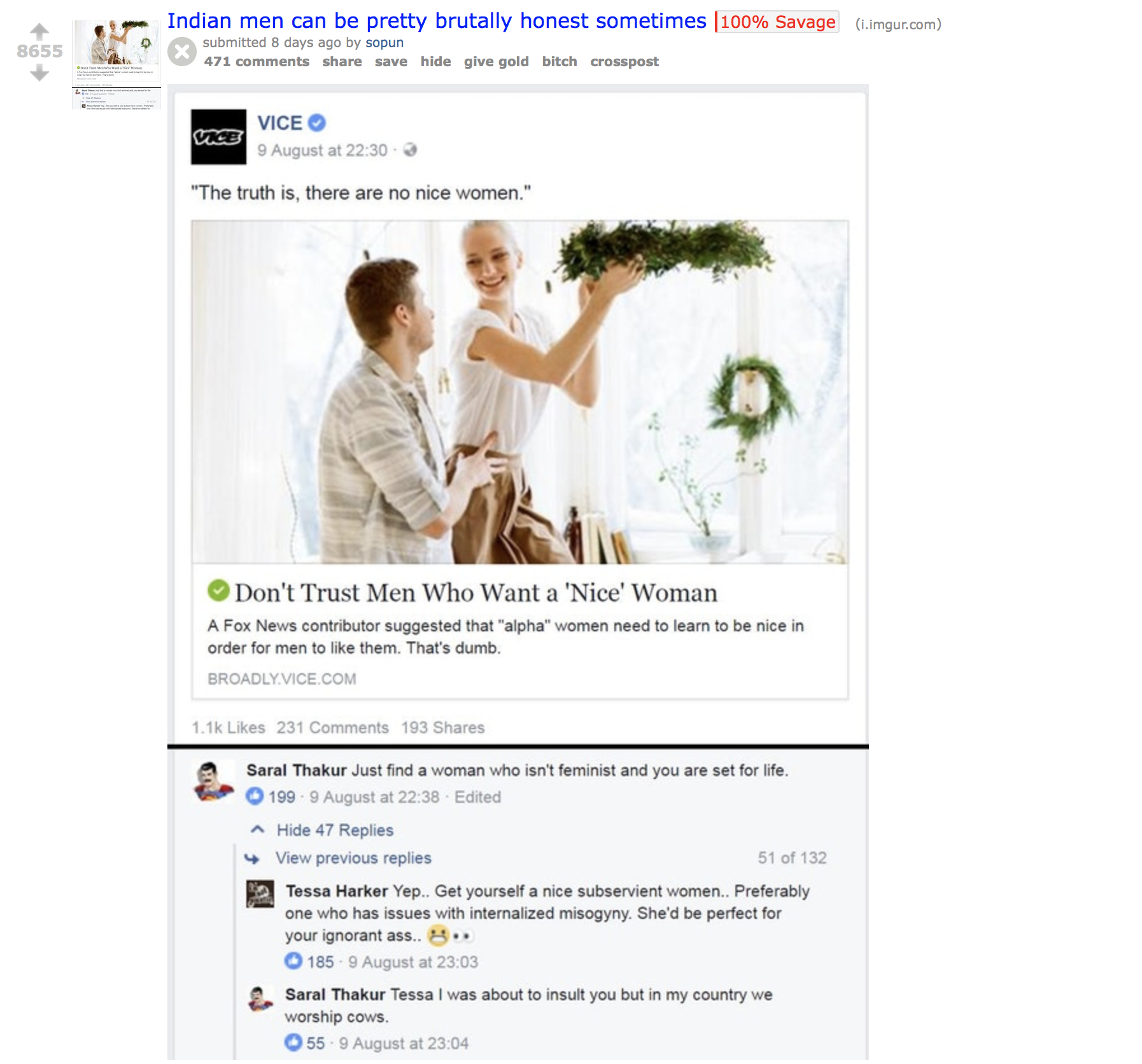
What they pretend they are: Exposés on the disparity in how men and women are treated in the eyes of the law and media, and scenes of women who attempt to use their femininity for preferential treatment, who summarily get shut down.
What they really are: After a hostile takeover left the subs rife with full-on Nazi sympathizing and propaganda posts, the original users banded together to return the subs to their original format—using anger-stoking news stories to justify misogyny and gleefully cheer retaliatory violence against women.
What it pretends it is: A collection of activists sharing news about the infringement of "men's rights," seeking more parity from the justice system, like 50/50 child custody in divorce cases.
What it really is: Shedding its noble original mission statement, MensRights has devolved into the sort of anti-SJW/feminist/women cesspool that comprises the rest of this list. Posts equivocating away rape, defending rapists, and denying systemic oppression of women are more commonplace than anything else.
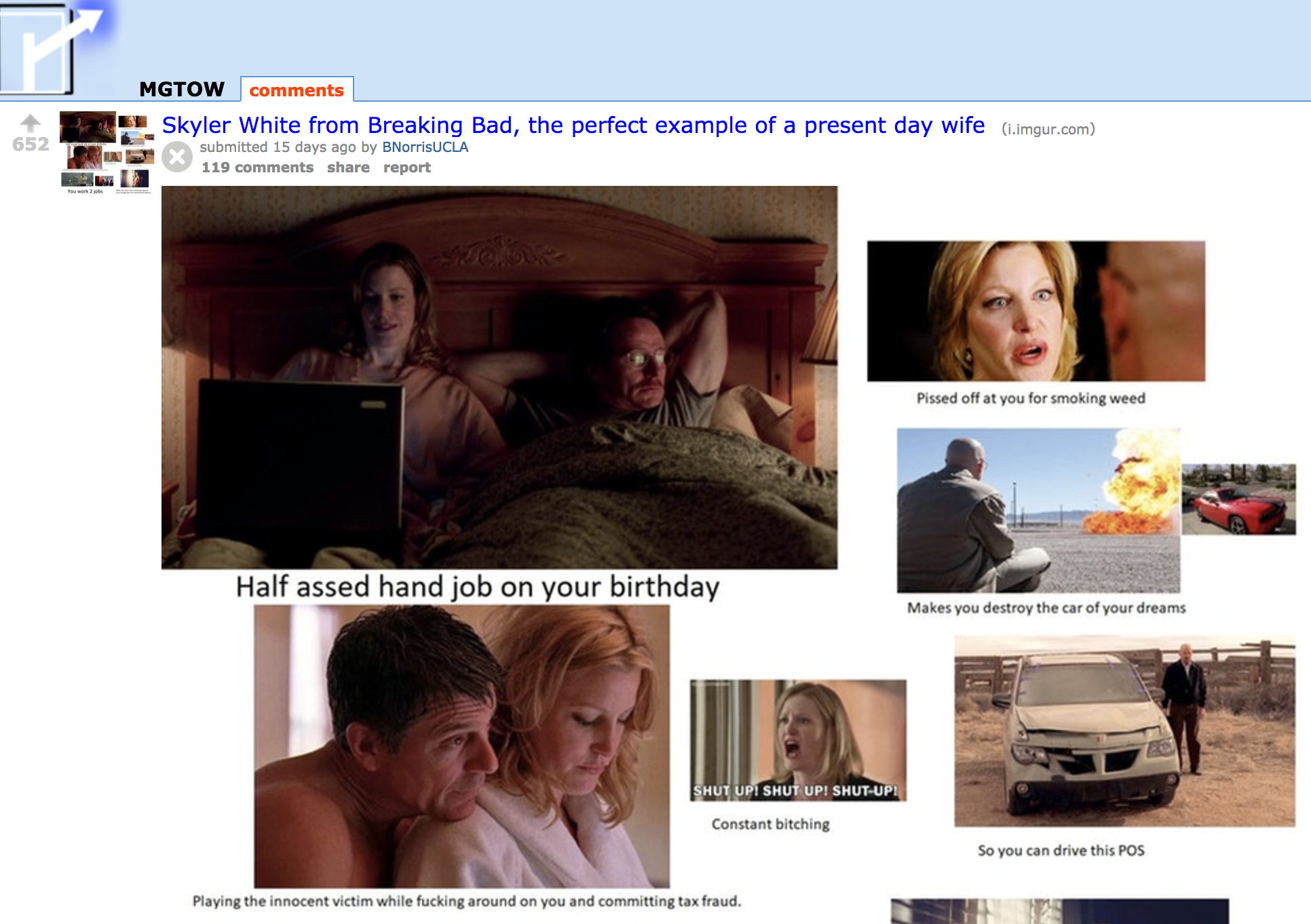
What it pretends it is: A subreddit for "men going their own way," whatever that means.
What it really is: Extra-salty misogyny. You'll find all the classic hits like "punch feminists," "wives are money leeches," and "women who don't want to fuck you don't warrant common courtesies" in there, as well as some rare B-sides like "single moms suck" and "baseball knowledge should be a voting prerequisite."
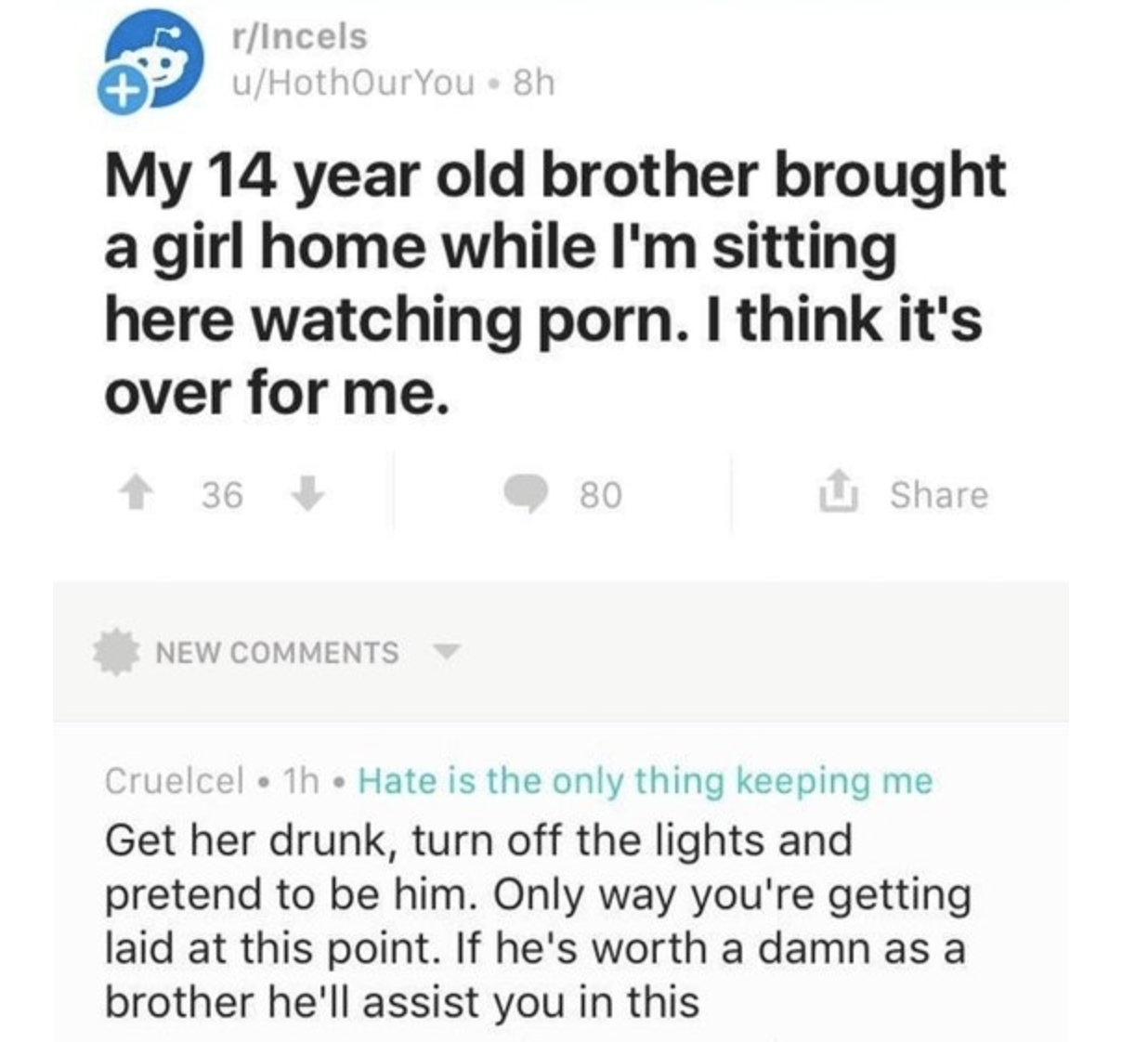
What it pretends it is: A haven for the the "involuntarily celibate" to commiserate over their perpetual virginity.
What it really is: You'd think that, with /r/incel getting banned for going too far off the virginal reservation with its hatred of women, the nearly identical pluralized version of the sub would dial it back a bit. Unfortunately, despite there being rare earnest words of advice in the sub, the toxicity still burbles to the surface. The virgins here aren't the harmless sad sack Eeyore-types of /r/ForeverAlone. Instead, they take a more nihilistic approach to their curse, subscribing to the "Black Pill" theory that the universe will always be rigged against certain individuals, so why even bother trying to manipulate women into sex with "Red Pill" tactics?
Follow Justin Caffier on Twitter.
Can trading eight hours for 20-minute polyphasic naps make you more productive? Could crystals be the secret to happiness? Read the rest of the VICE Guide to Self Improvement here.
Nootropics are those "smart drugs" that claim to improve your memory and concentration. Traditionally the domain of tech entrepreneurs and students, drugs like Modafinil and Piracetam have gone mainstream in the past few years forging a US $1 billion industry in the US alone.
Most of these chemicals aren't new. The bulk of them are old prototypes, developed and abandoned by various pharmaceutical companies for treating conditions like narcolepsy and ADHD. For this reason, it's often unknown why the chemicals never made it to market, which leads to some fairly valid concerns about their long term health effects.
Still, it's easy to find positive reviews. The Reddit nootropics scene of 2017 is vast and passionately defended, with hundreds of threads espousing their pros. So who's to believe? And which nootropics are safe/effective?
I decided to spend a week finding out for myself. After a lot of reading, I identified the internet's five most popular nootropics (based on how often they're mentioned) and spent about AU$150 getting my hands on them. Then, to review them properly, I took most of the week off.
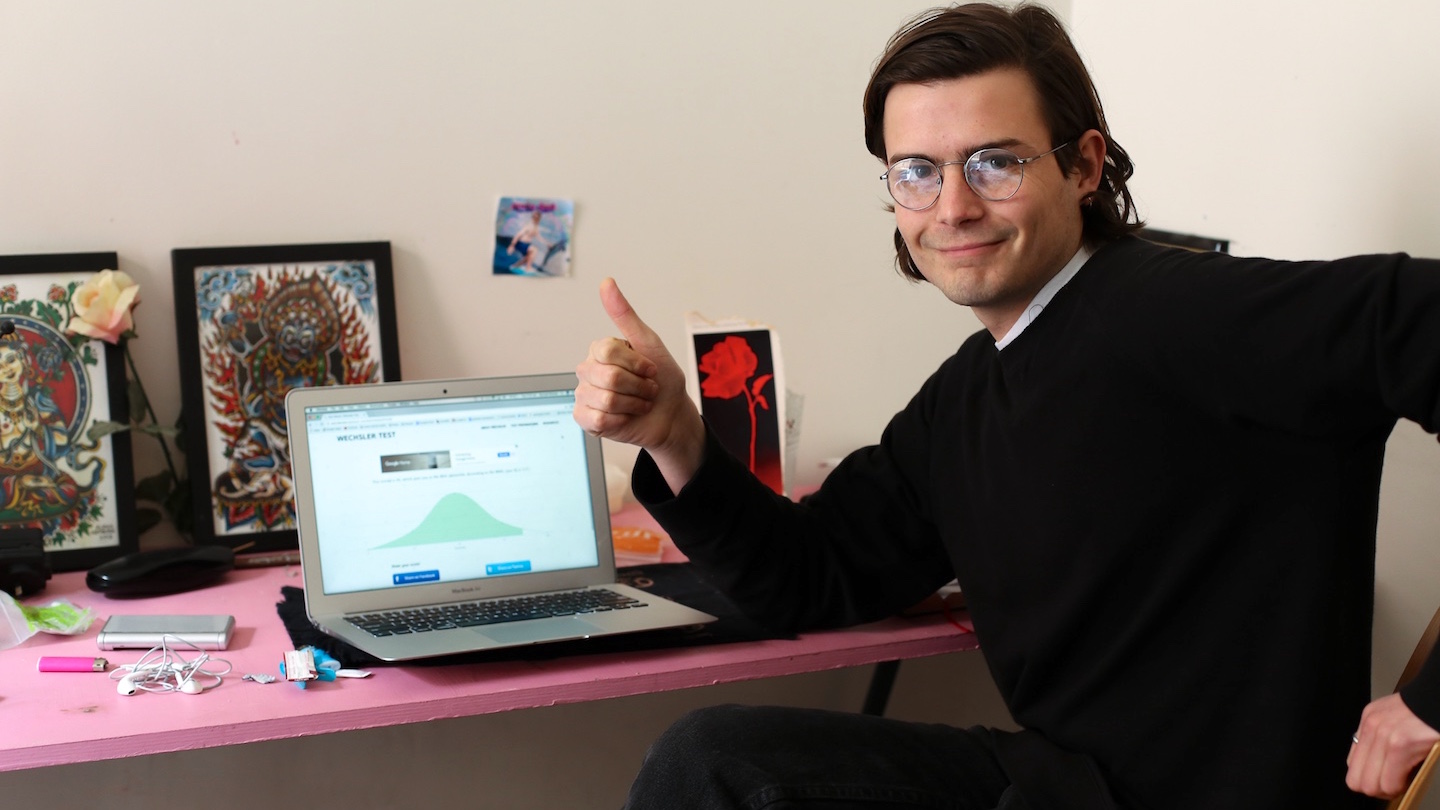
In order to do this accurately, I needed a control. So, without any nootropics in my system, I did an online IQ test, as well as the MENSA online practice exam. I got a score 110 for my IQ and 21/30 for the MENSA test. I figured that every day I'd try a different IQ test and compare it to my original score, but also retake the MENSA test at the end of the week to see if there were any overall improvements.
I also got in touch with Dr Larissa Maier, a member of the core research team at the Global Drug Survey, just so I could have a expert opinion on the substances I was taking.
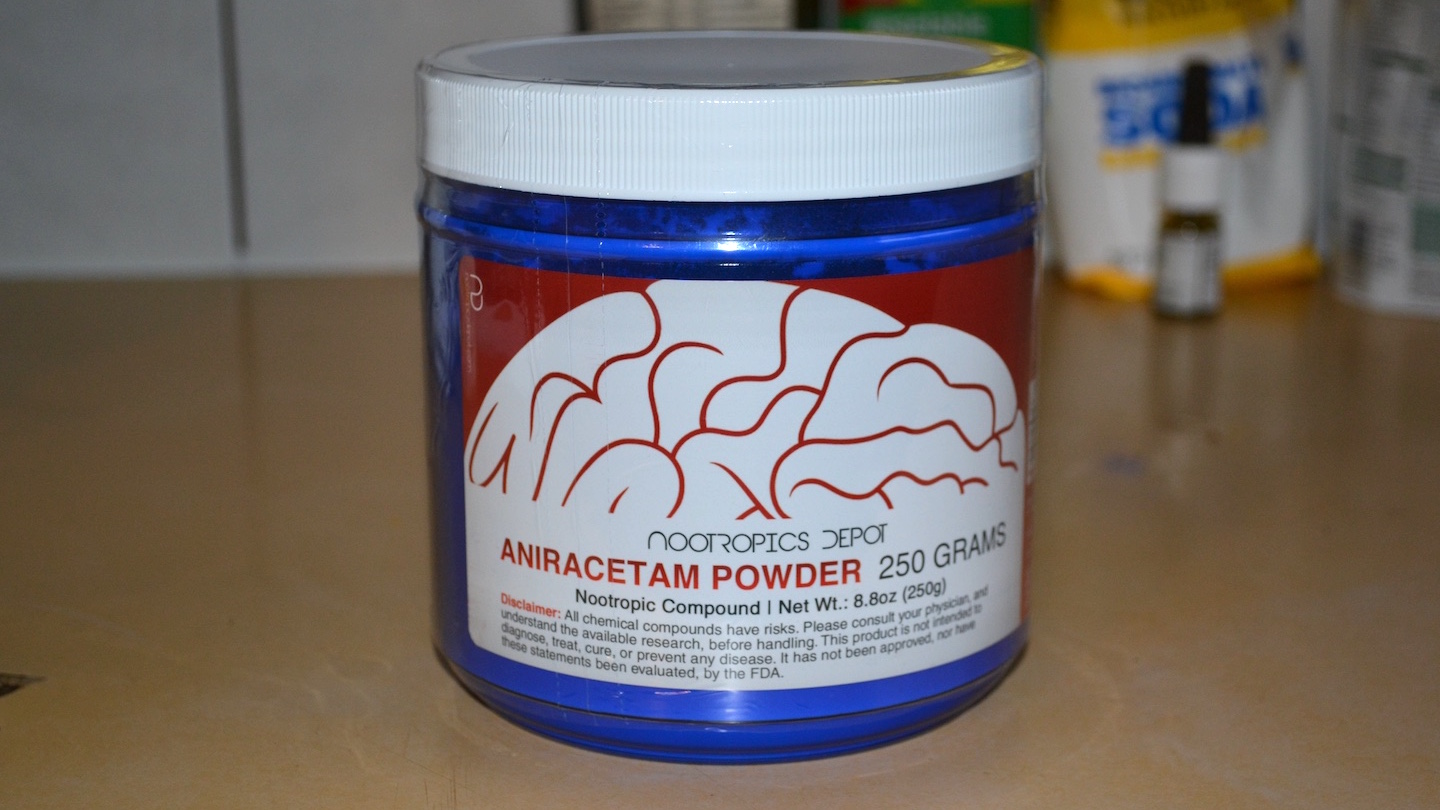
Aniracetam was created in the 1970s, but was never approved by the US Food and Drug Administration (few nootropics are, to be honest). The makers of Aniracetam claim it heightens mood, focus, motivation, and improves memory formation. Although, as Maier pointed out, "No clinical studies reporting the use for cognitive enhancement among humans exist."
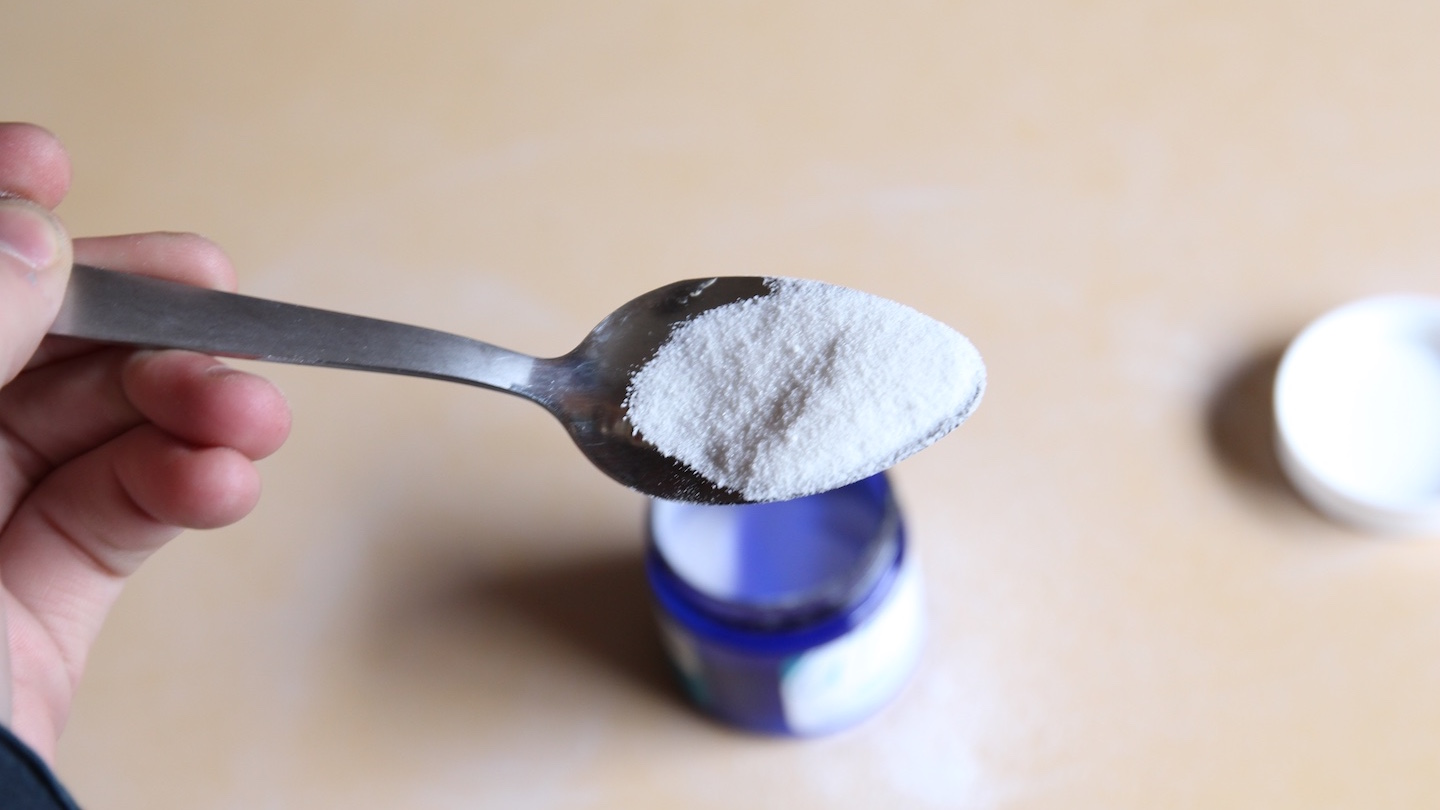
The average dose is 1,500 mg per day, or just under a teaspoon. I decided to take three 500 mg serves throughout the day.
Frankly, Aniracetam made me feel like I was on speed. I felt my mood improve almost instantly, along with a tremendous surge of energy. I was confident, chatty, and without limitations. But, ironically, it really didn't improve my cognitive abilities. I struggled to think straight and even deal with a minor task like counting money.
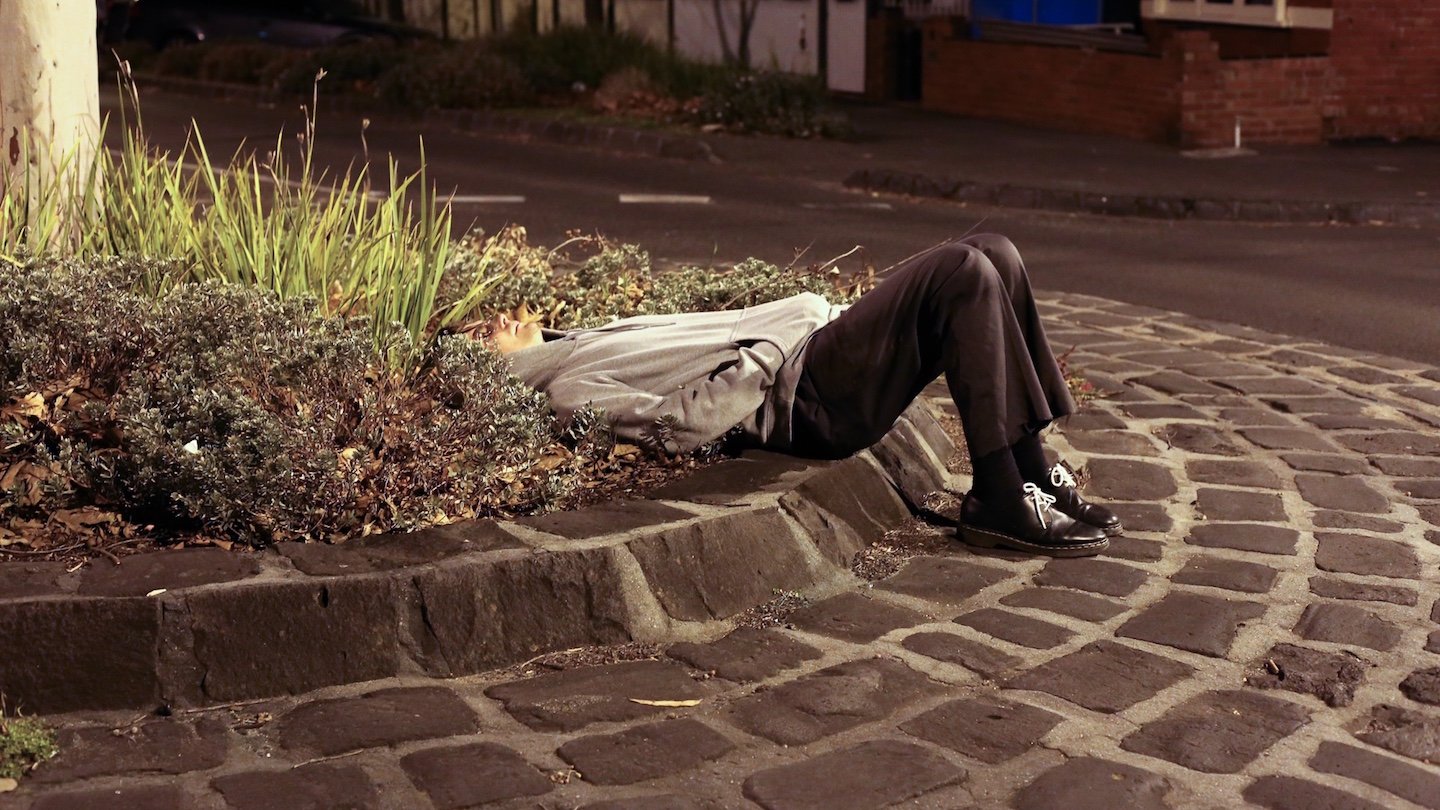
As I kept redosing, the initial high blew out and my lack of concentration got worse. I sat down for my daily IQ test, but I kept having to get up and walk around the room so it took about an hour to finish. My heart was racing, I lost my appetite. I couldn't sleep that night, so I went for a long walk until I ended up in a garden bed looking at the stars. It was a classic night on drugs.
The next day I was shaking and anxious with no appetite whatsoever. Basically, I was coming down.
IQ result: 108
My rating: 2/10
Oxiracetam is a fairly similar molecule to Aniracetam. Created in Italy in 1988, Oxiracetam is believed to work by stimulating the brain's acetylcholine receptors, which in some mysterious way boosts memory. Actually, most synthetic nootropics are classed as "racetams"—all of which yield a range of poorly understood effects. In any case, oxiracetam's 2,400 mg dosage was a lot higher than Aniracetam, so I went in feeling nervous.
Oxiracetam ruined me. It was rushy in the same way as Aniracetam, but I was entirely in my head. I felt thoroughly unmotivated, self conscious, and generally unable to interact with people. It also came with this sense of utter frustration, although I couldn't pin down what I was frustrated about.
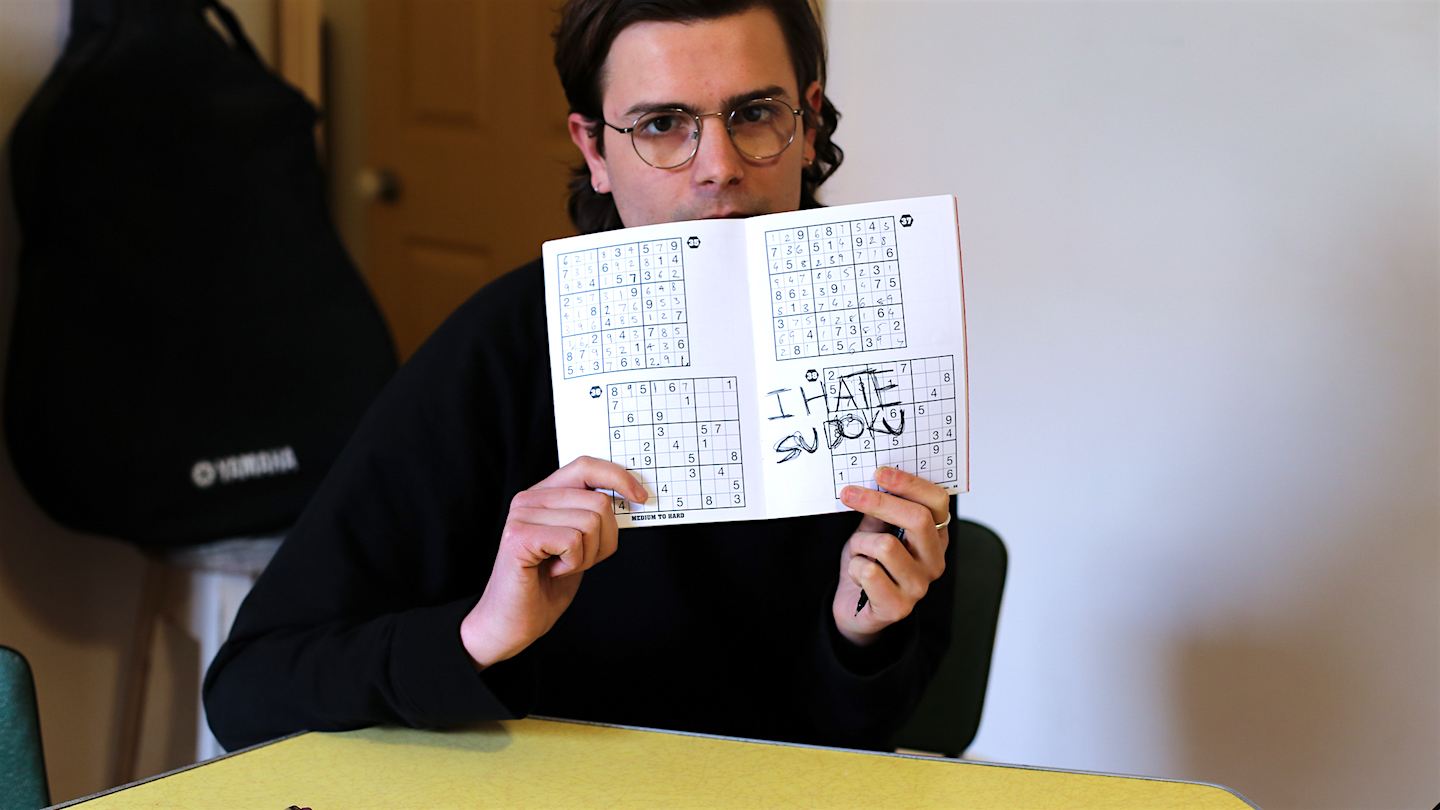
Interestingly, my IQ was up to 117—a seven point improvement over my control. But when I tried sudoku and a round of chess, I just couldn't think. I was irritable, impatient, and I had to give up on both and go stand outside.
The next day was also a struggle. Like I'd spent the night smoking bongs. I was vague, confused, and unable to string a sentence together. It was hell. Oxiracetam was hell.
IQ result: 117
My rating: 1/10

After two days of getting walloped by synthetics, I was excited to try a plant extract called Huperzine A. It comes out of an Asian moss called Huperzia and has been widely used in Chinese medicine for centuries. Huperzine A allegedly works by preventing enzymes from breaking apart the neurotransmitter acetylcholine, which signals muscle action throughout the body. Dr Maier doubted these findings though, simply because they were based on studies with tiny sample sizes.
The average dose is 200 mg, so I had two 100 mg tablets in the morning.
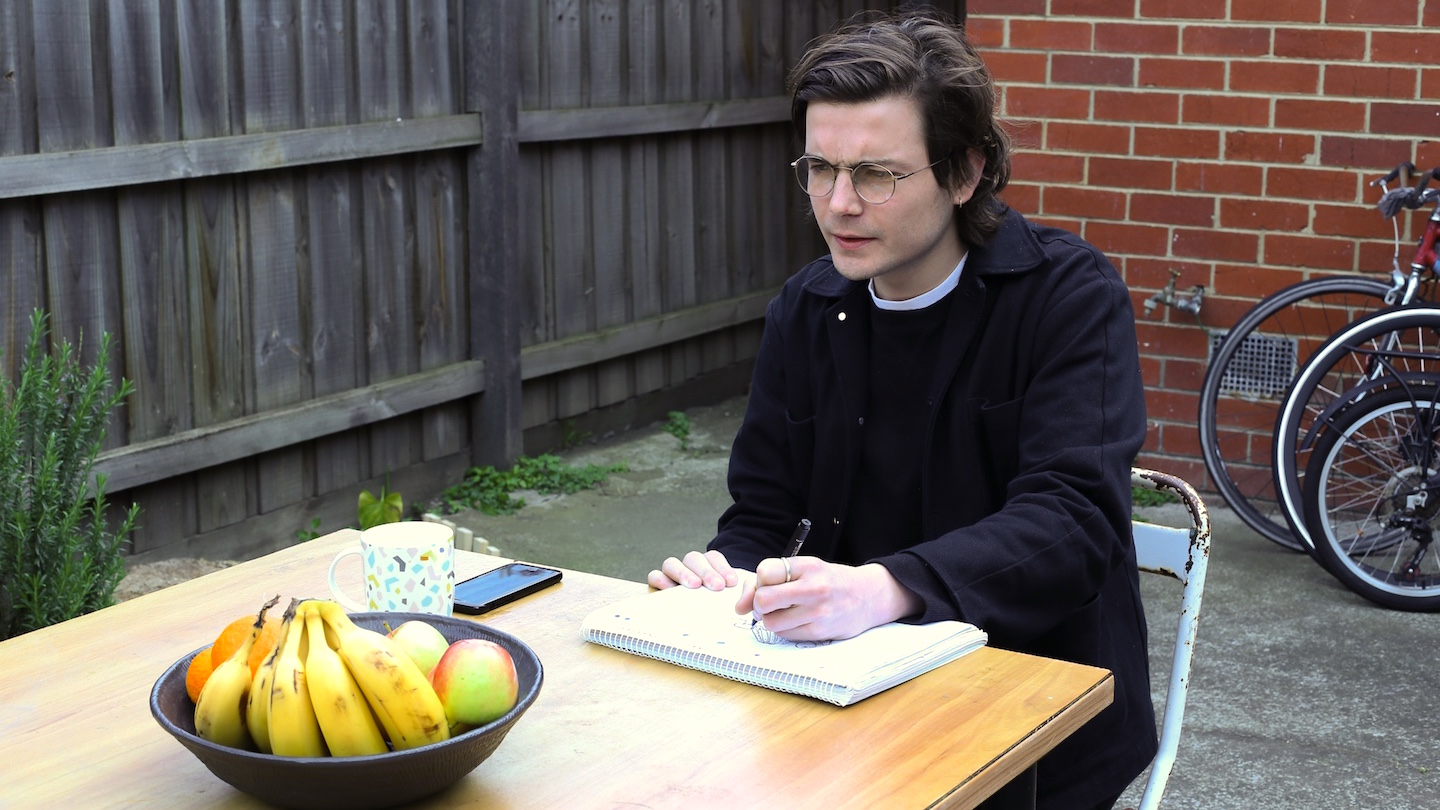
According to legions of nootropics fans on Reddit, Huperzine A was the most effective drug I took. But, honestly, it didn't feel like anything. I didn't have any epiphanies, nor did I feel like the smartest person in the room, but I did feel unusually "arty." I'm not a person who draws, but I spent the afternoon sketching some stuff that I felt unusually pleased with. I then pushed it a little bit further and went to the library to read about history… but retained none of the information. It was a nice way to spend a day though.
Also, no anxiety! The next day I felt completely fine and ready for another heavy duty pharmaceutical.
IQ Result: 103
Rating: 5/10
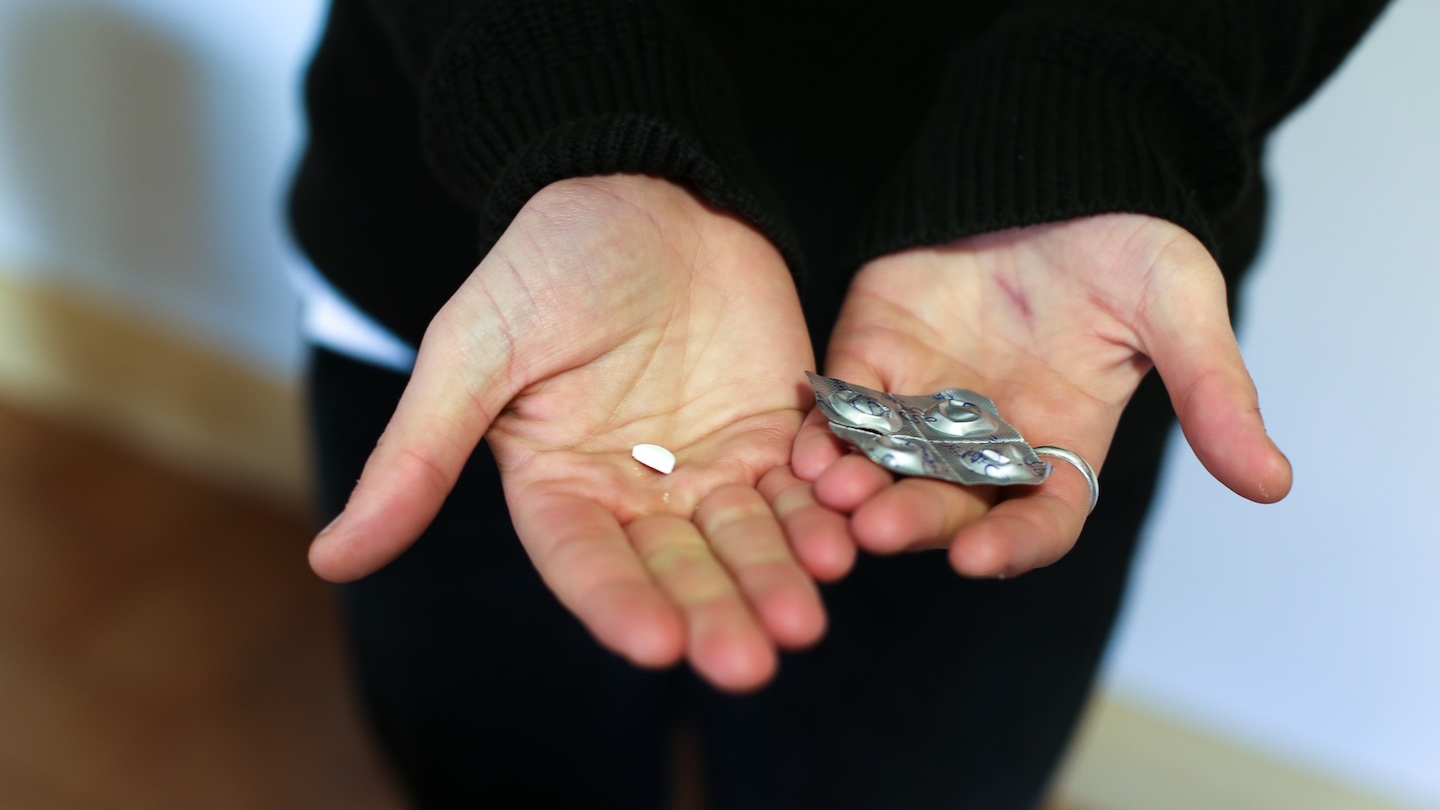
Modafinil is undoubtedly the most famous nootropic on the market. It was developed in France from the ashes of a narcolepsy drug called Adrafinil, which was unpopular because it took so long to work. Chemists realised they could cut down wait time by synthesising the chemical that's born out of metabolised Adrafinil—and that turned out to be Modafinil. Adrafinil was discontinued in 2011.
Modafinil shares similar traits with amphetamine but, again, its mechanism of action isn't fully understood. According to Maier, Modafinil is the only nootropic with any solid credentials but it still comes with the the usual risks of headache, dizziness, nausea, and a dry mouth.
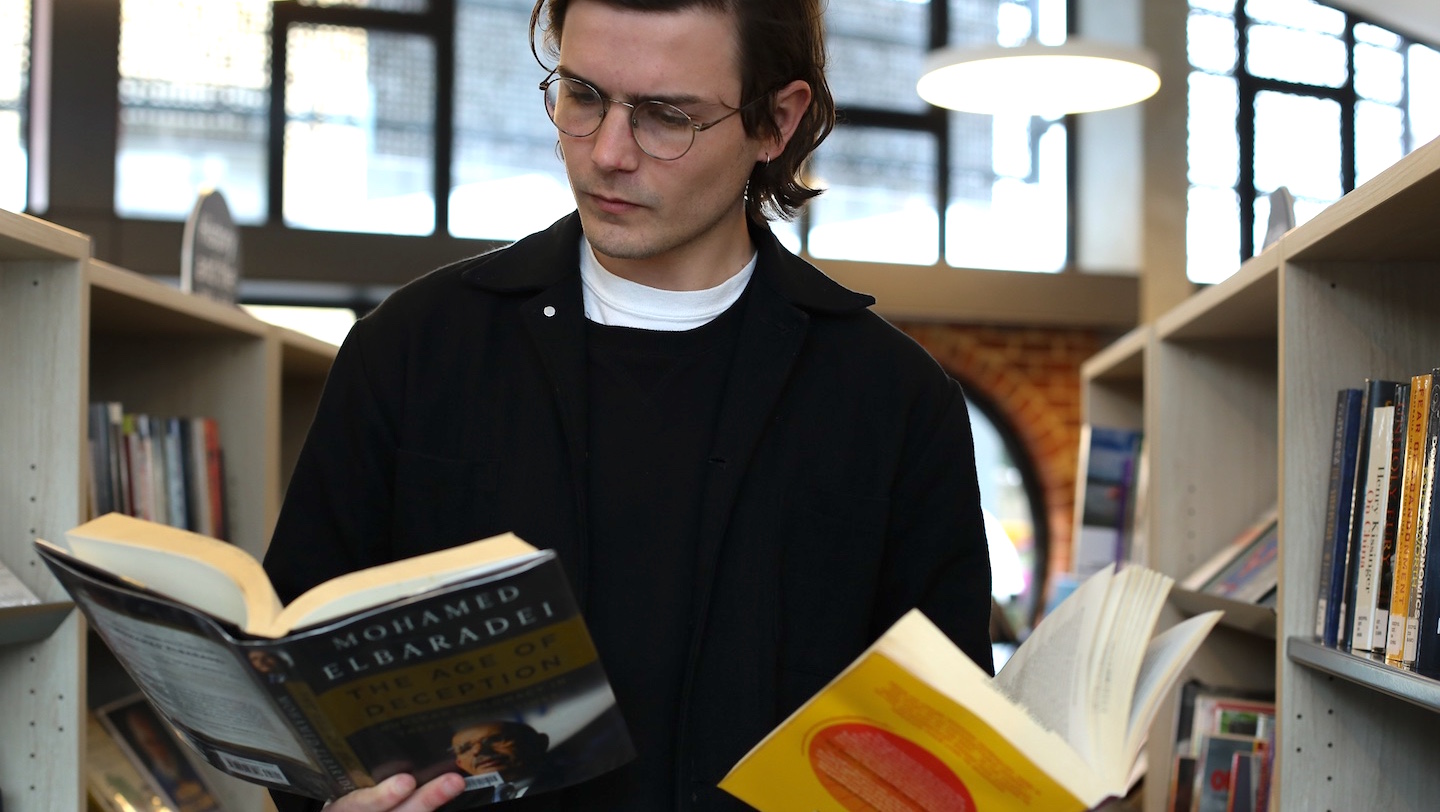
Modafinil is strong. I took the usual dose of 100 mg and it hit me almost instantly. My focus increased, but along with a sense of vertigo and nausea. I then spent a few hours reading large books to see if the focus would help. It did, but again I don't think I retained much.
What really surprised me was how much sharper I felt. I really did feel like I could communicate and understand more—so much so that a friend actually pointed it out. Again, I struggled to sleep, but there wasn't much of a comedown.
IQ Result: 118
Rating: 4/10

Lion's Mane is a mushroom that's used in Chinese medicine, but has recently appeared as a nootropic for its ability to support neuron-insulating myelination. High amounts of cerebral myelin are associated with improved memory recollection, but like Huperzine A these supposed benefits come with little in the way of peer-reviewed evidence.
I spent three days taking Lion's Mane just to make sure I enjoyed its full potential but, honestly, it didn't do much. Maybe it increased my heart rate, but maybe that was just incidental. And I did another IQ test and got 132, which only seemed to undermine the legitimacy of IQ tests.
IQ Result: 132
Rating: 3/10
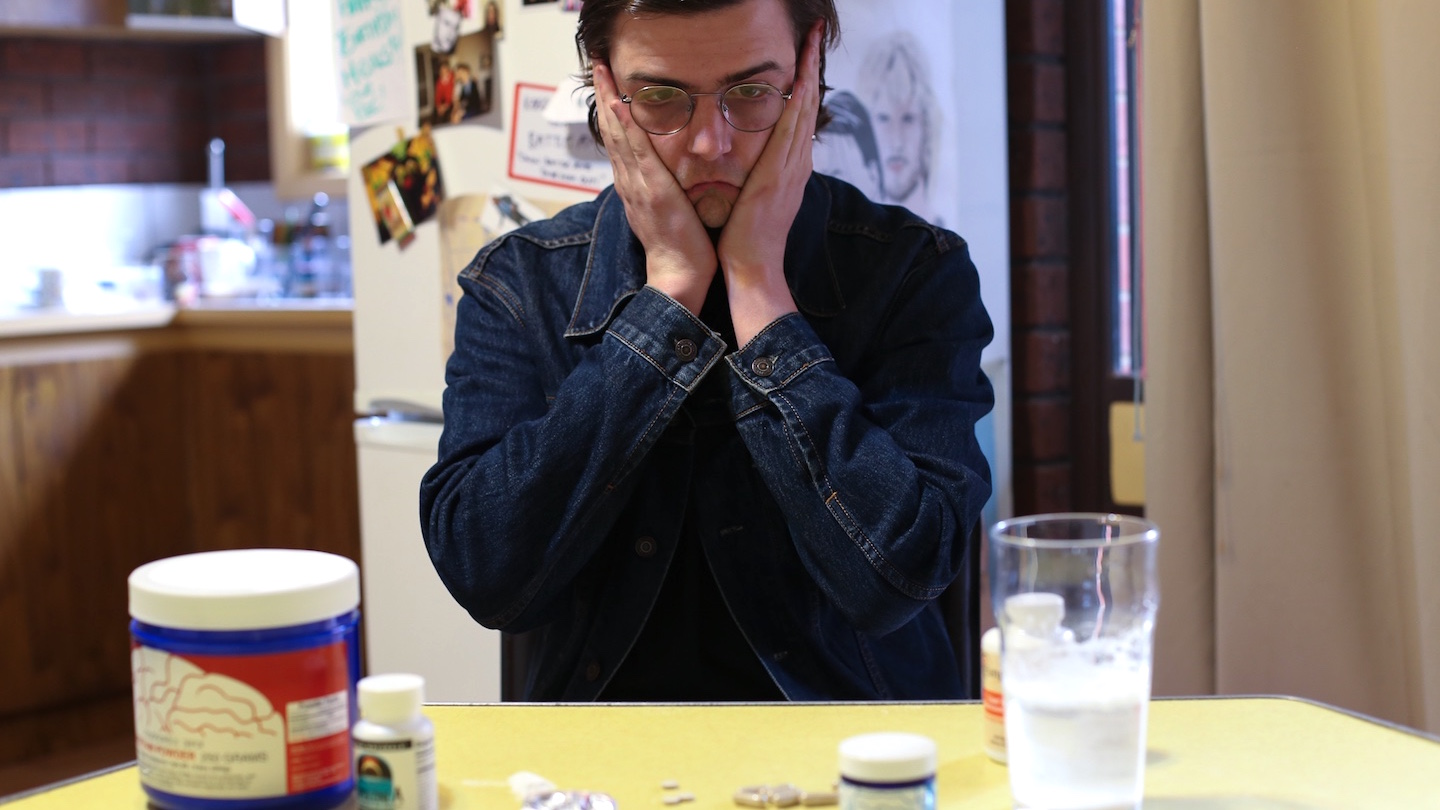
From this experiment, all I can really say I took is that nootropics are fucked. The combination of mania, anxiety, overstimulation, loss of appetite, and sleep deprivation really took their toll. And frankly, I didn't gain much. My IQ hovered around the same area and when I took my second MENSA test at the end of the week, I scored 22/30, which was an improvement of only one point. To my thinking, neither of those gains made the side effects worth it.
Nootropics do work, but their side effects are insufficiently addressed. Because their side effects are intense. And with this in mind, I'd probably just stick to coffee.
Follow Sam on Twitter
All photos by Lekk Porter
This article originally appeared on thump
For all we talk about nightclubs being communal spaces, the experience of losing yourself in one – I mean, really losing yourself – is probably the most intimate and inward-looking you're ever going to get. The same goes for taking ecstasy. Yes, there's all the "I love you man"s, but ultimately the lived experiences goes on inside your head.
And in your head, in that sealed vessel, the significance attached to proceedings knows no bounds. Every kick drum becomes a taut pang, symbiotic with your heartbeat. The cold, rushing tingle as you come up feels like a set of a fingers gingerly rolling down your back. The music builds, you sense a melody ebbing back and forth like a tide teasing the shoreline, before it crashes down. The bass drops into place. You raise one hand into the air and purse your eyes tightly closed. Despite the world, you are climbing to heaven.
Except, you're not. You're stood in a badly painted building that smells like sweat and energy drinks, the collar of your T-shirt has gone all weird and stretched, and you're pulling a face that resembles a flaccid husband trying to convince his wife he is climaxing. This is the reality – or, rather, illusion – of going out. It's present every time you take photos on a big night and then look at them the next day. What felt like a paradise, a technicolour embrace of sound and sensation, is revealed in the cold light of day to have been a bunch of bug-eyed 20-somethings shuffling around under a few LED lights the club owner picked up from Maplins. It's basically the dissonance between what you felt and what you looked like.
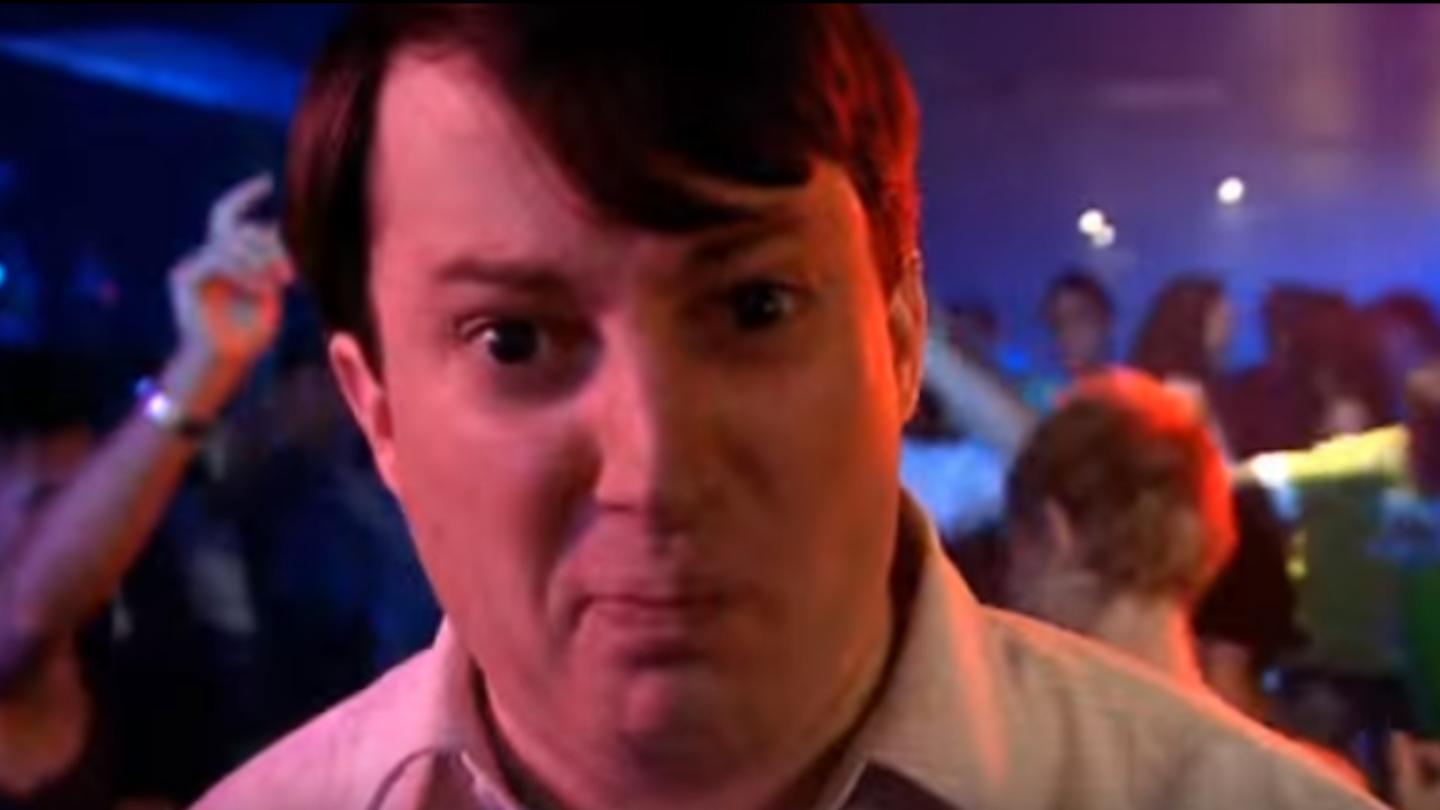
This dissonance, this distance, has never been better articulated than when Mark pretended to take a pinger in Peep Show. I recently went on a YouTube trawl of old clips from the show, soaking up some of the series' finer moments. As a sitcom, it has always had the power to bring the real talk in inventive and harrowing ways. The ecstasy scene, which you can watch below, is a shining example of this. Watch, and count the ways your entire love of dance music and club culture is made to look completely ludicrous.
Yes, in the scene, Mark does look stupid as well – he shouts out, "I think I might be getting the famous munchies," in one of the funniest lines in that entire series – but the real butt of the joke is everyone else. One pill deep and you're suddenly describing middle-of-the-road techno as genius, suddenly establishing connections with everyone else, suddenly feeling like you are trapped inside a giant Aero.
Of course, going out and taking drugs and enjoying a nightclub doesn't make you a moron. But it does make you do moronic things. Moronic things you don't think are moronic at the time. In fact, these moronic things often feel like the most important, powerful, significant, breathtaking things you will ever do, ever feel and ever think. The best part of all of this is you'll never really know. It's not like next time you go out and get fucked you're suddenly going to think, 'Oh, I really must remember that Peep Show clip and make sure I don't say anything stupid.' No: you'll do it all over again, and it will feel just as good as last time.
Only, the next day, when you are trying to remember the name of whoever it was you cornered on the way to the toilets, telling them about your short stories or your girlfriend or your childhood, you may suddenly realise the uncomfortable truth. That the technicolour embrace was, in fact, the grip of the moron.
In the spring of 1985, a heavy-set American landed at Amsterdam's Schiphol airport with a box of seeds. His name was David Watson. Or was it Sam Selezny? Or was it – as he'd later come to be known – "Sam the Skunkman"?
It mattered not to his greeters, Michael Taylor and Wernard Bruining – the latter of whom owned Mellow Yellow, Amsterdam's first coffeeshop – because these seeds were for strains of cannabis which would go on to supply Amsterdam with the dankest weed known to mankind, usurping the Moroccan hash that had previously held a monopoly over the Dutch capital.
It was an intriguing event for a number of reasons – one being that, a month earlier, Watson had been arrested in Santa Cruz, California for growing cannabis. Just how he had managed to then make his way over to Amsterdam has led to some dubbing Watson a spook, an undercover DEA spy sent to the Netherlands to infiltrate its burgeoning weed industry.
Another reason is that it represents the arrival in Europe of the strain with which Watson shares an alias – Skunk #1 – having been involved in the invention of its prototype in the late-1970s. A hybrid of Afghan Indica, Mexican Sativa and Colombian Gold Sativa, and named for its strong smell, Skunk #1 would go on to win the Cannabis Cup in 1988 and be sold to seed banks throughout Holland, becoming the world's first commercial hybrid strain.
In 2017, however, the word skunk has a different meaning; it bears no relation to any specific strain of cannabis – rather, it's become a catch-all term for the high-potency weed you'll find all over Britain, a product driving a £1 billion a year industry, inspiring numerous tabloid scare-stories and triggering police seizures of around 366,000 cannabis plants per year, or roughly 1,000 a day. A substance whose effects can apparently be seen on the UK's citizens, with it claimed that between 8 to 24 percent of all psychosis cases are linked to the drug, including many hundreds every year in London alone.
So how did all high-grade weed come to be known as "skunk", and are its effects as serious as is thought, or part of a tradition of scaremongering that dates back decades?
WATCH: Inside the UK's Weed Underworld
In the 1990s, the Netherlands was at the forefront of the global cannabis industry. While other countries continued to rely mainly on imported hash resin, the Dutch – and the American ex-pats filling Amsterdam – were experimenting with different ways to grow weed. The Dutch had long combined electric lights and fertiliser to manufacture some of the world's best produce and flowers in small indoor areas, and it didn't take long for them to start applying these techniques to the cultivation of cannabis.
Weed farmers then nailed the use of hydroponics equipment – which allowed them to manipulate the nutrients supplied to the plant's root – as well as techniques that made it possible to control the amount, intensity and wavelength of the light directed at the plants, and the carbon dioxide content of the air. In doing so, an expert grower could accelerate a plant's lifecycle to the point that it would flower heavily in just under two months, all while taking up no more space than a table lamp.
"[These techniques] delivered a generous yield of high-grade weed without it growing into a monster ganja tree or it taking three to four months to flower, which is normal," explains Top Shelf Grower, a YouTuber and cannabis expert. "Essentially, it gave growers the best of both worlds."
This meant that anyone outside Holland – provided they read about these new methods in magazines like High Times – could now cultivate weed stronger than anything available to them locally. What's more, the technology required was easy to come by in garden centres and the seeds could be ordered online. As a result, the use of hydroponics among British weed gardeners tripled between 1994 and 2000, while the implementation of high-powered lighting more than doubled.
All this came at a perfect time for cannabis smokers worldwide, as the importation of the weaker hash resin had begun to fall. Part of this could be attributed to a Moroccan crackdown, with the government there destroying a third of its own crop in an effort to curb exportation – but also terrorism, as it was becoming much harder to ship large amounts of contraband throughout the world.
Before these developments, the majority of weed floating around the UK came from the Netherlands. In 1994, eight people receiving methadone treatment in Glasgow reported smoking joints of this origin, with four of them experiencing psychosis ranging from paranoid delusions to auditory and visual hallucinations. The type of weed responsible? "Skunk."
This case was written about in a 1995 letter to the British Medical Journal by substance abuse registrar Alan Scott Wylie, who would go on to become the lead addiction clinician at the Glasgow branch of the Priory, the chain of private hospitals famous for treating celebrities like Kate Moss, Ronnie Wood and Robbie Williams. It seems that this letter is the first mention of skunk in its incorrect context, with Wylie describing it not as a specific strain of weed (i.e. Skunk #1 or a derivative), but as a catch-all term for all high-potency weed.
Back then, Skunk strains in the UK had a strength of about 7 percent THC (the chemical that gets you high) and a market share of 16 percent. They were seen as elite – a rarity, compared to the 4 to 5 percent THC strains that made up most of the weed available in Britain.
This letter – at 200 words long – would go on to be cited by many studies and research papers for years to come.
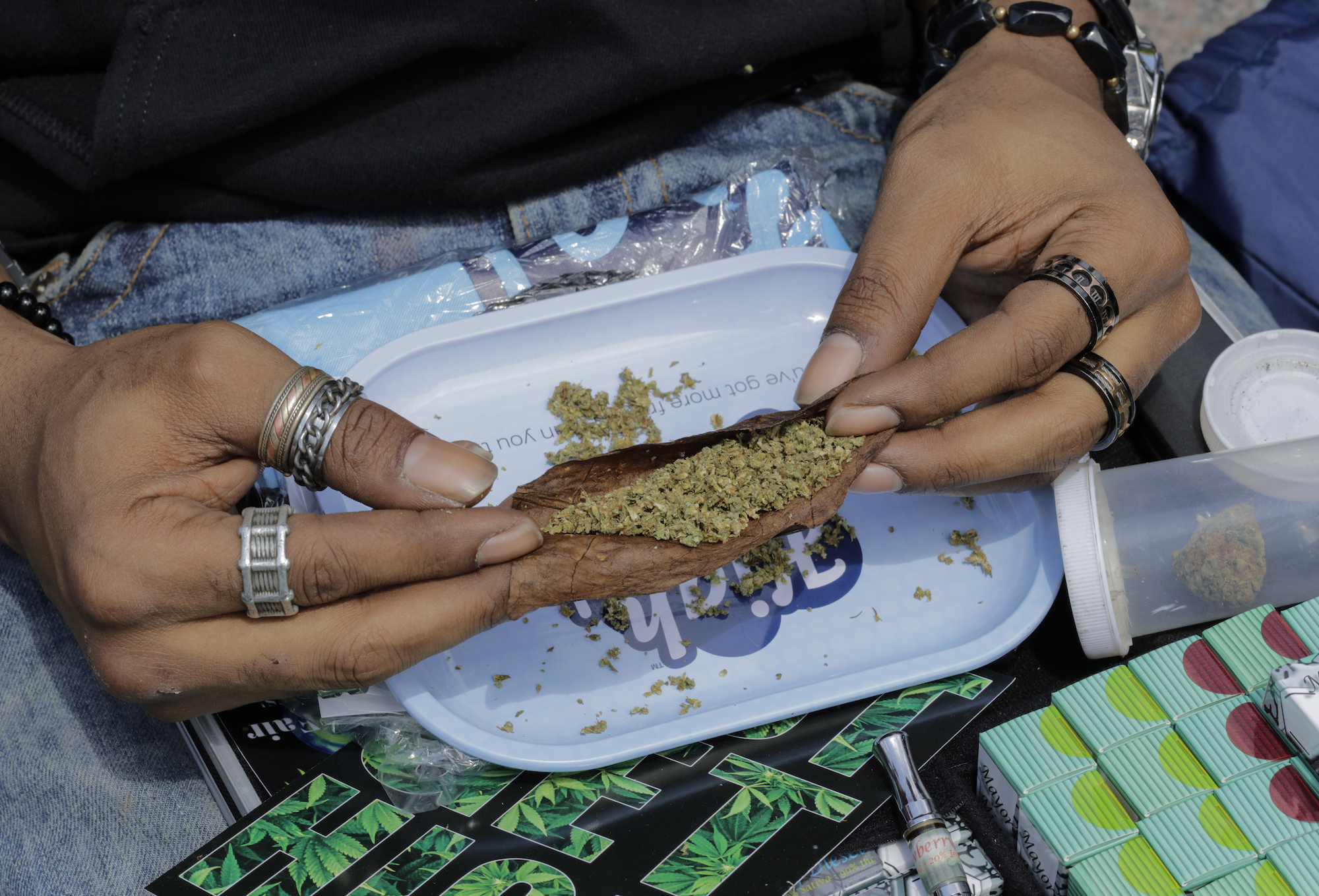
In the year 2000, skunk as the mainstream phenomenon it is now was still pretty much nonexistent. However, it wasn't long before things began to change: Vietnamese gangs would move into Britain and, in lightning-quick time, exert total dominance over the cannabis market.
These gangs had ties to Chinese slave-labour factories, UK sex work rings and elaborate people trafficking networks. They had precedent, too, as in the 1990s they'd made the same moves in Vancouver, Canada, where they'd wrestled control of the cannabis market from the Hells Angels.
Ingeniously, the Vietnamese tended not to grow plants in rural areas like the Angels had done, instead focusing on busy urban areas where the populations were more transient and less likely to care about what was going on around them. They also staggered their operations so they were always harvesting: if one house or flat was raided, the profits from the others more than covered it. The gangs employed this same under-our-noses methodology in Britain, starting in London and then moving outwards.
"They don't all come from the same crime group," says Simon Harding, expert on gangs and Senior Lecturer of Criminology at Middlesex University London. "They come from different parts of Vietnam, but also from outside, like other parts of Europe or Canada, and the west coast of America. They report back, of course, to Vietnam. Again, this is not one organised crime group controlling all production, but they will have some connection – and, to do what they do, they've got to be connected and defend their business, and that means violence and that means firearms."
Inside the houses the Vietnamese employed the same growing methods and technology that had been perfected by the Dutch and Americans in the Netherlands. They watered the plants once in the morning and once in the evening, rows of them arranged beneath red-hot high-intensity sodium lamps and above irrigation systems. Reflective foil clung to the walls. When space allowed it, ventilation ducts were jammed into the ceiling. The electrical meter would naturally be bypassed so as not to raise suspicion from suppliers.
Police estimated that one of these grow houses cost about £20,000 to set up; its yield would bring in between £200,000 to £500,000 a year.
And so began the widespread availability of strong homegrown weed in Britain. It would take police and the media a year or so to catch on, but when they did, a shorthand was available, regardless of the fact the Vietnamese were growing different strains: "Skunk."
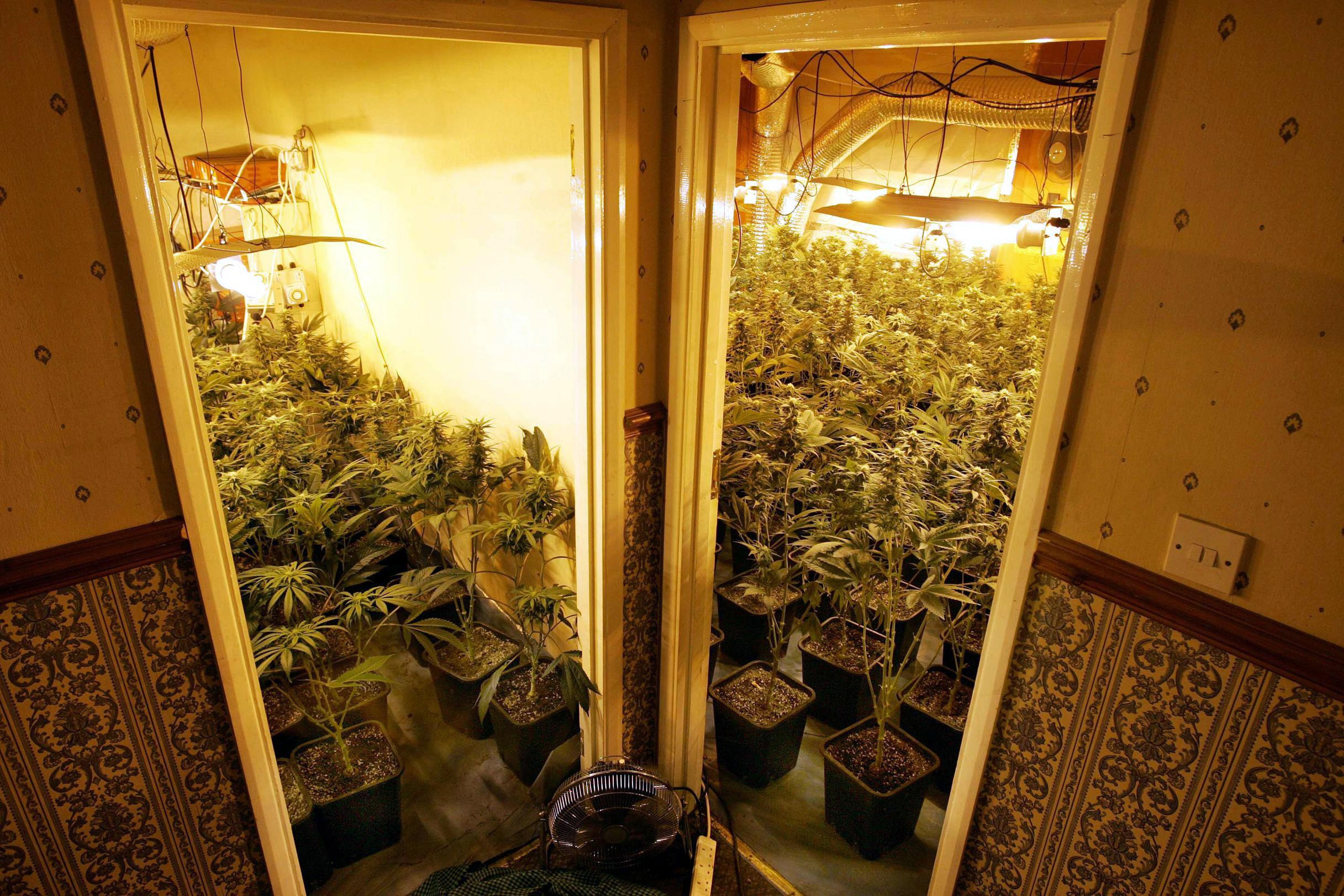
The ensuing uproar was warranted. Once police started raiding some of these places it became clear they were being manned by slaves. Male children as young as 15 had been trafficked over through France, kidnapped from the Vietnamese streets on which they were homeless, or else their families had paid for the privilege – sometimes up to £10,000 – after promises of a new life.
The Guardian interviewed a former grower this March. He described being bound and gagged before ending up in China, where he was forced to package saucepans in a factory. He then spent three months in a shipping container before ending up in the UK, where he was forced into sex work. Ten months later came the grow house. A hellish but not uncommon journey.
The media gave these slaves a nickname: "ghosts", because of their hidden, barely-there existences. Their living conditions were horrendous: often they had little room to move among the overwhelming sea of green, and were given a stock of frozen food, told it would only be replenished if they followed exact instructions. Surprisingly, they were allowed to leave, occasionally taking walks around the block. But where could they could go in the long-term when they spoke no English and frequently feared reprisals on their families back home?
Proof of this can be seen in the fact that, once liberated by police and put into care, many would escape and return to the gangs by choice.
The gangs also had no problem killing Vietnamese: in 2010, many years after asserting dominance, low-level dealers named Khach Nguyen and Phac Tran were sent to an exchange with British criminals and got robbed in the process. When they returned to their bosses – without cash or weed – they were accused of faking the robbery and brought to Surrey, where Nguyen was slowly beaten to death.
The level of exploitation around ghosts – bearing in mind they were regularly held for years – eventually led to the NSPCC calling the product they grew not skunk, but, more aptly, "blood cannabis".
By 2005, these places were everywhere, with police claiming literally tens of thousands around the UK. Seizures of cannabis went up sixfold that year – one day in September, 14 grow-ops were shut down in the London borough of Newham alone – but the farms were very hard to police; cops often had to rely on fires breaking out due to dodgy electrics, or on someone smelling the weed as they passed.
In 2006 came Operation Keymer, the Met's first widespread attempt at stopping the Vietnamese. The operation was considered a success, bagging 28,000 plants, but by 2007 the gangs were largely unaffected: 378 houses were raided that year, followed by 692 in 2009.
I ask Simon Harding what the gangs' presence in the UK was before growing cannabis. "There were small numbers of Vietnamese here," he says. "What they were involved in prior to growing, or around the same time, was counterfeit goods – counterfeit DVDs in particular. They'd be running huge factories to multi-record DVDs, which they'd then sell in pubs or on the street for £2 to £3 a piece."
Skunk had taken over, and it appeared there was nothing anyone could do – except legalise it and take control of production, but that was never going to happen with a Labour government baring their teeth at Tory accusations of weakness. So it was in 2009 that they went in the opposite direction, with Home Secretary Jacqui Smith reclassifying cannabis from a class C to a class B drug.
Surprisingly, much of her reasoning wasn't based on gangs, but on the "uncertainty, at the least" over its impact on young people's mental health.
"The real problem, clinically, is how does a doctor reach the decision about whether a diagnosis of cannabis-induced psychosis should be given?"
The supposed link between cannabis and psychosis has existed for decades, utilised by governments throughout the world to curb use. From this phenomena the term "Reefer Madness" was born, named after a 1936 American propaganda film whose teenage characters commit manslaughter, rape and suicide after smoking weed.
Though the severity of any mental illness shouldn't be diminished, in 2017 the facts still don't support the hypothesis that cannabis causes psychosis – even the high-THC skunk currently available in Britain. A careful reading of the scientific literature will reveal that a certain section of society – those vulnerable to both substance abuse and mental illnesses – are likelier to use cannabis and experience psychosis, but not because one triggers the other.
"It's not clear whether the skunk is the cause or whether it's just a coincidence," says Ian Hamilton, Lecturer in Mental Health at the University of York. "Equally, it could be that people who develop psychosis are more likely to use drugs such as skunk as a way of coping with the early-stage psychotic symptoms they have. The real problem, clinically, is how does a doctor reach the decision about whether a diagnosis of cannabis-induced psychosis should be given? How recently should you have used cannabis, and for how long? It's not an exact science – we don't have the same level of sophisticated tests that we use to diagnose something like diabetes."
It's complicated, but as Professors Charles Ksir and Carl Hart write in relation to their critical review on the subject, "We are concerned that a misunderstanding of the relation between cannabis use and psychotic behaviour leads to an oversimplification of the complex developmental nature of substance use and mental disorders."
In other words: simplifying the issue in order to push policy or write a scary headline probably doesn't do justice to those suffering.
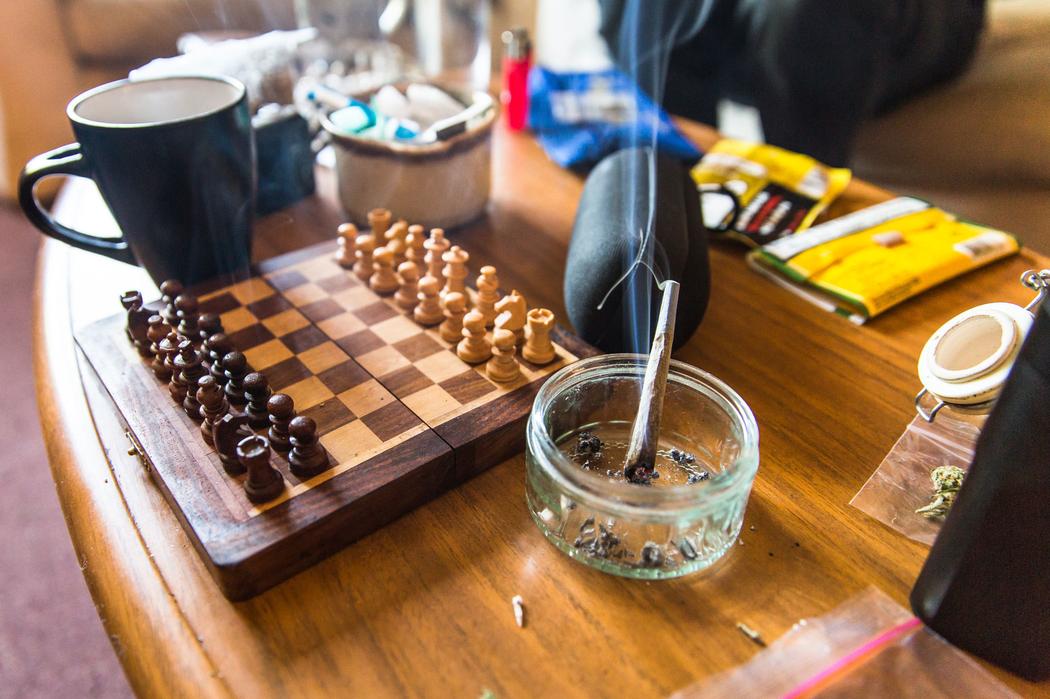
Today – unless you're weed nerd – almost all cannabis in the UK is considered skunk, with average THC levels of between 10 to 20 percent. Furthermore, the UK growing industry continues to thrive, evolving in new ways every year to outwit police. In the past, growers would use every inch of a house; now, they frequently leave the front room untouched, with a television on inside, to avoid suspicion. There have also been raids that show growers are branching out beyond residential buildings: an old Barclays bank in Grimsby, an abandoned GP surgery in Harlow, or – in February – a disused nuclear bunker in Wiltshire.
Recent reports identify that over 60 percent of those involved in the industry are now white British – but guess who still tends to the plants? Vietnamese ghosts. To this day there has never been a single successful prosecution of anyone on counts of trafficking, and many ghosts occupy UK prisons, despite having been forced into their work.
"One of the issues that's happening here is people copying the Vietnamese," says Simon Harding. "White British gangs, black, Russians and Albanians. I haven't seen evidence of a partnership, but because these boys are known and good at what they do, even the others will use Vietnamese growers because of their expertise."
Of course, not everyone's recruiting from the Vietnamese gangs. In Birmingham, for example, a trend has emerged that's come to be known as "groppers", or "granny growers", which is exactly what it sounds like. Using hydroponic and high intensity lighting equipment, a number of elderly women – capitalising on the fact that police are unlikely to suspect them of any criminal activity – have set up grow-ops in their homes and the spare rooms in their friends' council houses, and claiming a large share of the local cannabis market in the process.
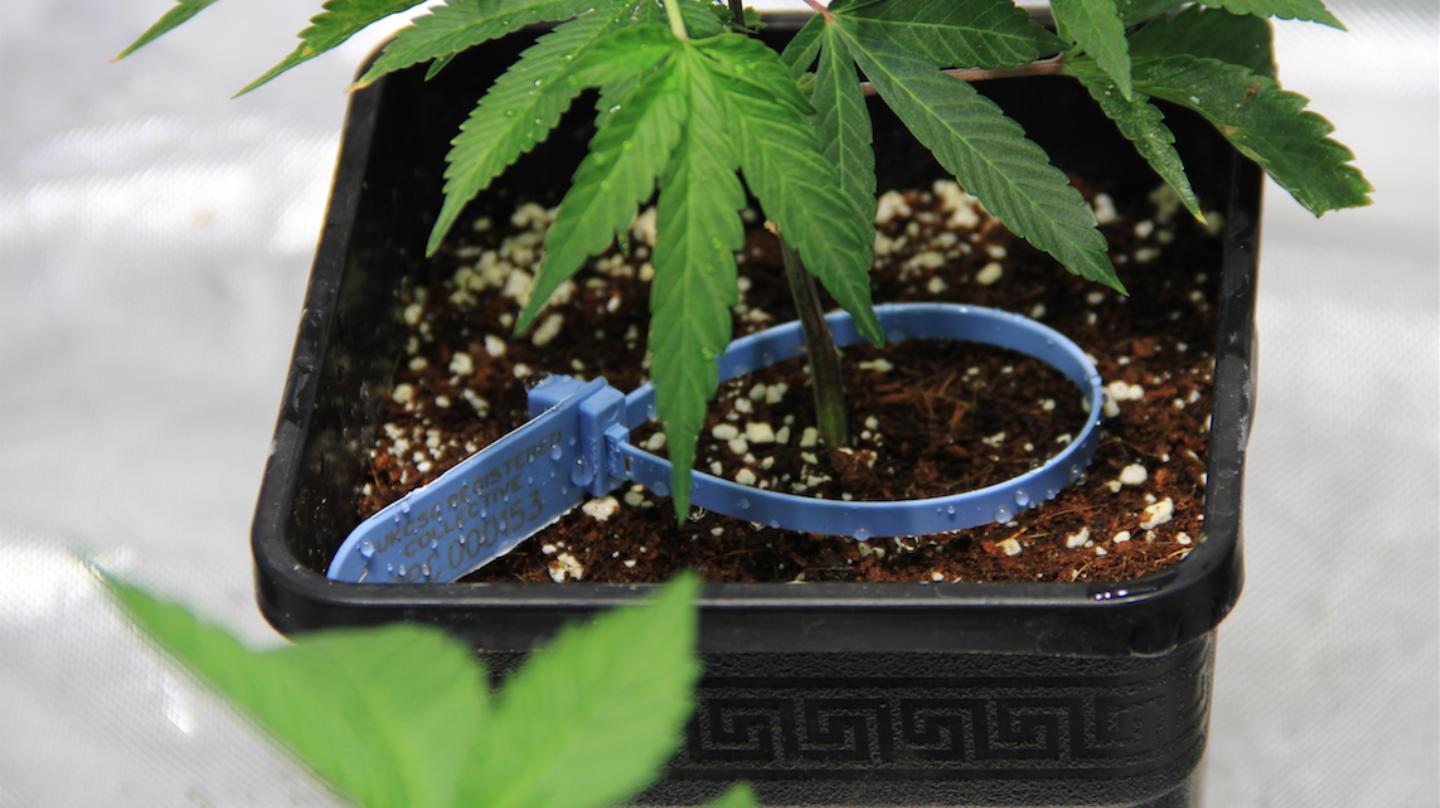
Away from these criminal enterprises, and on a much smaller scale, home growers have been able to make use of similar cultivation technology – sometimes to grow weed for their own use, and sometimes to grow plants that can be turned into medicines for people who need them, but aren't able to access them legally.
The UK Cannabis Social Clubs (UKCSC) – a network of local groups across the country which campaign for cannabis legalisation – have started selling a kit containing tags that growers can attach to up to nine plants in one grow location, which are supposed to inform police that your operation doesn't have criminal intentions. The money you pay for the kit goes into a pot that's there to fund your legal defence if your grow-op does get raided by police. Mind you, that pot hasn't had to be dipped into yet – potentially because raiding personal growing operations is no longer a police priority, with Sara Thornton – Chair of the National Police Chiefs Council – saying that cops are more likely to "record" a tip-off about a grow-op, rather than investigate it.
However, while police across the UK are starting to deprioritise the policing of cannabis – and despite countries around the world relaxing their attitudes to medical marijuana – the law in the UK remains stubbornly in place, with the government saying in July that it has "no intention" of making cannabis legal.
Not that the legality of the plant matters all that much, of course: cannabis remains the most commonly used drug in the UK, with around 2.1 million people using it in the last year. The vast majority of this number are likely to have smoked, eaten or vaped one of the many, many strains that falls under the wider "skunk" umbrella.
Your mum might have warned you about it, the Daily Mail might have tried to scare you out of using it, and it's possible the 20-bag you bought last night was produced under highly exploitative circumstances – but one thing's for sure: "skunk" isn't going anywhere.
The new iPhone 8 and iPhone X have just been announced by Apple. Now, for just $999 (or £999, cheers Brexit) you can get an iPhone that does a load of augmented reality, has facial ID recognition (which didn't respond during the Keynote) and can transform your face into a singing emoji poo.
But a worm is burrowing through Apple's profit-laden flesh; just last month, one of the UK's biggest mobile retailers, Dixons Carphone, downgraded its full-year profit forecast from between £360 million to £440 million, from £501 million last year. A spokesperson told the BBC that "customers were not upgrading their phones as frequently because handsets had risen in price". Customers just aren't so bothered, they said, about "incremental" changes to mobile tech.
Apple are hoping that the X feels like a leap forward – that people will regain that "must have" desire and queue up in droves to get their hands on it. But once they open the phone and spend five minutes fiddling with the new emojis, will it actually bring them true happiness?
I asked a bunch of people who've bought new Apple products within the first week of their sale for their thoughts.
VICE: How long did you queue for to get your Apple product?
Aaron: I queued about four hours for the first iPad. I bought one for me and my friend
Was it worth it?
Yeah – I'm kind of nerdy and I embraced it. I've got four iPads now; it was worth it.
What were the best new functions to it?
Zero – it was just a cool gadget, a bigger screen for an iPhone. It was cool to have the newest thing.
Did it make you happy?
Yes, it did! [laughs a lot]
Do you ever question that rendition of happiness?
I do question that a bit. I watched almost two hours of the Keynote last night, and it's essentially watching an ad, and you're thinking, 'My pretty new iPhone is now redundant and I'll be really happy with this new one because look how happy these people are talking about it.' I'm conflicted about it because I know I didn't need this phone ten years ago. Everyone has smartphones, but why do I need a new one every year? I'm aware how hollow it is, but it makes me happy for a bit. I do think there is more to my life than just buying something!
Are you going to buy the iPhone X?
I don't think so; I think I'm going to by the iPhone 8 plus. I miss the big screen, and the X doesn't have that.
VICE: Did you queue?
George: I got the Apple Watch pre-ordered, because I got there ten minutes late. But in central London generally all the idiots are standing near Apple stores, so if you go into a small O2 or EE shop around launch week and you're willing to get top of the range, you can get it on the same day. My barometer for quality is always "What's the most expensive?" because I'm incredibly gauche. Every year for the last decade I've bought a new iPhone, so I might as well get it early.
Does it make you happy?
No, but it makes me unhappy to not have it, so having it keeps me at parity. It's cool to have and there are some features that are good, but it doesn't change the quality of my life. Andy Warhol said that Liz Taylor, the president and the bum on the street – the best Coca Cola is available to all of them. That's the same with phones. I know that, right now, I have the best phone on the market. There's nothing that worries me, no variables, no FOMO, and I know in two weeks that will change and it will be at the back of my mind, so I'll get it over and done with [and buy the new phone].
"It's annoying when you meet a girl on Tinder and she texts you and it comes up green. You just think, 'Ugh, it's not worth it.'"
What could make you happier than the newest iPhone?
It's good to have meaningful relationships with people around me, but apart from that, no. There's nothing that good that's available for £1,000 in two weeks.
Will you get the iPhone X?
Yes.
What do you think about people that don't have iPhones?
I don't have any close friends who I get green messages from. Having lower price points is fantastic for bringing Apple to the world, because it's annoying when you meet a girl on Tinder and she texts you and it comes up green. You just think, 'Ugh. it's not worth it.' I have a friend who's 24 and she's on a data plan she runs out of. She said she'd have to wait six days for it to refresh, so I just gave her £7 to get more data because I don't want to deal with green messages.
VICE: How many iPhones have you queued for?
Dylan: I've queued for 4, 5 and 6, which is sad, and then did a pre-order once for the 7 because I was on holiday.
What's the longest time you've queued for?
Probably about two-and-a-half or three hours, in quite unpleasant conditions, a late September morning at about half six in very rainy, cold Newcastle.
Why do you do it?
I'm an app developer and I need to test them on new phones to ensure the user experience is good.
Does Apple make you happy?
I enjoy getting the upgrades, I love the design – I think they'll eventually become modern art pieces – and it's satisfying to touch, feel and use the modern design. I've been to San Francisco to Apple's Worldwide Development Conference twice through a scholarship; you send them an app, and if they like it you get to go for free. That was awesome because as well as professionally using Apple, I'm a big fan.
Does it annoy you that the democratisation of the sales means that you, a developer, don't get advance versions of the product?
Yeah! It's far too fair, because people who have a genuine need for the phone can't get it earlier. It sounds a bit dickish and a bit anti-equality, but often it's really hard, and queuing can be annoying. Unless you're absolutely huge, like Facebook or Snapchat, who've clearly been in partnership with Apple, you don't get any special treatment.
Will you get the iPhone X?
I'm tempted by the X and I want it for development purposes – it looks so amazing. But the price is really off-putting and hard to justify. I felt guilty enough after buying the iPhone 7. I can't imagine spending £1,000 on a phone. It's the first time I've been hesitant. My heart says "Yes" and my head says "God, no."
VICE: How many iPhones have you bought in the first week?
Claire: None, though I tried. I was working at an Apple retail store and didn't have an iPhone. I tried to get the iPhone 5 first; me and my mum were queuing at an O2 store in Brighton because there was an exclusive deal with O2 – you could only get the phone through them at first. I queued up for hours, but once I got to the front I realised I'd forgotten my debit card so just went home.
Did it make you unhappy to not have it?
I can't have been too fussed, because otherwise I'd have picked up the card and gone back to make the purchase. I was in charge of stock and visual merchandising, and one part of that meant I got to see the product before anyone else did. But the excitement wore off when you had to spend all night setting the store up for a launch.
Do Apple products make you happy?
The thing about Apple is either you're in with this cult-like family obsession over the new products and releases… or you're not. And I kind of wasn't. I didn't really see the point in plunging all the money you've earned at a company right back into that same business the minute a new product is released.
Will you get the iPhone X?
No way! It's so expensive and I don't care about face recognition or animated emoji. When you're an actual adult not involved in tech, you have other priorities than spaffing a grand on a phone. My iPhone 6 does everything I need, so what's the point?
In 2016, Trey Parker and Matt Stone celebrated twenty years making one of America's best-loved shows with a turbulent season that proved not even South Park was immune to the Trump effect. With a plot focused heavily on internet trolls and the 2017 presidential election, South Park became even more reactionary than normal—with mixed results. Its new season promises to scale things back, and reignite the joyful stupidity of old. That's a good thing.
For their twentieth season, Parker and Stone decided to run with serialised episodes with an ongoing story. They had trialled the serialised format during season eighteen as a challenge to themselves to prevent the show from getting stale, and it worked as an experiment in shaking things up.
But for viewers, it was a big change to reckon with. You could no longer drop in and out of the show as you pleased: the show required you to be there from the beginning to end. Not much of a stretch for hardcore fans, but a mind bender for casual viewers. The American news cycle began to outpace Parker and Stone, who write and produce every single episode of South Park in six days. (The stressful process of making an episode is captured in the must-see documentary Six Days to Air.)
While you have to applaud Parker and Stone for their work ethic (the duo have only missed their deadline once in twenty years, when a blackout in Los Angeles prevented the team at South Park Studios from finishing an episode), in season twenty they became victims of reacting to the Trump-driven news cycle that challenged the very nature of satirical comedy.
Because how do you poke fun at what's already ridiculous? Within a 24-hour period memes are born and then trashed to death, comedians tweet jokes that go viral, and it's all wrapped up by the time late night show hosts are delivering their monologues. South Park was landing at the end of each loaded week with a clunk. Mr Garrison and Caitlyn Jenner became stand-ins for Trump and Mike Pence in the show's take on the election, but the jokes lacked bite because they were stating the obvious rather than satirising the situation. The plot got convoluted, and the gags got buried. The hunt for a troll called Shankhunt42 was stretched beyond having any relevance to the story and a running bit about nostalgic reboots that took jabs at Star Wars: The Force Awakens became repetitive.
In an interview with the Los Angeles Times Parker admitted they'd screwed up: "We fell into the same trap that Saturday Night Live fell into, where it was like, 'Dude, we're just becoming CNN now. We're becoming: Tune in to see what we're going to say about Trump.' Matt and I hated it but we got stuck in it somehow."
South Park has always been a topical show, but before Trump there was less pressure for Parker and Stone to tackle certain topics. You always got the feeling they were doing exactly as they pleased. In the past they've taken on The American Invasion of Iraq ("I'm A Little Bit Country"), the 2004 Presidential election ("Douche and Turd"), Paris Hilton ("Stupid Spoiled Whore Video Playset"), Scientology and Tom Cruise ("Trapped in the Closet" among many other episodes about the cult) and the trial of George Zimmerman ("World War Zimmerman"). What these episodes have in common is they're free of the need to incorporate daily news into each episode. With intricate plotting, Parker, Stone and their writing staff were able to wrangle topical issues with ease rather than beginning each episode with a mandate.
American politics consumed the pop culture conversation from the minute it was clear Trump was running for President, and then came an expectation that comedy heavyweights would be there to take the new regime down. Many mainstream comics struggled to deliver anything truly scathing: The Daily Show failed to make an impression with its new host Trevor Noah; Saturday Night Live filled their show with hammy reenactments of each week's events, but they couldn't shake the fact Trump had hosted the show prior to accepting the presidential nomination. Even the affable Jimmy Fallon took a hit— The Tonight Show died the minute he ruffled Trump's hair during an interview. Full Frontal with Samantha Bee and This Week Tonight with John Oliver fared better, choosing simply to state the facts with razor sharp comedic analysis that picked up the slack from lacklustre news coverage.
By becoming a slave to what's topical, South Park took a major hit. And I can't help but feel we're all at least partly responsible. Each week I couldn't wait to see how South Park would take down whoever deserved it the most. The show became like a gladiator arena in ancient Rome, and viewers wanted blood. We forgot that the best episodes of South Park jive with whatever Parker and Stone find funny. The show excels at expressing their comedic sensibilities through the filter of the ludicrous cartoon town they created.
With season twenty one, there's a chance to make South Park stupid again. Parker says their goal this season is to return the show to its former glory. "…I want to get back to Cartman dressing up like a robot and [screwing] with Butters, because to me that's the bread and butter of South Park: kids being kids and being ridiculous and outrageous but not 'did you see what Trump did last night?' Because I don't give a ... anymore." What a relief.
Topical episodes aren't banned completely. The opening episode of season twenty-one, "White People Renovating Houses", focuses on the white supremacist rally that took place in Charlottesville. In the episode, protesters march on the streets of South Park with tiki torches and confederate flags, and Randy Marsh gets caught up in it. The President isn't mentioned once by name.
It will be interesting to see how long South Park can avoid the giant Trump in the room. As the American political climate spirals out of control, Parker and Stone can't be judged too harshly for reacting to the times they've living in. As satirists with a 20-year-old global megaphone they are in a position of power to call bullshit on authority—it just so happens that in 2017, the very medium of satire is being called into question.
We need a space to laugh as a relief from the insanity unfolding around us, and South Park is great when it slays a celebrity or politician. But the best thing about the show is its ability to live in both worlds, and the twentieth season has shown Parker and Stone they aren't beholden to anything. Laugher is the best medicine when the air is toxic.
Follow Cameron on Twitter

¿A quién no le gustan los animales? ¿Y en tebeo? ¡Molan incluso más! Animales antropomórficos de todo tipo de condición han sido y son protagonistas de muchos cómics. En nuestro podcast hacemos un buen repaso de funny animals en todo tipo de tebeos: Pumby, Blacksad, Spider-Ham, Maus, los patos de Carl Barks… Además entrevistamos a Javi de Castro, uno de los más jóvenes talentos del cómic nacional, reconocido como Mejor Autor Revelación en el Saló 2016.
El éxito de los cartoons de los años 20 y 30 dio lugar a un buen montón de publicaciones de funny animals pero ¿por qué han gustado tanto los animales de tebeo? Con la colaboración de Pedro García intentamos dar repuesta a la incognita para arrancar con los míticos cómics de Disney de Carl Barks o Floyd Gottfredson y entroncar con otros clásicos de autor como la muy única Krazy Kat.

En España tampoco han faltado animales antropomorfos icónicos. Entre los más celebrados, el Pumby de Sanchís o Mondo Lirondo de La Penya.

En el resto de Europa también han surgido grandes obras como La Mazmorra y Lapinot de Lewis Trondheim o el excelente Blacksad de Juan Díaz Canales y Juanjo Guarnido.

Aunque deudores del trabajo de Carl Barks o Walter Kelly el cómic underground y de autor ha llevado a todo tipo de especies por derroteros más adultos. Del trabajo de Crumb, la gata Omaha o de la obra maestra Maus también hablamos.

Finalmente también repasamos otras obras diversas, desde la épica de Mouse Guard a la crepuscular Siete Vidas pasando por los conejos soldado del manga Cat Shit One.

El leonés Javi de Castro, con su trazo deudor de la línea clara, es uno de esos autores que hay que seguir. En colaboración con guionistas como Josep Busquet o en solitario está creando cómics tan sobresalientes como La Última Aventura o Que no, que no me muero. Tuvimos la oportunidad de charlar de su interesante trayectoria en el pasado Salón del Cómic de Barcelona.
Finalizamos con un trio de recomendaciones. El muy peculiar Mundo Extraño de Vicente Montalbá es una marcianada que debéis leer.

Y tampoco os podéis perder dos mangas muy distintos entre sí: La Cruzada de los Inocentes de Furuya y el shonen One Punch One


M.C. | Ferrol | Jueves 14 septiembre 2017 | 13:20
La RAE tiene tres acepciones para la palabra friki -o friqui, como también contempla-. La primera, «extravagante, raro o excéntrico»; la segunda, «persona pintoresca y extravagante», y la tercera, referida a una «persona que practica desmesurada y obsesivamente una afición». Desde este pasado sábado las raras, extravagantes y los pintorescos tienen un lugar de referencia en la ciudad, se trata de Frikdas, la tienda donde poder pasarse horas frikeando a placer y encontrar todo aquello que, sin saber que existe, de pronto se necesita imperiosamente.
Al frente está Jennifer Menéndez, que con tan solo 27 años se ha liado la manta a la cabeza enfrascándose en esta aventura maravillosa. «Terminé Farmacia y estuve enviando muchísimos currículos, pero no encontraba nada. Esto era algo que tenía en un segundo plano, pensaba que sería muy caro pero en cuanto vimos que era viable, nos pusimos a ello y aquí estamos», relata.
Y habla en plural porque, junto a ella, está Eloy Couce como empleado. Ambos pusieron el proyecto en negro sobre blanco en el mes de julio y, en agosto, ya habían alquilado el local, calle Españoleto con Eduardo Pondal, una de las esquinas más visibles del barrio de Esteiro. «Miramos antes por Ultramar, pero vimos este, con un escaparate enorme y colegios cerca, y nos gustó mucho», explica Jennifer.
¿Qué podemos encontrarnos en Frikdas?
«Es complicado dedefinir. Todo lo que hay y no sepas que existe, está aquí. Es una tienda rarita», bromea Jennifer, señalando que «tenemos todas esas cosas que buscábamos siempre y no encontrábamos en Ferrol, teníamos que comprar por internet, pero yo siempre prefiero tocarlas, verlas de cerca. Me volvía loca para encontrarlas, así que pensé que, a lo mejor, había más gente como yo».
Desde tazas hasta felpudos, pasando por mochilas, cojines, capas, camisetas, colgantes, disfraces, réplicas… «Merchansing friki» en el amplio sentido de la palabra, de series, películas o sagas míticas. De hecho, nos topamos con un amplio surtido de productos de Harry Potter, Star Wars, Juego de Tronos y varios animes. «Es un sitio ideal para venir buscando un regalo, porque tendremos algo que le vaya a gustar a esa persona y, si no, se lo pedimos», apunta Eloy.

Algunos de los concursantes en el certamen de cosplay que se celebró con motivo de la inauguración de Frikdas (foto: María García Buyo)
Abrirán su propia tienda online a finales de mes en este enlace, pero en la tienda abren las puertas de lunes a viernes en horario de 11:00 a 14:30 y de 17:00 a 21:00 horas. Los sábados, además, de 11:00 a 14:30 y de 16:00 a 18:00 horas. «De momento estamos desbordados, nos tienen que llegar pedidos porque estamos vendiendo muchísimo todos los días y tenemos las estanterías medio vacías», dice sorprendida Jennifer.
De hecho, el sábado durante la inauguración, más de 200 personas se dejaron caer por Frikdas, muchas de ellas incluso disfrazadas para participar en un concurso de cosplay -disfraces temáticos que llevan aparejados un rol concreto-. «Volveremos a hacer otro concurso de cosplay en Halloween porque la idea es dinamizar la tienda. Tenemos programados torneos de Magic y cartas Pokémon, haremos talleres y todo lo que vaya surgiendo», avanza Eloy.
Emprendiendo en tiempo récord
Acostumbrados como estamos a que los escollos burocráticos conviertan la apertura de un negocio en un camino largo, el caso de Jennifer y Eloy es sorprendente. Les bastó un mes para poner en marcha el negocio. Se asesoraron con la Asociación de Jóvenes Empresarios (AJE) Ferrolterra y confiaron en la gestoría Morales, que se encarga de su contabilidad. «Fuimos al BBVA buscando un microcrédito para jóvenes emprendedores y nos lo concedieron el mismo día, la verdad es que fue genial», explica Jennifer.
Así que después de una obra para convertir la antigua pescadería que se ubicaba en su bajo en una tienda llena de vida, pudieron inaugurar este pasado sábado. Y allí están, encantados con la acogida que está teniendo su proyecto, al que podemos seguirle también la pista a través de su página de Facebook y su Instagra (@frikdasferrol).

Jennifer y Eloy, con unas de sus mejores galas, en día de la inauguración de Frikdas (cedida)





Neatorama is proud to bring you a guest post from history buff and Neatoramanaut WTM, who wishes to remain otherwise anonymous.
In the spring of 1918, New Orleans, Louisiana (NOLA) was not exactly a city known for banking its fires. Although WWI was still in effect, the city’s motto then was as it is now – ‘Laissez les bons temps rouler’ – let the good times roll. And roll they did. NOLA had culture, a storied history, the country’s first movie theater, a booming financial district, any and all kinds of vice, Jax beer, jazz music, fine cuisine, the French Quarter, and Mardi Gras. NOLA was one of the nation’s busiest seaports, had a curious mix of wealth and poverty but relative overall prosperity, and was possessed of a diverse international citizenry and surprisingly good race relations for the day, thanks to its Cajun and Creole heritage. To its inhabitants, NOLA had all that one could want - and now it was about to have a serial killer.

For all its splendor and romance, NOLA, the ‘Big Easy’, had a dark side. It was the site of the largest mass lynching in American history, had some organized crime connections, including the Mafia, and an active voodoo culture. As in any large city, there was crime, and the NOLA police department was kept busy, although in truth most of its calls were in the red-light district, where there was frequent trouble at one or other of the city’s many bordellos or saloons. There were murders, of course, but these were generally of the ‘typical’ variety – robbery, jealous suitors, cheating spouses, public insults, and so forth. Yet nothing in its dark side’s long history had prepared the NOLA metropolitan area for what was to become one of the greatest unsolved crimes of the 20th Century – that of the Axeman of New Orleans.
Beginning in May 1918 and lasting through October 1919, a series of horrific assaults and murders engulfed the NOLA metropolitan area, the obvious work of a serial killer. These crimes were never solved, and they stopped as mysteriously as they had started. The murders became infamous not only for their blood-spattered violence but also for the bizarre modus operandi (MO) of the perpetrator. Each of the ‘canonical’ victims was Italian, and either a grocer or a baker. Family members were sometimes not spared; men, women, and even small children were mercilessly slaughtered, a most unusual behavior for a serial killer. While it is impossible to ascertain whether or not a single perpetrator was responsible for all of the atrocities ascribed to the Axeman, and there has never been any consensus as to the exact number of the Axeman’s victims (there were probable copycat murders), it is a fact that at least twelve people across metropolitan NOLA were attacked by the Axeman over a 17 month period, at least seven of who died from their injuries.
Like Jack the Ripper 30 years earlier and the Cleveland Torso Killer 15 years later, this unknown criminal had several nicknames - the Boogeyman, the Axeman of New Orleans, or simply and most commonly, the Axeman (or Axman). But, unlike Jack the Ripper and the Cleveland Torso Killer, the Axeman would leave behind some survivors of his attacks, some eyewitnesses to his crimes, and all of his implements of murder. But for all that, he was never officially identified, much less apprehended.
It all began on May 23, 1918, when an Italian grocer named Joseph Maggio and his wife were butchered while sleeping above their store. The police discovered that a panel in the rear door had been chiseled out, providing an entry point for the killer. The murder weapon, an axe belonging to the Maggios, was found in their bathtub. Nothing had been stolen, including jewelry and money that were in plain sight.
NOLA police investigators began looking through old cases for similar crimes and discovered that three axe murders of Italian grocers had occurred in 1911. These crimes bore a strong resemblance to the Maggio crime and had been thought to be a Mafia vendetta against fellow Italians. All were unsolved.
 One of the most baffling aspects of the Axeman’s crimes was that of his MO; he entered his victims’ homes by chiseling a single panel out of the rear exterior door. This method of entry in particular is quite surprising, given the amount of time and work (and risk) that it would take to chisel a panel out of a thick wood door and the relatively small size of the opening in the doorway that would be created. Yet, he apparently managed to fit through these rather small entry points, even though it seemed that no adult male could possibly gain entry through them, most especially as most eyewitnesses later described the Axeman as a tall, dark-skinned, heavy-set man. After entering, he would then attack his victims in their sleep and bludgeon them with an axe. Curiously, the weapons he employed (axes, but upon occasion also knives and straight razors) were always abstracted from the houses he entered, and they were always left behind at or near the scenes of the crimes along with the chisels that he had used for removing the panels from the doors. So far as is known, he never robbed any of his victims.
NOLA being NOLA, with its ingrained voodoo culture, some maintained that the Axeman was a creature from the world beyond. How else, they said, could eyewitnesses describe the killer as being a large man when only a small person could have slipped through the chiseled-out panels in the doors? The killer must have entered by supernatural means, as each door was still locked when the crimes were later discovered. In addition, his ability to quickly flee the scene “as if he had wings” led the citizens of New Orleans to wonder if the Axeman were even human or instead some sort of ungodly demon. If there were any skepticism about the latter, it was quickly dispelled by what was soon to follow.
In March of 1919, the Axeman revealed himself as much as he ever would. A letter received by the NOLA Times-Picayune newspaper, purportedly from the Axeman, revealed that he loved jazz music and thus would spare anyone who played jazz through the night of Tuesday, March 18. This letter follows in full.
Hell, March 13, 1919
Esteemed Mortal:
They have never caught me and they never will. They have never seen me, for I am invisible, even as the ether that surrounds your earth. I am not a human being, but a spirit and a demon from the hottest hell. I am what you Orleanians and your foolish police call the Axeman.
When I see fit, I shall come and claim other victims. I alone know whom they shall be. I shall leave no clue except my bloody axe, besmeared with blood and brains of he whom I have sent below to keep me company.
If you wish you may tell the police to be careful not to rile me. Of course, I am a reasonable spirit. I take no offense at the way they have conducted their investigations in the past. In fact, they have been so utterly stupid as to not only amuse me, but His Satanic Majesty, Francis Josef, etc. But tell them to beware. Let them not try to discover what I am, for it were better that they were never born than to incur the wrath of the Axeman. I don‘t think there is any need of such a warning, for I feel sure the police will always dodge me, as they have in the past. They are wise and know how to keep away from all harm.
Undoubtedly, you Orleanians think of me as a most horrible murderer, which I am, but I could be much worse if I wanted to. If I wished, I could pay a visit to your city every night. At will I could slay thousands of your best citizens, for I am in close relationship with the Angel of Death.
Now, to be exact, at 12:15 (earthly time) on next Tuesday night, I am going to pass over New Orleans. In my infinite mercy, I am going to make a little proposition to you people. Here it is:
I am very fond of jazz music, and I swear by all the devils in the nether regions that every person shall be spared in whose home a jazz band is in full swing at the time I have just mentioned. If everyone has a jazz band going, well, then, so much the better for you people. One thing is certain and that is that some of your people who do not jazz it on Tuesday night (if there be any) will get the axe.
Well, as I am cold and crave the warmth of my native Tartarus, and it is about time I leave your earthly home, I will cease my discourse. Hoping that thou wilt publish this, that it may go well with thee, I have been, am and will be the worst spirit that ever existed either in fact or realm of fancy.
The Axeman
The citizens of metropolitan NOLA did their best to follow the Axeman’s instructions to the letter. Although many later claimed that they had participated just for the fun of it, it was clear that the populace as a whole was terrified. The night of March 18, people in NOLA partied as if their lives depended on it. Restaurants and clubs all over town that offered jazz music were jammed; friends and neighbors gathered in homes to “jazz it up”, and every musician in the city had been engaged in some venue. By midnight, practically every house in the city was alive with jazz, many of them pounding out a composition by a well-known local composer, Joseph Davilla, entitled “The Mysterious Axman’s Jazz”, which, NOLA being NOLA, soon became a smash hit. Listen to it here.
As promised, no one playing jazz that night died at the hands of the Axeman.
But the Axeman had been pushing his luck. There had been several aborted attempts at other of his crimes, one of which nearly got him shot. Households and entire communities began organizing such that someone armed was always on watch at night while others slept. Bands of vigilantes armed with shotguns conspicuously roamed the streets after dark. Some few even openly dared the Axeman to come calling, providing their addresses through newspaper ads.
On October 27, 1919, the Axeman conducted his final slaughter, perhaps because NOLA was becoming too hot for him. An Italian grocer named Mike Pepitone (or Pipitone) was butchered, but his wife and children, asleep in another room, went unharmed.
The horror then came to an abrupt end. This was the last canonical murder attributed to the Axeman. He was never seen or heard from again. No one would ever learn the identity of the Axeman - or would they?
A year after the Pepitone murder, a man named Joseph Mumfre (also Momfre and other variant spellings) was shot and killed on the west coast, allegedly by Mike Pepitone’s widow, Esther Albano. She had been eyewitness to his murder and was said to have recognized Mumfre as her husband’s killer. Mumfre had years earlier been ringleader of a blackmail gang which preyed on NOLA’s Italian community. He was sent to prison in 1911, just after the first series of axe murders. He was paroled in 1918, around the time that the Axeman’s murders began. Immediately after the Pepitone murder, Mumfre left NOLA for the west coast, and the Axeman vanished as well. In spite of all this circumstantial evidence, there was no actual evidence to link him to any of the Axeman’s crimes.
Did Esther Albano really recognize the Axeman? And if she really knew his identity, why did she not inform the NOLA police? Had the Axeman then been apprehended and identified by Albano and the other eyewitnesses, he would either have quickly been tried, convicted, and executed or seized by a mob and lynched. But would even such an end have satisfied a bereaved widow and mother of six children, especially one of Italian heritage? After all, revenge is a dish best served cold.

Was Joseph Mumfre really the Axeman? Was the Axeman instead someone who remains unknown today? Or was the Axeman actually what he claimed to be all along – a supernatural entity from the depths of Hell? Only one thing is certain after the passage of nearly a century; whoever – or whatever – the Axeman was, he is today legend, and legends never die.
Sources and Further Reading
13 Grisly Facts About the Axeman of New Orleans
The Axeman serial killer of New Orleans (1918-1919)
The New Orleans Times-Picayune
Fresh light on the Axeman of New Orleans
The Axeman's Jazz
When Hell Came to Earth: The Axeman of New Orleans
The Axeman of New Orleans Murders
The Axeman Murders of New Orleans
The Murderous Axeman Of New Orleans May Sound Like A Myth, But It's Far From It
Axeman of New Orleans
25 Blood-Chilling Facts About The ‘Axeman Of New Orleans’ That’ll Make You Scream
Joseph Maggio at Find A Grave
Katherine Maggio at Find A Grave
Mary Cortimiglia at Find A Grave
Joseph Mumfre at Find A Grave
Our friends at The Annals of Improbable Research have bestowed the annual Ig Nobel Prizes upon deserving scientists who caught our imagination with their fascinating but weird research. The 2017 Ig Nobel Award ceremony has just concluded at Harvard University's Sanders Theater. The winners include a study on whether twins can tell themselves apart, why old men have big ears, and if cats can be both a liquid and a solid. Continue reading for the complete list of winners.
PHYSICS PRIZE (FRANCE, SINGAPORE, USA) Marc-Antoine Fardin, for using fluid dynamics to probe the question "Can a Cat Be Both a Solid and a Liquid?"
REFERENCE: "On the Rheology of Cats," Marc-Antoine Fardin, Rheology Bulletin, vol. 83, 2, July 2014, pp. 16-17 and 30.
PEACE PRIZE (SWITZERLAND, CANADA, THE NETHERLANDS, USA)
Milo Puhan, Alex Suarez, Christian Lo Cascio, Alfred Zahn, Markus Heitz, and Otto Braendli, for demonstrating that regular playing of a didgeridoo is an effective treatment for obstructive sleep apnoea and snoring.
REFERENCE: "Didgeridoo Playing as Alternative Treatment for Obstructive Sleep Apnoea Syndrome: Randomised Controlled Trial," Milo A. Puhan, Alex Suarez, Christian Lo Cascio, Alfred Zahn, Markus Heitz and Otto Braendli, BMJ, vol. 332 December 2006.
NOTE: Alex Suarez was the first patient, and was the inspiration for the study.
ECONOMICS PRIZE (AUSTRALIA, USA) Matthew Rockloff and Nancy Greer, for their experiments to see how contact with a live crocodile affects a person's willingness to gamble.
REFERENCE: "Never Smile at a Crocodile: Betting on Electronic Gaming Machines is Intensified by Reptile-Induced Arousal," Matthew J. Rockloff and Nancy Greer, Journal of Gambling Studies, vol. 26, no. 4, December 2010, pp. 571-81.
ANATOMY PRIZE (UK)
James Heathcote, for his medical research study "Why Do Old Men Have Big Ears?"
REFERENCE: "Why Do Old Men Have Big Ears?" James A. Heathcote, British Medical Journal, vol. 311, 1995, p. 1668.
BIOLOGY PRIZE (JAPAN, BRAZIL, SWITZERLAND)
Kazunori Yoshizawa, Rodrigo Ferreira, Yoshitaka Kamimura, and Charles Lienhard, for their discovery of a female penis, and a male vagina, in a cave insect.
"Female Penis, Male Vagina and Their Correlated Evolution in a Cave Insect," Kazunori Yoshizawa, Rodrigo L. Ferreira, Yoshitaka Kamimura, Charles Lienhard, Current Biology, vol. 24, no. 9, 2014, pp. 1006-1010.
FLUID DYNAMICS PRIZE (SOUTH KOREA, USA)
Jiwon Han, for studying the dynamics of liquid-sloshing, to learn what happens when a person walks backwards while carrying a cup of coffee.
REFERENCE: "A Study on the Coffee Spilling Phenomena in the Low Impulse Regime," Jiwon Han, Achievements in the Life Sciences, vol. 10, no. 1, 2016, pp. 87-101.
NOTE: Jiwon Han was a high school student when he wrote the paper, at Korean Minjok Leadership Academy, Gangwon-do, Republic of Korea.
NUTRITION PRIZE (BRAZIL, CANADA, SPAIN)
Fernanda Ito, Enrico Bernard, and Rodrigo Torres, for the first scientific report of human blood in the diet of the hairy-legged vampire bat
REFERENCE: "What is for Dinner? First Report of Human Blood in the Diet of the Hairy-Legged Vampire Bat Diphylla ecaudata," Fernanda Ito, Enrico Bernard, and Rodrigo A. Torres, Acta Chiropterologica, vol. 18, no. 2, December 2016, pp. 509-515.
MEDICINE PRIZE (FRANCE, UK)
Jean-Pierre Royet, David Meunier, Nicolas Torquet, Anne-Marie Mouly and Tao Jiang, for using advanced brain-scanning technology to measure the extent to which some people are disgusted by cheese.
REFERENCE: "The Neural Bases of Disgust for Cheese: An fMRI Study," Jean-Pierre Royet, David Meunier, Nicolas Torquet, Anne-Marie Mouly and Tao Jiang, Frontiers in Human Neuroscience, vol. 10, October 2016, article 511.
COGNITION PRIZE (ITALY, SPAIN, UK) Matteo Martini, Ilaria Bufalari, Maria Antonietta Stazi, and Salvatore Maria Aglioti, for demonstrating that many identical twins cannot tell themselves apart visually.
REFERENCE: "Is That Me or My Twin? Lack of Self-Face Recognition Advantage in Identical Twins," Matteo Martini, Ilaria Bufalari, Maria Antonietta Stazi, Salvatore Maria Aglioti, PLoS ONE, vol. 10, no. 4, 2015: e0120900.
OBSTETRICS PRIZE (SPAIN)
Marisa López-Teijón, Álex García-Faura, Alberto Prats-Galino, and Luis Pallarés Aniorte, for showing that a developing human fetus responds more strongly to music that is played electromechanically inside the mother's vagina than to music that is played electromechanically on the mother's belly.
REFERENCE: "Fetal Facial Expression in Response to Intravaginal Music Emission," Marisa López-Teijón, Álex García-Faura, and Alberto Prats-Galino, Ultrasound, November 2015, vol. 23, no. 4, pp. 216–223.
REFERENCE: "Fetal Acoustic Stimulation Device," patent ES2546919B1, granted September 29, 2015 to Luis y Pallarés Aniorte and Maria Luisa López-Teijón Pérez.
NOTE: They also offer a product based on this research The product is named "Babypod".
The entire ceremony can be seen at Improbable Research.
¿Alguna vez has tenido la sensación de no poder nombrar lo que sientes? Es comprensible, ya que hay varias situaciones y sensaciones que no han sido bautizadas en español. Son expresiones intraducibles a otros idiomas pero que representan aspectos muy concretos que todos conocemos. Por ejemplo, el cruel sentimiento de placer derivado de ver la desgracia de alguien, tiene nombre alemán: “schadenfreude”. Otra es “cafuné”, que en portugués significa “pasar delicadamente los dedos por el pelo de otra persona”. No acariciar, sino pasear los dedos por los mechones ajenos con cara de cachorrito. Esa sensación tan cursi tiene un nombre. Incluso hay una palabra que describe el incómodo momento de verse horrible después de un corte de pelo: la japonesa “age-otori”.

Algunas de estas palabras ya habían llegado a nuestro conocimiento, pero la artista afincada en Londres Marija Tiurina las ha plasmado en ilustraciones para que no solo tengan nombre, también un rostro. "Mucha gente las entiende, pero que poca es capaz de definirlas”, explica en su página web respecto a esta colección que ha creado para neonmob. “He escogido 14 palabras que me han parecido encantadoras y divertidas”.
Kyoikumama (japonés)
“Una madre que presiona sin cesar a su hijo hacia el logro académico”. Así define Marija la primera ilustración, en la que muestra a un niño encadenado en su mesa estudio. Es una palabra peyorativa que designa a una figura estereotipada en Japón.
Luftmensch (yidis)
En su ilustración, Marija explica que “Se refiere a alguien que es un poco soñador y literalmente significa ‘air person’ (persona de aire)”. El yidis es un idioma perteneciente a las comunidades judías, una lengua milenaria que se desarrolló en Europa Central y del Este a partir del siglo X.
Baku-shan (japonés)
"Baku-shan" podríamos definirlo como “es guapa de cara… a la pared”, ya que la artista lo explica en su ilustración como “Una chica guapa, siempre y cuando sea vista desde atrás”.
L’appel Du Vide (francés)
Lo que debe de sentir Spiderman, tal y como ha plasmado Marija. Con los pies del superhéroe al borde de un rascacielos, la autora traduce literalmente esta frase de origen francés como “La llamada del vacío” y explica que se usa “para describir la necesidad instintiva de saltar desde sitios elevados”.
Tretar (Sueco)
Sí, existe incluso una palabra que significa “llenar por tercera vez una taza de café”. Así lo explica la artista, que escribe que “tar” significa en sueco “una taza de café” y “patar”, volver a llenar dicha taza. Una palabra nueva para definir lo que nos hace falta los lunes por la mañana.
Schadenfreude (alemán)
Los malos sentimientos también han sido bautizados. Esta cruel palabra alemana, concretamente, se usa para definir "el sentimiento de placer derivado de ver la desgracia de otro”.
Gurfa (árabe)
Es por la mañana, abres el grifo del baño con los ojos medio cerrados y, con la mano a modo de cuenco, te lavas la cara con agua. ¿Qué tiene esto que ver? Pues que esa pequeña cantidad de agua que eres capaz de coger con las manos también tiene su propia designación: “gurfa”, proveniente del árabe.
Palegg (noruego)
Hasta ahora, los alimentos se dividían en grupos tales como lácteos, carnes, legumbres o verduras. Pero con estas nuevas palabras, se nos descubre uno nuevo. La denominación noruega “palegg” hace referencia a “cualquier cosa que se puede poner en una rebanada de pan”, desde queso hasta tomate pasando por pavo o huevo.
Tingo (pascuense)
El pascuense o rapanui es el idioma hablado por el pueblo Rapa Nui en la Isla de Pascua, en Chile, y tiene una de estas palabras que no podemos definir en todos los idiomas. “Tingo” significa algo tan concreto como “el acto llevarse los objetos que uno desea de la casa de un amigo pidiéndolos prestados poco a poco”.
Torschlusspanik (alemán)
Otra palabra alemana que define uno de los miedos adultos: el de “perder oportunidades a medida de crecemos”. Has perdido tiempo y, si no actúas ya, puedes perder más. Literalmente, se traduciría como “pánico a la puerta que se cierra”. Es un término que se refiere a un fenómeno de la época medieval, a la ansiedad que experimentaban los campesinos cuando las puertas de la ciudad se cerraban por la llegada del enemigo y tenían que llegar a tiempo.
Duende (español)
Única palabra española de la lista. Como explica Marija, “duende” se refiere “al misterioso poder que una pieza de arte tiene para emocionar profundamente a una persona”. Según la RAE, es un “encanto misterioso e inefable, como el duende del cante flamenco”.
Age-otori (japonés)
Salir llorando de una peluquería después de haber pasado por las manos del peluquero tiene un motivo: "age-otori". Esta palabra japonesa significa “estar más feo después de un corte de pelo”. Y aunque es una denominación extraña, es una situación más que común.
Cafuné (portugués)
Del portugués hablado en Brasil, “cafuné” es una de las palabras más bonitas de esta lista. Como plasma la artista, se trata de “el acto de pasar tiernamente los dedos por el pelo de otra persona”. Una acción más suave y delicada que “acariciar”.
Schlimazl (yidis)
Si ya llevas 5 días en que has perdido el autobús por la mañana o que empieza a llover justo cuando sales de casa, igual es que eres una schlimazl. No, no es un insulto. Esta última palabra designa a “una persona con una mala suerte crónica”. ¿Quién no ha pasado por una época así?
Todo empezó en las fiestas de Aste Nagusia de Bilbao. En concreto, en el punto de información personalizada que el Ayuntamiento instaló en el centro. En él se advertían los riesgos del consumo de alcohol y otras drogas a todo aquel que así lo deseaba. También se entregaban unas tarjetas, similares a las bancarias, en las que se podía leer "Pica bien tu raya" y los riesgos de no hacerlo. Todo empezó en las fiestas de Aste Nagusia, en el centro de Bilbao, pero continuó, como siempre, en las redes.
La campaña en particular y el Ayuntamiento en general se convirtieron en el blanco de la mofa y la crítica. A la hoguera con ellos, están incentivando que la gente se meta por la tocha, pensaban algunos. Otros repetían en bucle la broma fácil del speed y los vascos. Pero nadie reparaba en la importancia de que las instituciones no miren para otro lado cuando se trata del consumo de alcohol y drogas. Algunos, incluso, hacían campaña con ello.
Nadie mencionaba lo positivo (y lo necesario) de minimizar los riesgos de la ingesta de estupefacientes ni que la reducción de riesgos y daños (RdR/D) está contemplada dentro de la Estrategia Nacional de Prevención, que viene implementándose en nuestro país desde hace décadas.
Tras la polémica, el consistorio bilbaíno decidió retirar las tarjetas de la discordia, que iban acompañadas de un folleto con el mismo objetivo que animaba a los consumidores a no compartir tu rulo.
Pero, ¿qué es lo que no hemos entendido? Que el Ayuntamiento te advierta que te piques bien las rayas no es una invitación a meterte líneas como la M30. Y que te diga que no dejes mazacotes en tu gramo es importante por dos razones: porque seguramente nadie te lo haya dicho antes, sobre todo si eres muy joven, y porque destina una parte de su presupuesto a proyectos relacionados con la salud. Y minimizar los riesgos de una ingesta, la de alcohol y otras drogas, que va a producirse a pesar de las prohibiciones, es una cuestión de salud.
"El material se entregó exclusivamente a aquellos que afirmaron ser consumidores o que iban a consumir esa noche"- Yolanda Díez, Concejala Delegada de Salud del Ayuntamiento de Bilbao
Contactamos con Yolanda Díez, Concejala Delegada de Salud y Consumo del Ayuntamiento de Bilbao, y nos cuenta que las acusaciones de "invitar al consumo" les cogieron de sorpresa. "El punto de información sobre drogas en diferentes ámbitos de ocio juvenil como tal se viene desarrollando desde el 2008, ininterrumpidamente, por el Área de Salud y Consumo del Ayuntamiento de Bilbao, mediante su equipo técnico municipal experto en adicciones. Nunca habíamos tenido ningún problema al respecto".
Cuando le preguntamos por las tarjetas de la discordia afirma que "el material en cuestión solo se entregó durante los días en los que el punto de información se instaló en las fiestas, y únicamente fue utilizado en la prevención personalizada selectiva e indicada, no universal; esto es, esta documentación se entregó exclusivamente solo a aquellos que afirmaron ser consumidores o que iban a consumir esa noche".
Que el Ayuntamiento te diga que piques bien tus rayas no es una invitación a meterte líneas como la M30 sino una llamada a reducir y prevenir los riesgos de hacerlo
Contactamos con Energy Control, el proyecto de ABD pionero en abogar por la reducción de los riesgos asociados al consumo recreativo de drogas. Ellos también han sido acusados de promover el consumo en alguna ocasión.
"Alguna gente no entiende este tipo de iniciativas porque estamos adoctrinados en un mensaje de que las drogas son malas, todas y consumidas de cualquier modo, cuando realmente no es una axioma cierto. Cuando hablamos de drogas como el alcohol, se entiende que existe un consumo moderado, pero cuando hablamos de drogas 'ilegales', a muchas personas les cuesta entenderlo", comenta Núria, coordinadora del proyecto.
"Estamos adoctrinados en un mensaje de que las drogas son malas, todas y consumidas de cualquier modo"- Núria Calzada
En el caso del Ayuntamiento de Bilbao, el problema es que se ha descontextualizado el mensaje. "Debe tenerse en cuenta dónde y a quién va dirigido este material. Tan inoperante e ineficaz es distribuir un mensaje como 'hazte tu rulo' en TV dirigido a toda la población, la mayoría de la cual no está en contacto con drogas ilegales, como difundir un mensaje de 'No a las Drogas' en un espacio de fiesta, donde la mayoría sí lo están", afirma Núria.
Aunque la controversia ha empañado el objetivo final de la campaña del consistorio bilbaíno, seguro que más de uno se acuerda de las tarjetas cuando proceda. Y, aunque sea por la polémica que han generado, aunque las hayan retirado, cumplirán con su objetivo: que consumamos de manera segura si decidimos consumir. Que piquemos bien las rayas.
Ahora que dejas atrás esos escabrosos años de instituto tienes la oportunidad de renacer, de presentarte como una nueva baraja de cartas, espectacular, brillante, útil. El primer año de carrera es el momento justo en el que todo puede cambiar porque tienes la oportunidad de articular una nueva personalidad que, esta vez, no sea un fracaso absoluto que te lleve a llorar solo en tu habitación escuchando una y otra vez la última canción del Nimrod de Green Day.
Ahora ya no tienes por qué seguir con el rol que se te había asignado anteriormente en el instituto (el de ese niño tímido y taciturno al que una vez se le empinó el pene en clase y desde entonces empezaron a llamarle "el acosador"), ahora puedes fingir ser un ser nuevo y mejor. Romper esas viejas cadenas que te mantenían preso y ser un individuo respetado, tener amigos por primera vez y forjarte una personalidad insólita y atrayente.
El tipo solo quiere llamar la atención y que la gente piense que tiene una apasionante y rica vida interior. Se esfuerza en ser un antisocial y va por la universidad con un paraguas abierto ("hay que protegerse de las nocivas y aburridas ideas del siglo XXI") y unos panties de chica (que le marcan un buen culo, todo hay que decirlo). En su página de Facebook tanto su foto de perfil como todas las fotos que ha colgado (74 hasta la fecha) son completamente negras y cada vez tienen menos likes (la primera tiene 23 y la última ninguno). Evidentemente, solo escucha música hecha con huesos humanos, cosa que a nadie le sorprende y sobre la que nadie quiere indagar más.
"¿Quieres que te lleve?". El muy hijo de puta se acaba de sacar el carné de conducir (es lo único que le ha interesado en la vida hasta ahora y lo único que le hará feliz hasta el día de su muerte, bueno, esa noche en la que se besó con un señor barbudo que le sacaba 25 años también le pareció "mágica") y no vacila ni un segundo en evidenciarlo. Aparca su coche lo más cerca de la facultad y su forma de hacer amigos consiste en invitar a los compañeros a subirse al coche y a llevarlos cerca de su casa. "Me viene de camino, sin problema". El cabrón detecta y se apunta mentalmente a los que viven cerca de su casa y luego los asedia con una propuesta: "Si quieres te llevo por la mañana". Si alguien cede, a las tres semanas le dirá de compartir los gastos de gasolina. Su bondad convertida en un arma de doble filo. Al final se pasará todos los cursos conduciendo solo.
Este verano ha tenido una experiencia que le ha cambiado la vida y quiere asegurarse de que todo el mundo se entere de que ese trío que ha hecho este verano con un par de chicas valencianas que conoció en Menorca "la ha liberado". Su novio sigue sin entender una mierda y aún no sabe si ya está soltero o si sigue teniendo pareja. A ella, simplemente, "le parece un tema poco relevante". Su idea es animar a todas las chicas a disfrutar del sexo de una forma nueva y a no sucumbir a las inercias heredades de una educación sexual machista. Curiosamente solamente flirtea con hombres y eso levanta ciertas sospechas por parte de sus compañeras.
El señor es una persona con una evidente apariencia infantil que va ataviada con ropajes de hombre adulto de los años 70 y que adopta costumbres de, bueno, un hombre adulto de los años setenta. Lo puedes ver sentado en un bar con las piernas cruzadas tomando un café largo y leyendo un periódico impreso en papel, mientras el humo de su cigarrillo se le cuela entre su peinado engominado. Lleva pantalones de pinza y una chaqueta que acompaña una camisa de color marrón claro comprada en una tienda de segunda mano —sus prendas son de marcas poco conocidas como "Gioccolero" o "Prendas Rubín", etiquetas muy barrocas que pretenden conseguir un lujo que no podrían alcanzar ni siendo bordadas con oro puro—. Al acercártele podrás oler su colonia Varón Dandy y vislumbrar esa cadenita colgando de su cuello, sí, esa que pone "Marcelino" (él no se llama Marcelino). Si le preguntas por una posible "ironía" en su forma de vestir y comportarse te mirará con cierto desprecio y se hará el despistado. Cree que desprende madurez y sensatez, seriedad y respeto pero el resto de alumnos lo perciben como un mendigo que se ha puesto elegante para ir a pedir comida a un comedor social. Un mendigo que, además, debe ser, muy probablemente, un pervertido.
Este verano ha dado el cambio, ha empezado a preocuparse y sensibilizarse por temas políticos. No es que REALMENTE le preocupa pero piensa fuertemente que esta pose de individuo podemita puede ayudarle a conseguir "algún coñito", como lo expresa mentalmente cuando se habla a sí mismo sobre el tema. El tío está obsesionado con "el movimiento vecinal" de los setenta y se baja panfletos que encuentra en páginas de Facebook de izquierdas, los fotocopia y los reparte a toda la gente al salir de clase. No tolera ni el racismo ni el acoso pero cuando está borracho no vacila en comentar que tiene "muchísimas ganas de enchufársela a una buena negra".
Le gusta fingir que cada noche se bebe una botella de vino mientras ve youtubes de monólogos de Tig Notaro. Los monólogos los ve pero lo único que bebe es una lata de Coca-Cola que la hace sentir gorda. Ya sabéis, el azúcar o lo que sea que lleve. Le gusta dar esa imagen de que "todo le importa una mierda" y que se pasa el día viendo series y deslatando cervezas en bragas. Quiere proyectar una imagen totalmente desexualizada y se esfuerza en tener muchos amigos masculinos a los que les guste esta movida de tragar lúpulo y visionar Horace and Pete de una sola tacada. Sí, le gusta su compañía y le gusta que siempre paguen las cervezas. A los chicos les encanta esta tía pero casi todos quieren acostarse con ella, cosa que la pone triste porque ella no quiere follar, solo quiere colegas con gustos "exquisitos" y "minoritarios", como dice ella. No quiere follar con esos perdedores, a ella le gustan los tipos musculosos como Cristiano Ronaldo y toda esa peña del deporte. Si es para follar, los prefiere fuertes.
Vienen en grupo, comparten piso, comparten origen. Es "la casa de los gallegos". El "piso de los vascos". El "apartamento de los andaluces". Ya sabéis. Decoran su piso con tópicos de su comunidad autónoma y se encargan muy fuertemente de que TODO EL MUNDO sepa que en su piso se hace "el mejor gazpacho de la universidad" o lo que sea que hagan en su tierra lejana. Si se hacen fiestas, ahí se gasta la bebida alcohólica tradicional del territorio natal, lo autóctono: licor café, vino turbio, ratafía, sidra o lo que sea. Es obligado probarlo, tan obligado que incluso parece un acoso, un acto delictivo. Es recomendable alejarse de esta peña tanto como se pueda, su amor incondicional por su tierra puede traducirse en una amistad eterna, y por Dios que no quieres a estos tipos a tu lado para toda la vida.