Shared posts

08 Nov 17:21

Osama Bin Laden Compound Was a Piracy Hotbed, CIA Reveals

by Ernesto

The times when pirates were stereotyped as young men in a college dorm are long past us.

Nowadays you can find copyright infringers throughout many cultures and all layers of society.

In the past we’ve discovered ‘pirates’ in the most unusual places, from the FBI, through major record labels and the U.S. Government to the Vatican.

This week we can add another location to the list, Osama Bin Laden’s former Abbottabad compound, where he was captured and killed on 2 May 2011.

The CIA has regularly released documents and information found on the premises. This week it added a massive treasure trove of 470,000 files, providing insight into the interests of one of the most notorious characters in recent history.

“Today’s release of recovered al-Qa‘ida letters, videos, audio files and other materials provides the opportunity for the American people to gain further insights into the plans and workings of this terrorist organization,” CIA Director Pompeo commented.

What caught our eye, however, is the material that the CIA chose not to release. This includes a host of pirated files, some more relevant than others.

For example, the computers contained pirated copies of the movies Antz, Batman Gotham Knight, Cars, Chicken Little, Ice Age: Dawn of the Dinosaurs, Home on the Range and The Three Musketeers. Since these are children-oriented titles, it’s likely they served as entertainment for the kids living in the compound.

There was also other entertainment stored on the hard drives, including the games Final Fantasy VII and Grand Theft Auto: Chinatown Wars, a Game Boy Advance emulator, porn, and anime.

Gizmodo has an overview of some of the weirdest movies, for those who are interested.

Not all content is irrelevant, though. The archive also contains files including the documentary “Where in the World is Osama bin Laden,” “CNN Presents: World’s Most Wanted,” “In the Footsteps of Bin Laden,” and “National Geographic: World’s Worst Venom.”

Or what about “National Geographic: Kung Fu Killers,” which reveals the ten deadliest Kung Fu weapons of all time, including miniature swords disguised as tobacco pipes.

There is, of course, no evidence that Osama Bin Laden watched any of these titles. Just as there’s no proof that he played any games. There were a lot of people in the compound and, while it makes for a good headline, the files are not directly tied to him.

That said, the claim that piracy supports terrorism suddenly gets a whole new meaning…


Credit: Original compound image Sajjad Ali Qureshi

Source: TF, for the latest info on copyright, file-sharing, torrent sites and ANONYMOUS VPN services.

08 Nov 17:20

Men Told Us How Having a Small Penis Messes With Their Minds

by Michelle Malia

Jase noticed his penis was one of the smaller in the bunch as a kid, when he used the communal showers after football and basketball practices. Now, public washing is strictly off limits—he'd rather drive home from the gym in his sweaty clothes and shower in the privacy of his own home.

Jase's insecurities about his 3.5-inch erection affect more than just his hygiene habits. When he was younger, condoms didn't stay on well, and that made sex more of an anxiety trip than it already was. In a recent bout of obsession, he gathered a "database" of scientific papers on penises and measured himself multiple times a day for several weeks to see how he sized up. Growing up, it shaped him socially, even when his pants were on. "I've always been an introvert and I feel that my low self-esteem, due to my size, was a main driver for this," says Jase, now 40.

Lots of guys can relate. Almost one in five American men are unhappy with the length of their erection, according to a recent study of more than 4,000 men, and another 15 percent have a problem with their girth. You won't be surprised to learn that the guys who thought their penises fell short had less sex than the penis-proud group. "Being small can be the heaviest of burdens. I'm genuinely afraid of everything and everybody alike," says David, 30. "I feel I just can't be truly sexually desirable to women with my size."

There's a lot of dick-shaming that perpetuates this idea. When Marco Rubio exposed Donald Trump's small hands, Trump felt the need to tell the whole country that his penis was perfectly fine, thanks. (On national television. During a presidential debate.) In a Fat Shack ad, a seductive blonde—lips parted, a trail of mustard dripping out of her mouth á la cum—holds a sandwich. "Four inches has never been so satisfying," the caption reads.

It goes beyond mainstream news and marketing and weasels its way into casual conversation. "A lot of the jokes we make in everyday life are often sexually related in one way or another," says Abraham Morgentaler, a urologist and the director of Men's Health Boston, whose practice focuses on the health effects of testosterone deficiency. "It's sort of standard humor for guys to josh each other about masculinity type stuff, including penis size."

Morgentaler calls men with dick fixations "peno-centric." The idea that the size of your junk validates you as a man might start as early as boyhood. "When we're younger and coming of age sexually, when there's a lack of sophistication about what it means, number one, to be a man, and number two to be a good lover, the thing that men can see and point to and certainly think about is really the penis," he says.

Boyhood is synonymous with inexperience, and sadly, we don't magically figure everything out as adults. Some guys may think they're small even when they're not, but for the ones who do fall left of the bell curve, the best way to get over it is by being realistic about what your penis "should" look like and how important it really is in the long term, Morgentaler says.

Lots of people never have the chance to see other people having healthy, real-life sex, so they might base their expectations on the sex they do see, usually in porn. But—shocker—porn is not real life. Those macho men are more than well endowed and that can give off the wrong idea, that you need to sport an eight- or nine-inch shaft (also, ow—but we'll get to that later) to satisfy your sex partners.

"If a guy watches 50 or 100 of these video clips, he's going to feel inadequate because he may be smaller than every one of those," Morgentaler says. "But those men are extremely unusual." When researchers sifted through data on more than 15,000 men, they found that the average penis is 3.6 inches soft and 5.2 inches erect. Nothing like many of the massive dicks we see on our laptops.

On a purely biological level, it's also irrational to think size has anything to do with your baby-making skills. "If it matters from an evolutionary standpoint, the best question would be, does it increase fertility?" says Robert Martin, an evolutionary biologist and adjunct professor at the University of Chicago. "The testes size indicates the potential of producing sperm, but I don't see any connection between penis size and anything that would be important in evolutionary terms." There's no evidence that primates have ever used their penises as a power display, he adds, and it may even have little to no effect on how physically desirable you are as a man.

Australian researchers generated 343 life-size male figures that ranged in body shape, body height, and penis size. They projected these "men" on a screen and asked 105 heterosexual women to rate how sexually attractive they were. The women cared most about body shape, which was responsible for 79.6 percent of attractiveness. (They preferred a triangular torso with wide shoulders and narrow hips.) Height came next with 6.1 percent, and penis size fell by the wayside, accounting for only 5.1 percent of attractiveness. "It seems to be a male preoccupation," Martin says.


It's a preoccupation that can be debilitating. Andy, 24, has never heard complaints from sex partners about his 4.7-inch erection, but he still can't shake the feeling that he's coming up a half-inch short. "It lingers in my mind throughout the day on a regular basis," he says. "It causes great anxiety and depression most of the time." Andy started to notice he was smaller than average when he was 19. Like Jase, he also measures a lot. "There [have] been days when I find myself spending a huge amount of time with a ruler next to my penis."

When he's naked in front of sex partners, he often tries to cut through the awkwardness of the initial reveal by being self-deprecating—"It's small, huh?"—but nobody has ever complained or agreed.

It's not crazy that Andy's partners aren't throwing him shade. When it's part of the equation, the penis is an important part of sex—whether it's the real thing or the dildo equivalent. But it's not everything. "How we talk and behave in bed, how we touch, these are all important parts of what makes for good sex," Morgentaler says. "The hands and the mouth and the lips are all part of that. The penis is just one part of the repertoire."

Bigger is not always better, and that goes for anal, too. Research in the Journal of Sexual Medicine found that 72 percent of women and 15 percent of men feel pain during anal sex. In another study, 76 percent of bottoms reported pain during anal, and for 23 percent of those guys, it was worse than mild.

Not to mention more than a third of women need clitoral stimulation, not penetration, to reach orgasm. For years, Jase used large strap-ons, penis extenders, and sex toys of all kinds before he figured out that his wife needed clitoral stimulation to reach her oh-my-god moments. Now he helps her plateau using the basics: his mouth and, sometimes, a vibrator.

Jase has four decades of life in the books, and for almost half of that he's been married—that's a lot of time to figure out what is and isn't important in your relationships and sex life. Younger guys might need to live a little more before they figure that out. "Every time I hear stories about guys my age hooking up and having one-night stands and even being in relationships, it gets to me because I know I can't ever do any of those [things] because of my size," Andy says.

The peno-centric approach can keep you from engaging with others in all sorts of ways, whether fully clothed or bare-ass naked. Morgentaler recently saw a patient who was worried that he wasn't "developed" down there—despite his junk being "completely normal," Morgentaler says—and because of that, he was still a virgin.

Jase doesn't get regular checkups anymore, because at his last visit the doctor sent in a young woman to check him for a hernia. "I really thought that I was going to die of embarrassment right in the doctor's office," he says. And David doesn't like swimming or going to the beach because he feels exposed. "I can say with all my heart, I'd be way more happy and have a better life if I had a normal penis," he says.

It might seem like a huge deal when it comes to first-time hookups or one-night stands, but in the longer term, your penis does not take top priority. Most aspects of a relationship have nothing to do with what's in your pants—compatibility, mutual respect, and sense of humor, to name a few. Good sex is also high up there in importance, but using your penis is just one way to satisfy your partner, and it's naive to prioritize size over everything else.

"I would emphasize that this problem often goes away when a guy ends up in a stable relationship, because the couple figures out what they do that works, and penis size is usually not an impediment," Morgentaler says. "The quality of the man is not dependent on the size of his penis."

Read This Next: How to Build a Penis

08 Nov 17:18

Del legítimo culto a las Reliquias.

by Ramon Rabre
Fiesta de las Sagradas Reliquias. 5 de noviembre.

Relicario del brazo
de Santa Teresa.
Introducción.
Esta festividad, hoy inexistente, en origen se celebraba en la Octava de Todos los Santos, es decir, a 8 de noviembre, pero al ir ganando importancia dicha octava, se trasladó al domingo intermedio, siendo movible. Luego pasó a ser fija, a 5 de noviembre, y luego desapareció. En este día cada Iglesia debía rendir culto a las reliquias que poseyera, poniéndolas a especial veneración. Algunas iglesias importantes, como las catedralicias o abaciales, que poseían muchas reliquias montaban altares imponentes, o exponían cuerpos relicarios que usualmente no estaban a la vista, aunque permanecían en los altares, cubiertos por antipendios de madera labrada.

Todas las religiones han honrado la memoria de sus difuntos y venerado sus restos, incluso aquellas donde son cremados, esto se hace con suma veneración. El cristianismo no es ajeno a ello, al menos en la Iglesia Católica, romana o no, la cual venera las reliquias de los santos, ya no tanto porque sean difuntos cercanos, sino que venera las de aquellos que la Iglesia ha propuesto para la veneración. El culto a las reliquias no es algo ajeno a nuestra fe católica, ni mucho menos algo impuesto o tomado del paganismo. El culto a las reliquias es, en el fondo, culto a Dios manifestado en sus Siervos, los santos, y en los cuerpos de estos, o en objetos santificados por su contacto.

Las Sagradas Escrituras.
La Escritura tiene varios ejemplos de la importancia de las reliquias como medio por el que Dios derrama su gracia. Tres textos en la Biblia dejan bien claro la complacencia divina en la veneración de las reliquias y en el "poder" de estas:
"Murió Eliseo, y lo sepultaron. Entrado el año vinieron unas bandas moabitas al país. Mientras unos israelitas sepultaban a un hombre, vieron una banda, y arrojaron al muerto en el sepulcro de Eliseo. Y cuando el muerto tocó los huesos de Eliseo, revivió y se levantó sobre sus pies" (II Reyes 13, 20-21)

"…sacaban los enfermos a las calles y los tendían en lechos y camillas, para que al pasar Pedro, siquiera su sombra cayera sobre alguno de ellos. También la gente de las ciudades en los alrededores de Jerusalén acudía trayendo enfermos y atormentados por espíritus inmundos, y todos eran sanados" (Hch 5, 15-16)

"Y hacía Dios milagros extraordinarios por mano de Pablo, de tal manera que hasta los pañuelos o mandiles que habían tocado su cuerpo eran llevados a los enfermos, y las enfermedades se iban de ellos, y los espíritus malos salían". Hch. 19, 11-12

Los protestantes y otros llamados cristianos tienen muchas teorías sobre estos textos, todas anticatólicas, y que, por supuesto, obvian una realidad: Dios puede obrar milagros por medio de las reliquias, y si Dios puede hacer algo, efectivamente lo hace. Los católicos no somos tontos, sabemos que la reliquia no posee poder por sí misma, sino que Dios se complace en utilizarla como medio para sus bendiciones o milagros. Podría no hacerlo, pero cuando lo ha elegido, no hay razón alguna para despreciarlo o minusvalorarlo.

Catacumbas de San Sebastián.
La iglesia Primitiva.
En los tiempos apostólicos y posteriores tenemos más testimonios de la veneración de las reliquias, específicamente de los cuerpos de los mártires. Los sepulcros y las catacumbas son ejemplos claros de ellos. Los cristianos, creyentes de la Resurrección de la carne se distanciaron de las prácticas conocidas: ni quemaban a sus difuntos (de hecho un castigo a ellos, por parte de los romanos, era evitar la veneración de los cuerpos de los mártires), pero tampoco los conservaban artificialmente, como los egipcios. Los enterraban en la tierra, recordando el "del polvo vienes y en polvo te convertirás", para ello cavaban los nichos en estas cavernas llamadas catacumbas. Los nichos eran sellados muy bien y a veces se escribía el nombre del difunto, la edad y la fecha de la muerte, lo cual indica la necesidad de un recordatorio para la veneración adecuada. Se añadían símbolos, como el crismón o un ramo (símbolo de victoria).

La costumbre vigente todavía de poner reliquias de mártires (hoy, de cualquier santo) en los altares, viene de este recuerdo de celebrar la misa sobre los sepulcros martiriales. Para identificar como mártires a los que lo eran, se ponía una vasija, el "lacrimatorium" o "vas sanguinis", con restos de sangre o algunas, si no había sangre, con señales de color rojo. La vasija también podía contener tierra ensangrentada, un trozo de ropa del mártir o de la tela con que se recogió esa sangre. Como vemos, objetos materiales (tierra, paños o ropas con sangre) relacionados al santo ya son venerados en tiempos tan primitivos como los siglos II y III. 

"Tomamos los huesos, que son más valiosos que piedras preciosas y más finos que oro refinado, y los pusimos en un lugar apropiado, donde el Señor nos permitirá reunirnos", dice la Carta a la Iglesia de Esmirna, del año 156.

Los Padres de la Iglesia.
Pero no sólo fueron veneradas las reliquias de los santos durante los tiempos de persecución, sino después. San Jerónimo (30 de septiembre y 9 de mayo, traslación de las reliquias), por ejemplo, visitaba las catacumbas todos los domingos mientras vivió en Roma, y allí meditaba y oraba. También en el siglo IV San Paulino de Nola (22 de junio), narra cómo vio el cuerpo de San Hipólito (13 de agosto) en el cementerio de Ciríaca, y que allí se decía la misa, y se besaba el sepulcro especialmente cuando se recordaba el "dies Natalis" o sea, el día del nacimiento para el cielo del santo en cuestión.

San Agustín (28 de agosto; 24 de abril, bautismo; 29 de febrero, traslación de las reliquias a Pavía; 5 de mayo, conversión; 15 de junio, en la Iglesia oriental), nos dice: 
"Está claro que quien tiene afecto por alguien venera lo que queda de ésa persona tras su muerte, no sólo su cuerpo sino partes de él e incluso cosas externas, como sus ropas. Entonces, en memoria de ellos debemos de honrar sus reliquias, principalmente sus cuerpos, que eran templos del Espíritu Santo". (La Ciudad de Dios)

La Edad Media.
Este período, largo en el tiempo, supuso un enorme auge en el culto a las reliquias de los santos, ya fueran cuerpos o sus partes, u objetos. La costumbre de poner reliquias debajo de los altares pasa a ser normativa. Lamentablemente, de aquella época no quedan casi templos que atestigüen esta costumbre, pero sí quedan los numerosos hallazgos o "invenciones" de cuerpos identificados mucho tiempo después, en medio de derrumbres, escombros o paredes tapiadas. Un caso, por ejemplo, San Valentín de Terni (14 de febrero). Los primeros cuerpos en ser expuestos pues serán santos locales, de devoción reducida: Eran trasladados con solemnidad, por el obispo de la diócesis, que elegía un día para recordarlo; y esto era lo equivalente a una canonización, y así fue hasta el siglo IX, cuando el papa se reservó el poder de canonizar santos. Podéis leer este artículo sobre la Invención y Traslación de Reliquias.

Busto relicario.
Santa Cristina.
Son los tiempos en los que nacen los bustos relicarios, que unen la reliquia a una imagen de bulto para ser venerada. Se construyen altares-relicarios, y relicarios con formas de partes del cuerpo según las reliquias que albergaran, como brazos, pies y piernas. otros relicarios imitarán pequeñas iglesias o santuarios. El oro y otros metales nobles, las piedras preciosas, los bordados... todas las bellas artes están al servicio del culto y en este las reliquias son fundamentales.

La Alta Edad Media fue una época oscura en cuanto a este tema: las reliquias falsas se multiplicaron, llegando a los extremos aberrantes de conocerse 24 cabezas de San Juan Bautista, o cientos de dientes de Santa Apolonia, solo por poner dos ejemplos. Es la época igualmente en que objetos de santos del Antiguo Testamento comienzan a ser venerados, o reliquias más absurdas aún, como el último suspiro de San José, o leche de los pechos de la Madre de Dios. Sobre las reliquias de la Santa Cruz, podéis leer este artículo para no desviarme del tema. La proliferación de reliquias, verdaderas o falsas, responde esencialmente a esta razón: a más reliquias, o más estupendas, pues más peregrinos, y por tanto mejor culto, más limosnas para la Iglesia, más comercios para las ciudades, y más impuestos para los reinos. Todos salían ganando.

Trento y la Contrareforma.
"Instruid también a los fieles en que deben venerar los santos cuerpos de los santos mártires, y de otros que viven con Cristo, que fueron miembros vivos del mismo Cristo, y templos del Espíritu Santo, por quien han de resucitar a la vida eterna para ser glorificados, y por los cuales concede Dios muchos beneficios a los hombres; de suerte que deben ser absolutamente condenados, como antiquísimamente los condenó, y ahora también los condena la Iglesia, los que afirman que no se deben honrar, ni venerar las reliquias de los santos; o que es en vano la veneración que estas y otros monumentos sagrados reciben de los fieles; y que son inútiles las frecuentes visitas a las capillas dedicadas a los santos con el fin de alcanzar su socorro". Concilio de Trento, sesión XXV.

Este texto del famoso Concilio resume la doctrina sobre las reliquias y su uso. Pero si bien Trento fue generoso para con este culto, también fue firme condenando reliquias falsas y la superstición que podía generar una devoción mal entendida. Trento condenaría la compra-venta de reliquias, admitiendo solo la compra si era para evitar un mal mayor, como la destrucción o la impiedad.

Cuerpo de San Jacinto en Fürstenfel, Alemania.

Entre los siglos XVI (pleno barroco y contrarreforma católica) y XVIII se da el "boom" de las traslaciones y exposiciones de cuerpos de santos mártires. Surgen las bellas imágenes yacentes que esconden osamentas o parte de huesos, representando al mártir muerto o en agonía, con heridas muchas veces imaginadas por el artista, porque no hay testimonio alguno, la mayoría de las veces, si murió degollado, quemado o apedreado. Mención especial merecen las traslaciones hechas al Norte de Europa, específicamente a Alemania, donde los esqueletos eran puestos a la veneración ricamente enjoyados y revestidos, pero siempre mostrando los huesos, en un estilo muy peculiar que merece verse.

En estas invenciones y traslaciones influyen los vaciamientos, restauraciones y adecentamiento de las catacumbas (en este artículo hablo sobre las catacumbas y los corposantos). Los monasterios, catedrales, parroquias y hasta simples capillas públicas o privadas comienzan a solicitar y recibir "corposantos", ratificados por Roma y, todo sea dicho, la mayoría mediante "el pago de una limosna". Europa y la incipiente América cristiana comienzan a recibirlos (América sobre todo en los siglos XVIII y XIX). Algunos de estos corposantos lograron devoción más allá de su sitio definitivo (Santa Fortunata o Santa Filomena, cuyas imágenes se repiten, confundiendo a muchos como si tuvieran los cuerpos dentro), sobre todo por la emigración, que siempre lleva sus devociones.

El siglo XX y la actualidad.
En 1907 el papa San Pío X publica su Encíclica "Pascendi", en la cual expresa:
"Destiérrese absolutamente toda superstición en la invocación de los santos, en la veneración de las reliquias, y en el sagrado uso de las imágenes; ahuyéntese toda ganancia sórdida; evítese en fin toda torpeza (…) ni abusen tampoco los hombres de las fiestas de los santos, ni de la visita de las reliquias, para tener convitonas, ni embriagueces: como si el lujo y lascivia fuese el culto con que deban celebrar los días de fiesta en honor de los santos. [No] se han de admitir nuevos milagros, ni adoptar nuevas reliquias, a no reconocerlas y aprobarlas el mismo Obispo. Y éste, luego que se certifique en algún punto perteneciente a ellas, consulte algunos teólogos y otras personas piadosas, y haga lo que juzgare convenir a la verdad y piedad".

Como vemos, el uso de reliquias falsas se restringe aún más, pero ciertamente, el culto popular muchas veces es más fuerte que la autoridad episcopal y pocas veces esta puede hacer algo. Y el mismo papa al parecer lo reconoce en Pascendi, al escribir: "Las reliquias antiguas deben conservarse en la veneración que han tenido hasta ahora, a no ser que, en algún caso particular, haya argumento cierto de ser falsas o supuestas".

Relicario moderno de San Juan Pablo II.
En los años 60 y 70 del siglo XX, luego del Concilio Vaticano II la piedad popular y casi todo el culto externo sufrió un fuerte varapalo, sabido es. Y el culto a las reliquias se resintió mucho. Algunas fueron profanadas y arrojadas a trasteros, quitadas del culto, otras pasaron a los museos, por la belleza de los relicarios, menospreciando su valor sagrado (una barbaridad a a la que nadie parece querer poner solución). Sin embargo, a pesar de esto, la Iglesia no ha condenado nunca el culto a las reliquias. El Catecismo de la Iglesia Católica, en su numeral 1674 dice: "El sentido religioso del pueblo cristiano ha encontrado, en todo tiempo, su expresión en formas variadas de piedad en torno a la vida sacramental de la Iglesia: tales como la veneración de las reliquias, las visitas a santuarios, las peregrinaciones, las procesiones, el via crucis, las danzas religiosas, el rosario, las medallas, etc".

El Directorio sobre la Piedad Popular y la Liturgia dedica más espacio a hablar del tema, y lo resumo: 

"Las reliquias de los Santos:
236. El Concilio Vaticano II recuerda que ‘de acuerdo con la tradición, la Iglesia rinde culto a los santos y venera sus imágenes y sus reliquias auténticas’. La expresión ‘reliquias de los Santos’ indica ante todo el cuerpo - o partes notables del mismo - de aquellos que, viviendo ya en la patria celestial, fueron en esta tierra, por la santidad heroica de su vida, miembros insignes del Cuerpo místico de Cristo y templos vivos del Espíritu Santo (cfr. 1 Cor 3,16; 6,19; 2 Cor 6,16). En segundo lugar, objetos que pertenecieron a los Santos: utensilios, vestidos, manuscritos y objetos que han estado en contacto con sus cuerpos o con sus sepulcros, como estampas, telas de lino, y también imágenes veneradas".
237. El Misal Romano confirma la validez del ‘uso de colocar bajo el altar, que se va a dedicar, las reliquias de los Santos, aunque no sean mártires’. Puestas bajo el altar, las reliquias indican que el sacrificio de los miembros tiene su origen y sentido en el sacrificio de la Cabeza, y son una expresión simbólica de la comunión en el único sacrificio de Cristo de toda la Iglesia, llamada a dar testimonio, incluso con su sangre, de la propia fidelidad a su esposo y Señor. (…) Las diversas formas de devoción popular a las reliquias de los Santos, como el beso de las reliquias, adorno con luces y flores, bendición impartida con las mismas, sacarlas en procesión, sin excluir la costumbre de llevarlas a los enfermos para confortarles y dar más valor a sus súplicas para obtener la curación, se deben realizar con gran dignidad y por un auténtico impulso de fe. En cualquier caso, se evitará exponer las reliquias de los Santos sobre la mesa del altar: ésta se reserva al Cuerpo y Sangre del Rey de los mártires.

Lengua de San Antonio de Padua.
Reliquia Insigne.
División de las Reliquias.
De Primera Clase: el cuerpo del santo o partes notables de este. Las reliquias de Primera Clase se dividen a su vez en tres tipos:
  • Insignes: cuerpos enteros o una parte completa de este, o un órgano incorrupto.
  • Notables: partes importantes del cuerpo pero sin constituir un miembro entero, como medio hueso de la pierna, por ejemplo.
  • Mínimas: esquirlas de huesos, pelos, sangre, o minúsculos trozos de carne.

De Segunda Clase: objetos que los santos usaron en vida.
De Tercera Clase: cualquier objeto tocado a una reliquia de primera clase o a la tumba del santo.

Los católicos podemos venerar en nuestras casas reliquias de segunda y tercera clase. Las de primera deben dejarse al culto público por su importancia. Siempre hemos de darle justo culto y veneración, teniéndolas en lugar visible y con respeto. En caso de estar guardadas, siempre ha de ser en un sitio adecuado, sin peligro de perderse o deshacerse.


Fuentes:
-http://sicutoves.blogspot.com
-"Vidas de los Padres, Mártires y otros Santos". Tomo X. P. P. RIBADENEYRA. 1869.
-agustinus.it


A 5 de noviembre además se celebra a
San Alto de Altomünster, ermitaño y abad.
Beata Francisca de Amboise, duquesa, carmelita.


MI LIBRO ELECTRÓNICO

"TUS PREGUNTAS SOBRE LOS SANTOS

(SANTOS PATRONOS DE LAS ENFERMEDADES)

YA ESTÁ DISPONIBLE.

08 Nov 17:17

All countries invaded by France one way or another

by Alex E
All countries invaded by France
Reddit user: carolusmegamagnus

France didn't attack only three European countries: Norway, Ireland, and Poland.
08 Nov 17:08

Sawbones: Chili Peppers

This week on Sawbones, we're examining all the health benefits of the red hot chili peppers. Flea is good for you, believe it or ... wait, it's not those chili peppers?

Music: "Medicines" by The Taxpayers

07 Nov 17:00

Torta de Pollo Valentina (Buffalo Chicken Torta) #NationalSandwichDay

by Leslie Limón
Spicy Valentina hot sauce marinated grilled chicken topped with Manchego cheese and served on a toasted telera or bolillo roll with lettuce, tomato, and red onion.


Mexican Buffalo Chicken Sandwich - lacocinadeleslie.com

It's National Sandwich Day and I thought what better way than to share this saucy and delicious Torta de Pollo Valentina. It's like a grilled Buffalo Chicken Sandwich, but with a slight Mexican twist by using Salsa Valentina, a staple in many Mexican kitchens. Traditionally, tortas are served on a toasted telera or bolillo roll, but any sandwich roll will work.

Torta de Pollo Valentina - lacocinadeleslie.com

This torta is super easy to put together and can be ready in less than 30 minutes. You can marinate the chicken in the morning, before walking out the door, and it'll be ready to fry or grill when you get home. Once you try this Mexican buffalo chicken sandwich, you'll see why it's one of my go-to meals for when I need to get lunch (or dinner) on the table in a hurry.

Buffalo Chicken Torta - lacocinadeleslie.com


Yield: 6 to 8 servingsAuthor: Leslie LimónPrint Recipe

Torta de Pollo Valentina (Buffalo Chicken Sandwich)

prep time: 2 hourcook time: 30 MINStotal time: 2 hours and 30 mins
Spicy Valentina marinated grilled chicken topped with Manchego cheese and served on a toasted telera or bolillo roll with lettuce, tomato, and red onion.

INGREDIENTS:


  • 2 lbs. boneless, skinless chicken breast cutlets
  • 1 cup Valentina hot sauce, divided
  • Vegetable oil (for frying)
  • 1-1/2 to 2 cups shredded Manchego cheese
  • 6 to 8 telera or bolillo rolls
  • Mexican crema
  • Lettuce
  • Sliced tomato
  • Sliced red onion

INSTRUCTIONS:


  1. Arrange chicken breast cutlets in a large bowl or baking dish. Top with 3/4 cup of bottled Valentina hot sauce, stirring to combine, until the chicken is evenly coated. Cover with plastic wrap and refrigerate for at least 2 hours before using.
  2. Heat about 2 tablespoons of vegetable oil in a grill pan or large skillet over medium-high heat. Fry the marinated chicken, 4 to 5 pieces at a time, for about 5 minutes until golden brown. Turn chicken over, brush with a little of the remaining 1/4 cup of Valentina hot sauce. Top with about 3 tablespoons of shredded Manchego cheese. Cover grill pan and let chicken cook for 3 to 5 minutes until cooked through and light golden brown. Transfer chicken pieces to a heat-proof plate.
  3. Split open the telera or bolillo rolls. Toast in the same grill pan with 1 tablespoon of butter (optional) until light golden brown on both sides. Remove from heat. Spread cut sides of toasted rolls with Mexican crema. Layer lettuce, tomato, and onion on the bottom half of the roll. Top with 2 to 3 pieces of pollo Valentina and the top half of the roll. Serve with your favorite pasta salad or chips. Enjoy!
©La Cocina de Leslie
Created using The Recipes Generator


07 Nov 16:56

The Enduring Allure of Baba Yaga, an Ancient Swamp Witch Who Loves to Eat People

by Marissa Clifford

A toad-like creature with gnarled arms like tree trunks clutches a massive pestle and a spindly broom in dark brown claws. Protruding from the top of a wooden mortar, the old crone squats, her thin lips as downcast as her dark eyes. Wild strings of mangy hair fly out behind her. Around her, toadstools rise up, red and plump in contrast to her jerky-dry skin. The forward tilt of her unorthodox vehicle and her hurried expression indicate she's in pursuit; in this specific image, she's in pursuit of a woman named Vasilisa the Beautiful.

According to folklore, Baba Yaga is a supernatural crone who lives deep in the Russian forest, in a house perched on chicken feet and surrounded by pine trees and glowing skulls. Tales of her exploits vary, but typically she either aids young visitors who stumble upon her hut in their journeys, or she cuts things short by attempting to eat them. Across folklore and within single tales, Baba Yaga shifts between a maternal helper and a cannibalistic villain. She's well-known as a frightening witch, but Baba Yaga is also an ancient and complex manifestation of origin myths and shifting cultural anxieties.

In the tale of Vasilisa the Beautiful, arguably the most famous story in which Baba Yaga appears, Baba Yaga takes on several, seemingly conflicting roles. Beautiful Vasilisa lives with her wicked stepmother and two homely stepsisters, who all conspire to have her killed. After several unsuccessful attempts, they finally send Vasilisa directly to Baba Yaga's hut, knowing that the crone eats humans "as one eats chickens." But instead of devouring the girl, Baba Yaga forces her to do a series of seemingly impossible menial tasks, such as separating grains of rice from wheat kernels before dawn. When Vasilisa succeeds at this, she's granted one of the skull lanterns that rings Baba's house; upon returning home, the lantern immediately engulfs her horrible family in flames, freeing her from their tyranny. Eventually, beautiful Vasilisa ends up marrying the Tsar.

Here, Baba acts as trickster, villain, and savior, ultimately helping Vasilisa to rid her of her stepfamily, albeit through shockingly violent and roundabout means. Unlike the traditional godmother figure, Baba is outside the bounds of morality, and her aid often comes in menacing forms.

Baba's ambiguousness, according to the folklorist Joanna Hubbs, is directly connected to her femininity, and her feminity to the natural world. As Andreas Johns, the author of a number of seminial books about the crone, including Baba Yaga: The Ambiguous Mother and Witch of the Russian Folklore, writes, "Hubbs…discusses Baba Yaga as an aspect of a great mother goddess, whose dual nature as genetrix and cannibal witch reflects a 'fundamental paradox of nature.'" In some ways, she's an "earth mother" figure; in others, she's closely associted with death.

Baba Yaga on chasing Vasilisa. Photo via Wikipedia Commons

The tale of Prince Danila-Govorila encapsulates this duality well. In this one, a princess named Katerina befriends Baba's daughter, whom she finds in Baba's hut after fleeing incestuous advances by her brother. The two eventually escape the evil crone, who repeatedly tries to slam Katerina in her scorching oven. As Katerina and her new companion flee, they toss behind them a comb, a brush, and a hand towel in an attempt to slow Baba down. The comb transforms into a mountain range, the brush into a dense forest, and the towel into a vast lake.

This "chase scene," as Sergey Levchin calls it in his introduction to Russian Folktales from the Collection of A. Afanasyev, is a motif that recurs in tales about Baba. It's one that the renowned and controversial folklorist Vladimir Propp saw, according to Levchin, as an "echo of the ancient myth of the giver of fire (a proto-Prometheus), whose flight from the abode of the gods"—or from her chicken-footed hut, in this case—"becomes the act of creation of our own world—raising up mountains and forests, laying down rivers and seas." By attempting to devour her human prey, Baba Yaga engenders the creation of a new world for them.

In the myriad folkloric representations of her, Baba Yaga's generally unsettling physical attributes remain constant—she's usually said to have a long nose and iron teeth, and she's constantly flying about in her mortar and pestle—yet different contexts exacerbate or highlight certain qualities and phenomena associated with her. In some accounts, she is a manifestation of winter or storms; in others, she's a goddess akin to Persephone.

According to Johns, Baba's complexities and contradictions make her unique among folk figures. "Most folktale characters in European traditions... behave in a predictably unambigious way in relation to the hero or the heroine: They either help or hinder," he writes. "Two very important tale roles are those of the villain, who harms or seeks to harm the protagonist, and the donor, who is helpful and gives the hero or heroine a magic agent." Baba Yaga, confoundingly, takes on both roles—sometimes within the same story.

The inconsistencies in Baba Yaga's story are so striking because she exists within a genre that typically fights against paradoxes in its form and content. It's rare to see such a mercurial character—one that does not easily lend herself to easy moral lessons—in any folkloric tradition.

"That image of an old woman living in the woods, doing whatever she wants all day long, continues to be my dream for myself."

As Levchin acknowledges, Baba Yaga generates more questions than answers. "Why does she want to shove her guest into a blazing stove? Is she a demon of the underworld, tasked with roasting the souls of sinners? [Or] are we hearing a distant echo of a more ancient motif of initiation by fire?"

As mythological characters go, Baba Yaga is relatively obscure outside of Russia, but she tends to attract ardent admiration from those who discover her. In recent years, she has accrued a devoted following among witches and mortals alike: Writing for Patheos, someone known as the Starlight Witch recalled dreaming about the elusive Slavic crone throughout her childhood and coming to think of her as a mother figure; on the Facebook group Wiccan Unite, there are several threads devoted to her power and enduring legacy; in Netflix's The OA, she appears to the main character in visions. Baba's iconic broom, which she uses to dust away the tracks of her flying mortar, was recently invoked in a Vogue article, and beginning in 2013, the feminist website The Hairpin ran an entire advice column (which later became a book) from Baba's perspective, aptly titled "Ask Baba Yaga." Even more recently, she was voted Jezebel's Next Top Beauty Creature.


Many of Baba Yaga's fans playfully call her a feminist icon. Taisia Kitaiskaia, the mind behind Ask Baba Yaga, tells Broadly that she sees Baba Yaga as an aspirational figure. "That image of an old woman living in the woods, doing whatever she wants all day long, continues to be my dream for myself," she says.

From ancient Russia to her online fans today, it's Baba Yaga's ability to live physically and morally outside of the bounds of society, and within the bounds of paradox, that makes her such a compelling and powerful figure. According to Johns, feminist analysis of folklore often positions these tales as products of a patriarchal society, reflections of the male point of view. In some ways, Baba's paradoxical nature both refutes and confirms this reading. She's mercurial and dangerous, which could be seen as a a reflection of men's fear of the sexual power of women. But she's also a reflection of the awe-inspiring power of Mother Nature, a complicated figure who's celebrated for her refusal to be tamed.

For More Stories Like This, Sign Up for Our Newsletter

Like other witches, deistic Baba is agent of transformation, who, according to Kitaiskaia, exists "kind of outside of the things which constrain human society, like time and morality." She may well be so compelling for women today because of her rejection of social standards, and the power that comes from that. She's an outlier with power that isn't derived from her beauty, or her relationships with others. Instead, it comes from within her—earth, hut, and firey stove.

06 Nov 17:08

Unpaid Zara garment workers slip pleas for overdue wages into clothes

by Cory Doctorow

Turkish purchasers of clothing from fast fashion brand Zara have discovered notes slipped into pockets of their clothes by workers begging for support in their struggle to get long-overdue wages. (more…)

06 Nov 15:15

Clothes of Dead White People

by divabat
Various countries in East Africa are trying to curb the import of used clothing from the West not just to support their local textiles industries but also to protect "the dignity of its people". However, their efforts to do so have led to severe backlash from Western countries like the United States, who have threatened to remove these countries from trade deals geared towards building economic growth in the region.
05 Nov 22:51

La hija de Manolo Escobar rompe el guión: “Le hubiera gustado que los catalanes pudieran decidir”

"Hay quien puede relacionar su música con una ideología de extrema derecha, pero nada más lejos de la realidad". Conversamos con Vanessa García Marx sobre su progenitor y la canción que estas semanas protagoniza las marchas constitucionalistas.


05 Nov 22:50

Las Comunidades de Base preparan las primeras ‘misas ecuménicas’ con luteranos en Roma

by Carlos Esteban

Hay prisa. En el quingentésimo aniversario de esa catástrofe que fue para la fe cristiana la mal llamada ‘Reforma’ luterana, hemos visto, toca dar la vuelta a todo lo que la Iglesia ha dicho de este drama y de su archiherético responsable y ‘celebrar’ la fecha en modo ‘cumpleaños feliz’.
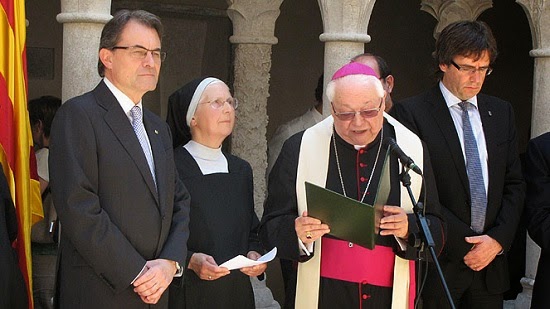
Pero la cosa no iba a quedar en buenas palabras o en un acercamiento ‘diplomático’. En el último comunicado conjunto del Vaticano y la Federación de Iglesias Luteranas ya pudimos ver que el objetivo era la misa, hacer del Sacrificio del Altar una ceremonia común para unos y otros.

Y, como decimos, hay prisa: la sugerencia la ha recogido esa organización siempre lista para todo tipo de innovaciones litúrgicas y doctrinales, a condición de que no recuerden para nada a lo que ha sido hasta ahora, las llamadas Comunidades de Base.

Parece ser que, de forma no oficial, se ha pedido desde las altas instancias a estas comunidades y a la organización gemela Somos Iglesia que empiecen a organizar los primeros ‘experimentos’ de celebración eucarística compartida con los luteranos

No hay que decir que a las Comunidades de Base les ha faltado tiempo para aceptar la invitación ‘oficiosa’, publicando una nota sobre la necesidad de diseñar y ofrecer ya “misas ecuménicas” a las que se invite a nuestros hermanos separados.

Y del dicho, al hecho, porque desde este 5 de noviembre, las Comunidades Católicas participarán ya en la “celebración de la cena” del templo luterano de Vía Sicilia en Roma, la diócesis misma de Francisco.

“Por tanto nosotros (Comunidades de Base) […] vendremos aquí, a vuestra iglesia, agradecidos a vuestra hospitalidad, para participar plenamente en vuestra celebración, tomando con vosotros el pan y bebiendo el vino preparados en la mesa del Señor”, señalan en la nota hecha pública. “Asumimos con serenidad esta decisión responsable, convencidos de que forma parte de un camino irreversible que llevará a nuestras Iglesias a unirse en plena pacificación teológica y a trabajar juntas y unidas”.

A las “innovaciones” litúrgicas estamos ya bastante hechos los católicos desde hace muchas décadas, con lo que no queda para asustarse sino esa palabra, “irreversible”, y el hecho, inaudito hasta la fecha, de que esta vez responda a una invitación llegada de Santa Marta, por muy no oficial que sea, y que vaya a llevarse a cabo a un tiro de piedra de San Pedro.

‘Motus in fine velocior’: los procesos se aceleran a medida que llegan a su conclusión, y este súbito acercamiento a las confesiones protestantes está sucendiendo más deprisa, me temo, de lo que los católicos corrientes pueden digerir, tras tantos siglos de considerar a Lutero uno de los peores heresiarcas de la historia

La entrada Las Comunidades de Base preparan las primeras ‘misas ecuménicas’ con luteranos en Roma aparece primero en InfoVaticana.

05 Nov 22:49

Ya es oficial: la ONU excluye al no nacido del Derecho a la Vida

by Carlos Esteban

Las Naciones Unidas llevan desde su origen siendo, a través de sus distintas organizaciones filiales, un poderoso patronizador del aborto en todo el mundo, financiando grupos como Planned Parenthood o abogando por campañas malthusianas radicales, muy próximas a veces a la coacción, en continentes enteros como África.

Pero, por otra parte, uno de los hitos de la ONU es la Carta Universal de los Derechos Humanos, el primero de los cuales es, naturalmente, la vida. Y hasta ahora, pese a todo su entusiasmo abortista, la posición oficial del concebido no nacido se beneficiaba indirectamente del silencio en cuanto a su inclusión -por lo demás, evidente- en este derecho universal.

Pero ahora, y a pesar de la oposición explícita de un centenar de gobiernos -como los de Polonia y Estados Unidos- y asociaciones provida, el Comité de Derechos Humanos de las Naciones Unidas ha excluido explícitamente a los no nacidos del derecho a la vida en la legislación internacional esta semana en Ginebra.

Estados Unidos, que había basado su independencia en “el derecho a la vida, a la libertad y a la búsqueda de la felicidad” de los que todos los hombres han sido dotados por su Creador, se vieron en su día ante una contradicción similar con la esclavitud, lo que obligó a la llamada Cláusula de los Tres Quintos, que en la práctica suponía negar a los negros una plena humanidad para no tener que reconocer su inalienable derecho a la libertad.

El borrador de la disposición ha estado a cargo del profesor de Derecho israelí Yuval Shany, que ha trabajado en la misma durante dos años, y que admite haber sabido que no encontraría obstáculos. Los 18 miembros del comité aprobaron el texto, que en algunos aspectos es aún más radical que el previsto previamente.

Así, en el texto queda claro no solo que el ser humano concebido y aún en el seno de su madre no tiene derecho a la vida, sino que el acceso al aborto se convierte en derecho, y ha de ser “efectivo” y al alcance de cualquier economía, exactamente lo que había recomendado el lobby abortista.

Ni una sola voz, ni un solo ‘experto’, mencionó en las deliberaciones preocupación alguna por el hecho de que el niño en el vientre materno siente dolor, según numerosas pruebas, ni se mencionaron los códigos de todo el mundo que prevén una protección especial para el nasciturus.

Para mayor sarcasmo, las discusiones estuvieron dominadas por un tono de moralina. “Soy muy sensible a mi consciencia”, llegó a decir el profesor italiano Mauro Politi, aunque lo que conmovía su conciencia no era la muerte del concebido mediante métodos brutales sino la idea de que alguna mujer pudiera verse privada del derecho de acabar con la vida de su hijo no nacido

La entrada Ya es oficial: la ONU excluye al no nacido del Derecho a la Vida aparece primero en InfoVaticana.

05 Nov 22:43

¿A quién se refiere el obispo de Gerona?

by Gabriel Ariza

Francesc Pardo, obispo de Gerona, pide una oración “por las personas que por sus convicciones se ven alejadas de su hogar”, en una referencia, queremos creer, a tantos catalanes que han tenido que abandonar su tierra por el totalitarismo nacionalista.

Han tenido que pasar 40 años, pero nunca es demasiado tarde si la dicha es buena. Según entendemos de su última nota el Obispo de Girona, Francesc Pardo, ha querido por fin solidarizarse con las miles de familias que han tenido que abandonar Cataluña durante las últimas décadas por no comulgar con las ideas nacionalistas, por no poder educar a sus hijos en libertad y, en fin, por no querer vivir en una tierra en la que unos pocos imponen sus leyes lingüísticas totalitarias a los demás.

En una nota publicada el pasado viernes, coincidiendo con la entrada en prisión del cesado gobierno independentista, el obispado de Girona hacía las siguientes declaraciones:

En este momento crítico que está viviendo nuestro país llamamos a que se respeten los derechos fundamentales de las personas y de las instituciones. También pedimos a todos los miembros de las comunidades parroquiales y religiosas de nuestra diócesis que recen para pedir, una y otra vez, que la paz reine en todos los rincones de nuestra casa y por las personas que por sus convicciones se ven alejadas de sus hogares.

Actualización: Un lector asegura que el obispo de Girona se refiere, con la expresión “por las personas que por sus convicciones se ven alejadas de sus hogares” a los miembros del gobierno golpista que ingresaron en prisión el pasado jueves acusados de varios delitos (sedición, rebelión, malversación de caudales públicos, prevaricación…)

La entrada ¿A quién se refiere el obispo de Gerona? aparece primero en InfoVaticana.

05 Nov 22:43

Lamela envía a prisión a Villarejo, que involucra al CNI en su declaración

Los agentes intervinieron 180.000 euros en metálico al comisario jubilado. Su compañero Salamanca y su socio Redondo, también a prisión.

05 Nov 22:42

La justícia belga deixa en llibertat Puigdemont i els consellers

by Redacció
El jutge d'instrucció ha pres la decisió després d'escoltar per separat els cinc membres de l'executiu català exiliats a Brussel·les | El magistrat els ha imposat com a única mesura cautelar que estiguin en un lloc conegut de Bèlgica i que es presentin als jutjats cada vegada que se'ls requereixi .contingutnaciodigital #columnanotigran .noticia h1 { font-size: 50px; line-height: 52px;}

05 Nov 15:09

“Vaise cara a un macro-proceso contra o independentismo galego organizado”

by Redacción
Imputados advirten do risco dun “macrosumario” contra o independentismo organizado. Hai 12 persoas investigadas e as peticións contra algunhas delas chegan até 17 anos de prisión. 
05 Nov 15:08

De cando en Ferrol se fabricaban bicicletas [por Xoán Costa]

by Xoán Costa
William V. Martin, inglés de nacemento e nacionalidade, pasou a maior parte da súa vida en Ferrol chamándose Guilermo V. Martin e exercendo de vicecónsul británico, posto desde o que xestionou unha ampla gama de...
05 Nov 15:07

Denuncia una estafa en su tarjeta y la Guardia Civil cree que lo gastó en un club

   La Guardia Civil investiga a un vecino de A Estrada (Pontevedra) como presunto autor de un delito de simulación de delito, después de denunciar que había sido víctima de una de estafa de 1.200 euros en su tarjeta de crédito.
05 Nov 15:06

As traballadoras de Bershka en Pontevedra desconvocan a folga tras un acordo con Inditex

by Redacción

A CIG di que o conseguido "supera as pretensións marcadas inicialmente polo persoal" e atribúeo a que o paro foi "un conflito unitario"

05 Nov 15:06

Incautados más de 600 litros de aguardiente y licor de orujo clandestino en Combarro (Pontevedra)

La Guardia Civil se incautó de una partida de 638 litros de distintas aguardientes y licor de orujo que se estaba comercializando de forma fraudulenta en Combarro (Poio), sin ningún tipo de etiqueta ni marcas fiscales.
05 Nov 15:02

Why Your Brain Can't Empathize With Large Tragedies

By Chris Bucholz  Published: November 04th, 2017 
05 Nov 15:02

Pope Francis and his enemies.

by Melismata
The War Against Pope Francis.
With more than a billion followers, the Catholic church is the largest global organisation the world has ever seen, and many of its followers are divorced, or unmarried parents. To carry out its work all over the world, it depends on voluntary labour. If the ordinary worshippers stop believing in what they are doing, the whole thing collapses. Francis knows this. If he cannot reconcile theory and practice, the church might be emptied out everywhere. His opponents also believe the church faces a crisis, but their prescription is the opposite. For them, the gap between theory and practice is exactly what gives the church worth and meaning. If all the church offers people is something they can manage without, Francis's opponents believe, then it will surely collapse.
Oh, and did you know that Steve Bannon is trying to take over the Church too? (Single link, longread Guardian.)
05 Nov 14:58

La tardanza de Raxoi obliga a retrasar la feria goyesca

by SANTIAGO. A. OLIVEIRA


05 Nov 14:42

Galipizza hizo obras en el local de Santa Marta para reabrirlo

by ${contenidoRSS.getValorPropiedad("FirmaAutor")}
Los vecinos impiden medir los ruidos, lo que bloquea la apertura <p> <img border="0" src="https://www.lavozdegalicia.es/sc/960x/default/2017/11/03/00121509742741601269766/Foto/SN4C5F4_4.jpg" /></p>
05 Nov 14:41

Roban en un bar de Vite tras romper el cristal y se llevan el dinero de la caja

by SANTIAGO. ECG


05 Nov 12:06

Tenemos 17 pruebas de que a Puigdemont le quedaría mejor cualquier otro pelo antes del que lleva

Bienvenidos a "Cámbiame, el Procés edition".


View Entire Post ›

05 Nov 12:02

Las apps de citas ayudan a construir una sociedad más estable y tolerante

by Gonzalo Toca

Las aplicaciones móviles de citas son mucho más que fotos y perfiles manipulados hasta la caricatura, conversaciones de madrugada o morbo no resuelto. De hecho, dos documentos académicos recientes señalan que contribuyen a reducir las posibilidades de fracaso de un matrimonio y fomentan las relaciones entre colectivos raciales que no se hubieran conocido y apreciado […]

Este post Las apps de citas ayudan a construir una sociedad más estable y tolerante, escrito por Gonzalo Toca, se publicó originalmente en Yorokobu.

04 Nov 12:06

Pope confesses he sometimes seeks shut-eye while praying

by Robert Spallone

Praying is boring and Pope Francis is sparing us some of the Catholic guilt for dozing off while prostrating ourselves before God.

The Pope admitted to occasionally sleeping on the job while he prays.

“When I go to pray, a few times I fall asleep,” he said during an interview for TV2000 published Tuesday. Pope Francis also cited St. Therese’s belief that God appreciates it when people fall asleep while praying.

The Guardian reports His Holiness gets around seven hours of sleep each night, along with a nap after lunch.

Image: Benhur Arcayan

03 Nov 16:47

Watch: Jennifer Lawrence, Kardashian obsessive, grills Kim like an investigative reporter

by Constance Grady

One of the most likable things about Jennifer Lawrence is the utter lack of chill with which she reacts to people she admires: the way she whisper-screamed “Oh my godwhen she met Jack Nicholson, or gazed at Anne Hathaway like she was watching an angel.

It’s part of her just-a-regular-cool-girl vibe. Lawrence may be an Oscar-winning actress and America’s sweetheart, but just like us, she fangirls out over her obsessions. And as she’s been saying for years, one of those obsessions is Keeping Up with the Kardashians.

Lawrence is not just a casual fan of the reality show, but someone who knows the ins and outs of all the Kardashian clan’s problems, who feels deeply for them. “I was crying about the Kardashians the other night,” she said last May. “They're under a lot of pressure. … Even if it’s elective, it's pressure — and I get that!”

Lawrence says she’s been a fan of the family since their show began, and it’s been public knowledge since at least 2015, when she screamed “I love your show!” across a public hotel lobby at Kim Kardashian. Later that year, Lawrence’s friends got Kardashian matriarch Kris Jenner to stop by for a surprise visit on her birthday.

When she was shooting Mother!, Lawrence created a tent filled with pictures of the Kardashians and episodes of their show playing on a loop, and took refuge there after shooting particularly intense scenes. "I've been watching them for 11 years,” she told ET Online, “so I grew up with them, and I know all of them personally."

So when Lawrence had the chance to interview Kim Kardashian West on Thursday night, she did not hold back.

Lawrence was guest-hosting Jimmy Kimmel Live with Kardashian West as her guest, and she got down to business immediately. After announcing that she’s been obsessed with the Kardashians “for over a decade, in a very, very healthy way,” Lawrence barely gave Kardashian West a chance to catch her breath before firing off her first question: “Do you think it’s a coincidence that Reggie Bush’s wife looks just like you? I don’t.” (Reggie Bush is Kardashian’s West ex-boyfriend, and reader: Lawrence is not wrong.)

The question set the tone for the rest of interview: Lawrence, an obsessive fan who studies the details of Kardashian West’s love life and family dynamics, asked the hard-hitting questions that obsessive fans demands to know, with the tenacity of an investigative reporter. She hit on all of the big fan questions: Which of Kardashian West’s exes is the craziest? (Kris Humphries.) What does Kardashian West think about Blac Chyna? (She’s not saying, for the sake of the children.) Watching the clip is like reliving that scene in Bridget Jones’s Diary (book not movie) where Bridget lands an interview with Colin Firth and asks him a lot of nosy questions about the wet shirt scene from Pride and Prejudice.

Kardashian West played along for her part, but she stayed coy whenever Lawrence asked a question she didn’t like.

“So do you and Kanye, like, fart in front of each other?” Lawrence demanded. “Do you talk about farts?”

“What are you talking about?” Kardashian West said at once. “I don’t fart.”

03 Nov 11:30

La Policía detiene al excomisario José Manuel Villarejo por blanqueo y cohecho

Se le ha detenido junto a Carlos Salamanca, excomisario de Barajas, y su mujer por posible delitos de cohecho, organización criminal y blanqueo de capitales dentro de una operación llevada a cabo por la Unidad de Asuntos Internos de la Policía Nacional.