Shared posts
O problema não é (só) a Casa dos Segredos
Primetime Emmys 2013: Ryan Seacrest Center For Treatment Of Excessive Host Disorder Disclaimer (Video)
 Remember that segment years ago when tonight’s Primetime Emmys show started, about Excessive Host Disorder, in which the cast of How I Met Your Mother staged an intervention, with the help of Arsenio Hall? Remember the reference to the Ryan Seacrest Center for those suffering from EHD? Remember the disclaimer card you didn’t have time to read at the end of the gag? Here it is, followed by the clip:
Related: Nikki Finke Live-Snarks 65th Emmys
The Ryan Seacrest Center focuses on freeing patients from addictions to hosting award shows, charitable fundraisers and “Star Search” themed reality programming. The Center makes no claims of effectiveness regarding patients who cannot resist hosting dinner parties, in laws or parasites. Rehabilitation is catered to individual needs. GUARANTEE: Each patient’s program will include sessions in the therapeutic Billy Crystal Springs and/or the world famous Pat Sajak Sweat Lodge. Incoming patients will submit to a full body cavity search for any hidden mic packs, lavs, wireless headsets, canes, envelopes, sequins and Bruce Vilanches. Please plan on arriving at least three hours before your therapy call time because the limo line is murder. Arsenio Hall is not affiliated with the Ryan Seacrest Center for Excessive Hosting. Oh, and neither is Ryan Seacrest. If you’re still reading this and believe EHD is a real affliction, you might be suffer from APB or Acute Parody Blindness. If so, contact the Mel Brooks Center for Humor in Catskills, New York.
Click here to view the embedded video.
Related:
Primetime 2013 Emmys Analysis: Night Of Upsets
Primetime Emmys 2013: Tepid Applause For Monteith Tribute (Video)
Primetime Emmys 2013: High Mark For Female Comedy Writers, Directors
CNE proíbe candidatos autárquicos de usar Facebook e de escrever LOL nos SMS
The iPhone is doomed, and it always has been

Every single version of the iPhone to ever be released has been doomed. In fact, some of them were so doomed I'm surprised we even acknowledge their existence anymore. Apple needs to just give up before the company has to start selling coffee mugs from its headquarters just to turn a profit.
Wait, Apple already does that? My god, it's happening.
But don't take my word for it, let's look at all of the extremely well-thought-out arguments as to why each new iPhone was going to flop... until it didn't.

iPhone - 2007
- It doesn't do 3G - What is this, the dark ages?
- It's locked to AT&T - Wow, Apple, way to kill your not-even-good smartphone idea before it even got a chance.
- The camera sucks - No flash? Almost zero options? What a joke.
- No picture messaging - My brother needs to see this burrito I'm going to eat.
- No removable battery - Has Apple learned nothing from criticisms of the iPod?
- No physical keyboard - Smartphones are supposed to have physical keyboards, that's just a fact of life.

iPhone 3G - 2008
- Still locked to AT&T - Apple must have sold its soul to the devil.
- No video recording - A brand-new iPhone, still no video recording. Is this a joke, Apple?
- Can't use it as a 3G modem - Once again, Apple falls behind the top-of-the-line smartphones.
- From metal to plastic - Why would you ever thing switching from brushed aluminum to plastic was an "upgrade?" The ugliest phone on the market just got uglier.
- Same camera - This camera was trash in 2007, and it's even trashier trash in 2008.

iPhone 3GS - 2009
- Still locked to AT&T - Seriously? This is getting a little ridiculous.
- Videos suck - Apple finally added video, it's a shame the quality is abysmal.
- The name sucks - What the hell is a 3G S? And is it 3GS or 3G S or 3Gs? Confusing the customer is going to lead to lost sales, Apple, mark my words.
- No tethering (at launch) - We're now on our third iPhone and Apple still can't figure out a way to get tethering to work.
- It looks the same - When people buy a new smartphone, they want it to look different. Nobody with an iPhone 3G is even going to care about this one.

iPhone 4 - 2010
- Still locked to AT&T (at launch) - Someone at AT&T must have some great blackmail on Apple's bigwigs.
- Antenna issues - Well, that's it for the iPhone brand. Nobody is going to buy a phone when there are videos online showing that just holding the thing causes it to break. Bye bye, Apple!
- It's a 4, but not 4G - Apple is just trying to trick us into thinking this is a 4G phone. Don't be fooled! Boycott!
- The cameras still suck - They added a front-facing camera? Who even makes video calls? The rear camera is only 5 megapixels, and what's this weird green tint to my photos? Fail.
- The new design is horrible - Phones are supposed to be sleek, not boxy. How am I supposed to slide this into my pocket?

iPhone 4s - 2011
- Same old design - Apple is so far behind in the screen size game they'll never be able to catch up
- Siri is lame - Apple bet on the wrong virtual horse here, and Siri is going to lose.
- Battery life is horrible - If I can't go three days without charging my phone, I'm taking it back.
- Still no 4G - 3G is, like, *so* yesterday.
- No NFC - Near-field communication is the future, and Apple will be left behind.

iPhone 5 - 2012
- Screen size, again - A measly half inch? That's what you give us for waiting half a decade? That's it Apple, I'm never buying one of your phones again. Ever.
- Design is unchanged - It's just a taller 4S, which was just the same as the 4. I'm not buying the same phone for a 3rd time.
- The Lightning cable - Great, now all my old iPhone charging cords are useless. People will see through Apple's game. They'll go bankrupt for trying scam smart consumers!

iPhone 5s & 5c - 2013
- Two models - Splitting your market in half? Nice move, Apple, the end is surely nigh.
- Screen size, again - These things are puny compared to Android phones, who would even want one?
- Colors are dumb - The iPhone 5c is just a regular iPhone 5 with a fancy plastic back, and the iPhone 5s only gets that ugly gold color added? It's like Apple doesn't even care any more.
- Touch ID is pointless - Who even locks their phones these days? My phone is always in a safe plac... where'd my phone go?
- iOS 7 is confusing - Where'd my cute little wooden newsstand go? That's it, I'm switching to Windows Phone.
See what I mean? Apple's iPhone has always been doomed. It's just a good thing that being doomed has never stopped it from selling in record numbers.
[Image credit: magic_quote]
The iPhone is doomed, and it always has been originally appeared on TUAW - The Unofficial Apple Weblog on Fri, 20 Sep 2013 15:30:00 EST. Please see our terms for use of feeds.
Apple rickrolls the world with iOS 7 knowledge base article

Perhaps Apple's getting a sweet bit of revenge for the unjustified criticism of iOS 7 over the last day, or maybe there's just a person in the Apple Support department who has a really good sense of humor. Regardless of the source of the fun, somebody slipped in a humorous screenshot on knowledge base article HT5858, titled "iOS: Understanding Control Center".
As you can see in the image above, RIck Astley's "classic" tune "Never Gonna Give You Up" is playing on the iPhone belonging to the wag who wrote the KB piece. And that, my friends, is a classic rickroll.
Apple rickrolls the world with iOS 7 knowledge base article originally appeared on TUAW - The Unofficial Apple Weblog on Thu, 19 Sep 2013 20:45:00 EST. Please see our terms for use of feeds.
Pirate Party Crashes Spy Drone in Front of German Chancellor Angela Merkel
Manuel ReisEra giro ver isto por cá.
 With less than a week to go until the national elections on September 22, German Chancellor Angela Merkel and her team are working hard to maintain their lead in the polls and extend her current eight years in power.
But despite the world’s most powerful female politician reportedly hating campaign politics, the 59-year-old still managed to raise a smile following a surprise entrance during a Christian Democratic Union (CDU) event in the city of Dresden.
Some political parties are awash with money and can afford to go on campaign trails with few expenses spared. But for the parties who are happy with votes in single percentage figures – the Pirate Party for one – getting exposure requires more creative thinking.
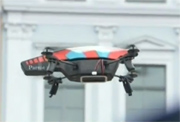
As Merkel and members of her team stood on stage, a small object could be seen in the sky. After hovering around for a while onlookers could see that the UFO was in fact a small drone. It proceeded to swoop down just a few feet in front of Merkel, apparently taking photos and recording video of the event.
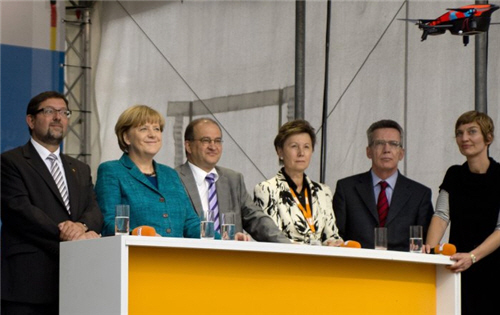
Seconds later with its Pirate Party operator apparently having been approached by the police, the drone crash-landed into the stage and was taken away by an official. While Merkel seemed to be amused, Germany’s defense minister in the dark suit to her left looked rather less impressed.
The party later confirmed that the stunt was a protest against the EU’s use of surveillance drones.
“The objective of the mission was to convey to the Chancellor and Minister of Defence Thomas de Maizière what it’s like to be suddenly observed from a drone,” said Markus Barenhoff, vice chairman of the German Pirate Party.
The party said it also wanted to draw attention to a scrapped drone project which had already cost Germany upwards of half a billion euros before it was closed down earlier this year.
The drone’s 23-year-old pilot was briefly detained and later released, having successfully grabbed the headlines and attention of voters across Germany. It is doubtful that the U.S. Pirate Party will emulate their european counterparts with a similar stunt on home soil – life is just too precious.
Germany: Pirate Party behind drone stunt at… by euronews-en
Source: Pirate Party Crashes Spy Drone in Front of German Chancellor Angela Merkel
Apple now offering older iOS device owners 'last compatible version' of apps

Apple has begun offering owners of older iOS devices the "last compatible version" of apps which will run on their device, as noticed by Reddit members. For example, if an iPhone 3G owner tries to download the latest Twitter app, a dialog box will pop up alerting them that the most recent version of the app is not compatible with their device, but they can opt to download the last version that will run.
As Engadget notes:
We've successfully installed an older version of Instagram to an iPhone 3GS with iOS 4.3.3 and Twitter to an iPhone 3G running iOS 4.2.1. Although Instagram was "out of date," the last compatible version of Twitter (featured above) was version 4.3.2, and hit the App Store back on August 18th, 2012.
It's a smart move, as older iPhones are resold around the world and often stay in use years after Apple stopped selling the device. This allows those owners to have access to apps that run efficiently on those devices, which helps with the overall user experience and Apple's ecosystem.
Apple now offering older iOS device owners 'last compatible version' of apps originally appeared on TUAW - The Unofficial Apple Weblog on Tue, 17 Sep 2013 10:00:00 EST. Please see our terms for use of feeds.
"In the final forty-five years of his life, Salinger did not publish any new material, despite..."
- Stephen Colbert (via kateoplis)
TorrentReactor: Ten Years of Serving Torrents
 In file-sharing terms a decade is an awful long time and with the world’s entertainment companies baying for blood, reaching a tenth birthday is a major achievement for any torrent site.
Nevertheless, in recent times two of the world’s largest torrent sites, isoHunt and The Pirate Bay, both celebrated that special birthday. Both bear the scars of battle but remain defiant, at least for now, but there are others who achieve longevity with far fewer war wounds.
At the start of the year, TorrentReactor was the ninth most-popular torrent site on the Internet. Like The Pirate Bay and KickassTorrents the site has been subjected to domain blocking in recent years but currently offers its own proxy workaround. That’s a fairly recent development though, so how did it all begin?
“It began ten years ago as a project in a new, very interesting and promising area,” TorrentReactor (TR) told TorrentFreak. “File-sharing was very ‘geeky’ at that time and torrent sites like this tended to make it more public. Over several years TorrentReactor evolved into a big torrent indexing machine serving many millions of people per week.”
Like the majority of torrent sites, TR didn’t start out intending to take over the world. The site rarely had a sustainable team of developers and many of those involved were running other projects at the same time. That was enough to keep the site moving forward and improving as necessary but a couple of years ago things began to change.
“Now we can proudly say there’s a big international group of people working on the project. We still have some side projects but now they are mostly spin-offs or otherwise related,” TR explain.
With the site’s increase in popularity has come a demand for new hardware. Starting out small, TorrentReactor originally rented servers from other companies but alongside the site’s growth came a need to buy its own equipment. Currently the site is running on five servers for databases and front end, plus others to proxy the site’s traffic.
While there is no Pirate Bay-style museum piece, TorrentReactor are no strangers to pulling off Pirate Bay-style pranks.

“The most wide-spread was probably the joke we pulled off about us buying a village in the middle of Russia. It was totally unexpected how viral this thing would go and we definitely had a lot of fun reading about it in lots of various news sources,” TR explain.
But jokes aside, it hasn’t all been so much fun. The site has experienced significant problems over the years and at least one disaster that was completely unexpected.
“In 2010 we had a large hosting partner with ten servers hosted there for various projects including TorrentReactor,” TR explain.
“At the end of the year they had a huge scandal with one of their key employees who was fired and later accessed the whole system and damaged all the HDDs they had. Servers we had with them were located away from each other so we thought it would be safe to store backups with the same hosting provider.
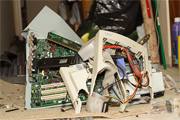 “However the disaster damaged everything: the website code, databases, and all backups. All the other backups we had were dated months before the incident. It took us at least several weeks to restore most of the functionality and data although some of it was gone forever.”
Since then the site has introduced a whole new way of storing and managing its data and so far there has been no situation that has required it to be tested. But interestingly, TR now cite more recent events as causing serious issues for the site. So who is to blame? None other than the world’s largest search engine.
“It is well known that Google brings lots of traffic to file-sharing websites and any changes in algorithms may affect that traffic. This year is probably the most challenging one because Google has introduced many new search algorithms and all torrent sites have suffered from that,” TR explain.
“The changes happened at the same time we were actively rebuilding the website from scratch so we had to work even harder to bring back the traffic and keep the development pace. But the experience we got is definitely a valuable one and will help us a lot in the future.”
All in all, TorrentReactor say that at times external factors caused them to lose around 50% of the traffic they had at their peak.
“A couple of years ago we had over a million visitors a day and now we have around 500k. Many new sites played their part in this too. File-sharing traffic is still growing despite many anti-piracy movements and all that. It just redistributes in a different way giving good small sites a chance to have their audience.”
But despite the setbacks, enthusiasm is high among the TR team and work is underway to modernize and reinforce the site with an eye on the future.
“Loyal visitors might have recently noticed our new main page is full of images, covers for the content we have available. We see many content-oriented websites switching to this kind of look. It helps users select the content they want a lot faster and easier,” TR note. “Visual perception of images is a lot better than reading titles, it gives you the idea of the content instantly.”
TR admit that there are other aspects of the site that should have been upgraded years ago, the user interaction system for one. That is currently being rebuilt with a focus on “friendly and fun” with content discovery mechanisms based around social elements.
“Users will be able to find out more about movies they like and actors that play in them, or browse through game-related content and chat with others who like similar games. More will be revealed in the coming months,” TR concludes.
Whether TorrentReactor or in fact any other major torrent site will be around in another ten years is open to debate but for now there are definitely no plans to fade away.
Source: TorrentReactor: Ten Years of Serving Torrents
Voyager 1 está oficialmente fora do Sistema Solar

É concerteza um dos maiores feitos da humanidade. A Voyager 1, uma sonda lançada para o espaço há 36 anos (em 1977) - um ano antes da Intel ter lançado o primeiro CPU 8086 - e que tem conseguido superar todos os problemas que têm surgido ao longo dos anos, tem agora a confirmação oficial de que se trata do primeiro objecto terrestre a sair do sistema solar.
Ao que parece esta saída do sistema solar já ocorreu no ano passado, mas só agora a NASA concordou com a interpretação dos dados que foram analisados por cientistas de todo o mundo. É que muitos dos sensores da Voyager 1 estão já bastante degradados (ou já foram desactivados) e dificultam a obtenção de medidas exactas - para além de estarmos a falar de hardware que hoje em dia seria considerado completamente obsoleto e ultrapassado. Mas ainda assim, os responsáveis pela missão e todos os que continuam a analisar os seus dados vão conseguindo "espremer" muita informação daquilo que é possível obter.

Para se ter noção do quanto a tecnologia da Voyager 1 está ultrapassada, quando a sonda não consegue comunicar com a Terra acumula as suas informações para que as reenvie mais tarde (as comunicações actualmente demoram cerca de 17h a chegar ao nosso planeta). E querem saber como é que esses dados são guardados? Não é numa memória RAM, ou Flash, ou sequer num disco rígido... são gravadas em fita magnética, que tem capacidade para guardar 69KB destes dados. Sim, estão a ver bem... 69KB!
Lançada em 1977, a sua missão oficial de observação de Júpiter e Saturno terminou no final de 1980, e desde então tem continuado a maravilhar-nos, sendo a responsável por muitas fotografias icónicas, como a do famoso Pale Blue Dot, que serve para nos relembrar da nossa pequenez neste Universo (e deveria estar afixado nos gabinetes dos presidentes de todos os países deste nosso pequeno planeta, para lhes relembrar disso mesmo).
Ao longo dos próximos anos, e devido à energia cada vez mais reduzida produzida pelo seus geradores, irão sendo desligados mais sistemas, até que em 2025 se prevê que se desligue por completo. Mesmo sem energia, a Voyager continuará a sua viagem pelo Universo (esperemos que nada se atravesse no seu caminho)... e quem sabe, talvez daqui por mais algumas centenas de anos tenhamos tecnologia que nos permita ir buscá-la e colocá-la em local de destaque como merece.
The iPhone 5c is cheap for Apple, not for you

Shares of Apple took a mighty plunge this week following Apple's new iPhone announcement. Apparently investors weren't thrilled with the pricing on the iPhone 5c, a device which was, without any evidence whatsoever, pre-emptively touted as a low-cost iPhone.
In truth, the iPhone 5c, while mildly cheaper than the iPhone 5s, is nowhere close to being cheap. On Apple's website, an unsubsidized 16 GB iPhone 5c retails for US$549, while the 32 GB model goes for $649.
So what gives? Why did Apple go through the trouble of developing the iPhone 5c if not to make it cheaper for the masses?
Simple. Apple doesn't view amassing market share for bragging rights as a worthy pursuit. Apple is not, nor has it ever been, in the business of flooding the market with cheap products in an effort to build its customer base, which is why it's no coincidence that Apple has over $100 billion in the bank.
That said, the iPhone 5c is not, and presumably never was, positioned to be the extremely low-cost iPhone for the masses. If you want an affordable iPhone, the iPhone 4s is still alive and kicking.
The iPhone 5c, meanwhile, is all about padding Apple's margins.
Instead of making the iPhone 5 available for $99, Apple completely repackaged the device into what we now know as the iPhone 5c. By all accounts, the iPhone 5c is a re-purposed iPhone 5 with cheaper, and yet still high-quality, materials.
Apple recognizes that not everyone needs or can afford the latest and greatest iPhone. So why not maximize profits for the demographic not willing to shell out a minimum of $199 for the iPhone 5s?
It's a smart business strategy, compounded by the fact that Apple has now introduced colors into the mix. And sure, it's easy to scoff at that, but if history is any indication, the iPhone 5c, with its assortment of colors, will be a huge hit amongst consumers.
What's more, there's a psychological component to what Apple is doing as well.
If Apple simply made the iPhone 5 available for $99 with contract, it would have the aura of a last-generation device sold on the cheap. Old hat. The iPhone 5c, though really just a souped-up iPhone 5, seems, feels and appears like a completely new product.
The 5c shifts the iPhone-purchasing debate from "new iPhone vs. old iPhone" to "new iPhone with bells and whistles vs. new iPhone with color and more affordable price point."
Psychologically, I think this will help make the iPhone 5c extremely popular, though we'll have to wait for earnings season to see how this all plays out.
Either way, Apple is sitting pretty. The company already controls the lion's share of profits in the industry and it now stands poised to take even more. Apple's flagship iPhone will always be a cash cow, but with the iPhone 5c, they've turned what was previously a slight margin liability into a more profitable product.
The iPhone 5c is cheap for Apple, not for you originally appeared on TUAW - The Unofficial Apple Weblog on Fri, 13 Sep 2013 15:00:00 EST. Please see our terms for use of feeds.
Interrogating Siri: We ask Apple's digital assistant the hard-hitting privacy questions

With more and more information about the potentially worrisome link between the NSA and some of the biggest tech companies in the United States coming to light each day, Apple's announcement earlier this week of a new smartphone that can read your fingerprints was accompanied by plenty of conspiracy theories. Sure, Apple thoroughly explained that your personal biometric information is stored only on your device itself, but that hasn't done much to calm privacy concerns. But rather than sit back and let the everyone else have their paranoid fun, I decided to put on my own tin foil hat and put the screws to Siri, the heart and soul of the iPhone, in an effort to find out just exactly how big of a privacy threat my smartphone actually is.
When I first began my line of questioning, I did my best to make my iPhone 5 feel comfortable, hoping that a relaxed Siri would make her more open to divulging the iPhone's secrets. We sat on a couch in my office and chitchatted for a while. I asked about the weather, the local football team, and we discussed movies for a while to get her warmed up. Then I moved in for the kill.

Ouch. Shot down. Perhaps a more broad query would help matters.

I guess not.
At this point I decided it was time to take the gloves off. I brewed a pot of coffee, turned the heat up, and relentlessly assaulted Apple's virtual assistant in hopes that she would crack.


The suspicious responses continued for some time, with Siri keeping her poker face firmly in place. It was a battle of wills, but I could feel that the interrogation was beginning to take its toll. One more finely tuned question was all it took.

I knew it! Finally I had the evidence that Siri is indeed working against humanity. With the air now clear, it was time to hit her with the question everyone has been asking this week... and her response was chilling to say the least.

That's it!
It was at this moment I knew I had to call off my plans to purchase the iPhone 5s. Siri had shown her hand and revealed the true danger she poses to iPhone owners.
I was a broken man. I sat there for a long while, hoping Siri would at least try to explain why Apple feels the need to destroy our privacy. A single tear dripped down my cheek as I made one more plea for Siri's mercy...

Interrogating Siri: We ask Apple's digital assistant the hard-hitting privacy questions originally appeared on TUAW - The Unofficial Apple Weblog on Fri, 13 Sep 2013 13:30:00 EST. Please see our terms for use of feeds.
Curtas XVIII - "Noah"
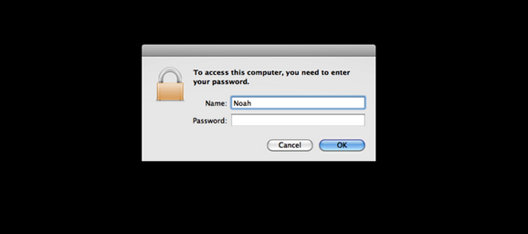
Em 17 minutos e utilizando apenas o ecrã de um computador, os estudantes de cinema Walter Woodman e Patrick Cederberg conseguem ilustrar, com uma simplicidade desconcertamente, os anomalias sociais e comportamentais provocadas pelos social media.
A curta "Noah" passou recentemente no TIFF e pode ser vista gratuitamente online... pelo menos até que o pessoal do YouTube resolva censurar as pilas.
(esta curta-metragem também anda pelo Meo Kanal do CINEBLOG - tecla verde, canal 220204)
Can 'Homeland' Recover?

Manuel Almeida diz ser ‘um segundo Obama’ e acha que Oliveira de Azeméis tem armas químicas
Microsoft will pay foolish people $200 to ditch their iPad, but you should know better

When a device has cornered a market as well as Apple's iPad line has, the competition will do a lot in an attempt to close the gap, and too-good-to-be-true trade-in programs are not unheard of.
Microsoft has launched a promotion in the hopes of getting iPad users to ditch their tablets in favor of the company's own Surface, but rather than too-good-to-be-true, this "deal" falls into the category of I-can't-believe-they're-serious.
Accompanied by an ad that reads "It pays to trade in your old iPad," Microsoft is tweeting that it will pay you a minimum of US$200 in store credit to trade in your second-, third- or fourth-generation iPad and buy a Surface instead.
Two. Hundred. Dollars.
Aside from the fact that the deal doesn't include the first-generation iPad -- which, logically, would be the device most likely to warrant replacement -- to offer a mere $200 for even the lowliest of the qualifying devices (a 16GB iPad 2 w/WiFi) is a bit ridiculous. That particular model fetches closer to $300 than $200 on eBay, even in "decent" used condition. After contacting several Microsoft Stores to get a better handle on how high their offers go, I was told prices can only be offered once you're actually in the store itself.
Seriously, if you have your heart set on a new Windows tablet, at least don't fall for this predatory ploy. You can get much more for your current hardware by putting in a bare minimum of legwork.
Microsoft will pay foolish people $200 to ditch their iPad, but you should know better originally appeared on TUAW - The Unofficial Apple Weblog on Thu, 12 Sep 2013 20:30:00 EST. Please see our terms for use of feeds.
What we talk about when we talk about new iPhones
Brian Lam:
I’m just saying you should upgrade because a few hundred bucks is not really a lot of money for something if you use it all the time every day and are already paying a hundred bucks and change a month in service fees over several years.
This is something Mark Zuckerberg brought up on stage yesterday at TechCrunch Disrupt as well. We’re all so concerned about the upfront cost of a smartphone, but we forget that the real cost is what you pay to a carrier over the life of the device.
Why the iPhone’s Fingerprint Sensor Is Better Than the Ones on Older Laptops
Mary Branscombe, writing for CITEworld:
With the new sensors you don’t have to move your finger, just press it against the reader. And like the sensor in the iPhone 5S, the sensors that will be in laptops and keyboards and other phones can detect the ridge and valley pattern of your fingerprint not from the layer of dead skin on the outside of your finger (which a fake finger can easily replicate), but from the living layer of skin under the surface of your finger, using an RF signal. That only works on a live finger; not one that’s been severed from your body.
This will protect you from thieves trying to chop off your finger when they mug you for your phone (assuming they’re tech-literate thieves, of course), as well as from people with fake fingers using the fingerprint they lifted from your phone screen.
Good to know.
Who said the iPhone 5c was meant to be cheap?
 iMore's Peter Cohen took down the complaints about the iPhone 5c's price before I got to publish my own thoughts on the matter. Go and read it.
Still, I will say this: Why are people chiding Apple because the iPhone 5c "isn't cheap" and "won't benefit emerging markets"? Did Apple ever say, "The iPhone 5c will be inexpensive and is meant for lower-income customers in emerging markets"? No. Did bloggers and analysts invent this motivation and business plan WEEKS before the press event? Yes. So now they're berating Apple for not adhering to a business plan it never adopted. Awesome.
Who said the iPhone 5c was meant to be cheap? originally appeared on TUAW - The Unofficial Apple Weblog on Thu, 12 Sep 2013 11:30:00 EST. Please see our terms for use of feeds.
Arménio Carlos prevê nova luta de classes entre detentores do iPhone 5S e o iPhone 5C
Ano lectivo atrasado: há professores que ainda não têm vídeo porno
Será um Tabu se a Sophia for para a Florbela
BitTorrent Sets Next Phase For DIY Bundle Distribution Platform
BitTorrent announced today that its Bundle project will hit its next phase on September 24, when approved creators can start building their own DIY distribution campaigns on the new publishing platform. The program, still in Alpha testing, will eventually allow creators to charge or collect data from users using pay gates and/or social media gates.  In recent months BitTorrent’s first wave of handpicked and curated Bundle initiatives began with film and music partners like Kaskade / Ultra Music, Berklee Online (Berklee College of Music), Public Enemy, Pixies, Corey Taylor, Jet Life, Cinedigm, Converge Studios, Fly or Die, Linkin Park, and Mickey Hart. The company says 18 million downloads have come from just 10 Bundle campaigns since May; just under 50 percent of Bundle activity is filmed content, while BitTorrent claims a network of 170 million users. BitTorrent is experimenting with 4K content sharing, as it did recently when musician Mickey Hart released a 2-hour, 4K 268 GB concert footage feature via BitTorrent Bundle. “It’s on our roadmap,” says BitTorrent’s Christian Averill. “Nobody else is doing 4K file sharing publicly right now.”
Related: BitTorrent Bundle Offers First Ever ‘Gated Torrent’ For Content Creators
Phoneblocks - Um smarpthone modular à LEGO

Quando o Google falou da possibilidade de personalização do Moto X, muitos pensaram que poderia ser o início de uma nova era em que os smartphones fossem modulares e com componentes escolhidos à medida de cada um. Afinal, referiam-se apenas às possibilidade de escolher a cor dos vários elementos decorativos - mas agora surge um projecto que pretende levar o conceito de um smartphone modular ao limite: o Phonebloks.
A ideia é ter os vários componentes do smartphone em blocos tipo LEGO que podem ser facilmente encaixados num "chassis". Depois... é combinarem os módulos conforme as vossas necessidades. Se querem um smartphone com grande autonomia poderão optar por uma bateria maior em detrimento de uma coluna de som mais pequena; se derem mais importância às fotografias poderão optar por uma câmara melhor e cortar nos sensores, por exemplo.
E claro, isto faz também com que em caso de avaria seja bastante mais fácil trocar apenas a peça afectada (como um ecrã partido), sem que seja necessário enviar um smartphone para reparação e ficar sem ele durante semanas. Assumindo que isto se pudesse tornar num "standard" em que diferentes fabricantes começassem a criar módulos compatíveis, poderia ser o fim dos smartphones (e tablets, e PCs) como os conhecemos.
A ideia é excelente... mas talvez demasiado fantasiosa para que alguma vez se venha a tornar realidade. Não só pela complexidade física e electrónica, como também devido aos próprios interesses (ou falta de interesse) dos grandes fabricantes que preferem fazer as coisas "fechadas". Mas, quem sabe? Por vezes a realidade traz-nos umas surpresas agradáveis... pode ser que este Phoneblocks se venha a tornar uma delas (mas realisticamente falando, não contem com isso).
Há 4/5 meses atrás, jogadores como Licá e Josué não mereciam a confiança de Bento. Hoje, entram nas convocatórias. O que mudou? Os jogadores? Não. A camisola

Visão da Leitora (perceba melhor como pode colaborar no VM aqui!): Inês Sampaio
Set up a new Mac on your birthday for a cupcake

Steve Jobs once said that Apple aims to "surprise and delight" its customers. Here's a cute example of just that. David Chartier at Finer Things in Tech shares a photo he received from Dan Cameron. Apparently, when you register a new Mac on your birthday, the Apple ID set-up process produces a birthday cupcake icon and the message, "Happy Birthday!".
This reminds me of this story about Disney from Signal Vs. Noise. A customer ordered a Woody costume from the online Disney store. When it arrived, he noticed that a worker had written "Love-- Andy" on the box.
Surprise and delight.
Set up a new Mac on your birthday for a cupcake originally appeared on TUAW - The Unofficial Apple Weblog on Wed, 11 Sep 2013 14:00:00 EST. Please see our terms for use of feeds.
On Apple, the new iPhones and points made and missed

As you might expect, overnight some smart folks wrote some smart posts about the smart things going on in Cupertino (our wrap up of the event can be found here). Yesterday I went on local TV to talk about the 5c and 5s, and as I drove away I realized that I hadn't had time to chat about CoreMotion, new camera modes and a half dozen other things Apple announced yesterday.
To a casual observer, iPhones are improving in an iterative fashion. If you look a bit deeper and consider Apple's business, its purpose and its plans -- well, things are much more exciting than most people realize. Apple keeps integrating hardware and software in key ways that leave competitors behind.
It's OK if most people don't "get it." But I do take exception when otherwise smart people begin grousing about how "Apple hasn't done anything new since Steve Jobs died" because that is both false and misleading. First of all, neither invention nor innovation began with Steve Jobs and it didn't die with him. Apple's core reason for existing is to make the best products it can. Everything I saw yesterday was an affirmation of this.
Cost
Speculation was the "c" stood for "cheap", but the iPhone 5c is not a cheap phone. As Ben Thompson points out, it's actually a bit pricey, especially compared to some Android models. Ben goes on to explain that Apple will sell a bunch of these, and the 4S is now the "cheap" iPhone. Beyond that, he makes an excellent point about the underlying message from yesterday's dog-and-pony show: Apple is still cool. The "c" stands for colors, and Apple has another cool product that comes in colors called the iPod -- a device that became revolutionary when coupled with the iTunes Music Store. As Wall Street, jaded tech writers and the like keep worrying about whether Apple has lost its mojo, Tim Cook made it abundantly clear that Apple isn't giving up ground in the cool department by kicking off the event with the iTunes Music Festival wrap-up and ending the event with several songs from Elvis Costello.
How is having music in your DNA not cool, again? This is why people stand in line for the iPhone. Samsung can poke fun all it wants, but it's the sort of eat-your-heart-out parody that makes me feel badly for them, like the kid who wants to be cool and tries to make himself cool by making fun of other people.
Beyond "cool" (whatever it means), what about features? Tim Cook explicitly said Apple doesn't cram features into a phone; the alternative approach would harken back to the boxed software days when applications like Microsoft Money and Intuit's Quicken would battle with bullet-point feature sets in an effort to woo customers. I'd like to think we're beyond this, but the market still rewards the "L@@K NEW!" mentality of feature-hungry bargain-basement consumers -- aka the "lowest common denominator." Is it any wonder Android's market share is larger than iPhone? Of course not, just as the streets are not teeming with BMWs or Mercedes.
The point is, if you want a great experience, you buy Apple. If you just want features, choose your poison. And what about that experience?
Simplicity
Small touches mean everything when a human uses something. Apple excels at the small touches that add up to make something special. The 5s has an amazing camera, a way to track motion without nuking the battery, a new-to-Apple security technology, and an insanely powerful processor. What that means to, say, my parents, is that they don't have to worry about washed out or miscolored pictures when using the flash. My mom can probably skip that Fitbit upgrade she was pondering. The passcode-entry aggravation that might have her avoiding any on-device security can be simplified and superseded with a single finger's touch. And while they won't be gaming soon, the fluidity and speed of the OS and apps will be a noticeable improvement (they are using a 4S currently).
Federico Viticci wrote a lengthy piece on these small touches, and how Apple is able to integrate hardware and software in such a way that the device has a seamless operation you just don't get with most Android devices. Consider, as he does, the Touch ID technology. Apple integrated this to make the experience for customers a better one than they had before. As Viticci points out, when you add iBeacons microlocation awareness into the mix, things get really interesting and even more seamless. With those two building blocks, you can verify who you are and your device can interact with objects in real space. This tech has a while to go before customers experience it, but when they do I predict there will be very little head-scratching and confusion and more embracing of the "Internet of things" -- all of which is designed to make our lives better, simpler.
I'm sure some tech writers will look at Touch ID as a gimmick (or worse, uncritically repeat absurdities about "Apple is sending your fingerprints to the NSA!" -- assuming Touch ID works through the same local tech as device passcodes, security maven Rich Mogull explains that Apple's passcodes and print data are hashed in a way that prevents their extraction). Worse, they will see it as a useless feature added on in desperation. Fact is, for the average consumer who tires of constantly typing in passwords, it will be a welcome relief. And for the millions of iPhone users who don't have a passcode at all, it will be a major security upgrade.
If you were holding out for NFC, you're not getting it. NFC is hardly "simple" and support isn't going to be forthcoming. While I'm sure Apple has toyed with it, the company has made the decision that it doesn't line up with its core values (yet) and so it wasn't in the new iPhones. Until that tech becomes easier to use or more prevalent, I wouldn't expect to see it in Apple's gear.
Right and Wrong-Thinking
The bottom line here, and one people miss all the time, is that Apple designs products for people. Not pundits or analysts or even day traders. As Tron "fights for the users," so does Apple. You may feel that Apple deliberately creates "lock-in" to the iOS/Mac/iTunes ecosystem as a business strategy, but frankly, my Ogg Vorbis loving friends out there (you know who you are), every smart consumer electronics business is rapidly trying to do the same thing. Windows is not Mac is not Chrome OS is not Kindle, etc. You opt into an ecosystem and largely, through convenience or inertia if not through conscious choice, that's where you stay. I know the world my kids grow up in will be less interoperable when it comes to media, but more interoperable when it comes to services -- and I think I'm OK with that.
When pundits try to push a point about "feature sets," however, they are missing the entire point. Witness this post by Doc Searls called "Apple Rot" wherein he tries to make the "Apple is doomed!" argument that has played out for many years (not coincidentally, immediately after Steve Jobs died, but certainly frequently brought up long before then).
Notice how Doc's bullet points are remarkably like the feature bullets on the back of a box of Quicken from 1999? Doc is worried that Apple is merely updating things incrementally, and despite not using the worn-out term "breakthrough product" (whatever that means), that's exactly what he feels is missing. Apple isn't innovating. Apple is just iterating. Well, yes. But do we worry Mercedes will disappear because the company has yet to introduce a flying car? What's the last category-redefining washing machine you couldn't wait to try? And yet people still buy them -- the mind boggles.
Doc is falling into the feature trap. I'm not sure if he missed Tim Cook's note on features, but the point of Apple is to make great products. If that means the iPhone just needs some spiffing up, because adding 30 more things (20 of which aren't ready for prime time) would be a waste to consumers, then so be it. My parents don't care about NFC. They don't want to wave their hands over their phone like an idiot to go to another photo. They sure as heck don't need a "phablet" device that covers half their face. Apple isn't about cramming features into phones -- nor is it about creating a nonsensical new product simply because it is new. iWatch? Give me a break. It's not time yet.
The Delta
Where Apple ends and Android (and others) begin has to do with the will of the creators. I honestly get the feeling certain features in Android devices are just trial balloons. And while Windows Phone seems compelling (I would personally be willing to try one for a while), stuff like a 41MP camera in a phone is mere gimmickry. Apple does things because the creators in the company and the management of the company want to do them, and ultimately because the guiding principle behind Apple is to make the experience for the consumer, on balance, better. That doesn't mean catering to every single need of every single human on Earth, although surely that is what Wall Street and pundits have come to expect.
The delta in the jaded expectations of writers and the joy of consumers is vast. I have witnessed people jumping from feature phone to iPhone or cheap Android to iDevice and see the delight in their lives as a result. They don't wax poetic about the A5 processor, they don't rave about the Retina screen, they just know "it's so much easier to do X with this iPhone."
Look, I suffered through a lot of interfaces in my life. Remember DOS? Remember GEOS? Remember Windows Me? Never mind all the software we consumers are forced to suffer through today in the form of lazy website designs and poorly-planned enterprise applications. We do suffer them because we have to.
Apple is aware that people do not have to suffer through a phone's interface. They have choices. Typically the limiting factor for consumers all over the world is money. On this, Apple is unwilling to compromise, and that's why it remains the King of Consumer Experiences. Steve Jobs cooked that into the DNA of the company, and Tim Cook -- a leader in his own right -- continues to carry that banner. And by the way, Apple will be making three iPhones in 10 colors, so how's that for choice?
Say what you want about Cook's leadership, cite all the market share analysis you like, but unless you're pointing to a product with a more integrated, easier-to-use experience than what Apple offers, you are pointing in the wrong direction. In my humble opinion, Apple is going in the right direction.
On Apple, the new iPhones and points made and missed originally appeared on TUAW - The Unofficial Apple Weblog on Wed, 11 Sep 2013 13:00:00 EST. Please see our terms for use of feeds.
Apple wisely brings its iLife strategy to the iPhone and iPad

Perhaps lost in the shuffle amidst a slew of announcements on Tuesday is that Apple is making its fleet of iWork apps available free for download on new iOS devices. In addition to Pages, Keynote and Numbers, users will also be able to download iMovie and iPhoto free of charge.
Think about that for a second; in one fell swoop, Apple made its entire range of productivity and creativity apps (save for GarageBand) available for free. As it stands now, purchasing all of the aforementioned apps would set you back US$40.
This is significant on a number of levels, and harkens back to Apple's strategy with the Mac when it first began introducing what would soon become a formidable collection of apps that together comprised Apple's iLife suite of software -- iTunes, iMovie, iPhoto, iDVD (now defunct), iWeb (also defunct) and, last but not least, GarageBand.
Steve Jobs first introduced Apple's "Digital Hub" strategy back at Macworld in 2001 (though iMovie had already existed at that point).
"If you use iMovie," Jobs boasted during a vintage performance, "it makes your digital camcorder worth 10 times as much because you can convert raw footage into an incredible movie."
In relaying the thought process behind Apple's digital hub strategy, Jobs explained that the "glue that's going to make all this happen are the applications: iMovie. iTunes. iDVD. They are going to be our passport into our new digital lifestyle era."
And Jobs was spot on. Macs in the early 2000s began shipping with powerful software applications that enabled users to harness their creative juices and manage their digital media right out of the box.
 I myself was a heavy iMovie user early on and remember being blown away by what was now possible. While my videos were hardly award-winning productions, my friends would often excitedly remark, "You were able to do that on your computer? And the software to do that just comes with it for free?"
Once iPhoto hit the scene in 2002, soon followed by GarageBand in 2004, Apple's suite of iLife software really empowered the average user to create ambitious and professional-grade projects.
Apple's iLife strategy with the Mac provided a value proposition that was simply unmatched on the Windows side. While it's impossible to quantify how many Macs were sold on account iLife, there's no denying that iMovie and its brethren created a lot of happy customers who became reliant upon and excited about the Apple ecosystem.
Now, Apple is taking that same strategy and applying it to iOS. While the aforementioned iOS apps won't be pre-loaded, they will be available as free downloads on new iOS devices.
Much like the Mac, this strategy aims to enhance the value of iOS devices, especially when measured against competing devices from the likes of Android and, well, I guess mostly Android.
During yesterday's event, Tim Cook explained:
We think that iWork is a really key advantage for our customers' productivity, and that iPhoto and iMovie are great for are customers creativity. No other platform has any apps like these. We think that all iOS devices are made even better if they have these apps. And almost all of our customers want these apps.
Sounds a lot like Jobs back in 2001, right?
iLife on the Mac put powerful media creation tools at the forefront of the PC user experience. Now, Apple is implementing the very same strategy for iOS and it's hard to see this as anything but a savvy business move on Apple's part. Out of the box, productivity and media-creation tools will be more accessible and intuitive on iOS than on any other mobile platform.
Well played Apple, well played.
Apple wisely brings its iLife strategy to the iPhone and iPad originally appeared on TUAW - The Unofficial Apple Weblog on Wed, 11 Sep 2013 11:30:00 EST. Please see our terms for use of feeds.
Novo iPhone demonstra a (falta de) qualidade dos Jornais Nacionais


A Apple apresentou ontem os seus novos iPhones 5S e 5C, onde rapidamente se dissipou a ideia de que o iPhone 5C seria um modelo "low cost" mais acessível para os mercados emergentes, como se esperava. Mas, incompreensivelmente - e assustadoramente - muitos jornais e sites noticiosos parecem não ter assistido ao mesmo evento e logo se apressaram a escrever notícias sobre o lançamento de um iPhone Low Cost, que poderia até custar apenas 75€!
O caso torna-se mais grave quando alguns jornais até lhe dão destaque de primeira página (o Diário de Notícias dedica-lhe meia capa; o i fica-se por um quarto; e o JN ainda em área mais pequena). Se este novo iPhone é "low-cost" ainda também o eram todos os iPhones anteriores vendidos com contrato de permanência nos operadores nos EUA. Aliás, se é para fazer manchete, porque não optar por um mais chamativo título: "Apple lança iPhone gratuito!" pois é esse o preço a que se arranjará o iPhone 4S sob as mesmas condições de contrato de permanência.
Talvez seja demasiado esperar que algum jornalista/repórter se desse ao trabalho de ver quanto seria o preço real do novo iPhone 5C, bastando dar um salto ao site da Apple de um país europeu que o vá ter disponível na próxima semana - como França - e constatar que este seu iPhone "low-cost" tem afinal um preço base de... 599€! (Não sei qual é o ordenado médio que estes senhores pensam que os portugueses têm, mas pelo menos para mim os 599€ são tudo menos "low-cost"!)
E se alguns ainda poderão tentar desculpar o facto das notícias nos jornais serem meros copy-pastes das notícias distribuídas pelas agências noticiosas, continua a ser muito perturbador ver artigos de opinião a ir em tais cantigas, contribuindo para iludir ainda mais os leitores portugueses que certamente ficarão bastante confundidos quando forem a uma loja em busca de um iPhone low cost e lhes pedirem 699€ pelo iphone "baratinho".
Como alguém dizia na nossa mailing list... se os jornais são capazes de deturpar uma notícia tão básica como esta, como poderemos nós acreditar em qualquer outra coisa que digam? "Assustador" será mesmo a palavra correcta!
Jimmy Kimmel Takes Victory Lap After Hoaxing ‘News Channels’ With Video
Jimmy Kimmel took a well-earned victory lap the night after revealing the viral YouTube Video “Worst Twerk Fail EVER – Girl Catches Fire” was a hoax video he’d made with a stuntwoman named Daphne. YouTube’s video of Kimmel’s reveal was up to nearly 7 million views in less than 24 hours – catching up to the 10.8 million views the hoax video had clocked, but it’s been up for about a week. “It was kind of a fun day today. There was a lot of excitement around our office today,” Kimmel said at the top of his ABC late night show last night. “Those of you who saw the show last night know we pulled a prank on a lot of people. We made a video of a girl twerking and what appeared to be accidentally setting herself on fire. And we posted that video to a private account on YouTube and, on its own, it took off…it ran on hundreds of news stations – it was the Milli Vanilli of YouTube videos. But the funny thing is, after all the news channels embarrassed themselves by running a bogus video – today, they ran it again to announce that it wasn’t real.”
Cut to video of some of those “news channels”:
- It’s all BS – Jimmy Kimmel did it! — Whoopi Goldberg, ABC’s The View
- Jimmy Kimmel was behind it. — Lara Spencer, ABC’s Good Morning America
- James Kimmel! — Billy Bush, syndicated Access Hollywood
- We were all duped by Jimmy Kimmel! — some HLN talking head
- It was so realistic and unbelievable! – Hota Kotb, NBC’s Today
- Damn you Kimmel! – Chris Cuomo, CNN’s New Day
- Well played, Jimmy Kimmel! – ABC’s The Chew cast
“Some people were actually upset it wasn’t real. I’m sorry the girl in yoga pants didn’t suffer third degree burns,” Kimmel cheap shotted. “Some people say they now won’t believe anything anymore. But let me say this – just because we faked this particular videodoesn’t mean everything on the Internet is fake. Porn is still real.”