Shared posts

23 Jan 22:29

How Did Everything Begin?: Animations on the Origins of the Universe Narrated by X-Files Star Gillian Anderson

by Josh Jones
http://www.youtube.com/watch?v=cMPIOHSEwF8

Back in November, we brought you the BBC series of short animated videos, A History of Ideas. Produced in collaboration with the UK’s Open University and narrated by Harry Shearer, these fun introductions to such philosophers as Simone de Beauvoir and Edmund Burke, and such weighty philosophical topics as free will and the problem of evil, make challenging, abstract concepts accessible to non-philosophers. Now the series is back with a new chapter, “How Did Everything Begin?,” a survey of several theories of the origins of the universe, from Thomas Aquinas’ philosophical speculations, to Hindu cosmology; and from theologian William Paley’s design argument (below), and the theory of the Big Bang (above).

http://www.youtube.com/watch?v=bNPSiaU62yk

The two videos here present an interesting counterpoint between the origin theories of astrophysics and theology. Though current day intelligent design proponents deny it, there is still much of William Paley’s argument, at least in style, in their explanations of creation. First propounded in his 1802 work Natural Theology, the theologian’s famous watchmaker analogy—which he extended to the design of the eye, and everything else—gave Charles Darwin much to puzzle over, though David Hume had supposedly refuted Paley’s arguments 50 years earlier. The Big Bang theory—a term created by its foremost critic Fred Hoyle as a pejorative—offers an entirely naturalistic account of the universe’s origins, one that presupposes no inherent purpose or design.

As with the previous videos, these are scripted by former Open University professor and host of the Philosophy Bites podcast, Nigel Warburton. This time around the videos are narrated by Gillian Anderson, whose voice you may not immediately recognize. Rather than sounding like Dana Scully, her famous X-Files character, Anderson speaks in a British accent, which she slips into easily, having lived in the UK for much of her childhood and now again as an adult. (You may have seen Anderson in many of the English period dramas she has appeared in, or in British crime drama The Fall or Michael Winterbottom’s uproarious adaptation of Tristram Shandy.)

These fascinating speculative theories—whether scientific or mythological—are sure to appeal to fans of the X-Files, who can perhaps begin to believe again, or remain skeptical, thanks to news that Anderson may reteam with Chris Carter and David Duchovny for a reboot of the classic sci-fi series.

Watch the remaining videos in the series below:

Thomas Aquinas and the First Mover Argument

http://www.youtube.com/watch?v=lJH18VqdttY

Hindu Creation Stories

http://www.youtube.com/watch?v=MZ6hVl84sjg

Related Content:

A History of Ideas: Animated Videos Explain Theories of Simone de Beauvoir, Edmund Burke & Other Philosophers

The History of Philosophy Without Any Gaps – Peter Adamson’s Podcast Still Going Strong

Free Online Philosophy Courses (130 in Total)

Josh Jones is a writer and musician based in Durham, NC. Follow him at @jdmagness

How Did Everything Begin?: Animations on the Origins of the Universe Narrated by X-Files Star Gillian Anderson is a post from: Open Culture. Follow us on Facebook, Twitter, and Google Plus, or get our Daily Email. And don't miss our big collections of Free Online Courses, Free Online Movies, Free eBooksFree Audio Books, Free Foreign Language Lessons, and MOOCs.

The post How Did Everything Begin?: Animations on the Origins of the Universe Narrated by X-Files Star Gillian Anderson appeared first on Open Culture.

22 Jan 23:20

The Graphic Canon of Children’s Literature

by Carla Sinclair

Imagine Mark Twain’s Tom Sawyer told in Family Circus comic strip style, Alice in Wonderland’s Alice as a rude fat brat with a Valley-girl accent, Little Red Riding Hood as a young woman who climbs into bed with the Wolf, or Harry Potter told as a comic without words, except for some exclamations and sound affects.

Read the rest
22 Jan 18:39

Extremely nerdy motherboard manicure you can do yourself

by Xeni Jardin
Full of nail art win. Read the rest
22 Jan 18:37

Flying to Cuba

by Charles Kuffner

You can get there from Houston, or at least you will be able to soon.

United Airlines made it clear Thursday it intends to offer regular commercial flights between the U.S. and Cuba, saying it would look to offer service from its Houston and Newark hubs to the Caribbean island.

The Chicago-based carrier’s statement came Thursday, following the administration’s announcement that it would begin steps to ease restrictions against Cuba starting Friday.

“We plan to serve Cuba, subject to government approvals, and look forward to doing so from our global gateways of Newark and Houston,” the airline said in a statement.

Many details remain to be worked out before such service could begin.

The Department of Transportation said Thursday the U.S. regulators will work with Cuba to explore air service expansion. A specific air service agreement between the two countries would be required before regular commercial flights could start between the countries.

[…]

The infrastructure is in place here to capitalize on the travel changes. In 2011, Bush Intercontinental Airport was designated as one of the airports that could legally charter flights to Cuba. The first one took off in February 2012 with 80 passengers. Several charters have flown from the airport since, but none on a regular basis.

American Airlines, which has operated flights to Cuba for 15 years, dominates U.S. travel there. JetBlue Airways and Delta Air Lines were among the companies that started flying charters in 2011 from Florida

We’ve already discussed Cubans coming to Houston to visit and shop, so this is only fair. Houston is a hub for a lot of Latin American travel anyway, so the surprise would have been if United didn’t plan to play in this market, whenever it officially happens. Until then it’s a matter of dumping enough money on recalcitrant Republicans lobbying Congress to get the ball rolling.

22 Jan 18:37

Are you about to terminate your 2020 leaders?

by John Sweney
We're all familiar with Aesop's fable about the grasshopper and the ant. During good times, smart companies act like ants, planning in the summer for the hard winter by retaining and career tracking their future leaders. Other companies are like grasshoppers, living for the moment and giving little thought to the future. High oil prices can cover up a lot of inefficiencies and create less urgency about looking to the future. The news broke earlier this year of oil prices falling below $50 per barrel,…
22 Jan 17:46

Science By Democracy Doesn't Work

by timothy
StartsWithABang writes The US Senate just voted on whether climate change is a hoax, knowing full well that debates or votes don't change what is or isn't scientifically true or valid. Nevertheless, debates have always been a thing in science, and they do have their place: in raising what points would be needed to validate, robustly confirm or refute competing explanations, theories or ideas. The greatest scientific debate in all of history — along with its conclusions — illustrates exactly this.

Share on Google+

Read more of this story at Slashdot.


19 Jan 22:33

Download The Complete Works of Edgar Allan Poe on His Birthday

by Dan Colman

poe birthday

Edgar Allan Poe was born on this day 206 years ago. BoingBoing suggests celebrating Poe’s birthday with these Vincent Price wines. But seeing that the 2012 Raven Cabernet Sauvignon runs $75.00, we’re going to steer you toward something free. If you revisit our post from October, you can download Poe’s complete works as ebooks and free audio books. Lots of great stories in one bundle. And it won’t cost you a dime. You’d have to think that Poe, who died penniless, would approve.

Find lots more literary freebies in our twin collections:

630 Free Audio Books: Download Great Books for Free

and

700 Free eBooks for iPad, Kindle & Other Devices.

Related Content:

Watch the 1953 Animation of Edgar Allan Poe’s “The Tell-Tale Heart,” Narrated by James Mason

Seven Tips from Edgar Allan Poe on How to Write Vivid Stories and Poems

Gustave Doré’s Splendid Illustrations of Edgar Allan Poe’s “The Raven” (1884)

Edgar Allan Poe’s “The Raven,” Read by Christopher Walken, Vincent Price, and Christopher Lee

Download The Complete Works of Edgar Allan Poe on His Birthday is a post from: Open Culture. Follow us on Facebook, Twitter, and Google Plus, or get our Daily Email. And don't miss our big collections of Free Online Courses, Free Online Movies, Free eBooksFree Audio Books, Free Foreign Language Lessons, and MOOCs.

The post Download The Complete Works of Edgar Allan Poe on His Birthday appeared first on Open Culture.

19 Jan 22:30

Cab Calloway’s “Hepster Dictionary,” A 1939 Glossary of the Lingo (the “Jive”) of the Harlem Renaissance

by Ayun Halliday
http://www.youtube.com/watch?v=owV8PlYC1L0

The lists are in. By overwhelming consensus, the buzzword of 2014 was “vape.” Apparently, that’s the verb that enables you to smoke an e-cig. Left to its own devices, my computer will still autocorrect 2014’s biggest word to “cape,” but that could change.

Hopefully not.

Hopefully, 2015 will yield a buzzword more piquant than “vape.”

With luck, a razor-witted teen is already on the case, but just in case, let’s hedge our bets. Let’s go spelunking in an era when buzzwords were cool, but adult…insouciant, yet substantive.

Lead us, Cab Calloway!

The charismatic bandleader not only had a way with words, his love of them led him to compile a “Hepster’s Dictionary” of Harlem musician slang circa 1938. It featured 200 expressions used by the “hep cats” when they talk their “jive” in the clubs on Lenox Avenue. It was also apparently the first dictionary authored by an African-American.

If only every amateur lexicographer were foxy enough to set his or her definitions to music, and creep them out like the shadow, as Calloway does above. The complete list is below.

What a blip!

By my calculation, we’ve got eleven months to identify a choice candidate, resurrect it, and integrate it into everyday speech. With luck some fine dinner whose star is on the rise will beef our word in public, preferably during a scandalous, much analyzed performance.

It’s immaterial which one we pick. Gammin’? Jeff? Hincty? Fruiting? Whatever you choose, I’m in. Let’s blow their wigs.

Bust your conks in the comments section. I’m ready.
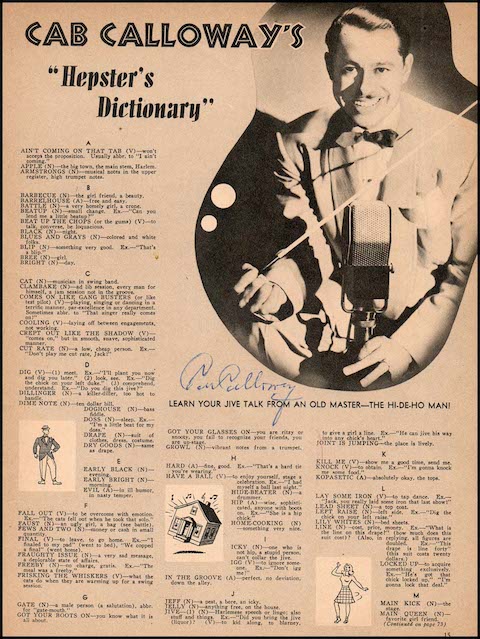
CallowaySignedHepster018

HEPSTER’S DICTIONARY

A hummer (n.) — exceptionally good. Ex., “Man, that boy is a hummer.”

Ain’t coming on that tab (v.) — won’t accept the proposition. Usually abbr. to “I ain’t coming.”

Alligator (n.) — jitterbug.

Apple (n.) — the big town, the main stem, Harlem.

Armstrongs (n.) — musical notes in the upper register, high trumpet notes.

Barbecue (n.) — the girl friend, a beauty

Barrelhouse (adj.) — free and easy.

Battle (n.) — a very homely girl, a crone.

Beat (adj.) — (1) tired, exhausted. Ex., “You look beat” or “I feel beat.” (2) lacking anything. Ex, “I am beat for my cash”, “I am beat to my socks” (lacking everything).

Beat it out (v.) — play it hot, emphasize the rhythym.

Beat up (adj.) — sad, uncomplimentary, tired.

Beat up the chops (or the gums) (v.) — to talk, converse, be loquacious.

Beef (v.) — to say, to state. Ex., “He beefed to me that, etc.”

Bible (n.) — the gospel truth. Ex., “It’s the bible!”

Black (n.) — night.

Black and tan (n.) — dark and light colored folks. Not colored and white folks as erroneously assumed.

Blew their wigs (adj.) — excited with enthusiasm, gone crazy.

Blip (n.) — something very good. Ex., “That’s a blip”; “She’s a blip.”

Blow the top (v.) — to be overcome with emotion (delight). Ex., “You’ll blow your top when you hear this one.”

Boogie-woogie (n.) — harmony with accented bass.

Boot (v.) — to give. Ex., “Boot me that glove.”

Break it up (v.) — to win applause, to stop the show.

Bree (n.) — girl.

Bright (n.) — day.

Brightnin’ (n.) — daybreak.

Bring down ((1) n. (2) v.) — (1) something depressing. Ex., “That’s a bring down.” (2) Ex., “That brings me down.”

Buddy ghee (n.) — fellow.

Bust your conk (v.) — apply yourself diligently, break your neck.

Canary (n.) — girl vocalist.

Capped (v.) — outdone, surpassed.

Cat (n.) — musician in swing band.

Chick (n.) — girl.

Chime (n.) — hour. Ex., “I got in at six chimes.”

Clambake (n.) — ad lib session, every man for himself, a jam session not in the groove.

Chirp (n.) — female singer.

Cogs (n.) — sun glasses.

Collar (v.) — to get, to obtain, to comprehend. Ex., “I gotta collar me some food”; “Do you collar this jive?”

Come again (v.) — try it over, do better than you are doing, I don’t understand you.

Comes on like gangbusters (or like test pilot) (v.) — plays, sings, or dances in a terrific manner, par excellence in any department. Sometimes abbr. to “That singer really comes on!”

Cop (v.) — to get, to obtain (see collar; knock).

Corny (adj.) — old-fashioned, stale.

Creeps out like the shadow (v.) — “comes on,” but in smooth, suave, sophisticated manner.

Crumb crushers (n.) — teeth.

Cubby (n.) — room, flat, home.

Cups (n.) — sleep. Ex., “I gotta catch some cups.”

Cut out (v.) — to leave, to depart. Ex., “It’s time to cut out”; “I cut out from the joint in early bright.”

Cut rate (n.) — a low, cheap person. Ex., “Don’t play me cut rate, Jack!”

Dicty (adj.) — high-class, nifty, smart.

Dig (v.) — (1) meet. Ex., “I’ll plant you now and dig you later.” (2) look, see. Ex., “Dig the chick on your left duke.” (3) comprehend, understand. Ex., “Do you dig this jive?”

Dim (n.) — evening.

Dime note (n.) — ten-dollar bill.

Doghouse (n.) — bass fiddle.

Domi (n.) — ordinary place to live in. Ex., “I live in a righteous dome.”

Doss (n.) — sleep. Ex., “I’m a little beat for my doss.”

Down with it (adj.) — through with it.

Drape (n.) — suit of clothes, dress, costume.

Dreamers (n.) — bed covers, blankets.

Dry-goods (n.) — same as drape.

Duke (n.) — hand, mitt.

Dutchess (n.) — girl.

Early black (n.) — evening

Early bright (n.) — morning.

Evil (adj.) — in ill humor, in a nasty temper.

Fall out (v.) — to be overcome with emotion. Ex., “The cats fell out when he took that solo.”

Fews and two (n.) — money or cash in small quatity.

Final (v.) — to leave, to go home. Ex., “I finaled to my pad” (went to bed); “We copped a final” (went home).

Fine dinner (n.) — a good-looking girl.

Focus (v.) — to look, to see.

Foxy (v.) — shrewd.

Frame (n.) — the body.

Fraughty issue (n.) — a very sad message, a deplorable state of affairs.

Freeby (n.) — no charge, gratis. Ex., “The meal was a freeby.”

Frisking the whiskers (v.) — what the cats do when they are warming up for a swing session.

Frolic pad (n.) — place of entertainment, theater, nightclub.

Fromby (adj.) — a frompy queen is a battle or faust.

Front (n.) — a suit of clothes.

Fruiting (v.) — fickle, fooling around with no particular object.

Fry (v.) — to go to get hair straightened.

Gabriels (n.) — trumpet players.

Gammin’ (adj.) — showing off, flirtatious.

Gasser (n, adj.) — sensational. Ex., “When it comes to dancing, she’s a gasser.”

Gate (n.) — a male person (a salutation), abbr. for “gate-mouth.”

Get in there (exclamation.) — go to work, get busy, make it hot, give all you’ve got.

Gimme some skin (v.) — shake hands.

Glims (n.) — the eyes.

Got your boots on — you know what it is all about, you are a hep cat, you are wise.

Got your glasses on — you are ritzy or snooty, you fail to recognize your friends, you are up-stage.

Gravy (n.) — profits.

Grease (v.) — to eat.

Groovy (adj.) — fine. Ex., “I feel groovy.”

Ground grippers (n.) — new shoes.

Growl (n.) — vibrant notes from a trumpet.

Gut-bucket (adj.) — low-down music.

Guzzlin’ foam (v.) — drinking beer.

Hard (adj.) — fine, good. Ex., “That’s a hard tie you’re wearing.”

Hard spiel (n.) — interesting line of talk.

Have a ball (v.) — to enjoy yourself, stage a celebration. Ex., “I had myself a ball last night.”

Hep cat (n.) — a guy who knows all the answers, understands jive.

Hide-beater (n.) — a drummer (see skin-beater).

Hincty (adj.) — conceited, snooty.

Hip (adj.) — wise, sophisticated, anyone with boots on. Ex., “She’s a hip chick.”

Home-cooking (n.) — something very dinner (see fine dinner).

Hot (adj.) — musically torrid; before swing, tunes were hot or bands were hot.

Hype (n, v.) — build up for a loan, wooing a girl, persuasive talk.

Icky (n.) — one who is not hip, a stupid person, can’t collar the jive.

Igg (v.) — to ignore someone. Ex., “Don’t igg me!)

In the groove (adj.) — perfect, no deviation, down the alley.

Jack (n.) — name for all male friends (see gate; pops).

Jam ((1)n, (2)v.) — (1) improvised swing music. Ex., “That’s swell jam.” (2) to play such music. Ex., “That cat surely can jam.”

Jeff (n.) — a pest, a bore, an icky.

Jelly (n.) — anything free, on the house.

Jitterbug (n.) — a swing fan.

Jive (n.) — Harlemese speech.

Joint is jumping — the place is lively, the club is leaping with fun.

Jumped in port (v.) — arrived in town.

Kick (n.) — a pocket. Ex., “I’ve got five bucks in my kick.”

Kill me (v.) — show me a good time, send me.

Killer-diller (n.) — a great thrill.

Knock (v.) — give. Ex., “Knock me a kiss.”

Kopasetic (adj.) — absolutely okay, the tops.

Lamp (v.) — to see, to look at.

Land o’darkness (n.) — Harlem.

Lane (n.) — a male, usually a nonprofessional.

Latch on (v.) — grab, take hold, get wise to.

Lay some iron (v.) — to tap dance. Ex., “Jack, you really laid some iron that last show!”

Lay your racket (v.) — to jive, to sell an idea, to promote a proposition.

Lead sheet (n.) — a topcoat.

Left raise (n.) — left side. Ex., “Dig the chick on your left raise.”

Licking the chops (v.) — see frisking the whiskers.

Licks (n.) — hot musical phrases.

Lily whites (n.) — bed sheets.

Line (n.) — cost, price, money. Ex., “What is the line on this drape” (how much does this suit cost)? “Have you got the line in the mouse” (do you have the cash in your pocket)? Also, in replying, all figures are doubled. Ex., “This drape is line forty” (this suit costs twenty dollars).

Lock up — to acquire something exclusively. Ex., “He’s got that chick locked up”; “I’m gonna lock up that deal.”

Main kick (n.) — the stage.

Main on the hitch (n.) — husband.

Main queen (n.) — favorite girl friend, sweetheart.

Man in gray (n.) — the postman.

Mash me a fin (command.) — Give me $5.

Mellow (adj.) — all right, fine. Ex., “That’s mellow, Jack.”

Melted out (adj.) — broke.

Mess (n.) — something good. Ex., “That last drink was a mess.”

Meter (n.) — quarter, twenty-five cents.

Mezz (n.) — anything supreme, genuine. Ex., “this is really the mezz.”

Mitt pounding (n.) — applause.

Moo juice (n.) — milk.

Mouse (n.) — pocket. Ex., “I’ve got a meter in the mouse.”

Muggin’ (v.) — making ‘em laugh, putting on the jive. “Muggin’ lightly,” light staccato swing; “muggin’ heavy,” heavy staccato swing.

Murder (n.) — something excellent or terrific. Ex., “That’s solid murder, gate!”

Neigho, pops — Nothing doing, pal.

Nicklette (n.) — automatic phonograph, music box.

Nickel note (n.) — five-dollar bill.

Nix out (v.) — to eliminate, get rid of. Ex., “I nixed that chick out last week”; “I nixed my garments” (undressed).

Nod (n.) — sleep. Ex., “I think I’l cop a nod.”

Ofay (n.) — white person.

Off the cob (adj.) — corny, out of date.

Off-time jive (n.) — a sorry excuse, saying the wrong thing.

Orchestration (n.) — an overcoat.

Out of the world (adj.) — perfect rendition. Ex., “That sax chorus was out of the world.”

Ow! — an exclamation with varied meaning. When a beautiful chick passes by, it’s “Ow!”; and when someone pulls an awful pun, it’s also “Ow!”

Pad (n.) — bed.

Pecking (n.) — a dance introduced at the Cotton Club in 1937.

Peola (n.) — a light person, almost white.

Pigeon (n.) — a young girl.

Pops (n.) — salutation for all males (see gate; Jack).

Pounders (n.) — policemen.

Queen (n.) — a beautiful girl.

Rank (v.) — to lower.

Ready (adj.) — 100 per cent in every way. Ex., “That fried chicken was ready.”

Ride (v.) — to swing, to keep perfect tempo in playing or singing.

Riff (n.) — hot lick, musical phrase.

Righteous (adj.) — splendid, okay. Ex., “That was a righteous queen I dug you with last black.”

Rock me (v.) — send me, kill me, move me with rhythym.

Ruff (n.) — quarter, twenty-five cents.

Rug cutter (n.) — a very good dancer, an active jitterbug.

Sad (adj.) — very bad. Ex., “That was the saddest meal I ever collared.”

Sadder than a map (adj.) — terrible. Ex., “That man is sadder than a map.”

Salty (adj.) — angry, ill-tempered.

Sam got you — you’ve been drafted into the army.

Send (v.) — to arouse the emotions. (joyful). Ex., “That sends me!”

Set of seven brights (n.) — one week.

Sharp (adj.) — neat, smart, tricky. Ex., “That hat is sharp as a tack.”

Signify (v.) — to declare yourself, to brag, to boast.

Skins (n.) — drums.

Skin-beater (n.) — drummer (see hide-beater).

Sky piece (n.) — hat.

Slave (v.) — to work, whether arduous labor or not.

Slide your jib (v.) — to talk freely.

Snatcher (n.) — detective.

So help me — it’s the truth, that’s a fact.

Solid (adj.) — great, swell, okay.

Sounded off (v.) — began a program or conversation.

Spoutin’ (v.) — talking too much.

Square (n.) — an unhep person (see icky; Jeff).

Stache (v.) — to file, to hide away, to secrete.

Stand one up (v.) — to play one cheap, to assume one is a cut-rate.

To be stashed (v.) — to stand or remain.

Susie-Q (n.) — a dance introduced at the Cotton Club in 1936.

Take it slow (v.) — be careful.

Take off (v.) — play a solo.

The man (n.) — the law.

Threads (n.) — suit, dress or costuem (see drape; dry-goods).

Tick (n.) — minute, moment. Ex., “I’ll dig you in a few ticks.” Also, ticks are doubled in accounting time, just as money isdoubled in giving “line.” Ex., “I finaled to the pad this early bright at tick twenty” (I got to bed this morning at ten o’clock).

Timber (n.) — toothipick.

To dribble (v.) — to stutter. Ex., “He talked in dribbles.”

Togged to the bricks — dressed to kill, from head to toe.

Too much (adj.) — term of highest praise. Ex., “You are too much!”

Trickeration (n.) — struttin’ your stuff, muggin’ lightly and politely.

Trilly (v.) — to leave, to depart. Ex., “Well, I guess I’ll trilly.”

Truck (v.) — to go somewhere. Ex., “I think I’ll truck on down to the ginmill (bar).”

Trucking (n.) — a dance introduced at the Cotton Club in 1933.

Twister to the slammer (n.) — the key to the door.

Two cents (n.) — two dollars.

Unhep (adj.) — not wise to the jive, said of an icky, a Jeff, a square.

Vine (n.) — a suit of clothes.

V-8 (n.) — a chick who spurns company, is independent, is not amenable.

What’s your story? — What do you want? What have you got to say for yourself? How are tricks? What excuse can you offer? Ex., “I don’t know what his story is.”

Whipped up (adj.) — worn out, exhausted, beat for your everything.

Wren (n.) — a chick, a queen.

Wrong riff — the wrong thing said or done. Ex., “You’re coming up on the wrong riff.”

Yarddog (n.) — uncouth, badly attired, unattractive male or female.

Yeah, man — an exclamation of assent.

Zoot (adj.) — exaggerated

Zoot suit (n.) — the ultimate in clothes. The only totally and truly American civilian suit.

BONUS MUSICAL INSTRUMENT SUPPLEMENT

Guitar: Git Box or Belly-Fiddle

Bass: Doghouse

Drums: Suitcase, Hides, or Skins

Piano: Storehouse or Ivories

Saxophone: Plumbing or Reeds

Trombone: Tram or Slush-Pump

Clarinet: Licorice Stick or Gob Stick

Xylophone: Woodpile

Vibraphone: Ironworks

Violin: Squeak-Box

Accordion: Squeeze-Box or Groan-Box

Tuba: Foghorn

Electric Organ: Spark Jiver

via The Art of Manliness

Related Content:

The Origins of Michael Jackson’s Moonwalk: Vintage Footage of Cab Calloway, Sammy Davis Jr., Fred Astaire & More

A 1932 Illustrated Map of Harlem’s Night Clubs: From the Cotton Club to the Savoy Ballroom

Duke Ellington’s Symphony in Black, Starring a 19-Year-old Billie Holiday

Ayun Halliday is an author, homeschooler, and Chief Primatologist of the East Village Inky zine. Follow her @AyunHalliday

Cab Calloway’s “Hepster Dictionary,” A 1939 Glossary of the Lingo (the “Jive”) of the Harlem Renaissance is a post from: Open Culture. Follow us on Facebook, Twitter, and Google Plus, or get our Daily Email. And don't miss our big collections of Free Online Courses, Free Online Movies, Free eBooksFree Audio Books, Free Foreign Language Lessons, and MOOCs.

The post Cab Calloway’s “Hepster Dictionary,” A 1939 Glossary of the Lingo (the “Jive”) of the Harlem Renaissance appeared first on Open Culture.

15 Jan 22:23

Ten Tips for Better Pull Requests

by Tony DiCola

Mark Seemann has an excellent blog post with ten tips for making a better pull request to contribute to open source projects.  Contributing to open source projects is a great way to help the open source community, and to get experience working on large software projects.  However it can sometimes be confusing and scary when you’re trying to send changes to a project.  Mark’s post has a great set of tips for making sure your changes are as easy as possible for a maintainer to review and integrate.

Adafruit is a strong believer in open source and hosts many libraries on GitHub.  If you’re contributing to Adafruit’s libraries be sure to check out Mark’s post for useful tips!

10 tips for better Pull Requests

15 Jan 20:15

Obama wants Congress to increase prison sentences for hackers

by David Kravets

The Obama administration, currently engaged in a war of words with North Korea over the recent hacking of Sony Pictures Entertainment, is calling on Congress to increase prison sentences for hackers and to expand the definition of hacking.

During next week's State of the Union address, the president is set to publicly urge increased prison time and other changes to the Computer Fraud and Abuse Act—the statute that was used to prosecute Internet activist Aaron Swartz before he committed suicide in 2013.

At issue is the Computer Fraud and Abuse Act (CFAA), passed in 1984 to bolster the government's ability to nab hackers who destroy or disrupt computer functionality or who steal information.

Read 9 remaining paragraphs | Comments


14 Jan 19:34

3D Seismic Exploration 2015

by Prof. Christopher L. Liner
Due to SEG responsibilities looming large, I once again taught my graduate class 3D Seismic Exploration (GEOL5143) at the University of Arkansas during January intercession.  Last year, we had to scramble around school closings due to winter weather.  This year was plenty cold (-5F windchill one morning), but no ice and no cancellations.

Intercession classes are geared to run 9 days at 4 hours per day.  Someone, somewhere set the dates for Jan intercession this year to Jan 3-11.  Well, if you check a calendar that means 4 of the 9 days are weekends.  Hard to get students in class Sunday for 4 hours.  So I made an executive decision to compress the class to 5 weekdays, here was the schedule:


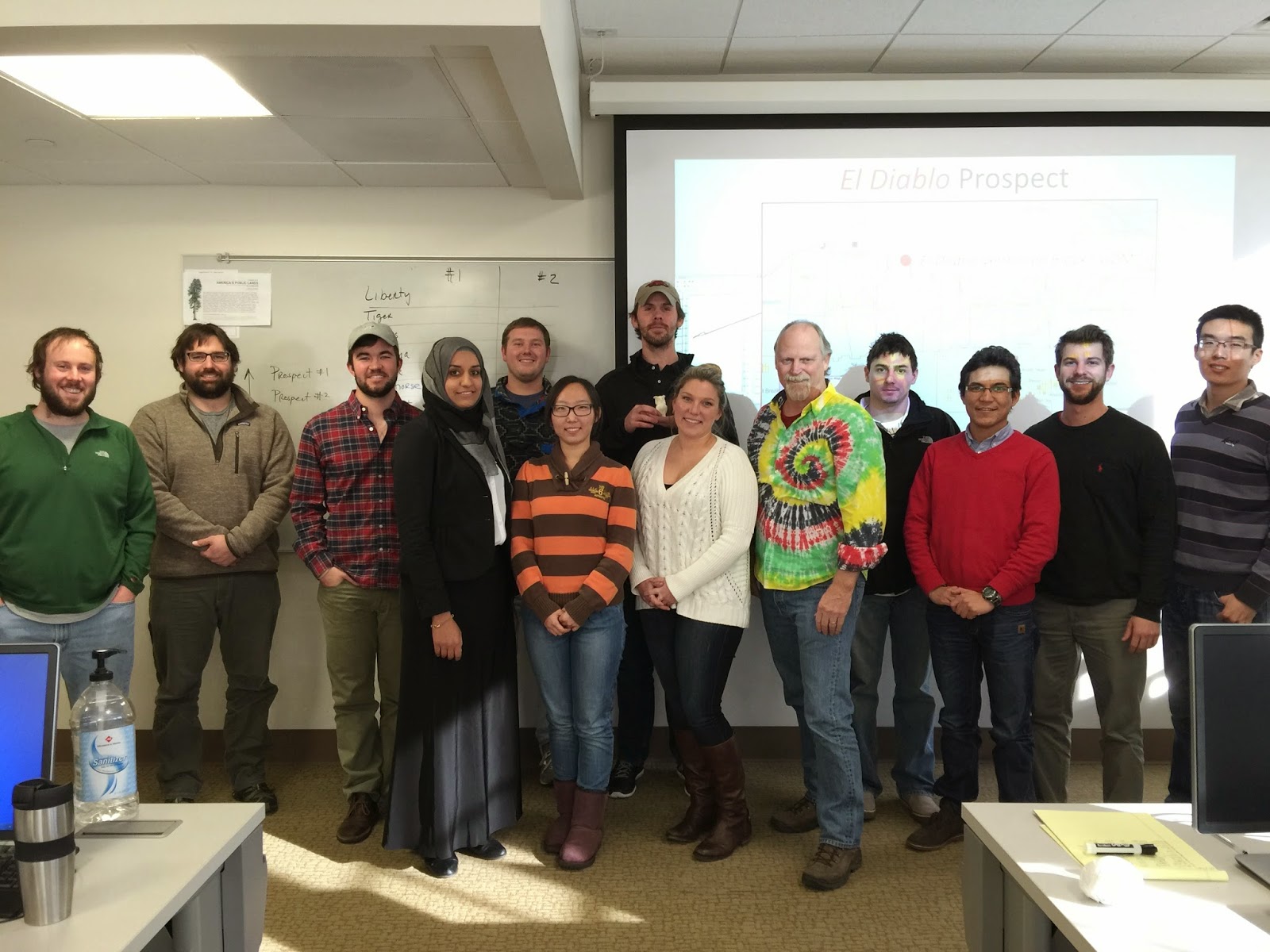
Anyway, the class went off just fine (except for some horrendous database issues, that need no concern us here).  The 12 students worked hard and learned much about 3D seismic interpretation.  Project 3 is a Gulf of Mexico prospecting exercise and presentation by each student.  By tradition, the students vote for Best Presentation, this year won by Austin Moyers with the El Diablo prospect, and Victoria Wood's Wild Horse second.

3D Exploration class of 2015 with instructor in the-dye.  Best Prospect went to Austin Moyers, who is the tall fellow in the 2nd row holding his trophy of honor.
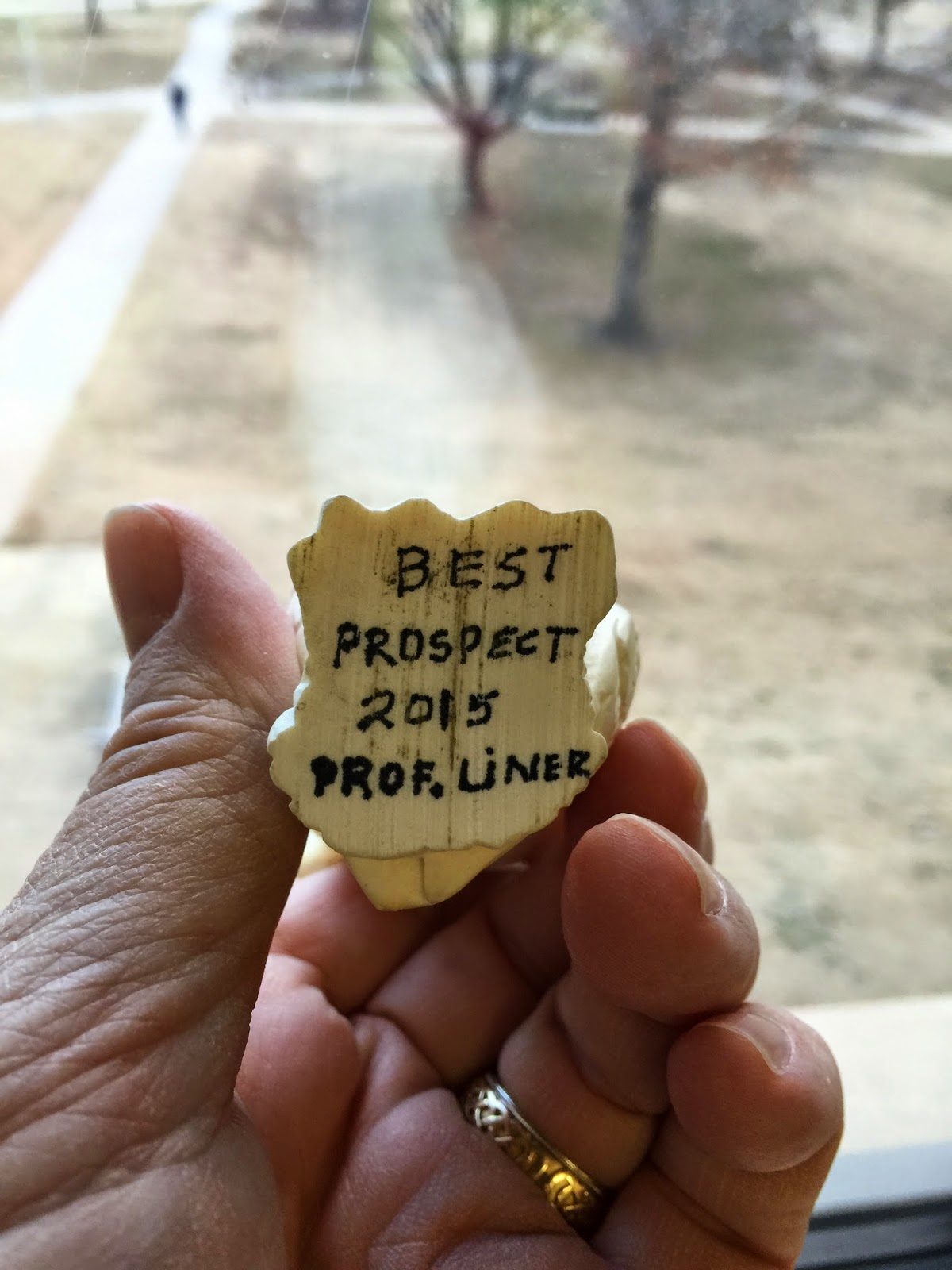
Best prospect trophy bottom view.

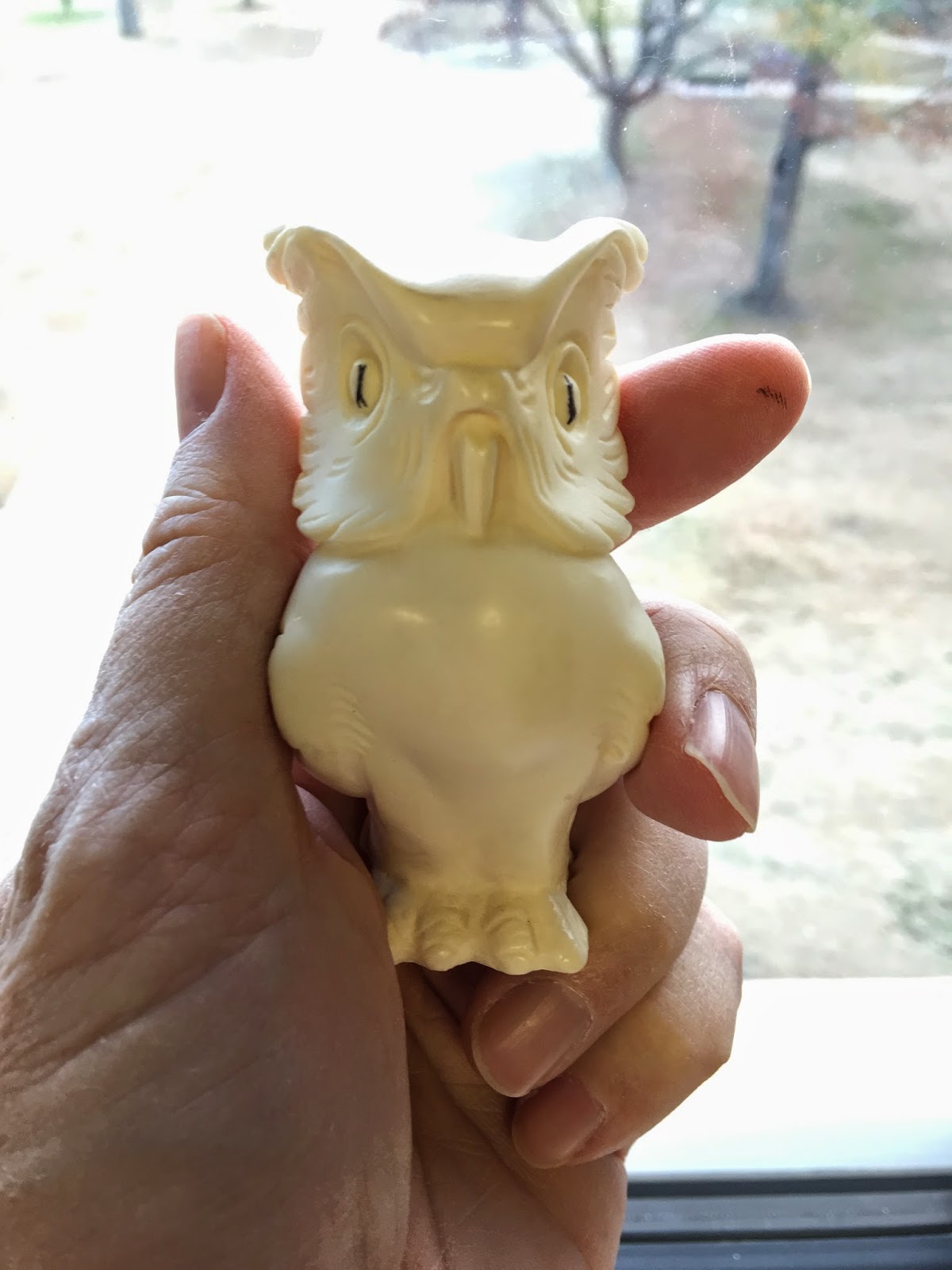
Best prospect trophy front view.

14 Jan 14:51

How Well Does Your Computer Know You? Machines May Understand Us Better Than Our Friends or Family - Time to embrace our robot overlords.

by Carolyn Cox

joaquin

According to Wu Youyou, lead author on a study published recently in the Proceedings of the National Academy of Sciences, “the human-computer interactions depicted in science fiction films such as Her seem to be within our reach.” Yay?

Although the uncanny valley elements of AI make many humans uncomfortable with the idea of owning a robot best friend, researchers at the University of Cambridge and Stanford University say computers may already have the capacity to “understand” our personalities better than best friends or family.

Building on research from 2013 analyzing the Facebook like button’s capacity as a predictor for psychological traits, the researchers collected 86,220 volunteers who were willing to give access to their Facebook likes. Study participants also filled out a personality questionnaire which encouraged self-reporting of the “big five” psychological traits (openness, conscientiousness, extraversion, agreeableness, and neuroticism).

Volunteers’ friends and family members were also asked to fill out questionnaire analyzing the participant’s personality, which was then compared to the algorithm’s findings, and yikes. Likely surprising no one, computers know us really well. Scarily so.

The researchers found that after examining just 10 likes their software could analyze a participant’s personality more accurately than a co-worker could. The algorithm also outshone parents or siblings after 150 likes, although it required 300 likes to “understand” a volunteer better than their spouse.

Dr Michal Kosinski, co-author and researcher at Stanford, explains that “big data and machine-learning provide accuracy that the human mind has a hard time achieving, as humans tend to give too much weight to one or two examples, or lapse into non-rational ways of thinking.” And according to Youyou, machines are only growing more adept at psychological analysis:

In the future, computers could be able to infer our psychological traits and react accordingly, leading to the emergence of emotionally-intelligent and socially skilled machines.

Yep, in the inevitable robot uprising, machines will know exactly which psychological tactics to use to break our spirit. Can’t say I’m surprised.

(via The Guardian)

Are you following The Mary Sue on Twitter, Facebook, Tumblr, Pinterest, & Google +?

12 Jan 23:27

Handy Cosplay Material: Plastimake

by Amy Ratcliffe

I’m always keeping my eyes open for new materials to use in cosplay and building, and someone tipped me off to Plastimake. It comes in a jar of small plastic pellets and looks simple to use: you pour the pellets into hot water, wait for them to soften, pull out the lump of plastic and shape it into whatever you want, and dunk the finished sculpt in cold water to set it. You can put it back in hot water and start over as often as you want, but if you leave it as is, the hardened material is sturdy. It’s non-toxic and not messy and can be used to make toys, tools, jewelry, and in cosplay. Acrylic and spray paints work on the plastic surface.

I see potential. You could turn the Plastimake into crowns, armor embellishments like spikes, jewelry pieces, and more. The only down side I see is that you might not be able to get the kind of detail you can achieve with something like polymer clay.

Some examples of cosplayers using Plastimake:

sylvanas_pauldron_wip_by_ky0miii-d816ce9

LiN, a.k.a. KyOMiii, used Plastimake to see the spikes on the skulls on her Sylvanas Windrunner pauldron.

helm_of_might_by_neener_nina-d613otq

Janina Gabrielle J. crafted the skull on the back of the helm with Plastimake and also used the material to hold the headband and wires in place.

Katniss gown

Lisa used Plastimake to create the silver embellishment on Katniss Everdeen’s wedding dress.

More examples of Plastimake in use at their website.

09 Jan 04:31

The Mysterious Origins of 21 Tech Terms

The Mysterious Origins of 21 Tech Terms

We use 21st century tech terms like hashtag, stream, and mouse with casual indifference, but how did these words get to be so commonplace in our everyday vernacular? We know the origins of Superman (kryptonite), Spider Man (radioactive spider), and Batman (rich boy's revenge) but not "podcast," "spam," or even "hacker." So I looked at 21 common tech terms that have been downloaded into our collective hardware and decoded them.

Bluetooth

The 10th century King Harald Gormsson is known for uniting all of Scandinavia—and having one gnarly tooth so rotten, it looked blue. Hence he earned the nickname "Bluetooth." His kitschy moniker and ability to bond nations inspired Jim Kardach, a software developer from Intel, to pitch "Bluetooth" as the name for a single wireless standard that Intel, Ericsson, Nokia, and IBM were developing together in 1997.

The name wasn't a huge hit, but since all the other names they were coming up with were even worse (i.e. "Flirt"), it was used as a code name or placeholder for the project. All four companies finally agreed on PAN (personal area networking) as the name. But PAN was quickly panned due to SEO issues, and the product was released as Bluetooth out of pure desperation. The public, however, loved the name and Bluetooth ultimately conquered—just like the king.

Podcast

Logically, the word is a hybrid of the words "pod" —from iPod— and "broadcast." The term "podcasting" was merely a suggested term for the new technology in an article written by The Guardian's Ben Hammersley in 2004, along with the other contenders like "audioblogging" and "GuerillaMedia." But due to the popularity of the iPod, which was released only three years earlier in 2001, "podcast" had an appealing snap that that stuck.

Spam

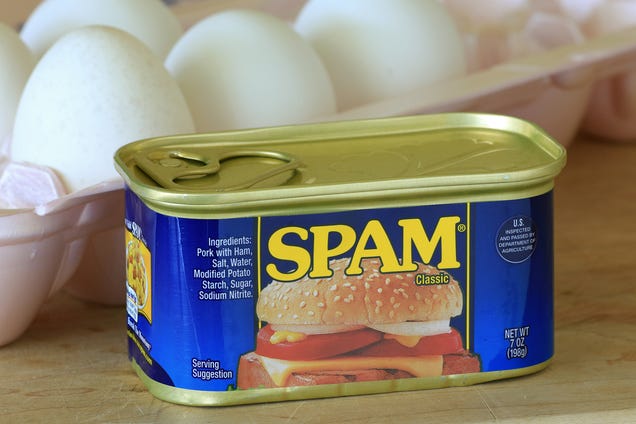
Spam for years was known as canned mystery meat worthy of mockery. So much so, that Monty Python did a sketch about it in which the word spam was repeated over and over by a waitress, customers, and even a group of Vikings. Many Monty Python fans were also early MUD, Prodigy, and AOL chatroom frequenters who used the word "spam" to refer to people who created macros to say the same thing over and over again, clogging up chatrooms with their repeated nonsense. So, when repetitive masses of unwanted email began circulating in the early 90s, people familiar with the interwebs began dubbing it spam, and the popularity of the term soared like processed meat at a grade school food fight.

N00b

The term "newbie," was used in the military during the Vietnam War for new recruits, and since has become a popular slang term for a novice. Computer programmers adopted the term in the 90s with the emergence of l337speak and gave it a techy tweak, the variant "n00b," spelled with two zeros instead of Os.

Troll

Rooted in 17th century Scandinavian folklore, a troll once characterized an antisocial, quarrelsome, and slow-witted creature that was bothersome to humans. End of story, right? Nope. The word troll actually derives from the verb "trolling," a fishing technique in which you slowly drag a baited hook from a moving boat.

Many believe the birth of online "trolling" was on alt.folklore.urban, or AFU, when veterans would distinguish themselves from newer users by baiting them with topics that had previously been discussed ad nauseam. Newbies would take the bait and naively reply, exposing their uncool n00b ways. In the late 90s, however, the site became so highly trafficked that trolling was rendered a nuisance, giving the modern tech term once more a negative connotation. The meaning today now more closely resembles its true Norse roots, an idiot looking to pick a fight.

Google

If you find Google to be a calculating corporation, you're not far off. The name "Google" is actually a play on the mathematical term "googol," a number represented by the numeral 1 followed by 100 zeros. The name acts as a metaphor for founders Larry Page and Sergey Brin's mission to organize a seemingly infinite amount of information on the web.

Hack

The word "hack" was just a verb when it entered the English vernacular in 1200, meaning a rough cut or heavy blows. In the past few years it also came to refer to a clever trick, short cut, or "life hack." But somewhere in-between, it developed another meaning, "to use a computer to gain unauthorized access to data in a system."

The word's context of messing with machinery didn't originate in the mid-90s when Angelina Jolie was a fresh-faced rollerblading rebel with a pixie cut, but rather at MIT in 1955 where the notes of a Tech Model Railroad Club state that "Mr. Eccles requests that anyone working or hacking on the electrical system turn the power off to avoid fuse blowing."

Then in 1975, the word "hacker" appeared in The Jargon File, a glossary for computer programmers, with eight definitions. The last, and only negative entry, stated that a hacker was, "A malicious meddler who tries to discover sensitive information by poking around." Of course, this definition was the most popular amongst the media and in 1990, when The New York Times used it three times in an article about Kevin Poulson (aka Dark Dante) and Robert Tappan Morris (creator of the Morris Worm) it's negative connotation as a digital trespasser was coded into our lexicon.

Lulz

LOL, an acronym for "laugh out loud," was born during the early days of the web on Usenet. Its positive and affirming nature was necessary during the early days of online communication, injecting a sense of humanity into cold, hard text. Lulz is the bastard love child LOL had with a deck of card's Joker during a wild night in Tijuana. Lulz is laughter, but dark laughter that wants you to consider hypocrisy and injustice by shoving it in your face, often with strange pranks.

Lulz is the central philosophy of the online group Anonymous, which was born in 2003 on 4chan.org's "anything goes" section known as the /b/ board, which can be regarded as the ultra-NSFW id of the internet. The feral, ironic, and aggressive nature of lulz has led to Anonymous hacking into the online kid's game Habbo Hotel and blocking the game's virtual pool with black avatars brimming with physical racial stereotypes and asserting the "Pool is closed due to AIDS" as a protest against Habbo's administrators Anonymous perceived to be racist. Lol?

IRL

IRL, which acts as an acronym for "In Real Life," was used in the early days of the interwebs as a way for people to defensively distinguish themselves from their online personas, (i.e. "If you knew me IRL you would know that I'd never really suggestively touch a Tickle Me Elmo, though my handle is FondleMeElmo.") Interestingly, Furry fandom, or those who find enjoyment in dressing up in full-suited animal costumes, was the first group to blur the line between their internet personas and offline lives in the late 90s. These individuals felt they could be more themselves online—as a fox or hyena avatar that had some of their physical attributes—than they could offline, looking the way they did in their everyday lives. This makes them, in a way, pioneers of the very popular modern practice of creating a social media persona.

Doxxing

Dox derives from "Docs" or "documents," and refers to the act of finding an anonymous internet character (like say, RicoSAUVE69), and digging up their formal documents that reveal their true, IRL, identity.

Stream

When we used to think of the word "stream" we thought of a narrow river or a continuous flow. Now when we think of "stream" we think Netflix, which provides us with a method of transmitting or receiving data over a steady, continuous flow, hence the name. The first use of streaming as a verb was back in 20s, when a system for the transmission and distribution of signals over electrical lines became the basis for what later evolved into elevator music, which would stream a continuous soundtrack to hell to commercial customers without the use of radio. So, think of Muzak as the original Pandora.

Tweet

You wouldn't think a service that values succinct, 140-character expression would embrace an 11-character word like "twittering" to describe its main function. But when Twitter first launched in July 2006, "twittering" was the verb the company used to describe the act of writing on Twitter. The verb along with the phrase "Post a Twitter Update," (that has 21 space-killing characters!) felt clunky, especially to software developer Craig Hockenberry. His frustration led to the invention of Twitterific, a Twitter app that offered a different user experience.

One of Hockenberry's goals with Twitterific was to hatch up a few one-syllable nouns and verbs for the app, including the word "twit" instead of "twittering" in 2007. Sure, twit still felt awkward, but, hey at least it was only four characters long. When Twitter developer Blaine Cook noticed "twit" being used on Twitterific, he suggested the word "tweet" to Hockenberry instead, and Twitterific embraced it quicker than a scandal trends on Twitter. Twitter, however, didn't adopt the term "tweet" until June 2008.

Hashtag

Back in the day, the "#" symbol was only known as a pound sign. Or number sign as in "#1 Mom!" or "Lemme get yo #" if you were trying to be slick on a Nokia flip-phone in 2003. But that's in the U.S. In the UK, a pound sign refers to their currency, the pound, or £. So, calling a symbol that organizes groups and aids in searches on Twitter, which has international reach, a pound sign could create a problem. Outside the U.S., the pound sign was called the hash sign, and being that the word "hashtag" doesn't really refer to the symbol "#" itself but the symbol and the word that proceeds it (or the tag), using the term hashtag makes perfect sense.

404

As you might assume, the phrase "404 Not Found/Error" is merely code. When communicating via HTTP, a server is required to respond to a request—like you typing OfficeSuppliesForGuys.com into a browser—with a numeric response, or a code (404), and an optional human-readable reason phrase ("Not Found"). In the code 404, the first digit, 4, indicates a client error, such as a mistyped URL (i.e. OrificeSuppliesForGuys.com.) The next two digits, "04" indicate the specific error encountered, which is why that site wasn't found.

Emoji

The word emoji comes from the Japanese characters 絵 (e = picture) 文 (mo = writing) 字 (ji = character). A Japanese man named Shigetaka Kurita invented the concept in 1999 and it consisted of simple, rudimentary symbols like: :). Not \m/. And definitely not anything close to an overly eroticized animated eggplant that could help clarify the tone of text.

Kurita actually invented the first 250 emoji as we now know them today, but because his former company, Docomo, wasn't able to obtain a copyright for his invention, Apple stole the idea and went buck wild. Now you can download tons of emoji such as kissy face, praying hands, and a tiny, animated soft-serve yogurt pile of poo.

Mouse

In 1950, Douglas C. Engelbart, a 25-year-old whippersnapper was about to be married—and about to invent a device that would revolutionize computers. When Engelbart entered the computing world, computers were the size of a room and could only be accessed by one person at a time. It was convoluted and Engelbart's frustrations led to the creation of the mouse, which he debuted during what is dubbed "the mother of all demos" in 1968 at a computing conference in San Francisco, and went mainstream a couple decades later with the famous Macintosh personal computer. The name "mouse" for the device came to be because the term CAT was used to describe the cursor on a screen and it seemed like the cursor was chasing the tailed desktop device.

Warez

Used by software swashbucklers to describe a cracked game or application made available for free over the internet (copyrights, be damned!), "warez" is simply a play on the word "wares," and should be pronounced the same way. Not like "Juárez" the city in Mexico.

Bug

There is proof that Thomas Edison used the word "bug" in his notebooks to describe a malfunctioning system. That's all well and good, but computers weren't around back in Edison's day. Another theory—though sometimes disputed—is that in 1947, Grace Hopper, a pioneer of computer programming was working on the Harvard Mark II computer when work was suspended due to the presence of a moth stuck in the relay. When she remarked they were "debugging" the system to get it started again, the term "bug" in regards to computer glitches was born. The moth she found can still be seen on display in the Smithsonian Museum.

Cookies

Cookies are used to store a user's information—like a username and password—and transmit this information between a website and a browser. For instance, when you click that "Remember me" button, that's a cookie. The fact that it's a pretty sweet treat that your info just pops up when logging into Instagram is not the reason it's called a cookie, though. The term cookie is actually a comparison to a fortune cookie. Early programmers thought there was a pretty strong similarity between a program that saves information within its code and the Chinese takeout staple that saves fortunes within its stale walls.

Wiki

A Wiki, like Wikipedia, is a group of interconnected sites built from user engagement. "Wiki wiki" in Hawaiian means "quick." Wiki's creator, Ward Cunningham, decided that a wiki would be a quick, simple way to access multiple sites, information, and read about the life of Kelsey Grammar (which is fascinating, wiki it!).

GIF

GIF is an acronym for graphic interchange format. Simple. Boring. Not nearly as interesting as any GIF involving a fainting goat. What's interesting about GIF is its proper pronunciation, which is with a "j" sound not a "g," like the peanut butter. The originators of GIF at CompuServe in 1987 preferred the soft j sound. But pronouncing it "JIF" (or jIF, as the creators intended) sounds awkward. Like pronouncing mature, "matyuer." So, be a rebel and pronounce it with a "g," dammit!

Image: Shutterstock

07 Jan 19:10

Attack on Charlie Hebdo: Long live comics, and long live freedom of the press

by Xeni Jardin
Among the dead: cartoonists, editors, journalists, and graphic designers. Read the rest
07 Jan 19:10

Intel Wants Diversity in the Workplace, Puts $300 Million Where Their Mouth Is - "This isn't just good business, it's the right thing to do."

by Jill Pantozzi

Screen Shot 2015-01-07 at 12.52.33 PM

What’s the best way to help your image after accidentally taking the side of a gender-based smear campaign in the video game world? Put forth millions of dollars toward getting more women in the industry. Oh, and they promoted Feminist Frequency. I believe they call this a mic drop.

The background: Intel freaked out and pulled advertising from Gamasutra after a group of Gamergate supporters started an online campaign over an opinion piece they felt portrayed them negatively. When they realized they’d fallen prey to part of a large-scale harassment campaign veiled as an “ethics in journalism” cause, they released a statement which read in part, “we recognize that our action inadvertently created a perception that we are somehow taking sides in an increasingly bitter debate in the gaming community. That was not our intent, and that is not the case. When it comes to our support of equality and women, we want to be very clear: Intel believes men and women should be treated the same.”

About a month later, Intel reinstated their advertising with Gamasutra saying once again, “it was not our intent to take a position in the current controversy surrounding the gaming community.”

Intel recently revealed “MakeHers: Engaging Girls and Women in Technology through Making, Creating and Inventing,” a study focused on the progress the “makers” movement has had on encouraging girls and boys to get into STEM fields and how to keep girls involved as they get older. Yesterday, Intel announced something equally exciting. The NY Times reports:

On Tuesday, Intel said the company’s work force would better reflect the available talent pool of women and underrepresented minority groups in the United States within five years. If successful, the plan would increase the population of women, blacks, Hispanics and other groups at Intel by at least 14 percent during that period, the company said.

In addition, Intel said it has established a $300 million fund to be used in the next three years [Editors's Note: the speech, referenced below, states 5 years] to improve the diversity of the company’s work force, attract more women and minorities to the technology field and make the industry more hospitable to them once they get there. The money will be used to fund engineering scholarships and to support historically black colleges and universities.

“And make the industry more hospitable to them once they get there” is a great addition to the initiative, considering a healthy work environment is certainly a factor for those looking to get into, or who are already in, the field. The White House recently asked for women to share their stories about working in STEM fields to help inspire others to pursue those careers.

But wait! There’s more! The NY Times writes, “The company also said it would invest in efforts to bring more women into the games business, partly as an antidote to the harassment feminist critics and game developers have faced in recent months.”

Yeah, they went there.

Thanks @Intel for stepping up to lead by example and take real action in addressing rampant gender disparity within the technology industry.

— Feminist Frequency (@femfreq) January 7, 2015

“This is the right time to make a bold statement,” Brian M. Krzanich, Intel’s chief executive, told the NY Times. He also told them he took the Gamergate/Gamasutra incident as an opportunity to think “more deeply about the broader issue of diversity in the tech industry,” wrote the Times. He said, “I have two daughters of my own coming up on college age. I want them to have a world that’s got equal opportunity for them.”

In his keynote address (which you can watch in its entirety on CNET) at the Consumer Electronics Show (CES) Krzanich called diversity and inclusion in technology an “important and industry-wide issue that will shape the future.”

IntelDiversityInclusion

“A confluence of industry events has brought this issue to the center stage. From the threats and harassments that have characterized the debate in the gaming world, to the publication of hiring data and diversity statistics in the tech industry, this is a highly relevant issue and one that we all need to address,” he said in the speech. “I’m here to say tonight, it’s time to step up and do more. It’s not good enough to say we value diversity and then have our workplaces and our industry not reflect the full availability and talent pool of women and underrepresented minorities.”

Krzanich also noted Intel would be measuring and reporting their progress on the initiative on a regular basis and with “full transparency.” He also said, “We’re going to hold our leaders accountable by tying their pay to our progress.”

“Together with partners and industry leaders in diversity, gaming, and education,” said Krzanich standing in front of logos including that of Anita Sarkeesian’s Feminist Frequency and the Grace Hopper Celebration, “we will make a difference.”

Screen Shot 2015-01-07 at 1.02.21 PM

Part of the $300 million fund will go towards a professional women’s gaming team. “It has partnered with the International Game Developers Association, a nonprofit that will send 20 female college students to a game developer conference with Intel’s support,” says the Times, “The association wants to double the number of women working in the games industry over the next decade, according to Kate Edwards, its executive director.”

The general consensus seems to be Intel will be the first step toward other companies making the same efforts to improve diversity. The Times spoke with Rev. Jesse L. Jackson, Sr. who has talked with Intel about their initiative. He said, “There is no comparison… It is far beyond at this point. I think others are going to follow their lead.” They also wrote “the company estimates that if the black population with the appropriate technical skills was fully represented at Intel today, the company’s current population of black workers would grow by about 48 percent.”

In his speech, Krzanich said, “This isn’t just good business, it’s the right thing to do.”

(images via screenshots from CNET)

General reminder about our comment policy, which specifically disallows personal attacks. Keep your discussion to the issues, or your comments WILL get deleted.

Are you following The Mary Sue on Twitter, Facebook, Tumblr, Pinterest, & Google +?

06 Jan 17:16

Why You Do Your Best Thinking In The Shower: Creativity & the “Incubation Period”

arch bath

“The great Tao fades away.”

So begins one translation of the Tao Te Ching’s 18th Chapter. The sentence captures the frustration that comes with a lost epiphany. Whether it’s a profound realization when you just wake up, or moment of clarity in the shower, by the time your mind’s gears start turning and you grope for pen and paper, the enlightenment has evaporated, replaced by muddle-headed, fumbling “what was that, again?”

“Intelligence comes forth. There is great deception.”

The sudden flashes of insight we have in states of meditative distraction—showering, pulling weeds in the garden, driving home from work—often elude our conscious mind precisely because they require its disengagement. When we’re too actively engaged in conscious thought—exercising our intelligence, so to speak—our creativity and inspiration suffer. “The great Tao fades away.”

The intuitive revelations we have while showering or performing other mindless tasks are what psychologists call “incubation.” As Mental Floss describes the phenomenon: “Since these routines don’t require much thought, you flip to autopilot. This frees up your unconscious to work on something else. Your mind goes wandering, leaving your brain to quietly play a no-holds-barred game of free association.”

Are we always doomed to lose the thread when we get self-conscious about what we’re doing? Not at all. In fact, some researchers, like Allen Braun and Siyuan Liu, have observed incubation at work in very creatively engaged individuals, like freestyle rappers. Theirs is a skill that must be honed and practiced exhaustively, but one that nonetheless relies on extemporaneous inspiration.

Renowned neuroscientist Alice Flaherty theorizes that the key biological ingredient in incubation is dopamine, the neurotransmitter released when we’re relaxed and comfortable. “People vary in terms of their level of creative drive,” writes Flaherty, “according to the activity of the dopamine pathways of the limbic system.” More relaxation, more dopamine. More dopamine, more creativity.

Other researchers, like Ut Na Sio and Thomas C. Ormerod at Lancaster University, have undertaken analysis of a more qualitative kind—of “anecdotal reports of the intellectual discovery processes of individuals hailed as geniuses.” Here we might think of Samuel Taylor Coleridge, whose poem “Kublai Khan”—“a vision in a dream”—he supposedly composed in the midst of a spontaneous revelation (or an opium haze)—before that annoying “person from Porlock” broke the spell.

Sio and Ormerod survey the literature of “incubation periods,” hoping to “allow us to make use of them effectively to promote creativity in areas such as individual problem solving, classroom learning, and work environments.” Their dense research suggests that we can exercise some degree of control over incubation, building unconscious work into our routines. But why is this necessary?

Psychologist John Kounios of Drexel University offers a straightforward explanation of the unconscious processes he refers to as “the default mode network.” Nick Stockton in Wired sums up Kounios’ theory:

Our brains typically catalog things by their context: Windows are parts of buildings, and the stars belong in the night sky. Ideas will always mingle to some degree, but when we’re focused on a specific task our thinking tends to be linear.

The task of showering—or bathing, in the case of Archimedes (above)—gives the mind a break, lets it mix things up and make the odd, random juxtapositions that are the essential basis of creativity. I’m tempted to think Wallace Stevens spent a good deal of time in the shower. Or maybe, like Stockton, he kept a “Poop Journal” (exactly what it sounds like).

Famous examples aside, what all of this research suggests is that peak creativity happens when we’re pleasantly absent-minded. Or, as psychologist Allen Braun writes, “We think what we see is a relaxation of ‘executive functions’ to allow more natural de-focused attention and uncensored processes to occur that might be the hallmark of creativity.”

None of this means that you’ll always be able to capture those brilliant ideas before they fade away. There’s no foolproof method involved in making use of creative distraction. But as Leo Widrich writes at Buffer, there are some tricks that may help. To increase your creative output and maximize the insights in incubation periods, he recommends that you:

  1. “Keep a notebook with you at all times, even in the shower.” (Widrich points us toward a waterproof notepad for that purpose.)
  1. “Plan disengagement and distraction.” Widrich calls this “the outer-inner technique.” John Cleese articulates another version of planned inspiration.
  1. “Overwhelm your brain: Make the task really hard.” This seems counterintuitive—the opposite of relaxation. But as Widrich explains, when you strain your brain with really difficult problems, others seem much easier by comparison.

It may seem like a lot of work getting your mind to relax, produce more dopamine, and get weird, circular, and inspired. But the work lies in making effective use of what’s already happening in your unconscious mind. Rather than groping blindly for that flash of brilliance you just had a moment ago, you can learn, writes Mental Floss, to “mind your mindless tasks.”

Related Content:

Free Online Psychology Courses

John Cleese’s Philosophy of Creativity: Creating Oases for Childlike Play

David Lynch Explains How Meditation Enhances Our Creativity

How To Be Creative: PBS’ Off Book Series Explores the Secret Sauce of Great Ideas

Josh Jones is a writer and musician based in Durham, NC. Follow him at @jdmagness


06 Jan 17:14

Fully Operational Death Star Gown

by Amy Ratcliffe

Death Star gown

Meet Lady Death Star. Based on the battle station that’s the size of a moon in Star Wars, this costume is probably the most dangerous in the galaxy. It doesn’t fire lasers as far as we know, but the gown does light up! The builder put serious hours in, too! Lady Death Star’s husband told Fashionably Geek that the dress was under construction for over 100 hours. She made the skirt, corset, hat, and Star Destroyer purse (it has sound effects) completely from scratch.

Death Star gown wip 1

It all started with a drawing in 2012. Of all the components, the skirt is by far the most intense. Creating the pattern for the hoop skirt required math and then scaling and actually drafting the pattern. Lady Death Star details the process on her blog:

The first measurement that you’re going have to take is your length…from your waist to the floor….you might want to have someone else do this for you because if you look down while doing it, it will change your measurements. So for this example, let’s use my measurements….mine was 38 inches.

The next calculation you’re going to have to make is how big your bottom circle is going to be…essentially, you want half a globe to make your skirt totally dome-shaped. You are going to need to know the circumference of your circle (this will also be the size of your bottom hoop btw).

Once it was done, the completed skirt was over 20 pounds. The hoops accounted for 10 pounds, and she incorporated 300 LEDs powered by 12 D batteries.

Death Star gown wip 2

Read more about the build at Lady Death Star’s website.

via Jedi News, photo by Undiscovered Photography

06 Jan 17:12

The promise and problems of big data

by Jenn Webb

Editor’s note: this is an excerpt from our new report Data: Emerging Trends and Technologies, by Alistair Croll. You can download the free report here.

We’ll now look at both the light and the shadows of this new dawn, the social and moral implications of living in a deeply connected, analyzed, and informed world. This is both the promise and the peril of big data in an age of widespread sensors, fast networks, and distributed computing.

Solving the big problems

The planet’s systems are under strain from a burgeoning population. Scientists warn of rising tides, droughts, ocean acidity, and accelerating extinction. Medication-resistant diseases, outbreaks fueled by globalization, and myriad other semi-apocalyptic Horsemen ride across the horizon.

Can data fix these problems? Can we extend agriculture with data? Find new cures? Track the spread of disease? Understand weather and marine patterns? General Electric’s Bill Ruh says that while the company will continue to innovate in materials sciences, the place where it will see real gains is in analytics.

It’s often been said that there’s nothing new about big data. The “iron triangle” of Volume, Velocity, and Variety that Doug Laney coined in 2001 has been a constraint on all data since the first database. Basically, you could have any two you want fairly affordably. Consider:

  • A coin-sorting machine sorts a large volume of coins rapidly, but assumes a small variety of coins. It wouldn’t work well if there were hundreds of coin types.
  • A public library, organized by the Dewey Decimal System, has a wide variety of books and topics, and a large volume of those books — but stacking and retrieving the books happens at a slow velocity.

What’s new about big data is that the cost of getting all three Vs has become so cheap it’s almost not worth billing for. A Google search happens with great alacrity, combs the sum of online knowledge, and retrieves a huge variety of content types. (more…)

06 Jan 17:12

Welcome, Literary 2015!

by Guia Cortassa

The Millions has just released its annual overview of what the first half of 2015 will offer when it comes to new literature. “[A]t 9,000 words strong and encompassing 91 titles,” the preview is a pretty intense read itself.

Related Posts:

05 Jan 18:10

How To Escape Google With These 12 Search Engine Alternatives

Monopoly Pieces

This story was originally published on May 5, 2014, and comes in at number one on our countdown of the 10 most popular Search Engine Watch stories of 2014. As we look back over the past year, we're celebrating the best of 2014, as determined by you, our readers. Enjoy!

As concerns over the de facto monopoly status of Google continue to grow, I'm reminded of the great philosopher Herman Cain and his infamous line "blame yourself". As long as "Google" is a generic phrase for Internet search, their dominant position is assured. That said, you can do something about it.

There are plenty of Google alternatives and many of these players offer a better search experience, depending on your needs. Here are 12 alternatives to escape your reliance on Google for all things search.

Step 1: Bing

If you're a digital marketer using advanced search operators, then use Bing for these queries.

Bing Search

LinkFromDomain: There are any number of tools that can give you inbound link data. There's only one place to go for outbound link information – Bing.

Feed: Finds RSS or Atom feeds pertaining to the term you specify.

Contains: Returns search results that have links to the file types that you specify.

Near: Useful for spotting patterns. For example, [food near:10 bar] specifies the distance between terms so that documents that contain instances of the specified terms within X words of each other (in the example 10) are returned first in search results.

Step 2: Blekko

If you hate spam and love slashtags, then use Blekko.

Blekko search

Blekko uses an initiative called slashtags – a text tag preceded by a "/" slash character, which may be used for custom and categorized searches. It also utilizes a unique user interface serving up results by category.

Step 3: Boardreader

If you're looking for a simple way to search forums and boards, then Boardreader is for you.

Boardreader Search

Boardreader serves up information contained in web forums and message boards. Multiple message boards can be searched simultaneously, allowing users to share information.

Step 4: BuzzSumo

If you need to analyze what content performs best for a topic or competitor, you need BuzzSumo.

BuzzSumo search

Enter your keyword and go! This identifies the most shared links on social networks, as well as influencers for specific topics. It's one of my personal favorites.

Step 5: CC Search

If you're looking for media in the public domain, then you need CC Search.

CC search

CC Search is a search aggregator offering access to search results provided by a number of independent organizations. Don't assume the results displayed are under a creative commons license – always verify it, as sponsored results are served up, as well.

Step 6: CrunchBase

If you're looking for information about people and startups, then CrunchBase is the place to look.

CrunchBase search

CrunchBase offers an unparalleled dataset of startup activity. More than 500,000 profiles of people and companies are maintained there by thousands of contributors.

Step 7: DuckDuckGo

If you're concerned about search privacy, then use DuckDuckGo

DuckDuckGo search

If your search history isn't something that you would be proud to share with grandma or the NSA, then anonymous search engine DuckDuckGo is for you. Personalized results? Fugetaboutit!

Step 8: Quantcast

If you need demographic and traffic stats, then you need Quantcast.

Quantcast search

Free and accurate audience insights for more than 100 million web properties. Find detailed demographic, geographic, and lifestyle information.

Step 9: SocialMention

If you need real-time social media search and analysis, then SocialMention is worth a look.

SocialMention search

Step 10: Technorati

If you need real-time search for user-generated media, then look no further than Technorati.

Technorati search

Technorati uses tags that authors have included on their websites. These tags categorize search results, with the most recent results appearing at the top.

11. Topsy

If you need to search and analyze the social web, especially Twitter, then you should try Topsy.

Topsy search

Social media analytics: Search by time and place, set alerts, and analyze sentiment for every tweet ever made. Discover how often a term is tweeted. Find an influential person on a specific subject.

12. Wolfram|Alpha

If you need access to the world's facts and data, then WolframAlpha is the place to look.

WolframAlpha search

A computational knowledge engine that answers factual queries by computing the answer from externally sourced "curated data."

Bottom Line

Google isn't the only game in town and isn't even the best alternative for many specific tasks and needs.

What is your favorite non-Google search tool?

05 Dec 18:06

Learning Python on a Raspberry Pi While Driving an Internet of Things-RiggedTruck #piday #raspberrypi @Raspberry_Pi

by Matt

Andy Proctor has embedded a Raspberry Pi in his truck for the purpose of giving himself more opportunities to learn the Python programming language. Via RaspberryPi.org.

Learning Python and Raspberry Pi While Driving an Internet of Things Truck:

…I have been learning how to use Python Programming language while driving a truck here in the UK. I have been making my websites while I am parked up and also playing around with a RaspberryPi computer.  When we have the container loaded at the customers address we have to phone in and when it’s been unloaded do the same.  We also let the office know when we have our shipping container lowered on the trailer or lifted off at the port.  This normally means going through the switchboard to an operator and passing him simple information 4-5 times a day (with 50 trucks).  They then update the software and then book the container with the next location, so I’ve automated it and learned how to use Python Programming.

You can connect switches, lights, sensors and much more to the device. I have been using the new Model B+ s connecting to the board and learning about this fantastic module. The script will Tweet and email the transport office the trucks status. I have fitted four switches to the GPIO pins of the computer and this effects the code with some clever outcomes. Please follow the Twitter account and also the next video with bar code scanning that I shall publish in a few weeks…..

Read More.

Pasted Image 12 1 14 8 29 PM


998Each Friday is PiDay here at Adafruit! Be sure to check out our posts, tutorials and new Raspberry Pi related products. Adafruit has the largest and best selection of Raspberry Pi accessories and all the code & tutorials to get you up and running in no time!

05 Dec 17:38

Corporations Misusing Our Data

by schneier

In the Internet age, we have no choice but to entrust our data with private companies: e-mail providers, service providers, retailers, and so on.

We realize that this data is at risk from hackers. But there's another risk as well: the employees of the companies who are holding our data for us.

In the early years of Facebook, employees had a master password that enabled them to view anything they wanted in any account. NSA employees occasionally snoop on their friends and partners. The agency even has a name for it: LOVEINT. And well before the Internet, people with access to police or medical records occasionally used that power to look up either famous people or people they knew.

The latest company accused of allowing this sort of thing is Uber, the Internet car-ride service. The company is under investigation for spying on riders without their permission. Called the "god view," some Uber employees are able to see who is using the service and where they're going -- and used this at least once in 2011 as a party trick to show off the service. A senior executive also suggested the company should hire people to dig up dirt on their critics, making their database of people's rides even more "useful."

None of us wants to be stalked -- whether it's from looking at our location data, our medical data, our emails and texts, or anything else -- by friends or strangers who have access due to their jobs. Unfortunately, there are few rules protecting us.

Government employees are prohibited from looking at our data, although none of the NSA LOVEINT creeps were ever prosecuted. The HIPAA law protects the privacy of our medical records, but we have nothing to protect most of our other information.

Your Facebook and Uber data are only protected by company culture. There's nothing in their license agreements that you clicked "agree" to but didn't read that prevents those companies from violating your privacy.

This needs to change. Corporate databases containing our data should be secured from everyone who doesn't need access for their work. Voyeurs who peek at our data without a legitimate reason should be punished.

There are audit technologies that can detect this sort of thing, and they should be required. As long as we have to give our data to companies and government agencies, we need assurances that our privacy will be protected.

This essay previously appeared on CNN.com.

05 Dec 17:38

NASA: 'There's your new spacecraft, America!"

(AP)—NASA's newest space vehicle, Orion, accomplished its first test flight with precision and pizazz Friday, shooting more than 3,600 miles (5,800 kilometers) out from Earth for a hyperfast, hot return not seen since the Apollo moon shots.
05 Dec 16:55

Password protected sketchbook is amazing (video) @poil_pubien

by adafruit


Password protected sketchbook is amazing (video).

05 Dec 16:12

Why Humans Drink Alcohol: It's Evolution, Plus Bad Fruit

by Azra Raza

From NBC News:

ApeHuman ancestors may have begun evolving the knack for consuming alcohol about 10 million years ago, long before modern humans began brewing booze, researchers say. The ability to break down alcohol probably helped human ancestors make the most out of rotting, fermented fruit that fell onto the forest floor, the researchers said. Therefore, knowing when this ability developed could help researchers figure out when these human ancestors began moving to life on the ground, as opposed to mostly in trees. "A lot of aspects about the modern human condition — everything from back pain to ingesting too much salt, sugar and fat — goes back to our evolutionary history," said lead study author Matthew Carrigan, a paleogeneticist at Santa Fe College in Gainesville, Florida. "We wanted to understand more about the modern human condition with regards to ethanol [alcohol]."

To learn more about how human ancestors evolved the ability to break down alcohol, scientists focused on the genes that code for a group of digestive enzymes called the ADH4 family. ADH4 enzymes are found in the stomach, throat and tongue of primates, and are the first alcohol-metabolizing enzymes to encounter ethanol after it is imbibed. The researchers looked at the ADH4 genes from 28 different mammals, to investigate how closely related they were and find out when their ancestors diverged. In total, they explored nearly 70 million years of primate evolution. The scientists then used this knowledge to investigate how the ADH4 genes evolved over time and what the ADH4 genes of their ancestors might have been like. The results suggested there was a single genetic mutation 10 million years ago that endowed human ancestors with an enhanced ability to break down ethanol.

More here.

04 Dec 19:12

Shahzia Sikander: The World Is Yours, the World Is Mine

by S. Abbas Raza
06iht-tpsikander-master495
"The World Is Yours, the World Is Mine," by Shahzia Sikander

Shahzia Sikander in the New York Times:

History is often held hostage by the highest bidder — whoever gets to tell the story ends up defining what happened. What happened in 2014? What mattered in 2014? It depends whom you ask. Historical narratives recount political, economic or social events, but rarely tell stories of the everyday. The mundane nuances of life are often ignored 
precisely because they are so personal. But private stories are usually the ones that we connect with most; they capture our  02bwshazia-master315attention and remain in our memory. Modes of storytelling like painting and rap allow us to engage with those personal stories, becoming the vehicles through which history passes.

A major story of 2014 has been the Ebola outbreak, which has spread from West Africa to Europe and the United States. The Ebola narrative has also become the story of how we don’t want to be connected in what is supposedly a hyperconnected and globalized world. We have tried to screen for symptoms and enforce quarantines. However, the interface between human and microbe is complex. Our bodies cannot thrive without some microbes — they are an essential part of our personal ecosystems. They are always present, often lying dormant, just as narratives lie dormant until someone culls them from history’s rubble. I have chosen to respond to these events from 2014 in my work, “The World Is Yours, the World Is Mine,” (2014).

More here.

04 Dec 16:33

The obsessions of Werner Herzog

by Morgan Meis

2f47950e-7ae4-11e4_1113513kIain Sinclair at the Times Literary Supplement:

The voice. That voice. The forest as an oozing, fecund sump of original darkness and interspecies fornication. Birds screaming in pain. Monkeys howling like the legions of the damned. And deluded humans, those naked forked beings, babbling their eco-political plea bargains to an indifferent destiny, as they are broken on the wheel of fate. Until there is just one heretic left, with cones of light beaming, burning from his unblinking eyes. The sweeping gestures. The leaps from rock to rock. And, always, that voice. The seductive drone of reason from an undeceived witness to horror. He sounds amused, engaged: implicated. The voice of a village Bavarian from the mountains. A long-striding walker. A world-weary autodidact devouring the classics: Virgil, Homer, and the never-ending voyage that refuses to bring him home to the black hole of unresolved history that is never going away. He is a self-proclaimed searcher for the “ecstatic truth” of Euripides.

Here is the captured voice of Werner Herzog: the maverick, the sanest madman still in the game; performing, researching, scribbling in microscopic calligraphy, hard-tramping margins of ice and sand, working the burden of life to the final groan. And now, with a mime of easily overcome reluctance, directing this comprehensive fiction of an autobiography, by way of recorded conversations with the film scholar Paul Cronin. A Guide for the Perplexed is a blockbuster performance of telling and hiding: remembering, denying, cursing, reliving traumas and triumphs; picking over all the projects, triumphant and forgotten.

more here.

03 Dec 22:31

Creator Of All-Female Scientist LEGO Set Follows Up With Even More Scientists - Yeeaaaaah, science!

by Victoria McNally


1648040-o_1956gc113neq7cqjn51dr69867-full

And LEGO needs your help to decide if it should become a real set!

Most of you probably remember the LEGO Ideas all-female scientist set, which was officially announced in June of this year and very quickly sold out after becoming available for purchase in August. The designer Alatariel has officially returned to the drawing board with a new set of “science adventures,” which, devoid of context, look a bit more like an Indiana Jones-style action sets. Because science is exciting, damn it!

The newly designed set has three different scientists, just like the final version of the last set. This time, each of the figures has their own mini backstory; Dr. Miller is a biologist who’s studying the behavior of a Siberian tiger; Dr. Coyman, the geologist, is hammering at an unusual rock formation to get a closer look at what’s inside; and Dr. Yates is an archaeologist who’s found a fully preserved skeleton and gold coins.

1648070-o_1956hnir615591dm2dnl1u69mes7-full

While one figure in this design is wearing lipstick and another has their hair in a stereotypically feminine ponytail, it’s a little difficult to tell what gender each of the three doctors are meant to represent when you compare them to officially-made LEGO minifigs—which, in my opinion, is pretty cool, because it gives kids the opportunity to decide for themselves. As awesome as it was to see STEM women celebrated in the last set Alaterial designed, it’s also just as refreshing to see them move past the overwhelming gender divide in their respective fields and just get to doing the science. You know, even if they are only 4 centimeters tall in this case.

As of writing the project only has 641 supporters, and they’ll need 10,000 to be considered as a possible real-life set—so if you like this design and want to see it become a reality, go vote for it at the LEGO Ideas website!

Are you following The Mary Sue on Twitter, Facebook, Tumblr, Pinterest, & Google +?

03 Dec 22:30

How 4 Mexican Immigrant Kids and Their Cheap Robot Beat MIT

by Zujaja Tauqeer

Ten years ago, WIRED contributing editor Joshua Davis wrote a story about four high school students in Phoenix, Arizona—three of them undocumented immigrants from Mexico—beating MIT in an underwater robot competition. That story, La Vida Robot, has a new chapter: Spare Parts, starring George Lopez and Carlos PenaVega, opens in January, and Davis is publishing abook by the same title updating the kids’ story. To mark that occasion, WIRED is republishing his original story.

Joshua Davis in Wired:

Team-660x505Oscar began by explaining that his high school team was taking on college students from around the US. He introduced his teammates: Cristian, the brainiac; Lorenzo, the vato loco who had a surprising aptitude for mechanics; and 18-year-old Luis Aranda, the fourth member of the crew. At 5’10” and 250 pounds, Luis looked like Chief from One Flew Over the Cuckoo’s Nest. He was the tether man, responsible for the pickup and release of what would be a 100-pound robot.

Szwankowski was impressed by Oscar. He launched into an in-depth explanation of the technology, offering details as if he were letting them in on a little secret. “What you really want,” he confided, “is a thermocouple with a cold junction compensator.” He went over the specifications of the device and then paused. “You know,” he said, “I think you can beat those guys from MIT. Because none of them know what I know about thermometers.”

“You hear that?” Oscar said triumphantly when they hung up. He looked at each team member pointedly. “We got people believing in us, so now we got to believe in ourselves.”

Read the full story here