Shared posts

06 Oct 20:51

A cross-section through the Earth

by Chris Rowan

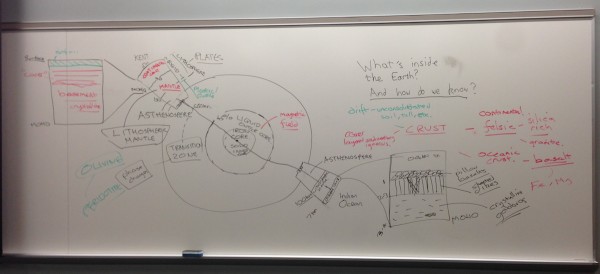
A post by Chris RowanOne of the first things I do in my introductory geology class is talk about the structure of the Earth. Knowing the names, composition and physical properties of the different layers is an important foundation for the rest of the course, which means I fret about presenting the information in a clear and memorable manner*. This year, I decided to try a slightly different approach to in the past: I started my lecture by drilling an imaginary borehole down into the Earth from our lecture room. We discussed how what we were drilling through changed as we crossed the Moho, the lithosphere-asthenosphere boundary and the core-mantle boundary, and then crossed them again as we came up at the antipode of NE Ohio, which lies in the Indian ocean off Australia. Rather conveniently, this meant I had a good opportunity to discuss the differences between oceanic and continental lithosphere. It seemed to work pretty well. This is what the board looked like at the end of my lecture:

The whiteboard following my Earth Structure lecture

The whiteboard following my Earth Structure lecture. I ended up having to move a table which restricted my access to the right hand side of the board in the middle of the lecture. I’m sure my class thought this was very amusing.

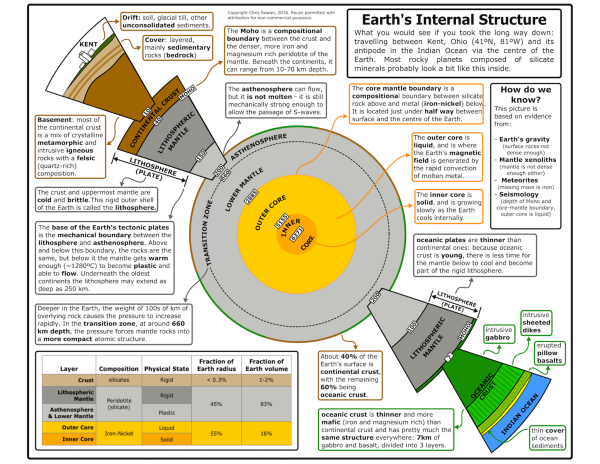
I gave the students blank cross-sections to fill in with all the information as we went, but then I thought that maybe I could give my students an even better study resource. I took the rough figure I had created in Inkscape to work out how to arrange all the information in the cross-section, spruced it up and added text boxes explaining all the most important information, and voilà:

The Earth, Down From Kent, Ohio.

The Earth, Down From Kent, Ohio. Click here for a large version.

I think it turned out pretty well. Anyone who finds this useful is welcome to use it with attribution; if you want the .svg file so you can modify it to fit your location, get in touch.

*a constant worry for most of the course, to be honest.

06 Oct 20:48

A Map of Canada’s Roads and Highways

by Jonathan Crowe

earthartaustralia-canada

This striking high-resolution map of Canada’s roads and highways, produced by EarthArtAustralia, is a work of GIS: it’s assembled from Canadian GIS road data, with roads coloured and weighted by importance (freeways are bright yellow, back roads are blue). This map is also inarguably a work of art: I could easily have one on my wall. It’s certainly being sold as such, with high-resolution digital downloads and prints available. (EarthArtAustralia has a number of downloadable and frameable maps based on road and waterway data: they’ve been coming at a furious clip lately.)

06 Oct 20:48

Mapping the Ocean Floor by 2030

by Jonathan Crowe

Newsweek looks at efforts by a group of scientists and mariners to map most of the ocean floor by the year 2030. The objective was endorsed by a meeting of GEBCO, the General Bathymetric Chart of the Oceans, last June. The scale of the project is vast:

To date, more than 85 percent of the seafloor has not been mapped using modern methods. Since 70 percent of the Earth is covered in oceans, this means that we quite literally don’t know our own planet. “We know the surface of Mars better than we do the seafloor,” says Martin Jakobsson, a researcher at Stockholm University.

[Leventhal/MAPS-L]

06 Oct 20:47

Poetry’s rich tradition of urban wandering

by Morgan Meis

People-walking-nycKathleen Rooney at Poetry Magazine:

Many poets have recognized the connection between urban walking and poetry, but perhaps the first to do so in any kind of systematic way was Charles Baudelaire. He posited in both his nonfiction and his poems, particularly those in Paris Spleen(posthumously published in 1869), that such close observation and curiosity ought to be among the governing emotions of the urban walker and artist. In his 1863 essay “The Painter of Modern Life,” Baudelaire lays out much of his theory of flânerie, or aimless walking through a city; he writes of the titular painter and archetypal flâneur Constantin Guys that “to begin to understand M. G., the first thing to note is this: that curiosity may be considered the starting point of his genius.”

To be curious can mean to be eager to learn or know something, or it can mean strange or unusual, and Baudelaire’s literary output offers examples of both definitions. Etymologically, the word derives from the Latin curiosus, meaning “careful, diligent; inquiring eagerly”; it is also related to cura or “care.” In other words, paying attention to the city outside you and what it evokes within you can be a form of care. 

more here.

06 Oct 18:44

6 Ways to Dress Like a Houstonian for Halloween

Halloween is coming up, and a lot of folks are trying to figure out what kind of costumes they'll be wearing this year. This is a weird year, and some outfits just won't cut it anymore - Dressing like an evil clown might get a person arrested or shot, and...
05 Oct 20:58

Rosetta's 12-Year Mission Ends With Landing On Comet

by BeauHD
sciencehabit writes: It was an unusual grand finale. The crowded European Space Agency (ESA) operations center in Darmstadt, Germany, waited in silence and then the signal from the descending Rosetta mission simply stopped at 1.19 pm local time showing that the spacecraft had, presumably, landed on comet 67P/Churyumov-Gerasimenko some 40 minutes earlier, due to the time the signal takes to reach Earth. Mission controllers hugged each other; there was gentle applause from onlookers; and that was it. There were no last minute crises. Seven of Rosetta's instruments kept gathering data until the end. Holger Sierks, principal investigator of the 12-year mission's main camera, showed the gathered staff, officials, and journalists Rosetta's final picture: a rough gravelly surface with a few larger rocks covering an area 10 meters across. Earlier, it had snapped the interior of deep pits on the comet (shown above, from an altitude of 5.8 kilometers) that may show the building blocks it is made of. "It's very crude raw data but this will keep us busy," Sierks said. It is hoped that this last close-up data grab will help to clarify the many scientific questions raised by Rosetta.

Share on Google+

Read more of this story at Slashdot.

05 Oct 20:45

Verizon Workers Can Now Be Fired If They Fix Copper Phone Lines

by msmash
Verizon has told its field technicians in Pennsylvania that they can be fired if they try to fix broken copper phone lines. Instead, employees must try to replace copper lines with a device that connects to Verizon Wireless's cell phone network, ArsTechnica reports. From the article:This directive came in a memo from Verizon to workers on September 20. "Failure to follow this directive may result in disciplinary action up to and including dismissal," the memo said. It isn't clear whether this policy has been applied to Verizon workers outside of Pennsylvania. The memo and other documents were made public by the Communications Workers of America (CWA) union, which asked the Pennsylvania Public Utility Commission to put a stop to the forced copper-to-wireless conversions. The wireless home phone service, VoiceLink, is not a proper replacement for copper phone lines because it doesn't work with security alarms, fax machines, medical devices such as pacemakers that require telephone monitoring, and other services, the union said.

Share on Google+

Read more of this story at Slashdot.

28 Sep 20:58

How Vector Space Mathematics Reveals the Hidden Sexism in Language

by S. Abbas Raza

As neural networks tease apart the structure of language, they are finding a hidden gender bias that nobody knew was there.

From the MIT Technology Review:

ImageBack in 2013, a handful of researchers at Google set loose a neural network on a corpus of three million words taken from Google News texts. The neural net’s goal was to look for patterns in the way words appear next to each other.

What it found was complex but the Google team discovered it could represent these patterns using vectors in a vector space with some 300 dimensions.

It turned out that words with similar meanings occupied similar parts of this vector space. And the relationships between words could be captured by simple vector algebra. For example, “man is to king as woman is to queen” or, using the common notation, “man : king :: woman : queen.” Other relationships quickly emerged too such as  “sister : woman :: brother : man,” and so on. These relationships are known as word embeddings.

This data set is called Word2vec and is hugely powerful. Numerous researchers have begun to use it to better understand everything from machine translation to intelligent Web searching.

But today Tolga Bolukbasi at Boston University and a few pals from Microsoft Research say there is a problem with this database: it is blatantly sexist.

More here.  [Thanks to Farrukh Azfar.]

12 Sep 23:37

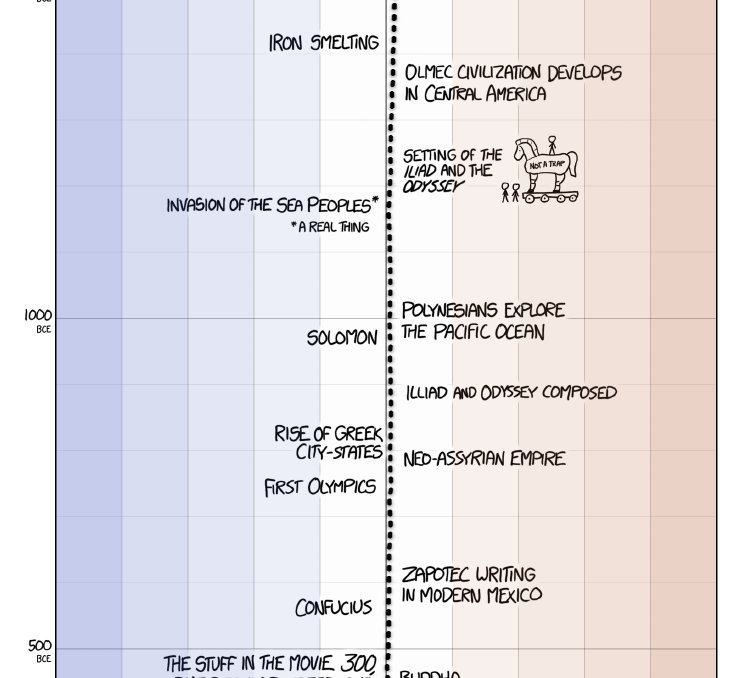
XKCD's massive, vertical climate change infographic

by Cory Doctorow

050 056c026d-1c66-4d42-9fae-a8e96df290c5-1020x1175

Randall Munroe once again shows that he's one of the web's most talented storytellers, inventing ways of conveying information that use the web's affordances to novel and sharp effect (there's a reason he won a Hugo award). (more…)

12 Sep 22:55

Greed turned cheese bright orange

by Jason Weisberger

American Cheese!

The discussion of last weeks post about American Cheese led me to this article on NPR.

Cheese was once colored bright orange to falsely imply it had lots of yellow/orange pigmented cream in it, a sign of quality several centuries ago. The cream had been skimmed, for sale elsewhere, so the cheese mongers colored the cheese.

Greed is all natural, right?

Via NPR:

Cheese expert Paul Kindstedt of the University of Vermont explains that back in the 17th century, many English cheesemakers realized that they could make more money if they skimmed off the cream — to sell it separately or make butter from it.

But in doing so, most of the color was lost, since the natural orange pigment is carried in the fatty cream.

So, to pass off what was left over — basically low-fat cheese made from white milk — as a high-quality product, the cheesemakers faked it.

"The cheesemakers were initially trying to trick people to mask the white color [of their cheese]," explains Kindstedt.

12 Sep 22:54

Anadarko to buy Freeport-McMoRan assets for $2B

by Olivia Pulsinelli
Anadarko Petroleum Corp. (NYSE: APC) plans to buy Freeport McMoRan Oil & Gas’ deepwater Gulf of Mexico assets for $2 billion, the companies announced Sept. 12. The acquisition increases Anadarko’s working interest in the Lucius field from its previous 23.8 percent ownership to approximately 49 percent and adds approximately 80,000 barrels of oil equivalent per day to Anadarko’s sales-volume guidance. The Woodlands-based Anadarko plans to use the cash generated by the additional production…
02 Sep 16:51

A Horrifying Comic-Book Future Where Antibiotics Don't Work Any More

by Evan Narcisse

Imagine a future where the drugs we rely on to cure common yet life-threatening infections don’t work on most people. Now imagine a right-wing regime that only gives the medicine that still works to “productive” citizens. That’s right: millions of people would be screwed.

Read more...

01 Sep 18:57

Here’s What Happens When Two Designers Speak Only in Infographics

by Liz Stinson
Here’s What Happens When Two Designers Speak Only in Infographics
A collection of their correspondence offers an intimate look at the lives of two designers as told through their personal data. The post Here's What Happens When Two Designers Speak Only in Infographics appeared first on WIRED.
01 Sep 18:55

Why you don't need 8 glasses of water a day

by Mark Frauenfelder
waterfreaks

The beverage industry has been pushing the idea that you need to be drinking water and sugar water all day long, but according to Oakland University exercise physiologust Tamara Hew-Butler DPM, PhD, that's not true. "Our bodies already possess an extremely sensitive measure of dehydration," she says in this entertaining mythbusting video. "It's called thirst."

01 Sep 17:37

Marie Tharp: Continental Drift as ‘Girl Talk’

by Jonathan Crowe

tharp-heezenAnother profile of ocean cartographer Marie Tharp, this time from Smithsonian.com’s Erin Blakemore. As Blakemore recounts, Tharp crunched and mapped the sonar sounding data collected by her collaborator, Bruce Heezen; her calculations revealed a huge valley in the middle of a ridge in the North Atlantic seafloor.

“When I showed what I found to Bruce,” she recalled, “he groaned and said ‘It cannot be. It looks too much like continental drift.’ … Bruce initially dismissed my interpretation of the profiles as ‘girl talk’.” It took almost a year for Heezen to believe her, despite a growing amount of evidence and her meticulous checking and re-checking of her work. He only changed his mind when evidence of earthquakes beneath the rift valley she had found was discovered—and when it became clear that the rift extended up and down the entire Atlantic. Today, it is considered Earth’s largest physical feature.

When Heezen—who published the work and took credit for it—announced his findings in 1956, it was no less than a seismic event in geology. But Tharp, like many other women scientists of her day, was shunted to the background.

I really ought to get to Hali Felt’s 2012 biography of Tharp, Soundings: The Story of the Remarkable Woman Who Mapped the Ocean Floor, at some point. Amazon (Kindle), iBooks.

Previously: Marie Tharp ProfileSoundings: A Biography of Marie TharpMarie Tharp and Plate TectonicsMarie Tharp.

01 Sep 17:36

The Map Against the World

by Jonathan Crowe

map-against-the-world daedongyeojido

Next month sees the release of The Map Against the World, a Korean movie about cartographer Kim Jeong-ho, who in 1861 produced an enormous, detailed map of Korea called the Daedongyeojido. The movie stars Cha Seung-won as Kim and is directed by Kang Woo-suk. Here’s a trailer:

According to IMDb, it opens on 7 September in South Korea and on the 9th in the United States. (I’d check that page for other international release dates, if any.) [WMS]

01 Sep 17:32

Happy 100th Birthday, National Park Service!

by Chris Rowan

A post by Chris RowanA post by Anne JeffersonA post by Geo KidAs the US National Park Service celebrates its Centennial this year, we thought we’d celebrate with it by sharing some of our favorite photos from the national parks we have visited in the era of digital photography.

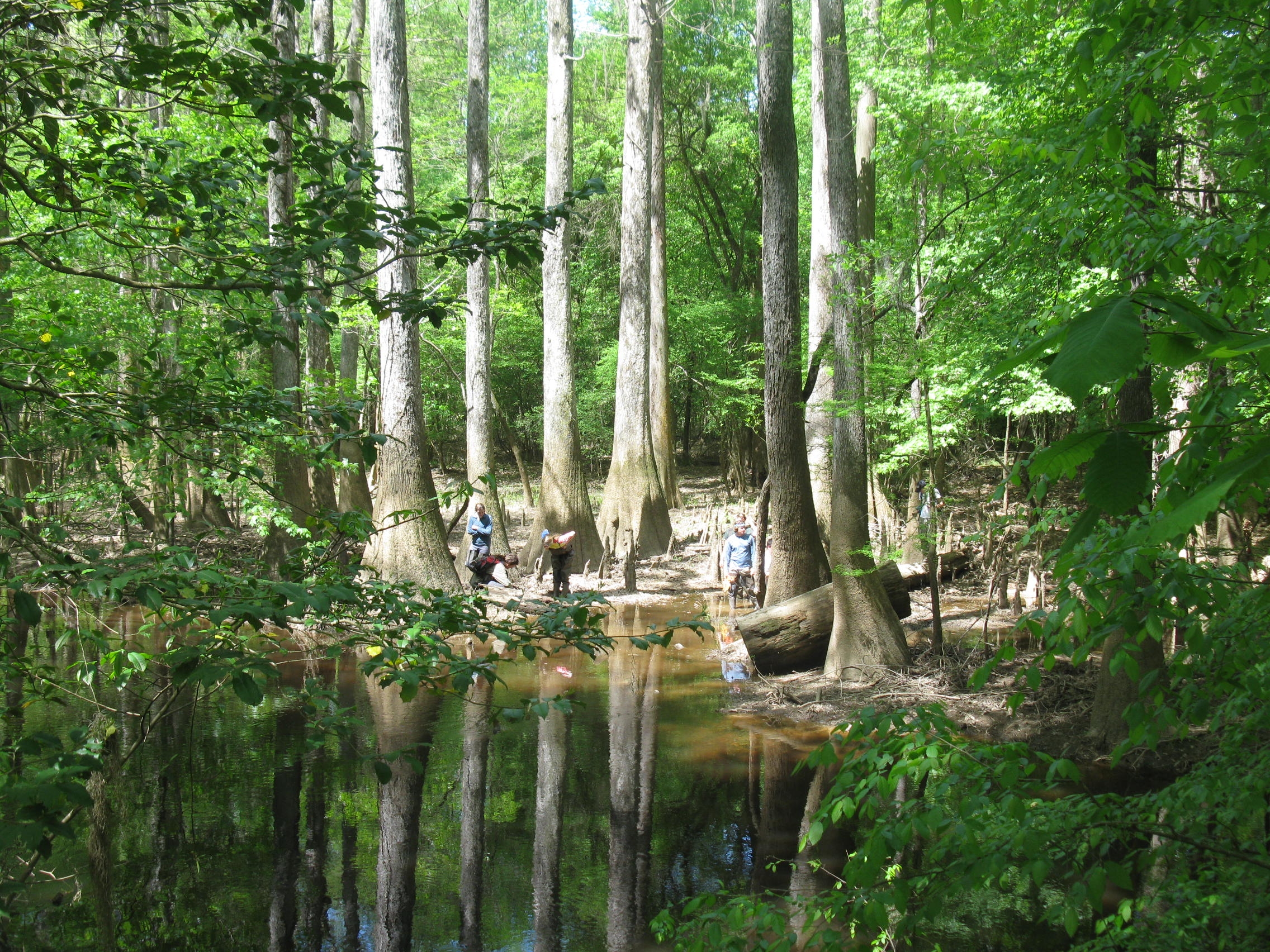
Congaree National Park

Tall trees dwarfing people. River in foreground.

Hydrogeology students measuring streamflow and groundwater levels in the midst of a very impressive floodplain forest.

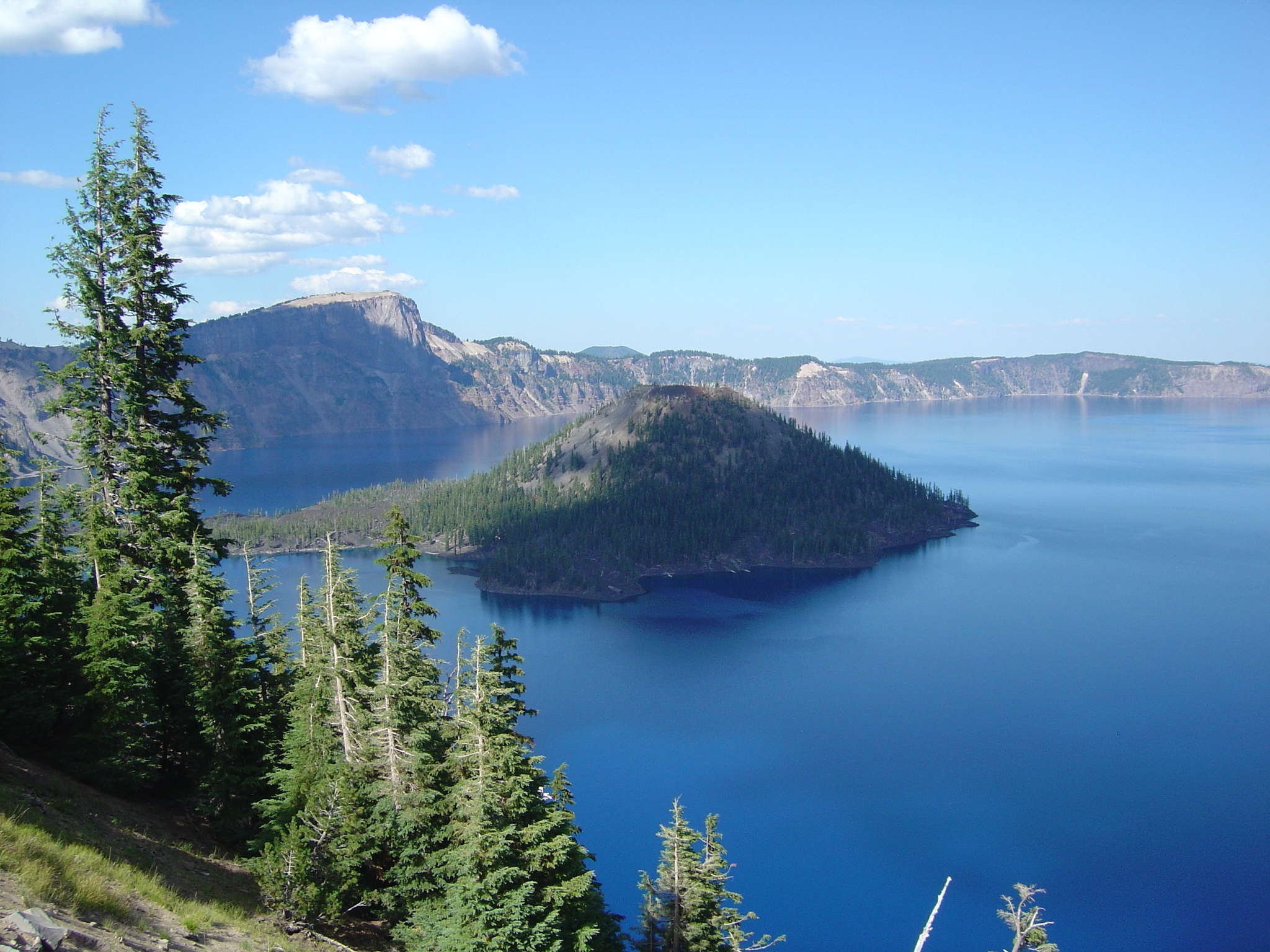
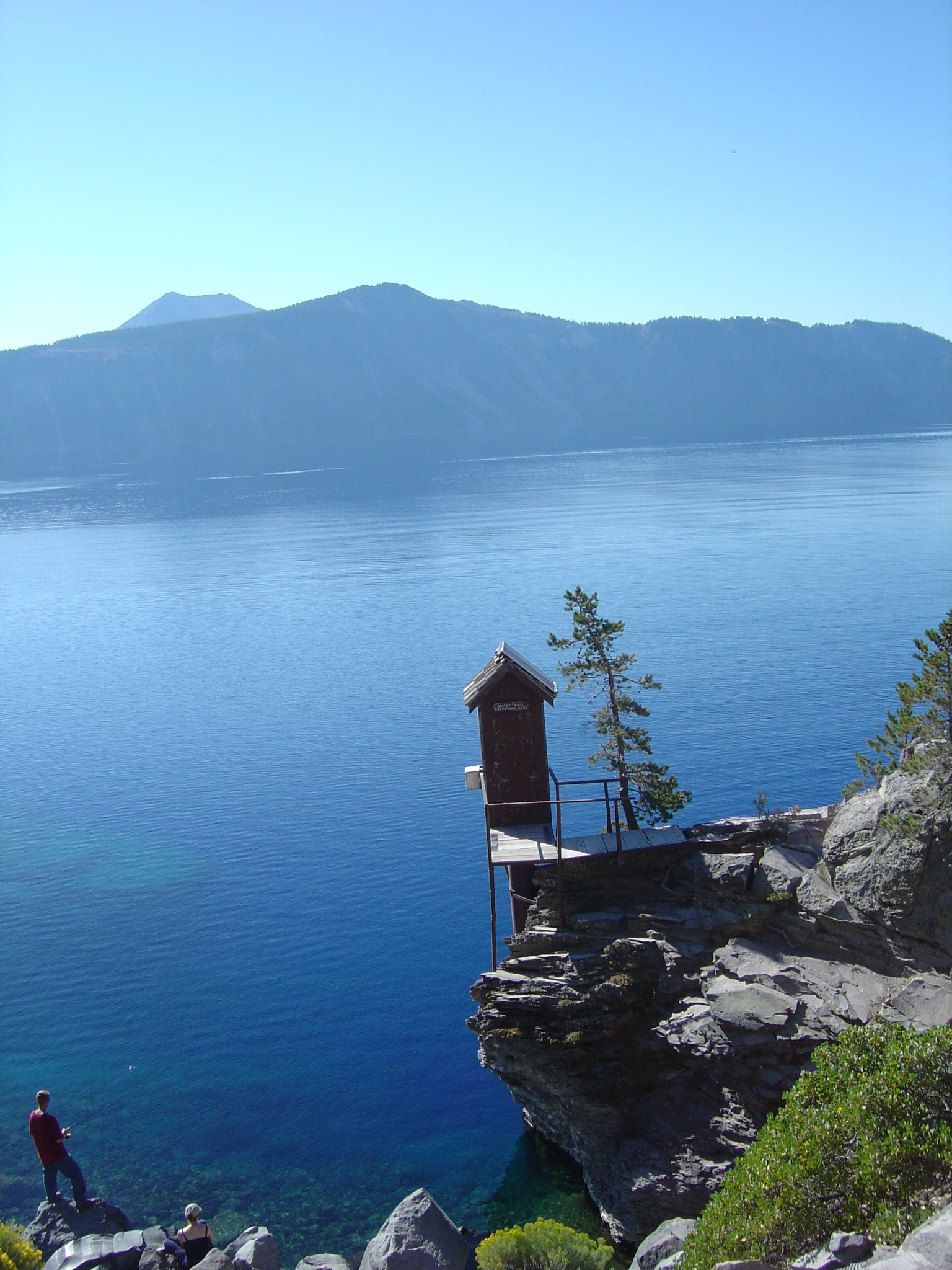
Crater Lake National Park

Spectacularly blue lake and sky with cinder cone rising in the center. trees in foreground.

Wizard Island, a volcano within a volcano.

Small brown hut on platform on rocks above lake.

The hydrologist very much enjoyed seeing the USGS lake level gage perched above Crater Lake’s cold, deep water.

Cuyahoga Valley National Park

We are super lucky to have a local National Park, especially one that is free to everyone, all year long. We keep finding new places to explore in this park, but here’s a picture from our most recent adventure.

 Ritchie Ledges in Cuyahoga Valley National Park

Anne and Geodog explore the Ritchie Ledges in Cuyahoga Valley National Park

Grand Teton National Park

Grand Teton National Park

Grand Teton is very pretty when the cloud base is high…

Grand Teton National Park

Anne and Geokid venture into the heart of Grand Teton.

Great Smokey Mountains National Park

Water flowing over ancient metamorphosed sediments, Great Smokey Mountains

Two of our favourite things: water flowing over ancient rocks, Great Smokey Mountains.

GeoKid never takes the boring route.

GeoKid never takes the boring route. Can’t imagine where she got that attitude from.

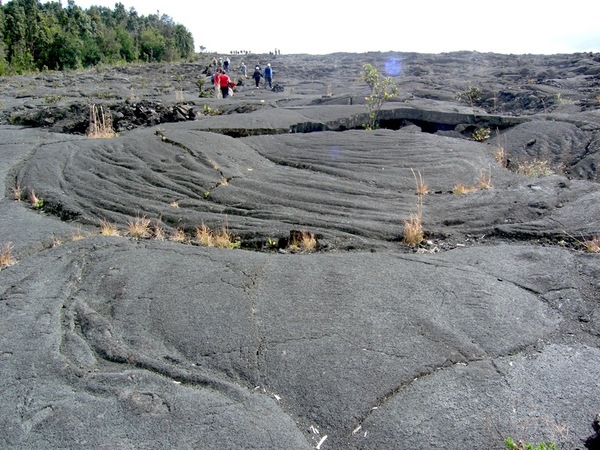
Hawaii Volcanoes National Park

A pahoehoe lava flow that has engulfed the (former) western slope of Pu'u Huluhulu. Photo: Chris Rowan, 2012.

Exploring a pahoehoe lava flow.

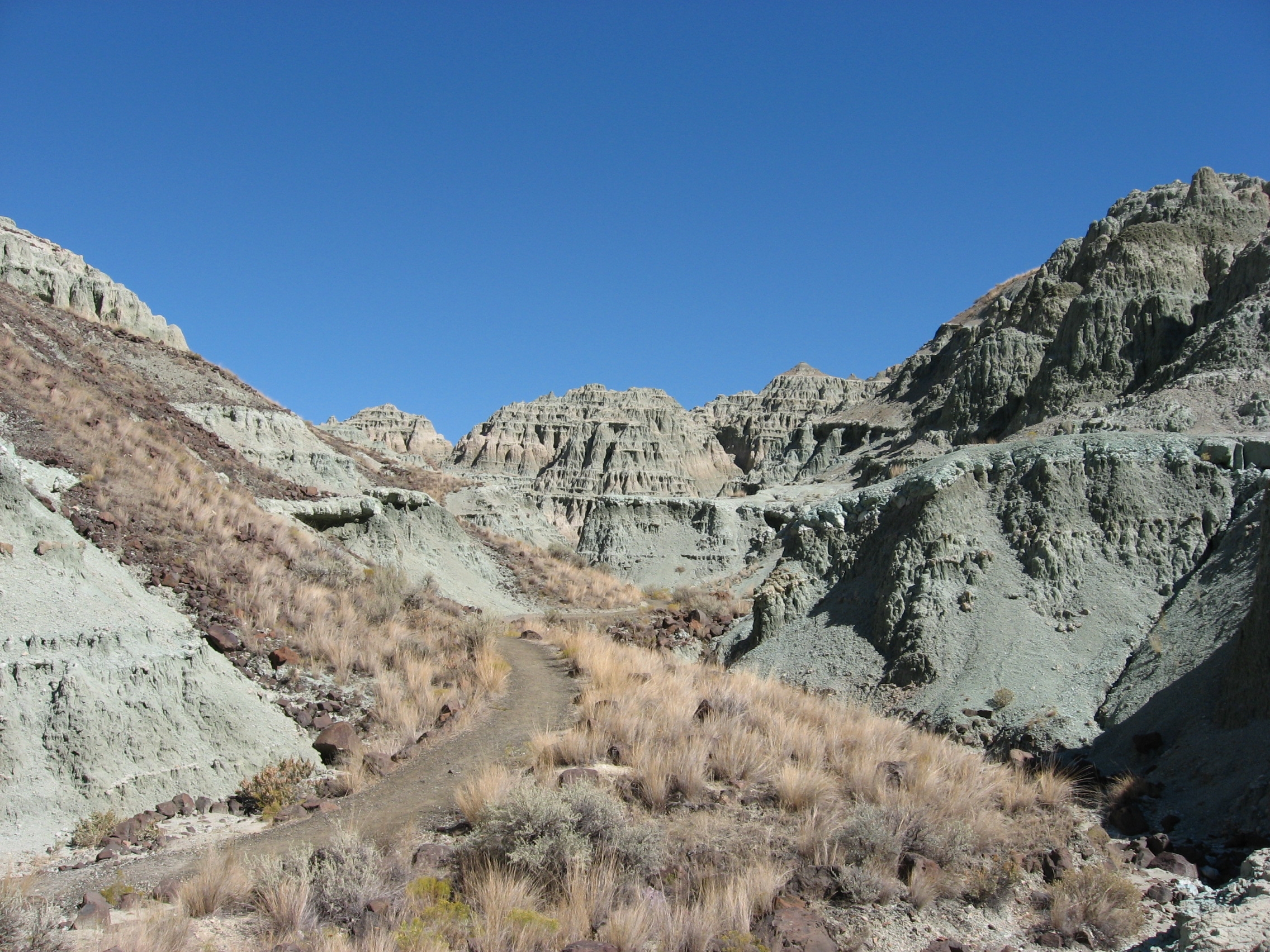
John Day Fossil Beds National Monument

The fossil rich Blue Basin. Anne's proud that she spotted a fossil embedded in the rock, and she doesn't want to think about how many she probably missed in passing.

The fossil rich Blue Basin. Anne’s proud that she spotted a fossil embedded in the rock, and she doesn’t want to think about how many she probably missed in passing.

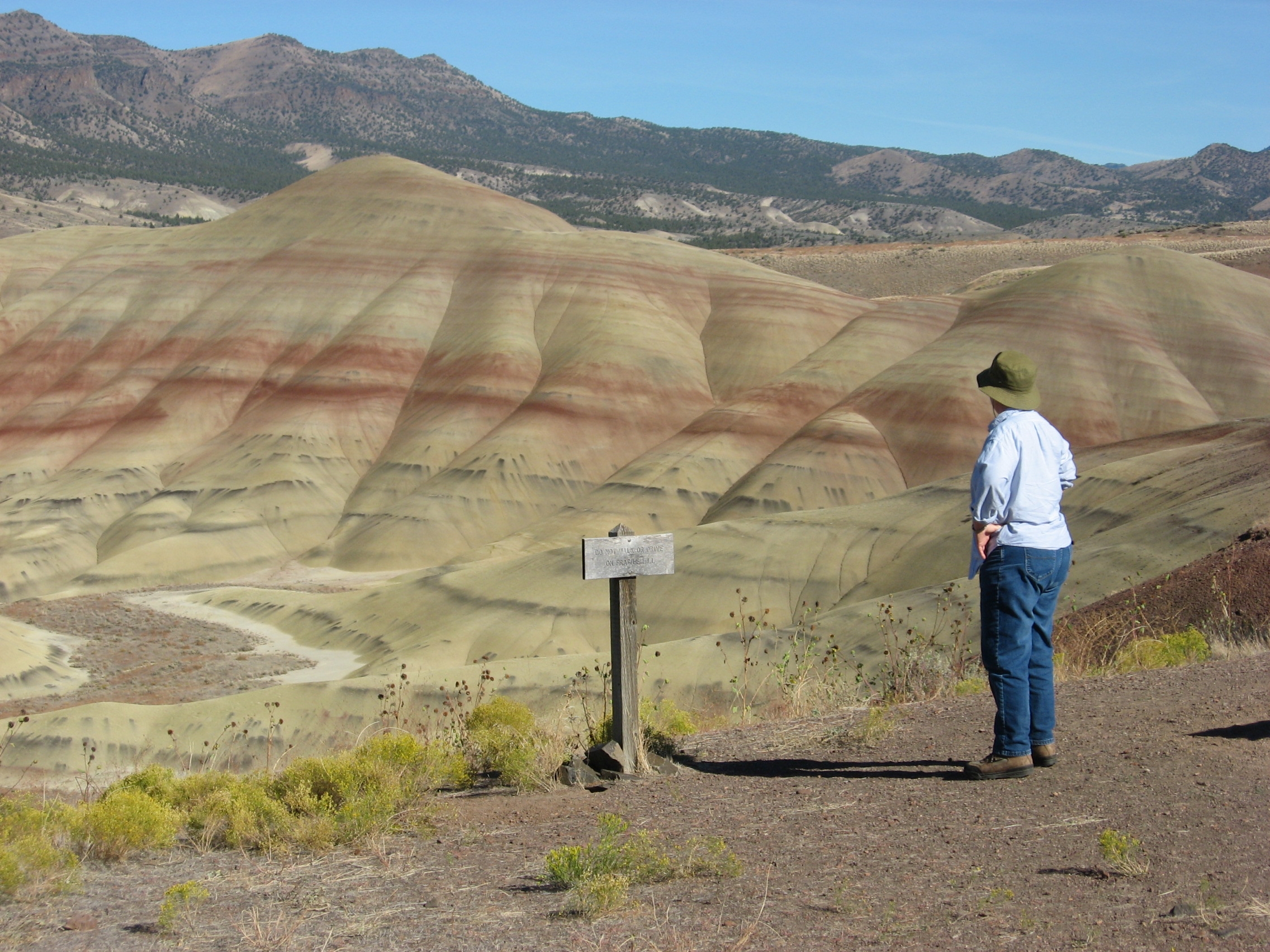
Red and white striped badlands. Person in foreground at right.

The Painted Hills unit with its spectacular paleosols is near where Anne went to field camp and is where she went to celebrate defending her PhD (nearly 10 years ago now!)

Mammoth Cave National Park

Spectacular curtain of stalactites, Mammoth Cave National Park

Spectacular curtain of stalactites, Mammoth Cave National Park

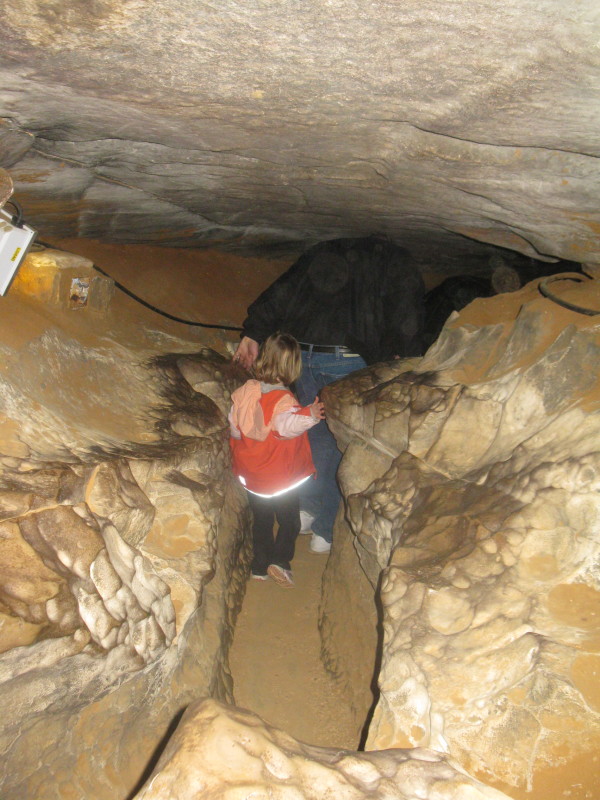
GeoKid finds the going much easier than the adults in a slightly less Mammoth Part of Mammoth Cave.

GeoKid finds the going much easier than the adults in a slightly less Mammoth Part of Mammoth Cave.

Olympic National Park

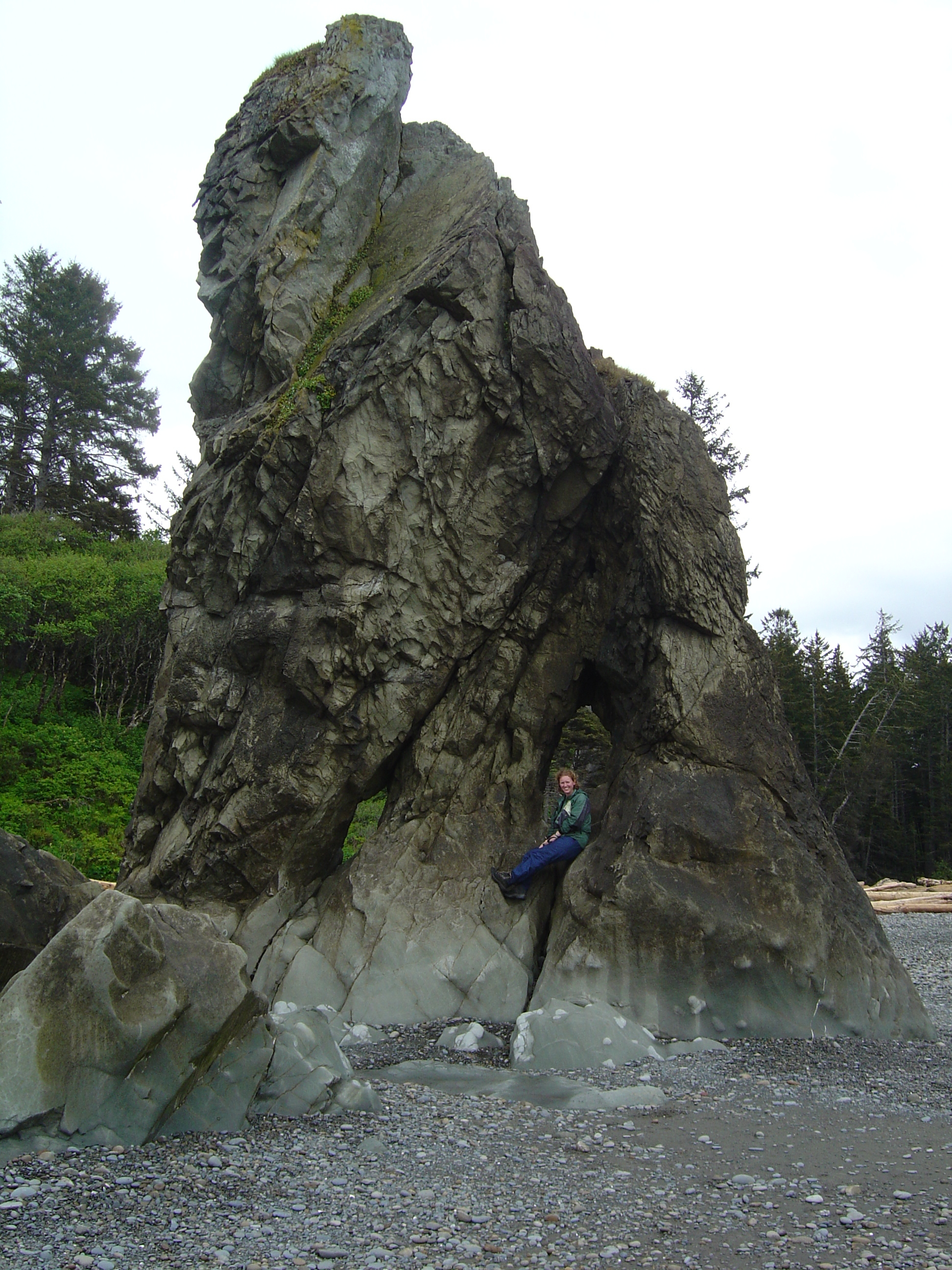
Beach stack with Anne posing in a keyhole.

A field trip in Anne’s tectonic geomorphology class in graduate school provided an all too brief glimpse of the Olympics – and a chance to recover from her comprehensive qualifying exams.

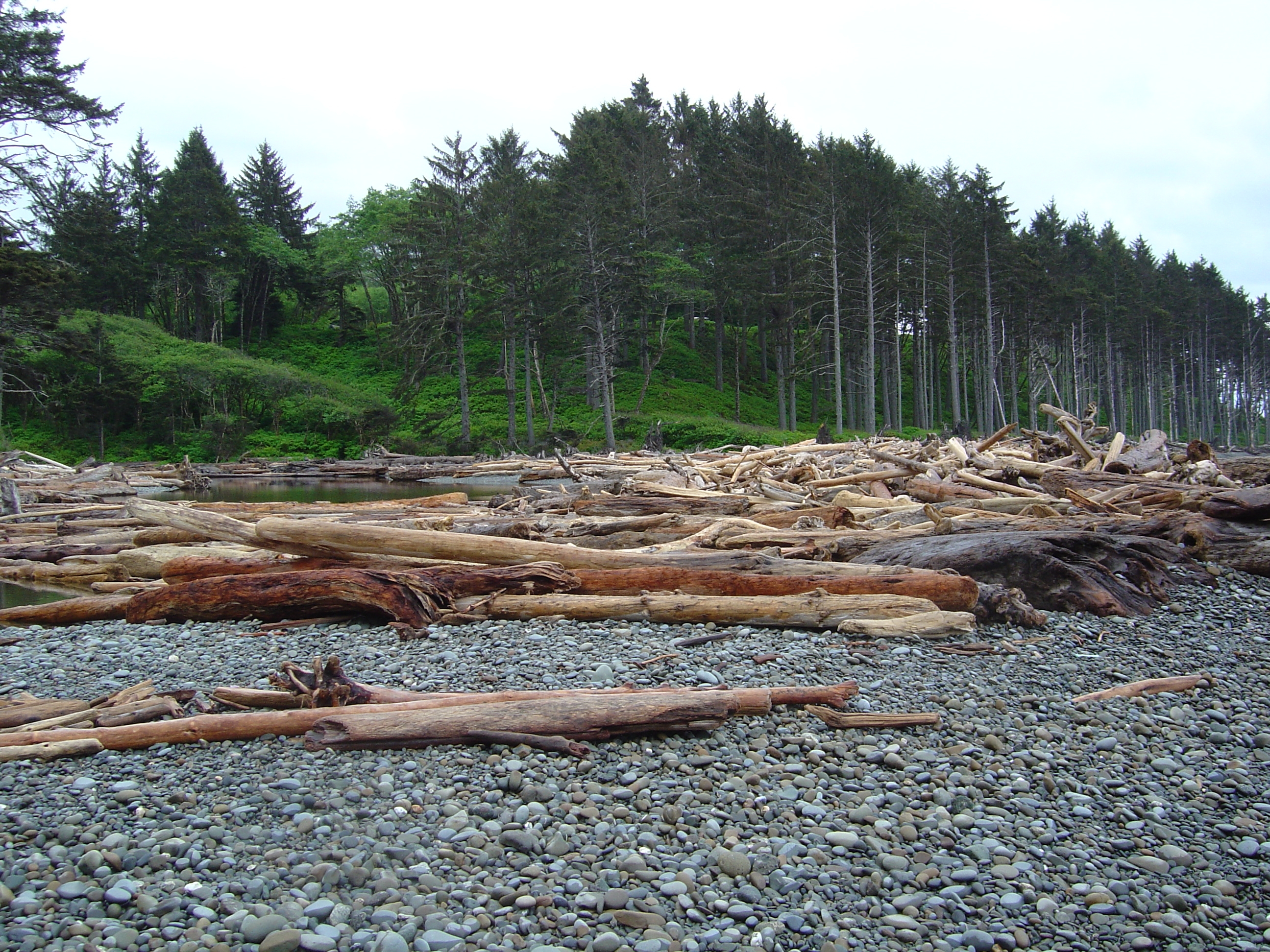
Beach in foreground. Covered in huge logs in midground. Green forests in background.

So. Much. Wood. On Pacific Northwest Beaches.

Redwood National and State Park

Anne reaching up high at the base of a Redwood.

Big trees. Incredibly hard to get a sense of scale in a single photograph.

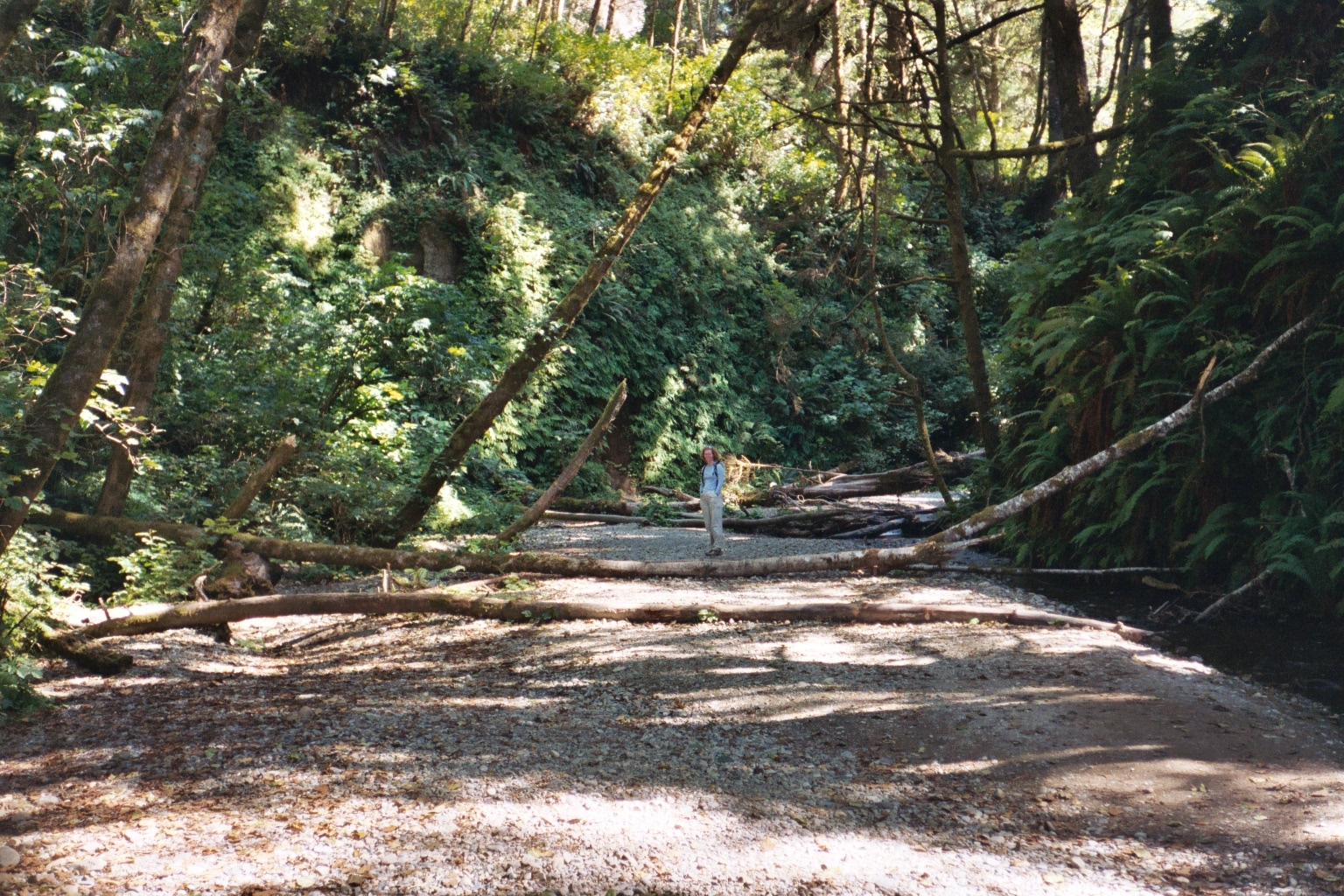
Slot canyon covered in ferns on the walls, with a gravel channel on the floor. Anne in background.

Fern Canyon is absolutely magical, and absolutely not a place I’d want to be in a rainstorm.

Rocky Mountain National Park

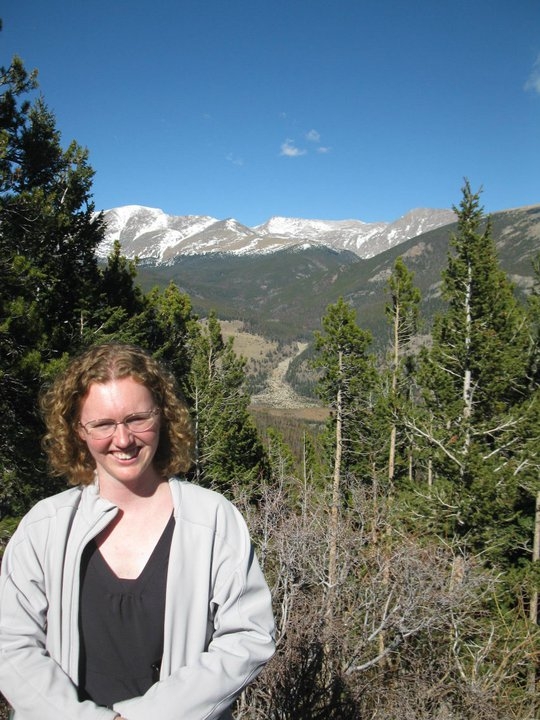
Anne in foreground. Snowcapped mountains in background.

In the valley below, there’s an alluvial fan formed during a catastrophic dam break flood. And behind that there are some mountains. This picture was taken on a Geological Society of America Quaternary Geology and Geomorphology Kirk Bryan field trip, so Anne was in good company ignoring the mountains for the valleys.

Shenandoah National Park

Spectacular columnar basalts (and impressed students), Shenandoah National Park

Spectacular columnar basalts (and impressed students), Shenandoah National Park

Thomas Jefferson Memorial

TerraTyke explores the Jefferson Memorial

TerraTyke explores the Jefferson Memorial (run by the NPS. Totally counts.)

Yellowstone National Park

Allochthonous family looking the wrong way as a geyser does its thing

The first National Park outing for the Allochthonous family was a 2010 trip to Yellowstone (and Grand Teton). Not a bad starting point.

GeoKid examines hot spring algae

GeoKid learns that hot springs were worthy of close examination.

Algal mats at Grand Prismatic Spring

Colourful life thriving in hot, silica rich water at Grand Prismatic Spring.

Yosemite National Park

El Capitan, with conifers in foregound.

Gorgeous granite galore.

That’s 15 national parks in the last 12 years. More in the pre-digital era. But so many more yet to see. This year, GeoKid is in 4th grade, which means that she gets to take part in the fabulous “Every Kid in a Park” program that gives free park passes to families of every fourth grader. Where should we go next?

01 Sep 17:32

Life Began As Clay Crystals

by noreply@blogger.com (Suvrat Kher)
There is a fine article on BBC Earth by Martha Henriques on the work of chemist Graham Cairns-Smith and his theory that life may have begun as clay crystals. Cairns-Smith reasoned that clay minerals are made up of sheets of atoms bonded in a regular lattice pattern that is stacked in layers.  Pieces of this latticework break off, forming offspring crystals often with minor dislocations to the latticework. These offspring crystals grow ..break off with more minor changes... grow.. and so on. Organic molecules like the precursors of DNA might have used such a "replicating entity" as a scaffolding to build an organic replicating system.

His idea stood at the intersection of geology, chemistry and biology and his wife Dorothy recalls the reaction he got from his peers:

"He could never get funding," Dorothy says. A major stumbling block to securing research grants was that his work straddled too many different disciplines.

One time we went to California, and Graham gave lectures to the Menlo Park Geology Survey," says Dorothy. "They all said, well, your geology's fine but I don't think your chemistry's right. Then he gave a lecture to NASA on the chemistry side and they said, well, your chemistry's fine but I'm not sure about your biology. And then he lectured to Berkeley and they said, well, your biology's fine but I'm not sure about your geology".

Nowadays such grand problems are tackled by multi-disciplinary teams of sub sub specialists. If a chemist is asked to talk on the geology aspects,  he just forwards the email of his teammate.

01 Sep 17:02

52 Things... Rock Physics

by Matt Hall

There's a new book in the 52 Things family! 

52 Things You Should Know About Rock Physics is out today, and available for purchase at Amazon.com. It will appear in their European stores in the next day or two, and in Canada... well, soon. If you can't wait for that, you can buy the book immediately direct from the printer by following this link.

The book mines the same vein as the previous volumes. In some ways, it's a volume 2 of the original 52 Things... Geophysics book, just a little bit more quantitative. It features a few of the same authors — Sven Treitel, Brian Russell, Rachel Newrick, Per Avseth, and Rob Simm — but most of the 46 authors are new to the project. Here are some of the first-timers' essays:

  • Ludmilla Adam, Why echoes fade.
  • Arthur Cheng, How to catch a shear wave.
  • Peter Duncan, Mapping fractures.
  • Paul Johnson, The astonishing case of non-linear elasticity.
  • Chris Liner, Negative Q.
  • Chris Skelt, Five questions to ask the petrophysicist.

It's our best collection of essays yet. We're very proud of the authors and the collection they've created. It stretches from childhood stories to linear algebra, and from the microscope to seismic data. There's no technical book like it. 

Supporting Geoscientists Without Borders

Purchasing the book will not only bring you profund insights into rock physics — there's more! Every sale sends $2 to Geoscientists Without Borders, the SEG charity that supports the humanitarian application of geoscience in places that need it. Read more about their important work.

It's been an extra big effort to get this book out. The project was completely derailed in 2015, as we — like everyone else — struggled with some existential questions. But we jumped back into it earlier this year, and Kara (the managing editor, and my wife) worked her magic. She loves working with the authors on proofs and so on, but she doesn't want to see any more equations for a while.

If you choose to buy the book, I hope you enjoy it. If you enjoy it, I hope you share it. If you want to share it with a lot of people, get in touch — we can help. Like the other books, the content is open access — so you are free to share and re-use it as you wish. 

29 Aug 20:51

How One Man Dreamed Up Tetris, the Game That Shook the World

by Dan Ackerman
How One Man Dreamed Up Tetris, the Game That Shook the World
In an excerpt from the upcoming book The Tetris Effect, we learn how a children's toy in a Moscow shop inspired the game that changed the world. The post How One Man Dreamed Up Tetris, the Game That Shook the World appeared first on WIRED.
29 Aug 20:51

Quantitative Measures of Linguistic Diversity and Communication

by Hari Balasubramanian

by Hari Balasubramanian

Ethnologue_18_linguistic_diversity_index_BlankMap-World6.svgOf the 7097 languages in the world, twenty-three (including the usual suspects: Mandarin, English, Spanish, various forms of Arabic, Hindi, Bengali, Portuguese) are spoken by half of the world's population. Hundreds of languages have only a handful of speakers and are disappearing quickly; one language dies every four months. Some parts of the world (dark green regions in the map) are linguistically far more diverse than others. Papua New Guinea, Cameroon, and India have hundreds of languages while in Japan, Iceland, Norway, and Cuba a single language dominates. 

Why are languages distributed this way and why such large variations in diversity? These are hard questions to answer and I won't be dealing with them in this column. So many factors – conquest, empire, globalization, migration, trade necessities, privileged access that comes with adopting a dominant language, religion, administrative convenience, geography, the kind of neighbors one has – have had a role to play in determining the course of language history. Each region has its own story and it would be too hard to get into the details.  

I also won't be discussing the merits and demerits of linguistic diversity. Personally, having grown up with five mutually unintelligible Indian languages, I am biased towards diversity – each language encapsulates a unique way of looking at the world and it seems (at least theoretically) that a multiplicity of worldviews is a good thing, worth preserving. But I am sure there are opposing arguments.

Instead, I'll restrict my focus to the following questions. How can the linguistic diversity of a particular region or country be numerically quantified? How do different parts of the world compare? How to account for the fact that languages may be related to one another, that individuals may speak multiple languages? 

In tackling these questions, my primary source and guide is a short paper published in 1956 by Joseph Greenberg [1]. Greenberg's main goal was to create objective measures that could, in the future, be used to "to correlate varying degrees of linguistic diversity with political, economic, geographic, historic, and other non-linguistic factors." His paper proceeds from the assumption that linguistic surveys have been conducted and data on what people consider their mother tongue/first language, the number of speakers of each language, vocabulary etc. are already available. Ethnologue is an example of such a global survey [2]. 

The Linguistic Diversity Index

The most basic measure Greenberg proposed is the now widely used linguistic diversity index. The index is a value between 0 and 1. The closer the value is to 1, the greater the diversity. The index is based in a simple idea. If I randomly sample two individuals from a population, what is the probability that they do not share the same mother tongue? If the population consisted of 2000 individuals and each individual spoke a different language as their mother tongue, then the linguistic diversity index would be 1. If they all shared the same mother tongue, then the index would be 0. If 1800 of them spoke language M and 200 of them spoke N, then index would be: 

1 – (1800/2000)2 - (200/2000)2   = 0.18

In the above, (1800/2000) is the probability that a randomly picked individual speaks M as their first language/mother tongue. And (1800/2000)2 is the probability that two randomly picked individuals speak M. Similarly, (200/2000)is the probability that both the randomly picked individuals speak N as their mother tongue. When we subtract these squared terms from 1, what remains is the probability that the two randomly sampled individuals do not share a mother tongue. In this particular example, the index of 0.18 is low because of the dominance of M. 

If there are more than two languages the procedure is the same. You would have one squared term that needs to be subtracted for every language. In a population of 10,000 where 10 languages are spoken and each language is considered a mother tongue by exactly 1000 speakers, the index would be:

1 – 10 x (1000/10,000)2 = 0.9.

This high value reflects both the number of languages and how evenly distributed they are in the population. 

Top15_3

In fact, there are fifteen countries whose linguistic diversity exceeds 0.9, as the table above shows (based on Ethnologue data [2]). The list is dominated by 11 African countries, with Cameroon at number two. India, whose linguistic diversity I experienced firsthand for twenty years, is at number 13. Two Pacific island nations – Vanuatu and Solomon Islands: small islands these, and yet so many languages! – are in the top 5. First on the list is Papua New Guinea whose 4.1 million people speak a dizzying 840 languages! The country's index of 0.98 means that each language has about 5000 speakers on average and that no language dominates as a mother tongue. 

In his book The World Until Yesterday, Jared Diamond, who did a lot of his fieldwork and research in New Guinea, has this startling anecdote:  

"One evening, while I was spending a week at a mountain forest campsite with 20 New Guinea Highlanders, conversation around the campfire was going in several different local languages plus two lingua francas of Tok Pisin and Motu…. Among those 20 New Guineans, the smallest number of languages that anyone spoke was 5. Several men spoke from 8 to 12 languages, and the champion was a man who spoke 15. Except for English, which New Guineans often learn at school by studying books, everyone had acquired all of his other languages socially without books. Just to anticipate your likely question – yes, those local languages enumerated that evening really were mutually unintelligible languages, not mere dialects. Some were tonal like Chinese, others were non-tonal, and they belonged to several different language families."

How different from what the majority of us are used to! 

While New Guinea's linguistic diversity is widely recognized and not in doubt, its high language count and the rampant multilingualism that Diamond observed nevertheless lead to us to two flaws in the linguistic diversity index.  

The first flaw is that the index assumes languages are well defined, mutually exclusive units. It ignores the relatedness between languages and the fact that a dialect may be arbitrarily called a language. What of cases where there is close relatedness and even mutual intelligibility, for example between Hindi and Urdu, or between Spanish and Italian? And what to make of those cases where two dialects may well be closely related, but nevertheless are mutually unintelligible when spoken? Further, the language question seems loaded with the question of identity and politics. Apparently there is a running joke among linguists: "A language is a dialect backed by by an army and a navy."

To partially address this, Greenberg -- who recognized these problems, and was well aware of the difficulties of distilling complex language realities into quantitative measures -- suggested that the resemblance between languages or dialects could be numerically quantified by a value between 0 and 1. This what I understood from his paper: take the combined current vocabulary of a pair of languages and calculate the proportion of words that are common to both languages in relation to the total list of words. This proportion gives us a approximate measure of resemblance. A resemblance close to 1 means that the two languages are virtually identical, and a resemblance close to 0 implies an almost total lack of relatedness. 

The resemblance can then be used to adjust the linguistic diversity index. Suppose there are three languages M, N and O spoken by 1/8th, 3/8th and 1/2 of the population and suppose the resemblance between [M, N], [M, O], and [N, O] is 0.85, 0.3 and 0.25.  The unadjusted linguistic diversity index is 0.593. If we adjust for resemblance, this value drops to 0.381 -- diversity is not as high as it originally seemed. I have explained the calculations at the end of the piece [3].

The second flaw in the index is that, by considering only an individual's mother tongue, it ignores multilingualism. As Diamond's New Guinea anecdote shows, a high linguistic diversity does not necessarily represent a lack of communication. The examples of Indonesia, India and the many countries of Africa show that it is possible to communicate in some common languages, lingua francas that span large parts of the population, while yielding space to local mother tongues. So a different kind of measure is required.  

Index of Communication

To accommodate multilingualism, Greenberg proposed the index of communication. As before, the index is a value between 0 and 1. A value close to 1 indicates high communicability and a value close to 0 indicates the opposite. If I randomly pick two individuals in a population, and each individual speaks one or more languages, then what is the probability that the individuals share at least one language in common? To ensure communicability, only one language has to overlap. (This index too has its problems. One flaw is that it ignores how well an individual speaks a particular language – something that might be hard to elicit in a survey. Another is how to set the threshold of communicability - is knowing a few basic words sufficient?)

Consider the simplest case where a population speaks only two languages, M and N. Using a census, you can calculate the proportion of the population that speaks M only, N only, and is bilingual in M and N. Suppose those proportions are 0.5 (speak M only), 0.3 (speak N only) and 0.2 (speak both M and N). To calculate the index of communication, I simply subtract the cases where the two individuals cannot understand/communicate with each other, which happens when the first individual speaks only M and the other only N, and vice-versa: 

1 – [0.5 x 0.3] – [0.3 x 0.5] = 0.7 

The same idea can be extended to more than two languages. 

I'll try to illustrate the index with a personal example. The engineering college I attended in the south Indian city of Trichy had students from all parts of the country. At the time the college was called Regional Engineering College (REC), it is now called the National Institute of Technology. There was one REC in each major Indian state. The RECs had a unique admission policy. Half of the engineering students admitted each year were from the local state – in the case of Trichy, the home state was Tamil Nadu – and the remaining half were from outside the state. The more populous states, such as Uttar Pradesh and Bihar, got more students, but even far-flung parts, the Northeast and Kashmir, had some representation.

2997ab80-aae3-4ce7-b614-392475daa18d-1020x612In my first year, all the 400 odd male engineering students were packed into the same hostel (dormitory), with 5 students sharing a room. In what seemed like a deliberate policy at integration, the students were assigned rooms so that 2-3 of the students were from Tamil Nadu and each of the others was from a different state. Since states in India are organized along linguistic lines, you had 3-4 mother tongues in each room. In the corridors you could hear the two dozen major languages of India [4]. 

Despite all this diversity, communication was never a problem. Among the North Indians almost everyone knew Hindi and so Hindi was the bridge between mother tongues. The local state students– they were colloquially called Tambis by the North Indians – spoke Tamil but did not understand Hindi and were even hostile to it (even today, the Indian prime minister Narendra Modi's emphasis on Hindi annoys my Tamil friends). But all students whether North Indian or Tamil, had some working knowledge of English – the language of the textbooks, which everyone aspired to speak well if only to get access to good jobs after graduation. So English – however grammatically inaccurate or spotty – was the bridge between the locals and the North Indians. 

If I randomly sampled two individuals from that student population of 400, then there is a good chance that the two students would have different mother tongues (high linguistic diversity), but due to multilingualism they would have at least one language in common. So the index of communicability was essentially 1, if we ignore the question of proficiency. 

My own case was somewhat different but by no means unique. Although I was born with Tamil as my mother tongue, I had lived mostly in West and Central India and had picked up Hindi, Gujarati and Marathi socially (the last two have dropped off due to lack of practice). I applied to college as an out-of-state student, but was really returning to my home state. In Trichy, I could communicate in Tamil with all the local students. Indeed, my colloquial command of Tamil – all the bad words included –went up! With everyone who was not from Tamil Nadu, I used mostly Hindi or English. I learned, to my surprise, that my ability in conversational English was poor, because I'd never really spoken it socially. 

The college experience I've described applies more generally. Many parts of India are like this: different language communities live together in cities and along borders between states and multilingualism facilitates communication.  

***

To summarize, Greenberg's two indices capture contrasting aspects of language reality in a population. The diversity index captures the number of mother tongues and how evenly represented they are in relation to each other, while the index of communication captures how connected a population is.

In theory, a population could retain its linguistic diversity while also maintaining a high index of communication essential in a globalized world. In practice however, a worldwide rise in communication appears to be happening at the expense of linguistic diversity, with hundreds of languages in Australia, North America, Central and South America losing ground quickly. Africa is the only continent bucking the trend. India's twenty odd major languages are still doing quite well, but many of its numerous other languages are not – check out these podcasts (1 and 2) by Padmaparna Ghosh and Samanth Subramanian on the challenges of linguistic surveys and inevitability of language loss.     

Finally, here are brief notes on two different countries: Mexico and United States. I've had a long-standing interest in both these countries. Drawn to its pre-Columbian indigenous past, I traveled to Mexico six times – from Chiapas to Oaxaca in the south, to Michoacán and Mexico City in the center, to Chihuahua in the north. The United States, meanwhile, has been home for the last 16 years.  

Mexico 

In the last section of his paper, Greenberg demonstrates how his two measures – linguistic diversity index and the index of communication – stack up when it comes to the 31 states of Mexico, and Mexico as a whole. To do this, he used bilingual data from a census in 1930. Like so many parts of the world, Mexico had hundreds of indigenous languages, which began to decline after the Spanish conquest of Mexico in 1521. 

In Greenberg's calculation, Mexico's linguistic diversity index (unadjusted for resemblance) was 0.31 in 1930 while it's index of communication was 0.83. Among individual states, though, there was a great deal of variation. The federal district (DF – Distrito Federal), which includes the highly populous Mexico City had much lower linguistic diversity of 0.12 while its index of communication was 0.99 – virtually 1, which makes sense because Spanish is indispensable in the capital. The state of Oaxaca, which I have visited twice recently and where indigenous groups have a strong presence, had the highest linguistic diversity index of 0.83. In Greenberg's data, Oaxaca's index of communication of 0.47 was the lowest in Mexico. 

But this was in 1930; I am sure things have changed in the last 86 years towards greater communicability and lower diversity as Spanish continues to be dominant. According to Ethnologue, Mexico's language count is 290 but its diversity index is down to 0.11. Most likely – this is a guess – its index of communication, which was already 0.83 in 1930, is well over 0.9 now.    

United States

According to the Ethnologue, the US has 430 languages: 219 of which are indigenous and 211 of them immigrant. North America before European settlement had hundreds of indigenous languages from different families. California was one of the most linguistically diverse places in the America with around 70-80 languages from as many as 20 language families. 

Because of the sustained ethnic cleansing that happened after European arrival, the vast majority American Indian languages are now tethering on the brink of extinction. English is dominant, which explains the country's relatively low linguistic diversity of 0.34. English is also why the United States' index of communication is likely to be very high – above 0.9 if not close to 1 (this is a guess and is not based on data). Today an American Indian who speaks, say, Navajo or Cherokee, can communicate in English with a recently naturalized Indian-American whose original mother tongue was, say, Telugu

Despite English's dominance, the United States does have a certain linguistic richness to it, thanks to immigrants (citizens or not) from all other continents to make a living here. By some estimates 800 languages are spoken in New York City!

______________________

Reference and Footnotes

1. Greenberg, Joseph H. "The measurement of linguistic diversity." Language 32.1 (1956): 109-115.

2. Lewis, M. Paul, Gary F. Simons, and Charles D. Fennig (eds.). 2016. Ethnologue: Languages of the World, Nineteenth edition. Dallas, Texas: SIL International. Online version: http://www.ethnologue.com.

3. Greenberg's adjustment for resemblance between languages: Suppose there are three languages M, N and O spoken by 1/8th, 3/8th and 1/2 of the population and suppose the resemblance between [M, N], [M, O], and [N, O] are 0.85, 0.3 and 0.25. Then the linguistic diversity index adjusted for resemblance is:

1 – [(1 x 1/8 x 1/8) – (1 x 3/8 x 3/8) – (1 x 1/2 x 1/2)] 

– [(0.85 x 1/8 x 3/8) – (0.85 x 3/8 x 1/8)] 

– (0.3 x 1/8 x 1/2) – (0.3 x 1/2 x 1/8) 

– (0.25 x 3/8 x 1/2) – (0.25 x 1/2 x 3/8) 

= 0.381

The first line is exactly the linguistic diversity index we have already seen, without adjusting for resemblance. There are 3 languages so one squared term for each language. Each term calculates the probabilities that both randomly picked individuals speak the same language. There is a multiplier of 1 since the resemblance of a language to itself is 1. If we used only the first line, we would get an unadjusted linguistic diversity index of 0.593. 

The next 3 lines take care of relatedness between language pairs. The second line calculates the probability that the first randomly picked individual speaks M and the second speaks N, and vice versa. The multiplier of 0.85 indicates that there is a high resemblance, therefore speaking M and N should be treated (almost) like speaking the same language. Lines 3 and 4 do the same for language pairs [M, O] and [N, O] and the respective resemblance multipliers are used. In the end the adjusted diversity index gives us a value of 0.381, significantly lower than the unadjusted value of 0.593.

4. The beautiful Indian language tree illustration is by Minna Sundberg.   

29 Aug 20:49

Kraftwerk on US television in 1975

by David Pescovitz
giphy

In 1975, Kraftwerk, during their first tour of the United States, appeared on the musical variety show The Midnight Special. They performed "Autobahn." (more…)

29 Aug 20:40

Lulled back to sleep

by jeffrey
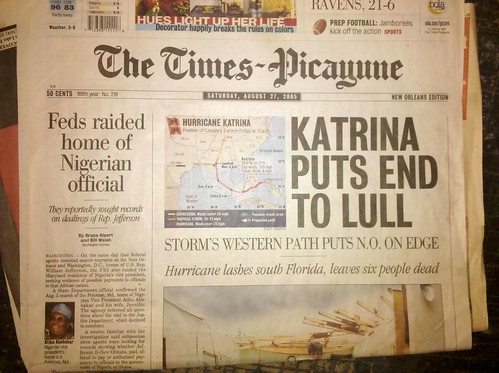
Katrina Puts End To Lull

We spent so many months remembering Katrina last year that today's subdued remembrances are not only appropriate but, frankly, welcome. The commentary is also subdued. The Advocate and T-P each ran "pay it forward" type editorials about the situation South Louisiana finds itself in in the wake of this year's flood. That seems most appropriate. That sentiment is repeated in a short post by Stephanie Grace here. Clancy Dubos offers advice to flood victims in his Gambit column this week.

Here is a more general Katrina remembrance by Bob Mann.

The papers also are running a low key series of progress reports. Here is one about public transit.
This one is about recovering urban plant life.

This one is a bit different. It's from a brief article by Gary Rivlin, the author and journalist who spoke at the tenth Rising Tide conference last year. 
Katrina was not an equal opportunity storm. A black homeowner in New Orleans was more than three times as likely to have been flooded as a white homeowner. That wasn’t due to bad luck; because of racially discriminatory housing practices, the high-ground was taken by the time banks started loaning money to African Americans who wanted to buy a home.

Nor has New Orleans experienced an equal opportunity recovery—in no small part because of the white civic leaders who openly advocated for a whiter, wealthier city. While water still covered most of New Orleans, Jimmy Reiss, a prominent local businessman and then-head of the Business Council, told the Wall Street Journal that the city would come back in “a completely different way: demographically, geographically, and politically,” or he and other white civic leaders would not return. That sentiment was paired with a policy approach then-Congressman Barney Frank described as “ethnic cleansing through inaction.”
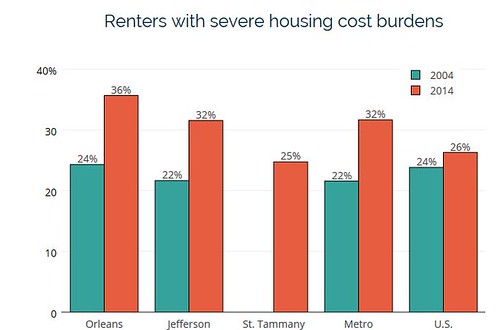
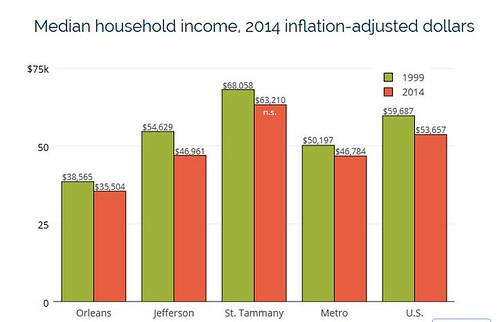
Here at the old Yellow Blog, we've been talking about that very story for over a decade now as we, as a local polity, have largely failed to make the inevitable "recovery" of New Orleans an equitable one. Rivilin's post references the Data Center's latest "Who Lives In New Orleans Now" report. There we find the heart of our failure in two graphs.

Here is the change in renters with severe housing cost burdens.

Renters with severe cost burden

And here is the change in median income.

Median Income 1999-2014

The median income for renters in Orleans Parish, by the way, is even lower. $24,773 according to this study.

If that's not depressing enough, consider also that now since we've reached the post-post-Katrina era of new New Orleans, the worst of our failures are calcifying into a more permanent new normal.  Last year, during August, I went around town revisiting places I'd taken photos of during the first couple of years before Katrina.  The result was this series of posts.  Looking back through those yesterday, I think it was this part that I most wanted to re-emphasize.
Here is something Troy Gilbert posted earlier this month that got my attention. It's a previously unpublished interview with Chef Greg Picolo about his post-Katrina experiences. There's a paragraph toward the end where Picolo talks about how the flood changed his outlook on civic life to a degree. 

Asked how he was changed by the entire experience, the Chef answers quickly, “That Greg doesn’t live here anymore. Before I led a very monastic lifestyle. I kind of broke out of the tunnel vision I had before. Today, I have more of a need to connect with people. I needed to lose some of my control. I’m easier going. I have zero patience for bullshit, and now I just don’t get bogged down with stuff.”
I'm certain I am not alone in saying this really hits home. It might be the common denominator of everyone's experience rebuilding New Orleans.  When we got back, we were shaken out of our silos. Each of us in some small way at least had to look around to see who our neighbors were. Who else was here? Who could help? How could we help them? Entire new networks were stitched together out of parts that just weren't possible to bring together before.

I wonder, though, if ten years later, we're starting to sink, bit by bit, back into our own tunnel visions of life in a new New Orleans. As we put the recovery "behind us" is receding from the tighter cross sectional communities we built during that process a good idea? Why might this be important?
I worry more now than ever that we're losing that sense of community.  The new normal New Orleans is defined more by "stay-in-your lane" stratification than grass roots organization. Traditional divisions reappear. Press and politics take a dimmer view of reader feedback and public input. Social media has evolved in such a way that it is more likely to fragment communities into walled off cliques than connect them across social and professional boundaries.

We've failed in so many ways to achieve social justice in New Orleans after the flood. Are we destined to lose our post-K social networks as well? Katrina may have ended the lull for a while. But it turns out the lull was resilient.
29 Aug 20:21

Managing Vitamin B12

by Mikey Sklar

B12-Deficiency

Vitamin B12 is essential for red blood cell formation, proper neurological function and making our DNA. We can absorb B12 from foods like meats, poultry, eggs, seafood and dairy products. Unfortunately, mushrooms, algae and fermented foods have yet to show consistent results in providing an absorbable active form of B12.  This leaves vegans in a place where supplementation is required.

There are four types of B12 supplementation:

Methylcobalamin – Easiest absorb. Most active in our body. Natural and active form of B12.

Cyanocobalamin – Lab based synthetic. Most affordable form used to fortify foods (cereals, breads, etc).

Hydroxocobalamin – Form of B12 found in most foods. It converts to the easily absorbed methylcobalamin. This version less common and what you would get from a B12 shot.

Adenosylcobalamin – The least stable of the four. This is a natural and active form of B12. This is the second most absorbable form of B12. Vegansafe is a popular product which uses 20% (Adenosylcobalamin) and 80% (Methylcobalamin).

Sources:

A Study of Vitamin B12 Deficiency in Different Diseases

VeganHealth.org – Clear summary of research papers testing for B12 from vegan food stuffs

29 Aug 16:03

Map Men

by Jonathan Crowe

Map Men is a YouTube series by comedians Jay Foreman and Mark Cooper-Jones. It’s funny as hell, and quite informative too: it’s two silly people being very smart about often-silly cartographical situations. Six episodes so far; I hope they make more. [Geographical]

29 Aug 15:22

Inside Fitbit’s Quest to Make Fitness Trackers Invisible

by David Pierce
Inside Fitbit’s Quest to Make Fitness Trackers Invisible
Now that everyone knows what a Fitbit looks like, the company wants to make Fitbits that don't look like anything. The post Inside Fitbit's Quest to Make Fitness Trackers Invisible appeared first on WIRED.
23 Aug 15:47

7 Clever Ways to Fight Flooding in an Increasingly Wet World

by Sam Lubell
7 Clever Ways to Fight Flooding in an Increasingly Wet World
Countries around the world are buttressing and planning as floods like those in Louisiana become commonplace. The post 7 Clever Ways to Fight Flooding in an Increasingly Wet World appeared first on WIRED.
22 Aug 19:54

EFF takes a deep dive into Windows 10's brutal privacy breaches

by Cory Doctorow

og-windows10

Microsoft's deceptive hard-sell to gets users to "upgrade" to Windows 10 (the most control-freaky OS to ever come out of Redmond) is made all the more awful by just how much personal, sensitive, compromising data Microsoft exfiltrates from its users' PCs once they make the switch. (more…)

22 Aug 19:48

Why Did Microsoft Trick So Many Users Into Installing Windows 10?

by Maddy Myers

windows 10

If you’re a Windows user, then it’s unlikely that you missed the deadline for Microsoft’s free upgrade to Windows 10, which passed by over a month ago. You got plenty of reminders. In fact, it’s pretty likely that you upgraded to Windows 10 whether you wanted to or not.

Now that Microsoft’s roll-out of Windows 10 is in the rearview mirror, it’s worth looking back on how weird it actually was–and also, expressing our hope that it doesn’t represent a new precedent for roll-outs in the future. In an editorial at the Electronic Frontier Foundation, Amul Kalia sounds off about the many strange decisions that Microsoft made during their push to get as many users as possible to install the new operating system.


Microsoft pulled a lot of sneaky moves to get users to upgrade, sometimes without users fully realizing that they were consenting to the update at all. Some might even call that outright trickery rather than just sneaky. One of the most worrying examples in Kalia’s piece describes the members of a wildlife conservation group based in “the central African bush,” one of whom wrote a viral Reddit post about their concern over accidentally initiating the update. The group’s computers are used to “track & coordinate anti-poaching rangers in the field … Aside from the fact that we pay per MB, and already share a slow connection, if a forced upgrade happened and crashed our pc’s [sic] while in the middle of coordinating rangers under fire from armed militarized poachers… blood could literally be on MS’s hands.”

This shouldn’t even be a concern, but Microsoft made it far too easy for users to install Windows 10 without realizing it. Many users have Windows’ “recommended updates” turned on automatically, and so when Microsoft decided to make their new operating system into a “recommended update,” they did so with the knowledge that many users would end up downloading it automatically. Windows Update also automatically included Windows 10 on a list of “optional” updates, with the upgrade automatically checked off, meaning that users who didn’t notice it had been checked already might start to install it without realizing.

Users could cancel the Windows 10 update after it began, but only if they noticed it. If you install updates right before going to bed, for example, you might wake up to a rude surprise. Plus, you need only type “Windows 10 breaks computer” into a search engine to find a whole host of examples on how the new operating system ended up making life difficult for users who installed it. It is possible to roll back to a previous operating system even after installing Windows 10–unless Windows 10 broke your computer, in which case you might suddenly have to deal with some irritating phone calls to Microsoft for help. If you didn’t even intend to install Windows 10, those phone calls would feel all the more annoying–and that’s not even factoring in complications like the ones held by the wildlife group in the African bush, who need their computers to help them survive, and don’t really have time to wait in a Microsoft phone tree.

Unfortunately, Microsoft’s pushiness about Windows 10 doesn’t end with the way they structured their updates. They’ve also been quite pushy about sending users’ personal data back to their servers. Slate has an extensive guide on how to turn off those settings, by the way. One of the most important tips? Turn off Cortana. She may seem friendly, but she might be a little too friendly, since she holds onto a ton of personal data, like speech recognition, browser history, location data, calendar and contacts, not to mention your email history.

Microsoft hasn’t yet explained what they’re going to do with all of that personal data, other than use it make Windows 10 better. They do specify that they don’t give this data to advertisers, but Cortana does use it to “personalize” your search results, which is interesting, because Google is already trying to personalize those results as it is. Sounds like Microsoft and Google will be battling over your heart (and your wallet)! Even if Microsoft isn’t giving your data to advertisers directly, the personalization of search results will end in you seeing certain sites and not others–the sites that can afford to be prioritized, that is. That’s not a great way for the internet to be run, in my opinion.

Of course, there are always other operating systems out there (*cough* Linux), but if you play any PC games at all, you’re stuck with having at least one installation of Windows floating around in your life. Since Windows 7 will not be supported for very much longer, I know that eventually I’m going to have to bite the bullet and install Windows 10 (I did accept my free upgrade before the deadline passed, I just never finished installing it, so it’s been in pending for a while now). When that time comes, I’ll be turning Cortana off … which is too bad, because I love having robot friends. I’m just not so sure that Cortana is a friend I can trust.

(via eff.org, image via Windows)

Want more stories like this? Become a subscriber and support the site!

The Mary Sue has a strict comment policy that forbids, but is not limited to, personal insults toward anyone, hate speech, and trolling.—

Follow The Mary Sue on Twitter, Facebook, Tumblr, Pinterest, & Google+.

22 Aug 18:10

Prof. Brian Cox Has a Maddening Conversation with a Climate Science-Denying Politician

by Dan Colman

According to NASA’s Goddard Institute for Space Studies, July 2016 was the warmest month ever recorded. 2016 will likely be the warmest year on record. And the decades ahead will only get worse, much worse.

And yet, notes physicist Lawrence Krauss in The New Yorker this weekend, we have the GOP’s Frankenstein trying to demagogue his way into the presidency by calling climate science into question. Krauss writes:

In May, for instance, while speaking to an audience of West Virginia coal miners, Trump complained that regulations designed to protect the ozone layer had compromised the quality of his hair spray. Those regulations, he continued, were misguided, because hair spray is used mainly indoors, and so can have no effect on the atmosphere outside….

Often, Trump is simply wrong about science, even though he should know better. Just as he was a persistent “birther” even after the evidence convincingly showed that President Obama was born in the United States, Trump now continues to propagate the notion that vaccines cause autism in spite of convincing and widely cited evidence to the contrary… In other cases, Trump treats scientific facts the way he treats other facts—he ignores or distorts them whenever it’s convenient. He has denied that climate change is real, calling it pseudoscience and advancing a conspiracy theory that “the concept of global warming was created by and for the Chinese in order to make U.S. manufacturing noncompetitive.”

And way across the pond, we have another politician, Australian Senator Malcolm Roberts, making his own kind of laughable claims. In a recent television broadcast, Roberts asks physicist Brian Cox for empirical proof that climate change exists. Cox offers evidence gathered by NASA, to which Roberts responds, NASA’s “data has been corrupted and manipulated.” Not good enough. If you regularly read our site, you know that this is not the first time that NASA has been accused of manipulating data. Conspiracy theorists have long accused NASA and Stanley Kubrick of faking the moon landing in 1969. Roberts bristles at being associated with these loons. But frankly it’s an apt comparison. And if anyone should be bothered by the comparison, it’s the moon landing conspiracists. However strange their theories might be, no one doubts that they’re heartfelt, genuine, and seemingly free from the hint of political and financial influence.

In the meantime, in a new video from NASA, you can see the Arctic ice levels retreating to one of the lowest levels in recorded history. Call the video “corrupted” and “manipulated” at your own peril.

Related Content:

Global Warming: A Free Course from UChicago Explains Climate Change

Michio Kaku & Noam Chomsky School Moon Landing and 9/11 Conspiracy Theorists

Carl Sagan Presents His “Baloney Detection Kit”: 8 Tools for Skeptical Thinking

Richard Feynman Creates a Simple Method for Telling Science From Pseudoscience (1966)

Sally Ride Warns Against Global Warming; Wonders If Technology Can Save Us From Ourselves

Prof. Brian Cox Has a Maddening Conversation with a Climate Science-Denying Politician is a post from: Open Culture. Follow us on Facebook, Twitter, and Google Plus, or get our Daily Email. And don't miss our big collections of Free Online Courses, Free Online Movies, Free eBooksFree Audio Books, Free Foreign Language Lessons, and MOOCs.