Twitch is getting kind of meta with its next TV marathon. In the not-too-distant future—June 26 at 11:00 a.m. PT, to be exact—Amazon’s ever-expanding livestreaming platform will host six straight days of classic Mystery Science Theater 3000 episodes. Shout! Factory, the distribution company that owns the rights to the series and streams dozens of episodes for free on its ad-supported service, has started up an official Twitch channel where it will air the 38 MST3K episodes and stream “other shows” later this year.
This MST3K marathon comes hot on the heels of Twitch’s successful run through all 886 episodes of Mister Rogers’ Neighborhood, one of several PBS series the service has broadcast as it attempts to expand its audience beyond the video game streams it’s known for. MST3K is an especially fitting choice, seeing as how it turned cracking wise over other people ...
From 1989 to 1994, the public broadcaster TV Ontario ran Prisoners of Gravity, a brilliant science fiction TV show that used a goofy framing device (a host trapped in a satellite who interviewed science fiction writers stuck down on Earth) for deep, gnarly, fascinating dives into science fiction's greatest and most fascinating themes, from sex and overpopulation to cyberpunk and religion.
(more…)
A single-stall ladies’ room with cinderblock walls and institutional grade toilet paper is not the ideal location to take a pregnancy test. But I’d felt really strange the previous weekend at the graduate student retreat, and my period still hadn’t shown up, so as I drove out to the church where I worked for the middle school lock-in, I picked one up. Nine months before my wedding, I desperately hoped it would be negative.
Two years later, almost to the day, I peed on a stick in our first floor parsonage powder room. My period was once again late, and though I generally felt okay, my breasts ached whenever I took the stairs too fast. We’d only started trying to get pregnant a few weeks prior, but when no second blue line emerged, the tears did.
Sarah, a clergywoman half a generation older than me, had an abortion when she was pregnant for the fourth time, when she was already a mother of three, when her contraception failed. She had no doubts; terminating the pregnancy was absolutely the right thing to do. “I do not see this as a theological question. I know that when you want a child, the moment the stick turns pink, it is real: a baby, your baby. I know that when you don’t want a child, there is no amount of moralizing or badgering that can make you want to be pregnant.”
Sarah is wise beyond measure, in my estimation. We can mourn the loss of pregnancies that never were; we can marvel at hearing the heartbeat during that first eight-week appointment and, at the same time, we can know that the “heart” could not sustain human life at that point, know that the pregnancy tissue resembles a blood clot more than a child. When women do not want a pregnancy, we may not experience the marvel and awe some claim are instant and “natural”—or, if we do, they are overshadowed by fear, and grief.
Sarah captures beautifully what is often missing in conversations about abortion: women have myriad experiences of pregnancy. Timing, partners, economics—so much can make a difference in whether a pregnancy is a welcome gift or an accident with potentially dreadful consequences. For too long, voices on both sides of the debate over abortion access have argued that an early pregnancy is either/or: an opportunity for medical decision-making for the pregnant woman or a human child from the moment of conception. But the complicated reality is that pregnancy is, for many women, a time of conflicting feelings and responses.
A few months ago, I realized it had been awhile since I’d menstruated. This was not entirely disconcerting, as I was still nursing our third daughter. But my period had returned over the summer, come for another cycle, and then vanished again. I’d had a tubal ligation in the hours after the baby’s birth, and so the likelihood that I was pregnant was extremely low. I’m not a litigious sort, but as I contemplated the possibility with my husband, I shook my fist in the air and ranted that “somebody’s gonna get sued.” I didn’t—don’t—ever want to think about pregnancy again. I am done. I love our daughters, love babies, love, even, being pregnant, but I cannot afford another kid—not in terms of time or money or risk. Still, there has been something marvelous and wonderful and holy about making babies with my husband; could I really terminate a pregnancy we began together?
*
Kassi Underwood’s astonishing new memoir May Cause Love: An Unexpected Journey after Abortionchronicles a different sort of complexity. Pregnant at nineteen when the birth control she used with her addict boyfriend failed—through either user error exacerbated by varied chemical dependencies or terrible luck—Underwood knew that a pregnancy, and an invitation to her mother’s house in Kentucky to have and raise the baby, would entirely derail her plans and dreams. Though she’d always longed to be a wife and mother, she wanted to do it without dropping out of college; she wanted to do it without fearing her burgeoning alcoholism would put the baby at risk.
She was able to obtain her abortion with relative ease, though she had to use the four hundred bucks her mother had sent for car repairs and subsequently convince someone on campus she was responsible enough to borrow a car. But though the pregnancy—and the relationship—is over quickly, the experience continues to impact her. As she gets sober, as she moves to Austin and falls in love again, as she’s accepted into the MFA program at Columbia University. Though her abortion was absolutely the right decision for her, though she did not regret it, she did grieve it. It was more of a loss—of what, she wasn’t exactly sure—than she anticipated.
What is astonishing about Underwood’s telling is not the facts of the story—plenty of young women find themselves in similar situations; plenty more find themselves undone by the unexpected emotional complexity of their lives—but the wisdom she seeks, finds, and shares. She embarks on a pilgrimage inspired by an Onion article (“Rock-Bottom Loser Entertaining Offers from Several Religions”), researching university courses on Buddhism and following the leads of “Father Google.”
The result is a gorgeous and rich memoir that betrays her Ivy League MFA and leaves you unsurprised by her decision to pursue graduate study at Harvard Divinity School. Underwood’s story transcends common political division and religious definition. She seeks wisdom from fifteenth century Tibetan Buddhists, 21st century Jews, Planned Parenthood counselors, and the pro-life Catholics who run a retreat called Rachel’s Vineyard.
Underwood is a trustworthy narrator: unflinching in examining her own failures, and fiercely empathetic, especially of the other women she meets on her post-abortion journey. Indeed, it is this commitment to honoring the experiences of women that renders this memoir most helpful, pushing readers to consider a third option beyond the limitations (and misnomers) of the pro-choice or pro-life dichotomy: the “pro-voice” response. Aspen Baker, co-founder of Exhale, coined the term in 2005, “to represent our approach to creating a social climate where each person’s unique experience with abortion is supported, respected, and free from stigma.” Underwood makes use of the framework while also lifting up the very real legislative and economic hurdles that impact women’s abilities to make their voices heard.
Modern Love ran the essay that launched this memoir, and in the years since its publication, Underwood has become a collector of abortion stories: of the ways “religion can make an abortion sacred, or sometimes burden us with additional guilt;” of the economic, educational, and bodily injustices “written on our womb stories.” Reading each story that Underwood shares, I find myself nodding with each woman, regardless of her experience: whether she grieved or celebrated, whether she did both or neither. I also thought back to my friend Sarah, who claimed there’s nothing theological about the decision to seek an abortion.
Sarah’s right, in a way: there’s no one-size-fits-all doctrinal solution to the problem of abortion, or the need for it. But theology—religion and faith—is also concerned with the ways in which human beings make meaning of our lives. In that way, the good, hard work of encountering critical decision making moments, the potential of creating life or becoming a parent, the discerning of what is the best—holiest, healthiest—response to suffering and the unexpected is deeply theological work.
May Cause Love reminds us of the complex ways women make meaning in the world, find a way out of no way, and find liberation from suffering through naming and claiming their experiences.
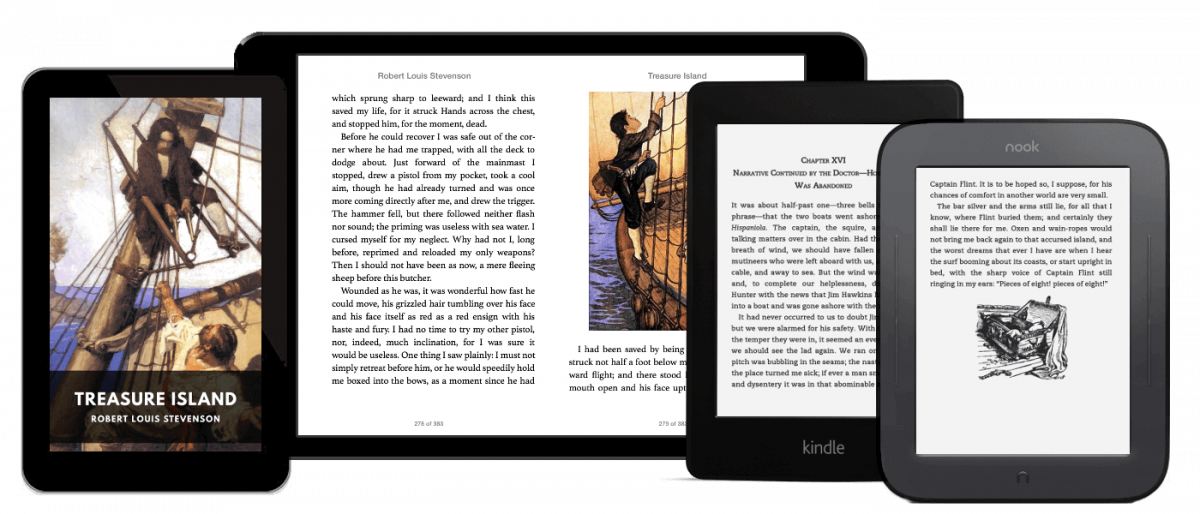
If you look through our collection of 800+ Free eBooks, you will find many public domain texts presented by providers like Project Gutenberg and Archive.org. Pretty soon, we'll have to add texts from Standard eBooks, a volunteer-driven project that digitizes books while placing an emphasis on design and typography. Here's how they describe their mission:
While there are plenty of places where you can download free and accurately-transcribed public domain ebooks, we feel the quality of those ebooks can often be greatly improved.
For example, Project Gutenberg, a major producer of public-domain ebooks, hosts epub and Kindle files that sometimes lack basic typographic necessities like curly quotes; some of those ebooks are automatically generated and can't take full advantage of modern ereader technology like popup footnotes or popup tables of contents; they sometimes lack niceties like cover images and title pages; and the quality of individual ebook productions varies greatly.
Archival sites like the Internet Archive (and even Project Gutenberg, to some extent) painstakingly preserve entire texts word-for-word, including original typos and ephemera that are of limited interest to modern readers: everything including centuries-old publishing marks, advertisements for long-vanished publishers, author bios, deeply archaic spellings, and so on. Sometimes all you get is a scan of the actual book pages. That’s great for researchers, archivists, and special-interest readers, but not that great for casual, modern readers.
The Standard Ebooks project differs from those etext projects in that we aim to make free public domain ebooks that are carefully typeset, cleaned of ancient and irrelevant ephemera, take full advantage of modern ereading technology, are formatted according to a detailed style guide, and that are each held to a standard of quality and internal consistency. Standard Ebooks include carefully chosen cover art based on public domain artwork, and are presented in an attractive way on your ebookshelf. For technically-inclined readers, Standard Ebooks conform to a rigorous coding style, are completely open source, and are hosted on Github, so anyone can contribute corrections or improvements easily and directly without having to deal with baroque forums or opaque processes.
Follow Open Culture on Facebook andTwitter and share intelligent media with your friends. Or better yet, sign up for our daily email and get a daily dose of Open Culture in your inbox.
If you'd like to support Open Culture and our mission, please consider making a donation to our site. It's hard to rely 100% on ads, and your contributions will help us provide the best free cultural and educational materials.
Having grown up in Georgia surrounded by blues, gospel, and country music—and having studied the classical composers when he was learning piano—Ray Charles was bound to become a polymath of musical genres. He is often credited with creating soul music, but a less remembered but equally important part of his career was recording one of the first major crossover records, 1962’s Modern Sounds in Country and Western Music. The record execs at ABC-Paramount understandably thought it would be career suicide, but Charles, who had a contract that gave him creative control (and ownership of his master tapes), insisted. It went on to be both a commercial and critical success, creating racial and genre bridges during the Civil Rights Movement.
So the above video of Willie Nelson performing a duet with Charles was not the oddity that it may first seem. The two recorded “Seven Spanish Angels” for the former’s Half Nelson album of duets, and the single would go on to be the most successful of Charles' country releases, reaching the top of the country charts in 1985.
The song has become a favorite country cover, and judging by the YouTube comments is a favorite at funerals, seeing that it's a tale of an outlaw couple pledging their love and going out shootin’. (That is, it’s good for honoring devoted couples, not for criminal parents. But we’re not here to judge.)
The 1984 TV special from which this excerpt came was filmed at the Austin Opry House, and featured Charles on five more songs with Nelson, including “Georgia on My Mind” and “I Can't Stop Loving You.”
And although he didn’t write “Georgia on My Mind” (Hoagy Carmichael did), Charles’ name is synonymous with the well-loved soul number. That being said, Willie Nelson’s cover of the song reached higher in the charts in 1978, a kind of thank you to Charles for his country work.
After this 1984 video, the two would duet nine years later for Willie Nelson’s 60th birthday celebration where they once again sang “Seven Spanish Angels,” a testament to their long friendship.
Ted Mills is a freelance writer on the arts who currently hosts the FunkZone Podcast. You can also follow him on Twitter at @tedmills, read his other arts writing at tedmills.com and/or watch his films here.
The composition process felt like torture. I fully expected it would require serious revision, but it was accepted and published as-is in the collection Finding the Masculine in Goddess’ Spiral: Men in Ritual, Community, and Service to the Goddess (2016, Immanion Press). It’s been a year, and now it can be republished electronically, so I’m gratified to share this via Return to Mago.
The Railroad Commission of Texas, the state’s oil and gas regulator, has been reauthorized to operate for another 12 years, after a years long battle with legislators over how to reform the agency. On Monday, Gov. Greg Abbott signed House Bill 1818, part of a state initiative to review and reauthorize agencies every 12 years. ...
Unofficial, highly-opinionated intel on Clutch City’s dining scene
In recent years, no city’s culinary profile has risen more quickly than Houston’s. Home to NASA’s Johnson Space Center, Hakeem “The Dream” Olajuwon, and the birthplace of Beyoncé, the biggest city in Texas is still one of the country’s most underrated dining destinations. Use this as a guide to the city’s unbelievably diverse, incredibly vibrant culinary culture.
Welcome to the Land of Oil and Money
A sprawling metropolis home to the most diverse population of citizens in the country, Houston’s culinary scene is truly unparalleled. Once only known as the land of oil barons and excessive humidity, James Beard Award-winning chefs like Chris Shepherd and Hugo Ortega have drawn eyes from across the country to Houston’s restaurants.
If you have a day to take a deep dive into the city’s restaurant scene, start off the morning at coffee nerd David Buehrer’s Morningstar Coffee & Donuts for excellent pastries and potent caffeination. For lunch, head to Montrose for Chef Hugo Ortega’s ceviches, intricately spiced mole dishes, and some of the city’s best margaritas.
Then, spend the afternoon driving down Bellaire Boulevard in Chinatown, stopping in at award-winning spots like Crawfish & Noodles and Mala Sichuan Bistro for a late second lunch. Pre-dinner cocktails at Anvil Bar & Refuge are an absolute must, as is dinner at Chris Shepherd’s One Fifth, an experimental restaurant that’s currently focusing on the cuisines of Spain, Italy, and France.
Where to Start on Eater Houston’s Best Maps
As you may know, Eater Houston puts together comprehensive guides to the city's best food and drink — whether in search of Houston’s fried chicken, cocktails, burgers, or brunch. If starving and overwhelmed by the sheer number of options options, here are some top picks that are a solid bet every single time.
Essential Restaurant:In search of succulent fajitas and saucy enchiladas? Head to The Original Ninfa’s on Navigation, open in Houston since 1973, for proteins grilled over a wood fire, freshly-made tortillas, and a bowl of cheesy, melty queso.
Burgers:There is no shortage of burgers in Houston. Head to Lankford Grocery, a cash-only spot that serves up one of Space City’s spiciest burgers. If near the suburbs, get thee to Killen’s Burgers in Pearland for a ridiculously juicy brisket-chuck patty, or perhaps check out the classic double cheeseburger at Bernie’s Burger Bus in Houston proper.
Barbecue:It doesn’t have the prestige of Texas’ Hill Country, but Houston barbecue can certainly hold its own. The brisket, sausage, ribs, and more at spots like Gatlin’s, Killen’s, and Spring’s Corkscrew are all solid enough to satisfy a craving for smoke.
Kimberly Park
A meaty spread from Killen’s Barbecue
Coltivare
Oven-fired pie at Coltivare
Brunch: With warm weather most of the year, brunching is practically a sport in Houston. As such, there’s an abundance of cuisines and vibes that can satisfy any appetite. Hit Backstreet Cafe for a cozy atmosphere and even more comforting food, or line up with the hordes of Houstonians in front of Snooze for boozy cocktails and pancake flights.
Tex-Mex & Mexican: Hailed as one of the country’s best new restaurants, Chef Hugo Ortega’s Xochi is a must for anyone in the vicinity of Downtown Houston. In search of classic Tex-Mex? Get thee to Teotihuacán Mexican Cafe for fajitas, enchiladas, and so much more.
Beer: The local beer scene has grown exponentially in Houston in recent years, which means that there are plenty of spots for drinkers to enjoy a local brew. Find a ridiculously well-selected list of brews (and excellent bar fare) at The Hay Merchant, or try Houston’s finest at Karbach Brewing or Saint Arnold.
Ice Cream: Whatever the time of year, it’s probably hot enough to eat ice cream in Houston. Honeychild’s Sweet Creams serves up some of the city’s most reliably delicious flavors, while Juice Girl serves up frozen treats that are suitable for vegans. For gelato, head to Dolce Neve for inventive (and addictive) flavors like goat cheese & Texas pecan.
Pizza:Neopolitan, New York-style: whatever your pizza passion, Houston can satisfy. Enjoy a perfectly-fired pie in the garden at Coltivare, or hit up Anthony Calleo’s endlessly nerdy Pi Pizza for bizarre (yet delicious) pie toppings like blackberry and mint pesto.
Arguably the hottest dining neighborhood in Houston right now, the Heights is packed with excellent restaurants. Enjoy Italian fare straight from the garden at Coltivare, or head to Lee’s Fried Chicken & Donuts for fried dough and spicy “H-Town” yardbird. If it’s happy hour, check out Eight Row Flint’s massive patio, complete with plenty of booze (like barrel-aged whiskey and frozen gin and tonic) and tacos.
Home to some of Houston’s most well-known restaurants, Montrose is a veritable dining paradise. Start the day with pastries from Common Bond and coffee from Blacksmith, then head to Hugo’s for enchiladas, ceviche, and (of course) margaritas at lunch. Before dinner, enjoy expertly-mixed martinis and Manhattans at the vaunted Anvil Bar & Refuge, then head into Chef Chris Shepherd’s world at rotating restaurant One Fifth Mediterranean, which recently opened its doors. Shepherd’s UB Preserv, the successor to Underbelly, is also a solid option — order the crispy rice salad.
Downtown
Business travelers flock to Houston’s Downtown for work, but there’s more in the city center than just power lunch destinations. For breakfast, The Breakfast Klub is a Beyoncé-approved Houston institution, and an excellent spot to score chicken & waffles for breakfast. When lunch rolls around, the Oaxacan fare at Chef Hugo Ortega’s Xochi is a must, as is a trip to Public Services Wine & Whiskey for a tipple of expensive brown liquor.
One of the ritzier notable dining ‘hoods, River Oaks is home to some of Houston’s flashiest eateries. Drop a big chunk of change on an even bigger hunk of meat at Steak 48, or belly up to the oyster bar at Chef Ford Fry’s State of Grace. In River Oaks and in need of something a little more casual? The patio at Backstreet Cafe is a perfect spot to park and work for a few hours. While browsing the shops, stop into Amorino Gelato for a flower-shaped frozen treat that tastes as good as it looks on Instagram.
It might be named after a shopping mall, but the food in Houston’s Galleria area is decidedly better than food court fare. Newly-opened dim sum restaurant Yauatcha is already attracting loyal crowds, and longstanding South African eatery Peli Peli is a unique local favorite. North Italia, an Arizona-based Italian eatery, is a favorite of frequent Houston visitor (and Grammy-winning rapper) Aubrey “Drake” Graham.
More aptly described as “Asiatown,” this neighborhood along Bellaire Boulevard can pretty much satisfy any culinary itch. Dig into authentic Sichuan cuisine from James Beard-nominated chef Jianyun Ye at Mala Sichuan Bistro, or head to Crawfish & Noodles for spicy, garlicky Viet-Cajun crawfish. In search of Houston’s famously great pho? Try Pho Hung or Pho Binh by Night. Thai, Japanese, Uyghur, Korean, and fusion options are also on offer, which means that it’s probably good to dedicate a full day to exploring everything Chinatown has to offer. Looking for sweets? Check out this crawl of Asiatown’s most interesting desserts.
Houston Glossary of Terms
Vietnamese Iced Coffee — A potent blend of Vietnamese dark roast drip coffee and sweetened condensed milk. Houston’s favorite way to start the morning.
Kolache — A sweet pastry brought to Texas by Czech immigrants in the mid-1800s. Made with a yeast dough and filled in the center with jams, cream cheese, poppyseeds, and other sweet fillings, kolaches are essential Texas breakfast fare. The klobasnek, typically stuffed with sausage or ground meat, is the kolache’s savory cousin.
Viet-Cajun Crawfish — A fusion of two of Houston’s most prominent cuisines, Gulf seafood and Vietnamese. Instead of the traditional crawfish boil, these mudbugs are tossed in ginger, lemongrass, garlic, and plenty of heat.
Chris Shepherd — James Beard Award-winning culinary mastermind behind The Hay Merchant, UB Preserv, and One Fifth. Currently working on Georgia James, a steakhouse inspired by the first iteration of his rotating Montrose restaurant One Fifth. Obsessed with Houston.
Drive-Thru Daiquiris — An ambiguously legal way to carry a daiquiri in a moving vehicle. At these drive-thru establishments, frozen drinks are mixed with booze and served in a variety of legally-creative ways, like tape over the straw hole in the lid, or sealing in a plastic bag.
Stay In the Loop
Eater Houston is updated multiple times every weekday with breaking news stories (restaurant openings, closings, etc.), features, guides and more. Here are a few ways to stay in the loop:
• Bookmark the Eater Houston homepage. New stories will always show up near the top and flow down toward the bottom of the page as they get older, while important recent stories will stay pinned right at the top. Also, check out our big sister, Eater.com, for national and international food news.
• Subscribe to our newsletter, which goes out every weekday evening and includes links to the day's top stories.
• Like us on Facebook and follow us on Twitter for updates on new stories and more throughout the day.
Get in Touch
Have questions not answered here? Want to send in a tip or a complaint or just say hello? Here are some ways to get in touch with the Eater Houston staff:
• Email us at Houston@eater.com.
• Send us a tip, which can be anonymous if you choose, at our tipline.
The National Weather Service on Monday named the low pressure system making its way toward the Gulf of Mexico: Bret. Forecasters expect the storm to hit the Gulf Coast of the United States between Houston and New Orleans on Wednesday. Bret is the second named storm of the 2017 hurricane...
The Baltimore Sun: “In a potential sea change for a nautical industry heavy on tradition, the National Oceanic and Atmospheric Administration’s recent National Charting Plan suggested that, eventually, ‘the reduction or elimination of traditional paper nautical charts seems likely.'” (This is NOAA looking into the future, but note that private companies, rather than NOAA, already do the printing and distributing of paper charts; NOAA’s charts are, of course, available online and can be printed.) [WMS]
Today Facebook announced disaster maps for use by relief organizations. Based on aggregated and anonymized user data, the maps of users’ location, movement and check-ins can, Facebook says, provide relief organizations with valuable information about where the need is greatest. At launch only the Red Cross, UNICEF and the World Food Programme will have access to the data; a process will be established to determine how it will be shared with others. [Engadget]
In Calgary last week I heard the phrase "when the industry recovers" several times. Dean Potter even went so far as to say:
Don’t believe anyone who says ‘It’s different this time’. It isn’t.
He knows what he's talking about — the guy sold his company to Vermillion in 2014 for $427 million.
But I think he's dead wrong.
What's different this time?
A complete, or at least non-glacially-slow, recovery seems profoundly unlikely to me. We might possibly be through the 'everything burns to the ground' phase, but the frenzy of mergers and takeovers has barely started. That will take at least a couple of years. If and when any stability returns to operations, it seems highly probable that it will have these features:
It will be focused on shale. (Look at the Permian Basin today.)
It will need fewer geoscientists. (There are fewer geological risks.)
It will be driven by data. (We have barely started on this.)
It will end in another crash. (Hungry animals bolt their food.)
If you're a geoscientist and have never worked find-grained plays, I think the opportunities in front of you are going to be different from the ones you're used to. And by 'different', I mean 'scarcer'.
Where else can you look?
It may be time to think about a pivot, if you haven't already. (Pivot is lean-startup jargon for 'plan B' (or C). And I don't think it's a bad idea to think of yourself, or any business, as a start-up. Indeed, if you don't, you're headed for obsolescence.)
What would you pivot to? What's your plan B? If you think of petroleum geoscience as having a position in a matrix, think about our neighbours in that matrix. Industries are vertical; disciplines are horizontal.
Opportunities in neighbouring cells are probably within relatively easy reach. Think about:
Near surface: archaeology, UXO detection, engineering geophysics.
Geomatics, remote sensing, and geospatial analysis. Perhaps in mining or geothermal energy.
Stepping out of industry into education or government. People with applied knowledge have a lot to offer.
Making contacts in a new industry like finance or medicine. Tip: go to a conference. Talk to everyone you can find.
Think about your technical skills more broadly
I don't know where those new opportunities will come from, but I think it only takes a small shift in perspective to spot them. Think of your purpose, not your tasks. For example:
Many geophysicists are great quantitative scientists. If you know linear algebra or geostatistics and write code too, you have much sought-after skills in any industry.
Many geologists are great at spatial analysis. If you can wield geodatabases and GIS software like a wizard, you are a valuable asset to any industry.
Many engineers are great at project management and analytics. If you have broken out of Excel and can drive Spotfire or Tableau, you are gold in any industry.
If you forgot to keep your skills up to date and are locked into clicking buttons in Petrel, or making PowerPoint maps of the Cardium, or fiddling with charts in Excel, I'm not sure what to tell you. Everyone has those skills. You're yesterday's geoscientist and you don't have a second to lose.
The California-based solar panel company Sunrun has partnered with Think Energy, a retail electricity arm of the French power company Engie, to offer residential solar panel packages for Texas residents. Sunrun will offer solar panel systems for lease or purchase for Texas residents; the company will also help arrange a purchase through a loan program. ...
Over chai, elders told us about large serpents invading their village. A curse, they said. Only the correct prayers and purification rituals saved them, forcing the serpents to retreat deep into the forest. Some serpents remain trapped in the rock faces near the village, which was renamed Nagling (Nag means cobra..or more generically serpent).
The picture below are the entombed serpents of Nagling (trekkers for scale).
Geologists recognize them to be granite dykes (intrusions cutting across host rock layering) and sills (intrusions parallel to host rock layering) intruding the high grade metamorphic rocks of the Greater Himalayan Sequence (GHS).
The GHS is a block of the Indian crust bounded between the Main Central Thrust (MCT) at the base and the South Tibetan Detachment System (STDS) at the top. It represents mid crustal material which was metamorphosed and then was extruded and exhumed during Himalayan orogeny between 25 million years ago to about 16 million years ago. These dates vary somewhat along the strike of the Himalaya. Thrusting along the MCT took place earlier in the western Himalaya. Eastern regions like the Sikkim Himalaya record younger dates for the movement of the MCT.
The grade of metamorphic varies within the GHS. The figure below is a schematic section of the Greater Himalayan Sequence. It is from a study on the nature of the MCT by Michael Searle and colleagues from the Nepal Himalaya and is a very useful guide to think about the internal structure of the GHS.
From the base of the MCT the grade of metamorphism increases towards higher structural levels. This is recognized as an "inverted metamorphic gradient", since minerals that are formed at higher and higher temperatures and pressures are occurring at structurally higher and by implication apparently shallower levels of the crust. The inverted gradient is recognized by the successive appearance of biotite, garnet, sillimanite and finally kyanite. The sillimanite-kyanite zone transitions into the zone of partial melting and granite intrusives. This is the zone where the crust experienced conditions that lead to the formation of in situ melts and their mobilization and intrusion into surrounding rock. Above this zone the grade of metamorphism reduces towards the STDS. In the figure, the granite intrusion zone is directly overlain by the STDS and the Tethyan sequence. However, there is variation in this theme across the Himalaya. In the Kumaon region where I was, the "melt zone" is overlain by a sequence of lower metamorphic grade phyllite rocks.
What caused this melting and production of granitic magma? Many geologist point to the STDS. They suggest that this zone of extentional faulting stretched and thinned the crust, resulting in " decompression-related anatexis". This means that when extentional faulting along the STDS and exhumation reduced the overburden on deeply buried hot rocks, the release in pressure resulted in the lowering of rock melting point. This led to a partial melting of the crust (anatexis). Other geologists disagree with this explanation. They point out that since decompression has a minor effect on melting the likely source rock compositions you would require unreasonably large amounts of denudation along the STDS. Rather, they suggest that crustal thickening by the continued convergence of India with Asia elevated temperatures in the middle levels of the crust to a range where partial melting began. These melts then moved along weak planes and intruded the surrounding GHS above the sillimanite and kyanite grade gneisses. The main pulses of this magma generation took place between 24 million years and 19 million years ago.
Geologists estimate the temperatures of this melt zone to be around 650 deg C to 750 deg C, corresponding to a burial depth of about 20-25 km. Yes, the GHS represents crust that has traveled from that depth to the Himalayan heights it now commands by a combination of thrust faulting and erosional unroofing i.e. the stripping away of shallower levels of the crust!
During one of my previous treks in the Kumaon region I had walked across the GHS from the base of the MCT to the sillimanite zone in the Goriganga valley from the town of Munsiari to village Paton. This time, one valley to the east, we began our trek at village Nagling in the zone of partially melting. All around us were rock faces intruded by sill complexes and dykes. The picture below shows multiple sills of granite cross cut by dykes.
High up from Nagling village towards Nagling Glacier I saw this granite dyke complex (outlined by red dotted lines ) cutting across metamorphic banding (black lines).
And in the stream near Nagling Glacier I came across this rounded stream boulder showing granite cross-cutting banded migmatitic gneiss.
We traveled north and reached Duktu. Earlier, somewhere near the village of Baaling, we had crossed the zone of partial melting and were in the uppermost levels of the GHS made up of phyllite grade metamorphic rocks. The phyllites are not intruded by granite.
However, granite was present at Dugtu too, but only in the Dhauliganga river bed. This river emerges from the Panchachuli Glacier. The Panchachuli ranges which fall lower in the GHS are made up of high grade gneiss intruded by granite.
As a result, the Dhauliganga river bed near Duktu village is choked with boulders of granite and migmatite rocks.
This is a very distinctive biotite-tourmaline granite. The picture below shows blocks of granite with tabular black tourmaline.
Here is a picture of me looking intently at a block of GHS made up of a granite intruding in to a gneiss.
And another close up of light colored granite intruding dark grey banded gneiss and encircling and enclosing rafts of the metamorphic host rock (red arrows).
And finally, from the sheer rock faces near Nagling Glacier, one of my favorite examples of the granite intrusions. A near vertical dyke (red broken outline) cut and displaced by a fault (yellow broken lines). Metamorphic banding shown in black lines.
... Pleistocene-Holocene glacial deposits of the Panchachuli Glacier area.. coming up next!
We should have seen this coming after his first two games inexplicably showed up on Steam a few years ago, but Bubsy The Cat, one of gaming history’s most maligned mascots and the star of one of the worst games ever made, is making a comeback. Earlier today, it was announced that a brand new Bubsy game, subtitled The Woolies Strike Back, is in development and set to release this fall for PC and PlayStation 4. If the trailer is anything to go by, Bubsy is as detestable as ever: After being awakened from his nearly 20-year slumber, the first thing he does is make a joke about reality TV. Seriously.
The Woolies Strike Back looks to be a 2-D platformer in the vein of Bubsy’s 16-bit adventures, except with ugly 3-D models replacing the originals’ workmanlike sprites. It’s being developed by the German studio Black Forest ...
In the wake of the U.S. pulling out of the Paris Accord, a new iPhone ad uses the famed astronomer’s book, “Pale Blue Dot” as a reminder of what’s at stake.
After President Trump decided to withdraw from the Paris Accord on climate change, many CEOs of major American companies voiced their disagreement with the decision, including GE’s Jeff Immelt, Tesla’s Elon Musk, Disney’s Bob Iger, and Goldman Sachs’ Lloyd Blankfein. It also prompted Apple CEO Tim Cook to send a company-wide memo outlining his thoughts on the decision.
It might be time for a vacation, Senator. Have you considered the lovely town of Retirement?
“Maverick” Republican John McCain, who had led a long and distinguished Senate career but will also be remembered for introducing Sarah Palin into national politics, seems like he needs a nap—or that he was just waking up for one.
As the last Senator to question ex-FBI director James Comey at the bombshell Senate Intelligence Committee hearing, McCain appeared confused, bordering on incoherent, and kept returning to the closed FBI investigation into Hillary Clinton’s use of a private email server, which he conflated with the Russiagate shenanigans. At one point he called Comey “President Comey.”
Here’s a sampling of what McCain said to kick off his allotted question time: “In the case of Hillary Clinton, you made the statement that there wasn’t sufficient evidence to bring a suit against her, although it had been very careless in their behavior, but you did reach a conclusion in that case that it was not necessary to further pursue her. Yet at the same time, in the case of Mr. [Trump], you said that there was not enough information to make a conclusion. Tell me the difference between your conclusion as far as former secretary Clinton is concerned, and Mr. Trump.” (via WaPo)
If you have trouble tracking this, and get the impression that McCain is dangerously lost about the difference between Hillary Clinton’s email and Russian electoral intereference, you are not alone. Listen, I used to get pretty perfect reading comprehension scores and I’m having trouble making it through these transcripts.
To say the Internet took notice immediately is an understatement. Within seconds of McCain’s rambling start, my Twitter feed was full of people wondering after the Senator’s health.
I don’t particularly feel bad for McCain, as his strange questions were clearly intended to direct attention back at the old standard GOP bogeywoman Hillary Clinton, and away from the serious investigations into Russian intereference with the election and possible collusion by Trump’s associates. The first words out of McCain’s mouth were “In the case of Hillary Clinton,” after all:
It isn’t complicated. McCain couldn’t stop his pathological need to protect Republicans and attack Democrats. That’s it. That’s always it.
Even McCain later admitted that something was off about his questioning, though he attributes this to staying up too late watching the baseballs. It’s a bit odd that he’s trying to claim that his questions “went over people’s heads”—because they were too complex? Too profound?—and that he was too tired at the same time. Which one is it?
Getting sense my q’s today went over ppls heads – maybe going fwd I shouldn’t stay up late watching @Dbacks games… https://t.co/r5cnX0yypm
His office has further elaborated, making me wish someone on his staff had simply helped prepare the questions he wanted to ask earlier. Today’s hearing was the equivalent of political Superbowl, and everyone brought their A-game—this was no time for McCain’s odd fumbling.
The fact that McCain’s questions were so impenetrable as to demand an official explanation is worrisome. McCain isn’t even a member of the Senate Intelligence Committee, but according to Time he was invited as an “ex-officio member” because he is chairman of the Armed Services Committee. As a senior ranking member of the Senate, McCain still wields a lot of power and influence at age 80—but not enough wherewithal to arrive prepared to the hearing of the century (so far).
John McCain is a man who has served his country well for decades, but as of late has failed to live up to any kind of “maverick” image once cultivated, issuing statements as mealy-mouthed as his questions today were whenever the GOP or Trump takes a dive off the deep-end. Previously he had expressed that he was “disappointed” with Trump’s firing of Comey, but you’d never know it from his bizarre performance today. Senator, we won’t blame you if you need a break.
John McCain just showed up at my apartment and accused Hillary Clinton of stealing my Blue Apron delivery can he stop eating my cheese
The independent, Congressionally mandated Health Care Industry Cybersecurity Task Force released its report last week, setting out their findings about the state of security in America's health technology (very, very, very bad) and their recommendations (basic commonsense cybersecurity 101).
(more…)
Look, I can see you glancing back and forth between myself and that glossy cover on the newsstand. Let me save you the time and $5.99. Yes, that’s me slathered in butter because I was trying to become so frictionless that I could slide on my belly all the way from my Harvard University laboratory to Yale. It was quite painful and the butter ended up attracting fire ants which stung me mercilessly. It was certainly a low point in my career, which is why I find it especially upsetting that it’s been immortalized by this infernal magazine.
What many people don’t know is that failure is a normal part of science. Sure, in retrospect genetically engineering a potato two stories tall in order to create a potato battery large enough to power every clock on campus wasn’t the most obvious way to create a renewable source of energy. But it’s definitely not my fault that a local fraternity stole the potato and immediately turned it into vodka.
And if we’re being honest here, what kind of person finds joy in reading about every single failure committed during a scientist’s career? When Ben Franklin was electrocuted by a bolt of lightning while performing his famous kite experiment, was he featured as a two-page spread followed by various opinion pieces, letters from the readers, and political cartoons? Of course not, so why did I get so much publicity the time I tried to disprove the existence of chemtrails by showing what a real mind control chemical would look like, only to accidentally turn the entire state of Virginia into mindless zombies.
Sadly, this would all be much more bearable if still had the respect of my peers. For the life of me I will never understand why Nobel Prize winning scientist Dr. James Watson, who helped discover the structure of DNA, decided to come out of his decade long retirement for the sole purpose of guest editing this specific issue of Scientific Experimental Disasters That Could Have Been Prevented. He even made a point of announcing that I was the first scientist to ever be inducted into the magazine’s hall of fame for my construction of a planet-sized palm leaf that would gently fan Earth in order to prevent global warming, but instead caused massive tidal waves and devastating hurricanes.
Look, I realize that print media is dying, and from what I’ve been told, just being mentioned on the cover of SEDTCHBP can increase sales by threefold. But there has to be a limit, right? Surely I’m not the only scientist who has ever designed hangover cure that uses Redwood Tree bark, but which turned out to be more addictive than cocaine and resulted in the tree’s extinction plus thousands of overdoses.
Then again, I guess I shouldn’t let this whole situation bother me. After all, once I finally create a race of super intelligent, super strong mutants to take care of America’s aging population, all of my past failures will be forgotten.
Sometimes you have to write harsh emails. You need to share feedback with someone in a different office, or disagree with a stakeholder, or tell someone they messed up–and setting up a call or in-person meeting would be an overreaction (and risk making the situation an even bigger deal).
At an event about how technology is shaping the future of money, it seems counterintuitive to talk about a future where technology has mostly done away with the need for money to live.
But that’s the future Peter Diamandis envisions.
At Singularity University’s Exponential Finance Summit in New York this week, Diamandis talked about the broad and specific trends he believes are leading to a demonetized world.
It’s no secret that technology is threatening to take away jobs. For all the talk about robots working alongside humans rather than replacing them altogether, automation’s higher efficiency, lower costs, and increasing capability mean eventually workers will be removed from the equation in many jobs.
No one wants to be replaced by a machine, but there’s a silver lining.
The counterbalance to technological unemployment, Diamandis said, is the demonetization of living—in other words, pretty much everything we need and do in our day-to-day lives is becoming radically cheaper, if not free, and technology’s making it happen.
The most obvious and tangible example of this phenomenon is, of course, the smartphone. 20 years ago, we had a bunch of different things that each performed a single function: a camera took pictures, a flashlight lit up the dark, a TV was for watching shows, a VCR played movies, a boom box played music, and so on and so forth.
Now we have all that and more in the palm of our hands. More significantly, though, we got most of it for far less than in the past. If, Diamandis said, you add up the cost of all that hardware 20 years ago, you’re looking at thousands of dollars—now reduced to a few hundred. Similarly, the average smartphone being microfinanced for $50 in developing nations holds millions of dollars’ worth of software.
Demonetization is the fourth of Diamandis’ six Ds of technological disruption, happening after digitization but before democratization. Taking money out of the equation for a given product or service is a key part of making that product or service available to everyone.
Below are just a few of the examples Diamandis gave of demonetization he sees across various industries.
Communications
If you don’t have a smartphone or computer, you can’t have your data collected—and companies want your data. They want it so badly that they’ll soon be giving smartphones away, specifically in the areas of the world where the vast majority of would-be consumers aren’t online yet.
Entertainment
We used to drive to Blockbuster and pay a few dollars to rent one movie. Now we can pay a low flat rate and watch as many movies and shows as we want each month. Or we can watch stuff for free; YouTube streams millions of hours of free video per day.
Energy
The poorest countries in the world are the sunniest countries in the world, and solar power is becoming cheaper than coal. That means ultra-cheap electricity in developing nations.
Transportation
When you own a car you have to pay for fuel, parking, insurance, tolls, and maintenance—not to mention buying the car itself. On-demand ride apps like Lyft and Uber are changing the way people get around and making it cheaper for them to do so. Why pay all that money for your own car when there’s a service to get you from point A to point B at a fraction of the cost? Electric autonomous cars will disrupt transportation even more.
Housing
Self-driving cars will change the housing market by enabling people to commute from farther away more easily. Housing itself will get cheaper thanks to large-scale 3D printing.
Education
The XPRIZE foundation recently launched its Global Learning XPRIZE. Participants are tasked with creating a software package that can take a group of illiterate kids to full literacy in 18 months. This sort of software will bring high-quality education to areas that currently lack it—and it will be delivered in kids’ native language, in a context that fits their culture, at little to no cost to them.
Healthcare
Of all the industries listed, healthcare is the one most urgently in need of demonetization in the US. It’s happening through AI-fueled diagnosis and personalization of care. Deep learning algorithms can now identify skin cancer as accurately as dermatologists can. IBM’s Watson was able to diagnose a rare form of leukemia that no physician could diagnose by analyzing data from 20 million other diagnoses. The Tricorder XPRIZE yielded a system that can diagnose 12 different diseases and capture real-time vital signs using a smartphone and some add-ons. Genome sequencing will transition healthcare from being reactive to proactive, keeping people from getting sick in the first place.
“I view the world as rapidly demonetizing,” Diamandis said near the conclusion of his talk.
A world where life’s necessities are all cheap or free will be very different from the world we live in today. What will motivate people to work or be productive if they don’t need money for the basics? What kinds of new innovations will spring up from people for whom these resources used to be cost-prohibitive? How will social constructs built around wealth and class shift?
These are all questions we’ll need to contemplate as technology continues to demonetize our lives. As the old saying goes, the best things in life are free, and if Diamandis’ vision becomes reality, we’ll have to figure out which of the free things in life are best.
Given my own penchant in the 1980s for black clothing, black eyeliner, and Bauhaus, I was delighted by Dan Adams's TED-Ed video "A brief history of goths."
And if you find yourself in that delightfully dark place, please enjoy these classics:
You know the moment we’re going to talk about here: when Jimmy Fallon ruffled Donald Trump’s hair and instantaneously cemented his place as an enabler of this whole mess. That was a long time ago now—and feels even longer—but there’s a rare news profile today (from the New York Times) that isn’t about what specific variety of “anxiety” drove a Trump supporter to vote for that man. No, it’s about the real victim of Donald Trump’s rise: Jimmy Fallon.
Not that the current political moment hasn’t been bad for Fallon. Criticism of Fallon’s late night hosting skills have often pointed to his shows, both Late Night and now The Tonight Show, being light on substance and heavy on celebrities doing goofy things. The way things have been going lately, there’s definitely a desire for more comedy with a stronger viewpoint on the world, and that certainly has left Fallon at a bit of a disadvantage as Stephen Colbert finally overcame their sizable ratings gap.
But that’s all relative, and it’s incredibly difficult to feel bad for Fallon, considering the massive platform he has to say whatever he wants to the world. He told the Times, ““I don’t want to be bullied into not being me, and not doing what I think is funny,” he said more defiantly. “Just because some people bash me on Twitter, it’s not going to change my humor or my show,” but no one’s asking for him to turn his entire show toward—except maybe executives at NBC, for all I know. There’s just plenty of room for a happy medium between that extreme and actively trying to be apolitical to the point that you might actually be doing harm.
There’s also something to be said for providing an accurate view of the world rather than trying to achieve some kind of false balance between two sides that aren’t equal—something everyone in the media struggles with on a daily basis. Years before we even knew any of this would happen, the BBC tried to teach its reporters not to make false “both sides of the issue” equivalences, because that’s not something we just invented because we don’t like Donald Trump. Objective reality is never going to line up with the midway point between two political philosophies. In many cases, right and wrong exist. A platform like The Tonight Show has the ability to shape people’s view of where the “center” actually is, and that shouldn’t be taken lightly. It’s just as political to falsely put two unequal “sides” on equal footing as to give too much credit to the one you already favor, even if it’s unintentional.
Fallon seems to be saying it was. He also told the Times, “I didn’t [ruffle Trump’s hair] to humanize him. I almost did it to minimize him. I didn’t think that would be a compliment: ‘He did the thing that we all wanted to do.'” At the time, that’s what I had assumed—that it was meant to follow in line with the storied history of mean-spirited jokes about Trump’s hair—but whether due to some super strength hair gel preventing the hair from getting messed up enough to drive the joke home, or due to Fallon’s demeanor not really coming across like he intended it to be a pointed moment, or due to the humanizing tone of the interview that preceded it, it certainly didn’t come off that way.
It’s especially difficult to feel bad for him, despite his assurance of, “If I let anyone down, it hurt my feelings that they didn’t like it. I got it,” because some of his reluctance to express an even modestly stronger point of view seems to be out of a fear that some people won’t like him—namely Trump voters, who he pointed out also watch The Tonight Show. “I’m a people pleaser,” he told the Times. “If there’s one bad thing on Twitter about me, it will make me upset. So, after this happened, I was devastated. I didn’t mean anything by it. I was just trying to have fun.”
Yeah, getting political is hard. Some people won’t like you. Some people will like you, and then you’ll f*ck up, and they won’t like you anymore, or at least maybe they’ll think a little less of you. That happened to Stephen Colbert recently. It happens to us, around here, all the time. (And we’re always trying to do better!)
But that’s a choice we all make, and just like you really can’t be truly apolitical, it’s not a choice between alienating people and making everyone like you. There’s no scenario under which everyone likes you. You just have to choose which people you’re willing to alienate, and though that choice is yours to make, you also have to live with the message it sends. It’s easier to understand someone less privileged than Fallon choosing the path of least resistance, but he has the opportunity to do more than that and is consciously turning it down. He’s clearly decided that he’s more concerned about staying in the good graces of Trump supporters than of those who’d vocally criticize them, and as long as that’s how he feels, some of that criticism is going to come his way, too.
Less than a month after releasing its first song in more than five years, indie experimental outfit Grizzly Bear has announced its fifth studio album, Painted Ruins. To mark the occasion, the band dropped a new song today, debuting “Mourning Sound” on its YouTube page. Oddly chipper despite its title and dreamy vibe, it’s a welcome reminder of what we’ve been missing since Shieldshit stores back in 2012.
The band also announced an international tour in support of the album, which arrives on August 18. The tour will kick off in October in Ireland, before making its way over to North America for an autumn-winter run of shows. You can see the full schedule below.
Charles Stross’ Laundry Files is one of the best and best-loved scifi series running (and a personal favorite). His upcoming installment, The Delirium Brief, not only begins with the titular secret occult-protection organization being dragged into the public eye—spoiler: everyone is very upset—but brings back beloved…
In the first part of this series, I focused on some of the history of white supremacy, particularly its late 20th-century versions, which continue to have so much influence today upon the current alt-right movement. It’s important to understand this history — some of which enters into truly exotic terrain — to understand the continuity of ideas, and to realize that we are not facing anything really new in the current manifestation of white supremacy.
But there’s a more mundane side to white supremacy, which deserves to be studied with as much attention: the way in which white supremacy works in and through institutions that we otherwise think of as legitimate to the core, and even essential to the workings of liberal democracy. If we explore how this has occurred recently, then we can no longer push white supremacy aside as an ideology that can be prevented from infecting so-called “mainstream” institutions. I’m thinking primarily of political parties, but once we admit that white supremacy is a fundamental influence on how parties reinvent and calibrate themselves, then this necessarily sweeps the social organism as a whole into the indictment.
White supremacy implies a certain logic that is inimical to that of the Enlightenment (the foundation of modern democracy). It is no coincidence that much of contemporary white supremacy continues to focus on the Illuminati and Freemasons as the disseminators of “secular humanism” (i.e., the core values of the Enlightenment), or that conspiracy theory mines the same territory when it takes on “The Protocols of the Elders of Zion” (attacked as a worldwide conspiracy to bring about godless materialism) or such obsessions as the Bilderberg Group, the Trilateral Commission, the Council on Foreign Relations and the rest of the institutions associated with the New World Order (largely meaning the forces of globalization). Against the Enlightenment, which is said to lead to the weakening of the nation as an embodiment of the pure idea of race, the white supremacist insists on separation of races as his natural right. Against mongrelization, the white supremacist desires purity.


 If you look through our collection of


/cdn.vox-cdn.com/uploads/chorus_asset/file/3804418/11108883_750866698366650_7223774079802457359_n.0.jpg) Kimberly Park
Kimberly Park
/cdn.vox-cdn.com/uploads/chorus_asset/file/2873846/Coltivare_pizza_houston.0.jpg) Coltivare
Coltivare
/cdn.vox-cdn.com/uploads/chorus_asset/file/8669709/houston_heights_dining_neighborhood.jpg)
/cdn.vox-cdn.com/uploads/chorus_asset/file/8669717/9693183413_630fc7de95_k.jpg)
/cdn.vox-cdn.com/uploads/chorus_asset/file/8669725/8312400018_3f38c90591_o.jpg)
/cdn.vox-cdn.com/uploads/chorus_asset/file/8669727/river_oaks_district_fb.jpg)
/cdn.vox-cdn.com/uploads/chorus_asset/file/8669729/houston_galleria.jpg)
/cdn.vox-cdn.com/uploads/chorus_asset/file/8669731/houston_chinatown.JPG)