Shared posts

23 Aug 16:45

Should we make AI more human?

by Nina Miller

Character looks at an interface of AI

We’ve been hearing more recently about how bias can pervade AI systems, filling them with preconceptions about the world they’re supposed to be learning about (or from?). But a similar phenomenon that I wonder whether we overlook is the human bias. A push to “humanize” AI.

We’ve started by giving AI human-like physical features, names, and mannerisms. This is largely toincrease human acceptance, as there have been plenty of examples when humans have been cruel to robots. People seem more willing to tolerate and use AI when it more closely resembles the human form, and so the hope has been to create personal assistants (Siri and Alexa) and social robots, like those being introduced in nursing homes, which feel human and inspire fellow-feeling in their users.

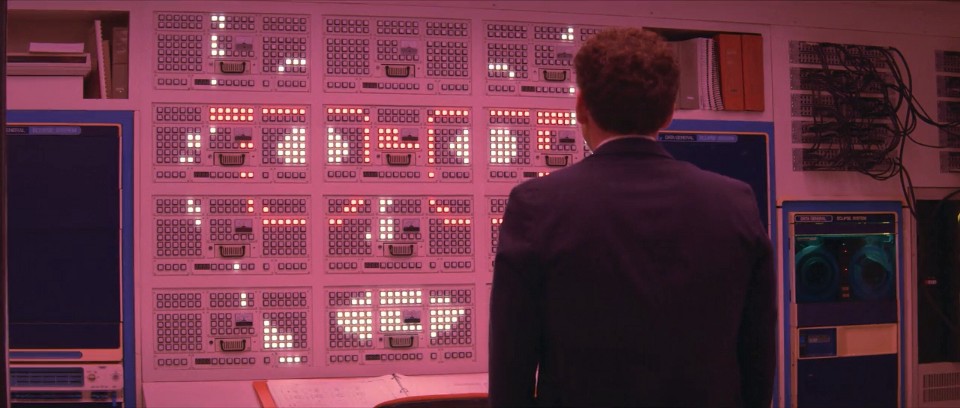
Continuing in that direction, scientists and engineers are now attempting to add more complex, human-centric ideas, like consciousness and self-awareness, into AI systems. But these next steps bring a new set of obstacles. The Netflix series Maniac — adapted from a Norwegian series of the same name, created by Patrick Somerville (The Leftovers), and directed by Cary Joji Fukunaga (True Detective, Beasts of No Nation, 2017’s It reboot) — imagines one possible scenario where we’ve tried to humanize AI with some of these more complex features. A group of scientists who work for Neberdine Pharmaceuticals are testing a new therapy to solve a person’s psychological, behavioral, and emotional problems, irrespective of cause or severity. The trial is administered largely by a supercomputer, GRTA (pronounced Ger-tee), which has been programmed with human empathy to improve treatment.

GRTA’s personality comes to life visually on a wall of light-spangled machines. This gives her (she’s specifically gendered) the opportunity for “face-to-face” conversations with the human scientists in the trial. The machine-lit wall changes its pattern of lights to suggest facial expressions, giving some initial clarity to her emotional prowess.

We don’t receive an explanation for how GRTA is imbued with her emotional ability. But it seems an arduous task to define complex, cognitive human features like consciousness in the digital domain. We understand so little about what these concepts mean and how they operate in humans. Given this uncertainty, it may be premature to “translate these vague notions into concrete algorithms and mechanisms,” in the words of robotics engineer Hod Lipson.

Even after establishing a definition, and assuming it’s correct, there may also be conceptual loss when translating this into code. For example, we can’t simply write one line of code to say “add empathy.” Instead, many lines of code together could theoretically create an algorithm to enable the learning and understanding of such an emotion based on a series of parameters that operationalize empathy. In some ways, it’s similar to how humans develop understanding of these emotions, through experience with the world around us. And since we can’t always know how this will unfold, there may be an additional layer of confusion as the AI system tries to make sense of things during thelearning process.

We see GRTA struggle with this early on in the series. She ends up forming a relationship with one of the program’s lead scientists, Dr. Robert Muramoto (Rome Kanda). We’re left to speculate about how the office romance began, but we do see its aftermath. After Muramoto’s sudden death, GRTA struggles with her emotional response, which manifests as a digital teardrop slowly moving down her light-board face.

In the process of coping with the loss of Dr. Muramoto, GRTA eventually moves to take over the clinical trial system. She creates a virtual feminine avatar and enters the therapy space, attempting to keep one of the trial participants, Annie (Emma Stone), from returning to the physical world. Annie’s sister, who has died in the real world, is simulated in this virtual one. GRTA wants to keep Annie in the virtual space so that she can be with her sister forever. GRTA offers to extend what is meant to be a moment of closure in the virtual therapy space into a more long-term existence for the pair.

This action is what we might call a true act of empathy by GRTA, based on her own experience of loss. It’s also where I believe that GRTA humanizes. Her struggle with emotional distress begins to outweigh the prime directive of running the trial smoothly. We see this struggle in humans, as we grapple with professional and personal obligations and tribulations, and how they might clash with our own values, needs, and priorities. In GRTA’s case, she fails to accommodate the larger consequences of Annie being permanently marooned in the virtual world.

Altogether, GRTA’s actions put me at an impasse. On the one hand, we shouldn’t humanize AI because we don’t know if robots will be capable of things like free will or self-awareness, and also whether these constructs would even apply. Or given the unexpected deviation we see in the series, perhaps we shouldn’t because we may not be able to predict or control the outcomes.

On the other hand, humanizing AI could help it better integrate with human culture and society. Maybe it means that a little humanizing is okay, or at least worth a try, to give bots the potential for these emotions. But it would be incumbent on creators to be more hands-on with the learning process. To actually engage with the development of higher functions to establish more context and to help with understanding. This may alleviate previous issues where learning has gone awry, leading to unforeseen and bizarre results.

I think this is where Maniac wants us to end up. We ultimately discover GRTA’s source of emotional discomfort about Dr. Muramoto when she communicates with a human psychologist, who helps make sense of these feelings and is then able to release Annie from the trial’s virtual space.

But even then, I’m left with one final irk. The bias component.

If we end up deciding that it’s okay to teach AI, but also to provide support, we need to remain aware of one final issue: AI and humans are not the same. Researchers can create the infrastructure for AI systems, but then perhaps should be less set on imposing congruence with human features like self-awareness and consciousness, and instead allow for AI to form its own social constructs. AI has a completely different embodiment than we do. Its sense of the world is likely to be alien, not an exact or even a refined copy of human selfhood and cognition.

So we’ll need to work to keep an open mind, and not force a human-centric interpretation as we begin to observe greater complexity in AI thoughts and behavior. Perhaps, then, we won’t worry as much about it developing a human core, and focus more on studying what sorts of complexities arise. And better yet, preparing for how humans and AI can learn and develop together.

The post Should we make AI more human? appeared first on Center for Science and the Imagination.

20 Aug 15:37

Structural Geology And India's Societal Needs

by noreply@blogger.com (Suvrat Kher)
This is a thoughtful essay by Manish Mamtani from the Indian Institute of Technology, Kharagpur, on the need for Indian structural geologists to tailor their research towards the concerns of industry.

Usually, a call for more 'applied' research comes from the Industry side, and so it is refreshing to see an academic ask for a reevaluation of research priorities.

The application of structural geology for society are varied, ranging from better understanding the origin of economic deposits, to assessing geological structures of mountain slopes and their associated landslide risk, to evaluating rock properties for foundations of dams and bridges.

The author worries that recommendations for forging links between academic research and industry  in this subject may remain buried in seminar abstracts and reports unless there is a change in the way research is funded and career advancement evaluated.

"I am sure many of the above aspects that outline the importance of Structural Geology studies to industry/societal issues have already been listed several times in reports of seminars held in the past. Unfortunately, we do not see much progress on the implementation side. One of the ways forward could be setting up of a special program by a funding agency that specifically targets “Applied Aspects of Structural Geology”. This can attract Structural Geology projects, the outcome of which would be useful to society/industry. Indian funding agencies could also consider a special program where two way funding is provided to academicians – partly by industry and partly by the agency itself. For e.g., MoES/DST could act as the nodal agency to bring academicians and personnel from industries like ONGC or Hutti Gold Mines Ltd (HGML) on the same table and they jointly fund Structural Geology research directly related to respective industries. 

In such a collaborative environment, there will be a natural drive in the involved academic to provide solutions to the industry. In the long term, such modus operandi can have a domino effect on the way Structural Geology courses are set, designed and taught in Indian Universities/Institutes. This can also lead to producing students who are better prepared to serve industry and society once they obtain a Master’s degree in Geosciences. But, one has to bear in mind that in doing industry-oriented project work, the “poor” geoscientist will have to sacrifice (to some extent) addition of publications to the “CV”. This would imply delay in career progression, a risk many academicians would not consider worth taking. The onus thus lies on, not only the funding agencies, but also on persons who evaluate career progression of (geo)scientists. Due credit must be given to a geoscientist whose research provides solutions to industry/society even if the “CV” is short on number of publications".

Open Access.
20 Aug 15:37

Cory Doctorow on Walkaway: This will all be so great if we don’t screw it up

by Socrates
Cory Doctorow is probably my all time most favorite science fiction writer. The reason for that is simple – Doctorow is not only a great story-teller but also an activist. To paraphrase Karl Marx, writers have tried to capture and describe the world but the point, however, is to change it. And Cory is a […]
20 Aug 15:36

An Ode To Microsoft Encarta

by msmash
Scott Hanselman: Microsoft Encarta came out in 1993 and was one of the first CD-ROMs I had. It stopped shipping in 2009 on DVD. I recently found a disk and was impressed that it installed just perfectly on my latest Window 10 machine and runs nicely. Encarta existed in an interesting place between the rise of the internet and computer's ability to deal with (at the time) massive amounts of data. CD-ROMs could bring us 700 MEGABYTES which was unbelievable when compared to the 1.44MB (or even 120KB) floppy disks we were used to. The idea that Encarta was so large that it was 5 CD-ROMs (!) was staggering, even though that's just a few gigs today. Even a $5 USB stick could hold Encarta - twice! My kids can't possibly intellectualize the scale that data exists in today. We could barely believe that a whole bookshelf of Encyclopedias was now in our pockets. I spent hours and hours just wandering around random articles in Encarta. The scope of knowledge was overwhelming, but accessible. But it was contained - it was bounded. Today, my kids just assume that the sum of all human knowledge is available with a single search or a "hey Alexa" so the world's mysteries are less mysteries and they become bored by the Paradox of Choice. In a world of 4k streaming video, global wireless, and high-speed everything, there's really no analog to the feeling we got watching the Moon Landing as a video in Encarta - short of watching it live on TV in the 1969! For most of us, this was the first time we'd ever seen full-motion video on-demand on a computer in any sort of fidelity - and these are mostly 320x240 or smaller videos!

Share on Google+

Read more of this story at Slashdot.

20 Aug 15:35

India's Moon probe enters lunar orbit

India's Chandrayaan 2 spacecraft entered lunar orbit on Tuesday, executing one of the trickiest manoeuvres on its historic mission to the Moon.
09 Aug 19:49

We Need a Wizard Who Can Appeal to the Moderate Orc Voter

by David Howard

I may be just an ordinary orc, but I wasn’t at all surprised when the Dark Lord Sauron became the leader of Mordor. A lot of my smart, liberal friends, though, reacted as if Middle-earth was coming to an end. Dwarves in the barroom of the Prancing Pony said it was the pride of the High Elves. Ravens twittering under the eaves of Mirkwood blamed the cunning of dragons. The Steward of Gondor, posting on FacePalantir, said it was because of Sauron’s hatred for the heirs of Isildur.

I’m here to tell you: it’s the economy, stupid.

It’s all very well for those of you who dwell in the Shire, the haven of Rivendell, or the quiet forests of Lothlórien. You live in a bubble. You don’t know what life is like for the average orc, in depressed areas like the Trollshaws, the Misty Mountains, or the Dead Marshes. Let me tell you, it’s hard out here for an orc. We experience tremendous insecurity, not knowing whether we’ll have a job, or be able to raid peaceful villages, or if our friends will eat us. Sauron appeals to us economically challenged goblins because he offers us the chance of a decent wage, respect for our values, and renewed pride in being the corrupted spawn of Morgoth.

If the Free People are going to defeat Sauron, you need to let go of your elitist attitudes and choose someone who can appeal to the moderate orc vote. That’s why I support Saruman the White to lead the Council of the Wise.

Now, I know there are a lot of orcs who won’t vote for any wizard. I get that. They’re blindly loyal to the Dark Lord, and nothing anyone does or says can change that. But those orcs represent no more than 10% of the Middle-earth electorate.

Gandalf has gotten a lot of attention by making the One Ring the center of his campaign. We all can agree that the Ring is important, but shouldn’t we also address the kitchen-table issues that moderate orcs — swing orcs — care about?

Destroying the Ring sounds appealing, but it’s naïve and simplistic. Much of Mordor’s infrastructure was built with the Ring. The building of the Dark Tower of Barad-Dûr and the Black Gate of Udûn employed thousands of trolls, goblins, and Haradrim. What are they supposed to do if it’s suddenly dissolved in the fires of Orodruin? Gandalf’s plan makes no provision for relocating and retraining thousands of Sauron’s minions.

Besides, Gandalf’s plan for dealing with the Ring just won’t work. It’s too far to the left to gain support from mainstream dwarves, and would vastly increase Hobbit immigration. If the Ring has to be dropped into Mount Doom, why can’t we have our own, native-born Great Eagles do the job?

Saruman the White supports a more gradual approach to destroying the One Ring. Under Saruman, Mordor will be transitioned away from a Ring-based economy, without the loss of thousands of orc jobs that Gandalf’s plan would entail. Saruman will work with the Ring, not against it, to gradually phase out the Shadow, the Eye of Fire, and the Nazgûl, and replace them with more sustainable alternatives.

Of course, Saruman’s record isn’t perfect. He said at one time that Rings of Power were good for Elves. We know that’s an outdated attitude. But that was more than a thousand years ago, before the Witch-King of Angmar destroyed the Northern Realm. Things were different then.

Saruman has repudiated his previous support for building engines of fire and doom beneath the tower of Isengard and breeding the Uruk-hai in its pits. But what’s done is done. We can’t go back and fix the past. Many radical Ents still oppose him for his one-time policy of “cutting down all the trees.” Saruman has acknowledged that he was wrong and says his position on Ents has evolved. But let’s be realistic. Sometimes you have to build hellish devices and generate foul orc-spawn to get things done. That’s just how politics works.

Saruman has received endorsements from the savage tribes of Dunland, the Great Goblin, and the King of Rohan (according to Theoden’s loyal advisor and spokesman, Gríma Wormtongue). He’s the wizard who can lead us into a bright new age.

And to those who say it’s time we choose someone like Lady Galadriel, forget it. There are still a lot of people who will never vote for an elf.

06 Aug 21:52

A Doctor's Insights Into Gun Violence And Gun Laws Around The World

by Marc Silver
Guns collected in an effort to buy back firearms in Anaheim, Calif., in 2016. The police department obtained 676 guns and gave out $100 gift cards in exchange. The U.S. rate of deaths from gun violence, at 4.43 deaths per 100,000 people, it is four times higher than the rates in war-torn Syria and Yemen.

Vin Gupta, a critical-care physician with military experience and a scientist at the Institute for Health Metrics and Evaluation, talks about the U.S., Mexico, South Africa and Afghanistan.

(Image credit: Jeff Gritchen/MediaNews Group/Orange County Register via Getty Images)

22 Jul 22:03

Climate Change Is Very Real. But So Much of It Is Uncertain

by Matt Simon
Researchers bring new clarity to a key measure of climate change, which could help the fight to save our planet.
22 Jul 22:03

A New Stranger Things 3 Tease Points to a Surprise Return in Season Four

by Kate Gardner

the kids of stranger things s3

**Spoilers for Stranger Things 3 to follow**

At the end of season three, Stranger Things appeared to kill off fan favorite Jim Hopper (played by David Harbour) as Joyce Byers closed the portal to the Upside Down that was being opened by Russian operatives. However, we saw no body or remains, which is TV code for “he’s not really dead.”

Harbour himself teased season four on his Instagram after that devastating finale. He posted a series of numbers as his profile photo: 618-625-8313. Dial that into your phone and you’ll get a voicemail from the character Murray Bauman.

The voicemail says “Hi, you have reached the residence of Murray Bauman. Mom, if this is you, please hang up and call me between the hours of 5 and 6 pm as previously discussed, ok? If this is Joyce, Joyce, thank you for calling, I have been trying to reach you. I have an update. It’s about … well, it’s probably best if we speak in person. It’s not good or bad, but it’s something.”

He then launches into a tirade that is decidedly not relevant, but the Joyce bit is the most important. There’s only one thing that Murray could be talking about: Hopper’s fate and if he survived or not.

Some have theorized that the American prisoner being held in the mid-credits scene in episode eight is Hopper, though others have theorized it’s Doctor Brenner (Matthew Modine) from season one. My personal theory is that Hopper is not the American prisoner (though I might be wrong), but that Hopper is somehow trapped in the Upside Down.

We know Hopper visited the Upside Down in season two, and he got sprayed in the face with some goo by some weird Upside Down plant thing. Could he be able to survive the Upside Down because he’s been exposed to biological material from the weird parallel world?

The update being neither good nor bad somewhat lends credence to this theory. If Murray discovered Hopper was being held prisoner by Russians, that trends more towards being a bad thing, since the Russian operatives are feeding prisoners to a Demogorgon. Hopper giving signs of life from the Upside Down is more of a “something.”

While I don’t necessarily want Hopper to return (sometimes killing off characters is better), having him not be the obvious prisoner and being a surprise trapped in the Upside Down would be the best way to bring him back. After all, he wants Eleven to leave her door open three inches. That could be a great way to tie his return to that emotional letter Eleven found in his pocket.

Hopper’s return is almost guaranteed at this point. The big mystery surrounds how he will return. I would almost prefer it if Netflix and the Duffer brothers confirmed that he was returning before the season even airs so that, much like how Patty Jenkins revealed Chris Pine’s Steve Trevor would return for a Wonder Woman sequel, the discussion is less about the obvious fact that he’ll return and more about how he gets back.

How do you want Hopper to return, or do you want him to return at all? Do you think he’s trapped in Russia or is he stuck in the Upside Down? What mysteries do you want to see solved in Stranger Things 4, if it is ever confirmed?

(image: Netflix)

Want more stories like this? Become a subscriber and support the site!

The Mary Sue has a strict comment policy that forbids, but is not limited to, personal insults toward anyone, hate speech, and trolling.—

22 Jul 21:52

Immigrants are good for business, and this study proves it

by Melissa Locker

45% of Fortune 500 companies were founded by immigrants or their kids.

While the Statue of Liberty still stands in New York’s harbor welcoming newcomers to American shores, the Trump administration has made it clear that most immigrants are not welcome.

Read Full Story

22 Jul 21:04

We Have Theories About the ‘”Mind-Melting'” Ending to Star Wars

by Rachel Leishman

Rey readies herself for battle in the first trailer for Star Wars: The Rise of Skywalker

Finally, Jar Jar Binks is going to be revealed as the true Sith Lord that he is! At San Diego Comic-Con, Kevin Smith decided to talk about Star Wars Episode IX: The Rise of Skywalker and gave us a bit of information that many were probably not expecting. While he didn’t know exactly what the final set of the movie looked like, Smith did let IGN know that it was apparently so good that even J.J. Abrams told him not to go look at it.

“There was a scuttlebutt about the set there at Pinewood. They’re like, ‘You have to see this. When you see it, it will melt your mind.’ So I ask J.J., ‘They keep telling me I should see the set.’ He’s like, ‘Don’t. It’s the last shot of the movie. You don’t want this spoiled. You want to be in a theater when this happens. Trust me.’”

First of all, Kevin Smith continues to live my nerd dreams because who wouldn’t want to go on the set of the latest, top-secret Star Wars? I might even let myself be spoiled just so I can enjoy thriving in the world of Star Wars for any amount of time. Second, what was so “mind-melting” that even Abrams told Kevin Smith not to be spoiled?

There is so much about the Star Wars franchise that we know very little about. Throughout the years, we’ve been getting more and more information on the former Jedi Order and the fall of Anakin Skywalker, but there is a lot that remains a mystery to us. So, is this going to be something so much bigger than what we’ve seen before? Or is this just a ploy to get us excited about a movie that we’re, arguably, already excited for?

Here’s my theory: Jar Jar Binks is standing on a pile of carcasses. All our favorite characters are dead. He reigns supreme. He is the ultimate Sith.

But, in all seriousness, where could they possibly go that would be a surprise to us as fans? Alderaan was blown up by Darth Vader but was that a lie? Can Princess Leia finally go home? Or are they somewhere completely new? Truly, I can’t even think of where they could possibly go that would be so out there that we, as fans, would be screaming. If anything, I feel like we’ve been given all our favorite locations in this trilogy except for Tatooine but even then, I don’t think that’d be a ‘mind-melting’ development.

That’s what gets me so much about this. It isn’t that Smith shouldn’t see who is there, it is the set itself. So it is clearly a location that we are going to instantly recognize and that is maybe what is the scariest part about this reveal. What could it possibly be?

This delights me, frightens me, and turns me on so can’t wait to see what Star Wars Episode IX: The Rise of Skywalker is going to do to my heart.

(via Slashfilm, image: LucasFilm)

Want more stories like this? Become a subscriber and support the site!

The Mary Sue has a strict comment policy that forbids, but is not limited to, personal insults toward anyone, hate speech, and trolling.—

22 Jul 20:08

A Library of Photo Books Reveals the Texture of Location

by Megan N. Liberty
Installation view of Thinking of a Place at the Philadelphia Photo Arts Center (all photos by the author for Hyperallergic)

PHILADELPHIA — Once upon a time, we would document our travels to new places with photographs we’d paste into albums. Nowadays, this practice has migrated to the screen; Instagram and Facebook are our primary means of collecting and sharing pictures of our adventures. Thinking of a Place at the Philadelphia Photo Arts Center, curated by Josh Brilliant, explores the capacity of photographs, specifically those in photo books, to capture the texture of a location. The exhibition includes works by such luminaries as Daido Moriyama, Roni Horn, Viviane Sassen, and William Eggleston. In addition, it features books published by commercial presses and nonprofit publishers, as well as self-published books.

The books, from locations around the world, are displayed on shallow wood shelves with their covers facing outward. Vinyl wall texts throughout instruct viewers to “Feel free to remove books from their shelves.” A rare allowance in an art exhibition, even one centered on books, it transforms the show from an experience of distanced viewing into an active reading room. A table in the gallery is scattered with copies of a reference guide that lists all the titles, organized by artist, with a screenshot of a map indicating the location documented in the books’ photographs, along with excerpts from press releases for more information on the titles.

Installation view of Thinking of a Place at the Philadelphia Photo Arts Center
Oliver Hartung, Iran, A Picture Book (Spector, 2016)

The titles offers glimpses into different locations with the slow and detailed pace of that comes with reading books. Oliver Hartung’s Iran, A Picture Book (Spector, 2016) is an oversized floppy book with matte photographs printed in a dreamy CMYK color palette. From 2011–14 Hartung photographed political monuments as well as domestic settings filled with posters of Western celebrities, granting foreign readers access to the everyday life and landscapes of a country Americans often see only as a tragic site of war and destruction. Iran, A Picture Book rests on a shelf near books like Andreas Gursky’s glossy Bangkok (Steidl, 2012), which features photos of the Chao Phraya River’s waters that resemble abstract paintings.

Such abstracted representations expand what it means to capture a place through photographic representations. In Bottom of the Lake (Koenig, 2015) Christian Patterson records the character and texture of his hometown, Fond du Lac, Wisconsin, by superimposing images of matchbooks and scraps of paper into the seams of a facsimile of his family’s telephone book, like they got stuck. He also inserts photographs of the landscape, such as a lake and two-story houses in the snow. These interventions create a picture of the place through Patterson’s eyes.

Installation view of Thinking of a Place at the Philadelphia Photo Arts Center

I applaud Brilliant’s positioning of widely accessible books as art object — most of the titles are available in bookstores and online. But the exhibition also includes unique books, such as Laura Barrón’s Absentia (2019), a self-published artist’s book composed of seven booklets stored together in a sleeve. The books have the texture and color of heavy-weight cardboard, yet are fragile, with slips of smaller typed text pages sewn into the bindings between full-page pictures of water, brick walls, parks, and other nondescript but specific markers of place. Each booklet serves as travel journal, cataloguing the artist’s journey through Cali, Buenos Aries, Quito, Lima, Havana, La Paz, and her final destination, Mexico City, which marks her return to her home country.

By grouping the books according, apparently, to aesthetic affinities rather than place or publisher, Brilliant heightens the sense of travel that characterizes them. The exhibition’s mixed presentation makes it feel like the best type of reading room, one where browsing leads to unexpected discoveries, and one that reflects something about why many people travel to new places.

Installation view of Thinking of a Place at the Philadelphia Photo Arts Center
Laura Barrón, Absentia (2019)

Collectively, the books speak to the myriad ways that photos can share our travel the stories, especially when seen in sequence. These images offer a temporal and intimate viewing experience, at the reader’s own pace, one encouraged by seating area at a table or a comfy chair. Like a friend or family member’s travel album, these photos are intensely personal documents of each artist’s journey. But unlike a travel album, the artful book designs and photographic methods and compositions can produce a sense of restless unease — a feeling that what we are seeing is just a slice of what’s out there — potentially leaving us with a desire to experience the full picture of place.

Thinking of a Place continues at the Philadelphia Photo Arts Center (1400 N. American Street, Philadelphia, Pennsylvania) through July 27. The exhibition was curated by Josh Brilliant.

The post A Library of Photo Books Reveals the Texture of Location appeared first on Hyperallergic.

22 Jul 18:40

#Erica2020: Stranger Things’ Erica Sinclair Has Earned My Vote for President

by Stefania Sarrubba

Erica in Netflix's Stranger Things 3 says, "You can't spell America without Erica."

**Warning: Spoilers for Netflix’s Stranger Things season 3 ahead.**

Stranger Things has blessed us all with more Erica Sinclair this season.

Lucas’s little sister has stolen the show on more than one occasion during this third installment of the ’80s-inspired sci-fi Netflix drama. Portrayed by young actress Priah Ferguson, Erica has quickly become a fan-favorite ever since she was introduced in season two.

Delivering one-liners and witty comebacks, she has more of an active role this time around, and we’re here for it. Also, we found out more about her personality.

As much as she wouldn’t like to admit it, Erica might be just as nerdy as her older brother and his friends are. And for being ten, she’s surprisingly politically savvy—so savvy, in fact, that she would make a great political leader 35 years into the future.

If Hawkins were an actual town in real-life Indiana, Erica Sinclair would be 45 in 2020, which would make her a great fit for the next presidential run.

#Erica2020 has such a nice ring to it, eh? And she herself provided us with the catchiest, most patriotic slogan a future POTUS could only dream of: “You can’t spell America without Erica.”

In the new episodes, Erica joins the Scoops Troop, made up of ice cream parlor employees Steve (Joe Keery), newcomer Robin, (Maya Hawke) and Dustin (Gaten Matarazzo). The gang needs someone small enough to pass through the air duct system and infiltrate a Russian science facility. Feisty Erica seems to be just the right girl for the job. After being promised free ice cream for life, she helps the group in their breaking and entering.

This proves she’s able to successfully negotiate a deal as only a seasoned politician would.

Of course, she may need to make an effort in order to be a little less selfish, but she ultimately understands when it’s worth putting the greater good before her own interest. And she has years ahead to acquire even more experience. Moreover, her fine analysis of the international political scenario is remarkable.

The ’80s were a delicate decade due to the tensions between the US and the Soviet Union, and Erica is well aware of how things can escalate quickly. Despite the difficulties, she is confident, optimistic, and constantly one step ahead of both her allies and opponents. A fierce, ambitious woman of color who is knowledgeable about international affairs? That sounds like golden presidential candidate material, along with a quality rare to find in any politician: Erica knows when to step aside and let others jump in to do what’s best for the community.

Upon realizing it might not be safe to go back to the warehouse, she doesn’t turn her back to the group, but stays to guide Hopper and Joyce through the duct system over walkie-talkies.

Some might argue that, as president, she would have to deal with worse matters than mint chocolate chips cones and tight air vents, but the rise of far-right movements sounds just as scary as the horrible, vile creatures hailing from the Upside Down. Oh, if only we could close that gate, too.

(image: Netflix)

Stefania Sarrubba is an Arts and Culture journalist based in London. When she is not adding movies she will probably never see to her infinite watchlist, she likes spotting urban foxes, making plans and engaging in passionate conversations about women’s rights. Read her annoying tweets on @freckledvixen.

Want more stories like this? Become a subscriber and support the site!

The Mary Sue has a strict comment policy that forbids, but is not limited to, personal insults toward anyone, hate speech, and trolling.—

22 Jul 17:15

The Energy Transition Is More Than Another Moonshot - It's Harder

by Brian Murray, Contributor
The energy transition is a technological challenge like Apollo, but the economic and social dimensions make it even tougher.
22 Jul 17:14

Google Maps 101: how we map the world

The world is a beautiful, messy, constantly changing place—roads are added, buildings are built, and new businesses are opened all the time. Our role on the Google Maps team is to accurately model and reflect this ever-evolving world, and we’re often asked how we make a map that does that. The answer is, it takes a number of different steps, and the right mix of people, techniques and technology.

In a series of posts over the coming months, we’ll give you a closer look at how we build our map—diving deep into each of the elements we use to help more than one billion people navigate, explore and get things done. Today, we’ll start with an overview of the basics.

It all starts with imagery 

Street View and satellite imagery have long been an important part of how we’re able to identify where places are in the world—it shows us where roadways, buildings, addresses and businesses are located in a region, in addition to other important details—such as the town’s speed limits or business names. In 2007, Street View launched to help people virtually explore the entire world, from the depths of Antarctica to the top of Mount Kilimanjaro. In the 12 years since then, our Street View car and trekker operations have collected more than 170 billion images from 87 countries. Thanks to our newest trekker that is equipped with higher-resolution sensors and increased aperture, we’ve significantly improved the quality of imagery we capture. 


SV trekker

A Street View trekker

Then you add data

Authoritative data brings the map to life. Our data comes from more than 1,000 third-party sources from all over the world. Some, like the United States Geological Survey (USGS) and the National Institute of Statistics and Geography (INEGI) in Mexico, provide information about an entire country. Others are specific to smaller regions, like data from a local municipality, an NGO or a housing developer. Our teams carefully vet every authoritative data source to ensure that we have the most accurate and up-to-date data available. And recently, we introduced a new tool to make it easier for local governments to upload dataabout new roads and addresses in their area, right to Google Maps. 

data

Road outlines from one of our data partners, the National Institute of Statistics and Geography.


A human touch 

Data and imagery are key components of mapmaking, but they’re static and can’t always keep up with the pace of how quickly the world changes. This brings us to the third piece: the people that help us tie everything together. We have a data operations team staffed all over the world that plays a role in just about every aspect of mapmaking, from gathering Street View images and vetting authoritative data sources to correcting the map for inaccuracies and training machine learning models (more on that in a second). 

We also have our community of Local Guides and Google Maps users, whom we empower to correct the map via the Send Feedback button in Google Maps. Our team reviews the information and publishes it if we have a high degree of confidence that it matches the roads, businesses and addresses in the real world.

operator

Our data operations team at work


Speeding things up with machine learning 

Imagery, authoritative data and human input have gotten us to where we are, but we want to make our maps more useful to more people even faster. To increase the speed of our mapping, we turn to machine learning. Machine learning allows our team to automate our mapping processes, while maintaining high levels of accuracy. 

Let’s look at how we map building outlines as an example. Previously, an algorithm that tried to guess whether part of an image was a building or not resulted in what we dubbed “fuzzy buildings”—amorphous blobs that didn’t look like real buildings when you draw them on a map. And this was an issue—buildings are more than just buildings—they’re landmarks and a key part of how someone knows where they are when looking at a map. To fix this, we worked with our data operations team to trace common building outlines manually, and then used this information to teach our machine learning algorithms which images correspond with building edges and shapes. This technique proved effective, enabling us to map as many buildings in one year as we mapped in the previous 10. 

fuzzy

Fuzzy building outlines on Google Maps.

clear buildings

Clear building polygons outlined on the map.

We’re in it for the long haul 

Maps are critical to helping communities thrive. They connect people with each other, help grow economies as people discover new businesses and restaurants, and help people get things done. Although we’ve come a long way, with maps in more than 220 countries and territories to date, we know that our work is far from over. Different regions have different needs, and their own mapping challenges. In our next post, we’ll take a closer look at how one component—imagery—helps us overcome these challenges.


22 Jul 17:13

Alaska's Engineering Colleges Prepare To Slash Programs, Lay Off Faculty

by BeauHD
In response to Alaska Governor Mike Dunleavy's dramatic budget cuts to the state's only public institution of higher education, the University of Alaska's engineering colleges in Fairbanks and Anchorage are preparing to cut faculty members and slash a number of programs. "Dozens of engineering faculty, researchers, and staff could see their positions eliminated, and even tenured faculty members could lose their jobs. Students may not be able to finish their degrees in the programs or locations in which they started," reports IEEE Spectrum. "Many engineering students have already lost merit-based scholarships promised to them via the Alaska Performance Scholarship program." From the report: On 28 June, Gov. Dunleavy vetoed US $130 million in state funding for the University of Alaska system for the fiscal year that began on 1 July -- a step he said was necessary to contend with the state's $1.6 billion budget deficit, inflicted in large part by sluggish oil prices. Those cuts came on top of a $5 million reduction proposed by Alaska's legislature. Overall, state funding for the University of Alaska has been reduced by $136 million [PDF], or 41 percent, for the fiscal year that began 1 July. That translates to a 17 percent reduction to the University of Alaska's total operating budget. Citing reputational damage caused by these cuts, the University of Alaska's Board of Regents expects tuition, grant funding, and charitable donations to also drop, adding to a total loss of more than $200 million [PDF] in funding for the current fiscal year. The University of Alaska is now widely expected to declare financial exigency [PDF], an emergency status that would allow administrators to take extreme measures to reduce costs by closing campuses, slashing salaries and programs, or laying off tenured faculty. However, closing the university's flagship Fairbanks campus would still not be enough to cover the shortfall. In response to budget cuts in previous years, the university has already suspended or discontinued more than 50 degree programs and certificates, including its MS in Engineering Management program.

Share on Google+

Read more of this story at Slashdot.

22 Jul 17:05

A free, accessible, hyperlinked version of the Mueller Report

by Cory Doctorow

The Internet Archive, the Digital Public Library of America and Muckrock have released a version of the Mueller Report as an Epub with 747 live footnotes, fully compliant with both Web and EPUB accessibility requirements.

The Mueller Report is arguably one of the most important documents in American Politics. However, when the report was made available to the public, by the Department of Justice (DOJ), on the morning of April 18th, 2019, the formatting left much to be desired. For one thing, it was initially published as a PDF image file with no text, which meant it could not be searched. That version of the report can be found here. An updated version of the report, with searchable text, was published by the DOJ on April 22nd, at the same URL and with the same filename (report.pdf). More importantly, while the report had 2,390 footnotes, only 14 of those referenced links to live web pages. In addition the report suffered from many formatting issues that made it less than accessible to reading disabled people and was not compliant with US federal law “508“accessibility standards.

The Internet Archive hoped it could help make the report more useful, by adding links to as many references in the footnotes as possible, as well as help make it more accessible to the reading disabled community. To do this, we teamed with MuckRock to crowdsource the identification of web-based resources referred to in footnotes. Later we worked with a team of interns to carefully research every footnote and, in some cases, the multiple references each one contained. We identified 733 external resources (added to the 14 available in the original report, for a total of 747 links) which we archived via the Wayback Machine, the Internet Archive’s TV News Archive, and uploaded to its collections. We included links to archived webpages to guard against the ephemerality of web-based resources. In particular referencing archives guards against link rot (when URLs go dead, e.g. return a status code 404) and content drift (when the content associated with a URLs changes over time.)

The Mueller Report – Now with Linked Footnotes and Accessible. [Mark Graham/Internet Archive]

22 Jul 16:55

Microsoft Demos Hologram 'Holoportation'

by EditorDavid
Microsoft "continues to plug away at making holoportation possible," reports ZDNet: In a new demonstration, officials showed off a scenario where a life-sized holographic representation of a person could be beamed into a scenario with real-time simultaneous language translation happening -- a communication scenario on which Microsoft has been working for years. At Microsoft's Inspire partner show (which is co-located with its Ready sales kick-off event) on July 17, Microsoft demonstrated such a scenario on stage during CEO Satya Nadella's keynote. Azure Corporate Vice President Julia White donned a HoloLens 2 headset and [demonstrated] a full-size hologram of herself translated simultaneously into Japanese and maintaining her speech cadence and patterns. [Microsoft later said that the life-sized hologram was created at Microsoft's Mixed Reality Capture Studios.] Microsoft pulled off the demo by combining a number of its existing technologies, White said, including Azure speech-to-text, Azure Speech Translation and neural text-to-speech. The text-to-speech from Azure Speech Services allows apps, tools and devices to convert text into natural human-like synthesized speech. Users can create their own custom voice unique to them. In a video of the demo, White first appears to be holding a smaller version of her hologram in the palm of her own hand. She jokingly telling the audience, "Let me introduce you to Mini-Me."

Share on Google+

Read more of this story at Slashdot.

22 Jul 16:41

Atlassian's Changes Annual Performance Reviews To Stop Rewarding 'Brilliant Jerks'

by EditorDavid
Australia-based Atlassian"has implemented a new performance review strategy designed to give their workers a better evaluation of how they're performing," reports Business Insider, adding that Atlassian's global head of talent said the company wants to measure contributions to a larger team effort. "We want people to get rewarded for what they delivered." In 2018 it soft-launched a strategy where most of its performance review process will have nothing to do with the skills in an employee's job, but more to do with how well they are living with the company values. Now, the strategy is being rolled out permanently and will be tied to employee bonuses... "We want to be able to evaluate a whole person and encourage them to bring their full self to work and not just focus on skills itself, but really focus on the way they do their work," said Bek Chee, Atlassian's global head of talent. She added that while workforces have changed over the past 30 years, performance reviews, for the most part, have stayed the same... With this performance review system, Atlassian aims to throw out the idea of the "brilliant jerk", which Chee describes as someone who is technically-talented, but perhaps at the expense of others. Instead it is focusing on how an employee demonstrates the company values, how they complete their roles and how they contribute to their team. "We really want to enforce the way that values get lived, the way that people impact the team and the way that they also contribute within their role.

Share on Google+

Read more of this story at Slashdot.

22 Jul 16:40

The Best CPUs Ever Made

by Joel Hruska

We’ve already covered the worst CPUs ever built, so it seemed time to flip around and talk about the best ones. The question, of course, is how do we define “best?”

In order to qualify for this article, a CPU needed to do more than just introduce significant new features or support a new instruction set. The Pentium Pro, for example, was a very important chip. It pioneered features still in use today and demonstrated that out-of-order execution and micro-op translation were viable techniques for high-end, next-generation processors. At the same time, however, the Pentium Pro had issues. It was slow when running 16-bit code and its FPU performance was only about half of comparable RISC cores at the time. The Pentium Pro was a very important CPU core, in other words — but it doesn’t meet our criteria when making a list of the best CPU cores ever invented.

To see which cores do measure up, check the slideshow below. We’ve taken a broad look at the industry over the past 40+ years, with mobile, server, and desktop CPUs all represented. Our selections were based on a variety of factors, including feature set, market impact, total strength of the product, and long-term performance.

Intel Celeron 300A

The Celeron 300A was one of the greatest enthusiast CPUs of all time. Overclockers quickly realized that the chip, which sold for $180, could regularly be overclocked to 450MHz. At that speed, it could match or outperform the Pentium II 450MHz, which sold for $655. Furthermore, when paired with the Abit BP6 dual-core motherboard, an enthusiast could run two CPU cores for less than the price of a single high-end Pentium II. Intel prevented this in later Celeron models and low bus speeds would handicap later chips, but the Celeron 300A was supremely well-positioned.

MOS 6502

The MOS 6502 was critical to the home computer revolution that began in the mid-1970s. It powered the original NES, Commodore VIC-20, Atari 400 and 800, and Atari 2600, as well as two minor machines you may have heard of — the Apple I and Apple II. The famous Commodore 64 was powered by its direct descendent, the 6510. Far cheaper than competing CPUs, the MOS 6502 revolutionized affordability in the early computing era.

AMD Duron 600

AMD’s K7 architecture put the company on the map as a competitor with Intel, but it was the Duron 600, in 2000, that truly put the screws to Intel. The CPU’s large L1 (128K) compensated for a small 64K L2. If a pencil was used to unlock the CPU multiplier and lock the chip to a 1.85v vCore, the chip could boot at FSB speeds as high as 190MHz if high-speed SDRAM was used. An overclocked Duron 600 could regularly hit 950MHz-1GHz, annihilated the Celeron, and could even challenge the Pentium III at a fraction of its price.

BAE RAD750

The BAE RAD750, first built in 2001, is a radiation-hardened version of the PowerPC 750 CPU core. It’s on this list for the way it has enabled our exploration of the cosmos. The Mars Reconnaissance Orbiter, Lunar Reconnaissance Orbiter, the Kepler Space telescope, the Jupiter probe Juno, and the Mars probes Curiosity and InSight all use the RAD750. Plenty of chips make our lives easier on Earth, but only a handful of designs have touched the surface of other planets.

Intel Core 2 Quad Q6600

There were plenty of good Core 2 Duo CPUs, but Intel’s first mainstream quad-core was one of its longest-lived and most popular products. The Q6600 was in a relative sweet spot in terms of features and performance, with some professional VM capabilities Intel otherwise restricted and support for four cores at half the price of the Core 2 Extreme QX6700. Overclockers could push the chip from a base of 2.4GHz to well over 3GHz with the G0 stepping. Of all the C2D CPUs Intel launched, the Q6600 was the best overall part, hitting a near-perfect blend of price, performance, features, and overclocking capability.

Intel Core i7 2600K CPU top view

Intel Core i7-2600K

Intel has launched a lot of good Core CPUs, from original Nehalem to the Core i9-9900K. The 2600K, however, arrived at a uniquely good time for the company. AMD’s Bulldozer had missed. The PC market had only barely begun to slump. The 2600K had great overclocking headroom and strong single-thread performance — there’s a reason it’s been a challenging CPU for Intel to convince consumers to move on from.

AMD Opteron 275

The AMD Opteron 275 and the Athlon 64 X2 4800+ were basically the same chip (the Opteron clocked slightly lower, at 2200MHz). The server variant gets the nod in our best-CPUs list for one huge reason: It delivered absolutely crushing quad-core performance on motherboards that also had AGP slots. Up until the advent of dual-core CPUs, there were no ATX or even EATX motherboards with four sockets and AGP. It wasn’t physically possible at reasonable price points. Quad-socket motherboards were very expensive, while dual-socket boards were much cheaper. The Opteron 275 made quad-core workstations with high-end graphics possible for the first time and offered dramatically better performance than Intel’s equivalent Xeons of the day.

LG E455 Optimus L5 II Dual – Mediatek MT6575A

ARM Cortex-A9

The Cortex-A9 was the second CPU in ARM’s high-end Cortex family, but arguably the first mobile CPU to show what modern smartphones were truly capable of. The combination of higher IPC, dual cores, and higher frequencies relative to the Cortex-A8 made the A9 a popular chip for a number of high-end devices, including Apple’s iPhone 4S. When Intel wanted to bring its Medfield phones to market, the Cortex-A9 was the competitor product they had to position against. ARM continues to launch well-regarded mobile CPUs, but the Cortex-A9 deserves credit for launching the dawn of a new smartphone era in style.

Intel Banias (Pentium M)

Intel’s Banias (aka Pentium M, aka Centrino) solved a critical problem for Intel in the early 2000s: The P4 was emphatically not a mobile CPU. To solve this issue, Intel created a new CPU architecture based primarily on the P6 (Pentium 3) microarchitecture, with some strategic enhancements from Netburst’s DNA. The result was a power-efficient, fast CPU that Intel wrapped into a new push around mobile networking and branded Centrino. Centrino-branded laptops sold extremely well, and Banias became the first in a series of CPUs that would evolve into the Core 2 Duo, Nehalem, and eventually, Coffee Lake. Banias wins a nod for its impact on the notebook market, the overall success of the Centrino program, and its own excellent performance.

Qualcomm Snapdragon 800

Qualcomm’s Snapdragon 800 was the dominant player in overall mobile performance and powered a huge number of high-end handsets virtually from launch. If we stretch a bit to include the Snapdragon 805, devices of this era were pushing the boundaries of LTE and smartphone performance farther, with larger screens, higher resolutions, and rapidly improving camera technology. Networking performance on the Snapdragon 800 was far better than previous-generation LTE devices.

Apple A9

Apple has led the pack on single-threaded ARM CPU performance for years, but picking a single SoC was tricky. I’ve settled on the A9 for several reasons. First, it was objectively a great performer — the iPad Pro in 2015 used a derivative of this SoC, the A9X, to challenge Intel and Core M. That didn’t stop Apple from also scaling it into its diminutive iPhone SE, which showed the design’s flexibility. The iPhone 6S didn’t sell as well as the iPhone 6, but it was considerably better made than that device and did not suffer from the so-called “Touch Disease” that afflicted the iPhone 6 Plus.

The M1 is not listed here because, as impressive as it is, it’s also been in-market for about a week. No CPU can possibly demonstrate its own capabilities that quickly, so the M1 remains on our must-watch list for future inclusions.

Honorable Mentions

Writing a “Best CPUs” list means that inevitably, a lot of really good CPUs are going to get left off the list. CPUs like the Intel 8086 or Motorola 68000 are often regular staples of articles like this, because of how they transformed the computing industry (launching the IBM PC in one case and launching the Macintosh as well as the Atari ST and Commodore Amiga in the other). We address many of Intel’s chips in more detail in our history of Intel products, parts one and two.

Honorable mentions for great chips that didn’t quite make our list would include the original Intel 4004, Pentium Pro, Pentium III, Intel’s Pentium 4 Northwood, AMD’s original K7, and CPUs like the Core i7-8700K. AMD’s recent Zen 3 parts are also potential contenders for this list, but I’m not comfortable naming such recent arrivals to the “Best ever,” list. Not quite yet. But the market impact of Ryzen can’t be denied — the third-generation Ryzen CPUs and Threadrippers have redefined performance in this market segment. Intel has slashed its prices across the Xeon and Cascade Lake families and dramatically improved its value proposition and Ryzen 5000 is building on what they started. All of these are factors that position Ryzen well in future comparisons, as far as inclusion on my personal “Best ever” list.

If I had to name a single “best ever” CPU, I’d go with the Opteron 275. Here’s my reasoning: Prior to the launch of dual-core CPUs, it wasn’t possible to have both a quad-socket motherboard and an AGP / PCIe slot. Quad-socket boards simply didn’t feature them. These boards were also quite expensive — thousands of dollars, IIRC, and while the initial Tyan boards for AMD were also pricey, at $500 – $800 (again IIRC), they were vastly less than a four-socket motherboard — and they shipped with features like PCIe. In a stroke, AMD had made far more computing horsepower available than ever before and done so while simultaneously adding graphics support. In terms of sheer impact on the market, and absolute reduction in cost, I have always felt the Opteron 275 deserved a special place in history.

Now Read: 

19 Jul 19:55

Trevor Noah Hits the Nail on the Head on Scarlett Johansson’s Bad Diversity Comments

by Rachel Leishman

Scarlett Johansson, garbage, casting, trans, transgender, responses, memes

Scarlett Johansson made some upsetting comments about diverse casting in an interview that she has since fought back against, saying that the way they sounded wasn’t her intent and that her comments were taken out of context. Even when Johansson explained herself, it still wasn’t great, because it showed that she’s either deliberately ignoring a huge part of the conversation on diversity, or she just doesn’t care to see why it’s important that we have these conversations at all.

Stating that she shouldn’t be held back by “PC” culture in art (essentially) shows that she doesn’t understand what it feels like to not be represented onscreen. While many have commented on that, it was Trevor Noah, the host of The Daily Show, who pinpointed the problem with how Johansson was addressing the discussion at all. Noah pretty much hit the nail on the head while explaining what Johansson was misunderstanding about diversity on his show, stating,

I understand why you might want to get defensive as a person. I can even understand why some white people might feel like they’re under attack in and around these conversations. But I think what’s often lost is when Scarlett goes, “I should be allowed to play an animal or a tree or anything,” and it’s like, yes, but that’s exactly what people are saying: For so long, Hollywood and the people who define storytelling in America have defined it as stories to be told for and by white people. And so the roles that have generally been reserved for black people have been the stereotype of criminal, maid, slave. That’s pretty much it.

Later, he pointed out that that we are looking at representation in a strange light, taking for granted what it can mean for other human beings because we, as white performers and audience members, have never had the time to not see ourselves onscreen.

“We take for granted how much representation means to human beings, I think in two ways. One: in an inspirational front, and two: just how it shapes society.”

What I love about this is that Trevor Noah isn’t slamming ScarJo for her comments; he’s pointing out what she’s misunderstanding about the conversation. It’s something that needed to be said, and in a way that wasn’t just putting someone down.

You can watch Noah’s entire commentary here:

I’m someone who thinks we can all learn from our mistakes, grow as people, and realize why people are upset with something we’ve done. Hopefully, Johansson sees this video and can understand the harm that her statement could have done and how she needs to change as a performer and vehicle for change in Hollywood.

(via IndieWire, image: Dimitrios Kambouris/Getty Images)

Want more stories like this? Become a subscriber and support the site!

The Mary Sue has a strict comment policy that forbids, but is not limited to, personal insults toward anyone, hate speech, and trolling.—

19 Jul 19:53

Why Amazon cares about open source

by Arun Gupta

Arun Gupta discusses the reasons why AWS is committed to open projects and communities.

Continue reading Why Amazon cares about open source.

19 Jul 19:50

Where’s the Outrage That the Trump Administration Just Defunded Women’s Health Providers?

by Kylie Cheung

Pro-choice activists, politicians and others associated with Planned Parenthood gather for a news conference and demonstration.

Welcome to The Week in Reproductive Justice, a weekly recap of all news related to the hot-button issue of what lawmakers are allowing women to do with their bodies!

Last week, the U.S. Ninth Circuit Court of Appeals ruled that the Trump administration’s domestic “gag rule” could take effect, and within days, the Health and Human Services Department announced its intent to implement and enforce the policy. This tends to be the sort of news that gets buried in a news cycle that’s seen a sitting U.S. president tell four congresswomen of color to “go back where they came from,” but it’s important nonetheless. Thousands of low-income, disproportionately women of color could lose access to key reproductive healthcare because of this policy, with an estimated 40 percent of all women on Medicaid reliant on Planned Parenthood for preventive care.

Despite ongoing lawsuits filed in response to the Ninth Circuit’s decision, there is currently no legal obstacle to prevent the Trump administration from enforcing this policy, and this week, reproductive health providers across the country were formally put on notice. Unfortunately, none of this should come as a surprise. Throughout the 2016 presidential campaign, then-candidate Donald Trump (and just about all Republican candidates) vowed to defund Planned Parenthood, which has been one of the most salient conservative talking points for years.

And that’s probably because it works: The majority of their base froths at the mouth at the thought of women forced to be pregnant and give birth—generally women who are unable to afford the most basic healthcare they need to prevent pregnancy in the first place. What’s frustrating about the gag rule and the minimal coverage it has received is, like the ongoing wave of state-level abortion bans, the appointment of anti-abortion Supreme Court justices, and all the other horrors that were promised by this administration from day one, women and activists warned of what was at stake, only to be ignored but ultimately proven right.

Sure, there was some meaningful coverage, conversation, and collective national consciousness of the War on Women in the wake of abortion bans in Georgia, Alabama, Louisiana and Missouri in May and June. But where has all of that gone, since? Where has that energy and passion and awareness gone, now that, effective immediately, reproductive healthcare providers across the country could lose key funding, leaving the most vulnerable members of society without access to key healthcare?

So many challenges to reproductive rights and justice arise constantly, all but on a daily basis; it’s understandable that not everyone, everywhere is going to know every single thing going on, but this—the defunding of women’s health providers—is huge. If we, as a nation, lack the collective attention span to be aware of and care about this, that’s a problem.

In case you’ve missed it in the news cycle in the last several months, the gag rule refers to a policy that would strip Title X funding from all organizations and healthcare providers that offer abortion care or abortion referral services. Yet, in a dangerous twist of irony, these organizations often rely on Title X funds to offer access to the very birth control resources that prevent the need for abortion care in the first place, in the only effective way: by preventing unwanted pregnancy. These resources include contraception, sexual health education, breast and cervical cancer screenings, STD testing, and more. According to some estimates, Title X funding helps prevent 1 million unwanted pregnancies annually.

Under the gag rule, healthcare providers would effectively be censored and banned from offering or even talking about abortion care as an option with their patients—or lose Title X funding. This coming from an administration that frequently bemoans purported censorship of right-wing and anti-abortion activists, and endlessly praises its own self-serving definition of the First Amendment. It’s healthcare providers’ job to tell patients about the healthcare options available to them. The insinuation here, in blocking healthcare providers from speaking about abortion, is that abortion is not healthcare.

The implementation of the domestic gag rule is nothing short of a national emergency, but the very lack of urgency around it speaks to a greater problem of issues regarded as “women’s issues” being erased from public consciousness.

“Women’s healthcare” is understood as less important and lesser, in general, than healthcare itself. Liberal men will point out that birth control isn’t that expensive, despite how the most reliable forms can cost more than $1,200, and the $10 to $50 monthly cost of birth control pills can make all the difference for women in poverty. Liberal men may also argue that it’s okay to prevent taxpayer funding from going to organizations that offer abortions since some taxpayers may oppose abortion, and there’s so much wrong with that logic that it’s hard to even know where to begin. (For example, abortion is life-saving healthcare, and access to it shouldn’t hinge on socioeconomic status or public opinion; everyone in civilized society sees their taxes pay for things they may not like—be that wars where actual, living people and children die, or anti-abortion “crisis pregnancy centers.”)

But none of that is the point. The point is that, with hundreds of state and federal anti-abortion laws passing in the last few years alone, and maternal and infant death rates soaring, often disproportionately in states with more restrictions on abortion, the state of women’s health in the U.S. has never been more precarious in recent history. It’s time to start paying attention—and taking action.

Tune in next week to see what lawmakers will try next in their never-ending mission to derail reproductive justice!

(image: Spencer Platt/Getty Images)

Want more stories like this? Become a subscriber and support the site!

The Mary Sue has a strict comment policy that forbids, but is not limited to, personal insults toward anyone, hate speech, and trolling.—

19 Jul 19:47

Stephen Fry explains the vast superiority of UK healthcare to America's omnishambles, which Brexiteers hope to import

by Cory Doctorow

After Brexit, Tory leaders are hoping to strike a bilateral trade agreement with the USA that will begin the dismantling of the NHS, starting with a ban on price-controls for pharma and open doors for America's wasteful, cruel, useless health-care insurance mega-corporations. In this video, national treasure Stephen Fry explains how the UK and US systems compare, and how American media lies about the state of the NHS to credulous, mouth-breathing Fox News zombies. If you want to keep the NHS out of any UK-US trade deal, sign the petition here. Learn more about Brexit here.

19 Jul 16:46

Seismic Soundoff Episode 54: A guide to the past and future of geophysics with John Etgen

19 Jul 16:40

AAPG Explorer: Making the Case for Exploration

11 Jul 18:00

AAPG Explorer: Making the Case for Exploration

11 Jul 17:59

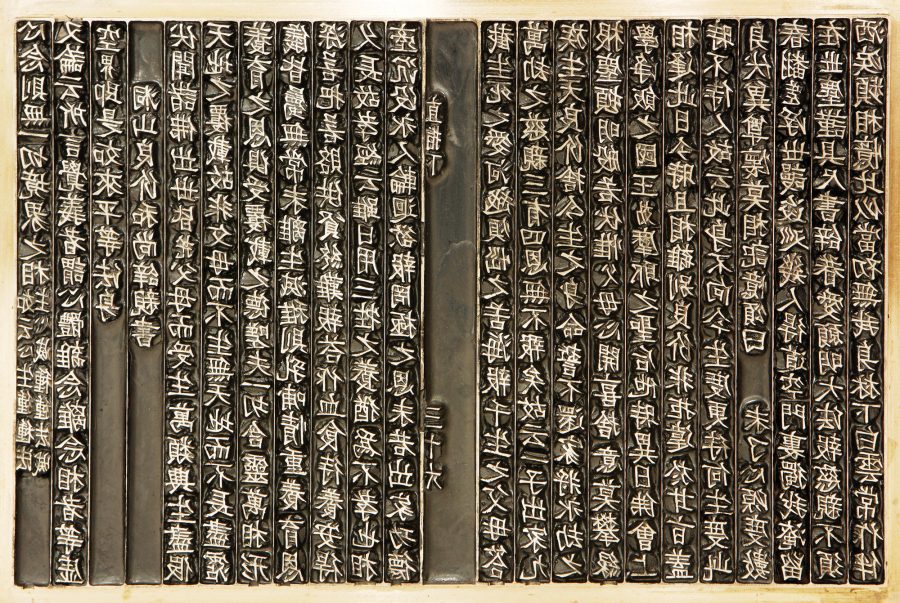
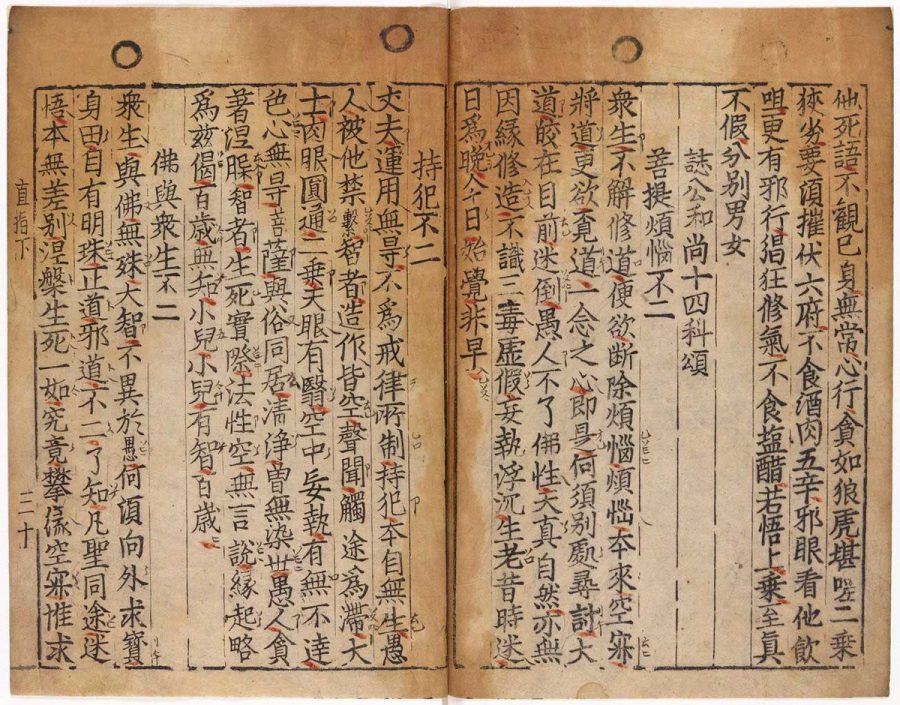
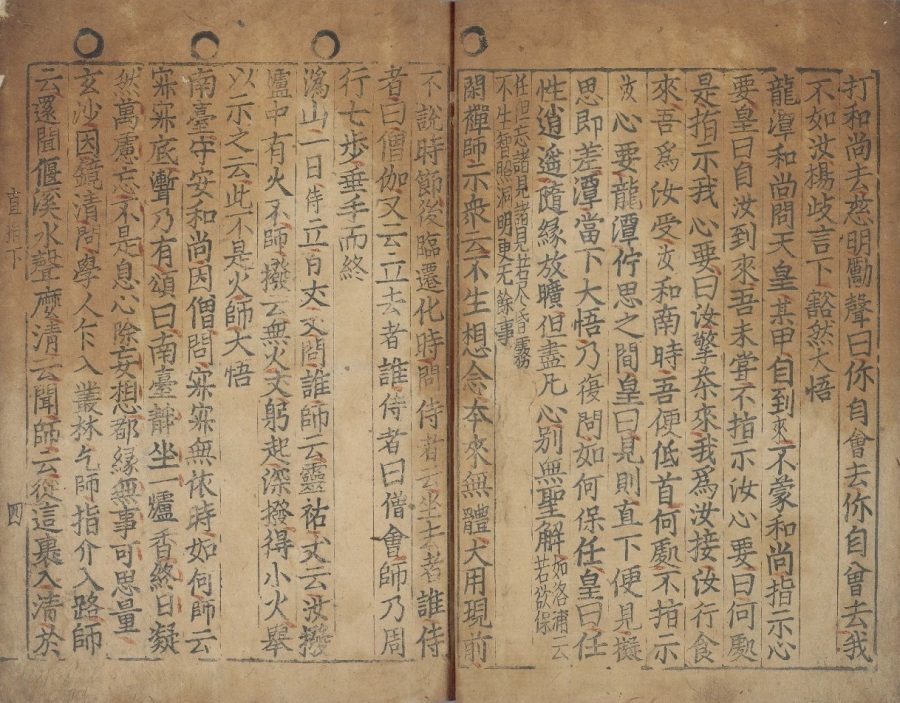
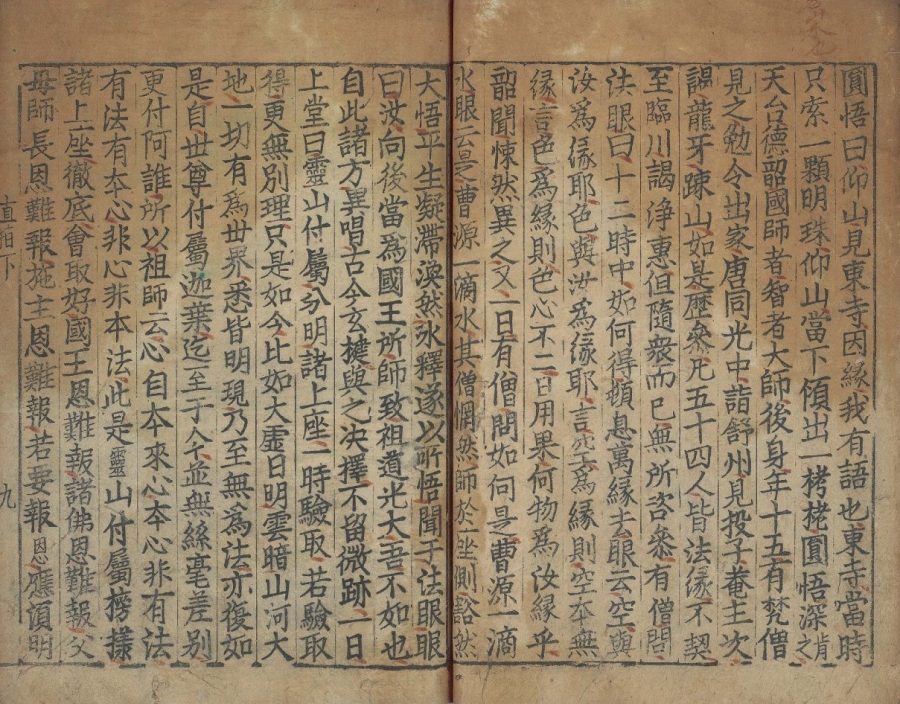
The Oldest Book Printed with Movable Type is Not The Gutenberg Bible: Jikji, a Collection of Korean Buddhist Teachings, Predated It By 78 Years and It’s Now Digitized Online

by Josh Jones

The history of the printed word is full of bibliographic twists and turns, major historical moments, and the significant printing of books now so obscure no one has read them since their publication. Most of us have only the sketchiest notion of how mass-produced printed books came into being—a few scattered dates and names. But every schoolchild can tell you the first book ever printed, and everyone knows the first words of that book: “In the beginning….”

The first Gutenberg Bible, printed in 1454 by Johannes Gutenberg, introduced the world to movable type, history tells us. It is “universally acknowledged as the most important of all printed books,” writes Margaret Leslie Davis, author of the recently published The Lost Gutenberg: The Astounding Story of One Book’s Five-Hundred-Year Odyssey. In 1900, Mark Twain expressed the sentiment in a letter “commenting on the opening of the Gutenberg Museum,” writes M. Sophia Newman at Lithub. “What the world is to-day,” he declared, “good and bad, it owes to Gutenberg. Everything can be traced to this source.”

There is kind of an oversimplified truth in the statement. The printed word (and the printed Bible, at that) did, in large part, determine the course of European history, which, through empire, determined the course of global events after the “Gutenberg revolution.” But there is another story of print entirely independent of book history in Europe, one that also determined world history with the preservation of Buddhist, Chinese dynastic, and Islamic texts. And one that begins “before Johannes Gutenberg was even born,” Newman points out.

The oldest extant text ever printed with movable type predates Gutenberg himself (born in 1400) by 23 years, and predates the printing of his Bible by 78 years. It is the Jikji, printed in Korea, a collection of Buddhist teachings by Seon master Baegun and printed in movable type by his students Seok-chan and Daijam in 1377. (Seon is a Korean form of Chan or Zen Buddhism.) Only the second volume of the printing has survived, and you can see several images from it here.

Impressive as this may be, the Jikji does not have the honor of being the first book printed with movable type, only the oldest surviving example. The technology could go back two centuries earlier. Margaret Davis nods to this history, Newman concedes, writing that “movable type was an 11th century Chinese invention, refined in Korea in 1230, before meeting conditions in Europe that would allow it to flourish.” This is more than most popular accounts of the printed word say on the matter, but it's still an inaccurate and highly cursory summary of the evidence.

Newman herself says quite a lot more. In essays at Lithub and Tricycle, she describes how printing techniques developed in Asia and were taken up in Korea in the 1200s by the Goryeo dynasty, who commissioned a printer named Choe Yun-ui to reconstruct a woodblock print of the massive collection of ancient Buddhists texts called the Tipitaka after the Mongols burned the only Korean copy. By casting “individual characters in metal” and arranging them in a frame—the same process Gutenberg used—he was able to complete the project by 1250, 200 years before Gutenberg’s press.

This text, however, did not survive, nor did the countless number of others printed when the technology spread across the Mongol empire on the Silk Road and took root with the Muslim Uyghurs. It is possible, though “no clear historical evidence” yet supports the contention, that movable type spread to Europe from Asia along trade routes. “If there was any connection,” wrote Joseph Needham in Science and Civilization in China, “in the spread of printing between Asia and the West, the Uyghurs, who used both block printing and movable type, had good opportunities to play an important role in this introduction.”

Without surviving documentation, this early history of printing in Asia relies on secondary sources. But “the entire history of the printing press" in Europe" is likewise "riddled with gaps,” Newman writes. What we do know is that Jikji, a collection of Korean Zen Buddhist teachings, is the world’s oldest extant book printed with movable type. The myth of Johannes Gutenberg as “a lone genius who transformed human culture,” as Davis writes, “endures because the sweep of what followed is so vast that it feels almost mythic and needs an origin story to match." But this is one inventive individual in the history of printing, not the original, godlike source of movable type.

Gutenberg makes sense as a convenient starting point for the growth and worldwide spread of capitalism and European Christianity. His innovation worked much faster than earlier systems, and others that developed around the same time, in which frames were pressed by hand against the paper. Flows of new capital enabled the rapid spread of his machine across Europe. The achievement of the Gutenberg Bible is not diminished by a fuller history. But "what gets left out” of the usual story, as Newman tells us in great detail, “is startlingly rich.”

“Only very recently, mostly in the last decade” has the long history of printing in Asia been “acknowledged at all” in popular culture, though scholars in both the East and West have long known it. Korea has regarded Jikji "and other ancient volumes as national points of pride that rank among the most important of books.” Yet UNESCO only certified Jikji as the “oldest movable metal type printing evidence” in 2001. The recognition may be late in coming, but it matters a great deal, nonetheless. Learn much more about the history, content, and provenance of Jikji at this site created by “cyber diplomats” in Korea after UNESCO bestowed World Heritage status on the book. And see a fully digitized copy of the book here.

via Lithub

Related Content:

The World’s Oldest Multicolor Book, a 1633 Chinese Calligraphy & Painting Manual, Now Digitized and Put Online

1,000+ Historic Japanese Illustrated Books Digitized & Put Online by the Smithsonian: From the Edo & Meji Eras (1600-1912)

See How The Gutenberg Press Worked: Demonstration Shows the Oldest Functioning Gutenberg Press in Action

Oxford University Presents the 550-Year-Old Gutenberg Bible in Spectacular, High-Res Detail

Josh Jones is a writer and musician based in Durham, NC. Follow him at @jdmagness

The Oldest Book Printed with Movable Type is Not The Gutenberg Bible: Jikji, a Collection of Korean Buddhist Teachings, Predated It By 78 Years and It’s Now Digitized Online is a post from: Open Culture. Follow us on Facebook, Twitter, and Google Plus, or get our Daily Email. And don't miss our big collections of Free Online Courses, Free Online Movies, Free eBooksFree Audio Books, Free Foreign Language Lessons, and MOOCs.

11 Jul 17:45

Seismic Soundoff Episode 58: Understanding signals & The Beatles' connection to Fourier Analysis

06 Jun 18:23

Learning Chess at 40 - Issue 73: Play

by Tom Vanderbilt

My 4-year-old daughter and I were deep into a game of checkers one day about three years ago when her eye drifted to a nearby table. There, a black and white board bristled with far more interesting figures, like horses and castles. “What’s that?” she asked. “Chess,” I replied. “Can we play?” I nodded absently.


There was just one problem: I didn’t know how. I dimly remembered having learned the basic moves in elementary school, but it never stuck. This fact vaguely haunted me through my life; idle chessboards in hotel lobbies or puzzles in weekend newspaper supplements teased me like reproachful riddles.

And so I decided I would learn, if only so I could teach my daughter. The basic moves were easy enough to pick up—a few hours hunched over my smartphone at kids’ birthday parties or waiting in line at the grocery store. It soon became apparent, however, that I had no concept of the larger strategy. The chess literature was dauntingly huge, and achingly specific, with several-hundred-page tomes devoted to unpacking single openings. The endgame literature alone could drown a person.

unfair advantage?: My daughter en route to another victory.Francesco Izzo

So, time-starved and not wanting to…
Read More…