KWBaker
Shared posts
08 Oct 01:28
Crane Melon Barn in Santa Rosa, California

Wine, especially French wine, is tied to the idea of terroir, that the climate and soil where grapes are grown has an indelible influence on the final product. People care a lot, then, about whether their wine is from the Loire or Napa Valley.
But not too many people care about where their melon comes from—unless they're a fan of the Crane melon, a hyper-local fruit developed and grown by a single family in Santa Rosa, California. True, the seeds have made their way to other fields, but the Cranes have firmly stated that all Crane melons not grown on their farm are inferior substitutes, and that the only way to try one is to visit the Crane Melon Barn during September and October, when they are ripe.
They may have a point. The melon was deliberately developed to flourish under specific circumstances: rich, adobe soil, little water, and the area's searing summer days and cold nights. Oliver Crane, in the early 20th century, bred the melon by crossing a white melon and an ambrosia melon with imported Japanese and Persian varieties. The result was a yellow-fleshed melon with a mottled, webbed rind and a floral, honeyed flavor.
Generations of Cranes have sold these melons from their 150-year-old redwood barn. These days, they go for a little more than a dollar per pound, and vary in size. Some are only as large as grapefruits, while others are fully watermelon-sized. But don't expect to be able to buy one at your local grocery store. Crane-grown melons rarely make it far from the source.
07 Oct 20:50
What Is Cold Plasma and How Can It Be Used in Agriculture?
by Dan Nosowitz
You likely remember plasma from science class, where you were taught that it’s the fourth state of matter (along with solid, liquid and gas), and that it has something to do with the sun and lightning. You may also remember those plasma globes from science museums, where you can put your finger on the outside of the globe and neon tendrils reach out to touch you back.
But there’s a lot more to plasma, and over the past decade, researchers and scientists have noticed that it may have some pretty incredible uses for agriculture, ranging from dramatically improved yield to pollution-free fertilizer to the near-total elimination of bacteria such as Salmonella and Listeria.
Here are some basics. A plasma is like a gas, except something has happened to the gas (such as being superheated or exposed to a strong electromagnetic field), which causes some electrons in the gas to break free. It ends up a lot like a gas, except gases are neutral, and plasmas are charged, either positive or negative. This makes plasma able to, for example, conduct electricity or respond to magnetic fields, which neutral gases cannot do.
Plasma is the most common of the four states of matter, in terms of the universe; the sun is mostly plasma, for example. But it’s also pretty commonly used and manipulated for Earth products. Neon signs and fluorescent bulbs contain plasma. So do plasma TVs, although those aren’t so common anymore.
When it’s found in the sun, plasma is referred to as “hot plasma” because it’s very hot. But there’s also “cold plasma,” which can be made in labs fairly easily. Cold plasma is still heated, but unlike in hot plasma, the component parts (electrons, neutrons, protons) aren’t at the same temperature; it’s only the electrons, in cold plasma, that are superheated, and the density of those electrons is low enough that the entire plasma can exist at room temperature.
Cold plasma, as with solids and liquids, can be made of all kinds of different materials, and thus have different properties; that’s how you can get, say, colored neon signs.
Scientists have been extremely interested in cold plasma as it relates to agriculture for about 15 years, according to a new article by Stephen Ornes in Science News. Ever since it became easy and inexpensive to create cold plasmas, researchers have been—to simplify things dramatically—zapping plants with plasma to see what happens. And some very, very curious results have occurred.
Seeds bathed in plasma for certain lengths of time seem to germinate and set out roots faster than those not exposed to plasma. In one study, a plasma is created using just regular air as the starter gas. That plasma is then mixed into water, and the nitrogen from the air, which became part of the plasma, also enters the water, only now it’s extremely biologically available to plants. You’ve probably heard of nitrogen fixation, in which certain bacteria on plants are able to take ambient nitrogen from the air and turn it into ammonia, which plants can use as fertilizer. This is that. Except most plants can’t fix nitrogen by themselves, and this plasma treatment could theoretically create low-cost, highly effective, near-environmentally-neutral fertilizer.
There’s more, too. Cold plasma also seems to have some extremely effective sterilizing effects; studies have indicated that it is remarkably effective at killing bacteria such as Salmonella, Listeria and E. coli.
All of this cold plasma research is extremely young, especially in terms of figuring out exactly how it works. Nobody quite knows how much plasma to use, for how long, in what way and created from what gases to achieve all of these results. But it’s all extremely promising, even if it makes my head hurt a little to think about it.
The post What Is Cold Plasma and How Can It Be Used in Agriculture? appeared first on Modern Farmer.
KWBaker likes this
07 Oct 20:47

How Much Protein Do You REALLY Need?
by Brett & Kate McKay

It’s an age-old question: how much protein do you need for maintaining good health in general, and building muscle in particular?
The answers to this question are varied and downright confusing.
You’ll find recommendations that range from .36 grams of protein per pound (.8 grams of protein per kilogram) of body weight to 1 gram of protein per pound (2.2 grams of protein per kilogram) of body weight.
So where along that spectrum does the true amount of optimal protein consumption lie?
Well, it isn’t in fact a cut and dry matter, and depends on several factors like physical activity and age.
Below, we break down what the research says as to how much protein you really need to consume.
Protein’s Role in Building Muscle
We all know that protein builds muscle, but how does it do it?
Well, it involves a complex biochemical process that would require thousands of words to explain. The TLDR version is that dietary protein contains amino acids that your body uses to build muscle tissue. Your body can’t make these amino acids on its own, so you need to consume them through dietary protein. One amino acid (leucine) is essential in kickstarting your body’s muscle-building process, called muscle protein synthesis.
So dietary protein 1) provides the building blocks to build muscle tissue, and 2) tells your body to start building muscle tissue.
Again, this is a really dumbed-down version of what protein does. But it’s a good working mental model of dietary protein’s role in the muscle-creation process.
So How Much Protein Do You Need?
You’ve probably heard of the RDA — the recommended daily allowance for nutrient requirements as issued by the National Academy of Medicine.
The RDA for dietary protein intake is .36 grams of protein per pound (.8 grams per kilogram) of body weight.
That means that the recommended amount of dietary protein for a 200-pound man is 72 grams of protein.
That’s not a lot of protein.
Heck, if you eat a 8-ounce filet mignon for dinner, you’ll have consumed over 80% of your required protein intake for the day.
The RDA is a broad average for all adults; while it’s probably sufficient for sedentary, younger folks, research in the past decade has shown that physically active adults and older adults need way more of this macronutrient in their diets.
How Much Protein Do You Need If You’re Physically Active?
If you’re physically active — you run, lift weights, have a labor-intensive job, etc. — research from Professor of Kinesiology Stuart Phillips suggests that you need .59 grams to 1 gram of protein per pound (1.3 to 2.2 grams of protein per kilogram) of your body weight.
So if you’re a 200-pound man, that means you should be getting somewhere between 118 grams to 200 grams of protein a day.
Whether you go towards the low or high end depends on how hard you’re training and your age (more on that in a bit). If you’re lifting heavy and/or are older, you’ll want to skew to the higher recommended amount of protein.
How Much Protein Do You Need If You’re Obese and Trying to Lose Weight?
Determining protein consumption for individuals who are obese is tricky. You need to lower calorie consumption in order to lose weight, but high protein diets are useful when you’re dieting because 1) they’re satiating, and 2) they help preserve muscle mass while you’re in a caloric deficit.
So you’ve got to find a protein target that’s high, but not so high that you eat an excess number of calories, and struggle to get into a caloric deficit.
When my nutrition coach Gillian Ward works with obese individuals, instead of pinning an amount of protein to body weight, she just makes sure that protein comprises 25% to 30% of total calories. “This allows the client to focus on calorie reduction and ensure they have a balanced diet. I’ve found that a balanced diet will get more long-term compliance than a diet that’s mostly protein and hardly any carbs and fat,” she told me. “And long-term compliance is key in any weight loss plan.”
How Much Protein Do You Need If You’re Older?
As you age, your body becomes less responsive to protein. Basically, as you get older you need to consume more protein to kickstart muscle protein synthesis than you did when you were younger. Combine that with the tendency of older people to avoid strength training, and you’ve got a recipe for sarcopenia or muscle loss. And that’s a big problem. Research has shown that sarcopenia contributes to a host of health and quality of life issues. If you want to have a healthy and vibrant old age, you need to maintain your muscle.
The research has shown that the RDA for dietary protein (.36 grams of protein per pound of body weight) is severely inadequate for older adults (we’re talking 50 years and over). Stuart Phillips recommends at least .54 grams of protein per pound (1.2 grams per kilogram) of body weight. If you’re a physically active older adult, you should probably be consuming .72 to 1 grams of protein per pound (1.6 to 2.2 grams per kilogram) of body weight, depending on your physical activity level.
Can You Overdose on Protein?
Myths persist that consuming too much protein is bad for your kidneys or will weaken your bones. These myths are based on flawed studies done 40+ years ago.
Unless you have some sort of kidney disease, your body can’t overdose on protein. Studies have shown that healthy people can consume up to 4.4 grams of protein per kilogram of body weight. If you’re a 200-pound man, that means you could consume 400 grams of protein in a day and not have any problems.
So, no. You can’t overdose on protein.
Is More Protein Better?
Many young gym bros think, “Protein builds muscle, so the more protein I consume, the better.”
While megadosing on protein won’t destroy your kidneys, it won’t do anything to improve strength or muscle size. The research shows that consuming beyond the range of .59 grams to 1 gram of protein per pound (1.3 to 2.2 grams of protein per kilogram) of body weight does nothing extra for protein synthesis and muscle building. Your body simply doesn’t need any more than that, and will just get rid of the excess protein through your pee and poop. So when you “overdose” on protein, you’re literally flushing the money you spent on it down the toilet.
You’ve Given Me Ranges of Protein Consumption. How Do I Figure Out the Exact Amount I Need?
Sorry. There’s no magic formula that will give you the exact amount of protein you personally need. Every individual is different, which is why we’ve presented a range of recommended amounts.
You’ll have to figure out your ideal amount through trial and error.
For me, I’ve used 1 gram of protein per pound (2.2 grams of protein per kilogram) of body weight for a couple of years now, and that’s worked for me. These past few weeks, I’ve been experimenting with lowering the amount of protein I consume in a day to 1.8 grams of protein per kilogram of body weight. I haven’t noticed any difference in my performance in the gym. Still feeling strong and muscular.
Experiment with the ranges above and find what works best for you. If you’d like more guidance, hire a nutrition coach.
Where to Get Your Protein?
Whole foods like milk, yogurt, eggs, and meat are your best sources of protein. Not only are they high in protein, but they’re also packed with micronutrients your body needs for overall health.
If you can’t get enough protein from whole foods, consider taking a whey protein supplement. Check out our write-up on whey protein supplements here.
If you’re vegan or vegetarian, it’s possible to get the protein you need from plant-based protein sources. You just have to be more thoughtful about it. While animal-based proteins have been shown to elicit a more robust protein synthesis response compared to plant-based proteins, other studies have shown that as long as you’re getting enough protein in your diet (from a variety of sources to ensure you’re getting all the amino acids essential to building muscle), there isn’t too much of a difference in muscle strength and size between people who get their protein from plant-based sources and those who get it from animal-based sources.
The post How Much Protein Do You REALLY Need? appeared first on The Art of Manliness.
KWBaker likes this
07 Oct 20:46
Looking To Sell an Old Car? Here’s How To Get Top Dollar for It
by Joel Patel
If you are looking to sell your previously owned car, this guide is here to help you get the most out of it

KWBaker likes this
07 Oct 20:27
 Tequilla and grapefruit soda form the basis for this refreshing alternative to the common margarita.
Visit Uncrate for the full post.
Paloma Cocktail Recipe
Visit Uncrate for the full post.
KWBaker likes this
07 Oct 20:25
7 Best Backpacking Tents Under $100 in 2021
by Mike Richard
The first step in building out your new backpacking gear closet? An affordable tent.

KWBaker likes this
07 Oct 20:22


SanDisk Professional G-Drives: New Name, Better Performance
by Jaron Schneider

G-Technology has been a mainstay brand for photographers for years, but was recently rebranded under SanDisk Professional. While the products now have a new name, has anything else changed?
I have been a huge fan of G-Tech products since I got into the industry, and I still use a G-Tech RAID array every day. But recently, Western Digital decided that it was going to fold the G-Tech product line under SanDisk (it owns both brands in addition to its own WD brand) and while the products right now still share the iconic “G” logo, the G-Technologies name is nowhere to be found on the packaging.
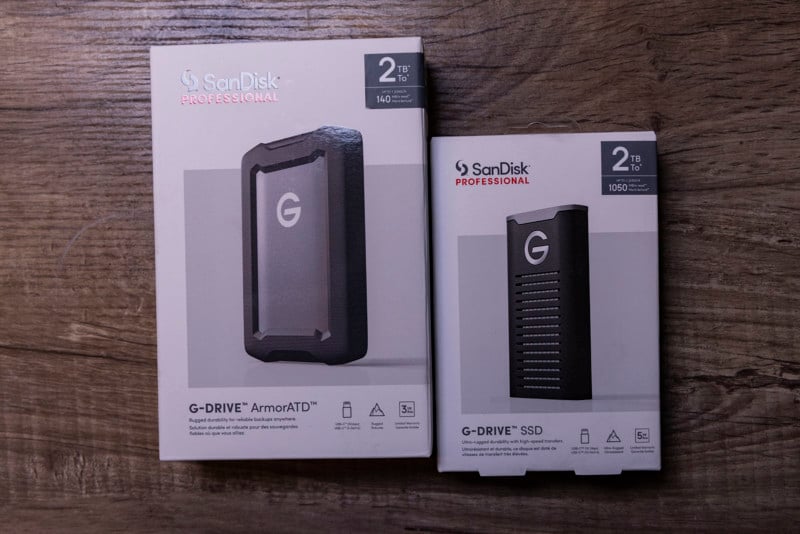
I actually think this is a pretty smart move, and puts the product line under the far more well-known SanDisk name. But rebrands sometimes don’t always mean good things when it comes to product performance, so we decided to see if anything other than the name changed. To that end, let’s take a look at the new SanDisk Professional G-Drive SSSD and G-Drive Armor ATD.
I’m happy to report that not only does the product seem to be as high-quality as it has always been, in the case of the G-Drive SSD, performance has actually improved.
SanDisk Professional G-Drive SSD
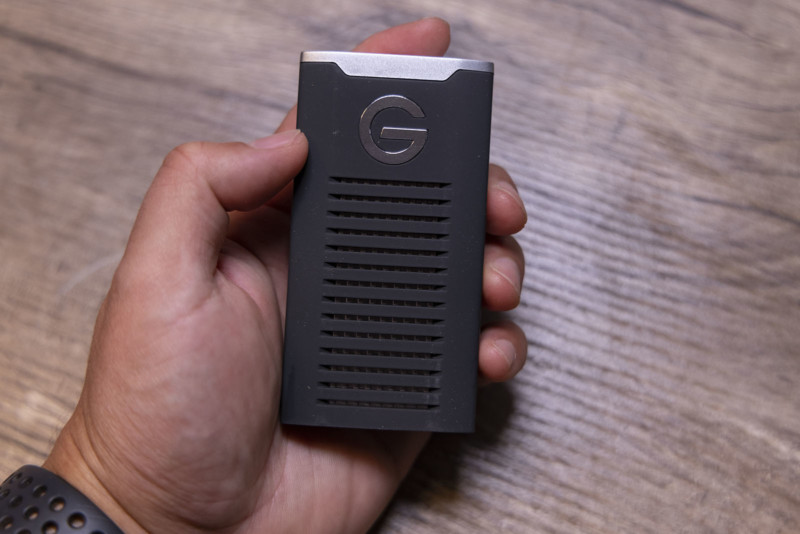
Let’s start with the G-Drive SSD. I actually reviewed the original iteration of this product several years ago and praised the speed and design of the miniature storage device. Side by side, very little has changed with the rebrand other than the subtle color under the grills on the front and back of the drive: what was once a shiny blue is now a more subtle silver.

Honestly, I prefer the blue but it doesn’t appreciably take away from the look of this drive — it’s still a very attractive little SSD. Size and weight are pretty much identical as is the support for USB-C but not Thunderbolt. Back in 2018 when I first reviewed the original, I found the speeds to be totally in line with the cost and more than enough to appease even the most demanding photographers.
I rechecked those numbers in a speed test performed on my MacBook Pro, with the results below:
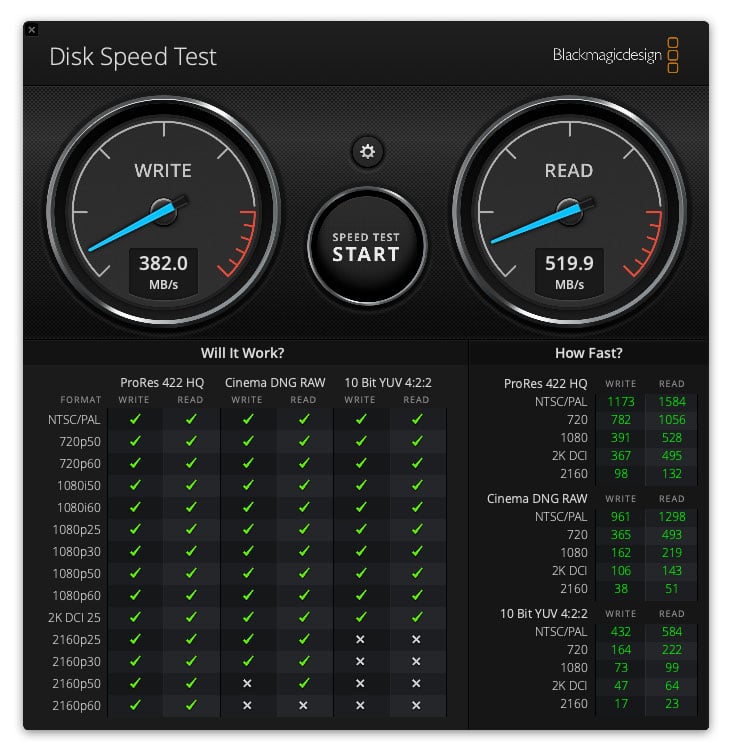
That’s still great, but the new version of this drive smokes those speeds:
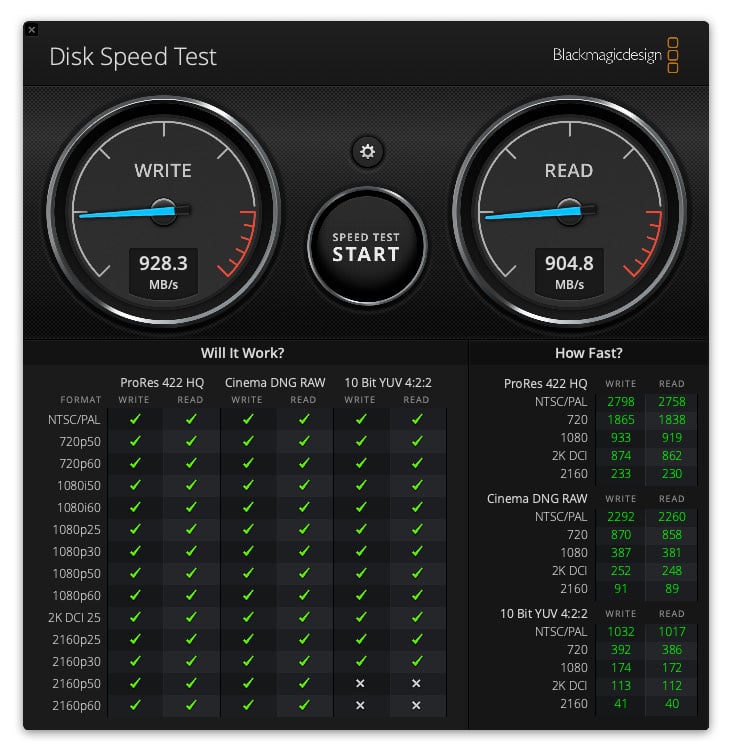
SanDisk’s new iteration of this drive more than doubles the write speed and nearly doubles the read speed. While I was unable to replicate the promised 1050 MB/s on the box, the 928 MB/s write speed and 903 MB/s read speeds is fast enough to support most video formats and will easily chew through even the highest resolution photos. You do not need to worry about working directly off this drive, that much is for sure.
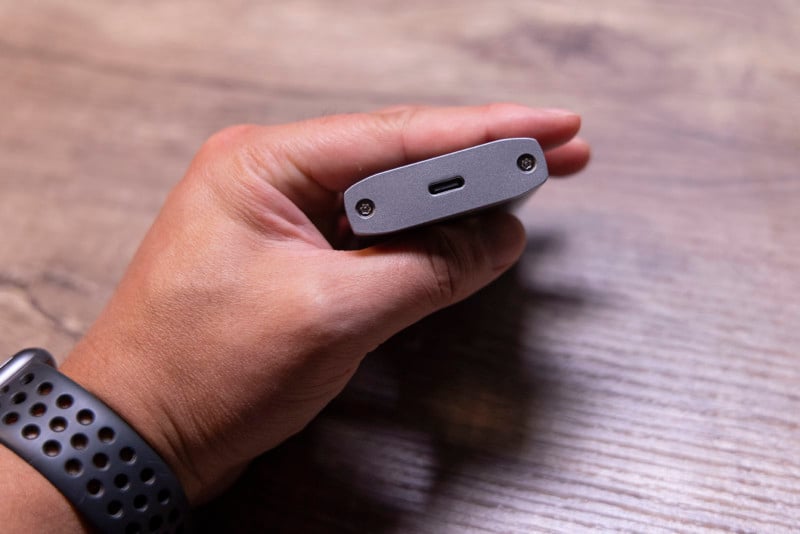
When I first reviewed the G-Drive Mobile SSD, the 500GB version cost $189. This new SanDisk-branded version costs $140 and has much better performance. From where I am standing, that’s a win. It is also available in 1TB and 2TB configurations for $230 and $360 respectively.
SanDisk Professional G-Drive Armor ATD

Not everyone needs super high speeds and some are willing to prioritize ruggedness and price over it. While marketing often shows drives like this braving the elements while a photographer edits in the snow or on the side of a mountain, realistically that’s not a real-world, practical application you’ll see very often.
When I ran my own production company, sometimes clients would request large amounts of video footage at original quality, which would be an absolute nightmare to send digitally. What is much faster is sending a storage drive through the mail. As you might expect though, that’s a big risk if the drive isn’t robust enough to handle the trip.
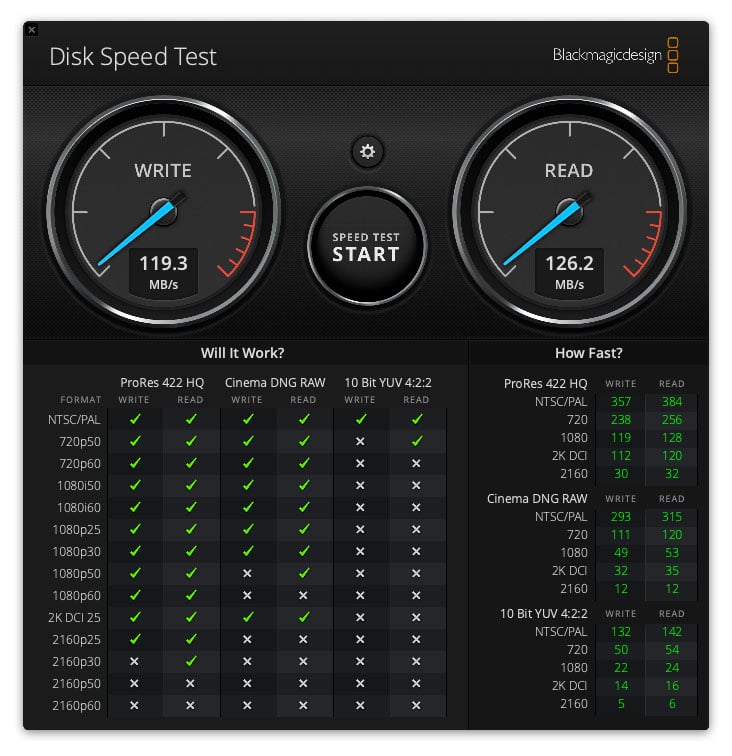
The Armor ATD only boasts up to 140 MB/s transfer speeds on the box, but for the purpose I just described, that’s plenty. That allows me to move about 50GB of photos and videos to it in around eight minutes, which is more than fast enough for sharing content with a client — no one is planning to edit off this thing.
Below are the read and write speeds according to our testing, which do not quite meet the promises on the box but are still fine for the intended use cases:
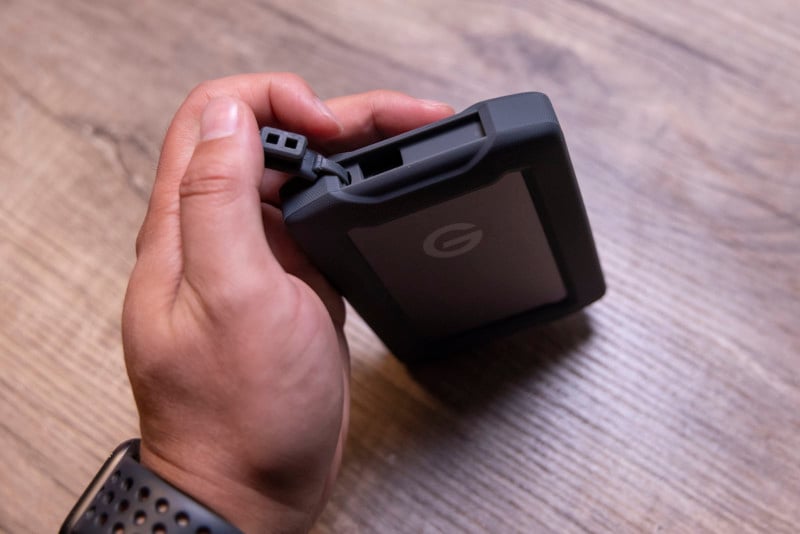
The drive is small and light for an HDD-based storage device and is crush-resistant up to 1,000 pounds, drop-resistant up to 1.2 meters (about 4 feet), and is IP53 rain and dust resistant thanks to a little rubber stopper that blocks the USB-C port at the top of the drive.
All this is pretty affordable, too, as 1TB costs $90. It is also available in 2TB, 4TB, and 5TB configurations for $110, $150, and $180 respectively.
G-Tech’s Reputation is in Good Hands
One thing to note is that the cables that are included with the two drives aren’t consistent, which I thought was a bit strange. For example, both ship with USB-C cables of equal length, but one bears the “G” logo and the other does not. Additionally, one set of cables was wrapped in plastic and the other was wrapped in paper. This inconsistency I find strange since both are from the same company and were produced at what I would assume was around the same time. I’ll chalk this up to transition pains as neither of these actually result in discernable quality issues, but I did find it worth mentioning.
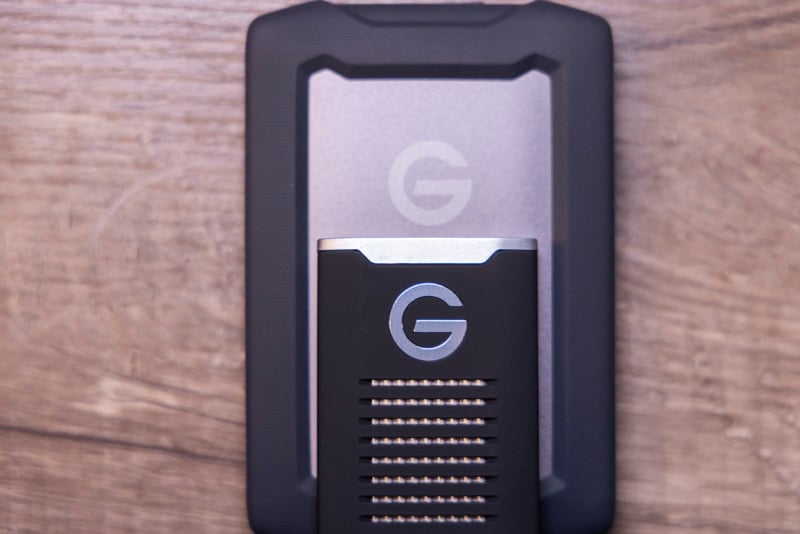
If you were worried or confused with the changes at G-Tech, at least the branding change hasn’t affected product performance. If anything, the products are better and cheaper than they were before, which I see as a win.
Welcome to a PetaPixel Showcase, in which our staff gives you a hands-on with unique and interesting products from across the photography landscape. The Showcase format affords manufacturers the opportunity to sponsor hands-on time with their products and our staff and lets them highlight what features they think are worth noting, but the opinions expressed from PetaPixel staff are genuine. Not all Showcase stories are sponsored, but when they are it will be clearly disclosed. Showcases should not be considered an endorsement by PetaPixel.
KWBaker likes this
07 Oct 20:20
Abandoned Photography: How to Photograph the Forgotten
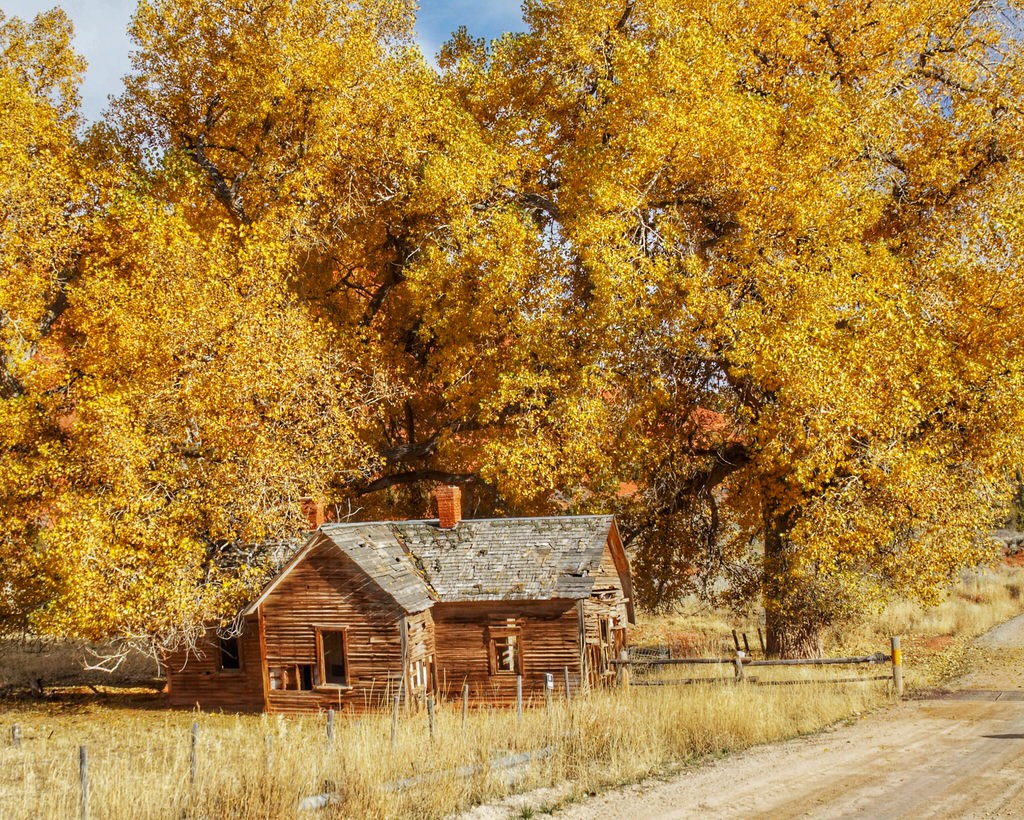
photo by Jessie Swimeley
Ghost towns and abandoned spaces offer people a glimpse of the past. It connects us back to a time and place far removed from the digital world we inhabit today. Abandoned photography helps keep history alive. Photographing abandoned buildings can also help you meet new people in your area who know the stories behind the places you are photographing. I am writing this from an American perspective, so be sure to understand the rules of visiting abandoned places in your own country.
How to Shoot Abandoned Places: Plan Ahead
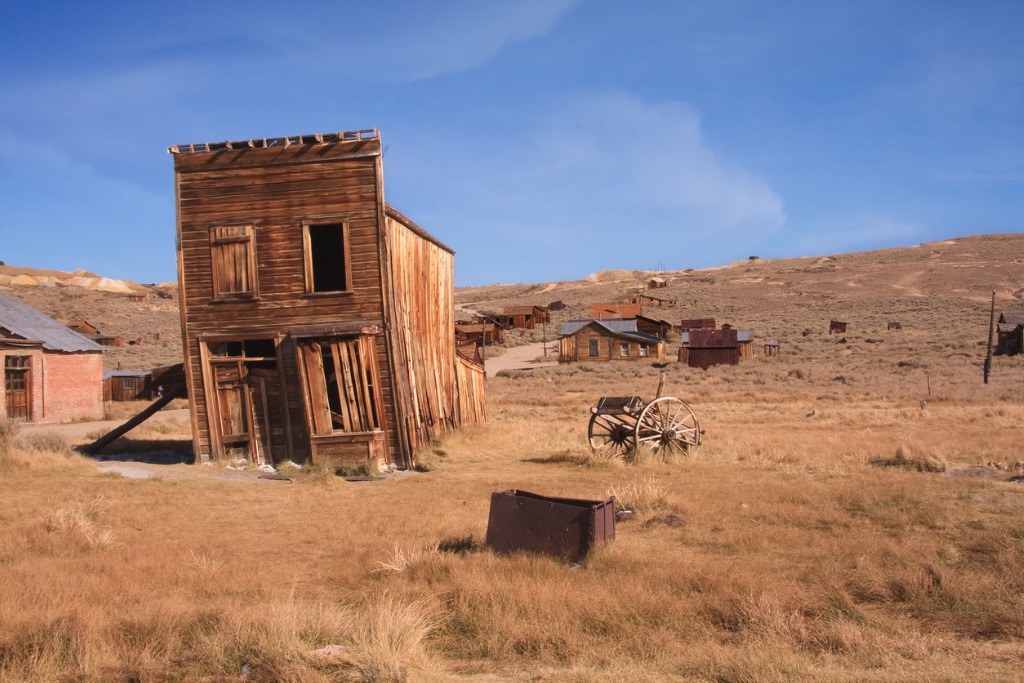
photo by Sue120502 via iStock
There are many established ghost towns across America that are open to photographers. One of the most famous places for abandoned photography is Bodie, California. Bodie is an old mining town that has been persevered as a state park in California. You can see the buildings as they stood at the turn of the 20th century.
You can also visit Mormon Row in Grand Teton National Park (shown below) to photograph the barns and homes of an abandoned Mormon settlement.
A quick Google search of ghost towns in your state will give you a good jumping-off point to find great abandoned places to photograph. Be sure to find out if the ghost town is on private property or public land.
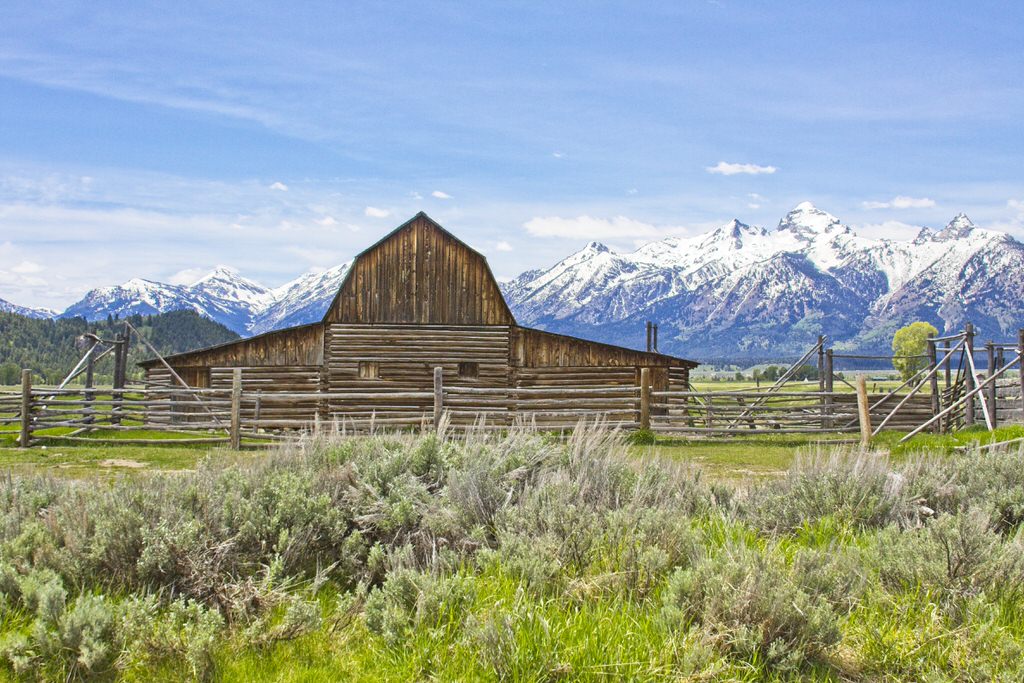
photo by Jessie Swimeley
You can also plan a drive around rural areas near your home. Aside from a nice drive in the country, you can scout out locations that would be great to photograph. I personally love a good drive in the country, taking all the random backroads. There are lots of barns and other abandoned buildings and cars you can photograph from the road, especially if you have a telephoto lens. Abandoned photography is all about the journey.
If you do find something particularly interesting and you want to know more or get closer, DO NOT trespass. I have found that people are much happier to welcome you onto their property if you knock on their door and ask permission than if you hop a fence. You can note the location in your journal and try to find out who owns the property with your state’s property records.
Know the Rules of Abandoned Photography
Don't Trespass
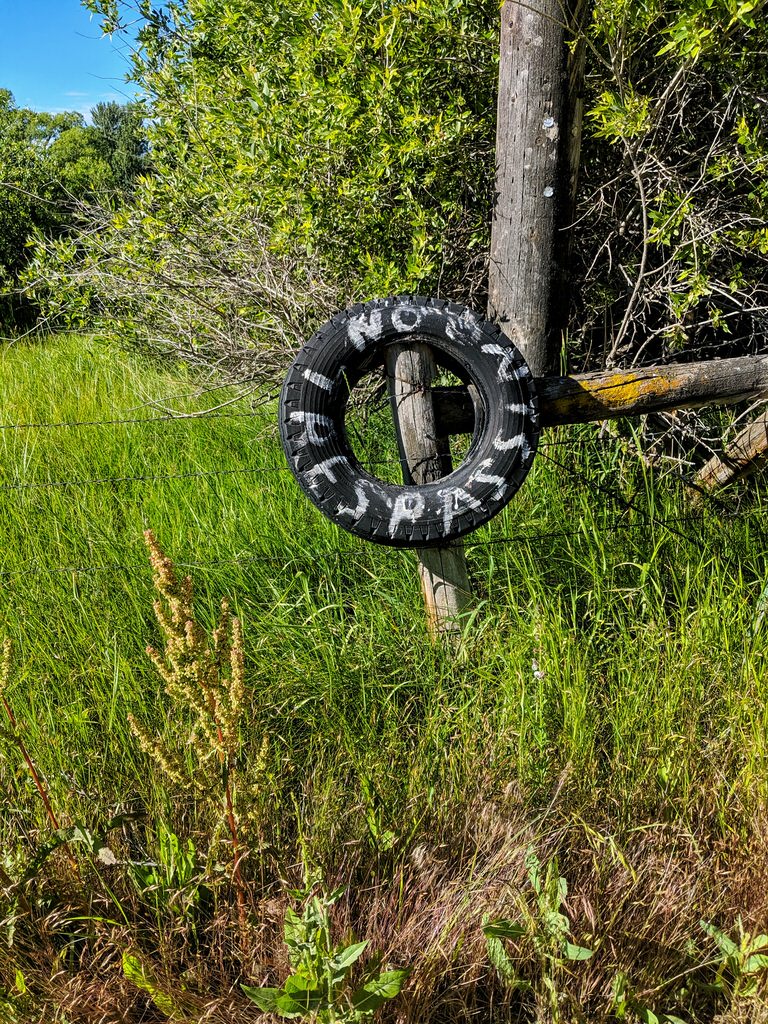
photo by Jessie Swimeley
Abandoned building photography is full of tempting places that are sometimes just out of reach. You might think that just a quick foray onto the property won’t hurt, but you can end up in a lot of trouble or badly hurt. It is always best to find out
It can feel weird or scary to knock of a stranger’s door to ask if you can photograph their property. I like to bring my business card and samples of abandoned photography with me to show I am a legitimate artist. Most people will probably give you a funny look, but they will let you go about their land photographing abandoned buildings. People also love to share the stories of the properties, whether it is family history or events. Photography is a great way to tell stories, right?!
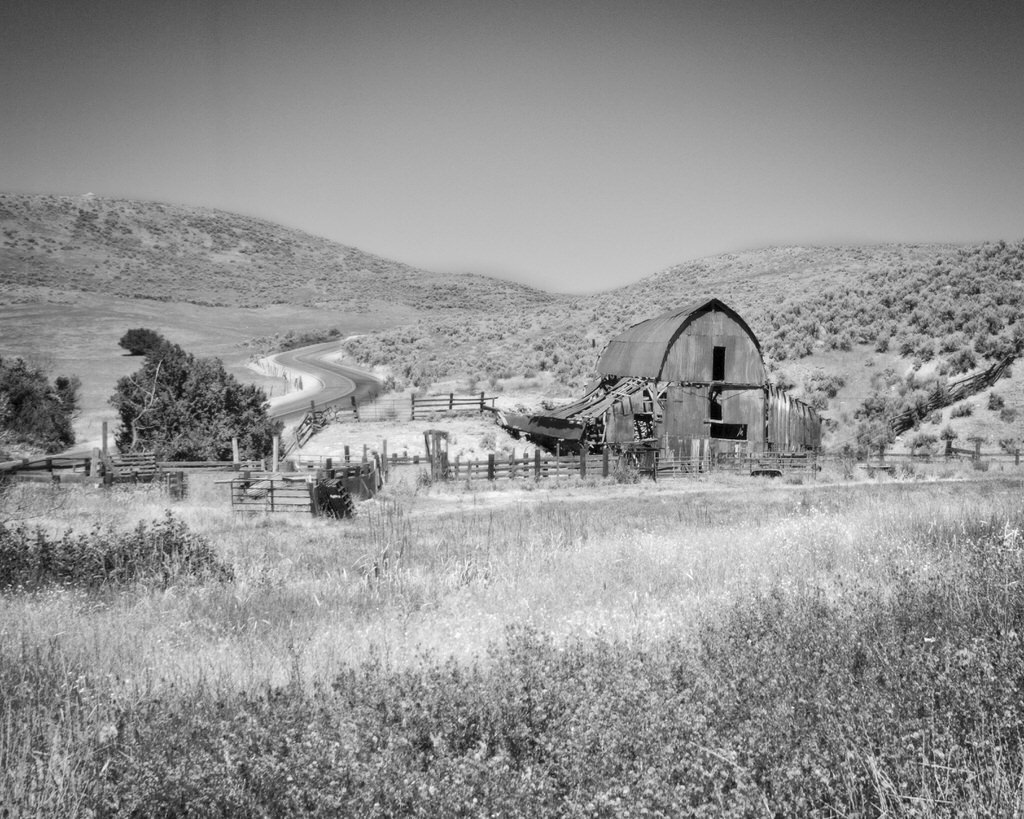
photo by Jessie Swimeley
I took the time to meet the 94-year-old woman who owned the crumbling barn shown above. There was a perfectly good spot on the side of the road to take photos, but I wanted to know more, so I parked my car and walked up her driveway. She let me wander around the barn and she told me the barn was once featured on the state’s driver’s license and was a historic building, but she didn’t have the resources to keep the barn up. She also told me about the flood that nearly destroyed the whole property back in the 1980s. Sadly, the barn collapsed about a year after I took photographs of it.
Safety First
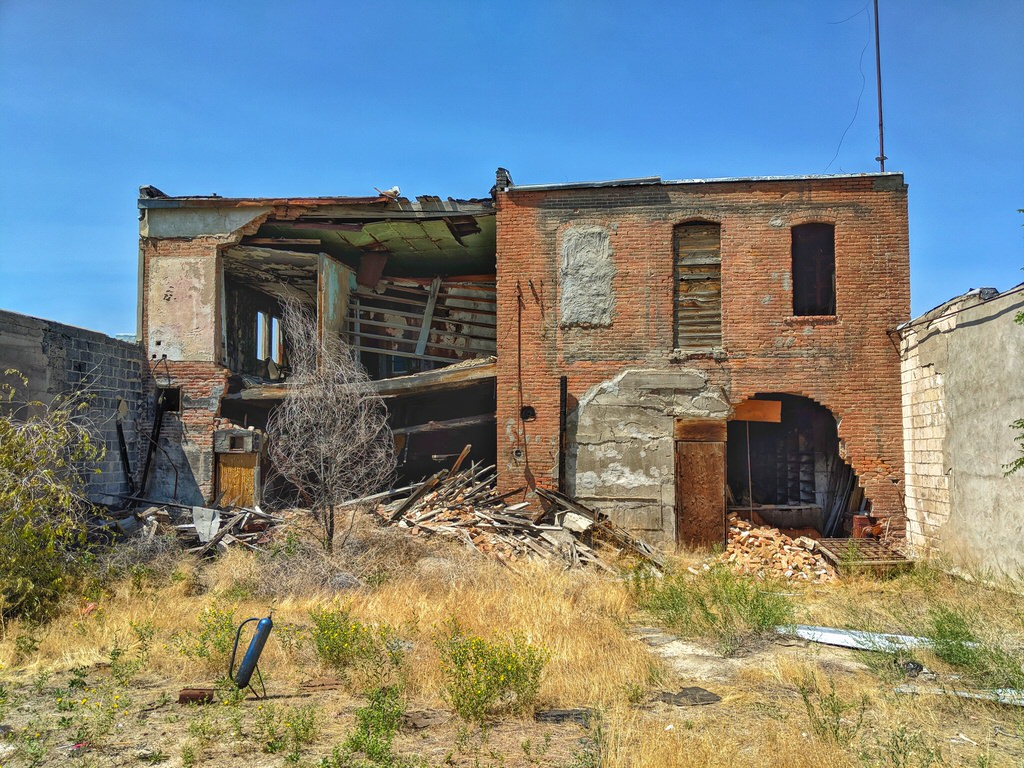
photo by Jessie Swimeley
I know going inside an abandoned building is very tempting! If something looks unstable it probably is, whatever is inside isn’t worth getting hurt (or worse) over.
It is a good idea to wear close-toed, thick-soled shoes and pants when you are out practicing your abandoned photography. There can be thick vegetation, rusty nails, and all manner of debris where you are walking, so it is good to be protected. If you want to give yourself an extra layer of defense make sure your tetanus shot it is up to date.
Go With a Friend
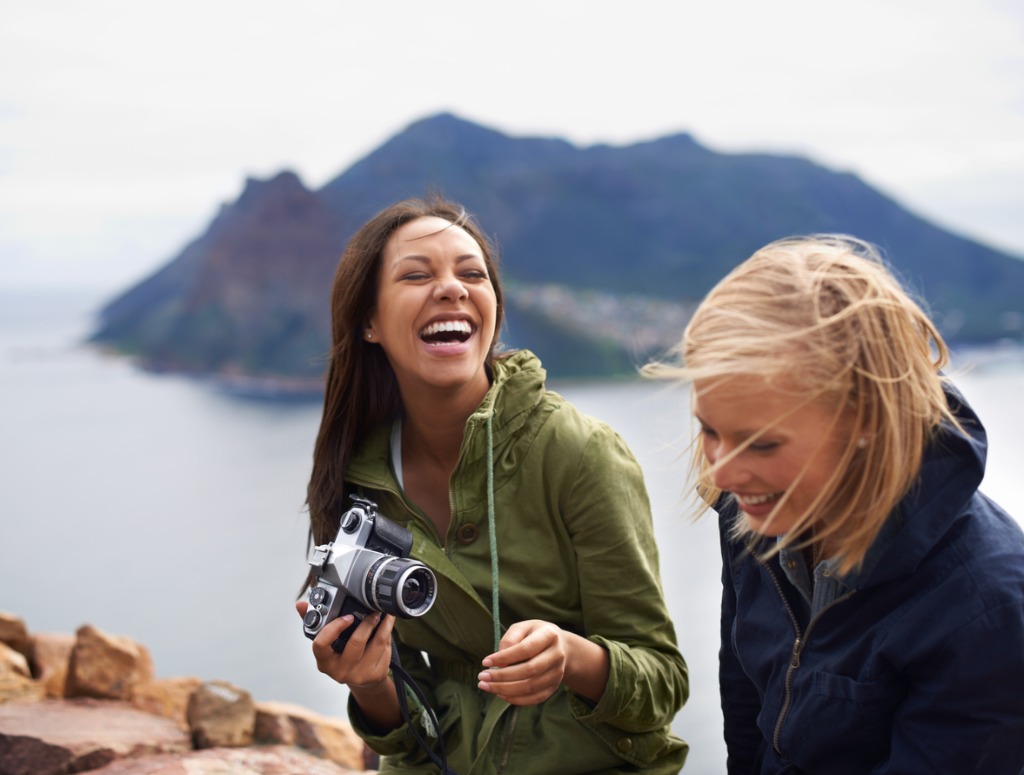
photo by PeopleImages via iStock
Abandoned photography is something that is enjoyable if you bring a buddy. It never hurts to have extra eyes to spot amazing places along the road, or to have some backup if you get hurt.
Be Respectful
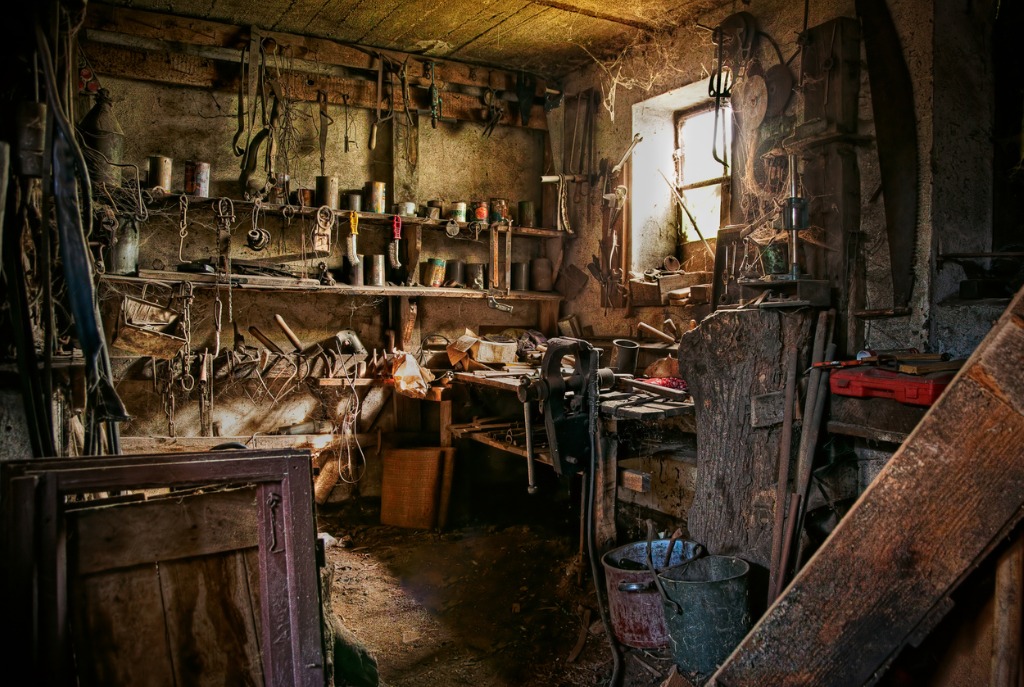
photo by broken3 via iStock
This isn’t your space. There may be all kinds of cool old treasures lying around but they aren’t yours so keep them out of your pockets. Don’t cause any damage, either. No one wants to see your initials! Also, don’t litter. Remember that old cliché: Take only pictures, leave only footprints. Yeah, that applies here!
Don’t Disclose the Location (Unless It is a Famous Place)
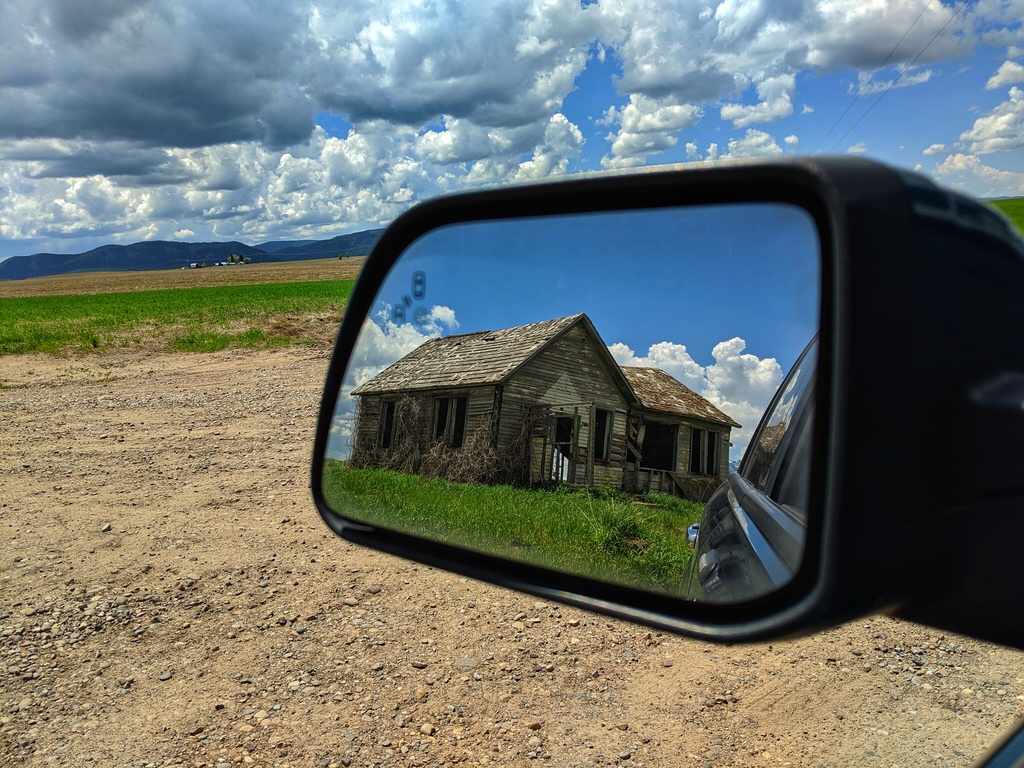
photo by Jessie Swimeley
Disclosing your location can be a bit of a minefield. You don’t want thousands of people flocking to the location you found. Remember the poppy fields in California a few years ago?
Keeping your abandoned photography locations a secret protects the spaces from becoming overrun by disrespectful masses. It also keeps the people who agree to let you be on their land safe from those same people.
If you really want to tag a location, use a general one like the state the abandoned building is located in. In abandoned spaces in national parks, state parks, or other places the public can access, it is okay to use your geotag information.
Get Inspired
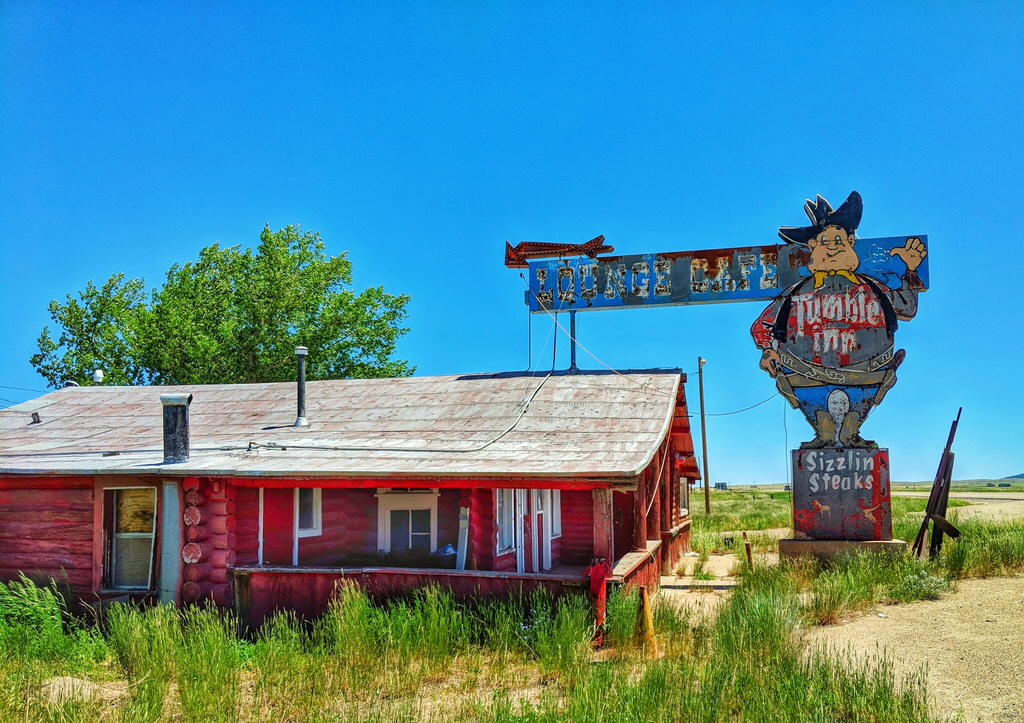
photo by Jessie Swimeley
Instagram is a wonderful place to be inspired by others who enjoy abandoned photography. There are lots of great pages that share work by photographers from around the world, so to get your abandoned photography fix, check out RAW_Abandoned, or Backraod_Visons.
Shooting Abandoned places is a fantastic way to learn more about the history of where you live. Just remember, ask before you enter!
We Recommend
KWBaker likes this
07 Oct 20:17
 A recreation of the highly-valuable 1965 original, this throwback toy set is a limited edition.
Visit Uncrate for the full post.
James Bond 007 Secret Agent Attache Case
Visit Uncrate for the full post.
KWBaker likes this
07 Oct 20:12
The 9 best whiskeys for making a bar-worthy Old Fashioned at home
by Mark Stock
These nine whiskeys are absolutely ideal for an Old Fashioned.
The post The 9 best whiskeys for making a bar-worthy Old Fashioned at home appeared first on The Manual.

KWBaker likes this
07 Oct 01:32
90-year-old punches neighbor in face during 'get off my lawn' dispute...
(Second column, 13th story, link)


90-year-old punches neighbor in face during 'get off my lawn' dispute...
90-year-old punches neighbor in face during 'get off my lawn' dispute...
(Second column, 13th story, link)
Drudge Report Feed needs your support! Become a Patron
KWBaker likes this
06 Oct 21:33
College Football Decoded: Hotty Toddy
by Gabriela Gomez-Misserian
Gosh almighty, where did the University of Mississippi’s cheer come from?
The post College Football Decoded: Hotty Toddy appeared first on Garden & Gun.
KWBaker likes this
06 Oct 21:30
How Good Is Your Passport? The World’s Most And Least Powerful For 2021
by Cecilia Rodriguez, Senior Contributor
Europe, with Germany at the top, dominates this year’s Henley Index of the best passports to hold when traveling. The U.S. appears in seventh place.

KWBaker likes this
06 Oct 21:05
How To Become More Patient At Home And At Work
by sodiumnami

It’s difficult to work at home. Why? Well, sometimes you’d rather lie in bed instead of opening your computer to do tasks. There are also tempting activities that can be done instead of work or other important tasks, and being cooped up in your home with the uncertainty of the current pandemic makes us more irritated and impatient. FastCompany shares some tips and tricks on how to be more patient at home and at work. Check the full piece here.
Image credit: Simon Abrams/Unsplash
06 Oct 14:56
How The Debt Ceiling Debate Impacts The Average American
by Robert Farrington, Senior Contributor
If you've been watching the news lately, you have probably heard all about the "debt ceiling," and how disastrous it will be if Congress doesn't raise it. But how will it really impact you?

KWBaker likes this
06 Oct 14:56


Water-Resistant Backpacks for Wet Commutes
Don't let rain ruin your bag (or what's inside it).

KWBaker likes this
05 Oct 21:36
NOT A JOKE: Treasury Minting $1 Trillion Coins…
by Rob
This is how these retards spend our money… Via Axios: A trillion-dollar platinum coin could be minted “within hours of the Treasury Secretary’s decision to do so,” Philip Diehl, former director of the United States Mint, tells Axios. Why it matters: Congressional solutions to the debt-ceiling problem could take weeks to implement, especially if the […]
KWBaker likes this
05 Oct 21:36
The 4 best beaches in the U.S. for camping like a castaway
by Malee Oot
Camp at these spectacular beaches, and you'll get a taste of paradise at any time of the year.
The post The 4 best beaches in the U.S. for camping like a castaway appeared first on The Manual.

KWBaker likes this
04 Oct 21:42

Got gas? Poor mental health may be the reason you’re breaking wind
by Chris Melore
Survey reveals that nearly 9 in 10 adults battle gas symptoms on a daily basis, with flatulence by far being the most common issue. VIENNA, Austria — Breaking wind ranks as the most common gas-related stomach issue, according to a new study. However, the cause of all this flatulence may surprise you. Researchers say a…
The post Got gas? Poor mental health may be the reason you’re breaking wind appeared first on Study Finds.
KWBaker likes this
04 Oct 21:40



Tired of yard debris stacked on curbs? Consider repurposing it on site
by David Pendered
Editor’s Note: This is the second of two stories on Atlanta’s yard debris challenges. Read the first here.
By David Pendered
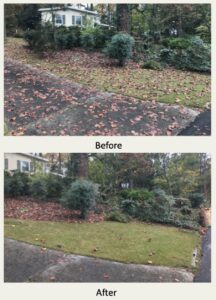
Solutions to yard debris stacked along curbs in Atlanta include recycling much of the vegetation on site, and discarding only that which is inappropriate to store. Nature will benefit, according to advocates of natural cityscapes.

Luna moths overwinter in fallen leaves in Atlanta, unless the leaves are raked and removed. (Photo by NCBioTeacher, via wikimedia.org)
“The luna moth is the poster child of why not to rake leaves,” Kathryn Kolb, director of the non-profit EcoAddendum, said. “One of their generations overwinters in fallen leaves. If you rake up the leaves, you rake up all the luna moths and we won’t have them anymore.”
Peter Bahouth has focused on another aspect of leaf gathering. Bahouth calls for the reduction of the fairly new custom of blowing leaves with gas-powered machines. A rake or electric blower is a fine alternative to a noisy engine, if leaves have to be gathered at all, according to the Buckhead resident who works at home.
“If you’re going to keep a lawn and remove leaves from it, do it infrequently and do it with the least impact possible, in terms of noise and pollution,” Bahouth said. “The sanctity of the lawn should not be allowed to trump the sanctuary of the neighborhood, and of the home.”
These talks about onsite recycling of yard waste in general, and the phenomenon of manicured lawns in particular, are rising amid the pandemic and especially now that Atlanta has cut back the collection of such debris from weekly to twice a month amid the national labor shortage. The city’s solid waste service can’t hire enough workers, even with a $500 signing bonus and $3 an hour tacked onto normal wages. Atlanta is in the process of trying to hire private contractors to pick up yard waste.

All but two bags of leaves, packed with other yard debris, were repurposed on site by pushing material onto the landscaping island. (Photo by David Pendered)
The lawn care industry hasn’t yet spoken publicly about the situation. With an economic value in metro Atlanta of about $1 billion, according to a 2016 legal brief, the sector has been supported by influential regional and state business organizations before the U.S. Supreme Court.
Atlanta gardeners could reduce the extent of the problem by keeping more material on the property. Georgia Audubon endorses the ideas promoted by Audubon’s 2017 story, “To help birds this winter, go easy on the yard work.” Kolb offered three suggestions that, she said, any home gardener can implement or ask the lawn care service to complete:
- Establish natural areas such as landscaping islands or margins, and place leaves and other vegetation there to decompose;
- Establish a compost pile and put leaves there. Leaves decompose quickly and create a rich soil that can be used for potting and other purposes;
- Chop leaves with a mower and allow the material to remain on the lawn. The moisture blanket provided by intact fallen leaves will be diminished, but this is preferable to removing leaves completely.

A turtle nestled in a bed of fallen leaves and ivy. (Photo by David Pendered)
No one expects a swift and seismic shift in the culture and customs of manicured grounds outside Atlanta’s dwellings. Pride of ownership, and tenancy, runs deep, and sometimes is made manifest in the removal of fallen leaves, limbs and faded blossoms that aren’t part of the garden plan.
However, the slowdown in Atlanta’s collection of yard waste does offer a moment to reflect on why lawn care culture has become what it is, and if it should continue. Bahouth noted that more than 400 readers have responded to his Sept. 24 post on nextdoor.com, which begins:
- “It’s 1 pm and the leaf blower invasion has been nonstop since 8:30 this morning. We’re losing a whole beautiful season of autumn to gas powered blowers….”
Another factor is the influence of the lawn care industry in metro Atlanta – valued at about $1 billion in a 2016 legal filing in the Georgia/Florida water war. In its lawsuit, Florida had requested Georgia be required to release more water from the Chattahoochee/Flint river basins into Florida. The U.S. Supreme Court on April 1 ruled in favor of Georgia.
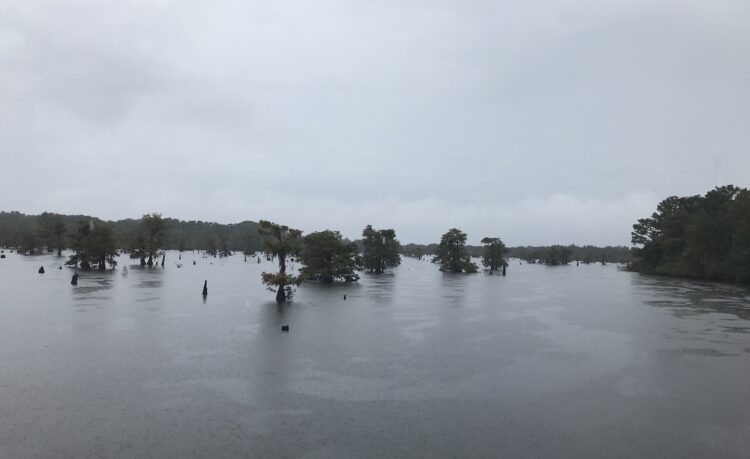
Tupelo honey is harvested from bees that gather nectar from tupelo gum trees, which like to stand in several feet of water along Florida’s Dead Lakes and Chipola River, a tributary of the Apalachicola River. Local aviarists say declining river flows have led to a decline in tupelo blossoms and, thus, honey. Water levels were up after hurricanes Fred and Ida passed in August and September. (Photo by David Pendered)
In a friend-of-the-court brief (pages 14, 20), Georgia business leaders argued that the lawn care industry in metro Atlanta has greater economic value than everything in Florida, combined, that relies on water flowing toward Apalachicola Bay.
As stated in the brief submitted by the Metro Atlanta Chamber of Commerce, Regional Business Coalition of Metro Atlanta, and Georgia Chamber of Commerce:
- “Without sufficient water for those purposes [outdoor watering], the home gardening and landscaping industries will be harmed.
- “As explained in Part III, more people are employed in the home garden and landscaping related industries in Metro Atlanta than there are oystermen, and the value of the goods and services generated by the gardening and landscaping business in Metro Atlanta is substantially greater than the entire amounts claimed for the Apalachicola oyster industry, the Tupelo honey industry, or any other economic impact cited by Florida as the harm it purports to have incurred as the result of Georgia’s water usage.”
Notes to readers: Guidance on establishing and maintaining a yard that’s more natural, and native to the North Georgia region, is available from organizations including:
EcoAddendum – “What’s in your yard?” For more information email info@EcoAddendum.com
Georgia Audubon – “Certify your yard as a wildlife sanctuary.” For more information click here
The post Tired of yard debris stacked on curbs? Consider repurposing it on site appeared first on SaportaReport.
KWBaker likes this
04 Oct 21:37
The Unhealthiest Restaurant in Every State | Eat This Not That - Eat This, Not That
The Unhealthiest Restaurant in Every State | Eat This Not That Eat This, Not That
KWBaker likes this
03 Oct 16:18
Camping in the rain? Here’s how to stay dry and comfortable
by Steven John
With the right preparation, you can turn this forecast into a positive and memorable experience. Don't let the rain dampen your trip! Here are our best tips for bad weather.
The post Camping in the rain? Here’s how to stay dry and comfortable appeared first on The Manual.

KWBaker likes this
03 Oct 15:02
38 Notorious Projects Born of Spite
by Miss Cellania
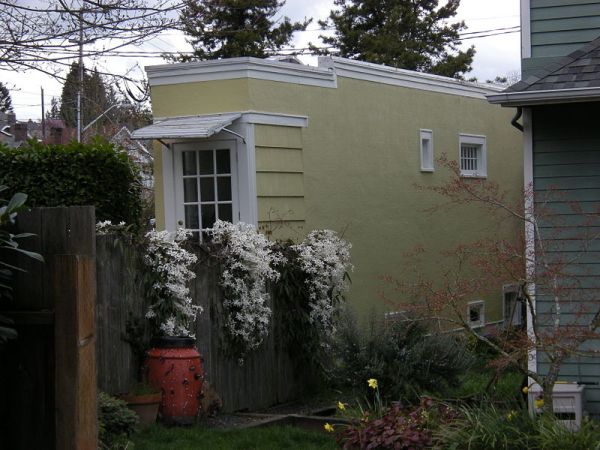
The origins of many property regulations come about because someone pushed the limits of common sense long ago. And we still see examples of someone flouting those regulations because the resulting buildings were grandfathered in, or may even be the cause of a certain regulation. We've read tales of spite houses, but there are more of these than you might know, as Mental Floss' latest collection shows. The grander a spite construction, the more likely it is to have survived, and the stories behind them can be fascinating. Mess with someone's property, and feel their wrath. A typical spite building is one built on a piece of land thought too small, due to government seizure of part of a plot or by a seemingly unfair inheritance. Or, in the case of the Montlake House, shown above, a divorce settlement.
Whatever the origins of the wedge-shaped Montlake House in Seattle, Washington, built in 1925, spite is baked into its blueprint. According to one story, a woman walked away from a nasty divorce with an awkwardly-laid-out piece of land. Instead of leaving it empty like her ex-husband must have hoped for, she built a pie-slice-shaped home that fit perfectly onto the property. Another legend says that the structure went up when someone down the road offered to buy the land for an insultingly low amount. The owner got their revenge by erecting the odd building to block their neighbor's view. Today, the spite house—which is 15 feet wide on one end and 55 inches at the other, just wide enough for a door—is a treasured Seattle landmark. In 2018, it hit the market for $600,000. —M.D.
But it's not just houses. Or even hotels or castles, although those are included. There have been entire manufacturing companies founded out of spite, some that are now household names. There's also a sad tale that may be the origin of the phrase "cut off your nose to spite your face" in this mega-list at Mental Floss.
(Image credit: Joe Mabel)
KWBaker likes this
03 Oct 15:00
From "Taxi"
"The great thing about television is that if something important happens anywhere in the world, day or night, you can always change the channel."
KWBaker likes this
03 Oct 14:55
How Seinfeld (Hilariously) Exposed the Creepy Authoritarianism of Aggressive Do-Gooders
by Jon Miltimore
WALKER 1: Hey, where’s your ribbon?
KRAMER: I don’t wear one.
WALKER 2: You don’t wear the ribbon? Aren’t you against AIDS?
KRAMER: Yeah, I’m against AIDS. I’m walking, aren’t I? I just don’t wear the ribbon.
WALKER 3: Who do you think you are?
WALKER 4: Put the ribbon on!
KWBaker likes this
03 Oct 14:54
There’s a Great Seiko Dive Watch for Every Budget
Whether you're well-heeled or cash-strapped, Seiko has a great diver for you.

KWBaker likes this
03 Oct 01:37
Your USPS Mail Might Be Slower Starting Today — Here’s What To Know
by Alison Durkee, Forbes Staff
The agency’s new changes will particularly impact mail that has to travel further distances.

KWBaker likes this


02 Oct 22:41
Sunnyside Conservatory in San Francisco, California

San Francisco’s Sunnyside Conservatory is a botanic jewel defined by a century-old palm grove and surrounding gardens. The beautiful landmark on Monterey Boulevard has survived six owners, the 1906 earthquake, and is sometimes known as "the other conservatory" (compared to the better-known Conservatory of Flowers located in Golden Gate Park).
Sunnyside Conservatory's previous owners have included a balloon aircraft inventor who was killed by a locomotive, a woman named Temperance who named the conservatory Sunnyside Laboratories and planned to turn it into a sanitarium, and an entrepreneur who marketed bottled water fortified with mineral supplements in the 1920s. Currently, it is owned by the San Francisco Recreation and Parks Department.
Located in the Outer Mission district, the generally south-facing hillside was formerly pastures and farmland as part of Rancho San Miguel. In 1891, it was laid out for residential development by the private real estate investment Sunnyside Land Company, founded by Behrend Joost. Joost was a German-born hardware entrepreneur and real-estate investor whose greatest claim to fame was starting San Francisco’s first electric streetcar, the San Francisco and San Mateo Electric Railway and the Sunnyside development was one of the line’s stops.
During the development’s first year, a streetcar gripman named Charles H. Taylor bought his Sunnyside lot. Located on what is now known as 258 Monterey Boulevard Taylor and his wife Ida, built their home, on the current site of the conservatory.
In early 1898, the Taylors sold the property to William A. Merralls, a British-born inventor and serial entrepreneur. Merrill's made his money in the invention and sale of power mining equipment; he also had shipping interests and shopped proposals for flying engines. He invented a new gasoline engine to power mining equipment, a cooling system for subways, a self-propelled balloon aircraft, and later, founded an aircraft company that produced biplanes from his own design.
William’s original vision for the property was not only to gather up exotic and rare earthly plant specimens for his private enjoyment but also to bring celestial wonders closer to home. And so, in the early 1900’s he constructed his Sunnyside Conservatory. The wood-shingled two-story center octagon was flanked by single-story wings on the east and west. Concrete walkways wound around the building, and he put in a variety of trees and plants on the property. In doing so, he built a Victorian oasis next to his home on an old dairy farm in the development. The Merralls' house, which still stands next door, was capped with an observatory that had a rotating, slotted wooden dome from where he could gaze through a telescope at the night sky thereby fulfilling his original vision. William’s second wife, with the unusual name of Temperance Laura, is said to have had even further plans to further expand the grounds and buildings to create a sanitarium. The name of the plan was Sunnyside Laboratories and although it was never realized, the name would stick with the location for decades.
While visiting friends in Alameda in 1914 and in the midst of financial difficulties, William however was tragically killed by a locomotive train rounding a blind curve. Temperance, unable to keep up with property expenses, was foreclosed upon in 1916. The property would remain vacant and unattended in the bank’s possession until 1919.
It was during 1919, that the bank holding the mortgage finally found a buyer. Businessman Ernest Van Beck and his wife were newcomers to the area who reportedly gained and lost fortunes in gold mining and bottled mineral water enterprises. They purchased the property for $12,000 and moved into the Merralls’ former home. The story, as has been passed down, is that they initially believed the adjacent grounds were merely a wilderness of naturally occurring vegetation. It was not until while retrieving one of their dogs who escaped into the brambles that they first discovered the massive conservatory building on their property.
By the late 1970s, after passing through a series of owners, the building had fallen into grave disrepair. One owner had demolished a side wing before the building was decided a Historical Landmark in 1975. The City and County of San Francisco purchased the property as a park in 1980.
The original octagonal conservatory had two wings and was set within a carriage turn around. Now rebuilt almost entirely from scratch using old-growth redwood and copper, the octagonal building has a new roof and restored skylights, original bentwood truss arches, a glazed concrete floor, double-glazed windows, a double-height row of operable windows, an interior trimmed out in salvaged old-growth redwood from Sonoma, modern wiring, insulation, sprinklers, and heaters. The property was made wheelchair-accessible and a bathroom was added.
The use of color on the glazed concrete floor delineates the location of the original flowerbeds planted by William Merralls.
The surrounding garden, which includes a rare Chilean wine palm and a centurion Norwalk pine, has been completely renovated and new plants have been added. The extremely slow-growing Chilean wine palm is considered the most cold-hardy feather palm and has the widest circumference of any palm in the world, sometimes reaching upwards of 15 feet. Twenty-three small bronze sculptures depicting creatures real and made up have been tucked in the garden and along the walkways, intended to be discovered and touched. Today the grounds are covered with drought-tolerant succulents, exotic Mediterranean and semi-tropical plants surrounded by other grand palms, many from Merralls' original planting providing visitors with both a look into the past as well as at what has been restored and preserved for years to come.
KWBaker likes this