There’s one question I ask every time I get invited to a summer cookout: Will there be dogs there? As a cat owner, I don’t often get to bring my furry friends with me for these outdoor hangs, but I love to be surrounded by animals whenever possible. And in an effort to get any and all pups to love me, I will resort to…
When I’m traveling in the Caribbean, I crave a connection with nature and that extends to the accommodations. On St. Martin, a duo of low-key, nature-focused properties make it easy to get into a relaxed frame of mind.
To help you make the most of your salmon meal, two fishing pros give the lowdown on how to choose the best salmon, where to find it and the most delicious ways to prepare it.
On the latest episode of The Charlie Kirk Show, Judicial Watch CEO Tom Fitton revealed shocking information about the United States Army teaching Critical Race Theory (CRT) to West Point cadets.
“It’s frankly no surprise,” Fitton said, touching on the Biden administration’s obsession to incorporate Critical Race Theory in governance programs.
The documents were exclusively obtained by the government watchdog group after it filed two federal lawsuits against the Biden administration in order to obtain information on the highly controversial teachings being taught in the US Military. The lawsuits were a result of the Department of Defense (DOD) refusing to comply with requests.
“Our cadets, our rising officers, are being force-fed this CRT material that talks about…white privilege, black victimization, white oppression. There’s language in there talking about slavery in modern America, suggesting that blacks are facing slavery today,” Fitton told Kirk.
“It’s anti-Americanism,” Fitton said. “It’s repackaged Marxism. They’re not being trained in it as a warning that this is what we combat as a military.”
Fitton said that the teaching of Critical Race Theory to our US servicemembers is the “internal undermining of our military culture and our constitutional system, in the heart of the Army, the West Point.”
West Point Cadets are receiving lessons on CRT, which include lessons on addressing “whiteness” as well as the application of CRT when answering questions, according to the 600-page documents obtained by Judicial Watch.
“In order to understand racial inequality and slavery, it is first necessary to address whiteness,” one slide reads.
The slide goes on to claim that “whiteness” is “a location of structural advantage, of race privilege,” is a “standpoint or place from which white people look at themselves and the rest of society,” and refers “to a set of cultural practices that are usually unmarked and unnamed.”
“The cadets are expected to explain themselves as using the language of CRT in the debate about affirmative action,” Fitton explained. “It’s absurd. It’s a revolutionary approach to undermining everything America is about.”
Fitton asked how the United States can be one cohesive Army when white servicemembers are being taught that they are oppressors, while black servicemembers are told that they’re victims equivalent to slaves.
“Biden is responsible, the Secretary of Defense is responsible, and the military leadership is responsible,” Fitton said. “Shame on them for allowing it to happen.”
King ora salmon and egg salad sandwiches from Bayonet. | Cary Norton
Located just two hours west of Atlanta along I-20, Birmingham is worth a trip for the food alone. The Magic City received its first Michelin Guide accolades last year, making it a buzzy dining destination. Eater also named Birmingham one of the top places to eat in 2026. Whether it’s Southern fare at a meat-and-three, a swanky dinner with cocktails, or a wine garden serving some of the best bread, ‘Bama’s got it going on.
In this latest update by Eater regional editor Henna Bakshi, find new additions like Pizza Grace, joining an award-winning seafood restaurant Bayonet from the team behind Helen, the hidden gem Golden Age Wine Garden, and a decadent brunch from La Fête. The restaurants are listed geographically from north to south.
Smoked lamb meatloaf with cherry ketchup, roasted turnips, fried green garlic scapes, and baby pea tendrils. | Dovetail
From soul food, Caribbean fare, and drive-thru barbecue to fine dining, a meat and two, and a legendary live music spot known for its burgers
Located 85 miles south of Atlanta along I-75, Macon, Georgia, has undergone significant growth over the last decade. Just about every part of the city’s cultural scene has expanded, from music to art, and once vacant storefronts in downtown Macon now house several local businesses and restaurants. With the old guard of dining establishments giving way to fresh new restaurants and food pop-ups on the scene, there’s never been a better time to eat in Macon.
Did Eater miss a restaurant on this list? Send the details to atlanta@eater.com.
The steak at Osteria Olio in Athens. | Osteria Olio
Atlanta may be home to its own swath of universities, but a good chunk of the city spent their formative years up in Clarke County. Nostalgia, culture, sports, and one saturated square mile of bars aside, Athens’s strong crop of restaurants — think fish burritos loaded with maduros, scallop fried rice, and traffic-causing biscuit sandwiches — satisfies students and townies alike.
In this latest update, we’ve kept several longtime favorites on the list, like the National and White Tiger, and added new spots like Pretty Boy and Tamez Barbecue.
Middlins, scallops, shrimp, and green garlic. | The Grey
From where to eat in Macon, Athens, and nearby cities in Alabama and Tennessee to the best restaurants on St. Simons Island and Savannah, here’s where you need to go (and eat!) when traveling through Georgia
All roads eventually lead to and from Atlanta in the South, and in many cases the world. After all, Atlanta does feature the world’s busiest airport in Hartsfield-Jackson Atlanta International Airport. Three major Interstates (I-75, I-85, and I-20) connect in the heart of the city, allowing people to travel to destinations throughout the region, and beyond. Then there’s I-285 (aka the Perimeter) that provides travelers the option to bypass driving through Atlanta and its congestion altogether.
With access to a bustling airport and highways leading to various locales throughout Georgia and the South, Atlantans can easily plan weekend trips to the North Georgia mountains or south to cities like Savannah and Macon, or pile into the car for a week at the beach just a few hours away.
Eater compiled this handy guide to travel destinations around Georgia (and the nearby cities of Chattanooga and Birmingham) filled with the best bets for food at area gas stations, chef-recommended restaurants, dining maps in other Georgia cities, where to eat after hiking in the mountains, and even which farms are best for picking peaches and apples.
Where should Eater Atlanta travel to next in the Southeast? Send suggestions to atlanta@eater.com.
Visiting Georgia Farms and the North Georgia Mountains
Robbie Medwed
Black Rock Mountains State Park.
It’s Peach Season Again in Georgia The 2023 peach season has been severely impacted by two hard freezes over the winter that saw days of sub-freezing temperatures in Georgia. Check individual farms for U-pick schedules and peach availability.
On a summer day in 2019, Daniel Schreiber opened his mailbox to find a threatening letter from one of the world’s largest telecom companies.
In the letter, Deutsche Telekom AG (the parent company of T-Mobile) accused Schreiber’s small insurance startup, Lemonade, of trademark infringement. Schreiber was confused: He hadn’t used T-Mobile’s name. He hadn’t appropriated the company’s logo or tagline. Hell, he wasn’t even in the cell phone business.
But as he read on, he realized his “crime” was using the color magenta.
In recent years, companies like T-Mobile have achieved something once thought to be legally impossible: They’ve successfully trademarked individual colors.
When a color becomes synonymous with a brand — think robin egg blue jewelry boxes, brown delivery trucks, or orange scissors — a company can claim a certain form of “ownership” over it.
But how is it possible for a single corporation to call dibs on a color? And what effect does this exclusivity have on its competitors?
A colorful history
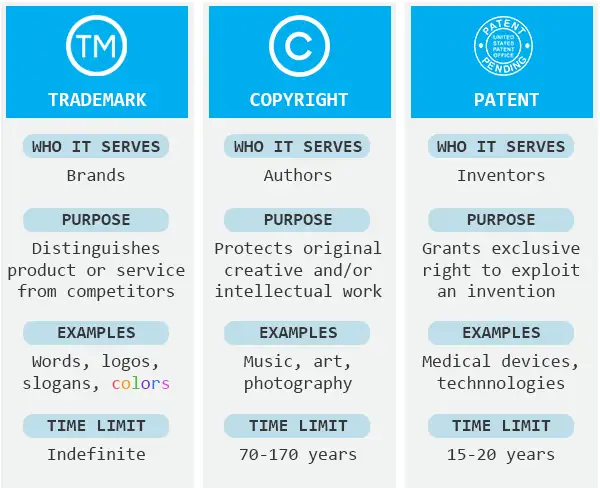
Under the umbrella of intellectual property law, the 3 most common applications are the trademark, the copyright, and the patent.
While corporations routinely file all of these, they use the trademark to (quite liberally) protect anything integral to their brand. Under legal doctrine, this might be “any word, name, symbol, or device [used to] identify and distinguish” a company’s good or service from its competitors.
When a trademark is granted, it gives a company the exclusive right to use that intellectual property in its respective industries.
Note: Though trademarks are indefinite, they still need to be renewed every 10 years. (Zachary Crockett / The Hustle)
For many years, a color did not, by itself, qualify as a trademark.
Though companies had successfully trademarked combinations of colors (e.g., Campbell’s soup labels), the US Patent and Trademark Office shot down attempts to trademark a single color. John Deere, for example, would not be permitted to lay claim to the color green in the farm equipment industry.
Scholars maintained several arguments against issuing single color trademarks:
Color depletion theory: Only around 1,867 solid Pantone colors exist; if brands all claim a color, we’ll eventually run out.
Shade confusion theory: It would be hard for the consumer to determine the difference between slight shade variations of colors claimed by brands.
But everything changed when this stuff came along:
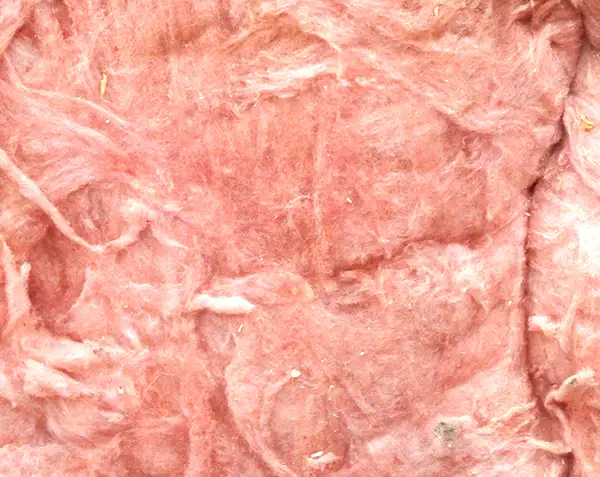
Owens-Corning fiberglass insulation in its trademark pink-dyed hue (Pixabay)
That, dear readers, is a piece of fiberglass insulation (the stuff that goes behind our walls) from a company called Owens-Corning.
In the late 1950s, Owens-Corning was facing steep competition from other fiberglass insulation companies. At the time, all products were the same “naturally tan” hue; to distinguish itself, Owens-Corning decided to infuse their product with dye.
For the next 30 years, the company used its unique pink insulation as a marketing tool: It adopted the slogan “think pink,” used the Pink Panther as a mascot, and spent tens of millions of dollars advertising the color.
In 1985, after a 5-year legal battle, Owens-Corning became the first company in American history to successfully trademark a color.
Ten years later, a second company, Qualitex, went all the way to the Supreme Court to defend its right to trademark its signature green-gold dry cleaning pads. The court ruled that color could, indeed, serve to identify a brand — and in doing so, opened up the floodgates for companies to file their own color trademarks.
What does it take to trademark a color?
In the decades since that Supreme Court case, a number of companies have successfully trademarked single colors.
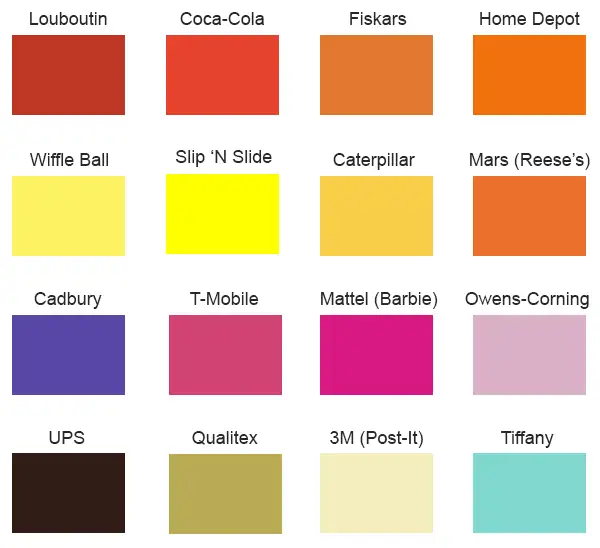
Tiffany & Co. trademarked its famous blue in 1998 — the same year UPS trademarked its “Pullman Brown.” 3M secured its signature canary yellow color for its Post-it notes, Deutsche Telekom AG protected T-Mobile’s famous magenta, and Fiskars has one for orange scissor handles.
There are even a few you wouldn’t expect: The Wiffle Ball, Inc. has a trademark on yellow for use in bats, and the estate of the late musician Prince currently has one pending for the color purple.
These trademarks aren’t exclusive to businesses, either. The University of Texas at Austin (Pantone 159) and The University of North Carolina at Chapel Hill (Pantone 542) both have protections on their school colors.
A few of these companies, like Cadbury, have since lost their color trademark in legal disputes (Zachary Crockett / The Hustle)
Plenty of brands trademark certain colors that might appear in conjunction with a logo (think, for instance, McDonald’s red and yellow, or Facebook’s blue). But these companies have done something different and far rarer: They have trademarked literal swatches of color.
“Usually a company does this when its business model relies, to some extent, on a particular color,” says Jeffrey Samuels, a professor emeritus at The University of Akron School of Law. “It will trademark a color to prevent other companies from using it.”
An important distinction, adds Samuels, is that a company with a color trademark only “owns” the color in connection to particular goods or services.
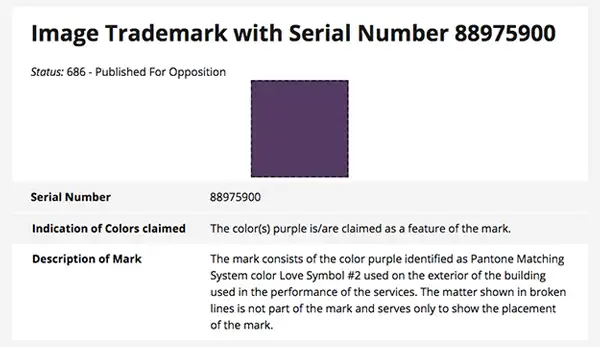
Take, for instance, the purple trademark from Prince’s estate, Paisley Park Enterprises. The trademarked image is the color purple alone — no words, no logos, no other form of branding. If granted, it will give them a claim to the color purple for use in live music venues. Purple alone, they claim, is enough to ID their brand.
A trademark filed by Paisley Park Enterprises seeks to secure a shade of purple (Pantone color “Love Symbol #2”) for use in musical performance (Justia)
To successfully secure such a trademark, a firm must prove that a single color:
Achieves “secondary meaning” (distinguishes a product from competitors and identifies the company as the definitive source of the product)
Doesn’t put competitors at a disadvantage by affecting cost or quality
Doesn’t serve a functionalpurpose
This last piece, says IP lawyer Robert Zelnick, means that “a color really has to be quite arbitrary” to be trademarked: It can’t be essential to the production of the product or serve any utilitarian purpose.
Sometimes, proving all of his can be extremely challenging.
General Mills, for instance, has twice failed to secure a trademark on yellow for its Cheerios box, on the grounds that the color isn’t synonymous with the brand since too many other cereal companies use it in their branding.
Pepto-Bismol’s attempts to trademarkpink were thwarted when a court deemed that the “therapeutic” effect the color had on customers was “functional.”
The color wars
As the CEO of Lemonade learned, companies that are granted color trademarks often go to great lengths to enforce them in court — and competitors often challenge their right to monopolize certain hues.
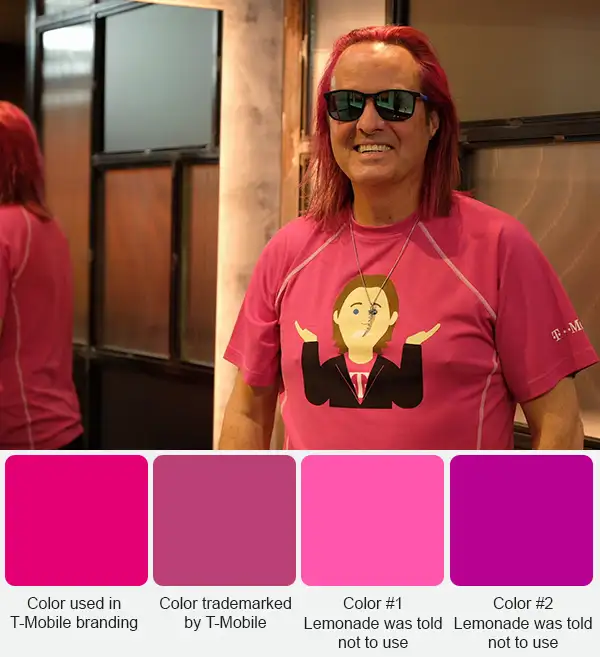
TOP: T-Mobile’s ex-CEO John Legere went above and beyond to embrace the brand’s magenta hue (Twitter); BOTTOM: A diagram of colors from the T-Mobile/Lemonade incident shows the variance in colors that brands claim to “own”
Over the years, these controversial trademarks have resulted in dozens of lawsuits relating to color “ownership:”
In 2002, Mattel brought suit against MCA Records for, among other things, allowing the band Aqua to use its trademarked pink color on its album cover for the single, “Barbie Girl.” The judge famously advised both parties to “chill.”
In 2010, Hershey sued Mars for using orange on the packaging of a peanut butter candy bar. The suit was later dropped.
In 2011, Louboutin accused Yves Saint Laurent of infringing on its trademark red shoe soles and won.
In 2015, toolmaker DeWalt won a $54m judgment against a competitor that copied its black and yellow colors, though it was later tossed out on appeal.
But one company has been particularly protective of its color trademark.
T-Mobile’s parent company, Deutsche Telekom AG, has spent at least 12 years attempting to prevent competitors — some large, some small — from using magenta.
Though its trademark covers only a specific variation of the color (Pantone Rhodamine Red U), the company has expanded its definition of magenta to encompass a variety of surrounding hues. Since Deutsche Telekom has its hands in so many projects, it has also been able to defend its trademark in industries outside of telecommunications, ranging from fashion to healthcare.
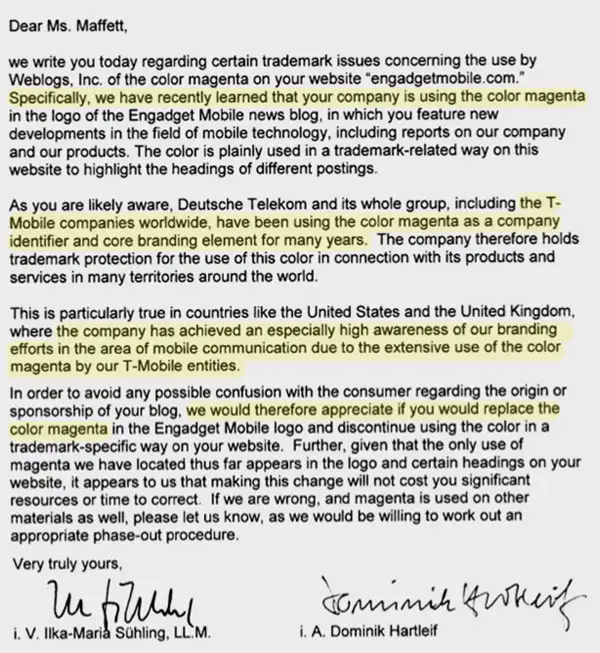
In 2008, it went after the rival European wireless carrier Telia. A few months later, it demanded that the tech blog Engadget drop magenta from its mobile logo. In 2014, a judge ruled that AT&T subsidiary Aio Wireless couldn’t use magenta because it would confuse T-Mobile customers.
A letter sent by T-Mobile’s parent company to Engadget, demanding that the blog stop using the color magenta in its logo (Engadget)
Its latest victim, Lemonade, has complied with T-Mobile’s demand by changing the color of its marketing materials in Germany, where Deutsche Telekom AG is based. The company has also filed a motion in Europe to “invalidate Deutsche Telekom’s magenta trademark.”
Making changes like this can be costly — especially for bigger firms that spend tens of millions of dollars on marketing and branding strategies.
But legal fees can also rack up for the companies that constantly trawl for color trademark violations, begging a question:
Is trademarking a color worth all the effort?
When a company files a trademark in black and white — say a simple logo — the trademark is actually protected in all color variations by default. Nobody can, say, take the McDonald’s red and yellow logo, make it purple and green, and claim it as his own.
So, why would a brand go through all the trouble of trademarking a color when they likely already have so many other protections?
“You only see brands do this when the color is critical to the brand, or sales, or the way the product is marketed,” says Zelnick, the IP lawyer.
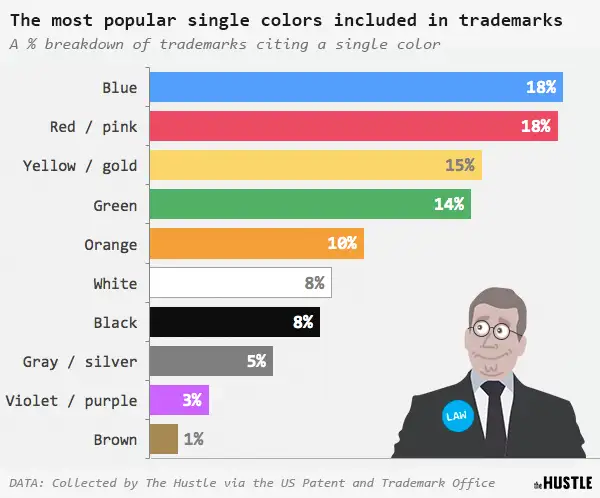
Across all trademarks (including logos), blue is the color of choice (Zachary Crockett / The Hustle)
Most marketers are aware of the effect color has on consumer behavior. Surveys and studies have shown that:
62%-90% of a consumer’s initial judgment of a product is based on color.
52% of consumers say the color of packaging is an indicator of quality.
Travel photographer and content creator Pat Kay has released an extensive and detailed video on how to edit a digital image in Adobe Lightroom to make it look as though it was captured on film.
It’s always disappointing to reach for that steak you placed in the freezer weeks ago only to find it looking more like an icicle-coated Jack Nicholson from The Shining than anything remotely edible.
A good vacuum sealer staves off freezer burn and keeps food fresh for longer. After we sealed meat, nuts, crackers, and fruit, and then tested the bag seals over the course of several months, we concluded that the Anova Precision Vacuum Sealer Pro offers the best combination of powerful suction and useful features.
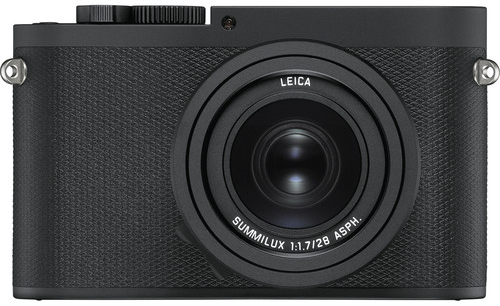
If you are considering getting a Leica QP but are still on the fence, you’ve come to the right place. In this article, we share everything there is to know about this one-of-a-kind point-and-shoot camera for photos and videos.
First, we do a general overview where we look at the key features and specs of the Leica QP. After that, we break down how it functions for photos and videos and provide you with a quick list of the camera's pros and cons.
One resource overflowing with used Leica QP cameras is MPB. They are a trustworthy and reliable online platform selling used photo and video kit for unbeatable low prices. Moreover, every camera is meticulously hand-inspected by experienced product specialists and backed by money-back guarantees, allowing you to make your purchases confidently and worry-free.
I’ve bought and sold countless cameras, lenses, and photography gear through MPBs online marketplace over the years, and it’s always been an easy and enjoyable experience. That’s why I love recommending others to check them out and take advantage of their killer deals.
With that said, let’s dive into this Leica QP review and discover everything there is to know about this marvelous camera!
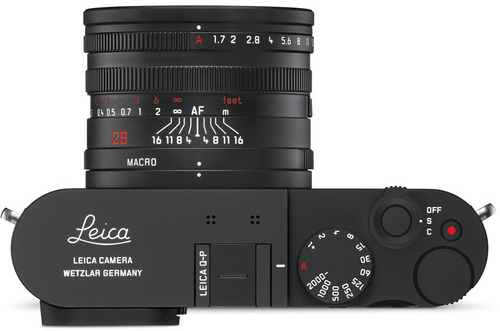
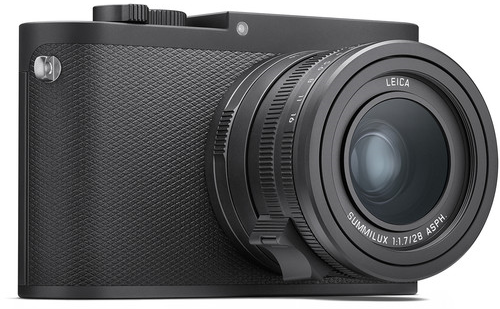
The Leica QP is a high-end compact camera boasting a high-resolution 24.2-megapixel sensor and an advanced Maestro II image processing engine. It was unveiled in November of 2019 as the successor to the Leica Q.
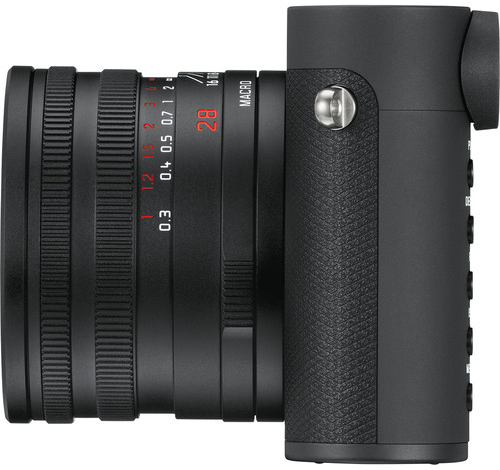
The first feature of this camera that stands out is its luxury Summilux lens. It is a versatile wide-angle lens with an equivalent focal length of 28mm and a maximum aperture of f/1.7. Moreover, the lens is built from high-quality glass and has three aspherical lens elements that make photos and videos super sharp.
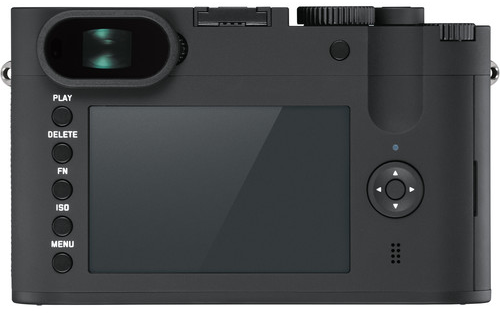
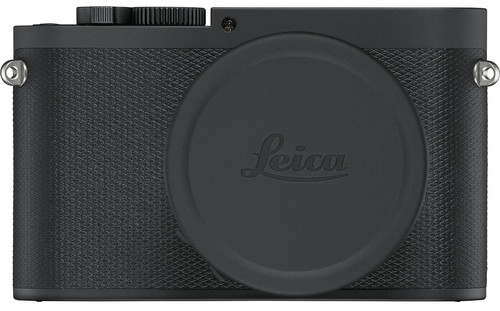
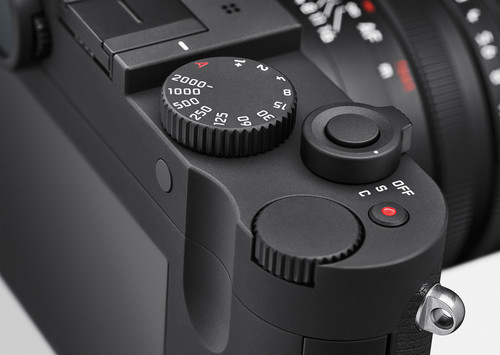
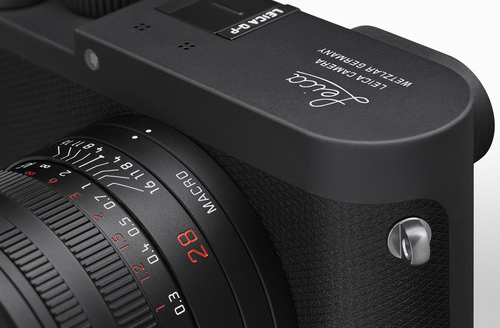
In terms of the camera’s design, it is constructed out of durable magnesium alloy and solid aluminum parts. Additionally, its compact and lightweight size makes it ideal for travel and everyday use. It’s so tiny that it can even fit in your pocket!
One more awesome thing worth mentioning is the Leica FOTOS application. It is available for Android and Apple IOS mobile devices, and you can use it as a remote shutter. Also, you can quickly transfer image and video files directly to the mobile app thanks to the Leica QP's built-in Wi-Fi.
Here’s an in-depth look at the key features and specs of the Leica QP:
Camera Type: Large Sensor Compact
Sensor: 24.2MP Full-Frame CMOS sensor
ISO: 100 - 50,000
Lens: Fixed 28mm f/1.7 Summilux lens
Speed: 10.0 fps
Autofocus: 49 AF points
Video: 1080p/60p & 1080p/30p
Size/Weight: 130 x 80 x 93 mm / 640 grams
Battery Life: 300 shots
Stabilization: No
Touchscreen: Yes
Leica QP Imaging Capabilities
Still photography is where the Leica QP shines brightest. It has both JPEG and RAW imaging capabilities, and the 28mm focal length is excellent for documenting everything from dramatic landscapes to stunning street shots.
Another strong point of this camera is its low-light performance. While most point-and-shoot cameras have small image sensors, the large full-frame sensor of the Leica QP means more light hitting the sensor and brighter images. The wide ISO range and f/1.7 aperture enhance the image quality further when shooting with less light.
Also, the high max aperture creates buttery bokeh effects and is perfect for when you want to take pictures with a shallow depth of field. It’s one of the leading reasons why the Leica QP is one of the best compact cameras for portrait photography on sale today.
Lastly, the camera has a unique macro mode which enables you to practice macro photography from a distance of only 6.7-inches away. The macro setting is fantastic for food, product, and insect photography.
While it can’t compete with video-first compact cameras like the Sony ZV-1 or the Canon PowerShot G7 X III, the Leica QP is a powerful little video camera in its own right. And even though it lacks 4K capabilities, the 1080p Full HD video footage is vibrant and wonderfully sharp.
If you want your movies to have a cinematic look and feel, I recommend shooting in 1080p/30p. On the other hand, if you're going to slow your footage down in post-production, using programs like Adobe Premiere Pro or Final Cut Pro, you should use the 1080p/60p setting.
Furthermore, the camera’s high-resolution 3-inch touchscreen LCD is excellent for framing your scenes and video playback. You can also navigate through the menus and select autofocus points using the camera’s touchscreen.
Pros and Cons of the Leica QP
Pros:
Incredibly portable
Huge full-frame sensor
Premium 28mm lens
Terrific video and image quality
Excellent autofocus, including face-detection
Great handling and ergonomics
Super-low maximum aperture
Fast Wi-Fi for file transferring
Macro and silent shooting modes
High-resolution electronic viewfinder and rear display
Cons:
Expensive
No 4K video
No microphone or headphone jacks
No image stabilization
Fixed screen
Final Thoughts on the Leica QP
While Leica QP used cameras are undoubtedly not for everyone, if you want a luxury point-and-shoot camera for photography and videography, it’s one of the best cameras that money can buy! Three types of photographers, in particular, who will see amazing results from this camera are travel, landscape, and portrait photographers.
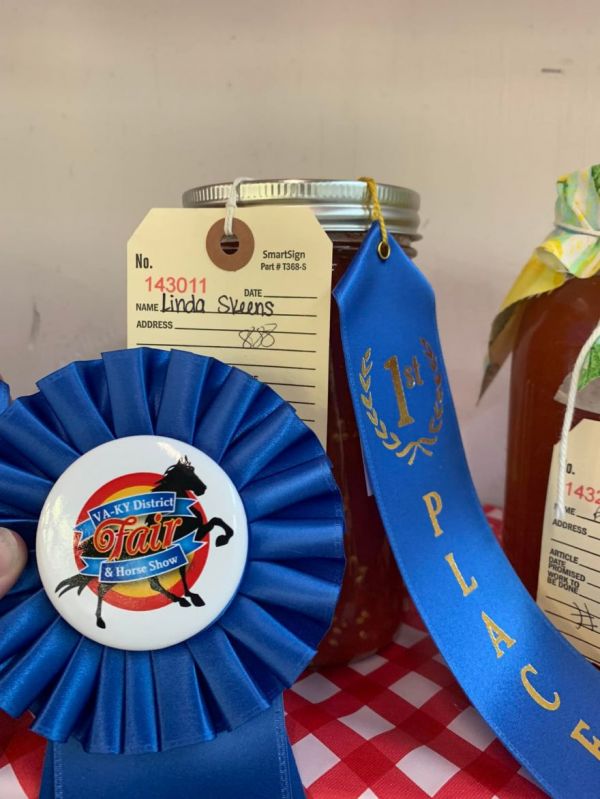
The comments on all the fair's posts are dominated by people who want to meet this woman and taste her cooking. She's been invited to appear on TV and to come to dinner. Linda Skeens has become a Facebook metaphor for a competitor who does not mess around. But so far, she has remained anonymous. She may not want to feed everyone.
a different "Linda Skeens" has been so flooded with messages that she put out a PSA that she's not the baking phemon pic.twitter.com/EaoYF9ulzD
But if Linda Skeens ever emerges into the public, she'll have a ready-made audience for whatever she wants to say, whether it's a lone cooking demonstration or a Food Network series. -via Fark
"The Army has carried the American ... ideal to its logical conclusion. Not only do they prohibit discrimination on the grounds of race, creed and color, but also on ability."
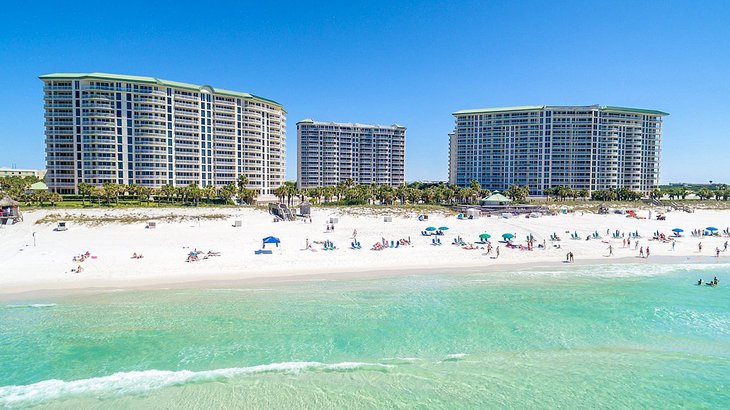
Head west along the sparkling green water from Destin to Orange Beach for great fishing and fantastic seafood.
There are stretches along the Gulf of Mexico coastline where time seems to run on the whims of an eccentric generator. Along Florida’s Emerald Coast from Destin to Orange Beach, Alabama, the turquoise waters and sparkling beaches radiate a welcome stillness reminiscent of days long gone. As you walk the beaches, you leave footprints on the powdered-sugar sands that once were the tops of the Appalachian Mountains. The sand, made from pure-white quartz crystal, was transported from the mountains to the Gulf at the end of the last Ice Age.
The Gulf Intracoastal Waterway (GICW) lies inside the sandy barrier islands and crisscrosses a series of estuaries, swamps, captivating towns, and open waters for a good sail. Some of the best Gulf Coast sailing for smaller vessels is on Choctawhatchee Bay in the Florida Panhandle. There are three direct entrances to the GICW between Destin and Orange Beach, making offshore cruising less risky than in other sections of the Gulf.
Destin
Destin, once a tiny coastal hamlet on the bay’s southern shore, now calls itself “The World’s Luckiest Fishing Village” and is known for superb saltwater fishing. Due to quick access to the Gulf and the proximity of the famed 100 Fathom curve with its 600-foot depth, the opportunities are endless.
Destin is home to many types of fishing: surf, pier, bay, deep-sea, and more. Each has its fans, and the catch depends on the season. Hook flounder, sheepshead, sea trout, and even tarpon inshore. Mackerel, cobia, amberjack, grouper, and red snapper lurk nearshore; wahoo, mahi-mahi, and tuna await in the deep. To get the real flavor of Destin’s 175-year history, and maybe a couple of fish tales, visit the Destin History & Fishing Museum, a little gem near the foot of the Destin Bridge.
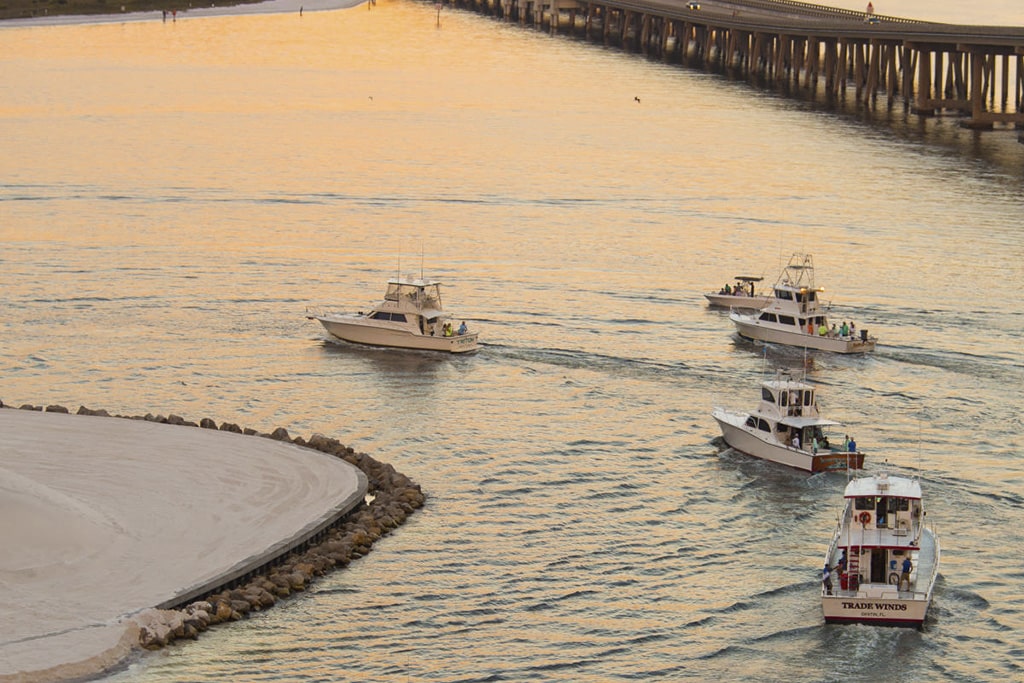
North America’s largest private charter fishing fleet is docked at Destin Harbor. Some vessels hold up to 45 hopeful anglers; smaller boats accommodate a more private trip. Most charters include licenses, tackle, and bait. With more than 170 charter companies, FishingBooker might be the simplest way to find the most suitable.
Don’t care about catching, but fond of eating fish? Brotula’s Seafood House & Steamer is a rustic yet refined southern fish house specializing in local seafood and shellfish platters. Its name is borrowed from the tasty bearded brotula caught in local waters at depths of 350 feet.
For a meatier meal in “New York Irish Pub” style, step into McGuire’s Irish Pub. If reading the menu isn’t entertainment enough, lively Irish musicians will get your feet tapping. Add a few bucks to the millions of dollar bills hanging on the walls left by visitors from around the world.
Slips to 85 feet are available at HarborWalk Marina in HarborWalk Village. A bustling entertainment/retail complex, the Village has live music, fireworks, and a variety of water sports rentals.
The southwest corner of Choctawhatchee Bay is anchored by laid-back Fort Walton Beach. Dock at the gated Fort Walton Yacht Basin on Santa Rosa Sound next door to The Shack, a historic seafood eatery.
The area has two excellent museums. The Indian Temple Mound Museum in the heart of historic downtown exhibits 1,000 artifacts depicting 12,000 years of Native American occupation and impressive collections of prehistoric ceramics from European explorers, local pirates, and early settlers. The Air Force Armament Museum on Eglin Air Force Base is dedicated to military artifacts and memorabilia, including more than 29 different aircraft from the WWII era to the present.
The Island Pier, jutting 1,262 feet into the Gulf on the west end of Okaloosa Island, is one of the best places to fish in the region. The fish are always biting, and there are spectacular views of dolphins, sea turtles, herons, and pelicans.
There are no entrances to the GICW from East Pass (Mile Marker 227.7 East of Harvey Lock (MM 227.7 EHL)) in Destin to Pensacola Bay (MM 179.7 EHL).
For clear open water and peaceful beaches with few inhabitants, cruise the numerous islands in the waterway between Brooks Bridge in Fort Walton Beach and Navarre, where everyone embraces a lazy pace.
Navarre
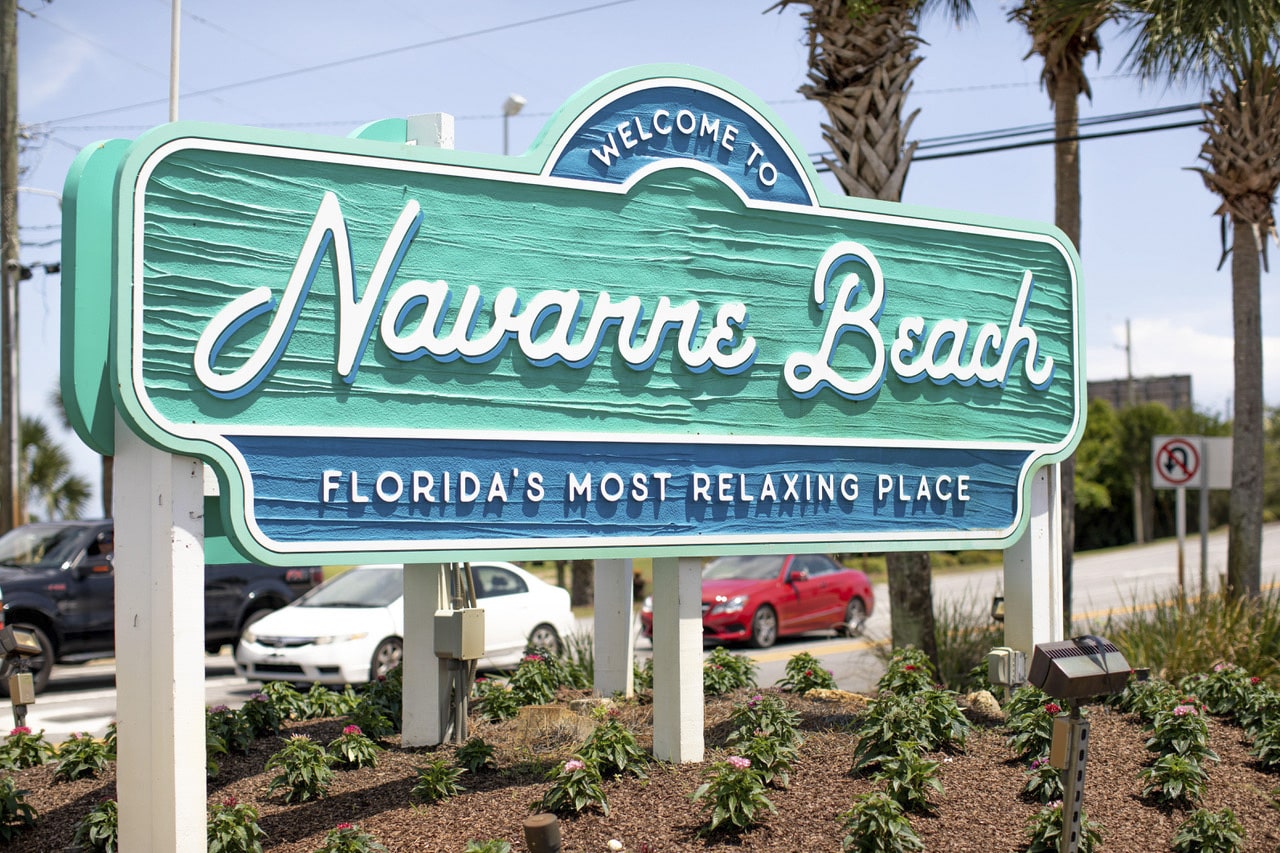
Navarre is a compact beach community with 12 miles of pristine-white shoreline and the longest fishing pier in Florida. Stroll 30 feet above the waterline along the pier’s 1,545-foot length for a wide-angle view of sand dunes rolling for miles in either direction.
For sport divers, Navarre Beach Marine Sanctuary has three artificial reefs, two in Santa Rosa Sound and one offshore. At Soundside, or Gulfside, expect to see colorful fish, sea turtles, rays, jellyfish, and octopuses.
It’s an easy cruise through Santa Rosa Sound to Gulf Breeze, yet another great fishing spot at the mouth of Pensacola Bay. Charter-seekers like Gulf Breeze Guide Service which, for 40 years, has specialized in fly and light tackle fishing around the area.
Above and below the horizon, there’s a lot to see around Pensacola Bay. The Blue Angels often thunder overhead during practice maneuvers. The Pensacola Lighthouse and Maritime Museum, listed on the National Register of Historic Places, has been named one of America’s Most Haunted Lighthouses. For divers, the world’s largest artificial reef, retired aircraft carrier USS Oriskany, lies 24 miles offshore.
Sabine Marina is a 64-slip marina located in Little Sabine Bay inside Pensacola Beach. Its entrance parallels the southwest side of the Pensacola Beach Bridge. There are a number
of marinas, including the full-service Pensacola Shipyard, located on the southwest side of Pensacola in the protected waters of Bayou Chico at GICW MM 183 EHL.
Continuing on, Big Lagoon is a favorite anchorage west of Pensacola Pass in the lee of Perdido Key. Good holding ground, a one-foot tidal range, and plenty of open water just 15 feet deep make dropping the hook fairly uncomplicated.
With Gulf Islands National Seashore and three Florida state parks in proximity, Perdido Key safeguards some of the beach’s most fragile and magnificent assets: wispy sea oats, critical dunes, and nesting birds and sea turtles.
Orange Beach
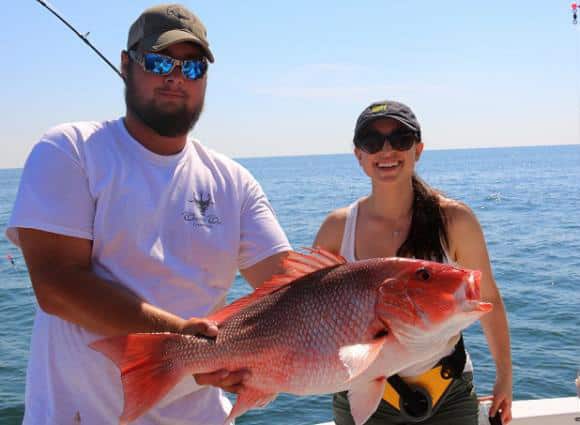
Surrounded by water in all directions and in Alabama territory, charming Orange Beach is a boating and fishing wonderland nicknamed the “Red Snapper Capital of the World.” From the bayous to the reefs, and all the way out to the oil rigs, catches include several delicacies besides snapper.
Photo Credit: Eva Faircloth – Gulf Shore Orange Beach Tourism
Perdido Pass offers up incredible fishing where the Gulf and inshore waters meet. Common inshore catches are mackerel, redfish, and speckled trout. A crew of proven fishermen run Orange Beach Fishing Charters and Saltwater Fishing Guides providing private and shared fishing charters.
Orange Beach (MM 159 EHL) has freshly caught seafood eating options from weathered beach shacks to fine-dining. SanRoc Cay and The Wharf are large retail and restaurant complexes with extensive options.
Orange Beach Marina, a full-service facility in a fully protected harbor off Terry Cove, can accommodate yachts up to 130 feet. About five minutes at idle from the Gulf, it offers easy access to the GICW.
There are several places to explore nearby. Robinson Island, just north of Perdido Pass in Terry Cove, is a pleasant place to anchor and spend the day on the beach. Nearby Walker Island has a lovely lagoon and a long strip of white-sand beach. Cruise the calm water and private canals of Ono Island in Perdido Bay for a view of gorgeous homes and, perhaps, a stray dolphin or two.
The Emerald Coast is likely to keep you hanging out for a good amount of time, but when you do decide to hit it, the Gulf Islands National Seashore continues west as well as New Orleans and beyond.
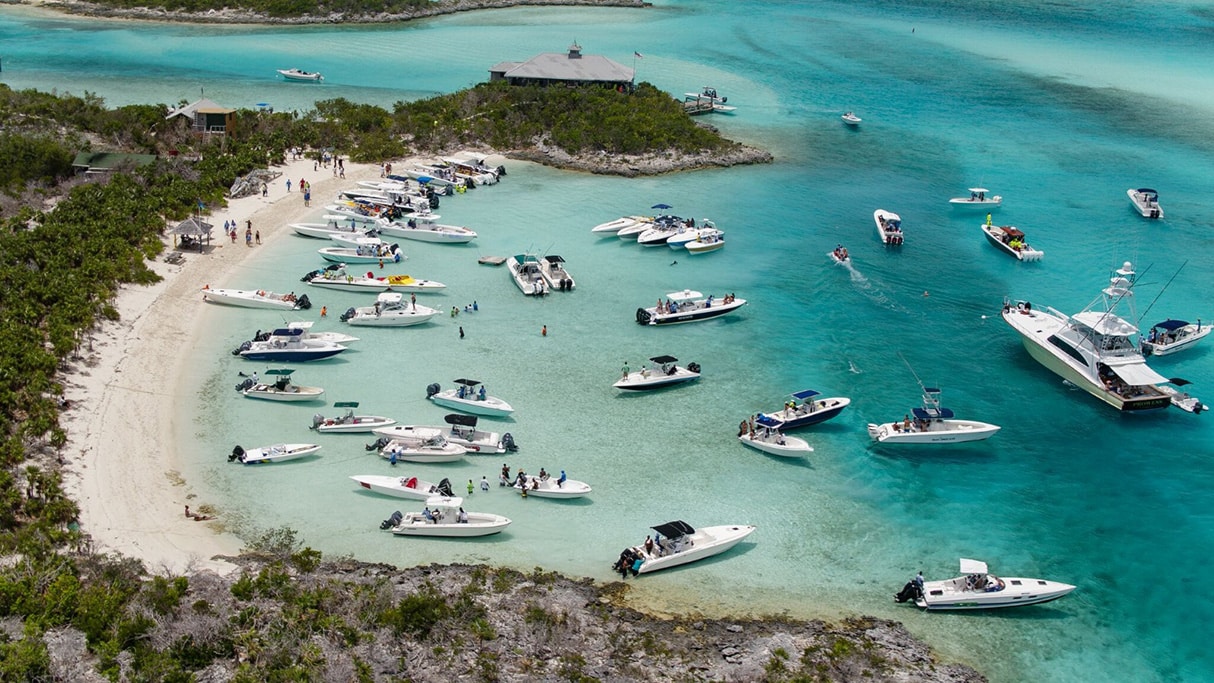
Each marine park offers visitors a unique experience.
What brings visitors to the shores of the Bahamas is different for everyone. But you’re sure to gain a one-of-a-kind experience when you visit one of our marine parks.
At The Bahamas National Trust (BNT), our mandate is to protect national parks for the benefit of both people and nature itself. These parks are special places that support biodiversity and provide unique spaces for people to connect with nature. Did you know there are 32 national parks (and counting!) in the Bahamas for you to explore?
Exuma Cays Land and Sea Park
Out of these 32 parks, 23 are entirely marine-protected areas or hybrid land and sea parks, which are the perfect stop for those boating in Bahamian waters. If there’s one you may have heard of, it’s most likely the Exuma Cays Land and Sea Park (ECLSP), which is
the first land and sea park in the world.
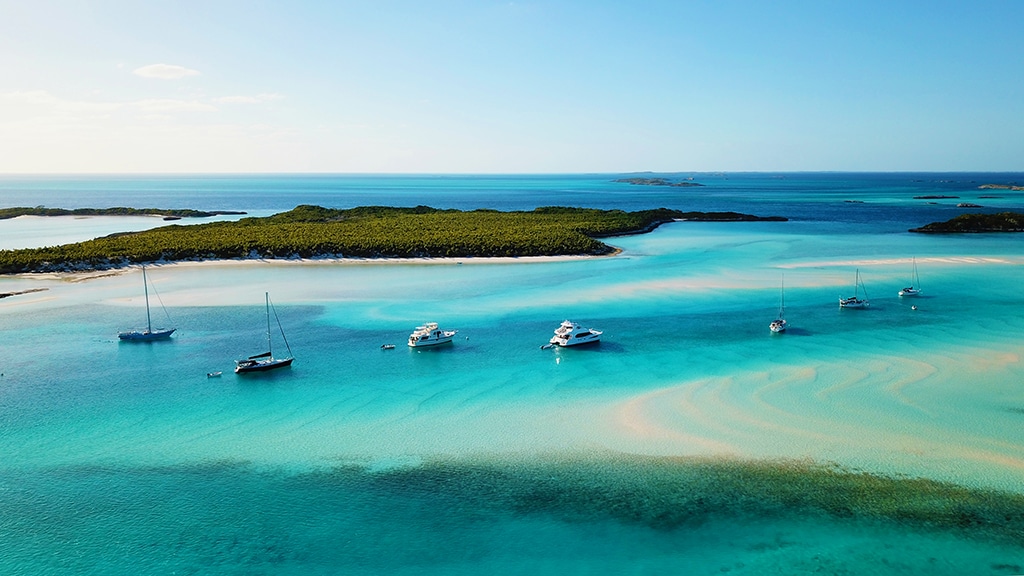
The historic ECLSP is a sanctuary for invaluable and unique species and natural resources. Within its 174,194-acre boundary are some of the healthiest reefs, mangroves, seagrass beds, and other ecosystems you’ll see in the Bahamas. This is a prime boating destination that provides visitors various up-close experiences to enjoy with nature. Popular activities in the ECLSP include hiking, exploring, diving, snorkeling, kayaking, and more.
Our Quick Guide to the ECLSP, an all-inclusive guide to the Exumas and the ECLSP specifically, supplies information on the full host of activities guests can enjoy during their stay in the park. As a bonus, we offer special experiences with our ECLSP Park Wardens on a case-by-case basis for visitors.
Pelican Cays Land and Sea Park
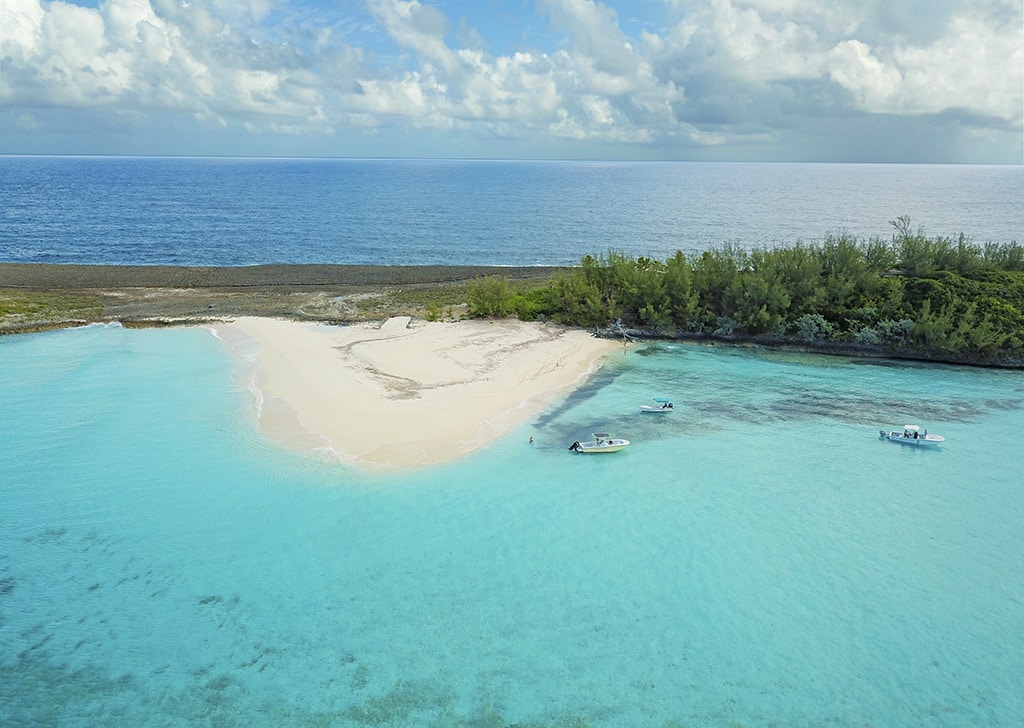
While the ECLSP may be the most well-known of our marine parks, there’s no shortage of options of other parks for boaters navigating our waters to choose from. If Exuma isn’t on your list, stop by the Pelican Cays Land and Sea Park in Abaco. The second land and sea park established in the Bahamas, it offers the perfect serene environment to enjoy the sun, water, and nature of the Bahamas. Dip your toes into the crystal-clear sea or spread out your picnic blanket and spend your day relaxing on top of the warm, sandy shores.
Pelican Cays has a wide range of fun and exciting things for visitors to do. It has spectacular snorkeling and diving because of its impressive reef systems that support a high diversity of tropical reef species. The magnificent coral reefs and pristine, inviting beaches within the park make it a valuable attraction for both visitors and residents, and it’s frequently used during the summer and holiday seasons.
The Pelican Cays Land and Sea Park protects 2,100 acres of extensive coral reefs and abounds with terrestrial plant and animal life. More than 170 species have been documented within park boundaries, which serves as a refuge for sea turtles and other species. Additionally, commercially important species such as the Nassau Grouper, Queen Conch, and Caribbean Spiny Lobster have been seen within the park, as well as marine mammals and some species of seabirds that have been observed nesting in colonies on the rocky cays.
Moriah Harbour Cay National Park
If you’re searching for a marine park where you can experience the wonders of the Bahamas’ natural beauty and diverse species, visit the Moriah Harbour Cay National Park. This park in Exuma was established in 2002, after decades of petitioning and campaigning from locals and conservation champions like Basil Minns. A local Exumian, Minns grew up surrounded by nature and saw firsthand all that Moriah Harbour Cay had to offer. He led the charge to declare it a national park. Many of the activities he recalls participating in with his family, such as picnicking, kayaking, swimming, birdwatching, diving, etc., are all available for guests to experience today.
Home to vibrant populations of endangered corals, sea turtles, conch, lobster, grouper, birds, and sharks, Moriah Harbour Cay—with its breathtaking views and turquoise waters—provides incredible opportunities for recreation, such as kayaking, snorkeling, kiteboarding, bonefishing, hiking, and photography.
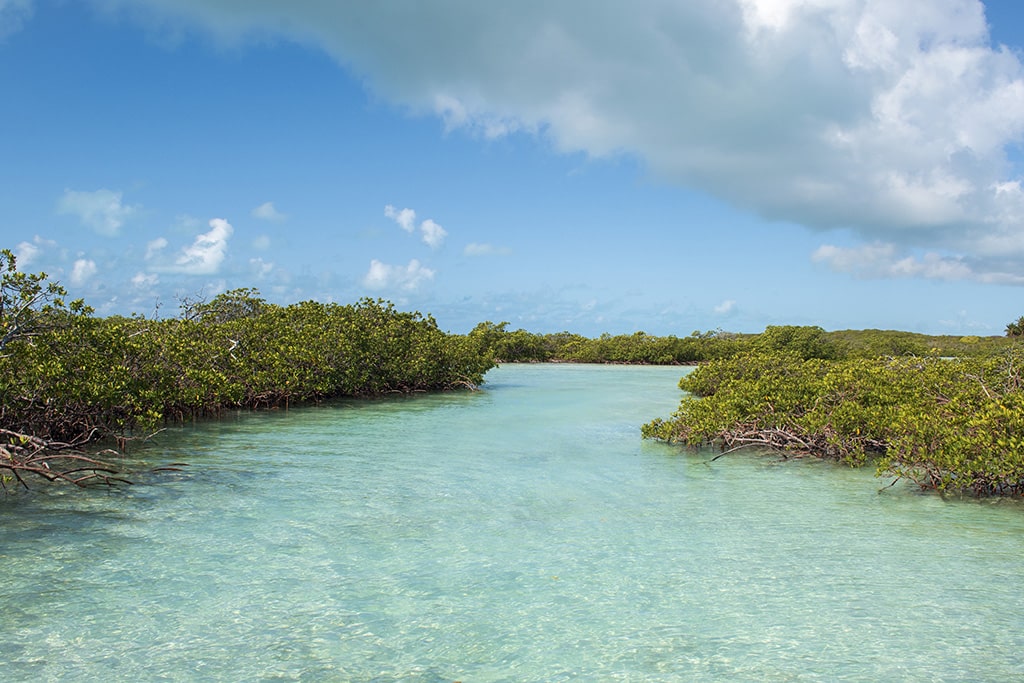
The park encompasses more than 27,000 acres of pristine beaches, sand dunes, mangrove creeks, seagrass beds, blue holes, and coral reefs. It boasts an abundance of wildlife, important habitats, and numerous ways for people to connect with and enjoy the wonders of nature. The marine environments protected in this area are a vital part of the Exumas. This is a national park that perfectly exemplifies the natural “jewels” of the Bahamas.
As extraordinary as these parks all are, they have one very important thing in common:
their beauty needs to be preserved for the benefit of the Bahamas, its people and visitors, and nature itself.
Rules and Regulations
Take this invitation to visit and explore what all 32 of our national parks have to offer, but make sure you follow park rules and regulations while you do. Many species depend on these areas to survive and thrive, and the conservation of these areas and species are intrinsically tied to the Bahamas’ culture, history, and economy. That’s why we must work together to ensure these species and ecosystems remain protected, for now and tomorrow. We want everyone to be able to visit, experience, and enjoy these special places for themselves.
Read about the rules and regulations of the ECLSP in our Quick Guide to the ECLSP, but note the rules outlined there generally apply to all our national parks.
Among these regulations, it’s important to emphasize that the park is a complete no-take zone, meaning under no circumstances is any fishing, conching, shelling, or lobstering allowed. Nothing living or deceased may be removed from the park.
To learn more about the role the BNT plays to manage terrestrial and marine national parks, protect species that inhabit them, and inform environmental policy, visit bnt.bs.
To directly support the work of the BNT, consider making a donation. The Bahamas National Trust Fund Inc. is a 501C3-registered charity in the U.S. This means donations made to the organization are tax-deductible. If you want to make a more long-term impact, consider joining the BNT and becoming a member. Visit bnt.bs or email supporttheparks@bnt.bs.
The best kayaks make it easy to glide through serene waters, explore hidden coves and connect with nature. Here are our top picks from Wilderness Systems, Oru and more.
In this episode of The Atlas Obscura Podcast, we bring you a classic episode: a visit to the unruly architecture of The House on the Rock—one of the inspirations for Atlas Obscura.
Our podcast is an audio guide to the world’s wondrous, awe-inspiring, strange places. In under 15 minutes, we’ll take you to an incredible site, and along the way you’ll meet some fascinating people and hear their stories. Join us daily, Monday through Thursday, to explore a new wonder with cofounder Dylan Thuras and a neighborhood of Atlas Obscura reporters.


/cdn.vox-cdn.com/uploads/chorus_asset/file/24420386/277579302_133223249279007_8677308568516877446_n.jpeg) Tasty Town
Tasty Town
/cdn.vox-cdn.com/uploads/chorus_asset/file/24676451/314530255_534352248703494_7894323993415206264_n.jpeg) Dorothy’s Cocktail and Oyster Bar
Dorothy’s Cocktail and Oyster Bar
/cdn.vox-cdn.com/uploads/chorus_asset/file/19313341/IMG_20190908_122325_514.jpg) Robbie Medwed
Robbie Medwed
/cdn.vox-cdn.com/uploads/chorus_asset/file/24668761/280716590_5397736813603895_8777972227596915915_n.jpeg) Grecian Gyro
Grecian Gyro


 (Image credit:
 (Image credit: