Shared posts

25 Mar 18:30

Grady-White Freedom 375

by Randy Vance

When 8 a.m. rolled around, I stepped up to Grady-White’s Freedom 375 and the smell and sound of sizzling sausage met me. The morning started with breakfast on board. I slipped the moorings and dashed back aboard via the transom door. I could’ve jumped in on the starboard gunwale dive door also. Both doors are mounted on burly, overbuilt hardware made by Grady-White in-house. With the Yamaha Helm Master joystick system we maneuvered the Freedom 375 out of the slip, twisting the ’stick clockwise and executing a 90-degree turn in place — as crisp as a military-parade maneuver.

Grady-White Freedom 375
19 Feb 14:05

Easy Honey Butter Recipe

by Bee Healthy

Have you ever had honey butter in a restaurant? I’ve actually had it a few times at a farm stand I used to go to once upon a time. I don’t live near this farm stand anymore, so I decided to make some at home. The different flavor variations are unlimited, but the basic recipe is pretty simple.  Making honey butter is super easy and fun!

You can also put your honey butter to small canning jars, decorate them and give them away as gifts!


Honey Butter

1 stick (Half Cup) of Butter at Room Temperature
1/3 Cup of Honey

Directions:

Mix with a mixer until the honey and butter are creamed together
Spread the butter onto a sheet of plastic wrap or waxed paper and mold to desired shape, and store in the refrigerator to set the mold.

You can optionally add fresh orange zest or cinnamon to your honey to easily enjoy the health benefits of these ingredients combined.

Inspiration:


1. Cinnamon Honey Butter by: Arctic Garden Studio

2. Orange Honey Butter by: Kokocooks

3. Cinnamon Honey Butter by: Kevin & Amanda

4. Cinnamon Honey Butter Gifts in a Jar by: TidyMom

We recommend using the highest quality Raw Honey from our favorite apiary, Sleeping Bear Farms.


26 Jan 19:00

B.C. Lodge for Sale

by El Guapo

Last week's little piece of fishing paradise for sale was an Island Park fixer upper.

This week we feature something a tad more substantial.

Rodgers Fishing Lodge is located on the west coast of Vancouver Island about 90 miles due west of Campbell River in Esperanza Inlet. Rodgers is one of the busiest fishing lodges on the B.C. coast, entertaining over 1000 guests a year. They also enjoy one of the longest seasons on the coast, operating 19 weeks in 2013. This will be their 31st year in the Sport Fishing business and their 20th year in Esperanza Inlet. Rodgers has shown a remarkable rate of growth over the past 3 years due mainly to an aggressive, innovative and successful marketing programme. Their gross revenue has more than doubled since 2010 and 2014 looks to be another banner year with over 550 guests already booked.

The Lodge has a location second to none as it is ideally situated to take advantage of some of the most outstanding fishing opportunities on the BC coast for Salmon, Halibut, Bottom Fish and Tuna. The addition of Tuna fishing this year will add a new dimension to the business and will add increased revenue to the months of August and September. The Tuna fishery is going to be a huge breakthrough in the future for West Coast fishing lodges. Rodgers Lodge is perfectly positioned to take advantage of it. Historically, the Tuna in their migration pattern will follow the warm water temperatures that occur along the Continental Shelf. In Rodgers Lodge's location the Continental Shelf is just 12 to 15 miles offshore as opposed to 50 miles offshore for places like Tofino and Bamfield.


Black Bear and Bald Eagles are regularly seen by the lodge. They have the largest colonies of Sea Otters on the coast and the Gray, Orca and Humpback Whales pass by on their way to and from the Bering Sea.

The owners love the business and wish that they were 30 years younger. However, they feel that it is now time to turn the reins over to someone who shares the same passion for the outdoors and who is looking for a wonderful rewarding lifestyle.

Asking price: 1,199,000

Contact Dave Brown for more information at 604-905-2805 or 1-800-667-2993 ext 805

Click here to see more images.

22 Jan 15:12

Obama 2007: No More Spying on Citizens Who Are Not Suspected of a Crime


20 Jan 16:57

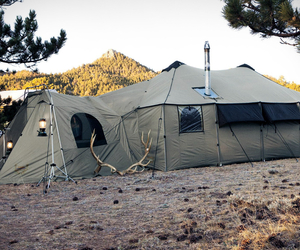
Cabela Ultimate Alaknak Tent

Spending time outdoors and roughing it don't necessarily have to be synonymous — in fact, you can get by pretty comfortably so long as you have the right gear. The...

Visit Uncrate for the full post.
20 Jan 16:57

Plumen 002 Light Bulb

From the team behind the Plumen 001 — a fashionable, low-energy replacement for standard 60W bulbs — comes the Plumen 002 Light Bulb ($30). Like the 001, it uses CFL...

Visit Uncrate for the full post.
20 Jan 16:56

Onewheel

Yes, it's technically billed as "the world's first one-wheeled self balancing electric skateboard." But the fact of the matter is that the Onewheel isn't really a skateboard at all —...

Visit Uncrate for the full post.
18 Jan 19:21

The Food Lab: Black Bean Soup With Chorizo and Braised Chicken

by J. Kenji López-Alt

It's time for another round of The Food Lab. Got a suggestion for an upcoming topic? Email Kenji here, and he'll do his best to answer your queries in a future post. Become a fan of The Food Lab on Facebook or follow it on Twitter for play-by-plays on future kitchen tests and recipe experiments.

20140113-black-bean-chicken-soup-recipe-13.jpg

[Photographs: J. Kenji Lopez-Alt]

20140107-soup-month-logo.gif

Editor's Note: All month, the soup's on, with over a dozen new recipes coming at you for everything from simple 15-minute meals, to updated homemade versions of the canned classics you loved as a kid, to all-dayers that are hearty enough to eat like a meal. Check out all the recipes right here, and be sure to come back—we'll be updating all month!

Remember that old folk story, Stone Soup? The one about the hungry travelers who have completely run out of food, but still have a pot to cook in? They start off by filling the pot with water and placing a large stone in the bottom, setting it to boil over a fire. A villager walks by, takes a look at the pot, and ask what's going on. The clever travelers explain that they're making stone soup, a very delicious soup that would be even more delicious if the villager could lend them a vegetable or two for garnish. The villager gladly obliges, adding an onion to the pot. One by one, the rest of the villagers come by, each one adding a new ingredient to the boiling soup. Finally, everyone, travelers, villagers and all, sit down and enjoy the great soup they've all made together.

Heartwarming. Except here's the sad truth: that soup was not very good.

You see, you can go the route of just dumping ingredients into a pot of boiling water and you'll end up with a soup that's plenty nourishing for the body, but as any chef or grandmother will tell you, if you want a soup that's as tasty as it is hearty, a soup that's soulfully good, then a bit of technique is in order. Almost all truly great soups start with sweating, sautéing, browning, or otherwise cooking ingredients in the pot before ever adding the actual soupy liquid element. And, depending on this pre-liquid technique, you can achieve vastly different end results using the exact same starting ingredients.

Take, for example, this rich, savory, and spicy black bean soup flavored with smoky chorizo and chipotle peppers, with tender braised chicken. Now, I could just add all the ingredients to a pot, set it simmering on the stovetop, and come back a while later to a perfectly satisfying meal. But by taking a few extra steps, I end up with a bowl of soup that'll knock your socks off with flavor. I'm serious. Knock. Your. Socks. Off.

There's a scientific explanation for this, of course (the effectiveness pre-liquid techniques, not the sock-knocking). Once the liquid element of a soup goes into the pot—whether it's wine, stock, or water—the temperature of the contents can no longer exceed the boiling point of water, 212°F. Reactions that take place at much higher temperatures—like caramelization and Maillard browning, which add depth and savoriness—are halted.

20140113-black-bean-chicken-soup-recipe-01.jpg

Case in point: this chicken. The first step to this soup is browning your chicken in the bottom of a soup pot in a thin layer of very hot oil. And when I say brown, I mean seriously brown. The deeper the color, the more complexity you'll create. Because we're going to be braising this meat, I like to use chicken legs or thighs, which have a lot more connective tissue that can stand up to a long cooking process (breast meat just dries out), and adds more flavor to the final soup in the process.

After browning the chicken, you should end up with a layer of browned bits stuck to the bottom of the pan. These are created when protein-rich juices are exuded from the chicken and reduce in the hot oil. As their liquid evaporates, the proteins are left behind. You don't need to know any of this to know that the French call it fond and I call it delicious.

20140113-black-bean-chicken-soup-recipe-02.jpg

Next up, slices of chorizo, the smoked, dry-cured variety. This particular chorizo is Mexican, but Spanish brands flavored with smoked paprika would also be delicious. As soon as they go in, I use the steam they produce to help scrape up the chicken's fond from the base of the pot. As with the chicken, deep browning is the goal here. I like to go until the edges are crisp and nearly charred.

20140113-black-bean-chicken-soup-recipe-03.jpg

Now for the aromatics.

Many ingredients—onions and other alliums in particular—contain chemical precursors that interact with each other in the relative close proximity of a liquid-free pot. As these precursors interact, they produce compounds that give onions their characteristic aroma. That's why chopped onions being sautéed in olive oil smell so darn good. Once you add the liquid, those precursors get diluted, slowing down their interaction and altering the flavor of the finished dish.

In this case, I'm using scallion whites (I save the greens for garnish) and garlic along with some finely minced serrano pepper as the aromatic base for the soup. Cook them until their exuded moisture mostly evaporates, the vegetables are completely tender, and the whole thing starts sizzling vigorously before adding a quick hit of ground cumin.

As with the other aromatics, toasting cumin in oil helps develop a deeper, richer flavor as new compounds are created.

20140113-black-bean-chicken-soup-recipe-05.jpg

We're in the final stretch of flavor layering here. The last ingredient is some finely minced canned chipotle peppers in adobo sauce. Like the chorizo, these peppers are smoked, which means that even before you sauté them, they're packed with flavor. It's a really easy way to add a quick hit of heat and savoriness to soups and stews.

20140113-black-bean-chicken-soup-recipe-06.jpg

With all that out of the way, now is the time to finally add the liquid. If you have some great homemade chicken stock, use it. If not, we've got so many other great flavors going on in here that store-bought low-sodium stock will do just fine. The browned chicken goes back in the pot along with a couple of bay leaves and some black beans that have been soaked overnight in salted water.*

*You can get away with using canned beans for a quicker version of this soup, but dried beans will produce superior texture and absorb more flavor.

You might have heard that salting beans before they're done cooking is a big culinary no-no that will result in tough beans. So what gives?

Turns out, the skins of dried beans consist of cells that are held together with pectin, a sort of natural glue. Pectin is strengthened by magnesium and calcium ions present in the skin. Over the course of an overnight soak in salt water, sodium ions play musical chairs with the calcium and magnesium, which in turn leaves your bean skins softer, easier to cook, and less prone to bursting. That "no salt until cooked" myth is nothing more: a myth with no basis in reality. Salt away, young cricket, salt away.

20140113-black-bean-chicken-soup-recipe-07.jpg

After their overnight soak and hydration, the beans only take about 45 minutes to completely tenderize, which is luckily about how long it takes to tenderize chicken drumsticks. Don't you love it when things work out like that?

To add some extra body to my soup, I like to blend up some of the beans and chorizo to form a thick paste-like slurry.

20140113-black-bean-chicken-soup-recipe-08.jpg

Not only does this paste make the soup thicker, it also acts as an emulsifier, helping the fat—exuded by the chorizo and the chicken—incorporate smoothly into the soup, rather than forming an oil slick along the top.

20140113-black-bean-chicken-soup-recipe-11.jpg

Unlike the Braised Chicken with White Beans and Chile Verde that I wrote about a few months back, the skin on this chicken won't stay crisp—it's a trade-off: in this case, that great browning that we got at the beginning all goes towards flavoring the soup. I peel off the spent skin and discard it (or save it for the dogs) before serving this soup.

20140113-black-bean-chicken-soup-recipe-09.jpg

Does anybody else have a deep-seated childhood love of the fixin's bar at Roy Rogers? There's something great about being in charge of the flavor of your meal. The final step in this soup is to add some bright freshness to the bowl. I like to do that in the form of a DIY mix-ins setup with sliced Serrano peppers, scallion greens, lime wedges, fresh cilantro, sliced avocado, and some Mexican-style crema to help tame the heat from the chipotles and Serranos.

20140113-black-bean-chicken-soup-recipe-14.jpg

If you want to be extra-nice to your dinner guests, you can shred the meat off the chicken and mix it into the stew, but I actually prefer the fun of serving a bowl of soup that comes with a knife and a fork. Makes the whole thing all the more meal-like. Not that you'll have any doubts about that with a dish this hearty, but if it's worth taking the time to make it right, then it's certainly worth taking the time to eat it right, agreed?

I apologize in advance for any socks lost while serving this recipe.

About the author: J. Kenji Lopez-Alt is the Chief Creative Officer of Serious Eats where he likes to explore the science of home cooking in his weekly column The Food Lab. You can follow him at @thefoodlab on Twitter, or at The Food Lab on Facebook.

Get the Recipe!
18 Jan 17:51

Over 2,500 American Breweries, On One Enormous Map

by Reuben Fischer-Baum

Over 2,500 American Breweries, On One Enormous Map

Continuing its excellent graphic beer coverage, Pop Chart Lab has put together a wall map of over 2,500 breweries across the United States. There are plenty of pockets of intense brewing activity—which are exactly where you'd expect them to be—but what's more fascinating are the lone outposts of production: Big Bend in southwestern Texas, Souris River in northern North Dakota, Ruby Mountain in northeastern Nevada. Anyone tried any of these?

Read more...

18 Jan 17:20

How To Cook Chicken Cutlets, And Give Yourself A Reason To Keep Living

by Albert Burneko

How To Cook Chicken Cutlets, And Give Yourself A Reason To Keep Living

These are dark times, friends. Literally! It's dark as hell all the time, because it is winter, and everything is polar vortices and bitter bullying winds and frostbite and uncontrollable sobbing and making a fort out of couch cushions and hiding inside the fort shrouded in sweaters and jackets and layers upon layers of paper towels and burning the paper towels for warmth, and sobbing. You go outside and your whole goddamn face chips off and shatters on the sidewalk, and you think to yourself that maybe that is a good thing, because at least now you look kind of happy, because skulls always look happy. Skulls. Why can't we all be them.

Read more...


18 Jan 17:03

Vast Stretches Of Impoverished Appalachia Look Like They Have Been Through A War

by Tyler Durden

Submitted by Michael Snyder of The Economic Collapse blog,

If you want to get an idea of where the rest of America is heading, just take a trip through the western half of West Virginia and the eastern half of Kentucky some time.  Once you leave the main highways, you will rapidly encounter poverty on a level that is absolutely staggering.  Overall, about 15 percent of the entire nation is under the poverty line, but in some areas of eastern Kentucky, more than 40 percent of the population is living in poverty.  Most of the people would work if they could.  Over the past couple of decades, locals have witnessed businesses and industries leave the region at a steady pace.  When another factory or business shuts down, many of the unemployed do not even realize that their jobs have been shipped overseas.  Coal mining still produces jobs that pay a decent wage, but Barack Obama is doing his very best to kill off that entire industry.  After decades of decline, vast stretches of impoverished Appalachia look like they have been through a war.  Those living in the area know that things are not good, but they just try to do the best that they can with what they have.

In previous articles about areas of the country that are economically depressed, I have typically focused on large cities such as Detroit or Camden, New Jersey.  But the economic suffering that is taking place in rural communities in the heartland of America is just as tragic.  We just don't hear about it as much.

Most of those that live in the heart of Appalachia are really good "salt of the earth" people that just want to work hard and do what is right for their families.  But after decades of increasing poverty, the entire region has been transformed into an economic nightmare that never seems to end.  The following is a description of what life is like in Appalachia today that comes from a recent article by Kevin D. Williamson...

Thinking about the future here and its bleak prospects is not much fun at all, so instead of too much black-minded introspection you have the pills and the dope, the morning beers, the endless scratch-off lotto cards, healing meetings up on the hill, the federally funded ritual of trading cases of food-stamp Pepsi for packs of Kentucky’s Best cigarettes and good old hard currency, tall piles of gas-station nachos, the occasional blast of meth, Narcotics Anonymous meetings, petty crime, the draw, the recreational making and surgical unmaking of teenaged mothers, and death: Life expectancies are short — the typical man here dies well over a decade earlier than does a man in Fairfax County, Va. — and they are getting shorter, women’s life expectancy having declined by nearly 1.1 percent from 1987 to 2007.

In these kinds of conditions, people do whatever they have to do just to survive.  With so much poverty around, serving those on food stamps has become an important part of the local economy.  In fact, cases of soda purchased with food stamps have become a form of "alternative currency" in the region.  In his article, Williamson described how this works...

It works like this: Once a month, the debit-card accounts of those receiving what we still call food stamps are credited with a few hundred dollars — about $500 for a family of four, on average — which are immediately converted into a unit of exchange, in this case cases of soda. On the day when accounts are credited, local establishments accepting EBT cards — and all across the Big White Ghetto, “We Accept Food Stamps” is the new E pluribus unum – are swamped with locals using their public benefits to buy cases and cases — reports put the number at 30 to 40 cases for some buyers — of soda. Those cases of soda then either go on to another retailer, who buys them at 50 cents on the dollar, in effect laundering those $500 in monthly benefits into $250 in cash — a considerably worse rate than your typical organized-crime money launderer offers — or else they go into the local black-market economy, where they can be used as currency in such ventures as the dealing of unauthorized prescription painkillers — by “pillbillies,” as they are known at the sympathetic establishments in Florida that do so much business with Kentucky and West Virginia that the relevant interstate bus service is nicknamed the “OxyContin Express.” A woman who is intimately familiar with the local drug economy suggests that the exchange rate between sexual favors and cases of pop — some dealers will accept either — is about 1:1, meaning that the value of a woman in the local prescription-drug economy is about $12.99 at Walmart prices.

I would encourage everyone to read the rest of Williamson's excellent article.  You can find the entire article right here.

In Appalachia, the abuse of alcohol, meth and other legal and illegal drugs is significantly higher than in the U.S. population as a whole.  In a desperate attempt to deal with the pain of their lives, many people living in the region are looking for anything that will allow them to "escape" for a little while.  The following is an excerpt from an excellent article by Chris Hedges which describes what life is like in the little town of Gary, West Virginia at this point...

Joe and I are sitting in the Tug River Health Clinic in Gary with a registered nurse who does not want her name used. The clinic handles federal and state black lung applications. It runs a program for those addicted to prescription pills. It also handles what in the local vernacular is known as “the crazy check” -- payments obtained for mental illness from Medicaid or SSI -- a vital source of income for those whose five years of welfare payments have run out. Doctors willing to diagnose a patient as mentally ill are important to economic survival.


“They come in and want to be diagnosed as soon as they can for the crazy check,” the nurse says. “They will insist to us they are crazy. They will tell us, ‘I know I’m not right.’ People here are very resigned. They will avoid working by being diagnosed as crazy.”


The reliance on government checks, and a vast array of painkillers and opiates, has turned towns like Gary into modern opium dens. The painkillers OxyContin, fentanyl -- 80 times stronger than morphine -- Lortab, as well as a wide variety of anti-anxiety medications such as Xanax, are widely abused. Many top off their daily cocktail of painkillers at night with sleeping pills and muscle relaxants. And for fun, addicts, especially the young, hold “pharm parties,” in which they combine their pills in a bowl, scoop out handfuls of medication, swallow them, and wait to feel the result.

Of course this kind of thing is not just happening in the heart of Appalachia.  All over the country there are rural communities that are economically depressed.  In fact, according to the Wall Street Journal, economic activity in about half of the counties in the entire nation is still below pre-recession levels...

About half of the nation’s 3,069 county economies are still short of their prerecession economic output, reflecting the uneven economic recovery, according to a new report from the National Association of Counties.

So what are our "leaders" doing to fix this?

Well, they plan to ship millions more of our good jobs overseas.

Unfortunately, I am not kidding.

Republicans in the House of Representatives are introducing "fast track" trade promotion authority legislation that will pave the way for rapid approval of the secret trade treaty that Barack Obama has been negotiating.  The following is how I described this insidious treaty in a previous article...

Did you know that the Obama administration is negotiating a super secret "trade agreement" that is so sensitive that he isn't even allowing members of Congress to see it?  The Trans-Pacific Partnership is being called the "NAFTA of the Pacific" and "NAFTA on steroids", but the truth is that it is so much more than just a trade agreement.  This treaty has 29 chapters, but only 5 of them have to do with trade.  Most Americans don't realize this, but this treaty will fundamentally change our laws regarding Internet freedom, health care, the trading of derivatives, copyright issues, food safety, environmental standards, civil liberties and so much more.  It will also merge the United States far more deeply into the emerging one world economic system.

Once again, our politicians are betraying the American people and millions of jobs will be lost as a result.

Not that the economy needs another reason to go downhill.  The truth is that our economic foundations have already been rotting away for quite some time.

But now the ongoing economic collapse seems to be picking up steam again.  For example, the Baltic Dry Index (a very important indicator of global economic activity) is collapsing at a rate not seen since the great financial crash of 2008...

Despite 'blaming' the drop in the cost of dry bulk shipping on Colombian coal restrictions, it seems increasingly clear that the 40% collapse in the Baltic Dry Index since the start of the year is more than just that. While this is the worst start to a year in over 30 years, the scale of this meltdown is only matched by the total devastation that occurred in Q3 2008. Of course, the mainstream media will continue to ignore this dour index until it decides to rise once again, but for now, 9 days in a row of plunging prices is yet another canary in the global trade coalmine and suggests what inventory stacking that occurred in Q3/4 2013 is anything but sustained.

Soon economic conditions will get even worse for Appalachia and for the rest of the country.  The consequences of decades of very foolish decisions are rapidly catching up with us, and millions upon millions of Americans are going to experience immense economic pain during the years to come.


18 Jan 14:55

"14 Minutes Of Pissed Off Goalies" Delivers What It Promises

by Sean Newell

The title of this video is "14 Minutes of Pissed Off Goalies" and that is an accurate and succinct description. It's got it all: NHL, minor league, international hockey and both on-and-off ice fun, too. Tuukka Rask losing his balance, Patrick Roy losing his mind and the great soundbite of Ryan Miller calling Milan Lucic a piece of shit are all included.

Read more...


18 Jan 14:00

The Holy Austin Rock Houses at Kinver Edge, England. Occupied...

by jacecooke


The Holy Austin Rock Houses at Kinver Edge, England.

Occupied until the 1950s and thought by many to be the inspiration for J. R. R. Tolkien’s hobbit holes, the quarters of Holy Austin Rock are carved directly into the sandstone cliff, with the oldest chambers dating back to the arrival of Christianity in England around 700 AD.

Photographs by Andrew Whitman.

17 Jan 17:37

10E2309: Royal Coachman

by james at 10engines


The Royal Coachman. One of the most commonly used flys out there - a trout fly modified from the Coachman model by adding the red floss to the belly - securing it against energetic New England brookies. 

"First designed in 1878 by John Hailey and named by L. C. Orvis, the brother of Orvis founder Charles F. Orvis." - via Orvis.

Quote below for the excellent Northern Borders by Howard Frank Mosher - lately a movie from Vermont director Jay Craven. Trying to organize a screening of it - will keep you informed. In the book, the grandmother has just double-barreled a Snowy Owl [against Federal law... -ed.] that was stealing her chickens and the grandfather just dynamited, unsuccessfully, a log jam. Great stuff.  
My grandfather, who never fished with anything but flies, and used only one fly, a number ten red-and-white Royal Coachman, made a short, precise cast up beside the island. "What I really ought to do, Austen, is raise this so-called pond another three, four feet and flood out the whole shebang, island and oxbow and all. Back this little puddle clear up to the Idaho woods above and float that Christly jam right on out of there." 
My grandfather stripped in line and cast again, He made that distinctive rasping sound in his throat. That would show them," he said. 
By "them," of course, he meant my grandmother.
Test drive Northern Borders here.

Related - check this doc Kiss The Water about legend Megan Boyd, who tied salmon flies in Scotland - some of the most sought after in the world. Fun fact - she did not fish herself...


17 Jan 17:15

Exclusive: Inside Porsche's secret museum warehouse

by Michael Harley

Filed under: Classics, Europe, Porsche


Tucked down an alley in Stuttgart, Germany, is an unmarked gray warehouse that hides an impressive collection of rare and priceless Porsche models from the automaker's past. Technically, the 100,000 square foot climate-controlled facility is a storage area for the Porsche Museum that is located a meandering 10-minute walk away. But unlike the very public museum, which has welcomed over two million visitors since it opened in 2009, the storage facility is private and entrance is strictly controlled.

I was very fortunate to be offered a private tour, with camera in hand, during a recent visit to the city.

Continue reading Inside Porsche's secret museum warehouse

Inside Porsche's secret museum warehouse originally appeared on Autoblog on Fri, 17 Jan 2014 12:00:00 EST. Please see our terms for use of feeds.

Permalink | Email this | Comments
17 Jan 13:39

Southern Food Group: Oysters

by kalexander

As a child, chances are you learned about the five food groups: fruits, vegetables, dairy, grains, and meat. The Southern Foodways Alliance has decided to rewrite the food pyramid in 2014 by introducing the twelve Southern food groups. Each month this year, the SFA will pair up with Garden & Gun to explore one food group that’s essential to our region’s cuisine.

In January, we begin with oysters. The South’s waters—from the Chesapeake Bay to the Gulf Coast—offer up a rich variety of the briny bivalves.

Florida’s Apalachicola Bay is the setting for an SFA oral history project called “Florida’s Forgotten Coast.” One of the region’s most iconic grounds for oyster harvesting, it is also one of the most imperiled. Each year, it seems that economic pressures and environmental disruptions, both natural and man-made, make it a little harder to eke out a living on the Apalachicola Bay. We salute the men and women who keep up the area’s traditional industry by harvesting and shucking some of our favorite oysters. Meet them here, and you’re sure to come away with an appetite for a dozen on the half-shell.

A.L. “Unk” Quick

When SFA oral historian Amy Evans met A.L. “Unk” Quick and his wife, Gloria, in 2006, they were in their mid-60s, an age when many folks who have done manual work since their teens begin to dream about retirement. But not Unk and Gloria. Unk began oystering when he left school at age 16, and he and Gloria have been working together since their marriage in 1964. For decades, he tonged the oysters and she shucked them. These days, work on the Apalachicola Bay is less than steady—Unk believes the waters have been overfished and overharvested. But Unk and Gloria still find enough work to earn their livelihood from the land. They insist retirement isn’t in the cards, at least not for them.


If you’re still hungry…

Meet more of the South's oyster experts:

  • Up in Virginia, Deborah Pratt and Clementine Macon Boyd once swore they’d never follow in their parents’ oyster shucking footsteps. But now, with decades of experience under their belts, the sisters hold local and international titles for their shucking prowess. 

  • Click here to meet Janice Richards, an Apalachicola native and shucker who’s been practicing the trade since 1960.

  • Tommy Ward of 13 Mile Seafood Company in Apalachicola won the SFA’s 2006 Ruth Fertel Keeper of the Flame Award. SFA Filmmaker Joe York made this short film, Working the Miles, to honor Ward’s work.   


Sara Camp Arnold, for the Southern Foodways Alliance 

Shared: 
3
16 Jan 13:29

Archangel Nomad Kits Convert a 10/22 into Fighting Machine

One of the prominent displays at the 2013 SHOT Show was ProMag's Archangel 10/22 conversion kits. 

As I handled them, adjusted the stock for my arm length, worked the action, and pulled the gun up to check site acquisition, I could not believe how the kit made a Ruger 10/22 feel like a fighting machine. 

I focused on the Nomad--which looks like an H&K military rifle. Gone is any semblance of a 10/22. In its place is a dense, black, rifle with a flash hider, a carry handle, a folding stock, and a 25-round magazine. 

Archangel's Mike Ballard was standing beside me, explaining one detail then another when I asked: "How much does it cost?"

Ballard said: "About $120 or so, rifle not included."

So if you have a 10/22 rifle that needs a makeover, you can go to Midway USA or CheaperThanDirt.com and look at Archangel conversion kits. Archangel has kits for AK-47s and Ruger Mini-14s as well.

I ordered one of the 10/22 kits so I can do an extended, hands-on test of the converted rifle.

Follow AWR Hawkins on Twitter @AWRHawkins


15 Jan 14:51

6 Interesting Ways To Find New People On Twitter

by Nancy Messieh
twitter

It’s been a while since we’ve taken a look at ways to find interesting people to follow on Twitter, but in that time, a lot of great new ways have emerged. While you likely have a solid list of people you’re already following, Twitter, by its very nature, provides an endless supply of interesting and engaging Twitter accounts just waiting to be discovered. Whether it’s finding interesting people to follow based on location, influence, topic, or even by who your other friends are following and retweeting, there’s a little something in here for everyone. MagicRecs If you use Twitter on...

Read the full article: 6 Interesting Ways To Find New People On Twitter

13 Jan 18:19

5 Resources Every Online Solopreneur Needs — Do You Have Them?

by Akshata Shanbhag
solopreneur

To ensure that your online business runs smoothly, you need to arm yourself with certain basic resources. As a solopreneur, I can tell you that the Web is a fun place from which to run a business. But if you’re disorganized, all that fun can turn into stress overnight. Once the work starts streaming in, it can become difficult to devote your full attention to it, because the administrative tasks begin piling up quickly. This is why you must have at least a few processes in place right from day one of your business. Your online presence is for the...

Read the full article: 5 Resources Every Online Solopreneur Needs — Do You Have Them?

13 Jan 15:11

10 True Things You Never Knew About The Life Of Jesus

by JFrater

He never held a political office, yet he’s the most famous person in history. Whether you think Jesus was the son of God comes down to faith, but there are aspects of his life that are undeniable and misremembered today. 10 AD Didn’t Always Stand For Anno Domini Dionysius Exiguus wasn’t too thrilled that he […]

The post 10 True Things You Never Knew About The Life Of Jesus appeared first on Listverse.

13 Jan 00:56

Washington & Wall Street: Janet Yellen's FOMC Puts U.S. on Path to Deflation

Last week’s job numbers suggest very strongly that the Obama Depression may be accelerating.

Economists of all stripes are trying to pretend that the numbers were not as ugly as they well and truly are, but some of the realists are pointing out the obvious, namely that the US economy continues to shed jobs and workers. David Zervos of Jeffries & Co puts the situation in plain terms:

The December payroll report does NOT suggest that labor market momentum is increasing. The modest 78k increase in payrolls, plus the 34k in positive revisions barely gets us half of what was expected. But the most concerning part of the report comes from the household survey where we saw another 347,000 people leave the labor force. And it was not just more retirees, or more youngsters going to college. The largest acceleration downward in the participation rate came from the 45-54 year old cohort – that rate fell 0.5 percent, from 79.6 to 79.1. In the early part of the crisis, the most important driver of a lower participation rate came from the younger cohorts. But these 16-19 and 20-24 year old groups have been stable in recent quarters, albeit at much lower levels. The "trouble" now is manifesting itself with the seasoned veterans!

The continued attrition of 45-54-year-olds in the workforce is cause for concern by itself, but with the other deflationary factors at work in the US economy, alarm bells ought to be ringing in Washington DC. 

First, the velocity of money – the amount of times a dollar changes hands in a given year – continues to fall. Second, the banking and non-bank sectors continue to de-leverage, meaning that we are taking credit capacity out of the economy. Without more turnover in money and net growth in terms of credit, the outlook for growing jobs is small to none.

Sadly, the policies being followed at the Fed and White House are stifling job creation even as they encourage moral hazard and the growth of new bubbles in the financial sector. The slew of new regulations put in place in Washington since 2008 makes it virtually impossible for more than half of all adult Americans to qualify for a home mortgage. The fact of a weak jobs market and a net exodus of adults from the workforce also implies a smaller market for homes – even with the continued growth in the overall population. 

Yet newly installed Fed Chairman Janet Yellen tells Time magazine that the housing market recovery will continue. Does anyone on the Fed staff bother to read the press releases from CoreLogic which reveal that 18 of 20 cities in the Case-Shiller 20-city index were down in October? The demand-siders on the Federal Open Market Committee (FOMC) believe that ultralow interest rates help the US economy. Again writes Zervos:

The FOMC has told us they see slack, not slackers. Its why the SEP forecast for the end of 2016 has a 3 percent growth rate, a 2 percent PCE inflation rate, a 5.5 percent unemployment rate and 1.75 funds rate. They believe that very low risk free real rates will be appropriate even with "equilibrium" growth, "equilibrium" inflation and unemployment at or near the NAIRU. Why do they believe this? Because they think that by running policy "hot", even at equilibrium, they can bring these disaffected workers back into the labor market. That is the plan!!

The trouble is, however, that “hot” policy like what the FOMC thinks it is pursuing is actually encouraging deflation in the US economy by robbing savers of badly needed income – this to the tune of about $100 billion per quarter just in terms of the return on US bank deposits. While low rates were helpful and entirely necessary early in the post-crisis response, today low rates are arguably a net negative for the US economy.

The great editor of The Economist Walter Bagehot warned that keeping interest rates too low for too long would scare money out of the markets, causing deflation. My friend David Kotok of Cumberland Advisors discussed this issue in a wide ranging interview posted on Zero Hedge before the holiday:

Antoine Martin of the Federal Reserve Bank of New York, in his important 2005 paper “Reconciling Bagehot with the Fed’s Response to September 11,” argues that Bagehot had in mind a commodity money regime in which the amount of reserves available was limited. Thus, keeping rates high was a way to draw liquidity, that is gold, back into the markets. Bagehot also understood that low interest rates fuel bad asset allocation decisions – what we call “moral hazard.” In the age of fiat money, however, economists have taken the opposite view, namely that an unlimited supply of reserves obviates the need to attract money back into the financial markets.

The neo-Keynesian, demand-side mindset of Chairman Yellen and the rest of the FOMC does not allow them to see or accept that low rates are actually hurting employment, credit, and capital formation. Investors must be paid to take risk. The declining leverage within the US banking system, which was discussed in a Zero Hedge post about Q4 2013 bank earnings (“Are Large Cap Banks Ready to 'Break Out?'”), is a red flag that Congress ought to be discussing with Chairman Yellen on a weekly basis. Meanwhile moral hazard grows under QE, and Fed-induced bubbles proliferate in the equity and debt markets.  


12 Jan 22:38

Why Doesn't the Federal Reserve Lend Each of Us $10 Million?

Wouldn’t that be a good way to jump start the economy?

Sheila Baer, chairman of the Federal Deposit Insurance Corp. during the Crash of 2008, was a lonely voice of sanity at that time. In 2012, she wrote an article for the Washington Post poking fun at the Fed for what it had been doing. It was entitled “ Fix Inequality With $10 Million Loans For Everyone.”

Why not, she said, expand the Fed’s current welfare system for banks, financial firms, and wealthy investors to everyone else? Why not, in short, create sufficient new money to lend every US household $10 million at zero interest rates?

You might object: how will we pay the money back? But don’t worry. You won’t spend this money. You will just invest it.

If you invest it in ten year US bonds today, you will earn $300,000 a year, which should be enough to pay down your other debts and get you spending again. If you want to be adventurous, you can invest in foreign bonds paying much more than 3%. Some of these bonds would pay you more than $1 million in interest per year.

You won’t be the only one to benefit. All the spending will create new jobs. In a stroke, unemployment will no longer be a problem. And the government will be able to say good bye to deficits, because there will be a gusher of new tax money coming in.

Sheila Baer remained tongue-in-cheek in her article. But lest someone think it is actually a good idea, let’s briefly review what is wrong with this happy picture. If the Fed did loan each household $10 million of newly created money, everyone’s income would soar, and so would consumer demand. But the supply of goods and services would remain the same, or perhaps even collapse because many people would decide to retire and enjoy their new wealth.

With demand for goods and services soaring and supply shrinking, the prices of everything we need would soar too. Before long, we would find that our fabulous new incomes wouldn’t buy any more than our old ones did.

Unfortunately, creating new money doesn’t create new wealth. It is like pouring water into a bowl of milk and pretending that you have more milk.

OK, you might say, if this is true, why hasn’t the Fed already created runaway inflation? Hasn’t it created trillions of new dollars since the Crash?

Here is the answer. If the Fed had lent millions directly to consumers, or perhaps just dropped new dollar bills from airplanes (a variant on an idea mentioned by retiring Fed chairman Ben Bernanke), inflation would be inescapable.

But the Fed didn’t do that. Instead, it made its money available to financial institutions and indirectly to the government. The financial institutions devised numerous imaginative ways to make money on the new money, but very little of it got into the hands of middle class consumers, the people who can most directly drive up consumer prices. Reported inflation has actually fallen, to a low 1% in the US, and only .8% in Europe.

Are these inflation figures reliable? Inflation certainly does not feel this low to most people. And, in all probability, it isn’t.

Click here to read the rest of the article at AgainstCronyCapitalism.org

Hunter Lewis is co-founder of AgainstCronyCapitalism.org, co-founder and former CEO of Cambridge Associates, a global investment firm, and author of two recent books, Free Prices Now!, about the Federal Reserve, and Crony Capitalism in America 2008-12.


10 Jan 19:25

Reel Time Florida Sportsman – Mullet Run in Stuart

by Florida Sportsman

Capt. George Gozdz joins Steve Butcher (Full Coverage on the Florida Sportsman forum) in Stuart to fish the mullet run. They timed it right and are met by hungry snook and tarpon. Despite howling wind and rough seas, they even make it offshore to fly the kite. Don’t miss this inshore and offshore feeding frenzy.

For more information and show times visit www.floridasportsman.com/rtfs.

EpisodeTwo_Logo RTFSEp2_1 RTFSEp2_2 RTFSEp2_3 RTFSEp2_6 RTFSEp2_7
10 Jan 17:56

The Big White Ghetto (Life on the dole in Appalachia)

by Editor

mill cc

I was taken with this article. As one who lives in a prosperous town which is tucked up right next to the Blue Ridge Mountains the world Kevin D. Williamson writes about in the National Review is not that far away. It’s still far, the Appalachian Mountains where I live have vineyards, orchards, and prosperous cattle farms on their flanks. One of the world’s great universities is just down the road. But the bleak, welfare dependent rural ghetto isn’t that far. An afternoon’s drive and I’d be in the heart of it.

Mr. Williamson paints a sad picture of the low mountains 50 years after LBJ wandered through the place for a photo op – selling the War on Poverty to a white America which was afraid that all their tax dollars would soon be going to black folks. The country people of Appalachia were a ghetto, too, LBJ told the rest of the country.  And the people there were white.

LBJ Kentucky cc

And it remains so today. 50 years after Johnson’s visit. A place where meth smoke wafts on the breeze and prostitutes sell themselves for a case of Pepsi.

Pepsi it seems is the currency of choice here. Not dollars. Not gold. Not silver. Certainly not Bitcoin. But Pepsi.

(From The National Review)

In effect, welfare has made Appalachia into a big and sparsely populated housing project — too backward to thrive, but just comfortable enough to keep the underclass in place. There is no cure for poverty, because there is no cause of poverty — poverty is the natural condition of the human animal. It is not as though labor and enterprise are unknown here: Digging coal is hard work, farming is hard work, timbering is hard work — so hard that the best and brightest long ago packed up for Cincinnati or Pittsburgh or Memphis or Houston. There is to this day an Appalachian bar in Detroit and ex-Appalachian enclaves around the country. The lesson of the Big White Ghetto is the same as the lessons we learned about the urban housing projects in the late 20th century: The best public-policy treatment we have for poverty is dilution. But like the old project towers, the Appalachian draw culture produces concentration, a socio­economic Salton Sea that becomes more toxic every year.

Click here for the article.

10 Jan 02:43

NSA Connection Has Attendees Fleeing Encryption Company's Conference

by J.D. Tuccille

Back doorThe National Security Agency continues to wield its commercial kiss of death, causing business to flee from American firms that have, inadvertently or deliberately, been involved in the snooping. Last month, Boeing lost a multi-billion dollar contract with Brazil over the NSA's shenanigans. More billions in European business are at risk for U.S. companies feared as direct conduits to the spies. And now attendees are dropping out of the cybersecurity-oriented RSA Conference after sponsoring company, RSA Security LLC, was revealed to have accepted millions of dollars in return for building a backdoor into its encryption software.

Just before Christmas, DailyTech reported:

Former U.S. National Security Agency (NSA) contractor Edward Snowden has brought many NSA secrets to light this year, the most recent being a "secret" contract between the agency and security industry leader RSA. 

According to more documents leaked by Snowden, the NSA entered into a $10 million contract with RSA to place a flawed formula within encryption software (which is widely used in personal computers and other products) to obtain "back door" access to data. 

The RSA software that contained the flawed formula was called Bsafe, which was meant to increase security in computers. The formula was an algorithm called Dual Elliptic Curve, and it was created within the NSA. RSA started using it in 2004 even before the National Institutes of Standards and Technology (NIST) approved it.

RSA insists it was duped and that using a flawed algorithm supplied by the NSA was not deliberate. But the damage was done. Now CNet reports:

Mikko Hypponen, chief technology officer of F-Secure with decades under his belt as a security researcher, canceled his annual presentation at the American-hosted RSA Conference, to be held in San Francisco in February. ...

The day before Hypponen canceled his talk in December, Josh Thomas, the "Chief Breaking Officer" at security firm Atredis, canceled his scheduled talk via Twitter.

Jeffrey Carr, another security industry veteran who works in analyzing espionage and cyber warfare tactics, took his cancellation a step further. Yesterday, he publicly called for a boycott of the conference, saying that RSA had violated the trust of its customers.

Other prominent cybersecurity figures have followed suit, seeking to punish the company and, no doubt, wishing to distance themselves from the black hole of ethical choices and commercial opportunities that surrounds the intersection of the NSA with anything. Expressing the sentiments of the cybersecurity community regarding RSA's actions, Carr said, "I can't imagine a worse action, short of a company's CEO getting involved in child porn."

Truly, government has a magic ability to ruin everything it touches.

If you're going to be a back door man, this is how you do it:

10 Jan 02:41

How the FBI's Ugly Past Undermines Obama's War on Terror

by Nick Gillespie

I've got a new column up at The Daily Beast. It takes off from the publication of an important new history of the FBI called The Burglary: The Discovery of J. Edgar Hoover's Secret FBI, by Betty Medsger. A former Washington Post reporter, Medsger explores how the 1971 break-in by peace activists of the FBI's offices in Media, Pennsylania lead to the discovery of COINTELPRO, a secret and illegal program designed to disrupt even peaceful activist groups.

No one should be dreading the release ofBetty Medsger’s The Burglary more than Barack Obama. It underscores what the paranoids and cranks among us have always known to be true: The national-security state is never operated for the benefit of citizens, but instead proceeds directly from the weird obsessions and pathologies of the people who run it....

The Burglary makes its appearance at a time when trust in government is near a record low, with just 19 percent of Americans surveyed telling Gallup that they trust government “to do what’s right” just about always or most of time.

Who can blame us? Barack Obama pledged to create the most transparent administration ever but has broken his own vows about appointing lobbyists and mega-donors and lied about the basics of his health-care reform law. His “secret kill list,”, a highly controversial if not plainly unconstitutional measure by which he claimed the right to unilaterally dispatch individuals he concluded were threats to the U.S., shook the faith of even his most gah-gah supporters.

Read the whole article, which includes a discussion of how the FBI may have indirectly helped create Kwanzaa through its support of the US Organization, a black power organization which was headed by the man who created the holiday in 1966.

10 Jan 02:39

Video: The Dumbest New Ban in 2014: Incandescent Light Bulbs

by Nick Gillespie

The Dumbest New Ban in 2014: Incandescent Light Bulbs is the latest video from ReasonTV. Watch above or click on the link below for video, full text, supporting links, downloadable versions, and more Reason TV clips.

View this article.

10 Jan 02:39

Steve Chapman on How Chicago Fights Gun Rights, and Loses

Since the death of communism in most of the places where it once prevailed, North Korea and Cuba function mainly as educational exhibits for an irrelevant and unsuccessful ideology. When it comes to the Second Amendment right to keep and bear arms, the city of Chicago fills a similar role. Steve Chapman highlights the latest loss for Chicago, and victory for gun owners.

View this article.

10 Jan 02:29

Today Google Starts Using Your Name and Face in GoogleAds

Google has officially updated their terms of service to allow the company to use your name and image on their ads that populate the internet. 

YOU CAN OPT OUT OF THIS HERE

The new terms of service read:

If you have a Google Account, we may display your Profile name, Profile photo, and actions you take on Google or on third-party applications connected to your Google Account (such as +1’s, reviews you write and comments you post) in our Services, including displaying in ads and other commercial contexts. We will respect the choices you make to limit sharing or visibility settings in your Google Account. For example, you can choose your settings so your name and photo do not appear in an ad.

The Wall Street Journal provides this nifty chart to see what your social networks are using you to promote. 

The new "shared endorsements" are ruffling some privacy feathers. "We think it's a problem," says Marc Rotenberg, executive director of the Electronic Privacy Information Center. "It's a commercial endorsement without consent and that is not permissible in most states in the U.S."

Facebook tried something similar and was forced to pay a $20M settlement, when they were sued in a class action suit. Facebook had used "endorsements" in the ads run on the social network, but they did not provide a way for users to opt out.  


10 Jan 02:07

Busted NYC Disability Fraud Ring Raked In $400 Million

Over 100 former New York City cops and firefighters have been charged in one of the largest Social Security disability scams in U.S. history, costing taxpayers an estimated $400 million. 

Over half of the defendants allegedly scored disability payments by claiming to have suffered psychiatric injuries due to the September 11, 2001 terrorist attacks that killed 3,000 Americans. 

The scheme, dating back to at least 1988, involved four facilitators coaching hundreds of disability applicants on how to bag taxpayer-funded Social Security disability benefits in exchange for kickbacks ranging from $20,000 to $50,000, reports the Wall Street Journal

The four alleged ringleaders include NYPD union detective John Minerva, former chief of rackets bureau Raymond LaVallee, former NYPD officer Joseph Esposito, and one of LaVallee's underlings, Thomas Hale. All have pled not guilty.

"As a New Yorker, and as a U.S. citizen, I can only express disgust at the actions of the individuals involved in this scheme," said New York Police Commissioner Bill Bratton.

Authorities monitored online activities and found photos and evidence of the accused engaged in rigorous physical activities. Louis Hurtado, for example, scored $470,000 over 24 years by claiming neck injuries and psychological problems kept him from working. Authorities found instructional videos of Hurtado teaching karate as a 6th-degree black belt. Similarly, Richard Cosentino, who bagged $208,000 in taxpayer dollars, claimed after the terrorist attacks he was too depressed to go outside, but was featured in photos aboard a boat holding a swordfish he caught during a fishing trip. Others claiming disability were found in photos riding motorcycles and jet skis. 

The New York bust is merely the latest fraud revelation in the exploding Social Security disability program. Last August, federal agents arrested dozens of people in a Puerto Rico fraud ring. Puerto Rico is considered a hotbed for disability fraud. In 2006, 36% of applicants were approved. By December 2010, 69% of Puerto Ricans who applied for disability received it. Over 33% of Puerto Rico residents on disability qualified by claiming they could not work because they suffered from "mood disorders."

The number of Americans receiving disability benefits has exploded in the last decade. In 2003, 7.6 million were on disability. In 2012, 10.9 million received a total $136.7 billion in taxpayer-funded benefits—a level of spending nearly twice as large as the food stamp program. When the costs of health care for disability workers are included, federal spending on disability swells to $260 billion.