KWBaker
Shared posts
Obama critic Dinesh D'Souza indicted
28-year-old survivor of fist-sized brain tumor gets a nasty surprise from Obamacare
SxS Review: 2014 Kawasaki Teryx

2014 Kawasaki Teryx LE
MSRP: Teryx LE - $14,999; Teryx Camo - $14,299; Teryx - $12,999
The Kawasaki Teryx has been a popular choice in the SxS market since its introduction back in 2008. For 2014, Kawasaki redesigned the original two-seater Teryx to roll on the same chassis as the Teryx4, a four-seater with a redesigned chassis, longer wheelbase, and enhanced creature comforts like Electronic Power Steering (EPS) that was released in 2012.
The 2014 Teryx is considered a sport/utility SxS rather than just targeting the pure sport, or pure utility market. Jumping into the sport/utility category of SxSs is risky business; mostly because the vehicle must be designed to perform two completely different tasks well: the suspension needs to be plush enough to pamper the passengers at slow speeds without running out of suspension travel at high speeds. After spending a considerable amount of time behind the wheel of the 2014 Teryx, Kawasaki has definitely gotten it right. And the Teryx is now more comfortable, capable, and competitive than ever before.
The 2014 Teryx is powered by a more potent version of Kawasaki’s venerable 90-degree V-twin engine. Marketed as an 800cc (it's technically 783cc), the new engine is 26 percent more powerful, has 12 percent more torque, and is 20 percent more fuel efficient than the previous 750cc engine. Kawasaki’s off-road V-twins have earned an impressive reputation for being both powerful and reliable. The new 800cc power plant certainly takes this machine to the next level. Electronic fuel injection produced effortless starts, even after hibernating in sub-zero temperatures in my garage during the “Polar Vortex” in the Northeast this winter. Throttle response was crisp and the increased power was noticeable, especially when swatting the GO pedal.
The Teryx utilizes a Continuously Variable Transmission (CVT) with high and low range, as well as neutral and reverse. In addition to the typical drive clutch and driven clutch found in all CVTs, there is a centrifugal clutch mounted between the crankshaft and drive clutch. The centrifugal clutch helps immensely with smooth clutch engagement, especially when crawling through tight, technically terrain, or when getting on and off the throttle quickly. The Teryx also features an electronically locking front differential, which is actuated via a dial on the dashboard.
Independent front and rear suspension paired to all-new Fox Podium shocks delivered a comfortable ride and sporty handling over all types of terrain.
Due to the added length of the chassis and the lengthened wheelbase, extra room behind the seats resembles what is typically found in an extended cab pickup. One of the more obvious and innovative changes is the new sealed storage boxes molded into the floor behind the seats, which have a total volume of 182 liters. To put that into perspective, one of the compartments was large enough to swallow my fully loaded backpack with ease. The dump bed is able to haul 600 pounds and dumps easily from either side of the bed, although the dump handle was tricky to find at first.
From a safety standpoint, EPS — now standard on 2014 Teryx models — is probably the greatest safety enhancement seen in the industry in recent years, especially on machines like the Teryx that weigh in excess of 1,550 pounds.
The seats and overall feel of the cabin was very comfortable, even for my lanky frame. The seats are adjustable, but requires tools. With a plethora of room behind the seats, a reclining seat back would be an inexpensive, premium feature Kawasaki should think of adding as well. During my testing, the standard doors did an excellent job of keeping water and mud out while also keeping arms and legs in. The new bodywork is aggressive looking and helped prevent the tires from slinging mud into the cab.
Perhaps the 2014 Teryx's most important selling point is its three-year limited warranty, which is the longest in the industry. With three years of protection and a documented history of bomb-proof reliability, the 2014 Kawasaki Teryx should prove to be a serious new competitor in the constantly evolving world of SxSs.
Hits:
- 783cc 90-degree V-twin engine is 26% more powerful, has 12% more torque, and is 20% more fuel efficient than the previous engine.
- Fox Podium shocks with selectable compression dampening provide a high quality ride and are rebuildable.
- A long standing reputation for ruggedness and reliability.
- Three-year limited warranty is the longest in the industry.
- Rear storage boxes make a great place to store and secure items that would otherwise bounce out of the bed.
- All Teryx 800 models come standard with Electric Power Steering(EPS)
Misses:
- Dump bed handles are tricky to find at first.
- Seat adjustment requires tools.

Deer Hunting Gear: 3 Good, Affordable Ladder Stands

Dave Hurteau, who edits David E. Petzal’s Q&A column, sent me this question from Petzal’s overflow bin:
I am a beginner bowhunter and would like to know your recommendation for a ladder stand that is cheap but will not make me wonder how good my safety harness is? --Nick Koury, St. Louis, Missouri
What you want in a treestand is what most guys want—a model that won’t break the bank, or your neck. There are some truly cheap ladders out there, but to get that added measure of security and solid construction, you need to spend just a bit more, and I think it’s worth it. I’ve been using a lot of ladder stands in the last few years, and they keep getting better and surprisingly less expensive. Here three solid, affordable models to look at:
Big Game NextGen Stealth DX
At 55 pounds, it's light for a stand that’s 17 feet to the shooting rail, but it doesn’t skimp on comfort, with a roomy 19x26-inch platform and flip-up seat. It attaches solidly with ratchet straps, and right now you can get it as Bass Pro Shops for $160.
River’s Edge Relax Wide Ladder
River’s Edge has mastered the affordable stand niche. At about $190, this stand has a smaller platform (12x23 inches), but the extra-wide lounger-style seat and shooting rail make it a fine option for extended sits, and at 54 pounds, it’s a stand two guys can put up pretty easily. It’s 16.8 feet to the rail.
Summit Crush Series Solo Pro Ladder
If you’re on a tight budget, Summit’s Solo Deluxe model has a comfortable padded seat and the security of a shooting rail for just $130. But I think it’s worth spending the extra $50 for the Pro Ladder, which has a much bigger platform (27x32 inches) and wider seat. At 77 pounds, it’s a tad on the heavy side, but once you get this on against a tree, it ain’t moving. Both models are 18 feet to the rail.
Easybreath Snorkeling Mask

Visit Uncrate for the full post.
Are we looking at a “global deflationary shock” triggered by the Fed?

The economic tide has been going out for quite a while, but the pace has just quickened in emerging markets – big time. Things have become quite unsteady and no one knows whether the current instability will trigger something broader in the developed economies. China is slowing. Japan has horns locked with China economically and increasingly politically. Europe is catching its breath before another wave rolls through.
All because the Fed has indicated that it is modestly reducing the amount of money it will pour into world markets. The addict is feeling withdrawal pains.
Those who have argued that the US market was rallying because of fundamental political issues and not because of the QE party created by the Federal Reserve are clearly wrong. Cotton candy and unicorn dreams underlie much of this market. Proceed with caution.
(From The Telegraph)
The report said they may need capital controls to navigate the storm – or technically to overcome the “Impossible Trinity” of monetary autonomy, a stable exchange rate and free flows of funds. William Browder from Hermitage says that is exactly where the crisis is leading, and it will be sobering for investors to learn that their money is locked up – already the case in Cyprus, and starting in Egypt. The chain-reaction becomes self-fulfilling. “People will start asking themselves which country is next,” he said.
Emerging markets are now half the global economy, so we are in uncharted waters. Roughly $4 trillion of foreign funds swept into emerging markets after the Lehman crisis, much of it by then “momentum money” late to the party. The IMF says $470bn is directly linked to money printing by the Fed . “We don’t know how much of this is going to come out again, or how quickly,” said an official from the Fund.
One country after another is now having to tighten into weakness. The longer this goes on, and the wider it spreads, the greater the risk that it will metamorphose into a global deflationary shock.
Obama Tries to Double Down On Destroying The Economy

Is the president really this ignorant of business and economics?
In his State of the Union address, the president called for higher minimum state and federal wages and added: “ I ask… America’s business leaders to…raise your employees’s wages.”
This is not the first time a president has made this “request” of employers.
After the stock market crash of 1929, President Hoover began talking about wages. They needed to be protected from cuts, he said, and preferably increased, so that consumer demand would increase. More consumer demand would supposedly get the economy through the storm.
As the economy sputtered and prices began to fall, the president acted on his pet theory. He began lobbying businesses not to reduce wages. He did more than lobby. He sent a clear signal that if his directive was ignored, the government might step in and legislate wages.
Businesses listened. But they also had their backs against a wall. With consumer prices falling, wage reductions were needed to protect profits. Without profits, a business fails and everyone loses their job.
Faced with this reality, but afraid to make any reduction in wages, businesses did the only thing they could do to try to stay afloat: they cut jobs. Millions were thrown out of work who might have kept their jobs at reduced pay but for Hoover’s intervention.
When the new Roosevelt administration came in, it embraced the same bogus economic theory. Both prices and wages were tightly controlled by the National Recovery Act. In a famous incident, a New Jersey immigrant worker, Jacob Maged, was sentenced to jail for three months on a charge of pressing a suit for 35 cents instead of the legislatively required 40 cents.
These policies had the paradoxical effect of making some Americans newly affluent even while throwing millions out of work. Since prices had fallen sharply, those who kept their jobs at the old wages could in many cases buy twice as much with the same money.
The Hoover/Roosevelt/Obama policy meant that some got a windfall; others got destitution. Economic inequality sharply worsened. In general, the Roosevelt administration’s most powerful supporters, labor unions, saw to it that their members did not lose jobs, while those without unions were the ones laid off.
It is noteworthy that the same thing happened when the Obama administration bailed out General Motors. The non-unionized workers, even those in the most efficient plants, lost everything: jobs and retirement benefits. Unionized workers allied with the president kept both.
In the same State of the Union speech, the president did not just ask employers to raise wages. He also required them to pay a higher minimum wage if they had a federal contract. Hearing this, employers can only wonder what further wage controls will be proposed next.
If more federal wage controls do come, it is not even clear that lay-offs could be used as they were in the 1930’s to save businesses from closing. Economist Paul Krugman has proposed federal controls on the right to lay-off or fire workers. The president himself has proposed giving workers the right to sue if they apply for a job and are turned down.
The economy itself provides sufficient reason to be cautious about hiring. The Federal Reserve’s low interest rate policy and regulatory rules make it very difficult to persuade a bank to finance expansion. And Obamacare creates a strong disincentive to hire the 50th employee.
With all this in the background, why would any employer in 2014 hire a new worker if not absolutely necessary? This is especially true for small businesses, and small businesses have always been the chief source of new jobs.
This is all part of a larger picture. To thrive, an economy needs free prices. Free prices not only provide the truthful signals that producers and consumers need in order to make good decisions. They also provide the discipline that any economic system requires.
The Soviet Union’s collapse was an object lesson for the world. No system can survive in the long run without free prices, and wages are among the most important prices.
The Obama administration’s whole approach is to try to substitute government regulation for the private price system. As a result, we only have “engineered” prices left on Wall Street and in medicine, and both finance and medicine are in grave jeopardy as a direct result.
Fixing the economy is not all that difficult. All we have to do is let producers and consumers sort out prices together and the engine of job growth will start up. Meanwhile the present administration offers one initiative after another guaranteed to keep the middle class and especially the poor in a state of economic hopelessness.
Essential Gear for the Landscape Photographer
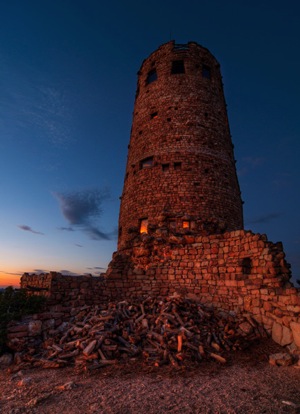
A great landscape photo can capture the imagination and inspire the soul. It brings a static scene to life and reminds us why we’re drawn to nature’s cathedrals. And while you can clearly envision the kind of picture you’d like to make of your favorite vista, what may not be as clear is the gear that is essential to taking a great landscape photograph. So, let’s talk about that.
My list of essential gear for the landscape photographer . . .
What is the must-have equipment for capturing awesome landscape photos?
Camera body
We’ll begin with your camera body. Any camera will do for making a shot to share on Facebook. But to elevate your landscape game to the next level, it is essential to use a camera body that allows you to get off Auto and start shooting in Aperture Priority.
One of the keys to a great landscape photo is having tack sharp focus throughout your depth of field. In other words, everything from the leaf in the foreground to the distant mountain range should be in clear focus. To achieve this, you need to shoot at a focal ratio offering great depth of field. Shooting in aperture priority allows you to choose the right focal ratio for the scene. Something in the range of f/8 to f/16 should produce images with good depth of field and crisp focus throughout.
Another setting you’ll be able to select in Aperture Priority is ISO. This is the sensitivity of your camera’s sensor to light. Shooting with a low ISO delivers cleaner images having less noise or graininess. For better landscapes, try to shoot as close to your camera’s base ISO (100 or 200) as possible.
The combination of a large focal ratio (f/8 or higher) and a low ISO (100 or 200) means longer exposures will be needed to make a good image. If you shoot landscapes at midday when the sun is high in the sky, there is more than enough ambient light to make a good image with very short exposures. But truly dramatic landscapes, the kind you’re after, are typically captured in very different lighting conditions.
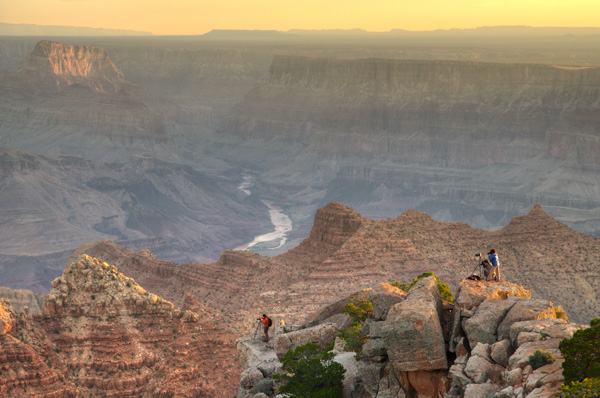
Many great landscape photos are taken during the golden hour; that all-too-brief window of time at sunrise or sunset when dramatic lighting paints the scene. Cloudy skies also add an element of drama which can transform a so-so view into a stunning image. Under such conditions, the available light is much lower and this creates the need for our next piece of essential kit: a photographic tripod.
Tripod
A tripod provides a stable platform for your digital camera. It allows you to take the time to carefully compose a shot and then lock down your camera in that position. Since you’ll be shooting in low light conditions, using a large focal ratio and low ISO, the length of the exposure needed to capture the scene will be fairly long. Too long to steadily handhold the camera. Mounting your camera on a tripod will keep it steady during very long exposures that record amazing detail.

Lenses
Of course, one of the most important pieces of equipment for a photographer is the lens through which a scene is captured. For landscape photography, your most versatile lens will be a wide angle. These are short focal length lenses that deliver wide, true fields of view. That wide field of view allows greater flexibility in composing a shot encompassing the full grandeur of a landscape. I recommend a minimum focal length of 12mm for APS-C bodies (cropped sensor) and 18mm for full-frame cameras.
Fortunately for your wallet, this does not need to be a fast lens which are designed to have focal ratios of f/2.8 or faster. They are consider fast because their large apertures collect enough light to keep exposures brief, even in low light conditions. Large apertures demand a large front lens element, which comes at a steep price. And while the performance can be well worth the investment, many photographers simply don’t have room in their budgets for such a purchase. Since you’ll be shooting at f/8 or greater, a lens with a maximum focal ratio of f/4 should more than meet your needs.

Filters
Let’s talk briefly about filters. They can be a great tool for the landscape photographer. Among the most useful are graduated neutral density (GND) filters and variable polarizing filters. However, as useful as filters can be, I don’t consider them essential gear. In the right lighting, filters are unnecessary. In situations where a GND filter would be of use, it’s often possible to compensate for significant differences in brightness in your photo editing software of choice. In short, filters are useful but not absolutely necessary.

Yourself
The last piece of essential gear we’ll discuss is, you. Your eye for composition is the most important asset in your photographer’s tool kit. Your ability to recognize good light is essential. If you look at a scene and your inner voice is saying, “Ooh, that’s cool,” that’s a good sign the lighting is outstanding. Listen to that inner voice, stop and compose a shot.
Walk around the scene. Look for a foreground element to include in the composition. One of the biggest challenges of landscape photography is conveying a sense of scale. Including a foreground element helps immensely. A bush, leaf, rock or person provides a sense of scale for the rest of the image. It also helps simplify the scene, making the resulting image more approachable to the viewer.

Summary
With a keen eye for composition, a camera body allowing you to shoot in Aperture Priority, a solid tripod and a sharp wide angle lens, you can take your landscape photography to the next level. Your images will convey the magic you felt while standing amidst a grand scene. The resulting “oohs” and “aahs” will be the reward feeding your satisfaction as a landscape photographer.
Now, get out there and shoot some great landscapes!
Learn More about Taking Beautiful Landscapes in our eBook: Living Landscapes

The post Essential Gear for the Landscape Photographer by Bill Ferris appeared first on Digital Photography School.
How Cronyism And Corruption Brought Down Detroit
Detroit U.S.A.: Once the most prosperous city in America. With a booming manufacturing sector and cultural magnetism, the city had bright horizons after World War II. But as the 1960?s rolled in, the marriage of Big Business and Big Government overtook Detroit. The central planners in government needed the powerful corporations, and the powerful corporations came to depend on the bureaucracy, too. The marriage worked well for the politicians and for their corporate cronies, but Detroit itself entered a decades-long decline. America watched as Detroit slowly bled people, jobs and revenue. Politicians tried spending money. They tried raising taxes. The more they taxed and spent, the faster the city declined.
Detroit still had its "Big Three" auto manufacturers, until two of its crown jewels, General Motors and Chrysler, imploded in 2008 under the weight of reckless and subsidized mismanagement.
Instead of allowing market forces to rebuild Detroit and the auto industry, the United States handed billions of dollars to General Motors and Chrysler.
Five years later, the city of Detroit is bankrupt and almost $20 billion dollars in debt. Meanwhile, General Motors has a cash balance of over $20 billion, still owes the taxpayers over $10 billion dollars that outgoing CEO Dan Akerson said will not be paid, and the company continues to benefit from an unprecedented $18 billion tax gift from the bankruptcy.
Why is General Motors walking away with billions while Detroit dies?
How did so much money change hands between the world's most powerful corporate leaders and government officials while delivering on so little of the promise sold to America by central planners? Bankrupt: How Cronyism & Corruption Took Down Detroit answers this question, and many others.
Complete with the candid analysis of pundits, journalists, analysts and government officials, sourcing of historical news and government archives, and on-scene interviews with everyday Detroiters, Bankrupt sheds light on what happened to Detroit, and who is to blame.
And most importantly, it asks "What is next for the Motor City?"

    
|
Henry Miller is a 12-year-old kid that forges knives, carves...
Henry Miller is a 12-year-old kid that forges knives, carves boats, makes bows and arrows, and tans hides on Orcas Island, Washington, USA.
The Jackrabbit Homesteads of Wonder Valley, California (just...


The Jackrabbit Homesteads of Wonder Valley, California (just north of Joshua Tree) were first established by the Small Tract Act of 1938, wherein the federal government leased (and ultimately sold) 2-5 acre desert plots to the public for $5, if built upon within 3 years.
Most of the shacks & early pre-fab cabins now sit derelict, though some have been restored and others are for sale.
Learn more in Kim Stringfellow’s book Jackrabbit Homestead ($28) or download an audio tour.
Photography by Bill Dickinson, Susan Myrland, Julie Kane, and Marius Murawski.
First Country Squire: Flathead-Powered 1950 Ford Woodie
This 1950 Ford Country Squire station wagon (chassis BOSR102928) is described as a solid example with redone wood, paint, interior and chrome. It is said to run and drive great, and we like that it retains its original flathead and has overdrive. These Fords were among the last true woodie wagons and were beginning to lose the sales fight to all-metal competitors from other makers, but they will always have the advantage when it comes to vintage style. Find this one here on eBay in Oceanside, California with a $29k starting bid and no additional reserve.

1950 was the first year Ford used the “Country Squire” name for its wagons, but it was used only in promotional material, not on the vehicle itself. Fords had all-new styling in 1949, so the ‘50s were little changed in looks, but boasted an advertised 50 improvements over the previous year’s cars. The redone wood, paint and chrome on this car appear to be in good shape, though the seller notes that the paint has a few minor chips. The seller also says that the floor has a couple of small patch panels and that the wood has a few cracks. 1950 Country Squire production totaled 22,292 units, down more than 9,000 vehicles compared to 1949.

The car’s upholstery appears to be in good condition as does its dash and steering wheel, though the photos don’t show as much as we’d like. 1950 Squires were the first to have a fold-down middle seat, which improved cargo-carrying capacity, though the 2-door configuration wasn’t the best for passenger access. This car has been converted to 12 volts and an alternator has replaced the original generator. All lights are said to work, but the speedometer and radio are non-op.

We like that the car still has a flathead V-8, which in this case sports an Offenhauser intake and 4-barrel carb. The seller says the engine starts readily and runs cool. The transmission is the 3-speed manual with optional overdrive and is said to shift smoothly via its column shifter. Brakes are the stock drum units and reportedly work well. The tires are “newer” Michelin whitewalls.

This car doesn’t appear to need much beyond some minor sorting, but an inspection would be in order before a purchase. If it’s as solid as described, with paint and wood as good as they seem, it could be a decent buy.
The Refugi Lieptgas in Flims, Switzerland, designed by Nickisch...


The Refugi Lieptgas in Flims, Switzerland, designed by Nickisch Sano Walder Architekten.
A historic log barn was used as the external form for pouring a new concrete structure in its place.
More info (including bookings) here.
FL Man Puts Gun Range in Backyard, Holds 'Gun Day' Every Wed.

Big Pine Key, Florida resident Doug Varrieur built a shooting range in his backyard and holds "Gun Day" every Wednesday.
He shoots from 3:00 p.m. to 4:00 p.m. on that day, calling police dispatch beforehand to let them know there will be gun shots for the next 60 minutes.
According to the Miami Herald, the range is legal thanks to a 1987 law.
Monroe County Sheriff Rick Ramsay said he hoped the law "would [not] become public knowledge" and he's "concerned now that people know." He added, "It's almost the wild, wild west again."
But 57-year-old Varrieur explains that his love for guns grows out of a need to defend himself and his family. He points to a time he and wife were held at gun point nearly 30 years ago and a more recent incident where he "feared being carjacked while pumping gas."
Because of this he bought two Smith & Wesson Bodyguard .380 handguns. One for his wife, one for himself.
He shoots his on Wednesdays.
Photo Credit: Miami Herald
Follow AWR Hawkins on Twitter @AWRHawkins

|
|
Oliberté Footwear

Oliberté makes high quality leather footwear in Ethiopia using all African materials. Employing traditional craftsmanship techniques and a fully sustainable production model, they’re making great 100% goat leather shoes with the goal of creating jobs and opportunities for the people of Sub-Saharan Africa.
For purchase information, Click HereLacie Fuel

Visit Uncrate for the full post.
Hillary's Top 7 Elitist Moments

On Monday, former Secretary of State and First Lady Hillary Clinton spoke at the National Automobile Dealers Association in New Orleans – where she quickly revealed that she has not driven a car for the past 18 years. At a convention of auto dealers.
But this was not Hillary’s first time accidentally letting her elitism slip. The sad truth for Hillary Clinton, the 2016 candidate, is that she is a deep elitist, born and bred in tony Park Ridge, an exclusive province of Chicago. She then went to Wellesley College and Yale Law School, before hooking up with Bill and moving down to Arkansas. She’d later carpetbag up to New York to enter the Senate.
Throughout, there was one abiding feature that kept cropping up for the would-be president: she has nothing in common with the common man. Here, then, are her top seven other out-of-touch moments:
7. The Military Uniform Ban. According to Lieutenant Colonel Buzz Patterson, the man who carried President Clinton’s nuclear football from 1996 to 1998, “Hillary did try to ban military uniforms in the White House and we objected for national security reasons…She relented only on the one point of those who were responsible for carrying the nuclear football. Other than that, military uniforms were not worn in the White House per Hillary's directive issued down through the staff.”
6. Gas Station Indians. “I love this quote. It’s from Mahatma Gandhi. He ran a gas station down in St. Louis for a couple of years. Mr. Gandhi, do you still go to the gas station? A lot of wisdom comes out of that gas station,” she said at a 2004 fundraiser.
5. Allegedly Forcing Secret Service to Carry Her Bags. According to MSNBC’s Chris Matthews, he saw a Secret Service agent carrying around her bags in 2001. “Secret Service guys all around with those little ear phones and one large guy, rather embarrassed, rather sheepish, walking along with his own ear phones carrying her bags. Who -- who in the Senate gets a Sherpa to carry their bags for them?.... I've never heard of a senator having a bag carrier.” Ronald Kessler wrote in A Matter of Character, “Secret Service agents assigned at various points to guard Hillary during her campaign for the Senate were dismayed at how two-faced and unbalanced she was.”
4. Abusing an Electrician. Here’s Kessler regarding Hillary’s tenure in the White House: “When Hillary found a hapless White House electrician changing a lightbulb in the residence, she began screaming at him because she had ordered that all repair work was to be done when the First Family was out.”
3. Not Exactly Showing Sympathy for the Homeless. According to Tom Kuiper’s I’ve Always Been a Yankees Fan, Hillary confronted a homeless man in 2000. She said, “My name is Hillary Clinton. You going to vote in the primary?” He said yes, but that he needed money for food. A Clinton staffer gave him a voter registration card instead. When she stumbled on another homeless person during the same campaign, she asked if he would vote. He said he was homeless. Her reply: “Well, good for you.”
2. Talking to Eleanor Roosevelt…But Not Jesus. According to Bob Woodward’s book, The Choice, Hillary used to chat with Eleanor Roosevelt and Mahatma Gandhi via Jean Houston, co-director of the Foundation for Mind Research. Houston inspired Hillary to write It Takes a Village and Other Lessons Children Teach Us and reportedly moved into the White House to help out. When asked if she wanted to address Jesus, however, she said it would be “too personal.”
1. “What Difference…Does It Make?” Her dramatic lack of sympathy for the victims of the Benghazi attack – and her own attempts to avoid culpability – continue until today. She calls it the worst moment of her tenure as Secretary of State but refuses to explain what she did wrong…or, indeed, what she did at all.
Hillary’s worst enemy in 2016 will be herself. She is no woman of the people. She is, according to a vast swath of those who have written about her, a woman concerned mainly with herself. To become president, she'll need to recast her personality, not just her politics.
Ben Shapiro is Editor-At-Large of Breitbart News and author of the New York Times bestseller “Bullies: How the Left’s Culture of Fear and Intimidation Silences America” (Threshold Editions, January 8, 2013). He is also Editor-in-Chief of TruthRevolt.org. Follow Ben Shapiro on Twitter @benshapiro.

|
|
Confiscatory: Peyton Manning Could Pay New Jersey 101.8% of Super Bowl Earnings in Taxes

If Peyton Manning loses the Super Bowl to the Seattle Seahawks and decides to play another year, he will have to pay the state of New Jersey more than he earned during the game in taxes.
K. Sean Packard, also known as @AthleteTax, did an analysis for Forbes and noted that the winner's share in the Super Bowl is $92,000 this year while the loser's is $46,000. If Manning retires after this season, which he said he would consider doing if doctors tell him his health would be in danger if he played another year, "New Jersey will collect approximately $1,575 from him if the Broncos win and $982 if they lose."
But as Packard notes, since the Broncos play at the Jets next season at MetLife Stadium, "should Manning continue his career into the 2014 season, New Jersey will collect an additional $45,000 from him by taxing income he has not even earned yet." He notes that "Manning is due $15 million next season, which would push his 2014 earnings to $15,157,000 or $15,111,000, and bump him into Jersey’s highest 8.97% tax bracket. Luckily, his duty day ratio would go from 7/33 to 7/200, without regard to the Broncos’ game at MetLife Stadium against the Jets next season."
Bottom line: If the Broncos win the Super Bowl and Manning plays next year, "his New Jersey income tax would be $46,989 on $92,000 for winning the Super Bowl, or 51.08%."
But if Manning loses the Super Bowl and plays in 2014, "he will pay New Jersey $46,844 on his $46,000, which amounts to a 101.83% tax on his actual Super Bowl earnings in the state—and this does not even consider federal taxes!"
That is what one would call confiscatory.

|
|
'UK Tea Party' Surges to Become Country's 'Most Favoured' Political Movement

Nigel Farage's right-wing UK Independence Party (UKIP) has once again rocked the British political establishment by coming first in a recent poll which quizzed Brits on their feelings towards the four main political parties.
While UKIP hasn't yet mustered up any elected members of the UK Parliament, the party this week registered as Britain's most favoured political organisation, scoring 27 percentage points ahead of the left-wing Labour Party's 26 and the Conservative Party's 25 percent.
UKIP is also expected to take a huge chunk of seats at the upcoming European Parliamentary elections in May, promising more Eurosceptic Members (MEPs) who will no doubt argue for a return of sovereignty to national governments across the continent, away from the bureaucratic talons of the European Union.
Recently, The Economist referred to UKIP as Britain's Tea Party, a nod towards the party's libertarian leanings. Nigel Farage once again upset the UK establishment this week by calling for a repeal of the UK's ban on handguns, initially introduced in 1996 after the mass shooting in Dunblane, Scotland.
The Independent reported Sunday that the finding of their favourability poll was a "surprise," further proof of the fact that much like the United States, Britain's political and media establishments are increasingly out of step with public opinion.
There were also no surprises for those with a less biased view of British politics, as Conservative Prime Minister David Cameron and right-wing darling Nigel Farage both outperformed left-wing leaders Ed Miliband (Labour) and Nick Clegg (Liberal Democrat) in a separate question over party leaders' popularity.
Twenty-seven percent of people said they prefer David Cameron, while 22 percent chose Nigel Farage. Embarrassingly, just 18 percent chose Ed Miliband, who, as leader of the official opposition party, should currently be leagues ahead of the incumbent Cameron. Only thirteen percent of those polled opted for Liberal Democrat leader Nick Clegg, which will be viewed as more evidence of the collapse of the Lib Dem vote.
UKIP's challenge is now to turn popularity and preference into electoral success. In terms of voting intention, UKIP still trails Labour and the Conservatives in that order, revealing perhaps that the British public don't vote simply on who they feel is more favourable.
Track records and even historical party loyalty may be at play when attempting to explain the chasm between UKIP's popularity and its electoral successes to date.
Meanwhile, Britain's leftist establishment continues to reel at the rise of a new libertarian conservative party in the United Kingdom, especially since it has even begun to emerge that UKIP is attracting an increasing number of former left-wing voters.

|
|
Video: Brewery Delivers Beer to Ice Fisherman Via Drones?
It seems like we’ve been droning on about drones lately, but the unmanned aerial devices continue to make the headlines. The most significant news yet, or at least the most exciting to ice anglers, is Lakemaid Beer’s recent press release stating the North country brewer is testing beer delivery to ice anglers via drones. Okay, so maybe this is just a publicity stunt by a beer company that knows smart marketing, but I don’t think it’s that farfetched to think drones will be delivering all sorts of things in the near future. If not beer, maybe at least we’ll be able to get a hot pepperoni pizza delivered to our ice shacks soon. From the press release:
“Inspired by Amazon's founder and CEO Jeff Bezos, which has been testing the drone delivery of its products, Lakemaid Beer has been testing a new drone delivery system on some of the top ice fishing lakes in Minnesota and Wisconsin. A new video of its test is available at LakemaidBeer.com.
"Amazon faces a lot of obstacles," said Lakemaid Beer Company's president, Jack Supple. "Dense urban locations present a host of problems to drone delivery. But our tests are on vast, wide-open frozen lakes free of trees and power lines. Our drone can fly as the crow flies, straight to our target, based on GPS coordinates provided by an ice angler. Fish houses are very uniform in height, so we can fly lower than FAA limits, too."
"It's the perfect proving ground for drone delivery," said Supple, "Our initial tests on several mid-size lakes have been very successful. We're looking forward to testing the range of our drones on larger lakes."
See This Do That: The Trout Glued to a Point

Here's a common scenario we all run into now and then: You see a trout rising on the other side of the river. Between you and the fish, the current is strong and deep (you cannot cross the river). Interestingly, the fish seems to have its nose practically glued to a point of land that's sticking into the river.
What happens when you drop your fly in the current upstream from the fish? Often times, even if you make a reach cast (in effect, mending your line in the air), or immediately mend your line after the fly hits the water, the current is still going to grab your fly line, create serious drag, and rip your fly out of the strike zone. Do that a couple times, and after the fish sees the fly behaving strangely, it's not going to take long for the trout to swim off. Game over.
So what do you do?
You use the shoreline to your advantage. Look carefully, and you'll notice the vegetation on this bank is short grass and moss. Nothing that's really going to snag a fly for long.
In this case, I intentionally shot a cast that stuck my fly on the grass on the point. I aimed at the grass, and hung it up on purpose. With the fly in place, I made a huge mend of the line. And just as I finished the mend, I gave the line a quick jerk. The fly popped free, and I got about a one-second drag-free drift. That proved to be enough, as the fish indeed ate the fly.
Now, there are a couple things to consider. Naturally, if the bank is filled with sticker bushes and heavy brush, you don't want to be intentionally sticking your fly on the shoreline. Second, this move works better when the sun is on the side of the fish. If the sun is behind you, the shadows you create will usually ruin the approach. Also, understand that there's a reason this fish is rising so tight to the bank… it's probably eating terrestrials. So this trick works best with ants, beetles and hoppers.
In any case, it's a longshot. A last resort. But heck, if you're like me and you snag the opposite bank often anyway, why not use that to your advantage? If you start catching fish, your friends will at least assume you're trying to do that and not just making poor casts.
In all seriousness, when you see this situation, remember that you are better off to cast a few inches too long than you are to cast short. And sometimes, the perfect shot that lands in the water is actually too short.
Loch Voil Hut in the Scottish Highlands. Writes contributor Alex...

Loch Voil Hut in the Scottish Highlands.
Writes contributor Alex von der Assen:
You can take the boat to get to the nearest pub, but sometimes it is just nice to be by yourself.

Very French Gangsters: Stylish, comfortable eyewear for kids only

For elementary school kids, glasses can be considered a physical as well as mental constraint to their carefree lives. A pair of Very French Gangsters, however, is a confidence-boosting accessory that will set wearers apart from...
Continue Reading...
Ghost Ship Filled With Cannibal Rats Poised To Crash Into British Coast

Experts say a ghost ship carrying only disease-ridden rats could be heading for the coast of Britain. The Luyubov Orlova was cut adrift while being towed from Canada to the Dominican Republic where it was to be scrapped. The vessel has been missing for about a year and there are now concerns that the high winds of the Atlantic have driven the 40-year-old Yugoslavian liner toward Ireland, Scotland or England. According to experts, it is likely the ship is carrying hundreds of rats that have been eating each other to survive.
In March of 2013, two signal were picked up, which experts believe resulted from lifeboats hitting the water and activating emergency beacons. At that time, the vessel was thought to be two-thirds of the way across the Atlantic and heading east. Experts believe the ship is still out there because not all of its emergency lifeboat beacons have been set off.
A Belgian salvage hunter who is one of many searching for the Lyubov Orlova told The Sun, "She is floating around out there somewhere. There will be a lot of rats and they eat each other. If I get aboard I'll have to lace everywhere with poison."
According to Chris Reynolds, the head of the Irish Coastguard, "There have been huge storms in recent months but it takes a lot to sink a vessel as big as that. We must stay vigilant."
The Lyubov Orlova was named after a famous Russian actress.

|
|
Reality Show Starring Ghetto Welfare Recipients Sparks Controversy...
Reality Show Starring Ghetto Welfare Recipients Sparks Controversy...
(First column, 20th story, link)
Video: Yellow Jackets Go Berserk When a Camera is Placed Near Their Nest
This is one wasp nest you don't want to stumble upon while you're tromping through the woods. The LiveLeak video was uploaded yesterday, but it was shot last June in Florida. The nest is about 3 feet tall by 2 feet wide, according to the video description. All the popping noises you hear? That's the sound of bees smashing into the camera.
All yellow jacket colonies contain workers, queens, and drones. The largest colonies have up to 5,000 workers.
The nest was eventually destroyed by Jonathan Simpkins, the owner of insect IQ.
"It was so exciting. It was one of the best times in my business and professional career to deal with something like this."
10E2311: History of Forestry in Vermont: 1909-1959
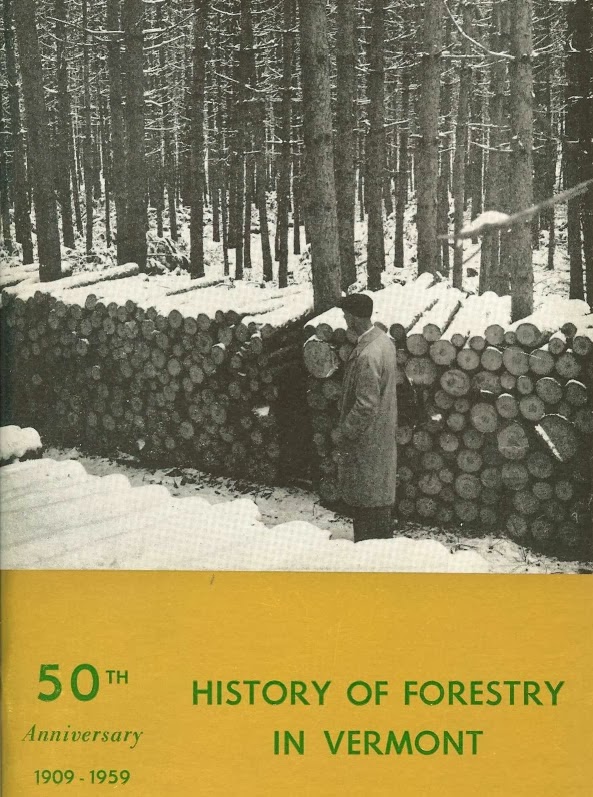
"Many [land] owners were willing to have their forests cut selectively and the mill owners preferred to buy logs from such an operation. However the logger or jobber still insists on cutting every tree in site."
"There must be a change in National attitude. Our industries, our land owners, our farmers, all our citizens must learn to treat our forests as a crop to be used but also to be renewed. We must learn to tend our woodlands as carefully as we tend our farms." - President Coolidge [Vermont's son], 1925.I had always wondered about which stage of growth we see in the Green Mountains - this quote illuminates that a bit;
"Of the land area of Vermont 62.5% or 3,711,100 acres arc covered with forest growth. The forest areas have been cut over several times without too much regard for the next crop. Up until the last twenty-five years chiefly softwoods were taken. Some areas were cut very lightly, if at all, until the Second World War. Beginning then everything was taken to fill our war needs.
The result today is a forest area (1) of much timber of the less desirable species, (2) of stands with an insufficient number of trues per acre, (3) with a growth rate of 1/2 to 1/3 of what it should be, (4) with a large volume of timber in the lower diameter class, and (5) with cull timber left from cutting only high quality trees."Read it all here.
See also my select annotated bibliography of logging in New England.
Inequality between the apples and oranges
Thomas Sowell calls out the merchants of envy for two of their biggest "income inequality" myths in his latest column. In both cases, a political crusade is built upon willful misrepresentation of data.
The more complex matter he discusses is something he has written about many times in the past: the way individual people move up and down income brackets over time, but the income inequality crusade is based entirely on the performance of the brackets. In other words, the top "one percent" might be pulling in more dough these days, but not all of the actual individual people in the One Percent today were there five or ten years ago, and not all of them will be there five or ten years from now. Another way this fallacy manifests itself is deliberate ignorance of the effect age has on income and net worth - a person of modest means in his twenties might well end up with significant income, savings, and property by the time he retires.
This is one reason the devaluation of marriage correlates with that growing "income inequality" liberals are always going on about. Married couples have a better chance of accumulating and retaining significant net worth, giving valuable assistance to their children when they launch their own careers, and leaving a substantial inheritance. Accumulated family wealth is a wonderful thing; the dissolution of marriage has made it more difficult to build a fortune that grows across generations.
Dr. Sowell's other point about comparing apples and oranges to produce politically useful clamor about "inequality" is simple, devastating, and highly relevant to modern politics, because it's a sacred cause of modern feminism, and an issue Barack Obama's political team was pumping out more propaganda to support just a few days ago:
Recently Kirsten Powers repeated on Fox News Channel the discredited claim that women are paid only about three-quarters of what a man is paid for doing the same work.
But there have been empirical studies, going back for decades, showing that there is no such gap when the women and men are in the same occupation, with the same skills, experience, education, hours of work and continuous years of full-time work.
Income differences between the sexes reflect the fact that women and men differ in all these things — and more. Young male doctors earn much more than young female doctors. But young male doctors work over 500 hours a year more than young female doctors.
The "women make 70% of what men make!" canard is absolutely deathless, even though its falsehood has been well-established for years. It's something feminists and their socialist allies need to be true. No amount of empirical study data will ever persuade them to abandon their religious belief that evil patriarchs and brutish good old boys are paying hapless women 70 cents on the dollar just because they think girls aren't worth as much.
Invalid comparisons are a great way to persuade people to surrender disproportionate amounts of their liberty to politicians who promise to "fix" what was never really broken.

|
|