KWBaker
Shared posts
10 Authors from Georgia You Should Read Now
Helping Solve a Veteran Unemployment Problem and a National Security Concern

Do any of us fully realize the vulnerability of the electricity infrastructure of the United States?
Given the interconnectivity of our information age, it is undeniable that essentially everyone not only uses the power grid, but they do it every single hour of every single day. From traffic signals and air conditioning to alarm systems and Internet commerce, electricity is absolutely vital to daily functioning.
Many would be shocked at the idea that something this essential would be at the same time so defenseless – and yet, that is the scary reality.
On April 16, 2013, just before 1 a.m., someone slipped unnoticed into an underground vault near PG&E's Metcalf Transmission Substation, near San Jose, California. They cut the telephone cables and opened fire on the substation. In all, 17 transformers within the complex were destroyed in an attack lasting less than 20 minutes. To date, the perpetrators have not been caught.
Luckily, other plants were able to meet the power need preventing a temporary blackout and continued filling the void during the 27-day repair until the substation was fully operational. Notably, Jon Wellinghoff, then the chairman of the Federal Energy Regulatory Commission (FERC), called the attack, “The most significant incident of domestic terrorism involving the grid that has ever occurred.”
The obvious question: Why would someone attack a substation? Or that substation?
Imagine how easily a small cell of terrorists could destroy infrastructure and create large-scale blackouts, with little risk of being caught. Our Country’s enemies could so easily capitalize on our hyper-vulnerability, this figurative chink in our security armor, making it all the more important to address it—and soon.
A well-planned and executed attack on several substations could easily cause rolling blackouts and leave millions of Americans without power for days, and perhaps far longer. This is not only a security risk, but also a societal threat that would result in an economic nightmare. In a worst case scenario, hospitals, retirement homes, schools, businesses and law enforcement could all be running on emergency lights and generators, assuming they were running at all.
We pass transmission substations daily without giving them a second thought. The lack of apparent security should never make us forget they are vital cogs in the network that makes up the infrastructure of this nation. They serve as hubs for intersecting grid lines and make it possible to move electricity over long distances.
The large transformers targeted in last year’s attack make electricity transmission possible. The fact that they are heavy, expensive and not quickly produced means that a successful, coordinated attack on a number of important substations could result in outages affecting tens of millions and lasting for weeks, months or even longer.
Thus far, everyone seems to be more or less in the dark (pun intended!). Clearly, closed circuit television feeds from cameras, chain linked or occasionally barbed wire fencing and a few warning signs are not going to protect these substations from harm. We need to find a more effective solution.
The Bureau of Labor Statistics' numbers from January of 2014 say the unemployment rate among military veterans is 5.6%, which means that roughly 600,000 veterans are currently unemployed. The unemployed rate rises to 7.9% for veterans who served since September 11th, 2001, representing around 190,000 veterans without jobs.
So here’s an idea: It is achievable, not to mention relatively inexpensive, to create a force of guards for America’s transmission substations comprised of unemployed veterans. The size of the force would depend on the specifics of the substation, but teams of between two to three dozen guards would certainly be helpful added protection. We have already invested money in training our military veterans, giving them invaluable skills we can now use to guard our Nation's infrastructure.
The simplicity of this solution should not detract from its potential effectiveness. It would not take many armed veterans to deter such attacks on these substations. The mere human presence alone acts as a more potent deterrent than all of the methods being used today.
In short, we plug a hole in the defenses of the Country while decreasing veteran unemployment—a true win-win. In terms of funding this measure, a marginal fee could be placed on utility bills coupled with less training overhead and the sheer number of individuals paying the fee; it would be virtually unnoticeable to the average consumer.
This deficit neutral idea, used effectively, to successfully guard the United States from attacks: that's a plan that should light up Capitol Hill.

    
|
Wiring Complete

The clearest, most intelligible, most up-to-date, step-by-step instructions of how to wire most household electrical jobs. Heavily (1,000 photos), smartly illustrated. Besides unraveling the complexities of 3-way switching (I always need help with this), this second-edition deals with other wiring besides electrical power: cable, phone, ethernet. Despite the wireless era, I’ve got more wires in our home every year, and this book has encouraged me to tackle them myself. The guide is supremely practical, full of great tips for working with real wires in real walls. It helped me figure out how to tap a power outlet inside my house for an outdoor line. I can’t think of anything it misses.
-- KK
[This is a Cool Tools Favorite from 2014]
Wiring Complete
Michael Litchfield, Michael McAlister
2013, 272 pages
Available from Amazon
Sample Excerpts:
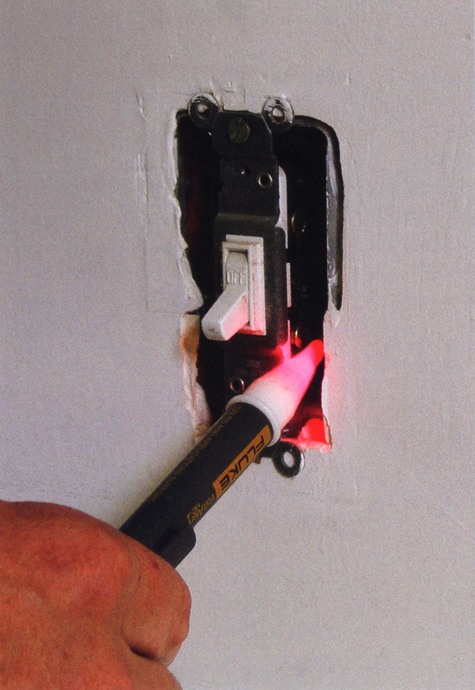
In some old houses, the neutral wires — rather than the hot wires — may be attached (incorrectly) to receptacles or switches, in violation of code. So when testing existing receptacles, switches, or fixtures, test /all/ wires for voltage.
*
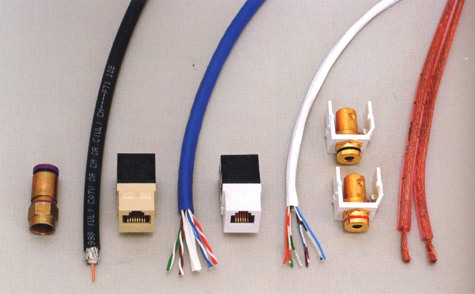
Each multimedia connector is to the left of the cable It terminates. From left: RG6 F-connector, dual-shielded RG6 coaxial cable; RJ-45 (eight-pin) jack, Cat 6 UTP data cable; RJ-ll (six-pin) jack, Cat 3 phone cable; two RCA audio jacks (sometimes called banana jacks), 14-gauge low-loss audio cable.
*
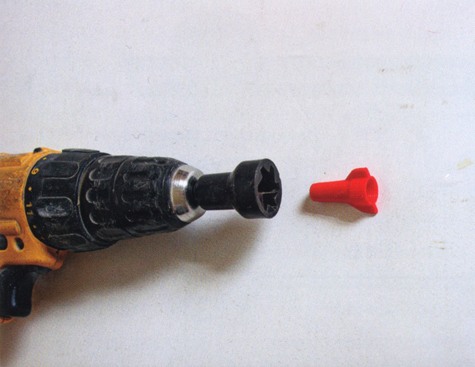
A nut-driver bit speeds up splicing, but be careful not to over twist wires.
*

They then use a plumb laser to transfer marks to the ceiling.
*
Stealth Barn - an 800-square-foot structure in Norfolk County,...


Stealth Barn - an 800-square-foot structure in Norfolk County, England with interior clad in OSB wood particle board by Carl Turner Architects.
Photographs by Tim Crocker and Jeremy Phillips.
Have You Seen the 19th Century Log Cabins Twitter Installed at its San Francisco Headquarters?
 Photo: Mark McBride’s Twitter feed
Employees at Twitter’s San Francisco headquarters now have a chance to tap their creativity inside repurposed 19th century log cabins. Olle Lundberg Design helped the tech company install two homesteader cabins salvaged from historic ranches in Montana. The cabins now reside in an open area in the headquarters, and they’ll serve as a creativity-inducing dining area.


Read the rest of Have You Seen the 19th Century Log Cabins Twitter Installed at its San Francisco Headquarters?
Permalink | Add to del.icio.us | digg
Post tags: eco design, green design, log cabin, Lundberg Architects, lundberg design, office cabins, Olle Lundberg, Recycled Materials, repurposed barns, salvaged barns, salvaged wood, silicon valley, sustainable design, twitter, Twitter headquarters, twitter log cabins, twitter san francisco

The Serious Eats Guide to Whole Grains

[Photograph: from Shutterstock.com]
Grains have been a staple of the human diet for the last, oh, 10,000 years. And if you think about it properly—by which I mean with a few debatable leaps of logic and some generous omissions—grains are also basically responsible for all the best things: beer, adorable pets, beds, cheesy popcorn, and, yes, internet. In that fertile crescent-agricultural revolution-cradle of civilization sense, that is.
But have you ever listened to someone wax rhapsodic about the delights of whole grains and thought to yourself, meh? Welcome to the club that I totally just quit.
The thing is, I'd always been secretly envious of people who love plain, undressed whole grains, all on their lonesome (I'm looking at you! You know who you are). Did I find them tolerable? Sure. Interesting? Often. But flavor-packed and craving-worthy? In my book...not so much so. Well. Turns out that book was a majorly abridged edition and once I learned just how many grains are out there and just how versatile they can be, it also started telling a completely different story.
Of course, grains can also be frustrating, confusing, and intimidating. What even qualifies as a grain, when is it whole, what's the deal with gluten, and, most importantly, what do you actually do with them??
Here's what you need to know. (Or, if you're already confident, feel free to jump on down to our whole grains index.)
Whole Grains 101
What are grains, anyway?
Virtually every folklore tradition tells of some sort of terrifying creature that creeps about, sucking the life force out of small children. When I eat whole grains, I like to think of myself as that creature.
Like the legumes and nuts with which they're often grouped, grains are seeds. In other words, hyper-concentrated packages of all the nutrients and energy it will need to turn into a self-sufficient plant. Enter the human, harvesting and culling those tiny lives for its own survival, in an endless cycle of parasitic glory.

[Illustration: Robyn Lee]
More specifically, that life force can be broken down into three edible parts:
- The bran, the seed's outer skin, packed with fiber
- The germ, or embryo (a.k.a. the best part). This is where you'll find all the good stuff—the disease-preventing, metabolism-boosting, blood-sugar-stabilizing, cholesterol-lowering antioxidants, fibers, vitamins, minerals, essential fatty acids, and the like.
- The endosperm. This is the germ's food supply, which is mainly your starchy carbs.

[Illustration: Niki Achitoff-Gray]
But wait, there's more: Some grains are naked!
Corn, rye, and wheat are what we refer to as "naked" grains, meaning that they're made up of 100% edible parts right from the stalk. But most of the grains we eat—and there are thousands out there we can't even digest—are also encased in an inedible hull. Some are more easily removed than others; in certain cases, as with barley, it's exceedingly difficult to hull the grain without removing some or all of the bran and germ.
Okay, but then what actually qualifies as a whole grain?
In order for a grain to be labeled whole, it must retain 100% of its bran, germ, and endosperm. That rule applies no matter how the grain is packaged—a whole grain flour contains the same proportions as the whole seed. There's one main exception to this rule; because barley is extremely high in protein and other nutrients throughout even its endosperm, many consider it a whole grain even when it may not technically qualify. Take that, hull!
So what's the deal with white flour versus whole wheat flour?
Your typical white flour is made from wheat grains that have had the germ and bran removed—it's all endosperm up in that white bread and "regular" pasta, not to mention your white rice and pretty much any grain or grain-based product that isn't explicitly marked with the words "whole grain." That seven-grain bread does indeed contain seven grains, but unless it's seven-whole grain bread, you're still only getting the endosperm—still lots of flavor variety, but not the same nutritional profile.
Grains are refined for a few reasons. Sure, you may prefer those pastas and breads to their whole wheat counterparts, but flavor and aesthetics have less to do with it than you may think. Light, heat, and air are the sworn enemies of cooking oils, and the same goes for the oils in whole grains. Mass-produced grain products are often refined primarily to extend shelf-life and allow for non-refrigerated storage.
Where does gluten come into the picture?
You may be surprised by how few grains actually contain gluten—just wheat, barley, and rye. Then again, those three grains are the ones you'll most commonly find in breads and pastas, and with good reason. Why, you ask?
Let me tell you a story about two friends, named Glutenin and Gliadin (they're not from here, okay?). In a lot of ways they were pretty similar—they both grew up in the town of Endosperm, two proteins in a land of starches. And, at the time of this particular tale, they'd both been happily taking a rather prolonged nap in a bed of powdery flour.
One day, they were rudely awakened from their slumber, swept off their feet by a tidal wave of water. EEEH! they cried, as they skittered about beneath the descending shadow of two massive, fleshy palms. Quickly, they leapt into each others arms and and held onto each other for dear life. The more times the hands descended, the harder they clung, stretching their tiny little protein arms longer and longer. And if they passed another friend—for they were shocked to find themselves surrounded by millions of their ilk—they reached out another hand and grabbed hold, until all were united in a collective embrace. And though they soon met their demise in the fiery pit of Oven, their story of triumph and perseverance lived on, passed from generation to generation. And it was known as Gluten.

[Illustration: Niki Achitoff-Gray]
Okay, so not exactly. In the real world, gluten is a network of proteins that is developed when flour and water are combined and kneaded into dough. The more you work that dough, the more elasticity it will develop. It's what keeps doughs from falling into a puddly batter-like mass and it gives breads their structure, helps them rise, and delivers that chew factor. Striking the right level of gluten development is key to fresh pastas, pizza crusts, and most baked goods—though of course there are gluten-free adaptations that substitute that protein network with stabilizers like xanthan or guar gums, and even eggs.
You only mentioned wheat, barley, and rye—doesn't glutinous rice contain gluten, too?
The short answer is no. (Actually, so is the long answer). If you're gluten-intolerant or cooking for someone who is, know this: glutinous is not the same as glutenous. Are there glutenous grains that are also glutinous? Yes—barley's a great example! But "glutinous" actually describes an entirely different component of the grain—namely its level of amylopectin, a water-soluble component of starch. When it's released during cooking, amylopectin can produce a creamy, gelatinous sauce (think risotto). Grains like amaranth and short-grain rice make great porridges and soup fillers, especially when they're immersed in more liquid than they're able to absorb—otherwise they'll come out quite gluey (think sticky rice).
Okay, I bought some whole grains. Does it matter whether I store them in the refrigerator, freezer, or pantry?
Because whole grains are susceptible to rancidity, there are some worthwhile measures to take when selecting and storing them. If they're packaged, check for expiration dates and adhere to them; if they're in a bulk bin, take a big whiff and steer clear if you detect a rank or musty odor. And once you've gotten them home, you'll want to refrigerate or freeze your grains immediately. Pack 'em up in a zipper-top bag or tightly sealed container, mark the date of purchase, and keep them in a cool, dark place. I like to think hobbits would be especially well-suited to grain storage.
Cooking With Whole Grains
So now that I've got them, what should I actually DO with them?
Whole grains can be incorporated into your baking projects, fermented into home-brewed alcohol, popped or puffed into snack food, rolled into flakes for breakfast cereal, and oh-so-much more. But in their most basic state, all dry grains can be simmered in water until tender enough to eat (though just how tender that is will vary by dish and personal preference). If you've ever made rice, you get the basic idea.

[Illustration: Niki Achitoff-Gray]
Cooking Methods
1. The Absorption Method: This is the most straightforward technique—just cover your grains with a measured amount of liquid (according to package instructions), bring it to a boil, and then cover the pot, reduce the heat, and simmer away until all the liquid has been absorbed and the grains are tender, adding additional liquid if necessary.
2. The Pilaf Method: Briefly cooking grains over medium heat before adding liquid to the pot—traditionally in a small amount of oil or butter—will coax out its natural nuttiness, giving off a warm, toasty aroma. (For extra creamy preparations, check out our road to better risotto). If you're making a pilaf-style main or side, you can also start off by sautéing aromatics like onion, garlic, or spices. Add your grains and stir them regularly for two or three minutes before pouring in a measured amount of liquid. Once it reaches a boil, reduce the heat to low, cover the pot, and simmer the grains until the liquid's absorbed and the grains are tender, adding additional water if necessary.
3. The Rapid Boil (Pasta) Method: You can also make grains just like you would pasta, by pouring them into a pot of salted, boiling water and cooking them until tender. This works best for your firmer, chewier grains like barley, wheatberries, and sorghum—just strain them when they've reached your desired tenderness.
Before I get started, should I rinse or soak my grains?
Though many recipes will direct you to rinse grains, the vast majority of commercially available whole grains won't actually need it. But if you want to do it anyway, just make sure to rinse immediately before cooking—otherwise you run the risk of moldy or sprouted groats. Soaking a grain overnight, on the other hand, can help reduce the stovetop time for slow-cooking grains like spelt or barley and, according to some, produce more evenly cooked results. If you're planning ahead, it's never a bad idea.
Wait, but how will I know for sure when they're done?!?
Beware of recipes claiming to be foolproof! Even different batches of the same grain can vary in the amount of liquid and time they'll need to finish.

[Illustration: Niki Achitoff-Gray]
Now I've got a ton of leftovers in my fridge. What's the best way to reheat whole grains?
Before you go about reheating, hit the pause button! Chilled grains make a great base for tossed salads—some chopped vegetables, mayhaps a sprinkle of cheese, and a drizzle of vinaigrette and you've got a surprisingly well-balanced meal. Otherwise, if you have a microwave, you can reheat grains in a bowl, covered with a paper towel. Or go the stovetop route—add the grains and a splash of water to a pot and steam them, covered, over medium-low heat until they're soft and warm.
Alright! Now that you're basically an expert in whole grains in general, I say we dive on into the specifics. Say hello to our index!
Whole Grains: The Index
We've pulled together the most commonly available whole grains and divided the descriptions by gluten content for clarity. Read through 'em all or jump straight to the one you're looking for!
| Gluten-Free Grains | Glutenous Grains |
|---|---|
Gluten-Free Grains
Amaranth

[Photograph: Amaranth from Shutterstock.com]
Remarkably tiny and just slightly crunchy, amaranth* has a similar mouthfeel to tobiko (the minuscule fish roe you'll sometimes find on sushi rolls). And if you've ever shucked corn on the cob, you have a good sense of what it smells like—as soon as they hit the pan, the seeds release an intensely grassy aroma that translates to a slightly nutty, herbal flavor reminiscent of hay. On its own, that distinctive flavor can be a little overwhelming, but a touch of salt, lemon juice, and olive oil can work magic. Amaranth makes a great chilled taboulleh-style salad, but can also play nice with earthier warm ingredients like mushrooms or nutty cheeses. In many South American and South Asian cuisines, it's often cooked with additional water (up to 6 cups for a single cup of grain!) to make a glutinous breakfast porridge, or dry-popped and seasoned with either honey or savory spices as a snack or crunchy garnish.
*Unlike true grains—seeds from cereal grasses—amaranth grows from a broad-leafed plant; if you ever happen upon amaranth greens, they're edible too (and we love them).
Buckwheat

[Photograph: Buckwheat from Shutterstock.com]
Confession: I've never been a big fan of whole buckwheat (often labeled as "buckwheat groats"). Between its slightly grainy texture and pronounced earthiness, I have trouble enjoying it on its own, or even in dishes like kasha varnishkes that, I should note, are beloved by many. But if you're like me and find yourself avoiding buckwheat, consider giving it another shot in more, shall we say, "diffused" environments. Yeast-risen crêpe-like buckwheat galettes and heftier buckwheat pancakes have a sour note that pairs well with sweet jams and syrups, or even savory items like smoked salmon. And it's hard not to fall for Japanese soba noodles, served chilled with a salty-sweet dipping sauce, or hot in a flavorful broth. Still not working for you? Don't sweat it. It's a big, grainy world out there.
If you go the whole-groat route, just be careful to coat them in egg, oil, or butter and toast them in a pan before adding your water—otherwise, you'll wind up with a pot of swollen mush.
Corn

[Photograph: Corn from Shutterstock.com]
What don't we do with corn? Seriously, think about it. We eat it off the cob, dried into hominy, ground and cooked into porridges like polenta or grits, popped and puffed into snacks, and processed into cornmeal for breads, muffins, chips, and tortillas. And that's not even counting the booze, animal feed, and industrial uses that make it one of the world's largest crops.
Of course, there's a different type of corn out there for each of those preparations, fresh sweet corn being the sweetest. As for your dry varieties, it's really just a matter of processing—grind dry yellow or white corn into bits, and you have the makings of creamy grits; grind it finer and you have quick corn grits. Mill it into a coarse flour, and you have polenta; mill it finer, and voilà! Cornmeal. Switch over to flint corn and repeat the process for hominy and hominy grits, and so on. And in case you were wondering, there's a whole separate breed just for popcorn.
Coixseed (Job's Tears)

[Photograph: Coixseed from Shutterstock.com]
Though relatively unknown in the West, coixseed/Job's Tears is a common ingredient in China, Korea, and Thailand. It's used to make tea and alcohol, and used with other herbs in traditional Chinese medicine. It can be cooked just like rice until plump and tender; it has a starchy texture and sweet, corn-like flavor that lends itself well to soups or stews.
It's worth noting that I had a hard time getting my hands on Job's Tears until I learned that it's available in most Asian groceries, somewhat misleadingly labeled as pearl barley. But a quick visual comparison will reassure you of the difference—coix seed is larger and rounder, with a wider groove running along the center. Just make sure you're buying the dried seed and not a puffed variety (just give 'em a squeeze if you're unsure).
Millet

[Photograph: Millet from Shutterstock.com]
You won't find many staunch advocates of millet out there. Which is too bad, because it's actually a pretty awesome grain. For starters, it practically quadruples in volume when cooked, which means you're getting a whole lot of bang for not much buck. It's also extremely mild, which sounds disappointing but actually winds up working in its favor, since it has a shape and texture similar to couscous when—and here's the rub—it's properly cooked. It's not that cooking millet is terribly difficult, mind you, it just takes some getting used to. Think about how much it grows—it's a thirsty, thirsty bastard of a grain, and if you deprive it of liquid, it will punish you with a gritty, dry, pasty pot of blah. Hydrate it properly, though, and you'll find yourself with a bowl of fluffy grains—the texture is like a cross between mashed potatoes and pasta—to dress with whatever sauce or seasonings you fancy.
And hey, if the whole grain still isn't to your liking, millet flour can also make a great gluten-free substitute for baked goods, like zucchini bread and pastry crusts.
Oats*

[Photograph: Oats from Shutterstock.com]
If you've never picked up a bag of whole oats, they're worth a second glance. Like the rolled oats with which you're probably most familiar—whole groats that have been steamed and flattened for oatmeal—they taste very, bear with me now, oaty. And like the longer-cooking steel-cut, or Irish, oats, they still have their fibrous bran attached. But they'll also deliver a more robustly chewy texture that makes them a nice change of pace as a breakfast cereal, sweet crumbly casserole, baked into cookies, or even combined with savory ingredients as a risotto-style side.
*Though technically gluten-free, most oats have been cross-contaminated with wheat and should be consumed with caution if you have a gluten intolerance or allergy.
Quinoa

[Photograph: Quinoa from Shutterstock.com]
Remember five or ten years ago, when most Americans couldn't even pronounce quinoa? These days it's undoubtedly the trendiest of the so-called ancient grains (though if you want to get extra nerdy, quinoa, amaranth, and buckwheat don't technically belong to the grain family). It cooks quickly, takes on flavors easily, and gets a lot of attention for its "supergrain" status—meaning that it has more essential amino acids than most of its cousins (though, if you want to get extra, extra nerdy, so do amaranth and teff!).
Most quinoa is packaged as red, black, or white, and while there are subtle distinctions between the three (red holds its shape a bit better, while black is slightly nuttier and sweeter) you can use them interchangeably. I like my quinoa in a chilled salad like this one, this one, or really anything featuring bright, bold flavors—a squeeze of citrus, some tart tomatoes, a sprinkle of tangy feta, maybe a dash of fresh herbs—but in colder months, it makes a nice base for a hot meal of chicken and some bitter greens, mushrooms, and a fried egg. We also love it with shrimp and chickpeas or baked into sweet cakes studded with plums; at the end of the day, it's hard to go wrong with quinoa.
Rice

[Photograph: Rice from Shutterstock.com]
Where to begin? There are over 40,000 varieties of rice out there, which tends to limit one's ability to make grand generalizations. It's easiest to talk about rice in terms of length rather than flavor, with most short and medium grain varieties having the highest levels of amylopectin. They're your best candidate for rice pudding, risotto, sticky rice, and other glutinous preparations. Long grain rice, like basmati, jasmine, or Carolina, is usually higher in amylose—amylopectin's counterpart—and stays fluffy after cooking. It's used for traditional pilafs and fried rice, or as a bed for sauces. As for the difference between white and brown rice? It's a simple as this: white rice is brown rice, minus the bran.
Sorghum

[Photograph: Sorghum from Shutterstock.com]
I'd never tasted sorghum until I set out to write this post. Now, I'm obsessed. Mainly because you can pop the dry kernels into the cutest bowl of tiny "popcorn" imaginable. It tastes almost exactly the same, only it's insanely adorable. Seriously, check it out:

You can also cook it up whole—the pearls look almost exactly like Israeli couscous and take on a pronounced roasty flavor if you toast them in the pan a bit beforehand. Just be prepared for a long cook—even after the recommended 50 minutes, I find them on the tough end of chewy.
Teff

[Photograph: Robyn Lee]
If you thought amaranth was tiny, wait until you meet teff, the wee-ist grain in all the land. Its main claim to fame is injera, the spongy yeast-risen Ethiopian flatbread. If you've ever had injara, you might expect teff to be similarly sour, but it's actually quite mild and just faintly sweet. It's a versatile gluten-free flour and so long as you use enough liquid—water, stock, even a splash of milk or cream—the whole grains make a remarkably smooth polenta-like dish that can be eaten as-is, perhaps with some butter and a sprinkle of cheese or even sweetened with honey or agave. And, like polenta, you can spread it on a sheet tray to cool and then slice it for grilling or frying.
Wild Rice

[Photograph: Wild rice from Shutterstock.com]
Chewy, nutty, and slightly herbal, long grain wild rice is one of the most distinctive grains out there. It's not technically a rice, nor is it particularly wild these days—domestically, most of it is cultivated in paddy fields in Minnesota and California, though it does grow naturally in a number of rivers and lakes across the Americas. Warm or chilled, it's usually combined with autumnal ingredients like dried cranberries and toasted nuts, roasted root vegetables, or squash, but you can also incorporate it into soups for some extra texture or combine it with "true" rice in a pilaf.
Glutenous Grains
Barley

[Photograph: Pearl barley from Shutterstock.com]
Unless you've been gluten-free your entire life, chances are you've had barley in one form or another—if not in salads, pilafs, soups, stews, or breads, then beer or whiskey. Cooked whole, it has a meaty chewiness that lends itself well to bulking up any dish it's added to. It's especially high in amylopectin, so it adds a nice silkiness to soupier foods. With a slightly malty character (hence beer) and a mild nutty sweetness, it's pretty palatable, even served pilaf-style with minimal seasoning. (And it's a key ingredient in our recipe for homemade vegan burgers that don't suck.) But if you prefer to amp things up, it's quite receptive to everything from root vegetables and aromatics to even the boldest of meats, like lamb.
Most of the barley that's commercially available is light in color and labeled "pearled," meaning that it's had both its hull and bran removed, and often the germ, too. While even pearled barley still retains substantial nutrients and cooks up faster and slightly more tender, if you're looking for the most robust option, seek out hulled barley, instead. Just consider giving it a soak overnight to help the process along.
Rye

[Photograph: Rye from Shutterstock.com]
Imagine a grain with the chewiness of barley or wheatberries and the flavor of rye bread—earthy, slightly sweet, but far more mild than buckwheat—and you've got rye. It pairs well with tangy acids (think the sauerkraut in your Rueben) and sweeter flavors—in the wintertime, it would make a nice, hearty dish with root vegetables like parsnips, turnips, sweet potatoes, or even beets. Or serve them in a room temperature salad with carrots, celery, cilantro, and almonds. And, of course, you can't talk rye without giving a nod to the dark, hearty eponymous loaf.
Wheat

[Photograph: Wheat berries from Shutterstock.com]
Wheatberries, chewy and light, are one of my favorite salad grains. They do especially well with wintery ingredients like Brussels sprouts or fennel. Though cooking them takes some patience, the results are well worth it—they have a great wheaty flavor and a satisfying crunch that feels substantial and cozy, even when served room temperature. You'll find several varieties on shelves these days, from the more widely available durum wheatberry to ancient species like farro, spelt, and emmer. There are also semi-processed varieties like bulgar, which has been parboiled and roughly crushed for a faster cooking time and finer texture.
Farro: Faster cooking than durum wheatberries, farro has a yielding but substantial texture and mild, pasta-like flavor. Try it in a salad with lentils and roasted vegetables or mixed up with radicchio, prosciutto, and oranges.
Spelt: Though very similar to durum wheatberries, spelt has a more fibrous bite and toasted flavor. Be prepared for an extended cooking time—spelt bran is on the thick, tough side. Use it like farro or consider using the nutty flour for baking—perhaps a cinnamon-apple sour cream cake with spelt?
Bulgar: Fast-cooking parboiled and dried wheat, bulgar is a definite crowd-pleaser. It's the primary ingredient in traditional taboulleh and kibbe; alternatively, use it as a substitute for couscous or incorporate it into stuffings (it pairs nicely with lamb in this stuffed squash recipe), soups, or other grain-based dishes.
Couscous: Coarsely ground semolina wheat, which is traditionally rubbed with wet hands to form small granules (the larger variety is known interchangeably as pearled, Jerusalem, or Israeli couscous). Light, fluffy, and extremely versatile, couscous goes well with almost anything—pair it with crispy pancetta and butternut squash, seared scallops, fresh salad ingredients, or flavorful meats like lamb.
About the author: Niki Achitoff-Gray is the associate editor of Serious Eats and a recent graduate of the Institute of Culinary Education. She's pretty big into oysters, offal, and most edible things. You can follow her on Twitter at @eatandcry.
‘Last Man Standing’: Photographer Captures One Man’s Life of Solitude on Omey Island


Irish-born photographer Kevin Griffin captures the life and character of a man he serendipitously met while driving through the local Irish countryside in the series Omey Island “Last Man Standing.” Spotting a hitchhiker on the side of the road, Griffin offered a lift to Pascal Whelan, a former world-renowned stuntman and contemporary hermit. Their brief journey resulted in a burgeoning friendship and Griffin began visiting Whelan at his home of solitude on the tiny Omey Island just off the Galway coast in Connemara. Measuring approximately one-square mile, Griffin says that during the mid-19th century there were almost 400 people living on the island—today the population stands at one—Whelan himself.
After a member of his stunt team died in a tragic accident, Whelan chose to retire to his childhood home, living out his days freely roaming the landscape of his youth. Despite his raucous career traveling the world as a daredevil for cinema and live shows, here we find a quiet soul content to literally be an island unto himself. Shot over a period of five years, Griffin’s images are a humble meditation on the everyday items and habits of the retired stuntman, each detail a quiet hint of the man who remains truly larger than life.
Though he no longer photographs Whelan, Griffin still returns to the island for weekly visits. Omey Island “Last Man Standing” was released in 2013 as a photo book.



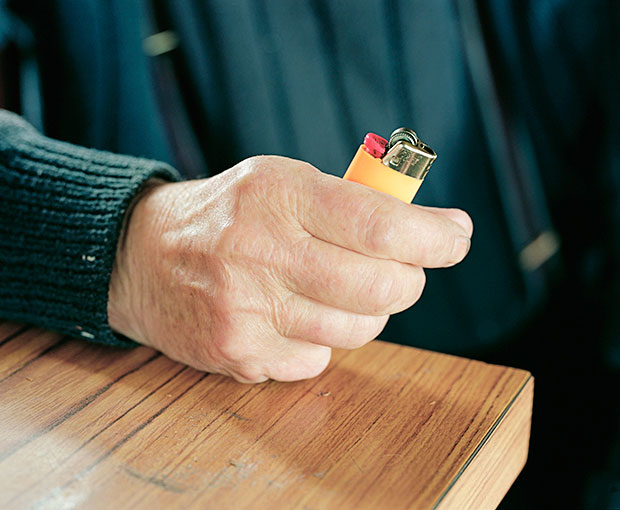
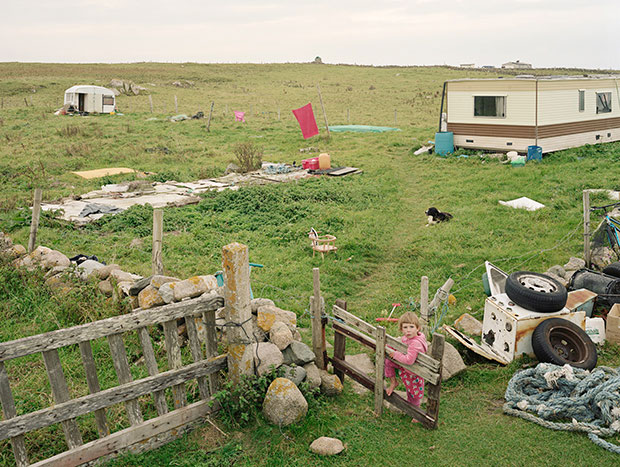

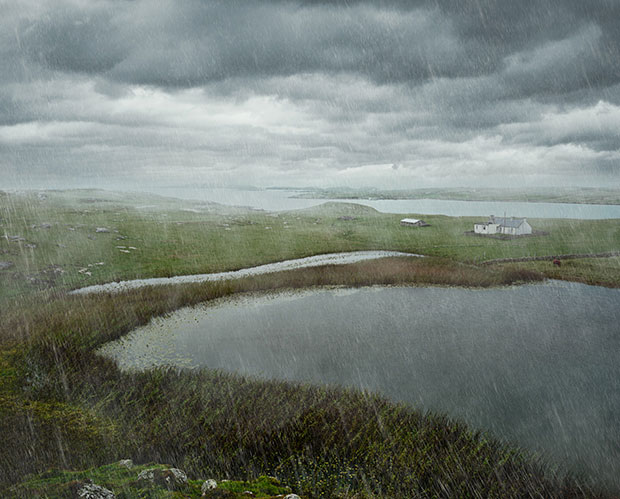



The post ‘Last Man Standing’: Photographer Captures One Man’s Life of Solitude on Omey Island appeared first on Feature Shoot.
Camden County Courthouse, 1928, Woodbine

Though it’s extremely difficult to photograph with the palms crowding out the facade, this courthouse is worth checking out when you’re in the area. It’s one of only two Gothic Revival courthouses in Georgia. The other is in Barrow County. This style is rarely found in public buildings in Georgia. Julian de Bruyn Cops of Savannah was the architect.

Woodbine has an excellent website, especially in regards to historic structures:
http://woodbinegeorgia.net/hishomebuild.html


Travel Spotlight on Edisto Island and Its 20 Best Attractions
Edisto Island is one of South Carolina’s hidden coastal gems; a patchwork of palm forests and white sandy stretches that curves its way around the eastern seaboard just less than one hour’s drive south of Charleston. While relatively unknown on the typical tourist trail, most visitors will discover this Island’s true charm lies in precisely its obscurity and remoteness, and many come in search of the quietude, relaxation and isolation that abounds. With a number of top-quality courses within easy reach, Edisto has also established itself as one of the most popular golfing destinations in South Carolina, toting the parkland/links Plantation Course as one of the best in all of America’s coastal lowlands. For families and younger travelers, the Island also offers up some great biking and hiking trails, along with a number of wildlife parks and rich arrays of fauna to boot.
Edisto Beach State Park: South Carolina’s seaside garden

This is the go-to place for budding explorers and nature buffs on Edisto Island. Come here for a day wandering the coastal woodlands or biking through the maritime forests that spread out behind the beach. Maybe choose to spend a night camping amidst the palm trees or basking in the calm of a cozy traditional cabin. If you’re after a little more action then rest assured, there’s fly fishing, sea kayaking and historical sites to boot.
See what visitors have to say about the Edisto Beach State Park:

From snakes to stalks, with seaside all around:



The Plantation Course at Edisto offers top-class golfing facilities since 1973

The Plantation Course has provided both visitors and inhabitants on Edisto Island with an oasis of beautiful parkland golf for more than 40 years. Hailed as a calming and quiet playing ground that comes with all the frills of South Carolina’s natural beauty, the plantation is well-cultivated, peaceful and green in the extreme.
Three reasons why South Carolina’s coastal lands are known for their golfing:



Get wet on the rivers with Edisto Watersports and Tackle!
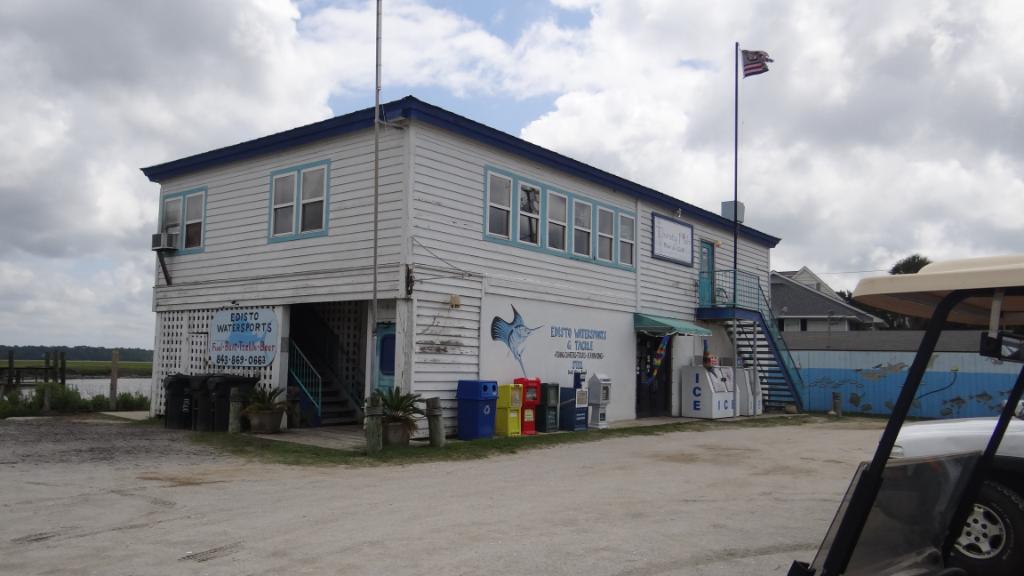
Offering one of Edisto Island’s largest array of water-based activities, from sea kayaking and river tours, to fishing charters and gator hunts, the folk at Edisto Watersports and Tackle are truly passionate about what they do. Small groups and a super-friendly atmosphere are two of the hallmarks of every excursion, and visitors can expect some truly magnificent views of the Island’s coast along the way.
See what visitors have to say about Edisto Watersports and Tackle:

Exploring the coast lands, from the marshes to the beach:



Authentic cooking for carnivores at Po’ Pigs Bo-B-Q
Slow-cooked pork cuts and tender meat dishes make this one a bona fide barbeque experience, and not just a glorified grill restaurant without any of the flair. Southern BBQ sauces flow like the Edisto River, while the atmosphere oozes with a South Carolina charm from beginning to end. Expect lots of meat and an overload of food!
See what diners have to say about Po’ Pigs Bo-B-Q:

Shellfish, seafood and South Carolina cuts on Edisto Island:



Watch the tidal swells in pure luxury at the Wyndham Ocean Ridge

Immerse yourself in the wilds of South Carolina at this fully-fledged ocean resort that spills onto the wide beaches of Edisto Island and comes complete with no less than three separate swimming pools, a number of tennis courts and an on-site gym. Expect unbridled luxury and great access to the region’s major sites.
Some more lodging options on and near Edisto Island:



See Edisto Island on the map:
The post Travel Spotlight on Edisto Island and Its 20 Best Attractions appeared first on Hopper Blog.
Fighter Pilot Takes Truly Epic Selfie While Firing an Air-to-Air Missile in Training

We’re fully aware that the term ‘epic’ is overused to the point where it means almost nothing. But in this case, we can’t help ourselves… because if this selfie doesn’t qualify as epic, then we’re not sure any selfie can.
Released recently by the Royal Danish Air Force, the photo shows an F16 pilot looking hardcore as can be, staring straight ahead as a live, AIM-9 Sidewinder missile takes off, covering his right wing in flames. Say what you will about the triviality of selfies, this is So. Freaking. Cool.
According to David Cenciotti over on The Aviationist, selfies are quite popular among fighter pilots, but it’s rare you get one where an air-to-air missile is being deployed because these kinds of ‘firing activities’ don’t happen often.
Still, rare doesn’t mean one-of-a-kind. And since this was so cool and we just needed to see another, we’re glad The Aviationist mentioned one more:

This photo was released by the US Marine Corps in mid-2013, and it captures Capt. Christopher Prout firing off an AIM-7 Sparrow missile from the seat of his F/A-18C Hornet.
We’ll be honest, this makes us feel like the rest of us ought to just give up on selfies entirely. Because between these guys and the astronauts taking portraits in orbit… well… we don’t stand a chance.
(via Sploid)
Image credits: Photographs by the RDAF and US Marine Corps.
Thanks for sending in the tip, Tristan!
Listicles, Copy, Content, and Essays: How a Freelance Writer Makes a Living

January 2014 stats:
Total earnings: $3,300.91
Completed pieces (all types): 150
Essays published: 3
Novellas rejected: 1

I’ve been a full-time freelance writer for just over a year. I track everything. I post my freelance income to my Tumblr every week, and am always taking notes on who’s hiring and who’s paying.
In January, for example, I got one new client and two new sub-client relationships that pay through an existing client. I got each of these new jobs the old-fashioned way: by having a current client recommend me. These are the jobs that aren’t advertised. This brings my number of current client relationships up to six.
My two biggest clients buy the rights to my words whether or not my name is attached, which is a decent strategy for making money but — as I worry, night after night — a poor long-term career strategy. I have no idea what the long-term career strategy is for this type of job. I suspect it has something to do with eventually becoming Heather Havrilesky, or Lev Grossman, or Ta-Nehisi Coates. Eventually becoming Nicole Dieker.
This series is about what I have to do before that happens — or, equally likely, what I’m going to do if that never happens.
To start the series, let’s look at four types of assignments I get paid to write: listicles, copy, essays, and content. Three of these types come to me directly from clients. The fourth type I have to pitch. (Guess which one falls into that category.)
They all roughly pay about the same, interestingly enough. I’ll get the same amount of money for writing this piece as I would if I had written “10 Things You Didn’t Know About Batman.” (If you’re wishing you were reading “10 Things You Didn’t Know About Batman” right now instead of “how a freelance writer gets paid,” I am sorry. Also, I don’t think I actually know 10 things about Batman that you don’t already know.)
Listicles are my favorite type of article to write. Please let me tell you the best, funniest, or most shocking of everything. I never get a byline on these, so don’t try to look me up. Are listicles polluting the internet with their vapid, snack-sized distraction entertainment? Maybe — but people still want to read them, and they pay well. (And trust me, I spend just as much time distracting myself with list-shaped brain snacks as you do.)
Copy is my catch-all term for anything to do with advertising. Can I describe this product in 150 words, including a call to action for the consumer? Absolutely. Am I going to get a byline? Nope — I’m not selling myself, after all. (I mean, technically, I am. And get your minds out of the gutter.)
Now that I’ve admitted that I write brain snacks and calls to action, I should throw in something that sounds ambitious and noble, like “but what I really want to do is write essays and novels.” This is both true and much more complicated than that. There are a couple of pieces here that I have to break out and examine.
First, as I mentioned earlier, I post my freelance income to my Tumblr every week. Since we measure what matters, it should be clear that what I really want to do is earn money. Like most of us here on the ‘Fold (can I call it the ‘Fold?), if I don’t earn money, everything falls apart.
Now that I’ve got the defensive posturing aside: well, sure. Of course I “really” want to write essays and columns and novels, but the truth is that I am already doing that. (This is the part where I would add “and I’ve been published in this place and that place,” but you can easily look that stuff up on your own.)
I’m doing the work, making the pitches, and building the clips. It’s just that you can’t build a career on three published essays a month. It doesn’t pay the rent.
So, like many writers before me, I pad out the rest with listicles, copy, ghostwriting, and — here it comes — content.
Okay. (Deep breath.) Yes, I have earned a gob of cash writing how-to and topic articles for the usual suspects. It’s frustrating that they don’t give you a byline; why shouldn’t I get credit for knowing how to French braid hair or how to plunge a toilet? People have this assumption that content writers don’t actually know what they’re writing about, but trust me — I know plenty about braiding hair, and I would like some recognition for that.
Do I still want to be doing content, in a year? The short answer is NO. The longer answer? Honestly, it depends on the type of content. (Let’s just say that some content writing is better than others, in every sense of the word.)
It also depends on a realistic assessment of the types of jobs I can find, and whether I’m willing to go all-in on the idea that I can write more and more essays and novels and columns and eventually “become Nicole Dieker.” (I want to believe in this — the idea that if I just trust myself and be the best Nicole I can be, wonderful things will happen. I want to give myself over to this so badly. But then I remember that statistic that says that even with every job filled at once, 60 percent of the unemployed will still be out of work simply because there aren’t enough jobs. It doesn’t feel like there’s enough room in the world for me to be the best Nicole I can be.)
So … that was January. Next time, I’ll recap February’s income. I’ll also write about how I pitch and how long it takes to get from “pitch” to “paid.” (Spoiler alert: longer than it takes frozen meat to go bad.) Until then, we can talk questions and advice in the comments. I am so interested to know how other people do this, and to share what I’ve learned.
Nicole Dieker is a freelance writer and ghostwriter, and is the only member of the band Hello, The Future!
8 CommentsAgricultural Safety and Health Mobile Apps

Mobile apps—computer applications that run on mobile devices such as smartphones—can be educational, fun, and easy-to-use, and they can help users improve agricultural safety and health. The number of safety and health mobile apps continues to grow in number and functionality. Below is a list of mobile apps that may be useful for agricultural safety and health:
Ag Safety Games
- Chicken ROPS Run iOS & Android App: is a fun and challenging arcade-style game with high-quality jet-pack-like game play that emphasizes the value of the tractor Rollover Protective Structure (ROPS) in saving farmers from critical injuries, and even loss of life
- Tractor ROPS Run iOS & Android App: This app reinforces principles of safe tractor operation.
- Fun Safety Games: Learn workplace safety skills through a variety of games.
- Keep Clive Alive: Test your reactions as you keep the little blue farmer out of harm’s way.
Ag Safety & Health Apps
- CSP Quiz Game Plus: These quiz games are designed to help industrial hygienists prepare for the Board of Certified Safety Professionals comprehensive exam.
- Decibel 10th: This app turns an Apple mobile device into a sound meter.
- Equipment Inspection Mobile Phone App: Developed by the Farm and Ranch Safety and Health Association (FARSHA), this mobile app was designed to assist agricultural employers in conducting equipment inspections.
- Ezy MSDS Lite: Database for material safety data sheets; enter a product name to find related MSD. (Apple devices)
- FallClear LITE - Fall Arrest Clearance Calculators : This app provides fall arrest clearance calculators, tools for supervisors and workers trained in fall protection.
- FarmPAD Mobile App: This app can be used to store farm records, equipment service logs, and spray records or to take notes and pictures.
- Heat Safety Tool: The US Department of Labor, Occupational Safety and Health Administration (OSHA) released this app to enable workers and supervisors to calculate the heat index for their worksites and learn about protective measures to reduce the risk of heat-related illnesses.
- Job Safety Analysis: This iPad app was designed for business managers to increase efficiency through a Job Safety Analysis (JSA) or the Safe Work Method Statement.
- Ladder Safety: The National Institute for Occupational Safety and Health released this app to improve extension-ladder safety.
- LightMeter: Easy to use light meter, allowing you to measure lighting levels. (Apple devices)
- Machinery Sizing: This app estimates tractor horsepower to pull implements.
- Material Safety Data Sheets: Database for material safety data sheets; enter a product name to find related MSD. (Android devices)
- NIOSH Pocket Guide to Chemical Hazards for iPad: This app provides a source for general information about industrial hygiene.
- Respiratory Protection Resource: Quick reference guide to identify respiratory protection that may be needed when handling certain chemicals, as well as information on qualitative fit testing of respirators.
- Sound Meter: Easy to use sound meter that measures SPL (sound pressure level) in decibels (db). (Android devices)
- Winter Survival Kit: If you are stranded in severe winter weather, this app can help you find your location, call 911, notify emergency contacts, and calculate how long you can keep a vehicle's engine running to stay warm.
- WorkSafeBC Safety Videos: This app offers access via a mobile device to more than 150 WorkSafeBC workplace safety videos.
Ag Education Apps
- My American Farm: A variety of agricultural based games for all ages.
Bentleys, Shotguns & Champagne
Bentley is teaming up with two of our other favorite heritage luxury brands, Bollinger and Purdey, on some boffo experiential excursions in the UK later this year.
Bentley owners can take their cars on some rather extraordinary journeys and get their fill of the finest champagne and shotguns, thanks to the famed marque’s “Crossing Continents” program celebrating the iconic Continental GT.

The Bentley Vintage Tour, taking place in May and September, offers an unparallelled opportunity to quaff Bollinger—featured in Bond films as 007′s favorite celebratory tipple since Moonraker in 1979—right where it is made.
The Champagne Bollinger Maison in Reims, France, not open to the public, will host a group of Bentley owners for a private tour as well as an epic meal at Madame Bollinger’s own chateau.

A visit to the local Grand Prix circuit and a hot-air balloon ride round out the luxe weekend’s activities.
And the Bentley Shooting Break, slated for this spring, pairs Bentley owners with James Purdey & Sons, the famed London gunsmiths who provide the royals with their exquisitely crafted shotguns.

A chauffeur-driven Bentley will whisk participants to Purdey’s Mayfair showroom for a private tour, followed by lunch and an afternoon’s shooting with historic and modern Purdey guns at the West London Shooting School.
Bentleys, shotguns and champagne—you can keep your 72 virgins, pal, this is our idea of heaven…

Dwyane Wade’s Vanquish
Miami Heat guard Dwyane Wade, dubbed one of the league’s most stylish players by GQ, has been making some Miami heat of his own recently in his awesome new Aston Martin Vanquish Volante.
Wade has been spotted in the wicked wheels at various Miami hot spots like celeb hangout The Setai, most lately in the company of fiancé Gabrielle Union.

The drop-top version of Aston’s flagship grand tourer has a monstrous 565 hp V12 and goes for about $300,000, so it’s a suitable ride for one of the NBA’s coolest, speediest stars.
When we get to Miami ourselves in a few weeks with the SLS AMG GT—583 hp, thank you—we’ll see what he’s really made of…
John McCain's Shockingly Accurate 2008 Prediction: Watch the Ukraine, Whole Thing Is About the Crimea


|
|
Supreme Court Denies Review of Romeike German Homeschoolers' Appeal

The United States Supreme Court has denied review in the appeal of the Romeike parents, German homeschoolers who sought and were granted asylum in the U.S. to avoid losing custody of their children in their country, where homeschooling is largely illegal. The Obama administration appealed the decision of the immigration judge who granted the family asylum.
The Obama administration’s appeal of the 2010 decision that granted the family asylum based on religious freedom grounds prevailed on two levels of appeals. The Supreme Court had ordered the U.S. Solicitor General to respond to the Romeikes’ petition.
In a press release, Michael Farris, Chairman of the Home School Legal Defense Association (HSLDA) and lead counsel for the Romeikes in the appellate courts, said, “While this is the end of the line for normal legal appeals, we are not giving up.”
Farris also said that there is a clear split in the treatment of human rights standards among federal circuits and that there is confusion among the circuits about how to determine when a law that applies to everyone and doesn’t appear discriminatory can still be used to persecute certain groups.
“We will pursue changes to the asylum law in this country to insure that religious freedom is once again vigorously protected in our policy,” Farris said. “I am just glad that the Pilgrims did not face this anti-religious policy when they landed at Plymouth Rock.”
“The United States should be a place of asylum for those who are persecuted because of their decision to follow their core religious beliefs,” Farris said. “Parents, not the government, decide first how children are educated. Germany’s notorious persecution of families who homeschool violates their own obligations to uphold human rights standards and must end.”
Germany’s highest court has asserted that the ban on homeschooling in that country is designed to ensure that religious homeschoolers do not become a “parallel society.”
HSLDA’s Director of International Relations Michael Donnelly said, “Germany’s clear violations of human rights standards in the area of homeschooling have been going on for over a decade.”
“German authorities recently seized the Wunderlich children and are prosecuting others—seeking outrageous jail terms—just because of homeschooling,” Donnelly added. “Germany’s repression of homeschooling freedom is infecting other European nations, and our country should send a message that the United States will provide a refuge for victims of persecution even from ostensibly free, democratic countries like Germany.”
“These human rights protections were written in response to Germany’s practices in the Nazi era,” Farris said. “It is impossible to distinguish the German desire for philosophical conformity today from that of the 1930s. Children do not belong to any government in any decade.”

|
|
The Owner-Built Log House * Log Construction Manual
 Log homes are fashionable. You can order one pre-manufactured from a catalog. Or you can make your own crude log shell for under $5,000 (see the previously reviewed How to Build This Log Cabin for $3,000).
Or you can use the system featured in these books to make a log home so finely crafted that it is more like living in a gigantic piece of dove-tailed furniture. Called scribed-fit, this method produces handcrafted joints thinner than a piece of paper. You won’t save any money this way, but you’ll live in hand-made shelter of utmost craftsmanship. That joy can be worth the trouble.
And trouble it is. Building with logs this way is similar to post-and-beam construction: the scale and details are beyond a single individual. You need a team, and you should try something small first. Your path is made much easier by either of these two books.
The Owner-Built Log House is geared to the dedicated individual willing to do as much as this hard work as they can themselves, from peeling logs, to hoisting them using pulleys, to carving notches and chinking. It presents the task of building a log house as part construction project and part lifestyle — since it will consume your life. Remember, a shell of a house is only a fraction of the work. This guide is good about detailing the ways to finish it off, and the tricks need to say, get wiring in the logs.
 At the highest end of quality is Log Construction Manual, the Ferrari of log homes. These aren’t houses as much as wooden jewel boxes. Most guides are based on the personal experience of the author building their own house (see above); this one is based on the author’s experience teaching thousands of others to build theirs. You get a comprehensive course, laying out the steps, the logic of the steps, and much hard-earned wisdom anticipating your problems as you learn how to scribe-fit logs into a house. But to be honest, the precision and energy needed to build this way demands you hire contractor help. You’ll probably end up working alongside the pros, perhaps teaching them some new notching skills.
In many ways, building a fitted-log cabin is like building a wooden boat in your backyard. Many will begin, few will finish on their own. The magnitude of this quest should not be underestimated.
-- KK
The Owner-Built Log House
B. Mackie
2011, 248 pages
Available from Amazon
Log Construction Manual
Robert Wood Chambers
2002, 272 pages
Available from Amazon
Book’s website
Sample Excerpts:
From The Owner-Built Log House:

Cutting the groove while standing on the wall. You need a steady hand and a good sense of balance.
*
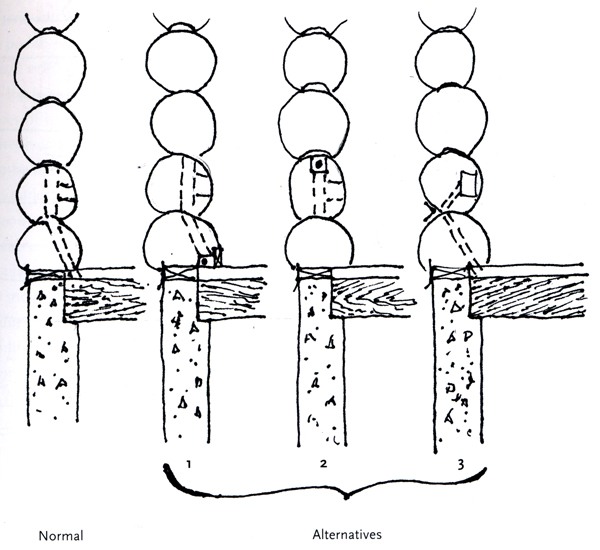
*
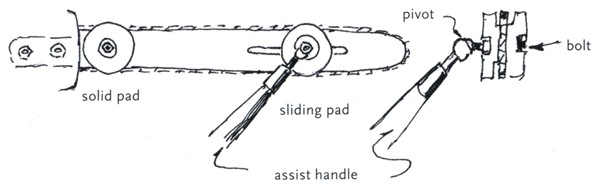
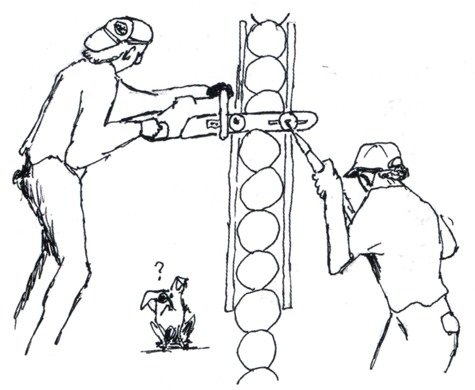
A true and accurate cut may be obtained with a chainsaw equipped with guide pads. These are now available commercially, or they can be made.
***
From Log Construction Manual:
Log Homes Don’t Waste Trees
One of the most widespread and damaging myths is that log homes use extravagant amounts of wood. It does appear that “you could build a couple homes out of the logs that go into one log house,” as I’ve heard people say. But, an average log home uses about the same volume of trees as a conventional, stickframed house of the same size.
*

On each wall, we alternate the direction that tips and butts point every time we add another log. This helps keep walls from becoming tipped.
*
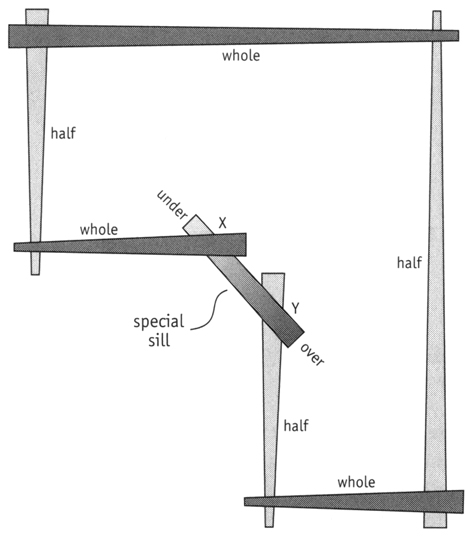
*
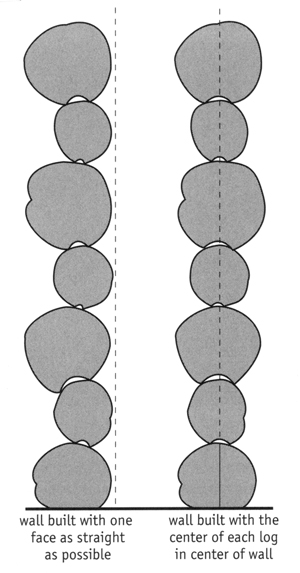
I recommend you build walls so that the centerline of each log is plumb above the center of the wall. Trying to make one side of a wall more or less plumb can be difficult, unattractive, and perhaps unstable.
*
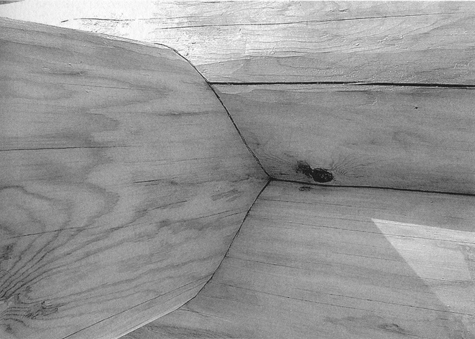
A tightly-fitting round notch. Note that there are no saddles, so it is not a saddle notch.
*
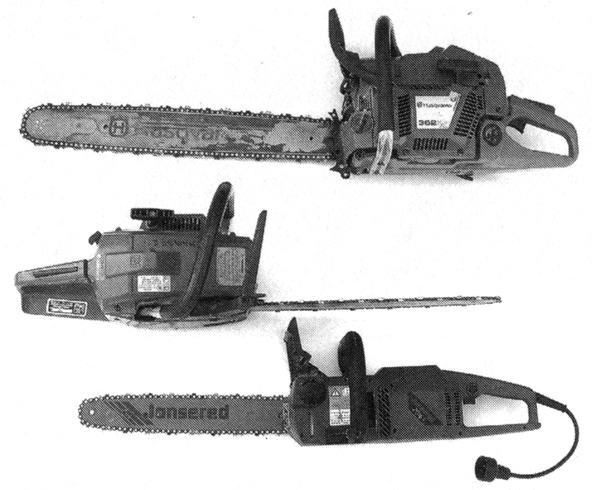
Top: Husqvarna 362XP with 24″ bar.
Middle: Husqvarna 354XP with 18″ bar.
Bottom: Jonsered 2016 electric with 16″ bar.
I have taught more than 1000 people to cut notches, and I have seen chainsaws of almost every model, age, and condition. I’ll be blunt — an average student with a great saw does a lot better than a great student with an average saw.
Husqvarna and Stihl are the saws that I recommend. Most chain saws are not suited for log building. And, buy a professional model saw, not one designed for homeowners. Stihl and Husqvarna both have a “pro” line of saws, and you should choose from these. Expect to pay $550 to $725 USD (in 2011).
Every saw has its own feel and character. These differences are not easy for beginners to recognize, but they are real, and important. Stihls are easy to start — when cold or hot. They have a distinctly softer suspension than Huskys — the handles have a more flexible attachment to the motor, and the bar also has a softer connection to the motor. Stihls drive like a Cadillac. My choice for heavy ripping is a Stihl: the big Stihls (bigger than 80cc) have power, are easy to start, and have soft suspension.
Husqvarna saws are more difficult to start than Stihls, especially when they are hot. Huskys also have a harder feel to their suspension. I have more control over the bar and chain — it’s like there is a more direct link between what my hands are trying to do, and what happens. Huskys drive like a Ferrari. My choice for notching is definitely a Husky: great power-to-weight ratio, high chain speed, finesse, and superb control.
Man Rig - Costa's 62 International Scout

The Fish Hippie posted this image of Costa's new rig they rolled at the Bassmaster Classic.
Phosphate Lake Bass Fishing
Tactics for catching bass in Florida’s phosphate lakes.

Bottom contour is reflected in the bumpy hills on shore. Bass relate to this kind of deep structure on phosphate pit lakes.
|
Phosphate pits are unique in Florida for their underwater terrain. Unlike our natural lakes, which are mostly shallow bowls, the dug pits contain humps, deep holes and even hilltops projecting above the submerged landscape. The broad, grassy shorelines of natural lakes are absent. Many have sharp dropoffs near some banks and some of the better ones even have a profuse growth of hydrilla. For those reasons, tactics for successful bass fishing may vary.
Some 90 percent of the U.S. phosphate waters lie within 50 miles of our I-4 corridor in Polk, Hillsborough, Manatee, Hardee and DeSoto counties and, to a lesser extent, in North Florida, so they are handy to a lot of anglers. And some of the pits offer public access—and great fishing thanks to tight regulations. Tenoroc Preserve, off S.R. 33 northeast of Lakeland, and Medard Park, off Turkey Creek Road southeast of Brandon, are two excellent examples of quality public-access pits. The hundreds of private pits in the area are even better. In fact, phosphate pit bass fishing is twice as productive as that found in the state’s numerous natural waters, according to surveys by state biologists.
The formation of the miniature bass waters occurred, for the most part, 20 to 40 years ago as phosphate rock deposits were unearthed. Variations of structure and depth changes are created as the massive dragline buckets dig through the sandy soil to get at the raw phosphate rock beneath. The depth of the pits varies from site to site, but many run 40 feet or more. A majority of the un-reclaimed waters have islands separating rows of channels averaging 15 feet in depth. The channels are deeper than those in our state’s natural waters and provide pit bass the opportunity to migrate to and from deeper water. The high nutrient content of the water results in rapid growth of shad, which in turn creates lots of big, fat bass.
But where are these bass? Usually not on the shoreline as in natural lakes. Most quality largemouth in the pits hang out offshore on humps, submerged islands or ditches. Large concentrations of bass can often be found on such topo changes.
Finding humps is difficult when you visit a phosphate pit for the first time. Best bet is to make a rapid tour, watch the depthfinder, and note where the abrupt rises and drops occur—a GPS is the easy way, or you can drop marker floats. If you have no electronics, trolling with a crankbait that gets down to 15 feet or more can do the job.
In deep water, vertical jigging or pitching may be most productive. Match lure choice to the depth. Weighted spinnerbaits are effective down to about 12 feet, crankbaits down to 16 and worms and jigging spoons down to about 25. Heavy jigs and jigging spoons can be effective even deeper if you can find such depths (and they do exist in the state’s phosphate pits). Shallow-running lures and topwater fare usually are not productive over deep waters, unless bass are schooling and aggressively chasing shad.

Deep-diving crankbaits often pick up bites on these unusually deep Florida lakes.
|
Whatever the lure, use a sonar unit to define the hump dropoff, and position the boat over the top of the break. Then, with worm, jig or spoon, make a 20- to 30-foot pitch in front of the boat and peel line so that the bait falls straight to the bottom. Snap the lure off the bottom, then “feel” it back to bottom. Most bass will hit on the fall, so be alert for any tick on the line. A few might stop the lure as you snap it upward.
To fish a hump or other bottom feature from a distance, employ marker buoys. Drop a couple around the top of the hump to outline it for a visual reference. Such definition is vital to precise boat positioning away from the structure, and to accurate casting and lure presentations. Mark the spot while carefully inspecting any contours with structure showing up on the sonar screen. It may reveal subtle bends, dropoffs and structure in the form of rocks, vegetation or timber on the bottom, or perhaps fish.
Choose a crankbait that will dive and make contact with the bottom structure; some are designed to go no deeper than 8 feet, some 12, some 15, so select one that is adequate—you’ll know when you feel it bumping across bottom. Often, an instant after it hits bottom, you’ll feel a bass slam it—the bottom contact seems to turn fish on. Crawling a worm down the incline can also be deadly. FS
Maxims for the Flats
Tips for more successful saltwater fly fishing.

The old saw, “Ten percent of fishermen catch 90 percent of the fish” might go double for saltwater fly fishers, given the technical nature of fly fishing. Even more so for sight fishing the flats. Fly fishers who catch flats fish consistently, either in prestigious tournaments or otherwise, formulize their game plan and prepare their gear the night before, or days before, a fishing trip. Then it’s all systems go out on the water. Plus, they hunt, cast and fish their flies in a way that gets the bite. Let’s look at some tips that’ll put you in that 10 percent class.
Keep Stuff Handy
Whenever possible, rig your fly rods with the correct leaders and flies for the anticipated fishing at the outset of your fishing day. Don’t stash a bunch of rods in the boat, motor up to a flat at first light and fuss with rigging–that’s time wasted and opportunities blown. It goes beyond stringing up your rod and tying on a fly at home. It’s an ideal opportunity to clean and/or dress your fly line, check your backing and line-to-leader knots, too. Leader material is cheap. When in doubt, toss it out! A new leader is always the best leader.
Tools at Hand
Have your tools within reach while on the water. There’s nothing worse than digging around in the boat for flies, new leader, or a spare spool or reel. Decide which flies you’ll want to fish throughout the day, and keep them in reach, whether that’s in your pocket or your fly box. Sharpen them ahead of time, too. Have you ever had a refusal from a fish, and then took a “time out” to hunt for a fly? Many anglers can tell stories about casting to a school of reds, getting snubbed, quickly switching flies, casting again and hooking up. It happens all the time. Also, a leader or two ready to loop on your line will save time and opportunities. At least store a small spool of tippet in your shirt or pants pocket. Should you decide to lengthen your leader when the fish prove spooky, or you discover a nick or abrasion, you are back in the game quickly. A spare spool or reel with either an intermediate or sinking line may come in handy when fishing deeper edges for tarpon, snook, or even redfish or bonefish in some situations. Always carry them in your boat, or tackle bag if fishing in a friend’s or a guide’s boat.
Maximize the Hunt
In other words, cover ground quickly to find fish. Too many fly fishers milk a flat that “always delivers.” When poling or searching via electric motor, don’t get caught in a time warp. It’s easy to get caught up in it, and in time, you’ll see fish that are not there. Don’t stare; let your eyes scan and catch movement. Then zero in to make an ID, or better yet, make a cast to any suspicious form. It may be the fish you are looking for. In general, spend more time on a flat that has other life—rays, sharks, baitfish—and don’t waste much time in a “desert.”
Slow Down
Fish slowly where you find life on a flat. Sometimes, particularly where the current is ripping, it’s even a good idea to stop poling, stake out or engage the Power-Pole, to let fish come into range. Keep your eyes “down-sun” whenever possible, unless tailing fish are plentiful, which can be spotted when looking into the sun’s glare.

Stay in the Zone
Know your comfort zone. Just try to cast from the maximum distance you can handle. If that’s from 70 feet or more away, you’ll catch more fish on the flats. But in reality, most sight-fishing fly casts are shorter, because fish can pop up at any time. Also, the light may be bad, or the water muddy. It’s often more effective to make an accurate short cast than to attempt a long bomb that does not turn your leader and fly over. Whenever possible, pole closer before casting, but don’t crowd ‘em!
Silence is Golden
And this rule goes beyond poling quietly, not banging the pushpole against the gunnel or bottom. Tread lightly–if wearing shoes, do not move your feet unnecessarily. Fish can hear your soles striking the deck. Better yet, wear just socks or go barefoot. It’s quieter, and as a plus, you can feel your fly line should it get underfoot. And that can spool your cast, big time. Keep your feet close together. That will discourage the chance that you will “rock the boat” by shifting weight from one foot to the other when casting. That sends out pressure wakes that fish detect.
Where the bottom supports you, wade to closer to a fish to present your fly. When bonefishing for trophy fish, you may have to wade to a spooky tailer. If you find a funnel where schools of bones are filing through, consider getting out and letting them come to you.
Keep it Real
Make the fly look real. As is the case with all artificial lures, you should never strip your fly toward a flats fish. On rare occasion, that may trigger a reaction strike; usually it results in a spooked fish. A predator is not accustomed to being attacked by its food. If at all possible, present the fly so that you can strip it straight away, or at least at a right angle, away from the fish. On hard-fished flats, this is especially essential. And don’t “overfish” it. Don’t strip so that the fish has to work to catch it. Let the fish see the thing. With stationary snook or laid-up tarpon, all it takes is a little quiver to make a fly breathe and that is sometimes all it takes. When fishing bones or redfish, once the fish tracks, the best strip is none at all. Let the fly sink to the bottom to imitate a crab or shrimp heading for cover. FS
First Published Florida Sportsman September 2009
Video: Jaguar-based Eagle E-Type Low Drag GT makes its bid for most beautiful car ever with EVO
Filed under: Classics, Coupe, Performance, Videos, Jaguar, Specialty

The Jaguar E-Type is one of the icons of automotive design, and British company Eagle has made a business out of restoring, upgrading and building their bespoke versions for the last 30 years. It does for the E-Type what Singer does for the Porsche 911 - takes an already great classic car and updates its mechanicals for the modern age.
The firm's latest creation, the Low Drag GT, might be its greatest ever, at least according to editor Henry Catchpole in Evo magazine's latest video. The car takes its inspiration from a trio of low-drag E-Type coupes built in the 1960s, but thoroughly modernizes the concept. The engine is based on Jag's inline-six, but made from aluminum and bored out to 4.7 liters to produce 346 horsepower and 360 pound-feet of torque. Catchpole says it's enough to propel it to 60 miles per hour in about 4.5 seconds. The body, transmission and differential are all also made from aluminum to cut the weight to 2,288 pounds, and modern upgrades include Ohlins dampers, AP Racing brakes and even extras like concealed GPS navigation and an Alcantara headliner. There's more head- and legroom than the originals, too.
Each car is built bespoke for each buyer, so prices vary, but Catchpole says the one he is in would run about half the cost of a LaFerrari - around $700,000.
Scroll down to watch the Low Drag GT be put through its paces and below is Eagle's press release about its latest creation.
Jaguar-based Eagle E-Type Low Drag GT makes its bid for most beautiful car ever with EVO originally appeared on Autoblog on Fri, 28 Feb 2014 12:45:00 EST. Please see our terms for use of feeds.
Permalink | Email this | CommentsGamma Ray Computer Glasses Are a Cheap Alternative to Gunnars

If you experience eyestrain from staring at a computer all day, computer glasses can help . Popular brands like Gunnar are pretty expensive, though. If you want something a little cheaper, Gamma Ray glasses are a similar option for under $30.

|
|
Use Lego Bricks to Ration Your Time and Stay Productive

Scheduling your to-dos is boring. Playing with Lego is fun. Combine the two, though, and you get a fun and easy way to keep track of how much time you have in a day.

|
|
Order the "Poor Man's Big Mac," and Other McDonald's Secret Menu Hacks

Secret menus are not so secret , but they do let you order some interesting foods, like the Subway Old Cut , the Chipotle Quesarito , and bread-free items at Panera Bread . They can even save you money, as this "Poor man's Big Mac" trick for McDonald's secret menu shows.

|
|
The Many Mustaches of The Grand Budapest Hotel

Last weekend, we were lucky enough to catch an advance screening of Wes Anderson’s latest opus, The Grand Budapest Hotel, due to hit theaters next Friday.
Stylistically, it was awesome—which came as no surprise, given the director’s personal track record of impeccable style. But there was one distinctly Andersonian quirk that stood out most this go-round: the facial hair. Period-accurate to a tee, the film is littered with triumphant upper-lip ticklers that would put most Brooklynites’ to shame, including a particularly impressive Chester A. Arthur–like situation on one Mr. Bill Murray. But you don’t have to take our word for it, because we’ve rounded up some stills for you ahead of the release.
See for yourself the many mustaches of The Grand Budapest Hotel, after the jump…»

COULTER: RAISE MINIMUM WAGE TO $14 HOUR -- USING THIS ONE WEIRD TRICK!
COULTER: RAISE MINIMUM WAGE TO $14 HOUR -- USING THIS ONE WEIRD TRICK!
(Second column, 13th story, link)
Zero Tolerance Teaches Students Important Lessons About Authority: Don’t Share Information, Don’t Consent to Searches
 “It is much easier to apologize
than it is to get permission,” the popular saying goes. One school
in Texas has taught a student a different lesson: better to keep
quiet and hope no one notices than to apologize for a mistake. What
happened,
via WLS:
“It is much easier to apologize
than it is to get permission,” the popular saying goes. One school
in Texas has taught a student a different lesson: better to keep
quiet and hope no one notices than to apologize for a mistake. What
happened,
via WLS:
Christi Seale says her 17-year-old son Chaz accidentally confused a beer can for a soda can and packed it in his lunch.
"He was in a hurry, running late. We were talking about school and he put it all together and took off for school," she said.
When he realized his mistake at school, Chaz gave the unopened beer to his teacher. But that teacher then reported it to the principal at Livingston High School, who suspended the boy for three days and then sent him to an alternative school for two months.
Chaz said, "I gave it to the teacher thinking I wouldn't get in trouble, and I got in trouble."
That kind of tone deaf, zero tolerance informed move isn’t going to discourage students from underage drinking, it’s going to discourage them from alerting school officials to inadvertent infractions of school policy.
Meanwhile, a student in Tennessee learned never to consent to a search, even when you don’t think you have anything to hide. Via News Channel 5:
On Thursday, Duren-Sanner, a senior at Northeast High School drove his father's car to school. During a random lockdown, his car was chosen to be searched.
Duren-Sanner gave permission because he said he had nothing to hide.
His father is a commercial fisherman on the West Coast and had apparently left a fishing knife in the car. Duren-Sanner's father said it might have been wedged between one of the seats.
Duren-Sanner said he told school officials and the Sheriff's department the car was his father's and he didn't know the knife was in it.
"He's like 'it doesn't matter it was in your possession anyway,'" Duren-Sanner said.
School officials suspended him for 10 days, the maximum allowed under school policy, and then he was reprimanded to attend 90 days at an alternative school.
He’s probably learned his lesson, not about the dangers of fishing knives, but about the dangers of consenting to a search. The beer can and the fishing knife cost the two students a combined 13 days of suspension and five months at “alternative” schools. Administrators at both schools insist procedures were followed, and what are they getting paid the big bucks for if not to defer to the rule book and deny access to their schools to students who’ve inadvertently run afoul of those rules, even when they haven't hurt anyone. Whether they like it or not, they’ve taught the students, and any classmates paying attention, a valuable lesson on authority and how stupid and dangerous it can be.
The Secrets of Building an Alcohol Producing Still

Visit Uncrate for the full post.