KWBaker
Shared posts
25 Apr 01:13
Having a sexy female on the movie poster is always a good idea
by Dan Larsen
Is it time to look at some vintage movie posters? Well of course it is. So below, for your amusement, is a selection of 27 amazing exploitation posters with hot chicks! Movie posters like this make great decor and many of them deserve to be in the world’s top art museums, like the Louvre. So just sit … Continue reading Having a sexy female on the movie poster is always a good idea →
08 Apr 15:26

What’s In Your Camera Bag?: Photojournalist Giles Clarke
by Amanda Gorence


Clarke captures a firefighter during a canyon fire just outside Guatemala City in January, 2014. Here the firefighter screams out for more water as the fire takes hold in the burning trash-filled ravine surrounding him. In Guatemala City, the water has to be driven to the scene of the fire by huge trucks as there are very few hydrants in these poor areas of the city.
What’s in your camera bag?
Sony NEX-7 with Touit 12mm, Sony A7-R with Zeiss 35mm, GoPro camera, Cohiba cigarettes, VICE Magazine Press ID, 500 mg Methocarbamol (muscle relaxants), microfiber cloth, 3 SD cards (x2 32 GB, x1 64 GB), battery charger, Tascam digital recorder, Iphone 5S.
What’s the most unusual item in your camera bag? Cohiba Cigarettes from Chiapas, Mexico, when I was covering a story on daily life in a Zapatista village. I bought a carton of 200 Cohiba cigarettes and smoked one or two a day in the field.
What’s in your bag that is specific to the type of work you shoot? The Sony A7-R. It’s a perfect pocket camera, unobtrusive and it turns out beautiful tonality. I never zoom into a subject, I walk towards what I’m photographing—this camera allows me to have that intimacy and be much more mobile and low-key. In the case of Guatemala, it was very high-octane work—running fast, trudging through canyon fires or being thrown around in the back of speeding ambulances.
Most of the areas and situations we responded to were in gang areas—communities full of guns and high-velocity weapons. Much of the time the area had not been secured by police and so everyone was still a target, especially if the victim(s) were only injured—finishing business happens all the time. The volunteer doctor that I was riding with for 10 days had his hand broken last week in exactly that situation; he was responding to a shooting but was attacked by gang members while trying to help the victim. I often traveled with just my A7-R and NEX-7 around my neck and no bag visible—it’s best to travel light in those places!
What is your “workhorse” item? The Sony A-7R. I’ve tried the Leica M, the Nikon D800E, and continue to use the NEX-7. However, the A-7R seems to be the best of all of those worlds.
What can’t you live without? My phone. The iPhone has always been a really integral part of my process. I’ve got to be in constant contact/text communication with anyone from fixers to my own family, especially when I’m traveling in high-risk areas. It’s my connection to the outside world. Most of my research notes are kept on there, and I shoot a lot of interviews on the video function as well.
What is the one thing you would advise a photographer to carry with them at all times? Always carry your wits about you!
Any tricks for packing light, space-saving techniques? Unfortunately no, since I’m always traveling light. A lot of this gear is what I carry to and keep at the hotel, but in the field I often take less. A spare camera body, the digital voice recorder for interviews, and a GoPro for real-time recording.
The post What’s In Your Camera Bag?: Photojournalist Giles Clarke appeared first on Feature Shoot.
02 Apr 01:56


Kalamazoo Gaucho Grill
by werd.com

Trade in your boring existence for the unending parade of satisfaction, respect, and grilled meat that comes with being a high profile Professional Barbecuer. When you take that leap, this will be your Excalibur: the Gaucho Grill, a 726 square-inch height-adjustable wood-fired grill with a 36-inch spoked Santa Maria wheel and a chain-driven rotisserie.
For purchase information, Click Here
26 Mar 18:24

Read More »


Photo Essay: Distant Shores
From the Archives: Surf photographer Chris Burkard’s recent book is a 180-page hardcover with photos from diverse locations including Alaska, Chile, Iceland, India and Japan. These photos, which Burkard shared with GP, document his adventures traveling across the world as he captured photos of surfers and the natural world they inhabit.
...Read More »
16 Mar 14:08
General Mills Turns To 'Raja Of The Country Of World Peace' To Certify Its Costlier, Non-GMO Cheerios
by Capital Flows, Contributor
By Drew Kershen and Alan McHughen
15 Mar 17:44
The 8 Powerful Communications Secrets Every Person Can Use
by Cheryl Conner, Contributor
I have recently re-connected with a personal hero of mine: Pamela Maier, a personal counselor or “life coach” as she describes the role she fulfills, “because I now have a life.” Pamela is a delightful individual who’s lived a variety of experiences in her 79 years, beginning with an orphanage in England she was raised by a foster mom and married an officer in the Royal Navy, a PhD who was both a psychologist and a professional illusionist. She had a career in singing and dancing, and was a proprietor with her husband of an immersive live-in program for children designated as “mentally retarded” to determine what the children were genuinely capable of before returning them to their parents and homes. Parenthood and grandparenthood. Widowed after 42 years of marriage and married in 2000 to lifelong friend Richard Maier, now her partner in business and life.
15 Mar 17:19
Self-Sustaining Floating City is a Modern Day Noah's Ark
by katie hosmer

This floating city is an innovative concept designed to function as a modern day Noah's Ark. The self-sustaining city was developed by Serbia-based Aleksandar Joksimovic and Jelena Nikolic as a means to support life—from humans and animals to fish, plants, and trees—in the case of an extreme natural disaster.
The proposal extends urban living out, beyond land, and onto the watery surfaces of the world. The idea is just part of a network of islands that could connect underwater via tunnel so that communities could grow and expand over time without the need to be bound to land.
Noah's Ark would be anchored by flexible cables connected to the ocean floor and protected around the edges by a wall standing more than 200-feet tall. The land would provide residential, commercial, and recreational spaces for residents in the unconventional island powered by solar, wind, and wave energy. This inventive concept is just one of many ideas of how future generations could choose to live.


Evolo website
via [Inhabitat]
15 Mar 14:50
Stone cottage in the foothills of the Pyrénées near Tarbes,...

John Mettraux and -1 others like this
15 Mar 14:50
Mountaintop cabin built by Arne Næss in 1942 in Hallingskarvet,...

Aune.emily and -1 others like this
14 Mar 18:00


America’s 5 Most Legendary Duels

There was a time in American history when insults and a lack of civil decorum in politics or otherwise came with far greater consequences, especially for men of distinction.
Duels were a common way for American men of rank to prove their courage and defend their honor in our country’s early history, despite growing unease with its moral implications. These contests had a specific set of rules, a code duello, and were considered an activity to be undertaken only by “gentlemen.”
The point of a duel was not to demonstrate who had the fastest shot or the surest aim; it was a test of courage and manliness--a test of who would stand in front of the loaded gun of a mortal enemy. However, the “affair of honor” was a dangerous game for more reasons than imminent death. Failing to show up once a challenge was issued could permanently ruin a man’s reputation, but killing an opponent in a duel was also taboo and could lead to social ostracism.
So to capture the essence of a more “dignified” era in politics, here are five of America’s most legendary duels:
1.) Alexander Hamilton-Aaron Burr
The most famous duel in American history took place between two of the most talented men of the founding generation. Alexander Hamilton, the first and greatest treasury secretary in the history of the United States, faced off against Thomas Jefferson’s Vice President, Aaron Burr.
Burr and Hamilton had been longtime enemies in New York politics--Hamilton being the leading Federalist and Burr a Jeffersonian Republican--but their personal quarrels came to a head after Hamilton helped defeat Burr in a landslide gubernatorial race.
Hamilton, who had served under George Washington in the Continental Army, had a long list of impressive achievements and was one of the leading lights of the revolution. He had miraculously restored American credit through his controversial financial policies and debt funding scheme.
Burr too had served in the Continental Army and was noted as a masterful but cagey politician.
Often considered a “fallen founder,” Burr has rarely drawn the admiration of future generations. His recent biographer David O. Stewart said that it is easy to see the swarthy New Yorker as “America’s Satan: not the Biblical Satan but the tragic, too-human hero of Milton’s Paradise Lost.”
The two met in Weehawken, New Jersey on July 11, 1804 due to dueling being outlawed in New York. There is some speculation that Hamilton brought trick pistols to the duel to gain an edge over Burr, but he never got a clean shot off. Burr, who had allegedly been practicing for weeks, gunned down Hamilton almost immediately.
Burr’s bullet struck just above Hamilton’s hip, hitting his liver. The mortified Hamilton said, “This is a mortal wound, Doctor.” He died several days later.
Though Burr was victorious, his reputation was forever sullied by the incident. He left New York and headed south where he became involved in a scheme to sever the southern and western states from the union to create a separate empire. Though he escaped treason charges, Burr was almost universally deemed a scoundrel and a rascal. Hamilton’s legacy endures as one of the greatest and able statesmen in American history.
This duel remains a popular historical topic for discussion and still captures the imagination. A stylized and contemporary version of the early nineteenth century Aaron Burr/Alexander Hamilton duel from Dana O’Keefe called Aaron Burr: Part 2 was a selection for the 2011 New York Short Film festival and won the Jury Prize for Best Short Film.
2.) John Randolph-Henry Clay
One of the most dramatic duels in American history was fought by two men who have unfortunately disappeared from the American national consciousness.
John Randolph of Roanoke, Virginia was an eccentric but brilliant statesman of the antebellum era, whose acerbic speeches rose to the highest level of wit and creativity of any in American history. Conservative intellectual Russell Kirk called Randolph an American “Burke” after the great, conservative British statesman, and said of the aristocratic Virginian, “Never equivocating, he spoke with a corrosive power unequaled in the history of American politics.”
Most early congressmen were afraid to lock horns with Randolph lest they be shredded by his vicious verbal barbs. However, the precocious Kentuckian Henry Clay, who had immense political acumen and nearly as sharp a wit, challenged the aristocratic Southerner in the political arena and on the dueling ground.
In the contested 1824 presidential election, which had to be decided by the House of Representatives (no candidate had received a majority of Electoral College votes), Speaker of the House Clay was accused by political opponents of throwing the election to John Quincy Adam in order to become secretary of state. Calls of a “corrupt bargain” were shouted from political opponents.
In a particularly cutting speech on the Senate floor, Randolph compared Clay and Adams to two corrupt characters from the popular novel Tom Jones.
Randolph said he had been “defeated, horse, foot, and dragoons—cut up—and clean broke down, by the coalition of Blifil and Black George—by the combination, unheard of until now of the Puritan and the blackleg.”
Clay was incensed and wrote a letter to Randolph on March 31, 1826 demanding “personal satisfaction.”
Randolph, not wanting to kill Clay and orphan his nine children, took a huge risk in his contest with the incensed Clay. He would throw away his shot and hoped that Clay would not kill him. When the duel commenced, both fired in each other’s direction and missed. Clay refused to let the duel stop and insisted it continue.
The great Jacksonian-era historian Robert Remini described the scene:
“I do not fire at you, Mr. Clay,” [Randolph] called, and immediately advanced with outstretched hand. “Sir,” he said, “I give you my hand.” Clay met him halfway and shook hands with his adversary.
“You owe me a coat Mr. Clay,” Randolph laughed. One of the bullets had passed through his coat, very near the hip.
“I am glad the debt is no greater,” replied the secretary of state.
And so ended this ludicrous duel.
Though Clay and Randolph remained political enemies for the rest of their lives, there was a mutual respect between them. Randolph said that he wanted to be buried facing west so that he could “keep his eye on Henry Clay.”
3.) Andrew Jackson-Charles Dickenson
Is there any doubt that Andrew Jackson would be on a list of famous American duels? Old Hickory, born in the Waxhaw region of South Carolina but more commonly associated with Tennessee, was one of the toughest men ever to become president of the United States. He was the hero of the Battle of New Orleans and achieved almost mythical status in the early nineteenth century for his numerous, almost super-human exploits of sheer will.
One of these incredible feats of will occurred in his duel with Charles Dickenson, a man described by Jackson biographer Marquis James as a twenty-seven year old “man of fashion and success.”
The original dustup between Jackson and Dickenson started with a squabble over a horse race and escalated when Dickenson called Jackson a “worthless scoundrel, a poltroon, and a coward.” Worse, Dickenson repeatedly insulted Jackson’s wife, Rachel. That was the last straw.
On the eve of the duel Jackson calmly told his wife, “Good-by, darling. I shall be sure to be home tomorrow evening.” But Jackson had reason to worry; Dickenson was known as one of the best shots in Tennessee, and his own aim was only fair. As usual, the Old Hero of New Orleans fearlessly rode off to challenge his enemy.
He decided to take an unusual and incredibly risky strategy. Instead of trying to quickly get his shot off, Jackson decided he would let Dickenson fire first and then slowly take aim for a killing shot.
When the duel began, Dickson quickly fired at Jackson who did not move. Dickenson was stunned. Had he missed Jackson?
Dickenson’s bullet actually struck Jackson in the chest, near his heart. But Jackson calmly put his hand over the wound to stop the bleeding and raised his pistol to take aim. Jackson fired a shot and hit Dickenson in the groin. Though blood had been pooling in his boot, Jackson calmly walked off the dueling ground to show the dying man that he had been unharmed in the fight. Dickenson died shortly thereafter without even the satisfaction of knowing that his aim had been true.
4.) Thomas Hart Benton-Charles Lucas
Thomas Hart Benton, a powerful senator from Missouri, was one of the most legendary duelists of his era. He once fought a brutal frontier brawl with Andrew Jackson as a young man but became one of Old Hickory’s chief advocates in the Senate later in life.
Old Bullion, as Benton was sometimes called, was a defender of dueling on the grounds that it was a sensible system to resolve conflicts for two men on equal terms.
Dueling would take the place of outright murder and vengeance, especially in places where the law could do little to cope with violation of honor on the frontier.
Though Benton dueled on more than one occasion, his duel with Charles Lucas, a prominent Missouri layer, is his most infamous. Benton originally challenged Lucas to a duel after accusing Lucas of insulting him in court. Lucas refused to fight after this first challenge, but Benton again demanded a duel after Lucas questioned Benton’s right to vote. Benton allegedly called Lucas an “insolent puppy,” and the duel was on.
The two combatants met on “Bloody Island” on August 12, 1817. The two-round Benton-Lucas bloodletting gave the dueling site its reputation.
In the first round, Benton hit Lucas in the neck and the fighting had to be stopped. When Benton was asked if he had received “satisfaction” he said, “no.” So, incredibly, Lucas was given over a month to recover from his wound in order to duke it out again. Efforts to reconcile the two men failed when a rumor was spread that Benton was afraid to duel at close distance.
Round two also took place on Bloody Island and with the combatants at a very close 10 yards. This time Benton hit Lucas in the chest with a mortal wound. Though many were horrified by the violence and brutality of these contests, the killing of Lucas did not prevent Benton from having a long and dignified senate career.
5.) Stephen Decatur-James Barron
Commodore Stephen Decatur, Jr. was one of the greatest American naval heroes of any century. His exploits in the Barbary Wars and the War of 1812 were legendary. In fact, his raid and daring destruction of the USS Philadelphia, which had fallen into the hands of Tripolitan pirates, was called “the most bold and daring act of the age” by Lord Horatio Nelson.
Decatur, a courageous and sometimes quick-tempered man, never turned from a fight; he would tolerate no personal insult toward himself or the United States.
Unfortunately, Decatur’s courage and honor lead him to a deadly duel with fellow Navy Commodore James Barron. Decatur once called Barron a “coward,” because he mistakenly believed that Barron had avoided fighting in the War of 1812.
So on March 22, 1820, Decatur and Barron met on the dueling ground in Bladensburg, Maryland. It was clear that this duel would be deadly because the two men stood closer than normal and were allowed to aim before given the command to fire. Predictably, both duelists hit their mark and wounded each other grievously. Barron survived, but the 41-year old Decatur died less than a day later.
Though dueling had been particularly common among Navy officers, the death of Decatur sent shockwaves throughout the nation. The funeral procession held for the fallen hero in Washington, D.C. was the largest in the nation’s history at that time.
    
|
14 Mar 17:56


Understanding Ukraine and Crimea Issues

Events in Ukraine and Crimea are difficult for Americans to understand.
There are three books which help explain some of the historical and contemporary issues. Begin with Orlando Figes'sThe Crimean War, A History. One of the consequences of the Russian 1856 military defeat was that it halted the Russian expansion to the West and South and encouraged expansion to the East.
The second book is Timothy Snyder’s Bloodlands, Europe between Hitler and Stalin. The Yale scholar graphically describes what Stalin did to Ukraine in the 1930s and 1940s. He executed large numbers of land holders; he had a planned starvation of millions; and he deported several million to Siberia. In addition in Crimea he deported the entire Tartar nation to Siberia. When Hitler and Stalin divided Poland, Stalin shot Ukrainians in Poland. He also shot large numbers of Polish families in Ukraine. Stalin shot, starved, or deported a substantial percentage of the Ukrainian population.
The third book is Russians by Gregory Feifer, published by Twelve Hachette Book Group. Feifer is a former Moscow based US correspondent. He gives a very clear description of the hidden Russia today with its massive criminal political organization, poverty, lack of rule of law, inefficiencies, and delayed future. It is a sobering view of how Russia functions today.
The key issue is how far does Putin want to go to re-establish economic, political, and military hegemony over former Soviet states? In addition to annexing Crimea, does he want to annex the eastern majority Russian speaking part of Ukraine? Will Russia repeat history and will sanctions force Russia from expanding economic and political influence to the West and encourage it to expand to the East?
The Russian currency and stock market have fallen, even before there were any sanctions placed on it. What is self-evident is that Russia is dependent upon export of oil and natural gas. Will that critical hard currency income be reduced over time with increased US oil and natural gas production?
Is Crimea a war or peace issue militarily?
These three books give us a better understanding of the Ukrainian critical issues.
|
|
14 Mar 17:23
English Idiots Hold Annual Stinging-Nettle Eating Contest
by Mark Hay

Contestants in the heat of battle. Photo courtesy bizarreoddities
Over the course of one hour on the Saturday before the 2002 summer solstice, Simon Sleigh, an organic vegetable farmer from the village of Hawkchurch in Devon, England, crammed 76 feet of stinging nettles down his ravenous maw. The notion of ingesting nettles in some form isn’t odd, given the ubiquity and touted health benefits of teas, infusions, and even beers made from the weed. But eating the plant straight is another matter. Spiny stalks aside, each nettle leaf is tipped with thousands of microscopic hairs that, when brushed, detach as needles and inject a cocktail of irritating chemicals into whatever flesh tries to disturb them. The tongue and throat are abraded. The mouth turns black. And sometimes the nettles start to ferment in the gut with an audible gargling noise.
Sleigh wasn't alone. He embarked on this test of endurance alongside several dozen others and a crowd of hundreds who’d turned up for one of southern England’s numerous bizarre spring traditions: Dorset’s own World Nettle Eating Championship, in the town of Marshwood.

Photo courtesy bizarreoddities
The competition takes place every year just before the summer solstice, the keystone event of a larger beer festival at the thatched-roofed, 500-plus-year-old Bottle Inn pub. On Saturday evening, comers and takers from all over the world (and an attendant crush of local, national, and international spectators and media) pay a varied pittance of a fee to consume 20-inch segments of nettle stalks and leaves. They have one hour to strip from the stalk as many stinging leaves as they can eat. No nettles from home, no bathroom breaks, no numbing agents. Only swigs of beer (or sometimes water) are allowed to lubricate the process. The prize is a small trophy and, usually, £100 ($166).

A stinging nettle is basically just a green pole with thousands of tiny knives attached to it. Photo courtesy Wikicommons
As one suspects is the case for most of these English traditions, the competition started out as a buzzed bet between local farmers. Back in 1986, so the local story goes, a farmer named Alex Williams was complain-boasting about the size of the nettles in his fields. If anyone could show him nettles larger than the 15-foot-6-inch monsters he was cultivating, he said, he’d eat his weeds raw. Soon after, another farmer came in with a 16-foot nettle stalk. Williams did not welch on his bet. Year after year, the boasts and bets evolved into an informal tradition. Then, in 1997, a man named Shane Pym bought the Inn, noticed the competition, and saw a chance to make a buck off it. Thus was the World Nettle Eating Championship born: of booze, betting, and boisterous capitalism.
Unfortunately, the competition alone wasn’t enough of a windfall or a draw to save the pub. “This place had a lot of bad history,” says Nigel Blake, the current owner of the Bottle Inn, which he restored and reopened in mid 2012. Before that, he says, “it was closed for almost four years.” The competition didn’t die, though. Just a few miles down the road, Steve Smith of the George Inn, in Chideock, says he noticed “a fear that the tradition of eating nettles in the area would be lost.” So in order to preserve it, he says, “I held the Dorset Nettle Eating Championship here in 2012.” Blake doesn't buy this story, saying the George Inn swooped in knowing the Bottle was set to reopen later that year and saw its last opportunity to benefit from the competition. Either way, there was enough local demand for an afternoon of mouth sadomasochism that the competition survived the seeming death of its progenitors and a long hiatus.

The Bottle Inn. Photo courtesy Wikicommons
Perhaps it’s grown popular because, like most competitive eating, consuming nettles is a cultivable skill. Blake has only participated in the competition once, “because I was being filmed on TV for the opening of the pub,” he admits, but he’s still an expert on nettle-eating form and will give demonstrations to patrons on how to play the game. Just fold the leaf over between your fingers, and the hairs will press down so that you won’t get stung but can still enjoy the flavor—something halfway between spinach and arugula. The hitch is that the competition is a race, so those less skilled will fail to fold with speed and precision, stinging themselves to bits. And much depends on factors beyond one’s control, like the heat and rain of the past season and the resultant prickliness of the year’s crop. The best way to prepare, as the winner of the past two years told Blake, is to eat a big breakfast, starve into the evening, and not drink the beer.
Given that the strategy contestants use to win the competition involves not eating the pub’s food or drinking its beers, hosting this yearly event might seem like an unsound business decision on the part of the Bottle. But 50 contestants can draw in crowds as large as 2,000, all of whom are gorging and guzzling, so it’s well worth the investment in nettle stocks, and of course the fans are drinking the inn dry throughout the day. Best of all, says Blake, “people don’t seem to get tired of it. The guy who won last year and the year before wants to come back next time, on June 7, 2014, because he wasn’t happy with his record.”

Some guy dressed up like a pile of hay. Photo courtesy Wikicommons
For the contestants, coming back is a matter of skill and pride, of honing one little corner of personal greatness. But as for the audience and press, they’re no longer coming or covering the event because of the novelty. In fact, nettle eating wasn’t that novel to begin with when you look at some of southern England's other traditions. Up the road in Gloucestershire, they have an onion-eating competition in Newent, and a cheese-rolling competition on Cooper’s Hill. To the northeast, in Whittlesey, Peterborough, men dress up as animate straw monstrosities and galumph about. And just down the road to the southwest, in Ottery St. Mary, East Devon, folks race through the night hoisting flaming wooden barrels of tar over their heads. Even the George Inn, now deprived of the chance to host the nettle-eating contest, has launched the World Garlic Eating Competition.

Some guy with an old timey haircut carrying a flaming barrel. Photo courtesy Wikicommons
It seems that the sun-starved peoples of this land are all looking for some invigorating, outdoorsy way of celebrating the highest hovering of the sun before slipping back toward a damp and unyielding English winter. While some of the events have ancient histories (playing with barrels engulfed in flames dates back to the days of burning witches), others are just a result of tipsy bluster. But there’s no real reason to argue with that. Sometimes it’s best to just drunkenly praise the sun, fuck up your mouth, and hock a roll of cheese down a hillside without thinking about it too much.

A guy who is real good at eating nettles. Photo courtesy bizarreoddities
12 Mar 02:27


Emails Reveal Obama Admin Shut Down WW II Memorial Knowing Vets Were Coming

Newly released public records show that the Department of the Interior knew in advance that two groups of aging veterans would be visiting the World War II Memorial on October 1, 2013, but they decided to barricade the premises anyway.
According to emails obtained by National Review Online, the U.S. National Park Service employees were also constantly monitoring the news for any negative media attention. Moreover, the emails show that government shutdown exceptions were granted to National Park Service employees.
The Obama administration tried to make political hay out of the government shutdown by closing the National Mall and denying access to monuments, but the decision backfired when the veterans defied the signs and fences and entered the WWII Memorial. The vets were taking part in the Mississippi Gulf Coast Honor Flight, established in 2011 to help fly the state's WWII veterans to Washington, D.C. and to provide tours to monuments dedicated in their honor.
Obama told the American people that it was necessary to shut down the Mall and blamed Republicans for creating the hardships. However, the emails reveal that the Department of the Interior and National Park Service did not have to shut down the monuments but did so to make a point.
On September 30, Tom Buttry, a legislative correspondent in Senator Tom Harkin’s (D-Iowa) office, stated that it would actually be easier and less costly to keep the mall open than to shut it down:
While I understand that these memorials have remained accessible to the public during past shutdowns (I’d imagine with the mall being so open, it'd probably [be] more manpower intensive to try to completely close them), I wanted to do my due diligence and make 100 percent sure that people could visit the outdoor memorials on the National Mall in the event of a shutdown.
|
|
12 Mar 02:23


RNC: Harry Reid 'Rented' US Senate to Billionaire Environmentalist's Cause

The Republican National Committee says that the Senate Democrats’ all-nighter on the Senate floor Monday evening until 9 AM Tuesday was not about principle. The RNC claims Senate Majority Leader Harry Reid and the Senate Democrats rented out the Senate floor to the environmental cause of one of their biggest left-wing billionaire donors.
RNC spokesman Raffi Williams points to how liberal billionaire Tom Steyer—a major Democratic Party donor—supports environmental causes.
“If you thought living in the Ritz-Carlton was expensive, it’s peanuts compared to the $100 million contribution from California billionaire Tom Steyer which is the going rate to rent Harry Reid’s Senate,” Williams said in a Tuesday statement. “Last night’s talk-a-thon was nothing more than payback for Steyer’s donations to the Democrat Party. Either Mr. Reid or the Democrat Party needs to reimburse taxpayers for their campaign stunt.”
According to a February New York Times article, Steyer is planning to spend up to $100 million to help Democrats in the 2014 elections. “Our feeling on 2014 is, we want to do things that are both substantively important and will have legs after that,” Steyer told the Times. The Times piece notes that Steyer’s major focus is on climate issues.
In a Monday afternoon article, the Washington Post’s Ed O’Keefe backed up the premise of the RNC’s charges by writing about the climate change all-nighter: “There is another more political reason for the decision by Senate Democrats to devote their time to the issue right now. And that issue is campaign cash.”
O’Keefe noted that environmentalists donated $20 million to Democratic-aligned campaign groups in 2012. O’Keefe also cited Steyer’s stepped-up influence in the campaign cash game.
Sen. Marco Rubio (R-FL) has already criticized the Democrats for this, saying that instead of focusing on this environmentalist issue, they should be focused on helping struggling American workers in the Obama administration’s still-lagging economy.
“I wish there would be an all-nighter for the men and women of Florida who are struggling to find a job,” Rubio said on local TV in Florida on Tuesday morning. “I wish there would be an all-nighter for the people who have lost their health insurance because of Obamacare. I wish there would be an all-nighter for people whose businesses may close because of the economy isn’t getting better. And I wish there would be an all-nighter for students who went to college and now a bunch of money in loans, but can’t find a job in this stagnant economy,” he said.
|
|


10 Mar 19:09


Ron Paul Asks "Can We Afford Ukraine?"
by Tyler Durden
Submitted by Ron Paul via The Ron Paul Institute,
Officially, US debt stands at more than $17 trillion. In reality, it is many times more. The cost of the US invasion of Afghanistan and Iraq may be more than six trillion dollars. President Obama’s illegal invasion of Libya cost at least a billion dollars and left that country devastated. The costs of US regime change efforts in Syria are likely thus far enormous, both in dollars and lives. That’s still a secret.
So who in his right mind would think it is a good time to start a war with Russia over Ukraine? And worse, who would commit the United States to bail out a Ukraine that will need at least $35 billion to survive the year?
Who? The president and Congress, backed by the neocons and the so-called humanitarian interventionists!
The House voted overwhelmingly last week to provide $1 billion in loan guarantees to Ukraine. That is just the beginning, you can be sure. But let’s be clear: this is not money for the population of that impoverished country. The Administration is sending a billion dollars from US taxpayers to wealthy international bankers who hold Ukrainian debt. It is an international bank bailout, not aid to Ukrainians. And despite the escalating anti-Russia rhetoric, ironically some of that money will likely go to Russia for Ukraine’s two billion dollar unpaid gas bill!
So what happened in Ukraine? The US government and media claims that the US must save Ukrainian democracy from an invading Russian army that is threatening the country’s sovereignty. But in reality the crisis was instigated in part by US meddling. Remember the intercepted telephone call in which two senior Obama Administration officials discussed plans to replace the elected government in Ukraine with US puppets? That is exactly what happened. Is that not a violation of Ukraine’s sovereignty? Is that what democracy is all about?
The Obama Administration’s policy toward Ukraine is hypocritical. The overthrow of the government in Kiev by violent street protests was called a triumph of democracy, but when the elected parliament in autonomous Crimea voted last week to hold a referendum to decide its future, President Obama condemned it as a violation of international law. What about the principle of self-determination, which is also enshrined in international law?
I have long thought that a referendum to reorganize Ukraine into a looser confederation of regions might help reduce tensions. I still believe this could help, but it seems the US government is not so enthusiastic about democracy when there is a chance for an outcome it opposes.
I strongly believe that Crimeans have every right to transfer sovereignty over their peninsula to Russia if they wish. The only question that remains is whether there will there be an honest election, and I don’t see any reason there can’t be.
The US government tells the rest of the world, “We want you to be good democrats and have elections,” but if they don’t elect the right people then we complain about it and throw them out, like we did in Egypt. In Crimea they want to have an election to determine their future. President Obama condemned those plans for a vote by saying, “We are well beyond the days when borders can be redrawn over the heads of democratic leaders.” Does he not remember that the authorities in Kiev were installed just weeks ago after a US-backed coup against the Ukrainian constitution?
Congress next week will likely vote for sanctions against Russia. Though many mistakenly believe that sanctions are a relatively harmless way of forcing foreign countries to do what we say, we should be clear: sanctions are an act of war.
Cooler heads in the United States are not currently prevailing. There is a danger of an unimaginable conflict between the US and Russia. We must demand a shift away from a war footing, away from incendiary rhetoric. We are broke and cannot afford to “buy” Ukraine. We certainly cannot afford another war, especially with Russia!
|
|
10 Mar 19:00


Photos: Plane Crashes Into Skydiver
by Barry Petchesky

Photos captured a frightening moment on Saturday, as a descending parachutist was struck by a light plane, causing both to crash. Somehow, neither the skydiver nor the pilot suffered serious injuries.
|
|


10 Mar 18:59


Iguana Decides He Does Not Want That Golf Ball After All
by Sean Newell

This iguana was hungry for a golf ball at the Puerto Rico Open when something—the ball rolling away, taunting him? all the people watching him fail at eating?—spooked him and he had to hastily abort mission.
|
|
10 Mar 18:54


The Salt Book.
by Michael Williams

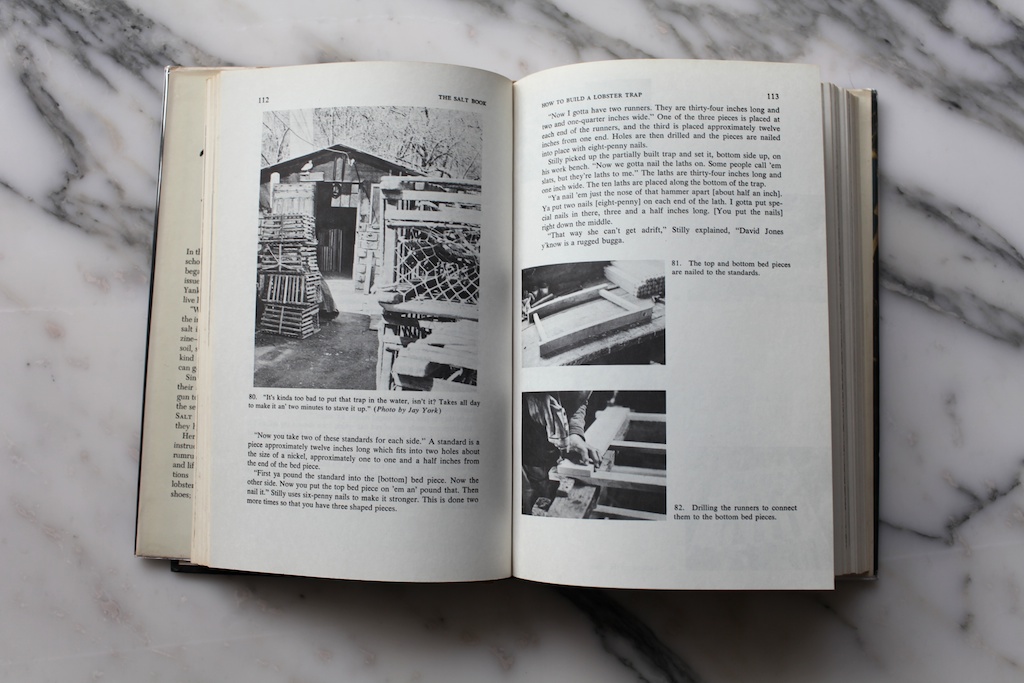
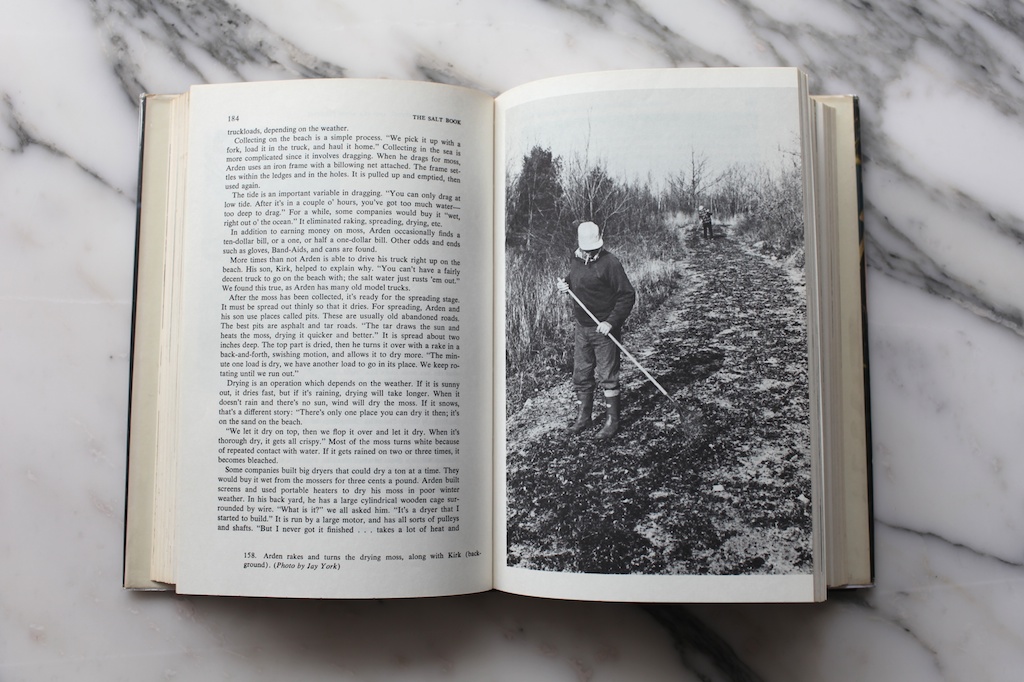
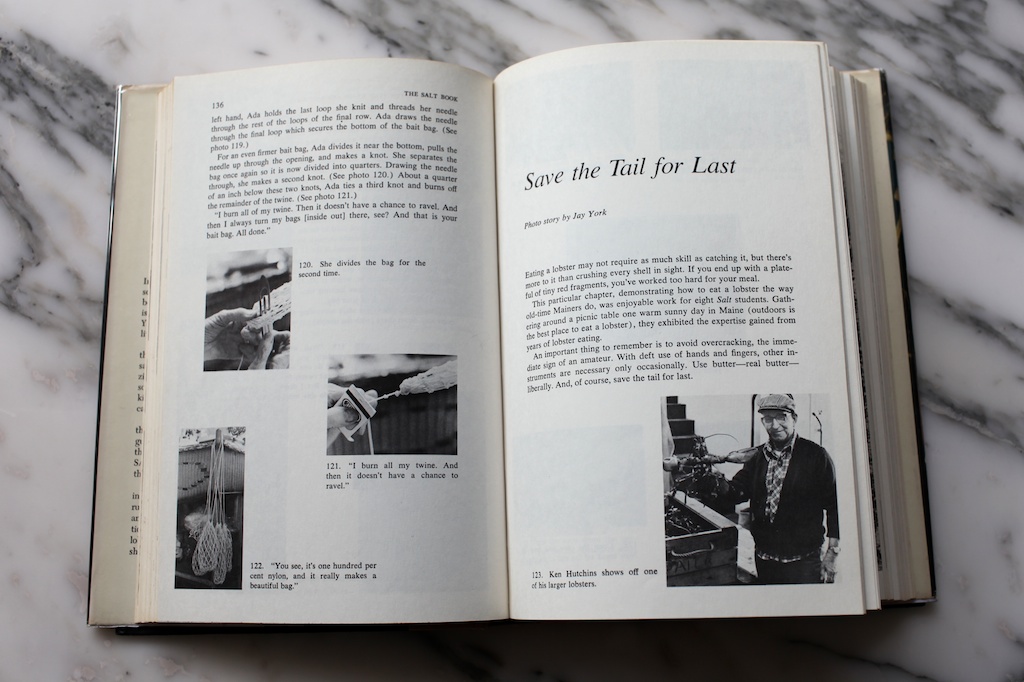
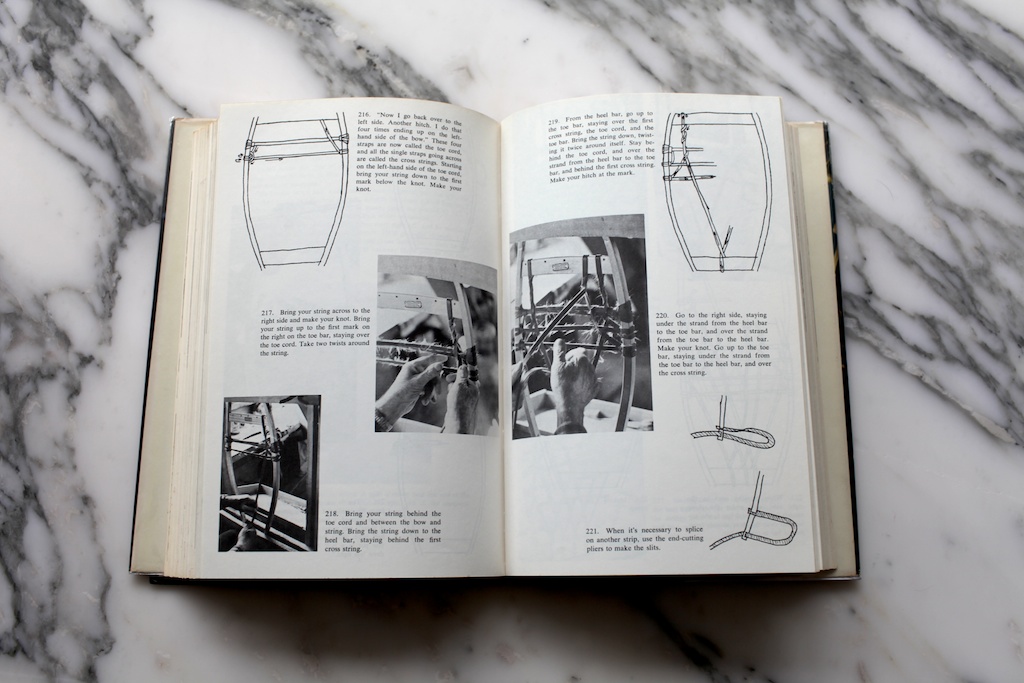
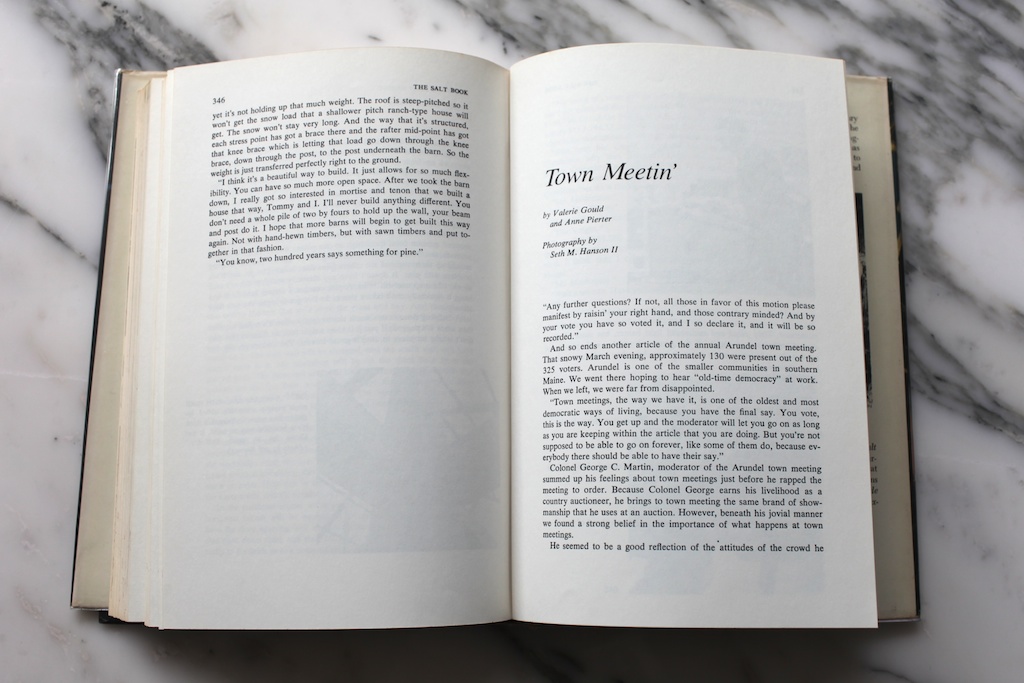
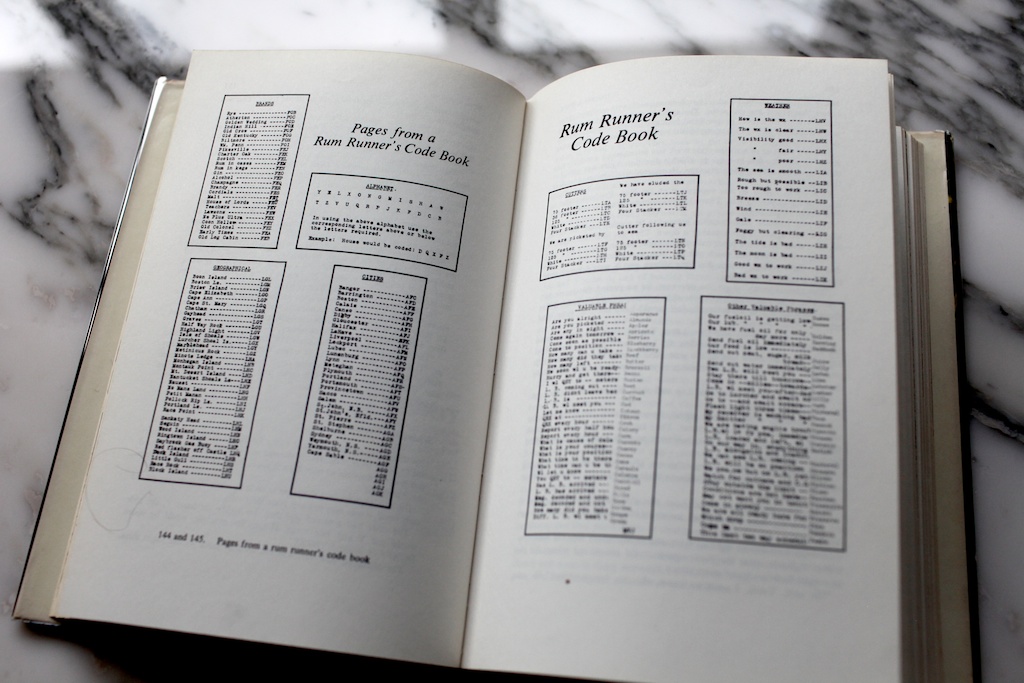
In 1973 a group of students in Kennebunk, Maine complied a series of home-spun articles about life in New England into The Salt Book. Led by the group’s adviser Pamela Wood, they documented lobster men making traps, a barn raising, the gathering of sea moss, wrote articles about how to make your own wooden snow shoes and generally waxed on about the characters and daily life by the sea in Maine.
Recently while I was booking a cottage in Maine for the summer, I was reminded of this book and my jaunt up there last year. I have a hard time disguising my affection for the state and nothing fills me with anticipation like an escape up to Maine. It doesn’t have to just be summer — I’m equally impressed by fall, winter and spring in the Pine Tree State. Even though I grew up in Ohio, much of my family was from New England originally and we often when on summer trips to The Cape, New Hampshire and those parts. Long after those trips I am still fascinated by Yankee culture and the salty folks of New England. So even though I am stuck in this new york winter (stuck largely inside for the better part of the past six weeks due to the most ironic of injuries) the stories in The Salt Book can easily transport me to one of my favorite places.
Thinking about how high school kids would go about this type of thing now, it just wouldn’t be the same. This blog could never come close to having the presence, the physical actuality of something like The Salt Book. It makes me appreciate those kids for telling the stories, Pamela for compiling it, Jared Stern for giving it to me and it makes me appreciate a book that I can really hold in my hand. Even being just 35, I can recognize that many things just aren’t the same anymore. Though maybe one day they will get the science just right and the the perfect algorithm will replicate on your Kindle what it feels like to flip through an old book. That’s progress, right?


10 Mar 15:36

War is Crappy
by Joseph Minardi

The Toilet Bomb: no, it's not that horrendous thing your college roommate did after seven straight days of $2 burritos.
As the Vietnam war effort spiraled slowly down the drain, around and around, the good men of the USS Midway decided to celebrate the sixth millionth pound of bomb deployed (that's a lot of bombs) with a very special load.
Hard, white, thick, and tough as porcelain, the Toilet Bomb was designed to flush out any member of the armed services who had a clogged sense of humor.
It is said that once deployed, the Toilet Bomb plunged hard, then whistled loudly the entire way down. (Which, oddly enough, is also our personal toilet philosophy: whistle while you work.)


Post via ITS Tactical.
Images via Military Humor.
10 Mar 15:35

The Kombinationskraftwagen
by David Ethier

"Volkswagen Brazil—the last country where the vehicles were still being made—ceases production of the classic Kombi van…" - CNN
The Type 2 was approved in 1949 as the second model in Volkswagen’s lineup; the Type 1 was the Beetle. It began rolling off the Wolfsburg line in 1950. Sixty-three years and five generations later, Volkswagen Brazil was the last factory making the Kombi. The manufacturer ended production on the final day of 2013.
The Kombi was the longest-produced model in automotive history with 3.5 million vehicles sold.

Enthusiasts often refer to models by number of windows; the basic has eleven, and variants range all the way up to twenty-three. But, alternatives weren’t limited to number of windows. The Kombi had removable seats in case you wanted to trade passengers for cargo.
The Bus was, simply, more comfortable; the Samba-Bus had skylight windows. The delivery Panel Van, without side windows or rear seats, could be customized with cargo doors and a raised roof. The Single Cab was a flatbed, but there was a Crew Cab as well. The Adventurewagen had a high roof and camping units; the Westfalia line had a pop-top.
Of course, there were third-party conversions as well: refrigerated vans, hearses, ambulances, police vans, and fire engines. Despite the changes, the Type 2’s customary design remained instantly recognizable.

Whether it was a trip involving surfboards, backpacks, musical equipment, or, simply, the road, the Type 2 was another member of the crew. Often serving as both transportation and housing, the bus made up for its lack of horsepower with character. It may have earned a reputation for carrying tie-dyed lot rats through the ‘60s and ‘70s, but its price tag, functionality, and ease of maintenance translated to a broad cross-section of owners.
Few other vehicles have earned as many nicknames as the Type 2. Notwithstanding the names owners have given their own models, they’re often referred to as Bullys, Vanagons, Westies, camper vans, transporters, "combies" and minibuses. Your folks may simply point out the hippy van.
Just because production has ended doesn’t mean these slow, steady vehicles are going to disappear from the road. We’ll continue to see a broad range of iterations that inspire us to take up the road for a few weeks (or months), seeking the adventure that comes with piloting a cultural icon. Even if they get parked, we can still spend the night in one.


Images ©: 1: Eli Christman; 2, 3,: Michael Gil; 4: Dennis Crowley; 5: Jack Snell; 6: Lissette Fernandez.
10 Mar 15:33


The Millennial Generation Is Proving to Be the Most Politically Independent Yet
by Elizabeth Nolan Brown

Millennials are poised to be the most politically independent generation yet, according to a new survey from the Pew Research Center. Finally, something that makes me proud of my generation! Actually, there's much to like in Millennial viewpoints, from a libertarian perspective.
Millennials—those born between roughly 1980 and 1995 (some say 2000), also known as Gen Y—are largely in favor of marijuana legalization and same-sex marriage. They worry about the surveillance state. They shun stricter gun laws. Anecdotally, I've known a good deal of young, Occupy Wall Street types who are also incredibly concerned with police brutality, free speech, gun rights, drug policy, and other typically libertarian issues. It's not surprising that 50 percent of Gen Y adults now identify as politically independent (up from 38 percent in 2004).
Millennials aren't necessarily less conforming to political categories than previous generations (who were plenty paradoxical themselves). But we're less likely to suck it up on certain issues in order to self-identify with either major (or any) political party. And, sure, every recent generation has skewed more politically independent when young. But according to Pew, this year's poll recorded the highest levels of political dissatisfaction in the past 25 years.
Philip Bump says it's hard to see how Pew's new survey could be seen as good news by the Republican party. But boatloads of malleable independents can't be bad news, either. Young independents may tend to lean Democrat, but that's largely because the GOP has mucked things up so badly with social issues and is seen as lacking its own vision of health care reform (plus the first Republican leader most of us knew was George W. Bush).
There would seem to be room for Republicans to pick up young independents if they toned down the culture war rhetoric and focused more on areas where Millennials see President Barack Obama and current Democratic leadership as failing (surveillance, drones, drugs, etc.). But, of course, the GOP is eternally reluctant to court more libertarian-minded voters at the perceived expense of evangelicals.
A few other interesting findings from Pew's survey of 18- to 32-year-olds:
- Only 26 percent are married, compared with 36 percent of Gen X in 1997 and 48 percent of boomers in 1980.
- About one-third say they're not affiliated with any religion.
- Just over half don't believe there will be any money left in Social Security by the time they retire, and an additional 39 percent think they'll get benefits at a reduced level.
- Only 32 percent of Millennials say they're "environmentalists," compared to 40 percent of those in older generations.
White Millennials were more likely to prefer a smaller government that provides fewer services (52 percent) rather than a bigger government that provides more services (39 percent). Non-white Millennials were more likely to favor big government (71 percent to 21 percent), which is similar to the racial divide seen in Gen X and boomers, according to Pew.
10 Mar 15:31


Judge: FAA Can't Fine Drone Pilot for "Reckless" Flying
by Katherine Mangu-Ward
Even as Amazon announces its intentions to launch delivery drones, beer companies try to send brews aloft, and aerial photographers plunk down credit cards to buy their very own quadcopter from Chris Anderson, the bottom of every article about the brave new drone-tastic world just over the horizon had a sentence like this:
The Federal Aviation Administration (FAA) has said that it will issue regulations for the use of commercial drones in 2015.
Last month, the FAA announced that it might consider some early approvals on a case-by-case basis and there were other signs the agency's control of drones was slipping. But a new administrative court ruling casts doubt on whether such rule and permissions from the body that regulates all things airborne would even be binding:
Raphael Pirker, who had been docked $10,000 by the Federal Aviation Administration for using a drone to shoot a promotional video, won an appeal yesterday of the fine for reckless flying. The judge in the dispute dismissed the first-ever such fine, saying the FAA has no authority over small unmanned aircraft....
Patrick Geraghty, the administrative law judge for the National Transportation Safety Board who decided on the appeal, said that at the time of Pirker’s flight to shoot a promotional video over the University of Virginia in Charlottesville on Oct. 17, 2011, “there was no enforceable FAA rule” on the type of model aircraft he used.
If he accepted the FAA’s argument, it would mean that “a flight in the air of a paper aircraft, or a toy balsa wood glider, could subject the operator to” FAA’s penalties, Geraghty wrote in his decision.
The FAA can (and likely will) appeal the ruling, but this leaves big commercial players and mom-and-pop drone shops alike in an even greater state of legal limbo in the meantime.
10 Mar 15:23


How Human Beings Shaped "Wild" Forests
by Jesse Walker
 Here's a doubly interesting Smithsonian
story about a study in southeast Asia. After examining pollen
samples from Borneo, Sumatra, Java, Thailand, and Vietnam, the
magazine reports, the paleoecologist Chris Hunt and the
archeologist Ryan Rabett concluded that "humans have shaped these
landscapes for thousands of years." That may sound uncontroversial,
but it isn't: "Although scientists previously believed the forests
were virtually untouched by people, researchers are now pointing to
signs of imported seeds, plants cultivated for food, and land
clearing as early as 11,000 years ago—around the end of the last
Ice Age."
Here's a doubly interesting Smithsonian
story about a study in southeast Asia. After examining pollen
samples from Borneo, Sumatra, Java, Thailand, and Vietnam, the
magazine reports, the paleoecologist Chris Hunt and the
archeologist Ryan Rabett concluded that "humans have shaped these
landscapes for thousands of years." That may sound uncontroversial,
but it isn't: "Although scientists previously believed the forests
were virtually untouched by people, researchers are now pointing to
signs of imported seeds, plants cultivated for food, and land
clearing as early as 11,000 years ago—around the end of the last
Ice Age."
The article goes on to explain the evidence and reasoning that led Hunt and Rabett to their conclusions, as well as how their findings feed into "a larger discussion about when and how our species began shaping the world around us." All very interesting stuff, especially for those of us who do not fetishize "untouched" "wilderness" and see human beings as a part of nature, not an intrusive alien force.
And then we get to the other reason the piece is interesting. Hunt thinks there's a political dimension to his work, a way to help indigenous people stake out a Lockean claim to their territories:
This kind of research is about more than glimpsing ancient ways of life. It could also present powerful information for people who live in these forests today. According to Hunt, "Laws in several countries in Southeast Asia do not recognize the rights of indigenous forest dwellers on the grounds that they are nomads who leave no permanent mark on the landscape." The long history of forest management traced by this study, he says, offers these groups "a new argument in their case against eviction."
Such tensions have played out beyond Southeast Asia. In Australia, for example, "the impact of humans on the environment is clear stretching back over 40,000 years or so," says environmental geoscientist Dan Penny, of The University of Sydney. And yet, he says, "the material evidence of human occupation is scarce." Starting in the 18th century, the British used that fact "to justify their territorial claim" to land inhabited by Aboriginal Australians—declaring it terra nullius (belonging to no-one), establishing a colony, and eventually claiming sovereignty over the entire continent.
It would be a stretch, of course, to treat that pollen alone as a property title, especially so many centuries later and among men and women who aren't necessarily the descendents of the people who lived in those forests 11,000 years ago. But as a way to change the terms of the conversation around those seizures and evictions—to show that mixing your labor with the land can take many forms, and that individuals can intervene in their environments in ways that aren't always obvious to outsiders—Hunt may well be right about his study's implications.
You can read the rest of the Smithsonian article here. And if you're willing to shell out $35.95 for it—or if you have access to the site through an academic institution—you can download Hunt and Rabett's paper from the Journal of Archaeological Science here.
10 Mar 01:07

You Know Who Else Collected Metadata? The Stasi
by Editor

And they were pikers compared to the NSA. – Pretty crazy if you think about it.
10 Mar 00:58


Report: Nonprofits 'Gaming the System' for Farm Subsidies that Never Reach Farms

Some nonprofit organizations whose stated purposes have nothing to do with farming have enjoyed hundreds of thousands of dollars in farm subsidies over the past ten years, according to a FoxNews.com report.
They include:
1. The Three Year Economic Saving Program, which supervises Muhammad farms, is owned by Nation of Islam leader Louis Farrakhan. The farm is located in Georgia, but the government subsidies, nearly $160,000, have gone to Farrakhan’s home in Chicago since 2002. The program, which was incorporated on Sept. 12, 2001, has been listed as “Not in Good Standing” by Illinois’s secretary of state since last September. The Office of the Illinois Secretary of State said the program was “involuntarily" dissolved by the State of Illinois on Feb. 1.
The Illinois Attorney General Office said it has no record of the program's ever being a charity. Adam Andrzejewski, founder of OpenTheBooks.com, asked, “'Not in good standing' doesn’t seem to trouble the Cincinnati office of the IRS. Why is Farrakhan’s charity allowed to receive federal money? This is no longer about farm policy, it’s merely a transfer mechanism from one set of Americans who pay taxes to another set who know how to game the system.”
The Muhammad Farms website states that donors to the program can make “tax deductible contributions” to the Three Year Economic Saving Program. However, neither Muhammad Farms, the Nation of Islam, nor the Three Year Program have a listing on the IRS’s public database of 990 forms, the forms that can testify that the program or company has true nonprofit tax-exempt status. The Three Year program may be evading filing such forms by claiming it is a religious program, which would make it exempt. The Freedom of Information Act states that nonprofits are required to show their 990 forms for the past three years if requested, but the Nation of Islam would not return phone calls when the forms were requested.
2. Seven waterfowl habitat foundations based in Chicago that aim to protect waterfowl at the Putnam County, Illinois, Dixon Waterfowl Refuge have received roughly $3.4 million in taxpayer funds. Each foundation has amassed more than $50,000 in subsidies. The foundations are part of the Wetlands Initiative, which states that it is “dedicated to restoring the wetland resources of the Midwest.” All of the foundations are based in the same downtown Chicago high-rise office; they share the same agent and IRS 990 filer and gather their subsidies from the same USDA county office.
Despite the fact that the foundations claim to be based on protecting waterfowl, none of the ducks each foundation is named for is endangered. They include the Pintail, Ringbill, Blue-Wing Teal, Green-Wing Teal, Wood, Mallard, and Gadwall ducks. Not only are those ducks not endangered, the International Union for Conservation of Nature lists them as being “of the least concern.” When queried, the Wetlands Initiative's finance manager would not answer why there were seven separate foundations.
3. The National Audubon Society, located in downtown Manhattan, has collected almost $763,000 in the last ten years, with its payment recipients located in eight separate states.
Since 1995, only $114,000 of the foundation’s $932,801 in farm subsidies have been allocated for crop and livestock payments; the rest has been used for conservation. FoxNews.com could confirm that of the $114,000, only one farm affiliated with the Society, Aullwood Farm in Dayton, Ohio, received payments, which amounted to no more than $3,224. The National Audubon site lists no centers or sanctuaries in Minnesota, but that state’s chapter has still obtained over $6,000 in subsidies over the past ten years. The foundation’s 990 form states that 26 “key employees” together accumulate a total of more than $8 million each year, with the National Audubon Society’s president earning at least $460,000.
|
|
09 Mar 16:57
Interactive Chart Finds Your New Favorite Beer For You
by Tom Ley

Beerviz has a neat-o interactive chart that helps serious beer drinkers figure out what kind of beer they should try next based on their tastes. Prepare to have your horizons broadened, drunks!