Wes Anderson // Centered from kogonada on Vimeo.


From The Shower Series, an ongoing project in which Sharma invites subjects to take a shower in her bathroom—a project she says has sparked inspiringly fast and disarming relationships.
What’s in your camera bag?
Nikon D800, Nikorr 24-70mm 2.8, an old Canon G9 for snapshots, a mix of CF and SD Cards, a notepad, pens, Sharpies, a few promos I stash on the bottom of the bag, business cards, ID’s and money that go in my trustee VHS Cassette tape wallet, a Nikon battery charger, extra battery, a smartphone for directions. My Nikorr 50mm 1.4 and Nikon Speedlight SB-800 are on loan to a friend, but they usually tag along for the ride.
What is the one thing you would advise a photographer to carry with them at all times? A notepad is key because ideas are like vapor—you’ve got to trap them and ink them down. I also try to keep a micro-fiber cloth around to clean the gook off my lens.
What’s in your bag that is specific to the type of work you shoot? It is important for me to have a camera that has low digital noise especially when shooting The Shower Series—there are a lot of dark corners and with the contrast being sharp, we can go from very bright to very dark rather quickly. The D800 handles noise exceptionally well. While the shower portraits are dominantly shot in available light, I do keep a SB-800 around for a reason. Sometimes I’ll rig it on a stand, zoom the flash in pretty narrow, dial the power down to its lowest, and then if I make a little tin foil snoot and place it on it, it adds a very subtle highlight to those frozen water drops you see in the picture.
What’s the most unusual item in your camera bag? Used to be a hair ties! They would find a way to cushion themselves under my Billngham’s padding, but now every once in a while I’ll find a little ducky sticker stuck to my strap from my two-year-old’s shenanigans.
What can’t you live without? If you have no media cards you’ve got nothing but a really heavy camera bag that’s useless.
Any tricks for packing light, space-saving techniques? I think it helps to commit to a lens or two so you aren’t carrying unnecessary glass around.
Any makeshift, homemade items you’ve crafted over the years? I made a pinhole camera out of one of those Dominos salt cylindrical containers a while ago. I would carry a dark bag around and stick 4×5 black and white negative film in it. It was a funny looking thing, but it exposed beautifully. I should pull that thing out of the closet.
The post What’s In Your Camera Bag?: Photographer Manjari Sharma appeared first on Feature Shoot.
From Twain to Whitman to Kerouac, the open road as a symbol of freedom and adventure, of exhilarating escape from suffocating expectation, rings cool and clear through the American mythos. Whether you’re looking for natural wonders, jazz-infused ecstasies, fresh encounters or simply swift-wheeled liberation from the baggage of your tired old selfhood, the American landmass is cut through with tarmac to quicken your flight. For a little guidance on where to start, these 10 classic road trips encompass a wide range of the landscapes that cover the United States, from ice-bound Alaska to tropical Hawaii via Pacific beaches and barren badlands.

Photo by DCSL/Flickr.
This 127-mile highway connecting Anchorage to Seward in the south of Alaska cuts through the wild, ice-bound landscape of Chugach National Park. Either side of the road, giant glaciers grind towards the sea, ice-capped mountains unfurl streams which expand into roaring rivers, and calm lakes sit still and secluded within vast fir tree forests. Drop into the Alaska Museum of Natural History in Anchorage before you set off to understand a little more of the immense forces that have shaped this varied and untamed terrain.
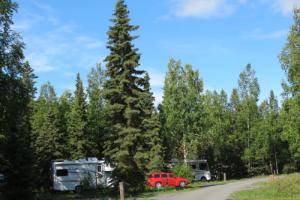

Photo by andrew_staines/Flickr.
The Hana Highway curves, twists and gyrates along the tropical coastline of Maui, connecting Kahului and Hana on an old sugar plantation route. The road is framed by the glittering blue Pacific and sandy beaches on one side, and by tropical forest and deep waterfall pools on the other. Swim in crystal-clear streams before crossing the road to surf the salt-sharp waves. Also be sure to stop off at the Waikamoi Ridge Trail for a one hour stroll through verdant tropical forest, and to drop into the Garden of Eden Maui, a riotously colourful botanic gardens where they filmed portions of Jurassic Park.


Photo by cjuneau/Flickr.
This glorious sun-baked stretch of cliff-hugging highway travels all the way from Southern California to Washington state, although there’s no doubt that one of the most beautiful stretches runs between Los Angeles and San Francisco. Between these cities you can drop into Malibu for surfing and cocktails, Santa Barbara for wine and whale-watching, and of course Big Sur for utterly breathtaking coastal scenery: cross the Rainbow Canyon via the great white arches of Bixby Bridge, before brushing through towering Redwood Forest that runs down to meet the Pacific’s foam-laced fringe.



Photo by Dougtone/Flickr.
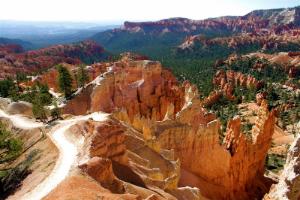
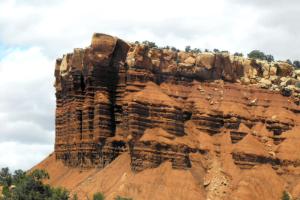
Highway 12 threads through Utah’s rugged natural world of giant red rocks and dramatic limestone canyons. It begins among the otherworldly statuary of Bryce Canyon, an orange-hued field of sharp-edged hoodoos, and ends amid the exposed earth-buckling rockscapes of Capitol Reef National Park. En route you can peek into the bare sun-baked immensity of the Grand Staircase-Escalante National Monument, which showcases a huge variety of stunning geological features and formations as well as fascinating paleontological sites.

Photo by Silvain de Munck/Flickr.
More breathtaking vistas of eroded rock can be enjoyed on South Dakota’s Highway 240, which loops for 40 slow miles through the bare, barren and evocatively named Badlands National Park. Jagged buttes and cliffs splice the blue skyline, containing within them one of the country’s richest fossil records. A pre-trip visit to the Ben Reifel Visitor Center helps reanimate the park’s prehistoric world, when it was roamed by rhinos and saber-tooth tigers. Today you can grab a bite at the Cedar Pass Restaurant, with its buffalo-meat tacos, though it might be better to pull over and picnic at one of the 14 spectacular viewpoints lining the byway.
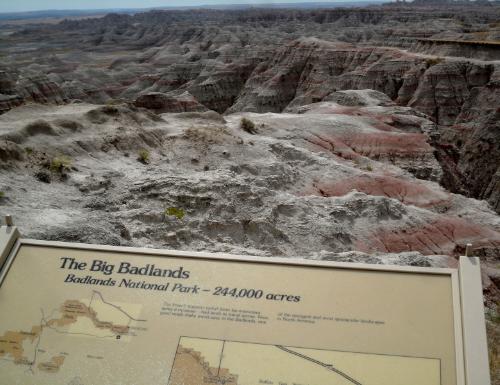

Photo by scott.tanis/Flickr.
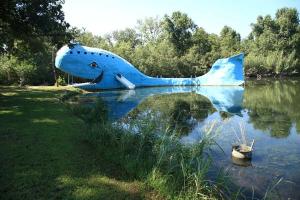
Covering what feels like most of America, Route 66 ties together the landscapes of the old west with the modern metropolises of Los Angeles and Chicago, which bookend this great cross-country journey. Nicknamed the Mother Road, and one of the original highways within the U.S. highway system, it passes through the barren deserts of New Mexico and Arizona, between flat and dust-strewn plains of saguaro and tumbleweed, before kicking into farmland and forest as it journeys north towards the Windy City. En route are innumerable gas stations, motels and diners packed with kitsch Americana, well-placed to meet your physical and myth-making needs.
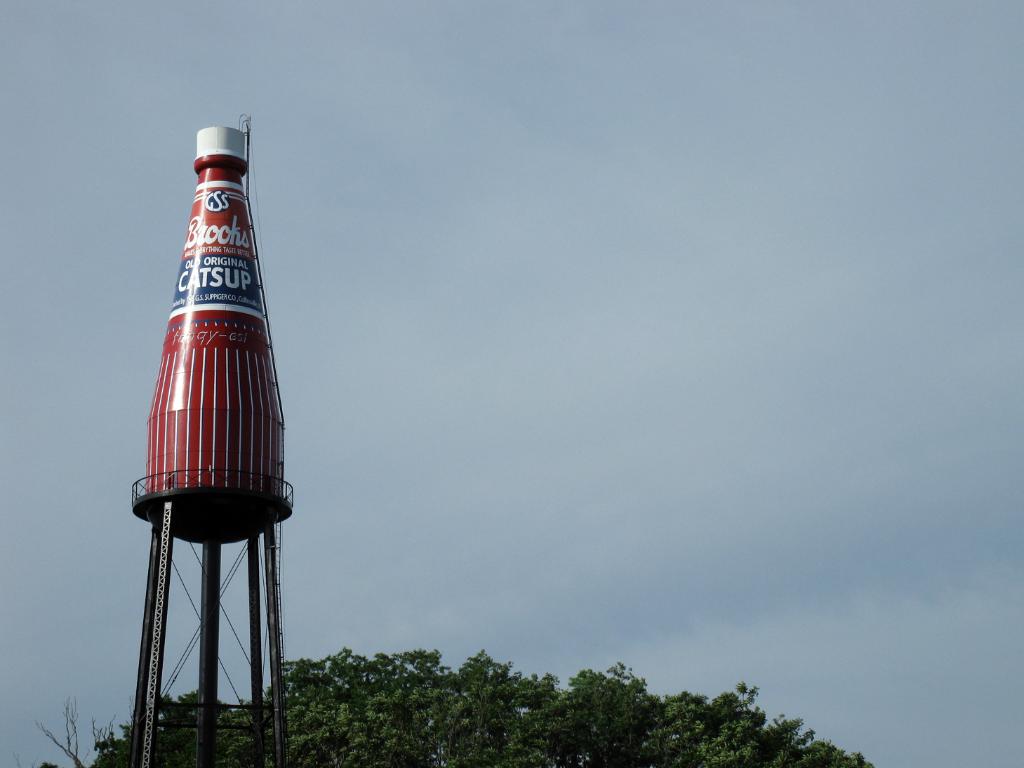
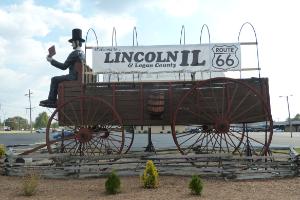

Photo by SeeMidTN.com (aka Brent)/Flickr.
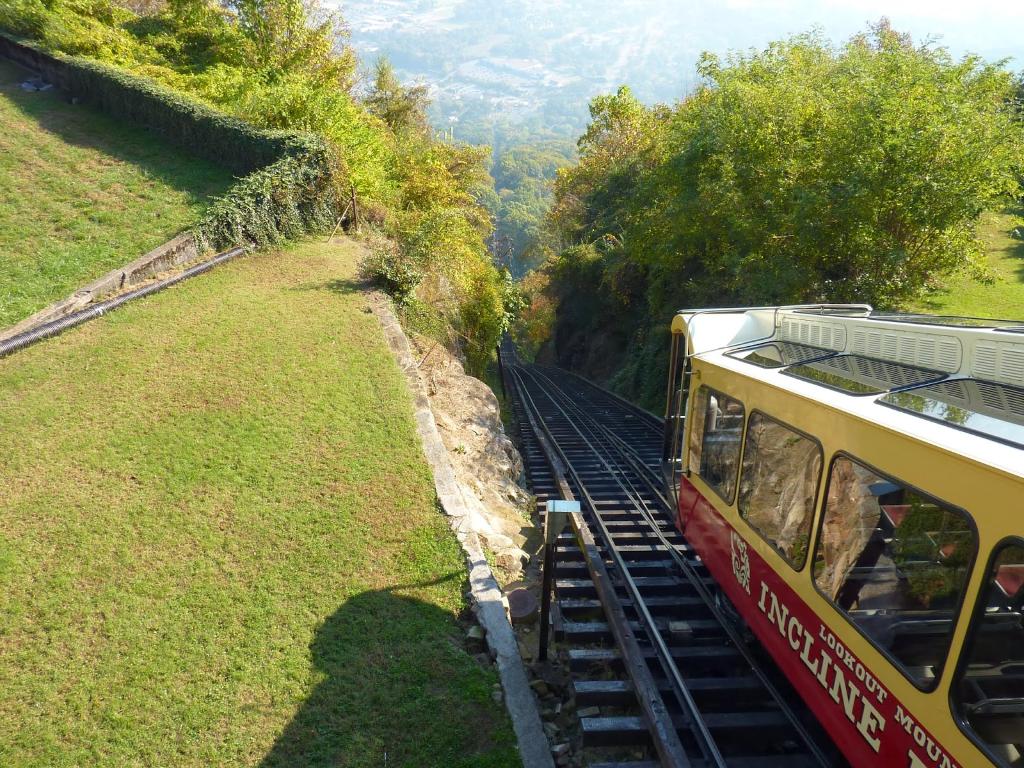
Lookout Mountain’s sharp skyline ridge cuts across three states, Alabama, Georgia and Tennessee. It is surrounded by a self-contained hilltop ecosystem of oak forest and mountain laurel, of canyons, caverns and cold-clear cataracts, that seems deliberately suspended above the doubt-ridden world below. All this can be explored along the Lookout Mountain Parkway, created by knotting together old rural byways passing through a series of national parks and preserves. The mountainside can also be viewed from a comfortable seat on the spectacular Incline Railway, which climbs a near-vertical route up the mountain’s forested slopes.
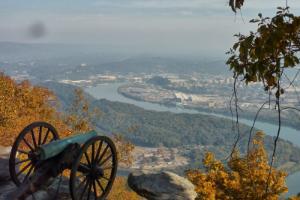

Photo by BlueRidgeKitties/Flickr.
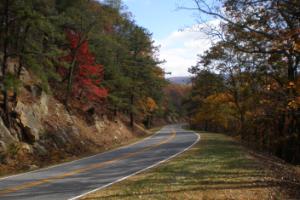
The Blue Ridge Parkway curves across a high and wild stretch of the Blue Ridge Mountains, joining Shenandoah National Park in Virginia to the Great Smokies of North Carolina. It is flanked by a series of massive national forests, passing beneath a vibrant canopy before breaking out into mountaintop clouds or, on clear days, jaw-dropping vistas across the surrounding green-swathed hills and valleys. This ribbon of black tarmac soars for 469 breathtaking miles, and the 45 mph speed limit and frequent viewpoints give plenty of scope to study the wild flowers and the animals inhabiting the undergrowth on either side of the road.

Photo by Phil’s 1stPix/Flickr.
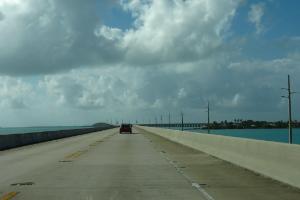
Leaving behind the pine forests and cool mountain air of the central and eastern road trips, and the desertscapes of those on the west, the Overseas Highway covers an entirely new landscape: the open sea. Railroad bridges have been converted and adjoined to freshly built stretches of elevated road, flinging an audacious black streak across the turquoise waters. This streak carries U.S. Route 1 through the Florida Keys, from Key Largo out to Key West, so you can drop into these laid-back beachside communities as you go, whether for a drink or to meet the wildlife that inhabits the water either side of the highway itself.

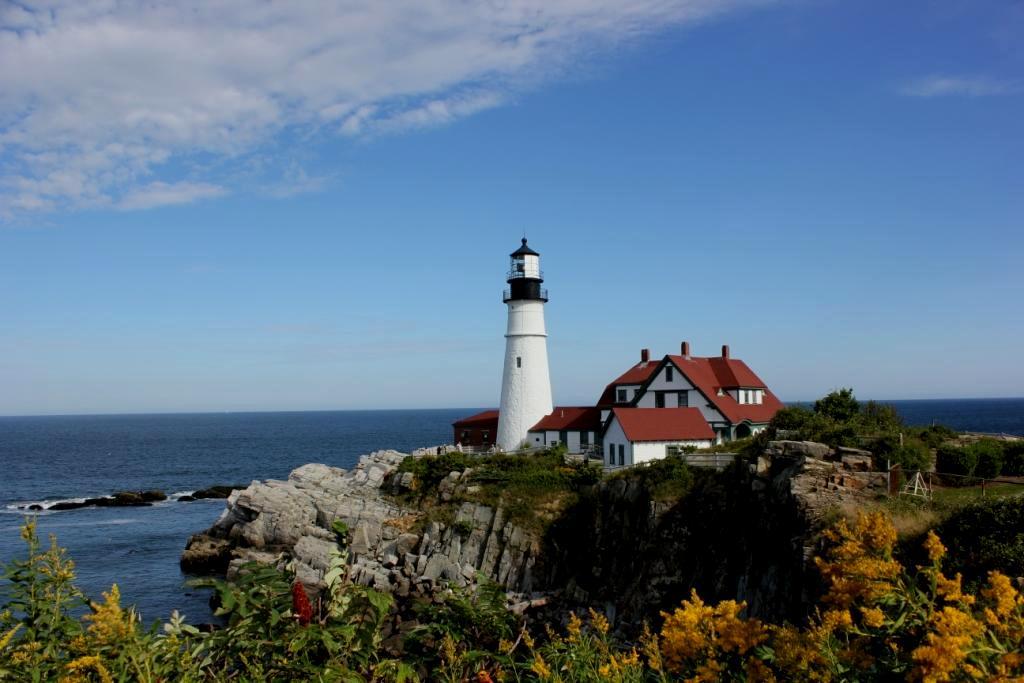
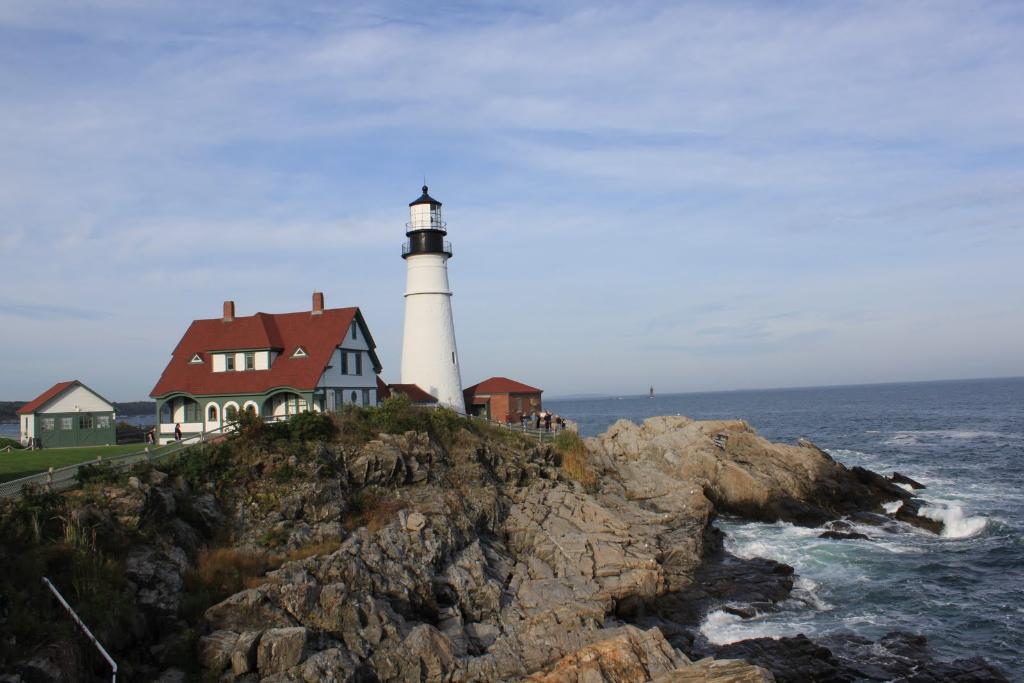
The green, rocky, crisp-aired northeastern edge of the United States is traversed by the venerable Route 1 as it runs through Maine, which has been carrying traffic since the 1920s. It winds alongside craggy cliffs, beneath the cries of gulls and above the many ships that continue to ply one of the world’s great migration routes. As it bends south, Route 1 passes a string of lighthouses that have directed ships and warned of attack since the 18th century. Among the best-preserved is Portland Head Light, adjoined by red-roofed keeper’s quarters, which first lit its 16 whale oil lamps back in 1791.
The post The Ten Best American Road Trips appeared first on Hopper Blog.
Waters made the announcement in front of about 500 people on the UC Berkeley campus during one of a special set of courses on food issues sponsored by the Edible Schoolyard and run by Michael Pollan and Raj Patel. She told the crowd about a dinner she hosted in January at her Chez Panisse restaurant attended by Janet Napolitano, the UC president and former Director of Homeland Security, and several campus chancellors. Waters spent some time pleading with them to take a more central role in directing the global conversation about food.
At one point, according to Waters, Napolitano dramatically stood up and declared that she intended to do just was Waters was asking. A “compact” was written up and passed around to the chancellors, who each run their campuses with a great degree of autonomy. “They all signed it,” she said.
Waters might have jumped the gun with her announcement, though. On Tuesday, university officials seemed surprised and worried that word had gotten out. At first, the media-relations office issued a statement to Modern Farmer that read, in its entirety: “President Napolitano is interested in agriculture and food security and is aware of all the research and outreach UC does in this regard. At this time, there is no food initiative.”
About an hour later, Peter King, Napolitano’s director of media relations, owned up: There is an initiative being planned, and it’s a big one, though details are vague so far. He said that a formal announcement, with at least some details, would be forthcoming in a matter of weeks. In general terms, the initiative will involve “not only our own food practices,” he said, referring to things like sourcing campus cafeterias with locally produced items, but also “exporting our research to address what many people think of as the most important issue the planet is facing” — the problems and challenges posed by the current food system. It will involve all 10 UC campuses, which include UCLA, Berkeley, and UC Davis, the latter of which is one of the top agriculture schools in the nation.
And, like the Edible Schoolyard, the initiative will likely involve academic curricula, perhaps putting food at the center of courses outside of ag- and food-oriented classes. It will be, King said, “soup to nuts in the world of food and farming. This will be big.”
Waters, after agreeing to an interview with Modern Farmer, did not return several messages left for her on Tuesday.
Napolitano has been on the job for less than six months, and has already started up several major sustainability-oriented projects. One goal she has is to make the UC system carbon neutral by 2025 — which would be no small feat. Whatever new food programs are launched will likely be integrated with the system’s sustainability program, which has been in place for about 11 years.
Napolitano also recently put the system’s Agriculture and Natural Resources Division under her direct command. That division, unsurprisingly, will play a major role in whatever programs emanate from the new initiative.
The “compact” signed by university officials at Chez Panisse included four general goals, according to King: to integrate disciplines such farming, economics, culture, and health in an effort to create a sustainable food model for California; to engage the public in that pursuit; to make UC system resources available to groups outside the university system; and to make the UC system the global leader on issues of food and farming.
King, allowing that details are still vague, said there’s only been one meeting — last week — to discuss concrete actions. Pressed for details, he said: “That’s what we’re trying to answer ourselves.” One major question officials are asking themselves, he said, is “how do we harness all this in a way that adds value back to campuses?”
King wouldn’t address why UC has been so secretive so far, except to reiterate that the plan is in its nascent stages. But the relative autonomy (and power) of each of UC’s campuses is probably one reason — that’s a lot of constituencies to keep happy, and their interests often conflict, especially when the administration is doling out programs. Another potential problem: the parlous (if often silly) cultural politics surrounding food and environmental issues. It’s one thing for a tenured professor and popular author like Pollan to criticize Big Food. But sadly, administrators of public universities need to tread carefully when they talk about issues like GMOs and climate change.
King also didn’t have much to say about funding, except that, at least in time, the initiative might end up drawing more money than it costs — presumably through grants and whatnot.
Of course, the UC system is already at the forefront of many of these issues, so much of the work will involve coordination of programs that are already in place. But it sounds like there will be lots of new programs, too: new research, new or revamped curricula, seminars and forums, new partnerships with outside groups. “Food is the new environmental movement,” King said, and the UC system is poised to “raise the public conversation about it.”
The post University of California Wants to Bring Edible Schoolyards to Campus appeared first on Modern Farmer.

On a mission to extract primitive art from New Guinea in the 1960s, Rich-boy American adventurer Michael Rockefeller went missing. In this book, award-winning journalist Carl Hoffman retraces Rockefeller’s journey into the heart of headhunter & cannibal territory, entering his own theory on what really happened to Rockefeller in the jungles.
For purchase information, Click Here
Sadly this is counter intuitive in today’s American society. We have been told since childhood that government “evens things out” and helps reduce income inequality. We were all regaled with stories of the Great Depression, where big government’s patron saint FDR bestowed “relief” to those stricken by the downturn of the 1930s. We were too young to understand that these myths were being propagated by people who benefited from an expanded government, namely the teachers (unions). We were also too young to understand that government actually extended the Great Depression for reasons we won’t go into here. We have been told our entire lives that government makes things more fair.
 The regional styles of Carolina, Memphis, St. Louis and Texas are all honored at the restaurant.
Brothers Rehan and Josh Nana have spent thirty years chasing quail and pheasant on their family’s three-hundred acre ancestral farmland in Missouri. The only problem? With nothing but derelict barns and abandoned outbuildings on the property, the brothers had nowhere to bed down for the night. “We’re from Kansas City originally,” Rehan says, “so when we were younger, Josh and I would load up some barbecue and drive out for the day. But we didn’t have a place to stay, which made for some long drives home.”

Rather than build a cabin from scratch, the brothers chose to work with the frame of an old grain silo already on site. “The silo fits into the environment,” Rehan says. “And we liked the idea of repurposing something that would otherwise be left fallow.” With the help of their friend, architect Kyle Davis, the two worked to turn the hollow metal structure into a two-story loft. They used beams from a turn-of-the-century barn to build a staircase and the flooring in the upstairs bedroom, and got creative with the tin from the roof of another forgotten building to create interior walls and shelving.


They afforded themselves some modern conveniences, including heat, air-conditioning, and standard kitchen appliances, but, deliberately, no television or internet. “If someone gets bored,” Rehan says, “we keep a collection of books on hand, or recommend that they take a walk outside.” The downstairs serves as the home’s living room, but since a silo doesn’t exactly provide the best views, they cut out a section of the corrugated steel exterior to make room for a large expanse of glass that looks out onto a timber-enclosed field.

With their new hunt cabin complete, the brothers began working with Quail Forever biologists last fall to improve the property’s habitat, planting native grasses and a variety of wildflowers, which attract bugs that quail chicks subside on for the first few weeks of their lives. “We have been bird hunters for as many generations back as I know, and we want to keep the land and that tradition ready for the next generation,” Rehan says. “Lord only knows what my grandchildren will think out there bird hunting fifty years from now with their brothers, exploring old houses and running into the silo. With any luck, they’ll be staying in it.”


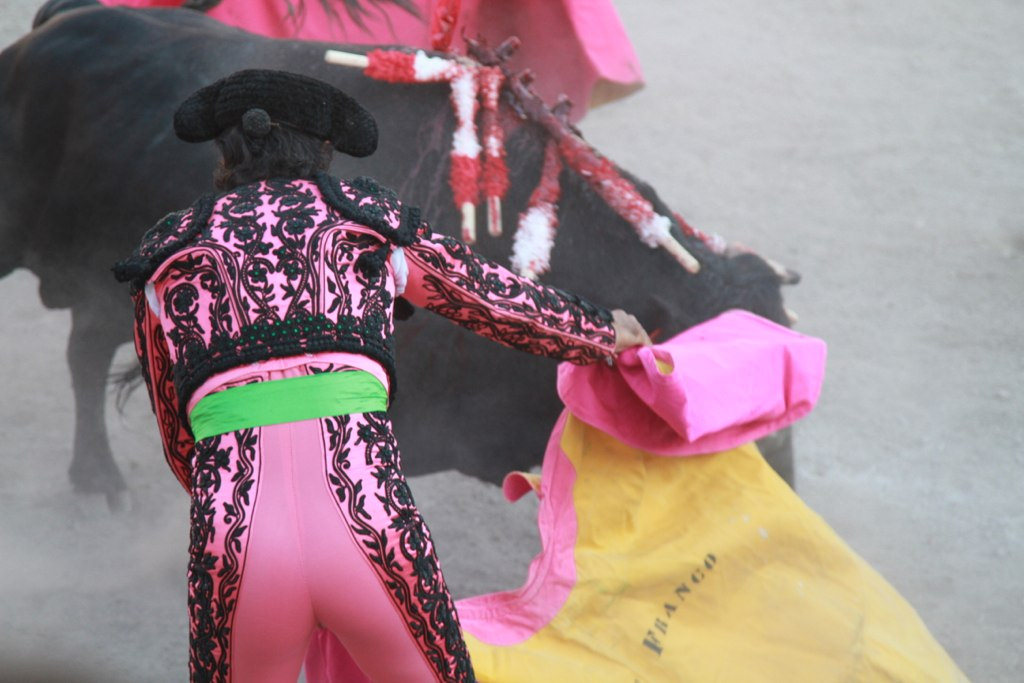
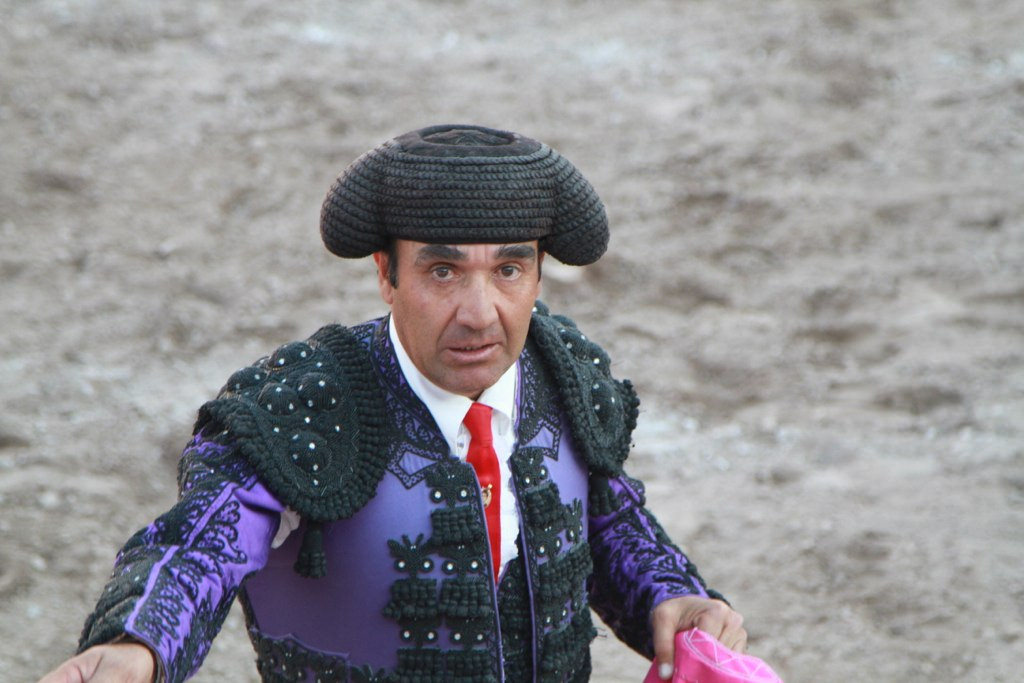
Blood sports aren’t all that popular these days. But bullfighting, beautiful, brutal and balletic, has been an important part of Spanish culture for hundreds of years. In the otherwise tame artists’ and expats’ town of San Miguel de Allende, Mexico, founded by the Spanish in 1511, we attended a bullfight recently and came away with one of the most authentic, un-touristy experiences we’ve ever had abroad, one that’s seared in our memory forever. While bullfights have been banned in some countries and toned down in others, in San Miguel tradition holds fast. Hemingway wrote that for a country to love bullfighting “the people must have an interest in death.” That’s certainly true in Mexico’s case, think of dia de muertos. Going to see one felt slightly illicit at first, gothic, decadent and antiquated, as befits what the author and bullfighting aficionado called “the only art in which the artist is in danger of death.”
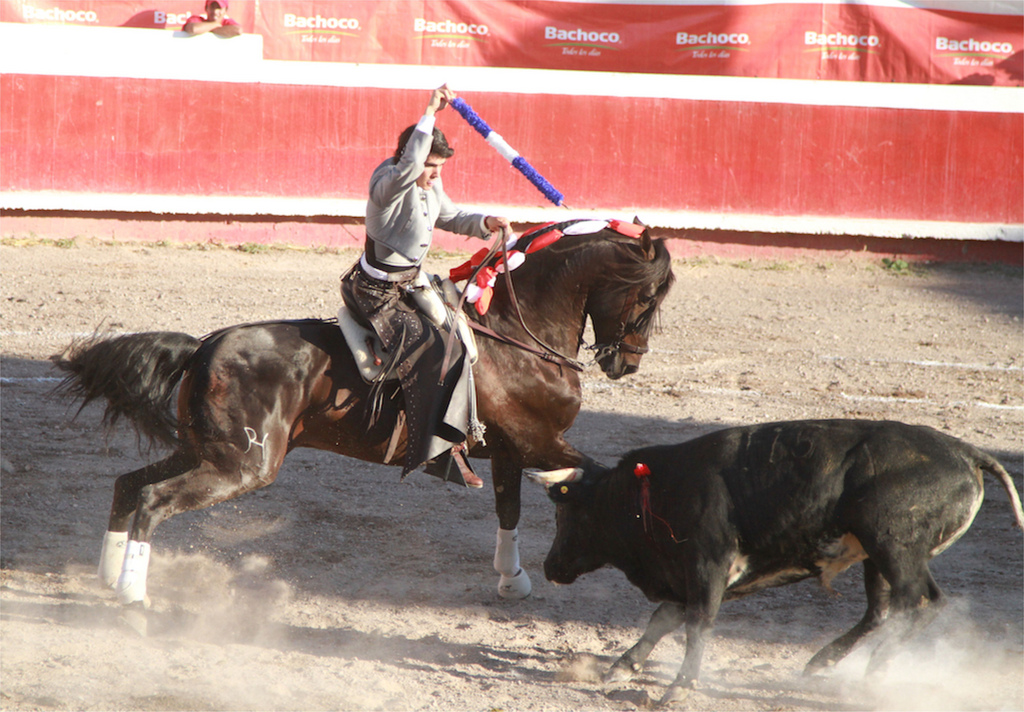
We won’t get into a discussion of animal rights here, but while unquestionably meeting a cruel and bloody end the bulls are said to have a far better life than most of their ilk up until the final hour. And though they haven’t got much of a chance, there’s always the possibility that the bull will do some damage. The matador who risks nothing will never achieve greatness, and the best bullfighters stick their necks out the farthest. Prayers to the Virgin of Guadalupe are given before each event. In San Miguel the bullfight, or corrida, is in fact a corrida de rejones, meaning that the matadors – in this case rejoneadors – are mounted on horses. That may sound safer but repeatedly stabbing a raging, stampeding bull in the back, from the front, on horseback at full tilt while wearing a suit and hat takes serious cojones.
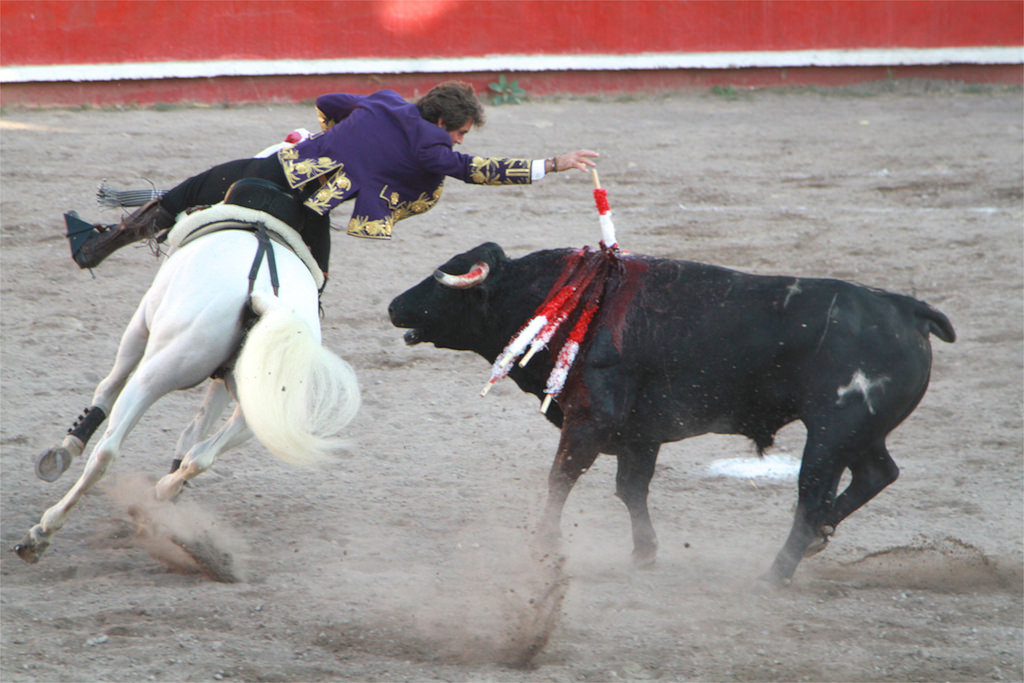

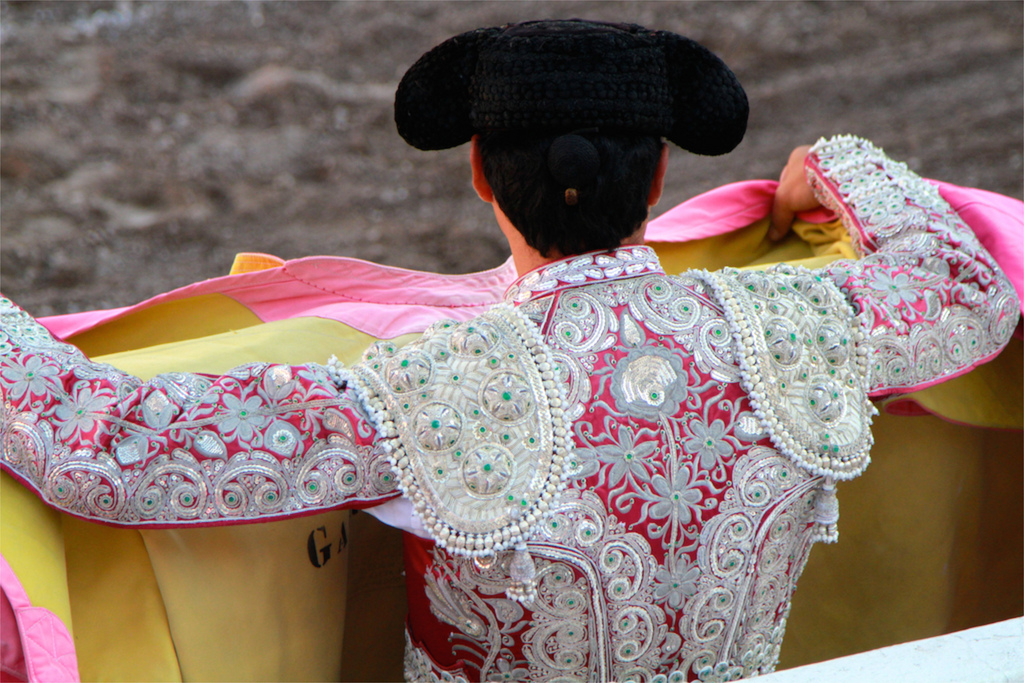
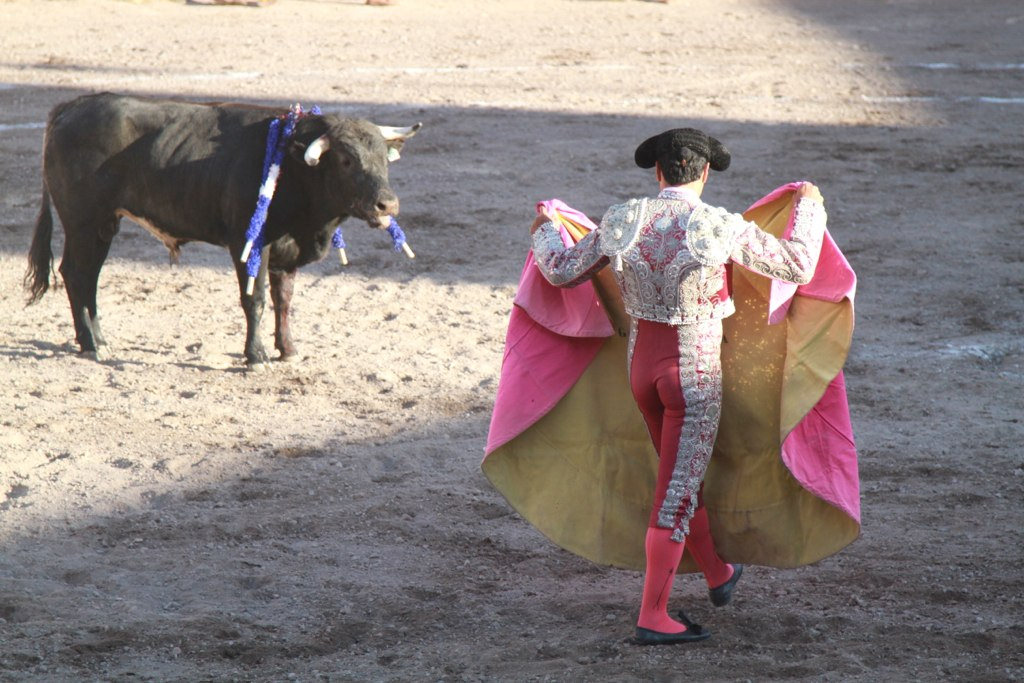
Corridas in San Miguel feature three rejoneadors taking on three bulls apiece. Each bull is dispatched in three stages called tercios in the classic Spanish style, wherein swords and lances of ever shorter length are driven into the bull’s back in increasingly precarious ways, until finally the animal collapses and is killed with a coup de grace. It’s gorgeous and a bit gruesome, a Goya painting come to life. Aside from the rejoneadors, there are toreadors armed only with capes and clownish forcados who keep the bull occupied between tercios while the rejoneador changes horses. The toreadors are the most colorfully, in some cases outrageously, dressed, all acid pop oranges and prostitute pinks, while the much younger rejoneadors are fairly soberly attired and the forcados look like Santa’s helpers. The latter literally grab the bull by the horns. Most of them end up smeared with a fair amount of blood by the end of the night.
During the fight countless vendors dispense souvenirs and also beer – served two at a time in a deft one-handed pour – wine and anything else you care to drink, as well as Cuban cigars nestled against big stacks of Bubble-Yum and candy on wide wooden trays. Souvenir wineskins painted with bullfighting scenes are sold outside the main gate of the old stone corrida, and can be filled from an enormous wine barrel wagon parked out front. You can also order an entire bottle of Johnnie Walker if you so desire – but you have to drink it all out of a plastic cup, Big Gulp style. As the fight begins both dust and cigar smoke cloud the air while the ubiquitous off-key brass band strikes up a tune. We’re pretty far up in the mountains, but the crowd is thick with Chilangos, the slightly pejorative term for people from Mexico City. The New Yorkers of Mexico, in other words – assholes. But the girls are great looking.
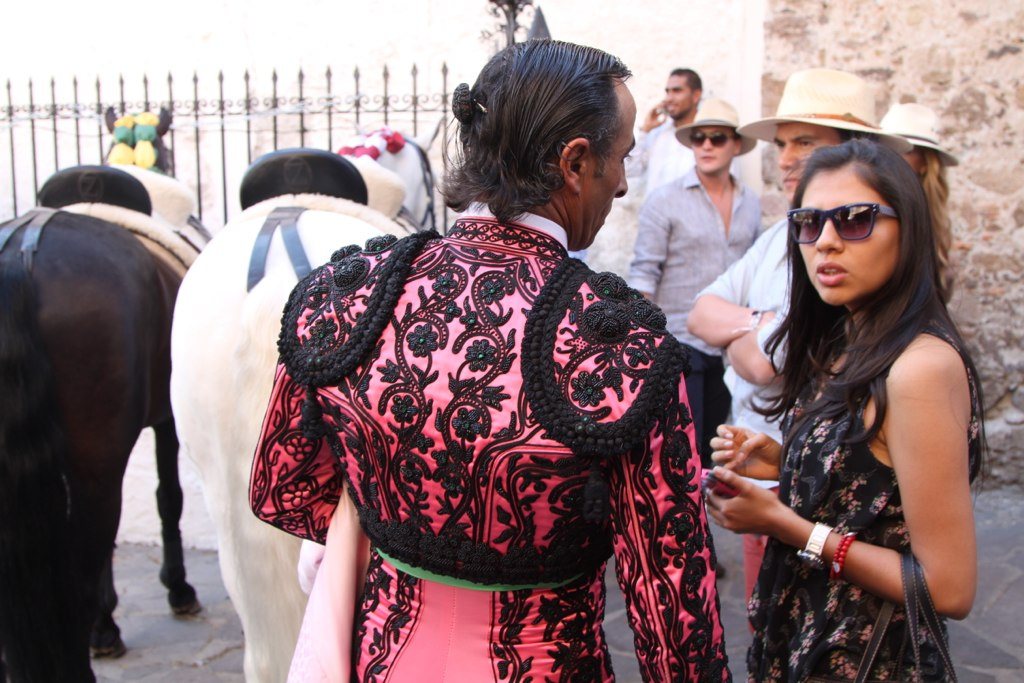


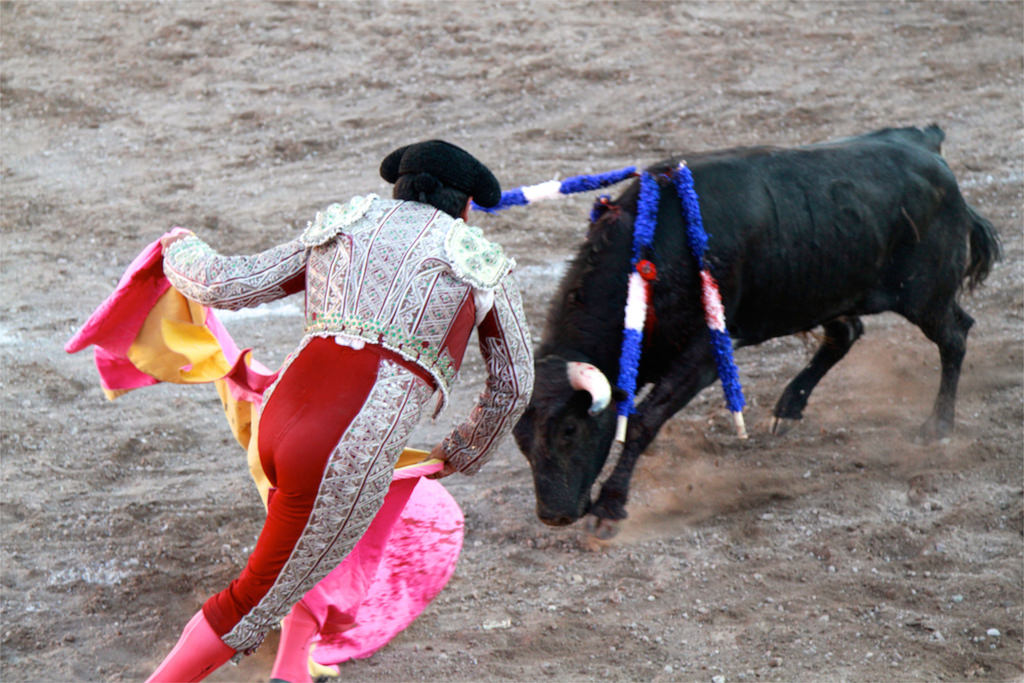
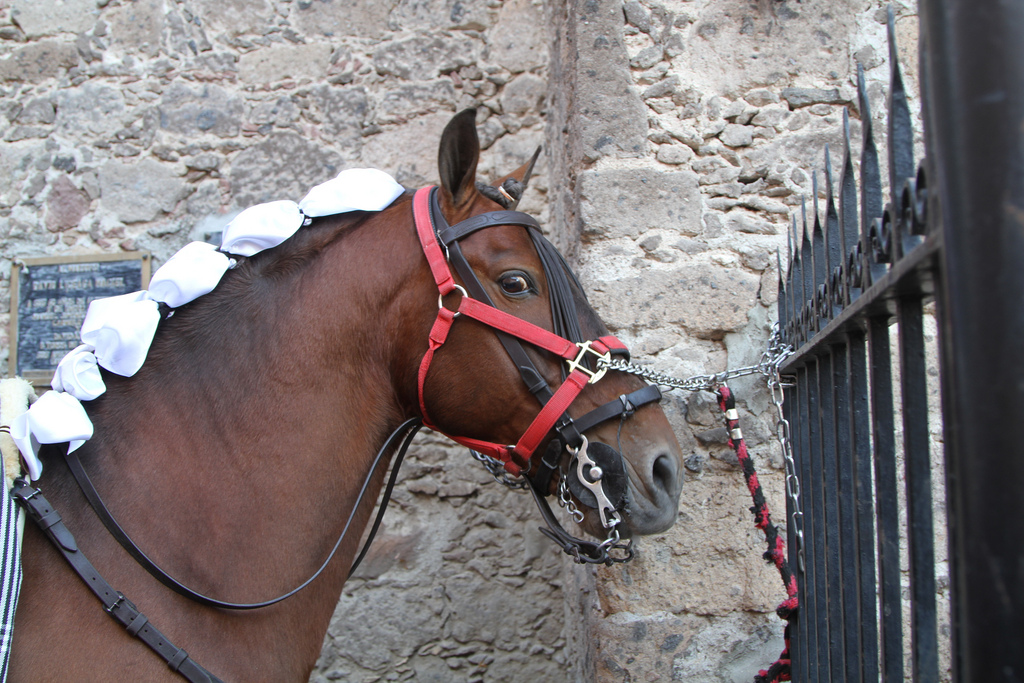
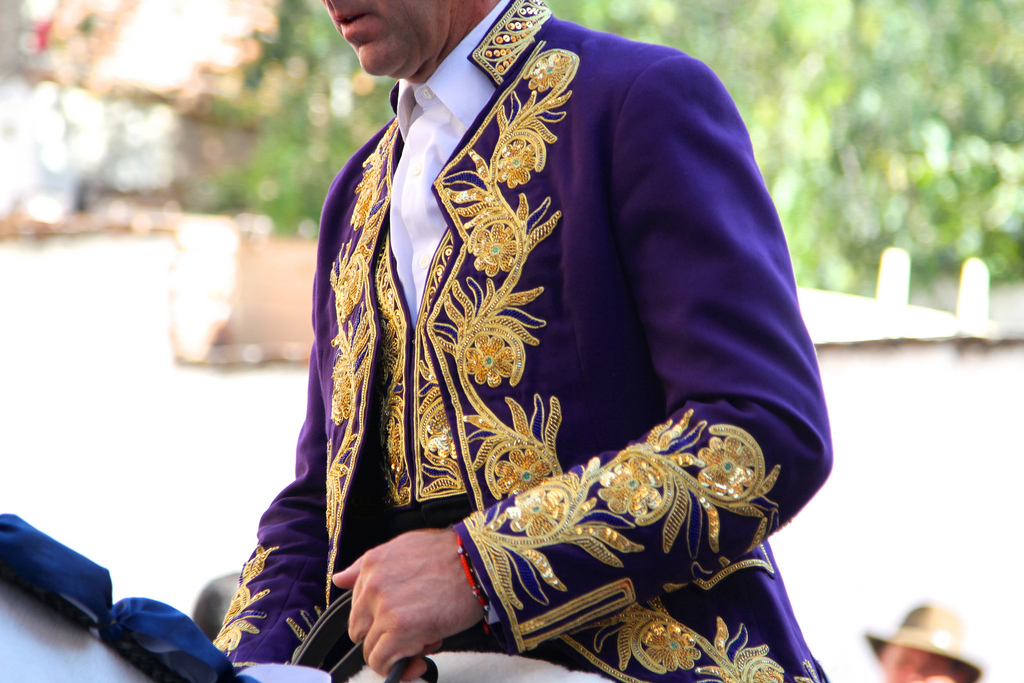
The main draw is always Pablo Hermoso de Mendoza, as famous in Spain as any movie star, considered by many to be the best rejoneador in the world. A little older than the others, he alone among the bullfighters wears a colorful brocaded jacket. The horsemanship and dressage is truly incredible, the rejoneadors effortlessly exerting total control over their mounts, executing twists and twirls even as the bull’s horns brush up against their flanks. In years past, the horses had mattresses strapped to them to minimize serious injury; these days the bull’s horns are filed down a bit. Eventually, no matter how fierce, the bull is killed. The rejoneador, assuming he hasn’t made a total hash of it, is then awarded a trophy determined by his bravery and skill in the ring – usually one of the bull’s ears, sometimes both if it’s been a particularly good fight. Often the rejoneador will toss one of them into the crowd.
There used to be an encierro, or running of the bulls Pamplona-style, in San Miguel before fights but it was nixed a few years ago either due to mounting casualties or too many alcoholics, depending on whom you talk to. Another tradition that seems to be in decline is the drinking of blood from one of the slain bulls, passed around in little paper cups and so riddled with adrenaline it gets you high. You can still purchase fresh blood from the butchers who hang around with their vans to take the bull carcasses away after each fight if you know who to talk to. Like fox hunting in England, bullfighting will eventually be banned even in Mexico, with its deep-rooted love affair with death. You need to go see one before that happens. –JPS





All photos by Jared Paul Stern.
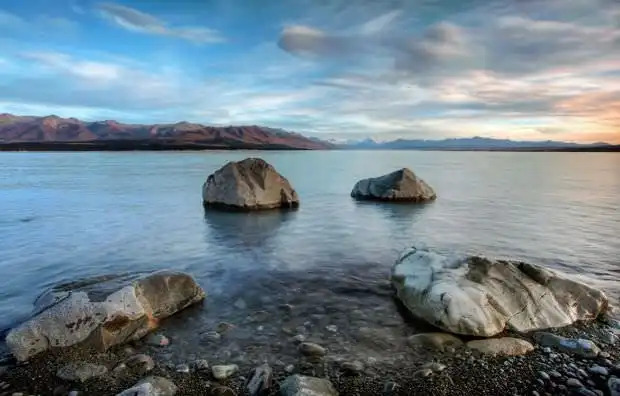 Landscape Photography is quite famous in this era. Because of its popularity, however, it became a cliche for most. Excellent photographs, undeniably still, will always be a standout and will rise above mediocrity and claim its glory. Skills, Subject, and Setting are three core preparations that will make your photographs come to life. These three are classified into 11 secrets that will make your photo a memory.
Innovating your skills will change your vantage point in the way you perceive things. It will change your look into stare and your stare into a vision.
Rules. Educating yourself of the basic guidelines of photography will make your life easy especially for novice photographers. Work with the founation and you will never be sidetracked. The Rule of Thirds will create your composition harmoniously by placing your focal point off-center. However, sometimes, setting aside the conventional rules will open the door for experiments thereby creating original masterpieces.
Risks. Average photos are most of the time taken from common places. To capture a exceptional scenery, it is logical that you have to go places nobody has ever been before. Never be afraid to try and take risks. Explore the most wild locations and go out during crazy weathers to capture extraordinary once-in-a-lifetime images.
Timing. Most people call this, “the eye” of an artist, which all of us have. This is the perfect moment being in the right place at the right time. The only trick is- anticipation, imagining of what could possibly happen in your subject and wait for it to happen. It could be a lightning in the grey clouds or the golden reflection of sunset, the bottom of it all is to wait for your moment.
Photgraphers’ philosophy believes that you should not just take shots, but you have to create them. It is essential that you know what you want and how you want it, thus it is consequential that you always have to pay respect to the ideal light, the centerpiece, the foreground and the sky.

Golden Hour. The ideal light for capturing majestic landscapes is during sunrise and sunset. Aside from the golden rays it lavish, it also produces fascinating textures, dimensions, and patterns. Hence, always make sure that you are an hour early before the dawn breaks or the dusk to bust. Note that camera’s flash must always be turned off for capturing landscape, unless you do it purposively to brighten the foreground for special effects.
Focal Point. Although you are capturing landscape images, it is necessary to have a centerpiece, otherwise the photograph will appear empty and themeless. This , most of the time, is the common error of landscape images, leaving the viewers wondering what they are really looking for. Thus, always look for interesting focal points which most of the time are bizarre structures or ordinary objects in strange locations.
Depth of Field. To achieve a dramtic effect in your landscape shots, make sure that your foreground compliments the middle ground and background objects. This will create a disctiction producing depth and a three-dimensional effect framing your landscape image. Note that odd elements in your foreground such as your shadow, cans, wires and others should be removed from your frame.
Sky. Predominance of the sky or the foreground is one basic aspect you have to bear in mind. You have to avoid a balance fraction of the sky and the foreground, otherwise it will make your shot monotonous. Meanwhile, a monochromatic sky should not dominate your shot, provided that you have an enchanting foreground. But if the clouds are filled with emotions, figures and colors, place your horizon in the lower third and let it radiate its beauty. Note that a polarizing filter is a handy in enhancing the color and contrast.
Finally, you need to have all the necessary euipment that you will need for your landscape shots. Moreover, you must apply the most appropriate settings to achieve high quality images. It is a prerequisite to have both the basic equipment and the right settings.
Canon Rebel T4i | Nikon D7100 | Nikon D800 | Canon 5D Mark III | Nikon D5200 | Sony a7R
Tripod. The sharpness of your shots depends on the stability of your camera- your tripod is the solution to that. Since you will use a a longer shutter-speed to balance the small aperture, most especially in low-light environments, your tripod will be your secret weapon to keep the camera still.
Lens. It is common sense to bring wide-angle lens, ranging from 10mm to 20mm, in capturing your landscape images. Don’t be a victim of this faux pas, using zoom lens for landscape photography. Also, your average 18-55mm f/4-5.6 kit lens can be an alternative.
Exposure. To simplify, it is the amount of light your lens is absorbing. Therefore, if the ambient light is so bright, you need to under-expose your setting from -1 to -3 depending on the quality of light you want to achieve. Conversely, if the ambient light is too low, you need to over-expose from +1 to +3 until you attain the desired light quality. If the light is normal, set it to 0. Playing with the lights around you will dramtically enhance the effect of your shots.
Aperture. Simplifying the term, it means the focus of your lens. Ensure the use of high aperture setting ranging from f10 to f22 so you are certain that all details are sharp and not blurry. Always remember that every detail counts in landscape photographs.
Overall, you need to remind yourself that photography is an art. It is a medium of self expression, thus make sure that every photo you create must convey a message to the viewer. If this message is received, you are confident that your goal is achieved and that your photo is effective. So by mastering the 11 secrets of the three core preparations skills, subjects, and settings you are now prepared to create your magnum opus.
Article by James Lloyd Calmita
Also Read: 41 REASONS WHY YOU SHOULDN’T DATE A PHOTOGRAPHER
Recommended Reading:

The U.S. Navy was “reborn” on March 27, 1794 when Congress authorized the building of six heavy frigates. Though the new United States had a small navy during the Revolutionary War it was quickly disbanded in peacetime.
However, deprivations against U.S. shipping on the high seas convinced Americans that a blue-water, oceangoing navy was necessary. So the U.S. Navy, largely using the designs of master shipbuilder Joshua Humphreys, constructed six heavy frigates in six different American ports.
This project paid tremendous dividends later on as the innovative frigates, both more powerful than a standard frigate and faster than the larger “ships-of-the-line”--the battleships of that era--proved to be highly effective in a number of wars.
In Ian W. Toll’s phenomenal book Six Frigates: the Epic History of the Founding of the U.S. Navy, he quotes Humphreys saying of this unique ship design:
They are superior to any European frigate, and if others should be in [the enemy’s] company, our frigates can lead ahead and never be obliged to go into action, but on their own terms, except in a calm; in blowing weather our ships are capable of engaging to advantage double-deck ships.
From these humble origins the U.S. Navy has grown to become the largest and most powerful in the world, but this project nearly failed to get off the ground due to fears about prohibitive cost and long-standing apprehensiveness regarding military establishments. This fear in large part stemmed from another anniversary that takes place this week in history.
One of the most important events that drew the ire of the British Colonies in America and sparked the American Revolution was the Quartering Act--called the Mutiny Act in England--passed by Parliament on March 24, 1765. Though the colonies often welcomed the arrival of troops to fight the French in the French and Indian War, many thought the measure was arbitrary and obnoxious. It was especially so because they were forced to pay for these troops with no real control over the cost or implementation.
The colony of New York particularly resented this Quartering Act, not for dislike of British troops, but the high-handed nature of British Parliament. Parliament carried the act out with total disregard for the New York Assembly which resisted making payments. In The Coming of the American Revolution, historian Lawrence Lawrence H. Gipson wrote, “The result was passing by Parliament in June, 1767, an act to suspend all legislative functions of the province until it had met fully the requirements of the Mutiny Act.”
The Quartering Acts gave Americans a long-term fear of standing armies and the quartering of troops in private homes and businesses. Also, most of the revolutionary leaders had a deep knowledge of the Roman Republic and its downfall in part due to a corrupted military establishment and masterful military leaders.
This fear led to the writing of the Third Amendment to the Constitution which states, “No Soldier shall, in time of peace be quartered in any house, without the consent of the owner, nor in time of war, but in a manner to be prescribed by law.”
But fear of a powerful land army did not necessarily extend to the navy. British citizens had long accepted the construction of a potent navy due to its ability to defend their interests abroad and inability to crush liberties at home. George Washington and his Federalist political allies believed it was necessity to construct a Navy to adhere to the Federal government’s constitutionally mandated duty to “provide for the common defense.” Nevertheless, there was still resistance to establishing a permanent and expensive navy. Historian Toll wrote:
Opponents of ratification warned that the navy would expand the power of the federal government to the detriment of the states; that it would increase the public debt; that it would lead to higher taxes; and that its expense would fall on the small farmer of the impoverished interior of the country, who might never even lay eyes on the sea.
It must be noted though that in the early day of the Republic, the federal government had few responsibilities other than national defense, and this government was tightly restricted in scope.
In Marion Smith’s study, The Myth of American Isolationism: Commerce, Diplomacy, and Military Affairs in the Early Republic published by the Heritage Foundation, he wrote that in early American history the navy was “non-existent” and that this made U.S. commerce “a defenseless and wealthy target of plunder.”
Smith wrote:
Since American commerce could yield fruit only if U.S. citizens were able to travel and trade safely on the high seas, this vulnerability forced America to confront the nature of its national interests and how to best protect them. America’s future prosperity was a possibility, not a foregone conclusion.
The growing United States was largely reliant on commercial trade with other nations, and many Americans came to realize the necessity of some kind quick-striking force that could respond to threats on American shipping, and so supported the building of the six innovative frigates and the permanent establishment of the Navy.
This small navy performed admirably in the nation’s early military conflicts, going toe-to-toe with French and British war ships in the Quasi War with France and the War of 1812 with England, respectively. They also laid waste to the pesky Barbary pirates in several conflicts on the North African coast.
Some of these early frigates, like the USS Constitution, nicknamed “Old Ironsides” for its near miraculous ability to deflect enemy cannon fire, became legendary for their exploits on the high seas and proved their worth to the American people.
In an era in which the U.S. Navy is the smallest it has been in nearly a century, and budget priorities have been directed to numerous projects outside of national defense, it is important for Americans to understand how much American prosperity has depended on having such a powerful force to protect liberty at home and interests abroad.

    
|
A hoax of exposure tries to fool people into believing or doing something utterly ridiculous. While other hoaxes are generally self-serving by nature, hoaxes of exposure are satirical sting operations done to expose a flaw in the system or to mock a particular set of beliefs. 10The Sokal Affair New York University physics professor Alan […]
The post 10 Hilarious Hoaxes Of Exposure appeared first on Listverse.

"Camp Potatochip" located in Potter County, PA.
Submitted by Brad Bireley from his PA Hunting Camp Portrait Project.






Whether you’re walking down an urban sidewalk or working in the garden, chances are there’s chickweed nearby. Why should you care? Because it's delicious. Not only does chickweed add crunchy texture to salads, but it also has a bright, vegetal flavor not unlike that of raw green peas.

WHAT IT LOOKS LIKE: Chickweed has soft, round stems bearing opposite leaves that range from oval to pointy. When growing in abundance, it forms dense mounds. The flowers are tiny, star-shaped, and white, and bloom in clusters at the end of the stem. Several types of chickweed grow in the Southeast. Common chickweed (Stellaria media) has leaves that grow on short stalks, while star chickweed (Stellaria pubera) lacks stalks altogether; neither has much hair. Mouse-ear chickweed (Cerastium vulgatum), however, is hairy (hence the name), with leaves that do not have stalks.
WHERE TO FIND IT: Chickweed grows any place where the soil is fertile. You can find it in gardens, lawns, compost piles, and sidewalks all over the South.
WHEN TO LOOK: Now. Pick it and eat it until late spring, when it begins to bloom and takes on a tough, stringy texture.
WHAT TO DO WITH IT: Eating it raw preserves the plant's crunchy texture. The next time you are making a salad, throw in a big handful of chickweed with everything else.

During President Obama’s State of the Union, he decided to roll out another of those bold-faced distortions in an attempt to convince the public that the government must be called in to correct some “injustice” that simply does not exist. This time it was wage inequality.
This wage inequality myth, perpetrated by the collectivist crowd for decades, claims there exists a pay differential between men and women. This is a categorical lie that has been played out for years to justify government meddling in the labor market when no such evidence exists.
The President and his cohorts like to hang their hat on the statistic that women “make 77 cents for every dollar a man earns.” In and of itself, this is accurate. In actuality, it is a lie by omission. Obama would have you believe that women working the same hours, in the same career, and with the same educational background are somehow being short-changed and discriminated against. They are not, and I can prove it. When adjusting for quantifiable variables, there is almost no significant difference in pay.
Assume for a moment that an employer could get the same work from a woman at a 23% discount to a comparable man. Then ask yourself, why wouldn’t every employer only hire women to save money and increase profits? Where are all the female-only companies? Logic dictates that the majority of companies would be staffed primarily by females, but that is not the case. Both women and men are paid based on their skill set and what they produce, not based on their sex. It is capitalism at work, and the free market corrects any imbalance that may arise. The data supports this.
Explaining this false argument in detail would compromise an entire industry that is set up to fool women into believing they are victims (and we all know how the collectivists love playing the victim card). Moving into the new century, we have seen women enter careers and positions once filled only by men—and they are getting paid exactly the same pay.
Remember, for every industry in which a woman is paid exactly the same as their male counterpart, like say, a Major in the Army, another woman would have to be severely underpaid to balance out the equation in order to arrive at the 77 cent figure. Where are all of these half-priced workers, I ask you? I’d love to hire some! The answer, my friends, is there are none. They simply don’t exist.
What is left out of this discussion is how these numbers were computed. Once understood, the public will come to realize that the U.S. labor market is set up to pay people for what they are worth, not what social engineers and do-gooders feel is “fair.”
The 77 cent figure is determined by adding essentially all of the men’s salaries and all of the women’s salaries, coming up with an average wage, and comparing the difference. That difference is the 77 cent figure, but it leaves out all of the important variables that explain for the gap. You could just as easily factually state that women weigh just 77% of what men do, or that women are just 77% the height of men and still be accurate while actually lying by omission.
What really is going on here is occupational segregation. Men and women choose different careers for different reasons, and these choices in profession are the reason for most of the wage variation. Add in that men typically work more hours, and you end up with a much different picture than what Obama had painted for you with his colorful broad brush.
Today, women make up about half our workforce. But they still make 77 cents for every dollar a man earns. That is wrong, and in 2014, it’s an embarrassment. A woman deserves equal pay for equal work.
Politifact defends the President’s claim, while simultaneously admitting that it is really a slight of hand that, although factually true, creates this false notion that the unobservant could easily fall prey to.
You see, women are indeed receiving equal pay for equal work. When we look at unmarried women without children and adjust for career and education level, they make more than men. Today, more women than men are graduating from college. In and of itself, this should move the needle in a large way without government intervention, but where are the calls for college equality in order to “level the playing field” to protect the disadvantaged young men?
Interestingly, when working as a self-employed entrepreneur, rather than a salaried position for someone else, women make less by choice. Now you can’t actually discriminate against yourself so why the lower pay? Women who chose to be self-employed tend to want to lead a more balanced life, rather than working solely for a large paycheck (the way men do). This occupational choice is left out of discussions because it again exposes the lie (by omission, of course!).
So what about the multitude of jobs that are cited where men significantly make more? Let’s see what these careers all have in common: Financial Adviser (SALES), Real Estate Broker (SALES), Retail Sales (SALES), Insurance Agent (SALES), Car Sales Person (SALES)… are you noticing the pattern?
It is clear that sales is the common denominator, but sex has no factor in the success rates in any of these fields. Instead, it is attaining and maintaining clients that drives the salaries in these fields. Sales is consistently listed as a hard industry because it deals with consistent rejection and long hours. Additionally, most of these jobs work on some type of commission structure, where paychecks are not stable and, at times, can even be negative. Given a choice, most women will choose the steady paycheck over the volatile earnings found in a higher earnings potential sales position. Does this mean women are being actively discriminated against, or are they just self-segregating?
Not choosing to go into fields that pay more is not some sort of war on women but instead the result of choices each individual makes. It should be noted that women in these volatile fields tend to excel when compared to their male counterparts, in part because they capture members of their own sex who (sometimes discriminately) choose them over a man. If you doubt this double standard, ask your female friends which sex they prefer their gynecologist to be.
Fields perceived of as having a higher risk are typically compensated with higher earnings. The “wage police” conveniently never highlight this factor in their wage gap arguments, either. It typically takes someone with a thick skin to build a career in certain fields, and the idea of doing this by working on a 9-to-5 schedule is not possible for most people. This example of long hours demanded by certain careers only adds to the self-imposed segregation when making that all-so-important career path decision.
Let’s not be mistaken on another key factor of success in sales, tenacity. In many cases, a driving factor is the testosterone component. And just as a career like nursing demands a more caring or estrogen component, testosterone-centered jobs pay more because of the higher-risk, higher-return tradeoff. There has never been a single case where a group of a hundred lone women set out across an ocean to tame a continent or recapture a city. Risky jobs (dominated by men) pay more, but the cost of being wrong often includes death and financial ruin. Men gravitate to risk because, in addition to the riches that may be acquired, women are more receptive to men of means. This is the most likely explanation to any differences that cannot be quantified through conventional mass data analysis methods.
When presented with one-sided perspectives, it is important to remind ourselves that sexism is a one-way street in American society. Pay inequality is just another ruse by the collectivists, like Obama, to manipulate misinformed women into providing political support for a nonexistent problem. Differences only seem to matter when it’s a woman. Persons really concerned about wage inequality can do three things that will greatly affect these numbers going forward: don’t have children, work more hours, and get a career in a STEM field. It is doubtful that many women will choose these simple solutions, that don’t involve more government meddling, to do their part in helping make the world more “fair.”

|
|

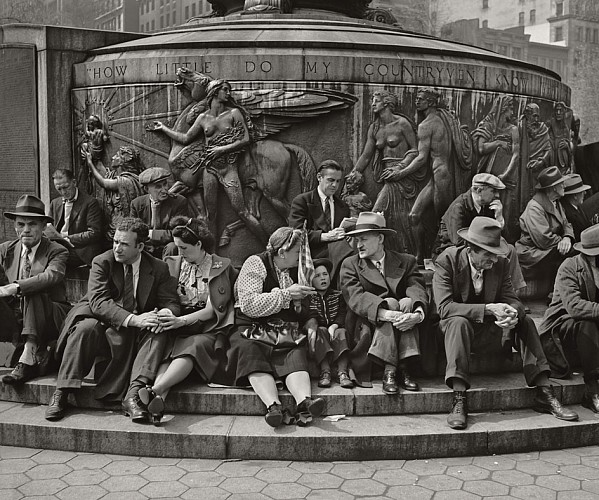
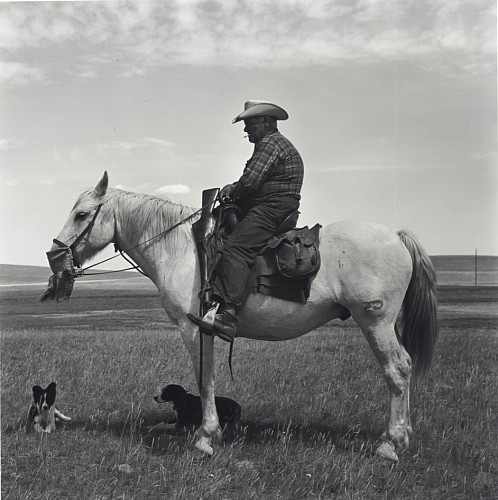
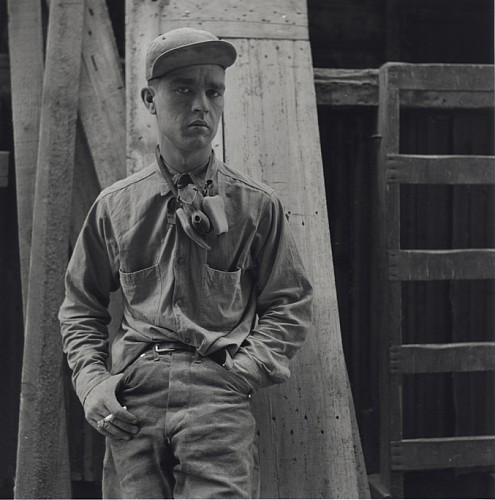
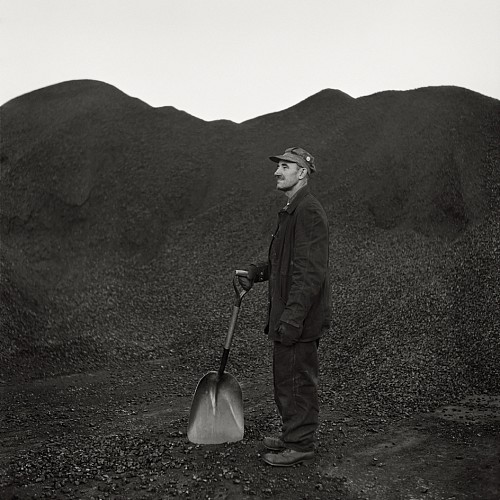
Photography retrospectives like the one currently on display by the late photographer Jerome Liebling at Steven Kasher Gallery in Chelsea (showing now through April 19th) have a way of grabbing me in a way a lot of art just can’t. The collection of 75 beautiful photos span some six decades and are a stunning look at both city life and beyond. It’s art, nostalgia and history all together at once. Liebling’s photographs embody all of those things in such an effortless way. Each has an interesting gesture, perspective, texture or theme. Often all of these elements are captured together to freeze moments in time. The collection of images is titled “Matter of Life and Death”, and the photos comprise everything from youth to death and all of the scenes in-between. The show was curated by Liebling’s daughter Rachel and is a moving selection of images capturing people from all walks of life.
Photography as a medium is inspiring to me mainly because of the fact that the process is so seemingly democratic (as camera technology is available to almost anyone), but it takes the eye and creativity of an artist to truly distinguish one’s work. As someone who occupies the very far end of the amateur photography spectrum, the more I progress, the less I realize I know. That and, you either have the eye or you don’t. Some things you can’t just muscle through.
More about the photographer Jerome Liebling:
Liebling’s body of work defies easy categorization. He was in his element in both color and black and white; at home on New York City streets or in Massachusetts apple orchards. Jerome Liebling grew up in Brooklyn, a first-generation son of European immigrants. During World War II, Liebling served in the 82nd Airborne. He enlisted to fight for a cause he believed in but returned from military service with a staunch anti-war sentiment that endured his entire lifetime. Back home, he enrolled at Brooklyn College under the G.I. Bill and studied design with the painter Ad Reinhardt and photography with Walter Rosenblum. In 1948, Liebling joined the Photo League, a socially minded photographers’ cooperative, where, along with Paul Strand, W. Eugene Smith and Aaron Siskind, he took to the streets to focus his lens on undocumented corners of urban life. In 1948, Liebling joined the Photo League, a socially minded photographers’ cooperative, where, along with Paul Strand, W. Eugene Smith and Aaron Siskind, he took to the streets to focus his lens on undocumented corners of urban life.



It’s one of America’s greatest rags-to-riches stories: two brothers, born into the utter poverty of lower-class Scotland in the mid-1800’s, immigrate to America and amass an inconceivable fortune all on their own. The Carnegie tale is a prime example of American industry at its finest, because in nineteenth century America, you didn’t exactly have to do everything by the book as long as you made billions.
That’s not to say that Andrew and Thomas Carnegie were purely driven by greed, after-all their name is emblazoned on buildings up and down the Northeast as a testament to their philanthropic spirit. From concert halls, to universities, to museums, the only thing the Carnegie’s liked more than making money, was putting their name on buildings, yet one of their most spectacular structures didn’t bear their name at all.
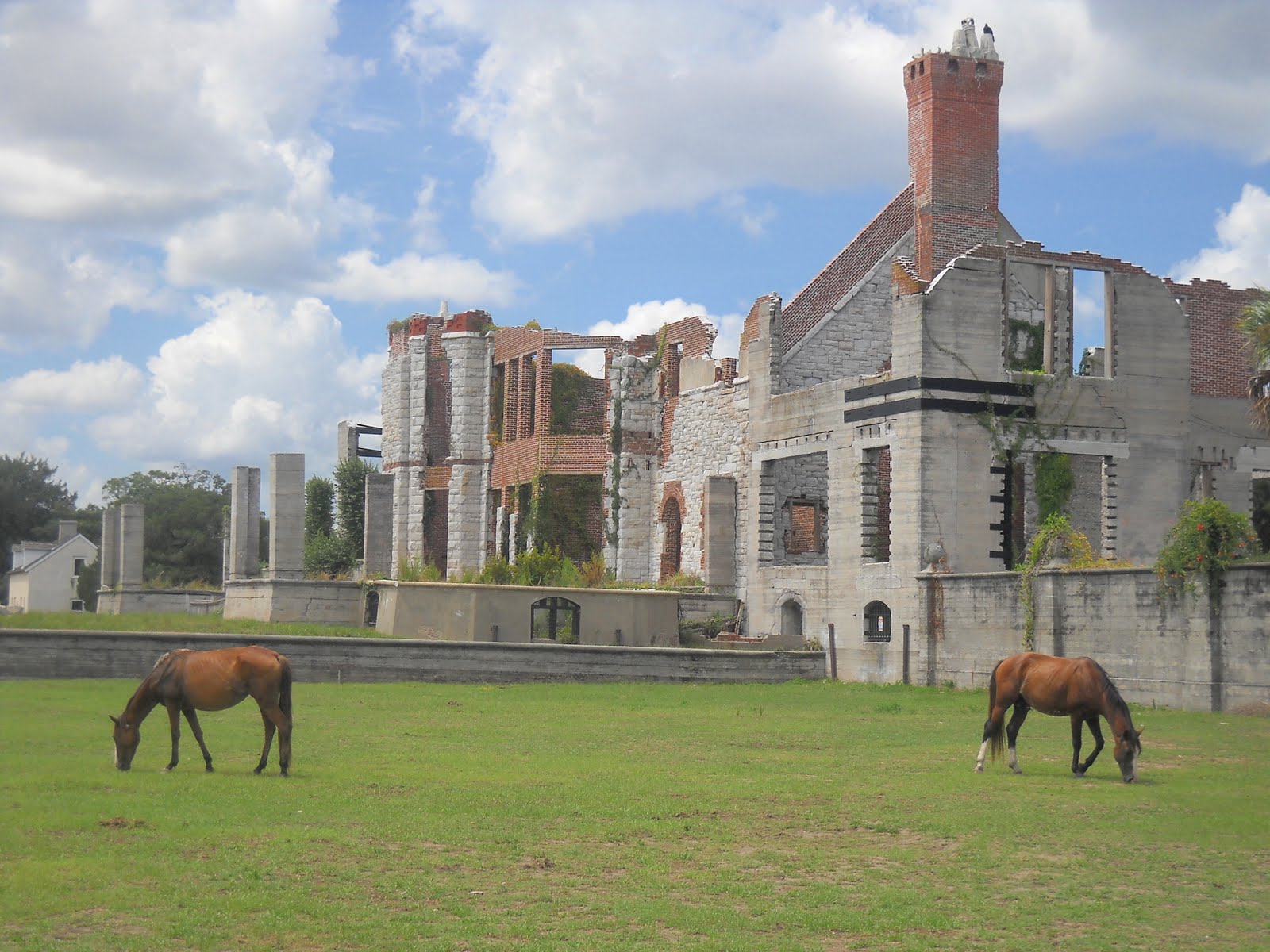
Toward the end of his all too short life Thomas, the younger of the two brothers purchased a vacation house on Cumberland Island, just off the coast of Georgia. Thomas was eight years Andrew’s junior and had spent his career assisting his brother with the daily operations of the family’s various corporations. Andrew was the idea man, while his brother did much of the grunt work, a role which helped make him both incredibly wealthy and incredibly tired. By his late-thirties, Thomas was ready to retire, and so he and his sizable family purchased “Dungeness Mansion” on Cumberland Island, a house with a history that rivaled that of the Carnegie’s themselves.
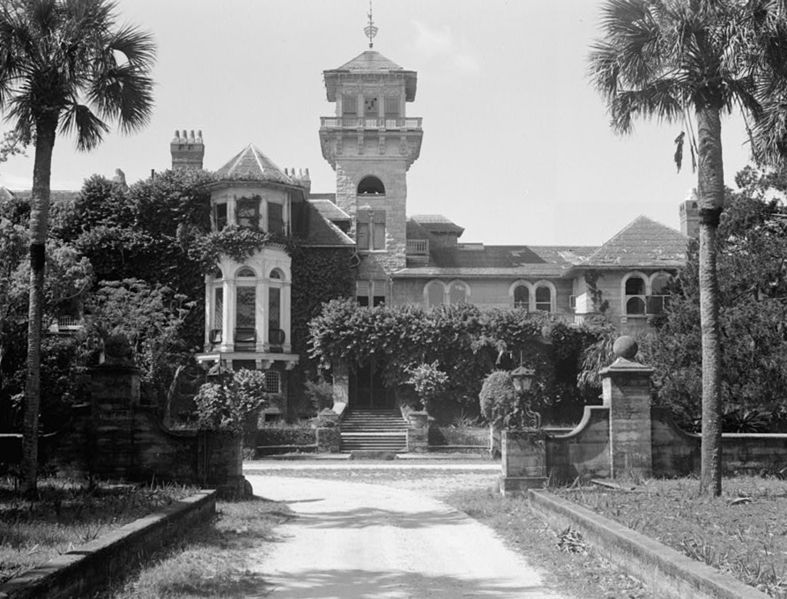
Dungeness had first been built by James Oglethorpe, the British general who founded the state of Georgia, as a hunting lodge in the 1730’s. After that, it purchased by Revolutionary War General Nathanael Greene in the early 1800’s, followed by Henry Lee III, who was the father of General Robert E. Lee. After Lee’s death the house was left abandoned through the Civil War, until it was finally burned down in 1866.
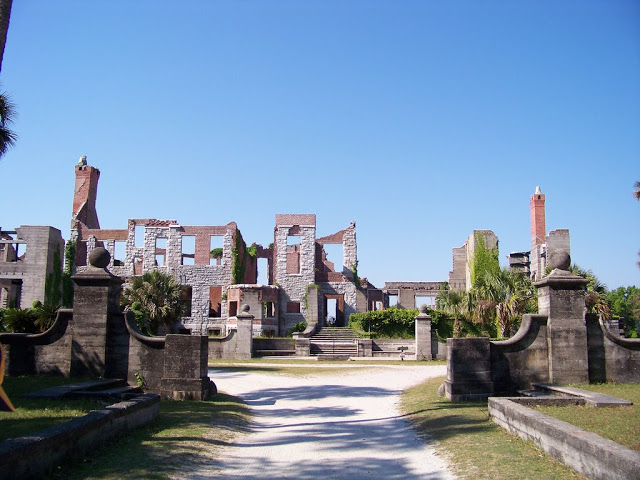
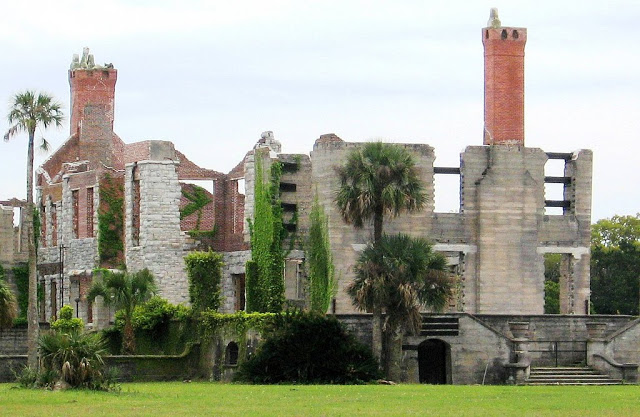
Roughly fifteen years later, the Carnegie’s entered the picture and transformed the house into a full blown Queen Anne style mansion. The Carnegie’s incarnation of Dungeness was like something out of The Great Gatsby packing fifty-nine rooms, each of which was more grand than the last. Thomas unfortunately never got to see his massive manor completed though, as he died at the ripe age of forty-three, while construction on Dungeness was still underway.
The finished mansion was nothing but pure Southern glory. Lush trees lead up to a house that could only really be described as imposing. The arched windows, covered porches, epic entrances, and layered roofs seemed to go on forever. It was a house truly built for American royalty, but much like Mr. Carnegie himself, Dungeness met its demise far too early. The house burnt down in 1959, thirty-four years after the Carnegie’s moved out, in a reported act of arson. Today nothing but the ruins remain, but you can still get a sense of just how luxurious the life of a Robber Baron was. -JG

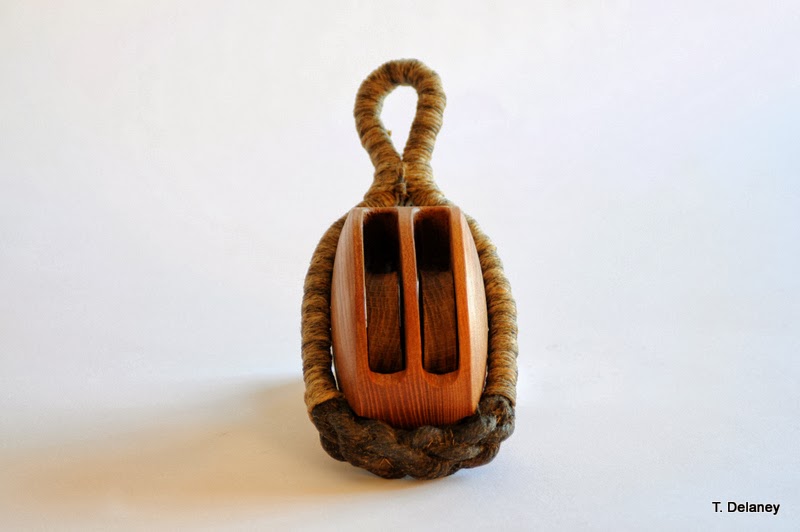
Archimedes’ work with the principle of levers caused him to announce, “Give me but one firm spot on which to stand, and I will move the earth.” [The Oxford Dictionary of Quotations, Second Edition, Oxford University Press, London, 1953, p. 14.] More technically he said in On the Equilibrium of Planes, "Magnitudes are in equilibrium at distances reciprocally proportional to their weights." Quite.
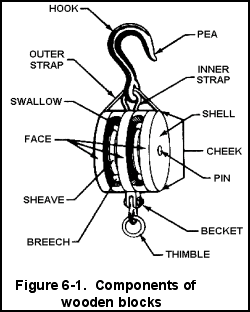
.JPG)
 Over at The Weekly Standard, Andrew
Ferguson tucks into a new report by the Organization of Economic
Cooperation and Development (OECD) cataloguing that group's own
awful predictions about economic growth before, during, and after
the global fiscal crisis. A snippet:
Over at The Weekly Standard, Andrew
Ferguson tucks into a new report by the Organization of Economic
Cooperation and Development (OECD) cataloguing that group's own
awful predictions about economic growth before, during, and after
the global fiscal crisis. A snippet:
In May 2010, for example, with one-third of the calendar year already over, the OECD economists predicted the U.S. economy would grow 3.2 percent for the year. As it happened, gross domestic product grew 1.7 percent. Note that this is not a small error. That 1.5 percentage point spread between the two numbers means the original projection was off by nearly half. It’s as if you thought you saw a car go by at 60 miles per hour while it was actually going 30.
Read Ferguson's whole take, which stresses that economists' "detachment from the real world of human activity is matched only by their enormous influence over it, and by their unearned assumption that this arrangement is well deserved." [Hat tip: Hot Air]
Take a few moments, too, to run through the OECD report itself, which is online here. Economics may be called the "dismal science," but the folks at the OECD (not to mention many boosters of President Barack Obama) are forever seeing the future through rose-colored scenarios: "GDP growth was overestimated on average across 2007-12," notes the report, "reflecting not only errors at the height of the financial crisis but also errors in the subsequent recovery."
In other words, don't stop believin' kids. Among the problems identified was the OECD's belief that highly regulated economies would respond to the crisis better precisely because of regulations:
Larger forecast errors over 2007-12 have occurred in countries with more stringent pre-crisis labour and product market regulations. In part this may reflect the weight given at the time to pre-crisis evidence that tight regulations could help to cushion economic shocks, together with insufficient attention being paid to the extent to which tighter regulations could delay necessary reallocations across sectors in the recovery phase. A third possibility is that it reflects a correlation between restrictive regulations and the pre-crisis build-up of imbalances that was not fully captured in forecasts.
Tighter regs might delay the ability of markets to sort things out? That's a meaningful concession to a basic point we've been making at Reason.com for some time.
Of course, the OECD isn't the only group making upbeat assessments. Remember the claims made by the Obama administration and its press cheerleaders regarding the stimulus? Here's a reminder from summer 2012:

Current unemployment in the good, old US of A? According to the government's latest number, it's at 6.7 percent (and with a lower labor-force participation rate that before the crisis started).
 To add to a point made by the
OECD: If tight regulations make it difficult for markets to respond
to economic shocks and reallocate resources, there's also a huge
role played by
regime uncertainty. To the extent that a government is seen as
constantly changing the rules of the game (sometimes in
contradictory ways, as when the Federal Reserve pours money into
banks but them pays them interest on reserves to keep that money
sitting in vaults), it freezes most hopes of recovery. Government
isn't the sole cause for the business cycle and for economic booms
and busts (though its actions tend to make things more extreme, I'd
argue). But government attempts to forestall, cushion, or mitigate
upswings and downswings inject huge amounts of uncertainty that
almost certainly freezes businesses. How can you plan for the next
few years—or even the next few quarters—if you have no good idea on
how much you'll be paying for employees' health care? Or what tax
rates will be, or even what the federal budget will be? Etc. The
sort of manic interventions into all aspects of the economy that
started under Bush and keep on going under Obama aren't helping the
recovery.
They are making it take a helluva lot longer to happen.
To add to a point made by the
OECD: If tight regulations make it difficult for markets to respond
to economic shocks and reallocate resources, there's also a huge
role played by
regime uncertainty. To the extent that a government is seen as
constantly changing the rules of the game (sometimes in
contradictory ways, as when the Federal Reserve pours money into
banks but them pays them interest on reserves to keep that money
sitting in vaults), it freezes most hopes of recovery. Government
isn't the sole cause for the business cycle and for economic booms
and busts (though its actions tend to make things more extreme, I'd
argue). But government attempts to forestall, cushion, or mitigate
upswings and downswings inject huge amounts of uncertainty that
almost certainly freezes businesses. How can you plan for the next
few years—or even the next few quarters—if you have no good idea on
how much you'll be paying for employees' health care? Or what tax
rates will be, or even what the federal budget will be? Etc. The
sort of manic interventions into all aspects of the economy that
started under Bush and keep on going under Obama aren't helping the
recovery.
They are making it take a helluva lot longer to happen.
That's one of the essential—and largely unlearned—lessons of FDR's New Deal. Constantly throwing up new interventions into the economy, however well intentioned, freezes things up instead of chilling folks out.
From 2008: "Obama's New New Deal: As bad as the old New Deal?"
Back in May 2013, Reason TV brought you the story of how protectionist shipping laws created under the Jones Act were damaging the Hawaiian economy. Now, lawmakers from Hawaii, Alaska, Puerto Rico, and Guam are putting pressure on the U.S. government to mend the maritime law.
Passed in 1920, the Jones Act was created to protect the U.S. shipping industry by mandating that only ships made in the U.S. and flying the American flag can deliver goods between American ports. This means that a ship from China can only make one stop in the U.S. at a time – it would be unable to unload goods in Hawaii on the way back from Los Angeles.
The law has negatively impacted the Hawaiian economy and now lawmakers are fighting back.
To learn more about the Jones Act, watch “How Protectionism Hurts Hawaii: Why It's Time to Repeal the Jones Act,” produced by Zach Weissmueller.
About 4 minutes. Original release date was May 2, 2013 and original writeup is below.
"What would an enemy want to do to the people of Hawaii during war time?" asks Ken Schoolland, professor of economics at Hawaii Pacific University and scholar at the Grassroot Institute. "They would want to cut us off from international shipping. Well, this is what the law does to us all the time."
Reason TV sat down with Schoolland to talk about the Jones Act, federal legislation that restricts non-US shipping vessels from engaging in commerce in domestic shipping lanes. Schoolland argues that this protectionist measure is crippling the Hawaiian economy.
Attorney John Carroll petitioned to overturn the Jones Act, but the petition was dismissed by the court with prejudice. Carroll says he intends to mount a vigorous appeal.
About 4 minutes.
Produced by Zach Weissmueller. Shot by Sharif Matar, Paul Detrick and Weissmueller.
The radio show that made country music famous first hit airwaves in 1925. Back then it was just a weekly one-hour “barn dance” put out by station WSM in Nashville on Saturday nights. Today, the Grand Ole Opry is among the longest running broadcasts in history, occupying reverential space in the canon of American music. Patsy Cline, Johnny Cash, Bill Monroe, Roy Acuff, Hank Williams, Dolly Parton, even Elvis Presley (though he famously only played the Opry once) have all performed. This weekend, the Opry celebrates the 40th anniversary of its move to its current space east of downtown. It left the historic Ryman Auditorium in 1974 after the show’s popularity demanded a larger venue—but not before taking a six-foot circle of oak from center stage and installing it in its new home.

Richard Nixon Plays the piano March 16, 1974—opening night at the Opry's new home. (Photographs courtesy of the Grand Ole Opry)
To help mark the anniversary, we asked a handful of musicians to share their Opry memories with us.
The Opry in their own words…
“I used to go to sleep on my grandfather’s lap, listening to the Grand Ole Opry in his Ford pickup truck out by the barn. The sound would come and go up in those Kentucky mountains, but when it would come back in, it was the greatest sound in the world.”—Ricky Skaggs
“If you think the big bang is when the fiddle met the banjo, if you think there's nothing so sorrowful as a sad country song, if you think Charlie Pride broke the color line just as much as Jackie, if you think Loretta is still the fiercest, fieriest female voice in Music City, if you think Porter Wagoner singing ‘Green, Green Grass of Home’ is as deep and humbling as anything the choir belts out on Sunday morning, if you think Roy Acuff is still the king—then you must know it deep in your heart, as I do, that the Grand Ole Opry is hillbilly-heaven-on-earth.
Imagine if they never tore down Ebbets Field, or if you could still get up to the top of the Statue of Liberty and peek out the little windows of her crown; or imagine if you could still ride the Wabash Cannonball, the L&N, The Southern, or the Yellow Dog. Well you can’t. Most of that old American grandeur is gone for good. But you can still go the Grand Ole Opry. It’s still in Nashville, Tennessee, every Saturday night. You can still buy a paper cone of popcorn, sit back, tap your toes, and listen in. You might still even hear ‘em sing ‘Will The Circle Be Unbroken’ or ‘Kaw-Liga’ or ‘Green Green Grass of Home.’ Some things don't ever change.” —Ketch Secor, Old Crow Medicine Show
“I got a job with Bill Monroe in 1963—would have been February of ‘63 when I played at the Opry with him for the first time. And actually I couldn’t play. I could sing but couldn’t play my guitar. In those days you had to belong to the local musicians union to play there. That first night on the Opry stage I was so excited—not only was the Opry new to me but so was Bill Monroe. And I’ll tell you I still get nervous before I go out on that stage. If I’m ever going to forget the words to a song it’ll be on the Grand Ole Opry stage. It’s just so special. I’d been listening to the Opry program with my brother and my dad on Saturday nights since I was just barely old enough to listen, so it meant a lot to me to become a member.”—Del McCoury
“The first time I played the Grand Ole Opry stage I remember actually tearing up as it was a moment I knew I would never forget. Every time I step on that stage I’m reminded that country music has accepted me because there is not a more hallowed stage than the circle of the Grand Ole Opry. Moments happen on the Opry stage that never happen anywhere else. It’s an institution. Where else can you see Little Jimmy Dickens, Old Crow Medicine Show, Vince Gill, Brad Paisley, and Keith Urban on one stage on the same night? It’s home. The night I was inducted into the Grand Ole Opry. I like to think my mom, who passed away over 20 years ago, was there, smiling.”—Darius Rucker

“The first time I played at the Opry was when it was still at the Ryman Auditorium, back in January of 1959. I remember that Porter Wagoner introduced me, and I was scared to death. I sang my first recording on a major label, a song I wrote called, “That's What It’s Like To Be Lonesome.” But my overall favorite Opry memory is probably the night my mother was in the audience and I got a standing ovation on a song I wrote for her called, "Mama Sang A Song." Standing ovations are rare at the Opry for anybody at any time, but her being there made this one even more special than it might have otherwise been. The exposure from having been an Opry member for over fifty years (I joined in July, 1961) has been immeasurable. But nobody plays the Opry for the money. We play it for the exposure and for the love of the music and our love for the institution itself.”—Bill Anderson
“I made my Opry debut last summer. I was sixty-four years old and my latest CD had just been released. Woody Paul Chrisman of Riders in the Sky introduced me, which was fitting as Woody and I had played music together while students at Vanderbilt forty years earlier. I’ve played the Opry twice since then, most recently at the Ryman Auditorium, which houses the Opry during winter months. Just standing on the same stage where so many of my heroes had stood—namely Hank Williams, Johnny Cash and Elvis Presley —was an experience beyond words. Ironically, while students at Vandy, Woody and I would often hitchhike down West End Avenue to the backstage door of the Opry, waltzing right into Roy Acuff’s dressing room, where Woody and Mr. Acuff would swap fiddle tunes while Charlie Collins [Acuff’s guitar player] and I strummed along. Seems like another lifetime ago.”—Marshall Chapman

Cottage in Las Sabanas, Nicaragua built by Bruce Lavender.

One Wyoming farmer is refusing to be intimidated by the Environmental Protection Agency into demolishing a stock pond he and his wife built in 2012 on his eight-acre Wyoming farm. Andy Johnson and his wife Katie used pure water to fill their pond and filled it with brook and brown trout, ducks and geese. The Johnson’s three children we looking forward to playing there, and the Johnson’s horses could use the pond to drink and the surrounding area to graze.
But then the Environmental Protection Agency threatened Johnson on January 30 with a fine that could amount to $75,000-a-day because the agency claimed he violated the Clean Water Act by building the pond without a permit from the Army Corps of Engineers. It asserted that he had built a dam on a creek illegally, and that the residue from the Johnson’s pond could flow into other waterways. The agency gave him 30 days to hire a consultant to assess the environmental impact of the pond and come up with a restoration proposal that was acceptable to the EPA as well a schedule showing he would fix the problem in 60 days or less.
Johnson answered them that his stock pond, a man-made pond that is intended to attract wildlife to it, was exempt from the Clean Water Act rules and that not only had he had already checked Wyoming’s rules for building stock ponds fine, he had a letter from the Wyoming State Engineer’s Office that approved of his work. The letter stated, “Said permit is in good standing and is entitled to be exercised exactly as permitted.”
Johnson told FoxNews.com., “I have not paid them a dime nor will I. I will go bankrupt if I have to fighting it. My wife and I built [the pond] together. We put our blood, sweat and tears into it. It was our dream. This goes a lot further than a pond. It’s about a person’s rights. I have three little kids. I am not going to roll over and let [the government] tell me what I can do on my land. I followed the rules.”
Johnson went into action when he received the letter from the EPA on January 30, contacting state lawmakers who forwarded his plight to Wyoming’s two U.S. senators, John Barrasso and Mike Enzi as well as Louisiana Sen. David Vitter. On March 12, The senators wrote Nancy Stoner, the EPA’s acting assistant administration for water, and demanded that the EPA back down, saying, “Rather than a sober administration of the Clean Water Act, the Compliance Order reads like a draconian edict of a heavy-handed bureaucracy.” They added:
Fairness and due process require the EPA base its compliance order on more than an assumption. Instead of treating Mr. Johnson as guilty until he proves his innocence by demonstrating his entitlement to the Clean Water Act section 404 (f)(1)(C) stock pond exemption, EPA should make its case that a dam was built and that the Section 404 exemption does not apply.
The EPA has been trying redefine the boundaries of which bodies of water they can supervise under the Clean Water Act.
The senators’ letter took note of the EPA’s desire to expand its jurisdiction, writing,
“If the compliance order stands as an example of how EPA intends to operate after completing its current ‘waters of the United States’ rulemaking, it should give pause to each and every landowner throughout the country
Johnson views the situation as an opportunity to teach his kids an invaluable lesson. He said, “This is showing them that they shouldn’t back down. If you need to stand up and fight, you do it.”

|
|