Shared posts

08 Apr 14:58

Travel Spotlight on New Braunfels and Its 20 Best Attractions

by Richard Francis

There are few destinations in all of North America that could boast the same versatility as New Braunfels, Texas. A small town by most standards, it does well to cater for a real variety of different visiting crowds, from the family holidaymakers on their way through to San Antonio to the hedonistic party goers on break from the colleges of San Marcos. Accordingly it comes complete with wholesome activities like the Schlitterbahn Waterpark and the heritage-laden, downtown historic center – a place that oozes with the colonial charm of New Braunfels’ Germanic 19th century roots – along with a variety of more daring escapades like party tubing on the Guadalupe River. Best accessed by car from sprawling San Antonio to the southwest (which is about 35 minutes’ drive away) or from Austin, New Braunfels is also served by Greyhound bus routes.

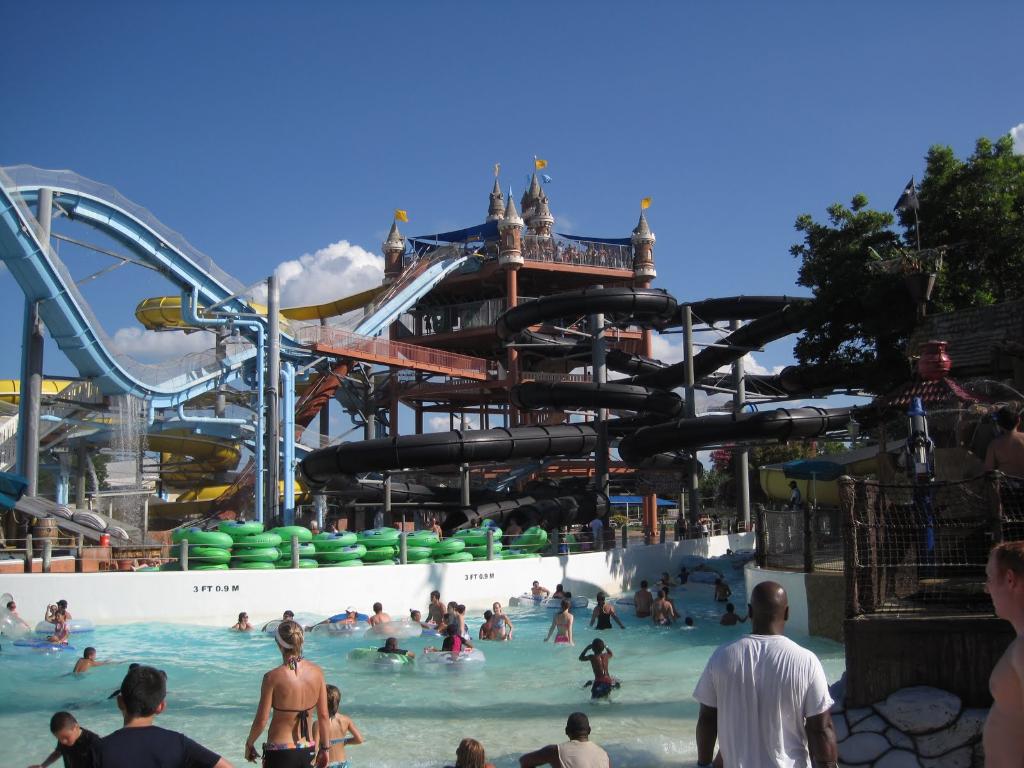
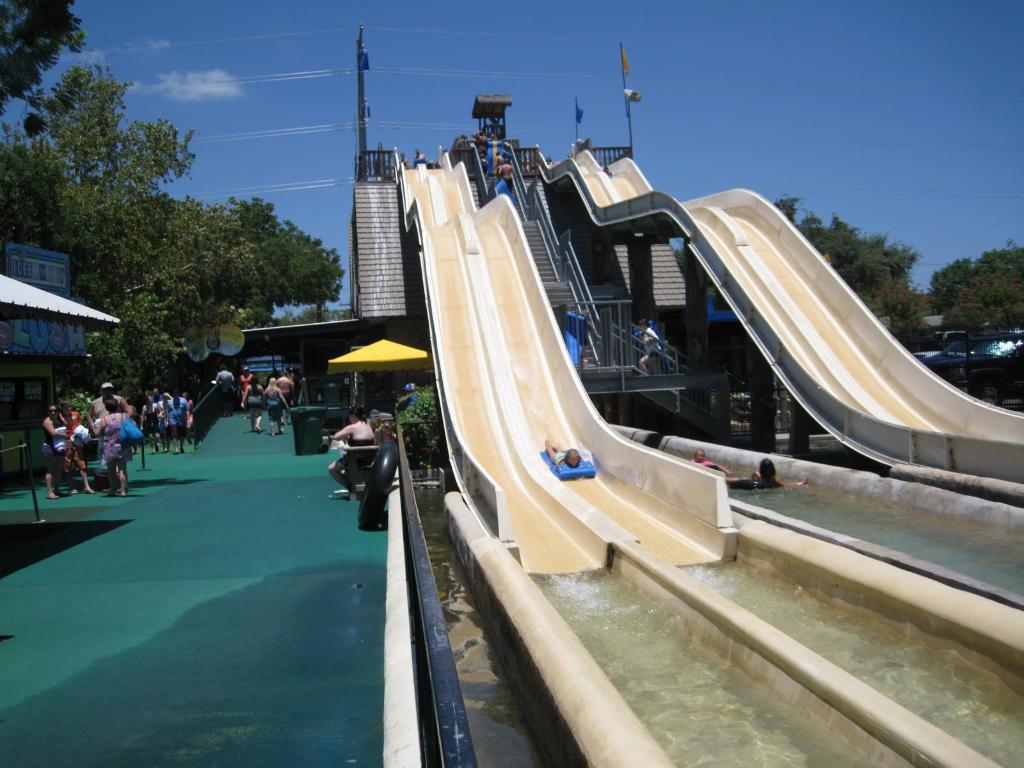
Slides, rides and plenty to do at the Schlitterbahn Waterpark

The Schlitterbahn Waterpark is the most complete family friendly attraction in all of New Braunfels, offering an action-packed day out, with activities aplenty for both kids and adults. Looping, twisting and turning water slides mingle in clusters overhead, while the more relaxing lazy river attractions wend their way quietly about the park. For visitors coming to New Braunfels just for Schlitterbahn, there are also a number of suitable lodging options on-site.

See what visitors have to say about Schlitterbahn:

From outdoor picnics to river tubing and caves, this is family fun in New Braunfels:

Tubing on the Guadalupe River and Comal River

Start hoarding those beers and decanting your wine in preparation for Texas’ best tubing experience. Visitors choose between two separate routes; one down the picturesque Guadalupe River, and the other down the inner-city, short and sweet Comal River (rumored to the shortest in the whole world). In true tubing style, drinking is allowed, but there are a number of strict rules in place in order to protect the natural environment, so be aware!

See what visitors say about tubing on the Guadeloupe River:

Where to grab the tubing necessities:

Shop and sightsee at the Gruene Historic District

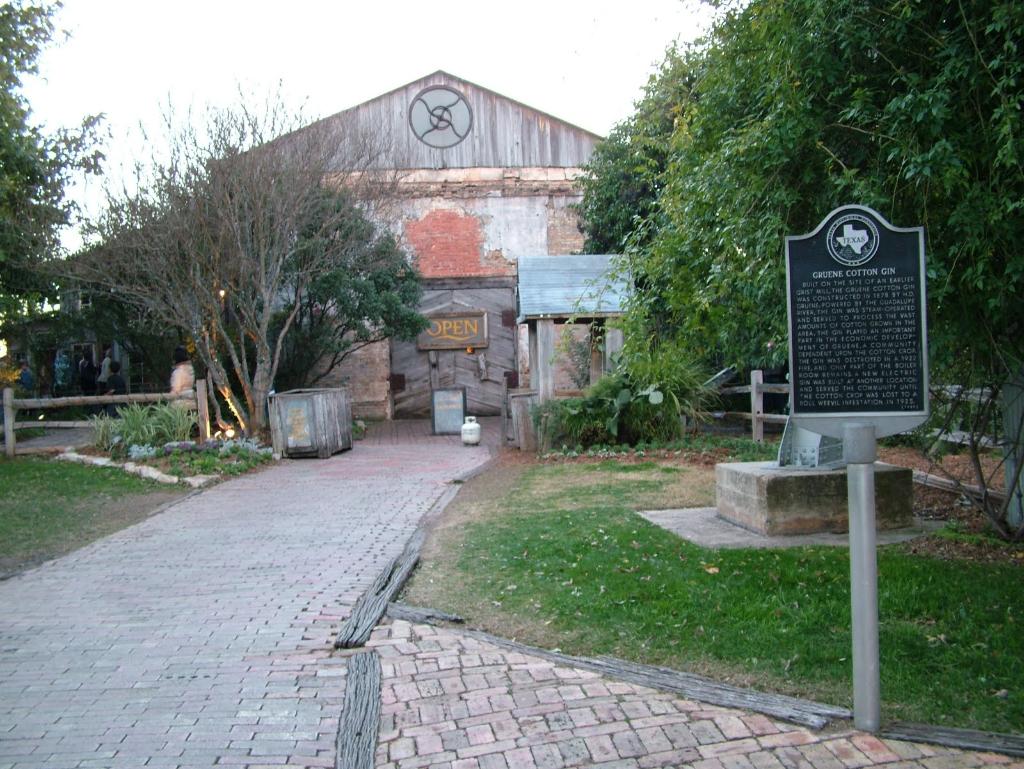
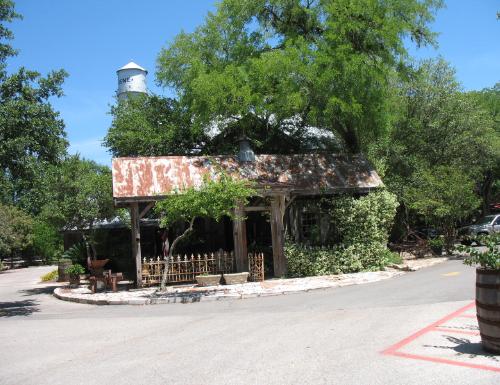
Founded by the first German settlers in New Braunfels, the Gruene Historic District is the premier attraction for history lovers and heritage buffs coming to town. Today, the classic European-style frontispieces of the buildings ooze with traditional charm, while the number of bespoke arts & crafts stores found here showcase the best in local handiwork and creativity.

Take a closer look at the Gruene Historic District:

Two spots where visitors can delve into the past and one where children can explore a mix of other worldly mysteries:

Classic steaks and seafood in the historic center of town at the Gristmill River Restaurant & Bar

Gristmill River Restaurant & Bar is famed for its truly enticing location beneath the swaying treetops of the Gruene Historic District, where guests can enjoy the wide menu of all-American classics in the presence of New Braunfels’ oldest and most interesting architecture. The dishes are quite meat-heavy, and the Gristmill is known for its offerings of steaks and seafood, while there also a number of salads on offer for the vegetarian eater.

See what diners have to say about the Gristmill River Restaurant and Bar:

Bavarian wine bars and classic Texan food clash on the New Braunfels culinary scene:

Sleep in a Texas Historical Landmark at the Gruene Mansion Inn

High Texan hospitality meets traditional Bavarian charm at this elaborately decorated inn located in the heart of Gruene Historic District. Guests enjoy unparalleled access to all the major historical sights, along with all the pleasant natural surroundings on the banks of the Guadalupe River. Inside, hearty breakfasts and luxuriously appointed suites abound, along with all the novelty of staying in a bona fide Texas Historic Landmark.

See what guests have to say about the Gruene Mansion Inn:

Three B&Bs set to the beauty of the Guadalupe River banks:

See New Braunfels on the map:

The post Travel Spotlight on New Braunfels and Its 20 Best Attractions appeared first on Hopper Blog.

08 Apr 14:57

Travel Spotlight on Lake Geneva, Wisconsin, and Its Top 14 Attractions

by Toby Hill

The beautifully wooded and secluded lakeside village of Lake Geneva was first discovered by Chicago business barons in the 19th century. Many traveled here by railroad, and built the large mansions and grand estates which still ring the water today. The lake remained a getaway spot during the Roaring Twenties, and provided a haven for Al Capone and other mobsters during the prohibition years. Visitors can explore this vibrant history at Black Point Estate, or by viewing the structures from the deck of a cruise ship or while walking the leaf-shaded Shore Path.

The town has continued to be a popular vacation destination right through to the 21st century, replete with great restaurants, engaging museums, boutique shopping, luxury resorts, championship golf courses and sandy beaches. It’s connected to Chicago by US-12 and to Madison by Interstate 43, and the nearest major airport is General Mitchell International, less than an hour’s drive from the town.

Step into Lake Geneva’s baron-built past at the magnificent Black Point Estate

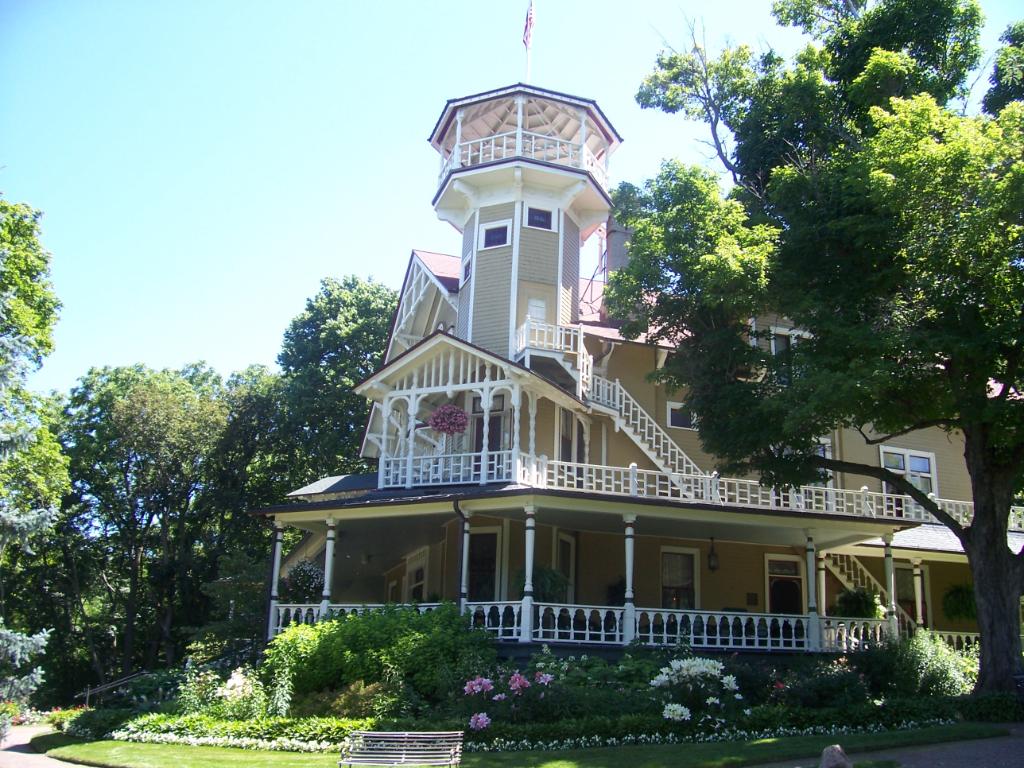
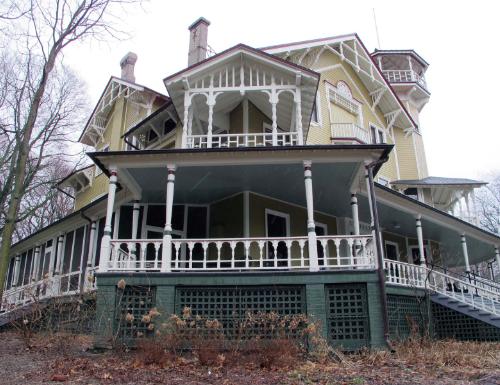
The Black Point Estate, a magnificent example of Queen Anne architecture situated on 620 feet on pristine lake shoreline, encapsulates the history of Lake Geneva. It was built in 1887 by Chicago beer baron Conrad Seipp as an escape from the bustle of Chicago, its tranquility guaranteed by the absence of any roads connecting the house to the rest of Wisconsin – it could only be accessed by boat, which continues to be the way visitors reach it today. Today the house and its beautiful grounds are open to the public, and it showcases one of the most extensive collections of Victorian furnishings in the Midwest.

Take a closer look at Black Point:

The distinctive history of Lake Geneva can be further explored at these vivid and varied museums and estates:

Relax on the sand or wade into water from Riviera Beach

The Riviera Beach encompasses a picturesque stretch of sand-covered beach running into the clean and clear waters of Geneva Lake, situated just on the edge of town. It’s a safe and family friendly slice of shoreline, with lifeguards on duty during the peak summer season. Swimming platforms float a short distance out, and there are swimming lessons available during the summer months.

See what visitors have to say about Riviera Beach:

Choose between three superb golf courses at the Geneva National Golf Club

Geneva National boasts three 18-hole championship golf courses designed by three of the game’s greatest players-turned-designers: Arnold Palmer, Gary Player and Lee Trevino. Each course makes excellent use of the area’s terrain, and speckled across them are some of the finest forested and water holes in the state. While the course is pretty pricey during peak season, great deals can be found if you align a convenient day and good weather during the off season, when Lake Geneva is quiet and the courses have plenty of tee time to fill.

Take a closer look at the Geneva National Golf Club:

Lake Geneva’s history of affluent tourism has left it with a lot of superb golf courses:

Enjoy great fried fish and rotisserie chicken at funky Popeye’s on Lake Geneva

This chilled-out restaurant and rotisserie has a funky water-themed vibe, with mermaids and kayaks hanging from the rafters, a boat-shaped bar, and bright blue outdoor seating overlooking the lake. Both its BBQ pork and rotisserie chicken are well-loved by locals and repeat visitors alike, and the restaurant also dishes out excellent fried fish. It’s an institution in the town, open since 1971, and has frequently-changing special deals and tasty inventions.

See what diners have to say about Popeye’s on Lake Geneva:

There’s definitely no shortage of great places to eat in Lake Geneva:

Indulge in luxurious accommodation with on-site golf and skiing at the Grand Geneva Resort

The Grand Geneva Resort is the modern-day incarnation of Lake Geneva’s business baron heritage. It was originally opened as a Playboy Club Hotel in the late 1960s, and changed hands in 1981, remaining the town’s premier luxury resort, which today offers two championship golf courses, an executive airport, a spa, a fitness center, and an 18-run ski facility served by three chair lifts.

See what guests have to say about the Grand Geneva Resort and Spa:

See Lake Geneva, Wisconsin, on the map:

The post Travel Spotlight on Lake Geneva, Wisconsin, and Its Top 14 Attractions appeared first on Hopper Blog.

08 Apr 12:15

You Should Know Bradford Washburn

by Chase Pellerin


Bradford Washburn is a relative unknown, but for no good reason we can find. He's a pioneer in exploration, mountaineering, landscape photography, and cartography, and his illustrious contributions to outdoor pursuits not only exemplified his love for exploration, but the study, understanding, and dissemination of its attributes.


Elevating the allure of our nation’s landscape, he provided the groundwork (maps, accents, and information) for future explorers—and yet his contributions still remain relatively unspoken.


Maybe it’s because he did too much too early.

Born in Boston, Massachusetts in 1910, his first first peak—New Hampshire’s Mount Washington—was completed at the tender age of 11. Soon thereafter his mother gave him his first camera, a Kodak Brownie, to document his pursuits. When he was 16, he joined his family on a 6-month trip through Europe, which provided the young alpinist an opportunity to summit both Mont Blanc and the Matterhorn of the Pennine Alps.


A year later, his book, Among the Alps with Bradford, was published. Before his twentieth birthday he was enrolled at Harvard and giving lectures at Carnegie Hall on his climbs.  Combining both an intrinsic lust for travel with the effortless enthusiasm towards education and research, Washburn was the both wunderkind and paradox—yearning to explore, yet content in his motionless study. This contrasting configuration would shape the rest of his career.


Or maybe it was because his genius made his work look rudimentary.

At 28, he became the director of Boston’s Natural History Museum. For the next forty-years, his day to day work encompassed turning a once floundering historical site into one of the most respected natural science exposés in the country.


And when not at his desk, he became a pioneer in documenting and ascending Alaska’s uncharted mountain ranges. For two decades, Washburn produced aerial surveys and photographs of the Yukon Territory, Alaskan Glaciers, and the Grand Canyon. He was the first to map McKinley's West-Buttress route (now the most popular path up). In 1984, he took the first photographic flight over Everest.


Prideful in every pursuit, Washburn took the lead in each exploration. This approach gave him a platform to showcase his ability to innovate. When photographing mountain ranges, Bradford would remove the side door of his single engine plane, and through a serious of ropes he would lean out of the aircraft with his 50lb Fairchild K-6 to capture each still. And when he wanted to view his negatives in the field, he developed his own images out of repurposed steel drums.


Or maybe it’s because he simply didn’t care for the accolades, or public admiration his work so rightfully deserved.


Over the course of 40 years of exploration he had accumulated close to 15,000 negatives, but only a handful of them were prints. It wasn’t until later in his life that they began to be displayed in galleries. And he was also in constant contact with the best in his field. Like Ansel Adams, a dear friend of Bradford’s, who described him as a “roving genius of mind and mountains.” 


It’s impossible to think that Washburn wasn’t aware of his significance or even his place in history, he was just simply too consumed in continuing his life’s work to care.


Images: 1: © Jim Harrington via The Art Reserve; 2-8: Lumiere Gallery.

06 Apr 13:49

How to Start a Worm Bin

by Jacoba Charles

  • This spring, start composting with some of our favorite products. From Gardener’s classic three-bin composter to Williams-Sonoma’s back porch tumbler, choose what’s right for your composting needs.
  • Stainless Steel Compost Bin:If you want to compost in style and without a scent, this bin will hold your scraps. Bambeco, bambeco. com, $41
  • 3-Bin Wire Composter:Use this to separate your kitchen scraps from your yard waste and finished compost. Gardener’s, gardeners.com, $100
  • Food Waste Bag:Made from plant resin, this bag will safely decompose alongside your compost. BioBag, biobagusa.com $20
  • Back Porch ComposTumbler:A compact rotating drum will produce rich compost in just over a month. Williams-Sonoma, williams-sonoma.com, $250
  • Redwood 3-Tier Composter: A three- tiered composter allows green waste to be shifted down as it decomposes into your finished compost. Williams-Sonoma, williams-sonoma.com, $400

You too can give a new life to your own garbage — and avoid landfills — if you compost. Even if you live in the heart of the city you can transform your edible trash into useful dirt. No yard? Fill a windowbox. Here’s how:

The two best options for composting in any urban, suburban or rural household are indoor worm bins or outside compost boxes. Different strategies, but both yield the same result: dark, crumbly, nutrient-rich dirt for your houseplants, herb pots, roof garden, raised-bed garden or giving to your friends with green thumbs.

To start your own worm bin, all you need is newspaper, a bin and a pound of red wiggler worms.

To start your own worm bin, all you need is newspaper, a bin and a pound of red wiggler worms. Bins can be bought online, or you can make your own — but they need to have ventilation on the sides, and, ideally, some small drainage holes on the bottom. Fill the bin with damp, shredded newspaper, add the worms and you’re ready to go. Since worms like to do their work in the dark, make sure the paper covers your food scraps. A pound of worms can eat about 3 pounds of food per week — but if you notice the uneaten scraps are building up, it’s time to get more worms or lay off for a while.

Your worm bin can be tucked into any corner of an apartment — it can go inside a closet, under the sink or inside an unused fireplace or shower. Some people build their own wooden box which can double as a bench or coffee table. Don’t worry — the worms won’t escape.

A pile of sheep manure and straw bedding is turned and spread into windrows with the aid of a compost spreader. Another technique for a large pile is hot composting, which requires frequent turning but reduces the required time to 18 days.

A pile of sheep manure and straw bedding is turned and spread into windrows with the aid of a compost spreader. Another technique for a large pile is hot composting, which requires frequent turning but reduces the required time to 18 days.

In either system, the secret to good compost is patience. The process is really the work of worms, insects and — most important — billions of tiny microbes, all digesting the waste into soil.

Outdoor boxes come in all shapes and sizes, but the key to success is in maintaining a fifty-fifty ratio of what experts call browns and greens, says Christine Datz-Romero of New York City’s Lower East Side Ecology Center. Browns are your dry yard waste — leaves, dry weeds, sawdust or old soil. Greens are wet, nitrogen-rich food waste, manure or grass clippings. Every week, mix and turn the pile to make sure plenty of air gets inside.

With both indoor and outdoor composting, keeping the right balance of oxygen and moisture is essential. “The bins should be moist but not dripping wet,” says Datz-Romero. “Like Goldilocks: It needs to be just enough but not too much.” Also be sure to avoid odor or diseases, such as salmonella, by never putting meat, dairy, grease or eggs in the bins. For best results, Datz-Romero recommends taking a class.

In either system, the secret to good compost is patience. The process is really the work of worms, insects and — most important — billions of tiny microbes, all digesting the waste into soil. On average, it will take two to three months before you can begin harvesting homegrown dirt. A delicate arugula leaf will be transformed much faster than a corncob, but it all takes time.

The post How to Start a Worm Bin appeared first on Modern Farmer.

06 Apr 13:39

When Horseshoe Crabs Went to Fertilizer

by Sam Brasch

The modern-day practice has earned a fair amount of press lately for both its sheer strangeness and environmental impact. As The Atlantic reported last month, a quart of horseshoe crab blood can sell for $15,000 because it contains a powerful clotting agent. That chemical — found in the amoebocytes of the crabs’ blood cells — can detect even the most minute contamination of bacterial endotoxins in drugs or medical devices.

A handful of companies have become vampires of the ancient creatures as a result. In the PBS Nature documentary “Crash,” fisherman catch the crabs off the coast for Endosafe Labratories in South Carolina, where technicians leech their blood into tall glass bottles. The animals return to their native habitat with a little less blood and one hell of an abduction story.

While that might read like a bad pitch to the Sci-Fi channel, past chapters in the saga of horseshoe crabs and humans are no less eye-popping. Way back in 1603, French explorer Samuel De Champlain noticed Native Americans in Maine planting dead horseshoe crabs within fields of corn, marking one of the earliest observations of apparent fertilization in the New World.

According to Horseshoe Crab: A Biography of a Survivor, colonists picked up on the idea. When the U.S. industrialized near the end of the 19th century, a few coastal companies decided to turn the practice into a big business.

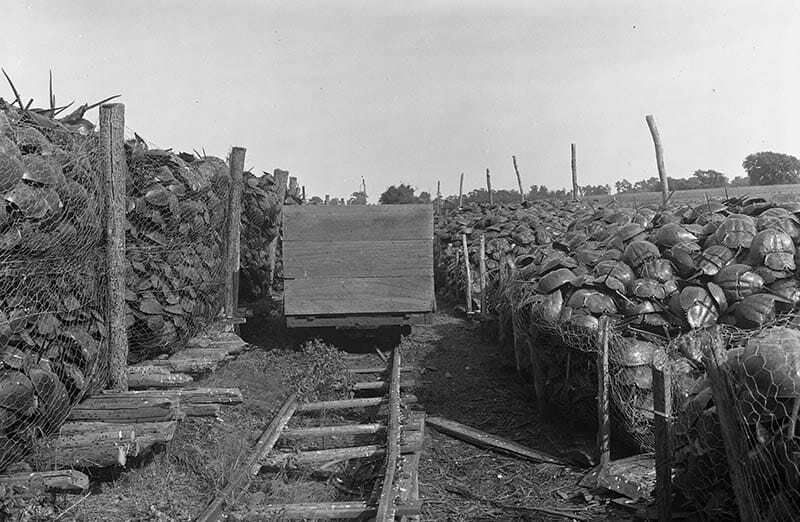
Rather than wading off marshy beaches to collect the crabs as earlier harvesters had, they built a series of horseshoe crab “pounds” on the shorelines of New Jersey and Delaware. When the tide ebbed, a network of nets, wire poles and wooden platforms forced spawning horseshoe crabs into holding pens. In most cases, workers would then collect the crabs and stack them neatly along the shoreline to rot and dry.

crab1

crab2

Once finished stinking up the beaches, they’d be sent to a processing plant, ground to a powder and packaged as a fertilizer called “cancerine.” Millions of crabs died before artificial fertilizers phased out the practice in the 1970s.

Now, advocates of the horseshoe crab are hoping technology again comes to the rescue. The duel pressures of blood harvesting and fisherman using the crabs as bait have significantly reduced their numbers since 1990. To save the crabs a second time, biotech companies and universities may need to discover a way to synthesize beneficial parts of horseshoe crab blood in the lab.

But for now, we have these photographs: proof that the tides changed once for horseshoe crabs.

crab3

crab4

All images courtesy of the Delaware Public Archives.

The post When Horseshoe Crabs Went to Fertilizer appeared first on Modern Farmer.

30 Mar 13:12

Jesse Walker on Flight 370 Conspiracy Theories

Did you really expect all the speculation about the lost Flight 370 to stop just because the authorities think they know what happened? Alternative theories are still bound to flourish, Jesse Walker writes. Indeed, if you look at the reasons why such ideas emerge, you'll see that this is the kind of mystery that's most likely to inspire suspicious stories.

View this article.

30 Mar 13:06

Sixth Grade Whiz Figures Out How to Save the Government Almost $400 Million by Changing Fonts

by Peter Suderman

Figuring out how to save taxpayers hundreds of millions of dollars on ink is so easy a sixth grader could do it. In fact, one did. 

Suvir Mirchandani, a student at a Pittsburgh middle school, decided he wanted to look for ways to reduce waste at his school. So for a science project, he measured how much ink was used in creating enlarged versions of commonly used letters in his teachers' handouts. And then he measured how ink usage would be reduced by using different fonts. 

Printer ink can be quite expensive—almost double the per ounce price of Chanel No. 5 perfume, as Mirchandani tells CNN, which first reported the story

It turned out his school district could reduce its annual ink usage by 24 percent and save $21,000 a year by switching to Garamond, a lighter font with thinner, less ink-heavy strokes. 

After submitting his work to a journal for young researchers run by Harvard grad students, Mirchandani was encouraged to expand his research. 

The task was tougher. But the potential savings were much, much bigger. CNN reports:

With an annual printing expenditure of $1.8 billion, the government was a much more challenging task than his school science project.

Suvir repeated his tests on five sample pages from documents on the Government Printing Office website and got similar results --change the font, save money.

Using the Government Services Administration's estimated annual cost of ink -- $467 million -- Suvir concluded that if the federal government used Garamond exclusively it could save nearly 30% -- or $136 million per year. An additional $234 million could be saved annually if state governments also jumped on board, he reported.

So will the Government Printing Office make a change? I wouldn't count on it:

Gary Somerset, media and public relations manager at the Government Printing Office, describes Suvir's work as "remarkable." But he was noncommittal on whether the GPO would introduce changes to typeface, saying the GPO's efforts to become more environmentally sustainable were focused on shifting content to the Web.

Sounds like Mirchandani may end up learning two lessons: With a little thought, a smart person can find simple ways for the government to save money—and the government doesn't seem terribly interested in pursuing them. 

30 Mar 12:36

The 15 Best Bourbons You Can Actually Buy

15-bourbons-gear-patrol-feature

Finding good whiskey doesn't have to mean hunting down and investing in a bottle of Pappy.

...

Read More »
30 Mar 12:25

Poor Man’s Pappy, An Experiment in Home Blending

Hacking-Pappy-Gear-Patrol-Lead

Can you really get Pappy Van Winkle bourbon by mixing W.L. Weller 12 and Old Weller Antique? We mixed up some "Poor Man's Pappy" for ourselves.

...

Read More »
29 Mar 21:46

The "Massive Gift" That Keeps On Giving: How QE Boosted Inequality To Levels Surpassing The Great Depression

by Tyler Durden

A week ago, the official truth about QE, once upon a time mischaracterized as being a means to boost US employment (which is misreported in such an optimistically biased way that even the Fed now admits is ridiculous, and had to scrap its forward guidance as a result) and grow the economy, emerged when the Fed's Fisher admitted that "QE was a massive gift intended to boost wealth."

Fisher did not need to clarify just who the gift was aimed at - it was clear. But just in case there is any confusion, here is a chart confirming that all the events of the past 5 years have done, courtesy of the Fed's manipulation of the stock market to all time artificial highs, is to push the ratio of the average income of the "Top 10%" to the "Bottom 10%" to a previously unseen level, wildly surpassing the previous record inequality highs that culminated in the Great Depression, and which were subsequently rapidly "equalized" by WWII.

Still not convinced? Another way of showing this - the ratio of the net worth of the top 20% of households as measured by income relative to the bottom 20% rose to 9.3x in 2011 from 5.7x in 2005.

And another observation: when it comes to inequality between the top and the bottom, the US continues to be the most unequal country in the world, a distinction it first regained in the 1980s courtesy of Alan Greenspan's "Great Moderation." We point this out just in case there still is any confusion who the Fed truly works for...

Why? Thank the death of the US middle class, because that is precisely who Bernanke, and now Yellen, means to exterminate no matter the costs.


28 Mar 12:49

Quizlet

by mark

Quizlet is used almost daily by 12 million people but you’ve never heard of it unless you have a high school student. It’s a cloud-based flash card app. Here’s how my highschool son explains it.

Quizlet is what I and all my friends use to study vocabulary or anything else we have to memorize for class. It is super easy and super fast to add a card. No paper, auto-define buttons, lots of keyboard shortcuts make the process of creating a Quizlet quick and painless. Because Quizlets are all stored in the cloud, I can access them from anywhere and not worry about losing track of it. I usually type the cards on my laptop and then review/test on my phone. I can easily share my Quizlets with friends. There’s built in gamification for testing myself which makes memorizing a million words less of a daunting task. Quizlet also has a lot of other features which I haven’t yet tried; to me it is mostly a practical memorization aid. The best feature of all though is that it’s completely free!

quizlet2

-- Tywen Kelly

Quizlet
Free

28 Mar 12:29

For Sale: ’67 Corvette, Near-Mint Condition

by admin

Next month, at Mecum Auction’s in Houston, a pristine example of an all-original 1967 Corvette 357 with 2,996 miles on it crosses the block. The catch? It’s completely unrestored and expected to fetch $500,000… a gross underestimate, we think.

If ever a car were to have Benjamin Button’s disease, this would be it.

Back in ’66, the one and only owner, Don McNamara, celebrated his retirement from the US Marine Corps by doing what any red-blooded American would do… He went to Vegas.

If they were to drain the oil, it would flow red, white and blue

Lady Luck apparently went with him, because he then won $5,000 on a single slot machine. McNamara then did the sensible thing and bought a ’67 Vette spec’d with a 357 V8 good for 390 horses. He also opted for the chrome side exhaust… like we said, he was a very sensible man.

McNamara took it for a few casual drives around town during the first year until it came time to renew the title and license fees. After that, he only drove it at night.

In the mid-’80s, the Marine decided to park it with just under 3K on the clock, having been the only person to ever drive it. (No one even sat in the passenger seat.) On top of that, the car had never been in the rain, nor had it ever been washed with water.

In 2012, when McNamara passed away, he had no family to speak of, so naturally he willed it to his neighbor. Sort of like a PG-version of Gran Torino.

When the neighbors went to the garage to unwrap the car, it was draped in a large USMC flag as well as the American flag. A Team USA Olympic jacket also hung over the passenger seat.

We’re almost positive that if they were to drain the oil, it would flow red, white and blue.

Bryan Campbell

67Vette2

67Vette3

27 Mar 17:01

A Quick, Drunk History of Milwaukee

HISTORY-OF-MILWAUKEE-GEAR-PATROL-LEAD

At one time considered the "Beer Capital of the World", Milwaukee was home to four of the largest brewers in the U.S. Now the city is home to only one: Miller Brewing Co. We examine the rise and fall of the foamy city.

...

Read More »
27 Mar 17:00

This 188-mph R/C car will blow your mind

by Brandon Turkus

Filed under: Etc., Videos, Toys/Games

R/C Bullet

A Jaguar F-Type R Coupe is capable of hitting 186 miles per hour. The new Chevrolet Camaro Z/28 is estimated to top out at 170, while the BMW M5 is electronically limited to 155 mph. All impressive figures, and all of them would lose in a top-speed race to this remote-controlled car.

Called the R/C Bullet, it's been clocked at almost 189 mph, which is enough to stake its claim to the title of World's Fastest R/C Car. It looks like a spaceship, and when it zooms by, it certainly sounds extraterrestrial. It's a ridiculous creation, and quite easily outruns the 100-mph Traxxas we told you about a few years ago.

In fact, this latest run is a significant upgrade for owner Nic Case. He's held and broken the past few Guinness World Records for R/C cars, hitting 161.76 in 2008 and 171.97 in November of 2013, according to RCgroups.com.

Take a look at the video below to see Case's car and its epic high-speed runs.

Continue reading This 188-mph R/C car will blow your mind

This 188-mph R/C car will blow your mind originally appeared on Autoblog on Thu, 27 Mar 2014 12:45:00 EST. Please see our terms for use of feeds.

Permalink | Email this | Comments
27 Mar 15:41

THE EPIC AUSTIN MUSIC HISTORY CHRONICLES | PHOTOGRAPHY & WORDS OF SCOTT NEWTON

by JP
Photographer Scott Newton has been an avid observer chronicling the evolution of music, politics, and his own personal life in Austin, Texas, since 1970– from The Armadillo in the early 70s through 35 years of Austin City Limits. If you love the Texas music scene of the 1970s & ’80s, well then friends, this is […]
26 Mar 17:53

Drinking With The Locals

Drinking-With-The-Locals-Gear-Patrol-Lead-

We explore drinking culture from around the world to bring you the best five customs and oddities we could find -- from beer-chugging Prime Ministers, to drinking and driving (don't do it), to the biggest party in Iceland and more.

...

Read More »
26 Mar 17:51

Defining the Dive Bar

DIVE-BAR-GEAR-PATROL-LEAD

Dive bars face a tug-of-war: they're either worshiped or ostracized. This must stop. Dive bars are just like any other bar -- plus or minus a few roaches and/or bathroom stall sex stories -- in that "good" or "bad" depends on who's asking. Whatever your cup of tea, we contest simply that "dive" not be used to describe a place that sucks: it should be a place that sucks with vigor, or with style, or with crassness. Here are the sordid watering holes that our staff believes, in their slightly perverse estimations, capture the true spirit of the dive bar.

...

Read More »
26 Mar 15:36

In College Basketball, The Rich Are Just Getting Richer—And Smarter

by Kyle Wagner on Regressing, shared by Kyle Wagner to Deadspin

In College Basketball, The Rich Are Just Getting Richer—And Smarter

Hey, SportVU motion-tracking cameras are coming to college basketball. In fact, they're already there, the New York Times explains, in arenas at Duke, Louisville, and Marquette this season. This is good news for any number of nerdy, obsessive reasons, and laughable news because, once the technology really matures, it likely places smaller schools at an even greater institutional disadvantage than exists now.

Read more...


26 Mar 15:35

On A Diet? Google Lets You Compare Any Two Foods’ Nutritional Information

by Justin Pot
nutritional-info-google

You can now compare the nutritional content of any two foods by searching Google. This feature, announced in December but missed by many, gives would-be dieters a quick way to make decisions. Whether you’re avoiding carbohydrates or just generally interested in nutritional information, getting these comparisons couldn’t be quicker. Just type the two foods into Google, with the word “Versus”. For example, you might be curious about the relative merits of celery and carrots. Curious which morning beverage offers more caffeine? Type “Compare coffee vs tea” and you’ll see this: And, as NPR points out, with this tool you actually...

Read the full article: On A Diet? Google Lets You Compare Any Two Foods’ Nutritional Information

26 Mar 14:04

Quick Door Hanger Brackets

by mark

I’ve been building a small cabin for my farm in Stamford, Vermont for 25 years — in my mind, that is. Last year I finally had a local contractor put up a shell for me to finish out. My wife and I went to the farm in July and lived in the construction space while we worked. I wanted to get the job done in in two weeks. (We met each other in Peace Corps Bahrain and are flexible people, but camping out among stud walls in your 60s got old fast.)

Our design included space-saving pocket doors, but the need for a bit of privacy for the bathroom forced a quick design change. A pre-hung door was my answer for the bathroom to get some privacy and get it fast. I watched some YouTube DIYs that showed me how to plumb and shim but I was a carpenter rookie with limited time. That’s when I turned to the Quick Door Hanger. It is easy, quick, dummy proof, and allows for adjustments of any mistakes you most likely won’t even make. The wood-shimming balance act goes away. I hung the door myself in no time and it closed perfectly.

To use the Quick Door Hanger, you start by screw-mounting one of the brackets behind each door hinge, as well as on the opposite side of the door. The brackets have notches in them, which you line up with a level line (drawn using a 6-foot bubble level) before screwing them into the door frame. That’s it. Perfect for rookies like me, but I’ll bet it’s a major time saver for pro finish carpenters, too.

-- Richard Silc

Quick Door Hanger Kit
$5

Available from Home Depot

25 Mar 18:42

What's in your flask?

by El Guapo

Photo: Peter Rivera

A quick and curated list of 10 of the best quality bourbons for under $30.

LINK (via: Paste)

25 Mar 16:21

Cabin Porn

The white band on the cover might suggest a NSFW coverup, but not to worry — there's nothing naked one the pages of Cabin Porn: Inspiration for Your Quiet Place...

Visit Uncrate for the full post.
25 Mar 14:40

Rangiwahia Hut at 1300 metres in the Ruahine Range, Manawatu,...


Rangiwahia Hut at 1300 metres in the Ruahine Range, Manawatu, New Zealand.

Submitted by Anthony Behrens.

More pics and info here.

25 Mar 14:40

Red rock cabin (with cave balcony) outside Moab,...

by jacecooke


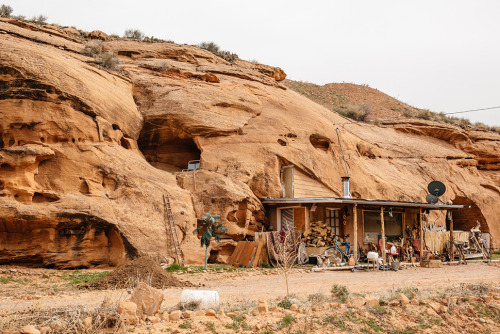
Red rock cabin (with cave balcony) outside Moab, Utah.

Photograph by John “Prolly” Watson.

25 Mar 14:40

Tilly Jane Cabin in the Mt. Hood National Wilderness,...

by vicgarciaphotography


Tilly Jane Cabin in the Mt. Hood National Wilderness, Oregon.

Submitted by Vic Garcia.

25 Mar 14:40

Woodheat.org Website

by mark

Six years ago I left the city for a house in cottage country surrounded by acres of woodland. The house included a big but simple woodstove and we began using it. As I was new to this method of heating, I began searching the net for advice. Woodheat.org is the best site for all your questions about the matter. This nonprofit, nongovernmental agency, dedicated to the responsible use of wood as a home heating fuel, is full of informative material about all aspect of using wood to heat your home. The site is huge and has sections about firewood, chimneys, fireplaces, safety, water heating, boilers, etc.

I used free plans provided on the site to build two inexpensive woodsheds to shelter my firewood. We also upgraded our stove to a non-catalytic EPA certified one. On average, advanced EPA-certified stoves are about one-third more efficient than the old box. This I learned from the site. Woodheat.org is packed with techniques and valuable tips. Also worth mentioning, and rare today: you will not find any advertisement anywhere on the site.

-- Jean Schoeters

Woodheat.org
Free

Sample Excerpts:

The hardest lesson: firewood takes a very long time to season Most folks who split their wood and stack it in well-spaced rows find that they can dry their wood in about six months. If you have your wood stacked in early spring it should be ready to put away for winter’s use by October. However, it may need longer than that if you live in a damp maritime climate or use very dense wood like oak, which is notorious for taking a long time to dry. If you burn very hardwood, it is wise to process or buy it in the fall for use the following fall. That way you’ll be sure of having properly seasoned wood.

*

The biggest single efficiency booster: upgrade to an EPA certified stove

1. Although the EPA wood heater certification program was created to reduce air pollution, it resulted in added benefits like higher efficiency and increased safety. On average, EPA certified stoves, fireplace inserts and fireplaces are one-third more efficient than older conventional models. That’s one-third less cost if you buy your wood and a lot less work if you process your own.

2. Because advanced technology EPA certified heaters burn the smoke before it leaves the firebox, they extract more of the energy in the wood. This results in higher efficiency and less air pollution in your neighborhood.

3. Less smoke in the flue gas means less creosote (which is condensed smoke) in your chimney. Using an advanced technology wood heater reduces maintenance costs because your chimney will need sweeping less often.

4. The chimney deposits that do accumulate are much less combustible, which greatly reduces the chance of having a dangerous chimney fire.

5. EPA certified heaters are easier to use because their fires ignite and burn more reliably.

25 Mar 13:54

White House Refuses To Disclose Cost Of Michelle Obama’s Taxpayer-Funded China Trip

by Nick Sorrentino

 michelle_flying c    c

Remember when we couldn’t keep the White House open, “The People’s House,” because of the budget impasse? Michelle Obama not taking just one of her vacations (paid for by you and me) would have paid for the tours and staff at 1600 Pennsylvania Avenue for at least a couple of years.

Read More

25 Mar 13:48

Stealing from the Poor to Give to the Rich (Video)

by Nick Sorrentino

Em-Dom  c    c

People often think that property rights benefit those with the most property the most. This isn’t true however. It is actually the poor who in terms of quality of life, benefit most.

Read More

24 Mar 23:36

Dublin, Jameson and St. Patrick: The Classic Combination.

by David Coggins

Ger the Cooper

Heading to Dublin with the good people of Jameson for the definitive Irish holiday rightfully makes you a bit nervous. It threatens to be too much of a good thing. Dublin, like New Orleans, has a powerful effect on the imbiber’s imagination. You suddenly hear yourself saying, Yes I’ll have a Guinness at 11am, and it feels perfectly natural. It recalls a line from a novel by the great Irish writer John Banville. Two men walk into a pub before it’s opened and one says innocently: “We were passing by and to our surprise discovered we had a thirst.”

By now, Jameson is so familiar that it’s easy to forget it was founded in 1780. When you wonder why these companies endure, look no further than Ger Buckley, their master cooper who’s worked there for decades. Coopers, of course, build barrels and casks (the original Kennedys—yes, those Kennedys—who immigrated to America were coopers). We watched Ger demonstrate how to assemble one of the barrels that ages the whiskey. It’s a demanding process that Ger made look easy, like an expert fly caster, but of course you know it’s not. The barrels are made of charred white oak from Kentucky, using the same essential technology the Romans invented two thousand years ago. Why change a good thing?

When you pull up a stool at The Long Hall, you know you’re in the right place. There are no televisions, there’s no music. They take the direct approach to drinking, the way God intended. It’s the perfect place to enjoy the new Jameson Black Barrel, which is coming to a bar near you. Complex and refined, it’s about as good an everyday whiskey as you can want.

But whiskey also plays well with others. Here’s a cocktail even an experienced trencherman wouldn’t expect to work, but does. Whiskey, Chartreuse and red Vermouth. The Chartreuse provides a clean, botanical counterpoint to the whiskey. The olive, which seems entirely out of place, raises the umami stakes so high you’ll almost laugh. Two should be enough. It might not surprise you that somewhere between Dublin and New York we forgot its name.

The Forgotten Name

1 part Jameson
1 part Chartreuse
1 part red Vermouth

Mix in a tumbler with ice and stir until extremely cold. 
Serve neat in a small martini glass.
Garnish with an olive. —DC

unnamed

Dublin4

Stag

Dublin3 Stags Head

unnamed-1

Dublin2 dublin1

24 Mar 23:00

Guest Post: The Fallacy Of Homeownership

by Tyler Durden

Originally posted at Liberta blog,

Many people have a weird obsession with homeownership.

When it comes to buying a house, they are willing to overlook, or even completely throw out, a bunch of financial values and principles they claim to hold dear.

The unfortunate truth is, for many middle-class folks, buying a house is often a very silly financial decision, especially if they are young (in their 20s or early 30s), or have a low net worth.

A well diversified portfolio

The most mind-boggling thing I’ve come across is that most people who punt the importance and wisdom of home ownership, will also tell you they believe you should have a well diversified investment portfolio.

You know…

“Spread your investments over many asset classes.”

“Don’t put all your eggs in one basket.”

And so on.

Well, for the average middle-class-30-year-old Joe, buying a house is akin to gathering up all his eggs, borrowing another 9 times as many, and putting them all together into one basket.

Not only is the the average middle-class-30-year-old-home-owner Joe way over-invested in exactly one asset class (residential property), he is also completely undiversified within that asset class, since he owns exactly one property, in exactly one area, based in exactly one town, located in exactly one country.

In short, it’s just about the most undiversified investment portfolio a person could dream up and manage to get himself into.

Leverage

Leverage basically comes down to borrowing money to invest in something.

If you invest R1,000,000 in something, but you borrow R900,000 and only use R100,000 of your own money, then you have an investment in which you are leveraged 10:1.

That 10:1 is called the leverage ratio of your investment. And it is 10:1, since the thing you’re investing in is worth 10 times as much as the cash you put in.

Leverage is great if the thing you invested in grows a lot in value over a short period of time, because it allows you to make a lot of money by investing only a small portion of your own cash!

Unfortunately, the reverse is also true.

If the thing you invested in loses value, then it is very easy for you to lose a lot of money – even more than the initial amount you put in!

While Warren Buffet’s ethics may be a stinker, I do agree with his views on employing leverage:

If you’re smart, you don’t need leverage. If you’re dumb, you have no business using it.

Warren Buffet

Even though, over the long-term, returns made on equities outperformed returns made on property, by far, almost no sane person will leverage themselves 10:1 to invest in equities (i.e. shares).

For most people, this is way too nerve wrecking to even consider. If you suggest such a thing, you might be labelled a gambler, or worse, a madman.

And yet, everyday, average middle-class-30-year-old Joes all around me are buying properties in which they are leveraged 10:1 (and even more), without a second thought.

After spending many months thinking about this phenomenon I can only put it down to the fact that the truth doesn’t matter.

It’s just another asset class

In case you think I have a deluded and deep seated mistrust of property that most likely stems from a childhood nightmare of being swallowed by a house, let me just make my position official:

I have zero issues with investing in residential property.

Residential property is just another asset class.

I don’t currently, but I have in the past allocated a portion of my investment portfolio to residential property (both locally and abroad), by buying shares in publicly listed companies whose business it is to buy and rent out houses and flats.

I just don’t view residential property as a magic-unicorn-galloping-over-a-rainbow-of-profits type of investment with which “you can never go wrong”.

I’ve spent a significant portion of my adult life looking for investments like those, but unfortunately I haven’t found one yet.

Liability and Liquidity

If you are still adamant that you want to invest in residential property, then I have a great suggestion for you:

Why don’t you just buy some shares in publicly listed companies whose business it is to buy and rent out residential properties?

If you do some research and choose a good one, chances are that they are better than you at spotting and buying well-priced properties and collecting rent, because that is what the people who work for those companies do for a living.

There are also some other advantages about investing in residential property by buying shares in publicly listed companies.

You can have a more diversified investment portfolio: By only buying a few shares you are able to limit your exposure to residential property to a reasonable percentage of your net worth.


You have limited liability: If the company goes bust, you will not be liable for any losses. Comparatively, if you buy a property using debt and, for whatever reason, become bankrupt and can’t afford to make the bond payments, then you most likely have quite a few years of hell to look forward to.


Shares in publicly listed companies are liquid: If you ever need to do so in a hurry, it will only take you about 5 minutes and a few key-strokes to sell all the shares you hold in almost any publicly listed company. Selling a house, on the other hand, is a ludicrously expensive multi-month administrative nightmare.

Interest rates and timing your property purchase

Residential property is an asset class that is very directly influenced by the cost of borrowing money.

In our society, it is considered a perfectly normal and responsible thing for a person to finance the purchase of a house by getting a 20-year loan from a bank.

In fact, it is considered such a normal thing for the average middle-class-30-year-old Joe to be a debt slave for most of his life, that if you had to suggest to him that he should save up for a house and only purchase it once he had saved up enough money to buy it outright, using cash, he will probably think that you are crazy to even suggest such a thing.

But, I digress.

My point is, the vast majority of residential properties are paid for using borrowed money.

Because of this, when interest rates go up, so do monthly bond payments. When bond payments go up, some people can’t afford to make their bond payments and they are forced to sell their homes, or default on their bond. A few actually do default, resulting in a seizure and forced sale of their properties by the bank.

To summarize: When interest rates go up, property prices fall (or increase very slowly, usually at a rate lower than inflation), because the available supply of residential properties increases, while at the same time the demand for residential properties decreases. Conversely, when interest rates go down, residential property prices usually go up quickly, because more people can afford to take out bigger loans!

The first rule of business is: buy low, sell high.

This is such an obvious concept and yet, in practice, it is very difficult to do, because it usually means doing the exact opposite to what everyone around you is doing.

If you are going to buy a property, for whatever reason, then at least buy it at the best possible time.

And when would that be?

Well, of course, a few months after interest rates hit their peak after having risen quickly for two or three years in a row.

Take a look at the graph below, which shows the [10Y Treasury rate in the US] over the last few decades.

...with interest rates near record lows and just entering an upward cycle.

In my opinion, the present is just about the worst possible time for anyone to be invested in residential property.

You will know it is the right time to buy your dream home by looking for a few of these signs:

  • Interest rates are starting to stabilize at a high rate, after rising steadily for two or three years in a row.
  • Many people are trying to sell their properties, some in a real panic, because they are struggling to make their monthly bond payments.
  • You hear many tales of properties being foreclosed on, also in neighbourhoods where people are considered to be wealthy.
  • People around you are generally feeling quite negative about owning property.

When the blood is in the streets, my friends, that is the ideal time to buy your dream home.

Paying rent is simply throwing away money every month

I often hear people making this argument. I’m sorry, but that is just a silly thing to say.

Upon purchasing the average middle-class-suburbia home, you’re not only paying a massive amount of TAX to the government, you’re also forking over a significant amount in fees for bond registration, deeds and a bunch of other stupid banalities. Never mind the commission that goes to the estate agent.

Property tax, commission and other fees can easily add up to over 15% of the purchase price of a house. This makes residential property one of the most expensive asset classes to invest in, at least as far as up-front costs are concerned.

Then, once your bond is registered and you are the proud owner of your new home, you’ll be paying interest to a bank, every month, until your bond is paid off.

And don’t forget about maintenance! You know… paint starts peeling, roof start leaking, toilet stops flushing, that type of thing.

Lastly, you’ll also be forking out on a monthly basis for rates & taxes. Which, as property owners in Greece found out just recently, can easily go up by sevenfold in two years, if your government is anything like most governments are.

Safe-haven investment my ass.

Except for squatting on someone else’s land, there’s no such thing as living for free.

So are you saying no one should ever own a house?

No, of course not.

I’m saying people should save up for their family homes and buy them cash.

The saving part should be done by building a well diversified investment porfolio and the home buying part should be treated as an expense, rather than the purchase of an asset.

I know… in the world we live in I’m very much on my own in suggesting such a boring and outdated thing.

But I’ve looked at the facts, and even though I’m well aware that the truth doesn’t matter, I also know that nothing matters to anybody until it matters to everybody – and by then it’s too late.