Shared posts

08 Apr 12:14

The Mid-Century Designers

by Nicholas Pell


Mid-Century Modern design stands as one of the crowning achievements of American architecture and design (alongside art deco). Whereas the great works of art deco tend to be large-scale projects like the Chrysler Building and the Louisiana State Capitol, Mid-Century Modern is known for more modest achievements, such as furniture or the classic Mid-Century Modern ranch home.


Clean, sharp and classic, Mid-Century Modern never really went out of style, but in recent years it has enjoyed a renewed interest. As with all things retro, Mad Men probably primed the pump, but Mid-Century Modern architecture and design doesn't need a TV show to pique attention. Here's a Cliff Notes guide to the classic designers that made the post-war era look so stylish.


Paul McCobb


If you're looking at Mid-Century Modern furniture, chances are good it's either from the Planner Group or a takeoff on something they did. This might make Paul McCobb the most influential designer of the period. The sharp, clean lines of MCM furniture are his calling card. Our favorite piece is his bench organizer, the end table to end all end tables.


Frank Lloyd Wright


No discussion of Mid-Century Modern design would be complete without mentioning Frank Lloyd Wright. Any time you see an MCM ranch, you're looking at the fingerprint of Wright. However, his abilities weren't limited to this iconic American form. The Nathan G. Moore House in Oak Park, IL (above), for example, is a stunning modernist take on the classic Colonial gabled home.


Edith Heath


When it comes to industrial design of the Mid-Century Modern era, one name stands out: Edith Heath, whose company Heath Ceramics still operates to this day. The ceramics, called Heathware, have the stark simplicity of Danish modern design, but are made right here in the USA.


Curt Teich


You might remember our article about MCM postcards. There's a good chance that least one of these was illustrated by Curt Teich, the Rembrandt of Linen Type screen printing. Back before the days of photoshop, Teich helped America come alive on postcards sold from sea to shining sea.


Joseph Eichler


We're going to end with another architect. While Frank Lloyd Wright is the big name of the era, Joseph Eichler probably did more to bring modernism to mass awareness in America than anyone else.


Whereas Wright is known for making big houses for big names, Eichler is a man who made every suburban subdivision in California stylish. Compare his post-and-beam style houses with the cookie-cutter homes cranked out today, and there's just no comparison: things were better back in the day.


Images from: 1,6: via CHD; 2: via MID-CenturiaBerlin Interior; 3: via WikipediaJPatR; 4: via IllSeen, Dipper Vintage; 5: via Lake Country, The Cavender.

02 Apr 02:17

REPORT: Only 1/3 were from previously uninsured...

02 Apr 02:15

The Classic Vuarnet 002 Returns

by werd.com

The Classic Vuarnet 002 Returns

Stretch pants and bump skiing may have died thirty years ago but one staple of early 80s ski style has returned. Vuarnet has just re-released their model 002, the classic cat-eye shade that became their signature style. It’s a complete replica of the original, right down to the Skilynx glacier lens and molded nylon frame.

For purchase information, Click Here
02 Apr 02:06

Mini Museum

by werd.com

Mini Museum

The mini museum is a portable collection of curiosities: ancient stuff like dinosaur bones and matter from carbonacious chondrites. Weird stuff like mummy wrap, coal from the Titanic, and a piece of Martian asteroid. These specimens and scores more are arranged in blocks of clear resin and come in 3 sizes.

For purchase information, Click Here
02 Apr 02:02

True Detective Prints & Postcards

by werd.com

True Detective Prints & Postcards

Breaking Bad had to end. Luckily, you now have HBO’s True Detective. But before every loser on earth starts claiming superfan, you need to own this one. Buy a 24” X 36” graphic print & hang it on your wall or mail out a set of TD postcards and let fools know (before these latest designs by Nigel Dennis sell out).

For purchase information, Click Here
02 Apr 01:55

POWERQUBE

by werd.com

POWERQUBE

The POWERQUBE is a sleek tabletop power supply that has 3 USB ports and 6 grounded electrical outlets. No more  climbing under the table to plug in. Available in black or white. via

For purchase information, Click Here
02 Apr 01:45

SnapRays Guidelight

by werd.com

SnapRays Guidelight

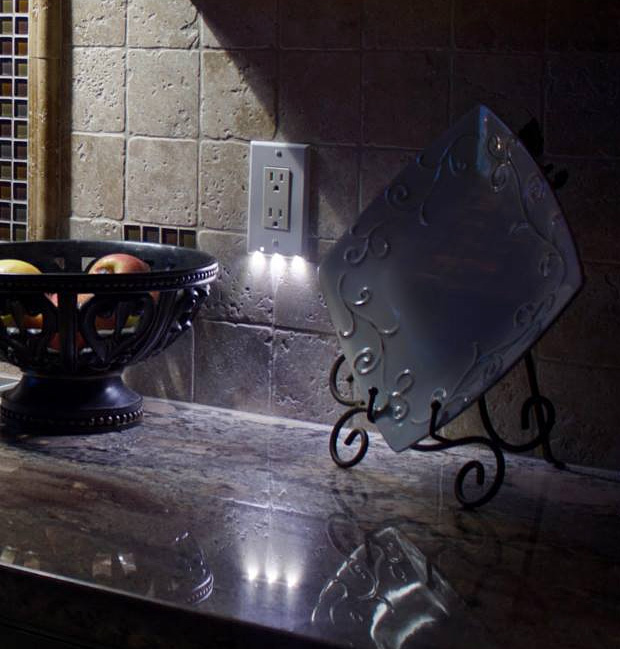
The SnapRays Guidelight saves you a socket by taking the plug-in night light out of the outlet and mounting it right in the plug plate itself. LEDs provide the light and it requires no hard wiring. It also saves energy by using a sensor to turn on at night & off during the day.

For purchase information, Click Here
02 Apr 01:37

Kurgo Wander Hammock

by werd.com

Kurgo Wander Hammock

Sure, he’s man’s best friend, but he’s also a dirty dog. And if you don’t want your car to look like the inside of his doghouse, the Wander Hammock will definitely help. Waterproof, washable & stain resistant, the hammock seat cover attaches to your vehicle at 6 points to keep the dog and his hair, slobber, & muddy paws off your seats.

For purchase information, Click Here
02 Apr 01:37

Fietsklik Bike Cargo System

by werd.com

Fietsklik Bike Cargo System

Per capita, the Dutch ride bikes more than anyone anywhere. Something like 99% of the population. So naturally, the Fietsklik bike cargo system comes from the Netherlands. It’s a detachable, lockable platform that attaches to nearly any bike offering a variety of cargo carrying accessories including panniers, messenger bags, and a crate big enough to carry a case of beer.

For purchase information, Click Here
02 Apr 01:21

Hawaii Obamacare Spent More Per Enrollee Than a New BMW

President Barack Obama's home state of Hawaii's Obamacare exchange spent $35,749 per enrollee, a sum greater than the price of a new 2014 BMW 320i sedan (MSRP $32,750). 

"Just obscene amounts of money have disappeared into these state exchanges for very little actual performance," said American Commitment President Phil Kerpen. "You just have this huge duplication and waste in places like Hawaii and Oregon." 

A CNBC analysis ranking taxpayer-funded federal expenditures on Obamacare found that Hawaii enrolled just 5,744 people through its Obamacare exchange at a cost to taxpayers of $205,342,270. The second-worst performer was the District of Columbia which spent $20,499.37 per enrollee. DC bagged $133,573,927 to sign up just 6,518 people. 

CNBC says that the national average cost per enrollee is $6,894.05. However, the number of those counted as enrollees that have actually activated their coverage by paying their first month's premium is presently unclear. A New York Times analysis revealed that at least one in five Obamacare enrollees did not pay their first premiums in 2013, thereby leaving them uninsured – a fact that stands to skyrocket per-enrollee figures. Moreover, Washington Post columnist Ed Rogers notes that the federal government's enrollment figures also include duplicate and incomplete applications.

Obamacare remains deeply unpopular. The latest Associated Press poll finds that just 26% of Americans now support Obamacare. 

Obamacare will cost U.S. taxpayers $2.6 trillion over the next ten years.


02 Apr 01:17

The Obamacare Enrollment Letdown to Come

The President held a celebration today at the White House to announce that 7.1 million people had signed up for insurance under Obamacare. As Jonathan Strong points out, it was a deeply partisan speech in which the President decried the partisanship of his opponents.

The real problem with Obama's announcement wasn't the tone it was the false premise. Most of the people who he touted today had insurance before Obamacare came along. In fact we've had two surveys in recent weeks. The McKinsey survey found that just 27 percent of sign ups were previously uninsured. Yesterday the LA Times revealed details from an unpublished RAND corp. survey which found that "about one-third" of all sign-ups were previously uninsured.

If we assume, best case, that 33 percent of the 7.1 million were previously uninsured, that works out to to about 2.3 million people. But as we all know by now, not everyone who signs up actually pays. The McKinsey survey found that previously uninsured people were far less likely to pay. In fact, just 53 percent followed through. To be generous, let's assume they bring this up to 80 percent. That means the total number of enrolled but previously uninsured people will be about 1.85 million.

That's a lot of newly insured people but it's only a tiny fraction of the 7.1 million announced today or the 45 million uninsured the administration said Obamacare was supposed to address. We've spent four years and hundreds of millions of dollars on websites and media outreach to pick up fewer than 2 million enrollees. And that's not to mention that the vast majority are receiving a government subsidy to offset the cost.

One might look at all of this and conclude we're not getting a lot of bang for our buck. In fact, about 80 percent of the total new enrollment of the previously uninsured (including Medicaid and young adults on parent's plans) could have been accomplished without the exchanges, without knocking 5 million people off their policies, without making people lose doctors, hospitals, etc.

Insurance industry expert Bob Laszewski sees a big letdown coming when people gradually learn about the real Obamacare numbers.

By celebrating seven million enrollments, the administration has set some pretty high expectations: That Obamacare is making a huge dent in the number of those who were uninsured.

But it would appear that is not the case and they will have to manage a steady flow of hard data that will undermine today's celebration––in an election-year.

Eventually the administration is going to pay a price for this ongoing dishonesty.


02 Apr 01:15

Krauthammer: ObamaCare 7.1 Million A 'Phony Number'


01 Apr 22:40

New Film Documents Alabama Barbecue

by Sara Camp Arnold
We're pleased to share our newest film, Archibald's, made by Wes Wages of Armosa Studios. Head to Northport, Alabama, where you'll meet George Archibald Jr., his sister Paulette Washington, and her son Woodrow Washington.
01 Apr 22:39

Oral History Project of the Week: Carter Family Fold

by Anna Hamilton
Pull up a chair with us as we celebrate the Carter Family Fold for this week’s featured oral history project! In 1927, A. P. Carter, his wife Sara, and Sara’s cousin Maybelle, who happened to be married to A. P.’s brother, made the thirty-mile trek from their home in Hiltons, Virginia, to Bristol, Tennessee, to record a few songs. The resulting Bristol Sessions not only marked the commercial debut of the Carter Family, they catapulted country music into the American canon. Almost fifty years after those first recordings, Janette Carter, daughter of A. P. and Sara, established the Carter Family Fold. It was A. P.’s dying wish that the Carter Family’s legacy be carried on, … Continued
01 Apr 22:34

New Multi-Media Features for Carter Family Fold

by Amy Cameron Evans
We just updated our Carter Family Fold oral history project with new media. Take a look!
01 Apr 18:51

Mar 15, Tips on Running a Boiled Peanut Business?

I'm in the process of starting up a boiled peanut wagon but have questions about prepping peanuts. When selling a couple hundred lbs of peanuts a day,
01 Apr 18:51

One Bowl Baking: Cheesy Smoked Paprika Crackers

by Yvonne Ruperti

From Sweets

[Photograph: Yvonne Ruperti]

When I was a culinary school student, I asked the chef instructor if our class was going to get to make crackers. "No," he replied. "Crackers are far too complicated to make by hand."

I'm not really sure why he said that, because crackers can be the easiest thing in the world to make, and the flavor is incomparable to anything boxed. Nothing will impress your guests more than a freshly baked homemade cracker to serve during cocktail hour.

There are many different ways to make this crunchy, savory snack. Some recipes have yeast (like the classic soda cracker), some are basically an extra thin flatbread dough that's baked up nice and crisp, and some recipes are merely a short dough (fat is cut into the flour to tenderize it) with heaps of salty, savory add-ins. Personally, I usually go for the short dough variety: it's my go-to cracker for when I don't have the time to wait for a dough to rise. To make the short dough type of cracker, simply mix the ingredients into a dough, chill until firm, then cut into shapes and bake. That, my fellow bakers, is as simple as a cookie.

I recently came across a recipe in a beautifully shot food blog that inspired me to bake up a fresh batch. The blog is Drizzle and Dip and the author is Sam Linsell. I'm a sucker for anything smoked, and Sam has a family recipe for smoked pepper cheese biscuits (similar to crackers in our neck of the woods) that I couldn't resist. Equal parts cheese, butter, and flour? These had to taste good. And since the dough could be easily mixed by hand, these hit my target of an easy, one bowl recipe.

To make these even easier, instead of rolling out the dough and cutting it into shapes, I rolled the dough into a log and sliced and baked. With the high ratio of butter, sharp cheddar, and Parmesan to flour in this recipe, the dough is super short, resulting in a tender dough and a light and delicate texture to the crackers. To get the sturdiest crackers possible, make sure you don't underbake them—these need to be really golden and crisp. A sprinkle of smoked salt or sea salt brings out all the flavors of these super cheesy, addictive crackers. Break open a nice bottle of wine and start snacking.

About the Author: Yvonne Ruperti is a food writer, recipe developer, former bakery owner, and author of the new cookbook One Bowl Baking: Simple From Scratch Recipes for Delicious Desserts (Running Press, October 2013), and available at Barnes & Noble, IndieBound, Powell's, The Book Depository. Watch her culinary stylings on the America's Test Kitchen television show. Follow her Chocoholic, Chicken Dinners, Singapore Stories and One Bowl Baking columns on Serious Eats. Follow Yvonne on Twitter as she explores Singapore.

Get the Recipe!
01 Apr 15:59

Rolex Milgauss Z Blue Watch

Ever since the original Milguass — a watch that dates back to 1956 — engineers and technicians have counted on it for its reliability, thanks in part to an internal...

Visit Uncrate for the full post.
01 Apr 14:58

Stay: Shasta Camper

by Meghan

A couple weeks ago, I met up with Taylor Bruce (the fellow behind the Wildsam field guides) for a coffee, and he tipped me off to the best new lodging option in Nashville, the city where he launched his first guide two years ago. Taylor describes the Wildsam series as guides that “bring to life what John Steinbeck describes as the ‘faraway joyous look’ that accompanies curiosity,” so it makes perfect sense that his accommodation recommendation was created by a local fiction writer (who, bringing us full circle, wrote an essay about his Tennessee-bred snake phobia for the Nashville Wildsam).

Author of Carry My Bones, J. Wes Yoder is lately doubling as an innkeeper of sorts. Only the inn is a 1962 Shasta camper he bought on eBay, parked in his leafy and secluded East Nashville backyard and gutted from top to bottom with his own hands. To appreciate it now — all clean lines, wood surfaces, white walls and no-fuss, modern detailing — it’s hard to imagine its ticky-tacky state when he bought it:  “It was red and white and had maybe 100 items of Budweiser paraphernalia; decals, strands of Bud light christmas lights, Budweiser curtains, and also an oil funnel in a closet with a tube running down through the floor to piss through,” says J. Wes, who also built a sweet, freestanding little bathhouse with a clawfoot tub, and tucked an outdoor shower into a private corner between the two.

Since he spends a lot of time at home writing fiction, he says it’s easy to run the place, too. “I’m a maid, a receptionist and a concierge, basically, and I like doing it,” he says. “I’ve been surprised by how strongly folks have responded to it, and can’t quite figure it out. I suppose it feels like camping, or conjures some happy memory of laying in a fort you made as a child. That’s one guess.”  There’s no internet or TV, and sometimes guests join him and his roommates for dinner in the garden. Other times, they end up dancing the night away inside at one of his parties. And so it goes staying with a guy who turned an old Budweiser shrine into a serene backyard retreat, you just never know what you’re going to get. I can’t imagine a better introduction to Nashville. Book it at airbnb.com.

[PHOTOS: All images by Laura Dart]

FacebookTwitterTumblrEmailStumbleUponShare/Bookmark

01 Apr 14:56

Check In: Trasierra

by Meghan

This month, I wrote a story about a new brand of innkeeper for the re-imagined and redesigned Conde Nast Traveler, which is stunning thanks to Pilar Guzman and Yolanda Edwards and their powerhouse team. The personality-driven inn means that the owner is not only a pivotal part of the experience, they are the experience. Their good, quirky and eccentric tastes and big personality informs every last detail — from cooking and serving meals to outfitting the space with hand-picked furniture, art and books from their personal collections. These are people who invite guests into their homes — their worlds — and the connection they make with guests becomes the very thing worth traveling for.

One of the three places featured, Trasierra is a former olive mill turned country house that owner Charlotte Scott brought back from dilapidation 20-plus years ago. When she moved in, they lived there for a few years without electricity. It’s been her life’s work, and and now, her signature can be found in every corner — handmade pillows, fabric draped over tables, wicker baskets and straw hats hanging on walls, herbs drying from arches and doorways, cut wildflowers displayed in pitchers — and even outside, where she designed hikes through the 350-acre property based on where flowers look prettiest during certain times of day. All four of her children are involved (and always have been, even when they were little). One of her daughters cooks, another teaches yoga. One of her sons helps organize excursions to wineries and gaming estates, and the other is a musician who visits regularly and still helps out. When I talked to Charlotte about her innkeeping ethos, I was inspired by her refreshingly laid-back approach to making Trasierra “a place that nourishes.” Below, a few insightful tidbits from her no-flash take on hospitality.

On “no flash”: There’s no flash here. No obvious displays of wealth or luxury. It’s more relaxing when you don’t feel intimidated. It’s not untidy, but it’s not perfect either. There’s no place to go to show off. It’s an equalizer and that’s very important. You see so much nature, it shows you where your place is.

On creating comfort: This is where I would love to be a guest. It’s a natural spa without any of the fuss. No body feels in awe of anything. All the rooms are different, because I’ve had to do them at different times as I had money. They all have charms, which makes it feel like a home, not a hotel.

On privacy: I’ve mastered becoming an unseen presence. If I’m asked, I’ll join a guest for a drink or dinner, but otherwise, it’s the guest’s house. I’m not hovering. If they want to move a chair or a cushion, I don’t want them to feel like someone is breathing down their neck.

On the importance of disconnecting: We arrange everything for guests, so you don’t have to panic about whether there’s wifi in every room. It teaches people how to relax. You don’t have to have an office in your room. Otherwise, you’re bringing your distractions with you on your holiday. Too many people travel with their computers, and they never really get to have a vacation.

FacebookTwitterTumblrEmailStumbleUponShare/Bookmark

01 Apr 14:56

Scenes from Point Reyes

by Meghan

We just got back from Northern California, and I can still feel the vibrant spring in my bones. Point Reyes is a nationally protected, majestic, dream-like cape teeming with wildlife, meadows full of flowers, and foggy shoreline vistas that will make your heart stand still. During weekends, the outdoor enthusiasts (and their backpacks, kayaks, bicycles) arrive by the throngs, but we were there mid-week, and it could not have been more peaceful. Long, quiet hikes paid off with up-close sightings of tule elk, deer, bobcats, snakes, groundhogs, harbor seals and far-off glimpses of elephant seals and whales. We hiked every single day, nearly all day, and ate oysters for every meal. Next week, a post about the old storied boathouse where we soothed sore legs in front of the oversized hearth or beside the window watching the birds swoop and gather on Tomales Bay.


FacebookTwitterTumblrEmailStumbleUponShare/Bookmark

01 Apr 12:03

Study: Vegetarians Less Healthy than Meat Eaters

Vegetarians are less healthy and have a worse quality of life than meat eaters, according to a study by the University of Graz, Austria.

According to the study, those who abstain from meat are "less healthy (in terms of cancer, allergies, and mental health disorders), have a lower quality of life, and also require more medical treatment."

Vegetarians were twice as likely to have atopy (allergies), a 50 percent increase in cancer and a 50 percent increase in heart attacks. They also drank less alcohol.

This is not the first time counter-intuitive research has shown the negative effects of consuming a meat-free diet.

In 2010 the WHO published a study where 30,604 people were followed for an average of 8.7 years on their fruit and vegetable consumption. Those who consumed the recommended 5 pieces of fruit and vegetables a day did not have less cancer nor enjoyed better health. They were even forced to conclude the opposite.

"A very small inverse association between intake of total fruits and vegetables and cancer risk was observed in this study."

This study even concluded that a "..growing body of epidemiological, clinical and experimental evidence suggesting that regular cheese intake may reduce the risk of cardiovascular outcomes."

On alcohol those who drink moderately have far lower levels of heart disease and consequently live longer than tee totallers.

The WHO's study into passive smoking also found no statistical significant correlation with lung cancer and heart disease. Astonishingly the only subset section of information was that children exposed to tobacco smoke have a statistically significant 22 percent reduction in lung cancer in later life.

Many will be surprised and even disappointed at the findings of the University of Gratz's study. However there is plenty of evidence that what we are being told on health at best not evidence based and at worst blatant misleading.


01 Apr 11:56

Ask a Cicerone: The Best Saisons

by Maggie Hoffman

From Drinks

Editor's Note: Ask a what? A Certified Cicerone®. That is, a beer expert who has passed a particular certification exam administered by the Craft Beer Institute. Curious about beer certifications? Read more here.

20140302saisondupont.jpg

[Photo: Adam Barhan on Flickr]

Did reading our guide to Belgian beer styles leave you craving saison? We can't blame you; these farmhouse ales are pretty darn delicious, with their citrusy scent and floral and peppery flavor. But which specific beers should you seek out? We asked our crew of beer experts for their picks: the best saisons on the market today, domestic or imported.

Here are their recommendations, along with ideas for food pairings.

"Brasserie Dupont's 'Vieille Provision,' commonly known as Saison Dupont is to the saison style category what The Wire is to episodic TV, Jay-Z is to rapping, Jordan is to basketball and Ali is to boxing."—Sayre Piotrkowski (Hog's Apothecary)

"Saison Dupont is the best classic example of a true Belgian saison. It beautifully displays noted of citrus and pepper flavors with a hint of farmhouse funk aroma and finishes extremely dry. Since saisons are traditionally farmhouse ales they respond wonderfully to the addition of wild yeast strains (in particular the ever popular brettanomyces) that allow the beer to develop spicy, funky, sour and even tropical fruit flavors and aromas. Among my favorite examples of these types of "wild" saisons are Crooked Stave Surette, Prairie 'Merica, and Lost Abbey Saint's Devotion. My go-to food pairing for saison is a simple Caesar salad topped with parmesan, croutons dusted with herbs, and grilled salmon or chicken."—Tyler Morton (Taste of Tops)

"Logsdon's Seizoen Bretta out of Hood River, OR has been my go-to saison for several years now. Seizoen Bretta is a classic interpretation of the style with lemony esters and peppery phenolics, the beer finishes dry with a decent amount of brett funk that separates it from the rest. As far as pairing goes, saison can be paired with almost anything, but if you want to stay traditional go with seafood, maybe moules frites."—Ryan Spencer (Bailey's Taproom)

20140302statesidesaison.jpg

"Stillwater Stateside Saison embodies everything I love about saisons: the spicy hops, the dry finish, and the slight funkiness imparted by the farmhouse yeast. Not surprisingly, several Belgian breweries make exceptional saisons and my favorite is Brasserie Jandrain-Jandrenouille's IV Saison, with a light fruitiness and dry peppery finish that is so refreshing. Saisons pair wonderfully with vegetables and stinky cheeses, so keep it fresh and funky."—Judy Neff (Pints & Plates)

"Boulevard Brewing is making some of the very finest saisons foreign or domestic right here in Missouri. Tank 7 Saison is an orangey golden hued beauty with billowing head, light citrus notes and peppery phenols from real Belgian ale yeast. At 8% ABV it packs a sneaky wallop for the unsuspecting drinker. What's more, Boulevard annually releases a special version of Tank 7 spiked with wild Brettanomyces yeast. Called Boulevard Saison Brett, the beer has an added layer of funk with plenty of sweaty, horse-blanket aroma and flavor to please saison and sour lovers alike. Both beers are extremely versatile for pairings too. Despite their considerable strength, neither will overpower lighter fare such as salads or white fish. They will also work well with chicken dishes, lobster, pork tenderloin, and creamy cheeses."—Chris Kline (Schnuck Markets)

"One of my favorite saisons is a seasonal brew from the Maui Brewing Co, Lemongrass Saison. During a collaboration with The Lost Abbey, a traditional saison recipe was enhanced with the addition of Maui-grown lemongrass. The soft mouthfeel of the beer with the delicate flavor of locally grown lemongrass, matched perfectly with the Champagne-like effervescence of the beer."—Bill Carl (Southern Wine & Spirits of Hawaii)

"I love new school saisons, creative saisons like the pinot noir barrel aged Bellwoods Farmageddon, or super funky saisons like anything from Fantome, but for me it always come back to Saison Dupont. I think it's the best example of the style and is one of the most delicious drinks I've ever had. I always try to have a bottle or two on hand. It's great to drink on its own, but it's also one of the most versatile food beers out there. It can go well across the board with charcuterie, fish 20140302bamuse.jpgdishes, roast pork, spicy Thai food, washed rind cheeses, Thanksgiving dinner... I enjoyed a bottle with the better part of the tasting menu at Eleven Madison Park and it was fantastic."—Jesse Vallins (The Saint Tavern)

"The saison style is as varied as are the stories about how the style came to be. No matter how the modern incarnation of the style was developed, there are a wide range of great flavors and beers that we call saison. Jolly Pumpkin Bam Bière deliciously delivers the slightly sour "farmhouse" side of saison, while Lift Bridge Farm Girl is a great example of the everyday refreshment found in saison. Ommegang Hennepin is a great example of saisons with higher ABV, yet great, crisp drinkability. For a great pairing with saisons I love soft, earthy cheeses like Camembert or brie."—Dan Parker (Better Beer Society)

"Enegren Brewing Company's Golden Spur Saison is on the top of my long list of favorite saisons. Crystal clear and brilliant gold with airy aromas of citrus and hints of banana, this brew is full of bright fruity esters balanced by a complex peppery finish and a sparkling carbonation that dries the palate and leaves you needing just one more sip to quench your thirst. At a local tap takeover, Golden Spur was paired with Spur-battered onion rings and a matching Spur-spiked Dijon mustard, which both married together in flavor and simultaneously cut through the richness of the fried batter thanks to the effervescence."—Becki Kregoski (Bites 'n Brews)

"Saison Bernice by Sante Adairius is a fabulously rustic and soulful saison with an earthy brettanomyces funk. I recently did an interview with Tim Clifford, Sante Adairius's co-owner and brewer, which you can check out here. Why not eat like the Middle Ages French farmers who brewed these spontaneously fermented farmhouse beers? Back then it was inexpensive farm fresh food, but today it's still simple to grab a fresh crusty baguette, tomatoes, olive oil, herbes de provence, and a rich double or mild triple cream cheese to spread."—Chris Cohen (San Francisco Homebrewers Guild)

"I've really been enjoying domestically produced saisons lately. They are also more likely to be fresh than imports, which makes a huge difference. Two stick out in my mind as must haves: North Coast's Le Merle and Pretty Things Jack D'Or. For me, Le Merle is just perfectly balanced in flavors with a prominent but not overpowering yeast pepperiness, light effervescent body, and a great dry finish. Jack D'Or is heaven. It's got a stronger malt presence in body, with a great spice from the rye and a nice hop flavor. For something outside the normal saison, I really enjoyed Stone Brewing Co's 'Matt's Burning Rosids', which is an imperial smoked saison. The smokiness comes off as more of a singed oakiness to me, but that lovely saison yeast still shines through. It's unexpected, and I like that. Locally to me in Cincinnati there are a few breweries producing excellent saisons: Rockmill Brewery, Blank Slate, and Rhinegeist all get gold stars."—Lindsay Bohanske (Love Beer, Love Food)

31 Mar 18:54

The Patagonia School of Fly Fishing

by El Guapo

In a new book book, Patagonia founder Yvon Chouinard evangelizes his, "the more you know, the less you need philosophy. 

For someone with a vested interest in selling goods for exploring the great outdoors, Yvon Chouinard, the owner and founder of the outdoor-apparel company Patagonia, takes a surprisingly stripped-down approach to one of his favorite pastimes. "Heaven knows we fly fishers are suckers for every new gizmo we think will give us a leg up on catching fish," he writes in "Simple Fly Fishing: Techniques for Tenkara and Rod & Reel."

LINK (via: The Wall Street Journal)

The centerpiece of the book launch is Patagonia's Simple Fly Fishing kit that comes with everything needed to get started: a tenkara-style fly fishing rod, box of flies, line and leader, quick set-up guide and a copy of the book. Throughout the month of April, Patagonia stores will host casting clinics and book signings with Patagonia Provisions tastings in the following areas: Ventura, San Francisco, Santa Cruz, Seattle, Portland, Boulder, Denver, St. Paul, Dillon, Chicago, Freeport, Austin and Salt Lake City.

A portion of the proceeds from the book, which can be purchased separately, will be donated to various conservation organizations.

31 Mar 17:33

How Much Does It Cost To Propose In Each MLB Ballpark?

by Reuben Fischer-Baum on Regressing, shared by Reuben Fischer-Baum to Deadspin

How Much Does It Cost To Propose In Each MLB Ballpark?

Over on Swimmingly, Molly Fitzpatrick reached out to every MLB team and figured out how much it costs to publicly propose at each MLB ballpark, as well which services each ballpark offers to make your awkward public proposal as magical as possible.

Read more...


31 Mar 17:23

Shed of the Year: skeletons, love letters, and secret dens

If you thought sheds were boring, dust-filled, over-sized toolboxes, think again. Letters from ex-lovers, human skeletons, and wisdom teeth are among the bizarre objects to fill the nation’s sheds, according to a survey ahead of the annual Shed of the Year contest.


30 Mar 14:49

Guest Post - Conditioning: That Which Keeps People Subservient to Abusive Leadership

by Cognitive Dissonance

Guest Post - Conditioning

That Which Keeps People Subservient to Abusive Leadership

By

Peter Offermann

peter@oceanfalls.org


Try as we might to expand our view of the world, ultimately we can only see the universe through our own eyes. This is why I always enjoying reading other people’s point of view, particularly when that person has a completely different life experience than mine.

Peter, a premium member of Two Ice Floes, fits that bill perfectly. It was our hope when we developed Two Ice Floes to use the “Your Turn To Publish” feature to induce talented individuals to submit their musings for publication (you do not need to be a member to do so) in order to share their life experience and perspective.

While I have written on this subject before, Peter brings a fresh and more in depth focus to the issue. Thank you Peter. – Cognitive Dissonance


To subscribe to 'Dispatches', a periodic newsletter from Cognitive Dissonance and TwoIceFloes Creations, please click here. 


Few who are paying attention to world events through a lens more precise than the Main Stream Media (MSM) would deny that the vast majority of humans are being badly abused by their leadership in a variety of venues ranging from local, regional, national, and international politicians and bureaucrats, financial managers, corporate controllers, religious leaders, media moguls and warlords.

The vast majority of humans appear to be oblivious to this abuse and passively accept what is being done to them. Why is that? In one word - conditioning.

The vastly increased access to information that the internet enabled is responsible for a large number of people at least becoming aware of this abuse. However even among this more aware group, taking effective action to stop the abuse is sorely lacking. Why is that? In one word - conditioning.

There is a much smaller group that are proactively attempting to counter the abuse through group protest, but they are losing the struggle. Why is that? In one word - conditioning.

At 68 I am getting on in years. I have lived a full life and have had the time to reflect back on my path through life. As a result I have come to realize that most of the conditioning we are all subject to did not incapacitate me nearly as much as it did most people. I believe the realizations I have come to regarding my seeming immunity to conditioning are a necessary foundation required for people to free themselves from the tyranny that enslaves them.

With that hope in mind I would like to share some experiences from my youth that illustrate the problem (conditioning), and hint at the solution.

Our conditioning begins at the moment of our birth. Although they are not conscious of it, our parents, and family members, begin the process. Our parents have been conditioned before us and all their ‘conditioned’ traditions are passed on to us without considering the consequences. How often have you heard the excuse, “That’s just the way things are, get over it!” There is a great book by Wilhelm Reich called, “The Function of the Orgasm”, that explains the form of, and reasons for, this early in life conditioning. Yes, our sexuality plays a large role.

It is widely accepted that our late childhood, and early adulthood, years are our formative ones and also when we are in our prime both intellectually and physically. Historically people took full responsibility for managing their own lives much earlier in their lives, during what we consider late childhood. There were once 14 year old admirals that oversaw large naval forces. The commitment of marriage and raising a family began much earlier. Pioneers struck out to discover and populate new mysterious lands before they reached their teens.

The most rigid and destructive conditioning is imposed on us during our schooling. That schooling is starting earlier and lasting much longer than previously in history and while we are being ‘schooled’ we are not considered full adults with the responsibilities and freedoms such status implies.

Why is that? Could it be that control in our society is much more rigid than ever before? Those that control us realize that a rebellion of youth is the most dangerous kind. How better to minimize the impact of people in their prime than by keeping their status at ‘children’ with little access to power until well past their prime years? If people cave in to ‘slave hood’ during their prime years, how likely are they to rebel once they are past their prime; especially if they are burdened with excessive debt from their education?

I will only touch on the subject of our schooling lightly here and point out what I see as the most debilitating habits we are taught. The subject is an immense one covered well by people such as John Taylor Gatto, author of, “The Underground History of American Education”.

Disclaimer: I quit school in the early 60’s while in grade 9, at age 14. The reason being I felt I was being made dumber instead of smarter. My parent’s response was, “if you don’t go to school we will not support you.” I left home then and took on responsibility for my own life.

Even though I chose a different path than most I did not really understand intellectually why I did what I did then until recently, about a half a century later. What I did then, I did intuitively, rather than logically while accepting full responsibility for the outcome.

I first spent a few years hoboing around Canada taking whatever work I could find whenever I needed it. No job was too menial or too challenging to accept.

At 17 I took on a job that turned my life around and led to my conditioning mostly sliding off me.

This job was as a fire lookout man with the British Columbia (Canada) Forest Service. For a number of years I worked and lived on remote mountain tops, by myself, for 3 to 4 months each year. Spending that much time completely alone, and removed from civilization, especially during my formative years, had a profound effect on my perceptions about life as a human being and how I fit into society.


The Watch Tower

Rendered by me from a photo by Kyle Johnson http://kjphotos.com/portfolio/outside


I didn’t have a camera in those days so the image above, which closely represents my situation, is used to illustrate the setting.

Below is a photograph of me taken a few years later in the same general area I spent time on the lookouts. The other photos interspersed in this essay are taken by me as I explored the mountains near my home after my lookout years.

Self Portrait

In current society peer pressure during childhood, and early adulthood, is immense. To survive in this setting we must pay close attention to others around us for clues regarding what is and is not acceptable. Because of this pressure the bulk of our energy goes into human interactions and we are pretty much oblivious to everything but our immediate environment. “Use it or lose it”, is sage advice. Because of concentrating on human relations during their formative years, most people have little if any connection to the natural world.

Try to imagine what people would be like if, as youngsters, they spent time exploring and living in nature while being responsible for their own survival and actions instead of hanging out at the mall or partying with their pals.

Is it fair to say that those that hang with the crowd are unlikely to be aware of, or able to understand, large scale events not part of their immediate environment?

What about someone who is tasked with surviving in the greater world using only their own skills? Would they stand a better chance of grasping what is going on?

Is this phenomena related to the common use of a ‘rite of manhood’ by many cultures where young adults leave the security of their group to face the wilderness on their own?

Scenery Three

Do the majority of people in modern societies never go through this enabling rite of passage and instead go from the security of their parent’s care to the security of the big brother state? Does this explain why some people never seem to reach adulthood?

Substantial time on the lookout, without peer pressure, made me realize how confining trying to fit into the crowd is. Most people don’t even sense this pressure because it is all they know. It’s like the air we breathe. It’s just there until it isn’t, then we die; unless we are prepared for an airless environment.

Most people also don’t realize how much of their time and energy it takes to be ‘social’. Being removed from ‘socializing’ is enormously stressful if it is all you know.

Many aspiring lookout men needed to come down off the mountains prematurely because they could not stand being alone. Those that adjusted to the isolation came to treasure the freedom of being comfortable for extended periods with just their own company. The amount of time that then becomes available for other, possibly more worthwhile pursuits, is substantial.

In the forefront of these benefits is having the time to look inside youself without constantly being subjected to the opinion of others. Building friendships takes time and effort and becoming your own friend is no exception. Most of us never get the opportunity to do this.

Those that desire to control human behavior understand that people that are not comfortable with themself are much more susceptible to being controlled because they are lonely and need to seek comfort and friendship outside themselves. Virtually every sales campaign, ranging from that of the door to door salesmen to world leaders, is then enabled to easily sell you a bill of goods by convincing you that what they have to offer is going to become your best friend and make your life less lonely.


Scenery Four

Short excursions or holidays into nature, most often with others fitted into a busy schedule, do little to increase our awareness of the greater reality that humans exist within. Thanks to modern technology very few of these excursions actually take people far from the human controlled environment they are conditioned to.

It is one thing to climb to the top of a mountain, conquer it, and then immediately return to civilization. It is something totally different to stay in that wilderness environment for extended periods with the time to come to know those other species that are at home in those environs. It makes one realize that humans are not the 'be all, end all' of life on earth. Humility is born which serves us very well. In this environment one soon comes to realize those species include the earth itself. Seeing the constant breathing of weather and daily and seasonal shifts of energies makes one realize everything is made of the same stuff and ‘lives’ in its own unique way.

To assume the earth is a lifeless blob which we can abuse without conscious consequence is a very risky proposition.


Scenery Five

Most people’s lives are lived out within an environment created by and for humans. Most; and more all the time, live in an urban environment.

When they holiday people generally take some technological means of travel which quickly takes them to the other place of human habitation they wish to holiday in. Because people’s travel experience is so brief, and misses the detail of the ground they pass over, most of which currently has no human habitants, it is easy for them to agree when told by ‘experts’ that human overpopulation is a crisis.

Yes there are many urban places on the planet that suffer from overpopulation, and many more places on the planet that are being strip-mined to support those urban centers. But all in all there is an enormous amount of free space capable of supporting humans, if only they were able to tear themselves away from the social centers they now depend on and cluster in.

In the early 1990’s while transitioning from life in Canada to life in Mexico I drove between Canada and Mexico every second week for 3 years while gradually weaning my clients off the services I had previously offered. I was a workaholic and saw the time on the road as my own and enjoyed it by taking different highways almost every trip. Eventually I was able to drive between Mexico and Canada while only passing through a very few towns, all smaller than about 10,000 people. Most of the distance on these trips was spent on very remote highways with no other traffic to speak of.

I can say definitively that between, Canada, the USA and Mexico there is enough uninhabited fertile land to accommodate the whole world without the residents being able to see their nearest neighbor.

This vision assumes we overcome our condition of needing to be part of the herd clustering in vast hordes, and also manage to disempower the laws of those that enslave us that currently make this land unavailable to us.


Scenery Six

Humans are far more difficult to control if they live in small clusters, all over the place, while paying little or no attention to the MSM. The propagandists can then no longer create a single message that will motive the whole herd of humans to act identically by broadcasting their one piece of propaganda from a single location that reaches everyone.

Propaganda still works, but it must be tailored properly to fit each unique situation in order to get consistent results. If there is no central broadcasting service the message must also be taken to each unique location individually. This is an impossible situation for our rulers and is the reason we are all so heavily conditioned to….

Need to be in close quarters with other humans.

Need the approval of others.

Think alike.

Think we must be/are part of a team.

Become isolated emotionally from ourselves and each other, even while packed on top of each other, so only big brother can offer us comfort.

Desire specialized knowledge which results in only being able to survive as part of the ‘urban’ team.

To desire a ‘carrot’ of reward that only ‘winning’, at any cost(?), within the crowd can present.

Depend on centralized services, especially sources of energy.

Depend on the rule of ‘human’ law to protect us from each other.


Scenery Seven

The most destructive conditioning takes place in our schools, right at the time we are most susceptible to it, during our formative years. During that period we have little experience of our own to compare to what we are told, and raising questions about the validity of the taught ‘truth’ is ruthlessly punished in order to force us to depend on the wisdom of others instead of our own intuition.

We are ruthlessly regimented to follow orders so that we eventually become incapable of thinking for ourselves and become dependent on the ‘boss’ to do our thinking for us. The intellectual box we become stuck within is then defined by the boss.

Specialization in training, and limiting access to information, (compartmentalization) is critical to our conditioning. If we cannot think for ourselves, and only understand part of the puzzle, and are incapable of deducing or intuiting answers to unknowns, we are trapped within our dependence on others.

I have personally met a number of world shaker class intellectuals that are extremely brilliant in their own field, but figuratively can’t tie their own shoe laces. This situation is not accidental. If only the boss has the full picture, the boss becomes the only one who can act effectively. Everyone else then becomes totally dependent on the Boss. Specialization has its place, but having a well rounded toolkit of life skills is essential to individual freedom.


Scenery Eight

Being away from civilization where the boss is not handy to hold your hand is a disaster waiting to happen if you cannot think for yourself. Then, unless you quickly learn to identify problems before they destroy you, and also learn to fix problems you can’t avoid intuitively without an instruction manually from the boss, you will not survive long.

Lack of education plus much time spent away from conditioning influences and conditioned humans, has changed fundamentally how I solve problems.

When faced with a problem a conditioned human will go through the channels of historical solutions until they find one that works for them.

Instead I consider the elements of the problem in place, try to intuit the workings of the device/situation, and then pinpoint what is going wrong and consider what might fix it. No manual is needed; just the ability to think a situation through for myself.

Using only this skill I have managed to live my whole life well, if not always comfortably, while being considered an essential resource by many people with far more education than myself, even in areas they have expertise in.

No one is perfect and you will make mistakes when you think for yourself. Mistakes are often painful, but if you accept the possibility of making mistakes, and are willing to learn from them when you make them, you will eventually become a very robust and capable person. What doesn’t break you strengthens you.

If you are afraid of making mistakes you are stuck on the safe (?) road built by our bosses. You still might not be safe, but at least you can then blame your mistakes on someone else.

I have learned far more from my mistakes than from my successes. I am now very thankful for my mistakes, even though some were very painful to navigate.


Scenery Nine

This essay is getting long so I will end it with one last point about what I learned from my life on the lookouts.

While we are thrust into the middle of ongoing intense personal inter-relationships, especially during our formative years, our attention remains strongly focused on each interaction as it occurs and the rest of the world passes us by unnoticed. We see the trees, but are oblivious of the forest. This is most often a habit we carry throughout life and it is a very dangerous one in our propaganda filled world. We see each piece of new propaganda as a standalone piece of information. We have no perspective to see if how it fits into the forest makes sense. We are then at the mercy of those that would deceive us for their own purpose. All they need to do is grab our attention and they can then do with us as they like.

On a lookout tasked with quickly finding dangerous anomalies, within a vast vista of forests, becoming focused on each tree individually is not productive and makes it impossible to see the whole picture. A good lookout man eventually learns to quickly scan vast vistas without focusing on anything in particular. Taking this approach to finding required data points, such as suspicious smoke, allows our intuition to come to our aid. It always amazes me how glaringly anomalies stand out when using this method.

It works just as well in any other environment, including researching on the internet. When surrounded by questionable ‘news/propaganda’ the fires stick out much more obviously when we also are aware of the apparently unrelated surrounding information that is part of webscape. The ‘trees’ of propaganda do not distract us from seeing the whole situation. If there’s no smoke there probably isn’t a fire. Our intuition can see the difference even though we logically can’t. Following our intuition instead of remaining focused on the propaganda leads us to the information that will then allow us to make sense of the situation.

Although my prognosis of our situation appears very gloomy I am not pessimistic. I see light at the end of the tunnel.

For those who managed to slog through to this point thank you for your attention.


Peter


www.TwoIceFloes.com is unlike anything you will find on the web, a truly unique destination. There you will find distinctive Premium Members only articles as well as discussions on wellness and health, homesteading, spirituality & philosophy and most importantly ‘safe’ forums not found anywhere else. Come by for a peek and stay a while.


Scenery Ten


30 Mar 13:48

Biking in Chauncey

by Brian Brown

Railroad Avenue Chauncey GA  Dodge County Cool Lady Riding Bicycle Water Tower Cotton Gin Warehouse Store Photograph Copyright Brian Brown Vanishing South Georgia USA 2014

When I first posted this photograph on the Vanishing South Georgia Facebook page, I was amazed at how much positive response it got from viewers. It was a cool day and when I told this lady that I was taking her picture she laughedsaying that she was just the “crazy woman who rides her bike in 20-degree weather”. I think she’s pretty smart myself, but as one Facebook viewer wrote: “Here’s to crazy ladies everywhere”.


30 Mar 13:47

January in Japan

by Austin Bryant


Just before his birthday this past January, California-based photographer and director Scott Gold and his wife decided on a last-minute trip—Japan. Gold has a tradition of recording a video for every trip they go on, and this one would be no different. When I came across his resulting video, “January in Japan,” I was awestruck.


The jaw-dropping scenes that Gold managed to capture and seamlessly fuse together (in crisp HD, no less) are a sight to behold (below). Scenes range from the packed urban areas of Tokyo, to sumo stadium wrestling matches, to falling snow melting in hot springs a bullet train-ride away.


I spoke with Gold this past week, and he’s currently inundated with comments, emails, and requests for more videos of other countries. Even so, he was more than happy to answer my questions—and provide some tips on places to eat.


First off, the video is beautiful. What prompted the trip with your wife and your decision to film it?


I've always had a strong affinity for Japan. There's something about a culture that holds honor and respect so highly, I guess I really appreciate that.


About a week before my birthday (January 25th) my wife suggested we do something fun to celebrate it. We tossed around a bunch of ideas and a simple road trip just wasn't cutting it this time. We wanted to do something more spontaneous and a last second trip to Japan scared us just enough to know it was the right decision. I bought my first video camera in 2003 and have made a video for just about every one of our little adventures. I knew Japan would be no different, although I wanted this video to be special.


Japan really seems like a magical place—the packed urban sprawl of Tokyo just a train-ride away from secluded shrines. Does it really feel like a whole other world?


It is a different world for sure…It's amazingly different than western culture yet surprisingly familiar at times, too. At one moment you feel like you're walking around in Blade Runner and the next you're in a Kurosawa samurai epic.


What we found interesting, despite the sharp contrast between east and west, old and new, was that we always felt safe and welcome to explore. Perhaps in another country or culture these differences would be intimidating, but the Japanese are so humble and soft-spoken they always seemed welcoming. It was wonderful.


It's hard to ignore the amazing restaurants and food in the different scenes—how was the culinary exploration part of the trip?


My wife is a die-hard foodie. She's makes a point to explore a culture through its food just as much as its sights and sounds. She knew Tokyo is one of the culinary capitals of the world, so as soon as we booked our tickets she started digging through blogs and forums trying to find hidden treasures. Here's a little sampling of a few places we went…it was damn good.


Tokyo:


Sushi Dai-wa in the Tsukiji Fish Market: We didn't feel like standing in line for two hours at Sushi Dai. We ate at Sushi Dai-wa and used the extra time to shop the fish market.


Maishin: Tiny hidden spot in the middle of Shibuya. Considered to have one of the best sake selections in all of Tokyo, the food is incredible too.


Yakitori Akiyoshi: Fun yakitori near Shibuya station. We loved it so much we ate here twice! Great atmosphere.


Maisen: Best Tonkatsu we've ever had…amazing! The building was an old bathhouse during WW2.


Kyubey: It's the original restaurant in Ginza. One of the best spots for high-end sushi. We were served by sushi master Kyubey himself.  Order the omakase, it's a wonderful experience…live shrimp!


Kyoto:


Tsujiri Tea House: The best tea! Amazing matcha teas and desserts. Great place to pick up gifts.


Gion Kinana: Hidden ice cream place in the Gion district. Delicious ice cream served with hot tea. Yum!


Giro Giro Hitoshina: Modern Kaiseki style dinner at a great price. Fun atmosphere and creative food pairings served in quirky mismatched dishes. 


Yudanaka:


Tamaya: It's a sumo-themed restaurant. We had a wonderful dinner eating Chanko Nabe while it was snowing outside; it was our favorite meal of the trip.


Last but not least! Family Mart: For late night snack attacks! Boss coffee and something chocolate is great combination!


How was the actual filming—did you have any trouble shooting in public places, and was the language barrier much of an issue?


Filming in Japan was easy; we had no issues. Luckily the [Canon] 5D Mark III is a small camera and it doesn't draw too much attention; it really looks like you're taking photos most of the time. Also, I firmly believe if you don't act like a tourist, you won't be treated like a tourist. This means being polite and respecting people. It also means learning about the culture and language so you can interact appropriately. 


We practiced speaking Japanese the week before the trip and it helped tremendously when talking with people. If you ever are in doubt if it's OK to film something, just ask; it never hurts and it's super respectful.


Tell us about some of your other work, I see that you've done some other videos and that you have your own boutique creative agency called HAMMR.


Commercial lifestyle video and photography comprise most of my work. I started HAMMR last year to starting handling larger projects coming down the pipe and due to the popularity of January in Japan it looks like 2014 is going to be a killer year. Long term, I'm working hard to start directing feature films; that's ultimately where I want to be.


Lastly, when's your next trip? We can't wait to see it.


After the video went viral I've gotten hundreds of emails from people asking me to visit their country and make a similar piece—Bangladesh, Russia, Thailand, Australia, you name it. If I had to choose I think I'd have to visit someplace warm this time, and I think Italy might do the trick.


Images ©: Scott Gold.

30 Mar 13:24

The 12 Best Historic Inns in American Small Towns

by Jessica Wei

These historic inns in small towns are certainly cool, but more than anything, they return to the time when multigenerational homes made sense, pieces of infrastructure weren’t immediately disposable and life happened with interactions and engaging the senses rather than through a pixelated screen. Check out these very cool inns and take some history away with you.

12. Logan Inn in New Hope, Pennsylvania

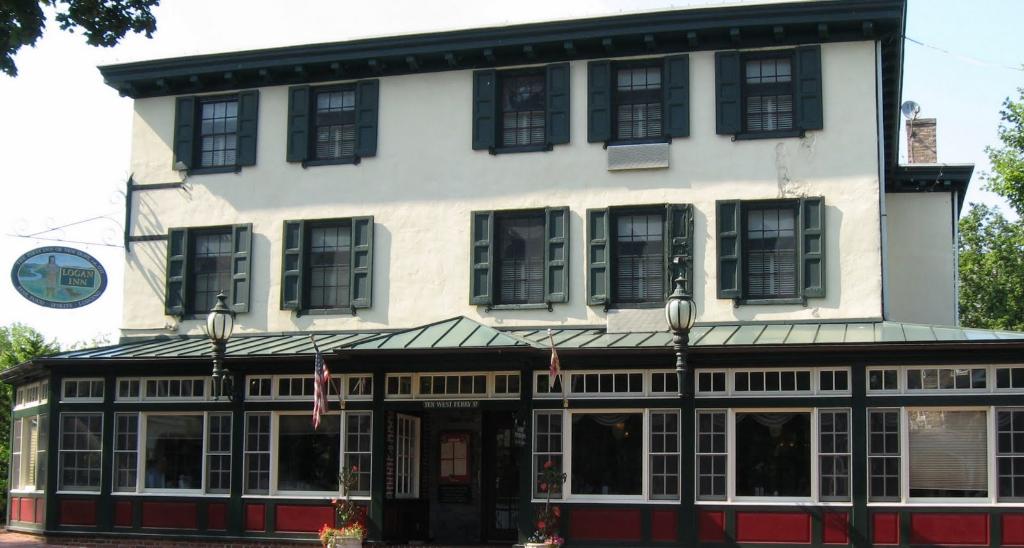
Situated by the Delaware river and cut through by the Delaware Canal, New Hope is a small, pretty village in the heart of Bucks County, Pennsylvania. It has a reputation as a center of arts and people come from across the United States to visit its galleries, antique shops and experience its vibrant culinary scene. It is also full of history, as the settlement was founded in the early 18th century as a mid-journey resting point between New York City and Philadelphia.

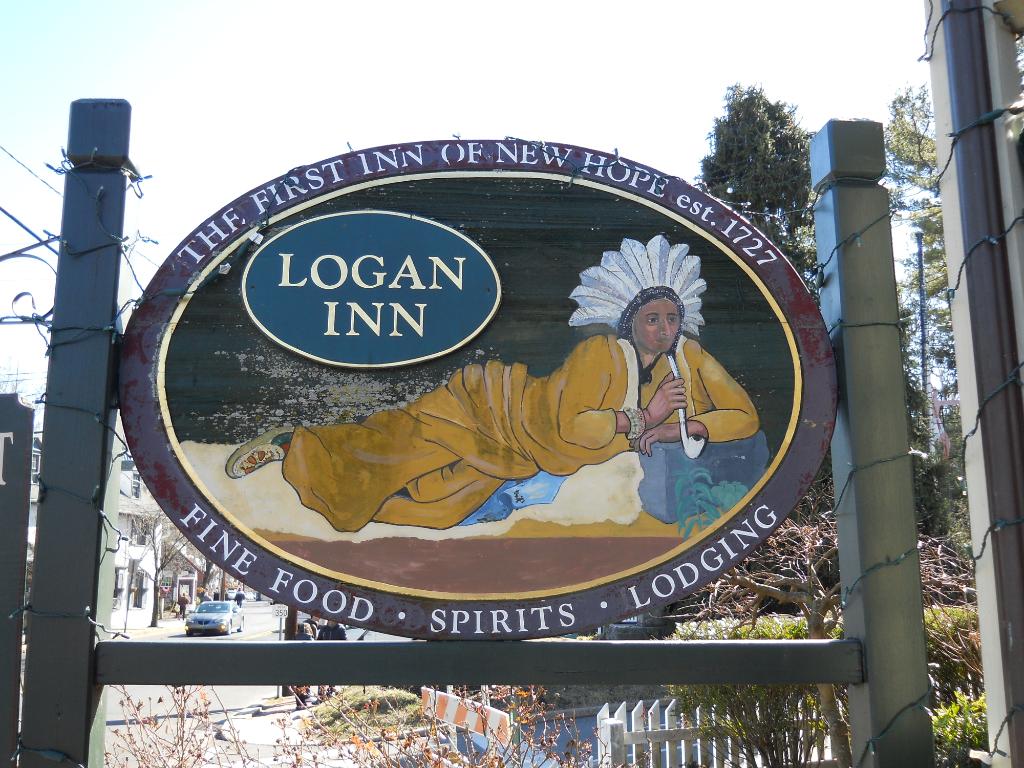
A perfect complement to the town is the Logan Inn, which was opened as a tavern in 1722 by New Hope’s founder, John Wells. Its rooms have a Revolutionary War theme and the owners are passionate about the region’s history. It is also famed for being among America’s most haunted buildings…

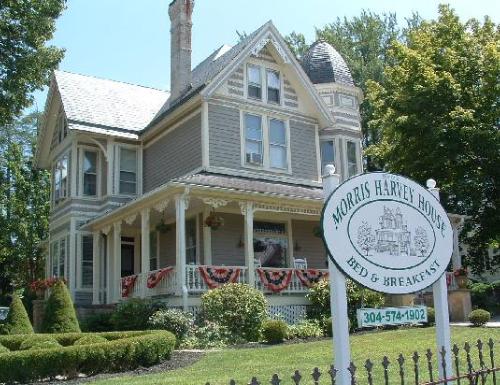
11. The Historic Morris Harvey House in Fayetteville, West Virginia

Small-town hospitality, gorgeous historic buildings and all the excitement of the New River Gorge are what makes Fayetteville, West Virginia, one of America’s coolest small towns. Tourists flood the town in droves during peak rafting season, but if white water doesn’t suit your fancy, there are tons of fun ways to explore nature in the area, like canopy tours, hiking, horseback riding and more. In town, visitors can wander through elegant streets lined with local eateries, boutique bed and breakfasts, unique art galleries and independent shops housed in impeccably restored Victorian, Romanesque Revival and other architecturally significant buildings.

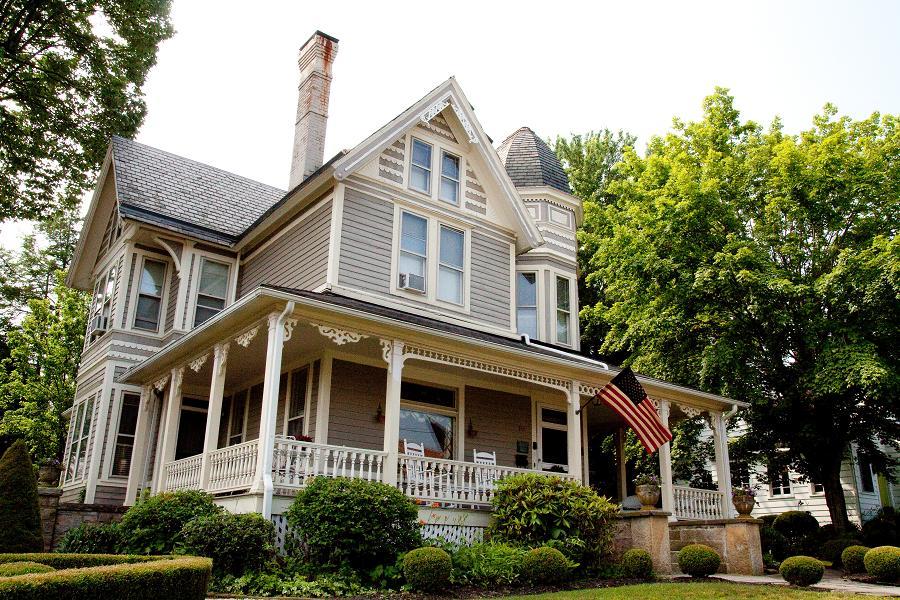
For an elegant night’s stay, the Historic Morris Harvey House in the Historic District was built in 1902. This gorgeous Queen Anne-style house with a wraparound porch has serviced travelers and wayfarers to Fayetteville since 1994. Each of its five elegant rooms are appointed with tastefully chosen antiques and most have gas fireplaces. Located on West Maple Avenue, minutes from the diverse restaurants and boutiques on Court Street and the Treetop Canopy Tours as well as all of the nature-adventure attractions of Fayetteville, peace and quiet and a good night’s rest is literally just around the corner from total excitement.

Take a closer look at the Morris Harvey House:

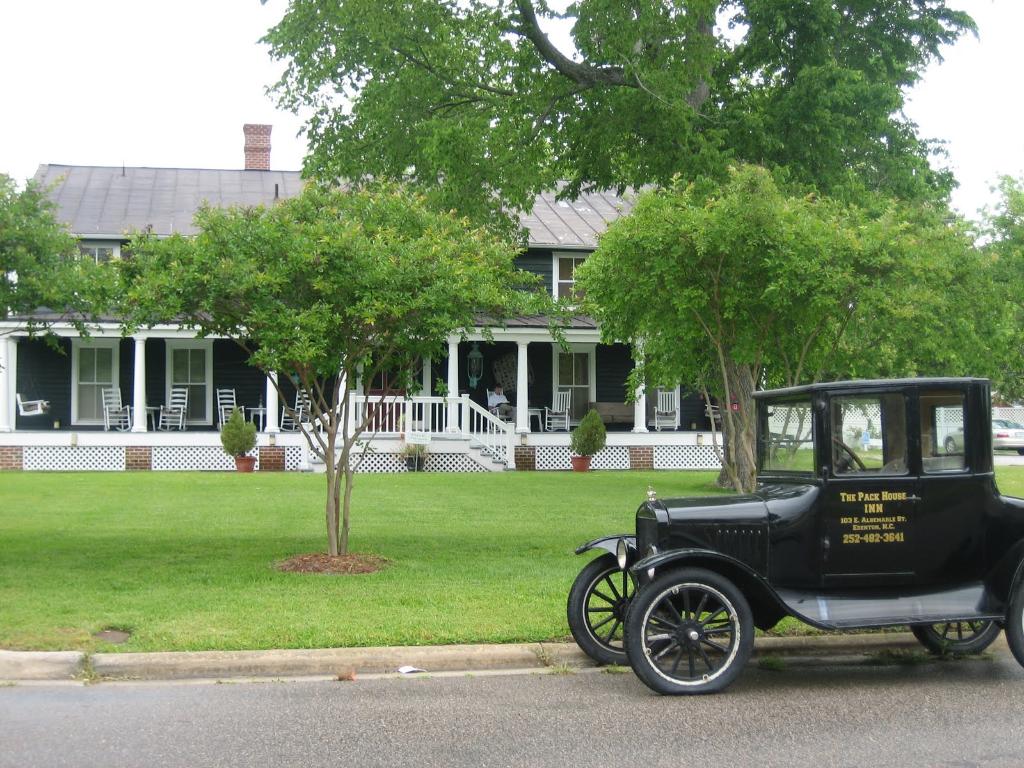
10. The Pack House Inn in Edenton, North Carolina

Find any angle of Edenton in any season and, more likely than not, it’ll be picture perfect. The prettiest town in North Carolina is perched on the north side of Albemarle Sound like a basking swan; large columned white houses with wrap-around porches staring out at the expansive harbor and, behind them, streets of boutiques and cafes.

After wandering around historic house museums and soaking up the coastal views, visitors can sleep in classic luxury at the most adorable little inn in North Carolina. With 23 rooms spread over three distinct and equally handsome and historic buildings, the Pack House Inn has got accommodation to suit anyone’s needs.

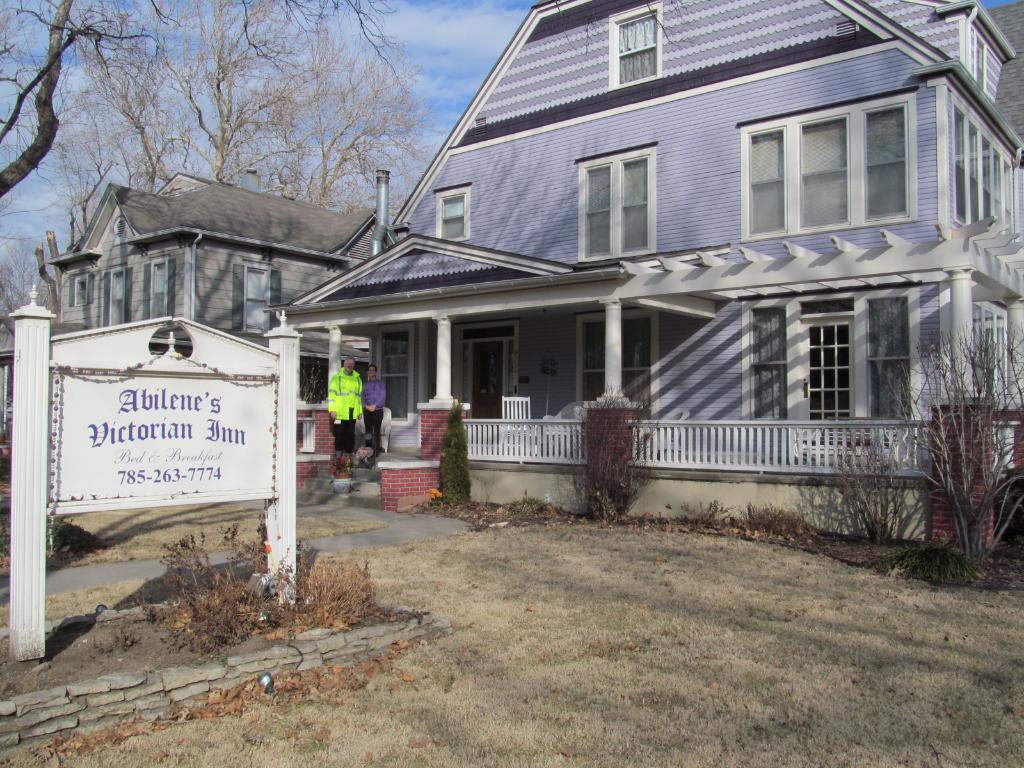
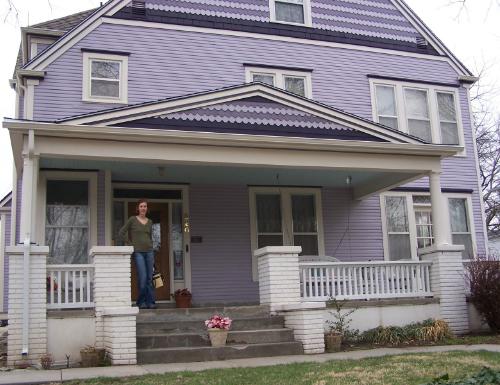
9. Abilene’s Victorian Inn in Abilene, Kansas

Abilene flourished as a cattle-ranching town, encouraged by the development of the Kansas Pacific Railway through the town. Railroads were laid, and plains were occupied by stockyards breeding cattle and horses. Individuals who prospered in this time built exorbitant mansions and businesses and connected those edifices with pavement as the 20th century churned on. Those buildings have been preserved as Old Abilene Town, a historical neighborhood of restored 19th century buildings.

One such edifice, Abilene’s Victorian Inn, has retained the same Midwestern hospitality and elegance since 1887, when it was built. It went from entertaining the well-to-do of Abilene society, such as the Eisenhowers, to, more recently, wedding parties, honeymooners, Red Hat Ladies, and others. This inn encourages community – guests enjoy homemade breakfast together in their dining room, hang out on the large porch out front or congregate around the two pianos. Visitors looking for small-town Victorian elegance should definitely look into Abilene’s Victorian Inn.

See what guests have to say about Abilene’s Victorian Inn:

8. The Beaufort Inn in Beaufort, South Carolina

Combining a beachfront location in the South Carolina Lowcountry with beautiful antebellum architecture, Beaufort has become a popular destination with those seeking a quiet coastal escape. It’s strong arts and cultural scene and annual festivals are set against the backdrop of its long and fascinating history – early in its existence it became embroiled in Native American resistance to colonization and a little later it faced the threat of Spanish invasion. Its role in the Revolutionary War and the years following, the area cultivated great wealth from cotton plantations and the slaves who worked on them – this sordid past and affluence breathes through the architecture of its historic downtown.

The Beaufort Inn has seen the march of mixed progress during its century-old existence; its cottages have been the very settings of the Beaufort Female Benevolent Society, the Clover Club (which founded Beaufort’s first lending library which lead to the public library system), as well as the drafting of the Articles of Secession which led to the Civil War. It later served as a voter registration center for decades during which untold numbers of freed slaves registered to vote. Apart from all of that, it’s simply a charming place to stay for a night: its verandas overlook colorful gardens and the historic town beyond, while its rooms are luxuriously appointed in a range of styles. The inn also has its own restaurant, the Southern Graces bistro, which is open to the public and popular with Beaufort residents.

Take a closer look at the Beaufort Inn:

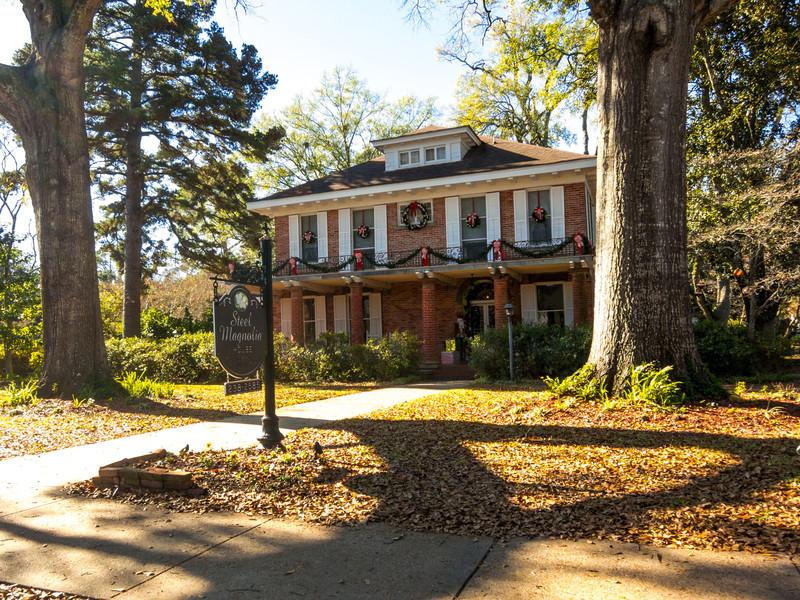
7. Steel Magnolia House in Natchitoches, Louisiana

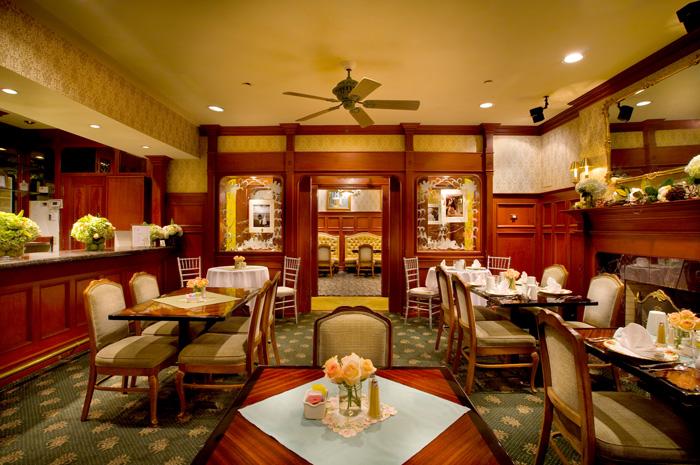
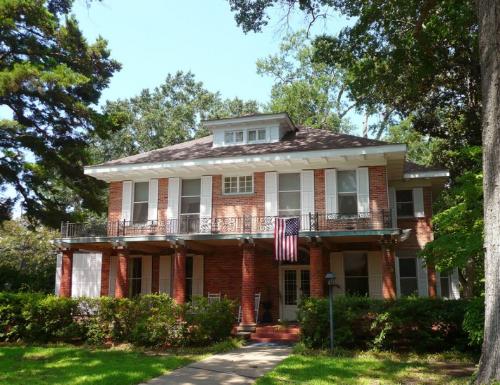
Southern hospitality doesn’t get better than this. Located in the history-rich Natchitoches, the first established town in Louisiana, amidst 19th-century architecture, former plantations, distinct Southern and Creole restaurants and the picturesque delights of the Cajun countryside, the Steel Magnolia House is a beautiful 1830s house located on the Cane River. Architecture fans will enjoy the historical elements that can be seen throughout this cultural treasure. Although the house is largely known for being the set of the movie Steel Magnolias, it has had a long history behind it: it was a hospital during the Civil War and is rumored to have had some involvement in the Underground Railroad. Now, visitors can enjoy any of its five beautifully restored rooms, soak in their backyard swimming pool, stroll through the scenic gardens, engage in conversation with the proprietors in their elegant common rooms and even catch a screening of the movie that made this house iconic.

Take a closer look at the Steel Magnolia House:

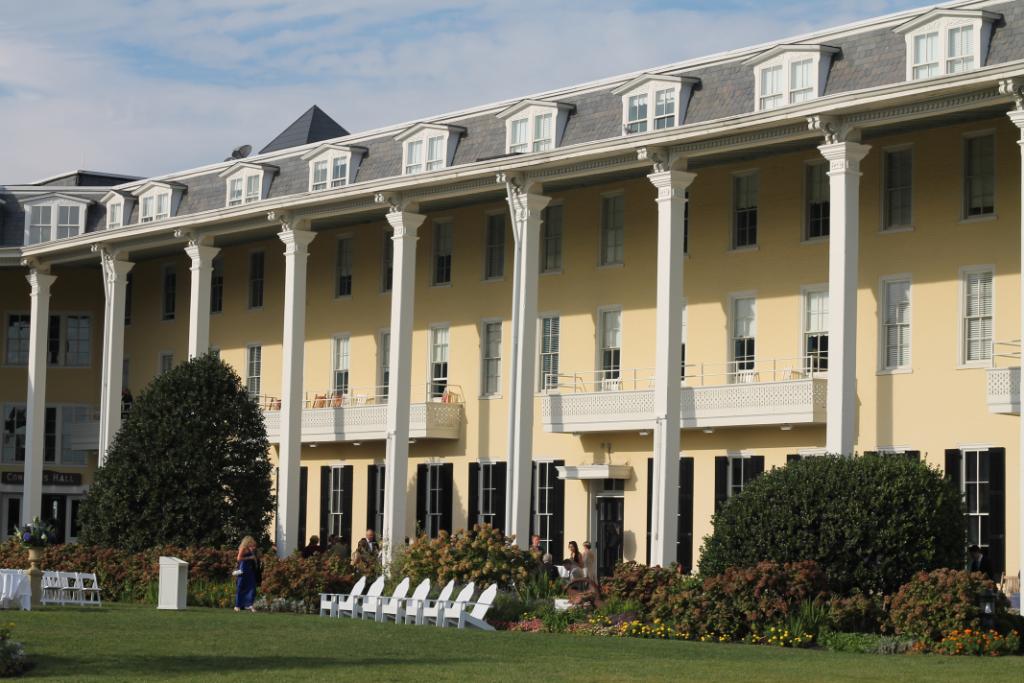
6. Congress Hall in Cape May, New Jersey

Located a 2.5-hour drive from New York City and only 1.5 hours out of Philadelphia, Cape May is a great day trip or weekend getaway for those looking to escape from the city and visit a quaint coastal destination. Built in 1817, Congress Hall is a sight to behold in itself, as well as a comfortable place to lay one’s head. This sprawling bright yellow Victorian-era structure – the oldest seaside resort in the country – is host to wedding parties, conferences and resort tourists relaxing at the sea spa. Rated as one of the “Top 45 Hotels in the Northeast” by Condé Nast Traveler, Congress Hall is an excellent choice for Cape May visitors.

See what guests have to say about Congress Hall:

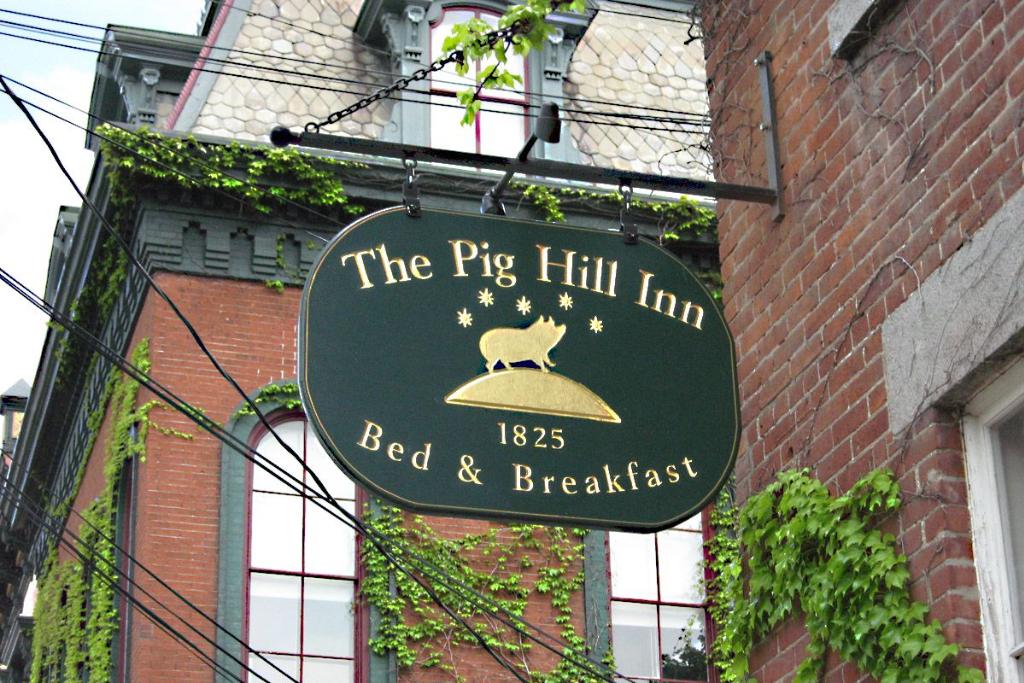
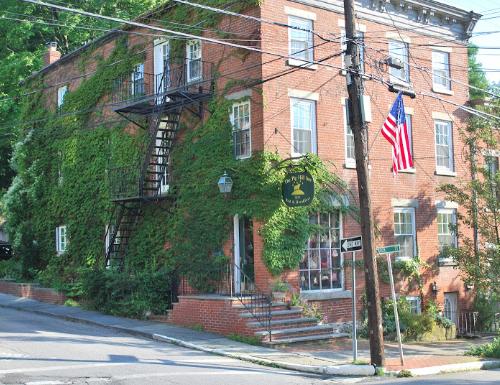
5. The Pig Hill Inn in Cold Spring, New York

Located one hour from New York City, Cold Spring is perfect for city-dwellers who need a breath of fresh air, literally. Cold Spring is resplendent with state parks snaked over with hiking trails, local farms and a winding coastline along the scenic Hudson River.

Hands down, the most homey place to stay in town is the romance-heavy Pig Hill Inn. Built in 1825, this historic inn offers individually decorated rooms with antique and reproduction period furniture. They serve a full breakfast every morning of blueberry pancakes, apple crumble cake, American-style eggs with all the fixin’s, delivered to their guest’s room. If breakfast in bed doesn’t sound appetizing (nobody likes bacon-greasy sheets), their elegant glass Victorian Conservatory offers a great view of the garden.

Take a closer look at the Pig Hill Inn:

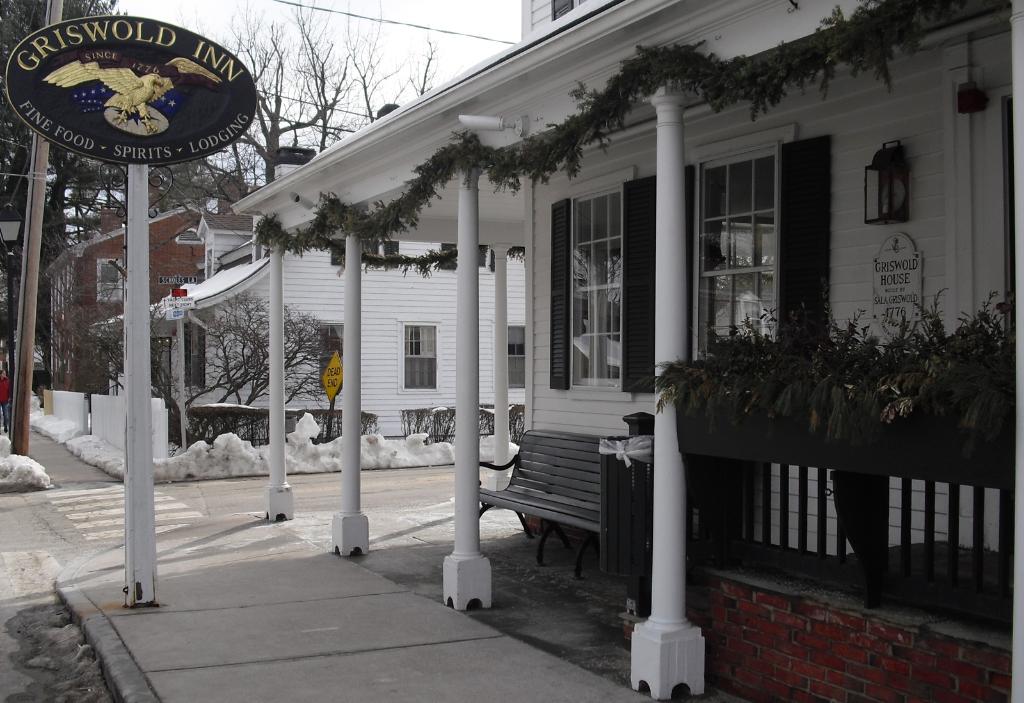
4. Griswold Inn in Essex, Connecticut

Essex, Connecticut, may be the most truly New England town in all of New England. As an early shipping and shipbuilding town, Essex played a key role in the war of 1812, suffering the Great Attack from the British coming in through the Connecticut River. Since then, the town has retained its great American pride, as well as its small-town friendliness. Its streets are peppered with historic buildings and houses built in Federal-style architecture – distinctly all-American, some dating back to the birth of the country.

One such building is The Griswold inn. Built in the late 18th century in the midst of the Independence, the Inn is the oldest continuously operating inn in the United States. Visitors will find a truly authentic maritime lodging experience untainted by the passage of time – the sea shanties sung in the dining room are just as boisterously loud as always, the liquor still flows by the barrel at the Tap Room and the staff are just as welcoming as the brothers who first founded the Gris’.

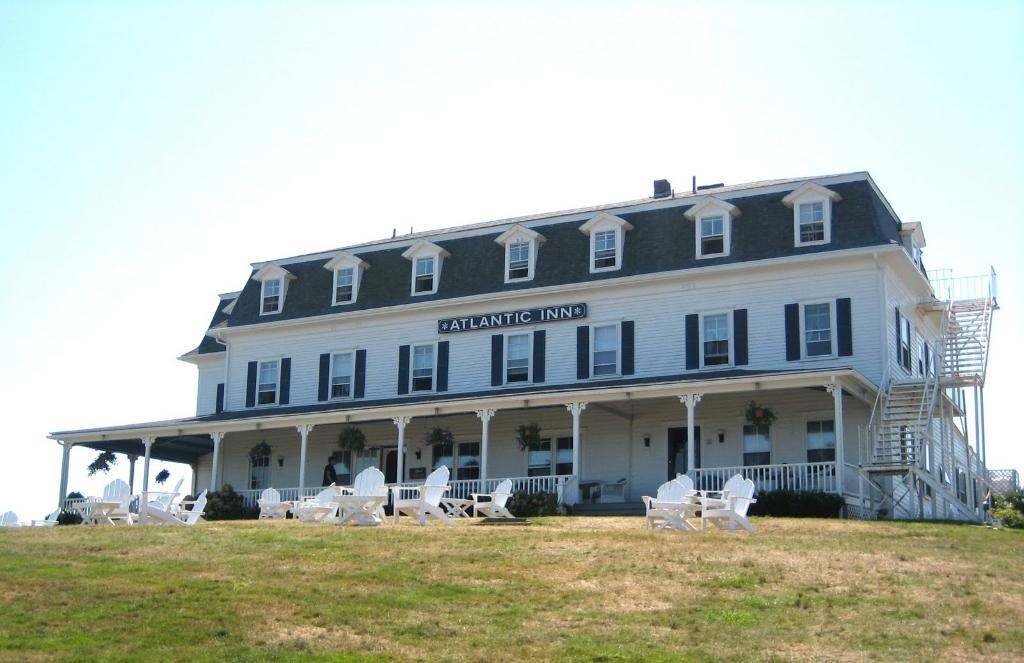
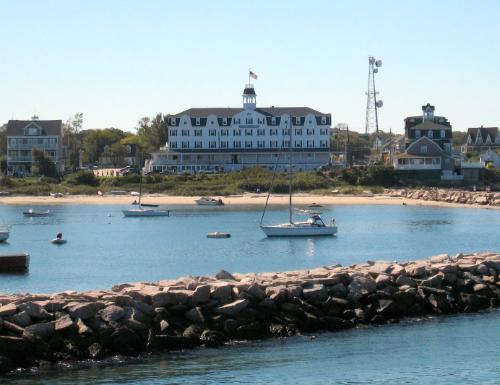
3. The Atlantic Inn in Block Island, Rhode Island

Twelve miles off the coast of Rhode Island, Block Island has been an island getaway for more than a century. With its rolling hills, miles of beaches and quaint Victorian buildings, this tiny island attracts avid fishers, beach loungers, seafood enthusiasts and New Yorkers who just feel like unwinding by the sea.

The Atlantic Inn is the perfect place to say when visiting Block Island. Steeped in old-world elegance, the inn has been welcoming visitors since 1879 and has even hosted U.S. presidents. Each of its 21 guest rooms are decorated with antique furnishings, but with the inn’s long verandah and hilltop setting, you won’t be spending your time in the rooms.

Take a closer look at the Atlantic Inn:

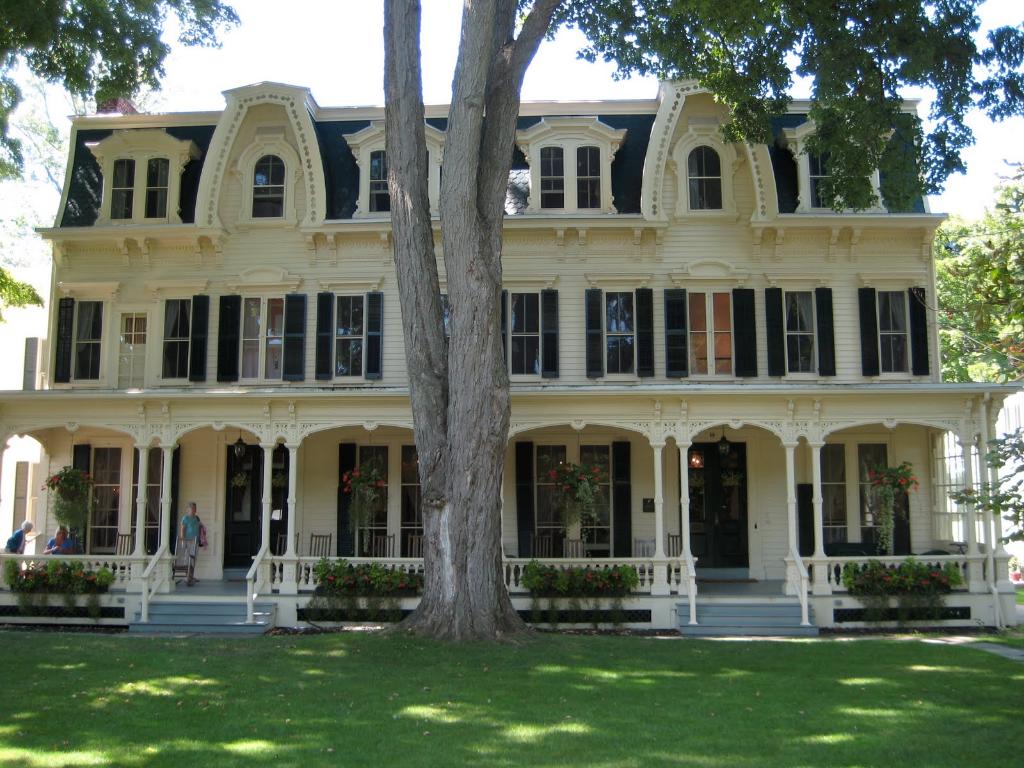
2. The Inn at Cooperstown, New York

People make their way to Cooperstown, NY, because it’s the home of baseball. More specifically, the National Baseball Hall of Fame and Museum, which is what makes Cooperstown a must-see destination for any big fans of America’s favorite pastime. But though Cooperstown is a baseball town, that isn’t all it is: there are plenty of sights to see in Cooperstown, music to enjoy, art to be absorbed, beer to swig, and lakes to canoe.

For a charming stay at a charming inn that’s conveniently located in Central Cooperstown, The Inn at Cooperstown is a hop and a skip away from the Brewery Ommegang, Otsega Lake, the Baseball Hall of Fame and the Fenimore Art Museum. From the outside, this fully-restored 1874 inn looks like a sprawling mansion, but inside it contains all the comforts of a home away from home. It’s definitely one of the top lodging choices in Cooperstown, along with the Otesaga Resort Hotel.

See what visitors have to say about the Inn at Cooperstown:

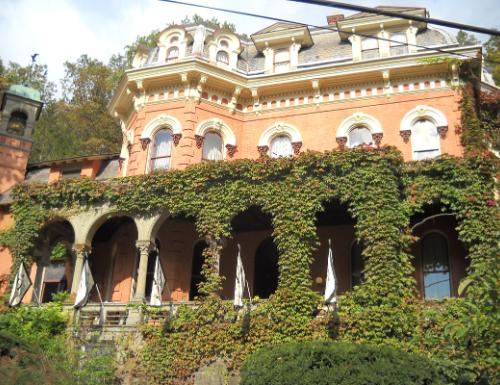
1. The Harry Packer Mansion in Jim Thorpe, Pennsylvania

Photo by Maria via Flickr

The historic town of Jim Thorpe is a tiny mass of Victorian architecture, historical attractions and unique shops surrounded by steep hillsides, green-draped mountains and lush forests, the same spread of arresting scenery that earned the town the nickname “The Switzerland of America.”

Located in town, a stately and elegant Victorian-style mansion is the setting of the Harry Packer Mansion, which is one of the more unique places to stay in Jim Thorpe. For one thing, it was one of the homes that Disney used for inspiration when designing their ride “Haunted Mansion.” But fear not, as the folks at Harry Packer Mansion assure us that the house is actually not haunted. But capitalizing on its setting, the hotel does host “Murder Mystery Weekends,” which are a shockingly good time.

See what visitors have to say about the Harry Packer Mansion:

The post The 12 Best Historic Inns in American Small Towns appeared first on Hopper Blog.