Shared posts

20 Aug 14:14

5 Awesome & Affordable American Drives

by The Editors of Budget Travel

Canyonlands National Park, with its beautiful Mesa Arch, is just one of the stops along our five amazing American drives. (Dinhhang/Dreamstime)

Every corner of the U.S.—including yours!—offers a bold, beautiful road trip that rolls out an unforgettable vacation at a reasonable price. Here, five that we bet you haven’t taken yet.

A great vacation doesn't have to involve flying, or covering great distances via some other elaborate, pricey conveyance, such as a cruise ship. Here at Budget Travel we've always liked to mix our globe-spanning coverage with ultra-local finds, too. And our Road Trip department is the heart and soul of that commitment. In fact, we've even launched the FREE Ultimate Road Trips App to put more than 70 Great American Drives at your fingertips. Here, we share five of our favorite American drives, which combine accessibility and affordability with awesome scenery, great food, history, and the nicest folks to meet along the way. We invite you to fire up your GPS, fill up your tank, and get up and go!

DOWNLOAD OUR FREE ULTIMATE ROAD TRIPS APP HERE!

BLUE RIDGE PARKWAY

From Washington, D.C., to the Great Smoky Mountains

Some of the Southeast's most beautiful mountains and charming communities can be yours with a drive that starts in Washington, D.C. and actually connects two stunning national parks.

A 90-minute drive from D.C. on Interstate 66 through Virginia horse country, the 105-mile-long Skyline Drive meanders along the spine of the Blue Ridge Mountains, with the broad Shenandoah Valley unfolding to the west. Paralleling the road for much of the way—and crossing it many times—is the Appalachian Trail; from the side of the road, utterly fearless Virginia white-tailed deer sniff at passing cars. Near Waynesboro, Skyline Drive turns into the Blue Ridge Parkway, where it stretches for hours and passes overlooks with memorable names (Raven's Roost, Peaks of Otter), before reaching a turnoff for surprisingly cosmopolitan Roanoke. The recently renovated 1882 Hotel Roanoke (hotelroanoke.com) has history behind it: The hotel's bar was once a World War II officers' club, and the ballroom hosted a cattle auction in the sixties. Today, in-room spa services are more typical.

One of the New Deal's most ambitious endeavors, the curvaceous "park to park highway" links Virginia's Shenandoah National Park with North Carolina's Great Smoky Mountains National Park via dozens of hairpin turns and 26 tunnels cut through Appalachian granite. Spot a 19th-century farm or postage-stamp-size town at the bottom of a verdant mountainside and you'll realize how seemingly unchanged the road remains since its inception way back in 1935.

As you drive farther into the heart of Appalachia, the traffic thins and the valleys plunge deeper. The Blue Ridge Music Center (blueridgemusiccenter.org), located in Galax, Va., with its outdoor concerts and weekday-afternoon traditional banjo-picking and fiddle sessions, is a welcome sign of civilization near the North Carolina line. (Banjo music is the ideal soundtrack for this drive. Grab yourself a CD compilation of Appalachian music with songs by Aaron Copland and John Williams.) From here, a curving 100-mile drive leads to 87-acre Chetola Resort (chetola.com), North Carolina's only Orvis-endorsed fly-fishing lodge. Yoga, horseshoes, and canoes await those with little interest in hooking a trout.

It's easy to see how the Blue Ridge earned its name—layers of peaks really do tint blue in the distance. In downtown Asheville, N.C., 87 miles west of the resort, Southern classics (cornmeal-crusted catfish) are made with ingredients from local farms at the Early Girl Eatery (earlygirleatery.com) After lunch, it's on to Gatlinburg, Tenn., where the Bearskin Lodge's lazy river mimics the nearby Little Pigeon River (thebearskinlodge.com). To experience the full sweep of the Great Smoky Mountains, take Newfound Gap Road up 6,643-foot Clingmans Dome, the park's tallest peak, where you can see more than 100 miles out on clear days.

It's almost a sin not to spend a couple of extra days in Gatlinburg, on the edge of the national park, and explore the Great Smoky Mountains. The options are limitless, from hiking and biking to rock climbing—but the white-water rafting trumps them all, with no fewer than five world-class rivers in the area. Get a taste through a half-day trip on the 24 Class III and IV rapids of the Big Pigeon River (wildwaterrafting.com).

En route back to D.C., take in the crystalline formations of Skyline Caverns in Front Royal, Va. And, if you're up for a totally worth-it splurge, get yourself a sweeping final view of the Shenandoah Valley on a Blue Ridge Hot Air Balloons tour (rideair.com).

JOSHUA TREE

Palm Springs to Joshua Tree National Park

The Joshua tree, made famous by the national park and the 1987 U2 album of the same name, is actually a yucca. Legend has it that the yucca was renamed by Mormon settlers who thought its upraised limbs and scruffy-bearded appearance resembled the prophet Joshua leading them to the promised land. Joshua Tree National Park is at its most crowded from March through May, when the wildflowers are in bloom and the temperatures are still mild; if you're hoping to avoid the crowds, such as they are, consider visiting in the fall. Most major airlines serve Palm Springs International Airport.

Heading northwest from Palm Springs on Indian Canyon Drive, you'll be greeted by the wind farms of San Gorgonio Pass. The 60-foot-tall gray metal poles are intrusive, but striking, and in any event harnessing the wind is better than burning oil. With more than 4,000 turbines, the farm is one of world's largest, and if you're in a convertible, you'll hear the propellers whirring every time you stop at a red light. They sound like gentle waves breaking in the clouds.

Desert Hot Springs, 50 miles south, is built over a natural mineral-water aquifer, and the town claims to have some of the world's best water. The Emerald Springs Resort and Spa (760/288-0071) offers rooms with turquoise walls, black furniture, and white duvets, giving it a fifties vibe. Go swimming in all three of the hotel's heated mineral-water pools, in the shadow of the San Jacinto Mountains, surrounded by cacti and bougainvillea. Then get a good night's sleep, in anticipation of your first day exploring Joshua Tree National Park.

Head east on Highway 62, toward the West Entrance of Joshua Tree National Park. At nearly 800,000 acres, the park straddles two distinct deserts: the Mojave in the north, marked by craggy Joshua trees and moon-like rock formations, and the Colorado in the south, with wide-open vistas and jagged mountain peaks. Between the two lies the transition zone, with features from both plus cholla cactus gardens and patches of spidery ocotillo. The Joshua Tree Visitor Center is the place to buy lots of water—one gallon per person per day, two in the summer.

You may feel as if you've been transported to prehistoric times. Boulders the size of dump trucks sit near spiky trees, and the air is fragrant with lavender and chia. Keys View, by far one of the park's best panoramas, is about five miles south. At nearly 5,200 feet above sea level, you can see the entire Coachella Valley, including the Salton Sea, the town of Indio, and the San Jacinto Mountains. Get another good night's sleep at the Harmony Motel (harmonymotel.com), in nearby Twentynine Palms.

Reenter the park near the Oasis of Mara, then make your way through the transition zone to the southern end. Joshua trees become sparser, the air gets hotter and drier, and chest-high cholla cacti, with fine, light-green needles, begin to appear. Look, but don't touch! And while you're looking, check out the vistas of the Colorado Desert off in the distance.

UTAH'S CANYON COUNTRY

Grand Junction, Colo., to Zion National Park, Utah

Cramming five national parks into four days isn't for everyone. But if you are going to attempt such a quest, Southern Utah is the place to do it. Five of the nation's most gorgeous parks are packed into 650 miles of high desert. Bryce Canyon and Zion are both justly famous; so are the sandstone bridges in Arches National Park. Less well known are Canyonlands, every inch as impressive as the Grand Canyon, and Capitol Reef.

Moab, Utah, is less than a 90-minute drive from Grand Junction, Colo. Moab is conveniently located between Arches and Canyonlands. You can have panoramic views of the desert at the northern end of Arches whether you stay in your car or book a mountain-bike ride. But don't just look up and around but also down: The area is dotted with three-toed dinosaur footprints every 50 yards or so. At Arches' southern end, families explore trails along rock formations such as Balanced Rock and Double Arch. Bed down at Moab's Red Cliffs Lodge (redcliffslodge.com) and grab a pint at the city's oldest microbrew, Eddie McStiff's (eddiemcstiffs.com).

The largest of the five national parks at 527 square miles, Canyonlands includes the northern Island in the Sky section (all grand, wide canyons), and the more intimate Needles, where pygmy juniper trees decorate the ground, and hundreds of layers of sandstone fan out in phyllo-like sheets. The black stone of Newspaper Rock is covered in petroglyphs that were scratched over a 2,000-year period by native tribes (Anasazi, Fremont, Paiute, and Navajo). It's an impressive collage of images: men on horseback hunting antelope, oversize gods sprouting horns and antlers. Get a good head start on tomorrow by staying in Torrey, where the Cowboy Homestead Cabins will welcome you (cowboyhomesteadcabins.com).

Torrey is the gateway to Capitol Reef, the least well known of Utah's five national parks. Route 24 cuts through it, threading a high valley carved by the little Fremont River. The 10-mile Scenic Drive leads to a long wash (a dry canyon that becomes a river after heavy rain). The walls rise hundreds of feet on both sides as the dirt road twists its way through the increasingly narrow canyon.

Splurge on Bryce Canyon Lodge (brycecanyonlodge.com) for a night—ask for a lovely balcony with rough-hewn logs for a railing. At Bryce, the altitude ranges from about 7,900 feet to more than 9,100 feet. Two of its best overlooks are at Agua Canyon and the rock window called Natural Bridge.

When you get to Zion, you may want to opt for the park's most rewarding short hike, the half-mile-long Canyon Overlook Trail. Private cars are no longer allowed on the Zion Canyon Scenic Drive north of the visitors center, so catch the free shuttle to the Riverside Walk trail, which leads to the Narrows, a 16-mile trail that doubles as the bed of the Virgin River. After hitting five national parks along this great drive, collapse into a comfy bed at the Canyon Ranch Motel (canyonranchmotel.com) after soaking in its outdoor hot tub!

FLORIDA KEYS

Key West to Key Largo

Lined with Victorian mansions and late-19th-century commercial buildings, Key West's main road, Duval Street, is a picturesque thoroughfare pocked with rocking-loud bars. A quieter side of Key West is immediately apparent when you turn onto Petronia Street, heading into the Bahama Village neighborhood.

At Blue Heaven restaurant (305/296-8666), in a courtyard that was the scene of boxing matches during the Depression, tables sit under a canopy of trees, a balmy breeze stirring their leaves, and at least a half dozen of Key West's free-roaming chickens scratch around for crumbs. The special is a lobster melt—like a fancy tuna melt—and it's as good as it sounds.

Catch the tour at the Little White House (305/294-9911), an 1890 house on Key West's former naval base. Harry Truman vacationed there 11 times during his presidency.

Don't miss Sunset Celebration at Mallory Square, a daily event since the sixties. Grab a margarita from a stand and wander among the crowds and street performers before turning in at the Chelsea House (chelseahousekw.com), in a converted Victorian house surrounded by a garden that makes it feel private and tranquil, though it's just a stone's throw from Duval Street.

Before hitting the road the next day, stop by the Hemingway Home and Museum (hemingwayhome.com), where Ernest Hemingway lived with his second wife, Pauline, and their two sons from 1931 to 1940. It's said that Hemingway was given a six-toed cat—often called "mitten cats"—by a friend who was a ship captain; many cats, most of which are its descendants, live on the grounds today. As the writer quipped, "One cat just leads to another." And speaking of animals, don't miss the Key West Butterfly & Nature Conservatory (keywestbutterfly.com), where you'll be amazed at the sight of so many elusive, fluttering beauties.

When it's time to head north, Route 1, the Overseas Highway, is a sight in itself. In the 1880s, Henry Flagler, an original partner in Standard Oil, began developing resorts along Florida's east coast. He also started buying up and connecting the state's railroad lines. St. Augustine, Palm Beach, and Miami all owe their development to Flagler's efforts. Between 1905 and 1912, Flagler constructed the Over-Sea Railroad, 156 miles of track—much of it on trestles over open water—that linked Miami and Key West. When the first train rolled into town in 1912, it was greeted by 15,000 townspeople. Unfortunately, a fierce hurricane ripped through the Keys in 1935; an 18-foot tidal wave and 200-mile-per-hour winds washed out the embankment and mangled tracks, but the bridges and trestles stood. In 1938, the federal government took over the route and built the Overseas Highway. Route 1 is the main (and often only) road on the narrow strips of land that are the various keys. Mile-marker signs, which start from zero in Key West, are used as locators for addresses along the highway.

The marvelous Seven Mile Bridge runs between mile markers 40 and 47. Until 1982, the bridge ran on the piers originally built for Flagler; those remains stand alongside the new bridge. In Marathon, the White Sands Inn (whitesandsinn.com) has rooms decorated with sunny primary colors and Caribbean-inspired fabrics.

An hour's drive north brings you to Key Largo, where a bungalow at the Coconut Bay Resort (coconutbaykeylargo.com) and a slice of, yes, key lime pie, more than live up to the hype.

GREAT LAKES SEAWAY TRAIL

Massena, N.Y., to West Springfield, Penn.

Consider the Great Lakes Seaway Trail the inland version of California's Pacific Coast Highway. This scenic waterfront byway—a 500+-mile drive if you want to go all the way—includes the St. Lawrence Seaway with its imposing Eisenhower Lock, 40 state parks along the way, and 28 historic lighthouses on the shores of two rivers (the Niagara and the St. Lawrence) and two of the Great Lakes (Ontario and Erie).

One of the don't-miss sights along the way is Presque Isle State Park, Pa. (presqueisle.org). This sandy, 3,200-acre peninsula near Erie has miles of untouched beaches to explore. And while the park is immensely popular in summer, it's also a draw in deep winter, when it becomes home to cross country skiers, snow shoers, and ice fishers. The "ice dunes" formed by freezing waves are something you don't see on your average winter jaunt.

Sodus Bay Lighthouse Museum (soduspointlighthouse.org), overlooking the southern shore of Lake Ontario in New York State, is a first-rate maritime museum operated by the Sodus Bay Historical Society in the building that once housed the lighthouse keepers, beside the tower and Fresnel lens.

The Great Lakes Seaway Trail's greatest claim to fame, however, is iconic Niagara Falls. There are two towns named Niagara Falls, one in New York and one in Canada. The New York side boasts a state park designed by Frederick Law Olmstead (of Central Park fame). The Maid of the Mist (maidofthemist.com) boat will take you right to Horseshoe Falls, where the falls crash at their mightiest. If the word "horsehoe" inspires you to test your luck, head over the the Seneca Niagara Casino (senecaniagaracasino.com), a recent addition to the scene that includes gaming, food, and lodging.

But we suggest that you spend the night on the Canadian side. The Chalet Inn & Suites (chalet-inn.com) is a good choice—and it even includes heart-shaped bathtubs, inspired by Niagara's popularity as a honeymoon destination. The Canadian side is something of a mecca for wax museum aficionados, too. Louis Tussaud's (ripleysniagara.com) may be the best known. But, more importantly, the Canadian side also has the better view of the falls. During the day, you'll see rainbows in the mist, and in the evening, colorful floodlights transform the cascading water.

See More From Budget Travel:
20 Most Awesome Boardwalks in America
Ultimate California Road Trip
Surf & Sand Smackdown! 10 Most Beautiful Beaches in America
25 Most Beautiful Cities in America
Road Trip: South Dakota's Badlands and Black Hills
Summer in Big Sky Country

15 Jul 22:33

Colorado Cuts 50K Tags as Deer Population Declines

by Andrew Zunz

CC image from Flickr

The deer population in Colorado continues to decline, causing concern for hunters and conservationists alike.

The mule deer herd northwestern Colorado, the largest in the country, has decreased in size from 105,900 in 2005 to 32,000 last year, according to the Denver Post.

Biologists say the health of a mule deer herd is important because they are an indicator species.

"If mule deer herds are in poor health, it probably means the land itself is in poor condition and that a lot of other species are at risk," said Kate Zimmerman, the public lands policy director for National Wildlife Federation.

Data from the Colorado Parks and Wildlife show that deer have decreased by 36 percent statewide and 10 percent throughout the West. Biologists say the reasons for the decline include harsh winters, droughts, residential development in the mountains, Chronic Wasting Disease, coyote and mountain lion predation, vehicle collisions, and energy development. In response, Colorado is offering 50,000 less deer hunting licenses than it did in 2007. "We've had a significant decline that is not satisfactory to us and to the public," said Chad Bishop, CPW assistant director for wildlife natural resources. "We're going to work collaboratively with all of our constituents to increase mule deer numbers as best as we can. ... If our deer continue to decline, it will hurt us financially."

15 Jul 22:05

VIDEO: Illegals Bussed to WALMART With EBT Cards?

15 Jul 22:00

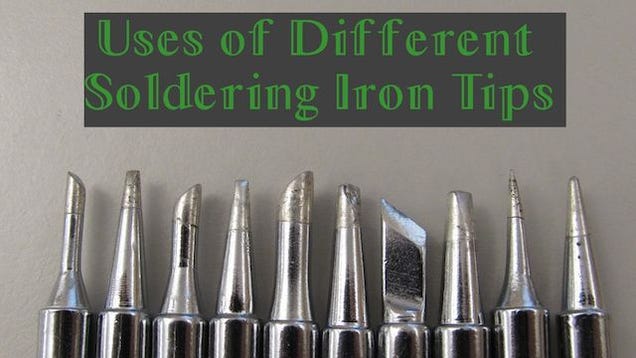
When to Use Each Different Type of Soldering Tip

by Thorin Klosowski

When to Use Each Different Type of Soldering Tip

Soldering irons have a ton of different tips, and each of them is better suited for different tasks. However, which tips are best suited for what isn't always obvious, so Instructables user JColvin91 breaks down the best uses for each.

Read more...


15 Jul 14:49

The Secret to Capturing the Best Image Quality with Your Digital Camera

by Mason Resnick

Many modern digital cameras boast incredible ISO speeds. Where ISO 400 or 800 was the top speed in the film era, usually accompanied by grain the size of golf balls, today’s digital cameras can give you top ISOs of 6400, 12,800, 25,600 or even higher. Camera makers boast of these high speeds and use this information to increase camera sales.

Photodune 2896107 digital camera xs

Inexperienced photographers will be tempted to jack up the ISO on their new cameras, and keep it there. However, just because the feature is there doesn’t mean you should use it all the time. In fact, the best practice is to keep your camera set at its lowest ISO setting by default so you will capture the best possible image.

With experience you will learn that higher ISO settings are more appropriate when shooting sports, street photography, photojournalism, and low-light situations where you need to stop action. Low ISO images will be cleaner (no digital noise), have a wider dynamic range (more shadow and highlight details), and produce better color depth (smoother color transitions). This is a better choice for travel, landscape and portrait photography, where good detail and accurate skin tone are important.

Let’s geek out

There are two ways you can understand the effect of low versus high ISO on digital images: by reading lab test results, and by looking at sample images. DxOMark Labs is a great resource for sensor tests. It’s an independent lab that tests most current digital camera sensors and publishes the results on their web site. For sample images, you can make your own. Continue reading to learn more.

Digital noise

Run any number of digital cameras through a battery of image quality tests and you’ll see a clear pattern emerge. At the lowest ISO setting, the signal to noise ratio, expressed in decibels (dB), is highest. That’s good, it indicates the lowest digital noise. As you increase ISO, the dB level decreases. The lower the dB level, the higher the digital noise, which degrades the image.

By lmvphoto

Example: If a Canon EOS 70D has a 41dB result at ISO 100, 30dB at ISO 1600 and around 17dB at its top ISO of 25,600, the image with the higher dB will have less noise than an image with a 17dB measurement.

Note: keep in mind that most images when viewed at the recommended distance will appear clean as low down as 30dB.

Dynamic range

Similarly, the dynamic range of a digital camera is widest at its lowest ISO. Depending on the camera, that range can be anywhere from 9 stops to around 14. Typically, with DSLRs, it is around 11-12 stops. In carefully exposed high-contrast scenes, both highlights and shadows will have more detail at low ISOs than at high speeds. In test result charts, dynamic range starts to decrease in more of a curve than a straight line; typically the first few ISO settings are acceptable, but once you pass ISO 800 or 1600 (depending on the camera) the range becomes more limited.

Dynamic range is acceptable at 10 stops or higher. Below that number shadows and/or highlights will become blocked up, especially in contrasty scenes.

Tip: RAW image capture is best for dynamic range. You can use the shadow and highlight sliders in your RAW image editor to reveal even more details in both the shadows and highlights, effectively stretching your camera’s dynamic range. The better your image’s dynamic range is, the more information you can reveal this way.

Tone and color

You may have noticed that some images that show the sky or other areas that should have smooth, subtle transitions, instead show subtle strips of color as the shading changes. This is called banding, and that’s what happens when the tonal range is limited. This is usually an artifact from compressing an image too much when preparing it for web use, but it happens in a more subtle form in photos that come straight out of the camera and, as above, this phenomenon is more apparent in high ISO images, but is imperceptible in low ISO photos.

A camera’s ability to capture subtle changes in tone and color (both expressed in bits) is best at its lowest ISO, and decreases steadily throughout the ISO range. Most DSLRs have a 21-24-bit maximum for color sensitivity, and it can degrade to half of that. Tonal range usually peaks at around 8-10 bit.

Testing your camera in the real world

Enough of the geeky stuff, let’s look at some pictures to see how this plays out in the real world. While the images here were shot with a Canon 7D, you can run your own tests:

  • With the camera on Program mode, take a sequence of photos
  • Start with your lowest ISO and work your way up to the highest
  • Mount the camera on a tripod to avoid shake, which is an unwanted additional variable, and turn off the anti-shake feature (Image Stabilization IS on Canon or VR on Nikon)
  • Shoot both landscapes and people pictures so you can see the effects ISO has on each
  • Make prints at your largest print size and see if you notice the distance at a typical viewing distance

Here are two image comparisons at a range of ISO settings.

Portraits show the difference

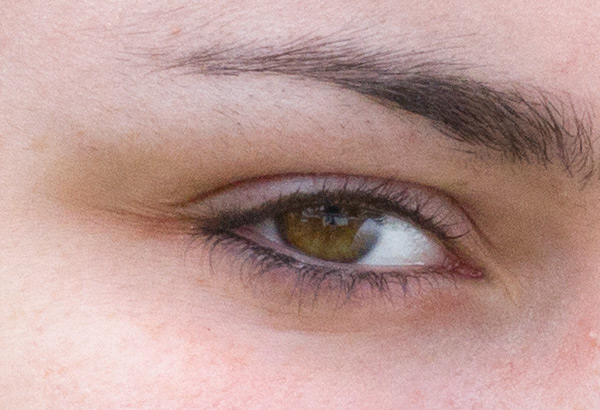
The effect of changing ISO is most obvious when you photograph people. In this example, the model was photographed on a sunny day while holding a reflector, against a low-key (darker) background. As the ISO setting is raised, the effect on her skin becomes obvious. Camera: Canon 7D with Canon 85mm f/1.8 lens.

ISO100 portrait full 600

ISO 100

ISO100 portrait detail 600

ISO 100

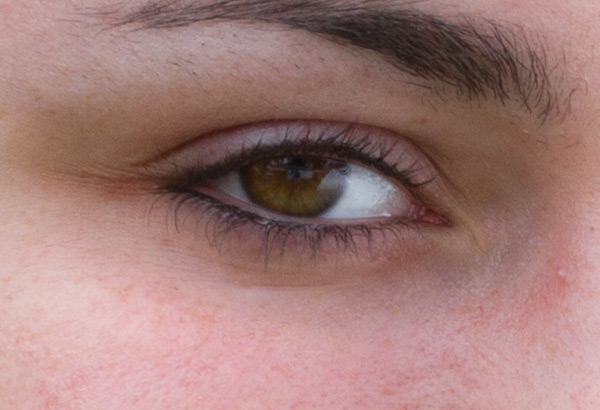
At ISO 100 (above), skin tone is accurate, with good contrast. In the 100% detail shot, there’s good, natural falloff of light, showing a wide range of tonality and good detail in the darker areas. You can especially see this in the eyes.

ISO800 portrait full 600

ISO 800

ISO800 portrait detail 600

ISO 800

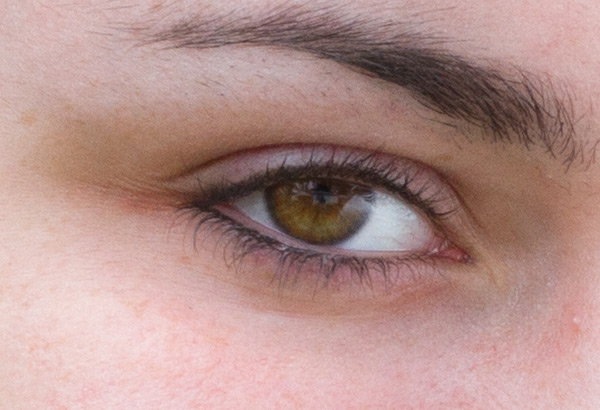
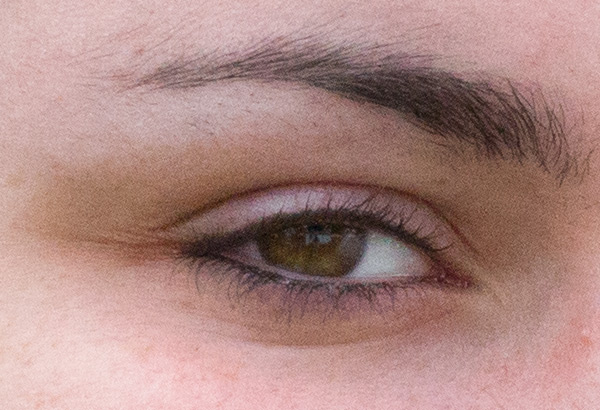
At ISO 800 there is a subtle increase in contrast, an indicator that dynamic range has decreased slightly. Noise has not yet become apparent in the detail photo.

ISO1600 portrait full 600

ISO 1600

ISO1600 portrait detail 600

ISO 1600

By ISO 1600 there is a little more contrast, but again, it is a subtle change. However, you can see the noise in the blow-up, and the smooth gradation from light to shadow is starting to become a bit rougher, indicating that the tone has degraded.

ISO3200 portrait full 600

ISO 3200

ISO3200 portrait detail 600

ISO 3200

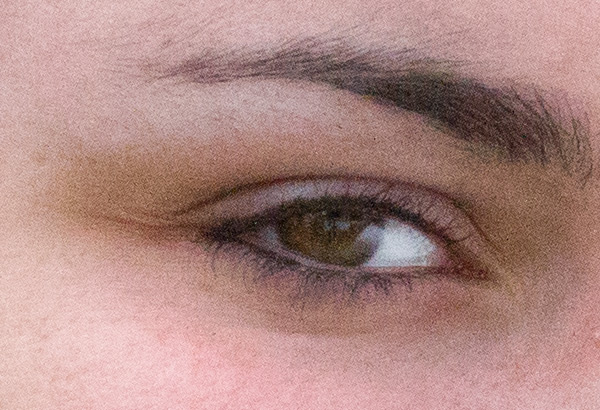
ISO 3200, at screen resolution it may still be hard to see the change when you compare this image to the one shot at ISO 100, but by ISO 3200 there is a pronounced decrease in highlight and shadow detail, and rougher color and light transitions.

ISO6400 portrait full 600

ISO 6400

ISO6400 portrait detail 600

ISO 6400

By ISO 6400, the Canon 7D’s highest resolution setting, even at screen resolution a difference is visible. If you look in the details of the shirt and hair, you can see that shadows are more blocked up. A quick glance at the 100% detail is all you need to see the graininess and reduced range of color and tone.

Bonus pointer: The advantage of shooting RAW

ISO100 portrait optimized 600b

Optimized

You can increase an image’s dynamic range by using your RAW image editor’s shadow and highlights sliders, which reveals more information in the highlights, and especially in the shadows. Compare this version of the ISO image with the ones above and notice how much more detail is visible in the shadows, thanks to tweaks done in the RAW image editor.

Landscape subtleties

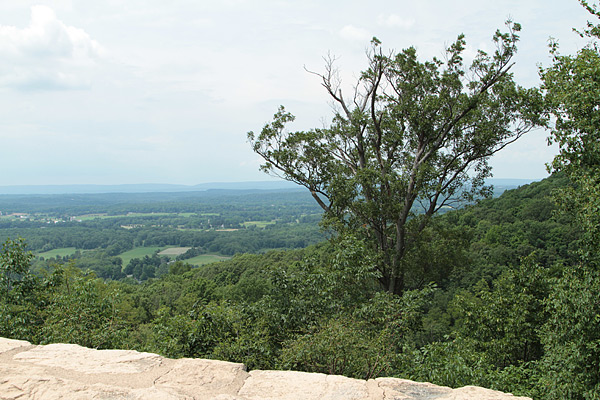
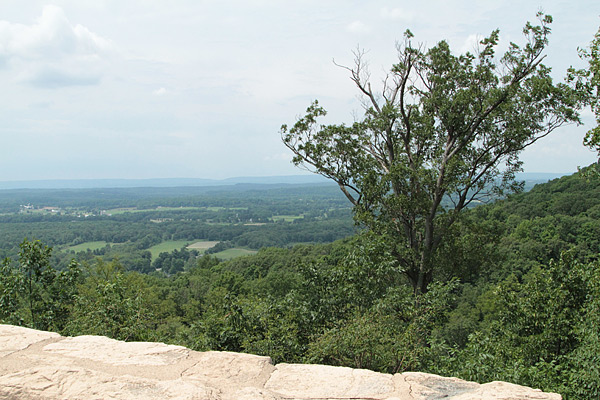
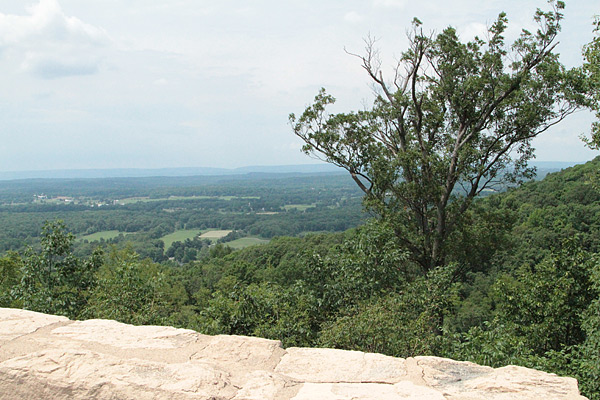
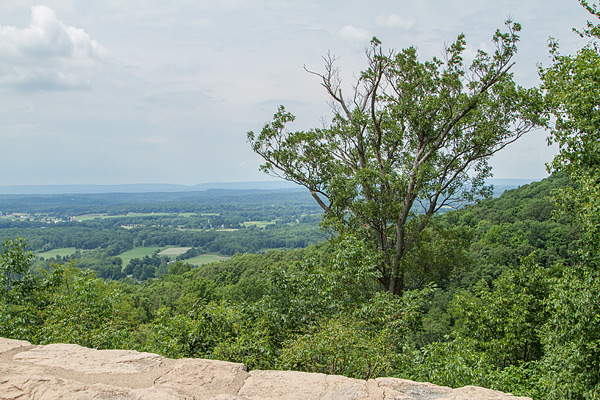
A scenic lookout in western New Jersey, shot in the middle of the day, at ISO 100, 800, and 3200 with a Canon 7D and Canon 24-70mm f/2.8L II USM zoom lens. While the dynamic range, tone and color only show minor differences here, the level of noise deteriorates at the faster speeds. After looking at these examples, you may wonder why anyone in their right mind would want to shoot above ISO 100 on a bright, sunny day. All samples are straight out of the camera.

ISO100 landscape sooc 600

ISO 100

At ISO 100, this is the full scene.

ISO100 landscape detail 600

ISO 100

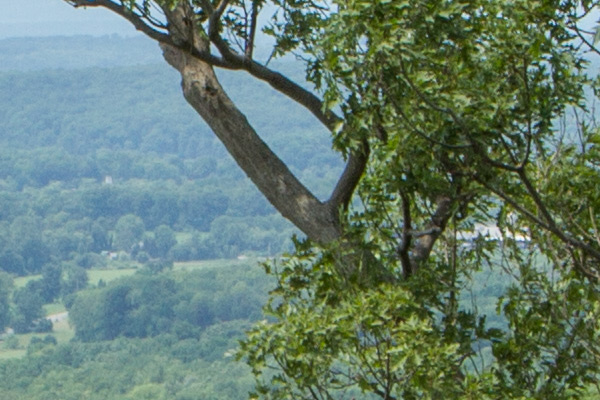
In this detail of a 100% blow-up of the ISO 100 image, there is no apparent digital noise, as expected.

ISO800 landscape sooc 600

ISO 800

ISO800 landscape detail 600

ISO 800

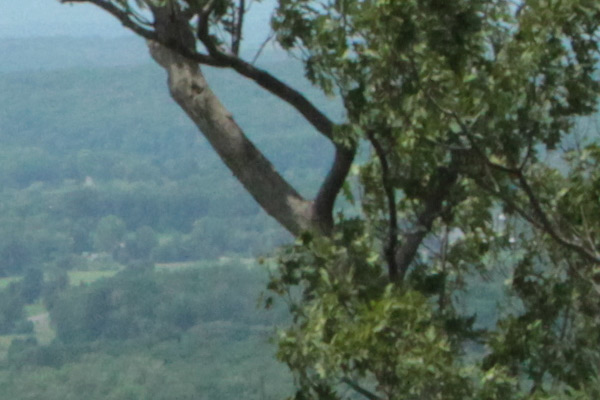
At ISO 800, digital noise has started to become apparent in this 100% blow-up detail.

ISO3200 landscape sooc 600

ISO 3200

ISO3200 landscape detail 600

ISO 3200

By ISO 3200, digital noise is obvious, and the overall image quality has deteriorated. The graininess covers up the loss of color quality and tonality somewhat.

ISO100 landscape raw 600

While the samples above are unadulterated JPEGs, what happens if you try to coax more detail out of a shot in RAW? You get more detail in the shadows and highlights. Compare this shot to the original and you’ll see more detail in the sky (highlights) and in the bark and branches of the tree (shadows) on the right.

Bottom line

The bottom line? There may be times when you must pump up your ISO settings, and it’s nice to know that you have that option. But when you are shooting in daylight under normal shooting conditions, you will bring back higher quality images when you shoot at, or near, your camera’s lowest ISO settings.

The post The Secret to Capturing the Best Image Quality with Your Digital Camera by Mason Resnick appeared first on Digital Photography School.

15 Jul 14:44

Safe Handling of Eggs from Small and Backyard Flocks

by Contributors

Written by: Dr. Jacquie Jacob, University of Kentucky

Eggs are a versatile and economical source of important nutrients, making them a great addition to any menu. Like any food of animal origin, eggs and egg products must be handled carefully. The cartons of all eggs sold in the United States must contain the following safe handling instructions: To prevent illness from bacteria: Keep eggs refrigerated, cook eggs until yolks are firm, and cook foods containing eggs thoroughly.

Although eggs and poultry have inherent food safety issues, many different foods have been sources of illness, as shown in Figure 1. It is important to remember that all food should be handled safely to prevent food-borne illness.


Safe handling of eggs begins before the eggs are laid with maintaining a healthy flock and collecting clean eggs and then continues throughout the whole production and distribution systems to retail.

Management Considerations

The most important step in the safe handling of eggs is the production of clean eggs. Several steps can be taken on the farm to minimize the potential contamination of eggs:

  • Make sure that there are enough suitable nests. Typically one nest for every five hens is sufficient, but the nest ratio can go to one nest for every eight (1:8) hens without an increase in floor eggs. The problems arise because all the hens will try to use the same nest. It does not help if you have five nests but all 25 hens try to lay in the same one to two nest boxes. This leads to possible breakage as well as increased potential for fecal contamination.
  • Try to get the hens to use all of the nests. Hens prefer nests that are out of the way and a little darker than the rest of the house. Unless you are using roll-away nests (the egg rolls out after the hen leaves the nest), make sure that you have enough clean bedding to reduce the incidence of breakage by cushioning the eggs and to help keep the eggs clean.
  • Supplement or change nest litter as needed.
  • Provide roosts, and make sure the roosting areas are higher than the nest boxes. Hens will typically roost at the highest perch. This will discourage the hens from roosting in and thereby soiling the nest boxes. Do not place the perches over the nests.
  • Collect the eggs as frequently as possible, but at least once a day. Twice a day is better.
  • Maintain a healthy flock with these practices:
    • Keep litter and nest boxes dry.
    • Use safe drinking water and keep water and drinkers clean.
    • Keep feed dry and feeders clean.
    • Control rodents, flies, and beetles.
  • Sanitize any equipment received from other farms.

To Wash or Not to Wash

There is a big debate on whether to wash eggs, with both sides making good arguments. The state you live in largely determines whether to wash all eggs. Some states require that you wash eggs, while others do not. Even poultry specialists cannot agree, with some strongly recommending washing, while others say that eggs should not be washed. Internationally, the United States requires commercial eggs to be washed, while the European Union does not allow any shelled eggs to be washed, but it also does not allow dirty eggs to be sold as shelled eggs. As the number of eggs produced in extensive management systems (which increases the number of eggs laid outside the nest box) increases in the European Union, EU regulators reassessed their position on egg washing. A recent multi-year study came to the same conclusion as Brant and Starr (1962) that egg washing should be strongly considered, but Europe decide to leave their regulations unchanged.

Historically, Japan did not allow egg washing, but when the number of food-borne illnesses caused by salmonella increased, that country recently implemented egg washing, building on the experiences of the United States. Egg washing was just one of a range of measures taken to reduce the number of salmonella cases in Japan. Vaccination of flocks against Salmonella enteritidis has also been implemented. Fewer than one in 20,000 eggs now carry salmonella on the shell at the farm gate, and the incidence in the egg contents is even lower.

Research on egg washing done in the early 20th century was used by both the United States and Europe to develop their egg-handling requirements, with dramatically different conclusions. The egg-washing method used in these studies consisted of a wire basket that could hold 50 to 60 eggs being lowered into a rotating washing machine. The water was about 120ºF and contained a sanitizing agent. The eggs were submerged for about three minutes. In commercial settings, eggs could be washed for different lengths of time and in water that could be dirty, or at the wrong temperature or without sanitizer. As a result of this possibility, Britain prohibited the washing of Class A table eggs. There was a price penalty for dirty eggs, and dry cleaning was encouraged when necessary. Around the same time, the U.S. Department of Agriculture (USDA) published a 34-page report titled Improved Methods, Techniques, and Equipment for Cleaning Eggs. Based on this report, several key recommendations were made for egg cleaning in commercial egg-processing facilities in the United States:

  1. Do not attempt to clean excessively dirty eggs.
  2. Avoid the use of wash water containing more than 2 ppm of iron.
  3. Do not recirculate the wash water.
  4. Use odorless cleaning materials.
  5. Wash eggs as soon as practical after they are laid.
  6. Maintain wash water at a temperature that is at least 20ºF (~11ºC) higher than that of the eggs through all washing operations (wetting, cleaning, and rinsing).
  7. Moisten eggs with stained shells and adhering dirt before eggs are submitted to cutting-spray wash and brushes.
  8. Have a water spray with sufficient force to cut away loose dirt before brushing.
  9. Use abrasive materials in brush bristles to increase the abrasive power of ordinary brushes.
  10. Maintain an accurate control of the sanitizer-detergent level within the wash water.
  11. Use a final rinse for the washed eggs.
  12. Dry washed eggs completely before packing them.

Egg washing can reduce the number of microorganisms on the shell of an egg. Egg washing does have its risks, however, if not done properly. In an early egg survey in Hawaii (1991), of the 106 dozen eggs tested for salmonella, 10 cartons were positive and seven of the 10 were traced back to a processor with a faulty egg-washing process. In addition, washing eggs using immersion type washers is not allowed in commercial egg-processing facilities in the U.S..

Assuming that you are given a choice in your state, what should you do? Recent research from North Carolina State University would strongly recommend washing eggs. Regardless of the production system, an egg that appears clean will still have bacteria on the shell (reported as the number of colony-forming units growing from a swab of the surface; the higher the number, the more bacteria on the egg shell). These bacteria including many types, of which salmonella is only one. Unwashed clean eggs were found to have log(10) 4.5 colony-forming units. This can be reduced to log(10) 0.5 after proper washing. By comparison, unwashed eggs with fecal material will have log(10) 9.5 colony-forming units which is reduced to only log(10) 4.5 with proper washing.

For a small layer flock, egg washing does not need to be as extensive as that recommended for larger commercial operations. The first recommendation, however, holds true for all egg operations, regardless of size: do not use eggs that are excessively dirty. Eggs should be washed before they are put in the refrigerator, with running water (no immersion) that is warmer than the temperature of the egg. Use a brush if necessary. If a detergent is used, rinse the eggs. Dry the eggs completely before packing them.

Refrigeration – Important or Not

In the United States, all eggs must be stored at or less than 45ºF shortly after being laid and throughout the entire distribution system. As a result, you will find eggs in refrigerated displays, often near the milk and other dairy products. In many European countries, however, eggs are typically sold on an unrefrigerated shelf, often near the bakery supplies. Why the dramatic differences? Eggs are not refrigerated in Europe because of the concern for condensation that can form on eggs when they go from cold to warm environments as would occur when eggs are taken from a refrigerated display and transported home in a warm car. This condensation was speculated to facilitate the growth of bacteria on the shell, increasing the probability of bacteria making their way into the egg. The rules, therefore, stress that eggs should not be refrigerated before sale to the final consumer. However, there is no research to support this position. Recent research has shown that condensation, or "sweating," on eggs has no influence on the internal microbial population of properly washed eggs.

In Europe, it is realized that eggs should be kept cool. The Chartered Institute of Building Services Engineers requires that supermarket temperatures should be 66.2º to 69.8ºF in the winter and 69.8º to 73.4ºF in the summer. Room temperature is considered to be between 68º to 77ºF. Britain recommends that once eggs are taken home, they be kept at less than 68ºF. This is considerably higher than the 45ºF required in the United States, possibly because Britain requires vaccination against Salmonella enteritidis, so it considers a lower storage temperature acceptable. Salmonellae reach the inside of the egg in two ways. The contamination of the shell is one way, but Salmonella enteritidis can settle in the reproductive tract and be shed with the eggs. Because of Britain's vaccination requirement against S. enteritidis, the likelihood of contaminating the eggs is considerably less. Britain estimates that it costs 14¢ per hen to vaccinate a flock. If each hen lays about 260 eggs, that works out to 0.05¢/egg or 0.65¢/dozen.

Storage Conditions

Eggs should be stored in a clean carton on a shelf in the refrigerator. Placing them in the door opens them to frequent changes in temperature and the possibility of damage as the door is opened and closed throughout the day. It is also best to store the eggs large end up. When storing with the small end up, the yolk tends to get stuck in the small end and will break when the egg is cracked open.

References

Brant, A.W., and P.B. Starr. 1962. Some physical factors related to egg spoilage. Poultry Science 41(5):1468-1473.

Hutchison, M.L., J. Gittins, A. Walker, A. Moore, C. Burton, and N. Sparks. 2003. Washing table eggs: a review of the scientific and engineering issues. World's Poultry Science Journal 59:233-248.

15 Jul 14:00

Europe: Sunborn Brings Its Floating Hotels Starboard From London To Gibraltar And Barcelona

by edcosta

Thought a yotel was an ingenious but slightly seven-years-ago capsule hotel that’s past its best at Gatwick and drawing in the wrong type of crowd with bottomless drinks in New York? Think again.

According to the Daily Mail, that faithful recorder of all trends, “yotel” now means “yacht hotel”. Sunborn, of course, already has a yotel sorry can’t do it floating hotel in London, but the Mail has taken a look inside the other one in that hotbed of Barbary apes and boozy Brits: Gibraltar.

Docked in the Ocean Village Marina, Sunborn Gibraltar has 189 rooms, all with floor-to-ceiling windows and most with balconies or terraces. Just like a real cruise

15 Jul 13:00

Miners cabin in Sierra Nevada Mountains, California. Contributed...


Miners cabin in Sierra Nevada Mountains, California.

Contributed by J.W. Adams.

15 Jul 12:26

Socialistic Offside Rule Ensures Americans Will Never Catch Soccer Fever

The American 'soccerati'--soccer moms, knee-sock-wearing kids eating orange slices, illegal aliens, hipsters, and self-righteous sportscasters--feels pretty good today.

After all, the 2014 World Cup just ended in a vortex of self-congratulatory euphoria: America has finally caught up to the rest of the world in terms of sophistication and athletic priorities. This is very important to some media mavens, such as ESPN's Mike "Greenie" Greenberg, who has insisted for three weeks with religious fervor that soccer must become bigger in this country. Why that is so crucial, exactly, remains a mystery.

But to soccer's credit, the 2014 World Cup was a palpably bigger deal in the states than it was in 2010. More people in this country watched, and more goals were scored. Soccer needs both things to happen (and they are related) to succeed in the U.S. After penning a satirical piece about soccer during the 2010 Cup called "The Perfect Socialist Sport," I was surprised that I found myself checking in so often this time around. It was compelling, at times, and at other times, it was, well, nil-nil.

So, just how much bigger was the 2014 World Cup than the 2010 Cup? According to television ratings, about 26% bigger. That is a substantial jump to be sure, and yet, to watch the coverage of the event one would assume it had quadrupled. The average game drew about 3 million viewers, and some top games drew 25 million. That last figure has convinced some, including the Los Angeles Times, that soccer is on the verge of passing the NBA and MLB in popularity. And this is one of the main rubs with the soccerati--their insistence on using invalid comparisons as proof of their sport's moral and popular superiority. 

And by invalid, it's simply not a proper comparison to judge a sport's overall popularity on a once-every-four-years event versus pedestrian regular-season games or even once-a-year playoffs. Nor is it valid to judge ratings for a national team versus those who represent just one city. By the same standards, we could expect ice skating, track and field, and even curling to supplant LeBron James any day now. This does not happen, and no one expects it to. Ever. 

The ultimate test will be in the popularity of MLS going forward. I suspect that after a short bump, MLS will come back down to earth and only enjoy a small long-term increase. And that may be as much related to the southern border and massive importation of soccer fans as anything else. Soccer has some fundamental aspects that just are not quintessentially American. And that will not change. What has changed, is changing, and will probably continue to change is that America itself is not quintessentially American in many ways. This is spurring soccer's popularity as much as any other factor. 

The un-American part is the paucity of scoring--less than 2.7 total goals per game for the Cup, but less than 2 goals per game in the competitive rounds. If you take away Germany's 7-goal explosion in that single 7-1 game against Brazil, the average knockout-round game averaged 1.5 goals. The players are skilled, and the goals are huge but the problem is the 'socialistic' offside rule and what it does to the risk-reward equation of the game, not to mention competitive instincts. This rule--which is not as similar to hockey's offside rule as some assume--is the equivalent of outlawing the bomb in football or the outlet pass in fast-break basketball. It penalizes risk while rewarding getting beat deep, as a player cannot beat a defender downfield unless he already has the ball. Thus, a defender can escape a risky situation by simply weakening his position and waiting for the whistle. It is not just un-American, it is counter to the very essence of competition. Be beaten so you can win! 

Now, this may not be a popularity problem when you have national teams and the naturally occurring accompanying tensions, stunning venues in Rio, around-the-clock fawning coverage, and four years to get over it after it's done. But that is not the reality American soccer will settle back into. And the lack of scoring, and the inherent frustration of what this rule does to scoring chances, will doom soccer to a degree in this country. Many Americans don't know what it is about soccer that bugs them. This is it. 

Of course, the soccerati will insist that this rule is sacrosanct to the "flow of the beautiful game"--and to a degree, they're correct. However, the disallowed Argentine goal demonstrates the inanity of the rule as it is enforced. It could be and should be tweaked. But it will not be touched.


15 Jul 12:21

Pat Buchanan, Richard Nixon, and the Search for the Lost Republican Presidential Coalition

When the definitive history of Republican presidential dominance in the late 20th century is written, Richard Nixon will be seen as the architect. Indeed, a half-century later, in the early 21st century, when Republican presidential fortunes are once again on the wane, GOP partisans might usefully study the Nixon era to gain some how-to pointers.

Fortunately, politicos have a conveniently incisive study guide to the 1968 presidential election in the form of Pat Buchanan’s new memoir, The Greatest Comeback: How Richard Nixon Rose from Defeat to Create the New Majority.

We might note that victory for Republicans is a slightly different thing than victory for conservatives. Mr. Conservative, Barry Goldwater, had run as the Republican nominee for president in 1964, but he had gotten clobbered, winning just 6 of 50 states and less than 39 percent of the nationwide vote.

For ideological purists, such a losing result might have been okay, because, after all, Goldwater was a man of principle. However, one can’t get much done if one doesn’t hold power; to get anything done in politics, it’s necessary to win an election.

Enter Richard Nixon. His narrow victory in 1968, followed by his huge victory in 1972, established a new Republican alignment in national politics.

And what about Ronald Reagan? Yes, he stands as one of the greatest presidents in US history—and yes, he was a great conservative, as well as a great Republican. Yet his victory coalition in the 1980 and 1984 elections looked a lot like Nixon’s in ’68 and ’72. Reagan was the greater figure, but Nixon had come first.

It was Nixon who nailed down the idea of a center-right majority, bulked up by the Heartland and by the South. So while Reagan might have been Goldwater's ideological descendant, the Gipper was Nixon's political heir; the Nixon coalition begat the Reagan coalition. (And come to think of it, President Reagan was a lot more moderate than Candidate Reagan. It’s still not clear that a Goldwater-ish candidate can either win or govern.)

The smarter Nixon people saw it coming: They saw that the 1968 election could usher in a new era. Buchanan approvingly recalls a 1968 memo from Kevin Phillips, then a young analyst working for Nixon: “The Democrats are going to be the Left party—and a minority—and the GOP are going to be the Right-Center majority.” Phillips’ prophecy proved true for the next quarter-century, until the Republican coalition cracked up as a result of George H. W. Bush’s pledge-breaking tax increase.

And of course, Phillips himself has long ago fallen away from the Republican faith. That’s a reminder, again, that the political world has changed a great deal since the Nixon era. So maybe it’s time to revisit those days, to see what the GOP looked like when it was truly a big tent—a winning tent.

In so revisiting, we might pause over the Nixon achievement—the fact that he won at all. From 1932 to 1964, the Democratic Party won seven of nine presidential elections; the GOP could win only when it ran Dwight Eisenhower, the hero of World War Two, as its standard-bearer. And Ike, of course, was neither an ideological conservative nor a Republican Party-builder.

Yet after that long Republican losing streak, something happened: The GOP started winning the White House. From 1968 to 1988, the Republican Party won five of six presidential elections. Yes, the GOP had something figured out in that era; those were the days, ’68 to ’88, when states such as California, Connecticut, Illinois, and New Jersey were reliably Republican.

Yet those GOP victories were fleeting; they will be remembered as a brief shining moment—a Republican Camelot, one might say. Since then, since 1992, the Democrats have won four of six presidential elections, and if one counts the popular vote, the Democrats have won five of six. Today, even Republican optimists, bullish about GOP prospects in ’16, have a hard time imagining the Party carrying the Golden State, the Nutmeg State, the Garden State, or the Land of Lincoln.

So what were the Republicans doing right in the 60s? What were GOPers doing better a half-century ago than today?

Buchanan tells the story well, and he bolsters his tale with copious evidence from those days—not just his first-hand memories as a major participant in the campaign, but also abundant news clips and archival campaign memos. The man is obviously a packrat, and for the sake of history, that’s a good thing.

In 1965, Buchanan was a twenty-something editorial writer for The St. Louis Globe-Democrat, when he traveled to nearby Belleville, IL, to see Richard Nixon speak at a Republican rally.

Nixon, of course, was a major star in American politics, albeit a tarnished star. Elected to Congress from California in 1946, he had zoomed to instant nationwide renown as the lead investigator in the Alger Hiss case for the House Un-American Activities Committee. Nixon helped prove, beyond any reasonable doubt, that Hiss had been a communist spy. And so, of course, much of the left swore a collective oath of lifelong hatred and vengeance against Nixon.

Meanwhile, Nixon went on to win election to the US Senate in 1950, and then, just two years later, Eisenhower tapped him as his vice-presidential running mate. After eight years in Ike’s shadow, Nixon sought the presidency on his own in 1960, only to lose a squeaker to John F. Kennedy—and many say that the election was stolen from him. But there was no doubt that Nixon lost the 1962 California gubernatorial election fair and square. And there was also no doubt that in the hours after that defeat, Nixon descended into bitterness and self-pity, telling reporters,“You don’t have Nixon to kick around any more, because, gentlemen, this is my last press conference.”

That election defeat, and that press conference, were widely seen as the epitaph of Nixon’s career; the liberal media were all too happy to declare Nixon to be a “loser” and be done with him.

Still, Nixon was not yet 50 years old. If he chose to do so, he could plot his comeback—and that’s just what he did. After losing in California, he decamped to New York City, got himself a partnership at a big Wall Street law firm, and set about not only building a legal career, but also rebuilding his political career. In 1964, he campaigned hard for the doomed Goldwater campaign, even as many establishment Republicans were distancing themselves from the Arizonan. Nixon’s efforts didn’t help the doomed Goldwater very much, but they sure helped Nixon himself; in the wake of the ’64 defeat, a grateful Goldwater endorsed Nixon as the best man for the GOP to run four years hence.

And so it turns out that even a Goldwaterite such as Buchanan was attracted to Nixon. Buchanan details how he craftily maneuvered to catch on with Nixon. What was his trick? He went up to him at the rally in Belleville and introduced himself.

Nixon himself was something of a moderate, ideologically. Nixon’s own heroes were William Jennings Bryan, Theodore Roosevelt, and Woodrow Wilson; one biographer cited by Buchanan describes him as “a liberal in a conservative sort of way.”

Yet Nixon was tough-minded, and ever since the Hiss case, he had known that the Eastern establishment hated him—and he hated them back. Moreover, Nixon was smart, and he had an eye for talent and loyalty. He snapped up Buchanan, who would prove, over the next 50 years, to be one of RN’s most articulate and dogged defenders.

But even the best relationships start out with little steps. Buchanan moved to New York City, where he was one-third of Nixon’s three-person political operation; the other two were Rose Mary Woods, Nixon’s longtime secretary, and “Miss Ryan”—that is, Mrs. Pat Nixon herself, using her maiden name to help answer the phones.

Part of Buchanan’s new job was extricating the boss from sticky political situations. For example, in 1965, the syndicated columnists Evans & Novak reported that Nixon had said, in an unguarded moment, that conservative icon William F. Buckley was a threat to the Republican Party. Summoning up the sort of hair-splitting that was drilled into him in Catholic parochial school, Buchanan labored forth a clever explanation of Nixon’s gaffe and then managed to sell it to Buckley and the National Review set. As Buchanan recalls, he was much in need of Confession after that episode: “The Jesuits at Gonzaga would have called it a violation of the Eighth Commandment”— that is, “Thou shalt not bear false witness.”

In fact, the Nixon team proved itself very adroit, in both politics and policy.

At one point, Buchanan drafted a pro-Nixon letter to be signed and mass-mailed by Fred Seaton, who had been Eisenhower’s Secretary of the Interior. But then, for an added touch of Heartland authenticity, Buchanan flew to Seaton’s home in Hastings, NE, so that Seaton could personally sign each note and thus the envelopes would all have a local Cornhusker postmark.

As Team Nixon expanded, Buchanan realized that he was the “designated conservative” in the Nixon campaign, and that there would be “designated moderates,” too—and even “designated liberals.” As Buchanan writes of Nixon, “He wanted to be certain he heard the ideas and opinions of a spectrum stretching across the party and beyond the party.”

Yet for his part, Buchanan also uses his book’s pages to settle some scores with old party enemies; he paints former Michigan governor George Romney, for example, as a hapless liberal lunkhead and former New York governor Nelson Rockefeller as a well-financed but unprincipled opportunist.

Yet out of the broad spectrum of opinion flowing into the Nixon camp came nuanced sensitivity to political issues. For instance, Nixon was careful to stay on the good side of farmers and their Farm Bill. And he was at pains to answer—fully and carefully—any questions on Social Security. He was careful to defend the program; he did not fall into the Republican trap of entertaining the idea of chopping or privatizing earned entitlement programs. It was just such musings, Buchanan recalls, that had been “so ruinous to Goldwater.” (So here, for example, we can see how the GOP of the '60s had a better sense of what the voters in a center-right coalition will, and will not, tolerate.)

As to the tricky and tragic issue of the Vietnam War, Nixon was simultaneously hawkish and critical. That is, he supported the overall mission of the war but criticized the way that President Lyndon Johnson was leading it. So when a temperamental LBJ lashed out at Nixon in October 1966, just days before the midterm elections, Nixon, the old pro, was ready for the high-stakes confrontation. Assuming the pose of someone who had himself been at the White House, Nixon purred with faux sympathy, “I can understand how a man can be very, very tired and how his temper can then be short.” Nixon’s understated response to Johnson captured the prevailing public mood: The Democrats had been in power too long; they were too frazzled to be effective.

Yet Buchanan—who would go on to author a dozen books, including a slew of best-sellers—was more than just a word-mechanic. He was an idea guy. Although his own heart was with Goldwater, he could see that mere Goldwaterism couldn’t win nationwide; there simply were not enough right-wingers to make the electoral math work.

Buchanan quotes one of his early memos to Nixon, recalling the party dynamics of the mid-60s: “The right wing of the party is hurting psychologically. It feels the left wing stabbed it in the back in 1964... and yet at the same time it recognizes that simon-pure conservatism alone will never prevail in a national election.”

Hence the need for a center-right coalition, holding on to moderate Republicans, even as liberal Republicans were likely to find a new home as Democrats. And to replace those fleeing liberals, the GOP would have to pull in conservative Democrats. As Buchanan put it in another memo, “The Irish, Italian, Polish Catholics of the big cities—these are our electoral majority—they and the white Protestants of the South and Midwest and rural America. That way lies victory.” Exactly.

Meanwhile, of course, the old Democratic New Deal coalition was coming undone; the undoing issues were not only Vietnam, but also civil rights, urban upheaval, and campus protesters. Indeed, Buchanan drips special contempt on student-radicals, on the kind who would throw rocks at cops and spell “America” as “Amerika.”

And most Americans agreed. So the Democrats paid a heavy price at the ballot box. The 1966 midterm elections were a huge victory for Republicans; the GOP won 47 House seats, 3 senate seats, and 8 governorships—and one of those gubernatorial winners, of course, was Ronald Reagan. Yet no Republican that year campaigned harder than Nixon; he was building up chits for his own race to come.

Even so, the Democrats, joined by many old-line Republicans such as New York City Mayor John Lindsay, continued to move left in the late '60s. That is, the left was so sure of itself—sure that America was wrongheaded, even evil—that it ignored the evidence that the bulk of the country thought that America was a pretty good place.

As it happened, Buchanan was on hand in Chicago for the 1968 Democratic convention, when Hubert Humphrey was nominated to replace the retiring Johnson. Once again, Buchanan is at his most polemically ferocious in describing the hippies and protesters, as well as their enablers in the establishment and the Big Media. As for Buchanan, his sympathies are clearly with the Chicago cops and the Chicago machine pols; after all, these “ethnics,” many of them, were future Republicans.

Meanwhile, the South, too, was moving to the right. Buchanan describes the energy of a 1966 Republican event in Columbia, SC, featuring Nixon, Sen. Strom Thurmond, and Rep. Albert Watson: “It was unlike any rally I had witnessed.” As Nixon said afterwards to Buchanan, “This is where the energy is. This is where the future of the party is!”

Much of the white South, of course, was peeling away from their ancestral home in the Democratic Party over the issues of integration and civil rights. Buchanan, in his telling, is careful to insulate Nixon from any accusation of racism; as he puts it, “What the Left never understood, or would never accept, is that Nixon brought the South into the Republican column not because he shared their views on segregation or civil rights. He did not.” That is, Nixon believed in integration and civil rights.

But, continues Buchanan, describing the thinking of the Nixon team:

What we shared was the South’s contempt for a liberal press and a hypocritical Democratic Party that had coexisted happily with Dixiecrats for a century but got religion when conservative Republicans began to steal the South away from them.

In his own unsparing way, Buchanan sums up the political tumult of the era—tumult signaling that the long reign of the New Deal, the Fair Deal, the New Frontier, and the Great Society were coming to an end:

The crisis of liberalism was that the social revolutions tearing America apart were contained, almost entirely, inside the Democratic Party. The antiwar movement was led by students from elite campuses who were part of the Democratic Left. After Goldwater’s nomination, black America had gone Democratic 16-1. And yet it was out of black America that the soaring crime and the urban riots were coming.

In other words, in the political and physical conflagrations of that era, the Democratic coalition was eating itself alive. Indeed, it was obvious to many observers at the time that something had to give. Buchanan approvingly quotes the center-left columnist Joe Kraft, who opined in 1967, “The ordinary American is a forgotten man politically, and I suspect that the true representatives of the disconnected middle... have not yet appeared.”

In other words, the stage was set for Nixon to be that “true representative” of what was coming to be called “Middle America.” In fact, the Nixon men—and they were all men—sensed that they had a huge political opportunity, beyond even the ’68 election: The phrases “New Majority” and “Silent Majority” run all through Buchanan’s book.

Buchanan even ventures a minor revival of the image of Nixon’s ’68 running mate, Maryland Governor Spiro Agnew. Agnew might now be forgotten—except when he is reviled as a crook who ultimately resigned from the White House for reasons unrelated to Watergate—and yet in ’68, he became a national figure because he was so tough-minded and outspoken. In particular, Agnew was willing to dress down, in public, Maryland’s black leadership, which had stayed stonily silent when a “black power” advocate, Stokely Carmichael, had passed through Maryland preaching an incendiary message. As Agnew told the black leaders:

You met in secret with that demagogue and others like him and you agreed, according to published reports that have not been denied, that you would not openly criticize any black spokesman, regardless of his remarks. You were beguiled by the rationalizations of unity.

Nixon admired that sort of bluntness and toughness, of course, and so Agnew ended up as his running mate.

Still, the Nixon-Agnew ticket came perilously close to losing in ’68 because Alabama governor George Wallace, running on a segregationist platform, won more than 13 percent of the nationwide vote, carrying five Southern states. Wallace never had a chance of winning the White House; he was a spoiler, and nothing more—and he nearly spoiled the election for Nixon. Without Wallace on the ballot, Nixon would have won ’68 in a landslide.

Even so, Nixon eked out a victory, and four years later, with Wallace out of the picture, the center-right coalition emerged, and Nixon won reelection with more than 60 percent of the vote. Even the great Ronald Reagan was never to win a vote total that high.

So that’s the story of Nixon’s comeback, as told by one who was there. And half-a-century later, for victory-starved Republicans: Attention must be paid.


15 Jul 01:32

Department of Justice now involved in story of man who built Obama-mocking parade float

by Mary Katharine Ham

Chilling.


This is heinous— a betrayal so blatant of American values so fundamental I have trouble wrapping my mind around it: The U.S. Department of Justice has joined the discussions over a controversial float in the Norfolk Independence Day parade. The department sent a member of its Community Relations Service team, which gets involved in discrimination […]

Read this post »

15 Jul 01:24

Watch an AlphaDog robot venture into (simulated) battle for the first time

by Jon Fingas
They grow up so fast, don't they? It seems like only yesterday that Boston Dynamics' AlphaDog (aka LS3) robot was finding its legs, and yet it has already gone out on training exercises with the US Marine Corps for the first time. The cargo-hauling...
15 Jul 01:22

150 Years Of "Real" Oil Prices

by Tyler Durden

In real terms, the price of crude oil has not been more expensive since the Pennsylvania Boom over 150 years ago...


Source: BP


15 Jul 01:21

U.S. Wine Shipping Laws, State by State (Wine Spectator)

Where can consumers have wine shipped directly to their homes?
14 Jul 12:16

It takes every blade of grass to make the meadow green... Even if your media does not tell you. This is amazing.

14 Jul 12:12

Back to the roots

13 Jul 20:48

Beehive Air-Conditioning via @nytimes

by Chelsea McFarland

Q. Why are honeybees drinking water from my birdbath?

A. The birdbath may be closer to the hive than a natural source of water, said Cole Gilbert, a Cornell entomologist. Or the bees may have discovered it while foraging for nectar and pollen, then returned when conditions in the colony changed.

Bees collect water from many nonpure sources — even urine, by one report, Dr. Gilbert said — but prefer pure water, like that in a birdbath, when specifically foraging for it.

The most important factor in a hive’s water requirements is temperature control in the area where larvae are raised.

Water is collected by the same means as nectar, by sucking through the proboscis, Dr. Gilbert said. It is stored in the honey stomach, a pouch where nectar is also stored. “When foragers return to the hive, the water is regurgitated and passed by trophallaxis, a fancy word for mouth to mouth, from the forager bee to a younger hive bee,” he said.

While the hive bee smears droplets on the comb, other bees hang out near the hive entrance, fanning their wings to increase airflow through the hive. The vaporizing droplets remove heat.

When extra water is needed, a hive bee signals to a forager bee by refusing to take her nectar for some time. When it is eventually accepted, the forager bee looks for water on her next foray.

[view original article via nytimes]

13 Jul 20:47

Return of the Revolver – S&W 686 Plus New Gun Review

by Dave Higginbotham

Smith's homepage cites the intended purposes of their guns, and they say the 686 with its 6 inch barrel is good for recreational shooting, home protection, and handgun hunting. I tend to concur. While it wouldn't be my first choice for duck hunting, it can do just about everything else. If I could only own one gun (God forbid), my choice would be easy: I'd take this 686.

The post Return of the Revolver – S&W 686 Plus New Gun Review appeared first on GunsAmerica Blog.

13 Jul 18:50

Assemblyman Tim Donnelly to Obama: 'Please Do Your Job'

California Assemblyman Tim Donnelly wrote a letter to President Obama on Friday, slamming him for not visiting the U.S.-Mexico border while in Texas for fundraisers and urging him to put a stop to the massive influx of illegal immigrants streaming over the border.

"Dear Mr. President," the letter began, "Please do your job. You were elected President of the United States, act like it. If you are going to fly on Air Force One, the 'people's plane,' to Texas for fundraisers and shooting pool, the least you can do is survey the collateral damage of the 'humanitarian crisis' you created."

The letter continues:

You are the chief executive of the most powerful nation on earth and you act as if you cannot do anything about a problem you precipitated; it affects the morale of the tens of thousands of sworn law enforcement personnel who swore an oath to uphold the law along with the majority of Americans who believe in a nation of law, standing by our Constitution...

...Mr. President, by your voice and promise of administrative amnesty, you have rewarded the criminal cartels, corrupt officials, and human traffickers who are profiting from these events. By your action, you can immediately put a stop to this crisis. I implore you to adopt a safe return policy. Instead of arranging plane flights to California, Michigan, and other states, you can certainly spend the same amount of time and effort safely returning them to their country of origin.

What is at stake is the future of the rule of law in a country ruled by law since its founding. Allowing and encouraging violations of our law undermines the foundation of the Republic.

Donnelly's letter comes on the heels of another letter written to the President by Texas Governor Rick Perry, in which he wrote that "any response by the federal government that does not include providing the resources necessary to secure our border only addresses a symptom, not the true problem."

Perry was referring to Obama's request of $3.7 billion from Congress to address the border crisis, a request that includes $1.8 billion appropriated to Health and Human Services (HHS) for the "care of the unaccompanied children." In contrast, Immigration and Customs Enforcement (ICE) would get $1.1 billion for the detention and removal of undocumented adults traveling with children, and for the salaries and overtime pay of Border Patrol agents.

Senator Ted Cruz also contacted the President this past week, although not in letter form; instead, he tweeted the President directions to the border from a fundraiser he was attending in Austin.

"If President Obama wants to have a real border meeting with @GovernorPerry, here are a couple suggested detours," Cruz wrote in the tweet.


13 Jul 18:37

Army Retiring 9mm Pistols, Looking For More 'Knock-Down Power'

The Army is retiring its 9mm pistols in hopes of getting a service pistol with better "knock-down power."

This means over 200,000 Beretta M9 and Sig Sauer M11 pistols will be phased out, and replaced by 400,000 new guns the Defense Department is ready to purchase once a new model is agreed upon.

According to Fox News, the Army is holding an "industry day" on July 29, whereat various gun manufacturers will be able to offer new models of handguns and compete for the chance to succeed the M9 and M11.

A spokesperson involved in the process said: "We are not dictating a caliber during the competition. A vendor may submit multiple calibers of ammunition. However, the ammunition must exceed the performance of the current M882 9mm round."

Handguns expected to be most popular in the bid to succeed the M9 an M11 are those chambered in 40 or 45.

The Army is looking for a durable gun that will "provide the soldier with increased terminal performance."

Follow AWR Hawkins on Twitter @AWRHawkins   Reach him directly at awrhawkins@breitbart.com.


13 Jul 18:36

Gene Simmons: Reporters Harass Tim Tebow, Give Troubled Athletes a Pass

KISS star Gene Simmons says sports reporters hold morally upright athletes like Tim Tebow to a different standard that those who find trouble wherever they go.

"It's interesting to me that media often picks on the good guys and lets the bad guys get a pass," says Simmons, the entrepreneurial rocker who recently expanded his empire to include a professional sports team.

Sitting down with Breitbart News in a restaurant at the Beverly Hilton Hotel in Beverly Hills, Calif., the KISS frontman explains why, in August of 2013, he and bandmate Paul Stanley decided to participate in launching a Los Angeles-area expansion team of the Arena Football League.

"We decided to get into it," he says, "because, amazingly enough, Los Angeles has no football of any kind. So we decided to go where no football or band has gone before ... where no band has gone before. I think I need to write that one down."

KISS is known for combining rock 'n' roll with extreme showmanship, and attending an LA KISS (officially Los Angeles KISS, but that's the logo) home game at Honda Center in Anaheim, Calif., in Orange County south of L.A., doesn't just mean watching football on the field.

As you would expect from KISS, it's also a 3-D entertainment experience. 

Says Simmons, "We take the point of view that your experience of watching an LA KISS football game should be without preconditions, which is, you don't have to know anything about football, you don't have to know what the rules are, even a throw and a catch and a dive and a tackle -- you're going to see rock bands and extreme motorcycle guys, everything."

On Aug. 12, AMC premieres 4th and Loud, a docu-series about the inaugural season of the LA KISS, so those unfamiliar with arena football and the team can get a taste of the action on and off the field. But if you're looking for drugs and bad behavior, you might be disappointed.

During a press conference at the Hilton for the show--part of the biannual Television Critics Association Press Tour, going on this week and next--Simmons and Stanley talked about continuing KISS without original bandmates Ace Frehley and Peter Criss.

"There were people," said Simmons, "who were involved with this band, who, along the way, have fallen by the wayside. Being in the band from the beginning is not a birthright for you to stay there. If you no longer can uphold your end or live up to the stature that we set for ourselves in the beginning, if you are compromised by drugs or alcohol, if you've lost sight of how lucky we are to be in this position, the you no longer deserve to wear the uniform."

Along those lines, last year, the LA KISS extended a three-year contract offer to Tebow, the squeaky-clean college and NFL quarterback who was (and remains) without a team. Tebow currently has a gig with ESPN doing college-football analysis, and apparently he impressed with his debut back in January.

But according to a July 11 TMZ Sports report, the 26-year-old quarterback is still training hard to realize his dream of being an NFL quarterback.

But Simmons hasn't given up on the idea of signing Tebow even if the athlete has yet to respond to his offer.

"When you think about it," Simmons says, "why wouldn't we want somebody who's a family guy, who doesn't use expletives, who doesn't use drugs and booze, so he won't go the way those guys do, doesn't torture dogs, allegedly or otherwise, happens to believe in his God, Christianity -- what's the problem? That would be a stellar citizen."

The Heisman Trophy winner might approve of the rules Simmons sets for the LA KISS players.

"Do not flirt with our dancers," he says. "No drugs, no booze, not on the field. You can't police somebody 24 hours a day. But we have our outreach to the children's hospitals in Orange County. Our players must make appearances, raise donations, be good to the fans.

"On the day that we find that somebody's behaving unprofessionally, wham-bam-thank-you-ma'am, they're gone. That's why the word 'bye-bye' is in the dictionary, because one bad apple affects everything."

Asked to make a pitch to get Tebow to reconsider, Simmons says, "We can make you a bigger star than the NFL can. We're on KCAL, CBS Sports, ESPN and a reality show on AMC. No sports team of any kind has ever had that kind of coverage. Nobody touches us. We can do things; we can give you the platform that you never had. We've got to win."


13 Jul 11:18

An Etchachan evening

by Ian Johnston

A planned meeting with a Duke of Edinburgh's Award team would see me walking a long route into the heart of the Cairngorms; it seemed both logical and pleasurable to combine the meeting with an overnight camp high in the hills.  I set out from Linn of Dee in the late afternoon at a time when most walkers and cyclists were heading back down from the hills.  Past Derry Lodge on the familiar track which never seems to get any shorter, and on up through the pine woods of Glen Derry.  It was a warm evening and I stopped for a short rest near the point at which the path starts the climb to the Lairig an Laoigh (pass of the calves).  The view from here takes in the upper part of Glen Derry and beyond to the Glen Ey hills.


I branched off the main route here to take the smaller path leading towards Coire Etchachan.  The burn is crossed on a small plank bridge (recently repaired) which avoids wet feet - and in spate

conditions is very necessary to cross safely.  The small Rowan at the boulder which supports one end of the bridge has been growing here since I can remember; it's still small but is the highest tree I know of in this part of the Cairngorms.


After meeting with the team near the Hutchison hut, the climb up to Coire Etchachan was tackled.    As height is gained the "Hutchie" settles into the wild corrie, a tiny speck in a big and wild place - which is how it should be.


Coire Etchachan is a grand place.  Often misty and windswept, this evening it was a place of tranquility.  The water on the smaller of the two lochans was mirror calm and it was tempting to camp here.  My plans for the following day included traversing the summit of Ben MacDui for a further meeting with the team on it's far side, so the climb up needed to be tackled either in the evening or the morning.  I continued on, looking for a place for the tent I'd used some years ago.


It was late in the evening when the spot was reached, just a hundred or so metres below the summit of Scotland's second highest hill.  The view to the west is blocked by a craggy ridge leading from the summit plateau of MacDui but the colour of the sunset blazed away above a large remnant snow patch.  The snow remaining from winter has been much greater than in recent years, many of the snow patches will survive to form a base for the coming winter.

I got the tent pitched and a hot drink underway.  The temperature was dropping fast; even on in July  it would be a cold night up here.......


.....but the view from the tent was a bit special!  Beyond Loch Etchachan is the dark trench containing Loch Avon.  the view through to the distant Monadhliath hills framed by the sunlit summits of Cairn Gorm on the left and Beinn Mheadhoin on the right.  Apart from the quiet conversation of a hen Ptarmigan and her chicks it was very quiet.  When I climbed into the sleeping bag at sometime after 11pm the afterglow of the sunset was still smouldering in the sky.
12 Jul 18:41

Obama Cuts In Line At Austin BBQ Joint Ahead Of Dozens Of Other People

by Nickarama
Imperial President strikes again! Via Austin 360: Less than 24 hours after polishing off some barbecue from John Mueller, Barack Obama hit another one of Austin’s most famous men of smoked meat on his way out of town. Following his speech at the Paramount, President Obama’s motorcade traveled to Franklin Barbecue on East 11th Street. […]
12 Jul 14:13

Solar panel company pocketing govt subsidy cash intended for homeowners

by Jazz Shaw

Green cash for me but not for thee


The US government has been pushing the idea of home solar panels for quite a while now, giving the industry a significant, additional nudge when the current federal subsidy program was generously expanded in 2008. The idea behind this was that if homeowners wanted to save some money on their energy bill by using solar […]

Read this post »

12 Jul 12:46

Lawsuit: Tech Company Hired to Build D.C. Obamacare Website Discriminated Against Americans

A lawsuit is accusing a high-tech firm that received taxpayer dollars to build the Washington, D.C., Obamacare exchange of discriminating against Americans in favor of foreigners.

According to Computerworld, Washington, D.C., "hired offshore outsourcing firm Infosys for $49.5 million to build its Healthcare Exchange," and the "India-based Infosys brought in H-1B visa holders to work on the government project." Approximately 3 of the 100 employees working on the healthcare exchange site were American, according to the lawsuit.

Layla Bolten, who "has a degree in computer science and has been in IT since 1996," alleges that she was "harassed because she was not Indian and excluded from work conversations by supervisors who spoke Hindi. People with less experience were promoted over her, and she eventually quit."

According to Computerworld, "Bolten is one of four IT workers from around the country suing Infosys for 'ongoing national origin and race discrimination'" and "intentional employment discrimination."

Data obtained by the plaintiffs indicated that Infosys had 59 locations across the United States that employed at least 50 people, and at a third of the sites 100% of the employees were Asian. Computerworld reports that "Infosys is among the top three users of the H-1B visa, and H-1B workers are predominately from India." According to the U.S. Citizenship and Immigration Services (USCIS), nearly "58% of all the H-1B petitions approved in 2011 were from workers born in India; in 2012, that figure was 64%."

Computerworld points out that "the Washington D.C. area does not lack people with tech skills," for it has the most people with advanced and bachelor degrees among cities considered to be in the "largest metropolitan areas" in the United States. However, Infosys still favored workers from India.

The Obama administration and high-tech lobbies like Facebook have pushed for drastic increases in the number of high-tech visas even though nonpartisan scholars and studies have proven that there is surplus – not a shortage – of American high-tech workers.


11 Jul 12:14

Ancient seltzer bottle recovered from Polish shipwreck

by Cassandra Khaw

A 200-year-old bottle of naturally carbonated water has been found, according to Discovery News. The perfectly preserved stoneware vessel was recovered from a shipwreck in the Gulf of Gdańsk near the Polish coast, and is dated between 1806 and 1830.

Underwater archaeologist Tomasz Bednarz told Discovery News this may be the oldest corked bottle from Selters, the German community famous for producing the eponymous brand of natural soda water. Though unlikely, Bednarz has not ruled out the possibility the bottle may house wine instead of water, as such containers could have been reused and recorked. Plans are being made to examine its contents in a lab. The 12-inch bottle is the most valuable artifact taken from the wreck which was dubbed...

Continue reading…

11 Jul 02:29

Ben Carson Has Sold Nearly As Many Books As Hillary...


Ben Carson Has Sold Nearly As Many Books As Hillary...


(First column, 6th story, link)
Related stories:
10 Jul 16:29

Massive School of Anchovies Near San Diego Shocks Scientists

Dark bands marked the water off the coast of La Jolla, California Tuesday as snorkeling Scripps graduate students filmed a giant school of Northern Anchovy and one leopard shark swimming through the area.

Scientists at Scripps institute have not seen this sizeable a grouping in 30 years, according to a Scripps Institution of Oceanography website post. Scripps Marine Vertebrate Collection members have collected samples and are studying what reason could explain the unusual event.

Scripps Communications Officer Robert Monroe described the anchovies' movements as similar to a lava lamp, the Los Angeles Times reported

Image: Screenshot/Fox 5 KSWB


10 Jul 15:23

Mark Levin: Cesar Chavez Believed Embracing Illegal Immigration Wasn't 'Compassionate'

Conservative scholar and talk radio host Mark Levin reminded Americans, including left-wing liberals and even some Republicans, that the late labor leader Cesar Chavez did not think it was compassionate to enable and encourage illegal immigration.  

Levin noted that in addition to Presidents Dwight Eisenhower and Harry Truman and civil rights icon Ralph Abernathy, who was Martin Luther King's top adviser,, Chavez -- who is lionized by Hispanics, the left, and the labor movement -- opposed illegal immigration "virulently."

"Cesar Chavez opposed illegal immigration," Levin said during a Wednesday appearance on Fox News' Hannity

After saying that the premise that "compassion is an open border" is a "new idea" that has been pushed in recent times, Levin said that "a nation has a right to secure its border" and to know who is coming into its country. 

Chavez, who was also against ethnic organizations like La Raza, would tell illegal immigrants to get out of the country, especially because they lowered the wages for American workers. And he was often far from compassionate in handling illegal immigrants.

As Breitbart News has reported, "Chavez was so opposed to amnesty that even the film's producers, who have a history of making politicized movies, decided, out of respect, to steer clear of the subject":

As the New York Times noted, Participant Media, which produced the film, has a "fondness for films about social issues." The company made Lincoln as a statement about bipartisanship, The Help to "highlight the plight of domestic workers," and Promised Land as a "call for environmental action" against fracking.

But the producers avoided immigration reform in the movie because Chavez "fought for better wages and conditions for workers but held complex and evolving views on the status of unauthorized immigrants, some of which would be at odds with the changes many Hispanics and others are seeking today."

Breitbart News has also detailed how much Cesar Chavez opposed amnesty:

Ruben Navarrette, Jr., a supporter of comprehensive immigration who has "studied and written about Chavez and the United Farm Workers ... for more than 20 years," wrote in a 2010 essay that "the historical record shows that Chavez was a fierce opponent of illegal immigration." He added that "it’s unlikely that he’d have looked favorably on a plan to legalize millions of illegal immigrants."

Chavez also wanted stiffer sanctions against employers who hired illegal immigrants, and Navarrette emphasized that it was "absurd for anyone to invoke the name of Cesar Chavez to pass immigration reform." He stressed, "As I said, were he alive today, it’s a safe bet that Chavez would be an opponent of any legislation that gave illegal immigrants even a chance at legal status."

Navarrette wrote that, according to numerous historical accounts, "Chavez ordered union members to call the Immigration and Naturalization Service and report illegal immigrants who were working in the fields so that they could be deported."  

He noted that while Chavez was with the UFW, "UFW officials were also known to picket INS offices to demand a crackdown on illegal immigrants," and the UFW even "set up what union officials called a 'wet line' to stop Mexican immigrants from entering the United States. Under the supervision of Chavez’s cousin, Manuel, UFW members tried at first to convince immigrants not to cross the border":

When that didn’t work, they physically attacked the immigrants. Covering the incident at the time, the Village Voice said that the UFW was engaged in a “campaign of random terror against anyone hapless enough to fall into its net.” A couple of decades later, in their book The Fight in the Fields, Susan Ferris and Ricardo Sandoval recalled the border violence and wrote that the issue of how to handle illegal immigration was “particularly vexing” for Chavez.

Chavez was also against ethnic groups like La Raza. In fact, he saw the dangers of such organizations from the beginning. 

“I hear more and more Mexicans talking about la raza—to build up their pride, you know,” Chavez told Peter Matthiessen, the co-founder of the Paris Review, for a profile piece in The New Yorker in 1969. "Some people don’t look at it as racism, but when you say ‘la raza,’ you are saying an anti-gringo thing, and it won’t stop there."

Chavez continued in the interview: 

Today it’s anti-gringo, tomorrow it will be anti-Negro, and the day after it will be anti-Filipino, anti-Puerto Rican. And then it will be anti-poor-Mexican, and anti-darker-skinned Mexican. We had a stupid guy who just wanted to play politics with the union, and he began to whip up la raza against the white volunteers, and even had some of the farm workers and the pickets and the organizers hung up on la raza. So I took him on. These things have to be met head on.


09 Jul 17:52

Mercedes takes VW Westfalia Camper idea upscale with new Marco Polo

by Noah Joseph

Filed under: Minivan/Van, Europe, Mercedes-Benz, Misc. Auto Shows, Specialty, Luxury

Mercedes-Benz V-Class Marco Polo

Earlier this year, Mercedes-Benz revealed the new V-Class. Slotting in below the popular Sprinter, the new V-Class replaced both the Viano and Vito upon its debut at the Geneva Motor Show. But Mercedes isn't quite done with it just yet. At the upcoming Caravan Salon in Düsseldorf, Germany, Mercedes will reveal the Marco Polo - a versatile, stylish and decidedly contemporary take on the classic camper van.

Named after the famous Italian explorer, the Marco Polo was converted by Westfalia, an outfit which you might more closely associate with classic VW camper vans but which Daimler absorbed over a decade ago. Offering, according to the press release below, "a maximum of opportunities to be independent, free and spontaneous," the Marco Polo sleeps four thanks to the rear bench that electrically folds flat into a bed and the second berth under the pop-top. The flexible interior is decked out like you'd expect a modern Mercedes to be, with ambient LED lighting as well as wood, metal and piano black trim.

It's got an onboard kitchenette with two gas burners, a sink and fridge with a 10 gallons of fresh water and an even bigger waste tank. All that gear is shlepped around by a choice of four-cylinder turbodiesel engines ranging in output from 136 to 190 horsepower. The relatively compact form boasts a turning circle similar to a full-size sedan and a height designed to fit into most garages and car washes. All of which just might make us reconsider the appeal of traveling by camper van.

Continue reading Mercedes takes VW Westfalia Camper idea upscale with new Marco Polo

Mercedes takes VW Westfalia Camper idea upscale with new Marco Polo originally appeared on Autoblog on Wed, 09 Jul 2014 13:31:00 EST. Please see our terms for use of feeds.

Permalink | Email this | Comments