Shared posts

11 Aug 15:02

Build a Better Chicken Biscuit

by rreed

Jason Roy makes biscuits. Pulled pork biscuits, country ham biscuits, biscuits loaded with black-eyed pea cakes and green chile hollandaise, and with fried green tomatoes and hunks of halfway melted brie. The two locations of his Asheville, North Carolina restaurant, Biscuit Head, may be two of the only places in the country where a person can enjoy a gravy flight—a selection of several options from a list that includes pork gravy, fried chicken gravy, sweet potato and coconut gravy, and smoked tomato gravy, as well as a changing but reliably eccentric gravy of the day. To garnish further: bananas foster jam, smoked apple butter, chocolate banana butter, and many other condiments from the self-serve jam bar.

Roy's most significant contribution to brunch, though, just might be his mimosa fried chicken biscuit, a fusion of two morning staples that he serves with spicy slaw, sweet potato butter, and a single poached egg. While he won’t give away the secrets to his rich, crumbly buttermilk biscuits, we managed to get our hands on the rest of the recipe. Look no further than the back of your White Lily bag to finish it off. (A note from the chef: For best results, prepare the condiments the night before serving, at the same time the chicken goes into the marinade.)


Mimosa fried chicken biscuit
Serves 4

Chicken
2 tbsp. kosher salt
3 tbsp. sugar
2 tsp. ground coriander
1 bay leaf
2 cups water
2 tsp. paprika
1 tsp. curry powder
2 cups orange juice
4 large boneless, skinless chicken thighs

Mix all ingredients except for chicken. Add chicken and marinate overnight.

Sriracha slaw
1 cup mayonnaise
1 tbsp. minced ginger
1 tbsp. minced garlic
1 tbsp. salt
2 tsp. black pepper
½ cup brown sugar
1 good squirt Sriracha, plus more to taste
½ cup apple cider vinegar
1 quart chopped cabbage

Mix all ingredients except for cabbage. Add cabbage and refrigerate overnight.

Sweet potato butter
1 large sweet potato, peeled
1 cup brown sugar
2 tsp. cinnamon
Pinch of allspice
Pinch of nutmeg
Pinch of ground cloves
Pinch of ground ginger

Boil sweet potato until fork-tender, then drain all water and mash potato with sugar and spices. (If you have a food processor, you can whip the potato for a smoother butter.)

To assemble the biscuit
Fill a skillet or deep-fryer with peanut or canola oil and heat it to 325 degrees. Remove the chicken from the brine and add it to a grocery bag full of flour. Shake the bag to coat the chicken, and then let it rest for several minutes. Fry, turning once, until the chicken reaches an internal temperature of 165 degrees. Split 4 biscuits, place slaw and chicken inside each one, and top each with sweet potato butter and a hot poached egg.

Shared: 
25
06 Aug 23:26

Activists Launch Choco Pie-Filled Balloons Into North Korea

by Taylor Umlauf
Activists in South Korea launched balloons across the border into North Korea filled with thousands of Choco Pies, a popular chocolate snack, Wednesday. The Choco Pies, distributed to workers at factories at the Kaesong Industrial Complex, were sold in the black market in North Korea and authorities in Pyongyang ordered the factory owners to stop handing them out.
03 Aug 01:10

Farther, Faster: A Primer on Ultralight Backpacking

ultralight-backpacking-primer-gear-patrol-lead

A guide to ultralight hiking: rethinking pack weight, preparedness, safety and more.

...

Read More »
03 Aug 01:10

15 Best Day Hikes of the West

15-Best-day-hikes-west-gear-patrol-650-full-

The beauty of the West isn’t up for debate: it’s ubiquitous, grandiose and unchallenged. But hidden within these 13 states are secrets that can’t be seen driving an SUV through the “scenic” route. Only a true day hike can do the region justice. Consider this list your trailhead.

...

Read More »
03 Aug 01:09

Tested: Casio ProTrek PRW-6000Y-1A

Casio-ProTrek-Tested-Gear-Patrol-Lead

While Casio’s G-Shock series has the extreme sports category on lock down, their ProTrek line is blazing a trail in the world of outdoor adventure. In many ways, it's about the most trustworthy, comely companion a beginning mountaineer could need.

...

Read More »
02 Aug 23:49

Beekeeping is booming in Vienna

by Chelsea McFarland

People living in Vienna have got a new hobby – beekeeping.

The idea really took off a few years ago after the city council started investing in beehives and placing them in prominent locations. The State Opera House, the Burgtheater and the Museum of Natural History all have bee populations on their roofs, and there are even hives on the terraces of the Vienna General Hospital (AKH).

From there however, with all the publicity, people living in Vienna also started buying rooftop beehives, and now the local beekeeping association estimates there are hundreds of tonnes of honey being harvested in Vienna. The meadows, trees, parks, gardens, roadside verges, balconies and green rooftops provide a constant, yet ever-changing palette of blossoming flowers for the insects to feed on. Temperatures also remain higher for longer in the city than in rural areas.

Over 600 Viennese have even started investing in so many hives that they have registered officially as beekeepers with a special association, the Stadt-Imker (urban beekeepers), which is dedicated to monitoring and managing the various hives in the capital.

Josef Beier who is head of the Vienna beekeeping association said: “I never would have thought it possible but it really is getting to the situation now where the only problem is space for the beehives and to store the equipment needed for the honey gathering.

“With the fact that many colonies have been dying out en masse, the subject has been very present in the media and as a result a lot of people had become interested in it – and some of those have decided to do their bit to help the bees. With many having positive experiences, others have become involved and so it has spread.

“To keep healthy bees you need a wide variety of plants and with all the exotic varieties available in window boxes and gardens, it’s a paradise for these. There is always something in bloom and at the same time the bees of course are great for Vienna’s plants.

“It only takes about 250 GBP to start off as an amateur beekeeper, which includes the beehive and the basic equipment and tools as well as protective clothing.”

[view original article via viennatimes.at]

01 Aug 13:26

Report: Christian Doctor Skips Experimental Ebola Treatment so Missionary Can Receive It

Reports have surfaced that two American aid workers who contracted the viral disease Ebola in Liberia will be flown back to the United States.

According to CNN, sources reported that an airplane leaving Georgia was on its way to Liberia to bring the Americans home and provide them with advanced Western medical care. CNN crew are said to have seen the plane depart for Africa after 5:00 p.m. Eastern, but no information has surfaced as to when the two would arrive.

The plane is said to be heading to Liberia to transport Dr. Kent Brantley and Nancy Writebol, both aid workers for the Christian organization Samaritan's Purse, back to the United States. CNN reports that at least one of the two patients will be taken to a hospital at Emory University in Atlanta but did not indicate which one. Both are believed to be in "stable but grave" condition, with Dr. Brantley, who contracted the disease earlier, displaying more severe symptoms than Writebol.

ABC News notes that, while Brantley is in worse condition than Writebol, he refused a medication that may have help him defeat the disease. Brantley was in charge of the Ebola treatment operation in Monrovia, Liberia's capital, and could have chosen to take what reports are describing as an "experimental serum" shipped out from the United States to the patients to fight the disease. There is no guarantee that the serum would work, but no cure currently exists for Ebola, and the treatment may have had an effect.

Dr. Brantley chose to give the serum to Writebol, a missionary for his same organization who worked for him. The choice, ABC reports, may have been affected by the fact that Brantley is said to have “taken a slight turn for the worse overnight,” according to a statement by Samaritan’s Purse. The statement took care to mention that Brantley's relatively stable condition before that change was in large part to the credit of a former patient of Brantley's – a 14-year-old boy who had once contracted Ebola and survived it thanks to Dr. Brantley's efforts. "The young boy and his family wanted to be able to help the doctor that saved his life," said the president of Samaritan's Purse, Franklin Graham.

While many may consider the transfer of an Ebola-stricken patient an unnecessary risk to pose to the rest of the American population, National Geographic reported earlier this week – before the travel was reported – that it was "highly likely" that someone carrying the Ebola virus would travel to the United States via plane. In that same report, however, several experts explained that there was little risk of Ebola becoming a national epidemic the way it has in Guinea, Liberia, and Sierra Leone, as the virus is contracted through bodily fluids, and many of the sick are becoming infected through unique Western African burial rituals that require close contact with the bodily fluids of the deceased.


01 Aug 13:24

Court Ruling on 'Fast and Furious' Docs Forces Scrutiny of Obama Executive Privilege

On July 18, U.S. District Judge John D. Bates said, “Time’s up!” and has ordered the Department of Justice (DOJ) to turn over to the court information on all documents for which President Barack Obama is claiming executive privilege in the Operation Fast and Furious scandal.

Fast and Furious was the name of a gun-running scheme operated by DOJ, supposedly to trace American guns illegally trafficked to Mexican drug cartels. DOJ lost track of at least 1,300 of those firearms, many of which have since been recovered at crime scenes. U.S. Border Patrol Agent Brian Terry was murdered with one of those firearms.

Attorney General Eric Holder told Congress that DOJ never lost track of any firearms and later had to retract that false statement. Obama claimed executive privilege regarding any connected documents and ordered Holder not to turn over the documents investigators sought. These lawsuits are in part an attempt to discover why Holder misled Congress and the public.

There are two lawsuits challenging Obama’s claim of executive privilege. The other was filed by Rep. Darrell Issa (R-CA) after the U.S. House voted to authorize the suit, in Committee on Oversight & Gov’t Reform v. Holder. Breitbart News reported on the oral arguments on that case on May 15, 2014, before Judge Amy Jackson Berman. No word yet from that judge.

This case, Judicial Watch v. Dep’t of Justice, was brought by the conservative watchdog group against Holder’s DOJ, demanding the same documents. Bates originally allowed a 16-month stay on disclosure. Now he has ordered DOJ to turn over a “Vaughn index,” which is an itemized listing of all the documents they have that they are trying to withhold. While the index does not give the contents of these documents, a great deal can be learned from what those documents are and why the White House asserts it can keep each one from Judicial Watch, Congress, and the American public.

As this author explains in his article “Making Executive Privilege Work,” published by Cleveland State Law Review, Obama is asserting a form of executive privilege called the “deliberative process privilege,” which the lower courts in Washington, D.C., recognize but which the Supreme Court has never had an opportunity to consider.

This form of executive privilege is when the president is not personally involved in any of the documents or conversations the administration seeks to keep secret. It is very weak under circumstances such as these, in a situation involving domestic law enforcement in a government agency with no White House role and in which crimes were committed.

DOJ is likely to appeal this ruling immediately to the U.S. Court of Appeals for the D.C. Circuit.

Ken Klukowski is senior legal analyst for Breitbart News. Follow him on Twitter @kenklukowski.


31 Jul 17:13

Ode to the Case: Baylor Football in the 1980's, Another Trip to the Cotton Bowl

by Grin & Bear It

In the midst of unprecedented success on the football field and the imminent opening of shiny new McLane stadium, it is fitting to take a walk down memory lane to remember the good times (and some not so good times) from Baylor’s 64 years at Floyd Casey Stadium. This multi-part series looks at Baylor football through the eyes of a fan who was in the stands for the first game, the last game and all in between.

Football in the 1980's - Another Trip to the Cotton Bowl

There was excitement in the air for the 1980 season.  Baylor's Peach Bowl victory in '79 was the first in 17 years and only the second bowl appearance in that time period.  Baylor also had Mike Singletary at middle linebacker and Walter Abercrombie at running back, both of which had All-American buzz and were as dynamic at their positions as anyone in the conference.

The '80 season was to open in Beaumont, against the up-and-coming Lamar Cardinal squad.  This game was only a twenty-minute drive from our home in Orange.  Given that we normally drove over 4 hours to the games it was a certainty that we would attend this one.  Lamar was pumped up about the game and had a legitimate right to be.  Larry Kennan was in his second year as head coach and, like Baylor, was coming off of a solid '79 campaign finishing 6-3-2.  Larry had been the offensive coordinator at SMU prior to going to Lamar and had solid coaching credentials.  As we were walking in to the stadium, my 11-year-old son was carrying a gold, Baylor growl towel.  A Lamar fan yelled out that before the game was over he would be using it as a crying towel.  Baylor kicked off to Lamar and they returned it all the way to the Baylor 5 yard line.  In the back of my head, I was wondering if the Lamar fan might be right after all.  My thoughts changed quickly though.  On the very first play from scrimmage, I saw one of the greatest defensive plays I've ever witnessed.  Mike Singletary crashed through the offensive line and met both the QB and the running back about 5 yards deep in the Lamar backfield as they were attempting a routine hand off.  The ball went straight up into the air and started bouncing backwards up field.  After a mad scramble, Lamar recovered and was faced with second and goal from the 25.  At that point it was game-over.  Lamar never really recovered from that opening drive and realized they had something on their hands that they could not handle.  Baylor went on to win that game 42-7.

Although there were many memories of the 1980 SWC championship season, to me there were three games that stood out:  The come from behind victory against SMU, the season finale against Texas, and the ignominious let-down against San Jose State.

The SMU game was the fifth game of the season and it was unbelievable.  SMU was undefeated, carried an AP #20 rank and was a dangerous opponent.   Baylor opened the game in terrible fashion, down 21 point at the end of the first quarter.  Baylor started to recover as the game went on, but were still down 21-14 at half and 28-14 deep into the third quarter.  At the beginning of the second quarter my 7-year-old daughter started to cry.  I wasn't in any mood for that and I ask her just what was her problem.  She pointed and said, "have you looked at that scoreboard?"  I had and to be honest, I wanted to cry as well.  The Jay Jeffrey architected fourth quarter comeback that lead to a 32-28 win changed those emotions though.  At that point I knew that Baylor had something special going that year.

The game against San Jose State was very memorable for all of the wrong reasons.  Baylor was 7-0, ranked #10 and were planning to absolutely hammer a 4-3 team that really didn't belong on the same field with Baylor.  Waco was excited and Baylor Stadium had a big crowd ready to see the slaughter.  I guess that is why they play the games though.  Baylor lost 30-22 in its poorest performance of the year by far.  It just goes to prove the old adage that on any given Saturday any team can beat another.  Enough said about that.  I actually think it served as a bit of a wakeup call though.  The Bears seemed more focused after having been brought back to earth.  Two weeks later we drove to Houston to see Baylor play Rice. The Marching Owl Band, better known as the MOB, played "Do You Know the Way to San Jose" at halftime. It was a terrible reminder for Baylor fans but a clever jab from the Rice band. It actually was kind of funny.  During that game Walter Ambercrombie broke an 80-yard run seemingly for a touchdown.  He ran out of gas though and got stopped just short of the goal line.  Even though Baylor won that game 16-6, the MOB had gotten the better of us at halftime.

On a wet gloomy day the season finale was against Texas in Waco.  Texas had been ranked as high #2 that season and was a formidable foe as they always were.  They had lost 2 conference games though and were in Waco not to win the championship but to spoil Baylor's chances.  Cloudy and in a light rain Baylor went to work and came out with a hard fought 16-0 victory.  The game was of interest all over the state and late in the fourth quarter two news helicopters appeared out of the clouds and hovered over the scoreboard at the south end zone.  You could do that in 1980, but not now.  It was a great day to be a Baylor Bear, we were singing that Good Old Baylor Line in Baylor Stadium as South West Conference champions.

Even after losing the Cotton Bowl to a Bear Bryant lead Alabama squad, there were great expectations for the '81 season.  Baylor was coming off a 10-2 season and a Southwest Conference championship.  Then Lamar came to Waco and exacted revenge for the loss that we had handed them the year before.  On the last play of the game, Lamar kicked a field goal to win 18-17. What a bummer.  One of the only good things that came out of the '81 season was the fact that we beat A&M in Waco.  Beating A&M somehow made the rest of the mediocre season acceptable.

Speaking of bummer games, two others come to mind. The '86 game against USC in Waco is near the top of the list.  Baylor completely outplayed USC throughout the game but several key plays conspired against the Bears.  Just before halftime, the short yardage offense came in to drive in a touchdown to take a 14-0 lead.  Instead a goal line fumble was returned 99.5 yards to tie the game.  I still have images of Matt Clark trying to run down that defensive back that ended up with the ball.  He dove at about the 10 yard line on the north side of the stadium and missed.  Later in the game a driving rainstorm came in.  SC was able to score a late touchdown and then drive into position for field goal late.  With 1 second to go another field goal split the up rights giving USC a 17-14 victory.

The granddaddy of all bummer games in Floyd Casey though was Kevin Steele's '99 loss to UNLV.  Baylor had the game won late in the fourth quarter and only needed to execute one victory formation play to kill the clock.  The Bears were on the UNLV 1 yard line with 12 seconds left.  So lets just tack on another score and show the world what a scoring machine Baylor has.  Instead of scoring a meaningless touchdown in the north end zone, an extremely meaningful one was scored in the south.  There was a fumble going into the end zone and a UNLV player picked up the ball and ran 100+ yards for the game winner with no time on the clock. Baylor lost the game that only 12 seconds earlier was in the bag by a score of 27-24.  That was one the quietest times I had ever heard the stadium during a game.  Everyone was in complete shock and utterly quiet except for the handful of fans from Las Vegas.

The BYU game that opened the '83 season was one to remember. Steve Young, future NFL Hall of Famer and Super Bowl Champion came into Waco thinking of an easy victory.  Teaff had his team ready and when the night was over Baylor came away with a 40-36 victory.  BYU didn't lose another game the whole season and finished up ranked in the top 10.  Baylor had Cody Carlson, Alfred Anderson and Gerald McNeil carrying the load that night.  Anderson went over 100 yards on the ground and scored with less than a minute left in the game to seal the win.  It was a great game.

To close out the 1983 season, Baylor was invited to play in the Bluebonnet bowl at the Houston Astrodome.  We drove over to Houston to see the Baylor play Oklahoma State coached by Jimmy Johnson.  With a 7-3-1 season behind us I felt sure that we would come away with a victory over Okie State.  It wasn't to be though.  The Cowboys controlled the entire game and ended up winning 21-14.

Throughout the back half of the ‘80's Baylor played Texas really tough, winning four of the last 6 meetings of the decade ('84, '86, '88, '89).  Although I was always happy to see Baylor beat Texas, the 1989 game against the Horns still ranks as one of my all time favorite games and I wasn't even there to see it given that the game was played in Austin.   The last time that Baylor had a victory in Austin was 1951.  On this late November afternoon Baylor rose up the occasion and gave Texas a good old country licking.  The final score was 50-7.  What a wonderful way to finish the season.  I have a picture of the scoreboard showing the final score hanging in my workshop to this day to remind of that outstanding result.

Next up:  Ode to the Case:  Baylor Football in the Modern Era, From Despair to Heisman

31 Jul 17:08

Ode to the Case - Baylor Football in the 1970's, A Legend Is Born

by Grin & Bear It

In the midst of unprecedented success on the football field and the imminent opening of shiny new McLane stadium, it is fitting to take a walk down memory lane to remember the good times (and some not so good times) from Baylor’s 64 years at Floyd Casey Stadium. This multi-part series looks at Baylor football through the eyes of a fan who was in the stands for the first game, the last game and all in between.

Football in the 1970s

In the Bill Beall days, you didn't have any problem getting a good seat. It was hard to watch those games to be honest.  Week after week Baylor was getting beat, sometimes bad.  Each year you would think it's going to be better, but it never happened.

Bill Beall was fired after the '71 season. He won 3 games and lost 28 in his 3 years at Baylor.  After his firing, he was never to coach again. Those three years were a complete and utter disaster.  Roger Goree was the only good thing going for Baylor in those days.  He ended up as an All American linebacker after the '72 season and played in the Canadian football league.  From an offensive perspective, Baylor was especially poor during the early 70's.  The Bear's QB, Si Southall, generally would finish each play running for his life with no protection.  Not surprisingly he was completing only 20% of his passes.  The record-setting offensive performances that Baylor fans have become accustomed to were still years away.

One really sad thing that happened during the 1971 season occurred during Baylor's 6th game of the season against TCU.  During the first half of the game there started to be a lot of activity on the TCU sideline.  We could tell something was wrong but we did not know what it was.   A few minutes later, an ambulance backed in and someone was taken out.  Not until after the game was it announced that Jim Pitmann, TCU's head coach, had suffered a heart attack during the game and died.  Baylor had a chance to win the game late but fell short, losing 34-27.  That is the only game I was glad to see Baylor lose.  Under those sad circumstances, I felt very sympathetic to TCU and didn't want them to lose their coach and the game all on the same night.

Even after that pitiful 1-9 '71 season, there was a bright light on the horizon.  After Beall's firing at the end of the season, Baylor hired Rudy Feldmann who was at the time the head coach of the New Mexico Lobos. I think Rudy was one of the best coaches Baylor has ever had primarily because his first act as head coach was to back out of the Baylor job and stay on as the coach of the Lobos.  He was Baylor's official head coach for 48 hours.  His successor?  Grant Teaff.  Thank you Rudy, Baylor will always be indebted to you.

Teaff was really an unknown when Baylor hired him.  He came to Baylor from Angelo State, a Lone Star Conference school. In '72 the Bears went  5-6 with Roger Goree leading the charge on defense and a sophomore at QB, Neal Jeffery. Things were getting exciting with high hopes for the ‘73 season, but with a final record of 2-9 the forecast was indeed gloomy.  Tickets were once again easy to come by.  Baylor had an excellent chance to win against TCU in that '73 season, but Neal Jeffery got confused on the downs and spiked the ball on fourth down.  The game was over, TCU won 34-28.  I sat there in disbelief.  I could not believe that it could have happened but it had.  Although disappointing at the time, Neal Jeffery had big moments ahead of him at Baylor that made that mistake seem pretty trivial.

On the heels of that 2-9 season, we really didn't know what to expect in '74.  Baylor opened with two straight losses, then won three, then lost to A&M 16-0.  As I was walking across the parking lot to the car I heard a young kid about 10 years old lament to his dad that after this loss, Baylor couldn't win the SWC Championship.  I thought, "you're right kid the championship is out the window".  But then Baylor went on to beat Texas in one of the greatest victories in Baylor history.  Down 24-7 at halftime, Baylor rallied to beat the Horns in the fabled "the Miracle on the Brazos".  I sat in dazed disbelief at the comeback that had unfolded before my eyes.  It was amazing.  Both coaches were extremely professional after the game with an understandably excited Grant Teaff magnanimous in victory and Darrell Royal visiting the Baylor locker room after the game to congratulate the team.

Although Baylor had lost to A&M midway through the season, SMU had beaten A&M late, which left Baylor a glimmer of hope for the Championship. The Bears still needed to win out against Tech, SMU and Rice for the championship. It came down to the last weekend of the season.  Texas played A&M and Baylor played Rice. The weather conditions at game time in Waco were miserably cold with a Blue Norther having blown in.  The wind chill was in the teens and the wind was raw and biting.  I was freezing as I watched Baylor beat Rice 24-3 in convincing fashion.  Although I didn't leave until the game was over and the victory secured, I didn't hang around very long after the final whistle.  Texas had beaten A&M the night before and the Baylor Bears were SWC champions and Cotton Bowl bound.

As I sat in the cold watching Baylor win over UT in the final game of 2013, I thought of the similarities to Baylor's 1974 season.  In 1974, Baylor lost to Texas A&M early in the season, but then beat Texas a few weeks later.  On the same day in 1974 that Baylor defeated Texas, A&M lost to SMU. Texas had two losses against Texas Tech and Baylor and that left only Baylor and A&M with one loss each.  If each won out A&M would go to the Cotton Bowl based on the head to head record against Baylor.  Just as in 2013, 1974 came down to the final weekend. On the Friday after Thanksgiving Texas and A&M were to play and on Saturday Baylor would play Rice.  A&M controlled its own destiny and with a win over Texas they would win the conference and go to the Cotton Bowl.  Baylor needed a loss by A&M and a win over Rice to win the conference.  Texas came into their game as an underdog against the #8 ranked Aggies, but went on to win by 4 touchdowns, 32-3.  That left A&M with two losses.  Baylor was then in control of its destiny heading into Saturday and with a convincing win over Rice on a bitter cold day in Waco, won the conference championship.

The replay in 2013 saw Oklahoma State inexplicably lose to West Virginia early in the season while Texas and Baylor were rolling along undefeated in conference play. Texas had pulled an upset by beating Oklahoma and giving them one loss. Then Texas lost to Oklahoma State and the following week Baylor went to Stillwater and suffered the same fate.  Now Baylor, Texas and Oklahoma State all have one loss. Oklahoma is out with two losses against Baylor and Texas. It all came down to the final weekend, with the only difference being this time the games were played on the same day rather than on a Friday/Saturday.  Oklahoma State played an underdog Oklahoma in the early matchup and Baylor and Texas play the afternoon slot in Waco.  Oklahoma State, as with A&M in 1974, controls its own destiny and with a Bedlam win would be crowned Big 12 Champion.  Oklahoma won that game and put Baylor in position to defeat Texas for the out-right Big 12 Championship.  As in 1974, the weather in Waco was brutally cold and miserable for all in attendance at the game.  On that frozen afternoon in Waco, Baylor beat Texas and the Big 12 Championship, their first, belonged to Baylor.  Just like in 1974, it came down to the final week and certain things had to fall in place for Baylor to become the Champion and they did.  I'm glad that I got to sit there and witness it cold weather and all.

The '75 season opened with a victory over Ole Miss. A couple of Rebels were sitting behind me and they were getting pretty loud and obnoxious.  I had a quiet word with them and that shut them up.  Well maybe it wasn't so quiet.  I just don't know why fans from the opposing teams come and sit on the home side in the midst of so many home fans and then proceed to act like morons.

Baylor had respectable seasons in '76 and '77 but my best memory from the late ‘70's came in the final game of the '78 season against #12 Texas.  Going into that game Baylor was 2-8. Texas was already bowl bound and a big favorite.  Grant Teaff started Mickey Elam at QB who had transferred from from Texas Tech. Texas had a hot QB in Donnie Little, but they could not get anything going and used several QBs before the day was over. What a great way to end the season with a 38-14 win over Texas.  During the game it started to rain and someone suggest that we leave.  I didn't care if water ran into the tops of my boots, I wasn't leaving.

The '79 season started on a sad note, with the spinal injury to Kyle Wood. During several games buckets were passed through the crowd to collect money for Kyle. Where else but at Baylor would that happen.  Also that season, Baylor played Army at West Point in New York.  This represented a pretty unique opportunity to see the campus and a good football game so we went.  It was a beautiful autumn day, something out of a Hollywood script.  As I was getting off the tour bus some jerk was standing there and spouted off, "Hey, what's a bell-ore".  I replied that if he still didn't know by half time, to look me up.  Baylor went on to win 55-0.

The season ended well with an 8-4 Baylor team defeating Clemson in the Peach Bowl.  Baylor ended up ranked #14 at the end of the season one of the best season ending rankings ever.

Next Up:  Baylor Football in the 1980's, Another trip to the Cotton Bowl

31 Jul 17:07

Ode to the Case - Baylor Football in the 1960's, A New Hope

by Grin & Bear It

In the midst of unprecedented success on the football field and the imminent opening of shiny new McLane stadium, it is fitting to take a walk down memory lane to remember the good times (and some not so good times) from Baylor’s 64 years at Floyd Casey Stadium. This multi-part series looks at Baylor football through the eyes of a fan who was in the stands for the first game, the last game and all in between.

Football in the 1960s - A New Hope

The early 60's brought new hope to the Bears.  in 1960, Baylor finished the regular season 8-2 and brought a #12 ranking into the Gator bowl.  Unfortunately a 1-point loss at the hands of Florida was the result, but things were looking up.  Baylor had Ronnie Bull and a sophomore by the name of Ronnie Goodwin as their running backs. Both were very productive. Baylor had Bobby Ply (MVP of the Gator Bowl) and Ronnie Stanley both running at QB. Coach Bridgers used them both for all of the '60 and '61 seasons. I don't remember any other coach using two QB's in tandem in the 60's. They were very effective in ‘60 and improved to be even more so in the '61 season.

A vivid memory that I had during the '60 season was at the Texas game.  I was sitting in the student section as always.  Somehow a Texas fan got a seat in our section a few rows down from me.  He had a ridiculous carnival style cane with a hand drawn "Hook'em" sign in cardboard attached to the end.  When Texas would do something good he would jump up cheer with abandon, poking his cane at surrounding Baylor fans.  Well this went on for a few minutes until a fan seated behind me had had enough.  The fan went down the longhorn, calmly took the cane away from him, broke it into several pieces, tore the sign all apart and tossed the pieces into the air.  He then turned and calmly proceeded to his seat to the roar of a thankful Baylor following. The Texas fan just stood there dumbfounded during this process.  When the Baylor student had returned to his seat the Texas fan turned to him and rubbed his two index fingers together and condescendingly said, "poor sport".  He then left the stadium never to be seen again.

The '61 season brought a new face to the QB situation.  That new face was a kid from north of the Red River and though we did not know it at the time, he was destined to become a Baylor legend.  His name was Don Trull and as we watched him play, we all knew that he was going to be special.  In Trull's freshman season, Ply and Stanley were still running as tandem QBs with Trull coming in for spot duty.  Trull went on to accomplish great things including setting the Baylor passing record that stood for over 25 years in 1963.  He was also an all-American and won the Sammy Baugh trophy twice as the nation's best passer.  Of course, having fellow all-American Lawrence Elkins as his primary target made accomplishing that task much easier.  He was also our first legitimate Heisman threat, finishing fourth in the voting after the '63 season with Roger Staubach the winner.  It would be years later, but another Baylor quarterback wearing #10 would also get a look at the Heisman.

In one notable November game, the Air Force academy came to Waco for a game.  Baylor won the game, but no one really cared.  We were all watching Air Force's falcon mascot flying all around the stadium.  Overall the season was unexceptional with the Bears going 5-5, but Baylor still earned a trip to the Gotham Bowl in NY.  The Bears played an undefeated Utah State team that had All American tackle Merlin Olson as part of the squad. Leading up to the game, Utah St. was bandying about some big talk about being the #1 team in the nation.  They felt somewhat cheated to have to play a 5-5 Baylor team in the Gotham bowl, but after a 24-9 loss at the hands of Ronnie Bull and company, that national championship talk was gone.

1962 was my senior year at Baylor and to be honest it was a real downer. Baylor went 4-6, but we won our last three games to finish on a high note.  Midway through the season we lost a thrilling game to A&M 6 to 3.  Three field goals were the sum of all scoring.  Art Briles would have not stood for that.

The '63 season was Don Trull's senior year and opened with high expectations. Baylor went 7-3 in regular season and beat LSU in the Bluebonnet Bowl with Don Trull as the MVP.  Unfortunately, I didn't attend a single game that year. I graduated from Baylor in the summer and a week after the graduation ceremony I was in the Army.  I was stationed at Ft. Polk, La., for basic training.  Unlike today's age of internet news reports, up to the second tweets, and streaming video, it was hard to keep up with the games.  By the middle of the season, I had finished boot camp and was in San Antonio at Ft. Sam Houston to be trained as a medic.  I had my car with me, a Ford Falcon, and when Baylor played, I would typically sit in the base parking lot listening to the games on the Ford's AM radio.

One of my best memories of listening to games over the radio was the announcer.  Kern Tips was the "Voice of the Southwest Conference" and he was a great radio personality.  He had a very distinctive voice and was constantly naming players and making witty comments on the air.  Similar to Art Briles' nicknames tending to stick with players, Kern's did too.   For example, he named L.G. Dupre "Long Gone" and that became his name.  He also had other great sayings like, "back to punt and punt he does," or "malfunction at the junction" instead of saying fumble or "delivered the mail" when a touchdown was scored.  He was sponsored by Humble Oil and was constantly making references and puns regarding that company as well.  The man had a way with words.

The Texas game that season was significant and had a lot riding on it.  Baylor needed to win or tie that game and they would be going to the Cotton Bowl.  Late in the 4th quarter, down by 7, Baylor was driving.  Texas made a tactical substitution that in today's game would have been extremely unorthodox.  Darrel Royal put his starting QB, Duke Carlisle, in at safety and he intercepted a Don Trull pass in the end zone to kill the Baylor drive. The game was over with Texas winning 7-0.  Texas went on to win the National Championship that year.

1963 also saw events in history rearrange Baylor's football schedule.  The November 23rd game against SMU was cancelled due to the assassination of President Kennedy.  The nation was in mourning and it didn't seem right to play football the day after such an event.  The game was later played on Dec. 7, and Baylor won.

A similar cancellation happened to the game with Minnesota, which was slated for September 15, 2001.  After the September 11 attack, no games were played in the following week.  Baylor was not able to reschedule with Minnesota, but was able to schedule a game with Southern Illinois for November 24th.  The game started at noon on a nice fall afternoon and a total of seven thousand fans took the time to show up.  Parking was not a problem.   Baylor was 2-8 going into the game and Southern Illinois was 1-9.  Baylor won 56-12 but it didn't really matter.  The fans had lost all interest in Baylor football that season and it really showed.

The only other strangely scheduled game that I remember was the 2004 Missouri game that spanned two days. The game was televised and started a few minutes after 9pm and wasn't over until after mid night on Oct 10.  Also a small crowd in Waco for that one.

Back to football in the ‘60s, Baylor's opening game in '66 was with Syracuse and it was televised which was a big deal in those days.  Syracuse had a whole host of big named players, Larry Csonka and Floyd Little to name a couple.  Syracuse was a big favorite and was ranked #7 in the AP Poll.  Baylor took it to them and won in convincing fashion, 35-12.  Baylor went from unranked to #10 in the AP poll on the strength of that victory alone.  After the following week's loss to Washington State, Baylor was unranked again.  The next game was against #5 Arkansas which was also a win, 7-0.  Baylor was 3-1 and was ranked #10 again.  By the fourth game of the season the Bears had gone from unranked to top-ten on two separate occasions.  Things were different back then.

From the '63 season on, Baylor was never able to do better than a .500 record.  Although we won some big games like the ones in '66, the Bears just weren't able to put together a whole season.  John Bridgers was the head coach and he was finished after the '68 season.  In came Bill Beall, an LSU assistant.  Things were about to get even worse.

Next Up:  Ode to the Case - Baylor Football in the 1970's, A Legend is Born

31 Jul 17:07

Ode to the Case: Baylor Football in the 1950's

by Grin & Bear It

In the midst of unprecedented success on the football field and the imminent opening of shiny new McLane stadium, it is fitting to take a walk down memory lane to remember the good times (and some not so good times) from Baylor’s 64 years at Floyd Casey Stadium. This multi-part series looks at Baylor football through the eyes of a fan who was in the stands for the first game, the last game and all in between.

[Ed. Note: This is part 2 of the Ode to The Case series that began yesterday, penned by Grin & Bear It and his father, who was at The Case from the beginning. If you haven't had the chance, check out the first section here. The series will be taking a break over the weekend, with the next segment landing on Monday. Enjoy!]

Football in the 1950's

I attended the first football game at Baylor Stadium on September 30, 1950; I was nine years old.  Baylor played Houston and won without the stadium even completed. Large sections of the stadium were still under construction and were roped off.  We sat on the east side and at some point during the game a ball came into the stands.  A teenager pounced on the ball and passed it about halfway up the stands to an accomplice.  The accomplice then turned and passed it to another at the very top of the stadium and the ball was then dropped to the ground presumably to the fourth member of their band of thieves.  Before anyone really knew what was happening all three of the in-stadium boys made a run for it and another ball had to be found by the officials.  It was a very funny scene, probably never repeated since.

At all games in the early ‘50's, Baylor had their mascot on the sidelines.  I am not talking about Bruiser the costumed human; I am talking about a full-grown bear on the sidelines at the games. Only later did Baylor switch to having cubs at the games, but at the time the bears were big and they looked mean. There were always two student handlers on each bear and at times they fought mightily to keep the bear under control.  The bears had on thick leather collars with chains attached to them.  The handlers had to be very vigilant to maintain control and for the most part they were successful.  After the game the handlers would parade the bear around the infield of the stadium for the fans to see.  Later in that inaugural season at Baylor Stadium, I attended the Baylor vs. Texas game. Texas won and I was disappointed.  I have particularly disliked losing to Texas throughout the years and unfortunately saw that happen quite a few times.  The thing that stands out the most was the lady in front of me had a big bag of peanuts and they sure looked good. She offered me some but even though I wanted some, I politely declined her offer.  I am not sure why, I just did not feel like I should take them.

Some of the outstanding players of the time were: Cotton Davidson, Larry Isbell, Jerry Coody, Del Shofner, and L.G. "Long Gone" Dupre.  I saw them all play and wished we could have had them in the late ‘90's and early 2000's.  Baylor would have certainly won a few more games.

I saw Baylor play SMU at the Cotton Bowl In '54 with SMU ranked 11th in the country.  Baylor emerged victorious on the outstanding play of Del Shofner, who almost singlehandedly won the game.  He intercepted a pass and returned it for a touchdown, he ran the ball, was the punter, and lined up on many plays as a receiver. That sort of thing would never happen these days.  L.G. was just a solid all-around running back and so was Jerry Coody.  In the SMU game, Coody was assigned the seemingly impossible task of blocking Tiny Goss.  Despite his name, Tiny was an enormous defensive tackle. Even though Coody was a much smaller running back he was up to the challenge.  When to dust had settled Tiny went to the bench less some teeth. No one wore facemasks back then and dental rearrangement was somewhat common.

By the ‘55 season I was a freshman in high school and our football coach, a Baylor grad, would get a school bus and take our football team into Waco for every home game.  End zone tickets were 75 cents and we always sat on the concrete stairs in the north end zone.  During the '55 season we watched #1 ranked Maryland come to Waco and win 20-6, but it was a hard fought affair.  That was the end of the George Sauer era and Sam Boyd, a Baylor letterman and a 1938 All American became the new coach beginning in ‘56. Coach Boyd won 9 games that year and went to the Sugar Bowl and beat Tennessee who was at the time the #2 team in the nation.  It was a great Baylor victory and would definitely rank as one of the top Baylor football moments of history.  The game was marred by a fight on the field that resulted in a Tennessee player leaving the field with cleat marks on his face and an official apology given to the injured player after the game.  Details were never really found out but there was a big stink over it.

The ‘57 season had only 3 victories, but I still attended every home game.  Where could you spend a mere 75 cents and have that much fun?  By the ‘58 season the wheels were coming off for Sam Boyd with the Texas A&M game providing the final straw.  A&M was the 6th game of the season and Baylor was 3-2.  A&M took the opening kickoff and Charlie Milstead ran it back for touchdown.  That was the only score that A&M had for the first 3 quarters and going into the 4th quarter Baylor lead 27-7.  After a monumental 4th quarter collapse Baylor ultimately lost 33-27.  Although Boyd finished out the season, all the talk was that the A&M game was his last.  The Sam Boyd era saw some very good players. Examples include Larry Hickman, Buddy Humphrey who was just a hard nose little QB, Jerry Marcantell, Bill Glass who was an All American in ‘56, Charley Bradshaw, Clyde Ledbetter and Paul Dickson to name a few.  Another player with great promise as a QB was Doyle Traylor, but he never played up to initial expectations after he broke his leg in practice.

John Bridgers was the new coach beginning in ‘59. He had a whole host of good players including Ronnie Bull and Jim Evans at RB, Bobby Ply and Ronnie Stanley at QB, Bill Hicks at center and Herb Atkins at guard. Atkins was short but extremely strong and let no one push him around. By the '59 season, I was a freshman at Baylor.  I always wore a suit or sports coat with tie to all the games and had moved to much higher quality seats in the student section from the north end zone seats that I was accustomed to.  Freshman sat in the card section and during the game we would hold up cards that would make into some sort to message or slogan that could be read from the west side.  At times people would intentionally hold up the wrong card, but the messages were usually legible to our parents and alumni on the West side of the stadium.

That season, Baylor beat Texas Tech in Waco and that was the only home game we won.  Baylor lost the homecoming game to TCU which was of particular importance to all of us freshmen.  Tradition held that all freshmen wear their slime caps at all times until the homecoming game.  Homecoming at that time was always played against either TCU or A&M.  Upon victory, the slime caps could be retired.  If Baylor lost their homecoming game, the caps had to be worn until the Thanksgiving break. Although tradition mandated otherwise, many of the slime caps, including my own, had long since been in the closet by the homecoming game.  That year Baylor had a tough schedule and ended up playing 5 top 25 teams, including #1 LSU, #3 Texas, and #4 USC. Sadly, they lost each game.

Next Up:  Ode to the Case - Baylor Football in the 1960's

31 Jul 17:06

Ode to the Case: A Fan’s Perspective of 64 years of Baylor Football in Floyd Casey Stadium

by Grin & Bear It

In the midst of unprecedented success on the football field and the imminent opening of shiny new McLane stadium, it is fitting to take a walk down memory lane to remember the good times (and some not so good times) from Baylor’s 64 years at Floyd Casey Stadium. This multi-part series looks at Baylor football through the eyes of a fan who was in the stands for the first game, the last game and all in between.

[Ed. Note: This is the first of a series of retrospective articles on Floyd Casey Stadium and Baylor's history with it penned Grin & Bear It and his father, who grew up in the shadow of The Case. The next few days he will be bringing you unique insight into Baylor's football history, which a different decade of Baylor football being featured each day.]

What an exciting time it is be a Baylor football fan!  The past four years have been unbelievably believable.  Winning records, bowl games, Heisman trophies, and plenty of momentum have made everyone forget about the previous decade of gridiron futility experienced in Waco.  Now with a new stadium being built on the banks of the Brazos River, top 20 recruiting classes and a coaching staff that is secure and focused for many years to come, the future is so Briles I gotta wear shades.

As Baylor football makes the step up to the next level, inevitably some things get left behind.  No one cares about leaving the losing seasons, the tarp, and the long list of suitors begging Baylor to be their homecoming opponent far in the rearview mirror.  On the other side of the scale, everyone, including yours truly, is excited about the beautiful new riverfront stadium and moving into a premier facility.  One thing that is getting left behind but will be forever remembered fondly as a part of the legacy of Baylor football is Floyd Casey Stadium.  There is a certain nostalgia about that non-descript stadium off Valley Mills Drive, and I suspect that for most longtime fans, the excitement of the new is coupled with a bit of sadness in walking away from the venue that has provided Baylor fans with 64 years of memories.  So on the eve of opening a new era of Baylor football in McLane Stadium, I thought it fitting to take a look back at the 64-year history of Baylor football in The Case from the eyes of an eternal Baylor fan.

I was fortunate to grow up in a Baylor family, with my immediate family holding 8 degrees from the institution.  If I were to include additional generations, extended in-laws, aunts, uncles, cousins, etc. the number goes quickly up over 30.  We are a Texas family with almost a century of heritage attending the small Southern Baptist school in Waco and we are proud, really Baylor proud.  One by-product of that pride is my dad's passion for Baylor football, which he in turn got from my grandfather.  As I was growing up, he took my mom, my sister and me to every game that we could attend even though for much of that that time it meant driving more than 4 hours one way to Waco.  When I say every one possible I mean all the ones that were not canceled by a meteor strike, volcano, or similar act of nature.  Given that there has never been an eruption of Mount Elm Mott, I grew up watching games in the Case since the early 70's.  And we got our money's worth by staying to the bitter/jubilant end.  We stayed, we sang That Good Old Baylor Line and then we left.  Down by 40 or up by 40.  It didn't matter; no one even asked if we were leaving because that was just not a topic broached in front of dad.  We even caught our fair share of away games as well, frequently driving to Houston or Dallas to watch them.

When the new stadium was announced and it was being built I started asking dad about what it was like in the early days.  I personally only saw one major change in 1988 when the venue was renovated and was renamed "Floyd Casey Stadium".  The more and more we talked, it became apparent that it would make a great series of articles for those of us not fortunate to have that level of Baylor Football history.

The Making of a Baylor Fan

My dad, Dan Cochran, grew up on a farm outside of Waco, frequently attending Baylor football games with his father and brother.   After graduating from Baylor, he lived in East Texas for over 40 years but still attended all Baylor home games throughout that time even though Waco was 274 miles away.  For the past several years he and my mother, also a Baylor graduate, have been residents of Waco.  He has gotten to see 2 stadiums built in Waco and can discuss at length any subject relating to Baylor football.  He graduated in 1963 with a Bachelor of Arts.  Today, he actively follows all Baylor sports, attends as many games as possible regardless of sport or venue, and is a board member of the Baylor Bear Foundation.   With that said, his true passion is football.  As I said, good or bad, we stayed at every game until we had sung the last stanza.  For this series of articles, I have tried to capture a decade-by-decade fans-eye perspective of Baylor football in first person straight from Dad.  He wrote the majority of the prose, I just cleaned it up a bit for publication on Our Daily Bears.

Before getting into the story, I wanted to point out some facts surrounding Floyd Casey Stadium.

  • The venue was originally known as Baylor Stadium and was built in 1950 at a cost of $1,800,000.  In today's dollars that equals: $14,700,000.
  • The stadium was renamed at halftime of the homecoming game on November 5, 1988 when Carl Casey donated $5,000,000 of the $8,000,000 ($15,300,000 today) required to complete a major renovation.  Floyd Casey was Carl's father.
  • So the major capital investments that went into the stadium are approximately an inflation-adjusted $30,000,000.  Obviously there have been other smaller investments along the way as well, but you get the picture.
  • The official seating capacity - 50,000.
  • The long-standing record crowd of 51,385 was set on October 2, 2006 against Texas A&M.  Baylor lost that game 21-31.
  • That record was broken in the past football season in a 30-10 win over Texas on December 7, 2013. Official attendance:  51,728.
  • Top 10 crowd opponents:  Texas A&M 6 times, Texas 3 times, Oklahoma 1 time which was also set in the 2013 season.
  • Baylor's win this year over Oklahoma was the first time that a victory was recorded in the presence of a top 10 crowd since beating Texas A&M 20-15 in 1985.
  • Baylor is 4-6 all time in games that featured a top 10 crowd at Floyd Casey.

Memories of Baylor Stadium - A Fan's-Eye Perspective

When Baylor Stadium was first built in 1950 there were no perks, it was a bare bones affair.  Although it was a vast improvement over Baylor's previous football venue, Waco Municipal Stadium on Dutton Street, there is no comparison to the current incarnation of Floyd Casey Stadium.  The scoreboard was small and gave just the basic information with light bulbs (there was not even a thought of a high definition video screen; that would have been considered science fiction at the time). The field was natural grass and very soft. We did not storm the field back then as we do today, but all of us youngsters would go down on the field and play around after games.  It was open for us to do as we liked, almost like a city park.

The grandstand seats were made of wood with the seat number branded in.  Those same wooden seats were used for almost 30 years.  In the late ‘70s the wooden seats were finally replaced with typical metal bench seats.  The end zones were concrete, not even wooden seats there. It was like sitting on a concrete staircase.  Smoking was allowed everywhere as well as umbrellas.  What was not allowed was liquor or any form of alcohol.  We were after all, a Baptist university and drinking was not allowed.  The exception to this rule was when the Arkansas Razorbacks were in town.  Almost to a man, the Arkansas fans had a clandestine flask and proceeded to drink throughout the game.  The north end zone just had seating and nothing else; there were no Galloway suites back then.  A really tall flagpole stood just outside the north end zone, and the scoreboard was located in the south end zone.  The goal posts were wrapped with crepe paper each week: Baylor's green and gold on the north goal posts, and the visitor's colors on the south. The tradition stopped around the time that I attended Baylor; I am not sure when they stopped exactly, but it certainly happened in the early days.

In '88 the name was changed to Floyd Casey, which I have never gotten used to. I certainly was as grateful as any fan of Baylor football for the gift given by the Casey family, but when I had been watching games in "Baylor Stadium" for almost forty years, the new name just never quite sunk in.  Honestly, I was glad that the new stadium was to be named "Baylor Stadium".  Drayton McLane supremely impressed me by specifying that the new stadium bear the name of the university even after his large donation.   Now that it has since been changed back to McLane Stadium I guess I will have to just get used to that one as well.  I will probably still refer to it as Baylor Stadium though.

Many additions have been made over the years. The north end had the Casey Athletic Center and Galloway Suites added on, new modern press boxes were added along with luxury suites, Grant Teaff Plaza was added to honor our former coach and gave the stadium significantly more facade, chair back seats were added, and the surface of the field changed several times. It started as natural grass, then went to AstroTurf, then back to grass and finished up with artificial SportGrass.

The old stadium was not fancy in 1950 and I wouldn't call it fancy now, even with all the changes and upgrades. But it has character. That's what I like about the place and after 60 years of ball games I'm going to miss it. I know the new stadium will have all the upgrades, big video score board and chair backs everywhere, but I grew up with the stadium on Valley Mills Drive and it is like leaving and old friend behind.

Next Up:  Ode to Floyd Casey - Baylor Football in the 1950's

31 Jul 15:36

What's the Weirdest Material You've Ever Tied a Fly With?

by Tim Romano

Combing through some of my recent photo edits I came across the this image of a "crab/shrimp" fly for redfish or trout. It's a fly tied by a gentleman I met in Texas named Greg Corbett while on a shoot. 

It's tied with a very long ladies press-on nail. I believe it rides hook up and looks like it would slide across the bottom or vegetation very nicely. Now I'm not much of a tier, but the ingenuity with materials for this fly struck me as genius and reminded me of what my friends over at pig farm ink are doing with their Iron Fly tying nights and strange fly tying materials.

So I'm curious: what's the weirdest tying material you've ever used?

28 Jul 18:25

Tweeting: You're Doing It Wrong

by Jayson DeMers, Contributor
Twitter is one of the easiest social media websites to use. With a free account, you can blast out a maximum of 140 characters to millions of other users around the world; it’s no wonder it’s one of the most popular tools for marketing teams. In fact, approximately 85% of content [...]
28 Jul 16:44

USA TODAY Column: Bill Gates’ Tech Worker Lie

From USA Today:

Business executives and politicians endlessly complain that there is a "shortage" of qualified Americans and that the U.S. must admit more high-skilled guest workers to fill jobs in STEM fields: science, technology, engineering and math. This claim is echoed by everyone from President Obama and Rupert Murdoch to Mark Zuckerberg and Bill Gates.

Yet within the past month, two odd things occurred: Census reported that only one in four STEM degree holders is in a STEM job, and Microsoft announced plans to downsize its workforce by 18,000 jobs. Even so, the House is considering legislationthat, like the Senate immigration bill before it, would increase to unprecedented levels the supply of high-skill guest workers and automatic green cards to foreign STEM students.

As longtime researchers of the STEM workforce and immigration who have separately done in-depth analyses on these issues, and having no self-interest in the outcomes of the legislative debate, we feel compelled to report that none of us has been able to find any credible evidence to support the IT industry's assertions of labor shortages.

Read the rest of the story at USA Today.


28 Jul 13:53

The IRS Scandal and the Politicization of Justice

If you want a good illustration of how Attorney General Eric Holder has politicized the Justice Department and its prosecutorial decision-making, all you have to do is look at what Justice has not done in just one part of the IRS scandal. Despite its agreement to settle a lawsuit filed by the National Organization for Marriage against the IRS for the illegal disclosure of confidential tax information, it has not prosecuted any of the individuals or organizations who illegally disclosed and published that information.

The IRS, which was represented by Justice Department lawyers in the civil case, agreed to pay NOM $50,000 at the end of June over the agency’s illegal disclosure of confidential tax return information. 501(c)(4) organizations like NOM are required to file an IRS tax form, Schedule B, listing all of their donors who have contributed more than $5,000. But under federal law, that information is not available to the public since forced disclosure would obviously violate the First Amendment rights of the organization.

In March of 2012, NOM discovered that its Schedule B with all of its confidential information had been posted on the website of the Human Rights Campaign and the Huffington Post, disclosing the names and addresses of major donors. NOM is a conservative organization trying to preserve traditional marriage and the Human Rights Campaign is a very liberal, pro-gay rights organization that is a big ally of the Obama administration and devoted political enemy of NOM. In fact, HRC’s president at the time was Joe Solmonese, the co-chair of President Barack Obama’s re-election campaign. This list generated stories such as in the Huffington Post critical of Mitt Romney because a political action committee linked to Romney had contributed to NOM.

NOM was able to determine that this Schedule B had come from the IRS because a computer forensics expert uncovered the official internal IRS markings that had been obscured on the HRC website. Through the investigation of the House Ways and Means Committee into the IRS targeting of conservative organizations, NOM discovered in October 2013 that an IRS employee had given the Schedule B form to Matthew Meisel. Meisel had been an employee of Bain & Company, the company where Mitt Romney had served as the interim CEO in the early 1990s.

Through discovery in the civil case, NOM found out that Meisel had turned the form over to the HRC, which described Meisel as an “armchair activist.” Meisel, however, refused to answer any questions about his involvement, asserting the Fifth Amendment because of the potential for criminal prosecution. Meisel could have been forced to answer questions, particularly about the “promising conduit” he claimed to have for NOM’s donor information in an email, but DOJ refused requests by both Meisel and NOM to grant Meisel immunity, even though it has demonstrated no interest in criminally prosecuting Meisel.

There is no question that the IRS violated federal law when it disclosed NOM’s confidential donor information. That is why DOJ agreed to settle the case and pay NOM a large sum of money. But under the applicable law, 26 U.S.C. §7213, everyone involved in the disclosure – and the publication – also may have criminally violated the law, from the IRS employee to Matthew Meisel to the HRC and the Huffington Post. That is because it is a felony punishable by up to five years in jail to not only willfully disclose confidential tax returns, but “to print or publish in any manner” such returns.

The Holder Justice Department has known for more than two years that one of its political allies headed by the co-chair of President Obama’s reelection campaign, as well as one of its media supporters, may have broken federal law when they illegally published NOM’s confidential donor information. 

It has now been more than a month since DOJ agreed to settle NOM’s lawsuit against the IRS, more than two years since the original violation of the law occurred by HRC and the Huffington Post, and at least nine months since a House Committee and NOM discovered the intermediary who engineered this disclosure, Matthew Meisel (we don’t know how much earlier the IRS or DOJ knew that fact). Yet there has been no criminal prosecution of anyone involved in this very serious violation of the law.

But that should be no surprise. After all, the Justice Department has been supposedly conducting a criminal investigation into the IRS targeting of conservatives since Holder announced an investigation in May of 2013 without result. DOJ investigators apparently had no idea that the emails of Lois Lerner and other key employees had been lost; investigators had not bothered in all that time to interview any of the victims; and Holder put an Obama campaign donor who works in the Civil Rights Division in charge of the investigation – a lawyer with no experience in this type of investigation at all.

As we outline in our new book, Obama’s Enforcer: Eric Holder’s Justice Department, the attorney general has politicized the Justice Department to an unprecedented degree never seen before. This is just another example of it. Holder is an ideologue and a politician first, someone who considers himself part of the president’s political team, and the attorney general of the United States a very distant third. Race and politics infuse all of his decisions and the decisions made by his subordinates and appointees throughout the department.

A long-time employee of Justice told us something about the Civil Rights Division that really applies to the entire Justice Department. That employee said that Holder has “racialized and radicalized” DOJ to the “point of corruption.” He has “embedded politically leftist extremists in the career ranks who have an agenda that does not comport with equal protection or the rule of law; who believe that the ends justify the means; and who behave unprofessionally and unethically.” 

Don’t expect justice to be served, the law enforced, or the interests of good government to be followed in the IRS scandal or the inexcusable actions that were taken against NOM by the Obama administration and its political friends. That won’t happen under this attorney general.

Hans A. von Spakovsky is former Justice Department official and contributor at NATIONAL REVIEW ONLINE. John Fund is the national affairs correspondent at NATIONAL REVIEW ONLINE. They are the coauthors of “Obama’s Enforcer: Eric Holder’s Justice Department” (HarperCollins/Broadside 2014). 


28 Jul 13:30

Decrypted: Making Social Media Work…for Work

Decrypted-Social-Media-At-Work-Gear-Patrol-Lead-

Whether you’re on the hunt for a new career, thinking about striking out on your own, or simply polishing up your online resume, it’s vital to understand which social networks matter in the world of employment. It’s to your benefit to understand how networking happens in an interconnected world, where your next job is apt to come from, and how you should position yourself across a litany of different networks. Here are tips from an expert on how to use them to your benefit.

...

Read More »
28 Jul 13:25

The Smoker: An Excerpt from the Joe Beef Cookbook

Joe-Beef-Gear-Patrol-Lead

You don't just build a smoker and start cooking in it. Like any other major project, the idea turns into an obsession, which turns into a real possibility, which turns into a mess. Only then can you see what your initial idea has twisted itself into. We know this, and so does Frédéric Morin of Joe Beef. In this excerpt from the restaurant's cookbook, Morin explains the tortuous path from a childhood of smoky fiddlings to an adulthood of...smoky fiddlings. And, ultimately, a working, self-built smoker at Joe Beef in Montreal.

...

Read More »
28 Jul 13:19

Toddler Crashes Jeep, Runs Home To Watch Cartoons...


Toddler Crashes Jeep, Runs Home To Watch Cartoons...


(First column, 21st story, link)

25 Jul 13:26

A Meeting of the Barbecue Minds

by kalexander

Last Thursday night, at Scott’s Bar-B-Que in Hemingway, South Carolina, two giants of Southern barbecue met for the first time. As the sun went down, John Lewis, the lanky head cook at La Barbecue in Austin, stepped around the pits where whole-hog veteran Rodney Scott smokes more than a dozen pigs each week. The Texas pit master peppered the South Carolina pit master with questions: How much space do you keep between the hogs and the coals? How do you keep the temperature steady? Lewis helped Scott move a piece of furniture. They walked to the picnic tables across the street, sat down, and ate together.


Pit masters John Lewis, at left, and Rodney Scott. (Photos by Andrew Cebulka)

Lewis had come to South Carolina to serve barbecue alongside Scott at this past Sunday's SC-TX BBQ Invitational, an event conceived over plenty of whiskey by members of the Charleston Brown Water Society, a group of bourbon-loving Charlestonians devoted to spreading the gospel of good liquor. (Full disclosure: I’m a proud member.)

Whiskey
A collection of whiskeys from the Charleston Brown Water Society.

When the pit masters met again on the night before the event, in a lot behind Holy City Brewing in North Charleston, the atmosphere was considerably different: Lewis and crew hustling brisket from smoker to butcher paper, massaging a mysterious sauce onto trays of beef ribs, and shaking a secret rub from a plastic container. Scott stoking his fire, shoveling coals, and singing along to the songs on his playlist as his two hogs began to render.

The next day, when the crowds poured in, the pit masters were ready with brisket, beef ribs, homemade sausage, and pulled pork. Local chef BJ Dennis showed up with sides: potato salad, corn-and-tomato salad, pickles. Holy City poured beer, and South Carolina distilleries High Wire Distilling, Charleston Distilling, Striped Pig Distillery, and Six & Twenty served spirits. By the time the sun went down again, the field was empty. But the Texans left a legacy of beef, smoke, and fat in the Holy City, and departed with stomachs full of Carolina pork.

>Click here to see a gallery of photographs from the event.

And stay tuned for next year. Plans are already in the works for another meeting of barbecue traditions in 2015.

Shared: 
8
25 Jul 12:31

Jim Epstein on Light Rail in Detroit: Is This America's Greatest Boondoggle?

Downtown Detroit, 1917. |||"Downtown," wrote the urban historian Sam Bass Warner Jr., was "the most powerful and widely recognized symbol of the American industrial metropolis," and it still evokes sentimentality even in those of us who grew up long after flagship stores and corporate headquarters had relocated to the outskirts, leaving urban commercial districts empty and decrepit.

The allure of downtown is an ongoing distraction from what’s actually important for the health of cities, writes Jim Epstein, and it explains in part the twisted logic behind one of the most confounding urban development projects of our time, a $137 million 3.3-mile light rail line that breaks ground in Detroit next week.

How else could sane people think a bankrupt city should build a wildly expensive rail line on a partially deserted avenue in a neighborhood awash in cheap parking?

View this article.

24 Jul 18:49

Home built by Jay Nelson on Kauai, Hawaii. For more about Jay’s...

by cpeditor


Home built by Jay Nelson on Kauai, Hawaii.

For more about Jay’s work, check out this short film.

Contributed by Jess Bianchi.

24 Jul 16:25

Congress brings socialism to America with this proposed law

by Simon Black
ayn rand Congress brings socialism to America with this proposed law

July 23, 2014
Barcelona, Spain

Sadly today I am reporting to you yet another development that seems as if we are all living within the pages of Ayn Rand’s seminal work Atlas Shrugged.

You may recall from the book that John Galt, the enigmatic protagonist, started off as a young engineer at the Twentieth Century Motor Company.

When the owner of the company died, the heirs decided to run the business according to the new enlightened principles of the time.

Primarily, they let all the workers vote on how the factory was supposed to be run and how much everyone should be compensated.

And it was soon decided that “everybody in the factory would work according to his ability, but would be paid according to his needs.”

Naturally, bright hard-working employees soon left; they found themselves working around the clock for the benefit of others who felt entitled to contribute as little as possible.

John Galt was among the first out the door.

And not long after, the once successful company went bust. No surprise.

Unfortunately this is no longer fiction. Because in the Land of the Free, the United States Congress is striving to make Atlas Shrugged a reality.

Their latest brainchild is to set up a new government bank, stuff it full of taxpayer funds, and loan the money to American workers for the exclusive purpose to help them form collectives and buy the companies they work for.

It’s called the United States Employee Ownership Bank Act.

And, straight from the bill, they aim to provide “loan guarantees, direct loans, and technical assistance to employees to buy their own companies. . .”

The goal of this legislation, curiously, is to “preserve and increase employment in the United States” which is still problematic six years after the global financial crisis.

Since September 2008, the US government has increased its debt level over 50% to $17.6 trillion.

The US Federal Reserve has increased its balance sheet four-fold, conjuring $3.5 trillion out of thin air.

All of this was supposed to create jobs. And with each of these being a failed policy, Congress is now descending into outright socialism.

To be fair, people throw around the word socialism a lot. They’ll say “Obama’s a socialist” or something like that. Often it’s taken to exaggeration.

But this legislation– the government effectively sponsoring the communal takeover of private business– is textbook socialism: private property and the means of production owned by the community.

Socialist Yugoslavia actually tried the exact same thing: worker-owned cooperatives. And the consequent failure was absolutely epic.

But politicians never let pesky things like truth get in the way of a bad idea.

It’s time to wake up smell the reality. This isn’t about panic. It isn’t about doom and gloom. It’s about facts, not fear.

Any rational, thinking person has to look at this and ask a simple question: where is this trend headed?

The evidence is pretty clear. And more and more people are starting to realize it.

People all over the world are thinking: “This is not the country I grew up in. And I don’t like the trend.”

It’s unfolding right in front of our very eyes for anyone with the intellectual courage to pay attention.

Whether it happens today, tomorrow, or five years from now is irrelevant. It’s the TREND that is so important to pay attention to.

And with that simple premise in mind, does it make sense to hold everything you’ve worked your entire life to build in a place with such a negative trend?

Your livelihood. Your savings. Your retirement. Your family’s security.

Rational people look at facts objectively and have a plan B. What’s yours?

23 Jul 18:23

The “Seelenkiste" cabin concept by Bauhaus-University...

by zachklein


The “Seelenkiste" cabin concept by Bauhaus-University Professor Michael Loudon.

Via Joan Childs.

23 Jul 18:23

Summer cabin in Brekkestø, Norway. Contributed by Oscar...

by oscarchandler


Summer cabin in Brekkestø, Norway.

Contributed by Oscar Chandler.

23 Jul 18:15

Wide Mouth Canning Jar Accessories

by mark

I was planning to write a review of the Norpro Wide Mouth Funnel, because it’s one of my favorite kitchen tools and has revolutionized my food storage process. But then I realized the funnel is a small a part of a larger system of jars in my kitchen.

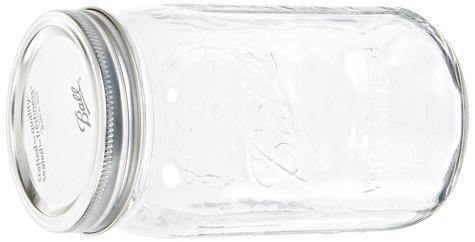
The iconic canning jar — better known as the Mason or Ball jar — is the only cheap, standardized storage solution I know. There are, of course, fancier, more expensive jars available, but buying enough of them to be truly useful is cost-prohibitive, and with new designs you run the risk the company will stop making them after you’re heavily invested. Weck, Fido and Bernoulli jars, while classic and useful for specific purposes, lack full standardization: you take apart the lid for cleaning and then wonder which jar that lid belongs to. Not so the canning jar.

Usually around $1 apiece (or 25 to 50 cents in thrift stores), canning jars are cheap enough to build a collection. I have at least a dozen of each size in regular rotation in my kitchen, pantry and fridge and use them many times a day:

  • In the morning I pull out a few 4oz jars and dole out my vitamins for the day.
  • I pack lunch items, including soup, tea, pudding, and nuts or seeds, in half pint and pint jars which then go into an insulated lunch bag (available at your local thrift store).
  • We use the pint size as drinking glasses, of course. At our wedding we had an assortment of jars and colored sharpies for guests to label them with. (Classy, I know.)
  • My immersion blender fits snugly into a wide-mouth jar to make shakes, mayonnaise or whipped cream. Leftovers can be easily capped and stored.
  • When I make sauerkraut or other anaerobic ferments, I use a 4oz canning jar as a weight inside a wide mouth or bail-top jar, to keep the veggies under the brine.
  • Straight-sided jars can be used in the freezer without breaking. Put them in warm water for a few minutes and the food slides right out.
  • Their usefulness is by no means limited to the kitchen.

The website Food In Jars has a useful taxonomy of canning jar sizes.

Presumably because the patent has long expired, the canning jar is fair game for all kinds of innovative accessories. My favorites are the aforementioned funnel, which works elegantly with a small strainer in both wide or standard mouth jars. One-piece lids are also handy.

There are a myriad of other innovative accessories, including the Cuppow (previously reviewed on Cool Tools), Kraut Kaps, ReCAP, and Tattler lids. So far none of these have proven themselves indispensable, but they’re all evidence that the magnificent canning jar continues to inspire.

And more useful accessories:

A couple of caveats:

Unless you have tiny hands (or an excellent dish washer), stick to mostly wide mouth jars. Standard jars are hard to clean (except for the shallow 4oz size).

Although “salad in a jar” is a thing, canning jars don’t make great lunch containers if you pack sandwiches or just want a “bowl like” dining experience.

As far as I’m concerned there really isn’t a perfect non-plastic lunch container on the US market. I’ve tried many, from Indian tiffins to Ikea glass lunch containers. Inevitably they aren’t leak proof, or they are but then they get a dent, or you lose the lid, or the seal gets filthy or wears out, and then the parts aren’t replaceable, or the company stops making them and you have to buy a new set. I dream that one day someone will design a standardized, open-source, leak-proof travel bowl. I already have a name for it: the extra-wide mouth.

-- Reanna Alder

23 Jul 12:42

This Ferrari 330 P4 Is Sex On Wheels

by Bryan Campbell

Known as The Revenge of Il Commendatore, the 330 P4 was Enzo Ferrari’s answer to Ford’s all-conquering GT40.

After Ford stunned the world at Le Mans in ’66 by dethroning Ferrari, the Scuderia returned the next year with the P4 at America’s doorstep and took a 1-2-3 finish at the 24 Hours of Daytona.

The operatic P4 you are about to enjoy is actually the last remaining original 330 P4 and took 2nd at the race in Daytona.

With a sound like that, the GT40s probably didn’t mind being led home…

–Bryan Campbell

17 Jul 01:33

Detroit Police Chief: Armed Citizens Making Detroit Criminals Think Twice

With robberies in Detroit down 37 percent compared to figures from this same time last year, Detroit Police Chief James Craig says the increasing number of armed citizens is making criminals think twice before attacking.

In other words, more guns are equaling less crime.

According to The Detroit News, in addition to the reduction in robberies there has been a 22 percent drop in "break-ins of businesses and homes" and a 30 percent decline in carjackings.

Craig says these across-the-board reductions in crime are at least partly attributable to "criminals being reluctant to prey on citizens who may be armed." He added, "I can't say what specific percentage is caused by this, but there's no question in my mind that it has had an effect."

The Coalition to Stop Gun Violence's Josh Horwitz disagrees with Craig. Horwitz says his gun control group's position is that "more guns equal more crime." 

Follow AWR Hawkins on Twitter @AWRHawkins. Reach him directly at awrhawkins@breitbart.com.


17 Jul 01:24

REVEALED: Hillary's $2,777 Per Minute Speaking Contracts...


REVEALED: Hillary's $2,777 Per Minute Speaking Contracts...


(First column, 10th story, link)
Related stories: