Shared posts

19 Nov 15:53

Pelosi's Grip on Power: $100 Million in Fundraising

Democrats have been frustrated with Nancy Pelosi's leadership for several years. Having led House Democrats back to power in 2007, becoming the first female Speaker of the House in the process, Pelosi has since led her party to crushing historic defeats. In control of the Speaker's gavel, she was notorious for centralizing decisions and frustrating colleagues. So how has she still managed to remain in charge of the House Democratic caucus?

The answer is fundraising. Pelosi's colleagues may grumble about her leadership, but there is no arguing with her skill at raising cash. The San Francisco-based Democrat has unique access to the Bay Area's tech wealth, as well as deep connections within the financial sector, in which she and her family have profited. And though her signature issues, such as the "war on women," have worn thin with voters, they work with hard-core donors.

In a craven column at the Huffington Post, Democratic Party insider and Chicago crony Robert Creamer has made the case for Pelosi to the rank-and-file. Creamer cites five reasons Pelosi should stay on to lead the House Democrat caucus, but the first four are mere puffery (e.g. she is "widely beloved and respected.). The real reason is #5: "Pelosi personally raised over $100 million for Democratic candidates this fall." Not bad in a losing year.

The caucus will formally hold its vote today (Tuesday), and Pelosi is equally capable of making her case in political terms:  “I’m the one that brung everyone to the party by winning the House in the first place,” she said recently. A few more Democrats than usual are willing to speak out against her, noting the obvious point that she has presided over the loss of 71 seats since the fat years of 2008-9. 

But this is Washington, and money talks.

Senior Editor-at-Large Joel B. Pollak edits Breitbart California and is the author of the new ebook, Wacko Birds: The Fall (and Rise) of the Tea Party, available for Amazon Kindle.

Follow Joel on Twitter: @joelpollak


18 Nov 14:59

The Things He Found In People: Don Shula And The Secrets Of Talent

by Pete Dexter

The Things He Found In People: Don Shula And The Secrets Of Talent

Originally published in the September 1983 edition of Esquire. Reprinted here with the author's permission.

Read more...


18 Nov 14:58

Where Do You Want To Live When You Retire

by Ester Bloom
by Ester Bloom

Getting OnLet’s say you flee the United States as soon as you hit 65. Where do you go to spend your golden Centrum Silver years? Costa Rica? The Netherlands? Nope: Canada. That’s where Americans are retiring these days. Maybe it’s the cheap drugs.

373,224 retired Americans were living abroad in 2013 — an increase from the 346,216 reported in 2011, according to the Social Security Administration. The largest number, 68,054, live in Canada, followed by Japan with 32,143, Mexico with 27,512, Germany with 24,499 and Britain with 22,729. Other nations with a large number of retired Americans include Greece, Poland, Italy, Israel and the Philippines. …

Another important consideration for anyone choosing to leave the United States is how to handle finances and taxes, and the Jenkinses have already consulted an accountant about how to manage theirs. American citizens are subject to American taxation “without regard to where they live,” said Ben Garfunkel, partner in charge of KPMG’s Global Mobility Services in the United States. “The volume and complexity of filings for a U.S. citizen usually increases,” when an American moves to a foreign country, he said. Banking and brokerage accounts might be subject to reporting. “Penalties and obligations often come as an unwelcome surprise, and they don’t just affect the wealthy and superwealthy,” he added.

You might not have to pay more in taxes, in other words, but you will certainly have more homework. Still, to live in Vancouver, it’s worth it. Here’s your Retirement Tip Sheet from AARP International. Tuck it away somewhere safe with your passport.

9 Comments
17 Nov 16:33

Former Cop Earns Federal Indictment for Teaching How to Pass a Polygraph!

by Nick Gillespie

Updated with proper video below!

Via Slashdot comes this awful story of a former Oklahoma City cop who has been indicted by the federal government for allegedly teaching people how to beat so-called lie-detector tests. Douglas Williams Williams is the Big Kahuna of the anti-polygraph movement. He's not shy about what he's up to. Here's his website.

Especially in the wake of the Edward Snowden affair, the feds are worried that "trained liars" will beat their tests that are supposedly unbeatable. These tests, which aren't admissible in court and are about as "scientific" as astrology, are nonetheless widely used by federal and other law-enforcement agencies to test job applicants, workers, and people accused of crimes.

"There is no unique physiological signature that is associated with lying," Steven Aftergood of the Federation of American Scientists told Reason earlier this year. "You can learn to regulate your heartbeat, you can learn to control your breath, and you can generate spurious signals."

Whatevs. From the Justice Department:

Douglas Williams, 69, of Norman, Oklahoma, was charged in a five-count indictment in the Western District of Oklahoma with mail fraud and obstruction.  According to allegations in the indictment, Williams, the owner and operator of “Polygraph.com,” marketed his training services to people appearing for polygraph examinations before federal law enforcement agencies, federal intelligence agencies, and state and local law enforcement agencies, as well as people required to take polygraph examinations under the terms of their parole or probation.

More here.

In February, Reason TV's Joshua Swain produced a video about Chad Dixon, an Indiana man sentence to eight months in the federal slammer for teaching people how to beat polygraphs. As disturbing, Reason TV talked with Marisa Taylor of the McClatchy newspaper chain, who has reported extensively on the war against anti-polygraph activists. Taylor discovered that not only are federal agencies increasing the number and frequency of lie-detector tests of employees but Customs and Border Patrol agents compiled lists of people who had bought books about beating polygraphs and then shared those lists with the IRS, CIA, and NSA.

Watch "Why Teaching How to Beat Polygraphs Can Land You in Jail":

17 Nov 16:30

Matt Welch on the Loss of Financial Privacy

Financial anonymity as we know it was invented in Geneva, Switzerland, in the 16th century, by Protestant Reformation leader John Calvin. In converting his pretty mountain lake town into a refuge for Europeans fleeing marauding Catholic governments, Calvin loosened papal restrictions on lending at interest and embraced individual privacy as a means of self-defense against a predatory state. But now, writes Reason editor in chief Matt Welch, American politicians are systemically destroying the right to confidential banking.

View this article.

17 Nov 16:21

Inner-City London Council Offers Advice on Shooting Foxes

You can shoot them, but poisoning is illegal! In response to a surge in foxes terrorising residents, a London council has re-issued its advice leaflet on how to deal with the urban menace, and it's remarkably strident compared to the rest of London. 

Conservative-controlled Wandsworth has responded to a Facebook petition by residents calling for free dustbins from the council to prevent foxes from tearing open bin-bags for scrap by reminding residents that they can kill the foxes themselves without legal recrimination. The useful guide lists approved methods including snares, shooting and traps, either with advice and warnings on keeping within the bounds of the law, reports the Daily Telegraph

Much of the advice related to the safety of other people and animals during the extermination. The guidance points out that it is illegal to leave poison for foxes, as it also kills pets and other animals indiscriminately, and gassing is also forbidden. However, as long as the litter is also found and killed, and steps are taken to secure the safety of people in the neighbourhood, one may shoot a fox in Wandsworth. 

For the majority of residents who don't keep a gun powerful enough to dispatch the pest readily to hand, help does exist in the shape of specialist urban pest controllers. The Daily Mail newspaper reported the comments of one professional fox shooter in March of this year, who uses a .22 calibre silenced air-rifle to silently dispatch the animals in built-up areas, a service for which he charges over £300.

Tom Keightley, 56, said: "I tend to shoot them because it’s quicker and kinder. Some people trap them first and then shoot them but they might be in the trap for hours, which isn’t very humane. Most of the time I shoot from one of the bedroom windows and they don’t know I’m coming”.

For those who are happy to wait for fox populations to decline more slowly from starvation and attrition, the Wandsworth flyer also has plenty of advice. It urges residents to only put rubbish out on collection day, to stop up holes under garden sheds where foxes like to breed, and not to feed them. 

The issue of urban foxes has long been a hot topic in London, as councils have resisted culls in the aftermath of repeated attacks against pets and children over the past couple of years. In 2013, a five-week-old baby was hospitalised after it was bitten on the face and had a finger ripped off by a fox which had gone into a bedroom in Bromley, South-East London.

At the time a family member said: "The fox was trying to drag the baby out of the house. Hayley [the child's mother] kicked the fox and it ran away. The baby was covered with blood and his hand was badly damaged. The fox was shaking the baby by his hand in its teeth and hitting him off the door frame. There was blood everywhere."


17 Nov 02:10

The Spirit of Autumn: Best American Apple Brandies

Apple-Brandy-Gear-Patrol-LEad

If you're into vintage -- your dad's aviators, reclaimed wood counters, old military watches -- then it doesn’t get much more old school than apple brandy, a spirit distilled from the hard cider of fermented fresh apples and then aged in oak.

...

Read More »
17 Nov 01:58

“IF IN DOUBT…TAKE IT!” Behind Closed Doors, Government Officials Make Shocking Comments About Civil Forfeiture

by Editor
But don't expect to leave with your car.

But don’t expect to leave with your car.

That there are seminars for cops to learn how to take people’s property this way is pretty sick. In the video embedded in the attached article a civil forfeiture guru talks to a group of cops and explains how it might be possible to seize a $300,000 house with the discovery of $10 worth of pot on the premises. You know someone’s home. He explains, “What’s theirs is yours.”

This is still America right? What is going on that this is legal?

Read More

16 Nov 12:38

The Most Important Election You Haven’t Heard Of

In less than three weeks, the most important election of the year will take place in Switzerland, and you haven’t heard of it. While the U.S. focuses on the recent Republican victory, the financial markets are facing an earth-shaking event on November 30th. 

This Swiss election seeks to challenge the paper currency (Fiat/Debt) system of the last forty years and possibly undermine the existing power structures of central banks across the globe by introducing the “Save Our Swiss Gold” initiative.

U.S. elections sway back and forth between Republicans and Democrats, but the monetary system never changes nor is ever up for any real debate. The monetary system of the whole world has been firmly in the hands of Keynesians’ ever since Nixon removed the convertibility of dollars and abandoned the Bretton Woods Agreement back in 1971. A positive Swiss vote would threaten this by once again providing the world with a choice between a hard (gold-backed) currency and fiat.

Up until recently, it was the Swiss who were the last holdouts against the Keynesian school of thought. Traditionally viewed as the last bastion of sensible monetary restraint, the Swiss succumbed to the siren call of “actively managed central banking” in September 2011, fixing their currency to the Euro under mounting European pressure.

Somehow, having what the world views as the strongest currency is a bad thing when everyone else is printing like crazy. It wasn’t so much the success of the Swiss currency during this Depression 2.0 but the failure of the rest of the world to restrain itself that lead to its appreciation.

Central bankers hate gold, or any hard currency restraint, because it limits their ability to tinker with the system (see FDR executive order 6102). On November 30th, Swiss voters will go to the polls to reassert their historical position of backing their country’s currency with gold, and possibly setting off a new revolution across the financial world by giving people a real choice.

Backed once again by physical gold, the Swiss public may be the first to finally say “enough” to the ongoing manipulation of the currency markets. No longer would governments be able to create limitless amounts of debt-backed currency without recourse. In response to the constant worldwide manipulations, Russia and China have been aggressively increasing their gold reserves over the last decade. Just recently, even ISIS decided that this is a smart choice as well.

This is a pinnacle moment in monetary history, not only for the Swiss who are reasserting their financial independence, but also for the whole world. What started as a referendum to return a tiny country of 8 million, with a GDP equal to New Jersey, to some semblance of financial sanity, may actually become the wake up call to the world to end the Keynesian delusion that the cure for everything is more debt. Cue the fat lady and the flying pigs.

The likes of Paul Krugman will probably kick and scream that the Swiss are making a poor decision by choosing to return to their fiscally conservative roots. He will be correct in asserting as much. It is a bad decision, but only for the rest of the world that wants to continue following along with a Ponzi economy.

If approved, the “Save Our Swiss Gold” initiative will force three very uncomfortable mandates on the Swiss National Bank and the rest of the Fiat world.

  1. The Swiss National Bank will NOT have the right to sell its gold reserves.
  2. The Swiss National Bank must hold at LEAST 20% of its total assets in gold.
  3. The gold of the Swiss National Bank must be stored PHYSICALLY in Switzerland.

Take a moment to read through these three mandates again. Should they pass, what you just read will upend the existing systems of business as usual. This is probably one of the greatest threats to the monetary establishment in years. Specifically though, it is a direct threat to the paper world of derivative trading that, by-and-large, trades at magnitudes greater than annual supply. This demand for physical delivery over cash (fiat) settlement could lead to exchange failures as the Swiss National Bank will have to purchase approximately 1,500 tons, or about 50% of the world’s current mining production, over the next five years. Meanwhile, for some strange reason, Germany has to wait until 2020 to get delivery of its own supply of minted gold, supposedly sitting under New York City.

It is important to note that before the Swiss Central Bank gave in to the Keynesians in the fall of 2011, gold was trading above $1,900 an ounce; since the “fix,” it has steadily plummeted to below $1,200--all while global debt levels have skyrocketed. A positive vote may reverse this trend.

Financial markets are a lot like poker tables, where big stacks can push even the best players around. For a while now paper has trumped physical, but this referendum is the wildcard in the game. A Black Swan (or in this case, Gold Swan) event of this type may lay bare much of the shenanigans that have been going on in financial circles for some time now. It was only a short time ago that even suggesting that LIBOR/energy markets were being manipulated would have gotten you labeled as some kind of radical; that is, until the truth came out, and the subsequent lawsuits. Many have been wondering for years now about gold and precious metal manipulation, and this election may bring that truth to light. Global players may finally be forced to show their hands, rather than settle with cash.

The Swiss currently hold about 8% of their reserves in physical form. This is down from 43% back in 1999 when they began selling it off at decade-low prices along with the British. And as recently as 2009, it was 18%. Where is all of this gold going to come from, and will the markets around the world be able to make good on delivery when such a large buyer is made public? This standing order may provide a floor on the recently falling gold market, but more importantly, it may just undermine worldwide currencies.

For those unfamiliar with Swiss elections, the law prohibits TV and radio advertising by individuals or special interest groups to ensure that these people-driven issues are spread and debated about by word-of-mouth, not by multimillion-dollar ad buys, like they are here in America. Issues like abortion, minimum wage, and infrastructure projects are routinely decided upon directly by the people of Switzerland, not in backroom deals by politicians. This election will be free from what many describe as outside influence.

Swiss voters are hoping to soon decide the fate of their own currency. If they are successful, and recent polling data suggests they will be, they will remove control of their currency from the hands of the experts who sold off the bulk of their gold reserves at prices between $300-$500 an ounce over the last decade and a half. The once bitten, twice shy Swiss hold the fate of future monetary policy in their hands with their upcoming vote--the repercussions of which will be felt all across the globe if they vote YES..

For the outsiders, the real fun will come in the next few weeks while we watch these same Swiss government officials try to explain why restoring a sound currency, that served them very well for hundreds of years, is now a very bad idea. Their answers will likely provide fodder for Swiss laugh tracks for years. Stay tuned.

This article in no way should be considered an endorsement or solicitation to buy or sell any security.


14 Nov 14:07

Junk collector finds trophy from 1942 Rose Bowl in trash (Video)

by Sam Cooper

In the 100-game history of the Rose Bowl, the game has only been played outside of Pasadena, California, one time: 1942. That year’s game, just weeks after Japan’s attack on Pearl Harbor, was moved to Duke University due to the fear of more attacks.

Now, more than 72 years later, a piece of history from that game emerged in an unlikely place. According to WTVD in Durham, a junk collector found a trophy that he believes to be a coach’s trophy from that 1942 Rose Bowl. The man said he found the trophy when going through items another man was getting ready to throw away. 

Though Duke lost the game 20-16 to Oregon State, the team’s coaches were still given trophies. Duke already has one of the trophies, which sits in the North Carolina Museum of History in the state’s Sports Hall of Fame. That particular trophy belonged to assistant Ellis Hagler.

“E. Cameron” is engraved on the trophy found by the man. Though it has not been verified, the name is believed to be Eddie Cameron, the Blue Devils’ backfield coach at the time. Cameron, also Duke’s basketball coach at the time, went on to become Duke’s head football coach and athletic director from 1951 to 1972.

Once his tenure as athletic director ended, the school’s basketball arena was named Cameron Indoor Stadium in his honor.

The man who found the trophy plans to sell it and said he will give Duke the first chance to purchase it from him. Ultimately, it will go to “the highest bidder.”

For more Duke news, visit DevilsIllustrated.com.

- - - - - - -

Sam Cooper is a contributor for the Yahoo Sports blogs. Have a tip? Email him or follow him on Twitter!

Follow @SamDCooper

14 Nov 13:30

The Perfect Thanksgiving Turkey

perfectturkey_gearpatrol

We consulted with chef Harold Moore for his foolproof recipe. Make the biggest meal of the year yours.

...

Read More »
14 Nov 01:36

10 Zip-A-Dee-Doo-Dah Facts About 'Song of the South'

by Stacy Conradt

Here's why you probably haven't seen Disney’s most controversial production ever.

14 Nov 01:23

RT this: Winery tweet jeopardizes license

by Dr. Vino

we-want-tweet

Here’s today’s bit of wine law crazee: back in June, the Sacramento Visitor and Convention Center tweeted a link to a local supermarket’s annual consumer tasting, which has over 300 local wineries (and many breweries) pouring their wares. One participating winery’s account on Twitter retweeted that tweet. And now, they are getting rapped on the knuckles by the Cal ABC, the state’s liquor regulatory authority.

A chill has since frozen the fingers tapping out winery tweets across the Golden State. If a winery’s license could be jeopardized by a generic retweet to a huge tasting, wineries may fear what right to freedom of speech they have.

For context, let’s venture back in time. Before Prohibition, brewers frequently owned or controlled some saloons, forcing them to pour and promote only their beers. After Prohibition, laws came into effect to prevent even a whiff of vertical integration–alcohol producers were not even allowed to “induce” retailers or restaurants into pouring their wares with free anything, including advertising. (These laws were called “tied-house laws” and there is a federal version as well as some differing state versions; see a discussion of the variations over on Lex Vini.)

The present situation is clearly ridiculous. There may be a case for preventing outright vertical integration (although one might wonder, does alcohol really merit special treatment?), but the protocols especially in the era of social media seem ridiculously out of date. There may even be a case for preventing enormous alcohol suppliers leaning on shops to the detriment of their competitors. But small wineries tweeting about their events at retailers, especially ones with 300 total wineries?

Yikes. California authorities need to promptly sort this situation to conform to the modern day. Here’s a quick fix: allow small wineries and brewers to tweet and email links to retailers. By virtue of their size, they could never strong arm retailers, let alone tweet the competition into submission.

sac_tweet

The post RT this: Winery tweet jeopardizes license appeared first on Dr Vino's wine blog.

13 Nov 16:17

Presenting Engadget's 2014 Holiday Gift Guide

by Christopher Trout
Smartphones, tablets and laptops are standard fare in 2014, but living in an always-on world isn't just about the essentials. So this year, we looked beyond the gadgets that fit in your backpack or briefcase to compile our Holiday Gift Guide. We've...
13 Nov 15:02

Here's What 'Net Neutrality' Is... and What to Think About It

Unless you're a dork, you will have no idea what "net neutrality" means, although chances are you've seen a headline about it in the last few days. Fortunately for you, I am a dork. So let me explain as simply as I can what it's all about—and what you should think about it. 

Simply put, net neutrality is the principle that all traffic on the internet should be treated equally. So your internet service provider, under a system of net neutrality, isn't allowed to send some kinds of data to you faster. It has to treat everything the same—even if you wouldn't mind, for example, slower emails if it meant smooth HD video on YouTube.

It also means that no one can pay to get their services to you quicker: Amazon can't make its on-demand video services more attractive by outbidding Netflix so it can stream to you in higher quality. Finally, all applications and websites are treated the same—so if your internet connection is choppy, your service provider can't prioritise Spotify to ensure smooth music playback.

In other words, it's a bit of a drag. It limits a service provider's freedom to operate their networks as they see fit, to provide customers with the best service, and it stops those providers offering higher-priced packages to heavy data users so they can enjoy a fast lane for Netflix without slowing down their neighbours' connections. Product differentiation is one the main ways companies compete with one another, and providers will be denied that if net neutrality becomes law.

So why do so many people treat net neutrality as an article of faith? Well, the clue's in those last three words, because most of the arguments in favour of neutrality have a suspicious ring of dogma about them—and most factual claims offered up to support neutrality don't entirely stand up to scrutiny.

Advocates of the so-called "open," "free," "neutral" internet are fanatical in their insistence that no manipulation should be done to internet traffic, because it will be bad for the consumer (if big companies start taking the mickey) and bad for innovation (if, say, YouTube has a monopoly on video so no new startups can enter the fray). 

But all sorts of manipulation is being done already. As MIT Technology Review explains, "Wireless networks... have been built for many years with features that help identify users whose weak connections are impairing the network with slow traffic and incessant requests for dropped packets to be resent. Carriers' technology assures that such users' access is rapidly constrained, so that one person’s bad connection doesn’t create a traffic jam for everyone... Strict adherence to net neutrality goes by the wayside."

What's more, the internet as it currently operates is readily acknowledged to be unfit for purpose in other areas—a bit like the Canadian and British healthcare systems. A famous bug, revealed in April, left lots of supposedly private communications vulnerable because the internet was never designed to handle the number of secure transactions it does today.

And finally, as this neat little primer explains, fear-mongering about some sort of chilling effect on innovation is mostly hogwash—there's even reason to suppose that a tiered internet would be fairer to small businesses. 

What's really telling in the debate is who screeches and yells about the apparently inviolable principle of net neutrality. At the risk of sounding rude, it's Silicon Valley hipsters, head-in-the-clouds bloggers, Lefty ideologues who hate big business, radical transparency campaigners, copyright infringers and Barack Obama. (For some Breitbart readers, that will be all you need to hear to vote the other way.)

But, with the exception of Obama, who's only in favour of neutrality (a) to suck up to the last few poor twenty-somethings still swooning over him and (b) because he's found something else he can regulate, these are the people who stand to benefit most from holding back the development of products that will benefit the average user, such as Netflix boosters for home internet connections. 

These groups want to stick it to service providers—as hated in the US as water companies, vegetarians and Liberal Democrats are in the UK—but what they don't realise is that by denying providers the chance to manage their networks as they see fit, and set flexible prices for the services they offer, they're only hastening the day the provider switch to more aggressive pricing strategies. 

You see, providing broadband to residential homes is a bit of a thankless task. In most countries it's highly competitive. By allowing providers to charge for video bolt-ons, we're delaying the inevitable day when providers announce they're switching to "usage-based" pricing, like a mobile phone contract, which is designed to gouge users when they go over their prepaid limits.

And, even more importantly than that, these guys need some financial incentive to upgrade all those pipes. Maintaining the physical infrastructure of the internet is immensely costly, and it's easy for internet companies and bloggers to say service providers should get out of the way and, in their words, be "dumb pipes", but who, then, is going to do the expensive, time-consuming work of digging up roads, replacing exchanges and upgrading routers?

When the inevitable price tsunami hits, those pirates, internet obsessives and Valley nerds may come to regret the day they insisted on this pointless utopian buzzword "net neutrality", as their own cable and broadband bills skyrocket. After a bit more consideration, perhaps these keyboard warriors might like to consider the impact on their bills of holding out now—because they're the ones who are clamped to their computers, and whose charges will go through the roof.

There's no way that current home internet connections are ever going to reliably deliver enough data to power, say, a 4K TV any time of the night or day without more investment. And what consumers want is a more flexible approach to data from their providers, so they can select packages that better suit them. So I say let's jettison this silly mantra. And if that means sticking it to the nerds, well... I guess we'll just have to suffer that, won't we?


13 Nov 15:01

Housing Market Surging in the Lone Star State

This year will be the second-best year ever for the Texas housing market, according to researchers at the Real Estate Center at Texas A&M University. 

In a report by the center, economist Dr. Jim Gaines said, "Last year was the second best year in the state of Texas for home sales volume. It was second only to 2006, which was at the height of the housing boom and all the easy financing. And 2013 wasn't that far off from that. This is going to become the new second best year ever. We have having a really terrific year."

Almost 218,000 homes have been sold in Texas so far this year; according to the Real Estate Center, that is one percent more than were sold this time last year. 

One potential issue pointed out by the researchers is that incomes in the state have not been rising at the same rate of home prices. Gaines said, "As our prices have been going up progressively here in Texas, incomes haven't been going up at the same pace percentage-wise."

The economist was quick to point out, however, that Texas' "prosperity is, in general, still continuing."

While Texas' housing market is flourishing, the same cannot be said for most other areas of the country. The Lone Star State's pro-business environment, low taxes and reliable regulation have caused businesses to flock to the state. The result has been a bountiful job market, which draws individuals and families to Texas from around the world -- many are eager to purchase homes upon arrival. 

Texas' growing population has driven the high housing demand. In Dallas, for example, more than one in 10 homes are sold in less than four days of going on the market.

Vance Ginn, an economist at the Texas Public Policy Foundation, told Breitbart Texas, "Texas is one of the only states that have prices that are higher than they were before the national recession....The Texas model of low taxes, modest government spending, and stable regulations creates an environment where businesses have incentives to move to the state."

More businesses means more jobs. If Texas continues to implement smart public policies, which allow the private sector to prosper, all signs indicate that the state's housing market will continue to thrive as well. 

Follow Kristin on Twitter @KristinBTate.


13 Nov 13:26

REPORT CARD: School named for Barack Obama 'fails to meet expectations'...


REPORT CARD: School named for Barack Obama 'fails to meet expectations'...


(Third column, 4th story, link)

12 Nov 13:39

USA to make sharp reductions by 2025...

12 Nov 13:37

FCC head may reject Obama's plan for net neutrality

by Rich McCormick

Yesterday, President Obama took a strong position on net neutrality by supporting calls to regulate the internet more like a utility. Less than 24 hours later, FCC head Tom Wheeler indicated that he would break from the president's proposed plan, moving in a new direction intended to pacify huge internet providers such as Comcast, AT&T, and Verizon.

The Washington Post reports that Wheeler told a group of internet companies — including Google, Yahoo, and Etsy — that he favored a more "nuanced" solution than that laid out by Obama. Wheeler's plan would acquiesce to some of the president's demands, but would also kowtow to the demands of huge internet providers.

Continue reading…

12 Nov 13:37

Spacecraft just began precarious 7-hour comet landing

by Elizabeth Lopatto

This morning at 4AM Eastern time, the European Space Agency's Rosetta orbiter jettisoned a washing-machine-sized probe, which began its fall towards the comet Rosetta is monitoring. The 250-pound probe, called Philae, will fall for seven hours; if everything goes to plan, it will land on a patch of the 2.5-mile-long comet.

Continue reading…

12 Nov 13:36

China and the US agree to 'historic' climate change pact

by Amar Toor

The US and China this week announced a landmark agreement to sharply cut greenhouse gas emissions by 2030, as part of a deal that President Barack Obama described as a "major milestone." As the New York Times reports, the deal was brokered between Obama and his Chinese counterpart, President Xi Jinping, over the course of nine months, before being announced Wednesday at the Asia-Pacific Economic Cooperation (APEC) summit in Beijing.

China and the US are the world's top two carbon emitters, accounting for more than a third of global greenhouse gas emissions, and their cooperation is seen as critical to spurring broader action across the globe ahead of a climate change summit in Paris next year. In an op-ed in today's New York Times,...

Continue reading…

12 Nov 13:33

Net Neutrality—and Obama's Scheme for the Internet—Are Lousy Ideas

by Grant Babcock

Obama surfing pornPresident Barack Obama recently came out in favor of both "net neutrality" and the FCC changing the way that Internet service providers, or ISPs, are regulated. Shortly thereafter, Sen. Ted Cruz opined "'Net Neutrality' is Obamacare for the Internet; the Internet should not operate at the speed of government." Obama's and Cruz's statements fed into the popular misconception that the proposed FCC reclassification is the same thing as net neutrality. It's not. The policies are distinct, though both are bad ideas.

What Net Neutrality Is and Is Not

Net neutrality is about how traffic flows through the Internet. When someone sends a message over the Internet, it gets broken up into tiny bits called "packets." Each packet gets passed around from node to node, eventually arriving at its destination. It's like if you tore up a letter, put the parts in different envelopes, and then mailed each of them separately. When the packages arrive at their destination, they're reassembled in the proper order so you can view the content.

Net neutrality is a policy that mandates that all packets be treated the same regardless or source, destination, or content, with very limited exceptions for traffic that's illegal, malicious, or unwanted.

Sometimes people use "net neutrality" to refer to a whole swath of policy ideas that are not net neutrality. For example, some people think it's unfair that Internet speeds are usually faster in urban areas than in rural areas where there hasn't been as much investment in infrastructure, arguing for "net neutrality" as a solution.

Title II Regulation

To address perceived problems like slower access in rural areas, some people have advocated changing the way ISPs are regulated. Under Title II regulation, part of the Communications Act of 1934, in addition to a slew of other regulatory burdens, ISPs could be subjected to universal service requirements. That means they would be required to ameliorate bottlenecks caused by comparatively slow local infrastructure. Just like telephone companies are required to wire up every house more or less regardless of cost, ISPs would be required to bring all infrastructure up to a minimum standard. Let's be clear about something—it makes no economic sense from a society-wide perspective to make such a large investment to serve so few people. It's a handout to rural Internet consumers, pure and simple.

In exchange for the added regulatory burdens, the FCC has the power to set prices at a level that allows ISPs to make money. If that power were exercised, the cost of Internet access would no longer be subject to market forces. This is the default "public utility" model. Most advocates of net neutrality, including President Obama, don't want that to happen, suggesting the FCC make an exception for ISPs. But that process of making an exception, called "forbearance," isn't automatic. There are legal obstacles. If forbearance fails, we can expect a concerted lobbying effort by the ISPs to make sure rates are set as high as possible.

Weighing the Risks

Set aside for a moment whether the worst-case scenarios raised by net neutrality and regulatory reclassification advocates are terribly likely. They're not, as even this popular pro-neutrality cartoon attests. The nightmare outcome? The Internet becomes more expensive and less convenient for consumers, and it becomes harder for small content producers to compete.

That's what might conceivably happen. Here's what actually is happening, right now:

We know, indisputably, thanks to the heroic disclosures by Edward Snowden and the tireless work of journalists like Laura Poitras and Glenn Greenwald, that the federal government is attempting to use the Internet to build a global Panopticon, capable of accessing everyone's personal information at any time for any reason or no reason.

We also know that one way the government is trying to accomplish this is by securing the cooperation of private companies. You can attempt to thwart surveillance by using encryption—but encryption only protects data in transit. Once it's received and decrypted, it's an open book. If the government can compromise private data custodians, encryption loses a lot of its efficacy. This is exactly what happened to Google, which had its internal traffic bugged by the NSA.

Sometimes instead of outright sabotage, the government pressures companies into turning over information about their customers. See, for example, the brave efforts of Ladar Levison, head of now-defunct secure email provider Lavabit, to protect his customers—including Edward Snowden—from the government's prying eyes.

But not all tech companies have the spine of Lavabit. What we risk doing by ramping up the government's regulatory authority over the Internet is to make it easier for the government to pressure ISPs, many of which are data custodians, to get what they want.

Is it crazy to think the government might use its "legitimate" regulatory authorities to bully private actors? Let's consider the financial sector, one of the most heavily regulated parts of the economy.

In his book The Financial Crisis and the Free Market Cure, former BB&T chief John Allison relates how Bernanke's Federal Reserve blackmailed healthy banks into taking TARP money they didn't want:

The day after TARP passed, we were contacted by our regulators. This was an informal contact over the phone. I received a very carefully stated nondocumentable message. The essence of the message was that although BB&T had substantially more capital than it needed under long-established regulatory standards, given the current economic environment, the regulators were going to create a news set of capital standards. They did not know what the standards would be. However, they were "very concerned" that we would not have enough capital under these new standards unless we took the TARP capital. They had a regulatory team in place to reexamine our capital position immediately unless we took the TARP funding. The threat was very clear.  (pp. 170-171)

Another example is the government's "Operation Choke Point" program, which puts pressure on banks to refuse to deal with people engaged in perfectly legal businesses the Obama administration, for one reason or another, doesn't like.

"Net neutrality" and public-utility style regulation are about Internet freedom, just not the way advocates think. Comcast and Netflix, two of the main parties in the public debate, are squabbling about who should bear the financial burden of building and maintaining the costly infrastructure needed to deliver streaming video to consumers. There's no dire threat to freedom hinging on the outcome of that fight. The threat to Internet freedom is government control. That means that if you care about liberty, you should oppose Net neutrality and Title II reclassification.

Thanks to Ryan Radia, Associate Director of Technology Studies at the Competitive Enterprise Institute, for his assistance with this article.

12 Nov 01:51

Video: This is why we love the Porsche 911 reimagined by Singer

by Brandon Turkus

Filed under: Classics, Coupe, Performance, Videos, Porsche

Porshce 911 Reimagined by Singer

In the world of restomods, Singer Vehicle Designs is inarguably one of our absolute favorites. The company, founded by rocker Rob Dickinson, has made its name as an obsessive constructor of vintage, built-to-order Porsche 911s with modern internals and beautiful accouterments.

Xcar has put together a lengthy interview with Dickinson, covering the source of his fascination with the 911 and his passion for automotive design, before falling into his rock-and-roll days with his band Catherine Wheel. He also covers how he got into the world of modifying Porsches, rather than just restoring them. There's much, much more in the video, though, and we promise, you won't want to miss it.

Take a look.

Continue reading This is why we love the Porsche 911 reimagined by Singer

This is why we love the Porsche 911 reimagined by Singer originally appeared on Autoblog on Tue, 11 Nov 2014 19:57:00 EST. Please see our terms for use of feeds.

Permalink | Email this | Comments
12 Nov 01:49

And Then There’s The Things You Couldn’t Even Make Up

by Tyler Durden

Submitted by Raul Ilargi Meijer via The Automatic Earth blog,


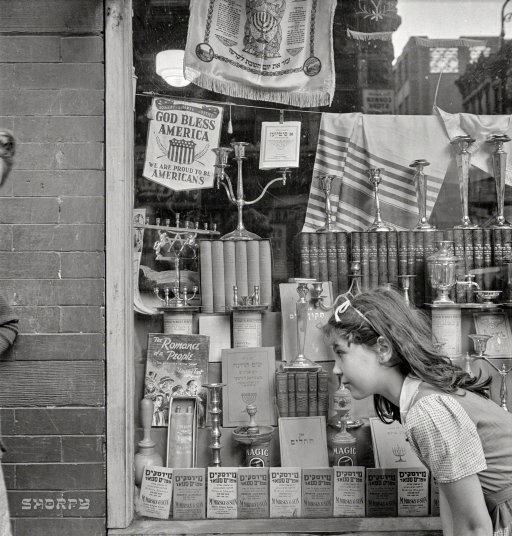
Marjory Collins Window of Jewish religious shop on Broome Street, New York Aug 1942

There are things in this world which simply look plain stupid, and then there are those that at closer examination prove to be way beyond stupid. How about this one:

1) G20 taxpayers (you, me) subsidize the fossil fuel industry. That in itself is crazy enough, and it should stop as per last week; industry participants must be able to fend for themselves, or fold. That they don’t, speaks to a very unhealthy level of power in and over our political systems. Subsidizing coal and oil is as insane as bailing out Wall Street banks. It’s money that defies gravity, by flowing from the bottom to the top, from the poor to the rich.


2) Then there’s the huge amount of the subsidies: $88 billion a year. That could solve a lot of misery for a lot of people. It adds up to well over $1 trillion in this century alone. Next time you feel good about prices at the pump, please add that number, it should set you straight.


3) But that’s just the start. Those $88 billion go towards exploration for new oil, gas and coal resources which, according to the UN’s IPCC climate panel, can never even be ‘consumed’ lest we go way beyond our – minimum – goals for CO2 concentrations and a global 2ºC warming limit.


4) And it keeps getting better. For who do you think pays for the research conducted for the IPCC reports? That’s right, the same G20 taxpayer. As in: you and me. We pay for both ends of the divine tragedy. We got it al covered. We pay for exploratory drilling in the Arctic, the Gulf of Mexico and all other ever harder to find, riskier and more polluting resources.

If this were not about us, we’d undoubtedly declare ourselves stark raving mad. Since it does directly involve us, though, we of course favor a more nuanced approach. Like sticking our heads in the sand.

I got that $88 billion a year number from a new report by British thinktank the Overseas Development Institute (ODI) and Washington-based analysts Oil Change International, The Fossil Fuel Bailout: G20 Subsidies For Oil, Gas And Coal Exploration. The Guardian has a few more juicy tidbits:

Rich Countries Subsidising Oil, Gas And Coal Companies By $88 Billion A Year

Rich countries are subsidising oil, gas and coal companies by about $88bn (£55.4bn) a year to explore for new reserves, despite evidence that most fossil fuels must be left in the ground if the world is to avoid dangerous climate change.


The most detailed breakdown yet of global fossil fuel subsidies has found that the US government provided companies with $5.2bn for fossil fuel exploration in 2013, Australia spent $3.5bn, Russia $2.4bn and the UK $1.2bn. Most of the support was in the form of tax breaks for exploration in deep offshore fields.


The public money went to major multinationals as well as smaller ones who specialise in exploratory work, according to British thinktank the Overseas Development Institute (ODI) and Washington-based analysts Oil Change International.


Britain, says their report, proved to be one of the most generous countries. In the five year period to 2014 it gave tax breaks totalling over $4.5bn to French, US, Middle Eastern and north American companies to explore the North Sea for fast-declining oil and gas reserves. A breakdown of that figure showed over $1.2bn of British money went to two French companies, GDF-Suez and Total, $450m went to five US companies including Chevron, and $992m to five British companies.


Britain also spent public funds for foreign companies to explore in Azerbaijan, Brazil, Ghana, Guinea, India and Indonesia, as well as Russia, Uganda and Qatar, according to the report’s data, which is drawn from the OECD, government documents, company reports and institutions.


The figures, published ahead of this week’s G20 summit in Brisbane, Australia, contains the first detailed breakdown of global fossil fuel exploration subsidies. It shows an extraordinary “merry-go-round” of countries supporting each others’ companies. The US spends $1.4bn a year for exploration in Columbia, Nigeria and Russia, while Russia is subsidising exploration in Venezuela and China, which in turn supports companies exploring Canada, Brazil and Mexico.


“The evidence points to a publicly financed bail-out for carbon-intensive companies, and support for uneconomic investments that could drive the planet far beyond the internationally agreed target of limiting global temperature increases to no more than 2C,” say the report’s authors.


“This is real money which could be put into schools or hospitals. It is simply not economic to invest like this. This is the insanity of the situation. They are diverting investment from economic low-carbon alternatives such as solar, wind and hydro-power and they are undermining the prospects for an ambitious UN climate deal in 2015,” said Kevin Watkins, director of the ODI.


“The IPCC [UN climate science panel] is quite clear about the need to leave the vast majority of already proven reserves in the ground, if we are to meet the 2C goal. The fact that despite this science, governments are spending billions of tax dollars each year to find more fossil fuels that we cannot ever afford to burn, reveals the extent of climate denial still ongoing within the G20,” said Oil Change International director Steve Kretzman.


The report further criticises the G20 countries for providing over $520m a year of indirect exploration subsidies via the World Bank group and other multilateral development banks (MDBs) to which they contribute funds.


That’s right, as you see in the graph we pay more towards Big Oil’s future profits then the companies do themselves. Without getting shares in those companies, mind you. We pay Big Oil and coal to produce more fossil fuels, and at the same time we pay the UN to publish reports demanding they produce less of them. Feel crazy yet?

Did you have any idea that your government sponsors oil companies with your money, which they don’t need, and certainly shouldn’t? Aren’t we supposed to at least take a serious look at alternative energy sources, and more importantly, use less energy, whether it’s coal or solar? If only to show we do indeed understand the 2nd law of thermodynamics?!

Big Oil, like Wall Street banks, should be, and can, take care of themselves, and very well. May I suggest you try and find out who in your respective government has given the thumbs up to these crazy handouts, and when you do, make sure they’re fired.


11 Nov 23:47

If You Cheat In A Marathon, Try Not To Set A World Record

by Jon Gugala

If You Cheat In A Marathon, Try Not To Set A World Record

Tabatha Hamilton, a 31-year-old from Trenton, Ga., won the Chickamauga Battlefield Marathon near the Tennessee/Georgia line on Saturday. But when officials took a closer look at her race the next day, something was off.

Read more...


11 Nov 23:46

The Foosball Champ Who Almost Won The World Series Of Poker

by Kyle Wagner

The Foosball Champ Who Almost Won The World Series Of Poker

Billy Pappas, the last true amateur of the 2014 World Series of Poker Main Event and one of the best foosball players in the world, was eliminated early this morning in fifth place, taking home $2,143,794. It's a damn shame, because Billy was living the dream.

Read more...


11 Nov 15:29

How Do You Like Subsidizing Elon Musk’s Crapitalist Lifestyle?

by Jerome Hudson

We at Daily Surge thought you’d like to take a peek at Elon Musk’s new $17 million dollar mansion. Let’s call it an idol to CRAPITALISM, if you will.

See, while Musk was at one point in his career (PayPal) a self-made entrepreneur who made millions by providing goods and services that met a demand in the marketplace, today the billionaire leverages his political access and turns it into crony-fueled profit…and leaves us holding the bill.

As you go through these pictures, keep in mind that Musk’s high-end electric car company, Tesla, was given $465 million of your hard-earned tax dollars from the Obama administration’s green energy loan program. In fact, as Jason Mattera reveals in CRAPITALISM: Liberals Who Make Millions Swiping Your Tax Dollars, the taxpayer-backed Tesla ended up helping a Middle East investment firm score $113 million in profits.

Here’s Musk’s 1.66-acre hilltop plot in Los Angeles’s plush Bel Air neighborhood.

musks-house-is-situated-on-a-hilltop-166-acre-plot-in-los-angeles-ritzy-bel-air-enclave

Musk gave Business Insider an exclusive look recently into his massive, multi-winged new 20,248 square foot property.

Musk’s kitchen, with its brick ceilings, is probably as spacious, if not more, than the average middle class American home.

the-kitchen-has-a-brick-ceiling-and-a-large-island

Oh, in addition to the taxpayer-financed loan to Tesla, did we mention that Tesla is largely profitable today because, as Mattera points out, California automakers that run on fossil fuels “essentially prop up businesses like Tesla because they have to buy clean air credits, thanks to aggressive intervention by the government.”

Because of global warming. Or something.

Here’s a look at just one of the seven bedrooms you helped Mr. Musk purchase through your unwitting generosity. You think Musk will invite us to his crib for a sleepover? “Hide and Go Seek” in this palace could be epic!

the-home-has-a-total-of-seven-bedrooms-and-nine-bathrooms

Business Insider says that the master suite includes a bedroom and a lounge area. If you peasants want to live large like Elon Musk, then you’re gonna have to step up your crapitalist game, son!

Musk didn’t just lobby to get government subsidies for Tesla. SolarCity, his other “green energy company” is completely reliant on Uncle Sam just to stay in business. But don’t take my word for it. “If, for any reason, we are unable to finance solar energy systems through tax-advantaged structures,” SolarCity warned in 2013, “we may no longer be able to provide solar energy systems to new customers on an economically viable basis. This would have a material adverse effect on our business, financial condition and results of operations.”

New Yorkers, by the way, have just forked over $750 million in subsidies for Musk to build a SolarCity plant in Buffalo.

according-to-the-listing-photos-the-master-suite-includes-a-bedroom-and-a-lounge-area

Must be nice.

Oh, and let’s not forget the gigantic his and her baths, and the two enormous closets.

there-are-also-separate-his-and-her-baths-plus-two-enormous-closets

 No green energy crapitalist’s home is set without a home theater.

So now he can watch reruns, in high def, of one of his taxpayer-backed rockets blast off into space. And yes, SpaceX is yet another Musk company that hinges on the public’s “investment.”

this-area-seems-to-be-set-up-for-home-screenings-and-entertainment-purposes

Of course there’s a tennis court….

it-overlooks-the-full-size-tennis-court

….And a massive swimming pool.

theres-also-a-gorgeous-heated-pool-and-deck-area

At a time when American wages are falling or stagnating, professional swindler Elon Musk has secured your tax dollars and made you part of his business plan whether you like it or not. And as a reward for satiating his hunger pangs for taxpayer-funded goodies, he bought himself a seven bedroom, nine bathroom estate. 

CRAPITALISM has sullied the greatest economic system ever known to man, Mattera writes. “It’s allowed the rich and famous to become even more rich and famous, but at our expense.”

“And, most disturbing, it’s turned the rule of law on its head by creating two classes of citizens: those who benefit from crony connections and those who don’t.”

What better example than Elon Musk? Which is why Mattera included a chapter on him.

We don’t begrudge Musk’s opulence. We begrudge being forced to subsidize it.

The post How Do You Like Subsidizing Elon Musk’s Crapitalist Lifestyle? appeared first on Daily Surge.

11 Nov 15:02

4 Good Reasons To Get an Emergency Burner Phone

by Ben Stegner
burner-phone

Today’s smartphones offer a legion of features for productivity, and usually have a welcome place in anyone’s pocket. However, even for the biggest technology addicts, keeping a burner phone around is a great idea that could save you someday. Let’s look at a few reasons why you might want to get one for yourself. What Is A Burner Phone? Essentially, a burner phone is just another name for a prepaid phone. One of the most common names in prepaid phones is TracFone, which also owns prepaid carriers Net10 and Straight Talk. These aren’t the only types, however; in addition to the...

Read the full article: 4 Good Reasons To Get an Emergency Burner Phone

11 Nov 14:13

New FBI Stats: Crime Rates Continue Their Long Decline

by Jesse Walker

Because Murder was incorporated, individual investors were not liable for the company's crimes.Last year, when the FBI released its crime statistics for 2012, there was a slight uptick in the murder rate—not a big increase, but an interruption in a long decline. The interruption turned out to be brief: Yesterday the bureau announced its numbers for 2013, and they show murder heading downward again. According to the new stats, there were 14,196 murders last year. That's a 4.4 percent decrease from 2012, a 7.8 percent drop from 2009, and a 12.1 percent decline from 2004. The murder rate dropped even more steeply: down 5.1 percent from 2012, 10.5 percent from 2009, 18.3 percent from 2004.

Rape, robbery, and aggravated assault are all happening less frequently as well. Indeed, violent crime in general is down:

So is property crime:

Sadly, the news doesn't seem to have penetrated the public mind.

The most common reason for an arrest last year? Drug violations. And happily, even drug arrests are decreasing.

11 Nov 13:58

Are You Expecting A Recession?

by Tyler Durden

Submitted by Raul Ilargi Meijer via The Automatic Earth blog,


Russell Lee Columbia Gardens outdoor amusement resort, Butte, Montana Aug 1942

The folks at Bloomberg put this piece up today with the intriguing title‘Predictors of ’29 Crash See 65% Chance of 2015 Recession’, and I thought: wait a minute, that’s what people, lots of people, actually think, that there’s going to be recession. While still others will trust Morgan Stanley and Goldman Sachs, who, as the article put it, “posit an expansion that has plenty of room to run.”

For the vast majority of those in the world of finance, and probably in a much wider world, those are the options, because that’s how they think. Either more of the same, or a recession, as we know it in a cyclical sense, where the economic cycle goes up and down but in the end keeps turning up. And where any sudden moves are telegraphed well in advance by monetary authorities for the grace and benefit of them, the investors, so they don’t lose too much and can instead profit at every step, whether it’s up or down.

And then it dawned on me, which took a few seconds because that’s not how I see the financial system at all, I see neither a recession nor a helpful and friendly Fed, that this is why so much money is going to be lost by so many people. But then, from where I’m sitting, that’s the game, isn’t it? In a functioning market, someone needs to lose for someone else to gain. And the smartest prevail.

And y’all you want a real market, don’t you? One that reflects what’s really going on in the real economy?! Just so, you know, you’re not going to buy shares in companies that report numbers painted with big fat strokes of bright pink or shiny red lipstick on your porkchop.

The problem with this is that whatever money you manage to save in a collapse is money the major banks won’t be making. They’d much rather take it from you than let you keep it. And who do you think the Fed will turn out to be more friendly with, you or Jamie Dimon and the Oz behind his curtain?

if you take a good hard look at how the US – and EU and Japan – economies have developed over the past decade, there’s only one possible conclusion you can draw. Which is that these countries no longer have functioning markets. Without the multiple trillions in stimulus share prices would have been at a fraction of where they are now.

And then the question is how much longer that pretty much blind market support can continue. Well, it won’t be infinite. Because that would bankrupt nations too fast even for Wall Street’s international banks, but more importantly because those same banks are not making nearly enough money in the present set-up. And that’s the clincher.

But apart from what the Fed wants or doesn’t want, the fact remains that it has been instrumental in blowing the bubbles of the Dow and S&P to unforeseen heights. And that this has happened because through time investors started believing the Fed has their back. Countless ‘experts’ today will tell you that if markets start falling tomorrow, the Fed will step back in.

Really? To what end? If that were true, they might as well never have tapered. Because if anyone knows how the Fed has distorted the markets, it’s the Fed itself. So for all I know, they may simply think they’re done distorting. And that they can sit back and watch the, after all inevitable, collapse unwind.

Inevitable because the alleged progress and recovery we’ve seen since US QE started brings tears to your eyes when you look past the partly massaged and partly plainly made-up numbers that go into GDP and jobs reports. Wipe off all the lipstick from the American pig, and you’re left with no more than a handful meager slices of diet bacon.

The Fed knows this, I know this, and now you do too, but many investors don’t seem to be catching on. They are, instead, talking about the probability of a recession. But that’s not what lies ahead. We’re well, and fast, on our way to a deep depression. Nothing cyclical, unless perhaps you’re talking Kondratieff’s 70-year cycles.

Recession is a useless discussion by now. The US is a painted pig, the EU needs to let countries go or they’ll go to war, Japan hung its head in a noose for Halloween and China has its 32nd consecutive month of falling factory-gate prices.

Lower oil prices may for now hide some of the pain, but even that is too much for Japan, because of the deflationary effect of even less consumer spending. And it’s that lack of spending that’s everyone’s worst enemy. But you can’t solve that with central bank stimulus. The formerly rich world is loaded with burger flippers, food stamps and underwater homes, and that means less, not more, spending.

And we all know, though perhaps not by how much, that all ‘formerly rich’ governments have historically unequaled spin doctors on their payroll, so the real numbers across the board are much much worse even then what we are ‘allowed’ to know. And what we do know is already awful once you sweep away the propaganda. You’re only going to be OK as an investor if the Fed continues to hold your hand and lead you softly through the ups and downs. You really think they will?

Recession? In your dreams.