Shared posts

29 Dec 00:07

The Greater Abomination: Washington’s Lies About TARP’s “Success” Are Worse Than The Original Bailouts, Part I

by Editor

Eccles building cc

By David Stockman


The mainstream economics narrative is so far down the monetary rabbit hole that the blinding clarity of the chart below has no chance whatsoever of seeing the light of day. That’s because it dramatizes the real truth regarding all the Fed gibberish about “accommodation” and “stimulus”. Namely, that what lies beneath its “extraordinary measures”, such as ZIRP, QE, wealth effects and the rest of the litany, is a central banking regime that systematically destroy savers.  Period.

Read More

28 Dec 20:16

Expats in America weigh return to island...

28 Dec 20:15

EXODUS: Cubans picked up at sea by U.S. Coast Guard rises nearly 75%...


EXODUS: Cubans picked up at sea by U.S. Coast Guard rises nearly 75%...


(First column, 11th story, link)
Related stories:
28 Dec 15:23

It's not complicated...

28 Dec 15:21

9 Reasons Analog Games Are Awesome

by Brett & Kate McKay

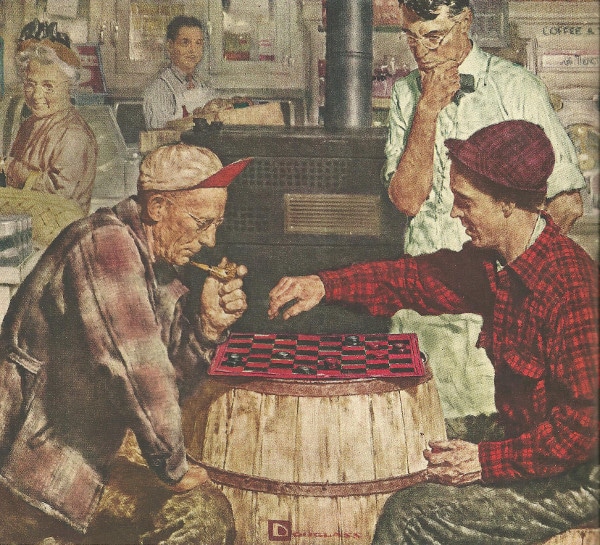
checkers


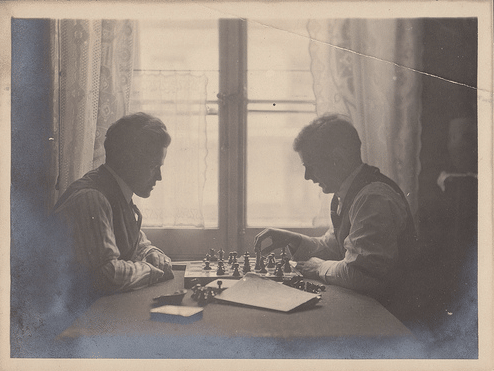
Dwight D. Eisenhower played bridge with his fellow officers into the wee hours of the morning; Winston Churchill enjoyed playing mah-jongg and gin rummy with his family before dinner; many of the founding fathers, including Franklin, Jefferson, and Madison, were ardent players of chess; presidents from Theodore Roosevelt to Harry Truman played poker with their advisors; Abraham Lincoln played backgammon with his sons.

Nearly every great man from history had a favorite board or card game – as did millions of men whose names have been lost in time.

The origin of analog games goes way, way back. Records of board games have been found all across the world — from ancient Mesopotamia to the Aztecs to classical Greece. Whether a foot soldier or king, analog games have helped men while away the time from the very beginning of civilization.

These days, we’re more likely to play video games on our televisions or phones. But card and board games still make for an excellent pastime, even in our digital age. Here are 9 reasons why:

1. Analog games don’t require power — you can do them anywhere.

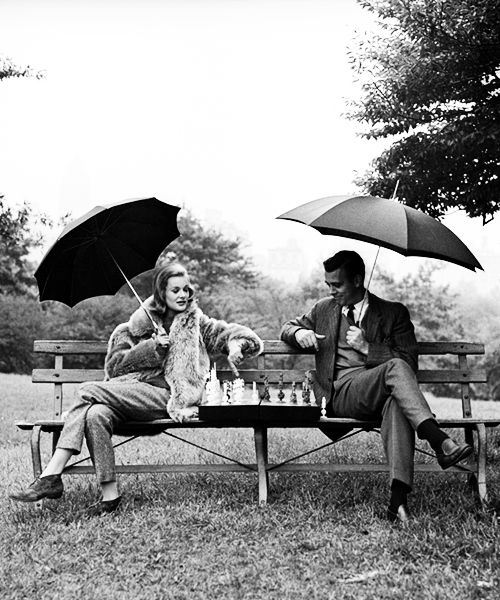
date game park

While digital games require electricity, or a charged battery, analog games can be played anywhere, anytime. They thus make for excellent boredom-breakers when the lights go out, when you’re camping, or when you’re stuck at the airport and need to preserve the battery on your phone. Analog games are also quiet and discreet – it’s easy to pass a piece of paper back and forth during church for some silent tic-tac-toe.

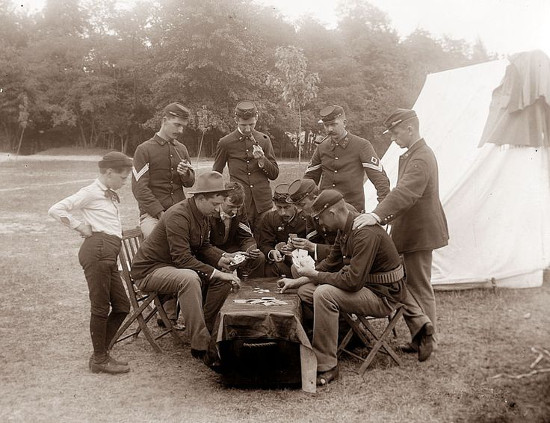
soldiers game

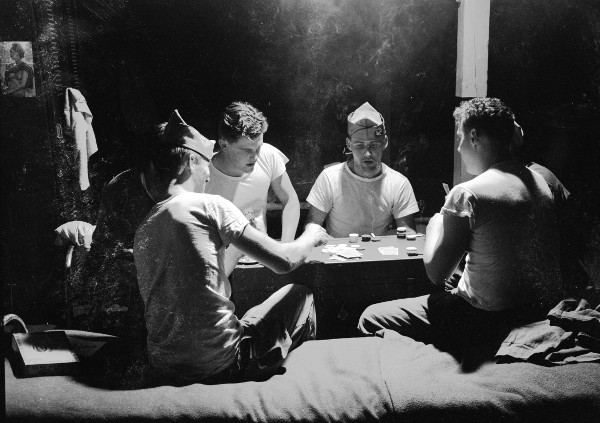
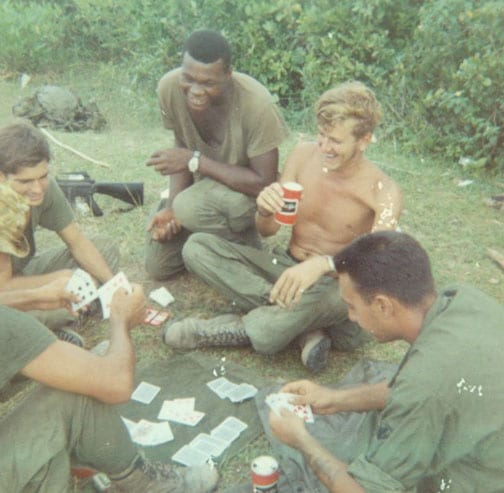
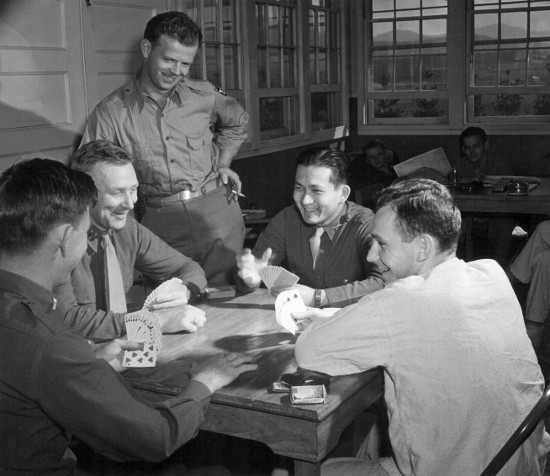
It’s for these reasons that analog games – particularly cards, given their small size and portability – have always been a favorite of military men in the field. Soldiers during the Civil War spent so much time playing cards – “throwing the papers” as they called it – that historian James I. Robertson says, “It would not be too much of an exaggeration to paraphrase a biblical passage and state that ‘when two or three soldiers were gathered together, there did a deck of cards make an appearance among them.’” Cribbage, euchre, keno, seven-up, blackjack, and of course, that perennial wartime favorite, poker, were popular with Union and Confederate troops alike. In the 20th century, and up until today, these games have enjoyed a prominent place in our militaries.

checkers2

Military men who were held in POW camps, and deprived of the accoutrements needed to play their favorite analog games, often got very creative in crafting the necessary pieces themselves. One POW of the Vietnam War recalls making a backgammon board from multiple layers of toilet paper stuck together with rice glue, and a set of checkers from chunks of stale bread colored with brick dust and ashes.

No matter the pinch you find yourself in, analog games are at the ready to while away the time.

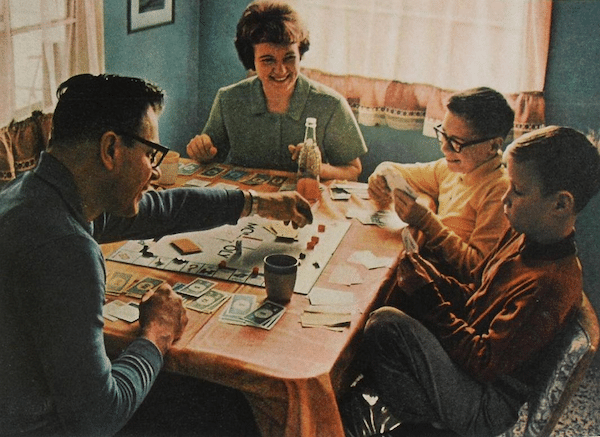
2. Analog games teach kids important life skills.

kids playing cards

Playing board games is a great way to bond as a family, and it’s good for your kiddos’ brains too. Even the simplest games that are all chance and no skill can teach your children things like sequencing, patterns, counting, and color and shape identification. This isn’t just reasonable speculation; games that include a linear trail of numbers have been proven to boost kids’ numerical understanding.

Just as valuable is the way analog games teach kids about the importance of following directions, taking turns, and socializing with others — all essential skills for succeeding in school and life. One study found that students who played checkers developed greater ability to solve problems, communicate, and resolve conflicts.

family plays2

Another of the important skills children (and adults!) gain from playing board games is learning how to lose gracefully. Kids have to learn how to bounce back from losing a game they’re invested in. And when you play a game of pure chance like Candy Land with your kid, in which you both have an equal shot at winning, you can demonstrate how to maturely deal with defeat when you lose. (No cursing the #@$ Molasses Swamp!)

Side note: When purchasing classic children’s games, it can be a good idea to buy an old vintage version on ebay. The new ones are incredibly flimsy, and can also be quite dumbed down. We bought a modern version of Uncle Wiggily, and then one from 50 years ago – it was amazing how much easier the new one was. Old ones are higher quality, more involved (in a good way), and invariably better looking.

3. Analog games offer life lessons for everyone.

game4

Analog games aren’t just educational for kids – they can be instructional to those longer in the tooth as well.

There are basically three kinds of games: those that are based purely on skill/strategy; those that are based entirely on chance; and those that involve both.

For my money, the latter are the most fun. The element of chance keeps things interesting, and offers lesser skilled players the hope, however small, that they might still be able to pull off the victory. The biggest draw of luck+skill games, however, runs even deeper, and may actually be subconscious: the way they parallel the dynamics of real life.

In a card game like gin rummy, you don’t choose the hand of cards you begin with, and you don’t know what you’re going to turn over from round to round. The players start out on unequal levels, you’re subject to the currents of chance, and you have to find the best way to navigate through and come out on top. It’s no wonder we borrow from the language of games to describe situations where “you have to make the most of the cards you are dealt.” In both life and games, sometimes things fall in your favor, and sometimes they fall against you. Analog games are thus a great reminder that some things are in the hands of Lady Fortuna, and all you can do is concentrate on the one thing within your control: hatching a strategy for doing the best with what you got.

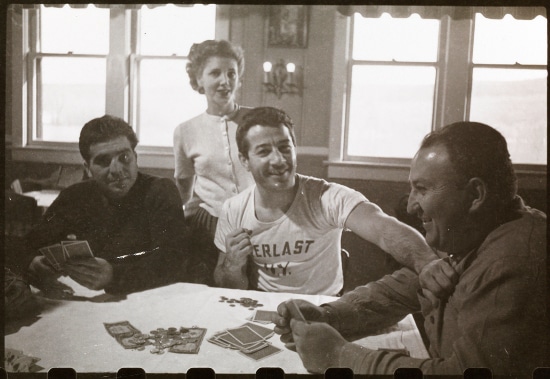
4. Analog games scratch the itch for competition.

rocky cards

One of the theories as to the earliest origins of board games traces their start to combat commanders demonstrating a plan for an impending battle to their gang of warriors. They might have drawn an outline of the battlefield on the ground, and placed stones where the men were to go, and where the enemy was expected to be. These would have been interesting for the men to study, and perhaps play around with after the skirmish was over. From there it would have been a short leap to setting up the different sides for fun.

Whether or not that’s exactly how it happened, anthropologists agree that many classic and modern games are modeled on the dynamics of war — two or more sides, squaring off, trying to win the race, rack up points, and/or take other guy’s territory.

poker

In centuries past, during peacetime such games (often with bets attached) represented a kind of mental combat – a way for men to compete, vie for honor, and bond. Even stumbling into a bout of good luck during a game of chance would move a man up in the pecking order – it was taken as a sign that he was favored by the gods.

Men usually don’t take games that seriously these days, but the energy of head-to-head contests still give game playing a satisfying feel. Just as they did in days of old, games provide a way for men to both compete and bond at the same time.

5. Analog games can offer a relaxing, grounding sense of flow.

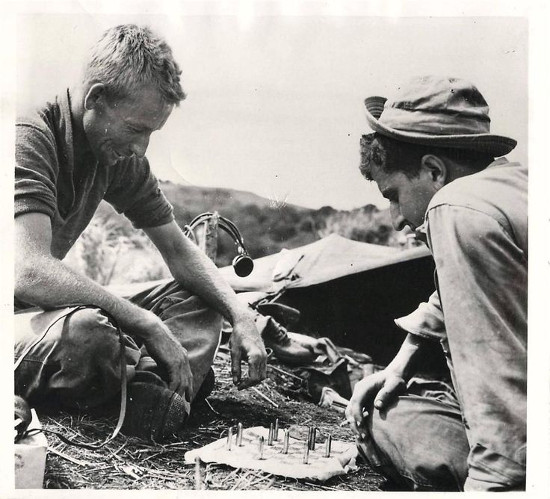
vietnam

While games that involve chance keep you on your toes, games like chess or checkers that are based almost entirely on skill, can be grounding. As opposed to mirroring the somewhat chaotic nature of real life, the rules of the game are set, and everything is within the player’s control, except what his opponent will do. Losing oneself in such a game can bring a welcome respite from the stresses of real life. In The Things They Carried, Vietnam vet Tim O’Brien describes the way an analog game performed this function for his fellow soldiers:

“I remember Norman Bowker and Henry Dobbins playing checkers every evening before dark. It was a ritual for them. They would dig a foxhole and get the board out and play long silent games as the sky went from pink to purple. The rest of us would sometimes stop by to watch. There was something restful about it, something orderly and reassuring. There were red checkers and black checkers. The playing field was laid out in a strict grid, no tunnels or mountains or jungles. You knew where you stood. You knew the score. The pieces were on the board, the enemy was visible, you could watch the tactics unfolding into larger strategies. There was a winner and a loser. There were rules.”

grounding chess

Games not only have a calming, grounding effect, but they can facilitate the feeling of flow as well – the experience of your skill level matching up with the activity in which you’re engaged. When you give all your focus over to a game, it can paradoxically feel both intense and relaxing.

6. Analog games facilitate interactive and pressure-free socialization.

college cards

In an age when people, even individual family members hanging out under the same roof, often have their heads buried in screens, analog games offer the chance to engage in some lively, face-to-face interaction. What’s really great about analog games too, as opposed to the video variety, is that with many games, you don’t have to pay attention to what’s going on all the time. This creates nice pockets for talking about things other than what’s going on in the game. Streams of conversation about the game itself, and about life in general, flow together.

couple game2

The easy conversation facilitated by analog games makes them a great activity to do with a date. The game takes the pressure off making small talk – if you have something to say, you can say it, but if you don’t, you can turn your attention to the game. This makes for a relaxed, comfortable atmosphere. When I was dating Kate, some of our deeper feelings for each other first emerged over, of all things, a game of Boggle.

Cracking open a board game is a great way to catch up with your long-term lovers as well. Theodore Roosevelt, for one, said of playing games with his wife:

“I can imagine nothing more happy in life than an evening spent in my cosy little sitting room, before a bright fire of soft coal, my books all around me, and playing backgammon with my own dainty mistress.”

7. Analog games provide a source of evening entertainment that will help you sleep better at night.

The blue light that’s emitted from electronic devices like your phone and television can interfere with your circadian rhythm and make it difficult to fall asleep at night. This positions board and card games as a uniquely suitable form of evening entertainment. A game of Apples to Apples is stimulating in the moment, but once you retire to bed, you’ll be able to slumber soundly.

8. Analog games link the generations (and boost Grandpappy’s brain).

generations

There aren’t many grandparents who are up for grabbing a controller and playing Call of Duty, but most would love to sit down with you for a game of cards. When I was younger I used to play cribbage with my grandfather. And these days when we see Kate’s Nana, engaging in many rounds of gin rummy is a given. Because of the way analog games facilitate conversation, these games are always a great way of talking about her life and memories.

Not only is card playing a great way to connect with your elders, but it helps boost their brain at the same time. Engaging in mentally stimulating leisure activities may reduce the risk of Alzheimer’s and dementia. So deal another hand to grandma to strengthen your bond and help her mind stay sharp into her golden years.

9. Analog games are a great way to engage in more play.

social cards

In our stressed out, overly scheduled world, every adult needs to make more time to play. Games of all kinds are a great way to relax and have fun, and analog games in particular make for some especially beneficial and rewarding playtime for all the reasons mentioned above. You’ll have to use your memory, logic, and imagination – traits that often atrophy in the modern world. And you’ll experience the feel-good endorphins that come from competing against, and socializing with, a group of people.

So what are you waiting for? Every once in awhile, turn off the Xbox and your phone, and shuffle up some playing cards or break open the lid of a good old fashioned board game.

What’s your favorite analog game? Let us know in the comments!

28 Dec 15:20

The Churchill School of Adulthood — Lesson #3: Live Romantically

by Brett and Kate McKay

Churchill_Header

When Neville Chamberlain brought Churchill into his cabinet in 1939 to serve as First Lord of the Admiralty (meaning he ran the British navy), Winston hit the ground running. He took charge of every element of the war at sea, and began strategizing about how to improve things at all levels. The heart of his control center was his black dispatch box; Manchester describes its contents:

“Inside were numbered folders containing papers approximately 16″ x 13.″ The first one, the ‘top of the box,’ as it was called, dealt with matters considered ‘really urgent’…Below the top were folders containing military and foreign office telegrams, reports from the Chiefs of Staff…answers to questions he had raised concerning every aspect of British life—food supplies, crop yields, railroad capacity, coal production. Nothing escaped his attention.”

Each morning Churchill would go through his dispatch box and issue a seemingly never-ending stream of memos to his fellow ministers and military commanders. If he signed a dispatch in red ink, it meant he wanted action taken on it; an attached slip labeled “Action This Day” constituted “the prime ministerial equivalent of a five-alarm fire.”

Churchill’s colleagues sometimes found the sheer number of memos he disbursed onerous; they did not, Manchester writes, “appreciate Churchill’s grasp of all the issues, not only those issues apparent to everybody but also those apparent only to himself.” Churchill’s single-minded goal was defeat of the Nazis, and he made sure he was on top of every detail of how the effort towards victory was progressing.

Yet even though Churchill could be hard-nosed, grounded, and highly detail-oriented, he was also, Manchester says, “an unrepentant romantic.” And it was this quality, more than any other, that allowed him to win the war. And, we would add, to have an awesome adulthood.

Winston Churchill’s Romanticism
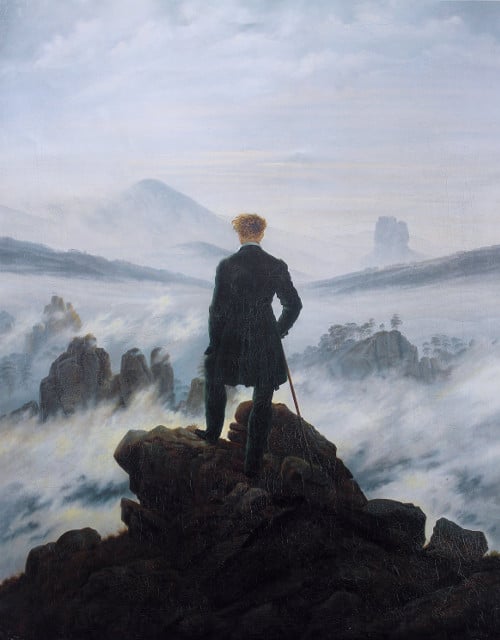
fog

“Wanderer Above the Sea of Fog” by Caspar David Friedrich. They say a picture is worth a thousand words, and even if you don’t know much about Romanticism, all you need to understand about it can be found in contemplating this painting.

While we commonly use “romantic” these days to describe the ardor of relationships, today we’re talking about Romanticism with a big R: a life philosophy that prizes the rejection of pure rationalism in favor of intuition, imagination, and emotion; the embrace of nonconformity and sincerity; a tendency towards nostalgia; and the celebration of curiosity, spontaneity, and wonder. Churchill had all these qualities in spades, and they fed the inexhaustible wellspring that refreshed his buoyancy and enthusiasm until the end of his days.

A Sense of Wonder
Churchill-5

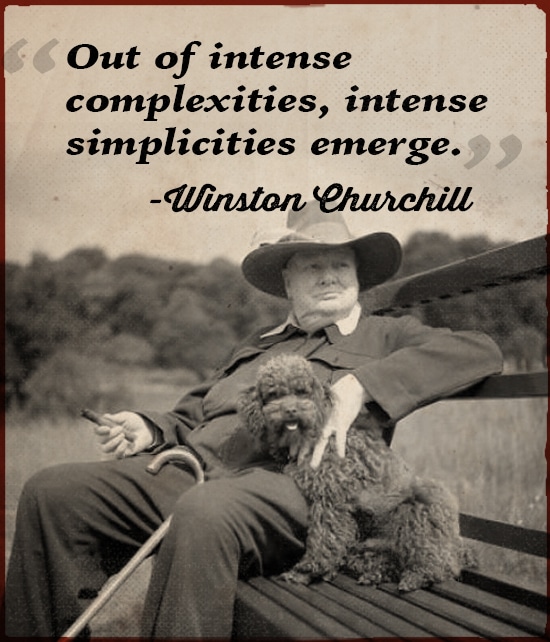
Even as he matured into one of the 20th century’s greatest statesman, Churchill never lost his earnestness and boyish wonder about the world. His friend Violet Bonham Carter attributed this quality to his lack of formal education (he attended a military academy instead of a liberal arts college). Churchill, she observed, lacked the jaded cynicism that one often picks up at a university along with a sheepskin, and was invigorated by simple truths that others found cliché. “To Winston Churchill,” Carter wrote, “everything under the sun was new—seen and appraised as on the first day of Creation. His approach to life was full of ardor and surprise. Even the eternal verities appeared to him to be an exciting personal discovery.”

Wonder is innervated by a sense of curiosity, and Churchill kept his continually nourished with a steady diet of contemplation, travel, adventure, and the lifelong study of history (more on those latter three pursuits in future installments). Whether in a book or a foreign land, he was always experiencing the delight of discovery.

An Imaginative, Epic View of Life

Romantic artists sought to create original works that sprang from their unfettered imagination. While Churchill was an avid painter in his spare time, the greatest canvas for his imagination was truly life itself. He refused to see the world as dull and constrained, but rather viewed it as a magnificent, wide-open landscape of possibilities, where the forces of good and the forces of evil did battle. Any man, who had the courage and will, could make himself a hero and join the fight.
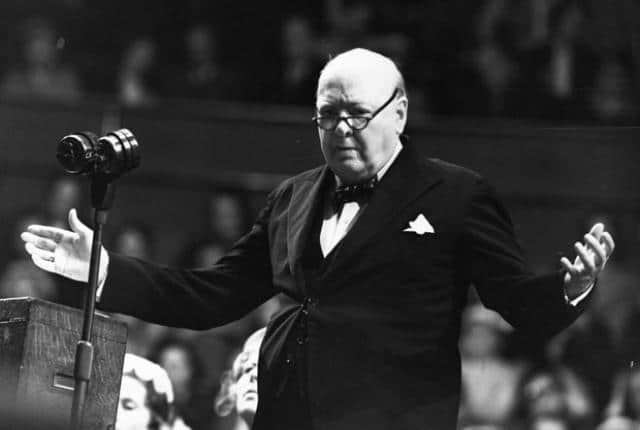
speak

Through the power of words, Churchill brought to life his romantic, heroic vision of the world — both for himself and for his countrymen. Many of the original products of man’s imagination are initially greeted with scorn, and Churchill’s rhetorical style was no different. Before the war, his critics felt him to be overly naive and found his oratory hyperbolic and overwrought. Even Churchill’s “blood, toil, tears, and sweat” speech – now remembered so reverently – was dismissed by many at the time as just another dose of his exaggerated schmaltz.

But as the crisis deepened, it was Winston’s singular vision that fueled his indomitable fire and fight. The war was merely a vivid, large-scale manifestation of the epic way he had always seen the world, and with the forces of evil advancing, defeat was simply not an option.

So too, Churchill was able to paint such a rich, romantic picture of the war in his speeches, that his countrymen could actually step into it and partake in his confidence and hope. When Churchill spoke of the war, Manchester writes, “it wasn’t squalid or demeaning; it wasn’t, in fact, like modern war at all. Destroying the Nazis and their führer became a noble mission, and by investing it with the aura of heroes like Nelson, men Englishmen had honored since childhood, he made the Union Jack ripple and St. George’s sword gleam.” Isaiah Berlin described the way Churchill was able to invite others into his world and get them to embrace his vision:

“The Prime Minister was able to impose his imagination…upon his countrymen…precisely because he appeared to them larger than life and lifted them to an abnormal height in a moment of crisis…it [turned] a large number of inhabitants of the British Isles out of their normal selves and, by dramatizing their lives and making them seem to themselves and to each other clad in the fabulous garments appropriate to a great historic moment, transformed cowards into brave men, and so fulfilled the purpose of shining armor.”

Churchill imagined himself a hero’s journey so luminous and compelling, that others willingly sought a place in the story.

An Embrace of Nonconformity

Some of the works Churchill most enjoyed reading came from the romantic transcendentalists, such as Emerson and Thoreau. And he took up the latter’s charge that “Whoso would be a man must be a nonconformist.” In his own distinctly Churchillian way, of course.
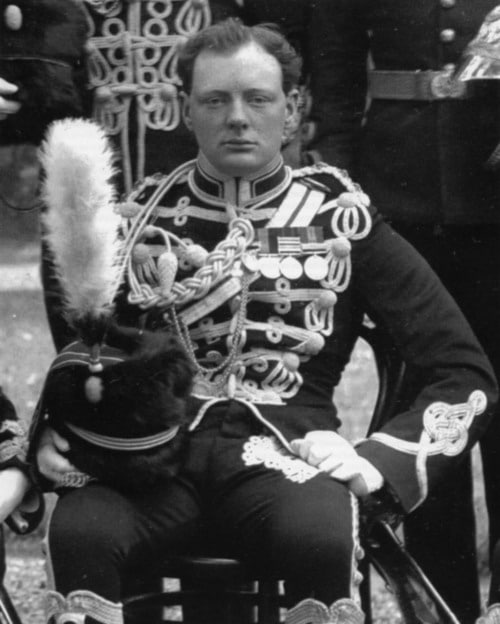
hussars

Churchill loved history, and he loved tradition. His “veneration and enjoyment of ceremony, color, gaiety, pageantry, and formality,” Manchester writes, began “in youth and early manhood, especially in the company of the officers of the 4th Hussars.” As a cavalryman, his military days had been full of long, decorous banquet dinners in which he donned his ornate blue and gold uniform and practiced his best table manners. He continued the tradition of having such formal meals after he left the military; both lunch and dinner at Chartwell were drawn out affairs, and though they were hosted in the comfort of his own home, he dressed up for them to the nines. Such rituals, Churchill felt, were essential for a rich, satisfying life.
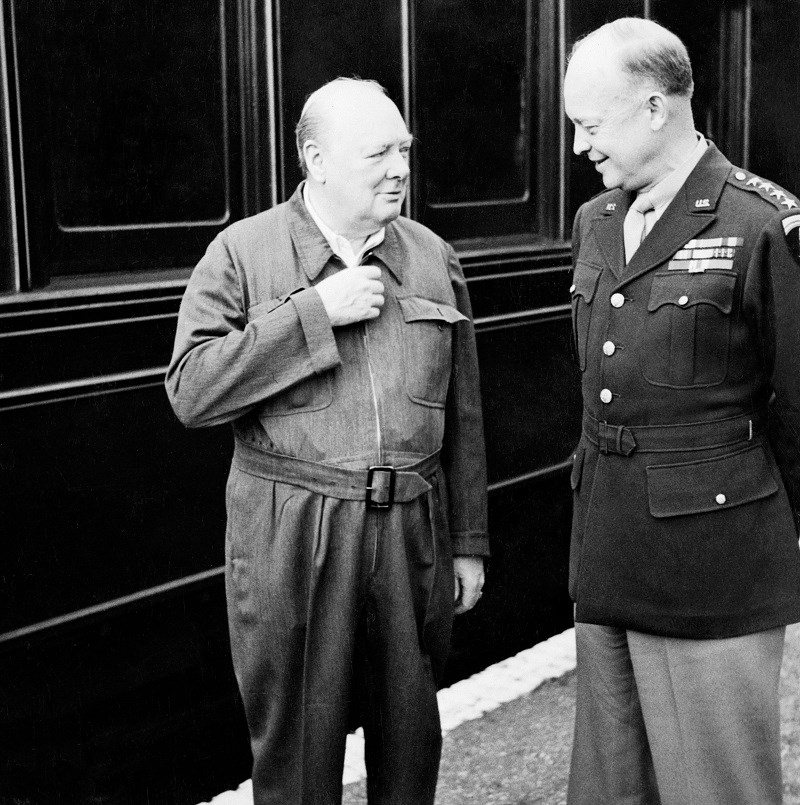
siren

But, Churchill also broke from the status quo wherever he saw fit. As Pug Ismay, his chief military assistant, put it, Winston “venerated tradition, but ridiculed convention.” From his love of being in the nude to his unique daily routine, when Churchill thought there was a better way of doing things, he followed that impulse. This extended to his personal style; though Churchill, if anything, overdressed for formal affairs – he never attended Parliament in anything other than an old-fashioned frock coat and top hat – he donned far less conventional garb in situations where upholding decorum wasn’t as important. At home, when he wasn’t naked, he padded around in a green and gold silk dressing gown, emblazoned with dragons. During air raids he slipped into what became an emblematic get-up: his siren suit. Churchill designed these mauve, one-piece, zippered rompers himself, and had them custom-made by the tailors on Savile Row. He delighted in his siren suit’s utility – as soon as the air raid alarms sounded, he could hop right into it and prepare for the imminent shelling.

He had other amusing quirks: he talked to his cats, waltzed around to records late at night, supporting an imaginary partner and composing his speeches as he whirled around the room, and played around so much during his daily baths – even doing somersaults — that he had a special drain built to catch the overflow.

Churchill perhaps bucked societal norms most, however, simply in how genuine he was. The man that people heard on the radio, who they saw in Parliament, was exactly the same man at home. He truly was without guile. He never put on a front, took positions he did not believe in, or evinced to be other than what he was. He refused to even sign his letters “Sincerely” unless he was really, truly sincere about the missive’s message.

Intuition

His mind had many tracks, and if one was blocked, he left it and turned to another, the very existence of which was unknown until he chose to reveal it.” –William Manchester

In his leadership, Churchill was fundamentally guided by intuition. As we discussed in regards to Churchill’s moral code, he had decided in his youth not “to discard the reasons of the heart for those of the head.” As a consequence, he was often accused of being irrational. Rather than be insulted, he cheerfully admitted to the charge, countering that so was the essence of life itself:

“The human story does not always unfold like an arithmetical calculation on the principle that two and two make four. Sometimes in life they make five, or minus three, and sometimes the blackboard topples down in the middle of the sum and leaves the class in disorder and the pedagogue with a black eye. The element of the unexpected and the unforeseeable is what gives some of its relish to life, and saves us from falling into the mechanic thraldom of the logicians.”

One of Churchill’s first experiences with the power of intuition occurred during his escape from a POW camp during the Boer War. He had no idea which way to head to reach freedom and felt completely confused and anxious. Just then, an insight hit him: “Suddenly without the slightest reason all my doubts disappeared. It was certainly by no process of logic that they were dispelled. I just felt quite clear…[where] I would go.” Churchill ended up at the one home for hundreds of miles in which the inhabitants were friendly to the British.
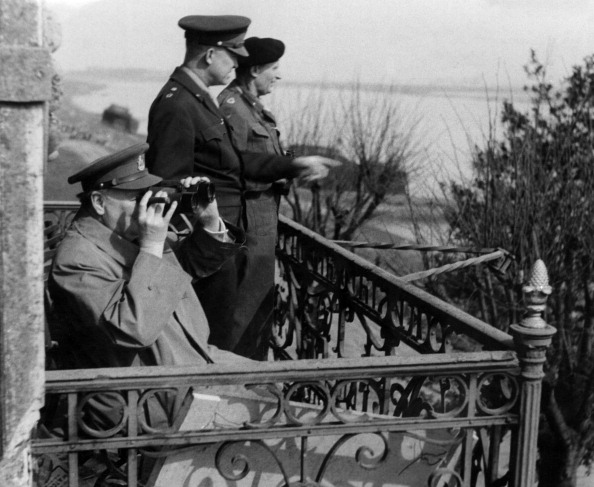
Winston Churchill With Dwight Eisenhower And Bernard Law Montgomery

Churchill continued to rely on his intuition as he got older. It not only guided his decisions, but also gave him insights and premonitions about the future. He possessed, Manchester posits, “the painter’s gift for seeing myriad vistas, far and near.” He was one of the first public figures to recognize the danger Hitler posed, and he also conceived of a vision of how the country would have to be united to defeat him. And this was far from his only accurate prediction; Churchill foretold the policy of MAD (mutually assured destruction), the potential and dangers of atomic energy, bioengineering of crops and animals, the invention of the television, and more.

While Churchill was sometimes lampooned for his ideas when he first articulated them, his prescience was frequently borne out in time. As Harold Macmillan, one of Churchill’s wartime ministers observed, “It is strange how, abroad as well as at home, what Churchill puts forward one year as a daring paradox, becomes an accepted truism a year later.”

Sentiment and Emotion
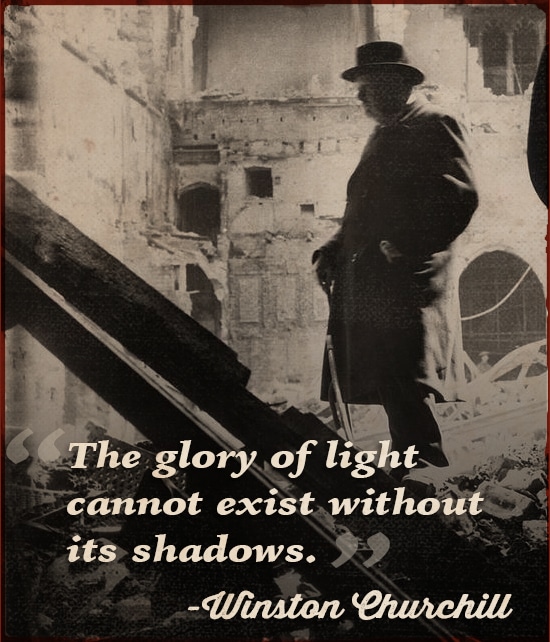
Churchill-2

Churchill not only unapologetically embraced the power of intuition, he cheerfully admitted to being sentimental and emotional as well. He was capable of experiencing both intense joy and deep gloom, and he once battled outright depression. This has spurred a myth that he was plagued with what he called the “black dog” his whole life through, but it seems he rather was periodically hit with bouts of melancholy that fall short of clinical depression. Such despair would often arrive on the heels of some terrible news from the war, but Churchill would invariably shake off his despondency and return to a state of confident bullishness.

One thing is for sure: he felt things deeply. “I’m a blubberer,” he gladly confessed to friends, and Manchester says that “no man wept more easily.” Reminiscing with old comrades could make him misty-eyed and he would freely mourn the deaths of his beloved pets. Even composing emotional segments of his speeches could prompt a torrent of tears – both from him and his secretaries. As one of them recalled, “I would be weeping and he would be weeping, and all the while he was dictating in his marvelous voice and I’d be tap-tapping away, the both of us weeping.”

Churchill’s agnosticism did not diminish his sense of the sacred and the sentimental emotions he experienced during religious ceremonies; he wept at his grandson’s baptism, and while singing “O God, Our Help in Ages Past” with a crew of British sailors. His doubts about the existence of a spiritual realm likewise didn’t negate his ability to experience multiple planes of existence, as is exemplified by his description of what it felt like to be present in the House of Commons on the day Britain declared war on Germany:

“as I sat in my place, listening to the speeches, a very strong sense of calm came over me, after the intense passions and excitements of the last few days. I felt a serenity of mind and was conscious of a kind of uplifted detachment from human and personal affairs. The glory of Old England, peace-loving and ill-prepared as she was, but instant and fearless at the call of honour, thrilled my being and seemed to lift our fate to those spheres far removed from earthly facts and physical sensation.”

Churchill enjoyed music, literature, and poetry that stirred his emotions and offered him access to these deeper layers of life. Not only did he love and memorize virile poems like “Horatius” and “Invictus,” but he knew reams of romantic poetry by heart as well, and was especially fond of Lord Byron’s verse.

Solitude and Contemplation

To ponder his emotions and receive intuitive insights, Churchill was fond of spending time silently reflecting. Part of his daily routine was to settle into a wicker chair by a pond on his property after lunch, and he especially loved sitting by the fire in his bedroom. All the stoves in his home were heated with coal, except for this fireplace, in which he insisted on using wood. He’d sit in front of the crackling flames for long periods, poking the logs, and contemplating the world and his role in it.

Takeaways from Lesson #3
Churchill-3

When you’re a child, the world is filled with promise and possibility, and your sense of wonder is easily kindled. You feel sure that treasure and dinosaur bones are buried in your backyard, you dream of being an astronaut, and when it comes to the excitement of Christmas Eve…fugetaboutit. Life seems like it will proceed as an unending stretch of fun and good fortune.

As the years go by and you mature, you find that the world doesn’t always operate as you had hoped. Santa isn’t real. Your first love dumps you. You don’t get into the college you were aiming for. You don’t land your dream job. You dad dies before you’re thirty. Your wife has a miscarriage, and it hurts more than you dared believe.

You learn to be realistic, to manage your expectations. You put up walls. You trust less. You cloak yourself in cynicism to mitigate the sting of future disappointments.

Nothing really excites you the way it did as a boy. “Meh” becomes your watchword; “It is what it is” becomes your battle cry.

But what if “what it is” could be different? What if you had the power to reclaim wonder and optimism, simply by reframing your life with a more romantic point of view?

But I’m Just an Ordinary Guy!

I know what you may be thinking: “Sure, it was easy for someone like Churchill to embrace a romantic view of life — the epic things he experienced were romantic. But I’m not battling the Big One, I’m just living a really ordinary existence.”

Churchill certainly had some incomparable adventures, both those he sought intentionally, and those that fate thrust upon him. Yet it is well to remember that Churchill did not become prime minister until he was 65; his romanticism was not birthed during WWII but was something he had cultivated from his youth. And while he had plenty of other adventures in those six decades before the war, again, those adventures didn’t inspire his romanticism; rather, it was the other way around: his romantic mindset inspired him to seek adventure. So too, his whole life didn’t consist of endlessly exciting episodes; in many years his life was much like that of other citizens. And it was his romanticism that made such “lulls” more interesting and satisfying than they otherwise would have been. Finally, as we’ve discussed, Churchill’s enduring, lifelong romanticism was in fact what prepared him to be an effective leader once he had finally been thrown onto a monumentally heroic stage.

Whether or not our lives ever intersect with some epic task, living more romantically will make even the most run-of-the-mill day-to-day existence far richer and more luminous than it would have been otherwise. You can choose to see the possibilities of life as one-dimensional: people are just smarter apes; a rainy day is just a weather pattern; that stirring in my gut is just indigestion from eating a ham sandwich. Or, you can choose to pick up on other energies in the world and see different layers in life: people are potential heroes; a rainy day is a chance to reflect and experience the paradoxically exquisite tremor of melancholy; the stirring in my gut is guiding me towards a certain path.

Author David Foster Wallace argued in a 2005 commencement address to Kenyon College that this ability to “construct meaning from experience” was perhaps the most important skill for newly-minted adults to learn. If you master it, he promised, it will even be “within your power to experience a crowded, hot, slow, consumer-hell type situation as not only meaningful, but sacred, on fire with the same force that made the stars: love, fellowship, the mystical oneness of all things deep down.”

How to Live More Romantically

Manchester argues that it was a “collision of logic, intuition, and imagination that made Churchill who he was.” It’s also this very combination of traits that makes for an interesting and fulfilling adulthood. Yet achieving a balance of these energies isn’t easy, as it involves wedding together a bunch of different approaches to life:

  • Being grounded, logical, and detail-oriented but also intuitive
  • Being clear-eyed and realistic but also imaginative
  • Being steady and resolute while also allowing oneself to feel deeply
  • Embracing tradition while living unconventionally

Churchill himself spoke on these seeming contradictions and complexities:

  • “Nourish your hopes but do not overlook realities.”
  • “Facts are better than dreams.”
  • “Imagination without deep and full knowledge is a snare.”

Being able to assess reality with completely clear eyes, while simultaneously exercising the capacity to see it romantically, is a rare, but attainable gift. In incorporating these divergent energies into one’s life, the effect is something like a particle collider – the contact between your different beliefs/ideas/interests creates access to new knowledge and planes of existence that wouldn’t have been possible otherwise.

But most adults don’t want to make the effort to harness that level of energy; fitting one’s identity into a far simpler narrative is much easier. Thus, some adults carry the imaginative powers of their childhood into their latter years, but fail to couple such impulses with a sober grasp of responsibility, and end up as perennial flakes. Most adults go the other way – they neglect their creative and intuitive impulses altogether, and adopt a cynical, starkly realistic view of life. “The world is what it is; what you see is what you get.” And what they get is a flat, one-dimensional existence.

There is unfortunately no roadmap for how to achieve a unique middle path between these all-too-common surrenders to a mediocre adulthood. When it comes to living romantically, one shouldn’t follow a road map either – it’s something you should discover though contemplation and intuition! With that said, here are a few general suggestions on incorporating more of the spirit of romance into your life:

Find Your Muse
Churchill-1

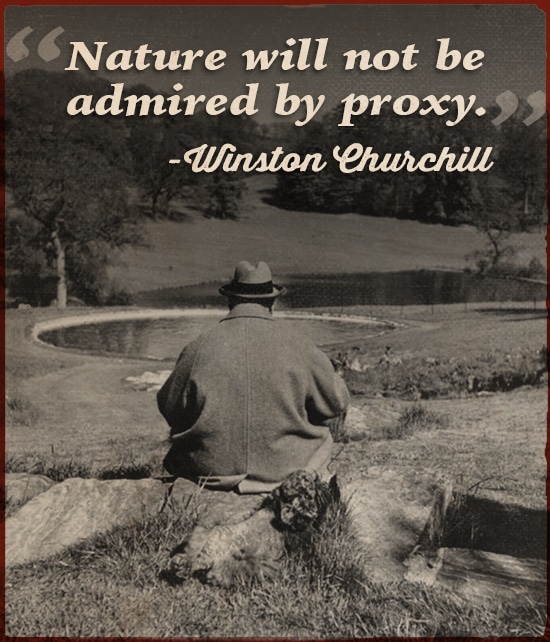
As we’ll discuss in future installments, Churchill’s romantic passions were most invigorated by studying history and participating in war. But like many romantics, he was also inspired by nature. Personally, I find that nothing stirs the soul quite like being in the great outdoors. Nowhere else do I find a greater renewal of my childlike wonder, sense of awe, and belief in the mystery and depth of life. The effect is best described by Emerson:

“Crossing a bare common, in snow puddles, at twilight, under a clouded sky, without having in my thoughts any occurrence of special good fortune, I have enjoyed a perfect exhilaration. I am glad to the brink of fear. In the woods too, a man casts off his years, as the snake his slough, and at what period soever of life, is always a child. In the woods, is perpetual youth.”

Whatever your own muse, every adult needs something that periodically awakens them from the slumber of apathy and cynicism and reinvigorates their spirit.

Participate in Rituals, Both Traditional and of Your Own Making

The power and potential of rituals are myriad: they lend a narrative structure to your hero’s journey, foster a sense of wonder and awe, act as a conduit for intuitive insights, facilitate personal transformations, and put you in touch with the rich possibilities, deeper layers, and sacred realms within our ordinary, profane existence.

While traditional rituals may seem antithetical to the creative spontaneity prized by romantics, they paradoxically can be the most inspiring and transportive. For example, few things renew my sense of wonder and mystery like attending Christmas Eve Mass. Even simple rituals like table etiquette lend an extra texture to our day-to-day existence. Upholding such traditions not only lends richness to your own life, but creates a shared world with others – a time out of time that feels extra-ordinary.

But there are times to be a nonconformist, too. Creating your own rituals, such as establishing a unique daily routine, or simply making coffee with a French press each morning, can place us in a calm, focused mindset that opens our spirit to receiving the currents of intuition and getting in touch with the energies and rhythms of life.

Intentionally Stir Your Emotions

When the prefrontal cortex – the disciplined, rational, executive part of the brain – finishes “settling” in your mid-twenties, you begin to experience emotions less intensely. The upside of this is that you’ll feel steadier and experience far less of the jagged emotional highs and lows common to youth. But the downside is a decrease in passion, and more flatness to your feelings. This is why grownups often seem dull and lacking in passion and depth.

To maintain a little more emotional richness in adulthood, without sacrificing the solid footing of maturity that’s essential for making progress, it’s important for adults to intentionally partake in experiences that pique their deeper feelings. So take a tip from the Victorians, who, while they valued keeping a stiff upper lip during life’s unpredictable storms, purposefully engaged their emotions at times of their own choosing. For Churchill, this meant listening to music from his youth and the 19th century in general (a period of history he was nostalgic for), reading romantic poetry, and allowing himself to be sentimental about special events and rituals. For example, Christmas was Churchill’s favorite time of year, and he would absolutely deck out the halls of his house with decorations that evoked the season, and all its nostalgic, heartwarming sentiments.

All of Churchill’s methods are effective, especially listening to music. Turning on a song from the days of your passionate youth can bring back the deep feelings that used to rule your heart, and listening to music you enjoyed during any significant period of your life stirs those old memories and their accompanying emotions. Every once in a while I’ll put an album that got a lot of play during an important time of my life into a metaphorical vault; I won’t listen to it for years, and then will later dust it off occasionally to purposefully transport myself back into the emotional landscape of the past. Churchill had a similar idea:

“I have got tunes in my head for every war I have been to, and indeed for every critical or exciting phase in my life. Some day when my ship comes home, I am going to have them all collected in gramophone records, and then I will sit in a chair and smoke my cigar, while pictures and faces, moods and sensations long-vanished return; and pale but true there gleams the light of other days.”

Reframe Your Reality
Churchill-4

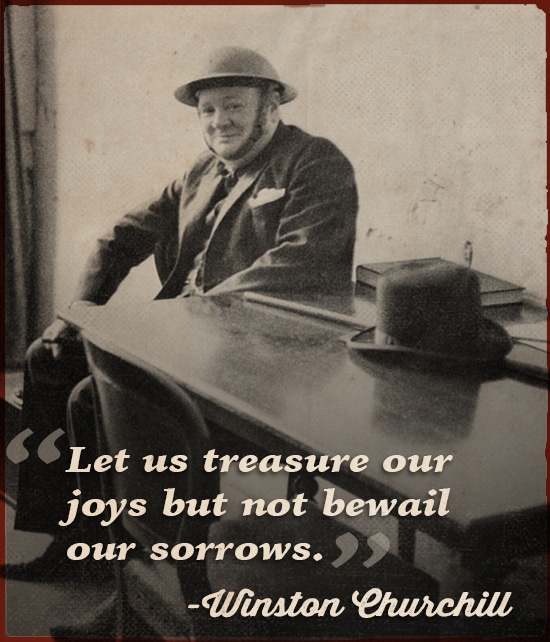
A central part of imbuing your life with greater romanticism is being able to, as Wallace put it, “construct meaning from experience.” You have to be able to shift the narrative on any experience, no matter how difficult or mundane. Wallace gives the example of considering the guy who cut you off in traffic; rather than just being an a-hole, he may be in a hurry because he’s taking his son to the hospital. This kind of re-framing isn’t about being naïve – but conceiving of other possibilities for a given situation.

Are you slaving away at a job you don’t like, or venturing out each day to protect your family from hunger and want? Are people just callous, or is every man fighting a hard battle hidden from view? Is marriage a hard slog, or an exciting journey? Is a layoff the end of your dreams, or the beginning of a new adventure? Is whatever challenge you’re experiencing a miserable turn of events, or a chance to become a better man?

If you embrace the chance to author your own life, the meaning of such things is never set in stone. Squalid or romantic – it’s your story, and you decide.

Make Time for Reflection

The greatest enemy of romanticism is the busyness inherent to adult life. Emotions, intuitive insights, a sense of wonder – such currents can only be accessed from a place of stillness. When our lives consist of rushing from one to-do to the next, we are forced to exist on only the most superficial layer of life.

Romanticism is like a faint radio signal we must home in on within a world of static: we can only hear it when we break away to a quiet place, empty our mind of other noise, and focus on finding it. Times of prayer, meditation, and overall reflection are therefore essential to keep us in tune. Laying under the Christmas tree to look up at the lights doesn’t hurt either.

William Wordsworth, the quintessential romantic poet, wrote a few lines of verse that sum all of this up splendidly:

“My heart leaps up when I behold
A rainbow in the sky:
So was it when my life began;
So is it now I am a man;
So be it when I shall grow old,
Or let me die!
The Child is father of the Man;
And I could wish my days to be
Bound each to each by natural piety.”

Or as Churchill put it, “It is quite astonishing to reach the end of life and feel just as you did fifty years before.”

When was the last time your heart leapt up to embrace the wonder and awe and mysteries of life?

The Winston Churchill School of Adulthood will adjourn for winter break, and reconvene in January. See you then!

Read the Entire Series

The Winston Churchill School of Adulthood Is Now in Session
A Prerequisite Class on Becoming the Author of Your Own Life
Lesson #1: Develop a Mighty Moral Code
Lesson #2: Establish a Daily Routine
Lesson #4: Cultivate a Nostalgic Love for History

_________________________________________

Sources:

The Last Lion Trilogy by William Manchester

28 Dec 15:19

Sir Winston Churchill’s family begged him not to convert to Islam, letter reveals

The family of Sir Winston Churchill urged him to “fight against” the desire to convert to Islam, a newly discovered letter has revealed.


28 Dec 15:16

NBC Asks America for the Meaning of Christmas: ´Jesus´ Didn´t Make Their Cut

Newsbusters, by Tim Graham Posted By: JoniTx- Sun, 28 49 2014 10:49:44 GMT NBC Nightly News offered two stories on Christmas in their December 25 newscast, including a show'ender about “what Christmas means to me.” Substitute anchor Tamron Hall offered this introduction: “Finally, on this special night, a question: What does Christmas mean to you? Maybe it’s the presents, the lights, the music, or getting together with family. We put the question to people around the country and discovered once against that Christmas means something a little different to everyone.” Somehow, this perfectly pleasant three'minute segment included lot of talk about family time and presents, and even someone saying “Happy Hanukkah,” but included
28 Dec 15:12

Hippo left stranded for hours after jumping from a moving truck in Taiwan

A hippopotamus was left lying injured on the side of the road for hours after making a panicked jump from a truck in Taiwan.


28 Dec 15:11

Doctors remove 80 teeth from boy's jaw

When it comes to astonishing dental stories, India is miles ahead in 2014.


28 Dec 15:10

For those of you saying "good guy kim jong un"

28 Dec 14:52

Robots Take Reins in Modern Camel Racing...


Robots Take Reins in Modern Camel Racing...


(First column, 23rd story, link)

28 Dec 14:48

Policies of GOP governors could find national play...

28 Dec 14:36

NIGHTMARE: Hackers release 13,000 passwords, credit cards of PLAYSTATIONXBOXAMAZON users...


NIGHTMARE: Hackers release 13,000 passwords, credit cards of PLAYSTATIONXBOXAMAZON users...


(First column, 8th story, link)

28 Dec 14:34

NEXT: Car 'safety features' exploited to control vehicles remotely...


NEXT: Car 'safety features' exploited to control vehicles remotely...


(First column, 5th story, link)
Related stories:
28 Dec 14:32

80-year-old cabin in the Northern Black Forest,...


80-year-old cabin in the Northern Black Forest, Germany.

Contributed by Jochen Klemm.

26 Dec 00:35

Nevada goats help eat, recycle Christmas trees - CBS46 News Atlanta


Nevada goats help eat, recycle Christmas trees
CBS46 News Atlanta
(AP Photo/Reno Gazette-Journal, Marcella Corona). Several goats munch on a pine tree in Reno on Tuesday, Dec. 23, 2015. They are owned by Vince Thomas, founder of Goat Grazers, who along with his 40 goats are teaming up with the Truckee Meadows ...

and more »
26 Dec 00:33

College Students Across America Protest Santa Claus

by Tyler Durden

Satire courtesy of Omid Malekan

College Students Across America Protest Santa Claus

After weeks of preparation by an umbrella group that calls itself the Santa Claus Repudiation Organization Offering Greater Education, students at campuses across America spent Christmas Eve protesting what they consider a dangerous symbol of everything that is wrong with the world today.

For some, the fact that Santa is a white male was reason enough to be angry. As one student put it: “Why can’t a mythical figure invented in Christian Europe be Middle Eastern looking or of Asian descent? Clearly Santa got the job thanks to white privilege”

More economically minded students objected to the exploitation of the Elf population of the North Pole. Comparing Santa’s Workshop to a sweat shop, one student complained “What’s the minimum wage that an Elf is paid? and how safe are the work conditions? Do they get health insurance or will they be forced to suffer with Obamacare?”

Sometimes factions within the protest group conflicted on the pluses and minuses of St Nick. One sticking point was his use of a reindeer drawn sleigh, which although criticized by animal rights activists as cruel, was applauded by others for its low carbon footprint. Another sticking point was Israel, and the fact that Santa doesn’t make many deliveries to the Jewish State.  As one appreciative Middle Eastern Studies major told us, “it must be because he too is opposed to the Settlements.”

But the one thing virtually all protesters were angry about was Santa’s use of a list of who has been naughty and who has been nice. Many believed this is a form of class segregation, and called it a form of post-colonial suppression. A community college freshman said “the list is culturally biased, like the SAT test that I did poorly on.” Another student, a Senior at an Ivy League University, had a more positive way of putting it. “When my trust fund opens up next year I get the money regardless of whether I’ve been good or bad,” she said. “That’s how it should be for everyone.”


24 Dec 14:26

Every Day is a Journey

by Chris Brinlee Jr.

“Buy the ticket, take the ride.”

quote Hunt S. Thompson to myself daily. Those six particular words are a reminder of how I got here. Here being the airport in New Delhi; I just missed my connecting flight to Kathmandu. However, by the time you read this, I’ll be back in the Himalayas in Nepal — spending Christmas alone. Or with the presence of Mother Nature, depending on my perspective at the time.




Perspective is a powerful thing. One person’s particular outlook can either make or break them. In one hand, I’m spending Christmas alone. Away from my family. Friends. Even Daniel Bruce Lee, who is now back in Los Angeles after having traveled with me for the past four months. In the other hand, I am experiencing the holidays in a totally new way. It may not be the most comfortable way, but discomfort is absolutely critical for personal growth; that’s a concept that I’ve fully embraced during my travels.


I nearly died in Iceland. Barely got down from a 20,305’ peak in Nepal.
But Daniel had my back every step of the way

Discomfort during adventure travel can take many forms. Whether it’s physical discomfort while enduring the bitter elements and balancing on the line between life and death, or the emotional discomfort of being perpetually unsettled -- both are equally important to our development as humans.

Most of the discomfort that I have experienced while traveling thus far has been of the physical sort. I nearly died in Iceland. Barely got down from a 20,305’ peak in Nepal. But Daniel had my back every step of the way. Many people have told me that traveling alone is better than with the company of others -- but they haven’t experienced the dynamic that Daniel and I have had.


As I continue this journey on my own, I’ve already begun to experience a new realm of discomfort, but this time it’s of the emotional sort. Even while still in the company of friends in Thailand, I fought reclusiveness -- undoubtedly my subconscious preparing me to continue by myself. It’s not that I’m afraid of being alone -- in fact, I look forward to this new experience. But rather, it’s uncertainty of what’s to come that is filling my mind. I have no idea of where I’ll be in the next few weeks. Months. Or even years. For the first time in my life, I don’t have a plan. 

People often ask me, “When are you returning home?” The truth is I don’t feel like one particular place is my home anymore. Matsuo Basho said, “Every day is a journey, and the journey itself is home.” Perhaps it’s time that I start reciting a new quote. [H]


Chris is an intrepid explorer who quit a fancy job in Los Angeles to pursue his dreams of adventure around the globe. You can follow his ongoing journey via Instagram.

Images by Chris Brinlee Jr. and Crystal Tan


24 Dec 14:23

Tax-Free Firearms Shopping Days Proposed in Texas

by Kristen A. Schmitt

With only a few hours left to accomplish holiday shopping, you may have deals on your mind—and so do Texas gun owners. Republican State Representative Jeff Leach of Plano, Texas, has authored a tax bill to establish a three-day tax-free shopping weekend for anyone wishing to buy guns, ammo, or gun cleaning supplies at the end of August. The bill would also cover hunting supplies like deer stands and archery equipment.

The bill, HB206, was originally introduced in 2013 and proposed that the tax-free weekend coincide with Texas’ Independence Day on March 2. According to the Houston Chronicle, the bill is endorsed by the National Rifle Association and, if it passes, would make Texas the third state to establish this type of temporary tax-break. Louisiana and Mississippi already have gun holidays like this one.

This is not the only gun-related bill up for review by Texas legislature. "We have so many gun bills that have been filed that we can't have anything but an Open Carry law passed next year," C.J. Grisham, founder of the activist group Open Carry Texas, optimistically told Reuters earlier this week.

24 Dec 13:34

How to Better Retain Information from Books, Articles, and More

by Herbert Lui

How to Better Retain Information from Books, Articles, and More

Although we can learn a lot of great information from books, articles, interviews, and conversations, we naturally forget a lot of it. Create a system to regularly remind you of lessons you've already learned. Here are three simple ways you can do that.

Read more...


24 Dec 13:31

Successes in Walking

by Jonathan Judge
Mike Trout saw the most pitches per plate appearance than any other player in 2014. (via Erik Drost)

Mike Trout saw the most pitches per plate appearance than any other player in 2014. (via Erik Drost)

In our current, run-depressed environment, one hears a lot about increased strikeouts and the increased size of the strike zone. Although it follows naturally from these same things, one doesn’t hear as much about the decline in walks.

Perhaps this is because many don’t understand the challenges of drawing walks, and how players who draw walks succeed in doing so. I want to talk about all of these things, because there are some fairly interesting trends beneath the surface.

First, we need to correctly define the problem. Far too often, I see people writing about a player’s walk rate being “above average” or “below average.” On a league-wide basis, people will cite the average league walk rate as evidence that walks are down, and to compare players’ walk rates to that average. Indeed, all leading baseball sites track the weighted league-wide walk rate as an average.

Of course, there is indeed a league-average walk rate (7.8 percent for non-pitchers last year) and any player who registers a plate appearance can be compared to it. In that regard, 2014 was the worst year for average walk rate since 1980, and the last three league years have featured the worst such walk rates during that time period.

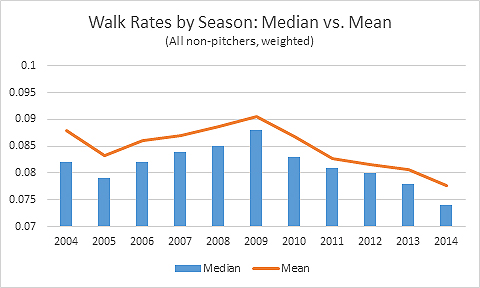
But these “averages” mask how bad the problem has become, because they are based on the arithmetic mean. As is often the case, the median (literally: the midpoint of the data) is more helpful in telling how walk rate distributes among players. Here is a table comparing the average and median walk rate for all batters in baseball since 2014:

pic-1-judge

If we limit the sample to qualified hitters each season, the figures tighten up a bit, but not much:

pic-2-judge

Why am I belaboring a distinction between the average and the median, when both show a clear trend? Because the difference is a tip-off of a skew to the data. Like most talents in baseball, the ability to draw walks is not uniformly distributed. Indeed, these charts show that it is not even normally distributed:

pic 3 judge

Above we have the concentration of walk rates among qualified hitters, with a vertical blue line for the median walk rate. This histogram underscores the clear positive tail to the data, caused by a minority of players who are actually uniquely good at drawing walks — league trends notwithstanding. To put these same data into percentiles:

2014 Walk Rates
Quantile 0% 25% 50% 75% 100%
BB% 4% 6% 8% 10% 17%

As you can see, a particularly-gifted category of walkers settles in at a walk rate of 10 percent and above, populating the 75th percentile and up. Who are these exceptional walkers, and how do they do it in such a tough run environment?

There are, as it turns out, a few factors that drive a batter’s success at walking. Some you would expect, others you wrongfully expected, and at least one you did not expect at all.

Method

I analyzed all qualified hitters in 2014. Qualified hitters were selected because they (a) created an adequate sample size (147), (b) are the hitters most likely to reflect their true talent (because they play so much), and (c) are the players managers choose to play basically every day..

The list of 2014 qualified hitters was subdivided into a randomly selected training set and the remainder was set aside for testing. Regressions were performed using four different methods: a linear model, randomForest, the lasso, and earth (an open-source implementation of MARS), all in R. All models were weighted for plate appearances.

The output of interest (walk rate) was regressed against various plate discipline metrics (as recorded by PITCHf/x and tracked by FanGraphs) and hit-type characteristics deemed by me to be potentially reflective of a player’s walk rate. These statistics included:

  • Pitches per Plate Appearance (P/PA)
  • Swing rate at pitches outside the strike zone (O-Swing %)
  • Swing rate at pitches inside the strike zone (Z-Swing %)
  • Overall swing rate (Swing %)
  • Contact rate with pitches outside the strike zone (O-Contact %)
  • Contact rate with pitches inside the strike zone (Z-Contact %)
  • Overall contact rate (Contact %)
  • Pitches received inside the strike zone (Zone %)
  • First strike rate (F-Strike %)
  • Overall swinging strike rate (SwStr%)
  • Groundball / Fly ball ratio (GB.FB)
  • Infield fly ball rate (IFFB %)
  • Infield hit rate (IFH %)
  • Bunt hit rate (BUH %)

Each model was evaluated through bootstraps of the training sample, validated on the test sample, and then re-fit to the full 2014 season of qualified hitters. Overall, the models produced similar results. Although the randomForest model had the lowest average error rate, it also retained over twice as many predictors as a simple linear model, with little ultimate benefit (.004 improvement in RMSE).

The final linear model benefited from variable selections suggested by the more complex models. Overall tolerance was acceptable (>.42), and the predictors were highly statistically significant (p<.001).

Discussion

The four variables that ended up being most useful in predicting a batter’s walk rate were, in no particular order:

  1. Pitches per Plate Appearance (P/PA)
  2. Swing rate at pitches outside the zone (O-Swing %)
  3. Pitches received inside the strike zone (Zone %)
  4. Contact rate with pitches inside the zone (Z-Contact %)

We’ll discuss each of these. All of these predictors are, admittedly, arithmetic means, but that statistic is less problematic with these particular attributes.

Pitches per Plate Appearance (P/PA)

I suspect that if readers had to vote on one factor most predictive of a player’s walk rate, they would pick this one: P/PA. It makes sense that taking more pitches would increase one’s walk rate, since taking a walk requires receiving at least four pitches per plate appearance, and against major league pitchers usually requires even more.

But surprisingly, this factor is not that important. Of the four factors I isolated above, P/PA is a distant third in importance (t=3.021), just barely more meaningful than zone contact rate (t=-2.993). In part, this is because, as I’ve written before, the difference between hitters when it comes to plate patience is fairly minimal. The interquartile range (IQR) (the distance between the 25th and 75th percentiles) is less than one-third of one pitch per plate appearance, and there is a grand total of one extra P/PA between the most patient and impatient full-time hitters in baseball. The major-league percentiles for P/PA distribute as follows:

Pitches per plate appearance percentiles
Quantile 0% 25% 50% 75% 100%
P/PA 3.330 3.685 3.820 3.985 4.360

This is not to say that taking pitches is irrelevant. There is a statistically significant relationship, but much of that relationship seems to be a function of other factors. The difference between the top and bottom of the IQR is worth about .7 percent in a player’s walk rate. So, while some players may well have a conscious strategy of taking pitches, that does not seem to be a driving factor in their success at actually drawing walks.

The five qualified hitters in 2014 with the highest pitches per plate appearance were as follows:

P/PA Leaders, 2014
Name Pit/PA BB%
Mike Trout 4.44 12%
Brett Gardner 4.43 9%
Matt Carpenter 4.36 13%
Carlos Santana 4.30 17%
Adam Dunn 4.29 14%

All these walk rates are clearly above the median. Yet, the variety among the extent to which the walk rates exceed the median is consistent with P/PA not being much of a distinguishing factor.

Swings at Outside Pitches

The next factor is incredibly important: the tendency of a batter to swing at pitches outside the strike zone predicted by PITCHf/x. This is certainly not a surprise. Batters who swing at bad pitches are racking up strikes, not balls, and batters who are generous with their swings can be expected to get a steady diet of bad pitches.

A batter’s swing rate at outside pitches is nonetheless interesting for two reasons. First, it basically ties with zone rate as the most important factor in determining a player’s walk rate. (t=-8.9, SE=.04). Second, the batter’s swing rate at outside pitches correlates with his pitches per plate appearance, which interestingly is not at all true for either zone rate or zone-contact rate. In fact, if you take either P/PA or O-Swing% out of the model, the tolerance among the remaining predictors jumps up to the .9 range, making those variables almost entirely independent from one another. O-Swing%, therefore, is not important merely for its predictive value in walk rate, but for the increased overall opportunities it helps provide a player to get the pitch he wants.

The qualified players with the five-best rates at resisting outside pitches are as follows:

O-Swing% Leaders, 2014
Name O-Swing% BB%
Matt Carpenter 19% 13%
Coco Crisp 21% 12%
Brett Gardner 22% 9%
Carlos Santana 22% 17%
Adam Dunn 22% 14%

As you can see, a player’s O-Swing % is inversely related to his walk rate. Many of the names we see here were on the first chart too, which is consistent with relationship we are finding between O-Swing % and ultimate pitches per plate appearance. And how important is outside-swing rate? The difference between the top and bottom of the IQR (25th and 75th percentiles) is worth 2 percentage points to a player’s walk rate. That can mean the difference between mediocre and quite good.

Zone Percentage

A batter’s walk rate is also a function of how many strikes he gets get thrown in the first place. (t=9.2, SE=.05). This factor is not a surprise either, but that does not make it irrelevant. The extent to which a batter receives pitches in the zone is only somewhat related to the fortuity of his schedule. Generally, all major league pitchers have at least reasonable command. Thus, zone rate is driven substantially by the respect pitchers have for the batter in the box.

To take the simplest example, this past season there was a solid (r=.52) and very highly significant (p<.0001) relationship between a batter’s isolated power (ISO) and the number of pitches that batter received in the strike zone. Pitchers are not stupid, and they are not interested in having a good night’s work ruined by one pitch that catches too much of the plate. Rob Arthur has broken this concept down even further, finding that the typical distance of a batter’s pitches from the center of the strike zone is not only indicative of his ability, but predictive of future breakouts.

So, consider Zone % a function as being a function of the batter’s underlying reputation and ability, not just the pitcher who happens to be on the mound each day. In this regard, the lineup of the batters who face the lowest percentage of pitches in the zone should not be surprising:

Zone% Laggards, 2014
Name Zone% BB%
Pablo Sandoval 36% 6%
David Ortiz 39% 13%
Giancarlo Stanton 39% 15%
Freddie Freeman 39% 13%
Jay Bruce 39% 8%

David Ortiz, Giancarlo Stanton, and Jay Bruce: all three are feared power hitters, even if Bruce managed to have a terrible 2014. Freddie Freeman is an excellent all around hitter (when he gets the ball in play), and Pablo Sandoval simply swings at everything, so pitchers do their best to oblige him.

Zone-Contact %

The last category is without question my favorite. It was the unexpected one that I at first assumed had to be a mistake. What does making contact have to do with drawing walks, given that swinging the bat can only result in a strike? And why is a batter’s zone contact rate inversely related to his? That’s right: The worse a player is at making contact with strikes, the more he draws walks. Swing, miss, and draw walks.

The answer lies in part with our “three true outcome” hitters. Many of these hitters are perceived as “all or nothing” in their approach at the plate, because they struggle to make everyday contact with pitches. As such, to survive in the lineup between home runs, they almost need to have an elevated walk rate. In part, these sluggers benefit from a lower percentage of strikes in the zone, as shown above. But they also benefit from that same inability to make contact with pitches that are in the zone, thereby extending their at-bats and increasing the chance of drawing a walk. In other words, when it comes to drawing walks, these players succeed through failure.

This time, I chose the bottom six hitters in zone contact rate, and I think it makes the point:

Z-Contact% Laggards, 2014
Name Z-Contact% BB%
B.J. Upton 74% 10%
Chris Davis 78% 11%
Chris Carter 78% 10%
Adam Dunn 79% 14%
Justin Upton 79% 9%
Ryan Howard 80% 10%

All these hitters have terrible contact rates. But, they also all have decent to excellent walk rates, and their inability to hit the reduced number of strikes they already get is one reason for that. The difference between a good and bad zone contact rate (in other words, the top and bottom of the IQR) is about 6.5 percentage points, amounting to about a half point of walk rate. This is not huge, but this category of hitter needs every bit of on-base percentage they can get.

A Final Note

Mike Trout had a terrific walk rate last season of 12 percent. One factor in that walk rate? His significantly below average zone contact rate of 85 percent.

It’s good to know that even Mike Trout has things to work on at the plate.

24 Dec 13:28

Discover The Secrets Of Your Own Writing Process

by Joel Lee
writing-process

Are you sick of writing 500 words per hour when you know you’re capable of so much more? If so, your problem might be the writing process — the physical act of getting words on paper. But if you want to make improvements here, you have to know what’s broken before it can be fixed and improved. That’s where Draftback comes into play. This simple but effective browser extension will grant you insight into your own writing process and allow you to diagnose areas where you struggle and slow down. Fix these issues and you’ll see a boost in your words...

Read the full article: Discover The Secrets Of Your Own Writing Process

24 Dec 02:30

How Government Handouts Erode the Economy

by Editor

Boeing Hillary c                  c

Getting the government to create regs in favor of one’s business, to the detriment of one’s competition, or both, is hugely destructive to the economy. Such cronyism may (and perhaps in the long run may not) benefit one firm, but overall society loses. Products tend to be more expensive and they tend not to be as good as they would be in a free market, or free price system. Once the regulators have been captured (and they nearly always are) we lose.

Read More

24 Dec 02:25

Easy Rider, a great American and libertarian movie

by Nick Sorrentino

Every once in a while I stumble across stuff that I wrote a while back which I think deserves a repost. This is one of those posts.

From May 30, 2010 – The Liberty and Economics Review

easy rider cc

When I was in college I can remember a particularly alcohol soaked evening in which I was debating politics with the kid who lived across the hall from me in my dorm. This was typical for us as we both liked beer, politics, and arguing our wildly divergent political perspectives. On this particular night we were discussing the ins and outs of a movie we both loved, Easy Rider.

Read More

24 Dec 02:24

Photos: The Concrete Cowboys of Urban Philadelphia

by Chelsea Matiash
Philadelphia-based photojournalist Charles Mostoller was caught off guard when he first saw teens riding down the streets of urban Philadelphia on horseback, stopping at red lights alongside cars and trotting past bicycles. See his photo essay on Philadelphia's concrete cowboys, and read more here.
24 Dec 02:18

Obama Admin Crams In A Whopping 1200 Regulations Right Before New Year…

by Jarred Stone
Happy New Year! Via Daily Caller: The Obama administration is cramming like a college student trying to study for a final exam, publishing more than 1,200 new regulations in the last 15 days alone, according to data from Regulations.gov. Energy and environment rules are the biggest category, with 139 published by the federal government in […]
24 Dec 02:17

Happy Birthday, Honey Bee Suite!

by Rusty
Honey Bee Suite was born on Christmas Day 2009. I had registered the domain name about six months earlier, just in case I decided to write a blog. The name came to me out of nowhere. I wanted to write mainly about honey bees, but also about closely related subjects such as beekeeping, wild bees, […]
24 Dec 02:12

US Government Admits $2.4 Billion Food-Stamps "Mis-Spent"

by Tyler Durden

According to the most recent report from the US Department of Agriculture's Office of Inspector General, government "mis-spent" $2.4 billion on food stamps. While $2.4bn may feel like small amount in the present day of trillion-dollar debts, as The Daily Signal's Alexandra Gourdikan notes, the fact itself should raise concerns adding that the food stamps program is in need of reform. First and foremost, policymakers should focus on promoting work. Americans are willing to help those in need, but they also believe that people must do what they can for themselves.


As The Daily Signal reports,

This year the U.S. Department of Agriculture misspent $2.4 billion on food stamps, according to a November report from the USDA Office of Inspector General.


“Misspending” means the USDA gave a household either more or less food stamp benefits than it should have received. Historical data shows most misspending results in overpayments.


Although $2.4 billion may be a relatively small portion of overall food stamp spending, that fact itself should raise concerns. Food stamps is a massive program costing roughly $80 billion in fiscal year 2013, up from approximately $40 billion in fiscal year 2008 and less than $20 billion in  fiscal year 2000.


Part of the increase in spending can be traced to the recession, but a lot is related to policies that have made it easier for people to get on food stamps and remain there. Even as the economy improves, the cost of the food stamps program is projected to remain near record levels.


As the Heritage Foundation’s 2014 Index of Culture and Opportunity shows, food stamp participation has skyrocketed. In 1970, less than 10 million people received food stamps. Three decades later it was around 20 million. Today, close to 50 million Americans are on the program.


The food stamps program is in need of reform. First and foremost, policymakers should focus on promoting work. As Heritage’s Robert Rector and Katherine Bradley explain:

Food stamps should be transformed from an open-ended entitlement program that gives one-way handouts into a work activation program. Non-elderly, able-bodied adults who receive benefits should be required to work, prepare for work or at least look for work as a condition of receiving aid.

Rector and Bradley’s analysis of 2010 data revealed, “Among the 10.5 million food stamp households with able-bodied, non-elderly adults, 5.5 million performed zero work during the month. Another 1.5 million to 2 million households had employment but appeared to work less than 30 hours per week. Altogether, each month, some 7 million to 7.5 million work-capable households received food stamps while performing no work or working less than 30 hours per week.”


Welfare programs should be based on sound principles. Americans are willing to help those in need, but they also believe that people must do what they can for themselves. Policymakers should pursue welfare reform that encourages self-sufficiency. Reforming food stamps to include a work requirement is a good step forward.

*  *  *

But then again - in a nation where work is punished... "the single mom is better off earnings gross income of $29,000 with $57,327 in net income & benefits than to earn gross income of $69,000 with net income and benefits of $57,045."


What more can we expect but more handouts.


24 Dec 02:04

Harvesting Crop Insurance Profits

A simple fix could save taxpayers $40 billion without damaging the U.S. food supply.