Shared posts

01 Apr 23:47

Bill Gates Is Concerned About Robots Taking Jobs

by Hunter Lewis

Robonaut_2_working cc

Has he considered that the Obama Administration, which he supports, has greatly fostered this trend? How? First by making workers so much more expensive by encouraging state minimum wage increases, by increasing the healthcare costs of a worker by about $3-5 dollars an hour, and by making overtime and related rules tighter and tighter. All this makes employees too expensive to hire. Second by encouraging the Federal Reserve to keep interest costs artificially low. Those giveaway interest rates encourage investment in robots to replace people.

Read More

01 Apr 23:47

Federal Crop Subsidies Went to Billionaires

by Editor

corn cc cc

Hey, so what if money went from your pocket into the pocket of a billionaire “farmer” thanks to a government subsidy? What’s wrong with that? You know what they say, it takes money to siphon money. Maybe you should get a move on and become a billionaire too.

Read More

01 Apr 23:45

VA Hospital Director Paid $288K In ‘Relocation Payments’ To Move 140 Miles

by Editor

rubens_diana cc

As a navy brat I moved around a lot. Sometimes we moved across oceans. Millions of other people have done the same thing. Most of us did not get a quarter of a million dollars to relocate however.

Read More

01 Apr 23:43

Some people just want to be ruled, and some just don’t

by Nick Sorrentino

live-free-or-die-nh1 c               c

The truth is some (many) people just want someone to make decisions for them. I am unsure if it is a genetic disposition or whether it is socialization or whether it is both. All I know is some people do not want to control their own lives. They are more comfortable with someone at the helm. They are comforted by a horizon which is limited and defined by others.

Strangely these same people also want to limit the lives of those who prefer to be free.

Read More

01 Apr 23:43

Washington is coming for your personal data (And it’s not just the NSA)

by Editor

4th-amendment cc

Of course it is.

Please please please tell me how the below action is constitutional.

We are citizens. The government needs probable cause and then a warrant to go through our stuff and even then it is to be limited. That is the LAW. Yet law enforcement wants this cyber dragnet.

Read More

01 Apr 23:43

“Cash is not a very convenient store of value.” – Janet Yellen (What?!)

by Editor

Well this is pretty interesting. I think most of us who are paying attention have lost a lot of faith in cash over the past few years, but it sure is something when the head of the Federal Reserve admits on camera that the dollar isn’t a “convenient” store of value.

Read More

01 Apr 17:28

John Stossel on the Next Housing Bubble

When the last housing bubble burst, politicians blamed "greedy banks." They said mortgage companies lent money recklessly, making loans to people with dubious credit, for down payments as low as three percent.  "It will work out," said the optimistic bankers. Regulators didn't disagree. Everyone said, "Home prices will keep going up." And home prices did—until they didn't.  The bubble popped in 2007. Then the politicians said, "We'll fix this so it doesn't happen again." Congress passed Dodd-Frank and a thousand new regulations. The complex rules slowed lending, all right. It's one reason this post-recession recovery has been abnormally slow. But, writes John Stossel, the new rules didn't solve the problem of reckless lending, and it's happening again. 

View this article.

01 Apr 15:08

Michelle O 'healthy' lunches fed to pigs...


Michelle O 'healthy' lunches fed to pigs...


(First column, 16th story, link)
Related stories:
01 Apr 14:59

George P. Bush Wins First Latino Leadership Award from University...


George P. Bush Wins First Latino Leadership Award from University...


(First column, 9th story, link)

01 Apr 12:14

We're just a drop in the ocean...

31 Mar 18:18

The college “diversity” movement is a scam that allows administrators to line their own pockets

The number of bureaucratic administrators at the University of California almost equals the number of its teaching faculty.  And why this monumental waste of taxpayer dollars? Because University Administrators have figured out that people’s bleeding...
31 Mar 18:18

VIDEO: Simple visualization puts abortion’s staggering death toll into perspective

How do you suppose the number of aborted babies in the United States compares to the number of soldiers we lost in WWII?  How about all US wars combined?  This video will help put the numbers into perspective: Every abortion kills a human being with...
31 Mar 18:13

How to make slaves to the state in the name of “diversity”

You’ve heard it all by now. Bakers are being forced to bake cakes for gay weddings, photographers are being forced to participate in gay weddings, chapels are being forced to officiate gay weddings, etc. And it’s all being done in the name of...
31 Mar 18:11

The Montana Story: Forty Years of Success

by El Guapo

In 1974, Montana did something that stunned anglers across the state and the nation: it stopped stocking trout in streams and rivers that supported wild trout populations. After decades of use and millions of dollars invested, hatchery production was not helping, and in fact was the leading cause of the collapse of the fishery. Ground-breaking research on the Madison River in the late 1960s and early '70s organized by fisheries biologist Richard Vincent led to that decision. His study results showed that as hatchery production increased, trout abundance decreased, and native stocks were displaced.

Nearly forty years after Richard Vincent's study, Montana is one of America's premier trout fishing destinations. Focusing on habitat and discontinuing river hatchery stocking, trout fisheries have recovered and wild populations are self-sustaining.

On the anniversary of this monumental decision, Wild Fish Conservancy presents The Montana Story: Forty Years of Success. This is the first volume in a series of short videos called the Wild Fish Video Journal. This educational collection is an extension of our printed Wild Fish Journal.

31 Mar 18:10

Slumpbuster

by El Guapo

Detailed instructions for tying John Barr's Slumpbuster.

31 Mar 18:09

How Akira Kurosawa Used Movement to Tell His Stories: A Video Essay

by Jonathan Crow

The history books say that there were three Japanese filmmakers to emerge in the 1950s – Kenji Mizoguchi, Yasujiro Ozu and Akira Kurosawa. Never mind that Mizoguchi and Ozu made many of their best movies in the 1930s. Never mind that masterful, innovative directors like Mikio Naruse and Keisuke Kinoshita have been unfairly overshadowed by the brilliance of these three greats.

Mizoguchi was an early modernist who by the end of his career made meditative movies about how women suffer at the hands of men. His masterpieces like Ugetsu and Sansho Dayu feel like Buddhist scroll paintings come to life. Ozu, “the most Japanese” of all filmmakers, made quietly moving dramas about families, like Tokyo Story, but did so in a way that discarded such Hollywood principles as continuity editing and the 180 degree rule. Ozu was a quiet radical.

Compared to Ozu and Mizoguchi, Kurosawa’s movies are noisy, masculine and vital. Unlike Ozu, he didn’t challenge Hollywood film form but improved on it. Born roughly a decade after the other two filmmakers, Kurosawa spent his youth watching Western movies, absorbing the lessons of his cinematic heroes like John Ford, Howard Hawks and Frank Capra. At his creative height, in the 1950s and 60s, Kurosawa produced masterpiece after masterpiece. Hollywood would remake or reference Kurosawa constantly in the years that followed but few of those films had Kurosawa’s inventiveness.

Tony Zhou, who has made a career of dissecting movies in his excellent video series Every Frame a Picture, argues that the key to Kurosawa is movement. “A Kurosawa movie moves like no one else’s,” Zhou notes in his video. “Each one is a master class in different types of motion and also ways to combine them.”

Kurosawa had an innate understanding that there is inherent drama in the wind blowing in the trees. Like Andrei Tarkovsky and later Terrence Malick, he liked to place human drama squarely in the realm of nature. The rain falls, a fire rages and that movement makes an image compelling. He understood that graphic considerations outweighed psychological ones – he simplified and exaggerated a character’s movement with the frame to make character traits and emotions easy to register for the audience. His camera movements were clear, motivated and fluid. Zhou compares Seven Samurai with The Avengers. You might have thought that The Avengers was uninspired and soulless but after watching Zhou’s video, you’ll understand why – aside from the silly plot and characters – the movie was uninspired and soulless. The piece should be required viewing for filmmakers everywhere. You can watch it above.

And below you can see another video Zhou did on Kurosawa, focusing on his 1960 movie The Bad Sleep Well.

Related Content: 

Watch Kurosawa’s Rashomon Free Online, the Film That Introduced Japanese Cinema to the West

David Lynch Lists His Favorite Films & Directors, Including Fellini, Wilder, Tati & Hitchcock

Andrei Tarkovsky Creates a List of His 10 Favorite Films (1972)

Stanley Kubrick’s List of Top 10 Films (The First and Only List He Ever Created)

Listen to François Truffaut’s Big, 12-Hour Interview with Alfred Hitchcock (1962)

Akira Kurosawa & Francis Ford Coppola Star in Japanese Whisky Commercials (1980)

Jonathan Crow is a Los Angeles-based writer and filmmaker whose work has appeared in Yahoo!, The Hollywood Reporter, and other publications. You can follow him at @jonccrow. And check out his blog Veeptopus, featuring lots of pictures of badgers and even more pictures of vice presidents with octopuses on their heads.  The Veeptopus store is here.

How Akira Kurosawa Used Movement to Tell His Stories: A Video Essay is a post from: Open Culture. Follow us on Facebook, Twitter, and Google Plus, or get our Daily Email. And don't miss our big collections of Free Online Courses, Free Online Movies, Free eBooksFree Audio Books, Free Foreign Language Lessons, and MOOCs.

The post How Akira Kurosawa Used Movement to Tell His Stories: A Video Essay appeared first on Open Culture.

31 Mar 18:06

William Faulkner Resigns From His Post Office Job With a Spectacular Letter (1924)

by Josh Jones

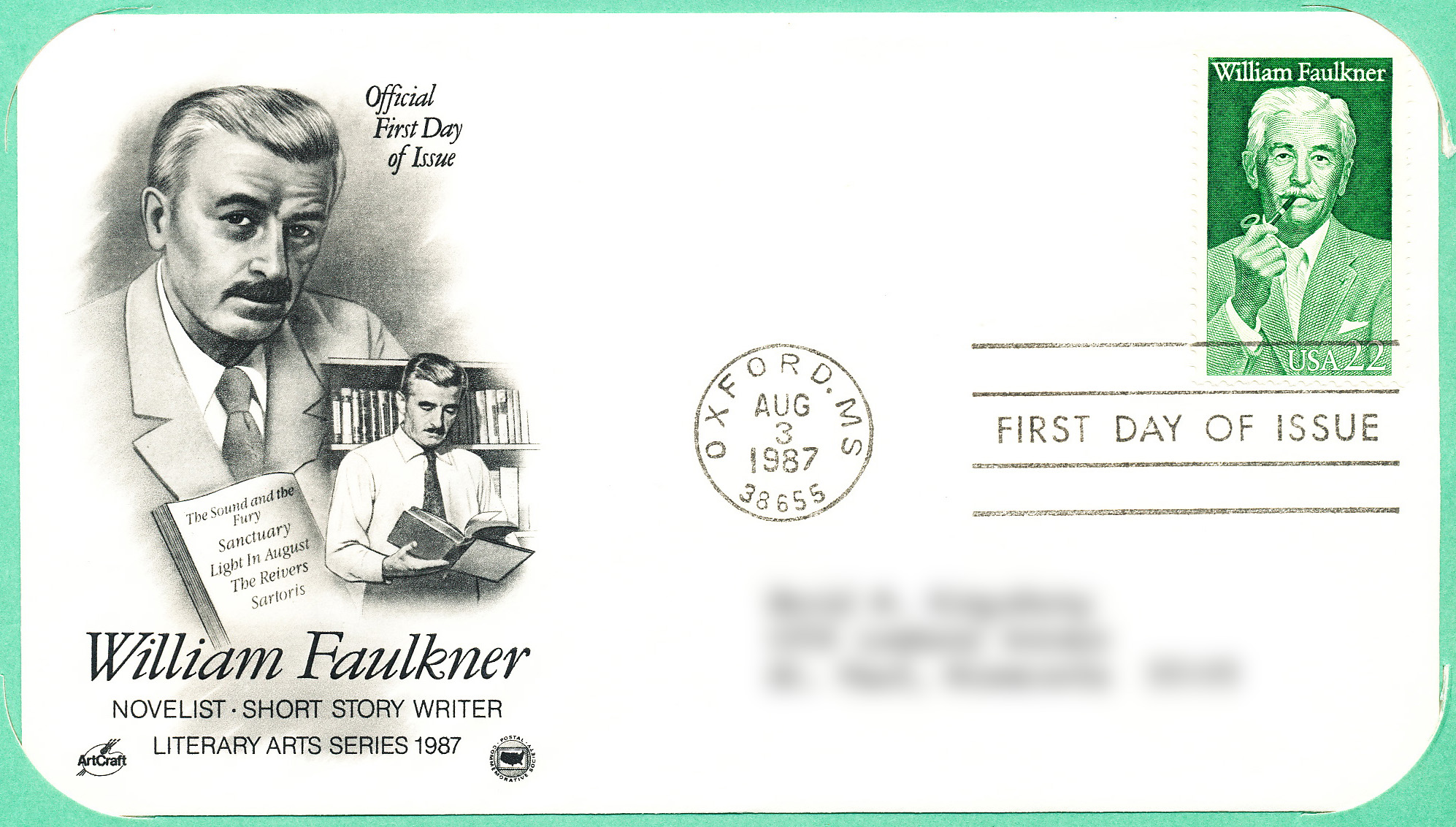
WilliamFaulknerStamp

Working a dull civil service job ill-suited to your talents does not make you a writer, but plenty of famous writers have worked such jobs. Nathaniel Hawthorne worked at a Boston customhouse for a year. His friend Herman Melville put in considerably more time—19 years—as a customs inspector in New York, following in the footsteps of his father and grandfather. Both Walt Disney and Charles Bukowski worked at the post office, though not together (can you imagine?), and so, for two years, did William Faulkner.

After dropping out of the University of Mississippi in 1920, Faulkner became its postmaster two years later, a job he found “tedious, boring, and uninspiring,” writes Mental Floss: “Most of his time as a postmaster was spent playing cards, writing poems, or drinking.” Eudora Welty characterized Faulkner’s tenure as postmaster with the following vignette:

Let us imagine that here and now, we’re all in the old university post office and living in the ’20’s. We’ve come up to the stamp window to buy a 2-cent stamp, but we see nobody there. We knock and then we pound, and then we pound again and there’s not a sound back there. So we holler his name, and at last here he is. William Faulkner. We interrupted him. . . . When he should have been putting up the mail and selling stamps at the window up front, he was out of sight in the back writing lyric poems.

By all accounts, she hardly overstates the case. As author and editor Bill Peschel puts it, Faulkner “opened the post office on days when it suited him, and closed it when it didn’t, usually when he wanted to go hunting or over to the golf course. He would throw away the advertising circulars, university bulletins and other mail he deemed junk.” A student publication from the time proposed a motto for his service: “Never put the mail up on time.”

Unsurprisingly, the powers that be eventually decided they’d had enough. In 1924, Faulkner sensed the end coming. But rather than bow out quietly, as perhaps most people would, the future Nobel laureate composed a dramatic and uncharacteristically succinct resignation letter to his superiors:

As long as I live under the capitalistic system, I expect to have my life influenced by the demands of moneyed people. But I will be damned if I propose to be at the beck and call of every itinerant scoundrel who has two cents to invest in a postage stamp.

This, sir, is my resignation.

The defiant self-aggrandizement, wounded pride, blame-shifting… maybe it’s these qualities, as well as a notorious tendency to exaggerate and outright lie (about his military service for example) that so qualified him for his late-life career as—in the words of Ole Miss—“Statesman to the World.” Faulkner’s gift for self-fashioning might have suited him well for a career in politics, had he been so inclined. He did, after all, receive a commemorative stamp in 1987 (above) from the very institution he served so poorly.

But like Hawthorne, Bukowski, or any number of other writers who’ve held down tedious day jobs, he was compelled to give his life to fiction. In a later retelling of the resignation, Peschel claims, Faulkner would revise his letter “into a more pungent quotation,” unable to resist the urge to invent: “I reckon I’ll be at the beck and call of folks with money all my life, but thank God I won’t ever again have to be at the beck and call of every son of a bitch who’s got two cents to buy a stamp.”

via Letters of Note

Related Content:

The Art of William Faulkner: Drawings from 1916-1925

Famous Writers’ Report Cards: Ernest Hemingway, William Faulkner, Norman Mailer, E.E. Cummings & Anne Sexton

William Faulkner Outlines on His Office Wall the Plot of His Pulitzer Prize Winning Novel, A Fable (1954)

Guidelines for Handling William Faulkner’s Drinking During Foreign Trips From the US State Department (1955)

Josh Jones is a writer and musician based in Durham, NC. Follow him at @jdmagness

31 Mar 18:05

Quentin Tarantino Lists His 20 Favorite Spaghetti Westerns, Starting with The Good, the Bad, the Ugly

by Colin Marshall

Like many film fans, I grew up familiar with the term “Spaghetti western,” but I’d nearly reached adulthood before figuring out what, exactly, America’s most popular Italian dish had to do with America’s once-most popular movie genre. But even if they don’t know the specific definition of a Spaghetti western, those who enjoy them know a Spaghetti western when they see one. Sergio Leone’s A Fistful of DollarsFor a Few Dollars More, and The Good, the Bad, and the Ugly; Sergio Corbucci’s Minnesota Clay and Django; Enzo Barboni’s They Call Me Trinity and Trinity Is Still My Name — if a picture belongs in that company, nobody doubts it.

You’ll notice that all those directors have Italian names, and indeed, western all’italiana, the Italian equivalent of “Spaghetti western,” simply means “Italian-style western.” These Italian-produced tales of the lawless 19th-century American west, sometimes featuring fading or rising Hollywood stars (as with the young Clint Eastwood, who would become identified with Leone’s “Man with No Name”), and often shot in the Spanish desert, rode high from the mid-1960s to the early 70s, bringing a fresh sensibility and visceral impact which had for the most part drained out of the homegrown variety.

Trust a genre-loving auteur like Quentin Tarantino (and one who made his very own Django a few years back) to know Spaghetti westerns inside and out. While even those of us who never turn down the chance to enjoy a good Spaghetti western might struggle to name ten of them, Tarantino can easily run down his personal top twenty:

  1. The Good, the Bad, and the Ugly (Sergio Leone, 1966)
  2. For a Few Dollars More (Sergio Leone, 1965)
  3. Django (Sergio Corbucci, 1966)
  4. The Mercenary (Sergio Corbucci, 1966)
  5. Once Upon a Time in the West (Sergio Leone, 1968)
  6. A Fistful of Dollars (Sergio Leone, 1964)
  7. Day of Anger (Tonino Valerii, 1967)
  8. Death Rides a Horse (Giulio Petroni, 1967)
  9. Navajo Joe (Sergio Corbucci,1966)
  10. The Return of Ringo (Duccio Tessar, 1965)
  11. The Big Gundown (Sergio Sollima, 1966)
  12. A Pistol for Ringo (Duccio Tessari, 1965)
  13. The Dirty Outlaws (Franco Rossetti, 1967)
  14. The Great Silence (Sergio Corbucci, 1968)
  15. The Grand Duel (Giancarlo Santi, 1972)
  16. Shoot the Living, Pray for the Dead (Giuseppe Vari, 1971)
  17. Tepepa (Giulio Petroni, 1968)
  18. The Ugly Ones (Eugenio Martin, 1966)
  19. Viva Django! (Ferdinando Baldi, 1967)
  20. Machine Gun Killers (Paolo Bianchini, 1968)

You can watch all the trailers of these Spaghetti western masterpieces in the playlist above, created by The Spaghetti Western Database. Some may now strike you as disarmingly straightforward about ballyhooing the excitement promised by the feature they advertise, and you may find others surprisingly funny and more self-aware. While I defy anyone to watch the entire playlist of trailers without wanting to dive into this surprisingly little-explored tradition, nothing gets me quite as excited about watching a movie — old or new, subtle or schlocky, genre or otherwise — as Tarantino’s contagious cinephilia.

via The Spaghetti Western Database

Related Content:

Quentin Tarantino’s Top 20 Grindhouse/Exploitation Flicks: Night of the Living Dead, Halloween & More

Quentin Tarantino Lists the 12 Greatest Films of All Time: From Taxi Driver to The Bad News Bears

Quentin Tarantino’s Handwritten List of the 11 “Greatest Movies”

Watch John Wayne Star in 25 Classic Westerns: All Free Online

The Great Train Robbery: Where Westerns Began

Colin Marshall hosts and produces Notebook on Cities and Culture as well as the video series The City in Cinema and writes essays on cities, language, Asia, and men’s style. He’s at work on a book about Los Angeles, A Los Angeles Primer. Follow him on Twitter at @colinmarshall or on Facebook.

31 Mar 18:04

An Online Gallery of Over 900,000 Breathtaking Photos of Historic New York City

by Josh Jones

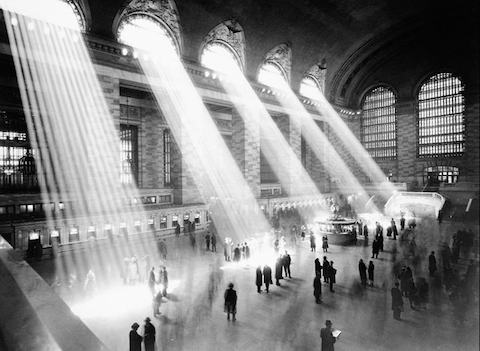
Grand Central

What is any major American city if not an industrial gallery bustling with people and machines? Sometimes the images are bleak, as with the photo essays that often circulate of Detroit’s beautiful ruin; sometimes they are defiantly hopeful, as with those of the rising of New Orleans; and sometimes they are almost unfathomably monumental, as with the images here of New York City, circa the 20th century—or a great good bit of it, anyway.

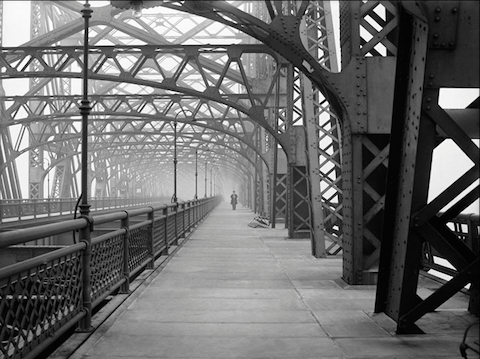
Queensboro Bridge

You can survey almost a hundred years of New York’s indomitable grandeur by perusing over 900,000 images from the New York City Municipal Archives Online Gallery. Photos like the astonishing tableaux in a sunlight-flooded Grand Central Terminal at the top (taken sometime between 1935 and 41) and like the breathtaking scale on display in the 1910 exposure of the Queensboro Bridge, above.

Bathers

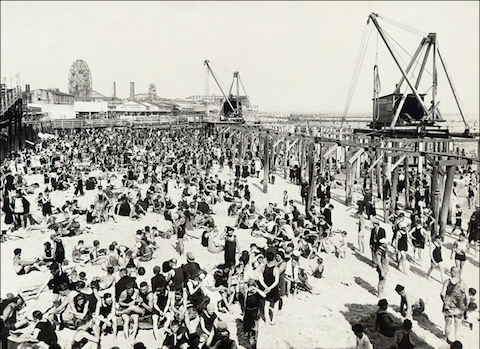
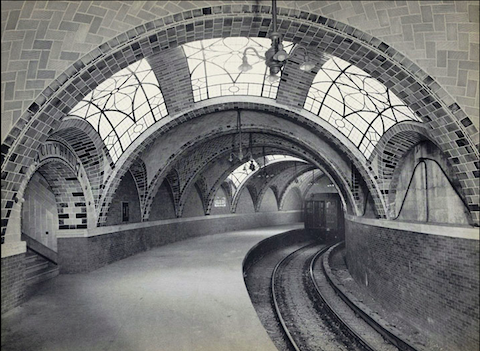
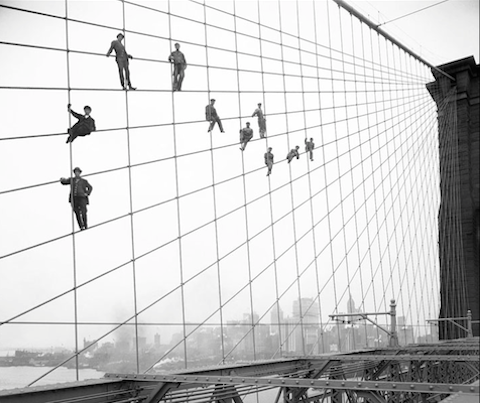
The online gallery features large-format photos of the human, like the sea of bathers above; of the human-made, like the vaulted, cavernous City Hall subway station below; and of the melding of the two, like the painters posing on the cables of the Brooklyn Bridge, further down.

City Hall Station

These images come from a selection of photos culled from the various galleries by The Atlantic. For more, see the NYC Municipal Archives site, which you can search by keyword or other criteria. “Visitors,” writes the site, “are encouraged to return frequently as new content will be added on a regular basis. Patrons may order reproductions in the form of prints or digital files.”

Brooklyn Bridge

Many of the images have watermarks on them to prevent illegal use. Nonetheless the gallery is a jaw-dropping collection of photos you can easily get lost in for hours, as well as an important resource for historians and scholars of 20th century American urbanism. See The Atlantic’s selection of images for even more dazzling photos. Or better yet, start rummaging through the New York City Municipal Archives Online Gallery right here.

Related Content:

New York Public Library Puts 20,000 Hi-Res Maps Online & Makes Them Free to Download and Use

Great New Archive Lets You Hear the Sounds of New York City During the Roaring 20s

Vintage Video: A New York City Subway Train Travels From 14th St. to 42nd Street (1905)

Designer Massimo Vignelli Revisits and Defends His Iconic 1972 New York City Subway Map

Josh Jones is a writer and musician based in Durham, NC. Follow him at @jdmagness

31 Mar 18:04

Download 100,000 Free Art Images in High-Resolution from The Getty

by Colin Marshall
Abandoned Dust Bowl Home

When I want to get a good look at the city of Los Angeles, I go up to the Getty Center in the Santa Monica Mountains. I can also, of course, get a pretty good look at some art at the museum there. But if I don’t feel like making that trek up the hill — and if you don’t feel like making the trek from wherever you live — The Getty can give you, in some ways, an even better way to look at art online. Just visit the Getty’s Open Content Program.

Japanese Ladies

Seeing as this sort of free cultural resource fits right into our wheelhouse here at Open Culture, we’ve tried to keep you posted on the archive’s development over the past few years. Last time we passed the word along, the Getty’s digital public-domain archive of high-resolution images had grown to 87,000, and now it has nearly hit the 100,000 mark (99,989, to be exact)— which sounds to us like just the time to keep you posted on what you can find therein.

Rue Mosnier

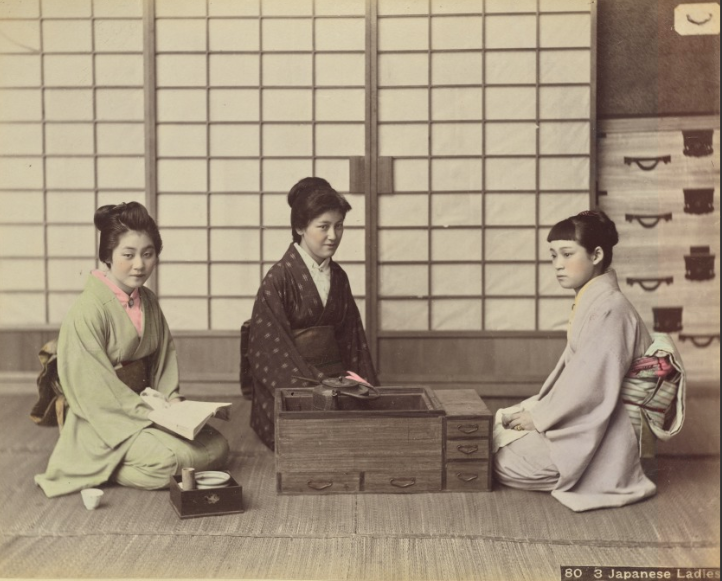
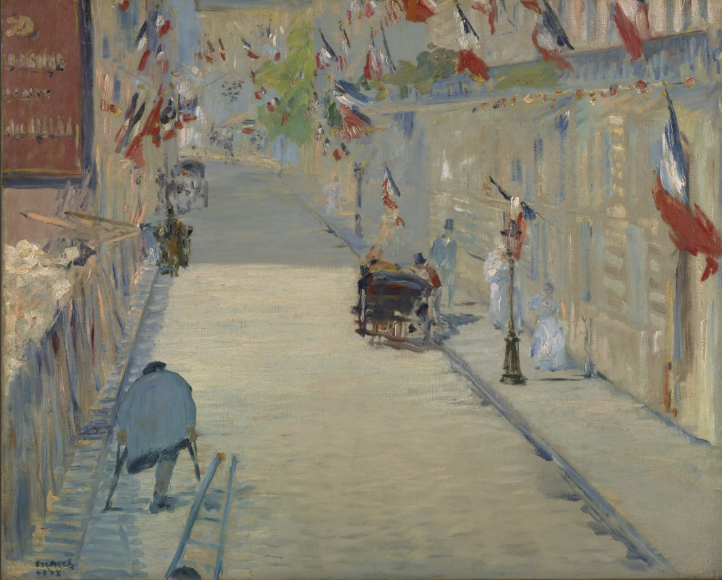
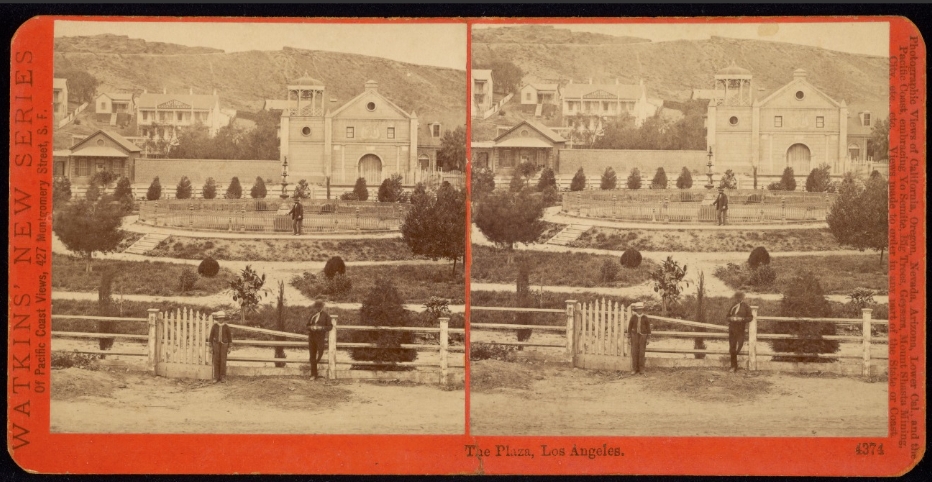
In its current state (which promises further expansion still), the Getty’s Open Content Program offers images like Abandoned Dust Bowl Home (top image), Dorothea Lange’s vividly stark evocation of Depression-era American desolation, as well as other photographic time (and place) capsules, such as Kusakabe Kimbei’s hand-colored prints of life in late 19th- and early 20th-century Japan (Japanese Ladies pictured here); impressionist canvases like Édouard Manet’s 1878 The Rue Mosnier with Flagsand even views of Los Angeles itself, like Carleton Watkins’ shot of the city’s plaza circa 1880.

Plaza Los Angeles

To download an image for which you’ve searched, you first need to click on that image’s title. That link takes you to the image’s own page (like those we linked to in the paragraph just above), where you’ll find a download link. Look for the word “download” beneath the image, and then click that link. It’s just that simple — far simpler, in any case, than visual access to such a range of artwork has ever been before. Though if you do make it to Los Angeles, don’t hesitate to make the effort to visit the Getty Center; the tram that takes you up to it makes for a pretty fascinating cultural experience and view of the city in and of itself.

Related Content:

The Getty Adds Another 77,000 Images to its Open Content Archive

Download 35,000 Works of Art from the National Gallery, Including Masterpieces by Van Gogh, Gauguin, Rembrandt & More

Download Over 250 Free Art Books From the Getty Museum

40,000 Artworks from 250 Museums, Now Viewable for Free at the Redesigned Google Art Project

LA County Museum Makes 20,000 Artistic Images Available for Free Download

The Rijksmuseum Puts 125,000 Dutch Masterpieces Online, and Lets You Remix Its Art

Colin Marshall hosts and produces Notebook on Cities and Culture as well as the video series The City in Cinema and writes essays on cities, language, Asia, and men’s style. He’s at work on a book about Los Angeles, A Los Angeles Primer. Follow him on Twitter at @colinmarshall or on Facebook.

31 Mar 17:57

Leo Tolstoy’s 17 “Rules of Life:” Wake at 5am, Help the Poor, & Only Two Brothel Visits Per Month

by Colin Marshall

tolstoy rules 2

Many aspiring epic novelists surely wouldn’t mind writing like Leo Tolstoy. But can you write like the writer you admire without living like the writer you admire? Biographies reveal plenty of facts about how the author of such immortal volumes as War and Peace and Anna Karenina passed his 82 years, none more telling than that even Leo Tolstoy struggled to live like Leo Tolstoy. “I must get used to the idea, once and for all, that I am an exceptional human being,” he wrote in 1853, at age 25, underscoring that “I have not met one man who is morally as good as I am, or ready to sacrifice everything for his ideal, as I am.”

Clearly, excessive modesty didn’t count among Tolstoy’s faults. Seven years before making that declaration, he had already envisioned for himself a life of virtue and industry, laying out what he called his “rules of life,” perhaps a foreshadowing of his search for a rigorously religious life without belief in a higher being. The website Tolstoy Therapy has posted a selection of these rules, which commanded him as follows:

  • Wake at five o’clock
  • Go to bed no later than ten o’clock
  • Two hours permissible for sleeping during the day
  • Eat moderately
  • Avoid sweet foods
  • Walk for an hour every day
  • Visit a brothel only twice a month
  • Love those to whom I could be of service
  • Disregard all public opinion not based on reason
  • Only do one thing at a time
  • Disallow flights of imagination unless necessary

To this list of precepts drawn up at the dawn of his adult life, most of which wouldn’t seem out of place as any of our 21st-century new year’s resolutions, Tolstoy later added these:

  • Never to show emotion
  • Stop caring about other people’s opinion of myself
  • Do good things inconspicuously
  • Keep away from women
  • Suppress lust by working hard
  • Help those less fortunate

Even if you haven’t read much about Tolstoy’s life, you may sense in some of these general principles evidence of battles with particular impulses: observe, for instance, how his twice-monthly limit on brothel visits becomes the much more stringent and much less realistic forbiddance of women entirely. But perhaps his technique of working hard, however well or poorly it suppressed his lust (the man did father fourteen children, after all), benefited him in the end, given the vast and (often literally) weighty body of work he left behind.

“Between ‘rules of life’ and life itself, what a chasm!” exclaims biographer Henri Troyat in Tolstoy. But as rich with interest as we find books like that, we ultimately care about writers not because of how they live, but because of how they write. The young Tolstoy knew that, too; “the publication of Childhood and ‘The Raid’ having made him, in his own eyes, a genuine man of letters,” writes Troyat, “he soon added no less peremptory ‘Rules of Writing’ to his ‘Rules of Life':”

  • When you criticize your work, always put yourself in the position of the most limited reader, who is looking only for entertainment in a book.
  • The most interesting books are those in which the author pretends to hide his own opinion and yet remains faithful to it.
  • When rereading and revising, do not think about what should be added (no matter how admirable the thoughts that come to mind) … but about how much can be taken away without distorting the overall meaning.

Then again, War and Peace has in the modern day become a byword for sheer length, and few readers not already steeped in 19th-century Russian literature would turn to Tolstoy for pure entertainment. Perhaps the writer’s life implicitly adds one caveat atop all the ever-stricter rules he made for himself while living it: nobody’s perfect.

via Tolstoy Therapy

Related content:

Leo Tolstoy Creates a List of the 50+ Books That Influenced Him Most (1891)

Rare Recording: Leo Tolstoy Reads From His Last Major Work in Four Languages, 1909

Vintage Footage of Leo Tolstoy: Video Captures the Great Novelist During His Final Days

The Complete Works of Leo Tolstoy Online: New Archive Will Present 90 Volumes for Free (in Russian)

Leo Tolstoy’s Family Recipe for Macaroni and Cheese

Stephen King’s Top 20 Rules for Writers

Ray Bradbury Offers 12 Essential Writing Tips and Explains Why Literature Saves Civilization

Colin Marshall hosts and produces Notebook on Cities and Culture as well as the video series The City in Cinema and writes essays on cities, language, Asia, and men’s style. He’s at work on a book about Los Angeles, A Los Angeles Primer. Follow him on Twitter at @colinmarshall or on Facebook.

31 Mar 17:57

Langston Hughes Presents the History of Jazz in an Illustrated Children’s Book (1955)

by Josh Jones

The_First_Book_Of_Jazz_00

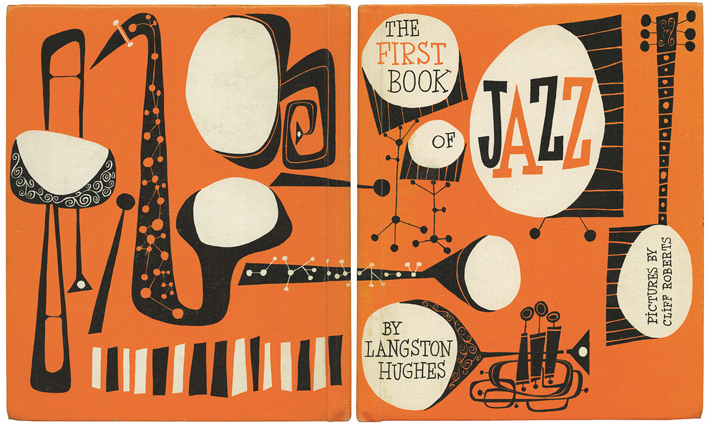
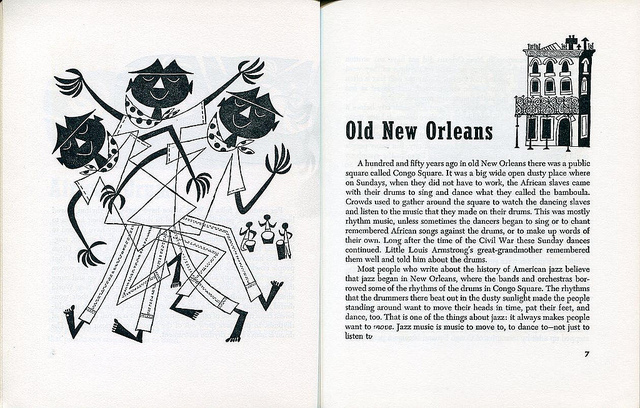
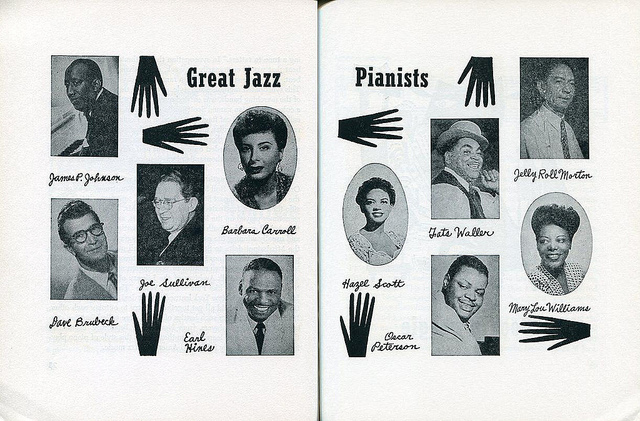
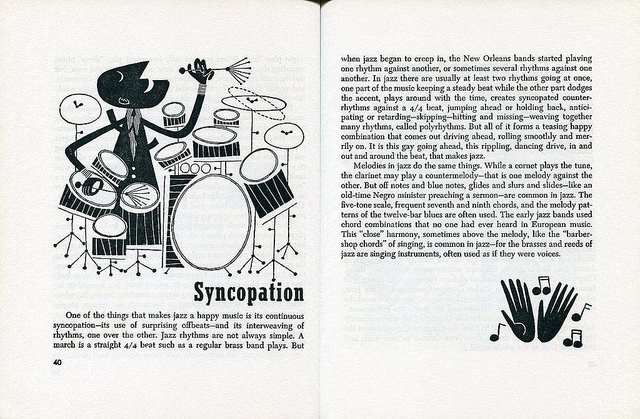
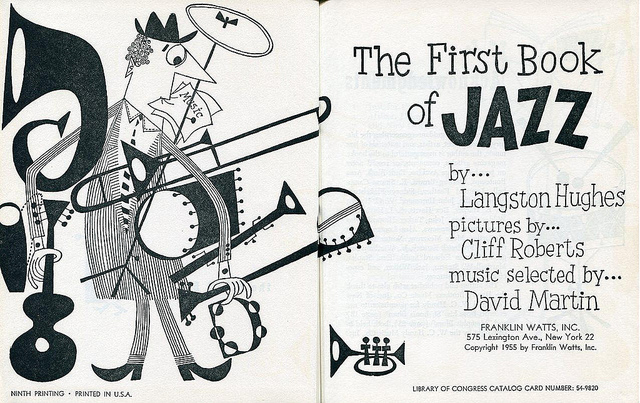
I can imagine no better guide through the history and variety of jazz than Langston Hughes, voice of the Harlem Renaissance and poetic interpreter of 20th century black American culture. Hughes’ 1955 First Book of Jazz is just that, a short primer with a surprisingly high degree of sophistication for a children’s book. I would, in fact, recommend it as an introduction to jazz for any reader. Hughes thoroughly covers the musical context of jazz in brief chapters like “African Drums,” “Old New Orleans,” “Work Songs,” “The Blues,” and “Ragtime.” He then “discusses the mechanics of jazz,” writes author and blogger Ariel S. Winter, including “improvisation, syncopation, percussion, rhythm, blue notes, tone color, harmony, break, riff….” Through it all runs the life and career of Louis Armstrong, whose story, Hughes states “is almost the whole story of orchestral jazz in America.”

Old New Orleans

The book is very patriotic in tone, a fact dictated by Hughes’ recent appearance before Senator McCarthy’s Subcommittee, which exonerated him on the condition that he renounce his earlier sympathies for the Communist Party and get with a patriotic program. Having fallen out of favor with the public, Hughes began the nonfiction children’s series to win back readers, also writing the quaintly named cultural history First Book of Negroes and the Whitmanesque First Book of Rhythms. All of the books were illustrated by different artists. The First Book of Jazz received special treatment from popular illustrator Cliff Roberts, who made its pages closely resemble classic album covers by artists like Jim Flora.

Jazz Pianists

Although Hughes may have been somewhat conciliatory in his attitude toward inequality, he nonetheless makes the origins and importance of jazz clear:

A part of American music is jazz, born in the South. Woven into it in the Deep South were the rhythms of African drums that today make jazz music different from any other music in the world. Nobody else ever made jazz before we did. Jazz is American music.

“The particular Americans in question,” writes Winter, “are undeniably black,” and “when Hughes covers the vast array of American styles that went into jazz, they tend to be (as they should be) black interpretations of each musical form.” But as he had always done, whether under pressure from McCarthyism or not, he proudly declares jazz yet another invaluable contribution African-Americans, as well as European immigrants, made to the national culture. However far left his political sympathies, Hughes was always a patriot, in the best sense, an admirer of his country’s achievements and genuine lover of its people.

Syncopation

Although it is a children’s book, Hughes’ First Book of Jazz is still a scholarly one, with a host of references in the Acknowledgements, and a list of famous jazz musicians, and their instruments, at the end. Also rounding out the short course on jazz history and musicianship is a two-part list of “Suggested Records for Study” and one called “100 of My Favorite Recordings.” Hughes even convinced Folkways records to release The Story of Jazz, an LP Hughes narrated with examples of each style of jazz he discusses. You can read the full First Book of Jazz at Winter’s Flickr, where he has posted scans of every page. See a gallery of Roberts’ full page illustrations here.

First Book

via Brain Pickings

Related Content:

A Child’s Introduction to Jazz by Cannonball Adderley (with Louis Armstrong & Thelonious Monk)

Watch Langston Hughes Read Poetry from His First Collection, The Weary Blues (1958)

Charles Mingus Explains in His Grammy-Winning Essay “What is a Jazz Composer?”

The Cry of Jazz: 1958’s Highly Controversial Film on Jazz & Race in America (With Music by Sun Ra)

Josh Jones is a writer and musician based in Washington, DC. Follow him at @jdmagness

31 Mar 17:56

Isaac Newton Creates a List of His 57 Sins (Circa 1662)

by Jonathan Crow

isaac newton list of sins

Sir Isaac Newton, arguably the most important and influential scientist in history, discovered the laws of motion and the universal force of gravity. For the first time ever, the rules of the universe could be described with the supremely rational language of mathematics. Newton’s elegant equations proved to be one of the inspirations for the Enlightenment, a shift away from the God-centered dogma of the Church in favor of a worldview that placed reason at its center. The many leaders of the Enlightenment turned to deism if not outright atheism. But not Newton.

In 1936, a document of Newton’s dating from around 1662 was sold at a Sotheby’s auction and eventually wound up at the Fitzwilliam Museum in Cambridge, England. The Fitzwilliam Manuscript has long been a source of fascination for Newton scholars. Not only does the notebook feature a series of increasingly difficult mathematical problems but also a cryptic string of letters reading:

Nabed Efyhik
Wfnzo Cpmfke

If you can solve this, there are some people in Cambridge who would like to talk to you.

But what makes the document really interesting is how incredibly personal it is. Newton rattles off a laundry list of sins he committed during his relatively short life – he was around 20 when he wrote this, a student at Cambridge. He splits the list into two categories, before Whitsunday 1662 and after. (Whitsunday is, by the way, the Sunday of the feast of Whitsun, which is celebrated seven weeks after Easter.) Why he decided on that particular date to bifurcate his timeline isn’t immediately clear.

Some of the sins are rather opaque. I’m not sure what, for instance, “Making a feather while on Thy day” means exactly but it sure sounds like a long lost euphemism. Other sins like “Peevishness with my mother” are immediately relatable as good old-fashioned teenaged churlishness. You can see the full list below. And you can read the full document over at the Newton Project here.

Before Whitsunday 1662

1. Vsing the word (God) openly
2. Eating an apple at Thy house
3. Making a feather while on Thy day
4. Denying that I made it.
5. Making a mousetrap on Thy day
6. Contriving of the chimes on Thy day
7. Squirting water on Thy day
8. Making pies on Sunday night
9. Swimming in a kimnel on Thy day
10. Putting a pin in Iohn Keys hat on Thy day to pick him.
11. Carelessly hearing and committing many sermons
12. Refusing to go to the close at my mothers command.
13. Threatning my father and mother Smith to burne them and the house over them
14. Wishing death and hoping it to some
15. Striking many
16. Having uncleane thoughts words and actions and dreamese.
17. Stealing cherry cobs from Eduard Storer
18. Denying that I did so
19. Denying a crossbow to my mother and grandmother though I knew of it
20. Setting my heart on money learning pleasure more than Thee
21. A relapse
22. A relapse
23. A breaking again of my covenant renued in the Lords Supper.
24. Punching my sister
25. Robbing my mothers box of plums and sugar
26. Calling Dorothy Rose a jade
27. Glutiny in my sickness.
28. Peevishness with my mother.
29. With my sister.
30. Falling out with the servants
31. Divers commissions of alle my duties
32. Idle discourse on Thy day and at other times
33. Not turning nearer to Thee for my affections
34. Not living according to my belief
35. Not loving Thee for Thy self.
36. Not loving Thee for Thy goodness to us
37. Not desiring Thy ordinances
38. Not long {longing} for Thee in {illeg}
39. Fearing man above Thee
40. Vsing unlawful means to bring us out of distresses
41. Caring for worldly things more than God
42. Not craving a blessing from God on our honest endeavors.
43. Missing chapel.
44. Beating Arthur Storer.
45. Peevishness at Master Clarks for a piece of bread and butter.
46. Striving to cheat with a brass halfe crowne.
47. Twisting a cord on Sunday morning
48. Reading the history of the Christian champions on Sunday

Since Whitsunday 1662

49. Glutony
50. Glutony
51. Vsing Wilfords towel to spare my own
52. Negligence at the chapel.
53. Sermons at Saint Marys (4)
54. Lying about a louse
55. Denying my chamberfellow of the knowledge of him that took him for a sot.
56. Neglecting to pray 3
57. Helping Pettit to make his water watch at 12 of the clock on Saturday night

via JF Ptak Science Books/Public Domain Review

Related Content:

Neil deGrasse Tyson Lists 8 (Free) Books Every Intelligent Person Should Read

Sir Isaac Newton’s Papers & Annotated Principia Go Digital

Neil deGrasse Tyson Delivers the Greatest Science Sermon Ever

Jonathan Crow is a Los Angeles-based writer and filmmaker whose work has appeared in Yahoo!, The Hollywood Reporter, and other publications. You can follow him at @jonccrow. And check out his blog Veeptopus, featuring lots of pictures of badgers and even more pictures of vice presidents with octopuses on their heads.  The Veeptopus store is here.

26 Mar 01:18

The Psychology of Blame: Another Animated Lesson That Can Make You a Better Person

by Dan Colman

The last time we checked in with Dr. Brené Brown, a research professor at the University of Houston Graduate College of Social Work, we learned all about the difference between sympathy and empathy, and why empathy is much more meaningful in the end. Now, in a sequel to that first video, we discover an important barrier to empathy — blame. Can you relate? Both videos come from RSA (the Royal Society of the Arts), the same cultural organization that brought us those whiteboard animations illustrating lectures by Slavoj Zizek, Steven PinkerBarbara Ehrenreich, and others. You can watch Brown’s complete (unanimated) lecture here.

Follow us on Facebook, Twitter, Google Plus and LinkedIn and  share intelligent media with your friends. Or better yet, sign up for our daily email and get a daily dose of Open Culture in your inbox.

Related Content:

Free Online Psychology Courses (Part of our list of 1100 Free Online Courses)

Carl Gustav Jung Explains His Groundbreaking Theories About Psychology in Rare Interview (1957)

Jacques Lacan’s Confrontation with a Young Rebel: Classic Moment, 1972

New Animation Explains Sherry Turkle’s Theories on Why Social Media Makes Us Lonely

The Psychology of Blame: Another Animated Lesson That Can Make You a Better Person is a post from: Open Culture. Follow us on Facebook, Twitter, and Google Plus, or get our Daily Email. And don't miss our big collections of Free Online Courses, Free Online Movies, Free eBooksFree Audio Books, Free Foreign Language Lessons, and MOOCs.

The post The Psychology of Blame: Another Animated Lesson That Can Make You a Better Person appeared first on Open Culture.

25 Mar 17:43

PROF: Electric cars cause more pollution...


PROF: Electric cars cause more pollution...


(Second column, 18th story, link)

25 Mar 17:43

Public urination 'out of control' in Denver...


Public urination 'out of control' in Denver...


(Third column, 11th story, link)

25 Mar 17:42

Crashing drones spilling secrets...

25 Mar 17:30

Moonshine is the American Rebel Spirit

by Amanda Winkler

Moonshine evokes imagery of outlaw distillers practicing their craft by the light of the moon to evade the law. But Prohibition ended in 1933. Why are illegal moonshiners still a thing?

 Jaime Joyce, author of Moonshine: A Cultural History of America's Infamous Liquor, sat down with Reason TV to discuss moonshine and its cultural history.  

View this article.

25 Mar 17:30

Are You Spamming Your Email Contacts? How to Find Out & Fix the Problem

by Ben Stegner
email-spam

Everybody hates spam. At best, it’s irritating and wastes a few seconds of your time; more severe cases can approach phishing and pose a danger to anyone who interacts with the illegitimate messages. We’ve all probably gotten an email advertising hot singles in our area or how to make a pile of cash overnight, but when your account is the one sending the spam, it’s a different situation. It’s important to be aware of the signs that someone has been tampering with your email account, and what actions to take should you encounter a problem. Let’s make sure you know...

Read the full article: Are You Spamming Your Email Contacts? How to Find Out & Fix the Problem

25 Mar 17:26

United Nations to send 10,000 flat-packed IKEA shelters to refugees worldwide

by Lori Zimmer