Shared posts

27 Sep 13:35

GE, bailed out by taxpayers, mad that it may not get subsidized loans through Ex-Im Bank any longer, Takes jobs overseas

by Nick Sorrentino
Thanks for the tax dollars suckers!

Thanks for the tax dollars suckers!

GE is one of the great American crony companies. Jeff Immelt, once head of Obama’s “jobs council” and current CEO of General Electric, has played the crony game extremely well. First in securing emergency financing courtesy of the American taxpayers because it screwed up royally. And then he was able to exploit various Obama era boondoggles which funneled money GE’s way on an ongoing basis. (Think wind turbines etc.)

Now Mr. Immelt is stamping his feet because it looks like GE may permanently lose the the sweetheart deals it has at the taxpayer underwritten Export Bank. This is crony capitalism full on.

Read More

27 Sep 13:21

Jurassic Pigeon

by Zach Weissmueller

Passenger pigeons"Conservation has done 40 years of 'Save the pandas. Save the rhinos. If they go extinct, everything will go to hell.' And it's been a lot of doom and gloom with not a lot of emphasis on, 'Here's a problem, how do we solve it?'" laments ecologist Ben Novak, lead researcher for the Revive and Restore project at the University of California, Santa Cruz.

Novak wants to solve the problem of species endangerment by retrieving genetic material from bygone, taxidermied animals and revivifying it with help from their surviving cousins. It's all part of a "de-extinction" campaign being funded by the Long Now Foundation, a San Francisco-based nonprofit project that includes the Whole Earth Catalog's Stewart Brand, novelist Neal Stephenson, musician Brian Eno, and others. Founded in 1996, the foundation is dedicated to "long-term thinking and responsibility in the framework of the next 10,000 years." Long Now wants to bring back everything from the humble passenger pigeon to the majestic woolly mammoth.

The last passenger pigeon died in 1914, wiped out by humans armed with low-tech muzzle-loaded shotguns and nets. Prior to their eradication, the birds acted as catalysts to biodiversity, clearing forests and spreading guano in a way that promoted new plant growth and animal habitats. But the kind of method Long Now favors for bringing the pigeons back always runs into the same objection/cultural reference: Jurassic Park.

Novak argues that the focus should be less on fear of unleashing the unknown and more on adding new devices in the biodiversity toolbox. "The real moral fiber of the conservation movement for the past 40 years has been, 'Extinction is forever, so prevent it,'" he says. "In my mind, 'extinction is forever' should've never been the foundation of motivation to begin with, because it implies there's a finite end to solutions."

Zach Weissmueller spoke with Novak in his lab at the University of California, Santa Cruz, in June. For a video version of the interview, go to reason.com.

reason: What is a passenger pigeon and when did it go extinct?

Ben Novak: Most people, when they think about pigeons, they think about the street pigeon—the rat with wings. They think of them eating French fries behind McDonald's dumpsters. That's not the passenger pigeon at all.

It's this really beautiful, regal bird. What set them apart from all the other species of pigeons in the world was that they formed these really dense flocks that would be several hundred million birds to a billion birds in size, and they would darken the sky for days. All you have to do is make a quick Google search and you'll come across dozens of historic accounts, the most famous being from John James Audubon, when a flock flew over Kentucky and blotted out the sun. They were quite a force of nature, and a lot of questions have persisted about this species since they went extinct.

No one was really studying them when they were alive, which was in the 1800s. By the time they went extinct in 1914, there still wasn't any major ecology science to figure out [all the things] we would want to know. A lot of people have speculated and put together things from historic records, but what was really missing in the equation was being able to study the DNA.

That was what I originally intended to do with specimens from the passenger pigeons. But then Revive and Restore came on the scene with the idea of, "Well, if you can get the DNA to study the bird, maybe you could actually try and recreate the bird." So it's become a kind of a hybrid project of studying this species and thinking about bringing it back.

reason: You've sketched out this idea of these massive flocks of passenger pigeons. Could you talk about the unique behavior and what made that interesting from an ecological perspective?

Novak: Historically, we know that a giant flock comes into an area, they consume the resources for several hundred square miles, they live in a roosting or nesting site in a tiny spot...and they're so densely crowded into that area that as they come in at night to roost, they're overcrowding branches, snapping branches off of trees, sometimes breaking small trees off at the base as they bend them completely over under their weight. And they're depositing tons of droppings into that area—inches of guano—and that completely, radically changes the biochemistry of the soils. It kills all of the undergrowth that was there, but it also opens up that canopy. All that branch breaking is letting sunlight in.

So you can imagine the next year, when those birds are gone, you get a very thick regenerating underbrush. And that's what these birds were doing. They were stimulating regeneration cycles. And knowing this about the passenger pigeon ecology, we think [bringing them back] is going to be a major benefit for the ecosystems of the future.

reason: Your process for bringing them back is a sort of hybridization with modern species?

Novak: We're not creating the exact same passenger pigeon from 1874. The closest living relative of the passenger pigeon is the band-tailed pigeon, which lives out on the West Coast. The birds have a very similar ecology to passenger pigeons, but there's a few key differences between a bird that makes loosely associated flocks versus the bird that made these really dense high-population flocks. And we're going to try to figure out those traits and try to bring those in. So the bird we create will be hopefully a bird that looks like a passenger pigeon, acts like a passenger pigeon, and could fool anybody into believing that's the original passenger pigeon—but at the genetic level, it's a band-tailed pigeon that's been adapted.

reason: Talk about how you plan to teach your pigeons to act like passenger pigeons.

Novak: The idea is to make sure our birds not only have the right genes—the right stuff in their blood to be passenger pigeons—but to make sure they behave like passenger pigeons. We need to raise them like passenger pigeons. Probably the best way to do that is to prepare a flock of rock pigeons or band-tailed pigeons. Bring them out to New England, where we plan to work with our passenger pigeons. Get them used to that climate. Start to get those birds trained into being almost passenger pigeons. And then those are the birds that end up being the surrogate parents for at least the first two weeks or so of the life of the passenger pigeon.

reason: Your foundation's also working on the eventual return of the woolly mammoth. That's one of the big animals that sparks everyone's imagination. But for something that size, what does that look like coming back into the world?

Novak: What George [Church, the woolly mammoth project lead] is looking for when he makes a mammoth are the genes that would allow an elephant to survive in Siberia. The types of mutations that make the blood work better at cold temperatures, keeping the body warm. That make those layers of thick fat under the skin so they can survive the winter, and that charismatic woolly hair that coats the entire body.

The cool thing about trying to make an Asian elephant adapted to living in the cold is we can produce a population that lives in a place that's far away from the black market, in a habitat region that is not being destroyed by human beings. It's like a safe haven for an elephant population. If you can make five or six mutations that make that animal tolerant to the cold, and you can do that process, then you can always reverse those steps to get your original elephant back, and put them in Thailand or India.

In the grand scheme of looking at it from an evolutionary perspective, elephants were once a very diverse group. There were mastodons, mammoths, all kinds of crazy forms, and now they're a really rare group of animals. And in the paleontology record, we see that when an entire group starts to get less diverse, it's usually a bad sign. So the more we can facilitate the diversification of the elephant group, the more likely they'll be to adapt and live through the changes we've made in the world.

reason: What is the philosophy of de-extinction, if you can encapsulate that? Because a lot of people think, these animals didn't cut it for whatever reason, so going and putting them back into this dynamic system is only asking for trouble.

Novak: The real point of de-extinction as an emerging field is this notion of revolutionizing conservation. It's really not about trying to restore the past. It's about confronting our present and future.

To say it really succinctly, we as human beings have changed environments. We've created new environments. And some of these environments are fragmented and need more diversity. High biodiversity makes an adaptable ecosystem that does a lot of great things for people and ensures the future evolution of all the species in that environment.

We usually think of conservation as preservation, as, "We want to keep this patch of forest around forever." But as the climate changes—whether human beings are causing it or not—in the future, at some point in time, the pieces of land we've set aside, they're going to change. And the animals living there are going to have to leave or adapt. Unless that ecosystem is a diverse, healthy ecosystem, it won't adapt to that change, and we'll lose more than we're already losing today.

Ben Novak and Martha, the last passenger pigeon But even more so, there's a quality of human life that we've become accustomed to, and it really is based on the natural world around us. We're inspired by nature to invent new things. And we derive so much of our medical technology from natural ecosystems. In the genomes of the world's millions of species is the blueprint of how to survive three billion years of catastrophes and everything the world can throw at you.

reason: The cultural touchstone is obviously Jurassic Park. Are you at all afraid that this leads to some sort of Jurassic Park–like situation—not in the sense that there are dinosaurs running around, but in the sense that you're going to create this monster, that you can't predict what's going to happen, and that it's going to wreak havoc on the ecosystem or on humans?

Novak: Ever since we came out with this project, everyone asks about Jurassic Park. It was a huge cultural phenomenon around the world. And I know there's this wave of thinking about de-extinction and what its implications are. The one thing I would say to everyone about this is, we've been thinking about the major issues of de-extinction far more in-depth than any of the writers of a book or a movie could go into. If we do this right, there will undoubtedly be unknowns that we cannot predict. But as with any conservation project that does captive breeding or relocations of species, this just comes down to monitoring and doing things in phases. We've already established ground rules for how you go about managing these types of issues.

If you put a species into an ecosystem that hasn't been there in 100 years or 10,000 years, what do you do about things that might go wrong that you didn't think were going to happen? Well, that comes down to your basic management. If we can put it into that ecosystem, we can bring it back out. Bring it back into captivity, see if we can't fix the problem, see if there's anything else on the ground we can do.

Specifically for passenger pigeons, people worry. They think, "Oh, flocks of billions, that'll be disastrous." We even got an email telling us to pull out now before our monster pigeon destroys the world. So I have to reiterate this: People caused the extinction of the passenger pigeon in the 1800s with muzzle-loading shotguns. They managed to cripple a species of 5 billion in a span of 50 years with very low-tech means. Today we can watch these animals from satellites with GPS tags. It's not like these birds can get away from us in ways we can't control. It's a pigeon. What is honestly the worst that could happen?

And with mammoths in Siberia, this isn't about putting a species in to integrate into the ecosystem that's there. The heart of this is actually about changing that ecosystem. It's about building a new ecosystem. So we want there to be change when we do these projects. It's not about the past. It's about constructing something for the future.

reason: Another criticism of de-extinction is that it's just a fantasy that distracts us from the problems of habitat destruction.

Novak: On top of criticisms of monsters and zombie birds, a much more serious worry that comes from the conservation community is that this is a distraction from the conservation strategies that work and matter and need money most. There's a big misconception that we have some major source of funding for millions of dollars that we're pumping into these de-extinction projects that we should be putting into other areas. I think [these criticisms] really highlight a problem with the world of conservation, which is that limited resources are such a major concern.

It's very depressing and worrying that we're putting so little resources into any forms of conservation. To us, de-extinction is not about replacing or curbing projects that could have happened if we didn't do this. It's about diversifying what conservation is doing. We're not taking money from other projects. We're trying to seek out new sources of funding that have never gone into these types of things before, and really optimizing the technologies that can work for any type of conservation problem.

The real moral fiber of conservation for the last 40 years has been, "Extinction is forever, so prevent it." And we're coming along, saying, "We can recreate these extinct ecologies," and that fundamentally turns the whole pyramid of conservation upside down.

In my view, "extinction is forever" should've never been the foundation to begin with, because it implies there's a finite end to solutions. Conservation has done 40 years of "Save the pandas. Save the rhinos. If they go extinct, everything will go to hell." And it's been a lot of doom and gloom with not a lot of emphasis on, "Here's a problem, how do we solve it?" We're just trying to bring to the floor more solutions to challenges that traditional forms of conservation have proven again and again to just be utter failures at confronting.

reason: Can you talk about where you get the DNA samples from?

Novak: Contrary to the silver screen, you cannot actually get DNA from bugs trapped in amber. People have been unable to get DNA from dinosaur fossils. They're just too old. "You cannot clone from stone." But you can get ample amounts of great DNA from museum specimens, taxidermied birds.

If it's kept cold, it's kept good. So if you're [trying to get] mammoth DNA, go up to Siberia. Dig a bone out of the permafrost. That bone has DNA still trapped in it. It's not fossilized yet. That's the key difference between a mammoth bone that's 40,000 years old and a T-Rex bone that's 65 million years old.

reason: When can people expect to see passenger pigeons flying across the sky and mammoths walking across the tundra?

Novak: The key thing I can say to anyone when they ask this question is, there are many obstacles [to] research and development. But all that is required to get those done is a source of funding. Once you have the funding, you can get the minds on it and go. So if you want to see passenger pigeons and mammoths, donate to the cause and help get this thing going.

If we continue to get the public support we need, then our projected goal is to have some form of passenger pigeon by 2022. This hinges on being able to start doing some engineering by 2018, and then being able to spend the next few years getting the right product. Right now we're studying the genomes, we're trying to set up the right facilities, we're trying to figure out the ecology of how putting a bird back into the forest will work. You know, thinking ahead.

But yeah, the grand timeline would be to have our passenger pigeons in 2022. If we can get the right amount of captive breeding done in five years, we could start thinking about doing a type of soft release, moving birds from one site to another. With the right propagation from there, we could consider trying to do the first actual full releases in 2032. And then it just becomes your standard conservation project where you continue to kind of supply the wild with more birds until we think we've got them up to a certain number where they can manage themselves.

With the mammoth, that's a huge project mainly because you're dealing with such huge animals. George really wants to try to create some new mammoth in the next five years. This hinges on being able to implant an embryo into an elephant. And I think with the right drive that might be possible. I tend to be a little skeptical that [within] five years we could see a baby mammoth, or the first baby elephant that can live in the cold, but you know, with the idea of trying to push for five years—it's probably doable in 10.

27 Sep 12:29

D.C. schools to teach bike-riding in 2nd grade...


D.C. schools to teach bike-riding in 2nd grade...


(First column, 20th story, link)
Related stories:

Gear up for NFL Season with Sideline Gear from NFLShop.com
27 Sep 12:27

'Birth Tourism' Booming In Bay Area...


'Birth Tourism' Booming In Bay Area...


(Second column, 14th story, link)


Need Credit Card Relief?
27 Sep 12:24

'STEVE JOBS' Writer Aaron Sorkin Rips Tim Cook Over Movie Critique...


'STEVE JOBS' Writer Aaron Sorkin Rips Tim Cook Over Movie Critique...


(Second column, 7th story, link)
Related stories:

Let Us Help You Get Out Of Debt
24 Sep 16:46

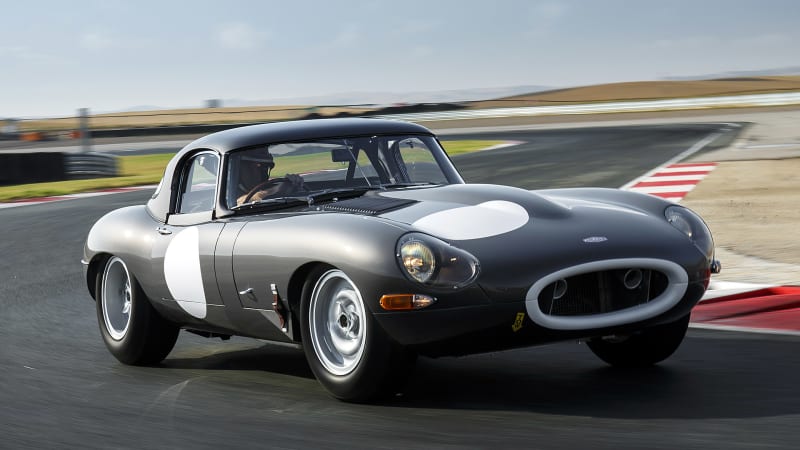
Driving Jaguar's Continuation Lightweight E-Type

by James Tate

Filed under: Jaguar, First Drives, Convertible, Coupe, Classics, Racing

Fast cars used to be tactile cars as a matter of course. We take the thin wheel of Jaguar's new-old E-type and remember what we've lost.

Continue reading Driving Jaguar's Continuation Lightweight E-Type

Driving Jaguar's Continuation Lightweight E-Type originally appeared on Autoblog on Thu, 24 Sep 2015 11:59:00 EST. Please see our terms for use of feeds.

Permalink | Email this | Comments
24 Sep 16:42

How Lucas Blalock Makes His Art with Analog Photos and Digital Photoshop Tools

by Michael Archambault

Lucas Blalock is an artist who has a love for the surreal and who isn’t afraid to use what many might consider a heavy hand to create his unique artwork. He uses simple tools in Photoshop (e.g. eraser, clone stamp, pencil) to transform his large-format analog photographs into “uncanny pictures.”

The video above, titled “Lucas Blalock’s Digital Toolkit,” shows Blalock’s studio process by staging it through reenactments, sleight of hand, and animations.

(via ART21 via Feature Shoot)

24 Sep 16:31

Bucket-List Trip: The Top of Tennessee

by rreed

At LeConte Lodge—perched near the summit of Mount LeConte with panoramic views of the Great Smoky Mountains National Park—there’s no electricity, no Internet, no running water, and the only way to get here is to hike in. In fact, not a whole lot has changed since Tennessee mountaineer Jack Huff began building the backcountry retreat in 1926. But for the 12,000-plus guests who keep the lodge booked solid from March through November, that’s the whole appeal.


View from the top. (Photos courtesy of LeConte Lodge)

Reservations for the 2017 season begin at 8 a.m. EDT on Monday, October 3 and can be made by phone (865-429-5704). Mark your calendars now because spaces go quickly, especially holidays, weekends, and peak leaf season.


From left: Entrance to the dining room; on the trail; a room with a view.

“It’s a truly unique place,” says manager Tim Line, who began working on the LeConte crew in 1977. He even met his wife Lisa here. “We’re the highest backcountry lodge east of the Mississippi River, but people can come all the way up here and spend the night without having to carry a bunch of extra gear.” No sleeping bags, tents, or dinner provisions necessary. Guests include hikers of all ages—everyone from four-year-olds to eighty-year-olds.


Deer graze near the lodge.

Line recommends the Alum Cave Trail. At five-and-a-half miles, it’s the shortest and the steepest of the five trails leading to the lodge but also the most scenic. “It’s a 3,000 foot elevation gain,” Hine says. “But generally, if you take your time and pack a lunch, you’ll do just fine. You don’t need to have a whole lot of experience.” Rainbow Falls and Trillium Gap trails are only a mile longer and can be tackled in five or six hours. If you find yourself on Trillium Gap on Wednesdays or Fridays watch for the llama train carrying supplies up to the lodge.


LeConte cabins.

When you reach LeConte, relax in a rocking chair on the front porch of one of seven rough-hewn cabins and three multi-room lodges. Kerosene lamps and propane heaters warm the wooden structures. And striped Hudson Bay wool blankets line each bunk. Even summer nights dip down into the low fifties. Dinner is served family-style in the dining room at 6 p.m., sharp. (There’s a full Southern breakfast of eggs, bacon, pancakes, biscuits, and grits to look forward to in the morning, too.) After supper, make the ten-minute hike to Cliff Tops for one of the South’s most spectacular sunsets. No doubt you’ll be planning your return trip on the walk back.


The dining room at LeConte.

The lodge may have stayed largely (gloriously) the same for the last ninety years, but the landscape is living, growing thing. “It’s changing all the time,” Line says. “Every time you come up here you’ll experience something new.”


View from Mount LeConte. (Photo by Aviator31/Wikimedia)

Shared: 
6
24 Sep 15:39

The ‘Cabin Porn Commune’ in Sullivan County, NY.Photo by Daniel...

by zachklein


The ‘Cabin Porn Commune’ in Sullivan County, NY.

Photo by Daniel Krieger.

24 Sep 15:39

Elizabeth Parker Hut, Yoho National Park, British...

by emanuelsmedbol


Elizabeth Parker Hut, Yoho National Park, British Columbia

Photo by Emanuel Smedbøl.

23 Sep 17:28

Baseball Is A Wonderful Sport

by Tom Ley

If you ever catch some dingus being like, “Wehhhhh, baseball is lame!” just show them this photo, taken at last night’s Reds-Cardinals game by AP photographer Jeff Roberson.

Read more...


23 Sep 14:32

Put Together A “Packet of Power” in Case Your Flight Is Cancelled

by Heather Yamada-Hosley

Having the right information on hand when your flight gets cancelled can mean the difference between getting rebooked or being stuck in the airport. Create your own info “packet of power” before each trip so you’re ready to exercise your air travel rights when you need to.

Read more...


23 Sep 14:31

Portrait Photography for Beginners: 6 Tips to Get Started

by Melinda Smith

The post Portrait Photography for Beginners: 6 Tips to Get Started appeared first on Digital Photography School. It was authored by Melinda Smith.

Tips for portrait photography beginners

Looking to get started in portrait photography? While portraiture – with all its lingo, its gear, and its camera settings – can seem complex, it isn’t as tough as you might think. With a little practice, a willingness to work hard, and a few key pieces of information, you’ll be capturing stunning portraits in no time at all.

And while I can’t force you to practice, I can offer you a handful of essential portrait photography tips for beginners that’ll instantly improve your images. Let’s dive right in!

1. Get yourself a 50mm lens

Beginner portrait photography tips

The 50mm lens – sometimes known as the “nifty fifty” – is inexpensive, versatile, and a great pick for portrait photography beginners. No, it’s not the absolute best lens for portrait sessions, but it’ll perform well, and it won’t vanish your bank account along the way.

Plus, once you’ve gotten the hang of a 50mm lens, you’ll have a better sense of the other lenses you should invest in – yet even as you expand your bag of gear, you’ll never regret having a nice 50mm prime in your bag.

You might be wondering: Can’t I just use the lens that came with my beginner camera? What’s wrong with that model?

While such “kit” lenses aren’t necessarily bad, they don’t allow you to open the aperture very far, which limits your ability to create beautiful background blur. You’ve probably admired portraits with a creamy, blurred background, like this:

183

Do you see how the subject just pops off the page? That’s thanks to an ultra-wide aperture (between f/1.2 and f/2.8). And while you’ll get a sufficiently wide aperture on a 50mm prime lens, you generally won’t find it on your kit lens. (It can probably only go down to f/3.5, and if you zoom the lens to its longest focal length, the widest aperture will likely change to f/5, which is even worse!)

So go ahead and check out some 50mm lenses. I’d recommend purchasing a 50mm f/1.4 option, but if you’re really unsure about what you want and whether you’re a fan of the 50mm field of view, try the 50mm f/1.8. It’s one of the least expensive lenses you’ll ever find, and it’ll still give you a lot of bang for your buck. Trust me! (In fact, if I could only choose one lens to have in my camera bag for the rest of my life, it would be a 50mm model.)

2. Focus on the eyes

Beginner portrait photography tips

In portrait photography, it’s essential that you nail focus on the subject’s eyes. If the eyes are sharp, then the whole image tends to look great – but if the eyes are blurry, then the shot is often ruined.

I’d recommend setting your camera to its AF-S mode (sometimes known as One-Shot AF). Then switch the AF area mode until you can select a single AF point. Adjust the AF point until it hovers over the eyes, and press down the shutter button halfway to lock focus.

Note: If one eye is closer to the camera than the other, make sure you focus on that one. It’s more important that the nearer eye looks sharp!

By the way, many mirrorless cameras do offer eye-tracking AF, which is designed to lock focus on the eyes even as your subject moves around the frame. Its effectiveness varies from model to model, however, so I’d recommend checking your camera manual to see whether you have access to such a mode – and if you do, try it out in a low-pressure situation. If you like the setting, then use it; if it doesn’t work great, then rely on the method of focusing I shared above.

Beginner portrait photography tips

If you’re shooting up close with an ultra-wide aperture, you’ll need to be extra cautious. The wide aperture will create a narrow plane of focus, which can easily cause the eyes to turn out blurry (even if they look sharp in the viewfinder). Here, it’s important to take plenty of shots as insurance, and when you’re just starting out, I’d recommend checking the preview on the back of your camera and zooming in to ensure you’ve nailed focus.

One more quick tip: If possible, try to position your subject so they have some catchlights (or sparkle) in their eyes. After all, the eyes are the window to the soul! The more they stand out, the better.

3. Experiment with different distances and orientations

Beginner portrait photography tips

As a portrait photography beginner, it’s easy to get stuck in the habit of doing things the same way. For instance, you might always shoot from a distance to ensure the subject’s entire body appears in the portrait, you might always shoot in a vertical or horizontal orientation, or you might always try to fill the frame with the subject’s face. While none of these approaches are wrong, it’s good to vary your images over time, so I encourage you to experiment with different options, even when you’re just getting started.

If you always like to shoot up close, try stepping back a bit to include the surroundings. If you always like to shoot vertically, turn your camera and take some horizontal photos. And if you always like to shoot from a distance, get ultra-close and see what you can capture. It’s this experimental mentality that can make a huge difference!

Whatever you do, just avoid getting into a rut. Regularly review your images, and if you notice consistent similarities, make an effort to change things up!

4. Try to create a “true” portrait

Beginner portrait photography tips

You can stick anyone in front of a nice backdrop, sit them on a stool, tell them to smile, and call it a portrait. But if you want to really impress viewers (and clients) with your portrait photography skills, it’s important to use your talents to truly show who your subject is and what they’re about. I love portraits that tell a true story about my subject because it’s how I can capture something worth keeping.

So before setting up your gear and hitting that shutter button, get to know your subject. Discover their favorite hobbies, observe their behaviors, and learn what they’re like. Then use that knowledge to create an authentic portrait – one that gives viewers a look at who the subject actually is.

How do you create a portrait that reveals truth? You can do it with props, expressions, or posing! For instance, if your subject is passionate about playing a musical instrument, you might simply include the instrument in the photo with them. And if your subject is sunny and optimistic all the time, you can highlight their smile in your compositions.

Beginner portrait photography tips

Remember that your job is to create a portrait that will be treasured by everyone who knows your subject. But it’s also your job to create a portrait that can be appreciated by those who don’t know your subject. The best portraits help the viewer understand a little bit about the subject, even if they’ve never met.

5. Think about the lighting

If you want to capture a beautiful portrait, then you need good light on your subject’s face; this is essential.

In fact, I look for good lighting before I look for a good background! If the background is bad, you can always adjust your angle or use a wide aperture for better results – but if the lighting is bad, then you’re sunk.

Heavily overcast lighting is probably the easiest for beginners to handle, though shade can also look nice. Have your subject face toward the light source, which will help create catchlights in the eyes and prevent unpleasant shadows. (If you’re not sure of the main light source’s location, just rotate your subject until the light looks perfect.)

Beginner portrait photography tips

If the sun is bright and the light is harsh, it’s often best to simply wait until later in the day, but you can try moving your subject into a shaded area. Just make sure to avoid including dappled light or a half-shadow on your subject’s face, and watch out for squinting (which can occur if your subject ends up looking toward bright sunlight).

Finally, make sure you expose for the face, even if it causes your background to look too light or too dark. In portrait photography, the subject is most important!

6. Don’t worry about the rules

Beginner portrait photography tips

Portrait photography comes with many rules: the rule of thirds, the rule of space, the rule of odds, and so on.

And it’s true: The rules are very helpful, especially for beginners. I encourage you to learn them, practice them, and use them.

But then…

Just be creative and have some fun without worrying too much about rules. Your composition doesn’t always need to be divided up into thirds, and your subject doesn’t always need to be looking in the direction of empty space. You can enjoy breaking the rules; in fact, rule-breaking can create uniquely beautiful photos!

And don’t worry about what other photographers are doing. Don’t feel the need to copy popular editing styles, poses, focal lengths, or props. There’s nothing wrong with trying out effects that you enjoy, but don’t let them restrict you; in other words, when you create a portrait of someone, it’s okay to shoot as you feel you should without following the trend of the day. Make sure each image represents who you want to be as a photographer!

Beginner portrait photography: final words

Well, there you have it:

Six handy tips to get you started capturing beautiful portraits.

Hopefully, you now feel ready to head out with your camera and capture some amazing results.

Now over to you:

What types of portraits do you plan to take? Which of these tips will you use first? Share your thoughts in the comments below!

The post Portrait Photography for Beginners: 6 Tips to Get Started appeared first on Digital Photography School. It was authored by Melinda Smith.

23 Sep 14:30

Lightning Protection Systems

by Contributors

Lightning protection systems are recommended for all barns to reduce the risk of damage sustained from a lightning strike. Thunderstorms involving lightning occur across the United States but are most prevalent in central and eastern states. Lightning is a stream of pure energy, approximately 1/2- to 3/4-inch wide and surrounded by 4 inches of extremely hot air, that is looking for the path of least resistance between the clouds and the ground. The amperage from a lightning flash can be approximately 2,000 times greater than the current in a typical home.

Lightning and Potential Damage

The powerful force of lightning can ignite fires in buildings, damage electrical equipment, and electrocute humans and livestock. Typically, lightning enters a building by striking a metal object on the roof, directly striking the building, hitting a tree or structure (for example, a silo) that causes the strike to jump to a nearby building, or striking a power line or wire fence that provides a path into the structure. You can protect your farm or ranch structures by installing a lightning protection system, which will direct a strike away from your buildings and dissipate the strike in a safe manner.

Lightning Protection System Components

Barn Protection

(Source: Penn State Ag Safety & Health)

A lightning protection system consists of the following five parts: air terminals (lightning rods), conductors, ground connections (electrodes), bonding, and lightning arrestors.

Air terminals. Air terminals, or lightning rods, are metal rods or tubes installed at every projecting high point of a building—such as the peak, a dormer, a flagpole, or a water tank—to intercept a lightning bolt. Solid copper rods should be a minimum of 3/8-inch in diameter, and solid aluminum rods should be a minimum of 1/2-inch in diameter. Rods should extend between 10 and 36 inches above the projecting object. Typically, rods are 10 to 24 inches long; extra support or a brace is needed for a rod that is more than 24 inches long. The most effective spacing is 20 feet apart for rods that are less than 24 inches long or 25 feet apart for rods that are between 24 and 36 inches long. Additionally, a rod should be located within 24 inches of the end of any building ridge or projecting object. Strategic placement of rods on a structure ensures that lightning will strike the rods rather than another part of the building.

Conductors. Conductors, which are copper or aluminum cables, provide the connection between the air terminals and the earth to direct the lightning strike deep into the earth where it can safely dissipate. Choose copper or aluminum rather than a combination of the two because galvanic or chemically corrosive action can occur between the two elements. Main conductors connect all of the lightning rods with the down conductors and then connect to the ground connections.

Ground connections. Ground connections, or electrodes, provide contact with the ground to safely dissipate the lightning charge. A minimum of two ground connections should be used for most buildings; additional ones may be needed for larger structures. The type of ground connection may depend on the conductivity of the soil in your area. Ground electrodes should be 1/2-inch diameter, 10-foot long copper-clad steel or solid copper rods driven at least 8 feet into the ground.

Bonding. Bonding involves branch conductors that protect against sideflashes by connecting metal objects (such as ventilation fans, water pipes, and so on) with the grounding system. Common grounding can eliminate lightning sideflashes. Grounding is achieved when all electrical systems, telephone systems, and underground metal piping are connected to the lightning protection system.

Lightning arrestors. Lightning arrestors provide protection against a strike entering your building through the electrical wiring system and thereby causing potential power surges that may result in severe damage to electrical devices. To provide the best possible protection, lightning arrestors should be installed on the building’s exterior where the electrical service enters the building or at the interior service entrance. 

Protection of Livestock and Trees

Examine your farm or ranch with a certified installer to determine whether lightning protection should be extended to protect valuable trees; trees located within 10 feet of a structure, such as a silo; or trees used for shade by livestock. If livestock stand under a tree, they can be killed by a direct lightning strike to the tree or from contact with resultant charged soil. To avoid this scenario, consider removing trees favored by livestock, fencing livestock away from trees, or providing protection with a conductor system. 

Lightning protection for a tree involves placing air terminals at the tips of the main trunk and attaching a full-size grounding cable to a ground rod. The ground rod should be located away from the tree’s root system. Air terminals with smaller cables can be attached to main branches. If the tree is 3 feet in diameter or larger, use two ground rods attached to the main conductor system.

Protection of Fencing

Lightning can travel up to 2 miles along an ungrounded wire fence, posing a threat to humans and livestock. Fences may be attached to wooden posts, steel posts set in concrete or to buildings, and even trees (not recommended). In all circumstances, the fence should be grounded to safely route the lightning's voltage into the earth. To ground a fence, drive 1/2-inch steel rods or 3/4-inch pipe 5 to 10 feet into the ground next to wooden fence posts at intervals of 150 feet. Allow a few inches of the ground rod or pipe to extend past the top of the adjacent fence post. Attach the rod or pipe to the fence post with pipe straps to ensure a tight connection.

System Installation and Maintenance

A certified installer should install your lightning protection system to reduce the risk of a system failure and to ensure that your system meets necessary codes and standards. The Lightning Protection Institute certifies systems meeting all its requirements. To maintain a system’s certification, regular maintenance and annual inspection must be completed. Damage due to high winds, building additions, and roof repairs or upgrades can alter a system’s performance. To locate a certified installer in your area, click one of the resource links below:

Lightning Protection Institute

Underwriters Laboratories

Resources

Click here for more information about structural lightning safety from the National Lightning Safety Institute.

Click the link below for more detailed information about the related topic.

Lightning Safety

Summarized by:
Linda M. Fetzer, Pennsylvania State University – lmf8@psu.edu
 
Reviewers:
William C. Harshman, Pennsylvania State University – wch108@psu.edu
Tom Karsky, University of Idaho – tkarsky@uidaho.edu
Dennis J. Murphy, Pennsylvania State University – djm13@psu.edu
Aaron M. Yoder, University of Nebraska Medical Center – aaron.yoder@unmc.edu

Sources

Chamberlain, D. and Hallman, E. (1995) Lightning protection for farms. Cornell Cooperative Extension. Retrieved from http://ecommons.library.cornell.edu/bitstream/1813/5168/2/LIGHTNING%20PROTECTION%20FOR%20FARMS.pdf.

Linn, R. (1993) Lightning protection for the farm. Montguide. Montana State University. Retrieved from http://msuextension.org/publications/AgandNaturalResources/MT198529AG.pdf.

Murphy, D. (1988) Lightning protection for the farm. The Pennsylvania State University. Retrieved from http://nasdonline.org/1168/d001010/lightning-protection-for-the-farm.html.

Specifications for lightning protection – ASAE engineering practice. (1998) The Disaster Handbook 1998 National Edition. University of Florida Institute of Food and Agricultural Services. Retrieved from http://disaster.ifas.ufl.edu/PDFS/CHAP08/D08-06.PDF.

23 Sep 14:29

Bavarian town of Nördlingen built in a 14 million year old meteor impact crater

23 Sep 14:04

Hillary and Bill Clinton have taken millions of dollars from the drug companies that she is spending Tuesday disparaging

by Editor


SONY DSC

One MILLION dollars from speeches to drug companies last year.

Read More

23 Sep 14:04

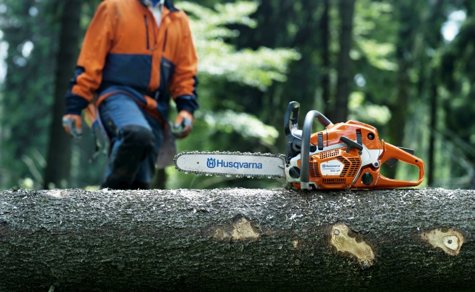
Husqvarna 550 XPG and 560 XPG chainsaws

by mark

In the world of professional arborists and tree fellers there are only really two makes of chainsaw that you’ll find them using: Husqvarna or Stihl. You’ll note that I said Husqvarna OR Stihl because almost everyone prefers one make or the other and tend to use them pretty much exclusively. You can have hours of debate and discussion over who makes the best saw and everyone has their favorite.

Well I’m firmly in the Husqvarna camp. I’ve used various Husqvarnas felling, snedding (limbing) and crosscutting trees for more years than I care to remember. Every now and then Husky comes out with a real classic saw. The last one I fell in love with was the 357XP and I used that saw far longer than I should have before retiring it.

They’ve done it again with the 550 XP and the 560 XP saws. These are both medium capacity professional grade saws that are made to work – and work they do. The thing that makes them different from other saws is their combination of balance, low weight, power, and acceleration. In some saws you can have low weight, but pay for it in terms of balance. In others you might get a really torquey engine but pay for it with slower acceleration. Husqvarna seem to have gotten the mix just right with these two.

I originally bought the 550 XPG as a smaller saw for some clearance work I was doing (it has a 50cc engine) and I quickly fell in love with it. In fact I liked it so much that I almost immediately went out and bought its bigger brother, the 560XPG (60cc capacity) to replace my main felling saw. What do I like so much about them? Well the main thing on first picking them up is the balance, they just feel right. They sit nicely in the hand and the 550, with a 13 inch bar, fairly dances when you’re cutting small stuff. Now, no industrial saw is going to be truly lightweight but these weigh in at 5.1 and 5.7kg respectively – much lighter than older saws in this class.

However, what really sold me on them is their acceleration. You don’t think of chainsaws as having to have quick acceleration, but when you’re snedding conifers, the ability to get the saw up to cutting speed almost instantly is really important. It saves a lot of time, fuel, and effort, which might not important for the occasional user, but when you are processing twenty or thirty trees a day it really does make a difference, which you can feel at the end of the day. Both these saws have something that Husqvarna calls “rev boost” and I’m not sure how it works but it makes the saw accelerate noticeably faster than most other saws I’ve used. They also have an electronic engine management system that runs their “autotune” system that can compensate for altitude, fuel mix, air filter condition etc. It seems to work just fine and an interesting spin off is that I can have the dealer plug it in to a computer in their workshop and give me a readout of the number of hours it’s been working, maximum revs reached, hours worked since last service and a couple of other useful bits and pieces.

I decided with these saws to spend the extra bit of cash and buy the XPG model which has heated bars, it’s the first time I’ve used heated grips but especially in the wet cold they make a very pleasant difference, they do get a bit hot after a while but I just switch the heater off once I’ve warmed up.

Now there are a bunch of reviews on the web that criticize the early manufactured saws that came out around three years ago, but as I got my first one in 2013 they seem to have worked through the kinks and I’ve never had a problem with mine, except for one thing which does seem to be a common complaint from users. If you are working the saw hard in hot weather and you let it cool down past a critical level it can become an absolute bear to restart. This only seems to happen if I’ve stopped cutting for more than twenty minutes and less than an hour or so (we call it “half hot.”) It only seems to happen in hot weather and the problem goes away if you’ve stopped long enough for the saw to cool completely. If I’m stopping for a cup of coffee or a similar short break then I get round the issue now by popping the cover off and leaving the saw in the shade. It seems to let the saw cool more evenly and lets it restart straight away.

Anyway, minor niggle apart, I reckon these are the best mid-sized saws Husqvarna have made and when it’s time to retire these two I’ll be replacing them like for like.

-- George Graham

Husqvarna 550 XP
$600

Husqvarna 560 XP (UK only?)
£489.78

22 Sep 17:06

Need a way to annoy a photographer? Here are five

by Baylor Lariat

As a professional commercial photographer for the past five years for an established company in Fort Worth, I have seen a lot of things I have liked and disliked. Here are five guaranteed ways to annoy any working photographer.

1. What we at work call the “over the shoulder shot.” This applies the most when an organization has contracted us to bring our studio with lights and a backdrop to photograph an event, and people stand right over the camera with their camera to take the photo at the same time. People argue, “Well, that’s my kid, dog, cat, whatever, and I want that photo.” Great, that is why I have brought all of my equipment to get you a photo that you like. If you don’t want to purchase this photo you are more than welcome to take your photo over there not in front of my equipment while I am trying to make a living.

2. When someone who has been photographing for three months calls himself or herself a professional. The term “professional photographer” is so watered down because people who have taken a one-hour course in the basics call themselves a professional. Personally, I do not believe someone is a professional unless they are hired on a regular basis for photography jobs or completely supporting himself or herself with photography.

3. When someone looks at a photo I have taken and says, “Oh, wow, that’s such a great photo. That must be a really nice camera.” Yes, I have paid thousands of dollars for a photography education and spent countless hours honing my craft. The only reason I can take a nice photo must be because of my camera.

When people say this, I am very tempted to hand them my camera, pull out my cellphone and challenge them to a photo contest. A nice camera does not make a photographer; it’s just a great tool.

4. Tablets and cellphones. Yes, I love my cellphone for taking photos. It does a great job of it, and I use it all the time. But what bugs me is when I am photographing an event such as a wedding, and people are holding their cellphones in the air photographing the event themselves. I have been hired to photograph this event, and I guarantee the people who have hired me do not want to see the screen of your phone. What’s worse is when people hold up their tablets. Not only are tablets larger and even more distracting, but it doesn’t even have a better camera than an average smartphone. People assume since it is bigger that it has a better camera, but this simply isn’t true.

5. Easily, the thing that makes me the most angry is when people take a screenshot of their photo on a website for purchase. Not only is this one of my biggest pet peeves, but it is also illegal, if you didn’t know. Taking a screenshot of that photo is no different from stealing something from a store. You are making it that much harder for professional photographers to support themselves.

While some of these things are nothing more than annoying, some of them will put professional photographers out of business. Take my word for it: If you take care of your photographers, they will take care you.

Richard Hirst is a senior journalism major from Durant, Okla. He is the Photo Editor for the Lariat.

22 Sep 16:19

Bernie Sanders Says He Spoke at Liberty U to Find Common Ground, But There's a Darker Possibility

by Ira Stoll

Socialist presidential candidates aren’t usually people I have a lot of admiration for, but I got an email the other day from Bernie Sanders that moved him up a notch in my estimation. The subject line was "Why on earth would Bernie go there?" It explained Sen, Sanders’ decision to speak recently at Liberty University, the very Christian, very conservative college founded by Reverend Jerry Falwell at Lynchburg, Va.

"I spoke at Liberty University because I believe that it is important for those with different views in our country to engage in civil discourse—not just to shout at each other or make fun of each other," Sanders wrote. "It is very easy for those in politics to talk to those who agree with us—and I do that every day. It is harder, but not less important, to try and communicate with those who do not agree with us and see where, if possible, we can find common ground. In other words, to reach out of our zone of comfort."

This idea—also on display in Vice President Joe Biden’s remarks at Yale in May, in which Biden spoke positively about Sen. Jesse Helms, the conservative Republican from North Carolina—may help to explain why Sanders is attracting large crowds on the campaign trail and better-than-expected support in polls.

That’s the kindest interpretation. Watch the actual Sanders speech at Liberty University, though, and there’s a darker possibility. That is the chance that American crowds are actually being seduced by the lure of socialism. Sen. Sanders offers the hope that generous benefits, such as medical care, family and medical leave, and higher wages, can be granted to most Americans simply by taxing, or regulating, the "handful of extraordinarily wealthy people whose greed is in my view doing this country enormous harm."

Sen. Sanders frames this in terms of "morality" and "justice." To respond to it, his political opponents—both Hillary Clinton and the Republicans—will need to argue along two lines. The utilitarian case is that socialism, where tried, has led to high unemployment, bare shelves, and slow growth. The vastly expanded welfare state in America has led to dependence, misery, and perverse incentives rather than increased opportunity or prosperity. The moral case is that individuals own the product of their labor, and that, beyond a certain point, taxing the few to redistribute to the many amounts to confiscation without consent—essentially, theft, or slavery.

Thinking about the state Sanders represents in the Senate, Vermont, can also help to explain some of the appeal of his presidential campaign. The senator who left the loud and crowded cities of Brooklyn (where he grew up) and Chicago (where he graduated from college) for the more bucolic Green Mountain state is the agrarian Jefferson to Hillary Clinton’s urban Hamilton. Though Vermont is in the Northeast, it’s a rural, back-to-the-land, post-industrial frontier in a way akin to the earlier stagecoach immigration West.

The new twist on the Vermont story is the way the state is experimenting with variations on the standard model of publicly traded companies in capitalism. One is the cooperative—both Cabot cheese and St. Albans Cooperative Creamery have survived and prospered as cooperatives controlled by family farms, albeit with various elaborate government price supports and trade protections. Another is the employee-owned corporation, of which Vermont-based King Arthur Flour is a leading example. That only goes so far; the state’s largest companies in terms of employment and revenue are more traditional players such as IBM and Keurig Green Mountain, Inc.

The co-op and employee-owned models can exist and prosper as part of capitalism, and for some businesses and individuals, they may be the right fit. But I wouldn’t count on them to power vast amounts of productivity or growth. Vermont’s gross state product consistently ranks at the bottom of the 50 states. The Sanders policy program amounts, in part, to taxing Texas oilmen, Silicon Valley venture capitalists, and Wall Street investment bankers, and using the money to subsidize the ski bums and hippy organic farmers of Vermont. It’s one thing for Sanders and others to choose to move to Vermont; it’s another thing for them to ask for a subsidy from those who decided to stay in New York City or Chicago. Where’s the justice in that?

If Sanders wants to get elected president, he will need to expand his appeal beyond the cheese belt of Wisconsin, Minnesota, Upstate New York, and Vermont. He’ll also have to carry places such as Ohio, California, Pennsylvania, and Florida. His best chance to do that would be to take seriously his own excellent advice about getting out of his zone of comfort.

22 Sep 16:18

The End of Doom

by Ronald Bailey

Lush cropland and hills "The human predicament is driven by overpopulation, overconsumption of natural resources, and the use of unnecessarily environmentally damaging technologies and socio-economic-political arrangements to service Homo sapiens' aggregate consumption," declared notorious doomster Paul Ehrlich and his biologist wife Anne Ehrlich in the March 2013 Proceedings of the Royal Society B. They additionally warned, "Another possible threat to the continuation of civilization is global toxification," which has "expos[ed] the human population to myriad subtle poisons."

In 1968, Ehrlich infamously prophesied in The Population Bomb, "The battle to feed all of humanity is over. In the 1970s the world will undergo famines—hundreds of millions of people are going to starve to death in spite of any crash programs embarked upon now." Ehrlich was wrong then, and he and his wife are wrong now. The world is not going to be overpopulated, run out of resources, or see the outbreak of massive cancer epidemics due to exposures to synthetic chemicals. Let's take a close look at five threats that failed to materialize, despite the warnings of 20th century doomsayers.

The Cancer Epidemic

In 2007, an American Cancer Society poll found that 7 out of 10 Americans believed that the risk of dying of cancer is going up. And no wonder, with authorities such as the prestigious President's Cancer Panel ominously reporting that "with nearly 80,000 chemicals on the market in the United States, many of which are used by millions of Americans in their daily lives and are un- or understudied and largely unregulated, exposure to potential environmental carcinogens is widespread." One member of that panel, Howard University surgeon Dr. LaSalle D. Leffall Jr., went so far as to declare in 2010 that "the increasing number of known or suspected environmental carcinogens compels us to action, even though we may currently lack irrefutable proof of harm."

There's just one problem with the panic: There is no growing cancer epidemic. Even as the number of man-made chemicals has proliferated, your chances of dying of the disease have been dropping for more than four decades. And not only have cancer death rates been declining significantly, age-adjusted cancer incidence rates have been falling for nearly two decades. That is, of the number of Americans in nearly any age group, fewer are actually coming down with cancer. What's more, modern medicine has increased the five-year survival rates of cancer patients from 50 percent in the 1970s to 68 percent today.

In fact, the overall incidence of cancer has been falling about 0.6 percent per year since 1994. That may not sound like much, but as Dr. John Seffrin, CEO of the American Cancer Society, explains, "Because the rate continues to drop, it means that in recent years, about 100,000 people each year who would have died had cancer rates not declined are living to celebrate another birthday."

What's going on? According to the Centers for Disease Control and Prevention, age-adjusted cancer incidence rates have been dropping largely because fewer Americans are smoking, more are having colonoscopies in which polyps that might become cancerous are removed, and in the early 2000s many women stopped hormone replacement therapy (which moderately increases the risk of breast cancer).

How did it come to be the conventional wisdom that man-made chemicals are especially toxic and the chief sources of a modern cancer epidemic? It all began with Rachel Carson, the author of the 1962 book Silent Spring.

In Silent Spring, Carson crafted an ardent denunciation of modern technology, hostility to which drives environmentalist ideology to this day. At its heart is this belief: Nature is beneficent, stable, and even a source of moral good; humanity is arrogant, heedless, and often the source of moral evil. Carson, more than any other person, is responsible for the politicization of science that afflicts our contemporary public policy debates.

Rachel Carson surely must have known that cancer is a disease in which the risk goes up as people age. And thanks to vaccines and new antibiotics, Americans in the 1950s were living much longer-long enough to get and die of cancer. In 1900 average life expectancy was 47, and the annual death rate was 1,700 out of 100,000 Americans. By 1960, life expectancy had risen to nearly 70 years, and the annual death rate had fallen to 950 per 100,000 people. Currently, life expectancy is more than 78 years, and the annual death rate is 790 per 100,000 people. Today, although only about 13 percent of Americans are over age 65, they account for 53 percent of new cancer diagnoses and 69 percent of cancer deaths.

Carson realized that even if people didn't worry much about their own health as they aged, they did really care about that of their kids. So to ratchet up the fear factor, she asserted that children were especially vulnerable to the carcinogenic effects of synthetic chemicals. "The situation with respect to children is even more deeply disturbing," she wrote. "A quarter century ago, cancer in children was considered a medical rarity. Today, more American school children die of cancer than from any other disease [her emphasis]." In support of this claim, she reported that "twelve per cent of all deaths in children between the ages of one and fourteen are caused by cancer."

Although it sounds alarming, Carson's statistic is essentially meaningless out of context, which she failed to supply. It turns out that the percentage of children dying of cancer was rising because other causes of death, such as infectious diseases, were drastically declining. The American Cancer Society reports that about 10,450 children in the United States will be diagnosed with cancer in 2014 and that childhood cancers make up less than 1 percent of all cancers diagnosed each year. Childhood cancer incidence has been rising slowly over the past couple of decades at a rate of 0.6 percent per year. Consequently, the incidence rate increased from 13 per 100,000 in the 1970s to 16 per 100,000 now. There is no known cause for this increase. The good news is that 80 percent of kids with cancer now survive five years or more, up from 50 percent in the 1970s.

So did the predicted cancer doom ever arrive? No. Remember-overall incidence rates are down.

With regard to cancer risks posed by synthetic chemicals, the American Cancer Society in its 2014 Cancer Facts and Figures report concludes: "Exposure to carcinogenic agents in occupational, community, and other settings is thought to account for a relatively small percentage of cancer deaths-about 4 percent from occupational exposures and 2 percent from environmental pollutants (man-made and naturally occurring)."

Similarly, the British organization Cancer Research UK observes that for most people "harmful chemicals and pollution pose a very minor risk." How minor? Cancer Research UK notes, "Large organizations like the World Health Organization and the International Agency for Research into Cancer have estimated that pollution and chemicals in our environment only account for about 3 percent of all cancers. Most of these cases are in people who work in certain industries and are exposed to high levels of chemicals in their jobs." Like the American Cancer Society, Cancer Research UK advises, "Lifestyle factors such as smoking, alcohol, obesity, unhealthy diets, inactivity, and heavy sun exposure account for a much larger proportion of cancers."

Overpopulation

"To ecologists who study animals, food and population often seem like sides of the same coin," wrote Paul and Anne Ehrlich in 1990. "If too many animals are devouring it, the food supply declines; too little food, the supply of animals declines." And then the kicker: "Homo sapiens is no exception to that rule."

The Ehrlichs predicted that if the global climate system remained stable "it might take three decades or more for the food-production system to come apart unless its repair became a top priority of all humanity." They added, "One thing seems safe to predict: starvation and epidemic disease will raise death rates over most of the planet." It's 25 years later and instead of going up, the global crude death rate has dropped from 9.7 per 1,000 people in 1990 to 7.9 now.

More than two decades later, despite a distinct lack of apocalypses in the intervening time, the couple was still singing the same tune. For example, during a May 2013 conference at the University of Vermont, Paul Ehrlich asked, "What are the chances a collapse of civilization can be avoided?" His answer: 10 percent.

Did the Ehrlichs just get the timing wrong? Is the threat of overpopulation still looming over us?

In September 2014, demographers working with the United Nations Population Division published an article in Science arguing that world population would grow to around 11 billion by 2100. Nearly all of that increase—4 billion people—was projected in sub-Saharan Africa.

But Wolfgang Lutz and his fellow demographers at the International Institute for Applied Systems Analysis beg to differ. In their November 2014 study, World Population and Human Capital in the Twenty-First Century, Lutz and his colleagues take into account the fact that the education levels of women are rising fast around the world, including in Africa. "In most societies, particularly during the process of demographic transition, women with more education have fewer children, both because they want fewer and because they find better ways to pursue their goals," they note. Given current age, sex, and education trends, they estimate that world population will most likely peak at 9.6 billion by 2070 and then begin falling. If the boosting of education levels is pursued more aggressively, world population could instead top out at 8.9 billion in 2060 before starting to drop.

Falling fertility rates are overdetermined—that is, there is a plethora of mutually reinforcing data and hypotheses that explain the global downward trend. These include the effects of increased economic opportunities, more education, longer lives, greater liberty, and expanding globalization and trade. The crucial point is that all of these explanations reinforce one another and accelerate the trend of falling global fertility. Even more interestingly, they all emphasize how the opportunities afforded women by modernity produce lower fertility.

Insight into how the life prospects of women shape reproductive outcomes is provided in a 2010 article in Human Nature, "Examining the Relationship Between Life Expectancy, Reproduction, and Educational Attainment." In that study, University of Connecticut anthropologists Nicola Bulled and Richard Sosis divvied up 193 countries into five groups by their average life expectancies. In countries where women could expect to live to between 40 and 50 years, they bear an average of 5.5 children. Those with life expectancies between 51 and 61 average 4.8 children. The big drop in fertility occurs at that point. Bulled and Sosis found that when women's life expectancy rises to between 61 and 71 years, her total fertility drops to 2.5 children; between 71 and 75 years, it's 2.2 children; and over 75 years, women average 1.7 children. The United Nations' 2012 Revision notes that global average life expectancy at birth rose from 47 years in 1955 to 70 years in 2010. These findings suggest that it is more than just coincidence that the average global fertility rate has fallen over that time period from 5 to 2.45 children today.

In any case, it is a mistake to decry people as just consumers of resources. With the advent of democratic capitalism, they are also creators of new technologies, services, and ideas that have over the past two centuries enabled billions to rise from humanity's natural state of abject poverty and pervasive ignorance.

Killer Tomatoes

Given the well-established advantages of modern biotech crops, including such benefits to the natural environment as lessening pesticide use, preventing soil erosion, tolerating drought, and boosting yields, why do many leading environmentalist groups so strenuously oppose them?

Much of that answer is historically contingent. Just as biotech crops were being commercialized in the 1990s, they ran into a perfect storm of food and safety scandals in Europe. In order to protect beef farmers and suppliers, British food safety authorities downplayed the dangers of "mad cow" disease, which was spread by feeding cattle infected sheep's brains. The agency in charge of French public health permitted human transfusions of HIV-contaminated blood, despite the existence of screening technology. And the asbestos industry was revealed to have exercised undue influence over its regulators in evaluating the risks posed by that toxic mineral.

These incidents of fecklessness "led to strong distrust and caused people to think that firms and public authorities sometimes disregard certain health risks in order to protect certain economic or political interests," argues French National Institute of Agricultural Research analyst Sylvie Bonny. Consequently, the events "increased the public's attention to critical voices, and so the principle of precaution became an omnipresent reference." So when biotech crops were being introduced, much of the European public was primed to take seriously any claims that this new technology might carry hidden risks.

Bonny points out that opposition to biotech crops arose first among "ecologist associations," including Greenpeace and Friends of the Earth. In fact, hyping opposition to biotech crops served as a lifeline to these organizations. Bonny notes that in the late 1990s, Greenpeace in France was experiencing a serious falloff in membership and donations, but the genetically modified organism (GMO) issue rescued the group. "Its anti-GMO action was instrumental in strengthening Greenpeace-France which had been in serious financial straits," she reports. It should always be borne in mind that environmentalist organizations raise money to support themselves by scaring people. More generally, Bonny observes, "For some people, especially many activists, biotechnology also symbolizes the negative aspects of globalization and economic liberalism." She adds, "Since the collapse of the communist ideal has made direct opposition to capitalism more difficult today, it seems to have found new forms of expression including, in particular, criticism of globalization, certain aspects of consumption, technical developments, etc."

These concerns obviously go well beyond any scientific considerations regarding the safety of biotech crops for health and the environment, and have had significant negative consequences for the acceptance of this useful technology around the world, especially in poor countries.

No one has ever gotten so much as a cough, sneeze, sniffle, or stomachache from eating foods made with ingredients from modern biotech crops. Every independent scientific body that has ever evaluated the safety of biotech crops has found them to be safe for humans to eat. "We have reviewed the scientific literature on [genetically engineered] crop safety for the last 10 years that catches the scientific consensus that has matured since GE plants became widely cultivated worldwide, and we can conclude that the scientific research conducted so far has not detected any significant hazard directly connected with the use of GM crops," asserted a team of Italian university researchers in September 2013. And they should know, since they conducted the largest ever survey of scientific studies—more than 1,700—that evaluated the safety of such crops.

A statement issued by the board of directors of the American Association for the Advancement of Science (AAAS), the largest scientific organization in the United States, on October 20, 2012, point-blank asserted that "contrary to popular misconceptions, GM crops are the most extensively tested crops ever added to our food supply. There are occasional claims that feeding GM foods to animals causes aberrations ranging from digestive disorders, to sterility, tumors and premature death. Although such claims are often sensationalized and receive a great deal of media attention, none have stood up to rigorous scientific scrutiny." The AAAS board concluded, "Indeed, the science is quite clear: crop improvement by the modern molecular techniques of biotechnology is safe."

In July 2012, the European Commission's chief scientific adviser, Anne Glover, declared, "There is no substantiated case of any adverse impact on human health, animal health, or environmental health, so that's pretty robust evidence, and I would be confident in saying that there is no more risk in eating GMO food than eating conventionally farmed food."

At its annual meeting in June 2012, the American Medical Association endorsed a report arguing against the labeling of bioengineered foods from its Council on Science and Public Health. The report concluded, "Bioengineered foods have been consumed for close to 20 years, and during that time, no overt consequences on human health have been reported and/or substantiated in the peer reviewed literature." In December 2010, a European Commission review of 130 E.U.-funded biotechnology research projects, covering a period of more than 25 years and involving more than 500 independent research groups, found "no scientific evidence associating GMOs with higher risks for the environment or for food and feed safety than conventional plants and organisms."

Catastrophic Climate Change

Let's start by accepting that global warming is real. There are two ways to address concerns about climate change: adaptation and mitigation. In 2014, the United Nations Intergovernmental Panel on Climate Change (IPCC) issued two reports addressing these options: Climate Change 2014: Impacts, Adaptation, and Vulnerability (hereafter the Adaptation report), which describes adaptation as the "process of adjustment to actual or expected climate and its effects"; and Climate Change 2014: Mitigation (hereafter the Mitigation report), which defines mitigation as "a human intervention to reduce the sources or enhance the sinks of greenhouse gases."

The IPCC reports offer cost estimates for both adaptation and mitigation. The Adaptation report reckons that, assuming that the world takes no steps to deal with climate change, "global annual economic losses for additional temperature increases of around 2°C are between 0.2 and 2.0 percent of income." The report adds, "Losses are more likely than not to be greater, rather than smaller, than this range."

In a 2010 Proceedings of the National Academy of Sciences article, Yale economist William Nordhaus assumed that humanity will do nothing to cut greenhouse gas emissions. Nordhaus uses an integrated assessment model that combines the scientific and socioeconomic aspects of climate change to assess policy options for climate change control. His RICE-2010 integrated assessment model found that "of the estimated damages in the uncontrolled (baseline) case, those damages in 2095 are $12 trillion, or 2.8% of global output, for a global temperature increase of 3.4°C above 1900 levels." Nordhaus' estimate evidently assumes that the world's economy will grow at about 2.5 percent annually, reaching a total GDP of roughly $450 trillion in 2095.

What might the world's economy look like by 2100 using various policies with the aim of mitigating or adapting to climate change? In 2012, the IPCC asked the economists in the Environment Directorate at the Organisation for Economic Co-operation and Development to peer into the future and devise a plausible set of shared socioeconomic pathways (SSPs) to the year 2100. The OECD economists came up with five baseline scenarios. Let's take a look at a couple of the scenarios to get some idea of how the world's economy might evolve over the remainder of this century. The OECD analysis begins in 2010 with a world population of 6.8 billion and a total world gross product of $67 trillion (in 2005 dollars). This yields a global per-capita income just shy of $10,000. For reference the OECD notes that U.S. 2010 per capita income averaged $42,000.

The SSP2 scenario is described as the "middle of the road" projection in which "trends typical of recent decades continue, with some progress towards achieving development goals, reductions in resource and energy intensity at historic rates, and slowly decreasing fossil fuel dependency." If economic and demographic history unfolds as that scenario suggests, world population will have peaked at around 9.6 billion in 2065 and fallen to just over 9 billion by 2100. The world's economy will have grown more than eightfold, from $67 trillion to $577 trillion (2005 dollars). Average income per person globally will have increased from around $10,000 today to $60,000 by 2100. U.S. annual incomes would average just over $100,000.

In the SSP5 "conventional development" scenario, the world economy grows flat out, which "leads to an energy system dominated by fossil fuels, resulting in high [greenhouse gas] emissions and challenges to mitigation." Because there is more urbanization and because there are higher levels of education, world population will peak at 8.6 billion in 2055 and will have fallen to 7.4 billion by 2100. The world's economy will grow 15-fold to just over $1 quadrillion, and the average person in 2100 will be earning about $138,000 per year. U.S. annual incomes would exceed $187,000 per capita. It is of more than passing interest that people living in the warmer world of SSP5 are much better off than people in the cooler SSP2 world.

The OECD analysis adds with regard to climate change in this scenario that the much richer and more highly educated people in 2100 will face "lower socio-environmental challenges to adaptation result[ing] from attainment of human development goals, robust economic growth, highly engineered infrastructure with redundancy to minimize disruptions from extreme events, and highly managed ecosystems." In other words, greater wealth and advanced technologies will significantly enhance people's capabilities to deal with whatever the deleterious consequences of climate change turn out to be.

As noted above, the IPCC estimates that failure to adapt to climate change will reduce future incomes by between 0.2 to 2 percent for temperatures exceeding 2°C. Yale's Nordhaus is one of the more accomplished researchers in the area of trying to calculate the costs and benefits of climate change. In his 2013 book The Climate Casino: Risk, Uncertainty, and Economics for a Warming World, Nordhaus notes that a survey of studies that try to estimate the aggregated damages that climate change might inflict at 2.5°C warming comes in at an average of about 1.5 percent of global output. The highest climate damage estimate Nord­haus cites is a 5 percent reduction in income, though the much-criticized 2006 Stern Review: The Economics of Climate Change suggested that the business-as-usual path of economic growth and greenhouse gas emissions could reduce future incomes by as much as 20 percent.

Future temperatures will perhaps exceed these, but transient climate response temperatures over the remainder of the century are likely to be close to the 2.5°C benchmark cited by the IPCC. In the scenarios sketched out above, a 2 percent loss of income would mean that the $60,000 and $138,000 per capita income averages would fall to $58,800 and $135,240, respectively. Stern's more apocalyptic estimate would cut 2100 per capita incomes to $48,000 and $110,400, respectively.

So how much should people living now on incomes averaging $10,000 per year spend to make sure that people whose incomes will likely be six to 14 times higher aren't reduced by a couple of percentage points? As Nordhaus observes, "Most philosophers and economists hold that rich generations have a lower ethical claim on resources than poorer generations."

Making the extreme set of assumptions that all countries of the world begin mitigation immediately and adopt a single global carbon price, and widely deploy current versions of low- and no-carbon technologies such as wind, solar, and nuclear power, the IPCC's 2014 Mitigation report estimates that keeping carbon dioxide concentrations below 450 parts per million (ppm) in 2100 would result in "an annualized reduction of consumption growth by 0.04 to 0.14 percentage points over the century relative to annualized consumption growth in the baseline that is between 1.6 percent and 3 percent per year." The median estimate in reduced annualized growth in consumption is 0.06 percent.

The IPCC Mitigation report notes that the optimal scenario that it sketches out for keeping greenhouse gas concentrations below 450 ppm would cut incomes in 2100 by between 3 and 11 percent. How much would that be? As was done with regard to the losses from a lack of adaptation, let's look at how much the worst-case mitigation scenario might reduce future incomes. Without extra mitigation, the increase of global gross product to $577 trillion in the middle-of-the-road scenario implies an economic growth rate of 2.42 percent between 2010 and 2100. Cutting that growth rate by 0.14 percentage points to 2.28 percent yields an income of $510 trillion in 2100, reducing per capita incomes from $60,000 to $57,000 per capita. Growth in the conventional-development scenario is cut from an implied 3.07 percent to 2.93 percent, reducing overall income from over $1.015 quadrillion to $901 trillion, and cutting average incomes from $138,000 to $122,000.

All of these figures must be taken with a vat of salt since they are projections for economic, demographic, and biophysical events nearly a century from now. That being acknowledged, projected IPCC income losses that would result from doing nothing to adapt to climate change appear to be roughly comparable to the losses in income that would occur following efforts to slow climate change. In other words, it appears that doing nothing about climate change now will cost future generations about the same as doing something now.

If the results of adaptation and mitigation are more or less the same for future generations, how to pick which path to follow? Given what we know about the competence and efficiency of government, it seems likely that what governments try to do to mitigate climate change may well turn out to be worse than climate change. The better path is one that helps future generations deal with climate change by adopting policies that encourage rapid economic growth. This would endow future generations with the wealth and superior technologies necessary to handle whatever comes at them, including climate change.

Mass Extinction

Many biologists and conservationists are urgently warning that humanity is on the verge of wiping out hundreds of thousands of species in this century. "A large fraction of both terrestrial and freshwater species faces increased extinction risk under projected climate change during and beyond the 21st century," states the 2014 IPCC Adaptation report. "Current rates of extinction are about 1000 times the likely background rate of extinction," asserts a May 2014 review article in Science by Duke University biologist Stuart Pimm and his colleagues. "Scientists estimate we're now losing species at 1,000 to 10,000 times the background rate, with literally dozens going extinct every day," warns the Center for Biological Diversity. That group adds, "It could be a scary future indeed, with as many as 30 to 50 percent of all species possibly heading toward extinction by mid-century."

Eminent Harvard University biologist E.O. Wilson agrees. "We're destroying the rest of life in one century. We'll be down to half the species of plants and animals by the end of the century if we keep at this rate." University of California at Berkeley biologist Anthony Barnosky similarly notes, "It looks like modern extinction rates resemble mass extinction rates." Assuming that species loss continues unabated, Barnosky adds, "The sixth mass extinction could arrive within as little as three to 22 centuries."

Let's assume 5 million species. If Wilson is right that half could be gone by the middle of this century, that implies that species are disappearing at a rate of 71,000 per year, or just under 200 per day. Contrast this implied extinction rate with Pimm and his colleagues, who estimate that the background rate of extinction without human influence is about 0.1 species per million species years. This means that if one followed the fates of one million species, one would expect to observe about one species going extinct every 10 years. Their new estimate is 100 species going extinct per million species years. So if the world contains 5 million species, then that suggests that 500 are going extinct every year. Obviously, there is a huge gap between Wilson's off-the-cuff estimate and Pimm's more cautious calculations, though both assessments are troubling.

But this is not the first time biologists have sounded the alarm over purportedly accelerated species extinctions. In 1970, Dr. S. Dillon Ripley, secretary of the Smithsonian Institution, predicted that in 25 years, somewhere between 75 and 80 percent of all the species of living animals would be extinct. That is, as much as four out of every five species of animals would be extinct by 1995. Happily, that did not happen. In 1994, biologist Peter Raven predicted that "since more than nine-tenths of the original tropical rainforests will be removed in most areas within the next thirty years or so, it is expected that half of the organisms in these areas will vanish with it." It's now more than 20 years later and nowhere near 90 percent of the rainforests have been cut down, and no one thinks that half of the species inhabiting tropical forests have vanished.

In 1979, Oxford University biologist Norman Myers suggested in his book The Sinking Ark that 40,000 species per year were going extinct and that the world could lose a million species, or "one-quarter of all species by the year 2000." At a 1979 symposium at Brigham Young University, Thomas Lovejoy, a former president of the H. John Heinz III Center for Science, Economics, and the Environment, announced that he had made "an estimate of extinctions that will take place between now and the end of the century. Attempting to be conservative wherever possible, I still came up with a reduction of global diversity between one-seventh and one-fifth." Lovejoy drew up the first projections of global extinction rates for the Global 2000 Report to the President in 1980. If Lovejoy had been right, between 15 and 20 percent of all species alive in 1980 would be extinct right now. No one believes that extinctions of this magnitude have occurred over the last three decades.

What did happen? As of 2013, the International Union for the Conservation of Nature (IUCN) lists 709 known species as having gone extinct since 1500. A study published in Science in July 2014 reported that among terrestrial vertebrates, 322 species have become extinct since 1500. That's not nothing, but those assessments amount to just 1 percent of all vertebrate terrestrial species alive today.

Don't Panic

Why does it matter if the population at large believes these dire predictions about humanity's future? The primary danger is they may fuel a kind of pathological conservatism that could actually become a self-fulfilling prophecy.

The closest thing to a canonical version of the "precautionary principle" was devised by a group of 32 leading environmental activists meeting in 1998 at the Wingspread Center in Wisconsin. The Wingspread Consensus Statement on the Precautionary Principle reads: "When an activity raises threats of harm to human health or the environment, precautionary measures should be taken even if some cause and effect relationships are not fully established scientifically. In this context the proponent of an activity, rather than the public, should bear the burden of proof. The process of applying the Precautionary Principle must be open, informed and democratic and must include potentially affected parties. It must also involve an examination of the full range of alternatives, including no action."

Why was this new principle needed? Because, the Wingspread conferees asserted, the deployment of modern technologies was spawning "unintended consequences affecting human health and the environment," and "existing environmental regulations and other decisions, particularly those based on risk assessment, have failed to protect adequately human health and the environment."

As a result of these unintended side effects and the supposed regulatory inadequacy, the conferees insisted, "Corporations, government entities, organizations, communities, scientists and other individuals must adopt a precautionary approach to all human endeavors" (emphasis added). Contemplate for a moment this question: Are there any human endeavors at all that some timorous person could not assert raise a "threat" of harm to human health or the environment?

Promoters of the precautionary principle argue that its great advantage is that implementing it will help avoid deleterious unintended consequences of new technologies. Unfortunately, supporters are most often focusing on the seen while ignoring the unseen. In his brilliant essay "What Is Seen and What Is Unseen," 19th century French economist Frederic Bastiat pointed out that the favorable predictable effects of any policy often produce many disastrous later consequences.

Banning nuclear power plants reduces the imagined seen risk of exposure to radiation while boosting the unseen risks associated with man-made global warming. Prohibiting a pesticide aims to diminish the seen risk of cancer, but elevates the unseen risk of malaria. Demanding more drug trials seeks to prevent the seen risks of toxic side effects, but increases the unseen risks of disability and death stemming from delays in getting effective drugs to patients. Mandating the production of biofuels attempts to address the seen risks of dependence on foreign oil, but heightens the unseen risks of starvation.

Electricity, automobiles, antibiotics, oil production, computers, plastics, vaccinations, chlorination, mining, pesticides, paper manufacture, and nearly everything that constitutes the vast enterprise of modern technology all have risks. On the other hand, it should be perfectly obvious that allowing inventors and entrepreneurs to take those risks has enormously lessened others. How do we know? People in modern societies are enjoying much longer and healthier lives than did our ancestors, with greatly reduced risks of disease, debility, and early death.

The precautionary principle is the opposite of the scientific process of trial and error that is the modern engine of knowledge and prosperity. The precautionary principle impossibly demands trials without errors, successes without failures.

"The direct implication of trial without error is obvious: If you can do nothing without knowing first how it will turn out, you cannot do anything at all," explained Aaron Wildavsky in his 1988 book Searching for Safety. "An indirect implication of trial without error is that if trying new things is made more costly, there will be fewer departures from past practice; this very lack of change may itself be dangerous in forgoing chances to reduce existing hazards." Wildavsky added, "Existing hazards will continue to cause harm if we fail to reduce them by taking advantage of the opportunity to benefit from repeated trials."

Should we look before we leap? Sure we should. But every utterance of proverbial wisdom has its counterpart, reflecting both the complexity and the variety of life's situations and the foolishness involved in applying a short list of hard rules to them. Given the manifold challenges of poverty and environmental renewal that technological progress can help us address in this century, the wiser maxim to heed is "He who hesitates is lost."

22 Sep 16:06

How to Practice Field Scoring Whitetail Bucks

by Bill Heavey

If your head is getting fat from all your whitetail smarts, I invite you to register and play a field scoring game here. It works like this: They show you a picture of a buck—they have 344 photos on file—and give you 45 seconds to score it. As soon as you make your guess, the correct answer appears and you feel cheated. Because there’s no way that score is correct. But there’s nobody to argue with, so you either keep playing or you don’t.

As we all know, the importance of being able to field score a buck’s antlers accurately cannot be overstated. Otherwise you might shoot a doe. Wait, that’s not it. It’s important because you can’t shoot anything under 180 in certain parts of Wisconsin. Not it, either. It’s important because—give me a moment—okay, I have no real idea. In my world, if it’s a big buck, my knees tell me everything I need to know.

My first game deer is a 10-pointer in southwest Kansas at a feeder. Heck, I’d shoot him. Though doing so at a feeder with all that company while they’re having dinner doesn’t seem like the most hunterly thing. Anyway, I throw out a number, 147. He’s bigger than anything I’ve ever shot but maybe not a Bass Pro store mount. And—woo-hoo!—he’s a 148! What a great game!

What I did not know is that that would be my closest score of the 24 deer I judge. There is, of course, a simple formula for field scoring. You guess the length of one main beam, the length of each tine on that side, add them up, and double it. (You double it because most trophy bucks have two antlers.) And then you add the spread, which is how wide the buck’s ass is—kidding. Actually, it’s the distance between his antlers. That gives you your answer.

Let me say this. If there’s ever a time I don’t want to be doing math in my head, it’s when I’ve got a big buck under my stand, which is usually where they are when I first notice them. I figure I’m doing well to remember that I have a bow in my hands and that I must draw an arrow back and then shoot it. Otherwise it just won’t have enough oomph to hurt anything. Unless it falls point-first on my toe. Which I am not saying has ever happened to me once in my entire life.

Long story short, I scored 24 deer in the game and had an average margin of error of 15.45 inches. Which resulted in a player score of 75.23. I don’t know where 75.23 puts me in relation to other players. I’m guessing that it’s not enough for the record books. An error factor of more than 15 inches per deer probably won’t put me among elite field scorers either. If that turns out to be the case, I’m prepared. As Abraham Lincoln wrote, “I have been too familiar with disappointments to be very much chagrined.”

Photo from GlacierNPS

22 Sep 15:27

Kim Davis Seems to Think God Cares About Valid Government Marriage Licenses

by Scott Shackford

Does anybody even actually look at their marriage licenses ever again?Rebellious Rowan County, Kentucky, Clerk Kim Davis is speaking out now to ABC News about her experiences of refusing to grant marriage licenses to same-sex couples. She famously ended up in jail for five days for contempt of court for her refusal. Now she’s out and marriage licenses are being handed out, but they’ve been altered to reflect that the judge has ordered them and do not have Davis’ name on them.

Davis has said that she’s not sure they’re actually valid, and interestingly, some couples themselves have the same concern. Now lawyers for the American Civil Liberties Unions are representing some of these couples and are trying to force Davis back into court and demand the licenses to be changed back to the way they’re supposed to be. They essentially want to force Davis’ name to be on the license because the altered versions "feature a stamp of animus against the LGBT community, signaling that, in Rowan County, the government’s position is that LGBT are second-class citizens unworthy of official recognition and authorization of their marriage licenses but for this Court's intervention and Order," according to the ACLU’s court filing.

While normal human beings try figure out what on earth that above statement even means (Does anybody actually care whose name is on a marriage license but their own? As a lifelong bachelor I don’t understand this argument at all), Kim Davis had her own rather curious comments that indicate she doesn’t quite grasp what marriage licenses even are. From her interview with Good Morning America:

"I have never once spouted a word of hate. I have not been hateful," she said. She also said the licenses going out of her office now, issued by a deputy clerk, don't have her authorization and are "not valid in God's eyes." [emphasis added]

Does Davis actually believe that the God cares about whether the government puts its stamp of approval on a couple’s marriage? Does she think that if she puts her name on the certificate, then God has to accept it as valid? Does God have to accept marriage certificates signed by atheist county clerks? Does God have to accept the Supreme Court’s ruling on same-sex marriages if Davis starts putting her name on marriage licenses? Or does He have to already because of all the other clerks and judges who have already been handing them out? So many questions.

The quotes from both Davis and the ACLU lawyers are why I find the whole fight so tiresome. The purpose of a marriage license is to indicate to the government that the two of you are a couple, with all the rights, responsibilities and privileges that entails. All that should matter is that it’s valid, not that county officials express their love for you (or that God agrees).

As for Davis, she’s an elected agent of the county government as a clerk, not an agent of God. She did make an additional comment that I actually agree with, yet it only highlights how bizarre her stubbornness is:

Faris noted how one gay man said he finally felt human after obtaining a license in Rowan Count, but Davis responded that dignity is something that people find in themselves, not the constitution.

"I feel really sad that someone can be so unhappy with themselves as a person that they did not feel dignified as a human being until they got a piece of paper, Davis said. "There is just so much more to life than that."

If it’s just "a piece of paper," then she shouldn’t have any problem handing them out with her name on them, should she?

22 Sep 13:48

Life at Sea with Legendary Greek Fishermen

by Sahara Borja

paros1“I learned from my grandfather and my father. This knowledge will be lost, as there is no one to follow the tradition. When we’re gone, it’s over. I feel empty when I go ashore, then I have the feeling of being worthless. My children want me to stop. I told them, if you love me, you have to let me go. My whole life is in the sea.”—Thanasis Tantanis

IMG_6855

The above excerpt, shared with photographer Christian Stemper is not unique to Mr. Tantanis. All of the 31 fishermen interviewed for the project, Wolves of the Sea, or Lupi Maris, shared this sentiment. Their love of the sea is unparalleled and unwavering. Many of these men speak of their old, wooden boats as if they were wives. One has said being at sea saved his life, another has declared that his “whole life” is, in fact, the sea.

In 2014 Stemper returned to Paros with a team to make a documentary about the lives and work of these Greek fishermen, who are the last of their kind in Paros. The resulting work is a sharp, empathetic project that is equal parts portraiture and interviews. He manages to photograph each fisherman’s boat as if the boat had personality, elevating these photographs from mere documentation of inanimate object to something much more imbued with life, experience, and history.

IMG_5660

IMG_7726

Chanos(Comber)

AGHIOS_ARSENIOS

How did it feel being on the boats with these men? Were you able to slip into their lives for a little bit and gain a little perspective on what it means/feel to be a solitary man at sea?
“It is not easy to get deeper with these “wolves of the sea”, they are special characters. They chose to spend half of their lives alone on the sea, not out of necessity but out of choice. Some are open, some are not. It was difficult to get interviews with them, as a tourist you can not go there and [just start] taking pictures. You need to know somebody first [to gain trust].

I learned a lot from these men. They may look poor to us, but there are rich! Rich of soul, placidity, patience…they have a hard life but they are happy. It shows that with a simple life you can be more happy, there is no need for all this modern things like the iPhone, an iPad, a big TV, the newest car, etc. They do what they love, and they are happy. As time goes on, and everything moves faster and faster, these people still have their old rhythm. So, [I learned] to to reduce the speed of time (for myself) in the modern civilization.”

IMG_0593

Sea_01

CS_LUPIMARIS_45x45_IMG_8337

So many female names for boats and yet – no women captains! How come there are no female boat captains?
“I know only one woman who goes fishing. On a bigger boat and with her family. She is, I guess, the only one. It is not forbidden, it just doesn’t happen. The relation to the boats it is very special. For the fishermen their boats are like their second wife, so they have one at land and one at sea.”

Did you find a ‘through-line’ running through the personalities of these men? What
does it take to give your “whole life” to the sea?

“The through-line is their love of the sea. During hard times, when they could not make their living out of fishing, they did other jobs – radio operator for the marines, submarine sailors, sailors for different companies. But they all stayed out at sea, not on land. For some interviews we had to go on the boat (it was in the harbor), because the fishermen did not want to come on land.”

IMG_3175

IMG_5660

PANAGIA

Skorpina(Scorpion_Fish)

Are these men facing competition with all of these new “plastic boats” out there? How will they stay in business? And what does ‘plastic boat’ represent to these men?
“The fishermen Thanasis Tantanis said: “For me, the plastic boats are not real boats. They are wash troughs, with which you will sink. In a storm, the wooden boat is like a horse that lifts his head proudly, starts running and can not be stopped.”

There are only 4 professional fishermen left on Paros. They all have big boats, some plastic boats. To stay competitive, you need to go with times. The owner of the small wooden Kaiki (greek name for this boats) are all doing it in this times for part-time and passion. In the old days, when there were younger they had a good life, there was enough fish to catch and they could build there houses, and the house of the daughter. These days it become very difficult, not much fish left, big industry fishing and the income it is not enough to survive. They try to keep their traditions alive, but it is getting harder and harder.”

IMGP2168

IMGP2296

IMGP2272

IMGP1925

Christopsaro(Peters_Fish)

DRYOS

Sea_02

The post Life at Sea with Legendary Greek Fishermen appeared first on Feature Shoot.

21 Sep 18:02

The 12 Best Online Pet Shops for Pet Supplies and Food

by Sandy Stachowiak
pet-shops

We shop for ourselves online all the time now. From sporting goods to household needs to clothing and accessories, some shop for online deals daily. Browsing and buying pet supplies should be no different.

Whether you want to get Rover a new bone, buy Fluffy a new collar, or simply find the cheapest pet food delivery option, these 12 online pet stores can give you the selections and deals you need.

Big Name Pet Stores

1. Petsmart

Petsmart Main Page

This is a well-known favorite when it comes to shopping for your furry friend. The online deals and savings can be just as good, if not better, as the in-store ones. Check out the Savings Spotlight right on the main page for deals on items you know you will need.

Petsmart also offers free shipping on select items when your cart totals at least $49 worth of merchandise. Just be sure to check products for the shipping discount message before adding them to your cart.

Petsmart also offers some great online conveniences for in-store pickups of items purchased on the website as well as bookings for their grooming salons.

2. Petco

Petco Main Page

With supplies for dogs and cats as well as birds and reptiles, Petco does have decent promotions on products. When you click to obtain more information on their free shipping for orders of $35 or more, you will get complete details.

Be sure to look through the Sale section before you begin adding items to your cart for great deals. The promotions change frequently, so check back often for discounts, gift cards, and promotional codes to use at checkout.

Petco also offers a Repeat Delivery service where you choose your items and schedule them to be delivered regularly. If you order the same items often, this can amount to terrific savings because you can get up to 35 percent off.

Smaller Online Pet Shops

3. Chewy

Chewy Main Page

Chewy.com is a good option for your dog or cat shopping needs. This store offers free 1- to 2-day shipping on orders over $49 along with AutoShip. This repeated shipping option provides five to 10 percent off on select brands and they often have discounts just for signing up.

The Today’s Deals area is full of products with wonderful savings on everything from toys to treats to grooming supplies. The shop also offers prescription medication, gift cards, and 24/7 customer support.

4. Allivet

Allivet Main Page

A site similar to Chewy.com is Allivet which also offers the AutoShip program giving 5 percent off scheduled products. They too have the free shipping on orders over $49. This store does provide products for more than just dogs or cats, however. You can shop for your fish, birds, livestock, and horse supplies as well.

Allivet does not have a large sales or clearance section like some of the other stores, but they offer some little extras. For example, they have a Refer-A-Friend program where you can win a prize, they provide live customer service Monday through Saturday, and a quick reorder feature.

5. BudgetPetCare

Budget Pet Care Main Page

This pet store is the one for some real savings when it comes to shipping. They offer free shipping on all orders within the United States. They have sections for Homeopathic, Supplements, and Hygiene products to make your search easier.

Their Special Deals section is a bit limited with the number of products offered, but they, like Allivet, also have a few bonuses on their site. BudgetPetCare has an online chat service to answer your questions and a newsletter signup for extra savings to your inbox.

6. Coupaw

Coupaw Main Page

Shop here if you enjoy giving back. Every order placed will provide six meals to rescue animals in need. This might be just enough reason for you to shop and feel good about yourself at the same time.

But if you would like a little more, the site offers free shipping on orders over $49, everyday values, and a Gift of the Month program which delivers a gift to your pet’s door for a low monthly fee and free shipping.

7. Only Natural Pet

Only Natural Pet Main Page

Only Natural Pet is a little different as they sell holistic, natural, and eco-friendly products in their line. They sell dog and cat supplies with quite a variety; from toys and gear to vitamins and supplements to grooming and cleaning supplies. All orders over $49 will be shipped for free and they have a nice weekly deals section.

Only Natural Pet also has a large area full of articles and videos called their Holistic Healthcare Library. So, if you are interested in going a healthier route for your pet, this is one site you should check out.

8. Dog.com

Dog.com Main Page

Do not be fooled by the name and skip this one if you have a cat because Dog.com caters to felines too. There is a nifty little section on the site just for cat supplies and they also link directly to their horse and ferret supply stores. Dog.com offers free shipping on orders over $69 and weighing up to 15 pounds.

Like a couple of others we have seen, this store has an “Auto Ship” program for your convenience where you can receive 20 percent off of select products. They also have a really good clearance section, sorted by category, and with options to filter your results.

Medicine-Specific Pet Stores

9. 1-800-PetMeds

1-800-PetMeds Main Page

For joint enhancers, flea and tick control, arthritis, and more, 1-800-PetMeds is a superb choice. They offer free shipping on orders over $49 and often have promotional banners at the top for extra savings.

1-800-PetMeds also provides some useful information with their Pet Education section and Vet Directory for finding a doctor for Fluffy if you are new in town. The site caters to dog, cat, and horse parents and is much easier to navigate than some of its medicine-specific competitors.

10. VetRXDirect

VetRXDirect Main Page

VetRXDirect is another good spot to shop for Spot’s medicine. Like many others, their free shipping applies to orders over $49 and their prices are competitive with 1-800-PetMeds, depending on the product.

So, it is worth a look to comparison shop and you can also sign up for their newsletter to get additional savings.

You can also check out the VetRXDirect Blog for product reviews, new product details, and other helpful posts.

11. PetCareRX

PetCareRX Main Page

PetCareRX is the third excellent option for medical products for your pet. This site offers free shipping on orders of just $48 or more. Also, PetCareRX offers a terrific savings program called PetPlus.

If you join this membership program, you can pay wholesale prices for your medications plus receive free shipping on those items with no minimum. The cost for PetPlus membership is $99 per year, so depending on the number of pets you have and the frequency with which you purchase their medications, you may save a lot of money.

Other features include discounts on other pet supplies, local pharmacy pick-up, and helpful wellness, medication, and breed guides.

One Final Online Retailer

12. Amazon

Amazon Pet Supplies Main Page

Although this is not a true “pet store” it is worth mentioning if you are a current shopper anyway. Amazon.com does have a large pet supply section and if you happen to be an Amazon Prime Member, that free 2-day shipping does apply to select pet products.

For dogs, cats, fish, birds, horses, and more, Amazon Pet Supplies has lots to offer. Their prices are comparable, and in some cases less expensive, depending on the product. The true savings do come on the Prime products and they have instant discounts per brand if you have a favorite.

Remember that you can buy all sorts of things on Amazon, aside from pet supplies. Wondering how to find the best things to buy on Amazon? We’ve got you covered with these tools:

Compare and Save With Online Pet Stores

With these great suggestions for pet supplies, it is always worth a few extra minutes to compare prices. Medicines for our pets can often cost a lot, so checking the three stores listed here for your specific medical product is your best bet.

For the rest of your pet supplies, the other stores offer good savings depending on what you are looking for. Whether you’re looking for pet food delivery or toys and treats, you can certainly save a few bucks with these online pet retailers.

Want to monitor and interact with your pet when you’re away from home? Take a look at our roundup of the best pet cameras available. If your pet is of the canine variety, you’ll also appreciate access to these free online dog training courses.

Image Credit: Ermolaev Alexander/Shutterstock

Read the full article: The 12 Best Online Pet Shops for Pet Supplies and Food

21 Sep 17:33

Honda Marine Launches the New BF100 Engine

by Florida Sportsman Editor

Honda Marine introduces the new BF100 horsepower (hp) 4-stroke engine, the most powerful outboard to join the Honda Marine mid-range engine lineup. Incorporating a host of Honda exclusives and technologically advanced features, the Honda BF100 marine outboard engine provides increased value and benefit to consumers who want solid and responsive power and maximum time on the water.

With a full-throttle RPM range of 5500-6300, the Honda BF100 is a high-performance, 4-cylinder, 1496cc (91.4ci) 4-stroke engine weighing in at 366 pounds (166 kg). The design and technology applied to the new Honda mid-range marine engine is the very same that powers Honda automobiles such as the Accord, CR-V, Civic, Fit, Odyssey, and Pilot. This cross-platform integration of technology illustrates the Honda commitment to high performance, fuel efficiency and environmental excellence for its customers.

The Honda BF100 incorporates innovative, advanced design elements, making this all-new engine a leading mid-range outboard choice among today’s boating enthusiasts:

Variable Valve Timing and Lift Electronic Control™ (VTEC™) utilizes mild cam lobes to operate intake valves at low rpm, then engages a high-output lobe for higher-rpm operation. The design provides a unique blend of power, torque, and efficiency at any speed. First debuted in the high-performance Acura NSX sports car, VTEC™ technology offers a broad, flat torque curve and smooth power delivery throughout the engine’s entire operating range, allowing the operator to enjoy outstanding performance and impressive fuel efficiency.

The Boosted Low Speed Torque (BLAST®) System dramatically improves hole shot and acceleration by advancing ignition spark timing to within one degree of the knock limit during ‘hammer down’ acceleration. The resulting boost in available torque at low rpm contributes to a strong hole shot to get the boat up on plane quickly. The ignition spark timing is appropriately adjusted under slower throttle advancement, ensuring a leaner air/fuel mix and class-leading fuel efficiency.

Lean Burn Control, a feature that automatically adjusts the air/fuel mix according to speed and load while maximizing power throughout the acceleration range—providing best-in-class fuel economy in cruise mode (2,000 to 4,500 rpm).

Programmed Electronic Fuel Injection delivers the precise amount of fuel/air to each engine cylinder. The result is easy starting, along with instant throttle response and superior fuel efficiency.

Superior battery charging is achieved with the Honda exclusive neodymium magnet flywheel. As a point of reference, the BF100 produces 44 total amps and 35 charging amps; measurements are taken at normal operating temperatures.

A new, high performance gear case reduces drag, and minimizes hull porpoise and spray to increase acceleration and top speed.

In addition, the Honda BF100 engine is NMEA 2000® certified (parameters of this certification are defined and controlled by the U.S.-based National Marine Electronics Association). This accreditation means that the product has been tested to meet specific critical safety criteria and to correctly implement network management and messaging. NMEA developed this open architecture electronic protocol to allow engine data to be interfaced with a wide variety of name

brand marine electronics. In meeting this certification, the BF100 does not require the added expense of proprietary gateway devices.

The all-new Honda BF100 outboard engine will be available at Honda Marine dealers nationwide beginning on January 4, 2016. All new Honda outboard engines sold for recreational use, including the new BF100, offer an industry-best True 5-year, non-declining limited factory warranty that is the same on the last day as it is on the first.

21 Sep 17:32

With autumn almost upon us, here’s a guide to ideal...


With autumn almost upon us, here’s a guide to ideal applications for an assortment of apple varieties.

(Via Huffington Post from the American Express Tumblr, of all things)

21 Sep 15:13

Just in case you were wondering how a sewing machine worked

21 Sep 15:09

The Dark Side of Photography: When Getting the ‘Best’ Shot is Just Plain Wrong

by DL Cade

7560423310_4ebc4db9de_z

I firmly believe that photography is a powerful force for good in this world.

As reportage, it opens our eyes to tragedies we might otherwise ignore; as landscape or wildlife photography, it reveals a beauty we too often take for granted, and encourages us to treat the planet with the respect it demands; as portraiture, it reminds us that each person has uncharted and unfathomable depths to their humanity that we may never truly understand.

But there is a line. Cross it, and the art of photography is twisted into something that does harm—into vandalism, and animal cruelty, and doing outright harm to the environment in the name of a pretty picture.

This post is about the dark side of photography. Here are three stories:

#1: Abusing Your Subject

fisherman

Jimmy McIntyre recently captured a photo he’s been dreaming of for years. In China, standing waist deep in the Li river, he finally shot a portrait of the famed cormorant fishermen.

But the experience came at a cost.

They say ignorance is bliss and Jimmy is no longer ignorant of how these photos come to be. You see these ‘fishermen’ haven’t been fishermen for a long time, because they make much more money from tourist photographers paying them to play model. I’ve heard photographers lament the end of the cormorant fishermen, but I’ve never before heard one admit that we may have played a major role in bringing it about.

But that wasn’t the end of it. The stomach twisting reveal came when Jimmy found out what some people do to capture that classic shot of a fisherman with his bird spreading its majestic wings. He talks about it on his blog:

Often, in photos of these fishermen, you see the fishing birds with their mighty wings wide open. It makes for an interesting sight, and I’d hoped to capture that, too.

What I didn’t realize was that to get the bird to do that, the fishermen grab the bird by the neck and dunk it in the water. The bird then stands with its wings open to let them dry out. I honestly didn’t have the heart to ask the fisherman to do that.

I’m sure not all of those photos of cormorant fishermen shared online are captured in this way—some photographers no doubt get lucky. But anybody who has paid a man to grab a bird by the neck and dunk it in the river just so they can get a better composition has lost sight of the purpose of photography… and the respect of his or her peers.

#2: Destroying Your Subject

Mona Vale Rock Pool aerial, Sydney, Australia, October 2013 by Ignacio Palacios on 500px.com

The second story came out in a post by landscape photographer Ignacio Palacios. Sometimes criticized for “over processing” his photos, he described what can happen when the need to “get it right in camera” is taken to a revolting extreme:

I have seen photographers that call themselves “nature photographers” cutting branches off trees, and even worse once in Indonesia, while diving, I have seen some “wildlife photographers” breaking coral reefs and rearranging them to get the perfect shot. That made me really angry and I am sure some of those photographers have presented their “untouched” RAW images in competitions but I wish they had actually done some cloning in Photoshop instead.

How a photographer can justify destroying the nature they’re supposed to be documenting and sharing with the world for the sake of a prettier picture I’ll never understand. It feels tantamount to selling your soul for a few more likes, or an ill-gotten award.

#3: Killing Your Subject

Respect by Ellen Cuylaerts on 500px.com

Photographers like Ellen Cuylaerts—who captured the beautiful image above—harbor a deep respect for the undersea creatures they photograph. Not everyone does though.

The final story comes from my own diving certification class. Speaking to our instructor, a technical diver of over 12 years, about some of his most memorable experiences, the conversation took a dark turn when he told us about what he has seen some underwater photographers doing in the tropics.

Paraphrased from our conversation:

It’s probably the worst thing I’ve seen, and the thing that pisses me off the most. You’ll see these photographers down there, taking pictures of a turtle, and between shots they’re literally pushing the turtle down deeper as they try to get away.

Then you watch as these poor turtles struggle to get back to the surface to take a breath, because they’ve lost too much buoyancy.

As anybody with any diving experience knows, you become less bouyant the deeper underwater you go because the water pressure compresses the air in your lungs, suit, tank, etc.

Before they dive, turtles take an appropriate breath for the depth they’ll go to and the time they plan to stay underwater. So when a photographer does what my instructor described, they could very possibly be killing their subject.

But whatever, right? At least they got the shot…

Laptop with digital camera and a coffee cup. by Benjamin King on 500px.com

In Conclusion

It’s so very easy to turn a blind eye to the injustices perpetrated in the name of photography, but as photographers or even just lovers of this art it’s up to us to hold photos and photo takers to a higher standard.

There’ll come a day when you have the opportunity to do damage to “get the shot,” or stand idly by as someone else does. On that day, I hope these stories come to mind and encourage you to speak up.


About the author: DL Cade is a former PetaPixel editor who is now the Editor in Chief of the 500px ISO blog. This article was originally published here.


Image credits: Header photograph by Martin Fisch

21 Sep 14:10

The incredible shrinking hotel room...


The incredible shrinking hotel room...


(Second column, 11th story, link)


Minion Group Costumes via TrendyHalloween.com - Go Minioning >
21 Sep 14:10

BASTARDI: Quick Note to Pope on 'Climate Change'...