Owl Tree cabin in Albion, California.
Available for rent.
Contributed by Jez Burrows.

A-frame in Lake Bled, Slovenia.
Contributed by Rizie Roculan.
For all those in need of some Emmy counter-programming, here is an award that will sadly be missing from tonight's ceremony.
"The Award for Best Iraq Bombing Goes To..." was originally released on Dec. 8th, 2014 and the original text is below.
It's often said that "you can bomb the world to pieces but you can't bomb it into peace." The finalists for the coveted Best Iraq Bombing Award beg to differ. From Tomahawk cruise missiles to Predator drones, these Oval Office humanitarians have brought peace to the very cradle of civilization no fewer than four times in the past 25 years. Find out which of the last four presidents war it best.
Approximately 1:30 minutes.

The purpose of this post is solely to provide a place for this schedule in case people look.
/cdn0.vox-cdn.com/uploads/chorus_asset/file/4079948/schedulegrid.0.jpg)
I’ve been on record here before about how the United States should be more proactive in granting asylum to Middle Eastern refugees, but the present situation in Europe and the Middle East is problematic for more than just the gigantic scope of the crisis. David Cameron has promised that Britain will take in up to 20,000 refugees, but a Daily Mail article from Tuesday reports that a Syrian minister has informed Cameron that around 2 of every 100 refugees is probably an ISIS agent. Perhaps spurred on by this news, the Mail has been doing the kind of investigative journalism more media outlets should be doing. As the paper reported yesterday, a reporter working for them was able to buy a Syrian passport and other documents under an assumed name in Turkey for $2,000. From the article:
Our reporter was able to buy a Syrian passport, identity card and driving licence from a fraudster in a Turkish border town this week.
The genuine documents were stolen from Syria when they were blank. The forger added our reporter’s picture and gave him the identity of a Syrian man from Aleppo killed last year.
The documents, on sale for around $2,000, would help an asylum claim in Europe.
The forger who sold us the papers, said that they are being used by ISIS fanatics to travel undetected across borders into Europe hidden among tens of thousands of genuine refugees fleeing the terror and destruction.
Once in Europe they can set up sleeper cells or live freely under a new identity without facing the consequences of their brutal past actions.
As the forger chillingly put it: ‘ISIS fighters are among the people going to Europe in this way. They are going to wait for the right time to become a fighter for ISIS again.’
Stories like this give us more than enough of a credible reason to believe that this refugee crisis is far more than it seems on the surface. The much reported news that Saudi Arabia and the other Gulf States are unwilling to take any of the migrants in ought to be telling enough, but this just gives us extra reason to be suspicious of who Western countries are bringing in.
This news should serve as a warning to policymakers the world over who are considering whether to admit Syrian refugees or not, but don’t expect most of the mainstream media and the Left, here or elsewhere, to report on this problem, unless it is to dismiss these stories as racist or Islamophobic.
Ultimately, as the Dalai Lama, who knows a thing or two about having to leave his home country, has said, it is impossible for Europe and the rest of the West to simply take in all of the refugees, and the issue of fraudulent documents only highlights the concerns people rightfully have about admitting refugees without vetting them. We have to deal with the root of the problem, which is the civil war in Syria and ISIS. As Erick, among many others, has explained, so much of the present problems in the Middle East are traceable not to any mistakes (real or otherwise) of the Bush administration, but instead to the failed policies of the Obama administration’s approach to the conflict and the wider Middle East.
We should still be open to refugees but only after a strict vetting process, while I don’t think a fraudulent passport is necessarily a disqualifier on its own, since many legitimate refugees probably don’t have real ones, it’s all the more reason for stricter scrutiny. Despite claims that it would be bigoted to do so, we should privilege Christians and Yazidis above other groups. In a region dominated by differences in faith, religious minorities suffer disproportionately in these conflicts. For the Muslim refugees we do accept, we should follow Dan McLaughlin’s approach in his excellent analysis, of arming them, training them, and then sending them back. Meanwhile, diplomatically, we must find a way to counter Iran and Russia’s increasing influence in the happenings there. At home, like Keith Vaz of the British House of Commons’ Home Affairs Select Committee has called for, our government should be investigating this problem.
All of this can be done, but I am not holding my breath for the Obama administration to make a serious attempt to do so. European countries like Britain, France, and Germany will probably make serious efforts to do so, but ultimately, the strength of their responses depends on our commitment to back them up. Again, I am not holding my breath on the matter.
The post Britain’s Daily Mail Shows How Easy it is to Obtain Fraudulent Syrian Documents appeared first on RedState.
 Earlier I posted on the attempt by the global warming fascists to use the coercive power of the federal government to suppress any dissent to their lunatic predictions of climate apocalypse. That is not to say that there isn’t an actual RICO case to be made, it would just be made against the warmists.
These people routinely hide and falsify data to ensure that the “models” (which are built by this same bunch of clowns) are accurate. We saw that with the fraudulent “hockey stick” graph that Michael Mann, who has been called the ‘Jerry Sandusky of climate change’, used to further the goals of the global warming nutbags and line his own pockets with grant money and speaking fees in the process. In recent years the warmists have carried on a fight against history itself. They have claimed the Medieval Warm Period was no warmer than today AND that is was confined to a small area of the earth. This despite the fact that Greenland had working farms and Iceland exported wheat and extensive evidence of the same warm temperatures in China and Japan. The reason the want to get rid of anomalies is that their models can’t explain them and these anomalies occurred when there was no possible way that humans could be responsible. If you accept the fact that climate fluctuates then, if you are honest (and that would not include virtually any present climate scientist) you have to entertain that the simplest explanation for today’s climate change is natural. Not only do anomalies have to be eliminated, all change has to go in the same direction.
Even as you read this history is being scrubbed and data being created out of whole cloth to cook the books. Ground zero of this criminal enterprise is in the US government: the National Oceanic and Atmospheric Administration (NOAA).
For a while NOAA has been involved in “updating” data. By “updating”, I mean they simply change previously recorded temperatures to higher ones.
The current enemy is the “pause” on our inevitable path the to scorching future imagined by the warmists after a couple of martinis (or lines of blow). This “pause”, generated by actual observations, shows the earth’s temperature to have stabilized. Stability is a bad thing if your livelihood depends on fear-mongering.
Steve Goddard has documented how temperatures have been updated in 2015 to show a warming trend that did not exist in 2014.

Interestingly enough, while NOAA is out torturing thermometer data to make it conform with warmist propaganda and fortune-telling, they have been ignoring temperature data from satellites. Why, you might ask, would these “scientists” ignore scientific data that is the most accurate available in favor of terrestrial stations that are often located at airports. That vertical rod you see near the end of the leftmost wing is the official temperature station:


If the satellite temperature data produces a trend line like this, and you are a warmist fanatic then you might find it to be less than helpful.

This is a fraud unprecedented in the annals of science. It is exactly what the Soviets under Stalin did to remove inconvenient persons from history.
The post Massive tampering of temperature data underway by global warming cultists appeared first on RedState.

Place your subject to the right or left of centre. For portraits, the eyes should be above the centre line for a pleasant good composition.
Composition is all about the balance of the elements in your photograph. This also includes colors tones and textures. This is what separates a snapshot from a great shot. If you want to achieve a good composition, you need to plan it out and see where each element is going to be placed before you take the shot.
You may have heard photographers talk about seeing the shot in their head before they have actually taken the shot. It’s this ‘seeing’ that I’m going to describe in more detail. I’ll also demonstrate a few useful tips to train your eye in seeing or framing a scene with or without a camera, and in post-editing.
A good composition in a photo will most likely have followed a compositional rule. These are very useful to know. I’ve chosen five of these principles to describe how they work. I prefer to call them principles or guides rather than rules. There are many more, but these five are a good place to start.
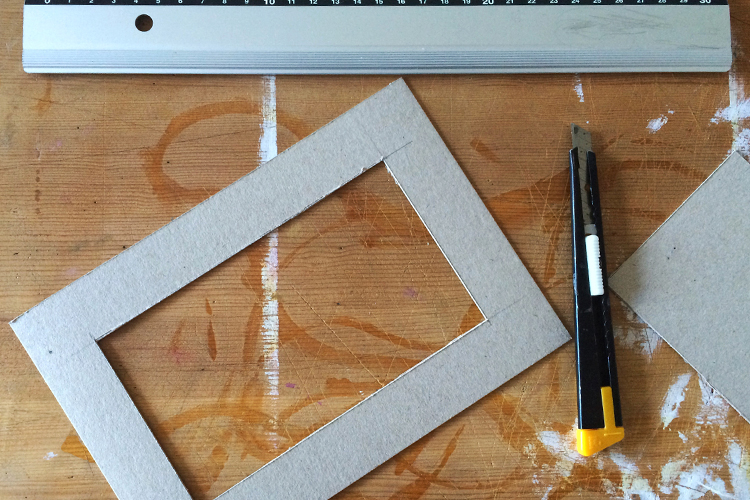
Cut-out cardboard frame for training your eye to see.
Let’s get back to seeing your shot or framing the scene. For this exercise, you won’t need a camera. You might get funny looks but bear with me. Choose any place, location that you want.
Cut out a frame from cardboard or any material you want as long as it’s a rectangle. See above.
You could equally use your hands, but I preferred using the cardboard frame.
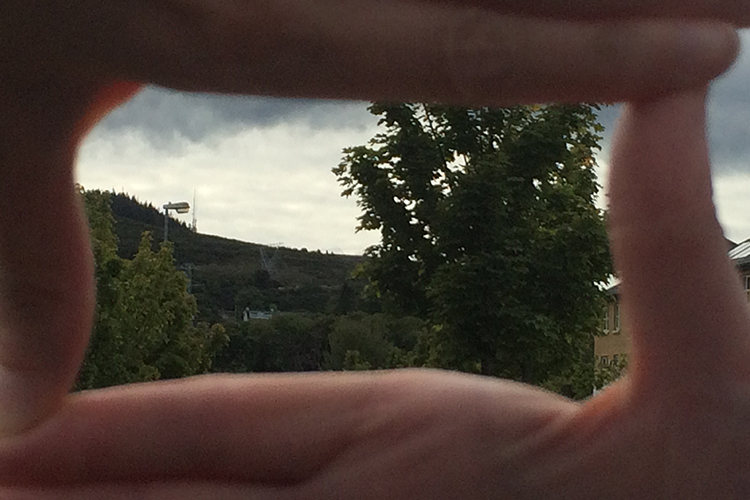
Framing your shot using hands.
As you will see, the frame narrows your field of vision and helps to block out distractions and look for the main focal point, which is what the viewer’s eye is drawn to. I can’t emphasize enough that this simple exercise will help you train your eye to see better in terms of composition. Don’t forget to get down low and look up too.

Take this metal bridge, for example. Not a very interesting photo.

By using the cardboard frame to ‘see’ the potential for an interesting shot.

Bring it into your post-editing software and create an interesting texture shot.
Another useful tip that I would highly recommend is a trip to your local art gallery to see great works of art. Not only is it visually pleasing, but you get the chance to study how these great artists used composition to great effect. So the next time that you happen to be in such a museum, observe and take note. Ask why you liked a particular painting? How were the elements in the painting arranged or placed? Where was the horizon line – a third up from the bottom? What about color and texture?
Okay, what if you don’t live near an art gallery? Then maybe a visit to your local library could be an option? Libraries are such a wonderful resource. In the art section alone, you have great masters, such as Leonardo da Vinci, Rembrandt and so forth. And of course, the masters in the photography world such as Henri Cartier-Bresson and Ansel Adams, to name just a couple.
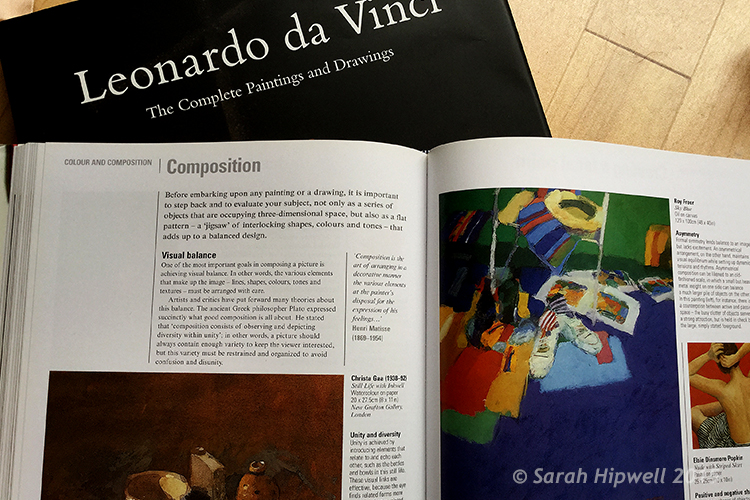
Go to your local library for inspiration from the masters in the art world to see how they used composition in their works.
Before you go and get your camera, let me explain the following five compositional principles I believe are a great starting point for beginners.
You may have already heard of this one. This is an actual formula based on mathematical principles of harmony and proportion. It has been used by artists for centuries. So think of your photo with imaginary lines that are drawn dividing the image into thirds both horizontally and vertically. You place important elements of your composition where these lines intersect. Similar to a tic-tac-toe game.
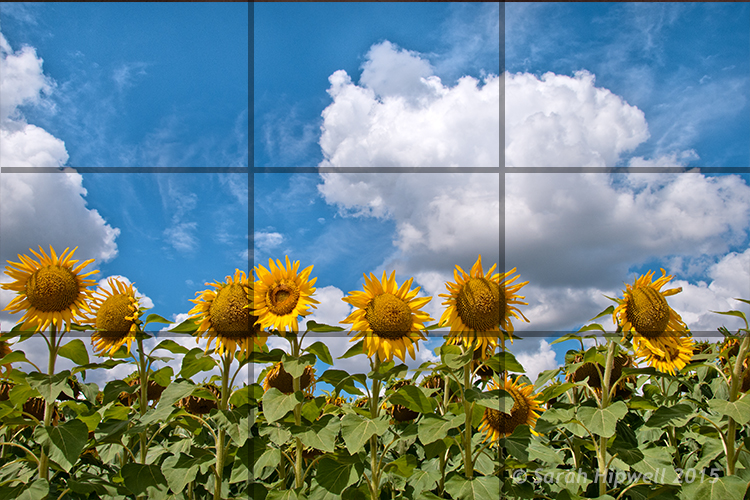
How the rule of thirds looks like. Where the lines intersect are the points in which to place your elements.
This may sound a bit odd (sorry, excuse the pun), but our brain looks for evenness and symmetry. So this principle asserts that having an odd number of objects in an image will be more interesting and, therefore, more pleasing. By having one or three elements is better than two.

Odd numbers of elements are more pleasing and interesting than even ones.
Keep the horizontal lines level and the vertical lines straight. This is particularly important if you shoot landscapes, seascapes and cityscapes. Leading lines are also very effective for drawing the viewer to where the focal point is.
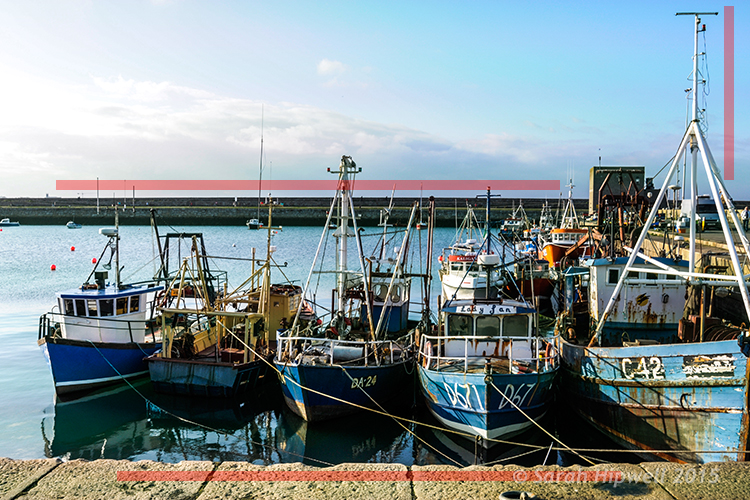
The red lines are to show the horizontal lines are even and the vertical lines are straight.
Color and textures are a great way to demonstrate good composition.
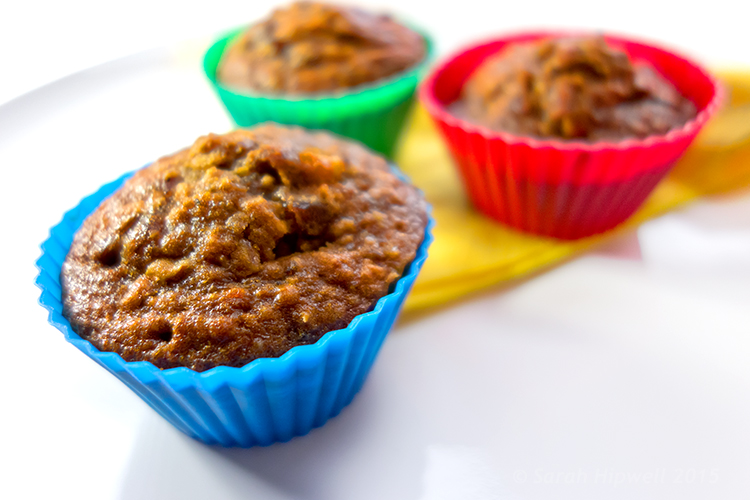
Here is an example of color and rule of thirds for this composition. Notice the curve elements.
This is an abstract concept which describes the space around your subject, otherwise known as ‘white space’ that draws your eye to it. Basically like ‘sky’ or a blurred background that provides the main emphasis on the subject.
Think of it in terms of letting your main subject or object breathe by giving it room.
As photography is about creativity, rules are not meant to be strictly adhered to. In the bikini photo, although I used two of them and they are symmetrical, I used color to contrast the elements and by not placing them in the centre gives the photo a more pleasing compositional effect.

Although I used two pairs of elements and I know that these are even, the color contrast and using the rule of thirds still makes this image a good composition.
Right, let’s get the camera out. Most DSLR cameras have built-in grid lines and some have a virtual horizon or a spirit level. If your camera has none of these options, you can always add a leveling aid, such as a hot shoe-mounted spirit level or use the focusing points within the viewfinder.
Use your tripod to help you frame your shot so that you get a good composition. Look through the viewfinder, see what elements are in the frame. Then take a look at the scene in front of you with both eyes, then go back to your viewfinder, recompose, then shoot.
Practice will improve your understanding and shooting better compositions. Don’t expect to get it in one go. Give yourself time.
Last, but not least, cropping your images in post-editing. Whether you use Camera Raw, Photoshop or Lightroom, cropping your photos will give you a better understanding of how the principles of composition apply.
You can easily straighten crooked horizon lines by using the Crop Tool or get rid of barrel distortion in buildings using the Lens Correction filter in Photoshop. Or simply change the image dramatically from the one you shot originally. All of these edits can be done non-destructively, so you can crop to your hearts content!

This is how the photo at top of this article was shot, yet when I cropped in tight on the model to the right, it gave me a different shot.
To summarize, like any complex subject that goes beyond just one article, I hope I have illustrated some useful tips to show the importance of composition in your photography. Please share your comments below.
The post Easy Tips to Help Beginners Understand Composition by Sarah Hipwell appeared first on Digital Photography School.
Filed under: Green, Mazda, Emissions, Fuel Efficiency, Technology, Performance
 Mazda isn't ready to give up on bringing the Wankel back and still has a team working to bring the design up to modern emissions and economy standards. A model using the updated mill isn't currently on the horizon, though.
Continue reading Mazda still has a team working on rotary engines
Mazda still has a team working on rotary engines originally appeared on Autoblog on Sun, 20 Sep 2015 11:05:00 EST. Please see our terms for use of feeds.
Permalink | Email this | Comments
History just keeps happening – there’s nothing you can do about that. But learning as much as possible is deeply rewarding, and helps you better understand the world. This week Cool Websites and Apps digs into five sites that give you a better idea of history. Explore maps from other ages, see where people are moving to and from, then work out one way of discovering who the most famous people in history are. Let’s get stared. Geacron: See the World Map for Any Year The nations of today didn’t always exist: almost all of them didn’t take their current shape...
Read the full article: 5 Utterly Fascinating History Education Resources

There’s a lot to love about the new Apple Music streaming service. I’m most taken by the ability to make playlists using the vast library of online music, share it with friends, and import playlists. Want to know how to do that? On iOS, the procedure is really straightforward. It’s slightly more complex in iTunes, much like other things unless you hack and improve iTunes. But once you set up a few, you’ll find it easy to get going. First, Sync iCloud Music Before you start making and saving your own playlists in Apple Music, you need to enable iCloud Music Library. On iPhone...
Read the full article: How to Create, Share & Discover Playlists with Apple Music

Navigating files and folders using the native Mac file browser Finder is easy enough, but there are many more features hidden behind menus and keyboard shortcuts. That’s why we decided to compile this list of common Finder features for the uninitiated. You’ll be surprised just how much you can tweak Finder to suit your workflow. Note: If you’re coming from Windows or Linux, set aside a fair amount of time for your muscle memory to catch up with your new workflow. Or you could just find ways to port useful features from your old OS to OS X. See Any File Info The file and folder information popup is quite detailed in its approach,...
Read the full article: 8 Finder Tips for Mac Newbies

If you work in an office, chances are you need to familiar with, well, Office. Specifically, you probably need to at least have baseline familiarity with Microsoft Excel. The spreadsheet software allows you to do all kinds of things if you know how to use it. If you need to use Excel, you’re going to want to look at the infographic below. If provides you with quick tips that you can use to make the most of the software. Print it, share it, save it, and get ready to improve your skills in just a couple quick minutes. Via MicrosoftTraining...
Read the full article: Quick Excel Tips Every Office Worker Needs to Know

You want to eat healthy, but it’s hard to find takeout options that support your goals. Even store-bought food that looks healthy, such as salads and soups, may be loaded with sugar, salt and preservatives. The only way to ensure you’re eating a well-balanced diet is to cook most of your food at home. But who has time for that? These six websites will give you a variety of easy, delicious and healthy recipes to make ahead on the weekend and take to work all week. With a little planning and effort, you can take control of your nutrition and...
Read the full article: 6 Perfect Sites to Find Healthy Make-Ahead Lunch Recipes

Post-processing is an integral skill for any photographer who wants to get the most out of their DSLR (digital single-lens reflex camera), which is why it’s so important to pick up and learn how to use a photo editing program. But which one? The two most popular choices are Photoshop and Lightroom, and if you can gain access to either one, we highly recommend you do so. In fact, with Adobe’s Creative Cloud, you can actually buy access to both programs for the stunningly low price of $10 per month. But both programs have big learning curves, so the most...
Read the full article: Photoshop or Lightroom: Which One Should You Use?


Every man (and way of life) has a code.
The First World War was an unprecedented catastrophe that shaped our modern world. Erik Sass is covering the events of the war exactly 100 years after they happened. This is the 201st installment in the series.
Just as the passage of the Home Rule Act in May 1914 seemed about to bring the longstanding controversy over Irish self-government to a head, external events unexpectedly intervened. With the outbreak of the First World War the whole issue of Irish autonomy was moved to the back burner by the British government with the Suspensory Act of September 1914, justified on the grounds that now was not the time to proceed with a major reorganization of the state.
This delay was supposed to last just one year, until September 18, 1915, but the changing political landscape threatened to make it permanent. In the spring of 1915 the crisis in British munitions production led to the “Shell Scandal,” which forced Prime Minister Herbert Asquith to form a new coalition government including members of the opposition. One of the key figures in the new cabinet was the Ulster Unionist Edward Carson, who as a Protestant bitterly opposed Irish Home Rule and demanded continued “Union” with the rest of Britain.
Carson joined the cabinet as Attorney General of England and Wales, giving him considerable influence over domestic policy; meanwhile the Irish Nationalist Party led by John Redmond, which represented Irish Catholics demanding Home Rule, was the only parliamentary party not included in the coalition.
Following this political realignment, it came as no surprise when the cabinet issued an Order in Council renewing the Suspensory Act on September 14, 1915, just a few days before it was due to expire – deferring Irish Home Rule for the duration of the war (which everyone now realized would probably last for years).
As the British government reneged yet again on its promises of Irish Home Rule, discontent was mounting rapidly among Irish nationalists, many of whom now turned their backs on the policy of peaceful legislative change advocated by moderates like Redmond, and embraced more radical (meaning, violent) solutions.
Even before the cabinet renewed the Suspensory Act, in May 1915 the radical nationalist leader Thomas Clarke had secretly formed the Irish Republican Brotherhood Military Council, which would be responsible for organizing the failed Easter Uprising in April 1916. The IRB Military Council would coordinate the activities of the Irish Volunteers (top), a paramilitary led by Patrick Pearse that seceded from John Redmond’s National Volunteers (below) over the issue of service in the British Army, and the smaller Irish Citizen Army led by James Connolly.

By fall 1915 British intelligence was well aware that rebellion was brewing in Ireland. In one secret report filed in November (which, like many Irish people, mistakenly identified the rebels as belonging to the nationalist organization Sinn Fein) British agents warned that the advent of conscription, then under debate, might trigger an uprising: “This force is disloyal and bitterly Anti-British and is daily improving its organisation… its activities are mainly directed to promoting sedition and hindering recruitment for the Army and it is now pledged to resist Conscription with arms.”
Indeed, the preparations were more or less open in many parts of Ireland, as ordinary people made no secret of their hostility to Britain – even to the extent of shunning their own family members who served in the British Army. Edward Casey, a “London Irish” (Irish Cockney) soldier in the British Army, recalled a visit to his cousin’s family in Limerick in the company of a priest in mid-1915:
He took me in[to] the house without knocking, and when my Aunt (who is a widow) saw us together, [she] said in her deep Irish Limerick brogue: “And what in the name of God are you bringing into my house? A British soldier! And I’m telling you Father, he is not welcome.”… The atmosphere in the room was very chilly… It was a very anxious time for me. They were the only Relations I have known. But they accepted me, as a relation.
Later Casey and his cousin visited a pub, the latter telling him on the way:
“I feel very sorry for you. The Germans are going to win this War, and we (us Sinn Feiners, both Men and Women) will do all we can to help.”… He then made a little speech telling his friends who I was, and finished with the words, “Blood is thicker than water, and like someone said on the Cross, “we forgive you, ye know not what ye do.”… When one man, asked Himself who the hell I was, Shamas repeated, “This is my first cousin from London. He is my Mother’s Sister’s Boy. And I’ll have you treat him with respect. If you don’t, I’ll ask you all to come outside and take your coats off and fight.”
Another Irish soldier serving in the British Army, Edward Roe, also recalled the rebellious mood prevailing in Ireland during a visit home in July 1915:
What a change of sentiment since 1914. Home Rule had not materialized; there was a dread of conscription; even my friend Mr. Fagan (Tom the Blacksmith) had turned pro-German and cheers for the ‘Kaizar’ [Kaiser] when leaving the village pub at ‘knock out.’ The ‘Peelers’ [police] have threatened to jail him several times, but he still defies them.
Although armed rebellions like the Easter Uprising were relatively rare, the First World War exacerbated ethnic tensions and stoked nationalist movements across Europe, presenting yet another challenge to governments which found themselves grappling with angry dissidents on the home front at the same time as foreign enemies abroad.
This was especially true in Austria-Hungary, the Ottoman Empire, and Russia – polyglot empires ruled by dynastic regimes which dated back to the feudal era, and were ill-equipped to deal with the competing demands of their rival nationalities.
In Austria-Hungary Emperor Franz Josef sat uneasily on the two thrones of his divided realm as the Emperor of Austria and King of Hungary, trying to steer a common military and foreign policy with mixed results. Meanwhile both the Austrian Germans and Hungarian Magyars were pitted against the Dual Monarchy’s numerous minority nationalities, including the Italians, Romanians, and various Slavic peoples (including Czechs, Slovaks, Ruthenes, Poles, Slovenians, Croats, Bosnian Muslims, and Serbs). Indeed it was Franz Josef’s desperation to neutralize these centrifugal nationalist movements that precipitated the First World War.
Unsurprisingly nationalist resentments were rife within the ranks of the Habsburg armed forces. As early as September 1914 Mina MacDonald, an Englishwoman trapped in Hungary, recorded a Slavic military doctor’s gleeful prediction: “I assure you, whichever way it goes, it’s the end of Austria: if the Central Powers win we become simply a province of Germany: if they lose, it’s the disintegration of Austria. A country composed, as Austria is, of so many races, each one more discontented than the other, must not risk going to war.”
For their part at least some Austrian Germans had already given up on the idea of a multinational empire altogether, instead embracing the pan-German ideology first espoused by George Schönerer in the late 19th century and later by Adolf Hitler. Bernard Pares, a British observer with the Russian Army, recalled meeting a Habsburg prisoner of war in mid-1915:
There was one very militant Austrian German, who would have it that Austria would win; he was so rude about the Austrian Slavs that I asked him at the end whether Austria wanted the Slavs. He said they wished to be quit of Galicia, and in fact of all their Slav provinces; I suggested that Austria proper and Tirol might find their rightful place inside the German empire; he answered with alacrity, “Of course, far better under Wilhelm II.”
Similar tensions afflicted the Russian Empire, memorably described by Lenin as a “prison house of nations,” which ruled non-Slavic or ethnically mixed populations in Finland, the Baltic region, the Caucasus, and Central Asia. Even when the subject peoples were also Slavic, as in Poland, nationalist feeling often fueled resentment of the “Great Russians” who ruled the empire – and this feeling was certainly reciprocated.
In January 1915 a Russian soldier, Vasily Mishnin, casually noted of the Polish inhabitants of Warsaw, part of the Russian Empire for a century: “The crowd seeing us off are not our people, they are all foreigners.” And in August 1915 another British military observer, Alfred Knox, noted the dilemma faced by a Polish aristocrat who didn’t want to abandon his estate to the approaching Germans: “Many officers sympathised with the poor landowner who had been our host. He wanted to remain behind, but Colonel Lallin, the Commandant of the Staff, spoke to him brutally, telling him that is he remained behind it would simply prove that he was in sympathy with the enemy.”
The Armenian Genocide, precipitated by the Christian Armenians’ support for the invading Russians, was only the most egregious example of ethnic conflict in the decaying Ottoman Empire. The Turks also expelled around 200,000 ethnic Greeks during this period, resulting in widespread misery among refugees temporarily housed on Greek islands (eerily foreshadowing the migrant crisis unfolding now), as recalled by Sir Compton Mackenzie, who described the encampment on Mytilene in July 1915:
There was nowhere one could walk but a small emaciated hand would pluck at one’s sleeve and point mutely to an empty hungry mouth. Once a woman dropped dead on the pavement in front of me from starvation, and once a child. No street was hot enough to dispel that chill of death. There were, of course, many organized camps; but it was impossible to cope with this ever increasing influx of pale fugitives.
Although Muslim Arabs fared somewhat better than the Armenians or Greeks under Ottoman rule, they remained politically and socially marginalized, stoking bitter resentment against the Turks among Bedouin nomads and townspeople alike. Ihsan Hasan al-Turjman, a young, politically aware middle class Palestinian Arab living in Jerusalem, wrote in his diary on September 10, 1915 that he would rather die than be drafted to fight the British in Egypt, decisively (if privately) renouncing his Ottoman identity along the way:
However, I cannot imagine myself fighting in the desert front. And why should I go? To fight for my country? I am Ottoman by name only, for my country is the whole of humanity. Even if I am told that by going to fight, we will conquer Egypt, I will refuse to go. What does this barbaric state want from us? To liberate Egypt on our backs? Our leaders promised us and other fellow Arabs that we would be partners in this government and that they seek to advance the interests and conditions of the Arab nation. But what have we actually seen from these promises?
Ironically some British troops, who understood Britain’s Irish troubles well enough, had a hard time grasping that their foes faced similar internal tensions. A British officer, Aubrey Herbert, remembered trying to convince ANZACs at Gallipoli that some captured enemy soldiers really wanted to collaborate with the invaders: “It was a work of some difficulty to explain to the Colonial troops that many of the prisoners that we took – as, for instance, Greeks and Armenians – were conscripts who hated their masters.”
Internal ethnic tensions were only part of the picture, as traditional national rivalries and prejudices continued to divide the nations of Europe – even when they were on the same side. Although the war forced Europe’s Great Powers into marriages of convenience, which official propaganda did its best to portray in rosy terms of popular sympathy and mutual admiration, reality tended to fall rather short of this warm embrace.
For example, there was no getting around the fact that many British and French people simply disliked each other, as the always had (and still do). Indeed, while Brits of all classes sympathized with their French allies and paid tribute to their bravery, there was no question these feelings existed alongside traditional less flattering images, rooted in a millennium of warfare and colonial competition and reinforced by a cultural inferiority complex – and the French, despite their gratitude and affection for some British institutions, fully reciprocated this resentment and scorn.
One common British stereotype was that the French were incompetent when it came to warfare. Mackenzie recalled the contempt felt by the British officers at Gallipoli for their French colleagues in the Corps Expeditionnaire d'Orient:
It would be absurd to believe that the General Staff credited French G.Q.G. at Helles with as much military ability as themselves. They did not. They regarded French fighting much as Dr. Johnson regarded a woman’s preaching. Like a dog walking on his hind legs it was not done well, but they were surprised to find it done at all. The French and English were never intended by nature to fight side by side in joint expeditions.
The ordinary rank and file British soldiers seemed to share these views, and many French civilians made no secret of their dislike for the British. The novelist Robert Graves recalled an honest conversation with one young French peasant woman in the small village where he was billeted: “She told me that all the girls in Annezin prayed every night for the War to end, and for the English to go away… On the whole, troops serving in the Pas de Calais loathed the French and found it difficult to sympathize with their misfortunes.”
Typically the Brits, famous for their lack of interest in foreign ways, made little effort to bridge the obvious linguistic or cultural gap. On September 5, 1915, Private Lord Crawford complained in his diary about the lack of British translators: “It is a pity we can’t find officers of our own who can talk French well enough – but the linguistic ignorance of our officers is positively phenomenal.”
It’s worth noting that even within the British Empire, linguistic differences reinforced national prejudices and colonial resentments; thus one anonymous Canadian stretcher-bearer confided in his diaries, “I hate the very sound of the English accent.” In fact sometimes communication was almost impossible. Edward Roe, the Irish soldier, described his mystification at the rural accents he encountered in the English countryside while on leave in October 1915:
I go for long walks on Sundays and visit country pubs, and listen with amusement to country yokels talking in their quaint accent about cows, sheep, oats, cabbages and boars. I could not understand them, as they seem to speak a language all their own. One Sunday… I got into conversation in a pub with a bewhiskered old farm labourer. The subject we “were on” was sheep. I could only reply in yes’s and no’s… I could not understand a word of what he said.
An anonymous ANZAC soldier recorded a similar mix of disdain and incomprehension for rural English folk: “Our camp lay within two miles of Bulford village… inhabited by a bovine-looking breed, whose mouths seemed intended for beer-drinking but not talking – which, in a way, was just as well, for when they did make a remark it was all Greek to us.”
For their part troops from the British Isles found their peers from Canada, Australia, and New Zealand alarmingly undisciplined. Roe noted of some Australian convalescents who shared an English hospital with more reserved British counterparts:
They are a wild, devil-may-care lot and have upset the discipline of the whole hospital… Some are minus an arm and some a leg. They broke out into town the second night they were in hospital. Legs or no legs, arms or no arms, they scaled a 12 foot wall, set Devonport on fire and got uproariously drunk. It took the whole crew of a super-dreadnought in combination with the Military Police to shepherd them back to hospital… They do not understand discipline as it is applied to us.
These tensions paled in comparison to the mutual antipathy between the Germans and Austrians, fueled by the Germans’ contempt for Austrian fighting prowess following the disastrous defeats in Galicia in the early part of the war, complemented by Austrian resentment of German arrogance, which only grew with the German-led victories after the breakthrough at Gorlice-Tarnow in May 1915.
These attitudes were shared by elites and ordinary people alike. In the fall of 1914 the anonymous correspondent who wrote under the name Piermarini recalled a deliberate social snub at the Berlin opera: “… [I]n front of me were two Austrian officers, while at my side some German people were discussing the war. They were speaking loudly about the battle in Galicia, and passed many untactful remarks, evidently meant to be heard by the Austrians. They carried this to such a length that the two officers left their seats and walked out.” The German author Arnold Zweig, in his novel Young Woman of 1914, recalled the bitter tone in spring 1915: “In every German beer-house men sat and jeered at these feeble allies, and the increasing reinforcements that they called for – which now amounted to entire German armies.”
The Austrians returned the German contempt with interest. In September 1915 Evelyn Blucher, an Englishwoman married to a German aristocrat and living in Berlin, noted in her diary:
The chief subject of discussion is the feeling between Austria and Germany… One cannot help being slightly amused to notice how the point of the whole war is forgotten in the greater interest of internal jealousies. I asked Princess Starhemberg one day whether there was much hatred against England in Austria. “Well, when we have time to, yes, we do hate them; but we are so busy hating Italy and criticizing Germany that we don’t think of much else at present.”
The dislike translated into a social gulf between German and Austrian officers, even when on foreign assignments where they might be expected to fraternize, if only because of their shared tongue. Lewis Einstein, an American diplomat in the Ottoman capital Constantinople, noticed the frigid relations between the “allies” there: “It is odd how little the Austrians and Germans mix. At the Club each sit at separate tables, and not once have I seen them talking together… The Germans make their superiority felt too much, and the Austrians loathe them.”
At least the Germans and Austrians in Constantinople had one thing in common – their complete disdain for their Turkish hosts, which Einstein also noticed: “It is odd to see with what scorn both Germans and Austrians talk of the Turks… If they do this as allies, what will it be afterward?” Of course the Turks, sensing more than a whiff of racism in these attitudes, weren’t shy about sharing their opinions of their esteemed guests. On June 23, 1915, as fighting raged at Gallipoli, Einstein noted: “There are more reports of growing ill-feeling between Turks and Germans. The former complain that they are sent to attack while the Germans remain in safe places. ‘Who ever heard of a German officer being killed at the Dardanelles?’ a Turkish officer asked… From the provinces as well come reports of the same ill-feeling.”
See the previous installment or all entries.