Nuke-proof home hits market in Georgia...
(First column, 2nd story, link)

Nikon officially announced today that it’s developing the Nikon D5 DSLR… and that’s about it.
The press release has a single line about the camera, saying “Nikon Corporation is pleased to announce that it is developing the Nikon D5 digital SLR camera, which represents the next generation of professional Nikon FX-format models.”
A glance at Nikon’s DSLR timeline shows that a successor to the D4S is indeed due soon:

“With this ‘development announcement’ Nikon is telling us that they are still alive and relevant,” writes Nikon Rumors. “This announcement also kills any hopes for a D400 camera, at least for the first few months of 2016 (otherwise they would have mentioned it today).”
In the same press release, Nikon also says it’s working on a new Speedlight SB-5000 flash unit and a Wireless Transmitter WT-6. The Speedlight will be “positioned at the top of Nikon’s Speedlight lineup.”
“Through the combination of this next-generation professional camera offering an even higher level of performance, these advanced accessories and the rich lineup of existing NIKKOR lenses, Nikon is pursuing further possibilities for imaging expression,” Nikon proclaims.
No word yet on when the official “actual” announcement of the D5 will come.

When it comes to post-processing, photographers definitely have opinions about Photoshop Action sets. Some photographers love them, others consider them cheating. For me personally, Actions are most valuable when they either (a) make the editing that I would do by hand more efficient and/or (b) offer something unique and fun that may be outside my normal editing style, but fits a particular session.
In this case, the Winter Wonderland Action Set by Pure Photoshop Actions (available for Photoshop CS and above, and Elements 6-11 for $25 regular price) fits a bit of both those criteria. It’s not something that I use every day, but it really is a fun action set to have on hand during the winter months!
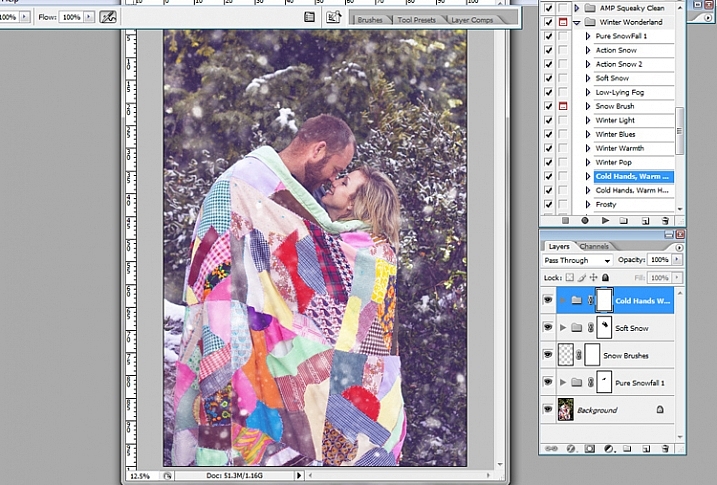
Essentially, the Winter Wonderland Action Set allows you to add snow with one click during post-processing. It includes several different kinds of snow, fog, and mist that can add a little something extra to your winter images. It also offers some tints and adjustments that allow you to tweak the final images towards your normal style of editing, whether you lean towards natural and clean, or a faded vintage look.
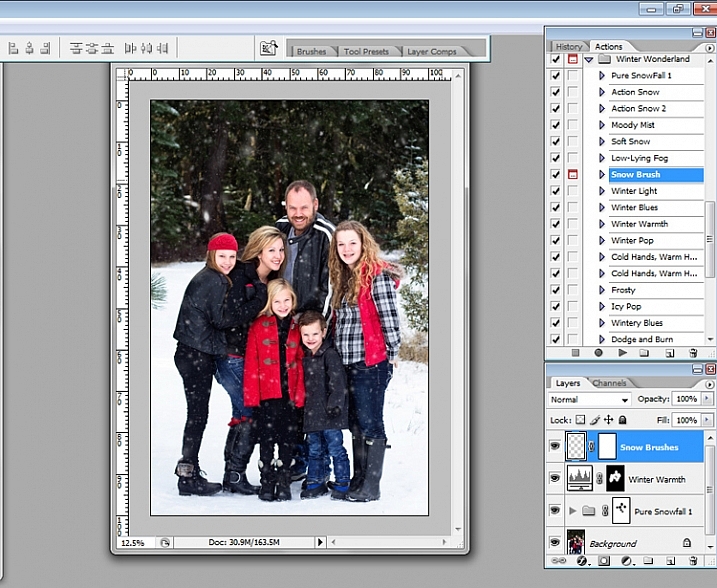
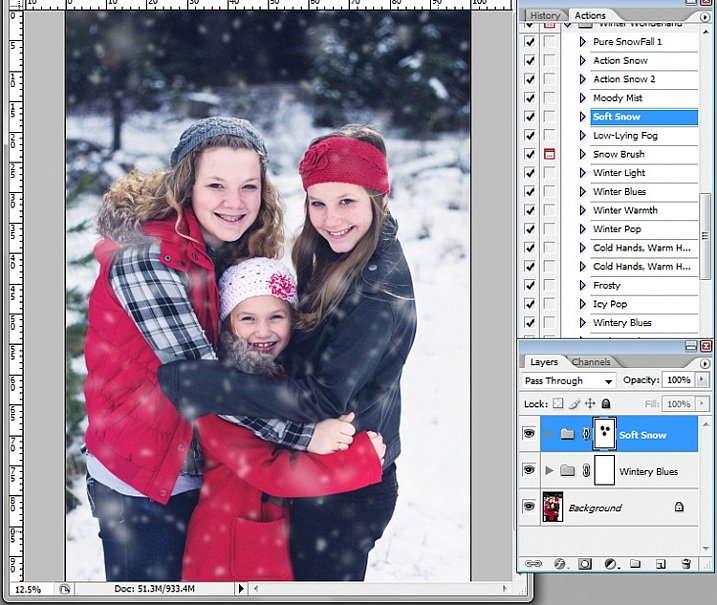
The first thing that I should mention, right off the bat, is that some of these actions run very slowly. The “Pure Snowfall 1” action in particular always seems to take several minutes to run. On the other hand, the “Soft Snow” action runs quickly every time. That said, even with “Pure Snowfall 1” taking several minutes to run, it’s still much faster than adding in individual snowflakes by hand, so it’s a win in my book.
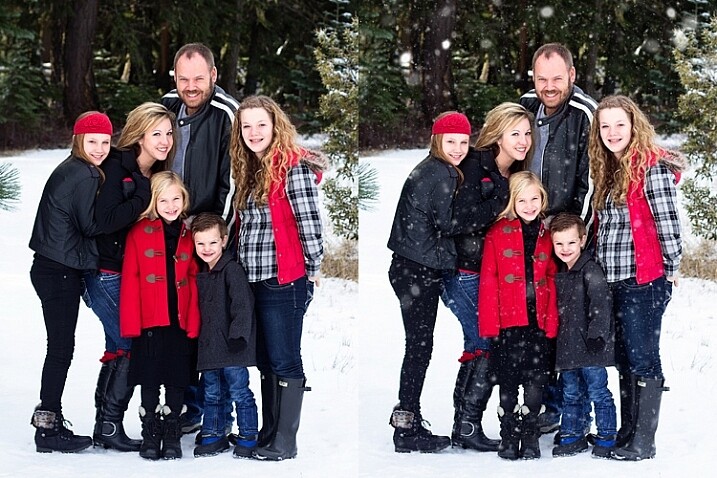
Original image on the left, final image using PPA Winter Wonderland on the right.
As with most action sets, you should be prepared to tweak Winter Wonderland to fit your particular image. Winter Wonderland adds masks to most of the actions after they’ve run, and I find that I use them quite often. The most common tweak that I make to the Winter Wonderland set is to remove the added snowflakes from the subject’s eyes, nose, and mouth. I prefer the “snow” to look as natural as possible, so I do tend to leave the snowflakes around the hairline, and sometimes even on the cheeks.
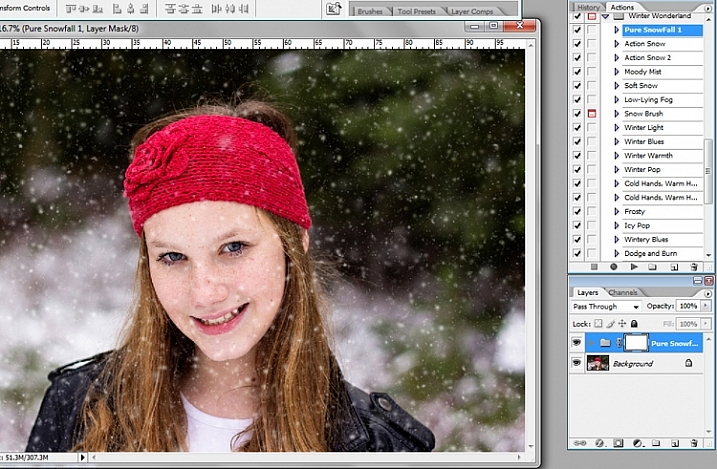
The actions in this set tend to do a pretty good job of varying the size of the snowflakes in order to give a more realistic foreground and background, but there is also a snowflake brush included with the set, which allows you to pick the overall size of snowflake you want, and then scatters additional snowflakes in that size randomly over the image.
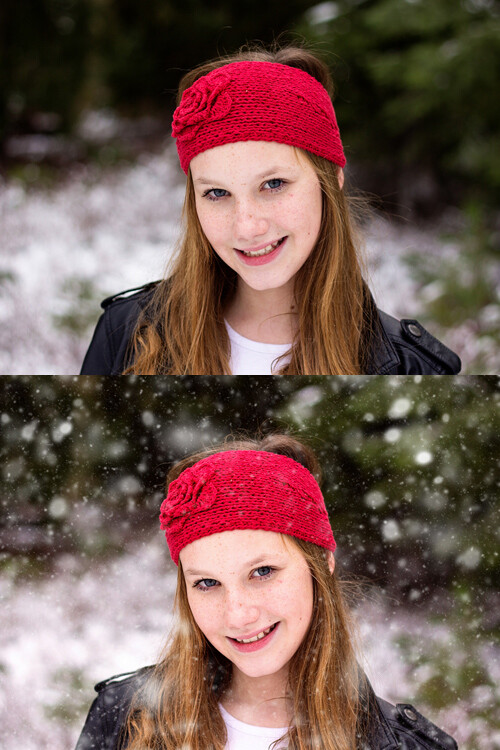
Original image on top, final image edited with PPA Winter Wonderland on the bottom.
My editing style tends to be pretty clean, so that is about where I usually stop with this action set. However, the set also includes a number of actions that allow you to achieve a subtle vintage feel to your final images, and I’ve also enjoyed testing those options out as well.

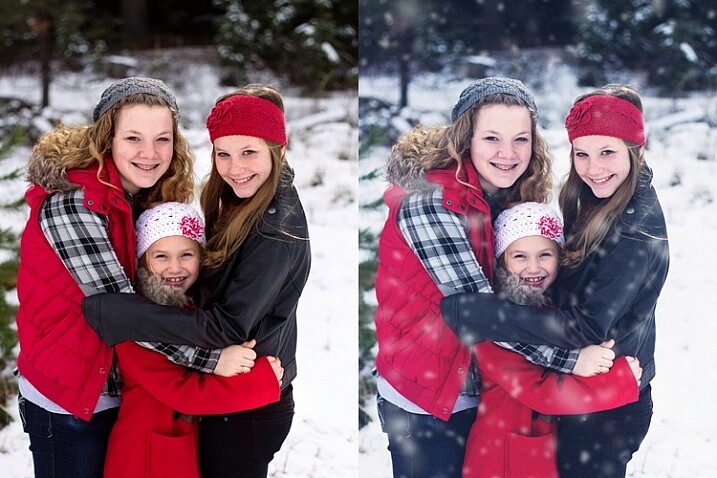
Original image on the left, final image edited with PPA Winter Wonderland on the right.
When I use the Winter Wonderland action set, my ultimate goal is that if I were to post the image on Facebook, the majority of my client pool would not readily be able to tell that the snow was added in post-processing. Of course, some of my photographer friends are likely to be familiar with this particular action set, and others may be familiar enough with Photoshop to know that something’s up, but my hope is to create images that look natural enough that they could easily pass as being real. So, in order to accomplish that goal, one of the key pieces is to only use images in which your model is dressed appropriately for snow, and there could feasibly actually be snow in that location.
This particular set of images is my favorite set that I’ve ever edited with Winter Wonderland, and I think that’s due in large part to the fact that there was actually snow on the ground during our session. So, it’s not too much of a leap for a casual viewer to see snow on the ground, and find it feasible that snow could be falling at the same time. On the other hand, if I were to run this same action set on an image taken at sunset during the summer months, it would likely look ridiculous…which would really only work if you’re going for a super campy “Christmas in July” themed session.
Original image on the left, final edited image with PPA Winter Wonderland on the right.
Although I’ve seen Winter Wonderland marketed almost exclusively towards photographers doing portraits or family photography, don’t underestimate this set for landscape and nature images as well. As long as the content, and coloring of your landscape or nature image, would be appropriate for a photograph taken in the winter, there’s no reason not to give it a try!

Just for the record, I purchased the Winter Wonderland Action Set on my own, and Pure Photoshop Actions has no idea that I’m writing this article. I have just enjoyed the Winter Wonderland set quite a bit, and thought that it was worth sharing (and reasonable price at $25) as we head into the winter months in the northern hemisphere.
Have you tried the Winter Wonderland Action Set? If so, what did you think? If not, is there an image you’re eager to try it on?
The post Make it Snow with Pure Photoshop Actions Winter Wonderland Set by Meredith Clark appeared first on Digital Photography School.
Filed under: Green, Jaguar, Crossover, Electric, Luxury
 Jaguar is poised to launch the all-electric E-Pace SUV in 2017, styled after the C-X75 supercar concept and taking aim at the Tesla Model X and Audi Q6 E-Tron Quattro.
Continue reading 2017 Jaguar electric SUV to draw stylistically from C-X75
2017 Jaguar electric SUV to draw stylistically from C-X75 originally appeared on Autoblog on Tue, 17 Nov 2015 08:43:00 EST. Please see our terms for use of feeds.
Permalink | Email this | CommentsThis year the Honey Breakfast will take place in quite a few countries: Slovenia, Hungary, Austria, the Czech Republic, and Romania. In 2014, Hungary and Romania started organising the European Honey Breakfast and they...
The post European Honey Breakfast – 20 November 2015 appeared first on BeeTIME.

People expect too much of the office of the Presidency these days. Part of that has to do with the way Presidential campaigns are run – candidates have to basically promise that they have an idea or a solution for every problem under the sun. Think about it – when was the last time you heard a candidate for President – for either party – say, “You know, that’s definitely a problem, but I don’t really think that it is one the President of the United States necessarily needs to be involved in addressing.”
As a result, the President tends to take far too much blame/credit for things that he has little or nothing to do with. Mostly, a President’s effect on the economy tends to be pretty marginal compared to ordinary market forces, but of late literally everything about the economy tends to be a political football that lands entirely at the doorstep of the President. I’m not suggesting that the President has no effect at all on economic matters; I am saying that the effect has been drastically overblown to the point that the President is treated more like an all powerful wizard than like a constitutional officer in a republican democracy.
One thing, though, that the President absolutely deserves almost total blame/credit for is the manner in which he conducts the nation’s foreign policy. Congress often likes to kvetch about foreign policy matters and in certain areas (e.g., treaties) they have an important role to play but at the end of the day the President’s control over United States foreign policy is nearly total, if at times indirect. And one of the things the Democrats have shown, time and time again, is that they are simply not worthy of the voters’ trust when it comes to foreign policy.
The Republicans have a lot of disagreement over various matters of foreign policy, in terms of how it should be conducted, what level of force should be used, and what our posture should be in various portions of the globe. However, one of the striking differences between Republicans and Democrats is how universally unable the Democrats are to correctly separate America’s friends from her enemies.
That, really, is the ultimate acid test of United States foreign policy. The details of the “how” and “when” and “where” of foreign policy are completely irrelevant if you get the “who” and the “why” wrong. And no one has been more fantastically incompetent at sorting out the “who” and the “why” than the modern Democratic party.
Saturday, for instance, several dozen Americans were treated to the spectacle of the three Democratic contenders for the Presidency holding a debate less than 48 hours after horrific attacks on the city of Paris by militant Islamic terrorists. And yet, the candidates on stage were so cowed by their own political correctness that they could not even call Islamic terror by its name (note, in the debates they have had so far, the Democrats have shown no such reticence naming their true enemy, the NRA, over and over).
I think it goes without saying that Democrats who are too scared to speak America’s enemy’s name aloud will likewise be too scared to actually use force against ISIS.
Of course, as we likewise deal with the fact that Russia is actually shooting at the horse we have decided to back in the Middle East, we are reminded that the last Democrat to run for President was likewise clueless about whether Russia was a threat or not:
Let us not also forget that before ISIS took over half the Middle East, Obama called them the Al Qaeda “Jayvee team”:
And furthermore claimed almost immediately before the Paris attacks that ISIS was “contained”:
Of course, the one of the primary reasons we are in such a mess throughout the Middle East is that Hillary Clinton fundamentally misunderstood the Arab Spring, which has led to extremist groups seizing control in a territory that is much wider than even what ISIS now controls.
Obama and the rest of the Democrats have habitually and repeatedly for decades misunderstood the difference between friend and foe (observe the way Bibi has been treated by the current administration) and been willfully ignorant about threats that have confronted the United States.
Whatever you think about the various particulars of the Republican candidates’ foreign policies, one thing is clear: Democrats simply cannot be trusted to set American foreign policy because they simply do not know the difference between a friend and an enemy, or between a threat and an ally.
The post Never Trust a Democrat With Your Foreign Policy appeared first on RedState.


This week on dPS we’re featuring a series of articles about composition. Many different elements and ways to compose images for more impact. Check out the ones we’ve done so far:
Here’s how some other photographers do it and work with various compositional elements.
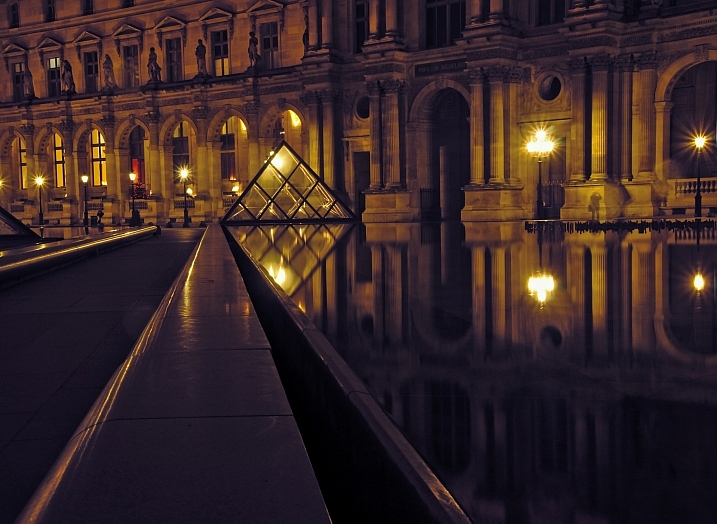
By Zoltán Vörös

By Raymond M.
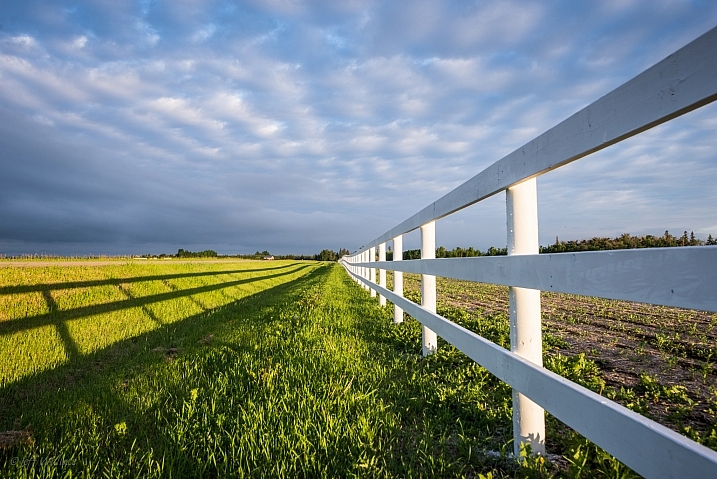
By Jeff Wallace

By Thomas Leuthard
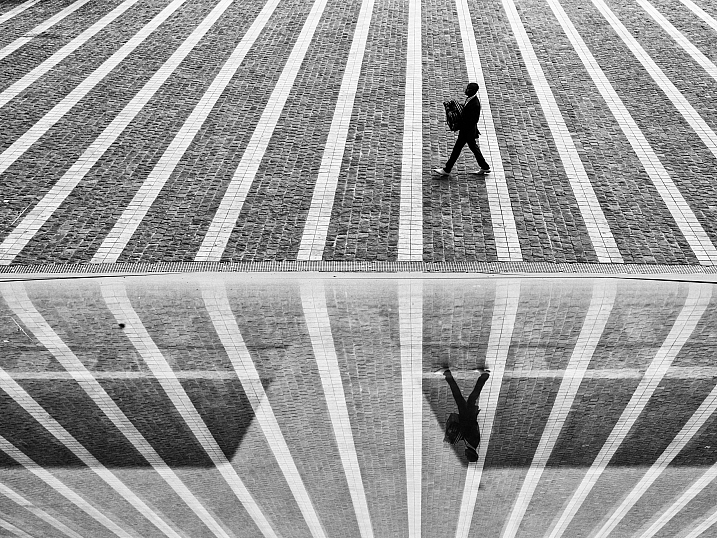
By Georgie Pauwels
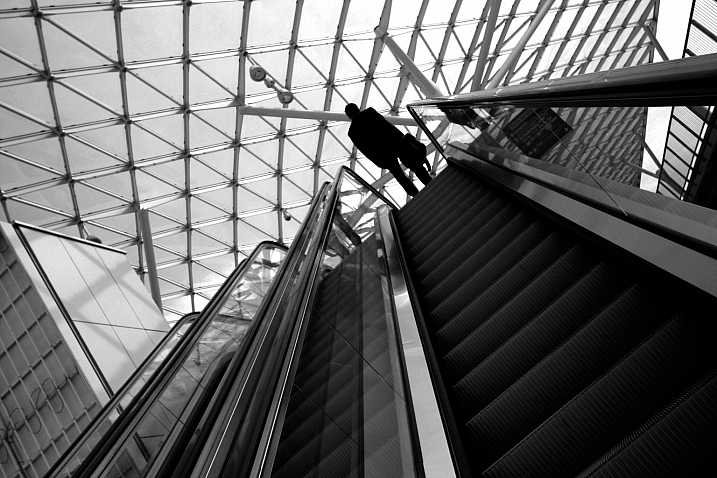
By Gianni Dominici
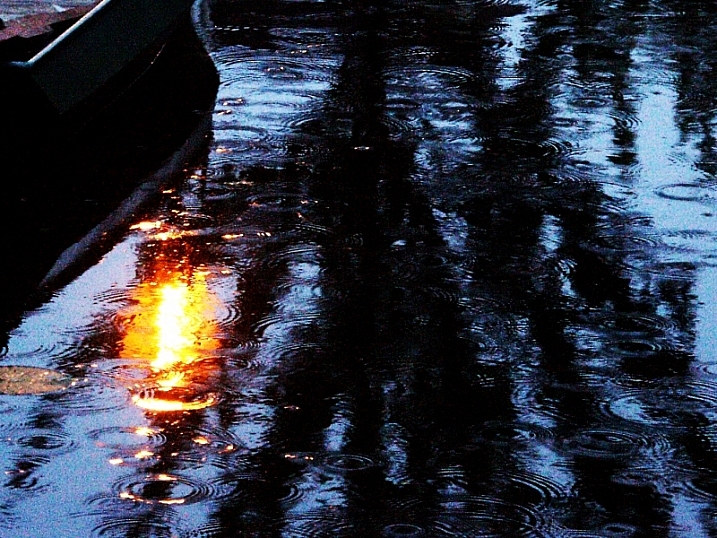
By wester

By Umberto Nicoletti

By Louis Vest
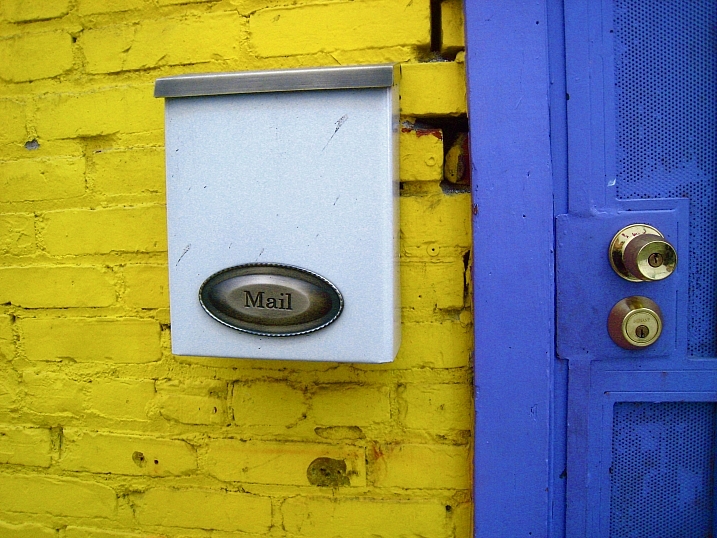
By Bill Selak

By shandie 8

By Sur Name
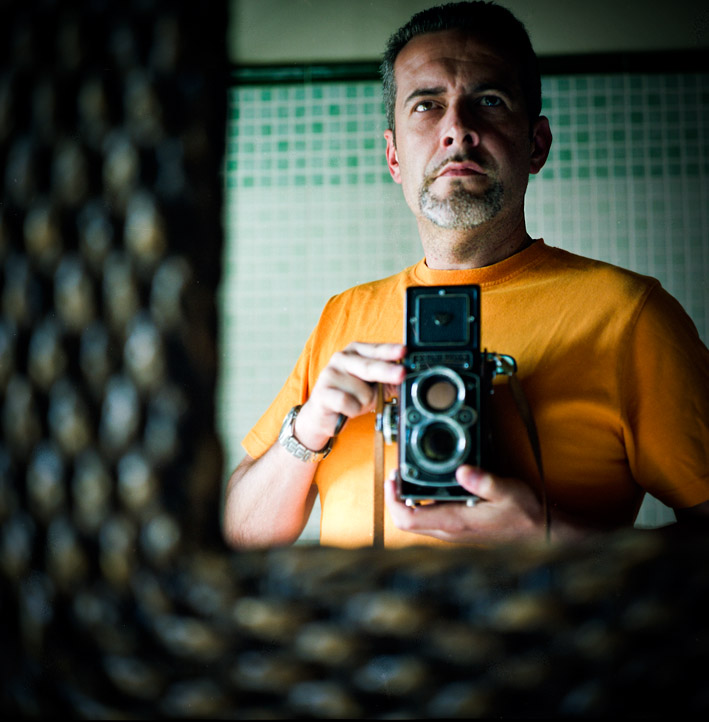
By Fernando Ocaña Fernández
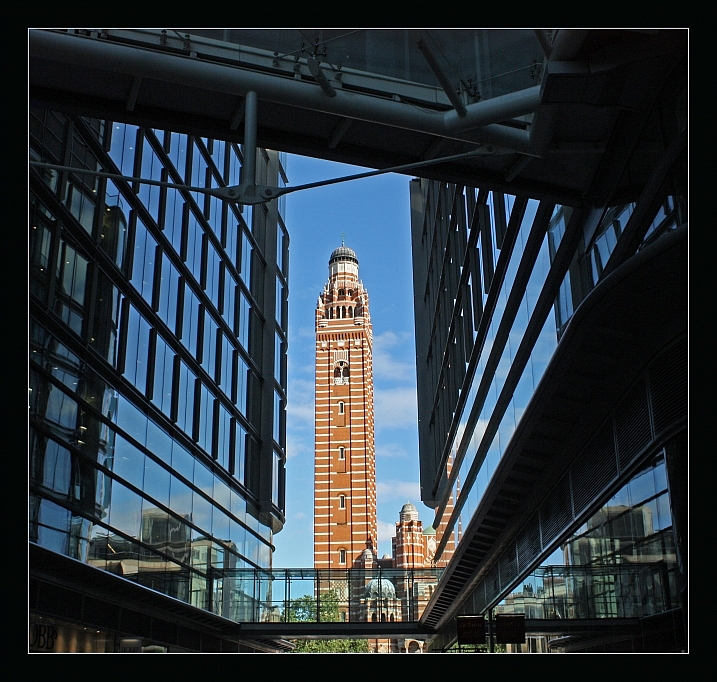
By Lawrence OP
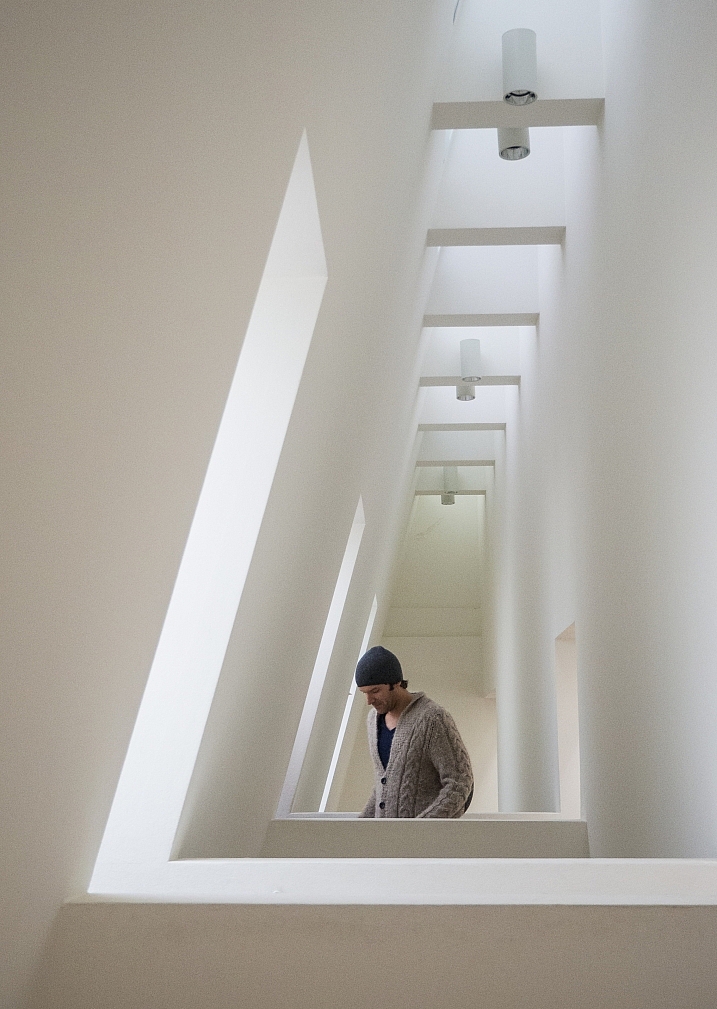
By Georgie Pauwels
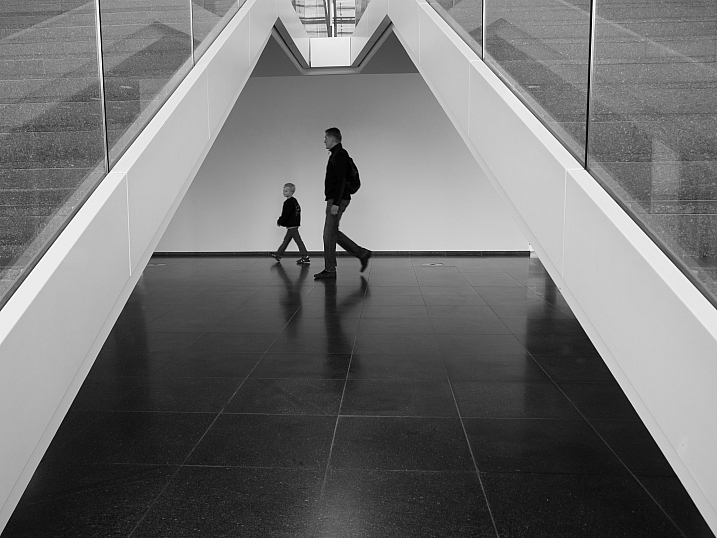
By Georgie Pauwels
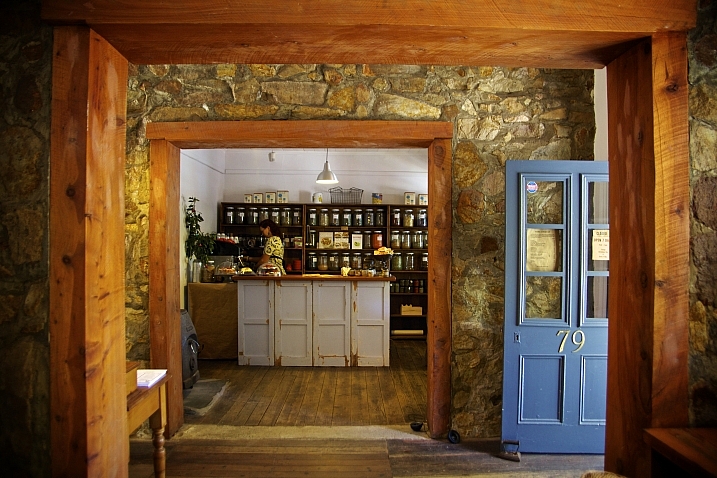
By Michelle Robinson
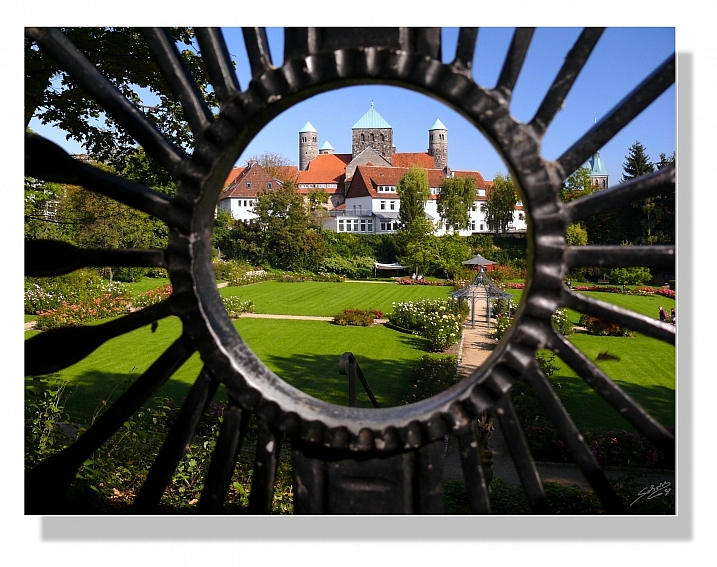
By littlenelly (rare but there)

By Patrik Jones
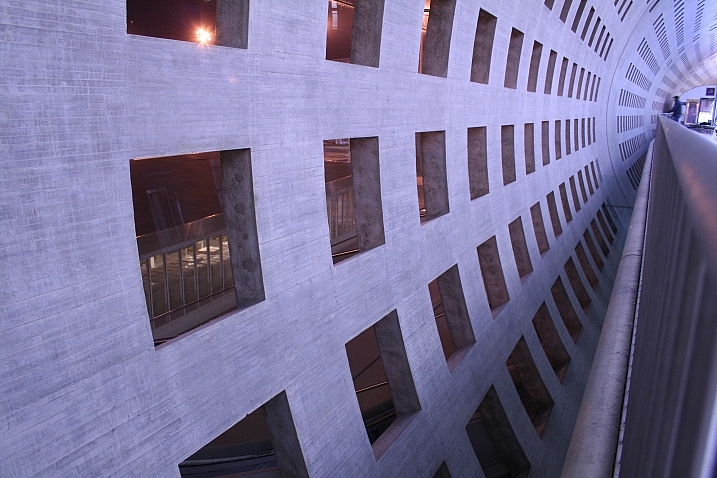
By topher76
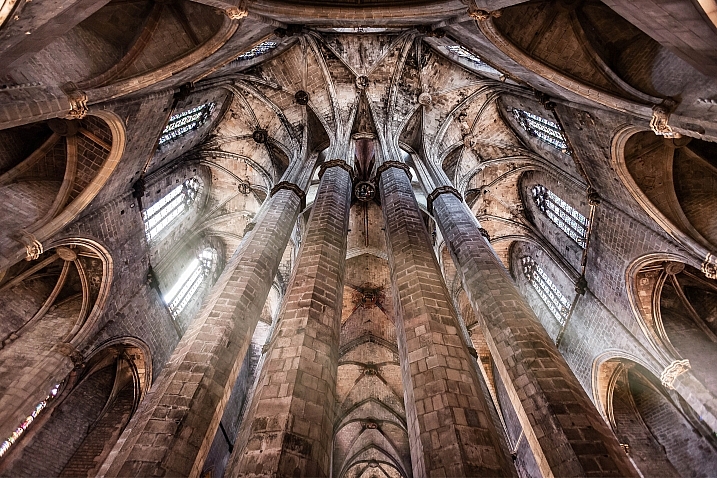
By Vincent Moschetti
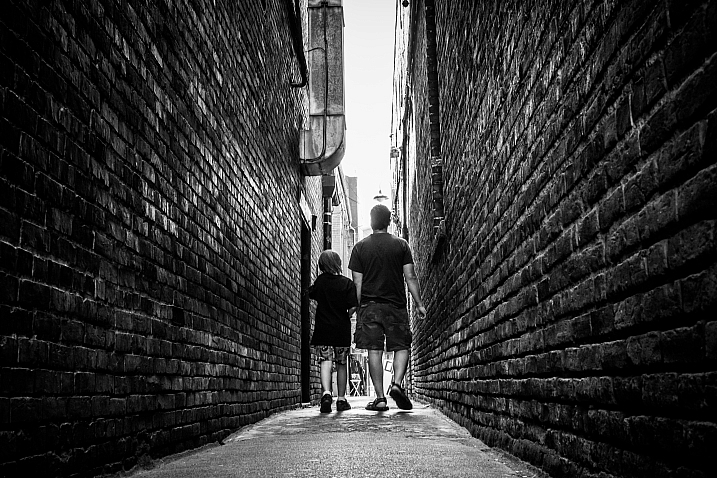
By Joris Louwes
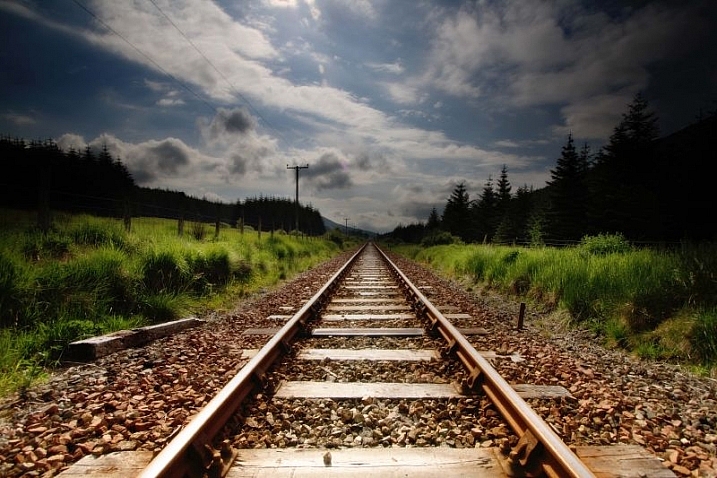
By mike138
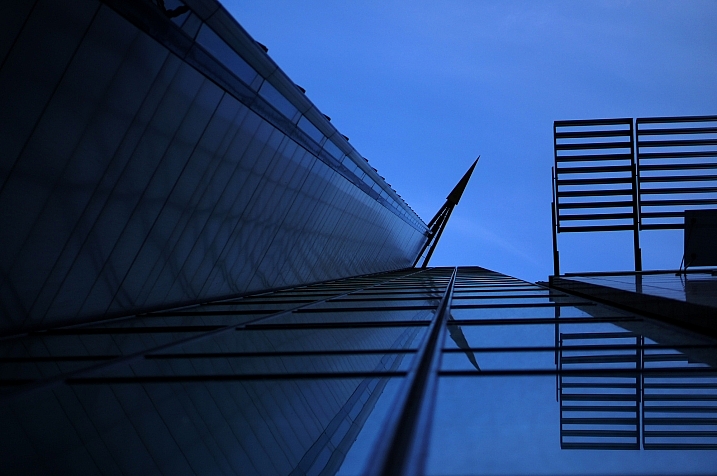
By perceptions I sichtweisen
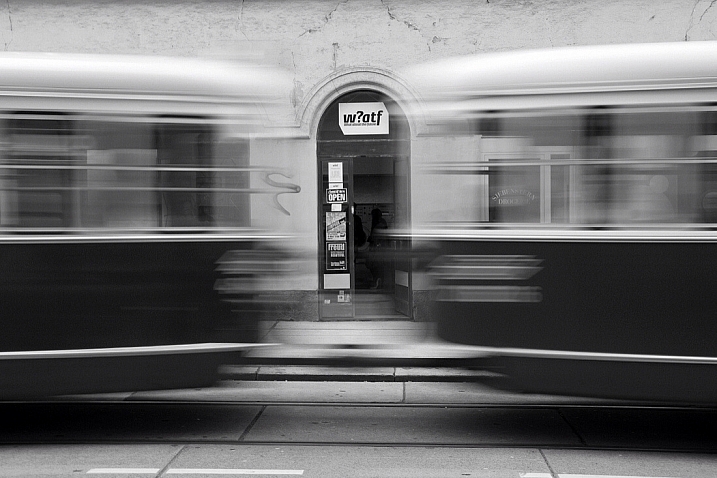
By Andreas Schalk

By Aristocrats-hat
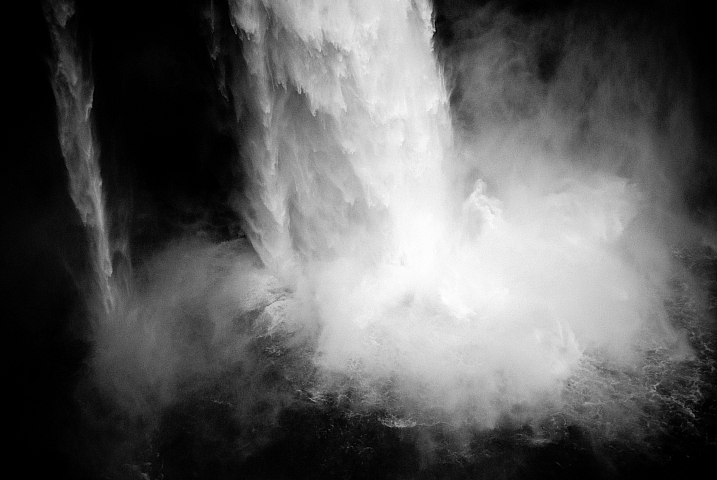
By Michael Coppola
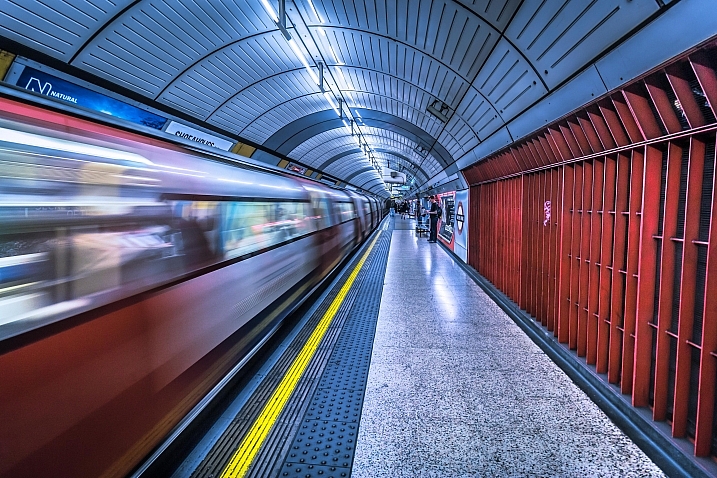
By Chris Bird
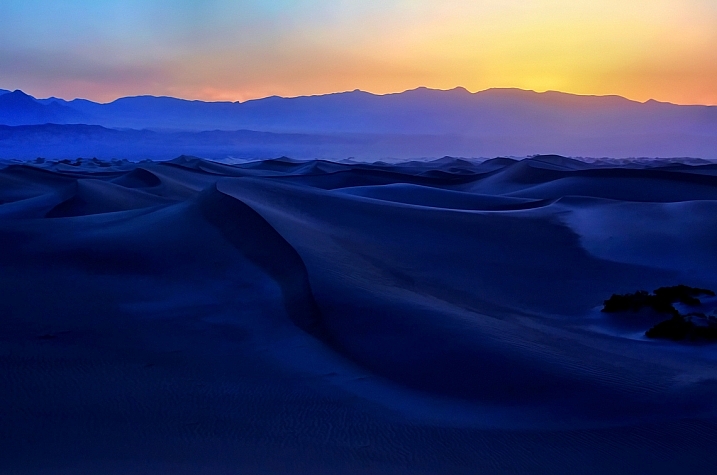
By Dave Toussaint
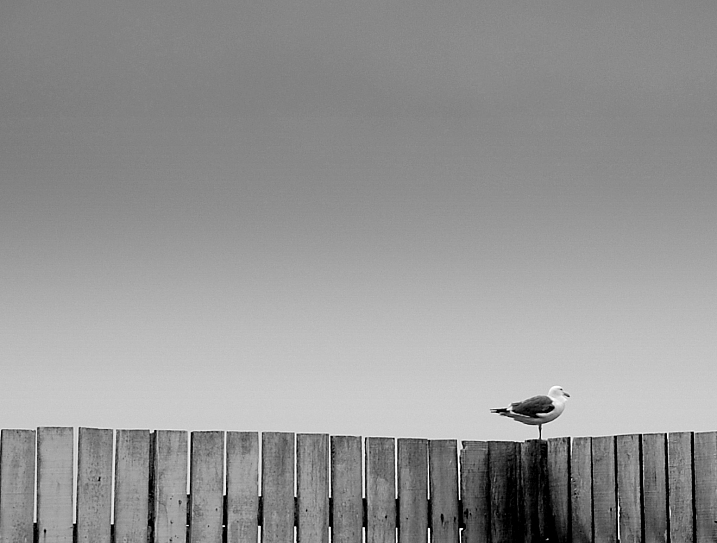
By Dawn Ellner

By Thomas Hawk
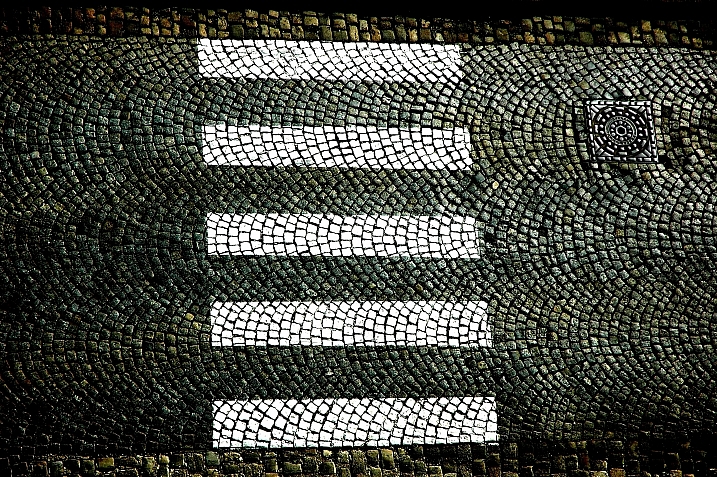
By Frédéric Vissault

By eLKayPics (away)
The post 33 Images that Exemplify Compositional Elements by Darlene Hildebrandt appeared first on Digital Photography School.

Maui, Hawaii. © Juliette Charvet/Vault Archives

Joshua Tree National Park at night. © Ryan Allan/Vault Archives
“I swear to you there are divine things more beautiful than words can tell,” writes Walt Witman in his 1856 poem Song of the Open Road, a call to men, women and children from the confines of their homes and onto the great unknown. If indeed the pleasures of the open road cannot be condensed into even the most evocative of stanzas, perhaps it is only through pictures that we might discover the surprise, delight, and knowledge that follow in the wake of an infinite horizon. For this group show, we’ve pulled together nineteen photographs that capture the essence of the open road, all curated from Vault Archives, a boutique licensing agency with breathtaking images from all corners of the world.
Here, we travel from the mountain summits of South Africa to the manicured roadways of Tuscany, from Californian wine country to the moonlit forests of Albania. Vault Archives is an exclusive, high-end agency offering images to commercial, advertising, and editorial clients. With a focus on authentic imagery from international artists, Vault Archives currently holds a roster of over seventy-five phenomenal photographers, each with a keen vision and natural ability to capture unforgettable moments. Through collaboration with subagents all over the world, Vault Archives is able to reach far and wide, bringing places and people together through vivid stories and outstanding images.

In the Dark Hedges, where the HBO series “Game of Thrones” is filmed, a shadowy lane is flanked by centuries-old trees, in County Antrim, Northern Ireland, June 13, 2013. © H. Thompson/The New York Times/Vault Archives

A fence-lined road in the morning mist and fog in Great Smoky Mountains National Park. © James Duckworth/Vault Archives

An oceanside path in Monterey, CA. © Noel Camardo/Vault Archives

Driving up the Boesmanspoortberg Mountain in South Africa, Eastern Cape Province. A low mist hangs over the rugged terrain of quartzite rocks. The road ends at a telecommunication tower high above the town of Willowmore. © Obie Oberholzer/laif/Vault Archives

Headlights illuminate apple trees that are growing along side the road in Schlanders, South Tyrol, Italy. Between Bolzano and Mals lies one of the biggest connected fruit cultivation areas of Europe. Around one million tons of apples are produced there every year. Due to the heavy winds in the valley, pesticides are being blown onto the fields of organic farmers, making it almost impossible for them to stick to the rules they have to follow. © Mario Wezel/laif/Vault Archives

Shady trees of Spanish moss at the Wormsloe Plantation in Savannah, Georgia. © Juliette Charvet/Vault Archives
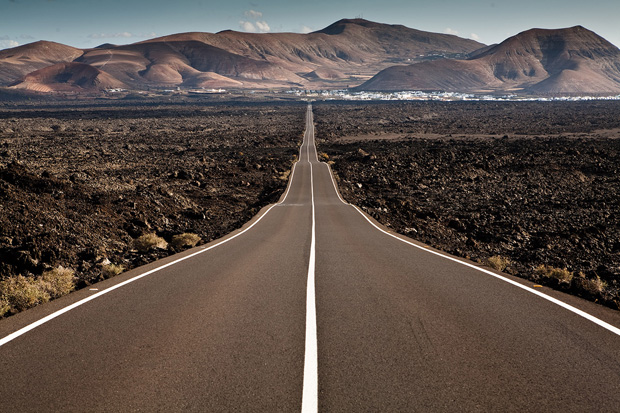
Road to the Montanas del Fuego in Timanfaya Natural Park, Lanzarote, Canary Islands, Spain. © Alfredo Bini/Cosmos/Vault Archives

Foggy country road in Boisbuchet, France, Vitra Design School. © Ana Nance/Vault Archives

The road illuminated by headlights in northern Albanian forests, Theth, Bertelec, Albania. © Bevis Fusha/Anzenberger/Vault Archives

Iceland © Taylor Glenn/Vault Archives

Cypress trees line the drive into Lavington Plantation. © Peter Frank Edwards/Vault Archives
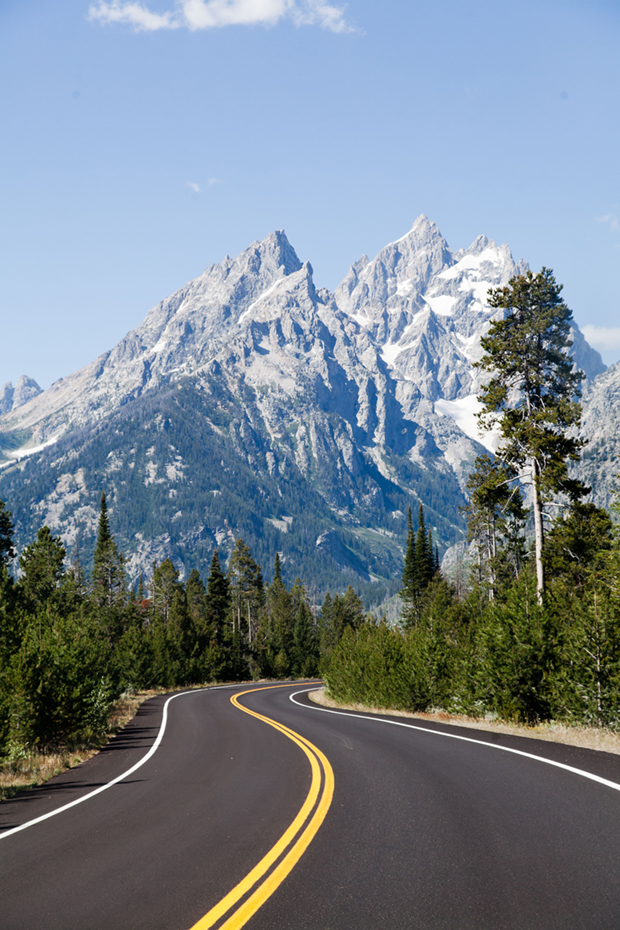
Grand Teton National Park, Jackson Hole Wyoming. © Peter Frank Edwards/Vault Archives

A trail in Sonoma County Park, Sonoma, California. © Taylor Glenn/Vault Archives

Transylvania, Romania. © Ana Nance/Vault Archives

A view of the savanna from a hot-air balloon over the Masai Mara, Kenya. © Harry Zernike/Vault Archives

A cypress-lined path from Volpaia, Tuscany © Kathryn Cook/The New York Times/Vault Archives

Vault Archives is a Feature Shoot sponsor.
The post These 19 Photos of the Open Road Take Us on a Beautiful Journey From South Africa to Sonoma (Sponsored) appeared first on Feature Shoot.

More of us need to think like this. Question what is assumed. Consider whether doing it ourselves we can do a better job. This applies to Internet service, food, entertainment, energy, all sorts of things. Notice that this network was built because Orcas Island was probably an area Century Link didn’t really want to service anyway. If it was prime territory any attempt to DIY the Internet would likely have been fought by local regulators, but service likely would have been better too.
(From ARSTechnica)
When you live somewhere with slow and unreliable Internet access, it usually seems like there’s nothing to do but complain. And that’s exactly what residents of Orcas Island, one of the San Juan Islands in Washington state, were doing in late 2013. Faced with CenturyLink service that was slow and outage-prone, residents gathered at a community potluck and lamented their current connectivity.
“Everyone was asking, ‘what can we do?’” resident Chris Brems recalls. “Then [Chris] Sutton stands up and says, ‘Well, we can do it ourselves.’”
Doe Bay is a rural environment. It’s a place where people judge others by “what you can do,” according to Brems. The area’s residents, many farmers or ranchers, are largely accustomed to doing things for themselves. Sutton’s idea struck a chord. “A bunch of us finally just got fed up with waiting for CenturyLink or anybody else to come to our rescue,” Sutton told Ars.

This is coming from the generally liberal Washington Post. Time for a dose of Scandinavian reality for Americans who recently have become enamored with far northern Europe lately without knowing much about the place.
So who has the larger ecological footprint, Americans or Danes? Answer: Danes.

Who is more xenophobic, Americans or Danes? According to this article, Danes.
Who takes more anti-depressants per capita, Americans or Danes? Danes. (Happiest country on Earth? I don’t think so.)

Who carries more personal debt, Americans or Danes? Danes.

Aside from Legos, Denmark leaves much to be desired. It certainly should not be held up as an example to follow. At least not for America to follow.
(From The Washington Post)
Politicians in the U.S. like Bernie Sanders praise Denmark for its relative income equality, its free universities, parental leave, subsidized childcare, and national health system. That all sounds pretty good, right?
It is fantastic in theory, except that, in Denmark, the quality of the free education and health care is substandard: They are way down on the PISA [Programme for International Student Assessment] educational rankings, have the lowest life expectancy in the region, and the highest rates of death from cancer. And there is broad consensus that the economic model of a public sector and welfare state on this scale is unsustainable. The Danes’ dirty secret is that its public sector has been propped up by — now dwindling — oil revenues. In Norway’s case, of course, it’s no secret.

This is a very interesting report and dispels many of the myths surrounding American social policy relative to our supposedly more centralized, socialized, friends in Europe. Our government is massive and meddling. Though the Europeans use direct government payments more than us, the US manipulates the tax code more than the Europeans to create incentives for various social policies. With the exception of France, government here actually inserts itself more generally into the lives of everyday citizens. We are not, and have not been a capitalist country for a long time. That’s pretty much the problem.
Of course in all this meddling there is lots of opportunity for crony capitalism. A tax “incentive” here. A tax break there. You know how it goes.
(From Mises.org)
There are a few things we can learn from this analysis. First of all, it is important to note that the US does not redistribute resources any less than other countries. Like most other “developed” countries, the US employs a wide variety of public policies to benefit certain groups and income levels.
Additionally, when taken together, the expenditures that result from these public policies are sizable, and even exceed nearly all other countries measured.
Left-wing pundits and scholars who wish to portray the US as a kind of hyper-capitalist social-Darwinist system conveniently focus on direct cash transfers and social spending by government agencies while ignoring other sources of social expenditures. At the same time, conservatives and right wing pundits, for different reasons, often attempt to portray the US government as a regime that engages in less redistribution of wealth than other states. Both groups are mistaken.

But don’t worry. If these mortgages default it’s on the taxpayers. (Like it always is these days.) What? You have a problem with that? It’s only your money.
From Zerohedge
Fannie Mae, the Washington DC mortgage giant, has announced their latest program: HomeReady. According to Fannie Mae,
“HomeReady is designed for creditworthy, low- to moderate-income borrowers, with expanded eligibility for financing homes in designated low-income, minority, and disaster-impacted communities. HomeReady lets you lend with confidence while expanding access to credit and supporting sustainable homeownership.”
The confidence part sounds like a Viagra or Cialis commercial.
The people making these calls in DC really just don’t know what they are doing.

If your windows aren’t working for you, they’re working against you.
This is true whether you spend most of the year running an air conditioner, a furnace, or an even split. It’s true because windows – even the most expensive gas-filled triple-paned sort – have paltry insulation values compared to walls. Which is to say, windows let outside heat in or let inside heat out much faster than your walls.
Of course, we have windows for other reasons too: natural light, views, and emergency exits from bedrooms.
But how can your windows be made to work for you, thermally speaking? With properly designed overhangs or awnings!
With right-sized overhangs on the side of the house facing the equator, you can let in the low winter sun and block the high summer sun, reducing your heating and cooling bills and increasing your comfort. This is low-tech green at its finest.
Calculating the right size for overhangs for your latitude, given the size and height of the window and roof can seem daunting, especially if your window isn’t facing true south. SketchUp includes great tools for visualizing the sun’s angles at different times of year, but building a model of your entire structure might be overkill for smaller projects. SketchUp also renders very slowly if your computer doesn’t have a lot of free space.
That’s where this web-based calculator comes in. Whether you’re building from the ground up or want to tweak the thermal performance of an existing window, just enter your measurements and this tool generates a graphic representing your window and the shadow of your overhang. Sliders allow you to change the time of day and the time of year, and the graphic responds quickly.
The relevant dates are the solstices (roughly June 21 and Dec 21) and equinoxes (roughly March 21 and Sept 21). Generally, you want to design an overhang that provides complete shade to south-facing windows for the summer solstice, and complete sun for the winter solstice. Since it’s often still cold in March and still hot in September, you then decide which side of the equinoxes you want to compromise on – whether you’d rather get less heat from your window in the spring or deal with overheating in the fall. Shade fins and/or shutters can help minimize excess fall heat.
There’s more to know about the ideal ratio of window glass to floor space, and how thermal mass plays into the equation, and there are many great books on passive solar design theory, but when it comes to putting it all into practice, a calculator like this is indispensable.
-- Reanna Alder
Overhang design calculator
Free

China has officially ended its barbaric ‘one-child policy.’ This policy resulted in coerced abortions on a scale that made the baby parts peddlers of Planned Parenthood green with envy. One would think that the end of this cruel and benighted policy would be celebrated but inside the halls of elite American educational institutions, there were tears. Much like most of American academia went into mourning at the fall of the Soviet Union and the overthrow of Khmer Rouge, the nostalgia for killing Chinese babies is hitting our universities.
A professor, Sarah Conly, at Bowdoin College has this to say:
China has just announced that it is giving up its infamous one-child policy. While the Chinese government has been creating more exceptions to the one-child rule in recent years, this is the first time officials have announced that all couples may have two children if they so choose. The change is being applauded around the world, but it raises the question: Is this really a good thing?
…
The most recent estimate from the United Nations says we’ll reach a population of 9.7 billion by 2050. And we just reached the population milestone of 7 billion in 2011, meaning it will take just less than 40 years to increase our population by almost 3 billion people All of this from a world population of about 1 billion in 1800. China now constitutes 19 percent of the world population, and so a change in the country’s fertility rate will likely bring about that 9.7 billion even sooner.
The sad truth is that trying to support this many people will bring about environmental disaster. We can see the damage that is already being done by our present population of “just” 7.3 billion. We all know about climate change with its droughts, storms, rising sea levels, and heat. But it’s also soil depletion, lack of fresh water, overfishing, species extinction, and overcrowding in cities.
We are using resources unsustainably, and despite the frequent cries for a cutback in the use of resources and release in greenhouse gases, nothing much has happened. Today we release more greenhouse gases than we did before the Kyoto accords. More people will mean more unsustainable resource use, worse climate change, and, eventually, wars over scarce goods or massive population displacement and migrations to places with remaining resources.
This is Paul-Ehrlich-bull****. Let’s look at the “overcrowding” problem. Suppose the entire world’s population was dumped into the United States. Don’t laugh. Under Obama’s immigration regime this could very well happen. What would that look like if the population density were the same as some major cities?

Likewise, the shortage of resources argument only works if you agree that nothing changes from today. Production of steel was an indicia of national power for about a century. Now no one uses such a measurement.
Conly goes on to wax poetic how wonderful it would be to reduce the human population and in the process she actually ends up supporting forced abortion while denying she does so:
If we say there is no moral right to have more than one child, do we pave the way for forced abortions and sterilizations? No.
We may well be able to reduce the fertility rate without using sanctions at all, and that would, of course, be best. Most of us do what is right because we think it’s right, not because we’re afraid of punishment. We think murder is wrong and so (most of us) don’t murder. The same could be true for limiting how many children we have.
First, we can educate people about the need to have fewer children. It’s a sensitive subject, and even activist groups have regarded population as the untouchable third rail of environmental preservation. This is a case where avoiding a sensitive subject will only come back to haunt us, though. We can learn the advantages of having only one child, and get rid of the myths that some people still attach to that. Some think that even with the new freedom to have two children, at least most urban Chinese will stick to the old policy, and of course if people do the environmentally right thing without being forced to, that is best all around.
Second, we can make it easy to control how many children we have. We could make contraception free and readily available. (The American College of Obstetricians and Gynecologists has recommended that birth control pills should be available over the counter, which would certainly be a beginning.)
Or, we can go farther, and reward those who have fewer children, say with tax breaks. We know that in the past the fertility rate has been sensitive to finances, with fewer births in both the Great Depression and following the 2008 recession, so financial reward seems an effective mechanism. If, on the other hand, incentives aren’t enough, we can provide disincentives. Instead of tax breaks we can have tax penalties for those who have more than one child. In terms of money, receiving a tax penalty may be no different from failing to receive a tax break, but calling it a penalty can provide more motivation.
Lastly, if we ever did discover that we needed sanctions to get people to refrain from having an unsustainable number of children, they wouldn’t be physical in nature. Fines may be the best way to go, and again, there is reason to think suitable fines, fixed on a sliding scale relative to income, can be effective — not 100 percent effective, which no regulation ever is, but effective enough.
Note that in the first example she gives she lauds the idea that forcing women to have abortions and to be sterilized was actually a damned good thing because it taut those stupid creatures to do what was right. In her third example, she doesn’t explore what happens when a financial disincentive fails to produce the desired result. The fact that she is willing to get the IRS involved in your family life indicates that she probably would object to getting the CDC or the Federal Bureau of Prisons involved either.
The sad irony is that philosophers, while mostly very dysfunctional beings themselves, have been behind most of the great tragedies of mankind. Without Marx and Engels and without Nietzsche to give a rational sounding underpinning to the genocidal impulses of Lenin, Stalin, Hitler, Mao, Pol Pot, etc., much of the slaughter of the 20th century could have been avoided.
What Conly is proposing isn’t an intellectual exercise, it is evil. If there is one part of human existence that should be free from the prying eyes of the state and the demented ideas of academia it is family life. The profound evil that Conly proposes is no less abhorrent than those evils that starved, gassed, and shot tens of millions of humans.
The post Fascist professor defends China’s one-child policy appeared first on RedState.
When you’re just starting out in photography, you may not have a lot of money to invest in putting together a high-end arsenal of studio lighting equipment. By being resourceful, however, you can do a lot with a little.
In the 23-minute video by the lighting brand Sekonic, photographer Tony Corbell demonstrates how you can create 10 completely different lighting scenarios in the studio for products and portraits with a single large softbox.
The main tools Corbell uses are the $180 Bowens Lumiair 80-100 Softbox and the $912 Bowens Gemini 500Pro monolight.
Here’s a little table of contents for the different styles discussed, along with some example images and lighting diagrams that are shown. Jump to each time in the video to learn about each setup:


From the master.
Why private cartels are always “floperoos,” and why businesses must have crony arrangements with government to maintain cartels.

This is the market baby! Very nice from REI. It’s a gamble but one I think is likely to pay off. I may just have to get my hiking boots from them this year.
Seriously, instead of going to the lame mall and battling people you’d rather not be in close proximity to, go for a hike with your family on Black Friday. We at ACC wholeheartedly support #OptOutside. Go jump around in the woods. (Even if you’re not a kid.) Climb some trees. And if you’re in California, hug one.
(From The USA Today)
Outdoor gear and sporting goods retailer REI is canceling Black Friday this year. No promotions, no hourly sales, no doorbusters, no waiting in line.
In an unprecedented move for the modern-day holiday shopping season, REI’s 143 stores will be closed the day after Thanksgiving. The co-op business plans to launch a campaign Tuesday encouraging people to forgo shopping to spend time outside instead. With the hashtag #OptOutside, REI will ask people to share what they’re doing on Black Friday on social media.
I will post pictures from our hike. Readers are welcome to post theirs in the comments on Black Friday if they like.

Sweden isn’t some sort of Shangri la. It’s cold. It’s dark. It has high rates of depression. Economic freedom levels are low. Taxes are high. And relative to most states in the USA Sweden is poor. Like Arkansas poor.
On the other hand it made Saabs, which I always liked. (Before GM took them over.)

(From Mises.org)
Once purchasing power among the US states is taken into account, we find that Sweden’s median income ($27,167) is higher than only six states: Arkansas ($26,804), Louisiana ($25,643), Mississippi ($26,517), New Mexico ($26,762), New York ($26,152) and North Carolina ($26,819).
We find something similar when we look at Germany, but in Germany’s case, every single US state shows a higher median income than Germany. Germany’s median income is $25,528. Things look even worse for the United Kingdom which has a median income of $21,033, compared to $26,517 in Mississippi.


