Shared posts

01 Jul 13:20

Southern-Style Summer Nachos

by kalexander

Everybody loves nachos. A crunchy layer of tortilla chips can be a vehicle for just about any ingredient you can imagine, from shredded chicken and jalapeños to crawfish and pickled okraboth of which appear in the upcoming cookbook ¡Buenos Nachos!, by Gina Hamadey. It’s a collection of recipes from fifty nacho-loving chefs, writers, and celebrities, including chef Ashley Christensen of Poole’s Downtown Diner in Raleigh, North Carolina, New Orleans musician Big Freedia, and Garden & Gun contributor and Southern Foodways Alliance director John T. Edge.

“Nachos are an exercise in balance,” Hamadey writes, and there are many more paths to crisp-and-gooey harmony than just chips and cheese. Chef and farmers’ market evangelist Steven Satterfield of Miller Union in Atlanta loads his nachos with black-eyed peas, summery green tomato pico de gallo, and dollops of tangy yogurt and sour cream. Not only do these chips stand out on a cookout table piled with ribs and deviled eggs, but they’re also easy to make: the lightly doctored black-eyed peas come out of a can, and the only trick to the pico is finding green tomatoes. Of course, you don’t have to tell anyone that.


Photograph by Noah Fecks

Black-Eyed Pea and Green Tomato Nachos
From Steven Satterfield, Miller Union, Atlanta
Adapted from ¡Buenos Nachos!, by Gina Hamadey
Serves 4-6

Ingredients
1 scallion, thinly sliced
3 radishes, halved and thinly sliced
1 small serrano or jalapeno pepper, seeded and minced
Juice of 1 lime
1 tsp. kosher salt, divided
½ cup sour cream
½ cup plain yogurt
8-10 oz. blue corn chips
1 cup Doctored-Up Black-Eyed Peas (recipe below)
½ cup pickled jalapeno slices
½ cup Green Tomato Pico De Gallo (recipe below)


Preparation
In a bowl, combine the scallions, radishes, chile, lime juice, and ½ tsp. salt. Mix well and let sit for at least 5 minutes before serving.

In another bowl, whisk together sour cream, yogurt, and ½ teaspoon of salt.

Preheat the oven to 350°F. Arrange a single layer of tortilla chips on a rimmed baking sheet. Spoon the black-eyed peas over the chips, followed by dollops of the sour cream mixture and jalapeno slices. Bake until chips and sour cream mixture are warmed through, about 7-8 minutes. Remove from the oven, and spoon pico de gallo and the scallion-radish mixture over the chips before serving.


Doctored-Up Black-Eyed Peas
Makes 2 cups

Ingredients
2 tbsp. extra-virgin olive oil
½ medium onion, diced small
1 garlic clove, minced
1 tsp. kosher salt
½ tsp. ground cumin
½ tsp. smoked paprika
½ tsp. chile powder
½ tsp. dried oregano
¼ tsp. cayenne pepper
1 15-oz. can black-eyed peas, with liquid

Preparation
Heat oil in a small saucepan over medium heat. Add onion, garlic, and salt, and cook, stirring frequently, for 2 minutes. Then add cumin, paprika, chile powder, oregano, and cayenne, and stir well. Add black-eyed peas and liquid, and bring to a simmer. Cook, stirring occasionally, until thickened, about 15 minutes.


Green Tomato Pico De Gallo
Makes about 2 cups

Ingredients
1 large green tomato, or 2 medium, cored and diced small
½ medium yellow onion, diced small
1 small serrano or jalapeno pepper, minced
Juice of 1 lime
1½ tsp. kosher salt
3 tbsp. chopped cilantro

Preparation
In a medium bowl, combine all ingredients. Let sit at least 15 minutes before serving, and keep refrigerated for up to 3 days.

01 Jul 12:45

5 Things: Andy Best

by Huckberry Staff
Featured huckberry 5 things andy best header1

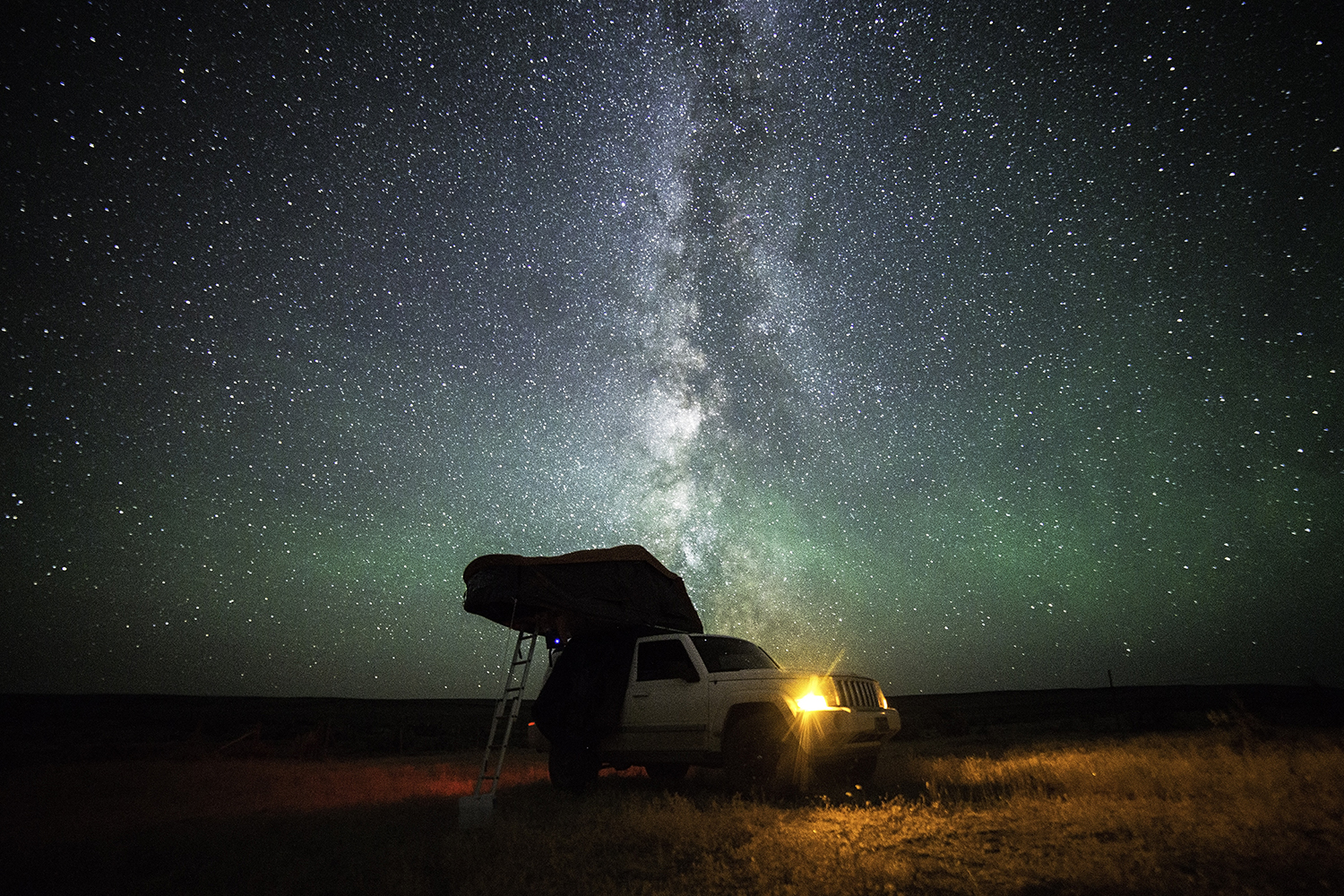
When it comes to living life to the fullest, no one does it better than Huckberry Ambassador Andy Best. Living the full-on nomadic lifestyle out of his camper with his wife and dogs, Andy’s days are spent chasing the highest peaks, exploring the backcountry, and tracing the coastlines of the United States.

His knack for capturing moments in the outdoors is matched only by how awesome of a person he is – seriously. We dare you to find a better dude. And even though he takes photos for a living, he always find time to step out from behind the lens and just enjoy the moment.

Fresh off the heels of heading up our third Explorer’s Grant trip in Olympic National Park, we catch up with Andy to chat about some of his favorite things. [H]

Improving my craft

"My art is everything outside family. It excites me daily to better myself. To study, to grind, to pursue the impossible task of greatness. It's the reward from hard work and a quality product that drives me constantly to create and share."

Fitness

"I've always been a gym rat but out here on the road you gotta get creative with your workouts. Squats with a generator? The high that comes from the physical burn keeps the mind and soul sharp. It's been a challenging but fun process."

Rebuilding a 1981 Honda Trail 70 motorcycle

"It helps me take my mind off the grind. To shift gears and tinker is quite a release. Not to mention, it's a pretty fun way to run the dogs too."

Being a nomad

"To live in the uncomfortable away from the expected is quite liberating. It's the freedom of pointing the wheels in any direction and hitting the road. All the way to simplifying what we own. To give it all away minus a few things was quite scary. Would I make it?  Could we be successful? It was worth finding out and I love how this journey has turned out so far."

Conservation

"As much I can I've been getting more involved with projects that bring awareness to the world around us. To share what's out here with the hopes that others get out, fall in love, and in turn become an advocate for the land."

Bonus Round

Do you collect anything?
Not on purpose, but cameras and outdoor equipment seem to just stack up.

What's your favorite Instagram account right now?
I'd have to say NatGeo. The stories of conservation are pretty incredible and inspiring.

You walk into a gas station at 3 am. What do you buy?
A Five Hour shot and some jerky.

Favorite quote?
"The greatest danger for most of us is not that our aim is too high and we miss it, but that it is too low and we reach it." Michelangelo.


01 Jul 12:40

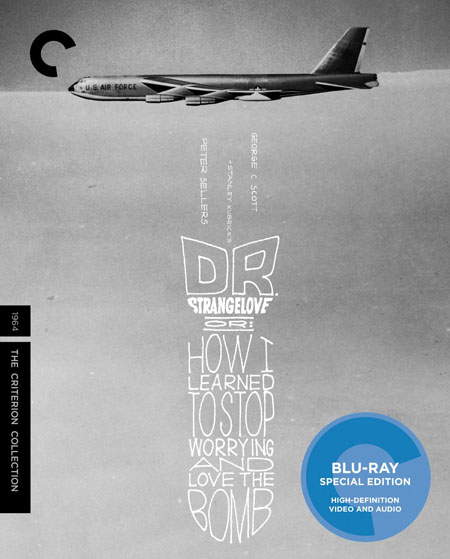
REVIEW: “DR. STRANGELOVE OR: HOW I LEARNED TO STOP WORRYING AND LOVE THE BOMB” (1964; Directed by Stanley Kubrick) Criterion Blu-ray Special Edition

by nospam@example.com (Cinema Retro)

“PURITY OF ESSENCE”

By Raymond Benson

Dr. Strangelove or: How I Learned to Stop Worrying and Love the Bomb is such an iconic motion picture that most readers of Cinema Retro, I would bet, already own a copy of this brilliant keepsake of the 1960s on DVD or Blu-ray. The film has been released several times before, but now it gets the Criterion treatment. Believe me—fans of the movie and of director Stanley Kubrick will still want to get this edition. It is definitely an upgrade in quality and the disk also comes with a plethora of fascinating supplements and some terrific goodies in the packaging.

Unless you’ve haven’t been paying attention to the lists of Great Movies You Should See Before You Die, you know that Dr. Strangelove is the story of how an air force general (Sterling Hayden) goes “a little funny in the head... you know, just a little... funny...” and orders one of his bombers to attack Russia in order to preserve our “purity of essence.” To save the day it’s up to an RAF exchange officer (Peter Sellers), the President of the United States (also Sellers), a Hawk-ish general in the Pentagon (George C. Scott), the good-ol’-boy pilot of the bomber itself (Slim Pickens), and a bizarre German nuclear physicist in a wheelchair (Sellers again). Maybe they rescue our planet, maybe they don’t.

Strangelove was Kubrick’s first time out as sole producer, along with serving as director and co-writer. Prior to making the film, he had been partners with James B. Harris, who produced The Killing (1956), Paths of Glory (1957), and Lolita (1962). Kubrick had also done a work-for-hire job for executive producer Kirk Douglas on Spartacus (1960), which he vowed never to do again, but that project afforded him the clout to carve out a subsequent career of total creative freedom. Now as the producer of his own pictures, Kubrick got what he sought. He secured his home base in England, set up a unique and highly personal routine of making films, and proceeded to give us some examples of extraordinary cinema. Strangelove was the first masterpiece out of the gate, and, fortunately, was a critical and box office hit.

It was controversial, too, as are all of Kubrick’s films made since he began producing them himself. At the time, some attacked Strangelove as being a “sick joke.” Nevertheless, it captured the mood of early 1964 and, as Martin Scorsese has said about it, “the word on the street was that it’s terrific.” It was the hip movie to see. It pushed the envelope. It got people talking. It established Kubrick as the hot filmmaker of his day.

In the early 1960s, the director had become obsessed with the arms race, experiencing himself some of the Cold War paranoia that was prevalent in those years, especially after the Cuban Missile Crisis of 1962. The British novel Red Alert by Peter George came to Kubrick’s attention and he thought it would make a fine basis for a political thriller. He brought in George to co-write, and at first the pair worked with James Harris on the script. At some point during the process, they all started to find funny things about the story. From then on, the screenplay morphed into a comedy—a very black one. In fact, Dr. Strangelove is arguably the definitive black comedy.

Harris eventually left the partnership and went off on his own, leaving Kubrick to produce by himself. That’s about the time Kubrick brought in satirist Terry Southern to polish the work and add some needed dialogue tweaking. The result is one of the most ingenious and original adaptations of a novel in movie history.

The acting and the direction are as perfect as one can get. Production Designer Ken Adam’s ultra-modern sets, especially that of the spectacular War Room, firmly situates the movie in its time and place. Gilbert Taylor’s stark black and white cinematography in the interior settings gives the picture its nightmare qualities, while the hand-held camerawork in the exteriors is effective in creating a documentary/newsreel effect. The editing (by future director Anthony Harvey, but certainly with Kubrick overseeing the work) is razor tight. The director apparently deleted a lot of footage to achieve the comic tension, including a now infamous pie fight in the War Room at the film’s climax because it apparently didn’t fit with the tone of the rest of the movie.

It all comes across with class and panache in Criterion’s new Blu-ray edition. The restored 4K digital transfer is the best I’ve seen. There’s an uncompressed monaural soundtrack, but also an alternate 5.1 Surround Soundtrack presented in DTS-HD Master Audio. The movie has never sounded better.

And then there are the supplements. Criterion provides several new pieces, and some of the best features from previous releases have been ported over as well.

The new supplements include: new interviews with Kubrick scholars Mick Broderick and Rodney Hill, archivist Richard Daniels, camera innovator Joe Dunton and camera operator Kelvin Pike, and Peter George’s son, David George. These all come with film footage and wonderful unseen stills. Previous extras include an excerpt from the tried and true 1966 audio interview with Kubrick by Jeremy Bernstein; four different documentaries about Kubrick, the making of the film, the sociopolitical climate of the period, and actor Sellers (two of which are co-produced by Cinema Retro Editor-in-Chief Lee Pfeiffer). There are also 1963 interviews with Sellers and Scott, and an excerpt from a 1980 Gene Shalit interview with Sellers.

Two trailers are included as supplements—the quirky theatrical trailer, which we’ve all seen, and the “exhibitor’s trailer,” which we haven’t. The latter is a little over fifteen minutes long; demonstration reels of this kind were commonplace in those days in order to persuade theaters to book the picture. It’s pretty much a short capsulation of the movie’s story using unedited footage, but what makes it totally cool is that Kubrick himself narrates it. He even makes excuses for a couple of monologue sequences that do not yet include cut-aways to other characters. Fascinating stuff.

Another terrific bonus is the collection of “props” you get inside the packaging—everything comes in a “Plan R” folder like the one used in the film. Inside is a “Top Secret” Memorandum containing an essay by scholar David Bromwich, and a Playboy-style booklet called Strangelove. Tracy Reed, step-daughter of director Sir Carol Reed and the only female in the cast, is on the cover of the booklet and graces a centerfold. The latter is also seen in the movie in a fictional issue of Playboy itself. The booklet’s text is Terry Southern’s 1994 article on the film. Last but not least, you even get a “miniature combination Bible and Russian Phrase Book.”

“A fella could have a good time in Vegas” with this superb release from the Criterion Collection.

CLICK HERE TO  ORDER FROM AMAZON

30 Jun 12:39

Eat Like a Local in New Orleans

by kalexander

Chef John Besh knows New Orleans. Raised in nearby Slidell, Louisiana, the former Marine made national headlines feeding the storm-tossed population of his adopted hometown in the wake of Katrina. Now, Besh is expanding a culinary empire that already includes the award-winning likes of Restaurant August and Shaya with soon-to-open reboots of the fondly remembered Caribbean Room restaurant and Silver Whistle Café, along with two high concept bars, in the storied Pontchartain Hotel.


Left to right: Willie Mae's Restaurant; chef John Besh; fried oyster po'boy from Parkway (Photos by: Southern Foodways Alliance; Rush Jagoe; Parkway Bakery and Tavern)

As he prepares to stake his boldest claim yet on Crescent City dining, we asked where he eats on his rare days off:

Ba Mien
“Go to this Vietnamese spot for authentic dishes like bánh cuốn—rice noodle dumplings. I also recommend the lemongrass chicken and the tiny egg rolls with piles of herbs and pickled vegetables.”


Middendorf’s
“It’s a fried catfish shack out by the swamp. It’s been around for 100 years, and it’s definitely a favorite roadside dive.”


Parkway Bakery and Tavern
“Right off the banks of Bayou St. John, this place has the best fried seafood po’ boys. It’s the go-to local spot for a po’ boy and a beer.”


Red’s Chinese
“The only signage on this Bywater restaurant is a red square. If the light’s on, then the place is open. You have to get the General’s Chicken.”


Satsuma Café
“This is a great—and super small—breakfast spot with two locations. I recommend going to the one on Dauphine Street, which is the original.”


Willie Mae’s Restaurant
“The fried chicken is my guilty pleasure. This is the best spot for a greasy spoon meal.”

30 Jun 12:22

Americans Forget How Good They Have It: New at Reason

by Reason Staff

Despite the political rhetoric, things are getting better. A. Barton Hinkle writes:
Today, less than $400 will get you a run-of-the-mill machine with a 2-gig processor, 8 gigs of RAM, and a terabyte of hard drive space in case you want to store movies on your PC. All of the movies.

Most people don't, though, because they can live-stream everything in high-definition over connections so fast that the end of the movie arrives before the middle does. A few years ago people Googled "free wi-fi" a lot because there wasn't much of it. Now 89 percent of the public thinks free wi-fi is listed in the Bill of Rights, and if the YouTube video of the kid falling off the swing buffers for more than a picosecond they're never going to set foot in that McDonald's again dammit, because what an outrage.

This is what psychologists call habituation—the tendency to get used to things, no matter how good or bad. You buy a new car and for the first few weeks you absolutely love it, but then one day you find the shine of it has worn off and it's just a car. Or you lose your job and spend the first two weeks crying so hard you have mucus swinging from your nose, but by week four you're genuinely curious about what Jerry Springer has in store this afternoon. Life goes on.

View this article.

30 Jun 11:35

Apple's new patent will block your iPhone from recording video at gigs - CNET

by Andrew Hoyle
The patent uses infrared to tell your phone to disable video recording so you can focus on enjoying the show.
30 Jun 11:34

Google buys 12 years of electricity from yet-to-be built wind farm - CNET

by Andrew Hoyle
The Norwegian wind farm will supply renewable energy for Google's European data centres for 12 years.
29 Jun 12:33

The First Woman to Vote in American History

by Miss Cellania

Neatorama presents a guest post from actor, comedian, and voiceover artist Eddie Deezen. Visit Eddie at his website or at Facebook.

According to recent statistics, there are more women voters in America than men. Women, at least in recent years, tend to vote Democrat. Men are, in the main, Republican voters.

The democratic party is currently 57% female. The GOP is just the reverse, with males making up 57% of the party. The biggest single voting block in the United States is now single women, who constitute 25% of our electorate.

Okay, here's a good bar bet question for you: “Who was the first woman in American history to vote in an election?"
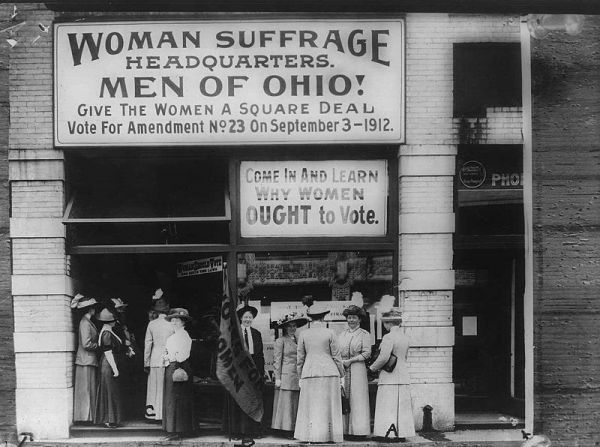
The 19th amendment to the Constitution guaranteed women the right to vote. Many people are under the mistaken belief that no woman ever voted before this amendment was passed. Women had actually been voting for many years before the 19th amendment. States and territories had their own laws.

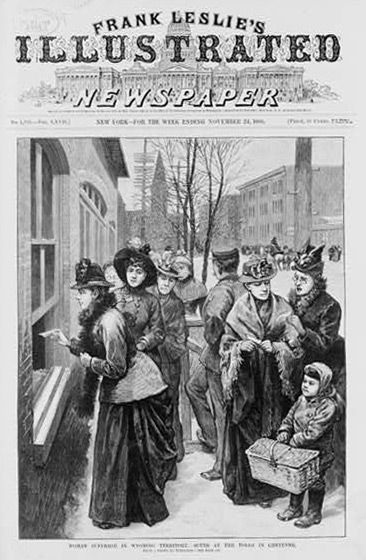
In the year 1869, the governor of the Wyoming territory approved and passed a woman's suffrage bill. And in the following year, a woman named Louisa Ann Swain cast the first vote by a woman in an American election.

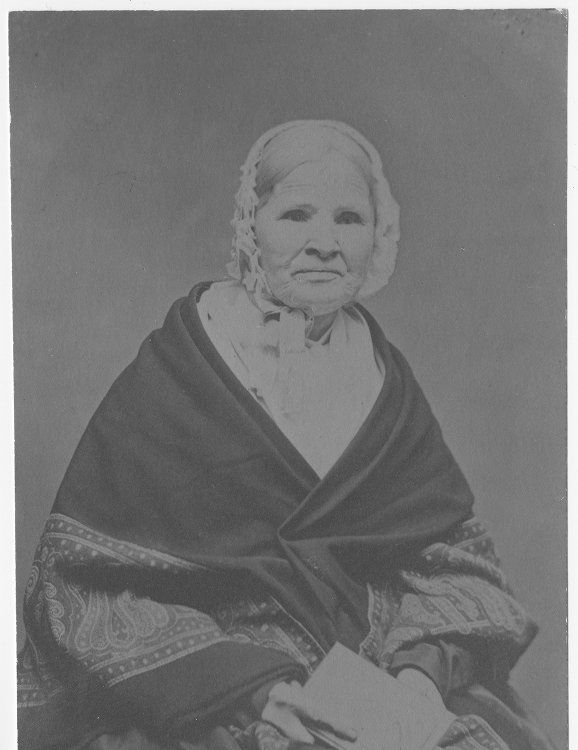
Swain was a 70-year-old housewife. She was born Louisa Ann Gardner in 1801 in Norfolk, Virginia. Louisa was the daughter of a sea captain, who sadly was lost at sea when she was seven. Upon his death, she and er mother moved to Charleston, West Virginia.

Louisa’s mother passed away while the two were living in Charleston. She then was shuttled off to live with her uncle in Baltimore, Maryland. In Baltimore, Louisa met Stephen Swain, who operated a chair factory.

The couple soon fell in love and married in 1821. Together, they raised four children. The Swain family moved to Ohio, then Indiana, before finally settling in Laramie, Wyoming. It was in Laramie, when Louisa was almost 70 years old, that she changed forever the course of American politics.

On the fine morning of September 6, 1870, Louisa Swain rose early, and put on her apron, bonnet and shawl. She carried a tin bucket with her because she wanted to purchase some yeast from a local merchant. As Louisa passed a local Laramie polling place, she decided to cast a vote.

And in this simple way, history was made.

The Laramie newspaper described Swain as "a gentle, white haired housewife, Quakerish in appearance.” She had to reassure reporters that voting made her no less of a woman. Interestingly, when the first woman ran for president (Victoria Woodhull in 1872), Louisa Swain voted against her.

The first-ever female voter in the United States, Louisa Ann Swain, died on September 25, 1880, in Lutherville, Maryland. On September 6, 2008, Congress officially voted the day to be "Louisa Ann Swain Day" by House Concurrent Resolution 378.

19 Jun 22:35

The Lost Sea, Sweetwater, TN

Feature: It's been lost in a cave. ...
13 Jun 18:09

A Vanishing Appalachian Bread Tradition

by kalexander

The dough smells like sweaty gym clothes, thanks to a bacterium that commonly causes food poisoning. It’s temperamental and sometimes fails even in the hands of experienced bakers. And “salt-rising bread” is a confusing misnomer—there’s little to no salt in the mix. Still, bakers Jenny Bardwell and Susan Brown have dedicated years of their lives to understanding and promoting it. “We ship hundreds of loaves every week, to people all over the country,” says Bardwell, owner of the Rising Creek Bakery & Café in Mt. Morris, Pennsylvania, just across the state line from Morgantown, West Virginia.


(Photographs courtesy of JNB Photo)

Now, the friends and collaborators have written a book for bakers interested in the history and science of this dying art. Salt-Rising Bread: Recipes and Heartfelt Stories of a Nearly Lost Appalachian Tradition comes out on July 7. “So many of the women who made this bread for generations have died,” Bardwell says, “but we were able to talk to a few of them while they were still with us.” That’s where she and Brown picked up not only technical tricks but also the lore surrounding the baffling unpredictability of salt-rising bread, which is said to live or die based on a baker’s mood.

Bardwell and Brown don’t totally subscribe to that mythology, but they do acknowledge that the bread turns out better when the baker and the bacteria are in sync. “You’re dealing with unpredictable bacteria,” Brown says. “If you’re stressed or rushing, you tend to fail more often.” Of course. But weather may have a more mysterious influence. “Especially when the seasons are changing, there will be periods of maybe two weeks when the bread does not work at all,” Bardwell says. She could blame shifts in temperature or humidity were it not for one troublesome fact. “Susan lives just a mile down the road, and hers will work.”

To start the process they have to bait a monster: Clostridium perfringens, a foodborne pathogen responsible for millions of twenty-four-hour stomach bugs each year. It likes unrefrigerated food, be it raw chicken or a soupy bread starter that might include potatoes, cornmeal, flour, or milk. Left in a warm place, the starter attracts bacterium and begins bubbling a foul-smelling gas. That gas inflates the bread during a forty-five minute bake that kills the bacterial bad guys.

Salt is optional. Bardwell and Brown offer two possible origins for salt-rising bread’s name: saleratus, a nineteenth-century ancestor to baking soda known colloquially as “salt a raitus,” and the pioneer practice of fermenting the dough in wagon-train salt barrels.

Once baked, the bread has a milder aroma than the dough, and a flavor often described as cheesy. Bardwell and Brown say it makes amazing grilled cheese sandwiches, but is best with a simple smear of butter. “The flavor is just wonderful, and it lingers on your palate,” Brown says. “That kind of flavor is hard to come by in this convenient word we live in.”

And as far as they can tell, it’s native. “We’ve read old diaries, books, and traveled to museums all over the country,” Bardwell says. “We’ve researched in England and Scotland and Wales and Ireland and Germany. There’s no history in Europe of a bread like this, which makes us think it’s unique to America. Isn’t that wonderful?”


From starter to dough, the beginnings of salt-rising bread.

13 Jun 17:29

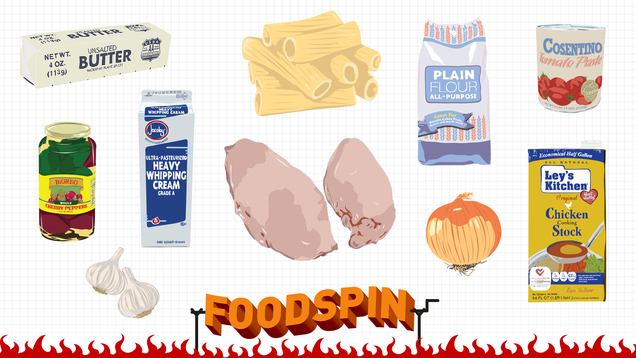
Make Chicken Rigatoni And Experience "The Chickening"

by Chris Thompson on Adequate Man, shared by Puja Patel to Deadspin

Here’s an axiom that’s maybe only a little bit true: everything “tastes like chicken.” Actually, almost nothing tastes like chicken... including a lot of the chicken you’ve eaten in your life. The taste of chicken is something exceptional when done right.

Read more...

12 Jun 23:32

Expedition: Bigfoot! (Sasquatch Museum), Cherry Log, GA

Feature: A surprisingly well-mounted museum with Bigfoot listening stations, an array of Bigfoot footprints, and even a rare Bigfoot butt-print. ...
10 Jun 11:29

18 ‘Must Try’ barbecue restaurants near Atlanta (SLIDESHOW)

by Carla Caldwell
Zagat has released a list of its picks for 18 ‘must try’ OTP barbecue restaurants. The OTP is defined as areas near Atlanta outside of Interstate 285. The list includes: Big Shanty Smokehouse (Kennesaw) Hudson’s Hickory House (Douglasville) Williamson Brothers BBQ (several locations) Tipsy Pig BBQ (Lilburn) Greater Good BBQ (Tucker) Click here to view the complete list and a slideshow.
01 Jun 11:41

Southern Highway Bites

by rreed

No other part of the country does fast food like the South. Beyond Bojangles, Chick-fil-A, Krystal, and Whataburger, these ten smaller chains offer everything from slaw dogs to country ham, making a quick stop for lunch on your summer road trip a joy rather than a necessity. With joints like these, who needs that car-trip cooler full of soggy sandwiches?

Biscuitville
Based in Greensboro, North Carolina
Flour from Sanford Milling Co. in Henderson, North Carolina. Pimento cheese from Stan’s in Burlington. Country ham from Suncrest Farms in Wilkesboro. These are the makings of breakfast at this hyper-local chain, where the bakers roll out fresh biscuits every fifteen minutes at each of the fifty-four locations in Piedmont North Carolina and southern Virginia.


(Photographs courtesy of Biscuitville FRESH SOUTHERN®)


Blue Circle
Based in Bristol, Tennessee
Once one of thirty-some-locations, the Blue Circle in Bristol survived a corporate apocalypse in the 1960s and 70s and singlehandedly upheld a legacy of snackable sliders with onions, mustard, and pickles until the first new location in decades opened last year in Elizabethton. Like a fighter on the mat, this iconic chain has taken a beating but might not be down for the count quite yet.


(Photographs courtesy of Blue Circle)


Cook Out
Based in Greensboro, North Carolina
Cook Out has locations in eight states and a menu that ranges from hot dogs to quesadillas to peach cobbler milkshakes. But the chain is unmistakably rooted in North Carolina: What other miracle-mile fixture has Texas Pete chicken wraps and Cheerwine floats?


Danny & Clyde’s
Based in Gretna, Louisiana
Attached to three New Orleans–area gas stations, this po’ boy shop is a Crescent City favorite for overstuffed fried shrimp and catfish sandwiches. It isn’t fancy, but it’s open when you need it: 24-7, at the Clearview and West Napoleon location, and pretty darn close at the others.


Milo’s
Based in Birmingham, Alabama
Chances are you’ve seen Milo’s sweet tea at your local supermarket, but what do you know about the burgers, available at 16 central Alabama restaurants? The lip-smacking-good secret sauce on top tastes like a mixture of brown gravy and barbecue sauce.


(Photograph courtesy of Milo’s)


Nu-Way Weiners
Based in Macon, Georgia
One of the oldest hot dog chains in the country—with eight locations in Macon, two in Warner Robins, and one across I-75 in Fort Valley—still serves electric-red wieners in chili and slaw blankets a century after the first location opened its doors.


(Photographs courtesy of Nu-Way Weiners, Inc.)


Pal’s Sudden Service
Based in Kingsport, Tennessee
Goofy exteriors decorated with fiberglass hamburgers and hot dogs conceal the steely corporate structure behind Pal’s, which has grown to nearly 30 locations in northeastern Tennessee and southern Virginia. Trained and tested daily, the employees at this service-obsessed chain deliver chili dogs and frosty milkshakes in mere seconds.


(Photograph courtesy pscf11)


Rush’s
Based in Columbia, South Carolina
Seventy-six years after the Rush family opened a drive-in on their dairy farm, all nine locations around Columbia sell fried chicken, hamburgers, and shakes in flavors like pineapple and hot fudge cake to college kids and lifelong regulars alike.


(Photograph courtesy of Rush's)


Tudor’s Biscuit World
Based in Nitro, West Virginia
Released in 2013, the “Politician” is a crumbly buttermilk biscuit with egg, cheese, and a fat slice of bologna. Such clever naming is typical of this blue-collar biscuit joint, serving breakfast sandwiches fortified with hash browns, fried apples, and pepperoni at sixty-some locations in the Mountain State and beyond. Try the “Tootie,” with egg, cheese, and country ham.


WifeSaver
Based in Augusta, Georgia
When the Masters Tournament stopped using WifeSaver pimento cheese in 2013, locals noticed. WifeSaver wasn’t the original vendor. Franchisee Ted Godfrey reverse-engineered the recipe from a batch made by the late Aiken, South Carolina caterer and forty-five-year tournament veteran Nick Rangos. Fans of the famous pimento cheese sandwich agreed that he got it right, though. And now, you can taste it at four of the six locations of this throwback chain: North Augusta, Fury’s Ferry, North Leg, and Washington Road. While you’re there, make sure to try the fried chicken: It, too, was on the menu at the Masters for years.


(Photograph courtesy of WifeSaver)

What are your favorite Southern fast food chains?

01 Jun 11:40

How to Identify A Good Barbecue Joint

by rreed

Ever dream of leaving it all behind to seek out some of the best barbecue in the country? Rien Fertel did just that when he hit the road for The One True Barbecue, a new guide to the generations-old art of whole-hog barbecue and the hardworking pit masters who keep it alive. Paging through the impressive travelogue is the closest most readers will ever come to chopping wood with Rodney Scott of Scott’s Bar-B-Que in Hemingway, South Carolina, or chewing the fat behind the counter at Siler’s Old Time BBQ in Henderson, Tennessee.


A full spread at Bum’s Restaurant in Ayden. (Photograph by Lissa Gotwals)

Barbecue, though, is democratic. If you have a hankering for chopped pork and a few hours to kill, you can find a platter. But how do you know before you order if you’re getting real-deal, barbecue or a slow-cooker surprise? The experts say to look for wood and smoke, of course, but there’s more to the best joints than that. We asked Fertel for a few more signs.

The pits shouldn’t have “on” and “off” switches.

Purists might tell you that real barbecue starts at the chopping block, but Fertel disagrees. “There are a lot of joints nowadays where they just throw shoulders on a pit and flip a switch.” Such gas-powered pits don’t honor tradition, he says. Still, he doesn’t expect every pit master to split wood—just to burn it in some form. “To me, there just has to be real work being done. They need to light something on fire, whether it’s logs, chunks, or even charcoal. That speaks better to what barbecue is.” Skeptical about charcoal? Consider B’s Barbecue in Greenville, North Carolina, a forty-year-old institution that regularly makes national best-of lists for pork and chicken slow-cooked over lump charcoal. With a devoted clientele, the rickety restaurant is proof that the most important elements of barbecue are fire and time.


Stirring the coals at Helen’s Bar-B-Q in Brownsville, Tennessee. (Photograph by Peden + Munk)

The joint should reflect its surroundings...

“I think barbecue should be indicative of a place,” Fertel says. “Whole hog belongs in Eastern North Carolina. Brisket in the Texas Hill Country. I expect to see mustard sauce in parts of South Carolina and corn sticks and hush puppies on the side in Eastern North Carolina.”


Rodney Scott seasons a hog. (Photograph by Brennan Wesley)

...but offer something unique, too.

Almost every great barbecue joint has something distinctive—“even weird”—on the menu. Bum’s in Ayden, North Carolina, for example, has “phenomenal” sweet potato muffins alongside a typical lineup of whole-hog barbecue, corn sticks, and cabbage collards. Helen Turner of Helen’s Bar-B-Q in Brownsville, Tennessee, sells smoked bologna alongside pork sandwiches, and Jack O’Dell of Midway Barbecue in Buffalo, South Carolina, came up with the hearty chicken stew that’s a signature side dish.


From left: The counter at Bum’s; Helen Turner. (Photographs by Lissa Gotwals; Peden + Munk)

The joint should have some personality.

“Barbecue places are known for being austere in their decorations, sort of plain” Fertel says. “Often people think of pig memorabilia and checkered tablecloths, and that is pretty drab.”

Sure, there are good joints out there with decorations straight out of the BBQ-R-Us Catalog. But from the kitschy capitol dome on top of the Skylight Inn in Ayden, North Carolina, to the smoke-stained cinderblock chimney at Archibald’s in Northport, Alabama, the looks of many longstanding barbecue joints are as distinctive as their menus.


Lunchtime at the Skylight Inn in Ayden. (Photograph by Jed Portman)

Sweatman’s in Holly Hill, South Carolina, is a good example,” Fertel says. “They’ve maintained that old plantation farmhouse. The sign is small. There’s no neon. They’ve chosen not to chop it up and make it look like a barbecue joint.”

Don’t look for trophies. Listen for tall tales.

“At a true barbecue joint, they’re always willing to share their story with you,” Fertel says. “Some newer barbecue joints are just glorified trophy rooms, with awards won on the road. Those competition barbecue types just don’t tell a story like Larry Dennis at Bum’s in Ayden. His history spans hundreds of years, and it makes no sense. His stories are real, though, because people believe them. I think a barbecue business has to have a mythology.”

25 May 14:53

Road Trip: The South’s Best Catfish Waters and BBQ Joints

by David Draper

southern catfish road trip, southern catfish, southern barbecue, southern bbq, channel catfish, blue catfish, flathead catfish

southern catfish road trip, southern catfish, southern barbecue, southern bbq, channel catfish, blue catfish, flathead catfish

Want to enjoy your best summer ever? Then load up your car with tackle and camping gear for an unforgettable fishing road trip. We’ve dreamed up seven D.I.Y. road trips—all packed with amazing country, great food, and out-of-this-world fishing. You can send us a thank-you postcard from the road.

Monster channel cats, flatheads, and blues, along with delicious Southern cooking, await you on the Cat and ’Cue Run.

southern catfish road trip, southern catfish, southern barbecue, southern bbq, channel catfish, blue catfish, flathead catfish

southern catfish road trip, southern catfish, southern barbecue, southern bbq, channel catfish, blue catfish, flathead catfish

1. Lock and Loaded
The White River dumps into the Arkansas just below Norrell Lock, forming the Arkansas Post Canal Reservoir. This is big-cat country. The fishing is at its peak when the current is running strong. Rig a heavy sinker a couple of feet up from a 6/0 circle hook to hold your bait tight to the bottom. Live bait is best for flatheads, so tip the hook with a shad or sunfish. 

2. Memphis Blues
Skip the music on Beale Street and head to West Memphis where another brand of blues—​the whiskered kind—​is the real draw. Blue cats weighing 50-plus pounds are common on this stretch of the Mississippi, and a few 100-pounders break the surface from time to time. Consider hiring a guide. James Patterson is among the best in the area.

southern catfish road trip, southern catfish, southern barbecue, southern bbq, channel catfish, blue catfish, flathead catfish

southern catfish road trip, southern catfish, southern barbecue, southern bbq, channel catfish, blue catfish, flathead catfish

3. World’s Greatest Boss
The ribs at Rendezvous get all the attention, but frankly, they can be hit or miss. A better bet is Germantown Commissary on the east side of Memphis. This shack consistently serves up a rack of dry-rubbed ribs with just the right bite. For $25, you can order the Boss Hog, which also includes pulled pork, hot links, and barbecued chicken. Save room for homemade banana pudding. 

southern catfish road trip, southern catfish, southern barbecue, southern bbq, channel catfish, blue catfish, flathead catfish

southern catfish road trip, southern catfish, southern barbecue, southern bbq, channel catfish, blue catfish, flathead catfish

4. King Cat
The Tennessee River below Pickwick Dam is ruled by Phil King (662-286-8644), who’s been winning catfish tournaments and guiding here for more than 25 years. King knows all of the secret holes, where he anchors up and feeds cut skipjack herring to hungry blues. Midcurrent dropoffs and ledges just off the bank are also proven hotspots.

5. Go to Market
One of the South’s best barbecue pits requires a bit of a detour, but New Market is worth the drive. The go-to choice here is the pulled pork. If you like a little heat, squirt on a bit of red sauce to amp up the hickory-smoked meat. For something a bit different, try New Market’s smoked mac and cheese.

6. Tennessee Trifecta
In southeastern Tennessee, Nickajack and Chickamauga Lakes compete for catfishermen’s attention. Of the two, Chickamauga offers the best chances at flathead, blue, and channel cats. Start in the afternoon casting stinkbaits and chicken livers in the lake’s many creeks for channel cats. Once the sun sets, it’s time to upgrade to bigger tackle and serious bait. For blue cats, hook a big piece of cut shad or skipjack, but live baits such as sunnies or suckers work best for flatheads.

southern catfish road trip, southern catfish, southern barbecue, southern bbq, channel catfish, blue catfish, flathead catfish

southern catfish road trip, southern catfish, southern barbecue, southern bbq, channel catfish, blue catfish, flathead catfish


Photographs: Keith Sutton; Alamy (chicken livers). Map by L-Dopa

24 May 16:26

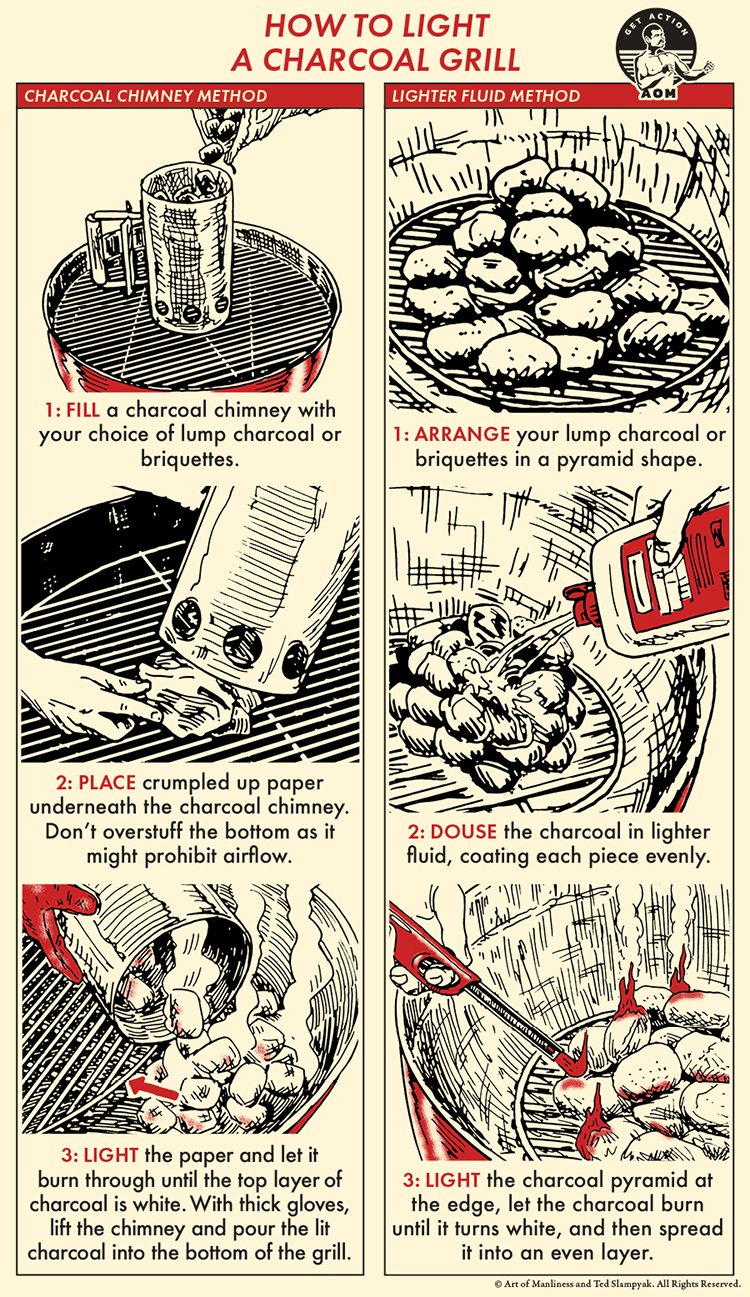
Skill of the Week: Light a Charcoal Grill

by Patrick Hutchison

An important part of manhood has always been about having the competence to be effective in the world — having the breadth of skills, the savoir-faire, to handle any situation you find yourself in. With that in mind, each Sunday we’ll be republishing one of the illustrated guides from our archives, so you can hone your manly know-how week by week.

Nothing says manly Americana like standing in front of charcoal grill that’s spewing flames like the upturned end of a rocket ship. But creating a massive fire doesn’t always equate to properly prepping a charcoal grill. At the end of the day, you’ll earn more admirers by serving up great tasting brats and burgers than by offering a low-budget pyrotechnics show. Learn to light your charcoal grill using one of these two methods, and you’re sure to get the praise you deserve.

Like this illustrated guide? Then you’re going to love our book The Illustrated Art of Manliness! Pick up a copy on Amazon.

The post Skill of the Week: Light a Charcoal Grill appeared first on The Art of Manliness.

22 May 10:03

Chief Vann Motel Sign, Chatsworth, GA

Feature: Chief James Vann was the most famous Cherokee in town, and has been posthumously immortalized as a goofy, decaying motel sign. ...
17 May 12:06

Fallen Robot: Goldie 1971, Tuscaloosa, AL

Feature: Sculptor Joe McCreary created "Goldie 1971" as a memorial to Birmingham's fallen iron giant, the Sloss Furnaces. ...
09 May 13:49

Whole Hog Barbecue in Lexington, Tennessee

by Jenna Mason
Get to know the late Ricky Parker and Scott's-Parker's Barbecue with the film Whole Hog, by Joe York.
09 May 00:32

Roberto Castro's Shot Hit A Man In The Face And Then Landed In A Shoe

by Timothy Burke on Screengrabber, shared by Timothy Burke to Deadspin

Roberto Castro lost this weekend’s PGA tour event at Quail Hollow in a playoff after landing a shot on 18 off a spectator’s face and into another spectator’s empty shoe:

Read more...

09 May 00:31

The Architectural Evolution of the Filling Station

by Miss Cellania

Gas stations these days seem to all look exactly alike: a square box with a convenience store inside and gas pumps in front. The main difference between them is the color scheme that identifies the brand, and you find the same ones in every town near the interstate highway. But it was not always so -and even now you can find filing stations that are architectural wonders. Gizmodo has a collection of images of gas stations designed by renowned architects over the past hundred years or so. Some copy the styles of other buildings, some are space-age or futuristic designs, some are novelty buildings, but my favorites are the art deco gas stations. The station shown here is in Shamrock, Texas. It was built in 1936 and has been restored to its original glory. See 61 distinctive gas stations. -via Metafilter

(Image credit: Carol M. Highsmith/Library of Congress)

04 May 13:23

How to Test Your Soil

by Shepherd Ogden
Anyone with a modicum of farming or gardening experience knows that the secret to success lies in the soil. You’re likely also aware that it’s possible to mail off samples of the stuff and receive recommendations for improving it. What’s generally less well understood: the importance of gathering samples in a systematic way and of choosing the right evaluation service.For about $15, you can get a down-and-dirty soil analysis from your state university’s agricultural lab—including results for phosphorus, potassium, pH (acidity), and organic matter content. But you may be left in the dark about nitrogen, crucial for leafy crops. Also, state-lab solutions tend to begin and end with conventional fertilizers, when a more eco-friendly route may be what you’re after.Instead, consider forking over about $50 for the basic test from a commercial lab such as Woods End in Maine, or California’s Control Laboratories. Reports from outfits like these will usually include results for nitrogen, phosphorus, potassium, pH, calcium, magnesium, and organic matter. A few dollars more buys feedback on micronutrients such as copper, zinc, iron, and manganese. Both labs will offer recommendations for remediating soil organically.Of course, even the best lab won’t deliver useful results from faulty samples. Collect the samples before applying lime or fertilizer, and preferably on bare ground, as soon as the ground thaws enough to allow it. Turnaround time runs one or two weeks. You can also test in fall for next year’s crops.Because the terrain on your property may vary from area to area, limit each test to five acres, conducting separate tests for sections that differ in moisture, soil structure, or crop history. Within each test area, choose 15 locations spaced equally apart and note them on a map for future reference; you’ll want to sample the same spots every year. (Mark your locations on a printout of a satellite-view Google map at the highest resolution.)A shovel can handle the job, but a soil probe, a T-shaped device that you drive into the ground to extract a “core,” will serve you better. Choose a probe with a horizontal foot bar, which will provide leverage and serve as a gauge to ensure your samples come from a consistent depth (about $90; ams-samplers.com). Simply work the tool a foot into the ground and then lift it out. Use a knife to extract just the middle of the exposed soil column from each site, avoiding grass or other surface matter and removing any stones. Crush, then mix the 15 samples together in a plastic bucket, not a galvanized one, as its zinc will throw off results. Take enough soil from the bucket to fi ll about a third of the bag provided by the lab. (If the lab doesn’t provide a bag, put 2 cups of the mixture in a freezer storage bag.)Print and fill out the lab’s downloadable “sample data” form, on which you’ll indicate what you plan to grow, and make a copy to file along with your map before sending the form off . When you receive the results, follow the instructions for bringing your nutrients up to par. (These could range from a state lab’s directive to “broadcast 2.5 pounds of nitrogen per 1,000 square feet” to a private lab’s prescription for “a compost-tea drench at a rate of 2.5 to 5 gallons per 1,000 square feet.”) In the process, you’ll be establishing a fertility baseline you can refer to year after year.The post How to Test Your Soil appeared first on Modern Farmer.
03 May 18:06

6 Reasons You Should Be Printing Your Photos

by Brady Cabe

printimages_feature

As a photographer I spend a lot of time taking photos, editing, blogging, and posting to social media. To what end? Are the photos meant to be viewed for the 24 hour period that Facebook displays them and then just gone forever? And then I scrounge up another photo to share and the cycle just continues.

Don’t get me wrong, I enjoy sharing my photographs online. But am I just feeding into the noise? Part of my move to start printing my photos comes from my desire to create and share something tangible and special in this age of digital noise and the culture of “now” and “more.”

This post is written to other photographers who might be considering buying and using a photo printer. I’m printing exclusively with the Canon Pixma Pro 100 and couldn’t be happier with the results. Below are some reasons why you should start printing.

FullSizeRender

1) It makes you a better editor

When you print a photo and hold it in your hands, you start to notice details that maybe you didn’t on your computer or phone screen—particularly if your screen could use a cleaning like mine.

Dust spots in your sky do not make for an attractive printed image. You start realizing the benefit of zooming in close and panning around your image to inspect for problem areas. You start paying closer attention to your histogram, and so on.

Check out my blog post outlining my printing process for a more in-depth look at preparing your image for print.

2) It makes you a better photographer

When you print, especially big, all technical issues with your photographs will be amplified. Displaying photos on Instagram gives us a lot of leeway, and sometimes we brush things off. Tiny screens don’t allow for all the detail to be revealed. Sometimes the detail is beautiful and sometimes it’s problematic—either way, it’s going to show in the print.

The next time you pick up your camera, you’ll be thinking “let’s get this right in-camera.” Because let’s face it, fixing your problems later in Photoshop is not always easy, sometimes is not possible, and it’s just lazy photography (we’ve all done it!)

Photoshop is an amazing tool and some artists use it as a means to create amazing masterpieces, but if you’re using it as a crutch to polish turds, you’re doing it wrong.

IMG_8220 2

3) It inspires you

Printing a photo, after careful selection, releases endorphins. I’m sure of it. All science aside, it makes me smile. It makes me want to go out and create more images that I can print large and be proud of.

Shoot, edit, print, repeat—that’s a new cycle for me.

4) It makes you revisit old photos

Particularly if you’re just getting into printing and you have a huge catalog of images, it’s a lot of fun to go back into the archives. When you stumble upon a gem from 5 years ago and finally print it out, its satisfying.

You begin to rediscover locations you’ve since neglected, and it gets the wheels turning—see “it inspires you,” above.

IMG_8419

5) It brings your photos to life – forever

Before I started printing, this is what I did with my photos: take the photos, edit photos, post to Facebook, Instagram, whatever, maybe blog it, and then poof: the images just went into oblivion with the occasional online or art show print sale.

That’s a lot of hard work, patience, and going out time after time chasing the sun and finally getting that perfect sunset at the perfect spot, just to let it sit on a hard drive. Print that baby out.

6) It’s ultimately satisfying

This point echoes what I’ve been saying throughout this post. Seeing all of your hard work and dedication printed on beautiful paper just feels good. It’s almost becoming an addiction for me… What can I print next? It’s just so much fun.

These are tangible things you can give to relatives, sell to clients, or hang on your wall. We see pixels all. day. long. Mix it up and get your print on.

Can you think of more reasons to print? Please share below.


About the author: Brady Cabe is a freelance photographer based in Grover Beach, CA, who shoots for the Santa Maria Times and the Santa Barbara News Press. He also shoots everything from portraits to weddings, and teaches astrophotography workshops. You can see more of his work on his website. This article was also published here.

03 May 16:39

This Is How To Make Friends With Wolves, According To A Professional Handler

by Quora, Contributor
How can one be friends with a wolf? This question was originally answered on Quora by Oliver Starr.
29 Apr 12:00

Crash Course: 4 Ways to Control the Heat on a Charcoal Grill

by Steven Raichlen

How do you control the heat on a charcoal grill? Despite the volatile nature of a charcoal (or wood) fire, there are four effective ways to control the heat.

Adjust the airflow: Most charcoal grills have vents on the bottom. Open the vents wide and you get more air and thus a hotter fire. Partially close the vents and you get less air and a cooler fire. Make sure the vents are open when you light your charcoal and set up the grill. If you have trouble starting a charcoal grill, the vents may be clogged with ash.

Build a three-zone or two-zone fire: Another way to control the heat is to rake out the coals in varying thicknesses. To build a three-zone fire, arrange a double-thick layer of coals over one-third of the firebox—the third farthest away from you. This will be the hot zone for searing. Rake out the remaining coals in a single layer in the center of the grill; this will be your moderate zone for cooking. Leave the remaining third of the grill fire-free for a cool or safety zone. By moving the food from the hot to the medium to the cool zone and back, you can effectively control the heat over which the food is grilling.

To set up a two-zone fire, rake the coals into an even layer across two-thirds of the grate. This is your grilling area; the coal-free (fire-free) area is your safety zone.

Monitor the distance: The closer you move the food to the fire, the hotter the heat will be and the quicker the food will cook. Some charcoal grills (like front-loaders) have grates you can raise or lower to bring the food closer to or farther away from the fire. If your grill has a fixed grate, you can mound the coals higher toward the back of the grill and control the heat by moving the food closer to or farther way from the fire.

Make a grill shield: If your food starts to cook (or burn) more quickly than you desire, make a grill shield by folding a piece of heavy-duty aluminum foil in thirds, the way you would fold a letter, and sliding the shield under the food. The shield will block the heat, slowing the cooking process. A shield also works well for keeping the exposed ends of bamboo skewers from burning.

Adapted from Planet Barbecue! For more information on the tools, fuels, and techniques of grilling, click here.

Planet Barbecue cover

Learn more:
How to Light a Charcoal or Wood Grill
Types of Charcoal for Grilling
Grilling and Smoking with Wood

The post Crash Course: 4 Ways to Control the Heat on a Charcoal Grill appeared first on Barbecuebible.com.

25 Apr 16:36

Super Survival Kit: 18 Essential Items for Backcountry Hunters

by T. Edward Nickens
  • backcountryopen.jpg

    survival kit, best survival pack, top survival kit,
    survival kit, best survival pack, top survival kit,

    Go off the grid, and things can get ugly pronto. You need a kit that’s easy to carry and packed with everything you need to weather a three-day blow or a busted femur. 

  • case.jpg

    survival kit, best survival pack, top survival kit,
    survival kit, best survival pack, top survival kit,

    Pack It In 
    The 6.10 Vertical Pouch from 5.11 Tactical is as straightforward as it is 1000-denier tough. Molded zipper pulls make for fast opening, and it’s ­MOLLE-​­compatible—which makes it easy to connect the first-aid kit to the outside for quick access (511​­tactical.com). 

  • lifestraw.jpg

    survival kit, best survival pack, top survival kit,
    survival kit, best survival pack, top survival kit,

    1. Purifying water doesn’t get any simpler than a LifeStraw: Insert into a cesspool. Drink. The filter removes waterborne viruses and protozoa including giardia and cryptosporidium (lifestraw.com).

  • signalmirror.jpg

    survival kit, best survival pack, top survival kit,
    survival kit, best survival pack, top survival kit,

    2. Pack a 3x5-inch glass mirror for maximum flash ­(best​glide.com).

  • gigspear.jpg

    survival kit, best survival pack, top survival kit,
    survival kit, best survival pack, top survival kit,

    3. Lash the Kinetic Gig Spear stainless-steel two-tine spearhead to a shaft, and the wild is your grocery store (buckknives.com). 

  • sharpie.jpg

    survival kit, best survival pack, top survival kit,
    survival kit, best survival pack, top survival kit,

    4. Leave a note with a Sharpie pen, and the permanent ink won’t run in the rain. While you’re waiting for aid, use the pen to turn a sleeping pad or spare T‑shirt into a checker­board. Stones and sticks stand in for the checkers. For good measure, wrap 10 feet of duct tape around the marke

  • cord.jpg

    survival kit, best survival pack, top survival kit,
    survival kit, best survival pack, top survival kit,

    5. Have 30 feet of parachute cord for the basics, and add 30 feet of No. 36 tarred bank line for increased utility. The slightly tacky marine line holds knots more tightly than p-cord and won’t absorb water. 

  • blanketCLOSE.jpg

    survival kit, best survival pack, top survival kit,
    survival kit, best survival pack, top survival kit,

    6. Supercharge the space blanket category with a 5x8-foot SOL Survival Blanket. Pitch it like a tarp or wrap up burrito-style. 

  • kestrelCLOSE.jpg

    survival kit, best survival pack, top survival kit,
    survival kit, best survival pack, top survival kit,

    7. The Bluetooth-enabled Kestrel Drop D3 environmental logger feeds temperature, humidity, altitude, and barometric-pressure data to your smartphone. Consider it an early bug-out warning system ­(kestrel​­meters.com). 

  • salmonCLOSE.jpg

    survival kit, best survival pack, top survival kit,
    survival kit, best survival pack, top survival kit,

    8. Canned wild salmon or mackerel tastes good and is rich in protein and healthy fats—perfect survival grub.

  • knife.jpg

    survival kit, best survival pack, top survival kit,
    survival kit, best survival pack, top survival kit,

    9. Bash, gouge, and dig with the Morakniv Garberg’s 3.2mm-thick blade. The handle is nearly unbreakable, and the ground spine’s angle shaves tinder like soap and showers sparks ­(mora​of​­sweden.se). 

  • TraumaKit.jpg

    survival kit, best survival pack, top survival kit,
    survival kit, best survival pack, top survival kit,

    10. Backcountry travelers need more than bandages. The small Hunter’s Trauma Kit includes a ­battlefield-​­tested SOF Tactical Tourniquet, a nonadherent petroleum gauze dressing and pressure bandage, antibacterial ointment, smaller bandages, and lip balm (tms​­outdoors.com). It’s a great foundation, but cover more catastrophes by adding a SAM splint from Sawyer Products ­(sawyer.com), an antihistamine, and an epinephrine auto-injector to your first-aid supplies.

  • phonecharger.jpg

    survival kit, best survival pack, top survival kit,
    survival kit, best survival pack, top survival kit,

    11. Power-Up Tip
    Goal Zero’s Flip 20 recharger will rejuvenate most smartphones and USB-equipped headlamps at least twice ­(goal​zero.com). 

  • GarminCLOSE.jpg

    survival kit, best survival pack, top survival kit,
    survival kit, best survival pack, top survival kit,

    12. As a backup to your compass, bring a Garmin Foretrex 401 wrist GPS to point your way home ­(garmin.com). 

  • coffeeCLOSE.jpg

    survival kit, best survival pack, top survival kit,
    survival kit, best survival pack, top survival kit,

    13. Every situation seems a little less grim with a cup of decent java. Starbucks Via instant coffee packs are a backcountry godsend. 

  • headlamp.jpg

    survival kit, best survival pack, top survival kit,
    survival kit, best survival pack, top survival kit,

    14. The waterproof Spot headlamp sports finger-tap beam adjustments and a light-up-the-night 200-­lumens beam. A fail-safe lock prevents the battery from draining if you accidentally turn it on.

  • compass.jpg

    survival kit, best survival pack, top survival kit,
    survival kit, best survival pack, top survival kit,

    15. The Cammenga Destinate Tritium Protractor is the Humvee of compasses. Six tritium microlights glow like kryptonite. There are four map scales, plus a map magnifying glass and waterproof and shockproof housing (cammenga.com).

  • matchesandcase.jpg

    survival kit, best survival pack, top survival kit,
    survival kit, best survival pack, top survival kit,

    16. The Titan Stormproof Matches Kit contains wind- and waterproof matches that stay lit even after a dunking ­(uco​gear.com). Add a Pathfinder Glowing Survival Fire Steel as a 3,000-degree spark option; you can store tinder in the handle ­(self​­reliance​­outfitters.com). 

  • cupCLOSE.jpg

    survival kit, best survival pack, top survival kit,
    survival kit, best survival pack, top survival kit,

    17. The Gen3 ­stainless-​steel cup has folding handles and a perforated strainer lid; it serves as a pot you can set on a stove or hang over a fire thanks to predrilled bail holes ­(self​­reliance​­outfitters.com).

  • spot.jpg

    survival kit, best survival pack, top survival kit,
    survival kit, best survival pack, top survival kit,

    18. When it’s bad enough to hail the choppers, the Spot Gen3 is a lifeline to the satellites. There’s one-­button SOS to 9-1-1 responders, preprogrammed text messaging, and a tracking application that allows family to monitor your progress. 


25 Apr 14:19

Review: Two Cylinders Down, the Boxster Comes Out On Top

Porsche-718-Boxster-Gear-Patrol-Lead-Featured

The genius of this new 718 Boxster lies overwhelmingly in the engines. Chopping a third of the cylinders off the flat-six engine is a pretty big deal.

...

Read More »
24 Apr 22:19

Old Car City USA, White, GA

Visitor Tip: A forest full of rusting cars for art photography wasn't enough -- Old Car City USA had to have its own theme song. ...
21 Apr 12:14

7+ Free Responsive Email Newsletter Templates Your Readers Will Love

by Joel Lee
newsletter-templates

If you’re thinking of running an online business, then you’re absolutely going to need an email newsletter. Whether your business involves blogging, developing a mobile app, hosting a podcast, drawing a webcomic, or even shooting photographs — a newsletter is important for ALL of those pursuits. Why? Because an email newsletter is a guaranteed way to get information out to your fans and followers. Of all the ways to promote and grow your online business, it offers the largest return for minimal effort. And the good news is that lots of services exist that make it easy to set up your first email newsletter. The key to a successful...

Read the full article: 7+ Free Responsive Email Newsletter Templates Your Readers Will Love