Azulle, formerly known as Quantum Suppliers, just released the $170–280 Byte Plus mini PC. The Byte Plus upgrades several components on the already winning design of the Quantum Byte — but how does it compare to its competitors? In short, pretty good. Azulle’s Byte Plus won’t stream 4K video or play modern games — but it’s everything you’d want from a compact and efficient mini PC. And on top of that, there’s no fan! Enter below for you chance to win an Azulle Byte Plus mini PC! Azulle Byte Plus Mini PC Specifications and Appearance Intel Cherry Trail processor with 1.6GHz...
I miss Pat Conroy. No, we never met. But like so many people, I felt like I knew him. Now that he’s gone, I’m making a pilgrimage of sorts to his hometown of Beaufort, South Carolina. I want to see the neighborhood where he spent his happiest years, visit the places he went for inspiration, and meet the people who knew him best. For though he was prolific, I suspect much of Pat’s story remains unwritten, hidden in plain sight among the antebellum homes and live oaks of this Lowcountry town. Pat Conroy and his best friend, Bernie Schein, were walking past an oak tree. It was one they passed often on Bay Street, strong and full, with mossy arms that stretched over the banks…View Original Post
As viewers nervously tuned into the first presidential debate in September, the first question might well have been about the venue itself. Why are we watching these candidates at Hofstra University? At this point, the school's most salient feature might be hosting presidential debates, having been the only venue to have hosted debates in three consecutive election years.
But if Hofstra University seemed a bit random, the second debate's venue might have been even more esoteric: tiny Longwood University, in Virginia.
In recent years, there have been a spate of strange academic settings. Washington University, in St. Louis, has been a popular choice, along with a series of seemingly haphazard hosts, including St. Anselm College, in Goffstown, New Hampshire; Centre College, in Danville, Kentucky; Lynn University, in Boca Raton, Florida; and Belmont University, in Nashville.
It wasn't always this way. Probably the most famous presidential debate of all time, the 1960 clash between Richard Nixon and John F. Kennedy that might've decided the election, was held in a Washington, D.C. television studio. And almost all of the debates up until 1988 were held in a variety of convention centers, auditoriums, and theaters.
So what changed? The short answer is money.
The Kennedy-Nixon debate, the first between major party nominees, was sponsored by television networks, and the debates in 1976, 1980, and 1984 (there were no debates in 1964, 1968, or 1972) were each sponsored by the League of Women Voters. But beginning in 1988 a new entity took over: the Commission on Presidential Debates (CPD), a nonprofit formed then by Republicans and Democrats in part to help ensure that debates would keep happening.
But as the debates became more formalized, they also became more expensive, in part to support the CPD and its staff. Venues like theaters make money by staging a show and charging admission, but presidential debates cost $4 million or more to produce. And very few pay to get in.
All of which makes little sense for a private venue, but a lot of sense for colleges, who both have the money to spend and aren't out to make money themselves, only garner publicity. The commission, in turn, gets a venue with a neutral sheen, in addition to one that gestures at harmless intellectual pugilism. What is college for? Mindless debate, mostly.
The CPD doesn't have any shortage of options, or colleges willing to pay up. Hofstra spent around $5 million this year to host the debate, or about the same amount they spent in 2012. Longwood University, in Farmville, Virginia, which hosted the vice presidential debate, paid $5.5 million for the privilege, a number equal to about 10 percent of the university's entire endowment. Washington University, which hosts the second presidential debate, and the University of Nevada-Las Vegas, which hosts the final debate on October 19, will pay similar numbers.
Where does all that money go? Around $2 million for each debate goes back to the commission, in the form of a host fee, which the commission uses to fund its staff.
The rest is spent on production costs, which aren't small. This is because the CPD requires a lot for the debates, which include thousands of spectators, in addition to hundreds of journalists and political operatives, as well as countless television crews.
Have a look at the CPD's requirements for debate hosts, which they update each election cycle:
A debate hall of at least 17,000 square feet that is air conditioned.
A large parking area close to the debate hall for 40 television remote trucks, trailers and/or satellite trucks up to 53 feet in length.
A media filing center, located either in the same facility as the debate hall or extremely close to the debate hall that is a minimum of 20,000 square feet (may be a tent). This space must be air conditioned.
A media parking lot, located approximately one-quarter to one mile away from the media filing center, that can accommodate approximately 500 passenger vehicles.
An accreditation center of at least 3,000 square feet, located one-half to one mile away from the debate hall, with parking for 75 vehicles.
Nearby hotels that can provide 3,000 rooms for the event.
Good air and ground transportation networks.
The host's guarantee of complete city services, including public safety personnel.
Which is how you end up at Longwood and not Harvard, which doesn't need the publicity nor any potential headaches. But for Longwood—a public institution of around 5,000 students whose most famous alumni might be the former NBA player Jerome Kersey—it can be well worth it.
Taylor Reveley, Longwood's president, likened it to buying a television ad during the Super Bowl.
"Hosting one of these crucial debates is a genuinely once-in-a-lifetime opportunity," Reveley told PBS.
Some of the people Longwood might be trying to get their name out to are the candidates themselves. On Tuesday, when Mike Pence, the Republican vice presidential nominee sought to thank the university, he didn't quite get it right.
"Thank you," Pence said, "to Norwood University for their wonderful hospitality."
The so-called "Nag's Head Portrait", possibly of Theodosia Burr Alston. (Photo: Public Domain)
In 1869, a vacationing doctor named William Gaskins Pool was called to help an ill old woman named Polly Mann, who lived in a shack near Nags Head, Carolina. When he and his daughter, Anna, gingerly entered the dark, cobweb-covered home, they were drawn to a picture on the wall, Anna remembered, “of a beautiful young woman about twenty-five years of age.” After extensively questioning Polly about the painting, Dr. Pool believed his initial hunch was correct. He was staring at a portrait of the long vanished Theodosia Burr Alston, a portrait which may hold the key to her long-debated fate at sea.
Today, if people know anything about Theodosia, it is because of the lovely lullaby “Dear Theodosia,” sung by the character of Aaron Burr in the sensational musical Hamilton. But the real-life Theodosia grew from a beloved child into a highly intelligent, complex adult, whose fascinating story is largely unknown and worthy of its very own Broadway smash.
Theodosia Bartow Burr was born in Albany, New York, on June 21, 1783. Her mother, also called Theodosia, was a brilliant, cultured woman. She had scandalized New England society, when as a married mother of five, she fell in love with an equally brilliant and much younger blue-blooded lawyer and Revolutionary War—Aaron Burr. After her first husband’s death, the two were married, and little Theodosia, the couple’s only child to survive, became the center of her parents’—particularly her father’s—world.
“Your dear little Theodosia cannot hear you spoken of without an apparent melancholy,” the elder Theodosia wrote to a traveling Aaron in 1785, “insomuch that her nurse is obliged to exert her invention to divert her, and myself avoid to mention you in her presence. She was one whole day indifferent to everything but your name. Her attachment is not of a common nature.”
Aaron reciprocated these feelings. His plans for his lovely, dark-haired “Little Miss Priss,” who was already displaying an extraordinary intellect and sharp wit, were incredibly ambitious, and for the times, highly progressive. “I hope yet by her [Theodosia] to convince the world what neither sex seems to believe,” he wrote, “that women have soul!”
In 1800, Theodosia became deeply enamored with Joseph Alston, a wealthy planter from South Carolina. “My father laughs at my impatience to hear from you,” Theodosia wrote teasingly to Joseph during a separation.
The couple were married on February 2, 1801, in Albany. Little more than a month afterwards, she and her new husband watched as her father was sworn in as Vice-President of the United States, under President Thomas Jefferson. They were further blessed nine months later when their son Aaron Burr Alston, nicknamed “Gampy” by his doting grandfather, was born.
However, the birth of her only child took a heavy toll on Theodosia. She was severely injured during the traumatic birth, and the prolapsed uterus she suffered left her in immense pain, and made intercourse impossible. Although she adored her husband and his family, she had a hard time adjusting to the isolated life of a plantation mistress at The Oaks, the family estate on the Waccamaw River in South Carolina, and was soon spending half the year in New York with her father.
On July 10, 1804, Aaron sat down at his desk and wrote his Theodosia a letter of goodbye. “I am indebted to you, my dearest Theodosia, for a very great portion of the happiness which I have enjoyed in this life. You have completely satisfied all that my heart and affections had hoped for or even wished.” The next day, Aaron—still the Vice President of the United States—would kill Alexander Hamilton in a duel in Weehawken, New Jersey.
Rumors swirled as to the cause of the duel. Aaron had been incensed by a comment Hamilton had made about “still more despicable” acts. Some thought Hamilton may have been referring to Aaron and Theodosia’s “morbid affection” for each other, which had led to whispers of incest.
Whatever the case, Aaron was soon on the run, although he was never tried for the murder. After serving out his term of Vice President, Aaron headed west to establish a new country comprised of western North American territory and Mexico. He planned to become emperor of said country, with Theodosia succeeding him as empress. He had the full support of his daughter and son-in-law, who supplied much needed funds. The Alstons even headed west to help Aaron in his quest. Theodosia wrote to her half-brother excitedly about “the new settlement which I am about to establish.”
But the Burr dynasty was not to be. The plot was found out, and Burr was taken into custody. In 1807, he was tried for treason in Richmond, the ever loyal Theodosia at his side. Amazingly, Aaron was acquitted, and with the help of Theodosia he soon smuggled himself out of the country and headed for Europe.
Her father now gone, Theodosia’s health—she was probably in the final stages of uterine cancer— deteriorated further. “The most violent affections have tormented her during the whole of the last 18 months,” she wrote in third-person to a doctor in 1808. “Hysteric fits, various colors and flashes of light before her yes, figures passing around her bed, strange noises, low spirits and worse.” She missed her father intensely. “What indeed,” she wrote him, “would I not risk once more to see him, to hang upon him, to place my child upon his knee, and again spend my days in the happy occupation of endeavoring to anticipate his wishes.”
In 1812, Theodosia’s beloved “Gampy” died of malaria in South Carolina. With the loss of her only child, Theodosia’s world grew darker. “There is no more joy for me,” she wrote. “The world is blank. I have lost my boy.”
On December 10, 1812, Joseph Alston was elected governor of South Carolina. His new position made it impossible for him to accompany Theodosia to New York, and with the War of 1812 raging in the Atlantic, he was worried about his frail wife making the treacherous trip to New York. To ensure his daughter’s safety, Aaron sent down his friend Dr. Timothy Green to secure a boat and make sure that Theodosia made it home to him.
Theodosia, along with Dr. Green, a French maid and skeleton crew, boarded a small schooner called the Patriot at the port of Georgetown on December 31. One week passed, then two, then three—with no word from the Patriot, its small crew or passengers. “In three weeks I have not yet had one line from her,” Joseph wrote Aaron. “My mind is tortured—after 30 days—my wife is either captured or lost!” By February 24th, he had given up all hope. “My boy and-my wife- gone both! This, then is the end of all the hopes we had formed,” he wrote to his father-in-law. “You may well observe that you feel severed from the human race. She was the last thing that bound us to the species.”
Within weeks of the Patriot’s disappearance, rumors about Theodosia’s fate began to spread in the North and the South. Joseph died in 1816, a shell of the man he once was. Burr lived another 23 years, long enough to witness the cottage-industry of conspiracy theories about his daughter’s disappearance come to life. He refused to believe she was still alive, stating firmly: “She is dead. She perished in the miserable little pilot boat in which she left. Were she alive, all the prisons in the world could not keep her from her father.”
Many believed the Patriot had been captured by one of the pirate ships known to troll the Outer Banks. Over the years, numerous “death-bed confessions” from various aged or imprisoned pirates were reported in papers all over the country. The first to gain traction was the case of Jean DeFarges and Robert Johnson, who were executed in 1819 for other crimes. An 1820 article in the New York Advertiser claimed that the two had confessed to having been crew on the Patriot. They claimed to have led a mutiny, and scuttled the ship, killing all on board.
In 1833, The Mobile Commercial Register reported that another man had confessed to raiding the Patriot with other pirates, who had reluctantly forced Theodosia to walk the plank. Other stories claimed that she had become the wife of an American Indian in Texas, been taken as a pirate’s mistress to Bermuda, or that she had killed herself after resisting the advances of the pirate Octave Chauvet. Yet another fanciful story had her writing farewell letters to her father and husband, and stuffing them and her wedding ring into a champagne bottle and throwing it into the Carolina sea before being executed.
Perhaps the most oft-repeated “confession” was that of Benjamin F. Burdick, a “hard, rough old salt” of a sailor. On his death bed at a poor-house in Michigan, he is said to have confessed to a minister’s wife that he had been on the pirate ship that overtook the Patriot. According to an 1878 edition of the New York Times:
He said there was one lady on board who was beautiful appearing, intelligent and cultivated, who gave her name as Mrs. Theodosia Alston. When her turn came to walk the fatal plank she asked for a few moments time, which was gruffly granted her. She then retired to her berth and changed her apparel, appearing on deck in a few moments clad in pure white garments. And with a bible in her hand, she announced that she was ready. She appeared as calm and composed as if she were at home, and not a tremor crept over her frame, or a pallor overspread her features, as she walked toward her fate. As she was taking the fatal steps, she folded her hand over her bosom and raised her eyes to heaven. She fell and sank without a murmur or a sigh.
Then there is the curious case of “the female stranger,” who is buried in the St. Paul’s Episcopal Graveyard in Alexandria, Virginia. It is said this “veiled lady” appeared in the city in 1816, with a man claiming to be her husband. She died a short time later. Legend has it that this was Theodosia and Dr. Green, recently returned from captivity in the islands.
Perhaps the only clue we have as to what really happened to Theodosia is the Nags Head portrait, discovered by Dr. Pool in 1869. According to his daughter, Polly Mann told her and her father that her deceased husband, Joseph Tillett, was a “wrecker” who scavenged the ships that washed up on the shores of the Outer Banks. She claimed that decades before, he and his friends had come upon a scuttled, empty schooner near Kitty Hawk. In one cabin they found many fine items, including the portrait and dresses, which were now in Polly’s possession. “Also exposed to our view—a vase of wax flowers under a glass globe,” Anna remembered, “and a shell beautifully carved in the shape of a nautilus.”
A drawing of Burr Alston from 1900, based on a 1811 miniature. (Photo: Public Domain)
Polly gave the portrait to Dr. Pool in lieu of payment. He took it back home to Elizabeth City. Over the years, he and his cohorts would attempt to get authentication of the portrait from the Burr and Alston families, whose opinions as to whether the likeness was Theodosia varied greatly. “I do remember her beautiful eyes,” Joseph Alston’s youngest sister wrote, “and the eyes in the picture are really beautiful.”
Those who believe in the painting’s authenticity think it proves that Theodosia died off the coast of the North Carolina shore, one way or another. There were fierce storms on the Outer Banks January 2nd and 3rd in 1812, which caused damage to ships nearby the Patriot’s planned route. It is most likely that the small ship was simply over-powered by the storm, but who knows? Perhaps pirates, rouge wreckers, the British, or something else caused the boat’s destruction. Or perhaps Theodosia was spirited away to some exotic land, and lived a long life—though in her precarious health that seems very unlikely.
Today the legend of Theodosia lives on. The Nags Head Portrait now hangs in the Lewis Walpole Library at Yale. Her ghost is said to haunt her plantation The Oaks, the Outer Banks, Richmond Hill and Bald Head Island, where it is said her spirit is chased by three headless pirates. In the late 19th and early 20th century the mystery was spun into several novels and countless magazine articles. Many little girls were named after her—including Theodosia Burr Goodman, who would become famous as the silent screen vamp Theda Bara. Her story was a favorite of poets, including Robert Frost, whose poem Kitty Hawk includes the line:
Did I recollect how the wreckers wrecked Theodosia Burr off this very shore? T’was to punish her, but her father more.
Eats hasn’t changed much since opening on Ponce de Leon Avenue in 1993. The walls are lined with license plates donated by employees and customers, the booths are painted plywood, and the menu sports old favorites. “I always joke that we change something or add something about every ten years,” says owner Bob Hatcher. Even with new, trendy restaurants opening at Ponce City Market across the street, Hatcher says the restaurant is as popular as it has ever been. The increase in traffic has brought in new customers, and the most ordered dish is always the jerk chicken. The recipe, created by Hatcher’s former business partner and Tortillas owner Charles Kerns, has been on the menu since the restaurant opened. The dish is simple—half a…View Original Post
Both of these items are critical if you want coastal images that are highly detailed and jaw-droppingly gorgeous.
You see, a neutral density filter restricts the amount of light that enters your camera lens, which in turn allows you to slow down your shutter speed to 1/10s, 1s, and beyond. And a slow shutter speed will let the waves or clouds move through your frame as you capture photos, leading to smooth, ethereal blurs. Check out the misty water in the shot below, which required a lengthy shutter speed:
Serious coastal photographers tend to carry several neutral density filters, but if you’re just starting out, one is fine. I’d recommend a 10-stop ND filter, which is about as powerful as you’ll ever need. (And as your gear bag grows, you can always add lower-strength filters like a 6-stop or a 3-stop option.)
Graduated neutral density filters are like standard neutral density filters, except that they only reduce light in a portion of the frame. Check out the rightmost filter in the image below:
Here’s a drop-in filter system with a GND on the right.
What’s the value of a GND filter? It lets you reduce light from a bright sky without affecting the darker foreground. That way, you can capture sunrise and sunset images without blowing out the sky or underexposing the foreground landscape. In other words, with the proper use of a GND filter, you can capture a well-exposed image of a bright sky above a shadowy coastal landscape.
One quick note: Some photographers choose to use high-dynamic range (HDR) imaging as a substitute for a GND filter. While HDR techniques are certainly effective, they do require extra processing time, so if you’re more of a “get-it-all-done-in-the-field” type of person, I’d still recommend investing in a good set of GND filters.
2. Go to the right location
When photographers get started with coastal photography, they tend to go to one of two places:
A scenic overlook
A beach
But both of those locations come with problems. For one, scenic overlooks tend to be high off the ground, which makes it difficult to establish foreground interest (more on that later!). You’ll have nothing you can use to bring the viewer into the picture, and your images will turn out frustratingly flat.
And beaches, while beautiful, are often rather boring. They’re just sand, and if you photograph sand in front of a beautiful sunset, your photos may be underwhelming. Sand is nice, but an eye-catching foreground subject – that is, a center of interest, such as a boulder, a boat, or colorful moss – will be far more compelling.
My point is not to avoid beaches or even scenic overlooks. Instead, before you head out, think about the beaches and scenic overlooks you’re familiar with. Research them on Google Maps. Look at photos that other photographers have taken.
And ask yourself: Will I find powerful foregrounds? Will I find eye-catching elements I can use to create a center of interest?
By the way, you can always scout out locations in advance, looking for areas of interest. Go out during the middle of the day, when the sun is high in the sky and the light is too harsh to capture nice images. And see what you can find! Then return to your prime locations when the light gets good for some stunning shots.
3. Head out at sunrise and sunset for the best light
Coastal photos look amazing when captured at the right time of day. If you can arrive before sunrise, you’ll soon witness beautiful golden lighting falling across the landscape. And if you arrive just before sunset, you can combine a stunning foreground subject with a beautiful sky for a gorgeous coastal image.
This tip is easy to follow, but it’s also easy to break, and I highly, highly discourage this. You see, coastal photos tend to feature lots of sky, and you need this to be (sunset-level) interesting. Plus, if you go out in the middle of the day, you’ll face harsh contrast that will lead to clipped shadows and blown-out highlights.
Unfortunately, many beaches and scenic coastal areas are closed and blocked off until sunrise or even later. In such cases, you may miss the best light waiting around for them to open. So pick your locations in advance, pay careful attention to opening hours and access, and make the most of your shooting time!
4. Use near-far compositions to create depth
Composition is an essential part of landscape and coastal photography, and by carefully arranging the elements in your scenes, you can create genuinely jaw-dropping photos. But it takes finesse. So how do you get started?
I recommend thinking about three elements for every image you take:
The background
The subject (or center of interest)
The foreground
And then work with the three elements to get a beautiful, well-balanced result. The background is the easiest to handle; in coastal photography, the background will usually be the sky, and by heading out at sunrise or sunset, you can often guarantee a stunning background.
The subject is very important but varies dramatically from scene to scene (and from photographer to photographer). I certainly recommend you include a main subject – either a natural element, like boulders or plants, or a human-made item, like a boat or a lighthouse. Your subject can even be an intangible thing, like a leading line or a shape. Just make sure you include something eye catching, something that ties the image together; otherwise, you’ll end up with a mere snapshot.
Finally, you’ll need to pay careful attention to the foreground. It’s often the hardest part of the picture to set up, but it’s also the most important. You want to use foreground to create a sense of three-dimensionality, of depth; you want to make the viewer feel like they can just walk into the image. Look for interesting sand patterns, as well as rocks, boulders, or vegetation. Even a rolling wave can serve as your foreground, though you’ll need to time it carefully!
If you follow these steps – that is, if you carefully include a foreground, a background, and a subject of interest – then you’ll end up with a powerful, eye-catching composition. Over time, you’ll get better at finding and incorporating these elements into your images, and the process will become much easier!
5. Select the perfect settings for your coastal photo
If you can nail your camera settings, then you’ll create a high-quality shot with a detailed exposure and lots of mood. But to get this right, you cannot simply set your camera on Auto and let your camera do the work; instead, you’ll need to switch over to Manual mode and carefully choose the perfect settings.
First, I recommend you think about your shutter speed. If you’re working with a tripod – as you should be! – you’ll want to consider slowing down the shutter to between 1/8s and 1s; that way, you can blur moving water to create a magical effect:
Alternatively, if you want to emphasize the power and harshness of the sea, a shutter speed of 1/320s and above will generally do the trick.
And if you want a misty-looking ocean, you can use a very slow shutter speed, in the range of 10s or more. Here, though, you’ll definitely need a sturdy tripod, and you’ll also need relatively calm conditions, because wind will cause camera shake that blurs the entire shot.
Unfortunately, you can’t just dial in the perfect shutter speed, then forget about it; in order to achieve a good exposure, you’ll generally need to adjust your aperture and ISO alongside the shutter. If you’re working in low light and you need a fast shutter speed, widen your aperture and/or boost your ISO.
On the other hand, if you want to slow down the shutter speed, I’d recommend narrowing your lens aperture and using your camera’s lowest native ISO (usually 100).
In certain cases, especially if the sun has set and you’re working with limited light, a low ISO and a narrow aperture will reduce incoming light enough to allow for a slow shutter speed. However, you’ll often find that you simply can’t use a slow shutter speed without overexposing your images, which brings me to my next tip:
6. Use a neutral density filter to slow down the shutter speed
If you dial in a slow shutter speed, you’ll frequently have too much light and your photos will turn out overexposed.
But as I discussed earlier, a neutral density filter is specifically designed to block the light.
So if you want to use a slow shutter speed and the light is too bright, simply attach an ND filter to the front of your lens. You’ll lose light, and you’ll be able to achieve the perfect shutter speed (though you may need to tweak the aperture and ISO to get a nice exposure!).
For example, let’s say you are currently shooting a coastal scene at 1/60s, f/16, and ISO 100. You’re getting a well-exposed shot, but you want to slow the shutter speed down to around 1s – to blur the water – and your lens won’t go narrower than f/16, while your camera won’t go lower than ISO 100.
If you screw on a 6-stop neutral density filter, you’ll lose 6 stops of light. Once the filter is mounted on the lens, you can slow down your shutter speed by 6 stops until you achieve a proper exposure.
What is 6 stops slower than 1/60s? Each stop roughly corresponds to a halving of the shutter speed, so you’ll drop your shutter speed to 1/30s, then 1/15s, then 1/8s, then 1/4s, then 1/2s, then 1s. At that point, you can capture a well-exposed image with a 1s shutter speed, and you’ll get plenty of detail and beautifully blurred water:
Of course, this is just one example. Different neutral density filters will give different results – for instance, if you had a 10-stop neutral density filter, you could lengthen your shutter speed to 15s instead. And if you only had a 3-stop ND filter, you could lengthen your shutter speed to 1/8s.
And you also have your ISO and aperture to work with, too. If your lens narrows to f/22, you always have the option of stopping down for a longer exposure. Alternatively, if you want a faster shutter speed, you might widen the aperture and boost the ISO to 200, 400, 800, and beyond. That way, you could capture a shot like this one:
Coastal photography tips: final words
Hopefully, you now feel confident in your coastal photography; after all, you now know where to go, when to go, how to compose, what to bring, and much more!
So the next time you head to the coast, keep these tips in mind. And don’t forget your ND filter!
Now over to you:
Which of these coastal photography tips is your favorite? Which do you plan to incorporate into your workflow? Share your thoughts in the comments below!
Sloppy Joe’s Key West, Florida This legendary joint opened on December 5, 1933—the day Prohibition was repealed. Ernest Hemingway bought his Scotch here, and every year the saloon hosts a surreal tableau: the Papa Look-Alike Contest, in which dozens of barrel-chested men with man-scaped white beards compete for the title. sloppyjoes.com Peter Kern Library Knoxville, Tennessee A Confederate veteran, Peter Kern opened an ice cream “saloon” after the war. His namesake bar, styled as a speakeasy, presents its menus in World Book encyclopedias. Craft cocktails are named for literary figures such as Atticus Finch, Holly Golightly, and (gulp) serial killer Lester Ballard. theoliverhotel.com Carousel New Orleans, Louisiana If the room is spinning, you’re not necessarily tipsy. This elegant lounge features a revolving bar—a circus-themed, twenty-five-seat…View Original Post
Two rows of towering red spruce trees stand like sentinels on either side of a worn brick path. Light and shadow play along the avenue as you approach the ghostly white 1844 primitive Greek Revival house. This is Rowan Oak, the Oxford home of William Faulkner from 1930 until his death in 1962. For anyone interested in Southern letters, it’s hallowed ground, and as such, a wholly fitting starting point for your tour of major literary sites in the region. A leading figure in the Southern Renaissance movement that redefined the literature of the South between the world wars, Faulkner explored the burden of history and the primacy of place in Southern life. His body of work—including The Sound and the Fury, Light in August,…View Original Post
The iconic clock tower crowning the Old Monroe County Courthouse shines like a beacon, welcoming pilgrims who’ve crossed the southwest Alabama sea of cotton and corn fields, spindly pines, and flamboyant mimosa trees to walk in the footsteps of Scout and Dill, Atticus and Boo. Its bright-white appearance on the horizon signals your final approach to Monroeville, the Literary Capital of Alabama and home of Harper Lee, who set her classic novel To Kill a Mockingbird in a town modeled on the Monroeville of her Depression-era childhood. Begin your visit at the redbrick courthouse on the town square. Built in 1903, the building garnered national attention in the years following the 1960 publication of To Kill a Mockingbird, and in 1991, after decades of limited…View Original Post
Georgia is Gone With the Wind country. From Scarlett O’Hara to the red earth of Tara, the world conjured by Margaret Mitchell in her 1936 Pulitzer Prize–winning novel continues to capture the imaginations of readers, many of whom visit the state in search of tangible links to its storied past. A natural starting point for your journey is the Margaret Mitchell House, a three-story Tudor Revival apartment building in midtown Atlanta where Mitchell wrote the Civil War epic. Tour the small ground-floor flat she shared with her husband, beginning in the front sitting room where the former Atlanta Journal reporter worked at a small desk by the window. In addition to Mitchell’s living quarters, you’ll find exhibitions on her life, from her girlhood obsession with…View Original Post
Square Books Oxford, Mississippi So integral is this legendary bookshop to the lives of local writers, both Barry Hannah and Larry Brown received their mail here. squarebooks.com Faulkner House Books New Orleans, Louisiana If walls could talk, these would drawl with bourbon breath. Formerly an apartment, this is where William Faulkner wrote his first book, Soldier’s Pay. faulknerhousebooks.com Lemuria Books Jackson, Mississippi Kids rule at this charmingly cluttered shop, which has a dedicated children’s book buyer and some discerning youngsters on call to make recommendations. lemuriabooks.com A Cappella Books Atlanta, Georgia When the economy tanked, this fixture doubled down on author events, partnering with the Carter Center to bring marquee names such as Salman Rushdie. acappellabooks.com Blue Bicycle Books Charleston, South Carolina Providing a smart, cathartic outlet for teen angst, this…View Original Post
The knock against journalists—well, one of the knocks against journalists—is that they’re cynical. Too focused on what’s wrong, not near enough focused on what’s right. For most of my career, my reaction to the criticism was pretty standard. I’d come up with a nice way to say, basically, Please don’t tell me how to do my job. That, of course, would contribute to another knock against journalists—that they’re arrogant. In the past few years, my response has become more measured. Maybe it was becoming a parent, maybe it was hitting my 40s, maybe it was recognizing that the traditional definition of journalism needed to change if the profession is to survive. Probably it was a mix of all of the above. What I’ve come to…View Original Post
13 Questions is a weekly series where we ask chefs 13 questions to get to know them outside of the kitchen. Eddie Hernandez is the executive chef at Taqueria del Sol. Courtesy of Green Olive Media What got you into cooking? When I was young, my grandmother was an extremely good cook. She made this amazing corn, and one particular day I was just craving it. But she said to me, “Do you think I am going to always be around? You need to learn how to cook. It will allow you to eat what you want when you want to eat.” She was absolutely right. What was the first thing you ever learned how to cook? Pickled pork. It’s a big thing in Mexico. Most of the bars have it…View Original Post
The King: A preening drake canvasback shows off his colors.
He’s big. He’s brutish. He’s ruggedly handsome. If Clint Eastwood were a duck, he’d be a drake canvasback. Yeah, they’re both that cool. That’s why in the waterfowler’s world, few, if any, trophies hold such a lofty position as does the canvasback.
Canvasbacks can weigh up to 3½ pounds or more and have a wingspan reaching nearly 3 feet across, making them the biggest species of diving duck found in North America. The canvasback migrates late in fall, and their flight is strong and direct, with flocks forming a distinctive V pattern high overhead. And fly they do: The canvasback is one of the fastest ducks on the continent, able to reach speeds upwards of 70 mph.
Canvasbacks feed on plant matter that they find beneath the surface. Appropriately enough, the bird’s Latin name, Aythya valisineria, is taken from that of wild celery (Vallisneria americana), which is the duck’s preferred food when it’s not breeding.
The Duck
Visually, the drake canvasback—with his crimson head, high sloping forehead, black chest with white underbelly, silvery gray back, and swept wings—is unmistakable, even compared with a drake redhead. A wonderful soft brown all over, the hen can often is confused with the hen redhead but shares the drake’s wedge-shaped, sloping bill.
The canvasback at one time had a very uncertain future. Cans are considered good eating for a diving duck, and the species was hunted almost into nonexistence by commercial gunners during the early part of the 20th century. The can was granted a pardon via the Migratory Bird Treaty Act of 1918, but the bird’s future was still unstable. Over the next several decades, its population experienced radical ups and downs, with daily bag limits being one some years, and none the next.
As they have been for the past couple of seasons, can numbers are on a gentle upswing. As a result, the U.S. Fish and Wildlife Service has allowed some flyways to offer waterfowlers up to two canvasbacks in their daily duck bag.
The Numbers Today
Earlier this year, the USFWS released its 2016 Trends in Duck Breeding Populations report, based on surveys that were conducted in spring by the USFWS and the Canadian Wildlife Service. While canvasback numbers overall fell 3 percent from last year (from 757,000 to 736,000), the change from the long-term average reflects an increase of 26 percent.
Big Birds: Shots at decoying cans are often close, but don’t skimp on loads.
The Tactics
In most parts of the country, it’s a relatively simple matter to shoot a mallard or a Canada goose. But with very few exceptions, duck hunters don’t just walk out the door saying “I’m going to go down to the pond and shoot a canvasback.” Yes, a puddle duck hunt can result in a canvasback’s gracing the strap, but that’s more luck than intent.
The can’s realm is the great wide open. Most are shot over very specific spreads, big water, dozens and dozens of decoys, and specialized boat blinds. The traditionalist canvasback hunter will opt for a flat-on-your-back layout boat tendered by a large, high-sided, rough-water motorized skiff.
Those who simply wish for a bull can to put atop the mantelpiece typically opt to hunt with a guide. On Pool 9 of the Mississippi River near Ferryville, Wis., that man is Tony Toye (toyesbigriverguideservice.com). Other hotspots include the Chesapeake Bay, the Columbia River in eastern Washington, Devil’s Lake in North Dakota, and Delta Marsh in Manitoba.
The Spread
Canvasbacks are commonly found in rafts of 1,000 or more individuals, and so spreads for them are usually a thing of numbers.
Toye’s typical spread on the Mississippi will consist of roughly 100 floaters, the majority being white-sided drakes for visibility purposes. A blob of 75 decoys, to mimic actively feeding birds, is set close on the upwind side of the blind. A 20-yard landing hole, followed by two lines of decoys leading downwind, completes the setup. Cans approaching from downwind see the blob and follow the lines of decoys into the hole.
On the Delta Marsh and similar waters, two dozen drakes set randomly can be the hot ticket.
The Ammo
When you’re targeting canvasbacks or late-season divers in general, don’t go cheap in terms of ammunition. Cans are big, strong, well feathered, and heavily muscled, and you want a shotshell that’s as tough as they are.
Shots over decoys generally aren’t long; 20 to 30 yards is typical. However, longer passing shots in excess of 40 yards can prove problematic for light loads and smaller pellets. Use a 12-gauge throwing a minimum of 11⁄4 ounces of quality No. 4 nontoxic pellets such as Hevi-Shot, or at the very least a 50-50 mix of steel and tungsten No. 2 shot, such as Hevi-Metal. Gunners should be prepared for a follow-up shot on swimming cripples; speed and accuracy count here.
New research from Harvard shows that we make two very important judgments every time we meet someone new. Be ready for them so that you can make a strong first impression.
Even if you’ve never read Ronni Lundy’s food writing, you likely know her food. A founding member of the Southern Foodways Alliance, the Kentucky-born author has championed skillet cornbread, country ham, and countless other Appalachian regional specialties in influential works like 1990’s Shuck Beans, Stack Cakes, and Honest Fried Chicken. Among her fans are chefs Sean Brock, John Fleer, and Edward Lee, who helped take the flavors of the Southern mountains mainstream at Blackberry Farm, Husk, and 610 Magnolia, respectfully. Lundy’s work isn’t done yet. Her gorgeous new book, Victuals, is a tour of Appalachian foodways from the J.Q. Dickinson Salt-Works near Malden, West Virginia, to the Frosty-Ette restaurant in Sand Gap, Kentucky. (To read an excerpt, click here.) Lundy has spent years exploring the area around her adopted hometown of Burnsville, North Carolina, too, and she recommends these local haunts to passers-through.
From left: Victuals; Ronni Lundy; Lundy’s chili buns and slaw dogs. Photos by Pableaux Johnson (center); Johnny Autry (left)
“Back at the start of the century—the twenty-first century—Jamie and Amy Ager took the nascent Asheville locavore scene to a new level with their grass-fed, rotation-pastured, insanely delicious meats. A few years ago, they opened a farm store that was really more of a butcher shop with benefits. One of the most recent benefits has been the creation of a dining room. There’s dinner on Fridays and a lunch menu packed with sandwiches that would please a yeoman (or woman) farmer, but if you can, get there for the Sunday brunch. A beautiful buttermilk biscuit is a canvas for likes of a lard-fried boneless chicken thigh topped with bacon jam, a slice of still warm-from-the-vine heirloom tomato and, oh, why not put an over-easy farm egg on top? A seasonal salad might feature lettuce mingling with slurpy peach slices, local feta, more heirloom tommy-toes, and a stone-fruit vinaigrette. And if you find yourself loving that fried bologna sandwich too much to eat just one a day, you can buy the meat by the pound and take some home.”
“Once upon a time, a long time ago, we roared down the Nantahala River in a bright yellow raft. Okay, it was the bunny course, so maybe we splashed and bobbled, but it was a magical ride. When the raft came out of the water, we found ourselves on a stony bank under a glass-clad restaurant hanging out over the water. I felt like my godmother had waved her wand when I saw ‘Sherpa Rice’ on the menu. A taste of my counterculture youth, this is pure hippie health food fare: brown rice, lentils, and barley are the base of a dish you can top with one of three kinds of chili, or—my choice—a medley of stir fried veggies. In the years since then, I doubted my memory. Surely there wasn’t a restaurant where every seat has a river view. Surely that river wasn’t as rowdy and thrilling as I recalled. Surely that rice wasn’t as mouthwatering and nostalgia provoking as I recalled. But on many trips back now, everything else is just as I recalled. Or maybe even better. Time, I’m told, is the best seasoning.”
“Earlier this year, a Washington Post writer declared Sylva ‘Asheville lite,’ citing a few mohawked and moustache-waxed denizens, trendy restaurants, micro-brews, bookstores, wine bars, and coffee shops. When he mentioned coffee shops, though, he didn’t mean The Coffee Shop, which has been the meet-and-eat place in this small mountain town since 1926. In a long, low brick building that replaced the original when it burned down in 1955, the dining room, with a formica-topped counter and orange vinyl–clad stools and booths, takes up about half the space. The rest is devoted to a bustling kitchen where sinewy pork roasts simmer to fall-apart deliciousness and the scent of baking cornbread vies with that of homemade pies. The food is good here, and the prices are cheap, but the flavor of the place is in the comfortable co-mingling of all the people in the town.”
“One day, I made a squealing U-turn at the glimpse of a saffron yellow stand with a cocky red rooster on the side, sharing a lot with a filling station/convenience store and a kettle corn stand at the intersection of U.S. 221 and NC 105, a.k.a., ‘Am I going to Blowing Rock or Boone?’ Frankly, I drive there now just to eat at the picnic tables outside Habaneros. The menu is small but lively, with meal-sized super-fresh tacos, sliders and a couple of lettuce cups for the gluten-free or vegan. Happy to be neither, I find it hard to pick from the smoked brisket slider with green apple slaw and Cheerwine barbecue sauce that won my heart and belly on my first stop or the short rib tacos with Asian slaw and cilantro sour cream that knocked me out on my last. The not-that-sweet iced tea and tart lemonade make this feel like a grown-up experience, while the watermelon slice that comes with every plate makes it just plain fun. Leilani and Will Cocke, the smiling young couple who own the place, operate Tuesday through Sunday from 11 a.m. to 4 p.m. all year except for the month of February, when I like to imagine they go to Florida.”
The exposed pipes, brick and plaster walls, dim lights, and stainless steel racks create an industrial vibe, but there’s nothing factory about the food at the Sweet Monkey Cafe. Don’t come here in a hurry. Really. Don’t. Everything at the Sweet Monkey is made from scratch, including the bread. Is it worth the wait? Lordy, yes! Try the orange-and-cinnamon twist bread French toast, or the Cluck Madame: Parmesan mayo–coated and broiled chicken, local kale, and bacon-pesto aioli piled between thick slices of fresh garlic rosemary bread. The Perfect Pork Patty, made from Dry Ridge Farms meat, comes on a savory bread of the day. Dinner specials change daily.”
Photographs courtesy of The Sweet Monkey Cafe (left) and Bakery and Visit North Carolina
Motion sensors are already a part of our lives, whether you know it or not. These little sensors are used to turn on your phone automatically when you need it. They’re used in simple mechanisms like in sinks at busy washrooms. But you’ll only fully realize how awesome they are when they enter your home. The motion sensor is one of the most important parts into making your home smart. You’d be surprised how little it costs to get a basic motion sensor. You can pick up five infrared motion sensors for as little as one dollar each. Motion sensors...
The inaugural Oakhurst Porchfest offered residents more than 130 musical acts on porches and lawns scattered throughout the Decatur neighborhood. Here, a crowd gathers on Spring Street as the Soogs play on a back porch nearby.Photograph by Raymond McCrea Jones Turning your front porch into a music venue isn’t difficult. You need a visible perch for the musicians, a yard (preferably a comfortable lawn) for the audience, an extension cord for amps and mics, and a trash can and recycling bin. Beverages (alcoholic or otherwise) are welcome but optional. Ditto food. The only difficult aspects of this Lawn-a-palooza are booking the musicians and making sure there are enough toilets. That’s where Scott Doyon comes in. A resident of Decatur’s Oakhurst neighborhood for 20 years, he…View Original Post
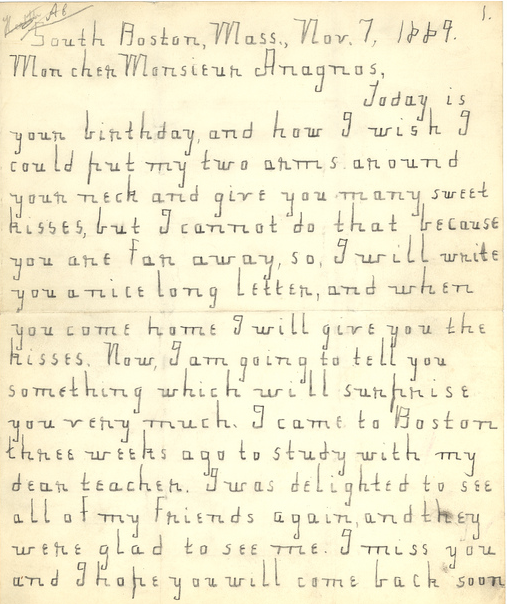
Image by Flickr, courtesy of Perkins School for the Blind
The inspirational blind and deaf activist and educator Helen Keller learned to speak aloud, but, to her great regret, never clearly.
Her careful penmanship, above, is another matter. Her impeccably rendered upright hand puts that of a great many sighted people—not all of them physicians—to shame.
Keller learned to write—and read—with the help of embossed books as a student at Perkins School for the Blind. The United States didn’t adopt Standard Braille as its official system for blind readers and writers until 1918, when Keller was in her late 30’s. Prior to that blind readers and writers were subjected to a number of competing systems, a situation she decried as “absurd.”
Some of these systems had their basis in the Roman alphabet, including Boston Line Type, the brainchild of Perkins’ Founding Director, Samuel Gridley Howe, an opponent of Braille. Students may have preferred dot-based systems for taking notes and writing letters, but Boston Line Type remained Perkins’ approved printing system until 1908.
There’s more than an echo of Boston Line Type in Keller’s blocky characters, as well as her spacing. Deviating from penmanship forms learned at school is a luxury exclusive to the sighted. Until formation became instinctual, Keller relied on a grooved board to help her size her characters correctly, an exhausting process. Small wonder that she ended many of her early letters with “I am too tired to write more.”
Keller’s handwriting is so above reproach that it quickly fades to the background, upstaged by her charming manners and girlish preoccupations. A sample:
If you go to Roumania, please ask the good queen Elizabeth about her little invalid brother and tell her that I am very sorry that her darling little girl died. I should like to send a kiss to Vittorio, the little prince of Naples, but teacher says she is afraid you will not remember so many messages.
Ayun Halliday is an author, illustrator, theater maker and winemaker who played Annie Sullivan in her high school’s production of The Miracle Worker. Follow her @AyunHalliday.
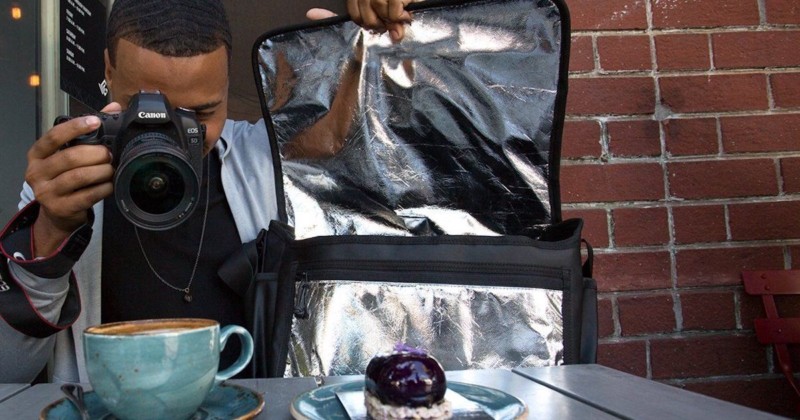
Carrying a reflector around town with you is useful, it’s just not usually practical. That’s where the new Flash Bag comes in. This creatively designed camera bag comes with a reflector build right into the bag itself—just open it up.
Designed by Scott Tallenger for Betabrand—the same folks behind the Flashback anti-paparazzi clothing line—the Flash Bag is more about helping improve your photography than ruining someone else’s. The bag wants to be “your new photo assistant,” saving you some cash by providing a reflector on the go.
“I know how costly photography can be. Models are expensive enough—let alone assistants,” writes Scott about his design. “That’s why I designed the Flash Bag, a foil-print camera bag that lets you bounce light onto your subject and take photos at the same time!”
A good mix of stylish and useful, the bag isn’t actually going to replace your photo assistant. It will, however, make for better day to day snapshots while keeping your gear nice and dry at the same time.
It’s made from 100% water-resistant polyurethane coated nylon, features eight pockets, removable velcro dividers, and a built-in interior handle. Plus, if you don’t want to use it to improve your latte photography, there’s also these creative alternative uses Betabrand came up with:
The bag is currently in the prototype stage, and needs some crowdfunding help to reach production. The downside is that it may never come to fruition; the upside is you can get it for 20% off if you fund it now, just $78.40.
To find out more about the Flash Bag or help make it a reality, head over to the Betabrand website by clicking here.
Charleston has a famous food scene, but for years locals have been driving two hours north to get their barbecue in Hemingway, South Carolina, home to Scott’s Bar-B-Q and its internationally acclaimed whole hog platter. Forty-four-year-old pit master Rodney Scott learned to cook hogs at his father’s roadside restaurant and general store, also known as Scott’s Variety. The Buffalo Bill of barbecue, he’s taken an endangered tradition to places his small-town forebears never went—Belize, Uruguay, Australia—as his fame and fan base, which includes the likes of Southern Foodways Alliance director John T. Edge and chef Sean Brock, have grown. As Hanna Raskin reported in the Post and Courier yesterday, Scott is now planning to bring a rural South Carolina–style barbecue joint to the Holy City, where he’s already a familiar face after years of marquee appearances at parties and festivals. “Charleston has adopted us,” Scott says. “Coming down to cook here, I became quietly addicted. I wouldn’t tell anybody back home how much I loved it, but… because of the people, and the food, it became the place I always wanted to hang out.” After months of discreet scouting, he’s planning to open shop by the end of 2016 in the former Chick’s Fry House—within a mile of the brisket at Lewis Barbecue and the pulled pork nachos atHome Team BBQ. We called him to find out how he’s planning to pull it off.
(Photo by Brennan Wesley)
You’ve been cooking in Hemingway for thirty-some years. When did you decide to open a second joint?
I started thinking about it about five years ago, but earlier this year I decided to just do it. I said to myself, why not? I need to go for it. Everybody loves barbecue.
Where are you going to cook your hogs—and how? Cooking in the city might be a little different...
Our aim is to do exactly what we’ve been doing. There are different regulations within city limits, so we’re still trying to figure out if we can use brick pits. But the biggest possible change would be pits that are more like my [sheet metal] portable pits. Of course we’re still going to be cooking over wood, and we’ll probably transport some of that down. We may even bring down a log splitter and cut wood in back if the neighborhood doesn’t run us out. [Laughs.] My local hog provider here in Hemingway, he’s more than happy to deliver. He’s been knocking on my door like, “Hey, I can make it to Charleston.”
Will the menu be the same?
It’s going to be pretty much the same, but we’ll add a few things. I want to do more turkey, year-round. I might do ribs by the slab, because people love ribs. We get a lot of requests for them right now, but we only do the whole hog and they’ve got to catch what they can. We’re definitely thinking about mac and cheese, and maybe a baked potato cooked in coals the old-fashioned way. Of course the baked beans and the slaw are still going to be there.
How about beer?
We hope to serve beer. I spoke briefly about it with Sam Jones, and he told me how the locals felt about that. [Fellow barbecue titan Jones rankled some teetotaling customers when he put beer on the menu at the new Sam Jones Barbecue in Greenville, North Carolina.] I don’t think Charlestonians have a problem with beer, though.
I think you’re right about that. So are you moving to Charleston full-time?
I’m torn. My dad, Rosie, and my oldest son are going to step up and take care of Hemingway. I may be back and forth, but I’m pretty sure the majority of my time is going to be in Charleston.
You won’t have to drive two hours home after events anymore. What else are you excited about?
Oh, the people in Charleston. They’ve always been pleasant, friendly… You pass them on the sidewalk: “Good afternoon!”
And do you see more restaurants in your future?
Why not? Why not spread the love? I would love to open more restaurants, and to share the whole-hog experience the way we do it in Williamsburg County.
Bahamian woman making traditional conch salad(Alexander Shalamov/Dreamstime)
Pricey resort food? No thanks! Here's how to track down Nassau's most authentic food trucks, bakeries, and even grocery stores that dish out mouth-watering local fare.
Like other Caribbean islands that rely heavily on tourism and food imports, the Bahamas are not a cheap destination. Whether you’re on a cruise, at a resort, or even renting with Airbnb, restaurants, activities, taxis, and souvenirs add up fast. Sure, you can skip the latter, bring your own snorkeling gear, and stick to the $1.25-a-ride local jitneys to get around, but the restaurants? Expect to pay more than $25 a plate for something as mundane as shrimp over linguine—and that’s at a casual sports bar outside Nassau.
Of course, where there’s a will, there’s a way to eat cheap in the Bahamas, and you can bet that it involves local food. Here are some tips for sniffing it out in and around the pricey cruise capital of Nassau, on New Providence Island.
Track Down the Parking-Lot Vans
On weekdays, lunch vans will often park in beach lots or near souvenir shopping hubs to provide lunch for local vendors—and any savvy tourists in the vicinity. What’s a lunch van, exactly? Just what it sounds like: a car or van with a hatchback full of home-cooked Bahamian food, from curry chicken to oxtails or pork chop, depending on the day. A heaping plate with two sides—rice and peas, potato salad, coleslaw, steamed vegetables, the islands’ trademark “slice” of mac-and-cheese—will run you about $6. They are not always easy to find, as signage might not be present, so ask around. We found one called Shan’s in the lot behind the massive Mélia resort in Cable Beach, a stone’s throw from the area’s famed Daiquiri Shack. (Incidentally, the daiquiris also cost $6 apiece, if you’d rather drink your lunch!)
Visit the “Other” Fish Fry
To be clear, there is only one Fish Fry on New Providence—that colorful strip of fish and conch shacks on Arawak Cay—and it’s definitely worth a visit. But there’s no denying the more laid-back, local flavor of Potter’s Cay, which stretches underneath the bridge to Paradise Island. The “dock,” as it’s called, is lined with eateries and bars, likewise rainbow-hued, but a bit more ramshackle than on Arawak; produce stands and a fish market add to the local vibe. (Also, you’re under a giant bridge, so it feels kind of gritty and secret, despite the turquoise-water views.) Most of these places specialize in unmissable made-to-order conch salad ($12) and cheap Kalik beers, but several offer other Bahamian dishes, like chicken souse and stew conch. To get there, hop on a No. 1 jitney from downtown Nassau—and while some eateries do open for lunch, Potter’s Cay really gets going after 4pm.
Hit Up the Bakeries
Thanks to a handful of European pastry chefs who have landed in resort kitchens over the years, the Nassau area has a great little bakery scene. At both the Original Swiss Sweet Shop (locations in Cable Beach and downtown Nassau) and the Swiss Pastry Shop (Cable Beach), you’ll find some tasty and inexpensive breakfast and lunch items—Jamaican-style patties (don’t miss the conch patties; $3.75 apiece), dense johnny cakes with cheese, quiches—nestled among the cakes, custards, tarts, and Bahamian sweets. Be sure to pick up a traditional guava duff for dessert; you’ll pay a bit less here ($5) than in most restaurants.
Eat on the Road
Roadside shacks seem like common sense for inexpensive local grub, but if you don’t have a car here, it requires a bit of research. Along the No. 10 jitney route, west of Nassau between Cable Beach and Love Beach, there are a couple of worthwhile spots, including the always-hoppin’ Dino’s—home of some of the island’s best conch salads, which start at $10 a pop but can easily fill you for lunch or dinner. Cheaper than conch are the meat-and-starch meals you’ll find from food trucks like Evelyn’s, which parks daily at the very end of Potter’s Cay—try the steamed ribs or turkey for lunch ($6), or some grits and sardines for breakfast—and the roadside vendors behind Montagu beach, east of downtown.
Go Grocery Shopping
Supermarkets around here are pretty standard, not unlike those in the U.S. (and if you’re self-catering, you’re better off buying produce and fish from outdoor markets). But some of them, like the Quality Supermarkets chain, offer a prepared-foods section where you can pick up items like rotisserie chicken, ribs, and Bahamian-style mac-and-cheese for under $10. Add a six-pack of Kalik or a $10 bottle of Ole Nassau dark rum (from a liquor store), and you’re set for the night!
This article was written by Laura Siciliano-Rosen, co-founder of food-travel website Eat Your World, a guide to regional foods and drinks in destinations around the globe.
The fifth annual edition to be made in titanium, the Leica M-P Titanium Camera is an upscale take on the German company's 24 megapixel full-frame shooter. As the name suggests,...
You’re concerned about ransomware, but don’t know how to protect yourself. Don’t worry, just follow these five steps to avoid your data being hijacked and put to ransom. Just in case you’ve somehow ignored (or are unaware of) the threat from ransomware, it’s time to get up to speed. Ransomware is a form of malicious software, more commonly known as malware, that encrypts your data. The key to decrypting that data is hidden from you until you fork over a ransom, which usually starts at an unreasonable price and increases the longer it takes you to pay. Christiaan Colen via Flickr...
"Mother earth never attempts to farm without live stock," said the British agriculturalist Sir Albert Howard, often considered the father of the modern organic farming movement. For millennia, bison were effectively the farmers of North America’s vast interior grasslands, maintaining a delicate ecological balance that supported a rich diversity of plant and animal species.Most importantly, bison made sure the prairie stayed a prairie, rather than reverting to forest, which offers little to eat for such large herbivores. Grazing—along with fires (both naturally-occurring and intentionally set by native peoples)—are the two forces of nature that conspire to manage grasslands the world over. While cattle and other domesticated livestock are often used often used to manage grasslands in other parts of the world, bison appear to be the species best-suited to controlling the North American prairie that they’ve coevolved with. In fact, a 1976 experiment in South Dakota demonstrated that bison are the prairie’s go-to: Cattle were grazed on one side of a fence and bison on the other side. Ponderosa pines soon sprouted and grew into a canopy on the side with the cattle, while the bison chomped down on the seedlings as they sprouted on their side and prevented a forest from becoming established.Grasslands once comprised 40 percent of the North American landscape, but after bison were hunted nearly to extinction in the 19th century, the prairies of the heartland were converted to farms and cities on a vast scale: 99 percent of tallgrass prairie and 68 percent of mixed-grass prairie have disappeared, making grasslands North America’s most endangered ecosystem. As the keystone species of the prairie—that is, the one who holds it together for all the other species—bison are being actively reintroduced to conservation areas throughout the Midwest in an effort to bring degraded prairie ecosystems back to life. Here are five ways they do it.1. They’re living tree removersNot only do bison munch out tiny seedlings of trees as they appear, they take care of any that begin to mature and threaten to shade out the grass. They have several methods for doing so: Bison like to eat bark, often leaving trees girdled at head height; with the bark stripped, trees can no longer transport water and nutrients to the canopy, and quickly die. A similar effect occurs when bison rub against mature trees to help remove their winter coat, as well as from “horning”—a common bison behavior where they rub their horns against the bark of conifers to cover them in sap, presumably as a form of insect repellent. 2. Their grazing keeps grass healthyEcologists have found that prairie grasses produce about one third more new vegetation each year than what actually decomposes. If all of that decaying grass was left in place, it would form a thick thatch, restricting the germination of small-seeded plants and the exchange of gases in the soil, conditions which favor woody species over grasses (that’s why we have to mow, aerate, and de-thatch our lawns to keep them healthy). Historically, periodic fires would burn off some of the excess thatch, though bison played an important role in consuming top growth in the grasslands, keeping much of the biomass below ground in enormous root systems—which is why Midwestern soils are so fertile.3. They’re better than a fertilizer factoryNitrogen, the most essential nutrient for plant growth, is delivered to grassland plant communities in copious quantities through the urine and feces of bison. Without grazing, much of the nitrogen contained in grassland plants volatilizes and is lost to the atmosphere as new top growth dies and decays each year, rather than returning to the soil. Grassland fires also volatilize nitrogen as the vegetation burns. But when bison and other grazers eat grass, the nitrogen is concentrated through the digestive process, and eliminated out the other end in a stable form that plants can make use of.4. Bison promote biological diversityBison are considered preferable over cattle for managing America’s grasslands, in part because they are picky eaters. While cattle graze on pretty much anything in sight, bison have a strong preference for grasses over forbs (broad-leafed species, including wildflowers and herbaceous plants). Grasses thrive on periodic grazing, whereas forbs are more apt to die out when subjected to grazing. Only a handful of native grasses comprise most American grasslands, but upwards of 400 species of native forbs are responsible for the tremendous biological diversity of these ecosystems, which bison help to encourage by not eating them.5. Where bison roam, other wildlife followsBy managing vegetation, bison effectively manage the habitat for a majority of other prairie wildlife. The Wildlife Conservation Society estimates that 42 native bird species are dependent on grasslands historically maintained by bison, virtually all of which nest in the ground hidden from predators in the mosaic patchwork of grass. Prairie dogs, another icon of America’s grasslands, take up residence in “bison lawns”—areas routinely cropped by these enormous herbivores—as they can better keep watch for predators than in the taller grass of ungrazed areas. In an ecological ripple effect, the underground “towns” of burrowing prairie dog packs, are known to provide habitat for an additional 200 species.Check out all our stories from #bisonweek!The post Bison: The American Prairie’s First Farmers appeared first on Modern Farmer.

 I miss Pat Conroy. No, we never met. But like so many people, I felt like I knew him. Now that he’s gone, I’m making a pilgrimage of sorts to his hometown of Beaufort, South Carolina. I want to see the neighborhood where he spent his happiest years, visit the places he went for inspiration, and meet the people who knew him best. For though he was prolific, I suspect much of Pat’s story remains unwritten, hidden in plain sight among the antebellum homes and live oaks of this Lowcountry town. Pat Conroy and his best friend, Bernie Schein, were walking past an oak tree. It was one they passed often on Bay Street, strong and full, with mossy arms that stretched over the banks…


 Eats hasn’t changed much since opening on Ponce de Leon Avenue in 1993. The walls are lined with license plates donated by employees and customers, the booths are painted plywood, and the menu sports old favorites. “I always joke that we change something or add something about every ten years,” says owner Bob Hatcher. Even with new, trendy restaurants opening at Ponce City Market across the street, Hatcher says the restaurant is as popular as it has ever been. The increase in traffic has brought in new customers, and the most ordered dish is always the jerk chicken. The recipe, created by Hatcher’s former business partner and Tortillas owner Charles Kerns, has been on the menu since the restaurant opened. The dish is simple—half a…


 Sloppy Joe’s Key West, Florida This legendary joint opened on December 5, 1933—the day Prohibition was repealed. Ernest Hemingway bought his Scotch here, and every year the saloon hosts a surreal tableau: the Papa Look-Alike Contest, in which dozens of barrel-chested men with man-scaped white beards compete for the title. sloppyjoes.com Peter Kern Library Knoxville, Tennessee A Confederate veteran, Peter Kern opened an ice cream “saloon” after the war. His namesake bar, styled as a speakeasy, presents its menus in World Book encyclopedias. Craft cocktails are named for literary figures such as Atticus Finch, Holly Golightly, and (gulp) serial killer Lester Ballard. theoliverhotel.com Carousel New Orleans, Louisiana If the room is spinning, you’re not necessarily tipsy. This elegant lounge features a revolving bar—a circus-themed, twenty-five-seat…
 Two rows of towering red spruce trees stand like sentinels on either side of a worn brick path. Light and shadow play along the avenue as you approach the ghostly white 1844 primitive Greek Revival house. This is Rowan Oak, the Oxford home of William Faulkner from 1930 until his death in 1962. For anyone interested in Southern letters, it’s hallowed ground, and as such, a wholly fitting starting point for your tour of major literary sites in the region. A leading figure in the Southern Renaissance movement that redefined the literature of the South between the world wars, Faulkner explored the burden of history and the primacy of place in Southern life. His body of work—including The Sound and the Fury, Light in August,…
 The iconic clock tower crowning the Old Monroe County Courthouse shines like a beacon, welcoming pilgrims who’ve crossed the southwest Alabama sea of cotton and corn fields, spindly pines, and flamboyant mimosa trees to walk in the footsteps of Scout and Dill, Atticus and Boo. Its bright-white appearance on the horizon signals your final approach to Monroeville, the Literary Capital of Alabama and home of Harper Lee, who set her classic novel To Kill a Mockingbird in a town modeled on the Monroeville of her Depression-era childhood. Begin your visit at the redbrick courthouse on the town square. Built in 1903, the building garnered national attention in the years following the 1960 publication of To Kill a Mockingbird, and in 1991, after decades of limited…
 Georgia is Gone With the Wind country. From Scarlett O’Hara to the red earth of Tara, the world conjured by Margaret Mitchell in her 1936 Pulitzer Prize–winning novel continues to capture the imaginations of readers, many of whom visit the state in search of tangible links to its storied past. A natural starting point for your journey is the Margaret Mitchell House, a three-story Tudor Revival apartment building in midtown Atlanta where Mitchell wrote the Civil War epic. Tour the small ground-floor flat she shared with her husband, beginning in the front sitting room where the former Atlanta Journal reporter worked at a small desk by the window. In addition to Mitchell’s living quarters, you’ll find exhibitions on her life, from her girlhood obsession with…
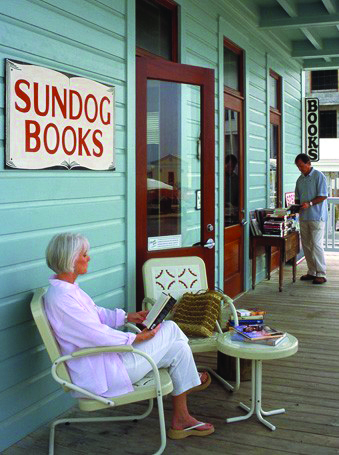 Square Books Oxford, Mississippi So integral is this legendary bookshop to the lives of local writers, both Barry Hannah and Larry Brown received their mail here. squarebooks.com Faulkner House Books New Orleans, Louisiana If walls could talk, these would drawl with bourbon breath. Formerly an apartment, this is where William Faulkner wrote his first book, Soldier’s Pay. faulknerhousebooks.com Lemuria Books Jackson, Mississippi Kids rule at this charmingly cluttered shop, which has a dedicated children’s book buyer and some discerning youngsters on call to make recommendations. lemuriabooks.com A Cappella Books Atlanta, Georgia When the economy tanked, this fixture doubled down on author events, partnering with the Carter Center to bring marquee names such as Salman Rushdie. acappellabooks.com Blue Bicycle Books Charleston, South Carolina Providing a smart, cathartic outlet for teen angst, this…
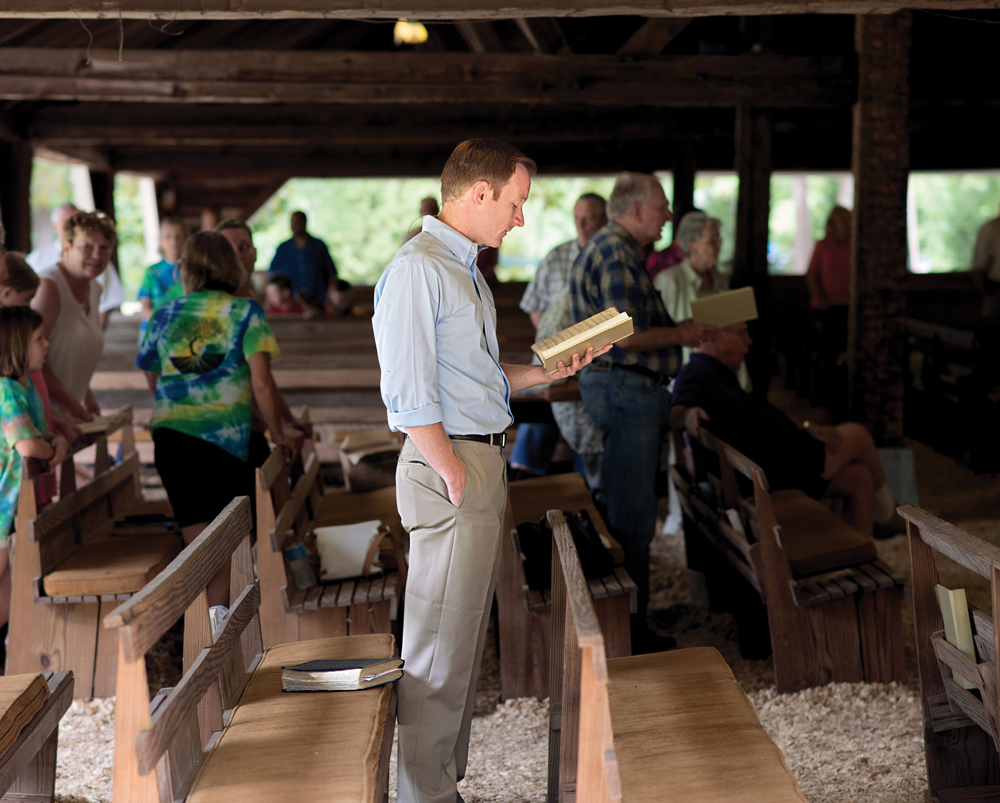 The knock against journalists—well, one of the knocks against journalists—is that they’re cynical. Too focused on what’s wrong, not near enough focused on what’s right. For most of my career, my reaction to the criticism was pretty standard. I’d come up with a nice way to say, basically, Please don’t tell me how to do my job. That, of course, would contribute to another knock against journalists—that they’re arrogant. In the past few years, my response has become more measured. Maybe it was becoming a parent, maybe it was hitting my 40s, maybe it was recognizing that the traditional definition of journalism needed to change if the profession is to survive. Probably it was a mix of all of the above. What I’ve come to…
 13 Questions is a weekly series where we ask chefs 13 questions to get to know them outside of the kitchen. Eddie Hernandez is the executive chef at Taqueria del Sol. Courtesy of Green Olive Media What got you into cooking? When I was young, my grandmother was an extremely good cook. She made this amazing corn, and one particular day I was just craving it. But she said to me, “Do you think I am going to always be around? You need to learn how to cook. It will allow you to eat what you want when you want to eat.” She was absolutely right. What was the first thing you ever learned how to cook? Pickled pork. It’s a big thing in Mexico. Most of the bars have it…


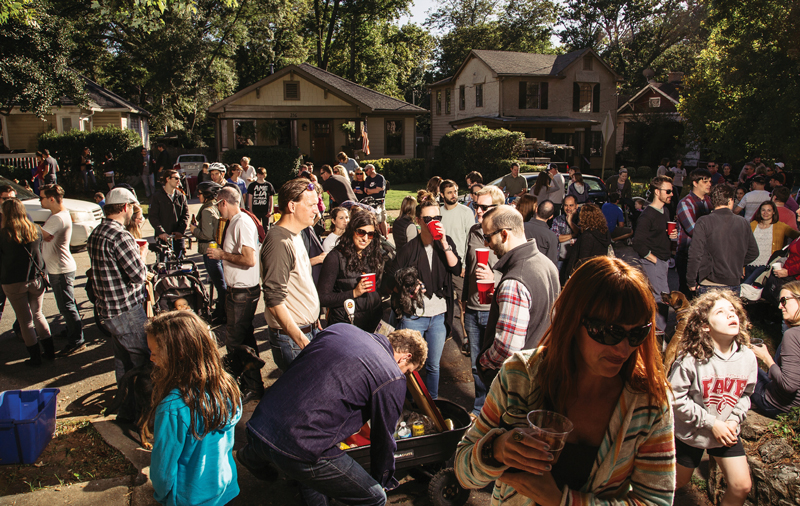 The inaugural Oakhurst Porchfest offered residents more than 130 musical acts on porches and lawns scattered throughout the Decatur neighborhood. Here, a crowd gathers on Spring Street as the Soogs play on a back porch nearby.Photograph by Raymond McCrea Jones Turning your front porch into a music venue isn’t difficult. You need a visible perch for the musicians, a yard (preferably a comfortable lawn) for the audience, an extension cord for amps and mics, and a trash can and recycling bin. Beverages (alcoholic or otherwise) are welcome but optional. Ditto food. The only difficult aspects of this Lawn-a-palooza are booking the musicians and making sure there are enough toilets. That’s where Scott Doyon comes in. A resident of Decatur’s Oakhurst neighborhood for 20 years, he…