Hailing from Wisconsin, I didn't get it when my New Mexican partner asked me, “Red or green?”
He explained the importance of red and green chiles in New Mexican cuisine and told me he was asking my preference between the red and green varieties. I still didn’t get it.
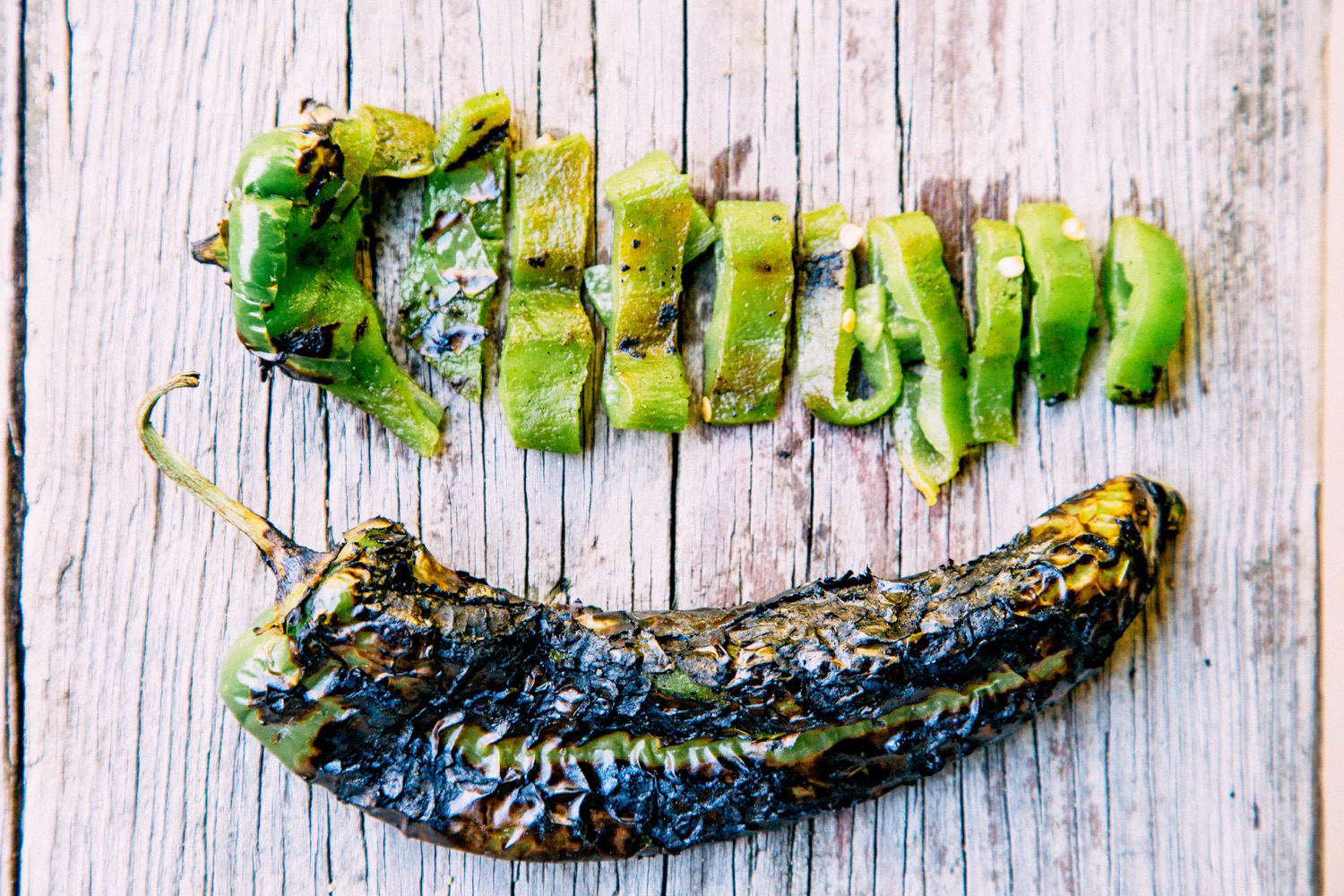
The mild heat and slightly smoky flavor of the fresh-roasted New Mexico Hatch green chiles was unlike anything I'd ever tasted
As any half-decent cook trying to impress a new beau would do, I went to the store and bought the closest thing I could find to a green chile: an Anaheim pepper. When I served them roasted on top of a cheeseburger and he was sweet enough to say he liked them but they just weren’t quite the same. I still didn’t get it.
It wasn’t until my first Thanksgiving trip to New Mexico to spend the holiday with his family that I ate some real Hatch green chiles and finally understood. The mild heat and slightly smoky flavor of the fresh-roasted New Mexico Hatch green chiles was unlike anything I'd ever tasted, and I could see why my Anaheim pepper cheeseburger had failed to arouse in my partner the true love he felt for New Mexico-grown green chiles. Let me just go ahead and say it: I get it now.
Cultivated for hundreds of years in a region distinct in water availability, vegetation and terroir, New Mexican green chiles are more robust, sweeter and even a bit smokier in flavor than their cousin from California
As summer cools down, chile season heats up across the nation. Late-summer chiles work their way into cuisines across the southern United States, but in New Mexico they begin to approach a way of life. You can find fresh green chiles being roasted outside of almost any grocery store, in any restaurant there will be multiple dishes including green chiles, and Labor Day weekend heralds the annual Hatch Chile Festival. And, although they are indeed a variation of Anaheim peppers, New Mexican green chiles are coveted precisely because of where they are grown. And Hatch, NM grows the best. Cultivated for hundreds of years in a region distinct in water availability, vegetation and terroir, New Mexican green chiles are more robust, sweeter and even a bit smokier in flavor than their cousin from California.
Despite its popularity the chile is not native to the Southwest. The Spanish brought chiles to the region from the Caribbean, but the plant struggled in the arid desert. Loved for its spicy-smoky flavor and prized for its medicinal properties, the chile inspired horticulturists in the 1900s to search for the perfect hybrid that was smoother, meatier, tastier and slightly milder in heat and that could, perhaps most importantly, stand up to the rough conditions of drought and disease that plagued many chile breeds in the desert.
Eventually, the Rio Grande chile, named for the river that supplied its irrigation, would be born. The Rio Grande chile thrived and was quickly adopted by farmers around the state, including the town of Hatch, New Mexico. Over the years, many New Mexican hybrid green chile varieties continued to be developed. Today’s most popular and successful pepper, The Big Jim, was developed at New Mexico State University in the 1970s and is widely used around the state.
We now live in Durango, CO and, our relationship now being one half OG Hatch chile lover and one half unashamed bandwagoner, we rush to the grocer every September to get our hands on the first bushels of roasted Hatch green chiles. They’ve become popular and are widely available across the US, and these days I wouldn’t be surprised to find them across the West and in most major metropolitan areas during chile season. Even so, we were shocked and delighted to come across green chiles while camping in Alaska three years ago. I don’t think I’ve ever had better green chile burritos than in the pouring rain, sheltered by a tarp around the campfire in Denali National Park.
If you do find green chiles near you, but they aren’t roasting them outside the store (a New Mexico green chile staple), just put them on the grill or under the broiler until nice and blistered. Then peel off the skins and enjoy.
Some Green Chile Tips
- Always peel your chiles — the skins are no bueno
- Freshly roasted green chiles only last a day or two in the fridge — it’s best to freeze them if you have a whole bunch
- Hot green chiles are pretty hot (in New Mexico they like to say “whoa, these are warm!”) and medium ones have plenty of flavor and mild heat
- Red chiles and green chiles are the same plant: a red chile is simply a ripened and often dried version of the green chile ( “autumn” roasted green chiles, in late September when the last of the green chile crop are turning red and the roasted fruit is a bit sweeter and more complex in flavor, are a particular treat)
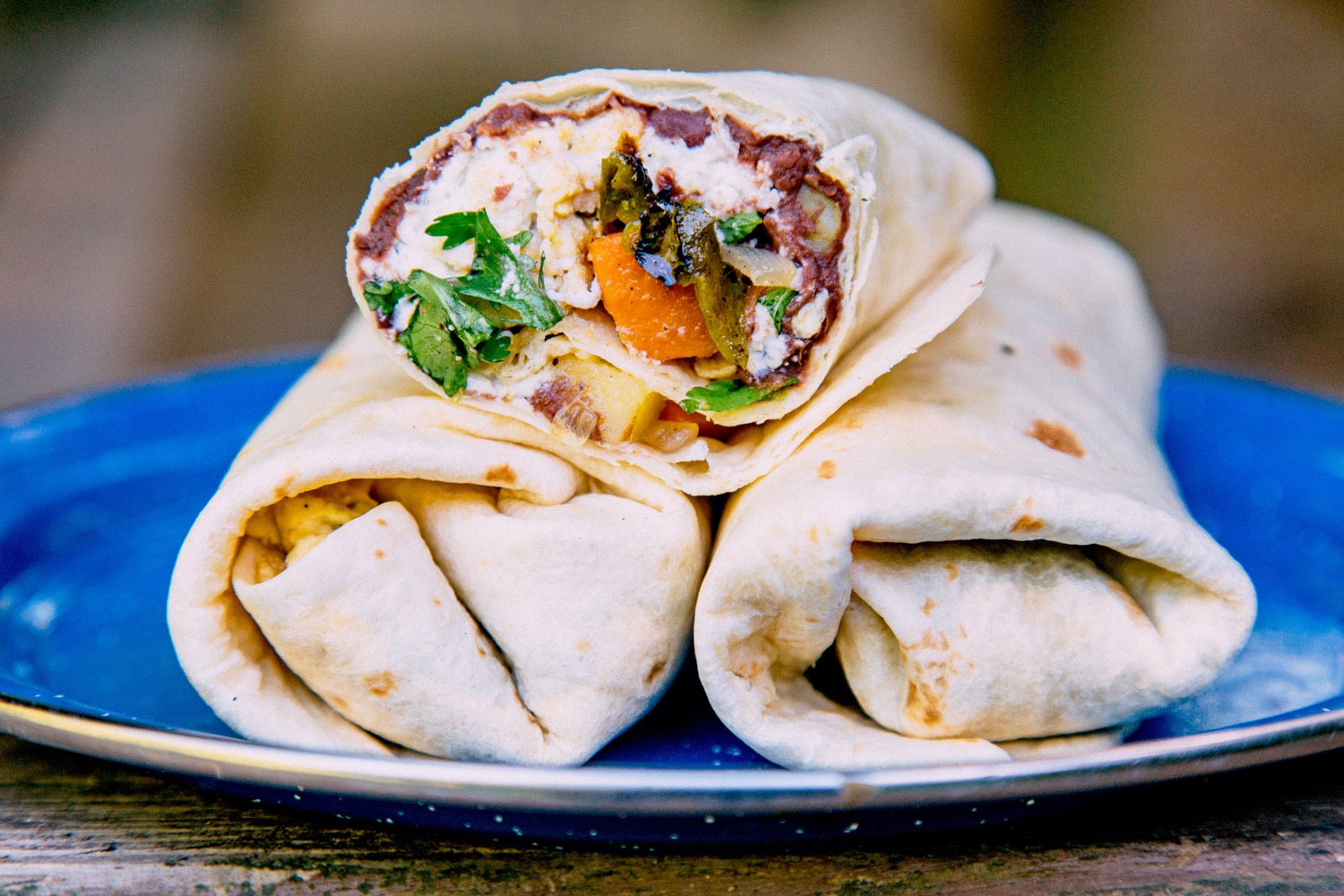
- Green chiles are delicious on/in just about anything, but I suggest starting off with some traditional dishes like green chile enchiladas, a green chile cheeseburger, rellenos, burritos or, my favorite, breakfast burritos
Amanda Ciesielczyk is a writer and co-founder at BoldBrew. Based in Colorado's San Juans, she is fond of camping at high country lakes, Wolf Creek powder days, and her heeler pup, Reins.
Lower Laguna Madre redfish, offshore snapper and white-winged dove cast-and-blast adventure
Fishing the Gulf off Texas and in the lower Laguna Madre plus hunting for white winged doves makes for an action-packed adventure for any serious sportsman.
Share the underwater magic of one minute amidst a million mesmerizing mullet, attracting the attention of tarpon and divers alike off eastern Florida’s Singer Island.
Witness this video showing the underwater magic of mesmerizing mullet, attracting tarpon and divers, off eastern Florida’s Singer Island.
Dozens of anglers head in all directions into the marsh around Venice in search of bull red drum.
An annual fall gathering of anglers by invitation to an event called Marsh Madness sees dozens of anglers heading into a shallow-marsh labyrinth in search of redfish.
Railroad Model Club of Atlanta president Pete SilcoxPhotograph by Andrea Fremiotti Beyond an antique wood-frame glass door opening onto Edgewood Avenue and up a creaking stairway lies the territory of the Great Southern Lines—otherwise known as the largest model train layout in Atlanta. You could also call it one of the best-kept secrets in the city, since few passersby likely are aware that just above the Old 4th Distillery is a 1,400-square-foot, man-made landscape of hills, bridges, depots, and towns, with more than 93 working track switches. It’s also almost certainly the oldest layout in metro Atlanta, having occupied the cramped, low-ceilinged space since the mid-1940s. The building itself has long been owned by the Railroad Model Club of Atlanta, which claims to have met…View Original Post
Quiet moments are rare at Busy Bee Cafe. Six days a week, patrons cram into the dining room and the line snakes out into the parking lot. It’s a stopover for almost every visiting politician and celebrity, and the list of famous diners include Martin Luther King Jr., OutKast, and President Obama. Customers flock to the Vine City restaurant for Southern classics like ham hocks, candied yams, and oxtail, but the most ordered dish is always the fried chicken. Busy Bee may boast the city’s best fried chicken, but it wasn’t always their top seller. When owner Tracy Gates first started working at the restaurant in 1987, the menu was dominated by ham hocks and chitlins. The restaurant, opened in 1947 by Lucy Jackson, had…View Original Post
The Marshall House Savannah, Georgia “America’s Most Haunted City” is known for hosting lost souls, but Savannah’s oldest hotel, the Marshall House, is eternally booked, with Union soldiers milling about the lobby and sounds of scuttling children echoing down the halls. Opened in 1851, the sixty-eight-room hotel has served as a hospital three times: once during the Civil War and twice during yellow fever epidemics. In the 1990s, renovators found human body parts—likely removed during surgeries—under its floorboards. Now those who couldn’t part peacefully with life or limb roam the building, jiggling doorknobs and turning on faucets. marshallhouse.com Miami Biltmore Hotel Coral Gables, Florida Despite its early high-society appeal—Judy Garland, Ginger Rogers, Bing Crosby, and President Franklin D. Roosevelt stayed here during the resort’s…View Original Post
Bryan Furman pulling a brisket from the smoker.Photograph by Jennifer Zyman The first thing that strikes you when you meet Bryan Furman, the owner of B’s Cracklin’ Barbecue, is his passion and confidence. The first-generation pitmaster carries himself with the kind of self-assuredness and restaurant smarts you’d expect to find in someone with many more years under their belt. But the 35-year-old has every reason to be confident. His Savannah restaurant opened in 2014 and quickly earned praise from Garden & Gun and Southern Living. When faulty equipment sparked a fire that burned the restaurant to the ground, the entire Savannah community rallied behind Furman to help get the restaurant back up and running. When Furman made the decision to open a second B’s location…View Original Post
Ashley Smalley of TSY interviews family friend and renaissance man Walter Parks–internationally renowned blues / jazz guitarist, singer, songwriter on his musical beginnings, history, and latest CD — Swamp Cabbage “Jive” available now here. (Join us in the TSY shop on Saturday, October 29th 7:30pm for a private live performance by Walter Parks in the TSY […]
How to find the best lobster spots? Let the spines tell the story.
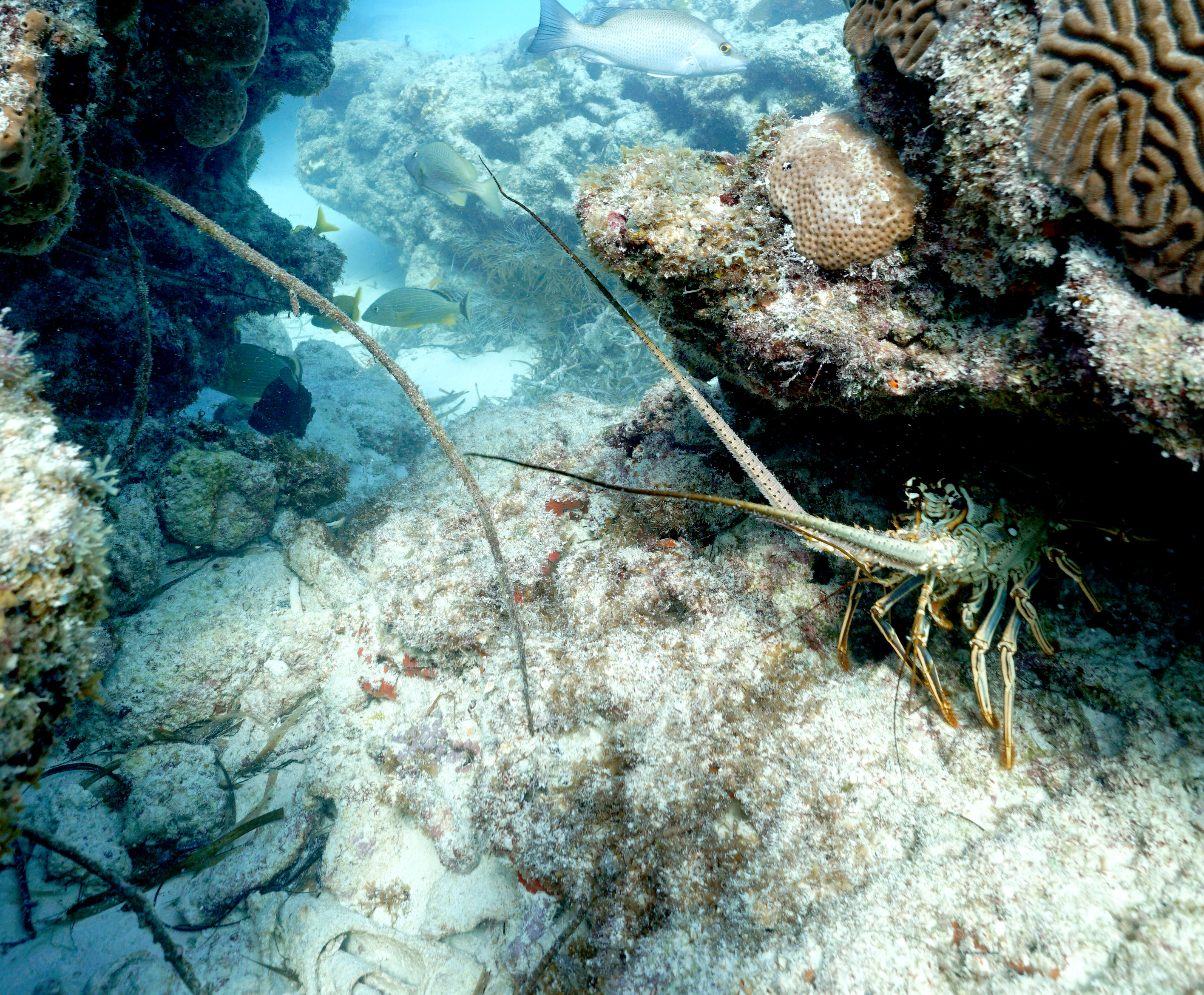
Low-relief ledges with small undercuts are where spiny lobsters commonly hole up.
Over the years we accumulate hundreds of fishing and diving spots and one of the interesting things I’ve found is there are three types of spots: Fishing, lobstering, and those where you can do both.
The shape and design of each hole or ledge will lend itself to one or the other and knowing which ones of these to check at the right time of year is the key to success.
With lobster season upon us, my go-to spots from Jacksonville to the Keys are the ones that primarily have lobsters in them. The best ledges are not necessarily the huge, 8-foot shows on the depthfinder, but rather the ones whose makeup best accommodates the defensive needs of the spiny lobster.
Florida spiny lobsters are designed to not come out of their hiding spots. The shape of their body assures the best chance at surviving an encounter with a nurse shark, turtle or grouper trying to suck them out of their honey hole. Every spike on their body faces forward. From their carapace to the tips of their antennae, each tiny sharp spike is an anchor to prevent them from being pulled forward out of a hole. To further their defense, lobster push down and grip the bottom with their powerful legs, which pushes their backs firmly against the top of the ledge engaging those spikes, perfectly wedging themselves in place. The ultimate defensive spot for them to hide, then, is a ledge or rock that has both the bottom and the top of the hole made of hard bottom (rock or coral).
At this point most of you are remembering that ledge at the edge of the turtle grass in 5 feet of water with not a rock in sight and 20 lobsters lined up. Or maybe a lonely coral head sprouting from the sand with a nice sandy bottom all the way around it. Lobsters can be in any manner of hole, but if you can catch them in the most difficult and well-defended spot, you can catch them anywhere.
Gearing Up
The most important lobstering equipment is a good pair of gloves. Your day is over if you do all the work to find a good hole and then can’t comfortably grip a lobster without flinching. A glove that doesn’t snag the rock, offers protection on the palm, and still has some dexterity is ideal.
Depending on the hole, you can quickly grab most lobsters by the base of the antennae, carapace or tail and once you have them, never let go! To make it easier on you, we can also use tickle sticks, nets and nooses to snag the smarter ones from the best hiding spots.
As good as I thought I was as a kid being able to grab two or three lobsters on a single freedive, nothing compares to the efficiency and skill of my mom with a tickle stick and net.
Once we found a good hole, Mom would tank up, dive to the spot and meticulously tickle out each lobster one and two at a time by reaching in past them, tapping them lightly on the tail and encouraging them forward out of the hole. As they come out, she had the net in her opposite hand side down to the bottom and top pushed in snug against the ledge creating a trap ready to fall as soon as the lobster was free of the hole and in the open. Once in the net, she grabbed him underneath the tail, removed him from the net and placed him in the bag and repeated the process a dozen or more times until each lobster, unmolested and in perfect condition, was caught without ever losing a single leg or antennae.
That same tickle stick and net technique is the single most productive and efficient way to catch lobsters. When you find that one incredible rock with a limit in it or crack with that super stubborn monster in it, all the practice is going to pay off. FS
Spiny Lobster Season
Regular spiny lobster season runs August 6 through March 31.
MINIMUM SIZE:
The carapace must measure greater than 3 inches in the water. Egg-bearing females must be released.
The low sheer and sleek looks of this bay boat match its high-speed performance. The forward casting deck is recessed which provides a nice toe kick. Twin rod lockers, which can handle up to a 10-foot rod, flank an anchor locker and dry storage compartments. The forward seat on the center console is an insulated cooler with a thick seat cushion and backrest. The center console is well laid out with a built-in footrest. The face of the console is removable to access batteries and wiring. Behind the helm is a dual seat that converts to a bolster so either the captain and/or passenger can stand or sit independently. The base of the helm seat is a molded fiberglass live baitwell. There’s an additional baitwell and release well in the stern casting deck.
American Marine Sports
20150 Independence Blvd
Groveland, FL 34756
Behind the talents of chefs from Emeril Lagasse to Tory McPhail to the late Jamie Shannon and Paul Prudhomme stands one woman—the New Orleans restaurateur Ella Brennan. The matriarch of a family who operates nearly twenty restaurants across the country (most notably Commander’s Palace in the Crescent City), Ella Brennan has trained hundreds of chefs in her kitchens and won just about every honor in the food world, including the James Beard Lifetime Achievement Award in 2009. Now, a new book and a documentary film tell “Miss Ella” Brennan’s story bite by bite. By the end of either one, you’ll feel like you’ve just enjoyed an unforgettable meal with a great friend.
Ella Brennan in the kitchen of the early Brennan family restaurant Vieux Carré in the late 1940s. (Photos courtesy of Miss Ella of Commander’s Palace)
Miss Ella of Commander’s Palace, co-written by Brennan and her daughter Ti Adelaide Martin, documents Brennan’s life, from her Depression-era childhood in a big, food-loving Irish family to her triumphs as one of the first female restaurateurs in the country.
A young Brennan samples chef Paul Blangé's food; the book's cover.
Brennan’s climb parallels New Orleans’ rise as one of the world’s top food destinations. In addition to founding and running the first Brennan’s restaurant, she came up with the idea to emphasize breakfast and concocted the now-famous rum-soaked flaming dessert, Bananas Foster. At Commander’s Palace, she blended two of the city’s favorite things—food and music—to create Commander’s famous Jazz Brunch. “I don’t want a restaurant where a jazz band can’t come marching through,” she says.
The front of Commander's Palace after Hurricane Katrina.
The documentary, directed by Oscar-nominated film-maker Leslie Iwerks, shares personal anecdotes such as Brennan’s ability to take fledgling chefs under her wing. In the 1980s, she even kept a young and fiery Lagasse in check by slipping handwritten notes into his apron pocket—“Leave your ego at home!” she wrote on one. Lagasse doesn’t hold it against her—“She has one of the most amazing palates that I’ve ever ran into,” the chef says. Other interviewees include Prudhomme, McPhail, the writer John Pope, and G&G contributor Julia Reed, who calls Brennan the “Pizzazz Ambassador of New Orleans.”
From left: Paul Prudhomme and Brennan; Emeril Lagasse and Brennan.
“The world changes so much,” Brennan says near the end of the documentary. “But somehow … I think people always want to go out and have dinner with friends, enjoy the conversation, and the food, and the wine—oh, and the wine—and I think that’s one of the most civilized things that we have left on earth.”
After the film’s New Orleans premiere on Friday, it will screen on Saturday, October 15, at the Mill Valley Film Festival in Larkspur, California. More screening dates will be announced.
Photographs courtesy of Miss Ella of Commander’s Palaceby Adelaide W. Martin, reprinted by permission of Gibbs Smith.
The Mississippi Delta is fertile ground, its rich alluvial soil along the mighty Mississippi growing everything from cotton to the roots of America’s music. It even gave rise to a uniquely Southern food—the hot tamale. Migrant workers in the early twentieth century are said to have brought the south-of-the-border snacks to Greenville, where they’ve become embedded in the Delta’s complicated culture. To honor that culinary heritage, for five years now, folks in Greenville have dedicated a weekend to the tamale and its best accompaniments: booze, blues, and books.
Peter Frank Edwards
The Delta Hot Tamale Festival, a three-day shindig, lures a hungry and curious crowd to Greenville—population roughly 34,000, and the official “Hot Tamale Capital of the World.” The festivities started with Thursday night's gala dinner and panel discussions Friday morning as part of the “Literary/Culinary Mash-up” of acclaimed Southern writers, artists, and chefs swapping stories about their crafts, hosted by G&G contributor and Greenville native, Julia Reed. An open-air block party Friday night builds anticipation for the next day’s tamales that—many hope—will cure a hankering as well as a hangover.
Courtesy Main Street Greenville
That’s right—the signature cause for celebration doesn’t arrive until the final day of the festival, Saturday, October 15. Dozens of Delta chefs (and sometimes a few from out of state) gather downtown under brightly colored tents to simmer bundles of tamales in large, aluminum vats of juice.
2015 Literary/Culinary Mash-Up Gala dinner (Courtesy Main Street Greenville).
Though the humble hot tamale has only two primary ingredients, meat and masa (cornmeal) wrapped in a corn husk, each vendor has his or her unique recipe. Some consider the tamale’s simplicity a blank slate for seafood or smoked lamb. Others offer vegetarian versions with garlic and mushrooms. Some even use non-GMO husks and tie them with organic cotton strings.
But most tamale chefs, especially those native to the Delta, adopt the, “if it ain’t broke, don’t fix it” policy. Doe’s Eat Place, a Greenville institution lauded for its tamales of the simple beef variety, doesn’t even enter the festival’s tamale-cooking contest—perhaps their fame is prize enough. Others such as Solly’s (established in 1939), former Grand Champion Jefferson Tamales, and the formidable Jodie’s—who took home trophies last year—come back time after time to feed their fans, thousands voracious for the festival’s first taste of tamale.
Courtesy Main Street Greenville
“Pull the hot tamale out and unwrap it from the corn shuck,” Paul Kossman, life-long resident of Greenville, told Fox News once. “Eat it, and ascend to the gates of heaven.”
Apple dumplings are an early American food stemming from the Northeast, especially in Pennsylvania Dutch towns. Of course, you could trace it even further to Britain and other parts of western Europe too. It’s a great dish during the apple harvest in the fall. And, you can serve apple dumplings for breakfast or dessert.
When you see the word “organic” on your food, you assume it’s healthier and not made with scary chemicals. As this video explains, neither of those are totally safe assumptions.
There are many things that make autumn a wondrous and special season. But pumpkin beer is not one of them. So Matt Canning—the beer concierge at Hotel Vermont—picked 11 apropos beers for fall.
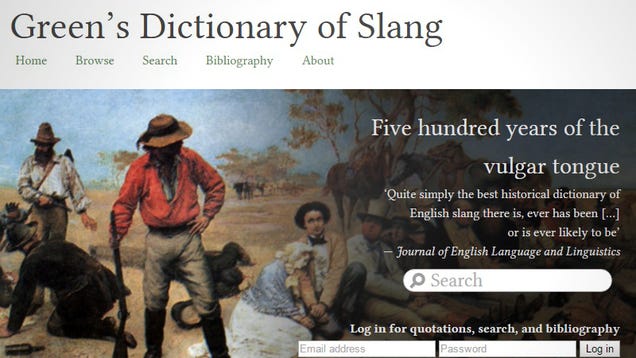
There’s enough slang within the English language to make up a whole new language. If you need to do some research for an English assignment, or you’re just into linguistics, this online dictionary is your best bet.
Last summer, Colleen Boll was doing some work around the house when she heard her dog barking from a different room. "It was an interesting kind of bark," she says, "so I looked out." Right smack in her yard, pacing around inside her chain link fence, was an enormous, glossy black bear.
Boll watched the bear puzzle out how to hop the fence. "Eventually, it grabs the trunk of a tree and climbs over," she remembers. "And I see the pipe at the top of the chain link fence bend way down under the weight of this huge bear. And then I realize, oh—that's what all those little bends are, in all my fences all around my house."
Boll doesn't live deep in the woods. She lives in Asheville, the 11th most populous city in North Carolina, and increasingly well-known as both a hip travel destination and a great place to live. Over the past decade, Asheville has racked up all kinds of accolades: according to one list of fawning headlines, it's "Fantastically Yoga-Friendly," "One of America's 12 Greatest Music Cities," "The Biggest Little Culinary Capital in America," "#1 Beer City USA," and "America's #1 Quirkiest Town."
A black bear hanging out in Colleen Boll's front yard in Asheville, North Carolina. (Photo: Colleen Boll)
Somewhat more quietly, it's also one of America's Best Cities for Bears. They hang out near the local hospital, and at the storied Grove Park Inn. Mailmen regularly run into them on their routes. Last August, a bear broke into an Asheville man's home and stole a stick of butter out of his kitchen trash. As part of its pre-show, the Fine Arts Movie Theater, in downtown, shows a photo of a curious black bear reading its marquee from across the street. "I never saw a black bear until I moved to the city," Boll says. "Now, I'll be driving and I'll go, 'There's a bear in someone's yard!' or 'Look at that bear, knocking over that trash can and taking the bag!'"
When we talk about urban wildlife, we're usually referring to small, deft creatures—squirrels, pigeons, or other standbys that mind their own business and fade into the background. Your average city-dweller might catch a deer in their headlights every once in a while, or spot a raccoon digging through the trash. A bear is something of a different story. A male can weigh 600 pounds. That's not the kind of creature you get used to seeing on your commute.
Somewhere around 8,000 black bears range around western North Carolina, and many of those make Asheville itself part of their meandering. According to the Urban-Suburban Bear Study, an ongoing project by the state's Wildlife Resources Commission and North Carolina State University, these bears are very healthy, often well-fed enough to have twice as many cubs as your average scrappy mountain bear, and confident enough to den right outside of town.
After a couple of years of study, the researchers—along with most of Asheville's humans—are wondering exactly how many bears the city can hold.
Black bears and North Carolinians have tussled over space for centuries. While traveling through the western part of the state in 1774, naturalist William Bartram complained about them in his journal, writing "the bears are yet too numerous." American pioneers hunted them for food and for sport, often to excess—when trapper "Big Tom" Wilson died in Asheville in 1908, his obituary bragged that he had killed 110 bears (his son, Adolph, claimed 90). All of this barely dented their numbers.
Starting in the 1920s, though, development and deforestation began taking their toll. When a midcentury bout of chestnut blight came along and decimated the bears' food supply, they were already struggling. By 1970, there were only about 1,500 bears left in the state, and North Carolina conservationists began setting aside protected land to try and bring their numbers up. The species began a slow recovery, but things still looked grim. "People wondered if they would disappear," Mike Carraway, a biologist with the North Carolina Wildlife Resources Commission, told the Asheville Citizen-Times in 2014.
Then came the 1990s, and the housing boom. New developments meant more room for people—but, as residents and scientists soon learned, they were also perfect safe spaces for bears, full of food and birdseed and free from hunters. As Asheville grew into a thriving metropolis, the bears stuck around and thrived, too, lumbering between the sprawling Smokey Mountains and the cramped yet trash-rich developments. In 1993, the Wildlife Resources Commission got 33 calls about human-bear encounters. In 2013, they got 569.
The scientists behind the Urban-Suburban Bear Study are looking at this influx from a number of angles, investigating the bear's lifestyles, travel routes, and family relationships. But they're also interested in figuring out this new habitat's "social carrying capacity"—in other words, exactly how many of these new neighbors the human residents of the city are willing to tolerate. "If the habitat can support a lot, but the public doesn't want them, we run into issues," says Dr. Chris DePerno, the study's principal investigator.
The very design of the study requires a certain amount of public support. Residents throughout the city have volunteered to host humane traps on their property. When a bear wanders in, scientists come by, attach a GPS collar, and then let the bear go. They then track the bear's movements for six months, at which point the collar automatically falls off. If they couldn't use people's backyards as bait, the whole study would be doomed. "Everything we do is on private land," says DePerno. "If we didn't have public support, we could not have done this project—but we've had a tremendous amount of support."
Of course, the reverse is also true—involving the public in the study has allowed the researchers to teach ordinary civilians about bear management, answering their questions and assuaging their fears.This makes DePerno hopeful—if city people can accept bears, maybe there's a chance that other animals driven into civilization will get a fair shake. "It goes beyond just bears in Asheville," he says. "We're hoping to educate other scientists and the public on the potential for managing other urban species."
Having bears next door does require shouldering some unique responsibilities. In bear-heavy areas, Ashevillians are asked to put their trash out the morning of pickup rather than the night before. When that's not enough, a kind of arms race can ensue, with some residents chaining their cans to trees and bolting the lids. (Boll freezes any food trash and puts her bag of used cat litter on top of it on trash day, and says it works like a charm.)
Birdfeeders are pretty much a no-go—bears will crush the whole feeder like it's one big seed, and gobble up the contents. They like to claw the covers off of hot tubs. And in Boll's neighborhood, walking at night requires a small gear kit: "You carry a light and a whistle, and you're constantly on the lookout," she says. "Not because anything that has happened that I know of—but because hello, there are bears!"
But most human residents seem to think it's worth it. "Every single bear sighting I've had has impressed me a lot, because I'm in awe of them," says Boll. She says she doesn't know anyone anti-bear, and that new residents who are confused or frightened are quickly educated by their neighbors, if the scientists don't get to them first. Researchers have extremely detailed bear whereabouts data, but they haven't released it—not because they fear vengeance against the bears, but because they've realized that people love the bears too much, and might go looking for them.
Boll doesn't need a map to tell her they're there—she can just look out her window. "Part of me would love to know that information," she says. "But I'm sort of glad they're not sharing it, because I think they're constantly behind my house."
A grave marker is how people will remember you long after everyone you know has passed, so you'd better make it good. When done well, it can provide a sense of one's style in life. The epitaph should be pithy, the shape and style memorable. You could go for the classic granite slab, or, like these deceased, opt for something a little more memorable.
John Paul Jones was the father of the American Navy, best known for shouting, "I have not yet begun to fight!" in response to a request for his surrender during a Revolutionary War battle. Less well known is the fact that for over a century after his death, the location of Jones’ body remained a mystery. Following his victories with the American Navy, Jones soon found his employment opportunities in America running dry. He joined up with the Russian Imperial Navy for a time, until he retired to Paris. Jones died there and was buried in a cemetery belonging to the French royal family. This property changed hands and Jones was forgotten. It wasn’t until 1905 that Jones’ remains were rediscovered by America’s Ambassador to France and returned to the United States.
Today, Jones rests in a extravagant sarcophagus below the chapel of the United States Naval Academy. The incredible coffin is covered in sculpted barnacles and is held up by bronze dolphins. The whole thing is sculpted out of a black and white marble that makes it look as though it has been weathered by untold ages beneath the waves—not so far from the truth.
The Davises were a simple but highly successful Kansas farming family. When Sarah Davis passed way in 1930 her burial site was marked with a simple headstone that reflected the quiet life she and her husband had led, despite the vast wealth they had accrued. But soon after Sarah had been placed in the ground, John had her stone removed and replaced with a marble statue, which was just the beginning. Over the next decade John installed 11 total marble or granite statues, many of which depicted Sarah as a young woman, an old woman, and even as an angel. There was also a statue of John resting in comfortable armchair next to an identical, empty armchair. All of these are arranged in a haphazard manner, facing in all different directions.
The cost of the memorial became astronomical, which upset a great number of Hiawathans suffering under the poverty of the Great Depression in a small town that did not even have a hospital. Many believed that John was simply trying to squander his fortune so that Sarah's family, who had always hated the man, could not touch it. Still others believed that he was simply an eccentric with a permanently broken heart.
It's fitting that Jules Verne, father of science fiction, would have a dark, otherworldly gravestone. Two years after his death a sculpture entitled “Vers l'Immortalité et l'Eternelle Jeunesse” (“Towards Immortality and Eternal Youth”) was erected atop his marker. Designed by sculptor Albert Roze, and using the actual death mask of the writer, the statue depicts the shrouded figure of Jules Verne breaking his own tombstone and emerging from the grave.
The effigy has become iconic enough that in first issue of seminal science fiction magazine Amazing Stories (first published in 1926) and for many years thereafter a drawing of his tombstone appeared as part of the masthead.
Willet Babcock was a furniture and casket maker by trade, and ended up in Paris, Texas where his factory and downtown store put him squarely in the center of respected Parisians. Before he died, in 1881, he ordered himself an impressive memorial from a master-stonecutter, a German immigrant named Gustave Klein, who carved some of the more ornate markers at Evergreen. Along with some typical memorial elements—carved wreaths, a cross, an angelic figure in robes—Babcock gave his final presentation to the world a little Texas twang. Jesus is sporting cowboy boots.
There is debate about whether it really is Jesus. Some say the face is too feminine (there is no beard) and he (she?) appears to be leaning on the cross rather than carrying it. But whoever the angel in robes was intended to represent, the memorial has long since been dubbed “Jesus in Cowboy Boots.”
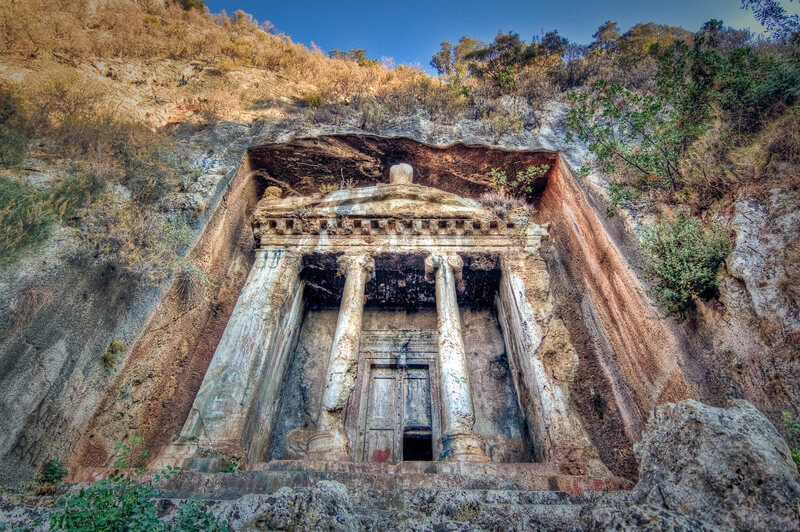
The Ancient Lycians believed that their dead were carried to the afterlife by angels from the heavens. To facilitate this ascent they placed their honored dead in geographically high places, like this cliffside. The tombs, many of which date back to the 4th century, are guarded by massive entryways adorned with tall Romanesque columns and intricate reliefs. The oldest tombs are often no more than unremarked holes dug into the rock. Despite the external grandeur, the interior of the tombs are spare chambers cut into the rock with a simple monolith inside to display the body. The rooms are otherwise empty from hundreds of years of looting.
In November 1912, the remaining members of Captain Robert Falcon Scott's Terra Nova expedition were searching for their leader. Scott and his party had vanished into the snows the previous year, never returning from their quest for the South Pole. One of the group saw "a small object projecting above the surface" of the snow. It was part of a tent. They had discovered the final resting place of Scott and two of his men, Henry "Birdie" Bowers and Edward Wilson. Scott lay between them, his diary recording their final days: "It seems a pity, but I do not think I can write more," the last entry ran, "For God’s sake look after our people."
The bodies of Scott and his men were not brought back to Britain. Instead, wrote Cherry-Garrard, who had been part of the search party, "We never moved them. We took the bamboos of the tent away and the tent itself covered them. Over them we built the cairn." This tomb of snow, topped with a stark cross, was all that marked the remote spot in the Antarctic emptiness which has not been seen for over 100 years. The grave site was quickly buried in drifting snow, while the tent and bodies have been migrating downward into the ice under the weight of accumulating snow and seaward with the ice shelf toward the Ross Sea. A more permanent monument to Scott and his men was erected on Observation Hill near McMurdo Station, but given time, it is likely that, encased deep within an iceberg, the bodies of Scott, Bowers, and Wilson will slowly drift away out to sea.
Lampa is a small colonial town with all the provincial charms of a 16th century Peruvian town, but what stands out the most is its enormous church, the Iglesia Santiago Apóstol. Connected to the church is Enrique Torres Belón's freaky mausoleum, a silo of bones capped by an aluminum replica of Michelangelo's Pietà.
Belón, an engineer and architect, designed and built the tomb in the mid-20th century so that he and his wife could rest in peace surrounded by the earthly remains of the city's forbearers. The otherworldly tribute is lined with hanging human skeletons and hundreds of skulls exhumed from the town's cemetery and the crypts beneath the church. At the bottom is a black marble cross, whose lighting exaggerates the eerie shadows cast by the macabre wall hangings. The dramatic grave makes Belón seem very important—all Lampa's founders are looking upon him for all eternity.
Early polar exploration was a lonely business where sailors would be stuck on their ships for months, subsisting on barely edible rations among some of the world's most inhospitable climates. However, the Shackleton expedition was made just a bit brighter by the presence of the ship's cat, Mrs. Chippy. Harry McNeish was a carpenter on Ernest Shackleton's Endurance expedition to Antarctica, as well as a member of the long journey from Elephant Island to South Georgia. He was also the primary caretaker of Mrs. Chippy, the cat that accompanied the men until the Endurance became trapped in pack ice. Unfortunately Mrs. Chippy was shot along with the sled dogs once the team became trapped in the ice. To honor the brave, beloved kitty, the New Zealand Antarctic Society added a bronze statue of Mrs. Chippy to McNeish's grave in 2004.
The Big Top-shaped headstone for the victims of the circus train wreck. (Photo: Atlas Obscura user mom0ja)
The Con T. Kennedy Carnival Show had just wrapped up an unusually successful Harvest Festival week in the center of Atlanta. On the early morning of November 22, 1915, the 28-car Kennedy show train pulled out of the station with the entire company on board. Just a few hours later the show train collided with a steel passenger train. The crash was so powerful that the two engines fused together. While no one was killed on the sturdier passenger train, the Kennedy performers were not so lucky. "I saw those poor fellows pinned in their sleeping wagons and they could not get out," one eyewitness recalled.
The fire raged for hours. When the smoke had finally cleared, bodies were discovered in the wreckage. At least 50 Kennedy workers were injured. Due to the transient nature of show people, the exact number and identity of those killed has never been determined. After a mass funeral at Columbus’s First Baptist Church, there was a procession to Riverdale Cemetery where the burials took place. Since the carnival band’s instruments had been burned, local Columbians loaned them instruments so they could send their comrades off in style.
In honor of his fallen employees, Con. Kennedy erected an appropriately circus-y monument in Columbus' Riverdale Cemetery, and then he and the rest of his remaining crew headed back down the long, hard, show business road.
Nestled in the quaint Lincolnshire countryside is the village of Tattershall where, according to legend, the remains of a miniature folk hero can still be found. Visitors who step inside the town’s 16th century church will find a tiny grave marker, adorned with flowers and bearing the name Tom Thumb. He was reputedly just over 18 inches tall and lived to the ripe old age of 101 when he passed away in 1620.
It's difficult to pick fact from fiction because Tom Thumb has been a common character in English folklore for hundreds of years, with the first written examples of his escapades appearing in the early 1500s. Traditionally, the character of Tom Thumb was a canny, cunning boy who used his size to trick and beguile foolish people. There are rumours that the Tom Thumb buried at Tattershall was popular with the King’s court and often visited London. Whether or not this is true and whether or not a man named Tom Thumb really is buried in that small church, it’s safe to say that his story has become forever intertwined with wider folklore. This charming little grave is now part of that.
William G. Bruce's family had deep roots in the Town of Mont Vernon. He was an avid hunter and suffered a grave wound while hunting alone in 1883. He died the same day of his accident, but not before his wife Augusta Whittemore Bruce was rushed to his deathbed. William Bruce was industrious and frugal in life and left his wife a substantial sum of money. Augusta Bruce used some of this inherited wealth to commission noted monument maker Peter Brennan to craft a fitting memorial for her departed husband.
The book Lives Once Lived Here contains a facsimile of a ledger page that reveals Mrs. Bruce paid $35.00 each for the two headstones for her and her husband and $145.00 for the granite dog (a couple thousand in today's dollars), who has remained faithfully by his master's side in perpetual vigilance as his stone guardian in the afterlife.
Miss Baker, a monkey purchased by NASA from a Miami pet shop, was the first primate to return alive from space. She and another monkey, Miss Able, were fitted with adorable little caps and jackets to wear into space and crammed into less than adorable metal monitoring capsules. Then in the wee hours of May 28, 1959, the duo were placed into a Jupiter rocket and shot 300 miles into the sky. The flight only lasted 16 minutes, over half of which consisted of weightlessness, and the rocket landed safely, for the first time, in the Atlantic Ocean.
She retired to the Naval Aerospace Medical Center in Pensacola where she was married to another monkey, Big George. Miss Baker died of kidney failure in 1984 at the age of 27, earning her the secondary honor of being the longest lived squirrel monkey on record. She has the honor of being buried in a grave outside of the U.S. Space & Rocket Center in Alabama and given a proper headstone next to her first husband. The grave is located in the center's parking lot, but admirers and fans of the little astronaut still come by and leave bananas on her headstone.
Jane Griffith's grave depicts a commonplace domestic scene with a tragically sorrowful ending. Charles Griffith says goodbye to his wife Jane on the footsteps of their brownstone on 109 West 13th Street. It is the morning of August 3rd, 1857, and he is about to leave for a typical day's work, starting with a commute on the 6th Avenue horse trolley which waits on the corner. When Charles returned home from work, he found his wife dead from heart failure.
The artist's detail is extraordinary, from the iron fencing to their pet dog waiting on the top step of the brownstone. Simply titled to "Jane my Wife," the monument captures poignantly the morning Charles said farewell to his wife without knowing that it was for the last time.
During the mid-1800s when much of the southwest of America was still uninhabited desert, the government decided they would deal with the terrain like the desert dwellers of the Middle East and hire camel drivers, such as Hi Jolly, to carry their goods across the arid terrain. He was born Philip Tedro in Syria, converted to Islam and changed his name to Hadji Ali, which the Americans of the U.S. Calvary pronounced as "Hi Jolly." They contracted him to be the first member of the experimental Army Camel Corps. Jolly stood out from the rest of the riders for both his ambition and his cantankerous attitude.
Eventually the camel corps was disbanded after it was found that the much larger camels spooked the native livestock and horses. Jolly remained in the states before passing away in Arizona in 1902. Today his grave is marked by a stony pyramid that is topped by an etched metal camel.
Joseph Palmer began wearing a beard in the 1820s, in spite of the fact that beards had been out of fashion for nearly a century. Palmer was considered by most all in his small town to be slovenly and ungodly. He was even criticized by his local preacher for communing with the devil, famously responding to the accusation, "...if I remember correctly, Jesus wore a beard not unlike mine."
In May of 1830, Palmer was attacked by four men outside of a hotel in Fitchburg, Massachusetts. Armed with razors and scissors, the men attempted to forcibly shave Palmer's face, but the bewhiskered man stabbed two of his attackers with a pocketknife, and was subsequently arrested for assault. He could have avoided jail by paying a fine and court fees, but Palmer refused, maintaining his innocence, and more importantly his right to a glorious beard. He was subsequently jailed for 15 months, including time in solitary confinement.
Upon leaving prison, Palmer joined the Fruitlands utopian community in nearby Harvard, Massachusetts after being influenced by his friendship with fellow Fruitlander, Louisa May Alcott, who wrote a character based on him. Palmer died in 1865 and his tombstone displays a portrait of him with a long beard, a final act of rebellion.
The Merchant family were prominent industrialists in Ohio, and when they erected this massive sphere in 1896 to mark the grave of Charles Merchant it matched the style and fortitude of the clan. The giant granite ball was placed atop a stone plinth and polished and stained to a fine shine, except for the circle where the ball rested on its stand. Within a few years of its installation the sphere had mysteriously begun to slowly rotate on its pedestal, eventually revealing the bald spot.
The estimated 5,200 pound ball had not been secured to the base, thinking the huge amount of friction would have simply held it in place. Several times, the Merchant descendants have attempted to right the sphere, once oven securing it with tar. Despite all this, the stone has managed to continue spinning on its pedestal. No one is quite sure why the sphere keeps moving, be it from imperceptible vibration or ghostly intervention as some would have it. But no matter the cause, the Merchant ball rolls on.
There are plenty of pyramid tombs, but most date to the 19th century and earlier. This one is not only modern, but empty. Actor Nicolas Cage purchased a plot in the famous St. Louis Cemetery No. 1 and erected a stark, nine-foot-tall stone pyramid for himself. There is no name on the pyramid yet, but it is emblazoned with the Latin maxim, "Omni Ab Uno," which translates to "Everything From One." The actor himself has chosen to remain silent about his reasoning for the flamboyant tomb. Some speculate it's an homage to the "National Treasure" movie franchise. Others think the pyramid is evidence of the strange actor's ties to the probably-fictitious secret Illuminati society. The more paranormally minded suggest that the pyramid is where Cage will regenerate his immortal self.
Whatever his reasons, the Cage pyramid has already become an iconic part of the cemetery, much to the chagrin of many locals who are furious that he was able to obtain a plot in the cramped graveyard. Many have even accused the tomb of damaging or removing other centuries-old burials to make room.
Harry Collins was a lifelong magic lover, and even performed in jazz musician Bob Crosby's traveling USO show, "This Is The Army Show" during World War II. After serving, Collins returned to the United States, moved to the big city, and got a job as a salesmen at Frito-Lay, the purveyor of many a fine snack food. For the next twenty years, he was a Frito-Lay man by day and "Mr. Magic," Louisville's most popular magician, by night. He was so dedicated to both professions that the magic word for every one his tricks was "Frito-Lay!"
In 1970, Frito-Lay named Mr. Magic their official corporate magician. He traveled across the country and world, performing magic tricks and paying homage to corn chips. Now his effigy stands atop his grave, extending an arm to welcome visitors into his world of corn chips and wonder.
Its formal name is McMillin Mausoleum, named for John S. McMillin, Freemason, Methodist, and lime works businessman. He combined all of these devotions when he constructed the epic mausoleum that would house the remains of he and his family's remains, Afterglow Vista, the name which is actually placed on the stone arch leading to the burial site.
The so-called "mausoleum" is actually an open air rotunda with a huge limestone table in the middle. Around the table are thick stone chairs not only representing the members of the McMillin family, but actually containing their ashes and acting as headstones. This was meant to represent the family dinner table that the McMillins would rather around. There seems to be an empty space at the table and it is said that this was meant to represent the McMillin son who turned away from God. The table is circled by a six Roman columns and a single broken column which is said to represent the unfinished nature of man's life. The columns were originally going to hold a brass dome over the table, but in the end the family opted to leave the site exposed to the elements. Even the steps leading up to the monument were numbered with Masonic significance to represent the stages of life.
Bucksport's founder, Colonel Jonathan Buck, had a witch executed in the town's early days. Before she died, she cursed Buck to always bear the mark of that deed. One story says that while she was burning at the stake, her leg fell from her body and into the crowd, and this stain has appeared to remind everyone of the gruesome event. Whatever the story, Bucksport is left with a pointy stocking-shaped stain on an obelisk of granite in a hilltop graveyard on Main Street, dedicated to the founder of the town. It hangs right below his name like a stocking on a fireplace.
In sleepy Valley View Memorial Park there is a treasure the first of its kind in Utah. Hidden in the Southwest corner of the cemetery is an onyx-colored plaque in the ground that is hard to ignore. It reads, "Steven Allan Ford April 7, 1980-September 7, 2010 MAY THE FORCE BE WITH YOU–ALWAYS." This is no overzealous fan, but indeed the resting place of someone remarkable: Steven Ford, the first ordained Jedi priest in the predominantly Mormon state of Utah.
This might look like a small, private cemetery within Maplewood Cemetery, but it is actually the grave of just one man, Colonel Henry G. Wooldridge. It was built over the course of seven years until Wooldridge's own death in 1899, and commemorates family members and other loved ones Wooldridge lost over the course of his lifetime. The figures include his mother and sisters and his horse named Fop.
Prompted by no one but his own aching heart, the man spent his last years pouring his fortune into immortalizing all that was irretrievably lost in stunning fashion. After more than a century of visitation by a public fascinated by the spectacle, the site has acquired an unofficial, completely disconcerting name: "The Strange Procession Which Never Moves."
Tucked into the scrubby woods near Estonia's Ämari Air Base is a pilot's graveyard where Soviet airmen are buried beneath the fins of the very aircraft they likely died in. While some of the graves are crude and simple affairs, the graves of the many of the military pilots are topped with actual tail fins from Russian aircraft. These are dedicated to pilots who flew and died when Estonia was part of the Eastern Bloc until the dissolution of the Soviet Union in 1991. The stark opposition and funereal atmosphere turn the site into a haunting memorial not just to the fighting men buried at the site, but for Estonia's past as well.
Perhaps the most famous statue at Lakeview Cemetery is "The Angel of Death Victorious" seated on the marble gravestone of one Francis Haserot. The life-size bronze angel holds an upside-down torch, a symbol of life extinguished. Perhaps its most unsettling feature, however, is how the statue appears to be weeping black tears at all times. These "tears" formed over time, an effect of the aging bronze combined with the impressive sculpting work of the piece itself. This lacrimal feature attracts a number of visitors and tourists each year.
Victor Noir was a 19th-century political journalist shot in a duel by Prince Pierre Bonaparte in 1870. He became a symbol of the imperial injustice and a martyr for the Republic. More than one hundred thousand people came to his funeral, where frenetic weeping was mixed with calls for insurrection. After the downfall of the Second Empire, Victor Noir’s remains were transferred to the Père Lachaise Cemetery, and a bronze effigy was commissioned.
Noir was depicted as an elegant man, lying dead on the floor after the impact of the lethal bullet, his top hat tipped over on his side. Dalou chose to represent Noir in a very realistic way, his face having the detailed quality of a cast death mask. However, another detail of Noir’s anatomy would soon get more attention than the sober realism of the memorial bronze.
Victor's grave remains one of the most popular at Père Lachaise, but not because of his political symbolism. Generations of women have come to kiss his lips and rub his bulge, believing it will bring good luck. After a century and a half of this action, Victor Noir’s lips and groin are shiny and nickel-clean, while the rest of his body presents the greenish tone of oxidized bronze.
It's not his name, but rather his profession. Rope Walker was a peg-legged tightrope walker who died in 1884, when he fell from a rope stretched across one of the town’s main streets with an iron stove strapped to his back. He asked for a rabbi as he was dying, but he did not reveal his name. Using the scant information they had about his, the townspeople buried him as “Rope Walker" in the Hebrew Cemetery of Corsicana.
Life-sized monuments are not so uncommon, but this one is half of a statue friendship. In 1920, Charles M. Higgins, an Irish immigrant and local history buff built an altar on Battle Hill to the long-slighted Revolutionary War Battle of Long Island, the first major battle after the Declaration of Independence. He chose to top the monument with a statue of Minerva, the Roman goddess of wisdom. As if to communicate between past and present, Minerva's outstretched arm reciprocated exactly 3.5 miles away by the Statue of Liberty's raised torch. Their friendship has stood the test of time (and condo development) and their line of sight to each other remains unobstructed.
Cuban Tobacco FarmerPhoto Credit: Janice Schacter Lintz Havana has become ‘THE’ place to visit for travelers to Cuba. But leave the city, to see Cuba’s countryside with beautiful landscapes and magnificent UNESCO World Heritage Sites. Some of my favorite destinations are: Drinkand learn about Cuba’s coffee history at the 19th century Buenavista [...]
In the woods of Morristown, Tennessee, just past Martin Road, are all that's left of the chimney where the Necronomicon met its fiery demise. That, and a tomb-sized hole in the ground where a witch locked in a cellar desperately tried to lure a young Linda to her doom.
This is the site of the cabin where Sam Raimi shot the original Evil Dead movie. The cabin was largely destroyed in the process of filming. Twenty-one-year-old 'enfant terrible' director Sam Raimi was willing to do just about anything to get his shot, including maneuvering a dirt bike down a wooded hill and through the back door of the cabin, stopping just short of Bruce Campbell to catch the terrific POV shot that closes the movie. Though this is a contested story, the general story is that the young actors nearly killed each other out there in making the movie.
Coming from Morristown and just past Martin Road, there's a little trailhead on the right behind a barbed wire fence. Be forewarned: this is currently private property and to step on its grounds means you will be trespassing in a rural section of Appalachia.
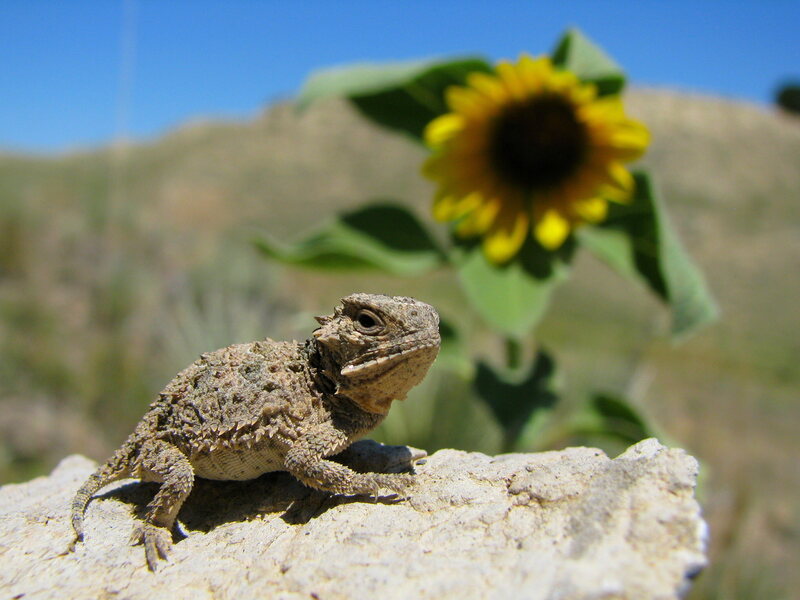
Gather round to hear the tale of Ol’ Rip, the lizard who beat death! Well, at least once. After being entombed in stone for 31 years, Ol' Rip emerged alive and... somewhat groggy, briefly becoming the most beloved horned lizard in Texas. Today, the body of Ol' Rip can be found under glass at the Eastland County Courthouse, but the story of his miraculous recovery has been marveled about for nearly nine decades.
The Texas horned lizard, the state’s official reptile, is a devilish-looking little critter that could once be found all over the Lone Star State. Commonly known as “horny toads,” they are covered in severe-looking spikes, and look like miniature dragons. These prickly lizards have come to be a beloved Texas icon.
In a 2007 story in the Matagorda Advocate, Texas senator John Cornyn described their mystique, saying the horny toad seems to "reflect the land itself—rugged, fearsome, spiny, tough—and wondrously friendly, all at the same time.” So of course, when officials in Eastland County looked for something iconic to place in the keystone of their very first courthouse, this creature came to mind.
"[Native American] legend said that horned toads could hibernate for up to 100 years," says Cecil Funderburgh, Executive Director of the Eastland Chamber of Commerce. "The placement of Old Rip in the cornerstone of the Courthouse seems to be a test of that theory."
In 1897, Eastland County was finishing work on its third courthouse by adding a marble keystone to the edifice. There was a cavity in the stone where things could be placed as a sort of time capsule. According to the Texas Parks and Wildlife Magazine, Eastland County Clerk Ernest E. Wood suggested placing a horny toad in the block to explore the legend.
To commemorate the final step in completing the new county seat, onlookers came to watch the ceremony and listen to musical performances. Wood even produced a horny toad his son had captured. The reptile’s name was “Blinky.”
However, Wood wasn’t sure if Blinky ever got placed in the keystone. “Objections to putting anything alive into the stone came up,” he was quoted as saying, in a later story in the Woodville Republican. “I went away to play in the band and do not know if the frog was placed in the stone.”
Despite the ethical issues about entombing a live animal, it seems like the assembled locals overcame their reservations, and according to all accounts, the living horny toad was placed in the keystone along with some other assorted memorabilia, like a Bible and some coins. Then the stone was bricked into the wall.
Fast forward 31 years to 1928. Eastland was getting ready to demolish its old courthouse and replace it with a new, Art Deco-inspired building, and it was time to crack open the old keystone to find out what sort of treasures had been left back in 1897. Word about the lizard had spread, and over 1,000 onlookers arrived to see if the rumors were true.
Using a pick, a construction worker pried open the stone, and sure enough, multiple witnesses said that they saw a horny toad (presumably Blinky) lying inside, looking, quite understandably, dead. Finally someone reached in and took the little body out of the stone. The lizard slowly lurched back to life, much to the astonishment of the gathered Eastlanders.
The Lazarus lizard became an instant celebrity, and was soon renamed Ol’ Rip after Rip Van Winkle. After recovering for a few weeks, Ol’ Rip was given a new home in a fishbowl in the window of a shop. Visitors from around the world, including President Calvin Coolidge, came to see the famous animal, as he happily chowed down on harvester ants. But not everyone was convinced.
The keystone that once held the horny toad. Was Ol' Rip a Mason?! (Photo: QuesterMark/CC BY-SA 2.0)
While horned lizards hibernate during the winter months, their average lifespan is around five years, making the story of Ol’ Rip seem more than a little suspect. Most skeptics figured that one of the locals officiating the event slipped in a live lizard to make a good story for the massive crowd. However in the 1928 article in the Woodville Republican, a county judge, a local reverend, and even the man who pulled him out of the stone, insisted that there was no way the toad could have been tampered with.
But even in the face of massive skepticism, Ol’ Rip’s popularity continued until the day he died of pneumonia in 1929, less than a year after his rebirth. The popularity of the horny toad waned somewhat, but claims of fraud did not.
After his death, Ol’ Rip’s body was taxidermied and placed in a little glass-topped coffin and put on display in the Eastland County Courthouse. In 1973, Ol’ Rip was kidnapped from the courthouse, and later found at the local fairgrounds with a note that claimed to be from one of the original perpetrators of the resurrection hoax. It called for the other conspirators to reveal themselves, although no one stepped forward.
The coffin was returned to the courthouse, but suspicion persists to this day that the reptile inside is a replacement Ol’ Rip, based on the condition of the little body. "Due to the entombment of Old Rip, accounts tell of the horned toad’s spikes being worn down from attempts to escape from the cornerstone," says Funderburgh. "The body currently on display has horns and spikes that appear to be in pretty good shape." The motive for such a crime has not been determined.
Original horny toad or not, Ol’ Rip is still a celebrity in Eastland and the surrounding area, where his story is taken as gospel. "Ask the folks around Eastland what they think, and the majority believe it is a true fact," says Funderburgh. "A few believe it’s a publicity stunt. Me? I believe!"
In addition to acting as a sort of mascot for the area, his name also adorns a number of local businesses. The legend of Ol’ Rip is remembered and reinforced every February 18th, when local officials invite children and guests to the courthouse to recite the Ol’ Rip Oath, which has them pledge that they will continue to keep the story of Ol’ Rip alive. This way, the lizard that couldn’t die, never will.
In Florida, citrus orchards and an old well have been reborn as a Spanish explorer's quixotic dream come true.
Created in 1904 by local entrepreneur "Diamond Lil" (aka Luella Day McConnell), the 15-acre Fountain of Youth Archaeological Park is purportedly located on the site where Spanish explorer Ponce de Leon first landed in 1513.
Although Ponce de Leon has long been associated with the story for the search for the mythical fountain, he actually never wrote anything about any such quest. It was only after his death that other biographers wrote that the fountain was the motivation behind his expedition in Florida.
The legend of the mysterious life-giving spring dates back to at least the time of Herodotus, placed everywhere from Ethiopia to the mythical islands of Bimini, but since Ponce de Leon's time it has firmly been associated with Florida.
The larger-than-life personality of Diamond Lil matched her colorful background. She left her life as a practicing doctor in Chicago (unusual for a woman of the era) to take part in the Klondike gold rush of the 1890s (even more unusual). She must have done something right, because she was described as arriving in St. Augustine, Florida in 1904 with "cash and a diamond in her front tooth."
She bought land and promptly opened her park and converted the on-site well into the Fountain of Youth. St. Augustine at the time was firmly gripped with a kind of Ponce de Leon mania, so her choice of themes was appropriate. In no time at all she began unearthing "artifacts" related to the Spanish explorer, including one that looked suspiciously similar to an old salt cellar.
Since her time, the park claims to have made several important archaeological discoveries, including Ponce de Leon's "recording landmark and accompanying artifacts," Native American artifacts, and evidence of an early colony on the site.
Marie Laveau was a famous and powerful voodoo priestess who lived in New Orleans in the 19th century. Renowned in life and revered in death, some say she continues to work her magic from beyond the grave.
Details of Laveau's life are sketchy, and complicated by the fact that her daughter was also a famous priestess named Marie. The first Marie was born in the French Quarter of New Orleans around 1801, the illegitimate daughter of a Creole mother and a white father. In New Orleans in the 18th and 19th centuries, slaves, Creoles and free people of color practiced a brand of voodoo that incorporated African, Catholic, and Native American religious practices. Laveau, a hairdresser by trade, was the most famous and purportedly the most powerful of the city's voodoo practitioners. She sold charms and pouches of gris gris (some combination of herbs, oils, stones, bones, hair, nails, and grave dirt), told fortunes and gave advice to New Orleans residents of every social strata. Some said Laveau even had the power to save condemned prisoners from execution.
Laveau died in 1881, and is said to be buried in St. Louis Cemetery No. 1, in the tomb of her husband's family, the Glapions. Some scholars dispute this as her final resting place, but it is mentioned in her obituary, and is the most likely spot. Whether she lies inside doesn't seem to matter to the amateur occultists and French Quarter tourists who flock here in equal measure. They scribble Xs on the whitewashed mausoleum in hopes Laveau will grant their wishes. (That practice is discouraged by preservationists, who say it has no basis in voodoo tradition and damages the delicate tomb.) In 2014, a restoration of her tomb was completed that totally removed the Xs, and a large fine is in place for any visitor who attempts to write on the grave.
In general, the Saint Louis Cemetery is beautiful. It dates to 1789 and is the oldest cemetery still standing in the city. Inside are hundreds of 18th and 19th century above-ground tombs holding the city's most prominent dead, including Homer Plessy.
Known for their distinctive above-ground burials and particularly lovely monuments, New Orleans' historic cemeteries are all worth exploring, including the racetrack-shaped Metairie Cemetery and Saint Louis Cemetery No. 2.
Update: As of 2015, St. Louis Cemetery No. 1 is open only to visitors with tour guides or who have family buried in the cemetery.












 Railroad Model Club of Atlanta president Pete SilcoxPhotograph by Andrea Fremiotti Beyond an antique wood-frame glass door opening onto Edgewood Avenue and up a creaking stairway lies the territory of the Great Southern Lines—otherwise known as the largest model train layout in Atlanta. You could also call it one of the best-kept secrets in the city, since few passersby likely are aware that just above the Old 4th Distillery is a 1,400-square-foot, man-made landscape of hills, bridges, depots, and towns, with more than 93 working track switches. It’s also almost certainly the oldest layout in metro Atlanta, having occupied the cramped, low-ceilinged space since the mid-1940s. The building itself has long been owned by the Railroad Model Club of Atlanta, which claims to have met…View Original Post
 Quiet moments are rare at Busy Bee Cafe. Six days a week, patrons cram into the dining room and the line snakes out into the parking lot. It’s a stopover for almost every visiting politician and celebrity, and the list of famous diners include Martin Luther King Jr., OutKast, and President Obama. Customers flock to the Vine City restaurant for Southern classics like ham hocks, candied yams, and oxtail, but the most ordered dish is always the fried chicken. Busy Bee may boast the city’s best fried chicken, but it wasn’t always their top seller. When owner Tracy Gates first started working at the restaurant in 1987, the menu was dominated by ham hocks and chitlins. The restaurant, opened in 1947 by Lucy Jackson, had…View Original Post
 The Marshall House Savannah, Georgia “America’s Most Haunted City” is known for hosting lost souls, but Savannah’s oldest hotel, the Marshall House, is eternally booked, with Union soldiers milling about the lobby and sounds of scuttling children echoing down the halls. Opened in 1851, the sixty-eight-room hotel has served as a hospital three times: once during the Civil War and twice during yellow fever epidemics. In the 1990s, renovators found human body parts—likely removed during surgeries—under its floorboards. Now those who couldn’t part peacefully with life or limb roam the building, jiggling doorknobs and turning on faucets. marshallhouse.com Miami Biltmore Hotel Coral Gables, Florida Despite its early high-society appeal—Judy Garland, Ginger Rogers, Bing Crosby, and President Franklin D. Roosevelt stayed here during the resort’s…View Original Post
 Bryan Furman pulling a brisket from the smoker.Photograph by Jennifer Zyman The first thing that strikes you when you meet Bryan Furman, the owner of B’s Cracklin’ Barbecue, is his passion and confidence. The first-generation pitmaster carries himself with the kind of self-assuredness and restaurant smarts you’d expect to find in someone with many more years under their belt. But the 35-year-old has every reason to be confident. His Savannah restaurant opened in 2014 and quickly earned praise from Garden & Gun and Southern Living. When faulty equipment sparked a fire that burned the restaurant to the ground, the entire Savannah community rallied behind Furman to help get the restaurant back up and running. When Furman made the decision to open a second B’s location…View Original Post










_S_sculptures_1.JPG)