Shared posts

26 Nov 16:29

Back When Your Thanksgiving Dinner Walked Hundreds of Miles to Market

by Andy Wright

Let’s take a trip back in time to Norfolk, England, to witness a scene of bygone rusticity: An English farmer, dressed in a tweed coat, tie and vest, topped off with a jaunty pageboy cap, herds his flock through the streets. It’s a welcome break from the average day in 1931, and mothers follow behind pushing kids in prams; a little girl clutches her hands in excitement. The livestock gobbles and wobbles.

The farmer is driving a herd of turkeys through town.

When we think back on livestock migrations, we typically think of cattle, maybe sheep. The image of a rugged herdsman driving a clucking, head-bobbing, beady-eyed gaggle of birds across open plains and down dirt roads is harder to imagine, yet this practice used to be common all over the world. In the 17th century, before the introduction of trucks and refrigerated railway cars, a turkey drive was the only way to get poultry from farm to market. Such drives were no trivial matter, either: Birds by the thousands were sometimes driven hundreds of miles over several days; fox and other predators would thin the herd along the way. In some parts of the world, such drives lasted into the 1930s.

The turkey trip from farms in rural Norfolk county to the livestock market in London, over 100 miles away, was a regular one. In her book The Agricultural Revolution in Norfolk, author Naomi Riches writes that around “one hundred and fifty thousand turkeys were driven annually from Norfolk and Suffolk down the Ipswich Road to London.” Once they arrived, the turkeys were sold at market to stores and individual buyers.

article-image

In his 1724 travelogue A Tour Thro’ the Whole Island of Great Britain, Daniel Defoe (most famous for authoring Robinson Crusoe) recorded that turkeys and geese were driven to London from August to October, when the roads grew “too stiff and deep or their broad feet and short leggs [sic] to march in.” (To protect their feet, some lucky turkeys wore leather booties. Less lucky ones had their feet dipped in tar.)

Even at this time, there were a few farmers trying to engineer their way out of onerous treks. Some birds were conveyed in special carts with “four stories or stages, to put the creatures in one above another, by which invention one cart will carry a great number,” according to Defoe. Despite this mobile poultry condominium, most turkeys—who walk more than they fly— in the world were still herded the old-fashioned way.

In the United States, it was not unusual to see a clucking herd of turkeys driven through the streets and backcountry, but this doesn’t mean the task was simple. In his book The Turkey: An American Story food historian Andrew F. Smith describes the frequent trips turkeys took between Lancaster and Philadelphia, occasionally trampling themselves to death on the 70-mile journey. Turkey drives could include “shooers” who herded the turkeys, children who scattered feed in the path to guide the birds, and covered wagons filled with grain to feed them.

In some cases the journeys were epic. One drive took birds from Ohio to Missouri, another from Iowa to Denver. The nature of turkeys also presented unique challenges: dusk prompted the birds to seek higher ground and roost, effectively ending the day's march. 

article-image

"Wherever they are when the sun sets, that’s where they perch for the night," Peter Gilbert, chair of the Vermont Humanities Council told Vermont Public Radio. "And their collective weight shatters trees; occasionally birds end up perching on a farmer’s shed or barn and the building collapses. In fact, in one town, they roosted on top of the school building and the school collapsed.”

Sometimes the turkeys would mistake the shade cast by a covered bridge for nighttime and react accordingly, requiring their drivers to roust them from the structure.

Despite such calamities, turkeys were strangely suited to the trip. “The bird’s amiability, vigorous constitution, and long, strong legs made these drives possible,” writes Karen Davies in More Than a Meal: The Turkey in History, Myth, Ritual, and Reality. Wild turkeys, whose blood ran in the veins of domesticated varieties, were known to run at speeds of up to 25 miles per hour, and could climb mountainsides, cross streams, and fly over lakes and rivers up to a mile wide.

article-image

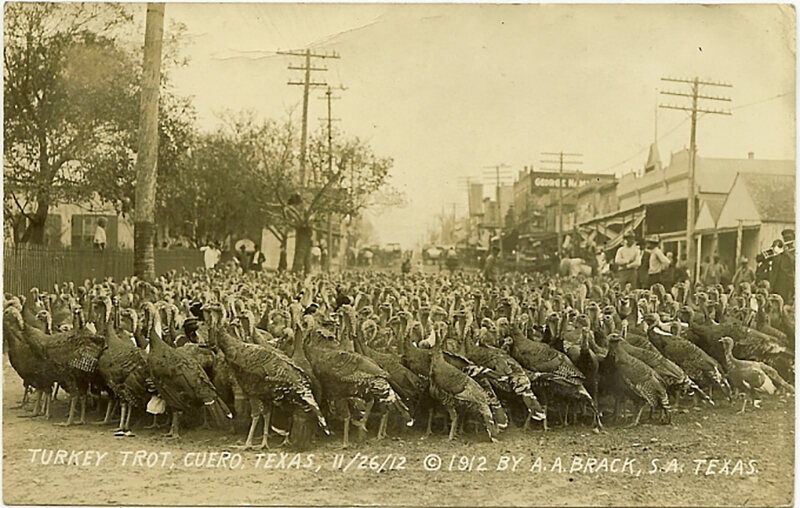
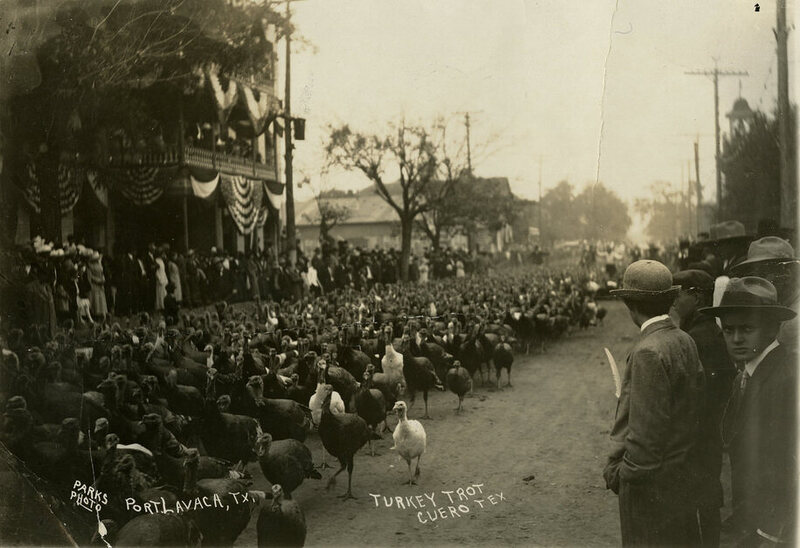
As more efficient transportation options and better roads arrived, turkey drives waned, although some persisted into the 1930s. Their rarity in the early 20th century made them a tourist draw in places like Cuero, Texas, where they were common until 1917. “Growers around Cuero drove their turkeys in flocks of five to ten thousand up to thirty miles, from their farms to turkey-processing plants in town,” writes Smith in The Turkey: An American Story.

Crowds descended on the town to witness the novelty. Around the same time, a dance craze called the “turkey trot” was sweeping the nation. The shrewd townsfolk of Cuero decided to capitalize on the trend, hosting a drive just for tourists. They called it the “Turkey Trot” and drew a crowd of 30,000. The event inspired imitators, and a version of the Turkey Trot, called Turkeyfest, still takes place today, sans turkey drive. Now it’s common for humans to do the running in “turkey trot” races around the country.

Hardly fodder for rustic reminiscing or high frontier fantasy, the legacy of turkey drives has been largely forgotten, although they get the occasional cultural nod. There was the 1991 play put on by the Trinity County, California, theater troupe Dell’Arte, “The Truly Remarkable Turkey Drive of 1912” (based on a true story). Parents who want to share the wonder of turkey drives with their kids can pick up a copy of Kathleen Karr’s The Great Turkey Walk, a fictional account of a drive from Missouri to Denver. But most folks will tuck into this season’s bird with little appreciation for how far these creatures once walked, just to end up on a platter.

26 Nov 16:25

Delete yourself from the internet by pressing this button

26 Nov 16:25

Records Reveal the FBI's 7 Types of Protesters

26 Nov 16:25

Hare Hunting New Hampshire

by Bob Ford

Small game hunters unite through the world of social media.

The post Hare Hunting New Hampshire appeared first on Sporting Classics Daily.

26 Nov 16:24

Seven Lamps – Atlanta, GA

by willoughbyandy

Back in 2013, eater.com put together a list of the “25 Hottest Burgers in America and the “secret burger” at Seven Lamps (a newcomer, at the time, to the Atlanta dining scene) made their list.  I had never heard of the restaurant, but I did add it to my list.  Located in the corner of the Around Lenox shopping center, navigation systems will get you ninety-eight percent of the way there, but if you don’t know where you are heading, it is tough to find.  You need to pull into the entrance to Lenox Square, by the Westin, and then into the parking lot behind it.  Tucked back into a corner, we arrived for an 6:30 dinner with our daughter and son-in-law and were shown to a table in the nearly empty inside.   The shelves, below, make up the back wall.


They started us out with pickled okra and squash, along with crema – their alternative to bread service.  I, for one, missed the bread, but my table mates seemed to enjoy the vegetables, particularly the squash.  The first thing I asked when the server came back around was, “Is there really a burger that’s not on the menu?”  Her affirmation was met with sighs of relief.

While we were deciding on dinner, we started out with a charcuterie plate of two meats and three cheeses

(from top left): house-made pimento cheese; Humboldt Fog goat cheese; more of the pickled okra and squash; pepper-scented pork salami (soppressata); 420 beer mustard; Carolina reaper spicy pork salami; toasted baguettes; cocktail nuts; brie and grapes aigre-doux (pickled grapes).  The pimento cheese was excellent (we scraped out the bowl) and the spicy pork salami was really hot.  The pickled grapes with the goat cheese were a really interesting mix.  A nice overall mix of tastes.

My beloved ordered the pumpkin tortellini,

which she really enjoyed.  The rest of us were there for the burger.  Three arrived at the table from Medium Rare to Well.

The burgers are simple – a fifty/fifty patty of brisket and top round, topped with caramelized onions, thousand island dressing, pickles, and cheese gratin.  I added the bacon.  Mine was the Medium Rare and when I sliced into it, it was cooked perfectly.  We all enjoyed them, thoroughly – the house thousand island on them had a nice after bite.   The sweet potato chips were a little thick, but okay.  This was a really good burger (of course, I omitted the pickles).  I see why this made the eater list – it ought to be added to your list.  Everybody keeps one, don’t they?

Seven Lamps Menu, Reviews, Photos, Location and Info - Zomato


26 Nov 16:23

South 21 – Charlotte, NC

by willoughbyandy

Going back to the original Hamburger America list, as we were driving through Charlotte this evening we swung into South 21 for a quick dinner.  “Swung in” is a bit of an understatement as it involved an exit, a u-turn and a return onto a divided six-lane highway, but you get the idea.  

They’ve been serving Charlotte since 1955 (see below)

the back side of the parking lot

and are a classic drive-in, with space for around 60 cars.   We pulled into a space on the back side of the row to the left (so we could watch traffic) and studied the menu. 

We both chose a jumbo cheeseburger, one with rings and one with fries (and no pickle).

Everything is made to order, but as the burgers are really thin, I can’t imagine waiting more than ten minutes  if no one else was there.  Our order took about five minutes, and the burgers were what “fast food” was decades ago.  Hot and fresh. 

We talked with the couple who pulled in next to us as I was throwing away the trash.  They said they’ve been going to South 21 on Friday nights since the 60s.  Tonight, they were there, in their 60s, with a grandchild.  It’s good to have constants in your life.

South 21 Menu, Reviews, Photos, Location and Info - Zomato


26 Nov 16:22

Grandma Knows Best: Cooking Advice from Willie Mae

by David Gladow

When a local legend like Willie Mae Seaton drops some cooking knowledge, you better pay attention. The founding matriarch of Willie Mae’s Scotch House in New Orleans left behind some cooking advice for her great-grandaughter, Kerry Seaton Stewart, who now runs the restaurant. Stewart reveals some essential advice that she still holds dear from her great-grandmother. Take notes for the next time you step into the kitchen.


Related:

6 Places for Kickin’ Fried Chicken in New Orleans

Essential Fried Chicken Tips from Willie Mae’s


The post Grandma Knows Best: Cooking Advice from Willie Mae appeared first on The Southern Weekend.

25 Nov 16:08

Pickup Trucks Are Suddenly Hot In China, And Detroit Is Set To Cash In - (No, Not Fake News)

by Michael J. Dunne, Contributor
Chinese buyers used to look down on pickup trucks. Not anymore. Full-size GM, Ford and Dodge pickups are the new chic.
25 Nov 15:50

Wilson’s Snipe, Ben Hill County

by Brian Brown

wilsons-snipe-displaying-ben-hill-county-ga-photograph-copyright-brian-brown-vanishing-south-georgia-usa-2016

Folklore suggests that a snipe hunt is a fool’s errand. But snipe are real birds, if rarely encountered.  The term sniper comes from the difficulty hunters of this bird face. It’s well-camouflaged and flies in such an irregular pattern that a clean shot is nearly impossible. I was very lucky to see this Wilson’s Snipe (Gallinago delicata) on Thanksgiving morning.

wilsons-snipe-taking-flight-photograph-copyright-brian-brown-vanishing-south-georgia-usa-2016

And in a flash, he was gone.

wilsons-snipe-in-flight-photograph-copyright-brian-brown-vanishing-south-georgia-usa-2016


25 Nov 15:38

Records Reveal the FBI's 7 Types of Protesters

by JPat Brown
article-image

A version of this story originally appeared on Muckrock.com.

As part of their excellent ongoing coverage of the #NoDAPL protests, the folks at Unicorn Riot received a copy of the FEMA crowd control manual being passed around to local cops. In the section of “crowd dynamics,” the manual identifies the seven “types” of protesters recognized by the FBI.

article-image

Let’s find out which one you are!

Are you …

The street-fighting man?

article-image

The punctual henchman?

article-image

The “Give a man a mask and he’ll tell you the truth”?

article-image

The FOMO?

article-image

The “Got work in the morning so I can’t get arrested”?

article-image

The Miranda?

article-image

Or finally, the “Some men just want to watch the world burn”?

article-image

Or maybe, just maybe, you’re the eighth type, conspicuously absent from this list: the person with a legitimate grievance against authority demonstrating peacefully as per their constitutional right.

Read the full FEMA guide here.

25 Nov 15:29

Delete Self From Internet With Press of Button...


Delete Self From Internet With Press of Button...


(First column, 2nd story, link)


25 Nov 14:54

Staffordshire Oatcakes

Staffordshire, right in the middle of England, is a county famous for the invention of bone china, cute bull terriers. In harsh winters of years gone by, farmers in the area would grow oats rather than wheat and so the oatcake was born.

They have a delicious natural malty sweetness that is traditionally topped with melted cheese and bacon and were traditionally sold directly from kitchen windows, how idyllic! You can literally top them with anything but I prefer a savoury finish and one of my favourites is roasted pumpkin with a fried egg, soft goat’s cheese and crispy bacon.

The beauty in preparing this yeasty batter is that its minimal fuss. You can get on with something else or even better, go back to bed for an hour or two.

23 Nov 14:06

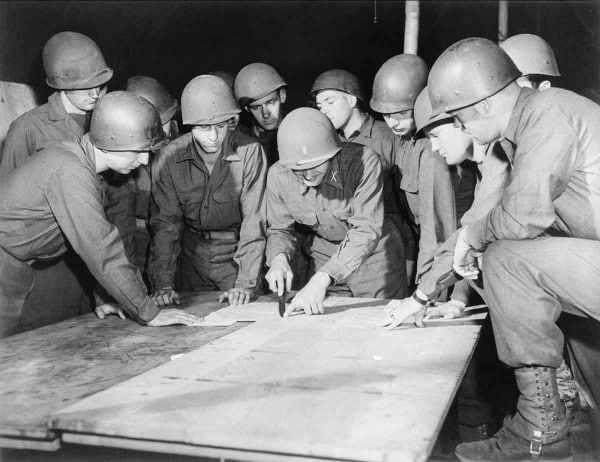
WWII Wisdom on the Qualities and Responsibilities of a True Leader

by Brett & Kate McKay

brief

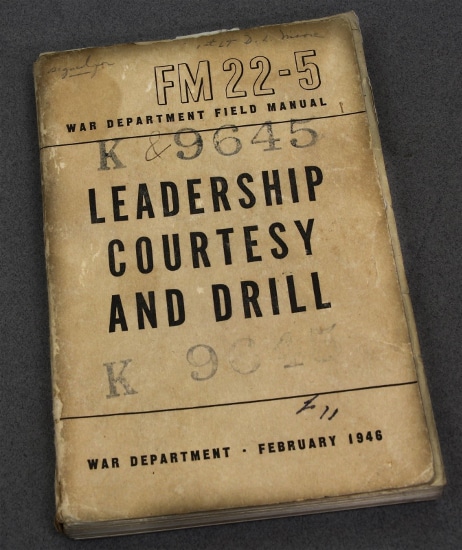
Editor’s note: The following is an excerpt from FM 22-5, an Army field manual on leadership published in 1946. Its contents were formulated during WWII and codified the year after the war ended. The principles outlined are directed at military officers, but apply equally well to leaders in every area of life.
drill-copy

Section II. QUALITIES OF THE LEADER

1. GENERAL.

A leader is self-confident and commands his subordinates. He is not arrogant, nor does he look down upon subordinates as inferiors lacking in intelligence, in self-respect, or in the desire to do their share. The leader must possess the soldierly qualities of obedience, loyalty, neatness, precision, self-control, endurance, courage, and coolness in the face of danger in a sufficiently high degree to be a fitting example to his men. Mutual respect and loyalty are essential in a team.

2. EXPERIENCE.

Successful practical experience gives the leader confidence in himself and inspires it in his men. Intelligence and knowledge derived from the experience of others may serve as substitutes initially, but handling men is an art developed through experience. It is the duty of all leaders to afford their subordinates opportunities to practice leadership, and to encourage subordinate leaders to solve their own problems by giving them maximum responsibility for their units, subject only to necessary supervision. Inexperienced leaders may ask the advice of their superiors, experienced subordinates, and other experienced leaders, but they should not depend on others to make their decisions for them. The decisions and the responsibility should be theirs alone.

3. RELATIONSHIP WITH SUBORDINATES.

a. The leader should adopt a sensible and natural attitude in dealing with his subordinates. It is always a grave mistake for a leader to try to gain popularity by undue familiarity, coddling, or currying favor, because it is an inescapable fact that intimate association between leaders and those they lead tends to destroy discipline and lower prestige. In the interests of good discipline, officers are required to wear a distinctive uniform, to live apart from the men, and to confine their social contacts in the Army to other officers. This age-old distinction prevails in all armies. Enlisted men understand and appreciate the reasons and necessities which prevent undue familiarity with their leaders and have little but contempt for the officer or soldier who, forgetting his own place, deliberately crosses the dividing line reserved for the other. The wise leader will walk the thin line between friendship and familiarity, and at the same time be parent, brother, and father-confessor to his men. It has been said that “a good leader has the patience of Job, the loyalty of Jonathan, and Martha’s willingness to serve.” However, this is never a one-sided relationship, because experience has shown that if the leader will take care of his men, they’ll take care of him.

b. It is important that a commander keep himself accessible at all times to the men of his unit. Thoughtful consideration must be given to complaints. The man who makes a complaint thinks he has suffered an injustice. If he has, the fault should be remedied; if not, his faulty impressions should be corrected at once. In this way no grievances, real or imaginary, will be allowed to develop.

4. DECISIVENESS, INITIATIVE, RESOURCEFULNESS.

a. The unexpected is always a test of leadership. The ability to grasp the facts in a situation quickly and to initiate prompt intelligent action is invaluable. A clear understanding of the objective to be attained will usually guide a leader to a sound decision.

b. Decisiveness is of great importance. Indecision, or hasty decisions which must be changed, destroy confidence. Stubborn adherence to faulty decisions creates resentment, while frank admission of error with prompt corrective action inspires respect and confidence.

c. In some situations, action may be necessary which is beyond the scope of the leader’s authority or contrary to his orders. In such circumstances, he reports the situation to his superior with his recommendations, or, when the urgency warrants it, takes action himself and reports his actions to his superior as soon as possible. Soldiers unite quickly behind a leader who meets a new and unexpected situation with prompt action.

d. New situations and absence of means due to enemy action or other cause demand resourcefulness in a leader. Military supply, organization, and training are designed to meet all normally expected situations, but sometimes fail under combat conditions. Inactivity or passive acceptance of an unsatisfactory situation because of lack of normal means or ways of dealing with it are never justified.

5. THOUGHTFULNESS.

Thoughtfulness includes the forethought essential to planning and such qualities in relations with others as courtesy, consideration, sympathy, and understanding.

a. Proper planning is essential to the success of any mission, whether in training or in combat. The welfare of the men is an important element in all plans, second only to the accomplishment of the mission.

b. Courtesy is discussed in chapter 3.

c. A leader’s consideration for his men, like the spirit of obedience, is ever present. It reveals itself in many little ways, such as letting them be at ease during explanations at drill, insuring that they get hot meals on marches or in combat, taking advantage of lulls to let them rest or sleep, commending work well done, and understanding and discussing with them their points of view and their individual problems.

d. Sympathy should be intelligent. It should not encourage men to shirk, feel sorry for themselves, or rebel. It should not produce that familiarity which breeds contempt or lack of respect. It should not blind the leader or his men to the realization that orders must be obeyed even when the reasons for them are not understood, that hardships are to be expected and must be endured, and that the impossible may have to be attempted and achieved.

6. JUSTICE AND IMPARTIALITY.

a. Everyone resents injustice and favoritism. In assigning duties, recognizing merit, granting privileges, or awarding punishment, the leader must be just and impartial. He must be accessible, willing to listen to and investigate complaints, and prompt in taking corrective action when necessary.

b. Commendation is more effective than criticism, but indiscriminate praise reduces the value of commendation, and failure to point out faults is unjust. An incompetent subordinate should be removed, but the leader should not condemn him until he has pointed out his errors to him and given him a chance to correct them, unless it is clearly obvious that to do otherwise would threaten the success of a unit’s mission.

c. To accept slipshod performance as satisfactory is to court disaster in battle. Likewise, to accept willing, competent performance without recognizing it with commendation or other reward is a serious neglect that ultimately produces discouragement and destroys that willingness which is an essential element of obedience.

7. ADDITIONAL QUALITIES.

a. There are other positive qualities which create respect. These are honesty, truthfulness, decency, dependability, and sincerity. Possession of these create self-reliance and engender self-respect. Many attributes, such as sincerity, enthusiasm, friendliness, and good humor, are invaluable to a leader; these should be natural and not forced or exaggerated. If not inherent, they can be acquired over a period of time by observation of others and thoughtful application of the results of this observation to one’s needs.

b. Dissolute habits must be avoided and undesirable traits of character must be corrected. Immorality, obscenity, drunkenness, gambling, and continued indebtedness undermine moral fiber and destroy the will as well as being outward indications of self-degradation. Ridicule, sarcasm, and insulting remarks create resentment and should never be employed. Surliness and uncontrolled anger indicate lack of poise and self-control, often concealing inability and lack of knowledge.

Section III. RESPONSIBILITIES OF THE LEADER

8. GENERAL.

The manner in which a leader fulfills his responsibilities is the measure of his success. These responsibilities are twofold, comprising the accomplishment of his mission and his duty to his men.

a. The primary responsibility of a leader is the accomplishment of the mission which is assigned him by his superiors. Everything else in the military service, even the welfare of the men, is subordinate to it.

b. No individual is fully prepared to undertake his assigned duties until he understands the mission and the part he is to play in accomplishing it. To provide this orientation is a constantly recurring obligation to all leaders in every stage of training and combat.

c. When things go wrong in his unit, the leader is loyal to his men and accepts full responsibility without attempting to evade it through excusing himself or blaming a subordinate. Likewise, when transmitting orders from his superiors, the leader is loyal to them and does not curry favor with his men by indicating that he is issuing the orders against his will. If he is the real leader of his unit, the orders he issues, no matter where they originated, become his orders to be enforced with all the authority he can exert.

d. A superior should demand this sense of responsibility in subordinate commanders and leaders and should encourage it whenever possible by exercising his authority through them and refraining from intervening openly in the exercise of their authority, or doing anything to discredit them in the eyes of their men.

e. Responsibility for his organization requires that the leader constantly check to see that his orders are carried out and, where necessary, that corrections are made at once. Every individual should be trained and encouraged to avoid the inertia which leads to an assumption that orders have been properly executed.

9. TRAINING.

a. It is preferable that training be conducted by the leader who is going to lead the team in combat.

b. For economy in time, and in the absence of experienced leaders, competent specialists may be used as instructors. In such cases, the leader acts as an assistant instructor and leader in the applicatory phases of such training. He prepares himself by study and application. He does not bluff or try to evade legitimate questions. He may not know all the answers, but he should be able to get them for his men.

c. Since training is preparation for battle, it must be realistic, practical, and as similar as possible to the battle situations the personnel are expected to meet. It must be sufficiently arduous to develop the necessary qualities of stamina and obedience under adverse conditions.

d. For principles and methods of training, see FM 21-5 and TM 21-250.

10. COMBAT.

a. Success in combat depends primarily upon the actions of individuals and small unit leaders, once they have been committed to action. It is then that training, good discipline, and high morale pay dividends, and leadership proves its worth.

b. The leader gives his team its mission and a simple plan for achieving it. He places himself where he can control the team as a whole or that part of it which is making the principle effort. He requests necessary support and keeps his superior, and leaders of those units adjacent to his, informed of the situation. As new situations develop, he initiates action to handle them.

c. Although he does not expose himself needlessly, thoughts of his own safety are subordinated to concern for his mission and his men. His presence and the force of his personality and example should assure the successful accomplishment of the mission.

d. After combat, the leader concerns himself with the reorganization of his team and the application in training of lessons learned in combat. He insures the care of the wounded, takes care of the effects of those who have been killed, sees that merit is recognized and rewarded, devises activity to maintain morale, and in other thoughtful ways shows his appreciation of loyal service and insures that the team is ready for continued duty.

The post WWII Wisdom on the Qualities and Responsibilities of a True Leader appeared first on The Art of Manliness.

23 Nov 14:03

The Monarch of Cedar Mountain

by Ron Stepp
Beating, not cheating, the mountain.
23 Nov 14:03

The Monarch of Cedar Mountain, Pt. 2

by Ron Stepp
Part two of the author's exciting trip for elk.
23 Nov 01:43

Three Spots You Should Never Miss For Early-Winter Bass

by Dave Wolak
winter bass
Many lakes experience drawdowns at this time of year. If falling water is the norm on your lake from late November into early December, never pass on the chance to cast…
23 Nov 01:41

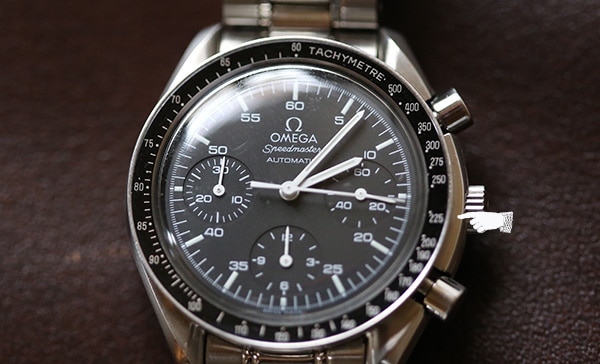
How to Use a Chronograph and Tachymeter on a Wristwatch

by Brett

tachyhead

In our guide to men’s wristwatches, we discussed “complications” — the various extra features on a watch that go beyond just telling time. Two of the complications that you’ll often see on racing or pilot watches are a chronograph and a tachymeter.

They certainly make your watch look cool, but they’re not just for looks. Learning how these two watch complications work together can turn your watch into a pretty nifty measuring tool.

If you’ve been mystified by all the dials of your chronograph watch and have no idea what those tachymeter numbers around its bezel mean, then keep reading. We explain it all below.

How to Use a Chronograph

“Chronograph” is just a fancy word for “stopwatch.” They were added to watches back in the early part of the 20th century to allow racecar drivers and pilots to time themselves, and each other. Astronauts during America’s golden age of space exploration strapped watches with chronographs on their wrists too. For example, Apollo 13 astronaut Jack Swigert used the chronograph on his Omega Speedmaster to time a significant course correction on their perilous journey back to earth.

Using a chronograph is easy. You just press the start/stop button on the side of the watch to start or stop the stopwatch; push the bottom button to reset back to zero.

The more confusing part comes in understanding what the different sub-dials that make up the chronograph mean.

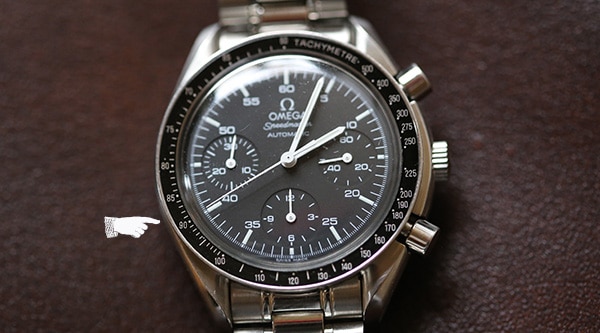
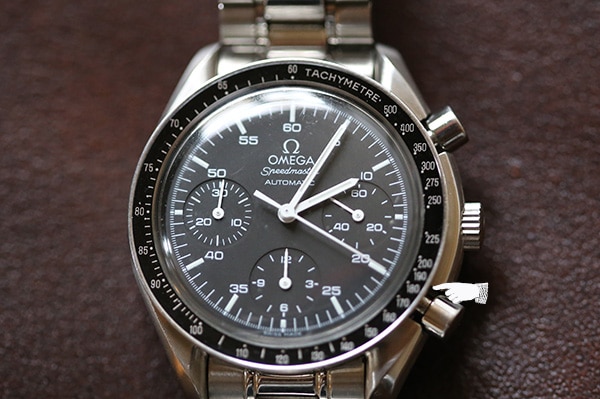
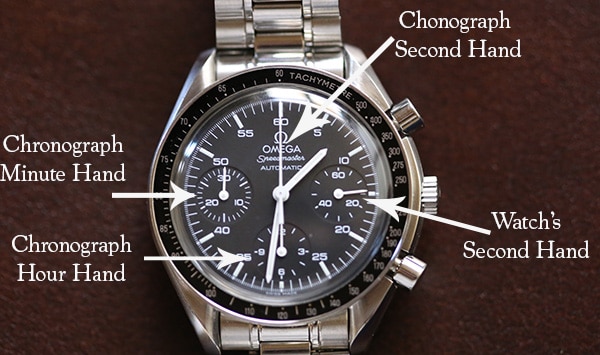
Watch chronographs usually consist of three hands: a second hand, a minute hand, and an hour hand. (Some chronographs have just a second hand and a minute hand. Below I’m using an Omega Speedmaster (provided by Crown and Caliber) as an example, which has three chronograph hands.)

partsofchronograph

The second hand on a chronograph watch is the long, thin center hand. Unlike the second hand on watches without a chronograph, this one only moves when you’ve started the stopwatch.

You might be thinking, “Where does a watch with a chronograph keep track of the seconds of the current time?” That’s done on one of the sub-dials on a watch’s face. On this Speedmaster, the second hand for the current time is on the right-side sub-dial.


Notice that the second hand in the right sub-dial keeps moving even when the chronograph’s second hand is stopped and that the chronograph’s second hand only starts when you push the start button on the chronograph.

The chronograph’s minute hand on this watch is on the left-side sub-dial. It lets you know many minutes have passed since you started the stopwatch. As you can see, it tracks up to 30 minutes.

The chronograph’s hour hand on this watch is the bottom, middle sub-dial. It tells you how many hours have passed since you started your stopwatch.

How to Use a Tachymeter

tachy

Alright, so using a chronograph is easy. It’s just a stopwatch.

Let’s move on to tachymeters. Using them requires a bit of mental math, but once you understand how to use it, you’ll be able to measure all sorts of things like speed and distance traveled, as well as fuel consumption (if you have a special ruler slide tachymeter bezel).

A tachymeter is a scale that’s inscribed around the bezel of a watch or the outside edge of the watch’s main dial. The formula to create this scale is:

Tachymeter scale value = 3,600 (number of seconds in an hour)/elapsed time in seconds

The scale allows you to convert elapsed time (in seconds per unit) to speed (in units per hour).

Most tachymeter scales only work and are valid for all elapsed times starting at about 7.2 seconds and up to 60 seconds. Notice on this Speedmaster that the scale begins at 500 at around the 7.2-second hash. So if you’re trying to measure the speed of something that has an elapsed time of less than 7.2 seconds, the tachymeter isn’t going to work for you. For things that take longer than 60 seconds to complete, you can still use a tachymeter to figure out the speed, you’ll just need to do some math. More on that in a bit.

Also keep in mind that a tachymeter can only measure known distances up to 1 full mile or 1 full kilometer. It’s possible to measure speed for objects that travel shorter or longer distances, you just need to do some math.

Let’s take a look at how to use a tachymeter to measure speed and distance in a few different scenarios.

How to Use a Tachymeter to Measure Speed

To gauge the speed of an object using a tachymeter, you need to know the set distance between two points. Let’s say you’re at a racetrack and you know the distance between turn 1 and turn 2 is 1 mile. With that knowledge, you can measure the average speed of a car.

As soon as the car passes turn 1, push the start button on your chronograph. When it arrives at turn 2, stop it. According to your chronograph, it took the car 40 seconds to go from turn 1 to turn 2.

40sec

Looking at your tachymeter on your bezel, 40 seconds lines up with the 91 hash mark on the tachymeter. That means the car was averaging 91 mph as it was traveling from turn 1 to turn 2.

You can use the tachymeter for other measurement units like kilometers as well; it’s a neutral scale. For example, let’s say the racetrack you’re at is measured in kilometers. You know that the distance between turn 1 and turn 2 is exactly 1 km.

As soon as the car passes turn 1, start the chronograph. When it reaches turn 2, stop it.

20sec

According to your chronograph, it took the car 22 seconds to go from turn 1 to turn 2. 22 seconds lines up with 180 hash mark on your tachymeter bezel, so the car was averaging 180 km/h between turn 1 and turn 2.

If you’re measuring elapsed times on distances shorter than 1 mile or 1 kilometer, you need to do a bit of math to get the average speed. Let’s say you’re watching a stock car race at Thunder Road in Barre, VT. The track is only a quarter-mile.

225

You start the chronograph when a car passes the start/finish line and stop it when it completes an entire lap. It took the car 16 seconds to complete a lap on the quarter-mile track. 16 seconds lines up with 225 on the tachymeter scale. There’s no way that car was going 225 miles per hour; to get the correct average speed, you need to remember that the track was only one-quarter of a mile. So we need ¼ of 225, which is 56.25. The car was averaging a speed of about 56 mph.

What do you do if you measure something that takes more than 60 seconds? Remember, the way the tachymeter scale is set up, it’s only good for measuring elapsed times up to a minute.

But, with a bit of math, you can still use a tachymeter to measure average speed for things that take longer than that. Let’s say you’re watching a 1-mile horse race, and you want to know how fast the winning horse was averaging. He completed the mile in 1 minute 34 seconds, or 94 seconds.

94 seconds is too long to get a speed with our tachymeter. But let’s judge his speed on half a mile. We can estimate that it took the horse 47 seconds to complete half a mile (94 seconds divided by 2 = 47 seconds). 47 seconds is within the range of the tachymeter and it lines up with the 75 hash mark. To get the average speed per hour for the full mile, we need to divide that 75 by 2, giving us an average speed of 37.5 mph.

Besides the speed of objects like cars, people, or race horses, you can even use a tachymeter to figure out how much time it takes to produce “x” amount of widgets in an hour. For example, if you want to know how many watches a watch company can make an hour, simply time how long it takes to make a watch from start to finish with your chronograph. Thanks to automation, it takes only 55 seconds. Looking at the tachymeter scale, 55 seconds lines up with 65. So a watch company can make about 65 watches in an hour.

Cool, huh?

How to Use a Tachymeter to Measure Distance

Besides measuring the speed of an object, you can also use a tachymeter to measure distance traveled.

To do so, you first need to know your traveling speed, and that traveling speed needs to stay constant.

distance

Let’s say you’re cruising on the highway at 75 mph. Start your chronograph second hand. When the second-hand reaches 75 on the tachymeter scale, it means you have traveled 1 mile.

Again, for this to work, your speed must remain constant during the entire time.

Now those dials on your chronograph watch don’t have to be so intimidating, and you can actually use and appreciate them for their function in addition to their form.

The post How to Use a Chronograph and Tachymeter on a Wristwatch appeared first on The Art of Manliness.

23 Nov 01:39

Size Isn’t Everything. Here’s a Farm That Fits in Your Kitchen

by Andrew Amelinckx
You’ve got a microwave, a toaster oven, and a myriad of other kitchen appliances, none of which actually grow food. That could change thanks to a Georgia-based startup Replantable. They've created Nanofarm, an almost completely automated system that grows vegetables and herbs in a unit small enough to fit on your kitchen counter. The key to Nanofarm, which is  smaller than a mini-fridge, are its patent-pending plant pads, which are made out of multiple layers of fabric and paper. The pads contain the seeds and the same kinds of plant nutrients used in traditional hydroponics—elements like nitrogen, phosphorus, and potassium—that are culled from sustainable sources like compost tea and aquaculture waste. The pads sit on top of a water-filled reservoir.The Nanofarm only has two knobs: a dial to control the grow cycle and a start button. Theoretically making it more straight-forward to grow your own vegetables than defrost leftovers in a microwave.To start a grow cycle, just turn the dial labeled “weeks” to the number indicated on the plant pad and then push start. The “harvest” light turns on when your plants are grown. You then have about two weeks to pick your veggies or herbs. The used pads are biodegradable and can be composted. The company offers a variety of vegetables, like romaine lettuce, radishes and kale; and herbs like basil, thyme, and cilantro.One Nanofarm can produce around 12 ounces of romaine lettuce or four ounces of basil (about five and a half packs of what you would find at the grocery store). The growing space is comparable to a good-sized windowsill planter, but the produce only takes between two to four weeks to grow thanks to the daylight spectrum LED lights that provide as much light as a California summer day, but consume less than a dollar of electricity per month, according to the company. The smoked glass front of the Nanofarm keeps the light from being annoyingly bright on the outside of the device.The estimated retail price of the Nanofarm is $400, but you can pre-order one on the company’s website for $350. The plant pads are $8 each or $5 if you buy five or more at a time.But it may be a while before you can get one for your own kitchen. While the company has created beta versions of the Nanofarm, the product won’t be available to consumers until late next year. Ruwan Subasinghe, the company’s co-founder, tells Modern Farmer they are currently getting samples of the parts that go into the Nanofarm and once approved, they can move into prototyping units for mass production, then onto actual production.The company just finished a Kickstarter campaign that raised about $61,000, $11,000 more than their goal. Subasinghe says they were “quite surprised” by the support they received—and not just financially. He says they got a ton of messages from people who enthusiastically believe in what they were doing. The Kickstarter contributors get the first mass-produced models that are tentatively set to be shipped next October. It will be a few more months after that when the general public will be able to get one.Subasinghe and his business partner, Alex Weiss, met when they were attending Georgia Tech, in Atlanta, where they were working on projects involving hydroponics and issues of food waste. They realized that the produce you get at grocery stores tends to have travelled  thousands of miles to reach the store’s shelves, which leaves only a small window of time before the produce goes bad, leading to food waste. They joined forces with the idea of combatting food waste and last year started Replantables following their involvement in a startup accelerator through the school. “We saw the potential for hydroponics to allow people to grow their own food at home,” says Subasinghe.The initial prototype was just a souped up hydroponics system made out of PVC pipes with running water, filters and pumps that needed to be cleaned by the user, according to Subasinghe. They quickly realized that consumers wanted something simpler and easier to use. By the time they were done with the beta version, it was almost completely automatic and no longer resembled a typical hydroponic system since they’d ditched the pump, liquid nutrients, and inert growing medium.“We hope that by providing technology that allows people to easily grow their own food while using fewer resources, we’re allowing the future of food to be more earth-conscious.” says Subasinghe. The post Size Isn’t Everything. Here’s a Farm That Fits in Your Kitchen appeared first on Modern Farmer.

22 Nov 16:39

The Joys of an Unlicensed Dog: New at Reason

by Reason Staff

Many pet owners don't bother to license their pets. Why would they?

J.D. Tuccille writes:

We bought a license when we adopted our dog, Max, in 2002. We'd taken him in after finding him wandering in the desert and brought him for a checkup and vaccinations. The veterinarian giving him his shots asked us if we wanted to make things legal.

"Sure. Why not?" is probably what we responded. Anyway, the vet did the paperwork and we ended up with a tag that I never bothered to put on his collar and that expired a few months later (Yavapai county licenses are good for one calendar year). That was the only dog license we ever purchased despite owning two mutts over the subsequent 14 years.

Asking for permission to do things isn't something that comes naturally to me—especially when it's something that I plan to do anyway. My family loves dogs and we're going to keep them and care for them no matter what jackass government officials think, so why complicate matters by pretending that I care about their opinions?

View this article.

22 Nov 16:37

Cracking the Code on Eggs: How Fresh Are They?

by Farmers' Almanac Staff

You may have often wondered how old the eggs are that you buy from the supermarket. Believe it or not, they could be up to two months old. How do you know? Are they still safe to eat? Find out!

The post Cracking the Code on Eggs: How Fresh Are They? appeared first on Farmers' Almanac.

22 Nov 16:30

Beloved Braves usher Walter Banks will make the move to SunTrust Park (VIDEO)

Long-time Atlanta Braves usher Walter Banks will continue his streak of providing winning service to fans at SunTrust Park. The team partnered with Uber to provide Banks with transportation to and from SunTrust Park. Banks has ushered games in Atlanta since he started with the Triple-A Atlanta Crackers in 1965. Known for his numerical trivia and friendly disposition, Banks, the Braves longest-serving usher, has become a living legend for fans attending games. “Walter’s unwavering presence…
22 Nov 16:11

Top Phone Apps for Fishermen

by Sam Hudson

Before, during or after a trip, you’ll be glad to have these fishing apps on your smartphone.

Before, during or after a trip, you’ll be glad to have these fishing apps on your smartphone.
22 Nov 16:11

William Armstrong Inspired Ash Paddle

by Murat
It's been an enjoyable fall working on some more paddles in the backyard workshop. This next one was carved out of narrow plank of ash. The limitations of the board meant that this design would have a slender 4-1/4" blade. Had a chance to test this one out on the earlier Toronto Islands Daytrip to get a feel for it. The shaft felt a little too bulky so it was worked down a bit more.


Also finally purchased a cabinet scraper to help with the finishing stages. After multiple wettings it was scraped downed and then sanded with 320. Never really liked the open grain feel of ash but with this extra work, it is much smoother.

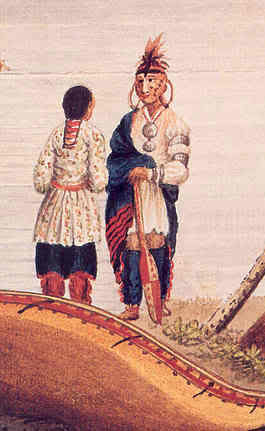
As for decoration, I felt like doing something simple and once again looked back into history for some inspiration.  A common theme seen in many historic paintings is a red checkered pattern on the paddle blade.

Paddle image from A View near Point Levy opposite Quebec with an Indian Encampment, Taken in 1788 
Thomas Davies (1737 - 1812)


Decorated Paddles from Indian Encampment near Amherstburg, c. 1819-1830
William Bent Berczy
Original Post Link


This paddle pattern is most apparent in multiple artworks by William Armstrong (1822–1914) that have been posted about many times on the site.


Paddle image from The Distribution of the Government Bounty on Great Manitouling Island 1856
William Armstrong


Paddle image from Indians Completing a Portage
William Armstrong
1873 watercolor


Paddle from Hudson's Bay Store, Fort William
William Armstrong
c. 1860-1870


Anyway, I had some left over Regal Red Tremclad rust paint left over from repainting the 14' Chestnut / Peterborough earlier in the summer so thought I would put it to use here. This oil-based waterproof paint doesn't need a topcoat of varnish which works well given that I prefer to oil all my paddles.

My older son was interested in helping so he assisted in laying out some tape. Painting has never been my strong suite or favoured medium and there's no way I could replicate the clean lines otherwise .


As an extra bit of decoration, I also painted part of the elongated grip...


It still needs to be oiled which will turn the plain ash into a much more golden hue but the weather outside has turned.


22 Nov 15:39

Everything You Need to Know to Ace Thanksgiving This Year

gear-patrol-thanksgiving-roundup-lead

The lines at your supermarket aren’t getting any shorter. Here's what you need to know to get out ahead this year.

...

Read More »
22 Nov 15:38

How to Choose the Best Gear for Winter

Get past the language barrier and understand what you're buying with this guide to some common winter gear tech specs.

Read More »
22 Nov 15:33

An Acclaimed Southern TV Series Says Goodbye

by kalexander

If by chance you don’t recognize Ray McKinnon’s name, you’d surely know him by sight. For the past quarter-century, the Adel, Georgia, native has starred in roles as varied as Coach Cotton in The Blind Side, assistant U.S. attorney Lincoln Potter on FX’s Sons of Anarchy, and the Reverend Henry Weston Smith on HBO’s Deadwood. But when it comes to his work behind the camera, few filmmakers represent the South as often or as well.

RayMcKinnonphoto_CREDIT-Jackson-Lee-Davis-courtesy-of-Sundance-TV.jpg
McKinnon on the Rectify set. (Photos by Jackson Lee Davis/courtesy of Sundance TV)

McKinnon’s track record of Southern success began in 2001 with The Accountant. He wrote, directed, and starred in the film, playing the title role of a man attempting to save family farm. McKinnon shot the movie—which won the Oscar for live action short film—in Georgia, the first in a line of productions that he would set in his home state. The latest chapter in that legacy begins its denouement this week, when the final season of Sundance TV’s Rectify premieres on Wednesday, October 26, at 10/9 central.


The trailer for Rectify’s final season.

The series tells the story of Daniel Holden, a Georgia man exonerated from death row after DNA evidence casts doubt on his conviction for the rape and murder of his high school girlfriend. The first three seasons (now streaming on Netflix) follow Daniel’s often-awkward integration back into the family he left nineteen years before—and into a small-town society still suspicious of him.

AdenYoungasDanielHolden_CREDIT-Jackson-Lee-Davis-Courtesy-of-Sundance-TV.jpg
Aden Young plays Daniel Holden, Rectify’s protagonist.

As creator and showrunner, McKinnon has been consumed by Rectify since its debut in 2013. Here, he reflects on truthfulness in Southern storytelling and what’s next on his agenda (hint: even critically acclaimed filmmakers can’t wait to go home to see Mama).

Rectify primarily takes place in the fictional Georgia town of Paulie. If you’ve ever lived in a small town, you can’t help but see these characters and think, I know him, or, I know her. How did growing up in a small town guide your storytelling?

I was partly motivated to get into the screenwriting business because a lot of the artistic reflections of the South that’d I’d seen had just felt so—how can I say this nicely—inauthentic. Growing up, some of the stuff I saw was just so broad, it was like parody. It seemed like no Southern person had a sense of humor about themselves in those stories. And I grew up in a place where everybody had a sense of humor about themselves, about their culture. I just wanted to reflect more of what felt real to me. Rectify is a further exploration of what it’s like to be Southern. But beyond that—and it’s always beyond that for me—it’s what it’s like to be American, what it’s like to be of the world, what it’s like to be human. I hope that we’ve portrayed characters that are authentic to Southerners, but also authentic to our fellow humans.


What inspired this story?

In the late nineties and early two-thousands, DNA technology had started exonerating some people who were convicted of murder and rape. And these people started getting released, after anywhere from one year to twenty years or more in prison. You would see the press conferences, and that’s pretty much it. You would see them say, “I’m going to go home and stay in my old room for the first time in seventeen years” or “I’m going to go have a steak.” I just started daydreaming. The first night, you could imagine. But what’s it like the next day, when you walk out on the grass, or go down to your hometown square? Just that surreal experience, almost on a moment-to-moment basis—that was the genesis of writing the first episode of Rectify. It’s a story that had been in my belly for probably a decade before I wrote it. 


Your writing is very lyrical—have certain Southern writers or books or films influenced your writing and storytelling?

Yes, of course. Everything from the old Burt Reynolds movies—where for once, the Southern guy was sometimes the smartest guy in the room, not the dumbest, and we pulled for him because we saw some of ourselves in him—to writers like Larry Brown and Harry Crews. Ms. O’Connor, particularly. You know, I remember reading Flannery O’Connor when I was older, and I’m like, I don’t know why they call this Southern Gothic, because it just feels like life to me. I remember as a kid seeing The Last Picture Show, and thinking, Now that’s a place that I recognize. It’s set in Texas. That felt like where I was from. And that really struck me.

As I got older, I had the delusional desire to tell stories with moving pictures. And I went to a theater in Los Angeles, the Laemmle, and sat down and watched this movie called Sling Blade. It felt so authentic. And I had two thoughts. First: Oh my God, a Southerner must have made this story! My second thought was: Did he take the only spot?


Your home state has served as a backdrop for your films, even before Georgia enacted its enticing film tax credits. And you’ve shot Rectify mostly in and around Griffin, Georgia. Why has it been important to you to do that?

I’ve seen movies that are supposed to be set in the South, and then you see something that looks suspiciously like Santa Clarita, California, and it takes me out of the moment. It un-suspends my disbelief. In this story, and some other stories that I’ve done, place was so important. But the incentives were a big reason why we were able to do that in Georgia. Beyond that, getting to go back to your home state and hopefully employ a few people and hang out with friends is not a bad way to make a living.


What are your plans after Rectify?

I’m going to see my mama [in Adel]. I’m very fortunate to still have her. I’m going to go hang out and wander a little bit around the country, maybe go do some traveling. And I’m going to go call some friends that haven’t heard from me in five years, and see if they’ll still talk to me. 

22 Nov 14:40

The Used Cars With the Best Deals on Black Friday

by Kristin Wong on Two Cents, shared by Andy Orin to Lifehacker

Okay, maybe Black Friday isn’t completely dead. It might be a good day to get a discount on a used car, for example. A recent report found that Black Friday had 33% more deals than on an average day. In fact, that percentage was higher than any other holiday.

Read more...

22 Nov 13:29

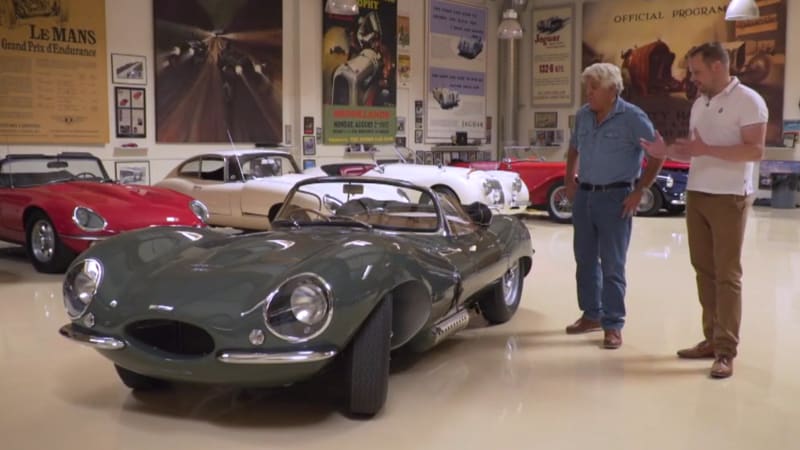
Jaguar brings the new XKSS to Jay Leno's Garage

by Joel Stocksdale

Filed under: Celebrities,Videos,Jaguar,Convertible,Classics

One of the last nine XKSSs to be built pays a visit to Mr. Leno.

Continue reading Jaguar brings the new XKSS to Jay Leno's Garage

Jaguar brings the new XKSS to Jay Leno's Garage originally appeared on Autoblog on Mon, 21 Nov 2016 15:45:00 EST. Please see our terms for use of feeds.

Permalink |  Email this |  Comments
21 Nov 22:19

Happy Thanksgiving :: Doug Sahm And Friends – Austin, TX 1972

by Satisfied '75
Tradition runs rampant around Thanksgiving: generations of old recipes, football, Alice’s Restaurant, The Last Waltz, and, of course, a parade of balloons shutting down NYC. What else do you need? If you thought you were covered in the Thanksgiving tradition department, we did too…until a few years ago, when someone blew the dust off a […]
21 Nov 18:16

Patagonia Provisions Long Root Ale

patagonia-long-root-gp100-gear-patrol

Patagonia's latest venture to save the planet: brewing.

...

Read More »