Shared posts

24 Mar 18:42

Portland's Love Affair With Its Special Water Fountains

by Eric Grundhauser
article-image

Portland, Oregon, is known (and sometimes ridiculed) for its staunchly iconoclastic residents and attitude. What not many outsiders know is that the city even has its own iconic drinking fountains, known as Benson Bubblers.

These four-headed brass fonts take their name from the man who gave them to the city, the early 20th century lumber baron and philanthropist Simon Benson. After suffering a number of financial blows, Benson moved to Portland in 1880 to start his life over and got into the logging business, where he was able to make himself a reasonable fortune. He built himself a house, and eventually purchased a hotel that bears his name to this day.

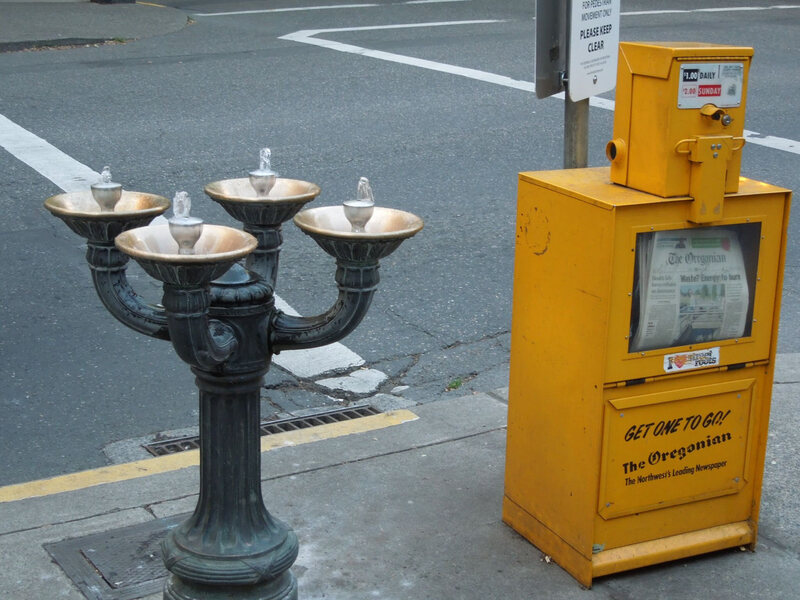
Having established himself as a prominent figure in his adopted home city, Benson decided to give back. In 1912, he made a $10,000 donation to the city specifically to create public water fountains. Benson’s initial grant funded 20 brass drinking fountains, which cost around $500 each. The water stations had a regal, four-bowl design that gave them a unique look, and they burbled out water all throughout the daylight hours. The first Benson Bubbler was placed at SW 5th & Washington, and the rest were installed throughout a segment of what is now downtown Portland.
article-image

Benson’s motivations for donating water fountains to the city are unknown, although a couple of theories have become popular among locals. One story goes that Benson, a teetotaler, provided the water fountains to the city as a way to get workers from the various logging mills to stop getting drunk at lunch. Another, more dramatic version of the story says that Benson witnessed a little girl crying at a Fourth of July parade because she couldn’t find a drink of water. “We think Portlanders are more apt to believe the story about keeping loggers out of bars on their lunch breaks,” says Jaymee Cuti, public information officer for the Portland Water Bureau.

Either way, the bubblers proved to be a hit. By 1917, the first 20 water fountains had been put in place, including one in front of Benson’s own home. The city would go on to commission more of the four-headed fountains, including a couple in 1975 that were forged at a local high school to save money on the expensive brass casting.

These days, getting a new bubbler put in place is nearly impossible, even within the city itself. “We lived in an area of the city called Irvington that’s designated as a historic district, so I was on the land use committee,” says Thomas Mertes, a history professor at Linfield College who lived in Portland from 2007 to 2015. “They have been trying for at least the last seven years to get a bubbler put in at the corner of 15th and Broadway.” That's because in the 1970s, the Benson family (Simon passed away in 1942) specifically requested that Benson Bubblers not be installed outside of their chosen boundaries in downtown Portland, since their proliferation would make them less special.
article-image

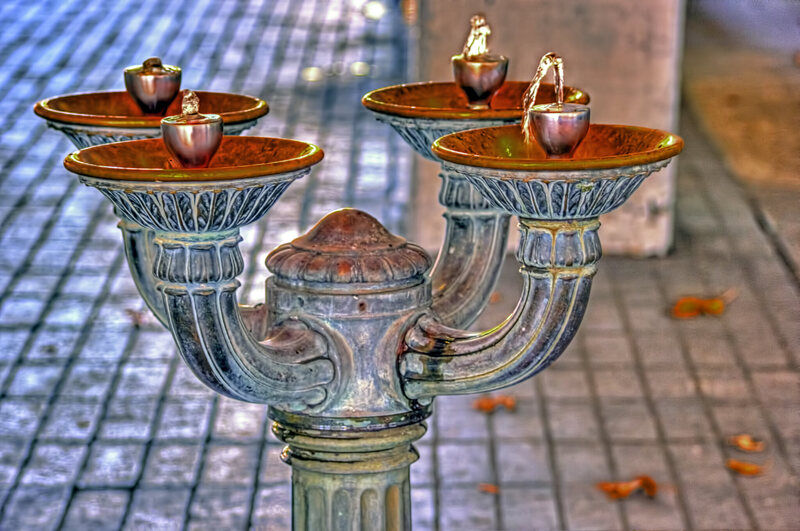
The Bensons got their wish. Today, there are 52 of the bubblers spread across historic downtown Portland, and that’s pretty much the only place you’ll find them. A single bubbler was donated to two of Portland’s nine sister cities, Sapporo, Japan, in 1965, and Suzhou, China, in 2016, and another ended up in a Washington, D.C., museum, but beyond that, the iconic drinking fountains have managed to remain unique to Portland. There are also a further 74 one-bowled versions of the bubblers that were created later, but purists insist that these versions don’t count.

Though many of the fountains are over a century old now, for the most part, they are all still flowing, thanks to devoted conservation efforts. Some small changes have been made to the fountains in order to improve efficiency and conserve water, but otherwise they work just like they did during Portland’s heyday as a timber town, issuing drinking water from 6 a.m. to 11 p.m., 365 days a year.

Portland continues to cherish its bubblers. “Part of it is that Portland thinks of itself as being so precious,” says Mertes. “Also, I think they’re a sign of community. A sign of uniqueness. It also has a socio-democratic aspect to it. There was a real sense that the working class actually had some influence and strong traditions in the city, and I think these water fountains speak to that working class ethos.”

The Benson Bubblers are just another facet of Portland that sets the city apart from anywhere else in the world. Just as most Portlanders would have it.

24 Mar 18:41

Do Muslims Commit Most U.S. Terrorist Attacks?

by Ronald Bailey

TerrorismDynamiteNomadsoul"It's gotten to a point where it's not even being reported. In many cases, the very, very dishonest press doesn't want to report it," asserted President Donald Trump a month ago. He was referring to a purported media reticence to report on terror attacks in Europe. "They have their reasons, and you understand that," he added. The implication, I think, is that the politically correct press is concealing terrorists' backgrounds.
To bolster the president's claims, the White House then released a list of 78 terror attacks from around the globe that Trump's minions think were underreported. All of the attackers on the list were Muslim—and all of the attacks had been reported by multiple news outlets.

Some researchers at Georgia State University have an alternate idea: Perhaps the media are overreporting some of the attacks. Political scientist Erin Kearns and her colleagues raise that possibility in a preliminary working paper called "Why Do Some Terrorist Attacks Receive More Media Attention Than Others?"

First they ask how many terror attacks have taken place between 2011 and 2015. (The 2016 data will become available later this summer.) The Global Terrorism Database at the University of Maryland, which catalogs information on over 150,000 incidents since 1970, defines terrorism as an "intentional act of violence or threat of violence by a non-state actor" that meets at least two of three criteria. First, that it be "aimed at attaining a political, economic, religious, or social goal." Second, that there is "evidence of an intention to coerce, intimidate, or convey some other message to a larger audience (or audiences) other than the immediate victims." And finally, that it be "outside the precepts of International Humanitarian Law."

The Georgia State researchers report that the database catalogs 110 terrorist attacks in the U.S. over the most recent five-year span period in the database. (Globally, there were more than 57,000 terrorist attacks during that period.) In some cases, the media tended to report several attacks perpetrated by the same people as a single combined story; following their lead, the researchers reduce the number to 89 attacks.

They then set out to answer four different questions: Would an attack receive more coverage if the perpetrators were Muslim, if they were arrested, if they aimed at government employees or facilities, or if it resulted in a high number of deaths?

From a series of searches at LexisNexis and CNN.com, Kearns and her colleagues gathered a dataset of 2,413 relevant news articles. If each attack had received equal media attention, they would have garnered an average of 27 news articles apiece. Interestingly, 24 of the attacks listed in the GTD did not receive any reports in the news sources they probed. For example, a cursory Nexis search failed to turn up any news stories about a 2011 arson attack on townhouses under construction in Grand Rapids, Michigan. An internet search by me did find several local news reports that cited a threatening letter warning residents to leave the neighborhood: "This attack was not isolated, nor will it be the last. We are not peaceful. We are not willing to negotiate." The GTD reports so far that no one has been apprehended for the attack.

For those five years, the researchers found, Muslims carried out only 11 out of the 89 attacks, yet those attacks received 44 percent of the media coverage. (Meanwhile, 18 attacks actually targeted Muslims in America. The Boston marathon bombing generated 474 news reports, amounting to 20 percent of the media terrorism coverage during the period analyzed. Overall, the authors report, "The average attack with a Muslim perpetrator is covered in 90.8 articles. Attacks with a Muslim, foreign-born perpetrator are covered in 192.8 articles on average. Compare this with other attacks, which received an average of 18.1 articles."

Some non-Muslims did get intense coverage. Wade Michael Page, who killed six people in an attack on a Sikh temple in Oak Creek, Wisconsin, generated 92 articles, or 3.8 percent of the dataset. Dylann Roof's murder of nine black churchgoers in Charleston, South Carolina, inspired 179 articles, or 7.4 percent. Robert Dear's slaying of three people at a Planned Parenthood in Colorado Springs led to 204 articles, or 8.5 percent. Still, "Controlling for target type, fatalities, and being arrested, attacks by Muslim perpetrators received, on average, 449% more coverage than other attacks."

No doubt this greater media focus on Muslim perpetrators has badly skewed the public's—and Trump's—impressions about the sources of terrorist attacks in the U.S. On the other hand, the Georgia State researchers do not acknowledge an important difference between the purveyors of jihadist ideology and domestic racists like Page and Roof. ISIS and Al Qaeda are adroit publicists who have leveraged their relatively few attacks into successfully instilling a sense of terror into many Americans.

The Georgia State researchers conclude: "By covering terrorist attacks by Muslims dramatically more than other incidents, media frame this type of event as more prevalent. Based on these findings, it is no wonder that Americans are so fearful of radical Islamic terrorism. Reality shows, however, that these fears are misplaced."

Such fears are indeed misplaced. Your risk of being killed in a jihadist terror attack in the last 15 years amounted to roughly 1 in 2,640,000. Even if you stretch the period back to include 9/11, the risk would still just have been 1 in 110,000. Your lifetime risk of dying in a lightning strike is 1 in 161,000, and your chance of being killed in a motor vehicle crash is 1 in 114. Given that our government has already squandered more than $500 billion on homeland security, while encroaching on our liberties, it is vital that Americans keep the threat of terrorism in perspective. This new study is one small step in that direction.

24 Mar 18:24

3-Ingredient Happy Hour: A Refreshing, Springy Martini

by Claire Lower on Skillet, shared by Claire Lower to Lifehacker

Hello everyone, and welcome to 3-Ingredient Happy Hour, the weekly drink column featuring super simple, yet delicious libations. This week we’ll be sipping on an easy to mix, springy vodka martini.

Read more...

24 Mar 18:21

The Great American Dream House

by Miss Cellania

The following article is from the book Uncle John's Bathroom Reader Plunges into California.

It wasn’t everybody’s idea of home sweet home, but it was the right house at the right time for thousands of West Coast families after World War II.

MASTER BUILDER IN THE MAKING

All Joe Eichler wanted to do was build some low-cost housing for World War II veterans and their families: small, ranch-style homes with basic amenities. What he ended up with were stylish, iconic homes that are still in demand today. The reason? Eichler, though he didn’t know it at first, was a modern man in every way. For one thing, he was an equal-opportunity builder who opened the doors of his houses to people of all races and colors, a pretty daring prospect in the pre–civil rights era. If someone wanted to buy one of his houses, all they had to do was come up with the down payment (anywhere from $500 to $2,650) and qualify for a mortgage.

In fact, the only colors Eichler cared about were the colors of his houses. His son Ned tells the story of how his father, while cruising through one of his developments, called a halt to a house-painting job because the color the owners had chosen didn’t look right with the colors of the houses on either side of it. The house-painter told Eichler that the owners really wanted that particular color and added, “After all, it’s their house.” Eichler said, “Like hell it is. It’s my house. Change the g**damn color.”

THE HOUSES THAT JOE BUILT

Eichler started his business—Eichler Homes—in 1947. He bought some land in Northern California and built his first subdivision: a planned community of conventional-looking little boxes with cramped rooms, wood floors, Sheetrock walls, and forced-air heat. When an outspoken architect from San Francisco told Eichler the houses were “crap,” the builder reluctantly agreed. So he challenged his architect, Robert Anshen, to design a stylish house that would appeal to young families and would still be affordable. Anshen came up with the first in a series of open, airy contemporary houses that Eichler eventually became famous for: a house that was perfectly suited to the California climate and lifestyle.

 (Image credit: Flickr user thomasfj)

Those first homes were built in 1949 in Sunnyvale, 40 miles south of San Francisco. Anshen’s plan called for the siding to be upgraded to redwood, but the exteriors of the 50 ranch-style houses were otherwise unremarkable—they looked square and utilitarian. The interiors were another story. Inspired by homes Frank Lloyd Wright had designed in the Bay Area in the 1930s, the interiors were exceptionally modern for suburban houses of their time. Gone were the chopped-up floor plans and teensy rooms. In their place was a redwood-paneled living area with an open floor plan that made the houses seem much bigger than the 1,044 to 1,230 square feet they actually were. The floor-to-ceiling glass walls on the rear facade made the homes feel even larger and seemed to bring the outdoors in. The house was set on radiant-heated concrete floors, and all of it could be yours (or your grandparents’) for just $9,500 (about $90,000 today).

(Image credit: Flickr user thomasfj)

Eichler’s houses evolved over the next eight years: By 1957 most of them had four bedrooms, two baths, and a family room and, depending on the model, sold for $18,000 to $25,000 ($144,000 to $200,000 today). But the exteriors changed only slightly: taking advantage of the relatively warm, snowless winters, the roof stayed either flat or low-pitched, and the floor-to-ceiling glass at the back of the house remained standard so that homeowners could take in the view, even if it was only of a fenced-in suburban patio and garden.

THE BALL IS IN YOUR COURTYARD

The recession of 1957–58 hit most businesses hard, and home sales were no exception. Joe and Ned Eichler met with their architects for weeks, trying to figure out how to attract more customers and save their languishing business. As one of their many meetings was about to close, Anshen once again saved the day. He showed Eichler a scribbled floor plan of a house built around a small courtyard. When Eichler asked, “What… is that thing in the middle?” Anshen said, “An atrium. The Romans used to use them.”

Adding an atrium made no sense to Eichler; in fact, it seemed counterproductive. Not only would it add more building costs—and three or four more exterior walls—but what good was a courtyard in the middle of a house? Despite misgivings, he built a model based on Anshen’s idea. And after a few tweaks, they found they had a winner.

(Image credit: Flickr user thomasfj)

From the street, an Eichler with an atrium looked the same as the previous models: angular and nondescript. But now, when prospective buyers opened the front door, they were greeted by an open-to-the-sky atrium; glass doors on the other three walls looked into the kitchen, living room, or bedroom wing. The houses were a huge success. Nearly every Eichler from then on was built around an open-air courtyard. The company went public in 1959 and continued to earn steady profits, building about 700 houses a year, and expanding into Southern California. But change was on the way, and it didn’t bode well for Eichler Homes.

WHAT KILLED THE EICHLER?

(Image credit:larryncelia)

A variety of factors contributed to the bankruptcy of Eichler Homes in 1967: the growing expense of glass and redwood, competition in the marketplace, and the high cost of air-conditioning a house with an open floor plan and huge walls of glass. Also, some young couples who’d bought Eichlers as starter homes had more money by the ’60s and no longer wanted tract housing; they were looking for something more unique. But perhaps the most important factor was simply that the classic Eichler home had gone out of style.

After the bankruptcy, Joe Eichler built a few more custom and tract homes, but another recession in 1973 did him in. He died in 1974.

Decades later, however, the houses that Eichler built are more popular than ever. Even in the depressed real estate market of the late 2000s, Eichler homes were selling for $600,000 and up—and often for more than their asking price.

___________________

The article above was reprinted with permission from Uncle John's Bathroom Reader Plunges into California. This volume brings you stories of the Golden State you've never heard before. You’ll meet child prodigies, spies, traitors, celebrities (and sidekicks), gossips, hermits, humanitarians, and zealots.  

Since 1988, the Bathroom Reader Institute had published a series of popular books containing irresistible bits of trivia and obscure yet fascinating facts. If you like Neatorama, you'll love the Bathroom Reader Institute's books - go ahead and check 'em out!

23 Mar 17:42

Bartender Defender

submitted by Everyday Carry

"Tops Knives’ Bartender Defender is a bit of survival kit with a unique twist, mainly designed for survival situations that involve opening tightly sealed bottles of beer to stave off death by dehydration. The mini knife couples a 0.38-inch 1095 high carbon steel blade to a bottle opener sitting at its base. Its contoured skeletonized handle and..." (via GearHungry)

Read More

23 Mar 11:52

Bears Den BBQ, Ocoee TN

by Grant G.
Popular with rafters and hikers and very, very busy during the summer months, this place serves barbecue that seems to be more in line with what we know about the North Carolina mountains than with eastern Tennessee, and offers a powerful secret weapon in its hot slaw.
23 Mar 11:36

Ssam Burger – Atlanta, GA

by willoughbyandy

Several months back, there was an article on Eater.com about interesting burgers in Atlanta.  Ssam Burger, on Defoors Ferry popped up.   I had not heard about it, but with our love of the Korean / taco fusion at Hankook, why wouldn’t we like a Korean / burger place?


Located in a strip center, next to a cigar shop (that, amazingly, you can’t smell inside Ssam Burger), it was fairly easy to find – just past the intersection with Collier Road.  We had spent the morning (and part of the afternoon) at the Scott Antiques Market, and were looking to grab a quick bite on the way home.  My beloved ordered the fried dumplings, filled with pork and cabbage.

They were deep fried, as opposed to pan fried, but that was the only thing unexpected.   They were crispy and tasty. 

I ordered  the Aloha burger – an Angus beef burger, topped with bacon and caramelized pineapples, sitting on a sriracha mayo slaw.

I never would have thought about caramelizing pineapples, like you would onions, but it was a very good idea.  The sweetness of the pineapple mixed perfectly with the salty bacon and the heat and crunch of sriracha mayo slaw.  The burger was served with sweet potato chips (that were served too hot to eat, but didn’t last long once they cooled) that had been drizzled with honey.  These were excellent.  A thoroughly enjoyable place.

Ssam Burger Menu, Reviews, Photos, Location and Info - Zomato


23 Mar 11:36

Rose’s Luxury – Washington, DC

by willoughbyandy

If you read yesterday’s lament (note: the lament was definitely not about where I ate – which was a phenomenal meal, but about where I didn’t get to eat) about the plumbing problem, that once again, thwarted my attempt to go to Rose’s Luxury, you’ll be pleased to hear that the quest is finally over.  Why have I been  trying to get there for the last couple of years?  They were named the Best New Restaurant by Bon Appetit in 2014 and named #2 on the best new restaurant in the South list in Southern Living in the same year.  Then, last May chef Aaron Silverman won a James Beard award as the best chef, Mid-Atlantic.   And, if that wasn’t enough, then, in October, he was awarded his first Michelin stars – one for Rose’s Luxury and two for his “high-end/takes-reservations” Pineapple and Pearls (that place is now on the list for next year).

I took a cab from my hotel, arriving just around the corner, right at 5:00, feeling fairly triumphant.  They take no reservations, except for HUGE parties, and open at 5:00.  It was the warmest that it had been since I got to DC  and the sun was shining.  Then I found the line, waiting to go inside, about 30 people deep…

The good news was that I waited less than fifteen minutes and was taken to a seat at the counter, overlooking the kitchen.  The menu of small plates is not overly complicated and I relied on my server, Cesar, to be my food sherpa for the night.


While I waited, one of the servers brought out braided challa bread and told me that they braided it to make it easier to tear by hand.  But not to try it right then, because it was fresh from the oven.  


Of course I had to try  for myself and found out that she did not lie – it was so hot that I couldn’t even tear off a piece.  When it cooled slightly, I added some of the carraway butter and eventually finished the whole loaf while I ate.  

From the moment I walked in, it was a very “comfortable” feeling place.  I felt very welcome and that the people who worked there were glad to be working there.  That feeling lasted throughout the meal.  One of the ladies who brought me several of the dishes smiled like she was delivering Turkish Delight, itself, with every bowl.

I knew the people around me were my kind of crowd when the young man sitting two down from me at the counter, asked his server if she thought that if they ordered one of every plate on the menu, it would be too much for them.  She said “yes, it would”, but man, I loved his spirit.  Being a small plates kind of place, I ordered several.   
In the idea that if you’re going to try something you don’t like, you might as well do it somewhere that knows how to cook, I started off with the oyster bites.


Two oysters, with the meat, that had already separated from the shell, marinated in sake and wasabi, topped with an apple granita and a “pearl” of Granny Smith apple and fennel (I believe).  Down the hatch went the first one and, holy cow!, it was great.   I ate both, quickly, enjoying the mixture of salty and sweet.  In fact, I ordered another pair about half way through the meal.   Round two was another small plate, four stuffed dates (left half of plate below),


topped with butter and walnuts.  I pulled the walnuts to the side and popped a date into my mouth.  It was sweet and tangy at the same time.  A near perfect bite, and I ate all four.  I actually contemplated getting more of these, for dessert, but ran out of room.  

Next came something that I didn’t intend to order.  When I had finished ordering, I asked if I had missed anything.  Cesar said that they were known for the pork sausage, habanero, peanut and lychee salad.  How could I not order one?


It arrived, with the whipped coconut milk on the side and with all of the ingredients stacked in layers.  You use your spoon to mix it all together until the coconut milk breaks down and becomes your dressing, then eat out of the bowl.  It was a mess, that I never would have mixed togther (who would mix sausage and lychee?) but it was delicious.  In the interest of full disclosure, I picked around the peanuts – I’m just not a fan).  The next dish was one that I did pick on my own and it was my least favorite of the night – 


a Thai marinated pork blade steak with nahm prik slaw.  Next came a dish that I didn’t order  – rigato cacio & pepe (courtesy of Cesar, according to the smiling server that brought it over).  I was amazed at the teamwork and camaraderie along the staff.  It was the same vibe as the group had at Little Serow and made the whole meal more enjoyable.


It was a simple buttered pasta, with black pepper. (Somewhere around here is where I had the other two oysters). Finally, I finished the night with ricotta agnolotti, with kumquat and sweet potato.


The pasta was filled with ricotta and sweet potato and was sitting on a bed of hollandaise sauce.  It was topped with sliced kumquats and crispy sweet potatoes.  The dish was very well composed. 

When asked about dessert, I was too stuffed to have any, so while I did listen to the suggestions, I deferred.  Seeing my interest piqued at the Cinnamon Toast Crunch cereal ice cream, two small scoops arrived with my check.


It was as delicious as you’d expect.  This quote from chef Silverman sums up the way dinner felt:

“We didn’t want to be the best restaurant; we didn’t want to be the most popular restaurant.  We just wanted to be the most enjoyable one.” 

I’ll say that he hit his mark.  Definitely worth the two year wait.  I don’t think I’ve had two two dinners this good, back-to-back, in a long time. 

Rose's Luxury Menu, Reviews, Photos, Location and Info - Zomato

The back half of the restaurant – the kitchen counter is square in the middle.


23 Mar 11:33

The Unique Barbecue of Santa Maria, California: Worth the Visit

by Steven Raichlen

This post is brought to you by Visit Santa Maria Valley, which provided advertising support.

Ever since butchers Larry Viegas and Bob Schutz grilled the first tri-tip in the meat department of a Safeway store on the corner of Mill and Vine Streets in Santa Maria, California in 1952, the Santa Maria Valley has been one of America’s best kept barbecue secrets. California’s favorite barbecued beef, the tri-tip—the triangular tip of the sirloin—combines the smoke flavor of true slow-cooked barbecue with the sanguine succulence of steak. Today, tri-tip or top sirloin are found throughout central California—indeed, when Santa Marians, many Santa Barbarans, and even Angelinos speak of barbecue, tri-tip or top sirloin are frequently what they mean.

The first barbecues began in the mid-nineteenth century as communal feasts, where ranchers fed large crowds of ranch hands and farmers. Early black-and-white photographs in the Santa Maria Valley’s historical archives show huge pits fueled with blazing wood. The meat—a flavorful loin cut called top block sirloin—was skewered on long steel rods and spit roasted over the open fire. The seasonings were kept simple—salt, pepper, garlic powder or garlic salt—to keep the emphasis on the taste of the meat.

Spit-roasting Santa Maria tri-tip

In time, the accompaniments came to include a distinctive, small, pink bean indigenous to the region—the pinquito. Stewed with tomatoes, onions, and spices, it became the Santa Maria Valley version of baked beans (the dish is considerably less sweet). A Mexican influence can be seen in the salsa traditionally served with Santa Maria-style barbecue, while the obligatory accompanying green salad and grilled garlic bread are pure California.

When I first visited the area 15 years ago, the main drag of Santa Maria, on a weekend in barbecue season (late spring and early summer) held dozens of pit masters serving up freshly grilled tri-tip. They arrived early, towing the local version of a barbecue pit—a giant black metal box with an adjustable grate you raise and lower with the turn of a crank or tug on a pulley. These giant grills are part of what distinguish barbecues in the Santa Maria Valley from the heavily smoked meats found elsewhere on the American barbecue trail.

The fuel, local red oak, is the second distinguishing feature of Santa Maria–style barbecue. Don’t expect the heavy smoke flavor associated with the barbecue of the American South. No, the open pits impart a light, delicately aromatic wood flavor that’s now synonymous with California grilling.

Today, the Santa Maria–style barbecue tradition is alive and well as top block sirloin continues to be grilled at restaurants and community barbecues staged by fraternal organizations. I recommend traveling to the region for a taste at the source. And if my word’s not enough to motivate a visit, Andrew Zimmern’s Bizarre Foods also recently covered the area, with a segment on the Santa Maria Elks Lodge. You can find a helpful list of current restaurants on SantaMariaValley.com while planning your trip.

The best way to sample Santa Maria–style barbecue is to stop wherever you see smoke.

Traveling to the region? Share your impressions of Santa Maria–style Barbecue with us on Twitter, Facebook, and the Barbecue Board.

Adapted from BBQ USA.

The post The Unique Barbecue of Santa Maria, California: Worth the Visit appeared first on Barbecuebible.com.

23 Mar 11:32

Versatile, Affordable Pork Tenderloin

by Steven Raichlen

Photo by Richard Dallett.

One of the best-kept secrets of barbecue, pork tenderloin is as tender and tasty as beef tenderloin, but at a fraction of the price.

It cooks quickly, making it an excellent choice for easy weeknight dinners. Yet, it’s suitable for entertaining. There’s no waste. It readily absorbs the flavors of a host of international rubs and marinades and is complemented by a wide variety of sauces.

And its large ratio of surface area to lean meat all but guarantees a beautifully caramelized crust. Serve it whole, stuffed, or sliced; just make sure it is part of your grilling repertory. Here are my pork tenderloin tips:

  • Discrete muscles like tenderloin have a shiny protective sheath around them called silverskin. Sometimes, the meat comes to the meat case well-trimmed. Other times, a bit of silverskin remains, which you’ll want to remove as no amount of cooking will tenderize it. To do so, slide the tip of a sharp boning or paring knife between the strip of silverskin and the meat about 1 inch from the end. Angle the blade of the knife upward (against the silverskin), and smoothly slice toward the opposite end, pulling the silverskin you’ve released upward with your fingers. Reverse the direction of the knife and slice toward the still-attached end. Repeat as necessary until the membrane is gone.

  • If the tail ends of the tenderloin are thin, fold them under and tie with butcher’s string before grilling to make the muscle more uniform in thickness.

  • Slice the raw, trimmed tenderloin on a sharp diagonal into 1/4 inch elliptical-shaped pieces, then marinate briefly and thread on metal or bamboo skewers for quick Asian-style satés.

  • Most pork tenderloins weigh between 1 and 1-1/2 pounds. Two will serve 4 people generously.

  • When possible, buy heritage breed pork such as Duroc, Berkshire, or Kurobuta. How your food is raised is as important as how you cook it.

  • Because pork tenderloin is so lean, it benefits from being wrapped in thin-cut bacon or pancetta. To do this easily, lay thin-cut bacon strips parallel to each other (the long sides should overlap slightly) on a piece of parchment paper. Lay the tenderloin on top of and perpendicular to the bacon toward the edge closest to you. Use the parchment to help you roll the tenderloin snugly in the bacon. Trim any excess bacon once the tenderloin is covered and reserve for another use. Tie at intervals with butcher’s string. Grill, turning as needed with tongs, then remove the strings before slicing and serving. Individual medallions of pork tenderloin can also be wrapped with bacon and grilled.

  • Pineapple and/or pineapple juice is a popular ingredient in marinades for pork as the flavors marry well. But limit the pork’s exposure to marinades containing this ingredient as the enzymes in pineapple can give meat a mushy texture. An hour in the marinade is sufficient.

  • Grill whole pork tenderloin to an internal temperature of 145 to 150 degrees for maximum juiciness as read on an instant-read meat thermometer. (It will still be slightly pink in the center.) This will take 15 to 18 minutes over medium-high heat. Medallions cut to a thickness of 3/4- to 1-inch will take 4 to 6 minutes per side. Be sure to let the meat rest for 2 minutes before slicing and/or serving.

  • For an attractive presentation, butterfly a pork tenderloin (a larger one works best) by making a lengthwise cut through the tenderloin, stopping 1/2 inch from the opposite side. Open like a book. Sandwich between two sheets of plastic wrap, then pound to a uniform thickness. Stuff as desired—I like to repurpose the stuffing from The Ultimate Cheesesteak—then reform the tenderloin and tie at intervals with butcher’s string. Grill as directed above.

Get more ideas for pork tenderloin in these recipes:
Oaxacan Pork Fajitas
Char Siu Pork Tenderloin
Coffee-Crusted Pork Tenderloins with Redeye Barbecue Sauce
Jerk Pork Tenderloin

The post Versatile, Affordable Pork Tenderloin appeared first on Barbecuebible.com.

23 Mar 10:49

Watch: Fred Bear in India

by Sporting Classics Daily
The archery great heads to Asia for tigers and axis deer.
23 Mar 10:46

Soda Bread … Anyone Can Do It

by David Gladow

What do you eat with a hearty bowl of Irish stew and mug of Guinness beer?

Patrick Abbott, co-owner of Cup ‘n Cork, knows the answer: Irish soda bread.

“This is what an Irish mom would have been throwing together before the family got home,” Patrick said.

The bread is so easy to make, anyone can do it. And even better, it is quick.

But the kicker: you won’t find any actual “soda” in this side dish.

Patrick takes you behind the scenes at Cup ‘n Cork to show how it is done.

irish soda bread

Patrick’s Irish Brown Soda Bread

Ingredients:
7 cups all-purpose flour
1 ½ cups whole-wheat flour
½ cup toasted wheat germ (in the cereal aisle at your supermarket)
1 ½ teaspoons salt
1 teaspoon baking powder
1 teaspoon baking soda
1 ¾ cups buttermilk
3 tablespoons sugar
3 tablespoons UNSALTED butter, melted

Prep:
Adjust the oven rack to the lower-middle position and heat oven to 400 degrees.
Line baking sheet with parchment paper.

Whisk it:
Whisk all-purpose flour, whole-wheat flour, wheat germ, salt, baking powder, and baking soda together in a large bowl.
In another bowl, combine the buttermilk, sugar, and 2 tablespoons melted butter and whisk it until the sugar has dissolved.

Fold it:
Using rubber spatula, gently fold the buttermilk mixture into the flour mixture, scraping up dry flour from bottom of bowl until the dough starts to form and no dry flour remains.

Knead it:
Transfer the dough to a lightly floured counter and knead until cohesive mass forms, about 30 seconds. Pat the dough into a 7-inch round and transfer to a prepared sheet.

Mark it with a T:
Using sharp paring knife or single-edge razor blade, make two 5-inch-long, ¼-inch-deep slashes with swift, fluid motion along top of the loaf to form a cross.

Bake it:
Put the loaf in the oven until it is golden brown and a skewer inserted into the center comes out clean. It will take about 45 to 50 minutes. Make sure you rotate the sheet halfway through baking.

Enjoy:
After you take the loaf out of the oven, cover it with more butter and let it cool.
Then cut off a piece and dip it into your warm Irish stew!

The post Soda Bread … Anyone Can Do It appeared first on The Southern Weekend.

23 Mar 10:45

Take a Tour of the Wienermobile

by David Gladow

There’s one thing sure to bring a smile to almost anyone’s face who has encountered it: The Oscar Mayer Wienermobile. We caught up with the truck’s captain Jumbo Dog John for a quick tour and to learn some facts about the iconic hot dog on wheels.


The post Take a Tour of the Wienermobile appeared first on The Southern Weekend.

22 Mar 18:08

The King’s Colt

by Sporting Classics Daily
Elvis Presley's Python, Smith & Wesson revolver, and other memorabilia will be up for auction this May.
22 Mar 18:05

Endless Runway Circular Airport

Traditional airports are are the mercy of wind directions and speeds when it comes to takeoffs and landings. This limits their capacity and can also cause delays. The Endless Runway...

Visit Uncrate for the full post.
22 Mar 17:37

THE SHINING | KUBRICK’S MASTERPIECE OF SUSPENSE, SYMBOLISM, SETS & STEADICAM

by JP
The Shining – the layers in this Stanley Kubrick classic are a visual feast for the eyes, full of blatant and sometimes subtle iconography. The sets, scenery, and graphic elements really lock you in. And the multitude of modern mythology & conspiracy theories that have been created by Kubrick fans, history nuts, and film buffs […]
22 Mar 17:35

ETYMOTIC EAR PLUGS

by Mas

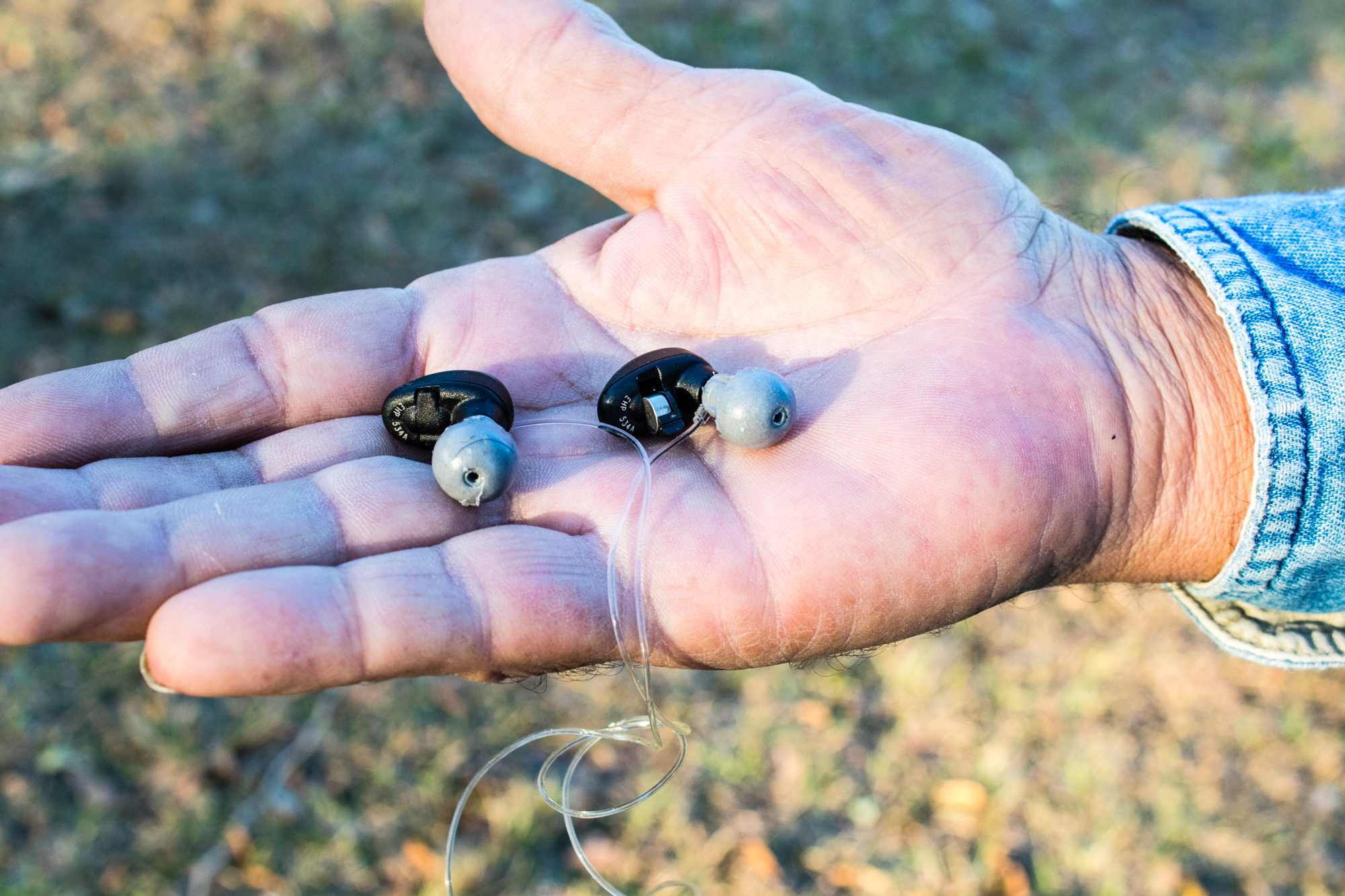
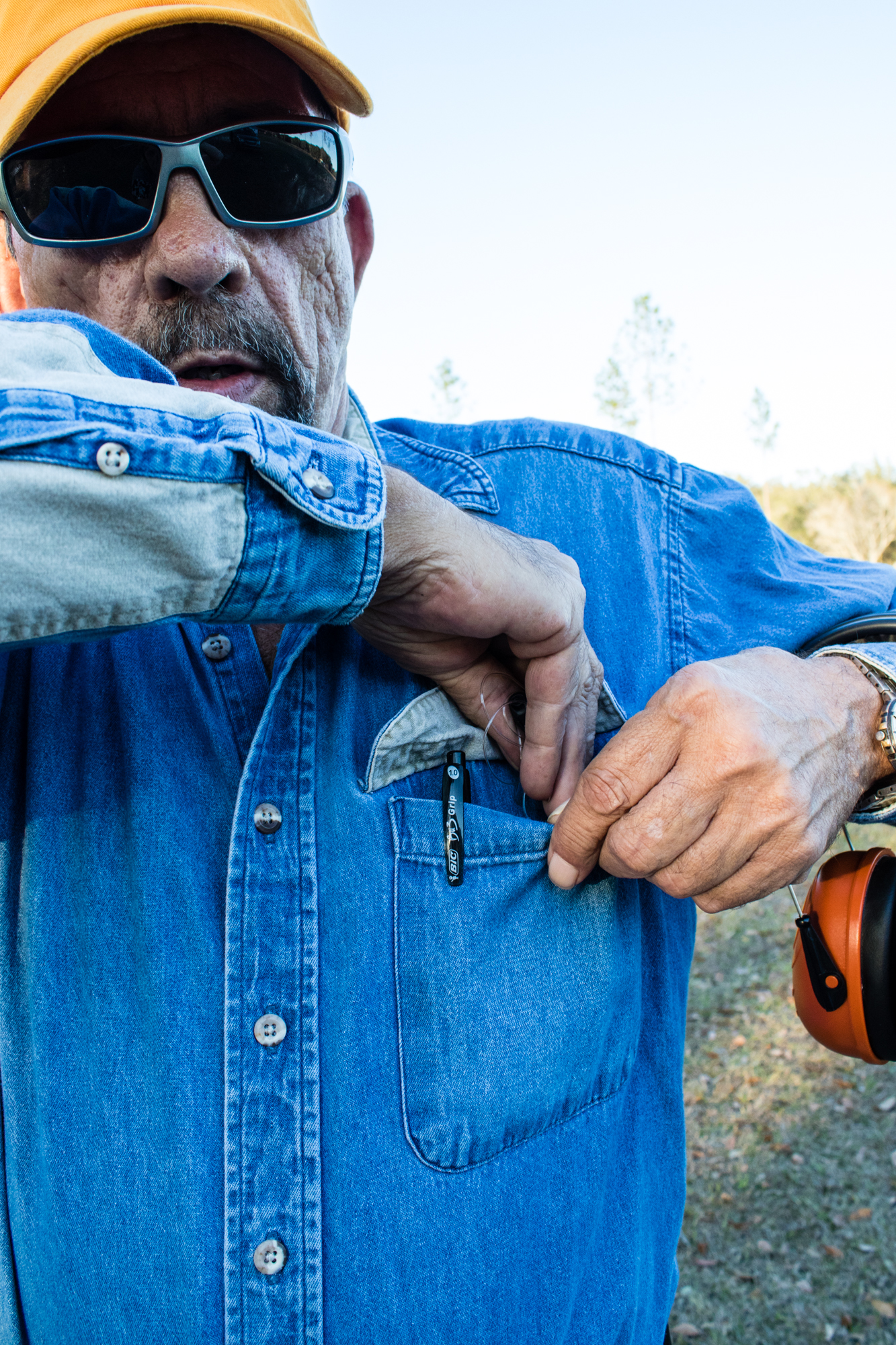
Etymotic (high definition) active ear plugs ain’t your daddy’s ear plugs.  I finally got around to testing GunSport Pro GSP-15 plugs from Etymotic Reseasrch, Inc. of Elk Grove Village, IL. Each fitted with a teeny battery, the set comes with an assortment of Accu-Fit ™ shapes so you can find the one that best fits your own ears.  For me, the LRG gave a superb fit, as if custom made for me.


I have been told by audiologists that a significant amount of the damaging sound waves that cause the cumulative high-range hearing loss known colloquially as “shooter’s ear” come in the form of vibrations through surrounding bone, which plugs alone can’t stop. Muffs are better in that regard, but the stems of requisite protective eyewear can break the seal of the muffs, and plugs are a very good fallback.  Most of us “in the business” will “double up” and use plugs and muffs simultaneously when shooting high powered rifles or particularly loud handguns.


Active hearing protection isn’t just a luxury, it’s a safety thing. As an expert witness in weapons related court cases since 1979, I’ve run across a number of fatal or injury-producing accidents that could have been prevented if the instructor or range officer on the firing line could have heard, over the gunfire, the sounds of someone struggling with a jammed gun, or cursing under his breath, or something similar.

So, I tried the Etymotic plugs with muffs. Ordinary passive muffs – “dead muffs,” if you will – didn’t allow enough sound to get through for my already-somewhat-impaired ears to hear conversations on the firing line.  I tried them next under active muffs from Walker, and got pretty much the same comforting attenuation of loud sounds but amplification of small ones that we buy active hearing protection for in the first place. No feedback was noticed by me or those around me when I shot with both Etymotic plugs and active muffs turned on simultaneously.

I appreciate the active hearing protection of this product with the convenience of tiny size and pocket carry. They’re also good for those who just can’t bear to wear muffs, or find that muffs interfere with their rifle or shotgun stock.  Price is $299 MSRP.  I can see a future for these as part of my personal shooting kit.  Info at etymotic.com.

The product:

Etymotic wisely sells the plugs with a selection of buds to fit different ears. These are the ones that worked best for Mas.

The amplified plugs are adjustable for “HI” and “LO.”

I started with a .22, a Smith & Wesson Model 18 with the classic old Pro-Point red dot sight.

“Hey! These plugs work pretty darn well!”


Short barrel .38s like this J-frame S&W can be loud, but the Etymotics handled it well.

Tried them in tandem with muffs, too.

Muffs don’t fit in your shirt pocket. Etymotic plugs do.

Share or Bookmark
  'ETYMOTIC EAR PLUGS'   Del.icio.us  'ETYMOTIC EAR PLUGS'   digg  'ETYMOTIC EAR PLUGS'   FURL  'ETYMOTIC EAR PLUGS'   Stumble Upon  'ETYMOTIC EAR PLUGS'   FaceBook  'ETYMOTIC EAR PLUGS'   MySpace  'ETYMOTIC EAR PLUGS'   Twitter  'ETYMOTIC EAR PLUGS'   Google Buzz
22 Mar 17:32

Everything You Need to Know About Pocket Clips

submitted by Mikey Bautista

When looking for the perfect gear, sometimes it's not all about the specs. It can be something as seemingly simple as the pocket clip. A pocket clip could make or break how you carry your gear, and there are a few good reasons why.

A good clip makes retrieving your gear easier, saving you time by keeping things securely within reach. A bad clip on a great tool could make you stop carrying it altogether. It slows you down and makes the tool inconvenient to carry, and an inconvenient tool is an unused one.

Pocket clips also affect how you handle the tools themselves. If you've heard of the term “hotspot” when referring to a clip on knives or flashlights, this means that the clip digs into your hand when holding the tool, causing discomfort over time.

And then there's the fact that clips give you options with how you carry your EDC. When clipped to your pocket, you won't have to waste time fishing for gear at the bottom of it or in the recesses of your bag. Tools get the most use when clipped to an outer pocket where they're much easier to grab.

Clips also play a part when dealing with knife laws. Certain locales won't let you carry a knife if any part of the knife itself is sticking out of your pocket, so in those cases a deep-carry clip that completely conceals it would let you carry it. The clip in this case spelled the difference between carrying your favorite knife and leaving it at home.

The Benefits of a 4-Way Pocket Clip on Knives

So we know that pocket clips are useful, but how do they work on actual tools? Let's take a standard 4-way clip on a knife as an example to show the above benefits and usage cases.

As the name implies, with a 4-way clip, you have 4 orientations with which to carry the knife. You can attach the clip on either of its sides to match your dominant or preferred hand (great for lefties like me), or remove it altogether if that's the most comfortable (or legal).

The 4-way clip also lets you choose between tip-up and tip-down carry for the knife. While for most use cases this won't matter, it helps for opening mechanisms like the Emerson Wave feature that lets you rapidly open a knife straight out of a pocket when clipped and positioned tip-up.

And for flipper-type opening mechanisms, ease and speed of use comes down to where the clip is and how the knife tip is positioned. As a lefty, a flipper with a fixed pocket clip in the tip-down position on the handle side meant for righties is practically unusable. It's backwards with how I would want to open the knife (lefty side, tip-up).

With these 4 positions you can already see how much of an impact a clip has on carrying and basic use, without even touching the features of the knife itself! Below I'll go a bit more in-depth with how a pocket clip benefits specific EDC tools.

Pocket Clips on Lights

While most flashlights don't get a 4-way clip because of their shape, 2-way clips (bezel up or down) still gives you options for usability. Having a clip that can flip how a light faces in your pocket gives you a choice in comfort and ease of use depending on where its switch lies.

In a more tactical flashlight where the switch is on its tail, having a clip that lets you carry it bezel-down means you have faster access to the switch with your thumb. Conversely, if you have a light with a side switch designed for overhand use, having it bezel-up in your pocket puts the switch nearer to your thumb when pulling it out.

And one underrated feature for bezel-up clips: this clip lets you attach the light to the brim of a hat for hands-free use. Instant headlamp!

Pocket Clips on Pens

A pocket clip on a pen is the most relatable and common example for most people. Basically, it's the only thing keeping you from losing your pens all the time. Good pocket clips also makes a pen comfortable to write with for long periods (no hotspots!) and stops it from rolling off the table when setting it down.

The position of the clip also affects how the pen functions. A clicky pen benefits the most from a tip-down clip so you can pull it out and click it in one motion, while fountain pens benefit most being tip-up with the clip on the cap so the ink doesn't keep flowing down the nib.

Now think about how much something as popular and useful as the Fisher Space Pen can become even better with a clip. It makes it easier to carry, prevents it from rolling off your desk, and adds to its usefulness as an EDC pen.

Pocket Clips on Keys

Finally, keeping things handy doesn't have to end with your tools. With accessories like a suspension hook, even things that are usually left in a pocket or bag become much more accessible. A keychain with a suspension hook like the above means quicker access to your keys or tools. Another good example is a Swiss Army Knife. A versatile keychain tool like a Manager or Classic becomes much more useful with a suspension hook, since it's always at your side.

What EDC tool do you carry has benefited the most from a pocket clip and how? Let us know in the comments below!

22 Mar 17:29

Dish Spotlight: Venkman’s patty melt

by Jennifer Zyman
The Patty Melt at Venkman’sPhotography by Nick Melvin Chef Nick Melvin of Venkman’s, the Old Fourth Ward music venue/restaurant he co-owns with Yacht Rock Revue frontmen Peter Olson and Nicholas Niespodziani, says he likes to cook food that makes you feel good. His patty melt is no exception. To Melvin, a patty melt is “food that feels a little dirty while you’re eating it, but when you get down with it, you just feel happy and satisfied.” The chef is a fan keeping things simple. Melvin sources uncut rye bread from TGM bakery and slices it thick so it will hold up to the patty melt’s juiciness. The house-ground patty is grilled in butter and topped with “Obama cheese.” Why Obama? Melvin says it’s because he…View Original Post
22 Mar 16:47

Copper Fouling Kills Rifle Accuracy

by David E. Petzal
j-b cleaner
Rifle barrels must have two characteristics if they’re to shoot accurately. The bore must be dead straight and centered*, and the rifling grooves, which can be anywhere…
22 Mar 14:22

How to Tell a Good Story, as Explained by George Saunders, Ira Glass, Ken Burns, Scott Simon, Catherine Burns & Others

by Colin Marshall

All of us instinctively respond to stories. This has both positive and negative effects, but if we don’t understand it about ourselves, we’ve won’t fully understand why people believe what they believe and do what they do. Even given the deep human attachment to narrative, can we clearly explain what a story is, or how to tell one? Acclaimed author George Saunders has given the subject a great deal of thought, some of which he lets us in on in the short film above, which Josh Jones previously wrote about here on Open Culture. “A good story,” he tells us, says “at many different levels, ‘We’re both human beings. We’re in this crazy situation called life that we don’t really understand. Can we put our heads together and confer about it at a very high, non-bullshitty level?'”

At this point in his career, Saunders has tried out that approach to story using numerous different techniques and in a variety of different contexts, most recently in his new novel Lincoln in the Bardo, which takes place in the aftermath of the assassination of the titular sixteenth President of the United States. Few living creators understand the appeal of American history as a trove of story material better than Ken Burns, author of long-form documentaries like JazzBaseball, and The Civil War, who finds that its “good guys have serious flaws and the villains are very compelling.”


And though he ostensibly works with only the facts, he acknowledges that “all story is manipulation,” some of it desirable manipulation and some of it not so much, with the challenge of telling the difference falling to the storyteller himself.

“The common story,” Burns says, “is ‘one plus one equals two.’ We get it. But all stories — the real, genuine stories — are about one and one equaling three.” Where his mathematical formula for storytelling emphasizes the importance of the unexpected, the one offered by Andrew Stanton, director of Pixar films like Finding NemoWALL-E, and John Carter, emphasizes the importance of a “well-organized absence of information.” In the TED Talk just above  (which opens with a potentially NSFW joke), he suggests always giving the audience “two plus two” instead of four, encouraging the audience to do the satisfying work of putting the details of the story together themselves while never letting them realize they’re doing any work at all.

“Drama is anticipation mingled with uncertainty,” said the playwright William Archer. Stanton quotes it in his talk, and the notion also seems to underlie the views on storytelling held by This American Life creator Ira Glass. In the interview above, he describes the process of telling a story as recounting a sequence of actions, of course, but also continually throwing out questions and answering them all along the way, oscillating between actions in the story and moments of reflection on those actions which cast a little light on their meaning — a form surely familiar to anyone who’s heard so much as a segment of his radio show. And how do you become as skilled as he and his team at telling stories? Do what he did: tell a huge number of them, telling and telling and telling until you develop the killer instinct to mercilessly separate the truly compelling ones from the rest.

Glass illustrates the benefits of his lessons by playing some tape of a news report he produced early in his career, highlighting all the ways in which he failed to tell its story properly. He turned out to be cut out for something slightly different than straight-up reporting, a job of which reporters like Scott Simon of National Public Radio’s Weekend Edition have made an art. Simon takes his storytelling process apart in three and a half minutes in the video just above: beyond providing such essentials as a strong beginning, vivid details, and a point listeners can take away, he says, you’ve also got to consider the way you deliver the whole package. Ideally, you’ll tell your story in “short, breathable sections,” which creates an overall rhythm for the audience to follow, whether they’re sitting on the barstool beside you or tuned in on the other side of the world.

What else does a good story need? Conflict. Tension. The feeling of “seeing two opposing forces collide.” Honesty. Grace. The ring of truth. All these qualities and more come up in the Atlantic‘s “Big Question” video above, which asks a variety of notables to name the most important element of a good story. Responders include House of Cards writer and producer Beau Willimon, The Moth artistic director Catherine Burns, PBS president Paula Kerger, and former Disney CEO Michael Eisner. Since humans have told stories since we first began, as Saunders put it, conferring about this crazy situation called life, all manner of storytelling rules, tips, and tricks have come and gone, but the core principles have remained the same. As to whether we now understand life any better… well, isn’t that one of those unanswered questions that keeps us on the edge of our seats?

Related Content:

George Saunders Demystifies the Art of Storytelling in a Short Animated Documentary

Ira Glass, the Host of This American Life, Breaks Down the Fine Art of Storytelling

Ken Burns on the Art of Storytelling: “It’s Lying Twenty-Four Times a Second”

Kurt Vonnegut’s 8 Tips on How to Write a Good Short Story

Kurt Vonnegut Diagrams the Shape of All Stories in a Master’s Thesis Rejected by U. Chicago

Pixar & Khan Academy Offer a Free Online Course on Storytelling

John Berger (RIP) and Susan Sontag Take Us Inside the Art of Storytelling (1983)

Based in Seoul, Colin Marshall writes and broadcasts on cities and culture. He’s at work on a book about Los Angeles, A Los Angeles Primer, the video series The City in Cinema, the crowdfunded journalism project Where Is the City of the Future?, and the Los Angeles Review of Books’ Korea Blog. Follow him on Twitter at @colinmarshall or on Facebook.

How to Tell a Good Story, as Explained by George Saunders, Ira Glass, Ken Burns, Scott Simon, Catherine Burns & Others is a post from: Open Culture. Follow us on Facebook, Twitter, and Google Plus, or get our Daily Email. And don't miss our big collections of Free Online Courses, Free Online Movies, Free eBooksFree Audio Books, Free Foreign Language Lessons, and MOOCs.

21 Mar 19:27

The 100 Best Movies to Watch on Netflix Right Now

by Joel Lee
netflix-top-100-movies

You may have heard that Netflix has dumped a lot of content, but that shouldn’t be a cause for concern. What’s actually happening is that Netflix is ditching the filler in order to pay for more compelling content. And boy, it’s working out extremely well. Netflix’s library has never been packed as densely with high-quality content as it is right now. So despite the drop in quantity, I still think Netflix is worth far more than it costs. Don’t believe me? Keep reading to see just how many excellent movies you can watch, and remember that this doesn’t even touch...

Read the full article: The 100 Best Movies to Watch on Netflix Right Now

21 Mar 19:23

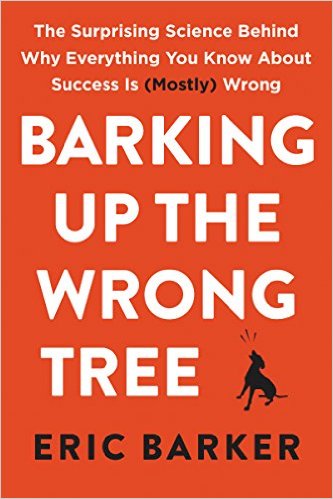
The “Barking Up The Wrong Tree” Book Is Coming Out. And I Need Your Help.

by Eric Barker

barking-up-the-wrong-tree

It’s almost here.

My book, Barking Up The Wrong Tree, is coming out on May 16th. But that’s not why I’m writing…

This is not the “official” announcement. That will be soon and there will be some exclusive supercool bonuses if you’re lovely enough to preorder the book. I’m writing to you today because I need your help…

Since I was a teenager, I always wanted clear answers on what it took to have an awesome life. But I didn’t get them. The things I was told were often confusing, contradictory, or downright wrong. But I didn’t let that stop me. I started digging into academic journals, started calling experts, and started posting on this here website.

For 8 years, my blog Barking Up The Wrong Tree has brought you research-backed answers on how to live a successful life. But I can only cover so much in a weekly blog post. So I figured it was time to roll up my sleeves and get down to brass tacks, to play some serious whack-a-mole with the biggest mistakes the experts say we’re making when it comes to success in life.

The book Barking Up The Wrong Tree will take on the maxims you’ve heard about the good life and give’em the “Mythbusters” treatment: Do nice guys really finish last? Is it what you know or who you know? Do quitters never win and winners never quit? It’s time to give these ideas and others their day in court and get hard answers so you can make smarter choices to get what you want out of life.

But because this is my first book, I need your help getting the word out. Do you have a friend with a big social media following? A buddy with a podcast? Do you work at a media outlet? Any help you can offer is appreciated by yours truly. If you’ve enjoyed the work I’ve been doing, this is your chance to get involved.

Just send me an email here with any ideas you have.

I’m really looking forward to getting this book in your hands and sharing what I’ve learned with you.

Thanks,

Eric

PS: The “official” announcement will be coming soon. But, yes, if you preorder now, you will get the exclusive supercool bonus materials. Click here.

The post The “Barking Up The Wrong Tree” Book Is Coming Out. And I Need Your Help. appeared first on Barking Up The Wrong Tree.

21 Mar 15:49

Sun Calculator

by swissmiss

Worried about the plants in your garden getting enough sun or if the apartment you saw with a broker yesterday is as bright as he said? Try SunCalc. It’s a little app that shows sun movement and sunlight phases during the given day at the given location. Here’s a sample of my office.

(via)

21 Mar 13:11

LEGO Tape

by swissmiss

The idea of a LEGO Tape gets my two thumbs up!

21 Mar 12:59

Friday Link Pack

by swissmiss

When the first train rolls into the station after a big snowstorm, you’d best stand well clear.

– This is so fascinating: A San Francisco Startup 3-D Printed a Whole House in 24 Hours

Solid Advice on Living Alone from a 1936 Guide for Single Women

A Phone Case that bathes your selfies in flattering light. The existence of this phone case made me laugh.

The mixtape of podcasts.

Giant pegboard DIY

– I totally forgot about the existence of hot water bottles. We had a pale pink one growing up and I can still remember the odd texture.

– You’re into modern design? Check out designmilkeveryday on Instagram. It’s by Jaime Derringer, force behind design milk.

– A little absurd and therefore beautiful: A trap for self-driving cars.

This made me laugh.

– Beautifully designed air purifiers.

The Good World helps you find discover socially responsible businesses. So far they cover a few select cities in the U.S. I love this and I hope it will grow and inspire others in other countries.

– This is pure gold: A collection of culture decks, core values, mission statements, and more from real companies.

– Yes, I have experienced this first hand: “If someone shifts from a long commute to a walk, their happiness increases as much as if they’d fallen in love.”

When Does Political Correctness Become Orwellian?

Wall of flowers tracks and mirrors your movement. Too bad it’s behind glass.

The product manager’s guide to the care and feeding of humans

– For anyone having had to go through on boarding processes with new employee will agree, Rippling sounds too good to be true.

– Trying to manifest some spring feelings with wearing all of the Tattly Florals I can get my hands on.

21 Mar 12:50

Pretending I'm a Superman

Pretending I'm a Superman
We weren't pretending to be Superman — we were pretending to be Rodney Mullen, Bam Margera, and Tony Hawk. In places like Rio de Janiero, Los Angeles, and Portland. Tony...

Visit Uncrate for the full post.
21 Mar 12:24

Apollo 70 Airstream Bar

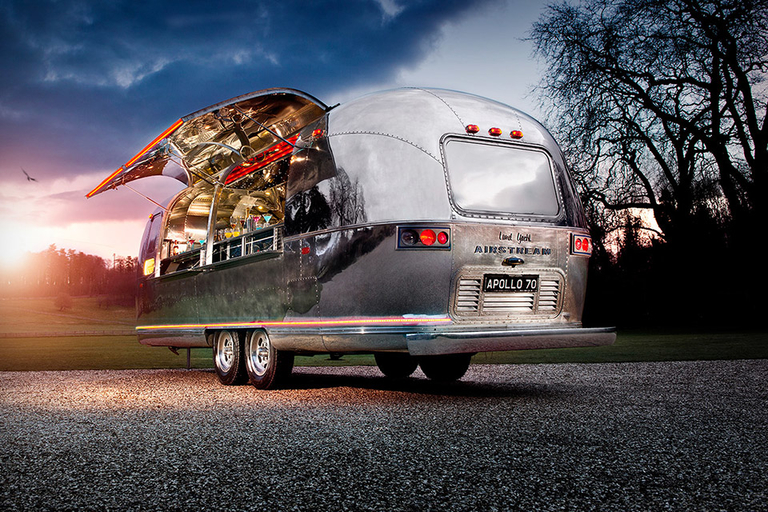
A well-appointed bar can be the centerpiece of any adult gathering. For outdoor engagements, it's hard to top the Apollo 70 Airstream Bar. This converted 1970s-era Land Yacht now serves...

Visit Uncrate for the full post.
21 Mar 12:20

Pitmaster

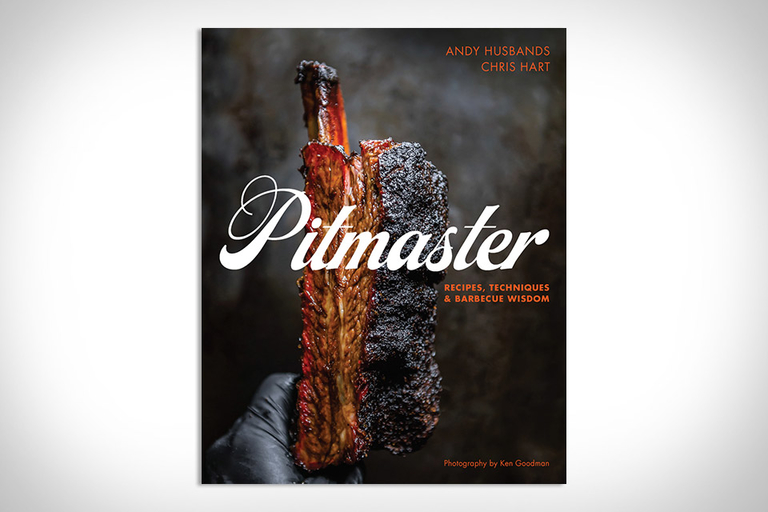
Spring is almost here, and with it comes the start of barbecue season. Reading through Pitmaster: Recipes, Techniques, and Barbecue Wisdom is a good way to get up to speed....

Visit Uncrate for the full post.
21 Mar 12:14

Kayak Tuna World Record Inches Closer to 200-Pound Threshold

by Sporting Classics Daily
A modern-day version of The Old Man and the Sea, minus the sharks.