KWBaker
Shared posts
Lawsuit: Waffle House grease seeped onto neighbor's property
Autistic Man Called “Stupid” By Gym Staff Teaches Himself Law, Sues The Company And Wins


10 of the Dirtiest Things You Touch Every Day
Warning: If you're even a mild germaphobe, the following information may make you shudder.
Visiting The Anza Borrego Super Bloom

California has record rainfall this year and as a result, the desert is full of flowers and the Anza Borrego Desert outside of San Diego even had more flowers than it had since 2005 -what's known as a super bloom.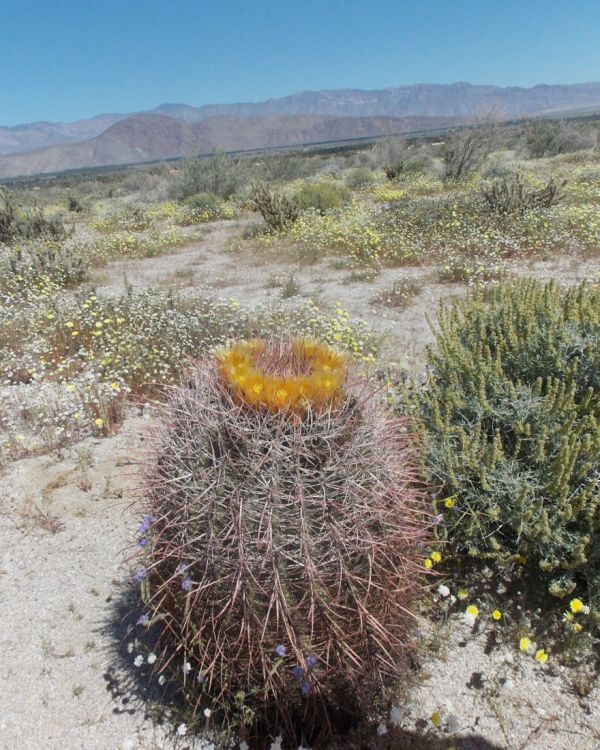
Even the second you get out of your car you're hit with flowers everywhere.

They seem to grow in every color -pinks, reds, purples, greens, yellows, blues, whites and more!
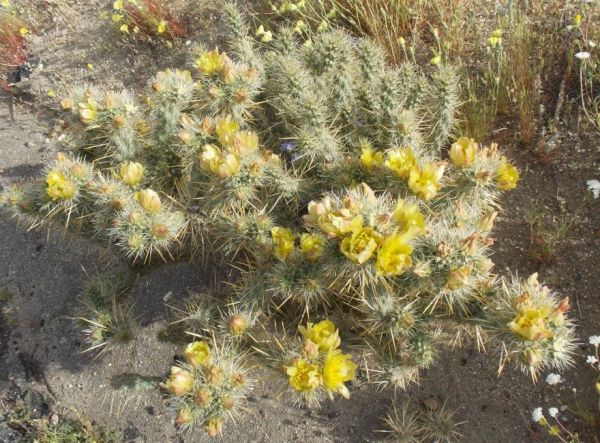
And it was amazing how many flowers were growing on some of the plants.
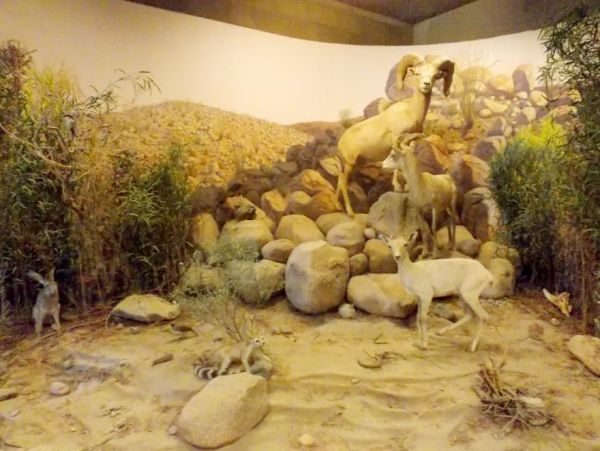
The visitor's center is filled with fascinating information about the area, including the archeological history of the park (there's even an archeological research center on site) and information about the wildlife and plants living there.

The variety of plants there is pretty incredible and you really do see flowers everywhere.
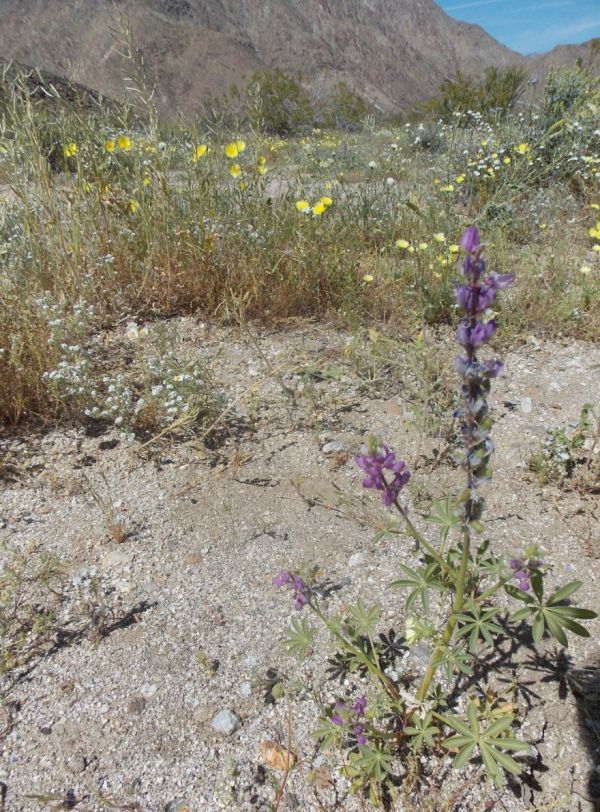
It's particularly impressive if you have already been to the park any other time of the year and saw the grounds with little but scrubby plants and cactuses.
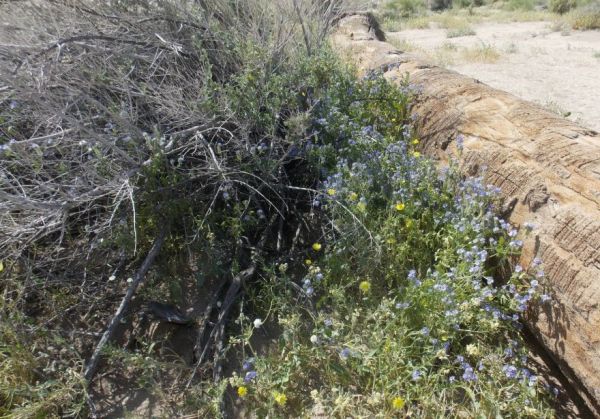
The "super bloom" title certainly seems appropriate when you can't walk more than a few feet without bumping into another cluster of flowers.
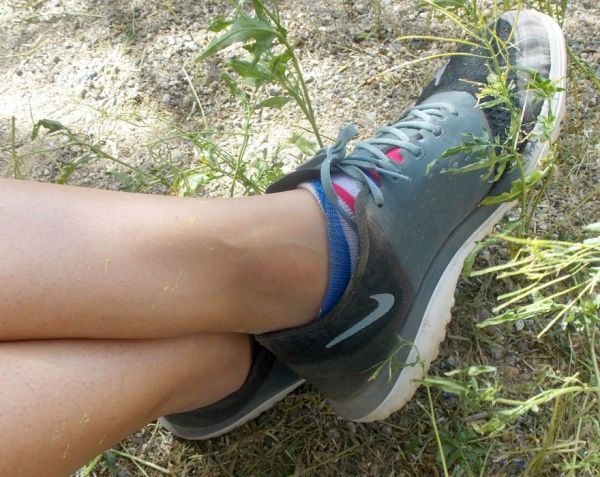
You can't even walk around without getting covered in pollen (as well as the usual dust and sand drom the desert).

While the trails are what you might expect, there are some surprisingly nice amenities at the trail heads including actual toilets with real plumbing and spigots to refill your bottles (and you'll want to get a full refill when you start because it's hot out there).

We chose the Palm Canyon Trail because there were a lot of reports about there being bighorn sheep spotted in that area recently.
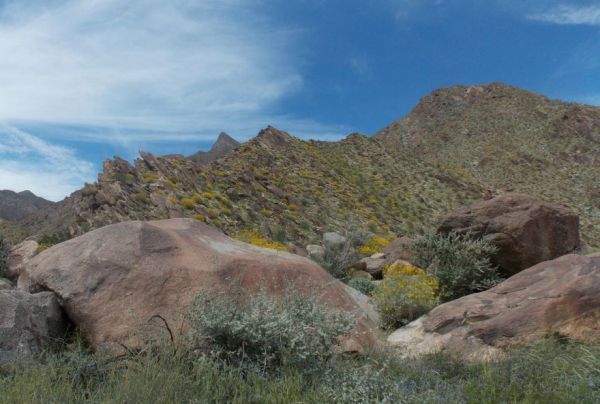
We didn't see any sheep, but we kept our eyes on the hills the whole walk just in case -which was great because the normally brown hills were colored with wild flowers.
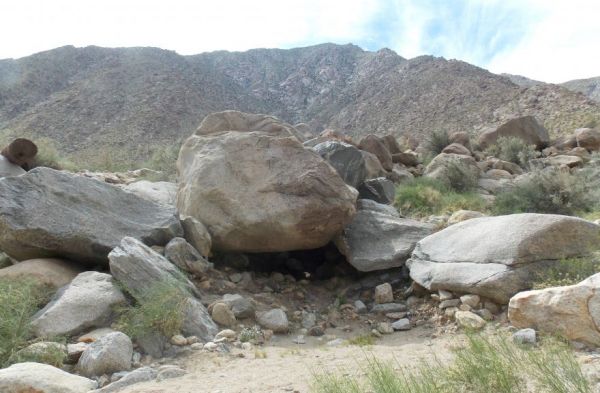
While we didn't see any sheep, we spotted plenty of evidence of wildlife, including places where they might sleep and their droppings.
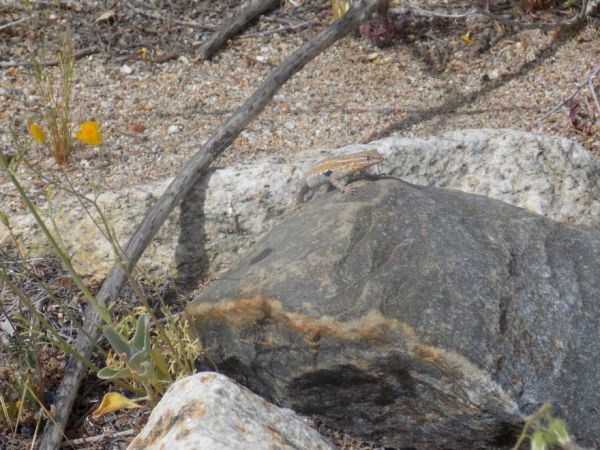
And we saw a few lizards. We even saw a quail, though it flew away too fast for me to get a picture.
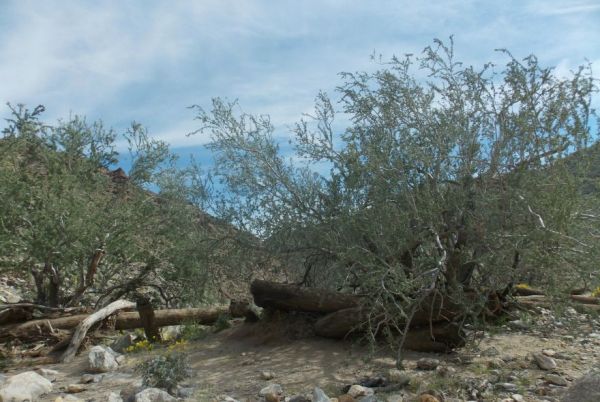
The wildlife diversity wasn't the only amazing thing there. Everywhere you looked there was some different type of plant -even big knotty trees.
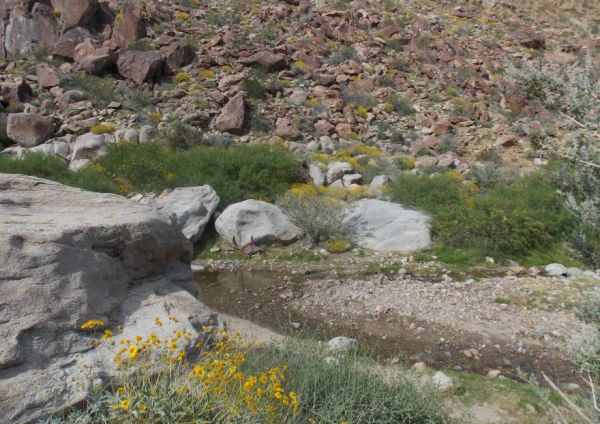
After walking next to a dry riverbed for over an hour, you actually stumble on river water, which is why the bighorn sheep were spotted on that trail so often.
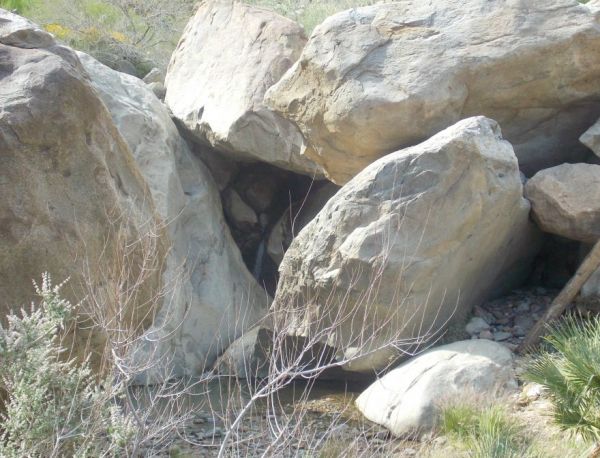
And then you spot a waterfall, which looks tiny in the picture but is actually a good size, but the giant boulders make it look tiny.
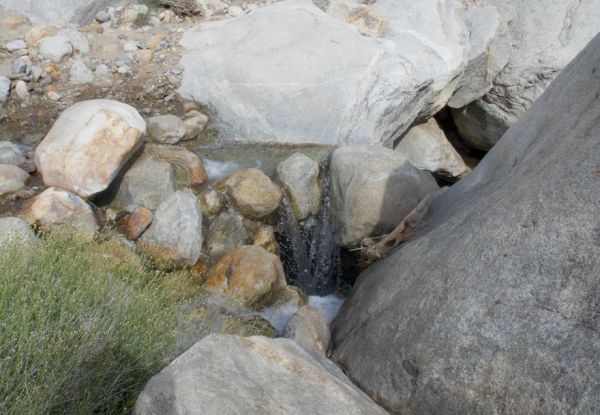
It was a really cool waterfall too -with all the water pooling inside the rocks before going down the waterfall.
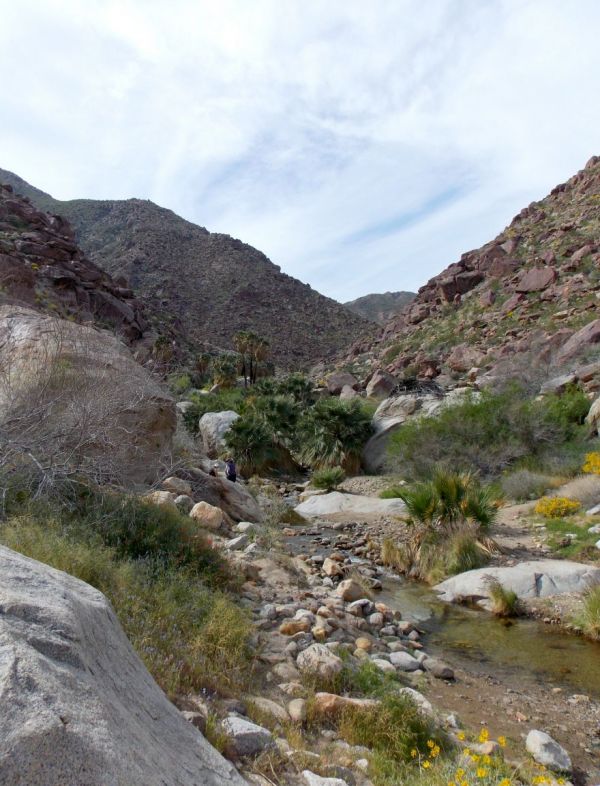
The Palm Canyon Trail name isn't just clever -this canyon is named after the palms growing in a real life desert oasis.
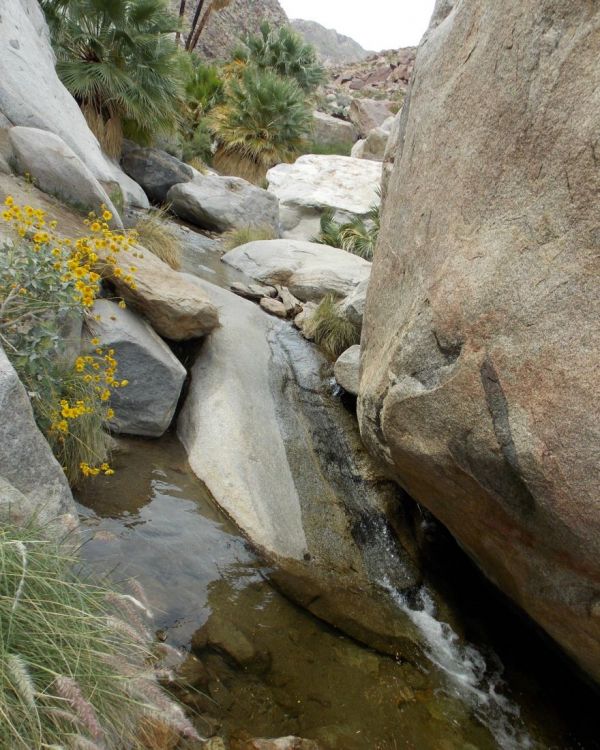
We actually stopped walking about here because the trail started getting a little more risky and we were pretty exhausted after already walking for about three hours.

The cool water was so relaxing and made the next three miles back to the car a little more relaxing.
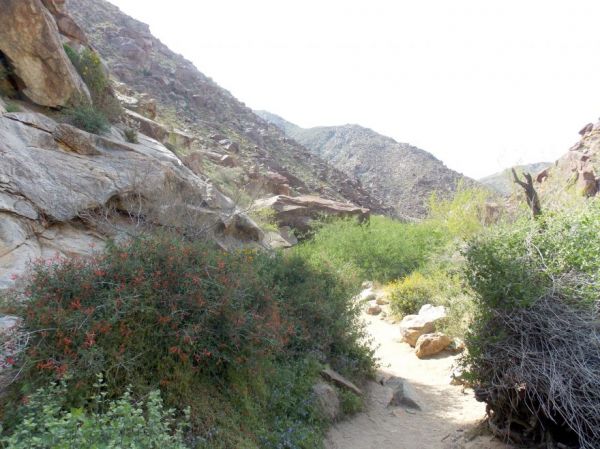
Of course, walking around in the desert is a lot easier if you happen to go when it's 75 degrees out.

We really chose the perfect day to visit. On top of the nice temperatures, there was also a cool breeze blowing so strongly that we couldn't use the parasols we brought (not that we needed them).

One of the coolest things we saw on the walk was the fact that everywhere you went there were different plants.

In the shady part of the canyon near the waterfall, there were much more green, luscious plants -including this weird tree that looked like it had caterpillars growing on it.
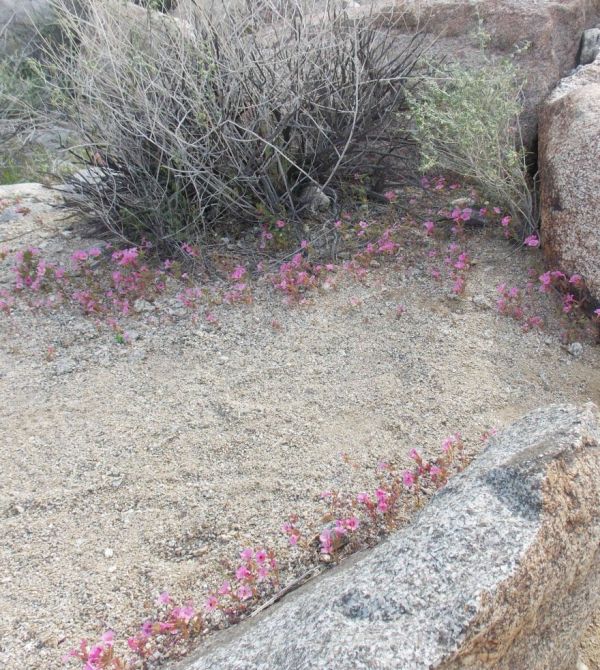
On the south side of the canyon, these little pink flowers started popping up out of the sand all over itself.
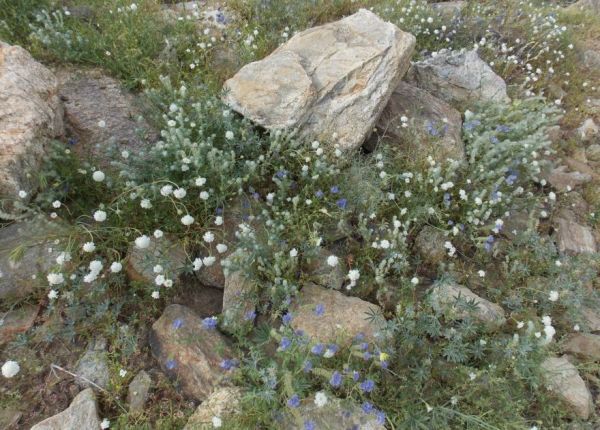
And the fluffy flowers and blue ones seen here only popped up near the end of our walk.

Interestingly, even the insects seemed to have preferred areas like the flowers. On the south side of the canyon, we were constantly trying not to step on these beautiful spiderst that we barely saw throughout the rest of the walk.
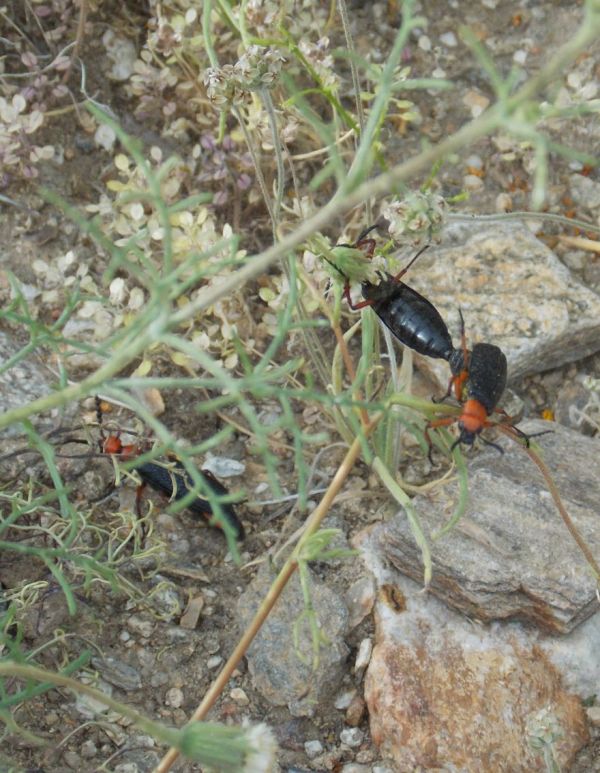
We even stumbled upon a beetle mating ground with most of the plants holding 6 or more pairs of these orange and black beetles making love.
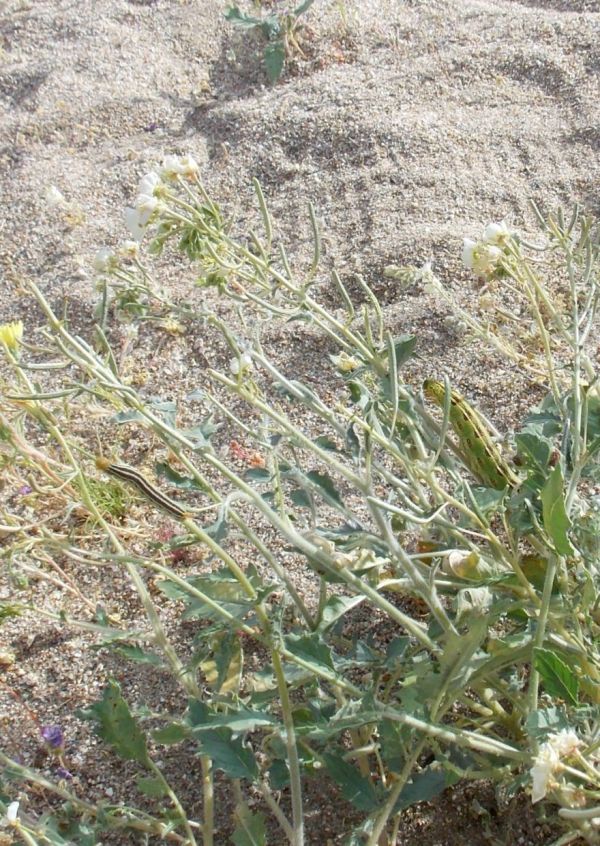
And on the way back to the car, we found where all the caterpillars were munching down on weeds to fatten themselves up before building their cocoons.
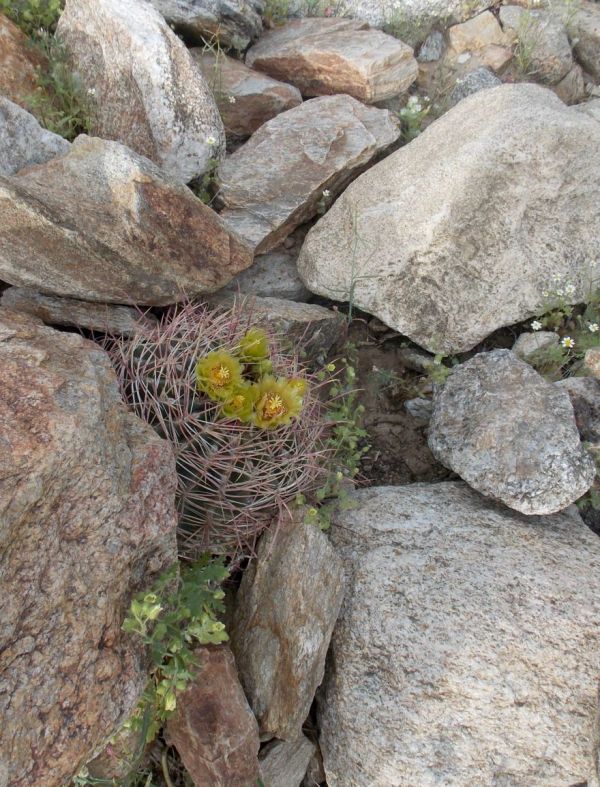
My personal favorite flowers were those growing on the cactuses -and this little guy stood out to me as my favorite plant from the entire trip. It seems like a fitting final image to this post.
While the flowers are starting to die off, there are still a few areas filled with blooms, so if you live in Southern California, I highly recommend taking the trip out there as soon as possible to see what's left of the super bloom before it's too late.
In Kansas City, Barbecue, Beer and Bargains - New York Times
New York Times |
In Kansas City, Barbecue, Beer and Bargains New York Times I had just learned my first lesson of Kansas City barbecue the hard way: Don't just waltz right in at closing time expecting to be served. In my defense, I was coming pretty much directly from Kansas City International Airport, where I had landed on a ... |
Husqvarna 256 Thage Motorcycle

Visit Uncrate for the full post.
Obsolete Scientific Theories Make For Perfect Heavy Metal Band Names

Tom Gauld (previously on Neatorama) has a suggestion for what to do with obsolete scientific theories: turn them into heavy metal band names! I call dibs on phlogiston theory. What's your favorite obsolete scientific theory?
A Popular '40s Map of American Folklore Was Destroyed by Fears of Communism
During World War II, the painter, illustrator, and cartoonist William Gropper offered his services to the U.S. Treasury Department and the White House’s Office of War Information. He received a “Citation in recognition of fine assistance” from the Treasury Department and personal thanks from Franklin Delano Roosevelt, for “giving pictorial form to specific war information objectives” through propaganda posters and paintings. It seemed logical that after the war, the State Department, too, would find value in the famous artist’s social-realist portrayal of American culture—a logic that would soon find Gropper trapped within the surrealist labyrinth of McCarthyism.
Between 1946 and 1953, the State Department’s Overseas Library Program collected and distributed some 1,744 copies of William Gropper’s America: Its Folklore, a colorful depiction of 61 legends, tall tales, and literary heroes—characters like super-sized cowboy Pecos Bill in New Mexico, steel-driving phenom John Henry in Alabama, and witty trickster Br’er Rabbit in Georgia—superimposed over a familiar projection of the Lower 48.
The purchase was part of postwar efforts to disseminate “facts and solidly documented explanations of the United States.” Based on a painting Gropper completed in 1945, the 34-by-23-inch pictorial map was published by Associated American Artists, and sold by mail order—$5.00 unframed, $14.50 mounted—in the New York Times, Life, and other popular publications. An accompanying 16-page brochure told viewers more about Paul Bunyan, Johnny Appleseed, and their folkloric ilk.

While the State Department exploited the map’s propaganda potential abroad—its playful characterization of America as a fun-loving, welcoming, and, most important, free land—librarians and teachers took advantage of its educational usefulness at home. Throughout the late ’40s and early ’50s, newspapers from coast to coast ran stories about students studying literature with the help of America: Its Folklore. Municipal libraries even lent framed copies, making it easy for students to show off their newfound knowledge at home.

But the cartographic darling fell from grace in the spring of 1953, when attorney Roy Cohn toured State Department libraries around the world as part of his and Senator Joseph McCarthy’s crusade against Communism. Cohn identified William Gropper as one of the “fringe supporters and sympathizers” whose supposedly Communist-directed works had infiltrated the Overseas Library Program. Gropper was promptly subpoenaed to appear before the Senate Permanent Subcommittee on Investigations—and earned the dubious distinction of being among the first blacklisted artists in McCarthy-era America.
Gropper arrived on Capitol Hill looking “as rumpled as the sofa in front of the television set,” as one commentator observed. Surrounded by Klieg lights, television cameras, police, and press, his interrogation began simply, with chief counsel Cohn asking, “Are you a member of the Communist Party?” As far as Cohn and McCarthy were concerned, they already knew the answer. But after the artist invoked the Fifth Amendment, refusing to answer so as not to bear witness against himself, Cohn pressed:
Mr. Cohn: Are you the William Gropper who has prepared various maps?
Mr. Gropper: I don’t understand that question. Prepared various maps?
Mr. Cohn: Did you prepare a map entitled “America, Its Folklore”?
Mr. Gropper: Have you got the map here?
Mr. Cohn: No; I don’t have the map here. Did you prepare a map entitled “America, Its Folklore”?
Mr. Gropper: I painted a map on American folklore, yes.
Gropper explained that he had received an advance from Associated American Artists, but that “no royalties came in.” Cohn wanted to know if part of Gropper’s advance had supported Communist causes. Again, Gropper pleaded the Fifth Amendment. When Senator Stuart Symington of Missouri asked the painter if an individual “could be a member of the Communist party and at the same time be a good, loyal American,” Gropper demurred: “I would rather talk about my field, where I am equipped. I don’t understand these things.” Moments later, Gropper tried to distance himself further from his celebrated pictorial map, explaining, “I don’t even make maps. I am a painter.”

No matter that Gropper had, in fact, tried his hand at mapmaking; no matter that Gropper was not, in fact, a Communist. The damage was done. The next day, the left-leaning, 55-year-old Jewish artist from Brooklyn found his name on the front page of national and local newspapers. The message sent down from McCarthy’s perch in the Senate was clear: William Gropper was a Red. His map was un-American.
There is nothing immediately offensive or subversive about America: Its Folklore. True, contemporary folklore purists may have taken issue with it for including so-called tall tales and legends that originated in print culture rather than oral tradition (Washington Irving’s Rip Van Winkle appears, for example, as do Mark Twain’s Jumping Frog of Calaveras County and E.E. Hale’s Philip Nolan). But to quibble with the American scene that Gropper depicted would be scholarly inside-baseball indeed. What matters is that overnight—thanks to what he would later describe as the “American Inquisition”—his work became the most notorious pictorial map in history.

Today extant copies of America: Its Folklore are exceedingly rare. The Library of Congress has two examples, while the Illinois State Library and the University of Michigan each have a copy, as do a handful of others. Well-loved survivors do surface from time to time—a paltry $9.99 on eBay in 2010, $120 from a pair of pickers in Michigan in 2017—but never with the original supplementary brochure.
One could argue that the blacklist led to the map’s erasure from popular culture, and there is some evidence to support that interpretation. The State Department systematically destroyed its 1,744 copies. Surely many domestic institutions did the same. But even after America: Its Folklore scandalized Washington and led to the downfall of its creator, teachers continued to use it in their classrooms.
Indeed, another way to explain the map’s scarcity today is through its enduring popularity yesterday. Teachers, librarians, and especially students literally used it to pieces (and most copies that do survive bear physical witness to that use). Perhaps the greatest testament to its contemporary appeal is the vacuum it left when thousands of copies were destroyed on purpose and countless more were destroyed by exchanging hands in classrooms, public libraries, and living rooms.
Within a year of Gropper’s Capitol Hill evisceration, the National Conference of American Folklore for Youth began selling a similarly sized, similarly whimsical American Folklore & Legends by John Dukes McKee, because, as the English Journal put it, teachers across the country “kept asking for [it].” And after that map went out of print a few years later, the General Drafting Company produced Frank Soltesz’s Folklore and Legends of Our Country in 1960 for distribution in Esso gas stations—the perfect cartographic distraction for kids in the back of the family station wagon, while their parents argued about politics.
Map Monday highlights interesting and unusual cartographic pursuits from around the world and through time. Read more Map Monday posts.
‘Cape’ Lets You Fly Real Drones in the Real World… Over the Internet

The startup Cape calls itself “the world’s first online drone flight platform,” and they do exactly as the name implies: Cape lets you fly a real drone, in a real-world location, without ever leaving the comfort of your desk chair.
Sign up for the company’s public beta, and soon you’ll be invited to launch one of Cape’s drones placed all over California. Once you’re in, use your computer, tablet, or smartphone to launch and fly the thing—no pesky FAA certificate required, no worries about crashing an expensive investment, and (apparently) almost no lag between the controls and the drone.
We haven’t gotten access to the public beta just yet *shakes fist in the air*, but DPReview has and the setup seems pretty simple.
You simply pick an available DJI Inspire 1 along the coast or in the desert of California—each location is active at different times and days—read over the controls really quick, and hit enter to automatically take off. Once you’re in the air, you’ll be automatically fenced into a safe zone, kept at a legal altitude, and otherwise prevented from having too much fun at the expense of Cape’s fleet, but otherwise you’re free to fly around to your hearts’ content.
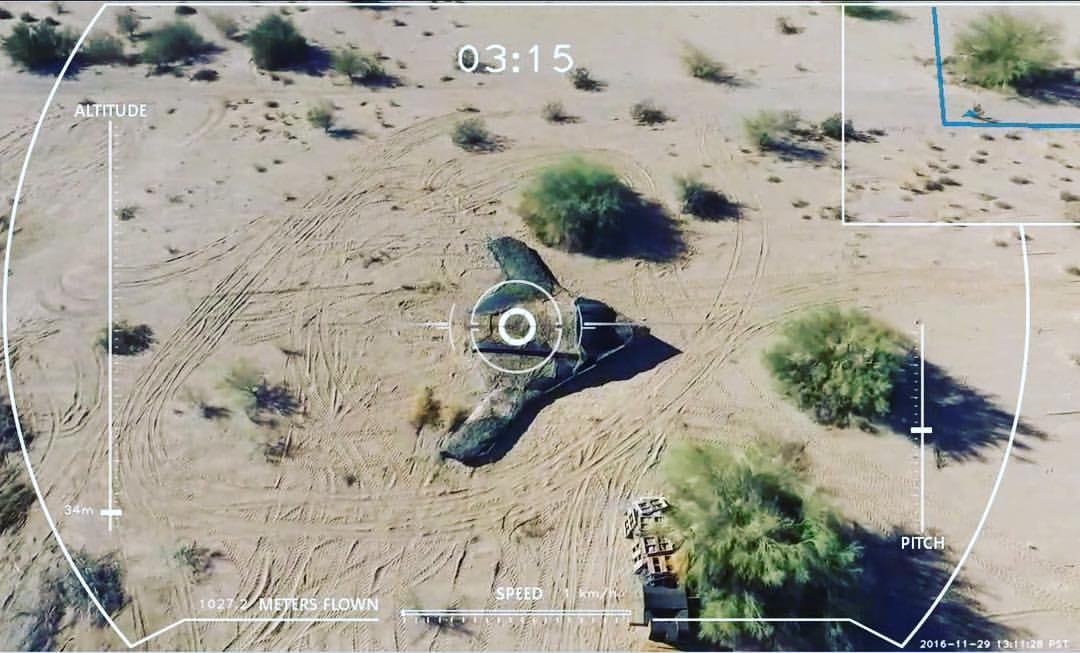
As a bonus, you never know what you’ll find. Cape posted this picture of a “buried Stealth Bomber” on their Facebook page in December. Apparently a user just stumbled across it:
Honestly, the technology sounds really cool—flight simulator meets real life in an unprecedented way, made possible by the ubiquity and affordability of drone, and the speed of your broadband connection. Learn to frame great drone shots, scout parts of California you’ve been thinking of photographing, or just take a joy ride—it’s up to you.
To learn more about Cape or sign up to try it for yourself, click here.
(via DPReview)
Basic First Aid
Use the following format to cite this article:
Basic first aid. (2012). Farm and Ranch eXtension in Safety and Health (FReSH) Community of Practice. Retrieved from http://www.extension.org/pages/66375/basic-first-aid.
Farm and ranch owners and managers, as well as family members working on a farm or ranch, should receive first aid training. Having personnel trained in first aid who can respond appropriately to an accident can improve the outcome for a victim of an agricultural accident.
First Aid Training
To obtain first aid training, check local hospitals, schools, emergency medical services (EMS), and similar resources for upcoming first aid classes. Sign up for a first aid or first responder class or organize a class for workers or local agricultural organizations. Several state and national organizations, including those listed below, may have courses or trainers available in your area:
- American Red Cross: Input your zip code on the website to find a local Red Cross office.
- National Safety Council: Choose the type of class you wish to take and identify your area to locate an instructor.
Note that many institutions also offer online training courses.
Basic First Aid
Agricultural incidents can result in a wide variety of injuries. Below are some basic first aid instructions for common injuries and emergency situations that occur on farms and ranches.
Anaphylaxis
Anaphylaxis is a life-threatening allergic reaction that can cause shock, breathing difficulties, and a drop in blood pressure. Triggers of anaphylaxis include medications (such as penicillin), foods (such as peanuts or shellfish), and stings from insects (such as bees, fire ants, and so on). Anaphylactic reactions can include the following symptoms:
- Skin reactions, such as hives
- Swelling of the face, eyes, lips, and throat
- Airway constriction
- Weak and rapid pulse
- Nausea
- Dizziness
- Unconsciousness
Take the following actions to assist a person experiencing anaphylaxis:
- At the first sign of anaphylaxis, contact 911 or local EMS.
- A person aware of his or her anaphylactic tendency may carry an epinephrine autoinjector such as an EpiPen to treat this type of attack. Depending on his or her condition, ask the person experiencing the reaction whether he or she needs assistance in using the autoinjector on his or her thigh.
- While waiting for EMS, have the person experiencing the reaction lie on his or her back. Loosen any tight-fitting clothing the person is wearing, and cover the person with a blanket.
- Should the person begin to vomit, turn the person on his or her side.
- Cardiopulmonary resuscitation (CPR) can be administered if the person shows no signs of breathing, coughing, or movement. (Click here to be directed to CPR instructions.)
Note that a person experiencing an anaphylactic reaction should not try to drink. Do not give water to a person suffering anaphylaxis.
For a short video by EpiPen on anaphylactic shock and the use of an epinephrine injector, click the image below.
A person experiencing anaphylaxis should be treated with an epinephrine injector only if he or she has been prescribed one by a physician or if the injection is administered by a licensed EMS provider. Complications can arise if epinephrine is used on some patients, especially patients with a history of cardiac problems. EMS responders should be called to manage a person having symptoms of anaphylaxis if the person does not have his or her own injector.
Animal Bites
The most common animal bites are from domestic animals such as dogs and cats. Bites that result in puncture wounds have the greatest chance of becoming infected. Anyone who receives an animal bite that punctures the skin should be seen by a physician or go to the local emergency room.
Take the following actions to assist a person who receives an animal bite:
- When a person receives a bite that punctures the skin, wash the wound completely with soap and water for three to five minutes.
- When a bite is more serious and involves deep punctures or badly torn skin and bleeding, apply pressure to the wound with a clean, dry cloth.
- After the bite has been treated, watch the area for any signs of infection, such as swelling, redness, excessive pain, or oozing. If the site becomes infected, seek medical attention.
Depending on the bite, a physician may recommend that the person bitten get an updated tetanus shot (if his or her last injection was more than five years ago).
Amputation/Severed Body Part
Take the following actions when a body part is cut or torn from a person's body in an agricultural accident:
- Call 911 or contact local EMS.
- Locate the body part, wrap it in sterile gauze or a clean cloth, and place it in a plastic bag.
- Place the bag with in a cooler with ice and bring it or have it transported to the hospital.
Do not freeze the body part.
Burns
The three burn classifications are first-, second-, and third-degree.
- A first-degree burn is the least serious, affecting only the outer layer of skin. A minor sunburn is considered a first-degree burn. Most first-degree burns should be treated as minor burns, unless a burn covers a substantial part of a person’s body.
- A second-degree burn occurs when the first and second layer of skin have been burned. Such burns can result in blisters; red, splotchy skin; pain; and swelling. Treat a second-degree burn as a minor burn if it is three inches or smaller.
- Third-degree burns always require professional medical treatment because these burns can affect all layers of skin and tissue and may extend to muscles, ligaments, tendons, nerves, and bone. Initially, a third-degree burn may be less painful than a first- or second-degree burn because the nerves are usually burned. Excruciating pain from a third-degree burn may occur later.
Treating a minor burn
Take the following steps to treat a minor burn:
- Ensure that the victim is no longer in contact with the source of the burn.
- Have the burned person cool the burned area by holding it under cool (not cold) running water for approximately 10 to 15 minutes.
- Cover the affected area loosely with a sterile gauze bandage.
Never use ice, butter, or ointment on a burn, and do not break blisters.
Treating a third-degree or major burn
Treatment for a third-degree or major burn includes the following steps:
- Call 911 or contact local EMS.
- Ensure that the victim is no longer in contact with the source of the burn.
- Check the victim for signs of circulation (breathing, coughing, or movement). If the victim is not breathing, begin CPR.
- Cool the burn site with water or cool, moist sterile bandages.
- Cover the burned area loosely with a sterile dressing.
Never remove burned clothing that is stuck to a burned area; rather, cool the material and cut or tear around the area. Do not immerse large, severely burned areas in cold water. You may pour cool water on large burns if you can do so within 20 minutes of the victim receiving the burn. A doctor may recommend a tetanus shot for individuals who sustain third-degree burns.
Watch the following video by the Health and Safety Institute to learn more about first aid for a major burn:
Chemical Burns
A chemical burn occurs when living tissue comes in contact with a corrosive substance such as an acid, a base, an oxidizer, a solvent, a reducing agent, or an alkali. In agriculture, such substances are found in pesticides, lime and fertilizers, fuels, detergents, and sanitizers.
Treating a liquid chemical burn
Take the following actions to assist a person who has sustained a liquid chemical burn:
- Remove the source of the burn and remove clothing or jewelry that may have been contaminated by the corrosive substance.
- Rinse the affected area for 15 to 30 minutes with cool, gently running water.
- Loosely wrap the burned area with dry, sterile dressing or a clean cloth.
- If the victim continues to experience a burning sensation, rewash the area.
Treating a dry chemical burn
When a person sustains a dry chemical burn, brush away the excess chemical with a gloved hand or a towel. Then follow the directions for threating a liquid chemical burn.
Contact 911 or local EMS if any of the following conditions apply:
- The victim shows signs of shock.
- The victim has a second-degree burn larger than three inches.
- The victim has uncontrollable pain.
- The burn involves the eyes, hands, feet, face, groin, buttocks, or major joints.
An updated tetanus shot may be recommended by the attending physician if the injury requires a visit to the emergency room.
Chemical burns to the eye
A person can receive a chemical burn to the eye when a chemical liquid is splashed in his or her eye or when the person rubs his or her eye after touching a chemical. Products at work and in the home that can cause chemical burns to the eye include cleaners, solvents, disinfectants, fertilizers, and pesticides.
Take the following steps to treat a chemical burn to the eye:
- Get emergency care for the injury.
- Flush the victim's eyes with lukewarm tap water for a minimum of 20 minutes.
- Have the victim keep his or her eyes wide open during flushing.
- When flushing, rinse each eye from the nose outward to reduce the risk of chemical residue washing into the other eye.
- Use only water or saline rinse (for contact lenses) to flush the eyes.
- Water irrigation to the eyes should begin immediately and should be continued while the victim is en route to treatment.
- The victim should expect additional flushing upon arrival at the hospital.
- Thoroughly wash your hands to remove possible chemical residue.
- Note the name of the chemical or take the chemical container to the emergency department.
Never allow the victim to rub his or her eyes. Note that chemical burns to the eye may cause light sensitivity, so the victim may need to wear sunglasses when going for emergency care.
Electrical Burns
An electrical burn burns from the inside of the body outward. Although an electrical burn may appear to be minor and may not even be visible on the skin, damage can occur deep in tissue. Strong electrical currents going through a person’s body can cause internal damage (such as heart-rhythm disturbance or cardiac arrest) or burn a person’s nerves, blood vessels, tissues, or organs.
When a person may have an electrical burn, first evaluate the scene to determine whether the person is still in contact with the electrical source. Do not touch the person until you have first turned off the source of electricity. Then take the following actions:
- Call 911 or local EMS.
- Check the person for injuries, and begin CPR if the victim is not breathing.
- Cover the burn area with dry, sterile gauze bandages.
- Keep the person from getting chilled, and do not cool the burned area with water.
Choking
Choking occurs when a foreign object becomes lodged in a person’s throat or windpipe, hindering air flow as the person tries to breathe. If the choking victim is conscious, ask him or her whether he or she is choking and whether you can help him or her. If the victim cannot cough, speak, or breathe, contact 911 or local EMS. Then begin administering abdominal thrusts, also known as the Heimlich maneuver:
- Stand behind the victim and place the thumb side of your fist against the middle of the victim's abdomen.
- Place your other hand on your fist and give five quick, upward thrusts to dislodge the object.
- If the victim is pregnant, position your fist slightly higher, by the base of the breastbone.
Do not administer abdominal thrusts if the person is coughing, but rather encourage him or her to continue coughing to dislodge the object.
Embedded Objects
If you encounter a person with an object embedded in his or her skin, do not remove the item. Removal of the impaled object could cause uncontrollable bleeding or damage to nerves and blood vessels near the injury site. Make sure that the object remains in place by putting clean dressings or gauze around the object. Once the object is immobilized, wrap the area with gauze and get emergency medical treatment for the injury.
Fracture or Musculoskeletal Injuries
A fracture is a complete break, chip, or crack in a bone. All bone fractures require medical attention. Contact 911 or local EMS if any of the following conditions apply:
- The injured person has sustained an injury to the head, neck, or back.
- Do not move the person if the injury involves the head, neck, or back.
- The injured person shows signs of unresponsiveness.
- The injured person is unable to move or use the injured body part without pain.
While you are waiting for EMS responders, attempt to stop any bleeding, immobilize the area, apply ice packs to decrease swelling and relieve pain, and treat the victim for shock (if applicable).
If you need to transport the victim, you should first immobilize the injured body part with a soft, rigid, or anatomical splint.
- Soft splints, which have some flexibility, can be made from items such as pillows or blankets.
- Rigid splints, which are difficult to bend, can be made from boards or rolled up newspapers.
- Anatomical splints are made from body parts adjacent to the the injury. For example, if an person has injured his or her leg, the injured leg could be splinted against the other leg.
If fractures occur between two joints, a splint should extend to cover both joints. Likewise, if a fracture occurs on a joint, the splint should extend to cover the bones above and below the joint. Once the splint is complete, apply ice and elevate the injured body part. Do not put ice directly on the skin; place a towel between the ice and the person’s body.
Frostbite
Frostbite occurs when the skin and underlying tissue freeze due to exposure to cold. The severity of frostbite depends on temperature, exposure time, and wind. Areas typically affected by frostbite include the hands, feet, arms, legs, nose, and ears. Common frostbite symptoms include skin discoloration (white or grayish-yellow); cold skin temperature; skin that feels hard or waxy; and skin that is itchy, burned, or numb. Frostbite is categorized by degree of severity: frost nip, superficial frostbite, and deep frostbite. Skin may be red and painful when the area thaws.
If you experience frostbite, you should seek medical attention as soon as possible. Take the following actions while awaiting treatment:
- Protect yourself from further exposure by warming the frostbitten body part—by putting your hands in your arm pits, for example—but do not rub or massage a frostbitten area.
- Go inside and remove wet clothes and anything that may constrict blood flow.
- Gradually warm the frostbitten area with warm water, and loosely wrap affected areas in dry, sterile dressings or a warm blanket. Place cotton or gauze between frostbitten fingers or toes.
Head Trauma
If a person sustains a moderate or severe head injury, contact 911 or EMS immediately. Symptoms of head injury include the following:
- Head, nose or facial bleeding
- Severe headache
- Changes in consciousness
- Confusion
- Loss of balance
- Weakness or inability to use limbs
- Vomiting
- Slurred speech
- Seizure
In the event of a severe head trauma, keep the injured person still and calm while you are waiting for EMS responders. Do not move the injured person unless absolutely necessary. Try to stop any bleeding by applying firm pressure to the wound with a sterile bandage. Do not, however, apply direct pressure to a severe head wound. If the bandage becomes soaked with blood, do not remove the bandage, but rather place an additional bandage on top. If there is any debris in the wound, leave it in place for medical professionals to remove. Begin CPR if the person exhibits no signs of breathing or circulation.
Severe Bleeding
An adult has approximately 12 pints of blood in his or her body, so loss of even a pint of blood can be serious. Bleeding can be internal or external. When a person has internal bleeding, others may not be able to see or do anything to treat the source of the bleeding.
Follow the instructions below to provide first aid to a person who has external bleeding:
- Contact 911 or EMS responders immediately.
- When possible, before you attempt to stop severe bleeding, thoroughly wash your hands and put on disposable gloves to reduce the risk of infection.
- Using a sterile bandage, dressing, or clean cloth, apply direct pressure to the wound for about 20 minutes to stop the bleeding.
- Depending on the remoteness of your location and availability of resources, you may not have a clean bandage. In such a situation, you can use a towel or shirt when applying direct pressure. Although such fabric is not sterile, its use is acceptable because the main priority is to stop the bleeding.
- If the bleeding will not stop, have the person lie down, and elevate the wounded area. If necessary, apply pressure on the appropriate pressure point—pressure points are identified during first aid training—to slow the blood rate through the artery.
- Remove any visible dirt or debris from the wound, but do not disturb large or embedded items.
- Maintain pressure on the wound by wrapping the injured area with a clean cloth or adhesive tape.
- If bleeding continues, do not remove the gauze or bandage, but rather place additional gauze on top of the injured area.
- Once you have stopped the bleeding, immobilize the injured body part.
Shock
Shock occurs when a person is not getting adequate blood or oxygen to his or her organs. In such a situation, the body responds by entering a survival state with the purpose of counteracting such life threatening conditions as excessive loss of blood. A person can experience shock as a result of an injury, heatstroke, severe burn, and so on. Symptoms of shock vary, but common signs include the following:
- Whole-body weakness
- Cool and clammy skin
- Weak and rapid pulse
- Increased breathing rate
- Nausea
- Staring
- Unconsciousness
If you think a person is in shock, call 911 or your local EMS. While waiting for EMS, have the person lie down, and check for signs of circulation, keep the person comfortable and warm (but not overheated), and raise the person's legs 10 to 12 inches (as long as doing so will not cause the injured person discomfort or pain). Do not give the injured person food or liquids even if the person asks for something to eat or drink; shock can shut down blood flow to the stomach, hampering digestion.
Resources
For more information about preparing your farm or ranch personnel for an agricultural incident, here to be linked to the article "Basic CPR" and here to be linked to "First Aid Kits for Production Agriculture."
Use the following format to cite this article:
Basic first aid. (2012). Farm and Ranch eXtension in Safety and Health (FReSH) Community of Practice. Retrieved from http://www.extension.org/pages/66375/basic-first-aid.
Sources
Community first aid and safety. (2002) San Bruno, CA: The American Red Cross.
First aid and emergencies. (n.d.) WebMD. Retrieved from https://www.webmd.com/first-aid/default.htm.
Hill, D. (2004) Emergency first aid care for farm families: Instructor’s guide. Managing Agricultural Emergencies.
Mayo clinic staff. (n.d.) First aid. Mayo Clinic. Retrieved from http://www.mayoclinic.com/health/FirstAidIndex/FirstAidIndex.
Murphy, D., Pollock, J., Smith, G., Bean, T., & Sailus, M. (1989) First on the scene. National Resource, Agriculture, and Engineering Service. Retrieved from http://host31.spidergraphics.com/nra/doc/Fair%20Use%20Web%20PDFs/NRAES-12_Web.pdf.
Hear Jimi Hendrix’s Virtuoso Guitar Performances in Isolated Tracks: “Fire,” “Purple Haze,” “Third Stone from the Sun” & More
A garden of musical curiosities—lush with rarities, outtakes, obscurities, and live performances spanning the globe—Youtube has fulfilled many a superfan’s dream of instant access to recorded musical history. One rarified bloom, the isolated track, can prove a divisive strain. Why, aesthetes and purists ask, rip a performance from its setting, place it before listeners in a way musicians never meant for it to be heard? Though at times expressed in ranty tones, the criticism has merit.
Thinking of the “isolated track” as pure solo virtuosity does great injustice to the processes that produce these performances. As musicians well know, whether live or recorded at separate times in the studio, most group performances result from countless hours of rehearsal, revision, sometimes numbing repetition, and deviations that become standard over time.
For any band that plays together regularly, parts emerge from the matrix of group dynamics or musical “chemistry.” Throw a different musician into the mix, and other individual performances change as well.
That’s not even to mention the role of producers, recording and mixing engineers, etc. on shaping and refining the sound. Many studio productions nowadays come from the layering of beats, sequences, and samples produced in isolation from each other. The results can sound sterile and inorganic. But in the 60s and 70s heyday of album-oriented rock, it was about the band, and almost no one put together bands that better complemented his playing than Jimi Hendrix. Conversely, no one played guitar like Hendrix, in any context.
I would offer this in defense of hearing isolated tracks from Hendrix, or from Freddie Mercury and David Bowie (who bucked the trend and wrote, arranged, rehearsed, and recorded “Under Pressure” in the same night), Paul McCartney, Grace Slick, or any other hugely talented performer: We know these songs well enough already. So many of us have internalized how their parts fit together into something greater than themselves. To have the individual tracks revealed only enhances our appreciation for the whole. When we return to the full arrangement we may hear nuances and quirks we’d never noticed before, and notice afresh how these moments call and respond to the other players.
The isolated Hendrix guitar tracks here are subjects of study and appreciation, for guitarists, musicologists, critics, and ordinary fans. They allow us to hear very clearly what Hendrix was doing in these songs under his captivating vocal delivery, Mitch Mitchell’s rolling fills, and Noel Redding’s traveling lines. We gain a new appreciation for his rhythm playing, his deft transitions, and how his cool underplaying in verses made space for his indelibly flashy leads and intros.
Is it artificial? Sure, but so is the recording process. And so is excerpting parts of, say, Citizen Kane or Vertigo to analyze their editing, camera work, or use of color. We don’t do it because we only want see part of the film, but because we want to better understand the technical intricacies of the work as a whole. Hear Hendrix’s isolated guitar takes above (with some faint bleed from other instruments) in “Fire,” “Purple Haze,” “The Wind Cries Mary,” “Spanish Castle Magic,” “Stone Free,” and, my personal favorite, “Third Stone from the Sun.”
You can listen to many more isolated Hendrix performances, and those from several other musicians, at the Daily Motion channel of Joh Phe. Then, by all means, return to the full recordings and see how little bits of color, shape, and texture that you hadn’t heard before now leap out at you.
Related Content:
Listen to Grace Slick’s Hair-Raising Vocals in the Isolated Track for “White Rabbit” (1967)
Deconstructing Led Zeppelin’s Classic Song ‘Ramble On’ Track by Track: Guitars, Bass, Drums & Vocals
Josh Jones is a writer and musician based in Durham, NC. Follow him at @jdmagness
Hear Jimi Hendrix’s Virtuoso Guitar Performances in Isolated Tracks: “Fire,” “Purple Haze,” “Third Stone from the Sun” & More is a post from: Open Culture. Follow us on Facebook, Twitter, and Google Plus, or get our Daily Email. And don't miss our big collections of Free Online Courses, Free Online Movies, Free eBooks, Free Audio Books, Free Foreign Language Lessons, and MOOCs.
Supersonic NERF Dart

Visit Uncrate for the full post.
Lessons From Fahrenheit 451 for the Modern Day
While books like 1984 and Brave New World are getting a lot of buzz right now because of the political climate of the country, I think there’s a classic dystopian title which is even more deserving of our reading (and re-reading): Ray Bradbury’s Fahrenheit 451.
If you’ve not read the book, you likely at least know its general plot: In the future, firemen no longer put out fires, rather, they start fires to piles of books. Books have been outlawed, and anyone caught with them is a criminal whose stash is to be burned up, sometimes with the daring reader along with it.
One particular firefighter, Guy Montag, encounters a couple of people who help change his mind about books, and particularly, the ideas held within them.
While 1984 and Brave New World offer scary glimpses of a future that some argue is already here, Fahrenheit 451 is filled with hope, and offers ideas for how people can resist — not the government necessarily, but the shallowness and thoughtlessness of the age.
Let’s look at a few specific lessons we can garner from Bradbury’s classic.
If You Want Better Media, Vote With Your Clicks and Dollars
“You don’t have to burn books to destroy a culture. Just get people to stop reading them.”
In the dystopian future Fahrenheit 451 depicts, books slowly lost their value over time. As society began to move at a faster pace (quite literally — cars travel so fast that billboards must stretch 200 feet long to be readable), the written word started to seem too slow and boring, especially in comparison to the new forms of media that became available. People preferred to stay home and watch the “parlor walls” — giant television screens — or go see a sporting event instead of reading. Publishers abridged books into shorter and shorter works to meet the needs of steadily atrophying attention spans, but demand for even these “Cliffs Notes” shriveled.
Eventually, the government simply banned books altogether, under the pretense that not having to deal with reading and difficult-to-digest ideas would make the public happier.
Looking at the current media landscape, it’s a course of events that doesn’t seem entirely far-fetched.
Articles and books have been made ever shorter (or substituted altogether for videos) in order to appeal to those who cry “TL;DR!” to anything over 500 words. News and debates are often conducted in soundbites and conveyed in 140-character tweets.
Many people shake their heads at these trends, and act as if they’ve been brought about by shadowy forces and greedy media corporations. “Those people” over “there” are to blame.
It’s true that media companies do want to make money. But they’re only able to do so by fulfilling what the consumer demands. If the consumer wants short, dumbed-down content, that’s what is produced. Websites wouldn’t create clickbait headlines if they weren’t effective in soliciting clicks.
The reality is that it isn’t corporations who are responsible for our media, but the public. You, me, and everyone else. How you direct your attention, what subscriptions you’re willing to pay for, and what you click/share/re-tweet greatly determines the content that is put out by websites and media corporations.
If you vote for quality with your clicks, that’s what you’ll get. If you vote for bite-sized nuggets of fluff, an endless supply will be produced.
Until at some point, as in Bradbury’s novel, all information becomes so trivial and seemingly useless, that it could be banned outright and only elicit a shrug of the shoulders.
Facts Are Useless Without Context
“Cram them full of non-combustible data, chock them so damned full of ‘facts’ they feel stuffed, but absolutely ‘brilliant’ with information. Then they’ll feel they’re thinking, they’ll get a sense of motion without moving. And they’ll be happy, because facts of that sort don’t change. Don’t give them any slippery stuff like philosophy or sociology to tie things up with. That way lies melancholy.”
Our modern society has an obsession with acquiring information, most of it in the form of social media and internet articles. We think that reading about the news (in reality, often just the headlines of the news) and keeping up with what’s happening with our Facebook friends, makes us smart, informed citizens.
And to some degree it does. Surely, having some knowledge of mere facts is better than none. The problem, especially today, is that by simply watching the news or reading articles on the internet, you can hear very different facts about the exact same subject. It’s really hard to know who to trust, how to suss out what the truth is about a certain matter (if that’s even possible at all), and how to develop a truly informed opinion about something. Rather than putting in the hard work of doing those things, we simply hit the “Share” button or re-tweet something after reading a headline that we think conveys some new information.
In today’s world, being informed doesn’t actually matter much, or set you apart. Simply knowing isn’t enough, even though it can sure feel like it. As Bradbury writes above, when you’re chock-full of information, you feel satisfied and enormously “brilliant.” But are you really?
Our world isn’t made better or moved forward by knowing facts. It’s the “slippery stuff like philosophy or sociology” that enables progress of thought and action. It’s thinking deeply, connecting ideas, knowing the context of those ideas, and solving problems by delving into your toolkit of mental models that matters.
As Montag’s sage mentor, Faber, says:
“It’s not books you need, it’s some of the things that once were in books. … There is nothing magical in them at all. The magic is only in what books say, how they stitched the patches of the universe together into one garment for us.”
You don’t need more information. You need new ways of stitching the world together.
To give a quick example, let’s briefly look at Paleo dieting. Many folks in the last decade have taken up what they consider to be the diet of cavemen. Eggs every morning, plenty of meat/seafood, nuts, leafy greens, etc. This is based on the information that those foods are what our prehistoric ancestors — who were presumably healthier than their modern, overweight descendants — had available to them.
But it’s not that simple. As Kamal Patel asked in his podcast with Brett, “Would paleo man have really eaten 3 eggs every morning?” It’s far more likely that ancient humans had a varied diet based on what they could hunt and forage at that time and season rather than eating the same things every day. They likely had intermittent periods of fasting and gorging, and consumed many foods that are either now extinct or look very different than they did 10,000 years ago (though of course some are also remarkably similar).
On top of all that, can we really be sure that a caveman diet is what’s best for everyone in the 21st century? It’s more likely that folks have different needs and that various diet regimens can work for them.
See how adding a little bit of context from history, archaeology, and modern nutrition creates a very different picture than the simple facts of “knowing” what constituted a caveman’s diet?
So what does one do to be able to look at ideas through different lenses, and not just amass facts but connect them together?
Read widely, both fiction and non-fiction. Consider both sides of an issue — or take it a step further and dismiss both and come up with your own opinion or theory (one based on evidence, of course). Delve into various disciplines like biology, philosophy, psychology, sociology, physics — spend more effort on trying to understand how the world works and less on understanding pop culture. An ancient Greek classic could end up giving you more insight into the modern world than a catchy internet headline (or even an evening newscast) ever could.
Don’t Let Fictional Characters Become Your “Family”
As a man in my late 20s, in social situations it feels as if I’m expected to be in touch with every corner of popular culture. Inside jokes are based on an SNL skit, references are made to Breaking Bad’s Walter White (even here on AoM), and of course, Queen Bey’s upcoming twins are even a topic of conversation.
Frankly, it’s a lot to keep up with. You truly can end up feeling out of the know if you’re not aware of what’s going on in the world of sports and entertainment. I’ve only fleetingly even heard of Chance the Rapper, so I felt rather out of touch when everyone was talking about his Grammy win a while back.
To be a Netflix or Hulu “binger” has become common (and yes, my wife and I are plenty guilty at times — we plowed through The Crown and loved it).
And when we’re not in front of a TV, our attention is bogarted by some other screen — be it a phone or laptop or tablet. Americans are in fact consumed by screens for more than 10 hours a day. This can be a little misleading — if you’re working for 8 or 9 hours in an office, that’s the bulk of it right there. And yet, if you’re honest, you know that even outside the office a lot of your life is spent staring at backlit rectangles.
While this is partly just the new reality of the world we live in, it’s also a sad testament to the inevitable loss of “analog” experiences — the way digital gigabytes have become substitutes for flesh and blood relationships.
Guy Montag sees this happening in his own household and tries to quell it, asking his wife “‘Will you turn the parlor [television] off?” To which she indignantly replies: “That’s my family.”
His wife can’t bear the thought of turning off the tube because the characters provide her companionship.
This idea — of the entertainment being her family — is repeated throughout the novel, and really stuck with me. It’s a little absurd, but when you think about it, our lives just aren’t that different. The people in our screens — be they internet celebrities or TV show characters — in many ways have become our extended kin. We spend a lot of time with them, we quote them, we aspire to be like them. We plan our weeks and evenings around when certain shows are on (or when they’ll be available online). We analyze the events in a fictional storyline and come up with “fan theories” about how those universes operate. All the while, we may be ignoring the many nuances, plot developments, and character arcs of our own loved ones and the communities right outside our door.
Make an effort to give a little less credence to your fictional family, and more time and effort to your IRL family. (That’s internet slang for “in real life.”)
Substance Matters; Conversation Matters
“‘Sometimes I sneak around and listen in subways. Or I listen at soda fountains, and do you know what?’
‘What?’‘People don’t talk about anything!’
‘Oh, they must!’
‘No, not anything. They name a lot of cars or clothes or swimming pools mostly and say how swell! But they all say the same things and nobody says anything different from anyone else.’”
If I’m being honest, many phone calls with family (especially the guys) are a little shallow. There’s a lot of sports and weather chit chat. Sometimes there’s a question about a house project. And of course I always give an update about how our son is doing and if he’s added any words to his growing vocabulary.
But, generally, there isn’t a ton of substance about how work is going, the general mood of the household (which fluctuates greatly with a toddler), our thoughts on current events, etc. And when those questions do pop up, I’m often guilty of a quick answer: “Things are going well!”
And I notice the same pattern when amongst friends too. We rarely dig deeper than the shallow topsoil of weather, sports, quick updates about work, etc. Sometimes it goes beyond that into deeper bedrock, but it admittedly takes some event for that to be the case — being laid off, a breakup, an illness, etc.
While small talk and even seemingly shallow subjects are often what grease the wheels into deeper topics of conversation, you can’t stay flat forever with the people you love and have repeated interactions with. Things lose momentum that way. Relationships become stale. The idea of any disagreement or conflict, or even simply not getting affirmation, leads us to not bring up our fears, dreams, even the interesting things we’ve maybe learned that day.
Guy Montag feels this throughout the book. Within his group of “friends,” there is nothing of depth ever talked about. It revolves around complaining about kids, the latest gossip about town, political trivialities, and of course, the “family” in the TV parlor. When he tries to bring up bigger ideas about the society they live in, or even when he tries to read some poetry aloud, he’s scolded and called crazy. Which in turn, makes him indeed feel crazy.
In order for life to have texture and meaning, we need to be able to talk about important things with other folks beyond just the latest smartphone apps or the new car you bought. As Susan Neiman rightly argues, asking big questions — those of a moral and value-based nature — are a sign of growing up.
My challenge to you is not simply to have those conversations and thoughts within yourself (that’s Step 1, as noted above), but to share those thoughts and questions with your friends and family. Ask your wife or girlfriend what her dreams are (and ask repeatedly — they’ll probably evolve and likely even change entirely over the course of time). Share with your friends some thoughts you had about a book you recently read. Heck, read some moving poetry aloud! You might be literally laughed at, but you might not, and if you’re among friends, there’s really no risk.
Substance matters. Take a risk and bring up something important next time you’re conversing with a friend or a loved one.
In a world of clickbait headlines and “hot takes” about current events and trends, being someone who can think for themselves, and takes seriously the value of community and family, makes you stand out amongst the crowd, and allows you not to be tossed about by whichever cultural current has the most steam that day. Be like Guy Montag. Rather than setting little fires of pop culture and political debate, and letting your attention span smolder into ashes, pause from time to time to extinguish the ever-burning glow of your smartphone and restore the values of deep knowledge, face-to-face relationships, and real conversation.
The post Lessons From Fahrenheit 451 for the Modern Day appeared first on The Art of Manliness.
Found: A Secret Warehouse Full of Toy Trains

Tom Gibson was working as a milkman when he started collecting trains; he bought his first set from one of his milk customers. Later in life, he was able to turn his hobby into a profession, when he opened Teddies and Trains, a toy store, in Sacramento.
Gibson’s own train collection was extensive. But his family had no idea exactly how large it was until after he died of a rare blood disease and they went to his warehouse.
"We knew he had a warehouse, we just didn't know how big the collection was until we opened it up," his daughter told local station KXTV.
Gibson’s train warehouse was giant—about the size of a basketball court, according to KXTV—and full of trains, dating all the way back to the 1900s. Many of the pieces were still in boxes and are now for sale: Gibson's family didn't inherit the train collecting gene. For anyone who loves model trains, though, the warehouse could be a treasure trove.
How to Remove Accounts Password in Windows 10 (and Why You Should)

Passwords are mandatory when you create a website account, but you can use your computer without one. Maybe you don’t want to juggle another password in your memory or don’t have anyone else in your house who could gain access in your computer. If you already have a password on your user account in Windows 10, you can remove it in a few moments. Note that this only works for local accounts. If you sign in using a Microsoft account, you can’t remove that password. You’ll have to convert your account to a local one or sign in with a...
Read the full article: How to Remove Accounts Password in Windows 10 (and Why You Should)
The World Loves "Made In Germany" [Infographic]
Small Victories

Small Victories takes files in a Dropbox folder and turns them into a website. I just gave it a try with an photo folder that is sitting on my Dropbox but I am not doing anything with. It works like magic. Wheee!
How to Make Spotify Recommend Music You’ll Enjoy

Spotify’s tools for unearthing new music are fantastic. The Discover Weekly and Release Radar playlists combine to help you find new artists, new genres, and new albums — many of which you’d never have heard of without Spotify’s assistance. However, some users have been complaining that their playlists never offer any suggestions they are actually interested in. Which is making them feel like Spotify doesn’t really know them, let alone care. This must be frustrating. If you enjoy heavy metal, there are only so many times you can be told to listen to Justin Bieber’s new album before you explode...
Read the full article: How to Make Spotify Recommend Music You’ll Enjoy
Let's Make An Enormous Mess, And Also Some Incredible Fried Chicken

Generally speaking, there are three common reasons to make something at home that you could otherwise easily have made for you by someone else: because it is cheaper; because it is more convenient; and because you can turn the thing you’re making into the gravy-soaked, caramel-coated, cheese-laden monstrosity you’ve…

10 Minute Mail/Mint/Quotables

Spam beater:
10 Minute Mail is a disposable email address. Just go to the website, and you are presented with a newly-minted email address that self-destructs after ten minutes. Here’s a sample address: l544960@mvrht.com. Use it when a web form requires an email address and you don’t want to end up on their list. From the FAQ: “If the website makes you verify the email address by sending you a link you have to click on, then you can read the email right here on www.10minutemail.com and click on the link.” — MF
Eatable:
We eat enough granola that we can’t keep up making our own. But most store-bought granola is way too sweet with sugar. And it’s expensive. For the past many years I’ve been gobbling up Bob’s Red Mill Honey Granola, bought in 4.5 pound bulk packages on Amazon. It is only mildly sweet using honey, and not expensive. We add our own nuts, raisins, etc. — KK
Money management:
I’m liking the new Mint much more than before. Now that it’s merged with Mint Bills, I can manage both bills and accounts in one place, and it was a lot easier to connect to all my accounts than before. Also, being able to view all my transactions in one place and categorize them permanently makes budgeting painless. — CD
Writing:
I do most of my writing and editing in Google Docs. Sometimes, though, I am asked to edit a manuscript in Word. In those cases, I don’t really use Word because it is bloated and clunky. Instead, I use a free Word-compatible word processor called Bean (for OS X only). It’s snappy and the “full screen” view creates a distraction-free editing experience. — MF
Folding hack:
I thought I was a pro at folding clothes (thanks to my college days spent working at Gap), but recently came across this hack for folding North Face jackets in an Amazon review and was amazed at how compact this technique made my hoodie sweater. I rolled it into the size of softball and was able to carry it in my small crossbody bag. — CD
Quotables:
- “I’ve always been very careful never to predict anything that has not already happened.” — Marshall McLuhan
- “The cure for boredom is curiosity. There is no cure for curiosity.” — Dorothy Parker
- “Decisions are made by those who show up.” — Jennifer Pahlka
- “If at first the idea is not absurd, then there is no hope for it.” — Albert Einstein
- “Not long ago what we have today was so implausible that nobody bothered to say it would never happen.“ — Marc Andreessen
- “The first 90% of a project is a lot easier than the second 90%.” — Tim Sweeney
- “If you don’t like change, you are going to like irrelevance even less.” — General Shinseki
Some quotes I’m finding guidance from. (I can’t vouch for the primacy of the sources.) — KK
Get the Recomendo weekly newsletter a week early by email.
-- Kevin Kelly, Mark Frauenfelder, Claudia Dawson
Watch: The Science of Tarpon
8 Online Courses Teaching Skills To Boost Your Resume
The World's Best Glamping Destinations

I Was Paid to be a Camera Tester… And I Think They Actually Listened
I was scrolling through my Instagram feed one Friday night when a promoted post popped up and caught my eye (and there wasn’t even a bikini, donut or motivational quote involved).
It read:
Photographers wanted by leading camera brand for equipment trial. Selected applicants will be paid in cash.
It was obviously too good to be true; that’s the golden rule of the Internet. But there was one thing that differentiated it from the usual Web spam: a local telephone number. I called the number immediately and left a message, wondering what the scam could possibly be.
The next day my phone rang, with someone from a market research company asking me to do a survey in order to determine if I was “eligible to undertake the trial.”
I was still a little dubious, but the questions were all straightforward: name, age, how long I’d been shooting for, what sort of camera body I mostly used, what sort of things I shoot. When they asked me to name some of my favorite lenses, it became clear that if this was some kind of swindle, at least they’d done their homework!
After a few more questions, it turned out that I was just the kind of person they wanted to put their gear through its paces. All I had to do is go and pick up the equipment and fill in a survey after using the gear.
On the way to collect my loaner camera, I fantasized about what it might be. Could it be some super-secret new prototype? An update of an existing model? Some sort of bizarre hybrid camera I’d never imagined?
It turned out to be none of those things, but picking it up was still like Christmas Day for a camera nerd—a top of the range mirrorless camera, 4 lenses, a flash unit and a battery grip. I own a lot of video and camera equipment, but I’ve never had such an instant hit of gear before, it was almost overwhelming.
So now I had a bunch of new gear, a week to use it, and some homework to fill out. Time to get shooting. I started in the same way everyone does when they get a new camera… I ignored the instruction manual completely and went straight outside to snap some photos.
Things went pretty well for the next few days. I’d basically leave the house each day and concentrate on using one lens, seeing how it compared to what I knew, how inspiring it was to shoot with and how easy it was to navigate my way around a new system in a range of scenarios like landscapes, long exposures and portraits.



While I mostly avoided reading instructions, I did look at guides online when I was truly stumped by something specific (why won’t this particular SD card format? What does this picture profile actually do? How do I do timelapses?).
Once the week was almost up I sat down to do my “homework,” which consisted of completing a large PDF file. It required me me to upload photos I’d taken, rate the usability of the camera and lenses, compare the loan camera to my existing system, and give my thoughts and feelings about using the camera in general.
It wasn’t a grueling bunch of questions by any stretch, although it did take a little time to edit the images in Lightroom, and then insert them and the EXIF data into the PDF. Another slightly tricky element was adequately describing some of my thoughts—is ‘crunchy’ a useful adjective to a camera manufacturer? How do you properly describe being confused about a menu setting?
The next stage of the process involved a focus group with three other photographers who had also undertaken the trial. To sit in a room with other shooters, share some war stories, and learn about their process was great, and the two hours flew by quickly despite the barrage of questions.
The hardest part of the evening came when we were all offered the same hypothetical question; would we be willing to swap all of our current equipment for the equivalent equipment in the brand we’d been testing? A one-for-one swap, with no money being spent to completely swap brands.
For the first time of the night we were all silent as we weighed it up… it was tempting for each of us, for different reasons. Personally I had enjoyed the megapixel bump, and the options it gave when cropping images. In the end, we all agreed that while the offer was extremely tempting, we’d stick to our preferred systems for the time being.

On the way out of the focus group I was asked if I wanted to do one final test—a field test where I would show members of the company how I work with my current equipment. It was an offer I couldn’t refuse, and by this stage I’d begun to enjoy the process of thinking a little bit deeper about my working methods and what I expect from a camera.
So two days later I met with five staff members from one of the biggest companies in the world, to show them how I do what I do. Despite some awful weather and the slightly awkward situation of leading a ‘tour group’, it was a really beneficial experience.
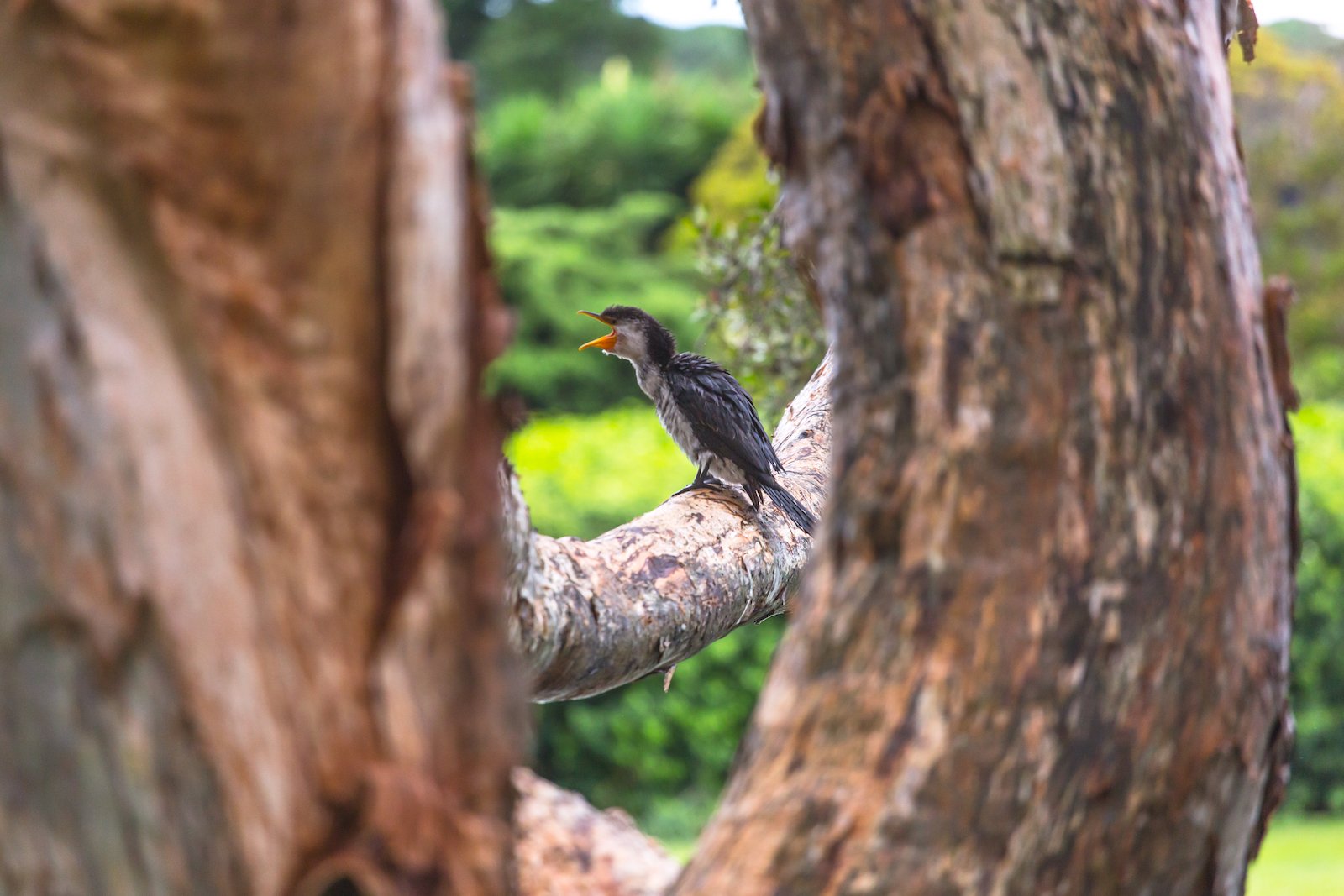
I often shoot wildlife photos, so I took them to some local parklands that often has some interesting creatures, despite how close it is to the CBD.
After trudging around in drizzling rain, the weather finally cleared and I got to show them some local animals and demonstrate with both my camera and their camera what sort of thing is useful and frustrating in the field.
The best part of it all however, was that they actually took the feedback on board, and weren’t at all defensive about their product.
Think about it—I was a goofy Australian in a raincoat who shoots semi-professionally telling them that the camera they’d spent unimaginable amounts of time and money on could be better.
Instead of getting mad at me for saying that the slight lag in shutter actuation ‘feels funny’ when shooting birds, they took the information on board. They didn’t try to convince me that their superior noise-reduction algorithm was the reason long exposures took so long to process, they just listened to me. And they agreed that diving through menus wasn’t useful when trying to get close to a nervous bird.

By the end of the entire experience, that was the most valuable thing that I took away from it all—that at least one camera company values the input and feedback of people using their equipment to try and capture their vision. They may get it wrong sometimes, but at least they’re trying.
I mightn’t be ready to jump over to a new brand just yet, but I’m closer than I’ve ever been. And at the end of the day, the more awesome cameras there are on the market, the more opportunities photographers have to capture awesome images. I’m more brand agnostic now than I ever have been, and I’d recommend the experience of being a lab rat to anyone who enjoys photography.
Plus, I got paid a little over $1,000 for my trouble… not bad. As for what I did with that money; I bought more camera equipment of course!
About the author: Corey Hague is a digital content creator for ABC, where he has produced photos, video, audio, and writing for over 6 years. His photos have been published in Australian Geographic, Australian Birdlife, Sneaker Freaker, The Age, and ABC. You can find more of his work on his website or by following him on Instagram.
I Finally Found the Perfect Camera: The One I Already Own
I finally found the perfect camera. This camera does everything you could ever need or dream of—from capturing the perfect frame and exposure to developing your skill and photographic eye.
I’m not talking about a video or multiple purpose camera that does it all. I’m talking about the perfect stills camera. A camera that helps you composite the frame. It knows the best time to press the shutter button for that perfect image quality. The amazing thing is, and don’t ask me how, but when I use it, it just knows the settings you need automatically. The depth of field, shutter speed, and ISO all sync perfectly.
But the most amazing thing to hear is how affordable it is. Are you ready? Here it is… it’s the camera you already have.
Anticlimactic, I know, but it’s true. The camera you already have is the best tool to capture a moment. Do you really think there is going to be a perfect camera? Do you believe that will ever be obtained? If the perfect camera was ever made, companies would go out of business.
The perfect camera is the one you already have.
Be it cell phone, DSLR, mirrorless, rangefinder, medium, or large format. They all do their job and they all do it well. If you think you need that next whatever to become a better photographer, you will always be running down a never ending rabbit hole.
I’m not here to stop you buying cameras, hell you are the reason the economy is running. But keep this in mind: camera operators care about the gear, artist care about the work.

If you love photographers like Robert Capa, Henri Cartier-Bresson, etc. do you really think they cared about what gear was coming out next, or is it possible they focused more on the story, the work, the craft? I would put my money on the latter. Sure they had their preferred tools, but that’s just it: a tool. Not a gateway to becoming a better photographer, just a tool.
If we didn’t have the luxury of choice, we would all be better off. We wouldn’t waste our money on gear that later we no longer use, or read reviews that are completely subjective aside from specs.
It took me a few years to come to the realization that gear is secondary. Who’s to say the next whatever is perfect for you? Maybe the best camera is an old Canon AE-1, Kodak brownie, or Leica IIIc. They all do the same thing, and they all do it well: capture a moment. If you still need that extra dynamic range or more pixels to become a better photographer, I’m saddened. We need more artists in this world than technicians.
Perfect photographs do not move the heart, it’s in the imperfections that we see beauty. Using one camera is the starting point to developing your style, vision and artistic voice. Be satisfied with what you already have, because it’s not the camera that makes the photograph great, it’s you.
About the author: A.B Watson is a New Zealand photographer based in Auckland. The opinions expressed in this article are solely those of the author. To see more of his work, head over to his website or follow him on Facebook and Instagram. This post was also published here.
The 25 Best Lures and Flies for Spring Fishing

Classic tackle you should have ready to rig come April