You’ve probably been there before: cables all over the place, trying to install OEM software, and painstakingly crafting a folder sub-structure. All that effort just to import your photos from your camera to your computer. It’s a pain. What if there was a better way to bridge the gap between your camera and Photoshop, while also saving you time in the process? There is, and it’s called Adobe Bridge. What Is Adobe Bridge? The release of Photoshop 7 brought about a new feature called File Browser. As it became easier to take more digital photos, Adobe realized there needed to be...
Regardless of what you have been told, there is no such thing as a “do-it-all” camera. If there was a one-size-fits-all camera, competition in the industry would suffer, seedy patents would be made, one company would monopolize everything, prices would skyrocket, their profits would fail, and eventually, we would no longer have cameras at all. At least that’s how I see it. It would suck. This is precisely why different cameras exist. Think of cameras as different tools. While all screwdrivers are tools, not all tools are screwdrivers. Even within the realm of screwdrivers, these tools come in different sizes...
There are many ways to house chickens available to the backyard farmer, and a portable chicken tractor is a great alternative to a permanent coop. Learn how to make your own with these DIY videos.
A kayak rests in the dining room of the Adventurers' Club of Los Angeles. Before coming to its final resting place within this hidden-in-plain-site treasure trove of adventurous objects, it once sailed the entire 4,258-mile length of the Nile river. Its occupant, John Goddard, was the first person to ever complete the journey.
A vast collection of artifacts, such as a shrunken head, Pre-Columbian pottery, a quiver of poison spears, a clay pot containing human remains, a stuffed polar bear, a mammoth skull, the autographed helmet of a member whose bombing raid on Japan helped alter the course of World War II, can found at the club's headquarters in LA's Lincoln Heights.
Established in 1922 by Captain John Roulac, the club has gathered for the past 95 years to share their extraordinary expeditions. Currently, they have over 100 members from a wide variety of professions including scientists, journalists, artists, doctors, pilots, archaeologists, soldiers, mountaineers, hunters, and astronauts. The members' travels have taken them to the most remote corners of the world and beyond, and their harrowing experiences have lead to remarkable discoveries.
The only things you won’t find regularly in the club are women, as it’s a private men’s club. Though Ladies Nights are planned throughout the year, membership is strictly gentleman only.
In November 1788, a group of fine young men founded one of New York’s original social clubs, which they named the Calliopean Society. The club had an “express purpose”—to improve the educations and minds of its 20-odd members.
At every meeting, club members gave speeches, presented essays, and debated important questions of the day: Has the discovery of America been of general good for mankind? Is war justifiable? Should any crimes besides murder be punished with death? Sometimes they even talked about girls. (Is beauty or wit more beneficial to the fair sex?)
The society was “one of the first of a type of masculine literary cabal that would become common after 1800,” writes David S. Shields, an English professor at the University of South Carolina. Over time, club society flourished in New York, encompassing everything from James Fenimore Cooper’s Bread and Cheese Society (its name came from the tokens used to elect new members) and the Turtle Club, whose beefsteak dinners the writer Joseph Mitchell memorialized, and evolved into more modern forms such as the Players Club, a private social club for people in theater and arts, or the Wing, a modern club for New York women.
Then as now, New York’s original 18th-century social clubs were formed, in part, to enhance the social status of their members. At a time when few people had access to intensive education, young men of ambition started forming clubs to improve their minds and enhance their reputations as political and literary movers and shakers. “Writing and publishing meant asserting their political worth in the new republic,” writes Andrew L. Hargroder, a graduate student in history at Louisiana State University, in the New York history blog Gotham.
With the structure and camaraderie of the club to guide them, members could be bold, and take on questions and political positions that the city’s elite might not consider, in addition to publishing cheeky, amusing literary essays. By 1793, the Calliopean Society’s offshoot publication, The Drone, was presenting works such as “The Science of Lying” and “A Dissertation on Jack-asses.” One essay attempted to assess, with candor, the character of one of the club’s members, who was later revealed to be the author himself. “Tho’ far from being advanced in years," he wrote of himself, "he is what the ladies are please to term an old bachelor; and with his present disposition he will not be soon induced to change his situation."
One of the key ways the men of the Calliopean Society sharpened their literary skills, though, was through debate. In advance of most meetings, they decided upon a question to address. (Members were required to submit suggestions.) A rotating selection of club’s members took sides, each equally represented, and prepared their arguments. At the next meeting, each side argued its case and the members voted on the outcome.
The results were recorded in the club’s minutes, a fat book of unlined pages now held by the New York Historical Society. Below is a selection of the questions the Calliopean Society debated in 1792, the year they formed The Drone. After you submit your answers, the choice the society made will be revealed: See how close your opinions are to those of these 18th-century strivers.
Compare these new conventional reels, designed for trolling, live-baiting and jigging, introduced at this year’s ICAST 2017 international tackle trade show
A look at the features and prices for 10 new models of conventional fishing reels introduced at ICAST 2017 tackle show in Orlando…
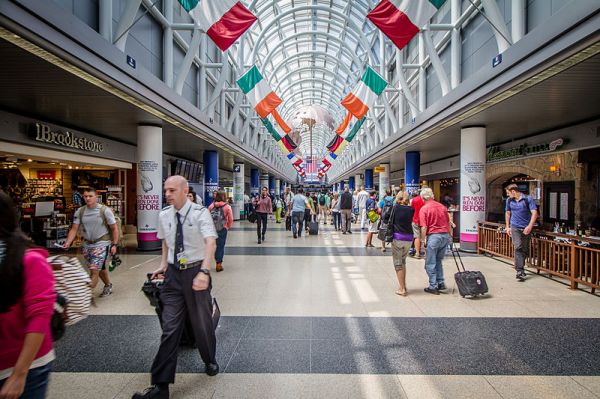
Flying is an elaborate system for getting people from one place to other places around the world that's been in the works for almost a hundred years now. Airports are a part of that chain, taking in people from the street and from planes, and sorting them into where they need to go, as smoothly as possible. Throw in ticketing, security, and baggage, and you can see how complicated the task can be. But those who design and operate airports have learned a few tricks along the way, in both make things run smoothly and to get you to spend money while you wait. For example,
6. The “golden hour” is key for profit
In airport manager lingo, the time between when a passenger clears security and boards their plane is called “dwell time.” This is when, as the Telegraph puts it, “passengers are at a loose end and most likely to spend.” Especially crucial is the “golden hour,” the first 60 minutes spent beyond security, when passengers are “in a self-indulgent mood.” Display boards listing flight information are there in part to keep you updated on your flight, but also to reassure you that you still have plenty of time to wander and shop. Similarly, some airports are installing “time to gate” signs that display how far you are from your destination. And because 40% of us would prefer to avoid human interaction when we shop, self-service kiosks are becoming more common in airport terminals. According to the Airports Council International, 50% of American airports now have robo-retailers.
7. They’re increasing dwell time
The “golden hour” is great, but two golden hours are even better. “One hour more at an airport is around $7 more spent per passenger,” says Lukaszewicz. Anything that’s automated, from check-in to bag drop, is meant to speed things up. And it works. Research suggests automated check-in kiosks are 25% faster than humans. “A lot of airports, especially in Japan and New Zealand, are now doing this, where you don’t actually get any assistance from any staff member from check-in,” says Lukaszewicz. “You print your own baggage tag. You put it on the bag on the belt. You go through auto-security and immigration where there is no one. At the boarding gate you just touch your barcode and they open a gate and you walk onto the plane without any interaction.” One study found that for every 10 minutes a passenger spends in the security line, they spend 30% less money on retail items. Last year, the TSA announced it would give $15,000 to the person who comes up with the best idea for speeding up security.
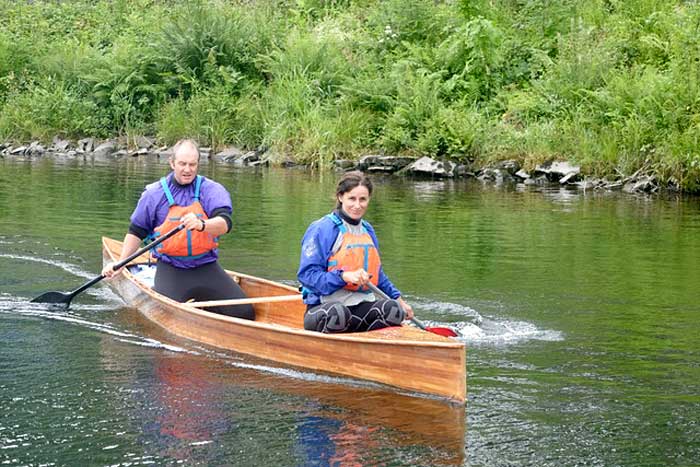
"Here’s my new Swift 2. It’s more stable than I expected, but I usually paddle a K1. I need to finish it a little further, but it’s paddling time, so I’ll tidy it later. Great fun to build.
The paddlers are John Willacy (Taran designer) and Pascale Eichenmüller.
seems to cope well with our estuarial water so far.
If you use the new Outlook web app, you should know how to find and disable unauthorized forwarding. This occurs when someone has set up email filters to send your messages to another inbox without your knowledge. Someone having access to your email on its own is scary, but this forwarding is particularly harmful. If you don’t find out about the forwarding, someone could be reading all your messages without your knowledge. Password reset links, financial information, and personal notes are then all exposed to malicious people. Thankfully you can check for forwarding rules in your Outlook inbox. Sign in...
Travel poses extra high risks for the safety of your money. Forbes Finance Council members discuss their best practices for keeping your assets secure.
Started as a hobby car for Mercedes engineer Jürgen Eberle, the Mercedes E-Class All-Terrain 4×4² is now a full-blown concept. While it's based on the standard All-Terrain, it borrows some...
If you’ve ever wondered how to become a concert photographer, one of the very first steps is to acquire the right gear. You’ve probably been to a concert or festival and seen music photographers hauling tons of equipment such as two camera bodies and enormous lenses. While it’s certainly ideal for a professional to have this much stuff (and then some), most beginners or amateurs absolutely don’t need this much gear to get started. Read on for some of my suggestions on how to gear up as a beginning doing concert photography.
Concert photography rules
Before we get into gear, let’s discuss your typical concert photography setting. Whether you’re shooting a big arena show or a small, casual performance in a bar, concert photography rules are more or less the same. You get to shoot for the first three songs only, and cannot use a flash or strobe of any sort. With these two rules in mind, this means that you need gear that allows you to adjust and shoot quickly and pull off shots in a low lighting setting.
What kind of camera do you need?
First off, invest in a solid DSLR camera. While there are point and shoot cameras that could arguably get the job done, you need the lens choices that come with DSLRs. It doesn’t really matter what brand you choose. What does matter is being comfortable using it and knowing that you have a wide variety of lenses to pair with it. Canon and Nikon are two of the biggest camera brands that are among the most popular for concert photographers.
Crop Sensor or Full Frame?
When researching DSLR camera options, you’ll have a choice between investing in a crop sensor or full frame camera. The differences between the two types of DSLR cameras is best explained in this article.
To quickly summarize, crop sensor cameras are typically smaller in size and much cheaper than full frame cameras. The main disadvantage to crop sensor cameras has to do with their smaller sensor sizes that will impact available ISO options, thus resulting in slightly noisier or grainy photos than full frame cameras. In short, start out with a crop sensor camera if you’re on a budget, and aim to upgrade to a full frame camera the further you get in your concert photography career.
Canon 5D Mark III (full frame) on the left and a 6D on the right.
After you’ve invested in a DSLR, be sure to budget for the purchase of accompanying lenses, which can end up being just as expensive as the camera body. Generally speaking, you shouldn’t use the kit lens that automatically comes with your DSLR camera.
Most of these kit lenses are fine for shooting in ample lighting conditions, but they won’t perform well in the low light settings of concerts. Instead, what you want is a fast lens with a wide aperture (or f-stop) of between f/1.2-f/2.8. This will help you capture moving subjects in dark settings.
Canon 24-70mm f/2.8 and 70-200 f/2.8.
Start with prime lenses
For beginning concert photographers on a budget, prime lenses are your best bet. While these lenses have fixed focal lengths, meaning you can’t zoom with them, their low f-stops mean they will shoot better in low light. Prices and exact lens models will vary according to which camera brand you’ve chosen. Since I’m a Canon shooter, these lenses are geared toward Canon.
Pretty much every professional concert photographer will have two go-to lenses on hand: a 24-70mm f/2.8 midrange zoom lens, and a 70-200mm f/2.8 telephoto lens. Neither of these lenses is cheap and should definitely be considered a long-term investment. But if you can afford one or both, don’t hesitate to add these lenses to your concert photography kit.
Keep an eye on third party brands
While it’s certainly ideal to purchase lenses in the same brand as your DSLR camera manufacturer, there are many third party companies producing cheaper and sometimes even better options. Great lens options exist from Sigma, Tamron, and Tokina, to name a few. Again, the specific options will depend on the DSLR camera body you’ve chosen, but here are a few possible options for Canon shooters:
It’s a reality that concert photography equipment isn’t cheap. But there are some ways to score more affordable camera gear. First, look into used or refurbished camera bodies and/or lenses. As long as you purchase from an accredited source, you can save hundreds of dollars on gear.
On the flip side, keep in mind that camera gear retains its value as long as you take care of it. So if you buy a lower-end camera or lens and want to upgrade later on, it’s pretty easy to sell off your old gear to help you invest in newer options.
Finally, look for older models or previous versions of gear. For example, you could spring for the brand new Canon 5D Mark IV camera body, or you can save over $1,000 by investing in the older yet still very functional Canon 5D Mark III. The same is true for many other camera bodies and lenses on the market. It all depends on your budget and what kind of features you absolutely need to have.
In Conclusion
Consistently pulling off pro-quality concert photos often requires investing in pro-grade camera gear. But it’s best to start small and to upgrade over time as your skills and budget increase. What are your go-to concert photography cameras and lenses? Let me know in the comments below!
Like any profession, over the years and countless hours of working and talking to people in the industry, you will pick up tips, advice and even things to avoid. This will ultimately help you improve and possibly make your photography business more profitable. Here are some of the main tips that I have picked up over the years from people in the travel photography industry.
#1 – Blue Sells
If you were to line up a whole load of travel magazines next to each other, you will notice that the vast majority of their front covers have something in common, the color blue. Whether it is the sky or water, magazine covers tend to feature photos of gorgeous sunny days rather than moody, dark and atmospheric conditions.
I had always noticed that my “gorgeous sunny weather” shots outsold the photos with other types of conditions. But it wasn’t until the editor of a travel magazine told me the reason that I understood why. They found that historically, issues with beautiful sunny shots on the front cover sold much better than issues with dark and moody conditions. The reason is that most people going about their day aspire for tranquil and beautiful holiday conditions. So, while a stormy landscape photo might look more dramatic and striking, the average holidaymaker doesn’t want to go somewhere and experience a storm.
#2 – Avoid “Tourist” Shots
I remember asking a picture editor once for the single biggest piece of advice they could give me and they responded with, “Don’t send me tourist shots.” But what does that mean? After all, if you are in a city and have to photograph the most famous landmark then how do you avoid tourist shots. Once I delved in a little deeper, I realized what he meant was that he didn’t want just another shot of the famous landmark taken at eye level because he could get thousands of them through any stock agency.
Instead, he wanted to see a photo that demonstrated an experience, feeling or mood. This was a few years back and more and more I have been asked by picture editors and stock agencies I work with to try to show these “experiences” in the photos. So rather than taking a photo of the landmark, it might be worth photographing a couple enjoying an ice cream in its shadow. The key is to look beyond the obvious shot and look for a moment or composition that can convey an emotion.
#3 – Give Them People
Often the easiest way to capture unique photos that don’t look like tourist shots is to include people. But including people in your photos can also convey a sense of scale, portray an emotion or a feeling and often tell a much more intriguing story. One of the best bits of advice I was given was that including people can also help you capture different types of shots from the same location. That, in turn, means you can maximize your stock shots from a single location.
For example, take any scene in front of you. If you capture that scene with a couple admiring the view holding hands it tells a completely different story than capturing the scene with someone running or cycling. So you suddenly go from one photograph per location to three. Move slightly around the scene and capture a few different scenarios and you can suddenly end up with a whole load of different stories from practically the same spot. As any stock photographer will tell you, it’s a numbers game and the more photos you have the better your chances of selling some.
Taken from the same location as the photo above but a completely different message.
#4 – Check Every Photo, Every Time
Photography is a competitive industry. You are often competing with pretty much everyone with a camera to try and get work or make sales. The last thing you want to happen is to have a photo that has been chosen by a client come back to you because it isn’t focused properly or you haven’t removed the dust particles. Not only is it embarrassing, but it can also hurt your chances of working with that client further down the line.
So don’t try and cut corners. You worked hard to capture the photo so do it justice and make sure it looks its best when it’s going in front of someone else. Check every inch of the photos you intend to send out to clients. View them at 100% in post-production and make any corrections or edit as necessary. Be professional in your approach from start to the finish.
#5 – Face the Opposite Way
It doesn’t matter where you are in the world, there will usually be a spot marked “sunset viewpoint” or similar where everyone will go to capture their photos. Often this is because that particular spot offers the best view. But sometimes it is because it is the easiest and most convenient place for lots of people to get to or stand.
One bit of advice that has been floating around for many years and has been said by numerous photographers, is that when you get to one such location, face the other way. Go against the crowd and photograph what is behind everyone. Clearly this advice shouldn’t be taken literally as sometimes photographing the other way wouldn’t give a good photo. The point is to look beyond the first and most obvious location and viewpoint.
If you are prepared to do your research beforehand and are willing to put more of an effort in than the average tourist, you will undoubtedly end up with better photos.
#6 – Step Closer
The world famous war photographer, Robert Capa said, “If your pictures aren’t good enough, you aren’t close enough.”. This is something that most amateur photographers struggle with for travel photography and photographing people. It often means having to get close to your subject and they then might notice you.
The truth is that usually, the worst that can happen is that the person you want to photograph will just say no. But getting closer means having to be right in the middle of the action and that you also have to engage with that person and build a connection, if even briefly. This, in turn, will transfer into your photographs and give you a much better and more intimate photo than if you were standing 300 yards away with a telephoto lens.
#7 0 Don’t Be Shy
One of the biggest things that you may realize as a photographer is how accommodating and intrigued most people are about your profession. I have not kept a tally of the number of conversations I’ve had with total strangers all based around photography, but it’s been a lot. One thing I learned is that sometimes when you have a camera on your shoulder it can work to your advantage (and sometimes it can work against you) as people may help you capture the photo that you want to take.
But you have to be willing to ask. If you don’t ask you will not get. For example, one of the best places to take photographs of a city is from your hotel room. I’ve lost count of the number of times that I have been upgraded to a room with a better view by simply asking and explaining the reason for it. This extends to if you want to photograph people, places, and so on. Don’t be shy, just ask. The worst that could happen is being told no.
I took this photo of the Bangkok skyline from my hotel room.
Conclusion
Over the years you will pick up your own tips and advice that you have been given or have derived from your own experiences. In the meantime, hopefully, the ones above can be as helpful to you as they have been for me.
Do you have any other bits of advice that you have been given? Please share below.
If you want to capture great portraits, then location scouting is a truly essential skill.
While it’s often tempting to simply schedule a session, pick a nice-sounding location (e.g., the nearby park), then show up with your camera and gear bag in tow, that’s a recipe for disaster. Sure, it might work some of the time, but you’ll eventually run into problems – construction, bad lighting angles, bad backgrounds, huge crowds, etc., – that’ll ruin an entire session and leave your clients deeply frustrated.
That’s where location scouting comes in. By spending time actually considering potential locations in advance, and by visiting your location of choice a day or two before the session, you can maximize your chances of capturing some great portrait photos, and you can minimize your chances of encountering difficult-to-handle environments.
Below, I share five practical tips to help you scout out the perfect location for your next photoshoot!
1. Know your clients
Every client is different, and every photoshoot is unique. Therefore, it’s our responsibility as photographers to really get to know the folks we’re photographing – that way, we can tailor the photoshoot, including the location, to fit their personality.
By getting to know your clients, you can ensure that they have a good time, and you can also ensure that they’ll be more relaxed and happy during their photoshoot, which is extremely important. It means you’ll capture pictures that they are bound to love and that they’ll recommend you to all their friends and family. (It’s a win for everyone!)
As I hinted at above, this isn’t just about understanding the locations that will fit your clients well, but that is a big part of it. Therefore, before you do any location scouting at all, make sure you gain a sense of what your clients are after. You can then filter potential locations based on how they align with your clients’ interests.
My lovely clients wanted a location among the trees. Because we discussed their outfit choices ahead of time, I chose this park with a small waterfall. It seemed to fit the couple’s personality and the theme of the shoot – “The quiet before the storm” – quite well.
But how do you get to know your clients? You have a few options: You can meet with them in person, you can talk with them over the phone, or you can give them a survey.
When I work with a wedding couple, I have a formal questionnaire that they fill out so I can gauge their style. I then plan out locations accordingly. For family photos, however, I just have a conversation with the family to understand the type of images they gravitate toward. Do they want to have fun outside in a park? Or do they want to hang out at home with each other? That way, the photo session is tailored to their needs.
This session took place at a client’s home. During our consultation, she mentioned that she wanted to use her huge backyard for photos, so I made sure to incorporate it into the shoot!
2. Scout at different times of the day
When I scout potential locations for my photoshoots, I always try to visit each place multiple times throughout the day.
Why? Locations can change dramatically from hour to hour, and it’s important to know when a location is best before setting a time with your client. (Alternatively, you can schedule the time in advance and pick a location that looks best during that time.)
A key feature here is lighting. Assuming you’re using natural light, every location will look different in the early morning and the late afternoon; if you’re not aware of these differences, you’ll head to a great sunrise location at sunset or a great midday location at three in the afternoon.
So make sure you check out each location several times, paying attention to the general conditions, but especially the light. When you go, ask yourself:
How does the light change throughout the day?
Are certain portions of the location better at certain times?
How does the light affect the selection of backgrounds?
Does the location appear busy? If so, when?
When I’m planning my photoshoots, all these items are really important to me – because if I don’t pay serious attention, I won’t manage to get the best possible photos in the time I have with my clients.
Pro tip: If you cannot get to a location ahead of time, use an app like PhotoPills to predict where the sun will be at the time of day you’re planning to do your shoot. While it won’t be a replacement for in-person scouting, it’ll help you be at least somewhat prepared when you arrive on location.
For this bridal editorial shoot at a beautiful historic location, I came by a few days ahead of time and realized that the area where I wanted to photograph (on the left) was far too bright in the afternoon. So I moved the photoshoot to the morning, knowing that the area would be in the shade and therefore evenly lit. Sure enough, the light was gorgeous, but had I not scouted the location, I would have been scrambling to find a good spot to shoot in the afternoon.
3. Pay attention to the details
Many of the biggest problems that most portrait photographers face are related to light. Not all light is equal, and photographing in different lighting conditions will lead to different results. In the previous section, I discussed the importance of scouting a location at different times of day, and in this section, I’d like to explore some of the elements you should look for – in particular, good lighting and good backgrounds.
First, when scouting a location, pay attention to the direction of the light, but also make sure you’re thinking about the light’s quality and how it affects the area. Early morning and late afternoon light is soft, while midday light is harsh. Shaded light tends to be nice, though it’s not always quite as nice as the light cast by the low sun.
It’s not just about the light on its own, though. Different scenes do better with different types of light, so by paying careful attention, you can make sure you schedule your shoot at the right time.
On a related note, make sure you consider precisely where you’ll want your subjects to stand during the shoot and how that affects the background. One side of a park might offer a great background while the other side might look uncomfortably messy, and depending on the light, only one side may actually work for the shoot. Therefore, it’s important to troubleshoot these issues in advance! (After all, you don’t want to be frantically seeking out backgrounds while your subjects wait.)
One more thing to keep in mind is color casts from surrounding objects. You may not realize it, but these casts can be strong around trees, colorful buildings, and graffiti walls. Try to find a natural reflector (e.g., a white wall) that will bounce neutral light back onto your subjects, or use a basic reflector to help bring some neutral light back into the scene.
Here, the concrete and the dirt path acted as natural yet neutral reflectors and bounced soft white light back onto my client’s face, eliminating any color casts.
If all else fails, you can always fix the problem in post-processing – especially if you’re shooting in RAW – but it’s good to handle this type of issue in the field whenever possible.
This location is a favorite in my town, but I find that the front patio adds a color cast due to the yellow ceilings and directional light. If I have to, I’ll capture the shot and fix it in post-processing, but I prefer to photograph my clients sitting at the edge of the patio where they are still in the shade of the patio arch but don’t have any color cast.
4. Use other resources
Location scouting doesn’t have to be a solo endeavor, and you don’t have to rely completely on your own wits to determine the best locations! There are plenty of photo groups online and offline – I belong to a few, myself – and members are often willing to share location ideas and insights.
So if you aren’t familiar with any good locations in an area, there’s no need to spend many hours (or days) visiting every potential spot. Simply find a local group (or a local photographer) and ask! Not only will they likely be able to suggest different locations, but they also might offer tips for shooting at said locations (e.g., the best times of day to shoot, how to handle different backgrounds, etc.).
If you’re friendly and genuine, you may end up discovering some unique and off-the-beaten-path locations, and you’ll end up with some very happy clients! (Of course, always make sure that the locations that you choose still fit your clients’ personalities, as discussed in my first tip.)
5. Take a road trip
I love road trips! And for me, a trip is the absolute best way to explore new areas and scout out potential photography locations that’ll suit different clients. (I generally take my family along so that way can all have fun – plus, in a pinch, my kids can also act as models to test out the light and background ahead of my photoshoots.)
A few years back, I had a high-school senior’s photo session, and her mom wanted to find a unique spot where we could see the fall colors. I drove around my area for a few hours but wasn’t finding anything that I really liked. Then I stopped by a local farm to pick up some fresh fruits, and I realized that the farm had everything I was seeking for my session. I walked up to the owner and got permission to photograph there, and everyone ended up happy: The senior’s mom got the photos she wanted, and I found a unique location for my fall photos.
So if you’re struggling to find a good location, don’t be afraid to get out and explore – either by foot or by car. You never know what you might come across!
Photography location scouting tips: final words
Location scouting should be a key part of every portrait photographer’s workflow, but it’s not always the easiest task to accomplish. Hopefully, these tips will help improve your scouting experience – and, of course, your final photos.
So be sure to dedicate some time to scouting! And watch as it elevates your images.
Now over to you:
Do you have any location-scouting tips that we missed? Share your thoughts in the comments below!
Have you ever wondered what it would be like to be famous? A world where people just love you for being you and everybody knows your name? Waking up each day and seeing hundreds of fan notifications because you’re just so loved and envied! It seems as though famous people have all the luck and […]
Entrepreneur Matt Markus co-founded the company Pembient to save rhinos. His plan is to 3D-print fake rhino horns that are indistinguishable from the real thing. He will then flood the market with the cheap fakes, and drive the price so low that poachers have no reason to kill rhinos. You might think that the people who want to preserve wildlife would love Markus's idea to save rhinos. But they hate his idea.
In popular conceptions, we take the computer to be the natural outcome of empirical science, an inheritance of the Enlightenment and subsequent scientific revolutions in the 19th and 20th centuries. Of course, modern computers have their ancient precursors, like the Antikythera Mechanism, a 2,200-year-old bronze and wood machine capable of predicting the positions of the planets, eclipses, and phases of the moon. But even this fascinating artifact fits into the narrative of computer science as “a history of objects, from the abacus to the Babbage engine up through the code-breaking machines of World War II.” Much less do we invoke the names of “philosopher-mathematicians,” writes Chris Dixon at The Atlantic, like George Boole and Gottlob Frege, “who were themselves inspired by Leibniz’s dream of a universal ‘concept language,’ and the ancient logical system of Aristotle.” But these thinkers are as essential, if not more so, to computer science, especially, Dixon argues, Aristotle.
The ancient Greek thinker did not invent a calculating machine, though they may have existed in his lifetime. Instead, as Dixon writes in his recent piece, “How Aristotle Created the Computer,” Aristotle laid the foundations of mathematical logic, “a field that would have more impact on the modern world than any other.”
The claim may strike historians of philosophy as somewhat ironic, given that Enlightenment philosophers like Francis Bacon and John Locke announced their modern projects by thoroughly repudiating the medieval scholastics, whom they alleged were guilty of a slavish devotion to Aristotle. Their criticisms of medieval thought were varied and greatly warranted in many ways, and yet, like many an empiricist since, they often overlooked the critical importance of Aristotelian logic to scientific thought.
At the turn of the 20th century, almost three hundred years after Bacon sought to transcend Aristotle’s Organon with his form of natural philosophy, the formal logic of Aristotle could still be “considered a hopelessly abstract subject with no conceivable applications.” But Dixon traces the “evolution of computer science from mathematical logic” and Aristotelian thought, beginning in the 1930s with Claude Shannon, author of the groundbreaking essay "A Symbolic Analysis of Switching and Relay Circuits.” Shannon drew on the work of George Boole, whose name is now known to every computer scientist and engineer but who, in 1938, “was rarely read outside of philosophy departments.” And Boole owed his principle intellectual debt, as he acknowledged in his 1854 The Laws of Thought, to Aristotle’s syllogistic reasoning.
Boole derived his operations by replacing the terms in a syllogism with variables, “and the logical words ‘all’ and ‘are’ with arithmetical operators.” Shannon discovered that “Boole’s system could be mapped directly onto electrical circuits,” which hitherto “had no systematic theory governing their design.” The insight “allowed computer scientists to import decades of work in logic and mathematics by Boole and subsequent logicians.” Shannon, Dixon writes, “was the first to distinguish between the logical and the physical layer of computers,” a distinction now “so fundamental to computer science that it might seem surprising to modern readers how insightful it was at the time.” And yet, the field could not move forward without it—without, that is, a return to ancient categories of thought.
Since the 1940s, computer programming has become significantly more sophisticated. One thing that hasn’t changed is that it still primarily consists of programmers specifying rules for computers to follow. In philosophical terms, we’d say that computer programming has followed in the tradition of deductive logic, the branch of logic discussed above, which deals with the manipulation of symbols according to formal rules.
Dixon’s argument for the centrality of Aristotle to modern computer science takes many turns—through the quasi-mystical thought of 13th-century Ramon Llull and, later, his admirer Gottfried Leibniz. Through Descartes, and later Frege and Bertrand Russell. Through Alan Turing’s work at Bletchley Park. Nowhere do we see Aristotle, wrapped in a toga, building a circuit board in his garage, but his modes of reasoning are everywhere in evidence as the scaffolding upon which all modern computer science has been built. Aristotle’s attempts to understand the laws of the human mind “helped create machines that could reason according to the rules of deductive logic.” The application of ancient philosophical principles may, Dixon concludes, “result in the creation of new minds—artificial minds—that might someday match or even exceed our own.” Read Dixon’s essay at The Atlantic, or hear it read in its entirety in the audio above.
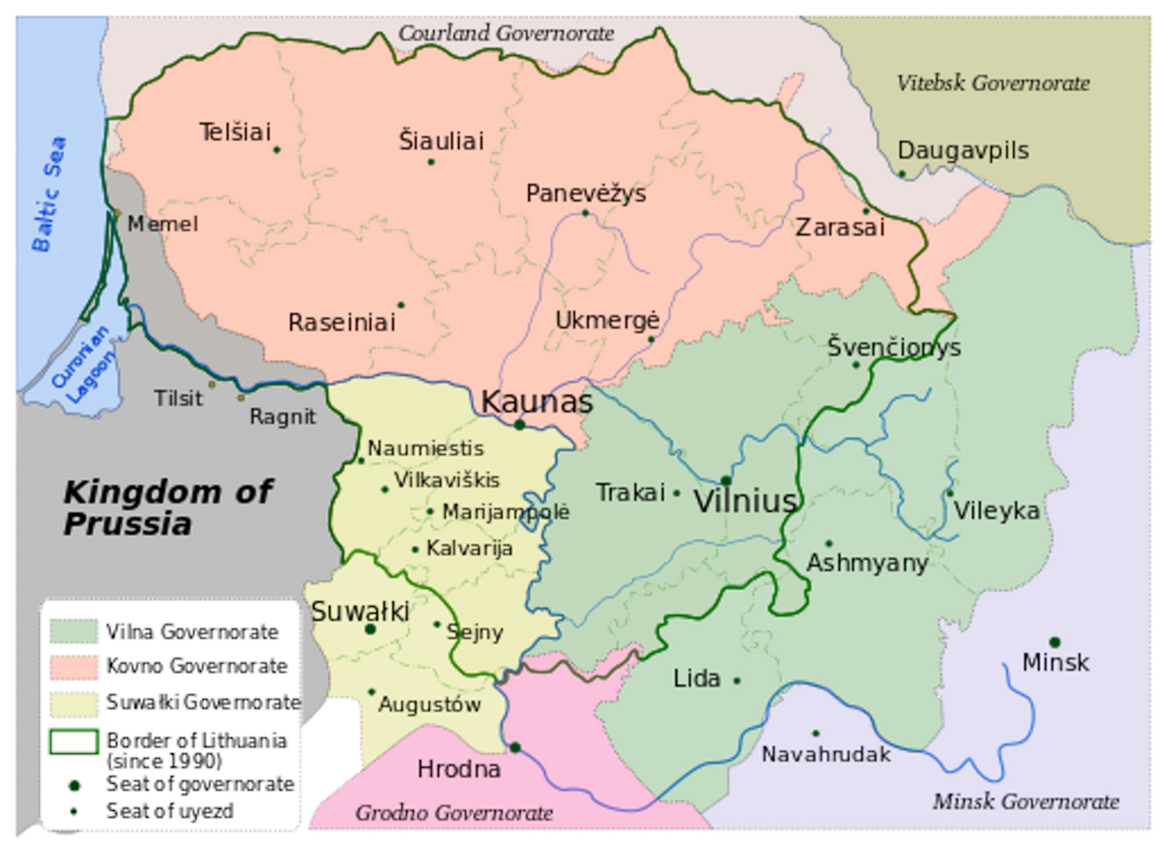
In 1899, a pair of smugglers were crossing the border between Lithuania and East Prussia. Clutching their packs, they lay on a bank along the Prussian part of the river Šešupe, and for hours they studied the movements of the guards on the other side. They could not afford to get caught.
When it was dark, they pushed across the Šešupe and ran 10 miles to a distribution center in the Lithuanian village of Pilviškiai. There they discovered that Russian authorities were searching for them.
Soon they would return to Prussia, where they would hide out for several weeks before deciding to abandon the region entirely. Within a year, they would be on a boat to Scotland.
But that first night, before they fled, they needed to drop off their smuggled goods—the very reason that authorities were after them. They opened their packs, and out poured books.
In 2004, a Lithuanian man named Jonas Stepšis recounted this story. The two smugglers were his father and uncle, and they had joined what became a nationwide book-smuggling movement as a part of their opposition to the Russian Empire.
Tsarist Russia had dominated Lithuania after Poland-Lithuania, a Commonwealth formed in 1569, was annexed and divided up among Prussia, Austria, and Russia in 1795. The majority of Lithuania fell under Russian control.
Tsars tried early on to enforce loyalty, finding a particular target in the Roman Catholic Church—an historic Lithuanian institution that Russia saw as a threat to its power. Russian authorities demolished numerous chapels and prohibited the construction of wayside shrines, which were essentially omnipresent throughout Lithuania (there were roughly two shrines per kilometer). Not prepared to give up their culture, Lithuanians built new shrines anyway.
Though a group of Lithuanian university students and clergy led a violent uprising against Russia in 1831, resistance had long operated on a small scale. Lithuania had a tiny population (around one million people) and stood little chance of defeating a military power like the Russian Empire.
But by the middle of the 19th century, that was changing. The resistance had intensified.
In 1863, a massive insurrection: some 66,000 Lithuanians serfs, traders, and clergy took up arms against the Russian government. Soon after their rebellion was crushed, leaving thousands dead or exiled to Siberia, Tsar Alexander II issued a harsh crackdown.
In 1864, the Governor General of Lithuania, Mikhail Muravyov, forbade the use of Latin Lithuanian language primers—a proclamation that, two years later, led to a total ban on the Lithuanian press.
Language had long been a point of contention in Tsarist Lithuania. In the middle of the 19th century, in order to assimilate the peasant class, the Russian scholar Alexander Hilferding proposed that the Lithuanian language, which uses a Latin alphabet, be converted to a Russian Cyrillic alphabet.
The Lithuanian press ban was therefore an attempt to eradicate the Lithuanian language and promote loyalty to the Russian cause. Lithuanian children were also required to attend Russian state schools, where they would learn the Cyrillic alphabet through books printed by the Russian government.
According to historians, Russia thought little of the ban when they first initiated it. They didn’t see Lithuanians as belonging to a unique nationality, and they assumed that resistance, if anything, would be minimal.
They were wrong.
Almost immediately, individuals sprung up to spread Lithuanian writing. Since they couldn’t publish books in their homeland, many Lithuanians began printing them abroad and smuggling them back into their own country.
Thus appeared the first of the knygnešiai—or book-carriers—who, in a desperate bid to save their language, transported books across the border and illegally disseminated them throughout Lithuania.
Initially, the knygnešiai worked alone. They carried books in sacks or covered wagons, delivering them to stations set up throughout Lithuania. They performed most of their operations at night, when the fewest guards were stationed along the border. Winter months—especially during blizzards—were popular crossing times.
Lithuanians went to great lengths to conceal their illegal books. TheForty Years of Darkness by Juozas Vaišnora reports of female smugglers who dressed as beggars and hid books in sacks of cheese, eggs, or bread. Some even strapped tool belts to their waists and pretended to be craftsmen, disguising newspapers under their thick clothes.
Bishop Motiejus Valančius, a historian and author of religious and secular works who later earned the label “the greatest Lithuanian personality in the 19th century,” organized the first large-scale attempt to smuggle books across the Lithuanian border. In a bid to publish more prayer books, he sent money to neighboring Prussia to construct a printing press there. Beginning in 1867, he tasked a number of priests with bringing the books back into Lithuania and distributing them to locals.
Though at first Valančius only published Latin reprints of religious texts, as his operation grew, so did his ambitions. He began to commission original works, including many he had written, and his burgeoning team shuttled them across the border.
The fact that so many of these early smugglers were priests is not surprising. Lithuania’s strong Catholic roots—and Tsarist Russia’s historic hostility to the Church—made the Catholic Church an instant symbol of resistance to Russian authority. But as the smuggling operations continued, they became more secular in character. In addition to prayer books, Valančius started printing journals and almanacs in Latin Lithuanian with the hopes of teaching Lithuanian history and culture. He was responsible for the printing of over 19,000 books in East Prussia.
Following the lead of Valančius, individual knygnešiai soon organized themselves into larger smuggling societies that bore optimistic names like the Morning Star, Stimulus, Rebirth, the Sprout, the Truth, Compulsion, and the Ray of Light. They began importing books from as far away as the United States, where the sizable Lithuanian-American populated assisted them in printing. (Over 700 copies of Lithuanian books were published there.) These new organizations distributed textbooks, yearbooks, science books, fiction, folklore, religious sermons, and other publications.
Despite its popularity, smuggling was far from easy. The risks were high, and the Lithuanian border was not easy to cross. Three lines of Russian security forced the knygnešiai to exercise extreme caution.
The first line comprised soldiers along the border “filed so densely that they could see each other.” In the second line, another row of soldiers waited, this time spread further out. The last defenses were the gendarmes—or Russian Empire policemen—who rode on horseback through villages and sought information from local informants.
Those who failed to beat the Russian border security were “tied to a post and whipped,” then either imprisoned, sent to Siberia, or—if they tried to run—simply shot.
Soldiers confiscated any books and journals found on the smugglers—and burned them.
The number of book smugglers that were caught or punished is unclear, but the first major arrest seems to have occurred between 1870 and 1871, when Russian forces sentenced 11 associates of Valančius. Eight of the smugglers—five priests, a farmer, and a noble—were exiled to Siberia. Valančius’ operation was permanently compromised. A few years later, in 1875, he died.
His de facto successor was a peasant: Jurgis Bielinis, an ardent Lithuanian nationalist who inherited his political edge from his father.
Bielinis met Valančius in 1873, a year after he graduated from a university in Rīga, Latvia. By then, the resistance was in full swing, and as a passionate defender of Lithuania, Bielinis wanted in. His contact with Valančius determined him to defend the language he loved. He would not rest, he said, until “the Muscovites got out of Lithuania.”
In 1885, Bielinis created the Garšviai knygnešiai society, which grew to be the largest book-carrying operation in Lithuania, later earning him the title of “King of the Book Carriers.” Members of the Garšviai knygnešiai society—who soon numbered in the thousands—pooled together money to buy books from Prussian publishers and then distributed them to paying “subscribers” throughout Lithuania. Bielinis is credited with smuggling nearly half of all of the books brought into Lithuania from East Prussia (and even passing some along to Lithuanians living in Latvia).
By the 1890s, Russian authorities were on his case, and a reward was placed on him. Several manhunts ensued, but Bielinis consistently managed to evade capture.
At the turn of the century, despite his fugitive status, Bielinis even created a Lithuanian newspaper of his own, which he delivered to residents who bought a subscription from him. The newspaper, known as the White Eagle, was printed on one of the only presses active in Lithuania.
He worked on the project with fellow smuggler Steponas Povilionis, who recalled:
"In my house, there used to be a book warehouse of Bielinis, which continuously increase or decrease in volumes. In autumn 1896, Bielinis brought from Prussia a small printing press and decided he wanted to publish a newspaper of his own. I made a draw for letters, and Bielinis taught me to assemble them"
Yet Bielinis’ trajectory from peasant to intellectual and defender of the Lithuanian language was not uncommon: since the Russian Empire abolished serfdom in 1861, a new class of peasant-intellectuals had begun to take shape in Lithuania. Many became active in the national cause.
In fact, peasants, which Zigmantas Kiaupa in The History of Lithuania describes as “the most faithful user[s] of the Lithuanian language,” comprised the vast majority of the knygnešiai. According to the same book, roughly 86 percent of smugglers were peasants. Bielinis was only the most visible member of a rising national peasant movement.
By the late 1800s, the knygnešiai were getting creative. Some managed to enlist the help of Russian police—for example, in 1895, the head officer of Ariogala in central Lithuania joined the smuggling conspiracy. Others exploited loopholes in the press ban. In one instance, Lithuanians printed texts on slabs of clay as the Babylonians had once done. To the chagrin of authorities, clay tablets weren’t considered books, so they technically weren't illegal.
Locals also set up secret schools that taught Lithuanian children their language using illegal books. To avoid attention, Lithuanian children still attended Russian-operated state schools, but it was in the Lithuanian schools, they were told, where their real education happened.
It is unclear how many Lithuanian books were printed and smuggled illegally, but between 1891 and 1901, Russian officials confiscated over 173,259 publications, a rate that nearly doubled in the remaining few years of the ban (1901-1904). This has led some historians to estimate that the actual numbers of smuggled books totaled in the millions. Regardless, nearly every town and village had a stockpile of illegal books and a secret Lithuanian school to go with it.
By the height of the book smuggling operations at the end of the 19th century, all sorts of Lithuanians participated: once the illegal publications were ferried across the border, everyone from traveling salesmen to poor widows, farmers, students, doctors, and organists conspired to distribute them. Mere possession of illegal books could incur harsh punishments, but this did not faze Lithuanians who felt they had little left to lose.
By the 1880s, channeling a growing restlessness, secret newspapers like Aušra—meaning The Dawn—rallied against Russification and whispered of independence.
Lithuanians began organizing choirs and performing secret plays that spoke of the resilience and beauty of Lithuanian language and culture. By the end of the 1900s, “picnic outings”—wherein Lithuanians met to discuss politics among themselves—came into vogue.
The Lithuanian national rebirth was underway.
Father Julijonas Kaspervacivius writes, “the work of restoring Lithuania’s independence began not in 1918 [when Lithuania declared itself a state], but rather at the time of the book carriers. With bundles of books and pamphlets on their backs, these warriors were the first to start preparing the ground for independence, the first to propagate the idea that it was imperative to throw off the heavy yoke of Russian oppression.”
In other words, what had begun as an attempt to assimilate Lithuanians to Russian culture in fact made the region more fiercely independent than before.
By the turn of the century, Lithuania peasants organized local board meetings and petitioned the Russian Empire to end the ban—the Russian government fielded over 100 such requests.
Even in Russia, the ban became unpopular, especially among intellectuals who opposed its wide and often vaguely defined scope. In 1897, Russia’s Council of Ministers first declared the ban a failure; it was finally rescinded in 1904, in an attempt to reconcile minority groups within the Empire during the Russian-Japanese War.
It was, however, too late. Lithuanian resistance to Russia was at a high.
Driven by the national zeal, Bielinis soon began talking more openly of independence from Russia. He became the de facto spokesmen for a Lithuanian patriotism that would provide the force behind the February 1918 Act of Independence of Lithuania.
Bielinis just wasn’t there to witness it: he died in January 1918, a month before independence was formalized.
Today, Bielinis is memorialized not only through stamps and statues, but also through a holiday: the Day of Knygnešys, or the Day of the Book Carrier, which takes place every year on his birthday.
Bielinis has, in many ways, become a symbol of pride both in Lithuania and abroad. He is remembered not only as a national patriot, but also as a hero for those who profess the power of the written word—historical proof that a rag-tag group of rebels armed with books really can triumph over an empire.
An ultralight gear item which I’ve been trying out is the Hennessey Tent Hammock. Part tent, part mosquito mesh, part hammock, the thing is pure genius and a pleasure to use — very light, ingeniously designed, and actually provides a comfortable backcountry sleep. Perfect for wet areas. You do have to worry a bit more about insulation under yourself, but not a big minus especially given the comfort of the shelter.
— Rex Ishibashi
Hennessy Hammock is a brilliant fine-tuning of the hammock concept into a tent substitute. It means I never have to sleep on the ground again! Being asymmetrical it allows me to lie relatively flat for a very comfortable night’s sleep. There is a large rain-fly that cocoons around the hammock in cooler weather, a fine insect/dust mesh enclosure, and an entrance that my weight closes behind me. You can even set it up on the ground like a bivvy-bag if there are no trees (or lamp posts, or bumper bars). Great for tropical camping.
This week on Maker Update: LEDs for your eyes, talking to your lamp, a new marble machine, the poor man’s table saw, and a giant super soaker. Show notes here.
This week’s Cool Tool is the Kreg Rip-Cut. It’s a $32 guide for a circular saw. It’s great if you have a small workshop, or no workshop. If you have a table saw, there’s probably no reason to buy this. But if you have a small garage like mine and you don’t want to surrender the space and money to have a table saw, this and a circular saw are an effective way to accurately break down sheets of wood.
It comes in two pieces. One is a universal adapter that can mount onto just about any circular saw — including left handed ones. This just screws onto the existing plate, and I just leave mine on all the time.
The other is this L-shaped aluminum ruler designed to hug and slide against the straight outside edge of your wood. You latch the adapter plate onto the ruler, measure out where you want your cut, and make it happen, using the edge of the board to guide your cut.
Now, there are two obvious limitations on this. One is that the aluminum guide only extends out up to 24 inches. The other is that you’ll need some kind of spoiler board if you want to cut all the way through your material.
Alternatively, you could buy a long metal guide track or even use a long 2×4, and clamp it down wherever you want and let that guide your cut. But, using the Rip-Cut, there’s no limit to the length of your cut, especially with a battery powered saw. Also, if I want to rip another, identical section, there’s no setup. I just move back to the beginning.
Even more important for me, I don’t have to store a big, long, metal track in my workshop. This thing just hangs out of the way, and it’s small enough I can just throw it in my back seat if I need to take it somewhere.
Located 17 miles from the rowdy college town of Chapel Hill, bucolic Pittsboro claims only about 4,000 residents, yet supports two robust farmers markets: Chatham Mills on Saturday mornings and the Pittsboro market on Thursday afternoons. So while this community may be tiny, it buzzes with agricultural activity.What to DoCarve out a few hours to spend at The Plant, a 14-acre facility on Lorax Lane (really!) that houses 10 sustainable businesses and nonprofits. The facility’s anchor, an organization called Abundance NC, offers free Sunday tours of its biodiesel plant, plus regular foraging walks and beekeeping workshops. Another tenant, Fair Game Beverage Co., crafts small-batch wines and spirits: brandy, vodka, and rum made from sorghum farmed on-site; five bucks buys access to weekend tastings. An eight-minute drive from downtown, the Bynum Front Porch Music Series, held on Friday evenings all summer, stages live bluegrass, jazz, and rockabilly concerts at an old general store. You won’t pay a cover charge, though it’s customary to throw $10 in the hat as it’s passed around.Belted Galloways roam the grounds at Fearrington House Inn.Where to EatThere’s no set menu at Oakleaf, housed in a 1920s textile mill, because chef Brendan Cox cooks whatever’s been harvested at nearby farms that morning. The blue Corinthian columns framing the entryway at Angelina’s Kitchen signal Greek fare, but these gyros include local pasture-raised beef, while the flaky baklava’s thick with honey from Pittsboro’s Busy Bee Farm.The Pittsboro Farmers Market offers just-picked produce on Thursdays from 3 to 6 p.m.Where to StayThe family-owned Small B&B and Café has three charming, pet-friendly rooms; a farm-to-table café serving breakfast and lunch; and a gallery featuring regional folk and outsider art (from $80 per night, breakfast included). Those with deeper pockets might prefer the elegant 32-room Fearrington House Inn (from $350 per night, breakfast included). Even if you can’t swing a stay, it’s worth visiting the historic 100-acre property to check out the Belted Galloway cows, indulge in a spa treatment, or grab a drink in the beer garden.The post Worth the Visit: Pittsboro, North Carolina appeared first on Modern Farmer.
If you want to see where art began, go to a cave. Not just any cave, but not just one cave either. You'll find the best-known cave paintings at Lascaux, an area of southwestern France with a cave complex whose walls feature over 600 images of animals, humans, and symbols, all of them more than 17,000 years old, but other caves elsewhere in the world reveal other chapters of art's early history. Some of those chapters have only just come into legibility, as in the case of the cave near the Ethiopian city of Dire Dawa recently determined to be the world's oldest "art studio."
"The Porc-Epic cave was discovered by Pierre Teilhard de Chardin and Henry de Monfreid in 1929 and thought to date to about 43,000 to 42,000 years ago, during the Middle Stone Age," writes Sarah Cascone at Artnet.
There, archaeologists have found "a stash of 4213 pieces, or nearly 90 pounds, of ochre, the largest such collection ever discovered at a prehistoric site in East Africa." The "ancient visitors to the site processed the iron-rich ochre stones there by flaking and grinding the raw materials to produce a fine-grained and bright red powder," a substance useful for "symbolic activities, such as body painting, the production of patterns on different media, or for signalling."
In other words, those who used this ochre-rich cave over its 4,500 years of service used it to produce their tools, which functioned like proto-stamps and crayons. You can read about these findings in much more detail in the paper "Patterns of change and continuity in ochre use during the late Middle Stone Age (MSA) of the Horn of Africa: The Porc-Epic Cave record" by Daniela Eugenia Rosso of the University of Barcelona and Francesco d’Errico and Alain Queffelec of the University of Bordeaux. In it, the authors "identify patterns of continuity in ochre acquisition, treatment and use reflecting both persistent use of the same geological resources and similar uses of iron-rich rocks by late MSA Porc-Epic inhabitants."
The Ethiopian site contains so much ochre, in fact, that "this continuity can be interpreted as the expression of a cohesive cultural adaptation, largely shared by all community members and consistently transmitted through time." The more evidence sites like the Porc-Epic cave provide, the greater the level of detail in which we'll be able to piece together the story of not just art, but culture itself. Culture, as Brian Eno so neatly defined it, is everything you don't have to do, and though drawing in ochre might well have proven useful for the prehistoric inhabitants of modern-day Ethiopia, one of them had to give it a try before it had any acknowledged purpose. Little could they have imagined what that action would lead to over the next few tens of thousands of years.
In the 18th century, Britain shipped around 50,000 prison inmates to the American colonies, where they paid their debt to society through hard labor. James Dalton was sent multiple times for theft, and made multiple attempts to escape. In 1720, he succeeded in leading a mutiny aboard the ship Honour, on which the prisoners greatly outnumbered the crew.
Oceanic crossings were prone to severe gusts. “One Day when we were at Sea,” Dalton would later write, “a Gale of Wind arose that blew very hard, and carried away our Main-Top-Mast.” Twelve of the men—including Dalton—agreed to help with the repairs on deck and had their chains removed. The first mate made Dalton steward of the prisoners. Dalton was keenly aware of the provisions brought on board by a fellow prisoner, Hescot: “about fifty Pound of Bisket, two Caggs of Geneva [gin], a Cheese and some Butter.” Dalton and his prisoner buddies proceeded to take the food and liquor for themselves. Hescot complained to Captain Langley, who threatened to whip all of the prisoners to find the culprit. But before he could do so, Dalton gave the prearranged signal. He and 14 other felons seized the ship’s weapons, immobilized the 12 crew members, and took control of the vessel.
That was far from the end of Dalton's story. What was the punishment for leading a mutiny on a prisoner's ship? Exile to America. Read about the colorful career of James Dalton, who couldn't give up his life of crime, but couldn't bear forced labor in the colonies, at Damn Interesting.










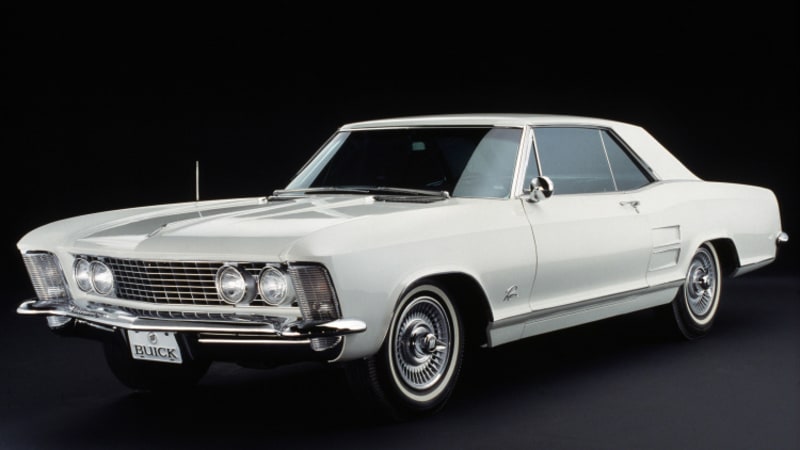 A look back at Buick's long history of performance and style.
 Turn on the audio and listen to smooth sounds of distant machines.