KWBaker
Shared posts
Skyhour App Enables Easy Gifting Of Air Travel

10 Things You Didn’t Know About the Movie Major League

The 1989 baseball movie Major League featured a half-dozen stars from the 1980s and '90s, and was quite a hit, although its two sequels were nothing to write home about. The Cleveland Indians owner sabotages the team in order to move it to Florida. The mediocre replacement players have to rise to the occasion, so you can see the ending coming a mile away. Those who remember Major League fondly will want to learn some trivia about it.
5. Charlie Sheen actually took steroids for this role.
He admitted this to Sports Illustrated and said that taking steroids was what allowed him to actually pitch an 85 mile an hour fastball.
4. The MLB salary minimum back then was a little over $60,000 a year.
This was double the average household income so it was a good paycheck for just being the minimum as Jake says it is.
Read more about Major League at TVOM.
Spring Creek Ranch: Gateway To The Grand Tetons

Richard Branson: His Views On Entrepreneurship, Well-Being And Work Friendships

Aston Martin Vanquish Zagato Shooting Brake finishes a quartet Q would envy
Filed under: Aston Martin,Coupe,Wagon,Luxury,Performance,Specialty
 Sorry, they're already sold out.
Continue reading Aston Martin Vanquish Zagato Shooting Brake finishes a quartet Q would envy
Aston Martin Vanquish Zagato Shooting Brake finishes a quartet Q would envy originally appeared on Autoblog on Mon, 23 Oct 2017 07:00:00 EDT. Please see our terms for use of feeds.
Permalink | Email this | Comments
The BMW G 310 GS Is Your New Entry Point into the World of Adventure Motorcycles

First Listen: Willie Nelson and the Boys
There’s no stopping Willie Nelson. On October 20, the indefatigable icon will release his second album of 2017 (the outstanding God’s Problem Child came out in April), this time with the help of his sons Lukas and Micah.
Willie Nelson and the Boys is a collection of songs that resulted from an impromptu jam session in 2011 at Nelson’s Pedernales studio outside of Austin. The album—the second installment of the Willie’s Stash archival series—contains classic country tracks, seven penned by Hank Williams, including his biggies “I’m So Lonesome I Could Cry” and “Move It On Over.” There’s also a rollicking version of Hank Snow’s “I’m Movin’ On,” which features each of the Nelsons trading vocal parts—Micah has the sweeter voice, while Lukas’ is a dead ringer for pop’s—as Willie’s band ably keeps the pace.

photo: Gregg Giannukos
Micah, Lukas, and Willie Nelson in the studio.
Willie will be touring throughout the South for the rest of 2017, a stint that culminates with three holiday shows in Austin (December 29-31), where he will joined by Lukas and his band, Promise of the Real. But as an early gift from Willie, enjoy “I’m Movin’ On,” exclusively premiered by Garden & Gun.
The post First Listen: Willie Nelson and the Boys appeared first on Garden & Gun.
Bye Bye Lightroom, Hello Lightroom CC and Faster Lightroom Classic

Lightroom is no more. Adobe today announced a new cloud-based Lightroom called Lightroom CC. The current desktop-based app you know as Lightroom is being rebranded as Lightroom Classic CC. Lightroom Classic will be desktop-oriented, while Lightroom CC will be cloud and mobile focused.
Lightroom CC in the Cloud
Adobe is pushing its app ecosystem further into the cloud to allow for editing, organizing, storing, and sharing photos from any device, anywhere.

“Launched over a decade ago, Lightroom became the industry’s leading desktop application for editing and organizing photography,” Adobe says. “Now in an increasingly mobile-centric world, and with major improvements in smartphone cameras, Lightroom is transforming digital photography again.”
Lightroom CC features the same power as Photoshop and Lightroom but a new streamlined user interface that allows for powerful editing of full-resolution photos on desktop, mobile, and the Web. Changes made through Lightroom CC on one device are automatically synced to all devices.

Photo organization in Lightroom CC is aided by intelligent features, such as the automatic tagging of your photos with searchable keywords using Adobe Sensei machine learning technology.

Cloud storage of your photos (including RAW files) is also scalable to meet a range of photographers’ needs. Once your photos are in the Lightroom CC cloud, sharing photos and custom galleries can easily be shared with a link.

Lightroom CC for mobile is getting a number of new features on iOS (built-in AI search, keywords, hierarchical albums, an improved iPad layout, and iOS 11 files) and on Android (tablet support, local adjustments brush, built-in AI search, keywords, and hierarchical albums).

Lightroom CC for Web is getting public gallery pages and deeper integration with Adobe Portfolio.

Lightroom Classic Now Faster and More Poweful
But if you’re loyal to Lightroom Classic CC, Adobe hasn’t forgotten about you. The app formerly known as Lightroom is getting an enhanced Embedded Preview workflow (scroll through large sets of photos to select a subset of images) and new edit tools (Color Range and Luminance Masking for precise edits).
What’s more, Lightroom Classic is getting a major speed boost. Adobe admitted earlier this year that Lightroom has performance issues, and now it’s launching a major update to fix that.
“While the palette of Lightroom features grew, our performance detracted from these gains,”Adobe says. “So we took stock of where you were feeling the most performance anxieties, and dedicated this launch primarily to addressing these issues.”
Lightroom Classic is being updated with improved speed in major areas, including launch time, preview generation, import selection, switching between Library and Develop, navigating between photos in Develop, responsive brushing, and more.
“We have also added new tools to make precise color and tone-based selections for Local Adjustments,” Adobe says. “You can now use the adjustment brush, radial, or graduated filters to define a rough mask, then refine the selection via the new Range Masking options found at the bottom of each Local Adjustment panel.”
No More Standalone Lightroom
Adobe is also announcing that Lightroom 6 will be the last standalone version of Lightroom that you can purchase once and use forever. There won’t be any Lightroom 7, and if you’d like to use the latest and greatest Lightroom updates and features, you’ll need to start paying regular subscriptions (just like with Photoshop CC). Lightroom 6 will no longer be updated after 2017, so you’ll find that newer cameras of the future will not be supported.
Pricing and Availability
Adobe Lightroom CC and Classic CC are now available through 3 different photo-oriented subscription plans. The Creative Cloud Photography Plan includes both of them, Photoshop, and 20GB of storage for $10 a month. If you only need Lightroom CC and storage, you can subscribe to Lightroom CC and 1TB of storage for the same $10 a month. For all photo apps and 1TB of storage, you’ll need to pay $20 a month.

You can also subscribe to all Adobe apps for $50 a month. If you don’t need desktop at all, you can subscribe to Lightroom Mobile with 100GB for $5 a month.
Four Questions for Felix Baumgartner Five Years After His Amazing 128,100-Foot Parachute Jump

Adventure Tape
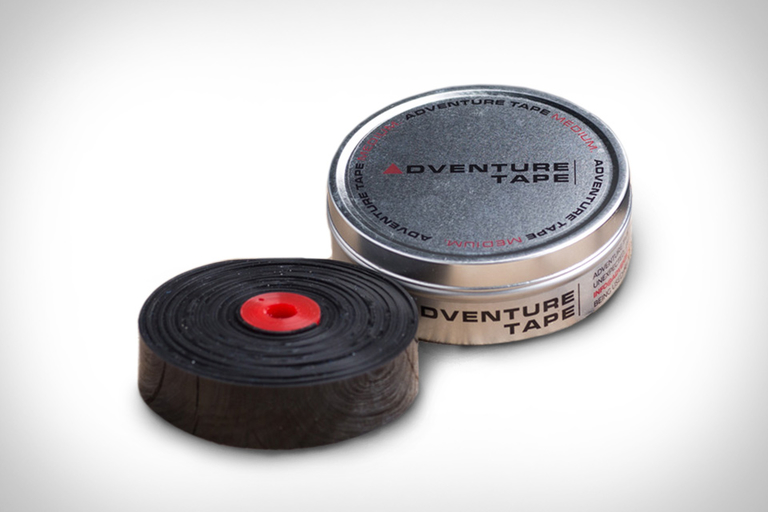
Visit Uncrate for the full post.
If You Think Communism Is Bad For People, Check Out What It Did To The Environment

We have said this many times. The biggest polluter there ever was or likely will ever be is the government. And the bigger the government the bigger the pollution.
Hold Worst Polluter On Earth — Government — Responsible For Its Injustice
Environmentally destructive cronyism in Brazil, socialist crony president used dam in Amazon to line her pockets?
A Minarchist Environmentalism
(From The Federalist)
The environmental destruction associated with communism is no coincidence or accident of history, but rather a perfectly logical outcome for at least three reasons. Perhaps most obviously, communism invariably means authoritarianism (how else would a New Soviet Man emerge to work towards the bright, shiny future prophesied by Marx and Engels without re-education camps and control over the levers of societal machinery?), with little tolerance for dissent or concerns about hazardous waste in the worker’s paradise. To voice the opinion that perhaps not quite all was well, or that the air smelled funny, was to invite suspicions being a saboteur, kulak or harboring bourgeois tendencies.
Second, communism means an absence of property rights, having all been surrendered to “the people,” which is to say the state. As that which belongs to everyone in fact belongs to no one, who is to be confronted over the factory sending toxic plumes into the sky which then descends on the cornfield, or the dumping of waste into the river plied by tourists on cruise boats? And who really owns the cornfield or the boats?
Lastly, communism also simply cannot compete with capitalism in the production of wealth and technology, both of which greatly assist in addressing environmental problems. Why should anyone be surprised that only one East German power station had the necessary equipment to scrub sulphur from its emissions? This, after all, was a country whose answer to Western automobiles — the Trabant launched in the late 1950s — did not even include a fuel gauge in its early versions, something first introduced decades prior (unsurprisingly the Trabant was also bad for the environment, emitting nine times the hydrocarbons and five times the carbon monoxide emissions of the average European car of 2007).
Big government, socialism, is literally poison.
7 Tips for Getting Natural Smiles in Photos
Getting someone to smile naturally on camera can sometimes be a difficult task. Here’s a 2-minute video by photographer Mathieu Stern in which he shares 7 techniques for getting your subject to grin from ear to ear in seconds.
It is often said that the engaging of the eyes makes a smile natural, but that’s not something that can be easily faked. Even though some of Stern’s ideas and tips may seem “cheesy,” that in itself may be enough to squeeze out a natural smile, or chuckle, from a model.
Something as simple as saying “money” instead of “cheese” when smiling works wonders. Pronouncing “money” ensures that the model drops their jaw as well, leading to that golden smile. It also has that surprising, novelty factor which can be quite amusing and unexpected.

Another super simple thing to do is to encourage your model to relax their facial muscles. This makes for a very subtle, but equally drastic, change to the shot. It’s very easy for someone to tense up their face without realizing it, and simple encouragement to focus on those muscles will return them to a more natural look.
Check out the video above for more advice on drawing out real smiles.



Silence Annoying Gas Pump TV Ads and News Updates With This Button

Some newer gas station pumps have small TVs built into them that blast ads, or even worse, the news at full volume. Here’s how you can turn that sound off and pump gas in peace.
STUDY: Squirrels Use Sophisticated 'Chunking' Technique; Separate Nuts By Type...
STUDY: Squirrels Use Sophisticated 'Chunking' Technique; Separate Nuts By Type...
(Third column, 7th story, link)
Mazda's rotary engine may live on as a range extender (UPDATE)
Filed under: Green,Mazda,Technology,Electric,Future,Hybrid
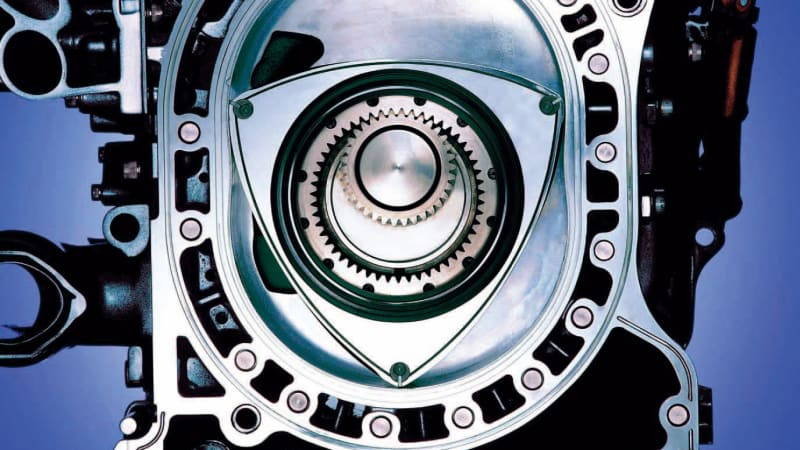 There's evidence that it will happen.
Continue reading Mazda's rotary engine may live on as a range extender (UPDATE)
Mazda's rotary engine may live on as a range extender (UPDATE) originally appeared on Autoblog on Mon, 16 Oct 2017 11:20:00 EDT. Please see our terms for use of feeds.
Permalink | Email this | CommentsNew Light Shed On Easter Island's Mysterious People

Car Manufacturers Are Electrifying Copper, "The Metal of the Future"

The Nixon Dinners That Taught Americans to Stop Worrying and Love Peking Duck

Nixon’s unprecedented presidential trip to China in 1972 steadied a rocky diplomatic relationship. In the two decades since China's Communist Revolution, the countries' Cold War relationship had ranged from muted hostility to narrowly avoiding war, and Nixon's trip was part of a carefully choreographed detente. But for Americans following along at home, what the president ate was just as interesting as the speeches. Each night, Nixon toasted Chinese officials with glasses of powerful baijiu liquor, sat down to lavish banquets, and ate dishes that few Americans had ever sampled.
Before Nixon’s visit, American Chinese food leaned heavily towards the “American” part of its name. To appeal to Americans, many Chinese chefs slathered dishes with gravy and served fortune cookies (a San Franciscan invention) and egg rolls (likely a New York invention).

But the constant media coverage of Nixon's week-long trip led many Americans to emulate his culinary adventures. According to Gallup polling at the time, more Americans heard or read about Nixon’s visit than any other event in Gallup’s history. The banquets were televised and attended by luminaries such as Walter Cronkite and Barbara Walters. (Cronkite famously shot an olive airborne with his chopsticks.) On Nixon’s first night in China, the menu featured shark’s fin soup, steamed chicken with coconut, and almond junket (a type of pudding). In less than 24 hours, a Chinese restaurant in Manhattan recreated each dish, serving it to curious diners for months after Nixon’s return.

Following diplomatic protocol, Nixon hosted one of the banquets. But a lack of space on the American planes kept him from bringing his own cooking staff. So the Americans brought champagne and California oranges for dessert, and a Chinese staff cooked an almost entirely duck menu for the American-hosted dinner. This was the president’s second night feasting on duck, which Nixon later called his favorite meal from the visit.
The publicity led to a Chinese restaurant boom. In a New York Times article describing the phenomenon, the paper listed “the more exotic Chinese cuisines” that Americans could now try, including moo shu pork, sweet-and-sour fish, and, of course, Peking duck. One Chinese-American restaurateur said that when her restaurant first opened, she “couldn’t give away a Peking duck.” Nixon, she added, was “the greatest salesman for Peking duck. Now many people want it.”
We’re launching a food section! Gastro Obscura will cover the world’s most wondrous food and drink. Sign up for our weekly email to get an early look.
5 Much Better Alternatives To Quicken And Mint

Aston Martin DB11 Volante loses its roof and four cylinders
Filed under: Convertible,Luxury,Performance
 Aston is taking orders for spring 2018 deliveries.
Continue reading Aston Martin DB11 Volante loses its roof and four cylinders
Aston Martin DB11 Volante loses its roof and four cylinders originally appeared on Autoblog on Fri, 13 Oct 2017 07:43:00 EDT. Please see our terms for use of feeds.
Permalink | Email this | CommentsPfeiffer Canyon Bridge Reopens, Reconnecting Big Sur

What Cordcutter TV Service Should You Get?

Cord-cutting has always been the promise of streaming video, and we’re finally getting to the point where streaming the boobtube is better than paying for a cable subscription. Indeed, according to a recent report, 61 percent of young adults use streaming as their primary method of watching TV. But with the…
Blockchain Ballot Boxes And Democratizing Distributed Ledger Technology

Just About Everything We Know About the Pard

Some animal hybrids are common, like mules. Others are unusual, like zonkeys (that's a zebra-donkey), or untameable, like wolfdogs, or not-entirely-healthy, like ligers. And some animals that were thought to be hybrids aren’t hybrids at all. Take the leopard, the offspring of a lion and a "pard." We know now that leopards are, in fact, their own thing: the offspring of a mommy leopard and a daddy leopard. But for a long time, leopards were believed to be the sterile, degenerate spawn of a lioness and a male pard. The pard was a terrifying semi-mythological big cat with a lust for blood. But where did this puzzling creature emerge from?
One of the earliest known references to the pard comes from Pliny the Elder’s Natural History (the chapter is entitled "Lions; How They Are Produced"),which dates to around 77 A.D. There, he describes how the lascivious male pard seeks out seductive female lionesses on the banks of Africa’s rivers, where species mingle and mix, and hideous hybrids are born. “Hence arose the saying,” writes Pliny, “that ‘Africa is always producing something new’.” Later, the male lion, recognizing the “peculiar odor of the pard” on his lady lioness love, will “avenge himself with the greatest fury.” But by then it is too late, and the lioness is already pregnant with a leopard. It’s been suggested that Pliny may have believed that pards were male panthers, which are themselves, in Asia and Africa, black leopards.

The authors and illustrators of medieval books of beasts embraced pards with gusto. These books are veritable menageries of pards—scowling, snarling, and generally making a nuisance of themselves. The authors struggle to draw these beasts, which they knew only from complicated, even contradictory, descriptions. What they usually have in common, however, is spots: In Isidore of Seville’s seventh-century Etymologies, pards are described as having a “mottled coat,” speckled with white like a giraffe’s. Swift and “headlong for blood,” they kill their prey with a single leap.
Six centuries later, in the 13th-century Bestiary, pards acquire a bloodthirsty, even demonic, reputation. “The mystic pard signifies either the devil, full of a diversity of vices, or the sinner, spotted with crimes and a variety of wrongdoings,” reads the caption beneath its snarling face. The Antichrist, it adds, is known to be a pard. In Revelations, the Antichrist is described as a beast “like unto a leopard,” with a bear’s feet, a lion’s mouth, and a dragon’s power. All of a sudden, the pard had become something far more than a simple panther straying from its taxonomic lane.

Pards appear in poetry, too. In As You Like It, Shakespeare says a soldier, “full of strange oaths,” is “bearded like the pard.” (This particular pard presumably inherited a mane from its leonine cousins.) Two centuries later, in 1819, Keats describes Bacchus, god of winemaking, fertility, and generally having a good time, as being “charioted” by “his pards.” To the American writer Joseph Holt Ingraham, in 1845, they were “velvet-footed” as they crept upon their prey.
What pards represent, however, is a long-standing general confusion as to how big cats—jaguar, cheetah, lion, leopard, panther (to say nothing of tigers, lynxes, or New World big cats, such as jaguars or mountain lions)—are related to one another, in the West at least. These far-off beasts were barely more imaginable than the Antichrist himself. In the 14th-century Byzantine poem, An Entertaining Tale of Quadrupeds—a dialogue between various animals—the terms "pards," "cat-pards," and "leopards" are all thrown around with relative abandon. The leopard is told he is a “beast that’s born in sin and brought up out of wedlock,” whose lioness mother has washed the scent of her pard lover from him. If the lion smells it, the writer suggests, he will kill her and never mate with a lioness again.

The poem gives still more clues about the natural history of the mysterious pard. They are apparently resistant to fleas (their pelts, therefore, make excellent bedspreads), they have comically short tails, and they live in quarries. These last two nuggets, Nick Nicholas, the Tale’s translator, observes, suggest a possible confusion with a lynx. Either way, the text is sufficiently ambiguous for one illustrator to draw a pard as a scraggly lion, and the next as a tamed cheetah wearing a collar.
After centuries of confusion, by the 1750s, biologists knew definitely that leopards are not a hybrid species. They appear in the 1758 edition of System Naturae, one of the first attempts to catalogue all animals, as creatures in their own right. "Pard" was still in their initial scientific name, Felis pardus, and appears twice in the one they go by now, Panthera pardus pardus.
Today more glamorous mythological beasts—think unicorn, sphinx, or dragon—dominate the fantasy limelight, and pards have virtually faded from memory. Where they appear in modern texts, it’s often in passages ripe with literary allusion. In Vladimir Nabokov’s 1969 novel Ada, or Ardor: A Family Chronicle, handmaids pounce “like pards”—killing, presumably, with a single leap. But beyond that, they mostly remain caged in their medieval bestiaries, where their anxious, feline faces seem to say: “I really hope no one realizes I’m not actually real … ”
Hear 1,500+ Genres of Music, All Mapped Out on an Insanely Thorough Interactive Graph
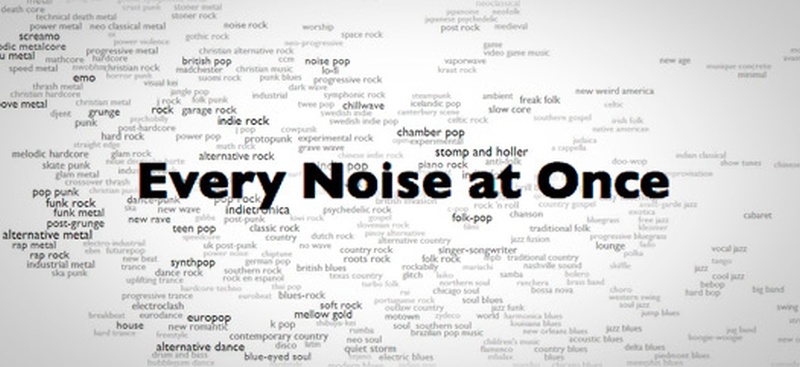
If you are ready for a time-suck internet experience that will also make you feel slightly old and out of step with the culture, feel free to dive into Every Noise at Once. A scatter-plot of over 1,530 musical genres sourced from Spotify’s lists and based on 35 million songs, Every Noise at Once is a bold attempt at musical taxonomy. The Every Noise at Once website was created by Glenn McDonald, and is an offshoot of his work at Echo Nest (acquired by Spotify in 2014).
McDonald explains his graph thus:
This is an ongoing attempt at an algorithmically-generated, readability-adjusted scatter-plot of the musical genre-space, based on data tracked and analyzed for 1,536 genres by Spotify. The calibration is fuzzy, but in general down is more organic, up is more mechanical and electric; left is denser and more atmospheric, right is spikier and bouncier.
It’s also egalitarian, with world dominating “rock-and-roll” given the same space and size as its neighbors choro (instrumental Brazilian popular music), cowboy-western (Conway Twitty, Merle Haggard, et. al.), and Indian folk (Asha Bhosle, for example). It also makes for some strange bedfellows: what factor does musique concrete share with “Christian relaxitive” other than “reasons my college roommate and I never got along.” Now you can find out!
Click on any of the genres and you’ll hear a sample of that music. Double click and you’ll be taken to a similar scatter-plot graph of its most popular artists, this time with font size denoting popularity and a similar sample of their music.
I’ve been spending most of my time exploring up in the top right corner where all sorts of electronic dance subgenres hang out. I’m not too sure what differentiates “deep tech house” from “deep deep house” or “deep minimal techno” or “tech house” or even “deep melodic euro house” but I now know where to come for a refresher course.
Spotify and other services depend on algorithms and taxonomies like this to deliver consistent listening experiences to its users, and they were attracted to Echo Nest for its work with genres. Echo Nest was originally based on the dissertation work of Tristan Jehan and Brian Whitman at the MIT Media Lab, who over a decade ago were trying to understand the “fingerprints” of recorded music. Now when you listen to Spotify’s personalized playlists, Echo Nest’s research is the engine working in the background.
McDonald says in this 2014 Daily Dot article this isn’t about a machine guessing our taste.
“No, the machines don’t know us better than we do. But they can very easily know more than we do. My job is not to tell you what to listen to, or to pass judgment on things or ‘make taste.’ It’s to help you explore and discover. Your taste is your business. Understanding your taste and situating it in some intelligible context is my business.”
If you’d like a more passive journey through the ever expanding music genre universe, there's a Spotify playlist of one song from each genre (all 1,500+) above. See you in the deep, deep house!
via Kottke.org
Related Content:
Crime Jazz: How Miles Davis, Count Basie & Duke Ellington Created Soundtracks for Noir Films & TV
Ted Mills is a freelance writer on the arts who currently hosts the FunkZone Podcast. You can also follow him on Twitter at @tedmills, read his other arts writing at tedmills.com and/or watch his films here.
Hear 1,500+ Genres of Music, All Mapped Out on an Insanely Thorough Interactive Graph is a post from: Open Culture. Follow us on Facebook, Twitter, and Google Plus, or get our Daily Email. And don't miss our big collections of Free Online Courses, Free Online Movies, Free eBooks, Free Audio Books, Free Foreign Language Lessons, and MOOCs.
Buying a Used DSLR Kit for $80: Here’s What You Get for the Money
Cameras and lenses are expensive. Really expensive. Even the cheapest entry-level DSLR kit today costs $500 or more. But what if you buy the cheapest possible used DSLR? A camera that’s over 10 years old? How would it stack up against today’s modern cameras? I was curious about this, so I decided to find out for myself.
After two weeks of watching classified ads closely, and missing a couple of good bargains because I wasn’t fast enough, I finally managed to purchase a Canon 400D (also known as Rebel XTi) with a battery grip and a Canon 50mm f/1.8 II lens on it. All this for only $80. It seemed like a great deal to me. It even came with a 2GB CF card!
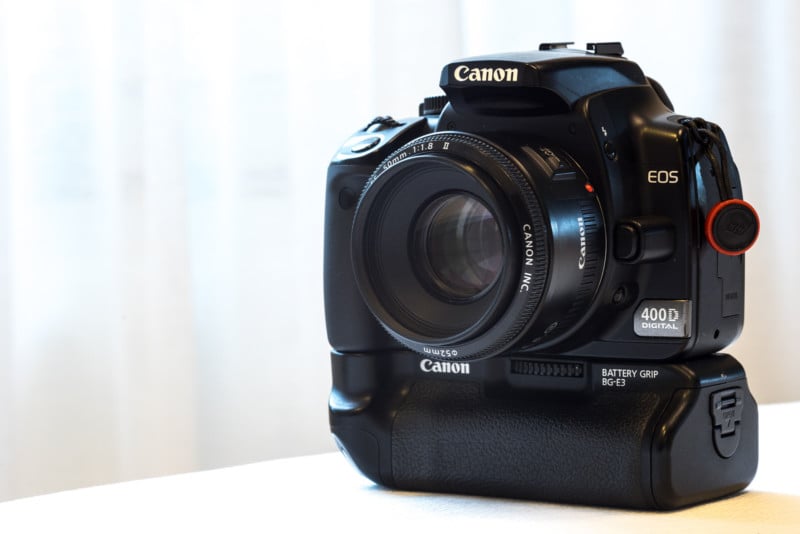
I took the camera for a long walk the same day I bought it, and to summarize my experience: I was amazed by how good it was!
The sensor outputs 10-megapixel photos, meaning that they measure roughly 3900×2600 pixels. This is more than enough for posting on social media or viewing photos on a computer screen. And what amazed me even more was that with a fairly good lens, which the Canon 50mm f/1.8 is, these pixels get utilized very well.


A 100% crop looks very crisp and sharp in most cases.


The only major downside with using an 11-year-old camera is that the dynamic range in the sensor is bad compared to my modern Sony A7. If you do not nail the exposure really well when you take the photo, you have fewer options to correct it later. With my modern cameras, I just shoot everything slightly underexposed and lift the exposure later in Lightroom. That would not be a good idea with the Canon 400D.
This camera’s weak dynamic range also makes it hard to capture scenes with strong light and deep shadows in the same frame. But other than that, this camera kit has already after a couple of days given me a lot of photography joy for the money. I will definitely keep this camera, it is a fun tool to take out once in a while to add some variation to my photo walks.

This little experiment taught me that if you just want a good camera to take nice looking photos in your everyday life and you don’t have professional needs (e.g. 50-megapixel files) $80 will get you surprisingly far. An added benefit is that 10-megapixel files give you such a fast editing experience in Lightroom.
About the author: Micael Widell is a photography enthusiast based in Stockholm, Sweden. He loves photography, and runs a YouTube channel with tutorials, lens reviews and photography inspiration. You can also find him on Instagram and 500px where his username is @mwroll.

The Strange Case of the Cyclops Sheep
In 1953, a spate of one-eyed sheep baffled farmers and scientists alike. Almost 60 years later, in 2012, the result of the investigation gave us a new skin cancer treatment. Tien Nguyen connected the seemingly unrelated dots from one event to the other in this TED-Ed lesson.
 (
(If cyclops sheep isn't weird enough, the story includes hedgehog genes and a protein called smoothened. But it will all make sense as you watch it. And you'll gain more appreciation for all those lab people who spend years working to isolate one protein and will never get credit for curing cancer. -via Laughing Squid
Escher Tiny Home

Visit Uncrate for the full post.