972 points, 40 comments.
 Image Credit: Beno Saradzic
There's some photography gear that you can get away with buying on the cheap.
A camera remote, for example, basically does one thing - trigger the shutter - so buying an $8 remote on Amazon isn't going to negatively impact the quality of your photos.
But other camera gear - like lens filters - is not the kind that you can buy on the cheap and expect good results.
To illustrate this point (and to demonstrate what common types of filters can do for an image), I've put together the following before and after photos.
If you've ever wondered why you need lens filters, look no further than these images for the answer to your question!
Editor's Note: The images used throughout this article were taken using NiSi filters and are used with permission.
 Image Credit: Sebastian Tontsch
A polarizing filter does many things for your photos.
Not only does it cut down on glare from non-metallic surfaces (like water), but it also reduces atmospheric haze so that the background of your landscape photos looks cleaner and crisper.
On top of that, a polarizing filter enhances the contrast of the sky, making the clouds whiter and pop more on a sky that's a deeper shade of blue.
In the "before" image shown above, you can see that glare off the water, in particular, is a problem.
 Image Credit: Sebastian Tontsch
But with the addition of a NiSi polarizing filter, you can see a drastic difference in how much glare is in the shot.
In fact, virtually all of the glare is gone, revealing a deeper color of the water.
Additionally, note that in the foreground of the shot that you can actually see into the water and pick up on the textures of the rocks below.

Image Credit: 阿戈
Tell me if this has ever happened to you...
You come upon a gorgeous scene in the morning or evening and take a shot.
Much to your dismay, though, the sky is extremely bright and the landscape is dark. In other words, you have a useless photo unless you spend a good chunk of time trying to fix the exposure problems in post-processing.
In looking at the photo above, this problem is played out - the sky is far too bright and detail has been lost in the clouds.
What's more, the brightness of the sky is too much for the foreground of the shot, which is on the dark side.

Image Credit: 阿戈
But by using a NiSi Medium Nano IR Graduated ND Filter, you can see how the image because far more impressive.
The photographer was able to use the filter to rescue some of the lost details in the sky using the darkened part of the filter to tamp down the brightness above the horizon.
And since the bottom of a graduated neutral density filter has no tinting, it leaves the foreground as-is. The result is a much more pleasing shot with a more manageable dynamic range.
 Image credit: Steffen Hummel
Reverse ND grads are made especially for use at sunrise and sunset when the brightest area of the sky is just above the horizon.
That being the case, these filters have the darkest tinting in the middle, that way you can bring down that brightness for a more even exposure throughout the shot.
So, in the image above, you can see the problem area - the sky has virtually no detail whatsoever.
 Image credit: Steffen Hummel
But once a NiSi Reverse Nano IR Graduated Neutral Density Filter is used, the sky comes to life.
The brightness along the horizon line is reduced, thus allowing for a more consistent exposure throughout the image.
What's more, there's tons of color and texture in the sky now, helping this "after" shot to be much more pleasing to the eye than the "before" shot.
 Image Credit: Karol Nienartowicz
Where a graduated neutral density filter or a reverse graduated neutral density filter have varying levels of tinting, a solid ND is the same darkness throughout the entire filter.
By blocking out light in a consistent fashion, that allows you to slow down the shutter speed during daytime shooting to blur the movement of features like clouds, water, or passing cars.
If you tried to slow the shutter during a daytime shoot without an ND filter in place, the image would be completely overexposed.
And even when it's cloudy out, as was the case in the image above, you still can't slow the shutter enough to blur movement all that much.

Image Credit: Karol Nienartowicz
However, by using a 10-Stop NiSi Neutral Density Filter, you can see how the photographer created an image that has a much more ethereal vibe to it.
Not only does the water on the lake become much smoother with a glasslike appearance, but the clouds also get a nice level of blur to add to the dreaminess of this photograph.
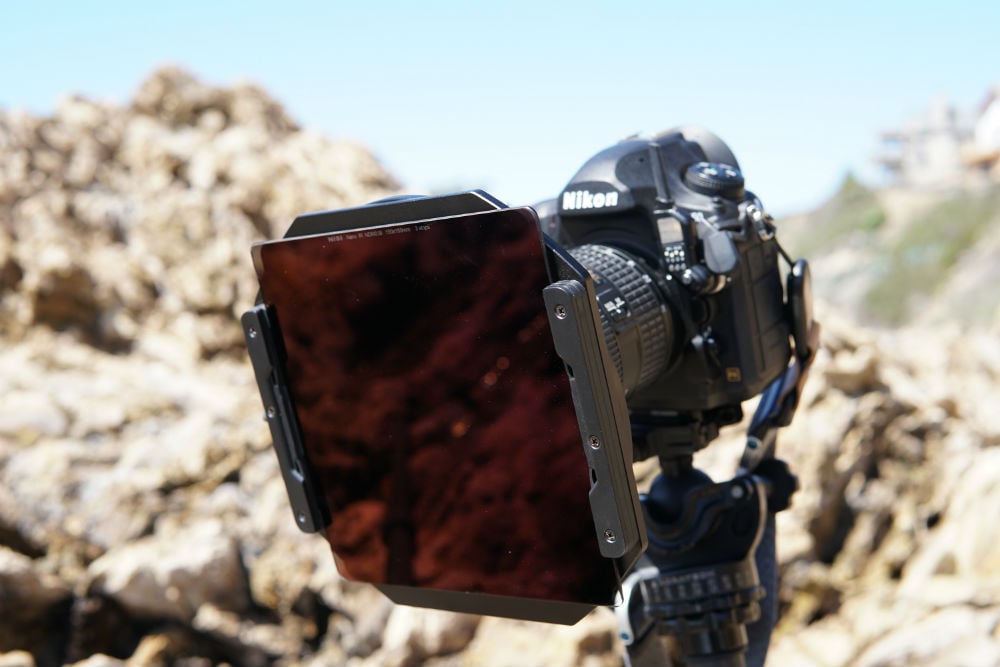
"What filters do I need?" is a common question that photographers ask. And the answer isn't all that simple...
For many photographers, a polarizing filter is the primary need. For others, a reverse ND grad is a necessity.
Not all photographers need solid ND filters because they don't work in long exposures all that often.
So, the answer lies in the kind of photography you want to do.
But whatever filters you buy, be sure they are high-quality like NiSi filters. Cheap filters produce images that aren't as sharp, have diminished contrast, color casts, and other aberrations.
And since the goal with using camera lens filters is to improve your photos, cheap filters won't do you any good!








Photographer Dustin Dilworth of D3 Imagery visited Michigan’s Tahquamenon Falls at night and captured this beautiful 45-second time-lapse video of the Milky Way rising over the falls, which are known for their brown color that’s due to the tannins from sedar swamps upriver.
“Pay close attention and you’ll notice meteors from the Lyrid meteor shower in the zoomed shots,” Dilworth writes.
“Beyond the waterfall’s plunge pool, the river’s surface is still frozen, well into spring,” writes National Geographic. “In the forest of Michigan’s Upper Peninsula, distant cities’ glare can’t dull this spectacle.”
Dilworth planned his shot by using software to figure out the path of stars through the sky and then framed his shot accordingly. He shot roughly 6,000 photos through the early hours of April 19th for the project, which was released in celebration of International Dark Sky Week and raising awareness of light pollution.
Who sends texts in complete sentences and grammatically-correct words, anyway?
There's grilling with instant light charcoal briquettes, then there's grilling. These three charcoal alternatives cook hotter, last longer and harbor way, way less chemicals.
Stop losing mindless minutes (or hours) each day scrolling through your Instagram, Twitter or Apple News feeds.
Why is it Ferrari makes better-looking cars when it's for only one customer?
Snow Peak's newer, slimmer version of the Iron Grill Table is the ideal size and weight to tow on car camping trips, to the beach or extended stays in the woods.

Albert Einstein developed his theory of special relativity in 1905, and then mentally mapped out his theory of general relativity between 1907 and 1915. For years to come, the rest of the world would try to catch up with Einstein, trying to understand the gist, let alone the full implications, of his groundbreaking ideas.
Above, you can watch one such attempt. Produced by Max and David Fleischer, best known for their Betty Boop and Superman cartoons, The Einstein Theory of Relativity used the power of animation to explain relativity to a broad, non-scientific audience in 1923. One of the first educational science films ever made, the silent animated film was created with the assistance of science journalist Garrett P. Serviss and other experts who had a handle on Einstein's theories. According to a biography of Max Fleischer, the film was "an out-and-out success." "The critics and the public applauded it. And Einstein did too, apparently deeming it an "excellent attempt to illustrate an abstract subject."
Watch the short film above. And find it added to our collection, 1,150 Free Movies Online: Great Classics, Indies, Noir, Westerns, etc.
Follow Open Culture on Facebook and Twitter and share intelligent media with your friends. Or better yet, sign up for our daily email and get a daily dose of Open Culture in your inbox.
If you'd like to support Open Culture and our mission, please consider making a donation to our site. It's hard to rely 100% on ads, and your contributions will help us provide the best free cultural and educational materials.
Related Content
The Original 1940s Superman Cartoon: Watch 17 Classic Episodes Free Online
Albert Einstein’s Elegant Theory of Happiness
Hear Albert Einstein Read “The Common Language of Science” (1941)
Albert Einstein Expresses His Admiration for Mahatma Gandhi, in Letter and Audio
Einstein’s Theory of Relativity Explained in One of the Earliest Science Films Ever Made (1923) is a post from: Open Culture. Follow us on Facebook, Twitter, and Google Plus, or get our Daily Email. And don't miss our big collections of Free Online Courses, Free Online Movies, Free eBooks, Free Audio Books, Free Foreign Language Lessons, and MOOCs.

An heirloom shotgun from a little-known gun maker in Canada returns to the turkey woods
788 points, 117 comments.
The newest beer from Sufferfest is sure to please athletes everywhere.

You’ve probably seen the periodic table of the elements before. Perhaps it still haunts your dreams, or maybe it came off as nothing more than requisite visual background noise meant to make a science classroom look more sophisticated. There’s a lot more to this seemingly random collection of blocks, however, than meets the eye. The […]
The post Top 10 Things You Didn’t Know About The Periodic Table appeared first on Listverse.

Your trip to The Bahamas was great! You “Got grabbed by the Guana Grabber” and ate enough conch fritters to give Aunt Edna a week’s worth of gout. Now it’s time to point the bow west and head back to the good ol’ U.S. of A. But will your entry into home waters be the stuff of nightmares or simply a pleasant footnote? Here’s how to clear customs and make checking back into the U.S. the easiest part of the whole trip.
“For small pleasure vessels that visit any foreign port or place or have contact with any hovering vessel at sea, the trip is not complete until the master and all passengers report to CBP as required by federal law,” states Customs and Border Patrol (CBP) regulations.
Federal law requires that all U.S. citizens, permanent residents, and aliens seeking entry to the United States must report their arrival. If your boat has anchored or tied up within U.S. waters, you have entered the United States. CBP affirms that no one shall board or leave the boat without first completing customs processing. The exemption? If granted permission by the CBP officer in charge.
If it is necessary for someone to leave the boat to report arrival to CBP, he or she must return to the boat after reporting and remain on board unless instructed otherwise. No one who arrived on that boat may leave until the CBP officer grants permission to go ashore. Report the arrival into the United States to the nearest CBP office. If you fail to report your entry, you may face significant civil penalties, including fines, vessel seizures, and imprisonment.
In the past, the only option was for the vessel’s captain to go ashore with all the required information for vessel and crew, make the call to CBP and ensure everyone stayed on board until release was granted by a CBP officer. A much more convenient way to check in is by signing up for the Local Boater Option (LBO), a program available in South Florida to boat operators who are U.S. citizens or lawful permanent residents of the United States.
Enrollment in the program allows expedited arrival and customs and immigration clearance for recreational, low-risk boats at the time of arrival. Unless otherwise directed by a CBP officer, participation in the LBO program satisfies the captain’s legal requirement to report to a designated port of entry for inspection; however, you’re still required to phone in your arrival to CBP.
In 2010, CBP introduced the Small Vessel Reporting System (SVRS), a free, automated, web-based reporting system created for LBO participants to expeditiously report their intended arrivals from foreign countries. Applying for participation in SVRS takes about 15 minutes in three steps:
The SVRS system allows new applicants to enroll in the LBO program and make an appointment for a face-to-face interview with a CBP officer at an authorized reporting location of their choice. Both the captain and passengers can participate in the program, but the captain must provide all vessel information. The applicant’s documentation will be reviewed and verified to establish immigration status and identity.

Once participation in the LBO program is granted by CBP, you’ll receive an email with your Boater Registration number and a password for SVRS. Current LBO participants will not be required to complete an interview; however, they will need to apply online for a password to access the float plan functions of SVRS.
After receiving their SVRS password, LBO participants can easily record and update their intended international travel on a private vessel by filing a float plan. Float plans consist of biographical information of all persons intending to travel, vessel registration information and itinerary information. SVRS will issue a float plan number when the float plan is entered and activated. The float plan will be vetted by CBP prior to the vessel returns to U.S. waters.
Upon returning to the United States, LBO participants who filed the float plan have two options for formal notification of arrival: Call the CBP Small Vessel Call Center closest to their point of entry, or use the new Reporting Offsite Arrival-Mobile, aka the ROAM app.
If you call, be ready with the following information:
The Reporting Offsite Arrival-Mobile (ROAM) app offers an alternative to the 1-800 number currently in use. Available through iTunes and Google Play, CBP believes pleasure boaters will save time using the app with shorter wait times (compared to calling in) and the ability for remote inspections by officers using the video chat function. For complete details visit the CPB website.
The SVRS is available for use to all U.S. citizens, nationals and lawful permanent residents. It’s also available for Canadian citizens and permanent residents of Canada who are nationals of a Visa Waiver Program country. Trusted Traveler Program members and current holders of an I-68 (Canadian Border Boat Landing Permit) must apply for enrollment in SVRS online in order to participate, but they do not need to schedule an interview with a CBP officer to complete their application.
One of the benefits? If all the requirements are met, you can clear customs with CBP on the phone. U.S. vessels larger than 30 feet must also display a Customs User Fee decal (available online in advance of your trip using the Decal and Transponder Online Procurement System). When checking back into the States, CBP will likely request the decal number.
Small Vessel Reporting System
(800) 432-1216
svrs.cbp.dhs.gov
Small Vessel Call Center/SVRS locations
svrs.cbp.dhs.gov/Locations.aspx#Florida
Decal/Transponder Online Procurement System
dtops.cbp.dhs.gov
By Frank Lanier, Southern Boating May 2018
Updated 5/21/18
The post How to Clear Customs in the US appeared first on Southern Boating .
The U.S. Customs and Border Protection (CBP) recently launched a new option for small vessels when reporting entry into Florida. The Reporting Offsite Arrival-Mobile or ROAM app offers an alternative to the 1-800 number currently in use.
ROAM is a free mobile application that provides an option for pleasure boaters to report their U.S. entry to CBP via their personal smartphone or a tablet located at local businesses to satisfy the above reporting requirements.

In limited areas, travelers arriving in remote areas may also be eligible to use the ROAM.
Confirm that ROAM is accepted at your local point of entry. Be sure to take note of the Pleasure Boat Reporting Locations, since it is only available in limited areas.
A free login.gov account is required.
Read more about clearing customs in the U.S. or learn more about the ROAM app.
The post Clearing Customs? Use the new ROAM app appeared first on Southern Boating .

While Halloween is the perfect time to watch horror films, scary movies can be enjoyed at any time of the year. With that in mind, we have compiled a list of the best scary movies to watch on Netflix.
Whether it’s spooky ghosts, masked killers, or evil creatures that frighten you the most, this list is for you. So why not close the curtains, dim the lights, and grab a pillow to squeeze when things get tense?
Horror, Mystery, Thriller | IMDb: 7.5 | RT: 86%
What’s spookier than a ghostly campfire story? The answer is one based on actual events. The Conjuring is an extremely scary and suspenseful tale of a family whose home is invaded by something evil. The family seeks the help of a paranormal investigation team played by Patrick Wilson and Vera Farmiga. And what happens next will give you chills.
Horror, Thriller | IMDb: 6.6 | RT: 94%
When you live alone, there is one thing that can put a scare into you like no other; a masked killer standing outside your window. Hush, starring Kate Siegel, takes you into the life of a deaf writer who lives in solitude. When she discovers she has become prey for a killer, she must fight for her life. If you’re in the mood for a frightening film, watch Hush when you’re home alone.
Horror, Mystery, Thriller | IMDb: 6.8 | RT: 66%
In Insidious, you’ll follow a family attempting to escape a haunted house and save their souls. But when the family realizes it’s their own eldest son that holds the evil, the family has nowhere to run. From James Wan, the same director behind The Conjuring, Saw, and Dead Silence, Insidious will give you chills.
Horror, Mystery, Thriller | IMDb: 5.0
Truth or Dare is a game that many kids play in their teenage years. But when a group of friends rent a house for Halloween to play this game that supposedly took the lives of others years before, they’re in for a surprise. Will history repeat itself? Will evil try to take their souls and succeed? Check out Truth or Dare to find out.
Horror, Mystery | IMDb: 7.2 | RT: 79%
When a serial killer is obsessed with scary movies like those on this list, the results are deadly. In the original Scream, starring Neve Campbell, David Arquette, and Courteney Cox, a girl and her friends are terrorized by a killer with a taste for horror. See if you can figure out who is behind the series of murders in Scream, if you’re not too afraid to watch, that is.
You can also catch Scream 2 and Scream 3 on Netflix for a full night of, well, screams.
Drama, Mystery, Thriller | IMDb: 8.1 | RT: 85%
In The Sixth Sense, you follow a small child, played by Haley Joel Osment, who can communicate with spirits. His psychologist, played by Bruce Willis, does his best to help the young boy while he tries to uncover the truth behind it all.
With ghosts showing up around every corner that only the child can see, this spooky story has a surprise that got it nominated for six Academy Awards. Directed by M. Night Shyamalan, The Sixth Sense is a must-see scary film.
Horror | IMDb: 7.4 | RT: 94%
Even though Carrie is the oldest film on this list, it’s certainly no less horrifying than the rest. This Stephen King story takes you through the world that shy and lonely Carrie White lives in. With her domineering mother and bullying classmates, this telekinetic teenager gives you a movie you’ll never forget.
If you’re a fan of Stephen King, here are the best movies based on Stephen King novels to stream online.
Adventure, Drama, Horror | IMDb: 5.6 | RT: 54%
Fights for survival in these types of movies come in all shapes and sizes. And in 47 Meters Down, it comes in the shape of a shark. When two sisters travel to Mexico for an enjoyable vacation, an excursion turns deadly. They become trapped with little oxygen in a shark tank circled by great whites preparing for dinner.
Starring Mandy Moore and Claire Holt, this is one vacation story you’ll want to watch. Unless you’ve booked a vacation in Mexico in the near-future.
Horror, Supernatural Horror, Teen Screams | IMDb: 6.7 | RT: 91%
Travel back in time to 1630s New England where witchcraft turns a family paranoid in The Witch. It begins when a young farm boy goes missing and the family places the blame on the oldest daughter who was caring for the boy.
The film not only brings a test of love and faith for a family, but chills to the rest of us who are watching their story unfold.
Horror | IMDb: 3.7
Rather than a shark-infested vacation in Mexico, the teens in this movie have to contend with a flesh-eating virus. In Cabin Fever, a group of friends out for a good time end up with a disease that takes them out one-by-one. What is it? What causes it? Where did it come from? You’ll have to visit their cabin to find out… but beware the blood.
Horror | IMDb: 5.7 | RT:57%
How far would you go for enough money to help your fatally ill brother? In Would You Rather, a seemingly innocent dinner party full of strangers soon turns into an insane game of choices. A merciless millionaire is willing to help those who need it, but at costs that are higher than the group can afford.
Starring Brittany Snow, this movie is more disturbing than spooky, but still scary to watch.
While this article is all about the best scary movies on Netflix there are plenty of sites to watch horror movies online for free.
Netflix may not offer streaming for popular slashers like Friday the 13th, extra-terrestrial terrors like Alien, demented flicks like Saw, or demonic classics like The Exorcist. But this list does offer you some scary options to satisfy your craving for horror and suspense.
And once you have exhausted this list of frightening movies, you can then add these scary TV shows perfect for binge-watching to your lineup too.
Read the full article: The 11 Best Scary Movies on Netflix Full of Frights
Mortgage rates are complex. And figuring out how to get the best rate is even more so. But with the right tools and a solid understanding of how mortgage rates work, you can find the best rates online.
This guide will help you understand:
If you’re just getting started in the mortgage research process, you might not have a great idea of what a mortgage rate actually is. So we’ll clear it up.
A mortgage rate is the rate of interest that you pay on the loan you’ve received to buy a house. It’s the cost you pay to the lender in exchange for giving you the loan.
Your mortgage rate is one of the most significant factors in determining the ultimate cost of your house.
If you’re familiar with other types of loans (like credit cards), it’s important to realize that mortgage rate is not the same as annual percentage rate (APR). Your APR is likely higher than your mortgage rate, as it includes other fees.
Fortunately, APR isn’t usually a lot higher than the mortgage rate, and the loan estimate that you receive from a lender will include both.
In general, you don’t need to worry about your mortgage APR. You can, however, run this mortgage APR calculator to compare loans from different providers.
Several factors affect mortgage rates. The first—and most important—is the current economic climate and trends. Mortgage rates respond to various economic triggers, like the strength of bonds, the rate at which people are buying houses, and wages.
There’s not much you can do about these factors other than timing your purchase well. We’ll talk about paying attention to mortgage forecasts and trends in a moment.
The other factor that makes a big difference is your credit rating. Your lender will pull your credit score from all three reporting bureaus.
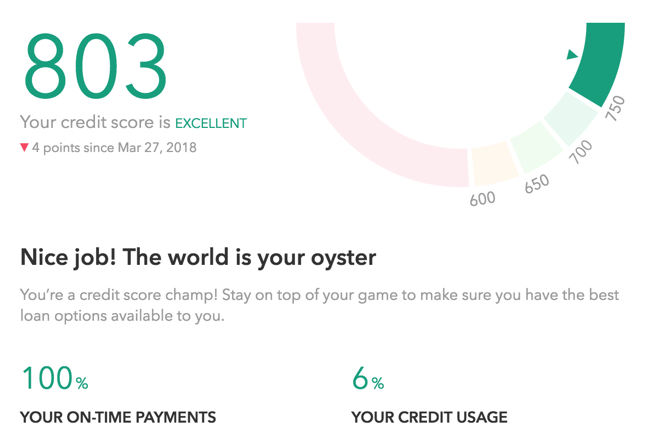
There’s no hard and fast rule, but if your rating dips into the mid-600s, you may find it difficult to get a mortgage. And you’ll likely get a higher interest rate if you do.
Should you wait and try to raise your credit rating before you get a mortgage? The answer may depend on other trends.
If your credit score is below 700 or so, it’s a good idea to make an effort to get it back up. Use a budgeting service like Mint to get regular credit score updates and monitor your spending and payment habits.
Even if you decide to get a mortgage at a higher rate now, you could refinance to a better rate later if you raise your credit score.
Most mortgages accrue monthly. Here’s how to calculate mortgage interest on a monthly basis, with an example:
In this example, the remaining loan balance after accruing interest would be $225,890.62. An amortization schedule can help you understand this information. We’ll talk about those in a moment when we discuss mortgage calculators.
Some loans, called “simple interest mortgages,” accrue interest daily, which means the rate is divided by 365 and added to the total each day. If you’re good about making payments, this shouldn’t cause too much of a problem. But if you’re even a day late, you’ll pay more.
As you start the process of researching mortgage rates, it’s important to understand that there are many factors involved. Take mortgage points, for example.
Mortgage points (also called discount points) let you pay your lender some money up front to reduce the mortgage rate of your loan. This can save you a lot of money in the long run, but it depends on your lender. (For more information, check out Better Money Habits’ primer on mortgage points).
If you have an adjustable-rate mortgage (ARM), your mortgage rate can fluctuate over the life of the loan, which will also change how interest is calculated and how much you’ll pay over the life of the loan.
To see how the interest on your loan accrues over the life of a loan, you can check out an amortization schedule.
We’ll talk more about amortization schedules at the end of this article, but if you want to get started now, I recommend using MortgageCalculator.org to get an idea of how much interest you’re paying.
As you’ll see, your early payments go almost completely to paying off the interest on the loan. Each payment only makes a small dent in the principal balance. Later in the loan period, a larger percentage of your payments start going toward the principal.
Many 30-year loans result in lifetime interest that ends up costing 60% or more of the borrowed amount. That means if you get a $300,000 loan, you may pay back a total of $480,000 or more. It’s a good thing to keep in mind while you’re making a long-term financial plan.
Now that you have a better idea of how your mortgage rate affects what you pay, let’s look at some tools for estimating what your mortgage rate will actually be. It’s important to note that your mortgage rate usually isn’t set until you close on your house.
If you’re not closing for another six months, today’s mortgage rates might not be all that useful. Nonetheless, it’s a good idea to keep an eye on them if you’re considering buying a house anytime soon.
Mortgage News Daily is a great place to start. They provide the results of their survey of lenders and originators to give you an accurate representation of the day’s rates:
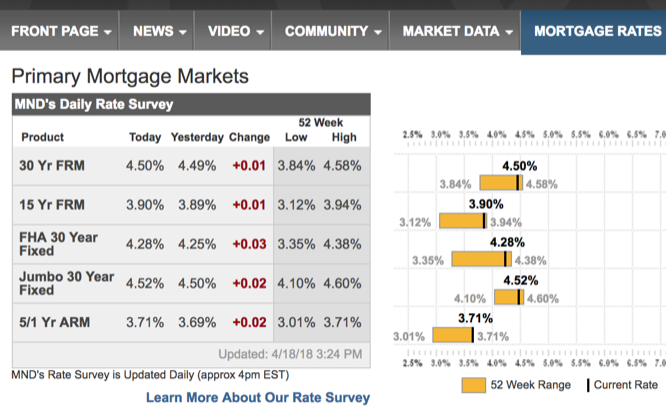
Rates are provided for 30-year fixed-rate, 15-year fixed-rate, Federal Housing Authority (FHA) 30-year fixed, jumbo 30-year fixed, and 5/1 ARM. You can scroll down to find a variety of other mortgage rates as well.
Unless you’re planning on getting a mortgage right away, the most useful information is probably the change and the location within the 52-week spread. In the image above, mortgage rates have gone up, and they’re close to as high as they’ve been in a year.
Mortgage News Daily also has a daily report that gives you information on rate changes, suspected changes in the near future, and suggestions on whether you should lock your interest rate.
You can subscribe to the report to get an email update every day with the latest rates and information.
For a simpler view of national rates, head to the Wells Fargo’s Mortgage Rates page.
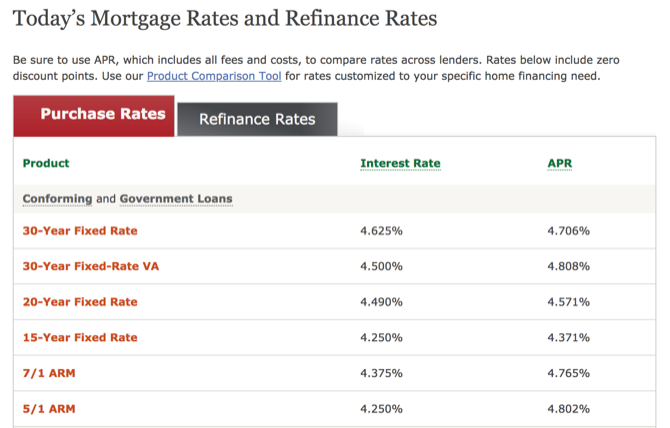
While these rates only apply to mortgages from Wells Fargo, they’ll give you a quick look at the current rates.
When I checked today, the Wells Fargo rates were higher than those reported by the Mortgage News Daily survey. In some cases, it was a tenth of a percent; in others, it was closer to .05%. So keep that in mind.
Of course, mortgage rates aren’t the same everywhere in the country. To find a sampling of mortgage rates in your area, head to Bankrate’s mortgage page. Here you’ll need to enter the value of the home you’re looking to buy, your down payment, credit score, and ZIP code.
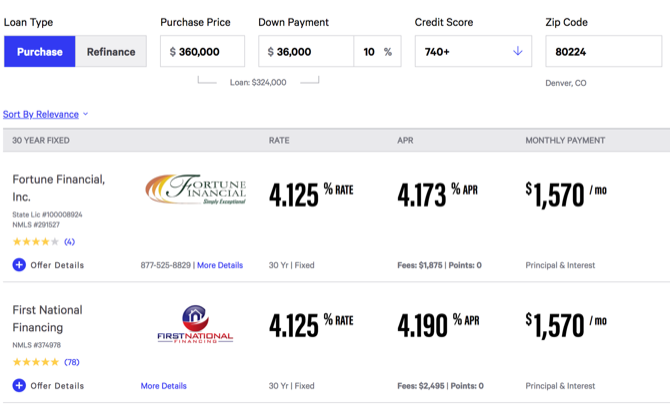
You’ll get a sampling of what different lenders are offering in your area—you’ll see the rate, fees, APR, and monthly payment.
With these sites, you should be able to get a good idea of the average mortgage rate around the country and near where you live.
But is it a good time to get a mortgage, or should you hold off? Let’s take a look at mortgage forecasts to find out.
Should you get a mortgage now? Or should you wait to see if rates get better? That’s what the mortgage forecast will tell you. Or try to tell you.
The US economy is volatile and can see large swings in short periods of time. That tends to have an effect on bonds, which in turn affect mortgage rates. So how do you know whether you should get a mortgage now or wait?
Unfortunately, there’s no single place to go to find a simple mortgage rate projection chart that tells you everything you need to know. Instead, you’ll have to look for reports.
Mortgage Rate Watch from Mortgage News Daily is a good place to start. Their daily reports often contain projections about where the market will be headed, and the contributions from licensed loan originators provide industry insights.
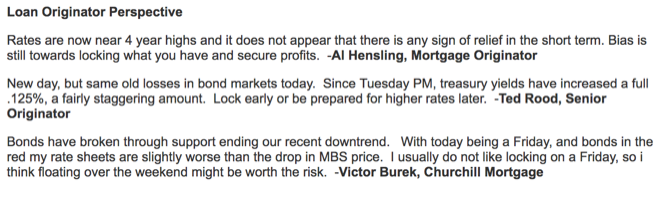
Bankrate’s Mortgage Trend Index also gathers opinions from industry insiders as to whether the mortgage rate is predicted to rise, fall, or stay the same over the course of the week.
For a more quantitative view of mortgage rate trends, you may want to visit Realtor.com’s trends page. While it won’t make predictions on where rates will be in the future, you can see where they’ve been in the past, and that can give you an idea of what could be coming.
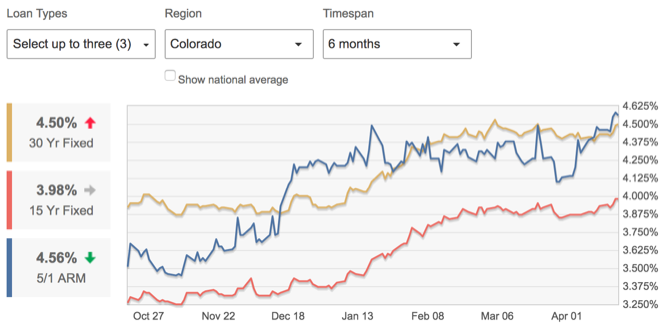
You can also limit the trends to your current location or the place where you’d like to buy to get more detailed information.
In the end, mortgage rate forecasts are just guesses. But they can give you an idea of when you should get the best mortgage rates. It’s always a good idea to talk to a financial advisor (or an independent mortgage broker) to get their opinion on the matter, as well.
While signing your mortgage at the right time will go a long way toward getting you the best rate possible, there are a lot of other things to think about, too. And a high-quality mortgage calculator will help you figure those things out.
There are certainly some simple mortgage calculators out there—Google even has one built into its results pages:
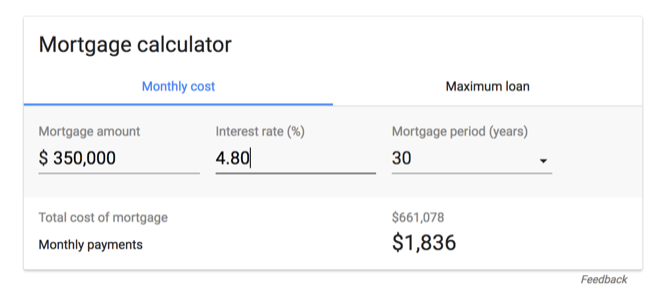
These simple calculators let you enter the size of your mortgage, your down payment, and the term. Then you get estimated monthly payments.
But if you want to really understand your mortgage rate and what it means, you’re going to want to use one of the more complicated calculators. They take into account things like fees, closing costs, prepayment penalties, and so on.
MortgageCalculator.org is one of the best mortgage calculators around. Here’s the information you’ll need to use it effectively:
With that, you’ll get a full amortization table that tells you how much you’ll pay per month, when your loan will be paid off, the total amount of interest you’ll pay, the amount of money you’ll save if you pay bi-weekly instead of monthly, and more.
It’ll take you a while to collect all this information, but most of it should be readily available from your bank, the property listing, and your real estate agent.
Once you’ve collected the information and put it in the mortgage calculator, you’ll get a result like this:
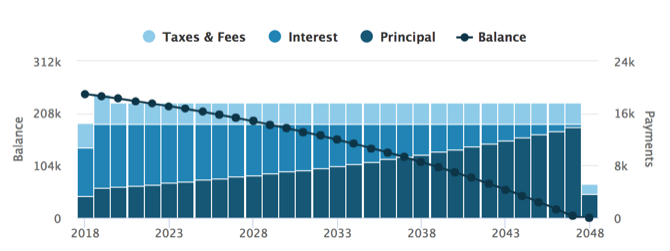
This view shows you what you pay each year, and breaks that amount down into taxes and fees, interest, and principal. As you can see, the earlier years of the loan are spent mainly paying back interest, while you start to make a larger dent in the principal later on.
Clicking on View Loan Breakdown will give you total amounts for each over the life of the loan:
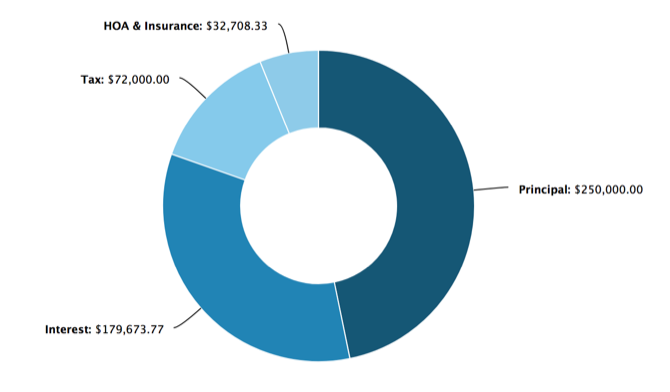
Finally, you can view an amortization table, which shows you how your payments break down each month. To get this table on MortgageCalculator.org, scroll down and click Show Amortization Tables, then select monthly or annual:
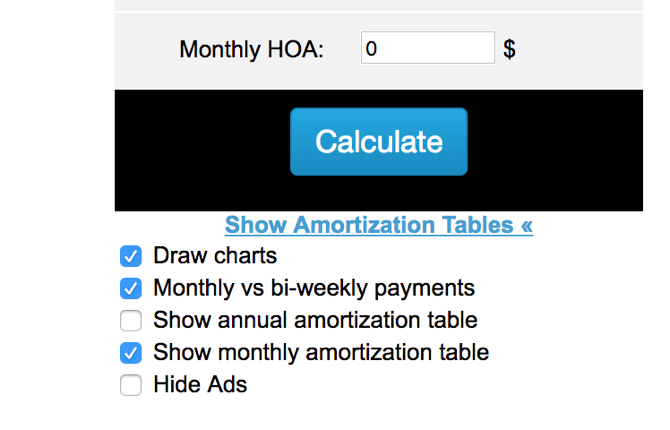
When you click Calculate again, you’ll get a full breakdown of each payment:
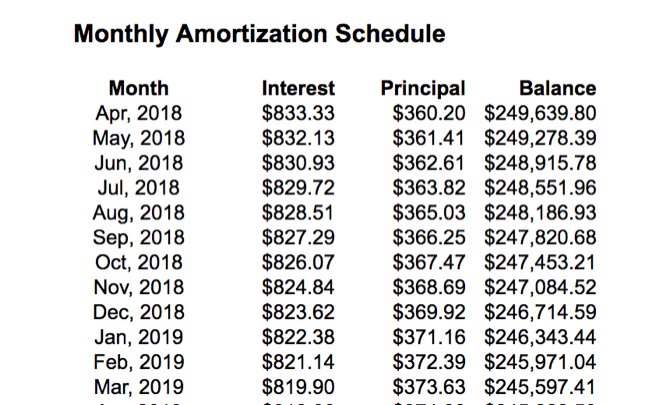
Change your mortgage rate, down payment, or any other number to see how your monthly payment breakdown changes, and you’ll start to really understand your mortgage rate.
You’ll notice that even a small change in your mortgage rate can make a difference over 30 years.
Want to see how some extra payments would help pay down your mortgage? You need a prepayment mortgage calculator.
One of the best calculators for this purpose is from HSH. Enter the amount of your loan, the loan term, and the interest rate. Then, enter your desired monthly payment or how quickly you’d like to pay the loan off. Click Calculate:
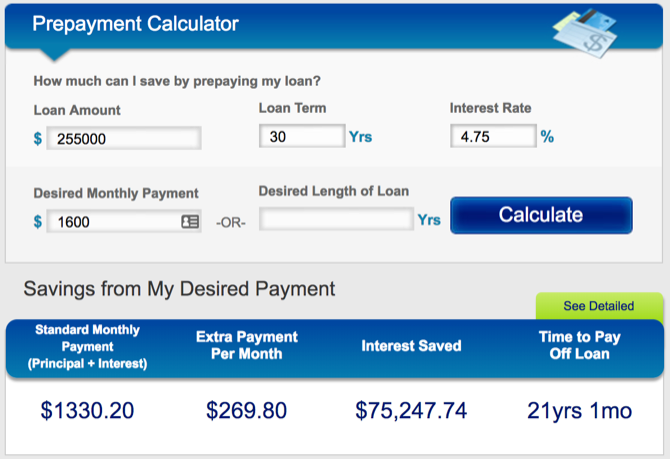
You’ll see how much extra you’re paying (or need to pay), how long it will take to pay off the loan, and how much money you’ll save in interest. As you can see, a couple hundred extra dollars each money can save you a phenomenal amount of money in the long run.
If you want the absolute best mortgage calculator, you’ll want this Excel spreadsheet from Vertex 42. You’ll need a lot of information to take full advantage of it, including all your mortgage rate information, your tax bracket, planned extra payments, property taxes, home insurance, and a few more things.
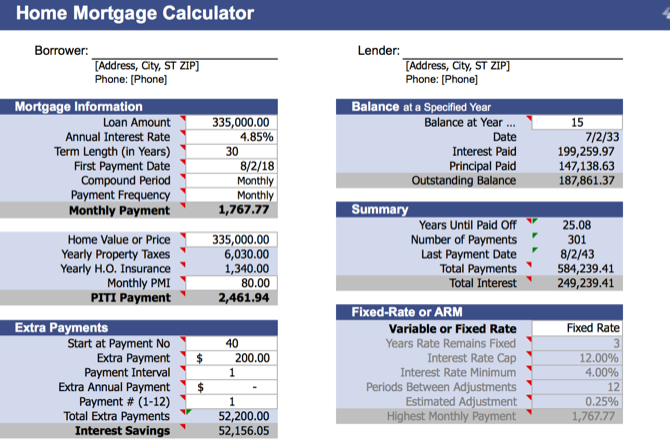
But if you can collect all that information, you’ll get everything you could want from a mortgage calculator. You’ll get a full amortization table. The total amount of interest paid. The total amount of tax breaks received. The effect of increased monthly payments or one-time extra payments. Anything you could want.
It takes a while to gather and enter all of the information you need, but this mortgage calculator can’t be beat.
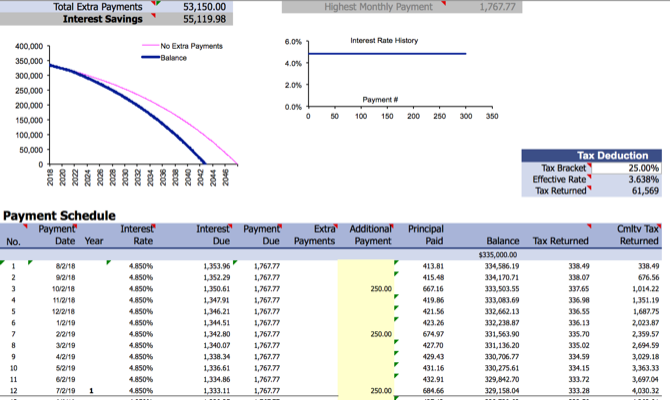
Vertex 42 also has other great mortgage calculators that aren’t quite so complicated. Check out their Mortgage Calculators for Excel page to peruse and download them!
When you’re thinking about buying a house, you’re going to be on the go a lot. You’ll be looking at houses, visiting banks, checking out new locations, and generally spending a lot of time in the car.
To get a quick calculation of your potential mortgage payments on a house from your phone, try the QuickenLoans Mortgage Calculator app.
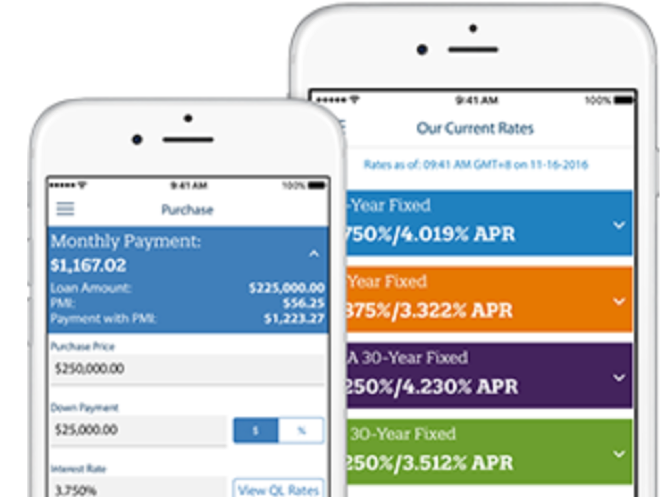
While it’s meant to get you to use Quicken for your mortgage, it does have a decent interface for getting this information quickly. You could also upload a mortgage calculator spreadsheet to the Google Sheets app and update it as you go.
Download: QuickenLoans Mortgage Calculator for Android | iOS (Free)
Armed with all of this information, you’re ready to go out and get the best mortgage rate possible. You’ll know what the average rates are, whether it’s a good time to buy, what you can afford, and what you can expect to pay for it.
With all of that knowledge in hand, you’ll be able to work with a banker to get the best mortgage rate. It could be a banker from one of the banks you found on a mortgage comparison site. Or from your own bank. Or an independent broker.
No matter who you decide to work with, you’ll be able to use this information to make sure you’re getting the best mortgage possible. Just don’t forget that mortgage is a debt and you need to be smart to get out of it.
One of the questions that a lot of photographers ask, is how much I should charge for my images? It is very hard to do, and hence a lot of artists struggle with it. There is so much more involved, and many don’t quite understand. So, how do you go about pricing your photography?

Flinders Street Station, this image took me about 3 years to get and I spent hours processing it. Hence it would have a high price on it.
There is a great story about Pablo Picasso, the famous artist. It goes like this.
Picasso was sitting in a Paris Café when an admirer approached and asked if he would do a quick sketch on a paper napkin. Picasso politely agreed, swiftly executed the work, and handed back the napkin – but not before asking a rather significant amount of money. The admirer was shocked and asked, “How can you ask for so much? It only took you a minute to draw this.” Picasso replied, “No, it took me 40 years.”
Whether this story is true or not is hard to know for sure, but it has a very good point. Most people do not consider the experience of the artist. Along with that are many other factors, like your education, the cost of equipment, and not to mention the time you spend creating the photo.
How much to charge, as you are going to see, is a complicated question and does depend on many of those factors. They are often things that people don’t really think about. Many photographers just pluck a price out of thin air and go with it. If I’m telling the truth, I have to say I was the same. I would constantly give different prices for my images.
Now I have a system in place and it is all based on the following.

I do macro for fun, so this was shot in my garden one morning and processed quickly. The price wouldn’t be high for this image.
You have to take into consideration any education you have done to learn or improve your photography. It doesn’t have to be formal education, like a university degree, but if you have paid money for it, then you need to consider the cost.
Something like a Bachelor of Fine Arts will cost you thousands of dollars. You will never recover your money if you are only charging people $20 an image, for instance. How many will you have to sell to pay off the degree at that price?
What about other short courses you may have done? Ones that are just a few weeks long, or those that are done online. You need to think about how much they cost and the time you spend doing the classes and learning to do all those new skills. There are so many online courses, from learning how to use your camera, to how to edit your photos.

While I enjoy this kind of photography, it isn’t part of my main body of work. Therefore, it would never be editioned as it isn’t worth as much.
If you are anything like me, you have spent a great deal of money on your photography gear. Though you also need to think about what you have bought in the past and what you have now. For instance, how many cameras have you had? How many lenses have you had over time?
Consider all your accessories as well. Think about your camera bags, tripods, filters, memory cards, camera straps, etc. These are often forgotten, but they all add up and should be considered when pricing your photography work.

This was taken with a good macro lens and an expensive camera so those factors should be taken into consideration when pricing the image.
Every time you go out to take photos, how much time do you spend in the field? Don’t think just about the length of time it takes to take a photo. You need to think about how far you traveled to get there and back. Did you have to drive around quite a bit?
When I go out shooting I can be gone all day. I might leave early in the morning and not get back until late that night. During that time, I may have traveled over 250 miles or 400 km, and used a tank of fuel. Not to mention having to buy two to three meals. It all adds up and if you are selling your images you need to consider these things as well.
Then what happens when you get home? The images are put onto your computer and then processed. It is going to be different for everyone, but you will likely spend anywhere from 15 minutes to several hours on each image. All this time should be considered when you are pricing your photography.
You should be giving yourself an hourly rate so you can add that up at the end to add to the price. While you may have gotten several images to sell in that one trip, you can divide it up and spread it out over the series.

This image is a combination of two and I spent many, many hours on it. I would ask for a high price for this one.
If you plan on selling your work as limited editions, then it will be worth more as you can only sell so many. When you do a limited run of an image they must all be identical and numbered, according to where in the edition they are, for example, 1/10, or 4/10, etc.
An edition is where you decide how many of that image you will sell. The number is up to you, 10, 20 or 100, maybe more if you think the image will be in high demand. However, the more there are in the edition the lower the value will be.
You have to be very organized to edition work and keep very good records. Once the edition is sold, you cannot sell anymore. There is some debate as to whether you can rework the image so that it looks different, but that is perhaps for another article.

This image would be part of my body of work and would definitely be put into an edition, perhaps with a limited run of 10.
Most know that you have to include the cost of printing. If you are selling the image you need to make sure the print is a good quality. Printing it yourself with a cheap printer and ink is never a good idea. Most of those will fade with time and you will be selling someone a print that won’t last a lifetime or more.
Make sure that wherever you get the work printed that it is archival. There is nothing worse than buying a piece of art from someone and then in 10 years it is gone because it was printed badly.
When you are preparing your work for sale, make sure you get the cost of a professional printing job and include that in the price.

An image that was done for fun. It would still be printed well, but the price would be lower than others.
This may seem like a good idea, it gets your foot in the door, but the reality is that it rarely works. Once people know they can get images from you for free then they will continue to expect that. When you stop, they will just go to the next person. You should always charge for your images and your work.
You should also not sell your images for next to nothing. Think about how you are harming the industry by doing so. If it were any other industry and people were selling their services or products for much less than others it would be considered wrong, or cheap would mean not good. You need to consider every aspect when pricing your photography

This is a bit of a throwaway image, taken during a time-lapse with a few hundred others. Still, it would never be given away for free.
So when someone asks you how much is your image worth, think about all the things that have been mentioned here. Of course, you are not going to charge thousands, but you want to get some of what you have spent back. Each time you sell one photo you have to work out how you can start to recoup the costs you have outlaid for your photography.
Please share your thoughts, if you have anything to add, on pricing your photography tips in the comments section below.
The post How Much is an Image Worth? Tips for Pricing Your Photography appeared first on Digital Photography School.