Walk into almost any long-established portrait studio, and you’ll likely see traditional portraits hung on the wall, deeply matted, and in heavy wood frames. Making photographic enlargements on photo paper, matting them, and putting them into a frame is a time-honored tradition for displaying prints.
While this style of display is great, I’m going to show you how to display photos without frames and without matting them onto boards. The trick for how to display photos without frames involves using printing processes other than printing on paper. Artbeat Studios offers several of these methods and is my go-to place for different printing styles.
Part of the appeal of thinking of how to display photos without frames is that we have many methods for displaying our images today. These new methods weren't common when printing on paper, matting the photos, and putting the finished matte board into a classic frame was the common way to hang images on a wall.
As we consider the processes used and other ideas of how to display photos without frames, we see that even the thought of hanging the finished product on a wall is not the only display option we have available to us. Displaying some of these other types of prints on a desk or a tabletop holder works great.
Check out the YouTube video above from ArtBeat Studios about making large prints from iPhone photography for some inspiration!
Metal Prints
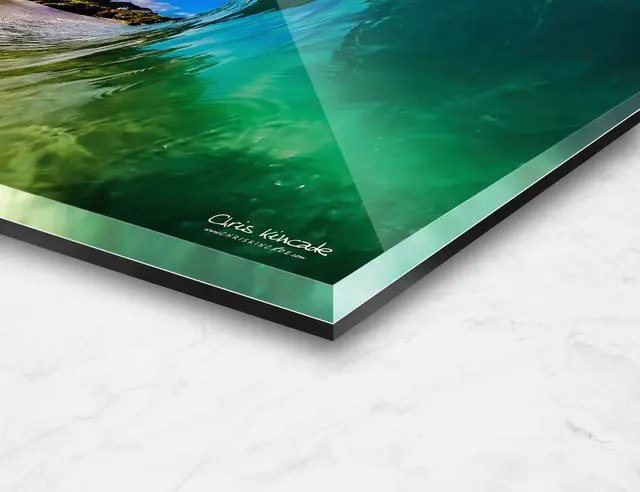
ArtBeat Studios makes metal prints by printing on ChromaLuxe® brand aluminum sheets through a heat infusion process with specially formulated inks that actually become a part of the metal instead of the ink simply sitting on the surface of the material.
There are five finishes available from ArtBeat Studios, and the pics can be hung on the wall with a standard inset or a flush mount. The prints are stiff enough to be displayed in a holder that sits on top of a flat surface, too.
Metal prints are a very modern look for displaying photos, working with all sorts of photo styles and genres. It’s one of my top thoughts on how to display photos without frames.
Acrylic Prints
In a similar vein as metal prints, acrylic prints are a premier method of how to display photos without frames for a lot of the same reasons.
The image is first printed onto metallic paper, then face-mounted onto a clear UV-resistant acrylic sheet. This paper and the archival inks result in a luminous and iridescent appearance that, when lit from the front, provides the same type of deep color and intense viewing experience that you see in art gallery shows.
Canvas Prints
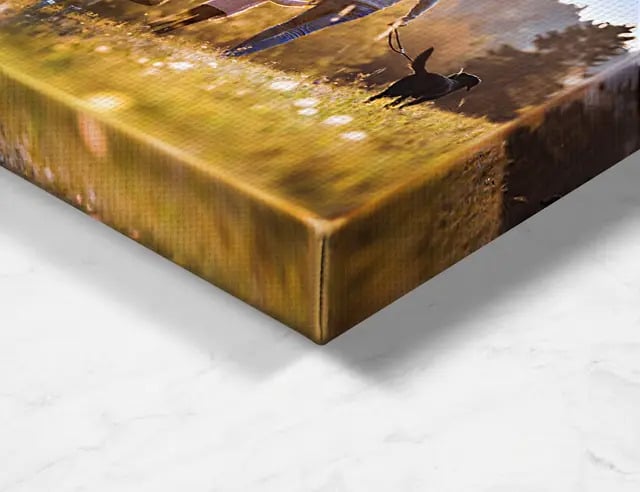
Canvas prints or canvas wraps are another fine way of how to display photos without frames. A cotton canvas material is printed with eco-solvent inks, and that material is then stretched over a wood frame which can be displayed as-is or put into any of several styles of frames.
Canvas prints are often chosen as the display method for more traditional styles of imaging, such as landscapes, classic portraits, or still-life art. The canvas material adds a slight texture to the final image, which works well with many types of image styles.
Heavy Matte Boards
A photo printed on regular photo paper can also be displayed with no frame by mounting the paper print onto a heavy matte board. This method is the way that many art fairs allow photographers to sell prints and also works well for office cubicles and dorm rooms.
Low Profile Frames
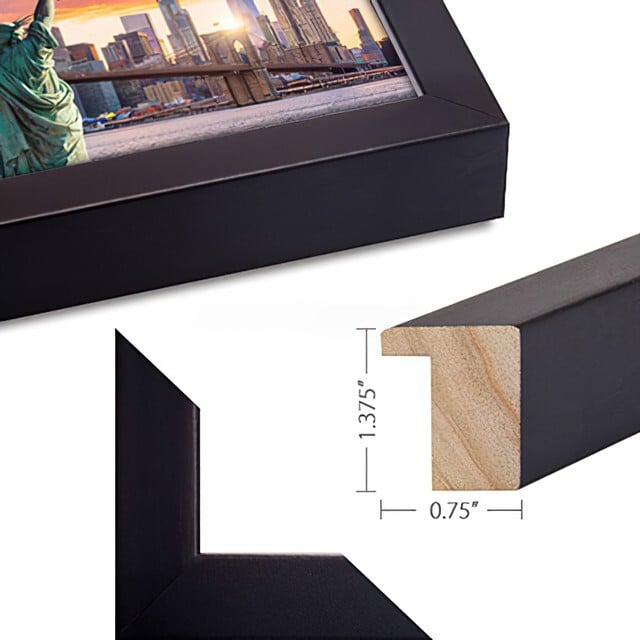
If you do decide to use a frame, low profile frames can help maximize the impact of the image itself without a large frame and huge matte board taking up a lot of attention. For canvas prints, floating frames are another option.
A fantastic gift idea and another great method for how to display photos without frames are electronic photo frames and other digital displays for images. There are so many options for this method that you may simply want to do a Google search for something you’ll like.
Final Thoughts How To Display Photos Without Frames
I hope these ideas for how to display photos without frames give you some inspiration for sharing your fine photography images with other people in real life. Whatever style of photography you enjoy, showing others your images is one of the great joys of photography.
It stands to reason that the Florida panhandle town of Destin – self-dubbed “The World’s Luckiest Fishing Village” since the 1960s – is also home to a Gulf Coast museum dedicated to fishing.
While largely unknown and not appearing on state maps until well into the 1970s, Greek immigrants discovered Destin’s offshore treasures decades earlier in search of livelihoods. The Destin History and Fishing Museum documents and celebrates the history of those early days. Residing in the town’s original library building, it's tucked away one block north of Highway 98 not far from the harbor entrance.
Photos, paintings, maps, and framed memorabilia beginning in the 1930s cover nearly every inch of wall space in the main rooms. Even the restrooms have original art and photographs. A massive diorama in the back room depicts the shades of turquoise water by depth, displaying taxidermy examples of at least one of each of the 50 different types of fish that make their home in the waters within 50 miles of the harbor.
Those varied depths hold a cornucopia of fish: mullet, tuna, wahoo, snapper, grouper, pompano, cobia, mackerel, and mahi-mahi. Even the elusive billfish, such as Blue or White Marlins and Sailfish, could be found nearby. Successful fishermen began by catching the fish to sell, but year by year the word got out, and one of the world's largest charter fishing boat fleets grew into being.
Outside the building are an extensive array of exhibits, from Destin’s first Post Office building to the Primrose, one of the original wooden Greek fishing boats. It’s hard to miss the ridiculously large shark jawbone. The latter traces to the filming of Jaws II in the area in 1977 and was one of the catalysts that, finally, put Destin on the map.
It has long been said that horseshoes can serve as a protective charm against bad luck. In the village of Byards Leap, however, the four horseshoes fixed into one memorial tell a story that takes this protective reputation to another level.
This small village is believed to be named after a blind horse named Byard. It's said that Byard, for his blindness, was the only horse not frightened by a local witch's appearance. This local witch, Old Meg, tormented and blighted the village for many years when a local hero decided to deal with her. Selecting Blind Byard, for his unique disposition, the hero rode to the witch’s lair and attempted to lure her out.
Outsmarting the knight, the witch appeared behind Byard and plunged her dagger-sharp fingernails into his rear. In shock, Byard is said to have lept 60 feet, carrying both the knight astride him and Old Meg, riveted by her nail, behind him.
On landing, Old Meg landed beneath Byard’s falling hooves and was crushed. To this day, four horseshoes mark the spot that Byard leaped from, and another four mark the site upon which he landed, ending the terror of Old Meg.
By Tyler Durden Americans are moving to Mexico at the highest pace since the stats first became available in 2010 — with requests for temporary-resident...
A total lunar eclipse known as a “blood moon” will appear around the world on Tuesday, Nov. 8, coming hours after polls open across the United States for the midterm elections.
The space phenomenon will be visible to viewers in North America, Central America, Asia, Australia, some Pacific islands, and in portions of South America. In the United States, the eclipse will start Tuesday at 3:02 a.m. ET or 12:02 a.m. PT, according to NASA’s website.
At that time, NASA says on its website, the “Moon enters the Earth’s penumbra, the outer part of the shadow. The Moon begins to dim, but the effect is quite subtle.” The total lunar eclipse will start at around 5:17 a.m. ET or 2:17 a.m. PT, the website adds....
YouTube maker Scott Prints created this gag for his car. No, it doesn't actually eject the passenger, but it is a wired button that does activate something.
Specifically, it's wired to a garage door opener. The device lodges into a cubby in his car. This video shows his step-by-step process for designing and building the gadget.
Scott Prints hopes that his next passenger asks about it. He already has a few lines prepared:
"It came with the car. I've never actually pushed it." (while reaching for the button)
"It's for my other job."
"We'll get for that. But first, who did you vote for?"
"Eh, don't worry about it. Also, don't push it."
He asks that viewers suggest their own lines to feed to unwary passengers.
For decades now, I’ve done a series for American Handgunner magazine called “The Ayoob Files” in which we dissect and analyze actual gunfights. Some are historical, but most are contemporary and include interviews with the survivors. I recently reviewed this one. That September/October 1991 issue covered a classic and tragic incident in Baton Rouge. A […]
What is brining? Why does it matter? What are the pros, cons, ins and outs of it?
If you’ve ever asked any of these questions, you’ve come to the right place.
Here we’re going to discuss the benefits of brining, helping prevent you from slicing into a dry, flavorless chicken breast or pork loin. It’s an easy solution to ensure that your meats retain natural flavors, stays moist, and even improve that delicious crust on the outside.
Whether you’re getting ready to prepare a Thanksgiving turkey or even a prime rib roast, this simple process will assist in infusing flavor and retaining moisture.
Brining will also give you built-in forgiveness on the grill and in the oven, as it helps to season and tenderize the proteins. Leaner meats such as shrimp, chicken, and many cuts of pork don’t have the same inter-muscular fat as beef. Therefore, they are less forgiving, and easy to overcook. Furthermore, resulting with dry, bland tasting food.
How Brining Works
If you’re looking for a cheat code to combat dry meat on the grill, you’re in the right place.
Brining improves the ability for lean cuts of meat (such as turkey, chicken, and pork) to retain their moisture during the cooking process. This extra step can really make a difference whether you’re using a water-based brine or a dry brine.
Muscle fibers in meat are surrounded by muscle proteins. As the meat cooks, it contracts these proteins which squeeze moisture out of the muscle fibers. The longer the cook, the more moisture is extracted.
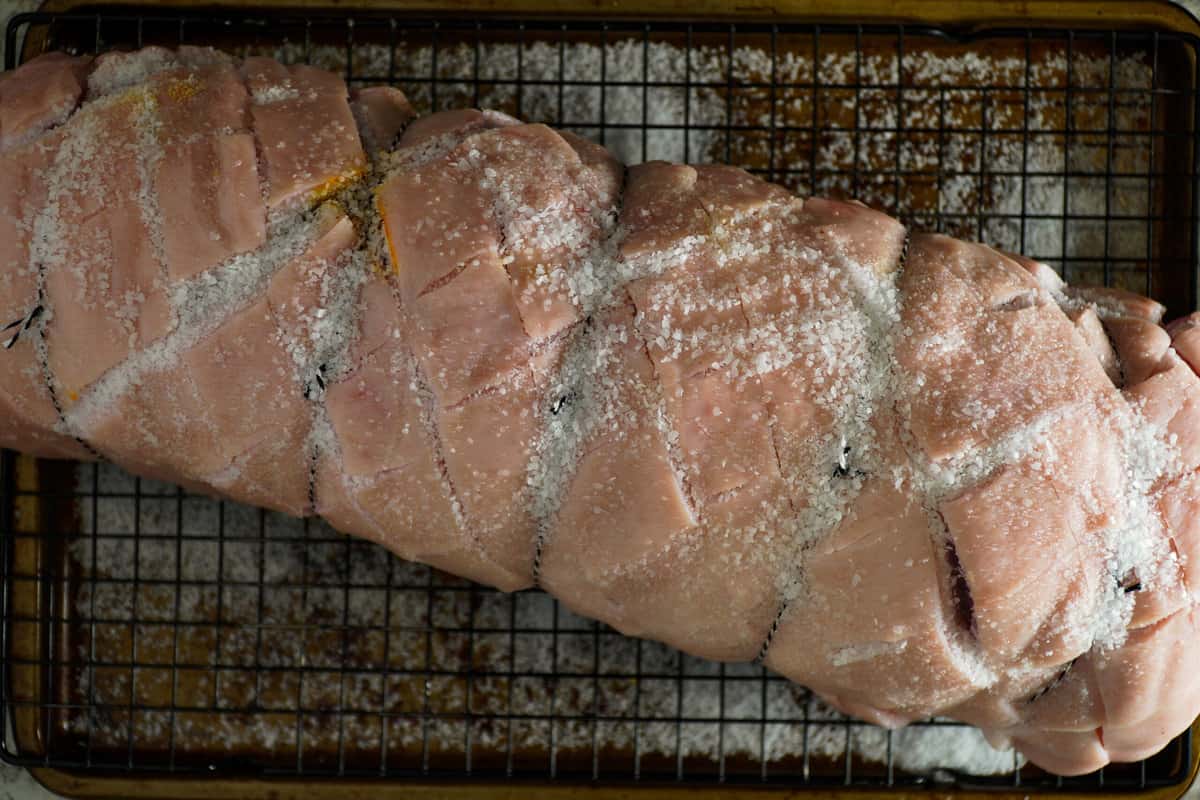
Chorizo Stuffed Porchetta Dry Brining: Recipe Here
Different cuts of meat will also have various amounts of moisture – think about a fatty ribeye versus a chicken breast. It takes much less time for a chicken breast to go dry over the grill.
The goal of brining is to insert salt into the meat. Once inside, salt slows down the shrinkage of muscle proteins by dissolving some of them. Muscles end up absorbing more moisture and also squeeze out less during the cooking process.
That means your chicken breast is much juicier, and will also be more forgiving if you cook it a little longer than intended!
Salt Choices Matter
Stare at the spice rack in the grocery store and you’ll realize there are many different types of salts to choose from. Don’t get salty about it, but instead let’s keep it very simple.
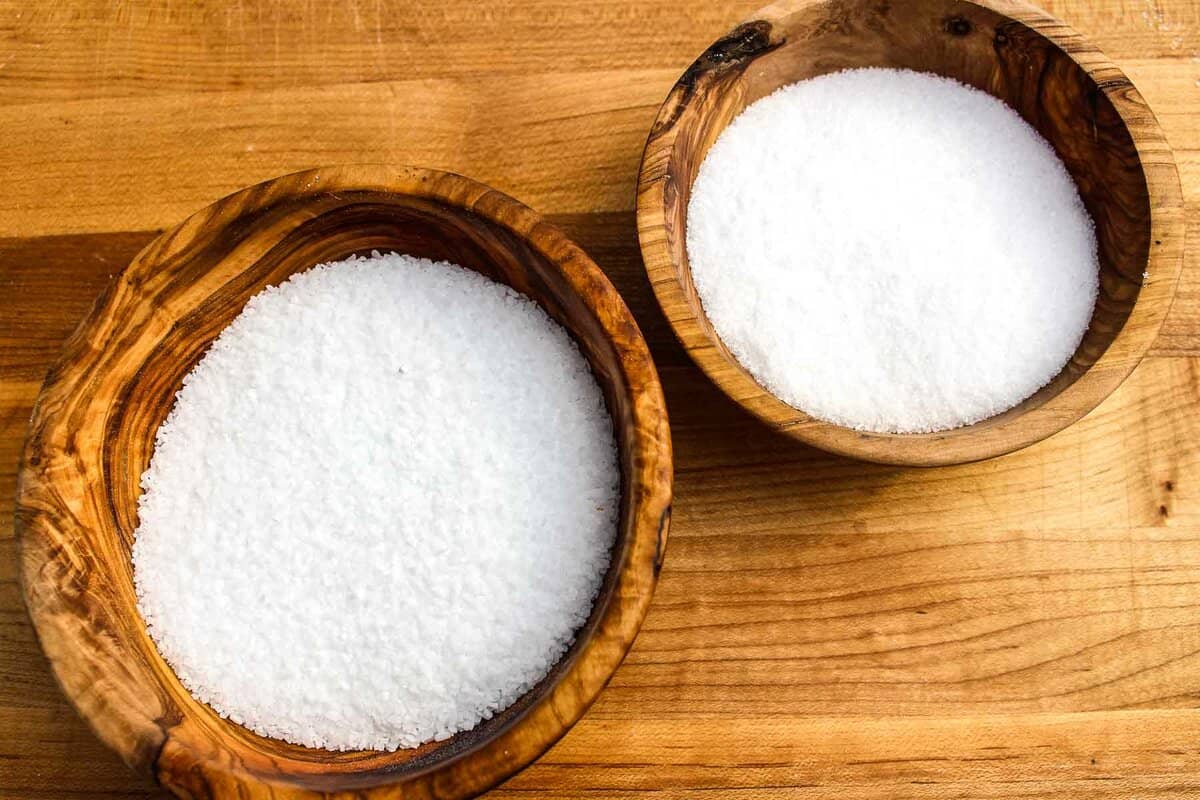
Wet brines should use Kosher salt, coarse if possible. Kosher salt happens to be one of the purest, and consistent salts. Sea salt is commonly used with meats, however the weight can be very inconsistent depending on the level of moisture remaining in the crystals.
Due to the moisture, sea salt may also contain additives such as anti-caking to prevent the crystals from clumping. Larger salt crystals tend to dissolve easier than smaller crystals, hence my recommendation for using a coarse version of Kosher salt.
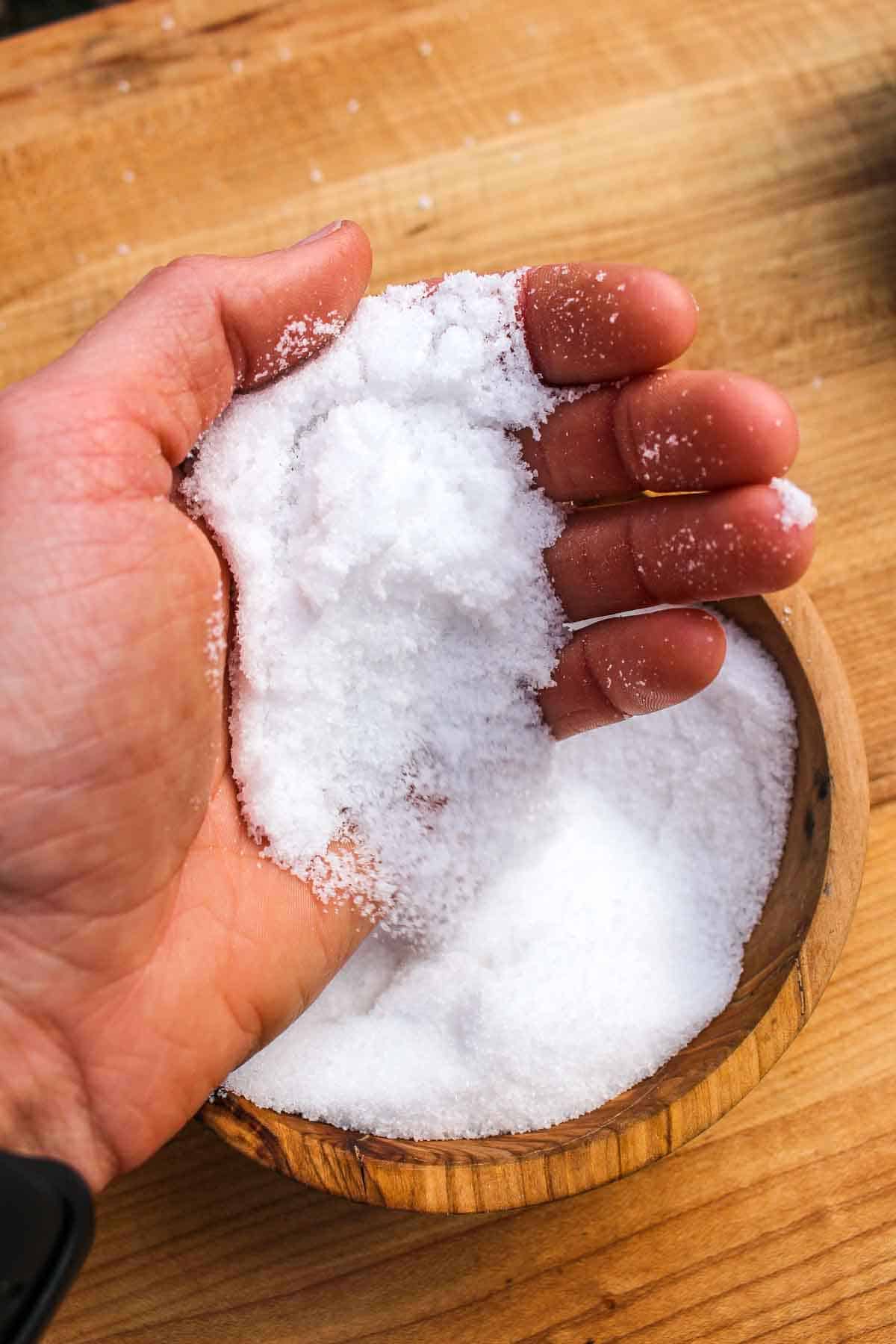
Dry brines should use a fine salt. Kosher salt or sea salt, use what you prefer for flavor. The biggest key is that smaller salt crystals will penetrate the meat more easily with a dry brine process, so avoid coarse crystals.
Most premade BBQ seasoning blends will use a finer salt, making them ideal for dry brining as well.
Benefits of Wet Brining
Most of us probably associate brining with the process of wet brining, which is basically soaking your meat in a salt water bath. A base recipe for a wet brine is water and salt only. It’s sole purpose is to help the meat to retain moisture while also seasoning and tenderizing it.
This process really became popular in the late 90s when folks were just fed up with dry Thanksgiving turkeys. Alton Brown put out an episode of Good Eats with his recipe, and from there it really took off. If you’ve got 5 minutes, it’s a good watch!
It’s important to clarify that a wet brine is NOT the same as a marinade. Marinades do have salt, and meat does soak, but the purpose is to quickly tenderize the meat while infusing the surface with a myriad of flavors.
When to Use Wet Brining
So, which meats should you treat to a salt bath? Well, Turkey is the classic and obvious answer, but there are certainly more cuts of meat that benefit from the wet brining process.
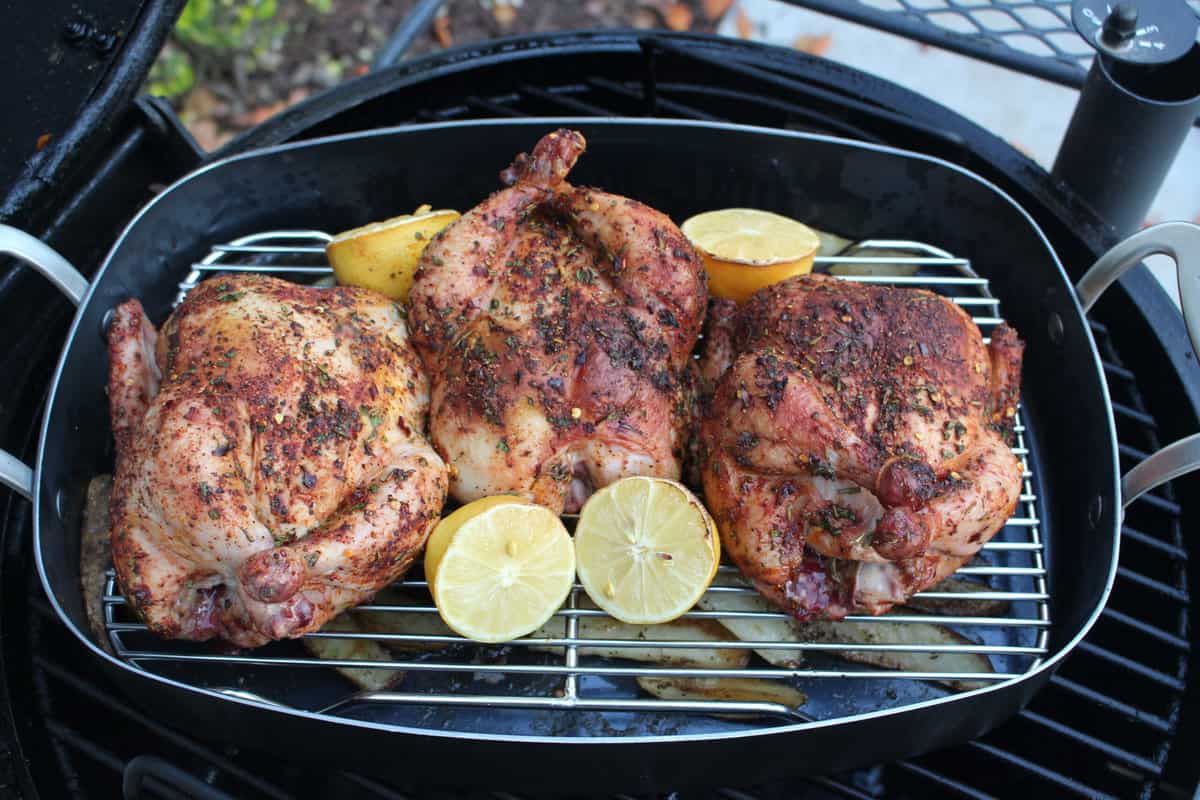
Just about any cut of poultry works really well – from whole chickens, cornish hens, chicken wings, and even game birds. Most birds have a lower ratio of fat in the muscles leaving them prone to dryness on the grill or in the oven.
Pork is another cut that works well with wet brining recipes. Many of the cuts are leaner, but even a rack of babyback ribs can benefit from a salt bath.
Thicker cuts such as pork loin or a roast will have the greatest benefits due to their sheer size. Unless you inject, it’s very difficult to season the inside of the meat without using a wet brine.
How to Wet Brine Meat
Make sure there’s enough fridge space for a large container that can hold a significant amount of water and the cut of meat you’re choosing. Drink up some of that beer and make room!
Most wet brines range between 5-8% salt to water by weight. Sticking to a 6% ratio is a safe bet, giving enough flavor without adding too much sodium to overpower the meat. There are some great brine calculators out there to tell you exactly how much salt to use depending on the water levels.
Measure out the water. The amount you’ll need will depend on the cut of meat that you have. Use enough water so that the meat is fully submerged. Plan on at least 2 gallons of water for larger cuts, even 3 or 4 if it’s a large turkey.
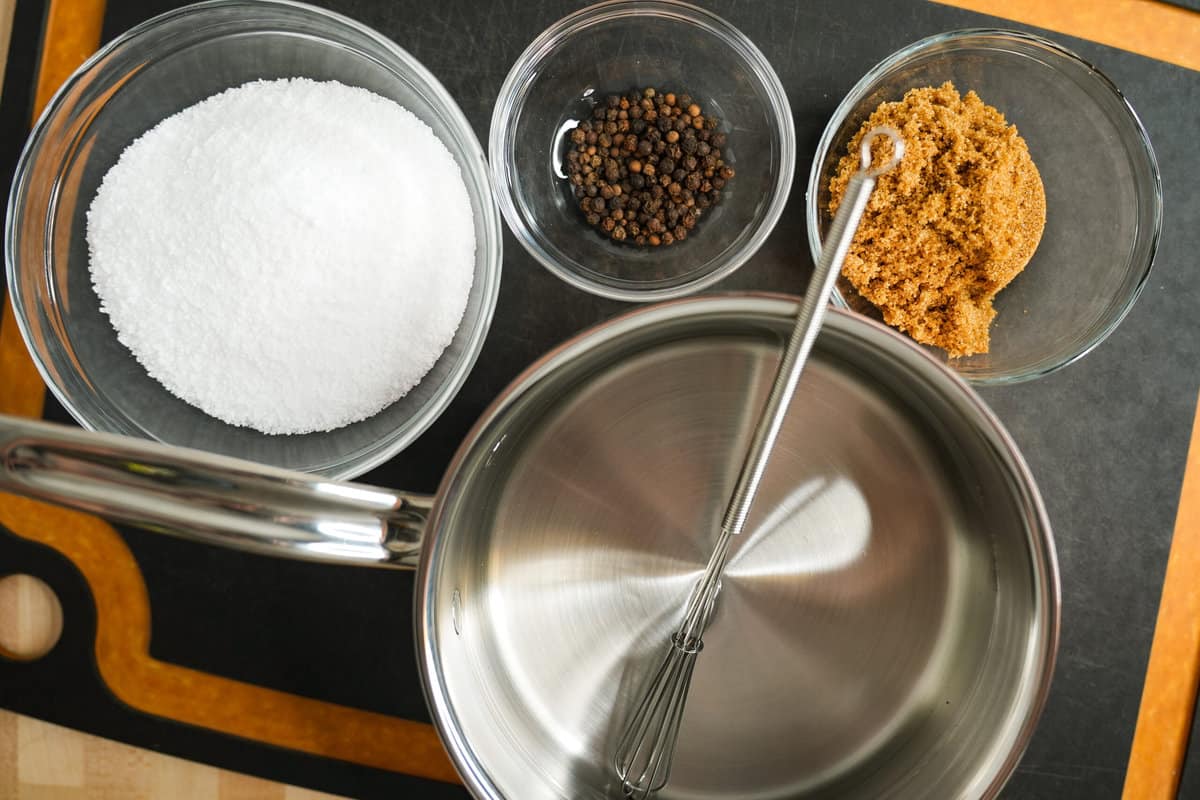
Measure out the salt. Kosher salt is the most common for creating a wet brine. Using 1 level cup of Kosher salt per gallon is going to provide a brine that is close to 6%.
Warm up the water and the salt. Dissolving the salt is critical, allowing it to be evenly dispersed in the brine. The water doesn’t need to be at a high boil, just hot enough to make sure the salts dissolve.
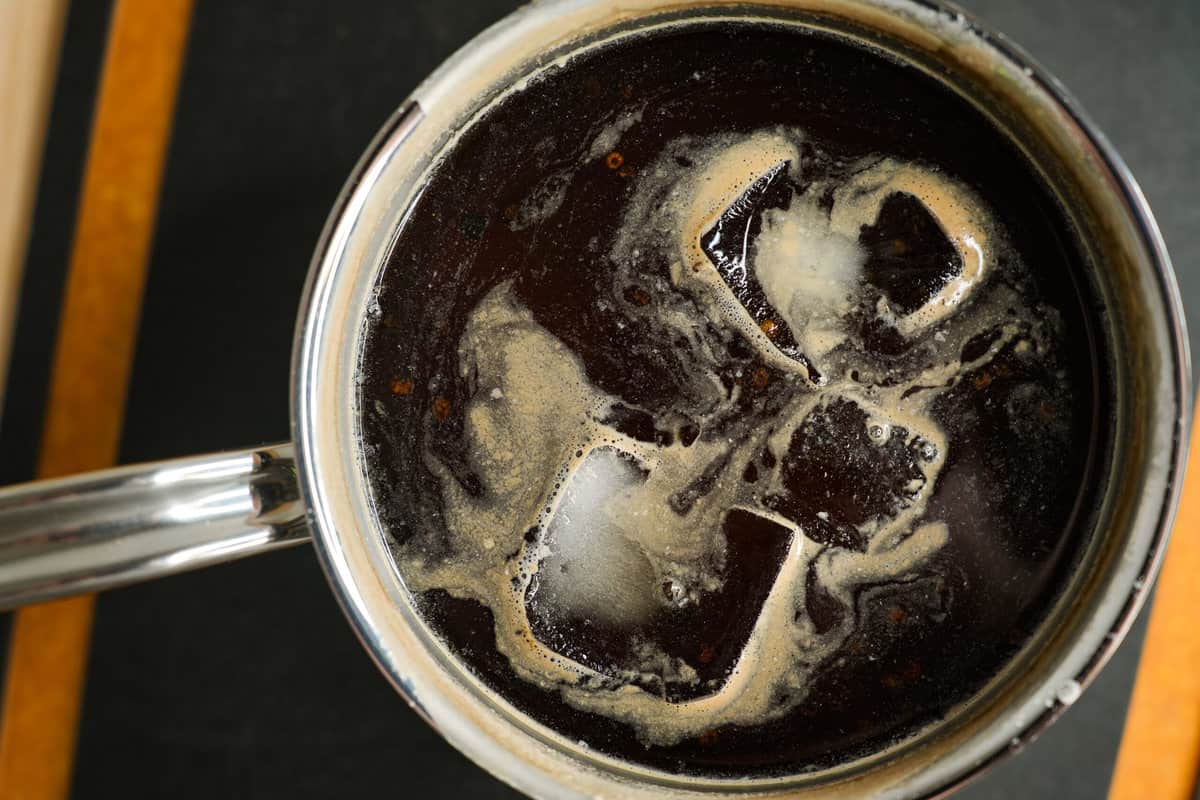
Cool the brine. Allow the brine to completely cool before placing the meat inside, otherwise you’ll risk partially cooking the meat.
Brine the meat in the fridge. Timing will vary depending on the size of your cut, but use a guide of 1 hour per 1 pound of meat, and you really can’t go wrong. It won’t hurt if you go a full 24 hours for a larger cut such as a 16-pound turkey.
Additions to the Salt Solution
Perhaps you’ve seen grandma add in a handful of bayleaves, a cup of sugar, and a fistful of peppercorns. These additions can certainly add some flavor, but they won’t necessary seep into the muscles in the same way as the salt.
Wet Brine Ingredients for Smoke Fried Turkey: Recipe Here
These molecules are much larger than dissolved salt, preventing them from seasoning deep inside the meat. They do flavor the outside of the food however, and the sugar actually helps promote browning on the outside. Browning equals more flavor, so that’s a great thing!
Use ¼ cup of sugar per 1 cup of salt, as a general rule. Some recipes might ask for more, and that’s fine. You’ll want to dissolve the sugar along with the salt when heating up the brine. Keep it simple!
Cooling the brine with Ice for Smoke Fried Turkey: Recipe Here
Aromatics such as spices and leaves will season the outside of the meat, but you’ll need to use a pretty substantial amount to make a real difference for larger cuts. Don’t be afraid to add ½ cup (or more) of dry spices to the warm brine.
Pros and Cons of Wet Brining
Wet brining can certainly benefit larger cuts of meat, but there are also some downsides. Understanding the differences will help you determine if this is the best process for your recipe.
Pros:
Adds significant moisture to the meat, therefore there’s more forgiveness on the grill.
Tenderizes the meat, very helpful for tougher cuts such as pork chops.
Evenly seasons the meat throughout, especially important for larger cuts.
Cons:
Waters down the natural meat flavors slightly, the juice from the meat is also the salt solution.
Outside texture may not be as crispy. Adding sugar in the brine can help.
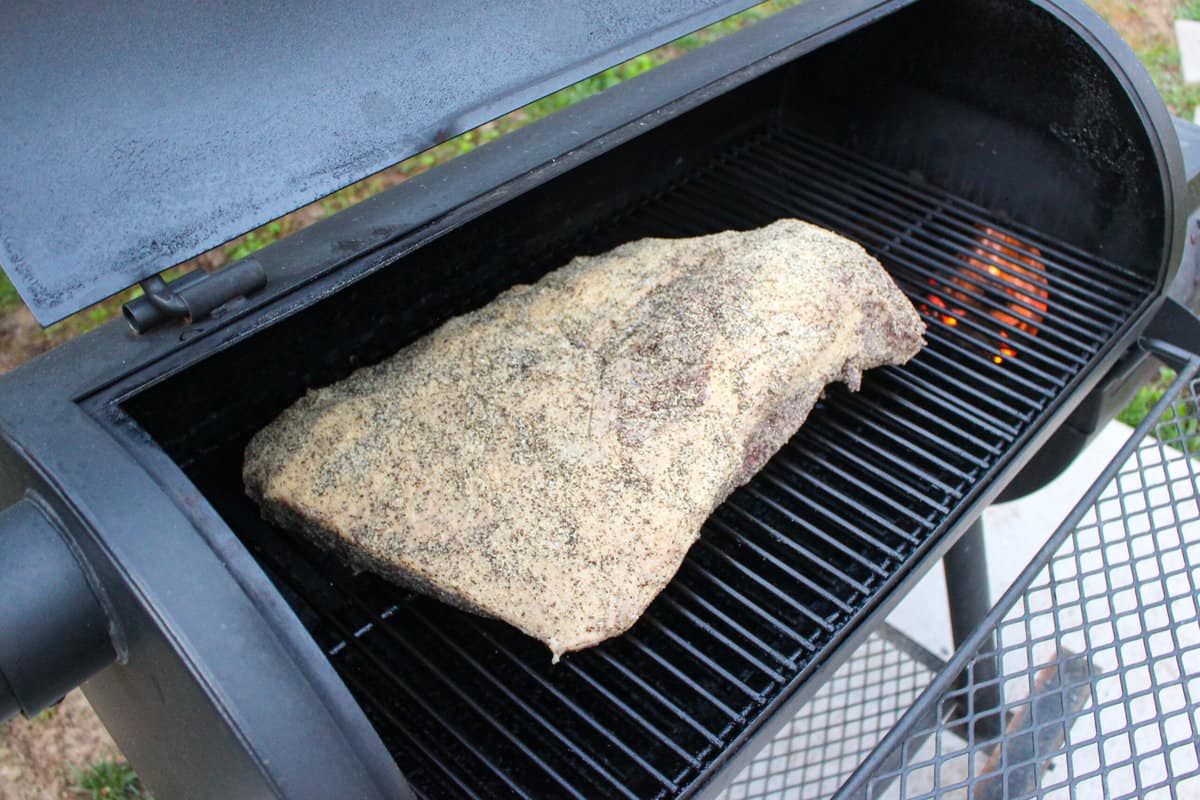
Let’s talk about the process of dry brining, which is really a fancy term that simply describes “pre-salting” the meat ahead of time. The meat is allowed to rest in a fridge, uncovered, for a period of time to allow the salt to naturally dissolve and get sucked inside, seasoning the inside.
Dry Brining Crispy Korean Pork Belly Sandwiches: Recipe Here
Strong opinions have formed over the recent years about dry brining versus wet brining, to the point many chefs have abandoned the wet brine. There are clear advantages for each process, and also preferred choices of meats to use for each.
Dry brining is certainly the simpler process of the two.
Smaller individual cuts such as steaks, chicken breast, or even fish tend to benefit the most from dry brining. It can also be used with larger cuts like roasts, pork belly, or even whole birds.
Let’s Get Nerdy with Dry Brine
Do you remember your highschool science class about osmosis and diffusion? Well, those two processes come to life when you season your thick ribeye steak and allow it to dry brine.
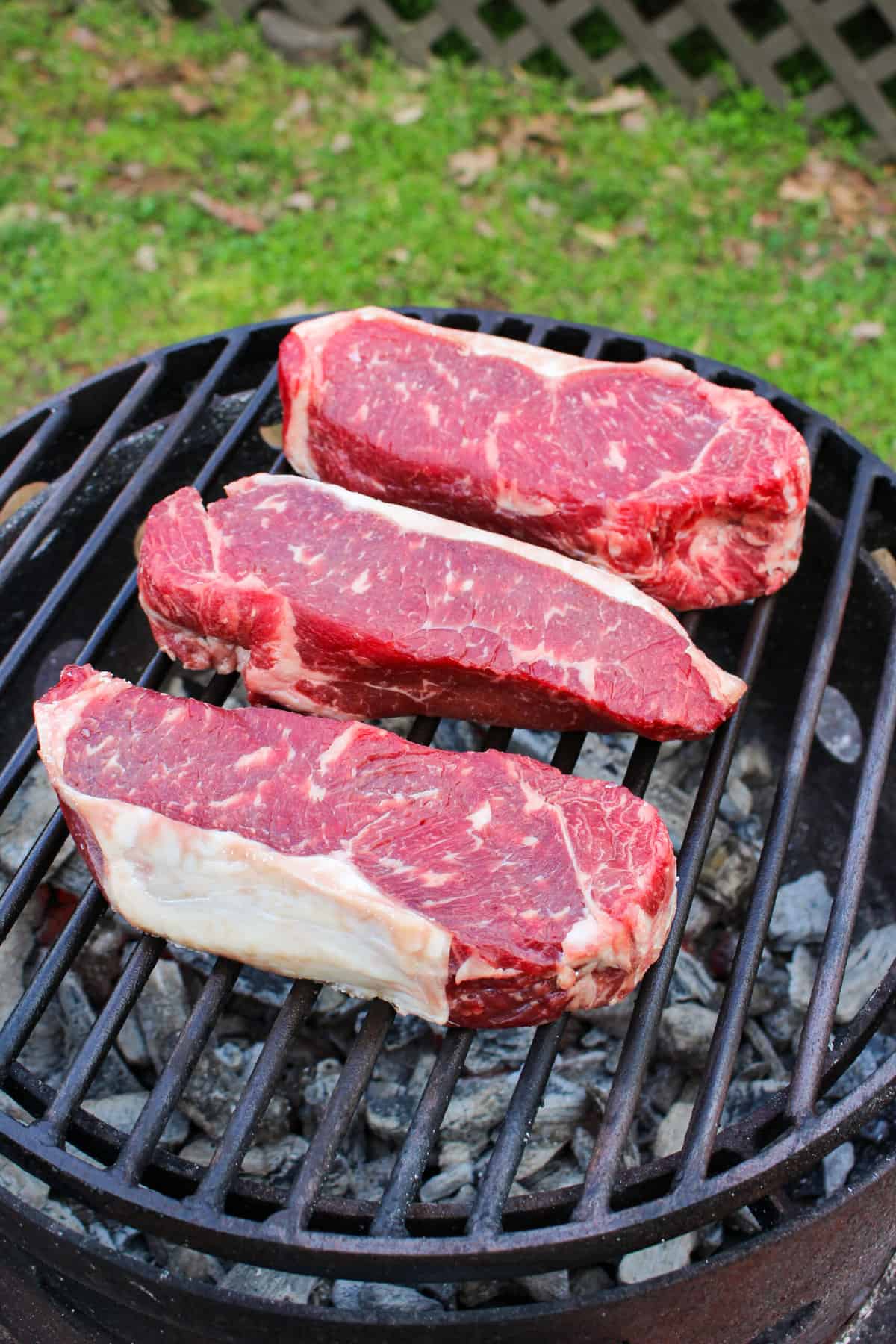
Season a steak with salt and you’ll notice that liquid starts to form on the surface after a few minutes. The salt is drawing out moisture, the process of osmosis. As the liquid pools onto the surface it also causes the salts to dissolve, creating a natural brine.
Over time, the dissolved salt brine on the surface will be absorbed back into the meat, through the process of diffusion. Just like the process of wet brining, the salts will tenderize the proteins surrounding the muscle structures and slow down their constriction while cooking. Think of the steak as a wet sponge, full of juicy flavor. You don’t want the muscles to squeeze all of it out!
Additional Benefits of Dry Brining
Dry brining provides a few additional benefits that might seem obvious once they are pointed out:
Dry exterior, providing the means for an epic crust when searing
Pure, natural flavor of meat
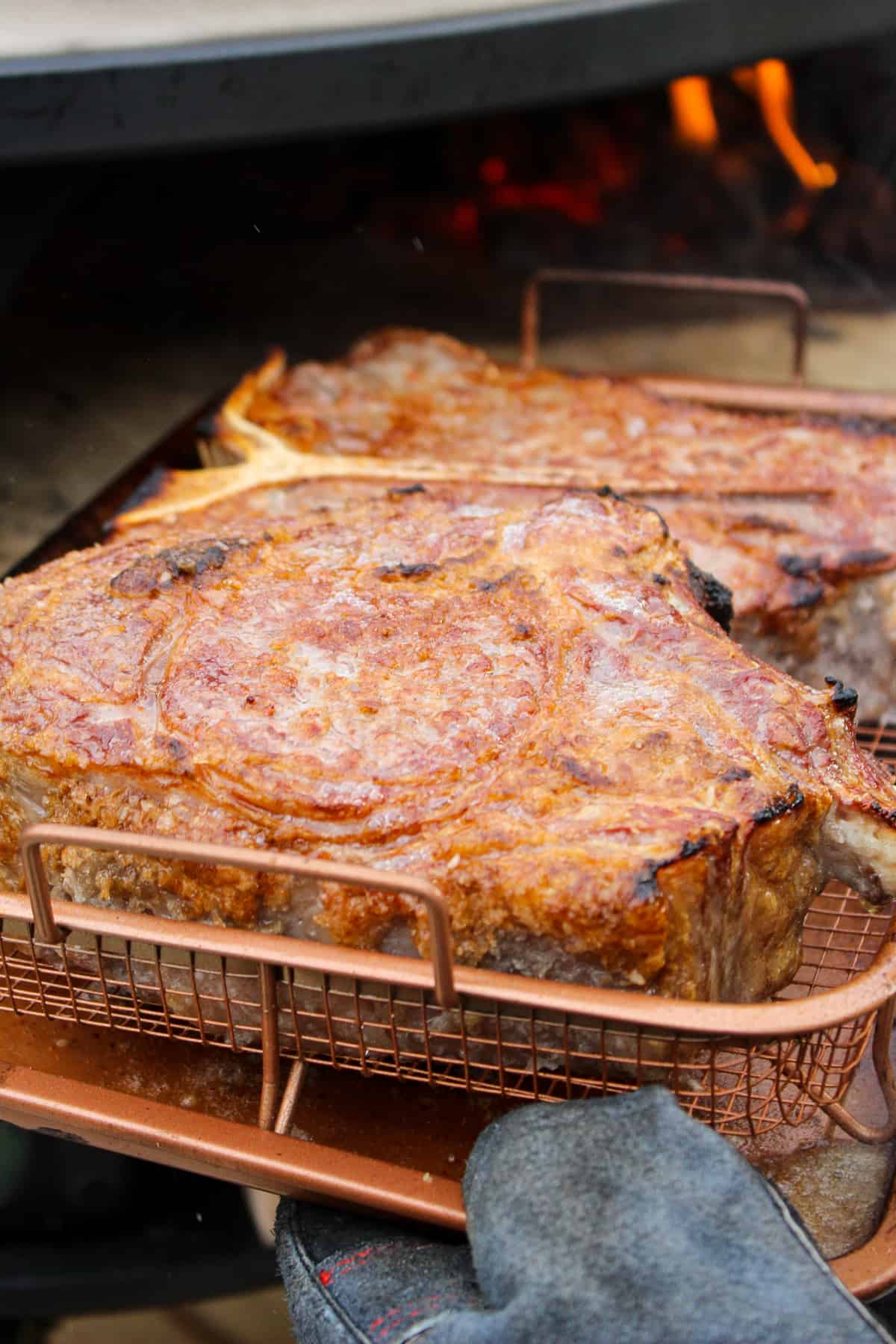
Crust Achieved by Dry Brining. Peter Luger Style Steak: Recipe Here
The absence of a liquid brine means that water is not entering the muscles, so your beef stays very beefy! A clear downside of wet brining is the dilution of natural meat flavor, which is avoided if you choose to dry brine.
Keeping the meat in the fridge, uncovered, is extremely key for dry brining. Airflow helps to dry out the surface, which is ideal for the most crispiest crusts when meat is seared in a skillet or over the coals. It doesn’t matter if you’re dry brining chicken breasts, pork chops, or NY strips – they will all benefit from having a dry surface when searing.
Use a baking sheet with a wire rack when placing the seasoned meat in the fridge, elevating it off the flat surface. This will allow airflow to hit all sides.
How to Dry Brine Meat
As described above, Kosher salt or sea salt can be used for dry brining. Make sure your salt is not coarse, as it will not penetrate into the meat as well.
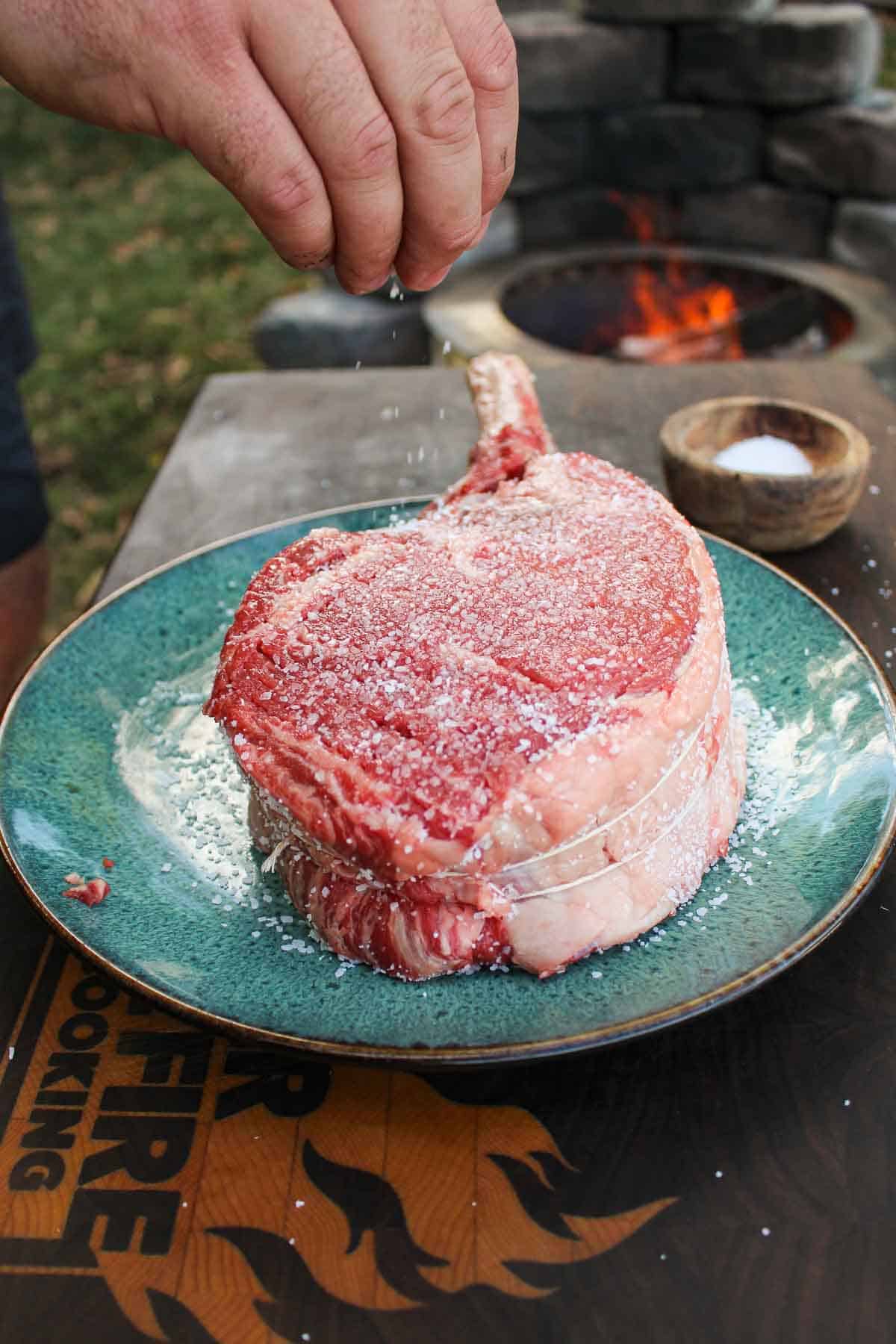
Season the meat from up high, allowing the salt to fall evenly on the surface. There isn’t a specific measurement when using salt to dry brine, as each cut of meat could potentially require different amounts of seasoning. Sprinkly enough salt so the entire exterior is lightly coated. Bigger cuts such as pork loin or beef plate ribs will require more salt.
Place the meat on a wire rack set inside a rimmed baking sheets. Set the tray inside the fridge uncovered for a period of time. Smaller cuts like chicken breats, fish, or steaks will likely be ready after just about 45 minutes. Larger cuts such as whole chicken, prime rib, or turkeys should be allowed to rest overnight in the fridge. Bigger cuts have more muscles, and simply require more time for the salt to penetrate deeper.
Note: Don’t rinse off the seasoning before you cook! That will not only get rid of the seasoning left on the outside, but will also reverse the dry exterior which is ideal for a brown crust.
Can I Use Seasoning Blends to Dry Brine?
Yes! That keeps it very simple too because you’ve brined and seasoned all in the same step.
Dry Brined Hanging Prime Rib using Mesquite Peppercorn Lager Rub: Recipe Here
Advantages of Dry Brining
Seasons smaller cuts of meat quickly, without the need for large containers
Creates a dry surface, ideal for a crispy skin and crust
More natural meat flavors, seasoning with its own juices
Disadvantages of Dry Brining
Salt does not penetrate as deeply as wet brining
Uneven internal seasoning with thicker cuts
Easier to over-salt the meat due to the technique
Building the Flavor
Brining meat is an incredible helpful tool regardless of what you’re cooking. There are pros and cons for each method, but both take patience and practice. Hopefully this guide helps you decide which method is best for your recipe. No matter which method you choose, make sure you take the time to brine your meat!
Dry Brined Tomahawk Steak with French Onion Crust: Recipe Here
For more delicious recipes, check out my second cookbook Flavor X Fire or my first cookbook Food X Fire!
This technique will help you master the art of creamy soup. With just a few simple steps, you'll be able to turn basically anything into a piping hot bowl of comfort.
Imagine a Chinese potsticker dumpling with a white dough wrapper, browned in a frying pan. It's huge. There's only one per serving, because each is as big as a plate. And when it's put in front of you, it'll have caramelized onions on top like pierogies do.
Cut it open and you´ll find the same sort of peppery potato filling you'll see in knishes. These are boova shenkel, the traditional filled dumplings of the Pennsylvania Dutch.
Once a staple of local restaurants, church suppers, and firehouse fundraisers, the only place still serving them is Boova Haus, a stand at the Quakertown Farmers Market in Bucks County. This tiny eatery and its two owners, Don Mensch and Jason Van Dyke, are all that stand between the boova shenkel and its commercial extinction. Obviously, it specializes in the dish, and is well worth a visit.
The name boova shenkel comes from a Pennsylvania Dutch phrase said to mean "boy's legs," "boy's pockets," or even "boy's foot." Funnily enough, the name is reminiscent of calzone, a similar (although baked) Italian dish with a name meaning "pant legs." Both are part of the filled dumpling family that includes maultaschen, knishes, pierogi, and vareniki—all popular with Pennsylvania’s local immigrant food cultures.
Boova Haus shares the market with more than a hundred other vendors offering everything from cured meats to slot cars. At the building entrance, there’s a menu by the door, and signs pointing the way. Inside Boova Haus, you´ll find a counter, a few tables, and a cooler showing off the uncooked boova shenkel.
Mensch began making boova shenkel for his late mother when she was in assisted living, assembling them at home and bringing them over for the staff to cook. They were a big hit. Not just with mom, but with everybody else. It wasn't long before a restaurant was in the works, and Boova Haus opened its doors in 2015.
The Haus doesn’t just serve boova shenkel. There’s a menu with typical soups and sandwiches. Sometimes, though, Boova Haus offers the Pennsylvania Dutch classic “bot boi;” a chicken and noodle soup that can often be misspelled as “pot pie,” even though the two are only marginally related.
But boova are the stars of the show. The browning of the wrapper dough gives it depth, the peppery potato filling is substantial, and the caramelized onions on top give it the sort of natural sweetness you can't get from sugar. It’s a simple dumpling and a whole meal, all in one.
A great nonstick skillet should allow you to stir and flip sticky foods with ease. After testing 13 pans, here are the 5 best nonstick skillets I found.

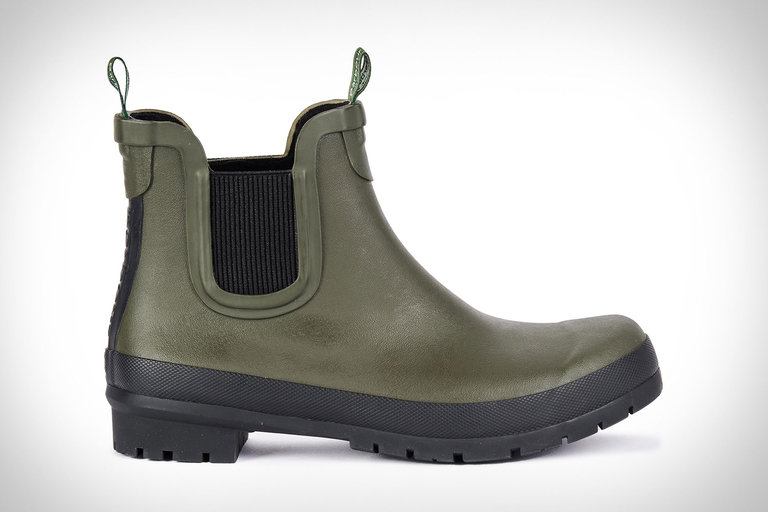 A completely waterproof take on the timeless Chelsea boot, this pull-on is ready to tackle less-than-ideal weather.











 For decades now, I’ve done a series for American Handgunner magazine called “The Ayoob Files” in which we dissect and analyze actual gunfights. Some are historical, but most are contemporary and include interviews with the survivors. I recently reviewed this one. That September/October 1991 issue covered a classic and tragic incident in Baton Rouge. A […]








![[link]](https://i.redd.it/kim3i4xa7my91.jpg)
![[link]](https://i.redd.it/n5193equp1y91.jpg)