KWBaker
Shared posts
For Cyclists The Kentucky Bourbon Trail Is A World-Class Bike Trip

Want to Fly Like Maverick? These Flight Schools Will Help You Live Out Your ‘Top Gun’ Fighter Jet Fantasies

Digital Nomads Are On The Rise. But Where Should They Live Now?

Best Workbench for 2022 - CNET

JUDGE ANDREW P. NAPOLITANO: Americans Should Pay Close Attention To The FBI And Zero-Click. Here’s Why
University Researchers Create App “capable of tearing smart home security apart”
By B.N. Frank Not everyone is a fan of “smart home” technology and/or “smart” technology in general. It enables manufacturers and operators to collect (and...
University Researchers Create App “capable of tearing smart home security apart”
5 Cool New Vehicles We Discovered at the LA Auto Show
Future electric cars. Innovative takes on automotive icons for the present.

Rejection, In Four Parts
Today in Tedium: Everyone, everywhere, has to deal with some kind of rejection. It’s what we’re taught about culture. It’s all-American. It’s something we’re all used to. Rejection can be between two people. It can be between thousands of people all at once. But ultimately, some kinds of rejection are more public than others. Currently, Elon Musk is dealing with rejection. He was told by nearly all of his remaining employees at Twitter that they did not want to “be extremely hardcore” after he gave them an ultimatum, that they would rather not be “part of the new Twitter,” and would instead take severance than stay at a job that would never appreciate them more than they would appreciate it. If you ask me, leaving the world’s richest man high and dry with no job lined up is pretty hardcore. But I digress. For Today’s Tedium, I want to share a four-parter on rejection. I have done similar pieces about repetition, randomness, and reflection, and the parts will each be completed MidRange-style, meaning that each part will have a strict 30-minute limit. Anyway, I hope you don’t reject this. — Ernie @ Tedium
Today’s GIF comes from the most criminally underrated of Netflix shows, a show I definitely do not reject, Aunty Donna’s Big ’Ol House of Fun. It is my absolute favorite and I encourage you to seek it out if you have not already.

Find your next favorite newsletter with The Sample
Each morning, The Sample sends you one article from a random blog or newsletter that matches up with your interests. When you get one you like, you can subscribe to the writer with one click. Sign up over this way.
Today’s Tedium is sponsored by The Sample. (See yourself here?)

Why rejection sticks with us
Maybe Elon Musk is not showing it right now, but rejection is a tough pill to swallow. (More on pills in a minute.)
It takes a lot of different forms, from psychological to physical. It is an emotional wound, and we must carry it with us. And in many ways, rejection is something that is passed on to other people. One big rejection leads to a ripple effect of rejections. When a client rejects you, suddenly everyone in your organization has to switch gears to account for that departure, which means lots of smaller rejections.
In many ways, the purchase of Twitter reflects a rejection of the team by the former owners, and the employees’ departure from Twitter reflects a rejection of the cultural changes that have already been implemented.
But there are other kinds of rejection that occur. Romantic rejection is a good one—maybe you put yourself on the line in a big way, and it didn’t work out. Maybe you applied to a big college, or took a swing at an ambitious new opportunity, only for the effort to fall flat in the end.
As Mark Leary, a psychology and neuroscience professor at Duke University once put it, “People have realized just how much our concern with social acceptance spreads its fingers into almost everything we do.”
And I think in many ways, that’s the central tension of the modern world, and one could more broadly argue, capitalism. The definition of success in the modern day means that someone else loses out on an opportunity, and while there are plenty of opportunities out there to win your little piece of the pie, it ultimately creates a society where differences and nuances always win out, but success does not.
But in many ways, rejection offers us a way to build productively from that old thing and find a new thing. In the 2015 paper Unpacking Emotion Differentiation: Transforming Unpleasant Experience by Perceiving Distinctions in Negativity, written by researchers at George Mason University and Northeastern University, one strategy to help wean away from the negative feelings of rejection is to put it into a broader context, so as not to make the rejection the central focus.
“We speculate that when distressing feelings and bodily sensations arise, instead of letting these experiences dominate attention or dictate how to behave, high differentiators are better able to distance themselves (a concept referred to as defusion or self-distancing),” authors Todd B. Kashdan, Lisa Feldman Barrett, and Patrick E. McKnight wrote. “With this psychological distance, there is greater opportunity to direct effortful behavior toward personally valued strivings or goals.”
If rejection is your everything, you will take on bad habits and make it the center of your whole being. But if you right-size it within the context of a variety of emotional feelings, eventually you’ll find the will to move past it all. You shouldn’t avoid the feeling of rejection—but you should make sure it is not taking an outsized space in your thinking.
Likewise, one rejection shouldn’t be enough to give up. Put in the effort, and the work, and eventually, someone will see it for what it is. After all, that’s what Stephen King did. Carrie, his first big book, was rejected by 30 publishers, but his wife believed in the material and encouraged him to keep trying, and he found resilience as a result, and one day it was selected and became the opening salvo in one of the most important literary careers of the 20th century.
Right size rejection in your life—but by the same token, learn to accept it. If millions of people are telling you you’re ruining their experience, accept the feedback; don’t pretend it doesn’t exist.
All wounds heal. Even wounds to the ego.
Time limit given ⏲: 30 minutes
Time left on clock ⏲: 38 seconds
Twitter, Digg, and the power of rejection in online culture
It’s not a new lesson nor a complex one, but the truth is, if you’re sick of a social network for any reason, the easiest way to make it a former part of your life is to just leave.
I don’t think we were ready to leave Twitter, to be clear, but I think now that so much is shifting with the culture of that social network, odds are that it’s the step a lot of us are likely going to take.
Our tendency to leave social networks where we once lived is a reflection of the power of consumer choice, and it’s also the thing a given social network works hardest to stop. That’s why there’s always design changes, reshaping of content, and a rethink of how the algorithm works on a given site. They want to stay one step ahead of their users so they don’t feel the desire to leave.
But, now that we’ve had a couple of decades with social media, with the first modern social site, Friendster, celebrating its 20th anniversary of its launch in March, we now have enough of a baseline to understand the nature of online culture to understand why people give up on platforms.
Most common are the platforms that simply just become less exciting over time, or tend to stay static. These platforms—think Friendster, LiveJournal, or MySpace—essentially faded from view in their primary markets because they didn’t evolve quickly enough, and that made them less sticky for end users. Because they were distinctly marketed as commercial platforms, that meant that they needed to adapt to the needs of the industry. It is hard to recapture the momentum
Increasingly common are the platforms we age out of. Facebook is a good example of this; while it remains hugely popular among people over the age of 25, is very much not the case for those under that age group. It is on the path to a long, gradual fade, where the rejection will happen steadily unless the network can do something to right the path … which the metaverse is definitely not doing.

At one point, the Digg redesign proved so unpopular that the most popular links were all links to Reddit threads. (Know Your Meme)
Less common, however, are the platforms that basically blow out overnight. We’ve only had a couple of those—Digg, which famously flamed out after an unwanted redesign in 2010, and Twitter, which we’ve been witnessing the demise of in real time since the end of October. (Less pronounced, and as a result likely to have some room to bounce back, is Tumblr, whose explicit content ban in 2018, while controversial, came at the tail end of an extended demise, which made the impact of the blowout smaller and more contained. A change in leadership will help to salvage this to some degree.)
The key thing in each of these cases is that the owners of the site clearly went in a direction that was at odds with a significant number of users, meaning that engagement had seen a slide as a result.
I think it’s safe to say we weren’t done with Digg, just like we aren’t done with Twitter, which is why we’re looking for alternatives. Digg had an obvious one, Reddit, and many are convinced that Mastodon will play a similar role in the case of Twitter. (And if not Mastodon, something with a similar party-line value, like Discord.)
But in all of these cases, rejection basically decided the day. While Digg was eventually revamped as a pretty good news aggregation platform, it lost the social elements that made it relevant to most of its original user base, and that later revamp was the result of a 2012 sale that saw the site sell for half a million dollars.
Twitter is likely far more valuable than that even now, but with most of its staff removed and major security issues being left unmonitored, it’s likely that it will see a quick fadeout as well. (Maybe Elon will pull a miracle out of his Cybertruck, but consider me unconvinced.)
But just as Twitter’s employees were empowered to reject the company that failed to respect them, so too are the users empowered to leave and go somewhere else if the experience falls beneath a certain level.
You have the power to reject—and the internet has used that collective power before. You just need to use it.
Time limit given ⏲: 30 minutes
Time left on clock ⏲: 2 minutes, 50 seconds
Elon Musk should take Tylenol to help ease his sense of rejection
So, we’ve talked about social media, and we’ve talked about the fact that everyone should face some kind of rejection in their lives with grace, even Elon. Now, let’s get weird.
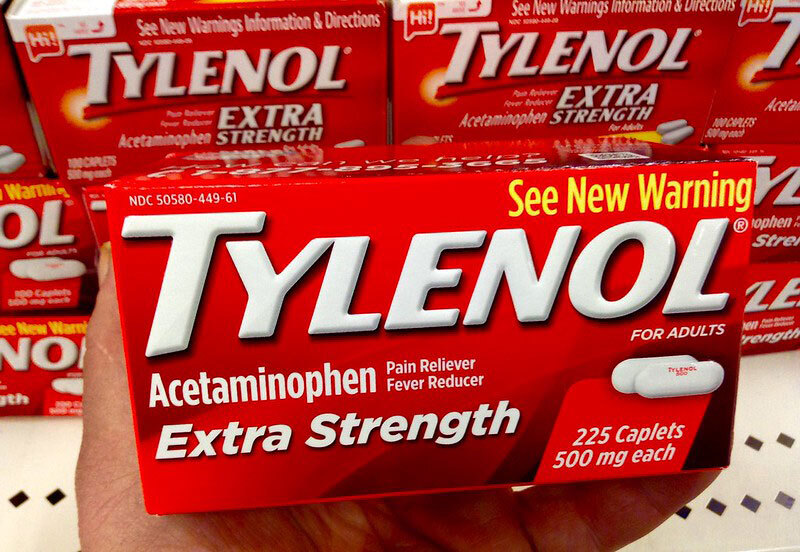
This being Tedium, we have to talk about the strangest examples of a given topic we can find, and we have the perfect study for this very topic. In 2019, an article in the Annals of Behavioral Medicine made the case that the pain of rejection could actually be treated through the use of a key over-the-counter medication—that medication being, of course, Tylenol (or its generic name, acetaminophen).
The title of the paper is perhaps one of the greatest titles of an academic papers you’ve ever seen: Alleviating Social Pain: A Double-Blind, Randomized, Placebo-Controlled Trial of Forgiveness and Acetaminophen. And the results were utterly fascinating. The paper was based on (as the name suggests) a double-blind study of 42 young adults, given different types of medical treatments, including placebos, to better understand the ways people reacted to being tested.
Yes, it’s a small sample size, albeit controlled, but the hypothesis is fascinating.
“If forgiveness reduces social pain through psychological processes and acetaminophen through neurochemical pathways, one possibility is that the greatest reductions in social pain over time may be evident for individuals taking acetaminophen who also exhibit positive psychological characteristics, such as being highly forgiving,” the paper—written by researchers at UCLA, UC Davis, and Luther College—explained.
(One point in the research that should be heeded: the rejection needs to come with a hint of forgiveness to truly have an effect.)
While that may not necessarily be enough to convince people to take Tylenol after a spell of rejection, it does tie into a broader point often hinted at by outside researchers—a key indicator of depression is the introduction of rejection into a person’s life, which means that it still matters as a part of this discussion.
“Experiencing a socially painful life event, like a relationship breakup, is one of the strongest predictors of developing depression in adolescence and adulthood,” the paper’s lead author, UCLA’s George Slavich, Ph.D., told MedicalNewsToday. “Social pain is also associated with decreased cognitive functioning and increased aggression and engagement in self-defeating behaviors, like excessive risk-taking and procrastination.”
So, I guess, if you’re going through a bad breakup, grab a thing of Tylenol and hunker down. It might just help.
Time limit given ⏲: 30 minutes
Time left on clock ⏲ 8 seconds
How factory seconds helped lead to a complete rethinking of retail
So, we’ve added a little weirdness into our discussion about rejection. Now let’s go off the rails and take the discussion into an extremely left-field direction.
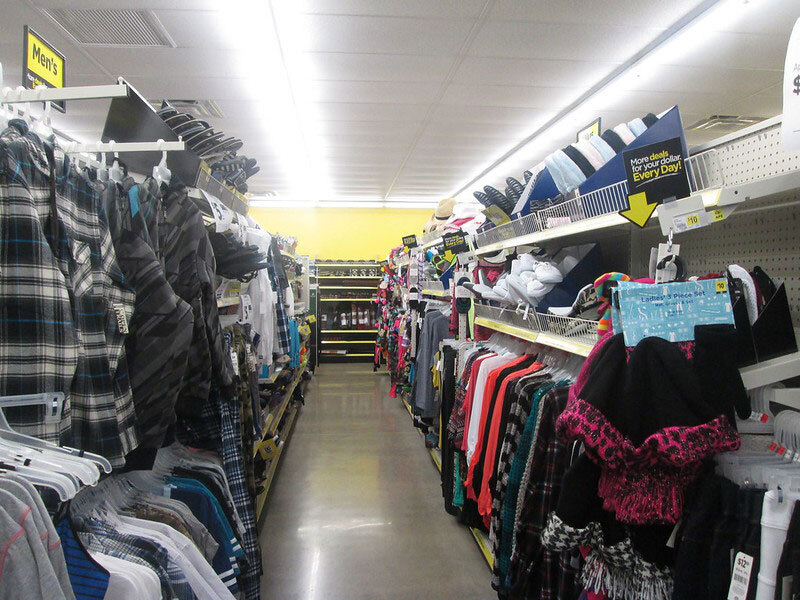
And that direction is, simply, one that only exists because perfection is so unobtainable. See, both historically and in the modern day, factories have been forced to figure out what, exactly, to do with their slightly off-kilter or imperfect items. These not-good-enough pieces became known as factory rejects, or perhaps their better-known term, factory seconds.
These products created something of a challenge from a manufacturing standpoint, because they often were in undesirable sizes or shapes or had some sort of issue that might not be obvious to the naked eye but fails to live up to some product requirements that the factory was given by their client. But you don’t just want to throw this stuff out into the trash, if you could avoid it. After all, it’s wasteful.
And this is where the retail sector came into play, which saw potential in selling these imperfect products anyway in a format that encouraged their imperfections. As explained in the 1962 publication Revolution in Retailing, which highlighted the how these factory seconds shaped discount shopping:
Discounting had its beginning in the late 1940′s when small dealers began selling name brand appliances at off-list prices. The more successful of these dealers developed into formidable chains of stores and took on other lines of merchandise.
At the same time, the factory outlet store dealing in clothing and soft lines came on the scene. The factory outlet store originally was located in a manufacturing facility and served as a retail outlet for factory seconds. With the passage of time, however, these factory outlets began carrying merchandise other than that produced by the factory. Eventually these stores were moved to separate locations devoted entirely to retail selling. In the beginning such stores were often established in abandoned textile mills (particularly in the New England area) or in converted factories or warehouses.
Finding success in this new form of low-overhead selling, the operators began constructing specially designed buildings, adding more lines of merchandise and bringing in hard goods. Some stores established grocery departments and pioneered in “one-stop shopping.”
The year 1962 is important, because it’s the year three of the most important retailers in history all got their start in their most notable forms—Kmart, Walmart, and Target. These factory seconds, helped to reshape discount stores, but at the same time, their success helped to reset the entire retail model to something that made more sense for the average consumer.
“They all come into being in 1962 because it’s a moment when retailers are beginning to realize the limit of their retail models in that exact moment,” economic historian Louis Hyman explained on an episode of the BackStory podcast. “And so you have different kinds of stores, department stores, five and dimes, trying to reinvent themselves into a new form and take advantage of these lower prices.”
In many ways, this approach has come to shape everything we know about retail outlets today. Maybe we don’t buy factory seconds from Walmart, but it did encourage an emphasis on low prices that led to changes in the manufacturing process away from legacy models. Factory outlets? Kind of born from this basic idea that people want to buy cheaper goods from specific brands. Discount retailers that actually specialize in selling rejects or off-kilter items, like TJ Maxx and Marshalls? They gained their superpowers from this shift in the retail market away from perfection.
In a world that hands us rejection, we adapt. (Unless those that accept the rejected refuse you, as TJ Maxx did when it decided to refuse Kanye West’s shoes and apparel lines.)
Time limit given ⏲: 30 minutes
Time left on clock ⏲ 4 minutes, 3 seconds
I think the hidden success story that is the factory second really shows the way that, when exposed to rejection as a culture, we adapt to the signals that the broader world is sharing with us.
And it’s not just limited to shirts with tags that are an inch off or toys with a misprint on the packaging. It’s also a factor of how we will reshape ourselves if we allow ourselves to listen to the signs that the broader universe is giving us.
If we fail a test, the right thing for us to do, given that clear signal, is to study harder for the next one. Sometimes the test is wrong, and we must reject it. Sometimes we’re wrong, and we must listen to the test.
But the important thing about rejection is that it gives us an opportunity to learn, to take a second stab at reshaping our thinking. But if we ignore the lesson, we need to have a clear reason for doing so.
After all, the Tylenol doesn’t work unless we’re in a forgiving mood.
--
Find this one an interesting read? Share it with a pal!
Are you a Mastodon user? Be sure to give Ernie a follow!
And thanks to The Sample for giving us a push this time. Be sure to subscribe to get an AI-driven newsletter in your inbox.


10 Legitimate Business Industries That Seem Like Scams
There have always been scammers. But with the internet, scammers easily access their victims and often present themselves as legitimate businesses. As people have come to recognize the more obvious scams, scammers have become more sophisticated, and it can now be difficult to tell the real from the fake. When online: Be wary of websites […]
The post 10 Legitimate Business Industries That Seem Like Scams appeared first on Listverse.
How to Organize Life’s Most Important Documents

If your home office documents, family medical records, bills, and kids’ school reports dance between a pile on the kitchen table and an unmarked box in the garage, it’s time to develop a proper filing system.
5 Tips for Safely and Comfortably Tackling Extreme Road Trips
Filmmaker Bryan Rogala regularly explores off-road with few resources. Before you hit the road for your next looooong road trip, check out his top advice.

Casio G-Shock GWM5610-1 Review: The Original Square G-Shock Is Still the Best
The GWM5610-1 is what G-Shock is — or should be — all about.

Nick Offerman Opens Up About His Love of Lagavulin
"The company actually has to keep telling me not to promote it so much," he says. "There are FCC regulations."

This New 28-Foot Landing Craft Can Chauffeur Your Range Rover Across the High Seas

The X100V is So Popular Fujifilm Can’t Handle More Orders

The X100V is so popular that Fujifilm has announced it is temporarily stopping orders for the digital camera because the company has too many purchases to process.
Top 10 Creepiest Roadside Attractions in the U.S.
Sometimes you’re out on the open road, and something catches your eye. You’re not sure what it is, but it’s piqued your curiosity, and you need a break anyway. This is how a lot of roadside attractions are born. Predominantly wacky or niche, roadside attractions, particularly in the U.S., have become a huge part of […]
The post Top 10 Creepiest Roadside Attractions in the U.S. appeared first on Listverse.
10 Amazing Animals That Re-Emerged from Extinction
The world is full of amazing creatures. However, with the effect of habitat loss and human activity, several species are brought to extinction. Efforts to locate the lost species are then implemented. Scientists and conservationists are currently examining ways to preserve what is left of the species that are rediscovered. Here are some of the […]
The post 10 Amazing Animals That Re-Emerged from Extinction appeared first on Listverse.
10 Most Dangerous Hikes in the World
Hiking is great exercise that gets you outside exploring new areas! While hiking is generally considered a pretty peaceful, tame hobby, some people like to take it to extremes. From the Philippines to Guatemala, Egypt to Alaska, join me on an adventure through the most dangerous hikes in the world. There are easy, “walk in […]
The post 10 Most Dangerous Hikes in the World appeared first on Listverse.
2023 Land Rover Defender 130 Review: More Space, But a Tight Squeeze
The three-row Defender still Land Rovers just fine, but regular third-row users might be better off looking elsewhere.

A love letter to Arabia Mountain
 In 2015, when my wife and I moved to Atlanta, I was looking for familiarity. I found it in a granite rock called Arabia Mountain. We’d been living in the Kingdom of Eswatini, formerly Swaziland, and then in Ghana. The move to the U.S. was a shock to the system. For a while, I was content to enjoy the variety of goods in all the enormous big-box stores, but soon I missed our life abroad—especially a granite monolith in southern Africa called Sibebe.
When I first moved to Eswatini in 2010, brought there by a Fulbright fellowship, I lived just a few miles away from Sibebe, so I climbed it many times—but always with someone who knew the best way up. While it’s not very tall, Sibebe is so steep that, at a glance, it doesn’t seem possible to climb without ropes. But the ground has such incredible traction that I’ve seen daredevilish people run up and down its side. I was not one of those people.
When I hiked Sibebe with my future wife, Miranda, for the first time, I thought I’d been up it enough times that I could lead us. We became frozen with fear in a particularly steep area; I was so scared I’d fall, or that she would, that I cried. But we found our footing and made it up to see the stunning valley behind it, filled with caves, building-sized boulders, and, depending on the season, tall grass, grazing cows, and swimming holes.
When we moved to Atlanta, to be closer to our families in the U.S., we didn’t even consider there would be something like Sibebe here. We were wrong. Not long after arriving, Miranda found an injured possum near the house we rented in Edgewood. I drove it to AWARE Wildlife Center—a nonprofit in Stonecrest that helps rehabilitate animals—and, while there, saw people near the parking lot heading the opposite direction, into the Davidson–Arabia Mountain Nature Preserve.
Arabia Mountain is a 400-million-year-old rock that juts 172 feet above a lake that borders it to the east. It’s a monadnock, which means that when it rises from the ground, it does so quite dramatically. The mountain was quarried for more than a century, and you can find pieces of it in the Brooklyn Bridge and in Atlanta curbs. Farmers used to feed Arabia rock to chickens because the grit was said to help them break down food.
When Miranda and I first climbed Arabia Mountain ourselves, it reminded us so much of Sibebe—the panoramic views and moonlike terrain, large puddles filled with seasonal plant life. At the top of the mountain, you can always find a quiet spot to look at the sky and the treetops and think in peace. (It’s more difficult to find shade.) On a weekday, you’ll likely be up there by yourself. To me, who missed Eswatini so much, Arabia Mountain felt like home.
One of the beauties of Arabia Mountain is that it is not a challenge to climb. It’s not nearly as steep or tall as Sibebe or the more infamous Stone Mountain. There aren’t stairs or a railing, but the strong grip of the granite makes it climbable for almost anyone. When Miranda was pregnant and long overdue and the stress was overwhelming, we climbed Arabia, big belly and all. I can still see the anxious expression on her face beginning to calm as she stood on the crest under the clouds. When our son was born and we could barely handle the first few weeks of parenthood, we climbed Arabia again, this time as a three-person family.
The last hike I ever took with my dad was up Arabia Mountain, before Parkinson’s disease took the remainder of his strength and, later, his life. By then, he was already walking with a shuffle, his feet barely lifting off the ground. But he made it, my confused but proud dad, to the top of the mountain.
When the pandemic hit, and we were stuck at home like everyone else, one of the first things we did when we braved the world again was climb Arabia with a friend who’d offered to take family photographs among the unusual granite formations and foliage. There we were, on top of the world, as our one-year-old son explored the rocks. He had only been walking a few months, but the traction of Arabia Mountain held him firm on his feet.
This article appears in our October 2022 issue.
The post A love letter to Arabia Mountain appeared first on Atlanta Magazine.
Egg Whites Could be the Key to Cleaning Our Oceans
In hopes of finding a cheap, easy way to come by material to filter microplastics out of ocean water, scientists recently discovered potential in an unlikely source—egg whites.
In the new study by Princeton Engineering, researchers manipulated the egg whites in the lab, transforming the eggs from breakfast staple to a water-filtration mechanism that can remove both salt and microplastics from seawater with around 98 percent efficiency.
With somewhere around 14 million tons of microplastics on the ocean floor alone, the need for effective ways to filter out the plastics is ever increasing.
The final structure of the egg whites after they are altered in the lab is called an “aerogel”— a substance that is “lightweight and porous” and “can be used in many types of applications, including water filtration, energy storage and sound and thermal insulation,” according to the study.
In the search for just the right substance to create the aerogel, egg whites weren’t the original food focus of researchers.
Instead, Craig Arnold, co author of the study, along with engineering professors at Princeton University, was taking a hard look at his lunch one day and thought the bread holding together his sandwich may be just the right structure for what they were looking for. The lab went to work, testing out different bread recipes in hopes of creating a substance that could effectively filter microplastics out of water.
Arnold, who specializes in creating materials for engineering applications, told phys.org that the journey to find the right structure involved a lot of whittling down of ingredients until they were left with just one.
“We started with a more complex system,” Arnold said, “and we just kept reducing, reducing, reducing until we got down to the core of what it was. It was the proteins in the egg whites that were leading to the structures that we needed.”
To transform the egg whites from food to an effective water-filtration system, researchers freeze dry the egg whites and then heat them upwards of 900 degrees Celsius in an oxygen-free environment. Thanks to the protein in the egg whites, this process results in a change in the egg whites’ texture, morphing them into a “structure of interconnected strands of carbon fibers and sheets of graphene,” according to the study.
Not wanting to compete with the food system’s supply of eggs, researchers note that other proteins put through the same process could also work as water filters. This way, scientists would be able to create the filtering materials at low costs and high quantities without ruining anyone’s breakfast plate.
The post Egg Whites Could be the Key to Cleaning Our Oceans appeared first on Modern Farmer.
The Best Store-Bought Turkey Gravy Is Also the Cheapest

My husband recoils at the notion of jarred gravy. In his defense, it does glop out of its container all viscous and jiggly, which can be off-putting. But it was nevertheless a staple in my home when I was growing up, a fine accompaniment to a store-bought roasted chicken. Sometimes my mom would chop up leftover…
6 noted pitmasters offer tips for great barbecue - Charleston City Paper
Is the Foil-Boat Method the Best Way to Cook Brisket? - Texas Monthly
The 23 Most Expensive Cars Ever Sold at Auction, From Ferraris to Jaguars

Why This Woman Gave Up A $140,000 Job To Move To The Caribbean And Follow Her Dreams

The Die Hard Advent Calendar Depicts the Greatest Villain Death Ever
This post contains spoilers for a 34-year-old film.
It's become a traditional sign of the approaching holidays: online arguments about whether the film Die Hard is a Christmas movie. As if anyone is arguing otherwise. There is no better proof than the popularity of the Die Hard Advent Calendar. This is a laser-cut 11.5-inch model of Nakatomi Tower made of birch wood. It illustrates Hans Gruber (portrayed by Alan Rickman) falling to his death one floor at a time as you advance him day-by-day. Gruber's body has a magnet attached to a metal strip on the tower.
Three years ago, redditor lammage01 constructed a whimsical Advent calendar depicting that memorable scene at the climax of Die Hard. The villain advanced down a floor each day when you pull a tab.
Firefighter and woodworker Brandt Builds, a big Die Hard fan, was intrigued by the concept. He went to work refining it, developed the magnet idea, and designed his own Nakatomi Tower. He launched the product last year at his Etsy shop, LeatherheadLaserWork. Now he sells the Advent calendar (in plain and color versions) along with Christmas tree ornaments of Gruber, John McClane, and Nakatomi Tower. The Advent calendar went viral in October, and other vendors have suddenly copied the design. You can find it cheaper, but Brunt's hand-made calendars are the original. You can even get it personalized. Advent begins on November 27, so get your orders in!
How to make some very tasty, very autumnal tacos, according to a pro chef
A look at how to make fall-inspired fish tacos. We sourced a top-notch recipe and a little pro advice as well.
The post How to make some very tasty, very autumnal tacos, according to a pro chef appeared first on The Manual.

