Shared posts

19 Nov 15:16

The Best Homebrewing Kit for Making Beer

by Tyler Wells Lynch
Glasses of beer with objects from a beer brewing kit.

Brewing beer is simple. It involves just four ingredients and a few relatively straightforward steps.

The payoff is great, too. Not only is this a rewarding hobby that allows you to experiment, iterate, and make something all your own, but that “something” you make is, well … lots of beer.

Yet despite beer brewing’s simplicity and rewards, getting started can seem daunting.

I’ve been brewing at home for nearly a decade, and I’ve found that the MoreBeer Deluxe Home Brewing Kit is the easiest way for most first-timers to make their initial batch.

It includes most of the essential tools, providing a solid foundation you can build on as you progress in the hobby. The kit also comes with clear instructions and reliable support to handle any questions you might have during the brewing process.

19 Nov 15:16

How to Get Hired for a Remote Job

by Melanie Pinola
How to Get Hired for a Remote Job

Now more than ever, remote work is essential. Some 42% of US workers currently work full-time from home, and many companies are planning on allowing more employees to work remotely even after the pandemic. Competition for remote jobs might be especially fierce right now—and remote work isn’t without its challenges—but if you’re ready to work from home, a few strategies can help improve your chances of finding the right position and getting hired. Here’s what you need to know, based on advice from hiring managers and career consultants, as well as my own experience as a serial telecommuter.

19 Nov 15:13

What to Do After Getting a Data Breach Notification

by Thorin Klosowski
What to Do After Getting a Data Breach Notification

It often happens like this: An email arrives in your inbox with the subject line “Please reset your password,” or “We’re committed to your security,” or “Notice of a data breach.” Inside is an apology, followed by a promise that the company “takes security seriously.” And then? A list of all the types of your personal data the company lost.

19 Nov 13:39

The 10 Best Trout Flies for Late Fall Fishing

by Morgan Lyle

Late fall trout fishing can be hit-or-miss. Fall streams might be skinny from the hot, dry summer, or blown out by autumn storms. Pools that produced in April or June might now seem empty, especially on waters that rely on spring stocking for their fish. And fall is a busy time—there are leaves to rake, pumpkins to carve, and deer rifles to zero.

But there are good reasons to fish between Columbus Day and Thanksgiving. Cooling water reinvigorates trout after months of hunkering down in tepid water. They feed well at this time of year, packing on weight that will get them through the lean months to come. And while insect activity is much less than in the spring and early summer, there are still a few species of mayflies, caddisflies, and midges that hatch in good numbers. Trout will often rise to them, and even when they don’t, you can be sure they are feeding on the nymphal stages of the insects below the surface. In fact, having fewer species on the water takes away some of the guesswork about which fly the fish are taking. A few patterns will cover most of the bugs you’re likely to encounter.

Fall is also the season streamer fishers dream about the rest of the year. Trout aren’t just hungry as the cool weather sets in—they’re also aggressive. Fall is spawning season for a number of species of trout and salmon; there are mates to woo and nests to guard. Small fish, and the streamers that imitate them, are at risk of attack by edgy adults. Swim a streamer deep in the pools and you may end up with your biggest trout of the year.

Finally, the shorter days of fall compress the fishing into civilized hours. You no longer need to wake up early to be on the water at first light, and you can fish until dusk and still be home in time for dinner. And unlike summer, the fishing is likely to stay good right throughout the day.

Here are a few patterns that should bring you some excitement in the late fall season. You’ll need to use fine leaders for the small ones, especially if fall rains haven’t swollen your streams from their summer lows. Larger dries and nymphs can be fished with average 9-foot leaders and 5x or 4x tippets. If you’re deploying streamers, keep your leaders short and stout.

1. Blue-Winged Olive Parachute

Blue-Winged Olives are the most common mayflies in late fall, and the Blue-Winged Olive Parachute imitates them well.
Blue-Winged Olives are the most common mayflies in late fall, and the Blue-Winged Olive Parachute imitates them well. (Morgan Lyle/)

Hook: #18-24 Standard dry fly

Thread: Olive or tan, 8/0 (70 denier)

Tail: Dun hackle fibers

Wing Post: Antron yarn

Hackle: Dun

Dubbing: Olive

As trout streams cool down through the 40s, dry-fly fishing tends to cool down, too. But if you’re on the right water on the right day, you may well have rising trout even though most of the trees have gone bare. Most of the mayfly action in mid to late fall involves that group of species collectively known as blue-winged olives. They range from small to really tiny, and the fish can be maddeningly selective about size. I prefer flush-floating flies in general, and especially with the little olives. Parachute-style dries present a great silhouette when seen from below, they always land right-side up, and their wing posts are relatively easy to see, even on the little 22s.

2. Rusty Spinner

The Rusty Spinner is a must-have during a spinner fall and an effective general attractor pattern.
The Rusty Spinner is a must-have during a spinner fall and an effective general attractor pattern. (Morgan Lyle/)

Hook: #20-12 Standard dry fly, such as Tiemco 100

Thread: Black, 8/0 (70 denier)

Tail: Dun Microfibbets

Wing: Snowshoe hare’s foot fur

Dubbing: Brown or rust Spectrablend or tier’s choice

Down-wing spinner patterns are effective on any stream that has mayflies, all season long. The thinking is trout like spinners because they’re an easy meal, helplessly lying on the water at the end of their lives. Certainly they are useful during a spinner fall, but spinner patterns are considered a good general attractor pattern even when the naturals aren’t present. I think that’s down to being visible: the trout see the Rusty Spinner’s whole body and both wings flush in the surface film. You should have small ones for the autumn olives, and larger models for big bugs like Isonychia mayflies or for use as general searching flies.

3. Orange Stimulator

The Orange Stimulator is a solid choice when any of the species known as October caddis are on the water.
The Orange Stimulator is a solid choice when any of the species known as October caddis are on the water. (Morgan Lyle/)

Hook: #14-10 TMC 200R

Thread: Fluorescent orange 6/0 (140 denier)

Tail: Elk hair

Rib: Fine gold wire

Wing: Elk Hair

Hackle: Brown over abdomen, grizzly over thorax

Dubbing: Tier’s choice, fine

Not all autumn dry-fly fishing involves mayflies. The October caddis (like the olives, a category, not a single species) is an eagerly anticipated emergence of hefty, ruddy caddisflies. You can use a suitable fly to match a hatch, or simply to prospect over likely-looking water; the wing tenting over a plump body makes for a universal attractor pattern that often inspires trout to rise. A simple fly with an orange body and a down-style deer-hair wing may be all you need, but this is a great time to cast a Stimulator, a beautiful and effective pattern you should have on hand anyway.

Read Next: 7 Great Trout Flies You Can Tie Using Wild-Game Fur and Feathers

4. Zug Bug

With its peacock herl body, the Zug Bug is especially effective on rivers with populations of Isonychia mayflies.
With its peacock herl body, the Zug Bug is especially effective on rivers with populations of Isonychia mayflies. (Morgan Lyle/)

Hook: #16-12, standard nymph style

Bead: Gold, sized to match hook

Thread: Black

Rib: Fine silver tinsel

Tail: Peacock feather spears

Body: Peacock herl

Hackle: Brown hen

Wing Case: Mallard flank trimmed to shape

Dry-fly hope springs eternal, but the fact is you may not have rising trout in the fall. You will, however, have hungry fish. You’ll just have to go under the surface to get them. The Zug Bug is an old-fashioned nymph often thought of as particularly good for suggesting nymphs of Isonychia mayflies. The peacock herl body shows purplish-brownish-gray in the water, like the naturals, and it has a few features that sweeten its appeal: a shiny rib for segmentation and flash and a little wingcase that hints of the white stripe up the real nymph’s back. By the way, real Isonychia nymphs are good swimmers, so don’t feel restricted to the dead drift. Darting a Zug Bug or swinging it across the current can bring strikes, too.

5. Copper John

The Copper John sinks readily and resembles a number of aquatic nymphs.
The Copper John sinks readily and resembles a number of aquatic nymphs. (Morgan Lyle/)

Hook: #12-20, heavy nymph hook

Bead: Gold, sized to match hook

Weight: .010 lead wire substitute

Thread: Black, 8/0 (70 denier)

Tail: Brown goose biots

Abdomen: Brassie-size copper wire

Wing Case: Strip of pearl Flashabou over black Thin Skin, covered with epoxy

Thorax: Peacock herl

Hackle: Hungarian partridge

Colorado fly-designer John Barr’s pattern may be the single most popular nymph of modern times among American anglers. This fly is a riot of strike triggers—the twin, pointy tails; the tapered, finely segmented, softly shiny abdomen; the fuzzy iridescent peacock herl thorax; the prominent hard wing case; the banded, wavy hackle fibers, and the bead itself. Use it in 18 or 20 if you think Blue-Winged Olive nymphs would be a good idea (and they usually are), and go larger to represent bigger bugs, or simply to offer the trout a substantial snack. It’s also good that the Copper John sinks fast. Nymphs are seldom effective drifting high above the trout’s head; Barr’s nymph makes it easy to put your fly at fish-level.

6. Zebra Midge

Trout eat midges everywhere, and the Zebra Midge is a dead-ringer for the fly’s pupal stage.
Trout eat midges everywhere, and the Zebra Midge is a dead-ringer for the fly’s pupal stage. (Morgan Lyle/)

Hook: #14-24 emerger hook, such as Dai-Riki 125

Bead: Tungsten, appropriate for hook size, tier’s choice of color

Thread: 8/0 (70 denier), tier’s choice of color

Rib: Fine wire, color to match bead

Fly-fishers (and writers) pay too little attention to the species collectively known as midges. They are found virtually everywhere—in lakes and ponds as well as rivers and creeks—and they make up a very large proportion of a trout’s diet, even in winter. Most are quite small, but fortunately they are well-imitated by simple patterns. Their pupae look like small, segmented worms, and the Zebra Midge, an Arizona pattern descended from English buzzer flies, imitates them beautifully. The heavy bead and slim profile allow the fly to sink quickly. Dead-drift it through pockets and pools, as close to the bottom as you can.

7. Glo-Bug

Fall is spawning season for most trout and salmon, and egg patterns like the Glo-Bug are effective on opportunistic fish.
Fall is spawning season for most trout and salmon, and egg patterns like the Glo-Bug are effective on opportunistic fish. (Morgan Lyle/)

Hook: #12 Mustad 9174-BR or tier’s favorite short, heavy hook

Thread: Orange 6/0 (140 denier)

Body: Glo-Bug yarn

Yolk Dot: Contrasting color of Glo-Bug yarn

The Glo-Bug is one of many styles of flies designed to look like eggs that have spilled out of a trout or salmon’s spawning nest and gone adrift in the current. Brown and brook trout spawn in the fall, and trout of all species love to feed on their eggs. In fact, while egg patterns are mostly fished in the fall and winter, they work year-round. Trout instinctively understand the nutritional value of these little blobs of protein. It’s worth having a couple different sizes and colors, to suit the trout’s mood on any given day.

8. Egg-Sucking Leech

The Egg-Sucking Leech combines two late-season favorites, the Woolly Bugger and an egg pattern.
The Egg-Sucking Leech combines two late-season favorites, the Woolly Bugger and an egg pattern. (Morgan Lyle/)

Hook: #8-4 Streamer

Weight: .020 Lead wire substitute

Thread: Black 6/0 (140 denier)

Tail: Black marabou blood quill

Hackle: Black saddle

Body: Black chenille

Bead: Hot orange micro-chenille

Yes, the Egg-Sucking Leech is just a Woolly Bugger with a colored bead at the head. The bead might be nothing more than a colorful curiosity to the trout. Still, the pattern’s original concept—a leech that’s been lucky enough to find a salmon egg to consume—seems plausible. In any case, it works everywhere, including on the hard-fished salmon and steelhead rivers of the Great Lakes region in October and November. The head can be made in different ways; orange or yellow chenille is common, as are plastic beads. This one uses orange craft yarn and thread for a slim-profile “egg,” with a couple of coats of UV-cured resin for durability and sheen.

9. Slump Buster

John Barr’s Slump Buster dives down to where the big trout hold, and moves seductively in the water.
John Barr’s Slump Buster dives down to where the big trout hold, and moves seductively in the water. (Morgan Lyle/)

Hook: #4-8 Streamer

Bead: Large tungsten cone, copper or gold

Weight: .020 lead wire substitute

Thread: Black 6/0

Body: Gold sparkle braid

Wing/Tail: Olive pine squirrel zonker strip

Collar: Olive pine squirrel zonker strip

Another John Barr design. With a tail and a collar of pine squirrel fur, this meaty streamer moves tantalizingly in the water. Its heavy tungsten cone and the lead wire substitute on its shank make sure the Slump Buster sinks quickly to where the big trout spend most of their time. There’s no wrong way to fish it. Cast upstream, let it sink, and “lead” it down to the target water on a tight line. Swing it across the current. Swim it around in deep holes. If all else fails, before you move to the next spot, just let it hang straight downstream, holding position in the current. If there’s a trout nearby, it might just strike out of sheer aggravation.

10. Soft-Hackle Streamer

The Soft-Hackle Streamer weighs almost nothing, yet presents a substantial profile and lifelike movement in the water.
The Soft-Hackle Streamer weighs almost nothing, yet presents a substantial profile and lifelike movement in the water. (Morgan Lyle/)

Hook: #4-8 Long-shanked streamer or nymph hook, such as Dai-Riki 730

Thread: 8/0 (70 denier), Color to contrast with marabou

Wing: Marabou blood feather

Flash: Pearl Krystal Flash

Collar: Mallard flank

I got to meet the late Jack Gartside, inventor of the Soft-Hackle Streamer, a couple times at fly-fishing shows. I told him I considered this pattern my desert island fly. It is made almost entirely of supple marabou and therefore moves beautifully in the water. It presents a substantial profile in the water, but is literally light as a feather (ok, a feather and a hook), which makes it delightful to cast. The Soft-Hackle Streamer won’t sink as readily as a Slump Buster, but it’s a great choice in streams left shallow by dry summer weather.

19 Nov 13:39

The 12 Deadliest Insects in the World

by Bill Heavey

Insects suck. They also bite and sting. Some inject venom that can kill outright or produce a deadly allergic reaction. Others, like mosquitoes, spread parasites that are responsible for the deaths of hundreds of thousands of people annually.

The list below, just to be clear, is taxonomically laid-back. Spiders and scorpions, for example, are not technically insects but we’ve included them. Basically, if it’s creepy and crawly and can kill, it’s on the list.

So tuck your pants into your socks and read on.

1. Mosquito

Mosquitoes kill almost three-quarters of a million people every year.
Mosquitoes kill almost three-quarters of a million people every year. (FotoshopTofs/Pixabay/)

The deadliest insect is, in fact, the deadliest critter in the entire animal kingdom. It is the humble mosquito, which kills more than 700,000 people every year. Skeeters are vectors for a host of nasty diseases, including malaria, dengue, West Nile, yellow fever, Zika, chikungunya, and lymphatic filariasis. Malaria is the big one: In 2017, roughly 435,000 people died of the disease worldwide. That’s one person every 30 seconds. Mosquitoes have a special organ, the maxillary palp, which detects CO2 released from our breath and guides them to us, where they consume three times their own weight in blood. Mosquitoes are known to prefer beer drinkers, probably because drinking a beer increases the ethanol content in your sweat. Ethanol turns mosquitoes on. Plus, all booze increases your body temperature, which makes you easier for a mosquito to find. People of greater body mass attract more bugs for the same reason. Mosquitoes also prefer people with O type blood. Nobody knows exactly why, but the assumption is that O-blood-type people smell better, to mosquitoes at least, than everybody else.

2. Kissing Bug

The 130-odd members of the subfamily Triatominae are also known as kissing bugs or vampire bugs for their tendency to bite humans around the soft tissue of the mouth. The insects are found in 28 states in the U.S. However, the ones here rarely carry Chagas disease, and the cases in the U.S. are thought to have originated in Central America, where it is endemic. Chagas kills about 12,000 people annually worldwide. Victims are typically asymptomatic for four to eight weeks. Even in the chronic phases, most people show few symptoms, but 45 percent develop heart disease 10 to 30 years after the initial infection, and this can lead to heart failure.

3. Tsetse Fly

Native to tropical Africa, these big, biting flies spread the parasitic infection that causes African sleeping sickness, a disease that is 100 percent fatal without treatment, and the treatment itself is notoriously difficult. There are drugs, but they must be administered with great care, and parasite resistance to them is always a risk. If bitten by an infected tsetse fly, you develop confusion, poor coordination, numbness, and difficulty sleeping. Then you die, most likely. Because the disease is so fatal, recent mitigation efforts have focused on controlling the bugs themselves, which has reduced the number of cases exponentially. In years past, African sleeping sickness was responsible for killing as many as half a million people every year by some estimates. In 2015, fatal cases were estimated at 3,500.

4. Bees

African honey bees are extremely aggressive.
African honey bees are extremely aggressive. (Didds1969/Pixabay/)

Bees were responsible for the deaths of 89 Americans in 2017, according to the CDC. Anaphylactic shock is the killer, and about 80 percent of those who die are male. While the sting of any type of bee, hornet, or wasp can induce an allergic reaction, the critter you hear about most these days is the “murder hornet,” aka the Asian or Japanese giant hornet—the world’s largest, measuring 1 ⅝ inches long, with a wingspan up to 3 inches. The stinger alone is ¼ inch. In some parts of Japan, the fried larvae are considered a delicacy. In others, adults are fried on skewers, tails and all, until crunchy and eaten. Yum! The Japanese giant hornet was spotted in the Pacific Northwest in 2019, which means we could eat them too if we wanted.

The other big-name bee in this category is the so-called “killer bee,” a term coined by the media to hype the African or Africanized honey bee, which is responsible for one or two deaths a year worldwide. The sting of this bee is no worse than that of most other honey bees. What’s different is that Africanized honey bees are much more defensive and sting in proportionally higher numbers—like 10 times more—than other bees. They will chase a person a quarter mile and have killed horses. In the U.S., they are now present in Florida, Texas, Nevada, New Mexico, and southern California.

5. Indian Red Scorpion

There are about 1,500 species of scorpions, of which only a few dozen are venomous. The Indian red is the most lethal of all; in some parts of the world, up to 40 percent of stung victims succumb. This scorpion is a major problem in India, Sri Lanka, and Nepal, for example, because it is frequently found around human habitations where barefooted children play. Scorpions are shy, nocturnal arachnids but will sting when threatened. Although less than 3 inches long, the India red packs a potent venom, which results in severe pain, vomiting, sweating, breathlessness, and alternating high and low blood pressure and heart rate. The venom targets the lungs and heart and can cause death from pulmonary edema. Antivenom has little effect on the bite, although the blood pressure medication Parazosin has been shown to reduce the mortality rate to less than 4 percent. Despite this, the Indian reds are often kept as pets in India. Maybe because, like most scorpions, they glow under a black light.

6. Deathstalker Scorpion

The deathstalker is another highly venomous scorpion and is found in scrubland habitats from North Africa through the Middle East and Central Asia. A single bite rarely kills a healthy adult, but it can be fatal for children, who require massive amounts of antivenom. (Doctors who are unaccustomed to scorpion and snake bites frequently make the mistake of believing a child requires less antivenom because their body weight is less. In reality, they require much more, because the ratio of venom to body weight is so much higher than in adults.)

The deathstalker’s venom is a mix of four potent neurotoxins that can cause heart failure. In 2010, Air Force Staff Sergeant Monique Munro-Harris was stung by one of these scorpions in Kirkuk, Iraq, and medivaced to the airbase at Balad, then to Germany. Her blood pressure dropped to near zero multiple times on the flight before she was given antivenom. Her call sign is now Scorpion Queen. The deathstalker’s venom also has the distinction of being the most expensive liquid in the world, at $39 million per gallon. That’s because it’s difficult to collect and you get only a tiny drop per scorpion. In fact, it takes about 2.64 million milkings to get a gallon of venom. The other reason it’s so expensive is that it has shown promise in treating brain cancer, arthritis, and bone disease.

7. Black Widow Spider

Only female black widow spiders are dangerous to humans.
Only female black widow spiders are dangerous to humans. (skeeze/Pixabay/)

What this spider has going for it is a really scary name. Otherwise, you probably wouldn’t hear much about it. It rarely kills people and many who are bitten never even know it. There are 32 types of widow spiders, including the western, southern, and northern widows, as well as the red, gray, and brown widows. They’re found on every continent except Antarctica. The females are usually dark-colored, frequently with red, white, or brown markings on the dorsal of the abdomen. Some have the classic hourglass-shaped markings and some do not. Black widows are usually small but carry an unusually potent venom that contains larotoxin, a neurotoxin that can cause pain, muscle rigidity, vomiting, and sweating. Symptoms typically last three to seven days. Only the female bite is considered dangerous to humans. Each year, about 2,200 people report being bitten by black widows. None has died since 1983. On the other hand, some house cats have died of convulsions or paralysis.

8. Brazilian Wandering Spider

If a Brazilian wandering spider happens to wander your way, you’ll probably notice, as it has a leg-span of up to 7 inches. Found in South America and parts of Central America, it’s also known as the banana spider, since it occasionally turns up in shipments of bananas to other countries. These spiders also frequent houses, cars, shoes, boxes, and other places we like. Brazilian Wanderers are nocturnal hunters that hide during the day rather than building a web. They belong to the genus Phoneutria, which means “murderess” in Greek. The Guinness Book of World Records routinely names the Brazilian wandering spider as the world’s most venomous, and although they rarely kill humans, their bite is especially toxic and can cause severe burning, sweating, and goose bumps followed by high or low blood pressure, nausea, hypothermia, blurred vision, vertigo, and convulsions.

9. Brown Recluse Spider

Brown recluse spiders often hide in close proximity to people.
Brown recluse spiders often hide in close proximity to people. (Robby Lockeby/Pixabay/)

The brown recluse is a small, shy creature that is often found in attics and basements, where it does its best to stay out of the way. Its reputation as a killer is, like the black widow’s, overblown. Although theoretically lethal, there are, in fact, no documented deaths from the brown recluse. On the other hand, a bite from this spider can really ruin your day. That’s because it has necrotic venom, meaning it kills tissue. As a result, an untreated bite can create a gaping bloody hole in your flesh and can lead to amputation. In severe cases, the venom can cause red blood cells to burst. Which is not good. Treatment typically involves immobilizing the limb, applying ice, and a tetanus shot. Interesting facts: Brown recluse spiders can live for 10 months without food or water, but it probably doesn’t improve their mood. They can be identified by the fact that they have three sets of eyes instead of four, unlike most other spiders. But if you’re close enough to make that distinction, you’re probably too close.

10. Ants

The fire ant injects a venom that can cause anaphylactic shock.
The fire ant injects a venom that can cause anaphylactic shock. (skeeze/Pixabay/)

Yes, ants can kill you, although it’s highly unlikely. They can also inflict extremely painful bites. The three species on everyone’s “nastiest ants” list are fire ants, driver ants, and bullet ants. Let’s take them one at a time.

Fire ants live in colonies and produce large mounds in open areas, feeding mostly on young plants and seeds. They do, however, attack and kill small animals. Fire ants only bite to get a grip, then they sting and inject a toxic venom composed of oil alkaloids mixed with small amounts of toxic proteins. The sting, which feels like being burned by fire, typically swells into a bump quickly, which can cause further pain and irritation. Some people either are or become allergic to the venom, sometimes to the point of anaphylactic shock, which can be fatal.

Driver ants belong to a large genus of army ants found mostly in central and east Africa. They form colonies that may be as large as 20 million ants. Potential trouble comes when their food supplies run short and they form large columns that attack anything in their way. This can be bad if you are immobilized or they march through your home. Larger soldier ants have strong jaws and produce a severely painful bite that leaves two puncture wounds. Removal is challenging because you can pull a soldier ant into two parts with the jaws still remaining in your flesh.

Bullet ants, which live in rainforests from Nicaragua to Paraguay, are so named because their sting is said to feel like being shot by a bullet. It has also been likened to “walking over flaming charcoal with a three-inch rusty nail embedded in your heel.” You get waves of burning, throbbing, all-consuming pain that lasts up to 24 hours. The Satere-Mawe people of Brazil use bullet ants in their warrior initiation rites. Eighty of them are woven into gloves made of leaves. A boy then slips on the gloves. The goal is to keep them on for 5 minutes. Afterward, the boy’s hands are temporarily paralyzed due to the ant venom and he may shake uncontrollably for days. Over a period of months or years, the boy must go through this ordeal 20 times to become a warrior.

11. Fleas

Fleas are just like people whose opinions differ from yours. In other words, they’re small, wingless, bloodsucking insects. They can also infect you with the plague. In 14th century Europe, the Black Plague killed about 25 million people. The World Health Organization estimates that although 1,000 to 2,000 cases of plague are still reported annually, the actual number is probably much higher. There are a couple of cases annually of plague in the U.S. The illness can now be effectively treated with antibiotics.

Of the 3,000 types of fleas worldwide, only about a dozen are considered harmful to humans, causing plague and/or a flea-borne variety of typhus. The most important species are the rat flea, the human flea, and the cat flea. But these names are confusing. Cats, dogs, and humans all routinely host cat fleas, for example, and cat fleas are more common on dogs than dog fleas. Human fleas prefer the blood of humans and pigs. Fleas breed close to the resting and sleeping places of the host, especially in dust, dirt, carpets, and cracks in floors and walls. Adult fleas can survive for months without food. In my house, they never have to go that long.

12. Ticks

Ticks carry a host of diseases, with Rocky Mountain Spotted Fever being the deadliest.
Ticks carry a host of diseases, with Rocky Mountain Spotted Fever being the deadliest. (Erik Karits/Pixabay/)

Everything in nature has a place in the great tapestry of life—except ticks, which should be killed whenever and wherever they’re found. This is because ticks can infect us with a variety of pathogens: bacteria, viruses, and protozoa. And an individual tick can carry a bunch of different pathogens, making diagnosis and treatment more than a bit problematic. Our understanding of tick-borne diseases is still in its infancy. There are 16 such diseases, four of which have been discovered in the last seven years. Lyme gets the most attention, for good reason, but the deadliest is Rocky Mountain Spotted Fever, which has a case-fatality rate of 30 percent in certain untreated patients. Even with treatment, case-fatality rates of 4 percent have been reported. Survivors can be left with lifelong complications. Incidentally, don’t be distracted by the name. Rocky Mountain Spotted Fever is most prevalent in North Carolina, Tennessee, Oklahoma, Arkansas, and Missouri. Its symptoms may look like other tick diseases—fever, headache, nausea and vomiting, muscle pain, etc. There is no vaccine, but it can be treated with antibiotics.


19 Nov 13:37

The Beginner’s Guide to Birding in the U.S.

by Georgia Silvera Seamans
A northern cardinal takes a perch.
A northern cardinal takes a perch. (Bruce Jastrow/Unsplash/)

If you enjoy spending time outside, consider bird-watching. It’s a four-season activity that will not only extend the amount of time you spend in parks or other green spaces, but also make you feel a little bit like a treasure seeker as you try to spot birds you know should be around (and find others you may not expect).

You can go birding any time of the year, but a good way to get hooked is to take advantage of the spring and fall migrations. During those bountiful times, hundreds of neotropical bird species rest and refuel in urban green spaces on their way to and from countries south of the US. Outside of the migration months, you can find resident birds in cities, too.


I’m by no means an expert birder, but since I launched myself into the birding world almost four years ago, I’ve gotten a good handle on the birds that call my region home and am making decent progress identifying those that are just passing through. Warblers are hard! Through it all, bird-watching has increased my affinity for the outdoors.

So whether you think all the little brown birds on your lawn are sparrows or are comfortable identifying a handful of common backyard birds, this guide to bird-watching in any US city will elevate your bird-spotting abilities.

Know before you bird

The first step on the path to birding is understanding which species are in your city at any given time. If you only take one thing away from this story, let it be this: bird knowledge is essential. I recommend eBird’s web-based Explore feature. You can search by species, region, or hotspot—a location where lots of birds have been observed—and can click on any listed bird for identification clues, photos, songs, and calls. Knowing the difference between complex songs and simple calls is like having a special tool in your kit; one that can help you predict a bird’s behavior.

Male birds sing frequently during breeding season as they seek to establish territory and attract mates, but some female birds sing, too. Research suggests that females sing less when they’re the primary nest caretaker, to reduce their chance of being found by predators. But when both male and female birds tend the nest, both seem to sing at the same rate. All birds, though, use calls to announce their location, the presence of food, to warn off intruders, and to alert other birds to the presence of predators. When you hear a jay’s raucous call, you, too, should look out for a bird of prey.

Once you’ve become familiar with the species in your city at the time you’re planning to go out, decide whether you’ll be birding alone or not. You can also use social media to see what’s been spotted locally. Birding groups and organizations often post photos on Instagram and Twitter, and some birders tag their images with #birdtwitter. Make sure to search using #yourlocation (replace with your actual location) to get the most relevant results.

Get the right gear

A field guide is essential to every birder. Binoculars are good to have, too.
A field guide is essential to every birder. Binoculars are good to have, too. (Molly Adams/Feminist Bird Club/)

The basic tools for birding are not that expensive. You don’t necessarily need binoculars for your first casual birding experience, but I recommend purchasing a pair if bird-watching will be a regular pursuit. My starter pair was a Bushnell 7x35 that cost $23. If you’re unfamiliar with binocular specs, 7x is the power of magnification (objects will appear seven times closer) and 35 is the size of the lens (in millimeters). While magnification is self-explanatory, beginners should know that lens size determines how much light gets to your eyes. You want binoculars that let in a fair amount of light because you will see objects (and birds) more clearly, but larger lenses mean heavier binoculars. The goal is to strike a balance between lens size and overall weight. After seven months with my Bushnell, I decided I wanted greater magnification and focusing capabilities, so I did my homework and upgraded to a Celestron Nature DX 8x42 that cost $110. The Celestron is a little more than one ounce heavier than the Bushnell, but its ergonomic design makes it seem lighter.

You’ll also want to purchase a field guide. I recommend you get a regional one; it’ll be geared toward the birds you are most likely to see and weighs less than a comprehensive North American guide. I own the National Geographic Field Guide to the Birds of North America, but since I live in the Northeast, I rely on The Sibley Field Guide to Birds of Eastern North America. The most recent edition of the National Geographic guide contains more than 1,000 species, while the Sibley guide has 650. If you don’t want to buy a guide right away, check to see if your local library has any. To go paperless, try the free Merlin Bird ID app.

Solo bird-watching can be a great way to enjoy the outdoors.
Solo bird-watching can be a great way to enjoy the outdoors. (Jean Shum/Jean Shum Photography/)

Birding alone

There is no stigma to birding alone. In fact, there are upsides. You set your own pace and can spot for as long as you want—just your lunch break or an entire weekend afternoon. Being alone also means you can spot spontaneously and your entire focus will be on the birds. You won’t have to make a date with a friend, go on a scheduled bird walk, or travel far from home, work, or school, either. As long as you have your binoculars, you can bird at any time, in any place.

Birding at home

You don’t even have to leave the comforts of home to bird-watch. If you have a yard, you can bring birds to you by creating a bird-friendly garden. Choose native plant species, which will act as a food source for native birds. They’ll also attract insects and the birds that feed on them. Planting native flora is a benefit on its own, as human activity has significantly reduced global plant diversity. Because plants are the backbone of many bird habitats, their loss has contributed to a massive 3 billion drop in the North American bird population since 1970. For just-right species for your locale, check out Audubon’s native plant database. The organization also provides tips for assessing your space and designing your garden.

Birding in groups

If you want company on your journey to becoming a birder, tag along with a birding friend on their rounds or sign up for an organized bird walk. For the latter, your local Audubon chapter is a good place to start, but local and regional parks also offer their own bird walks. Although a 2011 US Fish and Wildlife Service report described the average bird-watcher as a 53-year-old white woman with above-average income and education, the demographics of the birding world are changing. In the last decade, several organizations have launched to provide inclusive spaces for new and diverse birders and outdoor enthusiasts: Check out the Feminist Bird Club, Latino Outdoors, and Outdoor Afro.

Take it to the next level

Once you’re comfortable with the common birds in your area, challenge yourself to learn new species. Pick a site with habitats not found in your patch (the location you regularly visit to watch birds) and get to know the species that spend time there. If you often frequent an inland park that doesn’t have any bodies of water, for example, head to a river, lake, or beach to observe how waterfowl and shorebirds behave.

Another way to up your birding game is to become a species expert. Identify where your favorite bird hangs out and study its behavior for a year. Find where other birders have seen them, too, and observe them in those settings.

To be at the center of migration action, seek out a nearby destination birding spot such as a national wildlife refuge. A midwestern waterfowl hotspot, for example, is Quivira National Wildlife Refuge in Kansas, and cranes top the charts in Aransas National Wildlife Refuge in Texas. Northeast birders, meanwhile, flock to Cape May National Wildlife Refuge in New Jersey to see songbirds and shorebirds. You can also check out Cornell University’s BirdCast site for predicted bird fallouts (when inclement weather literally prevents birds from flying) and migration trends. It’s a good idea to use this forecast tool even if you’ll just be viewing birds in your favorite bird-watching location. Knowing which birds might be in your area can prime your brain to see them.

The perks of bird-watching

The eastern bluebird is the state bird of Missouri and New York
The eastern bluebird is the state bird of Missouri and New York (Jean Shum/Jean Shum Photography/)

Bird-watching can also help you reap the benefits of being outdoors, which has been shown to improve human physiological and mental health. In general, viewing and spending time in nature can lead to lower blood pressure and a slower heart rate, shorter recovery times after surgery, and increased attention and focus. Research also shows that adults socialize more in greener spaces. Landscapes with more trees benefit children, too—they play more, and in more creative ways, in areas with more trees.

Honing in on wellbeing gains specifically attributable to birding, listening to birdsong can not only improve concentration and reduce stress, but hearing certain types of bird sounds can boost your attachment to nature.

You won’t be the only beneficiary of your newfound pastime, either. Any bird data you collect and share is a boon for both scientists and birds. The information you share with “citizen science” projects like eBird is used in conservation research and policy and, if bird-watching is a form of monitoring species, birding is an act of stewardship as defined by the US Forest Service—you’re taking care of the world around you. It’s a lot more than simply looking at birds.

19 Nov 13:36

F&S Classics: The Art of Flippery

by Ted Trueblood
Ted Trueblood fires his flipper (aka slingshot) for this classic column.
Ted Trueblood fires his flipper (aka slingshot) for this classic column. (Field & Stream/)

To celebrate the 125th anniversary of Field & Stream, we’re going to share some of our favorite stories from the history of the magazine. Every day for the rest of the year, we’ll republish a new F&S Classic on the website. Today’s entry, “The Art of Flippery” by Ted Trueblood, first appeared in the January 1963 issue. Trueblood was the original Total Outdoorsman—skilled in hunting, fishing, and, as you’re about to read, flinging a slingshot.

My friend Doc Jones says the difference between men and boys is that men’s games are more expensive. I’m not so sure. His boys are young yet; mine are reaching the age where their hobbies make some of the old man’s minor vices seem very economical. One of mine in particular—flippery—has paid a handsome dividend on an extremely modest investment.

The dictionary people haven’t revised their book to include “flippery” yet, so I’ll define it. Flippery means shooting with a flipper. I developed the word on the same principle as archery, which, as everybody knows, means shooting with an archer.

When I was a boy, I ran to hands and feet. One year when the coach was short of men I made a basketball letter, but that was the closest I ever came to winning fame as an athlete. The fact that I would rather have worn Babe Ruth’s shoes than those of the President didn’t exactly set the major league scouts to fighting for my talents, and so when I hit on something for which I seemed to have a knack, sticking to it was only natural.

"Marbles aren't very lethal. A half-inch ball bearing is ideal, and so pretty that a squirrel shot with one must feel flattered."
"Marbles aren't very lethal. A half-inch ball bearing is ideal, and so pretty that a squirrel shot with one must feel flattered." (Señor Salme/)

I discovered, probably in the fourth or fifth grade, that I could hit things with it being flipper. That was in the days when the Model T had yet to prove its superiority over the horse. We farmed with horses—I doubt if there are a dozen farm boys in the country now who could harness a team—and the English sparrow was at the height of its glory. He was a pest. There were millions of sparrows. People trapped and poisoned them, but they throve in spite of this persecution, and they made ideal targets—both sporting and available. I helped suppress them.

This was nice work. I can remember going out to weed the garden with a beany in my pistol pocket and carefully selected pebbles in another, and it was a rare day when I didn’t knock over a sparrow or two. The best hunting came about school-out time, just after the young birds had left the nest. They could fly, of course, but they were less suspicious than the adults, most of which had been shot at before. I made some pretty big bag then.

My father wouldn’t tolerate killing songbirds or blackbirds, which he considered beneficial, although they were not protected by law. Legal targets were English sparrows, magpies, crows, snakes, and frogs, but the sparrows were handy, abundant, and pestiferous, so naturally I shot more of them than anything else.

I had a gun in those days and also suffered with archery for a while, but the beany got more use. I could carry it in my pocket; ammunition was free and made no noise; I didn’t have to chase arrows; and I was more accurate at close range with the flipper than I was with a bow.

The time eventually came, of course, when I laid my beany aside. Like all other boys, I had to pass through the ages—the important age, the dignified age, the girl age, the serious age, any ambitious age. After I had recovered from this foolishness, I was down at the home place one day and got to rummaging through a bin where my mother had put a lot of boyhood things. I found my old beany. The rubbers were rotten, but the leather pouch and the crotch, which I had cut from an apple tree, were still good. I decided to fix it up.

That was one of the best things I ever did. My boys got interested when they were about eight and 10, and I help them get started. Sometimes in camp we hang up a tin can on six feet of string, and at a range of twenty-five or thirty feet we can keep it swinging like crazy. We don’t hit it every time, of course, but we do connect often enough to make the competition pretty keen. Aerial targets are tougher, but not too difficult, and something that breaks when hit—a clay pigeon for example—is ideal.

I usually take my beany along in my tackle box when I go fishing. Sometimes I don’t use it, but occasionally it pays its way. I’ve killed several rattlesnakes with it. And one day three or four years ago the bass were most unappreciative and we finally went ashore to take a snooze. I didn’t get to sleep, however. The Willow ticket where we beached the boat was full of young magpies. They can fly as well as the old ones, which left at once, but they didn’t know the facts of life. I corrected that. The ones that survived had no doubts about man’s being there enemy.

When I was a boy, the toughest problem was finding good ammunition. We used to sort out pebbles, using only the roundest and smoothest, but even so it was impossible to get them perfectly uniform. One might curve to the left and when we corrected for that the next one would curve to the right. If Lady Luck didn’t happen to be on our side we had to do an awful lot of shooting to get many sparrows.

Of course there were marbles, but they were expensive then. Now that I am rich and can afford to flip away a bag of them anytime, I can probably shoot better than when I was in the eighth grade and practiced every day. Marbles always fly true. You soon learn how to hold and you can make corrections for windage from shot to shot.

In flippery, as in archery, there are two styles of shooting. One is instinctive: you just shoot. Practice eventually gives you the feel of your weapon and you develop surprising accuracy. The other style calls for aiming. I wouldn’t know how to aim an arrow, but if you hold the beany crotch in your right hand and pull to your ear with the left, you aim over the right fork with your left eye. I don’t aim. Instinctive shooting is faster and probably equally accurate after a little practice.

Marbles are ideal for all kinds of fun shooting, but they aren’t very lethal. Warren Page would say they have poor sectional density: they’re too light and the velocity falls off rapidly. Lead balls—Jack DeMotte gave me a bullet mold to cast beany ammunition—are much better. My bass fishing buddy, who is a mechanic, saves ball bearings for me. A half-inch ball bearing is ideal, and so pretty that a squirrel shot with one must feel flattered.

I’ve probably killed more grouse with my flipper than any other kind of game. Where we hunt big game the grouse season is also open. There is no better camp meat than a big blue grouse of the West, but bagging them presents something of a problem. You can’t go blasting around with a high-power rifle or you’d spoke all the game out of country. You can’t use a shotgun for the same reason, even if it were feasible to take one along.

Some of the boys use a .22 rifle or pistol or a pellet gun to kill grouse, but they are heavier to carry and no more effective than my beany. In the back country a grouse can usually be depended upon the fly up into a tree and look at you. That is all it takes.

When I first started shooting grouse shortly after finding my old flipper and entering my second childhood, I had the idea that I’d have to hit them in the head to kill them. This sometimes took a lot of shooting unless they were close. Then I accidentally clouted one in the ribs with a ball bearing and when I picked him up I realized that I’d been doing it the hard way. If a body shot doesn’t kill the grouse outright it certainly shakes all thoughts of leaving out of his mind and gives you time to ring his neck.

In the old days, we used to cut our beany rubbers out of inner tubes, but modern inner tubes won’t stretch any farther than modern money, so I had to find a substitute. It turned out to be rubber surgical tubing, which is better than inner tubes ever were. It’s impossible to give the best size because this tubing varies in both wall thickness and diameter—3/8-inch tubing with thick walls is stronger than ½-inch tubing with thin. Also, some shooters can use a heavier pull than others. Quarter-inch tubing makes a gentle flipper, about right for stimulating the neighbor’s cat or shooting at tin cans, but in the larger sizes the only way to tell whether you’re getting the right strength is a double a piece and stretch it.

Rubbers that are too strong are a mistake. Like a bow, a flipper with too heavy a pull is no fun to shoot and it also hurts accuracy. One of my beanies was made with thick-wall 3/8-inch tubing and it has a pull at twelve inches of 26 pounds. This is too much for me if I fire more than a few rounds at a time.

Unlike a bow, a beany tips back when you pull it, and holding it square puts quite a strain on the wrist. Also, you can’t hook your fingers around the bowstring; you have to hold the pouch between the thumb and forefinger. As any archer knows, you can’t draw a very heavy bow this way. Because of these two differences, a flipper with a 20-pound pull is probably as hard to shoot as a bow with a pull of 45 or 50 pounds.

You can probably buy a better beany then you can make. Two or three are advertised regularly in Field & Stream. I’ve always made my own, however, and enjoy doing it. Finding a suitable crotch isn’t difficult, and one and 1-1/2x4-inch rectangle out of an old hunting shoe makes a good pouch. Slip the rubber tubing down over the ends of the fork, run it to the holes at the end of the pouch, double it back, and wrap it tightly with rubber while holding it stretched tight. Don’t tie the rubbers with cord; it would soon cut them.

In shooting, get the crotch well down in your hand. Brace one fork with your knuckle and hold your thumb against the other—and keep it square to the line of pull. You’ll bounce the missile off the back of your hand if you don’t. Avoid twisting the crotch, too. When you do this you’re almost sure to hit yourself on the thumb, an experience you’ll remember.

In all my years of flippery, I have had only one accident. I was visiting a farmer friend one day and he said, “I wish you’d shoot that old white rooster. He’s too wild to catch in the daytime and he roosts in a tree so I can’t get him at night.”

I got within 20 feet of the unsuspecting fowl and drew back to let him have it on the back of the head. Unfortunately, I was smoking my pipe. I didn’t smoke a pipe when I was a boy, so I hadn’t learned this lesson. As the beany pouch went by it caught the bowl. The bowl left and so did the rooster, but I still had the bit in my teeth.

19 Nov 13:35

The 6 Best Magnum Rifle Cartridges for Hunting

by David E. Petzal

The problem with deciding which “magnum” cartridges are best for hunting is that the term itself has been thrown around so loosely that it’s practically meaningless. The .220 Swift, for example, which is the now and future speed king, is not a magnum, nor is the .480 Ruger, which is much more powerful than the .44 magnum. The .222 Remington Magnum is a .222 with a tad more case capacity and is the ballistic twin of the .223, which is not a magnum.

The proper use of rifle magnum cartridges is with heavy bullets. In 2010, when the Army decided it would be even better to shoot people at way over 1,000 yards than at the then current 900-plus, it did not go for light bullets and screaming velocity. It settled on the .300 Win Mag, and chose for it a 220-grain VLD projectile at a relatively sedate 2,850 fps. Velocity, like looks, does not last, but momentum does.

And now, with all of that out of the way, here are my picks for the most useful magnum cartridges for hunting.

1. 7mm Weatherby Magnum

Weatherby's 7mm Mag outperforms Remington's more popular version.
Weatherby's 7mm Mag outperforms Remington's more popular version. (Weatherby/)

This round packs a lot more punch than the vastly overrated Remington, and with it I have shot whitetails from Wyoming to South Carolina, caribou in Quebec, nilgai in Texas, and just about everything in between.

After briefly flirting with 140-grain bullets, and watching them turn steaks into soup, I settled on 160-grain bullets at 3,000 fps plus. I could have loaded them a lot hotter, but to what end?

Despite its ample power and wallop at long range, the 7mm Weatherby doesn’t kick a hell of a lot and works just fine with a 24-inch barrel, which is much better than a 26-inch barrel. If I had it to do over again, I’d probably go with 175-grain bullets. The 160s did just fine, but I think the heavier slugs might be a tad better.

2. .338 Winchester Magnum

Winchester's Expedition Big Game in .338 Win Mag.
Winchester's Expedition Big Game in .338 Win Mag. (Winchester/)

I’ve written about this one so often that it’s becoming something of an embarrassment, but facts are facts. On the one hand, the .338 kicks. In order to keep the kick manageable, you need a rifle that weighs 9 pounds or so with scope, but if you’re afraid of lugging a 9-pound rifle, perhaps you shouldn’t be hunting in the first place. Ballistically, it’s best off with a 24-inch barrel, but you can get very good results from a 22-incher.

The best bullet weight is 250 grains, but I would not collapse if I had to hunt with 225s.

Shoot anything with it, hit the critter properly, and it will go down either in its tracks or within 100 yards. When I killed a red stag in New Zealand with a .338, my guide said “My god, it looked like the earth came up and hit him.” That’s typical.

3. .416 Remington Magnum

Federal Premium Safari Bonded Bear Claw in .416 Rem.
Federal Premium Safari Bonded Bear Claw in .416 Rem. (Federal Premium/)

This, admittedly, is a limited-use round, but it’s one of the very best. Way back in 1911, the British firm of John Rigby developed a cartridge for bolt-actions that propelled 400-grain bullets at 2,400 fps. It proved to be a magical combination, and today, no heavy-game round has a better reputation in Africa than the .416 Rigby.

It is, however, a very long and bulky cartridge, and it requires an oversize action. So in 1989, Remington necked up its 8mm Magnum round to .416 and created a cartridge that gave ballistics identical to the Rigby, but with a case no bigger than that of a standard magnum round.

The .416 kicks. It doesn’t kick as much as a .458, but it does kick a lot more than a .375 H&H. On the other hand, it’s about as effective as a .458, and a hell of a lot more effective than a .375.

4. .375 H&H

The .375 H&H may be the most versatile round for African game.
The .375 H&H may be the most versatile round for African game. (Midway USA/)

Here is one of the truly indispensable cartridges. The .375 is not as convincing on the really big stuff as the .41-and-bigger cartridges, but it will do the job, and it will handle all the smaller stuff with less shooter pain than the buffalo bashers. The average PH would far rather see a client show up with a .375 H&H he can shoot than a .577 Thunderf*cker that causes him to soil himself when he pulls the trigger.

Originally, the .375 was loaded with 300-, 270-, and 235-grain bullets that would enable a shooter to travel the world and collect everything from armadillos to argali. Stick with the 300s. They work much better than the lighter-weight options.

You can get good ballistics out of a 22-inch barrel, which is a selling point, and you don’t want a rifle of less than 9 pounds, with 10 being better.

5. .300 Winchester Magnum

The .300 Win Mag is a perfect marriage of long-range accuracy and manageable recoil.
The .300 Win Mag is a perfect marriage of long-range accuracy and manageable recoil. (Midway USA/)

If you 're looking for something that will enable you to take really big game at really long range without rearranging the lobes of your brain, here’s your cartridge. Unlike such horrific rounds as the .30/378 and the .338 Lapua, this one reaches way out and packs enough terminal energy to put anything down when it gets there, but will not leave you bleeding from the eyes.

And, for whatever reason, the .300 Winchester has a deserved reputation for stellar accuracy. One of these rifles, properly set up, will make your eyes bug out with bug-sized groups.

There are all manner of bullet weights available, but I’d ignore anything lighter than 180 grains, and would much favor 200 or 220 grains.

6. .270 Winchester

Winchester Ballistic Silvertip in .270.
Winchester Ballistic Silvertip in .270. (Winchester/)

Yes, I know this is supposed to be about magnums, but as I pointed out not all magnum cartridges get that title, and here’s one that deserves it. Class of 1925, the .270 was one of the first rounds to combine enough bullet weight for just about any animal with enough velocity to make hitting at long range comparatively easy.

It’s loaded with 130-, 140-, and 150-grain bullets, and of these, I prefer the last. In most cases you can get them moving at 2,950 fps. I’m aware that the .270′s ballistics have been surpassed by many newer cartridges, but so what? After half a century of hunting with it, and watching other people hunt with it, I’ve never seen any round put so many species on the ground, fast, as this old-timer.

If it that doesn’t merit the title “magnum,” I don’t know what does.

19 Nov 13:33

How to Tie the Butterfly Coil

by Keith McCafferty
The Butterfly Coil comes together in three simple steps.
The Butterfly Coil comes together in three simple steps. (Dan Marsiglio/)

The butterfly coil is the simplest and quickest way to coil and securely store a length of rope longer than 20 feet. The knot also uncoils easily without forming kinks. So, if you have tangled piles of rope and parachute cord in the basement or gear closet, this knot will help you get them organized and accessible.

Step 1

Double your rope, then hold it at its midpoint. With your hand open and perpendicular to the ground, drape a 3-foot length over the top, forming 1 1/2-foot coils that hang to either side. Repeat until 6 feet of rope remains.

Step 2

Starting from the bottom, wrap the coils tightly, making sure to wrap over your first turn so that the wraps won’t unwind. Stop a few inches from the top, double the rope you’re wrapping with, and pass this loop through the opening left by your hand. Bring the tag ends over the top of the coil and through that loop.

Step 3

Pull tight. For more security, you can tie an overhand knot around the final loop to keep it from sliding.

19 Nov 13:30

2021 Triumph Tiger 850 Sport is making adventure more accessible - Roadshow

by Kyle Hyatt
With a starting price just under $12,000, there's a lot to get excited about for fans of adventure bikes.
18 Nov 21:11

Blue Ring Nebula: 16-year-old cosmic mystery solved, revealing stellar missing link

by Mark Seibert
Date: November 18, 2020; Source: W. M. Keck Observatory; Summary: Astronomers have solved the 16-year-old mystery surrounding the Blue Ring Nebula - an unusual, large, faint blob of gas with a star at its center. This object is unlike any they'd ever seen ...
18 Nov 13:01

Seven Methods To Help You Switch From Angry To Calm In Seconds

by Lisa Christen, Forbes Councils Member
For most of us, our first “normal” reaction to experiencing negative emotions is often reactive, but there are ways to make a deliberate decision to override anger and choose calm instead.
18 Nov 12:59

Eight Steps To Buying Commercial Real Estate Without Money Or Experience

by Terry Painter, Forbes Councils Member
If you want to buy a commercial property without money and experience, follow this tried and tested recipe.
17 Nov 19:06

DEA to Return $43,000 It Seized From Tampa Woman at Airport

by C.J. Ciaramella
stacy jones DEA IJ

The Drug Enforcement Administration (DEA) will return more than $43,000 it seized from a Tampa woman at an airport after she joined a class-action lawsuit challenging the agency's practice of using civil asset forfeiture to confiscate cash from travelers.

The DEA seized $43,167 from Stacy Jones last May as she was trying to fly home to Tampa, Florida, from Wilmington, North Carolina. Jones says the cash was from the sale of a used car, as well as money she and her husband intended to take to a casino.

Jones is now a named plaintiff in a class-action civil rights lawsuit filed in January by the Institute for Justice, a public interest law firm. Although it is legal to fly domestically with large amounts of undeclared cash, the Institute for Justice lawsuit claims that the DEA and the Transportation Security Administration (TSA) have a practice or policy of seizing currency from travelers at U.S. airports without probable cause simply if the dollar amount is greater than $5,000. This practice, the suit argues, violates travelers' Fourth Amendment rights.

In a Nov. 12 letter to Jones' attorney, the DEA announced it would be returning all of Jones' money.

"Getting my money back is a big relief, but DEA never should have taken it in the first place," Jones said in an Institute for Justice press release. "In going through this nightmare, I found out that I'm not the only innocent American who has been treated this way. I hope that my continuing lawsuit will end the government's practice of treating people flying with cash like criminals."

Under civil asset forfeiture laws, police and prosecutors can seize property when that property is suspected of being connected to criminal activity, even if the owner is never charged or convicted of a crime. Law enforcement groups say the practice allows them to disrupt organized crime, like drug trafficking, by targeting its illicit proceeds. 

However, civil liberties groups say civil asset forfeiture has too few procedural protections for property owners and creates perverse incentives for police to seize cash based on mere suspicion. 

Reason reported on Jones' case in September, when she joined the class-action suit as a plaintiff:

After flying from Tampa to North Carolina for a casino reopening last May, Stacy Jones and her husband had dinner with friends, who were interested in buying a car the couple owned. They paid for it in cash. When the couple had to cut their trip short because of a death in the family, Jones put that money, along with cash she had for gambling, in a carry-on bag and headed for the airport in Wilmington, never considering the possibility that she was about to be robbed of $43,000 by the DEA.

A local sheriff's deputy, alerted to the presence of seizable cash by TSA screeners, grilled Jones and her husband about the money and deemed their explanation fishy, even after he called their friend, who confirmed the car purchase but was unable to say exactly how many miles were on the odometer. The deputy called in two DEA agents, who interrogated the couple some more and then announced that they were seizing the money based on their suspicion that it was related to drug trafficking.

One of the other named plaintiffs in the lawsuit, Terrence Rolin, a 79-year-old retired railroad engineer, had his life savings of $82,373 seized by the DEA after his daughter, Rebecca Brown, tried to take it on a flight out of Pittsburgh with the intent of depositing it in a bank. After the case went public, the DEA returned the money.

In 2016, a USA Today investigation found the DEA seized more than $209 million from at least 5,200 travelers in 15 major airports over the previous decade.

A 2017 report by the Justice Department Office of Inspector General found that the DEA seized more than $4 billion in cash from people suspected of drug activity over the previous decade, but $3.2 billion of those seizures were never connected to any criminal charges.

"We are glad that Stacy will get her money back, but it is shameful that federal agents keep targeting innocent flyers at our nation's airports," Institute for Justice senior attorney Dan Alban said. "We are going to keep fighting to end TSA's and DEA's unconstitutional and unlawful practices of seizing people and their cash without reasonable suspicion or probable cause."

17 Nov 14:20

Four Tips For Buying Income-Producing Real Estate Out Of Your Area

by Kent Clothier, Forbes Councils Member
Investing in remote property involves a little extra work and research, but done right, you can take advantage of other cash-flow markets while still living in the area you call home.
17 Nov 14:08

Feds Propose Even More Surveillance of Your Banking Habits

by Andrea O'Sullivan
banksign_1161x653

It is remarkable just how unremarkable America's massive financial surveillance system has become to most people. Americans were rightly outraged when Edward Snowden revealed the government's widespread spying campaigns on online communications. Yet every day, our financial transactions are subject to similar scrutiny. The programs aren't even secret: you can read up about them on official government websites. But for some reason, we accept this surveillance as a fact of life. We shouldn't.

If you give an agent a surveillance program, he will try to expand it. This is the case with the many legally questionable financial reporting requirements sprung forth from the Bank Secrecy Act of 1970 (BSA), which is kind of like the PATRIOT Act for money. 

Most recently, the Federal Reserve and Treasury Department have proposed expanding what is called the "travel rule" to capture international funds transfers above $250. Currently, financial institutions are required to make certain reports on customers when they send international transactions in excess of $3,000. This has been the threshold since the travel rule was first adopted in the U.S. in 1996, despite inflation since then.

Here's how it works: Let's say someone wants to send $5,000 to someone else in the U.S. or abroad. That person goes to their bank and tells them where they'd like to send the money. The bank, by law, must collect, store, and send certain identifying data to the receiving financial institution, including the name, address, and account information for the sender and receiver. This data must be passed along intermediary financial institutions and stored for at least five years. It isn't immediately shared with the government unless it is determined to be "suspicious" enough to trigger Suspicious Activity Report (SAR) requirements under the BSA. In other words: banks must keep this data on hand in case the government needs it.

These surveilled people are suspected of no crime, nor are they given any opportunity to opt out of this data collection. Still, the government preemptively requires that their transactions be tagged and tracked as if they had done something wrong.

The threat of government involvement is apparent. It has effectively deputized banks to keep treasure troves of transaction data on hand in case it should become useful. 

But there are many other good reasons that innocent people should oppose these programs that don't have to do with the government at all. Forcing third parties to maintain financial records on transactions gives them an intimate window into your life. As Supreme Court Justice William Douglas wrote of the BSA in 1971:

"The records of checks—now available to the investigators—are highly useful. In a sense, a person is defined by the checks he writes. By examining them, the agents get to know his doctors, lawyers, creditors, political allies, social connections, religious affiliation, educational interests, the papers and magazines he reads, and so on ad infinitum."

Maybe you just don't want the data quality manager at Bank of America to have access to the knowledge that you've been sending money to your preferred political or religious causes. It's not their business and you haven't done anything wrong. Plus, you need to trust that they will protect this data and not expose it to hacks or leaks. Yet this is the current state of play for American funds transfers, and it may soon be considerably expanded.

The proposed rule change would apply to traditional currency transfers as well as cryptocurrency transactions. The travel rule also applies to domestic funds transfers, but the limit for those would be kept at $3,000.

There is some good news: The Treasury Department generally understands the distinction between custodial cryptocurrency transactions (those that are facilitated by third parties like exchanges) and non-custodial or peer-to-peer cryptocurrency transactions that involve no third party. It also understands that software developers and miners have no direct control over fund transfers. Non-custodial transactions, developers, and miners are exempt from surveillance requirements. So there is at least a little bit of privacy breathing room when it comes to non-custodial cryptocurrency uses. 

(Of course, not every federal regulator is this astute when it comes to the networking properties of cryptocurrencies: the Department of Justice recently described the use of privacy-preserving cryptocurrencies to be "a high-risk activity" that is inherently "indicative of possible criminal conduct.")

Still, it's worrying that government agencies don't even consider personal privacy when proposing new regulations. My colleagues at Coin Center have filed a comment on the proposed travel rule change pointing to the lack of privacy considerations. 

By law, federal agencies must issue cost-benefit analyses that weigh the trade-offs of a proposed new rule to industry and society. The travel rule analysis only considers the costs that would be imposed on banks on regulators. The extreme cost to privacy for millions of Americans is not even an afterthought: it's not a thought at all. That's a big problem.

If the Federal Reserve and Treasury Department had considered the proposed $250 travel rule's privacy costs on individuals, perhaps it would not pass a cost-benefit test. Actually, maybe it would prompt the agencies to rethink the architecture of our financial surveillance altogether. 

Justice Douglas foresaw the grave dangers to privacy posed by intermediated financial surveillance all the way back in 1971. Today, when so much more of our financial lives are channeled through third parties, the danger is that much greater. 

The many problems with America's financial surveillance system are apparent, setting aside these grave threats to our personal privacy. It creates compliance and hacking risks for institutions that must store this data. And it doesn't even work very well. Criminals are routinely able to get the finance they need despite this web of data tracking. Meanwhile, innocent people may have trouble making transactions or get caught in the hassle of some overzealous agent. It's a big mess.

Let's hope that financial regulators listen to the many public comments encouraging an explicit consideration of how privacy is affected by financial surveillance programs. But these questions should not only be considered by regulatory agencies: it is perhaps time for the Supreme Court to once again examine the legality of these surveillance programs that hoover so much of our financial lives into exploitable central datasets.

16 Nov 21:24

James Bond’s Muscle Car From ‘On Her Majesty’s Secret Service’ Is Up for Auction

by Rachel Cormack
The cherry-red rarity could reach $200,000 at Bonhams's annual Bond Street sale.
16 Nov 21:16

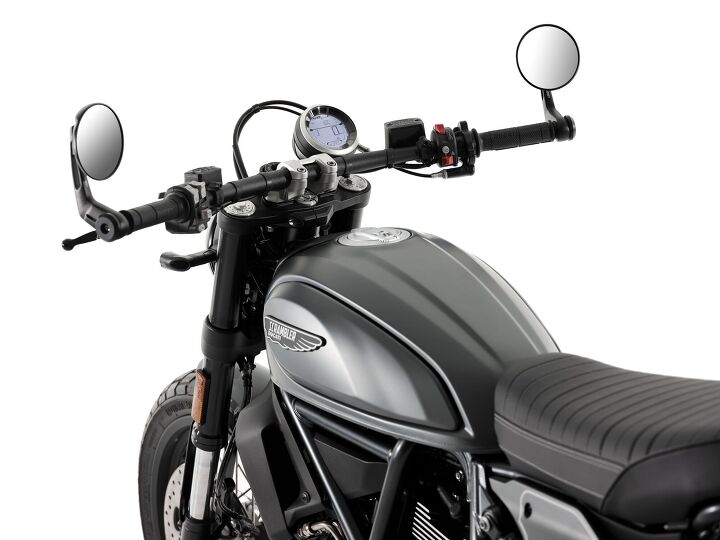
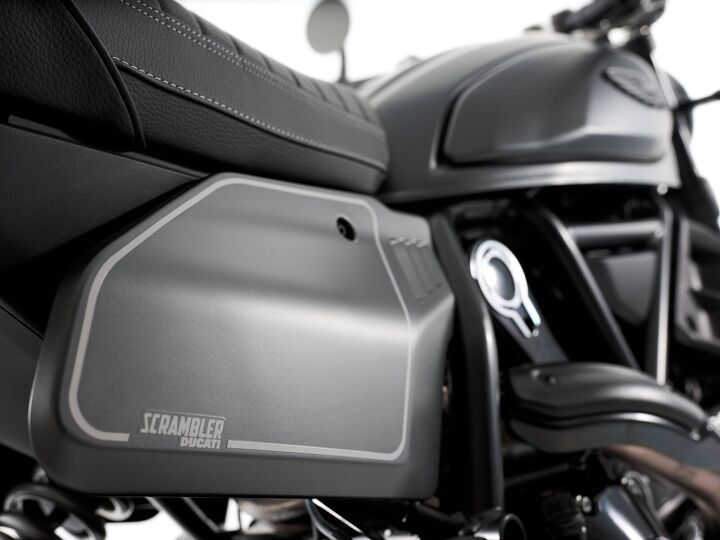
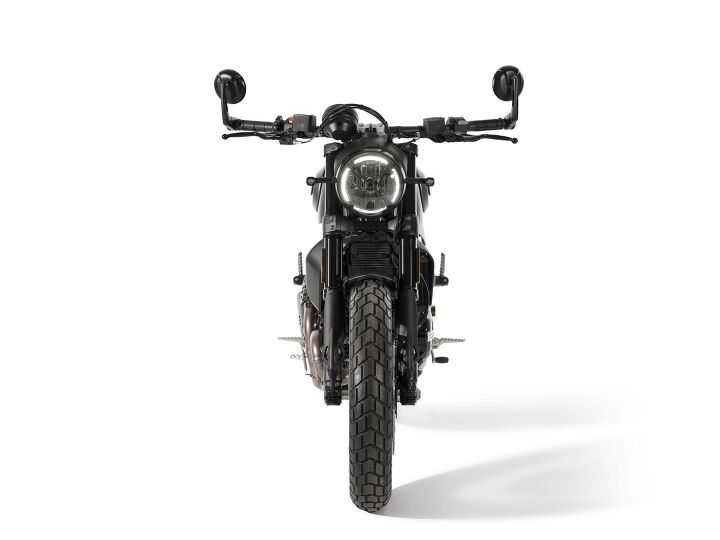
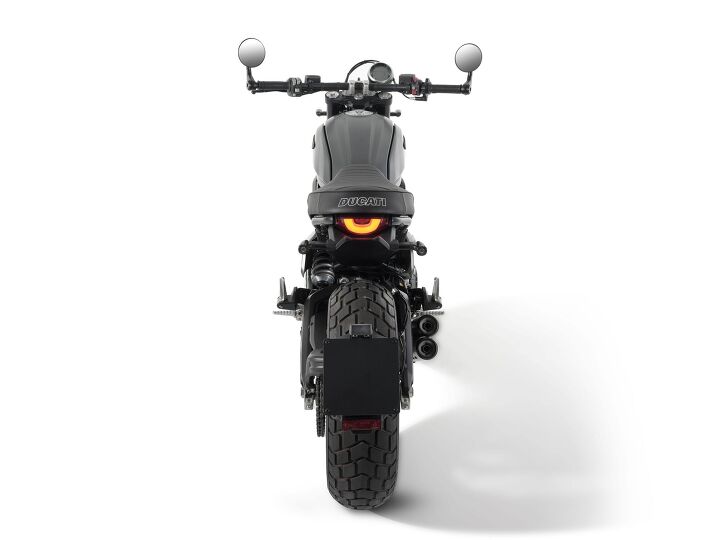
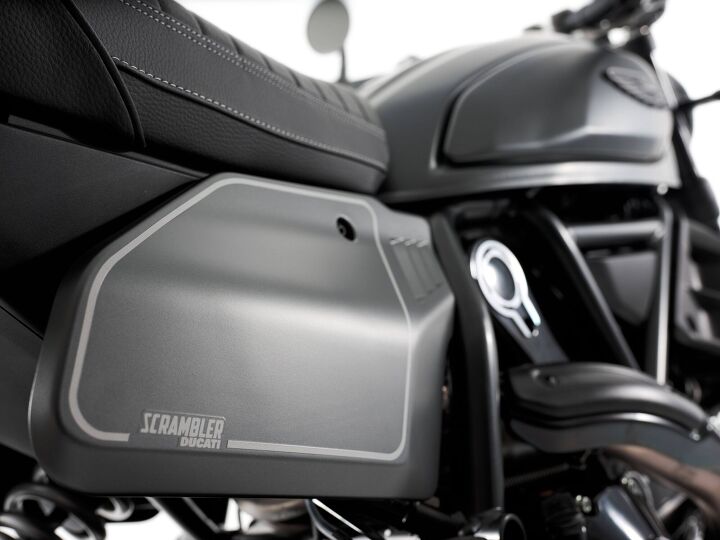
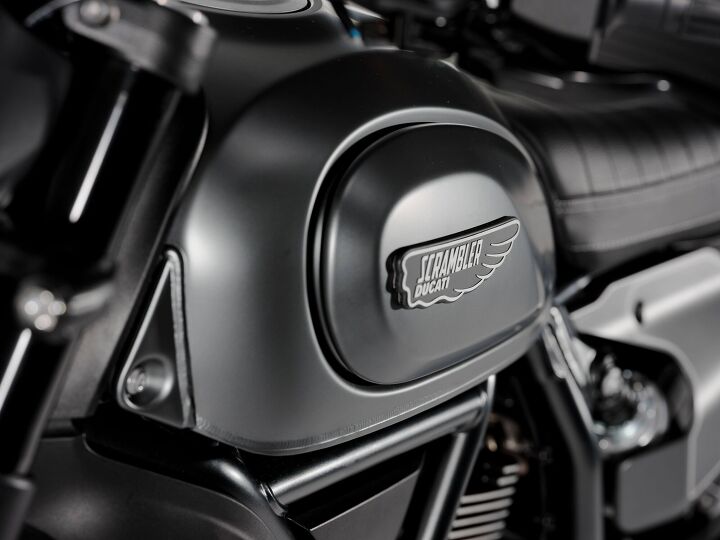
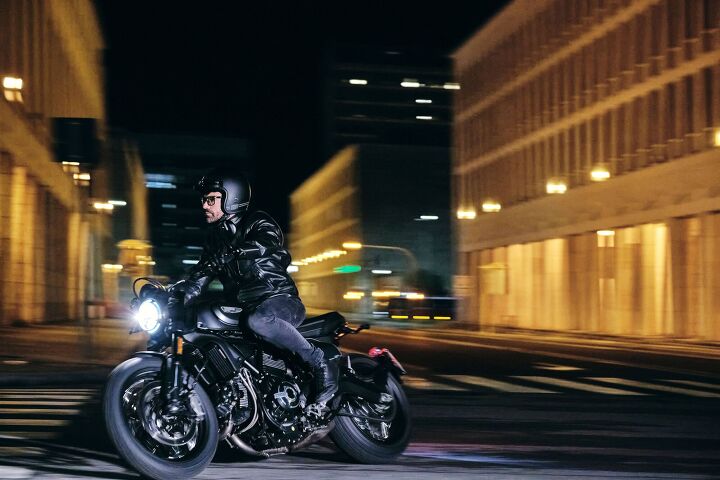
2021 Ducati Scrambler Nightshift

by John Burns
Its retro Scrambler models have been very, very good to Ducati. Why stop now? For 2021, the new Nightshift replaces the Cafe Racer and Full Throttle and is essentially a blend of the two. Elsewhere in the 803 cc Scrambler department, changes include the introduction of two new colors: sporty Ducati Red on the Scrambler Icon, and “Sparking Blue” livery enriched with red, and Iceberg White finishes for the Scrambler Desert Sled.

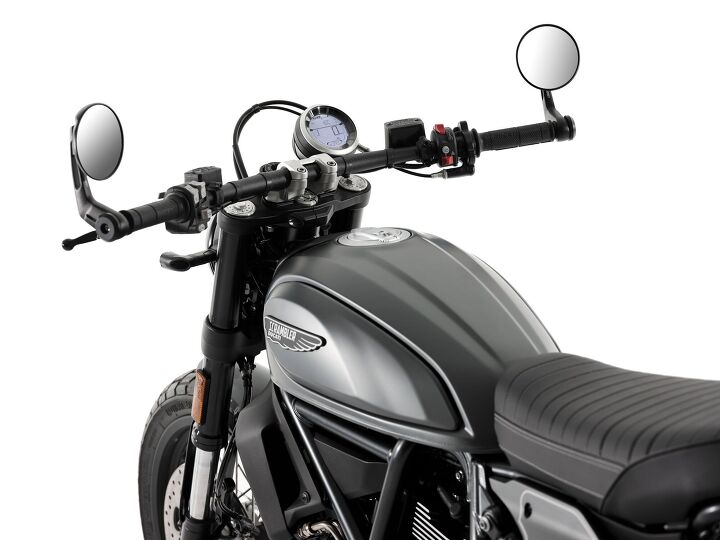
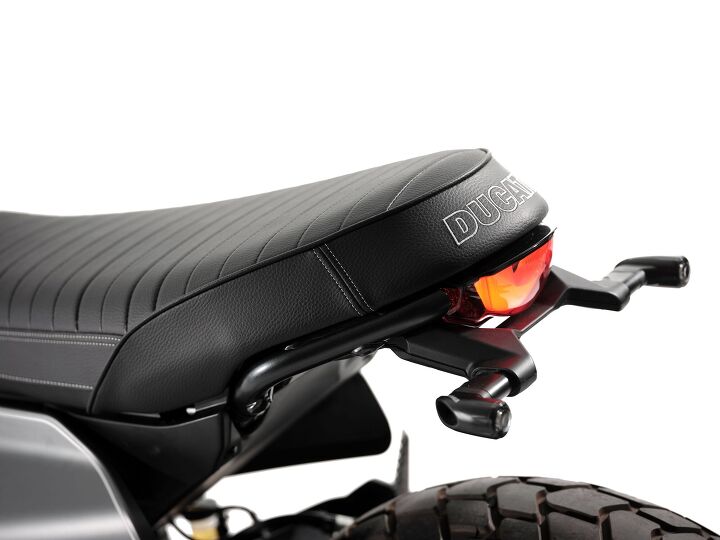
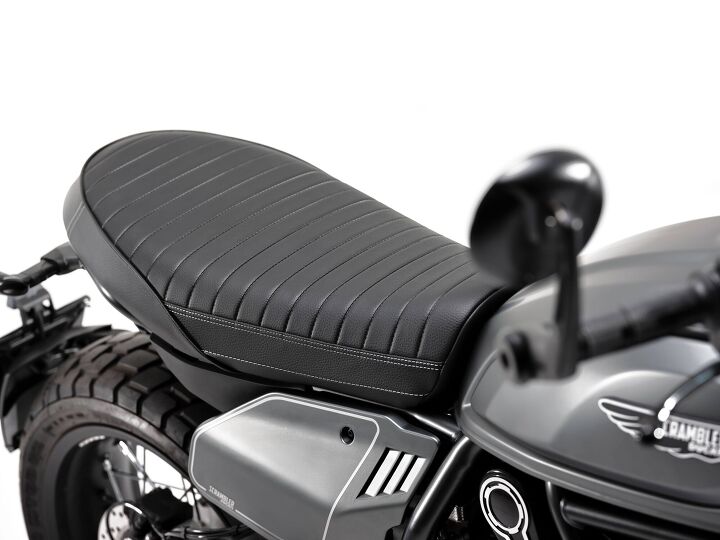
Ducati says the Nightshift, “whose name immediately evokes the atmosphere of the night, fits into the `Land of Joy’ as the ideal choice for all those looking for an essential and stylish bike at the same time, with a comfortable riding position, also in the company of a passenger and which allows its owner to experiment through customization.”Yours exclusively in Aviator Grey, the Nightshift gets a new flat seat in Cafè Racer style for two. A straight and narrow handlebar is added to the Cafè Racer mirrors, with number plates taken from the Full Throttle. 

“The design of this version is characterized by the choice of a classic and authentic line, in which the sportier aspect is emphasized by the absence of the rear mudguard, a characteristic element inherited from the custom garage culture where all not necessarily essential elements are eliminated to ensure particularly clean and sporty lines.”

The wheel sizes are those of the Scrambler Icon: 18 inches at the front and 17 inches at the rear, while the standard tires are the now iconic Pirelli MT60, excellent both for use on asphalt and for having fun on dirt roads.

As comfortable as a Full Throttle and as fascinating as a Cafè Racer, the Nightshift is the perfect combination of the two versions that will no longer be available in 2021.


  • Nightshift Main Features
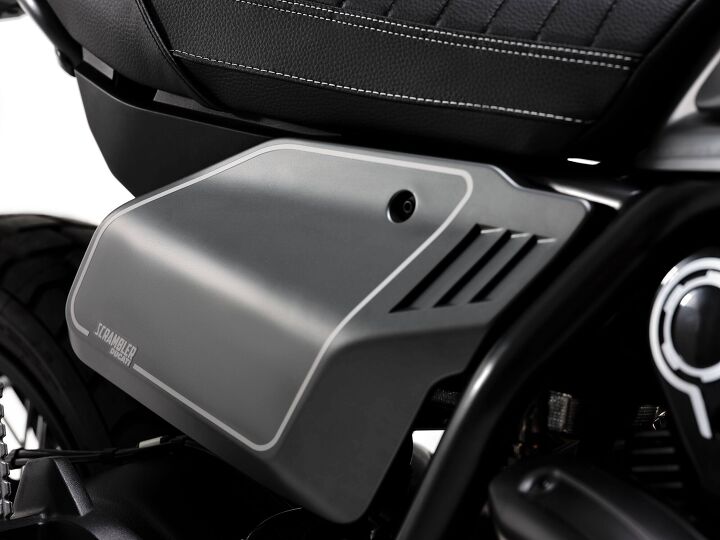
  • Steel teardrop fuel tank with interchangeable aluminum panels
  • Two-seater low saddle (798 mm) comfortable for rider and passenger
  • Low weight (180 kg dry) and low centre of gravity
  • Straight and narrow handlebar
  • Front headlight with glass lens and LED DRL
  • Diffused-LED technology tail light 
  • Ducati Performance LED indicators (approved for EU version only)
  • LCD instrument panel with gear and fuel level indicator
  • 803 cc air-cooled L-twin engine
  • Machine-finished aluminum belt cover
  • Hydraulic clutch control with adjustable lever
  • Twin spar steel Trellis frame
  • Die-cast aluminum swingarm
  • Spoked wheels with black channel
  • Enduro-derived Pirelli tires optimized for the Scrambler
  • Two-channel Cornering ABS as standard
  • Under-seat compartment with USB socket
  • Café racer style rear view mirrors
  • Flat Track style side number plates
  • Ready for DMS (Ducati Multimedia System)

Become a Motorcycle.com insider. Get the latest motorcycle news first by subscribing to our newsletter here.

The post 2021 Ducati Scrambler Nightshift appeared first on Motorcycle.com.

16 Nov 21:11

The Five Minute Museum: A Stop Motion Animation Shows the History of Civilization at Breakneck Speed

by Ayun Halliday

Experimental director and animator Paul Bush‘s 2015 short film The Five-Minute Museum, above, is the dizzying antidote to standing, footsore, in front of a vitrine crowded with Ancient Greek amphoras or exquisitely crafted pocket watches and wondering, not about history, culture or the nature of time, but whether you can justify spending $15 for an underwhelming cheese and tomato sandwich in the museum cafe.

It’s a breakneck stop motion journey through the history of civilization via six museum collections—three in London and three in Switzerland.

Presented primarily as stills that flash by at a rate of 24 per second, Bush groups like objects together, “thereby allowing the triumphs of human endeavor to be seen even in far corners of the land, by the bedridden, the infirm and the lazy.”

His sense of humor asserts itself the minute an assortment of ancient shards appear to render themselves into not just a state of wholeness, but an entire up close society in close-up. It doesn’t take long for these vessels’ clashing of warriors to give way to a composite portrait of idle youth, whose flirtations are stoked by a number of manic pipers in rapid succession, and Andy Cowton’s original music and sound design.

It’s a shock when Bush slows down and pulls back to show the source objects in their museum cases, quiet as a tomb, the sort of display most visitors blow past en route to something sexier, like a dinosaur or a blockbuster exhibit requiring timed entry tickets.

Other highlights include a lively assortments of guns, hats, chairs, and plastic toys.

If you start feeling overwhelmed by the visual intensity, don’t worry. Bush builds in a bit of a breather once you hit the clocks, the bulk of which presumably hail from the Beyer Clock and Watch Museum in Zurich.

The ingenious animated short was 10 years in the making, a fact the artist modestly downplays:

It’s very simple. Simple story, a simple technique and that’s what I like. Poetry should be a little bit stupid. This is what Pushkin says, and I try and make my films a little bit stupid as well.

In addition to the Beyer Clock and Watch Museum, you’ll find the featured artifacts housed in the British Museum, the Victoria and Albert Museum, London’s Museum of the Home (formerly known as the Geffrye Museum) as well as the Lucerne Historical Museum and the Bern Historical Museum.

Expect a much slower experience.

via Aeon

Related Content: 

A Virtual Tour Inside the Hayao Miyazaki’s Studio Ghibli Museum

Watch Art on Ancient Greek Vases Come to Life with 21st Century Animation

Take a Virtual Tour of 30 World-Class Museums & Safely Visit 2 Million Works of Fine Art

Take Immersive Virtual Tours of the World’s Great Museums: The Louvre, Hermitage, Van Gogh Museum & Much More

Where to Find Free Art Images & Books from Great Museums, and Free Books from University Presses

Ayun Halliday is an author, illustrator, theater maker and Chief Primatologist of the East Village Inky zine.  Help yourself to her free downloadable poster series, encouraging citizens to wear masks. Follow her @AyunHalliday.

The Five Minute Museum: A Stop Motion Animation Shows the History of Civilization at Breakneck Speed is a post from: Open Culture. Follow us on Facebook, Twitter, and Google Plus, or get our Daily Email. And don't miss our big collections of Free Online Courses, Free Online Movies, Free eBooksFree Audio Books, Free Foreign Language Lessons, and MOOCs.

16 Nov 21:10

Experience a Video Painting of Brian Eno’s Thursday Afternoon That Has Soothed & Relaxed Millions of People

by Colin Marshall

Brian Eno may not have invented ambient music, but he did give it a name. What better to call an album like his 1978 Music for Airports, whose slowly shifting pieces forego not just melody but all then-accepted methods of composition and performance? The result, as its title suggests, is meant not to occupy the intention of the listener but to color the atmosphere of a space. This marked one evolutionary step for an idea Eno first essayed in 1975’s Discreet Music, issued on his own label Obscure Records in an era when much of the music people listened to was anything but discreet. Recording technology first made ambient music possible; by the mid-1980s, video technology had developed to the point that it could possess a visual dimension as well.

Just as Eno’s ambient music wasn’t made for listening, Eno’s “video paintings,” as he called them, weren’t made for viewing. 1981’s Mistaken Memories of Medieval Manhattan, previously featured here on Open Culture, captures the urban landscape outside from Eno’s New York window — ironically, with a portrait orientation, so that any TV displaying it had to be turned on its side.

Thursday Afternoon, the next in the series, looks not to the built environment but that other traditional subject of painting, the female form: specifically that of Eno’s friend, photographer Christine Alicino. Here video making possible something truly new, with no artistic connection to, as Eno put it, “Sting’s new rock video” or “boring, grimy ‘Video Art.'”

But just like a Hollywood movie, Thursday Afternoon had an eponymous soundtrack album. Released in 1985, it cut the 80-minute video painting’s ambient score down to an unbroken track of nearly 61 minutes, a length made possible by the recently introduced Compact Disc. “Played” on an acoustic piano and synthesizers, the music shifts subtly in texture throughout the hour, creating a sonic environment that many have found highly congenial for working, thinking, and relaxing. I myself have listened to it hundreds of times over the past twenty years, and in the form of a Youtube video painting made by fan Jonathan Jolly, it’s racked up more than four million views. The color-treated time-lapse footage of passing clouds fits right in with the spirit of the music, and it certainly seems to do the trick for the video’s commenters, grateful as they are for reduced anxieties, recovered memories, increased focus, and even altered consciousness.

Related Content:

Deconstructing Brian Eno’s Music for Airports: Explore the Tape Loops That Make Up His Groundbreaking Ambient Music

A Six-Hour Time-Stretched Version of Brian Eno’s Music For Airports: Meditate, Relax, Study

Watch Brian Eno’s “Video Paintings,” Where 1980s TV Technology Meets Visual Art

Brian Eno Explains the Loss of Humanity in Modern Music

Brian Eno on Creating Music and Art As Imaginary Landscapes (1989)

The “True” Story Of How Brian Eno Invented Ambient Music

Based in Seoul, Colin Marshall writes and broadcasts on cities, language, and culture. His projects include the Substack newsletter Books on Cities, the book The Stateless City: a Walk through 21st-Century Los Angeles and the video series The City in Cinema. Follow him on Twitter at @colinmarshall, on Facebook, or on Instagram.

Experience a Video Painting of Brian Eno’s Thursday Afternoon That Has Soothed & Relaxed Millions of People is a post from: Open Culture. Follow us on Facebook, Twitter, and Google Plus, or get our Daily Email. And don't miss our big collections of Free Online Courses, Free Online Movies, Free eBooksFree Audio Books, Free Foreign Language Lessons, and MOOCs.

16 Nov 21:08

How to Keep Saltwater Leaders Neatly Coiled

by Jim Hendricks
Simple tricks and materials can help keep saltwater fishing leaders neatly coiled yet ready to quickly unfurl and fish with minimal twists and tangles.
Simple tricks and materials can help keep saltwater fishing leaders neatly coiled yet ready to quickly unfurl and fish with minimal twists and tangles. (Jim Hendricks/)

Saltwater fishing leaders—be they fluorocarbon or monofilament—can range in length from a few feet to the maximum that the International Game Fish Association allows of 15 feet for lines up to 20-pound test and 30 feet for pound-tests over 20. Yet, once you build or remove such long leaders from your main line, what’s the best way to coil and store them?

Over the years, I’ve fished alongside many capable first mates who run decks with expertise and precision. Part and parcel of this is keeping tackle items organized, neatly stowed and yet readily accessible. One of the best at this is Billy Hinkley, who mates for Capt. Jon Cooper out of Miami, Florida. Hinkley moves with speed and efficiency, so there’s not much time to ask questions about coiling leaders. Instead, I watched and learned.

Coil the leader around the four fingers of your hand while holding the gathered loops in place with your thumb.
Coil the leader around the four fingers of your hand while holding the gathered loops in place with your thumb. (Jim Hendricks/)

First Step: Coiling

For leaders ranging up to about 150-pound test, Hinkley coils the leader around the four fingers of his left hand (right hand for southpaws), holding the loops in place with his thumb. He starts with hook or lure end of the leader, and makes sure the coils assemble in a relaxed manner without twisting or kinking. This results in a coil of about 4 or 5 inches in diameter.

With greater pound-test material ranging from 200- to 400-pound test, Hinkley coils in larger loops—anywhere from 8 to 10 inches in diameter. This helps prevent kinks in the line and renders the leader easier to manage when it comes time to uncoil it. All leaders take a “set” when coiled and tend to spring free once loosened. However, the larger loops tend to be less springy and more user friendly as you uncoil them.

One easy method to secure the leader involves looping a No. 64 UV-resistant rubber band around the coils and back through itself. These rubber bands cost about $15 for a 1-pound bag.
One easy method to secure the leader involves looping a No. 64 UV-resistant rubber band around the coils and back through itself. These rubber bands cost about $15 for a 1-pound bag. (Jim Hendricks/)

Second Step: Securing

You can use a number of items to bind the leader coil and keep it from unraveling, including zip ties, Twist-Ease ties and waxed rigging thread. However, Hinkley prefers no. 64 rubber bands—the black UV-resistant bands he uses for other rigging items such as downrigger releases. He keeps five or six bands around his wrist, so they’re handy when he needs one.

Read Next: Storing Spools of Leader Line

To bind a leader coil, Hinkley loops a rubber band around the leader strands and pulls it tight. That locks the rubber band in place, yet does not harm the leader material. He may use two bands on coils (one on each side) of thicker leader material. Removing the rubber bands is easy using just your fingers and avoid cutters than might damage or nick the leader material.

Pull the rubber band tight around the strands to keep them from springing loose or unraveling. You can also fasten a second rubber band around the hook shank to keep it snug to the leader coils.
Pull the rubber band tight around the strands to keep them from springing loose or unraveling. You can also fasten a second rubber band around the hook shank to keep it snug to the leader coils. (Jim Hendricks/)

Final Step: Storage

To further protect leader coils from damage, place them in zippered, plastic storage bags. The sandwich-size bags are ideal for the smaller leader coils, while the gallon-size bags are well suited for larger coils. You can also note the pound-test and length of the leader on the outside of the bag using a Sharpie marker pen for future reference.

16 Nov 21:05

5 Drivable Fishing Destinations

by Lenny Rudow
Key West might feel like the end of the Earth, but for many Florida anglers, at least, it’s a reasonable drive for some spectacular fishing.
Key West might feel like the end of the Earth, but for many Florida anglers, at least, it’s a reasonable drive for some spectacular fishing. (Rob O'Neal/Florida Keys News Bureau/)

Many people aren’t yet ready to stand shoulder-to-shoulder in airport lines and then spend hours in the confines of a plane, which leaves just one option for anglers Jonesing for a hot and potentially exotic bite: Fuel up the truck and start driving, with or without the boat and trailer.

As more and more anglers hit the freeways in their quest for fishing freedom, choosing the best port within a reasonable driving distance has become a common conundrum. Of course, what constitutes a “reasonable” distance must be left to the driver.

We assessed a number of wintertime hot spots accessible by road, and landed on these five top fishing destinations that offer both inshore and offshore options.

Sailfish are a prime target for winter anglers in the Florida Keys.
Sailfish are a prime target for winter anglers in the Florida Keys. (Andy Newman/Florida Keys News Bureau/)

The Florida Keys

You knew the Keys would be on any self-respecting angler’s drive-to list, right? Truth be told, the Keys features awesome fishing pretty much 24-7, but time your visit and choose your captain to enjoy the types of fishing you love most while scratching multiple challenges off your bucket list.

Top Ports

  • Islamorada: Drive for about an hour and a half south of Miami, and you’ll find that Islamorada consists of four islands, lays claim to the title “sport fishing capitol of the world,” and is home to the world-famous Bud 'N Mary’s Marina.
  • Key West: About two hours farther down the road from Islamorada, the very last populated island in the Keys, Key West, requires no introduction. Let’s just say that if you can’t catch fish here, it’s time to take up golf.

Top Captains and Specialties

  • <a href="http://www.islamoradafishing.com/" target=_blank>Brian Cone</a>, Islamorada, mahi-mahi run-and-gun — 305-481-7689
  • <a href="https://daytimeswordfish.com/" target=_blank>Nick Stanczyk</a>, Islamorada, daytime swordfish — 305-481-0366
  • <a href="https://skinsandfinscharters.com/" target=_blank>Ted Benbow</a>, Islamorada, sight-fishing bonefish on the flats — 305-393-0363
  • <a href="https://www.bonefishingkeywest.com/" target=_blank>Lenny Leonard</a>, Key West, permit on the flats — 305-304-0154
  • <a href="http://www.fishnkw.com/" target=_blank>Mike Wienhofer</a>, Key West, groupers and snappers in the Gulf — 305-395-3474
  • <a href="https://www.spindriftfishing.com/" target=_blank>R.T. Trosset</a>, Key West, sailfish, blackfin tuna and other pelagics — 305-797-5693
  • <a href="http://www.waypointfishing.net/" target=_blank>Nate Wheeler</a>, Summerland Key (25 miles east of Key West), sharks on light tackle — 305-394-2177

Seasonal Species

  • Warm months: bonefish, grouper, mahi-mahi, permit, snook, tarpon,
  • Cool months: cobia, mackerel, sailfish, wahoo
  • Year-round: blackfin tuna, redfish, sharks, snappers, swordfish
Anglers can sightfish for tripletail along the Mississippi Gulf Coast.
Anglers can sightfish for tripletail along the Mississippi Gulf Coast. (Doug Olander/)

Mississippi’s Gulf Coast

With mile upon mile of Biloxi Marsh in one direction and multiple deep-water oil rigs in another, the Mississippi coast provides wonderfully diverse fishing opportunities. Although this is a relatively small stretch of shoreline, you’ll find multiple jumping-off points, with guides working the waters year-round.

Top Ports

  • Biloxi: Biloxi usually gets top billing in this neck of the woods, with the largest selection of charters of any port in the state.
  • Gulfport/Long Beach: About 15 miles west of Biloxi, Gulfport and Long Beach both support multiple charter operations.
  • Pass Christian/Bay Saint Louis: Head another 15 miles along the coast and Pass Christian offers closer access to the endless marshes of Mississippi and Louisiana, where reds and specks rule.
Redfish are a year-round target for coastal Mississippi anglers.
Redfish are a year-round target for coastal Mississippi anglers. (Doug Olander/)

Top Captains and Specialties

  • <a href="https://www.teammegabite.com/about-capt-bryan-k-cuevas/" target=_blank>Bryan Cuevas</a>, Biloxi, inshore and offshore red snapper, and fishing the marshes — 228-861-4627
  • <a href="https://sportfishingchartersbiloxi.com/" target=_blank>Joe Allen</a>, Biloxi, offshore yellowfin tuna at the oil rigs — 228-324-8862
  • <a href="http://www.shorethingcharters.com/" target=_blank>Sonny Schinder</a>, Bay St. Louis, inshore and marsh reds and specks — 228-342-2295

Seasonal Species

  • Warm months: cobia, grouper, king mackerel, red snapper, tarpon, yellowfin tuna, tripletail, flounder
  • Cool months: flounder, sheepshead
  • Year-round: black drum, redfish, speckled trout
Carolina anglers can catch king mackerel pretty much year-round.
Carolina anglers can catch king mackerel pretty much year-round. (Chris Woodward/)

Read Next: Five Hotspots for Winter Redfish

North Carolina’s Crystal Coast

The southern portion of the Outer Banks, ranging from Cape Lookout to Topsail Beach, the Crystal Coast has always been more of a drive-to destination than a fly-in sort of place, since the nearest major airport lies nearly three hours away in Raleigh-Durham. The Crystal Coast also has always ranked high on an angler’s list of must-go places, with inshore and offshore opportunities galore — plus the unusual potential of once-in-a-lifetime fish, when it comes to the winter giant bluefin tuna fishery.

Top Ports

  • Morehead City/Atlantic Beach: At the northern end of the Crystal Coast, boats leave through the Beaufort Inlet for intense offshore action, especially along the edge of the Continental Shelf at the famed Big Rock. Many anglers also make this a destination for catching false albacore on the fly in late fall, when the waters are often literally churning with breaking fish as far as the eye can see.
  • Bogue Inlet: About 20 miles south of Morehead, Bogue Inlet might require a longer run to the offshore grounds but it also means easy access to endless inshore waterways peppered with countless marsh islands and sand bars.
Wahoo, marlin, tuna and mahi give offshore anglers plenty of quarry to choose from off the Crystal Coast. Inshore fisheries for speckled trout and redfish also flourish in the marshes here.
Wahoo, marlin, tuna and mahi give offshore anglers plenty of quarry to choose from off the Crystal Coast. Inshore fisheries for speckled trout and redfish also flourish in the marshes here. (Doug Olander/)

Top Captains and Specialties

  • <a href="http://sensationsportfishing.com/" target=_blank>Dale Britt</a>, Morehead City, billfish and winter bluefin — 252-725-5375
  • <a href="https://www.billcollectorcharter.com/" target=_blank>Stephen Draughon</a>, Morehead City, offshore pelagics and winter bluefin — 252-247-5617
  • <a href="http://obxflyfishing.com/" target=_blank>Sarah Gardner</a>, Harker’s Island (just east of Morehead), false albacore and inshore fly fishing (spring and fall) — 252-982-6330
  • <a href="https://specfever.com/" target=_blank>Gary Dubiel</a>, Oriental (just north of Morehead across the Neuse River), false albacore and trophy redfish on fly — 252-249-1520

Seasonal Species

  • Warm months: blue and white marlin, mahi-mahi, sailfish, Spanish mackerel, wahoo
  • Cool months: bluefin tuna, false albacore
  • Year-round: blackfin and yellowfin tuna, bigeye tuna, grouper, king mackerel, redfish, speckled trout
A headboat leaves port for a trip offshore.
A headboat leaves port for a trip offshore. (Courtesy San Diego.org/)

San Diego, California

West Coast anglers looking for a hot bite this winter can hit the road and head for San Diego, where both the bay and ocean have some serious draws. You might be tempted by a multiday voyage to Mexican waters for tunas, perhaps those mystical West Coast bonefish have you contemplating a road trip, or you might even set your sights on San Diego just for the halibut.

Top Ports

  • San Diego Bay: Used by bay guides and as home port for oceanic adventures, San Diego Bay features a large charter fleet consisting of everything from bay boats to 100-foot-plus, long-range sportfishing vessels with private staterooms and WiFi.
  • Mission Bay: Just north of San Diego Bay, Mission Bay offers many private charters for nearshore and offshore fishing, as well as a number of longer-range sportfishers.
A surprise to many anglers: San Diego does host a fishery for bonefish.
A surprise to many anglers: San Diego does host a fishery for bonefish. (Jim Hendricks/)

Top Captains and Specialties

  • <a href="https://www.intrepid.net/" target=_blank>Bill Cavanaugh</a>, San Diego, long-range multiday trips for assorted pelagics — 619-224-4088
  • <a href="http://fishsandiego.com/" target=_blank>Bill Schaefer</a>, San Diego, bay fishing for spotted and calico bass, halibut, and bonefish — 858-277-8087
  • <a href="http://royalpolaris.com/" target=_blank>Frank LoPreste</a>, San Diego, long-range multiday trips for monster yellowfin tunas and other pelagics — 619-226-8030
  • <a href="http://www.thefishicon.com/" target=_blank>James Nelson</a>, San Diego, bonefish on light tackle — 619-395-0799
  • <a href="https://californiasharkfishing.com/" target=_blank>Dave Trimble</a>, Mission Bay, fly fishing for sharks —<a href="https://californiasharkfishing.com/"> </a>619-296-1120
  • <a href="http://www.pinnaclesportfishing.com/" target=_blank>Duane “Diego” Mellor</a>, Mission Bay, private day charters for tuna, yellowtail, and especially swordfish — 619-850-7575

Seasonal Species

  • Warm months: Warm months: bluefin and yellowfin tuna, barracuda, striped marlin, swordfish, dorado (mahi-mahi)
  • Year-round: bonefish, calico bass, barred sand bass, halibut, rockfish, sharks, yellowtail, yellowfin tuna (long range), wahoo (long range)
Wahoo, averaging 50 to 60 pounds, can be caught during winter in the Gulf of Mexico off Venice.
Wahoo, averaging 50 to 60 pounds, can be caught during winter in the Gulf of Mexico off Venice. (Doug Olander/)

Venice, Louisiana

Venice has earned a reputation as one of the top fishing ports along the entire Gulf Coast, thanks to its world-class inshore redfishing and relatively close access to numerous offshore oil rigs. Drive a couple hours south from New Orleans, and the asphalt ends in this fishing mecca.

Top Ports

  • Venice: Once you’re in Venice, you stay in Venice. Fishing is rightfully the primary focus for this destination.
  • Buras: While you won’t see much development on the drive south along Hwy. 23, you will find several fishing operations in Buras — about 15 miles north of Venice — which focus primarily on marsh fishing and seasonal duck hunting.

Top Captains and Specialties

  • <a href="https://www.superstrikecharters.com/" target=_blank>Damon McKnight</a>, Venice, inshore bull redfish — 985-640-0772
  • <a href="https://veniceguideservice.com/" target=_blank>Louis Rossignol</a>, Venice, inshore redfish and speckled trout — 504-481-7529
  • <a href="https://www.laredfish.com/" target=_blank>Mike Frenette</a>, Venice, inshore redfish and fishing the rigs for pelagics — 504-782-0924
  • <a href="https://www.facebook.com/peacekeepercharters/" target=_blank>Peace Marvel</a>, Venice, Gulf swordfish — 504-858-8862
  • <a href="http://journeysouthoutfitters.com/" target=_blank>Journey South Outfitters</a>, Venice, tuna, redfish, snapper — 504-616-8119.
  • <a href="http://mgfishing.com/" target=_blank>Mexican Gulf Fishing Company</a>, Venice, tuna, wahoo, marlin, swordfish, cobia, grouper, snapper
  • <a href="http://cajunfishingadventures.com/" target=_blank>Cajun Fishing Adventures</a>, Buras, bull and slot reds, speckled trout, flounder — 985-785-9833.
Cobia can be caught around inshore rigs near Venice.
Cobia can be caught around inshore rigs near Venice. (Chris Woodward/)

Seasonal Species

  • Warmer months: blue and white marlin, cobia, king mackerel, mahi-mahi, red snapper, tripletail, swordfish
  • Cooler months: sailfish, wahoo
  • Year round: blackfin and yellowfin tuna, red snapper, redfish, speckled trout
16 Nov 21:00

Fish South Florida’s Prime Grouper Season

by Steve Waters
Now is the prime time to catch big black groupers in South Florida.
Now is the prime time to catch big black groupers in South Florida. (Jim Hendricks/)

Anglers love groupers for two main reasons: They’re tough, strong fighters, and they’re delicious to eat. In South Florida, November and December rank as prime months to catch black groupers, in part because they’re abundant but also because the grouper season closes for four months on January 1.

That closure, which runs through April 30 in Atlantic waters, started in 2010 to allow the populations of black, gag and red groupers to increase in number and in size, as well as to protect the fish during their spawning seasons. The closure appears to be working, as anglers have been catching more and bigger groupers.

“We’ve already had very good black grouper fishing this fall,” says Capt. Bouncer Smith of Miami Beach, who retired earlier this year after 54 years as a charter captain. “It seems to be a bumper crop of them this year.”

The minimum size limit for black and gag groupers is 24 inches, and reds must be 20 inches. Anglers can keep a total of three groupers per day, but only one can be a black or a gag. The other two, or all three, can be red groupers.

Generally smaller than blacks and gags, red grouper need only be 20 inches to qualify as legal in Florida’s Atlantic waters.
Generally smaller than blacks and gags, red grouper need only be 20 inches to qualify as legal in Florida’s Atlantic waters. (Scott Salyers/)

Live Ones

Most anglers prefer to live-bait around coral reefs and wrecks, either anchoring upcurrent, drifting or trolling their baits. “Probably the most consistently productive bait that is readily available is pinfish,” Smith notes. “With that being said, especially from now until December, if you caught live ballyhoo and slow-trolled them in 15 to 50 feet of water, wherever you find a reef edge, they’re very, very effective.”

But, he adds, there’s an even better live bait for grouper — a 1- to 3-pound baby bonito. Troll for them with a Sabikilike rig made from small spoons and bonefish jigs with a light trolling weight on the leader above the hooks. “You’re trolling those little lures around all the wrecks out to 200 feet, and at some point you’ll catch baby bonitos,” he says.

Rig your grouper outfit with a 9/0 triple-strength circle hook and a 20-foot, 120-pound leader tied to a three-way swivel. Tie a 3-pound weight attached to a short piece of monofilament to the bottom of the swivel. “As soon as you catch a baby bonito, you hook it through the upper lip and you drop it down on the upstream side of the wreck. And you better have all the drag you can afford,” Smith says. “That live bonito is the No. 1 black grouper food you can drop down. It’s a great bait anytime, but the little bonitos are very common in the fall and the black groupers get common in the fall.”

Pinfish make one of the most consistently productive baits for groupers.
Pinfish make one of the most consistently productive baits for groupers. (Doug Olander/)

Tackle Tricks

Once you hook a keeper grouper, the fish typically swims right back into the wreck or reef where it was sheltering. Having the proper tackle makes the difference between losing the fish and pulling it away from its home, Smith says.

Smith prefers using monofilament for his main line, although braided line has become highly popular because it drops a bait quickly to the bottom and it allows anglers to better feel the bite. “If you’re truly targeting big groupers, you’re better off with real heavy monofilament and the craziest, tightest drag you can imagine fishing,” he says. “Braid doesn’t give to the pressure. Braid either holds or it breaks.”

When using 80- or 100-pound monofilament line and a 120-pound leader, you can fish a lot of drag. “When you’re turning your head and ducking, waiting for that line to break, it’s going to stretch instead of break, and therefore you can put a lot more heat on that grouper with heavy mono than you can with braid.”

Smith uses a 7-foot, solid fiberglass rod for grouper for the same pliability reasons. “If you can find one with a really good reel seat and butt, you can’t beat it for grouper fishing. But today, most people use a 5½- to 6-foot standup rod,” he says.

To the rod, Smith adds a two-speed lever-drag Penn International so he can shift to high gear when retrieving the bait, and drop to low gear after a fish hits.

A single-hook ballyhoo rigged behind a Sea Witch beneath a planer tops the list of trolling baits for Capt. Bouncer Smith.
A single-hook ballyhoo rigged behind a Sea Witch beneath a planer tops the list of trolling baits for Capt. Bouncer Smith. (Steve Waters/)

Troll Patrol

Capt. Buddy Carey of the famed Pier 5 charter fleet in Miami perfected trolling for grouper more than 50 years ago. His method still works today.

Smith trolls a Sea Witch with a ballyhoo rigged on a 7/0 triple-strength 3417 Mustad J hook at the end of a 100-foot length of 100-pound monofilament leader connected to a planer. The planer’s size depends on how deep Smith wants the bait to swim. He uses a Penn International 50 spooled with 65-pound braided line to fish along coral reefs in 50 feet of water or shallower.

“The groupers, on occasion, come up and hit it on top of the water, but basically you want the bait about 10 feet off the bottom,” he says. If the bait runs too deep, the fish can more easily take you back into the rocks. If the bait runs too shallow, the grouper won’t bother.

In addition to trolling reefs, Smith works the edges of the ship channels at Port Everglades, Lake Worth, and Fort Pierce inlets as well as Government Cut. The channels can also be fished with lures. “For the angler who isn’t fired up about trolling for groupers but wants to put his toe in the water, trolling Rapala X-Rap 30s or 40s, depending on the depth of water, is a very effective way to learn about trolling for grouper,” he says.

Read Next: Trolling With Lipped Plugs

White seems to be the most effective color. Sanding the top of the lure and painting it yellow makes it even more effective, he says, because black groupers eat yellowtail snapper.

In Government Cut, water depths average 20 to 30 feet. The channel drops to 50 feet, where the groupers wait to ambush prey. Trolling an X-Rap 40 along that wall can prove highly effective.

Similar channel walls along the Intracoastal Waterway hold gag groupers. “Inside Haulover Inlet, there are some walls that are about a 6-foot drop straight down,” Smith says. “It’s also real, real good right in downtown Miami, which has some really well-defined walls.”

Whether you troll or live-bait, now is the time to target grouper. Otherwise you’ll have to wait until May to enjoy a grouper sandwich.

16 Nov 20:55

This Whiskey Looks Likes Pine-Sol, Tastes Like Bananas and Should 100% Be on Your Bar Cart

From the makers of Elijah Craig, Evan Williams and more great bourbons, comes a plastic screw-cap hero of the bottom-shelf.

16 Nov 20:55

How to Make Fried Rice the Right Way

16 Nov 20:55

The Best "Dumb" Phone Is Cheaper Than Ever

16 Nov 20:53

The Best Father's Day Gifts Under $25

You don't always need to spring for a big-ticket item. These great gifting options are still very budget-friendly, too.

16 Nov 20:52

The 22 Best Rye Whiskeys to Drink in 2023

Introduce yourself to the next best thing in brown spirits.

12 Nov 15:11

Jordan Peterson's Most Important Rule for Life

by Jon Miltimore

The very fact that people are treating Jordan Peterson’s simple message with such hostility is evidence of how necessary it is.

11 Nov 18:28

Top 10 Facts About Hashtags

by JFrater

Everyone reading this list knows what a hashtag is. They are everywhere on the internet and it’s almost impossible to find social media websites and applications where they’re not used. However, there’s a lot of misconception out there about hashtags and the once not-so-common hash symbol, which used to be exclusive to businesspeople, and it’s […]

The post Top 10 Facts About Hashtags appeared first on Listverse.