Shared posts

08 Nov 19:31

WANT: Star Wars Chewbacca Can Koozie

by Geeks are Sexy

chew1

Just the perfect thing for fans of Chewbacca and cool drinks!

Carry your drink around in Chewie’s can cooler. Or, rather, a little can cooler that looks like Chewie. Nobody will dare try to take your drink, because they know they’ll be faced with a mighty roar if they do.

[Star Wars Chewbacca Can Koozie]

The post WANT: Star Wars Chewbacca Can Koozie appeared first on Geeks are Sexy Technology News.

06 Nov 13:05

YouTube passe des vidéos à 360° à la vraie réalité virtuelle

by Setra
Cardboard originalLes vidéos à 360° sont disponibles sur YouTube depuis un moment. Mais aujourd’hui, la plateforme de vidéo de Google annonce la possibilité de regarder des vidéos en réalité virtuelle (« VR video »).
06 Nov 11:40

« Il ne faut surtout pas être opticien pour se lancer dans l’optique », Marc Simoncini sur Sensee

by Valentin-Pringuay
senseeA la découverte de Sensee, marque lancée par Marc Simoncini pour casser les codes du marché de l'optique.
05 Nov 19:23

Hackey is a secure, programmable button that can only be activated with a physical key

by Chloe Olewitz

Hackey is a Wi-Fi connected key switch that lets you trigger any digital action or gadget, like controlling smart home applications or even completing important actions like sending out notifications or ordering products.

The post Hackey is a secure, programmable button that can only be activated with a physical key appeared first on Digital Trends.

04 Nov 22:10

Hearthstone introduces co-op as part of a limited-time event

by Danny Cowan

Blizzard's online collectible card game Hearthstone will roll out its first-ever co-op gameplay session this week with a special limited-time Tavern Brawl battle against Gearmaster Mechazod.

The post Hearthstone introduces co-op as part of a limited-time event appeared first on Digital Trends.

04 Nov 18:40

These new Star Wars: The Force Awakens posters get up close and personal

by Bryan Bishop

Star Wars: The Force Awakens is just over a month away at this point, and the hype machine is going to get louder with each passing day. Today the official Star Wars website released a number of new character posters (well, some of the actors revealed them first), giving us some extremely close looks at the stars of the film.

There's evil Kylo Ren (red!), John Boyega's Finn (blue!), an I'm-not-taking-your-shit Leia (green!), and Harrison Ford as Han Solo, who doesn't need a color because he's got a blaster. Daisy Ridley — who as far as we know is just a scavenger named Rey — doesn't have a color either, but that's probably because she lives on the dull planet of Jakku where she steals stuff from downed Star Destroyers.

The locked-down...

Continue reading…

04 Nov 17:00

This robotic finger will really push your buttons

by James Vincent

Connecting analog devices to the Internet of Things can be a hassle. If your stereo doesn't have Wi-Fi or Bluetooth connectivity, then how will you tell it to start automatically playing your sweet jams when you get home after work? The answer might be a robotic finger called the Microbot Push: a low-energy Bluetooth device that can be stuck to any surface and that physically pushes buttons when you wirelessly tell it to.

Continue reading…

04 Nov 13:36

Les Francs Colleurs : des stickers interactifs qui s'animent grâce à la réalité augmentée

by François Castro Lara
Les Francs Colleurs : des stickers interactifs qui s'animent grâce à la réalité augmentée

En France, le collectif 9ème Concept et l'agence MNSTR ont mis au point le projet "Francs Colleurs", avec des stickers interactifs qui s'animent grâce à la réalité augmentée.

Lire la suite sur Creapills.com

04 Nov 06:37

This Machine Eats Cars Whole

Machine Destroys Everything..(Read...)

02 Nov 08:32

Une biologiste française invente l’arme absolue pour corriger, améliorer ou rééditer la vie

by redaction@up-magazine.fr (Dorothée Browaeys)
Elle n’a pas encore reçu le Nobel de chimie mais décroche aujourd’hui le prix Princesse des Asturies. Emmanuelle Charpentier, microbiologiste hors pair a mis au point en 2012, une technique au doux nom de CRISPR/Cas. Celle-ci n’a pas fini de révolutionner l’ingénierie du vivant. Cette chirurgie moléculaire ouvre des possibles vertigineux. Avec leur cortège d’urgences éthiques et réglementaires.
 
Elle a troqué la danse pour l’exploration des défenses bactériennes. Emmanuelle Charpentier incarne la force de caractère et la curiosité. Cette biologiste française née en 1968, à Juvisy (Essonne) vient de recevoir le prix Princesse des Asturies, le plus prestigieux des prix décernés en Espagne. Depuis six ans, elle enchaîne les conférences et les distinctions : en avril 2015 elle avait reçu à Genève le Prix Louis-Jeantet de médecine) ; on se souvient aussi de la cérémonie du Breakthrough Prize in Life Sciences, en Californie, en novembre 2014, où elle a reçu avec sa collaboratrice Jennifer Doudna, de Berkeley, un prix de près de 3 millions de dollars.
 
Un outil prodigieux de cuisine moléculaire
 
Pourquoi tant de reconnaissances ? Les travaux d’Emmanuelle Charpentier ont abouti à une véritable révolution dans l’univers du design des organismes vivants. Si depuis 1975, on manipule les génomes en leur greffant des morceaux d’information pour leur faire faire de nouvelles productions (insecticides, herbicides, médicamenteuses…) personne n’était arrivé encore à cibler et ajouter des gènes juste aux endroits voulus. L’invention d’Emmanuelle Charpentier et de sa collègue américaine Jennifer Doudna (Université de Berkeley) consiste à utiliser une « tête chercheuse » ultra précise capable de repérer et détruire une zone d’insertion dans le génome. Leur trouvaille est une illustration de la sérendipité puisque jamais la portée de l’outil n’a été imaginée par les deux chercheuses au départ. Les hasards où mène l’envie de comprendre…
 
Tout a commencé avec l’intérêt d’Emmanuelle Charpentier pour le système immunitaire des … bactéries. Oui, les microbes ont de la mémoire ! Ils apprennent à repousser les virus qui les infectent en multipliant en d’innombrables exemplaires des petits bouts d’ADN viral. Ces répétitions forment comme des bégaiements, repérés dès 1987 par l’équipe charentaise de Philippe Horvath travaillant pour l’entreprise Danisco (rachetée par Dupont). Or cette trace, ainsi fixée, s’avère protéger les souches de bactéries des futures attaques du virus.
 

Jennifer Doudna présentant le CRISPR – Cas9
 
Encore fallait-il comprendre le mécanisme de cette résistance. Les deux chercheuses Charpentier et Doudna publient en 2012 leurs travaux décisifs (1). Elles montrent que la bactérie dispose d’un véritable système sentinelle qui dès que l’ADN du virus déjà reconnu pénètre dans la bactérie pour prendre son contrôle, celle-ci le repère grâce à son système dit CRISPR (Clustered Regularly Insterspaced Palindromic Repeats) et le coupe par son « enzyme tête chercheuse » appelée « Cas9 ». Le potentiel de la technique comme outil de génie génétique est mis en évidence dans les mois qui suivent avec la publication de Luciano Maraffini de l’Université Rockfeller, à New York (2)
 
Précise, efficace, simple et ultra rapide
 
Dès lors, c’est l’explosion de la technique CRISPR/Cas qui se révèle précise, efficace, simple et ultra rapide. Avec elle, tout devient interchangeable : Feng Zhand du Broad Institute du MIT à Cambridge, décrit CRISPR/cas comme la fonction « rechercher-remplacer » d’un ordinateur. L’outil est aussi universel : on s’en sert donc pour améliorer les semences de blé ou de pomme de terre, ajouter des traits aux espèces d’élevage, corriger des gènes sur des embryons humains.


La puissance de la méthode fait des « merveilles » comme le souligne le journaliste du Monde, Stéphane Foucard dans son article Editer la nature. Des chercheurs chinois ont réussi à rendre le blé résistant à l’oïdium, en inactivant les six copies du gène du récepteur du  champignon.  Lisong Li de l’université de Shanghaï a corrigé une mutation héréditaire responsable de la cataracte chez la souris. Et en avril dernier, l'équipe dirigée par Junjiu Huang de l’Université Sun Yat-sen (Canton) - encore chinoise - a publié dans la revue Proteins and Cells, des travaux visant à modifier des embryons humains. Objectif affiché: corriger un gène responsable d'une affection sanguine: la bêta-thalassémie. Objectif non déclaré: prendre de l'avance dans la course à un nouvel eldorado, celui des modifications génétiques transmissibles dans l'espèce humaine.
Maintenant que les Chinois peuvent modifier génétiquement les humains, si on appuyait sur «pause» pour réfléchir un peu? proposait le journaliste Jean-Yves Nau en mai dernier.  Un mois plus tard,  Emmanuelle Charpentier qui aujourd’hui dirige le département de biologie infectieuse de l’Institut Max Planck  à Berlin, s’exprimait à la tribune de l’Académie des sciences précisant que «cette technique fonctionne si bien et rencontre un tel succès qu'il serait important d'évaluer les aspects éthiques de son utilisation».
Un sommet des principales sociétés savantes américaines, chinoises et britanniques portant sur l’édition des gènes humains est prévu en décembre à Washington.
 
Les questions éthiques se doublent d’une féroce compétition juridique quant à la propriété des brevets sur cette technique. Car les enjeux sont colossaux tant dans le domaine de la santé que pour l’agriculture. Mais, il faudra parvenir à distinguer les applications humaines et non-humaines, agricoles ou microbiologiques, alimentaires ou non-alimentaires, utiles ou futiles, pour éviter amalgames et polémiques stériles.
 
OGM ou non-OGM ?
 
Le procédé CRISPR/Cas est devenu incontournable dans le secteur agroalimentaire. Il révolutionne la mutagenèse qui se pratique par les semenciers depuis plus de 60 ans. Au lieu de générer des mutations par des rayons ionisants ou des agents chimiques à l’aveugle puis de sélectionner les plantes ayant les traits recherchés  (ce qui prend plusieurs années), l’outil permet de muter un gène précis en quelques semaines. Par cette approche et des techniques apparentées, (Zinc Finger, TALENs, sélection par marqueurs..) ont été mises au point puis autorisées sur le marché américain des pommes génétiquement modifiées de cette manière et dénommée ArticApple (approuvées par la FDA en mars 2015). La chair de celle-ci ne brunit pas car un gène (responsable de l’expression of polyphenol oxidase (PPO) a été rendu silencieux. Les pommes « Arctic » ont eu un grand retentissement médiatique lorsque l'Agence canadienne d'inspection des aliments  a publié sur son site internet (le 2 mai 2012) la demande d'autorisation au Canada soumise par Okanagan10 sollicitant les commentaires du public..
 

Arctic Apple
 
Une pomme de terre InnateTM Potatoes, produite par J. R. Simplot Company est aussi consommable sur les marchés américains depuis avril 2015. Celle-ci contient peu d’asparagine, acide aminé qui génère de l’acrylamide cancérigène à la cuisson.
 
Dans le pipeline, on trouve des pommes résistances à la tavelure, de l’orge allégé en phytates (composants phosphorés des plantes qui ne sont pas digérables par les animaux d’élevage) pour rendre le phosphore plus disponible pour être assimilé, des peupliers à la croissance rapide pour un usage comme biofuels…. sans compter les modifications des microorganismes comme la levure ou les microalgues pour leur faire produire des molécules d’intérêt (morphine ou antibiotiques produits par Eligo Biosciences), de l’éthanol ou autres biocarburants, ou bien pour leur faire avaler du C02 (Carboyeast de Denis Pompon à TWB). Deux start ups en France, Abolis et Bgene, produisent des souches microbiennes à façon pour les grands groupes.
 
Quand CRISPR/Cas devient un casse-tête réglementaire
 
Face à ces développements, une question lancinante sourd : ces organismes modifiés sont-ils des OGM ? Vont-ils devoir suivre es évaluations et la législation les concernant ?
En clair, ces interventions qui confèrent de nouvelles fonctions doivent-elles être soumises à précaution du fait d’effets possibles inattendus ?
Pour rappel au niveau européen, la Directive de 1990 définissait un OGM comme « un organisme dont le matériel génétique a été modifié d’une manière qui ne s’effectue pas naturellement par recombinaison ou recombinaison naturelle ». Etaient exclus les organismes issus des mutagenèses classiques considérant que ces méthodes n’introduisent aucun transfert interespèces notamment. C’est ainsi que les semenciers proposent d’assimiler CRISPR/Cas (et les techniques voisines) aux mutagenèses classiques (qui n’introduisent aucun gène étranger à la variété) et d’assimiler ces organismes comme non OGM.
Mais les avis divergent sur le sujet. Les Comités chargés d’examiner cette question se multiplient à Washington, Bruxelles, dans les ministères, et les instituts de recherche.  Et Le Haut Conseil aux biotechnologies en France, va devoir se mobiliser sur ces controverses. Avec des questions des plus complexes : Si l’on évite une mutagenèse tous azimuts comme par le passé, est-on dans une production mieux contrôlée ? Ces interventions sont-elles sans effet sur les écosystèmes ou la santé ? Quels moyens a-t-on pour établir un suivi de ces productions ?
 
 
Cette mobilisation se déroule sur fond d’investissements massifs dans le secteur sous la bannière de la « biologie de synthèse ». L’ingénierie du vivant devient le défi stratégique aux Etats Unis où l’on pourrait atteindre un montant d’un milliard de dollars cette année, si l’on cumule les financements publics et privés. On compte 200 entreprises dans le secteur. « Depuis deux ans, les milliardaires du high-tech comme Peter Thiel cofondateur de Paypal ou Eric Schmidt de Google se tournent vers les biotechnologies, précise Corine Lesne dans son reportage Le boom de la biologie synthétique. Elle souligne que la DARPA, Agence du Pentagone pour la recherche défense avancée, apporte à elle seule 60% des fonds publics. Cet effort ne comporte qu’un minuscule  volet d’études sanitaires et environnementales (1% des financements). Le public est aussi tenu à l’écart de ces projets puisque seulement 23% des Américains (et 17% des Européens) ont quelque idée sur la biologie de synthèse (selon le sondage du Woodrow Wilson Institute de Washington). « Nous sommes dans cette situation étrange où il y a davantage d’argent et une réglementation inadaptée », remarque David Rejeski directeur du programme sur la science et l’innovation technologique au Woodrow Wilson Institute.
 
L’Europe mobilisée et tétanisée
 
En Europe, des programmes ont été mis en place pour faire connaître la biologie de synthèse et la bioéconomie. Synenergene par exemple s’illustre, en France par le Projet Festival Vivant qui questionne  l’industrialisation du vivant et l’emprise américaine réduisant la diversité des approches) à Vienne par le festival Biofiction, ou à Fribourg du théâtre… Le processus créatif entre scientifiques et artistes StudioLabProject donne aussi à voir la biologie de synthèse.
On peut regretter que des rencontres sur le sujet restent confidentielles en France, notamment celle à Biocitech le 27 novembre prochain organisée par l’AlEnvi. Il faut l’initiative de l’ONG ETC Group et le What Next Institute pour que se tienne à Genève le 9 décembre prochain une discussion sur la gouvernance de ces biotechniques (3)
 
Dans la communauté génétique, des voix se font entendre pour réclamer l'organisation d'une nouvelle «Conférence d'Asilomar». Cette réunion (de 130 généticiens à huis clos) avait été organisée en 1975 et avait demandé un moratoire sur les «manipulations génétiques» pour éviter des OGM non contrôlés dans l'environnement. Membre du Comité national consultatif d’éthique, Patrick Gaudray ne croit pas à la pertinence d’un moratoire : «J'ai connu les débuts du “génie génétique”, le moratoire de 1975 et la conférence d'Asilomar, explique-t-il. Et j'ai observé que rien n'a été évité, que le débat public sur les OGM n'a jamais eu lieu, et que, avec un peu de mauvais esprit, on peut y voir le temps de respiration qui était nécessaire aux technologues (américains, en particulier) pour se mettre en ordre de marche et devenir hégémoniques. Je ne crois pas à la pureté des annonces de réflexion et de moratoire publiées dans les deux grands journaux scientifiques (Nature et Science) qui ont rejeté l'article de l'équipe dirigée par Junjiu Hua. »
 
Dans ce contexte foisonnant, la France, premier exportateur mondial de semences, a tout intérêt à rendre les projets lisibles, accessibles et critiquables, comme l’on compris les Canadiens avec leur « ArticApple ». La plateforme GENIUS  qui évoque la question de l’utilité (Useful plants and sustainable agriculture) coordonnée par l’INRA est peut-être l’ébauche d’un dialogue. Financé à hauteur de 21,3 millions d'euros pour 7 ans, il vise à « expérimenter la construction sociale des projets », chère à Christian Huygue, directeur scientifiques adjoint de l’INRA.
 
Dorothée Browaeys, Rédactrice en chef adjointe de UP’ Magazine
 
 
(1)           Martin Jinek, Programmable dual-RNA-guided DNA endonuclease in adaptive bacterial immunity, Science, vol. 337, no 6096,‎ août 2012, p. 816-821.
(2)           Jiang et al, RNA-guided editiong of bacterial génomes using CRISPR/cas Systems, Nature Biotechnology, 2013
(3)           Governing Biotech 2.0:   How Synthetic Biology will Impact Rights, Livelihoods and Life, International Labour Organisation, 9 décembre 2015, Genève.
 
 
31 Oct 19:45

Cap’n Puss Has the Purrfect Pirate Costume [Video]

by Geeks are Sexy
Jean-Philippe Encausse

Et oui une vidéo de chat !

Not sure what his real name is, bt Cap’n Puss suits him perfectly. Arrrrr.

[ViralVideoUK]

The post Cap’n Puss Has the Purrfect Pirate Costume [Video] appeared first on Geeks are Sexy Technology News.

30 Oct 18:36

Intel Compute Stick now shipping with Windows 10

by Justin Pot

Intel's full PC on an HDMI dongle was released back in May, before Windows 10 came out, but now you can buy it with that operating system pre-installed. A cheaper Linux version is also available.

The post Intel Compute Stick now shipping with Windows 10 appeared first on Digital Trends.

30 Oct 15:37

People Are Awesome: Best of October 2015

Awesome..(Read...)

30 Oct 15:34

Slutty Game Developer Halloween Costume [Comic]

by Geeks are Sexy
29 Oct 16:04

Blend Web Mix - Marc Dorcel : quand le buzz fait la clé du succès

Dans le domaine de la pornographie, un nom revient, et il est Français. Marc Dorcel a su faire parler de lui sans pour autant avoir de budget de communication faramineux. A l'heure actuelle, 89% d [...]


29 Oct 14:42

Gest is like a Nintendo Power Glove you might actually want to use

by Adi Robertson

Consumer versions of motion control gloves — primarily associated with the much-maligned Nintendo Power Glove — have never quite caught on. In theory, they're supposed to combine the fine-grained control that hand-tracking cameras can provide with the reliability of physical controllers like the Oculus Touch. In practice, they can be bulky and constricting, and it's hard to make a truly "one size fits all" option. Various companies are trying to build workable versions — like the Manus, a soft glove fitted with flex and motion sensors. Few, however, seem as potentially practical as Gest.

Gest, pronounced "jest" and developed by fledgling startup Apotact Labs, is a weird experiment based on an eminently reasonable idea. It's an...

Continue reading…

28 Oct 15:00

MIT researchers used Wi-Fi to recognize people through walls

by Lizzie Plaugic

Researchers at MIT's Computer Science and Artificial Intelligence Lab have developed software that uses variations in Wi-Fi signals to recognize human silhouettes through walls. The researchers built a device, called RF-Capture, that transmits wireless signals and then analyzes the reflections of those signals to piece together a human form, according to a study published this morning.

Continue reading…

28 Oct 13:38

Votre iPhone 6s peut maintenant remplacer votre balance de cuisine

by Yohann Poiron

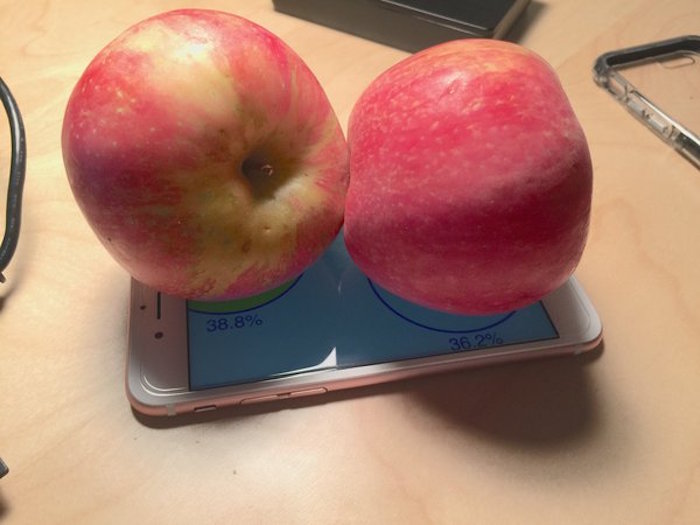
La technologie 3D Touch introduite sur l’iPhone 6s et l’iPhone 6s Plus ouvre un certain nombre d’astucieux cas d’utilisation, tels que la possibilité de jeter un regard à des e-mails sans les ouvrir, dessiner des images dynamiques avec votre doigt, et peser les prunes. Oui, vous avez bien lu. Ce dernier cas d’utilisation est rendu possible grâce à un développeur qui vit à Paris.

Dans un article sur son blog, Simon Gladman parle de sa nouvelle application, qui est nommée Plum-O-Meter. Comme son nom l’indique, l’application tire profit de la technologie 3D Touch dans son iPhone 6s afin de servir de balance, qui indique à l’utilisateur le poids des objets placés sur l’écran du smartphone.

L’exemple dans la vidéo de Gladman montre trois prunes alignées et placées sur l’écran de son iPhone 6. L’application Plum-O-Meter affiche la force de chaque fruit sur l’écran sous la forme de pourcentage, et utilise une surbrillance jaunâtre pour indiquer quel objet est le plus lourd. L’application est open source, et peut être sideloadeder sur un iPhone 6s ou un iPhone 6s Plus sans avoir besoin de jailbreaker votre iDevice.

Votre iPhone 6s peut maintenant remplacer votre balance de cuisine

Techniquement, l’écran multitouch de l’iPhone peut simultanément détecter jusqu’à cinq objets à la fois, souligne iDownloadBlog.

“À l’origine, j’ai conçu cette application pour les raisins, mais ils sont trop légers pour activer la technologie 3D Touch”, a écrit Gladman sur son blog. Quoique vous décidez de peser sur un écran d’iPhone 6s ou 6s Plus, cela peut être une bonne idée de bien nettoyer l’écran avant, ou de nettoyer les objets justes après.

Une vraie balance connectée !

Pour vos besoins culinaires, Stoo Sepp s’appuie sur le code de FlexMonkey, pour améliorer la notion de balance comme vous pouvez le voir dans la vidéo ci-dessous.

Dans les deux cas, l’iPhone affiche des chiffres légèrement différents selon l’endroit où le fruit a été placé, donc ne vous attendez pas à remplacer votre balance de cuisine par un iPhone 6s – mais il est possible que quelqu’un puisse affiner le code pour tenir compte des écarts.

Alors, prêt à remplacer votre balance ?

Flattr this!

28 Oct 12:51

Now You Can Design Your Own Raspberry Pi

by Natasha Lomas
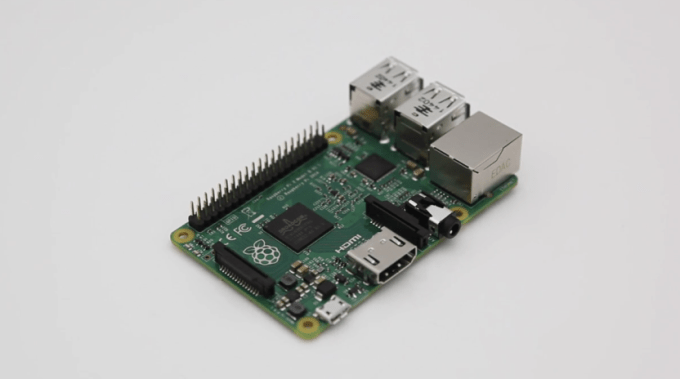
Raspberry Pi Hardware startups building atop the Raspberry Pi microprocessor — of which there are plenty already — can now order custom tweaks to the hardware to better tailor the Pi to fit the needs of their business. Read More
28 Oct 09:08

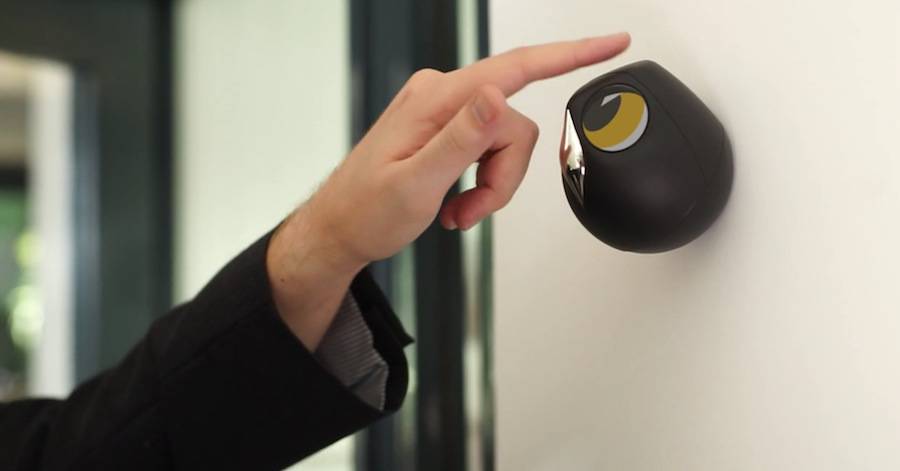
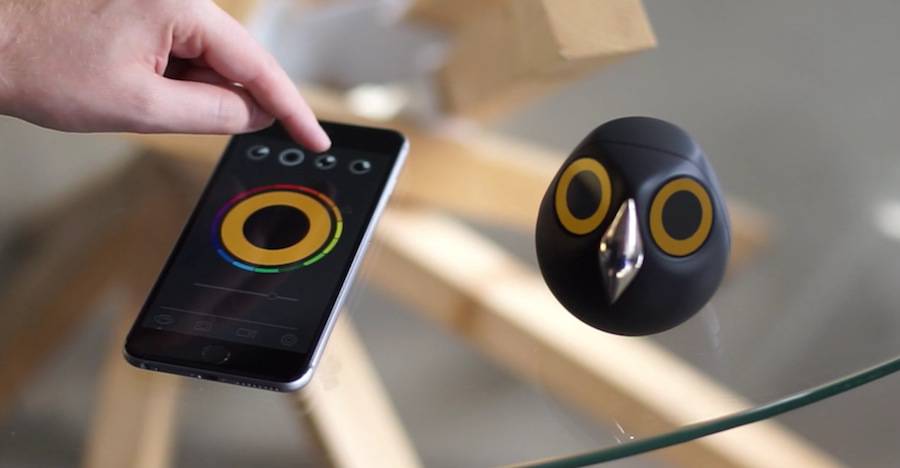
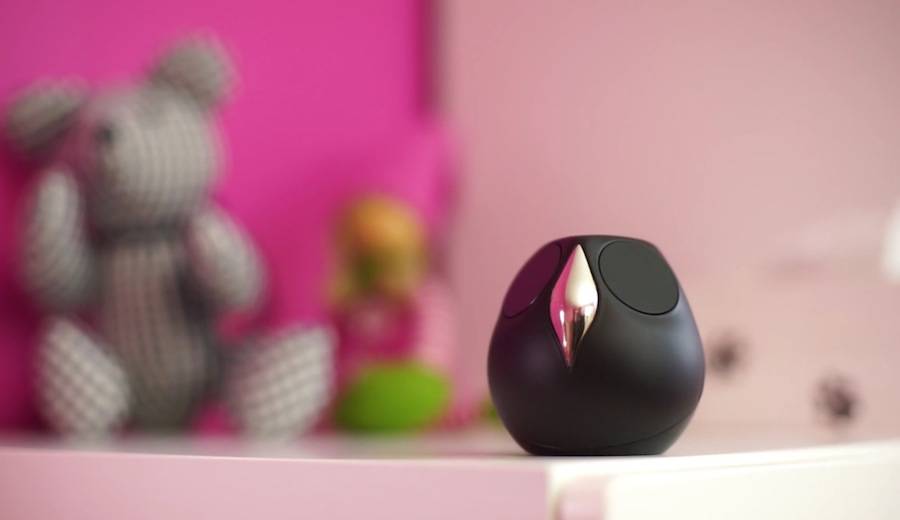
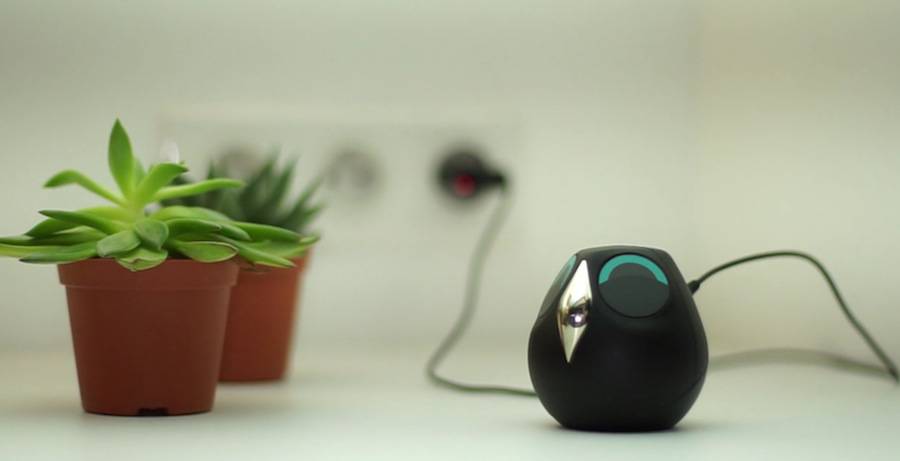
Security Camera Shaped Like a Bird

by Donnia
Jean-Philippe Encausse

Sympa mais 1an ... LOL il n'y a aucun projet de prêt

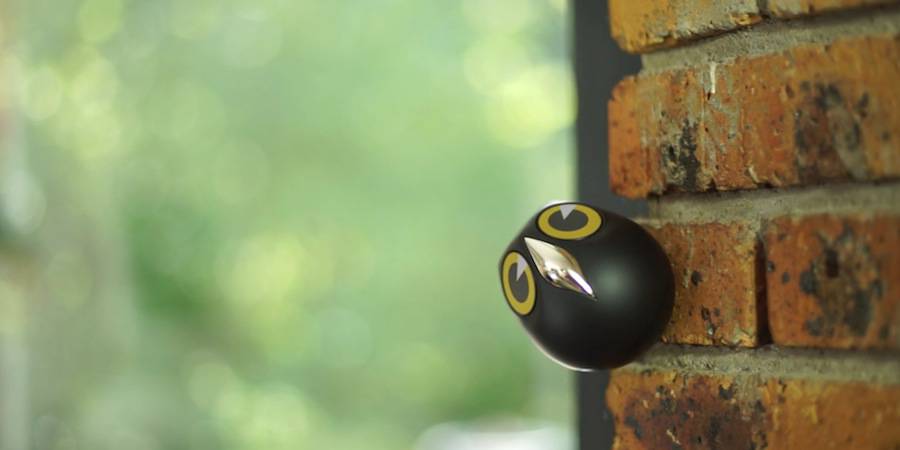
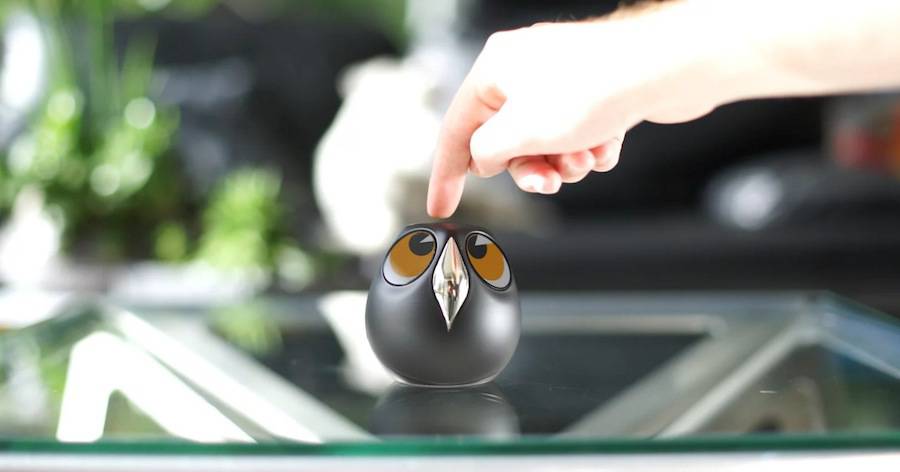
Ulo est une caméra de surveillance ayant la forme d’une petite chouette, conçue par le jeune designer français Vivien Muller et lancée à travers une campagne Kickstarter. Cette caméra fonctionne grâce au wi-fi et possède un regard qui interagit avec les utilisateurs et le tactile, créant ainsi un nouveau mode de communication objet-humain, à la manière d’un animal de compagnie.

ulo-6 ulo-5 ulo-4 ulo-3 ulo-1 ulo-0
28 Oct 08:53

IKEA transforme les dessins d'enfants en véritables peluches

by François Castro Lara
IKEA transforme les dessins d'enfants en véritables peluches

Aux États-Unis, IKEA transforme les dessins d'enfants en véritables peluches.

Lire la suite sur Creapills.com

26 Oct 14:19

What a Deep Neural Network thinks about your #selfie

Convolutional Neural Networks are great: they recognize things, places and people in your personal photos, signs, people and lights in self-driving cars, crops, forests and traffic in aerial imagery, various anomalies in medical images and all kinds of other useful things. But once in a while these powerful visual recognition models can also be warped for distraction, fun and amusement. In this fun experiment we’re going to do just that: We’ll take a powerful, 140-million-parameter state-of-the-art Convolutional Neural Network, feed it 2 million selfies from the internet, and train it to classify good selfies from bad ones. Just because it’s easy and because we can. And in the process we might learn how to take better selfies :)

Yeah, I’ll do real work. But first, let me tag a #selfie.

Convolutional Neural Networks

Before we dive in I thought I should briefly describe what Convolutional Neural Networks (or ConvNets for short) are in case a slightly more general audience reader stumbles by. Basically, ConvNets are a very powerful hammer, and Computer Vision problems are very nails. If you’re seeing or reading anything about a computer recognizing things in images or videos, in 2015 it almost certainly involves a ConvNet. Some examples:

Few of many examples of ConvNets being useful. From top left and clockwise: Classifying house numbers in Street View images, recognizing bad things in medical images, recognizing Chinese characters, traffic signs, and faces.

A bit of history. ConvNets happen to have an interesting background story. They were first developed by Yann LeCun et al. in 1980’s (building on some earlier work, e.g. from Fukushima). As a fun early example see this demonstration of LeNet 1 (that was the ConvNet’s name) recognizing digits back in 1993. However, these models remained mostly ignored by the Computer Vision community because it was thought that they would not scale to “real-world” images. That turned out to be only true until about 2012, when we finally had enough compute (in form of GPUs specifically, thanks NVIDIA) and enough data (thanks ImageNet) to actually scale these models, as was first demonstrated when Alex Krizhevsky, Ilya Sutskever and Geoff Hinton won the 2012 ImageNet challenge (think: The World Cup of Computer Vision), crushing their competition (16.4% error vs. 26.2% of the second best entry).

I happened to witness this critical juncture in time first hand because the ImageNet challenge was over the last few years organized by Fei-Fei Li’s lab (my lab), so I remember when my labmate gasped in disbelief as she noticed the (very strong) ConvNet submission come up in the submission logs. And I remember us pacing around the room trying to digest what had just happened. In the next few months ConvNets went from obscure models that were shrouded in skepticism to rockstars of Computer Vision, present as a core building block in almost every new Computer Vision paper. The ImageNet challenge reflects this trend - In the 2012 ImageNet challenge there was only one ConvNet entry, and since then in 2013 and 2014 almost all entries used ConvNets. Also, fun fact, the winning team each year immediately incorporated into a company.

Over the next few years we had perfected, simplified, and scaled up the original 2012 “AlexNet” architecture (yes, we give them names). In 2013 there was the “ZFNet”, and then in 2014 the “GoogLeNet” (get it? Because it’s like LeNet but from Google? hah) and “VGGNet”. Anyway, what we know now is that ConvNets are:

  • simple: one operation is repeated over and over few tens of times starting with the raw image.
  • fast, processing an image in few tens of milliseconds
  • they work very well (e.g. see this post where I struggle to classify images better than the GoogLeNet)
  • and by the way, in some ways they seem to work similar to our own visual cortex (see e.g. this paper)

Under the hood

So how do they work? When you peek under the hood you’ll find a very simple computational motif repeated over and over. The gif below illustrates the full computational process of a small ConvNet:

Illustration of the inference process.

On the left we feed in the raw image pixels, which we represent as a 3-dimensional grid of numbers. For example, a 256x256 image would be represented as a 256x256x3 array (last 3 for red, green, blue). We then perform convolutions, which is a fancy way of saying that we take small filters and slide them over the image spatially. Different filters get excited over different features in the image: some might respond strongly when they see a small horizontal edge, some might respond around regions of red color, etc. If we suppose that we had 10 filters, in this way we would transform the original (256,256,3) image to a (256,256,10) “image”, where we’ve thrown away the original image information and only keep the 10 responses of our filters at every position in the image. It’s as if the three color channels (red, green, blue) were now replaced with 10 filter response channels (I’m showing these along the first column immediately on the right of the image in the gif above).

Now, I explained the first column of activations right after the image, so what’s with all the other columns that appear over time? They are the exact same operation repeated over and over, once to get each new column. The next columns will correspond to yet another set of filters being applied to the previous column’s responses, gradually detecting more and more complex visual patterns until the last set of filters is computing the probability of entire visual classes (e.g. dog/toad) in the image. Clearly, I’m skimming over some parts but that’s the basic gist: it’s just convolutions from start to end.

Training. We’ve seen that a ConvNet is a large collection of filters that are applied on top of each other. But how do we know what the filters should be looking for? We don’t - we initialize them all randomly and then train them over time. For example, we feed an image to a ConvNet with random filters and it might say that it’s 54% sure that’s a dog. Then we can tell it that it’s in fact a toad, and there is a mathematical process for changing all filters in the ConvNet a tiny amount so as to make it slightly more likely to say toad the next time it sees that same image. Then we just repeat this process tens/hundreds of millions of times, for millions of images. Automagically, different filters along the computational pathway in the ConvNet will gradually tune themselves to respond to important things in the images, such as eyes, then heads, then entire bodies etc.

Examples of what 12 randomly chosen filters in a trained ConvNet get excited about, borrowed from Matthew Zeiler's Visualizing and Understanding Convolutional Networks. Filters shown here are in the 3rd stage of processing and seem to look for honey-comb like patterns, or wheels/torsos/text, etc. Again, we don't specify this; It emerges by itself and we can inspect it.

Another nice set of visualizations for a fully trained ConvNet can be found in Jason Yosinski et al. project deepvis. It includes a fun live demo of a ConvNet running in real time on your computer’s camera, as explained nicely by Jason in this video:

In summary, the whole training process resembles showing a child many images of things, and him/her having to gradually figure out what to look for in the images to tell those things apart. Or if you prefer your explanations technical, then ConvNet is just expressing a function from image pixels to class probabilities with the filters as parameters, and we run stochastic gradient descent to optimize a classification loss function. Or if you’re into AI/brain/singularity hype then the function is a “deep neural network”, the filters are neurons, and the full ConvNet is a piece of adaptive, simulated visual cortical tissue.

Training a ConvNet

The nice thing about ConvNets is that you can feed them images of whatever you like (along with some labels) and they will learn to recognize those labels. In our case we will feed a ConvNet some good and bad selfies, and it will automagically find the best things to look for in the images to tell those two classes apart. So lets grab some selfies:

  1. I wrote a quick script to gather images tagged with #selfie. I ended up getting about 5 million images (with ConvNets it’s the more the better, always).
  2. I narrowed that down with another ConvNet to about 2 million images that contain at least one face.
  3. Now it is time to decide which ones of those selfies are good or bad. Intuitively, we want to calculate a proxy for how many people have seen the selfie, and then look at the number of likes as a function of the audience size. I took all the users and sorted them by their number of followers. I gave a small bonus for each additional tag on the image, assuming that extra tags bring more eyes. Then I marched down this sorted list in groups of 100, and sorted those 100 selfies based on their number of likes. I only used selfies that were online for more than a month to ensure a near-stable like count. I took the top 50 selfies and assigned them as positive selfies, and I took the bottom 50 and assigned those to negatives. We therefore end up with a binary split of the data into two halves, where we tried to normalize by the number of people who have probably seen each selfie. In this process I also filtered people with too few followers or too many followers, and also people who used too many tags on the image.
  4. Take the resulting dataset of 1 million good and 1 million bad selfies and train a ConvNet.

At this point you may object that the way I’m deciding if a selfie is good or bad is wrong - e.g. what if someone posted a very good selfie but it was late at night, so perhaps not as many people saw it and it got less likes? You’re right - It almost definitely is wrong, but it only has to be right more often that not and the ConvNet will manage. It does not get confused or discouraged, it just does its best with what it’s been given. To get an idea about how difficult it is to distinguish the two classes in our data, have a look at some example training images below. If I gave you any one of these images could you tell which category it belongs to?

Example images showing good and bad selfies in our training data. These will be given to the ConvNet as teaching material.

Training details. Just to throw out some technical details, I used Caffe to train the ConvNet. I used a VGGNet pretrained on ImageNet, and finetuned it on the selfie dataset. The model trained overnight on an NVIDIA K40 GPU. I disabled dropout because I had better results without it. I also tried a VGGNet pretrained on a dataset with faces but did not obtain better results than starting from an ImageNet checkpoint. The final model had 60% accuracy on my validation data split (50% is guessing randomly).

What makes a good #selfie ?

Okay, so we collected 2 million selfies, decided which ones are probably good or bad based on the number of likes they received (controlling for the number of followers), fed all of it to Caffe and trained a ConvNet. The ConvNet “looked” at every one of the 2 million selfies several tens of times, and tuned its filters in a way that best allows it to separate good selfies from bad ones. We can’t very easily inspect exactly what it found (it’s all jumbled up in 140 million numbers that together define the filters). However, we can set it loose on selfies that it has never seen before and try to understand what it’s doing by looking at which images it likes and which ones it does not.

I took 50,000 selfies from my test data (i.e. the ConvNet hasn’t seen these before). As a first visualization, in the image below I am showing a continuum visualization, with the best selfies on the top row, the worst selfies on the bottom row, and every row in between is a continuum:

A continuum from best (top) to worst (bottom) selfies, as judged by the ConvNet.

That was interesting. Lets now pull up the top 100 selfies (out of 50,000), according to the ConvNet:

Best 100 out of 50,000 selfies, as judged by the Convolutional Neural Network.

If you’d like to see more here is a link to top 1000 selfies (3.5MB). Are you noticing a pattern in what the ConvNet has likely learned to look for? A few patterns stand out for me, and if you notice anything else I’d be happy to hear about in the comments. To take a good selfie, Do:

  • Be female. Women are consistently ranked higher than men. In particular, notice that there is not a single guy in the top 100.
  • Face should occupy about 1/3 of the image. Notice that the position and pose of the face is quite consistent among the top images. The face always occupies about 1/3 of the image, is slightly tilted, and is positioned in the center and at the top. Which also brings me to:
  • Cut off your forehead. What’s up with that? It looks like a popular strategy, at least for women.
  • Show your long hair. Notice the frequent prominence of long strands of hair running down the shoulders.
  • Oversaturate the face. Notice the frequent occurrence of over-saturated lighting, which often makes the face look much more uniform and faded out. Related to that,
  • Put a filter on it. Black and White photos seem to do quite well, and most of the top images seem to contain some kind of a filter that fades out the image and decreases the contrast.
  • Add a border. You will notice a frequent appearance of horizontal/vertical white borders.

Interestingly, not all of these rules apply to males. I manually went through the top 2000 selfies and picked out the top males, here’s what we get:

Best few male selfies taken from the top 2,000 selfies.

In this case we see don’t see any cut off foreheads. Instead, most selfies seem to be a slightly broader shot with head fully in the picture, and shoulders visible. It also looks like many of them have a fancy hair style with slightly longer hair combed upwards. However, we still do see the prominance of faded facial features.

Lets also look at some of the worst selfies, which the ConvNet is quite certain would not receive a lot of likes. I am showing the images in a much smaller and less identifiable format because my intention is for us to learn about the broad patterns that decrease the selfie’s quality, not to shine light on people who happened to take a bad selfie. Here they are:

Worst 300 out of 50,000 selfies, as judged by the Convolutional Neural Network.

Even at this small resolution some patterns clearly emerge. Don’t:

  • Take selfies in low lighting. Very consistently, darker photos (which usually include much more noise as well) are ranked very low by the ConvNet.
  • Frame your head too large. Presumably no one wants to see such an up-close view.
  • Take group shots. It’s fun to take selfies with your friends but this seems to not work very well. Keep it simple and take up all the space yourself. But not too much space.

As a last point, note that a good portion of the variability between what makes a good or bad selfies can be explained by the style of the image, as opposed to the raw attractiveness of the person. Also, with some relief, it seems that the best selfies do not seem to be the ones that show the most skin. I was quite concerned for a moment there that my fancy 140-million ConvNet would turn out to be a simple amount-of-skin-texture-counter.

Celebrities. As a last fun experiment, I tried to run the ConvNet on a few famous celebrity selfies, and sorted the results with the continuum visualization, where the best selfies are on the top and the ConvNet score decreases to the right and then towards the bottom:

Celebrity selfies as judged by a Convolutional Neural Network. Most attractive selfies: Top left, then deceasing in quality first to the right then towards the bottom. Right click > Open Image in new tab on this image to see it in higher resolution.

Amusingly, note that the general rule of thumb we observed before (no group photos) is broken with the famous group selfie of Ellen DeGeneres and others from the Oscars, yet the ConvNet thinks this is actually a very good selfie, placing it on the 2nd row! Nice! :)

Another one of our rules of thumb (no males) is confidently defied by Chris Pratt’s body (also 2nd row), and honorable mentions go to Justin Beiber’s raised eyebrows and Stephen Collbert / Jimmy Fallon duo (3rd row). James Franco’s selfie shows quite a lot more skin than Chris’, but the ConvNet is not very impressed (4th row). Neither was I.

Lastly, notice again the importance of style. There are several uncontroversially-good-looking people who still appear on the bottom of the list, due to bad framing (e.g. head too large possibly for J Lo), bad lighting, etc.

Exploring the #selfie space

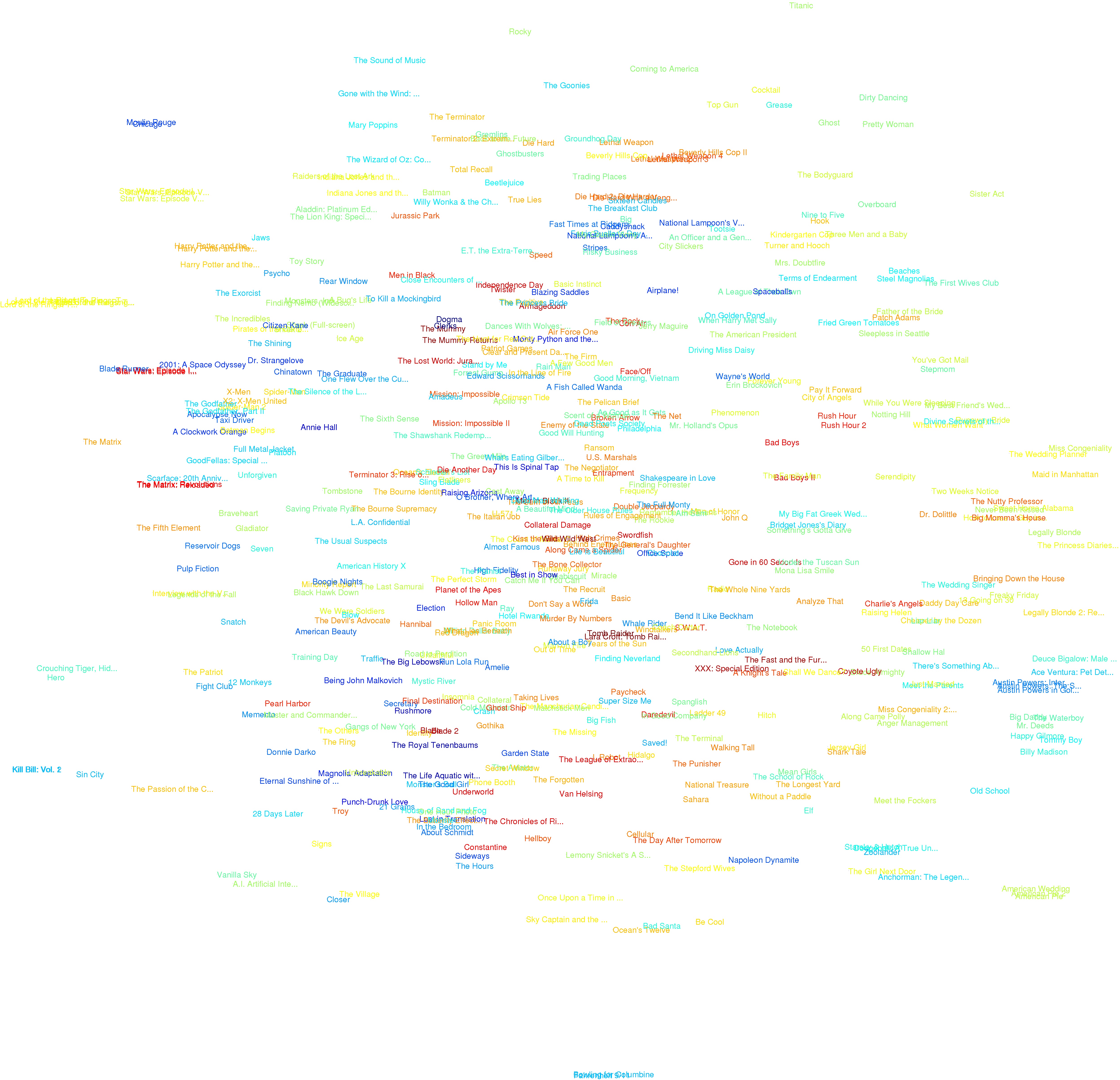
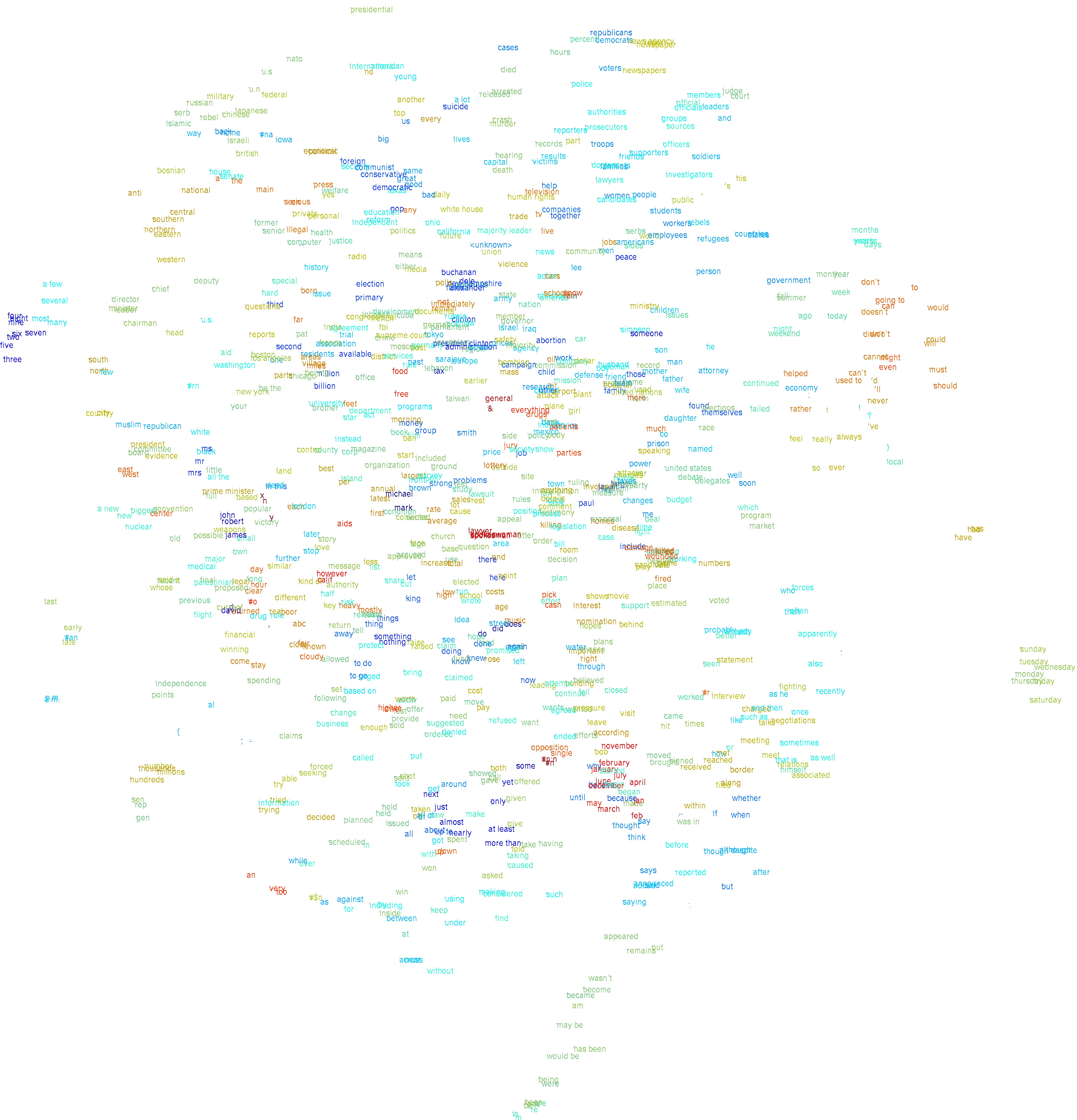
Another fun visualization we can try is to lay out the selfies with t-SNE. t-SNE is a wonderful algorithm that I like to run on nearly anything I can because it’s both very general and very effective - it takes some number of things (e.g. images in our case) and lays them out in such way that nearby things are similar. You can in fact lay out many things with t-SNE, such as Netflix movies, words, Twitter profiles, ImageNet images, or really anything where you have some number of things and a way of comparing how similar two things are. In our case we will lay out selfies based on how similar the ConvNet perceives them. In technical terms, we are doing this based on L2 norms of the fc7 activations in the last fully-connected layer. Here is the visualization:

Selfie t-SNE visualization. Here is a link to a higher-resolution version. (9MB)

You can see that selfies cluster in some fun ways: we have group selfies on top left, a cluster of selfies with sunglasses/glasses in middle left, closeups bottom left, a lot of mirror full-body shots top right, etc. Well, I guess that was kind of fun.

Finding the Optimal Crop for a selfie

Another fun experiment we can run is to use the ConvNet to automatically find the best selfie crops. That is, we will take an image, randomly try out many different possible crops and then select the one that the ConvNet thinks looks best. Below are four examples of the process, where I show the original selfies on the left, and the ConvNet-cropped selfies on the right:

Each of the four pairs shows the original image (left) and the crop that was selected by the ConvNet as looking best (right). </a>

Notice that the ConvNet likes to make the head take up about 1/3 of the image, and chops off the forehead. Amusingly, in the image on the bottom right the ConvNet decided to get rid of the “self” part of selfie, entirely missing the point :) You can find many more fun examples of these “rude” crops:

Same visualization as above, with originals on left and best crops on right. The one on the right is my favorite.</a>

Before any of the more advanced users ask: Yes, I did try to insert a Spatial Transformer layer right after the image and before the ConvNet. Then I backpropped into the 6 parameters that define an arbitrary affine crop. Unfortunately I could not get this to work well - the optimization would sometimes get stuck, or drift around somewhat randomly. I also tried constraining the transform to scale/translation but this did not help. Luckily, when your transform has 3 bounded parameters then we can afford to perform global search (as seen above).

How good is yours?

Curious about what the network thinks of your selfies? I’ve packaged the network into a Twitter bot so that you can easily find out. (The bot turns out to be onyl ~150 lines of Python, including all Caffe/Tweepy code). Attach your image to a tweet (or include a link) and mention the bot @deepselfie anywhere in the tweet. The bot will take a look at your selfie and then pitch in with its opinion! For best results link to a square image, otherwise the bot will have to squish it to a square, which deteriorates the results. The bot should reply within a minute or something went wrong (try again later).

Example interaction with the Selfie Bot (@deepselfie).

Before anyone asks, I also tried to port a smaller version of this ConvNet to run on iOS so you could enjoy real-time feedback while taking your selfies, but this turned out to be quite involved for a quick side project - e.g. I first tried to write my own fragment shaders since there is no CUDA-like support, then looked at some threaded CPU-only versions, but I couldn’t get it to work nicely and in real time. And I do have real work to do.

Conclusion

I hope I’ve given you a taste of how powerful Convolutional Neural Networks are. You give them example images with some labels, they learn to recognize those things automatically, and it all works very well and is very fast (at least at test time, once it’s trained). Of course, we’ve only barely scratched the surface - ConvNets are used as a basic building block in many Neural Networks, not just to classify images/videos but also to segment, detect, and describe, both in the cloud or in robots.

If you’d liked to learn more, the best place to start for a beginner right now is probably Michael Nielsen’s tutorials. From there I would encourage you to first look at Andrew Ng’s Coursera class, and then next I would go through course notes/assignments for CS231n. This is a class specifically on ConvNets that I taught together with Fei-Fei at Stanford last Winter quarter. We will also be offering the class again starting January 2016 and you’re free to follow along. For more advanced material I would look into Hugo Larochelle’s Neural Networks class or the Deep Learning book currently being written by Yoshua Bengio, Ian Goodfellow and Aaron Courville.

Of course you’ll learn much more by doing than by reading, so I’d recommend that you play with 101 Kaggle Challenges, or that you develop your own side projects, in which case I warmly recommend that you not only do but also write about it, and post it places for all of us to read, for example on /r/machinelearning which has accumulated a nice community. As for recommended tools, the three common options right now are:

  • Caffe (C++, Python/Matlab wrappers), which I used in this post. If you’re looking to do basic Image Classification then Caffe is the easiest way to go, in many cases requiring you to write no code, just invoking included scripts.
  • Theano-based Deep Learning libraries (Python) such as Keras or Lasagne, which allow more flexibility.
  • Torch (C++, Lua), which is what I currently use in my research. I’d recommend Torch for the most advanced users, as it offers a lot of freedom, flexibility, speed, all with quite simple abstractions.

Some other slightly newer/less proven but promising libraries include Nervana’s Neon, CGT, or Mocha in Julia.

Lastly, there are a few companies out there who aspire to bring Deep Learning to the masses. One example is MetaMind, who offer web interface that allows you to drag and drop images and train a ConvNet (they handle all of the details in the cloud). MetaMind and Clarifai also offer ConvNet REST APIs.

That’s it, see you next time!

26 Oct 14:14

Niptech Explore – L’analyse prédictive

by ben

Si l’être humain a souvent peur de l’inconnu et du lendemain, c’est encore plus vrai dans le domaine des affaires où l’on aime optimiser et réduire la part d’incertitude. De la gestion des stocks pour la grande distribution à la prévention des fraudes pour les organismes de cartes de crédit, les sciences et les mathématiques apportent leur aide pour anticiper ce qui va arriver. Souvent invisible pour le consommateur, ce domaine est en plein développement.

Selon Karim Bensaci, de la société Calyps, « L’analyse prédictive consiste à permettre d’anticiper quelque chose qui aurait un fort potentiel d’arriver, suffisamment tôt pour qu’on ait le temps de se préparer. » Pour cela, l’importance des données – autant en provenance du passé que du présent – est capitale, et la digitalisation de nos sociétés contribue à les fournir grâce aux capteurs, smartphones, objets connectés ou réseaux sociaux notamment. La quantité de données explose : on estime que les 90% des données disponibles aujourd’hui ont été récoltées ces deux dernières années seulement. Mais au-delà des chiffres, c’est l’interprétation humaine qui intervient dans l’ultime phase de l’analyse prédictive.


Podcast: Téléchargement

Les applications s’étendent aujourd’hui à tous les domaines, de l’environnement au médical, de la mobilité à la politique. Les prévisions météorologiques, sont un exemple d’analyse prédictive connu de tous. Dans plusieurs villes aux USA, le projet PredPol a permis de réduire le nombre de délits de près de 30%, en prévoyant avec efficacité les endroits où envoyer les patrouilles de police. Des opérateurs téléphoniques anticipent le moment où un client risque de partir chez un concurrent, et entre en contact avec lui pour lui offrir un avantage commercial. Dans le domaine de la mobilité, des villes font appel à l’analyse prédictive pour élaborer des scénarios de développement des transports publics et de son urbanisation. Walmart, pour l’un de ses magasins, approvisionne ses stocks en fonction des préférences émises sur les réseaux sociaux dans la région.

Anticipation, optimisation… l’analyse prédictive et le big data soulèvent également des questions politiques et éthiques évidentes. « Notre civilisation est en train de vivre une révolution dont elle n’a peut-être pas conscience » conclu Karim Bensaci.


26 Oct 13:55

Portable Pizza Pouch

by Staff
Jean-Philippe Encausse

Pour les Meetup !

Quell your pizza craving by keeping a delicious slice handy using this portable pizza pouch. The triangular plastic pouch features a convenient strap so you can use it like a necklace and a sturdy zip lock seal to ensure the grease stays in the slice stays fresh.

Check it out

$8.00

22 Oct 13:51

Kinetic Battery Startup Ampy Raises Seed To Shrink To Fit Wearables

by Natasha Lomas
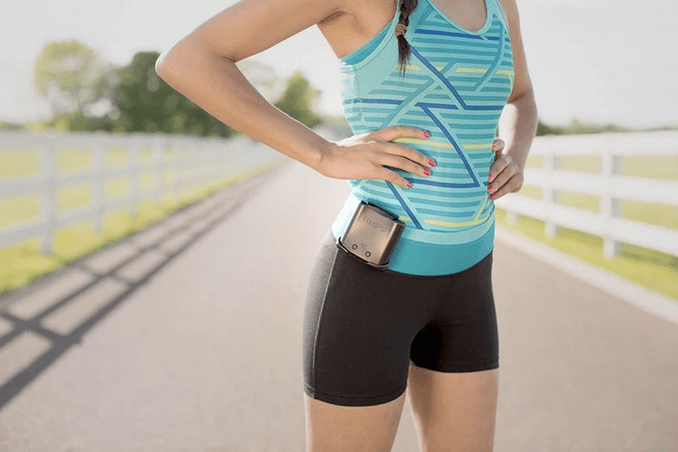
Ampy Kinetic charging battery startup Ampy — which makes a wearable spare battery pack charged by human movement — has closed an $875,000 seed round led by Clean Energy Trust and NewGen Ventures. The Chicago-based startup says it will be using the new funding to work on shrinking its tech to fit wearable devices such as smartwatches and fitness trackers, with the aim of expanding beyond… Read More
22 Oct 07:03

Tesla owners are ignoring autopilot safety advice and putting the results on YouTube

by Rich McCormick
Jean-Philippe Encausse

Le conducteur essaye de se tuer ... encore l'humain qui bug

Tesla's latest update to its electric car software allowed its Model S sedans access to self-driving options for the first time, unlocking Autosteer, Auto Lane Change, and Autopark features for use on US roads. Tesla CEO Elon Musk was careful to specify that these features did not turn Tesla's cars into fully autonomous vehicles, but that hasn't stopped some Tesla drivers from getting into some dangerous situations, treating their updated Model S as a proper self-driving car — and filming the results.

Two videos, uploaded to YouTube the day after the update rolled out, already show drivers' Model S cars reacting unpredictably with Autosteer engaged. In one, the vehicle appears to jerk to the right as the driver turns off a highway,...

Continue reading…

20 Oct 07:37

The Wove Band, the world's first flexible display wearable

The Wove Band by Polyera is the first wearable with a flexible touchscreen display. The devices won't be publicly available until 2016, but Polyera CEO Phil Inagaki gave us a behind the scenes look at some prototypes, and talked with us about his design philosophy...(Read...)

20 Oct 07:33

Mini PC Axgio: mise à jour Windows 10 et écran déconnecté avec SARAH

by Cédric Locqueneux
titre_sarahIl y a quelques mois je vous avais présenté un mini PC sous forme de clé HDMI, embarquant un processeur Intel et un système Windows 8, capable de faire tourner le projet S.A.R.A.H. Un mini PC très séduisant pour sa compacité et son prix inférieur à 100€. Depuis est sorti le nouveau système de Microsoft,
19 Oct 19:02

Lenovo hasn't given up on its giant table-top PC

by Lauren Goode

It's been a few years since Lenovo first introduced its giant table-top PC as a kind of hybrid solution for both family fun and productivity, and safe to say, we haven't seen many (or any) of these in the wild since then. But that doesn't mean Lenovo, still the world's largest PC maker, has given up on the idea. Today the Chinese PC-maker introduced the Yoga Home 900 Portable All-in-One Desktop.

"Portable" may seem a bit tongue-in-cheek, because the 27-inch, 16-plus-pound machine isn't necessarily something you're going to take with you on your next business trip (and if you do, please send us the video). It's actually positioned as a home computer, meant to offer desktop-grade performance but with some ability to move it from location...

Continue reading…

19 Oct 16:24

Shuoying single-lens 360-degree 1080P Video Camera

by Claire

Shuoying shows their single-lens 360 degree video camera powered by Sunplus SPCA6350M and with a SONY CMOS sensor, records on Micro-SD cards, with a battery life of up to 2 hours of video-recording, 1 hour when using WiFi for realtime 360 video streaming on its 1000mAh battery. Mass production starts in November. Shuoying plans to have a working sample of their next generation 4K 360 degree video camera ready in January.

Please contact Shuoying for more questions:
Thomas Liu, Vice General Manager
Email:thomas@shuoying.com.cn
Mobile:+86 138 2656 8459
Http://www.shuoying.com