Shared posts

28 Oct 13:33

Jibo the robot has finally gone on sale for $900

by Drew Prindle

Jibo, "the world's first family robot" is a sensor-studded household bot designed to help you out with everyday tasks and help keep your life organized. It's also a bit on the creepy side.

The post Jibo the robot has finally gone on sale for $900 appeared first on Digital Trends.

28 Oct 08:00

Walmart is using shelf-scanning robots to audit its stores

by James Vincent

Robots are already a common sight in warehouses (Amazon alone use more than 45,000) but now they’re moving into stores too. Walmart has announced it’s deploying shelf-scanning bots in 50 locations around the US, using the machines to check things like inventory, prices, and misplaced items. The retailing giant says the robots’ introduction won’t lead to job losses, and that the company wants to save employees from carrying out tasks that are “repeatable, predictable, and manual.”

The robots themselves are produced by California-based Bossa Nova Robotics, and are about two-feet tall with an extendable tower containing lights and sensors for scanning shelves. They sit in recharging stations in the store until a human employee gives them a...

Continue reading…

25 Oct 21:47

Microsoft kills off Kinect, stops manufacturing it

by Tom Warren

Microsoft is finally admitting Kinect is truly dead. After years of debate over whether Kinect is truly dead or not, the software giant has now stopped manufacturing the accessory. Fast Co Design reports that the depth camera and microphone accessory has sold around 35 million units since its debut in November, 2010. Microsoft’s Kinect for Xbox 360 even became the fastest-selling consumer device back in 2011, winning recognition from Guinness World Records at the time.

In the years since its debut on Xbox 360, a community built up around Microsoft’s Kinect. It was popular among hackers looking to create experiences that tracked body movement and sensed depth. Microsoft even tried to bring Kinect even more mainstream with the Xbox One,...

Continue reading…

25 Oct 21:33

Microsoft détaille son plan de migration de Skype for Business vers Teams

Depuis la dernière conférence Ignite, il ne fait plus aucun doute que Teams (concurrent maison de Slack) sera la seule et unique solution de messagerie à terme pour les entreprises. Il lui manque cependant de nombreuses fonctionn...
24 Oct 19:11

Google launches native add-ons for Gmail

by Micah Singleton

Earlier this year, Google announced it would allow add-ons for Gmail, and the time has finally come. Launching today, add-ons will allow third-party developers to integrate their services with Gmail directly. The first partners include Asana, Trello, DialPad, Intuit QuickBooks, and Wrike.

The addition will help enterprise users save a bit of time by not requiring them switch apps constantly. A DocuSign add-on is coming soon, which should be pretty helpful. Right now, Google has only added business-facing add-ons, and it’s unclear when more consumer-facing companies will be able to take advantage of the new Gmail capabilities.

Gmail add-ons are currently supported on the web and on Android, but Google hasn’t said when iOS...

Continue reading…

20 Oct 14:25

Artificial Intelligence at the Top of a Professional Sport

by Lauren Faris

The lights dim and the music swells as an elite competitor in a silk robe passes through a cheering crowd to take the ring. It’s a blueprint familiar to boxing, only this pugilist won’t be throwing punches.

OpenAI created an AI bot that has beaten the best players in the world at this year’s International championship. The International is an esports competition held annually for Dota 2, one of the most competitive multiplayer online battle arena (MOBA) games.

Each match of the International consists of two 5-player teams competing against each other for 35-45 minutes. In layman’s terms, it is an online version of capture the flag. While the premise may sound simple, it is actually one of the most complicated and detailed competitive games out there. The top teams are required to practice together daily, but this level of play is nothing new to them. To reach a professional level, individual players would practice obscenely late, go to sleep, and then repeat the process. For years. So how long did the AI bot have to prepare for this competition compared to these seasoned pros? A couple of months.

So, What Were the Results?

Normally, a professional Dota 2 game is played on a stage with 5v5 teams. This was the bot’s first competition, and the AI only had a couple of months to learn how to play Dota 2 completely from the ground up. It seemed more fair to start off simple with 1v1 matches. Those first matches were against [Dendi], one of the top players in the world, who lost to the bot shown below in the first match within about ten minutes, resigned in the second match, and then declined to play the third.

The OpenAI team didn’t use imitation learning to train the bot. Instead, it was put up against an exact copy of itself starting with the very first match it played. This continued, nonstop, for months. The bot was constantly improving against itself, and in turn it would have to try that much harder to win. This vigorous training clearly paid off.

While the 1v1 results are stellar, the bot has not had enough time to learn how to work in a cohesive manner with 4 other copies of itself to make a true Dota 2 team. After the roaring success of the International, the next step for OpenAI is to form an ultimate 5 bot team. We think it will be possible to beat the top players next year and we’re eager to see how long that takes.

What Does OpenAI Like to do When it is Not Busy Crushing Video Game Competition?

OpenAI has worked on a number of projects before the Dota 2 effort. They explored the effect of parameter noise to learning algorithms which has proven to be advantageous across the board. During exploratory behavior used in reinforcement learning, parameter noise is used to increase the efficiency of the rate at which agents learn.

The left diagram represents action space noise, traditionally used to change the likelihood of each action step by step. The right diagram represents the newly implemented parameter space noise:

“Parameter space noise injects randomness directly into the parameters of the agent, altering the types of decisions it makes such that they always fully depend on what the agent currently senses.”

By adding this noise right into the parameters, it has shown that it teaches agents tasks far faster than before. It’s part of a wider effort focusing on new ways to optimize learning algorithms to make the training process not only faster, but also more effective.

They are not done with Dota 2 either. When they come back with their five bot team next year, it will undoubtedly require a level of teamwork never before seen in artificial intelligence. Think of the possibilities. Will this take the shape of a collective hive mind? Will team dynamics among AI look anything like those of their human counterparts? This really is the stuff of science fiction being developed and tested right before our eyes.

Now, Why Might a Billion Dollar AI Startup Be Meddling in a Video Game Competition?

OpenAI is an open source company dedicated to creating safe artificial intelligence and working from a $1 Billion endowment established in 2015. On their website, they state that the Dota 2 experiment was, “a step towards building AI systems which accomplish well-defined goals in messy, complicated situations involving real humans.” The International was proof of concept that they could in fact implement AI that handled random situations successfully — even better than humans.  It leaves us wondering if the next field AI dominates in won’t be something quite as trivial as a video game competition. It is notable that OpenAI’s chairman, Elon Musk, gave a warning statement directly after the victory:

“If you’re not concerned about AI safety, you should be. Vastly more risk than North Korea.”

This is not the first time that Musk has conveyed hesitations towards the upcoming dangers of our superior Dota 2 players. In fact, he has a history as a leading doomsayer:

“With artificial intelligence, we are summoning the demon. You know all those stories where there’s the guy with the pentagram and the holy water and he’s like, yeah, he’s sure he can control the demon? Doesn’t work out.”

It is clear why someone so worried about the future of AI has devoted his time and resources to a company dedicated to ensuring its safety for humanity with this advancing technology. But it almost seems paradoxical. Teaching an AI to compete better than humans appears to be marching that dreaded outcome one step closer. But at the same time, you can’t temper the advancement of technology by refusing to take part in it. The company’s approach is to make sure everyone can study and use the advancements they are making (the “Open” in OpenAI) and thereby prevent an imbalance of power presented if the best AIs of the future were to be privately controlled by a small number of companies, individuals, and state actors.

Earlier this year, Hackaday’s own Cameron Coward wrote up an in-depth article about the potential future of artificial intelligence. He delves into one of the hotly debated topics with this subject: the ethics of strong AI. Will they be malevolent? What rights should they have? These questions will be answered in the upcoming years — whether we want them to be or not. It is our job to make sure that the answers to these questions in the near future are not answered for us. OpenAI is debugging AI before it debugs us.


Filed under: Current Events, Featured, Interest, news, Original Art, Software Development
17 Oct 19:26

Voici comment 2 barres verticales peuvent donner un surprenant effet 3D aux GIFs

by Victor M.

Depuis quelques temps, une nouvelle tendance émerge sur le web : les GIFs animés à effet 3D. Une illusion qui ne joue qu’avec 2 petites barres verticales pour un effet surprenant !

Depuis quelques années, les GIFs connaissent un regain de popularité sur le web. Ils sont utilisés à toutes les sauces et certains sont devenus de véritables icônes de la culture populaire. On remarque aussi quelques petites innovations dans ce format, notamment celle de créer des GIFs qui simulent un effet 3D. Comment ? Simplement en ajoutant 2 barres verticales, placées à des endroits stratégiques, qui vont donner un effet de profondeur assez impressionnant.

Les personnages, qui apparaissent au départ derrière ces barres blanches franchissent la frontière et créent ainsi ce fameux effet 3D que nous aimons tant. Ces bandes de séparation servent en réalité de marqueurs visuels pour l’arrière plan et le premier plan.

Une fois qu’un élément de l’image passe devant elles (animal, projectile, membre…), votre cerveau identifie automatiquement la scène comme si elle était en trois dimensions. On vous laisse visualiser ci-dessous une série de GIFs qui utilisent avec brio cette technique très astucieuse !


Source : mymodernmet.com

Cet article Voici comment 2 barres verticales peuvent donner un surprenant effet 3D aux GIFs provient du blog Creapills, le média référence des idées créatives et de l'innovation marketing.

16 Oct 07:38

A Grenade Shaped Ice Mold

This is "the original" $10 grenade shaped silicone ice mold. It produces 4.5-inch x 3-inch x 2.5-inch Mk 2 'pineapple' style ice grenades. Cool! [ Amazon link ]..(Read...)

16 Oct 06:13

This 3D Printed Stargate Can Actually Dial! [Video]

by Geeks are Sexy

Unfortunately the alarm and mechanical sound of the Stargate are missing, but this is still awesome.

[Carasibana]

The post This 3D Printed Stargate Can Actually Dial! [Video] appeared first on Geeks are Sexy Technology News.

14 Oct 08:44

Sony prévoit de ressusciter son chien robot Aibo avec une IA

by Johann Breton
Aibo ERS-7. L'équipe Aibo se reforme. C'est en tout cas ce qu'annonce le Nikkei, qui semble toutefois être très sûr de son fait. D'après les sources du quotidien japonais, Sony a récemment fait une croix sur ses ambitions dans le domaine de la robotique industrielle, mais a reporté son attention sur le marché grand public. La direction pense qu'avec...
12 Oct 19:47

Strike Back saison 6 : la nouvelle équipe débarque dès octobre

by Antoine Roche
Strike Back saison 6 : la nouvelle équipe débarque dès octobre
Le retour de la série Strike Back grâce à un nouveau casting arrive bien plus vite que prévu.

Lire la suite

Téléchargez nos chouettes applications mobile pour plus d'infos : ici pour iPhone et ici pour Android


© Rédigé par, Antoine Roche pour Begeek.fr le jeu, 12 Oct 2017 à 14h30
12 Oct 19:44

Google Home now lets you shop at Target with just your voice

by Jacob Kastrenakes

Next time you need an emergency order of LaCroix, you can just ask a Google Home to order a case from Target. Google announced today that Target will begin supporting its Google Express shopping service in the contiguous US. That also means Target will be supported through the Google Assistant’s voice ordering feature, which is so far only live on the Google Home and Android TV but is coming “soon” to iOS and Android as well.

Target has only been available through Google Express in New York City and California before now, so today’s announcement marks a major expansion and helps to fill out Google’s service in a big way. It also follows behind Walmart, which is available nationwide through Google Express and added voice ordering support...

Continue reading…

08 Oct 19:07

Hovering Questions About Magnetic Levitation

by Brian McEvoy

Who doesn’t love magnets? They’re functional, mysterious, and at the heart of nearly every electric motor. They can make objects appear to defy gravity or move on their own. If you’re like us, when you first started grappling with the refrigerator magnets, you tried to make one hover motionlessly over another. We tried to position one magnet over another by pitting their repellent forces against each other but [K&J Magnetics] explains why this will never work and how levitation can be done with electromagnets. (YouTube, embedded below.)

In the video, there is a quick demonstration of their levitation rig and a brief explanation with some handy oscilloscope readings to show what’s happening on the control side. The most valuable part, is the explanation in the article where it walks us through the process, starting with the reason permanent magnets can’t be used which leads into why electromagnets can be successful.

[K&J Magnetics]’s posts about magnets are informative and well-written. They have a rich mix of high-level subjects without diluting them by glossing over the important parts. Of course, as a retailer, they want to sell their magnets but the knowledge they share can be used anywhere, possibly even the magnets you have in your home.

Simpler levitators can be built with a single electromagnet to get you on the fast-track to building your own levitation rig. Remember in the first paragraph when we said ‘nearly’ every electric motor used magnets, piezoelectric motors spin without magnets.


Filed under: toy hacks
06 Oct 19:40

Google Just Revealed How They’ll Build Quantum Computers

by Karla Lant

Next Stop: Quantum Supremacy

Quantum computing: it’s the brass ring in the computing world, giving the ability to exponentially outperform and out-calculate conventional computers. A quantum computer with a mere 50 qubits would outclass the most powerful supercomputers in the world today. Surpassing the limits set by conventional computing, known as achieving quantum supremacy, has been a difficult road. Now, a team of physicists at the University of California Santa Barbara (UCSB) and Google have demonstrated a proof-of-principle for a quantum computer that may mean quantum supremacy is only months away.

Quantum states are difficult to isolate and sustain, so the practical task of isolating quantum processing machinery from outside interference has proved to be the sticking point in pushing quantum supremacy out of reach. However, to demonstrate quantum supremacy, a computer system doesn’t need to be an all-purpose quantum dynamo; it just needs to show one quantum capability that is beyond the capacity of conventional systems.

A diagram of the mockup nine-qubit system the Google team says demonstrates proof of principle for achieving quantum supremacy.
Image Credit: Google

To do that, the Google and UCSB team’s strategy comes down to qubits. Qubits are different from ordinary bits (the smallest unit of data in a computer) because they can exist in superposition. Each ordinary bit can be either a 1 or a 0 at any given time, but a qubit can be both at once. Two ordinary bits have 2² potential positions, but again, only one at a time. Two qubits have that same potential all at once. Adding qubits expands potential exponentially, so 50 qubits represent 10,000,000,000,000,000 numbers — an amount a traditional computer would need a memory on the petabyte-scale to store.

Quantum Supremacy In Action

The team’s plan, then, isn’t to create a fully functional quantum computer, but to instead create a system that can support 49 qubits in superposition reliably. If it can do that, so the theory goes, the rest is relatively easy.

Their system is a series of nine superconducting qubits, consisting of nine metal loops cooled to a low temperature with current flowing through them in both directions simultaneously. They were able to show that the supported qubits represented 512 numbers at once, and that the results were reliable, without an accompanying exponential increase in errors.

This is much lower than the number of qubits needed to declare supremacy, but it’s a promising result. The next step will be to create a 50-qubit chip and test if its errors increase at the manageable pace seen in the nine-qubit experiment. 

The Dawn of the Singularity: A Visual Timeline of Ray Kurzweil’s Predictions
Click to View Full Infographic

If the team is right, they may achieve quantum supremacy in a matter of months. If they do, the applications will be staggering. We can expect to see machine learning take place exponentially faster, and artificial intelligence progress much more rapidly. If it does, we may see the singularity approaching long before most predicted.

Quantum computers will make personalized medicine a reality, parsing out the function of every protein in the human genome and modeling their interactions with all possible complex molecules very quickly. We will see simulation-based climate change solutions come to light, and find new chemistry-driven solutions to carbon capture. We are likely to see huge leaps in material science and engineering that allow us to create better magnets, better superconductors, and much higher energy density batteries. And we are almost certainly going to see more technological advances through biomimetics as we find ourselves achieving more insights into natural processes, such as photosynthesis.

In other words, the idea that quantum supremacy will change everything isn’t just hype.

The post Google Just Revealed How They’ll Build Quantum Computers appeared first on Futurism.

04 Oct 21:45

Google’s bag of tricks includes a surprise — the lifelogging Google Clips camera

by Gannon Burgett

Putting further emphasis on its use of artificial intelligence, Google has launched Google Clips, a new lifelogging camera that uses A.I. to capture and collect life as it happens.

The post Google’s bag of tricks includes a surprise — the lifelogging Google Clips camera appeared first on Digital Trends.

04 Oct 21:26

Google’s WaveNet machine learning-based speech synthesis comes to Assistant

by Devin Coldewey
 Last year, Google showed off WaveNet, a new way of generating speech that didn’t rely on a bulky library of word bits or cheap shortcuts that result in stilted speech. WaveNet used machine learning to build a voice sample by sample, and the results were, as I put it then, “eerily convincing.” Previously bound to the lab, the tech has now been deployed in the latest version… Read More
03 Oct 19:16

Do you smell that? Prolitec brings “ambient scenting” to the IoT market

by Clayton Moore

Retailers and other commercial operations have long used ambient scenting to influence the customer experience, but global leader Prolitec is adding a new level of control by combining the smell technology with an IoT distribution and regulation system.

The post Do you smell that? Prolitec brings “ambient scenting” to the IoT market appeared first on Digital Trends.

26 Sep 20:10

Ce bijou connecté améliore votre voix pour vous aider à chanter juste

by Creapills

[Idée partenaire] OnTune est un objet connecté surprenant qui prend la forme d’un médaillon qui améliore votre voix pour vous aider à chanter juste.

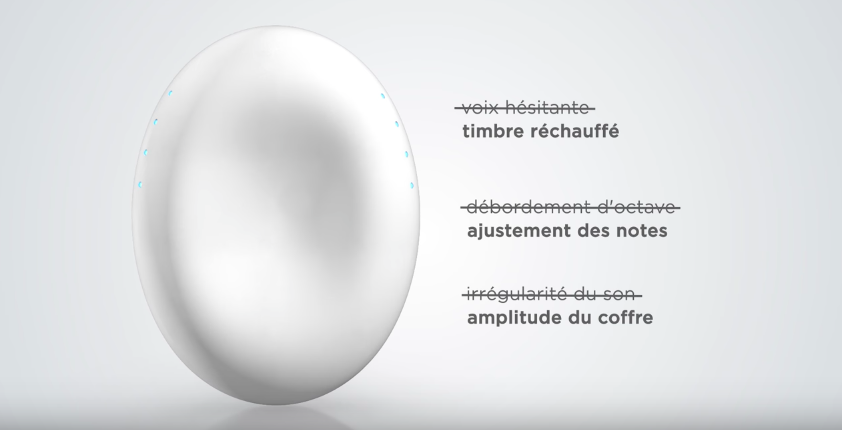
Chanter faux n’est plus une fatalité. Si vous n’avez absolument aucun talent pour le chant, il existe désormais un accessoire révolutionnaire qui va vous aider à y remédier. Deux Français ont imaginé OnTune, un médaillon connecté qui améliore votre voix pour vous aider à chanter plus juste. Et aussi surprenant que cela puisse paraître, ce produit existe bel et bien.

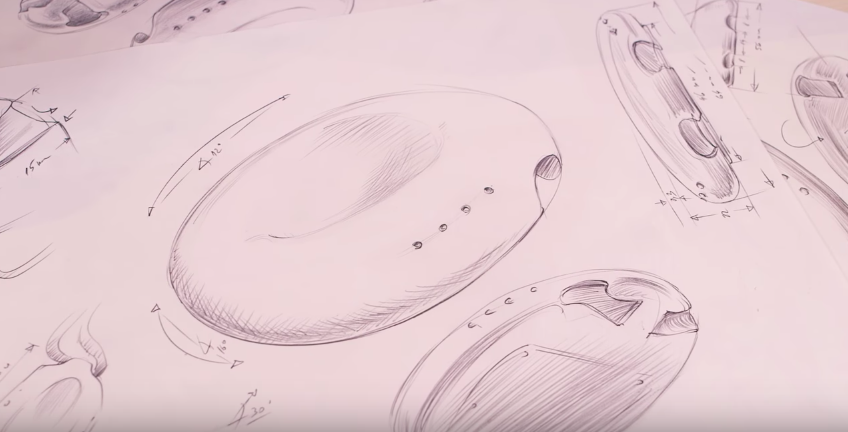
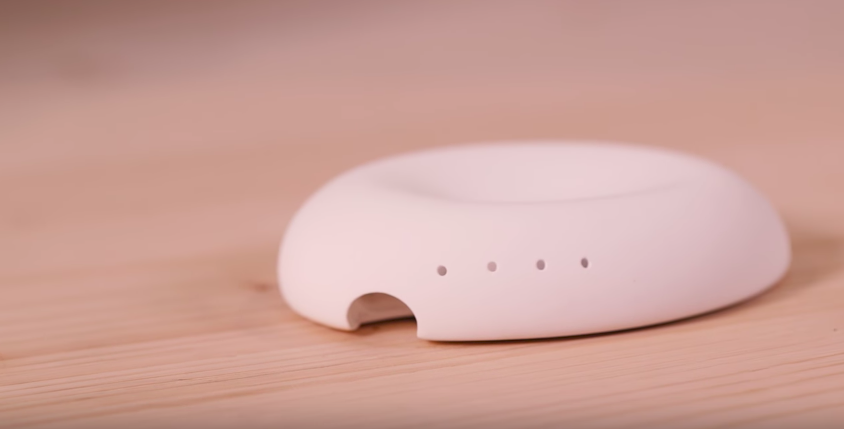
OnTune a été créé en collaboration avec des professionnels de santé, principalement des ORL. Au niveau de l’apparence, le médaillon ressemble à un petit galet qui vient se positionner au niveau du larynx et des cordes vocales. Et c’est là toute la subtilité du produit : OnTune envoie des ondes aux muscles et nerfs de votre larynx pour moduler la hauteur de votre voix. C’est donc en jouant directement sur ces ondes au niveau de votre larynx que le médaillon va être capable de vous permettre de chanter juste.

OnTune possède une autonomie de 6 heures, et le médaillon fonctionne avec une application mobile qui vous permet d’ajuster divers paramètres. Elle vous permet également d’enregistrer, puis de partager vos vocalisations. En bref, OnTune est le produit parfait pour vous assister dans la pratique du chant. Si vous chantez extrêmement mal, OnTune ne fera sans aucun doute pas de miracle, mais le cas échant il vous aidera à chanter juste.

Commercialisé à partir de 129 euros, ce médaillon révolutionnaire devrait être disponible dès l’automne. Pour en savoir plus, rendez-vous sur le site officiel du constructeur ou sur sa page Facebook.

Crédits : OnTune

Crédits : OnTune

Crédits : OnTune

Crédits : OnTune

Crédits : OnTune

Crédits : OnTune

Crédits : OnTune


Source OnTune

Cet article Ce bijou connecté améliore votre voix pour vous aider à chanter juste provient du blog Creapills, le média référence des idées créatives et de l'innovation marketing.

25 Sep 21:41

Un câble à 160 Tbit/s de 6 600 km de long traverse l'Atlantique

by Mathieu Chartier
Le câble Marea relie Bilbao en Espagne à Virginia Beach aux USA. Avec l'aide de l'entreprise Telxius, spécialisée dans les infrastructures télécoms, Facebook et Microsoft viennent d'annoncer le succès du déploiement du câble sous-marin le plus rapide jamais conçu. D'une longueur de 6 600 km, il traverse l'océan Atlantique et peut faire transiter des...
24 Sep 19:51

This veteran gamer created his own high-tech D&D custom table

by Mark Austin

Dungeons & Dragons is growing in popularity in the digital age, and this veteran gamer created his own custom table with a 4K display and touchscreen capability.

The post This veteran gamer created his own high-tech D&D custom table appeared first on Digital Trends.

22 Sep 11:57

USB Cables

Tag yourself, I'm "frayed."
22 Sep 11:43

Meet the Man Creating Freakily, Disturbingly Realistic Masks

What does it take to make a face? Try $4,500. At Landon Meier’s studio, you can try on a new face for a day. Meier specializes in creating hyper-realistic (and hyper-expensive) masks that could easily pass for the real thing. Take a test run at being Walter White, or try on Mike Tyson for size—Meier’s surreal and nightmarish creations cover a whole range of celebrities and politicians, including the ever-popular viral sensation “Crying Baby.” Making these masks is no easy task—each one could take up to a year to complete. But for Meier, watching the astonished reactions to his craft makes it all worth it...(Read...)

20 Sep 16:24

Dropbox Launches DBX Platform and New APIs

by jwagner

Dropbox has announced the launch of the DBX Platform, a suite of APIs and developer tools for building new capabilities on top of Dropbox. The company also announced the release of two new APIs; Metadata API and File Requests API. These new APIs are built on Dropbox API V2, the revamped API released in 2015 that replaces Dropbox API V1. Version 1 of the Dropbox API will be shut down on September 28, 2017.

20 Sep 05:40

What Google doesn’t want you to know: Voice search is taking over display search, while Assistant…

by Arun Rao

What Google doesn’t want you to know: Voice search is taking over display search, while Assistant and chatbots are emerging

The greatest jump in the history of search is happening under our eyes and Google is keeping pretty quiet about it.

Photo by Álvaro Bernal on Unsplash

Last year, Google announced and Hitwise estimated that around 58% of all Google searches were mobile, and more than 20% of mobile searches were via voice. Sources inside Google have hinted that voice search is approaching 25% of mobile now and some expect it to go above 50% in the next 3 to 5 years. For example, voice search was cited as the fastest growing type of search, according to the keynote speech given by Behshad Behzadi, Principal Engineer at Google Zurich, at SMX West in March 2017. Why is this happening?

2017 is the year of voice — starting at 8mm, ending with 950mm voice devices

We started 2017 with an estimated 8mm voice devices, mostly Amazon Echos with some Google Homes. An industry report from VoiceLabs estimates a total voice-first device footprint of 33 million devices in circulation by the end of 2017.

However, VoiceLabs missed something big. In May 2017, Google announced that its Actions on Google platform was activated for all Android devices natively, meaning that voice search via Google Assistant and Action was fully enabled. Why is this important? Because Google Assistant and Actions are what power Google Home — it basically makes any Android phone the equivalent of a Google Home (and any iPhone that has the Google Assistant app downloaded on it). Assistant the the smart helper behind voice search, and Actions allows any developer to build on top of Assistant and have their action, skill, or app featured on Google.

So in May 2017, Google had ~100mm Android devices with Google Assistant and Actions a button away. Since Android cycles through new users every quarter, all 2bn monthly active users of Android globally will eventually come onto the Assistant and Actions platform as they upgrade, with ~350mm new activations each quarter. Using this data you can infer:

Google has the best platform for voice search and one of the two best, along with Facebook, for chatbots

Google will end 2017 with between 850–950mm users that have voice search and a fully voice-first device in their pocket and home.

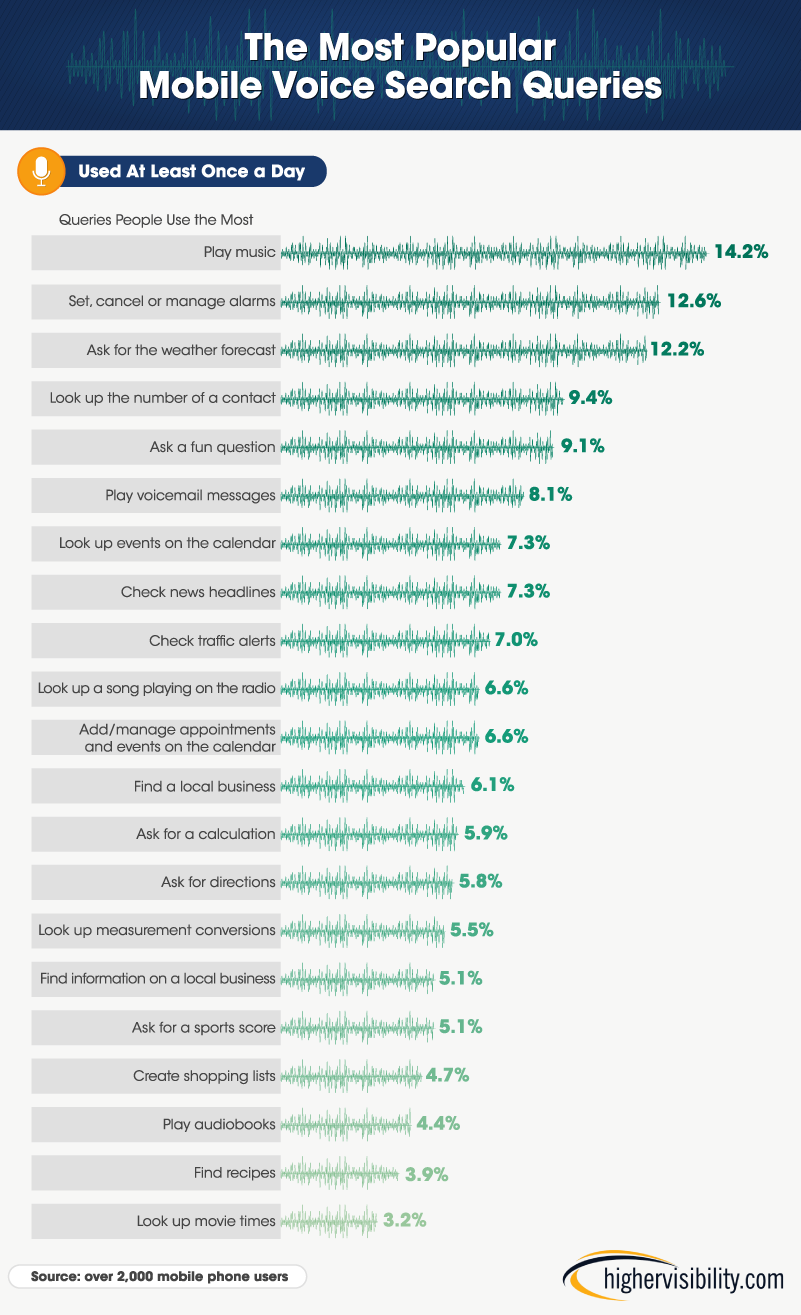
This is a big deal because the quality of the voice-first devices depends on how good the intent matching is, which depends on the total number of users. It’s the economics of big data — the quality of the service depends on the size of the chat data set. So as customers gravitate to the better devices, Google will continue to outpace Amazon Alexa. Most serious tests so far have shown that Google Assistant (available on Home, all Android devices, and iOS) is far superior to Alexa at answering questions and figuring out what users want. See this test with 54 questions and this study with thousands of questions, where they found that Google Assistant is 6 times more likely to answer your question than Amazon Alexa. Finally Google and Higher Visibility have reported that most people use voice search to call people, ask for directions, play songs, and search for information.

Why is Google quiet about voice search if it’s winning?

Because they’re still figuring out how to build their ad business model around voice. Google reported that mobile searches are less profitable with less revenue per click, and the company is still really early in figuring out how to do voice search ads. Google’s CEO Sundar Pichai has also been quiet when Wall Street analysts ask him how they will monetize voice search. Google just doesn’t know — they are running all sorts of internal experiments right now on voice ads. Their engineers are quiet because they have to figure out how to disrupt their own cash cow business of desktop and mobile search.

What does the rise of voice search mean?

Speech will take over typing and texting because it is 3x as fast with 20% fewer errors

Researchers at the Stanford Human Computer Interaction Lab found that with speech recognition, the English input rate was 3.0x faster, and the Mandarin Chinese input rate 2.8x faster, than a state-of-the-art miniature smartphone keyboard. Further, with speech, the English error rate was 20.4% lower, and Mandarin error rate 63.4% lower, than the keyboard.

Websites on the open web are over — no one spends time in browsers

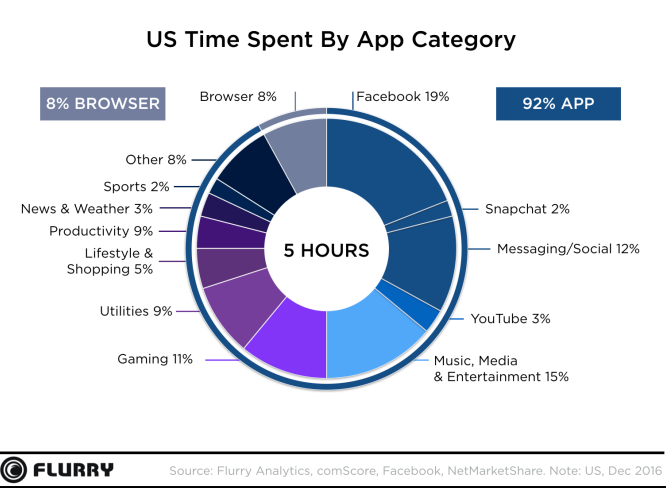
Content creators will have to partner with Google Assistant and Actions, as the new platform, or other interactive platforms like Amazon Alexa, Facebook Messenger, or Snapchat. Websites are losing out as US users spend more time using apps than watching TV, and roughly 33% of time is spent on Facebook / Snapchat / and text messaging versus 8% of time in browsers. It’s also likely that the app world is over, as a majority of US smartphone owners download zero apps per month and spend most of their time on a few app platforms like Facebook, Messenger, Snapchat, and so on.

Mobile users spend 33% of time on messaging apps, 8% on the browser — the open web is dying

Chatbots are the new delivery form that will win with voice search

Voice search is about interactivity: questions, answers, guided flows, and conversations. Websites are mostly static, like brochures from the print days. If you look closely at the Google Actions and API.AI platforms, they are essentially chatbot platforms. Facebook Messenger is a massive chatbot platform, as are Kik and Telegram. Still not convinced? Read what the chatbot entrepreneur of Octane AI, Matt Schlict writes: “How Bots Will Completely Kill Websites and Mobile Apps.”

Adtech is going through a big disruption: SEO and SEM business models are getting blown apart

If you thought the move from desktop first to mobile first was a big deal, get ready for the move from mobile websites to “ambient voice-first”, where your phone and other talking devices surround users and are ready to serve them. A static website isn’t enough — you need an interactive AI agent to really engage with users. Here is a list of reasons why voice search will totally change SEO.

Most voice search queries are to get information, after you take out the “play music” and “set alarm” requests
https://medium.com/media/c90883b0516ddbe5c59960c12a04bc64/href

What Google doesn’t want you to know: Voice search is taking over display search, while Assistant… was originally published in Chatbots Magazine on Medium, where people are continuing the conversation by highlighting and responding to this story.

19 Sep 15:15

Viseo développe un chatbot pour Direct Energie

En France comme ailleurs, les chatbots continuent de séduire les entreprises quel que soit leur secteur d’activité. Durant l’été (...)
19 Sep 15:14

Google Cloud’s Natural Language API gets content classification and more granular sentiment analysis

by John Mannes
 Google Cloud announced two updates this morning to its Natural Language API. Specifically users will now have access to content classification and entity sentiment analysis. These features are particularly valuable for brands and media companies For starters, GCP users will now be able to tag content as corresponding with common topics like health, entertainment and law (cc: Henry).… Read More
18 Sep 19:27

Remarkable E-ink Writing Slate Reviews – Great Tablet, But Not Ready for Prime Time

by Nate Hoffelder

Remarkable E-ink Writing Slate Reviews - Great Tablet, But Not Ready for Prime Time e-Reading Hardware Link Post Reviews

If that early buzz for the $600 Remarkable tablet had you wishing that you had gotten in on the early pre-orders, I have good news for you:

It's not ready yet.

A handful of reviews were posted on Friday, and they show reveal that the Remarkable still has a way to go in the software department (this could explain why it missed the official mid-August shipdate).

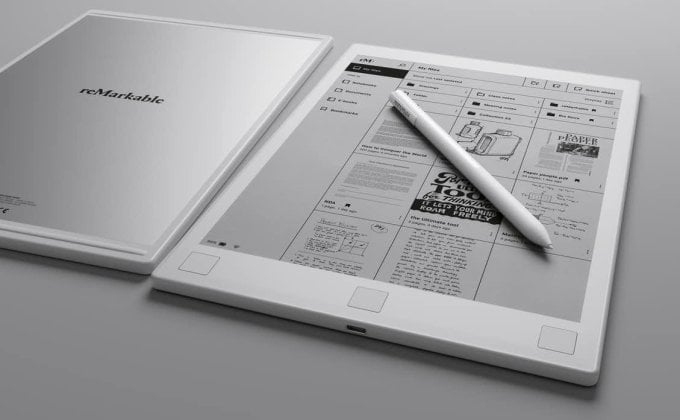
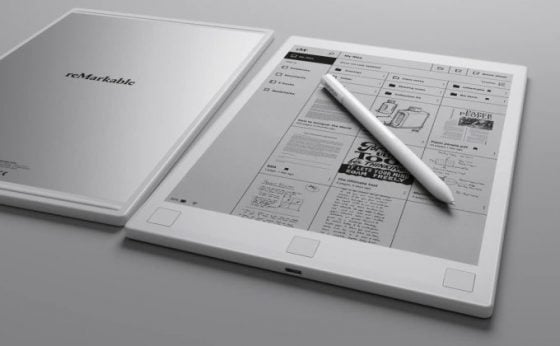
This writing slate measures 10.1" by 6.9" by 0.36" thin, and according to official specs it weighs about 12 ounces. runs a proprietary Linux OS on a 1GHz CPU with 512MB RAM and 8GB of internal storage (there is no card slot).

It has a 10.3" Carta E-ink display (1872 x 1404 resolution - 226 PPI).  The Remarkable doesn't have a frontlight, but it does have a capacitive touchscreen and a  Wacom stylus that supports 2,048 levels of pressure sensitivity and 512 degrees of tilt detection.

Aside from the screen and the stylus, those specs sound like what you can find on a $100 to $200 ereader, and you can also find cheaper ereaders that are almost s good as the Remarkable (like the Onyx Boox M96, which costs $430, runs Android with a 9,7" E-ink screen, and has both dual-touchscreens).

Is the remarkable worth the extra $170 for an ereader cum writing slate?

Based on the following reviews, I would say yes - once the software is done.

Stuff.co.nz

At £529 just for the tablet, with the pen sold separately, this is a seriously expensive device. It’s fantastic at what it does, and the crowdfunding campaign that got it off the ground has been a resounding success, but prioritising the writing experience above all else has forced some compromises.

With no backlight or frontlight, a Kindle is still probably your best bet if you're mainly after an eBook reader. Digital artists that aren’t interested in working purely in greyscale will be better served by an iPad Pro or Microsoft Surface, even if their respective styli can’t match ReMarkable for convincing feel.


Business Insider

I was excited about the potential of the reMarkable tablet, but unfortunately, it didn't quite meet my expectations.

That said, I still think it's an incredible product. The instantaneous nature of the ink is truly impressive, and every person I showed it to was blown away. The prospect of being able to take handwritten notes but save them digitally — not to mention sync them to your computer — is thrilling for those who prefer notepads over notepad apps.

But in making the quickest writing and drawing experience it could, I felt like reMarkable sacrified quickness on the other end. The device's tendency to burn-in was a real problem, as was the slowness to turn the page or navigate back to the home screen. The tablet's user interface still needs work to make it more intuitive, and the overall design could look slightly more modern. In its current form, paying $600 for an E Ink tablet like this in 2017 still seems too steep to me.

Wired

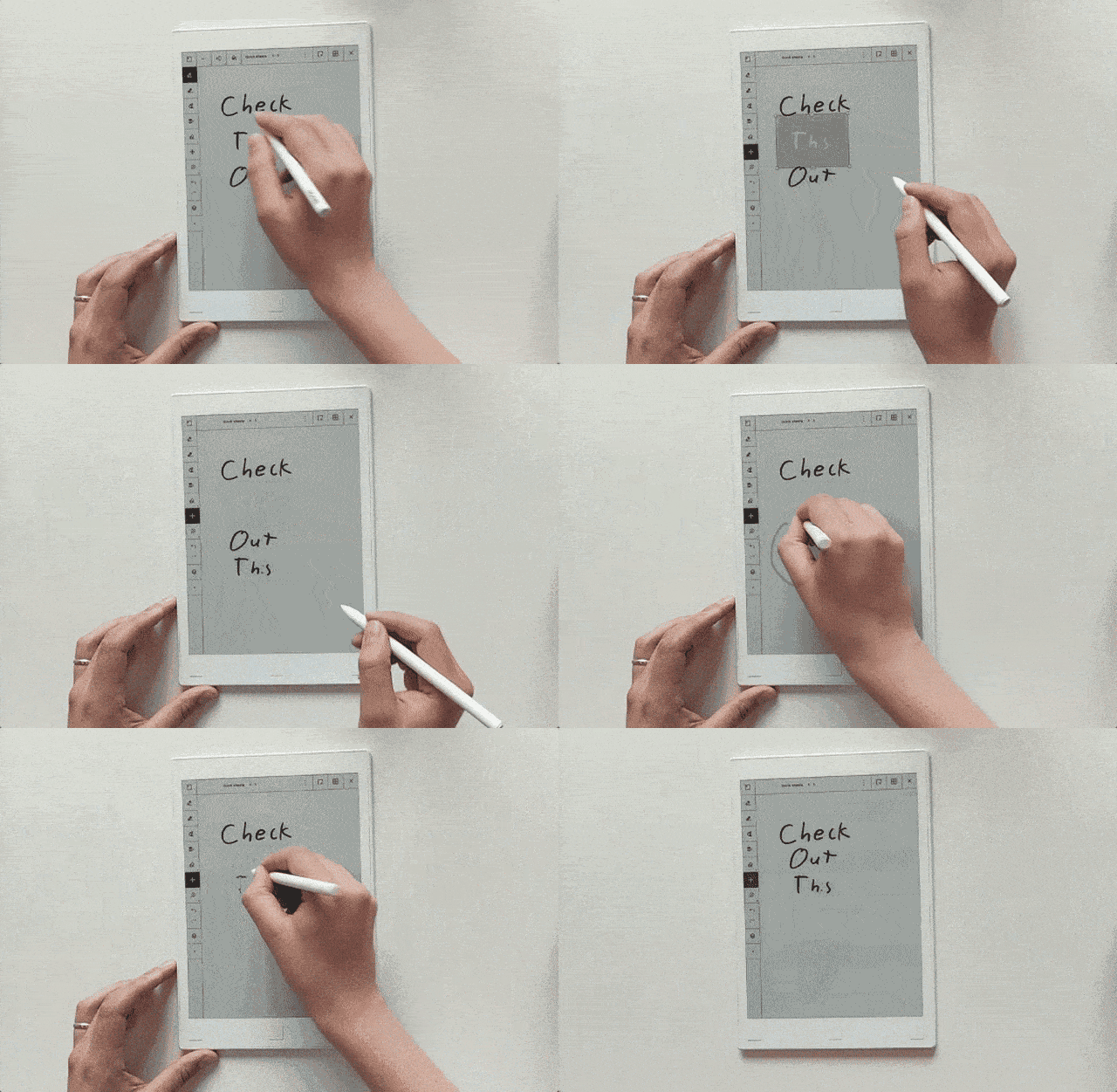
Even the best paper notebook needs a good pen—or in this case, a good stylus, to be worth using. The reMarkable comes with a Wacom stylus that works impressively well on the e-ink display, with hardly any latency. It’s tilt and pressure sensitive for better accuracy, but the results can be shaky, so don’t count on it replacing your sketchbook just yet. Those kinks aside, palm rejection works great, and the stylus doesn’t have a battery, so no need to awkwardly plug it into the bottom of your tablet.

When you’re done jotting down ideas for your screenplay or doodling away, you can bounce over to your eBooks tab and dive into The Jungle or Crash Override. Unfortunately, you won’t get as good a reading experience as you’d find on a Kindle due to a few shortcomings.

I found that text doesn’t look as crisp (limited font options don’t help things, either) and then there’s no bookstore so getting your digital library onto the reMarkable is a hassle. If those issues don’t bother you, there are some nice perks like a larger screen and the ability to write notes into a book’s margins, which you can’t do with a Kindle.

Laptop Magazine

The reMarkable's amazing writing experience is a one-of-a-kind feature that when combined with its cloud-sync capabilities and Photoshop-esque editing, makes it a great tool for note takers and artists alike. Writing on the slate is one of the most realistic, comfortable experiences I've had on a tablet, rivaled only by using an actual pen and paper.

Of course, $599 may be a tough price to swallow for some, especially when the device is made just for writing, drawing and reading. For a more feature-rich tablet, consider the $649 10.5-inch iPad Pro, which supports Apple's $99 Pencil stylus. It's $149 more expensive, though, and writing on its glass doesn't feel as natural. However, the iPad has Apple's huge library of apps and games, while reMarkable has a much more limited offering. Still, the reMarkable has to be used to be truly believed, as writers and artists looking for the best marriage of digital and analogue won't find a better option.

Popular Mechanics

Remarkable E-ink Writing Slate Reviews - Great Tablet, But Not Ready for Prime Time e-Reading Hardware Link Post Reviews

The drawing is great, but navigating the tablet's interface is less so. You'll basically have to memorize the meanings of it icon-labeled on-screen buttons. I still routinely do things like delete an entire page of notes when I meant to select the eraser (undo to the rescue), or create a new page when I mean to navigate to anther digital notebook. I also found myself wanting to touch the on-screen buttons with my finger, as not to move the stylus away from what I was writing, and, frustratingly, this does work but only about 50 percent of the time.

The eBook Reader

In terms of ereading features, the reMarkable is very basic. It supports PDF and DRM-free ePub files, but the software is still a work-in-progress so that makes it hard to review at this point. They plan on adding more features over time; I’ll update this review to reflect any changes as they get added.

At present there’s no table of contents, no dictionary, no bookmarks, no search, no active hyperlinks, no back button, no annotations list, no pinch-zooming, no finger-swipe page turning.

What it does offer is a jump to page option and you can view a list of thumbnails to move around parts of a book.

There are a couple of different ways to zoom in. It has a cropping option that works quite well, and there’s a zoom dial to zoom in and out in increments. Zooming resets with each page turn but cropping remains.

You can add notes and highlights with the stylus, of course, but there is no list to view them or way to add bookmarks so it makes it kind of a hassle to find them unless you remember the page number they were on or manually scan through thumbnail view.

Digital Trends

The pen’s stellar performance stands in contrast to the rest of the experience, unfortunately.

The ReMarkable tablet suffers from the telltale limitations of E Ink technology: Tapping on a menu key or scroll wheel basically guarantees a delay and screen flashes while the tablet refreshes. It doesn’t come close to the responsiveness of the stylus, and it’s incredibly frustrating.

The ReMarkable tablet’s battery life is a little better than its performance, but it didn’t last as long as I’d like. After a typical 9-to-5 day of jotting down reminders, organizing my to-do list, and absent-mindedly doodling, I could count on the 3,000mAh battery dipping well below 40 percent by midweek.

ReMarkable’s engineers say they’re targeting two weeks of standby time, which seems a little optimistic. But we’ll have to take their word for it.

Liliputing


You just finished reading Remarkable E-ink Writing Slate Reviews – Great Tablet, But Not Ready for Prime Time which was published on The Digital Reader.
18 Sep 19:20

Google’s new payment app for India uses sound to transfer money

by Thuy Ong

Google has introduced a new payment app in India called Tez (the Hindi word for “fast”). Tez features a technology called audio QR that allows users to transfer money using sounds to pair two devices. Called the “cash mode option,” phones negotiate a connection using audio to identify the payer and payee. (The sounds should be inaudible to human ears though because they’re sent using ultrasonic frequencies, according to the Financial Times.) The feature is therefore similar to cash transactions which don’t require the exchange of personal details like bank accounts and phone numbers. Cash Mode works with any phone with a mic and speaker and Tez app installed, and doesn’t require an NFC chip. Google’s Audio QR technology is similar to...

Continue reading…

14 Sep 20:03

Microsoft’s AI camera app Pix is now a business productivity tool

by Sarah Perez
 Microsoft Pix, the iOS camera app that leverages A.I. to help you take better photos, is venturing beyond being a tool for consumers with an update that now sees it able to assist with photos of business documents, whiteboards, post-it notes, and business cards. According to Microsoft, the additional support focused on office productivity made sense because people were already doing a lot… Read More
14 Sep 09:02

Gif: tomato

tomato..(Read...)