Shared posts

11 Nov 10:15

TSMC To Halt Shipments to China

by Brian Boyle

Whoops, how’d that slip through?

US sanctions have been designed to keep high-powered computer chips from entering China, but last month one of TSMC’s chips was discovered inside a processor made by the Shenzhen-based Huawei. Now, according to a Reuters report this weekend, the US government has ordered the chipmaker to halt orders of advanced chips to the country starting Monday.

TSMC You Later, China

US rules do not ban TSMC from selling all chips to China, just those that are high-powered and could be used for advanced artificial intelligence purposes. But while imposing export controls on high-powered chips is easy, enforcing them is much harder. That’s because TSMC makes chips based on customer designs, and experts say that chips are so complex it can be difficult to ascertain their power based on design alone. 

In October, a teardown of a Huawei AI processor by research firm Tech Insights found one of TSMC’s high-powered chips. TSMC then flagged the discovery to the US Commerce Department, claiming it was unsure how the chip made its way into the China-made hardware. The incident has raised enough of a panic to spark even more stringent export controls:

  • Following the notification, the US Commerce Department ordered TSMC to impose even more beefed up restrictions on certain chips, a source told Reuters. TSMC has told Chinese clients it is suspending shipments starting Monday, and will introduce a tighter review process on designs likely to involve the US government, sources told the Financial Times.
  • That likely means an even bigger dent to its business. The share of TSMC’s revenue from China has fallen from around 20% in 2019 to 12% last year amid the increased export controls (the company still generated around $9.8 billion in revenue in October alone, it recently announced).

A New Era: For its part, TSMC in a statement insisted it was a “law-abiding company.” The Taipei-based firm operates in accordance with US rules to maintain access to critical US tech. But with a new administration en route that has criticized Taiwan’s chip industry, TSMC’s continued seat at the US table looks slightly in doubt. One source told the FT that TSMC’s cooperation is “designed to underscore that we are the good guys and not acting against US interests.”

The post TSMC To Halt Shipments to China appeared first on The Daily Upside.

11 Nov 10:12

📡 Effet papillon: tout un Univers dans un Trou noir ⚫️ ?

by Adrien BERNARD
Une petite vague qui provoque un raz-de-marée. Dans l'Univers primordial, de minuscules fluctuations quantiques pourraient avoir eu un effet profond sur le cosmos. À l'aide de simulations...
10 Nov 16:44

Wall Street Does DeFi

by Sean Allocca

DeFi is in the middle of an identity crisis. Born out of the 2008 financial meltdown, the decentralized finance movement aimed to reinvent a too-big-to-fail global financial system that wasn’t always looking out for the little guys. Why give money to the big banks when you could create a peer-to-peer system you controlled? 

But if cutting out Wall Street with blockchain technology was an objective, the “cypherpunks” have failed: the world’s largest banks are about to cash in on the technology they’ve been championing for some two decades. BlackRock, WisdomTree, and a handful of others have all launched new digital-native funds in recent months, from tokenized money market funds to digital Treasuries. These new products are much cheaper to operate and come with additional benefits, like the ability to instantaneously settle transactions. They’re also tapping into an industry that is transacting trillions of dollars on-chain per month. 

“It’s potentially one of the biggest technological advances in markets since trading became electronic,” said Aaron Kaplan, CEO of the digitally native brokerage Prometheum, the first firm to get the regulatory green-light to safeguard and clear digital assets. “It has the potential to disrupt not just the securities industry, but much larger financial institutions.”

Chain Wallets?

The beauty of the underlying technology is that it can “tokenize” real-world assets, anything from real estate, to stocks, to fine art. The tokens are held on a blockchain, a digital ledger, and can be bought and sold just like any other security. Whoever owns the token owns the real-world asset. The size of the market for all this is mind-boggling: the total value of tokenized assets could reach $24 trillion by 2027, according to a report by the World Economic Forum, which would account for nearly 10% of global GDP. 

“DeFi has these interesting use cases, but it’s essentially stuck in its own universe,” said Kaplan, who was called to testify before a Congressional committee last year. Blockchain is a pseudo gray area for regulators as assets like cryptocurrency have yet to be defined as a commodity or a security. “The innovations have already been incubated in the DeFi space,” he said. “Now, they’re trying to figure out how to use them for traditional securities.” 

The biggest nut for companies to crack is securing these digital assets and keeping them out of the hands of cybercriminals. Regulators are lobbing lawsuits at blockchain-based exchanges, and politicians are calling for more scrutiny before the tech transforms how assets are traded and secured. 

Stuck in the BUIDL. BlackRock became one of the first major firms to launch a digital asset fund in March, and it’s paying off. Its Institutional Digital Liquidity Fund (BUIDL) now has about $500 million in assets under management. It effectively acts like a digital currency, offering a stable value of $1 per token that institutional investors can trade and collateralize in other on-chain transactions. The fund invests in cash, Treasury bills, and repurchase agreements, earning yield for holders. It’s become an early success story and a major test case for Wall Street’s bet on DeFi.

Being among the first to market has allowed BlackRock, the world’s largest asset manager, to build BUIDL into one of the largest and most recognizable products in its class. But, with investment minimums of upwards of $5 million, these new digital funds aren’t going to be a mass market any time soon. But for the super rich, it’s a no-brainer. 

Block & Tackle. A key advantage is the ability to instantaneously settle transactions. Take traditional yield-earning funds like bonds, for example. After the transition to T-1 in the US, fixed income products generally take one day to settle, allowing time for the assets to be cleared and delivered to the seller. But, on-chain funds close instantaneously, meaning the funds can be returned and redeployed right away, saving hours of wasted time. 

When you’re dealing with millions of dollars, every second counts. 

Faster and Cheaper? For blockchain proponents, this is just the next step in trading technology. Once upon a time, traders held paper tickets on the exchange floors as proof of ownership of an asset. When the stock market started hitting hundreds of thousands of trades per day, brokers needed a better way to record trades other than on glorified Post-It notes. With the advent of online record keepers in the 1970s, ticket receipts went digital.

Kaplan and other proponents expect blockchain will be the greatest leap forward since that switch from paper to digital. “It’s just inefficient the way it’s being done now,” he said. 

The post Wall Street Does DeFi appeared first on The Daily Upside.

10 Nov 10:54

From vision correction to smart tool – how the contact lens market has advanced

by Staff Writer

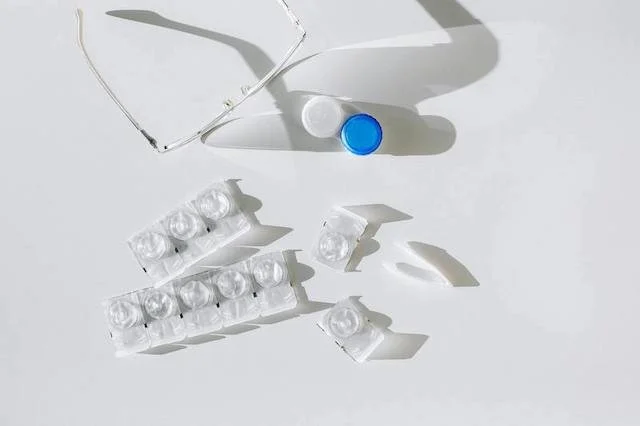
In the UK, figures from the Association of Contact Lens Manufacturers (ACLM) highlight that the contact lens market has grown considerably. According to the report, the size of the British contact lens market reached £360 million in 2023. All in all, the UK market now represents the largest of all the countries in the survey, accounting for around 19% of contact lens wearers. 

Per Simon Rodwell, Secretary General of the ACLM, this surge can be attributed to continuous innovations in lens technology, which have enhanced comfort, convenience, and functionality, strengthening their appeal to a broader audience. The growing popularity of contact lenses in the UK reflects a wider trend where these vision aids are no longer viewed merely as alternatives to glasses but as sophisticated devices capable of much more.

In this article, we'll look at how contact lenses have undergone significant changes, exploring their modest beginnings and current medical-technological applications.

The humble beginnings of contact lenses

The journey of contact lenses from basic vision correction aids to advanced wearable devices is both fascinating and inspiring.

Its origins trace back to the pioneering work of Adolf Eugene Fick, a German ophthalmologist who is credited as the inventor of the first successful scleral contact lens. Given the limited availability of suitable contact lens materials, however, Fick was unsatisfied with the discomfort of blown glass shell contacts that could only be worn for up to two hours at a time. 

Nevertheless, it was Fick's work that effectively laid the groundwork for all future contact lens designs. By the 1930s, the development of thermoplastics signified a massive step forward for scleral contact lenses, contributing to their popularity as an alternative to eyeglasses.

Technological advancements continued well into the 1970s when soft contact lenses were finally given US FDA approval and embraced by the general public. 

Soft contacts dominate the modern market

Today's contact lenses are far more advanced than those glass-blown prototypes by Fick.

Notably, the market offers a wide range of options tailored to various needs and preferences, including daily disposables, extended-wear lenses, and specialised lenses for conditions like astigmatism and presbyopia. Moreover, advancements in materials have made lenses more comfortable and breathable, reducing the risk of eye infections and irritation. 

The accessibility of these advanced contact lenses has also improved. No longer limited to in-store shopping, consumers can now purchase contact lenses online. Established retailer Vision Direct, for one, allows customers to purchase a variety of lenses such as multifocal, toric, and even coloured contacts. This platform delivers affordable contact lenses straight to customers' doorsteps, making vision correction more convenient than ever. 

Coupled with the introduction of digitalised eye tests that can conduct eye exams in as little as five minutes, the shift towards online retail has democratised access to high-quality eye care services and products, further enhancing the usability and appeal of contacts.  

Smart contact lenses and the future

One of the most promising applications of smart contact lenses was developed by wearable technology firm InWith.

First unveiled during the 2022 Consumer Electronics Show in Las Vegas, the startup claims that the smart contact lenses can display real-time information and offer wearers "tunable vision" that can be controlled with a smartphone. The product announcement claims several hundred patents, which allow an augmented reality (AR) display chip to be used with and embedded into existing hydrogel contact lenses.

Smart contact lenses are also being explored for their potential to detect glaucoma early. Researchers from the Institute of Advanced Structure Technology at the Beijing Institute of Technology have developed a prototype designed to measure eye pressure accurately.

These measurements are typically taken during eye exams where a slight elevation in pressure indicates fluid buildup around the cornea, leading to a glaucoma diagnosis. With the dual-circuit “smart” lens design, however, such measurements can be monitored remotely for easier diagnosis, even in a wide range of temperatures. 

The UK contact lens market’s rapid growth reflects a broader trend: contact lenses are no longer just corrective devices; they are becoming essential tools with applications that range from healthcare to augmented reality. This technological evolution, coupled with the accessibility provided by online retailers, ensures that contact lenses will remain at the forefront of both fashion and medical innovation.

10 Nov 10:50

Un flash qui en dit long

by Marie Dollé

Rien capturer, tout révéler

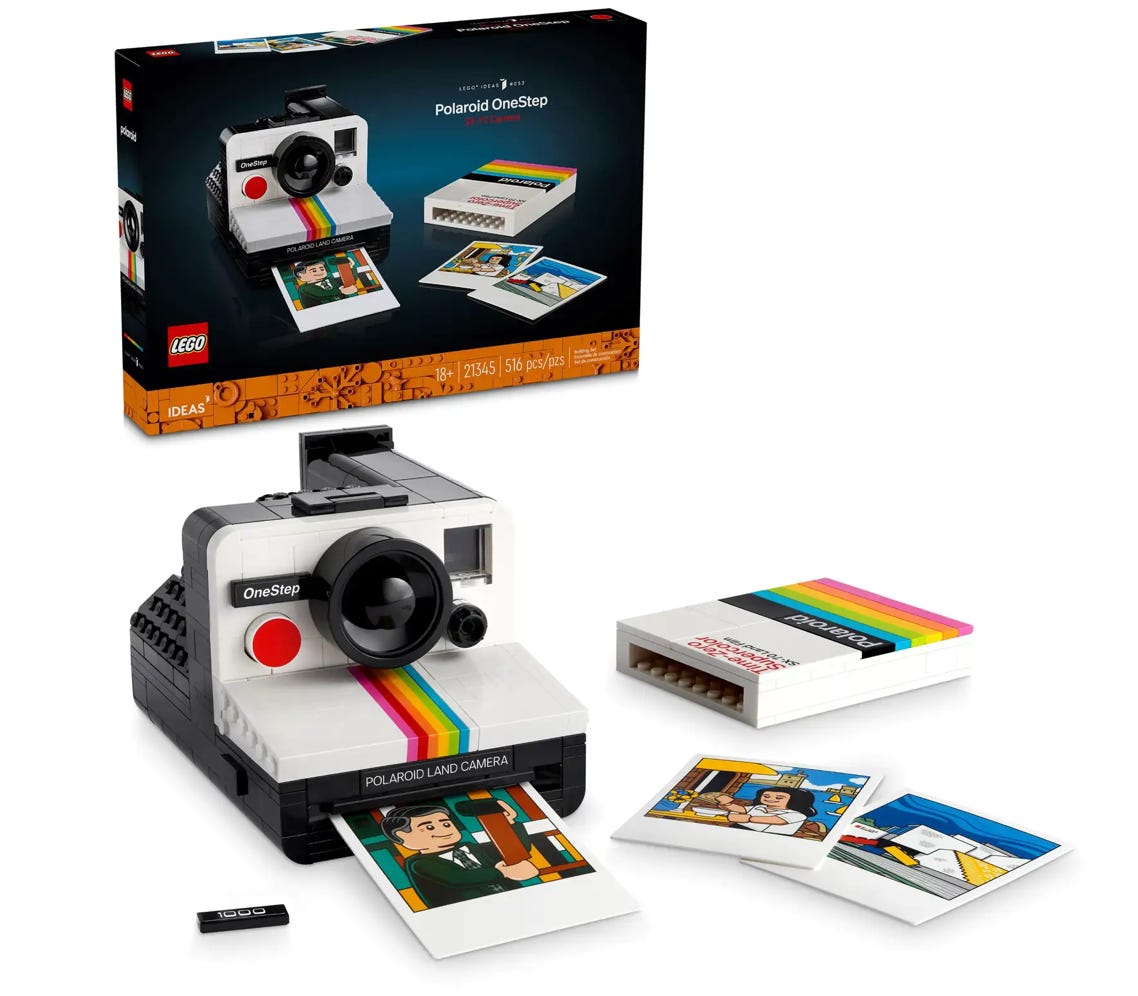
Imaginez un appareil photo qui ne capture rien. Pas une image, pas un souvenir figé. Juste un rituel. Cet objet existe : le Polaroid LEGO. Lancé en début d’année, il ne promet rien d’autre que le geste. 

Un simulacre ? Non. Une leçon.

Nous vivons à l’ère des clichés éphémères, des souvenirs consommés avant même d’être vécus. Des images sans histoire, des preuves sans mémoire, un flot d’instants qui s’évanouissent aussitôt saisis. Dans ce monde où l’on veut tout immortaliser sans jamais savoir quoi retenir, ce Polaroid nous invite à réfléchir. Il célèbre l’acte de photographier sans céder à la possession. Lever l’appareil, cadrer… et renoncer. 

Polaroid LEGO : parce que rien, c’est déjà beaucoup

S’affranchir de la nowstalgie

Ce paradoxe résonne profondément à notre époque, où l’image règne en maître. Flashback, un projet lancé sur Kickstarter, prolonge cette réflexion. Avec lui, pas d’écran, pas de filtre : on capture, puis on attend. L’image n’apparaît qu’après 24 heures, laissant le temps de vivre l’instant. Une manière de renouer avec l’authenticité à l’ère du “tout, tout de suite”.

Cette quête répond aussi à un phénomène bien actuel : la nowstalgie. Nous cherchons à conserver le présent à tout prix, mais dans cette obsession, nous passons à côté de l’essentiel. En cadrant, en filmant, nous vivons déjà dans la nostalgie d’un moment que nous ne prenons pas le temps de ressentir. Flashback, ou encore le Polaroid LEGO, nous invitent à faire une pause. 

À lâcher cette compulsion de tout enregistrer pour mieux vivre l’instant.

Parfaitement imparfaits 

Dans cet esprit, Nonna’s Cam, imaginée par les créatifs de l’agence LOLA MullenLowe Madrid, dépasse le simple acte de photographier. Avec son doigt hyper-réaliste placé devant l’objectif, cette caméra argentique évoque avec tendresse - et humour - les maladresses de nos grands-parents, transformant chaque cliché partiellement obstrué en un hommage attendrissant aux souvenirs. 

Nonna’s Cam : un doigt, une légende

Ce projet invite à ralentir et à repenser notre obsession pour la perfection technique, si souvent recherchée via nos smartphones, et à redécouvrir la beauté de l’imperfection. Car finalement, la valeur d’une image ne réside-t-elle pas davantage dans l’émotion qu’elle fait naître que dans sa précision irréprochable ?

Quand la réalité vacille

Mais cette quête d’essentiel soulève une autre question : notre rapport au réel. Dans un monde où les deepfakes, filtres et réalités virtuelles brouillent les frontières entre vérité et artifice, peut-on encore croire aux images ? Peut-on distinguer le vrai du faux ?

Le concept de liar’s dividend, cette idée que le doute profite à ceux qui manipulent la vérité, aggrave la situation : dans un monde où tout semble falsifiable, même l’authentique peut être rejeté sous prétexte que "tout est peut-être truqué".

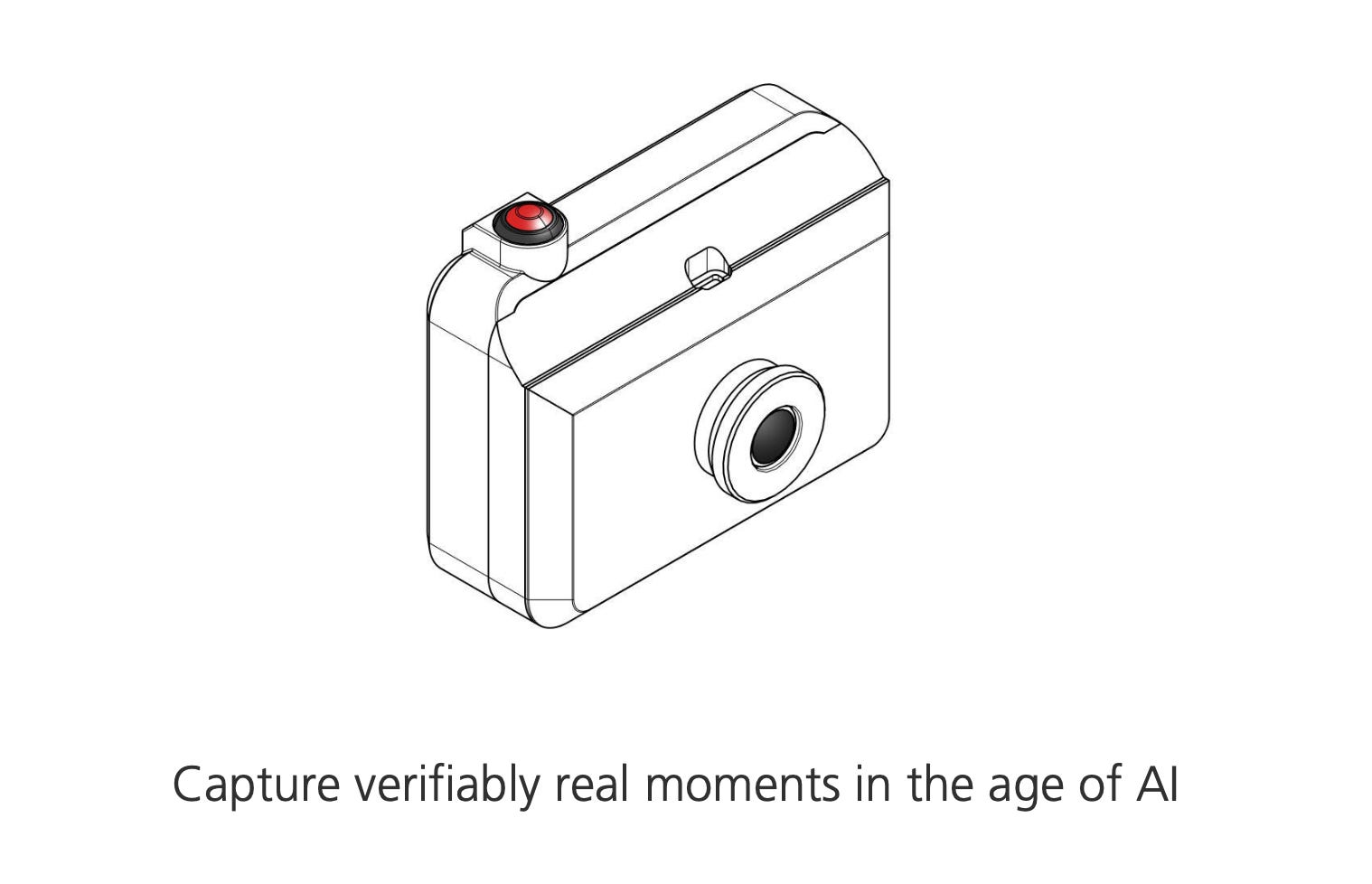
Face à ce doute généralisé, des alternatives émergent. La caméra ROC, presque comme un gardien du réel, promet des « moments incontestablement authentiques ». Son secret ? En combinant des capteurs, des preuves zéro-connaissance côté client sur l’appareil, et un environnement TEE inviolable pour attester des données des capteurs, elle garantit l’intégrité de ses images, avec pour objectif de restaurer la confiance dans ce que nous voyons.

ROC : la vérité, toute la vérité, rien que la vérité…

Nietzsche le pensait : les vérités absolues enferment l’esprit, là où l’incertitude libère. En rendant l’image irréfutable, ne risquons-nous pas de sacrifier ce flou poétique, cette part de mystère qui rend l’ordinaire extraordinaire ?

Réinventer la photographie

L’évolution de la photographie ne s’arrête pas là. De nouveaux concepts repoussent les limites de l’imaginaire et réinterprètent notre rapport à l’instant.

Prenez Soft une application qui capte le rythme de votre environnement pour transformer chaque photo en une œuvre vivante. Couleurs, saturation, grain : chaque aspect d’une image est influencé par l’atmosphère ambiante, inscrivant dans le cliché la respiration même de l’instant. Ici, il ne s’agit plus de reproduire fidèlement une scène, mais de capturer l’essence de ce qui l’entoure.

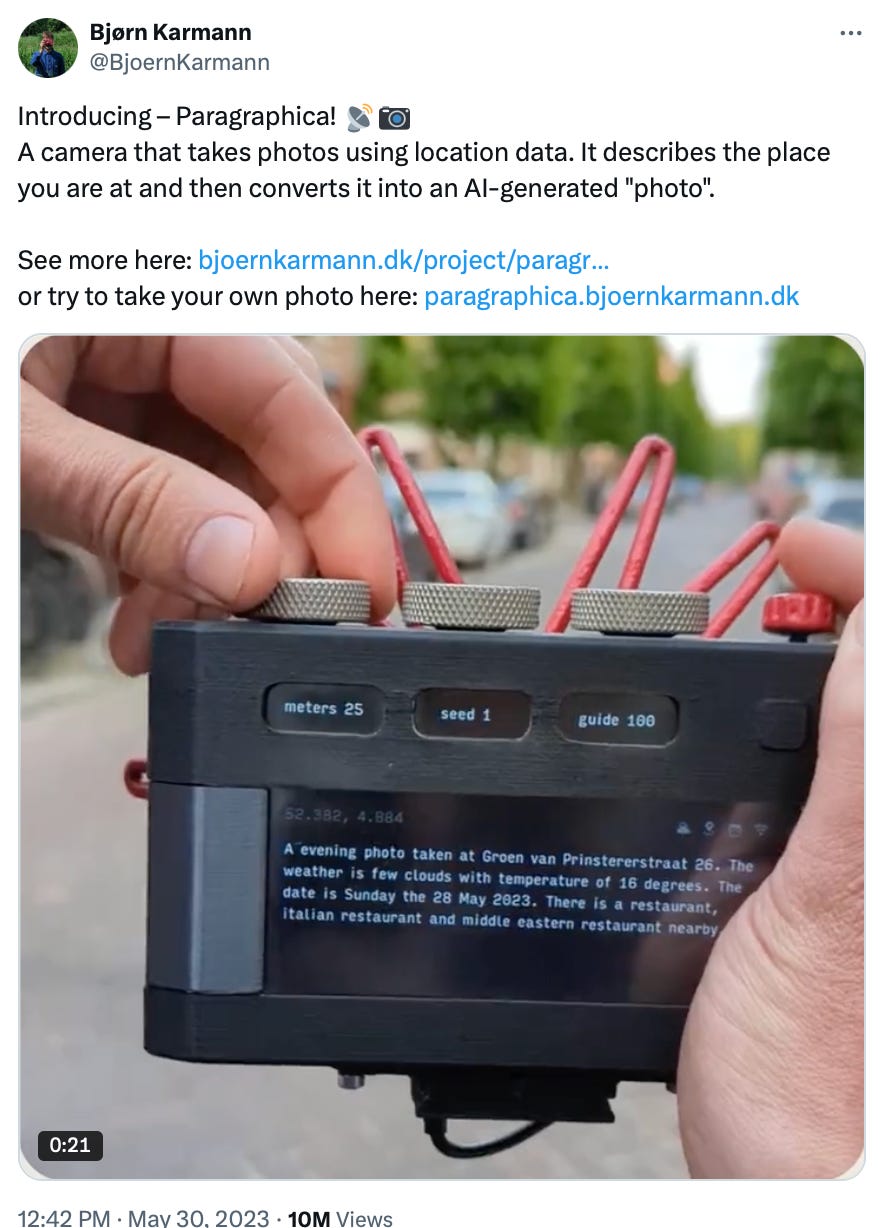
D'autres s'aventurent dans des contrées plus mystérieuses, comme Paragraphica, cet appareil singulier sans objectif ni capteur. Guidé par l’intelligence artificielle, il capte le murmure des lieux à travers leurs données invisibles, les traduit en mots, puis en images, révélant les secrets enfouis du réel. Ou encore DreamGenerator, qui mêle photographie classique et prompts créatifs, métamorphosant un simple cliché en une scène féerique ou rétro selon l’imaginaire de son utilisateur.

Paragraphica : la caméra qui voit avec des mots

Dans un élan encore plus symbolique, la Poetry caméra s’aventure ailleurs : au lieu d’une photo, elle offre un poème. Une manière d’embrasser l’instant en profondeur, de lui donner des couches de sens qui se dévoilent lentement, comme un souvenir qui se révèle avec le temps. Une belle métaphore, n’est-ce pas ? 

Photographier l’âme

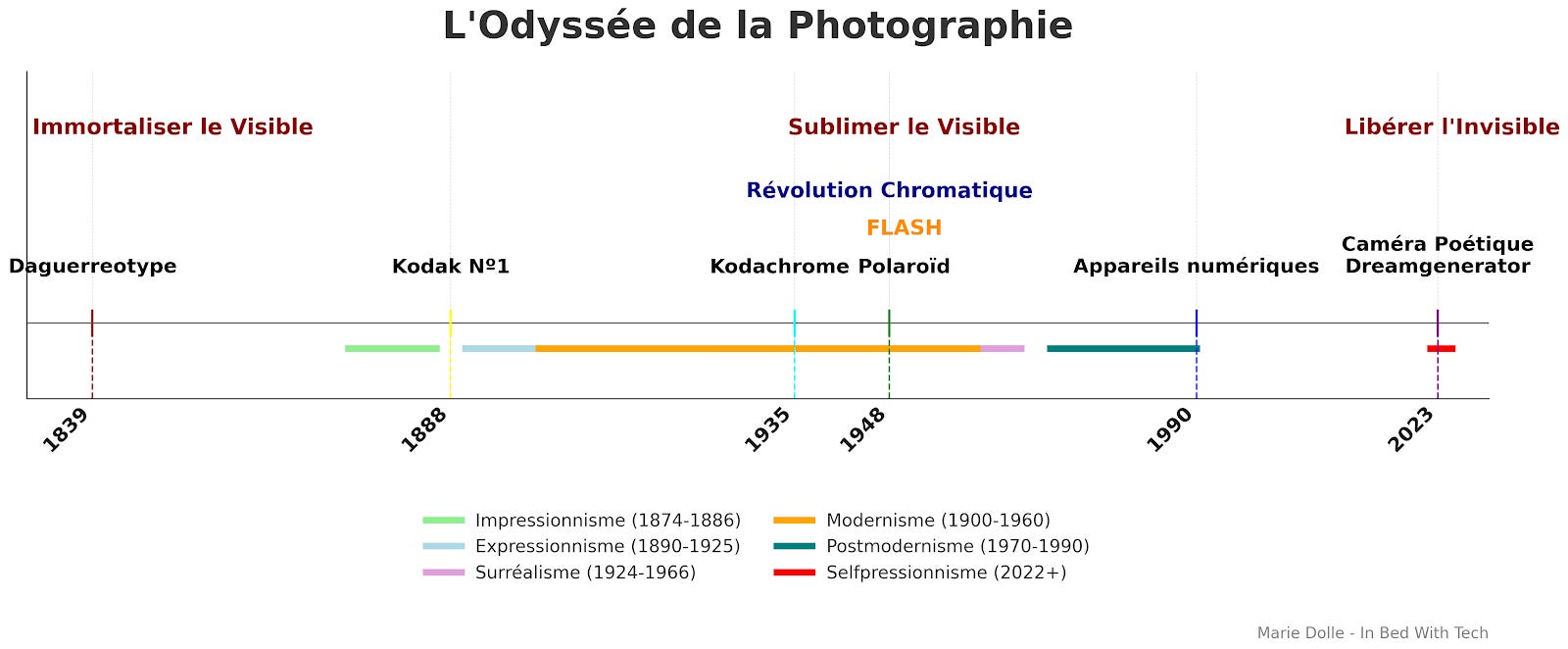
Que faut-il retenir de tout cela ? L’évolution de la photographie, des premiers daguerréotypes à ces caméras qui réécrivent le réel, semble nous raconter une quête incessante : celle de capturer non seulement l’instant, mais aussi l’essence de ce qu’il contient. Sa capacité à suggérer plus qu’elle ne montre, à laisser place à l’imaginaire, au mystère.

Une chronologie que j'ai conçue, illustrant l'évolution de la technique vers le concept, où l'image devient une expérience à habiter autrement.

Après l’impressionnisme, l’expressionnisme et le surréalisme, voici venu le temps du selfpressionnisme : on ne cherche plus à exprimer le monde visible, mais à explorer notre expérience intérieure. Des appareils tels que la Poetry caméra ou le DreamGenerator transcendent leur fonction première : ils ne se contentent pas de figer le monde visible, ils invitent à l’habiter autrement. Ces objets, à la frontière du rituel et de la réflexion, nous incitent à ressentir une profondeur insoupçonnée dans l’éphémère.

Car oui, il y a des photos qui prennent tout. Et il y a celles qui laissent tout : le silence, le souffle, l’éclat fugace d’un instant. Une mémoire sans image, mais une lumière qui reste.

La photographie n’est pas une cage pour le temps, mais une clé. Une clé qui libère l’instant, le laisse vibrer, résonner. Alors, demain, quand vous cadrerez un moment, posez-vous cette question : capturer le visible… ou libérer l’invisible ?

MD 

10 Nov 00:21

The paradise paradox

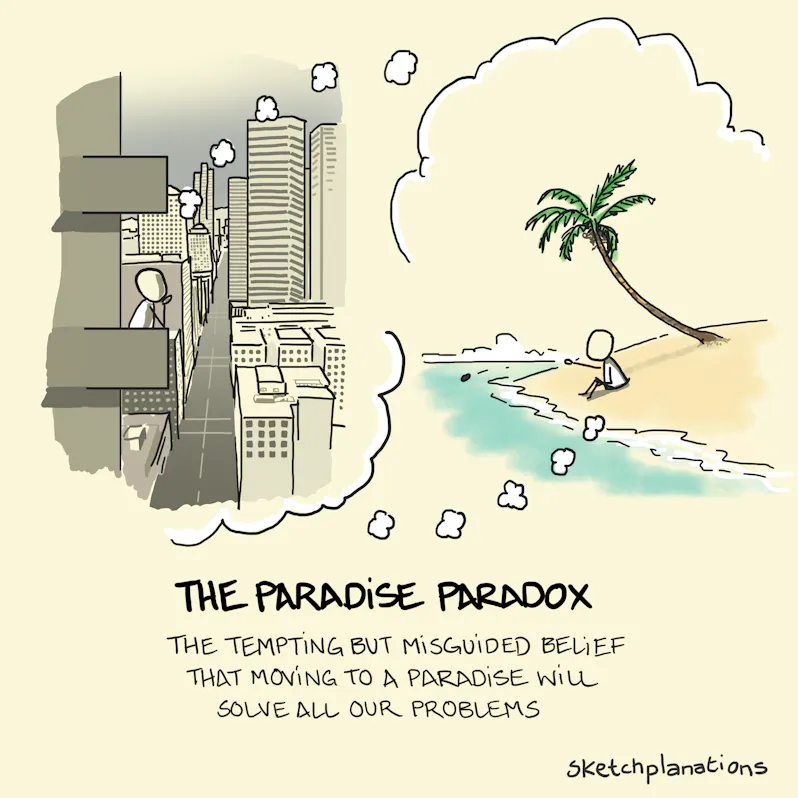
The Paradise Paradox is the tempting but misguided belief that moving to a "paradise" will magically make everything better. It's the idea that a change of scene to somewhere beautiful or exciting will somehow sweep away all our problems. And while a fresh setting can give us a lift, the reality is often more complicated: paradise, as wonderful as it might be, won't always solve the everyday challenges we bring along with us.

Idealizing Paradise

Moving to your paradise might feel incredible, and it's a life-changer for some people, but it's easy to idealize paradise, imagining it as a place where worries simply disappear. Yet even the most stunning places could start to feel ordinary, and your conceptualised paradise may have its own challenges.

For instance, perhaps your paradise is a beautiful, distant, exotic land. Such a paradise, however, has the drawback of no longer being distant or exotic once you arrive and the day-to-day takes over. Someone living in a fast-paced metropolis might dream of calm and quiet, while someone surrounded by calm and quiet may dream of the rush and excitement of the big city.

Alastair Humphreys, who introduced me to the Paradise Paradox in his book Local, gave a great example in our podcast about Microadventures. In an interview on an American podcast, the interviewers couldn't imagine exploring Kansas to be exciting—it was known or even home to them. But to Alastair, a visit to Kansas would be an adventure, full of new things to see and do. It's a reminder that our ideas of paradise are often fueled by novelty—and novelty, by nature, doesn't last forever.

Expectations, the day-to-day, and Adaptability

Some of the Paradise Paradox may be explained by how easy it is to build up expectations. If we imagine paradise as the ultimate fix, it could lead to disappointment if it doesn't live up to the dream. As for vorfreude—the joy of anticipation—the build-up can sometimes overshadow the reality.

Then there's the simple truth that day-to-day life in paradise isn't a vacation. A tropical beach holiday lets you unwind and enjoy the scenery without a care. But living there might mean dealing with rainy seasons, work deadlines, or just regular old laundry.

Humans are also remarkably adaptable. We're good at adjusting to new surroundings, which means something initially remarkable may soon become the new normal. It's a bit like the grass-is-greener mentality we see in many areas of life. If you're a consultant, you might long for the stability of an in-house role, while in-house folks might crave the variety of consulting.

The Dark Side of the Paradise Paradox

In some cases, the Paradise Paradox takes on a more serious tone. The documentary film The Paradise Paradox, executive produced by Olympic ski racer Bode Miller and filmmaker Brett Rapkin, explores how people drawn to the beauty and tranquility of US mountain towns sometimes face mental health struggles. These picturesque communities, though visually idyllic, have experienced higher-than-average rates of suicide, highlighting the challenges of living in remote, isolated settings.

Strategies to Minimize the Pull of the Paradise Paradox

To reduce the effect of the Paradise Paradox, it helps to focus on what brings fulfillment in any setting, allowing us to appreciate where we are without feeling the constant pull of an imagined paradise. Here are a few ways to lessen the allure:

1. Cultivating Gratitude

Practicing gratitude allows us to recognize the value of what we already have. Focusing on the positives around us may make us less inclined to search elsewhere for happiness, realizing that contentment often lies closer than we think.

2. Prioritizing Experiences Over Material Goods

Research consistently shows that experiences bring longer-lasting happiness than possessions. Prioritizing meaningful activities and memories can bring joy and satisfaction, outlasting the initial thrill of accumulating more.

3. Simplifying Life

A minimalist approach can help reduce the constant desire for more—whether it's things, places, or achievements. Simplifying our lives can allow us to focus on what truly matters and bring a greater sense of peace.

4. Pursuing Meaningful Goals

Focusing on personal growth, nurturing relationships, and contributing to our communities can offer a lasting sense of fulfillment that doesn't depend on our surroundings. Meaningful goals and connections often provide the depth of happiness that location alone can't bring.

Paradise can certainly refresh us, but true and lasting happiness is often about embracing where we already are and what we already have.

Since writing this I keep seeing related quotes:

The only Zen you can find on the tops of mountains is the Zen you bring up there.

— Robert M. Pirsig (via Waking Up)

“We tend to attribute happiness to our circumstances (what happens to us) but studies suggest our happiness is really dependent on what we pay attention to.”

— Cal Newport, Deep Work (via Mind Over Tech)

"Happiness isn't getting what you want, it's wanting what you got."

— Garth Brooks

Wherever you go, there you are.

Also see:

09 Nov 16:34

Scala talks in-store retail media and how it's so much more than digital out of home (DOOH)

by Staff Writer

By Darren Cremins, Senior Sales Director - Retail Media and Connected Store, UK and Ireland, Scala

The evolution of retail marketing has taken on many forms, but one of the most dynamic developments is the rise of in-store retail media.

Some might see it as a glorified version of digital out of home (DOOH) advertising - displaying flashy messages on screens within stores - but in-store retail media is far more sophisticated, driven by data, customer interaction, and technology. It’s changing the way brands connect with consumers at the most critical point: when they’re about to make a purchase.

To simply define in-store retail media as DOOH is to ignore its vast potential for personalisation, targeted engagement, and sales optimisation. As we dive into what makes in-store retail media unique, we will discover why it stands leagues beyond traditional DOOH advertising, reshaping the future of retail.

The power of personalisation

One of the most striking differences between in-store retail media and traditional DOOH is the ability to personalise content to a greater degree. In-store media can draw on real-time data to target individuals or specific customer segments as they browse.

Imagine a shopper moving through the aisles, and the screen beside them highlights a product based on their previous purchases, loyalty card preferences, or even live stock levels in the store. This level of personalisation is impossible with DOOH installations that simply push a message to a broad audience.

The ability to integrate with customer loyalty programmes or mobile apps makes this even more powerful. When brands and retailers can understand not just general foot traffic, but who the specific shoppers are, what their preferences may be, and how they’re interacting within the store environment, they can fine-tune messaging to offer truly relevant promotions.

In essence, in-store retail media turns screens into strategic points of engagement, allowing brands to connect with the consumer in a far more relevant and powerful manner than what is possible with DOOH.

Driving the path to purchase

In-store retail media does more than simply display ads - it actively influences the purchasing decision.

While a static digital sign may attempt to raise brand awareness or reinforce marketing campaigns, in-store retail media offers a fully contextualised journey for shoppers - delivering attributable results and the ability to get analytics from the aisles to better inform future campaigns and prove incremental sales.

By strategically placing smart digital screens at key points within the store, such as near product displays or at checkout, brands can deliver relevant messages that complement the shopper journey and have stronger influence.

For example, a customer may be on the fence about buying a particular product, and a nearby screen could highlight a limited time offer or provide additional information about the product’s benefits.

This kind of last minute influence, right at the Point of Sale, transforms passive ad displays into active sales drivers. In fact, in-store retail media is more akin to dynamic merchandising, offering a measurable boost to sales, which traditional DOOH cannot achieve in isolation.

Integration with the digital ecosystem

In-store retail media bridges the gap between physical retail environments and online marketing strategies. Screens in stores are no longer just outlets for broadcasting ads—they are now integrated touchpoints within a broader omnichannel strategy.

With technologies like data-compliant sensors and real-time data analytics, in-store retail media can garner and use a wealth of in-store customer behavioural data. This data can then be fed back into digital marketing campaigns, enabling retailers to optimise both their in-store and online efforts.

For instance, a customer who interacts with a product in-store but does not purchase it could be retargeted with personalised ads online, perhaps through email, social media,mobile app notifications or connected television.

Moreover, in-store retail media can be tied into loyalty programmes and CRM systems, allowing retailers to deliver highly specific, data-driven content that enhances the shopping experience, creating convenience and minimising frustrations for their customers. 

Advanced metrics and real-time feedback

One of the main limitations of DOOH is the difficulty in tracking its effectiveness. While impressions can be roughly estimated based on foot traffic or location, there is little concrete data on how many people actually engage with the ad or how it influences behaviour. In-store retail media, however, offers the possibility of real-time feedback and advanced metrics.

With technologies like RFID, beacons, and customer analytics platforms, retailers can track exactly how many people interact with specific in-store media placements, which products they pick up afterwards, and whether the digital content influenced their purchasing decision. This closed-loop attribution provides a clear understanding of ROI and allows for real-time optimisation of campaigns.

For instance, if a particular promotion isn’t generating the expected engagement, the messaging can be adjusted on the fly to better suit the audience. This ability to measure, analyse, and act on consumer behaviour swiftly sets in-store retail media apart from the more static nature of traditional DOOH.

Creating an immersive experience

DOOH typically plays a supporting role in the marketing mix, adding visual presence but rarely creating a fully immersive experience. In-store retail media, by contrast, has the ability to enhance the overall shopping environment, turning it into an interactive and engaging experience.

By blending digital signage with interactive displays, touchscreens, and augmented reality, in-store retail media can provide valuable information and entertainment that enriches the customer journey.

Consider a shopper in a clothing store. Instead of simply seeing a screen that shows a rotating set of ads, they might use an interactive display to browse additional product options, check sizes, or even virtually try on items using AR technology.

This level of interactivity not only makes the shopping experience more enjoyable but also encourages customers to spend more time in the store and engage with the brand in a more meaningful way. For the retailer and the brands they supply, these interaction provide useful information on how to serve shoppers better in the future.

Successful retail media: beyond just screens

In-store retail media is so much more than just another form of digital out-of-home advertising. It represents a powerful, data-driven tool for personalising customer experiences, influencing purchasing decisions, and integrating with the broader digital marketing ecosystem.

While DOOH may still play a valuable role in reaching broader audiences, in-store retail media takes things to the next level by creating dynamic, interactive, and measurable touchpoints that can directly impact sales.

As retailers continue to invest in digital transformation, the role of in-store retail media will only become more central to their strategy. Its ability to seamlessly blend the physical and digital worlds, deliver personalised content, and provide advanced metrics makes it a cornerstone of the future of retail.

It’s time to stop thinking of it as just another screen and start recognising it as a critical component of a modern, integrated marketing strategy.

09 Nov 16:32

Avocats et juristes préoccupés par la GenAI

Sans surprise, 3 des 5 tendances qui devraient influencer le secteur juridique dans les 3 prochaines années sont liées à l'IT : l'IA (...)
09 Nov 16:24

Zalando améliore sa cabine d'essayage virtuelle avec un avatar 3D

Pour la première fois, Zalando intègre sa technologie de mesure corporelle à sa cabine d'essayage en ligne, offrant une expérience toujours plus personnalisée. Ce projet permet d'essayer virtuellement une sélection de produits Levi's pour hommes et femmes tout en limitant le nombre de retours produits.
09 Nov 16:19

OpenAI révèle comment utiliser ChatGPT-4o plus efficacement

by Yohann Poiron

OpenAI vient de révéler une approche complète pour tirer le meilleur parti de son modèle ChatGPT-4o, qui se distingue par sa polyvalence et sa capacité à simplifier des workflows pour une multitude de tâches professionnelles. En collaboration avec le guide de TheAIGRID, conçu pour optimiser l’utilisation de ChatGPT-4o, les entreprises de toutes tailles peuvent désormais […]

L’article OpenAI révèle comment utiliser ChatGPT-4o plus efficacement est apparu en premier sur BlogNT : le Blog des Nouvelles Technologies.

09 Nov 16:15

TSMC will stop making 7 nm chips for Chinese customers

by Kathrin Hille and Ryan McMorrow, Financial Times

Taiwan Semiconductor Manufacturing Company has notified Chinese chip design companies that it will suspend production of their most advanced artificial intelligence chips, as Washington continues to impede Beijing’s AI ambitions.

TSMC, the world’s largest contract chipmaker, told Chinese customers it would no longer manufacture AI chips at advanced process nodes of 7 nanometers or smaller as of this coming Monday, three people familiar with the matter said.

Two of the people said any future supplies of such semiconductors by TSMC to Chinese customers would be subject to an approval process likely to involve Washington.

Read full article

Comments

09 Nov 16:11

Google rolls out its Gemini AI-powered video presentation app

by Umar Shakir
Vids help me create screen with a prompt that says “create a market research overview on Gen Z retail trends using [gen Z research report doc]”
Google Vids’ “Help me create” screen powered by Gemini AI. | Image: Google

Google is generally rolling out its Gemini AI-powered Vids app that lets you create video presentations using a prompt. Some of Vids’ key features include letting Gemini auto-insert stock footage for you, generating a script, and making AI voiceovers so you don’t have to speak. Google advertises that the tool can help turn customer support articles into videos, make training videos, share company announcements, create meeting recaps, and more.

Vids will be available by default for Workspace organizations with access, but Google notes possible usage limits may apply to features like “Help me create” and AI voiceovers starting in 2026.

First announced in April, Vids lets you drop in relevant docs, slides, voiceovers, and video recordings...

Continue reading…

09 Nov 16:10

Quantum encoding methods could slash circuit complexity in machine learning

A recent study by researchers from CSIRO and the University of Melbourne has made progress in quantum machine learning, a field aimed at achieving quantum advantage to outperform classical machine learning.
09 Nov 16:09

Artificial magnetic muscles can support tensile stresses up to 1,000 times their own weight

A research team, led by Professor Hoon Eui Jeong from the Department of Mechanical Engineering at UNIST has introduced an innovative magnetic composite artificial muscle, showcasing an impressive ability to withstand loads comparable to those of automobiles. This material achieves a stiffness enhancement of more than 2,700 times compared to conventional systems. The study is published in Nature Communications.
09 Nov 16:07

Claude AI to process secret government data through new Palantir deal

by Benj Edwards

Anthropic has announced a partnership with Palantir and Amazon Web Services to bring its Claude AI models to unspecified US intelligence and defense agencies. Claude, a family of AI language models similar to those that power ChatGPT, will work within Palantir's platform using AWS hosting to process and analyze data. But some critics have called out the deal as contradictory to Anthropic's widely-publicized "AI safety" aims.

On X, former Google co-head of AI ethics Timnit Gebru wrote of Anthropic's new deal with Palantir, "Look at how they care so much about 'existential risks to humanity.'"

The partnership makes Claude available within Palantir's Impact Level 6 environment (IL6), a defense-accredited system that handles data critical to national security up to the "secret" classification level. This move follows a broader trend of AI companies seeking defense contracts, with Meta offering its Llama models to defense partners and OpenAI pursuing closer ties with the Defense Department.

Read full article

Comments

06 Nov 23:51

On ne devrait pas être promu manager si on ne sait pas utiliser ChatGPT

by Bertrand DUPERRIN

Un manager donne une instruction, confie une mission, et au moment de présenter son travail ou débrieffer de ses résultats le collaborateur s’avance assez confiant, satisfait, voire plus du travail qu’il a réalisé.

Et là catastrophe ! Rien ne va, ça ne correspond pas aux attentes et il se fait vertement sermonner. Une chose d’autant plus désagréable qu’il ne s’y attend pas du tout, voire comptait bien être félicité.

C’est une situation que nous avons tous soit observé soit vécu personnellement soit les deux. Très désagréable quand vous êtes directement concerné, gênant quand vous en êtes témoin.

Manager trop exigeant ? Salarié incompétent ?

Ca serait un raccourci un peu facile car le plus souvent ils ne se sont juste pas compris.

L’idée ici est de réfléchir à comment être certains d’être compris des autres quand on formule une demande et vous verrez que ChatGPT peut être sinon un bon professeur pour vous en tout cas un bon cobaye pour tester votre capacité à communiquer de manière claire et compréhensible.

La communication manager/managé est très perfectible

Quelques exemples.

Le mémo n’était pas assez fouillé ni bien présenté mais il n’a jamais été dit qu’il devait servir en board et que le manager avait une idée particulière en tête.

Le document est arrivé en retard mais le collaborateur ne savait pas que le directeur n’attendait que quelques bullet points pour se faire une idée sur un sujet à défricher et que cette présentation n’avait aucunement vocation à être diffusée.

En réglant un conflit avec un client, un fournisseur ou même un conflit interne le collaborateur n’a fait que mettre de l’huile sur le feu ou a mal protégé les intérêts de l’entreprise ou les a tellement bien protégés qu’ils ont perdu le client. Mais on ne lui a jamais expliqué sa marge de négociation ni l’issue attendue à part « régler le problème ».

Le livrable est de bonne qualité à première vue mais pas assez fouillé. D’un autre côté on avait dit au collaborateur « fais moi un topo là dessus ».

Le collaborateur ne connait pas tous les chiffres d’un projet dans les détail avec les taux de rentabilité et d’utilisation de chaque ressource etc, juste les données économiques macro et se fait passer un savon. D’un autre côté on lui avait dit « faisons un point rapide« .

L’office manager organise le pot de rentrée mais c’est soit pas assez qualitatif soit il n’y en a pas assez soit c’est trop cher. Mais on lui avait dit « organise le pot ».

La même office manager organise le déplacement d’un dirigeant. Train trop tôt, retour à une heure où il a une réunion, l’hôtel ne plait pas. Elle passe un sale quart d’heure mais on lui a juste dit d’organiser le déplacement.

Des exemples comme cela on en a tous des dizaines voire plus en mémoire.

Ce qui se passe en fait c’est que le manager ou le dirigeant sait exactement ce qu’il attend, il se dit à lui même « il faut faire ça » et ensuite délègue à quelqu’un en formulant la chose de la même manière.

Vous n’avez jamais remarqué ? Que ce soit en cours ou en fin de réunion ou dans un email ou un tchat lapidaire (le célèbre « merci de …. ») la tâche/mission est confiée en une phrase, une ligne sans autre indication de contexte.

Normal : le manager sait ce qu’il veut mais oublie que la personne à qui il délégue n’est pas lui.

Normal mais totalement inefficace car la personne se retrouve face à deux choix :

1°) Essayer de deviner tout ce qui n’a pas été dit

2°) Demander des précisions au risque de laisser penser qu’elle n’a pas compris, laisser penser qu’elle n’est pas compétente ou, pire, de se faire rabrouer parce que le manager « n’a pas le temps ».

Le manager Vs. ChatGPT

J’entends beaucoup de managers se réjouir de l’arrivée de l’IA car elle va leur permettre d’avoir rapidement les informations et analyses qu’ils n’arrivent pas à avoir de salariés qui ne comprennent jamais rien et sont des crétins.

S’ils ne l’ont pas fait je leur conseille d’essayer dès maintenant.

Quiconque a commencer à se frotter à l’IA, même pour des choses simples, a vite compris quelque chose : si la demande n’est pas claire on obtient quelque chose de qualité discutable et il faut faire de multiples repasses pour affiner et arriver à quelque chose d’acceptable.

J’ai lu une analogie très intéressante sur les IA il y a peu :

« Lorsque j’ai commencé à jouer avec ChatGPT, je n’étais pas sûr de l’usage que j’en ferais. Puis, un jour, alors que je travaillais à distance, j’ai commencé à taper des questions, m’adressant comme je le ferais à un collègue assis en face de moi et m’aidant à réfléchir à de nouvelles idées. Il en est résulté une conversation passionnante qui m’a permis de réduire mon temps de travail et d’améliorer mon produit final. Après m’être familiarisé avec l’outil, j’ai commencé à le considérer comme un partenaire de réflexion omniprésent, ce qui m’a amené à réfléchir à la manière d’intégrer la GenAI dans des équipes non techniques. J’ai réalisé que l’intégration de GenAI n’est pas si différente de l’ajout d’un nouveau membre à l’équipe. »

Fast Company – How to transition nontechnical teams to use GenAI

J’ai vraiment trouvé l’idée de faire comme si on ajoutait un nouveau membre à l’équipe très juste et pertinente.

Il y aussi l’idée l’implicite qu’il a compris qu’il devait se faire comprendre de l’IA.

Et bien votre collaborateur ou votre stagiaire n’est pas si différent de ChatGPT : si vous ne vous faites pas comprendre de lui il ne pourra rien faire de bien pour vous.

Mais pour beaucoup de manager une différence existe dans leur tête : ils ont compris qu’il fallait dompter ChatGPT alors qu’ils partent du principe que leurs collaborateurs vont naturellement comprendre sans connaitre les tenants et les aboutissants

On pourrait même dire que l’absence de lien hiérarchique avec l’IA crée une relation plus équilibrée pour ne pas dire saine.

Et pour en revenir au fait que certains managers pensent que tous leurs collaborateurs sont mauvais on a plutôt la preuve que leur incompétence présumée est proportionnelle à l’incapacité du manager à se faire comprendre.

Sachez prompter vos équipes

Donc le manager qui a compris que c’était à lui de faire l’effort d’être compris par ChatGPT a appris à lui parler, à lui donner des instructions. Ce qui dans le jardin de l’IA se dit écrire un prompt ou prompter.

Sans avoir la prétention d’être un expert sur le sujet qui est beaucoup moins simple qu’il ne semble à prime abord, voici quelques règles pour un bon prompt :

Clarté et spécificité : Plus le prompt est spécifique, plus la réponse sera pertinente. Il est important de bien préciser le contexte et les attentes. Par exemple, au lieu de demander « Explique l’IA », on pourrait dire « Explique comment l’IA améliore la productivité dans les entreprises ».

Contexte : Inclure des informations contextuelles qui peuvent aider à affiner la réponse. Par exemple, « Décris les avantages de l’IA dans le secteur de la santé en 2024 » offre un cadre plus précis. Exemple « c’est pour une présentation à mon patron » ou « c’est pour écrire un article de vulgarisation sur linkedn »

Objectif : Dire à quoi va servir la réponse aide à la rendre plus pertinente sur le fonds et la forme. Exemple « c’est pour une présentation à mon patron » ou « c’est pour écrire un article de vulgarisation sur linkedn »

Format souhaité : Indiquer le type de réponse attendu (paragraphe, liste à puces, tableau, etc.) ainsi que la longueur permet d’orienter la réponse. Par exemple, « Fais une liste des avantages et inconvénients du télétravail ».

Désambiguïsation : Éviter les formulations vagues ou ambiguës pour réduire le risque de recevoir une réponse hors sujet.

Tonalité et style : Préciser la tonalité (formelle, informelle, technique) ou le style (persuasif, descriptif) si c’est pertinent pour le contexte.

Je pense que d’autres pourront fournir un guide technique très précis de l’écriture du prompt parfait mais ma conviction profonde est que si au lieu de donner une instruction lapidaire d’une ligne le manager prenait le temps de donner les éléments de contexte, préciser ses attentes sur le fonds et la forme, ses intentions et d’éventuelles contraintes il serait moins déçu par le travail de ses collaborateurs.

L’auteur de l’article disait qu’il fallait considérer l’IA comme un nouveau membre de l’équipe mais d’une certaine manière il faudrait peut être considérer certains collaborateurs comme une IA, surtout les moins expérimentés et ceux avec qui on a le moins de vécu commun.

Mais peu importe le référentiel dont on se sert l’idée est bien que, entre être humains, on surestime souvent soit la capacité des autres à deviner nos pensées ou notre propre capacité à être clairs.

Leçons tirées de l’agilité

je faisais référence à ChatGPT car c’est un sujet à la mode mais par le passé j’avais été inspiré par quelque chose de plus ancien lorsqu’il s’agissait de formaliser des instructions : les user stories.

Leur principe repose sur la création de courtes descriptions ou scénarios exprimant les besoins d’un utilisateur ou d’un client dans un projet, souvent dans le contexte du développement logiciel, en se concentrant sur la valeur ajoutée qu’une fonctionnalité ou un service doit apporter.

Si c’est dans l’industrie du développement que j’y ai été exposé et sensibilisé, j’ai vite compris qu’on pouvait les appliquer à autre chose.

Lors de la mise en place d’une démarche d’amélioration continue qui n’avait rien à voir avec un quelconque développement j’avais identifié l’agilité comme critère d’acceptabilité de la démarche avec ceux qu’elle allait concerner : avancer vite par petites itérations en créant ensemble la vision cible.

Mais au moment de distribuer les tâches à chacun (moi y compris) il importait qu’on soit vraiment alignés sur les attentes. Toutes les personnes concernées pratiquant l’agilité dans le cadre de leurs fonctions on a logiquement fini avec une formulation proche de celle d’une user story, quand bien même l’objectif n’était pas de développer quoi que ce soit mais davantage de modifier des process et des choses liées à l’organisation et méthodes de travail.

Je rappelle les caractéristiques d’une user story pour ceux à qui le concept est étranger.

Perspectives centrées sur l’utilisateur : Elles sont écrites du point de vue de l’utilisateur final (client, employé, etc.) afin de s’assurer que le résultat final répond à ses besoins réels.

Simples et concises : Les user stories sont intentionnellement courtes et claires, sans entrer dans les détails techniques. Elles décrivent ce que l’utilisateur souhaite accomplir et pourquoi cela est important pour lui.

Centrée sur la valeur métier : L’accent est mis sur la valeur que la fonctionnalité ou l’amélioration apportera à l’utilisateur ou à l’organisation.

Itératives et évolutives : Les user stories sont souvent complétées ou ajustées au fil du projet. Elles évoluent à mesure que l’équipe développe une meilleure compréhension des besoins et des priorités de l’utilisateur.

Critères d’acceptation : Chaque user story est généralement accompagnée de critères d’acceptation, qui sont des conditions spécifiques qui doivent être remplies pour que l’histoire soit considérée comme complétée.

Cela peut sembler très formel mais ça a le mérite d’être exhaustif et si vous formulez une demande de cette manière le risque que ce que vous obteniez soit aux antipodes de vos attentes est faible, peu importe le domaine auquel vous l’appliquez.

Mais autant on sent intuitivement que c’est à nous de faire les efforts pour être compris par une IA, que dans le cadre d’un projet aux multiples intervenants provenant de différents métiers il faut une manière très simple mais structurée de formuler ses attentes, autant lorsqu’on s’adresse à une autre personne on a tendance à lui passer la patate chaude sans faire d’effort et, sans surprise, on est souvent déçu par le résultat.

Conclusion

Par manque de temps, de respect, d’attention ou je ne sais quelle raison trop de managers ont tendance à être expéditifs dans leurs demandes quitte à être incompris, être déçu par le résultat et finalement reporter la faute sur les autres.

Ou peut être ne savent ils pas ce qu’ils veulent et espèrent que quelqu’un trouvera pour eux ?

Quoi qu’il en soit un effort doit être fait pour qu’instructions et demandes soient formulées de manière claire et non ambiguë.

Je ne dis pas que si on est capable d’écrire un bon prompt on sera un bon manager mais j’ai des doutes que quelqu’un qui en soit incapable soit capable de se faire comprendre et donner des instructions claires.

Image : manager utilisant chatGPT de Celia Ong via Shutterstock

L’article On ne devrait pas être promu manager si on ne sait pas utiliser ChatGPT est apparu en premier sur Bloc-Notes de Bertrand Duperrin.

06 Nov 23:47

OpenAI acquired Chat.com

by Kyle Wiggers

OpenAI bought Chat.com, adding to its collection of high-profile domain names. As of this morning, Chat.com now redirects to OpenAI’s AI-powered chatbot, ChatGPT. An OpenAI spokesperson confirmed the acquisition via email. Chat.com is one of the older domains on the web, having been registered in September 1996. Last year, it was reported that HubSpot co-founder […]

© 2024 TechCrunch. All rights reserved. For personal use only.

06 Nov 23:46

The best note-taking apps for collecting your thoughts and data

by Barbara Krasnoff
Evernote
Photo by James Bareham / The Verge

These days, we are all dealing with huge amounts of information, from meeting notes to social media, to photos and videos, to whatever else we’ve collected — and we are all trying to find some way to store it, organize it, and find it when we need it.

If you want to get really basic, you can use a spreadsheet or create a simple set of word-processing documents. Otherwise, you can try what is somewhat inaccurately described as a note-taking app. These apps, at their simplest, store your notes and other thoughts and, at their more complex, are capable of manipulating any and all content you want to drop into them.

One of the most well-known has been Evernote, which has gone through quite a few changes over the years, both financially and...

Continue reading…

06 Nov 23:39

Nearly three years since launch, Webb is a hit among astronomers

by Stephen Clark

From its halo-like orbit nearly a million miles from Earth, the James Webb Space Telescope is seeing farther than human eyes have ever seen.

In May, astronomers announced that Webb detected the most distant galaxy found so far, a fuzzy blob of red light that we see as it existed just 290 million years after the Big Bang. Light from this galaxy, several hundreds of millions of times the mass of the Sun, traveled more than 13 billion years until photons fell onto Webb's gold-coated mirror.

A few months later, in July, scientists released an image Webb captured of a planet circling a star slightly cooler than the Sun nearly 12 light-years from Earth. The alien world is several times the mass of Jupiter and the closest exoplanet to ever be directly imaged. One of Webb's science instruments has a coronagraph to blot out bright starlight, allowing the telescope to resolve the faint signature of a nearby planet and use spectroscopy to measure its chemical composition.

Read full article

Comments

05 Nov 22:11

Repurposed RFID tags allow for battery-free sensing and tracking

Data is power. According to Dinesh Bharadia, an associate professor at UC San Diego in the Department of Electrical and Computer Engineering with an affiliate appointment in the Department of Computer Science and Engineering and the Qualcomm Institute (QI), "data will be the next decade's 'silicon.'"
05 Nov 21:45

Alan recrute un assistant médical virtuel

by Patrice
Alan
Depuis ses origines, Alan appréhende la santé non pas seulement par le volet de l'assurance, qui constitue son métier fondamental, mais comme une expérience globale. Afin d'améliorer l'accompagnement médical offert par ses professionnels affiliés, elle leur adjoint désormais une sorte d'assistant stagiaire piloté par l'intelligence artificielle.

Parmi les nouveautés dévoilées par la jeune pousse hexagonale pour cet automne 2024 figurent, dans le registre de la prévention, une boutique d'une centaine de produits soigneusement sélectionnés, français et vendus à prix négociés, contribuant au maintien de la forme physique – depuis les compléments alimentaires jusqu'aux appareils connectés – et un programme de comptage des pas assorti de quelques fonctions ludiques destinées à encourager la marche à pied. Et puis il y a Mo.

Mo est un interlocuteur virtuel qui s'invite dans l'espace de tchat qu'Alan a déployé dans son application dans le but de permettre à ses assurés d'interroger des médecins, généralistes ou spécialistes, sur leurs petites inquiétudes du quotidien (il ne s'agit pas de consultations à proprement parler). Il devient donc le premier contact au démarrage d'un échange et propose de répondre instantanément aux questions qui lui sont posées, tout en laissant en permanence la possibilité de transférer la conversation à un humain.

L'avantage pour les utilisateurs est évident : au lieu d'attendre la disponibilité d'un interlocuteur, promise sous 15 minutes en général (mais quelquefois plus dans les faits), l'agent intelligent offre un retour immédiat, qui réduit bien des frustrations. Du point de vue des praticiens, la promesse de n'avoir plus à prendre en charge que des problématiques un peu plus complexes, qui n'entrent pas dans le champ de compétences de la machine, constitue également un motif de satisfaction.

Alan – Mo

Cependant, bien sûr, l'introduction d'un moteur d'IA prodiguant des conseils médicaux a de quoi susciter des inquiétudes quand on connaît la propension des algorithmes, quelle que soit leur qualité, à produire des hallucinations et autres anomalies. Afin de rassurer les patients autant que pour éviter des erreurs, Alan implémente un contrôle systématique : toutes les « prescriptions » automatiques sont relues par un médecin et sont soit confirmées, soit corrigées sous un quart d'heure. On peut supposer que ces vérifications servent aussi à entraîner en continu le modèle mis en œuvre.

Bien qu'on puisse soupçonner un biais d'échantillon, les résultats obtenus lors de la phase de test organisée sur quelques mois semblent montrer une confiance surprenante de la part des assurés, puisque 4 sur 5 acceptent d'interagir avec Mo plutôt qu'avec l'humain qu'ils souhaitaient consulter initialement et ils apprécient largement l'expérience, en lui attribuant une note moyenne de 4,6 sur 5. La validation par les professionnels de 93% des réponses fournies n'y est probablement pas étrangère.

Avec cette initiative, qui n'en est qu'à ses prémices, Alan démultiplie sa couverture des besoins de ses clients en matière de santé et de bien-être, en complément de son rôle primaire de remboursement des soins. La démarche est nécessairement prudente mais, avec la maturité, elle devrait parvenir à créer de nouveaux comportements dont toutes les parties prenantes tireront les bénéfices, les uns pour leur qualité de vie, les autres (employeurs) en termes de productivité et elle-même sur sa rentabilité.
05 Nov 21:45

GitHub Spark : Créez et partagez des micro-applications personnalisées sans code

by Camille Roux

GitHub Spark est un outil alimenté par l’IA qui permet de créer et de partager des micro-applications personnalisées, appelées “sparks”, sans avoir besoin d’écrire ou de déployer du code. Ces applications peuvent être utilisées directement sur vos appareils de bureau et mobiles. GitHub Spark offre un éditeur basé sur le langage naturel pour décrire et affiner vos idées, un environnement d’exécution géré pour héberger vos sparks avec accès au stockage de données, aux thèmes et aux modèles de langage, ainsi qu’un tableau de bord compatible PWA pour gérer et lancer vos sparks depuis n’importe où. De plus, vous pouvez partager vos sparks avec d’autres utilisateurs, en contrôlant les autorisations de lecture ou d’écriture, et permettre à chacun de les adapter à ses préférences.


Commentaires
L'article GitHub Spark : Créez et partagez des micro-applications personnalisées sans code a été posté dans la catégorie Git de Human Coders News
05 Nov 21:43

AMD buying Intel? It’s on the table

by Jacob Roach
According to a new report, the U.S. government is encouraging Intel to consider a merger, potentially with rival AMD.
05 Nov 21:41

Researchers spot black hole feeding at 40x its theoretical limit

by John Timmer

How did supermassive black holes end up at the center of every galaxy? A while back, it wasn't that hard to explain: That's where the highest concentration of matter is, and the black holes had billions of years to feed on it. But as we've looked ever deeper into the Universe's history, we keep finding supermassive black holes, which shortens the timeline for their formation. Rather than making a leisurely meal of nearby matter, these black holes have gorged themselves in a feeding frenzy.

With the advent of the Webb Space Telescope, the problem has pushed up against theoretical limits. The matter falling into a black hole generates radiation, with faster feeding meaning more radiation. And that radiation can drive off nearby matter, choking off the black hole's food supply. That sets a limit on how fast black holes can grow unless matter is somehow fed directly into them. The Webb was used to identify early supermassive black holes that needed to have been pushing against the limit for their entire existence.

But the Webb may have just identified a solution to the dilemma as well. It has spotted a black hole that appears to have been feeding at 40 times the theoretical limit for millions of years, allowing growth at a pace sufficient to build a supermassive black hole.

Read full article

Comments

05 Nov 21:39

Ubisoft en quête de stabilité : comment répondre aux attentes financières sans perdre son âme?

by LA REDACTION DE FRENCHWEB.FR

Ubisoft traverse une période complexe marquée par d’importantes pressions financières et sociales. Face à des résultats décevants et à des tensions internes, l’entreprise cherche à maintenir un équilibre délicat entre rentabilité et innovation, dans un secteur où la créativité est fondamentale. Des résultats financiers en déclin et un plan de réduction des coûts Pour le …

L’article Ubisoft en quête de stabilité : comment répondre aux attentes financières sans perdre son âme? est apparu en premier sur FRENCHWEB.FR.

05 Nov 21:37

AR Roundtable Video Part 3: Meta’s Orion, Wristband, Apps, & Walled Garden

by Karl Guttag

Introduction

On October 17th, 2024, Jason McDowell (The AR Show), Jeri Ellsworth (Tilt Five), David Bonelli (Pulsar), Bradley Lynch (SadlyItsBradley), and I recorded a 2-hour roundtable discussion about the recent announcements of the Snap Spectacles 5 and Meta Orion optical AR/MR glasses. Along the way, we discussed various related subjects, including some about the Apple Vision Pro.

I divided the two-hour discussion into three parts, with this being the last and, I think, in some ways, the most interesting part. We discussed more of the motivations for Meta and Snap announcing these concept products. Brad shared some information he has heard about issues with Meta’s EMG wristband control, and Jeri shared some of her past experiences with EMG-type control.

Warning: Much of this video is based on opinions based on prior tech business experience and second-hand information.

Part 3 of the AR Roundtable Video

As per my prior companion articles for this roundtable video, I will try to fill in some details from our on-the-fly discussions. Below is a link to Part 3 of the roundtable, followed by a brief description of each section.

0:00 Introduction of the panelist (repeated from part 1)

This is about two minutes, repeating part one.

2:13 Meta’s Motivations and “Walled Gardens”

Jason asked Brad about what he thought about the wide FOV on Meta’s Orion. However, Brad’s answer was more directed at what he thought about Meta’s interest in VR and Meta’s motivation in AR. Brad said that a small screen/FOV will forever be seen as an accessory to a smartphone and that Meta wants a big screen/FOV because it fits better with Meta’s long-term play to try and replace the smartphone.

Brad’s comment led the various panel members to discuss Meta’s motivations in AR and the concept of what Jeri called a “Walled Gardens” (to have an ecosystem that one company controls and can defend against competitors). I talked about “intersection points,” which are times when technology has advanced to the point where a set of technologies has progressed to the point that can enable a new category of products such as PCs, Laptops, and Smartphones.

I brought up the question of whether AI is an intersection point, as many people think today. The next question is whether someone can set up a “walled garden” or whether multiple companies can have their own AI, where it becomes more of a commodity that many companies have rather than a defensible barrier to entry into a product category. Can someone “spin up” the “buyers bring sellers and sellers bring buyers” barriers as we saw with eBay and Google search? Or the way that Amazon’s shipping network is one of their advantages and a barrier to other entering their space.

David talks about “content-driven” versus “user-driven” interaction. With content-driven interaction, you can live with a smaller FOV, but with “user-driven,” you want a wider FOV and eye tracking. With a user-driven approach, information is provided based on what the user is looking at, and this fits Meta’s revenue models better. Jeri comments that the wider FOV will help Meta grab the user’s attention.

9:33 More FOV discussion

I discuss the reasons for wanting a smaller and a larger FOV.

10:53 Meta’s EMG Wristband Issues

Brad has been following EMG wristbands for some time and has some interesting feedback from people who have used Meta’s EMG wristband. According to Brad’s sources, Meta’s wristband is far from being ready as a product. First, it can have problems working with people who have a lot of fat or hair around their wrists. He said that for some people, the wristband has to be uncomfortably tight if it works at all. The next issue is reliability in detecting gestures. Brad’s sources said that Meta had to greatly simplify the set of gestures and make them more overt to improve recognition. Like most gesture-based methods, there is going to be a problem of recovering from false positives.

Jeri shared some of her experiences working with EMG devices, particularly problems with lag and how they make user control difficult. She also discussed how the reliability problems as sensors shift/move with use and if the user sweats. Brad added that the detection is very sensitive to electrical interference; even a smartwatch on top of the wristband can interfere with its operation, and he amplified the issue of latency.

I discussed that any form of gesture-based input ties up the hands, which is a problem for many applications that need to be “hands-free.”

17:56 Tethering to a Compute Pack and the need for a second device

I generally agree that “wireless tethering” is infinitely better than a wired cable back to a processing pod or phone. Many companies, including Meta, with Snap Spectacles 5 being the recent exception, move weight from the headset to a “dongle” battery and/or compute pod.

This discussion brought up Meta’s overall strategy and the issue that Apple would seem to have an “ace-card” with their “wireless dongle” being an iPhone people already own. How could Meta get someone to buy their AR glasses with the compute pod and forgo their smartphone?

18:52 Replacing the Smartphone and Business Models (Meta, Apple, and Snap)

This discussion brought up Meta’s overall strategy and the issue that Apple would seem to have an “ace-card” with their “wireless dongle” being an iPhone people already own. How could Meta get someone to buy their AR glasses with the compute pod and forgo their smartphone? Similar questions were raised about Snap Spectacles. Jason questions whether Meta has to develop a smartphone of its own, which has big barriers to entry.

We then go on with a far-ranging discussion of various business and market issues and motivations.

37:28 Eye Glow and Captured Light with Diffractive Waveguides

David discussed a bit about the social issues about (far field) light either being captured and reflective and eye glow from the waveguides. Jeri suggested that companies might have to try to own the issue and try to turn it from a negative to a positive.

39:42 Orion’s Eye Glow vs. Apple Vision Pro’s Eyesight

Brad commented that people’s eyes look a lot like Apple Vision Pro’s EyeSight feature when wearing Orion due to the eye glow.

40:58 AR Glasses Size and What is “Portable?”

David points out that AR glasses are not “portable” if you have to remove and store them when not in use and that people are not going to wear big and bulky glasses all day.

44:11 Closing Comments by all the Panelist

Jason leads the closing by asking all the panelists what Snap and Meta’s announcements mean for the AR market.

52:27 A few post roundtable comments.

A few comments on how some thought we might have gone much longer.

05 Nov 21:34

BlackRock’s Bitcoin ETF Dominates Ahead of Election Day

by Sean Allocca

Bitcoin’s back, baby.

The price of the largest cryptocurrency is flirting with all-time highs ahead of an election that may be a turning point for the future of digital assets. Former President Donald Trump said he would take crypto “to the moon” at a convention in July, and cement the US as a global leader. Vice President Kamala Harris’ campaign also warmed up to the industry in recent weeks, saying her administration would foster innovation. In case you couldn’t guess, “Big Crypto” has reportedly become the largest lobbyist this election cycle. 

“Looking at the election, both campaigns have hinted at pro-crypto policies,” said Blake Morgan, managing partner at the investment firm Mineral Vault. Bitcoin rallied 13% in October alone. “A more crypto-friendly environment would likely have a positive impact.” 

Lunar Landings

All of that excitement has led investors to pour about $2.22 billion into exchange-traded funds that invest in underlying bitcoin last week. BlackRock took the lion’s share, with more than $2.15 billion landing in the iShares Bitcoin Trust ETF (IBIT). Even more impressive: $872 million came on Wednesday alone, shattering previous all-time highs for single-day inflows, according to Bloomberg. 

“$IBIT took in more cash than any other ETF in the world over the past week,” Bloomberg Intelligence senior analyst Eric Balchunas said in a post on X. It beat the more than 13,000 funds in the universe, including powerhouses like the Vanguard S&P 500 ETF and the iShares Core S&P 500 ETF, he added.

Keep in mind, IBIT is just 9 months old. “[It’s] a huge moment for the industry,” Morgan said.

What’s FOMO? It’s not all rainbows and rocket ships, however. Given crypto’s perceived risks, it’s been a hard sell for financial advisors that are much more comfortable playing it safe with client cash. Confidence has yet to fully recover from the 2022 crash, and investments into the sector are still playing catch-up with pre-“crypto winter” levels. VC funding into crypto firms continues to decline; this year has seen the smallest average investment sizes since 2017, according to a report by Galaxy.

“Bitcoin remains volatile, and the swings can be intense,” Morgan told The Daily Upside. Still, “bitcoin has shown unique growth potential that’s hard to match in traditional markets.”

The post BlackRock’s Bitcoin ETF Dominates Ahead of Election Day appeared first on The Daily Upside.

05 Nov 21:09

China's New Spaceship Is a Blatant Ripoff of SpaceX's Starship

by Victor Tangermann
China has showed off a concept for its upcoming Long March 9, a ultra heavy-lift reusable rocket that looks a lot like SpaceX's Starship.

AliExpress Starship

China has showed off a concept for its upcoming Long March 9, a ultra heavy-lift reusable rocket designed to deliver the first Chinese astronauts to the surface of the Moon in the 2030s.

And as Ars Technica reports, its design is an unabashed ripoff of SpaceX's Starship rocket, also currently in development. A slide from a presentation at a recent airshow in China shows off a strikingly familiar design for a "two-stage, fully reusable configuration" — right down to aerodynamic flaps that aid the rocket during its descent back to the surface.

The rocket will purportedly feature 30 methane and liquid oxygen fuel rocket engines, not unlike the 33 Raptor engines that power Starship's first stage and which rely on the same mix of fuel.

While the country isn't planning to fly the massive, 374-feet-tall rocket until 2033, the design highlights just how much of a headstart and influence SpaceX has in the current race to develop reusable rockets.

Sincerest Flattery

As Ars points out, it's far from the first time we've seen China's space program — as well as Chinese space startups — rip off SpaceX's designs. In 2021, a promotional video by the China Academy of Launch Vehicle Technology clearly aped the Elon Musk-led company's early plans for an end-to-end transportation system that made use of Starship, which was known as "BFR" at the time.

Another suspicious Starship lookalike design for a two-stage methane-liquid launch system surfaced in 2022 as well.

Just last week, Chinese space launch company Cosmoleap released a promo video that copied SpaceX's plans for a tower with "chopstick" arms designed to catch the first stage of a reusable rocket, as spotted by SpaceNews. SpaceX recently pulled off the feat for the first time during its fifth Starship test flight last month.

A different Chinese space startup, called Space Pioneer, also announced plans for a rocket late last year that closely resembles SpaceX's reusable Falcon 9.

In short, is this all just a sign that China has run out of ideas and is blindly following its international competition? Or is it a case of "if it ain't broke, don't fix it"?

Regardless, it's a strategy. China is still hoping to land astronauts on the Moon by 2030 using its Long March 10 rocket, a predecessor to its Starship-like Long March 9 rocket.

That's several years after NASA's first scheduled crewed landing, which is tentatively scheduled for late 2026.

But to establish a more permanent presence on the Moon, a reusable rocket would give either country a massive leg up, whether it's a genuine Starship or a lookalike.

More on Starship: In Video of Elon Musk Playing Diablo IV, Background Gives Away Wild Details About Starship

The post China's New Spaceship Is a Blatant Ripoff of SpaceX's Starship appeared first on Futurism.

04 Nov 17:51

💥 La première image d'un noyau atomique contenant des quarks et des gluons ⚛️

by Cédric DEPOND
Les noyaux atomiques, composés de protons et de neutrons, cachent en leur cœur des quarks et des gluons. Ces derniers, encore difficiles à étudier, ont longtemps échappé aux scientifiques. Au...
04 Nov 17:48

Pi Zero to AR: Building DIY Augmented Reality Glasses

by Heidi Ulrich
[miko_tarik] wearing diy AR goggles in futuristic setting

If you’re into pushing tech boundaries from home, this one’s for you. Redditor [mi_kotalik] has crafted ‘Zero’, a custom pair of DIY augmented reality (AR) glasses using a Raspberry Pi Zero. Designed as an affordable, self-contained device for displaying simple AR functions, Zero allows him to experiment without breaking the bank. With features like video playback, Bluetooth audio, a teleprompter, and an image viewer, Zero is a testament to what can be done with determination and creativity on a budget. The original Reddit thread includes videos, a build log, and links to documentation on X, giving you an in-depth look into [mi_kotalik]’s journey. Take a sneak peek through the lens here.

[miko_tarik] wearing diy AR gogglesCreating Zero wasn’t simple. From designing the frame in Tinkercad to experimenting with transparent PETG to print lenses (ultimately switching to resin-cast lenses), [mi_kotalik] faced plenty of challenges. By customizing SPI displays and optimizing them to 60 FPS, he achieved an impressive level of real-time responsiveness, allowing him to explore AR interactions like never before. While the Raspberry Pi Zero’s power is limited, [mi_kotalik] is already planning a V2 with a Compute Module 4 to enable 3D rendering, GPS, and spatial tracking.

Zero is an inspiring example for tinkerers hoping to make AR tech more accessible, especially after the fresh news of both Meta and Apple cancelling their attempts to venture in the world of AR. If you are into AR and eager to learn from an original project like this one, check out the full Reddit thread and explore Hackaday’s past coverage on augmented reality experiments.