Jean-Philippe Encausse
Shared posts
Le missile hypersonique américain bientôt livré à l’US Army et à la Navy ?
A-t-on une explication convaincante pour les mystérieux drones du New Jersey ?

Des drones survolant les États de New York et du New Jersey suscitent l’inquiétude de nombreux Américains. Donald Trump a suggéré une réponse musclée : les « abattre ». Voici ce que l'on sait à l'heure actuelle.
L’IA et l’IoT pour réduire la consommation énergétique dans l’industrie du divertissement
La consommation énergétique n'est pas toujours au centre des préoccupations dans certains secteurs comme le divertissement. Pourtant, elle représente un enjeu majeur de notre époque. De plus, avec l'avènement des technologies telles que l'intelligence artificielle et les objets connectés, il devient possible d'envisager une réduction drastique de cette dépense. Voici un focus sur le sujet.
L'industrie des loisirs englobe un large éventail d'activités, allant de la production cinématographique aux jeux vidéo. Elle inclut également les salles de cinéma et les parcs à thèmes. Tous ces secteurs consomment énormément d'énergie, principalement sous forme d'électricité.
Les studios de production cinématographique, par exemple, nécessitent une quantité massive d'éclairage et d'appareils électriques pour leurs tournages et post-productions. Quant aux parcs à thèmes, ils comptent généralement sur des attractions énergivores ainsi que des systèmes de chauffage et de climatisation sophistiqués. Pour réduire leur consommation, l'utilisation des technologies d'IA et des objets connectés est aujourd'hui portée sur le devant de la scène.
Comment l'IA aide à la réduction de la consommation énergétique ?
L'intelligence artificielle a le potentiel de transformer la manière dont nous utilisons et gérons nos appareils électriques. En analysant les données recueillies par les capteurs IoT (Internet of Things), elle peut identifier des modèles de consommation. Elle fournit ensuite des recommandations pour optimiser l'utilisation des ressources énergétiques.
L'IA est également en mesure d'automatiser certains processus, comme la régulation du chauffage et de la climatisation en fonction de l'affluence des visiteurs. De même, elle permet d'optimiser les opérations internes, ce qui se traduit par une efficacité énergétique accrue. À titre d'illustration, elle peut surveiller la performance des serveurs et prévoir les pannes potentielles. Elle garantit alors un fonctionnement fluide des jeux et réduit les temps d'arrêt.
Cet avantage est particulièrement intéressant quand on parle de divertissement sur Internet. Il optimise la gestion des casinos en ligne français, ce qui favorise une expérience utilisateur optimale. D'ailleurs, celles-ci sont plus respectueuses de l'environnement que les établissements de divertissement terrestres. Effectivement, contrairement aux maisons de jeu traditionnelles, elles ne renferment pas diverses machines et éclairages énergivores. Elles émettent aussi une empreinte carbone plus faible, ce qui mérite tous nos éloges.
Par ailleurs, les produits de l'IoT, tels que les thermostats intelligents et les compteurs d'énergie, permettent un suivi en temps réel de la consommation énergétique. Connectés à un réseau central, ils fournissent des données précises qui sont essentielles pour prendre des décisions éclairées sur la gestion de l'énergie. Associés aux fonctionnalités d'IA, ils permettent de réagir immédiatement et de façon proactive aux variations de la consommation d'énergie. Cela diminue non seulement les coûts opérationnels, mais réduit également les émissions de gaz à effet de serre associées à l'utilisation excessive des énergies fossiles.
Pour quelles autres raisons investir dans l'IA et l'IoT ?
Réduire la consommation énergétique dans le secteur du divertissement ne se limite pas à diminuer les factures d'électricité. C'est aussi une contribution significative à la lutte contre le changement climatique. L'utilisation intensive des énergies fossiles dans ce secteur entraîne des niveaux élevés d'émissions de gaz à effet de serre. En optimisant leur consommation, les entreprises peuvent jouer un rôle clé dans la préservation de l'environnement.
En outre, les économies réalisées en termes de consommation énergétique peuvent être réinvesties dans d'autres domaines. Elles peuvent, par exemple, être utilisées pour financer le développement technologique ou l'amélioration de l'expérience client. L'adoption des technologies comme l'IA et les objets connectés constitue donc un investissement intelligent.
Cet article L’IA et l’IoT pour réduire la consommation énergétique dans l’industrie du divertissement est apparu en premier sur OBJETCONNECTE.COM.
Ces "fleurs" microscopiques délivrent les médicaments anticancéreux avec une précision inégalée 💊

Nokia et Motorola passent à la vitesse supérieur avec leur drone : révolution de la sécurité publique en marche
Nokia et Motorola Solutions s'associent pour proposer une solution innovante intégrant drones, IA et connectivité 5G. Cette collaboration vise à révolutionner la sécurité publique et les industries critiques. Ceci reste possible grâce à des interventions plus rapides et efficaces. D'ailleurs cela améliore la sécurité des travailleurs et des infrastructures.
Une solution clé en main pour des interventions plus efficaces
Les drones jouent désormais un rôle clé dans les interventions d'urgence. Grâce à la solution drone dans une boîte combinée aux logiciels avancés, les premiers intervenants peuvent évaluer les situations avant d'arriver sur place. Cette technologie permet d'envoyer des drones depuis un centre d'opérations à tout moment. Les drones, connectés via des réseaux 4G et 5G, transmettent des images et données en temps réel. Ces informations facilitent d'ailleurs une prise de décision rapide et concrète.
L'intelligence artificielle intégrée améliore les capacités d'analyse des opérateurs. Elle ajuste automatiquement la trajectoire des drones pour éviter les obstacles et adapter leur altitude. Ainsi, les premiers intervenants et les industries critiques, comme le pétrole ou l'énergie, bénéficient d'une coordination optimisée grâce à l'IA. Cette solution réduit les risques pour les travailleurs tout en renforçant la protection des biens et des infrastructures.
Nokia (@nokia) and @Moto Solutions Announce #Drone Technology Integration for Public Safety and Mission Critical Industries – #connecteddrones #iot #internetofthings #iotnews #IoTBusinessNews https://t.co/9SJq6kRgpg via @iotbusinessnews
— IoT Business News (@iotbusinessnews) December 13, 2024
Une avancée durable et économique pour les industries
Les industries critiques, souvent confrontées à des environnements complexes, trouvent dans cette technologie une alternative aux solutions traditionnelles. Les drones remplacent efficacement les hélicoptères pour la surveillance des parcs éoliens offshore ou des sites miniers. Ce choix réduit les coûts d'exploitation tout en limitant les émissions de carbone, un atout majeur pour les entreprises qui cherchent à conjuguer efficacité et durabilité.
De plus, les systèmes multi-drones permettent une surveillance en continu des infrastructures. Cela assure une meilleure gestion des ressources et une protection accrue des sites difficiles d'accès. Cette innovation technologique marque un pas décisif vers des opérations plus sûres, plus durables et mieux adaptées aux défis actuels.
Témoignages d'experts sur l'efficacité des drones
Le chef de la police de Chula Vista, Roxana Kennedy, illustre les avantages de cette technologie. Depuis 2018, son département a mené plus de 21 000 missions grâce à des drones intégrant les logiciels CAPE de Motorola Solutions. Ces drones ont permis de sauver des vies et de résoudre des incidents critiques en fournissant des informations stratégiques en temps réel.
Jehan Wickramasuriya, vice-président de Motorola Solutions, souligne l'impact des drones sur la sécurité publique. Ces outils apportent des données exploitables en direct tout en simplifiant la collecte de preuves essentielles. Cette approche transforme les flux de travail des premiers intervenants et des industries.
Nokia and Motorola Solutions announce drone technology integration for public safety and mission-critical industries https://t.co/JsocWjYJWK
— Police1 (@PoliceOne) December 14, 2024
Une vision commune pour un futur connecté
Stephan Litjens, vice-président chez Nokia, met en avant l'intégration des drones avec des solutions tierces grâce à une architecture API ouverte. Cette flexibilité renforce leur rôle dans les opérations critiques quotidiennes. Les drones deviennent ainsi des alliés indispensables dans les missions variées.
En combinant innovation technologique et durabilité, Nokia et Motorola redéfinissent les standards des drones. Leur collaboration promet un avenir où la sécurité publique et industrielle s'appuie sur des outils toujours plus performants et respectueux de l'environnement.
Cet article Nokia et Motorola passent à la vitesse supérieur avec leur drone : révolution de la sécurité publique en marche est apparu en premier sur OBJETCONNECTE.COM.
Les hôtels de luxe enrichissent l'expérience client en proposant leur propre collection de prêt-à-porter
Notre-Dame de Paris renaît également dans l'ère numérique

Trophées LSA de l'innovation : voici le palmarès de l'édition 2024
2025 in tech: who’s in and who’s out

Hello! I’m here from the future. And I have some news. 12 months from now, all the Big Tech CEOs are still in their jobs, everybody’s using folding phones, Apple made a TV, and Nvidia is the most valuable company in the history of the universe. Wild year, huh? Or maybe not? It’s hard to remember. Time travel messes with your memory a little.
On this episode of The Vergecast, the second installment of our two-part 2025 preview, we debate some seriously iffy storylines from the end of 2025. David, our resident time traveler, brings us some big stories that either did or didn’t happen in the year to come, and Nilay Patel and Wall Street Journal columnist Joanna Stern have to help figure out what’s real and what isn’t.
Will someone really buy Snap? Is GTA VI going to be the biggest game ever? Will Bluesky continue to ascend and leave Threads in its wake? Nobody knows yet, not even the time traveler, but we have some thoughts and ideas.
As was the case with last week’s episode, we’re keeping score. Here’s how it works: each host has to decide, for each 2025 news story, whether it’ll be real or not by the end of the year. Every correct guess earns you a point; every incorrect guess...
Tech companies claim AI can recognize human emotions. But the science doesn't stack up
Health Services and Telehealth Policy under the Next Administration: An Analysis
A second Trump administration raises important questions about the future direction of American health care policy. This analysis examines potential policy changes across key health care services domains, drawing from previous administrative actions, stated policy positions, and broader Republican health care reform proposals. This article will focus on areas that are likely to have the largest market-shaping impact on care delivery, specifically.
I recently covered potential impacts to American health policy under RFK, Jr. and Dr. Mehmet Oz in another article here.
And, I covered health services, FDA, public health, and health policy broadly under the next Trump Administration in yet another prior article.
However, I have not gone into great detail on the health services market specifically, so that is the purpose of this article. This topic area deserves significant attention because the health services spending, driven by federal health policy decisions, is the bulk of the federal budget and comprises a significant portion of total health care spending in the United States which was approximately $4.5 trillion in 2022.
I will also note that this article is based on historical priorities from the previous administration, written policy documents from those close to the administration, from my conversations around Washington, D.C., and from comments and public statements made by nominees for HHS, CMS, and other posts.
This does not necessarily mean that these policies in the form that they are discussed will occur, but this should give you an idea of what at least a portion of the incoming Congress and administration will be pushing.
Medicaid Policies: Fundamental Restructuring
The biggest change that may occur in the incoming administration is to Medicaid, which is a state-federal partnership program that provides health coverage for low-income families, children, pregnant women, and individuals with disabilities and other individuals with incomes below a percentage of the federal poverty line. The program currently serves approximately 80 million Americans.
Total Medicaid spending by both states and the federal government in 2023 exceeded $880 B. The federal share of this is approximately 70%. If you look at the total federal 2023 budget you will note that this is about 10 percent of the $6.1 B total spending. So, Medicaid is a key area of focus for those who seek to cut federal spending.
Now, Medicaid is a very large federal program. Eighty million Americans (though many are children) is a large component of the electorate. It has become increasingly popular and understood by both sides of the aisle over the last decade and is critical for urban and rural Congressional districts alike. Importantly, deep red states like Mississippi, South Carolina, Idaho, and Alabama are heavily reliant on the federal component of Medicaid spending. And, swing states like North Carolina and Georgia also accept a high percentage match for their programs. That makes drastic changes like outright program elimination or massive cuts to the federal share less likely, though not impossible. But, nonetheless, the House Republicans have put health program cuts on the table.
There are several key policy proposals to watch in this space:
Per Capita Caps and Block Grants
The next administration and Congress might revive proposals to fundamentally restructure Medicaid financing through per capita caps or block grants. Per capita caps would limit federal funding based on enrollment categories and set limits on spending per enrolled individual, while block grants would provide states with fixed funding amounts. These approaches aim to control federal spending but would significantly impact state budgets and beneficiary access to care (here is a good analysis and bit of history on this policy proposal from KFF).
Previous proposals suggested potential savings of $800 billion over ten years through such reforms. However, critics argue these changes could force states to reduce benefits, restrict eligibility, or absorb increasing costs as health care expenses rise.
Those who might support cost-cutting efforts in these programs might suggest that there is an urgent need to curb deficit spending and that need may outweigh the health impact. While those who oppose them might argue that the consequences of benefit reductions and access to care restrictions would have negative ripple effects across the public’s health, poverty rates, and elder care.
A more important part of the debate here is how much of a cut is “too much.” A slight decrease in spending that still yields savings could potentially be absorbed over time and may force states to innovate, whereas a “large chop” might have significant detrimental effects for a large portion of the population.
Importantly, Medicaid covers almost 50% of U.S. children, so major cuts to benefits and access restrictions to pediatric preventive, developmental, and early treatment services might result in a lifetime of less healthy and less productive citizens. Worse health results in poor educational attainment, lower job performance and productivity, and significant economic consequences. Medicaid is also a major payor for elder care programs and long-term care, so cuts to Medicaid would potentially leave the senior care market in dire straights—and, in many cases and areas it is already in rough shape.
A decent size cut to Medicaid would have a few likely effects on care delivery markets:
Hospitals would likely see an increase in uncompensated care in their emergency rooms which may threaten facilities operating on very thin margins. This may have a more significant impact on facilities who have large medicaid populations.
Medicaid managed care organizations like Centene (which is already lobbying like crazy), United Healthcare Community and State, Humana, Aetna, Blue Cross Blue Shield, and other small regional plans would likely see reductions in capitation payments and enrollment thus squeezing margins and contracting revenue.
Pediatric clinics, and all clinics across the board, would likely see reimbursement cuts in Medicaid which would likely hinder access as clinics would move to reduce the number of patients they see with Medicaid coverage. This occurs because states would compensate for less total funding with reimbursement rate reductions on their fee schedules.
Reduced reimbursement rates and coverage policies would result in potential harm to innovative care delivery companies and technology companies that have significant exposure to a Medicaid patient population.
Reduced eligibility determinations by states would reduce the number of covered individuals with insurance which would potentially reduce the volume of patients for certain care delivery organizations.
This may hinder the coverage of innovative, emerging, or very expensive technologies, procedures, and services for Medicaid beneficiaries. In a business sense, cuts to the total Medicaid spend would reduce the market size for certain services and products.
If cuts are deep enough to long-term care, this would put nursing homes and home care agencies in a tough financial position in an already challenging business environment. It would also likely reduce the quality of existing services due to reimbursement cuts. This would have second and third order effects on the next generation who would have to bear the burden of care for their parents.
Here is a good article that add more detail on the impact from these policies.
Work Requirements
Work requirements for "able-bodied1" Medicaid recipients could return as a central policy focus. The first Trump administration approved several state waivers implementing work requirements, though many faced legal challenges. These policies typically require beneficiaries to document 80 hours monthly of work, job training, or community engagement.
Experience from states like Arkansas showed significant coverage losses under work requirements, with many eligible individuals losing coverage due to reporting challenges rather than actual non-compliance. These policies did not generally have the effect of increasing employment rates among the Medicaid eligible population.
The evidence on these policies show they are counterproductive to the intention of the preventing the “free rider problem” and may not save money at all after accounting for administrative costs and other negative economic consequences. Most folks on Medicaid are parents of young children, persons with both physical and cognitive disabilities, and older adults who are likely not subject to work requirements.
After excluding groups exempt from the typical work requirement policies, that leaves ~1.3 M out of 70 M eligible, “able-bodied” enrollees subject to work requirements. Many more of these individuals are working or acting as caregivers, so the actual population targeted by this policy is quite small.
The effects in some states might be greater than others, so Medicaid MCOs are likely to see some financial impact and hospitals may see increases in uncompensated care.
Section 1115 Waivers
Expanded use of Section 1115 demonstration waivers could give states greater flexibility to modify their Medicaid programs. Project 2025’s section on the U.S. Department of Health and Human Services (HHS) suggests a desire to allow states the flexibility to use 1115 waivers without lengthy review and approvals by CMS. Block grants would also provide states with more program flexibility. Previous waivers approved under Trump included provisions for:
-
Premium requirements
Requiring enrollees to pay premiums for Medicaid coverage and canceling coverage for non-payment
Health savings accounts
Reduced or changed benefit packages
Time limits on coverage
Drug screening requirements
Changes in provider payment models and implementation of new payment systems
The Section 1115 waiver process has been used to accomplish a wide variety of state programs from new payment and delivery system reform projects, to work requirements, to food insecurity programs. This is a key area to watch in Medicaid under the next administration as it is an area that the administration itself can influence heavily.
Naturally, these programs could have similar impacts to the ones already discussed in the health care services market, but they could also create opportunities for new technology companies to support the administration of these programs.
Medicare Policies: Market-Based Reforms
Medicare expenditures exceeded $839 B in 2023. It represented approximately 14 percent of federal spending. Medicare also provides benefits for about 20% of the US population. Due to the baby boomers aging into Medicare over the next decade, significant growth in expenditures is expected.
About 57% of Medicare expenditures are covered via payroll taxes and premiums paid by beneficiaries. The rest is funded by Congress. Given the expected growth in expenditures, there have been efforts over the last 14 years to experiment with payment models to curb spending in the Medicaid program via alternative payment models tested via the Center for Medicare and Medicaid Innovation.
Medicare is important not only for its inherent purpose, but because it is a benchmark for Medicaid programs and commercial insurers. The Medicare Physician Fee Schedule is the basis for many other fee schedules across the US health system and Medicare coverage is often an unofficial floor or baseline for other insurance products. Medicare also serves as a proving ground for new coverage concepts, payment models, and the data produced from these programs also serves to inform how other payors operate.
Thus, Medicare policy is very important to monitor regardless of your direct relationship to the program itself.
Medicare Advantage Expansion
A second Trump administration might accelerate the shift toward Medicare Advantage (MA) plans. Current MA enrollment exceeds 50% of Medicare beneficiaries, and policies could further incentivize MA growth through:
Default MA Enrollment: this is a policy that has been proposed in a number of places and would also likely garner support from Dr. Oz, who is nominated to be CMS administrator. Dr. Oz has specifically addressed Medicare Advantage in the past (you can read more here).
Eliminating Traditional Medicare all together (more on this one later)
Allowing more flexibility in marketing via Medicare Advantage rule making
Allowing for more supplemental benefit options to draw beneficiaries
Making Medicare Advantage the default enrollment option for new beneficiaries would be a massive shift, requiring an active choice to select traditional Medicare. This would significantly accelerate MA market share growth and potentially reshape the Medicare landscape.
However, recent pushback against prior authorizations and bad practices in MA related to risk adjustment may hinder this policy or backfire from the electorate. United Healthcare, for example, is the largest MA plan, so Republicans in Congress would have to contend with the recent backlash. Additionally, recent estimates suggest that MA may be more expensive than traditional Medicare and that the government “subsidies” that bolster the MA insurance segment may not come with better health outcomes.
If pro-MA policies were implemented, they would have the following effects among others:
MA plans would see significant increases in enrollment and revenue growth
Providers often receive less reimbursement than traditional Medicare
Companies that partner with MA plans to offer supplemental benefits like home delivered meals, gym memberships, and others would likely see a market size expansion
Backlash from beneficiaries if prior authorization and other insurer frictions are not reigned in by policymakers
Risk Adjustment Modifications
Changes to Medicare Advantage risk adjustment methodology could significantly impact plan payments and market dynamics. Potential changes might include:
Simplified diagnostic coding requirements
Modified payment algorithms
Reduced audit intensity
New or streamlined quality metrics
Once there is an indication that the next administration and Congress is very pro-MA, it will be critical to monitor changes to risk adjustment and oversight. If risk adjustment is changed with the effect of reducing per beneficiary revenue to account for historical overcharging and aggressive risk adjustment strategies employed by MA plans, then the effects of a default option on MA company profits may be muted.
Traditional Medicare's Future
Some policy proposals suggest eventually phasing out traditional Medicare in favor of an all-MA system. While politically challenging, incremental steps could include:
Reducing traditional Medicare payment rates
Limiting provider participation requirements
Creating additional incentives for MA enrollment
This would have significant (dare I say earth-shattering) ramifications for other insurance markets, for the coverage of novel technologies, and for innovation. While it may surprise you, Medicare drives adoption of new medical devices, care models, and CPT codes in a way that private insurance does not. It would also serve to reduce competition in the insurance and provider markets, which is generally in conflict with other Republican philosophies in health policy (i.e., competition).
Administrative Burden Reductions
There is a general push to reduce administrative burden in federal health programs. Reporting requirements, quality metrics, billing complexity, and more contribute to high administrative burden. Providers experience high burdens in health programs, so, while it is clear that this is a priority for the incoming administration and its policy-infrastructure in Washington, D.C., the exact methods buy which this will be achieved is unclear.
Some argue, and I think any physician practice would agree, that Medicare Advantage actually results in much higher administrative burden for clinics, so it is clear that some of the policies proposed have conflicting effects.
Fraud, Waste, and Abuse
There are specific calls to use artificial intelligence methods to identify fraud, waste, and abuse in Medicare claims. First, this is a good idea because the general consensus suggests that somewhere between 20 - 30% of Medicare spending falls under the category of FWA. This is a very bipartisan issue and if it is successful, it can help alleviate some of the budget concerns.
However, this is a complex task to accomplish and could result in additional administrative burden. If you use AI, it is important that the identification of instances of fraud, for example, are both precise and accurate as the investigation proceedings are expensive and resources are limited.
Coverage of Emerging Technologies
Medicare coverage policies for new technologies, particularly AI-driven solutions, could see significant changes. A future administration might:
Accelerate coverage determinations for AI diagnostics
Expand reimbursement for digital health tools
Create new payment models for technology-enabled care
There are several very influential Republicans in Congress that are fans of remote patient monitoring, digital therapeutics, and artificial-intelligence-based medical devices and clinical decision support. This is also a bi-partisan issue.
This is an area to watch closely as it has ramifications for start-ups, emerging care models, and care delivery as a whole.
Telehealth and Remote Patient Monitoring
PHE Flexibility Permanence
The COVID-19 public health emergency (PHE) dramatically expanded telehealth access. A future administration could make permanent many PHE flexibilities:
Removed geographic restrictions
Expanded eligible provider types
Audio-only service coverage
Relaxed technology requirements
These flexibilities are set to expire on December 31, 2024. The outcome may be an extension for two years, a three month extension (kicking it to the new administration), or an expiration if nothing is done. Fortunately, this is a bipartisan issue, but the challenge is how these flexibilities will be paid for, or off-set as the Congressional Budget Office estimates additional cost from these policies.
Remote Patient Monitoring Expansion
RPM coverage could expand significantly, reflecting technological advances and growing evidence of effectiveness. Changes might include:
Broader device coverage
Simplified billing requirements
Expanded eligible conditions
Enhanced payment rates
Rural Access and Workforce Solutions
Telehealth could play a central role in addressing rural healthcare access and workforce shortages through:
Enhanced rural broadband funding
Cross-state licensing support
Rural-specific payment bonuses
Technical assistance programs
Expansion in these areas could have the following effects:
Significant tailwinds for telemedicine providers like Teladoc and other companies
Significant tailwinds for connected medical device manufacturers and software companies
Increased pressure on commercial payors to cover telehealth and RPM-based services
A reduction in frictions related to licensure might significantly expand the telehealth market, though this is regulated by States currently, I think federal action could occur via the interstate commerce clause of The Constitution (don’t quote me on this one)
Conclusion
The future Trump administration's health care policies would likely emphasize market-based solutions, state flexibility, and reduced federal oversight. While some changes could accelerate innovation and efficiency, others raise concerns about access and equity. The complex interplay between these policy domains requires careful monitoring of implementation and outcomes.
Health care stakeholders should prepare for potential significant changes while recognizing that legislative and practical constraints may moderate the scope and pace of reform. Success will require balancing innovation and efficiency with maintaining essential healthcare access and quality.
You can also see my previous article looking at RFK, Jr. and Dr. Oz, below.
This is not my word, this is from the policies.
HDMI 2.2 will be announced next month — and it may require a new cable

The group behind the HDMI standard, HDMI Forum, says that it will detail a new spec release in a press conference on January 6th that will enable “a wide range of higher resolutions and refresh rates.” The new capabilities will be “supported with a new cable,” according to the HDMI Forum’s email to The Verge announcing the presser.
The spec is likely to be HDMI 2.2, as VideoCardz notes. The Forum’s email hints at it too, noting that the HDMI Licensing Administrator, which two of the planned speakers at the event represent, is appointed “to license Version 2.2 of the HDMI specification.”
HDMI 2.1, which has only ever received lettered revisions since its 2017 introduction, supports 48Gbps bandwidth, up to 120Hz variable refresh rates, and resolutions up to 10240 x 4320. VideoCardz speculates that the updated spec could allow for higher resolutions and framerates without the need for Display Stream Compression.
Whatever the spec brings, that mention of a new cable is a tidy reminder that like USB-C, not all HDMI cables are the same. It seems unlikely that HDMI Forum would change the port itself, so you’ll probably be able to use your old ones with the updated spec, and some might even support its higher bandwidth. Still, there’s always the chance you need fresh cables to get all of the new capabilities when the time comes.
How the Lost Mystery Pigment ‘Maya Blue’ Got Recreated

A distinct blue pigment reminiscent of turquoise or a clear sky was used by the ancient Maya to paint pottery, sculptures, clothing, murals, jewelry, and even human sacrifices. What makes it so interesting is not only its rich palette — ranging from bright turquoise to a dark greenish blue — but also its remarkable durability. Only a small number of blue pigments were created by ancient civilizations, and even among those Maya blue is unique. The secret of its creation was thought to be lost, until ceramicist and artist [Luis May Ku] rediscovered it.
Maya blue is not just a dye, nor a ground-up mineral like lapis lazuli. It is an unusual and highly durable organic-inorganic hybrid; the result of a complex chemical process that involves two colorants. Here is how it is made: Indigotin is a dye extracted from ch’oj, the Mayan name for a specific indigenous indigo plant. That extract is combined with a very specific type of clay. Heating the mixture in an oven both stabilizes it produces a second colorant: dehydroindigo. Together, this creates Maya blue.

The road to rediscovery was not a simple one. While the chemical makeup and particulars of Maya blue had been known for decades, the nuts and bolts of actually making it, not to mention sourcing the correct materials, and determining the correct techniques, was a long road. [May] made progress by piecing together invaluable ancestral knowledge and finally cracked the code after a lot of time and effort and experimentation. He remembers the moment of watching a batch shift in color from a soft blue to a vibrant turquoise, and knew he had finally done it.
Before synthetic blue pigments arrived on the scene after the industrial revolution, blue was rare and highly valuable in Europe. The Spanish exploitation of the New World included controlling Maya blue until synthetic blue colorants arrived on the scene, after which Maya blue faded from common knowledge. [May]’s rediscovered formula marks the first time the world has seen genuine Maya blue made using its original formula and methods in almost two hundred years.
Maya blue is a technological wonder of the ancient world, and its rediscovery demonstrates the resilience and scientific value of ancestral knowledge as well as the ingenuity of those dedicated to reviving lost arts.
We’re reminded that paints and coatings have long been fertile ground for experimentation, and as an example we’ve seen the success people had in re-creating an ultra-white paint that actually has a passive cooling effect.
Tech for Retail 2024 : la XR toujours trop peu présente
 La place de la XR et de la RA dans le commerce est un sujet qui revient régulièrement dans les discussions de RA’pro. Nous trouvons en effet facilement des exemples ...
L’article Tech for Retail 2024 : la XR toujours trop peu présente est apparu en premier sur Réalité Augmentée - Augmented Reality.
F1 Arcade trip report: Great sims make for a compelling experience
Formula 1’s recent popularity still feels a little strange to longtime fans of the sport, particularly in the US, where it had been so niche for so long. But the past five years have seen F1 rise meteorically, and a new, much younger fanbase infused with enthusiasm for the cutting-edge race cars and the athletes who pilot them has emerged. F1 Arcade capitalizes on that popularity, combining food and drinks—including Lewis Hamilton's agave tipple—with dozens and dozens of race simulators that let you race against friends or compete in teams against others.
With Washington, DC, chosen for F1 Arcade's second US location, I obviously had to go check it out.
My first visit to the arcade in DC's Union Market district was several weeks ago at the launch party, an affair that was packed with influencers and loud music. But I returned earlier this week, having booked a 45-minute, five-race session playing head-to-head against a friend. Prices vary depending on the number of races and whether you're that at peak time, starting at $22/player for three races off-peak and going up to $42/player for five races at peak time. There's no charge for people who are just spectating (or eating and drinking), not racing.

Google’s NotebookLM AI podcast hosts can now talk to you, too

Google’s NotebookLM and its podcast-like Audio Overviews have been a surprise hit this year, and today Google company is starting to roll out a big new feature: the ability to actually talk with the AI “hosts” of the overviews.
When the feature is available to you, you can try it out with new Audio Overviews. (It won’t work with old ones.) Here’s how, according to a blog post:
Create a new Audio Overview.
Tap the new Interactive mode (BETA) button.
While listening, tap “Join.” A host will call on you.
Ask your question. The hosts will respond with a personalized answer based on your sources.
After answering, they’ll resume the original Audio Overview.
The ability to actually talk with NotebookLM seems like a potentially useful way to learn more about what you’ve collected in the app. But Google cautions that it’s an “experimental feature” and that “hosts may also pause awkwardly before responding or occasionally introduce inaccuracies,” so it may not be a totally polished experience to start.
In addition to the interactive Audio Overviews, Google is introducing a new interface for NotebookLM that organizes things into three areas: a “sources” panel for your information, a “chat” panel to talk with an AI chatbot about the sources, and a “studio” panel that lets you make things like Audio Overviews and Study Guides. I think it looks nice.
/cdn.vox-cdn.com/uploads/chorus_asset/file/25787564/NotebookLM.gif) GIF: Google
GIF: Google
Google is announcing a NotebookLM subscription, too: NotebookLM Plus. The subscription will give you “five times more Audio Overviews, notebooks, and sources per notebook,” let you “customize the style and tone of your notebook responses,” let you make shared team notebooks, and will offer “additional privacy and security,” Google says. The subscription is available today for businesses, schools and universities, and organizations and enterprise customers. It will be added to Google One AI Premium in “early 2025.”
Google is also launching “Agentspace,” a platform for custom AI agents for enterprises. “Agentspace can provide conversational assistance, answer complex questions, make proactive suggestions and take actions based on your company’s unique information,” Google says. It also has connectors for apps like Microsoft SharePoint, Jira, and ServiceNow.
Waveshare Double Eye LCD module is a high-tech alternative to googly eyes
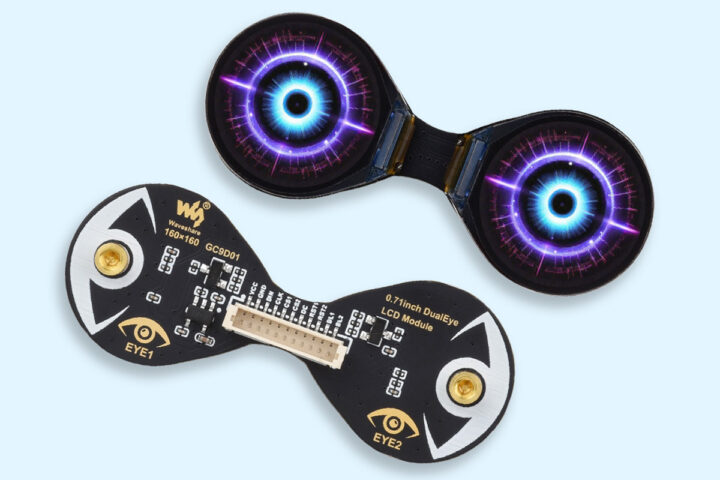
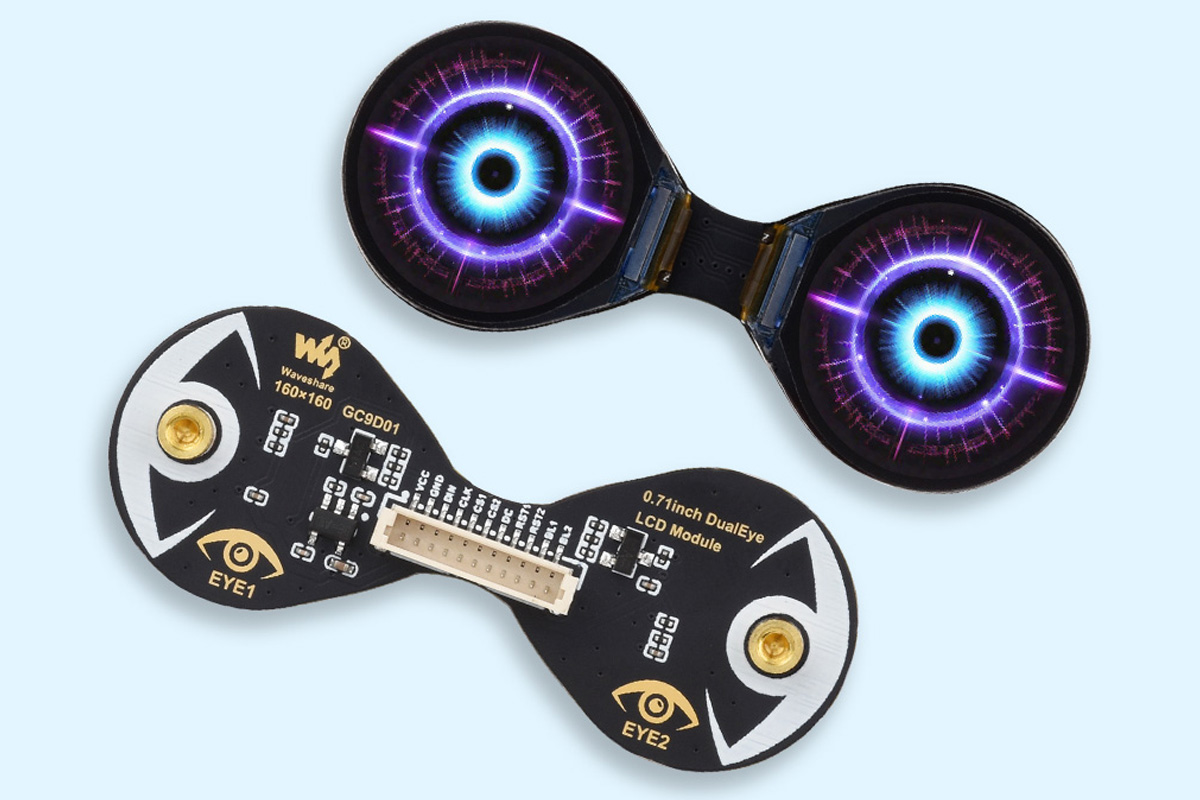
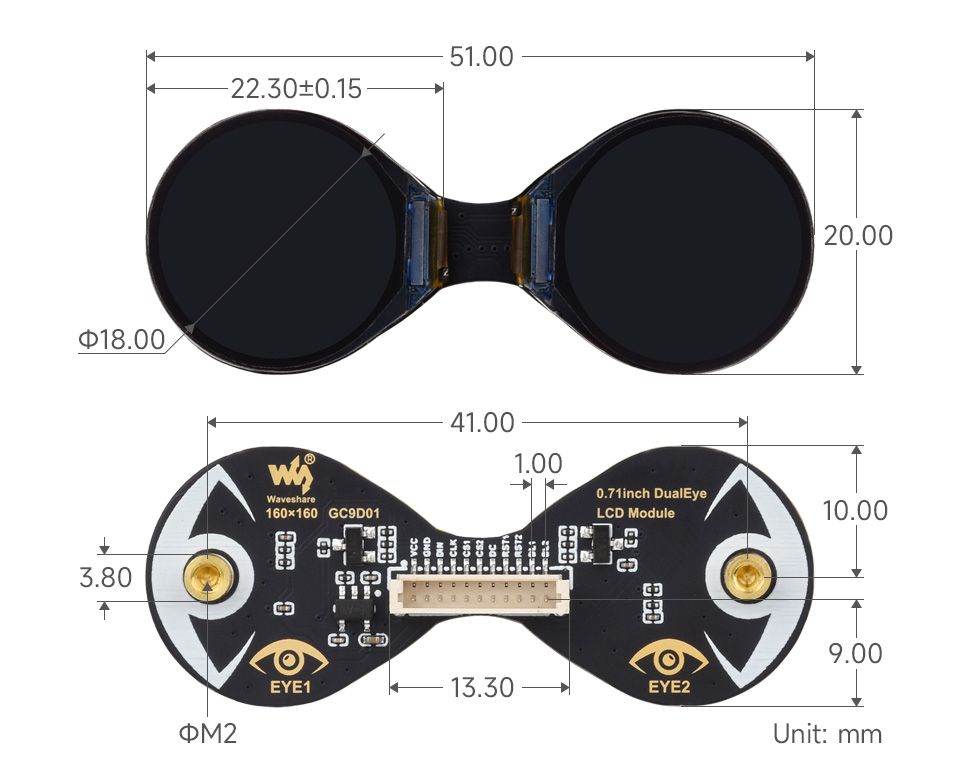
Waveshare has recently launched the Double Eye LCD module (also known as the 0.71inch DualEye LCD module), a high-tech alternative to googly eyes, with two 0.71-inch round IPS displays with 160×160 pixels of resolution and 65K color depth. It uses the GC9D01 driver and communicates via an SPI interface.
The module operates at a 3.3V or 5V and is designed so that both ESP32 and Arduino boards can drive it. These features make this device useful for applications like wearables, robotics, IoT devices, etc…
Waveshare Double Eye LCD module specifications:
- Display
- Type – Dual 0.71-inch round LCD displays
- Resolution – 160×160 pixels
- Panel – IPS (wide viewing angle)
- Colors – 65K colors
- Pixel Pitch – 37.5 × 112.5 µm
- Controller and Driver
- Driver – GC9D01
- Interface – SPI
- Operating Voltage – 3.3V / 5V
- Dimensions
- Display – 18 mm ∅ per round LCD
- Module – 51 x 20 mm
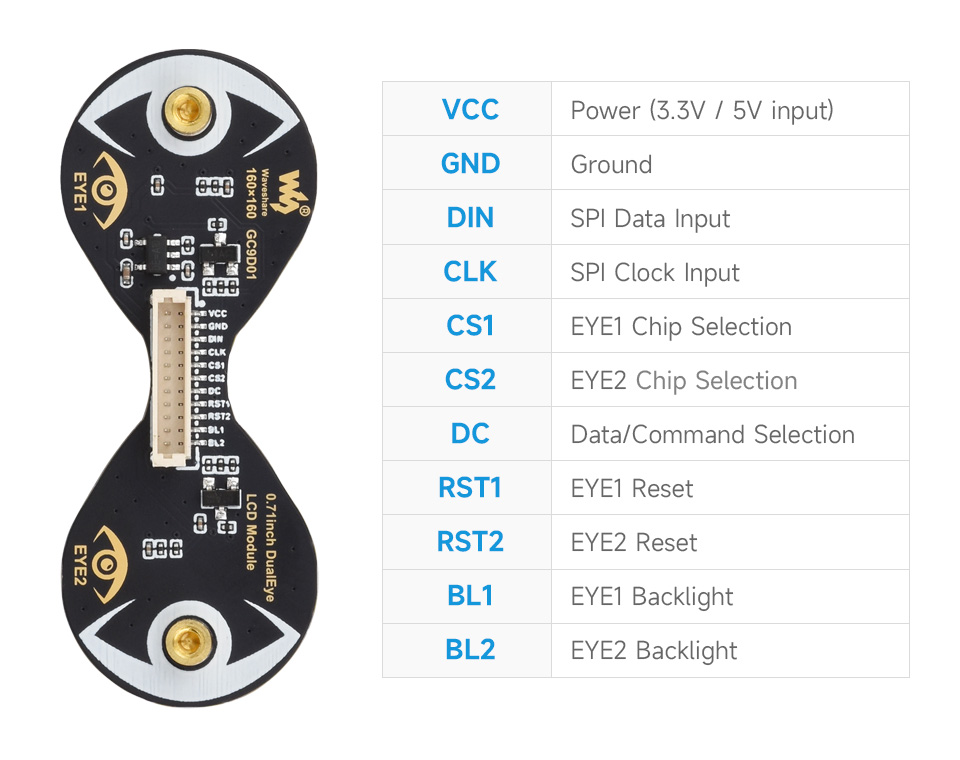
The company mentions that the display can be controlled via the SPI interface and provides a detailed pinout diagram for the module to get you started with microcontroller boards or single board computers with an SPI interface such as Arduino boards, Raspberry Pi SBCs, ESP32 modules, etc… More information about the product will soon be found on Waveshare’s wiki page but at the time of writing, it’s still under development. There’s however another wiki entry for a similar “single-eyed” 0.71-inch round display based on GC9D01 SPI controller which may offer a starting point.
While we have not seen or covered any similar eye-mimicking display solutions, we have written about various rounded display modules such as the RP2040-LCD-0.99-B rounded display, and the RP2350-LCD-1.28, Waveshare ESP32-S3 LCD Driver Board, and more. So with two displays and a little bit of DIY magic, you could reproduce this kind of module yourself.
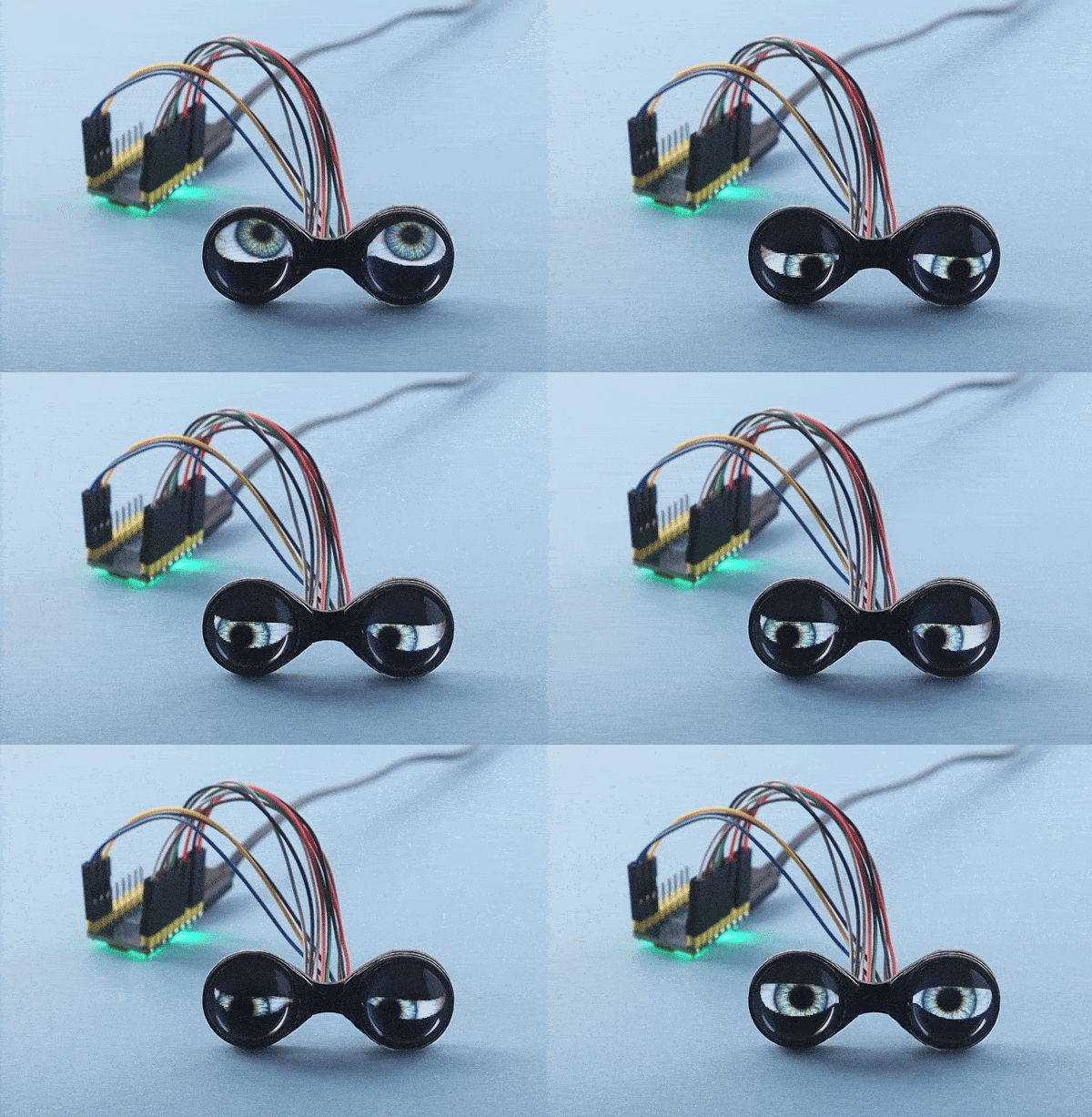
The 0.71inch DualEye LCD module is available on the Waveshare store for $15.99. However, after a web search, I found that this kind of “Double Eye” display is available from other manufacturers and costs only $12.99 on AliExpress or $15.99 on Amazon.
The post Waveshare Double Eye LCD module is a high-tech alternative to googly eyes appeared first on CNX Software - Embedded Systems News.
Quantum algorithms can break generative AI bottlenecks
Google announces Android XR platform, will launch first on Samsung’s Project Moohan device
Google said that it is launching a new Android-based XR platform on Thursday to accommodate AI features. The company said the platform, called Android XR, will support app development on different devices, including headsets and glasses. The company is releasing Android XR’s first developer preview on Thursday, which already supports existing tools, including ARCore, Android […]
© 2024 TechCrunch. All rights reserved. For personal use only.
Illuminaria - De la magie, des dieux et un geek passionné
Salut les amis,
Alors aujourd’hui j’ai envie de vous présenter un univers qui risque de vous mettre des étoiles dans les yeux et des runes dans la tête surtout si vous aimez tout ce qui est Heroic Fantasy. Cette fois, c’est une vieille connaissance, David Catuhe, qui m’a fait signe. David (pseudo : DELTAKOSH) n’a pas toujours été ce créateur de mondes car dans son autre vie (enfin, pas si lointaine), il était (et est toujours) ingénieur logiciel chez Microsoft.
STMicro releases STM32N6 Cortex-M55 MCU series with in-house NPU and dedicated computer vision pipeline
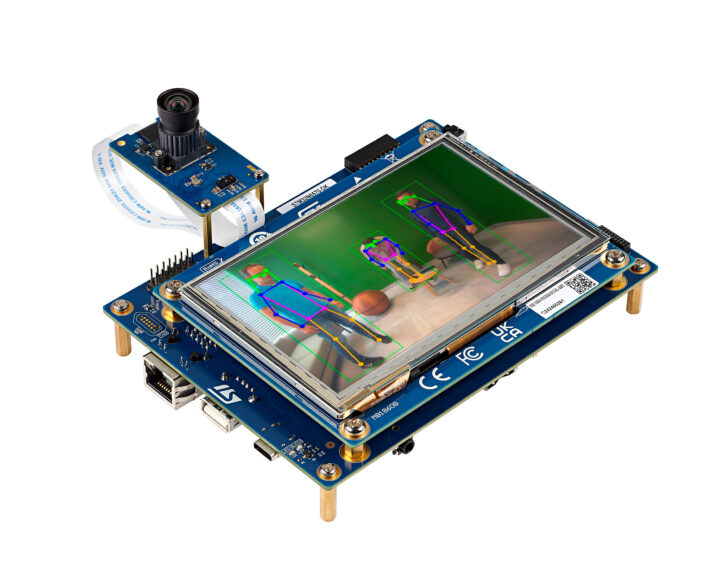
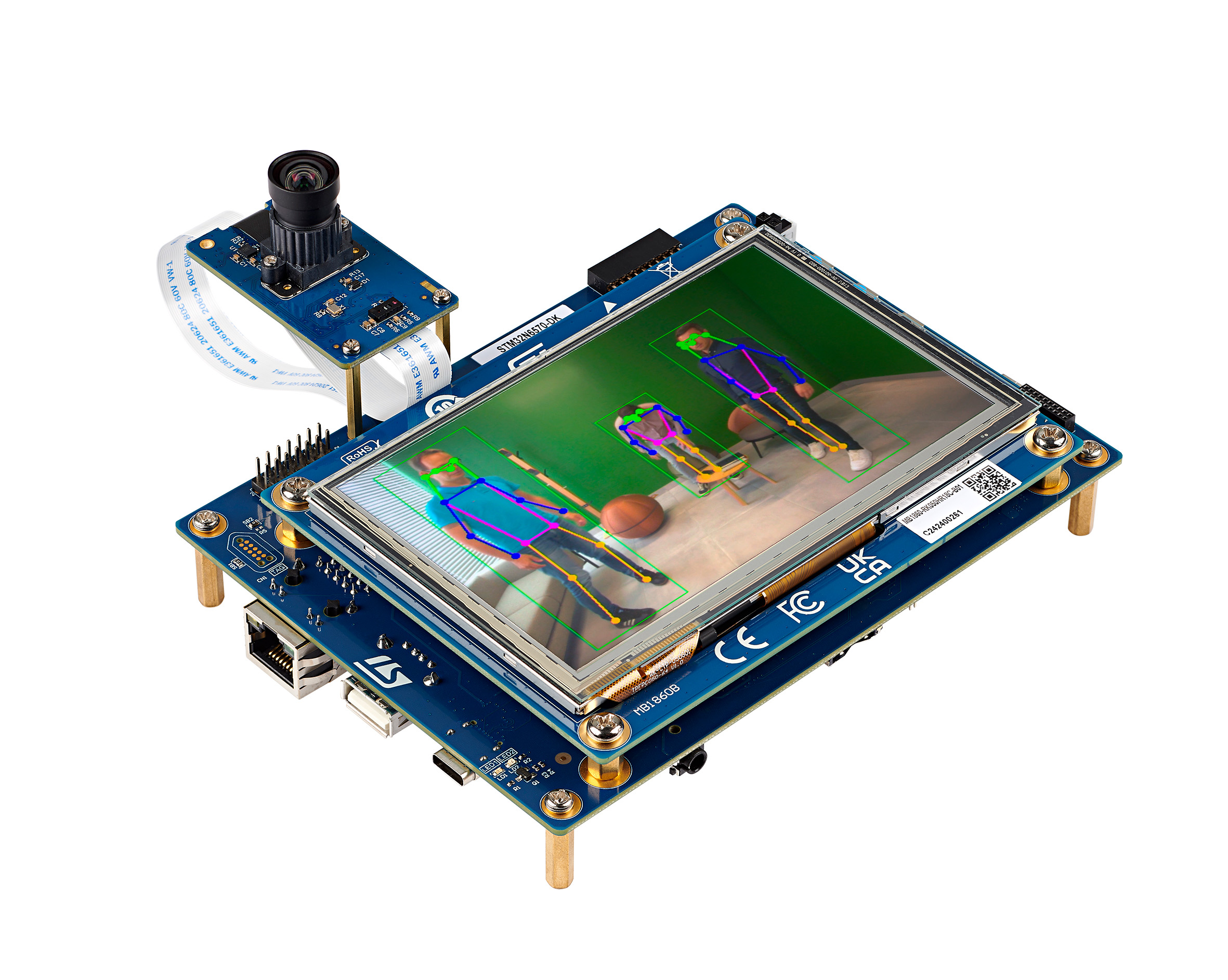
STMicro has announced the availability of the STM32N6 microcontroller series based on the 800MHz ARM Cortex-M55 and the 600 GOPS-capable Neural-ART Accelerator.
The STM32N6 is the company’s “newest and most powerful STM32 series,” bringing MPU-level performance to MCUs. It is the first STM32 to feature the Arm Cortex-M55 and offer up to 4.2MB of embedded RAM. Additionally, the chip includes ST’s NeoChrom GPU and an H.264 hardware encoder.
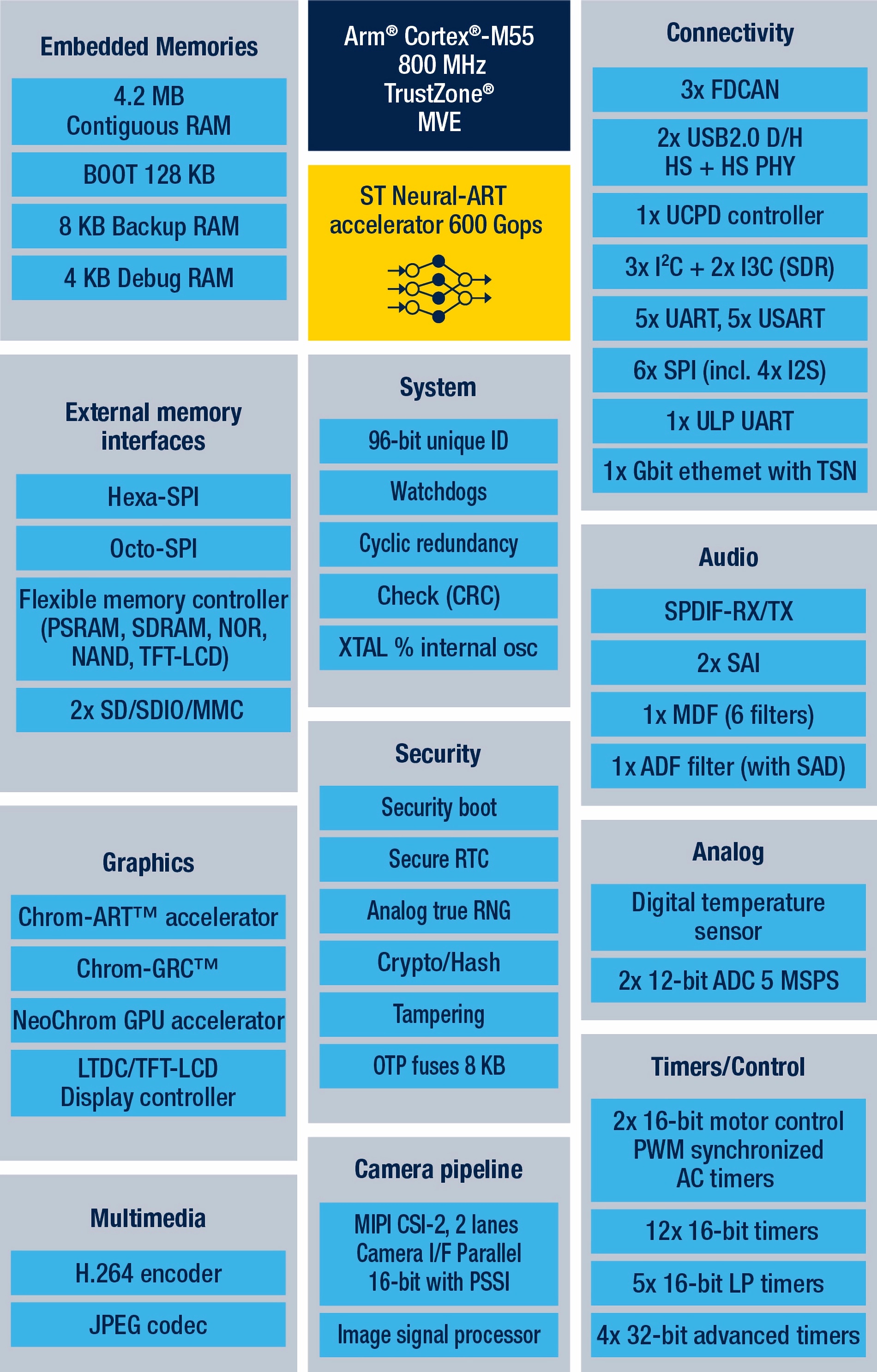
According to Remi El-Quazzane, MDRF (Microcontrollers, Digital ICs, and RF Products) President at STMicro, the STM32N6 “marks the beginning of a long journey of AI hardware-accelerated STM32, which will enable innovations in applications and products in ways not possible with any other embedded processing solution.”
STMicro offers two versions of the STM32N6 MCU: the STM32N6x7 AI line featuring the Neural-ART accelerator and the STM32N6x5 GP (general-purpose) product line without an NPU. The microcontroller series is primarily targeted at computer vision and audio processing use cases in smart industry, smart home, automotive, personal electronics, medical, and healthcare.
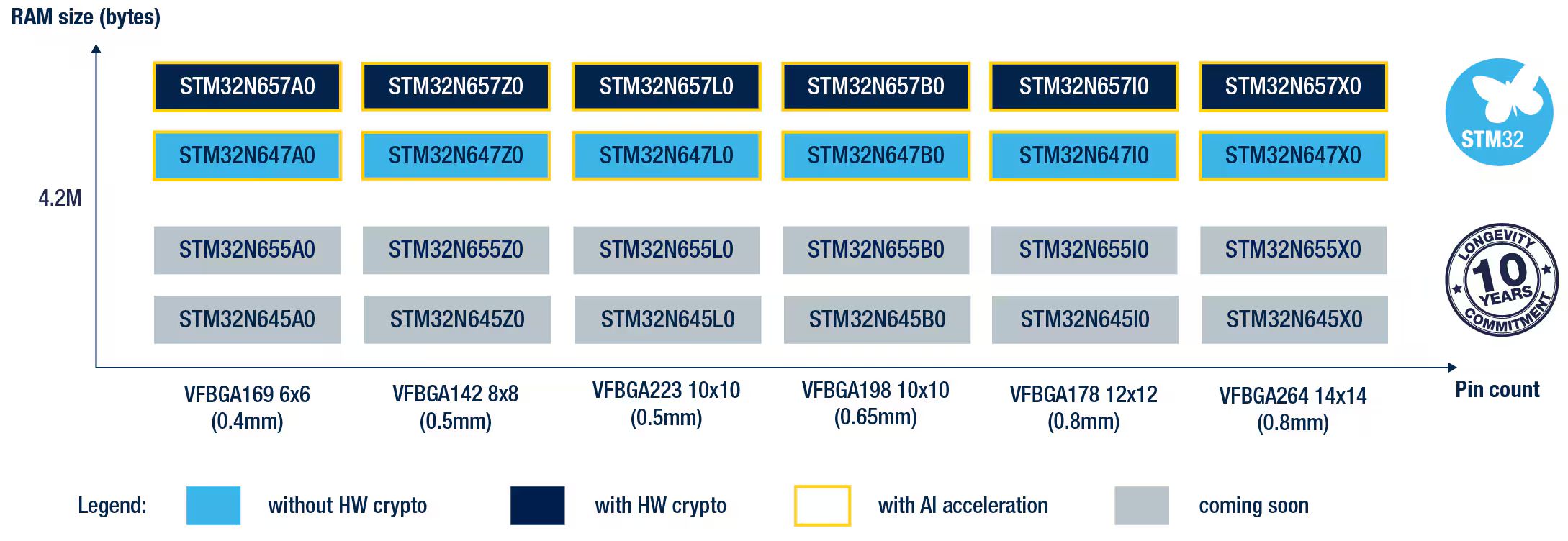
Although the STM32N6 microcontroller is the first to offer a custom NPU, we have seen other Cortex-M55-powered MCUs such as the Ambiq Apollo510 and Infineon’s PSoC Edge series.
STM32N6 specifications:
- Core – Arm 32-bit Cortex-M55 CPU @ up to 800MHz with Arm Helium and Arm MVE
- GPU – Neo-Chrom 2.5D GPU, Chrom-ART Accelerator (DMA2D)
- NPU – ST Neural-ART Accelerator @ 1 GHz, 600 GOPS
- Memory/Storage
- “Flash-less” configuration
- 4.2MB contiguous SRAM
- Flexible memory controller (PSRAM, SDRAM, NOR, NAND)
- External memory interfaces (hexa-SPI, Octo SPI, FMC)
- Display and Video
- LCD-TFT controller up to XGA resolution
- Parallel and 2-lane CSI-2 camera interfaces
- Dedicated image signal processor (ISP)
- Dimensioned for 5-megapixel camera @ 30 fps
- Three parallel pipes on the same input stream
- H.264 encoder: 720p/1080p @ 30 fps
- Hardware JPEG codec with MJPEG
- Audio – 2x SAI, with four DMIC support
- Peripheral interfaces
- Up to 165 GPIO pins
- 2x USB 2.0 FS device/host OTG controllers (one with UCPD USB Type-C Power Delivery)
- 10Mbit, 100Mbit, and 1Gbit Ethernet with TSN (time-sensitive networking)
- 4x I2C Fm+ interfaces (SMBus/PMBus)+ 2x I3C
- 6x SPI; four I2S-capable
- 2x SDMMC
- 3x FDCAN with TTCAN capability
- 5x USART, 5x UART (ISO78916 interface, LIN, IrDA, up to 12.5 Mbit/s) + 1x LPUART
- Analog
- 1x temperature sensor
- 2x ADCs with 12-bit maximum resolution (up to 5 Msps), up to 20 channels
- 1x ADF filter with SAD and 1x MDF (six filters)
- Timers
- 1x high-resolution timer
- 4x 32-bit timers with up to four IC/OC/PWM or pulse counters and quadrature encoder input (up to 240 MHz)
- 2x 16-bit advanced motor control timers (up to 240 MHz)
- 13x 16-bit general-purpose and 5x 16-bit low-power timers (up to 240 MHz)
- 2x watchdogs (independent and window)
- 1x SysTick timer
- RTC with subsecond accuracy and hardware calendar
- Debugging – Serial wire debug (SWD), JTAG, Embedded Trace Macrocell (ETM)
- CRC calculation unit
- Clock management
- Internal oscillators: 64 MHz HSI, 4 MHz MSI, 32 kHz LSI
- External oscillators: 16 to 48 MHz HSE, 32.768 kHz LSE
- 4x PLL (one for the system clock, one for the ST Neural-ART Accelerator, two for kernel clocks) with fractional mode
- Reset and power management
- 1.71 V to 3.6 V application supply and I/Os
- Dedicated power for USB and XSPI I/Os
- Power-on/Power-down reset (POR/PDR), Programmable Brown-Out reset (BOR), Programmable Brownout Voltage Detection (PBVD)
- Low-power modes: Sleep, Stop, Standby, Shutdown
- VBAT supply for RTC, 32x 32-bit backup registers + 8-Kbyte backup SRAM
- SMPS power-down converter
- Packages
- VFBGA264 (14 x 14 mm)
- VFBGA223 (10 x 10 mm)
- VFBGA198 (10 x 10 mm)
- VFBGA178 (12 x 12 mm)
- VFBGA169 (6 x 6 mm)
- VFBGA142 (8 x 8 mm)
- Temperature Ranges – -40°C to 125°C
STMicro offers a “comprehensive ecosystem of software tools” to facilitate the development of edge AI applications with the STM32N6. The ST Edge AI suite bundles free software tools, examples, and documentation for developers of varying skill levels. The suite also includes the Edge AI Developer Cloud with dedicated neural networks from the STM32 model zoo as well as a board farm for benchmarking. ST also promises that existing frameworks can be used with the STM32N6 series via the ST Edge AI-Core which enables optimizing and compiling neural networks to work with ST hardware.
Both versions of the STM32N6 MCU series are offered in 142- to 264-pin VFBGA packages and are now available for “high-volume” buyers. There are two evaluation boards currently available for the series, the $185 STM32N6570-DK Discovery Kit and the $56.25 Nucleo-144 board. More information is available on the product page.
Thanks to TLS for the tip.
The post STMicro releases STM32N6 Cortex-M55 MCU series with in-house NPU and dedicated computer vision pipeline appeared first on CNX Software - Embedded Systems News.
Generating power with a thin, flexible thermoelectric film
The No. 1 nuisance with smartphones and smartwatches is that we need to charge them every day. As warm-blooded creatures, however, we generate heat all the time, and that heat can be converted into electricity for some of the electronic gadgetry we carry.
Flexible thermoelectric devices, or F-TEDs, can convert thermal energy into electric power. The problem is that F-TEDs weren’t actually flexible enough to comfortably wear or efficient enough to power even a smartwatch. They were also very expensive to make.
But now, a team of Australian researchers thinks they finally achieved a breakthrough that might take F-TEDs off the ground.

OpenAI’s Super-Hyped Sora Goes Absolutely Freakshow If You Ask It to Generate Gymnastics Videos

OpenAI has finally opened its much-hyped Sora video generator to the public — and its work isn't exactly blowing us away.
One particular weakpoint: Sora's attempts to generate videos of gymnasts result in a horrorshow of whirling and morphing limbs that would be more at place among David Cronenberg's body horror films than the Olympics.
As venture capitalist Deedy Das quipped in a thread showing the bizarre creations that "gymnastics is still very much the Turing test for AI video."
As cool as the new Sora is, gymnastics is still very much the Turing test for AI video.
1/4 pic.twitter.com/X78dNzusNU
— Deedy (@deedydas) December 10, 2024
Das went on to post three more uncanny Sora-generated gymnastics videos, and there's more where that came from.
Echoing the venture capitalist, the account associated with the AI for Humans podcast joked that "gymnastics are the funniest way to break [S]ora."
Indeed, in a video made with the prompt "gymnast flips five times very fast then lands in a bucket of mustard," the same limb confusion as the previous videos is yet again on display — but this time, a waterfall of what looks like yellow paint is attached to the "feet" of the artificial gymnast, making the whole thing look all the slimier.
gymnastics are the funniest way to break sora
prompt: gymnast flips five times very fast then lands in a bucket of mustard pic.twitter.com/xLEIlAbEhj
— AI For Humans Show (@AIForHumansShow) December 10, 2024
That same account also had Sora make a video of a Raygun-esque breakdancer that had a similarly creepy limb confusion effect.
sora has its own interpretation of Raygun's breakdance from the Paris Olympics
prompt: famous Australian woman breakdances at the Paris Olympics pic.twitter.com/IefygMDCpT
— AI For Humans Show (@AIForHumansShow) December 11, 2024
Even in videos with less movement, where Sora often does significantly better, it struggles with spelling words correctly — a basic imagine generator issue that's emerged as a tell for AI images.
In one post, a self-described "politically homeless bitch" claims that the quality of Sora's videos is "mind-bending" — without pointing out that in the last of the four videos of a woman in fascist military uniform, the mask she's wearing misspells "obey" as "oeybey."
In an even more egregious example, vlogger Marquees Brownlee said that when he got early access to Sora, it kept outputting "garbled" text despite the often-photorealistic quality of its videos.
"How can [Sora] create a photorealistic human but can't spell basic words?" another user observed in a post screenshotting Brownlee's video.
crying laughing at the on screen graphics. How can SORA create a photorealistic human but can't spell basic words? https://t.co/xo6JEMu7l9 pic.twitter.com/spQwDnieFf
— A.A. Ron (@AaronTheH) December 9, 2024
While it certainly has its impressive aspects, Sora by and large seems to be way less sophisticated than its boosters would have had you believe before it launched publicly — a common theme among AI hypebeasts.
More on Sora: OpenAI Concerned About Illegal Activity on Sora, Releases It Anyway
The post OpenAI’s Super-Hyped Sora Goes Absolutely Freakshow If You Ask It to Generate Gymnastics Videos appeared first on Futurism.
OpenAI’s Advanced Voice Mode can now see your screen and analyze videos

UK virtual try on software specialist Zyler focuses on pixels over plastic as it releases digital Christmas jumper
UK-based fashion technology company Zyler has released a digital Christmas jumper which anyone who visits their website or social media can ‘wear’ for free using its AI powered virtual try on tool.
This was designed by Zenaida Ossana, a 3D artist and fashion designer with a significant following on Instagram. She created the design using new AI platform Neural Fashion and was inspired by seascapes and mermaids in her creative process. She comments: “It was really fun to work on this design knowing that many people might be able to see it and experience the potential of digital fashion for themselves”.
The origin of the Christmas jumper tradition can be traced back to 19th century Scandinavia where thick warm and brightly coloured jumpers were worn to escape from the cold. More recently, Statista reported that on average 47% of consumers worldwide enjoy ugly Christmas jumpers. However, that is not what motivated this project.
Zyler collaborated with Ossana after being made aware of the shocking stats of the overconsumption of Christmas jumpers. True Origin reports that 12 million are purchased each year in the UK alone and 25% of those are only worn once.
Research by environmental charity Hubbub found that 95% of jumpers are made completely, or considerably from synthetic materials. Generally they are acrylic, and this means that they take over 200 years to decompose.
Zyler’s innovation consultant and digital fashion expert Karinna Grant who led this project says: “We think this is a fun use of AI tech, combining VTO and digital fashion to offer consumers an alternative way to participate in this phenomenon.”
“We do also acknowledge that these technologies have an environmental footprint, however we believe that responsible use of AI and digital design considerably outweighs the negative impact of overproduction and discardment of physical clothing.”

Consumers can try the experience by visiting Zyler’s flagship Digital Dressing Room here. In less than 90 seconds you can see yourself wearing the design. All it takes is one click on the jumper, followed by adding a profile photo and a few measurements.
Consumers are encouraged to share on social media with hashtag #Pixelsoverplastic. If, however, people do need or want to buy a physical Christmas jumper, at the same link Zyler lets them try on several options.
2024 RTIH INNOVATION AWARDS
Zyler was among the finalists at the sixth edition of the RTIH Innovation Awards.
The awards, sponsored by Vista Technology Support, Scala, CADS, 3D Cloud, Brightpearl by Sage’s Lightning 50, Business France, and Retail Technology Show 2025, celebrate global tech innovation in a fast moving omnichannel world.
Our 2024 hall of fame entrants were revealed during an event which took place at RIBA’s 66 Portland Place HQ in Central London on 21st November, and consisted of a drinks reception, three course meal, and awards ceremony presided over by comedian Lucy Porter.
In his welcome speech, Scott Thompson, Founder and Editor, RTIH, said: “The event is now into its sixth year and what a journey it has been. The awards started life as an online only affair during the Covid outbreak, before launching as a small scale in real life event and growing year on year to the point where we’re now selling out this fine, historic venue.”
He added: “Congratulations to all of our finalists. Many submissions did not make it through to the final stage, and getting to this point is no mean feat. Checkout-free stores, automated supply chains, immersive experiences, on-demand delivery, next generation loyalty offerings, inclusive retail, green technology. We’ve got all the cool stuff covered this evening.”
“But just importantly we’ve got lots of great examples of companies taking innovative tech and making it usable in everyday operations - resulting in more efficiency and profitability in all areas.”
Congratulations to our 2024 winners, and a big thank you to our sponsors, judging panel, the legend that is Lucy Porter, and all those who attended last month’s gathering.

Microsoft launches Phi-4, a new generative AI model, in research preview
Microsoft has revealed the newest addition to its Phi family of generative AI models. Called Phi-4, the model improves in several areas over its predecessors, Microsoft claims, particularly in solving math problems. That’s partly the result of better training data quality. Phi-4 is available in very limited access as of Thursday night only on Microsoft’s […]
© 2024 TechCrunch. All rights reserved. For personal use only.
Build Your Panel of Advisors to Ask for Advice

Building your own panel of advisors is a simple technique to expand your perspectives and guide yourself through tough decisions. Think of people whose judgement and values you respect, add them to your mental panel, and when faced with a dilemma, ask, "What would you do?"
While a real panel of advisors is invaluable, an imaginary panel has advantages: it's not limited to people you can call, and it requires no one else's time.
Your panel can include your mum, Uncle Jim, your best friend, or your high school science teacher. But why stop there? You could invite Taylor Swift, Marcus Aurelius, Eleanor Roosevelt, Abraham Lincoln, or the Buddha—famous figures whose qualities and wisdom inspire you.
Diversity is key to your panel's success, as it brings a broader range of perspectives. Uncle Jim would likely approach a problem very differently from the Buddha, and you can access both viewpoints simply by considering how each might respond.
It's curious how we can get more diverse perspectives by ourselves simply by adopting the view or mindset of someone else (as we understand them). In this way, it's rather like De Bono's 6 Thinking Hats technique. And it reminds me of my favourite research results where people generated more ideas when prompted to ideate as if they were a creative person.
Benjamin Franklin regularly sought to emulate his role models, as in his 13th virtue: "Humility: Imitate Jesus and Socrates." Similarly, Napoleon Hill described meeting with "Invisible Counselors" in Think and Grow Rich to gain insights from imagined mentors. I can't remember where I first came across this strategy but I love to put it into action.
Who would you add to your panel?
Related Ideas to Building Your Own Panel of Advisors
Searching for the first great AI app

ChatGPT launched roughly two years and two weeks ago. Now, as we near the end of 2024, the AI race is... well, where is it, exactly? It’s more competitive than ever, there’s more money being poured into new models and products than ever, and it’s not at all clear when or even whether we’re going to get products that make it all worthwhile.
On this episode of The Vergecast, we talk about a lot of different AI news, all along a single trend line: the tech industry trying desperately to build a killer app for AI. (Ideally, for them, also one that makes money.) The Verge’s Richard Lawler joins us as we discuss Google Gemini 2.0, Project Astra and Project Mariner, and everything else Google is doing to put AI in the products you already use every day. We also talk through the new Android XR announcement, and Google’s renewed commitment to making headsets and smart glasses that work. It’s all an AI story, no matter how you look at it.
After that... more AI! We talk about the launch and near-immediate disappearance of OpenAI’s Sora, what’s new in iOS 18.2, Reddit’s clever-but-primitive new Answers feature, and more.
Finally, in the lightning round, it’s a smorgasbord of tech news. YouTube is big on TVs; Instagram is testing a way for you to test your posts; the TikTok ban is coming, but a sale sounds like the answer; Sonos once again made a great soundbar; and what the heck happened to Cruise? The year’s almost over, but the news keeps coming.
If you want to know more about everything we discuss in this episode, here are some links to get you started, beginning with Google:
- Google’s AI enters its ‘agentic era’
- Gemini 2.0: what’s new in Google’s new flagship AI model
- Google’s AI-powered smart glasses are a little closer to being real
- Google’s new Jules AI agent will help developers fix buggy code
- Google is testing Gemini AI agents that help you in video games
- Google built an AI tool that can do research for you
- I saw Google’s plan to put Android on your face
And in other AI news:
- OpenAI has finally released Sora
- iOS 18.2 is out now, adding ChatGPT integration and more Apple Intelligence tools
- From The Wall Street Journal: iOS 18.2 Review: The AI Apple Promised Us
- ChatGPT’s side-by-side ‘Canvas’ view is now available to everyone.
- Reddit’s new AI search tool helps you find Reddit answers without Google
And in the lightning round:
- YouTube is still growing fast on TVs in the living room
- Instagram will let creators test experimental reels on random people
- Adam Mosseri’s post on trial reels
- It sure sounds like Trump would be okay with a TikTok sale
- Sonos Arc Ultra review: don’t call it a comeback (yet)
- Cruise’s robotaxi service will likely shut down as GM pulls its funding
- Amazon’s online car ‘dealership’ with Hyundai is now live
Écran de salle de réunion : l’outil indispensable pour des présentations dynamiques et collaboratives
Les réunions d'affaires jouent un rôle crucial dans la stratégie et la gestion des équipes. Les entreprises cherchent à optimiser leur productivité, et l'écran de salle de réunion s'impose comme un élément central. En plus d'améliorer la qualité des présentations, ces outils modernes redéfinissent la collaboration en offrant des fonctionnalités interactives et connectées, essentielles dans un monde du travail toujours plus digitalisé.
Des présentations visuelles et engageantes
Avec un écran numérique interactif, vos présentations gagnent en dynamisme et captivent davantage l'audience. Ces équipements permettent d'annoter directement sur les documents présentés, de zoomer sur des détails ou de naviguer rapidement entre différents contenus. Résultat : les réunions sont plus fluides et interactives. Selon des études, l'utilisation de contenus visuels de qualité augmente de manière significative la rétention d'information.
Les écrans de salle de réunion modernes offrent une résolution allant jusqu'à la 4K, garantissant une qualité d'image optimale, même dans des environnements très lumineux. Qu'il s'agisse de graphiques complexes, de vidéos ou de présentations PowerPoint, chaque détail est rendu avec précision. Cette technologie permet à chaque participant de suivre efficacement, quel que soit son emplacement dans la salle.
Une collaboration accrue grâce à l'interactivité
L'un des principaux avantages des écrans interactifs est leur capacité à transformer une réunion classique en un atelier collaboratif. Grâce à des fonctionnalités tactiles avancées, plusieurs utilisateurs peuvent interagir simultanément sur l'écran, écrire, dessiner ou réaliser des modifications en temps réel. Ces caractéristiques sont idéales pour des sessions de brainstorming ou pour la préparation de projets stratégiques.
La connectivité est également un atout majeur. Les écrans sont compatibles avec des outils de visioconférence tels que Microsoft Teams, Zoom ou Google Meet. Cette intégration simplifie la gestion des réunions hybrides en permettant aux équipes distantes de participer avec la même fluidité que les collaborateurs présents sur site. Ainsi, la collaboration est homogène et les barrières géographiques disparaissent.
Comment choisir le bon écran de réunion ?
Pour bien s'équiper, il est crucial de bien définir vos besoins. La taille de l'écran doit être adaptée à celle de la salle. Une salle compacte nécessitera un écran de 55 à 65 pouces, tandis qu'une salle spacieuse pourra accueillir des écrans de 85 pouces ou plus. Il est également important de prendre en compte la luminosité ambiante : un écran avec un haut niveau de lumens garantit une bonne visibilité, même en pleine lumière naturelle.
Privilégiez également des écrans dotés de connectivité sans fil. Ces solutions permettent de projeter rapidement un contenu depuis un ordinateur ou un smartphone, sans avoir à utiliser de câbles encombrants. La flexibilité et la rapidité qu'offrent ces technologies sont des atouts précieux pour dynamiser vos réunions.
Un investissement stratégique pour votre entreprise
Adopter un écran de salle de réunion interactif, c'est faire le choix de l'efficacité et de la modernité. Cet outil polyvalent transforme les réunions en expériences plus dynamiques et productives, en favorisant l'engagement des participants et en simplifiant la gestion des projets.
Cet article Écran de salle de réunion : l’outil indispensable pour des présentations dynamiques et collaboratives est apparu en premier sur OBJETCONNECTE.COM.