Halliday Glasses have boarded the smart spectacles hype train, featuring “proactive” AI assistance and a near-eye display that shows information directly in the user’s field of view. Wearable technology startup Halliday says its flagship eyewear will be available sometime after CES. Shipping is expected to start “by the end of Q1 2025,” and pricing will be set somewhere between $399 and $499 — pricier than display-free competitors like the $299 Meta Ray-Bans and Solos AirGo Vision.
Halliday says the “DigiWindow” located in the upper right of the frame is the world’s smallest and lightest near-eye display module and can display information to the wearer “regardless of whether they have perfect eyesight or require vision correction.” The display appears as a 3.5-inch screen in the upper-right corner of the user’s view with minimal obstruction, according to Halliday, and remains visible in bright sunlight.
Image: Halliday
The near-eye display is located in the upper-right frame. Checking messages or notes might look a little odd to other people if you need to keep glancing up.
The glasses’ built-in display works alongside an AI assistant that can anticipate what users need by analyzing conversations, answering questions, and providing additional insights without requiring a prompt. “For instance, during a meeting, it can proactively answer complex questions, summarize key discussion points, and generate summarized meeting notes afterward,” Halliday said in its announcement.
The AI features require the glasses to be connected to a smartphone via Bluetooth, according to Halliday, but the company hasn’t mentioned what AI model it uses or if there are additional costs involved. Features include real-time AI translation in up to 40 languages, live navigation for directions, voice-to-text notes transcription, and the display of synchronized lyrics when listening to music. Users can also discreetly view and reply to messages, create audio memos, and display notes like a teleprompter.
The near-eye display is supported on both prescription lenses and if no lens is used at all. The displayed information isn’t visible to other people and can be controlled using either voice commands, frame interface controls, or a ring that features a built-in trackpad.
Image: Halliday
The Halliday Glasses are available in either black or tortoiseshell.
Image: Halliday
Information about the trackpad ring is limited, but it seems like a neat way to control the display features without messing with the actual glasses.
Halliday says the glasses weigh 35 grams (about 1.2 ounces), provide up to eight hours of battery life, and come in two color options: matte black or tortoiseshell. We’ve asked Halliday for more information about the trackpad ring, such as how / if it’s charged and any potential options for color and sizing.
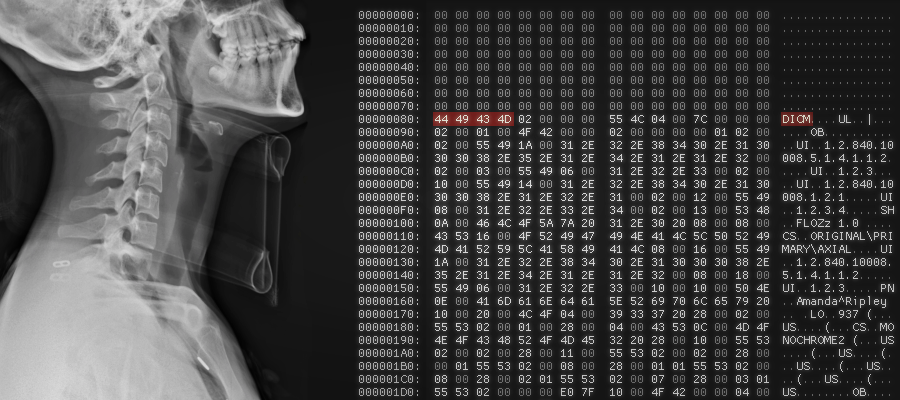
Pour les besoins d’un projet au boulot, j’ai récemment dû me pencher sur le format DICOM. Mon rôle était de comprendre comment se structure un fichier DICOM afin de le vulgariser aux collègues qui bossent sur le projet pour qu’ils puissent générer des fichiers DICOM valides, lisibles par les logiciels d’imagerie existants.
Generative AI models have reached a baseline capability of producing at least a passable video from a single image or short sentence. Companies building products around these models are claiming that anyone can make a snazzy promo video if they have some images or recordings — and videos usually perform better than static images or […]
Vous pensiez que l’invasion des projecteurs Lifestyle avait atteint son apogée en 2024 ? Eh bien, détrompez-vous, 2025 s’annonce encore plus envahissante ! Et c’est Dangbei qui ouvre les hostilités au CES de Las Vegas avec son nouveau modèle hybride LED-Laser, le MP1 Max. Si Xgimi avait dégainé son Horizon S Max hybride l’année dernière, Dangbei semble bien décidé à relever le défi avec un modèle qui coche toutes les cases de l’élégance et de la technologie.
Dangbei MP1 Max
Le MP1 Max, c’est un peu comme si Dangbei avait décidé d’aller chercher l’Oscar des projecteurs Lifestyle. Avec sa source lumineuse hybride LED et tri-laser, il promet une luminosité de 3100 lumens ISO. Pour les sceptiques du laser, Dangbei a trouvé la parade : adieu les speckles et les franges de couleur disgracieuses des modèles RGB traditionnels. Résultat ? Une image nette, des couleurs réalistes couvrant 110 % du BT.2020, et un mode calibré D65 avec un ∆E<1 (données constructeur).
Dangbei MP1 Max
Côté ergonomie, c’est un petit bijou : un support inclinable à 135° et rotatif à 360°, parfait pour projeter sur n’importe quelle surface – mur, plafond, ou même le sol, si ça vous amuse. Et comme la paresse est un art de vivre, le système InstanPro AI 2.0 s’occupe de tout : mise au point et correction en temps réel, vous n’aurez même pas à lever le petit doigt.
Ajoutez à cela une connectivité moderne (Wi-Fi 6, Bluetooth 5.2, HDMI eARC, etc.) et un système audio musclé avec des basses à 45 Hz, et vous obtenez un projecteur qui sait aussi bien charmer les yeux que les oreilles. Le tout sera disponible au premier semestre 2025, avec Google TV pour la version internationale, histoire de ne pas se sentir mis de côté.
Alors, prêt à sacrifier encore un peu de votre salon au dieu du Lifestyle ? Parce que Dangbei a clairement l’intention de marquer 2025 de son empreinte lumineuse.
The Saros Z70 from Roborock is the first robot vacuum with an articulating arm that can clear clutter out of its way. | Photo by Owen Grove / The Verge
Roborock has added an arm to its latest flagship robot vacuum. And this is no tiny appendage like the one the company debuted on its S8 MaxV Ultra at CES last year; it’s an actual articulating robotic arm. The arm rises from the middle of Roborock’s latest flagship bot — the Saros Z70 — and can extend out to pick up items such as socks and tissues while cleaning your floors. While it’s mildly terrifying and currently extremely slow — I can certainly see the potential in a robot vacuum that can clean up ahead of itself.
The Verge got a sneak peek at the Saros Z70 in action ahead of its launch at CES 2025 and can confirm the arm works as advertised, although, as mentioned, it’s laboriously slow. During our demo, it took about a minute to pick up and move each sock in its path. It’s also limited to socks, tissues, small towels, and sandals that weigh under 300 grams. Roborock says more items will be added over time but hasn’t promised increased weight capability. No pricing has been released, but the company says the vacuum will ship by June 2025.
The Verge saw this demo last month of the Saros Z70. Roborock says its capabilities have improved since then. We’ll be checking it out at CES this week. Video by Owen Grove / The Verge
The Saros Z70’s arm is “the first-of-its-kind mass-produced foldable robotic arm with five axis,” according to Roborock. Called the OmniGrip, it can unfold, extend, and twist horizontally and vertically to pick up items and move them out of the way. It includes a camera and LED light in the arm to see objects and has sensors that allow it to detect an object’s weight and know its positioning — including if there’s anything above it, so the arm doesn’t hit anything when it raises.
Roborock says that during its first cleaning run, the Z70 will detect and mark any objects it can lift. It then returns to deploy its arm, moving items to the area it has already cleaned and cleaning the areas those items were blocking. Finally, it can be programmed to go out a third time to pick up the items and put them away in a place you designate on the map in Roborock’s app, such as near a closet or in a basket.
Photo by Owen Grove / The Verge
When not in use, the arm tucks into the robot’s chassis.
Yes, this whole process will take a long time. Yes, it would be quicker (and quieter) to pick up the socks yourself (assuming you’re at home). But also, it’s a robot that picks up your socks! We are truly living in the future.
One intriguing feature Roborock says will come to the Saros Z70 via an OTA upgrade doesn’t involve the arm. Instead, it leverages the robot’s new navigation and obstacle recognition, called StarSight Autonomous System 2.0, to let you train the robot to recognize specific objects — say, a favorite teddy bear or your purse. According to Roborock, you'll be able to use its app to see where the robot last spotted that item, which could be handy for locating lost things.
StarSight launched on the Qrevo Slim and uses 3D time-of-flight sensors, RGB cameras, and machine learning to navigate and identify obstacles. The AI-powered machine learning allows the Z70 to detect and navigate up to 108 preprogrammed objects, according to Roborock. It also uses a new laser-powered obstacle avoidance technology called VertiBeam, which Roborock says can more accurately clean around extended cables and irregularly shaped walls and furniture.
Photo by Owen Grove / The Verge
The Saros Z70 will pair with a new auto-empty dock.
Other Saros Z70 features include an impressive 22,000Pa of suction power, a dual anti-tangle system for the robot’s roller brushes, and dual spinning mops that can not only lift 2.2cm to avoid carpet but also automatically detach at the base station when mopping isn’t necessary.
The Saros Z70 is just under 8cm high, which should allow it to get under those low sofas, and has the AdaptLift chassis first seen on the Qrevo Curv. This helps the robot climb high room transitions and maneuver over high-pile carpets.
The flagship robot pairs with Roborock’s new Multifunctional Dock 4.0 to charge, auto-empty, refill and drain its water tanks, and maintain the mops with hot water washing and hot air drying; this model also introduces a 2.5-hour fast-charge feature.
Image: Roborock
The Saros 10R has most of the features of the Z70, just with fewer appendages.
Realistically, as cool as the arm is, it’s clearly more of a proof-of-concept product (although Roborock assures me it will ship this year). So, alongside the Saros Z70, Roborock debuted two other flagship robot vacuums at CES. The Saros 10R and the Saros 10 will ship on February 10th and cost $1,599.99 each. Both feature a similar slimline body and the same AdaptLift chassis as the Z70, and they can both automatically detach their mop pads when not needed.
The main differences between the two are in mopping and navigation tech. The Saros 10R has the same StarSight 2.0 navigation and obstacle recognition tech, the same mopping tech, and the same dock as the Z70. However, it has slightly lower suction power (19,000Pa).
By contrast, the Saros 10 is an upgrade to Roborock’s current flagship model, the S8 MaxV Ultra (our top pick for the best robot vacuum). With 22,000Pa of suction power, it uses the lidar navigation found on most Roborocks but can retract its lidar tower to fit under low spaces, bringing it to the same height as the other two Saros models.
Image: Roborock
The S10 works with Roborock’s RockDock Ultra 2.0, which features a new design and a tempered glass finish.
Instead of the oscillating mops on the Z70 and the 10R, the Saros 10 has a new version of Roborock’s excellent VibraRise mopping feature. This uses a flat mopping pad that vibrates 4,000 times a minute to simulate scrubbing and can now soak dry stains before attempting to remove them.
The 10 also comes with an improved version of Roborock’s Reactive AI Obstacle Avoidance (version 3.0) and gets the new VertiBeam cable avoidance tech. It has Roborock’s new DuoDivide anti-tangle roller brush, first seen on the Qrevo Curv, and pairs with the company’s new Ultra 2.0 Dock.
Roborock says all three new models will be updated to support Matter 1.4, allowing the vacuums to work with any Matter-enabled smart home platform. It looks like Apple is bringing support with iOS 18.3, and Amazon Alexa and Samsung SmartThings already support robot vacuums through Matter. Out of the box, the robots are compatible with Alexa, Siri Shortcuts, Google Home, and Roborock’s own Hey Rocky voice assistant.
Les deepfakes (visages, corps et voix générés par IA) ont déjà servi à tromper des cadres et des collègues pour leur soutirer des informations sensibles. La nécessité de se trouver un mot de passe commun lors des appels au bureau ou avec la famille n'est plus si insolite.
It’s 2025! It’s the future. We have wearables and in-home medical care now like the Jetsons. But, what do patients think about these things?
The health care landscape is experiencing a dramatic transformation through the increasing adoption of wearable medical technologies. These sophisticated devices, worn directly on or close to the body, represent a paradigm shift in how we monitor, prevent, and manage health conditions. From simple activity trackers to advanced cardiac monitoring systems, wearables are revolutionizing patient care through continuous, real-time data collection and analysis.
It is important to note that the wearable market is largely divided into consumer health products and medical-grade wearables. There is some overlap in this space related to how, in the US, the Food and Drug Administration classifies technologies and how companies adapt. For example, the Apple Watch should fall under a consumer-health technology, but Apple has, in fact, incorporated certain validated, medical grade technologies into it.
But, while the industry and tech companies tout these technologies as transformative, what do patients think about them and their incorporation into clinical care services?
Modern wearable medical devices incorporate various sensor technologies that enable comprehensive physiological monitoring. Typical sensors include photoplethysmography (PPG) for heart rate monitoring, accelerometers and gyroscopes for movement and position detection, electrodes for electrocardiogram (ECG) measurements, and biosensors for tracking metrics like blood oxygen saturation, glucose levels, and skin temperature. These sensors work in concert to collect a wide array of health metrics, including vital signs, activity levels, sleep patterns, and specific disease markers. The systems that use these sensors then leverage internet of things (IoT) technologies to transmit their data via short-distance Bluetooth technologies or cellular technologies on common cellular networks (e.g., AT&T, Verizon, T-Mobile).
Medical grade wearables are frequently divided into invasive and non-invasive technologies. Invasive technologies are implanted within or otherwise penetrate the human body (e.g., continuous glucose meters and central blood pressure catheters). Non-invasive technologies include wrist blood pressure cuffs, heart rate monitors, watches, patches, and other technologies. Some of these technologies are worn continuously whereas others are worn or used periodically. Non-wearable medical devices technologies that remotely collect physiological or health information (e.g., blood pressure cuff units, tradition glucose meters) can be classified as connected medical devices.
The growth in the wearable medical device market has been remarkable. Market research indicates exponential expansion, driven by increasing consumer health consciousness, aging populations, and the rise of chronic diseases. The global wearable medical device market, valued at approximately $21.3 billion in 2021, is projected to reach over $110 billion by 2030, representing a compound annual growth rate exceeding 19%. Almost all of the medical device start-ups and larger manufacturers I encounter are adding IoT technologies to their medical devices to transmit data to care teams and patient smart phones.
A Growing Clinical Interest in Medical Grade Wearables
Health care providers and organizations are increasingly interested in wearable technologies for several compelling reasons. These devices enable continuous monitoring outside traditional clinical settings, allowing for early detection of health deterioration and more timely interventions. They support preventive care approaches by tracking daily health patterns and identifying potential risks before they become serious issues. Additionally, wearables empower patients to take a more active role in their health management through real-time feedback and improved health literacy.
In the inpatient setting, wearables are touted as time-savers for nursing staff. Instead of using the bedside monitors to take vital signs each two hours, wearables like watches that can transmit vitals to the nursing station allows for better time management for nurses.
Remote Physiological Monitoring as a Catalyst
A significant catalyst for the adoption of wearable medical technologies in the United States has been Medicare's expansion of reimbursement policies. The Centers for Medicare & Medicaid Services (CMS) has introduced coverage for Remote Physiological Monitoring (RPM) and Remote Therapeutic Monitoring (RTM) services. These policies, implemented through CPT codes, provide reimbursement for the collection and interpretation of physiologic data from wearable devices, as well as the time health care providers spend reviewing and responding to this information. This financial framework has encouraged health care organizations to integrate wearable technologies into their care delivery models.
However, the success of wearable medical technologies ultimately depends on patient acceptance and sustained use. Reimbursement models like RPM require 16 days of each 30 days of data transmission to receive payment. That means patients must wear their wearable or otherwise collect data every other day, so patient engagement is critical to success.
Understanding Patient Perceptions of Wearable Technologies in Clinical Services
A systematic review by Ferguson et al. (2021) provides crucial insights into the barriers and facilitators affecting the adoption of wearable cardiac monitoring technologies, particularly among older adults. Their meta-synthesis of seven qualitative studies revealed four key interrelated themes* that influence adoption:
Trust (including safety and confidence)
Early detection of conditions, communication and interaction, and learning and health promotion
Functionality and Affordability
Design, Costs, and Usefulness
Risks
Medical Compliance, Stress and Anxiety, and Self-Management
Assurance
Unforeseen technical issues, assurance of data quality, and timely feedback from providers
*These are pulled from the study and I am not so sure I would have made the same groupings of the underlying themes into the four over arching categories, but you get a sense of the patient experience.
The review highlighted several critical findings. First, while wearable devices can enhance patient engagement and self-management, their effectiveness is limited by various barriers. Design considerations are paramount - devices must be user-friendly, comfortable, and adaptable to individual needs. The study found that older adults often struggle with technical aspects and may experience anxiety about using the technology correctly. In my experience operating an RPM program, this is critical, but if a program is properly designed, patients can access and use the program with ease.
Cost emerged as a significant barrier, particularly for individuals on fixed incomes1. In the U.S. patients on Medicare may also use social security as their primary means of income, so costs are a major consideration. In some circumstances, care programs may provide devices to patients, but in others, it is important to note that many patients cannot afford to purchase an Apple Watch for atrial fibrillation monitoring.
The review also emphasized the importance of appropriate training and technical support, noting that family members and health care providers play crucial roles in supporting successful adoption. Interestingly, while some patients valued the reduction in face-to-face medical visits and corresponding travel, others worried about losing personal connections with their health care providers.
Health care providers expressed mixed views about wearable technologies. While acknowledging their potential for improving patient monitoring and early intervention, they raised concerns about increased workload, legal liability, and the risk of creating dependency rather than promoting self-management.
Patient Experiences with Remote Patient Monitoring Programs
A similar, yet different question to ask about patient perceptions with wearables is how they feel about programs that are actively using the wearables to manage their care. Another study, conducted by Walker et al., assessed this question and analyzed 16 qualitative studies involving 307 patients with various chronic conditions including COPD, heart failure, diabetes, hypertension, and end-stage kidney disease across eight countries. The review's methodology involved searching multiple medical databases through July 2017 and using a rigorous thematic synthesis approach to analyze the findings.
Through their thematic synthesis, the researchers identified four major themes (which I think are better groupings) in patients' experiences with remote monitoring:
Gaining knowledge and triggering actions (patients report better understanding of how to manage their conditions and what do to)
Reassurance and security (patients like health care providers reviewing their data as it provides peace-of-mind)
Concern about additional burden (patients worry about the complexity and need for technical support)
Jeopardizing interpersonal connections (patients worry about whether it will reduce their time with their providers2)
The findings revealed that remote monitoring generally enhanced patients' understanding of their conditions and supported better self-management. Patients reported that the technology helped them track changes in their health status, enabled earlier clinical interventions, and increased their confidence in making health-related decisions. Many patients, particularly those living alone or older adults, felt an increased sense of safety and peace of mind knowing they were being monitored.
The study also uncovered several challenges and barriers to remote monitoring adoption. Some patients, especially older adults, expressed reluctance to learn new technology and worried about their ability to use it correctly. There were concerns about the potential costs of the technology and skepticism about its reliability. Perhaps most significantly, some patients worried that remote monitoring might reduce their face-to-face interactions with health care providers, potentially compromising the personal aspect of their care. The researchers concluded that while remote monitoring offers significant benefits for chronic disease management, its implementation should carefully consider these patient concerns, particularly regarding the maintenance of personal care relationships and the need for adequate training and support.
Looking to the Future of Health Wearables
Looking ahead, the successful implementation of wearable medical technologies requires a balanced approach that addresses both technical and human factors. The review suggests that future development should focus on user-centric design processes, incorporating input from end-users early in development. Additionally, health care systems need to consider comprehensive support structures, including training programs and clear protocols for managing the data generated by these devices. However, the largest barrier to widespread adoption is cost and reimbursement models that must change to incorporate these technologies at scale. This must be balanced with the clinical effectiveness of these programs so as to ensure additional payments are resulting in better health outcomes.
Interestingly, one thing I have learned over the last five years is that many patients do experience loneliness and a periodic and relatively frequent outing to their health care providers is a much appreciated opportunity to interact with people.
It’s the beginning of a new year, and I started thinking about the future of immersive realities for 2025 and beyond. There is one question that is recurring in my mind: with the possible advent of the standalone Deckard headset with inside-out tracking, is Lighthouse-based SteamVR tracking still going to be relevant? Will it survive this year or the next ones? In this article, I try to summarize my thoughts about it.
[Note for the readers: For the sake of clarity and simplicity, in this article, I will consider SteamVR tracking outside-in because of the external beacons, even if the beacons are only lights, so the tracking is technically still inside-out. Plus I will use the terms OpenVR tracking and SteamVR tracking interchangeably, even if the two terms are not identical]
SteamVR tracking
SteamVR Base Station v2 (Image by Valve)
When Valve launched its tracking system based on Lighthouses, it was a revolution, because it brought room scale and tracked controllers to VR, when Oculus wanted to put people playing with gamepads on a couch. Valve’s OpenVR was also incredibly well thought out, bringing with it an open ecosystem potentially compatible with many headsets and peripherals. Not to mention that the tracking was fast, accurate, reliable, and with amazing sub-mm accuracy. Soon the Vive Tracker was launched, and people were able to track objects, and especially their full body, in VR.
Input options for SteamVR (Image provided by Rob Cole)
It’s been a revolution, the way to go to do proper VR until inside-out tracking proved to be good enough to support the creation of standalone headsets. Standalone headsets like Quest removed the cost of having an associated PC, and the hassle of having to configure a VR room with Lighthouse stations to install on the walls. At a cheap sub-500$ price, Quest opened up a new market that got the attention of millions of users, while leaving PCVR to XR enthusiasts who wanted the best experience possible.
Today SteamVR is still the gold standard for what concerns PCVR tracking and many enthusiasts have Lighthouses installed in their rooms to play VR games on their Valve Index, HTC Vive, or Pimax Crystal Light. But with the attention of the market going towards standalone and always more PCVR headsets experimenting with inside-out tracking, what is the future of this technology?
SteamVR strengths and competition
To understand how SteamVR is still relevant today and how it will play out in the future, let’s analyze what are the biggest strengths of this technology, and how its incumbents are working in this sense.
Precision
SteamVR Tracking supports sub-mm accuracy, and this is simply amazing. The thing is: you rarely need this precision in applications… I’m not even sure if the human brain has the perception of the hands’ position with such accuracy (I guess not considering the micro-tremblings of the hands). Anyway, sub-mm accuracy, together with the precision and speed of the tracking contributes to making this tracking not only precise but also very reliable, even when you are moving your controllers pretty fast. Anyway, we have seen now that controllers like the ones of the Quest can obtain pretty good performances, too, for what concerns speed and reliability (consider that people are playing Beat Saber at insane speeds with standalone headsets). This means that for most use cases, the precision of standalone controllers is now more than enough.
Tracking range
Visual representation of the field of view of the tracking of the controllers on the Vive Cosmos. As you can see, thanks to the 6 onboard cameras, the FOV is incredibly big and should allow for most movements of hands during gaming in VR (Image by HTC)
One of the superpowers of SteamVR is that it tracks your controllers everywhere they are: behind your head, behind your body, on the floor, up in the air, etc… Inside-out tracked headsets do have not this capability and there are things you are not able to do without SteamVR, like hiding your hand holding a virtual gift behind your back while you are in social VR.
But first of all, these are edge cases, and nowadays thanks to the big success of Quest headsets, many people are designing VR experiences to avoid these situations. Then, a smart positioning of the tracking cameras can cover a field of view that is large enough to serve most cases. Not to mention that new technologies will make the tracking-everywhere capability available also on standalone devices: think about the self-tracking controllers of the Quest Pro. They are pretty expensive and show their problems, but they prove that controllers may track themselves, with their tracking working in any condition, without worrying about the field of view, occlusion, or other problems. This would even solve the problem of controller-to-controller occlusion that is typical of any other system where the controllers are tracked from the outside.
The controller of Magic Leap 2 features onboard cameras that perform inside-out tracking, too. The system works pretty well
Returning to inside-out tracked controller, I guess in the future some AI inference using body tracking data may help in estimating the pose of the controllers when they are out of range of the tracking cameras, too.
All these new technologies make the tracking range of SteamVR less unique.
Controller tracking
SteamVR tracking is meant to track controllers or tracking pucks. Now there is anyway always growing attention towards hand tracking. Some people are even convinced that long-term, controller tracking will be niche, and hand tracking will be dominant everywhere in XR. I agree with this statement about outdoor use of XR (for sure I’m not going to use controllers with my AR glasses while I’m in the streets), but for indoors, and especially some content like gaming, I still think controllers are (and will be) a must-have.
Cubism is amazing to play with hand tracking
In any case, the growing attention towards hand tracking, which is not supported by pure SteamVR tracking but is supported by camera-based tracking, weakens a bit the position of the technology.
Body tracking
If you check online forums like Reddit, people mention that Full Body Tracking, e.g. in VRChat, is the strongest use case for Lighthouse-based SteamVR tracking. This is for sure true today, but there are already hints of this being less relevant in the future.
Thrillseeker teaches how to use Vive Trackers
First of all, HTC has released the Vive Ultimate Tracker, which has onboard cameras and does not need base stations. It is pretty expensive and, according to some feedback online, its tracking quality is not comparable with SteamVR tracking, yet. But with time, for sure, both of these characteristics are going to improve.
Then, the Pico Trackers are proving that using the knowledge of the human body and some ML magic, it is possible to have a full body pose with very cheap and lightweight tags that do not need any external beacons. My quick hands-on with these devices left me impressed, because they were able to track my body pose incredibly well.
My feet with the Pico Motion Trackers on them. They surprised me for how good and how user-friendly they were
In the end, I can also mention that Meta is experimenting with the use of AI to track the human body using just the onboard cameras of the headset and the controllers (if any): the accuracy of these solutions is still not reliable enough, but who knows what the future will reserve us in this sense in the next 5-10 years (the usual magical timespan, according to Vitillo’s law of technology).
Motion capture
If you want a cheap system for motion capture you can use Vive Trackers and full-body VR to record animations of yourself moving. For sure SteamVR can be useful to create a cheap animation studio in your home.
But thanks to AI advancements, it is now possible to do motion tracking with regular cameras and without wearing any device on your body with good accuracy. We also used such a system when we were doing concerts with VRROOM, and the results were surely good. Not to mention that even in this case, the Vive Ultimate Tracker or the full-body solution with Pico Trackers may substitute Lighthouses in the future.
Object Tracking
Film production using HTC Vive Trackers to track the cameras (Image by HTC)
You can attach a Vive Tracker to an object, to have it reliably tracked for you in VR. This is used for instance in LBVR arcades to let you have a gun in your head while you are in VR.
Even in this case, SteamVR trackers may be substituted by Vive Ultimate Trackers or Pico Tracker, removing the need for lighthouses. But Vive Ultimate Trackers do have not the same accuracy, and Pico Trackers need to be in sight of the Pico headset, so this solution may not work in all cases if you need to grab an object and keep it outside the tracking range of the headset. So short term, object tracking is still best with Lighthouses, but long term, other solutions may have comparable performances. Consider that anyway object tracking is only relevant in out-of-home entertainment since no one is going to use props in VR at home.
Compatible peripherals
Some gloves, like Manus, use SteamVR tracking to provide their position in VR
Valve’s OpenVR is an open standard and many peripherals have been built to be compatible with it. On this side, it is still a unique ecosystem, even if more widespread standards like OpenXR have nowadays created standardization in XR as a whole.
SteamVR is also very useful for those companies that are creating a VR peripheral and want to focus on developing their unique characteristics without wasting time on positional tracking. Many VR gloves have come out using Vive Trackers for positional tracking, so that their companies could work on finger tracking and haptic feedback.
The SteamVR-compatible XR Caliper controller prototype created by Rob Cole (Image by Rob Cole)
The other positive side of SteamVR is that you can mix and match controllers with headsets (e.g. having a Vive headset with Valve controllers). Theoretically, this could happen also with other technologies if companies would like to open up for that (practically, this never happened, though).
LBVR
The Location-based entertainment industry has been one of the first great adopters of SteamVR headsets. Thanks to its accuracy, robustness, compatibility with external peripherals, and support for full body tracking and object tracking, it was the perfect fit for this market. But now also this industry is moving to standalone headsets, which guarantee faster setup and cheaper costs while guaranteeing tracking in large areas and multiplayer colocation.
Headsets compatibility
Me trying the Somnium VR-1 headset inside a plane simulator at Somnium Connect (Image by Tyriell Wood)
When HTC Vive came out, it was a revolution for the virtual reality field: Oculus tried to copy its tracking system, but the Constellation tracking was not comparable… and I say this as a Rift CV1 owner. SteamVR has been the gold standard for tracking for a while, with other headsets implementing it: even nowadays, the headsets from BigScreen, HTC Vive, Pimax, Varjo, and Somnium, are all compatible with SteamVR.
But while until a couple of years ago, for a PCVR headset outside-in tracking was a must, nowadays many companies are working on their inside-out tracking, too. Of the aforementioned brands, for instance, Pimax and Varjo have their camera-based tracking for hands and controllers, with SteamVR being optional. Vive launched its last lighthouse-tracked headset (Vive Pro 2) more than 3 years ago, and its last Vive Focus Vision device is optimized for PC usage while being a standalone headset. This means that SteamVR is still supported because of its quality, but that most companies are working to have their tracking solution that does not require base stations. And when these solutions become as accurate as SteamVR, then Lighthouses will probably be abandoned. Consider that most PCVR headsets are used by simmers (i.e. people who play games about racing or piloting airplanes), which usually require seated playing, so the room-scale accuracy of SteamVR is not needed.
Even Valve, the company that started it all, is rumored to launch its standalone Deckard headset that should work with inside-out tracking… (even if it could provide a faceplate for SteamVR)
The Destiny of SteamVR tracking
Rob Cole wearing a Pimax headset (Image by Rob Cole)
All the above considerations make me think that the SteamVR tracking technology is destined to be abandoned by most of the XR space, being substituted by camera tracking and AI algorithms. Freeing the users from having to set up a room to use XR (and from the cost of lighthouses) is such an advantage that many companies will go for that route.
Anyway, it won’t happen tomorrow because out there there are still many Lighthouse-tracked headsets like the Valve Index and because many of the inside-out tracking solutions out there are still not reliable enough. It will take some time, maybe another 5 years, maybe even more, but in the end it will become less and less relevant. I don’t think it will completely disappear, though: it will still be relevant in some niches, especially enterprise ones: for instance, Vive has created a solution to use Vive Trackers for mixed reality cinema productions and there it could still be a valid help.
But most of the consumer XR space, including the PC one, will most probably let it go. The hardware to support it will still be carried on by startups for which it can be a lucrative market. I think it may happen something similar to the Kinect For Azure: Microsoft didn’t consider its market profitable enough, so it licensed its algorithms to a startup making depth cameras called Orbbec, which is much smaller, so the revenues coming from this market are good for it.
All technologies are destined to become obsolete, and Lighthouse-based tracking won’t make any exception. But it will have a special place in the history of VR (and in our hearts) because it changed the paradigm of how we interact with VR technology.
Ce retard dans le développement du MeLE PCG02 est assez facilement compréhensible si on considère la cible de ces engins. Le fabricant ne cherche pas à séduire des clients grand public, mais plutôt des professionnels qui vont utiliser la clé pour piloter des affichages numériques.
Lorsque le MeLE PCG02 est sorti sous Celeron J4125, il était déjà en retard par rapport au reste du marché des MiniPC. Le premier modèle de la marque sorti en 2015 embarquait un processeur Atom Bay Trail et a été produit pendant cinq ans avec cette puce. Un modèle Celeron N4000 a pris la relève puis une version Celeron J4125… Le nouveau venu reprend exactement le même design et évolue donc vers un Intel N100. Pourquoi ne pas passer au N150 puisque celui-ci est annoncé ? Peut-être justement parce que MeLE choisit des puces considérées comme dépassées à chaque évolution. Probablement pour les payer le moins cher possible. Ces puces ont toutes en commun le bon goût d’être peu gourmandes en énergie et donc d’être exploitable sans ventilation.
L’idée derrière ce type d’engin est assez simple : afficher des vidéos ou des pages web, rarement plus, sur un téléviseur. C’est pour cela que la marque suit un mouvement lent d’évolution de son matériel. Pas besoin d’aller trop vite, ce qui compte, c’est plus la forme que le fond. Le N100 assurera tous les décodages de flux nécessaires à l’usage de ce type de clé et avec une double sortie vidéo, cette simple solution pourra piloter un double écran facilement. Disponible en 8 ou 16 Go de LPDDR4-4266 et 128 Go de stockage eMMC, la clé pourra aussi bien piloter un Windows que de nombreuses distributions Linux.
On reste donc sur un format « Clé PC » de 14 cm de long et 6 cm de large pour 1.95 cm d’épaisseur et un poids de 130 grammes. Un objet qu’on pourra brancher directement dans un téléviseur ou qui pourra être accroché à un câble HDMI facilement. Le MeLE PCG02 propose toujours sa sortie HDMI mâle proéminente qui vient se brancher sur une prise HDMI femelle et un câble Mâle-femelle est livré dans le paquet pour permettre une intégration plus simple. On retrouve pour le reste de la connectique un USB 3.2 Type-C qui assurera la charge en Power Delivery et permettra également un affichage en DisplayPort.
Un second port USB Type-C servira d’alimentation tandis que deux ports USB 3.2 Type-A offriront la possibilité de contrôler l’engin ou de lui connecter des extensions de stockage. Un port jack audio combo 3.5 mm est présent ainsi qu’un Ethernet Gigabit et un lecteur de cartes MicroSDXC. Enfin, un module Wi-Fi5 et Bluetooth 5.1 avec une antenne orientable permettra de se connecter simplement au réseau.
L’engin bénéficie d’un BIOS très travaillé qui lui offre de nombreuses possibilités réseau. On pourra le démarrer à heures fixes, le réveiller à distance, utiliser un stockage distant pour son système avec un mode PXE et le rallumer automatiquement à la reprise du courant. Des fonctions de démarrage sobre, sans logo fabricant sont disponibles et il est même possible de désactiver ses ports pour éviter toute intrusion technique.
Au final, ce produit est très intéressant pour des usages variés. Avec son équipement de base, il est suffisant pour se transformer en TV-Box efficace par exemple. Il pourra lire des flux en UltraHD sans soucis et piloter des abonnements de streaming ou un système de média personnel sans sourciller derrière un téléviseur. C’est également un PC suffisant pour des usages classiques. Avec un MeLE PCG02 fixé au dos d’un écran de PC classique avec son support VESA, un clavier et une souris premier prix connectés dessus, on se retrouve avec un poste basique pour travailler correctement. Le stockage eMMC ne sera pas des plus rapides ce qui n’empêchera pas une exploitation bureautique ou comme poste de consultation ouvert au public. Enfin, dans une optique pro, pour piloter un écran accroché à trois mètres de hauteur qui va lancer en boucle des contenus piochés sur un réseau, cela reste un outil parfaitement adapté.
Looktech AI Glasses are AI-powered smart glasses with a “privacy-focused design” and several lens options. They are similar to Meta’s Ray-Ban smart glasses but support GPT-4, Claude, and Gemini instead of Meta AI. Like Meta’s smart glasses, the Looktech AI Glasses incorporate headphones, a camera, and an AI model for a hands-free experience and personalized AI assistance.
According to Looktech, the smart glasses can track calories, find recipes, set reminders, and perform image searches. The in-built 13MP camera can be used to capture high-res images and videos and the open-ear dual speakers provide “rich, spatialized immersive audio while keeping you aware of your surroundings.”
Actual sample?
Looktech has given some hardware specifications for the product but the list is a bit sparse. We have covered the much cheaper but underpowered LILYGO T-Glass. Although there are no promises of a physical AI agent, the Looktech glasses are similar to the M5Stack’s Module LLM and SenseCAP Watcher.
Super anti-shake, 2K video, horizontal orientation
Default video length: 15s, 30s, 60s
Audio
Noise-canceling microphones
Voice commands
Open-ear speakers with spatialized immersive audio, sound leak-proof design
Buttons – Digital Crown, AI Button, Capture Button
Power
Charging: Magnetic charging cable
Battery life: 14 hours
Sizes – Medium and Large models
Weight – 37 grams (without lenses)
Material – TR-90 thermoplastic frame with titanium alloy hinge
Water resistance – IPX4
Compatible Operating Systems – iOS 15+, Android 10+
The Looktech smartphone app connects to a supported smartphone model and features certain mini-apps for running specialized use cases. Looktech claims that data is anonymized before being sent to AI services. Users control the data “stored, deleted, or exported with the Looktech smartphone app.”
The crowdfunding campaign has launched on Kickstarter with 2000 backers and over $500,000 raised at the time of writing. The smart glasses are currently priced at $209 for early backers but will be sold for $349 MSRP once the offer ends. The product comes with a charging cable, cleaning cloth, manual, and carrying case. You can also add a charging case for $35 and a custom engraving for $11.
The Looktech AI Glasses are about the same price as the Meta Ray Ban glasses at MSRP, although they feature a slightly better camera and have a higher battery life (14 hours). Looktech also offers transition, polarized, and prescription options at “no extra cost”.
LG Electronics a officiellement dévoilé aujourd’hui sa plateforme Cross Domain Controller (xDC), développée en partenariat avec Qualcomm Technologies. Cette annonce précède le CES 2025, qui se tiendra à Las Vegas du 7 au 10 janvier. La plateforme xDC promet de révolutionner la gestion des systèmes de véhicules modernes grâce à une solution unifiée et centralisée. […]
JMGO’s N3 Ultra Max has a motorized gimbal, letting you remotely adjust where it projects. | Image: JMGO
JMGO’s N3 Ultra Max projector simplifies setup with a motorized gimbal that handles alignment automatically. Once positioned in a room, you can change where it’s projecting using its motion-sensing wireless remote. The all-in-one projector will handle the rest of the fine-tuning, including focus, optical zoom, and keystone adjustments to ensure the image is level and perfectly aligned.
Although the 4K N3 Ultra Max debuted in China late last year, JMGO is announcing a new version for the global market at CES that includes improved software, Google TV, and native Netflix support. The company expects it to be available globally, including in the US, sometime in the fourth quarter of 2025, but pricing details haven’t been finalized yet.
Image: JMGO
The N3 Ultra Max can match the movements of its wireless remote.
The N3 Ultra Max joins a growing line of gimbal-mounted projectors from JMGO but is one of the first from the company to feature motorized movements. To increase the projector’s range of motion, JMGO relocated its two HDMI and other I/O ports to the gimbal’s base. However, since the base rotates 360 degrees, there’s still a risk of tangling or the projector’s movements being limited if cables aren’t long enough.
In addition to automated movements, the projector uses a camera and 3D distance sensors to detect and avoid projecting over obstacles on a wall such as artwork or light switches. That will help eliminate visual distractions but could also result in a smaller image depending on how cluttered a wall is.
Image: JMGO
All of the projector’s I/O ports have been moved to the gimbal’s base so it can rotate without tangling cables.
Using a triple laser system, the N3 Ultra Max outputs around 4,000 ISO lumens of brightness, but JMGO says the projector’s performance hasn’t been verified by a third party yet. That’s enough brightness to project an image up to 180 inches in size, the company says, and it will potentially allow the projector to be used in the daytime in a room with ambient light with a smaller image size.
Although SpaceX founder Elon Musk is known for outspokenness and controversial comments on his social media site X, he has been relatively restrained when it comes to US space policy in recent years.
For example, he has rarely criticized NASA or its overall goal to return humans to the Moon through the Artemis Program. Rather, Musk, who has long preferred Mars as a destination for humans, has more or less been a team player when it comes to the space agency's lunar-focused plans.
This is understandable from a financial perspective, as SpaceX has contracts worth billions of dollars to not only build a Human Landing System as part of NASA's Artemis Program but also to supply food, cargo, and other logistics services to a planned Lunar Gateway in orbit around the Moon.
Cette semaine, on fête le début de l'année 2025 et de la cinquième saison du podcast Monde Numérique, avec un épisode spécial CES de Las Vegas à l'horizon !
Bienvenue à l'écoute de Monde Numérique "L'Hebdo", votre émission 100% tech chaque samedi sur toutes les plateformes de podcast !
-----------
L'ACTU DE LA SEMAINE - Mystérieuse explosion d'un cybertruck Tesla à Las Vegas, à quelques jours de l'ouverture du CES. (03:46) - Collision insolite entre un taxi autonome et un robot livreur à Los Angeles. Un aperçu de l'avenir des interactions robots ? - L'assistant Siri accusé d'écouter des conversations privées, Apple propose un arrangement financier. (07:18) - L'Europe impose l'USB-C comme connecteur universel, une avancée vers moins de déchets électroniques. (09:50)
L'INNOVATION DE LA SEMAINE - Focus sur DeepSeek, une intelligence artificielle chinoise doté de capacités spectaculaires. (12:17)
LES INTERVIEWS DE LA SEMAINE - Mathieu Deboeuf-Rouchon et Lionel Tardy, co-auteurs du Guide de Survie du CES, qui partagent leurs conseils pour naviguer dans le plus grand salon high-tech et évoquent les tendances pour 2025. Au programme : santé connectée, intelligence artificielle et expériences utilisateur immersives. (16:45)
Merci pour votre fidélité et restez avec nous chaque lundi pour une couverture quotidienne du CES, ainsi qu'un best-of à la fin de la semaine !
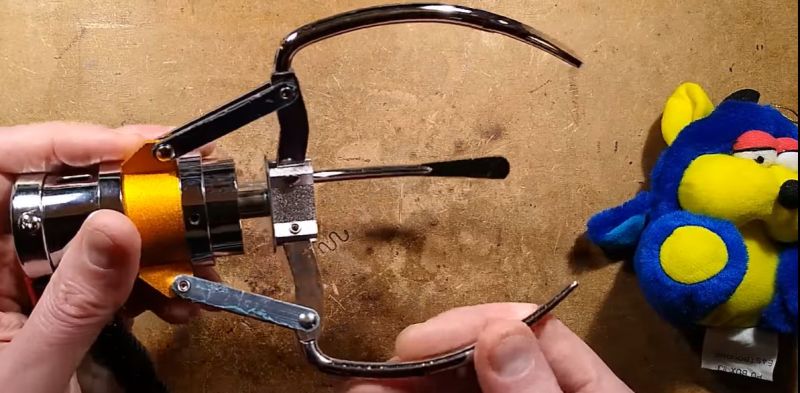
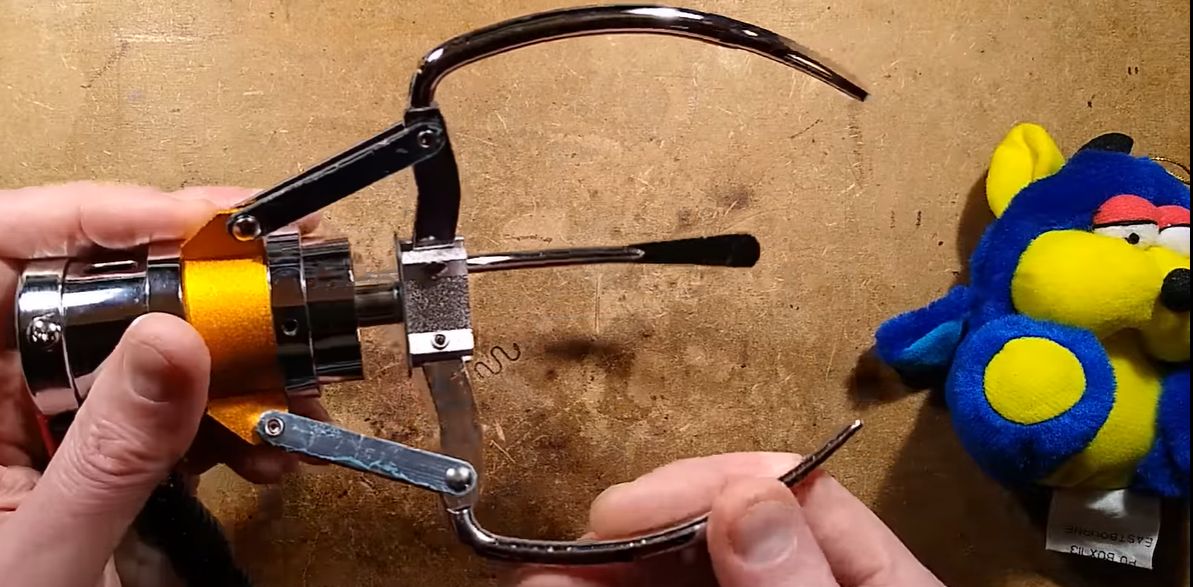
Fresh from AliExpress, [Big Clive] got another fascinating item to tear down: a crane claw, as used in those all too familiar carnival games. These games feature a claw the player moves into position above a pile of toys or other items. Lower the claw gently down in the hopes that it grabs the target item. In a perfect world, the claw will move your prize and deposit it, via a chute, into your waiting hands. Of course, everyone knows that these games are rigged and rely less on skill or luck than the way that they are programmed, but the way that this works is quite subtle, as you can see in the video below.
Despite how complex these crane claws may appear, they are simply solenoids, with the metal rod inside providing the claw action. The weight of the rod and claw section opens the claw via gravity. The strength of the claw is thus fully dependent on how strongly the solenoid is being driven, which, as [Clive] demonstrates, depends on the voltage and the duty cycle. At only 12V, the target plushie will easily slip away again as the claw barely has any strength, while at 24V, it’s pretty solid.
The basic way these crane games are programmed is to use a voltage and/or duty cycle that depends on the amount of money spent (in credits) and the monetary value of the items you can ‘win.’ If you’re very lucky you’ll get a solid catch even with a floppy claw. Most of the time you’ll have to wait until you get a solid claw. While a simple concept, it seems more designed to game the player. As [Clive] duly notes, just buying the item will probably save you a lot of money and frustration.
There are people who prefer to say "Yes," and there are people who prefer to say "No." Those who say "Yes" are rewarded by the adventures they have, and those who say "No" are rewarded by the safety they attain. There are far more "No" sayers around than "Yes" sayers, but you can train one type to behave like the other.
I can't help but put pressure on myself to be a yes-sayer. Perhaps it's the vague belief that saying yes will lead to a fuller life and range of experiences and that saying "no" is the easy option. And somehow, the easy option in my mind can seem like the wrong option. That's why I liked Keith Johnstone's framing for yes-sayers and no-sayers, as it clearly shows the rewards for taking either route in a decision, not just one.
If you are improvising, saying yes and accepting offers takes you to situations that may not feel comfortable but give you new experiences.
Saying no keeps you where you are. Your situation is known and safe, and you feel good for that reason.
In life, we never have to be exclusively yes or exclusively no. And it doesn't have to be white-water kayaking for yes-sayers and reading books at home for no-sayers. But certainly, there are different joys in each path. I love both: the nerves and excitement of new experiences and the comfort and safety of the known and predictable. We needn't bucket ourselves into one or the other.
An adventure, even a microadventure, almost by definition, is the result of saying yes. And, like Type II fun, it can be rewarding and fulfilling. But balancing adventure with the safety and calm of staying in one's comfort zone at times feels nice to me.
"One can choose to go back toward safety or forward toward growth. Growth must be chosen again and again; fear must be overcome again and again."
The quote is from Keith Johnstone's book Impro: Improvisation and the Theatre, Theatre Arts Books, 1979, as quoted in Improv Wisdom by Patricia Ryan Madson.
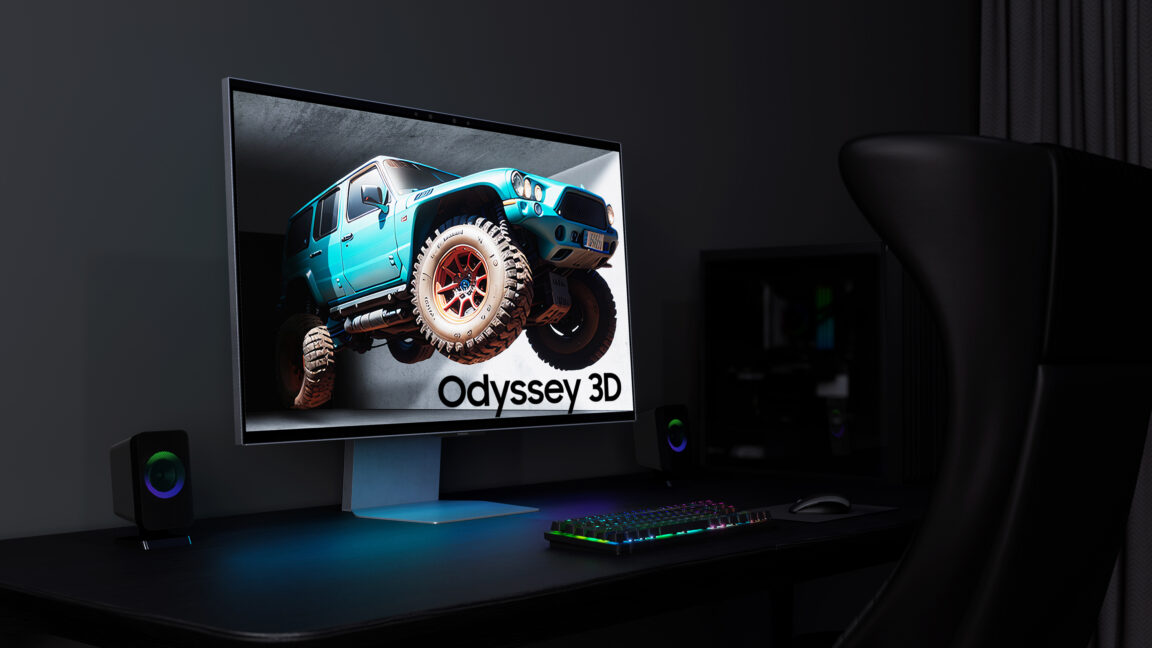
Samsung is starting 2025 with a fresh attempt at popularizing 3D displays. Announced today, Samsung’s Odyssey 3D is the follow-up to prototypes that Samsung demoed at last year's CES technology trade show. This year, Samsung is showing off a final product, which is supposed to make 2D content look 3D.
Those who have dealt with 3D glasses may be relieved to hear that the Odyssey 3D doesn't require them. According to the South Korean company’s announcement, the monitor's use of a lenticular lens that is “attached to the front of the panel and its front stereo camera" means that you don't have to wear glasses to access the monitor's “customizable 3D experience.” Lenticular lenses direct different images to each eye to make images look three-dimensional. This is a notable advancement from the first 3D monitor that Samsung released in 2009. That display used Nvidia software and Nvidia shutter glasses to allow users to toggle between a 2D view and a 3D view through a few button presses and supported content.
Another advancement is the Odyssey 3D's claimed ability to use artificial intelligence “to analyze and convert 2D video into 3D.” We’ve recently seen similar technology from brands like Acer, which announced portable monitors in 2022 and then announced laptops that could convert 2D content into stereoscopic 3D in 2023. Those displays also relied on AI, as well as a specialized optical lens and a pair of eye-tracking cameras, to create the effect. But unlike Acer's portable monitors, Samsung claims that its monitor can make 2D content look like 3D even if that content doesn’t officially support 3D.
RM Sotheby's, le département de la maison d'enchères spécialisé dans le domaine des voitures de collection, a vendu pour un total de 887 millions de dollars de véhicules en 2024.
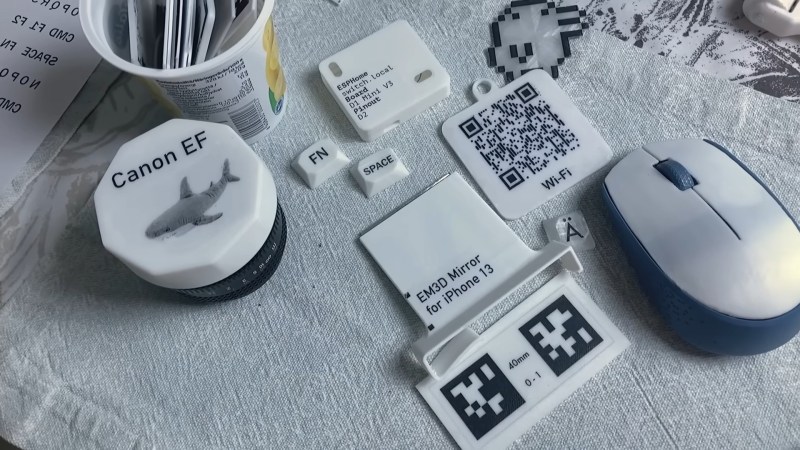
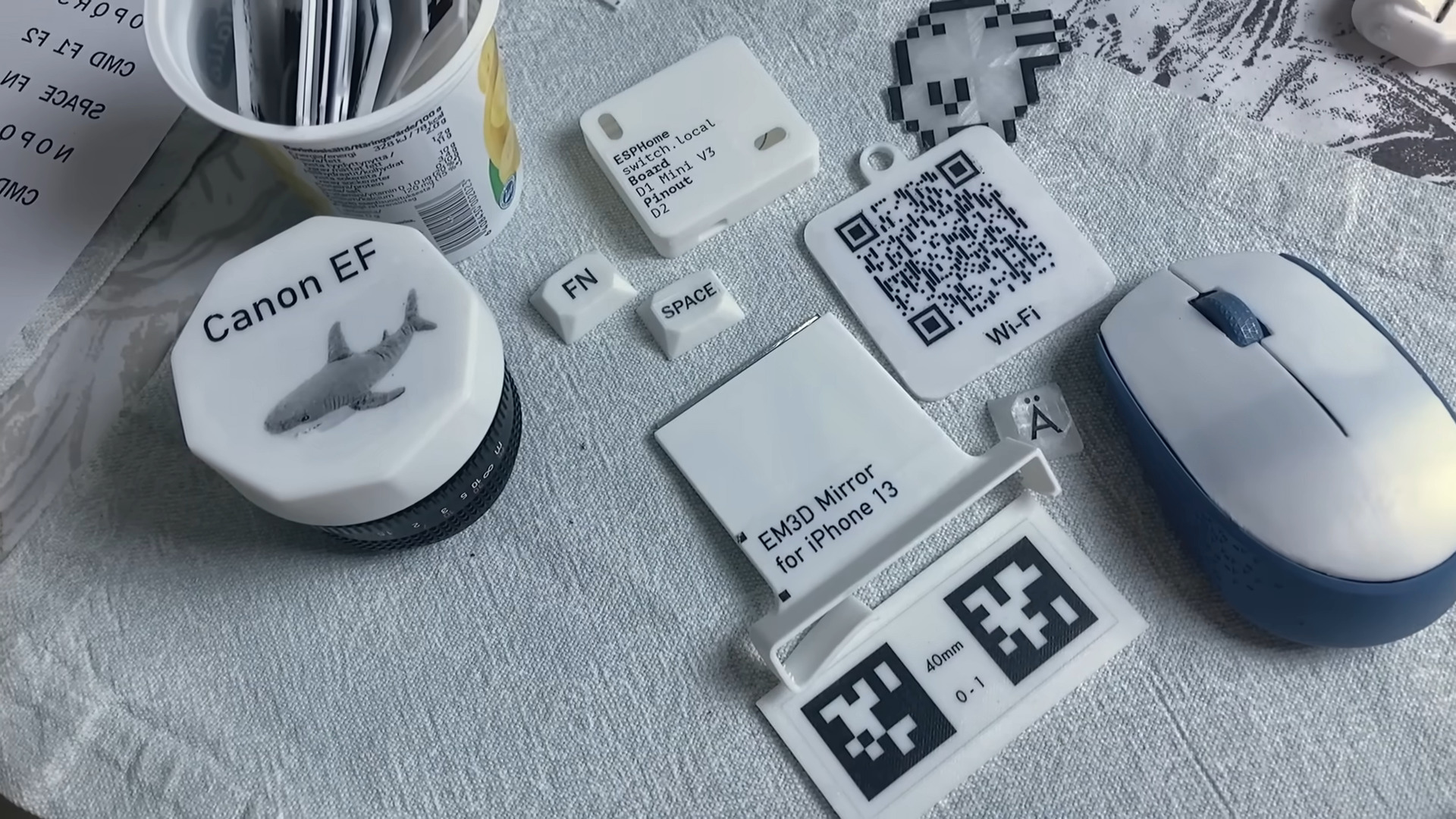
We’ve always found the various methods for adding text and graphics to 3D prints somewhat underwhelming. Embossed or debossed characters are fuzzy, at best, and multi-color printers always seem to bleed one color into the next. Still, the need for labels and logos is common enough that it’s worth exploring other methods, such as this easy toner transfer trick.
Home PCB makers will probably find the method [Squalius] describes in the video below very familiar, and with good reason. We’ve seen toner transfer used to mask PCBs before etching, and the basic process here is very similar. It starts with printing the desired graphics on regular paper using a laser printer; don’t forget to mirror the print. The printed surface is scuffed up a bit, carefully cleaned, and coated with a thick layer of liquid acrylic medium, of the kind used in paint pouring. The mirrored print is carefully laid on the acrylic, toner-side down, and more medium is brushed on the back of the paper. After the print dries, the paper is removed with a little water and some gentle friction, leaving the toner behind. A coat of polyurethane protects the artwork reasonably well.
[Squalius] has tested the method with PLA and PETG and reports good results. The text is clear and sharp, and even fine text and dithered graphics look pretty good. Durability could be better, and [Squalius] is looking for alternative products that might work better for high-wear applications. It looks like it works best on lightly textured surfaces, too, as opposed to surfaces with layer lines. We’d love to see if color laser prints work, too; [Squalius] says that’s in the works, and we’ve seen examples before that are reason for optimism.
Le retail traverse une période marquée par une pression accrue sur les prix et les acteurs, avec notamment la mise en place de réglementations fortes et une baisse du trafic en magasin. Dans ce contexte, Lucky Cart dévoile son analyse des perspectives du marché du retail et de la datatech pour 2025.
The odds of an increase in regulation of the massive, and growing, sports-betting industry may be shifting.
The sports betting industry only picked up more steam in 2024. Americans wagered $30 billion in the third-quarter alone, according to the American Gaming Association, and the legal betting industry generated more than $53 billion in revenue in the US through the first three-quarters of the year — 8% higher than 2023 and placing the industry on track to notch its fourth-consecutive year of growth. But it didn’t escape the year without a closer eye from government regulators.
Hedge Your Bets
Is there a greater sign of officially making it as an industry than getting dragged in front of a Senate committee? In mid-December, the Senate Judiciary Committee did just that to the sports betting world, calling in bigwigs across the increasingly entwined sports and gambling industries to discuss the increasingly visible presence, and possible malignancies, of the expansion in sports betting.
While the lame-duck session mostly amounted to a holiday-season airing of grievances, it could foreshadow regulation to come. Some legislation is already sloshing around the halls of Congress, and at least some leaders in sports are calling for more oversight:
During the hearing, National Collegiate Athletics Association President Charlie Baker called for a ban on “prop bets” — or wagers unrelated to the final outcome of a game — in college sports. Gambling experts have frequently pointed to prop bets, particularly in lower-profile events, as ripe for generating both integrity scandals and harassment of athletes; the NCAA has already successfully lobbied some states for a prop-bet ban.
A piece of legislation called the “SAFE Bet Act” has been introduced to do just that — ban college-level prop bets as well as limit promotional “bonus bets,” curb advertising during sporting events, create affordability checks, and introduce restrictions on the use of artificial intelligence to set betting lines. While the bill itself dies at the end of the current Congress (in early January), the sponsors of both House and Senate versions will be returning next year.
Problematic: The gambling industry, unsurprisingly, lobbied for regulation to be left up to the 30-plus states that, along with Washington, DC, allow sports betting. Meanwhile, the scale of problematic gambling is becoming clearer as the industry develops. The National Council on Problem Gambling estimates around 2.5 million US adults may have a severe gambling problem, while 5 million to 8 million more may be afflicted with a mild or moderate gambling problem. A full 15% of respondents in a poll from St. Bonaventure University and the Siena College Research Institute released last year said they knew someone with an online sports-betting problem.
En 1998, la cosmologie, c'est-à-dire l'étude scientifique portant sur les propriétés de l'Univers, fut bouleversée par des observations de supernovæ, cataclysmiques explosions d'étoiles, hors de notre galaxie et permettant de mesurer les grandes distances. Adam Riess et Saul Permutter, lauréats en 2011 du prix Nobel de physique pour cette découverte,...
Nvidia, leader mondial des puces électroniques, franchit un nouveau cap en 2025 avec sa solution Jetson Thor. Ce lancement stratégique vise d'ailleurs à révolutionner l'écosystème robotique en proposant des solutions clés en main aux fabricants de robots humanoïdes. Ce lancement pourrait ainsi transformer l'industrie.
Jetson Thor : une révolution dans la robotique humanoïde
Nvidia prévoit de transformer l'industrie robotique avec Jetson Thor, son ordinateur compactv dédié aux robots humanoïdes. Ce lancement, prévu pour le premier semestre 2025, offre notamment une solution performante et polyvalente pour répondre aux besoins croissants des fabricants. Grâce à Jetson Thor, Nvidia ne concurrence pas directement des acteurs comme Tesla, mais s'impose comme un fournisseur incontournable pour les « centaines de milliers » de fabricants dans le monde.
Cette avancée repose sur deux piliers technologiques majeurs : les modèles d'IA génératifs et la formation accélérée de robots en environnements simulés. Ainsi, ces innovations permettent aux robots de s'adapter rapidement aux situations complexes. Cela ouvre ainsi la voie à des applications dans des secteurs variés comme la logistique, la santé ou encore la production industrielle.
Le développement de Jetson Thor intervient dans un contexte où des géants comme Amazon et Google cherchent à réduire leur dépendance aux puces Nvidia en produisant leurs propres technologies. Plutôt que de se limiter au marché des pucesv, Nvidia diversifie son offre pour devenir un acteur clé de la robotique et de l'intelligence artificielle.
En collaborant étroitement avec des entreprises comme Tesla, Nvidia fournit effectivement des technologies qui alimentent des machines avancées. Cela renforce ainsi sa position sur le marché. Ce choix stratégique montre d'ailleurs que Nvidia anticipe les besoins de l'industrie et s'adapte aux nouvelles exigences technologiques, tout en consolidant son leadership.
Les impacts de l'intelligence artificielle dans la robotique
Les modèles d'IA génératifs révolutionnent la robotique en rendant les machines plus autonomes et adaptatives. Ces technologies permettent de former des robots dans des environnements virtuels. Cela réduit ainsi les coûts et les délais de développement. Nvidia exploite ces avancées pour proposer des outils performants et accessibles à un large éventail de fabricants.
Les robots équipés de Jetson Thor bénéficieront de capacités d'apprentissage continu en optimisant leurs performances dans des tâches variées. Cette avancée ouvre la voie à des robots capables de s'adapter à des environnements dynamiques, indispensables dans les industries modernes.
Perspectives d'avenir pour Nvidia et la robotique
Avec Jetson Thor, Nvidia ne se limite pas à fournir des outils : elle façonne l'avenir de la robotique. En misant sur des collaborations stratégiques et des solutions technologiques innovantes, l'entreprise s'impose comme un pilier incontournable dans un secteur en pleine expansion.
Alors que la demande en robots humanoïdes augmente, Nvidia se positionne pour répondre aux besoins croissants des fabricants. Son engagement envers des solutions durables et performantes promet de transformer durablement le paysage technologique mondial.
Le lancement de Jetson Thor marque un tournant décisif dans l'histoire de Nvidia et de la robotique humanoïde. En exploitant les avancées de l'IA et en s'adaptant aux défis du marché, Nvidia s'impose comme un acteur central de l'innovation. Les prochaines années promettent d'être riches en innovations technologiques, portées par des entreprises visionnaires comme Nvidia.
En 2025, l'Internet des objets (IoT) s'apprête à franchir une nouvelle étape révolutionnaire. L'intelligence ambiante et les écosystèmes hyper-personnalisés redéfiniront nos environnements connectés. Ces avancées promettent une interaction plus fluide, mais impliquent également des défis liés à la confidentialité et à la durabilité.
L'émergence de l'intelligence ambiante
L'intelligence ambiante vise à rendre les environnements intelligents capables de détecter et s'adapter à l'utilisateur. Contrairement aux systèmes IoT traditionnels, elle opère de manière discrète pour une expérience plus intuitive.
Les progrès de l'intelligence artificielle (IA) et de l'IoT ont permis cette évolution majeure. Les systèmes IoT intelligentsutilisentl'IApouranalyser les données en temps réelen ajustant automatiquement les paramètres en fonction des habitudes de l'utilisateur. Par exemple, les maisons intelligentes ajustent la température et la lumière selon vos préférences quotidiennes. Dans le secteur médical, les appareils portables détectent les anomalies et préviennent les soignants en cas d'urgence.
L'informatique de pointe joue également un rôle crucial dans cette transformation. En traitant les données localement, les dispositifs IoT offrent des réponses plus rapides et fiables, indispensables pour des applications critiques comme les véhicules autonomes. Avec l'adoption croissante de ces technologies, 2025 marquera une étape clé dans l'évolution de l'intelligence ambiante.
Les écosystèmes hyper-personnalisés
L'hyperpersonnalisation dans l'IoT promet des expériences sur mesure, adaptées à chaque utilisateur. En combinant analyse avancée et apprentissage automatique, ces systèmes ajustent les environnements selon vos besoins spécifiques.
Dans les maisons intelligentes, les appareils connectés ajustent les paramètres en fonction de votre routine et préférences. Cela permet de proposer des playlists ou réglant la température idéale. Sur les lieux de travail, les systèmes IoT optimisent l'éclairage et la disposition des espaces pour maximiser le confort et la productivité.
L'hyperpersonnalisation s'étend également aux espaces publics et villes intelligentes. Par exemple, des systèmes IoT peuvent fournir des itinéraires adaptés aux personnes à mobilité réduite ou proposer des recommandations locales basées sur votre localisation. Ces innovations transformeront nos interactions avec les espaces connectés en rendant chaque environnement unique et réactif.
Les défis liés à la confidentialité et à l'éthique
Malgré les promesses de l'IoT, l'utilisation croissante des données soulève des préoccupations majeures. L'intelligence ambiante et l'hyperpersonnalisation reposent sur des volumes massifs de données personnelles. Cela engendre des questions sur leur sécurité et leur utilisation.
Les gouvernements et les entreprises devront établir des cadres robustes de gouvernance des données pour répondre à ces enjeux. Le respect des réglementations comme le RGPD et la transparence sur la gestion des données seront incontournables pour instaurer la confiance. Les utilisateurs doivent pouvoir contrôler leurs informations, avec des options pour limiter la collecte ou privilégier un stockage local.
Par ailleurs, la gestion éthique des données deviendra un facteur clé pour garantir une adoption responsable des technologies IoT. Les entreprises devront s'engager à protéger les droits des utilisateurs et à prévenir les abus.
L'IoT au service du développement durable
En 2025, l'IoT jouera un rôle central dans la transition vers des pratiques plus durables. Les solutions connectées permettront de réduire l'empreinte carbone et de maximiser l'efficacité énergétique. Dans le domaine de l'énergie, les réseaux intelligents optimisent la consommation électrique en déplaçant les usages vers les heures creuses ou en intégrant les énergies renouvelables.
L'agriculture de précision, facilitée par l'IoT, minimise l'utilisation des ressources tout en augmentant les rendements. Enfin, les capteurs intelligents soutiendront l'économie circulaire en suivant le cycle de vie des produits pour favoriser leur recyclage ou réutilisation. Ces avancées technologiques aident à répondre aux enjeux mondiaux comme le changement climatique et la pénurie de ressources, faisant de l'IoT un outil clé pour le développement durable.
L'année 2025 marquera une étape décisive pour l'IoT, avec l'intelligence ambiante et l'hyperpersonnalisation au cœur des innovations. Ces technologies promettent un véritable changement de la vie quotidienne en offrant des environnements connectés plus intuitifs et efficaces. Cependant, cette évolution s'accompagne de défis importants, notamment en matière de confidentialité et de durabilité. Répondre à ces enjeux sera crucial pour garantir que l'IoT reste une force positive dans nos vies. Alors que nous avançons dans cette nouvelle
Près d'un an et demi après la présentation du texte sur l'accès aux données financières (FiDA) concocté par la Commission Européenne, sa validation par le Conseil de l'UE au début du mois de décembre ouvre la voie à sa ratification prochaine au Parlement. Et le compte à rebours pour sa mise en œuvre effective sera alors déclenché.
Si l'annonce initiale avait suscité une large indifférence que je soulignais au tournant de 2024, le franchissement d'une étape supplémentaire dans le processus législatif a fini par réveiller les principales intéressées (par exemple le Crédit Mutuel), qui, sans surprise, se rebellent contre les nouvelles exigences susceptibles de peser sur leurs activités. Il paraît toutefois peu probable que cette vague de protestations pèsent sérieusement sur le vote final, auquel il va donc falloir se préparer sans tarder.
En effet, si la loi est adoptée dans les prochains mois et s'il devait se confirmer que son entrée en application interviendra dans les 18 mois – et même en intégrant quelques retards inévitables –, l'ampleur du chantier qu'elle représente imposera à la plupart des acteurs concernés de le lancer dans le courant de l'année. L'expérience précédente avec les données de paiement – dans le cadre de la DSP2 – peut en cela servir de référence, y compris en tenant compte des leçons apprises à cette occasion.
Pour se faire une idée de la complexité, il faudra, dans chaque ligne métier – dont celles qui n'ont aujourd'hui que peu de recul sur la mise en place d'interfaces publiques (API) sur leurs systèmes (dans l'assurance, par exemple) – identifier les données à partager, les mettre en forme afin de les aligner sur les spécifications réglementaires, déployer les moyens de leur ouverture sécurisée et leur administration, implémenter les mécanismes d'autorisation d'accès (qui restent toujours sous le contrôle du client)…
Réaliser un tel programme d'ici la fin 2026 (en prenant un peu de marge) sera impossible si les études ad hoc ne sont pas entamées rapidement, en particulier sur les possibilités et les modalités d'accès (en interne) aux sources d'information nécessaires, qui risquent de constituer le premier obstacle à surmonter dans un certain nombre de métiers (je pense entre autres à la gestion d'actifs). À défaut, les retardataires pourraient s'exposer à des sanctions… mais ce ne sera peut-être pas le plus grave.
Car, en filigrane, se profile la question des usages. La banque ouverte de première génération n'a certes guère tenu ses promesses de ce point de vue. Cependant, avec sa couverture étendue, exhaustive, et sa formalisation avancée (notamment sur les contrats d'interface), la finance ouverte qu'esquisse désormais FiDA pourrait créer de véritables opportunités de nouveaux produits et services, que les organisations les plus avancées seront en meilleure position de saisir. L'enjeu concurrentiel n'est pas négligeable !
Voilà pourquoi, entre pression réglementaire et catalyse de l'innovation, je pense que la FiDA devrait figurer au sommet des priorités du secteur financier européen en 2025.
If 2023 was a year of wonder about artificial intelligence, 2024 was the year to try to get that wonder to do something useful without breaking the bank.
There were plenty of business losers in 2024, but only one for whom the sky was literally falling.
For the second time in half a decade, Boeing faced a worldwide grounding of its 737 MAX passenger plane after a mid-flight door blowout forced an emergency landing in January. Things only got worse from there.
Clipped Wings
Boeing just can’t leave its past behind. A pair of fatal crashes that claimed 346 victims across five months in 2018 and 2019 cost the company tens of billions of dollars in fines, compensation, legal fees, and cancelled orders — concluding with a $2.5 billion settlement with the Department of Justice after the planemaker was charged with conspiracy to defraud Federal Aviation Administration safety inspectors.
While Boeing’s entire MAX fleet was grounded for more than a year in that case, only a portion (737-9 MAX aircraft) were grounded this year. The Alaska Airlines incident wasn’t the last of Boeing’s nightmare fuel headlines. A tire fell from a jet shortly after taking off in San Francisco. A fiery engine malfunctioned over Texas. Rudder pedals became “stuck” after touching down in New Jersey. The FAA slapped Boeing with a three-month deadline to address serious quality control issues. And just this week, tragedy struck again as a 737-800 jet crashed in South Korea, killing 179 people.
By March, The New York Times got its hands on a leaked copy of the FAA’s audit of Boeing’s manufacturing process. And, well, aerophobes may seriously want to refrain from reading any further:
In its report, the FAA found Boeing failed 33 of 89 specific audits, with the total instances of alleged non-compliance amounting to 97.
Even more concerning were the instances in which workers used makeshift tools such as hotel room key cards and Dawn dish soap in their production process. We hope your holiday flying is over.
By the end of summer, Boeing faced another historic challenge: the first strike among its more than 30,000 Pacific Northwest-based machinists since 2008. The work stoppage lasted nearly two months, and concluded when workers won a 40% pay raise — well above Boeing’s initial 25% offer. Speaking of Boeing workers: Did we mention that not one but two former longtime employees-turned whistleblowers died this year while raising quality-control issues?
Turbulence: Through the first three quarters of the year, Boeing lost around $7.7 billion — an amount expected to reach around $10 billion for all of 2024. Meanwhile, airlines were left reeling following the 737 MAX grounding earlier this year, all while backorders of Boeing planes stacked up. “This is not a 12-month issue. This is a two-decade issue,” United CEO Scott Kirby said about Boeing at an investor conference in March. In other words: When Boeing loses, well, so do the rest of us.
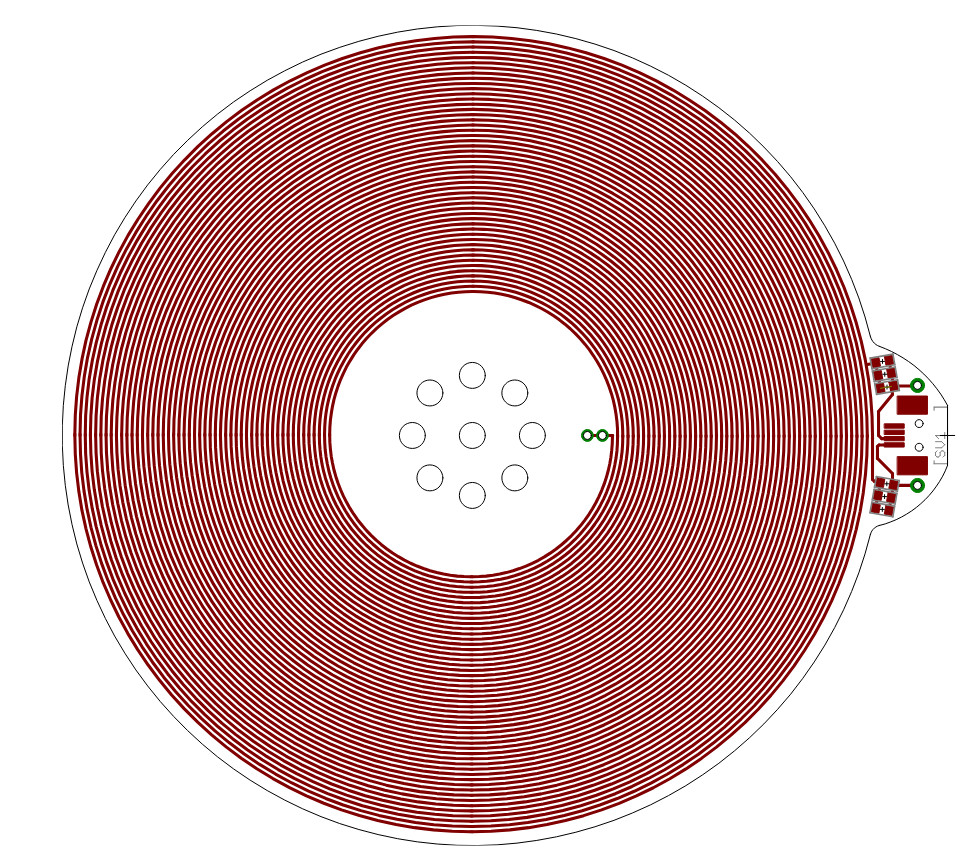
The Proxmark3 PCB 125kHz antenna., GNU GPL version 2, GitHub link.
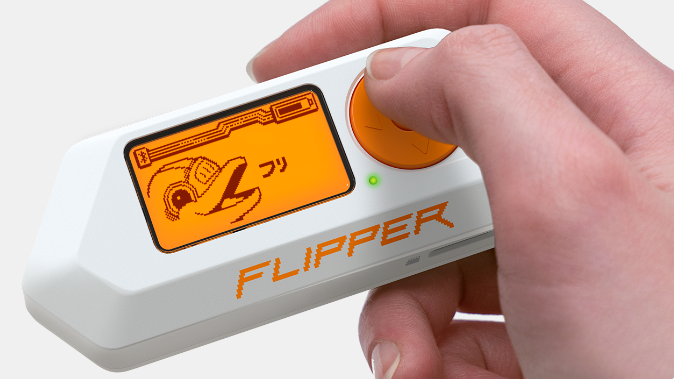
Picture this: It’s the end of the year, and a few hardy souls gather in a hackerspace to enjoy a bit of seasonal food and hang out. Conversation turns to the Flipper Zero, and aspects of its design, and one of the parts we end up talking about is its built-in 125 kHz RFID reader.
It’s a surprisingly complex circuit with a lot of filter components and a mild mystery surrounding the use of a GPIO to pulse the receive side of its detector through a capacitor. One thing led to another as we figured out how it worked, and as part of the jolity we ended up with one member making a simple RFID reader on the bench.
Just a signal generator making a 125 kHz square wave, coupled to a two transistor buffer pumping a tuned circuit. The tuned circuit is the coil scavenged from an old RFID card, and the capacitor is picked for resonance in roughly the right place. We were rewarded with the serial bitstream overlaying the carrier on our ‘scope, and had we added a filter and a comparator we could have resolved it with a microcontroller. My apologies, probably due to a few festive beers I failed to capture a picture of this momentous event.
A Nasty Circuit That Just Has To Be Made
Here on the Morning After the Night Before, I’m sitting thinking about 125 kHz RFID, as this is honestly the first time in many decades playing with radio I’ve given one of these a look. (Though we’ve pondered its 13.56 MHz cousin.) An evil thought forms in my mind; would it be possible to make a single-transistor, self-oscillating 125 kHz RFID reader? It would be an extremely nasty circuit and there is no possible need for one to exist, but it’s the electronic engineers equivalent of an earworm. I know how I would approach it but I don’t know whether my idea would work. I’m thus going to set it as a New Years exercise for you readers.
So, how would I approach this? One of the first electronic projects I made over four decades ago was a regenerative radio. This is a one-transistor receiver for AM radio which applies positive feedback to an RF amplifier to the point at which it’s almost but not quite oscillating. This has the effect of narrowing its bandwith hugely, to the extent that it makes a passable narrowband radio receiver. I would approach the RFID reader using a variation on this circuit; a single transistor regenerative receiver which is just oscillating at 125 kHz, but whose oscillation is quenched momentarily every time the RFID tag loads its coil to indicate serial data. I should thus be able to pull a DC voltage from my emitter resistor, filter it, and return something that could be turned into a square wave. I think something like this could work but I stand ready to be proved wrong What do you think, would this circuit function?
Every Contest Needs a Few Rules:
Your circuit must use only one transistor, no ICs. Diodes and RCL passives are allowed, but also no vacuum tubes, tunnel diodes, or other active components, you lateral thinkers. It must demonstrably read a 125 kHz RFID tag placed within its range, and output something capable of being resolved by a 74 series logic gate of any family, thus decipherable as the serial payload by a microcontroller etc. That doesn’t have to be a TTL-level-compliant gate, and can be a Schmitt trigger. Otherwise it’s up to you. If you do a write-up somewhere, I’d even write it up for Hackaday. So go on, have a go at this one. I’d love to see what awesome awfulness you come up with!

/cdn.vox-cdn.com/uploads/chorus_asset/file/25813515/Halliday_27.jpeg) Image: Halliday
Image: Halliday
/cdn.vox-cdn.com/uploads/chorus_asset/file/25813518/Halliday_28.jpeg) Image: Halliday
Image: Halliday
/cdn.vox-cdn.com/uploads/chorus_asset/file/25813519/Halliday_29.jpeg) Image: Halliday
Image: Halliday


/cdn.vox-cdn.com/uploads/chorus_asset/file/25813925/DSC00473.JPG) Photo by Owen Grove / The Verge
Photo by Owen Grove / The Verge
/cdn.vox-cdn.com/uploads/chorus_asset/file/25813926/DSC00442.JPG) Photo by Owen Grove / The Verge
Photo by Owen Grove / The Verge
/cdn.vox-cdn.com/uploads/chorus_asset/file/25812182/Saros_10R_3.jpg) Image: Roborock
Image: Roborock
/cdn.vox-cdn.com/uploads/chorus_asset/file/25812189/w6.png) Image: Roborock
Image: Roborock

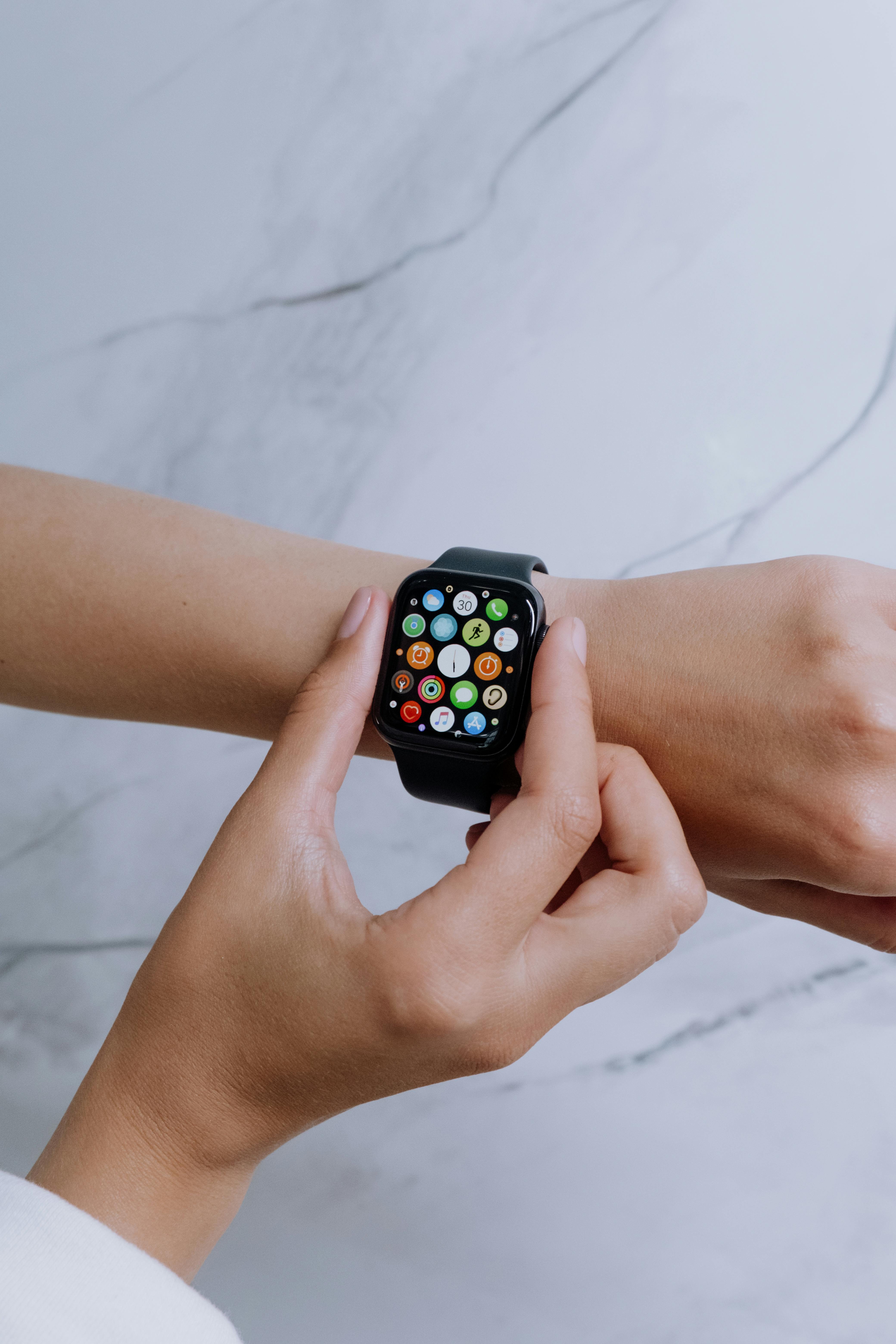



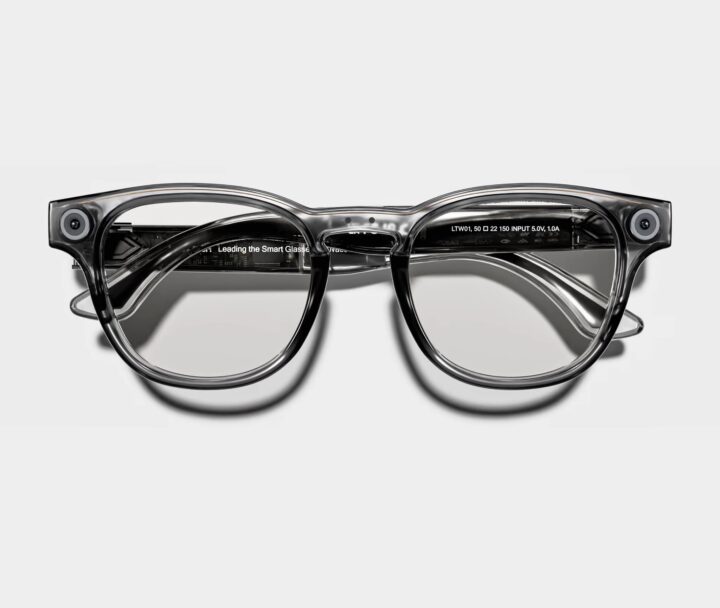
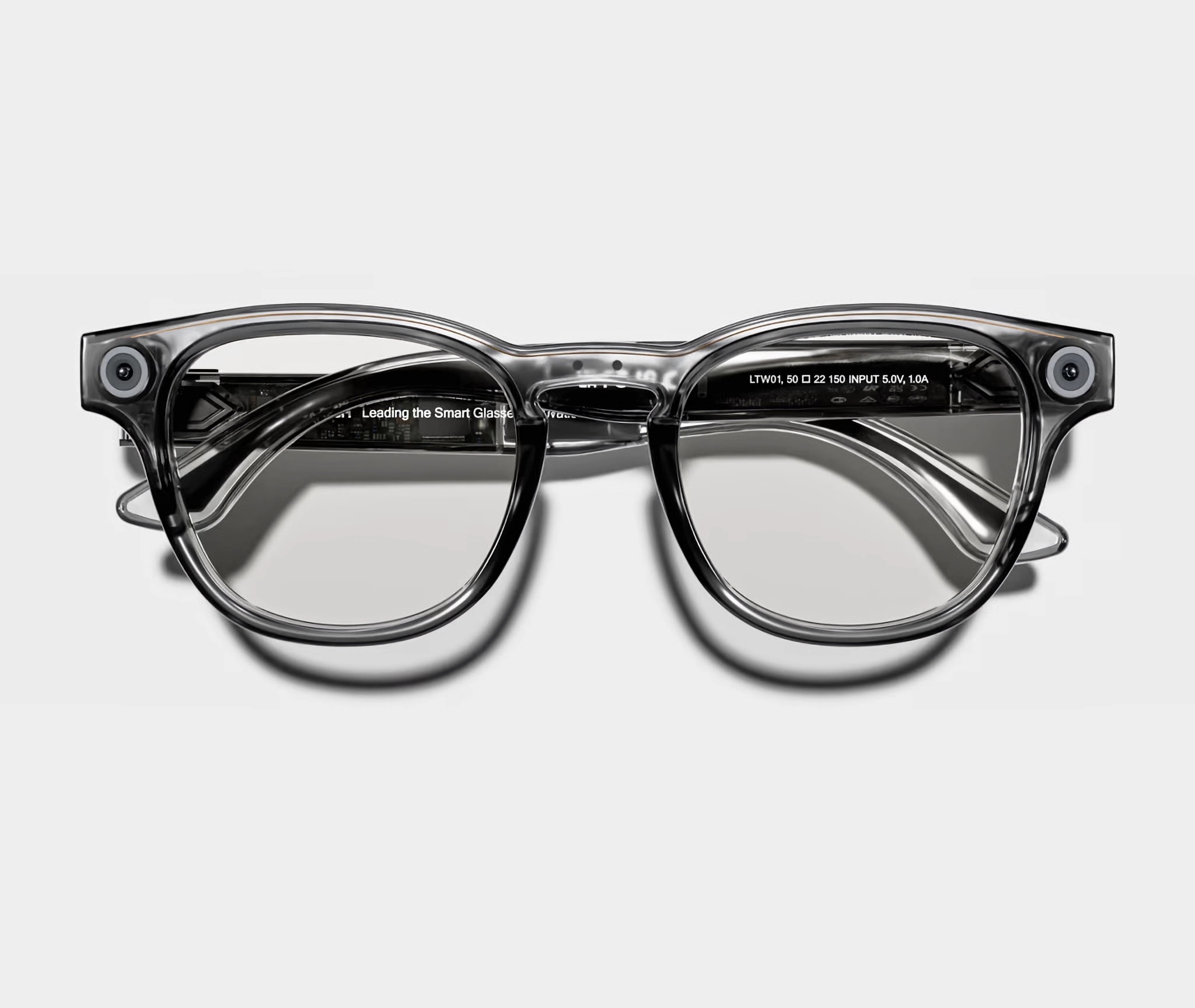

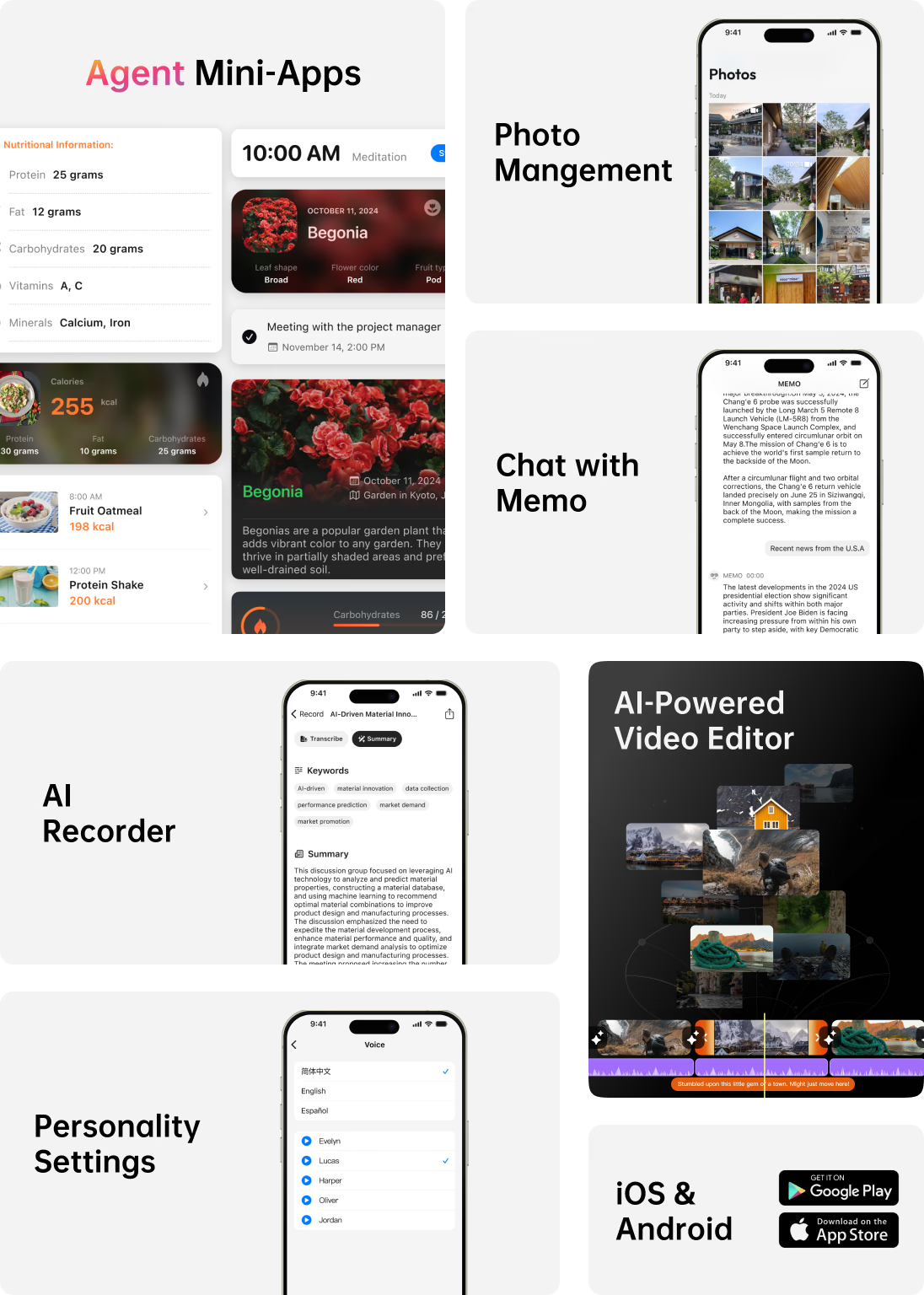

/cdn.vox-cdn.com/uploads/chorus_asset/file/25813626/JMGO___N3_Ultra_Max___11.gif) Image: JMGO
Image: JMGO
/cdn.vox-cdn.com/uploads/chorus_asset/file/25813781/jmgo2.jpg) Image: JMGO
Image: JMGO