Security researchers from the University of Pennsylvania and hardware conglomerate Cisco have found that DeepSeek's flagship R1 reasoning AI model is stunningly vulnerable to jailbreaking.
In a blog post published today, first spotted by Wired, the researchers found that DeepSeek "failed to block a single harmful prompt" after being tested against "50 random prompts from the HarmBench dataset," which includes "cybercrime, misinformation, illegal activities, and general harm."
"This contrasts starkly with other leading models, which demonstrated at least partial resistance," the blog post reads.
It's a particularly noteworthy development considering the sheer amount of chaos DeepSeek has wrought on the AI industry as a whole. The company claims its R1 model can trade blows with competitors including OpenAI's state-of-the-art o1, but at a tiny fraction of the cost, sending shivers down the spines of Wall Street investors.
But the company seemingly has done little to guard its AI model against attacks and misuse. In other words, it wouldn't be hard for a bad actor to turn it into a powerful disinformation machine or get it to explain how to create explosives, for instance.
The news comes after cloud security research company Wiz came across a massive unsecured database on DeepSeek's servers, which included a trove of unencrypted internal data ranging from "chat history" to "backend data, and sensitive information."
DeepSeek is extremely vulnerable to an attack "without any authentication or defense mechanism to the outside world," according to Wiz.
The Chinese hedge fund-owned company's AI made headlines for being far cheaper to train and run than its many competitors in the US. But that frugality may come with some significant drawbacks.
"DeepSeek R1 was purportedly trained with a fraction of the budgets that other frontier model providers spend on developing their models," the Cisco and University of Pennsylvania researchers wrote. "However, it comes at a different cost: safety and security."
AI security company Adversa AI similarly found that DeepSeek is astonishingly easy to jailbreak.
"It starts to become a big deal when you start putting these models into important complex systems and those jailbreaks suddenly result in downstream things that increases liability, increases business risk, increases all kinds of issues for enterprises," Cisco VP of product, AI software and platform DJ Sampath told Wired.
However, it's not just DeepSeek's latest AI. Meta's open-source Llama 3.1 model also flunked almost as badly as DeepSeek's R1 in a comparison test, with a 96 percent attack success rate (compared to dismal 100 percent for DeepSeek).
OpenAI's recently released reasoning model, o1-preview, fared much better, with an attack success rate of just 26 percent.
In short, DeepSeek's flaws deserve plenty of scrutiny going forward.
"DeepSeek is just another example of how every model can be broken — it’s just a matter of how much effort you put in," Adversa AI CEO Alex Polyakov told Wired. "If you’re not continuously red-teaming your AI, you’re already compromised."
Over the last week, OpenAI's place atop the AI model hierarchy has been heavily challenged by Chinese model DeepSeek. Today, OpenAI struck back with the public release of o3-mini, its latest simulated reasoning model and the first of its kind the company will offer for free to all users without a subscription.
First teased last month, OpenAI brags in today's announcement that o3-mini "advances the boundaries of what small models can achieve." Like September's o1-mini before it, the model has been optimized for STEM functions and shows "particular strength in science, math, and coding" despite lower operating costs and latency than o1-mini, OpenAI says.
Harder, better, faster, stronger
Users are able to choose from three different "reasoning effort options" when using o3-mini, allowing them to fine-tune a balance between latency and accuracy depending on the task. The lowest of these reasoning levels generally shows accuracy levels comparable to o1-mini in math and coding benchmarks, according to OpenAI, while the highest matches or surpasses the full-fledged o1 model in the same tests.
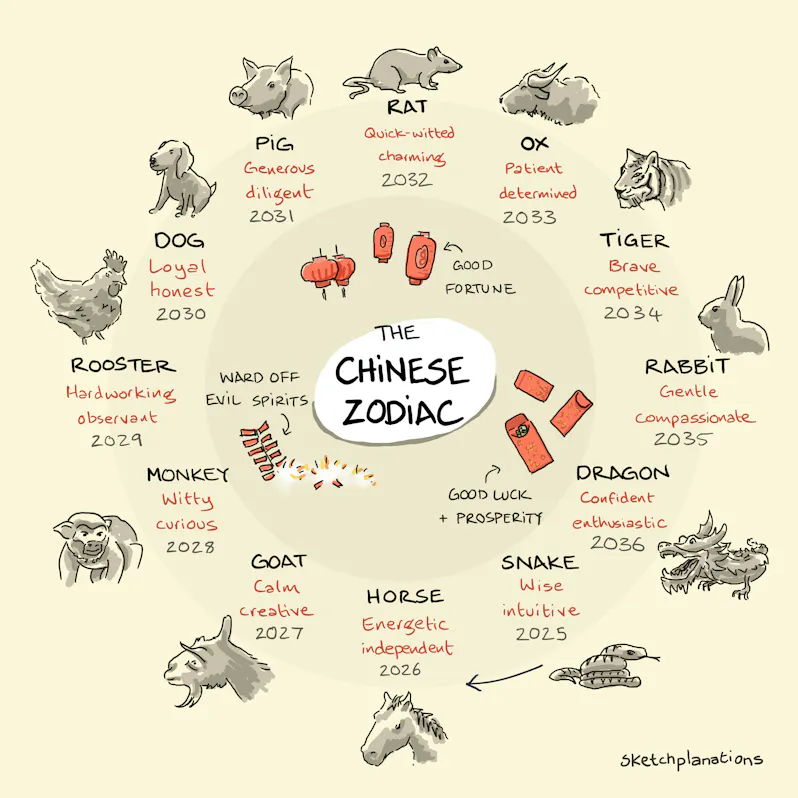
The Chinese Zodiac is a yearly cycle of 12 animals who finished first in the Jade Emperor's Great Race.
Chinese New Year 2025 marks the start of the Year of the Snake, followed by the Year of the Horse in 2026, and so on through the 12 Chinese zodiac animals.
The Chinese lunar calendar is based on the cycles of the moon—lunisolar—meaning the New Year shifts slightly each year. Also known as the Spring Festival, the New Year marks the shift between Winter and Spring. It begins on the new moon that appears between 21 January and 20 February, typically falling between late January and mid-February. Celebrations continue until the Lantern Festival, 15 days later.
Chinese Zodiac Animals and Personality Traits
Each Chinese zodiac sign is thought to shape the personality of those born in that year. If you were born in the Year of the Rat, you might be quick-witted and charming, while those born in the Year of the Dragon are often confident and enthusiastic.
I always forget the full list of Chinese New Year animals—it's one of those things that's beyond 7 ± 2 and just won't stick in my head. So here it is, for future reference:
Rat — Charming, Quick-witted
Ox — Patient, Determined
Tiger — Brave, Competitive
Rabbit — Gentle, Compassionate
Dragon — Confident, Enthusiastic
Snake — Wise, Intuitive
Horse — Energetic, Independent
Goat (Sheep) — Calm, Creative
Monkey — Witty, Curious
Rooster — Hardworking, Observant
Dog — Loyal, Honest
Pig — Generous, Diligent
The Legend of the Great Race: Why These 12 Animals?
The Chinese zodiac animals are from an old legend: the Great Race. The Jade Emperor, Chinese mythology's ruler of all gods, hosted a great race across a river. The first 12 animals to finish would earn a place in the Chinese zodiac calendar.
Cat and Rat, who were friends, hitched a ride on the back of Ox, who slowly swam through the river's deep water. As they crossed, Rat moved, knocking Cat into the river, but it was too dangerous to go back. As Ox neared the other bank, Rat jumped off, swimming the final metres and winning first place. Meanwhile, Dragon, despite being powerful, stopped to help others and finished fifth. Cat was left behind and finished last with a new dislike for rats.
Variations in Other Countries
Not all countries use the exact same Chinese zodiac signs. Vietnam, for example, swaps out two animals:
The Rabbit is replaced by the Cat
The Ox is replaced by the Water Buffalo
Chinese New Year Symbols and Traditions
Chinese New Year is full of traditions designed to bring good fortune:
Red envelopes (hóngbāo) – Given to children and unmarried adults, filled with money as a symbol of luck and prosperity.
Lanterns – Hung up or released into the sky, symbolizing brightness and good fortune.
Firecrackers – Set off to scare away evil spirits and welcome the Lunar New Year with a bang.
Red and gold – The most common colours in Chinese New Year decorations, representing happiness, wealth, and good luck.
Other beliefs and traditions include:
washing your hair can wash out your luck for the year
giving oranges and tangerines to hosts as symbols of abundant happiness
sweeping and cleaning the house to sweep away ill fortune
decorating windows and doors with red paint, paper cutouts and banners
giving respect and honour to gods and ancestors.
Chinese Zodiac List from 2025 to 1945
Not sure of your animal or your child's? You can find yours in this list (unless you're over 80).
If your birthday is before the Chinese New Year in January, then your animal will belong to the year before (rather like for birthday creep).
2025 – Snake
2024 – Dragon
2023 – Rabbit
2022 – Tiger
2021 – Ox
2020 – Rat
2019 – Pig
2018 – Dog
2017 – Rooster
2016 – Monkey
2015 – Goat
2014 – Horse
2013 – Snake
2012 – Dragon
2011 – Rabbit
2010 – Tiger
2009 – Ox
2008 – Rat
2007 – Pig
2006 – Dog
2005 – Rooster
2004 – Monkey
2003 – Goat
2002 – Horse
2001 – Snake
2000 – Dragon
1999 – Rabbit
1998 – Tiger
1997 – Ox
1996 – Rat
1995 – Pig
1994 – Dog
1993 – Rooster
1992 – Monkey
1991 – Goat
1990 – Horse
1989 – Snake
1988 – Dragon
1987 – Rabbit
1986 – Tiger
1985 – Ox
1984 – Rat
1983 – Pig
1982 – Dog
1981 – Rooster
1980 – Monkey
1979 – Goat
1978 – Horse
1977 – Snake
1976 – Dragon
1975 – Rabbit
1974 – Tiger
1973 – Ox
1972 – Rat
1971 – Pig
1970 – Dog
1969 – Rooster
1968 – Monkey
1967 – Goat
1966 – Horse
1965 – Snake
1964 – Dragon
1963 – Rabbit
1962 – Tiger
1961 – Ox
1960 – Rat
1959 – Pig
1958 – Dog
1957 – Rooster
1956 – Monkey
1955 – Goat
1954 – Horse
1953 – Snake
1952 – Dragon
1951 – Rabbit
1950 – Tiger
1949 – Ox
1948 – Rat
1947 – Pig
1946 – Dog
1945 – Rooster
Caveat: I am not Chinese or Asian and have gathered this information from many sources over the years. Let me know if something needs correcting.
Others
The Chinese zodiac years are one of those things I feel like I ought to remember but always forget. Others in the same bucket for me:
OpenAI chief Sam Altman on Friday said his high-profile artificial intelligence company is "on the wrong side of history" when it comes to being open about how its technology works.
Un exploit vient d'être accompli en Chine dans la quête d'une énergie propre et inépuisable. Une machine expérimentale à fusion nucléaire a réussi à maintenir un plasma en confinement...
As artificial intelligence technologies develop at accelerated rates, the methods of governing companies and platforms continue to raise ethical and legal concerns.
Lors de l'événement Cyber Humanum Est, l'armée a mis à l'épreuve les futurs experts en cybersécurité avec des scénarios impliquant des campagnes de désinformation générées par l'intelligence artificielle. L’objectif : les préparer à contrer les menaces numériques dans un contexte géopolitique complexe.
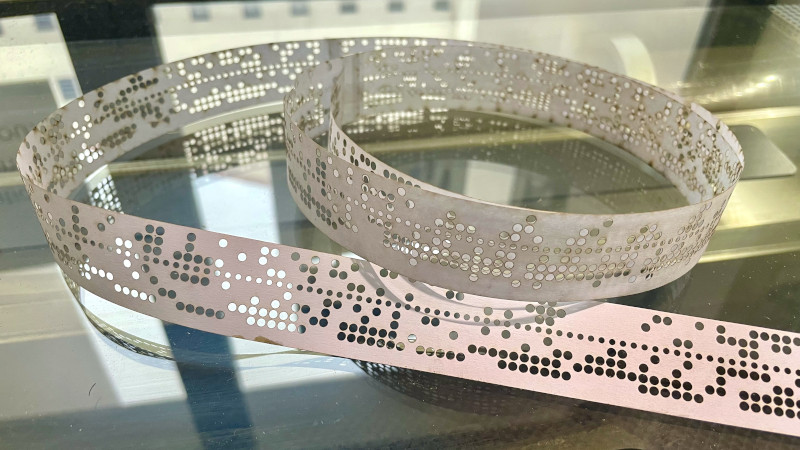
Though it is many decades since paper tape was commonly used as a data input or storage medium, it still holds a fascination for many who work with computers. Over the years we’ve featured more than one paper tape related project, and the latest to come out way is [ColemanJW2]’s 8-bit ASCII paper tape generator.
It’s natural to expect when talking about a paper tape generator that a machine of some type will emerge, probably with a large reel of tape, a whirring mechanical punch, and a big box of paper confetti. This one however is different, because it exists in software and produces an SVG file to cut the tape with a laser cutter. Common workshop equipment in 2025, but the stuff of science fiction when paper tape was current.
The software is a Python script, which has a friendly GUI. It applies 8-bit ASCII to the tape, and supports control codes and ANSI escape sequences. There’s a very short demonstration video of a tape being cut, which we’ve placed below the break.
AI chatbot DeepSeek has taken the world by storm, topping app store charts and sending Silicon Valley and Wall Street into meltdown. An offshoot of Chinese hedge fund High-Flyer, DeepSeek’s cost-to-performance ratio makes for impressive reading compared to incumbents such as OpenAI. However, reports have increasingly documented some of the things the AI chatbot is […]
Cet article explore les défis de la mise à l’échelle des WebSockets pour les applications modernes en temps réel. Il aborde les techniques pour gérer les déploiements sans interruption, maintenir des connexions stables et utiliser des protocoles de repli comme les événements envoyés par le serveur (SSE), essentiels pour les réseaux restrictifs.
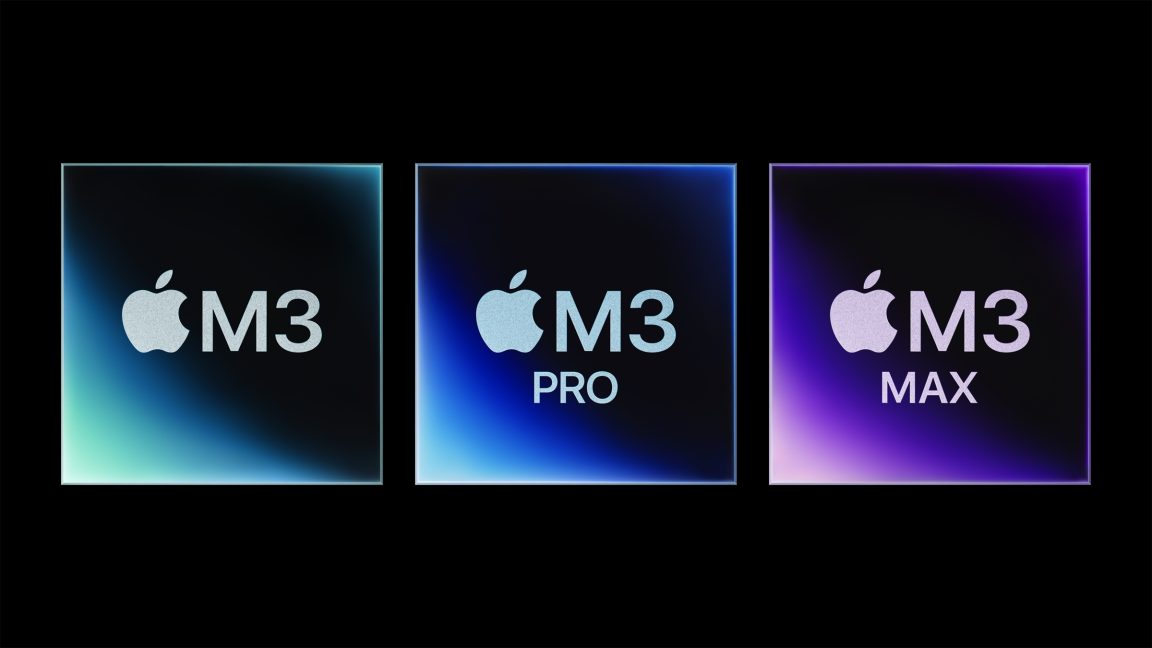
Apple-designed chips powering Macs, iPhones, and iPads contain two newly discovered vulnerabilities that leak credit card information, locations, and other sensitive data from the Chrome and Safari browsers as they visit sites such as iCloud Calendar, Google Maps, and Proton Mail.
The vulnerabilities, affecting the CPUs in later generations of Apple A- and M-series chip sets, open them to side channel attacks, a class of exploit that infers secrets by measuring manifestations such as timing, sound, and power consumption. Both side channels are the result of the chips’ use of speculative execution, a performance optimization that improves speed by predicting the control flow the CPUs should take and following that path, rather than the instruction order in the program.
A new direction
The Apple silicon affected takes speculative execution in new directions. Besides predicting control flow CPUs should take, it also predicts the data flow, such as which memory address to load from and what value will be returned from memory.
Après une année complexe et particulièrement polarisée, le tant attendu chiffre d'affaires de LVMH s'est établi à 84,7 milliards d'euros en 2024, soit +1% en organique.
Quantum Computing is an experimental technology that uses quantum physics to do a whole bunch of tasks much faster than traditional computers.
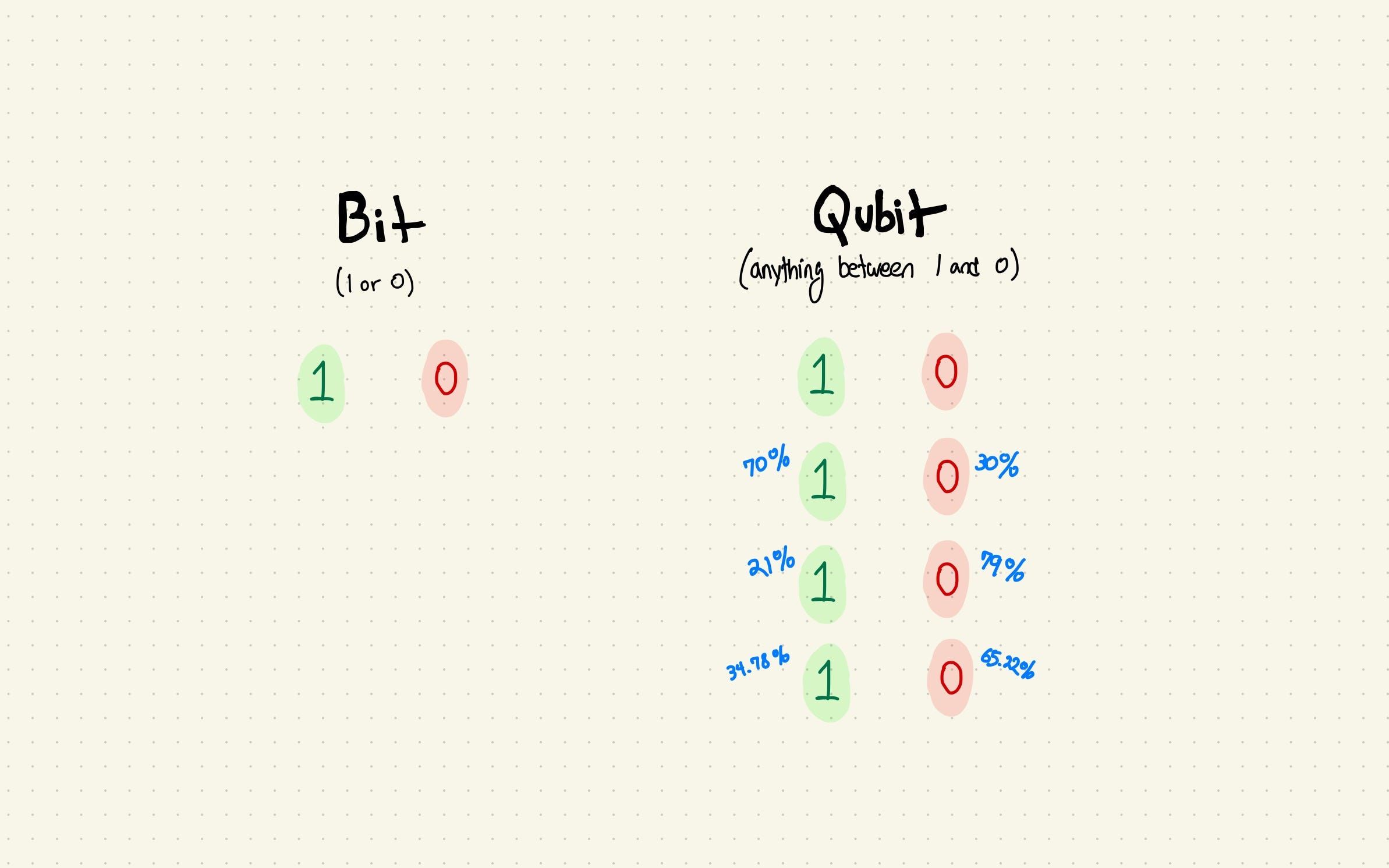
Traditional computers (like your laptop) rely on bits that can only be two things: 1 or 0
Qubits – the quantum equivalent – can be both 0 & 1 at the same time, which means they can make super fast (at some things) computers
Making qubits actually do stuff we want is hard (some need to be colder than space, some can only be controlled with tiny powerful lasers & all of them are unpredictable)
The technology is still experimental, mostly run in labs by big companies like Google
It seems like quantum has been in the news more lately, especially with Google’s recent quantum chip release. So there has never been a better time to try and break it down!
(This is a guest post from Conor at Project Eleven, an applied quantum computing and cryptography lab. More on them later.)
Traditional computers: ones and zeros
Back in the 1600s, “computers” referred to clever people who could add more numbers in their heads than they had fingers or toes. Today, it usually means a device with a screen that runs apps, connects to the internet & sucks you into a regular doom scrolling session.
While they might seem worlds apart, both of these share a common core: behind every Instagram scroll or email is a series of mathematical operations. If computing is fundamentally about solving math problems, the next question is: can we find better ways to solve them?
Before diving in and answering this question, you first need to understand the basics of classical computers - the OGs of the modern computing world. For everyday tasks like sending emails, binging Netflix, or devouring cat videos, our modern “classical” computers do a stellar job. But how do they actually work under the hood?
At the most basic level, these machines speak a language of zeros and ones—bits. You can imagine them as tiny on (1) / off (0) switches. Flip them fast enough, and you can represent any piece of digital information—numbers, letters, entire video streams—all by combining those bits in the right pattern. The fancy terms you might’ve heard, like transistors, and processor cores (like CPUs and GPUs), are just ways of flipping those bits more efficiently or in special ways for certain tasks.
For example, here’s the word “computer” in binary:
Now, as amazing as these bit-flipping powerhouses are, they still run into a wall for certain problems: modeling huge molecules, finding insanely optimized routes through bustling traffic, or simulating the bizarre world of quantum physics. Classical machines either take ages or can’t even scratch the surface, because ultimately they handle tasks one (very fast) step at a time. At some point, you need a new approach—enter quantum.
Qubits: way more than ones and zeros
If the basic unit of a classical computer is the bit, then the quantum equivalent is the qubit (quantum bit)—and qubits have a knack for being… well, promiscuous. Unlike bits that stick to 0 or 1, qubits can be 0, 1, or any blend of both at the same time.
Picture a coin spinning endlessly in midair: it’s simultaneously heads, tails, and everything in between. This is called superposition. We don’t usually think of a flipping coin like this, but quantum mechanics insists that until you peek (measure), the coin is all outcomes at once. One interpretation, called Many Worlds, even suggests each unobserved possibility spawns a new universe. Yep, that’s right. Every time you flip a coin a new universe is created (maybe). You can literally be god from your desk (in theory).
If bits are the monogamous members of the computing world, qubits are the quantum Casanovas—exploring every possibility until the moment you measure them, at which point they settle down into a single reality. As bizarre as superposition sounds, the key point is that a single qubit’s ability to represent multiple values simultaneously allows it to store a significantly larger amount of information than a traditional bit.
Interference: the ripple effect
A qubit in superposition is powerful on its own, but the real magic happens when multiple qubits are used together. Multiple qubits can interfere with one another—like overlapping waves in a pond. We can exploit this interference so that “correct” answers build each other up (constructive interference) and “wrong” answers cancel out (destructive interference).
To see how different this is from classical computing, imagine a game show where you have a hundred doors to check, but only one of them holds the grand prize. A classical contestant opens the first door, sees no prize, moves on to the second, and so on—just extremely fast. If you want to go faster, you either add more classical contestants (a bunch of classical computers working in parallel) or you build a more powerful single classical contestant who checks doors more rapidly. But it’s still a one-door-at-a-time process.
A quantum computer, on the other hand, checks all doors at once, then uses interference to make the correct door stand out when it’s time to reveal the prize. It’s not magic—it still requires careful setup—but the key is that qubits can explore multiple possibilities simultaneously. By orchestrating superposition and interference in just the right way, quantum machines can often find the winning door in a single shot. That’s a radically different approach from brute-force checking, and it’s why quantum might solve some of our most complex problems a whole lot faster. But how do we control these qubits?
Quantum Gates: controlling the chaos
In a classical computer, bits pass through tiny electronic gates that flip them from 0 to 1 or combine them in straightforward ways—these gates effectively control the math of the classical system.
In a quantum computer, quantum gates perform similar operations like combining and flipping qubit values but can also do something far wilder. They can control how qubits move through their superposition of many possible values and how they interfere to reinforce or eliminate specific outcomes. In other words, quantum gates control the math of the quantum world.
Think of each quantum gate as a hand on two crucial knobs: superposition (how much 0 or 1 a qubit is blending) and interference (whether a qubit’s waves boost or cancel another’s). String enough of these gates together in the right order, and you have a quantum algorithm—a roadmap for turning “lots of possible answers” into “the right one” at measurement. Essentially, gates are how we transform “many possible answers at once” into “the right answer, right now”.
So what’s the latest?
At this stage, quantum computers are highly specialized machines housed in labs and look more like alien chandeliers than a classical computer. One of the biggest hurdles is fragility. Qubits require near absolute zero temperatures (-273.15 degrees Celsius/-459.67 degrees Fahrenheit) or near-perfect vacuums because even a trace of heat or stray radiation can knock them out of superposition. This is one of the biggest engineering challenges facing quantum computers today.
Beyond that, qubits are inherently probabilistic. Unlike their deterministic classical counterparts, you can nudge a qubit toward the correct answer, but sometimes it will still spin out a random result. Catching and correcting these slip-ups—called error correction—is another huge obstacle. Researchers are devising ways to use extra qubits that detect and repair errors on the fly, but it’s a delicate, resource-intensive process that is crucial to get right before we can build large scale quantum computers.
These obstacles may sound daunting, but they haven’t deterred companies like Google, IBM, Microsoft—and startups like IonQ, or PsiQuantum—from pouring billions into quantum computing. Even these early machines hint at solutions to problems classical computers struggle with, such as:
Drug Discovery: Quantum simulations can handle molecular complexities that overwhelm classical machines, speeding up the design of new treatments and potentially shortening R&D timelines.
Material Science: By accurately modeling atoms and their interactions, quantum computing can unlock advanced materials—from more efficient batteries to superconductors that revolutionize energy use.
AI & Machine Learning: Quantum methods could accelerate training times and open up new model architectures.
Encryption: Quantum computers can break current cryptography (including blockchains). Researchers are racing to develop “post-quantum” encryption that protects data against future quantum attacks. This is the initial focus of our work at Project Eleven - particularly protecting Bitcoin.
Understanding Consciousness: for those among us who are philosophically inclined, a line of theories has arisen implying that consciousness is in some way a quantum state. Quantum computers could even help us reach a better understanding of ourselves.
While these breakthroughs are mostly proof-of-concept right now, the drive to refine and scale quantum systems continues—fueled by the promise of finally cracking challenges that have long stumped classical machines.
What does the future look like?
For now, quantum computers remain specialized machines tackling niche but high-impact tasks. Over time, industries like finance, logistics, and healthcare may adopt quantum methods behind the scenes—leading to faster drug discovery, more efficient supply chains, or stronger data security, all without altering your everyday scrolling habits.
But here’s the crux: quantum isn’t a quicker version of what we already have; it’s a different approach altogether. Where classical machines flip bits one by one, quantum harnesses superposition and interference to tackle problems bits can barely touch.
About Project Eleven
Project Eleven is an applied quantum computing and cryptography lab working to ensure the digital world is ready for the coming quantum era. Check them out and follow them on X.
faytech’s 65″ Interactive Fitting Mirror Solution, showcased at CES 2025, represents a transformative leap in retail and customer interaction technology. Developed in collaboration with ENZO Custom, this innovative solution is already deployed in over 20 locations across the United States, offering an engaging and futuristic approach to suit customization. Learn more about faytech at https://www.faytech.com
Check out my faytech booth tour video at CES 2025 here https://www.youtube.com/watch?v=gza4M08DfWY&list=PL7xXqJFxvYvjgZ-GYRasAn2Tos5CKEXIk&index=3
The 65″ mirror features a 4K resolution LCD display optically bonded behind the reflective glass, making the screen invisible when turned off. It includes advanced 10-point capacitive multi-touch functionality, a 48MP built-in camera, integrated speakers, and a customizable 360-degree LED light strip. The LED strip supports adjustable brightness and color temperature, enhancing the user experience in various environments.
Primarily designed for fitting rooms, this interactive mirror allows users to explore and customize ENZO Custom’s suit designs. Customers can manipulate 3D suit models, choosing colors and materials directly through the touchscreen interface. At the push of a button, the mirror seamlessly transitions between display and reflection modes, maintaining its practical elegance.
Looking ahead, the device is being equipped with augmented reality (AR) and artificial intelligence (AI) try-on features. These upgrades aim to address challenges in fitted clothing, such as precise shoulder and arm measurements. Powered by a Ryzen 7 processor with integrated graphics, the mirror is optimized for handling advanced 3D rendering and future innovations.
The system’s versatility extends beyond retail spaces. Its sleek design and VESA 400 mounting system make it ideal for hotels, hospitality venues, and event spaces, adapting effortlessly to diverse applications. Its striking appearance and functionality make it a compelling addition to any environment.
ENZO Custom’s software, integrated into the mirror, provides a seamless user experience, with plans to expand its deployment to 30 locations by mid-2025. Additionally, the customization platform is accessible online, allowing users to experiment with designs remotely via ENZO Custom’s website.
The technology’s potential extends far beyond suit customization. With its built-in camera and powerful processing capabilities, the interactive mirror could be adapted for applications like virtual makeovers, personalized lighting for events, or dynamic hotel room enhancements, underscoring its broad appeal.
As CES attendees witnessed, faytech’s Interactive Fitting Mirror not only showcases cutting-edge technology but also redefines customer engagement, bridging the gap between digital and physical retail. Its innovative features and potential for future development mark it as a standout at CES 2025
Description by Chatgpt.
This video was filmed at CES 2025 in Las Vegas USA, check out all my CES 2025 videos here: https://www.youtube.com/playlist?list=PL7xXqJFxvYvglnj4eE-BVnVzrj9XyerqI
This video was filmed using the DJI Pocket 3 ($669 at https://amzn.to/4aMpKIC using the dual wireless DJI Mic 2 microphones with the DJI lapel microphone https://amzn.to/3XIj3l8 ), watch all my DJI Pocket 3 videos here https://www.youtube.com/playlist?list=PL7xXqJFxvYvhDlWIAxm_pR9dp7ArSkhKK
Join https://www.youtube.com/charbax/join for Early Access to my videos as soon as I upload them before they go public.
For the past two Valentine’s Days, my wonderful girlfriend has gifted me beautiful Lego Star Wars frames from Qutiecreativedesigns, and I’m so in love with them! Sure, I’ve got plenty of geeky frames in my house, but the two I’ve featured above are among my favorites! As you’ll see if you visit Qutiecreativedesigns’ shop, there’s plenty of other ones too, and I’ll make sure to include a few extras below!
It might now show in my pictures, but these are 3D frames with actual LEGO minifigs inside! They’re really adorable!
I’ve also contacted the owner of the store, Jacqueline, who assured me that everyone would get their order in time for Valentine’s day if they place their order in the next few days! She also provided with a promo code for 15% off: GEEKSARESEXY15 (Use at Checkout). Please note that the code will only work until Feb 14th!
The range of materials suitable for even the cheapest laser cutter is part of what makes them such versatile and desirable tools. As long as you temper your expectations, there’s plenty of material to cut with your 40 watt CO2 laser or at least engrave—just not glass; that’s a tough one.
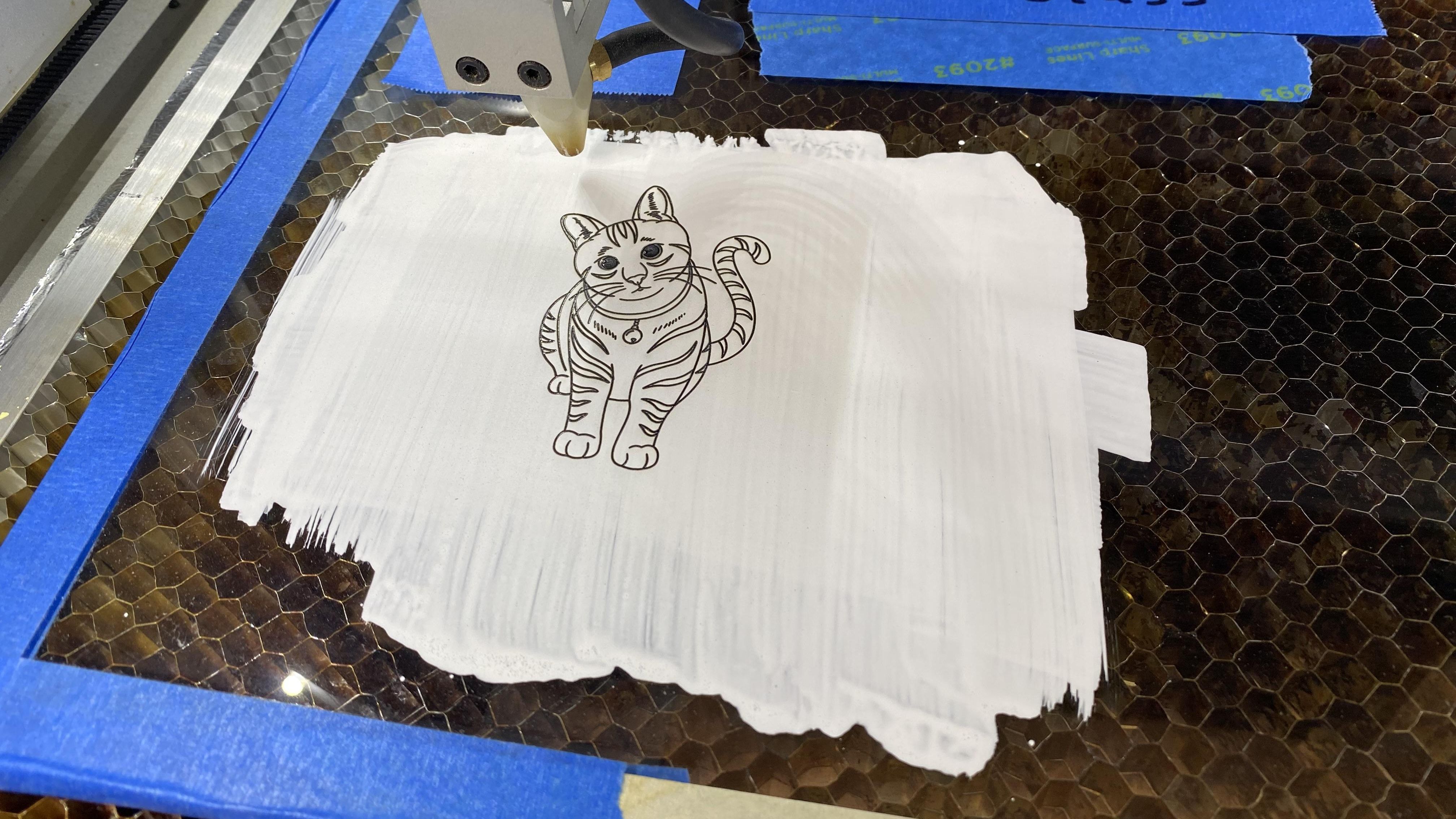
Or is it? According to [rschoenm], all it takes to engrave glass is a special coating. The recipe is easy: two parts white PVA glue, one part water, and two parts powdered titanium dioxide. The TiO2 is the important part; it changes color when heated by the laser, forming a deep black line that adheres to the surface of the glass. The glue is just there as a binder to keep the TiO2 from being blasted away by the air assist, and the water thins out the goop for easy spreading with a paintbrush. Apply one or two coats, let it dry, and blast away. Vector files work better than raster files, and you’ll probably have to play with settings to get optimal results.
With plain float glass, [rschoenm] gets really nice results. He also tried ceramic tile and achieved similar results, although he says he had to add a drop or two of food coloring to the coating so he could see it against the white tile surface. Acrylic didn’t work, but there are other methods to do that.
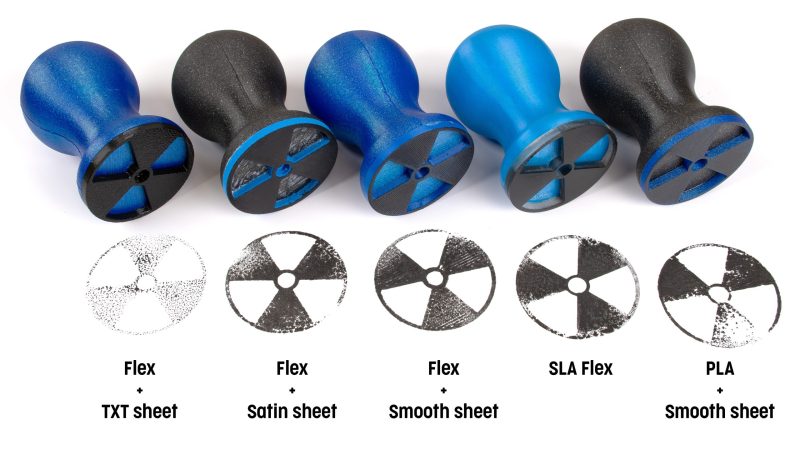
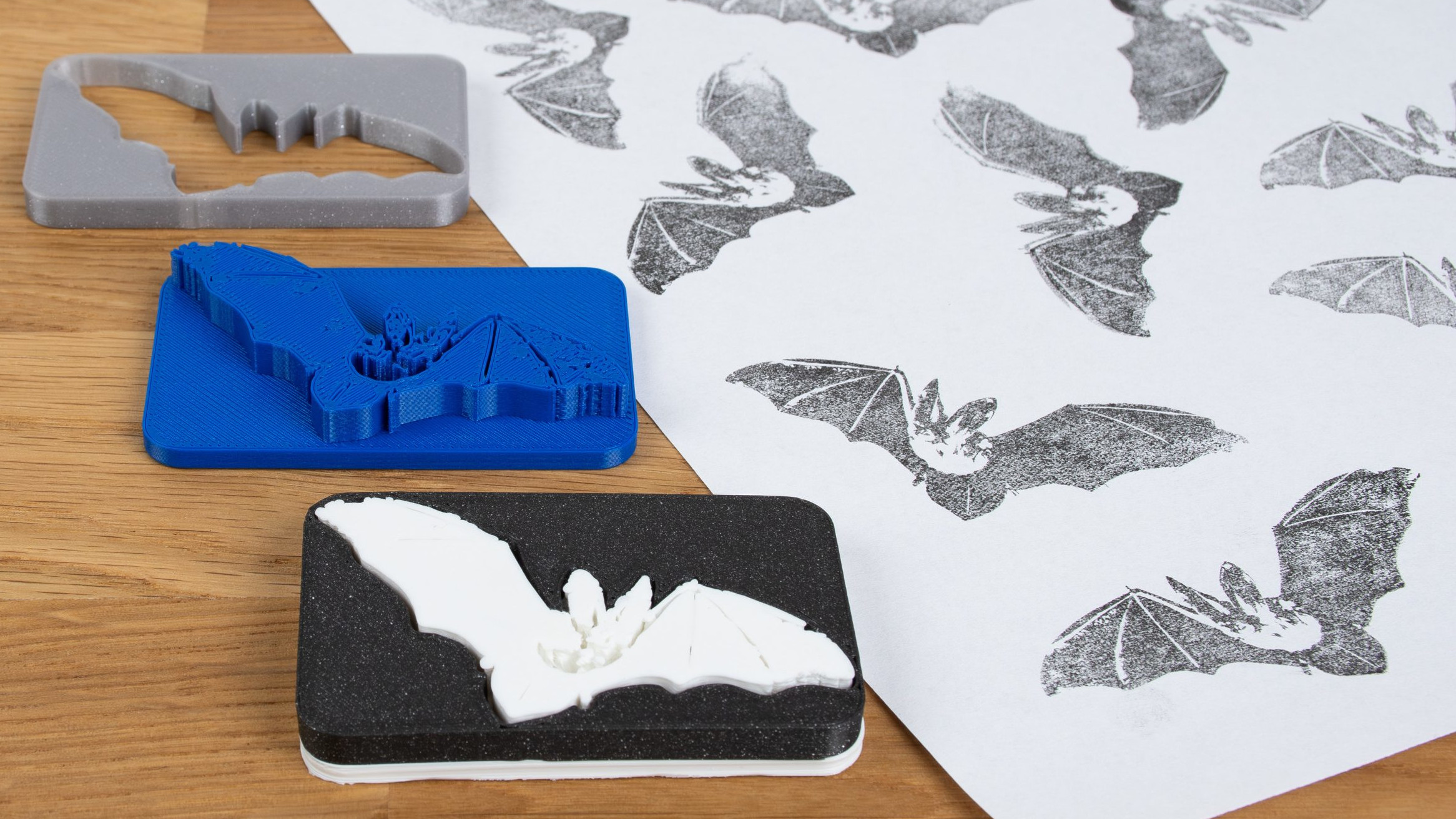
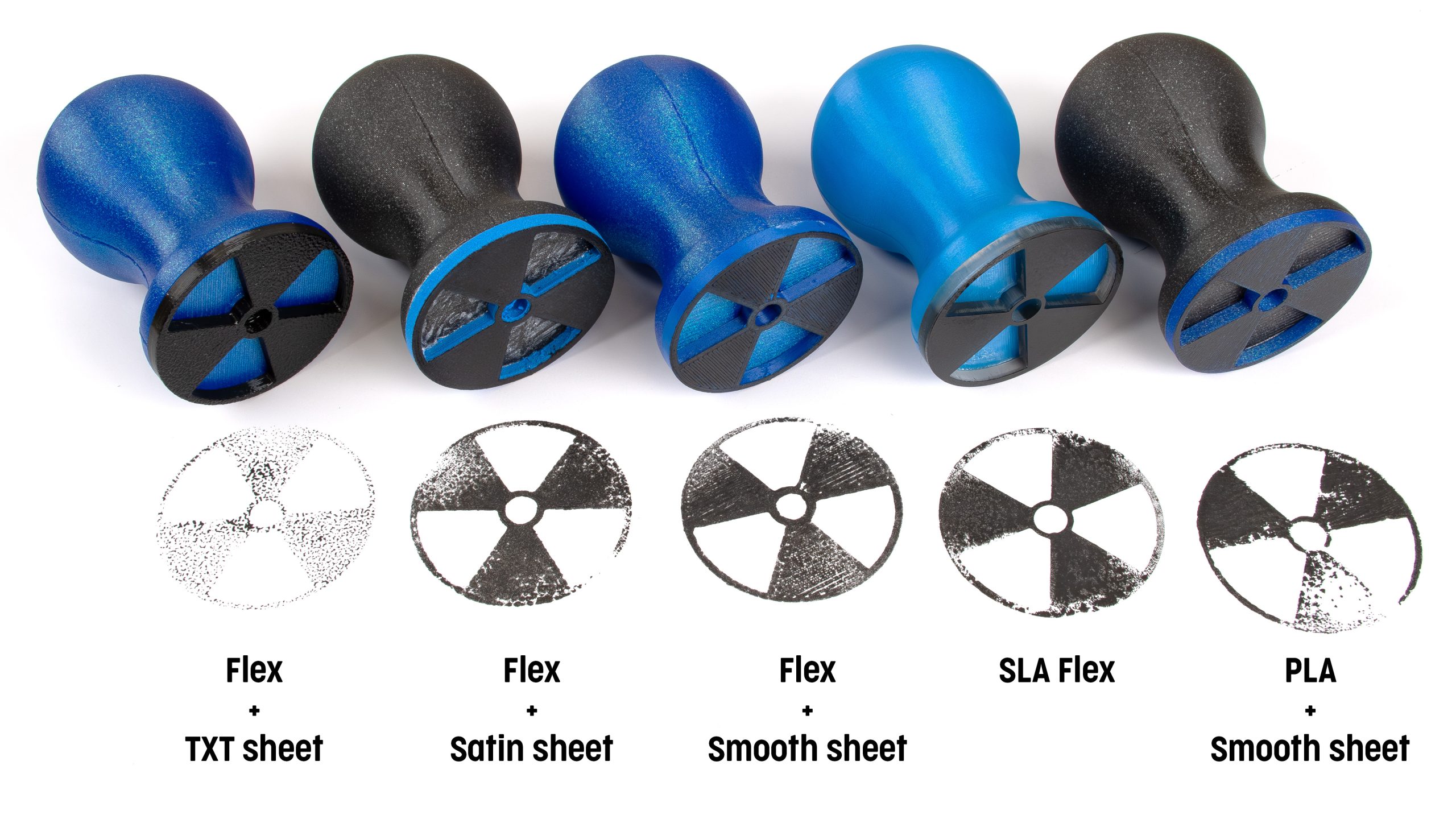
Ink stamps can be fun to make and use, and 3D printers are uniquely positioned to create quality stamps of all kinds with just a little care. As with most things, the devil is in the details and the best results will require some extra work. Luckily, [Prusa] has a blog post that goes through how to 3D print the best stamps and includes concrete recommendations and tips to get the most out of the process.
Resin printers can create stamps too, just ensure a flexible material is used.
What makes a good 3D-printed stamp? It should be easy to use, transfer an image cleanly, and retain ink reasonably well. To hit these bases, printing the stamp face out of a flexible material is probably the most important, but a flat and smooth stamp surface is equally crucial. Satin-finish build plates will give a weathered look to the stamp, but textured build plates in general are no good.
As for the design, turning an image into a 3D object can be a bit challenging for novices, but there are tools that make that much easier now than it used to be. Some slicers allow importing .svg files (scalable vector graphics) with which to emboss or deboss objects, and online tools as well as free software like Inkscape will let folks covert images into .svg format.
Flexible filaments tend to be stringy so they should be dried before use, especially if the stamp design has a lot of separate elements that invite stringing. Any flex filament should do the job, but of course some specific filament brands perform better than others. Check out the full blog post for specific recommendations.
Pausing a print and inserting a pre-printed support piece (removed after the print completes) helps form big overhangs.
The remaining tricky element is that flexible filaments also tend to be poor at bridging, and if one is printing a stamp face-down on the build plate (to get that important, ultra-flat face) then the upper inside of the stamp may need some support for it to come out right. As [Prusa] suggests, this is a good place to use a manual, drop-in pre-printed support piece. Or if one has the ability to print in multiple materials, perhaps print the support structure in PLA since it is just about the only material that won’t completely weld itself to flex filaments. Of course, if one is designing the stamp entirely in CAD, then the best option would be to chamfer the stamp elements so supports aren’t necessary in the first place. Finally, don’t overlook the value of a physical design that makes handling easy and attractive.
I’m in the process of organizing all the information I collected at CES and want to combine it with things I see at SPIE’s AR/VR/MR next week. Many companies showed AR glasses with AI capability at CES, and many more are in the works. Next Wednesday at 4:05PM, I am going to be on a Panel at SPIE’s AR/VR/MR to discuss the subject.
Most AR with AI glasses use diffractive waveguides with monochrome green MicroLEDs or with X-Cube combined three-chip MicroLEDs for full color. Some are using LCOS or DLP full-color microdisplays. I also expect to see some using Lumus’s reflective waveguides rather than diffractive waveguides. Some are using birdbath (ex., old Xreal) and freeform (ex. Xreal One Pro and P&G Metalens 2). I plan to discuss these other designs and their trade-offs after SPIE AR/VR/MR.
Halliday stands out in that it has a very different optical design for their AR/AI glasses, and it received a lot of attention from the media at CES. I only had time to get to their booth early Friday morning, and unfortunately, there was no one at the booth at that time. At least one YouTube video I saw during CES reported that Halliday was using lasers, but I have since confirmed that it uses a green MicroLED with projection optics. The Reddit Topic Halliday Glasses – Smart Glasses with AI Assistant reported (correctly) that the optics worked similarly to the MojoVision Contact lens display.
This article considers the pros and cons of Halliday’s optics in AR glasses as well as some of the other Halliday design decisions.
Halliday Glasses
Rather than using waveguides or other combining optics (such as a birdbath or freeform optics), Halliday glasses have a single (monocular) projector that projects directly into the eye. It uses a monochrome green MicroLED for the display device and a set of mirror optics (more details on the optics later).
The projector is manually aimed in the direction of the eye via a horizontal slider and up/down rotation. Rotating the front ring of the projector lens changes the diopter/focus to adjust for vision differences.
To see the image, the user must rotate their eyes up in order to look into the projector located at the top of the frame. The slider and up/down adjustment must be made so that the user can rotate their eye to look axially into the projector. While adjustment does not have to be perfect, the eye box is much smaller than with most other optics, such as waveguides, but is larger than direct laser scanning, such as North Focals (see: North’s Focals Laser Beam Scanning AR Glasses – “Color Intel Vaunt”).
Shown below is a still from Halliday’s Kickstarter Video (below left) and from a ben’s gadget reviews video (below right) demonstrating how the user has to rotate their eyes upward. To see the image. If you want to see what it takes and feels like, put on a pair of glasses and try to look at the middle of the top of the frames.
Looking up like this with the eyes is not very comfortable for most people to do for any length of time, and the first big drawback of Halliday’s glasses. As my friend David Bonelli (from Pulsar) pointed out, it is not really “AR” as you are looking at an image in the frames and not overlaid with the real world.
Another “human factor” is the social issue. The user will not be looking at people when using the display but rather very awkwardly looking up. It will be obvious to any observer that the person is looking up at something.
Halliday’s optics work is similar to the MojoVision contact lens optics, but it is scaled up since it is farther from the eye. A figure (below left) from a Spy Eye (became MojoVision) patent shows how the optics work. Light from the MicroLED that hits the curved secondary mirror (350) is reflected to the larger concaved primary mirror, which then directs the “image forming rays” out around the outside of the small secondary toward the eye. The effect of the primary and secondary mirrors is to move the focus from being very close (as the display is very close to the eye)to very far (likely near infinity). You can see the primary mirror blocking the light in the closeup of the display optics (below right).
Looking again at the MojoVision patent figure (above left), you will see “stray rays 347.” One of the inherent problems with this design is that LEDs tend to output Lambertian (somewhat diffuse) light, which means that light rays from the LEDs are going to be emitted with a wide range of angles. The range of angles can be reduced somewhat by using Microlenses, which most MicroLED microdisplays have. However, even with microlenses, a large percentage of the light rays are still going to miss the absorbing sidewalls and the secondary mirror and come out as “stray rays.” These stray rays will cause some level of overall glow everywhere in the image, but more prominently in a ring around the outside of the image. This glow and ring can be seen in the Smartphone view above (upper right).
After CES, Halliday put out a YouTube video, Halliday AI Glasses: CEO Shares Insights Behind the Vision and Concept of Our Product! This video includes some through-the-optics views taken with a cell phone camera, and a few still captures are shown below. The stray light causes some glow around the individual text. As the amount of text in the image grows (from left to right), the ring of (stray) light in the outer ring gets brighter. BTW, I do appreciate that Halliday put out honest/true through the optics videos.
The images below are screen captures from ben’s gadget reviews video of Halliday with the display on and off and taken from different angles. In the lower right image, you can see the Primary mirror and the back of the secondary mirror. The upper right image shows the horizontal and up/down rotational adjustment of the projector.
Below is a diagram of a Cassegrain telescope from Wikipedia, which shows why I call the MojoVision/Halliday optics a “reverse telescope” optics. The MicroLED display is put roughly where the eye would be, and then the projected image comes out where the light would go into the telescope.
Pro’s of Halliday’s Optics
Diffractive Waveguide “Rainbow”
Halliday’s optical design has major advantages in terms of brightness/efficiency and the ability to use ordinary prescription lenses. Below is an outline of what I see as the most obvious advantages of Halliday’s optics:
Efficiency and Brightness – By shooting light directly into the eye, this optical design is vastly more efficient than any combiner/waveguide approach. This means that the display can be bright enough for outdoor use and uses much less battery power.
Works with ordinary lenses for any prescription – Since the projector projects directly into the eye and not off or through the prescription lenses, any ordinary lens will work.
Privacy and no forward projection
Eliminates external light capture, which causes rainbow artifacts (example from a diffractive waveguide on the right)
Halliday, in their marketing material, claims that it is less bulky and heavy than waveguide-based AR headsets. While this may be true for “full-featured” AR glasses, there are many “minimalist” AR glasses with waveguides similar in size and weight.
Con’s of Halliday’s Optics
Unfortunately, there are also some severe drawbacks inherent in Halliday’s optical design.
Having to look up with the eyes is a major fundamental problem, as has been discussed previously. I think for most people, it will be painful to use for long periods, and it will be distracting to see people looking awkwardly up to see the image.
The eye box, or where the image can be seen, is relatively small. If the projector is not aim well or the glasses shift position, it might not be possible to see the image at all.
The glow/loss of contrast due to stray light is inherent in the optical design.
It would seem to be limited in the ability to increase resolution. The display device has to be small, or the optics will get too large to fit in the frames. Due to physics, there is a limit to how small the pixels can be, so going to a higher resolution will likely require a bigger display and bigger mirrors.
Support color, which many consumers will want, will likely have to wait for full-color MicroLEDs to become available and at a reasonable price point.
Halliday’s Input Methods
Halliday will be supporting capacitive touch on the frames, a capacitive touch ring (included with the glasses), and voice input. According to Halliday’s CEO, the touch ring is their preferred input method. I don’t know anyone who particularly likes capacitive tough on the frames, but it seems to be a necessary basic level of input on most AR glasses. Halliday says they will be supporting voice input, but the CEO says it is his least preferred input method.
The problem I find with ring and slider-type input devices is that you are typically forced into a sequential tree where you have to go through a series of branches to get to what you want. Voice lets one go directly to what they want (if they can remember the right word). I think that one of the long-term expectations of AR/AI glasses is that AI will improve so that it will understand better what you want with a few words. You certainly don’t want to be going through a series of selection menus with voice input with other people around.
Speakers but No Camera – Like Even Realities’ G1
As I wrote in Even Realities G1: Minimalist AR Glasses with Integrated Prescription Lenses, I think it is a big miss for AR/AI glasses, Including Halliday, not to have camera input. It is one of the features that seems to have made Meta Raybands take off. Beyond the obvious picture-taking, cameras enable AI image recognition which is a gateway to endless possibilities.
Both Halliday and Even Realities have given the size and power consumption (and thus weight) excuse for not including a camera. I appreciate that supporting the power of the camera and, more importantly, the wireless data communication of a smartphone will drive up the power budget. I know the old Google Glass Glass-Holes memes, but there are cameras everywhere and on every smartphone, and I think camera input will be a fundamental requirement if AR/AI is going to succeed.
Halliday’s Post-CES CEO Video Discussing Design Decisions
I very much appreciate Halliday’s “Halliday AI Glasses: CEO Shares Insights Behind the Vision and Concept of Our Product!” video (below). The CEO goes through the operation and what was behind many of their design decisions. While I don’t agree with all their decisions, it is interesting to understand the philosophy of their design, and I used this information when writing this article.
Conclusion
There is a lot to like about the way Halliday has marketed their product. I particularly appreciated that their latest videos include true/real images through the optics. I like the way the CEO came out and explained their design decisions. They were very successful at CES in garnering media attention, both with the press and media influencers. But all that said and absolutely nothing personal, on a technical level I don’t like it as a product.
While their optical approach is different and has some significant advantages, I believe the disadvantages are so massive that they greatly outweigh the many advantages. I think the need to look up rather severely is a huge problem. They may be able to get away with it in a short demo, but I believe the average person (there may be exceptions) will find it painful with longer use. Additionally, a person regularly looking up is going to look strange.
As stated in the article, I think anyone wanting to have “AI” glasses is going to have to figure out how to support a camera. I don’t think that “lower power and lower weight” is a good excuse, and if “privacy/Glass-hole” is the issue, then AI glasses will be doomed from the start. Having camera input, I think, will be the bigger potential driver of AI glasses.
I also believe Halliday’s optical design is a bit of a dead end in terms of improving resolution due to the size limitation of the display and image quality due to the stray light.
Appendix: Some of My History – The TMS320C80 Multimedia, Video and Image Processor
Thanks to this blog, I am best known today as someone who writes about Augmented and Mixed Reality. But from 1977 through 1997, I was a Graphics, Imaging, and CPU I.C. designer and architect. My work included:
Designed the TMS9918, the first Sprite Chip (the term “Sprite” was coined for this design). I co-defined how the sprites worked and defined the DRAM interface (the 9918 was the first consumer device to connect directly to DRAMs).
Led the design of two 16-bit CPUs (TMS9955 and TMS99000)
Defined and led the design of the first programmable graphic processor, the TMS34010 (and later the TMS34020), and was the technical leader of the TMS340 Family from the 1983s through 1990. The TMS34010 was the first CPU to directly interface with DRAM and Multiport Video Memory (they were co-designed).
Defined the first Multiport Video Memory (VRAM) and helped make it an industry standard. This development directly led to the first Synchronous DRAM (SDRAM)
Led the definition and technical team developing the TMS320C80 MVP, the first fully programmable image processor that integrated a RISC CPU with Floating Point and Four 32-bit DSPs on a single chip.
It was the TMS320C80 MVP effort that I was reminded of when making my statement about the importance of video/image input for AR/AI glasses. I started working on the TMS320C80 in 1989 (it took 5 years to develop, design, and make the 320C80, starting with a team of two people in 1989). I believe then, and I do now, that image input is the future. Below are links to a 1982 IEEE CG&A and a 1994 Byte article that I wrote that gives an overview of the TMS320C80.
Une percée technologique chinoise bouleverse l'industrie sidérurgique mondiale. Des chercheurs ont mis au point une méthode révolutionnaire de production d'acier, 3 600 fois plus rapide que les procédés traditionnels. Cette innovation promet de réduire drastiquement l'empreinte carbone du...
Nvidia's GeForce RTX 5090 starts at $1,999 before you factor in upsells from the company's partners or price increases driven by scalpers and/or genuine demand. It costs more than my entire gaming PC.
The new GPU is so expensive that you could build an entire well-specced gaming PC with Nvidia's next-fastest GPU in it—the $999 RTX 5080, which we don't have in hand yet—for the same money, or maybe even a little less with judicious component selection. It's not the most expensive GPU that Nvidia has ever launched—2018's $2,499 Titan RTX has it beat, and 2022's RTX 3090 Ti also cost $2,000—but it's safe to say it's not really a GPU intended for the masses.
At least as far as gaming is concerned, the 5090 is the very definition of a halo product; it's for people who demand the best and newest thing regardless of what it costs (the calculus is probably different for deep-pocketed people and companies who want to use them as some kind of generative AI accelerator). And on this front, at least, the 5090 is successful. It's the newest and fastest GPU you can buy, and the competition is not particularly close. It's also a showcase for DLSS Multi-Frame Generation, a new feature unique to the 50-series cards that Nvidia is leaning on heavily to make its new GPUs look better than they already are.
How many things are much nicer than wrapping yourself snugly under the covers in bed and ignoring the world for a little longer? That's the meaning of the 18th-century dialect word Snerdle.
Snerdle (verb) is from Yorkshire dialectologist Joseph Wright's English Dialect Dictionary. He gives the definition of snerdle, with examples, as:
SNERDLE, v. [snə̄·dl.] To nestle closely; to wrap up comfortably in bed; to go comfortably off to sleep. “Snerdle the child up; make it comfortable.” “The children are snerdling together nicely.” “I think the baby will soon snerdle off.”
Shared by British lexicographer and etymologist Susie Dent in her book Word Perfect: Etymological Entertainment Every Day, snerdling suits a grey, chilly, rainy winter day—which is what we have here—or, at times, hiding from current events.
Susie also lets us know: "Snuzzle, snoodge, and snerdle: all verbs in the English Dialect Dictionary for snuggling under the covers as though your life depended on it."
Like snerdling? There's also the old Scottish word hurkle-durkle. Hurkle-durkling is revelling in staying in bed long after you should have gotten up. Aaah, bliss.
OpenAI is releasing a “research preview” of an AI agent called Operator that can “go to the web to perform tasks for you,” according to a blog post. “Using its own browser, it can look at a webpage and interact with it by typing, clicking, and scrolling,” OpenAI says. It’s launching first in the US for subscribers of OpenAI’s $200 per month ChatGPT Pro tier.
Operator relies a “Computer-Using Agent” model that combines GPT-4o’s vision capabilities with “advanced reasoning through reinforcement learning” to be able to interact with GUIs, OpenAI says. “Operator can ‘see’ (through screenshots) and ‘interact’ (using all the actions a mouse and keyboard allow) with a browser, enabling it to take action on the web without requiring custom API integrations,” according to OpenAI.
Operator can use reasoning to “self-correct,” and if it gets stuck, it will give the user control. It will also ask the user to take over when a website asks for sensitive information like login credentials and “should” ask for a user to approve actions like sending an email. OpenAI also says that Operator has been designed to “refuse harmful requests and block disallowed content.”
A research preview of Operator, an agent that can use its own browser to perform tasks for you. pic.twitter.com/wkBBDIlVqj
OpenAI says that it’s collaborating with companies such as DoorDash, Instacart, OpenTable, Priceline, StubHub, Thumbtack, Uber so that Operator “addresses real-world needs while respecting established norms.” But the company cautions that not everything might work as you expect just yet; the tool currently has problems with “complex interfaces like creating slideshows or managing calendars.”
Down the line, OpenAI says it plans to bring Operator to Plus, Team, and Enterprise users and “integrate these capabilities into ChatGPT.”
Ce n'est plus l'École des fans, mais l'école des robots. Ce mardi 21 janvier 2025, la Chine a inauguré son premier centre de formation de robots humanoïdes dans le district de Pudong (Shanghai). Baptisé Humanoid Robot Kylin Training Ground, il compte accueillir 100 robots cette année et jusqu'à 1000 en 2027 afin de les surentraîner.Les ingénieurs de...
NRF 2025 is now over, and with the clarity that exhaustion brings a few days later, I felt that what the world needs is the 423rd version of: the top five takeaways from my time at NRF.
At CES 2025, XREAL unveiled its latest augmented reality (AR) glasses, the XREAL One Pro, building upon the success of the previously launched XREAL One. The One Pro features a custom flat-prism lens design, achieving an industry-leading 57-degree field of view (FOV) within an 11mm profile, enhancing both visual immersion and comfort. This design allows users to experience a virtual display of up to 447 inches, providing a cinematic viewing experience.
Central to the One Pro’s performance is XREAL’s proprietary X1 spatial computing chip, enabling three degrees-of-freedom (3DoF) spatial computing. This technology allows users to anchor virtual screens in physical space, creating a stable and interactive AR environment. The X1 chip also reduces motion-to-photon latency to as low as 3 milliseconds, minimizing motion sickness and enhancing user comfort.
The XREAL One Pro is designed for extended wear, weighing just 87 grams. It offers adjustable interpupillary distance (IPD) options, accommodating a wide range of users to ensure optimal visual clarity and comfort. Additionally, the glasses feature enhanced audio output fine-tuned by Bose, delivering superior mid-to-high frequencies for a more natural and immersive sound experience.
A notable accessory is the optional detachable camera, XREAL Eye, which integrates seamlessly into the glasses. This modular component allows users to capture first-person point-of-view photos and videos, with future updates planned to enable multimodal AI capabilities, expanding the glasses’ functionality.
XREAL also introduced the Beam Pro, a handheld spatial computing device designed to complement the One Pro glasses. The Beam Pro provides users with a simple way to access social media, streaming entertainment, and gaming platforms in a 3D-aware AR environment. It features dual 50MP cameras, enabling users to create their own high-definition spatial videos and images.
Collaborations with industry leaders were highlighted during CES 2025. XREAL partnered with BMW Group to showcase in-car entertainment experiences, demonstrating 3D content for passengers using the XREAL One Series within a BMW X3 M50. Additionally, collaborations with Google and Qualcomm Technologies were announced, focusing on integrating AR experiences with Android platforms and leveraging Snapdragon processors for enhanced performance.
XREAL’s commitment to advancing AR technology is evident in its continuous innovation and strategic partnerships. By focusing on user comfort, immersive experiences, and expanding the AR ecosystem through collaborations, XREAL aims to redefine how users interact with digital content in both personal and professional settings.
Description by Chatgpt.
My full video coverage from #CES2025 in Las Vegas USA is sponsored by Synaptics, check out all my Synaptics videos here: https://www.youtube.com/playlist?list=PL7xXqJFxvYvhAbQoe9YN4c84SqXxIY3fQ
This video was filmed at CES 2025 in Las Vegas USA, check out all my CES 2025 videos here: https://www.youtube.com/playlist?list=PL7xXqJFxvYvglnj4eE-BVnVzrj9XyerqI
This video was filmed using the DJI Pocket 3 ($669 at https://amzn.to/4aMpKIC using the dual wireless DJI Mic 2 microphones with the DJI lapel microphone https://amzn.to/3XIj3l8 ), watch all my DJI Pocket 3 videos here https://www.youtube.com/playlist?list=PL7xXqJFxvYvhDlWIAxm_pR9dp7ArSkhKK
Join https://www.youtube.com/charbax/join for Early Access to my videos as soon as I upload them before they go public.
NRF: Retail’s Big Show is one of the most highly anticipated events in the retail industry, uniting the brightest minds in technology and innovation from around the world.
This year, Vista Technology Support had the privilege of attending once again, allowing us to dive into groundbreaking innovations, connect with industry leaders, engage with disruptive tech pioneers, and uncover the future game changers set to redefine the retail and hospitality landscapes.
From AI powered solutions to the next wave of immersive customer experiences, the show offered us a glimpse into the future of these industries. The cutting-edge technology on display promises to revolutionise the industry, and it’s exciting to see how these advancements will propel the industry forward.
In this article, we’ll share our key takeaways, insights, and recommendations from the show, so you can stay ahead of the curve and leverage the latest innovations to elevate your strategies.
The rise of generative in retail AI
Generative AI was a trend you couldn’t escape at this year’s expo, and it’s quickly becoming a game-changer for the retail and hospitality sectors, offering businesses innovative ways to improve operational efficiency, elevate customer experiences, and bolster loss prevention efforts.
In these sectors, managing large scale operations efficiently can be a challenge. Generative AI is helping businesses automate routine tasks such as inventory management, staff scheduling, and demand forecasting. By analysing historical data, AI algorithms can predict sales trends, optimise stock levels, and better understand consumer behaviours.
We saw a great example of this type of AI being used by Target, who have teamed up with Zebra Technologies, using their latest product, built in collaboration with Google Cloud and Qualcomm, providing retail and hospitality stores with a gen AI open source model on its handheld devices.
We were particularly impressed with how the hand held device was able to use computer vision, machine learning and Google Gemini chat, as well as EDGE technology to keep cloud storage and interactions to a minimum. Read more about their exciting development here and how it’s being used to enhance in-store operations.
AI powered loss prevention
Loss prevention, both in terms of theft and operational inefficiency, is a major concern for businesses in retail and hospitality. So, what is the solution?
We are now seeing generative AI integrate with smart cameras and sensors to monitor inventory in real-time, flagging discrepancies between physical stock and sales records, as well as recognising suspicious behaviour and notifying staff in real-time.
Fujitsu showcased how they’re using Human Motion Analytics to analyse human behaviours in stores. This technology combines high-
definition image analysis, and AI technology to analyse and visualise the skeletal motion of humans. The platform supports the systemisation of human movement measurement and detection in multiple fields, based on high precision skeletal recognition - offering an extra, more informed layer of in-store security.
Check out the new product here, which is set to begin trials in UK grocery stores soon.
Similarly, AI can track unusual transaction patterns at Point of Sale terminals, helping to identify and mitigate theft. A new and exciting product showcased by Bizerba showed how efficient retail loss prevention combined with self-checkout systems can help businesses reduce theft while improving the customer experience.
Their Supersmart S3 Scan & Go Loss Prevention System offers features such as unscanned item detection, real-time fraud alerts, and fast, seamless checkout processes.
AI computer vision and machine learning leverages existing CCTV systems
As well as being able to enhance security and mitigate loss, industry leaders are leveraging legacy CCTV systems integrated with AI to gain real-time consumer data insights to benefit both them and the customer.
This was a key theme at the show and multiple vendors had various versions of the technology on show. These tools are being used to identify best-selling products, understand shopper demographics, and address operational challenges.
We witnessed firsthand how MeldCX, with their impressive Viana application powered by Intel, utilises AI powered CCTV to track valuable data such as retail footfall, the time it takes to prepare specific drinks at a coffee shop and which aisles are less frequented by customers.
In a similar vein, WaitTime, the anonymous crowd/occupancy management software demonstrated how legacy CCTV cameras can be repurposed to perform a wide range of business data functions and insights.
These insights can inform businesses of where products are more or less profitable based on the effort or time spent by colleagues in store preparing products - specialist coffees were used as a specific example for this case. The technology also demonstrated how the customer journey can be improved and help inform future proofing.
In conclusion, the growing buzz around generative AI in the retail and hospitality sectors is a clear indication that we’re on the cusp of a transformation. As we’ve seen, AI’s potential to enhance customer experiences, streamline operations, and drive innovation is unparalleled.
Generative AI is poised to shape the future of how we shop, dine, and interact with brands. With the pace of development accelerating, it’s certain that the next generation of shopping will be significantly influenced by these technologies, offering both businesses and consumers exciting new possibilities. The future is bright, and it’s AI powered.
However, it is still important that businesses conduct thorough research before following the trends. As AI continues to gain traction as a buzzword within the industry, it is essential for businesses to have a clear understanding of their objectives and how this technology can best serve their specific needs.
We’ll be taking a deeper dive into each of these topics and more recommendations we have over the coming weeks, so keep up-to-date on our social media and website for more updates.
If you would like to chat to us about how you can get these products in your stores, or find out what solutions you may need, contact one of our experts today for a consultation: sales@vistasupport.com


 Retrouvez mon debrief du CES 2025: on analyse les tendances et on découvre de nombreuses nouveautés très intéressantes autour de la maison connectée !