Jean-Philippe Encausse
Shared posts
Google lance un moteur RAG dans Vertex AI
Actualité : Le robot star de la conférence Nvidia est un bijou made in France

Les magasins new-yorkais frappent fort

Rokid Glasses and AR Spatial AI Smart Glasses with Real-Time Translation and 300″ Virtual Display
Rokid’s latest offerings, unveiled at CES 2025, include the Rokid Glasses and Rokid AR Spatial, both designed to integrate augmented reality (AR) and artificial intelligence (AI) into daily life. The Rokid Glasses, weighing just 49 grams, feature real-time language translation, object recognition, and a first-person camera for capturing photos and videos. These glasses utilize waveguide technology to project information directly into the user’s field of view, facilitating seamless multitasking. They also offer customizable clip-on lenses for users with myopia or astigmatism, ensuring comfort and accessibility.
You can check my previous video with Rokid from CES 2016 showing what I thought was the “Best of CES 2016” here: https://www.youtube.com/watch?v=-TAHZ6pg2KY
The Rokid AR Spatial glasses provide an immersive experience with a 300-inch virtual display powered by Sony’s micro-OLED technology. This setup delivers a 100,000:1 contrast ratio and up to 600 nits of brightness, ensuring vivid visuals. Notably, these glasses include an intelligent myopia and pupillary adjustment system, accommodating users with varying vision needs without requiring additional prescription inserts. The AR Spatial glasses are designed for applications such as gaming, entertainment, and productivity, offering a versatile tool for both personal and professional use.
Rokid’s commitment to accessible AR technology is further demonstrated through their Smart Tour Solutions, which combine AI and AR to enhance cultural and tourism experiences. By integrating AR glasses with features like 3D holographic guides and virtual reenactments, Rokid transforms museums and landmarks into interactive environments, enriching visitor engagement.
These innovations highlight Rokid’s dedication to advancing human-computer interaction, making AR and AI technologies more practical and integrated into everyday activities. By focusing on user-centric design and functionality, Rokid aims to lead the next wave of AR adoption across various sectors, including education, tourism, and remote collaboration.
Description by Chatgpt.
This video was filmed at CES 2025 in Las Vegas USA, check out all my CES 2025 videos here: https://www.youtube.com/playlist?list=PL7xXqJFxvYvglnj4eE-BVnVzrj9XyerqI
This video was filmed using the DJI Pocket 3 ($669 at https://amzn.to/4aMpKIC using the dual wireless DJI Mic 2 microphones with the DJI lapel microphone https://amzn.to/3XIj3l8 ), watch all my DJI Pocket 3 videos here https://www.youtube.com/playlist?list=PL7xXqJFxvYvhDlWIAxm_pR9dp7ArSkhKK
Join https://www.youtube.com/charbax/join for Early Access to my videos as soon as I upload them before they go public.
Google Gemini now works across multiple apps in a single prompt

Google’s AI assistant Gemini is now able to carry out tasks across multiple apps in a single interaction, in an update announced today alongside the launch of Samsung’s new Galaxy S25 series. Those phones are also Samsung’s first to feature Gemini as the default on-device assistant, relegating Bixby to the app drawer. Those changes are part of a raft of other updates from Google including improvements to the AI-powered Circle to Search.
With today’s update, Gemini is able to carry out more complex multimodal tasks. You might ask it to find a dog-friendly Italian restaurant and send it to your friend, or pull up your NFL team’s upcoming games and add them to your calendar, all in a single prompt.
/cdn.vox-cdn.com/uploads/chorus_asset/file/25841887/google_gemini_multimodal_extensions.gif) Source: Google
Source: Google
The multi-app support is built on top of Gemini’s existing app extensions, which cover a spread of Google apps and limited third-party options including WhatsApp and Spotify. Today’s update adds Samsung’s own apps to that list for S25 users — including Samsung Calendar, Notes, Reminder, and Clock — but other multi-extension prompts are available now to all Gemini users across the web, Android, and iOS.
/cdn.vox-cdn.com/uploads/chorus_asset/file/25841886/google_gemini_live_images_demo.gif) Source: Google
Source: Google
Gemini Live, the assistant’s voice-based conversational mode, is also getting an upgrade, though this one is currently limited to the Galaxy S25 and S24 phones and Google’s own Pixel 9 series. Owners of those devices will be able to share images, files, and YouTube videos to the chat interface, asking Gemini for feedback and information. Google also says that Project Astra features like screen sharing and live video streaming will come to Gemini on Android in the coming months.
With all those upgrades in tow, Samsung has made Gemini the default virtual assistant on the new S25 phones, finally replacing its own Bixby assistant. You can still access Bixby on the phones — the app is preinstalled — but by default, long-pressing the power button will now open up Gemini instead.
Circle to Search is getting improvements, too. It will be able to automatically recognize phone numbers, email addresses, and URLs so you can interact with them more easily. The AI Overviews in search results have also been expanded to work with more kinds of visual search results, increasing the probability that using Circle to Search on an image of a place, artwork, or object will generate an AI Overview in the results.
Finally, Google also announced changes that should make it easier to pair braille screen readers and hearing aids to Android devices.
Google announced the new features alongside Samsung’s launch of the Galaxy S25, S25 Plus, and S25 Ultra at Galaxy Unpacked today. Two hours earlier, the companies revealed a new Galaxy Watch for Kids mode on Samsung’s Galaxy Watch 7 LTE. It adds kid-friendly apps and watchfaces plus improved parental controls.
Revirement spectaculaire : Trump annule le décret Biden sur l’IA
Synaptics User Presence Detection: Enhanced Privacy and Gesture Control at #ces2025
At CES 2025 in Las Vegas, Synaptics introduced significant advancements to their User Presence Detection technology, showcasing how it enhances user interaction and privacy across a variety of scenarios. Designed for seamless integration into modern PCs, the system leverages sensors and smart algorithms to respond dynamically to user behavior, improving functionality in video conferencing, workspace privacy, and power management.
One key feature presented was a gesture-based mute/unmute function for video calls. This solves a common issue where users struggle to locate the mute button during meetings. With a simple gesture, users can quickly toggle audio, streamlining video conferencing experiences. Synaptics has also addressed concerns about accidental exposure when stepping away from the screen. If a user walks away during a call, the system automatically blocks their video feed and mutes the microphone, ensuring no unintended sharing of private moments.
Privacy extends further with the “over-the-shoulder muting” feature, which detects when someone approaches from behind. In such cases, the system automatically mutes audio, preventing unintended eavesdropping. Additionally, the system is designed to interact only with the logged-in user. It recognizes their presence, blurs screens when they step away, and locks the device if unauthorized individuals attempt to access it.
The technology also supports granular screen privacy. For example, in shared workspaces or environments like loan offices, only the active screen remains visible while others blur. This functionality extends to dimming screens to conserve energy, offering a customizable balance between privacy and power efficiency. Users can configure the settings to blur, dim, or perform both actions simultaneously.
Synaptics has integrated this innovation into consumer products, with Dell recently launching Pro PCs equipped with these capabilities. Using existing RGB cameras in devices, the system can detect user presence, blur screens, and lock machines when users walk away. With Windows Hello face detection enabled, devices wake, unlock, and log in as soon as the user approaches, providing a seamless, ready-to-use experience.
The company envisions broadening this technology beyond laptops, aiming for inclusion in webcams, monitors, and docking stations. Expanding the detection field through these peripherals would enhance user convenience and further integrate smart presence features into everyday devices. The goal is to create a “smart area” that ensures secure, intuitive, and efficient interactions across multiple platforms.
As this technology reaches more real-world applications, Synaptics positions itself as a leader in user presence detection. Their innovations not only cater to security and efficiency but also reimagine how users interact with their digital environments in an increasingly connected world.
Description by Chatgpt.
My full video coverage from #CES2025 in Las Vegas USA is sponsored by Synaptics, check out all my Synaptics videos here: https://www.youtube.com/playlist?list=PL7xXqJFxvYvhAbQoe9YN4c84SqXxIY3fQ
This video was filmed at CES 2025 in Las Vegas USA, check out all my CES 2025 videos here: https://www.youtube.com/playlist?list=PL7xXqJFxvYvglnj4eE-BVnVzrj9XyerqI
This video was filmed using the DJI Pocket 3 ($669 at https://amzn.to/4aMpKIC using the dual wireless DJI Mic 2 microphones with the DJI lapel microphone https://amzn.to/3XIj3l8 ), watch all my DJI Pocket 3 videos here https://www.youtube.com/playlist?list=PL7xXqJFxvYvhDlWIAxm_pR9dp7ArSkhKK
Join https://www.youtube.com/charbax/join for Early Access to my videos as soon as I upload them before they go public.
Le secteur du luxe pourrait peser pour 2500 milliards d’euros d'ici 2030
100 000 milliards de liaisons par cm² : la nouvelle armure du futur est là !
Decathlon Leverages Apple-Powered Augmented Reality in Shopping App
This week, sports retail giant Decathlon recently highlighted how it started leveraging Apple iOS Reality Capture technology to provide shoppers using its smartphone app with augmented 3D visualisations of products. With the new feature, Decathlon customers can place digital versions of products in their homes before buying.
The service enables users to view what a product may look like by observing an augmented reality rendition through an iOS camera, placing it in the world around them.
Smartphones increasingly power the augmented reality market; most individuals worldwide have access to a smartphone and, therefore, lite-AR services. Adoption starts there; the more people start using AR integrations on their smartphones, the closer general audiences will get to more advanced variations of AR and, therefore, broader XR markets.
From construction to retail and eCommerce, use cases like the recent Decathlon example showcase how businesses leverage AR technology today. They are starting a broader long-haul journey, allowing more sophisticated immersive technology to become integral to the buyer’s journey and other end users.
More on Decathlon’s AR Integrations
The Decathlon smartphone app uses Apple object capture to place interactive AR models of products such as RR2K sneakers and other sportswear in a spatial environment. According to Decathlon technology leaders, the new AR feature will drive more informed buying decisions via an immersive shopping experience.
Users can access this visualisation without leaving the smartphone application. The feature is currently exclusive to Apple iOS devices for users in France and Belgium. No further news on other regional availability is confirmed.
The news comes as other international shopping and retail groups, such as Walmart, Shopify, and Amazon, experiment with smartphones.
Smart Phone AR Adoption Rates
Many businesses today are utilizing immersive technology without relying on headsets. Smartphones and tablets offer incredible capabilities to support augmented reality and immersive services for brands and workplaces.
Smartphones are powerful tools that are widely accessible, with global penetration rates much higher than those of headsets. Brand owners prefer not to create solutions for a specific device as the hardware landscape constantly evolves. Therefore, cross-device compatibility is crucial, as it can cover a service that supports AR service that works on a range of devices, not just wearables.
Leveraging cloud technology also allows for seamless experiences across multiple devices. Customers could be using their iPads or laptops, so it’s essential for brands to consider how they can scale their solutions across various channels.
As AR grows in influence, the end devices and use cases will grow. To properly leverage this market, firms that recognise the potential of XR on mobile could be getting the keys to unlock the future of business innovation.
Stargate, The End of Microsoft and OpenAI
Actualité : Stargate : Trump annonce 500 milliards pour l’IA, mais Elon Musk préfère rester devant la porte

‘Robotic’ Dress Uses Simple Techniques To Combine 3D Printed Parts With Fabric
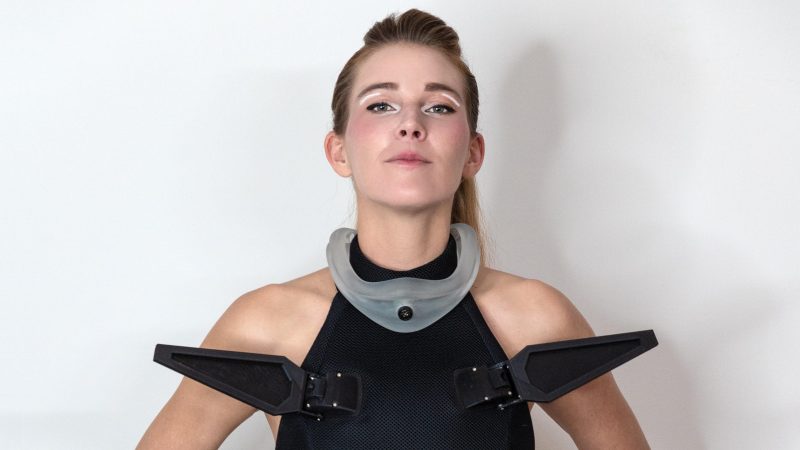
By and large, our clothes don’t actively move. They’re simple pieces of fabric assembled to sit nicely on our bodies, and little more. [anoukwipprecht] created something a little more technological and confronting, though, with the Robotic Open-Source Scale Dress.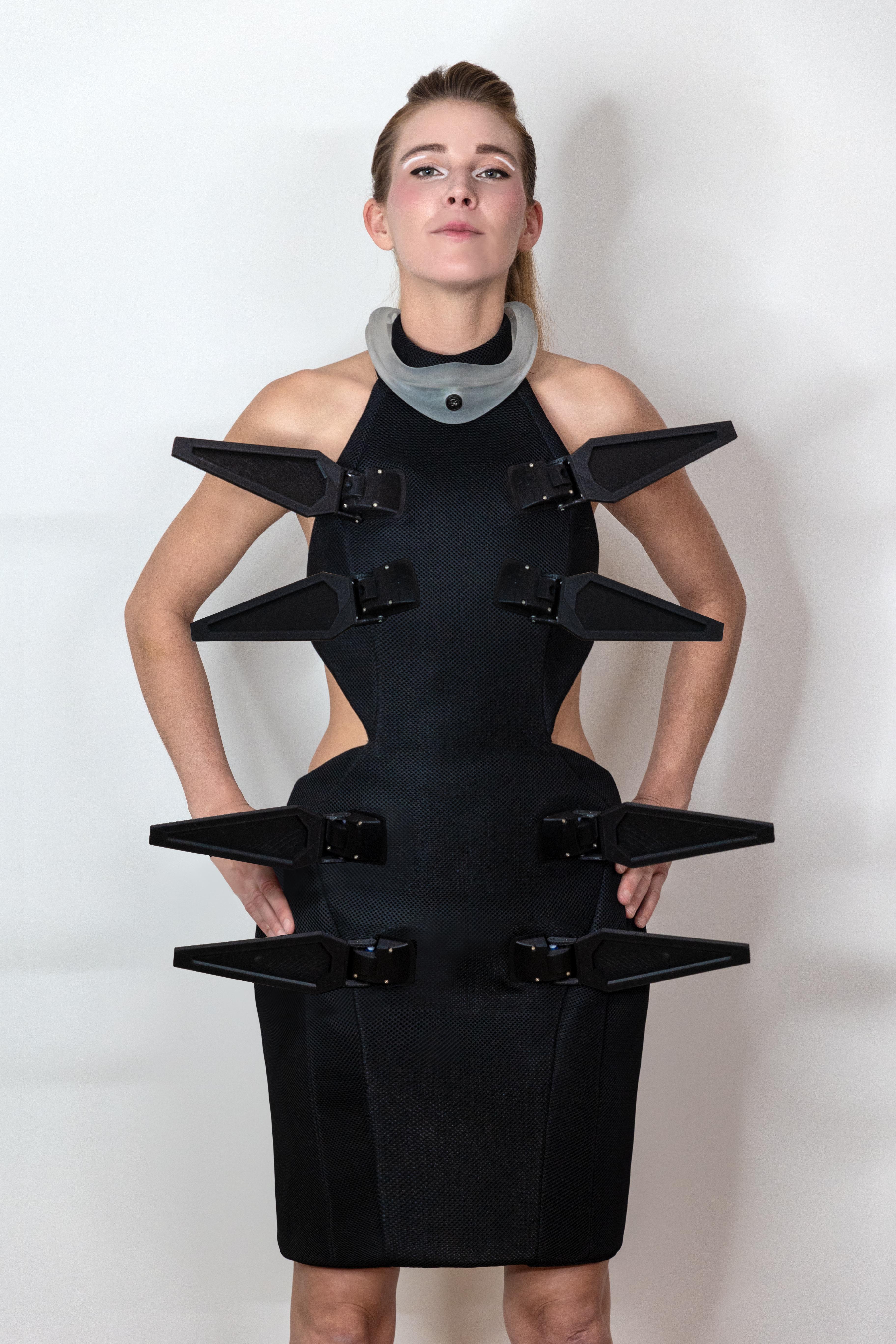
Right from the drop, you can see what the dress is all about. It’s an open-shoulder design that has eight large moving scales mounted on the front. These scales are printed, and each features its own servo for independent movement. The scale baseplates are designed to hide the servos themselves, creating a sleeker look that hides the mechanism underneath. Each baseplate is also perforated with holes, allowing it to be sewn on to the base garment in a stout fashion. The dress itself is created with thick neoprene fabric, enabling it to take the weight of the scale assemblies without sagging or pulling away from the body. You can even customize the scales in various ways—such as adding feathers instead.
The dress is a neat piece, and would catch eyes for its pointy scales alone. The fact that they can start moving at any time only increases the garment’s impact. We’ve seen some other great fashionable uses of 3D printing before, too, like these awesome printed shoes. Meanwhile, if you’re printing your own garments in your home lab, don’t hesitate to let us know! Or, even better… wear them to the next Hackaday event!
Does Telehealth Really Work as Well as In-person Care?
A recent lawsuit against Amazon One Medical related to the provision of telehealth care has once again brought to the spotlight the questions of: does telehealth really work as well as in-person care? Is it as safe as in-person care?
The sub-headline from an MSNBC article about the case reads as follows: “A wrongful death case case serves as a reminder that we cannot afford to sacrifice patient safety for the sake of rapid innovation.”
The question of whether telehealth delivers care that is worse, better, or equivalent to traditional in-person medical services requires a nuanced examination that considers multiple factors. The effectiveness and appropriateness of telehealth depends heavily on the specific medical service being provided, the intended clinical outcomes, and which stage of the care process is being conducted remotely. It is undoubtable that in-person examinations, relationship building, and body language communication is valuable. But, the accessibility, convenience, and burden reductions associated with telehealth use is also critical. As with most things, there are tradeoffs between each modality, so it is crucial to carefully construct new services based on evidence, logic & common sense, and feedback from patients and clinicians.
The lawsuit referenced above suggests wrongful death due to a telehealth provider missing crucial and severe symptoms. The question that will be implicit in this case will be: “would a reasonable physician have had a better chance of noticing the severity of the patient’s condition if the visit was in-person?” Maybe. But, maybe not. Diagnostic errors, medical errors, and adverse events occur frequently in the health system that is primarily delivered in-person. In short, it is probably not the telehealth modality itself that resulted in this unfortunate outcome.
It is obvious to most that it is not appropriate to use telehealth for a condition where a detailed physical exam is a crucial part of good care processes. However, on the other end of the spectrum, as was common practice (and still occurs) prior to billing and reimbursement flexibilities for telehealth, it is a burden on patients to travel to an office for care when it could easily occur via a telehealth modality. For patients with complex conditions and many outpatient visits, the burden of travel, waiting rooms, and scheduling is significant. Telehealth can alleviate this burden.
While it is easy to hypothesize about when telehealth is viable, beneficial, or harmful; it is important to consider clinical evidence. Research and structured evaluations of telehealth care delivery are important for catching observations, unintended effects, and outcomes that may not be perceivable at first glance or via standard operational metrics and that occur at larger numbers of patients.
Importantly, the question of “telehealth or not” is broad. It may be better to frame the question at a more granular level by asking “telehealth or not” at each stage in a common care process progression.
The Overarching Stages of Medical Care Delivery
To properly evaluate telehealth's effectiveness, we must break down healthcare delivery into its key stages:
1. Patient Intake and Initial Evaluation
2. Analysis and Clinical Interpretation
3. Diagnosis
4. Treatment Planning
5. Treatment Delivery
6. Monitoring and Follow-up
7. Care Management and Coordination
For each stage, we must consider whether clinical objectives can be achieved effectively through virtual means compared to in-person care. For any given condition, specialty, or care pathway the answer will vary. For example, patient intake for medical health conditions may involve a great deal of medical history taking which can be done well over telehealth. Whereas, for orthopedics history taking is important, but physical examination and medical imaging is often performed. In most cases, clinicians are very aware of the feasibility of transitioning a service to telehealth or telehealth optional, so a good starting point for new programs is to simply ask clinical staff about where it may fit into their workflows.
Telehealth Use in the United States
In the post-COVID-19 era, telehealth services have remained at a relatively steady rate of around 5% of medical claims nationally. As of June 2024, the top five use cases were as follows according to Fair Health: mental health conditions (68.05%), endocrine and metabolic disorders (1.57%), acute respiratory diseases and infections (1.55%), developmental disorders (1.44%), and encounter for examination (1.41%).
Interestingly, the age distribution is wide across all age ranges with slightly lower use among those 65 and older and in children under 10 years of age.
Evidence from Key Studies and Reviews on Telehealth
Let's examine what three major systematic reviews tell us about telehealth's effectiveness across these stages.
Shigekawa et al. (2018) - "The Current State of Telehealth Evidence: A Rapid Review"
This comprehensive rapid review examined systematic reviews and meta-analyses spanning 2004-2018, providing broad insights across multiple clinical domains. In mental health services, the authors found consistent evidence that telehealth interventions produced outcomes comparable to in-person care, both for initial assessment and ongoing treatment. The rehabilitation findings were particularly noteworthy, with telerehabilitation showing equivalence or even superior outcomes compared to traditional in-person rehabilitation services. In dermatology, the results were more nuanced, with diagnostic accuracy varying by modality. Store-and-forward teledermatology demonstrated acceptable to good concordance with in-person examination, though not quite matching the accuracy of face-to-face assessment. General teleconsultation showed promise as an alternative to in-person visits, though effectiveness varied considerably depending on the specific condition being treated.
Effects on Utilization: Substitution or Supplemental?
Notably, the review found limited evidence regarding telehealth's impact on overall service utilization patterns, leaving open questions about whether virtual care primarily substitutes for or supplements traditional in-person services. This question is one that is of current debate. Some studies suggest that telehealth is a true substitute and does not lead to incremental visits. Other studies suggest that patient preference is a major driver and thus patterns of utilization depend on the service and may or may not involve substitution. An older study from 2017 suggests that only 12 percent of visits are substitutes whereas the other 88 percent are supplemental. This study was conducted prior to the pandemic era where telehealth utilization patterns were changed greatly. However, the debate rages on due to the desire to understand how the telehealth modality affects health care spending by government payors like Medicare. The Congressional Budget Office estimates cost increases if the pandemic era telehealth flexibilities in Medicare are continued.
Scott et al. (2022) - "Telehealth v. face-to-face provision of care to patients with depression"
This systematic review focused specifically on depression care, offering detailed insights into mental health service delivery. In the United States, Fair Health reports that around 68% of telehealth visits are for mental health conditions, so I intentionally included a review of depression care.
The researchers found no significant differences in depression severity outcomes between telehealth and face-to-face care at most measurement points, suggesting therapeutic equivalence for this specific condition. A particularly interesting finding came from one trial in the review that examined quality of life outcomes, showing no differences between delivery methods at both three and twelve-month follow-up periods.
The review also addressed the important question of therapeutic alliance - the relationship between provider and patient - finding that virtual delivery did not compromise this crucial aspect of mental health care. Patient satisfaction remained consistent across both delivery methods, indicating that telehealth was equally acceptable to patients. However, the authors noted that most studies had relatively short follow-up periods, limiting our understanding of long-term effectiveness. Among mental health professionals, despite the evidence to the contrary, there is still a belief that in-person communication during psychotherapy is critical. In this case, both clinician and patient preferences for telework and telehealth respectively may have driven the high degree of utilization.
Snoswell et al. (2023) - "The clinical effectiveness of telehealth"
This systematic review of meta-analyses provided evidence across a broad spectrum of medical specialties. In cardiovascular disease management, telehealth demonstrated particular effectiveness in reducing major thromboembolic events and improving the timeliness of care delivery. The evidence for endocrinology was consistently positive, especially in diabetes monitoring and management, where telehealth facilitated more frequent patient contact and data collection. Mental health findings aligned with other reviews, showing equivalent outcomes across multiple conditions and treatment approaches. In nephrology, the review found similar effectiveness for blood pressure control and other key metrics compared to traditional care. The findings for multidisciplinary care were more varied, with particularly positive results for chronic pain management but more mixed outcomes in other areas requiring complex care coordination.
This collective body of evidence suggests that telehealth's effectiveness varies significantly by clinical context and type of service being delivered. The strongest evidence for equivalence exists in areas where physical examination is less crucial and where communication and monitoring are the primary components of care. The evidence is particularly robust for mental health services, chronic disease management, and certain types of rehabilitation care.
However, areas requiring detailed physical examination or complex hands-on procedures show more variable results, suggesting the need for careful consideration of when and how to implement telehealth services in these contexts—obviously.
One consistent limitation across these studies is the relative scarcity of long-term outcome data, particularly regarding the impact of telehealth on overall healthcare utilization patterns and cost-effectiveness. Additionally, while these reviews provide strong evidence for telehealth's effectiveness in certain contexts, they also highlight the importance of considering patient-specific factors and clinical circumstances when determining the appropriateness of virtual care delivery.
Delivering bad diagnostic news, for example, may be technically feasible over telehealth, but does the lack of in-person delivery harm the critical human elements of medicine?
Future Directions
The evidence suggests that the future of health care will likely be hybrid, combining virtual and in-person care based on clinical appropriateness and patient needs. However, it is critical to note that reimbursement models and payment policy dictate organizational behavior in this space, so aside from the clinical appropriateness test, the business model rules all. Key areas for future research include:
1. Long-term prospective comparative effectiveness studies
2. Impact on health care utilization patterns broadly and at a more granular level
3. Cost-effectiveness analyses at a large scale and prospectively
4. Patient subgroup analyses (e.g., does this work for certain demographics better or worse)
5. Quality metrics for virtual care
The evidence from these three major reviews suggests that telehealth can provide equivalent care to in-person services for many conditions and clinical scenarios, particularly those not requiring hands-on physical examination. For some services, especially involving monitoring and frequent follow-up, telehealth may offer advantages.
However, the appropriateness and effectiveness of telehealth varies significantly based on the specific clinical context, service type, and stage of care delivery. Success depends on careful patient selection, appropriate technology implementation, and clear protocols for care delivery and escalation when needed.
The future of healthcare will likely involve intelligent hybrid models that leverage both virtual and in-person care modalities to optimize outcomes, improve access, and enhance the overall patient experience. Continued research and evaluation will be essential to refine our understanding of how to best deploy telehealth across different clinical scenarios and patient populations.

Taiwan's TSMC says net profit rose 57% in fourth quarter
Tire simulation is so good it’s replacing real-world testing
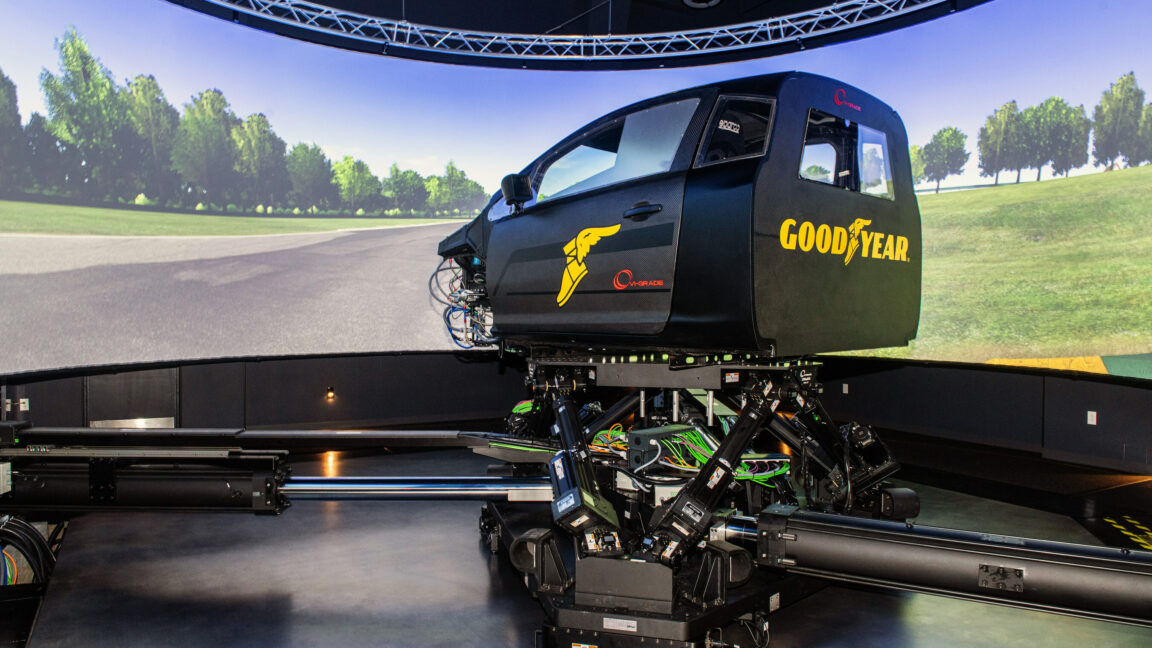
Tires might be one of the more prosaic parts of a car, but they are undoubtedly among the most important. Bench racers might obsess about powertrain specs, and average consumers mostly want to know that there's wireless charging for their phones, but it's the tires that actually make contact with the road. Without them, no one is going anywhere. At least not very far.
In the past, tires have been considered somewhat mysterious, with secret blends of rubber, carbon, and other stuff combined with clever arrangements of belts and wires to hold the whole thing together as it rotates faster and faster without flying apart. These days, we know an awful lot about how tires work. Or at least tire companies like Goodyear do, having amassed enough testing data to be able to simulate them accurately enough to shave months off a development schedule.
In fact, the use of simulation in tire research and development has quite a long history. Chris Helsel, who is now Goodyear's CTO, joined the company back in 1996; he was hired as part of a tiny team doing computer tire simulation. "At Goodyear in '96, it felt like almost late to the party in terms of doing what we call finite element analysis, which is basically breaking a large structure down into little parts," Helsel said.
Skeuomorph
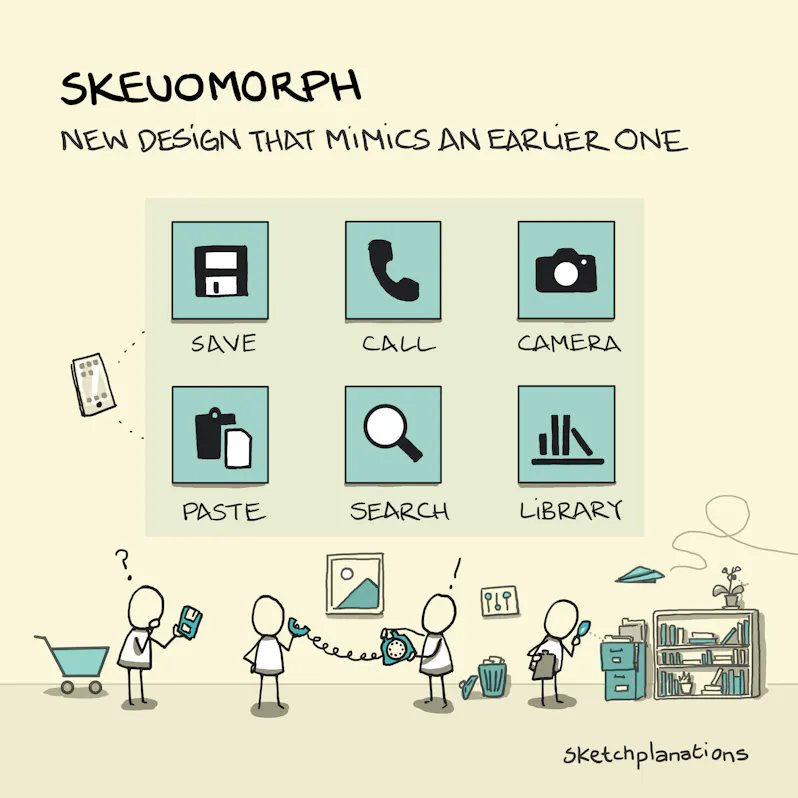
Why is the save icon in your software a floppy disk that no one has used for over 20 years? And that phone icon looks nothing like your mobile phone when making a call. These are both skeuomorphs.
What is a skeuomorph?
A skeuomorph is when a new design borrows practical elements from a former design and repurposes them in a functional or ornamental way.
Skeuomorphs are practical because they make new systems more intuitive. Their comfort and familiarity can help bridge old and new ways. For example, some electric cars are designed to look like they have air intake vents like traditional combustion cars.
More poetically, a skeuomorph can offset the loss of physical reality when interacting with our digital devices.
Skeumorph examples
Skeuomorphs abound in the digital world:
- The save icon is a floppy disk from the 1980s and '90s
- Microphone and speaker icons
- The bin icon for deleting files
- The battery icon on your computer
- The envelope icon for email
- Gears for Settings
- Storing files in folders
- Books apps displayed with bookshelves
- The magnifying glass to zoom
- The camera icon as a physical SLR camera
- The shopping cart in an online shopping site
- The 'desktop'
- Sliders and knobs, or even connecting wires, are made to look like analogue mixing desks and gear in music software (music software is awash with skeuomorphs)
- A link icon represented by a link of a physical chain
- A clipboard for paste
- Dials and levers or a funnel representing filters
- Shadows under boxes on a webpage simulate light falling on a surface to show depth
- Grab bars are indications of friction points where you can change the order of a list
The list goes on and on.
I once read that when designing, if you can't think of an icon for your feature in about five seconds, you probably need to write the word, as not everyone will understand it.
Not all digital icons are skeuomorphs: the printer as the print icon and the folded page for a page layout still map to their physical counterparts.
Physical skeuomorph examples include:
- Electric candles.
- Slot machine levers that change the state of a circuit rather than spin any wheels.
- Fake wood grain is used on floors or interiors.
- Haptic feedback—a simulated click when pressing on a touchscreen.
- Speed camera signs in the UK use a stylised visual of a classic Kodak Brownie camera.
- Rivets on jeans are from when fixing denim together required more than just stitching.
- Electric cars sometimes include imitation air vents at the front that cool traditional combustion engines.
- Car hub caps with spoke designs from early wheels.
- Textured wallpaper, such as Anaglypta, echoes leather wall hangings with scored patterns.
- There's even a design for an early car with a fake horse head on the front—though the inventor designed it to avoid scaring other horses on the road.
- A smartwatch isn't just a watch; it's a computer you wear on your wrist.
Skeuomorphs can borrow sound also:
- The imitation shutter sound of taking a photo on your phone
- Simulated engine noise on an electric car
Skeumorphs in Software and User Interfaces
Software and the digital domain are ripe places for spotting skeuomorphs, as they don't have physical characteristics—it's all 1s and 0s that we can't see or interact with.
Apple's early iPhone interfaces were famous for skeuomorphic elements, such as a Contacts app that resembled a contacts book complete with tabs—tabs are also skeuomorphic— and fake leather or paper effects in note apps.
Skeuomorphs, like metaphors in design, are helpful. In a magic box that can do anything—a mobile phone—a visual connection to a physical object with a defined purpose helps immediately tell you what something might be or do.
As the digital world gradually becomes the first interaction for so many uses, skeuomorphs may become less common. But we'll see them around for decades yet.
Early skeuomorphs
Skeuomorph is not a recent term. It was coined by archaeologist Henry Colley March by combining the Greek skeuos (σκεῦος) for container or tool and morphe (μορφή) for shape.
Skeuomorphs have been used in art and architecture since ancient times. For example, they are decorative features of stone buildings that mimic structural elements from older wooden ones, such as protruding rafters. Ancient pottery sometimes includes decorative rope patterns on the surface.
More About Skeuomorphs
The BBC has a lovely radio piece on Skeuomorphs, Design, and Modern Craft with novelist Will Self. The piece discusses their subtler side and some great examples, some of which I've included here. In the same episode, they also mention the zombie walk with faces lit by the glowing screen from a phone.
Related Ideas to Skeuomorph
Also see:
Cat-like robot mimics bunting behavior to alleviate human tension
Synthesia snaps up $180M at a $2.1B valuation for its B2B AI video platform
As the world continues to work through how to handle the explosion of deepfake content online, it seems that not all AI-created videos are stirring controversy. Synthesia, a London startup building products around highly realistic AI avatar technology, says it’s a big hit with enterprises, with some 60,000 of them — 1 million users — […]
© 2024 TechCrunch. All rights reserved. For personal use only.
Microsoft relaunches Copilot for business with free AI chat and pay-as-you-go agents

Microsoft is relaunching its free Copilot for businesses as Microsoft 365 Copilot Chat today, complete with the ability to use AI agents. Copilot Chat is Microsoft’s latest attempt to get people used to using AI at work and relying on it enough to tempt them into paying $30 per month to get the full Microsoft 365 Copilot.
“It’s free and secure AI chat that’s GPT-powered,” explains Jared Spataro, Microsoft’s chief marketing officer of AI at work, in an interview with The Verge. “You can upload files so it’s very comparable to the competition, in fact we think even at this level it bests the competition.” Spataro wouldn’t name the competition, but it’s clearly ChatGPT and Google’s Gemini.
/cdn.vox-cdn.com/uploads/chorus_asset/file/25832200/chrome_i3etWFrvj4.jpg) Image: Microsoft
Image: Microsoft
Microsoft 365 Copilot Chat is essentially a rebranding of what was once Bing Chat Enterprise before Microsoft rebranded it to just Copilot. It crucially now includes access to Copilot AI agents right within the chat interface — which was previously only available in the full Microsoft 365 Copilot experience — requiring a $30 per user per month subscription. These agents are designed to work like virtual colleagues and can do things like monitor email inboxes or automate a series of tasks.
You’ll be able to create and use agents using Copilot Studio, use agents that rely on web data, and even use agents grounded on work data through the Microsoft graph. The usage of agents with Copilot Chat will be priced through the Copilot Studio meter in Azure or through a pay-as-you-go option.
“The first question people ask me is ‘am I writing you a blank check?’” says Spataro, but Microsoft has built controls for how people pay for AI agent access. “The way you can control the spinning of the meters is paying in different ways. One way is pay-as-you-go, that is essentially an open account or tab that you’re burning down, but the other way to do it is through consumption packs, and when the pack runs out you’re done.”
/cdn.vox-cdn.com/uploads/chorus_asset/file/25832202/chrome_Y4WRu8tID6.png) Image: Microsoft
Image: Microsoft
The pricing and consumption rates are a little complicated, though. Microsoft measures agent usage in messages, so classic answers that don’t hit large language models are priced as one message, whereas generative answers cost two messages and anything accessing the Microsoft Graph (including files stored in SharePoint) will cost 30 messages.
“A message is equivalent to 1 cent, so you can essentially convert it over to 1 cent, 2 cents, and 30 cents,” explains Spataro. “It spins an Azure meter and it burns down a customer’s MACC (Microsoft Azure Consumption Commitment).”
Microsoft provides some example cost calculations for businesses that might be tempted to use AI agents through Microsoft 365 Copilot Chat:
A hypothetical agent in Microsoft 365 Copilot Chat uses data stored in Microsoft Graph to answer employee questions about HR policies. Yesterday, the agent consumed 200 generative answers and 200 tenant Graph grounding for messages. Therefore, it would cost 6,400 messages or $64 for that day.
The actual chat experience in Copilot Chat is largely unchanged, and it uses GPT-4o for queries. You can also upload files to Copilot Chat and have it summarize Word documents or even analyze data in Excel spreadsheets. You can do the same thing directly within Word or Excel if you pay for the full Microsoft 365 Copilot, instead of having to upload files manually. Spataro says Microsoft doesn’t have any plans to enable a trial mode of Microsoft 365 Copilot, but it’s clear Copilot Chat is designed to tempt businesses into paying to get Copilot inside Office apps.
Copilot Chat is already popular among businesses that rely on Microsoft software and services. “We had Bing Chat Enterprise that we renamed, and despite the fact that the naming journey has been hard to track and it’s hard to find the product, we have a remarkable number of users on it,” says Spataro. “What we find is that when you start to use it, you become accustomed to and appreciative of the value that it can provide at work.”
With an ongoing debate over the value of a $30 per user per month subscription to Microsoft 365 Copilot, Microsoft will be hoping that Copilot Chat can help convert a lot more businesses over to its AI way of thinking.
Actualité : Cette étrange étoile a réussi à stopper sa chute dans un trou noir

Amazon Kindle Scribe (2024) review: reading and writing in one excellent package

Procedurally Generated Terrain in OpenSCAD
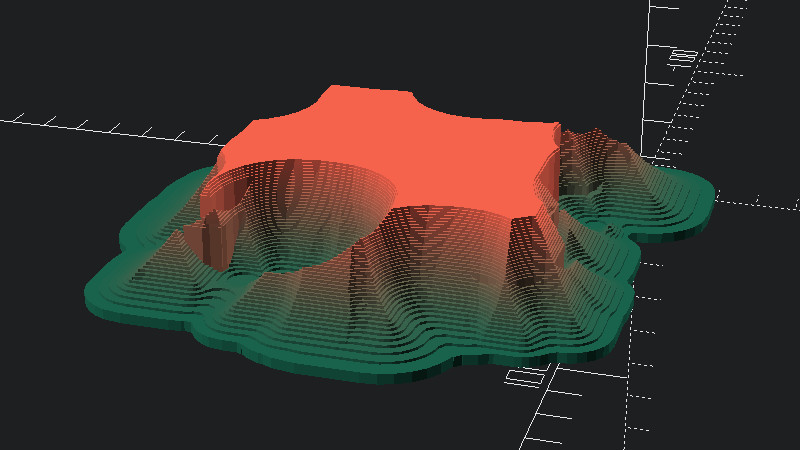
We’re big fans of OpenSCAD here at Hackaday — it’s free and open source software, runs on pretty much anything, and the idea of describing objects via code seems like a natural fit for producing functional parts. Rather than clicking and dragging elements on the screen, you can knock out a quick bracket or other simple component with just a few lines of code. But one of the things we don’t often get a chance to showcase is the incredible potential of generating 2D and 3D objects algorithmically.
In a recent Reddit post, [ardvarkmadman] dropped an extremely impressive snippet of OpenSCAD code that he calls TerrainGen. In fewer than fifteen lines of code, it’s able to create randomized “islands” which range from simple plateaus to craggy mountain ranges. After dropping the code in the OpenSCAD editor, you can just keep hitting F5 until you get a result that catches your eye. This seems like an excellent way to generate printable terrain elements for gaming purposes, but that’s just one possibility.
r1=rands(0,1,1)[.1];
r2=rands(0,1,1)[.2];

for (j=[1:.25:10])
    color(c=[j/10,r2,r1,1])
    linear_extrude(j/r2)

offset( -j*2)
for(i=[1:.25:20]){
random_vect=rands(0,50,2,i/r2);
   translate(random_vect*2)
    offset(i/j)
     square(j*1.5+i/1.5,true);
 }
So what’s happening here? The code generates several random numbers and uses those to define the height and position of an array of points that are used to make the final piece of terrain. When creating functional parts in OpenSCAD, we’re almost elusively dealing with very specific parameters, so it’s interesting to see how easily you can tweak objects just by sprinkling in some random values.
Inspired by the positive response to TerrainGen received, another user by the name of [amatulic] chimed in to share a similar project they’ve been working on. The code is able to generate blocks of terrain based on the dimensions and seed value provided by the user, and even simulates realistic weathering and erosion. This approach is far more computationally intensive, and requires a few hundred lines of code, but the results are undeniably more realistic. There’s a blog post that deep-dives into the math behind it all, if you’re looking for some light reading.
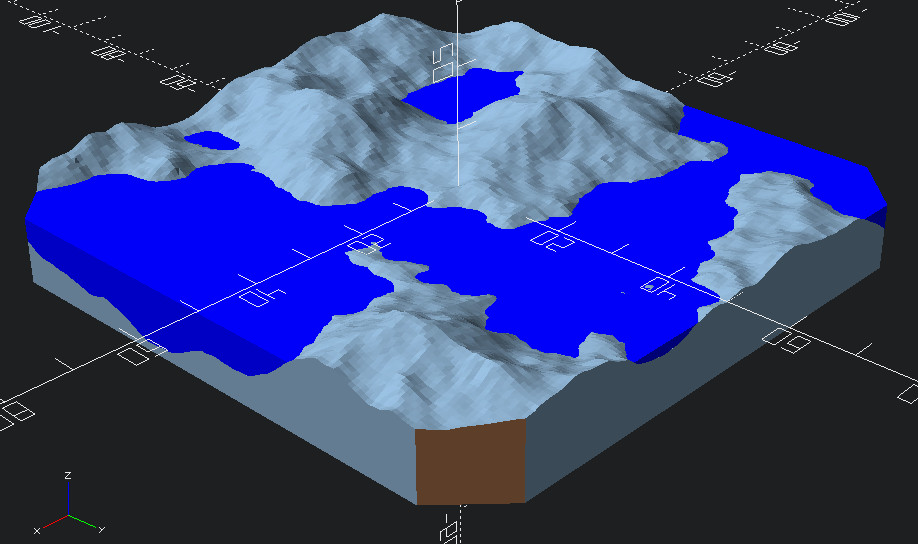
Although it’s probably not something we’d personally get much use out of, we think the ability to randomly generate 3D models like this is absolutely fascinating. We’d love to hear what readers think about these techniques, especially in regards to potential applications for them.
Parallels can finally run x86 versions of Windows or Linux on Apple Silicon
Virtualization software like Parallels and VMware Fusion give Mac owners the ability to run Windows and Linux on top of macOS, but for Apple Silicon Macs, that support was limited to the Arm-based versions of those operating systems. And while Windows and Linux both support some level of x86-to-Arm app translation that attempts to maintain compatibility with most software, there are still plenty of things that demand an Intel or AMD processor with the x86 instruction set.
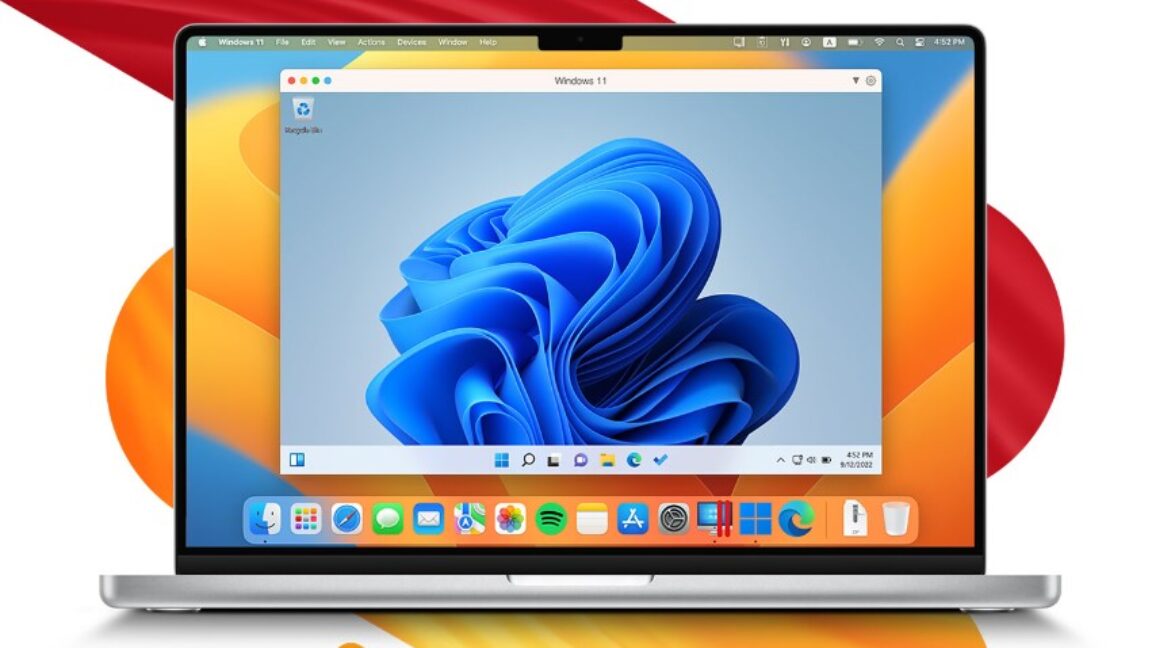
Last week, Parallels released a new update that partially resolves this problem: Users of Parallels Desktop Pro 20.2.0 now have access to x86 operating systems via an "early technology preview" of Parallels' "proprietary emulation engine."
The technology preview is currently limited to certain 64-bit versions of Windows 10, Windows 11, and Windows Server 2019 and 2022. Parallels also says it has tested several UEFI-compatible Linux distributions, including Ubuntu 22.04.5, Kubuntu 24.04.1, Lubuntu 24.04.1, and Debian versions 12.4 to 12.8. Fedora will install, but it's unstable. 32-bit versions of operating systems, as well as older versions of Windows like Windows 7 or 8, aren't supported.
Novel OLED stacks enable exceptionally bright microdisplays
Study investigates how digital platforms are transforming the agricultural sector
Fluid Simulation Pendant Teaches Lessons in Miniaturization
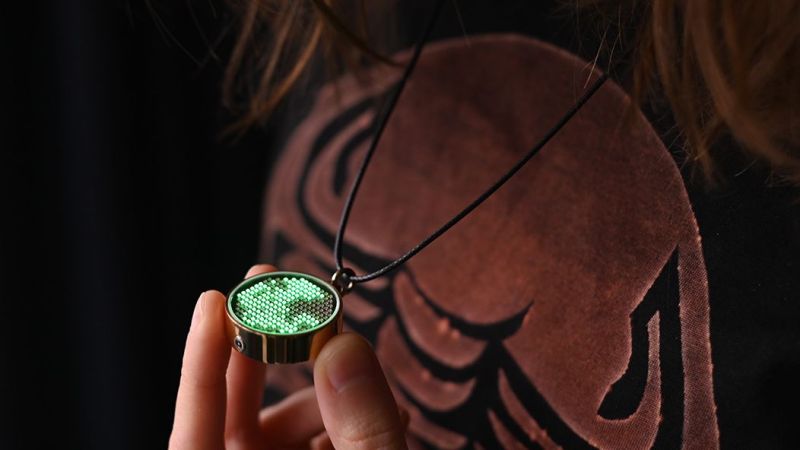
Some projects seem to take on a life of their own. You get an idea, design and prototype it, finally build the thing and — it’s good, but it’s not quite right. Back to the drawing board, version 2, still not perfect, lather, rinse, repeat. Pretty soon you look around to discover that you’ve built ten of them. Oops.
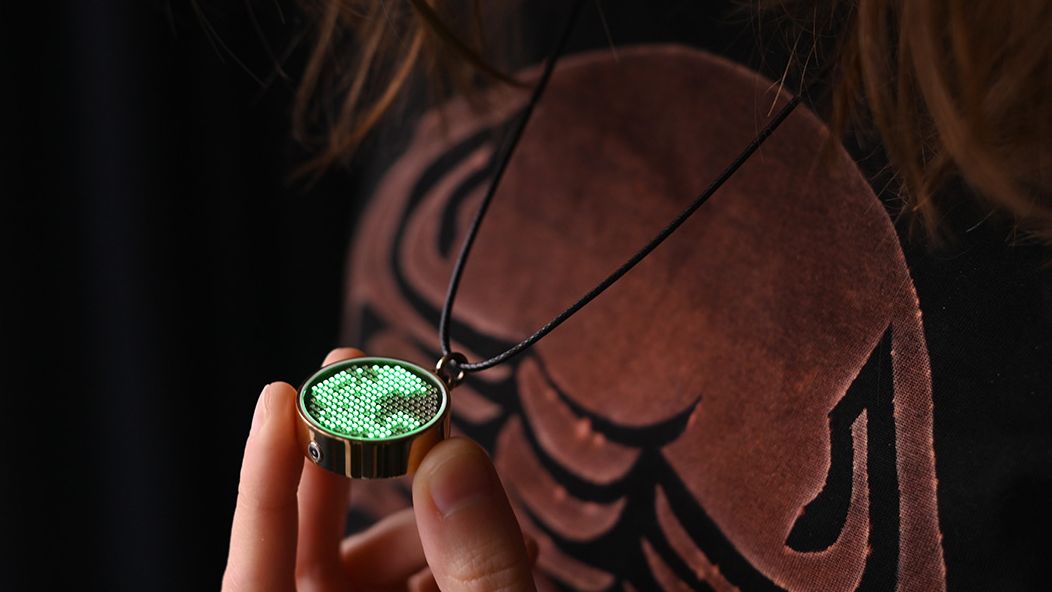
That seems to be the arc followed by [mitxela] with this very cool fluid simulation pendant. The idea is simple enough; create a piece of jewelry with a matrix of tiny LEDs that act like the pendant is full of liquid, sloshing about with the slightest movement. In practice, though, this project was filled with challenges. Surprisingly, [mitxela] doesn’t seem to number getting a fluid dynamics simulation running on a microcontroller among those problems, at least not to a great degree. Rather, the LED matrix seemed to cause the most problems, both in terms of laying it out on the 25-mm diameter PCB and how to address the LEDs with relatively limited GPIO on the STM32 microcontroller. The solution to both was diagonal charlieplexing, which reduces the number of vias needed for the 216-LED matrix and allows the 0402 to be densely packed, along with providing some tolerance for solder bridging.
And then there’s the metalworking heroics, which no [mitxela] project would be complete without. This seems to be where a lot of the revisions come from, as the gold-plated brass case kept not quite living up to expectations. The final version is a brass cup containing the LiR2450 rechargeable battery, a magnetic charging connector, and the main PCB, all sealed by a watch crystal. The fluid simulation is quite realistic and very responsive to the pendant’s position. The video below shows it in action along with a summary of the build.
If you want to catch up on [mitxela]’s back catalog of miniaturized builds, start with his amazing industrial ear adornments or these tiny matrix earrings. We’re also fond of his incredible shrinking MIDI builds.
[NRF 2025] Les start-up françaises prennent leurs quartiers à New York

Nous traitons chaque client avec une expérience personnalisée, non standardisée
CES 2025 : Retour à Vegas rêves à rêver
 Ca y est, le CES 2025 est dans les starting-blocks. J’ai fait le déplacement dans le Nevada pour couvrir l’évènement cette année encore. Si les communiqués de presse pleuvent, il

CES 2025 : Retour à Vegas rêves à rêver Cet article vous a été concocté par Abavala !!!