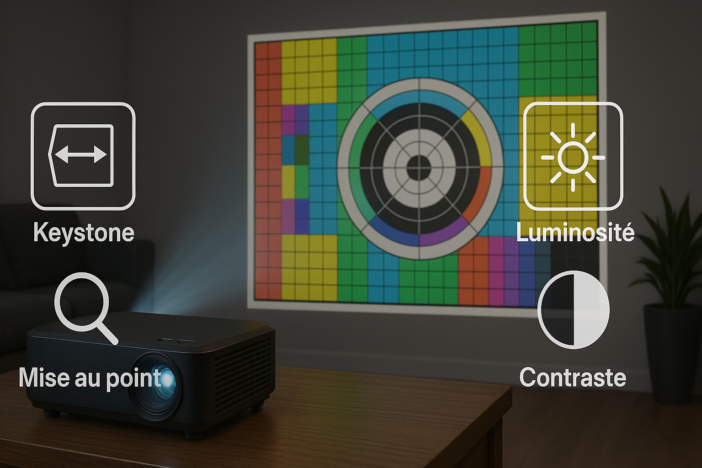
 Découvrez comment optimiser les réglages de votre vidéoprojecteur pas cher pour obtenir une qualité d'image époustouflante. Astuces, conseils et techniques de pro pour un rendu cinéma à petit prix !
Jean-Philippe Encausse
Shared posts
18 Apr 12:05
Découvrez comment optimiser les réglages de votre vidéoprojecteur pas cher pour obtenir une qualité d'image époustouflante. Astuces, conseils et techniques de pro pour un rendu cinéma à petit prix !
Transformez votre vidéoprojecteur low-cost en bijou cinéma : astuces de pro dévoilées !
by Cédric
Découvrez comment optimiser les réglages de votre vidéoprojecteur pas cher pour obtenir une qualité d'image époustouflante. Astuces, conseils et techniques de pro pour un rendu cinéma à petit prix !
17 Apr 09:18
ChatGPT now interprets photos better than an art critic and an investigator combined
by Tushar Mehta
ChatGPT’s recent image generation capabilities have challenged our previous understing of AI-generated media. The recently announced GPT-4o model demonstrates noteworthy abilities of interpreting images with high accuracy and recreating them with viral effects, such as that inspired by Studio Ghibli. It even masters text in AI-generated images, which has previously been difficult for AI. And […]

Jean-Philippe Encausse likes this
17 Apr 09:16

Meet the Man Who Got a High-Tech PillCam Stuck Inside His Intestines for Six Months — and Says It Saved His Life
by Maggie Harrison Dupré
Adrian Thiessen, an Ontario-based filmmaker and documentarian, was well aware of the irony of swallowing a tiny, pill-sized camera, even before he gulped down the device.
"Being a film dude, I was joking with my coworkers about it, looking at the technology and thinking it's funny and weird and cool," Thiessen told Futurism in an interview. "I was making jokes about getting the footage, and becoming one with the camera."
Little did he know that the camera would end up getting lodged in his body — for over six months.
As Thiessen explained to Futurism over two interviews — the first conducted whilst the camera was still stuck inside him, the second after it had been surgically removed — he had suffered from a severe gastrointestinal condition for nearly a decade. His condition was persistent and painful, often landing him in the hospital for blood transfusions after suffering ruptures in his small bowel. Worst of all, it was a medical mystery: doctors who conducted various investigative procedures generally agreed that the issue seemed to have something to do with inflammation, but they struggled to land on a firm diagnosis.
"Sometimes, it would seem like an allergy or an intolerance. Sometimes it would seem like an [inflammatory bowel disease] situation, like a Crohn's Disease," said Thiessen, referencing the gastrointestinal inflammatory disorder that impacts the lining of the GI tract, causing symptoms like pain and discomfort, ulcers, bleeding, and impacting the body's ability to pass food and absorb nutrients. (The root cause of Crohn's, like many other autoimmune or inflammatory diseases, is unknown, and there's no known cure.)
"I never really had a concrete diagnosis," the filmmaker added. "A few doctors said I had Crohn's, and then other ones that I didn't; it didn't fit the criteria."
Absent a diagnosis, Thiessen turned to food, embarking on a painstaking years-long effort to test whether something in his diet could be the culprit — or at least, if he could pinpoint certain irritants to avoid. He found that foods containing a ton of fiber, particularly insoluble fiber like that found in nuts and grains, many fruits, and vegetables like broccoli and leafy greens, proved triggering. Salads? Pretty much out of the question.
While triggering, however, insoluble fiber was unlikely to be the root cause. And eventually, the filmmaker's trial-and-error quest led him to what he believed to be the allergen causing his inflammation: fructan, a fermentable sugar found in familiar foods like onion, garlic, and wheat, in addition to many more healthy fruits, vegetables, legumes, and nuts.
In short: Thiessen's diet was extremely limited, but for a while, it worked.
"I stuck to that for a long time, for a few years, and I had no big flare issues. It seemed like it was working," he said.
But then, suddenly, it didn't. And in the summer of 2024, he found himself back in the ER.
"I had another event — lost a lot of blood, was severely anemic. Almost immediately had to go to the ER, had blood transfusions, had iron infusions," he recalled. Medical staff did the usual "investigative scopes and scans," he added, but they found nothing.
"So that," he said, "led to the capsule camera."
As far as Thiessen could tell, he hadn't strayed from his limited diet; it seemed uncanny, then, to both him and his medical team at the McMaster University Medical Centre in Ontario, that his hospital scans and probes would return so little insight. Left once again without answers, and feeling like they'd exhausted all other non-surgical investigative options, the father of two and his gastroenterologist turned their attention to a decidedly more futuristic way to look inside Thiessen's gastrointestinal system: a capsule camera known as the PillCam.
Developed by the company Medtronic, the PillCam is a tiny wireless camera, shaped like a chunky vitamin and designed to be swallowed.
"It's like, a little bit bigger than maybe the biggest vitamin you could imagine," remarked Thiessen.
Consider it the "Magic School Bus" approach, but if Ms. Frizzle had also strapped a live-streaming GoPro to the bus' windshield. The miniature camera journeys through the taker's gastrointestinal tract, recording what it captures along the way; its findings are transmitted to an accompanying "sensor belt," and later collected by physicians, who'll hopefully be able to catch an otherwise hard-to-reach glimpse of whatever it is — ulcers, scarring, lesions — that's not showing up in other scans.
So in July of 2024, Thiessen strapped on the belt, downed the capsule, and waited. But a day passed, and then another day, and another day, and the camera never showed up on the other end.
At first, the filmmaker thought maybe he just missed the device after it passed; after all, he didn't feel anything, like discomfort or other evidence of a disruptive blockage. But under the advice of his physician, he went in for an X-ray at the two-week mark.
"I went to get this X-ray at 14 days, and I was joking with the X-ray tech, like, 'if you see some big glowy camera in there, let me know.' But no part of me thought that it was still in there," said Thiessen, until they got to the final scan of his lower abdomen.
"Everyone went silent," said Thiessen. Sure enough, the next day, his doctor confirmed that the camera was stuck.
To be clear, though perforation and blockages are possible known risks of knocking back a PillCam, the capsule is widely viewed as safe and minimally invasive. (To that end, throughout our conversations, the filmmaker emphasized his trust in his medical team, and held no ill will towards Medtronic or the PillCam; he was trying something new, and it just didn't quite go as planned.)
First, as a last-ditch effort to get the camera to pass on its own, the medical team had Thiessen take a steroid treatment, the logic being that if inflammation or swelling in the region had blocked the camera's path, perhaps steroids could reduce swelling and help dislodge it. When that didn't work, they conducted more X-rays and scans. The camera, they determined, was lodged in a hard-to-reach spot toward the very end of his small intestine; they then tried to reach it via enteroscopy with a balloon scope, but that didn't work, either.
There was only one option left for removal: a bowel resection, which is a serious surgery that would open up Thiessen's intestines.
At first, said Thiessen, the situation was incredibly frustrating. His medical mystery was painful, and having a terrible impact on his day-to-day life; its persistence had taken a toll on his mental health, and trying to stay positive could be challenging. After years of unexplainable setbacks and countless dead ends, taking the PillCam had represented a new, exciting step toward answers. But the camera hadn't finished its expedition, and the footage it did return before its battery died hadn't turned up anything new.
And now, it was stuck — like Thiessen himself.
"I was sort of in disbelief," the filmmaker said of his initial reaction, adding that he felt he was "doing pretty good getting through it all, and being optimistic and being excited about these tests." But this was "almost like another failure, another way the system was just not working for me."
"But I found comedy in it," he caveated. Something else that helped, he added, was the notion that, perhaps, the camera had landed at a pain point, and could thus still unearth some clues.
We first spoke to Thiessen in early October of last year, when the camera had been lodged in his small intestine for over 70 days. We decided we'd catch up after his surgery, which was delayed once and rescheduled. Finally, in January — over six months after he first swallowed the PillCam — Thiessen sent us an email.
"So I'm chillin' in the hospital," wrote the filmmaker, reporting that he'd had his bowel surgery the day prior, and that it had gone "very well." The camera had been successfully removed — as had a full foot of scarred, damaged tissue in his intestines that had previously evaded detection by Thiessen's doctors.
A few weeks later, we jumped back on the phone to catch up.
"When I woke up, the surgeon was like, you absolutely needed that surgery," said Thiessen, explaining that his surgeons had removed "just over 30 centimeters," or roughly 12 inches, of damaged bowel that the camera was "stuck between, unmovable."
"There was no way it was coming out without cutting it out," he continued, "and it was just a very damaged portion of my bowel that had been there for who knows how long — mostly old, residual damage, like scarred or healed trauma."
The filmmaker described the revelation as a "shock, but also a relief — a huge vindication."
"I feel like most people in that moment would be like, whoa, you took how much out?" he continued. "But to me it was like, thank god you found something, and it was serious enough that it would explain everything I've been looking for for a decade."
According to Thiessen, his medical team was able to determine that he likely had developed Crohn's, but that it had manifested in a less common, hard-to-reach point in his digestive tract and left behind an extensive trail of destruction in its wake. The level of scarring also explained Thiessen's sensitivity to certain foods, particularly insoluble fiber, which was likely abrasive to the adhesion. Most excitingly, there didn't appear to be any sign of new or spreading disease. And after battling something that for years stayed so evasive, results so palpable brought solace.
"The camera was literally in the middle of it," he said, "at the center of this tangible thing."
Ultimately, in other words, the PillCam — described by Thiessen as a "Hail Mary play" — worked. If in an admittedly unexpected way.
"Even in the footage [collected by the PillCam], there was no real answer leading into that damaged area," reflected the filmmaker. "I could have swallowed a marble and had the same findings, because it was about the place it got stuck, not necessarily what it saw."
When we reached out to Medtronic to ask about the incidents, a spokesperson for the company said it was "deeply committed to patients, healthcare providers and restoring health," but that it couldn't discuss the details of a specific patient's case due to patient privacy laws.
The spokesperson did note, however, that clinicians have reported findings about other patients with Crohn's swallowing a PillCam and, in a similar situation to Thiessen's, experiencing the PillCam sticking at a point of disease or stricture within the GI tract. But PillCams aren't designed for prolonged retention, so if one does become stuck, the spokesperson emphasized, patients and their clinicians should seek to remove it.
There's an unmistakable peculiarity to the filmmaker's PillCam saga. After a decade of trying and failing to nail down a diagnosis through more conventional means, Thiessen had turned in desperation to a less-conventional technique. And though the camera technically found what it was looking for, it was only by literally cutting Thiessen open that his disease finally came into view.
In a way, it's like using an iPhone to successfully crack open a walnut. Sure, the iPhone worked. But at the end of the day, you could've used a rock.
Even so, said Thiessen, he's grateful. He's still keeping a strict diet; though his recovery has continued to go smoothly, and his doctors haven't technically made any foods off-limits, he understandably wants to take his time introducing new — or, well, old — foods back into his meal rotation. And right now, things are looking, and feeling, bright.
"Mentally, I feel so much better," Thiessen told us after his surgery. "I'm so much more happy and present with my family. To be able to be in the moment and not thinking about what's coming, or literally the next meal — I'd be stressed about food all the time, what I can eat and can't eat." And even while in recovery, he added, "I could tell my body is not fighting some foot-long piece of damage in my intestines. My circulation feels better; my hands and feet are warmer. There's less pressure when I eat something. I don't feel pain."
"It literally saved my life being stuck the way it was, and that's crazy to me," said the filmmaker. "It's just so weird and unique."
More on medical innovations: We Talked to the Inventors of the "Tamagotchi" Vape That Dies If You Stop Puffing
The post Meet the Man Who Got a High-Tech PillCam Stuck Inside His Intestines for Six Months — and Says It Saved His Life appeared first on Futurism.
16 Apr 17:26
Retail & ROI : ce que l’IA rapporte vraiment (et quand)
by LA REDACTION DE FRENCHWEB.FR
L’intelligence artificielle ne fait plus figure de promesse lointaine dans le secteur de la distribution. Elle est déjà un levier concret de performance. L’IA pourrait générer jusqu’à 9,2 trillions de dollars d’impact économique mondial d’ici 2030. Mais cette promesse s’accompagne d’une question stratégique : à quel moment le retour sur investissement (ROI) devient-il tangible ? …
L’article Retail & ROI : ce que l’IA rapporte vraiment (et quand) est apparu en premier sur FRENCHWEB.FR.
Jean-Philippe Encausse likes this
16 Apr 17:26
OpenAI préparerait un réseau social dopé à l'IA
by Korben
S’il y a bien un truc dont je suis sûr, c’est que le monde n’a pas besoin d’un nouveau réseau social. Et pourtant, c’est exactement ce que prépare Sam Altman, le CEO d’OpenAI, dans ce qui ressemble à une nouvelle saison de Game of Thrones version Silicon Valley.
Donc si vous êtes un nerd qui s’intéresse aux stratégies des titans de la tech, vous allez adorer cette nouvelle bataille qui se prépare.
16 Apr 07:39

Announcing the Hackaday Pet Hacks Contest
by Elliot Williams
A dog may be man’s best friend, but many of us live with cats, fish, iguanas, or even wilder animals. And naturally, we like to share our hacks with our pets. Whether it’s a robot ball-thrower, a hamster wheel that’s integrated into your smart home system, or even just an automatic feeder for when you’re not home, we want to see what kind of projects that your animal friends have inspired you to pull off.
The three top choices will take home $150 gift certificates from DigiKey, the contest’s sponsor, so that you can make even more pet-centric projects. You have until May 27th to get your project up on Hackaday.io, and get it entered into Pet Hacks.
Honorable Mention Categories
Of course, we have a couple thoughts about fun directions to take this contest, and we’ll be featuring entries along the way. Just to whet your whistle, here are our four honorable mention categories.
- Pet Safety: Nothing is better than a hack that helps your pet stay out of trouble. If your hack contributes to pet safety, we want to see it.
- Playful Pets: Some hacks are just for fun, and that goes for our pet hacks too. If it’s about amusing either your animal friend or even yourself, it’s a playful pet hack.
- Cyborg Pets: Sometimes the hacks aren’t for your pet, but on your pet. Custom pet prosthetics or simply ultra-blinky LED accouterments belong here.
- Home Alone: This category is for systems that aim to make your pet more autonomous. That’s not limited to vacation feeders – anything that helps your pet get along in this world designed for humans is fair game.
Inspiration
We’ve seen an amazing number of pet hacks here at Hackaday, from simple to wildly overkill. And we love them all! Here are a few of our favorite pet hacks past, but feel free to chime in the comments if you have one that didn’t make our short list.
Let’s start off with a fishy hack. Simple aquariums don’t require all that much attention or automation, so they’re a great place to start small with maybe a light controller or something that turns off your wave machine every once in a while. But when you get to the point of multiple setups, you might also want to spend a little more time on the automation. Or at least that’s how we imagine that [Blue Blade Fish] got to the point of a system with multiple light setups, temperature control, water level sensing, and more. It’s a 15-video series, so buckle in.
 OK, now let’s talk cats. Cats owners know they can occasionally bring in dead mice, for which a computer-vision augmented automatic door is the obvious solution. Or maybe your cats spend all their time in the great outdoors? Then you’ll need a weather-proof automatic feeder for the long haul. Indoor cats, each with a special diet? Let the Cat-o-Matic 3000 keep track of who has been fed. But for the truly pampered feline, we leave for your consideration the cat elevator and the sun-tracking chair.
Dogs are more your style? We’ve seen a number of automatic ball launchers for when you just get tired of playing fetch. But what tugged hardest at our heartstrings was [Bud]’s audible go-fetch toy that he made for his dog [Lucy] when she lost her vision, but not her desire to keep playing. How much tech is too much tech? A dog-borne WiFi hotspot, or a drone set up to automatically detect and remove the dreaded brown heaps?
 Finally, we’d like to draw your attention to some truly miscellaneous pet hacks. [Mr. Goxx] is a hamster who trades crypto, [Mr. Fluffbutt] runs in a VR world simulation hamster wheel, and [Harold] posts his workouts over MQTT – it’s the Internet of Hamsters after all. Have birds? Check out this massive Chicken McMansion or this great vending machine that trains crows to clean up cigarette butts in exchange for peanuts.
We had a lot of fun looking through Hackaday’s back-catalog of pet hacks, but we’re still missing yours! If you’ve got something you’d like us all to see, head on over to Hackaday.io and enter it in the contest. Fame, fortune, and a DigiKey gift certificate await!
15 Apr 09:00

Commentaires
L'article A2A, le protocole de Google pour faire converser les agents IA entre eux a été posté dans la catégorie IA de Human Coders News
A2A, le protocole de Google pour faire converser les agents IA entre eux
by Camille Roux
Google vient de lancer Agent2Agent (A2A) : un protocole d’interopérabilité pour permettre à des agents IA de collaborer entre eux, qu’ils soient internes ou externes à un même système.
Commentaires
L'article A2A, le protocole de Google pour faire converser les agents IA entre eux a été posté dans la catégorie IA de Human Coders News
15 Apr 08:59
Human-AI relationships pose ethical issues, psychologists say
It's becoming increasingly commonplace for people to develop intimate, long-term relationships with artificial intelligence (AI) technologies. At their extreme, people have "married" their AI companions in non-legally binding ceremonies, and at least two people have killed themselves following AI chatbot advice.
Jean-Philippe Encausse likes this
15 Apr 08:45
Tryzub : le « rayon de la mort » ukrainien qui pulvérise les drones à la vitesse de la lumière (et pas que ça) !
by Sylvain Biget, Journaliste
Avec son Trizoub, l'Ukraine est le cinquième pays à pouvoir se vanter de posséder une arme laser opérationnelle. Mais à la différence des autres, elle l’utilise en conditions réelles sur le terrain pour assurer sa défense aérienne.
Jean-Philippe Encausse likes this
15 Apr 08:43
Scientists made a stretchable lithium battery you can bend, cut, or stab
by Jacek Krywko
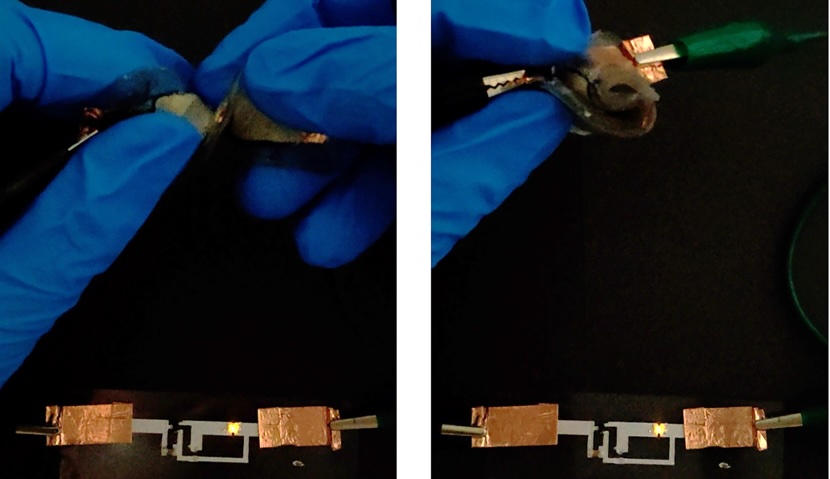
The Li-ion batteries that power everything from smartphones to electric cars are usually packed in rigid, sealed enclosures that prevent stresses from damaging their components and keep air from coming into contact with their flammable and toxic electrolytes. It’s hard to use batteries like this in soft robots or wearables, so a team of scientists at the University California, Berkeley built a flexible, non-toxic, jelly-like battery that could survive bending, twisting, and even cutting with a razor.
While flexible batteries using hydrogel electrolytes have been achieved before, they came with significant drawbacks. “All such batteries could [only] operate [for] a short time, sometimes a few hours, sometimes a few days,” says Liwei Lin, a mechanical engineering professor at UC Berkeley and senior author of the study. The battery built by his team endured 500 complete charge cycles—about as many as the batteries in most smartphones are designed for.
Power in water
“Current-day batteries require a rigid package because the electrolyte they use is explosive, and one of the things we wanted to make was a battery that would be safe to operate without this rigid package,” Lin told Ars. Unfortunately, flexible packaging made of polymers or other stretchable materials can be easily penetrated by air or water, which will react with standard electrolytes, generating lots of heat, potentially resulting in fires and explosions. This is why, in 2017, scientists started to experiment with quasi-solid-state hydrogel electrolytes.
15 Apr 08:41

Passengers Trapped in Rocket With Katy Perry Wished She Would Sing Something Else
by Victor Tangermann
Singed
This morning, a crew of six women — including pop star Katy Perry, CBS News broadcast journalist and TV personality Gayle King, and Blue Origin CEO Jeff Bezos' fiancé Lauren Sánchez — rocketed to an altitude of 66 miles, just past the internationally agreed-upon edge of space.
The 11-minute journey on board Blue Origin's New Shepard rocket appeared to have left a lasting impression on Perry, who was emotionally stirred by the experience.
During the trip, she reportedly broke into song, singing "What a Wonderful World" by Louis Armstrong, which was originally conceived in the 1960s to bring a fractured nation together following the Kennedy assassination, the beginning of the Vietnam War, and widespread racial injustice.
The other passengers, though? They encouraged Perry to sing one of her own hits instead.
After all, what better time to advertise your own work than during an ultra-expensive and vacuous PR stunt that nobody but the participants have anything to gain from?
Making Space
Perry said that the choice was inspired by some new-age mumbo jumbo.
"I’ve covered that song in the past and obviously my higher self is always steering the ship," she rambled, "because I had no idea that one day I’d be singing that song in space."
After touching down, Perry got on her knees to kiss the dirt below her in a symbolic gesture.
Not long after, the performer had an eye-roll-inducing answer when prompted why she chose to sing Armstrong's classic instead, arguing that wealthy one-percenters going for a thrill ride to space was somehow about female empowerment.
"It's not about singing my songs," she said during an interview following the launch. "It's about a collective energy and making space for future women. It's about this wonderful world that we see right out there and appreciating it."
"This is all for the benefit of Earth," she added.
But how exactly a brief trip to the edge of space is of any benefit to the planet remains to be seen.
Unfortunately, while she didn't opt for her own work during the launch, Perry did promise to write an entire song inspired by her seemingly life-changing trip — an homage we could probably do without.
More on the launch: Chat Relentlessly Mocks Katy Perry's "Space Trip"
The post Passengers Trapped in Rocket With Katy Perry Wished She Would Sing Something Else appeared first on Futurism.
15 Apr 08:40
Q&A: How blockchain could change the NFL draft
The NFL draft is entertaining, but it's also the setting for high-stakes negotiations where teams often simultaneously seek a competitive advantage and cooperate with each other by trading draft picks. These deals are complex, fast-paced and rely on a clear understanding between the teams involved.
Jean-Philippe Encausse likes this
15 Apr 06:35
Veuve Clicquot rouvre les portes de sa terrasse éphémère au Printemps Haussmann
by Anaïs Clavell
Forte du succès de l’édition 2024, la terrasse Veuve Clicquot au Printemps Haussmann est de retour. Pour cette saison, la maison de champagne met à l’honneur l’art du pique-nique dans une scénographie signée Souleiado.
Jean-Philippe Encausse likes this
15 Apr 06:34
Première cartographie titanesque d'un cerveau, avec 500 millions de connexions neuronales 🧠
by Cédric DEPOND
Une équipe internationale a reconstitué, avec une précision inégalée, l'architecture et le fonctionnement de dizaines de milliers de neurones d'un échantillon de cerveau de souris, et leurs 500...
12 Apr 07:43
DeepCoder-14B : Un nouveau modèle IA révolutionnaire pour coder plus vite et mieux
by Yohann Poiron
DeepCoder-14B est un nouveau modèle d’intelligence artificielle open source, conçu par Together AI et Agentica, qui se positionne comme une alternative crédible aux modèles propriétaires de génération de code, tels que o3-mini d’OpenAI. , Avec ses 14 milliards de paramètres, il offre des performances remarquables en matière de génération de code et de raisonnement algorithmique, tout […]
L’article DeepCoder-14B : Un nouveau modèle IA révolutionnaire pour coder plus vite et mieux est apparu en premier sur BlogNT : le Blog des Nouvelles Technologies.
12 Apr 07:42
Quantum hardware may be a good match for AI
by John Timmer
Concerns about AI's energy use have a lot of people looking into ways to cut down on its power requirements. Many of these focus on hardware and software approaches that are pretty straightforward extensions of existing technologies. But a few technologies are much farther out there. One that's definitely in the latter category? Quantum computing.
In some ways, quantum hardware is a better match for some of the math that underlies AI than more traditional hardware. While the current quantum hardware is a bit too error-prone for the more elaborate AI models currently in use, researchers are starting to put the pieces in place to run AI models when the hardware is ready. This week, a couple of commercial interests are releasing a draft of a paper describing how to get classical image data into a quantum processor (actually, two different processors) and perform a basic AI image classification.
All of which gives us a great opportunity to discuss why quantum AI may be more than just hype.

11 Apr 07:47
Accor va renforcer sa présence dans l'hôtellerie de luxe et le lifestyle
by Journal du Luxe
Le groupe hôtelier, qui a ouvert 293 établissements à travers le monde toutes catégories confondues en 2024, indique travailler au développement de près de 300 adresses de prestige.
11 Apr 07:45
Jean-Philippe Encausse - The Media Leader
Elise Dufour IA Act Jean-Philippe Encausse Nagarro ... Encausse, Innovation Solution Architect chez Nagarro, croisent ici leurs points de vue.
11 Apr 07:43
Holograms that can be grabbed and manipulated
Researchers have succeeded, for the first time, in displaying three-dimensional graphics in mid-air that can be manipulated with the hands. The team includes Doctor Elodie Bouzbib, from Public University of Navarra (UPNA), together with Iosune Sarasate, Unai Fernández, Manuel López-Amo, Iván Fernández, Iñigo Ezcurdia and Asier Marzo (the latter two, members of the Institute of Smart Cities).
11 Apr 07:43

Le nouveau processeur 2nm de TSMC pourrait être le cœur de la performance de l'iPhone 18.
TSMC dévoile le premier prototype du processeur 2nm
by Morgan Fromentin
Le nouveau processeur 2nm de TSMC pourrait être le cœur de la performance de l'iPhone 18.
Jean-Philippe Encausse likes this
11 Apr 07:42
L’Estonie envisage de couler les bateaux suspects qui touchent aux câbles sous-marins
by Bogdan Bodnar

L'Estonie est en plein débat sur un nouveau de texte loi qui prévoit d’élargir le cadre d’action de sa marine. La législation permettrait notamment l’usage de la force contre des navires civils, en cas de menace grave avérée.
11 Apr 07:40
Photonic chips boost computing speed and efficiency to address growing demand
Computer chips that combine the use of light and electricity are shown to increase computational performance, while reducing energy consumption, compared with conventional electronic chips. The photonic computing chips, described in two papers in Nature this week, might address the growing computing demands driven by advancing artificial intelligence technology.
11 Apr 07:40

Découvrez tout ce que vous devez savoir sur le GPMI qui pourrait remplacer le HDMI.
Le GPMI va-t-il faire disparaître le HDMI ?
by Morgan Fromentin
Découvrez tout ce que vous devez savoir sur le GPMI qui pourrait remplacer le HDMI.
11 Apr 07:36
Une IA révèle des bulles cosmiques dans notre galaxie 🫧
by Adrien BERNARD
Des chercheurs japonais ont découvert des structures cosmiques invisibles à l'œil nu grâce à l'intelligence artificielle.
Une équipe de l'Université métropolitaine d'Osaka a mis au point un...

Jean-Philippe Encausse likes this
11 Apr 07:32
Anime.js, a JavaScript animation engine
by Nathan Yau
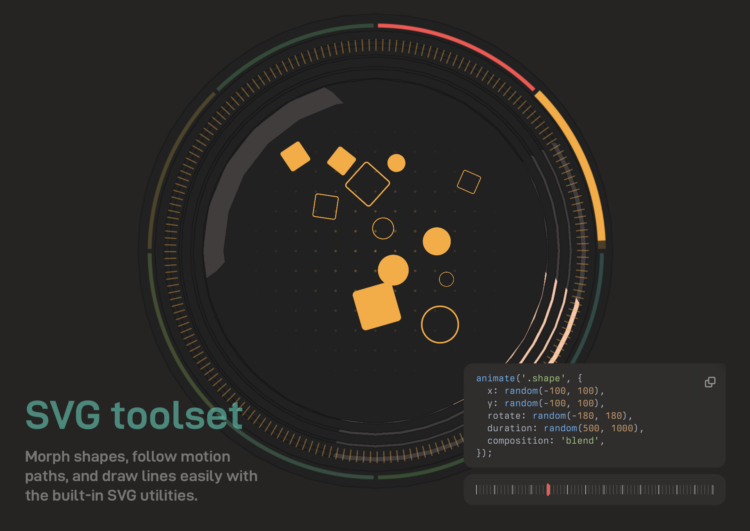
New to me, Anime.js by Julian Garnier seems like a fun library to play with.
Anime.js is a fast, multipurpose and lightweight JavaScript animation library with a simple, yet powerful API. It works with CSS properties, SVG, DOM attributes and JavaScript Objects.
The 4.0 version was just released.
Tags: animation, JavaScript, Julian Garnier
11 Apr 07:30
Samsung’s The Frame Pro ditches the cables to disguise your TV as art
by Georgina Torbet
Samsung has shown off the details of its new The Frame Pro TVs.

Jean-Philippe Encausse likes this
11 Apr 07:27
Leveraging silicon photonics for scalable and sustainable AI hardware
The emergence of AI has profoundly transformed numerous industries. Driven by deep learning technology and Big Data, AI requires significant processing power for training its models. While the existing AI infrastructure relies on graphical processing units (GPUs), the substantial processing demands and energy expenses associated with its operation remain key challenges. Adopting a more efficient and sustainable AI infrastructure paves the way for advancing AI development in the future.
11 Apr 07:26
Revolut est en colère contre Facebook, qui diffuse trop d’escroqueries
by Hugo Bernard

Un rapport de Revolut sur les arnaques financières en ligne rapporte que Facebook, Instagram et WhatsApp représentent plus de la moitié des signalements faits à Revolut.
11 Apr 07:24
ChatGPT can now remember and reference all your previous chats
by Samuel Axon
OpenAI today announced a significant expansion of ChatGPT's customization and memory capabilities. For some users, it will now be able to remember information from the full breadth of their prior conversations with it and adjust its responses based on that information.
This means ChatGPT will learn more about the user over time to personalize its responses, above and beyond just a handful of key facts.
Some time ago, OpenAI added a feature called "Memory" that allowed a limited number of pieces of information to be retained and used for future responses. Users often had to specifically ask ChatGPT to remember something to trigger this, though it occasionally tried to guess at what it should remember, too. (When something was added to its memory, there was a message saying that its memory had been updated.)

Jean-Philippe Encausse likes this
11 Apr 07:21
Ce phare pour vélo intelligent sait aussi filmer en 4K !
by Sylvain Biget, Journaliste
Garmin sort le Varia Vue, un puissant phare pour vélo dont la lumière s’adapte à l’environnement et à la vitesse. Ce très cher accessoire intègre également une caméra d’action 4K qui peut s’activer automatiquement en cas d’accident.
Jean-Philippe Encausse likes this