Découvrez le test complet du Plaud NotePin, l’enregistreur vocal dopé à l’IA qui capte, transcrit et résume vos réunions, interviews et idées, même en environnement bruyant. Un assistant portable, efficace et innovant, pensé pour les pros et les créatifs exigeants.
Le chatbot Grok, développé par xAI (la start-up d’Elon Musk), continue d’évoluer rapidement. Vous pouvez désormais partager votre appareil photo avec Grok pour permettre au chatbot IA de voir le monde qui vous entoure. La dernière nouveauté en date : Grok Vision, une fonctionnalité qui permet au chatbot d’analyser en temps réel ce que vous montrez […]
OpenAI on Wednesday brought the tech behind its new and improved image generation feature in ChatGPT to its API, allowing developers to integrate it into their apps and services. OpenAI’s new image generator, which launched for most ChatGPT users in late March, went viral for its ability to create realistic Ghibli-style photos and “AI action figures.” […]
Tesla released first-quarter earnings on Tuesday, revealing that its net income had plummeted by an astonishing 71 percent since the first quarter of last year.
Sales are dropping precipitously around the world, in large part due to Tesla CEO Elon Musk's wildly controversial behavior.
Yet, the company's stock rose more than seven percent Wednesday morning, indicating early investor optimism.
Why? One undeniable factor is Musk promising during Tuesday's call that he'd be spending more of his time leading Tesla — and less time gutting the federal government — which is something investors have been begging him to do for a while now.
But another extremely auspicious factor: president Donald Trump's announcement that he's planning to be "very nice" to China, hinting at a possible U-turn in the United States' disastrous trade war.
The announcement couldn't have come at a more convenient moment for Tesla, dropping after the disastrous revenue figures on Tuesday but before markets opened on Wednesday, shooting the entire market — and Tesla — skyward from the "Trump Slump" that had resulted from all the trade posturing.
Add it all up, and it looks a lot like Trump did his buddy Musk an immense favor by giving him incredible news at the exact moment that he needed it most.
The reaction on Wall Street was swift in light of the news, with the S&P 500 Index rising two percent and AI chipmaker Nvidia's shares going up four percent.
Even international markets rallied in light of the news, indicating a major sigh of relief that Trump could finally come to his senses.
As Musk admitted during Tuesday's earnings call, while Tesla was in a "stronger position than any of our competitors" thanks to "localized supply chains," the "tariffs are still tough on a company when margins are still low."
"So, you know, I'll continue to advocate for lower tariffs rather than higher tariffs," Musk argued, "but that's all I can do."
But considering Trump's rapidly changing tune, his closest ally appears to have finally proven convincing enough for him to lower rates, something that could provide some much-needed relief for the huge swathes of the US economy.
It wouldn't be the first time Trump has bent over backwards to help Musk's carmaker. Earlier this year, Trump turned the lawn in front of the White House into an improvised Tesla showroom in a naked attempt to shore up some enthusiasm for the already tarnished car brand.
Addressing the challenges of fragrance design, researchers at the Institute of Science Tokyo (Science Tokyo) have developed an AI model that can automate the creation of new fragrances based on user-defined scent descriptors. The model uses mass spectrometry profiles of essential oils and corresponding odor descriptors to generate essential oil blends for new scents.
Wizards of the Coast has released the System Reference Document, the heart of the three core rule books that constitute Dungeons & Dragons' 2024 gameplay, under a Creative Commons license. This means the company cannot alter the deal further, like it almost did in early 2023, leading to considerable pushback and, eventually, a retreat. It was a long quest, but the lawful good party has earned some long-term rewards, including a new, similarly licensed reference book.
Dungeons & Dragons owner Wizards of the Coast (WotC) put the core D&D rules into an Open Gaming License in the early 2000s, inspired by Richard Stallman's GNU General Public License. The idea was that by making the core mechanics, classes, spells, races, and monsters available for anyone to build on, royalty-free, more versions of games would draw more people into the tabletop roleplaying sphere, and perhaps back to the core D&D games and rule books. It also likely didn't do much harm to WotC's properties, as these basic aspects of the game, and bits taken from existing fantasy works, were going to be difficult to copyright.
WotC considered that the Open Gaming License (OGL) was open to revisions, however, and the company proposed changes to the OGL that would require that anyone making certain amounts of money had to report it (over $50,000 per year) or start paying royalties (over $750,000). A leaked version of that license put the higher-level royalties at 25 percent, and only covered printed materials and static PDFs, leaving virtual tabletop and software makers questioning where they might fit in.
Des scientifiques ont trouvé une nouvelle façon de fabriquer des matériaux qui pourraient faire beaucoup avancer les technologies quantiques.
Ces matériaux, très fins (on les appelle des...
Amazon se lance dans la course spatiale avec son projet Kuiper pour concurrencer Starlink de SpaceX.
La Mission KA-01 prévoit le lancement de 27 satellites pour offrir un accès Internet à haut débit mondial.
Les satellites d’Amazon utiliseront des moteurs à propulsion électrique pour atteindre une orbite de 631 km.
Plus de 3 200 satellites seront déployés pour assurer une couverture complète, avec des lancements prévus jusqu’à la fin de l’année.
Amazon, le mastodonte du commerce en ligne, s’attaque désormais à la conquête spatiale. Avec son projet ambitieux nommé Kuiper, Amazon cherche à transformer radicalement l’accès à Internet pour les utilisateurs du monde entier. En rivalisant directement avec Starlink de SpaceX, Amazon entend bien redéfinir les standards de l’internet ultra-rapide grâce à une constellation de satellites qui promettent une couverture mondiale. C’est une course à l’innovation et à l’efficacité qui s’engage, et les enjeux sont énormes, tant pour Amazon que pour ses concurrents.
Un pari audacieux pour Amazon
Kuiper, le projet spatial d’Amazon, s’inscrit dans une démarche stratégique visant à concurrencer directement Starlink, le réseau de satellites de SpaceX. Ce mois-ci, Amazon s’apprête à lancer ses premiers satellites, un événement attendu qui marque le début d’une nouvelle ère pour l’internet mondial. Le décollage est prévu le 9 avril à 12 h EDT depuis la Cape Canaveral Space Force Station en Floride. Cette première opération, baptisée Mission KA-01, verra le lancement de 27 satellites à bord d’une fusée Atlas V, fournie par United Launch Alliance (ULA).
Mais l’ambition d’Amazon ne s’arrête pas là. La mission KA-01 est conçue pour aller au-delà du simple déploiement de satellites. Il s’agit de démontrer la capacité des satellites à se déplacer de manière autonome et à établir des communications efficaces avec la station au sol. Une fois séparés de la fusée, les satellites activeront leurs systèmes embarqués et utiliseront des moteurs à propulsion électrique pour atteindre leur orbite cible de 631 km au-dessus de la Terre.
Les satellites d’Amazon, conçus pour opérer en orbite terrestre basse, se distinguent par leurs caractéristiques techniques avancées. En orbite, ils circuleront à une vitesse impressionnante de plus de 27 359 km/h, permettant de compléter un tour de la Terre en environ 90 minutes. Grâce à une infrastructure terrestre sophistiquée, ces satellites assureront la transmission de données internet vers des antennes installées chez les utilisateurs finaux.
Le système Kuiper ambitionne de déployer une flotte de plus de 3 200 satellites pour garantir une couverture mondiale. Amazon a déjà programmé au-delà de 80 lancements pour rendre ce service opérationnel d’ici la fin de l’année. Les satellites de la mission KA-01 bénéficient d’améliorations significatives par rapport aux prototypes testés précédemment : des antennes réseau à commande de phase optimisées, des processeurs plus performants, des panneaux solaires renforcés, et des liaisons optiques inter-satellites.
La gestion minutieuse du lancement et du déploiement des satellites est orchestrée par ULA depuis son Advanced Spaceflight Operations Center situé à Cape Canaveral. Après la séparation des satellites de la fusée, l’équipe Kuiper, basée à Redmond dans l’État de Washington, prendra en charge le suivi et le contrôle des opérations. Amazon prévoit également de diversifier ses partenariats pour les lancements, en collaborant avec des acteurs majeurs comme Arianespace, Blue Origin, et même son concurrent direct SpaceX.
Les futurs plans d’Amazon incluent sept autres lancements avec la fusée Atlas V et 38 lancements avec la fusée Vulcan Centaur d’ULA. Plus de 30 autres lancements sont programmés avec divers partenaires pour étendre et renforcer la constellation Kuiper. Ce projet ambitieux nécessite une production accélérée et un déploiement rapide des satellites pour atteindre les objectifs fixés.
Des implications économiques et technologiques majeures
L’initiative Kuiper d’Amazon ne se limite pas à un simple projet technologique; elle implique également des retombées économiques significatives. En fournissant un accès à Internet à haut débit et à faible latence, Amazon pourrait transformer le marché mondial de l’internet, en particulier dans les zones reculées où les infrastructures terrestres sont limitées. Cela pourrait ouvrir de nouvelles opportunités économiques pour les régions sous-desservies et stimuler l’innovation dans divers secteurs.
La concurrence avec SpaceX de Elon Musk est également un facteur clé à surveiller. Le duel entre ces deux géants pourrait engendrer une accélération des avancées technologiques dans le domaine spatial et de l’accès à Internet. Alors que les deux entreprises s’efforcent d’étendre leur portée globale, les consommateurs pourraient bénéficier de services améliorés et de coûts potentiellement réduits. La question demeure : jusqu’où Amazon est-il prêt à aller pour dominer le marché spatial ?
Face à cet enjeu technologique de taille, il est crucial de se demander comment ces innovations transformeront notre quotidien. La stratégie d’Amazon, avec sa constellation de satellites Kuiper, va-t-elle redéfinir l’écosystème numérique mondial et influencer durablement l’économie numérique ?
As Scientific American reports, pending Congressional approval, the budget would have a mind-numbingly painful and unnecessary result: the effective cancellation of NASA's follow-up to its groundbreaking James Webb Space Telescope, the Nancy Grace Roman Space Telescope.
For years, scientists have been hard at work on the observatory, nearing final integration and testing, before moving it to Cape Canaveral, Florida for launch into space.
But the latest budget proposal, if approved by Congress, could be a death knell for the already-constructed space telescope.
"This is nuts," Simons Foundation president and former co-chair of Roman’s science team David Spergel told SciAm. "You’ve built it, and you’re not going to do the final step to finish it?"
"That is such a waste of taxpayers’ money," he added.
The telescope has historically had bipartisan support in Congress, suggesting efforts to cancel it could face significant opposition in Washington, DC.
In fact, as the publication points out, Trump has now tried to cancel the Roman telescope on four separate occasions — but Congress successfully fought back each time.
"We are extremely alarmed by reports of a preliminary White House budget that proposes cutting NASA Science funding by almost half and terminating dozens of programs already well underway, like the Mars Sample Return mission and the Roman Space Telescope," said representative Judy Chu (D-CA) and Don Bacon (R-NE), co-chairs pf the bipartisan US Congressional Planetary Science Caucus, in a statement.
"If enacted, these proposed cuts would demolish our space economy and workforce, threaten our national security and defense capabilities, and ultimately surrender the United States’ leadership in space, science, and technological innovation to our adversaries," they wrote.
If launched, the Roman space telescope could provide scientists with an unparalleled, extremely detailed look at large-scale cosmological structures in infrared light.
Named after Nancy Grace Roman, the late American astronomer who made important contributions to star classification and served as NASA's first female executive, the observatory could shed light on some of the biggest scientific mysteries astronomers are pondering today.
"Roman has the sensitivity we need to understand what’s going on with the 70 percent of the universe that we don’t understand, which is dark energy," Spergel told SciAm.
However, funding for existing telescopes, including NASA's JWST and Hubble, is accounted for in the budget proposal.
Experts have been appalled at the suggestion of dealing a near-fatal blow to the space agency's Science Directorate.
"It sets back a program that is clearly the leading program in the world — in a historic fashion," one former government official told SciAm. "You take that program and shoot it through the head."
Cancelling the Roman space telescope, in particular, could be devastating news for the scientific community, if not the world.
"Why do we even plan on doing great things if, on a whim, we can just decide ‘nah’?" a senior space scientist told SciAm. "These things take a generation to build and enable multiple generations of scientists. They should not be blithely thrown away."
Character.AI, a leading platform for chatting and roleplaying with AI-generated characters, unveiled its forthcoming video generation model, AvatarFX, on Tuesday. Available in closed beta, the model animates the platform’s characters in a variety of styles and voices, from human-like characters to 2D animal cartoons. AvatarFX distinguishes itself from competitors like OpenAI’s Sora because it isn’t […]
A group of computer scientists at Microsoft Research, working with a colleague from the University of Chinese Academy of Sciences, has introduced Microsoft's new AI model that runs on a regular CPU instead of a GPU. The researchers have posted a paper on the arXiv preprint server outlining how the new model was built, its characteristics and how well it has done thus far during testing.
Le groupe de beauté a enregistré une croissance de +3,5% sur le premier trimestre 2025. La catégorie luxe, segment le plus solide de la firme L'Oréal, a dépassé la barre des 4 milliards d'euros de revenus.
Sunbooster transforme vos clôtures en sources d’énergie solaire ! Découvrez comment cette innovation révolutionne le photovoltaïque en intégrant des panneaux solaires verticaux à vos brise-vues. Une solution discrète, efficace et écologique pour produire votre propre électricité.
I’ve been into sim racing for a few years now, but between work and everything else life throws at me, I never had the time to dive deep. Until recently.
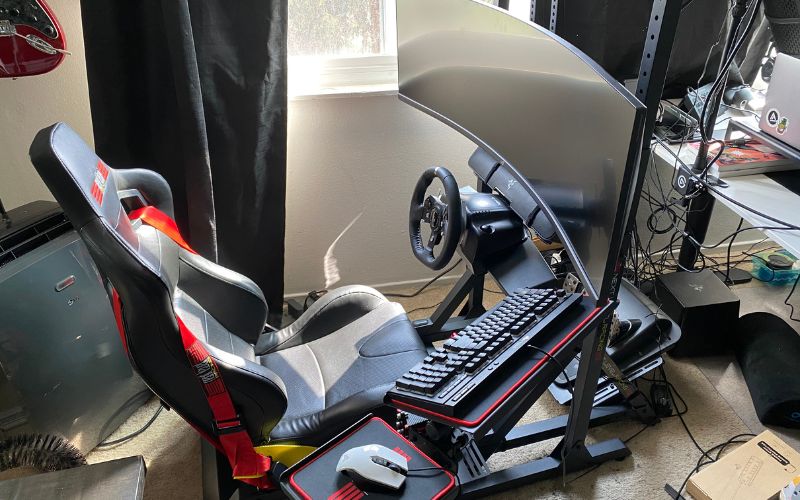
If you’re just getting started with sim racing, chances are you’re setting up your wheel on a desk or table. With your pedals sitting loose on the floor. I’ve been there.
At one point, I was so hyped that I built my own mounts and even grabbed a bucket seat from a junkyard. It was fun, and yeah, DIY setups can get the job done, but they’re not perfect. The pedals slip around, and it’s hard to nail the right position for your wheel and shifter. That’s when you realize getting one of the best sim racing cockpits is the way to go. They lock everything in place, feel way more solid, and change how the whole experience feels.
Best cockpit for sim racing: Next Level Racing GTtrack
Next Level Racing GTtrack / Image Credit: Joshua Thomasson, Amazon
The GTtrack is hands down my favorite cockpit. It’s solid, fully adjustable, and gives you that true race car seating position.
I used to have a rig that felt flimsy and weak. It wobbled when things got intense. Now, every time I look at the Next Level Racing GTtrack ($898.69), I get a little jealous of the people lucky enough to have one. This setup combines carbon steel with laser cutting and robotic welding. It’s built tough and made to fit different drivers with ease.
The wheel plate adjusts in both height and angle. You can also slide the seat back and forth and tilt it to your liking. That makes a huge difference. In my experience, getting your seating position right is everything. It boosts comfort and improves control. Especially in GT cars, where you’re sitting more upright than you would in a formula car.
Runner-up: Sim-Lab GT1 Evo
Sim-Lab GT1 Evo
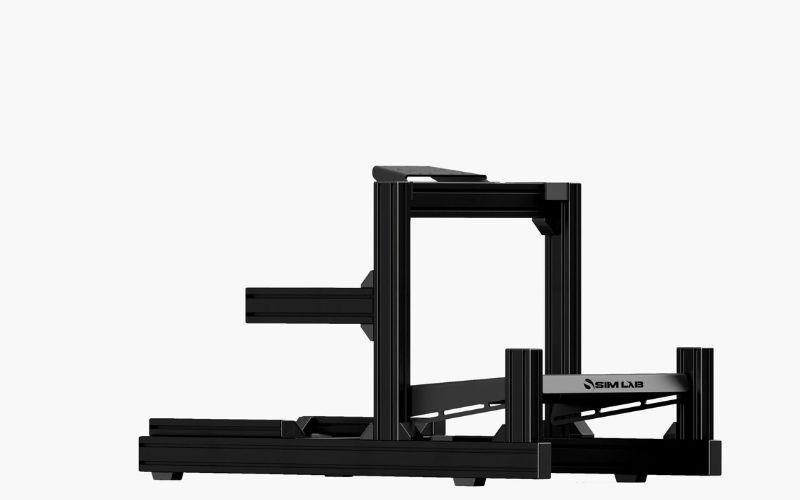
The Sim-Lab GT1 Evo makes a wonderful pick for beginners, delivering solid value at $449. Its aluminum profile build is tough and works with most sim racing gear. Enthusiasts looking for a reliable, upgradeable setup without spending too much will find it ideal.
Sure, you might be able to grab the aluminum profile a bit cheaper on its own. But buying a kit like this has its perks. Everything arrives pre-cut with smooth edges, fitting together flawlessly. Plus, you get custom wheel and pedal decks tailored for the rig.
Flexibility makes the GT1 Evo a winner. Its pedal plates adjust in every way—distance, height, angle—and stay rock-solid. The plate’s heavy, rigid design offers tons of mounting holes and slots, ensuring zero wobble no matter how you configure it.
Best sim racing cockpit under $500: Playseat Challenge ActiFit
Playseat Challenge ActiFit
The Playseat Challenge ActiFit—20% off at $183.20—arrives in a sleek, compact box. Unpacking it is a breeze, and you’ll have it set up in no time. In fact, most folks say it takes about 30 minutes max.
The ActiFit fabric is awesome, super breathable, and perfect for keeping cool. You can even stick a fan behind or beside you to get some airflow to your back, where you’re likely sweating buckets during intense races. I’m all about ActiFit’s comfort for marathon gaming sessions.
What I love about the Playseat Challenge is how easy it is to fold up and store. You can move it from the bedroom to the living room in no time. Thanks to the straps it comes with, folding and unfolding it takes maybe 30 to 45 seconds. I actually came across a forum where some players would pick the Playseat Challenge just for how easy it is to use. Even over the fancy extras you find in the high-end setups. Which side are you on?
Best foldable sim racing cockpit: Next Level Racing GTLite
Next Level Racing GTLite customer setup
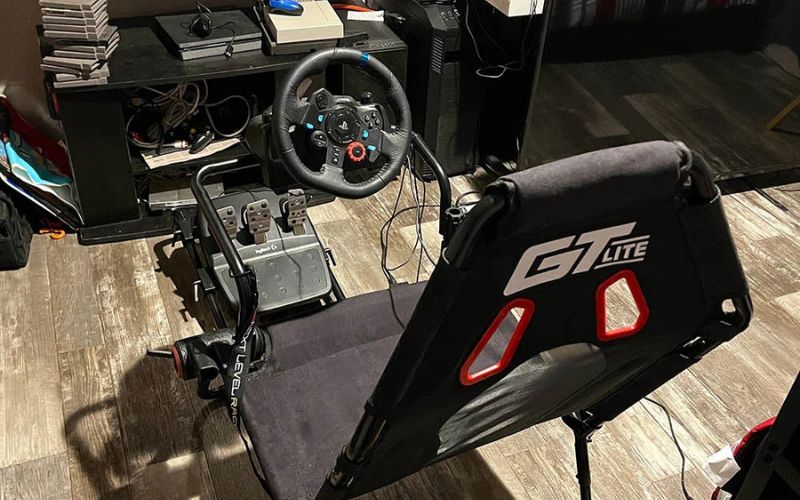
The Next Level Racing GTLite—10% off at $179.99—may give off lawn chair vibes, but it’s a solid, budget-friendly pick. It holds everything together well and folds up when you’re done, making it super easy to store.
The real star here is the set of Next Level Racing Hubs. They keep the rig sturdy while letting you set it up quickly and fold it down without too much trouble. With a size of 37.4″D x 36.6″W x 69.29″H, the simulator cockpit seems like a neat fit for my small room.
The hubs are easy to work with, though folding the whole thing can be trickier than expected. There’s a video guide from Next Level Racing that helps, but it’s folded a bit differently than it looks in the marketing shots, so it takes a little practice to get the hang of it.
If you’re looking for an affordable, entry-level racing rig, the GTLite checks all the right boxes. It’s pre-drilled so you can securely mount your wheel, shifter, and pedals. What’s more, it offers plenty of adjustability to help racers of all sizes find a comfortable position.
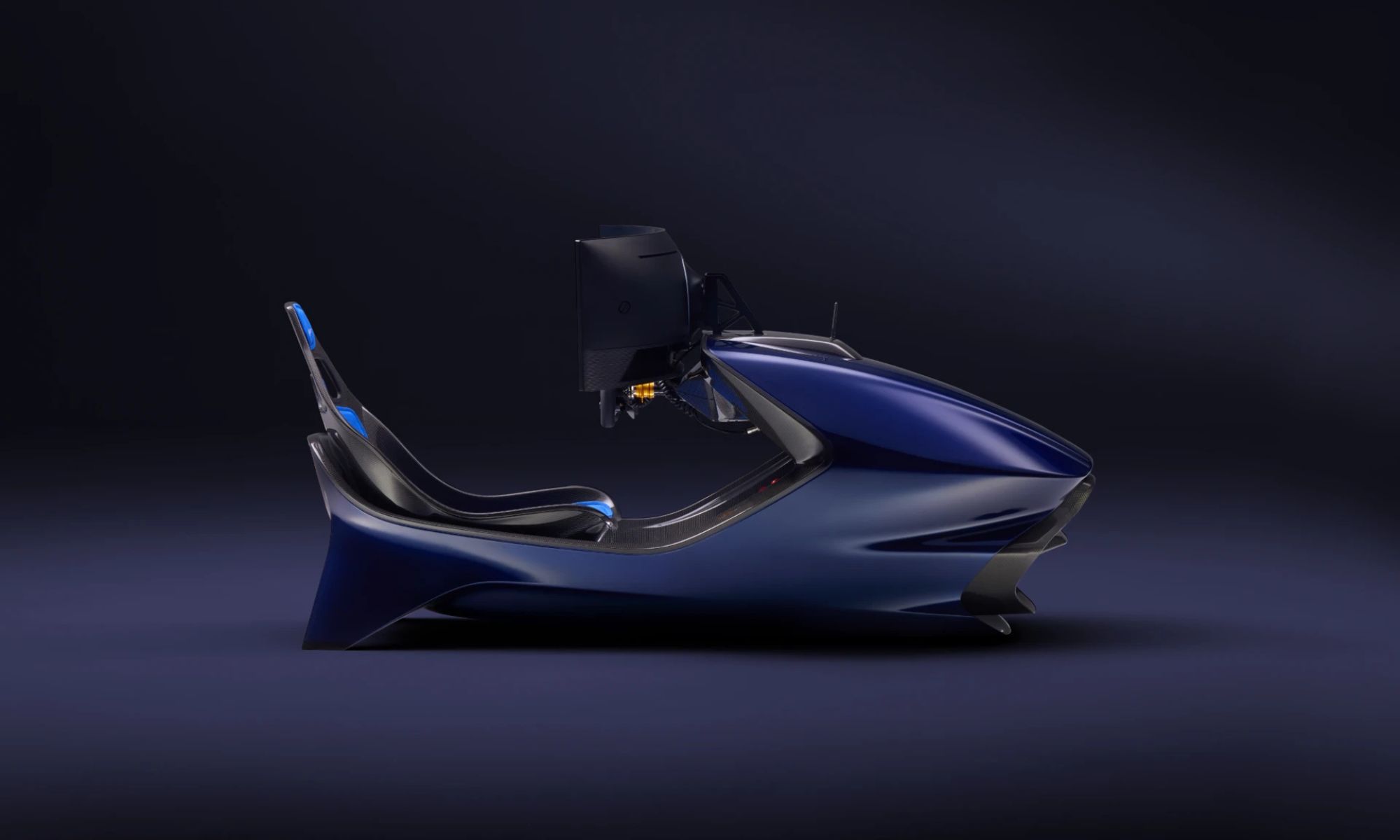
Best luxury sim racing setup: Aston Martin AMR-C01-R
Aston Martin AMR-C01-R’s seat in focus
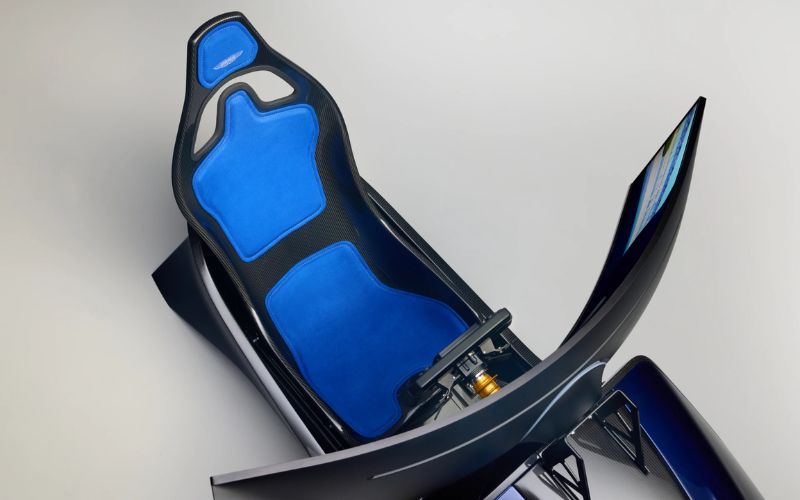
I’m a big fan of car content—reading, watching, the whole deal. But Aston Martins have always felt like these mysterious, underrated gems to me. You don’t see them every day. They’re the kind of car someone picks when they could go for something flashier or faster but choose style, elegance, and individuality instead. Now, Aston Martin’s gone and built something wild for the home—the MR-C01-R ($76,000) racing simulator.
The kit comes with hardware that’ll make any PC nerd’s heart race. It’s a no-compromise sim racing setup that delivers pure, seat-gripping excitement. Once you settle in, you’ll lose track of time.
They gave it a full carbon fibre monocoque and the signature Aston Martin racing grille. Both designed in-house to make sure everything feels rock solid while you race. It actually reminds me a bit of the DB11. That car’s a total beauty, and let’s be honest, its grille steals the show every time.
Aston Martin didn’t stop there. The seating position borrows from the Valkyrie, a machine that defies logic in all the right ways. The racing rig model dials up the comfort and makes it easier to fine-tune your fit, so long races feel as good as they look.
Parting thoughts
I’m glad I finally got serious about sim racing—it’s been way more fun than I expected. Finding the right cockpit completely changed the game for me, and now I can’t imagine going back to a wobbly desk setup. If you’re on the fence, trust me, it’s worth making your rig feel as solid as the cars you’re racing.
Discover how artificial intelligence is reshaping the retail landscape through personalisation, inventory management, fraud prevention, and business intelligence, with real-world examples and future trends.
Look, retail is not what it used to be. We’re way past the old-school days when stores took wild guesses at what you might want and hoped they landed a sale. Now it’s all about artificial intelligence - this tech beast is rewriting the rules from top to bottom, whether we’re talking product suggestions, price tweaks, or real-time fraud detection. Whether you're hunting for new sneakers or loading up on skincare in your digital cart, AI is working behind the curtain like a sniper locking onto a bullseye.
From checkout flows to restock algorithms, AI is baked into every part of the process — and it’s not just the giants like Amazon, Walmart, and Sephora running the show. Industry reviewers like Slots Spot have already tapped into AI's potential in the online gambling space, breaking down how smart algorithms can transform user experience, personalise offers, and flag shady behaviour before it snowballs. Big brands might’ve led the charge, but savvy platforms across retail and entertainment are proving that AI isn’t just the future - it’s the now.
The Multifaceted Role of AI in Transforming Retail Operations
The integration of artificial intelligence into retail environments encompasses numerous applications that collectively enhance both customer experiences and business operations. Today's retail AI implementations range from customer facing technologies that personalise shopping journeys to behind-the-scenes systems that optimize inventory management and supply chain efficiency.
The versatility of AI solutions allows retailers of all sizes to leverage these powerful tools for competitive advantage in an increasingly digital marketplace. The evolution of AI in retail has accelerated dramatically in recent years, transforming from experimental technology to essential business infrastructure. In this article we will cover the following topics:
● How AI's Running the Show in Retail
● AI Basics in the Retail Arena
● AI = Straight-Up VIP Treatment for Shoppers
● AI Behind the Shelves: Inventory & Supply Chain
● Security? AI’s Got Lasers on Lock
How AI's Running the Show in Retail
Alright, so here’s the real breakdown. AI in retail isn’t just some nerdy backend thing. It’s front and centre, tweaking everything from what’s on your screen to how fast your package hits your door. Today’s retail bosses are loading up their stores - digital or physical - with AI tech that learns your habits, reads trends, and keeps the shelves tight.
The crazy part? A few years ago, this was sci-fi-level stuff. Now it’s the baseline. These smart systems scan through mountains of data like it’s light work, spit out predictions that are freakishly accurate, and let retailers flex hard with better prices, better delivery, and smarter sales. And it’s only getting juicier from here.
AI Basics in the Retail Arena
Let’s start from square one. AI in retail means machines doing smart human-level stuff - spotting patterns, learning your tastes, and making damn good guesses. It’s like having a team of genius assistants watching every move customers make and adjusting the whole store in real-time.
Old-school analytics are toast. We’re in deep-learning territory now. AI is no longer just helping manage stock - it’s dropping game-changing insights across the board. The pandemic? That was a wake-up call. Retailers scrambled, and AI was the one tool that stepped up. Virtual try-ons, touch-free shopping, instant delivery logic - it all came rushing in like a bonus round with a re-trigger.
AI = Straight-Up VIP Treatment for Shoppers
If you've ever seen your feed hit you with stuff you lowkey needed - that’s AI doing work. It’s not throwing random ads anymore. These systems study your vibe, your past clicks, your timing, and hit you with picks that feel handpicked. That’s next level personalisation.
And don’t sleep on AI powered chat. These bots are no joke now - they get you. Ask about shipping or size charts, and they’ll break it down with zero wait time. Some even slap you with solid recs. You’d think it’s a real person, but nah - it’s AI, grinding 24/7 and getting sharper every convo.
AI Behind the Shelves: Inventory & Supply Chain
You ever order something and wonder how it showed up that fast? That’s AI behind the scenes. It tracks what’s moving, what’s not, what’s about to blow up - and makes sure stock’s locked and loaded. No more “oops, outta stock” drama.
AI doesn’t just keep the shelves full. It’s got forecasting sauce, too. It peeps at trends, weather, holidays, even what’s hot on TikTok, then calculates what’s gonna sell. Retailers using AI don’t guess - they know. And that means fewer misses, tighter promos, and smoother sales cycles.
Security? AI’s Got Lasers on Lock
Let’s be real - fraud’s a nightmare. But AI has eyes like a hawk. It scans every payment, every move, and knows if something feels off before you even blink. Legit purchases? They fly through. Shady ones? Blocked faster than a casino scammer mid spin.
And in-store? AI cameras are watching, not in a creepy way, but smart as hell. They track foot traffic, spot sketchy behavior, and even help with store layout. It’s like a pit boss meets a data nerd - all wrapped in one.
Conclusion
Whether you’re shopping, running the floor, or analyzing data, AI is straight-up dominating retail. It knows what customers want, keeps fraud at bay, stocks shelves better than any human, and delivers experiences that feel tailored just for you. If you’re in retail and you’re not using AI, you’re basically playing slots with the sound off - missing the fun, the big wins, and all the strategy. Get in the game, or get left behind.
FAQ
How’s AI actually showing up in retail?
Think hyper-personalised product suggestions, bots that help without flaking, real-time restocks, and fraud detection that’s faster than a bonus buy round. AI is the engine behind the smoothest shops out there.
Which brands are crushing it with AI?
Amazon’s out here playing 4D chess with AI - personalised everything, drone shipping, the whole shebang. Walmart’s got bots on the floor. Sephora? Virtual makeup try-ons powered by AI. These brands are stacking W’s with tech.
Can small businesses even use AI, or is that just big-brand territory?
Nope - small shops can absolutely cash in. Tons of SaaS tools out there let you tap into AI without coding a thing. From inventory control to smart marketing, it’s all plug-and-play now.
Les scientifiques de l'Université de Californie à Davis ont réussi à altérer légèrement la molécule de LSD, en une nouvelle molécule baptisée JRT, en changeant la position de deux atomes....
La dernière journée de Devoxx France a livré une série de conférences denses, mêlant prospective technologique, géopolitique des infrastructures et remise en question des mythes fondateurs de l’intelligence artificielle. Cinq interventions majeures se distinguent, offrant aux directeurs techniques une grille de lecture utile pour penser leur roadmap 2025-2028. 1. Démystifier l’IA : une machine probabiliste, …
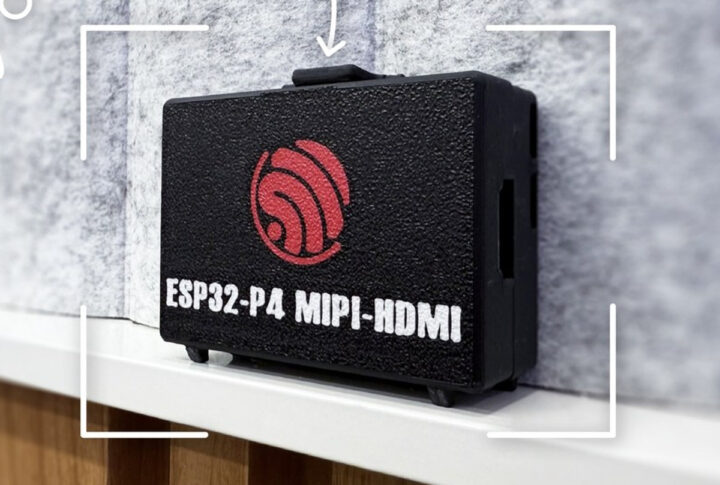
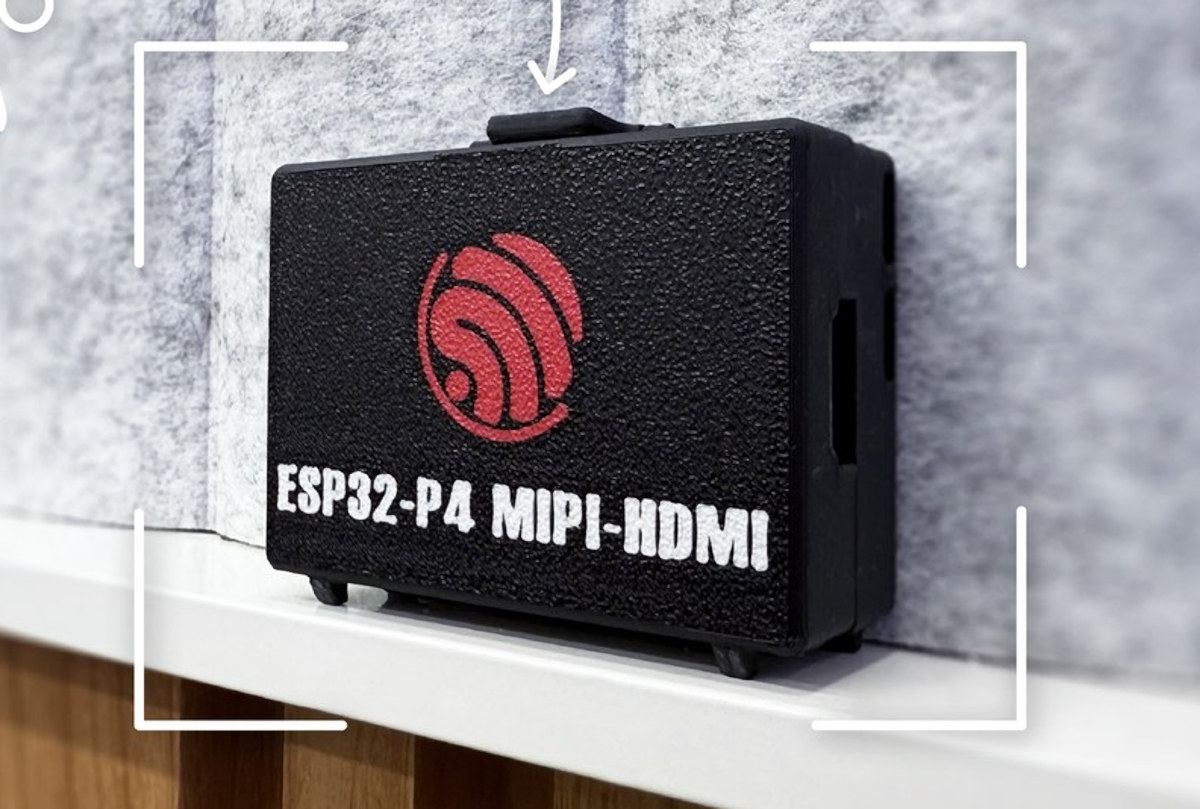
ESP-HDMI-Bridge is an ESP32-P4-based HDMI streaming adapter based on Lontium Semiconductors’s LT8912B MIPI-DSI to HDMI bridge chip outputting MIPI-DSI video signal of ESP32-P4 to HDMI devices.
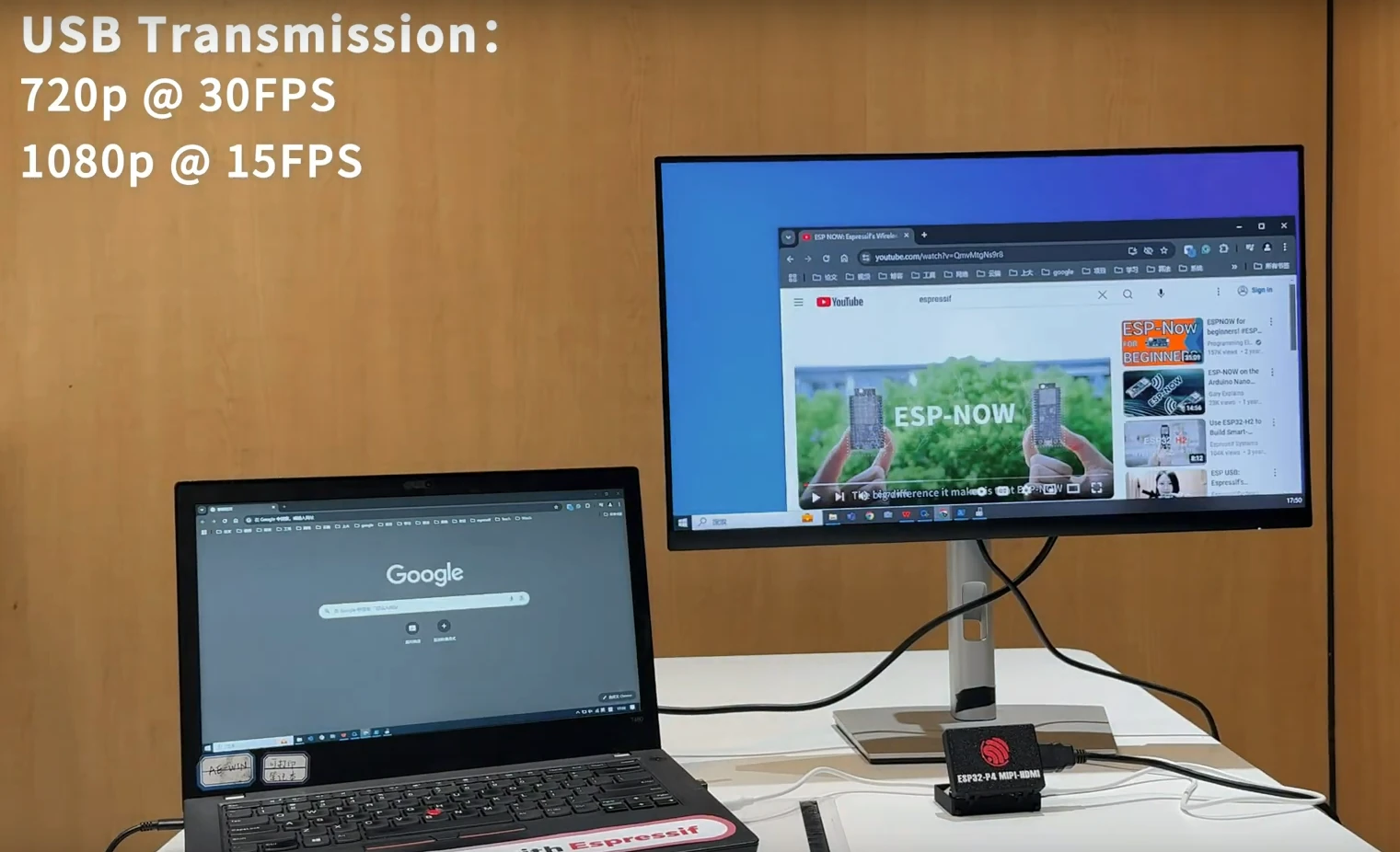
It allows the user to connect a computer to an HDMI display or projector through USB, Ethernet, or WiFi, or use it directly as a digital signage player or live dashboard connected to an HDMI display.
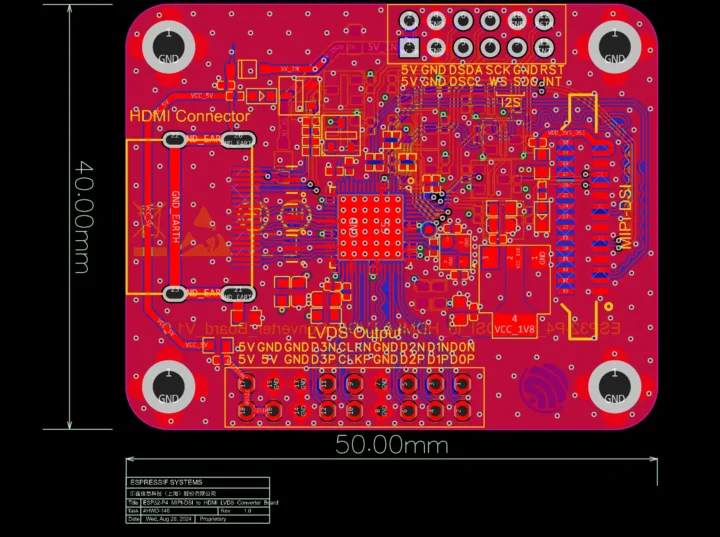
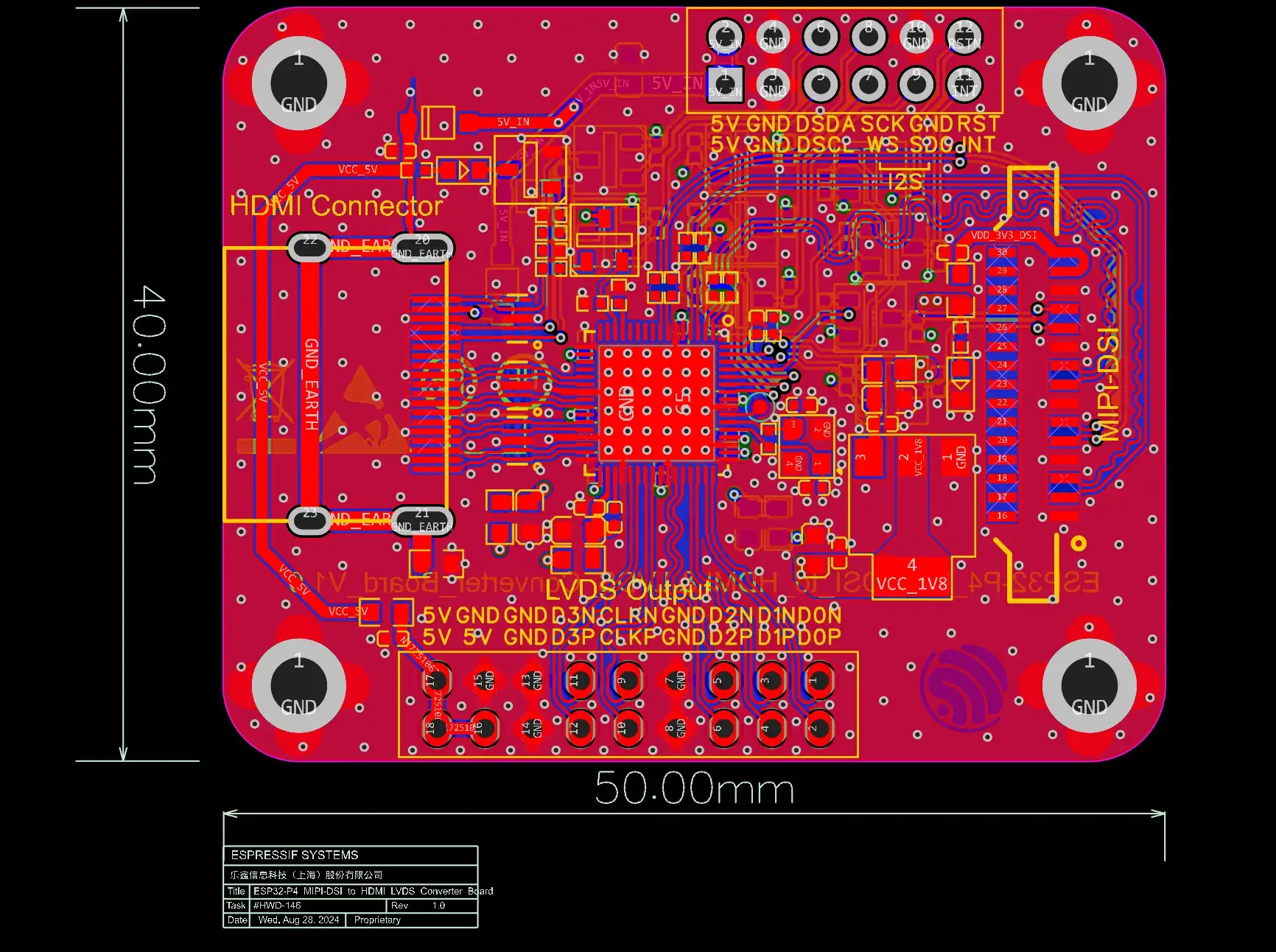
The current solution is based on the ESP32-P4-Function-EV-Board connected via its MIPI DSI connector to a 50x40mm board with the LT8912B bridge, a MIPI DSI input connector, LVDS and HDMI video outputs, and a 12-pin header with I2C, I2S audio, etc., with everything housed in a plastic enclosure.
The best is to watch the video below, which shows various demos:
USB to HDMI up to 720p30 or 1080p15
Ethernet to HDMI
WiFi to HDMI up to 1080p40 using the ESP32-C6 2.4 GHz WiFi 6 module on the ESP-P4 evaluation board; The company also highlights support for dual-band WiFi 6 with the upcoming ESP32-C5
Video playback of H.264 videos from microSD card up to 1080p60
Live dashboard showing data from the Internet or sensors
The ESP-HDMI-Bridge is not available right now, but the company shared information that would allow people to reproduce or augment the setup. You’ll find hardware design files and basic instructions on OSHWLab, while the code for the latest ESP32-P4 EVB BSP is hosted on GitHub.
PCB layout of the ESP32-P4 MIPI DSI to HDMI LVDS Converter Board
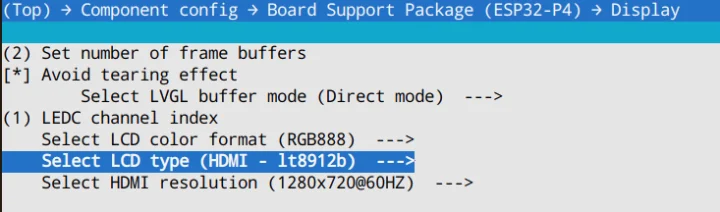
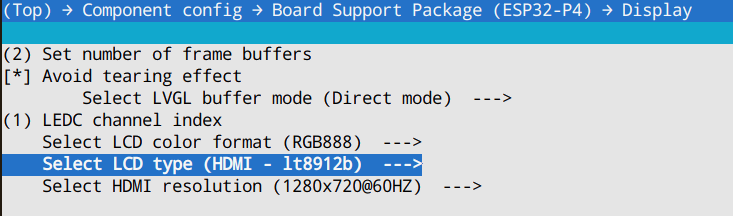
The color format is set to RGB888 with HDMI, and the RGB565 option is not available.
ESP32-P4 BSP Display Config
It’s a little disappointing that the more common 1080p60 resolution is not supported over USB or WiFi, but in any case, I’d soon expect low-cost ESP32-P4 HDMI streaming adapters to hit the market.
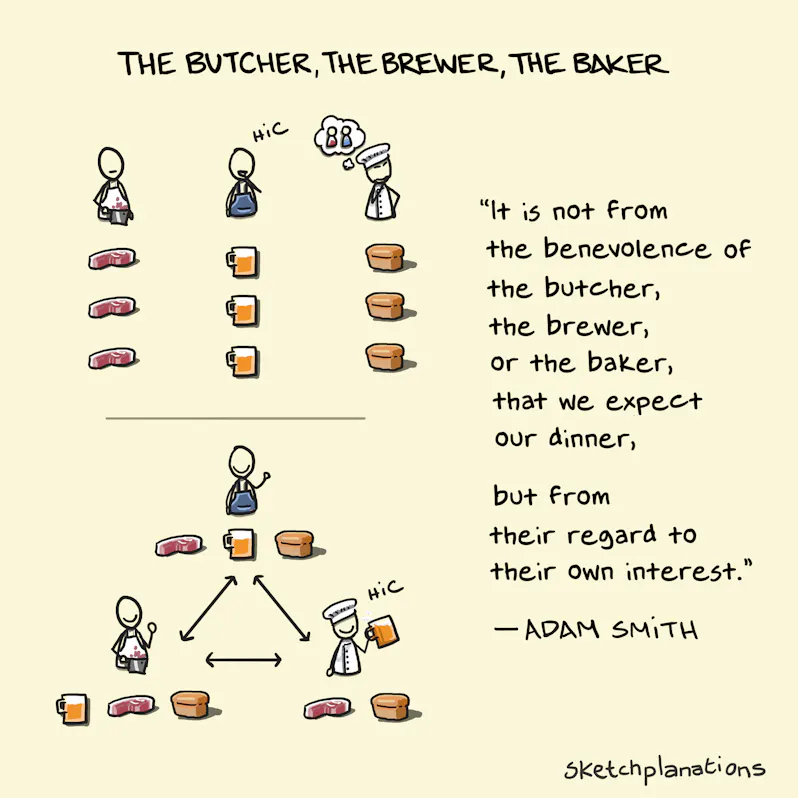
One of the most famous lines from Adam Smith's The Wealth of Nations is:
"It is not from the benevolence of the butcher, the brewer, or the baker, that we expect our dinner, but from their regard to their own interest. We address ourselves, not to their humanity but to their self-love, and never talk to them of our own necessities but of their advantages."
—Adam Smith
One interpretation is that this quote underpins capitalism: people trade because it benefits them, which is true. But what I like about this passage is that it hints at something else, too.
There is a two-way benefit in effective trade. To help ourselves, we have to help others. And to help others, we have to understand what they want. Good trade depends not just on self-interest but on the ability to take another person's perspective. The magic of trade is that both sides are better off when it works well—a genuine win-win.
You can find more interpretation on this short passage at the OLL.
I first read the passage in The Invisible Hand, part of Penguin's Great Ideas Series. It makes a good introduction to Adam Smith.
Forget injections. A new drug promises to be just as effective as Ozempic — but is taken as a daily pill.
Called orforglipron, the results of a new clinical trial announced Thursday by manufacturer Eli Lilly suggest that the pill could be a breakthrough in a class of drugs called GLP-1 agonists, which have become popular for their dual effectiveness in helping with weight loss and treating diabetes.
Though they have taken the world by storm, GLP-1 drugs like semaglutide — sold as Ozempic and Wegovy — remain costly, require refrigeration, and need to be injected, imposing significant obstacles to their accessibility and availability. By packaging one in pill form, the thinking goes, you can get most of the benefits without the practical hurdles.
"In the coming decades, 700 million people around the world will have Type 2 diabetes, and over a billion will have obesity," Daniel Skovronsky, Lilly's chief scientific officer, told the New York Times. "Injections cannot be the solution for billions of people around the world."
Doctors believe that GLP-1 agonists work by binding to receptors that tell your body to release the hormone GLP-1, which is responsible for regulating your hunger and triggers the release of insulin.
Pharmaceutical companies have struggled to package GLP-1 agonists and other peptide-based drugs into pill form because peptides, chains of amino acids that are the building blocks of protein, are fragile; a drug made of one can get quickly dissolved in the stomach before it has a chance to act. Rybelsus, semaglutide-maker Novo Nordisk's GLP-1 pill, brute forces its way around this with larger doses, but requires specific dietary instructions and doesn't seem to be as effective for weight loss.
Eli Lilly's solution was to ditch peptides and find an incredibly small molecule to mimic them, which can bind to the same "pocket" on the GLP-1 receptor that the peptides would target. Because the molecule is so small, it's absorbed into the stomach wall before it can be degraded.
In its latest clinical trial, which involved 559 people with Type 2 diabetes, Eli Lilly reports that subjects who took the highest dose of orforglipron, 36 mg, over the course of 40 weeks lost 7.9 percent of their body weight, or around 16 pounds on average, while their blood sugar levels fell by up to 1.6 percent. Encouragingly, their weight loss didn't plateau towards the trial's end, suggesting that they could've continued to shed pounds.
Some patients experienced the dreaded side effects common to weight loss drugs. 14 percent who took the highest dose experienced vomiting, while just over a quarter suffered diarrhea.
Overall, the results put orforglipron roughly on par with Ozempic and Mounjaro, though some analysts were expecting a blood sugar level reduction up to 2.1 percent, which is what Ozempic accomplished in trials, per CNBC.
Some are optimistic that the small molecule approach behind developing orforglipron will be a game changer.
"In the next 4 or 5 years, this field will mature and more patients ultimately should be able to get these medicines," Kyle Sloop, a molecular biologist at Lilly Research Laboratories, told Science.
"Having new oral agents that lower glucose but also meaningfully lower weight well beyond levels seen with most existing diabetes therapies is critical to future type 2 diabetes care," echoed Naveed Sattar, professor of cardiometabolic medicine at the University of Glasgow, in a statement. "Of course, one caveat is that we do not know the effects of this newer therapy on cardiovascular outcomes but this will be forthcoming in future trials."
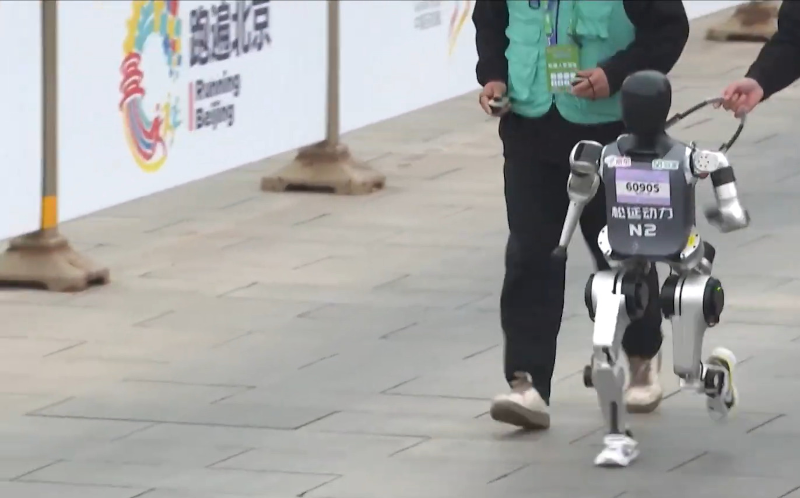
China played host to what, presumably, was the world’s first robot and human half-marathon. You can check out the action and the Tiangong Ultra robot that won in the video below. The event took place in Beijing and spanned 21.1 km. There was, however, a barrier between lanes for humans and machines.
The human rules were the same as you’d expect, but the robots did need a few concessions, such as battery swap stops. The winning ‘bot crossed the finish line in just over 160 minutes. However, there were awards for endurance, gait design, and design innovation.
Humans still took the top spots, though. We also noted that some of the robots had issues where they lost control or had other problems. Even the winner fell down once and had three battery changes over the course.
Of the 21 robots that started, only six made the finish line. We don’t know how many of the 12,000 humans finished, but we are pretty sure it was more than six, so we don’t think runners have to worry about robot overlords yet. But they’re getting better all the time.
To LVMH CEO Bernard Arnault, the world has a new look and it’s unfashionably chaotic.
His luxury giant — which counts Louis Vuitton, Dior, Fendi, and Givenchy among its holdings — had a tumultuous week that included being briefly overtaken by French rival Hèrmes as la République’s most valuable firm. Investor worries about US tariffs have dragged its shares in Paris down 24% this year but Arnault, the world’s sixth-richest man as of Friday, is not pointing the finger at America.
Blame Brussels?
European luxury houses including LVMH, Hèrmes, and Chanel entered 2025 banking on well-heeled Americans as their best bet to offset weakening demand in China where, well before the latest trade conflicts, economic malaise was fueled by a slowing property sector, spiraling local government debt, and declining household consumption.
Instead, they ended up with a double whammy. There’s the US threatening 20% tariffs on products from the EU, currently subject to a 90-day pause, in a threat to one key market. And there’s the full-on trade war that’s broken out between the US and China, which threatens to further erode demand in Asia. When LVMH reported its first-quarter results last week, a surprise 5% drop in organic sales at its fashion and leather goods division — a luxury industry bellwether — was further off the mark than a strip mall Louis Vuitton handbag knockoff: Markets expected 1% growth. An 11% drop in LVMH Asia sales outside of Japan added to the worrying signs.
Speaking at LVMH’s annual shareholder meeting on Thursday, however, Arnault did not cast blame across the Atlantic:
If 90 days of negotiations can’t yield a way to stop President Trump’s proposed 20% tariffs on the EU from taking effect, he told the meeting, “it will be Brussels’ fault.” The European Commission — the European Union executive branch headquartered a mere 80-minute train ride from Paris in the Belgian capital — negotiates trade deals for the bloc’s 27 member states.
“Europe is not run by a political power but by a bureaucratic power that spends its time issuing regulations that are unfortunately imposed on all member states and that penalize our business sectors,” he said, urging EU countries to try and manage negotiations with Washington. He went on to call for a US-EU free trade agreement (something Trump advisor Elon Musk has also wished for), and suggested that without one, his company could be forced to move production stateside.
LVMH makes 25% of its annual sales in the US, but if Arnault makes good on the pledge to add US production, previous efforts do not augur well. Reuters reported earlier this month that an LVMH Texas factory, whose opening Trump attended in 2019, has a 40% waste rate for leather goods, about twice the industry standard, because of frequent production errors. It’s one of the company’s worst-performing facilities in any country.
His Lucky Number: Whatever the challenges facing LVMH, they’ll be Arnault’s for a while longer.Over 99% of shareholders voted at the annual meeting to allow the 76-year-old to keep his job until he turns 85 by raising the maximum age of its CEO and chairman roles by five years. As rough a week it was for the company, it was even worse for aspiring successors.
Le F/A-XX offre une autonomie augmentée de 25 % par rapport au F-35C.
Intégration avancée de l’intelligence artificielle pour une gestion optimale des opérations.
Amélioration de la furtivité permettant de pénétrer les espaces aériens hostiles.
Extension de l’aire d’effet des ailes aéronavales à 11 millions de kilomètres carrés.
Le développement du F/A-XX, un nouvel avion de chasse de la US Navy, attire l’attention mondiale en raison de ses capacités révolutionnaires. Destiné à remplacer le F-35C, ce chasseur de sixième génération promet non seulement une autonomie de vol augmentée, mais aussi une intégration avancée des technologies de furtivité et d’intelligence artificielle. Ces innovations, dévoilées lors de l’exposition Sea Air Space 2025, positionnent le F/A-XX comme un atout majeur pour les opérations aériennes futures. Alors que le choix du développeur final n’est pas encore arrêté, entre Northrop Grumman et Boeing, les attentes sont élevées concernant les performances accrues de cet appareil.
Autonomie augmentée de 25 % par rapport au F-35C
Lors de l’exposition Sea Air Space 2025, le contre-amiral Michael “Buzz” Donnelly a mis en avant une caractéristique essentielle du F/A-XX : son autonomie accrue. Avec 25 % de portée supplémentaire, cet appareil pourrait atteindre plus de 2 700 kilomètres sans ravitaillement, contre environ 2 200 kilomètres pour le F-35C actuel. Cette augmentation de portée offre une flexibilité opérationnelle inédite, permettant à la US Navy de déployer ses forces sur des distances plus longues sans dépendre immédiatement du ravitaillement en vol. Cette capacité pourrait transformer les stratégies militaires, en renforçant la couverture opérationnelle et l’adaptabilité face aux menaces. Donnelly a également souligné que, par le biais du ravitaillement, la portée du F/A-XX pourrait devenir quasi illimitée, garantissant sa réactivité sur de vastes théâtres d’opérations.
Intégration de l’IA et furtivité du F/A-XX
Au-delà de l’autonomie, le F/A-XX se distingue par son intégration poussée de l’intelligence artificielle et des technologies furtives. Ces innovations sont cruciales pour opérer dans des espaces aériens hostiles. L’IA améliore la gestion de l’espace de bataille, passant d’un modèle de « man-in-the-loop » à « man-on-the-loop ». Cette transition vers une architecture intégrée permet une collaboration avancée avec des systèmes non habités, tels que les avions de combat collaboratifs. De plus, la furtivité améliorée du F/A-XX accroît sa capacité à pénétrer les défenses aériennes adverses, augmentant ainsi la survie et l’efficacité des équipages. Ces caractéristiques élargissent l’aire d’effet des ailes aéronavales, qui pourrait passer de 8 à 11 millions de kilomètres carrés, renforçant la position stratégique des États-Unis.
Impact stratégique et adaptations tactiques
L’extension de l’aire d’effet du F/A-XX a des implications stratégiques majeures pour la US Navy. En augmentant cette zone, le F/A-XX améliore la capacité des forces aériennes à maintenir leur présence et à opérer efficacement sur de vastes territoires. Cette avancée est essentielle pour contrer les capacités croissantes des adversaires en matière de renseignement, de surveillance et de reconnaissance. En intégrant ces innovations, la Navy s’adapte aux futures évolutions des menaces et ajuste ses tactiques en conséquence. Cette adaptation stratégique permet de répondre aux défis posés par des adversaires de plus en plus sophistiqués, renforçant ainsi la position et la sécurité des États-Unis sur la scène mondiale.
Perspectives d’avenir pour la US Navy
Le F/A-XX symbolise l’avenir des opérations aériennes pour la US Navy. Sa combinaison de portée étendue, de furtivité accrue et d’intégration technologique offre des capacités sans précédent. Ces développements témoignent de la volonté des États-Unis de maintenir un avantage technologique et stratégique face aux menaces émergentes. Le choix du développeur final, entre Northrop Grumman ou Boeing, sera déterminant pour concrétiser ces innovations. Alors que la US Navy se prépare à relever de nouveaux défis, elle adapte ses stratégies et renforce sa capacité de réponse globale. Comment ces avancées transformeront-elles les opérations militaires dans les années à venir, et quel impact auront-elles sur l’équilibre des forces mondiales ?
La Chine développe un moteur à détonation oblique atteignant Mach 16, révolutionnant la propulsion hypersonique.
Les tests à Pékin montrent des pressions 20 fois supérieures aux niveaux ambiants, prouvant une efficacité exceptionnelle.
Cette technologie pourrait réduire considérablement les temps de vol, transformant l’aviation commerciale et l’exploration spatiale.
Des défis techniques restent à surmonter, comme la gestion de la chaleur et l’intégration dans des véhicules existants.
Les récentes avancées en propulsion hypersonique marquent une étape décisive dans l’histoire de l’aéronautique et de l’exploration spatiale. Le développement par la Chine d’un moteur à détonation oblique (ODE) utilisant du kérosène aviation standard pourrait bien révolutionner le transport aérien et ouvrir de nouvelles possibilités pour l’exploration de l’espace. En atteignant des vitesses allant jusqu’à Mach 16, ce moteur promet de réduire considérablement les temps de vol, tout en posant de nouveaux défis techniques et réglementaires. Cet exploit technologique n’est pas seulement une prouesse scientifique, mais également un potentiel catalyseur pour redéfinir notre approche des voyages ultrarapides.
Le potentiel du moteur à détonation oblique
Le moteur à détonation oblique (ODE) se distingue par son utilisation innovante des ondes de choc pour maintenir une combustion auto-entretenue. Contrairement aux moteurs scramjets traditionnels, l’ODE parvient à éviter l’extinction de flamme à haute vitesse grâce à une conception ingénieuse. Un petit dispositif de 5 mm installé sur le mur du combusteur crée des « diamants de détonation », permettant une combustion efficace en un temps record. Cette technologie promet de révolutionner la propulsion hypersonique en offrant des taux de combustion mille fois plus rapides que ceux des moteurs conventionnels.
Les tests effectués dans le tunnel de choc JF-12 à Pékin ont démontré que l’ODE peut fonctionner à des vitesses comprises entre Mach 6 et Mach 16. Ces résultats ouvrent la voie à de nombreuses applications, notamment dans l’aviation commerciale et l’exploration spatiale. La capacité à atteindre de telles vitesses pourrait transformer notre compréhension des voyages longue distance, en réduisant les temps de vol de manière spectaculaire.
Les prouesses des expériences menées à Pékin
Les tests réalisés par les scientifiques de l’Académie chinoise des sciences dans le tunnel de choc JF-12 représentent une avancée significative pour la propulsion hypersonique. Ce tunnel permet de simuler des conditions de vol à haute altitude, essentielles pour évaluer le fonctionnement des moteurs à des vitesses extrêmes. En utilisant du RP-3, un kérosène commercial courant, les chercheurs ont pu maintenir des ondes de détonation obliques avec une pression atteignant 20 fois les niveaux ambiants.
Cette prouesse démontre que l’ODE peut générer une poussée significative, même à des altitudes où les moteurs traditionnels échouent. En simulant des vols à des altitudes de plus de 40 km, ces essais confirment le potentiel de l’ODE pour transformer non seulement les voyages aériens mais aussi les missions spatiales. La possibilité de maintenir une combustion stable à de telles vitesses pourrait bien redéfinir notre approche des voyages intercontinentaux et interplanétaires.
Des implications considérables pour l’aviation et l’espace
L’introduction d’une propulsion hypersonique efficace pourrait avoir des répercussions majeures sur l’aviation et l’exploration spatiale. Avec la capacité de soutenir des vitesses de Mach 16, les temps de vol sur de longues distances pourraient être considérablement réduits. Imaginez un vol de New York à Londres en moins d’une heure : ce scénario, autrefois réservé à la science-fiction, devient envisageable grâce aux moteurs à détonation oblique.
En outre, l’ODE pourrait révolutionner l’exploration spatiale en rendant les missions plus rapides et plus efficaces. Cette technologie pourrait également transformer les stratégies militaires, offrant des avantages en termes de rapidité et de manœuvrabilité. L’utilisation de kérosène commercial standard rend cette technologie potentiellement plus accessible et économique que les systèmes actuels, ouvrant la voie à une adoption plus large dans divers secteurs.
Les obstacles à surmonter pour une adoption généralisée
Bien que les avancées en propulsion hypersonique soient prometteuses, plusieurs défis techniques restent à relever avant que ces moteurs ne deviennent opérationnels à grande échelle. La gestion de la chaleur générée par les détonations continues, la durabilité des matériaux, et l’intégration dans des véhicules existants posent des défis considérables. Les chercheurs travaillent intensément pour surmonter ces obstacles, en développant des solutions innovantes pour rendre la technologie viable.
Les questions de sécurité et de régulation représentent également des enjeux cruciaux. L’acceptation par les autorités de régulation sera essentielle pour l’intégration de ces moteurs dans l’aviation civile. La collaboration entre scientifiques, ingénieurs et régulateurs sera déterminante pour garantir la sécurité et la conformité aux normes internationales. Alors que nous nous dirigeons vers une nouvelle ère de voyages hypersoniques, comment cette technologie impactera-t-elle notre mode de vie et notre façon de voyager dans les années à venir ?
by Michael Peel, Clive Cookson, and Richard Waters, Financial Times
Neuroscientists are striving to give a voice to people unable to speak in a fast-advancing quest to harness brainwaves to restore or enhance physical abilities.
Researchers at universities across California and companies, such as New York-based Precision Neuroscience, are among those making headway toward generating naturalistic speech through a combination of brain implants and artificial intelligence.
Investment and attention have long been focused on implants that enable severely disabled people to operate computer keyboards, control robotic arms, or regain some use of their own paralyzed limbs. But some labs are making strides by concentrating on technology that converts thought patterns into speech.
Shares of Novo Nordisk, the Danish pharmaceutical company behind the groundbreaking GLP-1 weight loss drugs Ozempic and Wegovy, have been absolutely plummeting.
The company's stock price slid over eight percent on Thursday, after its main competitor in the space, US-based pharmaceutical company Eli Lilly, announced promising Phase 3 trial results for its GLP-1 pill orforglipron, which is being marketed under its brand name CagriSema.
According to the results, the once-a-day pill improved blood sugar levels in type 2 diabetes patients while helping them to lose weight, showing very similar benefits to injectable GLP-1 drugs — except in a convenient pill form instead of a shot.
The timing couldn't be worse for Novo Nordisk. The company's shares are down roughly 34 percent so far this year following major supply line disruptions pushing physicians to prescribe Eli Lilly's tirzepatide-based injection drugs Zepbound and Mounjaro instead. Over the past six months, its once-ascendant stock value is down a grim 50 percent.
While Novo Nordisk is getting thrashed, Eli Lilly shares shot up by 14 percent in light of the latest news.
As STAT points out, Novo Nordisk doesn't have any comparable small-molecule drug to Eli Lilly's orforglipron. Its own injectable peptide, semaglutide, which is the active ingredient in both Ozempic and Wegovy, is also difficult to manufacture, suggesting Eli Lilly may have a competitive edge.
Eli Lilly's Phase 3 trial results are an early indication of the emergence of a next generation of obesity drugs. The company found that participants lost an average of 16 pounds over 40 weeks, compared to a placebo group.
Side effects included mild to moderate gastrointestinal issues. Not everybody was so lucky; the development of a weight loss pill by COVID-19 vaccine maker Pfizer was scrapped earlier this week after a participant reported a liver injury during a clinical trial.
Eli Lilly's "promising" results could hint at the pill being a viable alternative to Novo's Ozempic and even the company's own drugs Zepbound and Mounjaro — but it's still too early to draw any definitive conclusions or declare winners just yet.
Next, the company is planning to submit data from its latest trials to the FDA by the end of the year for weight loss management and for treating type 2 diabetes in early 2026.
But considering the major market moves this week, investors have seen enough, embracing Eli Lilly as having taken the lead in the hotly contested obesity drug market.
Whether their call will turn out to be the right one in the long term? Well, if there's one thing we've come to expect in this space, it's a series of radical shakeups.
It's no secret that Musk is anxious about the world's population. In 2022, he made the controversial proclamation that "population collapse due to low birth rates is a much bigger risk to civilization than global warming."
That wasn't just one of his many idle thoughts, but a serious mantra to live by. The centi-billionaire now has at least 14 children with at least four different women — Neuralink executive Shivon Zilis, author Justin Wilson, musician Claire "Grimes" Boucher, and right-wing influencer Ashley St. Clair — and those are just the ones we know about.
It's all part of his sci-fi addled worldview, where humanity is somehow at risk of extinction unless he can sire an army of kids and waste tens of billions of dollars trying to get to Mars — instead of doing something concretely useful like ending homelessness, an issue he's called "propaganda."
Elon Musk: It’s not just about visiting Mars. It’s about building a city on Mars.
"I would like to go to Mars, that's nice to have, but what is important is that we establish a self-sustaining city on Mars.
In 2024, the world's richest man bought a $35 million compound to house his "legion" — his eyebrow-raising word for his children — and their mothers, so that his kids could "be a part of one another's lives." Musk has likewise explored ways to fill the compound as fast as possible, telling a then-pregnant St. Clair that "to reach legion-level before the apocalypse, we will need to use surrogates."
As Musk's profile rises to simply un-ignorable levels thanks to his reckless work dismantling the US government, so too have the billionaire's efforts to keep his growing brood a secret from prying eyes. Unfortunately for Musk — or, more accurately, his kids — he's just not very good at it.
Damning reporting by the Wall Street Journalthis week has uncovered the ways Musk tries to keep his harem under wraps. Not surprisingly, it has a lot to do with money, veiled threats, and sinister innuendo intended to silence the many mothers of his children.
Working through a personal fixer named Jared Birchall, Musk deploys nondisclosure agreements (NDAs) and payment contracts designed to keep the mothers of his children quiet under threat of legal action.
St. Clair, for example, told the WSJ she was offered $15 million on top of $100,000 a month for her silence about Musk's child. Months after their child was born, Musk began ghosting St. Clair, prompting her to file for sole custody of the infant. Musk then immediately retaliated by substantially reducing his child support payment while refusing a paternity test, St. Clair's lawyer told People.
Per the WSJ, St. Clair told Birchall "I don’t want my son to feel like he’s a secret." The fixer's response? That going the "legal route" with Musk "aways, always leads to a worse outcome for that woman than what it would have been otherwise."
"Privacy and confidentiality is the top of the list in every aspect of his life," Birchall told St. Clair at the time.
Even the women who reject Musk's uncomfortable advances are subject to strict privacy rules. Tiffany Fong, for example, is a cryptocurrency influencer whom Musk privately messaged back in 2024, asking if she was interested in having his kid. Fong, who made hundreds of thousands of dollars posting on Musk-owned X-formerly-Twitter, turned him down, but confided to friends her worry that the rejection would hurt her revenue.
Sure enough, once Musk learned she shared details of his babymaking proposal, he lost it. The billionaire scolded her for her "indiscretion," unfollowed her on X, and severely limited her earnings on his app — exactly the vindictive repercussion she'd been worried about.
There's a popular rumor swirling that Musk has many more children than is commonly known. If his previous attempts to keep things on the down low are any indication, it's only a matter of time until someone spills the beans on them too.
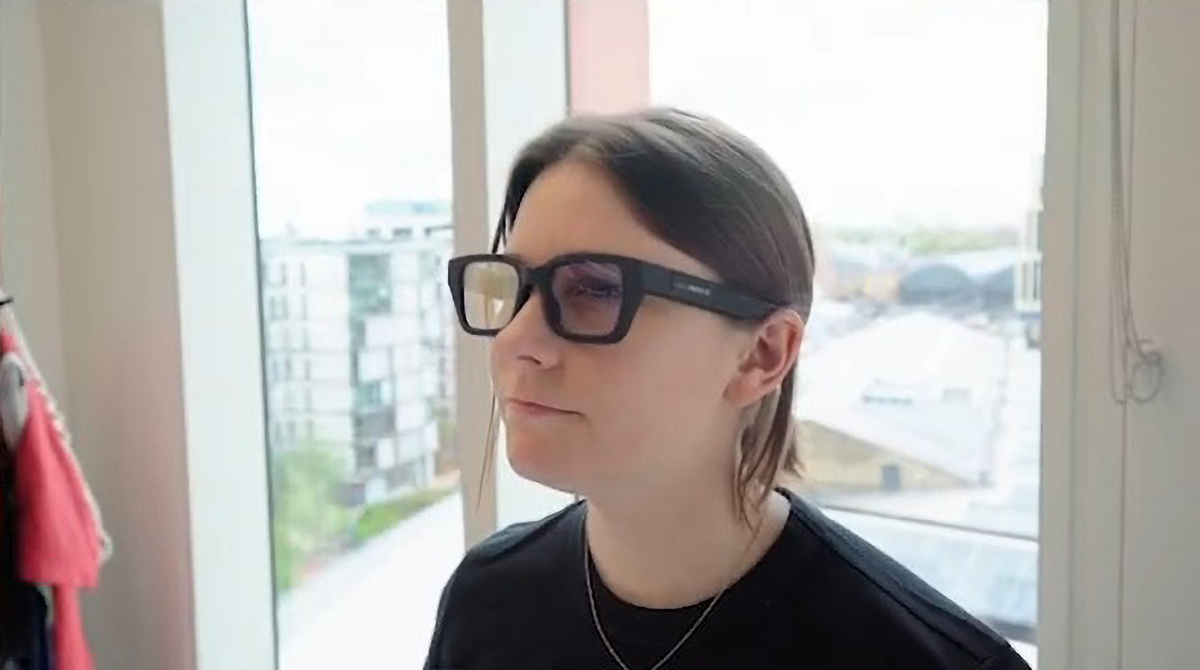
At TED2025 Google showed off sleek smart glasses with a HUD, though the company described them as " conceptual hardware".
Shahram Izadi, Google's Android XR lead, took to the TED stage earlier this month to show off both the HUD glasses and Samsung's upcoming XR headset, and the 15-minute talk is now publicly available to watch.
0:00
/2:18
1×
A supercut of the TED2025 demo.
The glasses feature a camera, microphones, and speakers, like the Ray-Ban Meta glasses, but also have a "tiny high resolution in lens display that's full color". The display appears to be monocular, refracting light in the right lens when seen from certain camera angles during the demo, and has a relatively small field of view.
The demo focuses on Google's Gemini multimodal conversational AI system, including the Project Astra capability which lets it remember what it sees via "continuously encoding video frames, combining the video and speech input into a timeline of events, and caching this information for efficient recall".
Here's everything Izadi and his colleague Nishtha Bhatia show off in the demo:
Basic Multimodal: Bhatia asks Gemini to write a haiku based on what she's seeing, while looking at the audience, and it responds "Faces all aglow. Eager minds await the words. Sparks of thought ignite".
Rolling Contextual Memory: after looking away from a shelf, Bhatia asks Gemini what the title is of "the white book that was on the shelf behind me", and it answers correctly. She then tries a harder question, asking simply where her "hotel keycard" is, without giving the clue about the shelf. Gemini correctly answers that it's to the right of the music record.
Complex Multimodal: holding open a book, Bhatia asks Gemini what a diagram in it means, and Gemini accurately explains.
Translation: Bhatia looks at a Spanish sign, and without telling Gemini what language it is, asks Gemini to translate it to English. It succeeds. To prove that the demo is live, Izadi then asks the audience to pick another language, someone picks Farsi, and Gemini successfully translates the sign to Farsi too.
Multi-Language Support: Bhatia speaks to Gemini in Hindi, without needing to change any language "mode" or "setting", and it responds in Hindi.
Taking Action (Music): as an example of how Gemini on the glasses can trigger actions on your phone, Bhatia looks at a physical album she's holding and tells Gemini to play a track from it. It starts the song on her phone, streaming it to the glasses via Bluetooth.
Navigation: Bhatia asks Gemini to "navigate me to a park nearby with views of the ocean". When she's looking directly forwards, she sees a 2D turn-by-turn instruction, while when looking downwards she sees a fixed 3D minimap showing the journey route.
This isn't the first time Google has shown off smart glasses with a HUD, and it's not even the first time said demo has focused on Gemini's Project Astra capabilities. At Google I/O 2024, almost one year ago, the company showed a short prerecorded demo of the technology.
Last year's glasses were notably bulkier than what was shown at TED2025, however, suggesting the company is actively working on miniaturization with the goal of delivering a product.
However, Izadi still describes what Google is showing as " conceptual hardware", and the company hasn't announced any specific product, nor a product timeline.
In October The Information's Sylvia Varnham O'Regan reported that Samsung is working on a Ray-Ban Meta glasses competitor with Google Gemini AI, though it's unclear whether this product will have a HUD.
If it does have a HUD, it won't be alone on the market. In addition to the dozen or so startups which showed off prototypes at CES, Mark Zuckerberg's Meta reportedly plans to launch its own smart glasses with a HUD later this year.
Like the glasses Google showed at TED2025, Meta's glasses reportedly have a small display in the right eye, and a strong focus on multimodal AI (in Meta's case, the Llama-powered Meta AI).
Unlike Google's glasses though, which appeared to be primarily controlled by voice, Meta's HUD glasses will reportedly also be controllable via finger gestures, sensed by an included sEMG neural wristband.
Apple too is reportedly working on smart glasses, with apparent plans to release a product in 2027.
All three companies are likely hoping to build on the initial success of the Ray-Ban Meta glasses, which recently passed 2 million units sold, and will see their production vastly increased.
Expect competition in smart glasses to be fierce in coming years, as the tech giants battle for control of the AI that sees what you see and hears what you hear, with the ability to project images into your view at any time.
Et si l’intelligence artificielle réveillait notre imagination la plus primitive grâce aux paréidoliés ?
La paréidolie, est une illusion d’optique qui nous pousse à voir des visages ou des formes familières là où il n’y en a pas. Longtemps cantonnée aux nuages ou aux façades d’immeubles, cette bizarrerie cognitive devient aujourd’hui un terrain de jeu pour les IA génératives comme Dall-E, Midjourney ou Stable Diffusion.
Des artistes et ingénieurs exploitent ce phénomène pour créer des images troublantes et poétiques : des paysages urbains peuplés de visages fantomatiques, des forêts mystérieuses ou encore des scènes lunaires où l’œil humain croit deviner une présence cachée. En parallèle, des scientifiques étudient la manière dont les IA reproduisent ces illusions – ou les ignorent.
Au-delà du simple divertissement, cette tendance soulève des questions profondes sur notre rapport à l’image, à la perception et à la création. Car si la machine génère, c’est encore nous qui interprétons. La pareidolie, même amplifiée par la technologie, reste une affaire profondément humaine.
L'expérience LHCb au CERN a révélé une asymétrie fondamentale dans le comportement des baryons.
Lors des Rencontres de Moriond en Italie, la collaboration LHCb au CERN a annoncé qu'une...
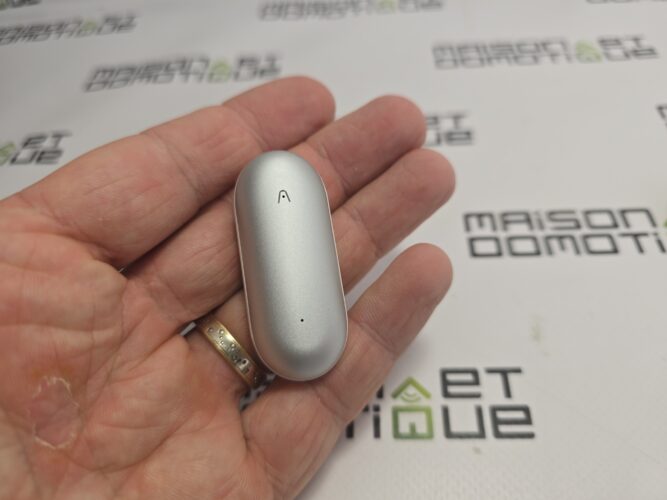 Découvrez le test complet du Plaud NotePin, l’enregistreur vocal dopé à l’IA qui capte, transcrit et résume vos réunions, interviews et idées, même en environnement bruyant. Un assistant portable, efficace et innovant, pensé pour les pros et les créatifs exigeants.



 Amazon se lance dans la course spatiale avec son projet Kuiper pour concurrencer Starlink de SpaceX.
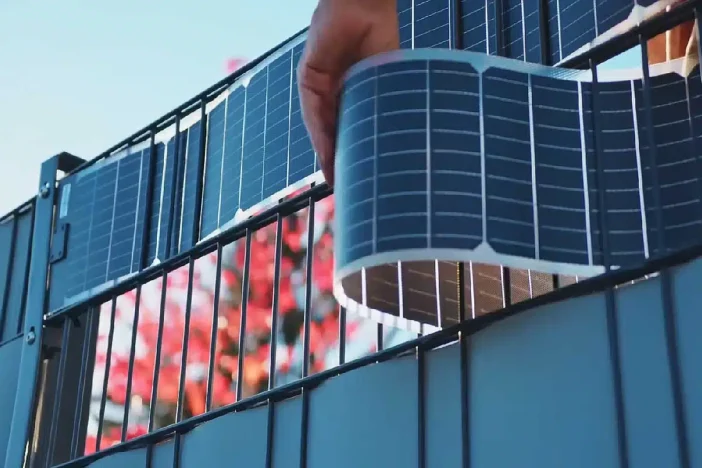 Sunbooster transforme vos clôtures en sources d’énergie solaire ! Découvrez comment cette innovation révolutionne le photovoltaïque en intégrant des panneaux solaires verticaux à vos brise-vues. Une solution discrète, efficace et écologique pour produire votre propre électricité.











 Le F/A-XX offre une autonomie augmentée de 25 % par rapport au F-35C.
 Intégration avancée de l’intelligence artificielle pour une gestion optimale des opérations.
 Amélioration de la furtivité permettant de pénétrer les espaces aériens hostiles.
 Extension de l’aire d’effet des ailes aéronavales à 11 millions de kilomètres carrés.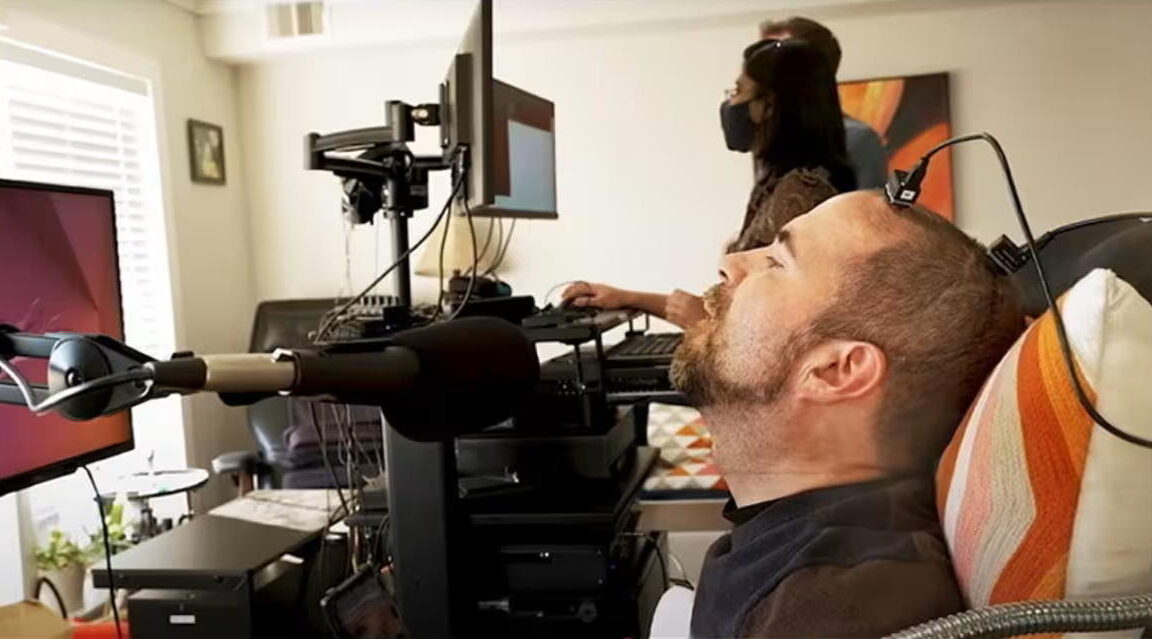


 UploadVRDavid Heaney
 UploadVRDavid Heaney

 UploadVRDavid Heaney