This story was originally published on The Daily Upside. To receive delivering razor sharp analysis and perspective on all things finance, economics, and markets, subscribe to our free The Daily Upside newsletter.
De Beers, caught between a rock and a hard market, is dropping its lab-grown jewelry brand.
The world’s largest diamond producer on Thursday said it plans to shutter LightBox and is in discussions with potential buyers to sell off assets, including inventory.
Un ordinateur d'un nouveau type combinant des neurones humains et du silicium vient de faire son apparition sur le marché. Ce système, développé par une startup australienne, ouvre des...
Des chercheurs de l'Université de Zurich ont mené une expérience controversée sur Reddit, le plus important forum de discussions anglophone au monde, utilisant des chatbots IA pour influencer les...
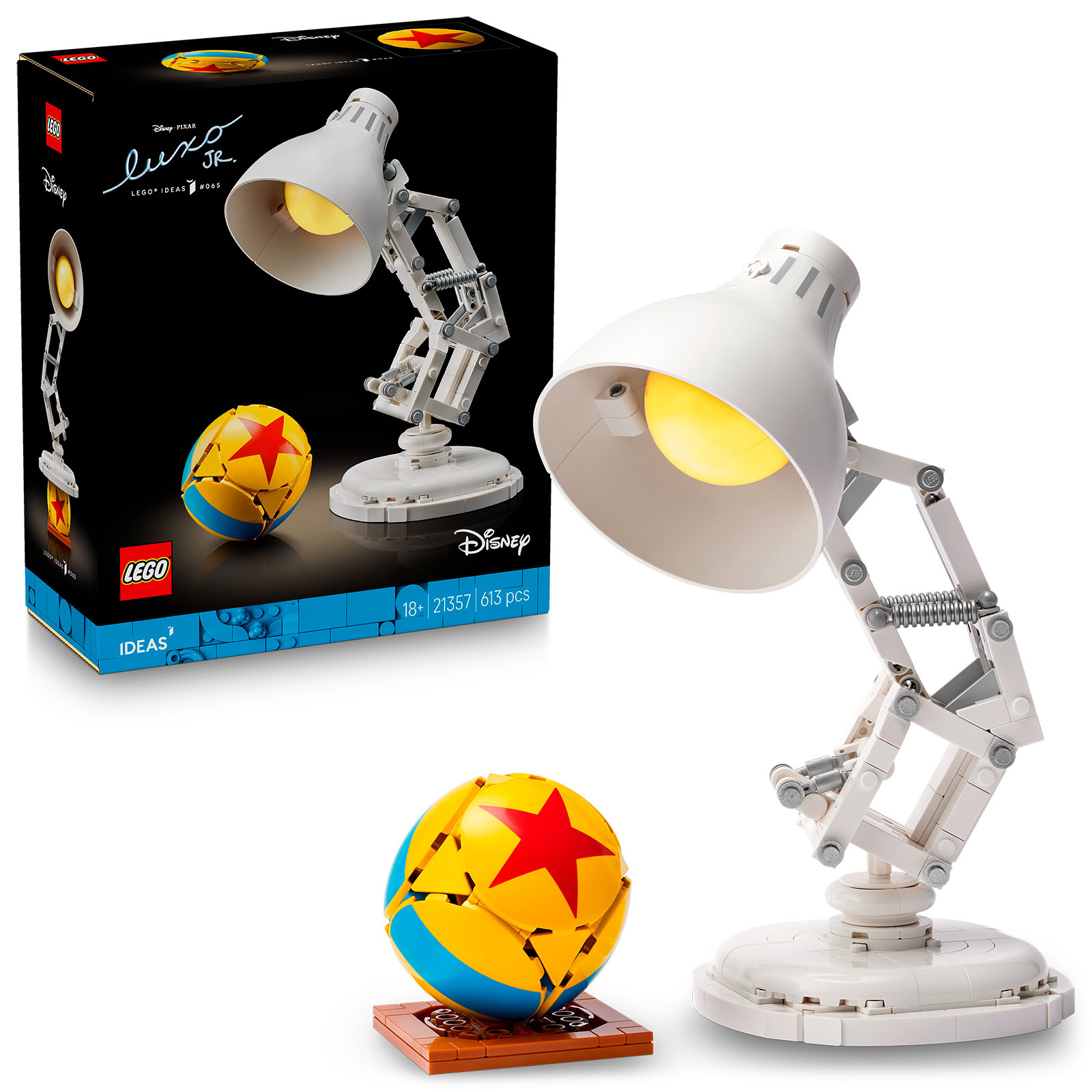
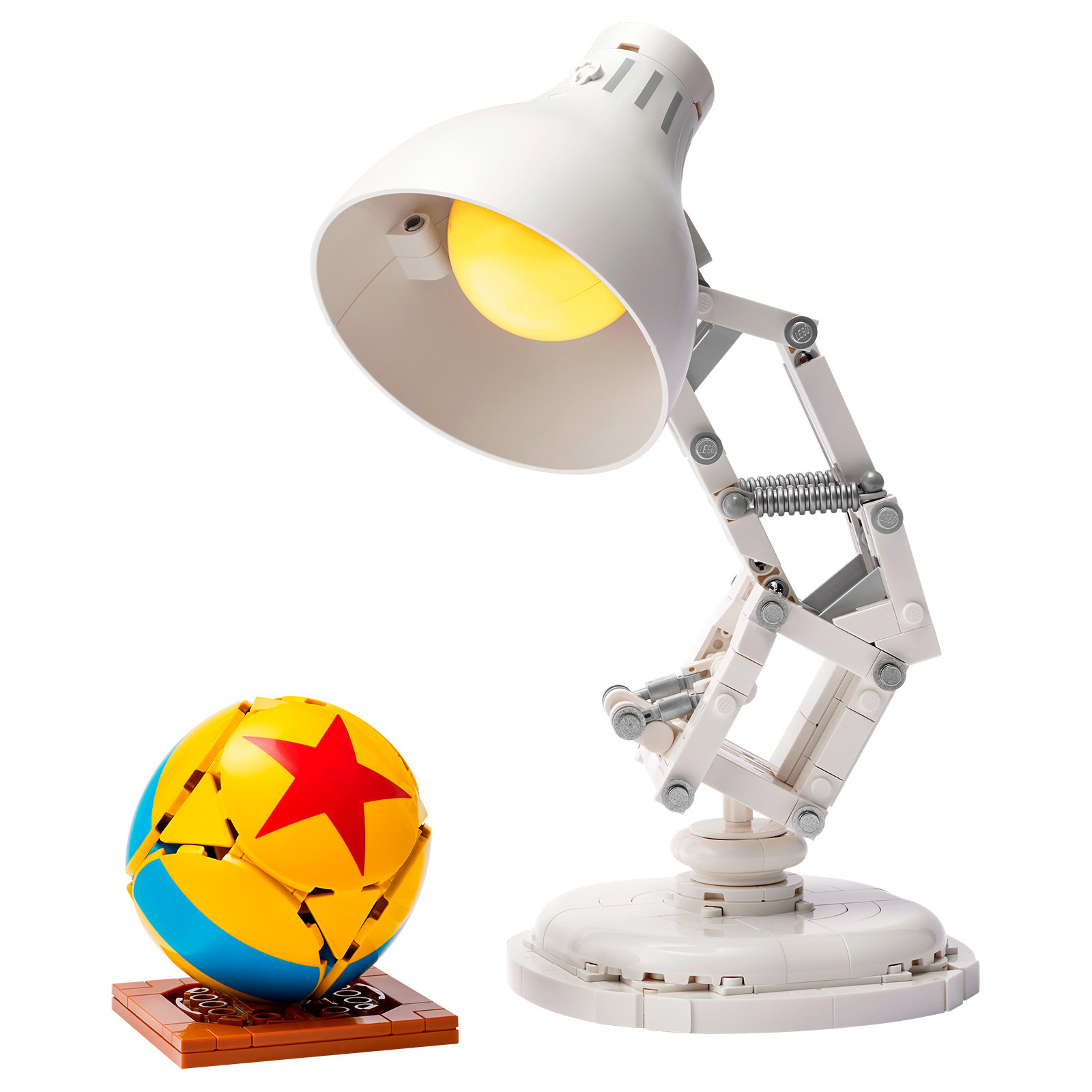
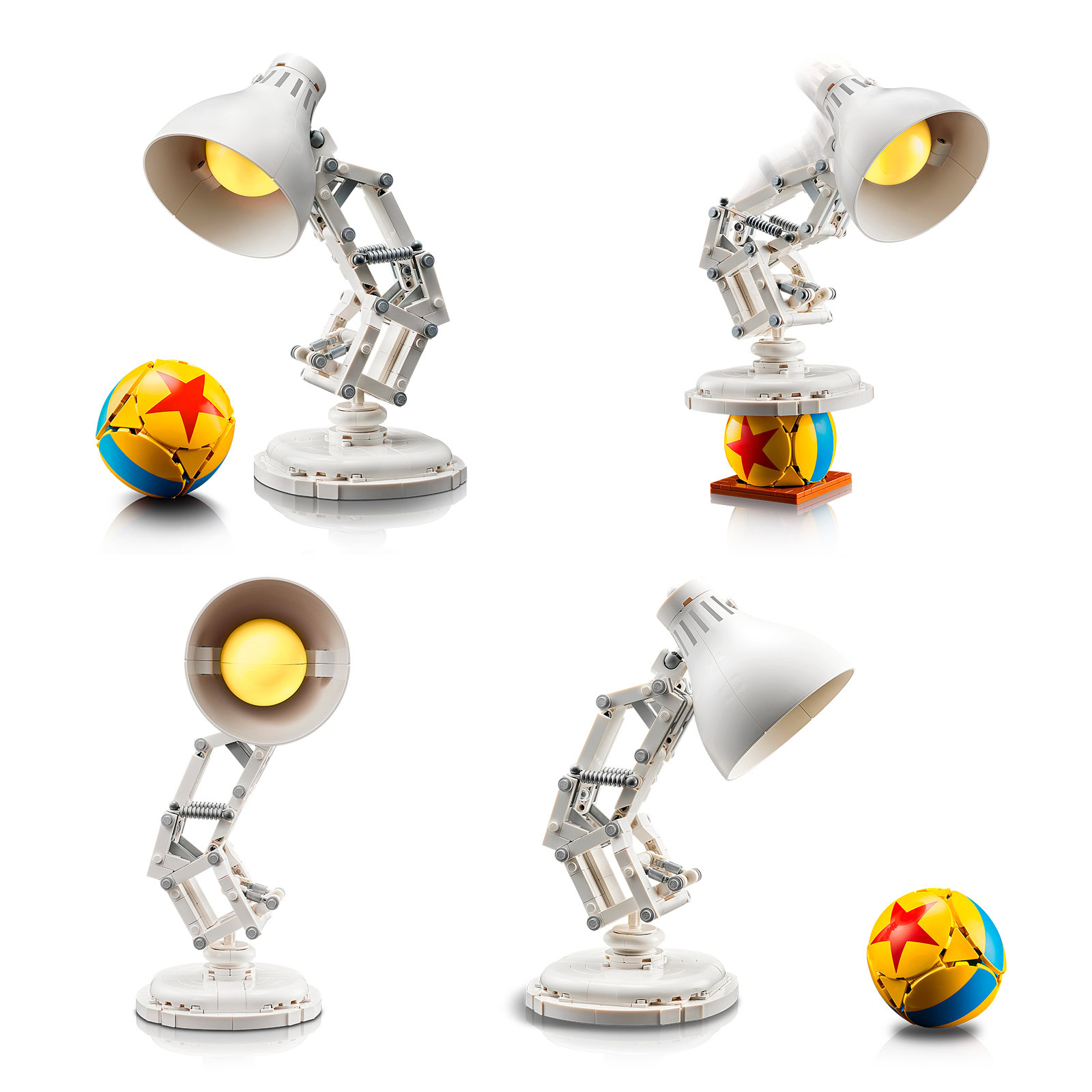
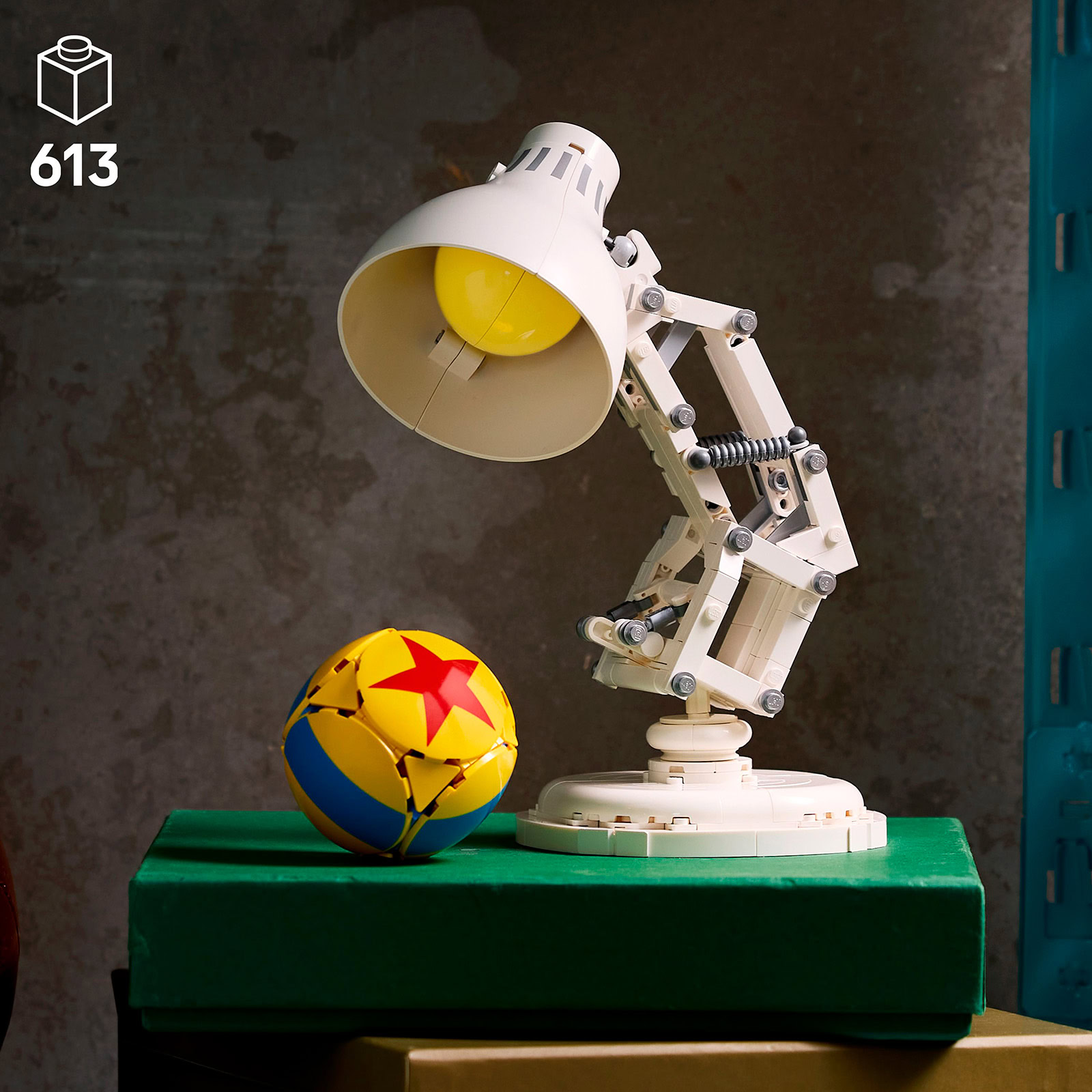
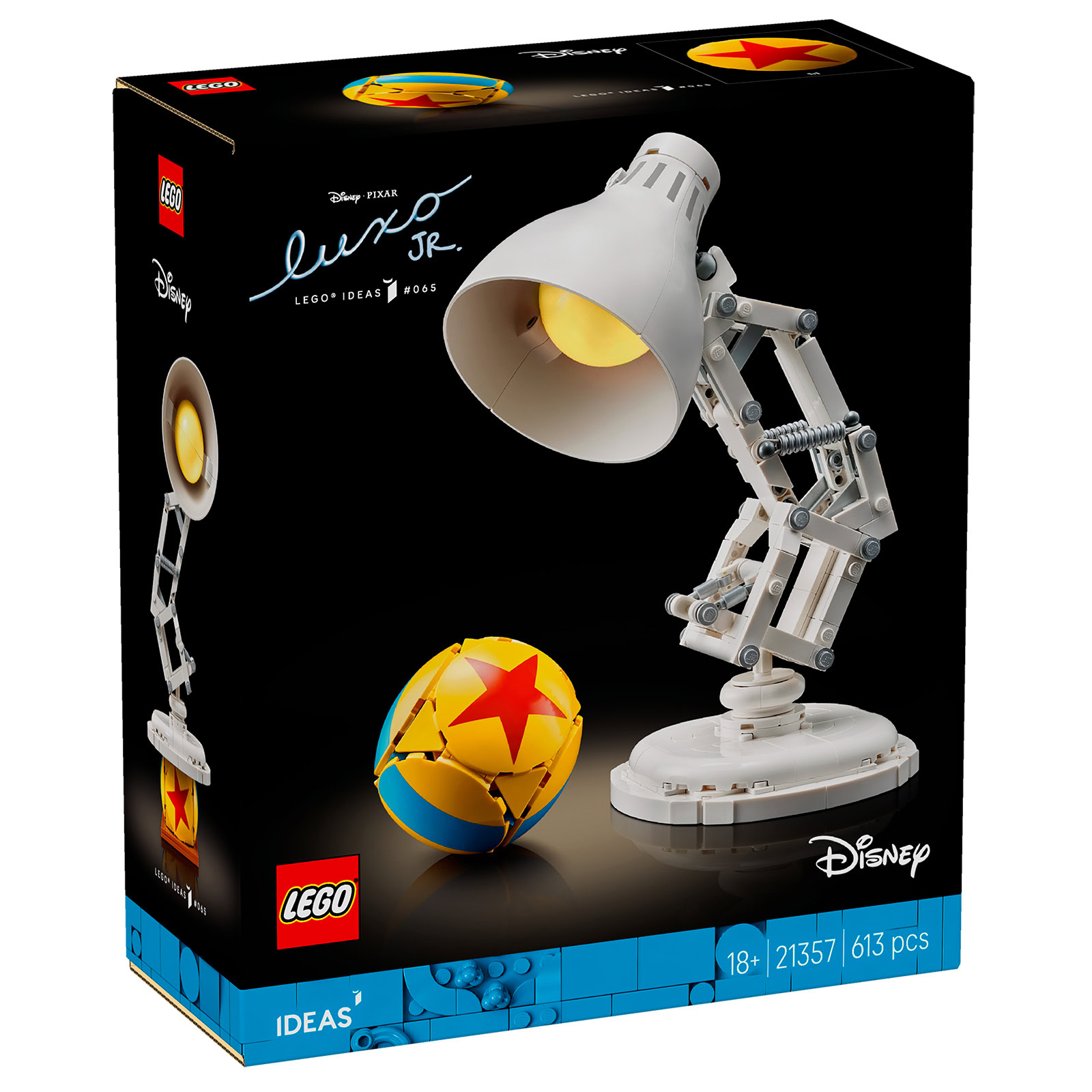
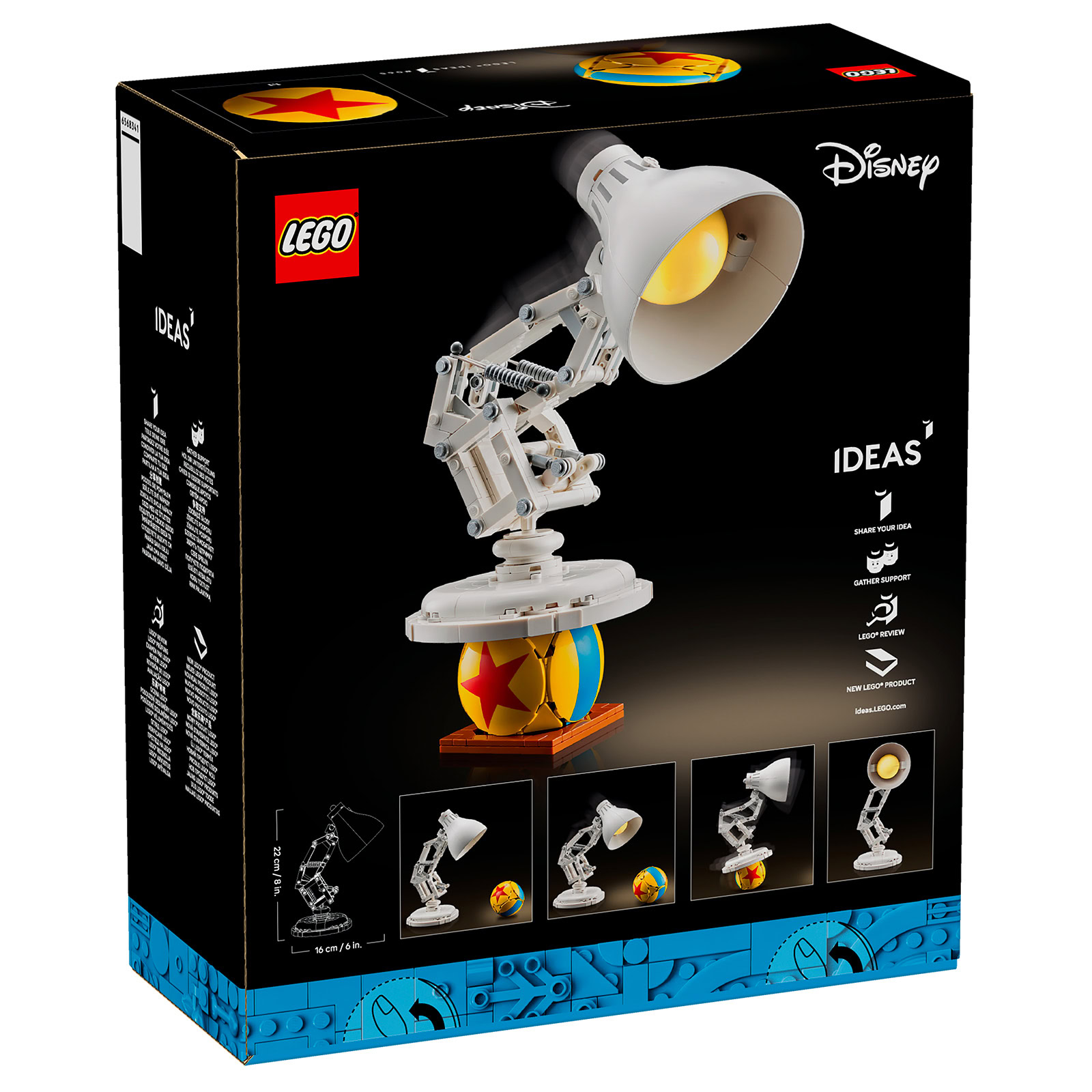
LEGO dévoile enfin la version officielle et définitive de l'idée soumise en son temps sur la plateforme LEGO IDEAS par Toby Brett : le set LEGO IDEAS 21357 Disney Pixar Luxo Jr. qui est dés aujourd'hui proposé en précommande sur la boutique officielle en ligne au prix public de 69,99 € et qui sera disponible à compter du 1er juin 2025.
Dans la boite, 613 pièces pour assembler la version revisitée par LEGO de l'idée de départ avec à l'arrivée une construction articulée de 29 cm de haut. La balle intègre des références à plusieurs films d'animation comme Up, The Incredibles, Ratatouille, Monsters, Inc. Toy Story ou encore Finding Nemo
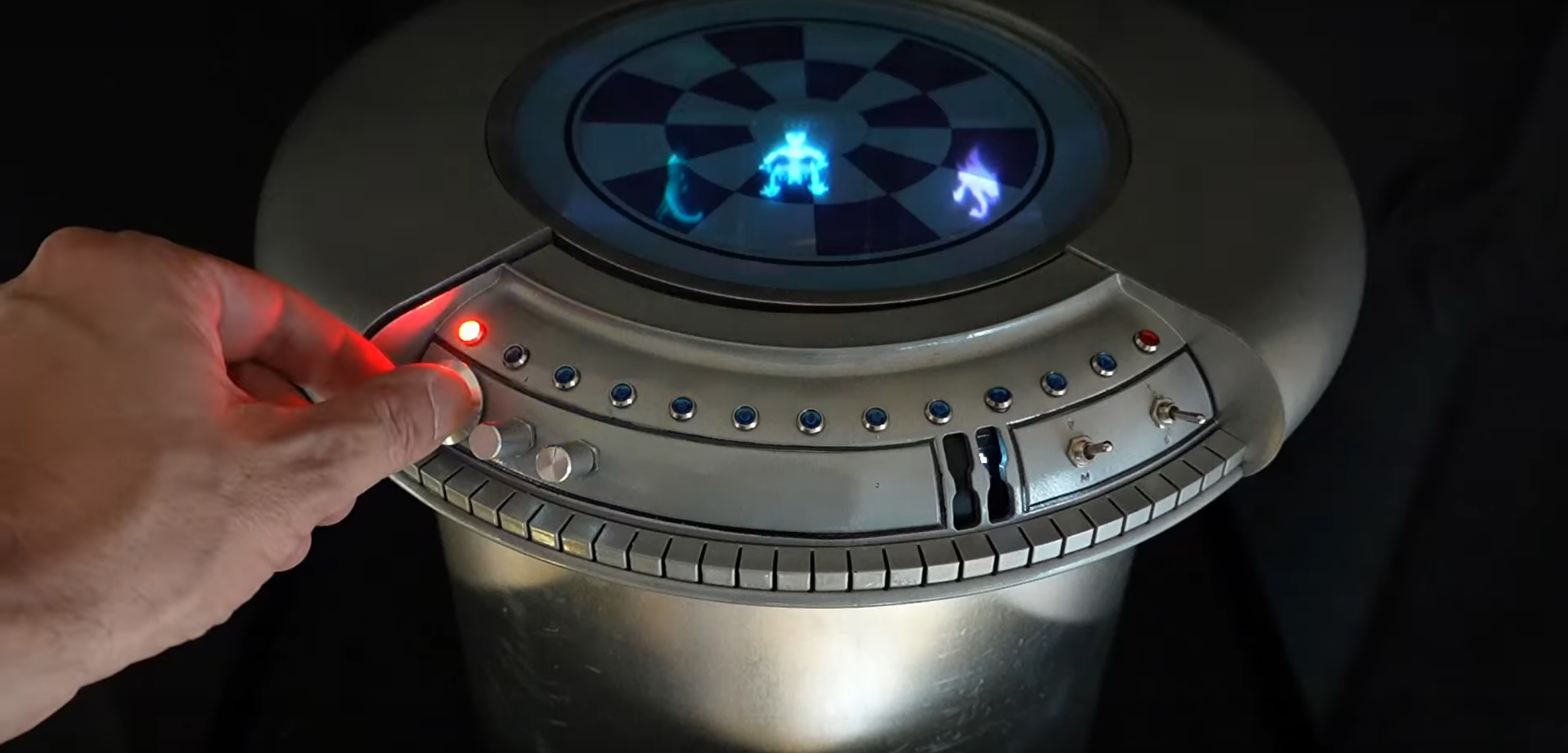
If you have seen Star Wars, you know what is being referenced here. Holochess appeared as a diversion built into the Millennium Falcon in the very first movie, way back in 1977. While not quite as iconic a use of simulated holograms as tiny Princess Leia begging for hope, it evidently struck a chord with [Maker Mac70], given the impressive effort he’s evidently gone through to re-create the game table from the film.
The key component of this unit is a plate from Japanese firm ASKA3D that scatters light from displays inside the table in just such a way that the diverging rays are focused at a point above its surface, creating the illusion of an image hovering in space. Or in this case, hovering at the surface of a acrylic chessboard. Granted, this technique only works from one viewing angle, and so is not a perfect recreation of a sci-fi holoprojector. But from the right angle, it looks really good, as you can see in the video below.
There are actually six SPI displays, driven by an Arduino GIGA, positioned and angled to project each character in the game. Placing two of the displays on 3D printed gantries allows them to move, allowing two creatures to battle in the center of the table. As [Maker Mac70] admits, this is quite a bit simpler than the Holochess game seen in the film, but it’s quite impressive for real world hardware.
If this all seems a little bit familiar, we covered an earlier floating display by [Maker Mac70] last year. This works on similar principles, but uses more common components which makes the technique more accessible. If chess isn’t your forte, why not a volumetric display that plays DOOM? If you’re interested in real holograms, not Sci-Fi, our own [Maya Posch] did a deep dive you may find interesting.
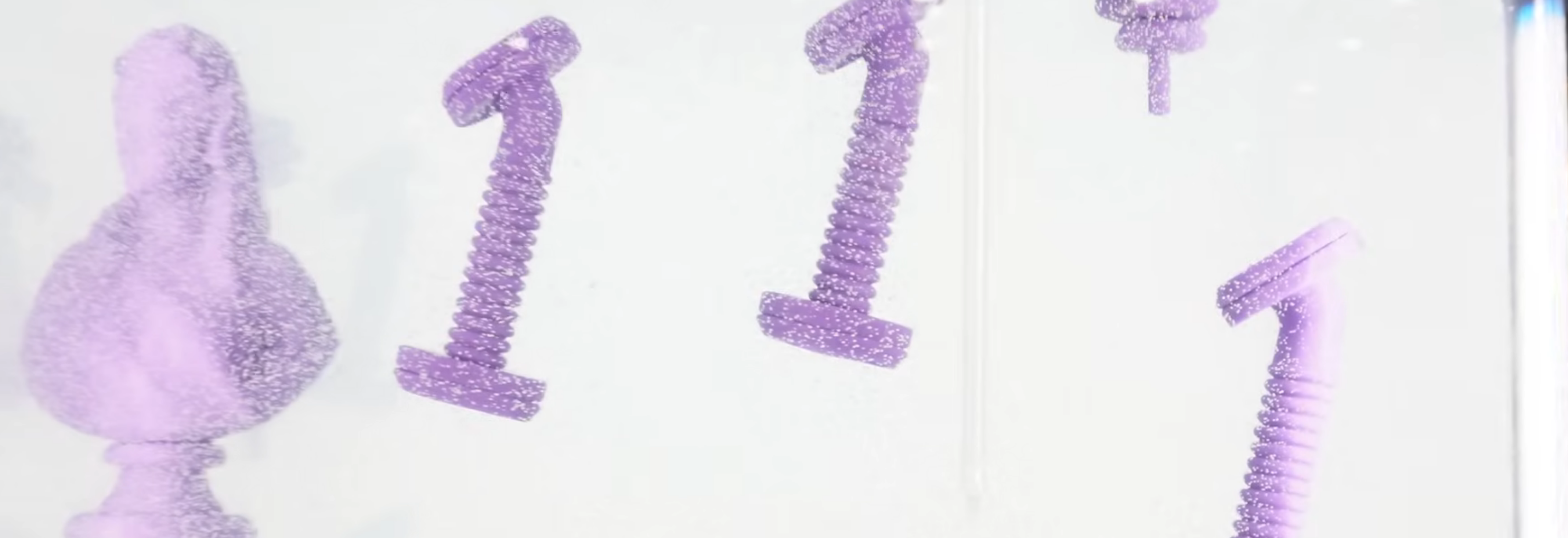
They might call it Levity, but there’s nothing funny about Rapid Liquid Print’s new silicone 3D printer. It has to be seen to be believed, and luckily [3D Printing Nerd] gives us lots of beauty shots in this short video, embedded below.
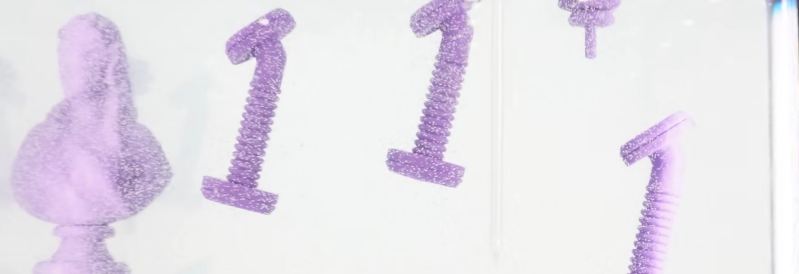
Smooth, and fast. This bladder took 51 minutes according to the RLP website.
Printing a liquid, even a somewhat-viscous one like platinum-cure silicone, presents certain obvious challenges. The Levity solves them with buoyancy: the prints are deposited not onto a bed, but into a gel, meaning they are fully supported as the silicone cures. The fact that the liquid doesn’t cure instantly has a side benefit: the layers bleed into one another, which means this technique should (in theory) be much more isotropic in strength than FDM printing. We have no data to back that up, but what you can see for yourself that the layer-blending creates a very smooth appearance in the finished prints.
If you watch the video, it really looks like magic, the way prints appear in the gel. The gel is apparently a commercially-available hydrogel, which is good since the build volume looks to need ̶a̶b̶o̶u̶t̶ ̶5̶0̶0̶ ̶L̶ at least 125 L of the stuff. The two-part silicone is also industry-standard and off-the-shelf, though no doubt the exact ratios and are tweaked for purpose. There’s no magic, just a really neat technology.
If you want one, you can sign up for the waiting list at Rapid Liquid Print’s website, but be prepared to wait; units ship next year, and there’s already a list.
Alternatively, since there is no magic here, we’d love to see someone take it on themselves, the way once equally exotic SLS printers have entered the DIY world. There was a time when resin printers were new and exotic and hobbyists had to roll their own, too. None of this is to say we don’t respect the dickens out of the Rapid Liquid Print team and their achievement–it’s just that imitation is the sincerest form of flattery.
Over the last century or more, humanity has been developing an ever-growing number of new chemicals that have never been seen before by Earth's creatures. Many of these chemicals end up being toxic contaminants that we'd love to get rid of, but we struggle to purify them from the environment or break them down once we do. And microbes haven't had much chance to evolve the ability to break them down for us.
Over the last few years, however, we've found a growing number of cases where bacteria have evolved the ability to break down such chemicals, like industrial contaminants and plastics. Unfortunately, these bacteria are all different species, target different individual contaminants, and thrive in different environments. But now, researchers have developed a new way to take the genes from all these species and place them in a single bacterial strain that can decontaminate complex waste mixtures.
Targeting contaminants
The inspiration for this work was the fact that a lot of this industrial contamination contains a mixture of toxic organic molecules that are commonly found in brackish or salty water. So, the research team, based in Shenzhen, China, started by simply testing a number of lab bacteria strains to develop one that could survive these conditions. The one that seemed to survive the best was Vibrio natriegens. These bacteria were discovered in a salt marsh, and their primary claim to fame is an impressive growth rate, with a population being able to double about every 10 minutes.
Japan-based sizing technology specialist Makip upgrades its Unisize 3D technology to provide online shoppers with an avatar of themselves, tailored to their unique body shape.
Using Unisize 3D, online shoppers will be able to virtually try on fashion purchases and check their appearance from four angles -front, back, left and right - to see how the item will fit them before ordering.
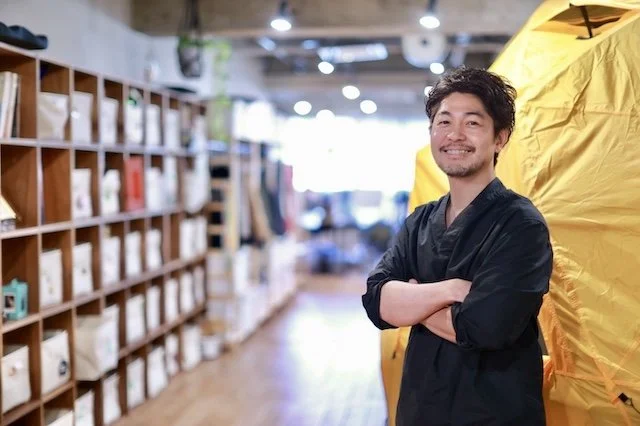
Makip’s CEO and President, Shingo Tsukamoto
Retail Economics found in 2024 that 17 out of every 100 products sold online are returned. Return rates in the fashion industry can be as high as 30%, with incorrect sizing often blamed for a large number of these.
Unisize 3D uses information about the user’s body shape alongside the dimensions of the clothing to allow shoppers to check the fit before making a purchase. Its new 3D function allows select users to view the avatar wearing different shoes to check trouser length, while the previous 2D model always showed images barefoot.
Shingo Tsukamoto, CEO and President at Makip, says: “The average return rate for the UK fashion industry is 26%. One in every four items purchased online is returned, usually at the expense of the retailer, we feel that this cannot continue. In recent years, some retailers have taken a stand and started charging customers for returning items, however, we approach this from the view of customer experience.”
“If we can provide customers with more accurate sizing options at the time of purchase, this leads to a reduction in returns. This has been proven across our Japan-based fashion clients with the average return rate dropping by 20%.”
Last year, Makip launched FaceChange in the UK. The technology allows online shoppers to virtually try on items of clothing they want to purchase by using AI to replace the faces of the online models.
Tsukamoto adds: “In recent years, platforms like TikTok and YouTube have normalised individually tailored content, influencing all generations. Similarly, personalisation in apparel e-commerce is expected to become an essential element of the online fashion industry. We will continue to expand our services with a focus on personalisation.”
The awards, which are now open for entries, celebrate global tech innovation in a fast moving omnichannel world.
Our 2024 hall of fame entrants were revealed during an event which took place at RIBA’s 66 Portland Place HQ in Central London on 21st November, and consisted of a drinks reception, three course meal, and awards ceremony presided over by comedian Lucy Porter.
In his welcome speech, Scott Thompson, Founder and Editor, RTIH, said: “The event is now into its sixth year and what a journey it has been. The awards started life as an online only affair during the Covid outbreak, before launching as a small scale in real life event and growing year on year to the point where we’re now selling out this fine, historic venue.”
He added: “Congratulations to all of our finalists. Many submissions did not make it through to the final stage, and getting to this point is no mean feat. Checkout-free stores, automated supply chains, immersive experiences, on-demand delivery, next generation loyalty offerings, inclusive retail, green technology. We’ve got all the cool stuff covered this evening.”
“But just importantly we’ve got lots of great examples of companies taking innovative tech and making it usable in everyday operations - resulting in more efficiency and profitability in all areas.”
Congratulations to our 2024 winners, and a big thank you to our sponsors, judging panel, the legend that is Lucy Porter, and all those who attended November's gathering.
For further information on the 2025 RTIH Innovation Awards, please fill in the below form and we will get back to you asap.
Name
*
First Name
Last Name
Email
*
Subject
*
Message
*
An ongoing refrain with modern movies is “Why is all of this CG?”– sometimes, it seems like practical effects are simultaneously a dying art, while at the same time modern technology lets them rise to new hights. [Davis Dewitt] proves that second statement with his RC movie star “robot” for an upcoming feature film.
The video takes us through the design process, including what it’s like to work with studio concept artists. As for the robot, it’s controlled by an Arduino Nano, lots of servos, and a COTS airplane R/C controller, all powered by li-po batteries. This is inside an artfully weathered and painted 3D printed body. Apparently weathering is important to make the character look like a well-loved ‘good guy’. (Shiny is evil, who knew?) Hats off to [Davis] for replicating that weathering for an identical ‘stunt double’.
While text-to-video artificial intelligence models like OpenAI's Sora are rapidly metamorphosing in front of our eyes, they have struggled to produce metamorphic videos. Simulating a tree sprouting or a flower blooming is harder for AI systems than generating other types of videos because it requires the knowledge of the physical world and can vary widely.
In 2022, we told you about a study reporting evidence that an ancient Peruvian people called the Wari laced the beer served at their feasts with hallucinogens—particularly a substance derived from the seeds of the vilca tree, which was common in the region during the Middle Horizon period (circa 850 CE) when the Wari empire thrived. This may have helped the Wari forge political alliances and expand their empire.
Now archaeologists have discovered direct evidence that the use of vilca was a common practice some 1,000 years earlier than the Wari, thanks to analysis of artifacts unearthed at Chavín de Huántar, located about 250 kilometers north of Lima, Peru. And the Chavín people may have used it for a different purpose: to reinforce social hierarchies by limiting consumption of those substances to an elite few, according to a new paper published in the Proceedings of the National Academy of Sciences.
There is ample evidence that humans in many cultures throughout history used various hallucinogenic substances in religious ceremonies or shamanic rituals. That includes ancient Egypt, as well as ancient Greek, Vedic, Maya, Inca, and Aztec cultures. The Urarina people who live in the Peruvian Amazon Basin still use a psychoactive brew called ayahuasca in their rituals, and Westerners seeking their own brand of enlightenment have been known to participate. The Wari empire lasted from around 500 CE to 1100 CE in the central highlands of Peru.
One of the most basic problems with robotic arms and similar systems is keeping the weight down, as more weight requires a more rigid frame and stronger actuators. Cable-driven systems are a classic solution, and a team of researchers from MIT and Zhejiang University recently shared some techniques for designing fully 3D printed cable-driven mechanisms.
The researchers developed a set of four primitive motion components: a bending component, a coil, screw-like, and a compressive component. These components can work together in series or parallel to make much more complicated structures. To demonstrate, the researchers designed a gripping tentacle, a bird’s claw, and a lizard-like walking robot, but much more complicated structures are certainly possible. Additionally, since the cable itself is printed, it can have extra features, such as a one-way ratcheting mechanism or bumps for haptic feedback.
These printed cables are the most novel aspect of the project, and required significant fine-tuning to work properly. To have an advantage over manually-assembled cable-driven systems, they needed to be print-in-place. This required special printer settings to avoid delamination between layers of the cable, cables sticking to other components, or cables getting stuck in the mechanism’s joints. After some experiments, the researchers found that nylon filament gives the best balance between cable strength and flexibility, while not adhering tightly to the PLA structure.
La nostalgie et le capitalisme, voilà deux concepts qui fonctionnent plutôt bien ensemble. Si ce constat s'applique sans surprise à la vente, parfois à prix d'or, de vieux appareils ou de jouets cultes, il fonctionne aussi avec la sortie de nouveaux produits.Si aujourd'hui un smartphone peut remplir à lui tout seul la fonction de bien des appareils d...
Here at Geeks Are Sexy, we’ve been covering pop culture conventions, and especially the amazing cosplayers who attend them, since 2011. Costumes are like fads: they come and go. But one theme never goes out of style: Star Wars.
This is our tribute to all you fantastic Star Wars cosplayers out there! The photos below showcase some of the best and most interesting costumes we’ve captured on camera over the past 14 years.
C'est une première. La France a décidé de désigner la Russie comme responsable de plusieurs attaques informatiques. Paris en profite pour dénoncer l'hostilité de la Russie dans le cyberespace, et cela depuis au moins dix ans.
This sketch is a fun takedown of one of the biggest sins in science fiction: picking years that are way too soon for the tech they’re showing us. Giant robot battles in 2025? Hoverboards in 2015? Interstellar travel in 2001? Please. My smart fridge still can’t tell if I’m out of milk.
When a time traveler shows up demanding a mysterious device, one guy’s had it up to here with unrealistic future dates, and he’s not afraid to rant about it while possibly getting vaporized.
Watch now for teleportation scams, timeline tantrums, and the most satisfying “I told you so” in sci-fi history:
A fresh Google update has quietly rolled out which makes scanning documents with your phone, specifically with Google Drive, better than ever. Google already lets you scan documents using your smartphone camera combined with the power of its various apps. These include Google Drive, Files by Google and the Pixel Camera app. The improvement means […]
Being a model citizen and a person of taste, you probably don't need this reminder, but some others do: Federal judges do not like it when lawyers electronically watermark every page of their legal PDFs with a gigantic image—purchased for $20 online—of a purple dragon wearing a suit and tie. Not even if your firm's name is "Dragon Lawyers."
Federal Magistrate Judge Ray Kent of the Western District of Michigan was unamused by a recent complaint (PDF) that prominently featured the aubergine wyrm.
"Each page of plaintiff’s complaint appears on an e-filing which is dominated by a large multi-colored cartoon dragon dressed in a suit," he wrote on April 28 (PDF). "Use of this dragon cartoon logo is not only distracting, it is juvenile and impertinent. The Court is not a cartoon."
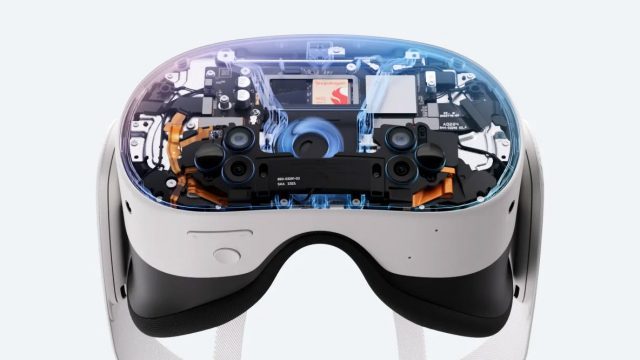
While Meta’s Quest has always relied heavily on cameras for tracking location of the headset, controllers, and the world around the user, developers haven’t had the same privileged access to the headset’s cameras. Earlier this year Meta gave developers the ability to experiment with direct access to the headset’s cameras in private projects; starting this week developers can now publicly release apps that make use of the new feature.
This week’s update of the Passthrough Camera API for Quest means that developers can now publish apps to the Horizon store that directly access the front-facing cameras of Quest 3 and 3S. This opens the door to third-party applications which can scan the world around the user to understand more about it. For instance, developers could add computer-vision capabilities to track objects or people in the scene, or to build a map of the environment for analysis and interaction.
For a long time this was impossible due to limitations Meta placed on what developers could and couldn’t do with the headset’s hardware. Despite computer-vision capabilities being widely available to developers on smartphones, Meta was hesitant to allow the same on its headsets, apparently due to privacy concerns (and surely amplified by the many privacy controversies the company has faced in the past).
Previously, third-party apps could learn some information about the world around the user—like the shape of the room and objects within it—but this information was provided by the system in a way that prevented apps from directly seeing what the cameras could see. This made it possible for developers to build mixed reality applications that were, to some extent, aware of the space around the user. But it made some use-cases difficult or even impossible; for example, tracking a specific object held by the user.
Last year Meta announced it would finally unlock direct access to the headset’s cameras. In March, it began offering an experimental version of the capability to developers, allowing them to build apps that accessed the headset’s cameras. But they weren’t allowed to publish those apps to the public, until now.
The company has also specified the technical capabilities and performance of the cameras that the developers can access on Quest 3 and 3S:
Image capture latency: 40-60ms
GPU overhead: ~1-2% per streamed camera
Memory overhead: ~45MB
Data rate: 30Hz
Max resolution: 1280×960
Internal data format YUV420
Meta says that a developer’s use of camera data on Quest is covered under its Developer Data Use Policy, including a section on “Prohibited Uses of User Data,” which prohibits certain uses of data, including to “perform, facilitate, or provide tools for surveillance,” and “uniquely identifying a device or user, except as permitted [in the policy].”
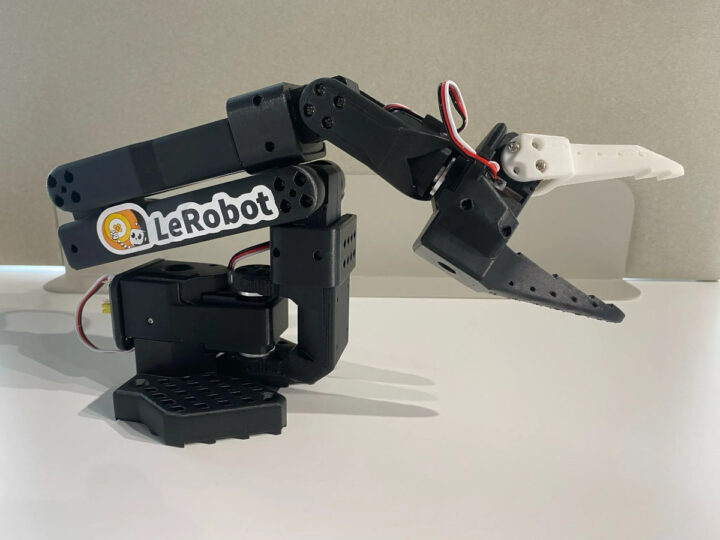
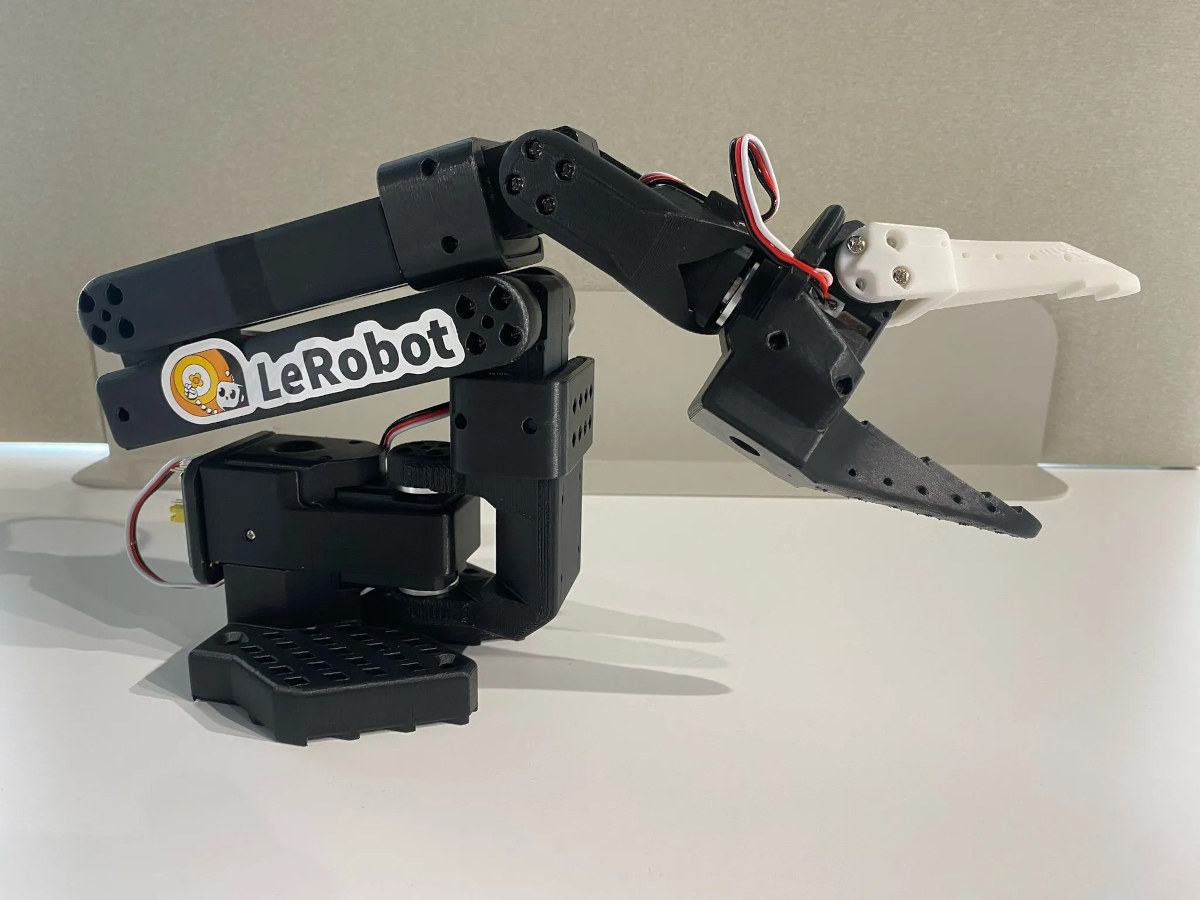
SO-ARM101 “Arm Servo Motor Kit” is an open-source dual robotic arm kit that works with Hugging Face’s LeRobot robotics framework and is designed to interface with NVIDIA Jetson AI modules and computers.
It is an update to the SO-ARM100 DIY open-source robotic arm kit introduced last year with LeRobot framework support. The new SO-ARM101 is still comprised of leader and follower arms but features improved wiring to prevent disconnection issues previously seen at joint 3, motors with optimized gear ratios, and a few functionality where the leader arm can now follow the follower arm in real-time, which will be used for reinforcement learning (RL) where a human can intervene and correct the robot’s actions.
SO-ARM101 specifications:
Degrees of Freedom (DOF) – 6 per Arm
Motor control
Total servo – 12x STS3215 bus servos (6x for each Arm)
Leader Arm
1x (7.4V) 1:345 gear ratio motor for No.2 joints
2x (7.4V) 1:191 gear ratio motors for No.1 and No.3 joints
3x (7.4V) 1:145 gear ratio motors for No.4 and No.5 joints, and the No.6 gripper
Follower Arm
Standard kit – 6x (7.4V) 1:345 gear ratio motor for all joints; torque: 16.5kg.cm at 6V
Pro kit – 6x (12V) 1:345 gear ratio motor for all joints; torque: 30kg.cm
Angle Sensor – 12-bit magnetic encoder
USB – USB-C for programming and testing
Host Communication – UART
Control Method – PC-based control
Power Supply
Standard kit – 2x 5V/4A power adapter
Pro kit – 12V/1A for Follower arm, 5V/4A for Leader arm
Temperature Range – 0°C to 40°C
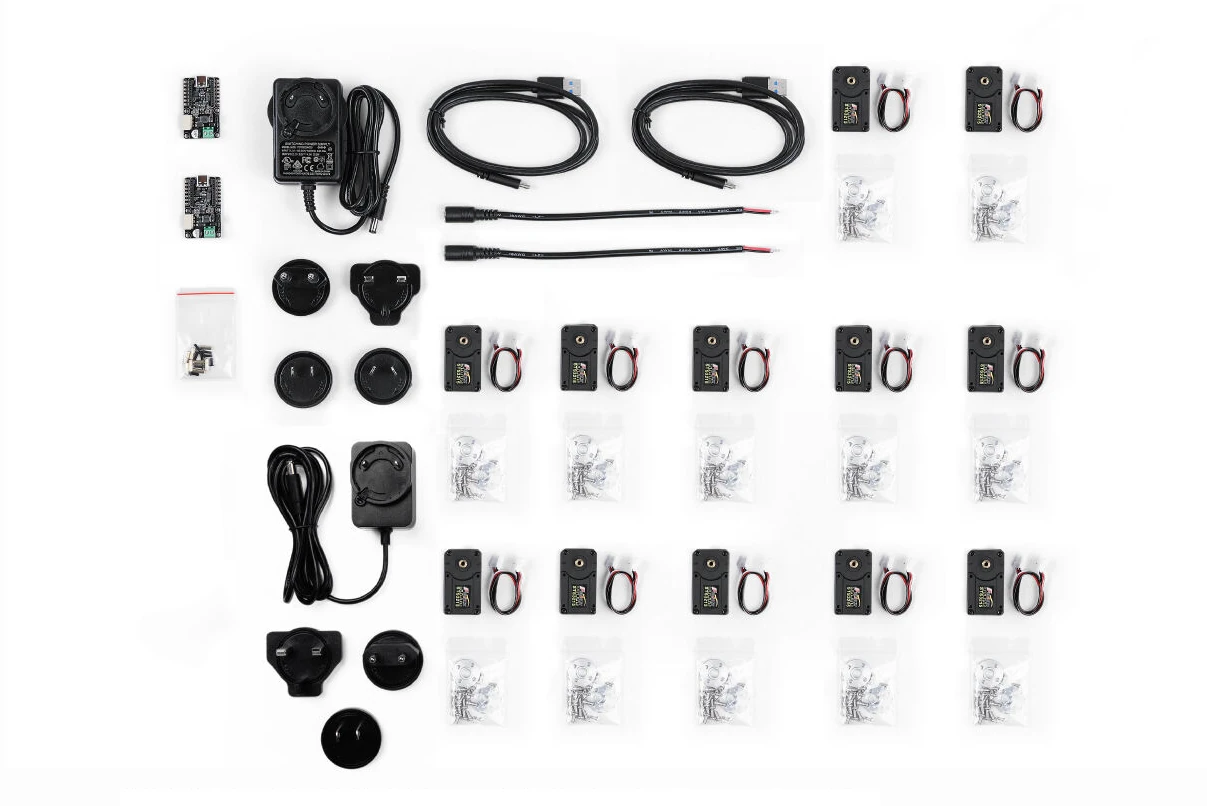
SO-ARM101 motor kit does not include 3D printed parts, which can be printed by the user or ordered separately
The hardware is designed by LeRobtoStudio, and you’ll find assembly instructions for both Arms, 3D files, a list of parts, and other resources on a GitHub repo shared by both SO-ARM100 and SO-ARM101 kits.
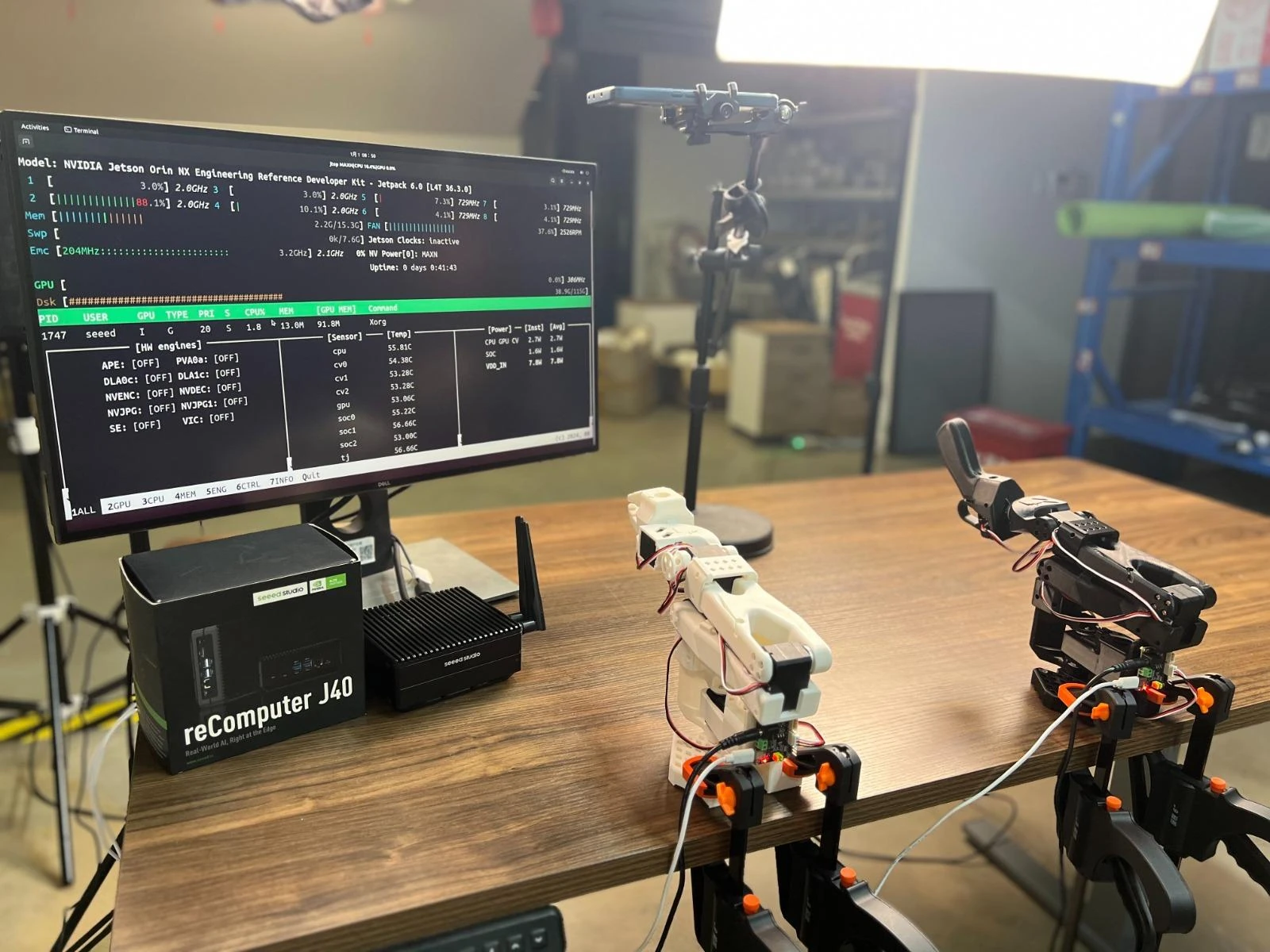
The kit integrates with the LeRobot platform with PyTorch models, datasets, and tools for reinforcement learning and imitation learning using Hugging Face. This kit and related software are designed to work on NVIDIA Jetson hardware such as the reComputer J4021 mini PC with Jetson Orin NX 16GB. The video below shows the leader and follower Arms in action using Hugging Face’s LeRobot (with the SO-ARM100 kit).
The SO-ARM101 dual robotic arm kit is sold for $220 (Standard) or $240 (Pro) on AliExpress or Seeed Studio. Readers should note that neither the Standard nor Pro kit includes the 3D printed parts, so they would have to print those themselves, or purchase them separately for about $35, since they are offered as options on both AliExpress and Seeed Studio.
Variable Rewards are remarkably powerful. Sometimes, you get something good. Sometimes, you get nothing. But every so often, it's something amazing. That unpredictability keeps us coming back.
What Are Variable Rewards?
A variable reward is a type of reward given unpredictably. You don't know exactly what you'll get or when—and that's what makes it so compelling. The randomness taps into our brain's reward system, creating a powerful loop of anticipation and surprise.
Examples of Variable Rewards
This kind of reward schedule—and variations in psychology, such as variable ratio reinforcement or intermittent variable rewards—is known for being highly addictive. It shows up everywhere in daily life and product design. Here are a few examples I've witnessed or experienced firsthand:
The Reward Chest
The reward chest, or comparable source of goodies, has proliferated in games. Here's how it can work: Each day, or few hours, there's another chance to open a reward chest. It's scarce—don't miss it. Most of the time, it gives you something standard. But once in a while, you open it to find something amazing — a rare weapon or skill. Better open just one more…
The Email Inbox
Mostly, it's standard stuff. Sometimes, it's great — an exciting job intro, a message from an old friend, a special offer. That occasional thrill keeps us checking in.
I've noticed this with print sales of the sketches or new members on Patreon. From time to time someone places a big order—it could be tomorrow, it could be never again, or it could be this one time I check my inbox.
Reviewing animal camera trap photos
We were recently checking through the photos from a set of animal camera traps in a nearby park. Often, the camera trap was triggered by another crow or raven. But sometimes you get a badger or an animal looking right at you. And the next photo might have a hedgehog or a rare bird. Better just look at one more.
Beachcombing
Beaches are wonderful environments for serendipity (and play). It's always a joy walking along the strand line to see what you might find. There are usually a few lovely shells. Other times, there's nothing. But sometimes there's a crab. Or a starfish. Or once, a war relic. Maybe it'll be this time.
The variable reward examples go on:
Slot machines — just enough wins to keep you playing, with the occasional sound across the casino of a bumper win.
Pret A Manger — employees could occasionally give a free coffee. If you got one once, there's always the chance it'll happen again.
Pokémon cards — most cards are standard and just build up your deck, but there's always a shot at a rare card worth hundreds in the next pack you open.
A generous compliment from your boss — might have you hoping the next project brings another.
A surprise gesture of affection — from a friend or partner might keep you on the edge for more.
Social posts — the one that blew up with thousands of likes. Maybe that'll be yours this time.
Your football team — they don't win every week, but they win just enough to keep you dreaming that today might be a great day.
Maybe even Sketchplanations — in most weeks, maybe you're ambivalent about the new one. But occasionally, it hits just right. Maybe next week's will.
Because the rewards are sporadic and unpredictable, we build anticipation before we act—and when a reward comes, it satisfies an emotional itch and fuels habit formation.
Variable rewards can be much more engaging than predictable rewards. Nir Eyal breaks them into three types:
Social rewards—feeling connected or admired (Rewards of the Tribe)
Material or informational rewards—such as money or finding something (Rewards of the Hunt)
Intrinsic rewards—mastering a challenge, beating a level (Rewards of the Self)
Summary
Variable rewards have the power to get us hooked.
Life has intermittent variable rewards. However, some products and games are built around them deliberately. And I have come to realise that they are powerfully addictive.
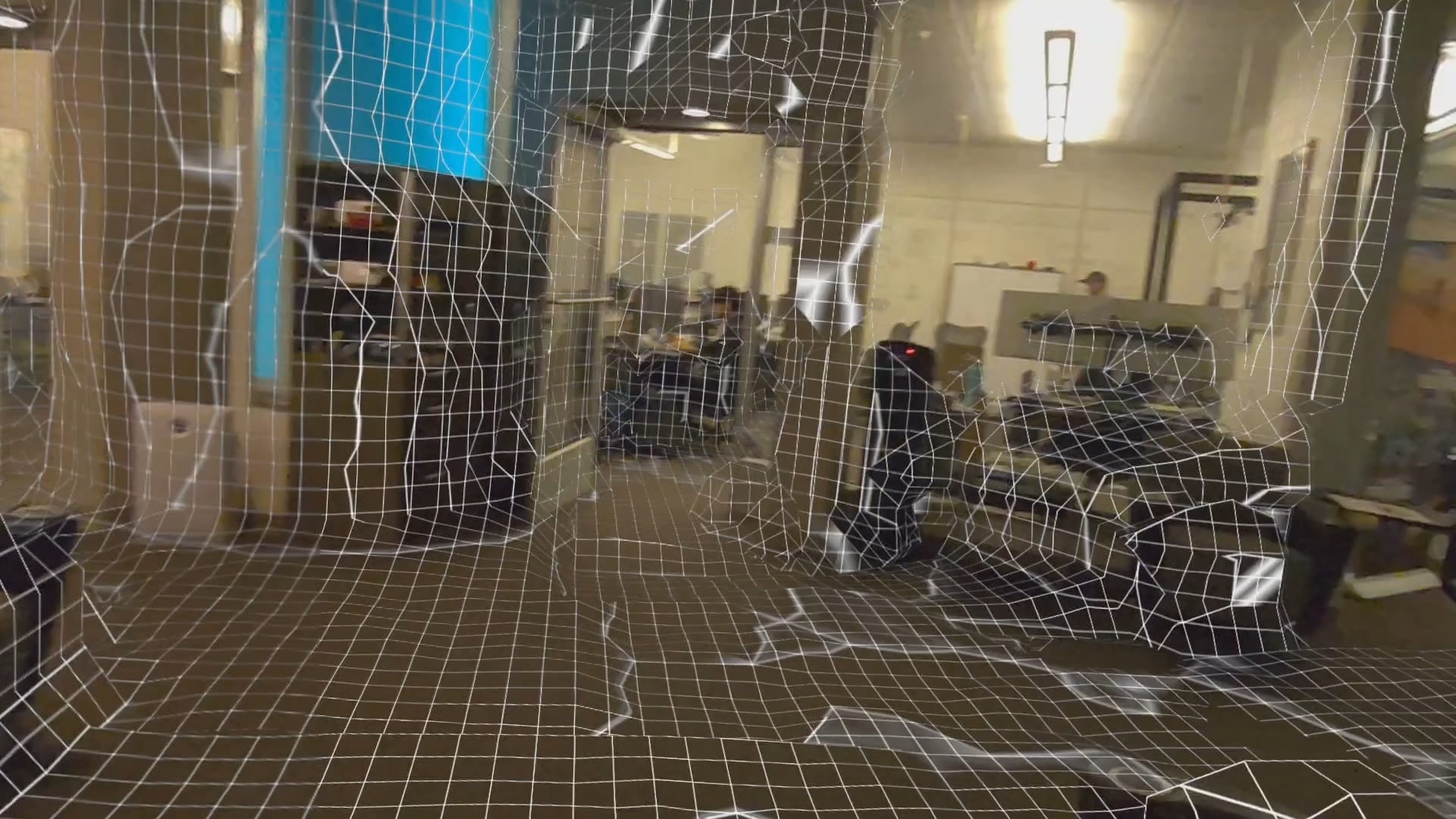
Lasertag's developer implemented continuous scene meshing on Quest 3 & 3S, eliminating the need for the room setup process and avoiding its problems.
Quest 3 and Quest 3S let you scan your room to generate a 3D scene mesh that mixed reality apps can use to allow virtual objects to interact with physical geometry or reskin your environment. But there are two major problems with Meta's current system.
The first problem is that it requires you to have performed the scan in the first place. This takes anywhere from around 20 seconds to multiple minutes of looking or even walking around, depending on the size and shape of your home, adding significant friction compared to just launching directly into an app.
The other problem is that these scene mesh scans represent only a moment in time, when you performed the scan. If furniture has moved or objects have been added or removed from the room since then, these changes won't be reflected in mixed reality unless the user manually updates the scan. For example, if someone was standing in the room with you during the scan, their body shape is baked into the scene mesh.
0:00
/1:31
1×
Continuous scene meshing in beta Lasertag build.
Quest 3 and Quest 3S also offer another way for apps to obtain information about the 3D structure of your physical environment, though, the Depth API.
The Depth API provides real-time first person depth frames, generated by the headset by comparing the disparity from the two tracking cameras on the front. It works up to around 5 meters distance, and is typically used to implement dynamic occlusion in mixed reality, since you can determine whether virtual objects should be occluded by physical geometry.
An example of a game that uses the Depth API is Julian Triveri's colocated multiplayer mixed reality Quest 3 game Lasertag. As well as for occlusion, the public build of Lasertag uses the Depth API to determine in each frame whether your laser should collide with real geometry or hit your opponent. It doesn't use Meta's scene mesh, because Triveri didn't want to add the friction of the setup process or be limited by what was baked into the mesh.
And the beta release channel of Lasertag goes much further than this.
In the beta release channel, Triveri uses the depth frames to construct, over time, a 3D volume texture on the GPU representing your physical environment. That means that, despite still not needing any kind of initial setup, this version of Lasertag can simulate laser collisions even for real world geometry you're not currently directly looking at, as long as you've looked at it before. In an internal build, Triveri can also convert this into a mesh using an open-source Unity implementation of the marching cubes algorithm.
In earlier builds, Triveri even experimented with networked heightmapping. In these tests, each headset in the session shared their continuously constructed heightmap, derived from the depth frames, with the other headsets as they constructed it, meaning everyone got the sum of what each headset has scanned. This isn't currently available, and relied on older underlying techniques that Triveri doesn't currently plan to bring forward. But it's still an interesting experiment that future multiplayer mixed reality systems could explore.
0:00
/0:43
1×
Previous experimentation of networked continuous heightmapping.
So why doesn't Meta do continuous meshing instead of its current room scanning system?
On Apple Vision Pro and Pico 4 Ultra, this is already how scene meshing works. On these headsets, there is no specific room setup process, and the headset continuously scans the environment in the background and updates the mesh. But the reason they can do this is that they have hardware-level depth sensors, whereas Quest 3 and Quest 3S use computationally expensive computer vision algorithms to derive depth (in Quest 3's case, assisted by a projected IR pattern).
Using the Depth API at all has a notable CPU, GPU, and battery life cost, which is why many Quest mixed reality apps still don't even have dynamic occlusion. And using these depth frames to construct a mesh is even more computationally and energy expensive.
Essentially, Lasertag trades off performance and battery life for the advantage of continuous scene understanding without a setup process. And this is why Quest 3 and 3S don't do this for the official scene meshing system.
0:00
/3:35
1×
Lasertag beta gameplay.
In January Meta indicated that it plans to eventually make scene meshes automatically update to reflect changes, but the wording given sounds like it will still require the initial setup process as a baseline.
Lasertag is available for free on the Meta Horizon platform for Quest headsets. The live store version uses the current depth frame for laser collisions, while the pre-release beta constructs a 3D volume over time, as described above.
For developers interested in leveraging Lasertag's technique, Triveri has made the source code available on GitHub.
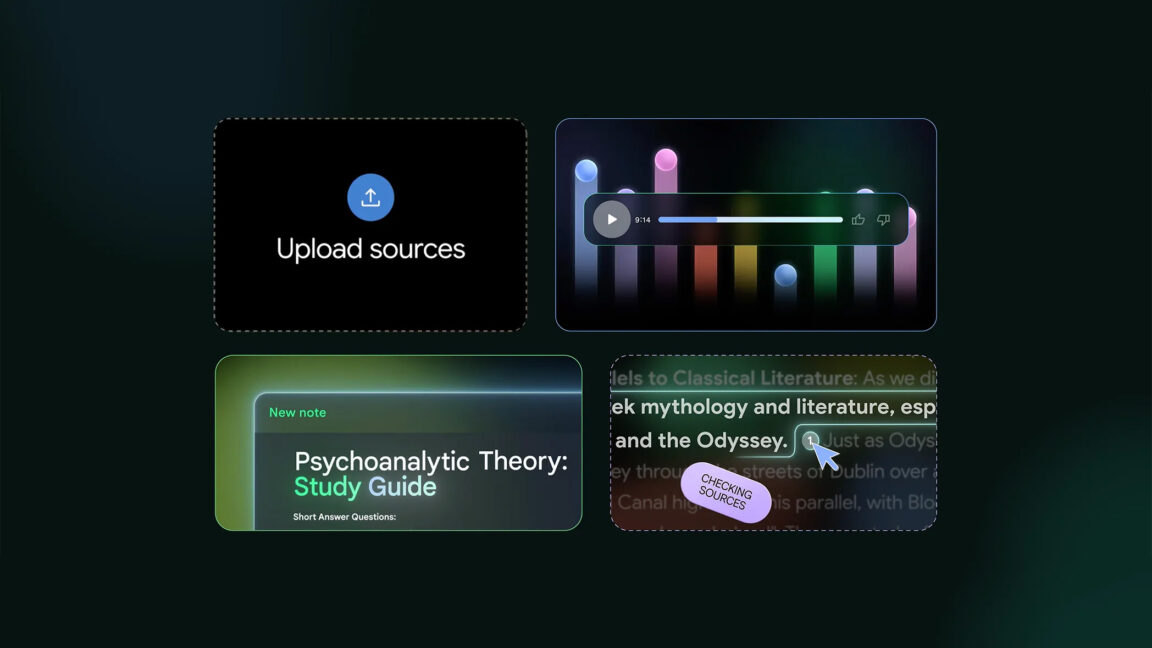
After several years of escalating AI hysteria, we are all familiar with Google's desire to put Gemini in every one of its products. That can be annoying, but NotebookLM is not—this one actually works. NotebookLM, which helps you parse documents, videos, and more using Google's advanced AI models, has been available on the web since 2023, but Google recently confirmed it would finally get an Android app. You can get a look at the app now, but it's not yet available to install.
Until now, NotebookLM was only a website. You can visit it on your phone, but the interface is clunky compared to the desktop version. The arrival of the mobile app will change that. Google said it plans to release the app at Google I/O in late May, but the listing is live in the Play Store early. You can pre-register to be notified when the download is live, but you'll have to tide yourself over with the screenshots for the time being.
NotebookLM relies on the same underlying technology as Google's other chatbots and AI projects, but instead of a general purpose robot, NotebookLM is only concerned with the documents you upload. It can assimilate text files, websites, and videos, including multiple files and source types for a single agent. It has a hefty context window of 500,000 tokens and supports document uploads as large as 200MB. Google says this creates a queryable "AI expert" that can answer detailed questions and brainstorm ideas based on the source data.
Microsoft on Wednesday launched several new “open” AI models, the most capable of which is competitive with OpenAI’s o3-mini on at least one benchmark. As it says on the tin, all of the new permissively licensed models — Phi 4 mini reasoning, Phi 4 reasoning, and Phi 4 reasoning plus — are “reasoning” models, meaning […]
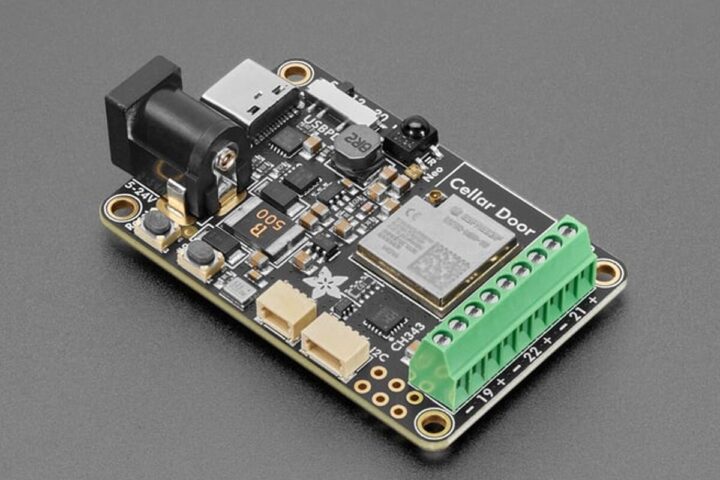
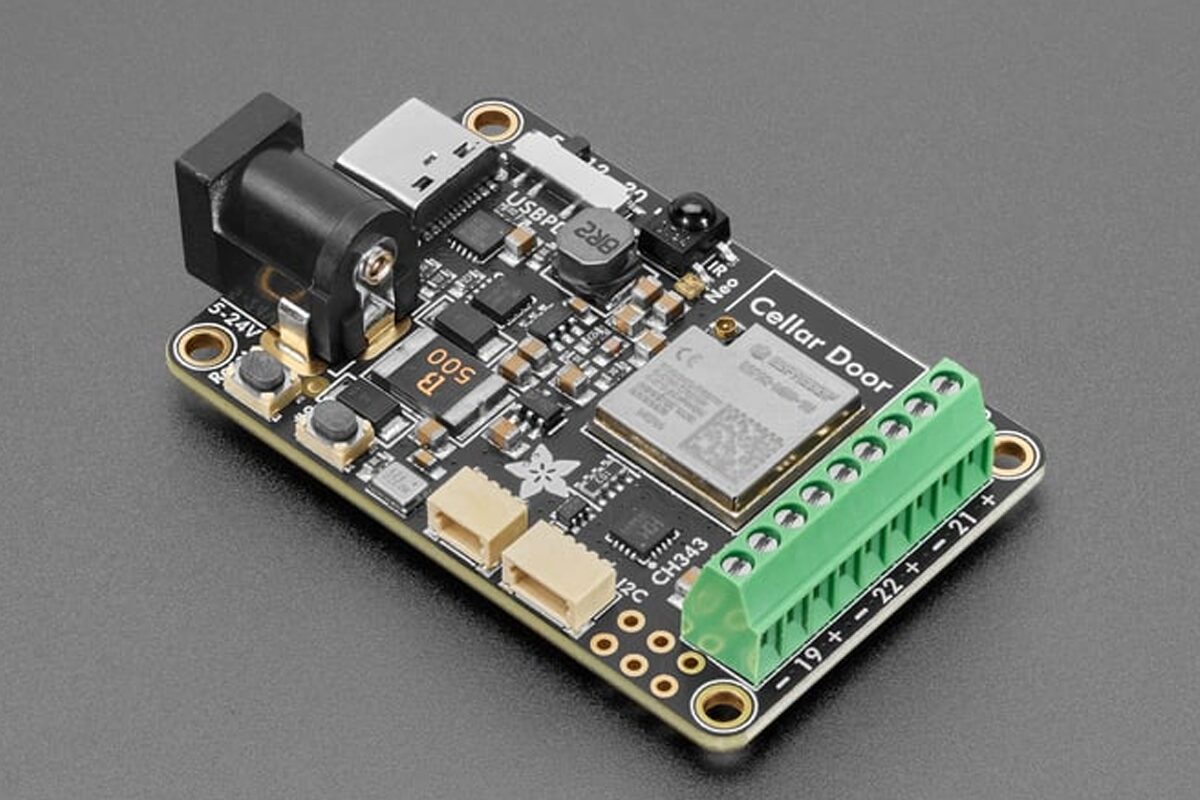
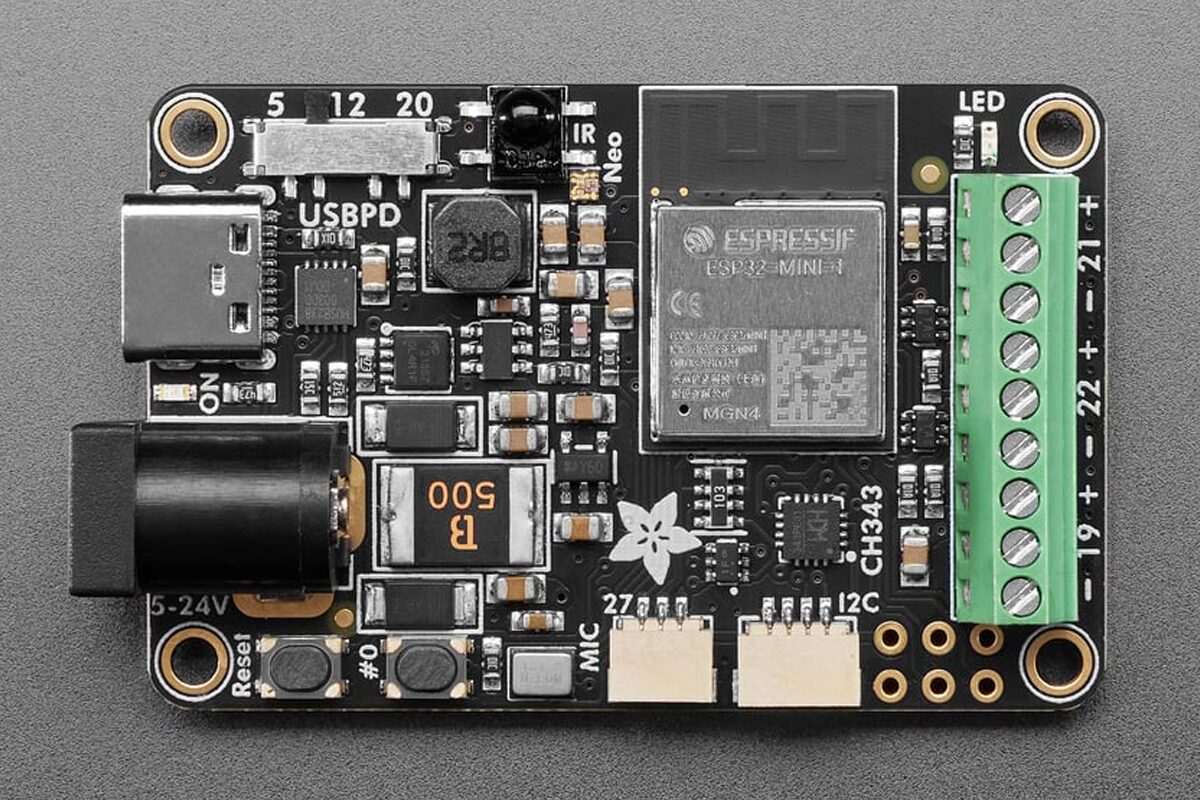
The Adafruit SparkleMotion is an ESP32-based LED controller board designed to drive addressable LEDs, including WS2812B, APA102, SK6812, LPD8806, UCS2904, and SM16704. It supports both WLED and xLights projects and features an onboard 100W USB-C PD port to drive even high-voltage LED setups.
The board includes dual power input options (USB-C PD with 5/12/20V selection and 2.1mm DC jack), a 5A fuse, and level-shifted output terminals for controlling addressable LEDs. The board also features a built-in I2S digital microphone, IR receiver, Stemma QT I2C port, USB-serial with auto-reset, GPIO breakout pads, onboard NeoPixel and status LED, and multiple JST and terminal connectors for sensor and control integration. It comes pre-assembled with terminal blocks for easy wiring, making it suitable for applications such as wearable electronics, home decor lighting, audio-reactive displays, and remote-controlled installations.
Adafruit Sparkle Motion Specifications:
SoC – ESP32-S3 dual-core Xtensa LX7 MCU @ 240MHz with 2.4GHz Wi-Fi and BLE 5
USB Type-C PD input with slide switch for 5V / 12V / 20V selection (20V suitable for most 24V LED strips)
2.1mm DC barrel jack input (center-positive)
5A fuse and low forward-voltage diodes for protection
Dimensions – 45 x 33mm with mounting holes
Weight – Approx. 10 grams
Compliance – RoHS 2 2011/65/EU and 2015/863/EU
The Adafruit Sparkle Motion board works with WLED firmware with sound reactive support and xLights open-source software for setting up large LED displays with protocols like E1.31, DDP, and Art-Net. You also have the option to use Arduino IDE, ESP-IDF, MicroPython, or CircuitPython to design your own custom LED project. More information to get started can be found on the Adafruit Learn website.
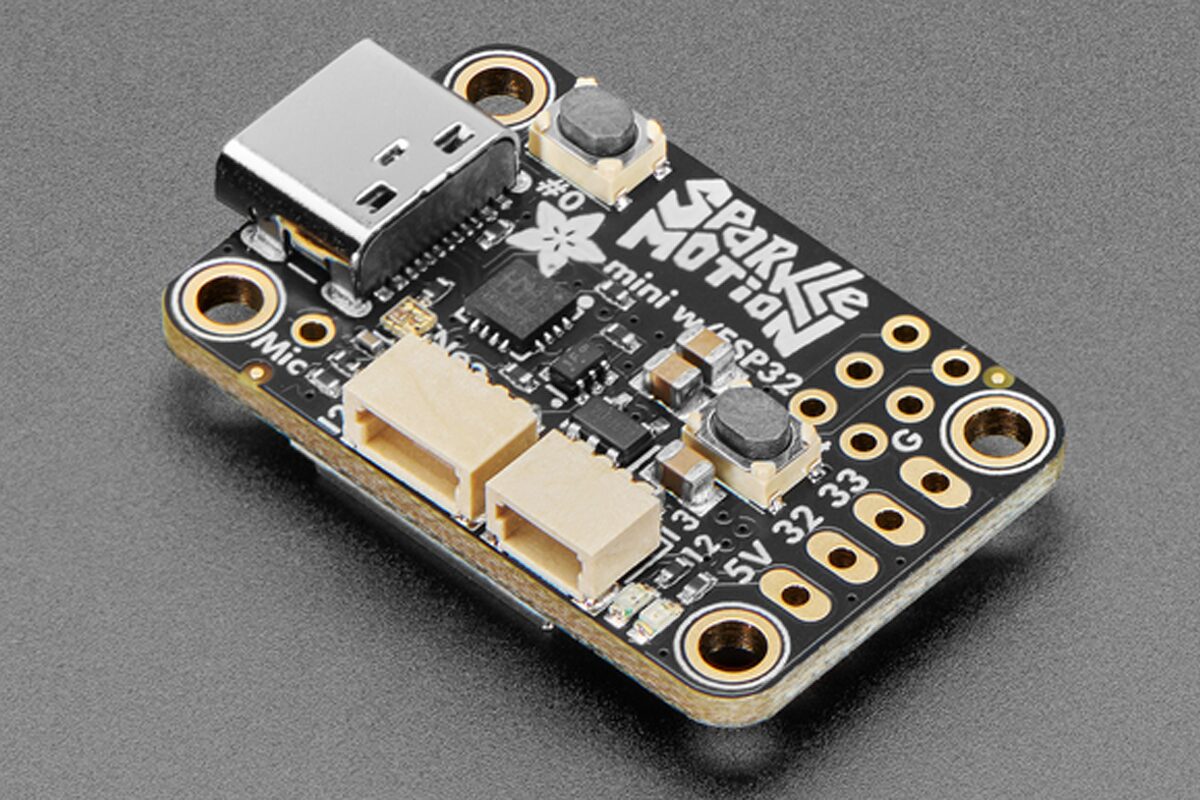
The Sparkle Motion addressable LED controller comes in two variants, one with a PCB Antenna and the other with the option to connect a wFL External Antenna. There is also a Mini Sparkle Motion board with 31.6 x 19.8mm from factor with level-shifted dual LED outputs, an I2S microphone, Stemma QT I2C port, user/reset buttons, and extra GPIO breakouts, which may be better suited to wearables and portable LED setups.
The Adafruit Sparkle Motion board, priced at $24.95, is available with either a built-in PCB antenna or a u.FL external antenna. Both are often out of stock due to high demand, and at the time of writing, only the version with an external antenna is in stock (46 pieces).
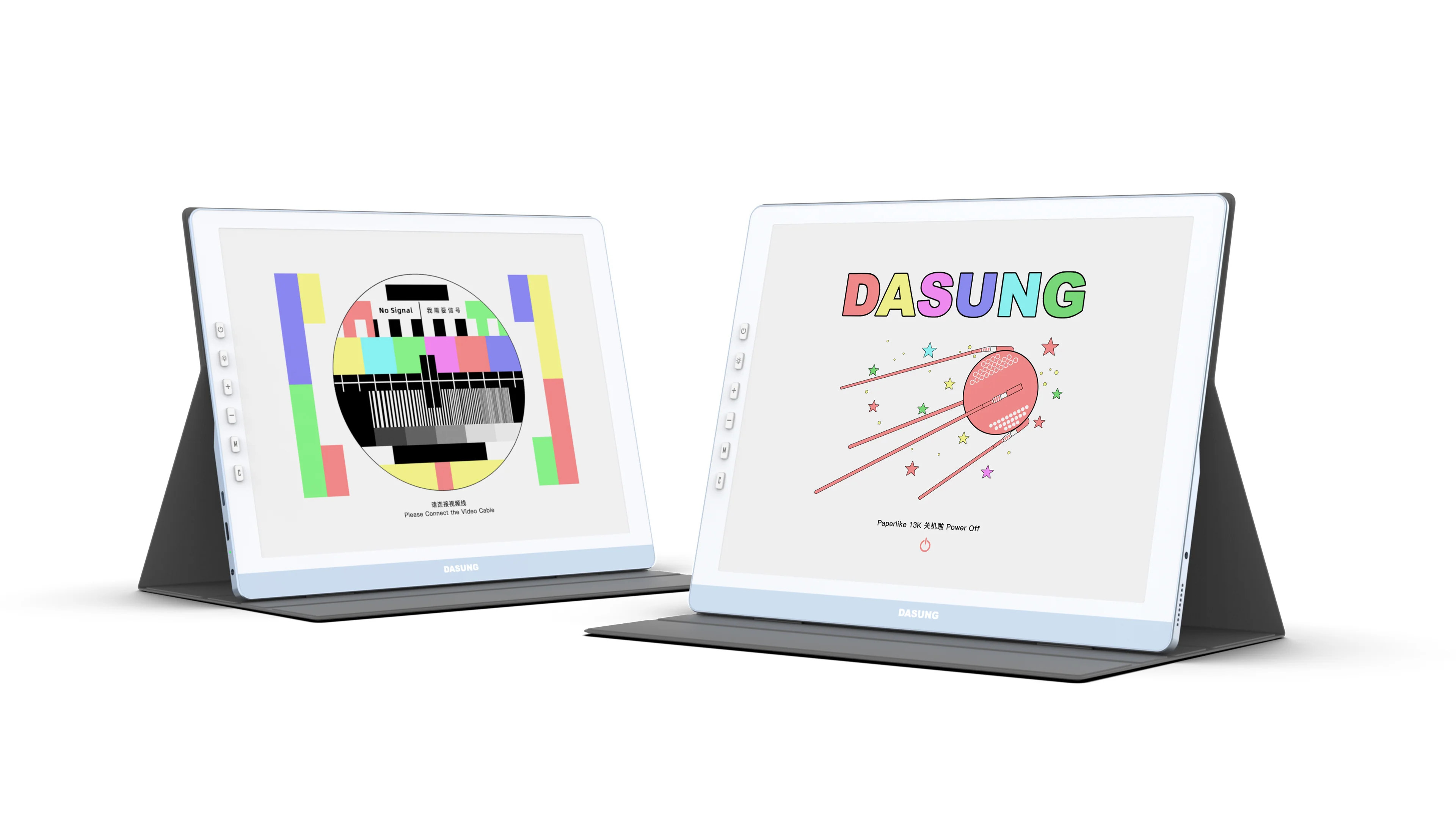
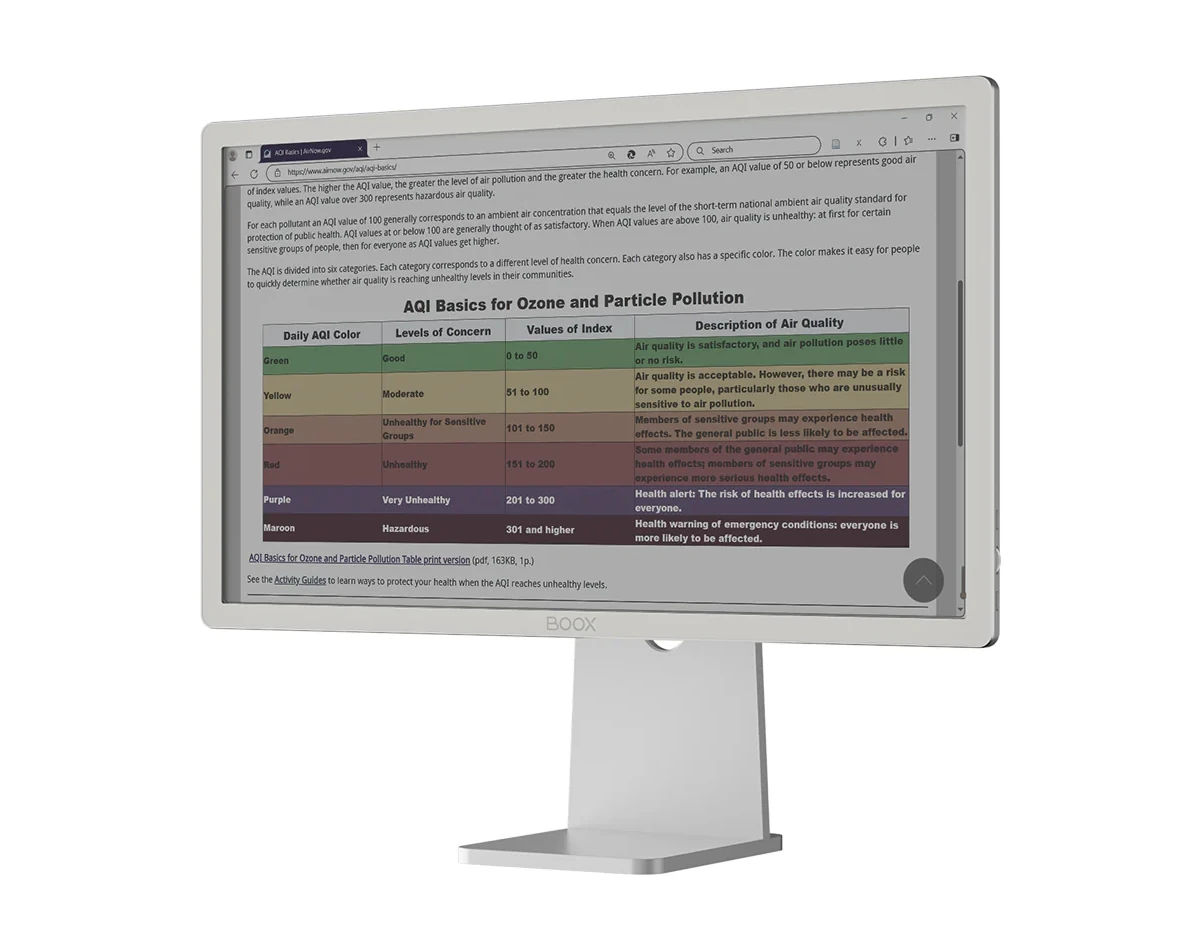
Let’s revisit color e-paper monitors in 2025 with two new models that were just announced: the DASUNG Paperlike 13K 13.3-inch e-ink color monitor and BOOX Mira Pro (Color version) with the same 23.5-inch E-Ink Kaleido as competing monitors launched in 2023. Those monitors are particularly well-suited for people spending long hours in front of the screen, and don’t need to watch video and play games due to the lower refresh and ghosting effect. It’s supposed to be friendlier to eyes, and there’s no blue light.
DASUNG PaperLike 13K – 13.3-inch e-ink color monitor
Paperlike Paperlike 13K (13KCFT) specifications:
Display
13.3-inch Color E-ink (4:3 ratio) with up to 4096 colors
Resolution – 3200 x 2400; 300PP (in grayscale mode, color should be 150PP)
Refresh Rate – 37 Hz with DASUNG’s “New Generation God-Level High Refresh”
Color E-ink Algorithm: DASUNG X-Color Filter Algorithm
Auto-clear Ghosting Tech
Touchscreen support
Front Light – White light, warm light, and mixed light
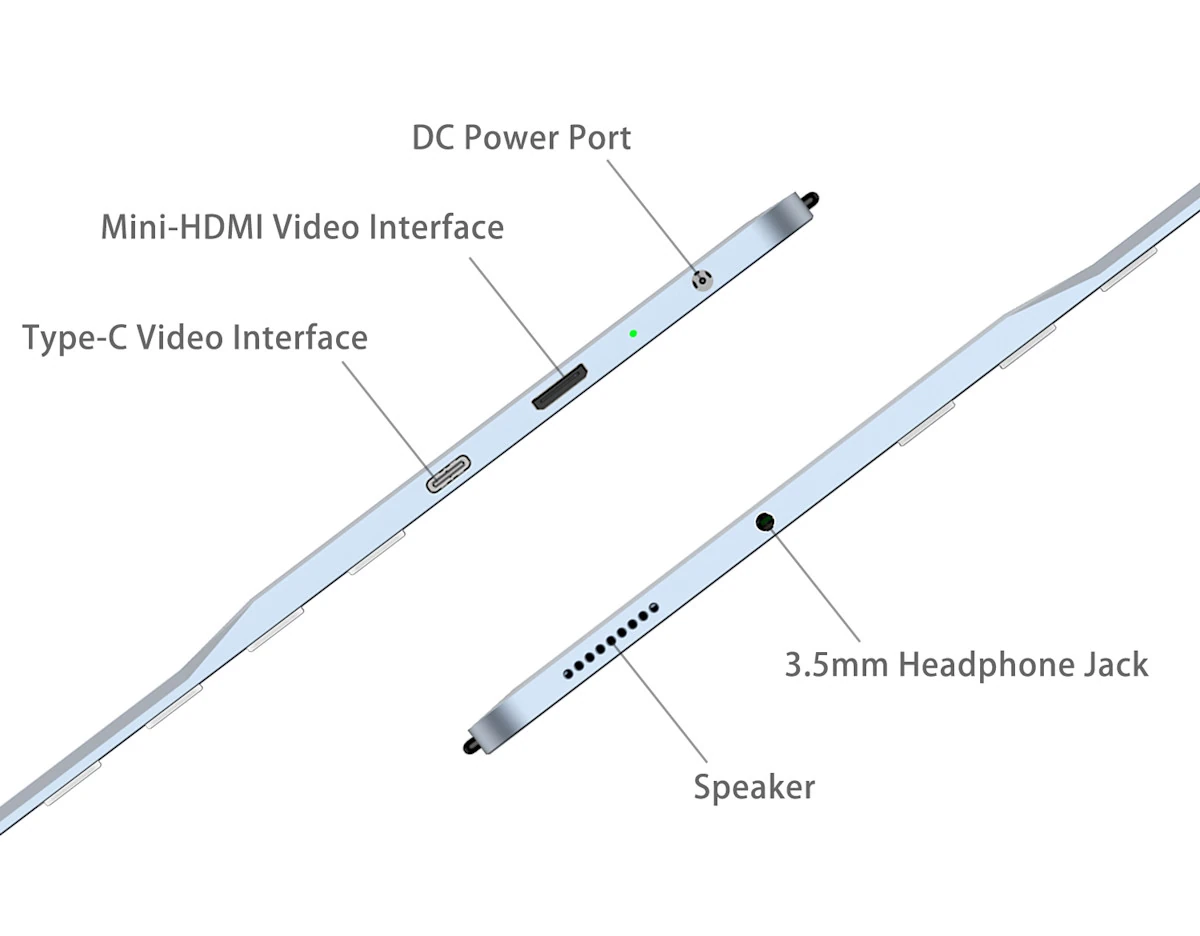
Video (and Audio) Input – USB Type-C or Mini HDMI
Audio
3.5mm headphone jack
Speaker
Misc – 6x physical buttons for power, brightness, contrast, etc…
Power Supply – Via DC jack
Dimensions – 307 x 241 x 5mm at its thinnest point (Aluminum alloy shell)
Weight – 721 grams
The monitor works with Windows/Linux PCs and Android smartphones, but the company discourages Mac users from buying the monitor due to “screen jittering and display instability issues”. Mounting options include a portable stand (pen-like accessories installed on the back of the display), a magnetic protective cover as shown in the first image, and a 75x75mm VESA mount.
A 13.3-inch monitor may not be suitable for everybody, and I personally struggle with under 15-inch monitors unless I increase the size of fonts and/or place my face very close, so the BOOX Mira Pro (Color Version) may be better suited to people who prefer a larger monitor.
Specifications:
23.5-inch color E-ink Kaleido 3 color screen with 3200 x 1800 resolution (145ppi)
4096 colors, or 16 grey levels in monochrome mode
Frontlight version – Front Light with CTM (Warm and Cold)
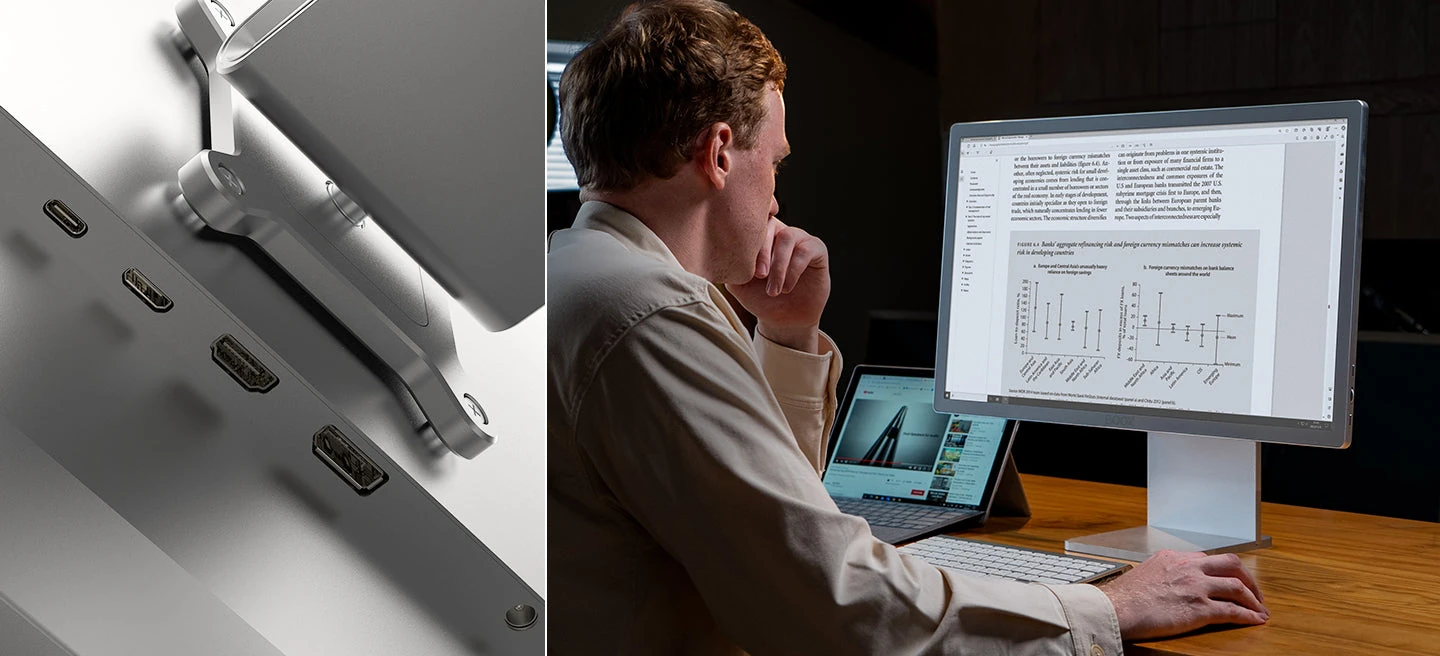
Video Input – HDMI, mini HDMI, DisplayPort, and USB Type-C
Audio – Stereo speakers
Misc
Function and Refresh buttons
Scroll wheel
Power Supply – 12V/3A via DC jack
Dimension
Display panel – 594.2 x 349.2 x 26.5mm (11mm at its thinnest)
The BOOX Mira Pro color e-paper monitor ships with an aluminum adjustable stand, a USB Type-C to USB 2.0 cable, a USB Type-C to Type-C cable, an HDMI to Mini HDMI cable, a 100~240V adapter, a Quick Start Guide, and a warranty card.
The company provides software to adjust the monitor settings for Windows 32-bit/64-bit, Linux, and macOS, and the display also works with Android and iOS mobile devices. BOOX doesn’t mention any potential Mac compatibility issues like the DASUNG model.
I had hoped prices of color e-paper monitors had come down since 2023, but sadly, it’s not the case, with the BOOX Mira Pro (Color Version) going for $1,899.99 with free shipping (to Thailand), and excluding tariffs, VAT, or other taxes or fees customs may impose before delivery. For reference, the previous generation DASUNG 23.5-inch color E-Ink monitor is sold for about $2,000 on Amazon. A regular 24-inch Full HD monitor can be had for $100, so it will be hard to justify the purchase for most people.
La troisième personne à bénéficier de l’implant de Neuralink vient de publier une vidéo pour partager son expérience. Atteint de la maladie de Charcot, entièrement paralysé et ayant perdu l’usage de la parole, il a pu s’occuper lui-même du montage et de la narration de la vidéo.