Shared posts
01 Oct 08:01
Connaissance du 01/10/2013
Les habitants de la commune française de Vaux-lès-Mouron (dans les Ardennes) se nomment les Vauriens.
01 Oct 08:01
Interview / Jason Lukas – Zachary Norman – Aaron Hegert
by Luke Norman
How Was The Everything is Anything Concept Formulated, What Was The Driving Inspiration Behind The Project?
The driving inspiration behind the project is contained in its title. On the outset, we had agreed that photography in the contemporary moment was in an unfixed state: from its context to its representational qualities, every aspect of a photograph can now be changed, by both its makers and consumers alike. This fact is a prevalent topic for contemporary photography, and a certain aesthetic seems to have developed around it. We wanted to enter into this conversation, not necessarily to observe it, or to question whether or not it was true, but to ask new questions about how it might be used. Everything is Anything Else is as much an investigation into these qualities as it is a challenge issued to them, to see how far they can take us.

Through Your Website You State That The Work Displayed Is Not ‘Complete’, ‘But Merely A Pausing Point To Invite The Public To Engage In This Dialogue Along With Us.’ How Important Is Discussion To Your Practice, What Do You Gain From Discussing With Others About Your Work? Do You Feel That This Is Something That Is Fundamentally Lacking Within The Photographic Community?
Discussion is an essential aspect of our work. We use an open source model, making all of our source material, our research, our experiments, sometimes even the cocktail napkin notes from our meetings available to the public through our blog. We want people to be able to respond to us, to challenge us, and to turn us on to new things. One way to make that consequential is to make the whole lineage of the project available. The exchange within the group is shaped as a provisional model for the larger scale exchange that may occur within the photographic community and the world once an image or project has been put out there, just within a smaller, and thus accelerated and more controlled environment. So discussion happens on multiple fronts.
With the Internet, the infrastructure for discussion exists now more than ever, and how we choose to engage that structure dictates where it takes us. If we engage it passively, the online discussion risks becoming just one more surface level social network where everyone “likes” everyone else’s “likes” and no real discussion is generated. Conversely, it also seems possible to engage it actively, and integrate it as a tool to facilitate innovative collective action. We can’t claim to have created any new modes of discussion or discourse with this project, but our citations and influences can be made easily accessible, and we would like to expand on this accessibility and use it to greater and greater effect as we move forward.

How Is Your Working Process, Do You Sit In A Room Together & Work Collectively, Or Do You Each Take Your Own Images & Collaborate In The Editing Process?
Collaboration takes many forms for us. We wrote the guidelines for the project, and had the first exhibition (Third Party Gallery) marked on the calendar before we had made a single image. When the process began, we proposed a loose criterion of objects and phenomena that we felt were worth exploring. At that time we were spread out all over the world, but we kept in close contact. We emailed each other images, restaged those images in our respective locations and sent them back. We also sent each other physical objects, traded textual descriptions of images we would like to see made, and started a blog we could all access.
When we reconvened back here in the Midwest, we took stock of the images and ideas we had developed, and started to identify the ones that had been returned to the most. We then made those images again and again, changing the scale, content, formal qualities, etc. with each iteration. As the deadline approached we did a kind of two week intensive: all of us together in the studio creating what would become the large framed images in the show- literally all looking through the viewfinder and making small adjustments to the scene until we agreed we had reached a stopping point.
People often want to know which one of us is responsible for which of the images but the truth is that it is a definitively collaborative process. Therefore, the images are unattributable to anyone but the group as a whole.

You State That ‘Believability’ Is One Of The Themes That Drives Your Work, To What Extent Does An Image’s Authenticity Relate To Its ‘Value’? Do You Believe That Once An Image Has Been Edited, & Clearly Edited, It Adds Or De – Values An Image?
Our stance on believability in the photograph is that it is in a state of constant flux, and the dichotomy between authentic and inauthentic is a false one. The argument for or against discrepancies in value between edited versus unedited images feeds this dichotomy.
Photography is currently in an in-between state, where the viewer deploys two conflicting systems of reading simultaneously. On the one hand, we now consider photographs to have a high possibility, even probability, of having been digitally manipulated- to the point where we judge photographs to be false until proven true. On the other, we still bring with us an expectation of some sort of indexicality within the photograph, that it point to something outside of itself. This conflict of systems causes us no consternation. Rather, we have approached it as a practicable dimension in photography, one borne out of tension and full of possibilities. Possibilities for what exactly remains an important question for us, one that we will continue to study. For now we are more interested in making the question more substantial than we are in attempting to answer it.

What Does The Term ‘Still Life’ Mean To You?
The still life is an opportunity to record an object or phenomenon photographically for the purpose of seeing that object with greater clarity, or perhaps just a different sort of clarity than might be achievable by viewing that object face-to-face. Many of our still-life images present a uniquely photographic perspective, i.e. the phenomenon or arrangement of objects photographed could only appear as they do in that photograph. The still life also allows us an opportunity to explore an idea we’ve been referring to as “slow-Photoshop” where we recreate the visual effect of commonly used Photoshop techniques in-camera. We began exploring this idea as a response to the dichotomy presented earlier- the authenticity or inauthenticity of an image based on the degree to which it’s been manipulated. By creating images that appear to have been digitally manipulated, the post-production stage becomes more of a pre-production in our process. The use of Photoshop in photography has become so prevalent that, in some cases, it makes more sense to pre-visualize an image as it might look manipulated and work backwards from there in trying to figure how to construct it, in-camera, so it appears to have been manipulated. We’re interested in the psychology of digital production, and this process is a way to bring that psychology into question.
How Important Is The Gallery Space To The Work You Produce? Do You Consider The Internet as Important?
We find the Internet to be a generally more robust platform for the exhibition/dissemination of our work, but the gallery still serves an important function as well. The Internet gives us a tremendous amount of space to work within, virtual as it may be. Here we don’t have to limit the amount of information we present, and its categorisation and accessibility can be as clear or cryptic as we like. Another reason online presentation is advantageous for us is due to the fact that we live in the middle of nowhere Midwest right now and yet can still seamlessly participate within a larger community.
But again, we want to take part in the larger conversation happening within contemporary photography. This is a conversation that is in the process of being historicized to be sure, and even if our goal is a transgression or subversion of that historicization, it will be more effective if we are integrated into it. If the work remains autonomous it has nothing to directly challenge, nothing to create friction against. The gallery exhibition is a well-established channel through which to officially enter this conversation.

Can You Tell Us A Little About Your Current Exhibition? Did You Produce New Works Specifically For The Show?
The images in the current show are mostly consistent with the images in the first exhibition of the work; however, there is a three-dimensional component to each show that is highly flexible. We present some of the objects seen in the photographs and objects that, directly or indirectly, informed the photographs. We’re interested in the relationship between the objects, as seen face-to-face, and the photographs of the objects. Nothing is ever the same.
What Names Have Inspired Your Work Over The Years, & More Recently?
We looked at lots of stuff along the way. Larry Sultan and Mike Mandell’s book Evidence came up quite a few times, both for its content and its collaborative nature. Taiyo Onorato and Nico Krebs work The Great Unreal was informative for similar reasons. We’re also really into the stuff Lodret Vandret puts out; they have a cool collaborative/collective/curatorial model that seems highly productive. Current artists that directly or indirectly gave us something to think about would include Jacob Riddle, Jordan Tate, Thomas Albdorf, Jaclyn Wright, Lance Brewer, Kyle Laidig and Garrett Lockhart to name very few. Josh Smith helps us get critical, and we keep an eye on ilikethisart.net, latentimage.us, ilikethisblog.com, and of course Wandering Bears.



30 Sep 10:52
Hyes (France)
by Coverjunkie
Nice logo!
New cover Hyes magazine:
an independent and multidisciplinary creation studio, focuses on the ethical and aesthetic, and creates a unique purified "vocabulary" of shapes, fabrics and imagery
Photography Marie-Amélie Tondu
Editor in chief Caroline Nedelec
Editor Jefferson Paganel


30 Sep 10:41
Maiko Takeda
by Hannah Edwards
Maiko Takeda’s creations seem like a surreal creatures from fantastic dream world. The headpieces of her latest creation, ‘Atmospheric Reentry’, are excitingly different, delicate and futuristic. The Tokyo born graduate of Central Saint Martins and the Royal College of Art, seeks to ‘create surreal, subtle dramas around the person wearing a piece and the people near them’. She imagines to give the people wearing her pieces the opportunity to ‘experience or share surreal moments in their daily lives, at a party or in the privacy of their own home’. ‘I want my pieces to give people those magical experiences’.


In many cultures the hat is a status symbol and wearing a hat is still an obligation to attend certain ceremonial occasions. A hat makes its owner appear taller, more important and gives the person a certain presence. A hat can enable a person to slip on a different personality and let him or her become someone different
When Björk entered the stage wearing one of Takeda’s creations on this years tour, the young artist could hardly believe her eyes: ‘The first piece she wore actually covers the whole face, so I wasn’t sure if it would be comfortable for her to sing in. I went to bed thinking she probably wouldn’t wear it in the end. In the morning I woke up to seeing pictures of Björk on the internet wearing my headpiece. That was the most rewarding moment for me’.
Moving from Japan to London has influenced MaikoTakeda in many ways. Experiencing a new aesthetic in London, she suddenly really felt comfortable being herself, more comfortable than she had felt being in Japan. When it comes to her work though, she never tries to be too Japanese. She is not too fond of bringing her own cultural references into her work. ‘I obviously can see that my work is quite Japanese, but it’s not intentional. ‘
Her work could be seen at this years London Fashion Week and will soon be shown at the Vienna MuseumsQuartier. About her work, the artist says: ‘I’d love to be making pieces that make me happy, seeing as I’m really self-critical. It would be great if I could keep on making pieces that create these subtle dramas and experiences for the people who wear them.’
You can find an interview with MaikoTakeda here on the mb! magazine site.
Images by Dan Wilton | Via: mb! by Mercedes-Benz

27 Sep 08:04


Cy Twombly — On Paper
by Communiqué
Exposition — Galerie Karsten Greve — 12 octobre → 21 décembre 2013
La galerie Karsten Greve célèbre l’œuvre sur papier de Cy Twombly, qui a fait du dessin l’expression directe de la parole. Se composant d’une riche série d’œuvres réalisées dès la fin des années 1950, l’exposition est l’occasion de rendre hommage à un protagoniste absolu de l’histoire de l’art contemporain, tant contesté au début qu’il ne fut ensuite définitivement reconnu.
27 Sep 08:04


La Renaissance et le rêve — Boch, Véronèse, Greco...
by Communiqué
Exposition — Musée du Luxembourg — 9 octobre 2013 → 26 janvier 2014
De Jérôme Bosch à Véronèse, en passant par Dürer ou Le Corrège, l’exposition permet de découvrir un âge d’or de la représentation du rêve. Entre récits oniriques et visions cauchemardesques, le parcours invite chacun à laisser libres les voies de son imagination et à s’abandonner aux troublantes images du rêve.
26 Sep 11:33
Quelques leçons de calligraphie par Ryan Hamrick
by noreply@blogger.com (julien josset)
Bon, c'est pas vraiment des leçons, mais regarder travailler Ryan Hamrick, c'est, pfffffffff, impressionnant !




26 Sep 07:52
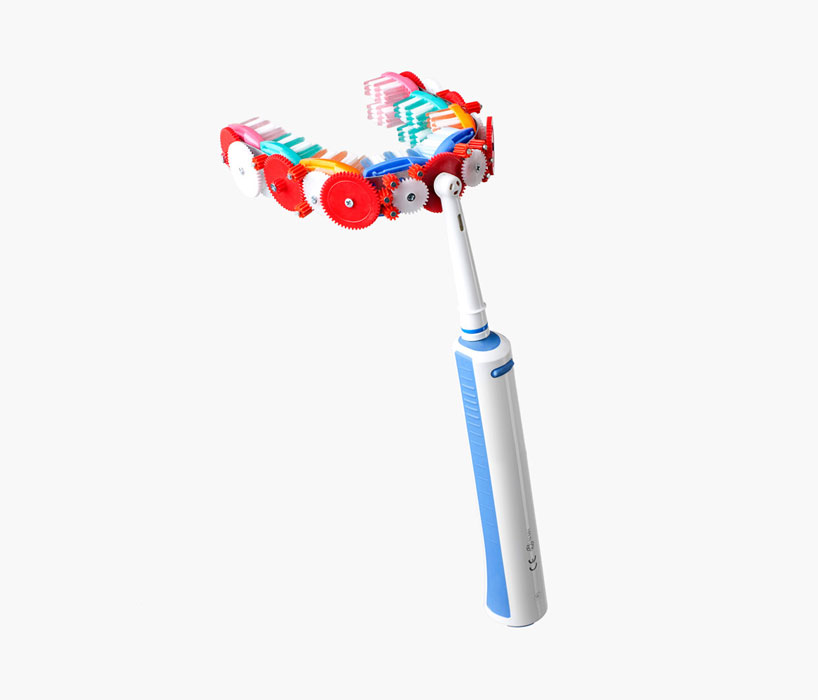
prototypes of absurd inventions by patrick strattner
by nina azzarello I designboom
the humorous constructions lend whimsy to mundane tasks, like brushing both the tops and bottoms of your teeth, carrying heavy groceries, and drying out soggy arm-pit stains on t-shirts.
The post prototypes of absurd inventions by patrick strattner appeared first on designboom | architecture & design magazine.


24 Sep 14:19

Space yourself out in Rafael Rozendaal's kaleidescopic gradient fest If No Yes.
View If No Yes on Hover States
If No Yes
by James
Space yourself out in Rafael Rozendaal's kaleidescopic gradient fest If No Yes.
View If No Yes on Hover States
24 Sep 13:34
Datagram sur Instagram, bourre et bourre et ratatam
by noreply@blogger.com (julien josset)
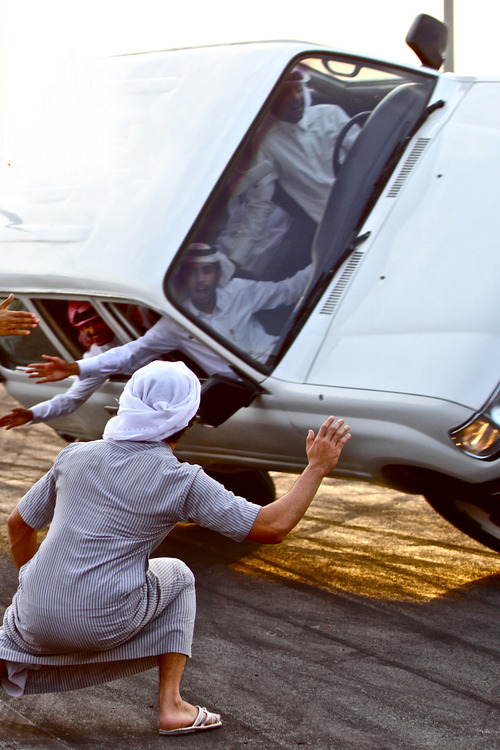
Durant l'US Open, IBM a imaginé Datagram que l'on pouvait voir sur Instagram. Il s'agissait de la data visualisation des matches présentée sous forme de petites animations. Sympa :-)


Une réalisation de l'agence Ogilvy

24 Sep 09:40
Connaissance du 24/09/2013
Le colorant alimentaire E120 est issu d'insectes écrasés (les cochenilles du Mexique). Autorisé en France, il est utilisé dans les Tic Tac Citron Vert/Orange ou encore dans les yaourts, pâtisseries, confitures, sirops, etc...
clara.tranel likes this
24 Sep 08:14
BASQUIAT FOR SUPREME CAPSULE COLLECTION
by glltn

Supreme vient de présenter sa collection capsule en hommage à Jean-Michel Basquiat. La marque célèbre à sa façon le peintre américain en sortant une ligne de vêtements (tee-shirts, chemises, hoodies, vestes) reprenant quelques-unes de ses œuvres les plus célèbres. La collection sera disponible dans les stores US de la marque ainsi qu’à Londres à partir de jeudi 26 septembre et à partir du 28 au Japon.
(...)
Read the rest of BASQUIAT FOR SUPREME CAPSULE COLLECTION
© 2013 Guillotine | Permalink | Posted in : Lifestyle
24 Sep 08:11
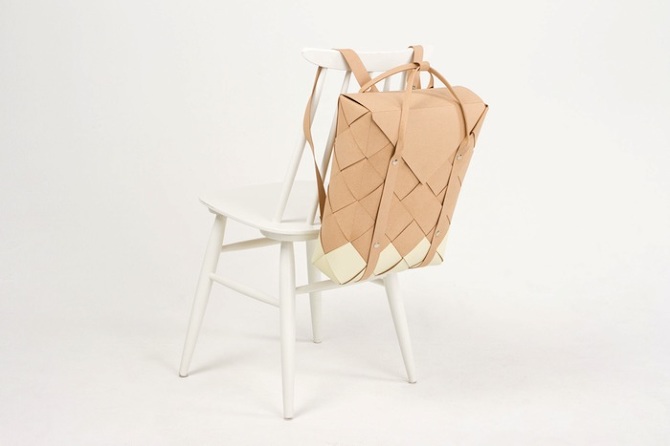
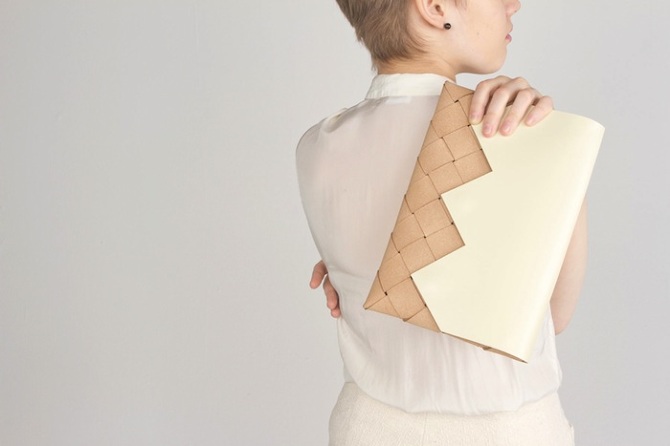
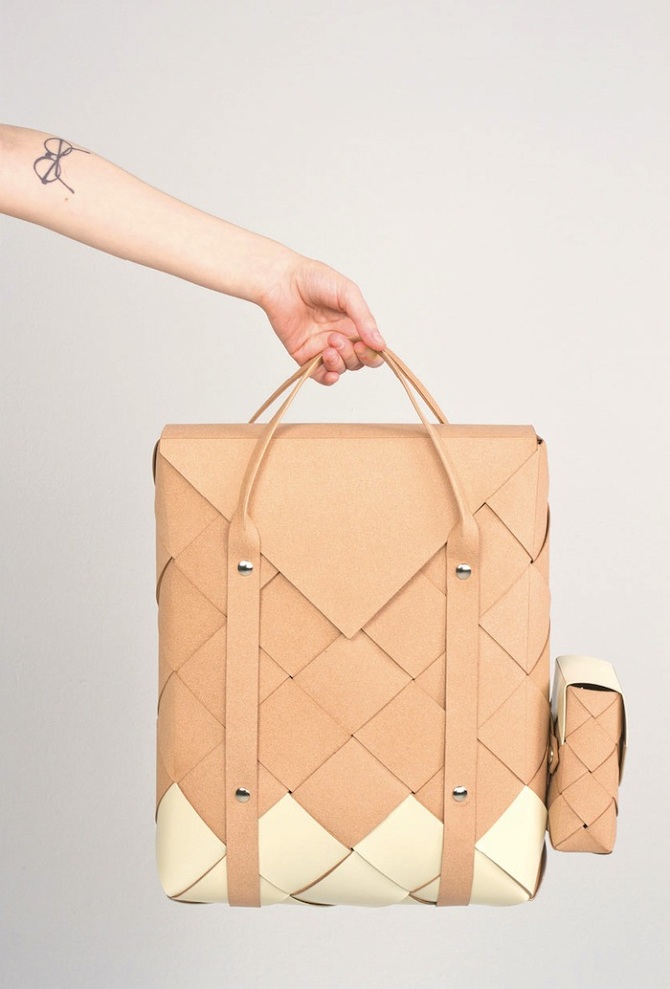
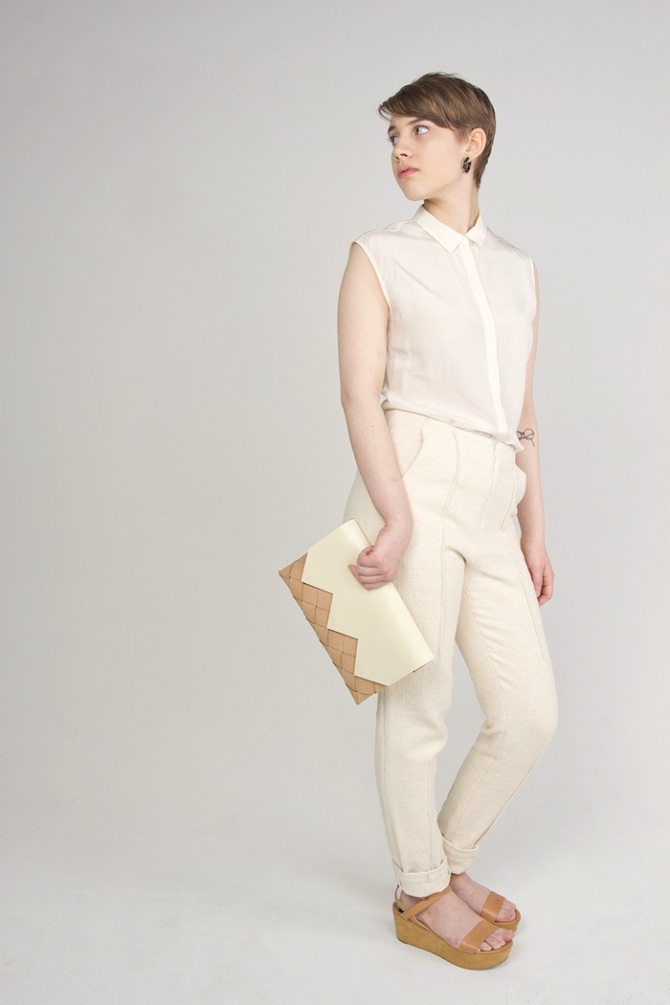
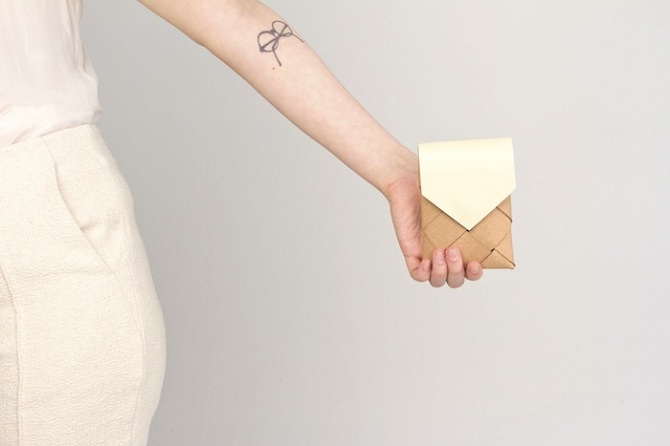
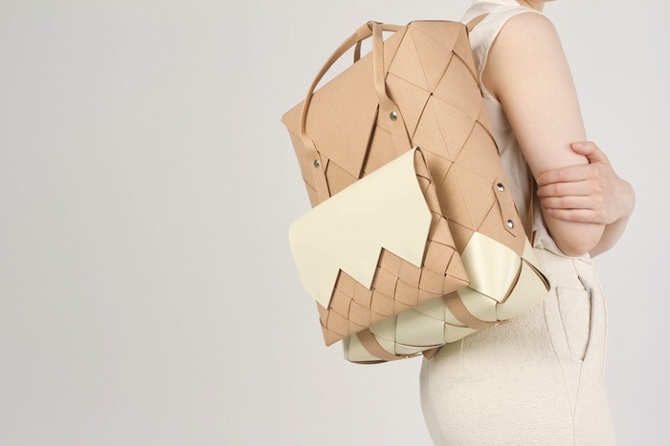
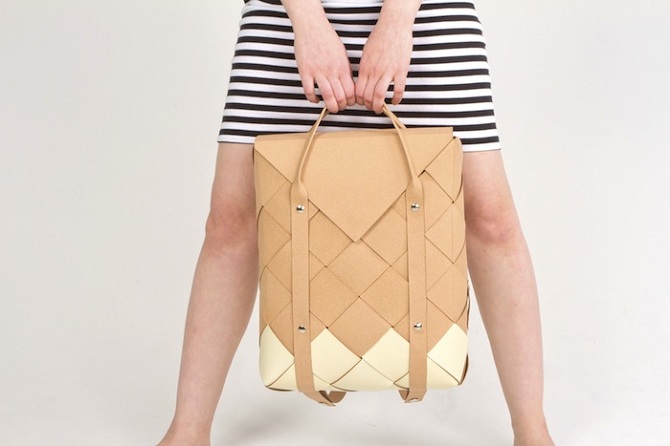
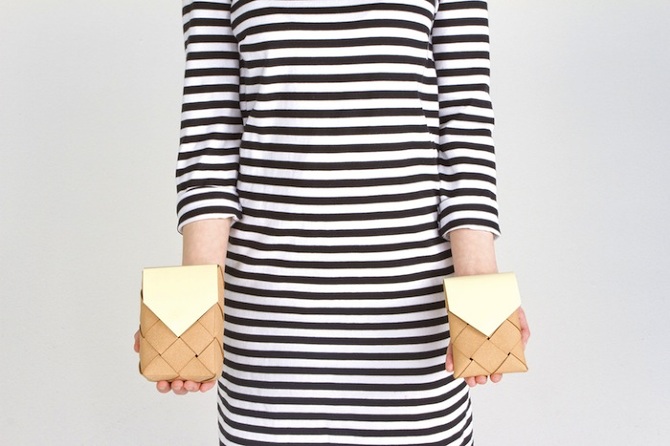 Tuokko by Katja Mustaniemi
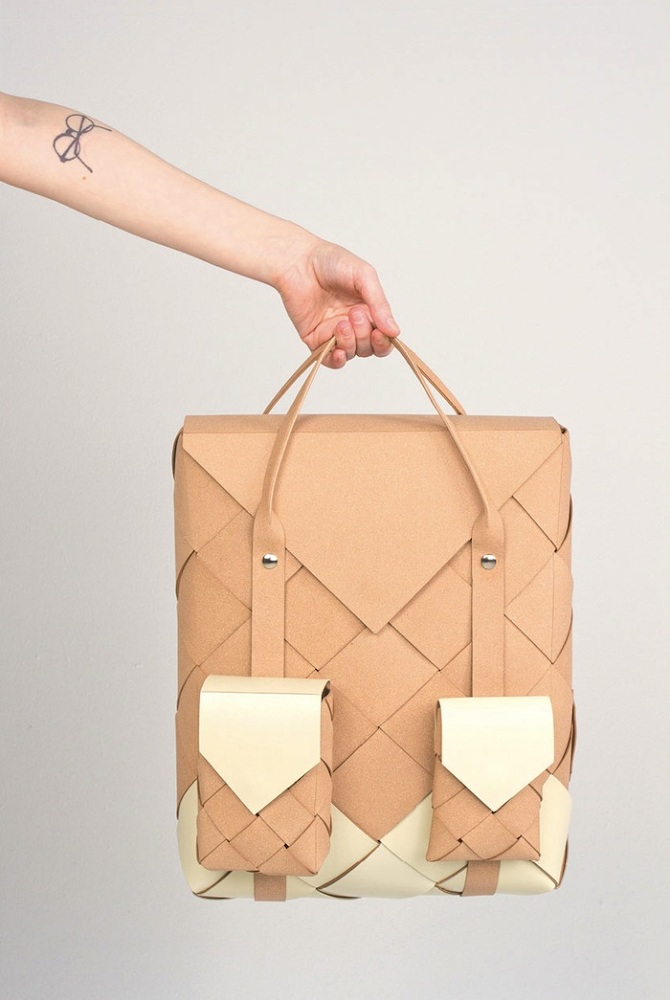
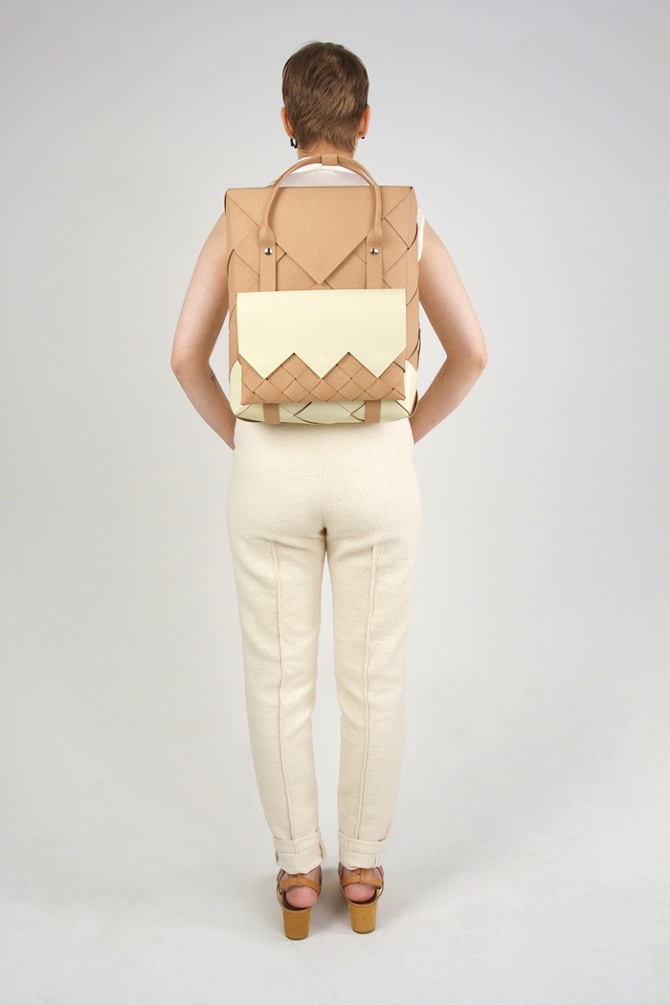
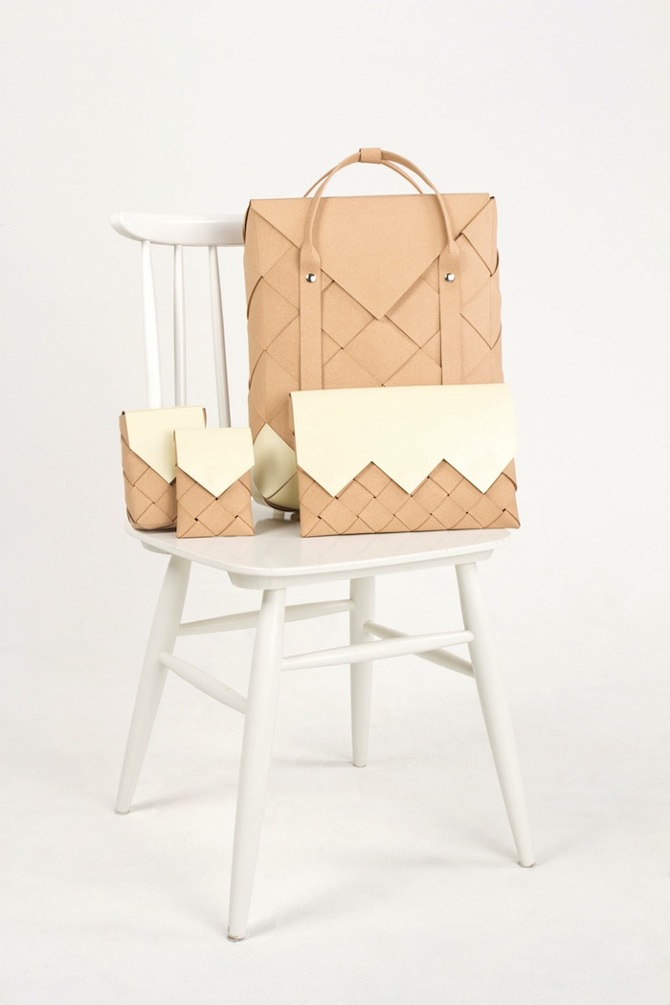
Katja Mustaniemi brings the joy of childhood adventures and mixes it with scandinavian functionality - that's how her woven backpack comes to life. Traditional technique of basket weaving is used in recycled leather and creates pure shape. The backpack goes with detachable handbags that can be used as pockets.
"Inspiration for Tuokko was drawn from deep down – from my childhood adventures in Finnish forests and growing up in Scandinavian functionality. My goal was to reproduce a functional and aesthetic product which brings the traditional and historically important basket weaving craft into the present."
Words: Katja Mustaniemi, Thisispaper
Photography: courtesy of Katja Mustaniemi
Tuokko by Katja Mustaniemi
Katja Mustaniemi brings the joy of childhood adventures and mixes it with scandinavian functionality - that's how her woven backpack comes to life. Traditional technique of basket weaving is used in recycled leather and creates pure shape. The backpack goes with detachable handbags that can be used as pockets.
"Inspiration for Tuokko was drawn from deep down – from my childhood adventures in Finnish forests and growing up in Scandinavian functionality. My goal was to reproduce a functional and aesthetic product which brings the traditional and historically important basket weaving craft into the present."
Words: Katja Mustaniemi, Thisispaper
Photography: courtesy of Katja Mustaniemi


Katja Mustaniemi: Tuokko
by Thisispaper Magazine
Tuokko by Katja Mustaniemi
Katja Mustaniemi brings the joy of childhood adventures and mixes it with scandinavian functionality - that's how her woven backpack comes to life. Traditional technique of basket weaving is used in recycled leather and creates pure shape. The backpack goes with detachable handbags that can be used as pockets.
"Inspiration for Tuokko was drawn from deep down – from my childhood adventures in Finnish forests and growing up in Scandinavian functionality. My goal was to reproduce a functional and aesthetic product which brings the traditional and historically important basket weaving craft into the present."
Words: Katja Mustaniemi, Thisispaper
Photography: courtesy of Katja Mustaniemi


19 Sep 10:29
Das Magazin (Switzerland)
by Coverjunkie
Cover Das Magazin the weekly suplement of Zurich's Tagesanzeiger
art director Michael Bader tells me:
"Das Magazin has been producing quality journalism for over forty years for people who like examining pressing topical matters and exemplary stories in depth and from unconventional perspectives. While other media products offer a vast range of items like warehouses we believe in the principle of curation: we limit our weekly offering to a few quality articles. Das Magazin is n...


19 Sep 10:17
It’s Raining Knives Printed With Photos Of Garbage
by Danny Olda


Artist Wen Fang has a way turning an eye toward the often overlooked. In a way, some of her work memorializes the unfortunately common. This first installation – a room filled with hanging knives printed with images of garbage – is titled Rain and illustrates this well. She explains the personal story and Chinese idiom behind the installation:
“One day I was on a public bus, heading to a suburban enclave not far from my home on the outskirts of Beijing. The road was lined on both sides by filthy, stagnant drainage ditches. The disgusting smell of the water wafted into the bus, immediately wiping out the hunger I was feeling a moment before. The water was blue-grey, and looked quite thick. The surface was covered in floating instant noodle packages, popsicle sticks, rotting vegetables and other garbage that couldn’t be sold as scrap. Suddenly I saw a stray dog at the edge of the ditch, trying to drink the water. Several times he would approach the water with his snout, only to be repulsed by the powerful stench. In the end, I guess he was just too thirsty, and he hesitantly stuck his snout in the water, taking a few gulps. It sent pangs through my heart. Lots of migrants live by the drainage ditches. Their kids run around like wild dogs, and are just about as dirty. About half of their toys were picked up along the side of this road. None of the adults control their actions, as these migrant workers are too busy trying to eke out a living, and the old people just sit there by the side of the road. The Chinese refer to these situations as knives raining down from the heavens…that is to say; this is the worst it can get…I don’t know if this is the worst possible situation, but these knives often cut right into my heart. That’s why I make them, so that everyone can see these knives. Economic development is a sound idea, but how much money does it take to be truly wealthy? I spent my childhood playing in the wilderness around here, while these kids are spending their childhoods playing on the trash heaps. I really wish these kids could grow up in gardens, just as we promised. But what I really don’t know is, when we finally have enough money, whether or not the garden will be anything more than a bunch of sharp knives.…”
This second installation is the Terra Cotta Migrant Laborers of the People’s Republic. The installation draws attention to many of the workers behind China’s current growth. As
Wen Fang says, “Why do I have them stand before us like Terracotta Warriors and Horses? — To commemorate our great epoch.”


The post It’s Raining Knives Printed With Photos Of Garbage appeared first on Beautiful/Decay Artist & Design.

19 Sep 07:53
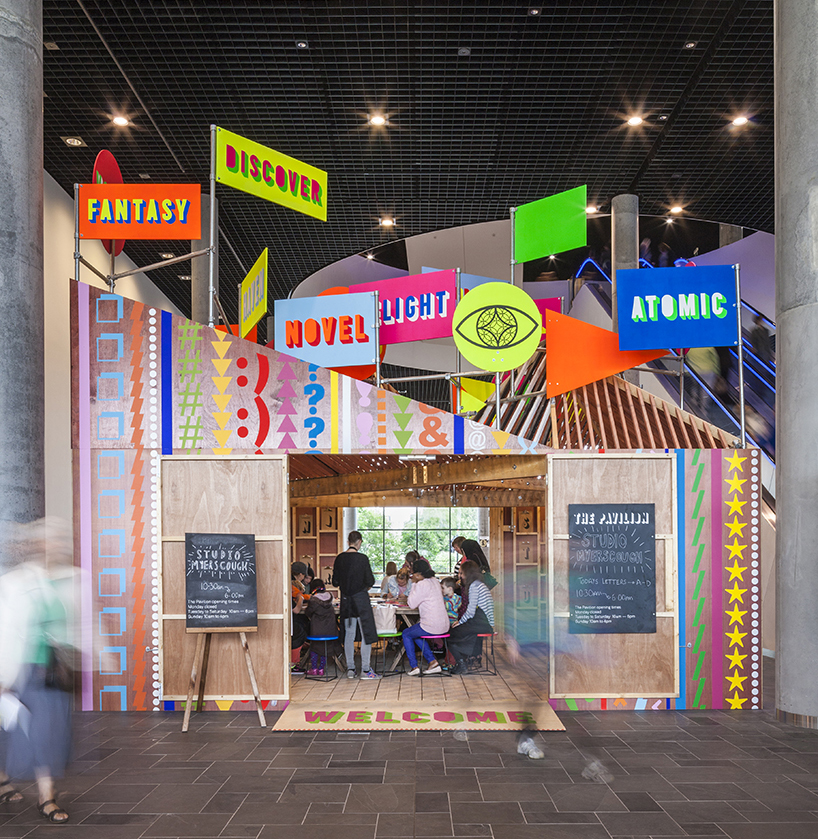
discovery season pavilion by morag myerscough & luke morgan
by andy butler I designboom
the multifunctional structure designed as the hub for the library’s 18 week discovery season.
The post discovery season pavilion by morag myerscough & luke morgan appeared first on designboom | architecture & design magazine.