Shared posts

10 Jun 23:02

Rape Culture Round Up

by Lisa Wade, PhD

The phrase “rape culture” refers to a way of thinking that systematically trivializes, normalizes, or endorses sexual assault.  We’ve collected over 60 concrete examples at our new Pinterest board and we thought we’d share some additional examples that readers have sent in recently.

(1) Topping the list, Clair let us know that University of Maryland students successfully organized to oppose a hand stamp used at a local bar.  The stamp reads “Shut Up and Take It”:

1

Jesse Rabinowitz set up a change.org petition opposing the stamp to get the bar’s attention. In response, management has agreed that the stamp is inappropriate and has pledged to run a public apology and do some sexual assault awareness education, perhaps including the introduction of a “consent is sexy” stamp.

(2) Dolores R. pointed us to a RiotMag screenshot of a Fox News broadcast.  The main story features a headless Hooters “girl” while the news scroll at the bottom pointed to the very serious issue of sexual assault in the military.  So sexual assault is subordinated to sexual objectification (it reminds me of this titillating coverage of a video game allowing players to simulate rape).

Screenshot_1

(3) Sent in by V, a Rohypnol gag coffee mug (the substance is famously used to drug targets of sexual assault into unconsciousness):

 2

(4) Dominos Pizza joshes about sexual assault with their play on the reminder that “no means no” (thanks to Dolores R. and YetAnotherGirl for the tip):

1

(5) Katrin sent in a British anti-rape poster that blames the victim, holding her responsible for preventing “regrettable sex or even rape.”   “Don’t leave yourself more vulnerable,” it explains:

1

(6) In 2011, the Exeter University’s Safer Sex Ball ironically included this piece of humor in it’s leaflet (thanks to hp for the image):

3

For more examples of rape culture, visit our rape culture Pinterest board.

Lisa Wade is a professor of sociology at Occidental College. You can follow her on Twitter and Facebook.

(View original at http://thesocietypages.org/socimages)

09 Jun 04:02

Family Friendly Comes at a Price

by Gabriela Montell

From The Atlantic comes word of a recent study, published in the Industrial and Labor Relations Review, that suggests that some university policies designed to be family friendly may have a detrimental effect on the paychecks of professors who use them.

Researchers at the Universities of Minnesota-Twin Cities and Illinois at Urbana-Champaign found that faculty members who stopped the tenure clock for family reasons paid a price: Their pay was 3 to 4 percent lower the next year, even when there was no drop in scholarly productivity. Promotions were unaffected.

While male and female professors were both penalized, women still bore the brunt of pay penalties simply because men use the policies less than women do, Colleen Flaherty Manchester, one of study’s authors told The Atlantic.

While the findings aren’t all that surprising, they suggest that parents who use such policies are unfairly perceived as less productive and less dedicated to their work, and that simply having family-friendly policies in place isn’t enough to overcome such stereotypes.

Ironically, the way to overcome them, Manchester said, is for more professors to use the policies: “I think the more people [who] use the policy the more normative it is.”

08 Jun 01:36

Discovered: A Cave Art Complex That Could Be the Lascaux of Mexico

by Megan Garber
[optional image description]
Mexican National Institute of Anthropology

In 1940, an 18-year-old apprentice mechanic named Marcel Ravidat was walking with three friends and a dog named Robot in the woods near Montignac, France. Ravidat happened upon a hole that happened to lead, Alice in Wonderland-like, to an underground cave. And that cave, it happened, was the home of some 600 paintings and 1,500 engravings, the work of humans who lived some 17,000 years ago. The caves' walls were the craggy canvases for humanity's oldest known experiments with art.

We may have another Lascaux on our hands. Only this one is set in Mexico. Archaeologists just announced that they've uncovered nearly 5,000 cave paintings at 11 different sites in the Sierra de San Carlos, a mountain range in the state of Tamaulipas. The paintings, which are striking in their vividness, are thought to be the work of hunter-gatherers who traveled the area in their wanderings. The artwork has not yet been dated, but the Tamaulipas region overall, archaeologists believe, was occupied by nomadic tribes as early as 6000 BC -- so there's a chance the paintings could be some 8,000 years old.

[optional image description]
Mexican National Institute of Anthropology

The paintings depict humans, as well as animals (deer and lizards and, delightfully, centipedes).  They depict weapons used in the hunt. They depict seemingly abstract scenes. They depict skyscapes. They hint at their painters' concepts of religion and astronomy. And they do all this in bright shades of red and yellow and black and white -- the products of organic dyes and minerals that have proven remarkably long-lasting. "The paintings," io9's George Dvorsky put it, "are offering an unprecedented glimpse into [Mexico's] pre-Hispanic culture and life, including depictions of hunting, fishing, and gathering."

Indeed. One cave alone contains some 1,550 different scenes.

The paintings, archaeologists say, were likely produced by at least three distinct groups of hunter-gatherers in the region. Which is a remarkable estimation on its own, since, prior to their discovery, archaeologists didn't believe that pre-Hispanic people would have lived in the mountainous area. "Before it was said that there was nothing," archaeologist Gustavo Ramírez, of the Mexican National Institute of Anthropology and History, said of the region, "when in fact it was inhabited by one or more cultures."

[optional image description]
Mexican National Institute of Anthropology

The paintings should offer valuable insight into those cultures -- in part because they seem to be the only evidence that the cultures have left behind. "We have not found any ancient objects linked to the context," Ramírez explained: the pottery and bones and other objects that form the detritus of civilization are, in this case, missing. "And because the paintings are on ravine walls and in the rainy season the sediments are washed away, all we have is gravel."

Gravel, that is, and awesome, vaguely impressionistic cave paintings. And also, just as importantly, we have the dyes and minerals used to make the paint itself. Now that the discovery of the caves has been announced, the archaeologists will perform a chemical analysis to determine the exact components of the colors that cling to the rocks. And from there, they hope, they'll be able to figure out just how long ago it was that some ancient human, roaming the mountains of Mexico, took sight of a centipede and decided to turn it into art.

[optional image description]
Mexican National Institute of Anthropology


06 Jun 22:16

Stop E-Mail Drone Strikes

by Allison M. Vaillancourt

In the course of working with people in conflict, I am often asked to advise on how to respond to zinger e-mails—electronic nasty-grams that contain words, phrases, or demands that would almost never be expressed orally.

My most common response to a “How should I respond to this e-mail?” question is to suggest a nonelectronic response. “Don’t be tempted to craft a retort,” I say. “Go talk to the person. This will probably make them very nervous, and that might be a good thing.”

In a conflict-averse, or at least conflict-uncomfortable, culture, face-to-face or even phone conversations can produce anxiety. Introverts with strong writing skills often find e-mail to be a perfect medium, as it permits them to dazzle recipients with artful word strings from a distance. Better to type, type, type, and push Send than deal with the messiness of emotion that can occur in a back-and-forth conversation.

In his recent “Office Politics Ninja” podcast, Brandon Moser calls those electronic assaults “e-mail drone strikes.” He notes that drones are emerging as preferred vehicles for warfare because they permit attacks on targets from afar, thereby protecting the assailant from injury. Bomb. Strike. KAPOW! No muss and no fuss. It works in the military, so it can work in professional settings, right? Not if you change the rules of warfare.

You can put a stop to e-mail drone strikes or at least reduce their frequency by making it dangerous to engage in that kind of warfare. It’s simple, really. Stop using e-mail to respond to e-mail. Pick up the phone. Drop by an office. Suggest a discussion over coffee. Send a message that you believe e-mail is for responding to routine inquiries, not for managing expressions of emotion. “You seem upset, let’s schedule some time to talk.” Or, better yet: “Oh, good. You’re here. I was surprised by your tone, so I thought I’d drop by to see you.”

Responding to e-mail drone strikes in person rather than electronically signals that lobbing e-mail bombs will have consequences, and forces your “opponent” to see you as a human being with actual feelings. That approach can also change the power dynamics and give you the upper hand. Better to be perceived as fearless than a chicken who uses a keyboard for protection.

Have you ever been a casualty of an e-mail drone strike? If so, how did you respond? Did your approach work?

[Creative Commons-licensed photo by Flickr user World Can't Wait.]

23 May 19:31

1892 : Italian Monk Wearing a Funeral Mask

by Amanda Uren
mkvande

Nobody expects the Spanish Inquisition! Our chief weapon is surprise, surprise and fear . . .

Italian Monk Wearing a Funeral Mask

23 May 19:29

Short Subjects

by Greg Ross

When PLAFSEP magazine asked its readers to nominate the silliest library subject heading, the hands-down winner was BUTTOCKS (IN RELIGION, FOLK-LORE, ETC.). Other highlights, gathered by columnist John R. Likins:

AMERICAN GIANT CHECKERED RABBIT
BANKRUPTCY–POPULAR WORKS
CATASTROPHICAL, THE, see also COMIC, THE
CHILD ABUSE–STUDY AND TEACHING
CONTANGO AND BACKWARDATION
DENTISTS IN ART
FANTASTIC TELEVISION PROGRAMS
FOOD, JUNK
GHOSTS–PICTORIAL WORKS
GOD–ADDRESSES, ESSAYS, LECTURES
HEMORRHOIDS–POPULAR WORKS
JESUS CHRIST–PERSON AND OFFICES
LABORATORY ANIMALS–CONGRESSES
LOVE NESTS–DIRECTORIES
MANURE HANDLING
MUD LUMPS
ODORS IN THE BIBLE
PRAYERS FOR ANIMALS
SICK–FAMILY RELATIONSHIPS
URINARY DIVERSIONS, see also URINE DANCE
WASPS (PERSONS)

That’s from Likins’ article “Subject Headings, Silly, American–20th Century–Complications and Sequelae–Addresses, Essays, Lectures,” in Technical Services Quarterly, vol. 2, no. 1/2, Fall/Winter 1984, using data from the Library of Congress and Cataloging in Publication. In The Library at Night (2006), Alberto Manguel gives these:

Banana research
Bat binding
Boots and shoes in art
Chickens in religion and folklore
Sewage: collected works
Sex: cause and determination
Tic: see also toc

And the Whole Library Handbook (1991) offers these, collected by the Library of Congress Professional Association:

Adult children
Beehives; see Bee–Housing
Diving for men
Drug abuse — Programmed instruction
Feet in the Bible
Hand — Surgery — Juvenile literature
Lord’s Supper — Reservation
Low German wit and humor
Monotone operators
Running races in rabbinical literature
Standing on one foot; see One-leg resting position
Stupidity; see Inefficiency, Intellectual

I think some of these may now be out of date, but there’s certainly no shortage of curious headings — in doing research for this site I recently ran across “Raccoon — Biography.”

23 May 19:23

Who is the Highest Paid Employee of Your State?

by Lisa Wade, PhD

Hint from Dmitriy T.C.: he probably wears shorts to work.

Here’s the infographic, sent in also by sociologist Michael Kimmel, revealing the highest paid employee in each state.  Yellow, orange, and green states are all ones in which the most money goes to an athletic coach.  More details at DeadSpin.

1

Lisa Wade is a professor of sociology at Occidental College. You can follow her on Twitter and Facebook.

(View original at http://thesocietypages.org/socimages)

22 May 23:10

Of Geekery and Feminism

by profmamamusings

I had an unexpected free evening so I decided to go see Star Trek [insert colon here] Into Darkness.  I settled in, ready for good popcorn movie fun. But as the movie progressed, my joy in Benedict Cumberbatch and in Kirk and Spock’s bromance began to fade. My immersion in the story ended as I started to realize that this movie was failing the Bechdel test. 

Evidence for that failure and other bits of sexism:

1. Although two women are featured secondary characters, they never speak to each other. And both are defined in relation to men — one through her relationship with a fellow officer, the other through her relationship with her father and through audience awareness of her future relationship with Kirk.

2. The women still wear skimpy dresses with short sleeves and boots while the men wear pants and long-sleeved shirts. At the very least, they are chilly.

3.  Obligatory scene of woman in bra and panties.

4. Woman is allowed on-board the Enterprise not because of her impressive academic credentials, but because Kirk thinks she’s hot.

5. All but one of the senior command of Starfleet are men. 

Sure, the movie is based on a 1960s tv show — isn’t this what we expect? But Star Trek: The Original Series was a forward-thinking program. For a show of the 60s, it was progressive in its explorations of race and culture. The first scripted interracial kiss on television was on Star Trek.  In his determination to remain true to TOS, J.J. Abrams freezes the crew, halts the progressivism. He doesn’t reimagine a crew — he replicates a crew.  Unlike the Battlestar Galactica reboot which recast two major characters as women and depicted a post-feminist world by virtue of a nearly post-human world, Star Trek Into Darkness merely adds loud special effects and lots of lens flare to a world that is basically still 1960s America. Abrams had all the possibilities of the future and he chose to depict the past.

I’m tired of the assumption that geeky action movies are only for men. Half the audience in the theater tonight were middle-aged women. I’m tired of the assumption that men want to see objectified women. Many men are feminists. I wish I had an answer, a solution. I do know that we geeks fight hard. We got a cancelled tv show made into a movie. We brought back Futurama from the dead.  Let’s be geeky about feminism. Let’s demand more shows like BSG, like Firefly, like Buffy. Let’s demand a female Doctor, a female Obi Wan. 

Let’s see what happens when a movie like Star Trek creates female characters who talk to each other about something other than a man. And what happens when a big-budget science fiction movie imagines the future and reflects the present.


22 May 23:03

Why American Colleges Are Becoming a Force for Inequality

by Josh Freedman

800 harvard college.jpg

Reuters

We like to view higher education as the "great equalizer" that leads to social mobility. But selective colleges have long been accused of perpetuating class divides, rather than blurring them.

A recent landmark study by Stanford's Caroline Hoxby and Harvard's Christopher Avery lent further empirical evidence to this accusation, finding that high-achieving low-income students do not have access to selective schools. The study showed that the mismatch is due to a lack of knowledge, not quality. Low-income students outside of major urban centers do not even apply to the top-tier colleges for which they are qualified.

Many commentators and the study authors themselves have looked for ways to alleviate this mismatch. A follow-up study found that supplying basic information to applicants could substantially increase the number of low-income students applying to more selective schools. Just giving low-income kids packets of information helped them apply to better schools.

Yet while the information gaps are real and need to be addressed, there is a much deeper structural problem. If most top colleges wanted to be truly equitable, they could not be with their current business model. There is not a golden pot of low-income applicants that schools want but are failing to reach. Instead, many schools don't want more low-income students because they won't be able to pay for them without a major overhaul of school funding practices. Outside of the handful of super-elite universities with fortress endowments, colleges' finances are currently designed around enrolling a disproportionately high number of high-income students. These schools could not afford to support more low-income or middle-income students absent either a huge increase in tuition, a commensurate reduction in spending, or a dramatic change in public funding.

In fact, schools are already moving away from a more equitable system. Colleges actively recruit "full pay" students who can attend and will not need financial aid. A 2011 survey by Inside Higher Ed found that about 35 percent of admissions directors at 4-year institutions, particularly public colleges, had increased their efforts to target "full pay" students. Far from wanting to enroll more low-income students, colleges recruit more affluent ones who will pay full price to attend. A follow-up survey of college business officers found that the most common strategy to deal with financial challenges in the next few years was to "raise net tuition revenue." More than 7 in 10 college CFOs cited this answer. In other words, schools are becoming more reliant on the inequality in the system than ever before.

If colleges cannot even currently support their business model with enrollment skewed toward higher-income students, a fairer distribution would make the system completely dysfunctional. What's really holding back a more equitable distribution of access to selective colleges is the financial model of colleges. For systemic reform to work, the government will have to take a leading role in fixing incentives and stopping the college spending arms race in its tracks.

High-Aid, But Not Enough Poor Students

What would selective college populations look like if their student body perfectly reflected the population of qualified students? The short answer is: They would have many more poor students -- and it would wreak havoc on their finances.

Screen Shot 2013-05-16 at 11.36.00 AM.png

High-income students account for about a third of the high-achieving students graduating from high school (see graph above). But estimates suggest that 74 percent of students at the top 146 top colleges came from the richest quartile of households. The Center for Education Policy Analysis (CEPA) at Stanford looked at 174 top schools and noted that richest 20 percent of households were seven to eight times more likely to enroll in a selective institution than those from the poorest 20 percent, even though Hoxby and Avery's research suggests that a fairer distribution should be two to one. The CEPA team also found that the gap between the highest and lowest income groups in college enrollment has increased over time, "as more and more seats in highly selective schools have been occupied by students from high income families."

What would the current high-tuition, high-aid model look like with an enrolled student body that reflects the true distribution of high-achieving students?

At The George Washington University, right around the corner from my office in Washington, D.C., the advertised price is $58,985 for the 2012-2013 school year. For the more than 4,000 undergraduate students (out of about 10,000) who are judged to be unable to afford the advertised cost, GW provides an average of $36,789 in aid to offset this cost.

If GW's demographic profile matched the actual distribution of high-achieving students - that is, if there were one bottom-quartile student for every two top-quartile students -- GW's revenue would plummet by about 20 percent. The school would have to raise its tuition for students that are paying full price. But there would be far fewer of them. To take in the same amount of money as they currently do, GW would have to raise its price by approximately $30,000 per full-pay student, for a sticker price of about $90,000 a year. The actual increase would likely need to be more, given that families making $120,000 per year are classified as high income but cannot afford a college cost that would consume three-fourths of their annual income.

This is not a sustainable model. Colleges will not be able to raise sticker prices to these levels while preserving enough aid for low- and middle-income students. They will either raise prices across the board or recruit more affluent students.

Either way, the unequal system will remain.

How to Keep Prices Down: Be Really Rich

Not all colleges, however, would need to raise tuition drastically to pay for a larger number of low-income students. Schools with large endowments can cover the shortfall in tuition by drawing money from these reserves. But keeping tuition constant and paying more from the endowment is only an option for schools with monstrous endowments.

Many writers cite Amherst College as a success story, which has "aggressively recruited poor and middle-class students in recent years" and has increased its share of low-income students. But Amherst has a very large endowment for the size of its student body. Its strategy is only viable when backed with an endowment of more than three quarters of a million dollars per student from which it can draw additional funds to cover its costs while remaining competitive in its levels of spending.

Amherst is better than others, however. Some schools that already do have sizable endowments and could increase aid are instead decreasing it. Cornell, which has an endowment of about $5 billion, took $35 million from its endowment in 2009-2010 to fund financial aid. It is now changing its policy to draw less from the endowment, which includes lowering its financial aid policies.

For GW, with $1.33 billion in its endowment (about 1/18 of Amherst's per student), it's more difficult to use the endowment as a primary backstop. GW only has around 11.7 percent of its endowment, or $155 million, available for student aid. As such, GW - and most selective schools - would only be able to preserve student revenues by raising tuition.

The Public College Crisis

This problem is not reserved for private colleges and universities like GW. In fact, the problem is even worse at public universities.

In addition to competing with private schools, public universities are dealing with cutbacks in public funding as state governments turn to austerity to restore their balance sheets. State funding for colleges and universities dropped substantially after the 2001 and 2008 recessions. States are now spending 28 percent less per college student than they were in 2008, according to the Center on Budget and Policy Priorities, and the College Board reports that average state appropriations for higher education per $1,000 in personal income have declined from $9.74 in 1990 to $5.63 today. These budget cuts have forced states to raise their tuitions in turn. Over just the last 10-year period, combined tuition, fees, and room and board at public 4-year universities have increased 45 percent in inflation-adjusted dollars.

Flagship public universities illustrate this trend. Every flagship state university has seen its tuition increase faster than inflation over the last five years. The biggest price increases are enormous. The University of Arizona raised its tuition 81 percent above inflation, and five other schools saw tuition increases of more than 50 percent in real terms. As one CFO of a public university explained to Andrew Delbanco, the author of College: What it Was, Is, and Should Be, the issue at public schools is "not so much the cost of college, but the shift of the financial burden from the state to the student." If these trends continue, public universities will limit access to low-income students and increase the number of affluent students. This will create a more unequal system than the already unequal one we currently have.

Can the Drive for Reputation Save Us?

All of these calculations assume that colleges do not, and will not, change their spending. But perhaps the key to fixing the structural problem lies on the spending side, rather than the revenue side. Spending is not bad per se. If increased spending is necessary to contribute to the quality of the education or on increased financial aid, it would be good for colleges to continue to spend this money. Unfortunately, much of the spending has been on new buildings, administration, or "amenities" spending, rather than on the education itself.

Financial aid demands will rise for schools that want to attract more low-income students, as David Leonhardt of The New York Times notes. He is hopeful that the drive for reputation that includes a commitment to equity and supporting low-income students will encourage colleges to ditch the arms race of spending on new buildings and sports teams. If the spending arms race is a fight for more spending on financial aid, rather than other expenditures, it would be an arms race worth having. He writes:

"It is hard to think of a form of spending more consistent with top colleges' self-image and mission than scholarships for low-income students who have managed to overcome barriers and excel."

The problem, however, is that the capital arms race burnishes a school's reputation far more than a greater commitment to low-income students. Under the current set of incentives, colleges are rewarded for providing more of these "amenities" expenditures but not greater access.

A recent NBER working paper found that students value non-instructional amenities and are more likely to attend an institution that spends more on consumption amenities. While high-achieving students also value more spending on instruction (whereas low-achieving students do not, and even think additional instruction is bad), both high-achieving and low-achieving students tend to favor amenities. Universities, responding to this "demand-side pressure," spend more money on these consumption amenities, thus driving up the need for revenue.

Moreover, the current amenities expenditure arms race has succeeded for schools. Before Stephen Joel Trachtenberg took over GW in 1988, the school was "a nonentity in national rankings." Last year it was ranked 51st in the annual U.S. News and World Report list. "Spending more money can lead to higher rankings," writes the Center for College Affordability. This perverse incentive encourages the higher spending that leads again to the need for more revenue. Colleges then compete to outspend each other, leading to the never-ending arms race.

A recent report by my colleague at the New America Foundation, Stephen Burd, tracked colleges' net price for low-income students and what percentage of their students receive federal Pell Grants. Pell Grants can serve as a proxy for how many low-income students are enrolled. Of the 22 selective schools that enrolled a larger share of Pell Grant recipients and kept net price for these students low, only five schools had endowments smaller than $150,000 per student. None of these five schools were ranked in Barron's "most competitive" category. In other words, providing affordable access to more low-income students does not translate into a better reputation. Capital spending of the kind pioneered by GW's Trachtenberg does.

It is difficult to hope that colleges will change their path when the current one they are on has succeeded for their brand, even if it leaves lower- and middle-income students behind.

Perhaps the best example of capital spending trumping financial access is the story of Cooper Union, a small elite private school in New York City that has been free for students since its founding in 1859. Cooper Union used to fund itself on the proceeds from owning the land underneath the Chrysler building and other land assets in New York. To increase its reputation, the school tried to build its brand by building a fancy building. But facing large deficits after taking out a $175 million mortgage to erect the new building and incurring investment losses in the financial crash, the school's board of trustees announced that Cooper Union will start charging undergraduate students tuition in 2014. The consequence of the capital spending, combined with other financial struggles, is that something had to give. Undergraduate students will now be charged tuition (up to about $20,000 per year) for the first time in the school's history.

If reputation cannot slow the spending arms race, could technology? The rise of massively-open online courses, or MOOCs, raises the possibility that we could slash the price of college by replacing expensive college campuses with a broadband connection. But if digital colleges are going to have an effect, it will likely be felt at non-selective low-quality schools, such as for-profits, that currently leave students with few opportunities and plenty of debt. At selective schools, the introduction of online learning does not change the basic incentive structure that pushes schools to spend for the sake of their brand.

What Can Be Done?

In an optimistic scenario, finding ways to increase the information available to high-achieving low-income students would increase the number of applications and put pressure on colleges to end the amenities arms race, decrease costs, and spend more time and resources on learning and education supports.

But a more likely scenario is bleaker. Even if we end the information mismatch, colleges will find ways to preserve their existing business models to avoid fundamental reform. Once again, colleges already do this. Not only do they actively recruit full-pay and out-of-state students, they engage in a practice called "admit-deny." As Burd writes, admit-deny is when "schools deliberately underfund financially needy students in order to discourage them from enrolling." Nearly two-thirds of private colleges and one-third of public schools currently engage in this practice.

We need to fix the underlying incentives, and the best institution to lead these changes is the government. It is necessary to have a large public role to guarantee that a basic postsecondary education is not merely a luxury for the wealthy but is instead available, affordably, to every student who wants it.

A public sector that is not caught up in the arms race should serve as the proper "public option" to attempt to drive down costs at private schools in a semi-competitive sphere. The cutbacks in public funding of higher education have made it more difficult for public institutions to keep their prices down and provide a comparable quality of education. The fact that public schools are actively recruiting full-pay and out of state students means that they are moving away from their necessary function as the core provider of higher education to residents in its state. We need not only to restore funding of public universities, but substantially increase it.

Additionally, many of these schools are reliant on federal aid and federal loan programs to finance their students' educations. For example, the government provides Pell Grants to low-income students up to an amount of $5,550 and subsidizes student loans. Rather than continue to offer federal aid to schools that absorb these costs and continue to operate under the unsustainable high tuition, high-aid model, the government can tie its financial aid support to the elimination of the arms race.

As with a military arms race, no individual actor in the education arms race will voluntarily pull back. Only an external force, like the public sector, can make across-the-board changes to fix the problem. The government has leverage because of the importance of federal programs like Pell Grants and subsidized student loans.

To end the arms race, the government should decrease or eliminate federal money to students at schools that continue to increase prices while enrolling disproportionate levels of high income students. Schools would then need to prioritize costs and access, rather than spending and reputation, to be able to function. And no individual school would have to unilaterally draw back.

More broadly, the public sector can also help drive down runaway costs by pushing for policies to promote full employment and the creation of good jobs that do not require a college education. When college is all but required to be able to have access to decent quality jobs, colleges can extract economic "rents" because there is no alternative for people entering the labor force. For students who need access to college as an economic stepping-stone to future employment, simultaneous changes on both the educational and labor market fronts can increase the chances of successful reform. Labor market policies to put pressure on college costs can range from creating more useful, high-quality public sector jobs, like childcare and eldercare services, to increasing the minimum wage or supporting workers' bargaining power.

Any and all of these policies will help drive down the natural inclination for colleges to pursue the arms race and push schools back to the quality, accessible education they should be providing.

Until the underlying problems of arms-race expenditures and declining public funding are addressed, colleges will continue to use high-cost, high-aid strategies that are inherently unsustainable and inequitable. Many selective schools derive their status because of the information asymmetry, not in spite of it. It is the structural deficiencies in the higher education system that are pushing college further away from being the much-hallowed "great equalizer" and instead perpetuating privilege for those who can pay.


22 May 23:01

Social Class and the College Choices of High School Valedictorians

by Lisa Wade, PhD

Cross-posted at The Huffington Post.

Sociologist Alexandria Walton Radford has some new research that is rather disheartening.  Radford was interested in the college choices of ambitious and high-performing high school students from different class backgrounds.  Using a data set with about 900 high school valedictorians, she asked whether students applied to highly selective colleges, if they got in, and whether they matriculated.

She found a stark class difference on all these variables, especially between high socioeconomic status (SES) students and everyone else.  Over three-quarters of high SES valedictorians (79%) applied to at least one highly selective college.  In contrast, only 59% of middle SES and 50% of low SES valedictorians did the same.  Admission and matriculation rates followed suit.

2

Interviews with a smaller group of these valedictorians shed light on why we see such dramatic differences in the application choices of low, middle, and high SES students.  Radford explains that most students applied to schools with which they were already familiar. High SES students were much more likely to know people who had attended highly selective colleges, so they were more comfortable applying.  They also felt more confident that they’d be successful at such an institution; less affluent students were more intimidated by these schools.

Radford concludes by arguing that it’s a mistake to leave decisions about whether and how to apply for college admission to families.  Doing so, she writes, “allows the advantages (and disadvantages) of one generation to be passed on to the next generation.”  School-based college guidance would go some way towards evening out the differences and making higher education admissions more meritocratic.

Lisa Wade is a professor of sociology at Occidental College. You can follow her on Twitter and Facebook.

(View original at http://thesocietypages.org/socimages)

20 May 15:24

The History of the Female Shipwright In 1773 Mary Lacy, a...

by simonsurtees


The History of the Female Shipwright

In 1773 Mary Lacy, a married woman in Deptford published her autobiography, The History of the Female Shipwright. It was an instant success, but soon forgotten. Of its author there is no more trace and no image survives. Of all the women who served in the Navy such as Hannah Snell and Mary Anne Talbot, it is Lacy’s account which is the most plausible and in many ways the most appealing, showing how many small lies ended up as one great big one, and depicting life at sea during the eighteenth century.

Mary had been born and grown up in Kent. She was a bright child who liked to be constantly outdoors ‘at liberty’. At the age of nineteen Mary was in love with an old friend who didn’t feel the same way. She went into the room of her employer‘s brother and took an old coat, a pair of breeches and some old shoes and stockings. She stole a hat from her father. Then, ‘On the first day of May, 1759, about six o’clock in the morning, I set off, and when I had got out of town into the fields, I pulled off my clothes and put on the men’s, leaving my own in a hedge, some in one place and some in another’. The choice of donning male dress is crucial to the story. Mary was small, at about five feet high, and flat-chested. Dressing as a man gave her some protection on the road as she was unlikely to be able to fend off any would-be rapist. She arrived in Chatham later that night and had nowhere to sleep, and ended up lodging with some pigs. The following morning Mary headed down to the dockyard, where some men on a coal-boat took pity on her and shared their breakfast with her.

As she was eating it, a hawk-eyed recruiter came up to Mary, and ‘asked me if I would go to sea, “for,” said he, “it is fine weather now at sea, and if you will go, I will get you a good master on board the Sandwich’’. Mary replied, ‘Yes, sir’. At that moment changed her life forever. The Sandwich was a ninety-gun shop of the line, waiting at Chatham for a crew. The navy was short of men as it was fighting the Seven Years‘ War, as well as being active in North America, the Caribbean, Africa, India and the Channel. The crew welcomed Mary on board, but despite them being short-handed, there was not a whiff of her being pressed to join them. In fact, they asked her repeatedly if she wanted first to come aboard, and then to stay. When asked for her name, Mary used her father’s Christian name and her mother’s maiden name, becoming William Chandler. She became the servant to the ship’s carpenter, Baker, who was a kindly man but a violent drunkard.

Although she does not reveal any regret over her decision to come on board, she does reveal how difficult it is to deal with such a man in close confines, both psychologically, when he drunkenly rants over her shortcomings for she couldn’t bear ‘to have my faults told me’, and physically, thinking ‘it very hard to be struck by a man’. For the first part of her autobiography Mary identifies herself as a woman taking on the role of a man, but soon her no-nonsense language makes it clear that her identity was smudging. It begins with a fight.

William Severy was a young nobleman serving the Admiral who picked quarrels with Mary as she went about her duties for Baker. On one occasion she was cooking her master a steak in the galley when Severy gave her a ‘slap in the face that made me reel’. The ship’s cook, who had seen the altercation told Mary that she should call Severy out and that he would mind the steak. ‘Upon which I went aft to the main hatchway and pulled off my jacket, but they wanted me to pull off my shirts, which I would not suffer for fear of it being discovered that I was a woman…Hereupon we instantly engaged and fought a great while…almost enough to dash my brains out, but I never gave out, for I knew that if I did I should have one or other of them continually upon me.’

Mary went back to the steak and took it down to Baker, who said, ‘you have been a long while about the steak, I hope it is well done now’, followed by looking her up and down and concluding, ‘I suppose you have been fighting?’ Mary told him yes, it was that or ‘be drubbed’. Baker’s response was ‘I hope you have not been beat’. It is then that Mary begins her curious fade into what became her male persona. She wrote to her parents in July, ending with ‘Shall be glad to hear from you as soon as you can. So no more at present from, Your undutiful daughter, Mary Lacy. P.S. Please direct thus: For William Chandler on board the Sandwich at Brest’. Mary underwent many hardships onboard ship including a serious attack of rheumatic fever. Worst of all, Baker had fallen into drink and stopped paying her, if he had ever paid her at all. In the autumn of 1760 her rheumatic complaint was so bad that she ended up in hospital at Portsmouth, and was then assigned to the Royal Sovereign. There she met again with William Severy, and formed a friendship with a young woman, living aboard as the companion of one of the sailors. She also met the sailor Robert Dawkins, who became her mentor in her later years in the Navy, and went to a sort of school onboard, where she learned book-keeping. In 1763, she was released from the Navy with the end of the Seven Years’ War. Mary remember that, ‘On this occasion, my joy was so great that I ran up and down scarcely knowing how to contain myself’. But she did not go home. Instead Dawkins helped her get an apprenticeship as a shipwright at Chatham dockyard, and a place living on board the ship the Royal William.

Mary it seems, was now committed to her life as a man. Sadly for Mary her new master was another drunk, and again she had to made shift to earn money for herself by running errands. Once she went for beer in the botswain’s canoe and her master said that if she could beat three men in a four-oared boat he would give her a sixpence. She won, of course. ‘I fell a-laughing at them and called out, “Where’s my money, where’s my money!”’ Her master, of course, did not give her the money, but it shows how competent and confident Lacy had become in her role as both man and sailor.

She was by this stage sharing a bed with John Lyons, a fellow dockyard worker, but he found the work hard and so was always asleep by the time Mary came to bed, and still asleep when she got up. Her best friend at the time was Edward Turner, and with him she went to parties where she met women ‘of the town’, although when she realised this, she stopped going to the parties. There was, after all, no point throwing away her disguise just for an ineffectual engagement with a prostitute. It was at about this time that Mary met a ‘girlfriend’, Betsy. Mary liked her very much but Dawkins discouraged her from continuing the relationship. Instead Mary took up with a servant named Sarah Chase.

Their relationship is a model of eighteenth century tentative, rational courtship: ‘I had not yet served quite three years of my time; nevertheless it was agreed that neither of us should walk out with any other person without the mutual consent of each other. Notwithstanding this agreement, if she saw me talking to any young woman, she was immediately fired with jealousy and could scarce command her temper. This is did sometimes to try her. However, we were very intimate together.’ What intimate means in this case isn’t quite clear, and not necessarily indicative of physical intimacy. But it might well be, as they were living together under the same roof. Furthermore, it seems that Mary was something of a Jack-the-Lad, and couldn’t help flirting with other women. On returning from work one day and asking Sarah for something to eat, Mary could see that Sarah was annoyed. ‘Whereupon I asked what was the matter with her. She told me to go to the squint-eyed girl and inquire the matter there. “Very well,” said I, “so I can”’.

In 1767 Mary visited her parents in Kent after an absence of almost eight years. She went to them in male dress and maintained her male persona throughout the visit. Her family played along. The visit, whilst good for the family, was bad for Mary: a neighbour who knew of the situation then moved to Portsmouth and ‘outed’ Mary. Some of her fellow workers got wind of the situation and came to speak to Mary about it. She held her nerve, and although they searched her things, she was clever enough to have not made a habit of keeping things visible which might betray her.

In 1770, Mary Lacy was made free as a shipwright. Then, she was again struck down by rheumatism. By this time both her parents had died and she had no one to turn to for help until a family friend, a Mr Richardson in Kensington who was apparently aware of her situation invited her to stay with him and his wife, where he helped her apply for a Navy pension. He applied under her real name, and the Admiralty minutes are worth reproducing at length. ‘A Petition was read from Mary Lacy setting forth that in the Year 1759 she disguised herself in Men’s Cloaths and enter’d on board His Maj. Fleet, where having served til the end of the War, she bound herself apprentice to the Carpenter of the Royal William and having served Seven Years, then enter’d as a Shipwright in Portsmouth Yard where she had continued ever since; but that finding her health and constitution impaired by so laborious an employment, she is obliged to give it up for the future, and therefore, praying some Allowance for her Support during the remainder of her life: Resolved, in consideration of the particular Circumstances attending this Woman’s case, the truth of which has been attested by the Commissioner of the Yard at Portsmouth, that she be allowed a Pension equal to that granted to Superannuated Shipwrights.’

Mary was granted a pension without delay. She collected her money in Deptford and there met a sailor named Slade whom she had known in Portsmouth. She married him soon afterwards, moving to King Street in Deptford. What happened to her after that is a mystery.

18 May 21:50

Monterey Jack, Meet Monterey Jill

by Lisa Wade, PhD

Dieting is for women.

I mean we all know that dieting and women go together like peas and carrots.  We know this — collectively and together, even if we don’t agree that it should be this way – not because it’s inevitable or natural, but because we constantly get reminded that women should be on diets and dieting is a feminine activity.

@msmely tweeted us a fabulous example of this type of reminder.  It’s a reduced fat block of Monterey Jack cheese, re-named “Monterey Jill.”  There’s curvy purple font and a cow in pearls with a flower, in case you missed the message.  And, oh, on the odd chance you thought that this was about health and not weight, there’s a little sign there with a message to keep you on track: “Meet Jack’s lighter companion.”

Screenshot_2

So now we’ve gendered cheese and managed to affirm both the gender binary  (heavy vs. light), heterocentrism (Jack’s companion Jill), and the diet imperative for women.  And it’s just cheese people!  Cheese!

That is all.

Lisa Wade is a professor of sociology at Occidental College. You can follow her on Twitter and Facebook.

(View original at http://thesocietypages.org/socimages)

18 May 21:11

I don’t want to be told I’m pretty as I am - I want to live in a world wher

18 May 15:12

Brave’s Merida Gets a Disney Make-Over

by Lisa Wade, PhD

Cross-posted at VitaminW.

In 2006, The Walt Disney Company bought the computer-animated feature film powerhouse Pixar.  This makes the lead of their most recent movie, Brave (2012), not just a princess, but a Disney Princess.  Merida is having a royal coronation at the Magic Kingdom this morning.

For her coronation, the princess has gotten a good ol’ Disney makeover. On the left is the new Merida (“after”) and on the right is the old Merida (“before”).  Notice any differences?

1

Here are the ones that I see:

  • Sleeker, longer hair with more body
  • Larger eyes and more arched eyebrows
  • Plumper lips
  • A thinner waist
  • More obvious breasts
  • An overall more adult and less adolescent appearance
  • Lighter colored and more ornate gown
  • A lower cut neckline that also shows more shoulder
  • Perhaps most symbolically, her bow and arrows have disappeared in favor of a fashionable belt

We’ll add the new Merida to our always-growing collection of toys and logos that have received sexy make-overs.  You’ll love this Pinterest page, featuring a surprising set of newly sexy characters, including Care Bears, Polly Pockets, Holly Hobbie, Strawberry Shortcake, My Little Pony, Rainbow Brite, Cabbage Patch Kids, Dora the Explorer, and the Trollz.

Lisa Wade is a professor of sociology at Occidental College. You can follow her on Twitter and Facebook.

(View original at http://thesocietypages.org/socimages)

17 May 22:44

Women as Targets of Misogyny, Literally (Trigger Warning)

by Tom Megginson

Cross-posted at The Ethical Adman.

So it turns out there’s this company that makes “zombie” targets for gun enthusiasts. They have clown zombies, nazi zombies, “terrorist” zombies, dog zombies and even a green zombie named “Rocky” that has Barack Obama’s ears.

And one woman.

1

Here’s their explanation:

The Zombie virus does not discriminate and neither does Zombie Industries.  We take preparation for the Zombie Apocalypse seriously, which is why we strive to have all groups of undead monsters represented in our product selection.  In addition to the Ex Girlfriend Zombie, we currently sell 15 male zombies, 5 animal zombies & 2 aliens… to discriminate against Women by not having them represented in our product selection would be just plain sexist.

Each of the zombie targets has a story.  Here is the story of “The Ex”:

Be warned, hell hath no fury like a woman scorned but a man scorned is nothing to mess with! A young gent from Louisiana, we’ll call him André to protect his identity, was deeply committed to his one true love and her to him, or so he thought. While partying with her friends during one particular Mardi Gras, she took several suitors over the course of the festivities. André felt something odd indeed, so he paid a visit to his great aunt, Marie, who helped him see the truth. With a few eggs, candles lit and kiss upon his forehead, her voodoo curse was set in motion. Late each night while lying in bed, a smile would appear across his face, for a slight breeze would travel through a cracked window bringing with it, a faint whiff of decay and a unnatural cry of regret.

That’s right. In this narrative, a man kills a woman for cheating on him, and has her turned into a zombie. Which you, bro, are now invited to blow to bits.

2

Despite the game-like zombie theme, it is notable that the single human female representation has been created specifically as a target of violent male anger towards a woman’s ownership of her own sexuality.  And ”The Ex” is portrayed in a highly sexual way, with what seems to be a bare lower torso and busting out chest.

Policymic writes, “Every day, at least three women are killed by an intimate partner in the US alone.  Let’s make sure those numbers go down, not up. Let’s make sure companies like Zombies Industries know that we’re not buying it.”

Some people, however, are buying it. And this is what’s most troubling.

From the product reviews:

This Zombie Bitch is awesome, reminds me of a girl I knew in High School, My LMT LM308MWS should put a stop to the undead bring them on !!! Later Party till you drop Corvette forever !!!!!

And:

I love that this target looks like Britney Spears and it bleeds when I shot it.

And from YouTube:1

Tom Megginson is a Creative Director at Acart Communications, a Canadian Social Issues Marketing agency. He is a specialist in social marketing, cause marketing, and corporate social responsibility. You can follow Tom at workthatmatters.blogspot.com.

(View original at http://thesocietypages.org/socimages)

17 May 22:42

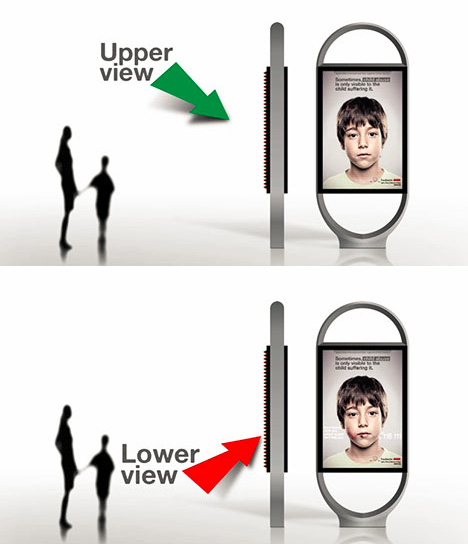
Hidden Hotline: Only Kids Can See this Lenticular Message

by Urbanist
[ By WebUrbanist in Design & Guerilla Ads & Marketing. ]

lenticular poster

Children already at risk may also risk further abuse if they are seen to be seeking help, hence this twist on lenticular printing – a message that reads one way to tall adults, and another to small minors.

lenticular help message

The ANAR Foundation needed a way for potential victims to read their communication secretly (including the unspoken visual content – bruises on the portrait), without alerting those accompanying them on the street.

lenticular secret hidden message

Shifting from one perspective to the other slowly reveals an increasingly different image as well as additional text, including the helpline phone number.

Lenticular images are often used to create dynamic billboards that shift as people walk or drive by, but this variant flips the typical format on its side and gives it a higher purpose than mere marketing.

Share on Facebook

[ By WebUrbanist in Design & Guerilla Ads & Marketing. ]

[ WebUrbanist | Archives | Galleries | Privacy | TOS ]


15 May 14:05

The World Needs More Love Letters

by James

FOUND by Leah Eustace

I was walking down the street with my children, when my daughter (age 12) noticed a red envelope tucked into the side of a bench on the edge of the sidewalk. She pulled it out and showed it to me. On the envelope, it said “This is for you. Yes you!” We opened it up and this letter is what we found inside.

I’ve been wavering between sadness and awe. The sadness comes from the loneliness expressed in the letter. I get the sense that this woman (and I’m guessing it’s a woman) could use a friend and warm hug. At the same time, how amazing to share a letter like this. I absolutely intend to pay it forward: not in exactly the same way, but with the same belief in human connectedness.

14 May 23:09

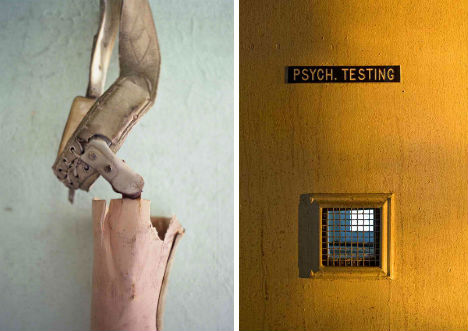
Abandoned Asylums in Focus: Photos by Jeremy Harris

by Steph
[ By Steph in Abandoned Places & Architecture. ]

Abandoned Asylum Photos 1

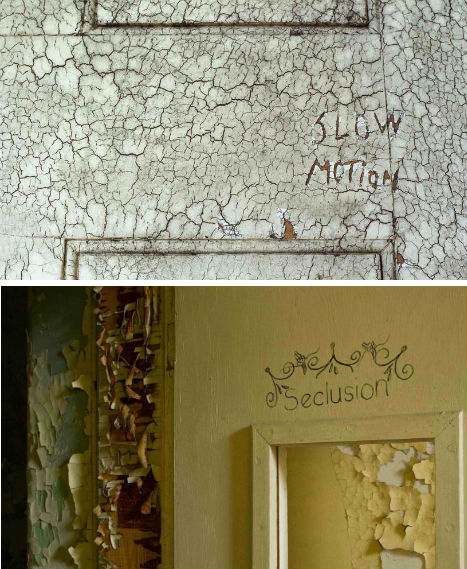
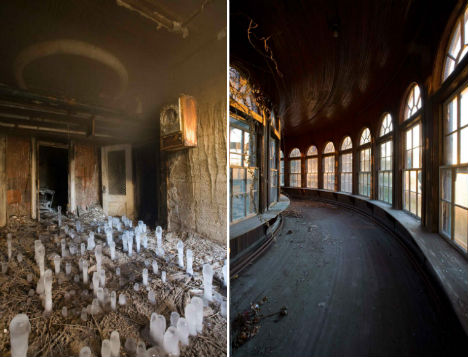
It’s not just the morbid and macabre horror movie ambiance of abandoned psychiatric facilities that makes them so haunting and fascinating; it’s the shadows of the people who often lived their entire lives there. Toothbrushes hanging on hooks, bedding still wadded on cots, wheelchairs and patient records are stark reminders of the humanity that once existed between these walls. Photographer Jeremy Harris has documented many of the structures still standing in a series called ‘Abandoned American Asylums: The Moral Architecture of the Nineteenth Century.’

Abandoned Asylum Photos 2

Abandoned Asylum Photos 4

Harris has been sneaking into abandoned asylums since 2005 to take his photos. The series includes just about everything you’d expect: peeling paint, foreboding hallways and a whole lot of rusting metal. But there are also faded murals, grand theaters and bowling alleys.

Abandoned Asylum Photos 3

In the 19th century, a large number of people – whether seriously mentally ill or not – were institutionalized against their will, often left in hospitals their entire lives without visits from family. At the time, mental illness was often thought of as a moral or spiritual failing. Circumstances improved by the 20th century, in most facilities.

Abandoned Asylum Photos 5

Mother Jones produced a video about the photo project. You can also read more about early psychiatric hospitals and asylums at the U.S. National Library of Medicine, and see the rest of the photos at Jeremy Harris’ website.

Share on Facebook

[ By Steph in Abandoned Places & Architecture. ]

[ WebUrbanist | Archives | Galleries | Privacy | TOS ]


14 May 19:51

Occidental College Faculty Vote “No Confidence” in High Level Administrators

by Lisa Wade, PhD

Cross-posted at BlogHer, VitaminW, and The Huffington Post.

At about 1:00 Monday, a quorum of the Occidental Faculty overwhelmingly voted No Confidence in the campus attorney, Carl Botterud, and the Dean of Students, Barbara Avery. I was among the faculty in attendance.

The votes are in response to a belief that these high-level Occidental employees have mishandled sexual assault education, reporting, and adjudication in ways that have harmed individual students and campus culture.

While the motions are symbolic, such measures are quite rare. It is a very powerful statement coming from a faculty united in defense of survivors of sexual assault and their allies. We now wait to see how the College President, Jonathan Veitch, moves forward. The two are currently still active employees at Occidental (that is, not on administrative leave) and Avery continues to chaperone students through the reporting and adjudication process. We are told there is or will be an internal investigation into their conduct.

The vote of no confidence comes on the heels of two federal complaints filed by a coalition of students and faculty and a set of lawsuits filed by Gloria Allred. It is the next step in our personal fight for a better campus, but part of a nationwide movement involving dozens of campuses across the country.

Lisa Wade is a professor of sociology at Occidental College. You can follow her on Twitter and Facebook.

(View original at http://thesocietypages.org/socimages)

14 May 19:50

barrylyga: Timeline Photos |...


barrylyga:

Timeline Photos | Facebook
facebook.com

Seriously.

I am reblogging this in order to put off writing. 

01 May 02:19

All That We Are

by profmamamusings

So I realize I’ve been discussing a lot of what is wrong or what can be better about my profession or myself or my school and not as much about what is good and right. This post is about what is good and right.

On Sunday, I took the members of Sigma Tau Delta, the English honor society, to Asheville for new member induction.  We usually have a more formal induction on campus with members of the faculty present, but at a recent Coffee and Conversation (biweekly informal chit chat time between English profs and students), we hatched the idea of taking induction on the road to the coolest town in the South. Seven students, Wheeler, and I drove the 90 minutes to Asheville (yes, we are really lucky to live that close) in the pouring rain (our plan to wear cute spring things abandoned) on Sunday and we had a wonderful time.

Lunch at Doc Chey’s, a fabulous Thai place, where we had giant bowls of noodles and real, house-made ginger ale. Induction at Malaprop’s, a wonderful independent bookstore — we recited our vow/pledge in front of a shelf of travel books. Smelling and buying at Asheville Tea and Spice Exchange — we reveled in the smells of tea and salt and sugar and spices. Chocolate and conversation at French Broad Chocolate Lounge — we drank liquid truffles and ate creme brulee and talked and talked.

The whole time these juniors and seniors, the beloved birds of the English department nest, demonstrated, naturally and effortlessly, all the things that we list as objectives and goals for our students. They discussed the Boston Bombings and how terrorism is defined, taking into account race, ethnicity, and religion. They were so happy to be in a town where everything they ate/bought was local, fair trade, and/or organic and they could articulate why fair trade is important to them. They made jokes and told funny stories and talked about wanting wombats and sloths for pets. They are interesting, quirky, thoughtful, knowledgeable critical thinkers.  They are funny and charming and curious about the world. They are, to paraphrase William Joyce, all that we have, all that we are, and all that we will ever be.  And in a week, we will tell some of them goodbye. We’ll watch them leave our nest, and we’ll cry and we’ll miss them.

But we’ll also know they can fly.


30 Apr 03:21

1937 : The IBM Songbook

by Chris Wild
30 Apr 03:14

Day Jobs of the Poets


Day Jobs of the Poets

28 Apr 18:44

Law & Order Quotes Actual Rape Survivors, Calls Itself “Fiction”

by Lisa Wade, PhD

Cross-posted at The Huffington Post.

This is a new one.

Some of you may know that there is a wave of colleges and universities filing complaints with the Office for Civil Rights, claiming that their institutions are failing to protect women from sexual assault. This (first) wave includes Amherst, Yale, the University of North Carolina, Swarthmore, and Occidental among others.

Well, last night many of the details of the stories of the students whose cases have been mishandled — right down to exact quotes from their lives — found themselves in an episode of Law&Order SVU.  They didn’t ask for permission, offer a “consulting” fee, or even warn them that it was coming.

This just leaves a this-is-so-wrong-I-don’t-even-know icky feeling in the pit of my gut.   I know that Law & Order has been ripping stories from the headlines for three decades, but it stuns me that it can claim to be fiction and not compensate the real women who’s lives are clearly and unequivocally depicted in this show.

Let me put this in stark terms: Law & Order is brazenly capitalizing on the pain and trauma of young women and not only failing to compensate them for stealing their stories, but actually denying that they exist by claiming that the “story is fictional and does not depict any actual person or event.”  Stunning.

Alexandra Brodsky, a survivor who filed the complaints against Yale, told Jezebel:

The SVU episode strikes me as an extreme example of the risk of going public as a survivor: your story is no longer your own.

I’ve not seen a more obvious example of this fact.

The teaser for the episode, plus a list of 15 ways the episode copied real life, collected by Katie J.M. Baker at Jezebel, is after the jump.

Here’s the entire list:

SVU: Lindsay is gang-raped by three frat guys who later claim she’s crying rape because she’s embarrassed about her slutty behavior.

Real Life: Four University of Montana football players allegedly gang-raped a drunk female student; charges were dropped because it was unclear whether she was “just embarrassed” about what happened.

SVU: Lindsay Snapchats her rapist the next day, leading students and administrative officials to doubt that she was actually raped.

Real Life: Woman allegedly raped by Mizzou basketball player Michael Dixon Jr. texts him the next day, leading students, officials and cops to doubt that she was actually raped.

SVU: ”I’m sorry that girl had a bad night, but why would Travis need to rape somebody?” a frat bro muses.

Real Life: Students at campuses all over the country don’t believe that Big Men on Campus can be rapists.

SVU: Students call Tau Omega the “Rape Factory.”

Real Life: A former Wesleyan student is suing the university for failing to “to supervise, discipline, warn or take other corrective action” against a frat which she says had a “reputation in the Wesleyan community as the ‘Rape Factory.’”

SVU: Renee is pressured to leave school and commit herself to a mental institution after she attempts to self-harm after the school ignores her rape report. Her rapist is set to graduate with honors.

Real Life: Former student Angie Epifano says Amherst abruptly decided to admit her into a psychiatric ward after she made suicidal comments spurred by the despair she felt when her allegations were repeatedly ignored. Her rapist graduated with honors.

SVU: Renee is penalized by her school’s Honor Court for “intimidating her rapist” by speaking out.

Real Life: UNC sophomore Landen Gambill says she was punished by the Office of Student Conduct for “intimidating” her rapist by speaking to the press about her sexual assault.

SVU: Renee is told that sex “is like a football game” by a school official.

Real Life: Former UNC student Annie Clark was told that rape “is like a football game” by an administrator.

SVU: The university’s mental health counselor says she was met with resistance when she tried to support rape survivors’ reports.

Real Life: UNC allegedly pressured former dean of students Melinda Manning to underreport sexual assault cases; Swarthmore and Occidental were recently accused of mishandling assaults.

SVU: Dean Reyerson says she couldn’t stop Tau Omega alumni from selling “We don’t take ‘no’ for an answer” rush t-shirts.

Real Life: Amherst’s administration came under fire for holding an ineffective closed-door discussion related to a similar frat t-shirt.

SVU: Dean Reyerson says students have the right to assemble, even if they want to chant, “No means yes, yes means anal.”

Real Life: Yale frat boys once gleefully ran around campus chanting exactly that.

SVU: Dean Reyerson says she can’t stop students from posting photos and rumors about rape survivors on an anonymous website because of “free speech.”

Real Life: Oberlin’s administration cites the First Amendment and does next to nothing about undergrads who are seriously harassed via its student-run anonymous message board.

SVU: Lindsay kills herself.

Real Life: Elizabeth “Lizzy” Seeberg committed suicide nine days after accusing a Notre Dame football player of sexually assaulting her in a dorm room; Notre Dame investigators failed to interview the student she accused until 15 days after Seeberg reported the attack and five days after she killed herself.

SVU: Frat boys are caught on video joking that they “raped [Lindsay] dead. (Also that they “raped her Gangnam Style,” which is one we haven’t heard before!)

Real Life: Anonymous leaked a video of former Steubenville High School baseball player Michael Nodianos cracking himself up as he calls a rape victim “deader than” JFK, OJ’s wife, Caylee Anthony, and Trayvon Martin, amongst others.

SVU: At the end of the episode, students hold up signs protesting rape culture using real quotes said to them by members of the community following their assaults.

Real Life: Amherst students put together a collection of photos of men and women who were sexually assaulted on campus, holding signs with words said to them by members of the community following their assaults.

SVU: “I was thinking about maybe starting a kind of support group on campus, so survivors know they’re not alone,” Renee says.

Real Life: A group of rape survivors including Dana Bolger (Amherst College ‘14), Alexandra Brodsky (Yale College ‘12, Yale Law School ‘16), Annie Clark (University of North Carolina — Chapel Hill ‘11), and Andrea Pino (UNC — CH ‘14), some of whom have filed complaint with the federal government against their universities, joined together to help students at colleges across the country stand up to administrations; they recently launched “Know Your IX,” a campaign that aims to educate every college student in the U.S. about his or her rights under Title IX by the start of the Fall 2013 academic term.

Here’s the teaser for the episode:

Lisa Wade is a professor of sociology at Occidental College. You can follow her on Twitter and Facebook.

(View original at http://thesocietypages.org/socimages)

26 Apr 22:25

Step 298: Do not look at your phone while human beings are interacting with you

Cardiac surgeons who are on-call, you may ignore this step. Everyone else:

When you interrupt a conversation by pulling out and typing on your phone, this is the implication: “Whatever this Facebook friend/Tumblr person/Twotter follower [typo but it feels accurate and therefore stays] has to say is more important than whatever you were trying to express, so I’mma go ahead and take this.”

If you imagine the phone vibrations are *that* urgent, excuse yourself and respond in the bathroom. Or be really clear that this is a mutual friend who is trying to meet up, and you are just sending him/her the address.

26 Apr 20:41

Better to Light a Candle…

by tkvande

I have been thinking a great deal about running these past few days and weeks. As many of you know, I am a runner and have been since middle school (many years ago!). While my pace is much slower than it once was, I still (usually) look forward to my predawn workout as a time of reflection and renewal. My daughter recently ran in her first track meet (after multiple rain delays!) and it was a delight to share a ride home with her and listen to her excitedly retell the story of the meet and how much she enjoyed it. I was reminded of my own start in running; in middle school, I went out for the track team and had some wonderful coaches who helped connect me with the sport and instilled a love of fitness and exercise in me. As a parent, I was tremendously pleased to see my daughter begin that same journey, thanks to her teammates and coaches.

I’ve also thought a great deal about the events in Boston as well. While I’ve heard many people call it a tragedy, I don’t think that description quite fits the events. For me, tragedy implies that there are conflicting forces for good that collide, and unfortunately, one of them must lose out. In this circumstance, it is more an act of evil that devastated the lives of many people, some fatally, some for years to come. It makes me want to weep and cry out against the senseless waste and brutality that exists in so many places. It is a stark contrast in my mind: those runners who trained for months, literally pouring out their blood, sweat, and tears into reaching their goal, only to have it taken from them in the most horrific manner.

I’ve thought about my response as a parent and our response as a school to these events. I think there is great power in prayer, and keeping those individuals and that community in mind has been important. I am grateful for the care and concern that we in this community regularly show each other and believe it to be a manifestation of the Episcopal values of this school. On a more concrete level, the quote, “Better to light a candle than to curse the darkness,” has been very much on my mind. I believe that if each of us figures out how to be engaged for the greater good in ways both small and large in our communities, that is the most telling response. While few of us here in Memphis have direct input or control over the upcoming legal proceedings in Boston, we do have opportunities to work with our children and share our values with them. Each day we can work to make our community a better place, part of which, I think, is giving children a sense of what they CAN do for good in their lives.

And ultimately, while I want my children to be physically fit and enjoy an active lifestyle, perhaps more importantly, I want them to have a sense of agency over their lives, and running is a tangible way to learn this. The more you put into practice, the faster you become. Your effort has a direct impact on your performance and your ability to set and reach goals. I think lessons from the athletic arena can translate into other areas of life and give children a sense that even when evil occurs, the response is not helplessness, but rather a sense that they can do something in their local community to “light a candle” for those around them.

25 Apr 21:18

How Friendship Can Help End Rape

by Michael Kimmel PhD

Cross-posted at PolicyMic.

1Let me ask you a question: Do you have a good friend of the opposite sex?

Odds are you do. In fact, the odds are overwhelming.

When I first began teaching, 25 or so years ago, I asked my students how many of them had a good friend of the opposite sex. About 10% said they did. The rest were from what I called the When Harry Met Sally generation. You’ll remember the scene, early in the film, when Harry asserts that women and men can’t be friends because “sex always gets in the way.”  Sally is sure he’s wrong. They fight about it. Then, thinking she has the clincher for her position, she says, confidently, “So that means that you can be friends with them if you’re not attracted to them!”

“Ah,” says Harry, “you pretty much want to nail them too.”

Young people today have utterly and completely repudiated this idea. These days, when I ask my students, I’ve had to revise the question: “Is there anyone here who does not have a friend of the opposite sex?” A few hands perhaps, in the more than 400 students in the class.

But let’s think, for a moment, about the “politics” of friendship. With whom do you make friends? With your peers. Not your supervisor or boss. Not your subordinate. Your equal.  More than romance, and surely more than workplace relationships, friendships are the relationships with the least amount of inequality.

This changes how we can engage men in the efforts to end sexual assault, because there are three elements to sexual assault that can be discussed and disentangled.

First is m en’s sense of entitlement to women’s bodies, to sex. This sense of entitlement dissolves in the face of an encounter with your friends. After all, entitlement is premised on inequality. The more equal women are, the less entitlement men may feel. (Entitlement is not to be confused with resentment; equality often breeds resentment in the privileged group. The privileged rarely support equality because they fear they have something to lose.) Entitlement leads men to think that they can do whatever they want.

Second, the Bro Code tells those guys that they’re right – that they can get away with it because their bros won’t challenge or confront them. The bonds of brotherhood demand men’s silent complicity with predatory and potentially assaultive behavior. One never rats out the brotherhood. But if we see our female friends as our equals, then we might be more likely to act ethically to intervene and resist being a passive bystander. (And, of course, we rescue our male friends from doing something that could land him in jail for a very long time.)

Men’s silence is what perpetuates the culture of sexual assault; many of the excellent programs that work to engage men suggest that men start making some noise. We know the women, or know people who know them. This is personal.

Finally, we’re better than that – and we know it.

Sexual assault is often seen as an abstraction, a “bad” thing that happens to other people: Bad people do bad things to people who weren’t careful, were drunk or compromised. But, as I said, it’s personal. And besides, this framing puts all the responsibility on women to monitor their activities, alcohol consumption, and environments; if they don’t, whose fault is it?

This sets the bar far too low to men. It assumes that unless women monitor and police everything they do, drink, say, wear etc., we men are wild, out of control animals and we cannot be held responsible for our actions.

Surely we can do better than this. Surely we can be the good and decent and ethical men we say we are. Surely we can promise, publicly and loudly, the pledge of the White Ribbon Campaign (the world’s largest effort to engage men to end men’s violence against women): I pledge never to commit, condone, or remain silent about violence against women and girls.

Our friends – both women and men – deserve and expect no less of us.

Michael Kimmel is a professor of sociology at the State University of New York at Stonybrook.  He has written or edited over twenty volumes, including Manhood in America: A Cultural History and Guyland: The Perilous World Where Boys Become Men.  You can visit his website here.

(View original at http://thesocietypages.org/socimages)

23 Apr 23:22

Jeannot’s Knife

by Greg Ross

http://www.sxc.hu/photo/1197069

A French tradition asks: If the handle of a certain knife is replaced whenever it is worn out, and its blade is replaced whenever it becomes worthless, does the knife itself become immortal?

In his 1872 short story “Dr. Ox’s Experiment,” Jules Verne mentions a curious tradition of marriage within the Van Tricasse family:

From 1340 it had invariably happened that a Van Tricasse, when left a widower, had remarried a Van Tricasse younger than himself; who, becoming in turn a widow, had married again a Van Tricasse younger than herself; and so on, without a break in the continuity, from generation to generation. Each died in his or her turn with mechanical regularity. Thus the worthy Madame Brigitte Van Tricasse had now her second husband; and, unless she violated her every duty, would precede her spouse — he being ten years younger than herself — to the other world, to make room for a new Madame Van Tricasse.

Is this a series of distinct marriages — or one immortal union?

23 Apr 16:44

How To Be a Woman | Brain Pickings

19 Apr 15:02

The rights of women, a novel

by simonbeattie

This is the first edition of a utopian novel by the American friend of Wieland, Schiller and Goethe, James Lawrence (1773–1840).  Born on Jamaica (his family had lived on the island since 1676), Lawrence was educated at Eton and Göttingen.  ‘In 1793 his essay on the heterodox customs of the Nairs of Malabar with respect to marriage and inheritance was inserted by Wieland in his Der Teutsche Merkur and in 1800 Lawrence, who seems in the interim to have lived entirely on the continent, at Schiller’s behest completed a romance on the subject, also in German, which was published in the Journal der Romane for the following year, under the title of “Das Paradies der Liebe”, and reprinted as Das Reich der Nairen.  The book was subsequently translated into French and English by the author himself, and published in both languages [though in the event it banned in France]; the English version, entitled The Empire of the Nairs [or the Rights of Women.  An utopian romance] was published in four volumes in 1811 by Thomas Hookham …  The novel’s attack on the institution of marriage and its advocacy of matrilineal inheritance was influenced by William Godwin, Mary Wollstonecraft, and the French philosophes …  On 17 August 1812 Percy Shelley wrote to Lawrence “Your ‘Empire of the Nairs’, which I read this Spring, succeeded in making me a perfect convert to its doctrines”, and he met with Lawrence in London the following year.  The novel exerted an important influence on Shelley’s poem Queen Mab (1813) and other works’ (Oxford DNB).