Shared posts

09 Jun 18:28

Big Picture Part Four: Complexity

by Sean Carroll

One of a series of quick posts on the six sections of my book The Big PictureCosmos, Understanding, Essence, Complexity, Thinking, Caring.

Chapters in Part Four, Complexity:

  • 28. The Universe in a Cup of Coffee
  • 29. Light and Life
  • 30. Funneling Energy
  • 31. Spontaneous Organization
  • 32. The Origin and Purpose of Life
  • 33. Evolution’s Bootstraps
  • 34. Searching Through the Landscape
  • 35. Emergent Purpose
  • 36. Are We the Point?

One of the most annoying arguments a scientist can hear is that “evolution (or the origin of life) violates the Second Law of Thermodynamics.” The idea is basically that the Second Law says things become more disorganized over time, but the appearance of life represents increased organization, so what do you have to say about that, Dr. Smarty-Pants?

This is a very bad argument, since the Second Law only says that entropy increases in closed systems, not open ones. (Otherwise refrigerators would be impossible, since the entropy of a can of Diet Coke goes down when you cool it.) The Earth’s biosphere is obviously an open system — we get low-entropy photons from the Sun, and radiate high-entropy photons back to the universe — so there is manifestly no contradiction between the Second Law and the appearance of complex structures.

As right and true as that response is, it doesn’t quite address the question of why complex structures actually do come into being. Sure, they can come into being without violating the Second Law, but that doesn’t quite explain why they actually do. In Complexity, the fourth part of The Big Picture, I talk about why it’s very natural for such a thing to happen. This covers the evolution of complexity in general, as well as specific questions about the origin of life and Darwinian natural selection. When it comes to abiogenesis, there’s a lot we don’t know, but good reason to be optimistic about near-term progress.

In 2000, Gretchen Früh-Green, on a ship in the mid-Atlantic Ocean as part of an expedition led by marine geologist Deborah Kelley, stumbled across a collection of ghostly white towers in the video feed from a robotic camera near the ocean floor deep below. Fortunately they had with them a submersible vessel named Alvin, and Kelley set out to explore the structure up close. Further investigation showed that it was just the kind of alkaline vent formation that Russell had anticipated. Two thousand miles east of South Carolina, not far from the Mid-Atlantic Ridge, the Lost City hydrothermal vent field is at least 30,000 years old, and may be just the first known example of a very common type of geological formation. There’s a lot we don’t know about the ocean floor.

Lost City

The chemistry in vents like those at Lost City is rich, and driven by the sort of gradients that could reasonably prefigure life’s metabolic pathways. Reactions familiar from laboratory experiments have been able to produce a number of amino acids, sugars, and other compounds that are needed to ultimately assemble RNA. In the minds of the metabolism-first contingent, the power source provided by disequilibria must come first; the chemistry leading to life will eventually piggyback upon it.

Albert Szent-Györgyi, a Hungarian physiologist who won the Nobel Prize in 1937 for the discovery of Vitamin C, once offered the opinion that “Life is nothing but an electron looking for a place to rest.” That’s a good summary of the metabolism-first view. There is free energy locked up in certain chemical configurations, and life is one way it can be released. One compelling aspect of the picture is that it’s not simply working backwards from “we know there’s life, how did it start?” Instead, its suggesting that life is the solution to a problem: “we have some free energy, how do we liberate it?”

Planetary scientists have speculated that hydrothermal vents similar to Lost City, might be abundant on Jupiter’s moon Europa or Saturn’s moon Enceladus. Future exploration of the Solar System might be able to put this picture to a different kind of test.

A tricky part of this discussion is figuring out when it’s okay to say that a certain naturally-evolved organism or characteristic has a “purpose.” Evolution itself has no purpose, but according to poetic naturalism it’s perfectly okay to ascribe purposes to specific things or processes, as long as that kind of description actually provides a useful way of talking about the higher-level emergent behavior.

26 May 15:43

Big Picture Part Five: Thinking

by Sean Carroll

One of a series of quick posts on the six sections of my book The Big PictureCosmos, Understanding, Essence, Complexity, Thinking, Caring.

Chapters in Part Five, Thinking:

  • 37. Crawling Into Consciousness
  • 38. The Babbling Brain
  • 39. What Thinks?
  • 40. The Hard Problem
  • 41. Zombies and Stories
  • 42. Are Photons Conscious?
  • 43. What Acts on What?
  • 44. Freedom to Choose

Even many people who willingly describe themselves as naturalists — who agree that there is only the natural world, obeying laws of physics — are brought up short by the nature of consciousness, or the mind-body problem. David Chalmers famously distinguished between the “Easy Problems” of consciousness, which include functional and operational questions like “How does seeing an object relate to our mental image of that object?”, and the “Hard Problem.” The Hard Problem is the nature of qualia, the subjective experiences associated with conscious events. “Seeing red” is part of the Easy Problem, “experiencing the redness of red” is part of the Hard Problem. No matter how well we might someday understand the connectivity of neurons or the laws of physics governing the particles and forces of which our brains are made, how can collections of such cells or particles ever be said to have an experience of “what it is like” to feel something?

These questions have been debated to death, and I don’t have anything especially novel to contribute to discussions of how the brain works. What I can do is suggest that (1) the emergence of concepts like “thinking” and “experiencing” and “consciousness” as useful ways of talking about macroscopic collections of matter should be no more surprising than the emergence of concepts like “temperature” and “pressure”; and (2) our understanding of those underlying laws of physics is so incredibly solid and well-established that there should be an enormous presumption against modifying them in some important way just to account for a phenomenon (consciousness) which is admittedly one of the most subtle and complex things we’ve ever encountered in the world.

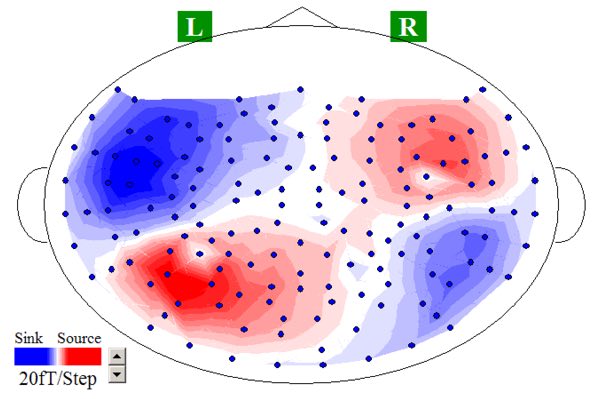
My suspicion is that the Hard Problem won’t be “solved,” it will just gradually fade away as we understand more and more about how the brain actually does work. I love this image of the magnetic fields generated in my brain as neurons squirt out charged particles, evidence of thoughts careening around my gray matter. (Taken by an MEG machine in David Poeppel’s lab at NYU.) It’s not evidence of anything surprising — not even the most devoted mind-body dualist is reluctant to admit that things happen in the brain while you are thinking — but it’s a vivid illustration of how closely our mental processes are associated with the particles and forces of elementary physics.

my-brain

The divide between those who doubt that physical concepts can account for subjective experience and those who are think it can is difficult to bridge precisely because of the word “subjective” — there are no external, measurable quantities we can point to that might help resolve the issue. In the book I highlight this gap by imagining a dialogue between someone who believes in the existence of distinct mental properties (M) and a poetic naturalist (P) who thinks that such properties are a way of talking about physical reality:

M: I grant you that, when I am feeling some particular sensation, it is inevitably accompanied by some particular thing happening in my brain — a “neural correlate of consciousness.” What I deny is that one of my subjective experiences simply is such an occurrence in my brain. There’s more to it than that. I also have a feeling of what it is like to have that experience.

P: What I’m suggesting is that the statement “I have a feeling…” is simply a way of talking about those signals appearing in your brain. There is one way of talking that speaks a vocabulary of neurons and synapses and so forth, and another way that speaks of people and their experiences. And there is a map between these ways: when the neurons do a certain thing, the person feels a certain way. And that’s all there is.

M: Except that it’s manifestly not all there is! Because if it were, I wouldn’t have any conscious experiences at all. Atoms don’t have experiences. You can give a functional explanation of what’s going on, which will correctly account for how I actually behave, but such an explanation will always leave out the subjective aspect.

P: Why? I’m not “leaving out” the subjective aspect, I’m suggesting that all of this talk of our inner experiences is a very useful way of bundling up the collective behavior of a complex collection of atoms. Individual atoms don’t have experiences, but macroscopic agglomerations of them might very well, without invoking any additional ingredients.

M: No they won’t. No matter how many non-feeling atoms you pile together, they will never start having experiences.

P: Yes they will.

M: No they won’t.

P: Yes they will.

I imagine that close analogues of this conversation have happened countless times, and are likely to continue for a while into the future.

26 May 15:38

Dealing with Sensitivities and Triggers when the Whole Family has Autism Spectrum Disorders

by Gavin Bollard
These days, Autism Spectrum Disorders aren't uncommon.  In fact, it’s pretty clear that there's a strong genetic link. 

People with ASDs Collect Together 

If you have autism in one form or another (or if you have a sibling on the autism spectrum), there's a better than average chance that you will have at least one child on the spectrum.

It's not vaccines, it's not head trauma or defective parenting. It's genetics, pure and simple. The apple really doesn't fall too far from the tree.

What's less well documented is that people with autism seem to prefer the company of others on the spectrum. In fact, it seems that we have an arguably better sense for detecting individuals like ourselves in social situations than regular people.

The odds of a person on the autism spectrum partnering with another person on the autism spectrum seem to be higher than most.

The upshot of this is that there are many families out there which contain more than one person on the autism spectrum. In fact, I'd go so far as to suggest that it's more common to have more than it is to have just the one.

Navigating Triggers and Sensitivities 

One of the toughest parts of being a parent in a family with a single individual on the spectrum is “navigating the maze of triggers and sensitivities”.

Triggering 

Many people with autism walk around on the verge of a meltdown (an explosive state) or on the verge of a shut-down (an implosive state).

All it takes is a “trigger”, to set them off. The triggers are generally undocumented and are quite often unknown - even to the people who have autism. They aren't big (or even bad) things. Nearly anything can be a trigger depending upon the life-experience of the person.

As a parent, one of the most important tasks in your life is to identify these triggers and find ways to avoid them.  If you're an adult with autism, then it's also your mission in life to identify your personal triggers and sensitivities.

This is easier said than done because triggers often run deeper than you'd expect.

For example, a child may have a meltdown when asked to clean their room - and you might start to identify the trigger as a “room-cleaning” issue - when the real issue is more to do with how (or when) you asked the child to clean their room.

In fact, ask as child, even a non-spectrum child, to do anything while they're engaged in playing a video game and you're sure to get a negative response.

The only way around this is to keep trying to identify triggers and to look for patterns.

Sensitivities 

Triggers are frequently “the final straw” in a long list of sensitivity tripping events.

The same triggers may (or may not) cause a meltdown depending upon how many sensitivities have already been tripped.

For example, if your child has had a good night's  sleep, a trigger like spilling milk in the morning might not have the same impact as the same event after a long and difficult day at school.

As such, it helps if you can also identify your child's particular sensitivities and try to avoid, or at least reduce them.

This isn't too hard for most sensitivities, such as cooking ingredients, itchy clothing, specific smells and the sudden re-scheduling of events but sometimes the sensitivities are centred around (or tripped by) other individuals - particularly family members.

Dealing with Family 

As I mentioned earlier, it's becoming increasingly common to find families where more than one individual has an ASD.

One of the big problems with this is that quite often, the things that calm one member of the family trigger other members. For example; verbal stimming (where an individual makes a constant noise mainly because it feels good).

In short bursts, verbal stimming is tolerable but over longer periods it becomes a major issue.

Like any family issue though, this needs to be solved via compromise. 

If possible, alternative forms of stimming should be suggested but of course, not everyone can change their stims. Sometimes the change has to come from elsewhere (noise blocking headphones,spending time in open spaces or perhaps covering up the noise with a louder one).

Family Meltdowns

The worst problems occur when the meltdown activities of one family member triggers a meltdown in others.

If you don't catch a meltdown before it starts, you generally can't stop it and just have to see it through to the end. If reactive meltdowns are common in your household then you need to work out a good “meltdown procedure”.

All people who feel a meltdown state coming on need somewhere to retreat to (somewhere they can be alone). Different individuals need different places because the last thing you should do with an individual in an uncontrollable state is to put them with someone else in a similar state.

The process for dealing with meltdowns  for multiple individuals becomes the same as the process for dealing with single individuals once they're isolated. 
17 May 18:52

every time i write a comic making fun of french i look forward to my francophone friend Hélène emailing me a scowling emoticion. BALL IS IN YOUR COURT, MY DEAR FRIEND

archive - contact - sexy exciting merchandise - search - about
← previous May 6th, 2016 next

May 6th, 2016: Okay so the coolest thing I got emailed to me after yesterday's comic was the idea that counting ISN'T math when we do it (because we're doing it by rote) but it IS math when birds do it (because they're reasoning through the process and reaching conclusions based on mathematical laws). I LOVE THIS IDEA SO MUCH. Nobody tell me if it's a bad idea because I love it.

– Ryan

17 May 16:05

Whatever happened to ‘pro-life Democrats’? Go see ‘Spotlight’

by Fred Clark
The once mostly Catholic phenomenon of congressional "pro-life Democrats" ended due to the horror of the clergy abuse scandal. Thus nowadays, most "pro-life Democrats" are really blue dogs -- "social conservatives" who have found other, more effective, ways of signaling that social conservatism and all that it entails.
17 May 15:40

Zac Goldsmith led between 22% to 30% with the over 65s and still lost

by TSE

A pointer to the EU Referendum?

One of the patterns that have emerged with a lot of the EU referendum polling is that the over 65s favour Brexit by a substantial margin, which gives the Leaver side a lot of hope that they may win the referendum on June 23rd, because older voters have had a higher turnout than younger voters in past elections.

But look at the charts above from the final London Mayoral polling by YouGov and Opinium, Zac had leads ranging between 22% and 30% with the overs 65s, yet still lost by nearly 14%, which these polls accurately predicted. Whilst London might not be representative of the United Kingdom, it is interesting nonetheless that even in a low turnout election, the power of the oldies was negated.

The betting on Betfair seems to be maintaining its consistent pattern, with Remain an implied circa 70% chance of winning.


TSE


17 May 14:58

A BREXIT indicator? UKIP’s National Equivalent Vote share down by nearly half in 3 years

by Mike Smithson

UKIP youth

Thursday saw UKIP winning just 2% of the first past the post seats

Given that the dominant political story at the moment is the EU referendum it has been rather surprising that so little attention has been paid to UKIP – the party which very wisely concentrated its resources on the PR-based list seats in Wales rather than first past the post elections in the English locals.

They certainly had success in Wales and also picked up two PR based seats on the London Assembly but the English local were more than just disappointing. A large proportion of the seats up were in Labour heartlands – just the sort of area where they’ve appeared to be doing well.

    Yes they made gains but their overall total of council seats taken was 58 or just 2% of the seats at stake. Contrast that with 2013 when UKIP won or retained 147 seats, 6% of those contested and a net gain of 139.

They’ve also lost their coveted 3rd place on vote position to the Lib Dems who won seven times as many council seats.

It is very true that first past the post works against the smaller parties as we saw at GE2015 when they only got one MP.

Mike Smithson

Follow @MSmithsonPB

Tweet

13 May 14:46

Just supposing...

by Cicero
Although the opinion polls are close, the betting markets barely move: the punters are still backing the United States to vote for Hillary Clinton and the United Kingdom to vote to stay part of the European Union. 

Yet, just suppose the punters are wrong?

Just suppose that the polls are right and the UK does vote to Leave. Firstly this would trigger an immediate resignation from David Cameron. His luck would have run out. The Prime Minister himself suggests that his successor is most likely to be a "leaver", "that is where the heart of the Conservative party beats". Despite his unhappy performance so far, that still probably means that Boris Johnson would be the next Prime Minister. The new PM would have a massive pile of problems to deal with on day one. Quite apart from the critical choices that he will have to make on behalf of the UK and it future relations with the EU, he would also have to steady the economic ship, which would be more than a somewhat rattled by Brexit. An old fashioned Sterling crisis and a significant fall off in investment would just be the start of the new world of turbulence in the UK economy.  Then there is the growing prospect of a significant political crisis. The investigation into allegations of Conservative cheating is continuing, and if charges are preferred, then it is quite possible that the government would face a series of bye-elections that could take away their majority. All of this, of course comes on top of the calls for a second Scottish referendum. The UK could be facing economic, constitutional and political crises all at once.

Then there is the prospect of President Trump. Mr. Trump has won his nomination. Come November, there is a significant chance that he gets elected. Just suppose that he does. From the point of view of the West, the reputation of democracy will have taken a severe knock, the relations of the United States with its neighbours will clearly deteriorate, but the impact of Mr. Trump's declared wish to disengage from NATO and cut a deal with Putin would have catastrophic implications, and not just for Europe. The friction between the US and China would become outright animosity. All of the conventional security platforms would be weakened and the position of the UK, which bases a great deal of emphasis on the special relationship with the US, would be weakened drastically.

The outcomes of just two simple votes could undermine decades of progress, cooperation and peace.  

When people say that Mr. Cameron is exaggerating the scale of the crisis, then just maybe they are wrong: we may not be scared enough.  
12 May 14:27

The Absurdity of Mandatory Voting

by Alex Tabarrok

NBER: We study a unique quasi-experiment in Austria, where compulsory voting laws are changed across Austria’s nine states at different times. Analyzing state and national elections from 1949-2010, we show that compulsory voting laws with weakly enforced fines increase turnout by roughly 10 percentage points. However, we find no evidence that this change in turnout affected government spending patterns (in levels or composition) or electoral outcomes. Individual-level data on turnout and political preferences suggest these results occur because individuals swayed to vote due to compulsory voting are more likely to be non-partisan, have low interest in politics, and be uninformed.

In other words, all mandatory voting did was add noise to the system and as such probably made everyone worse off including the new voters.

The post The Absurdity of Mandatory Voting appeared first on Marginal REVOLUTION.

12 May 13:06

Almost all the online polls when tested against real results last Thursday overstated UKIP

by Mike Smithson

This looks like a good pointer to referendum polling

Well done to Matt Singh for picking up this – how in the range of elections last Thursday the online pollsters across the board appeared to be over-stating UKIP. His analysis covers the London as well as the Scottish and Welsh elections.

The details are in the chart from his Tweet above and appear to make a convincing case which given the gap we are seeing between phone and online on the June 23rd referendum could be highly relevant as we follow the polls for that massive election.

    We saw exactly the same broad pattern in the 2014 Euro elections when UKIP finished on 27%. Opinium and Survation’s final polls had the party on 32%, ComRes 33% and TNS on 31%. The YouGov online poll got UKIP spot on. ICM online undershot by 2.

At the last year’s general election, not admittedly the polling industry’s finest hour, we saw the same split with online having larger UKIP shares than the phone firms.

As can be seen from the table below the gap between phone and online ahead of the referendum is very marked.

EU Ref polling   Google Sheets

A key factor, I believe, is that UKIP polling support is heaviest in those socio economic groups which have a long record of being less likely to vote.

Mike Smithson

Follow @MSmithsonPB

Tweet

12 May 11:21

Leaving Europe is so stupid it amounts to fatal self harm

by Cicero
Listening to the BBC one might think that, intellectually, the debate about British membership of the European Union was a finely balanced argument.

It isn't.

As Kate Hoey admitted to Andrew Neill, there is not one single independent study that suggests that leaving the EU would benefit the UK economy. The Leave campaign could have put up a "sock puppet" study up to suggest they were right, but they could not even do that- so damning is the factual evidence.

The press is suggesting that they are reporting the debate evenly- but the reality is that there is no factually based support for any of the statements put out by the Leave campaign- it is not supported by any sustainable facts at all.

I have made comments about the rise of stupidity in politics before, but quite frankly the utter failure of the media to recognize that one side is intellectually bankrupt implies either stupidity or bias. In the case of the Daily Mail, it probably implies both.

OK, it is fair to say that Boris Johnson, George Galloway or Nigel Farage are more interested in questions of political power than questions of political accuracy, but surely their cynicism is precisely the thing that the media should challenge.

But no: who David Furnish may or may not be sleeping with, in the context of his open relationship with Elton John, or whether or not Hugh Bonneville might have slept with a woman not his wife- that is what the press will go to the stake for. It is not a question of principle, it is a question of profit. 

It is a total disgrace.

The fact is that leaving the European Union would be so damaging, that is not even sure that the UK would survive. Building a new border across Ireland, infuriating the fractious Scottish body politic and creating enormous economic harm- apparently all of this is less important that the sex lives of celebrities.   

If British citizens do not care about their own future, the media will certainly not do it for them.

When every single friend of the UK- allies, trade partners and our own daughter states- says that leaving would weaken the UK, and every enemy of our country, Marine Le Pen, Donald Trump and Vladimir Putin wants us to leave, then the balance of probabilities is really crystal clear.

The media should report not merely opinions, but the biases that inform those opinions. That they fail to do so is one reason why the mainstream media in the UK is increasingly ignored.

It is essential that each citizen brings critical faculties to our consideration of the argument. It is not acceptable to leave your critical brain at home when you consider the future or our country.

It is not an accident that two thirds of those who hold degrees support Remain. It is not a co-incidence that all our foreign or off-shore owned media supports Leave.

Draw your own conclusions.  
12 May 11:00

The 8000th Busy Beaver number eludes ZF set theory: new paper by Adam Yedidia and me

by Scott

I’ve supervised a lot of great student projects in my nine years at MIT, but my inner nerdy teenager has never been as personally delighted by a project as it is right now.  Today, I’m proud to announce that Adam Yedidia, a PhD student at MIT (but an MEng student when he did most of this work), has explicitly constructed a one-tape, two-symbol Turing machine with 7,918 states, whose behavior (when run on a blank tape) can never be proven from the usual axioms of set theory, under reasonable consistency hypotheses.  Adam has also constructed a 4,888-state Turing machine that halts iff there’s a counterexample to Goldbach’s Conjecture, and a 5,372-state machine that halts iff there’s a counterexample to the Riemann Hypothesis.  In all three cases, this is the first time we’ve had a reasonable explicit upper bound on how many states you need in a Turing machine before you can see the behavior in question.

Here’s our research paper, on which Adam generously included me as a coauthor, even though he did the heavy lifting.  Also, here’s a github repository where you can download all the code Adam used to generate these Turing machines, and even use it to build your own small Turing machines that encode interesting mathematical statements.  Finally, here’s a YouTube video where Adam walks you through how to use his tools.

A more precise statement of our main result is this: we give a 7,918-state Turing machine, called Z (and actually explicitly listed in our paper!), such that:

  1. Z runs forever, assuming the consistency of a large-cardinal theory called SRP (Stationary Ramsey Property), but
  2. Z can’t be proved to run forever in ZFC (Zermelo-Fraenkel set theory with the Axiom of Choice, the usual foundation for mathematics), assuming that ZFC is consistent.

A bit of background: it follows, as an immediate consequence of Gödel’s Incompleteness Theorem, that there’s some computer program, of some length, that eludes the power of ordinary mathematics to prove what it does, when it’s run with an unlimited amount of memory.  So for example, such a program could simply enumerate all the possible consequences of the ZFC axioms, one after another, and halt if it ever found a contradiction (e.g., a proof of 1+1=3).  Assuming ZFC is consistent, this program must run forever.  But again assuming ZFC is consistent, ZFC can’t prove that the program runs forever, since if it did, then it would prove its own consistency, thereby violating the Second Incompleteness Theorem!

Alas, this argument still leaves us in the dark about where, in space of computer programs, the “Gödelian gremlin” rears its undecidable head.  A program that searches for an inconsistency in ZFC is a fairly complicated animal: it needs to encode not only the ZFC axiom schema, but also the language and inference rules of first-order logic.  Such a program might be thousands of lines long if written in a standard programming language like C, or millions of instructions if compiled down to a bare-bones machine code.  You’d certainly never run across such a program by chance—not even if you had a computer the size of the observable universe, trying one random program after another for billions of years in a “primordial soup”!

So the question stands—a question that strikes me as obviously important, even though as far as I know, only one or two people ever asked the question before us; see here for example.  Namely: do the axioms of set theory suffice to analyze the behavior of every computer program that’s at most, let’s say, 50 machine instructions long?  Or are there super-short programs that already exhibit “Gödelian behavior”?

Theoretical computer scientists might object that this is “merely a question of constants.”  Well yes, OK, but the origin of life in our universe—a not entirely unrelated puzzle—is also “merely a question of constants”!  In more detail, we know that it’s possible with our laws of physics to build a self-replicating machine: say, DNA or RNA and their associated paraphernalia.  We also know that tiny molecules like H2O and CO2 are not self-replicating.  But we don’t know how small the smallest self-replicating molecule can be—and that’s an issue that influences whether we should expect to find ourselves alone in the universe or find it teeming with life.

Some people might also object that what we’re asking about has already been studied, in the half-century quest to design the smallest universal Turing machine (the subject of Stephen Wolfram’s $25,000 prize in 2007, to which I responded with my own $25.00 prize).  But I see that as fundamentally different, for the following reason.  A universal Turing machine—that is, a machine that simulates any other machine that’s described to it on its input tape—has the privilege of offloading almost all of its complexity onto the description format for the input machine.  So indeed, that’s exactly what all known tiny universal machines do!  But a program that checks (say) Goldbach’s Conjecture, or the Riemann Hypothesis, or the consistency of set theory, on an initially blank tape, has no such liberty.  For such machines, the number of states really does seem like an intrinsic measure of complexity, because the complexity can’t be shoehorned anywhere else.

One can also phrase what we’re asking in terms of the infamous Busy Beaver function.  Recall that BB(n), or the nth Busy Beaver number, is defined to be the maximum number of steps that any n-state Turing machine takes when run on an initially blank tape, assuming that the machine eventually halts. The Busy Beaver function was the centerpiece of my 1998 essay Who Can Name the Bigger Number?, which might still attract more readers than anything else I’ve written since. As I stressed there, if you’re in a biggest-number-naming contest, and you write “BB(10000),” you’ll destroy any opponent—however otherwise mathematically literate they are—who’s innocent of computability theory.  For BB(n) grows faster than any computable sequence of integers: indeed, if it didn’t, then one could use that fact to solve the halting problem, contradicting Turing’s theorem.

But the BB function has a second amazing property: namely, it’s a perfectly well-defined integer function, and yet once you fix the axioms of mathematics, only finitely many values of the function can ever be proved, even in principle.  To see why, consider again a Turing machine M that halts if and only if there’s a contradiction in ZF set theory.  Clearly such a machine could be built, with some finite number of states k.  But then ZF set theory can’t possibly determine the value of BB(k) (or BB(k+1), BB(k+2), etc.), unless ZF is inconsistent!  For to do so, ZF would need to prove that M ran forever, and therefore prove its own consistency, and therefore be inconsistent by Gödel’s Theorem.

OK, but we can now ask a quantitative question: how many values of the BB function is it possible for us to know?  Where exactly is the precipice at which this function “departs the realm of mortals and enters the realm of God”: is it closer to n=10 or to n=10,000,000?  In practice, four values of BB have been determined so far:

  • BB(1)=1
  • BB(2)=6
  • BB(3)=21 (Lin and Rado 1965)
  • BB(4)=107 (Brady 1975)

We also know some lower bounds:

See Heiner Marxen’s page or the Googology Wiki (which somehow I only learned about today) for more information.

Some Busy Beaver enthusiasts have opined that even BB(6) will never be known exactly.  On the other hand, the abstract argument from before tells us only that, if we confine ourselves to (say) ZF set theory, then there’s some k—possibly in the tens of millions or higher—such that the values of BB(k), BB(k+1), BB(k+2), and so on can never be proven.  So again: is the number of knowable values of the BB function more like 10, or more like a million?

This is the question that Adam and I (but mostly Adam) have finally addressed.

It’s hopeless to design a Turing machine by hand for all but the simplest tasks, so as a first step, Adam created a new programming language, called Laconic, specifically for writing programs that compile down to small Turing machines.  Laconic programs actually compile to an intermediary language called TMD (Turing Machine Descriptor), and from there to Turing machines.

Even then, we estimate that a direct attempt to write a Laconic program that searched for a contradiction in ZFC would lead to a Turing machine with millions of states.  There were three ideas needed to get the state count down to something reasonable.

The first was to take advantage of the work of Harvey Friedman, who’s one of the one or two people I mentioned earlier who’s written about these problems before.  In particular, Friedman has been laboring since the 1960s to find “natural” arithmetical statements that are provably independent of ZFC or other strong set theories.  (See this AMS Notices piece by Martin Davis for a discussion of Friedman’s progress as of 2006.)  Not only does Friedman’s quest continue, but some of his most important progress has come only within the last year.  His statements—typically involving objects called “order-invariant graphs”—strike me as alien, and as far removed from anything I’d personally have independent reasons to think about (but is that just a sign of my limited perspective?).  Be that as it may, Friedman’s statements still seem a lot easier to encode as short computer programs than the full apparatus of first-order logic and set theory!  So that’s what we started with; our work wouldn’t have been possible without Friedman (who we consulted by email throughout the project).

The second idea was something we called “on-tape processing.”  Basically, instead of compiling directly from Laconic down to Turing machine, Adam wrote an interpreter in Turing machine (which took about 4000 states—a single, fixed cost), and then had the final Turing machine first write a higher-level program onto its tape and then interpret that program.  Instead of the compilation process producing a huge multiplicative overhead in the number of Turing machine states (and a repetitive machine), this approach gives us only an additive overhead.  We found that this one idea decreased the number of states by roughly an order of magnitude.

The third idea was first suggested in 2002 by Ben-Amram and Petersen (and refined for us by Luke Schaeffer); we call it “introspective encoding.”  When we write the program to be interpreted onto the Turing machine tape, the naïve approach would use one Turing machine state per bit.  But that’s clearly wasteful, since in an n-state Turing machine, every state contains ~log(n) bits of information (because of the other states it needs to point to).  A better approach tries to exploit as many of those bits as it can; doing that gave us up to a factor-of-5 additional savings in the number of states.

For Goldbach’s Conjecture and the Riemann Hypothesis, we paid the same 4000-state overhead for the interpreter, but then the program to be interpreted was simpler, giving a smaller overall machine.  Incidentally, it’s not intuitively obvious that the Riemann Hypothesis is equivalent to the statement that some particular computer program runs forever, but it is—that follows, for example, from work by Lagarias and by Davis, Matijasevich, and Robinson (we used the latter; an earlier version of this post incorrectly stated that we used the Lagarias result).

To preempt the inevitable question in the comments section: yes, we did run these Turing machines for a while, and no, none of them had halted after a day or so.  But before you interpret that as evidence in favor of Goldbach, Riemann, and the consistency of ZFC, you should probably know that a Turing machine to test whether all perfect squares are less than 5, produced using Laconic, needed to run for more than an hour before it found the first counterexample (namely, 32=9) and halted.  Laconic Turing machines are optimized only for the number of states, not for speed, to put it mildly.

Of course, three orders of magnitude still remain between the largest value of n (namely, 4) for which BB(n) is known to be knowable in ZFC-based mathematics, and the smallest value of n (namely, 7,918) for which BB(n) is known to be unknowable.  I’m optimistic that further improvements are possible to the machine Z—whether that means simplifications to Friedman’s statement, a redesigned interpreter (possibly using lambda calculus?), or a “multi-stage rocket model” where a bare-bones interpreter would be used to unpack a second, richer interpreter which would be used to unpack a third, etc., until you got to the actual program you cared about.  But I’d be shocked if anyone in my lifetime determined the value of BB(10), for example, or proved the value independent of set theory.  Even after the Singularity happens, I imagine that our robot overlords would find the determination of BB(10) quite a challenge.

In an early Shtetl-Optimized post, I described theoretical computer science as “quantitative epistemology.”  Constructing small Turing machines whose behavior eludes set theory is not conventional theoretical computer science by any stretch of the imagination: it’s closer in practice to programming languages or computer architecture, or even the recreational practice known as code-golfing.  On the other hand, I’ve never been involved with any other project that was so clearly, explicitly about pinning down the quantitative boundary between the knowable and the unknowable.

Comments on our paper are welcome.

Addendum: Some people might wonder “why Turing machines,” as opposed to a more reasonable programming language like C or Python.  Well, first of all, we needed a language that could address an unlimited amount of memory.  Also, the BB function is traditionally defined in terms of Turing machines.  But the most important issue is that we wanted there to be no suspicion whatsoever that our choice of programming language was artificially helping to make our machine small.  And hopefully everyone can agree that one-tape, two-symbol Turing machines aren’t designed for anyone’s convenience!

12 May 10:47

Save the BBC from “friends” like 38 Degrees

by James Graham

Yesterday 38 Degrees was forced to remove a petition calling for the resignation of Laura Kuenssberg as the BBC’s political editor following revelations that it was being used as a focal point for sexist abuse. Before then however, 38 Degrees and the wider clicktivist left had received criticism for undermining the BBC in its current mortal combat with the government and Culture Secretary John Whittingdale.

The focus of this ire is aimed at the BBC’s coverage of the resignation of Steven Doughty MP from the shadow cabinet, in which he was given the opportunity to resign live on-air. What’s fascinating about this particular issue is to question what any truly independent media agency would have done in the BBC and Kuenssberg’s shoes. The implication seems to be that she should have downplayed its significance and denied him a platform. If either of those things had happened, how would Kuenssberg have been able to defend it? I have my concerns about the nature of the BBC’s news coverage, which tends to lean towards giving members of the political establishment a relatively uncritical platform while undermining wider voices, but that tends to work as much in Labour’s favour as it does the Tories, and in this particular case it doesn’t apply at all.

But the purpose of this article is not to focus on Laura Kuenssberg’s woes but the relatively happier worlds of Telly Tubby Land and the Night Garden. While 38 Degrees were busily doing damage control on their Kuenssberg petition, they were also putting up another petition claiming that the government were proposing to cut funding for CBBC and CBeebies. An email was sent out titled “No more CBeebies?” which continued with:

But children’s TV as we know it is under threat. It’s being reported that the government plans to take money away from the BBC’s children’s programmes. [1] They want to give money-making channels a chance to compete for children’s shows.

Sounds horrifying, right? However, note the 1 in square brackets, as it’s pretty relevant. If you scroll down, you find that that [1] refers to an article in the Telegraph, which doesn’t quite say the same thing. That article is headlined “BBC in row with John Whittingdale over ‘top-slicing’ licence fee to fund kids’ TV“. It is indeed about top-slicing and the funding of commercial children’s television. Crucially however, nowhere does it say that the government is calling for funding of CBBC and CBeebies to be targeted for this top-slicing. To be clear: there is no reason whatsoever to believe that CBBC and CBeebies is under threat.

Now, you could give 38 Degrees the benefit of the doubt here. After all, that loss of BBC revenue has to come from somewhere, right? However, were you to reach this conclusion, I think you’d have to be blithely ignorant of a very important point: the chief target of Whittingdale’s concerns expressed in public thus far have all been the more profitable aspects of the BBC’s output. That comprises quite a bit of BBC TV – after all, they do have a very profitable worldwide arm. Sherlock, Doctor Who, Wolf Hall, Poldark, Radio One, sport, even news – these have all been cited not only as not worthy of government subsidy, but as actively undermining UK commercial television as a result. What is not under threat are the bits of the BBC that perform a clear public good but aren’t necessarily commercial, such as its output for children.

Believe it or not, Whittingdale is not stupid. He’s very aware that the BBC is extremely popular. Alongside the NHS, it’s one of those national institutions that the overwhelming majority of the British public want to preseve. Scrapping or privatising it could quite possibly lead to the ending of this government, and Whittingdale is not likely to put that at risk. That’s precisely why he is talking about restricting the profitable end of the BBC’s output, arguing with at least some justification that a lot of them would continue to get made if commissioned commercially and without the dead hand of the BBC hanging over Sky and ITV. And that’s precisely why he’s started talking up the possibility of taking a chunk of the license fee to pay for children’s television.

However well meaning, the 38 Degrees petition is a gift to Whittingdale. If his SpAds have any sense they will be jumping at the chance to get the message out to the 120,000 signatories that they will indeed protect CBBC from any cuts – or at least say that it will be up to the BBC to decide whether to keep Match of the Day or Peppa Pig. All he wants to do is increase spending on commercial children’s television. Anyone old enough to remember the quality of output of children’s television on ITV before the Tories destroyed that cherished national institution at the end of the 80s (or, ahem, watches some of the better shows the Cartoon Network in the US churns out) can tell you that commercial children’s TV has the potential to be every bit as good as what the BBC comes up with. More Press Gang and The Wind In The Willows in exchange for a bit less trash on BBC? What’s there to object to?

Of course the debate around top-slicing is a lot more nuanced and subtle than “SAVE THE TELLYTUBBIES!!11!” or even “SAVE SHERLOCK!” – which is precisely why Whittingdale wants to shift the debate in that direction. By giving Whittingdale such an open goal, 38 Degrees are only helping him. Fundamentally, this debate is just as much about the BBC’s independence as it is about its level of funding and with a Culture Secretary looking to actively undermine it, we need to be extra vigilant about what he decides to target. Having 38 Degrees chalk this one up as a “win” in a couple of weeks is only going to make that public scrutiny harder.

Sometimes I wonder if 38 Degrees and the myriad of other clicktivist websites have a secret agenda to actually undermine the left and progressive politics in the UK. The reality is much more banal: it exists simply to continue existing, and with that in mind will always look out for whatever simplistic and populist angle it can find on public policy and use it to increase its email database and thus revenue. I’ve spoken to enough people behind it, and experienced working up close with them enough to know that if that means they end up becoming reactionary or wildly missing their target, that’s a price they’re quite happy to pay.

That’s why they actively undermined the campaign against disability cuts during the last government, and that’s why they focused their “Save the NHS” campaign on big, high profile moments that they knew they had no chance of winning (such as their attempts to stop the second reading of the Health and Social Care Bill) at the expense of less high profile moments which required more sophisticated lobbying. Far better to fail big than to win quietly, and far better to help the government by over-simplifying a complex debate than to make their life difficult by adopting a more sophisticated position and risk losing subscribers in the process.

The post Save the BBC from “friends” like 38 Degrees appeared first on Quaequam Blog!.

11 May 14:03

Liberal Democrats to scrap Nationbuilder?

by noreply@blogger.com (George Potter)
Note: posts on this blog are published by a small team. Therefore the name listed as the author of the post is not necessarily the person who wrote it, but rather is the person who was responsible for publishing it.

Sources inform Liberator that Liberal Democrat HQ has decided to scrap its arrangement with Nationbuilder at the end of the year.

Nationbuilder is an American company which provides campaign websites for organisations like political parties which include features such as mass emails, event management, volunteer recruitment and online donations. The national Lib Dem website and the SNP national website, for instance, are both built with Nationbuilder.

In place of Nationbuilder, LDHQ apparently intends to build its own in-house replacement with the help of volunteers. How well this goes will remain to be seen - not least given the disastrous experience of previous in-house projects like the membership system.

While this will no doubt come as an annoying disappointment to the local parties and activists who have spent a lot of time and money setting up Nationbuilder websites and learning how to use them, one key an upside to an in-house website system is that it will actually be able to talk to the party’s Connect election software and its Salesforce membership database. This was one of the big drawbacks of Nationbuilder which is a major rival of the company behind Connect.

Of course, the real reason for this decision might just be cost. The off-the-shelf price of Nationbuilder for an organisation wanting to store and use up to 81,000 email addresses is almost $1,000 a month - with an additional charge of $20 a month for every extra 2,000 email addresses. While this is quite steep even for the cash strapped Liberal Democrats with a large national email database it’s even steeper considering that this same monthly charge was also applied to every single local party with a Nationbuilder website.

So is this a case of common sense cost-saving coupled with a new willingness to use tools that actually meet the party’s need rather than the latest slick, high-price American product?

Perhaps.

It’s worth noting that the company Prater Raines, which was set up by Liberal Democrats for Liberal Democrats in 2002 to provide affordable websites, has long provided a service which, if not quite as slick as Nationbuilder, is significantly cheaper and can do most of the same things that Nationbuilder can and a few it can’t, such as checking whether someone is a paid up member of the party or not.

Indeed, it’s telling that the party leader, Tim Farron, uses Prater Raines for his constituency website rather than Nationbuilder. Some might wonder if, rather than creating something new from scratch, HQ might be better off working with Prater Raines to improve what’s already available.

Nonetheless, scrapping an expensive system far too sophisticated for most local party’s needs and replacing it with a system that actually talks to the party’s other systems is in itself a promising step. Whether this change of approach will actually last is something which can only remain to be seen.

UPDATE: While we have no reason to doubt the truthfulness of our sources, Jake Holland from Lib Dem HQ has made the following statement in response to this post on facebook:

"Contract is up for renewal later this year, but there is no plan to ditch it. It's still the best platform out there for local parties. 

We are looking at how we can build a platform for volunteers to develop new tools and apps on, that is true, but so far we are looking at building out a set of (for the technical out there) APIs. For example, we worked with a few volunteers (thank you Fred Fisher) to build a telling app, which we'll be looking to test out soon, based on an API we made available."
11 May 14:00

Dichronauts

My new novel, DICHRONAUTS, will be published in mid-2017 by Night Shade books.
10 May 13:59

Topic of the Night: Making a Living Writing Short Fiction

by dwsmith

Can You Make a Living Writing Only Short Fiction?

Every year or so I look at this topic once again, do the math, see if anything has changed over the last couple of years.

And now, here in May 2016, things have changed some, but in my opinion it would still be possible to make a decent living writing only short fiction.

Why do I like this topic? Actually, because I love short fiction, meaning any story under around 10,000 words. I love reading it and I love writing it. And doing this exercise is fun for me, even though no one will ever follow this path.

Besides, I am a pulp writer at heart and a lot of pulp writers made a good living, if not great living, writing short fiction for the pulps.

So here we go once again. Caution, some math ahead. And some things you might not want to hear.

What is a Decent Living?

To figure out if it is possible, I suppose we need to set a number here as to a decent living. To make things easier, I’m just setting a number of $48,000 per year.

That’s $4,000 per month average over a year’s time. Decent living in many places, low for others. But for this exercise, let’s go with it.

(I personally hate it when my writing income gets under six figures, but that’s just my personal level.)

Also, I am not saying it would be possible to make a living with short fiction after only one year. But clearly it would after five or six years. And every year after that as well if you kept writing.

Income from a Single Short Story??

Almost impossible to give a set income for a single short story. So not really going to try. I have made over $10,000 each on a couple short stories and I am sure I have a couple recent short stories that have been lucky to make me $100 so far.

So I’m going to come at this from a different direction. And then talk in general numbers.

Production Speed

Now, those who have been around here for a time know that last July I wrote 32 short stories. About 110,000 words of short fiction.

Do I think anyone could do what Bradbury did for a time and write a story a day like I did in July? Sure, very possible. If I could do it, anyone could.

But would it be possible to do that for an entire year?

Not likely. Life issues, or life rolls as we like to call them, such as sickness, emergencies, family problems and so on would just not much allow that.

So if you did nothing with your life but get up in the morning and write short fiction, how many stories could you produce in a year?

Got to take into account you would also be indie publishing these titles at some point along the process, so there is time there to do covers and such. I’ll talk about the methods below.

And some stories are just going to run longer.

So I think it would be safe to say a full-time short story writer could easily do 15 short stories a month for a year. That’s not even half pulp speed.

In one year at that rate you would produce 180 short stories.

At the end of five years you would have produced about 900 short stories.

Keep those numbers in mind.

(And keep in mind that 900 short stories is far more than most writers will every write in their entire lifetimes.)

What Do You Need in Skills?

— A love, passionate love of short fiction and the form of short fiction in all genres.

— Ability to do your own covers.

— Ability to layout your own paper books.

— Ability to generate your own clean epub files.

— A couple good copyeditors who would charge reasonable rates.

— A stunningly good organizational system.

— An ability to keep learning craft.

— A simple but solid bookkeeping system for both tracking sales and tracking the money.

— The mindset to sell your work everywhere in the world in all sorts of forms.

— The ability to write clean first drafts without rewriting.

— The ability to write short fiction in many different genres. As well as create series in short fiction. (I have five or six different short story only series, plus 37 Poker Boy short stories.)

So, think you can do or learn how to do all of the above? If so, then to what you do with each story when finished.

The Path of a Single Short Story

Story Done!

First, send the story to a major market, meaning a market that does the following:

— Pays 5 cents per word and up.

— Only licenses from you what they need and nothing more for a short period of time.

— Reverts your story to you for your use within one year after publication. (And preferably, the place you sold it to keeps a non-exclusive right on your story and keeps it in print as advertising for your other work.)

Keep the story in the mail for one year or until you run out of high-paying markets. (I said this was going to five or six years remember?)

And yes, I know not all stories will be suitable for mailing. Romance and western markets are rare for short stories.

Once the story is either returned to you or you run out of markets or a year goes past without a sale, you do the following with the story.

— Indie publish it stand-alone electronic. Sale price is $2.99 electronic.

— Indie publish it stand-alone paper. Paper Price is $4.99

— Get the story combined in a theme collection of nine other stories. Price on those ten-story collections is usually $5.99 electronic and $12.99 paper.

The Math

Let’s say you have a fantastic sell-through to major markets and are learning your craft and getting better and better. So say you sell to a paying market one out of 20 stories the first year.

Stories sold average 5,000 words. You sales average 6 cents per word, so about $300 per story. You wrote 180 stories so you sold 9 of them, which gets you $2,700 for the year.

Year five: If you keep doing this, keep getting stories out there, you will be a major writer for numbers of publications and be selling far more than 9 of your stories per year. Safely you would selling upwards of 50 stories or more per year.  That’s 50 x $300 = $15,000 per year in the 5th year just from sales to magazines.

Also, realize, if you are doing that, by the fifth year, the promotion and advertising for your indie books will have climbed, but not going to take that into account here. Going to keep sales on the bottom at average of one sale per story per month.

Now to the Indie side of things.

At the end of the second year, you have 180 stories up. Say each story sells 1 copy per month. AVERAGE. Some will sell more, some won’t sell at all.

So at about $2.00 profit (both paper and electronic) per sale, you get $360 per month.

Remember, this is from all sources, all outlets around the planet. Every tiny trickle of money does add up.

So that’s $4,300 with 180 stories up.

With 180 stories, you would have 18 collections. Each sale of a collection would make you about $4.00, and you might sell one copy of each collection somewhere in the world every month.

So that’s $4.00 x 18 = $72 per month or about $850 per year. (rounding)

Summary

Now, taking those numbers, move to the end of the fifth year or early into the sixth year.

You would be making about $4,200 on collections at a base rate. ($850 x 5)

You would be making about $21,500 per year on single sales. ($4,300 x 5)

You would be making about $15,000 per year from magazine sales.

Total would be $40,700 for the year.

So at the end of five years, writing 15 stories per month for that time, you would not quite be to what I figured was a decent living wage, but you would make the $48,000 by the end of the 6th year.

Extras

Keep in mind, with this kind of production, and sales, you would never be on any bestseller lists. Your author ranking would be very low on Amazon, and all that other silly crap we hear so much about. You would only be averaging one sale per story per month across thirty different online markets.

But a ton of extra money would be starting to pour in after the fifth year of this kind of production. Not only would you be getting constant requests for reprints, but constant overseas sales (no you do not need an agent… Get Douglas Smith’s book on how to sell short fiction to the thousands of overseas markets and follow his blog. You can find him at www.smithwriter.com)

You would also be getting a lot of invites into anthologies (because of the sales in the paying markets). And you would be getting interest and money from Hollywood because they would be finding your work.

And you would have a fantastic inventory to do all sorts of promotions and other activities.

In Conclusion

Yes, it is possible to make a living writing short fiction.  My gut sense is that my numbers, if you actually did maintain that production pace, are very, very conservative. Discovery comes from products that can be found.

If you could produce 900 short stories in five years, sell numbers of them to paying markets, and get every story up live online and in paper, you could do it.

Do I think anyone I know is capable of this? Sure. I could do it easily.

And I know numbers of writers who could as well.

Will anyone do this? Nope.

But it sure is fun for me to talk about once every few years.

Just think of it as a way to keep an open mind to all the millions of possibilities of this new world of publishing.

 

10 May 13:35

Why online voting creates more problems than it solves

by Nick

Election Polling Station SignAThere’s a new law in politics: whenever there’s been an election with a disappointing turnout (so, pretty much any time there’s an election in the UK) someone will pipe up with ‘we should vote on the internet, that’ll boost turnout’. Someone (occasionally me) will point out that there are lots of problems with the idea of online voting, most notably that creating an online balloting process that’s acceptably secure and secret is the sort of problem that stumps computer scientists.

The response is usually to wish away these problems (which, to be fair, is something even MPs do) and assert that because we can do other things online, we should be able to vote. Now, I could try and explain here why voting is different to banking or shopping, but others have done the job for me, so take a few minutes to watch one or both of these videos:


(The Princeton TED talk is longer and goes into more detail, while the Computerphile one is more entertaining, but they complement each other nicely)

The important point to note is that our current system of voting wasn’t created from scratch but evolved over time through various innovations that have helped to improve security and protect the secrecy of the individual’s ballot. It’s a process that gets regularly stress-tested (usually every May, with other localised tests throughout the year) and has proved that in most cases it can deliver what it needs to (unless you live in Barnet, of course). For online voting to have anything like the same degree of reliability, there are a whole lot of practical issues that need to be resolved. People – like me – who don’t want the sudden adoption of online voting aren’t doing it because we get some nefarious thrill from driving down turnout but because we have genuine concerns that it can deliver the secure and secret election process that everyone desires. I’d love to be able to vote online, but I’d also love to be able to fly and I’m not going to jump off a cliff in the hope I figure out how to do it before I hit the ground.

In the meantime, if you want to boost turnout in elections, there are other ways to do it. You could give councils more powers, so people regard voting for them as more important. You could change voter registration laws to make it easier for people to be automatically registered when they interact with any form of government. You could invest more in running elections to enable more information to be sent out to voters about what posts entail and who the candidates are. You could move polling days to weekends or make election days public holidays, so polling stations are open when people have more time to get to them. You could even adopt an electoral system that makes an individual’s vote more likely to count to motivate them to vote. Sure, none of these match ‘do it on the internet’ as the magic bullet that will solve all problems, but none of them introduce a vast range of new problems either.

Democracy is hard work, and making sure it runs smoothly is a complicated process. There are rarely trouble-free shortcuts to making complicated processes that run important things simple, and online voting is no exception. If you’re convinced it’s wonderful, then you have to address its flaws and people’s concerns, not wave them away because they’re inconvenient truths.

10 May 13:28

Trans politicians election results: May 2016

by Zoe O'Connell
Andrew Hickey

1/6000 people are trans? CAN'T be right. I know... maybe twenty trans people who are out to me and I know reasonably well. I maybe know 1000 people that well. Now, admittedly there is some selection bias going on with my social circle, but it can't be a factor of 120, *surely*?

The results are all finally in! Of the 10 trans & non-binary candidates who stood, one – Anwen Muston – has been elected. This brings the total number of openly trans elected politicians to an all-time high of three, or approximately 1 in 6000 councillors in England. (There are none in Wales, Scotland or Northern Ireland that we know of)

Congratulations to Councillor Anwen Muston and commiserations to all those who were not successful this time. I hope I will be able to include many of in next years’ reporting!

Whilst the increasing number of candidates standing is good news and 1 in 6000 is close to the estimates for the trans population of England, trans people are far more likely to be politically active and a success rate of one in ten is, unfortunately, quite poor. This suggests that out, trans and non-binary candidates are still not being given winnable seats to fight in local elections. However, it is only since 2013 or 2014 that trans people have been standing in any significant numbers and few people are successful at their first attempt, so this will hopefully improve over time.

Trans
(Binary, or predominantly IDs as such)
Northern Ireland Assembly
Green Party Northern Ireland Ellen Murray
West Belfast party list, sole GPNI candidate
11th place on first preference votes: 0.9%, change: +0.9% [source]
London Assembly
Labour Emily Brothers
London-wide party list, 9th of 11
3 party list candidates elected: 39.9%, change: -1.2%
Principal Local Authority
Labour Anwen Muston
Wolverhampton, East Park Ward
Elected: 56.4%, change: +4.5% [source]
Liberal Democrats Helen Belcher
Wokingham Borough Council, Evendons Ward
2nd place: 38.2%, change +17.8%. (1st Place: 43.2%) [source]
Conservatives Jennifer Kirk
Bolton City Council, Tonge with the Haulgh Ward
3rd place: 14.5%, change: -3.8% [source]
Liberal Democrats Jane Fae
North Hertfordshire District Council, Letchworth East Ward
6th place: 6.6%, change +6.6% [source]
Green Party Aimee Challenor
Coventry City Council, St Michael’s Ward
4th place: 5.5%, change -0.9% [source]
Non-binary
Scottish Parliament
Scottish Greens Anna Crow
Glasgow party list, 9th of 9
1 of 9 elected: 9.4%, change: +3.5% [source]
Principal Local Authority
Liberal Democrats Henry Foulds
Amber Valley Borough Council, Alfreton Ward
4th place: 5.0%, change: +1.6% [source]
Liberal Democrats Maria Munir
Watford Borough Council, Vicarage Ward
2nd place: ~13.7%, change ~-1.0% (Turnout figures for the all-up election have not yet been published, so this is an estimate)[source]
10 May 13:17

William Schallert, R.I.P.

by evanier

williamschallert02

I wish I had a great anecdote to post here about William Schallert, who passed away Sunday at the age of 93. He was a kind of performer I greatly admire — the guy who worked all the time without ever quite becoming a star, the kind of actor who'd enter a scene in some TV show or movie and everyone would go, "Oh, that guy!"

He occasionally had a named recurring role like Patty Duke's father on The Patty Duke Show or Admiral Harold Harmon Hargrade on Get Smart…but it was not easy to just tell people who he was. Even though he notched hundreds and hundreds of screen appearances, most folks didn't have a name to connect with the face.

Directors and producers love a guy like Bill Schallert. He wouldn't have worked that much if he hadn't been solid and dependable. He was also a voiceover specialist, a union activist and, based on the few times I got to meet him, a very nice guy. You'd think with all he did, I'd have a story about him but I don't. All I have is respect.

The post William Schallert, R.I.P. appeared first on News From ME.

10 May 10:39

Starfish is a Bad Friend

by Ovid

So I stumbled across this collection of Aboriginal tales last week
and while the introduction wins the H.P. Lovecraft Prize for Casual Racism
(Which is something I want to talk about in a later post)
I like these stories
so I am going to tell at least one more
it is about how friendship is bullshit.

Okay so way back in the day
before factory farming and sportfishing
all the animals are people
I mean like actual human people but just with animal names
i think this is taking the “animals can talk and do math” conceit TOO FAR
but whatever I’m not writing this story I’m just retelling it
if the original tellers of this story want to turn all of nature
into one mass of quivering human flesh
constantly resorting to cannibalism
for lack of any other protein source
i mean hey why not make all the plants human too
naked humans loping around on all fours
nibbling succulent bouquets of fingers sprouting from the earth
BUT ENOUGH BODY HORROR

These animals have heard of a place called Australia
no idea where they reside currently
but wherever it is, it sucks and Australia sounds better
so they all decide to go there
but they need a boat
and only one of them owns a boat that is big enough:
Whale.
Whale is a real dickhole though
he’s that kid from kindergarten
whose parents bought him one of those little electric jeeps
and he wouldn’t let you ride in it when you came over
even though he had access to it literally ALL THE TIME
and you didn’t because your parents were socialists
but he didn’t care and he would just ride it around in front of you
laughing like the pompous little shit he was
but then you went on to start a popular mythology website
so NOW WHO’S LAUGHING TOBY?????
I HOPE YOU DIED IN AN ELECTRICAL FIRE YOU PROTOTYPICAL FUCKBOY

anyway the whale won’t let anyone share his canoe
so all the other “animals” get together to figure out what to do
they’re like “shit, how are we gonna get Whale’s boat?
I mean let’s be realistic
we’re not going to build our own boat
not like we all have human bodies
with thumbs and highly developed brains
which would easily allow us to construct an even better boat
no
stealing is the only option
BUT HOW???”
and that’s when Starfish speaks up

Now Starfish is Whale’s best friend
which i think speaks to how few friends Whale has
because Starfish is like “yo guys
I am 100% willing to betray my best friend so you can steal his boat
Here is my plan:
I will distract him
and you will steal his boat.”
and the other “animals” are like “How are you gonna distract him”
and the starfish is like “You leave that to me”
*WINK*

So Starfish goes to Whale and he’s like “Yo man
your hair is full of vermin
let’ me get out the vermin for you
I don’t mind touching gross shit.
I’m friends with you, after all.”
and Whale
who has to take whatever friendship he can get
is like “Sure fine clean my hair.”
So starfish sits him down facing away from his boat
and he starts digging lice out of Whale’s hair
and telling him funny stories
and scratching around his ears
to keep him from hearing his boat being stolen
and every once in a while Whale will be like “wait, my boat
is my boat ok? do you see it?”
and Starfish just bangs a piece of wood he found against a rock
and is like “YUP THAT’S THE SOUND OF YOUR BOAT
SEEMS FINE.”
and Whale is like “yes of course
I trust you because you are my friend and you have no reason to lie”
but finally he gets a little suspicious
and he turns around
and sees EVERY OTHER ANIMAL stealing his boat
and he’s like “STARFISH YOU PIECE OF SHIT
I AM GOING TO RUIN YOUR WHOLE BODY”
and that’s what he does
he beats the everloving crap out of his treacherous friend
who only manages to poke a hole in the top of his head
before slithering away to hide in the sand
and that’s why
TO THIS DAY
starfish always look raggedy as hell
and also why they hide in the sand

so then whale
with a big hole in his head
jumps into the water and starts chasing the boat
blowing water out his head-hole
and the animals on the boat are freaking out
but Bear is like “Nah guys it’s cool
I’m comping all y’all’s tickets
TO THE GUN SHOW”
and then he uses his massive arms
to row the boat way faster than Human!Whale can swim
and they get to australia
and then they throw a dance party in the boat
totally wrecking it
and turning it into an island
and then Whale finally shows up
to see that they fucked up his boat for no reason
and he can’t even go on land
i guess because he’s too angry
and that’s why
to this day
whales are a metaphor for singleminded ambition cruelly punished
and bears will fuck you up.

So the moral of the story
is that if you value your possessions
you shouldn’t have friends

The end.

09 May 14:08

The Bond villain running Donald Trump’s campaign

by Fred Clark
You might not think that a South Jersey slumlord would be only one step removed from a kleptocratic tyrant like Mobutu Sese Seko, but connections like that are woven throughout Franklin Foer's long report on Paul Manafort. The article reads like an episode guide to "The Blacklist" -- an endless parade of rogues, criminals, tyrants, oligarchs, Watergate ratf--kers, arms dealers, and almost anyone you've ever written an Amnesty International letter to on behalf of some political prisoner. And the man connecting all those figures is now running Donald Trump's campaign.
09 May 06:18

The Apple Music subscription service will delete your music.

The Apple Music subscription service will delete your music.
09 May 06:17

Where We Are Today

by evanier

In the current presidential election, this is the only thing that really matters — the breakdown of the Electoral College and who's gonna hit 270. That's a link to the Cook Political Report, which is a non-partisan entity. That of course means it's non-partisan to most folks when it tells them what they want to hear and it's deeply, undeniably biased when it doesn't.

I'm just dumb enough to believe that it's honest even when it doesn't tell me what I want to hear. Of course, one must remember that it's 186 days until the election, we don't yet know who the running mates may be, what anyone will say in their next five hundred speeches or at the conventions, what new issues or scandals will erupt, etc. Right now, it looks very good for Democrats, not so good for the Republicans. If this was a normal election, I would say it's all over but we don't have normal elections in this country anymore.

The post Where We Are Today appeared first on News From ME.

09 May 06:09

Reasons for a Shortlist

by Wesley

(Edited to add: oddly, my RSS feed seems to be having trouble with the o-with-an-umlaut character that should go in Tlon. Please excuse the misspelling.)

Every so often the science fiction convention that runs the Hugo Awards also takes nominations for “Retro Hugos,” a Hugo Award for science fiction and fantasy works published in years before the Hugos existed. Which is great, because there’s something peculiarly appropriate about a science fiction award that retcons itself.

Anyway, this year the Hugo Awards are running Retro Hugos for 1940, and I was amused to see the lineup for Best Short Story:

  • “Martian Quest” by Leigh Brackett (Astounding Science‐Fiction, Feb 1940)
  • “Requiem” by Robert A. Heinlein (Astounding Science‐Fiction, Jan 1940)
  • “Robbie” by Isaac Asimov (Super Science Stories, Sept 1940)
  • “The Stellar Legion” by Leigh Brackett (Planet Stories, Winter 1940)
  • “Tlon, Uqbar, Orbis Tertius” by Jorge Luis Borges (Sur, 1940)

One of these things is not like the others. And yet this list isn’t as strange as it seems: for all that Asimov and Borges come to this shortlist from different literary worlds, any definition of fantastic fiction that can’t encompass the works of both authors is, I think, incomplete.

On the other hand, there’s a definite difference in quality here. I was tickled enough by this shortlist that I’d thought of rereading and reviewing all the stories, but it turned out to be a dispiriting experience. The two Leigh Brackett stories are perfunctory dramas built on pulp fiction tropes old-fashioned even for 1940. “Robbie” reads like an outline for the sort of treacly animated short I’d imagine coming out of a studio with the desire, but not the talent or the budget, to compete with Chuck Jones’s “Sniffles the Mouse” cartoons. When “Requiem” turned out to be unavailable from both the public library and my personal book collection I decided not to spend time or money tracking it down; a review I found suggested it wasn’t better than my vague memories of it, anyway.

“Tlon, Uqbar, Orbis Tertius” was, of course, still amazing, and I’m going to ramble about it a bit in a second post. But the exercise left me wondering: what are the Retro Hugos for?

That question is not rhetorical or sarcastic. I honestly think it’s an interesting question, and I don’t know the answer. I’m writing as an outside observer of the Hugo Awards, which are primarily nominated and voted on by the part of SF fandom that organizes and attends SF conventions. As an extreme introvert who counts any day in which I don’t have to leave the house as a success, this is very much not my thing. So I may have ideas about what SF’s most well-publicized award ought to be for[1], but I’m not particularly qualified to lecture the Hugo voters about them.

I’m definitely qualified to look at what they’re doing bemusedly, though, so let’s get on with it. It’s obvious what the regular Hugos are for: they’re supposed to honor the best SF work from the previous year. Not all the voters have the same standards for “best,” but (assuming no one is deliberately nominating crap to spoil other people’s fun) everybody agrees on the actual goal. But there’s more than one perspective from which to judge stories with 75 years of historical distance. What does “best,” mean in this context? In other words, what is this award measuring? I can think of three reasons someone might nominate stories for Retro Hugos, none mutually exclusive.

Historical reconstruction: Stories that, at least as far as anyone can tell, fans would have nominated at the time. This could be why the Leigh Brackett stories were nominated, as well as Heinlein’s “Requiem.” On the other hand, I can’t imagine many SF fans at the time would have been aware of “Tlon, Uqbar, Orbis Tertius,” and I’m not convinced the aggressively twee “Robbie” would have been a popular choice. Also, looking at the whole Retro Hugo ballot, there’s a lot of Heinlein there: out of the fifteen slots under Short Story, Novella, and Novelette, Heinlein took six. And the other two slots under Novella were taken by two stories in the same series by the same authors, L. Sprague de Camp and Fletcher Pratt, just as two Short Story slots went to Leigh Brackett. This is unusual–Hugo shortlists rarely have more than one story by the same author in the same category. The amount of repetition on the ballot suggests we don’t remember enough SF from 1940 for today’s voters to guess what fans might have nominated at the time.

Historical significance: Stories that were important to the development of the SF genre. This is probably how “Robbie” found its way onto the ballot. It’s not good, but it was the first story Isaac Asimov published in the Robot series that made him famous. This might also be one reason for “Tlon, Uqbar, Orbis Tertius.” Borges wouldn’t have been on SF readers’ radar at the time, but he’s influenced a lot of writers. And Leigh Brackett is still remembered (especially for her script work) even if these specific stories aren’t very good. But the Heinlein story is just another Heinlein story, of no special importance. The same could be said of the Heinlein stories in the other categories.[2]

Actual quality: Stories that today’s readers, with 75 years of perspective, believe deserved an award on their own merits. This is, again, a good reason to nominate “Tlon, Uqbar, Orbis Tertius.” It’s not a reason to nominate anything else on this shortlist. Or, indeed, a lot of other things on the Retro Hugo ballot: most of the stories on that list haven’t aged well.

What’s interesting about the Retro Hugos is that the voters apparently nominated stories for all of those reasons at different times. Some of these stories are on the ballot because they’re significant, some because they’re examples of SF that was popular at the time, and some because 75 years later we still read them with pleasure. All of these are perfectly good criteria, but based on the results there doesn’t seem to be any consensus on which criteria to follow.

This does mean that the Retro Hugos aren’t quite suitable for any specific purpose. If you want a snapshot of what was popular with science fiction fans in 1940, you’re going to want to look at a subset of the list. If you want to know what SF stories from 1940 are of historical interest, you want a different, overlapping, subset. If you want to read some of the actual best fantastic stories of 1940, you want another, much smaller subset. And probably some stories that aren’t even on this list.

On the other hand, the scattershot approach does produce the kind of list where Jorge Luis Borges can rub shoulders with unabashed pulp hackwork and a cornball robot story. Maybe a juxtaposition that weird is valuable in itself.


  1. Basically I wish they were more adventurous; even when they’re not being distorted by right-wing write-in campaigns, they tend to feature a certain amount of work that’s competent but not truly outstanding.  ↩

  2. The most historically significant work in any category is “A Wild Hare” under Best Dramatic Presentation (Short). This is the cartoon that introduced Bugs Bunny.  ↩

09 May 06:07

Sunday Politics

by Andrew Rilstone
I wrote this a couple of months ago. (I really wrote it a couple of months ago. I found it on my Scrivener while looking for something else.) I didn't publish it at the time, because I didn't think it was very interesting:

Our own beloved Ken Livingstone has been accused of a faux pas.

Apparently, he felt that a Labour MP accepting a donation from a hedge fun manager was “like Jimmy Savile funding a children's group”.

The press can be awfully innocent about this kind of thing. The Sun prints the words SEX and BOTTOMS in capital letters, as if they can hardly believe such things exist; anything stronger is blocked out with asterisks. It is okay to print photographs of ladies with no bra on page three of a family newspaper, but god forbid a child should see the word T*TS. They go pale and start to tremble, like your maiden aunt, if anyone uses the F-word. No news reporter has even heard it before.

The formulation like putting X in charge of a Y is so common that it barely reaches the dignity of being a cliche. Like putting Herod in charge of an orphanage barely counts as a simile: it's proverbial. As popular as a pork chop at a Passover; as useful as a one-legged man in an arse-kicking contest. You might have thought that Blackadder’s as cunning as a fox who had been awarded a degree in Cunning from the University of Cunning (or merely as cunning as a cunning thing) would have killed it off.

Jimmy Savile has a special and strange status which is probably not comprehensible to anyone outside of England or under the age of 45. He isn’t the only entertainer to have been retrospectively exposed as a sex offender; but I think most of our reaction to Rolf Harris’s conviction was “that’s really sad — he seemed so nice”. And Harris was famous for something: it is possible to think that he deserved his jail sentence and that Sun Arise is a terrific song. But so far as anyone can tell, Jimmy Savile never did anything apart from sit around being Jimmy Saville. He played records on the radio, but no-one tells us that he was a master of the craft (like Terry Wogan) or that he championed bands that no-one else cared about (like John Peel). He somehow just existed; being vaguely flamboyant; fronting shows he had nothing to do with; universally present.

I have said elsewhere that in the 1970s the BBC was a genre, almost a place, in a way that can hardly be understood today. More than one of us felt that Basil Brush must be a friend and neighbor of Tom Baker because their shows were on straight after each other. Savile wasn't the guy who fronts that make-a-wish show (“Dear Jimmy, Please could you fix it for me to play the drums with Gary Glitter”); he was more like that weird neighbor you keep bumping into. So the discovery that he was not merely a children’s entertainer who was also a child molester (though God knows that would have been bad enough) but a child molester who appears to have become a children’s entertainer in order to gain access to hundreds and possibly thousands of children genuinely feels like a bomb has gone off through our collective memories. You are thinking about that nice show where the young boy got to star in his own episode of Doctor Who, and then you remember whose show it was. There was that day when Boy George visited my school (true story) after some girls had written to complain that morning assembly was too boring. But who had they written to? Oh yes. Better stop telling that story.

The press love a villain. They compete with each other to see who can condemn the villain in the strongest terms: never mind “disgraced entertainer Jimmy Savile”, not even “evil Jimmy Savile” it needs to be “vile pervert Jimmy Savile”. But what they love even more is a stick to beat the BBC with. (The same journalists who shake when they hear the word “fuck” still regard the idea of showing pictures on the radio as a peculiar fad which will pass before the days of fleet street and hot metal come to an end; their masters hate anything state run because they can’t buy it.) Never mind that Savile was courted by Margaret Thatcher and Prince Charles; never mind that Norman Tebbit was one of the few people prepared to defend him when the child rape allegations came out; never mind that he was lauded by anti-sex campaigner Mary Whitehouse. He was a BBC man to the core, and therefore the BBC is infected by his evil.

(The BBC did, in fact, behave reprehensibly, failing to respond to complaints and allegations and evidence because Savile was high profile and rich and could afford the best lawyers in the land. But so did everybody else.)

But what has happened as a result of this is that Savile has been invested with a peculiar kind of anti-sanctity. There is a weird process by which a tiny minority of celebrities become untouchable. You aren’t allowed to say anything against Diana; you aren’t allowed to speak against dead soldiers or appear without a poppy between Halloween and New Years Eve. (When I say “you aren’t allowed to” I mean “if you do, the papers will attack you, not for what you said, but for daring to take the name of our beloved royal family or our brave servicemen in vain”. There's no actual law against it.)

Savile seems to have achieved a level of anti-sanctity in a way that hardly anyone else ever has. When the serial killer Myra Hindley died, she was cremated in private, her ashes scattered in secret and the hospital room she had died in was repainted. That kind of fear of contamination, which features in no actual religion, is the true faith of the Englishman and woman. Someone isn’t a criminal at one time of their lives and not at another; people who murder children without motivation aren’t mentally ill. They have a disease called evil which is communicable — through bed sheets; through white emulsion; through saying their name. Jimmy Savile is like a Weeping Angel; his evil somehow transmissible through his image. We’re allowed to see bad 1970s pop music shows, but his face has to be pixellated, like when someone takes their clothes off on Big Brother and the viewers would be struck blind if they saw a willy. The tabloids got cross because they found there was still an interview with him on a no-longer updated BBC website.

In real life, most of us don’t think that way. Most of us think of the Queen as a somewhat anachronistic feature of the British constitution that we are nevertheless vaguely affectionate towards; that fuck is quite useful as an exclamation mark but shouldn’t be used as a comma; and that Jimmy Savile was a nasty sex criminal who they should have caught earlier. There are other nasty sex criminals; it’s a truism that most kids who are abused are abused by members of their own family. I shall forebear from telling the P.E teacher story again.

It would have been better if Ken Livingstone had said like putting Herod in charge of a children’s home rather than like putting Savile in charge of a children's charity. It would have been better if he'd thought it through a bit and realized that, er, one of the nasty things about Savile was that he actually did support children's charities. Quite likely the tabloids were simply looking for someone from The Left at whom to direct mock outrage but Ken should have thought it through and not offered them an open goal.

But ultimately, he has misused a holy name. The drawing of a line of sanctity around something is never good; it always prevents thinking. The question to ask about a sex offender is how he got that way, how he got away with it for so long, what we should do if this situation arose again, and whether bleating about "elf and safety” necessarily helps. The anti-sanctification of this figure means he is merely a symbol of evil in general and the evil of public service broadcasting in particular.

And it neatly distracts us all from Ken’s point. What is a Labour MP doing taking money from a hedge fun?

Isn’t that like the Resistance being financed by Kylo Renn?

Anyway. That was the essay. Can anyone think of any other profane figures of proverbial evil that Ken should avoid make glib remarks about?

* Ken Livingstone is a politician, former Mayor of London, and sometime Labour MP. In the 1980s, Mrs Thatcher abolished the Greater London Council specifically in order to stop him being leader of it. The press called him “Red Ken” because he held extreme views such as children should be taught about homosexuality in school sex ed lessons and Sinn Fien would have to be brought into the mainstream political process. If not for his policy of cheap travel on the London Tube, putting 1 Dalling Road and Denmark Street within easy reach of suburban schoolboys, it is most unlikely that I would have become a Dungeons & Dragons player or a comic book collector.


08 May 17:12

A Baker’s Dozen of Terrible Things I Have Called Ted Cruz

by John Scalzi

In celebration of his exit from the 2016 presidential race, and by request, here is a more-or-less complete collection of all the horrible ways I’ve described Ted Cruz during the campaign (plus a couple bonus bits from 2013, when Whatever readers awarded him the title of Asshole of the Year, besting other luminaries such as Rob Ford, Justin Bieber, and, yes, Barack Obama).

Ted Cruz is:

  • a malignant teratoma with a law degree
  • a shambling assemblage of skin tabs and ego
  • a gross and despicable avulsion that yet managed to sprout opposable thumbs
  • a jowly gobbet of tubercular phlegm
  • the Platonic ideal of an asshole
  • a necrotic self-regarding blight on the face of American politics
  • an odious fistula that walks the earth in a human skin
  • Newt Gingrich minus the charm or political savvy
  • the final obnoxious form of a college dorm “Devil’s Advocate”
  • a bipedal mound of pig offal that yet manages to form words
  • an overripe pustule of hateful need who deserves to be dropkicked into historical oblivion
  • a political dead man walking

Goddamn, I will miss him. But not enough to want him back. Ever.

Update: It’s been noted I forgot I also called Cruz an “ambulatory cloacal splotch.” Duly noted!


05 May 05:46

Wednesday Morning

by evanier

I said here last January I wouldn't believe Donald Trump would be the Republican nominee until Nate Silver said it was possible. Well, Silver has been saying for some time it was possible and here he explains why his earlier predictions that it wouldn't happen were wrong.

Of the three guys recently in the race, I think Trump will be the easiest to defeat and I kinda feel that if he did get into the White House, he would be less of a disaster than Cruz or Rubio. That's more of a hunch than a reasoned opinion. I also still think that any Democrat would have a tremendous advantage in this election for reasons that Chris Cillizza explains.

From now until November, folks will be cheering and fretting at all sorts of indicators that Trump is more or less likely to win. I've decided to only pay real attention to the electoral vote counts. Show me how Donald has a credible path to 270 and I'll believe it's possible. Which of the 24 states that have voted Democratic in four, five or all six of the last six elections will go red this time? I'm not saying it can't be done…just that saying things such as "Trump's getting better turnouts at his rallies than Hillary" or that "Hillary's popularity nationally is down three points" are meaningless unless accompanied by something like "Polls show neck-and-neck races in Ohio, Florida and Pennsylvania."

I guess I'm disappointed in how things have gone because a brokered Republican Convention looked like it would be a lot of fun to watch in a kind of Thunderdome way. On the other hand, it's going to be fun watching so many Republicans who are appalled by Trump and Democrats who didn't want Hillary try to convince everyone including themselves that they got the nominees of their dreams.

And then there's a certain unpredictability to this whole election that is kind of exciting. Startling, unprecedented plot twists do not occur one at a time. Something else that once was unthinkable is going to become highly thinkable. And if you think you know what it might be, that probably proves you're wrong.

The post Wednesday Morning appeared first on News From ME.

04 May 16:11

PLANET OF THE CAPES!

by Calamity Jon
This is either stupid or insensitive, if not both.

Superman's Pal, Jimmy Olsen, is always a good go-to title if you're looking for broad, inventive, some-might-say "careless" Silver Age oddness. Even the repeating themes of the book -- Jimmy's turns as Elastic Lad, his weird transformations, his occasional junior-grade replacement of Superman, his romance (of sorts) with Lucy Lane -- still managed to find strange twists, turns and unexpected weirdness to seem fresh with every issue. 

And then there's also the weakest pun in the book's history -- The Planet of the Capes.

Caped Perry White has an admirable
lack of fucks to give.
Arriving in the middle of the barren desert in the company of the Superman Family's resident archaeologist and tomb raider, Professor Lewis Lang, Jimmy and his guide encounter a giant magenta honeycomb-riddled monolith. The prologue informs us that the device was dropped on Earth back in the age of the dinosaurs, which means that the multiverse is now packed with dinosaurs -- since we learn that the artifact is a dimensional doorway! MULTIVERSE OF THE DINOSAURS. Tell me you wouldn't buy that book in a heartbeat, and I will call you a stone-cold liar or a reader with little interest in dinosaurs. One of the two.

Jimmy, naturally, dives straight into one of the honeycombs -- chasing his pith helmet. As do many young men of his age. Unfortunately for Jimmy, the honeycomb in question leads him to a partially-identical world with a strict caste system based on outerwear; capes! 

Yes, citizens with capes are the masters, citizens without capes are slaves. Shocked, Jimmy reflects on the misfortune his capelessness has caused him. "My Earth was nothing like this" he ponders as he's hauled off in the paddy wagon, "These parallel-world people are either caped lords or uncaped slaves!" Jimmy, I don't know how to tell you this, but your world is actually a little like that.

That's as good an explanation as any.


The differences between the worlds of Jimmy's past and present experience differ in subtle ways. There is, for instance, no Daily Planet but rather a rooftop dining experience called The Daily Palate. That is, of course, a joke that only works if it's a pun on Daily Planet, which does not exist on this world. Layers within layers, the planet of the capes.

Additionally, most animals on the world have horns, Clark Kent is a swinger playboy-slash-secret agent with face full of chameleon powers, diamonds are worthless, and then there are other things I don't really give a shit about. 

Most of Jimmy's old friends fail to recognize him -- because that world's Jimmy Olsen is a famous movie star, which makes them not recognizing him actually much more confusing. What Jimmy does have on his side is the slightest glimmer of intelligence, as he simply restitches his jacket to look like a cape and gains his freedom. No one else on this whole planet ever thought of that. 

National Lampoon's Interdimensional Vacation.


The origin of the caped world turns out to be that Krypton's eminent scientist Jor-El survived his planet's destruction, came to Earth, set himself up in a modest hut and sat around waiting for an opportunity to murder people with his ray gun. When heroes from the mainstream Earth accidentally land on this alternate Earth, Jor-El shoots them -- with the wrong gun! Womp womp! Since he shoots them in their collective backs, the gun he'd grabbed -- his duplicator ray -- creates duplicates of the heroes; cloaks. "I'll make a limited number of duplicates and sell them to the people at sky-high prices!" he thinks to himself. An entrepreneur, that's our Jor-El.

Paranoid and quick to shoot people with weird rays, Jor-El zaps Jimmy with his a ray that sends the boy reporter to "The Dimension Zone," although that turns out to be the Earth from which he originally came. Or so he presumes. Whatever the case, thankfully Jimmy returned from having idiotic adventures in another universe so that he could continue to have idiotic adventures in his own universe. The end.
04 May 15:12

JN-T: The Life and Scandalous Times of John Nathan-Turner, by Richard Marson

Second to fourth paragraphs of third chapter:
John [Nathan-Turner], never backward in coming forward, took advantage of tis to lobby [Bill] Slater about his aspirations to produce. "One day, during an annual interview," he recalled in his memoirs, "I restated my ambition yet again. 'Well, if you're serious, you'd better learn the PUM's job [Production Unit Manager] by doing it, then the script editor's job, then we'll talk again.'
'When do I start?'
'Tomorrow, as far as I'm concerned.'
There is no more controversial figure in the history of Doctor Who than John Nathan-Turner, the show's producer for the last 11 years years of its first run. And, apart from the man himself, there can surely be few better qualified to write about it than Richard Marson, who cut his teeth as a teenage correspondent for Doctor Who Magazine and then went into television production himself. On the strength of this I went out and bought Marson's biography of Verity Lambert.

It's a very good biography, portraying its central character warts and all, through his own interviews, interviews with others at the time, interviews with his co-workers and friends and lovers specially for the biography (Peter Davison comes across as a particularly thoughtful commentator on Nathan-Turner, Doctor Who and what was really going on), and the copious documentary evidence that is available from various sources. It's difficult to imagine anyone doing a better job (or indeed wanting to).

As in his own memoirs, JN-T comes across as a gifted but flawed character. He was addicted to spectacle and activity rather than plot, characterisation or reflection; without really trusting them sufficiently he relied too much on his script editors, the longest-serving of whom, Eric Saward, savagely and viciously turned on him. He was usually drunk by the afternoon and often bad-tempered (perhaps not unconnected). Some blame must attach to the BBC hierarchy, who could find nobody else to take on Doctor Who, and could find no other use for him, leaving both to slowly spiral into decline.

In a couple of memorable passages, Marson catalogues the sexual interactions between JN-T, his partner Gary Downie, and male fans in their late teens and early 20s. It's clear that neither was a predator on the scale of Jimmy Savile, and also that Downie was a much more unpleasant character than JN-T. But, while one can have sympathy for the fact that the homosexual age of consent was still 21 until 1994, one can't have much sympathy for JN-T's exploitation of the relationship he had with enthusiastic young men, and even less so with Downie whose behaviour sounds like it crossed the line of what would be legal today (this is my view; Marson doesn't seem to think so).

Marson's forensic analysis of what actually happened during the Great Cancellation Crisis of 1986 is surely going to be the classic account; he recounts what happened in the last week of February 1985 almost hour by hour, JN-T stuck at a convention in America as the story raced out of control behind him. He also has a decently brief but clear account of the circumstances of Patrick Troughton's demise. And the story of JN-T's decline into ill health and early death (at 54, on 1 May 2002) is a very sad one of talent misdirected and eventually wasted.

Most of this book will only be really interesting to Who fans, because Doctor Who took up most of JN-T's career (he was hired by the BBC in 1968, and worked on Doctor Who almost continuously from 1977 until he was fired in 1990). But I think there are some wider lessons as well, about the shift of BBC internal culture leaving some people behind who were not ready for change, about the interactions between show-runners and fans, and about the ways in which creativity can be a curse to individual creators.
04 May 09:56

Saving the Show

by evanier

In this message, I asked folks to send in questions for me to answer on this here blog. Here's one from Ira W., who read the question I answered here yesterday…

Thank you for telling us how the staff at DC wanted to get Jack Kirby to draw more like other artists and less like Jack Kirby. I find it amazing but I guess I shouldn't. That kind of thing seems to happen a lot on creative enterprises. My question is why you think this happens. Why do people want to change others' work?

Well, let's be honest: There are times when someone's work isn't very good and it does need to be changed. I've rewritten other writers and other writers have rewritten me and there have even been times when we've rewritten together in the same room. One should not get into a collaborative art form if one is adverse to collaborating.

But what you're talking about mainly are changes that seem arbitrary or gratuitous. In comics, I once heard someone praise an editor by saying, "He isn't the kind of guy who has to change things just to prove he's making a contribution." That is a very good trait because there are guys in charge and gals in charge who do that; who demand or make alterations in the works of others because they're afraid they won't get enough credit if they don't put some fingerprints on it and then it's successful. (By the way and to forestall questions about who the editor was that was said about, it was Archie Goodwin.)

It's kind of a win/win situation for those who'd tamper with your work: If the project is successful and acclaimed, they can take some bows for it and try to steer folks into thinking it was the editorial guidance and alterations that made it fly. If the project flops…oh, of course that's the fault of the guy they rewrote, only they maybe don't mention that they did that. Or it's "I tried but even I couldn't save the disaster he handed in."

But it isn't always Office Politics at work. Sometimes, it's a matter of nerves. A lot of folks can't grasp the concept that if you keep fussing with something and making changes, you are not necessarily making it better. I once had some dealings with a movie studio exec — a guy with the power to green-light projects and to decide which screenplays would get made. Each of those decisions was him deciding his company would spend X million bucks and the "X" was usually not a single digit.

Obviously, if you guess wrong on enough of those decisions, you get fired and your career and huge salary go away so he was scared to be wrong. One way he dealt with that fear was to have scripts rewritten and rewritten and rewritten. He probably had a lot of perfectly-fine scripts rewritten and perhaps ruined as he postponed the moment when he might have to say, "Yes, let's spend 50 million making this one." He was eventually sacked, not so much because he was green-lighting the wrong projects but because he wasn't green-lighting enough projects, period.

This is just something you have to deal with as a writer. Some of the producers and editors you work with are great and wise and sane and when they change things or ask you to change things, they're quite often right. And with some, the impetus to tamper comes from the wrong place.

Many years ago, I worked on a TV series which had a lot of producers listed in its credits — executive producers, supervising producers, senior producers, etc. I think there were eight of them but I only ever saw two of them make actual, real contributions. One of the other six did absolutely nothing. He was secure enough in his position (I guess) that he didn't feel the need to do what the rest of them did. Each of them would pop in once a week for five minutes and Save the Show.

That was the term we in the trenches had for what they did: Saving the Show. It meant that they would stop by and make a contribution just for the sake of being able to say they made a contribution. Some of these contributions were meaningless…like saying "We need to have the dark blue curtain off to stage right instead of the turquoise one" or "Make sure the camera gets a good two-shot of those actors in the scene they have together." Sometimes though, they were big changes that made a lot of work for others and/or harmed the program.

Either way, the changes ordered had this in common: They were done in the spirit of "Thank God I caught this in time or it would have been a disaster."

One time, I came back from a long lunch and asked one of the other writers what, if anything, had transpired in my absence. He said, "Well, Harry came by and he Saved the Show. Then Lyle came by and he Saved the Show. Then Phyllis came by and she really Saved the Show. Then Joey came by he really and truly Saved the Show. Oh — and there was some guy from the network who popped in and she Saved the Show…twice."

Nothing any of them demanded fixed anything or made anything better. The alterations didn't matter except that they allowed the Show-Savers to say they'd Saved the Show. The two producers who were hands-on and fully involved did make changes and decisions that made things better but others gave notes because they could. Once in a while, we could just ignore their Show-Saving advice and they never seemed to notice. I'm not sure any of them were even interested in watching the show. They just wanted to Save It.

The post Saving the Show appeared first on News From ME.